EP1003373B1 - Zusammmensetzungen und verfahren zur verminderung der atmungsdepressionen und begleitender nebenmwirkungen von mu-opioid-verbindungen - Google Patents
Zusammmensetzungen und verfahren zur verminderung der atmungsdepressionen und begleitender nebenmwirkungen von mu-opioid-verbindungen Download PDFInfo
- Publication number
- EP1003373B1 EP1003373B1 EP97910777A EP97910777A EP1003373B1 EP 1003373 B1 EP1003373 B1 EP 1003373B1 EP 97910777 A EP97910777 A EP 97910777A EP 97910777 A EP97910777 A EP 97910777A EP 1003373 B1 EP1003373 B1 EP 1003373B1
- Authority
- EP
- European Patent Office
- Prior art keywords
- alkyl
- respiratory depression
- hydrogen
- branched
- different
- Prior art date
- Legal status (The legal status is an assumption and is not a legal conclusion. Google has not performed a legal analysis and makes no representation as to the accuracy of the status listed.)
- Expired - Lifetime
Links
- 150000001875 compounds Chemical class 0.000 title claims abstract description 83
- 208000004756 Respiratory Insufficiency Diseases 0.000 title claims abstract description 77
- 206010038678 Respiratory depression Diseases 0.000 title claims abstract description 77
- 230000000694 effects Effects 0.000 title claims description 39
- 238000000034 method Methods 0.000 title abstract description 14
- 239000000203 mixture Substances 0.000 title description 30
- 239000000841 delta opiate receptor agonist Substances 0.000 claims abstract description 38
- 239000003814 drug Substances 0.000 claims abstract description 34
- 229940079593 drug Drugs 0.000 claims abstract description 27
- 239000000730 antalgic agent Substances 0.000 claims abstract description 15
- 239000008194 pharmaceutical composition Substances 0.000 claims abstract description 13
- 229940035676 analgesics Drugs 0.000 claims abstract description 12
- 206010028817 Nausea and vomiting symptoms Diseases 0.000 claims abstract description 4
- 230000001404 mediated effect Effects 0.000 claims abstract description 4
- 208000002740 Muscle Rigidity Diseases 0.000 claims abstract description 3
- 239000001257 hydrogen Substances 0.000 claims description 30
- 229910052739 hydrogen Inorganic materials 0.000 claims description 30
- 125000004169 (C1-C6) alkyl group Chemical group 0.000 claims description 21
- 101100244562 Pseudomonas aeruginosa (strain ATCC 15692 / DSM 22644 / CIP 104116 / JCM 14847 / LMG 12228 / 1C / PRS 101 / PAO1) oprD gene Proteins 0.000 claims description 21
- 108700023159 delta Opioid Receptors Proteins 0.000 claims description 21
- 102000048124 delta Opioid Receptors Human genes 0.000 claims description 21
- 230000036592 analgesia Effects 0.000 claims description 20
- BQJCRHHNABKAKU-KBQPJGBKSA-N morphine Chemical compound O([C@H]1[C@H](C=C[C@H]23)O)C4=C5[C@@]12CCN(C)[C@@H]3CC5=CC=C4O BQJCRHHNABKAKU-KBQPJGBKSA-N 0.000 claims description 20
- 125000000217 alkyl group Chemical group 0.000 claims description 19
- 125000003118 aryl group Chemical group 0.000 claims description 18
- 229960002428 fentanyl Drugs 0.000 claims description 18
- 150000003839 salts Chemical class 0.000 claims description 18
- QVGXLLKOCUKJST-UHFFFAOYSA-N atomic oxygen Chemical compound [O] QVGXLLKOCUKJST-UHFFFAOYSA-N 0.000 claims description 16
- 229910052760 oxygen Inorganic materials 0.000 claims description 16
- 239000001301 oxygen Substances 0.000 claims description 16
- 125000003342 alkenyl group Chemical group 0.000 claims description 15
- 125000003710 aryl alkyl group Chemical group 0.000 claims description 15
- 125000001316 cycloalkyl alkyl group Chemical group 0.000 claims description 15
- 125000006272 (C3-C7) cycloalkyl group Chemical group 0.000 claims description 14
- 125000004209 (C1-C8) alkyl group Chemical group 0.000 claims description 12
- 229910052736 halogen Inorganic materials 0.000 claims description 11
- IDBPHNDTYPBSNI-UHFFFAOYSA-N N-(1-(2-(4-Ethyl-5-oxo-2-tetrazolin-1-yl)ethyl)-4-(methoxymethyl)-4-piperidyl)propionanilide Chemical compound C1CN(CCN2C(N(CC)N=N2)=O)CCC1(COC)N(C(=O)CC)C1=CC=CC=C1 IDBPHNDTYPBSNI-UHFFFAOYSA-N 0.000 claims description 10
- 150000002367 halogens Chemical group 0.000 claims description 10
- 229960005181 morphine Drugs 0.000 claims description 10
- -1 C3-7 Chemical group 0.000 claims description 9
- 230000000202 analgesic effect Effects 0.000 claims description 9
- 125000002887 hydroxy group Chemical group [H]O* 0.000 claims description 8
- NINIDFKCEFEMDL-UHFFFAOYSA-N Sulfur Chemical compound [S] NINIDFKCEFEMDL-UHFFFAOYSA-N 0.000 claims description 7
- 239000005864 Sulphur Substances 0.000 claims description 6
- 125000004414 alkyl thio group Chemical group 0.000 claims description 6
- 125000000304 alkynyl group Chemical group 0.000 claims description 6
- 125000000392 cycloalkenyl group Chemical group 0.000 claims description 6
- 125000000623 heterocyclic group Chemical group 0.000 claims description 6
- 229960001391 alfentanil Drugs 0.000 claims description 5
- 229940125717 barbiturate Drugs 0.000 claims description 5
- 230000002265 prevention Effects 0.000 claims description 5
- 229910052799 carbon Inorganic materials 0.000 claims description 4
- 125000001997 phenyl group Chemical group [H]C1=C([H])C([H])=C(*)C([H])=C1[H] 0.000 claims description 4
- 230000009467 reduction Effects 0.000 claims description 4
- 231100001274 therapeutic index Toxicity 0.000 claims description 4
- 125000006274 (C1-C3)alkoxy group Chemical group 0.000 claims description 3
- 125000004191 (C1-C6) alkoxy group Chemical group 0.000 claims description 3
- MDFFNEOEWAXZRQ-UHFFFAOYSA-N aminyl Chemical group [NH2] MDFFNEOEWAXZRQ-UHFFFAOYSA-N 0.000 claims description 3
- 229940035674 anesthetics Drugs 0.000 claims description 3
- 230000000975 bioactive effect Effects 0.000 claims description 3
- 150000001721 carbon Chemical group 0.000 claims description 3
- 239000003193 general anesthetic agent Substances 0.000 claims description 3
- 238000004519 manufacturing process Methods 0.000 claims description 3
- 230000003444 anaesthetic effect Effects 0.000 claims description 2
- 150000002431 hydrogen Chemical class 0.000 claims 20
- 125000003396 thiol group Chemical group [H]S* 0.000 claims 4
- PJMPHNIQZUBGLI-UHFFFAOYSA-N fentanyl Chemical compound C=1C=CC=CC=1N(C(=O)CC)C(CC1)CCN1CCC1=CC=CC=C1 PJMPHNIQZUBGLI-UHFFFAOYSA-N 0.000 claims 2
- 125000000753 cycloalkyl group Chemical group 0.000 claims 1
- 239000002756 mu opiate receptor agonist Substances 0.000 abstract description 19
- 229940127240 opiate Drugs 0.000 abstract description 12
- 241001465754 Metazoa Species 0.000 abstract description 5
- 150000004885 piperazines Chemical class 0.000 abstract description 3
- 150000003053 piperidines Chemical class 0.000 abstract description 3
- 238000013160 medical therapy Methods 0.000 abstract 1
- 238000009472 formulation Methods 0.000 description 22
- IVLVTNPOHDFFCJ-UHFFFAOYSA-N fentanyl citrate Chemical compound OC(=O)CC(O)(C(O)=O)CC(O)=O.C=1C=CC=CC=1N(C(=O)CC)C(CC1)CCN1CCC1=CC=CC=C1 IVLVTNPOHDFFCJ-UHFFFAOYSA-N 0.000 description 16
- 239000013543 active substance Substances 0.000 description 14
- 102000051367 mu Opioid Receptors Human genes 0.000 description 14
- 108020001612 μ-opioid receptors Proteins 0.000 description 14
- 241000700159 Rattus Species 0.000 description 12
- 239000003795 chemical substances by application Substances 0.000 description 12
- 125000004435 hydrogen atom Chemical class [H]* 0.000 description 11
- 230000027455 binding Effects 0.000 description 10
- 239000004615 ingredient Substances 0.000 description 9
- 238000012360 testing method Methods 0.000 description 9
- 239000008280 blood Substances 0.000 description 8
- 210000004369 blood Anatomy 0.000 description 8
- 239000000018 receptor agonist Substances 0.000 description 7
- 229940044601 receptor agonist Drugs 0.000 description 7
- 102000005962 receptors Human genes 0.000 description 7
- 108020003175 receptors Proteins 0.000 description 7
- 230000001225 therapeutic effect Effects 0.000 description 7
- 101100108551 Mus musculus Akr1b7 gene Proteins 0.000 description 6
- 239000000556 agonist Substances 0.000 description 6
- 239000002552 dosage form Substances 0.000 description 6
- 125000001424 substituent group Chemical group 0.000 description 6
- 125000004178 (C1-C4) alkyl group Chemical group 0.000 description 5
- 229940023861 alfenta Drugs 0.000 description 5
- 239000002585 base Substances 0.000 description 5
- 238000000338 in vitro Methods 0.000 description 5
- 238000001802 infusion Methods 0.000 description 5
- 239000000843 powder Substances 0.000 description 5
- 230000000241 respiratory effect Effects 0.000 description 5
- 0 C*(C(C1=CC(C)CC([C@](c2cc(O*)ccc2)N2[C@@](C)CN(C*C=C)CC2)=C1)=O)c1cc(F)ccc1 Chemical compound C*(C(C1=CC(C)CC([C@](c2cc(O*)ccc2)N2[C@@](C)CN(C*C=C)CC2)=C1)=O)c1cc(F)ccc1 0.000 description 4
- 239000005557 antagonist Substances 0.000 description 4
- 230000037396 body weight Effects 0.000 description 4
- OROGSEYTTFOCAN-DNJOTXNNSA-N codeine Chemical compound C([C@H]1[C@H](N(CC[C@@]112)C)C3)=C[C@H](O)[C@@H]1OC1=C2C3=CC=C1OC OROGSEYTTFOCAN-DNJOTXNNSA-N 0.000 description 4
- 239000007789 gas Substances 0.000 description 4
- 230000005764 inhibitory process Effects 0.000 description 4
- 238000007911 parenteral administration Methods 0.000 description 4
- 239000003826 tablet Substances 0.000 description 4
- PEDCQBHIVMGVHV-UHFFFAOYSA-N Glycerine Chemical compound OCC(O)CO PEDCQBHIVMGVHV-UHFFFAOYSA-N 0.000 description 3
- 229940127450 Opioid Agonists Drugs 0.000 description 3
- 239000002253 acid Substances 0.000 description 3
- 239000004480 active ingredient Substances 0.000 description 3
- 239000011230 binding agent Substances 0.000 description 3
- 210000004556 brain Anatomy 0.000 description 3
- 239000000872 buffer Substances 0.000 description 3
- 238000011260 co-administration Methods 0.000 description 3
- 230000000994 depressogenic effect Effects 0.000 description 3
- GLUUGHFHXGJENI-UHFFFAOYSA-N diethylenediamine Natural products C1CNCCN1 GLUUGHFHXGJENI-UHFFFAOYSA-N 0.000 description 3
- 239000003446 ligand Substances 0.000 description 3
- 210000004379 membrane Anatomy 0.000 description 3
- 239000012528 membrane Substances 0.000 description 3
- 239000000014 opioid analgesic Substances 0.000 description 3
- 229940005483 opioid analgesics Drugs 0.000 description 3
- 230000003389 potentiating effect Effects 0.000 description 3
- 239000003755 preservative agent Substances 0.000 description 3
- 230000004044 response Effects 0.000 description 3
- 241000894007 species Species 0.000 description 3
- 125000000547 substituted alkyl group Chemical group 0.000 description 3
- 125000003107 substituted aryl group Chemical group 0.000 description 3
- 210000001519 tissue Anatomy 0.000 description 3
- 125000000229 (C1-C4)alkoxy group Chemical group 0.000 description 2
- QGZKDVFQNNGYKY-UHFFFAOYSA-O Ammonium Chemical compound [NH4+] QGZKDVFQNNGYKY-UHFFFAOYSA-O 0.000 description 2
- PIWKPBJCKXDKJR-UHFFFAOYSA-N Isoflurane Chemical compound FC(F)OC(Cl)C(F)(F)F PIWKPBJCKXDKJR-UHFFFAOYSA-N 0.000 description 2
- XADCESSVHJOZHK-UHFFFAOYSA-N Meperidine Chemical compound C=1C=CC=CC=1C1(C(=O)OCC)CCN(C)CC1 XADCESSVHJOZHK-UHFFFAOYSA-N 0.000 description 2
- 238000005481 NMR spectroscopy Methods 0.000 description 2
- 102000003840 Opioid Receptors Human genes 0.000 description 2
- 108090000137 Opioid Receptors Proteins 0.000 description 2
- 102000016979 Other receptors Human genes 0.000 description 2
- UIIMBOGNXHQVGW-UHFFFAOYSA-M Sodium bicarbonate Chemical compound [Na+].OC([O-])=O UIIMBOGNXHQVGW-UHFFFAOYSA-M 0.000 description 2
- FAPWRFPIFSIZLT-UHFFFAOYSA-M Sodium chloride Chemical compound [Na+].[Cl-] FAPWRFPIFSIZLT-UHFFFAOYSA-M 0.000 description 2
- 230000002411 adverse Effects 0.000 description 2
- 230000008484 agonism Effects 0.000 description 2
- 125000003368 amide group Chemical group 0.000 description 2
- 239000007864 aqueous solution Substances 0.000 description 2
- 238000003556 assay Methods 0.000 description 2
- 230000002238 attenuated effect Effects 0.000 description 2
- 230000008901 benefit Effects 0.000 description 2
- 239000012867 bioactive agent Substances 0.000 description 2
- 125000001246 bromo group Chemical group Br* 0.000 description 2
- 150000001735 carboxylic acids Chemical class 0.000 description 2
- 230000001413 cellular effect Effects 0.000 description 2
- 125000001309 chloro group Chemical group Cl* 0.000 description 2
- 229960004126 codeine Drugs 0.000 description 2
- 239000007884 disintegrant Substances 0.000 description 2
- 239000003937 drug carrier Substances 0.000 description 2
- 125000001153 fluoro group Chemical group F* 0.000 description 2
- 238000004817 gas chromatography Methods 0.000 description 2
- 239000008187 granular material Substances 0.000 description 2
- 238000004128 high performance liquid chromatography Methods 0.000 description 2
- OROGSEYTTFOCAN-UHFFFAOYSA-N hydrocodone Natural products C1C(N(CCC234)C)C2C=CC(O)C3OC2=C4C1=CC=C2OC OROGSEYTTFOCAN-UHFFFAOYSA-N 0.000 description 2
- 125000002346 iodo group Chemical group I* 0.000 description 2
- 229960002725 isoflurane Drugs 0.000 description 2
- 210000004731 jugular vein Anatomy 0.000 description 2
- 102000048260 kappa Opioid Receptors Human genes 0.000 description 2
- 239000002502 liposome Substances 0.000 description 2
- 239000007788 liquid Substances 0.000 description 2
- 239000000314 lubricant Substances 0.000 description 2
- 238000012544 monitoring process Methods 0.000 description 2
- 238000000465 moulding Methods 0.000 description 2
- 239000007922 nasal spray Substances 0.000 description 2
- 229940097496 nasal spray Drugs 0.000 description 2
- 229940124636 opioid drug Drugs 0.000 description 2
- 210000000056 organ Anatomy 0.000 description 2
- 230000036407 pain Effects 0.000 description 2
- 229960000482 pethidine Drugs 0.000 description 2
- BASFCYQUMIYNBI-UHFFFAOYSA-N platinum Chemical compound [Pt] BASFCYQUMIYNBI-UHFFFAOYSA-N 0.000 description 2
- 238000002360 preparation method Methods 0.000 description 2
- 125000002924 primary amino group Chemical group [H]N([H])* 0.000 description 2
- 238000001525 receptor binding assay Methods 0.000 description 2
- 238000011160 research Methods 0.000 description 2
- 238000000926 separation method Methods 0.000 description 2
- 239000007787 solid Substances 0.000 description 2
- 229960004739 sufentanil Drugs 0.000 description 2
- GGCSSNBKKAUURC-UHFFFAOYSA-N sufentanil Chemical compound C1CN(CCC=2SC=CC=2)CCC1(COC)N(C(=O)CC)C1=CC=CC=C1 GGCSSNBKKAUURC-UHFFFAOYSA-N 0.000 description 2
- 239000004094 surface-active agent Substances 0.000 description 2
- 239000006188 syrup Substances 0.000 description 2
- 235000020357 syrup Nutrition 0.000 description 2
- 229940124597 therapeutic agent Drugs 0.000 description 2
- 239000002562 thickening agent Substances 0.000 description 2
- 150000003573 thiols Chemical group 0.000 description 2
- 230000000699 topical effect Effects 0.000 description 2
- 108020001588 κ-opioid receptors Proteins 0.000 description 2
- 125000003903 2-propenyl group Chemical group [H]C([*])([H])C([H])=C([H])[H] 0.000 description 1
- 206010002091 Anaesthesia Diseases 0.000 description 1
- COVZYZSDYWQREU-UHFFFAOYSA-N Busulfan Chemical compound CS(=O)(=O)OCCCCOS(C)(=O)=O COVZYZSDYWQREU-UHFFFAOYSA-N 0.000 description 1
- OYPRJOBELJOOCE-UHFFFAOYSA-N Calcium Chemical compound [Ca] OYPRJOBELJOOCE-UHFFFAOYSA-N 0.000 description 1
- UXVMQQNJUSDDNG-UHFFFAOYSA-L Calcium chloride Chemical compound [Cl-].[Cl-].[Ca+2] UXVMQQNJUSDDNG-UHFFFAOYSA-L 0.000 description 1
- OKTJSMMVPCPJKN-UHFFFAOYSA-N Carbon Chemical compound [C] OKTJSMMVPCPJKN-UHFFFAOYSA-N 0.000 description 1
- 229920001651 Cyanoacrylate Polymers 0.000 description 1
- FBPFZTCFMRRESA-FSIIMWSLSA-N D-Glucitol Natural products OC[C@H](O)[C@H](O)[C@@H](O)[C@H](O)CO FBPFZTCFMRRESA-FSIIMWSLSA-N 0.000 description 1
- FBPFZTCFMRRESA-JGWLITMVSA-N D-glucitol Chemical compound OC[C@H](O)[C@@H](O)[C@H](O)[C@H](O)CO FBPFZTCFMRRESA-JGWLITMVSA-N 0.000 description 1
- 206010012335 Dependence Diseases 0.000 description 1
- LFQSCWFLJHTTHZ-UHFFFAOYSA-N Ethanol Chemical compound CCO LFQSCWFLJHTTHZ-UHFFFAOYSA-N 0.000 description 1
- WQZGKKKJIJFFOK-GASJEMHNSA-N Glucose Natural products OC[C@H]1OC(O)[C@H](O)[C@@H](O)[C@@H]1O WQZGKKKJIJFFOK-GASJEMHNSA-N 0.000 description 1
- 102000003886 Glycoproteins Human genes 0.000 description 1
- 108090000288 Glycoproteins Proteins 0.000 description 1
- 239000004354 Hydroxyethyl cellulose Substances 0.000 description 1
- 229920001479 Hydroxyethyl methyl cellulose Polymers 0.000 description 1
- DGAQECJNVWCQMB-PUAWFVPOSA-M Ilexoside XXIX Chemical compound C[C@@H]1CC[C@@]2(CC[C@@]3(C(=CC[C@H]4[C@]3(CC[C@@H]5[C@@]4(CC[C@@H](C5(C)C)OS(=O)(=O)[O-])C)C)[C@@H]2[C@]1(C)O)C)C(=O)O[C@H]6[C@@H]([C@H]([C@@H]([C@H](O6)CO)O)O)O.[Na+] DGAQECJNVWCQMB-PUAWFVPOSA-M 0.000 description 1
- 102000004895 Lipoproteins Human genes 0.000 description 1
- 108090001030 Lipoproteins Proteins 0.000 description 1
- 206010058467 Lung neoplasm malignant Diseases 0.000 description 1
- FYYHWMGAXLPEAU-UHFFFAOYSA-N Magnesium Chemical compound [Mg] FYYHWMGAXLPEAU-UHFFFAOYSA-N 0.000 description 1
- 241000699670 Mus sp. Species 0.000 description 1
- 206010028347 Muscle twitching Diseases 0.000 description 1
- 206010028813 Nausea Diseases 0.000 description 1
- ZLMJMSJWJFRBEC-UHFFFAOYSA-N Potassium Chemical compound [K] ZLMJMSJWJFRBEC-UHFFFAOYSA-N 0.000 description 1
- 206010039897 Sedation Diseases 0.000 description 1
- 206010041067 Small cell lung cancer Diseases 0.000 description 1
- CZMRCDWAGMRECN-UGDNZRGBSA-N Sucrose Chemical compound O[C@H]1[C@H](O)[C@@H](CO)O[C@@]1(CO)O[C@@H]1[C@H](O)[C@@H](O)[C@H](O)[C@@H](CO)O1 CZMRCDWAGMRECN-UGDNZRGBSA-N 0.000 description 1
- 229930006000 Sucrose Natural products 0.000 description 1
- 206010047700 Vomiting Diseases 0.000 description 1
- 150000007513 acids Chemical class 0.000 description 1
- 230000009471 action Effects 0.000 description 1
- 239000000853 adhesive Substances 0.000 description 1
- 230000001070 adhesive effect Effects 0.000 description 1
- 150000001298 alcohols Chemical class 0.000 description 1
- 229910052783 alkali metal Inorganic materials 0.000 description 1
- 150000001340 alkali metals Chemical class 0.000 description 1
- 229910052784 alkaline earth metal Inorganic materials 0.000 description 1
- 150000001342 alkaline earth metals Chemical class 0.000 description 1
- 125000003277 amino group Chemical group 0.000 description 1
- 230000037005 anaesthesia Effects 0.000 description 1
- 150000001450 anions Chemical class 0.000 description 1
- 239000003963 antioxidant agent Substances 0.000 description 1
- 125000006615 aromatic heterocyclic group Chemical group 0.000 description 1
- 210000001367 artery Anatomy 0.000 description 1
- 230000009286 beneficial effect Effects 0.000 description 1
- 238000004166 bioassay Methods 0.000 description 1
- 230000004071 biological effect Effects 0.000 description 1
- 239000012503 blood component Substances 0.000 description 1
- 239000011575 calcium Substances 0.000 description 1
- 229910052791 calcium Inorganic materials 0.000 description 1
- 239000001110 calcium chloride Substances 0.000 description 1
- 229910001628 calcium chloride Inorganic materials 0.000 description 1
- 239000002775 capsule Substances 0.000 description 1
- 125000002837 carbocyclic group Chemical group 0.000 description 1
- 239000012159 carrier gas Substances 0.000 description 1
- 150000001768 cations Chemical class 0.000 description 1
- 238000012512 characterization method Methods 0.000 description 1
- 230000009920 chelation Effects 0.000 description 1
- 229940110456 cocoa butter Drugs 0.000 description 1
- 235000019868 cocoa butter Nutrition 0.000 description 1
- 230000000052 comparative effect Effects 0.000 description 1
- 239000007891 compressed tablet Substances 0.000 description 1
- 238000007906 compression Methods 0.000 description 1
- 230000006835 compression Effects 0.000 description 1
- 238000002425 crystallisation Methods 0.000 description 1
- 230000008025 crystallization Effects 0.000 description 1
- 230000001186 cumulative effect Effects 0.000 description 1
- 125000004122 cyclic group Chemical group 0.000 description 1
- 230000002939 deleterious effect Effects 0.000 description 1
- 230000000881 depressing effect Effects 0.000 description 1
- 239000003085 diluting agent Substances 0.000 description 1
- 238000007599 discharging Methods 0.000 description 1
- 201000010099 disease Diseases 0.000 description 1
- 208000037265 diseases, disorders, signs and symptoms Diseases 0.000 description 1
- 239000006185 dispersion Substances 0.000 description 1
- 238000001647 drug administration Methods 0.000 description 1
- 230000002500 effect on skin Effects 0.000 description 1
- 239000000839 emulsion Substances 0.000 description 1
- JJJFUHOGVZWXNQ-UHFFFAOYSA-N enbucrilate Chemical compound CCCCOC(=O)C(=C)C#N JJJFUHOGVZWXNQ-UHFFFAOYSA-N 0.000 description 1
- 239000008393 encapsulating agent Substances 0.000 description 1
- 238000005538 encapsulation Methods 0.000 description 1
- 150000002148 esters Chemical class 0.000 description 1
- 150000002170 ethers Chemical class 0.000 description 1
- 230000001747 exhibiting effect Effects 0.000 description 1
- 238000002474 experimental method Methods 0.000 description 1
- 239000003925 fat Substances 0.000 description 1
- 235000019197 fats Nutrition 0.000 description 1
- 238000001914 filtration Methods 0.000 description 1
- 239000000796 flavoring agent Substances 0.000 description 1
- 235000013355 food flavoring agent Nutrition 0.000 description 1
- 235000011087 fumaric acid Nutrition 0.000 description 1
- 150000002238 fumaric acids Chemical class 0.000 description 1
- 125000002541 furyl group Chemical group 0.000 description 1
- 230000002496 gastric effect Effects 0.000 description 1
- 239000008103 glucose Substances 0.000 description 1
- 150000004676 glycans Chemical class 0.000 description 1
- 125000005843 halogen group Chemical group 0.000 description 1
- 125000005842 heteroatom Chemical group 0.000 description 1
- 125000001183 hydrocarbyl group Chemical group 0.000 description 1
- 125000002768 hydroxyalkyl group Chemical group 0.000 description 1
- 235000019447 hydroxyethyl cellulose Nutrition 0.000 description 1
- 230000001939 inductive effect Effects 0.000 description 1
- 239000003701 inert diluent Substances 0.000 description 1
- 230000002401 inhibitory effect Effects 0.000 description 1
- 238000002347 injection Methods 0.000 description 1
- 239000007924 injection Substances 0.000 description 1
- 238000001361 intraarterial administration Methods 0.000 description 1
- 238000007918 intramuscular administration Methods 0.000 description 1
- 238000007913 intrathecal administration Methods 0.000 description 1
- 238000001990 intravenous administration Methods 0.000 description 1
- 239000007951 isotonicity adjuster Substances 0.000 description 1
- 239000006193 liquid solution Substances 0.000 description 1
- 239000006194 liquid suspension Substances 0.000 description 1
- 239000007937 lozenge Substances 0.000 description 1
- 201000005202 lung cancer Diseases 0.000 description 1
- 208000020816 lung neoplasm Diseases 0.000 description 1
- 230000001926 lymphatic effect Effects 0.000 description 1
- 239000011777 magnesium Substances 0.000 description 1
- 229910052749 magnesium Inorganic materials 0.000 description 1
- 230000007246 mechanism Effects 0.000 description 1
- 125000005394 methallyl group Chemical group 0.000 description 1
- 229920000609 methyl cellulose Polymers 0.000 description 1
- 239000001923 methylcellulose Substances 0.000 description 1
- 235000010981 methylcellulose Nutrition 0.000 description 1
- 229960003793 midazolam Drugs 0.000 description 1
- DDLIGBOFAVUZHB-UHFFFAOYSA-N midazolam Chemical compound C12=CC(Cl)=CC=C2N2C(C)=NC=C2CN=C1C1=CC=CC=C1F DDLIGBOFAVUZHB-UHFFFAOYSA-N 0.000 description 1
- 239000002480 mineral oil Substances 0.000 description 1
- 235000010446 mineral oil Nutrition 0.000 description 1
- 150000007522 mineralic acids Chemical class 0.000 description 1
- 239000007932 molded tablet Substances 0.000 description 1
- 210000004400 mucous membrane Anatomy 0.000 description 1
- 230000004118 muscle contraction Effects 0.000 description 1
- DKJCUVXSBOMWAV-PCWWUVHHSA-N naltrindole Chemical compound N1([C@H]2CC3=CC=C(C=4O[C@@H]5[C@](C3=4)([C@]2(CC2=C3[CH]C=CC=C3N=C25)O)CC1)O)CC1CC1 DKJCUVXSBOMWAV-PCWWUVHHSA-N 0.000 description 1
- 125000001624 naphthyl group Chemical group 0.000 description 1
- 230000003533 narcotic effect Effects 0.000 description 1
- 230000008693 nausea Effects 0.000 description 1
- 238000002663 nebulization Methods 0.000 description 1
- 239000006199 nebulizer Substances 0.000 description 1
- 125000000449 nitro group Chemical group [O-][N+](*)=O 0.000 description 1
- IJGRMHOSHXDMSA-UHFFFAOYSA-N nitrogen Substances N#N IJGRMHOSHXDMSA-UHFFFAOYSA-N 0.000 description 1
- 229910052757 nitrogen Inorganic materials 0.000 description 1
- QJGQUHMNIGDVPM-UHFFFAOYSA-N nitrogen group Chemical group [N] QJGQUHMNIGDVPM-UHFFFAOYSA-N 0.000 description 1
- 230000003040 nociceptive effect Effects 0.000 description 1
- 230000009871 nonspecific binding Effects 0.000 description 1
- 125000005489 p-toluenesulfonic acid group Chemical class 0.000 description 1
- 239000003208 petroleum Substances 0.000 description 1
- 230000000144 pharmacologic effect Effects 0.000 description 1
- 230000001766 physiological effect Effects 0.000 description 1
- 239000002504 physiological saline solution Substances 0.000 description 1
- 239000004033 plastic Substances 0.000 description 1
- 229910052697 platinum Inorganic materials 0.000 description 1
- 229920001282 polysaccharide Polymers 0.000 description 1
- 239000005017 polysaccharide Substances 0.000 description 1
- 230000002980 postoperative effect Effects 0.000 description 1
- 239000011591 potassium Substances 0.000 description 1
- 229910052700 potassium Inorganic materials 0.000 description 1
- 230000002335 preservative effect Effects 0.000 description 1
- 238000000159 protein binding assay Methods 0.000 description 1
- 102000004169 proteins and genes Human genes 0.000 description 1
- 108090000623 proteins and genes Proteins 0.000 description 1
- 238000000746 purification Methods 0.000 description 1
- 125000004076 pyridyl group Chemical group 0.000 description 1
- 230000002829 reductive effect Effects 0.000 description 1
- 230000029058 respiratory gaseous exchange Effects 0.000 description 1
- 230000000452 restraining effect Effects 0.000 description 1
- 230000002441 reversible effect Effects 0.000 description 1
- 229920006395 saturated elastomer Polymers 0.000 description 1
- 238000012216 screening Methods 0.000 description 1
- 230000036280 sedation Effects 0.000 description 1
- 238000007493 shaping process Methods 0.000 description 1
- 239000003579 shift reagent Substances 0.000 description 1
- 108010085082 sigma receptors Proteins 0.000 description 1
- 208000000587 small cell lung carcinoma Diseases 0.000 description 1
- 239000011734 sodium Substances 0.000 description 1
- 229910052708 sodium Inorganic materials 0.000 description 1
- 229910000030 sodium bicarbonate Inorganic materials 0.000 description 1
- 239000011780 sodium chloride Substances 0.000 description 1
- 239000000600 sorbitol Substances 0.000 description 1
- 238000013222 sprague-dawley male rat Methods 0.000 description 1
- 238000012453 sprague-dawley rat model Methods 0.000 description 1
- 238000007920 subcutaneous administration Methods 0.000 description 1
- 239000000126 substance Substances 0.000 description 1
- 235000011044 succinic acid Nutrition 0.000 description 1
- 150000003444 succinic acids Chemical class 0.000 description 1
- 239000005720 sucrose Substances 0.000 description 1
- IIACRCGMVDHOTQ-UHFFFAOYSA-N sulfamic acid group Chemical class S(N)(O)(=O)=O IIACRCGMVDHOTQ-UHFFFAOYSA-N 0.000 description 1
- 150000003460 sulfonic acids Chemical class 0.000 description 1
- 229910052717 sulfur Inorganic materials 0.000 description 1
- 239000011593 sulfur Chemical group 0.000 description 1
- 239000000829 suppository Substances 0.000 description 1
- 230000001629 suppression Effects 0.000 description 1
- 239000000375 suspending agent Substances 0.000 description 1
- 239000000725 suspension Substances 0.000 description 1
- 238000011287 therapeutic dose Methods 0.000 description 1
- 125000001544 thienyl group Chemical group 0.000 description 1
- 230000009974 thixotropic effect Effects 0.000 description 1
- 239000012049 topical pharmaceutical composition Substances 0.000 description 1
- 125000002023 trifluoromethyl group Chemical group FC(F)(F)* 0.000 description 1
- 125000004417 unsaturated alkyl group Chemical group 0.000 description 1
Images
Classifications
-
- A—HUMAN NECESSITIES
- A61—MEDICAL OR VETERINARY SCIENCE; HYGIENE
- A61K—PREPARATIONS FOR MEDICAL, DENTAL OR TOILETRY PURPOSES
- A61K31/00—Medicinal preparations containing organic active ingredients
- A61K31/33—Heterocyclic compounds
- A61K31/395—Heterocyclic compounds having nitrogen as a ring hetero atom, e.g. guanethidine or rifamycins
- A61K31/495—Heterocyclic compounds having nitrogen as a ring hetero atom, e.g. guanethidine or rifamycins having six-membered rings with two or more nitrogen atoms as the only ring heteroatoms, e.g. piperazine or tetrazines
-
- A—HUMAN NECESSITIES
- A61—MEDICAL OR VETERINARY SCIENCE; HYGIENE
- A61K—PREPARATIONS FOR MEDICAL, DENTAL OR TOILETRY PURPOSES
- A61K31/00—Medicinal preparations containing organic active ingredients
-
- A—HUMAN NECESSITIES
- A61—MEDICAL OR VETERINARY SCIENCE; HYGIENE
- A61K—PREPARATIONS FOR MEDICAL, DENTAL OR TOILETRY PURPOSES
- A61K31/00—Medicinal preparations containing organic active ingredients
- A61K31/33—Heterocyclic compounds
- A61K31/395—Heterocyclic compounds having nitrogen as a ring hetero atom, e.g. guanethidine or rifamycins
- A61K31/40—Heterocyclic compounds having nitrogen as a ring hetero atom, e.g. guanethidine or rifamycins having five-membered rings with one nitrogen as the only ring hetero atom, e.g. sulpiride, succinimide, tolmetin, buflomedil
-
- A—HUMAN NECESSITIES
- A61—MEDICAL OR VETERINARY SCIENCE; HYGIENE
- A61K—PREPARATIONS FOR MEDICAL, DENTAL OR TOILETRY PURPOSES
- A61K31/00—Medicinal preparations containing organic active ingredients
- A61K31/33—Heterocyclic compounds
- A61K31/395—Heterocyclic compounds having nitrogen as a ring hetero atom, e.g. guanethidine or rifamycins
- A61K31/435—Heterocyclic compounds having nitrogen as a ring hetero atom, e.g. guanethidine or rifamycins having six-membered rings with one nitrogen as the only ring hetero atom
- A61K31/44—Non condensed pyridines; Hydrogenated derivatives thereof
- A61K31/445—Non condensed piperidines, e.g. piperocaine
-
- A—HUMAN NECESSITIES
- A61—MEDICAL OR VETERINARY SCIENCE; HYGIENE
- A61K—PREPARATIONS FOR MEDICAL, DENTAL OR TOILETRY PURPOSES
- A61K31/00—Medicinal preparations containing organic active ingredients
- A61K31/33—Heterocyclic compounds
- A61K31/395—Heterocyclic compounds having nitrogen as a ring hetero atom, e.g. guanethidine or rifamycins
- A61K31/435—Heterocyclic compounds having nitrogen as a ring hetero atom, e.g. guanethidine or rifamycins having six-membered rings with one nitrogen as the only ring hetero atom
- A61K31/47—Quinolines; Isoquinolines
- A61K31/485—Morphinan derivatives, e.g. morphine, codeine
-
- A—HUMAN NECESSITIES
- A61—MEDICAL OR VETERINARY SCIENCE; HYGIENE
- A61K—PREPARATIONS FOR MEDICAL, DENTAL OR TOILETRY PURPOSES
- A61K31/00—Medicinal preparations containing organic active ingredients
- A61K31/33—Heterocyclic compounds
- A61K31/395—Heterocyclic compounds having nitrogen as a ring hetero atom, e.g. guanethidine or rifamycins
- A61K31/495—Heterocyclic compounds having nitrogen as a ring hetero atom, e.g. guanethidine or rifamycins having six-membered rings with two or more nitrogen atoms as the only ring heteroatoms, e.g. piperazine or tetrazines
- A61K31/496—Non-condensed piperazines containing further heterocyclic rings, e.g. rifampin, thiothixene or sparfloxacin
-
- A—HUMAN NECESSITIES
- A61—MEDICAL OR VETERINARY SCIENCE; HYGIENE
- A61K—PREPARATIONS FOR MEDICAL, DENTAL OR TOILETRY PURPOSES
- A61K31/00—Medicinal preparations containing organic active ingredients
- A61K31/33—Heterocyclic compounds
- A61K31/395—Heterocyclic compounds having nitrogen as a ring hetero atom, e.g. guanethidine or rifamycins
- A61K31/55—Heterocyclic compounds having nitrogen as a ring hetero atom, e.g. guanethidine or rifamycins having seven-membered rings, e.g. azelastine, pentylenetetrazole
-
- A—HUMAN NECESSITIES
- A61—MEDICAL OR VETERINARY SCIENCE; HYGIENE
- A61K—PREPARATIONS FOR MEDICAL, DENTAL OR TOILETRY PURPOSES
- A61K45/00—Medicinal preparations containing active ingredients not provided for in groups A61K31/00 - A61K41/00
- A61K45/06—Mixtures of active ingredients without chemical characterisation, e.g. antiphlogistics and cardiaca
-
- A—HUMAN NECESSITIES
- A61—MEDICAL OR VETERINARY SCIENCE; HYGIENE
- A61P—SPECIFIC THERAPEUTIC ACTIVITY OF CHEMICAL COMPOUNDS OR MEDICINAL PREPARATIONS
- A61P11/00—Drugs for disorders of the respiratory system
-
- A—HUMAN NECESSITIES
- A61—MEDICAL OR VETERINARY SCIENCE; HYGIENE
- A61P—SPECIFIC THERAPEUTIC ACTIVITY OF CHEMICAL COMPOUNDS OR MEDICINAL PREPARATIONS
- A61P11/00—Drugs for disorders of the respiratory system
- A61P11/16—Central respiratory analeptics
-
- A—HUMAN NECESSITIES
- A61—MEDICAL OR VETERINARY SCIENCE; HYGIENE
- A61P—SPECIFIC THERAPEUTIC ACTIVITY OF CHEMICAL COMPOUNDS OR MEDICINAL PREPARATIONS
- A61P25/00—Drugs for disorders of the nervous system
-
- A—HUMAN NECESSITIES
- A61—MEDICAL OR VETERINARY SCIENCE; HYGIENE
- A61P—SPECIFIC THERAPEUTIC ACTIVITY OF CHEMICAL COMPOUNDS OR MEDICINAL PREPARATIONS
- A61P43/00—Drugs for specific purposes, not provided for in groups A61P1/00-A61P41/00
-
- C—CHEMISTRY; METALLURGY
- C07—ORGANIC CHEMISTRY
- C07D—HETEROCYCLIC COMPOUNDS
- C07D295/00—Heterocyclic compounds containing polymethylene-imine rings with at least five ring members, 3-azabicyclo [3.2.2] nonane, piperazine, morpholine or thiomorpholine rings, having only hydrogen atoms directly attached to the ring carbon atoms
- C07D295/04—Heterocyclic compounds containing polymethylene-imine rings with at least five ring members, 3-azabicyclo [3.2.2] nonane, piperazine, morpholine or thiomorpholine rings, having only hydrogen atoms directly attached to the ring carbon atoms with substituted hydrocarbon radicals attached to ring nitrogen atoms
- C07D295/08—Heterocyclic compounds containing polymethylene-imine rings with at least five ring members, 3-azabicyclo [3.2.2] nonane, piperazine, morpholine or thiomorpholine rings, having only hydrogen atoms directly attached to the ring carbon atoms with substituted hydrocarbon radicals attached to ring nitrogen atoms substituted by singly bound oxygen or sulfur atoms
- C07D295/096—Heterocyclic compounds containing polymethylene-imine rings with at least five ring members, 3-azabicyclo [3.2.2] nonane, piperazine, morpholine or thiomorpholine rings, having only hydrogen atoms directly attached to the ring carbon atoms with substituted hydrocarbon radicals attached to ring nitrogen atoms substituted by singly bound oxygen or sulfur atoms with the ring nitrogen atoms and the oxygen or sulfur atoms separated by carbocyclic rings or by carbon chains interrupted by carbocyclic rings
-
- C—CHEMISTRY; METALLURGY
- C07—ORGANIC CHEMISTRY
- C07D—HETEROCYCLIC COMPOUNDS
- C07D295/00—Heterocyclic compounds containing polymethylene-imine rings with at least five ring members, 3-azabicyclo [3.2.2] nonane, piperazine, morpholine or thiomorpholine rings, having only hydrogen atoms directly attached to the ring carbon atoms
- C07D295/04—Heterocyclic compounds containing polymethylene-imine rings with at least five ring members, 3-azabicyclo [3.2.2] nonane, piperazine, morpholine or thiomorpholine rings, having only hydrogen atoms directly attached to the ring carbon atoms with substituted hydrocarbon radicals attached to ring nitrogen atoms
- C07D295/14—Heterocyclic compounds containing polymethylene-imine rings with at least five ring members, 3-azabicyclo [3.2.2] nonane, piperazine, morpholine or thiomorpholine rings, having only hydrogen atoms directly attached to the ring carbon atoms with substituted hydrocarbon radicals attached to ring nitrogen atoms substituted by carbon atoms having three bonds to hetero atoms with at the most one bond to halogen, e.g. ester or nitrile radicals
- C07D295/155—Heterocyclic compounds containing polymethylene-imine rings with at least five ring members, 3-azabicyclo [3.2.2] nonane, piperazine, morpholine or thiomorpholine rings, having only hydrogen atoms directly attached to the ring carbon atoms with substituted hydrocarbon radicals attached to ring nitrogen atoms substituted by carbon atoms having three bonds to hetero atoms with at the most one bond to halogen, e.g. ester or nitrile radicals with the ring nitrogen atoms and the carbon atoms with three bonds to hetero atoms separated by carbocyclic rings or by carbon chains interrupted by carbocyclic rings
Definitions
- This invention relates to the reduction, treatment, reversal or prevention of drug-mediated respiratory depression, such as may be directly or indirectly caused by use of a mu receptor agonist compound.
- Opioid drugs typically are classified by their binding selectivity in respect of the cellular and differentiated tissue receptors to which a specific drug species binds as a ligand. These receptors include mu ( ⁇ ), delta ( ⁇ ) sigma ( ⁇ ) and kappa ( ⁇ ) receptors.
- narcotic opiates such as morphine and its analogs
- Mu receptors mediate analgesia, respiratory depression, and inhibition of gastrointestinal transit.
- Kappa receptors mediate analgesia and sedation.
- Sigma receptors mediate various biological activities.
- Diarylmethyl piperazine compounds and diarylmethyl piperidine compounds having utility, for example, as analgesics, are disclosed in International Publication WO 93/15062.
- WO 96/36620 discloses a class of diaryldiamine derivatives as potent and selective delta opioid agonists and antagonists which are of potential therapeutic utility inter alia as analgesics.
- WO 97/10230 discloses a class of diarylalkenylamine derivatives as potent and selective delta opioid agonists and antagonists which are of potential therapeutic utility inter alia as analgesics.
- US Patent No 5,574,159 discloses a class of diarylmethylpiperazine compounds having utility as exogenous receptor combinant species for binding with receptors such as delta, mu, sigma an/or kappa receptors.
- WO 97/46240 published after the priority date of the present application and part of the state of the art by virtue of Article 54(3) EPC discloses certain diarylmethyl piperazine compounds and diarylmethyl piperidine compounds having utility for reducing respiratory depression associated with certain analgesics such as mu opiates.
- mu receptor agonists e.g. certain analgesics, anesthetics, and barbiturates, which effect respiratory depression, either directly or indirectly.
- the present invention relates to use of a delta receptor agonist compound for the manufacture of a medicament for reduction, treatment or prevention of drug-mediated respiratory depression incident to the administration of a mu receptor agonist compound without adversely affecting the analgesic effects of the mu receptor agonist compound, wherein the delta receptor agonist compound is administered contemporaneously with or sequentially to the mu receptor agonist and has the formula I, II, III or IV set out below or a pharmaceutically acceptable salt thereof and wherein the mu receptor agonist compound is different from the compounds of formula I, II, III and IV and pharmaceutically acceptable salts thereof.
- the present invention also provides a pharmaceutical composition
- a pharmaceutical composition comprising:
- salts which are effective to mediate suppression of respiratory depression effects.
- the compounds mediating respiratory depression include various analgesics, and asthetics, and barbiturates, such as for example morphine, fentanyl, midazolam, meperidine, sufentanil and codeine.
- the invention contemplates co-administration with drug agents medicating respiratory depression, of delta receptor agonist compounds as defined, optionally with further co-administration of mu receptor agonist agents, or simply compounds displaying mixed mu receptor/delta receptor agonist character, in an amount effective to combat, e.g. significantly attenuate, and preferably substantially eliminate, the respiratory depression incident to the use of the respiratory depression-mediating agent.
- the invention therefore has broad utility in surgical and clinical care applications, to combat the unwanted respiratory depression side effect incident to the use of such commonly used drugs as morphine and fentanyl.
- composition that is co-administered with the delta receptor agonist mediating respiratory depression may further include a mu receptor agonist such as morphine, fentanyl, alfentanil and their analogs, or the mu receptor agonists disclosed in United States Patent No 5,574,159, including compounds therein displaying predominantly mu receptor agonist character, as well as compounds therein disclosed displaying mixed mu/delta receptor agonism.
- a mu receptor agonist such as morphine, fentanyl, alfentanil and their analogs
- mu receptor agonists disclosed in United States Patent No 5,574,159 including compounds therein displaying predominantly mu receptor agonist character, as well as compounds therein disclosed displaying mixed mu/delta receptor agonism.
- Examples of compounds displaying such mixed mu/delta agonist character include by way of example the following compounds: and
- delta agonist compounds may prevent, reduce, attenuate or even eliminate or reverse conditions in which analgesia induces respiratory depression, such as the respiratory depressing side effects normally attendant to the use of mu receptor binding compounds.
- the present invention is therefore concerned with reducing, treating or preventing respiratory depression using specific delta agonist compound(s) as respiratory depression-combating agents.
- delta agonist compounds may as mentioned exhibit mixed mu/delta receptor agonist character, or be provided with other receptor binding agents exhibiting mu receptor agonism.
- the compositions of the invention therefore may be co-administered with drugs or other bioactive agents which mediate respiratory depression, so that the respiratory depression effects of such drug or bioactive agent are at least partially attenuated.
- the delta agonist compound reduces, treats or prevents respiratory depression without affecting analgesia desired from opiate analgesic agents, such as mu opiate analgesic agents.
- Delta agonist compounds potentially useful in the broad practice of the present invention are as follows:
- the respiratory depression-combating compound utilized in the practice of the invention does not affect analgesia and it can be used in combination with an analgesic opiate agent, so that the opiate agent produces its desired analgesic effect, but without the occurrence of the respiratory depression that otherwise (i.e. in the absence of the compound of formula (I)) would be produced by such analgesic opiate agent.
- the invention therefore contemplates the use of respiratory depression-combating compounds which mediate analgesia themselves, as well as respiratory depression-combating compounds which do not mediate analgesia.
- the dosage of the opiate agent for inducing analgesia can be independently determined.
- the separate control of dosages for these two functions provides for greater flexibility in treating individual patients. This separate control is one of the advantages of the combination pharmaceutical compositions of the present invention.
- the combination pharmaceutical compositions of the invention thus comprise a combination of (1) an effective amount of a mu receptor agonist having a respiratory depression (side) effect, e.g. an opiate analgesic, and (2) an effective amount of a delta receptor agonist, for reducing, treating or preventing respiratory depression.
- a mu receptor agonist having a respiratory depression (side) effect e.g. an opiate analgesic
- a delta receptor agonist for reducing, treating or preventing respiratory depression.
- compositions according to the invention contain the active compounds and a pharmaceutically acceptable-carrier.
- compositions can be used, for example, in a form suitable for injectable or spinal administration.
- the respiratory depression-combating delta receptor agonist may be formulated with the respiratory depression-mediating mu receptor agonist as a unitary composition.
- the respiratory depression-combating delta receptor agonist may be separately, independently administered to a patient in need of same, to combat the respiratory depression effects otherwise obtaining in use of the respiratory depression-mediating mu receptor agonist, e.g. a respiratory depressant such as morphine, fentanyl or the like.
- the invention contemplates the use of any means and/or of modality of administration of the respiratory depression-combating delta receptor agonist, in conjunction the mu receptor agonist mediating the respiratory depression.
- delta receptor agonists activity is generally distinguished and measured by activity in the electrically stimulated mouse vas deferens assay. Further, empirical determinations have provided strong evidence of the existence of a delta receptor subtype in the brain that is different from the delta receptor in the mouse vas deferens.
- the compounds used according to the present invention preferably have the following in vitro profile according to the delta receptor IC 50 and mouse vas deferens ED 50 tests described in Example 1.
- the IC 50 is between about 0.01 and about 100 nM; more preferably, the IC 50 is less than about 100 nM; even more preferably, the IC 50 is less than about 10 nM; even more preferably, the IC 50 is less than about 2 nM, and most preferably, the IC 50 is less than about 1 nM.
- the mouse vas deferens ED 50 is as high as possible; preferably, greater than about 10 nM; more preferably, greater than about 30 nM; even more preferably, greater than about 50 nM; and most preferably, greater than about 100 nM.
- IC 50 :ED 50 In general it is preferred to have a ratio of IC 50 :ED 50 of about 1:10; and more preferably, about 1:100.
- alkyl is intended to be broadly construed as encompassing: (i) alkyl groups of straight-chain as well as branched chain character; (ii) unsubstituted as well as substituted alkyl groups, wherein the substituents of substituted alkyl groups may include any sterically acceptable substituents which are compatible with such alkyl groups and which do not preclude the efficacy of the diarylmethyl piperazine compound for its intended utility (examples of substituents for substituted alkyl groups include halogen (e.g.
- alkyl groups including linking or bridge moieties, e.g. heteroatoms such as nitrogen, oxygen, sulfur etc.
- aryl is intended to be broadly construed as referring to carbocyclic (e.g. phenyl, naphthyl) as well as heterocyclic aromatic groups (e.g. pyridyl, thienyl, furanyl, etc) and encompassing unsubstituted as well as substituted aryl groups, wherein the substituents of substituted aryl groups may include any sterically acceptable substituents which are compatible with such aryl groups and which do not preclude the efficacy of the diarylmethyl piperazine compound for its intended utility.
- substituents for substituted aryl groups include one or more of halogen (e.g.
- salts derived from an appropriate base such as an alkali metal (for example, sodium, potassium), an alkaline earth metal (for example, calcium, magnesium), ammonium and NX 4+ (wherein X is C 1 -C 4 alkyl).
- an alkali metal for example, sodium, potassium
- an alkaline earth metal for example, calcium, magnesium
- ammonium and NX 4+ (wherein X is C 1 -C 4 alkyl).
- Pharmaceutically acceptable salts of an amino group include salts of: organic carboxylic acids such as acetic, lactic, tartaric, malic, lactobionic, fumaric, and succinic acids; organic sulfonic acids such as methanesulfonic, ethanesulfonic, isethionic, benzenesulfonic and p-toluenesulfonic acids; and inorganic acids such as hydrochloric, hydrobromic, sulfuric, phosphoric and sulfamic acids.
- salts will be pharmaceutically acceptable, i.e. they will be salts derived from a pharmaceutically acceptable acid or base.
- salts of acids or bases which are not pharmaceutically acceptable may also find use, for example, in the preparation or purification of a pharmaceutically acceptable compound. All salts, whether or not derived from a pharmaceutically acceptable acid or base, are within the scope of the present invention.
- hydrocarbyl is intended to encompass a group containing only carbon and hydrogen atoms, which may contain double or triple bonds and which may be cyclic or aromatic in nature.
- the compounds for use according to the invention when used in pharmaceutical or diagnostic applications desirably are prepared in substantially pure enantiomer form, with an enantiopurity of at least 90% enantiomeric excess (EE), preferably at least 95% EE, more preferably at least 98 % EE, and most preferably at least 99 % EE.
- Enantiomeric excess values provide a quantitative measure of the excess of the percentage amount of a major isomer over the percentage amount of a minor isomer which is present therewith, and may be readily determined by suitable methods well-known and established in the art, as for example chiral high pressure liquid chromatography (HPLC), chiral gas chromatography (GC), nuclear magnetic resonance (NMR) using chiral shift reagents, etc.
- delta receptor agonist compounds may be administered at any suitable therapeutically effective and safe dosage, as may readily be determined within the skill of the art, and without undue experimentation.
- delta receptor agonists for use according to the present invention exhibit potency over a range of from nanomolar to micromolar concentrations, depending on the specific compound employed.
- suitable therapeutic doses of the compounds, for each of the appertaining compositions described herein, and for achievement of therapeutic benefit in treatment of each of the conditions described herein will be in the range of 10 micrograms ( ⁇ g) to 100 milligrams (mg) per kilogram body weight of the recipient per day, preferably in the range of 50 ⁇ g to 75 mg per kilogram body weight per day, and most preferably in the range of 100 ⁇ g to 50 mg per kilogram body weight per day.
- the desired dose is preferably presented as two, three, four, five, six, or more sub-doses administered at appropriate intervals throughout the day.
- These sub-doses may be administered in unit dosage forms, for example, containing from 10 ⁇ g to 1000 mg, preferably from 50 ⁇ g to 500 mg, more preferably from 50 ⁇ g to 250 mg, and most preferably from 50 ⁇ g to 10 mg of active ingredient per unit dosage form.
- the doses may be administered as a continuous infusion.
- the mode of administration and dosage forms will of course affect the therapeutic amounts of the compounds which are desirable and efficacious for the given treatment application.
- orally administered dosages typically are at least twice, e.g. 2-10 times, the dosage levels used in parenteral administration methods, for the same active ingredient.
- dosage levels for delta receptor binding compounds of the invention may be on the order of 5-200 mg/70 kg body weight/day.
- typical active agent dose levels are on the order of 10-100 mg per tablet.
- the compounds may be administered per se as well as in the form of pharmaceutically acceptable ethers, esters, salts, and other physiologically functional derivatives thereof.
- the active agent preferably is utilized together with one or more pharmaceutically acceptable carrier(s) therefor and optionally any other therapeutic ingredients.
- the carrier(s) must be pharmaceutically acceptable in the sense of being compatible with the other ingredients of the formulation and not unduly deleterious to the recipient thereof.
- the active agent is provided in an amount effective to achieve the desired pharmacological effect, as described above, and in a quantity appropriate to achieve the desired daily dose.
- the formulations include those suitable for parenteral as well as non-parenteral administration, and specific administration modalities include oral, rectal, topical, sublingual, mucosal, nasal, ophthalmic, subcutaneous, intramuscular, intravenous, transdermal, spinal, intrathecal, intra-articular, intra-arterial, sub-arachnoid, bronchial, lymphatic, and intra-uterine administration.
- specific administration modalities include oral, rectal, topical, sublingual, mucosal, nasal, ophthalmic, subcutaneous, intramuscular, intravenous, transdermal, spinal, intrathecal, intra-articular, intra-arterial, sub-arachnoid, bronchial, lymphatic, and intra-uterine administration.
- Formulations suitable for parenteral administration are preferred.
- the formulation advantageously may be administered parenterally.
- the active agent when employed in a liquid suspension formulation or as a powder in a biocompatible carrier formulation, the formulation may be advantageously administered orally, rectally, or bronchially.
- the active agent When the active agent is utilized directly in the form of a powdered solid, the active agent may be advantageously administered orally. Alternatively, it may be administered bronchially, via a nebulization of the powder in a carrier gas, to form a gaseous dispersion of the powder which is inspired by the patient from a breathing circuit comprising a suitable nebulizer device.
- the active agent in a "vectorized” form, such as by encapsulation of the active agent in a liposome or other encapsulant medium, or by fixation of the active agent, e.g. by covalent bonding, chelation, or associative coordination, on a suitable biomolecule, such as those selected from proteins, lipoproteins, glycoproteins, and polysaccharides.
- the formulations comprising the active agent may conveniently be presented in unit dosage forms and may be prepared by any of the methods well-known in the art of pharmacy. Such methods generally include the step of bringing the active compound(s) into association with a carrier which constitutes one or more accessory ingredients. Typically, the formulations are prepared by uniformly and intimately bringing the active compound(s) into association with a liquid carrier, a finely divided solid carrier, or both, and then, if necessary, shaping the product into dosage forms of the desired formulation.
- Formulations suitable for oral administration may be presented as discrete units such as capsules, cachets, tablets, or lozenges, each containing a predetermined amount of the active ingredient as a powder or granules; or a suspension in an aqueous liquor or a non-aqueous liquid, such as a syrup, an elixir, an emulsion, or a draught.
- a tablet may be made by compression or molding, optionally with one or more accessory ingredients.
- Compressed tablets may be prepared by compressing in a suitable machine, with the active compound being in a free-flowing form such as a powder or granules which optionally is mixed with a binder, disintegrant, lubricant, inert diluent, surface active agent, or discharging agent.
- Molded tablets comprised of a mixture of the powdered active compound with a suitable carrier may be made by molding in a suitable machine.
- a syrup may be made by adding the active compound to a concentrated aqueous solution of a sugar, for example sucrose, to which may also be added any accessory ingredient(s).
- a sugar for example sucrose
- Such accessory ingredient(s) may include flavorings, suitable preservative, agents to retard crystallization of the sugar, and agents to increase the solubility of any other ingredient, such as a polyhydroxy alcohol, for example glycerol or sorbitol.
- Formulations suitable for parenteral administration conveniently comprise a sterile aqueous preparation of the active compound, which preferably is isotonic with the blood of the recipient (e.g. physiological saline solution).
- Such formulations may include suspending agents and thickening agents and liposomes or other microparticulate systems which are designed to target the compound to blood components or one or more organs.
- the formulations may be presented in unit-dose or multi-dose form.
- Nasal spray formulations comprise purified aqueous solutions of the active compounds with preservative agents and isotonic agents. Such formulations are preferably adjusted to a pH and isotonic state compatible with the nasal mucous membranes.
- Formulations for rectal administration may be presented as a suppository with a suitable carrier such as cocoa butter, hydrogenated fats, or hydrogenated fatty carboxylic acids.
- Ophthalmic formulations are prepared by a similar method to the nasal spray, except that the pH and isotonic factors are preferably adjusted to match that of the eye.
- Topical formulations comprise the active compound dissolved or suspended in one or more media, such as mineral oil, petroleum, polyhydroxy alcohols, or other bases used for topical pharmaceutical formulations.
- Transdermal formulations may be prepared by incorporating the active agent in a thixotropic or gelatinous carrier such as a cellulosic medium, e.g. methyl cellulose or hydroxyethyl cellulose, with the resulting formulation then being packed in a transdermal device adapted to be secured in dermal contact with the skin of a wearer.
- a thixotropic or gelatinous carrier such as a cellulosic medium, e.g. methyl cellulose or hydroxyethyl cellulose
- formulations of this invention may further include one or more accessory ingredient(s) selected from diluents, buffers, flavoring agents, binders, disintegrants, surface active agents, thickeners, lubricants, preservatives (including antioxidants), and the like.
- accessory ingredient(s) selected from diluents, buffers, flavoring agents, binders, disintegrants, surface active agents, thickeners, lubricants, preservatives (including antioxidants), and the like.
- the nausea/vomiting effects of mu-opioid analgesics may also be attenuated by the delta opioid agonist.
- the combination of mu- and delta-opioid agonists or compounds possessing both mu- and delta-opioid receptor activity may produce less nausea and vomiting as compared to currently used mu-opioid analgesics.
- Compounds may be evaluated for in vitro delta opioid receptor affinity in rat brain membranes (Delta Receptor IC 50 ) and delta opioid agonist potency in the mouse vas deferens (Mouse Vas Deferens ED 50 ).
- the assay procedures used for such determinations of delta receptor activity are set out below.
- Vasa deferentia were removed from mice and suspended between platinum electrodes with 0.5g of tension in organ bath chambers containing a modified Krebs' buffer of the following composition (millimolar): NaCl, 118; KCI, 4.75; CaCl 2 , 2.6; KH 2 PO 4 ,1.20; NaHCO 3 , 24.5; and glucose, 11.
- the buffer was saturated with 95% O 2 /5% CO 2 and kept at 37°C.
- Tissues were stimulated at supramaximal voltage with 10 Hz pulse trains for 400 msec.; train interval 10 seconds; and 0.5 msec pulse duration.
- the percentage inhibition of the electrically induced muscle contractions was determined for the compounds at varying cumulative concentrations.
- the ED 50 values were extrapolated from curves showing the dose concentration plotted against the response (Lord, et al, Nature 267, 495 (1977)).
- Rat (Sprague-Dawley) brain membranes were prepared and binding assays were performed at 24°C for 90 minutes as described by Chang et al (J. Biol. Chem, 254, 2610 (1979) and Mol. Pharmacol. 16,91 (1979)) with a filtration method (GF/C filter).
- Delta receptor binding assays can be performed with ( 3 H)-(+)-4-(( ⁇ -R*)- ⁇ -((2S*, 5R*)-4-Allyl-2,5-dimethyl-1-piperazinyl)-3-hydroxybenzyl)-N,N-diethylbenzamide (0.1 nM), having an activity of ⁇ 48 Ci/mmole, or with 3 H-[D-Pen 2 , D-Pen 5 -(enkephalin)] ( 3 H-DPDPE, 0.1 nM) having an activity of ⁇ 50 Ci/mmole.
- Non-specific binding can be determined in the presence of 1 mM of the unlabelled ligand.
- the potency of compounds in inhibiting the binding of ( 3 H)-(+)-4-(( ⁇ -R*)- ⁇ -((2S*,5R*)-4-Allyl-2,5-dimethyl-1-piperazinyl)-3-hydroxybenzyl)-N,N-diethylbenzamide or 3 H-DPDPE is determined as the concentration which reduces the binding of the labeled compounds by 50 percent (Delta Receptor IC 50 ).
- Analgesia was assayed in rats using the tail pinch test with simultaneous monitoring of capillary blood gases (pCO 2 and pO 2 ) using a transcutaneous electrode.
- Male Sprague-Dawley rats (groups of six animals) were anesthetized with 2% isoflurane (J A Webster Inc, Sterling, Massachusetts), and a cannula was implanted into the right external jugular vein.
- a small patch of skin was shaved on the back of the animals and a fixation ring was attached using VetBond adhesive (3M Corp Minneapolis, Minnesota).
- the transcutaneous electrode of a TCM3 TINATM blood gas monitor system (Radiometer-Copenhagen, Copenhagen, Denmark) was attached to the fixation ring and the rats were allowed to recover from the anesthetic for 1 hour.
- the mu-opioid analgesic alfentanil (Janssen Pharmaceuticals Inc, Titusville, New Jersey) was administered by continuous infusion via i.v. cannula at a dose of 6 ⁇ g/kg/min with concurrent administration of delta-opioid test compounds.
- Analgesia was assayed before and during dosing using the tail pinch test.
- An artery clamp was placed on the tail one inch from the tip for a maximum of 20 seconds. Rats were observed for nociceptive responses of vocalization or painful body movements. The lapsed time to elicit a pain response was recorded as the tail pinch latency in seconds. Blood gases were monitored continuously throughout the test session.
- the first method analyzes rat blood gases for pCO 2 levels. Rat blood samples are drawn and analyzed for CO 2 content following a continuous i.v. infusion of alfenta (6 mg/min) and an i.v. bolus injection of various doses of the selective delta agonist.
- Analgesia may also be assessed with a tail-pinch ("TP") method at the same time points that blood is drawn.
- TP tail-pinch
- a second method was used to quantify respiratory depression effects in subsequent studies. These studies utilized a transcutaneous pO 2 /pCO 2 non-invasive monitoring system (Radiometer Copenhagen). The system monitors O 2 and CO 2 levels through an electrode that is adhered to the outside skin surface. These systems are typically used on infants in hospital critical care centers and were adapted for use with rats for the present studies. Rats were implanted with a catheter in the right external jugular vein under 2 % isoflurane anesthesia. Subjects were allowed to recover for 1hr and then were placed in plastic restraining cages. Testing began after baseline measures of pCO 2 and pO 2 were obtained over a 15 min period.
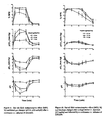
- Fig 1 shows comparative analgesic and respiratory depression effects of 3290W93 and fentanyl in rats. Effects are plotted at 4 (top panel) and 8 (bottom panel) minute time points at which peak effects were observed following drug administration. A greater separation between analgesic and respiratory depressant effects occurred following 3290W93 administration than was observed following fentanyl administration.
- 3290W93 did not substantially increase respiratory depression except at high doses.
- the ED 50 values in rats for fentanyl and 3290W93 to produce analgesia were 0.0031 and 0.08 mg/kg (i.v.) respectively.
- the ED 50 values for fentanyl and 3290W93 to produce respiratory depression are 0.014 and 2.0 mg/kg (i.v.) respectively.
- the therapeutic ratio (respiratory depression ED 50 divided by analgesia ED 50 ) for fentanyl and 3290W93 are 4.5 and 25 respectively.
- a delta receptor agonist can selectively block effects produced by the mu opioid receptor agonists alfenta and fentanyl.
- mu agonists produce a substantial beneficial effect of analgesia and many adverse side effects, such as respiratory depression, nausea, addiction and dependence.
- the ability to use delta receptor compounds to block the unwanted side effects of mu agonists permits physicians to increase the administration of analgesics because of reduced concerns about respiratory depression. Patients experience less pain after an operation and require less postoperative care by hospital staff. The overall lifestyle of patients taking mu opioids may be significantly improved with the concurrent use of delta receptor compounds.
- delta agonist compounds of formulae I and II described specifically above are disclosed in International Patent Publications WO 96/36620 and WO 97/10230 and may be advantageously be employed in the broad practice of the present invention, to antagonistically modulate the respiratory depression effects incident to the use of morphine, fentanyl and other analgesics, asthetics and barbiturates, as well as any other opioid receptor therapeutic agents which mediate respiratory depression as an effect of their physiological activity.
- the present invention provides pharmaceutically active agents useful for treatment or prevention of respiratory depression such as may be experienced by a patient as a side effect of common drug compositions such as anesthetics, analgesics, barbiturates and other medicaments which mediate respiratory depression.
- the pharmaceutically active agents of the invention may be co-administered with drugs having such respiratory depression side effects, to ameliorate or suppress such respiratory effect.
- the therapeutic agent of the invention therefore has utility in co-administration with drugs such as morphine and fentanyl.
Landscapes
- Health & Medical Sciences (AREA)
- Chemical & Material Sciences (AREA)
- General Health & Medical Sciences (AREA)
- Veterinary Medicine (AREA)
- Animal Behavior & Ethology (AREA)
- Life Sciences & Earth Sciences (AREA)
- Medicinal Chemistry (AREA)
- Pharmacology & Pharmacy (AREA)
- Public Health (AREA)
- Epidemiology (AREA)
- Organic Chemistry (AREA)
- Engineering & Computer Science (AREA)
- Bioinformatics & Cheminformatics (AREA)
- Chemical Kinetics & Catalysis (AREA)
- Nuclear Medicine, Radiotherapy & Molecular Imaging (AREA)
- General Chemical & Material Sciences (AREA)
- Pulmonology (AREA)
- Emergency Medicine (AREA)
- Neurosurgery (AREA)
- Neurology (AREA)
- Biomedical Technology (AREA)
- Pharmaceuticals Containing Other Organic And Inorganic Compounds (AREA)
- Medicines That Contain Protein Lipid Enzymes And Other Medicines (AREA)
- Acyclic And Carbocyclic Compounds In Medicinal Compositions (AREA)
- Hydrogenated Pyridines (AREA)
- Medicinal Preparation (AREA)
Claims (11)
- Verwendung eines Delta-Rezeptoragonisten zur Herstellung eines Medikaments zum Reduzieren, Behandeln oder Verhindern einer respiratorischen Schwäche, die mit der Verabreichung eines eine respiratorische Schwäche vermittelnden Medikaments verbunden ist, wobei die Delta-Rezeptoragonistverbindung gleichzeitig mit dem eine respiratorische Schwäche vermittelnden Medikament verabreicht wird und die nachstehend angegebene Formel I, II, III oder IV aufweist, oder eines pharmazeutisch annehmbaren Salzes davon;worin
 worinR1 und R2, die gleich oder verschieden sein können, jeweils Wasserstoff, lineares oder verzweigtes C1-6-Alkyl, C3-7-Cycloalkyl, C3-7-Cycloalkenyl, C4-6-Cycloalkylalkyl, C3-6-Alkenyl, C3-5-Alkynyl, Aryl, Aralkyl oder Furan-2- oder -3-yl-alkyl sind oder zusammen einen C3-7-Alkylring bilden können, der durch Sauerstoff unterbrochen sein kann;R3 und R4, die gleich oder verschieden sein können, jeweils Wasserstoff, lineares oder verzweigtes C1-6-Alkyl sind oder R4 Sauerstoff ist, der sich mit dem Kohlenstoffatom, an den er angelagert ist, eine C=O-Gruppe bildet;R5 Wasserstoff, Hydroxy, C1-3-Alkoxy, Thiol oder Alkylthio ist;R6 Phenyl, Halogen, NH2 oder eine para- oder meta-C(Z)-R8-Gruppe ist, bei der Z Sauerstoff oder Schwefel ist;R8 C1-8-Alkyl, C1-8-Alkoxy oder NR9R10 ist, worin R9 und R10, die gleich oder verschieden sein können, Wasserstoff, geradkettiges oder verzweigtes C1-6-Alkyl, C3-7-Cycloalkyl, C4-6-Cycloalkylalkyl, C3-6-Alkenyl, Aryl oder Aralkyl ist; oderR6 eine para- oderist,
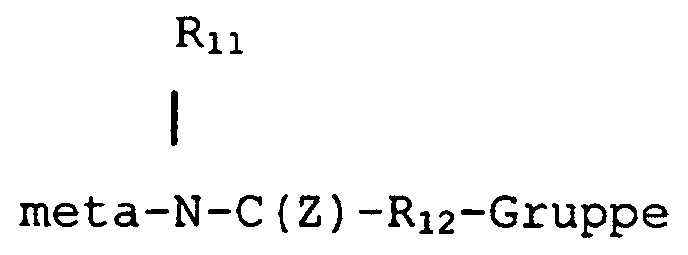 worin R11 und R12, die gleich oder verschieden sein können, Wasserstoff, geradkettiges oder verzweigtes C1-6-Alkyl, C3-7-Cycloalkyl, C4-6-Cycloalkylalkyl, C3-6-Alkenyl, Aryl, Aralkyl oder ein wahlweise substituierter heterozyklischer Ring ist und Z wie oben definiert ist; undR7 Wasserstoff, geradkettiges oder verzweigtes C1-8-Alkyl oder Halogen ist;
 R1 und R2, die gleich oder verschieden sein können, jeweils Wasserstoff, lineares oder verzweigtes C1-6-Alkyl; C3-7-Cycloalkyl, C3-7-Cycloalkenyl, C4-6-Cycloalkylalkyl, C3-6-Alkenyl, C3-5-Alkynyl, Aryl, Aralkyl oder Furan-2- oder -3-yl-alkyl sind oder zusammen einen C3-7-Alkylring bilden können, der durch Sauerstoff unterbrochen sein kann;R3 und R4, die gleich oder verschieden sein können, jeweils Wasserstoff, lineares oder verzweigtes C1-6-Alkyl sind;R5 Hydroxy, C1-6-Alkoxy, Thiol oder Alkylthio ist;R6 eine -C(Z)-R8-Gruppe ist, bei der Z Sauerstoff oder Schwefel ist, R8 C1-8-Alkyl, C1-8-Alkoxy oder NR9R10 ist, worin R9 und R10, die gleich oder verschieden sein können, Wasserstoff, geradkettiges oder verzweigtes C1-6-Alkyl, C3-7-Cycloalkyl, C4-6-Cycloalkylalkyl, C3-6-Alkenyl, Aryl oder Aralkyl ist; oderR6 eineist,
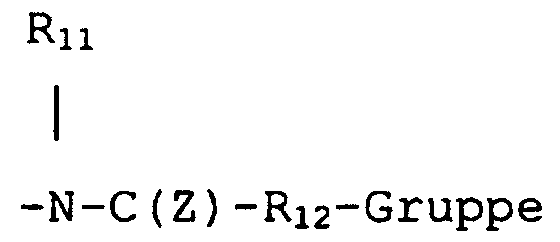 worin R11 und R12 die gleiche Bedeutung wie R9 und R10 haben oder zusammen einen wahlweise substituierten heterozyklischen Ring bilden und Z wie oben definiert ist, und R7 Wasserstoff, geradkettiges oder verzweigtes C1-8-Alkyl oder Halogen ist;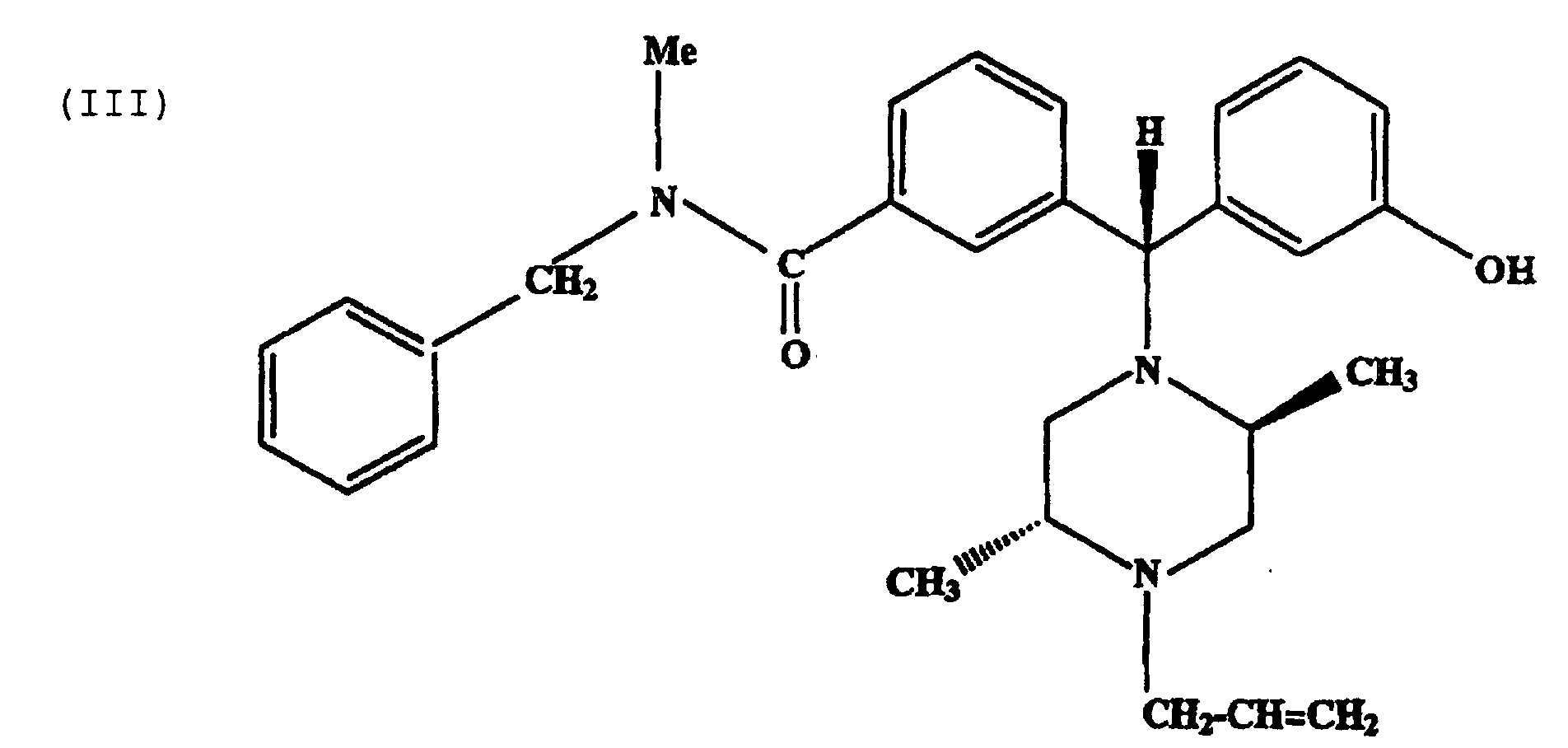

- Verwendung nach Anspruch 1, worin der Delta-Agonist auch die Eigenschaft eines eine respiratorische Schwäche vermittelnden Medikaments zeigt.
- Verwendung nach Anspruch 1 oder 2, wobei das die respiratorische Schwäche vermittelnde Medikament aus Anäesthetika und Analgetika ausgewählt ist.
- Verwendung nach einem der Ansprüche 1 bis 3, wobei das die respiratorische Schwäche vermittelnde Medikament aus der Gruppe Alfentanil, Fentanyl, Morphin und Analoge davon ausgewählt ist.
- Verwendung einer Delta-Rezeptoragonistverbindung zur Herstellung eines Medikaments zum Reduzieren, Behandeln oder Verhindern einer durch ein Medikament vermittelten respiratorischen Schwäche, die mit der Verabreichung eines eine respiratorische Schwäche vermittelnden Medikaments verbunden ist, wobei die gleichzeitige Verabreichung der Delta-Rezeptoragonistverbindung und des eine respiratorische Schwäche vermittelnden Medikaments eine Analgesie vermitteln und ein wirksames therapeutisches Verhältnis zeigen, das einen Wert hat, der größer als das die respiratorische Schwäche vermittelnde Medikament ist, das ohne die Delta-Rezeptoragonistverbindung verabreicht wird, wobei das therapeutische Verhältnis als Wert der respiratorischen Schwäche ED50, geteilt durch einen Analgesiewert ED50, definiert ist, und wobei die Delta-Rezeptoragonistverbindung die unten angegebene Formel IV aufweist, oder eines pharmazeutisch annehmbaren Salzes davon:

- Verwendung nach Anspruch 5, wobei das wirksame therapeutische Verhältnis größer als 4,5 ist.
- Pharmazeutische Zusammensetzung, umfassend:worin(1) eine bioaktive Verbindung eines eine respiratorische Schwäche vermittelnden Medikaments, die als unerwünschte Nebenwirkung eine respiratorische Schwäche, Muskelsteife und/oder Übelkeit/Erbrechen vermittelt; und(2) eine Delta-Rezeptoragonistverbindung, die sich von dem eine respiratorische Schwäche vermittelnden Medikament unterscheidet und die unten angeführte Formel I, II, III oder IV aufweist, oder ein pharmazeutisch annehmbares Salz davon:
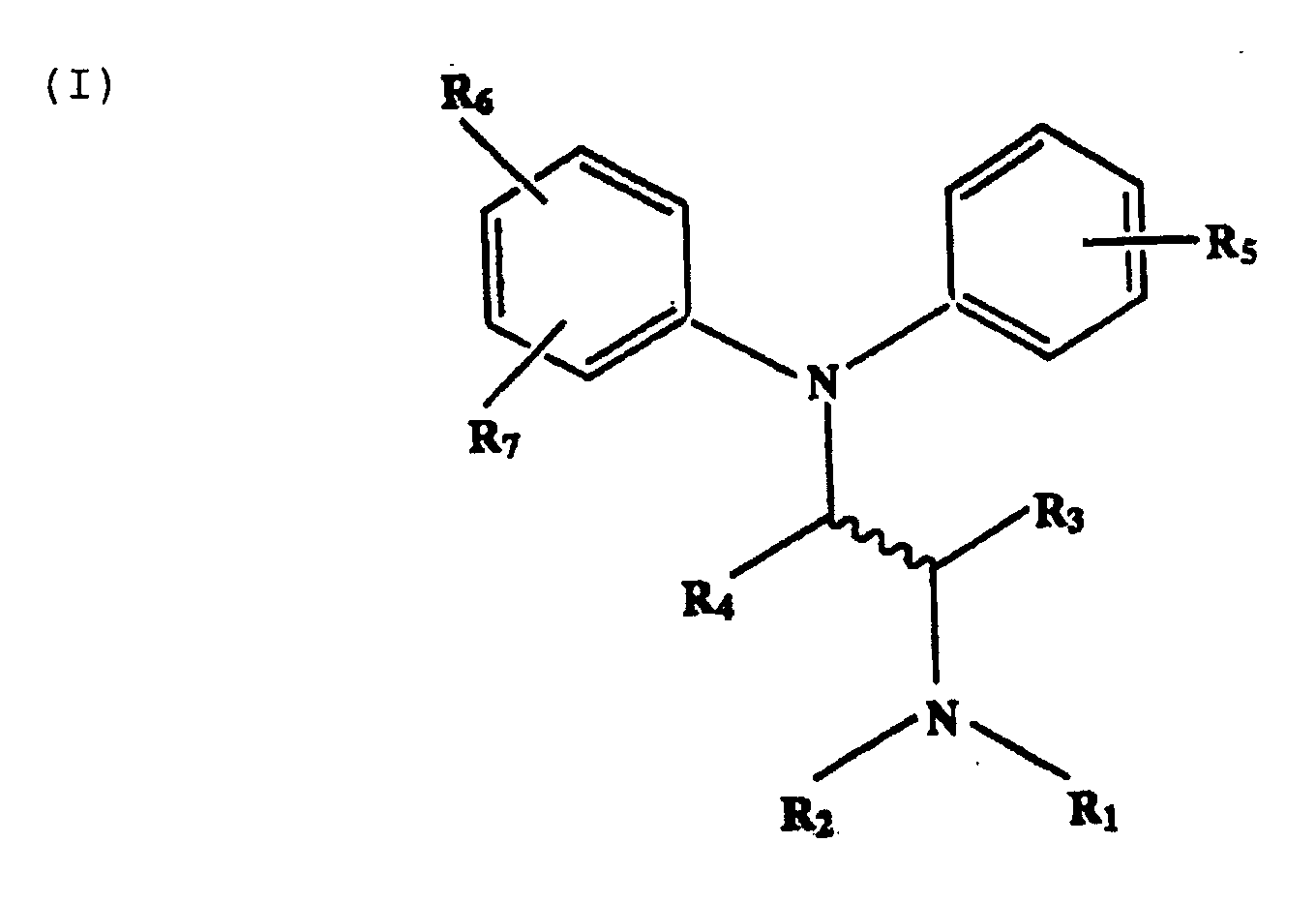 R1 und R2, die gleich oder verschieden sein können, jeweils Wasserstoff, lineares oder verzweigtes C1-6-Alkyl, C3-7-Cycloalkyl, C3-7-Cycloalkenyl, C4-6-Cycloalkylalkyl, C3-6-Alkenyl, C3-5-Alkynyl, Aryl, Aralkyl oder Furan-2- oder -3-yl-alkyl sind oder zusammen einen C3-7-Alkylring bilden können, der durch Sauerstoff unterbrochen sein kann;R3 und R4, die gleich oder verschieden sein können, jeweils Wasserstoff, lineares oder verzweigtes C1-6-Alkyl sind oder R4 Sauerstoff ist, der sich mit dem Kohlenstoffatom, an den er angelagert ist, eine C=O-Gruppe bildet;R5 Wasserstoff, Hydroxy, C1-3-Alkoxy, Thiol oder Alkylthio ist;R6 Phenyl, Halogen, NH2 oder eine para- oder meta-C(Z)-R8-Gruppe ist, bei der Z Sauerstoff oder Schwefel ist;R8 C1-8-Alkyl, C1-8-Alkoxy oder NR9R10 ist, worin R9 und R10, die gleich oder verschieden sein können, Wasserstoff, geradkettiges oder verzweigtes C1-6-Alkyl, C3-7-Cycloalkyl, C4-6-Cycloalkylalkyl, C3-6-Alkenyl, Aryl oder Aralkyl ist; oderR6 eine para- oderist,
 worin R11 und R12, die gleich oder verschieden sein können, Wasserstoff, geradkettiges oder verzweigtes C1-6-Alkyl, C3-7-Cycloalkyl, C4-6-Cycloalkylalkyl, C3-6-Alkenyl, Aryl, Aralkyl oder ein wahlweise substituierter heterozyklischer Ring ist und Z wie oben definiert ist; undR7 Wasserstoff, geradkettiges oder verzweigtes C1-8-Alkyl oder Halogen ist;worin
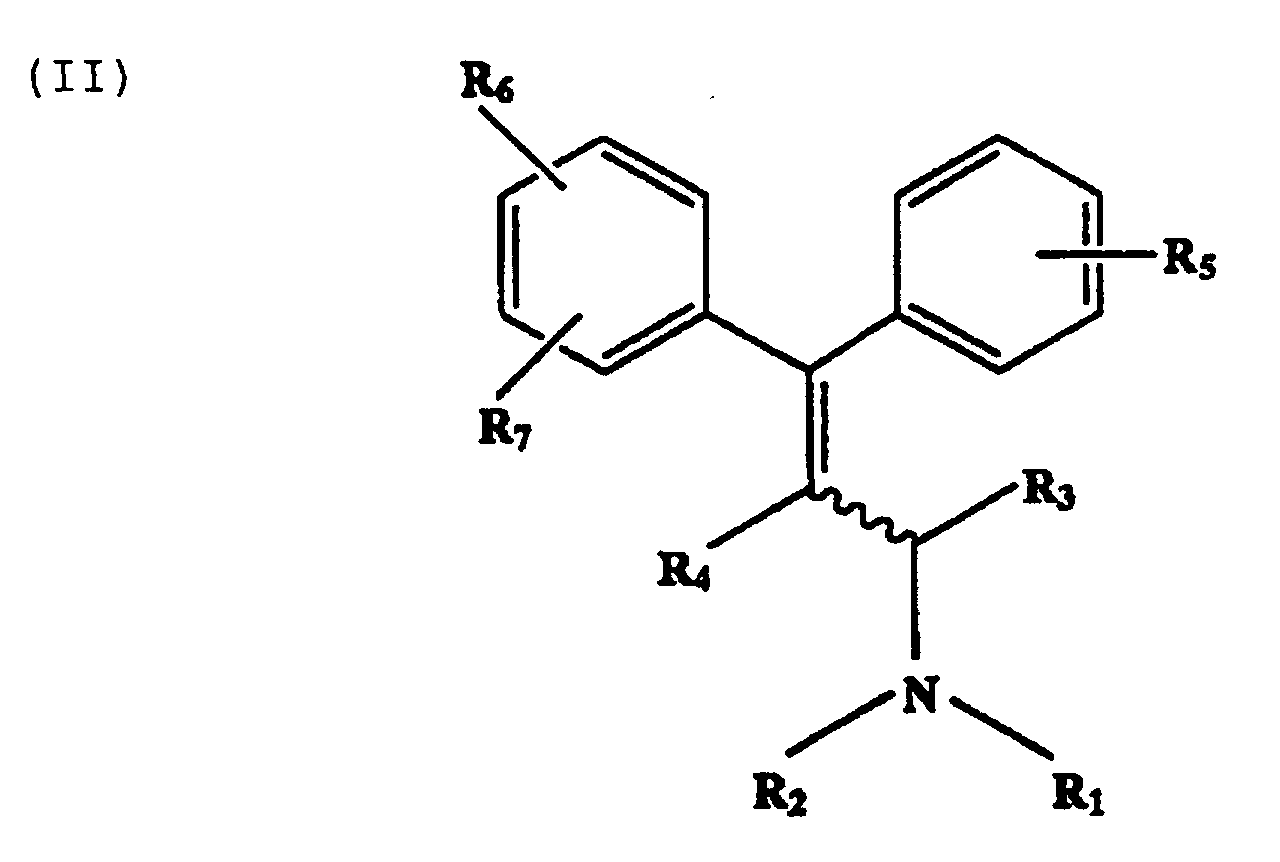 R1 und R2, die gleich oder verschieden sein können, jeweils Wasserstoff, lineares oder verzweigtes C1-6-Alkyl, C3-7-Cycloalkyl, C3-7-Cycloalkenyl, C4-6-Cycloalkylalkyl, C3-6-Alkenyl, C3-5-Alkynyl, Aryl, Aralkyl oder Furan-2- oder -3-yl-alkyl sind oder zusammen einen C3-7-Alkylring bilden können, der durch Sauerstoff unterbrochen sein kann;R3 und R4, die gleich oder verschieden sein können, jeweils Wasserstoff, lineares oder verzweigtes C1-6-Alkyl sind;R5 Hydroxy, C1-6-Alkoxy, Thiol oder Alkylthio ist;R6 eine -C(Z)-R8-Gruppe ist, bei der Z Sauerstoff oder Schwefel ist, R8 C1-8-Alkyl, C1-8-Alkoxy oder NR9R10 ist, worin R9 und R10, die gleich oder verschieden sein können, Wasserstoff, geradkettiges oder verzweigtes C1-6-Alkyl, C3-7-Cycloalkyl, C4-6-Cycloalkylalkyl, C3-6-Alkenyl, Aryl oder Aralkyl ist; oderR6 eineist,
 worin R11 und R12 die gleiche Bedeutung wie R9 und R10 haben oder zusammen einen wahlweise substituierten heterozyklischen Ring bilden und Z wie oben definiert ist, und R7 Wasserstoff, geradkettiges oder verzweigtes C1-8-Alkyl oder Halogen ist;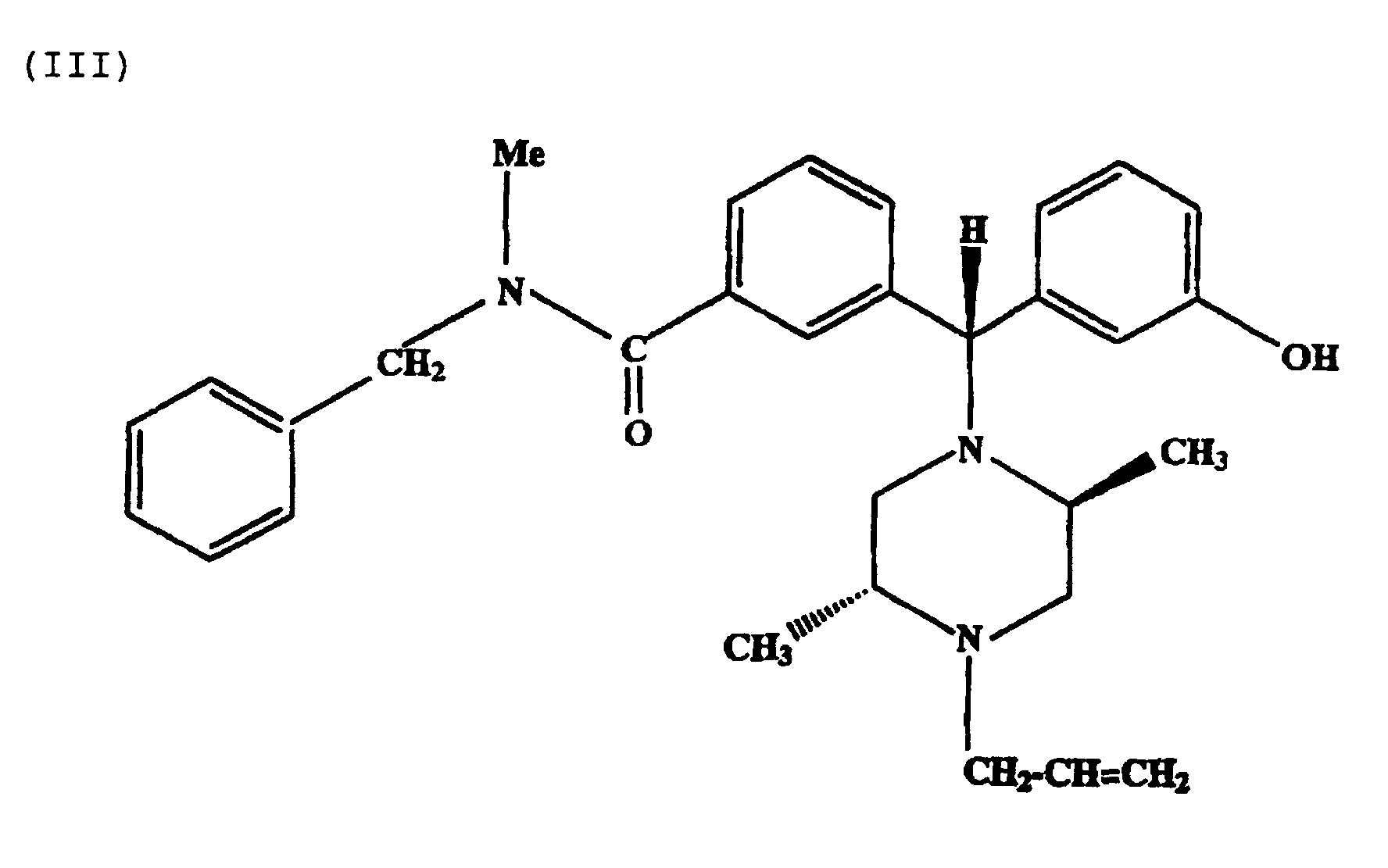
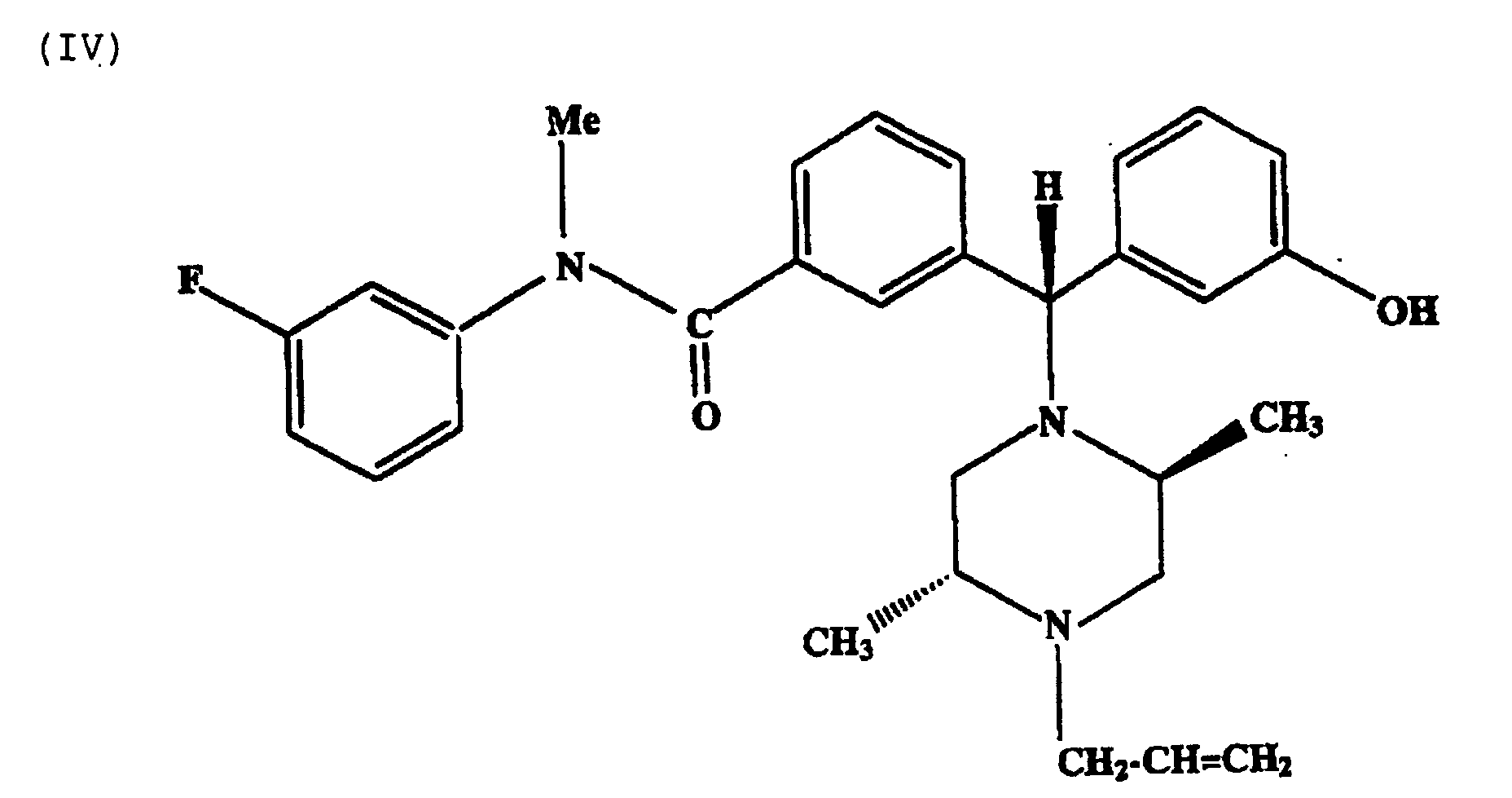
- Pharmazeutische Zusammensetzung nach Anspruch 7, wobei der Delta-Agonist auch die Eigenschaft eines eine respiratorische Schwäche vermittelnden Medikaments zeigt.
- Pharmazeutische Zusammensetzung nach Anspruch 7 oder 8, wobei das eine respiratorische Schwäche vermittelnde Medikament aus Anästhetika, Analgetika und Barbituraten ausgewählt ist.
- Pharmazeutische Zusammensetzung nach einem der Ansprüche 7 bis 9, wobei das eine respiratorische Schwäche vermittelnde Medikament aus Alfentanil, Fentanyl, Morphin und Analogen davon ausgewählt ist.
- Pharmazeutische Zusammensetzung nach einem der Ansprüche 7 bis 10 in einer für die injizierbare oder spinale Verabreichung geeigneten Form.
Applications Claiming Priority (3)
| Application Number | Priority Date | Filing Date | Title |
|---|---|---|---|
| US887312 | 1997-07-03 | ||
| US08/887,312 US5985880A (en) | 1996-06-05 | 1997-07-03 | Compositions and methods for reducing respiratory depression and attendant side effects of mu opioid compounds |
| PCT/US1997/017852 WO1999001033A1 (en) | 1997-07-03 | 1997-10-01 | Compositions and methods for reducing respiratory depression and attendant side effects of mu opioid compounds |
Publications (3)
| Publication Number | Publication Date |
|---|---|
| EP1003373A1 EP1003373A1 (de) | 2000-05-31 |
| EP1003373A4 EP1003373A4 (de) | 2000-09-20 |
| EP1003373B1 true EP1003373B1 (de) | 2004-02-11 |
Family
ID=25390891
Family Applications (1)
| Application Number | Title | Priority Date | Filing Date |
|---|---|---|---|
| EP97910777A Expired - Lifetime EP1003373B1 (de) | 1997-07-03 | 1997-10-01 | Zusammmensetzungen und verfahren zur verminderung der atmungsdepressionen und begleitender nebenmwirkungen von mu-opioid-verbindungen |
Country Status (23)
| Country | Link |
|---|---|
| US (5) | US5985880A (de) |
| EP (1) | EP1003373B1 (de) |
| JP (1) | JP2002502432A (de) |
| KR (1) | KR20010014279A (de) |
| CN (1) | CN1165308C (de) |
| AT (1) | ATE259226T1 (de) |
| AU (1) | AU756120B2 (de) |
| BR (1) | BR9714739A (de) |
| CA (1) | CA2294924C (de) |
| CZ (1) | CZ9904694A3 (de) |
| DE (1) | DE69727593D1 (de) |
| HU (1) | HUP0003842A3 (de) |
| IL (1) | IL133600A0 (de) |
| IS (1) | IS5309A (de) |
| NO (1) | NO996310L (de) |
| NZ (1) | NZ501817A (de) |
| PL (1) | PL337578A1 (de) |
| RU (1) | RU2201231C2 (de) |
| SI (1) | SI20245A (de) |
| SK (1) | SK185399A3 (de) |
| TR (1) | TR199903324T2 (de) |
| TW (1) | TW513426B (de) |
| WO (1) | WO1999001033A1 (de) |
Cited By (1)
| Publication number | Priority date | Publication date | Assignee | Title |
|---|---|---|---|---|
| US7355042B2 (en) | 2001-10-16 | 2008-04-08 | Hypnion, Inc. | Treatment of CNS disorders using CNS target modulators |
Families Citing this family (37)
| Publication number | Priority date | Publication date | Assignee | Title |
|---|---|---|---|---|
| US5985880A (en) * | 1996-06-05 | 1999-11-16 | Delta Pharmaceuticals | Compositions and methods for reducing respiratory depression and attendant side effects of mu opioid compounds |
| US6011035A (en) * | 1998-06-30 | 2000-01-04 | Neuromed Technologies Inc. | Calcium channel blockers |
| CA2394077A1 (en) * | 1999-12-16 | 2001-06-21 | Trident Technologies, Llc | System and method for extended delivery of a therapeutic agent with its receptor loading dose |
| SE0001207D0 (sv) * | 2000-04-04 | 2000-04-04 | Astrazeneca Canada Inc | Novel compounds |
| AU2001264935A1 (en) | 2000-05-24 | 2001-12-03 | University Of Maryland Biotechnology Institute | Method for introducing and expressing genes in animal cells, and bacterial blebsfor use in same |
| PT1395567E (pt) | 2001-05-18 | 2009-03-26 | Astrazeneca Ab | Derivados de 4(fenil-piperazinil-metil)benzamida e sua utilização para o tratamento da ansiedade da dor ou de distúrbios gastrointestinais |
| NZ531875A (en) * | 2001-09-25 | 2006-10-27 | Ardent Pharmaceuticals Inc | An enantiomerically pure diarylmethylpiperazine and methods for use in the treatment for conditions such as drug addiction, mental disorders, arthritis and asthma |
| CN1596113B (zh) * | 2001-10-29 | 2010-05-26 | 蒙特库克生物科学公司 | δ受体激动剂化合物在制备治疗抑郁症的药物中的应用 |
| EP1469850B1 (de) | 2002-01-02 | 2013-01-02 | Versi Group, LLC | Verfahren zur behandlung von sexuellen funktionsstörungen mit delta opioid-rezeptor-agonist-verbindungen |
| US8476280B2 (en) * | 2002-05-09 | 2013-07-02 | Versi Group, Llc | Compositions and methods for combating lower urinary tract dysfunctions with delta opioid receptor agonists |
| SE0203302D0 (sv) * | 2002-11-07 | 2002-11-07 | Astrazeneca Ab | Novel Compounds |
| SE0203303D0 (sv) * | 2002-11-07 | 2002-11-07 | Astrazeneca Ab | Novel Compounds |
| EP2179987B1 (de) * | 2002-12-04 | 2013-02-13 | Virginia Commonwealth University | Verwendung von heterocyclischen Carbaldehyd-Derivaten gegen Sichelzellen Anemie |
| US7314880B2 (en) * | 2003-01-02 | 2008-01-01 | Mount Cook Biosciences, Inc. | Cardioprotective delta opioid receptor agonists and methods of using same |
| NZ527142A (en) * | 2003-07-23 | 2006-03-31 | Douglas Pharmaceuticals Ltd | A stable suspension formulation |
| US7119208B2 (en) * | 2003-12-03 | 2006-10-10 | Virginia Commonwealth University | Anti-sickling agents |
| KR101234421B1 (ko) | 2004-08-02 | 2013-02-18 | 아스트라제네카 아베 | 디아릴메틸 피페라진 유도체, 이의 제조 방법 및 용도 |
| ES2714198T3 (es) | 2005-03-07 | 2019-05-27 | Univ Chicago | Uso de antagonistas opioideos para atenuar la proliferación y la migración de células endoteliales |
| US8524731B2 (en) | 2005-03-07 | 2013-09-03 | The University Of Chicago | Use of opioid antagonists to attenuate endothelial cell proliferation and migration |
| US9662325B2 (en) | 2005-03-07 | 2017-05-30 | The University Of Chicago | Use of opioid antagonists to attenuate endothelial cell proliferation and migration |
| US8518962B2 (en) | 2005-03-07 | 2013-08-27 | The University Of Chicago | Use of opioid antagonists |
| WO2006113468A2 (en) * | 2005-04-14 | 2006-10-26 | Mount Cook Biosciences, Inc. | Compositions of novel opioid compounds and method of use thereof |
| GB0606124D0 (en) * | 2006-03-28 | 2006-05-03 | Reckitt Benckiser Healthcare | Buprenorphine derivatives and uses thereof |
| JP2011500686A (ja) * | 2007-10-18 | 2011-01-06 | アイコ バイオテクノロジー | オピオイドと中性アンタゴニストを用いる組合せ鎮痛剤 |
| US8748448B2 (en) | 2007-10-18 | 2014-06-10 | Aiko Biotechnology | Combination analgesic employing opioid agonist and neutral antagonist |
| KR102082529B1 (ko) * | 2012-04-17 | 2020-02-27 | 퍼듀 퍼머 엘피 | 오피오이드-유도 유해 약역학 반응을 치료하기 위한 시스템 및 방법 |
| US9549909B2 (en) | 2013-05-03 | 2017-01-24 | The Katholieke Universiteit Leuven | Method for the treatment of dravet syndrome |
| ES3024232T3 (en) | 2015-12-22 | 2025-06-04 | Zogenix International Ltd | Fenfluramine compositions and methods of preparing the same |
| WO2017112701A1 (en) | 2015-12-22 | 2017-06-29 | Zogenix International Limited | Metabolism resistant fenfluramine analogs and methods of using the same |
| SG11201900975XA (en) | 2016-08-24 | 2019-03-28 | Zogenix International Ltd | Formulation for inhibiting formation of 5-ht 2b agonists and methods of using same |
| CA3061323C (en) * | 2017-04-30 | 2023-09-26 | Versi Group, Llc | An opioid for use to reduce and/or treat drug addiction |
| US10682317B2 (en) | 2017-09-26 | 2020-06-16 | Zogenix International Limited | Ketogenic diet compatible fenfluramine formulation |
| WO2019216919A1 (en) | 2018-05-11 | 2019-11-14 | Zogenix International Limited | Compositions and methods for treating seizure-induced sudden death |
| EP3806835A1 (de) * | 2018-06-14 | 2021-04-21 | Zogenix International Limited | Zusammensetzungen und verfahren zur behandlung von atemdepression mit fenfluramin |
| EA202191079A1 (ru) | 2018-11-19 | 2021-09-20 | Зодженикс Интернэшнл Лимитед | Способы лечения синдрома ретта с применением фенфлурамина |
| US11612574B2 (en) | 2020-07-17 | 2023-03-28 | Zogenix International Limited | Method of treating patients infected with severe acute respiratory syndrome coronavirus 2 (SARS-CoV-2) |
| US11977085B1 (en) | 2023-09-05 | 2024-05-07 | Elan Ehrlich | Date rape drug detection device and method of using same |
Family Cites Families (26)
| Publication number | Priority date | Publication date | Assignee | Title |
|---|---|---|---|---|
| US2630435A (en) * | 1948-09-09 | 1953-03-03 | Burroughs Wellcome Co | N-benzohydryl-n-methyl piperazines and process of preparing same |
| US4065573A (en) * | 1976-06-03 | 1977-12-27 | The Upjohn Company | 4-Amino-4-phenylcyclohexanone ketal compositions and process of use |
| US4167574A (en) * | 1978-03-13 | 1979-09-11 | Janssen Pharmaceutica, N.V. | N-phenyl-N-(4-piperidinyl)amides |
| US4518711A (en) * | 1983-05-16 | 1985-05-21 | Gibson-Stephens Institute | Conformationally constrained cyclic enkephalin analogs with delta receptor specificity |
| GB8320701D0 (en) * | 1983-08-01 | 1983-09-01 | Wellcome Found | Chemotherapeutic agent |
| DE3851081T2 (de) * | 1987-04-16 | 1995-02-16 | Lilly Co Eli | Piperidine als Opioid-Antagoniste. |
| US4816586A (en) * | 1987-07-29 | 1989-03-28 | Regents Of The University Of Minnesota | Delta opioid receptor antagonists |
| IL94768A (en) * | 1989-06-19 | 1995-08-31 | Wellcome Found | Use of aryl-substituted amine derivatives in the preparation of pharmaceutical compositions |
| DE415693T1 (de) * | 1989-08-28 | 1991-10-17 | Arizona Technology Development Corp., Tucson, Ariz. | Zusammensetzung und verfahren zur selektiven verstaerkung der opiat-wirkung und verminderung von opiat-toleranz und abhaengigkeit. |
| EP0458160A3 (en) * | 1990-05-25 | 1992-03-18 | Sociedad Espanola De Especialidades Farmaco-Terapeuticas, S.A. | Substituted diphenylmethane derivatives as analgesic or anti-inflammatory agents |
| US5159081A (en) * | 1991-03-29 | 1992-10-27 | Eli Lilly And Company | Intermediates of peripherally selective n-carbonyl-3,4,4-trisubstituted piperidine opioid antagonists |
| KR100243956B1 (ko) * | 1991-09-06 | 2000-03-02 | 랄프 알. 팔로 | 트라마돌 물질 및 아세트아미노펜을 포함하는 통증 치료용 약제학적 조성물 |
| IE914218A1 (en) * | 1991-09-11 | 1993-03-24 | Mcneilab Inc | Novel 4-arylpiperazines and 4-arylpiperidines |
| US5968551A (en) | 1991-12-24 | 1999-10-19 | Purdue Pharma L.P. | Orally administrable opioid formulations having extended duration of effect |
| US5807858A (en) | 1996-06-05 | 1998-09-15 | Delta Pharmaceutical, Inc. | Compositions and methods for reducing respiratory depression |
| GB9202238D0 (en) * | 1992-02-03 | 1992-03-18 | Wellcome Found | Compounds |
| US5681830A (en) | 1992-02-03 | 1997-10-28 | Delta Pharmaceuticals, Inc. | Opioid compounds |
| US5574159A (en) * | 1992-02-03 | 1996-11-12 | Delta Pharmaceuticals, Inc. | Opioid compounds and methods for making therefor |
| US5985880A (en) | 1996-06-05 | 1999-11-16 | Delta Pharmaceuticals | Compositions and methods for reducing respiratory depression and attendant side effects of mu opioid compounds |
| PT711289E (pt) * | 1993-07-30 | 2001-02-28 | Delta Pharmaceuticals Inc | Compostos piperazina utilizados em terapia |
| IT1270612B (it) * | 1994-07-14 | 1997-05-07 | Smithkline Beecham Farma | Derivati eterociclo-condensatori di morfinoidi |
| US5753516A (en) * | 1995-02-03 | 1998-05-19 | Heagy; Wyrta E. | Screening method for ligands of the EBI-1 receptor |
| IT1275433B (it) * | 1995-05-19 | 1997-08-07 | Smithkline Beecham Farma | Derivati di diarildiammine |
| IT1277597B1 (it) * | 1995-09-15 | 1997-11-11 | Smithkline Beecham Spa | Derivati di diarilalchenilammina |
| GB9709972D0 (en) | 1997-05-19 | 1997-07-09 | Pfizer Ltd | Tetrazoles |
| GB9804734D0 (en) | 1998-03-05 | 1998-04-29 | Pfizer Ltd | Compounds |
-
1997
- 1997-07-03 US US08/887,312 patent/US5985880A/en not_active Expired - Fee Related
- 1997-10-01 DE DE69727593T patent/DE69727593D1/de not_active Expired - Lifetime
- 1997-10-01 AT AT97910777T patent/ATE259226T1/de not_active IP Right Cessation
- 1997-10-01 KR KR1019997012402A patent/KR20010014279A/ko not_active Ceased
- 1997-10-01 EP EP97910777A patent/EP1003373B1/de not_active Expired - Lifetime
- 1997-10-01 CN CNB971822719A patent/CN1165308C/zh not_active Expired - Fee Related
- 1997-10-01 NZ NZ501817A patent/NZ501817A/en unknown
- 1997-10-01 WO PCT/US1997/017852 patent/WO1999001033A1/en not_active Ceased
- 1997-10-01 HU HU0003842A patent/HUP0003842A3/hu unknown
- 1997-10-01 SK SK1853-99A patent/SK185399A3/sk unknown
- 1997-10-01 CZ CZ19994694A patent/CZ9904694A3/cs unknown
- 1997-10-01 RU RU2000100816/14A patent/RU2201231C2/ru not_active IP Right Cessation
- 1997-10-01 TR TR1999/03324T patent/TR199903324T2/xx unknown
- 1997-10-01 AU AU48066/97A patent/AU756120B2/en not_active Ceased
- 1997-10-01 PL PL97337578A patent/PL337578A1/xx unknown
- 1997-10-01 SI SI9720097A patent/SI20245A/sl not_active IP Right Cessation
- 1997-10-01 BR BR9714739-7A patent/BR9714739A/pt not_active Application Discontinuation
- 1997-10-01 JP JP50859899A patent/JP2002502432A/ja active Pending
- 1997-10-01 CA CA2294924A patent/CA2294924C/en not_active Expired - Fee Related
- 1997-10-01 IL IL13360097A patent/IL133600A0/xx unknown
- 1997-10-24 TW TW086115899A patent/TW513426B/zh not_active IP Right Cessation
-
1999
- 1999-07-12 US US09/352,308 patent/US6300332B1/en not_active Expired - Fee Related
- 1999-12-17 IS IS5309A patent/IS5309A/is unknown
- 1999-12-17 NO NO996310A patent/NO996310L/no not_active Application Discontinuation
-
2001
- 2001-10-09 US US09/974,004 patent/US6919350B2/en not_active Expired - Fee Related
-
2005
- 2005-07-19 US US11/184,762 patent/US20050255151A1/en not_active Abandoned
-
2008
- 2008-04-07 US US12/098,899 patent/US20080193383A1/en not_active Abandoned
Cited By (1)
| Publication number | Priority date | Publication date | Assignee | Title |
|---|---|---|---|---|
| US7355042B2 (en) | 2001-10-16 | 2008-04-08 | Hypnion, Inc. | Treatment of CNS disorders using CNS target modulators |
Also Published As
| Publication number | Publication date |
|---|---|
| PL337578A1 (en) | 2000-08-28 |
| CZ9904694A3 (cs) | 2002-03-13 |
| JP2002502432A (ja) | 2002-01-22 |
| IL133600A0 (en) | 2001-04-30 |
| US20020111359A1 (en) | 2002-08-15 |
| TR199903324T2 (xx) | 2000-09-21 |
| BR9714739A (pt) | 2000-07-25 |
| US20080193383A1 (en) | 2008-08-14 |
| US5985880A (en) | 1999-11-16 |
| US6919350B2 (en) | 2005-07-19 |
| CN1165308C (zh) | 2004-09-08 |
| EP1003373A1 (de) | 2000-05-31 |
| HUP0003842A1 (hu) | 2001-04-28 |
| KR20010014279A (ko) | 2001-02-26 |
| HUP0003842A3 (en) | 2001-12-28 |
| IS5309A (is) | 1999-12-17 |
| NO996310L (no) | 2000-02-22 |
| CA2294924C (en) | 2010-12-21 |
| US20050255151A1 (en) | 2005-11-17 |
| SK185399A3 (en) | 2001-08-06 |
| EP1003373A4 (de) | 2000-09-20 |
| DE69727593D1 (de) | 2004-03-18 |
| NO996310D0 (no) | 1999-12-17 |
| TW513426B (en) | 2002-12-11 |
| NZ501817A (en) | 2002-02-01 |
| AU756120B2 (en) | 2003-01-02 |
| CN1262600A (zh) | 2000-08-09 |
| RU2201231C2 (ru) | 2003-03-27 |
| CA2294924A1 (en) | 1999-01-14 |
| ATE259226T1 (de) | 2004-02-15 |
| SI20245A (sl) | 2000-12-31 |
| AU4806697A (en) | 1999-01-25 |
| WO1999001033A1 (en) | 1999-01-14 |
| US6300332B1 (en) | 2001-10-09 |
Similar Documents
| Publication | Publication Date | Title |
|---|---|---|
| EP1003373B1 (de) | Zusammmensetzungen und verfahren zur verminderung der atmungsdepressionen und begleitender nebenmwirkungen von mu-opioid-verbindungen | |
| AU714472B2 (en) | Compositions and methods for reducing respiratory depression | |
| KR19990044182A (ko) | 말초 활성 통각과민 치료용 아편제 | |
| US20020052007A1 (en) | Diarylmethylbenzylpiperazines and corresponding halobenzyl derivatives | |
| US20030144299A1 (en) | Method of treating depression with delta receptor agonist compounds | |
| AU2002341832B2 (en) | An enantiomerically pure diarylmethylpiperazine and methods of using same | |
| AU2002341832A1 (en) | An enantiomerically pure diarylmethylpiperazine and methods of using same | |
| JP2013035873A (ja) | 神経障害の治療における選択的オピエート受容体調節物質の使用 | |
| US7189725B2 (en) | Enantiomerically pure opioid diarylmethylpiperazine as a cardioprotection agent | |
| US20070197786A1 (en) | Enantiomerically pure opioid diarylmethylpiperazine | |
| SK284858B6 (sk) | Použitie R-(+)-alfa-(2,3-dimetoxyfenyl)-1-[2-(4-fluórfenyl)etyl]- 4-piperidínmetanolu na prípravu liečiva na liečenie obštrukčného spánkového apnoe | |
| MXPA00000195A (en) | Compositions and methods for reducing respiratory depression and attendant side effects of mu opioid compounds | |
| AU2002353896A1 (en) | Method of treating depression with delta receptor agonist compounds |
Legal Events
| Date | Code | Title | Description |
|---|---|---|---|
| PUAI | Public reference made under article 153(3) epc to a published international application that has entered the european phase |
Free format text: ORIGINAL CODE: 0009012 |
|
| 17P | Request for examination filed |
Effective date: 19991222 |
|
| AK | Designated contracting states |
Kind code of ref document: A1 Designated state(s): AT BE CH DE DK ES FI FR GB GR IE IT LI LU MC NL PT SE |
|
| AX | Request for extension of the european patent |
Free format text: AL PAYMENT 19991222;LT PAYMENT 19991222;LV PAYMENT 19991222;RO PAYMENT 19991222;SI PAYMENT 19991222 |
|
| A4 | Supplementary search report drawn up and despatched |
Effective date: 20000804 |
|
| AK | Designated contracting states |
Kind code of ref document: A4 Designated state(s): AT BE CH DE DK ES FI FR GB GR IE IT LI LU MC NL PT SE |
|
| RIC1 | Information provided on ipc code assigned before grant |
Free format text: 7A 61K 31/13 A, 7A 61K 31/445 B, 7A 61K 31/495 B, 7A 61K 38/08 B |
|
| 17Q | First examination report despatched |
Effective date: 20001211 |
|
| RAP1 | Party data changed (applicant data changed or rights of an application transferred) |
Owner name: ARDENT PHARMACEUTICALS, INC. |
|
| GRAP | Despatch of communication of intention to grant a patent |
Free format text: ORIGINAL CODE: EPIDOSNIGR1 |
|
| RIC1 | Information provided on ipc code assigned before grant |
Ipc: 7A 61P 25/00 B Ipc: 7A 61K 38/08 B Ipc: 7A 61K 31/495 B Ipc: 7A 61K 31/445 B Ipc: 7A 61K 31/13 A |
|
| GRAS | Grant fee paid |
Free format text: ORIGINAL CODE: EPIDOSNIGR3 |
|
| GRAA | (expected) grant |
Free format text: ORIGINAL CODE: 0009210 |
|
| AK | Designated contracting states |
Kind code of ref document: B1 Designated state(s): AT BE CH DE DK ES FI FR GB GR IE IT LI LU MC NL PT SE |
|
| AX | Request for extension of the european patent |
Extension state: AL LT LV RO SI |
|
| PG25 | Lapsed in a contracting state [announced via postgrant information from national office to epo] |
Ref country code: NL Free format text: LAPSE BECAUSE OF FAILURE TO SUBMIT A TRANSLATION OF THE DESCRIPTION OR TO PAY THE FEE WITHIN THE PRESCRIBED TIME-LIMIT Effective date: 20040211 Ref country code: LI Free format text: LAPSE BECAUSE OF FAILURE TO SUBMIT A TRANSLATION OF THE DESCRIPTION OR TO PAY THE FEE WITHIN THE PRESCRIBED TIME-LIMIT Effective date: 20040211 Ref country code: IT Free format text: LAPSE BECAUSE OF FAILURE TO SUBMIT A TRANSLATION OF THE DESCRIPTION OR TO PAY THE FEE WITHIN THE PRESCRIBED TIME-LIMIT;WARNING: LAPSES OF ITALIAN PATENTS WITH EFFECTIVE DATE BEFORE 2007 MAY HAVE OCCURRED AT ANY TIME BEFORE 2007. THE CORRECT EFFECTIVE DATE MAY BE DIFFERENT FROM THE ONE RECORDED. Effective date: 20040211 Ref country code: FR Free format text: LAPSE BECAUSE OF FAILURE TO SUBMIT A TRANSLATION OF THE DESCRIPTION OR TO PAY THE FEE WITHIN THE PRESCRIBED TIME-LIMIT Effective date: 20040211 Ref country code: FI Free format text: LAPSE BECAUSE OF FAILURE TO SUBMIT A TRANSLATION OF THE DESCRIPTION OR TO PAY THE FEE WITHIN THE PRESCRIBED TIME-LIMIT Effective date: 20040211 Ref country code: CH Free format text: LAPSE BECAUSE OF FAILURE TO SUBMIT A TRANSLATION OF THE DESCRIPTION OR TO PAY THE FEE WITHIN THE PRESCRIBED TIME-LIMIT Effective date: 20040211 Ref country code: BE Free format text: LAPSE BECAUSE OF FAILURE TO SUBMIT A TRANSLATION OF THE DESCRIPTION OR TO PAY THE FEE WITHIN THE PRESCRIBED TIME-LIMIT Effective date: 20040211 Ref country code: AT Free format text: LAPSE BECAUSE OF FAILURE TO SUBMIT A TRANSLATION OF THE DESCRIPTION OR TO PAY THE FEE WITHIN THE PRESCRIBED TIME-LIMIT Effective date: 20040211 |
|
| REG | Reference to a national code |
Ref country code: GB Ref legal event code: FG4D |
|
| REG | Reference to a national code |
Ref country code: CH Ref legal event code: EP |
|
| REG | Reference to a national code |
Ref country code: IE Ref legal event code: FG4D |
|
| REF | Corresponds to: |
Ref document number: 69727593 Country of ref document: DE Date of ref document: 20040318 Kind code of ref document: P |
|
| PG25 | Lapsed in a contracting state [announced via postgrant information from national office to epo] |
Ref country code: SE Free format text: LAPSE BECAUSE OF FAILURE TO SUBMIT A TRANSLATION OF THE DESCRIPTION OR TO PAY THE FEE WITHIN THE PRESCRIBED TIME-LIMIT Effective date: 20040511 Ref country code: GR Free format text: LAPSE BECAUSE OF FAILURE TO SUBMIT A TRANSLATION OF THE DESCRIPTION OR TO PAY THE FEE WITHIN THE PRESCRIBED TIME-LIMIT Effective date: 20040511 Ref country code: DK Free format text: LAPSE BECAUSE OF FAILURE TO SUBMIT A TRANSLATION OF THE DESCRIPTION OR TO PAY THE FEE WITHIN THE PRESCRIBED TIME-LIMIT Effective date: 20040511 |
|
| PG25 | Lapsed in a contracting state [announced via postgrant information from national office to epo] |
Ref country code: DE Free format text: LAPSE BECAUSE OF FAILURE TO SUBMIT A TRANSLATION OF THE DESCRIPTION OR TO PAY THE FEE WITHIN THE PRESCRIBED TIME-LIMIT Effective date: 20040512 |
|
| PG25 | Lapsed in a contracting state [announced via postgrant information from national office to epo] |
Ref country code: ES Free format text: LAPSE BECAUSE OF FAILURE TO SUBMIT A TRANSLATION OF THE DESCRIPTION OR TO PAY THE FEE WITHIN THE PRESCRIBED TIME-LIMIT Effective date: 20040522 |
|
| LTIE | Lt: invalidation of european patent or patent extension |
Effective date: 20040211 |
|
| NLV1 | Nl: lapsed or annulled due to failure to fulfill the requirements of art. 29p and 29m of the patents act | ||
| REG | Reference to a national code |
Ref country code: CH Ref legal event code: PL |
|
| PG25 | Lapsed in a contracting state [announced via postgrant information from national office to epo] |
Ref country code: LU Free format text: LAPSE BECAUSE OF NON-PAYMENT OF DUE FEES Effective date: 20041001 Ref country code: IE Free format text: LAPSE BECAUSE OF NON-PAYMENT OF DUE FEES Effective date: 20041001 |
|
| PG25 | Lapsed in a contracting state [announced via postgrant information from national office to epo] |
Ref country code: MC Free format text: LAPSE BECAUSE OF NON-PAYMENT OF DUE FEES Effective date: 20041031 |
|
| PLBE | No opposition filed within time limit |
Free format text: ORIGINAL CODE: 0009261 |
|
| STAA | Information on the status of an ep patent application or granted ep patent |
Free format text: STATUS: NO OPPOSITION FILED WITHIN TIME LIMIT |
|
| EN | Fr: translation not filed | ||
| 26N | No opposition filed |
Effective date: 20041112 |
|
| REG | Reference to a national code |
Ref country code: IE Ref legal event code: MM4A |
|
| PG25 | Lapsed in a contracting state [announced via postgrant information from national office to epo] |
Ref country code: PT Free format text: LAPSE BECAUSE OF NON-PAYMENT OF DUE FEES Effective date: 20040711 |
|
| PGFP | Annual fee paid to national office [announced via postgrant information from national office to epo] |
Ref country code: GB Payment date: 20100430 Year of fee payment: 13 |
|
| GBPC | Gb: european patent ceased through non-payment of renewal fee |
Effective date: 20101001 |
|
| PG25 | Lapsed in a contracting state [announced via postgrant information from national office to epo] |
Ref country code: GB Free format text: LAPSE BECAUSE OF NON-PAYMENT OF DUE FEES Effective date: 20101001 |