EP1003850B1 - Inhibitoren von immunstimulatorischen dna sequenz aktivität - Google Patents
Inhibitoren von immunstimulatorischen dna sequenz aktivität Download PDFInfo
- Publication number
- EP1003850B1 EP1003850B1 EP98926229A EP98926229A EP1003850B1 EP 1003850 B1 EP1003850 B1 EP 1003850B1 EP 98926229 A EP98926229 A EP 98926229A EP 98926229 A EP98926229 A EP 98926229A EP 1003850 B1 EP1003850 B1 EP 1003850B1
- Authority
- EP
- European Patent Office
- Prior art keywords
- odn
- iss
- use according
- iis
- purine
- Prior art date
- Legal status (The legal status is an assumption and is not a legal conclusion. Google has not performed a legal analysis and makes no representation as to the accuracy of the status listed.)
- Expired - Lifetime
Links
Images



Classifications
-
- C—CHEMISTRY; METALLURGY
- C07—ORGANIC CHEMISTRY
- C07H—SUGARS; DERIVATIVES THEREOF; NUCLEOSIDES; NUCLEOTIDES; NUCLEIC ACIDS
- C07H21/00—Compounds containing two or more mononucleotide units having separate phosphate or polyphosphate groups linked by saccharide radicals of nucleoside groups, e.g. nucleic acids
-
- A—HUMAN NECESSITIES
- A61—MEDICAL OR VETERINARY SCIENCE; HYGIENE
- A61K—PREPARATIONS FOR MEDICAL, DENTAL OR TOILETRY PURPOSES
- A61K39/00—Medicinal preparations containing antigens or antibodies
- A61K39/39—Medicinal preparations containing antigens or antibodies characterised by the immunostimulating additives, e.g. chemical adjuvants
-
- A—HUMAN NECESSITIES
- A61—MEDICAL OR VETERINARY SCIENCE; HYGIENE
- A61P—SPECIFIC THERAPEUTIC ACTIVITY OF CHEMICAL COMPOUNDS OR MEDICINAL PREPARATIONS
- A61P37/00—Drugs for immunological or allergic disorders
- A61P37/02—Immunomodulators
-
- A—HUMAN NECESSITIES
- A61—MEDICAL OR VETERINARY SCIENCE; HYGIENE
- A61P—SPECIFIC THERAPEUTIC ACTIVITY OF CHEMICAL COMPOUNDS OR MEDICINAL PREPARATIONS
- A61P37/00—Drugs for immunological or allergic disorders
- A61P37/02—Immunomodulators
- A61P37/06—Immunosuppressants, e.g. drugs for graft rejection
-
- A—HUMAN NECESSITIES
- A61—MEDICAL OR VETERINARY SCIENCE; HYGIENE
- A61P—SPECIFIC THERAPEUTIC ACTIVITY OF CHEMICAL COMPOUNDS OR MEDICINAL PREPARATIONS
- A61P43/00—Drugs for specific purposes, not provided for in groups A61P1/00-A61P41/00
-
- C—CHEMISTRY; METALLURGY
- C07—ORGANIC CHEMISTRY
- C07K—PEPTIDES
- C07K14/00—Peptides having more than 20 amino acids; Gastrins; Somatostatins; Melanotropins; Derivatives thereof
- C07K14/435—Peptides having more than 20 amino acids; Gastrins; Somatostatins; Melanotropins; Derivatives thereof from animals; from humans
- C07K14/46—Peptides having more than 20 amino acids; Gastrins; Somatostatins; Melanotropins; Derivatives thereof from animals; from humans from vertebrates
- C07K14/47—Peptides having more than 20 amino acids; Gastrins; Somatostatins; Melanotropins; Derivatives thereof from animals; from humans from vertebrates from mammals
- C07K14/4701—Peptides having more than 20 amino acids; Gastrins; Somatostatins; Melanotropins; Derivatives thereof from animals; from humans from vertebrates from mammals not used
- C07K14/4702—Regulators; Modulating activity
- C07K14/4703—Inhibitors; Suppressors
-
- C—CHEMISTRY; METALLURGY
- C12—BIOCHEMISTRY; BEER; SPIRITS; WINE; VINEGAR; MICROBIOLOGY; ENZYMOLOGY; MUTATION OR GENETIC ENGINEERING
- C12N—MICROORGANISMS OR ENZYMES; COMPOSITIONS THEREOF; PROPAGATING, PRESERVING, OR MAINTAINING MICROORGANISMS; MUTATION OR GENETIC ENGINEERING; CULTURE MEDIA
- C12N15/00—Mutation or genetic engineering; DNA or RNA concerning genetic engineering, vectors, e.g. plasmids, or their isolation, preparation or purification; Use of hosts therefor
- C12N15/09—Recombinant DNA-technology
- C12N15/11—DNA or RNA fragments; Modified forms thereof; Non-coding nucleic acids having a biological activity
- C12N15/117—Nucleic acids having immunomodulatory properties, e.g. containing CpG-motifs
-
- A—HUMAN NECESSITIES
- A61—MEDICAL OR VETERINARY SCIENCE; HYGIENE
- A61K—PREPARATIONS FOR MEDICAL, DENTAL OR TOILETRY PURPOSES
- A61K39/00—Medicinal preparations containing antigens or antibodies
- A61K2039/555—Medicinal preparations containing antigens or antibodies characterised by a specific combination antigen/adjuvant
- A61K2039/55511—Organic adjuvants
- A61K2039/55561—CpG containing adjuvants; Oligonucleotide containing adjuvants
-
- A—HUMAN NECESSITIES
- A61—MEDICAL OR VETERINARY SCIENCE; HYGIENE
- A61K—PREPARATIONS FOR MEDICAL, DENTAL OR TOILETRY PURPOSES
- A61K39/00—Medicinal preparations containing antigens or antibodies
- A61K2039/57—Medicinal preparations containing antigens or antibodies characterised by the type of response, e.g. Th1, Th2
-
- A—HUMAN NECESSITIES
- A61—MEDICAL OR VETERINARY SCIENCE; HYGIENE
- A61K—PREPARATIONS FOR MEDICAL, DENTAL OR TOILETRY PURPOSES
- A61K38/00—Medicinal preparations containing peptides
-
- C—CHEMISTRY; METALLURGY
- C12—BIOCHEMISTRY; BEER; SPIRITS; WINE; VINEGAR; MICROBIOLOGY; ENZYMOLOGY; MUTATION OR GENETIC ENGINEERING
- C12N—MICROORGANISMS OR ENZYMES; COMPOSITIONS THEREOF; PROPAGATING, PRESERVING, OR MAINTAINING MICROORGANISMS; MUTATION OR GENETIC ENGINEERING; CULTURE MEDIA
- C12N2310/00—Structure or type of the nucleic acid
- C12N2310/10—Type of nucleic acid
- C12N2310/11—Antisense
- C12N2310/111—Antisense spanning the whole gene, or a large part of it
-
- C—CHEMISTRY; METALLURGY
- C12—BIOCHEMISTRY; BEER; SPIRITS; WINE; VINEGAR; MICROBIOLOGY; ENZYMOLOGY; MUTATION OR GENETIC ENGINEERING
- C12N—MICROORGANISMS OR ENZYMES; COMPOSITIONS THEREOF; PROPAGATING, PRESERVING, OR MAINTAINING MICROORGANISMS; MUTATION OR GENETIC ENGINEERING; CULTURE MEDIA
- C12N2310/00—Structure or type of the nucleic acid
- C12N2310/10—Type of nucleic acid
- C12N2310/17—Immunomodulatory nucleic acids
-
- C—CHEMISTRY; METALLURGY
- C12—BIOCHEMISTRY; BEER; SPIRITS; WINE; VINEGAR; MICROBIOLOGY; ENZYMOLOGY; MUTATION OR GENETIC ENGINEERING
- C12N—MICROORGANISMS OR ENZYMES; COMPOSITIONS THEREOF; PROPAGATING, PRESERVING, OR MAINTAINING MICROORGANISMS; MUTATION OR GENETIC ENGINEERING; CULTURE MEDIA
- C12N2310/00—Structure or type of the nucleic acid
- C12N2310/10—Type of nucleic acid
- C12N2310/18—Type of nucleic acid acting by a non-sequence specific mechanism
-
- C—CHEMISTRY; METALLURGY
- C12—BIOCHEMISTRY; BEER; SPIRITS; WINE; VINEGAR; MICROBIOLOGY; ENZYMOLOGY; MUTATION OR GENETIC ENGINEERING
- C12N—MICROORGANISMS OR ENZYMES; COMPOSITIONS THEREOF; PROPAGATING, PRESERVING, OR MAINTAINING MICROORGANISMS; MUTATION OR GENETIC ENGINEERING; CULTURE MEDIA
- C12N2310/00—Structure or type of the nucleic acid
- C12N2310/30—Chemical structure
- C12N2310/31—Chemical structure of the backbone
- C12N2310/315—Phosphorothioates
-
- C—CHEMISTRY; METALLURGY
- C12—BIOCHEMISTRY; BEER; SPIRITS; WINE; VINEGAR; MICROBIOLOGY; ENZYMOLOGY; MUTATION OR GENETIC ENGINEERING
- C12N—MICROORGANISMS OR ENZYMES; COMPOSITIONS THEREOF; PROPAGATING, PRESERVING, OR MAINTAINING MICROORGANISMS; MUTATION OR GENETIC ENGINEERING; CULTURE MEDIA
- C12N2310/00—Structure or type of the nucleic acid
- C12N2310/30—Chemical structure
- C12N2310/33—Chemical structure of the base
-
- C—CHEMISTRY; METALLURGY
- C12—BIOCHEMISTRY; BEER; SPIRITS; WINE; VINEGAR; MICROBIOLOGY; ENZYMOLOGY; MUTATION OR GENETIC ENGINEERING
- C12N—MICROORGANISMS OR ENZYMES; COMPOSITIONS THEREOF; PROPAGATING, PRESERVING, OR MAINTAINING MICROORGANISMS; MUTATION OR GENETIC ENGINEERING; CULTURE MEDIA
- C12N2310/00—Structure or type of the nucleic acid
- C12N2310/30—Chemical structure
- C12N2310/33—Chemical structure of the base
- C12N2310/334—Modified C
-
- C—CHEMISTRY; METALLURGY
- C12—BIOCHEMISTRY; BEER; SPIRITS; WINE; VINEGAR; MICROBIOLOGY; ENZYMOLOGY; MUTATION OR GENETIC ENGINEERING
- C12N—MICROORGANISMS OR ENZYMES; COMPOSITIONS THEREOF; PROPAGATING, PRESERVING, OR MAINTAINING MICROORGANISMS; MUTATION OR GENETIC ENGINEERING; CULTURE MEDIA
- C12N2310/00—Structure or type of the nucleic acid
- C12N2310/30—Chemical structure
- C12N2310/35—Nature of the modification
- C12N2310/351—Conjugate
- C12N2310/3513—Protein; Peptide
-
- C—CHEMISTRY; METALLURGY
- C12—BIOCHEMISTRY; BEER; SPIRITS; WINE; VINEGAR; MICROBIOLOGY; ENZYMOLOGY; MUTATION OR GENETIC ENGINEERING
- C12Q—MEASURING OR TESTING PROCESSES INVOLVING ENZYMES, NUCLEIC ACIDS OR MICROORGANISMS; COMPOSITIONS OR TEST PAPERS THEREFOR; PROCESSES OF PREPARING SUCH COMPOSITIONS; CONDITION-RESPONSIVE CONTROL IN MICROBIOLOGICAL OR ENZYMOLOGICAL PROCESSES
- C12Q1/00—Measuring or testing processes involving enzymes, nucleic acids or microorganisms; Compositions therefor; Processes of preparing such compositions
- C12Q1/68—Measuring or testing processes involving enzymes, nucleic acids or microorganisms; Compositions therefor; Processes of preparing such compositions involving nucleic acids
- C12Q1/6876—Nucleic acid products used in the analysis of nucleic acids, e.g. primers or probes
- C12Q1/6883—Nucleic acid products used in the analysis of nucleic acids, e.g. primers or probes for diseases caused by alterations of genetic material
-
- Y—GENERAL TAGGING OF NEW TECHNOLOGICAL DEVELOPMENTS; GENERAL TAGGING OF CROSS-SECTIONAL TECHNOLOGIES SPANNING OVER SEVERAL SECTIONS OF THE IPC; TECHNICAL SUBJECTS COVERED BY FORMER USPC CROSS-REFERENCE ART COLLECTIONS [XRACs] AND DIGESTS
- Y02—TECHNOLOGIES OR APPLICATIONS FOR MITIGATION OR ADAPTATION AGAINST CLIMATE CHANGE
- Y02A—TECHNOLOGIES FOR ADAPTATION TO CLIMATE CHANGE
- Y02A50/00—TECHNOLOGIES FOR ADAPTATION TO CLIMATE CHANGE in human health protection, e.g. against extreme weather
- Y02A50/30—Against vector-borne diseases, e.g. mosquito-borne, fly-borne, tick-borne or waterborne diseases whose impact is exacerbated by climate change
Definitions
- the invention relates to immunostimulatory sequences in DNA.
- the invention further relates to recombinant expression vectors for use in gene therapy.
- Recombinant expression vectors are the tools which researchers and clinicians use to achieve the goals of gene therapy and gene immunization.
- gene therapy viral and non-viral vectors are used to deliver an expressible gene into a host to replace a missing or defective gene, or to otherwise supply the host with a therapeutically beneficial polypeptide.
- gene immunization mostly non-viral vectors are used to induce an immune response by the host to an expressed antigen.
- ISS-ODN vector immunogenicity
- CpG motifs which characterize ISS-ODN are present in bacteria and viruses (including retroviruses) at a much greater frequency than is seen in vertebrate genomes.
- ISS-ODN activity is the ISS-ODN induced production of cytokines such as interferon- ⁇ (INF- ⁇ ), INF- ⁇ and interleukin-12 (IL-12).
- This ISS-ODN induced inflammation is believed to be defensive against microbial infection in vertebrates and is also believed to be produced in response to ISS-ODN introduced into a host as oligonucleotides or as part of a recombinant expression vector.
- WO96/02555 describes immunomodulatory oligonucleotides containing unmethylated CpG dinucleotides. Similar oligonucleotides are further described in Kreig et al, Nature 374:546-549 (1995 ) and Ballas et al, J. Immunol.,, 157:1840-1845 (1996 ). WO95/26204 describes certain antisense oligonucleotides which are targeted to selected viral mRNAs.
- the invention relates to compounds consisting of oligodeoxynucleotides, ribonucleotides or analogs thereof which specifically inhibit the immunostimulatory activity of ISS-ODN and their use.
- ISS-ODN induced secretion of INF- ⁇ in particular can suppress recombinant gene expression and directly impedes mRNA and protein synthesis in transfected cells.
- inhibition of ISS-ODN activity substantially avoids ISS-ODN induced loss of gene expression, thereby prolonging the availability of the expressed polypeptide to a host undergoing gene therapy or gene immunization with an ISS-ODN containing recombinant expression vector.
- the need for repetitive dosing to prolong availability of expressed proteins and for extensive reengineering of recombinant expression vectors to eliminate ISS-ODN sequences is avoided through use of the compounds described herein.
- the compounds described herein are also useful in modulating the immunostimulatory activity of ISS-ODN administered as adjuvants to boost host immune responses to antigen in, for example, immunotherapy.
- the compounds described herein permit extraordinar control over the effect of ISS-ODN based adjuvants in a host.
- the compounds described herein reduce host inflammation generated in response to an infection by an ISS-ODN containing bacteria or virus.
- the compounds described herein can be administered to inhibit ISS-ODN activity exerted by a microbe even if the identity of the particular ISS-ODN present in the microbe is unknown.
- the compounds described herein can be considered to be broad spectrum anti-inflammatory agents.
- the invention provides a method for identifying an oligonucleotide (IIS-ON) which inhibits the immunostimulatory activity of ISS-ODN comprising: (a) contacting a population of antigen stimulated immune cells with an immunostimulatory polynucleotide (ISS-ODN) that includes at least one unmethylated 5'-CG-3' motif to induce lymphocyte proliferation in IFN ⁇ , IFN- ⁇ , IFN- ⁇ , IL-12 and IL-18 cytokine secretion from, IgG1 antibody production by, or IgE suppression in, the population of antigen stimulated immune cells; (b) measuring any change in the number of lymphocytes or levels of secreted cytokines and/or levels of IgE or IgG1 antibodies in the population of antigen stimulated cells after contact with the ISS-ODN; (c) contacting the population of antigen stimulated cells with a candidate IIS-ON inhibitory oligonucleotide, said IIS-ON comprising a he
- the invention provides a pharmaceutical composition
- a pharmaceutical composition comprising: a) an oligonucleotide which comprises a hexameric nucleotide sequence of the formula 5'-Purine-Purine-[Y]-[Z]-Pyrimidine-Pyrimidine-3' or 5' Purine-Purine-[Y]-[Z]-poly(Pyrimidine)-3'; wherein Y is any naturally occurring or synthetic nucleotide except cytosine and Z is any naturally occurring or synthetic nucleotide and wherein when Y is not guanosine or inosine, Z is guanosine or inosine, wherein said oligonucleotide exhibits an immunoinhibitory effect against an immunostimulatory polynucleotide that includes at least one unmethylated 5'-CG-3' motif; and b) a pharmaceutically acceptable carrier, for use in a method of inhibiting stimulation by an immunostimulatory sequence comprising at least one unmethylated
- the invention also provides for the use of the above-defined pharmaceutical composition for the manufacture of a medicament for inhibiting stimulation by an immunostimulatory sequence comprising at least one unmethylated CG motif.
- the 5' purines are the same nucleotide, as are the 3' pyrimidines.
- the 5' purines and 3'pyrimidines may be AA**TT,AG**TT, GA**TT, GG**TT, AA**TC, AG**TC, and so forth. Any sequences present which flank the hexamer core sequence are constructed to substantially match the flanking sequences present in any known ISS-ODN.
- Inhibitory IIS-ON of the invention are prepared in a pharmaceutically acceptable composition for use in a host.
- IIS-ON may be mixed into the composition singly, in multiple copies or in a cocktail of different IIS-ON.
- the inhibitory IIS-ON of the invention may be incorporated into a recombinant expression vector.
- the inhibitory IIS-ON can also be provided in the form of a kit, comprising inhibitory IIS-ON and recombinant expression vector constructs which contain, or are susceptible to insertion of, a gene of interest.
- a particular advantage of the IIS-ON of the invention is that they can be used to target ISS-ODN in any ISS-ODN containing recombinant expression vector or microbe, whether or not the nucleotide composition of the vector or microbe is known. Indeed, it is not necessary that the existence, identity or location of ISS-ODN in the vector or microbe be known. If ISS-ODN are not present in the vector or microbe, the IIS-ON of the invention will simply have no effect.
- ISS-ODN are present in the vector or microbe, it can be expected that their immunostimulatory activity will be inhibited in a dose-dependent manner by the IIS-ON even if the specific structure or location of the ISS-ODN in the vector or microbe is not known.
- the invention provides a simple and effective alternative to the arduous task of eliminating ISS-ODN activity from recombinant expression vectors by identifying all ISS-ODN present in the vector and removing them.
- the invention provides methods for screening recombinant expression vectors for the presence of ISS-ODN and for identifying additional inhibitory IIS-ON
- the presence of ISS-ODN in a recombinant expression vector is confirmed by incubating the vector in a population of lymphocytes with an IIS-ON of known inhibitory activity and comparing the difference, if any, in the level of ISS-induced cytokine production by the lymphocytes before and after IIS-ON incubation.
- inhibitory IIS-ON having the characteristics disclosed herein are identified by their ability to inhibit the immunostimulatory activity of a known ISS-containing polynucleotide or recombinant expression vector.
- the invention further provides a useful anti-inflammatory agent for use in inhibiting the immunostimulatory activity of any ISS-ODN present in an infectious bacterium or virus.
- the invention provides useful means for modulating the immunostimulatory activity of ISS-ODN supplied to a host for immunostimulation (e.g., as an adjuvant).
- ISS-ODN are non-coding oligonucleotides 6 mer or greater in length which may include at least one unmethylated CG motif.
- the relative position of each CG sequence in ISS-ODN with immunostimulatory activity in certain mammalian species (e.g., rodents) is 5'-CG-3' (i.e., the C is in the 5' position with respect to the G in the 3' position).
- ISS-ODN flank the CG motif with at least two purine nucleotides (e.g., GA or AA) and at least two pyrimidine nucleotides (e.g., TC or TT) to enhance the B lymphocyte stimulatory activity of the immunostimulatory polynucleotide (see , e.g., Krieg, et al., Nature, 374:546-549, 1995 ).
- purine nucleotides e.g., GA or AA
- pyrimidine nucleotides e.g., TC or TT
- ISS-ODN enhance the cellular and humoral immune responses in a host, particularly lymphocyte proliferation and the release of cytokines (including IFN) by host monocytes and natural killer (NK) cells.
- Bacterial DNA contains unmethylated CpG dinucleotides at a frequency of about one per every 16 bases. These dinucleotides are also present in certain viral species, but are notably underrepresented in vertebrate species.
- Immuostimulation by synthetic ISS-ODN in vivo occurs by contacting host lymphocytes with, for example, ISS-ODN oligonucleotides, ISS-ODN oligonucleotide-conjugates and ISS-containing recombinant expression vectors (data regarding the activity of ISS-ODN conjugates and ISS-ODN vectors are set forth in co-pending, commonly assigned U.S. patent applications Serial Nos. 60/028,118 and 08/593,554 ; data from which is incorporated herein by reference solely to demonstrate ISS-ODN immunostimulatory activity in vivo ).
- microbial ISS-ODN stimulate the host immune system to respond to infection
- synthetic analogs of these ISS-ODN may be useful therapeutically to modulate the host immune response not only to microbial antigens, but also to tumor antigens, allergens and other substances ( id .).
- the region of ISS-ODN which confers their immunostimulatory activity is believed to be the 6 mer or greater length of nucleotides which include an unmethylated dinucleotide (e.g., CpG). Therefore, it is believed that the presence of a region of about 6 mer or greater length having at least one competing dinucleotide (defined as [Y]-[Z] and [Y]-poly[Z] in the formulae set forth below) therein confers ISS-inhibitory activity on the IIS-ON of the invention.
- inhibitory compounds of the invention are synthesized oligonucleotides (IIS-ON) which inhibit the immunostimulatory activity of ISS-ODN in vertebrates and vertebrate immune cells.
- IIS-ON oligonucleotides
- a rise in measured levels of IgG1 or IgE antibodies is an indirect indicator of a rise in a Th2-type lymphocyte response, indicating that the Th1 stimulatory activity of ISS-ODN has declined in the presence of the IIS-ODN.
- Assay techniques suitable for use in performing the steps above are illustrated in the Examples below. In view of the teaching of this disclosure, other assay techniques for measuring changes in ISS-ODN induced lymphocyte proliferation or cytokine secretion will be apparent to those of ordinary skill in the art.
- the screening method can also be used to detect ISS-ODN in a sample of immune cells taken from the host.
- This aspect of the invention is useful in confirming the presence of ISS-ODN containing antigens (e.g., microbial antigens) and autoantigens in the host.
- antigens e.g., microbial antigens
- autoantigens e.g., autoantigens
- IIS-ON which inhibit the activity of CpG motif-containing ISS-ODN include those oligonucleotides which are comprised of the following general primary structure:
- the core hexamer structure of the foregoing IIS-ON may be flanked upstream and/or downstream by any number or composition of nucleotides or nucleosides.
- IIS-ON will preferably be either 6 mer in length, or between 6 and 45 mer in length, to enhance uptake of the IIS-ON and to minimize non-specific interactions between the IIS-ON and the target recombinant expression vector or host cells.
- any IIS-ON flanking sequences present are constructed to match the flanking sequences present in any known ISS-ODN (such as the flanking sequence DY1038 (TTGACTGTG******AGAGATGA), where ****** is the immunostimulatory hexamer sequence.
- ISS-ODN such as the flanking sequence DY1038 (TTGACTGTG******AGAGATGA)
- inhibitory IIS-ON of the invention include those having the following hexamer sequences:
- IIS-ON hexamers with especially strong expected inhibitory activity are those with GG and GC competing dinucleotides, particularly AAGGTT (DY1019 in the Figures), AAGCTT (DY1041 in the Figures), AGGGCT, and GAGGTT (including their 3' Pyrimidine-pPyrimidine analogs).
- IIS-ON may be single-stranded or double-stranded DNA, single or double-stranded RNA and/or oligonucleosides.
- the nucleotide bases of the IIS-ON which flank the competing dinucleotides may be the known naturally occurring bases or synthetic non-natural bases (e.g., TCAG or, in RNA, UACGI).
- Oligonucleosides may be incorporated into the internal region and/or termini of the IIS-ON using conventional techniques for use as attachment points for other compounds (e.g., peptides).
- the base(s), sugar moiety, phosphate groups and termini of the IIS-ON may also be modified in any manner known to those of ordinary skill in the art to construct an IIS-ON having properties desired in addition to the inhibitory activity of the IIS-ON.
- sugar moieties may be attached to nucleotide bases of IIS-ON in any steric configuration.
- backbone phosphate group modifications e.g., methylphosphonate, phosphorothioate, phosphoroamidate and phosphorodithioate internucleotide linkages
- the techniques for making these phosphate group modifications to oligonucleotides are known in the art and do not require detailed explanation.
- the an intermediate phosphate triester for the target oligonucleotide product is prepared and oxidized to the naturally occurring phosphate triester with aqueous iodine or with other agents, such as anhydrous amines.
- the resulting oligonucleotide phosphoramidates can be treated with sulfer to yield phophorothioates.
- the same general technique (excepting the sulfer treatment step) can be applied to yield methylphosphoamidites from methylphosphonates.
- a particularly useful phosphate group modification is the conversion to the phosphorothioate or phosphorodithioate forms of the IIS-ON oligonucleotides.
- phosphorothioates and phosphorodithioates are more resistant to degradation in vivo than their unmodified oligonucleotide counterparts, making the IIS-ON of the invention more available to the host.
- IIS-ON can be synthesized using techniques and nucleic acid synthesis equipment which are well-known in the art. For reference in this regard, see , e.g., Ausubel, et al., Current Protocols in Molecular Biology, Chs. 2 and 4 (Wiley Interscience, 1989 ); Maniatis, et al., Molecular Cloning: A Laboratory Manual (Cold Spring Harbor Lab., New York, 1982 ); U.S. Patent No. 4,458,066 and U.S. Patent No. 4,650,675 . These references are incorporated herein by reference for the sole purpose of demonstrating knowledge in the art concerning production of synthetic oligonucleotides.
- IIS-ON can be obtained by mutation of isolated microbial ISS-ODN to substitute a competing dinucleotide for the naturally occurring CpG motif. Screening procedures which rely on nucleic acid hybridization make it possible to isolate any polynucleotide sequence from any organism, provided the appropriate probe or antibody is available. Oligonucleotide probes, which correspond to a part of the sequence encoding the protein in question, can be synthesized chemically. This requires that short, oligo- peptide stretches of amino acid sequence must be known. The DNA sequence encoding the protein can also be deduced from the genetic code, however, the degeneracy of the code must be taken into account.
- a cDNA library believed to contain an ISS-containing polynucleotide of interest can be screened by injecting various mRNA derived from cDNAs into oocytes, allowing sufficient time for expression of the cDNA gene products to occur, and testing for the presence of the desired cDNA expression product, for example, by using antibody specific for a peptide encoded by the polynucleotide of interest or by using probes for the repeat motifs and a tissue expression pattern characteristic of a peptide encoded by the polynucelotide of interest.
- a cDNA library can be screened indirectly for expression of peptides of interest having at least one epitope using antibodies specific for the peptides. Such antibodies can be either polyclonally or monoclonally derived and used to detect expression product indicative of the presence of cDNA of interest.
- the ISS-containing polynucleotide can be shortened to the desired length by, for example, enzymatic digestion using conventional techniques.
- the CpG motif in the ISS-ODN oligonucleotide product is then mutated to substitute a competing dinucleotide for the CpG motif.
- Techniques for making substitution mutations at particular sites in DNA having a known sequence are well known, for example M13 primer mutagenesis through PCR. Because the IIS-ON is non-coding, there is no concern about maintaining an open reading frame in making the substitution mutation.
- the polynucleotide starting material, ISS-ODN oligonucleotide intermediate or IIS-ON mutation product should be rendered substantially pure (i.e., as free of naturally occurring contaminants and LPS as is possible using available techniques known to and chosen by one of ordinary skill in the art).
- the IIS-ON of the invention may be used alone or may be incorporated in cis or in trans into a recombinant expression vector (plasmid, cosmid, virus or retrovirus) which may in turn code for any therapeutically beneficial protein deliverable by a recombinant expression vector.
- a recombinant expression vector plasmid, cosmid, virus or retrovirus
- the IIS-ON are preferably administered without incorporation into an expression vector.
- incorporation into an expression vector is desired, such incorporation may be accomplished using conventional techniques which do not require detailed explanation to one of ordinary skill in the art. For review, however, those of ordinary skill may wish to consult Ausubel, Current Protocols in Molecular Biology, supra .
- construction of recombinant expression vectors employs standard ligation techniques.
- the ligation mixtures may be used to transform a host cell and successful transformants selected by antibiotic resistance where appropriate.
- Vectors from the transformants are prepared, analyzed by restriction and/or sequenced by, for example, the method of Messing, et al., (Nucleic Acids Res., 9:309, 1981 ), the method of Maxam, et al., (Methods in Enzymology, 65:499,1980 ), or other suitable methods which will be known to those skilled in the art. Size separation of cleaved fragments is performed using conventional gel electrophoresis as described, for example, by Maniatis, et al., (Molecular Cloning, pp. 133-134, 1982 ).
- Host cells may be transformed with the expression vectors of this invention and cultured in conventional nutrient media modified as is appropriate for inducing promoters, selecting transformants or amplifying genes.
- the culture conditions such as temperature, pH and the like, are those previously used with the host cell selected for expression, and will be apparent to the ordinarily skilled artisan.
- plasmids and cosmids are particularly preferred for their lack of pathogenicity.
- plasmids and cosmids are subject to degradation in vivo more quickly than viruses and therefore may not deliver an adequate dosage of IIS-ON to substantially inhibit ISS-ODN immunostimulatory activity exerted by a systemically administered gene therapy vector.
- adeno-associated viruses would possess the advantage of low pathogenicity. The relatively low capacity of adeno-associated viruses for insertion of foreign genes would pose no problem in this context due to the relatively small size in which IIS-ON of the invention can be synthesized.
- Retroviral vectors are preferably derivatives of a murine, avian or human HIV retrovirus.
- retroviral vectors in which a single foreign gene can be inserted include, but are not limited to: Moloney murine leukemia virus (MoMuLV), Harvey murine sarcoma virus (HaMuSV), murine mammary tumor virus (MuMTV), and Rous Sarcoma Virus (RSV).
- MoMuLV Moloney murine leukemia virus
- HaMuSV Harvey murine sarcoma virus
- MuMTV murine mammary tumor virus
- RSV Rous Sarcoma Virus
- a number of additional retroviral vectors can incorporate multiple genes. All of these vectors can transfer or incorporate a gene for a selectable marker so that transduced cells can be identified and generated.
- helper cell lines that contain plasmids encoding all of the structural genes of the retrovirus under the control of regulatory sequences within the LTR. These plasmids are missing a nucleotide sequence that enables the packaging mechanism to recognize an RNA transcript for encapsidation.
- Helper cell lines that have deletions of the packaging signal include, but are not limited to, ⁇ 2, PA317 and PA12, for example. These cell lines produce empty virions, since no genome is packaged. If a retroviral vector is introduced into such helper cells in which the packaging signal is intact, but the structural genes are replaced by other genes of interest, the vector can be packaged and vector virion can be produced.
- Retroviral vectors can be made target specific by inserting, for example, a polynucleotide encoding a sugar, a glycolipid, or a protein. Preferred targeting is accomplished by using an antibody to target the retroviral vector.
- a polynucleotide encoding a sugar, a glycolipid, or a protein Preferred targeting is accomplished by using an antibody to target the retroviral vector.
- colloidal dispersion systems include macromolecule complexes, nanocapsules, microspheres, beads, and lipid-based systems including oil-in-water emulsions, micelles, mixed micelles, and liposomes.
- the preferred colloidal system of this invention is a liposome.
- Liposomes are artificial membrane vesicles which are useful as delivery vehicles in vitro and in vivo. It has been shown that large unilamellar vesicles (LUV), which range in size from 0.2-4.0 ⁇ m can encapsulate a substantial percentage of an aqueous buffer containing large macromolecules. RNA, DNA and intact virions can be encapsulated within the aqueous interior and be delivered to cells in a biologically active form ( Fraley, et al., Trends Biochem. Sci., 6:77, 1981 ). In addition to mammalian cells, liposomes have been used for delivery of polynucleotides in plant, yeast and bacterial cells.
- LUV large unilamellar vesicles
- a liposome In order for a liposome to be an efficient gene transfer vehicle, the following characteristics should be present: (1) encapsulation of the genes encoding the antisense polynucleotides at high efficiency while not compromising their biological activity; (2) preferential and substantial binding to a target cell in comparison to non-target cells; (3) delivery of the aqueous contents of the vesicle to the target cell cytoplasm at high efficiency; and (4) accurate and effective expression of genetic information ( Mannino, el al., Biotechniques, 6:682, 1988 ).
- the composition of the liposome is usually a combination of phospholipids, particularly high-phase-transition-temperature phospholipids, usually in combination with steroids, especially cholesterol. Other phospholipids or other lipids may also be used.
- the physical characteristics of liposomes depend on pH, ionic strength, and the presence of divalent cations.
- lipids useful in liposome production include phosphatidyl compounds, such as phosphatidylglycerol, phosphatidylcholine, phosphatidylserine, phosphatidylethanolamine, sphingolipids, cerebrosides, and gangliosides. Particularly useful are diacylphosphatidylglycerols, where the lipid moiety contains from 14-18 carbon atoms, particularly from 16-18 carbon atoms, and is saturated.
- Illustrative phospholipids include egg phosphatidylcholine, dipalmitoylphosphatidylcholine and distearoylphosphatidylcholine.
- the targeting of liposomes can be classified based on anatomical and mechanistic factors.
- Anatomical classification is based on the level of selectivity, for example, organ-specific, cell-specific, and organelle-specific.
- Mechanistic targeting can be distinguished based upon whether it is passive or active. Passive targeting utilizes the natural tendency of liposomes to distribute to cells of the reticulo-endothelial system (RES) in organs which contain sinusoidal capillaries.
- RES reticulo-endothelial system
- Active targeting involves alteration of the liposome by coupling the liposome to a specific ligand such as a monoclonal antibody, sugar, glycolipid, or protein, or by changing the composition or size of the liposome in order to achieve targeting to organs and cell types other than the naturally occurring sites of localization.
- a specific ligand such as a monoclonal antibody, sugar, glycolipid, or protein
- the surface of the targeted delivery system may be modified in a variety of ways.
- lipid groups can be incorporated into the lipid bilayer of the liposome in order to maintain the targeting ligand in stable association with the liposomal bilayer.
- linking groups can be used for joining the lipid chains to the targeting ligand (see , e.g., Yanagawa, et al., Nuc.Acids Symp.Ser., 19:189 (1988 ); Grabarek, et al., Anal.Biochem., 185:131 (1990 ); Staros, et al., Anal.Biochem., 156:220 (1986 ) and Boujrad, et al., Proc.Natl.Acad.Sci.USA, 90:5728 (1993 ), the disclosures of which are incorporated herein by reference solely to illustrate the standard level of knowledge in the art concerning conjugation of oligonucleotides to lipids).
- Targeted delivery of IIS-ON can also be achieved by conjugation of the IIS-ON to a the surface of viral and non-viral recombinant expression vectors, to an antigen or other ligand, to a monoclonal antibody or to any molecule which has the desired binding specificity.
- a particular IIS-ODN conjugate of interest is one in which an autoantigen or autoantibody is the IIS-ODN conjugate partner.
- IIS-ODN autoantigen conjugates are useful in boosting host Th2 type immune responses to the autoantigen (suppressing the Th1 responses induced by the autoantigen itself; see , e.g., Conboy, et al., J.Exp.Med., 185:439-451 (1997 )), while IIS-ODN autoantibody conjugates are useful in inducing passive immunity in a host suffering from an autoimmune condition. Specific methods for delivery of such conjugates, as well as IIS-ON in general, are described in greater detail infra.
- conjugate materials include myelin basic protein (see , e.g., sequence and sourcing information provided in Segal, et al., J.Immunol., 158:5087 (1997 ); Matsuo, et al., Am.J.Pathol., 150:1253 (1997 ); and Schluesener, FEMS Immunol.Med.Microbiol., 17:179 (1997 )); Sjorgen's syndrome autoantigen ( see , e.g., Hanjei, et al., Science, 276:604 (1997 )); hemochromatosis autoantigen ( see , e.g., Ruddy, et al., Genome Res., 7:441 (1997 )), La/SSB protein ( see , e.g., Castro, et
- conjugate partners include any immunogenic antigen (including allergens, live and attenuated viral particles and tumor antigens), targeting peptides (such as receptor ligands, antibodies and antibody fragments, hormones and enzymes), non-peptidic antigens (coupled via a peptide linkage, such as lipids, polysaccharides, glycoproteins, gangliosides and the like) and cytokines (including interleukins, interferons, erythorpoietin, tumor necrosis factor and colony stimulating factors).
- conjugate partners can be prepared according to conventional techniques (e.g., peptide synthesis) and many are commercially available.
- oligonucleotide-peptide conjugates can be accomplished at either termini of the IIS-ON or at a suitably modified base in an internal position (e.g., a cytosine or uracil).
- a suitably modified base in an internal position e.g., a cytosine or uracil.
- methods for conjugating oligonucleotides to proteins and to oligosaccharide moieties of Ig are known ( see , e.g., O'Shannessy, et al., J.Applied Biochem., 7:347 (1985 ), the disclosure of which is incorporated herein by reference solely to illustrate the standard level of knowledge in the art concerning oligonucleotide conjugation).
- Kessler “Nonradioactive Labeling Methods for Nucleic Acids", in Kricka (ed.), Nonisotopic DNA Probe Techniques (Acad.Press, 1992 )).
- suitable conjugation methods include: conjugation through 3' attachment via solid support chemistry (see , e.g., Haralambidis, et al., Nuc.Acids Res., 18:493 (1990 ) and Haralambidis, et al., Nuc.Acids Res., 18:501 (1990 ) [solid support synthesis ofpeptide partner]; Zuckermann, et al., Nuc.Acids Res., 15:5305 (1987 ), Corey, et al., Science, 238:1401 (1987 ) and Nelson, et al., Nuc. Acids Res., 17:1781 (1989 ) [solid support synthesis of oligonucleotide partner]).
- Amino-amino group linkages may be performed as described in Benoit, et al., Neuromethods, 6:43 (1987 ), while thiol-carboxyl group linkages may be performed as described in Sinah, et al., Oligonucleotide Analogues:A Practical Approach (IRL Press, 1991 ).
- the oligonucleotide partner is synthesized on a solid support and a linking group comprising a protected amine, thiol or carboxyl group opposite a phosphoramidite is covalently attached to the 5'-hydroxyl ( see , e.g., U.S. Patent Nos. 4,849,513 ; 5,015,733 ; 5,118,800 and 5,118,802 ).
- Linkage of the oligonucleotide partner to a peptide may also be made via incorporation of a linker arm (e.g., amine or carboxyl group) to a modified cytosine or uracil base (see , e.g., Ruth, 4th Annual Congress for Recombinant DNA Research at 123 ).
- Affinity linkages e.g., biotin-streptavidin
- Roget, et al., Nuc.Acids Res., 17:7643 (1989 ) may also be used ( see , e.g., Roget, et al., Nuc.Acids Res., 17:7643 (1989 )).
- Methods for linking oligonucleotides to lipids include synthesis of oligo-phospholipid conjugates ( see , e.g., Yanagawa, et al., Nuc. Acids Symp.Ser., 19:189 (1988 )), synthesis of oligo-fatty acids conjugates ( see , e.g., Grabarek, et al., Anal.Biochem., 185:131 (1990 )) and oligo-sterol conjugates ( see , e.g., Boujrad, et al., Proc.Natl.Acad.Sci USA, 90:5728 (1993 )).
- IIS-ON will be prepared in a pharmaceutically acceptable composition.
- Pharmaceutically acceptable carriers preferred for use with the IIS-ON of the invention may include sterile aqueous of non-aqueous solutions, suspensions, and emulsions.
- non-aqueous solvents are propylene glycol, polyethylene glycol, vegetable oils such as olive oil, and injectable organic esters such as ethyl oleate.
- Aqueous carriers include water, alcoholic/aqueous solutions, emulsions or suspensions, including saline and buffered media.
- Parenteral vehicles include sodium chloride solution, Ringer's dextrose, dextrose and sodium chloride, lactated Ringer's or fixed oils.
- Intravenous vehicles include fluid and nutrient replenishers, electrolyte replenishers (such as those based on Ringer's dextrose), and the like. Preservatives and other additives may also be present such as, for example, antimicrobials, antioxidants, chelating agents, and inert gases and the like.
- a composition of IIS-ON may also be lyophilized using means well known in the art, for subsequent reconstitution and use according to the invention.
- IIS-ON of the invention are useful in inhibiting the immunostimulatory activity of ISS, wherever present.
- IIS-ON are useful as, for example, anti-inflammatory agents for reducing host immune responses to ISS-ODN in bacteria and viruses.
- IIS-ON are also useful as agents for suppressing the immunostimulatory activity of any ISS-ODN, known or unknown, present in recombinant expression vectors, especially those used for gene therapy and immunization.
- IIS-ODN are useful in inhibiting host autoimmune responses stimulated by microbial ISS-ODN and in boosting Th2 type responses to antigen.
- ISS-ODN stimulate secretion of certain cytokines (e.g., IL-12, IL-18 and IFNs) and tend to shift the host cellular immune response to the Th1 repertoire
- measurements of cytokine levels, cytokine-stimulated lymphocyte proliferation, IgG2 antibody levels (the production of which is indicative of a Th1 lymphocyte response), IgE levels (the suppression of which is indicative of a Th1 lymphocyte response) and IgG1 antibody levels (the production of which is indicative of a Th2 lymphocyte response) are all suitable values for use in detecting IIS-ODN inhibitory activity. Specific examples and details of methods for determining such values are described further infra.
- CD4+ lymphocytes generally fall into one of two distinct subsets; i.e., the Th1 and Th2 cells.
- Th1 cells principally secrete IL-2, IFN ⁇ and TNF ⁇ (the latter two of which mediate macrophage activation and delayed type hypersensitivity) while Th2 cells principally secrete IL-4 (which stimulates production of IgE antibodies), IL-5, IL-6 and IL-10.
- IL-2 principally secrete IL-2, IFN ⁇ and TNF ⁇
- Th2 cells principally secrete IL-4 (which stimulates production of IgE antibodies), IL-5, IL-6 and IL-10.
- CTLs cytotoxic T lymphocytes
- Factors believed to favor Th1 activation resemble those induced by viral infection and include intracellular pathogens, exposure to IFN- ⁇ , IFN- ⁇ , IFN ⁇ , IL-12 and IL-18, as well as the presence of APCs and exposure to low doses of antigen. Th1 type immune responses also predominate in autoimmune disease. Factors believed to favor Th2 activation include exposure to IL-4 and IL-10, APC activity on the part of B lymphocytes and high doses of antigen.
- Active Th1 (IFN ⁇ ) cells enhance cellular immunity and are therefore of particular value in responding to intracellular infections, while active Th2 cells enhance antibody production and are therefore of value in responding to extracellular infections (albeit at the risk of anaphylactic events associated with IL-4 stimulated induction of IgE antibody production).
- Th1/Th2 mediated cytokine release enables one to control host immune responses to self-antigens (having clinical significance for treatment of autoimmune disease) and to recombinant expression vector antigens (having clinical significance for control of gene expression for gene therapy and gene immunization).
- the IIS-ON of the invention will be administered according to any means and route by which the target recombinant expression vector is administered to a host, including in vivo and ex vivo routes.
- Uptake of IIS-ON by host cells occurs at least as robustly as does uptake of therapy and immunization vectors, if not more so due to the small size of IIS-ON as compared to the total dimensions of plasmid, viral and retroviral nucleic acids.
- IIS-ON administration in this context is the inhibition of ISS-ODN stimulated, Th1 mediated cytokine production.
- a measurable reduction of such cytokine levels in a treated host constitutes IIS-ON therapeutic activity in this embodiment of the invention.
- IIS-ON therapeutic activity is also demonstrated in this context by prolongation of gene expression as compared to expression levels obtained in the absence of IIS-ON.
- IIS-ON and IIS-ON conjugates will be administered according to any means and route by which known anti-inflammatories and antibiotics are administered.
- a particular goal of IIS-ODN administration in this context is the inhibition of ISS-ODN stimulated, Th1 mediated cytokine production.
- a measurable reduction of such cytokine levels in a treated host constitutes IIS-ODN therapeutic activity in this embodiment of the invention.
- Those of ordinary skill in the art of treating infectious disease will be very familiar with, or can readily ascertain, clinically acceptable means and routes for administration of anti-inflammatories and antibiotics and, by extension, IIS-ON and their conjugates.
- IIS-ON and IIS-ON autoantigen or autoantibody conjugates will be administered according to any means and route by which known therapies for autoimmune disease are practiced.
- a particular goal of IIS-ODN administration in this context is the inhibition of ISS-ODN stimulated, Th1 mediated IL-12 production.
- a measurable reduction of IL-12 levels in an autoimmune host constitutes IIS-ODN therapeutic activity in this embodiment of the invention.
- Those of ordinary skill in the art of treating autoimmune disease will be very familiar with, or can readily ascertain, clinically acceptable means and routes for administration of IIS-ON and their conjugates.
- the IIS-ON and IIS-ON conjugates of the invention will be administered according to any means and route by which the target ISS-ODN is administered to a host, including in vivo and ex vivo routes.
- ISS-ODN are administered as adjuvants in an immunization protocol (see , co-pending and commonly assigned U.S. Patent Applications Serial Nos. 60/028,118 and 08/593,554 )
- IIS-ON serve as ISS-ODN "off" switches, whereby IIS-ON and IIS-ON conjugate activity is demonstrated by a measured reduction in ISS-ODN stimulated cytokine production, ISS-ODN stimulated lymphocyte production, or a shift away from the Th1 lymphocyte repertoire.
- the IIS-ON of the invention will be administered according to any means and route by which antigen-based vaccines may be administered to a host. Shifts away from the Th1 lymphocyte repertoire are a measure of efficacy for use of IIS-ON and IIS-ON conjugates as Th2 lymphocyte stimulatory adjuvants in the presence of antigen.
- a particular advantage of the IIS-ON of the invention is their capacity to exert an ISS-ODN inhibitory activity even at relatively low dosages.
- a suitable dosage range is one which provides up to about 1-200 ⁇ g of IIS-ON/ml of carrier in a single dosage.
- those of ordinary skill in the clinical arts will be familiar with, or can readily ascertain, suitable parameters for administration of IIS-ON according to the invention.
- the inhibitory activity of IIS-ON is essentially dose-dependent. Therefore, to increase IIS-ON potency by a magnitude of two, each single dose is doubled in concentration.
- ISS-ODN activity including activity of ISS-ODN in recombinant expression vectors
- ISS-ODN activity including activity of ISS-ODN in recombinant expression vectors
- it is useful to administer the IIS-ON and target ISS-ODN or vector in equivalent dosages then increase the dosage of IIS-ON as needed to achieve the desired level of inhibition.
- a target dosage of IIS-ON can be considered to be about 1-10 ⁇ M in a sample of host blood drawn within the first 24-48 hours after administration of IIS-ON.
- the IIS-ON are preferably co-administered with the target ISS-ODN or recombinant expression vector.
- IIS-ON may be pre-incubated with the target recombinant expression vector prior to administration to the host to reduce the latter's capacity to present ISS-ODN immunostimulatory activity in the host during treatment in a therapy or immunization regime.
- the IIS-ON may be co-administered with, or otherwise taken by a host treated with, other anti-inflammatory pharmaceuticals.
- IIS-ON are conveniently supplied in single dose vials and/or in kits together with suitable dosages of ISS-ODN , recombinant expression vectors or anti-inflammatory agents.
- the IIS-ON and vectors can be pre-mixed in single dosage vials.
- Means for administering each dosage to a host e.g., syringes, transdermal patches, iontophoresis devices and inhalers), if required, are included in each kit. Examples illustrating the immunoinhibitory activity of IIS-ON are set forth below. The examples are for purposes of reference only and should not be construed to limit the invention, which is to be defined by the appended claims. All abbreviations and terms used in the examples have their expected and ordinary meaning unless otherwise specified.
- Splenocytes from immunologically naive female Balb/c mice (6-8 weeks of age) were harvested from each animal.
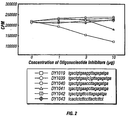
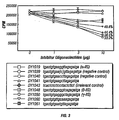
- Supernatants of the harvested splenocytes were incubated with 1 ⁇ g/ml of the DY1018 ISS-ODN or 1 ⁇ g/ml of the DY1038 ISS-ODN in normal saline (all oligonucleotide sequences are set forth in the legend to the FIGURES and in the Description of Drawings).
- the backbones of both DY1018 and DY1038 were modified as phosphorothioates.
- the ISS-ODN served as non-specific adjuvants for in vitro stimulation of the immune system.
- DY1039 an ISS with the cytosine methylated
- DY1040 and DY1043 the latter with CC dinucleotides in place of the CG dinucleotide of DY1018 and DY1038 served as controls.
- all of the oligonucleotides were identical to DY1038 ( FIGURES 1 and 3 ) or DY1018 ( FIGURE 2 ) except for the hexamer regions identified in the FIGURES and DY1043 (an irrelevant sequence control).
- Lymphocyte proliferation pre- and post-IIS-ODN administration was measured (as a function of counts per minute) using conventional assay techniques. Any observable changes in lymphocyte proliferation among the supernatants were noted. Values shown in FIGURES 1 through 3 are averages for each group of mice tested.
- FIGURES 1 through 3 The results of these assays are shown in FIGURES 1 through 3 .
- IIS-ON DY1019 having a hexamer region consisting of AAGGTT.
- Inhibitory strength was dose-dependent in a generally proportional relationship of dosage to reduction in lymphocyte proliferation measured.
- mice were immunized as described in Example I, sacrificied and their splenocytes harvested.
- Supernatants of harvested splenocytes was incubated with 1 ⁇ g/ml of DY1018 ISS-ODN in saline as described in Example I. Within 4 hours, the supernatants were incubated with various concentrations of IIS-ON or a control.
- DY1039 an ISS with the cytosine methylated
- DY1040 and DY 1043 the latter with CC dinucleotides in place of the CG dinucleotide of DY1018) served as controls (all oligonucleotide sequences are set forth in the legend to the FIGURES and in the Description of Drawings).
- all of the oligonucleotides were identical to DY1018 except for the hexamer regions identified and DY1043 (an irrelevant sequence control).
- IFN- ⁇ levels were measured pre- and post- IIS-ODN contact. Any observable changes in IFN- ⁇ secretion (pg/ml supernatants) among the supernatants were noted. Values shown in FIGURE 4 are averages for each group of mice tested.
- mice Groups of four Balb/c mice were co-immunized with 10 ⁇ g ⁇ -galactosidase antigen and 50 ⁇ g (in 50 ⁇ l normal saline) of IIS-ODN DY1019 (identified in the Figure as ⁇ -gal/M-ODN), the ISS-ODN composition ⁇ -gal/ISS-ODN (5'-AATTCAACGTTCGC-3'), the ⁇ -gal antigen and pKISS-3 (a plasmid having three copies of the AACGTT ISS-ODN hexamer in the backbone), the ⁇ -gal antigen and pKISS-0 (a control plasmid having no copies of the AACGTT ISS-ODN hexamer in the backbone), or saline alone.
- IIS-ODN DY1019 identified in the Figure as ⁇ -gal/M-ODN
- the ISS-ODN composition ⁇ -gal/ISS-ODN 5'-AATTCAACGTTC
- Th2 responses in each group of mice were measured by ELISA as a function of IgE levels obtained post-boosting.
- potent Th2-type responses (above 1000 CPM) were obtained only in the mice which received saline (approximately 1200 CPM at 1 week post-boosting) and ⁇ -gal/M-ODN (approximately 1750 CPM at 1 week post-boosting).
Landscapes
- Health & Medical Sciences (AREA)
- Chemical & Material Sciences (AREA)
- Life Sciences & Earth Sciences (AREA)
- Organic Chemistry (AREA)
- Engineering & Computer Science (AREA)
- Genetics & Genomics (AREA)
- General Health & Medical Sciences (AREA)
- Molecular Biology (AREA)
- Immunology (AREA)
- Bioinformatics & Cheminformatics (AREA)
- Biochemistry (AREA)
- Medicinal Chemistry (AREA)
- Zoology (AREA)
- Biotechnology (AREA)
- Biomedical Technology (AREA)
- General Chemical & Material Sciences (AREA)
- Public Health (AREA)
- Veterinary Medicine (AREA)
- Animal Behavior & Ethology (AREA)
- Pharmacology & Pharmacy (AREA)
- Chemical Kinetics & Catalysis (AREA)
- General Engineering & Computer Science (AREA)
- Biophysics (AREA)
- Wood Science & Technology (AREA)
- Microbiology (AREA)
- Nuclear Medicine, Radiotherapy & Molecular Imaging (AREA)
- Toxicology (AREA)
- Epidemiology (AREA)
- Gastroenterology & Hepatology (AREA)
- Physics & Mathematics (AREA)
- Mycology (AREA)
- Plant Pathology (AREA)
- Proteomics, Peptides & Aminoacids (AREA)
- Transplantation (AREA)
- Pharmaceuticals Containing Other Organic And Inorganic Compounds (AREA)
- Medicines That Contain Protein Lipid Enzymes And Other Medicines (AREA)
- Medicines Containing Antibodies Or Antigens For Use As Internal Diagnostic Agents (AREA)
- Measuring Or Testing Involving Enzymes Or Micro-Organisms (AREA)
- Peptides Or Proteins (AREA)
Claims (29)
- Verfahren zum Identifizieren eines Oligonucleotids (IIS-ON), das die immunstimulierende Aktivität von ISS-ODN hemmt, umfassend:(a) Kontaktieren einer Population von mit einem Antigen stimulierten Immunzellen mit einem immunstimulierenden Polynucleotid (ISS-ODN), das zumindest ein unmethyliertes 5'-CG-3'-Motiv umfasst, zur Induktion der Lymphozytenproliferation in, der Sekretion von IFN-β-, IFN-α-, IFN-γ-, IL-12- und IL-18-Zytokinen aus, der IgG1-Antikörperproduktion durch oder der IgE-Suppression in der (die) Population der mit dem Antigen stimulierten Immunzellen;(b) Messen jeder Veränderung der Anzahl der Lymphozyten oder des Ausmaßes der sekretierten Zytokine und/oder des Ausmaßes von IgE- oder IgG1-Antikörpern in der Population der mit einem Antigen stimulierten Zellen nach dem Kontakt mit dem ISS-ODN;(c) Kontaktieren der Population der mit einem Antigen stimulierten Zellen mit einem vermutlichen IIS-ON-hemmenden Oligonucleotid, wobei das IIS-ON eine hexamere Nucleotidsequenz der Formel 5'-Purin-Purin-[Y]-[Z]-Pyrimidin-Pyrimidin-3' oder 5'-Purin-Purin-[Y]-[Z]-Poly(pyrimidin)-3' umfasst, worin Y ein beliebiges natürlich vorkommendes oder synthetisches Nucleotid mit Ausnahme von Cytosin ist und Z ein beliebiges natürlich vorkommendes oder synthetisches Nucleotid ist und worin Z Guanosin oder Inosin ist, wenn Y nicht Guanosin oder Inosin ist; und(d) Messen jeder Veränderung der Anzahl an Lymphozyten oder des Ausmaßes von sekretierten IFN-β-, IFN-α-, IFN-γ-, IL-12- und IL-18-Zytokinen und/oder des Ausmaßes von IgE- oder IgG1-Antikörpern in der Population der mit einem Antigen stimulierten Zellen nach dem Kontakt mit dem Oligonucleotid, wobei ein Rückgang eines beliebigen der gemessenen Werte für Lymphozytenproliferation, Zytokinsekretion oder IgG1-Antikörperproduktion sowie ein Anstieg der IgE-Antikörperproduktion im Vergleich mit den in Schritt (b) durchgeführten Messungen anzeigt, dass das Oligonucleotid die immunstimulierende Aktivität des ISS-ODN aus Schritt (a) hemmt.
- Pharmazeutische Zusammensetzung, umfassend:a) ein Oligonucleotid, das eine hexamere Nucleotidsequenz der Formel 5'-Purin-Purin-[Y]-[Z]-Pyrimidin-Pyrimidin-3' oder 5'-Purin-Purin-[Y]-[Z]-Poly(pyrimidin)-3' umfasst, worin Y ein beliebiges natürlich vorkommendes oder synthetisches Nucleotid mit Ausnahme von Cytosin ist und Z ein beliebiges natürlich vorkommendes oder synthetisches Nucleotid ist und worin Z Guanosin oder Inosin ist, wenn Y nicht Guanosin oder Inosin ist, wobei das Oligonucleotid eine immunhemmende Wirkung gegen ein immunstimulierendes Polynucleotid aufweist, das zumindest ein unmethyliertes 5'-CG-3'-Motiv umfasst; undb) einen pharmazeutisch annehmbaren Träger,zur Verwendung in einem Verfahren zur Hemmung der Stimulation durch eine immunstimulierende Sequenz, die zumindest ein unmethyliertes CG-Motiv umfasst.
- Zusammensetzung zur Verwendung nach Anspruch 2, worin Y Guanosin oder Inosin ist.
- Zusammensetzung zur Verwendung nach Anspruch 2 oder 3, worin Y Inosin ist und Z Inosin oder Guanosin ist.
- Zusammensetzung nach Anspruch 2 oder 3, worin Y Guanosin ist und Z Guanosin oder ein unmethyliertes Cytosin ist.
- Zusammensetzung zur Verwendung nach Anspruch 2, worin die hexamere Nucleotidsequenz aus Folgendem ausgewählt ist: AAGGTT, AAGGTC, AAGGCC, AGGGTT, AGGGTC, AGGGCT, GGGGTT, GGGGTC, GGGGCT, GAGGTT, GAGGTC, GAGGCC, AAGCTT, AAGCTC, AAGCCC, AAGCCT, AGGCTC, AGGCCC, AGGCCT, GGGCTT, GGGCTC, GGGCCC, GAGCTT, GAGCTC, GAGCCC und GAGCCT.
- Zusammensetzung zur Verwendung nach einem der Ansprüche 2 bis 6, worin das Oligonucleotid 6 bis 45 Nucleotide lang ist.
- Zusammensetzung zur Verwendung nach einem der Ansprüche 2 bis 7, worin das Oligonucleotid eine oder mehrere Modifikationen der Phosphathauptkette aufweist.
- Zusammensetzung zur Verwendung nach Anspruch 8, worin die Phosphathauptkette eine Thiophosphatbindung umfasst.
- Zusammensetzung zur Verwendung nach einem der Ansprüche 2 bis 9, worin das Oligonucleotid an ein Peptid konjugiert ist.
- Zusammensetzung zur Verwendung nach einem der Ansprüche 2 bis 10 zur Linderung einer Entzündung in einem Wirt, die die Reaktion auf eine mikrobielle Infektion darstellt.
- Zusammensetzung zur Verwendung nach Anspruch 11, worin die Mikrobe in einem Wirbeltierwirt vorliegt.
- Zusammensetzung zur Verwendung nach einem der Ansprüche 2 bis 10 zur Verlängerung der Genexpression aus einem rekombinanten Expressionsvektor, von dem angenommen wird, dass er zumindest ein immunstimuüerendes Oligodesoxynucleotid (ISS-ODN) enthält.
- Zusammensetzung zur Verwendung nach Anspruch 13, worin der rekombinante Expressionsvektor in einem Wirbeltierwirt vorliegt.
- Zusammensetzung zur Verwendung nach einem der Ansprüche 2 bis 14 zur Verstärkung einer Immunreaktion vom Th2-Typ auf ein Antigen.
- Zusammensetzung zur Verwendung nach einem der Ansprüche 2 bis 14 zur Senkung der Th1-vermittelten Zytokinproduktion in einem Individuum.
- Zusammensetzung zur Verwendung nach Anspruch 16, worin das Th1-vermittelte Zytokin aus IL-12, Interferon-y und Tumornekrosefaktor-β ausgewählt ist.
- Verfahren zur Detektion von immunstimulierender ISS-ODN-Aktivität in einem Wirt, umfassend:(a) Bereitstellung einer Probe von aus dem Wirt erhaltenen Immunzellen, von denen angenommen wird, dass sie einem Antigen oder Autoantigen ausgesetzt wurden;(b) Messen des Ausmaßes der Lymphozytenproliferation in; der Sekretion von IFN-β-, IFN-α-, IFN-γ-, IL-12- und IL-18-Zytokinen aus; der IgG1-Antikörperproduktion durch; oder der IgE-Suppression in der (die) Probe der Immunzellen von dem Wirt;(c) Kontaktieren der Probe der Immunzellen des Wirts mit einem Oligonucleotid (IIS-ON), das eine hexamere Nucleotidstruktur der Formel 5'-Purin-Purin-[Y]-[Z]-Pyrimidin-Pyrimidin-3' oder 5'-Purin-Purin-[Y]-[Z]-Poly(pyrimidin)-3' umfasst, worin Y ein beliebiges natürlich vorkommendes oder synthetisches Nucleotid mit Ausnahme von Cytosin ist und Z ein beliebiges natürlich vorkommendes oder synthetisches Nucleotid ist und worin Z Guanosin oder Inosin ist, wenn Y nicht Guanosin oder Inosin ist, wobei das Oligonucleotid eine immunhemmende Wirkung gegen ein immunstimulierendes Polynucleotid aufweist, das zumindest ein unmethyliertes 5'-CG-3'-Motiv umfasst; und(d) Messen jeder Veränderung der Anzahl an Lymphozyten oder des Ausmaßes an sekretierten IFN-β-, IFN-α-, IFN-γ-, IL-12- und IL-18-Zytokinen und/oder des Ausmaßes von IgE- oder IgG1-Antikörpern in der Probe der Immunzellen von dem Wirt nach dem Kontakt mit ISS-ODN, wobei ein Rückgang eines beliebigen der gemessenen Werte für die Lymphozytenproliferation, die Zytokinsekretion oder IgG2-Antikörperproduktion sowie ein Anstieg der IgG1- oder IgE-Antikörperproduktion im Vergleich mit den in Schritt (b) vorgenommenen Messungen anzeigt, dass ein ISS-ODN, das durch IIS-ON gehemmt wird, in der Probe der Immunzellen von dem Wirt vorhanden ist.
- Verwendung einer pharmazeutischen Zusammensetzung, umfassend:a) ein Oligonucleotid, das eine hexamere Nucleotidsequenz der Formel 5'-Purin-Purin-[Y]-[Z]-Pyrimidin-Pyrimidin-3' oder 5'-Purin-Purin-[Y]-[Z]-Poly(pyrimidin)-3' umfasst, worin Y ein beliebiges natürlich vorkommendes oder synthetisches Nucleotid mit Ausnahme von Cytosin ist und Z ein beliebiges natürlich vorkommendes oder synthetisches Nucleotid ist und worin Z Guanosin oder Inosin ist, wenn Y nicht Guanosin oder Inosin ist, wobei das Oligonucleotid eine immunhemmende Wirkung gegen ein immunstimulierendes Polynucleotid aufweist, das zumindest ein unmethyliertes 5'-CG-3'-Motiv umfasst; undb) einen pharmazeutisch annehmbaren Träger,zur Herstellung eines Medikaments zur Hemmung der Stimulation durch eine immunstimulierende Sequenz, die zumindest ein unmethyliertes CG-Motiv umfasst.
- Verwendung nach Anspruch 19, worin Y Guanosin oder Inosin ist.
- Verwendung nach Anspruch 19 oder 20, worin Y Inosin ist und Z Inosin oder Guanosin ist.
- Verwendung nach Anspruch 19 oder 20, worin Y Guanosin ist und Z Guanosin oder ein unmethyliertes Cytosin ist.
- Verwendung nach einem der Ansprüche 19 bis 22, worin das Oligonucleotid 6 bis 45 Nucleotide lang ist.
- Verwendung nach einem der Ansprüche 19 bis 23 zur Linderung einer Entzündung in einem Wirt, die die Reaktion auf eine mikrobielle Infektion darstellt.
- Verwendung nach Anspruch 24, worin die Mikrobe in einem Wirbeltierwirt vorliegt.
- Verwendung nach einem der Ansprüche 19 bis 25 zur Verlängerung der Genexpression aus einem rekombinanten Expressionsvektor, von dem angenommen wird, dass er zumindest ein immunstimulierendes Oligodesoxynucleotid (ISS-ODN) enthält.
- Verwendung nach Anspruch 26, worin der rekombinante Expressionsvektor in einem Wirbeltierwirt vorliegt.
- Verwendung nach einem der Ansprüche 19 bis 27 zur Verstärkung einer Immunreaktion vom Th2-Typ auf ein Antigen.
- Verwendung nach einem der Ansprüche 19 bis 27 zur Reduktion der Th1-vermittelten Zytokinproduktion in einem Individuum.
Priority Applications (2)
| Application Number | Priority Date | Filing Date | Title |
|---|---|---|---|
| EP09005807A EP2085090A3 (de) | 1997-06-06 | 1998-06-05 | Inhibitoren von immunstimulatorischen DNA Sequenz Aktivität |
| CY20091100815T CY1109287T1 (el) | 1997-06-06 | 2009-08-03 | Αναστολεις της δρασεως ανοσοδιεγερτικων αλληλουχιων dna |
Applications Claiming Priority (3)
| Application Number | Priority Date | Filing Date | Title |
|---|---|---|---|
| US4879397P | 1997-06-06 | 1997-06-06 | |
| US48793P | 1997-06-06 | ||
| PCT/US1998/011391 WO1998055609A1 (en) | 1997-06-06 | 1998-06-05 | Inhibitors of dna immunostimulatory sequence activity |
Related Child Applications (1)
| Application Number | Title | Priority Date | Filing Date |
|---|---|---|---|
| EP09005807A Division EP2085090A3 (de) | 1997-06-06 | 1998-06-05 | Inhibitoren von immunstimulatorischen DNA Sequenz Aktivität |
Publications (3)
| Publication Number | Publication Date |
|---|---|
| EP1003850A1 EP1003850A1 (de) | 2000-05-31 |
| EP1003850A4 EP1003850A4 (de) | 2005-07-06 |
| EP1003850B1 true EP1003850B1 (de) | 2009-05-27 |
Family
ID=21956478
Family Applications (3)
| Application Number | Title | Priority Date | Filing Date |
|---|---|---|---|
| EP98926229A Expired - Lifetime EP1003850B1 (de) | 1997-06-06 | 1998-06-05 | Inhibitoren von immunstimulatorischen dna sequenz aktivität |
| EP98926311A Expired - Lifetime EP0986572B2 (de) | 1997-06-06 | 1998-06-05 | Immunstimulierende oligonucleotide, zusammensetzungen davon, und verfahren zur verwendung davon |
| EP09005807A Withdrawn EP2085090A3 (de) | 1997-06-06 | 1998-06-05 | Inhibitoren von immunstimulatorischen DNA Sequenz Aktivität |
Family Applications After (2)
| Application Number | Title | Priority Date | Filing Date |
|---|---|---|---|
| EP98926311A Expired - Lifetime EP0986572B2 (de) | 1997-06-06 | 1998-06-05 | Immunstimulierende oligonucleotide, zusammensetzungen davon, und verfahren zur verwendung davon |
| EP09005807A Withdrawn EP2085090A3 (de) | 1997-06-06 | 1998-06-05 | Inhibitoren von immunstimulatorischen DNA Sequenz Aktivität |
Country Status (12)
| Country | Link |
|---|---|
| US (4) | US6225292B1 (de) |
| EP (3) | EP1003850B1 (de) |
| JP (2) | JP4101888B2 (de) |
| AT (2) | ATE432348T1 (de) |
| AU (2) | AU755322B2 (de) |
| CA (2) | CA2293489C (de) |
| CY (1) | CY1109287T1 (de) |
| DE (2) | DE69840850D1 (de) |
| DK (1) | DK1003850T3 (de) |
| ES (1) | ES2326848T3 (de) |
| PT (1) | PT1003850E (de) |
| WO (2) | WO1998055495A2 (de) |
Families Citing this family (208)
| Publication number | Priority date | Publication date | Assignee | Title |
|---|---|---|---|---|
| US6727230B1 (en) | 1994-03-25 | 2004-04-27 | Coley Pharmaceutical Group, Inc. | Immune stimulation by phosphorothioate oligonucleotide analogs |
| US20030026782A1 (en) | 1995-02-07 | 2003-02-06 | Arthur M. Krieg | Immunomodulatory oligonucleotides |
| US6429199B1 (en) * | 1994-07-15 | 2002-08-06 | University Of Iowa Research Foundation | Immunostimulatory nucleic acid molecules for activating dendritic cells |
| US7935675B1 (en) * | 1994-07-15 | 2011-05-03 | University Of Iowa Research Foundation | Immunostimulatory nucleic acid molecules |
| US6207646B1 (en) * | 1994-07-15 | 2001-03-27 | University Of Iowa Research Foundation | Immunostimulatory nucleic acid molecules |
| US6239116B1 (en) * | 1994-07-15 | 2001-05-29 | University Of Iowa Research Foundation | Immunostimulatory nucleic acid molecules |
| GB2324093A (en) | 1996-01-04 | 1998-10-14 | Rican Limited | Helicobacter pylori bacterioferritin |
| ATE292980T1 (de) * | 1996-10-11 | 2005-04-15 | Univ California | Immunostimulierende oligonucleotidekonjugate |
| EP0855184A1 (de) | 1997-01-23 | 1998-07-29 | Grayson B. Dr. Lipford | Pharmazeutisches Präparat das ein Polynukleotid und ein Antigen enthält, insbesondere zur Impfung |
| WO1998037919A1 (en) | 1997-02-28 | 1998-09-03 | University Of Iowa Research Foundation | USE OF NUCLEIC ACIDS CONTAINING UNMETHYLATED CpG DINUCLEOTIDE IN THE TREATMENT OF LPS-ASSOCIATED DISORDERS |
| US6406705B1 (en) * | 1997-03-10 | 2002-06-18 | University Of Iowa Research Foundation | Use of nucleic acids containing unmethylated CpG dinucleotide as an adjuvant |
| AU733310C (en) | 1997-05-14 | 2001-11-29 | University Of British Columbia, The | High efficiency encapsulation of charged therapeutic agents in lipid vesicles |
| US6589940B1 (en) | 1997-06-06 | 2003-07-08 | Dynavax Technologies Corporation | Immunostimulatory oligonucleotides, compositions thereof and methods of use thereof |
| EP1003850B1 (de) * | 1997-06-06 | 2009-05-27 | The Regents of the University of California | Inhibitoren von immunstimulatorischen dna sequenz aktivität |
| WO1999001154A1 (en) * | 1997-07-03 | 1999-01-14 | University Of Iowa Research Foundation | Method for inhibiting immunostimulatory dna associated responses |
| JP4663113B2 (ja) * | 1997-09-05 | 2011-03-30 | ザ リージェンツ オブ ザ ユニバーシティ オブ カリフォルニア | 抗原刺激顆粒球媒介炎症を予防または軽減するための免疫刺激オリゴヌクレオチドの使用 |
| SI1077722T1 (sl) | 1998-05-22 | 2007-02-28 | Ottawa Health Research Inst | Metode in produkti za induciranje sluznicne imunosti |
| US6562798B1 (en) * | 1998-06-05 | 2003-05-13 | Dynavax Technologies Corp. | Immunostimulatory oligonucleotides with modified bases and methods of use thereof |
| PT1104306E (pt) | 1998-08-10 | 2006-05-31 | Antigenics Inc | Composicoes de cpg e adjuvantes de saponina e seus metodos |
| AU6425999A (en) * | 1998-10-09 | 2000-05-01 | Dynavax Technologies Corporation | Anti hiv compositions comprising immunostimulatory polynucleotides and hiv antigens |
| CA2371994C (en) * | 1999-02-26 | 2010-09-28 | Guido Grandi | Enhancement of bactericidal activity of neisseria antigens with oligonucleotides containing cg motifs |
| EP1156781B1 (de) | 1999-02-26 | 2005-06-08 | Chiron Corporation | Mikroemulsionen mit adsorbierten makromolekülen und mikropartikeln |
| GB2348132B (en) * | 1999-03-02 | 2004-08-04 | Nedaa Abdul-Ghani Nasif | Asthma/allergy therapy that targets t-lymphocytes and/or eosinophils |
| WO2000054803A2 (en) * | 1999-03-16 | 2000-09-21 | Panacea Pharmaceuticals, Llc | Immunostimulatory nucleic acids and antigens |
| FR2790955B1 (fr) * | 1999-03-19 | 2003-01-17 | Assist Publ Hopitaux De Paris | Utilisation d'oligonucleotides stabilises comme principe actif antitumoral |
| US6977245B2 (en) | 1999-04-12 | 2005-12-20 | The United States Of America As Represented By The Department Of Health And Human Services | Oligodeoxynucleotide and its use to induce an immune response |
| EP1176966B1 (de) | 1999-04-12 | 2013-04-03 | THE GOVERNMENT OF THE UNITED STATES OF AMERICA, as represented by THE SECRETARY, DEPARTMENT OF HEALTH AND HUMAN SERVICES | Oligodeoxynukleotide und deren verwendung zur induktion einer immunreaktion |
| US6558670B1 (en) | 1999-04-19 | 2003-05-06 | Smithkline Beechman Biologicals S.A. | Vaccine adjuvants |
| PT1187629E (pt) | 1999-04-19 | 2005-02-28 | Glaxosmithkline Biolog Sa | Composicao adjuvante que compreende saponina e um oligonucleotido imunoestimulador |
| WO2000067787A2 (en) * | 1999-05-06 | 2000-11-16 | The Immune Response Corporation | Hiv immunogenic compositions and methods |
| US6737066B1 (en) | 1999-05-06 | 2004-05-18 | The Immune Response Corporation | HIV immunogenic compositions and methods |
| ATE419869T1 (de) | 1999-08-19 | 2009-01-15 | Dynavax Tech Corp | Methode zur modulierung eines immunantwortes mit immunstimulierenden sequencen und zusammensetzungen dafür |
| EP1212085B1 (de) * | 1999-08-27 | 2007-10-31 | INEX Pharmaceuticals Corp. | Zusammensetzungen zur stimulation der zytokin sekretion und zur induktion einer immunantwort |
| US6949520B1 (en) * | 1999-09-27 | 2005-09-27 | Coley Pharmaceutical Group, Inc. | Methods related to immunostimulatory nucleic acid-induced interferon |
| JP2004508801A (ja) | 1999-10-29 | 2004-03-25 | カイロン ソチエタ ア レスポンサビリタ リミタータ | ナイセリア抗原性ペプチド |
| US7223398B1 (en) * | 1999-11-15 | 2007-05-29 | Dynavax Technologies Corporation | Immunomodulatory compositions containing an immunostimulatory sequence linked to antigen and methods of use thereof |
| AU2001227889A1 (en) | 2000-01-14 | 2001-07-24 | The United States of America, represented by The Secretary, Department of Health & Human Services | Oligodeoxynucleotide and its use to induce an immune response |
| US20010044416A1 (en) * | 2000-01-20 | 2001-11-22 | Mccluskie Michael J. | Immunostimulatory nucleic acids for inducing a Th2 immune response |
| US7585847B2 (en) | 2000-02-03 | 2009-09-08 | Coley Pharmaceutical Group, Inc. | Immunostimulatory nucleic acids for the treatment of asthma and allergy |
| US20040131628A1 (en) * | 2000-03-08 | 2004-07-08 | Bratzler Robert L. | Nucleic acids for the treatment of disorders associated with microorganisms |
| US20030129251A1 (en) | 2000-03-10 | 2003-07-10 | Gary Van Nest | Biodegradable immunomodulatory formulations and methods for use thereof |
| US20010046967A1 (en) * | 2000-03-10 | 2001-11-29 | Gary Van Nest | Methods of preventing and treating respiratory viral infection using immunomodulatory polynucleotide |
| US20020028784A1 (en) * | 2000-03-10 | 2002-03-07 | Nest Gary Van | Methods of preventing and treating viral infections using immunomodulatory polynucleotide sequences |
| US7129222B2 (en) | 2000-03-10 | 2006-10-31 | Dynavax Technologies Corporation | Immunomodulatory formulations and methods for use thereof |
| US20020107212A1 (en) * | 2000-03-10 | 2002-08-08 | Nest Gary Van | Methods of reducing papillomavirus infection using immunomodulatory polynucleotide sequences |
| US20020098199A1 (en) * | 2000-03-10 | 2002-07-25 | Gary Van Nest | Methods of suppressing hepatitis virus infection using immunomodulatory polynucleotide sequences |
| US7157437B2 (en) * | 2000-03-10 | 2007-01-02 | Dynavax Technologies Corporation | Methods of ameliorating symptoms of herpes infection using immunomodulatory polynucleotide sequences |
| RU2413520C2 (ru) | 2000-06-08 | 2011-03-10 | Интерселл Аг | Вакцинная композиция, содержащая иммуностимулирующие олигодезоксинуклеотиды |
| EP1296714B1 (de) | 2000-06-22 | 2009-08-26 | University Of Iowa Research Foundation | Kombination von CpG und Antikörpern gegen CD19,CD20,CD22 oder CD40 zur Prävention oder Behandlung von Krebs. |
| AU2001282475A1 (en) * | 2000-08-25 | 2002-03-04 | Yeda Research And Development Co. Ltd. | Methods of treatment or prevention of autoimmune diseases with CpG-containing polynucleotide |
| CA2881568C (en) | 2000-10-27 | 2019-09-24 | Novartis Vaccines And Diagnostics, Inc. | Nucleic acids and proteins from streptococcus groups a & b |
| ES2307568T3 (es) * | 2000-12-08 | 2008-12-01 | Coley Pharmaceutical Gmbh | Acidos nucleicos de tipo cpg y metodos de uso de los mismos. |
| KR100881923B1 (ko) * | 2000-12-27 | 2009-02-04 | 다이나박스 테크놀로지 코퍼레이션 | 면역자극 폴리뉴클레오티드 및 그것의 사용 방법 |
| WO2002094845A2 (en) | 2001-05-21 | 2002-11-28 | Intercell Ag | Method for stabilising of nucleic acids |
| ES2340499T3 (es) | 2001-06-05 | 2010-06-04 | Curevac Gmbh | Arnm de antigeno tumoral estabilizado con un contenido de g/c aumentado. |
| GB0115176D0 (en) | 2001-06-20 | 2001-08-15 | Chiron Spa | Capular polysaccharide solubilisation and combination vaccines |
| EP2423335B1 (de) * | 2001-06-21 | 2014-05-14 | Dynavax Technologies Corporation | Chimäre immunmodulierende Verbindungen und Verwendungsverfahren dafür |
| GB0118249D0 (en) | 2001-07-26 | 2001-09-19 | Chiron Spa | Histidine vaccines |
| GB0121591D0 (en) | 2001-09-06 | 2001-10-24 | Chiron Spa | Hybrid and tandem expression of neisserial proteins |
| US7666674B2 (en) | 2001-07-27 | 2010-02-23 | The United States Of America As Represented By The Secretary Of The Department Of Health And Human Services | Use of sterically stabilized cationic liposomes to efficiently deliver CPG oligonucleotides in vivo |
| US20030148316A1 (en) * | 2001-08-01 | 2003-08-07 | Lipford Grayson B. | Methods and compositions relating to plasmacytoid dendritic cells |
| US20030133988A1 (en) | 2001-08-07 | 2003-07-17 | Fearon Karen L. | Immunomodulatory compositions, formulations, and methods for use thereof |
| WO2003020884A2 (en) * | 2001-08-14 | 2003-03-13 | The Government Of The United States Of America As Represented By The Secretary Of Health And Human Services | Method for rapid generation of mature dendritic cells |
| DE60234375D1 (de) | 2001-09-14 | 2009-12-24 | Cytos Biotechnology Ag | VERPACKUNG VON IMMUNSTIMULIERENDEM CpG IN VIRUSÄHNLICHEN PARTIKELN: HERSTELLUNGSVERFAHREN UND VERWENDUNG |
| AR045702A1 (es) | 2001-10-03 | 2005-11-09 | Chiron Corp | Composiciones de adyuvantes. |
| CN101670119A (zh) * | 2001-11-21 | 2010-03-17 | 利兰·斯坦福青年大学托管委员会 | 多核苷酸 |
| DE10162480A1 (de) | 2001-12-19 | 2003-08-07 | Ingmar Hoerr | Die Applikation von mRNA für den Einsatz als Therapeutikum gegen Tumorerkrankungen |
| WO2003054161A2 (en) | 2001-12-20 | 2003-07-03 | The Government Of The United States Of America As Represented By The Secretary Of The Department Of Health And Human Services | USE OF CpG OLIGODEOXYNUCLEOTIDES TO INDUCE ANGIOGENESIS |
| US8466116B2 (en) | 2001-12-20 | 2013-06-18 | The Unites States Of America As Represented By The Secretary Of The Department Of Health And Human Services | Use of CpG oligodeoxynucleotides to induce epithelial cell growth |
| EP2572707A3 (de) | 2002-02-20 | 2013-11-06 | Novartis Vaccines and Diagnostics, Inc. | Mikropartikel mit adsorbierten polypeptidhaltigen Molekülen |
| CA2388049A1 (en) | 2002-05-30 | 2003-11-30 | Immunotech S.A. | Immunostimulatory oligonucleotides and uses thereof |
| US20040009949A1 (en) * | 2002-06-05 | 2004-01-15 | Coley Pharmaceutical Group, Inc. | Method for treating autoimmune or inflammatory diseases with combinations of inhibitory oligonucleotides and small molecule antagonists of immunostimulatory CpG nucleic acids |
| US7807803B2 (en) | 2002-07-03 | 2010-10-05 | Coley Pharmaceutical Group, Inc. | Nucleic acid compositions for stimulating immune responses |
| WO2004005476A2 (en) * | 2002-07-03 | 2004-01-15 | Coley Pharmaceutical Group, Inc. | Nucleic acid compositions for stimulating immune responses |
| US20040053880A1 (en) | 2002-07-03 | 2004-03-18 | Coley Pharmaceutical Group, Inc. | Nucleic acid compositions for stimulating immune responses |
| US7576066B2 (en) | 2002-07-03 | 2009-08-18 | Coley Pharmaceutical Group, Inc. | Nucleic acid compositions for stimulating immune responses |
| DE10229872A1 (de) | 2002-07-03 | 2004-01-29 | Curevac Gmbh | Immunstimulation durch chemisch modifizierte RNA |
| US7569553B2 (en) | 2002-07-03 | 2009-08-04 | Coley Pharmaceutical Group, Inc. | Nucleic acid compositions for stimulating immune responses |
| US7605138B2 (en) | 2002-07-03 | 2009-10-20 | Coley Pharmaceutical Group, Inc. | Nucleic acid compositions for stimulating immune responses |
| AU2003253888A1 (en) * | 2002-07-15 | 2004-02-02 | Gilead Sciences, Inc. | Combination therapies with l-fmau for the treatment of hepatitis b virus infection |
| CN100471486C (zh) | 2002-08-12 | 2009-03-25 | 戴纳伐克斯技术股份有限公司 | 免疫调节组合物,其制备方法和使用方法 |
| GB0220194D0 (en) | 2002-08-30 | 2002-10-09 | Chiron Spa | Improved vesicles |
| US8263091B2 (en) * | 2002-09-18 | 2012-09-11 | The United States Of America As Represented By The Secretary Of The Department Of Health And Human Services | Method of treating and preventing infections in immunocompromised subjects with immunostimulatory CpG oligonucleotides |
| CN1753687A (zh) | 2002-10-29 | 2006-03-29 | 科勒制药集团股份有限公司 | Cpg寡核苷酸在治疗丙型肝炎病毒感染中的应用 |
| WO2004098491A2 (en) * | 2002-11-01 | 2004-11-18 | The Government Of The United States Of America As Represented By The Secretary Of The Department Of Health And Human Services | METHOD OF PREVENTING INFECTIONS FROM BIOTERRORISM AGENTS WITH IMMUNOSTIMULATORY CpG OLIGONUCLEOTIDES |
| EP1562982B1 (de) | 2002-11-15 | 2010-05-05 | Novartis Vaccines and Diagnostics S.r.l. | Unerwartete oberflächenproteine in neisseria meningitidis |
| DK1569696T3 (da) | 2002-11-21 | 2010-11-15 | Bayhill Therapeutics Inc | Fremgangsmåder og immunmodulatoriske nukleinsyrepræparater til forebyggelse og behandling af sygdomme |
| GB0227346D0 (en) | 2002-11-22 | 2002-12-31 | Chiron Spa | 741 |
| CA2502015A1 (en) | 2002-12-11 | 2004-06-24 | Coley Pharmaceutical Group, Inc. | 5' cpg nucleic acids and methods of use |
| WO2004058159A2 (en) | 2002-12-23 | 2004-07-15 | Dynavax Technologies Corporation | Branched immunomodulatory compounds and methods of using the same |
| JP5102959B2 (ja) | 2002-12-23 | 2012-12-19 | ダイナバックス テクノロジーズ コーポレイション | 免疫刺激配列オリゴヌクレオチド及びその使用方法 |
| US8158768B2 (en) | 2002-12-23 | 2012-04-17 | Dynavax Technologies Corporation | Immunostimulatory sequence oligonucleotides and methods of using the same |
| EP2263687B1 (de) | 2002-12-27 | 2015-03-25 | Novartis Vaccines and Diagnostics, Inc. | Immunogene zusammensetzungen enthaltend phospholipid |
| CA2513655C (en) | 2003-01-21 | 2011-11-22 | Chiron Corporation | Use of tryptanthrin compounds for immune potentiation |
| WO2004074454A2 (en) | 2003-02-20 | 2004-09-02 | University Of Connecticut Health Center | Methods and compositions for the treatment of cancer and infectious disease using alpha (2) macroglobulin-antigenic molecule complexes |
| AU2004224761A1 (en) | 2003-03-26 | 2004-10-07 | Cytos Biotechnology Ag | HIV-peptide-carrier-conjugates |
| US7537767B2 (en) | 2003-03-26 | 2009-05-26 | Cytis Biotechnology Ag | Melan-A- carrier conjugates |
| WO2004087153A2 (en) | 2003-03-28 | 2004-10-14 | Chiron Corporation | Use of organic compounds for immunopotentiation |
| AU2004226605A1 (en) * | 2003-04-02 | 2004-10-14 | Coley Pharmaceutical Group, Ltd. | Immunostimulatory nucleic acid oil-in-water formulations for topical application |
| JP2007537985A (ja) * | 2003-05-15 | 2007-12-27 | ザ ボード オブ トラスティーズ オブ ザ リランド スタンフォード ジュニア ユニバーシティー | 免疫調節ペプチド |
| KR100872472B1 (ko) * | 2003-05-15 | 2008-12-05 | 도꾸리쯔교세이호징 가가꾸 기쥬쯔 신꼬 기꼬 | 면역자극제 |
| JP5557415B2 (ja) | 2003-06-02 | 2014-07-23 | ノバルティス バクシンズ アンド ダイアグノスティックス,インコーポレーテッド | 吸着させたトキソイドおよび多糖類含有抗原を含む微粒子に基づく免疫原性組成物 |
| US20060035242A1 (en) | 2004-08-13 | 2006-02-16 | Michelitsch Melissa D | Prion-specific peptide reagents |
| AU2004275876B2 (en) | 2003-09-25 | 2011-03-31 | Coley Pharmaceutical Gmbh | Nucleic acid-lipophilic conjugates |
| US20050239733A1 (en) * | 2003-10-31 | 2005-10-27 | Coley Pharmaceutical Gmbh | Sequence requirements for inhibitory oligonucleotides |
| JP4817599B2 (ja) * | 2003-12-25 | 2011-11-16 | 独立行政法人科学技術振興機構 | 免疫活性増強剤とこれを用いた免疫活性の増強方法 |
| JP3976742B2 (ja) | 2004-02-27 | 2007-09-19 | 江守商事株式会社 | インターフェロンアルファを誘導する免疫刺激オリゴヌクレオチド |
| TWI235440B (en) * | 2004-03-31 | 2005-07-01 | Advanced Semiconductor Eng | Method for making leadless semiconductor package |
| WO2006115509A2 (en) | 2004-06-24 | 2006-11-02 | Novartis Vaccines And Diagnostics Inc. | Small molecule immunopotentiators and assays for their detection |
| WO2006002422A2 (en) | 2004-06-24 | 2006-01-05 | Novartis Vaccines And Diagnostics Inc. | Compounds for immunopotentiation |
| JP2008514187A (ja) | 2004-09-01 | 2008-05-08 | ダイナバックス テクノロジーズ コーポレイション | 先天性免疫応答及び自己免疫疾患の阻害法及び阻害用組成物 |
| JP2008000001A (ja) * | 2004-09-30 | 2008-01-10 | Osaka Univ | 免疫刺激オリゴヌクレオチドおよびその医薬用途 |
| US20060135906A1 (en) * | 2004-11-16 | 2006-06-22 | Akihiko Matsumura | Iontophoretic device and method for administering immune response-enhancing agents and compositions |
| CA2591582A1 (en) * | 2004-12-17 | 2006-06-22 | Dynavax Technologies Corporation | Methods and compositions for induction or promotion of immune tolerance |
| US8420102B2 (en) | 2006-03-07 | 2013-04-16 | Vaxinnate Corporation | Compositions that include hemagglutinin |
| WO2006081259A2 (en) | 2005-01-27 | 2006-08-03 | Children's Hospital & Research Center At Oakland | Gna1870-based vesicle vaccines for broad spectrum protection against diseases caused by neisseria meningitidis |
| US20080009455A9 (en) * | 2005-02-24 | 2008-01-10 | Coley Pharmaceutical Group, Inc. | Immunostimulatory oligonucleotides |
| CN101171033A (zh) | 2005-03-04 | 2008-04-30 | 戴纳瓦克斯技术公司 | 包含具免疫刺激序列iss之寡核苷酸的疫苗:其中iss与抗原缀合并通过缓冲条件和其他赋形剂稳定 |
| US8642577B2 (en) * | 2005-04-08 | 2014-02-04 | Chimerix, Inc. | Compounds, compositions and methods for the treatment of poxvirus infections |
| EP2842559A3 (de) * | 2005-04-08 | 2015-03-18 | Chimerix, Inc. | Verbindungen, Zusammensetzungen und Verfahren zur Behandlung viraler Infektionen und anderer Erkrankungen |
| KR20080066712A (ko) * | 2005-09-30 | 2008-07-16 | 티티아이 엘뷰 가부시키가이샤 | 관능화된 미세바늘 경피 약물 전달 시스템, 장치 및 방법 |
| KR20080080087A (ko) * | 2005-09-30 | 2008-09-02 | 티티아이 엘뷰 가부시키가이샤 | 신규 약학 담체를 이용한 경피 약물 전달시스템, 장치 및방법 |
| US20070078376A1 (en) * | 2005-09-30 | 2007-04-05 | Smith Gregory A | Functionalized microneedles transdermal drug delivery systems, devices, and methods |
| CA2636139A1 (en) | 2005-12-14 | 2007-06-21 | Cytos Biotechnology Ag | Immunostimulatory nucleic acid packaged particles for the treatment of hypersensitivity |
| WO2007089871A2 (en) * | 2006-02-01 | 2007-08-09 | The Johns Hopkins University | Polypeptide-nucleic acid conjugate for immunoprophylaxis or immunotherapy for neoplastic or infectious disorders |
| DK2405002T3 (en) * | 2006-02-15 | 2015-01-05 | Adiutide Pharmaceuticals Gmbh | Compositions and methods for oligonukleotidformuleringer |
| CN101460620B (zh) | 2006-05-31 | 2012-02-15 | 东丽株式会社 | 免疫刺激寡核苷酸及其药物用途 |
| US8541559B2 (en) | 2006-06-12 | 2013-09-24 | Cytos Biotechnology Ag | Process for producing aggregated oligonucleotides |
| JP2009540016A (ja) * | 2006-06-13 | 2009-11-19 | ベイヒル セラピューティクス インコーポレーティッド | 疾患を予防および処置するための方法および免疫調節核酸組成物 |
| DE102006035618A1 (de) * | 2006-07-31 | 2008-02-07 | Curevac Gmbh | Nukleinsäure der Formel (I): GlXmGn, insbesondere als immunstimulierendes Adjuvanz |
| EP2046954A2 (de) | 2006-07-31 | 2009-04-15 | Curevac GmbH | Nukleinsäure der formel (i): gixngn, oder (ii): cixmcn, insbesondere als immunstimulierendes mittel/adjuvans |
| AU2007333368C1 (en) | 2006-11-09 | 2014-03-13 | Dynavax Technologies Corporation | Long term disease modification using immunostimulatory oligonucleotides |
| RU2010107199A (ru) * | 2007-07-31 | 2011-09-10 | Дзе Джонс Хопкинс Юниверсити (Us) | Конъюгат полипептид-нуклеиновая кислота для иммунопрофилактики или иммунотерапии для неопластических или инфекционных нарушений |
| KR20100053598A (ko) * | 2007-08-01 | 2010-05-20 | 이데라 파마슈티칼즈, 인코포레이티드 | Tlr9의 신규한 합성 효능제 |
| WO2009030254A1 (en) | 2007-09-04 | 2009-03-12 | Curevac Gmbh | Complexes of rna and cationic peptides for transfection and for immunostimulation |
| EP2209896B1 (de) | 2007-10-26 | 2017-03-01 | Dynavax Technologies Corporation | Verfahren und zusammensetzungen zur hemmung von immunantworten und autoimmunität |
| EP2612867A1 (de) | 2007-11-01 | 2013-07-10 | Perseid Therapeutics LLC | Immunsuppressive Polypeptide und Nucleinsäuren |
| EP3067048B1 (de) | 2007-12-07 | 2018-02-14 | GlaxoSmithKline Biologicals SA | Zusammensetzungen zur induzierung von immunreaktionen |
| ES2572631T3 (es) * | 2008-01-25 | 2016-06-01 | Chimerix, Inc. | Métodos de tratamiento de infecciones virales |
| AU2009223613B2 (en) | 2008-03-10 | 2014-09-25 | Children's Hospital & Research Center At Oakland | Chimeric factor H binding proteins (fHBP) containing a heterologous B domain and methods of use |
| AU2009236585B2 (en) | 2008-04-18 | 2013-03-07 | Vaxinnate Corporation | Deletion mutants of flagellin and methods of use |
| AU2009246169B2 (en) | 2008-05-15 | 2015-01-22 | Dynavax Technologies Corporation | Long term disease modification using immunostimulatory oligonucleotides |
| GB0809476D0 (en) * | 2008-05-23 | 2008-07-02 | Cambridge Entpr Ltd | Treatment of neurodegenerative disorders |
| ES2569907T3 (es) | 2008-06-27 | 2016-05-13 | Zoetis Services Llc | Composiciones adyuvantes novedosas |
| WO2010037408A1 (en) | 2008-09-30 | 2010-04-08 | Curevac Gmbh | Composition comprising a complexed (m)rna and a naked mrna for providing or enhancing an immunostimulatory response in a mammal and uses thereof |
| BRPI0922561A2 (pt) | 2008-12-09 | 2020-08-11 | Pfizer Vaccines Llc | vacina de peptídeo de ch3 da ige. |
| US8425922B2 (en) | 2009-01-05 | 2013-04-23 | EpitoGenesis, Inc. | Adjuvant compositions and methods of use |
| CN103800906B (zh) | 2009-03-25 | 2017-09-22 | 德克萨斯大学系统董事会 | 用于刺激哺乳动物对病原体的先天免疫抵抗力的组合物 |
| WO2011011519A1 (en) | 2009-07-21 | 2011-01-27 | Chimerix, Inc. | Compounds, compositions and methods for treating ocular conditions |
| JP2013500326A (ja) | 2009-07-30 | 2013-01-07 | ファイザー バクシーンズ エルエルシー | 抗原性タウペプチドおよびその使用 |
| US20110053829A1 (en) | 2009-09-03 | 2011-03-03 | Curevac Gmbh | Disulfide-linked polyethyleneglycol/peptide conjugates for the transfection of nucleic acids |
| WO2011027257A2 (en) | 2009-09-03 | 2011-03-10 | Pfizer Vaccines Llc | Pcsk9 vaccine |
| US20120282276A1 (en) | 2009-11-05 | 2012-11-08 | The Regents Of The University Of Michigan | Biomarkers predictive of progression of fibrosis |
| RU2581020C2 (ru) | 2009-12-22 | 2016-04-10 | Селлдекс Терапьютикс, Инк. | Композиции вакцин |
| US9006218B2 (en) | 2010-02-12 | 2015-04-14 | Chimerix Inc. | Nucleoside phosphonate salts |
| EP2542670A2 (de) | 2010-03-05 | 2013-01-09 | President and Fellows of Harvard College | Zusammensetzungen aus induzierten dentritischen zellen und ihre verwendung |
| TR201802933T4 (tr) | 2010-03-30 | 2018-03-21 | Childrens Hospital & Res Center At Oakland | Özellikleri değiştirilmiş faktör h bağlama proteinleri (fhbp) ve bunların kullanım yöntemi. |
| CA2797601A1 (en) | 2010-04-26 | 2011-11-10 | Chimerix, Inc. | Methods of treating retroviral infections and related dosage regimes |
| US8895017B2 (en) | 2010-06-07 | 2014-11-25 | Pfizer Inc. | HER-2 peptides and vaccines |
| EP2575868A1 (de) | 2010-06-07 | 2013-04-10 | Pfizer Vaccines LLC | Ige-ch3-peptidimpfstoff |
| EP2582398B1 (de) | 2010-06-16 | 2016-04-13 | Dynavax Technologies Corporation | Verfahren zur behandlung unter verwendung von tlr7- und/oder tlr9-hemmern |
| KR101761388B1 (ko) | 2010-07-30 | 2017-07-25 | 큐어백 아게 | 트랜스펙션 및 면역 자극을 위한 이황화-크로스링크된 양이온 성분 및 핵산의 복합체 |
| WO2012019168A2 (en) | 2010-08-06 | 2012-02-09 | Moderna Therapeutics, Inc. | Engineered nucleic acids and methods of use thereof |
| EP2625189B1 (de) | 2010-10-01 | 2018-06-27 | ModernaTX, Inc. | Manipulierte nukleinsäuren und anwendungsverfahren dafür |
| WO2012131504A1 (en) | 2011-03-02 | 2012-10-04 | Pfizer Inc. | Pcsk9 vaccine |
| AU2012236099A1 (en) | 2011-03-31 | 2013-10-03 | Moderna Therapeutics, Inc. | Delivery and formulation of engineered nucleic acids |
| US9464124B2 (en) | 2011-09-12 | 2016-10-11 | Moderna Therapeutics, Inc. | Engineered nucleic acids and methods of use thereof |
| DE19216461T1 (de) | 2011-10-03 | 2021-10-07 | Modernatx, Inc. | Modifizierte nukleoside, nukleotide und nukleinsäuren und verwendungen davon |
| CA3018046A1 (en) | 2011-12-16 | 2013-06-20 | Moderna Therapeutics, Inc. | Modified nucleoside, nucleotide, and nucleic acid compositions |
| WO2013113326A1 (en) | 2012-01-31 | 2013-08-08 | Curevac Gmbh | Pharmaceutical composition comprising a polymeric carrier cargo complex and at least one protein or peptide antigen |
| WO2013151665A2 (en) | 2012-04-02 | 2013-10-10 | modeRNA Therapeutics | Modified polynucleotides for the production of proteins associated with human disease |
| US9254311B2 (en) | 2012-04-02 | 2016-02-09 | Moderna Therapeutics, Inc. | Modified polynucleotides for the production of proteins |
| US9572897B2 (en) | 2012-04-02 | 2017-02-21 | Modernatx, Inc. | Modified polynucleotides for the production of cytoplasmic and cytoskeletal proteins |
| US9283287B2 (en) | 2012-04-02 | 2016-03-15 | Moderna Therapeutics, Inc. | Modified polynucleotides for the production of nuclear proteins |
| RU2737765C2 (ru) | 2012-05-04 | 2020-12-02 | Пфайзер Инк. | Простатоассоциированные антигены и иммунотерапевтические схемы на основе вакцин |
| US9228184B2 (en) | 2012-09-29 | 2016-01-05 | Dynavax Technologies Corporation | Human toll-like receptor inhibitors and methods of use thereof |
| US9868955B2 (en) | 2012-09-29 | 2018-01-16 | Dynavax Technologies Corporation | Human toll-like receptor inhibitors and methods of use thereof |
| PL2922554T3 (pl) | 2012-11-26 | 2022-06-20 | Modernatx, Inc. | Na zmodyfikowany na końcach |
| CA2936092A1 (en) | 2013-01-23 | 2014-07-31 | The Board Of Trustees Of The Leland Stanford Junior University | Stabilized hepatitis b core polypeptide |
| WO2014153209A1 (en) | 2013-03-14 | 2014-09-25 | Andes Biotechnologies S.A. | Antisense oligonucletotides for treatment of cancer stem cells |
| CN105283466A (zh) | 2013-03-14 | 2016-01-27 | 安第斯生物技术股份有限公司 | 用于检测和治疗多发性骨髓瘤的方法 |
| EP2968510B1 (de) | 2013-03-14 | 2019-10-09 | President and Fellows of Harvard College | Zusammensetzungen von nanopartikeln |
| US8980864B2 (en) | 2013-03-15 | 2015-03-17 | Moderna Therapeutics, Inc. | Compositions and methods of altering cholesterol levels |
| WO2014151994A1 (en) | 2013-03-15 | 2014-09-25 | Kambiz Shekdar | Genome editing using effector oligonucleotides for therapeutic treatment |
| JP2016520077A (ja) | 2013-05-15 | 2016-07-11 | ザ ガバナーズ オブ ザ ユニバーシティ オブ アルバータ | E1e2hcvワクチン及び使用方法 |
| BR112016003361A2 (pt) | 2013-08-21 | 2017-11-21 | Curevac Ag | vacina do vírus sincicial respiratório (rsv) |
| UA130246C2 (uk) | 2013-09-19 | 2025-12-31 | Зоетіс Сервісіз Ллс | Ад'ювант на основі олії |
| WO2015048744A2 (en) | 2013-09-30 | 2015-04-02 | Moderna Therapeutics, Inc. | Polynucleotides encoding immune modulating polypeptides |
| EP3052521A1 (de) | 2013-10-03 | 2016-08-10 | Moderna Therapeutics, Inc. | Polynukleotide zur codierung von low-density-lipoprotein-rezeptor |
| WO2015062738A1 (en) | 2013-11-01 | 2015-05-07 | Curevac Gmbh | Modified rna with decreased immunostimulatory properties |
| WO2015063647A1 (en) | 2013-11-01 | 2015-05-07 | Pfizer Inc. | Vectors for expression of prostate-associated antigens |
| WO2015123291A1 (en) | 2014-02-11 | 2015-08-20 | The Usa, As Represented By The Secretary, Dept. Of Health And Human Services | Pcsk9 vaccine and methods of using the same |
| US10369216B2 (en) | 2014-04-01 | 2019-08-06 | Curevac Ag | Polymeric carrier cargo complex for use as an immunostimulating agent or as an adjuvant |
| WO2016044839A2 (en) | 2014-09-19 | 2016-03-24 | The Board Of Regents Of The University Of Texas System | Compositions and methods for treating viral infections through stimulated innate immunity in combination with antiviral compounds |
| CN115317600A (zh) | 2015-01-16 | 2022-11-11 | 硕腾服务有限责任公司 | 口蹄疫疫苗 |
| KR20180014009A (ko) | 2015-05-29 | 2018-02-07 | 머크 샤프 앤드 돔 코포레이션 | 암을 치료하기 위한 pd-1 길항제 및 cpg-c 유형 올리고뉴클레오티드의 조합 |
| CN107921113A (zh) | 2015-08-25 | 2018-04-17 | 巴比塔·阿格拉沃尔 | 免疫调节组合物及其使用方法 |
| EP4491735A3 (de) | 2015-10-08 | 2025-04-16 | The Governors of the University of Alberta | Heterodimere des hepatitis-c-virus e1/e2 und verfahren zu deren herstellung |
| MX2018008797A (es) | 2016-01-19 | 2018-11-29 | Pfizer | Vacunas contra el cancer. |
| JP7034951B2 (ja) * | 2016-06-08 | 2022-03-14 | プレジデント アンド フェローズ オブ ハーバード カレッジ | 操作されたウイルスベクターは炎症および免疫応答の誘導を低減する |
| US11826422B2 (en) | 2016-11-09 | 2023-11-28 | Board Of Regents, The University Of Texas System | Methods and compositions for adaptive immune modulation |
| JP2021502381A (ja) * | 2017-11-08 | 2021-01-28 | プレジデント アンド フェローズ オブ ハーバード カレッジ | ウイルスベクター誘発性炎症反応を阻害するための組成物および方法 |
| WO2019173438A1 (en) | 2018-03-06 | 2019-09-12 | Stc. Unm | Compositions and methods for reducing serum triglycerides |
| US11987795B2 (en) | 2020-11-24 | 2024-05-21 | The Broad Institute, Inc. | Methods of modulating SLC7A11 pre-mRNA transcripts for diseases and conditions associated with expression of SLC7A11 |
| US20240299510A1 (en) | 2020-12-31 | 2024-09-12 | The United States Of America,As Represented By The Secretary,Department Of Health And Human Services | Antibody-guided pcsk9-mimicking immunogens lacking 9-residue sequence overlap with human proteins |
| US20240309051A1 (en) | 2021-03-16 | 2024-09-19 | Osaka University | Follicular helper t (tfh) cells specific to sars-cov-2 virus |
| US20240159738A1 (en) | 2021-03-16 | 2024-05-16 | Osaka University | Novel medical technique using follicular t-cells |
| US20250009731A1 (en) | 2021-11-08 | 2025-01-09 | Nurix Therapeutics, Inc. | Toll-like receptor therapy combinations with cbl-b inhibitor compounds |
Family Cites Families (46)
| Publication number | Priority date | Publication date | Assignee | Title |
|---|---|---|---|---|
| US1234718A (en) | 1914-03-21 | 1917-07-31 | Int Harvester Canada | Buckle. |
| US2811896A (en) | 1953-10-05 | 1957-11-05 | Welsh Mfg Co | Ophthalmic mounting |
| US3725545A (en) | 1971-02-03 | 1973-04-03 | R Maes | Enhancement of antibody production by nucleic acid-polycation complexes |
| US3906092A (en) | 1971-11-26 | 1975-09-16 | Merck & Co Inc | Stimulation of antibody response |
| US4458066A (en) | 1980-02-29 | 1984-07-03 | University Patents, Inc. | Process for preparing polynucleotides |
| US4425732A (en) | 1981-06-17 | 1984-01-17 | Kania Tadeusz E | Animal trap |
| US4650675A (en) | 1983-08-18 | 1987-03-17 | The Children's Medical Center Corporation | Oligonucleotide conjugates |
| US5015733A (en) | 1983-12-20 | 1991-05-14 | California Institute Of Technology | Nucleosides possessing blocked aliphatic amino groups |
| US4849513A (en) | 1983-12-20 | 1989-07-18 | California Institute Of Technology | Deoxyribonucleoside phosphoramidites in which an aliphatic amino group is attached to the sugar ring and their use for the preparation of oligonucleotides containing aliphatic amino groups |
| US5118800A (en) | 1983-12-20 | 1992-06-02 | California Institute Of Technology | Oligonucleotides possessing a primary amino group in the terminal nucleotide |
| US5118802A (en) | 1983-12-20 | 1992-06-02 | California Institute Of Technology | DNA-reporter conjugates linked via the 2' or 5'-primary amino group of the 5'-terminal nucleoside |
| EP0173254B1 (de) * | 1984-08-23 | 1991-07-24 | Hans Joachim Wolf | DNA-Sequenzen des EBV-Genoms, rekombinante DNA-Moleküle, Verfahren zur Herstellung von EBV-verwandten Antigenen sowie diagnostische Zusammensetzungen und pharmazeutische Zusammensetzungen, die die genannten Antigene enthalten |
| US5110906A (en) * | 1986-08-21 | 1992-05-05 | The Trustees Of Columbia University In The City Of New York | Derivatives of soluble T-4 |
| US5276019A (en) | 1987-03-25 | 1994-01-04 | The United States Of America As Represented By The Department Of Health And Human Services | Inhibitors for replication of retroviruses and for the expression of oncogene products |
| US5268365A (en) | 1988-03-11 | 1993-12-07 | Rudolph Frederick B | Nucleotides, nucleosides, and nucleobases in immune function restoration enhancement or maintenance |
| US5218103A (en) | 1988-05-26 | 1993-06-08 | University Patents, Inc. | Nucleoside thiophosphoramidites |
| US5278302A (en) | 1988-05-26 | 1994-01-11 | University Patents, Inc. | Polynucleotide phosphorodithioates |
| US5703055A (en) | 1989-03-21 | 1997-12-30 | Wisconsin Alumni Research Foundation | Generation of antibodies through lipid mediated DNA delivery |
| WO1991003251A1 (en) * | 1989-09-08 | 1991-03-21 | California Institute Of Biological Research | Cr2 ligand compositions and methods for modulating immune cell functions |
| US5331090A (en) * | 1989-09-08 | 1994-07-19 | California Institute Of Biological Research | CR2 ligand compositions and methods for modulating immune cell functions |
| US5514577A (en) | 1990-02-26 | 1996-05-07 | Isis Pharmaceuticals, Inc. | Oligonucleotide therapies for modulating the effects of herpes viruses |
| JP2635212B2 (ja) | 1990-04-30 | 1997-07-30 | アイシス・ファーマシューティカルス・インコーポレーテッド | アラキドン酸代謝のオリゴヌクレオチド変調 |
| EP0468520A3 (en) * | 1990-07-27 | 1992-07-01 | Mitsui Toatsu Chemicals, Inc. | Immunostimulatory remedies containing palindromic dna sequences |
| US5286365A (en) | 1992-01-15 | 1994-02-15 | Beckman Instruments, Inc. | Graphite-based solid state polymeric membrane ion-selective electrodes |
| ES2123062T3 (es) | 1992-08-21 | 1999-01-01 | Biogen Inc | Polipeptidos de transporte derivados de la proteina tat. |
| US5523389A (en) * | 1992-09-29 | 1996-06-04 | Isis Pharmaceuticals, Inc. | Inhibitors of human immunodeficiency virus |
| US5552390A (en) * | 1993-12-09 | 1996-09-03 | The Board Of Regents Of The University Of Nebraska | Phosphorothioate inhibitors of metastatic breast cancer |
| WO1995026204A1 (en) | 1994-03-25 | 1995-10-05 | Isis Pharmaceuticals, Inc. | Immune stimulation by phosphorothioate oligonucleotide analogs |
| EP1167379A3 (de) * | 1994-07-15 | 2004-09-08 | University Of Iowa Research Foundation | Immunomodulatorische Oligonukleotide |
| US6207646B1 (en) * | 1994-07-15 | 2001-03-27 | University Of Iowa Research Foundation | Immunostimulatory nucleic acid molecules |
| US5665347A (en) * | 1995-02-02 | 1997-09-09 | Genetics Institute | IL-12 inhibition of B1 cell activity |
| US5968909A (en) * | 1995-08-04 | 1999-10-19 | Hybridon, Inc. | Method of modulating gene expression with reduced immunostimulatory response |
| US5840839A (en) * | 1996-02-09 | 1998-11-24 | The United States Of America As Represented By The Secretary Of The Department Of Health And Human Services | Alternative open reading frame DNA of a normal gene and a novel human cancer antigen encoded therein |
| WO1998010066A1 (en) * | 1996-09-04 | 1998-03-12 | Onyx Pharmaceuticals, Inc. | Modulators of brca1 activity |
| ATE292980T1 (de) * | 1996-10-11 | 2005-04-15 | Univ California | Immunostimulierende oligonucleotidekonjugate |
| WO1998037919A1 (en) | 1997-02-28 | 1998-09-03 | University Of Iowa Research Foundation | USE OF NUCLEIC ACIDS CONTAINING UNMETHYLATED CpG DINUCLEOTIDE IN THE TREATMENT OF LPS-ASSOCIATED DISORDERS |
| DK1005368T3 (da) | 1997-03-10 | 2010-01-04 | Ottawa Hospital Res Inst | Anvendelse af nukleinsyrer, der indeholder ikke-metyleret CpG dinukleotid i kombination med alun som hjælpestoffer |
| WO1998052962A1 (en) * | 1997-05-19 | 1998-11-26 | Merck & Co., Inc. | Oligonucleotide adjuvant |
| EP1003531B1 (de) | 1997-05-20 | 2007-08-22 | Ottawa Health Research Institute | Verfahren zur Herstellung von Nukleinsäurekonstrukten |
| US6613881B1 (en) * | 1997-05-20 | 2003-09-02 | Corixa Corporation | Compounds for immunotherapy and diagnosis of tuberculosis and methods of their use |
| EP1003850B1 (de) | 1997-06-06 | 2009-05-27 | The Regents of the University of California | Inhibitoren von immunstimulatorischen dna sequenz aktivität |
| EP1355664A4 (de) | 2001-01-04 | 2005-10-26 | Vascular Biogenics Ltd | "verfahren, bei denen plaque?assoziierte moleküle verwendet werden sowie zusammensetzungen, die diese enthalten; für die vorbeugung und behandlung von atheriosklerose" |
| JP2005501917A (ja) | 2001-09-07 | 2005-01-20 | ザ トラスティーズ オブ ボストン ユニバーシティ | 免疫複合体関連疾患を処置するための方法および組成物 |
| DK1569696T3 (da) | 2002-11-21 | 2010-11-15 | Bayhill Therapeutics Inc | Fremgangsmåder og immunmodulatoriske nukleinsyrepræparater til forebyggelse og behandling af sygdomme |
| US20050239733A1 (en) | 2003-10-31 | 2005-10-27 | Coley Pharmaceutical Gmbh | Sequence requirements for inhibitory oligonucleotides |
| JP2009540016A (ja) | 2006-06-13 | 2009-11-19 | ベイヒル セラピューティクス インコーポレーティッド | 疾患を予防および処置するための方法および免疫調節核酸組成物 |
-
1998
- 1998-06-05 EP EP98926229A patent/EP1003850B1/de not_active Expired - Lifetime
- 1998-06-05 AU AU78113/98A patent/AU755322B2/en not_active Ceased
- 1998-06-05 US US09/092,314 patent/US6225292B1/en not_active Expired - Lifetime
- 1998-06-05 EP EP98926311A patent/EP0986572B2/de not_active Expired - Lifetime
- 1998-06-05 AT AT98926229T patent/ATE432348T1/de active
- 1998-06-05 JP JP50288499A patent/JP4101888B2/ja not_active Expired - Lifetime
- 1998-06-05 DE DE69840850T patent/DE69840850D1/de not_active Expired - Lifetime
- 1998-06-05 ES ES98926229T patent/ES2326848T3/es not_active Expired - Lifetime
- 1998-06-05 DE DE69819150T patent/DE69819150T3/de not_active Expired - Lifetime
- 1998-06-05 CA CA002293489A patent/CA2293489C/en not_active Expired - Fee Related
- 1998-06-05 DK DK98926229T patent/DK1003850T3/da active
- 1998-06-05 CA CA2291483A patent/CA2291483C/en not_active Expired - Lifetime
- 1998-06-05 EP EP09005807A patent/EP2085090A3/de not_active Withdrawn
- 1998-06-05 WO PCT/US1998/011578 patent/WO1998055495A2/en not_active Ceased
- 1998-06-05 PT PT98926229T patent/PT1003850E/pt unknown
- 1998-06-05 WO PCT/US1998/011391 patent/WO1998055609A1/en not_active Ceased
- 1998-06-05 JP JP50280399A patent/JP4280309B2/ja not_active Expired - Lifetime
- 1998-06-05 AT AT98926311T patent/ATE252596T1/de not_active IP Right Cessation
- 1998-06-05 AU AU78178/98A patent/AU753172B2/en not_active Expired
-
2001
- 2001-01-25 US US09/770,943 patent/US20020086839A1/en not_active Abandoned
-
2009
- 2009-08-03 CY CY20091100815T patent/CY1109287T1/el unknown
-
2010
- 2010-02-01 US US12/697,917 patent/US20110034541A1/en not_active Abandoned
- 2010-08-24 US US12/862,429 patent/US8729039B2/en not_active Expired - Fee Related
Also Published As
Similar Documents
| Publication | Publication Date | Title |
|---|---|---|
| EP1003850B1 (de) | Inhibitoren von immunstimulatorischen dna sequenz aktivität | |
| US7851454B2 (en) | Short immunomodulatory oligonucleotides | |
| US10144933B2 (en) | Chiral nucleic acid adjuvant having immunity induction activity, and immunity induction activator | |
| JP4874801B2 (ja) | 安定化免疫調節オリゴヌクレオチド | |
| KR102638898B1 (ko) | 면역 반응을 조정하기 위한 생체재료 | |
| JP4126252B2 (ja) | 免疫調節オリゴヌクレオチド | |
| EP2360252B1 (de) | Immunostimulierende Nukleinsauremolekule die GTCGTT motive enthalten | |
| US20030125279A1 (en) | Covalently closed nucleic acid molecules for immunostimulation | |
| EP2341059A1 (de) | Immunregulatorische Oligonukleotid (IRO)-Verbindungen zur Modulation von Immunreaktionen auf der Basis von Toll-Like-Rezeptoren | |
| LV13641B (en) | Immunostimulatory oligonucleotide multimers | |
| JP2007500018A6 (ja) | 安定化免疫調節オリゴヌクレオチド | |
| CA2302805A1 (en) | Use of immunostimulatory oligonucleotides for preventing or reducing antigen-stimulated, granulocyte-mediated inflammation | |
| Wang et al. | Immunopharmacological and antitumor effects of second-generation immunomodulatory oligonucleotides containing synthetic CpR motifs | |
| US20070093439A1 (en) | Short immunomodulatory oligonucleotides | |
| Yamamoto et al. | Activation of NK cell (human and mouse) by immunostimulatory DNA sequence | |
| WO2007050059A2 (en) | Short immunolomodulatory oligonucleotides | |
| Tuetken | in the Pathogenesis of Lupus | |
| CN101426370A (zh) | 免疫刺激性寡核苷酸多聚体 | |
| HK1133388A (en) | Therapeutically useful synthetic oligonucleotides |
Legal Events
| Date | Code | Title | Description |
|---|---|---|---|
| PUAI | Public reference made under article 153(3) epc to a published international application that has entered the european phase |
Free format text: ORIGINAL CODE: 0009012 |
|
| 17P | Request for examination filed |
Effective date: 20000105 |
|
| AK | Designated contracting states |
Kind code of ref document: A1 Designated state(s): AT BE CH CY DE DK ES FI FR GB GR IE IT LI LU MC NL PT SE |
|
| RAP1 | Party data changed (applicant data changed or rights of an application transferred) |
Owner name: DYNAVAX TECHNOLOGIES CORPORATION |
|
| RAP1 | Party data changed (applicant data changed or rights of an application transferred) |
Owner name: DYNAVAX TECHNOLOGIES CORPORATION Owner name: THE REGENTS OF THE UNIVERSITY OF CALIFORNIA |
|
| A4 | Supplementary search report drawn up and despatched |
Effective date: 20050524 |
|
| 17Q | First examination report despatched |
Effective date: 20051220 |
|
| RIC1 | Information provided on ipc code assigned before grant |
Ipc: A61K 31/7088 20060101ALI20081015BHEP Ipc: C12Q 1/68 20060101ALI20081015BHEP Ipc: C12N 15/11 20060101AFI20081015BHEP |
|
| GRAP | Despatch of communication of intention to grant a patent |
Free format text: ORIGINAL CODE: EPIDOSNIGR1 |
|
| GRAS | Grant fee paid |
Free format text: ORIGINAL CODE: EPIDOSNIGR3 |
|
| GRAA | (expected) grant |
Free format text: ORIGINAL CODE: 0009210 |
|
| AK | Designated contracting states |
Kind code of ref document: B1 Designated state(s): AT BE CH CY DE DK ES FI FR GB GR IE IT LI LU MC NL PT SE |
|
| REG | Reference to a national code |
Ref country code: GB Ref legal event code: FG4D |
|
| REG | Reference to a national code |
Ref country code: CH Ref legal event code: EP |
|
| REG | Reference to a national code |
Ref country code: IE Ref legal event code: FG4D |
|
| REF | Corresponds to: |
Ref document number: 69840850 Country of ref document: DE Date of ref document: 20090709 Kind code of ref document: P |
|
| REG | Reference to a national code |
Ref country code: PT Ref legal event code: SC4A Free format text: AVAILABILITY OF NATIONAL TRANSLATION Effective date: 20090806 |
|
| REG | Reference to a national code |
Ref country code: DK Ref legal event code: T3 |
|
| REG | Reference to a national code |
Ref country code: SE Ref legal event code: TRGR |
|
| REG | Reference to a national code |
Ref country code: GR Ref legal event code: EP Ref document number: 20090402043 Country of ref document: GR |
|
| REG | Reference to a national code |
Ref country code: ES Ref legal event code: FG2A Ref document number: 2326848 Country of ref document: ES Kind code of ref document: T3 |
|
| PLBE | No opposition filed within time limit |
Free format text: ORIGINAL CODE: 0009261 |
|
| STAA | Information on the status of an ep patent application or granted ep patent |
Free format text: STATUS: NO OPPOSITION FILED WITHIN TIME LIMIT |
|
| 26N | No opposition filed |
Effective date: 20100302 |
|
| PGFP | Annual fee paid to national office [announced via postgrant information from national office to epo] |
Ref country code: MC Payment date: 20140520 Year of fee payment: 17 |
|
| PGFP | Annual fee paid to national office [announced via postgrant information from national office to epo] |
Ref country code: LU Payment date: 20140702 Year of fee payment: 17 Ref country code: CH Payment date: 20140627 Year of fee payment: 17 Ref country code: AT Payment date: 20140521 Year of fee payment: 17 Ref country code: GR Payment date: 20140627 Year of fee payment: 17 Ref country code: PT Payment date: 20140520 Year of fee payment: 17 Ref country code: FI Payment date: 20140627 Year of fee payment: 17 Ref country code: ES Payment date: 20140626 Year of fee payment: 17 Ref country code: IT Payment date: 20140625 Year of fee payment: 17 |
|
| PGFP | Annual fee paid to national office [announced via postgrant information from national office to epo] |
Ref country code: DK Payment date: 20140625 Year of fee payment: 17 |
|
| PGFP | Annual fee paid to national office [announced via postgrant information from national office to epo] |
Ref country code: NL Payment date: 20140626 Year of fee payment: 17 Ref country code: BE Payment date: 20140630 Year of fee payment: 17 Ref country code: CY Payment date: 20140521 Year of fee payment: 17 |
|
| PGFP | Annual fee paid to national office [announced via postgrant information from national office to epo] |
Ref country code: SE Payment date: 20140627 Year of fee payment: 17 |
|
| REG | Reference to a national code |
Ref country code: PT Ref legal event code: MM4A Free format text: LAPSE DUE TO NON-PAYMENT OF FEES Effective date: 20151207 |
|
| REG | Reference to a national code |
Ref country code: DK Ref legal event code: EBP Effective date: 20150630 |
|
| PG25 | Lapsed in a contracting state [announced via postgrant information from national office to epo] |
Ref country code: IT Free format text: LAPSE BECAUSE OF NON-PAYMENT OF DUE FEES Effective date: 20150605 Ref country code: FI Free format text: LAPSE BECAUSE OF NON-PAYMENT OF DUE FEES Effective date: 20150605 Ref country code: MC Free format text: LAPSE BECAUSE OF NON-PAYMENT OF DUE FEES Effective date: 20150630 |
|
| REG | Reference to a national code |
Ref country code: CH Ref legal event code: PL |
|
| REG | Reference to a national code |
Ref country code: SE Ref legal event code: EUG |
|
| REG | Reference to a national code |
Ref country code: AT Ref legal event code: MM01 Ref document number: 432348 Country of ref document: AT Kind code of ref document: T Effective date: 20150605 |
|
| PG25 | Lapsed in a contracting state [announced via postgrant information from national office to epo] |
Ref country code: PT Free format text: LAPSE BECAUSE OF NON-PAYMENT OF DUE FEES Effective date: 20151207 Ref country code: CY Free format text: LAPSE BECAUSE OF NON-PAYMENT OF DUE FEES Effective date: 20150605 Ref country code: LU Free format text: LAPSE BECAUSE OF NON-PAYMENT OF DUE FEES Effective date: 20150605 Ref country code: SE Free format text: LAPSE BECAUSE OF NON-PAYMENT OF DUE FEES Effective date: 20150606 |
|
| REG | Reference to a national code |
Ref country code: NL Ref legal event code: MM Effective date: 20150701 |
|
| PG25 | Lapsed in a contracting state [announced via postgrant information from national office to epo] |
Ref country code: LI Free format text: LAPSE BECAUSE OF NON-PAYMENT OF DUE FEES Effective date: 20150630 Ref country code: NL Free format text: LAPSE BECAUSE OF NON-PAYMENT OF DUE FEES Effective date: 20150701 Ref country code: CH Free format text: LAPSE BECAUSE OF NON-PAYMENT OF DUE FEES Effective date: 20150630 |
|
| PG25 | Lapsed in a contracting state [announced via postgrant information from national office to epo] |
Ref country code: AT Free format text: LAPSE BECAUSE OF NON-PAYMENT OF DUE FEES Effective date: 20150605 Ref country code: GR Free format text: LAPSE BECAUSE OF NON-PAYMENT OF DUE FEES Effective date: 20160112 |
|
| REG | Reference to a national code |
Ref country code: GR Ref legal event code: ML Ref document number: 20090402043 Country of ref document: GR Effective date: 20160112 |
|
| REG | Reference to a national code |
Ref country code: FR Ref legal event code: PLFP Year of fee payment: 19 |
|
| REG | Reference to a national code |
Ref country code: ES Ref legal event code: FD2A Effective date: 20160728 |
|
| PG25 | Lapsed in a contracting state [announced via postgrant information from national office to epo] |
Ref country code: DK Free format text: LAPSE BECAUSE OF NON-PAYMENT OF DUE FEES Effective date: 20150630 |
|
| PG25 | Lapsed in a contracting state [announced via postgrant information from national office to epo] |
Ref country code: ES Free format text: LAPSE BECAUSE OF NON-PAYMENT OF DUE FEES Effective date: 20150606 |
|
| REG | Reference to a national code |
Ref country code: FR Ref legal event code: PLFP Year of fee payment: 20 |
|
| PG25 | Lapsed in a contracting state [announced via postgrant information from national office to epo] |
Ref country code: BE Free format text: LAPSE BECAUSE OF NON-PAYMENT OF DUE FEES Effective date: 20150630 |
|
| PGFP | Annual fee paid to national office [announced via postgrant information from national office to epo] |
Ref country code: GB Payment date: 20170627 Year of fee payment: 20 Ref country code: IE Payment date: 20170628 Year of fee payment: 20 Ref country code: FR Payment date: 20170627 Year of fee payment: 20 |
|
| PGFP | Annual fee paid to national office [announced via postgrant information from national office to epo] |
Ref country code: DE Payment date: 20170628 Year of fee payment: 20 |
|
| REG | Reference to a national code |
Ref country code: DE Ref legal event code: R071 Ref document number: 69840850 Country of ref document: DE |
|
| REG | Reference to a national code |
Ref country code: GB Ref legal event code: PE20 Expiry date: 20180604 |
|
| REG | Reference to a national code |
Ref country code: IE Ref legal event code: MK9A |
|
| PG25 | Lapsed in a contracting state [announced via postgrant information from national office to epo] |
Ref country code: GB Free format text: LAPSE BECAUSE OF EXPIRATION OF PROTECTION Effective date: 20180604 |
|
| PG25 | Lapsed in a contracting state [announced via postgrant information from national office to epo] |
Ref country code: IE Free format text: LAPSE BECAUSE OF EXPIRATION OF PROTECTION Effective date: 20180605 |