EP1005494B1 - Polyvalente und polyspezifische reagentienmit hoher avidität - Google Patents
Polyvalente und polyspezifische reagentienmit hoher avidität Download PDFInfo
- Publication number
- EP1005494B1 EP1005494B1 EP98910534A EP98910534A EP1005494B1 EP 1005494 B1 EP1005494 B1 EP 1005494B1 EP 98910534 A EP98910534 A EP 98910534A EP 98910534 A EP98910534 A EP 98910534A EP 1005494 B1 EP1005494 B1 EP 1005494B1
- Authority
- EP
- European Patent Office
- Prior art keywords
- scfv
- fab
- domains
- binding
- trimer
- Prior art date
- Legal status (The legal status is an assumption and is not a legal conclusion. Google has not performed a legal analysis and makes no representation as to the accuracy of the status listed.)
- Expired - Lifetime
Links
Images





Classifications
-
- C—CHEMISTRY; METALLURGY
- C07—ORGANIC CHEMISTRY
- C07K—PEPTIDES
- C07K16/00—Immunoglobulins [IG], e.g. monoclonal or polyclonal antibodies
- C07K16/42—Immunoglobulins [IG], e.g. monoclonal or polyclonal antibodies against immunoglobulins
- C07K16/4208—Immunoglobulins [IG], e.g. monoclonal or polyclonal antibodies against immunoglobulins against an idiotypic determinant on Ig
-
- A—HUMAN NECESSITIES
- A61—MEDICAL OR VETERINARY SCIENCE; HYGIENE
- A61K—PREPARATIONS FOR MEDICAL, DENTAL OR TOILETRY PURPOSES
- A61K47/00—Medicinal preparations characterised by the non-active ingredients used, e.g. carriers or inert additives; Targeting or modifying agents chemically bound to the active ingredient
- A61K47/50—Medicinal preparations characterised by the non-active ingredients used, e.g. carriers or inert additives; Targeting or modifying agents chemically bound to the active ingredient the non-active ingredient being chemically bound to the active ingredient, e.g. polymer-drug conjugates
- A61K47/51—Medicinal preparations characterised by the non-active ingredients used, e.g. carriers or inert additives; Targeting or modifying agents chemically bound to the active ingredient the non-active ingredient being chemically bound to the active ingredient, e.g. polymer-drug conjugates the non-active ingredient being a modifying agent
- A61K47/62—Medicinal preparations characterised by the non-active ingredients used, e.g. carriers or inert additives; Targeting or modifying agents chemically bound to the active ingredient the non-active ingredient being chemically bound to the active ingredient, e.g. polymer-drug conjugates the non-active ingredient being a modifying agent the modifying agent being a protein, peptide or polyamino acid
- A61K47/64—Drug-peptide, drug-protein or drug-polyamino acid conjugates, i.e. the modifying agent being a peptide, protein or polyamino acid which is covalently bonded or complexed to a therapeutically active agent
- A61K47/6425—Drug-peptide, drug-protein or drug-polyamino acid conjugates, i.e. the modifying agent being a peptide, protein or polyamino acid which is covalently bonded or complexed to a therapeutically active agent the peptide or protein in the drug conjugate being a receptor, e.g. CD4, a cell surface antigen, i.e. not a peptide ligand targeting the antigen, or a cell surface determinant, i.e. a part of the surface of a cell
-
- A—HUMAN NECESSITIES
- A61—MEDICAL OR VETERINARY SCIENCE; HYGIENE
- A61K—PREPARATIONS FOR MEDICAL, DENTAL OR TOILETRY PURPOSES
- A61K47/00—Medicinal preparations characterised by the non-active ingredients used, e.g. carriers or inert additives; Targeting or modifying agents chemically bound to the active ingredient
- A61K47/50—Medicinal preparations characterised by the non-active ingredients used, e.g. carriers or inert additives; Targeting or modifying agents chemically bound to the active ingredient the non-active ingredient being chemically bound to the active ingredient, e.g. polymer-drug conjugates
- A61K47/51—Medicinal preparations characterised by the non-active ingredients used, e.g. carriers or inert additives; Targeting or modifying agents chemically bound to the active ingredient the non-active ingredient being chemically bound to the active ingredient, e.g. polymer-drug conjugates the non-active ingredient being a modifying agent
- A61K47/68—Medicinal preparations characterised by the non-active ingredients used, e.g. carriers or inert additives; Targeting or modifying agents chemically bound to the active ingredient the non-active ingredient being chemically bound to the active ingredient, e.g. polymer-drug conjugates the non-active ingredient being a modifying agent the modifying agent being an antibody, an immunoglobulin or a fragment thereof, e.g. an Fc-fragment
- A61K47/6801—Drug-antibody or immunoglobulin conjugates defined by the pharmacologically or therapeutically active agent
- A61K47/6803—Drugs conjugated to an antibody or immunoglobulin, e.g. cisplatin-antibody conjugates
- A61K47/6811—Drugs conjugated to an antibody or immunoglobulin, e.g. cisplatin-antibody conjugates the drug being a protein or peptide, e.g. transferrin or bleomycin
- A61K47/6817—Toxins
-
- A—HUMAN NECESSITIES
- A61—MEDICAL OR VETERINARY SCIENCE; HYGIENE
- A61K—PREPARATIONS FOR MEDICAL, DENTAL OR TOILETRY PURPOSES
- A61K47/00—Medicinal preparations characterised by the non-active ingredients used, e.g. carriers or inert additives; Targeting or modifying agents chemically bound to the active ingredient
- A61K47/50—Medicinal preparations characterised by the non-active ingredients used, e.g. carriers or inert additives; Targeting or modifying agents chemically bound to the active ingredient the non-active ingredient being chemically bound to the active ingredient, e.g. polymer-drug conjugates
- A61K47/51—Medicinal preparations characterised by the non-active ingredients used, e.g. carriers or inert additives; Targeting or modifying agents chemically bound to the active ingredient the non-active ingredient being chemically bound to the active ingredient, e.g. polymer-drug conjugates the non-active ingredient being a modifying agent
- A61K47/68—Medicinal preparations characterised by the non-active ingredients used, e.g. carriers or inert additives; Targeting or modifying agents chemically bound to the active ingredient the non-active ingredient being chemically bound to the active ingredient, e.g. polymer-drug conjugates the non-active ingredient being a modifying agent the modifying agent being an antibody, an immunoglobulin or a fragment thereof, e.g. an Fc-fragment
- A61K47/6835—Medicinal preparations characterised by the non-active ingredients used, e.g. carriers or inert additives; Targeting or modifying agents chemically bound to the active ingredient the non-active ingredient being chemically bound to the active ingredient, e.g. polymer-drug conjugates the non-active ingredient being a modifying agent the modifying agent being an antibody, an immunoglobulin or a fragment thereof, e.g. an Fc-fragment the modifying agent being an antibody or an immunoglobulin bearing at least one antigen-binding site
- A61K47/6875—Medicinal preparations characterised by the non-active ingredients used, e.g. carriers or inert additives; Targeting or modifying agents chemically bound to the active ingredient the non-active ingredient being chemically bound to the active ingredient, e.g. polymer-drug conjugates the non-active ingredient being a modifying agent the modifying agent being an antibody, an immunoglobulin or a fragment thereof, e.g. an Fc-fragment the modifying agent being an antibody or an immunoglobulin bearing at least one antigen-binding site the antibody being a hybrid immunoglobulin
- A61K47/6879—Medicinal preparations characterised by the non-active ingredients used, e.g. carriers or inert additives; Targeting or modifying agents chemically bound to the active ingredient the non-active ingredient being chemically bound to the active ingredient, e.g. polymer-drug conjugates the non-active ingredient being a modifying agent the modifying agent being an antibody, an immunoglobulin or a fragment thereof, e.g. an Fc-fragment the modifying agent being an antibody or an immunoglobulin bearing at least one antigen-binding site the antibody being a hybrid immunoglobulin the immunoglobulin having two or more different antigen-binding sites, e.g. bispecific or multispecific immunoglobulin
-
- A—HUMAN NECESSITIES
- A61—MEDICAL OR VETERINARY SCIENCE; HYGIENE
- A61K—PREPARATIONS FOR MEDICAL, DENTAL OR TOILETRY PURPOSES
- A61K51/00—Preparations containing radioactive substances for use in therapy or testing in vivo
- A61K51/02—Preparations containing radioactive substances for use in therapy or testing in vivo characterised by the carrier, i.e. characterised by the agent or material covalently linked or complexing the radioactive nucleus
- A61K51/04—Organic compounds
- A61K51/08—Peptides, e.g. proteins, carriers being peptides, polyamino acids, proteins
- A61K51/10—Antibodies or immunoglobulins; Fragments thereof, the carrier being an antibody, an immunoglobulin or a fragment thereof, e.g. a camelised human single domain antibody or the Fc fragment of an antibody
- A61K51/1084—Antibodies or immunoglobulins; Fragments thereof, the carrier being an antibody, an immunoglobulin or a fragment thereof, e.g. a camelised human single domain antibody or the Fc fragment of an antibody the antibody being a hybrid immunoglobulin
- A61K51/109—Antibodies or immunoglobulins; Fragments thereof, the carrier being an antibody, an immunoglobulin or a fragment thereof, e.g. a camelised human single domain antibody or the Fc fragment of an antibody the antibody being a hybrid immunoglobulin immunoglobulins having two or more different antigen-binding sites or multifunctional antibodies
-
- C—CHEMISTRY; METALLURGY
- C07—ORGANIC CHEMISTRY
- C07K—PEPTIDES
- C07K14/00—Peptides having more than 20 amino acids; Gastrins; Somatostatins; Melanotropins; Derivatives thereof
- C07K14/435—Peptides having more than 20 amino acids; Gastrins; Somatostatins; Melanotropins; Derivatives thereof from animals; from humans
- C07K14/705—Receptors; Cell surface antigens; Cell surface determinants
- C07K14/70503—Immunoglobulin superfamily
- C07K14/70521—CD28, CD152
-
- C—CHEMISTRY; METALLURGY
- C07—ORGANIC CHEMISTRY
- C07K—PEPTIDES
- C07K14/00—Peptides having more than 20 amino acids; Gastrins; Somatostatins; Melanotropins; Derivatives thereof
- C07K14/435—Peptides having more than 20 amino acids; Gastrins; Somatostatins; Melanotropins; Derivatives thereof from animals; from humans
- C07K14/705—Receptors; Cell surface antigens; Cell surface determinants
- C07K14/70503—Immunoglobulin superfamily
- C07K14/70532—B7 molecules, e.g. CD80, CD86
-
- C—CHEMISTRY; METALLURGY
- C07—ORGANIC CHEMISTRY
- C07K—PEPTIDES
- C07K16/00—Immunoglobulins [IG], e.g. monoclonal or polyclonal antibodies
-
- C—CHEMISTRY; METALLURGY
- C07—ORGANIC CHEMISTRY
- C07K—PEPTIDES
- C07K16/00—Immunoglobulins [IG], e.g. monoclonal or polyclonal antibodies
- C07K16/40—Immunoglobulins [IG], e.g. monoclonal or polyclonal antibodies against enzymes
-
- A—HUMAN NECESSITIES
- A61—MEDICAL OR VETERINARY SCIENCE; HYGIENE
- A61K—PREPARATIONS FOR MEDICAL, DENTAL OR TOILETRY PURPOSES
- A61K38/00—Medicinal preparations containing peptides
-
- C—CHEMISTRY; METALLURGY
- C07—ORGANIC CHEMISTRY
- C07K—PEPTIDES
- C07K2317/00—Immunoglobulins specific features
- C07K2317/60—Immunoglobulins specific features characterized by non-natural combinations of immunoglobulin fragments
- C07K2317/62—Immunoglobulins specific features characterized by non-natural combinations of immunoglobulin fragments comprising only variable region components
- C07K2317/622—Single chain antibody (scFv)
-
- C—CHEMISTRY; METALLURGY
- C07—ORGANIC CHEMISTRY
- C07K—PEPTIDES
- C07K2319/00—Fusion polypeptide
Definitions
- Reagents having the ability to bind specifically to a predetermined chemical entity are widely used as diagnostic agents or for targeting of chemotherapeutic agents. Because of their extraordinarily, antibodies, especially monoclonal antibodies, have been very widely used as the source of the chemical binding specificity.
- Monoclonal antibodies are derived from an isolated cell line such as hybridoma cells; however, the hybridoma technology is expensive, time-consuming to maintain and limited in scope. It is not possible to produce monoclonal antibodies, much less monoclonal antibodies of the appropriate affinity, to a complete range of target antigens.
- Antibody genes or fragments thereof can be cloned and expressed in E. coli in a biologically functional form. Antibodies and antibody fragments can also be produced by recombinant DNA technology using either bacterial or mammalian cells.
- the hapten- or antigen-binding site of an antibody referred to herein as the target-binding region (TBR), is composed of amino acid residues provided by up to six variable surface loops at the extremity of the molecule.
- CDRs complementarity-determining regions
- variable regions of some antibodies remain non-covalently associated (as V H V L dimers, termed Fv regions) even after proteolytic cleavage from the native antibody molecule, and retain much of their antigen recognition and binding capabilities.
- Methods of manufacture of Fv region substantially free of constant region are disclosed in US-4,642,334 .
- scFv a construct designated scFv, in which two peptides with binding domains (usually antibody heavy and light variable regions) are joined by a linker peptide connecting the C-terminus of one domain to the N-terminus of the other, so that the relative positions of the antigen binding domains are consistent with those found in the original antibody (see Figure 1 ).
- Raag and Whitlow ( The FASEB Journal 9: 73-80, 1995 ) is a review article that discusses single-chain Fv 2 (sFv) 3 proteins, in particular structural information regarding these molecules in various monomeric and oligomeric states.
- This document describes scFvs and linker design, various physicochemical and pharmacological attributes of sFvs with respect to those of monoclonal antibodies or Fab fragments thereof.
- This document also describes strategies to stabilise a homogeneous population of sFvs against interconversion to monomeric or other multimeric species and provides structural information from nuclear magnetic resonance (NMR) and X-ray crystallographic investigation of different sFvs.
- NMR nuclear magnetic resonance
- scFv libraries are disclosed for example in European Patent Application No. 239400 and U.S. Patent No.4,946,778 .
- single-chain Fv libraries are limited in size because of problems inherent in the cloning of a single DNA molecule encoding the scFv.
- Non-scFv libraries such as V H or Fab libraries, are also known ( Ladner and Guterman WO 90/02809 ), and may be used with a phage system for surface expression (Ladner et al WO 88/06630 and Bonnert et al WO 92/01047 ).
- variable domains of an antibody consist of a ⁇ -sheet framework with six hypervariable regions (CDRs) which fashion the antigen-binding site.
- CDRs hypervariable regions
- Humanisation consists of substituting mouse sequences that provide the binding affinity, particularly the CDR loop sequences, into a human variable domain structure.
- the murine CDR loop regions can therefore provide the binding affinities for the required antigen.
- Recombinant antibody "humanisation” by grafting of CDRs is disclosed by Winter et al (EP-239400 ).
- Receptor molecules whose expression is the result of the receptor-coding gene library in the expressing organism, may also be displayed in the same way ( Lerner and Sorge, WO 90/14430 ).
- the cell surface expression of single chain antibody domains fused to a cell surface protein is disclosed by Ladner et al, WO 88/06630 .
- Affinity maturation is a process whereby the binding specificity, affinity or avidity of an antibody can be modified.
- a number of laboratory techniques have been devised whereby amino acid sequence diversity is created by the application of various mutation strategies, either on the entire antibody fragment or on selected regions such as the CDRs. Mutation to change enzyme specific activity has also been reported.
- the person skilled in the art will be aware of a variety of methods for achieving random or site-directed mutagenesis, and for selecting molecules with a desired modification.
- Mechanisms to increase diversity and to select specific antibodies by the so called "chain shuffling" technique, ie . the reassortment of a library of one chain type eg . heavy chain, with a fixed complementary chain, such as light chain, have also been described (Kang et al , 1991; Hoogenboom et al , 1991; Marks et al , 1992).
- TMF tri-Fab molecules
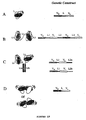
- scFvs single chain variable fragments of antibodies, in which the two variable domains V H and V L are covalently joined via a flexible peptide linker, have been shown to fold in the same conformation as the parent Fab (Kortt et al , 1994; Zdanov et al , 1994;see Figure 19a ).
- ScFvs with linkers greater than 12 residues can form either stable monomers or dimers, and usually show the same binding specificity and affinity as the monomeric form of the parent antibody ( WO 31789/93, Bedzyk et al, 1990 ; Pantoliano et al , 1991), and exhibit improved stability compared to Fv fragments, which are not associated by covalent bonds and may dissociate at low protein concentrations (Glockshuber et al , 1990). ScFv fragments have been secreted as soluble, active proteins into the periplasmic space of E. coli (Glockshuber et al , 1990; Anand et al , 1991).
- linking strategies have been used to produce bivalent or bispecific scFvs as well as bifunctional scFv fusions, and these reagents have numerous applications in clinical diagnosis and therapy (see Figure 19b-d ).
- the linking strategies include the introduction of cysteine residues into a scFv monomer, followed by disulfide linkage to join two scFvs (Cumber et al , 1992; Adams et al , 1993; Kipriyanov et al , 1994; McCartney et al , 1995).
- Linkage between a pair of scFv molecules can also be achieved via a third polypeptide linker (Gruber et al , 1994; Mack et al , 1995; Neri et al , 1995; Figure 19b ).
- Bispecific or bivalent scFv dimers have also been formed using the dimerisation properties of the kappa light chain constant domain (McGregor et al , 1994), and domains such as leucine zippers and four helix-bundles (Pack and Pluckthun, 1992; Pack et al , 1993, 1995; Mallender and Voss, 1994; Figure 19c ). Trimerization of polypeptides for the association of immunoglobulin domains has also been described (International Patent Publication No.
- Bifunctional scFv fusion proteins have been constructed by attaching molecular ligands such as peptide epitopes for diagnostic applications (International Patent Application No. PCT/AU93/00228 by Agen Limited; Lilley et al , 1994; Coia et al , 1996), enzymes (Wels et al , 1992; Ducancel et al , 1993), streptavidin (Dubel et al, 1995), or toxins (Chaudhary et al , 1989, 1990; Batra et al , 1992; Buchner et al , 1992) for therapeutic applications.
- molecular ligands such as peptide epitopes for diagnostic applications (International Patent Application No. PCT/AU93/00228 by Agen Limited; Geby et al , 1994; Coia et al , 1996), enzymes (Wels et al , 1992; Ducancel et al , 1993), streptavidin (Dubel e
- peptide linkers have been engineered to bridge the 35 A distance between the carboxy terminus of one domain and the amino terminus of the other domain without affecting the ability of the domains to fold and form an intact binding site (Bird et al , 1988; Huston et al , 1988).
- the length and composition of various linkers have been investigated (Huston et al , 1991) and linkers of 14-25 residues have been routinely used in over 30 different scFv constructions, ( WO 31789/93 , Bird et al , 1988; Huston et al , 1988; Whitlow and Filpula, 1991; PCT/AU93/00491 ; Whitlow et al , 1993, 1994).
- linker The most frequently used linker is that of 15 residues (Gly 4 Ser) 3 introduced by Huston et al (1988), with the serine residue enhancing the hydrophilicity of the peptide backbone to allow hydrogen bonding to solvent molecules, and the glycyl residues to provide the linker with flexibility to adopt a range of conformations (Argos, 1990). These properties also prevent interaction of the linker peptide with the hydrophobic interface of the individual domains. Whitlow et al (1993) have suggested that scFvs with linkers longer than 15 residues show higher affinities.
- linkers based on natural linker peptides such as the 28 residue interdomain peptide of Trichoderma reesi cellobiohydrolase I, have been used to link the V H and V L domains (Takkinen et al , 1991).
- a scFv fragment of antibody NC10 which recognises a dominant epitope of N9 neuraminidase, a surface glycoprotein of influenza virus, has been constructed and expressed in E. coli ( PCT/AU93/00491 ; Malby et al , 1993).
- the V H and V L domains were linked with a classical 15 residue linker, (Gly 4 Ser) 3 , and the construct contained a hydrophilic octapeptide (FLAG TM ) attached to the C-terminus of the V L chain as a label for identification and affinity purification (Hopp et al, 1988).
- the scFv-15 was isolated as a monomer which formed relatively stable dimers and higher molecular mass multimers on freezing at high protein concentrations.
- the dimers were active, shown to be bivalent (Kortt et al, 1994), and reacted with soluble N9 neuraminidase tetramers to yield a complex with an M r of ⁇ 600 kDa, consistent with 4 scFvs dimers cross-linking two neuraminidase molecules.
- Bispecific diabodies have been produced using bicistronic vectors to express two different scFv molecules in situ , V H A-linker-V L B and V H B-linker-V L A, which associate to form the parent specificities of A and B ( WO 94/13804 ; WO 95/08577 ; Holliger et al , 1996; Carter, 1996; Atwell et al , 1996).
- the 5-residue linker sequence, Gly 4 Ser in some of these bispecific diabodies provided a flexible and hydrophilic linker.
- V H -V L molecules have been designed without a linker polypeptide, by direct ligation of the C-terminal residue of V H to the N-terminal residue of V L (Holliger et al , 1993, McGuiness et al , 1996). These scFv-0 structures have previously been thought to be dimers.
- NC10 scFv molecules with V H and V L domains either joined directly together or joined with one or two residues in the linker polypeptide can be directed to form polyvalent molecules larger than dimers and in one aspect of the invention with a preference to form trimers.
- trimers are trivalent, with 3 active antigen-combining sites (TBRs; target-binding regions).
- TBRs active antigen-combining sites
- NC10 scFv molecules with V L domains directly linked to V H domains can form tetramers that are tetravalent, with 4 active antigen-combining sites (TBRs).
- trimers are a general property of scFvs with V H and V L domains either joined directly together or joined with one or two residues in the linker polypeptide, perhaps due to the constraints imposed upon V-domain contacts for dimer formation. It will be appreciated by those skilled in the art that the polyvalent molecules can be readily separated and purified as trimers, tetramers and higher multimers.
- the invention generally provides polyvalent protein complexes, in which three polypeptides associate to form three functional target-binding regions (TBRs).
- TBRs target-binding regions
- a protein complex is defined as a stable association of several polypeptides via non-covalent interactions, and may include aligned V-domain surfaces typical of the Fv module of an antibody ( Figure 1 ).
- the individual polypeptides which form the polyvalent complex are the same, and each comprises immunoglobulin V H and V L domains.
- the length of the linker joining the immunoglobulin domains on each individual polypeptide molecule is chosen so as to prevent the two domains from associating together to form a functional target-binding region (TBR) analogous to Fv, TCR or CD8 molecules.
- TBR functional target-binding region
- the length of the linker is also chosen to prevent the formation of diabodies. Instead, three separate polypeptide molecules associate together to form a polyvalent complex with three or more functional target-binding regions.
- the invention provides a recombinant polyvalent protein complex, which is a trimer comprising three identical single chain variable fragment (scFv) polypeptides which associate to form three target-binding regions (TBRs) specific for the same target molecule, and in which each individual polypeptide comprises immunoglobulin V H and V L domains which are covalently joined together, such that the V H and V L domains in a single polypeptide do not associate with each other to form a TBR, wherein the V H and V L domains are linked by a peptide of one or two amino acid residues.
- scFv single chain variable fragment
- TBRs target-binding regions
- Trivalent reagents according to the invention include the following:
- the molecules which form the polyvalent proteins of the invention may comprise modifications introduced by any suitable method.
- one or more of the polypeptides may be linked to a biologically-active substance, chemical agent, peptide, drug or protein, or may be modified by site-directed or random mutagenesis, in order to modulate the binding properties, stability, biological activity or pharmacokinetic properties of the molecule or of the construct as a whole.
- the linking may be effected by any suitable chemical means alternatively, where the protein of the invention is to be conjugated to another protein or to a peptide, this may be achieved by recombinant means to express a suitable fusion protein.
- chain shuffling ie. the reassortment of a library of one chain type eg . heavy chain, with a fixed complementary chain, such as light chain.
- the molecules comprising the polyvalent reagent are of homologous origin to the subject to be treated, or have been modified to remove as far as possible any xenoantigens.
- the molecules will be of human origin or will be humanized (CDR-grafted) versions of such molecules.
- “Humanisation” of recombinant antibody by grafting of CDRs is disclosed by Winter et al , EP-239400 , and other appropriate methods, eg epitope imprinted selection (Figini et al , 1994), are also widely known in the art..
- the immunoglobulin V H and V L domains are derived from an antibody, and the TBR may be directed to a chemical entity of any type. For example it may be directed to a small molecule such as a pesticide or a drug, a hormone such as a steroid, an amino acid, a peptide or a polypeptide; an antigen, such as a bacterial, viral or cell surface antigen; another antibody or another member of the immunoglobulin superfamily; a tumour marker, a growth factor etc.
- a small molecule such as a pesticide or a drug, a hormone such as a steroid, an amino acid, a peptide or a polypeptide; an antigen, such as a bacterial, viral or cell surface antigen; another antibody or another member of the immunoglobulin superfamily; a tumour marker, a growth factor etc.
- a small molecule such as a pesticide or a drug, a hormone such as a steroid, an amino acid, a peptide
- the invention provides a pharmaceutical composition
- a pharmaceutical composition comprising a polyvalent reagent according to the invention together with a pharmaceutically-acceptable carrier.
- Also described herein is a method of diagnosis of a pathological condition, comprising the steps of administering a polyvalent reagent according to the invention to a subject suspected of suffering from said pathological condition, and identifying a site of localisation of the polyvalent reagent using a suitable detection method.
- This diagnostic method may be applied to a variety of techniques, including radio imaging and dye marker techniques, and is suitable for detection and localisation of cancers, blood clots etc.
- the invention provides an imaging reagent comprising a recombinant polyvalent protein of the invention.
- the molecular marker is specific for a tumour.
- N9 neuraminidase was isolated from avian (tern) influenza virus following treatment of the virus with pronase and purified by gel filtration as described previously (McKimm-Breschkin et al, 1991).
- Monoclonal anti-idiotype antibodies 3-2G12 and 11-1G10 were prepared in CAF1 mice against NC10 and NC41 anti-neuraminidase BALB/c monoclonal antibodies (Metzger and Webster, 1990).
- Anti-neuraminidase antibody NC41 and the anti-idiotype antibodies 3-2G12 and 11-1G10 were isolated from ascites fluid by protein A-Sepharose chromatography (Pharmacia Biotech). Purified antibodies were dialysed against 0.05 M Tris-HCl, 3 mM EDTA, pH 7.0 and digested with papain to yield F(ab')2 as described (Gruen et al, 1993).
- the F(ab')2 fragment from each antibody was separated from Fc and undigested IgG by chromatography on protein A-Sepharose, and pure F(ab')2 was reduced with 0.01 M mercaptoethylamine for 1h at 37° C and the reaction quenched with iodoacetic acid.
- the Fab' was separated from the reagents and unreduced F(ab')2 by gel filtration on a Superdex 75 column (HR 10/30) in PBS, 7.4.
- the molecular size and aggregation state of affinity purified scfvs were assessed by size exclusion FPLC on Superose 6 or 12, or Superdex 75 HR 10/30 (Pharmacia) columns in PBS, pH 7.4.
- the columns were equilibrated with a set of standard proteins as described previously (Kortt et al , 1994).
- the BIAcoreTM biosensor (Pharmacia Biosensor AB, Uppsala Sweden), which uses surface plasmon resonance detection and permits real-time interaction analysis of two interacting species (Karlsson et al , 1991; Jonsson et al , 1993), was used to measure the binding kinetics of the different NC10 scFvs. Samples for binding analyses were prepared for each experiment by gel filtration on Superdex 75 or Superose 12 to remove any cleavage products or higher molecular mass aggregates which may have formed on storage.
- kinetic constants were evaluated using the BIAevaluation 2.1 software supplied by the manufacturer, for binding data where the experimental design correlated with the simple 1:1 interaction model used for the analysis of BIAcoreTM binding data (Karlsson et al , 1994).
- Measurements of particle dimensions were made on digitised micrographs using the interactive facilities of the SPIDER image processing suite to record the coordinates of particle vertices. Particle arm lengths and inter-arm angles were calculated from the coordinates for 229 diabodies and 114 triabodies.
- NC10 scFv antibody gene construct with a 15 residue linker (Malby et al , 1993) was used for the shorter linker constructions.
- the NC10 scFv-15 gene was digested successively with Bst EII (New England Labs) and SacI (Pharmacia) and the polypeptide linker sequence released.
- the remaining plasmid which contained NC10 scFv DNA fragments was purified on an agarose gel and the DNA concentrated by precipitation with ethanol.
- Synthetic oligonucleotides (Table 1) were phosphorylated at the 5' termini by incubation at 37°C for 30 min with 0.5 units of T4 polynucleotide kinase (Pharmacia) and 1 mM ATP in One Phor-All buffer (Pharmacia). Pairs of complementary phosphorylated oligonucleotide primers (Table 1) were premixed in equimolar ratios to form DNA duplexes which encoded single chain linkers of altered lengths.
- duplexes were ligated into BstEII-SacI restricted pPOW NC10 scFv plasmid using an Amersham ligation kit.
- the ligation mixture was purified by phenol/chloroform extraction, precipitated with ethanol in the usual manner, and transformed into E. coli DH5 ⁇ ( sup E44, hsd R17, rec A1, end Al, gyr A96, thi -1, rel Al) and LE392 ( sup E44, sup F58, hsd R14, lac Y1, gal K2, gal T22, met B1, trp R55).
- Recombinant clones were identified by PCR screening with oligonucleotides directed to the pelB leader and FLAG sequences of the pPOW vector.
- the DNA sequences of the shortened linker regions were verified by sequencing double-stranded DNA using Sequenase 2.0 (USB).
- NC10 scFv gene constructs in which the V H and V L domains were linked with linkers of 10 ((Gly 4 Ser) 2 ), 5 (Gly 4 Ser) and zero residues, are shown in Figure 3 .
- DNA sequencing of the new constructs confirmed that there were no mutations, and that the V H and V L domains were joined by the shorter linker lengths as designed.
- NC10 scFv-10, scFv-5 and scFv-0 where the number refers to the number of residues in the linker.
- NC10 scFv constructs with 0,5 and 10 residues linkers as described in Comparative Example 1, were expressed as described by Malby et al , (1993) for the parent scFv-15.
- the protein was located in the periplasm as insoluble protein aggregates associated with the bacterial membrane fraction, as found for the NC10 scFv-15 (Kortt et al , 1994).
- Expressed NC10 scFvs with the shorter linkers were solubilised in 6M guanidine hydrochloride/0.1 M Tris/HCl, pH 8.0, dialysed against PBS, pH 7.4 and the insoluble material was removed by centrifugation.
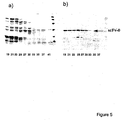
- the soluble fraction was concentrated approximately 10-fold by ultrafiltration (Amicon stirred cell, YM10 membrane) as described previously (Kortt et al , 1994) and the concentrate was applied to a Sephadex G-100 column (60 x 2.5 cm) equilibrated with PBS, pH 7.4; fractions which contained protein were analysed by SDS-PAGE and the scFv was located by Western blot analysis using anti-FLAGTM M2 antibody (Eastman Kodak, New Haven, CT). The scFv containing fractions were pooled, concentrated and purified to homogeneity by affinity chromatography using an anti-FLAG TM M2 antibody affinity resin (Brizzard et al , 1994).
- the affinity resin was equilibrated in PBS pH 7.4 and bound protein was eluted with 0.1 M glycine buffer, pH 3.0 and immediately neutralised with 1M Tris solution. Purified scFvs were concentrated to ⁇ 1-2 mg/ml, dialysed against PBS, pH 7.4 which contained 0.02% (w/v) sodium azide and stored frozen.
- the purity of the scFvs was monitored by SDS-PAGE and Western blot analysis as described previously (Kortt et al , 1994).
- the concentrations of the scFv fragments were determined spectrophotometrically using the values for the extinction coefficient ( ⁇ 0.1% ) at 280 nm of 1.69 for scFv-15, 1.71 for scFv-10, 1.73 for scFv-5 and 1.75 for scFv-0 calculated from the protein sequence as described by Gill and von Hippel (1989).
- Soluble NC10 scFv-10, scFv-5 and scFv-0 fragments were each purified using a two step procedure involving gel filtration and affinity chromatography after extraction of the E. coli membrane fraction with 6 M guanidine hydrochloride, and dialysis to remove denaturant.
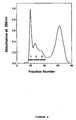
- the solubilised protein obtained was first chromatographed on Sephadex G-100 gel filtration to resolve three peaks (peaks 1-3, as shown in Figure 4 ) from a broad low-molecular mass peak.
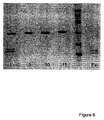
- ScFv-5 and scFv-0 also contained a small component of the protein as a doublet at -14 and -15 kDa ( Figure 6 ), of which the 14 kDa band reacted with the anti-FLAG M2 antibody on Western blotting, consistent with proteolysis in the linker region between the V H and V L -FLAG domains.
- a partial specific volume of 0.71ml/g was calculated for scFv-5 and scFv-0 from their amino acid compositions, and a partial specific volume of 0.7 ml/g was calculated for the scFv-neuraminidase complexes, from the amino acid compositions of scFvs and the amino acid and carbohydrate compositions of neuraminidase (Ward et al , 1983).
- a partial specific volume of 0.73 ml/g was assumed for the scFv-anti-idiotype 3-2G12 Fab' complex.
- the complexes for ultracentrifugation were prepared by size exclusion FPLC on Superose 6. The results are summarized in Table 2.
- NC10 scFv-5 and scFv-10 dimers at concentrations of -1mg/ml showed no propensity to form higher molecular mass aggregates at 4°C, but on freezing and thawing higher-molecular mass multimers were formed (data not shown). These multimers were dissociated readily in the presence of 60% ethylene glycol, which suppresses hydrophobic interactions. In contrast the NC10 scFv-0 showed no propensity to aggregate on freezing and thawing, even at relatively high protein concentrations.
- N-terminal analysis of the two bands from the Fv fragment produced during the isolation of the NC10 scFv-0 also confirmed that the 15 kDa band was the V H domain and that the 14 kDa band had the N-terminal sequence of V S D I E L T Q T T, indicating that a small amount of proteolysis had occurred at the penultimate bond (T-V) in the C-terminal sequence of the V H domain ( Figure 3 ).
- Influenza virus neuraminidase a surface glycoprotein
- Influenza virus neuraminidase a surface glycoprotein
- Intact and active neuraminidase heads (M r 190 kDa) are released from the viral surface by proteolytic cleavage in the stalk region (Laver, 1978).
- the four subunits in the neuraminidase tetramer are arranged such that the enzyme active site and the epitope recognised by NC10 antibody are all located on the upper surface of the molecule (distal from the viral surface).
- This structural topology permits the binding in the same plane of four NC10 scFv-15 monomers or four Fab fragments (Colman et al , 1987; Tulip et al , 1992) such that the tetrameric complex resembles a flattened box or inverted table with the neuraminidase as the top and the four Fab fragments projecting as the legs from the plane at an angle of 45°.
- a bivalent molecule may be able to cross-link two neuraminidase tetramers to form a 'sandwich' type complex ( Figure 8a ; Tulloch et al , 1989).
- This complex M r is consistent with four scFv dimers (each 52 kDa) cross-linking two neuraminidase molecules (each 190 kDa) in a 'sandwich' complex, as illustrated schematically in Figure 8a , and demonstrates that the scFv-10 and scFv-5 dimers are bivalent.
- NC10 scFv-5 confirmed that the dimer is bivalent, as illustrated in Figure 8b , and that the NC10 scFv-0 with no linker is a trimer with three active antigen binding sites, as illustrated schematically in Figures 8c and 8d .
- Figure 8 represents a schematic representation of the complexes, and that there is considerable flexibility in the linker region joining the scFvs, which cannot be depicted. Note, however, that the boomerang-shaped structure ( Figure 8b ), rather than a linear structure, can readily accommodate the 45° angle of projection of the scFv from the plane of the neuraminidase required for four dimers to cross-link simultaneously two neuraminidase molecules in the 'sandwich' complex as indicated in Figure 8a . Similar flexibility of a different scFv-5 dimer has recently been modelled (Holliger et al , 1996), but has hitherto not been demonstrated experimentally.
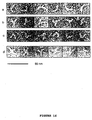
- Electron micrographs of the NC10 scFv-5 diabodies complexed with two anti-idiotype 3-2G12 Fab molecules showed boomerang-shaped projections with the angle between the two arms ranging from about 60°-180°, as shown in Figure 16 .
- the mean angle was 122°, with an approximately normal distribution of angles about the mean (Table 3).
- Each arm corresponds to an Fab molecule ( Figures 1 and 8b ), and, despite the potential 'elbow' flexibility between Fv and C modules, appears as a relatively rigid, linear molecular rod which extends outwards from the antigen binding sites.
- the Y-shaped projections were unlikely to be planar, as invariably one of the Fab legs appeared foreshortened.
- the V-shaped projections were interpreted as tripods (triabody complexes) lying on their sides on the carbon film, with two Fab legs forming the V and the third Fab leg extending upward and out of the stain, which would account for the increase in density sometimes observed at the junction of the V.
- V-shaped structures were, clearly different to the boomerang-shaped diabody complexes, both in the angle between Fab arms and in the projected density in the centre of the molecules, consistent with the expected models ( Figure 1 ).
- the interpretation of tripods lying on their side is consistent with the appearance of a few projections with all 3 Fab legs pointing in the same direction.
- Triabodies are obviously flexible molecules, with observed angles between Fab arms in the NC10 triabody/Fab complexes distributed around two angles of mean 136° and one of mean 80°, and are not rigid molecules as shown schematically in Figure 1 .
- scFv-10, scFv-5 and scFv-0 were also immobilised at pH 4.0 via their amine groups. Binding analyses were performed in HBS buffer (10 mM HEPES, 0.15 M NaCl, 3.4 mM EDTA, 0.005% surfactant P20, pH 7.4) at a constant flow rate of 5 ul/min.
- Immobilised 3-2G12 Fab' could be regenerated with 10 ⁇ l 0.01 M sodium acetate buffer, pH 3.0 without loss of binding activity.
- a comparison of the binding of the NC10 scFv-15 monomer, scFv-10 and scFv-5 dimers, and scFv-0 trimer showed that the monomer dissociated rapidly, and non-linear least squares analysis of the dissociation and association phase, using the single exponential form of the rate equation, gave a good fit to the experimental data.
- This table shows the apparent kinetic constants for the binding of NC10 scFv-15 monomer to immobilised tern N9 neuraminidase and anti-idiotype 3-2-G12 Fab' fragment determined in the BIAcore TM
- the kinetic constants were evaluated from the association and dissociation phase using non-linear fitting procedures described in BIAevaluation 2.1.
- the binding experiments were performed in 10 mM HEPES, 0.15 NaCl,3.4 mM EDTA, 0.005% surfactant P20, pH 7.4 at a flow rate of 5 ⁇ l/min.
- Tern N9 neuraminidase (1360 RU)and 3-2-G12 Fab' (1000 RU) were immobilised via amine groups using the standard NHS/EDC coupling procedure.
- NC10 scFv-10 and scFv-5 dimers and scFv-0 trimer/anti-idiotype complexes showed apparently slower dissociation, as illustrated in Figure 10 , consistent with multivalent binding, and kinetic analysis was not performed because this effect invalidates the 1:1 interaction model used to evaluate BIAcoreTM data. To resolve this problem the interaction format was inverted by immobilisation of each NC10 scFv and using the anti-idiotype Fab' as the analyte.
- NC10 scFv-15 monomer 2000 RU
- NC10 scFv-1-dimer 200 RU
- scFv-5 dimer 200 RU
- scFv-0 trimer 450 RU
- the starting template for construction of the short linkered scFvs was the zero-linked NC10 scFv-0 gene construct in the vector pPOW as described in Comparative Example 1, in which the 5' end of the V L sequence is linked directly to the 3' end of the V H sequence.
- the constructions were designed to add nucleotides coding for one, two, three or four glycine residues between the 3' end of the V H and the 5' end of the V L sequence.
- Mutants containing the correct nucleotide insertions were selected by DNA sequencing of plasmid DNA from a number of individual colonies across the region targeted for mutation, using Sequenase ver 2.0 (US Biochemicals) and the oligonucleotide primer TACATGCAGCTCAGCAGCCTGAC (SEQ ID NO. 17). Clones having then correct mutations were subjected to small scale expression in 5 ml 2YT/amp 200 as described in Malby et al (1993) to confirm that the construct could produce a full length, in-frame product. Culture samples were analysed by SDS-PAGE and Western Blot with anti-FLAG ® M2 antibody. The selection criterion was a positive reaction at the correct migration position. One positive clone was selected from this screen for each of the four constructions.
- NC10 ScFv-1, scFv-2,scFv-3 and scFv-4 were performed as described in Comparative Example 2, but with the chromatography step on Sephadex G-100 omitted. SDS PAGE and Western Blot of the bound fraction from affinity chromatography on immobilised anti FLAG revealed that they contained predominantly NC10 scFv.
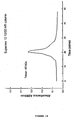
- NC10 scFv-1, scFv-2, scFv-3, scFv-4 were individually analysed by FPLC on a calibrated Superose 12 column. Elution profiles are shown in Figure 11 .
- NC10 scFv-1 and scFv-2 yielded a major peak eluting in the position of a trimer, similar to that described for scFv-0.
- the position of the major eluting peak for scFv-3 and scFv-4 was the same as that observed for a dimer, as seen for scFv-5.
- V H and V L genes were amplified by PCR from the parent 11-1G10 hybridoma, and joined into an scFv-0 gene by ligation between codons for C-terminal V H -Ser 113 and N-terminal V L -Gln 1 by PCR overlap-extension:
- the zero-linkered scFv is defined as the direct linkage of V H -Ser 113 to V L -Gln 1 .
- the scFv-0 gene was cloned into the Sfi 1 -Not 1 sites of the expression vector pGC which provides an N-terminal pelB leader sequence and C-terminal FLAG octapeptide tag tail (Coia et al , 1996).
- the entire DNA sequence of the cloned scFv--0 insert was determined using DNA purified by alkaline lysis and sequencing reactions performed using the PRISM Cycle Sequencing Kit (ABI). This confirmed that the 11-1G10 scFv-0 gene comprised a direct ligation between codons for the C-terminal V H -Ser 113 and N-terminal V L -Gln 1 .
- HB101 E. coli containing the scFv-0 gene in pGC were grown in 2 x YT supplemented with 100 ⁇ g/ml ampicillin and 1% glucose at 37°C overnight and then subcultured in the absence of glucose at an A 600 of 0.1, and grown at 21°C until A 600 was 1.0.
- Expression was induced by addition of IPTG to 1mM and cells cultured for 16 hours at 21°C under conditions which release the contents of the periplasmic space into the culture supernatant, presumably by cell lysis, to yield soluble and biologically active scFv (Coia et al , 1996).
- the expressed scFv-0 was purified from supernatant by precipitation with ammonium sulphate to 70% saturation at 21°C followed by centrifugation at 10000g for 15 minutes. The aqueous phase was discarded, and the pellet resuspended and dialysed in PBS at 4°C overnight. Insoluble material was removed by centrifugation at 70,000g and the supernatant was filtered through a 0.22 ⁇ m membrane and affinity purified on either an M2 anti-FLAG antibody affinity column (Brizzard et al , 1994) or an NC41 Fab Sepharose 4B affinity column.
- the affinity resin was equilibrated in TBS (0.025M Tris-buffered saline, pH 7.4) and bound protein was eluted with gentle elution buffer (Pierce).
- the scFv-0 was concentrated to about 1 mg/ml, dialysed against TBS and stored at 4°C..
- SDS-PAGE analysis of the affinity purified scFv-0 revealed a single protein band of 27 kDa which on Western analysis reacted with the anti-FLAG M2 antibody ( Figure 12 ).
- N-terminal sequence analysis of the 27 kDa protein gave the expected sequence for the N-terminus of the 11-1G10 V H domain, and confirmed that the pelB leader sequence had been correctly cleaved.
- the affinity-purified 11-1G10 scFv-0 was as described in Comparative Example 5.
- the 11-1G10 scFv-15. (comprising a 15 residue linker in the orientation V H -(Gly 4 Ser) 3 -V L ) was synthesised under similar conditions to the scFv-0 described in Comparative Example 5 above.
- the 11-1G10 scFv-15 was isolated by gel filtration as a 27kDa monomer and shown to be stable at 4°C for several weeks, similar to previous studies with different scFv-15 fragments.
- NC41 and 11-1G10 Fab fragments were prepared by proteolysis from the parent hybridoma IgG as described previously in this specification.
- 11-1G10 scFv-0 and scFv-15 were fractionated by size exclusion FPLC on either a Superdex 75 HR10/30 column or a Superose 12 HR10/30 column (Pharmacia) in PBS to determine the molecular size and aggregation state.
- the complexes formed between 11-1G10 scFv and NC41 Fab were analysed and isolated by size exclusion FPLC on a Superose 12 column in PBS (flow rate 0.5 ml/min).
- the FPLC columns were calibrated with standard proteins as described (Kortt et al , 1994).
- the molecular mass of each isolated complex was determined by sedimentation equilibrium on a Beckman model XLA centrifuge as described previously (Kortt et al , 1994) using partial specific volumes calculated from amino acid compositions.
- NC41 Fab complexes of NC41 Fab with either scFv-15 monomer or scFv-0 trimer were isolated by size exclusion FPLC chromatography and analysed by sedimentation equilibrium in a Beckman Model XLA ultracentrifuge. The molecular mass was determined experimentally by the method described by Kortt et al ,1994 at 20°C. The calculated MW of NC41 Fab is 47273 Da, scFv-15 is 28427 Da and scFv-0 is 26466 Da.
- the scFv-15 fragment of 11-1G10 (comprising a 15 residue linker in the orientation V H -(Gly 4 Ser) 3 -V L ) was also synthesised using the pGC vector in HB2151 E.coli cells, and then purified as a stable monomer with a M r ⁇ 27 kDa determined by gel filtration and sedimentation equilibrium ( Figure 13 ).
- Previous examples have shown gel filtration and sedimentation equilibrium studies of NC10 scFv fragments that revealed that scFv-15 monomers possessed an M r ⁇ 27 kDa, scFv-5 dimers M r -54kDa and scFv-0 trimers M r -70kDa.
- the 4-fold reduced apparent dissociation rate for the 11-1G10 scFv-0 trimer is similar to earlier Comparative Example 5 for the NC10 scFv-0 trimer, and can be attributed to multivalent binding which results in the increased functional activity for both scFv-0 trimers.
- the C-terminus of the V H terminated with residues VTS 112 , and was immediately followed by a C-terminal FLAG TM sequence for affinity purification.
- NC10 scFv-0 V L -V H gene was, then subcloned and expressed in the heat inducible expression vector pPOW using methods described in Kortt et al , 1994 and Comparative Examples 1-4 above.
- the isolation of NC10 scFv-0 (V L -V H ) from the E. coli cell pellet required extraction and solubilisation with 6M GuHCl, preliminary purification using a Sephadex G-100 column, and affinity purification using an anti-FLAG M2 affinity column, using methods described in Kortt et al , 1994.
- V H and V L genes of C215 were amplified by PCR from the parent Fab coding region, and joined into an scFv-0 gene by PCR overlap-extension.
- the scFv-0 gene was cloned into the Sfi 1 -Not 1 sites of the expression vector pGC, which provides an N-terminal pelB leader sequence and C-terminal FLAG octapeptide tag tail (Coia et al , 1996).
- the C-terminus of the V L terminated with residues ELK 107 , and was immediately followed by the C-terminal FLAG TM sequence for affinity purification.
- the scFv-0-linker gene was also cloned into the NdeI-EcoRI sites of the expression vector pRSET TM , which is a cytoplasmic expression vector.
- the oligonucleotides used to amplify the C215 with the correct restriction sites for cloning into pRSET are:
- HB101 E. coli expression of the C215 scFv-0 was performed as detailed in Comparative Example 6.
- the C215 scFv-0 was concentrated to about 1 mg/ml, dialysed against TBS and stored at 4°C.
- SDS-PAGE analysis of the affinity purified scFv-0 revealed a single protein band of M r -28 kDa which on Western analysis reacted with the anti-FLAG M2 antibody.
- N-terminal sequence analysis of the M r -28 kDa, protein gave the expected sequence for the N-terminus of the C215 V H domain, and confirmed that the pelB leader sequence had been correctly cleaved.
- the affinity-purified C215 scFv-0 was as described in Comparative Example 9.
- the Ig-like V domains were separately amplified by PCR from the parent coding region with appropriate oligonucleotides pairs which are listed in table 6: #4474/#4475(UV-3 VH), #4480/4481 (UV-3 VL), #4470/#4471 (human CTLA-4)(Dariavach 1988), #4472/#4473 (CD86 V domain) respectively.
- Table 7 DNA Sequences of Oligonucleotides Used in the Amplification of Ig-Like V Domains and Bispecific Molecules for Trispecific Trimer Constructs SEQ ID NO.
- Human CTLA-4 and CD86 (Aruffo and Seed 1987) were joined into a 0-linker gene construct by a linking PCR with oligonucleotides #4470 & #4473.
- Human CTLA-4 and UV-3 VL were joined into 0-linker gene construct by a linking PCR with oligonucleotides #4478 & # 4471 and UV-3 VH and human CD86 were joined into 0-linker gene construct by a linking PCR with oligonucleotides #4474 & #4477. This produced ligation between codons for C-terminal UV-3 V H -Ala 114 and N-terminal CD86-Ala 1 by PCR overlap-extension.
- the Ig-like V domain 0-linker gene constructs were cloned into the Sfi l- Not 1 sites of the expression vector pGC, which provides an N-terminal pelB leader sequence and C-terminal FLAG octapeptide tag tail (Coia et al , 1996). Ligation between codons for C-terminal CTLA-4-Ala 112 and N-terminal CD86-Ala 1 by PCR overlap-extension produced Ig-like V domain 0-linker gene constructs which were cloned into the Sfi 1- Not 1 sites of the expression vector pGC.
- 8M urea or other disaggregating reagents are used to dissociate and prevent the formation of homotrimers.
- Mixing the purified CTLA-4-0-CD86, CTLA-4-0-UV-3 VL and UV-3 VH-0-CD86 Ig-like V domains and removing the disaggregating reagent by gel filtration or dialysis forms the trispecific trimer.
- V H -V L and V L -V H ligations were initially based on the precise distances between N- and C-terminal residues from the crystal structure of NC10 scFv-15 (Kortt et al , 1994).
- Previous studies have investigated the design of flexible linker peptides to join V H and V L domains to produce scFvs (Huston et al , 1991; Ragg and Whitlow, 1995), and the effect of the linker structure on the solution properties of scFvs (Holliger et al , 1993; Desplancq et al , 1994; Whitlow et al , 1994; Alfthan et al , 1995; Solar and Gershoni, 1995).
- ScFvs with the classical 15-residue linker, (Gly 4 Ser) 3 described by Huston et al , (1989, 1991) can exist as a monomers, dimers and higher molecular mass multimers (Holliger et al , 1993; Whitlow et al , 1994; Kortt et al, 1994).
- Linkers of less than 12 residues are too short to permit pairing between V H and V L domains on the same chain, and have been used to force an intermolecular pairing of domains into dimers, termed diabodies (Holliger et al, 1993, 1996; Zhu et al , 1996; PCT/AU93/00491 ; WO 94/13804 ; WO 95/08577 ).
- Holliger et al , 1993, 1996, WO 94/13804 and WO 95/08577 described a model of scFv diabodies with V H domains joined back-to-back, and suggested that these structures required a linker of at least one or two residues.
- NC10 scFv-0 yielded a molecular mass on FPLC and sedimentation equilibrium analysis of 70 kDa, significantly higher than expected for a dimer (52 kDa), and less than that for a trimer (78.5 kDa) (Table 2).
- Binding experiments with anti-idiotype 3-2G12 Fab' showed that the scFv-0 formed a complex of M r of 212 kDa, consistent with three Fab' fragments binding per scFv-0.
- This result confirmed that the 70 kDa NC10 scFv-0 was a trimer, and that three pairs of V H and V L domains interact to form three active antigen-combining sites (TBRs).
- NC10 scFv-0 This scFv-0 structure showed no propensity to form higher molecular mass multimers.
- the NC10 scFv-0 trimer also bound to neuraminidase, but the arrangement of the antigen combining sites is such that a second antigen binding site on NC10 scFv-0 could not cross-link the neuraminidase tetramers into 'sandwiches', as shown for the scFv-10 and scFv-5 dimers in Figure 8 .
- 11-1G10 ScFv-0 also exclusively formed trimers, which were shown to be trivalent for Fab binding by complex formation in solution (Table 4).
- NC10 scFv-0 V L -V H
- trimers Figure 17 ).
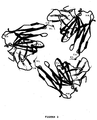
- a computer graphic model, shown in Figure 2 was constructed for a zero residue-linked scFv trimer, based on the NC10 scFv coordinates, using circular 3-fold symmetry with the '0' molecular graphics package (Jones et al, 1991), from the coordinates of the NC10 Fv domain in Protein Database entry 1NMB (Malby et al, 1994) and MOLSCRIPT (Kraulis, 1991).
- Ser 112 the C-terminal residues of V H domains, were joined by single peptide bonds to Asp 1, the N-terminal residues of V L domains. The V H and V L domains were rotated around the peptide bond to minimise steric clashes between domains.
- the Fv conformation and CDR positions were consistent with the molecule possessing trivalent affinity.
- the low contact area between Fv modules, across the V H -V L interface, may account for the slightly increased proteolytic susceptibility of NC10 scFv-0 trimers compared to NC10 scFv-5 dimers.
- the protein chemical data could not differentiate between symmetric or non-symmetric trimers, the model clearly demonstrated that zero-linked scFvs could form trimers without interdomain steric constraints.
- NC10 scFv-0 V L -V H is a trimer, but can also be a tetramer.
- a second scFv-0 in V H -V L orientation constructed from the anti-idiotype 11-1G10 antibody, can be a trimer, and possess trivalent specificity.
- a third scFv-0 in V H -V L orientation, constructed from the C215 antibody can also form a trimer.
- This specification describes methods of producing trimeric scFv-0 molecules constructed by direct ligation of two immunoglobulin-like domains, including but not limited to scFv-0 molecules in V H -V L and V L -V H orientations, and teaches the design of polyspecific reagents.
- Ig-like V domains of non-antibody origin have also been joined without a linker in a construct equivalent to the scFv-0 to form trimers, and we have shown here the joining of CD86 (Ig-like V domain) to CTLA-4 (Ig-like V domain), as well as joining each of these to UV-3 VH and UV-3 VL respectively.
- the trimer formation by each of these constructs teaches that polyspecific and in this case trispecifc trimers can form as shown in Figure 1 Aspect II, with the VH and VL of UV-3 noncovalently associating, the two CD86 Ig-like V domains noncovalently associating, and the two CTLA-4 Ig-like domains noncovalently associating.
- NC10 scFv-0 V L -V H molecules were synthesised as a direct ligation of the C-terminal V L residue Arg 107 to the N-terminal V H residue Gln 1 (residues taken from Malby et al, 1994), and shown to associate into a stable trimer by FPLC analysis ( Figure 17 ).
- ScFv-0 molecules can be easily modelled into a symmetric trimeric conformation without interdomain steric constraints ( Figure 2 ).
- Figure 2 the Fab arms of the trimer/Fab complex are not extended in planar configuration, but are angled together in one direction and appear as the legs of a tripod.
- alternative configurations can be modelled, guided by steric constraints which limit both the flexibility of Fv modules and the proximity of three binding antigens.
- protein chemical data alone cannot differentiate between symmetrical or non-symmetrical trimer configurations.
- bivalent diabodies directly led to the design of bispecific diabodies using dicistronic vectors to express two different scFv molecules in situ , V H A-linker-V L B and V H B-linker-V L A, which associate to form TBRs with the specificities of the parent antibodies A and B from which the V-genes were isolated (Holliger et al, 1993, 1996; WO 94/13804 ; WO 95/08577 ).
- the linker sequence chosen for these bispecific diabodies, Gly 4 Ser provided a flexible and hydrophilic hinge.
- tricistronic vectors can be designed to express three different scFv-0 molecules in situ , V H A-V L B, V H B-V L C, and V H C-V L A which will associate to form a trispecific trimer with TBRs equivalent to the parent antibodies A,B,C from which the V-genes have been obtained.
- the three V H -V L scFv-0 molecules can associate into a trispecific trimer in a schematic configuration similar to that shown in Figure 2 . It will be readily appreciated that purification of the trispecific molecules to homogeneity is likely to require three sequential affinity columns to select either for three active TBRs or to select for individual epitope-tagged molecules.
- V L -V H is a suitable alternative configuration.
- the construction of tricistronic expression vectors will enable the production of trispecific scFv-0 reagents with applications including, but not limited to T-cell recruitment and activation.
- tetramers with four active TBRs can be formed by association of four scFv identical molecules, and tetraspecific tetrabodies can be formed by association of four different scFv molecules, preferably expressed simultaneously from tetracistronic vectors.
Landscapes
- Health & Medical Sciences (AREA)
- Chemical & Material Sciences (AREA)
- Life Sciences & Earth Sciences (AREA)
- Immunology (AREA)
- Organic Chemistry (AREA)
- General Health & Medical Sciences (AREA)
- Medicinal Chemistry (AREA)
- Proteomics, Peptides & Aminoacids (AREA)
- Bioinformatics & Cheminformatics (AREA)
- Engineering & Computer Science (AREA)
- Molecular Biology (AREA)
- Genetics & Genomics (AREA)
- Biophysics (AREA)
- Biochemistry (AREA)
- Public Health (AREA)
- Veterinary Medicine (AREA)
- Animal Behavior & Ethology (AREA)
- Epidemiology (AREA)
- Pharmacology & Pharmacy (AREA)
- Toxicology (AREA)
- Cell Biology (AREA)
- Zoology (AREA)
- Gastroenterology & Hepatology (AREA)
- Physics & Mathematics (AREA)
- Optics & Photonics (AREA)
- Peptides Or Proteins (AREA)
- Medicinal Preparation (AREA)
- Medicines Containing Antibodies Or Antigens For Use As Internal Diagnostic Agents (AREA)
Claims (8)
- Rekombinanter polyvalenter Protein-Komplex, welcher ein Trimer mit drei identischen variablen Fragment-Einzelketten-("single chain variable Fragment", scFv)-Polypeptiden ist, die sich zur Bildung von drei Target-bindenden Regionen (TBRs) zusammenschließen, die für dasselbe Target-Molekül spezifisch sind, und bei welchem jedes einzelne Polypeptid Immunglobulin-VH-und -VL-Domänen aufweist, welche kovalent miteinander verbunden sind, so dass sich die VH- und VL-Domänen in einem einzelnen Polypeptid nicht untereinander zusammenschließen, um ein TBR zu bilden, wobei die VH- und VL-Domänen durch ein Peptid aus einem oder zwei Aminosäureresten verbunden sind.
- Rekombinanter polyvalenter Protein-Komplex nach Anspruch 1, wobei eines oder mehrere der Polypeptide an eine biologisch aktive Substanz, ein chemisches Mittel, ein Peptid, ein Protein oder einen Arzneistoff gebunden ist (sind).
- Rekombinanter polyvalenter Protein-Komplex nach Anspruch 2, wobei alle der Polypeptide unter Verwendung chemischer Methoden verbunden sind.
- Rekombinanter polyvalenter Protein-Komplex nach Anspruch 2, wobei alle der Polypeptide unter Verwendung rekombinanter Methoden verbunden sind.
- Pharmazeutische Zusammensetzung, umfassend einen rekombinanten polyvalenten Protein-Komplex nach einem der Ansprüche 1 bis 4, zusammen mit einem pharmazeutisch akzeptablen Träger.
- Bildgebendes Reagens, umfassend ein rekombinantes polyvalentes Protein nach einem der Ansprüche 1 bis 4.
- Bildgebendes Reagens nach Anspruch 6, wobei alle TBRs des polyvalenten Proteins auf einen für einen pathologischen Zustand spezifischen molekularen Marker gerichtet sind, und wobei das Protein entweder mit Radioisotopen markiert oder mit einem geeigneten bildgebenden Reagens konjugiert ist.
- Bildgebendes Reagens nach Anspruch 6 oder 7, wobei der molekulare Marker für einen Tumor spezifisch ist.
Priority Applications (1)
| Application Number | Priority Date | Filing Date | Title |
|---|---|---|---|
| EP08015462A EP1997514A1 (de) | 1997-03-27 | 1998-03-26 | Hochbegehrtes Polyvalent und polyspezifische Reagenzien |
Applications Claiming Priority (3)
| Application Number | Priority Date | Filing Date | Title |
|---|---|---|---|
| AUPO5917A AUPO591797A0 (en) | 1997-03-27 | 1997-03-27 | High avidity polyvalent and polyspecific reagents |
| AUPO591797 | 1997-03-27 | ||
| PCT/AU1998/000212 WO1998044001A1 (en) | 1997-03-27 | 1998-03-26 | High avidity polyvalent and polyspecific reagents |
Related Child Applications (1)
| Application Number | Title | Priority Date | Filing Date |
|---|---|---|---|
| EP08015462A Division EP1997514A1 (de) | 1997-03-27 | 1998-03-26 | Hochbegehrtes Polyvalent und polyspezifische Reagenzien |
Publications (3)
| Publication Number | Publication Date |
|---|---|
| EP1005494A1 EP1005494A1 (de) | 2000-06-07 |
| EP1005494A4 EP1005494A4 (de) | 2005-03-23 |
| EP1005494B1 true EP1005494B1 (de) | 2008-12-10 |
Family
ID=3800218
Family Applications (2)
| Application Number | Title | Priority Date | Filing Date |
|---|---|---|---|
| EP08015462A Withdrawn EP1997514A1 (de) | 1997-03-27 | 1998-03-26 | Hochbegehrtes Polyvalent und polyspezifische Reagenzien |
| EP98910534A Expired - Lifetime EP1005494B1 (de) | 1997-03-27 | 1998-03-26 | Polyvalente und polyspezifische reagentienmit hoher avidität |
Family Applications Before (1)
| Application Number | Title | Priority Date | Filing Date |
|---|---|---|---|
| EP08015462A Withdrawn EP1997514A1 (de) | 1997-03-27 | 1998-03-26 | Hochbegehrtes Polyvalent und polyspezifische Reagenzien |
Country Status (7)
| Country | Link |
|---|---|
| US (2) | US20020018749A1 (de) |
| EP (2) | EP1997514A1 (de) |
| JP (1) | JP2001521496A (de) |
| AU (1) | AUPO591797A0 (de) |
| CA (1) | CA2285023C (de) |
| DE (1) | DE69840331D1 (de) |
| WO (1) | WO1998044001A1 (de) |
Cited By (4)
| Publication number | Priority date | Publication date | Assignee | Title |
|---|---|---|---|---|
| US8772459B2 (en) | 2009-12-02 | 2014-07-08 | Imaginab, Inc. | J591 minibodies and Cys-diabodies for targeting human prostate specific membrane antigen (PSMA) and methods for their use |
| US8940298B2 (en) | 2007-09-04 | 2015-01-27 | The Regents Of The University Of California | High affinity anti-prostate stem cell antigen (PSCA) antibodies for cancer targeting and detection |
| US8940871B2 (en) | 2006-03-20 | 2015-01-27 | The Regents Of The University Of California | Engineered anti-prostate stem cell antigen (PSCA) antibodies for cancer targeting |
| US8951737B2 (en) | 1996-05-06 | 2015-02-10 | Cornell Research Foundation, Inc. | Treatment and diagnosis of cancer |
Families Citing this family (290)
| Publication number | Priority date | Publication date | Assignee | Title |
|---|---|---|---|---|
| US7531643B2 (en) | 1997-09-11 | 2009-05-12 | Chugai Seiyaku Kabushiki Kaisha | Monoclonal antibody inducing apoptosis |
| AU744327B2 (en) | 1998-03-05 | 2002-02-21 | Montell Technology Company B.V. | Polybutene-1 (co)polymers and process for their preparation |
| KR20010033872A (ko) | 1998-11-04 | 2001-04-25 | 간디 지오프레이 에이치. | 올레핀의 중합을 위한 성분 및 촉매 |
| US7696325B2 (en) | 1999-03-10 | 2010-04-13 | Chugai Seiyaku Kabushiki Kaisha | Polypeptide inducing apoptosis |
| US8119101B2 (en) | 1999-05-10 | 2012-02-21 | The Ohio State University | Anti-CD74 immunoconjugates and methods of use |
| US7829064B2 (en) | 1999-05-10 | 2010-11-09 | Immunomedics, Inc. | Anti-CD74 immunoconjugates and methods |
| US8383081B2 (en) | 1999-05-10 | 2013-02-26 | Immunomedics, Inc. | Anti-CD74 immunoconjugates and methods of use |
| US6716940B1 (en) | 1999-09-10 | 2004-04-06 | Basell Polyolefine Gmbh | Catalyst for the polymerization of olefins |
| DE10021678A1 (de) * | 2000-05-05 | 2002-04-18 | Stefan Duebel | Antikörperkonstrukte mit variablen Regionen |
| CN1308448C (zh) | 2000-10-20 | 2007-04-04 | 中外制药株式会社 | 低分子化的tpo激动剂抗体 |
| US20050053973A1 (en) * | 2001-04-26 | 2005-03-10 | Avidia Research Institute | Novel proteins with targeted binding |
| US20040175756A1 (en) * | 2001-04-26 | 2004-09-09 | Avidia Research Institute | Methods for using combinatorial libraries of monomer domains |
| US20030157561A1 (en) * | 2001-11-19 | 2003-08-21 | Kolkman Joost A. | Combinatorial libraries of monomer domains |
| JP4369662B2 (ja) * | 2001-04-26 | 2009-11-25 | アビディア インコーポレイテッド | 単量体ドメインのコンビナトリアルライブラリー |
| US20050089932A1 (en) * | 2001-04-26 | 2005-04-28 | Avidia Research Institute | Novel proteins with targeted binding |
| US20050048512A1 (en) * | 2001-04-26 | 2005-03-03 | Avidia Research Institute | Combinatorial libraries of monomer domains |
| WO2003104428A2 (en) * | 2002-01-21 | 2003-12-18 | Vaccinex, Inc. | Gene differentially expressed in breast and bladder cancer and encoded polypeptides |
| NZ534399A (en) | 2002-01-25 | 2008-08-29 | G2 Therapies Ltd | Monoclonal antibodies against extracellular loops of C5aR |
| RU2004127458A (ru) | 2002-02-14 | 2005-10-27 | Иммуномедикс, Инк. (Us) | Анти-cd20 антитела, их гибридные белки и способы их использования |
| US20160279239A1 (en) | 2011-05-02 | 2016-09-29 | Immunomedics, Inc. | Subcutaneous administration of anti-cd74 antibody for systemic lupus erythematosus and autoimmune disease |
| CA2478047C (en) | 2002-03-01 | 2014-01-21 | Immunomedics, Inc. | Rs7 antibodies |
| US8361464B2 (en) | 2002-03-01 | 2013-01-29 | Immunomedics, Inc. | Anthracycline-Antibody Conjugates for Cancer Therapy |
| US9770517B2 (en) | 2002-03-01 | 2017-09-26 | Immunomedics, Inc. | Anti-Trop-2 antibody-drug conjugates and uses thereof |
| JP4472351B2 (ja) * | 2002-03-01 | 2010-06-02 | イミューノメディクス、インコーポレイテッド | インターナライジング抗cd74抗体およびその使用方法 |
| ES2272981T3 (es) | 2002-05-29 | 2007-05-01 | Basell Poliolefine Italia S.R.L. | (co9 polimeros de 1-buteno y procedimiento para su preparacion. |
| CN101824090B (zh) | 2002-06-14 | 2013-01-02 | 免疫医疗公司 | 人源化单克隆抗体hPAM4 |
| CA2494310A1 (en) | 2002-08-01 | 2004-02-12 | Immunomedics, Inc. | Alpha-fetoprotein immu31 antibodies and fusion proteins and methods of use thereof |
| US7541440B2 (en) | 2002-09-30 | 2009-06-02 | Immunomedics, Inc. | Chimeric, human and humanized anti-granulocyte antibodies and methods of use |
| CN100491421C (zh) | 2002-11-28 | 2009-05-27 | 巴塞尔聚烯烃意大利有限公司 | 1-丁烯共聚物及其制备方法 |
| US8420086B2 (en) | 2002-12-13 | 2013-04-16 | Immunomedics, Inc. | Camptothecin conjugates of anti-CD22 antibodies for treatment of B cell diseases |
| US7736909B2 (en) * | 2003-01-09 | 2010-06-15 | Board Of Regents, The University Of Texas System | Methods and compositions comprising capture agents |
| JP2004279086A (ja) | 2003-03-13 | 2004-10-07 | Konica Minolta Holdings Inc | 放射線画像変換パネル及び放射線画像変換パネルの製造方法 |
| US20050003403A1 (en) | 2003-04-22 | 2005-01-06 | Rossi Edmund A. | Polyvalent protein complex |
| US7109304B2 (en) | 2003-07-31 | 2006-09-19 | Immunomedics, Inc. | Humanized anti-CD19 antibodies |
| DE602004030369D1 (de) | 2003-10-24 | 2011-01-13 | Immunaid Pty Ltd | Therapieverfahren |
| WO2005047351A1 (en) | 2003-10-28 | 2005-05-26 | Basell Poliolefine Italia S.R.L. | Components and catalysts for the polymerization of olefins |
| CA2548180C (en) * | 2003-12-04 | 2014-02-04 | Vaccinex, Inc. | Methods of killing tumor cells by targeting internal antigens exposed on apoptotic tumor cells |
| US8883160B2 (en) * | 2004-02-13 | 2014-11-11 | Ibc Pharmaceuticals, Inc. | Dock-and-lock (DNL) complexes for therapeutic and diagnostic use |
| US9550838B2 (en) | 2004-02-13 | 2017-01-24 | Ibc Pharmaceuticals, Inc. | Dock-and-lock (DNL) complexes for therapeutic and diagnostic use |
| ATE519787T1 (de) | 2004-04-02 | 2011-08-15 | Basell Poliolefine Srl | Komponenten und katalysatoren für die polymerisation von olefinen |
| US7674741B2 (en) | 2004-06-16 | 2010-03-09 | Basell Poliolefine Italia S.R.L. | Components and catalysts for the polymerization of olefins |
| US20090298195A1 (en) | 2005-01-05 | 2009-12-03 | F-Star Biotechnologische Forschungs-Und Entwicklun Gseges M.B.H. | Synthetic immunoglobulin domains with binding properties engineered in regions of the molecule different from the complementarity determining regions |
| US20160355591A1 (en) | 2011-05-02 | 2016-12-08 | Immunomedics, Inc. | Subcutaneous anti-hla-dr monoclonal antibody for treatment of hematologic malignancies |
| US9707302B2 (en) | 2013-07-23 | 2017-07-18 | Immunomedics, Inc. | Combining anti-HLA-DR or anti-Trop-2 antibodies with microtubule inhibitors, PARP inhibitors, bruton kinase inhibitors or phosphoinositide 3-kinase inhibitors significantly improves therapeutic outcome in cancer |
| US10058621B2 (en) | 2015-06-25 | 2018-08-28 | Immunomedics, Inc. | Combination therapy with anti-HLA-DR antibodies and kinase inhibitors in hematopoietic cancers |
| EP1870458B1 (de) | 2005-03-31 | 2018-05-09 | Chugai Seiyaku Kabushiki Kaisha | sc(Fv)2-STRUKTURISOMERE |
| US8475794B2 (en) | 2005-04-06 | 2013-07-02 | Ibc Pharmaceuticals, Inc. | Combination therapy with anti-CD74 antibodies provides enhanced toxicity to malignancies, Autoimmune disease and other diseases |
| US8349332B2 (en) | 2005-04-06 | 2013-01-08 | Ibc Pharmaceuticals, Inc. | Multiple signaling pathways induced by hexavalent, monospecific and bispecific antibodies for enhanced toxicity to B-cell lymphomas and other diseases |
| CN101237890A (zh) | 2005-06-10 | 2008-08-06 | 中外制药株式会社 | 含有葡甲胺的蛋白质制剂的稳定剂及其利用 |
| AU2006256030B2 (en) | 2005-06-10 | 2012-06-21 | Chugai Seiyaku Kabushiki Kaisha | Pharmaceutical compositions containing sc(Fv)2 |
| JP2009516044A (ja) * | 2005-11-15 | 2009-04-16 | バーゼル・ポリオレフィン・イタリア・ソチエタ・ア・レスポンサビリタ・リミタータ | プロピレン−エチレンコポリマー及びその製造法 |
| EP2674440B1 (de) | 2005-12-16 | 2019-07-03 | IBC Pharmaceuticals, Inc. | Polyvalente bioaktive anordnungen auf immunglobulinbasis |
| AT503889B1 (de) | 2006-07-05 | 2011-12-15 | Star Biotechnologische Forschungs Und Entwicklungsges M B H F | Multivalente immunglobuline |
| RU2009110154A (ru) | 2006-08-22 | 2010-09-27 | Джи2 ИНФЛЕММЕЙШН ПТИ ЛТД (AU) | АНТИТЕЛА ПРОТИВ C5aR С УЛУЧШЕННЫМИ СВОЙСТВАМИ |
| US9249423B2 (en) | 2007-02-02 | 2016-02-02 | Yale University | Method of de-differentiating and re-differentiating somatic cells using RNA |
| US8859229B2 (en) * | 2007-02-02 | 2014-10-14 | Yale University | Transient transfection with RNA |
| US10155038B2 (en) | 2007-02-02 | 2018-12-18 | Yale University | Cells prepared by transient transfection and methods of use thereof |
| PL3241842T3 (pl) | 2007-06-26 | 2024-06-10 | F-Star Therapeutics Limited | Prezentacja środków wiążących |
| JP5690593B2 (ja) | 2007-12-26 | 2015-03-25 | ヴァクシネックス, インコーポレイテッド | 抗c35抗体併用療法および方法 |
| US8252399B2 (en) * | 2007-12-28 | 2012-08-28 | Basell Poliolefine Italia S.R.L. | Plastic tanks made from random copolymers of propylene and hexene-1 |
| CN104193824A (zh) | 2008-02-20 | 2014-12-10 | G2炎症私人有限公司 | 人源化抗-C5aR抗体 |
| EP2113255A1 (de) | 2008-05-02 | 2009-11-04 | f-star Biotechnologische Forschungs- und Entwicklungsges.m.b.H. | Zytotoxisches Immunglobulin |
| WO2010028796A1 (en) * | 2008-09-10 | 2010-03-18 | F. Hoffmann-La Roche Ag | Trispecific hexavalent antibodies |
| JP5614606B2 (ja) * | 2008-11-17 | 2014-10-29 | 国立大学法人東北大学 | 多量体化低分子抗体 |
| EP3495000A1 (de) * | 2009-02-17 | 2019-06-12 | Cornell Research Foundation, Inc. | Verfahren und kits zur diagnose von krebs und vorhersage des therapeutischen werts |
| WO2010108866A1 (en) | 2009-03-23 | 2010-09-30 | Basell Poliolefine Italia S.R.L. | Polyolefin masterbatch and composition suitable for injection molding |
| US8227563B2 (en) | 2009-04-16 | 2012-07-24 | Basell Poliolefine Italia S.R.L. | Process for the preparation of polymer of 1-butene |
| US9447467B2 (en) | 2009-04-21 | 2016-09-20 | Genetic Technologies Limited | Methods for obtaining fetal genetic material |
| EP2264099A1 (de) | 2009-05-21 | 2010-12-22 | Basell Poliolefine Italia S.R.L. | Propylenpolymerzusammensetzungen |
| US8975338B2 (en) | 2009-05-21 | 2015-03-10 | Basell Poliolefine Italia S.R.L. | Propylene polymer compositions |
| PL2435825T3 (pl) | 2009-05-27 | 2015-12-31 | Biotempus Ltd | Sposoby leczenia chorób |
| EP2435827A1 (de) * | 2009-05-29 | 2012-04-04 | The Board of Regents of The University of Texas System | Peptoidliganden zur isolierung und behandlung von t-autoimmunzellen |
| CA2764153C (en) * | 2009-06-02 | 2021-07-27 | The Board Of Regents Of The University Of Texas System | Identification of small molecules recognized by antibodies in subjects with neurodegenerative diseases |
| EP2448966B1 (de) | 2009-07-03 | 2018-11-14 | Avipep Pty Ltd | Immunkonjugate und verfahren zu ihrer herstellung |
| WO2011006776A1 (en) | 2009-07-14 | 2011-01-20 | Basell Poliolefine Italia S.R.L. | Process for the preparation of polymer of 1-butene |
| WO2011035994A1 (en) | 2009-09-22 | 2011-03-31 | Basell Poliolefine Italia S.R.L. | Propylene polymer compositions |
| BR112012006532B1 (pt) | 2009-09-22 | 2019-08-20 | Basell Poliolefine Italia S.R.L. | Composições de polímero de propileno |
| BR112012006343B1 (pt) | 2009-09-22 | 2019-08-20 | Basell Poliolefine Italia S.R.L. | Composições de polímero de propileno |
| WO2011036002A1 (en) | 2009-09-22 | 2011-03-31 | Basell Poliolefine Italia S.R.L. | Propylene polymer compositions |
| US20120178883A1 (en) | 2009-09-22 | 2012-07-12 | Basell Poliolefine Italia S.R.L. | Propylene Polymer Compositions |
| KR101765964B1 (ko) | 2009-10-13 | 2017-08-07 | 바셀 폴리올레핀 이탈리아 에스.알.엘 | 프로필렌 중합체 조성물 |
| TW201124726A (en) * | 2009-10-16 | 2011-07-16 | Univ Texas | Compositions and methods for producing coded peptoid libraries |
| WO2011075786A1 (en) | 2009-12-23 | 2011-06-30 | Avipep Pty Ltd | Immuno-conjugates and methods for producing them 2 |
| WO2011085354A1 (en) * | 2010-01-11 | 2011-07-14 | Center For Molecular Medicine And Immunology | Enhanced cytotoxicity of anti-cd74 and anti-hla-dr antibodies with interferon-gamma |
| CN102781971B (zh) | 2010-03-04 | 2015-03-11 | 巴塞尔聚烯烃意大利有限责任公司 | 用于烯烃聚合的催化剂组分 |
| US8829126B2 (en) | 2010-03-04 | 2014-09-09 | Basell Poliolefine Italia S.R.L. | Catalyst components for the polymerization of olefins |
| KR20130070588A (ko) | 2010-05-05 | 2013-06-27 | 바셀 폴리올레핀 이탈리아 에스.알.엘 | 프로필렌 중합체 조성물 |
| EP2569335B1 (de) | 2010-05-14 | 2018-08-22 | Orega Biotech | Verfahren zur behandlung und/oder prävention von zellproliferationsstörungen mit il-17-antagonisten |
| WO2011144486A1 (en) | 2010-05-19 | 2011-11-24 | Basell Poliolefine Italia Srl | Polypropylene tub for washing machine |
| CN102884124B (zh) | 2010-05-20 | 2015-02-18 | 巴塞尔聚烯烃意大利有限责任公司 | 丙烯聚合物组合物 |
| US20130102744A1 (en) | 2010-06-24 | 2013-04-25 | Basell Poliolefine Italia, s.r.l. | Catalyst Systems for the Polymerization of Olefins |
| CN102985478B (zh) | 2010-07-23 | 2015-04-29 | 巴塞尔聚烯烃意大利有限责任公司 | 丙烯聚合物组合物 |
| WO2012017040A1 (en) | 2010-08-05 | 2012-02-09 | Basell Poliolefine Italia S.R.L. | Catalyst components for the polymerization of olefins |
| BR112013002868A2 (pt) | 2010-08-05 | 2016-06-14 | Basell Poliolefine Srl | componentes de catalisador para polimerização de olefinas |
| NZ604510A (en) | 2010-08-17 | 2013-10-25 | Csl Ltd | Dilutable biocidal compositions and methods of use |
| BR112013009372A2 (pt) | 2010-10-19 | 2016-07-26 | Basell Poliolefine Srl | processo para a preparação de polímeros de propileno de alta pureza |
| CN103154050B (zh) | 2010-10-19 | 2016-11-16 | 巴塞尔聚烯烃意大利有限责任公司 | 烯烃聚合方法 |
| BR112013008900A2 (pt) | 2010-10-19 | 2016-06-28 | Basell Poliolefine Srl | "sistema da catalisação para a polimerização de olefinas" |
| BR112013009717B1 (pt) | 2010-10-21 | 2020-03-31 | Basell Poliolefine Italia S.R.L. | Estrutura da película de múltiplas camadas refechável fácil de descascar para aplicação de vedação por calor. |
| CN103403088B (zh) | 2011-03-10 | 2016-02-10 | 巴塞尔聚烯烃意大利有限责任公司 | 聚烯烃基容器 |
| US9624294B2 (en) | 2011-03-14 | 2017-04-18 | Cellmid Limited | Antibody recognizing N-domain of midkine |
| EP2505606B1 (de) | 2011-03-29 | 2017-03-01 | Basell Poliolefine Italia S.r.l. | Polyolefinzusammensetzung für leitungssysteme |
| AU2012245073B2 (en) | 2011-04-21 | 2016-02-11 | Garvan Institute Of Medical Research | Modified variable domain molecules and methods for producing and using them b |
| PL2718322T3 (pl) | 2011-06-06 | 2019-07-31 | Novo Nordisk A/S | Lecznicze przeciwciała |
| CA2838246C (en) | 2011-06-13 | 2018-07-10 | Csl Limited | Antibodies against g-csfr and uses thereof |
| CN103781805B (zh) | 2011-06-24 | 2016-10-12 | 巴塞尔聚烯烃意大利有限责任公司 | 用于烯烃聚合的催化剂组分 |
| EP2734228A4 (de) | 2011-07-18 | 2015-04-08 | Ohio State Innovation Foundation | Fty720 zur erhöhung der cd74 expression und sensibiliserung der krebszellen gegenüber anti-cd74-antikörpervermitteltem zelltod |
| EP2583983A1 (de) | 2011-10-19 | 2013-04-24 | Basell Poliolefine Italia S.r.l. | Katalysator-Komponente zur Olefinpolymerisation |
| EP2583985A1 (de) | 2011-10-19 | 2013-04-24 | Basell Poliolefine Italia S.r.l. | Katalysatorkomponenten für die Polymerisation von Olefinen |
| AU2012327878A1 (en) | 2011-10-28 | 2014-05-29 | Patrys Limited | PAT-LM1 epitopes and methods for using same |
| US9757458B2 (en) | 2011-12-05 | 2017-09-12 | Immunomedics, Inc. | Crosslinking of CD22 by epratuzumab triggers BCR signaling and caspase-dependent apoptosis in hematopoietic cancer cells |
| EP2788020A4 (de) | 2011-12-05 | 2015-04-29 | Immunomedics Inc | Therapeutische verwendung von anti-cd22-antikörpern zur induktion von trogozytose |
| EP2607384A1 (de) | 2011-12-21 | 2013-06-26 | Basell Poliolefine Italia S.r.l. | Katalysatorsystem zur Olefinpolymerisation |
| EP2636687A1 (de) | 2012-03-07 | 2013-09-11 | Basell Poliolefine Italia S.r.l. | Katalysatorkomponenten zur Olefinpolymerisation |
| US9090694B2 (en) | 2012-04-30 | 2015-07-28 | Janssen Biotech, Inc. | ST2L antibody antagonists |
| EP2666792A1 (de) | 2012-05-23 | 2013-11-27 | Basell Poliolefine Italia S.r.l. | Katalysatorbestandteil zur Olefinpolymeriation |
| EP2671894A1 (de) | 2012-06-08 | 2013-12-11 | Basell Poliolefine Italia S.r.l. | Katalysatorkomponenten zur Polymerisation von Buten-1 |
| WO2014028560A2 (en) | 2012-08-14 | 2014-02-20 | Ibc Pharmaceuticals, Inc. | T-cell redirecting bispecific antibodies for treatment of disease |
| EP2712874A1 (de) | 2012-09-26 | 2014-04-02 | Basell Poliolefine Italia S.r.l. | Katalysatorkomponenten für die Polymerisation von Olefinen |
| EP2712875A1 (de) | 2012-09-28 | 2014-04-02 | Basell Poliolefine Italia S.r.l. | Katalysatorkomponenten für die Polymerisation von Olefinen |
| US9688741B2 (en) | 2012-10-23 | 2017-06-27 | Elastagen Pty Ltd | Elastic hydrogel |
| US20170275367A1 (en) | 2012-11-21 | 2017-09-28 | Janssen Biotech, Inc. | Bispecific EGFR/C-Met Antibodies |
| ES2831374T3 (es) | 2012-11-21 | 2021-06-08 | Janssen Biotech Inc | Anticuerpos de EGFR/c-Met biespecíficos |
| ES2860023T3 (es) | 2012-12-10 | 2021-10-04 | Allergan Pharmaceuticals Int Ltd | Fabricación de constructos elásticos tridimensionales escalables |
| EP2743307A1 (de) | 2012-12-12 | 2014-06-18 | Basell Poliolefine Italia S.r.l. | Polyolefinzusammensetzung |
| US10413539B2 (en) | 2012-12-13 | 2019-09-17 | Immunomedics, Inc. | Therapy for metastatic urothelial cancer with the antibody-drug conjugate, sacituzumab govitecan (IMMU-132) |
| US12310958B2 (en) | 2012-12-13 | 2025-05-27 | Immunomedics, Inc. | Antibody-drug conjugates and uses thereof |
| US10744129B2 (en) | 2012-12-13 | 2020-08-18 | Immunomedics, Inc. | Therapy of small-cell lung cancer (SCLC) with a topoisomerase-I inhibiting antibody-drug conjugate (ADC) targeting Trop-2 |
| US9931417B2 (en) | 2012-12-13 | 2018-04-03 | Immunomedics, Inc. | Antibody-SN-38 immunoconjugates with a CL2A linker |
| US9107960B2 (en) | 2012-12-13 | 2015-08-18 | Immunimedics, Inc. | Antibody-SN-38 immunoconjugates with a CL2A linker |
| US9492566B2 (en) | 2012-12-13 | 2016-11-15 | Immunomedics, Inc. | Antibody-drug conjugates and uses thereof |
| AU2013360335B2 (en) | 2012-12-13 | 2017-12-07 | Immunomedics, Inc. | Dosages of immunoconjugates of antibodies and SN-38 for improved efficacy and decreased toxicity |
| US10206918B2 (en) | 2012-12-13 | 2019-02-19 | Immunomedics, Inc. | Efficacy of anti-HLA-DR antiboddy drug conjugate IMMU-140 (hL243-CL2A-SN-38) in HLA-DR positive cancers |
| US10137196B2 (en) | 2012-12-13 | 2018-11-27 | Immunomedics, Inc. | Dosages of immunoconjugates of antibodies and SN-38 for improved efficacy and decreased toxicity |
| US10329350B2 (en) * | 2012-12-26 | 2019-06-25 | Industrial Technology Research Institute | Method for producing a multivalent fab fragment with collagen-like peptide |
| EP2757114A1 (de) | 2013-01-18 | 2014-07-23 | Basell Poliolefine Italia S.r.l. | Katalysatorkomponenten zur Olefinpolymerisation |
| JP2016513098A (ja) | 2013-02-07 | 2016-05-12 | イミューノメディクス、インコーポレイテッドImmunomedics, Inc. | 癌の標的治療用抗体と抱合した極めて強力なプロドラック形態の2−ピロリノドキソルビシン(p2pdox) |
| KR102489953B1 (ko) | 2013-02-07 | 2023-01-20 | 씨에스엘 리미티드 | Il-11r 결합 단백질 및 이의 용도 |
| EP2778265A1 (de) | 2013-03-11 | 2014-09-17 | Basell Polyolefine GmbH | Mehrschichtige Fasern |
| US9902770B2 (en) | 2013-03-15 | 2018-02-27 | Janssen Biotech, Inc. | Interferon alpha and omega antibody antagonists |
| EP2787014A1 (de) | 2013-04-05 | 2014-10-08 | Basell Poliolefine Italia S.r.l. | Katalysatorkomponenten zur Olefinpolymerisation |
| EP2803678A1 (de) | 2013-05-14 | 2014-11-19 | Basell Poliolefine Italia S.r.l. | Katalysatorkomponenten für die Polymerisation von Olefinen |
| EP2803679A1 (de) | 2013-05-17 | 2014-11-19 | Basell Poliolefine Italia S.r.l. | Katalysatorkomponente zur Polymerisation von Olefinen |
| US11253606B2 (en) | 2013-07-23 | 2022-02-22 | Immunomedics, Inc. | Combining anti-HLA-DR or anti-Trop-2 antibodies with microtubule inhibitors, PARP inhibitors, Bruton kinase inhibitors or phosphoinositide 3-kinase inhibitors significantly improves therapeutic outcome in cancer |
| EP4316537A3 (de) | 2013-08-13 | 2024-04-10 | Allergan Pharmaceuticals International Limited | Regenerierung von geschädigtem gewebe |
| WO2015062787A1 (en) | 2013-10-30 | 2015-05-07 | Basell Poliolefine Italia S.R.L. | Multimodal copolymers of propylene and 1-hexene |
| PL3065774T3 (pl) | 2013-11-06 | 2021-12-13 | Janssen Biotech, Inc | Przeciwciała anty-ccl17 |
| JP6447933B2 (ja) | 2014-02-21 | 2019-01-09 | アイビーシー ファーマスーティカルズ,インコーポレイテッド | Trop−2発現細胞に対する免疫応答を誘発することによる疾患治療 |
| US9732154B2 (en) | 2014-02-28 | 2017-08-15 | Janssen Biotech, Inc. | Anti-CD38 antibodies for treatment of acute lymphoblastic leukemia |
| PE20170676A1 (es) | 2014-09-09 | 2017-05-22 | Janssen Biotech Inc | Terapias de combinacion con anticuerpos anti-cd38 |
| WO2016061632A1 (en) | 2014-10-23 | 2016-04-28 | La Trobe University | Fn14-binding proteins and uses thereof |
| EA202092609A1 (ru) | 2014-12-04 | 2021-10-29 | Янссен Байотек, Инк. | Антитела к cd38 для лечения острого миелолейкоза |
| EP3233120A4 (de) | 2014-12-19 | 2018-05-30 | Monash University | Il-21-antikörper |
| WO2016142335A1 (en) | 2015-03-10 | 2016-09-15 | Basell Poliolefine Italia S.R.L. | Catalyst components for the polymerization of olefins |
| US10246532B2 (en) | 2015-03-12 | 2019-04-02 | Basell Poliolefine Italia S.R.L. | Catalyst components for the polymerization of olefins |
| ES2720058T3 (es) | 2015-04-01 | 2019-07-17 | Basell Poliolefine Italia Srl | Componentes catalizadores para la polimerización de olefinas |
| WO2016168711A1 (en) | 2015-04-17 | 2016-10-20 | The Regents Of The University Of California | Methods for detecting agglutination and compositions for use in practicing the same |
| US9797907B2 (en) | 2015-04-22 | 2017-10-24 | Immunomedics, Inc. | Isolation, detection, diagnosis and/or characterization of circulating Trop-2-positive cancer cells |
| CA2986594C (en) | 2015-05-20 | 2025-06-10 | Tufts Medical Center, Inc. | Anti-CD38 antibodies for the treatment of light chain amyloidosis and other CD38-positive hematological malignancies |
| CN107708734B (zh) | 2015-06-22 | 2022-01-11 | 詹森生物科技公司 | 用抗cd38抗体和生存素抑制剂联合治疗血红素恶性肿瘤 |
| HRP20240338T1 (hr) | 2015-06-24 | 2024-05-24 | Janssen Biotech, Inc. | Imunomodulacija i liječenje solidnih tumora s protutijelima koja se specifično vežu na cd38 |
| US10195175B2 (en) | 2015-06-25 | 2019-02-05 | Immunomedics, Inc. | Synergistic effect of anti-Trop-2 antibody-drug conjugate in combination therapy for triple-negative breast cancer when used with microtubule inhibitors or PARP inhibitors |
| WO2017021893A1 (en) * | 2015-08-03 | 2017-02-09 | Novartis Ag | Methods of treating fgf21-associated disorders |
| EA201890434A1 (ru) | 2015-08-05 | 2018-10-31 | Янссен Байотек, Инк. | Антитела к cd154 и способы их применения |
| KR20250008141A (ko) | 2015-08-07 | 2025-01-14 | 이미지냅 인코포레이티드 | 분자를 표적화하기 위한 항원 결합 구조체 |
| BR112018006360A2 (pt) | 2015-09-30 | 2018-10-09 | Janssen Biotech Inc | anticorpos agonísticos que se ligam especificamente ao cd40 humano e métodos de uso |
| CN115851471A (zh) | 2015-10-13 | 2023-03-28 | 马里兰大学巴尔的摩分校 | 针对艰难梭菌感染的基于酵母的免疫疗法 |
| KR20250099459A (ko) | 2015-11-03 | 2025-07-01 | 얀센 바이오테크 인코포레이티드 | Pd-1과 특이적으로 결합하는 항체 및 그의 용도 |
| HUE053366T2 (hu) | 2015-11-03 | 2021-06-28 | Janssen Biotech Inc | Szubkután anti-CD38-ellenanyag-készítmények és alkalmazásuk |
| CN108368167B (zh) | 2015-11-27 | 2023-09-05 | 杰特有限公司 | Cd131结合蛋白及其应用 |
| WO2017106684A2 (en) | 2015-12-17 | 2017-06-22 | Janssen Biotech, Inc. | Antibodies specifically binding hla-dr and their uses |
| EP3397658B1 (de) | 2015-12-31 | 2022-07-27 | Braskem America, Inc. | Phthalatfreies katalysatorsystem und dessen verwendung bei der polymerisierung von olefinen |
| WO2017139623A1 (en) | 2016-02-10 | 2017-08-17 | Immunomedics, Inc. | Combination of abcg2 inhibitors with sacituzumab govitecan (immu-132) overcomes resistance to sn-38 in trop-2 expressing cancers |
| EP3448260A4 (de) | 2016-04-27 | 2019-10-09 | Immunomedics, Inc. | Wirksamkeit von anti-trop-2-sn-38-antikörper-wirkstoff-konjugaten zur therapie von rezidivierten/refraktären tumoren gegen checkpoint-inhibitoren |
| US20190233533A1 (en) | 2016-06-28 | 2019-08-01 | Umc Utrecht Holding B.V. | Treatment Of IgE-Mediated Diseases With Antibodies That Specifically Bind CD38 |
| EP3487506A1 (de) | 2016-07-20 | 2019-05-29 | Hybrigenics SA | Kombinationen von inecalcitol mit einem anti-cd38-mittel und deren verwendungen zur behandlung von krebs |
| MA45919A (fr) | 2016-08-12 | 2019-06-19 | Janssen Biotech Inc | Conception d'anticorps modifiés et d'autres molécules contenant un domaine fc présentant des fonctions d'agonisme et d'effecteur améliorées |
| JP7009448B2 (ja) | 2016-08-12 | 2022-02-10 | ヤンセン バイオテツク,インコーポレーテツド | 強化されたアゴニスト活性を有する、Fcが遺伝子操作を受けた抗TNFRスーパーファミリーメンバー抗体及びその使用方法 |
| AU2017331739A1 (en) | 2016-09-23 | 2019-03-07 | Csl Limited | Coagulation factor binding proteins and uses thereof |
| WO2018069127A1 (en) | 2016-10-14 | 2018-04-19 | Basell Poliolefine Italia S.R.L. | Nucleated propylene polymer composition |
| ES2817431T3 (es) | 2016-11-23 | 2021-04-07 | Basell Poliolefine Italia Srl | Composición de poliolefina rellena |
| CA3048186A1 (en) | 2016-12-23 | 2018-06-28 | Cephalon, Inc. | Anti-il-5 antibodies |
| WO2018147960A1 (en) | 2017-02-08 | 2018-08-16 | Imaginab, Inc. | Extension sequences for diabodies |
| EP3580237B1 (de) * | 2017-02-08 | 2025-05-14 | Novartis AG | Fgf21-mimetische antikörper und deren verwendungen |
| WO2018160917A1 (en) | 2017-03-03 | 2018-09-07 | Janssen Biotech, Inc. | Co-therapy comprising a small molecule csf-1r inhibitor and an agonistic antibody that specifically binds cd40 for the treatment of cancer |
| WO2018177952A1 (en) | 2017-03-27 | 2018-10-04 | Basell Poliolefine Italia S.R.L. | Propylene ethylene random copolymer |
| US10918734B2 (en) | 2017-03-27 | 2021-02-16 | Immunomedics, Inc. | Treatment of high Trop-2 expressing triple negative breast cancer (TNBC) with sacituzumab govitecan (IMMU-132) overcomes homologous recombination repair (HRR) rescue mediated by Rad51 |
| CN110352201A (zh) | 2017-04-03 | 2019-10-18 | 免疫医疗公司 | 用于癌症疗法的抗体药物缀合物的皮下施用 |
| AU2018281045A1 (en) | 2017-06-05 | 2019-12-12 | Janssen Biotech, Inc. | Engineered multispecific antibodies and other multimeric proteins with asymmetrical CH2-CH3 region mutations |
| CR20190550A (es) | 2017-06-05 | 2020-04-05 | Janssen Biotech Inc | Anticuerpos que se unen específicamente a pd-1 y métodos de uso |
| CA3074317C (en) | 2017-08-25 | 2024-06-18 | Janssen Biotech, Inc. | Fc.gamma.rii binding fibronectin type iii domains, their conjugates and multispecific molecules comprising them |
| JP7733443B2 (ja) | 2017-09-11 | 2025-09-03 | モナシュ ユニバーシティー | ヒトトロンビン受容体par4に対する結合タンパク質 |
| US11466073B2 (en) | 2017-10-18 | 2022-10-11 | Csl Limited | Human serum albumin variants and uses thereof |
| CN111565751A (zh) | 2017-10-31 | 2020-08-21 | 詹森生物科技公司 | 治疗高危多发性骨髓瘤的方法 |
| JP7465210B2 (ja) | 2017-11-29 | 2024-04-10 | シーエスエル リミティド | 虚血-再灌流障害の治療又は予防方法 |
| US12398209B2 (en) | 2018-01-22 | 2025-08-26 | Janssen Biotech, Inc. | Methods of treating cancers with antagonistic anti-PD-1 antibodies |
| US12281160B2 (en) | 2018-03-23 | 2025-04-22 | Csl Limited | Method of treating asthma |
| SG11202011306TA (en) | 2018-05-16 | 2020-12-30 | Janssen Biotech Inc | Bcma/cd3 and gprdc5d/cd3 bispecific antibodies for use in cancer therapy |
| AU2019268410B2 (en) | 2018-05-16 | 2025-01-02 | Csl Limited | Soluble complement receptor type 1 variants and uses thereof |
| MA52777A (fr) | 2018-05-24 | 2021-04-14 | Janssen Biotech Inc | Agents de liaison psma et utilisations correspondantes |
| CN112912397B (zh) | 2018-05-24 | 2025-03-14 | 詹森生物科技公司 | 抗cd3抗体及其用途 |
| CR20200564A (es) | 2018-05-24 | 2021-06-21 | Janssen Biotech Inc | Anticuerpos anti-tmeff2 monoespecificos y multiespecificos y sus usos |
| EP3830124A1 (de) | 2018-08-01 | 2021-06-09 | Cephalon, Inc. | Anti-cxcr2-antikörper und verwendungen davon |
| BR112021007227A2 (pt) | 2018-10-17 | 2021-08-10 | Janssen Biotech, Inc. | método para fornecer administração subcutânea de anticorpos anti-cd38 |
| EP3876956A4 (de) | 2018-11-08 | 2022-12-28 | The Regents of The University of California | Systeme und verfahren zum targeting von krebszellen |
| AU2019379858B2 (en) | 2018-11-13 | 2024-01-04 | Janssen Biotech, Inc. | Control of trace metals during production of anti-CD38 antibodies |
| TWI874341B (zh) | 2018-12-18 | 2025-03-01 | 美商健生生物科技公司 | 產生異二聚體抗體之方法 |
| TWI852977B (zh) | 2019-01-10 | 2024-08-21 | 美商健生生物科技公司 | 前列腺新抗原及其用途 |
| SG11202108311RA (en) | 2019-02-26 | 2021-09-29 | Janssen Biotech Inc | Combination therapies and patient stratification with bispecific anti-egfr/c-met antibodies |
| AR118720A1 (es) | 2019-04-19 | 2021-10-27 | Janssen Biotech Inc | Métodos para tratar el cáncer de próstata con un anticuerpo anti-psma / cd3 |
| AU2020259405A1 (en) | 2019-04-19 | 2021-09-23 | Janssen Biotech, Inc. | Methods of treating renal cancer with an anti- PSMA/CD3 antibody |
| US11850248B2 (en) | 2019-05-14 | 2023-12-26 | Yuhan Corporation | Therapies with 3rd generation EGFR tyrosine kinase inhibitors |
| PH12021552798A1 (en) | 2019-05-14 | 2022-09-19 | Janssen Biotech Inc | Combination therapies with bispecific anti-egfr/c-met antibodies and 3rd generation egfr tyrosine kinase inhibitors |
| KR20220041080A (ko) | 2019-06-18 | 2022-03-31 | 얀센 사이언시즈 아일랜드 언리미티드 컴퍼니 | B형 간염 바이러스(hbv) 백신 및 항-pd-1 또는 항-pc-l1 항체의 조합 |
| AU2020296372A1 (en) | 2019-06-18 | 2022-02-17 | Janssen Sciences Ireland Unlimited Company | Combination of hepatitis B virus (HBV) vaccines and anti-PD-1 antibody |
| CN114401741A (zh) | 2019-07-11 | 2022-04-26 | 拓维创新生物科技(香港)有限公司 | 干扰胸腺基质淋巴细胞生成素(tslp)受体信号传导的药剂 |
| US11760801B2 (en) | 2019-09-27 | 2023-09-19 | Janssen Biotech, Inc. | Anti-CEACAM antibodies and uses thereof |
| CA3158174A1 (en) | 2019-10-28 | 2021-05-06 | Monash University | Antibodies for binding plasmin |
| CN114980920A (zh) | 2019-11-18 | 2022-08-30 | 詹森生物科技公司 | 基于突变体calr和jak2的疫苗及其用途 |
| JP7807372B2 (ja) | 2019-12-20 | 2026-01-27 | ハドソン インスティチュート オブ メディカル リサーチ | Cxcl10結合タンパク質及びその使用 |
| JP7783182B2 (ja) | 2020-02-12 | 2025-12-09 | ヤンセン バイオテツク,インコーポレーテツド | c-METエクソン14スキッピング変異を有する患者の治療 |
| TWI900527B (zh) | 2020-02-12 | 2025-10-11 | 比利時商健生藥品公司 | 用於治療尿路上皮癌的fgfr酪胺酸激酶抑制劑和抗pd1藥劑 |
| PH12022553023A1 (en) | 2020-05-11 | 2024-03-04 | Janssen Biotech Inc | Methods for treating multiple myeloma |
| CN115666727A (zh) | 2020-05-19 | 2023-01-31 | 詹森生物科技公司 | 包含t细胞重定向治疗剂和vla-4粘附途径抑制剂的组合物 |
| CA3184189A1 (en) | 2020-05-27 | 2021-12-02 | Janssen Biotech, Inc. | Proteins comprising cd3 antigen binding domains and uses thereof |
| CN115768475A (zh) | 2020-06-04 | 2023-03-07 | Csl创新私人有限公司 | 治疗或预防急性呼吸窘迫综合征的方法 |
| WO2022009052A2 (en) | 2020-07-06 | 2022-01-13 | Janssen Biotech, Inc. | Prostate neoantigens and their uses |
| WO2022013613A2 (en) | 2020-07-17 | 2022-01-20 | Onena Medicines S.L. | Antibodies against lefty proteins |
| EP4185636A1 (de) | 2020-07-21 | 2023-05-31 | Basell Poliolefine Italia S.r.l. | Heterophasisches polypropylen mit hohem durchfluss als erscheinungsbildverbesserer in polyolefinzusammensetzungen |
| US12528869B2 (en) | 2020-08-25 | 2026-01-20 | Janssen Biotech, Inc. | Treatment of non-small cell lung cancer with EGFR mutations |
| US20230321087A1 (en) | 2020-09-14 | 2023-10-12 | Janssen Pharmaceutica Nv | Fgfr inhibitor combination therapies |
| EP4213945A1 (de) | 2020-09-16 | 2023-07-26 | Janssen Biotech, Inc. | Verfahren zur behandlung von multiplem myelom |
| US20220275090A1 (en) | 2021-02-22 | 2022-09-01 | Janssen Biotech, Inc. | Combination Therapies with Anti-CD38 Antibodies and PARP or Adenosine Receptor Inhibitors |
| JP2024509920A (ja) | 2021-03-09 | 2024-03-05 | ヤンセン バイオテツク,インコーポレーテツド | Egfr活性化変異を欠くがんの治療 |
| TW202308689A (zh) | 2021-04-21 | 2023-03-01 | 美商健生生物科技公司 | 高濃度的雙特異性抗體調配物 |
| TW202309522A (zh) | 2021-05-11 | 2023-03-01 | 美商健生生物科技公司 | 用於監測復發性及/或難治性多發性骨髓瘤之治療的方法及組成物 |
| TW202309094A (zh) | 2021-05-18 | 2023-03-01 | 美商健生生物科技公司 | 用於識別癌症患者以進行組合治療之方法 |
| CA3220458A1 (en) | 2021-05-18 | 2022-11-24 | Janssen Biotech, Inc. | Compositions comprising a t cell redirection therapeutic and an anti-cd44 therapeutic |
| JP2024522349A (ja) | 2021-05-25 | 2024-06-18 | エーデルワイス イミューン インク | C-x-cモチーフケモカイン受容体6(cxcr6)結合分子及びその使用方法 |
| US20250270314A1 (en) | 2021-08-02 | 2025-08-28 | Tavotek Biotech (Suzhou) Ltd | Anti-cdh17 monoclonal and bispecific antibodies and uses thereof |
| US20250277051A1 (en) | 2021-08-02 | 2025-09-04 | Hangzhou Unogen Biotech, Ltd | Anti-cd38 antibodies, anti-cd3 antibodies, and bispecific antibodies, and uses thereof |
| KR20240099227A (ko) | 2021-10-18 | 2024-06-28 | 타보텍 바이오테라퓨틱스 (홍콩) 리미티드 | 항-EGFR 항체, 항-cMET 항체, 항-VEGF 항체, 다중 특이적 항체, 및 이들의 용도 |
| US20230134748A1 (en) | 2021-11-03 | 2023-05-04 | Janssen Biotech, Inc. | Corticosteriod Reduction in Treatment with Anti-CD38 Antibody |
| WO2023081705A1 (en) | 2021-11-03 | 2023-05-11 | Janssen Biotech, Inc. | Methods of treating cancers and enhancing efficacy of bcmaxcd3 bispecific antibodies |
| US20230183360A1 (en) | 2021-12-09 | 2023-06-15 | Janssen Biotech, Inc. | Use of Amivantamab to Treat Colorectal Cancer |
| TW202342057A (zh) | 2022-02-07 | 2023-11-01 | 美商健生生物科技公司 | 用於減少用egfr/met雙特異性抗體治療之患者的輸注相關反應之方法 |
| IL317511A (en) | 2022-06-16 | 2025-02-01 | Cephalon Llc | IL-2 immunoconjugates attenuated by anti-PD-1 antibody and their uses |
| MA71324A (fr) | 2022-06-30 | 2025-04-30 | Janssen Biotech, Inc. | Utilisation d'un anticorps anti-egfr/anti-met pour traiter le cancer gastrique ou oesophagien |
| WO2025017409A1 (en) | 2023-07-14 | 2025-01-23 | Janssen Biotech, Inc. | Dosing regimen for therapies comprising bispecific antiegfr/c-met antibodies |
| JP2025533253A (ja) | 2022-10-14 | 2025-10-03 | ヤンセン ファーマシューティカ エヌ.ベー. | 抗体依存性細胞貪食の検出方法 |
| WO2024084463A1 (en) | 2022-10-21 | 2024-04-25 | Janssen Research & Development, Llc | Methods and systems for microbial detection using infrared spectroscopy |
| WO2024084461A1 (en) | 2022-10-21 | 2024-04-25 | Janssen Research & Development, Llc | Methods and systems for microbial detection using raman spectroscopy |
| IL320353A (en) | 2022-10-21 | 2025-06-01 | Janssen Pharmaceutica Nv | Microbial detection methods |
| IL320562A (en) | 2022-11-02 | 2025-07-01 | Janssen Biotech Inc | Cancer treatment methods |
| WO2024102948A1 (en) | 2022-11-11 | 2024-05-16 | Celgene Corporation | Fc receptor-homolog 5 (fcrh5) specific binding molecules and bispecific t-cell engaging antibodies including same and related methods |
| US20240392027A1 (en) | 2023-02-28 | 2024-11-28 | Janssen Biotech Inc. | Compositions comprising a bispecific gprc5d/cd3 antibody |
| JP2026508945A (ja) | 2023-03-13 | 2026-03-13 | ヤンセン バイオテツク,インコーポレーテツド | 二重特異性抗EGFR/c-Met抗体と抗PD-1抗体との併用療法 |
| CN121358776A (zh) | 2023-05-09 | 2026-01-16 | 詹森生物科技公司 | 包含高浓度的双特异性bcma/cd3抗体的药物组合物 |
| CA3228195A1 (en) | 2023-05-23 | 2025-06-30 | Janssen Biotech, Inc. | Methods for treatment of non-small cell lung cancer (nsclc) |
| KR20260020402A (ko) | 2023-06-01 | 2026-02-11 | 얀센 바이오테크 인코포레이티드 | 다발성 골수종의 치료 방법 |
| AU2024290964A1 (en) | 2023-07-05 | 2026-01-08 | CSL Innovation Pty Ltd | Methods of treating or preventing a complication of sickle cell disease |
| AU2024337472A1 (en) | 2023-09-05 | 2026-04-16 | Janssen Biotech, Inc. | Methods of treating non-small cell lung cancer |
| WO2025079020A1 (en) | 2023-10-12 | 2025-04-17 | Janssen Biotech, Inc. | First line treatment in egfr exon 20 insertion-mutated advanced non-small cell lung cancer |
| WO2025094085A1 (en) | 2023-10-31 | 2025-05-08 | Janssen Biotech, Inc. | Combination regimens for treating multiple myeloma |
| WO2025094107A1 (en) | 2023-11-01 | 2025-05-08 | Janssen Biotech, Inc. | Methods for treating high-risk smoldering multiple myeloma |
| WO2025096717A1 (en) | 2023-11-01 | 2025-05-08 | Janssen Biotech, Inc. | Methods for treating multiple myeloma |
| WO2025137093A1 (en) | 2023-12-19 | 2025-06-26 | Cephalon Llc | Uses for attenuated il-2 immunoconjugates |
| TW202547867A (zh) | 2024-01-16 | 2025-12-16 | 美商健生生物科技公司 | 使用阿米維單抗治療結腸直腸癌 |
| EP4716552A1 (de) | 2024-01-22 | 2026-04-01 | Janssen Biotech, Inc. | Verwendung von amivantamab zur behandlung von kopf-hals-krebs |
| WO2025160261A2 (en) | 2024-01-23 | 2025-07-31 | Cephalon Llc | Chemical dehydration and suspension delivery of protein drug products |
| WO2025171411A1 (en) | 2024-02-09 | 2025-08-14 | Herophilus, Inc. | Compositions and methods related to modulating macrophage migration inhibitory factor (mif)-cd74 signaling and related treatments for neuroinflammatory conditions |
| WO2025191459A1 (en) | 2024-03-11 | 2025-09-18 | Janssen Biotech, Inc. | Use of bispecific anti-egfr/c-met antibodies to treat solid tumors |
| WO2025226390A1 (en) | 2024-04-23 | 2025-10-30 | Cephalon Llc | Use of rapamycin for improved antibody production |
| WO2025224681A1 (en) | 2024-04-24 | 2025-10-30 | Janssen Pharmaceutica Nv | Methods and systems for microbial detection using raman and infrared spectroscopy |
| WO2025229538A1 (en) | 2024-05-01 | 2025-11-06 | Janssen Biotech, Inc. | Materials, methods, and systems for cellular expansion of gamma delta t-cells |
| US20260041768A1 (en) | 2024-05-03 | 2026-02-12 | Janssen Biotech, Inc. | Methods for treating multiple myeloma with car-t cells and bispecific antibodies |
| WO2025231372A2 (en) | 2024-05-03 | 2025-11-06 | Janssen Biotech, Inc. | Methods for treating multiple myeloma with car-t cells and bispecific antibodies |
| WO2025240670A2 (en) | 2024-05-15 | 2025-11-20 | Abalytics Oncology, Inc. | Anti-pd-1 antibodies and related binding molecules and methods and uses thereof |
| WO2025243241A1 (en) | 2024-05-23 | 2025-11-27 | Janssen Biotech, Inc. | Methods for treating multiple myeloma |
| WO2025248465A1 (en) | 2024-05-29 | 2025-12-04 | Janssen Biotech, Inc. | Treatment of locally advanced or metastatic egfr-mutated non-small cell lung cancer |
| WO2026022721A1 (en) | 2024-07-26 | 2026-01-29 | Janssen Biotech, Inc. | Anti-tnfr2 antibodies |
| WO2026028163A1 (en) | 2024-08-01 | 2026-02-05 | Janssen Biotech, Inc. | Methods for treating high-risk smoldering multiple myeloma |
| WO2026033437A1 (en) | 2024-08-07 | 2026-02-12 | Janssen Biotech, Inc. | Methods of treating autoimmune diseases comprising the administration of anti-bcma therapeutics |
| WO2026038160A1 (en) | 2024-08-13 | 2026-02-19 | Janssen Biotech, Inc. | Methods for reducing infusion-related reactions in patients treated with egfr/met bispecific antibodies |
| CA3278557A1 (en) | 2024-08-13 | 2026-03-01 | Janssen Biotech, Inc. | Methods for reducing dermatologic adverse events in patients treated with egfr/met bispecific antibodies |
| WO2026042017A1 (en) | 2024-08-19 | 2026-02-26 | Janssen Biotech, Inc. | Amivantamab in combination with lazertinib for the treatment of non-small cell lung cancer (nsclc) |
| WO2026064732A1 (en) | 2024-09-23 | 2026-03-26 | Cephalon Llc | Anti-pd-1 antibody-attenuated il-2 immunoconjugate formulations |
| WO2026090579A1 (en) | 2024-10-25 | 2026-04-30 | Janssen Biotech, Inc. | Methods of treating smoldering multiple myeloma with ciltacabtagene autoleucel |
| WO2026093923A1 (en) | 2024-10-29 | 2026-05-07 | Csl Behring Ag | Method for detection of a plasma protein |
| WO2026093993A1 (en) | 2024-11-01 | 2026-05-07 | Janssen Biotech, Inc. | Methods and systems for enhanced multispecific metabolic and cellular targeting |
Family Cites Families (23)
| Publication number | Priority date | Publication date | Assignee | Title |
|---|---|---|---|---|
| US5292668A (en) * | 1981-12-21 | 1994-03-08 | Boston Biomedical Research Institute, Inc. | Bispecific antibody determinants |
| ATE64618T1 (de) | 1982-03-15 | 1991-07-15 | Schering Corp | Hybride dns, damit hergestellte bindungszusammensetzung und verfahren dafuer. |
| GB8308235D0 (en) | 1983-03-25 | 1983-05-05 | Celltech Ltd | Polypeptides |
| GB8607679D0 (en) | 1986-03-27 | 1986-04-30 | Winter G P | Recombinant dna product |
| SE458555B (sv) | 1986-07-21 | 1989-04-10 | Atte Heikkilae | Linfaestanordning |
| US5869620A (en) * | 1986-09-02 | 1999-02-09 | Enzon, Inc. | Multivalent antigen-binding proteins |
| US4946778A (en) | 1987-09-21 | 1990-08-07 | Genex Corporation | Single polypeptide chain binding molecules |
| DE3852304T3 (de) | 1987-03-02 | 1999-07-01 | Enzon Labs Inc., Piscataway, N.J. | Organismus als Träger für "Single Chain Antibody Domain (SCAD)". |
| US5132405A (en) | 1987-05-21 | 1992-07-21 | Creative Biomolecules, Inc. | Biosynthetic antibody binding sites |
| US5091513A (en) | 1987-05-21 | 1992-02-25 | Creative Biomolecules, Inc. | Biosynthetic antibody binding sites |
| EP0768377A1 (de) | 1988-09-02 | 1997-04-16 | Protein Engineering Corporation | Herstellung und Auswahl von Rekombinantproteinen mit verschiedenen Bindestellen |
| JPH03178993A (ja) | 1989-03-16 | 1991-08-02 | Otsuka Pharmaceut Co Ltd | ポリペプチド誘導体及びカルシウム代謝改善剤 |
| CA2016842A1 (en) | 1989-05-16 | 1990-11-16 | Richard A. Lerner | Method for tapping the immunological repertoire |
| AU6290090A (en) * | 1989-08-29 | 1991-04-08 | University Of Southampton | Bi-or trispecific (fab)3 or (fab)4 conjugates |
| US5196320A (en) * | 1989-09-20 | 1993-03-23 | Abbott Biotech, Inc. | Method of producing engineered binding proteins |
| GB9015198D0 (en) | 1990-07-10 | 1990-08-29 | Brien Caroline J O | Binding substance |
| CA2062582C (en) | 1991-03-27 | 1996-03-26 | Tse-Wen Chang | Methods and substances for recruiting therapeutic agents to solid tissues |
| WO1993016185A2 (en) * | 1992-02-06 | 1993-08-19 | Creative Biomolecules, Inc. | Biosynthetic binding protein for cancer marker |
| EP0646173A4 (de) | 1992-05-22 | 1997-02-26 | Agen Ltd | Reagenz zur messung der agglutination. |
| EP0672068A4 (de) * | 1992-09-25 | 1997-02-26 | Commw Scient Ind Res Org | Zielmoleküle-bindende polypeptide. |
| JP3720353B2 (ja) * | 1992-12-04 | 2005-11-24 | メディカル リサーチ カウンシル | 多価および多重特異性の結合タンパク質、それらの製造および使用 |
| GB9412166D0 (en) | 1993-09-22 | 1994-08-10 | Medical Res Council | Retargetting antibodies |
| GB9409768D0 (en) | 1994-05-16 | 1994-07-06 | Medical Res Council | Trimerising polypeptides |
-
1997
- 1997-03-27 AU AUPO5917A patent/AUPO591797A0/en not_active Abandoned
-
1998
- 1998-03-26 US US09/147,142 patent/US20020018749A1/en not_active Abandoned
- 1998-03-26 EP EP08015462A patent/EP1997514A1/de not_active Withdrawn
- 1998-03-26 CA CA002285023A patent/CA2285023C/en not_active Expired - Fee Related
- 1998-03-26 WO PCT/AU1998/000212 patent/WO1998044001A1/en not_active Ceased
- 1998-03-26 DE DE69840331T patent/DE69840331D1/de not_active Expired - Lifetime
- 1998-03-26 JP JP54099398A patent/JP2001521496A/ja active Pending
- 1998-03-26 EP EP98910534A patent/EP1005494B1/de not_active Expired - Lifetime
-
2003
- 2003-02-19 US US10/367,956 patent/US20040071690A1/en not_active Abandoned
Non-Patent Citations (1)
| Title |
|---|
| DESPLANCQ D. ET AL: "MULTIMERIZATION BEHAVIOUR OF SINGLE CHAIN FV VARIANTS FOR THE TUMOUR-BINDING ANTIBODY B72.3", PROTEIN ENGINEERING, vol. 7, no. 8, 1 August 1994 (1994-08-01), SURREY, GB, pages 1027 - 1033, XP000445077 * |
Cited By (5)
| Publication number | Priority date | Publication date | Assignee | Title |
|---|---|---|---|---|
| US8951737B2 (en) | 1996-05-06 | 2015-02-10 | Cornell Research Foundation, Inc. | Treatment and diagnosis of cancer |
| US8940871B2 (en) | 2006-03-20 | 2015-01-27 | The Regents Of The University Of California | Engineered anti-prostate stem cell antigen (PSCA) antibodies for cancer targeting |
| US8940298B2 (en) | 2007-09-04 | 2015-01-27 | The Regents Of The University Of California | High affinity anti-prostate stem cell antigen (PSCA) antibodies for cancer targeting and detection |
| US9527919B2 (en) | 2007-09-04 | 2016-12-27 | The Regents Of The University Of California | High affinity anti-prostate stem cell antigen (PSCA) antibodies for cancer targeting and detection |
| US8772459B2 (en) | 2009-12-02 | 2014-07-08 | Imaginab, Inc. | J591 minibodies and Cys-diabodies for targeting human prostate specific membrane antigen (PSMA) and methods for their use |
Also Published As
| Publication number | Publication date |
|---|---|
| JP2001521496A (ja) | 2001-11-06 |
| CA2285023C (en) | 2005-01-04 |
| EP1997514A1 (de) | 2008-12-03 |
| EP1005494A4 (de) | 2005-03-23 |
| US20020018749A1 (en) | 2002-02-14 |
| CA2285023A1 (en) | 1998-10-08 |
| AUPO591797A0 (en) | 1997-04-24 |
| DE69840331D1 (de) | 2009-01-22 |
| US20040071690A1 (en) | 2004-04-15 |
| WO1998044001A1 (en) | 1998-10-08 |
| EP1005494A1 (de) | 2000-06-07 |
Similar Documents
| Publication | Publication Date | Title |
|---|---|---|
| CA2285023C (en) | High avidity polyvalent and polyspecific reagents | |
| US20080152586A1 (en) | High avidity polyvalent and polyspecific reagents | |
| Kortt et al. | Single-chain Fv fragments of anti-neuraminidase antibody NC10 containing five-and ten-residue linkers form dimers and with zero-residue linker a trimer. | |
| Hudson et al. | High avidity scFv multimers; diabodies and triabodies | |
| US7138497B2 (en) | Biosynthetic binding proteins for immuno-targeting | |
| Iliades et al. | Triabodies: single chain Fv fragments without a linker form trivalent trimers | |
| US6071515A (en) | Dimer and multimer forms of single chain polypeptides | |
| US20040220388A1 (en) | Novel heterodimeric fusion proteins | |
| JPH03500005A (ja) | 組換えdnaタンパクの製造方法 | |
| JPH08505761A (ja) | 組換え特異的結合タンパク質 | |
| CN106589129A (zh) | 一种结合cd19、cd3和cd28的三功能分子及其应用 | |
| CN106957365B (zh) | 一种单克隆抗体FnAb8及其应用 | |
| Mousli et al. | A recombinant single-chain antibody fragment that neutralizes toxin II from the venom of the scorpion Androctonus australis hector | |
| Atwell et al. | Design and expression of a stable bispecific scFv dimer with affinity for both glycophorin and N9 neuraminidase | |
| George et al. | Redirection of T cell-mediated cytotoxicity by a recombinant single-chain Fv molecule. | |
| WO2022022709A1 (zh) | 一种SIRPα-Fc融合蛋白 | |
| US8822648B2 (en) | Antibody derivatives | |
| US20030148406A1 (en) | Multivalent antigen-binding proteins | |
| AU745345B2 (en) | High avidity polyvalent and polyspecific reagents | |
| CN115304680B (zh) | 基于Pep42构建的双特异性细胞接合器分子的制备及其应用 | |
| CN119661710A (zh) | 一种抗cd38纳米抗体及其制备方法和应用 | |
| CN119998326A (zh) | 具有新型二硫键的超稳定抗体片段 | |
| Hudson | Structure and application of single-chain Fvs as diagnostic and therapeutic agents | |
| CN115124621B (zh) | 靶向pd-l1的纳米抗体及其制备方法和应用 | |
| CN106957364A (zh) | 一种单克隆抗体FnAb12及其应用 |
Legal Events
| Date | Code | Title | Description |
|---|---|---|---|
| PUAI | Public reference made under article 153(3) epc to a published international application that has entered the european phase |
Free format text: ORIGINAL CODE: 0009012 |
|
| 17P | Request for examination filed |
Effective date: 19990930 |
|
| AK | Designated contracting states |
Kind code of ref document: A1 Designated state(s): CH DE FR GB IT LI |
|
| A4 | Supplementary search report drawn up and despatched |
Effective date: 20050207 |
|
| RIC1 | Information provided on ipc code assigned before grant |
Ipc: 7C 12N 15/13 B Ipc: 7A 61K 47/48 B Ipc: 7C 07K 16/10 B Ipc: 7C 07K 16/00 A |
|
| RAP1 | Party data changed (applicant data changed or rights of an application transferred) |
Owner name: AVIPEP PTY LIMITED |
|
| 17Q | First examination report despatched |
Effective date: 20061213 |
|
| GRAP | Despatch of communication of intention to grant a patent |
Free format text: ORIGINAL CODE: EPIDOSNIGR1 |
|
| GRAS | Grant fee paid |
Free format text: ORIGINAL CODE: EPIDOSNIGR3 |
|
| GRAA | (expected) grant |
Free format text: ORIGINAL CODE: 0009210 |
|
| AK | Designated contracting states |
Kind code of ref document: B1 Designated state(s): CH DE FR GB IT LI |
|
| REG | Reference to a national code |
Ref country code: GB Ref legal event code: FG4D |
|
| REG | Reference to a national code |
Ref country code: CH Ref legal event code: EP |
|
| REF | Corresponds to: |
Ref document number: 69840331 Country of ref document: DE Date of ref document: 20090122 Kind code of ref document: P |
|
| REG | Reference to a national code |
Ref country code: CH Ref legal event code: NV Representative=s name: KIRKER & CIE S.A. |
|
| PLBE | No opposition filed within time limit |
Free format text: ORIGINAL CODE: 0009261 |
|
| STAA | Information on the status of an ep patent application or granted ep patent |
Free format text: STATUS: NO OPPOSITION FILED WITHIN TIME LIMIT |
|
| 26N | No opposition filed |
Effective date: 20090911 |
|
| PGFP | Annual fee paid to national office [announced via postgrant information from national office to epo] |
Ref country code: FR Payment date: 20120323 Year of fee payment: 15 |
|
| PGFP | Annual fee paid to national office [announced via postgrant information from national office to epo] |
Ref country code: DE Payment date: 20120229 Year of fee payment: 15 |
|
| PGFP | Annual fee paid to national office [announced via postgrant information from national office to epo] |
Ref country code: GB Payment date: 20120229 Year of fee payment: 15 Ref country code: IT Payment date: 20120307 Year of fee payment: 15 |
|
| PGFP | Annual fee paid to national office [announced via postgrant information from national office to epo] |
Ref country code: CH Payment date: 20120330 Year of fee payment: 15 |
|
| REG | Reference to a national code |
Ref country code: CH Ref legal event code: PL |
|
| GBPC | Gb: european patent ceased through non-payment of renewal fee |
Effective date: 20130326 |
|
| REG | Reference to a national code |
Ref country code: FR Ref legal event code: ST Effective date: 20131129 |
|
| REG | Reference to a national code |
Ref country code: DE Ref legal event code: R119 Ref document number: 69840331 Country of ref document: DE Effective date: 20131001 |
|
| PG25 | Lapsed in a contracting state [announced via postgrant information from national office to epo] |
Ref country code: DE Free format text: LAPSE BECAUSE OF NON-PAYMENT OF DUE FEES Effective date: 20131001 Ref country code: FR Free format text: LAPSE BECAUSE OF NON-PAYMENT OF DUE FEES Effective date: 20130402 Ref country code: GB Free format text: LAPSE BECAUSE OF NON-PAYMENT OF DUE FEES Effective date: 20130326 Ref country code: CH Free format text: LAPSE BECAUSE OF NON-PAYMENT OF DUE FEES Effective date: 20130331 Ref country code: LI Free format text: LAPSE BECAUSE OF NON-PAYMENT OF DUE FEES Effective date: 20130331 |
|
| PG25 | Lapsed in a contracting state [announced via postgrant information from national office to epo] |
Ref country code: IT Free format text: LAPSE BECAUSE OF NON-PAYMENT OF DUE FEES Effective date: 20130326 |