EP1006116A1 - Composes polymethiniques, procede pour leur preparation et leur utilisation - Google Patents
Composes polymethiniques, procede pour leur preparation et leur utilisation Download PDFInfo
- Publication number
- EP1006116A1 EP1006116A1 EP99309223A EP99309223A EP1006116A1 EP 1006116 A1 EP1006116 A1 EP 1006116A1 EP 99309223 A EP99309223 A EP 99309223A EP 99309223 A EP99309223 A EP 99309223A EP 1006116 A1 EP1006116 A1 EP 1006116A1
- Authority
- EP
- European Patent Office
- Prior art keywords
- group
- compound
- atom
- cyclic structure
- carbon atoms
- Prior art date
- Legal status (The legal status is an assumption and is not a legal conclusion. Google has not performed a legal analysis and makes no representation as to the accuracy of the status listed.)
- Granted
Links
- 0 *C(C(CCCC1)=CNc2ccccc2)=C1C=* Chemical compound *C(C(CCCC1)=CNc2ccccc2)=C1C=* 0.000 description 10
- JMIJZJOCGZPIEK-KDTXPFSOSA-N CC(C)(/C(/C=C/C(CCC/C1=C\C=C(\C(C)(C)c2c3)/N(C)c2cc2c3OCO2)=C1Cl)=[O]\C)c(c(C)c1)cc2c1OCO2 Chemical compound CC(C)(/C(/C=C/C(CCC/C1=C\C=C(\C(C)(C)c2c3)/N(C)c2cc2c3OCO2)=C1Cl)=[O]\C)c(c(C)c1)cc2c1OCO2 JMIJZJOCGZPIEK-KDTXPFSOSA-N 0.000 description 1
- JOXIMZWYDAKGHI-UHFFFAOYSA-N Cc(cc1)ccc1S(O)(=O)=O Chemical compound Cc(cc1)ccc1S(O)(=O)=O JOXIMZWYDAKGHI-UHFFFAOYSA-N 0.000 description 1
Images



Classifications
-
- B—PERFORMING OPERATIONS; TRANSPORTING
- B41—PRINTING; LINING MACHINES; TYPEWRITERS; STAMPS
- B41M—PRINTING, DUPLICATING, MARKING, OR COPYING PROCESSES; COLOUR PRINTING
- B41M5/00—Duplicating or marking methods; Sheet materials for use therein
- B41M5/26—Thermography ; Marking by high energetic means, e.g. laser otherwise than by burning, and characterised by the material used
- B41M5/40—Thermography ; Marking by high energetic means, e.g. laser otherwise than by burning, and characterised by the material used characterised by the base backcoat, intermediate, or covering layers, e.g. for thermal transfer dye-donor or dye-receiver sheets; Heat, radiation filtering or absorbing means or layers; combined with other image registration layers or compositions; Special originals for reproduction by thermography
- B41M5/46—Thermography ; Marking by high energetic means, e.g. laser otherwise than by burning, and characterised by the material used characterised by the base backcoat, intermediate, or covering layers, e.g. for thermal transfer dye-donor or dye-receiver sheets; Heat, radiation filtering or absorbing means or layers; combined with other image registration layers or compositions; Special originals for reproduction by thermography characterised by the light-to-heat converting means; characterised by the heat or radiation filtering or absorbing means or layers
- B41M5/465—Infrared radiation-absorbing materials, e.g. dyes, metals, silicates, C black
-
- C—CHEMISTRY; METALLURGY
- C07—ORGANIC CHEMISTRY
- C07D—HETEROCYCLIC COMPOUNDS
- C07D491/00—Heterocyclic compounds containing in the condensed ring system both one or more rings having oxygen atoms as the only ring hetero atoms and one or more rings having nitrogen atoms as the only ring hetero atoms, not provided for by groups C07D451/00 - C07D459/00, C07D463/00, C07D477/00 or C07D489/00
- C07D491/02—Heterocyclic compounds containing in the condensed ring system both one or more rings having oxygen atoms as the only ring hetero atoms and one or more rings having nitrogen atoms as the only ring hetero atoms, not provided for by groups C07D451/00 - C07D459/00, C07D463/00, C07D477/00 or C07D489/00 in which the condensed system contains two hetero rings
- C07D491/04—Ortho-condensed systems
-
- C—CHEMISTRY; METALLURGY
- C09—DYES; PAINTS; POLISHES; NATURAL RESINS; ADHESIVES; COMPOSITIONS NOT OTHERWISE PROVIDED FOR; APPLICATIONS OF MATERIALS NOT OTHERWISE PROVIDED FOR
- C09B—ORGANIC DYES OR CLOSELY-RELATED COMPOUNDS FOR PRODUCING DYES, e.g. PIGMENTS; MORDANTS; LAKES
- C09B23/00—Methine or polymethine dyes, e.g. cyanine dyes
- C09B23/0066—Methine or polymethine dyes, e.g. cyanine dyes the polymethine chain being part of a carbocyclic ring,(e.g. benzene, naphtalene, cyclohexene, cyclobutenene-quadratic acid)
-
- B—PERFORMING OPERATIONS; TRANSPORTING
- B41—PRINTING; LINING MACHINES; TYPEWRITERS; STAMPS
- B41C—PROCESSES FOR THE MANUFACTURE OR REPRODUCTION OF PRINTING SURFACES
- B41C1/00—Forme preparation
- B41C1/10—Forme preparation for lithographic printing; Master sheets for transferring a lithographic image to the forme
- B41C1/1041—Forme preparation for lithographic printing; Master sheets for transferring a lithographic image to the forme by modification of the lithographic properties without removal or addition of material, e.g. by the mere generation of a lithographic pattern
-
- Y—GENERAL TAGGING OF NEW TECHNOLOGICAL DEVELOPMENTS; GENERAL TAGGING OF CROSS-SECTIONAL TECHNOLOGIES SPANNING OVER SEVERAL SECTIONS OF THE IPC; TECHNICAL SUBJECTS COVERED BY FORMER USPC CROSS-REFERENCE ART COLLECTIONS [XRACs] AND DIGESTS
- Y10—TECHNICAL SUBJECTS COVERED BY FORMER USPC
- Y10S—TECHNICAL SUBJECTS COVERED BY FORMER USPC CROSS-REFERENCE ART COLLECTIONS [XRACs] AND DIGESTS
- Y10S430/00—Radiation imagery chemistry: process, composition, or product thereof
- Y10S430/145—Infrared
-
- Y—GENERAL TAGGING OF NEW TECHNOLOGICAL DEVELOPMENTS; GENERAL TAGGING OF CROSS-SECTIONAL TECHNOLOGIES SPANNING OVER SEVERAL SECTIONS OF THE IPC; TECHNICAL SUBJECTS COVERED BY FORMER USPC CROSS-REFERENCE ART COLLECTIONS [XRACs] AND DIGESTS
- Y10—TECHNICAL SUBJECTS COVERED BY FORMER USPC
- Y10S—TECHNICAL SUBJECTS COVERED BY FORMER USPC CROSS-REFERENCE ART COLLECTIONS [XRACs] AND DIGESTS
- Y10S430/00—Radiation imagery chemistry: process, composition, or product thereof
- Y10S430/146—Laser beam
Definitions
- the present invention relates to a novel polymethine compound, a method of producing the same and a near infrared absorber comprising the same.
- the polymethine compound of the present invention has an absorption region in the near infrared region of 750-900 nm and can be utilized as a near infrared absorber for use in image recording utilizing laser beams, for instance, as a near infrared absorber in plate making utilizing laser beams or in producing laser heat-sensitive recording media. It can further be utilized as a spectral sensitization dye in electrophotography or silver halide photography, or a dye for optical disks, for instance.
- laser thermal recording system In the system of recording images through conversion of laser beams to heat (laser thermal recording system), a light absorber appropriate to the laser wavelength is used, and the light absorbed is converted to heat to form images. However, unless the laser output is increased to a considerable extent, the heat energy required for image formation cannot hardly be obtained. Therefore, the advent of a light absorber with good light-to-heat conversion efficiency is desired.
- semiconductor lasers In laser thermal recording materials, semiconductor lasers are generally used which have a light emitting region in the near infrared region of 750 nm to 900 nm. Near infrared absorbers appropriate to such laser wavelengths generally absorb light in the visible region as well and tend to disadvantageously cause coloration of the plain ground. Thus, a near infrared absorber less absorbing light in the visible region is desired.
- known plate making methods are classifiable into the one comprising irradiating with a laser beam, the one comprising writing by means of a thermal head, the one comprising partially applying a voltage by means of a pin electrode, the one comprising forming an ink-repelling or ink-receiving layer with an ink jet, and so forth.
- the method which uses a laser beam is superior in resolution and in rate of plate making to other techniques, so that various image forming techniques have been investigated for said method.
- photosensitive type plate material there are two types of direct plate making utilizing laser beams, namely the photosensitive type and heat-sensitive type.
- the photosensitive type plate material there are known the electrophotographic system using an organic semiconductor (OPC), the silver salt system using a silver salt, and so on. These plate materials require a large-size and expensive apparatus for the manufacture thereof and are relatively expensive as compared with the conventional PS plates. There is also the problem of waste developer treatment.
- OPC organic semiconductor
- Heat-sensitive plate materials are disadvantageous in that they are low in sensitivity as compared with the photosensitive type plate materials. Nevertheless, they have been intensively investigated since they can be handled in ordinary rooms (lighted rooms) and the corresponding apparatus are small in size and are inexpensive.
- the heat-sensitive plate materials all require a light-to-heat conversion layer for converting light to heat.
- This light-to-heat conversion layer contains a light-to-heat conversion agent, for example a near infrared absorber. It is essential for this light-to-heat conversion agent to absorb the laser beam used and, for attaining improved sensitivity, it is necessary that the ability thereof to absorb the laser beam used and the light-to-heat conversion efficiency be higher.
- the light-to-heat conversion agent includes pigment type and dye type substances.
- Carbon black is generally used as a pigment type substance. While various substances have been proposed as dye type ones, polymethine compounds are in general use. With carbon black, there is a wide selection of lasers to choose from. However, carbon black is generally less capable of absorbing laser beams as compared with dye type substances, so that it is necessary to increase the amount thereof. A high-level dispersion technique is also required.
- Polymethine compounds have a methine chain linked by conjugated double bonds within the molecule and have absorption bands within the broad region from the visible to the near infrared region (340 to 1,400 nm) and have a high extinction coefficient at the absorption maximum. For these and other reasons, they are used in various fields, for example as photosensitive dyes for silver salt photography, photosensitive dyes for electrophotography, dyes for laser recording, or dyes for laser beam generation.
- the polymethine compounds are highly capable of absorbing laser beams, they are problems: matching with the laser beam to be used is necessary and known compounds are generally poor in light stability and poorly compatible with image forming substances and binder resins, among others.
- the compounds A and B both have a maximum absorption wavelength within the range of 785 to 795 nm and are insufficiently sensitive to small-size, high-output lasers having a light emission region at 820 to 870 nm, which are currently under investigation as most likely candidates for use.
- the compound A has improved light stability as a result of introduction of a ring structure into the methine chain but it has drawbacks, namely it has poor solubility in solvents and poor compatibility with resins and therefore the range of choice of binder resin is restricted.
- the primary object of the present invention is to provide a polymethine compound which is less absorptive in the visible region of light and is highly sensitive to beams from semiconductor lasers having light emission regions in the near infrared region (750 nm-900 nm) and suited for use as a near infrared absorber or for use in the light-to-heat conversion layers of laser thermal recording media or original plates for direct plating for printing.
- the present inventors found that the novel polymethine compounds specified below are less absorptive in the visible region, highly sensitive to beams from semiconductor lasers having light emission regions in the near infrared region (750 nm-900 nm) and highly efficient in light-to-heat conversion and can be used as near infrared absorbers readily processible for various applications. Based on these findings, the present invention has now been completed.
- the present invention provides a polymethine compound represented by the general formula (I): wherein R 1 represents an alkyl group, which may optionally be substituted, R 2 represents a hydrogen atom or a lower alkyl group, R 3 and R 4 each independently represents a lower alkyl group or R 3 and R 4 may combinedly form a cyclic structure, L is an alkylene group which is required for the formation of a cyclic structure and may optionally be substituted, one or more carbon atoms of which cyclic structure may be replaced by some other atom(s) or atomic group(s), D and E each independently represents an oxygen atom or a methylene group, X represents a hydrogen or halogen atom or a substituted amino group, and Z represents a charge-neutralizing ion.
- R 1 represents an alkyl group, which may optionally be substituted
- R 2 represents a hydrogen atom or a lower alkyl group
- R 3 and R 4 each independently represents a lower alkyl group or R
- the present invention provides a method of producing the above polymethine compound of general formula (I) which comprises subjecting an indolenium compound represented by the general formula (II): wherein R 1 represents an alkyl group, which may optionally be substituted, R 2 represents a hydrogen atom or a lower alkyl group, R 3 and R 4 each independently represents a lower alkyl group or R 3 and R 4 may combinedly form a cyclic structure, D and E each independently represents an oxygen atom or a methine group, Z 1 represents a charge-neutralizing ion and n represents an integer of 0 or 1, and a diformyl compound represented by the general formula (III): wherein X represents a hydrogen or halogen atom or a substituted amino group and L is an alkylene group which is required for the formation of a cyclic structure and may optionally be substituted, one or more carbon atoms of which cyclic structure may be replaced by some other atom(s) or atomic group(
- the present invention provides a near infrared absorber which comprises the polymethine compound according to the above-mentioned first aspect of the invention.
- the present invention provides an original plate for direct plating for printing comprising a light-to-heat conversion layer formed on a substrate, characterized in that said light-to-heat conversion layer contains the polymethine compound according to the above-mentioned first aspect of the invention.
- the present invention provides a method of making a printing plate which comprises irradiating the original plate for direct plating according to the above-mentioned fourth aspect of the invention with a laser beam from a light source laser which has a light emission wavelength region within the range of 750 nm to 900 nm.
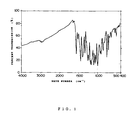
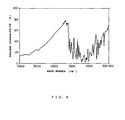
- Fig. 1 is an FT-IR spectrum of the polymethine compound obtained in Example 1.
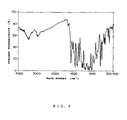
- Fig. 2 is an FT-IR spectrum of the polymethine compound obtained in Example 2.
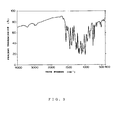
- Fig. 3 is an FT-IR spectrum of the polymethine compound obtained in Example 3.
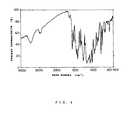
- Fig. 4 is an FT-IR spectrum of the polymethine compound obtained in Example 4.
- Fig. 5 is an FT-IR spectrum of the polymethine compound obtained in Example 5.
- Fig. 6 is an FT-IR spectrum of the polymethine compound obtained in Example 6.
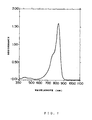
- Fig. 7 is a VIS-NIR absorption spectrum of the polymethine compound obtained in Example 1.
- Fig. 8 is a VIS-NIR absorption spectrum of the polymethine compound obtained in Example 4.
- Fig. 9 is a VIS-NIR absorption spectrum of the polymethine compound obtained in Example 5.
- Fig. 10 is a VIS-NIR absorption spectrum of the polymethine compound obtained in Example 6.
- R 1 represents an alkyl group, which may optionally be substituted
- R 2 represents a hydrogen atom or a lower alkyl group
- R 3 and R 4 each independently represents a lower alkyl group or R 3 and R 4 may combinedly form a cyclic structure
- L is an alkylene group which is required for the formation of a cyclic structure and may optionally be substituted
- D and E each independently represents an oxygen atom or a methine group
- X represents a hydrogen or halogen atom or a substituted amino group
- Z represents a charge-neutralizing ion.
- R 1 is an unsubstituted alkyl group
- said group is preferably a straight or branched alkyl group containing 1 to 18 carbon atoms, more preferably a straight or branched alkyl group containing 1 to 8 carbon atoms.
- Examples are methyl, ethyl, n-propyl, isopropyl, n-butyl, isobutyl, sec-butyl, n-pentyl, isopentyl, neopentyl, n-hexyl, isohexyl, sec-hexyl, 2-ethylbutyl, n-heptyl, isoheptyl, sec-heptyl, n-octyl, 2-ethylhexyl, n-decyl, n-dodecyl, n-pentadecyl and n-octadecyl, among others.
- R 1 is a substituted alkyl group
- said group may be an alkoxyalkyl group, a sulfoalkyl group or a carboxyalkyl group, for instance.
- Said alkoxyalkyl group preferably contains 2 to 8 carbon atoms.
- Said sulfoalkyl group represented by R 1 is preferably a straight or branched sulfoalkyl group containing 1 to 18 carbon atoms, more preferably a straight or branched sulfoalkyl group containing 1 to 8 carbon atoms. It is preferred that at least one of these sulfoalkyl groups represented by R 1 be in the form of a salt with an alkali metal ion or an alkylammonium ion.
- sulfoalkyl group there may be mentioned 2-sulfoethyl, 3-sulfopropyl, 3-sulfobutyl, 4-sulfobutyl, 4-sulfo-3-methylbutyl, 2-(3-sulfopropoxy)ethyl, 2-hydroxy-3-sulfopropyl, 3-sulfo-2-(2-ethoxy)ethoxypropoxy, 5-sulfopentyl, 6-sulfohexyl, 8-sulfooctyl and 6-sulfo-2-ethylhexyl, among others, and these may be in the form of a salt with an alkali metal ion or an alkylammonium ion.
- the carboxyalkyl group represented by R 1 is preferably a straight or branched carboxyalkyl group containing 2 to 18 carbon atoms, more preferably a straight or branched carboxyalkyl group containing 2 to 9 carbon atoms. It is preferred that at least one of these carboxyalkyl groups represented by R 1 be in the form of a salt with an alkali metal ion or an alkylammonium ion.
- carboxyalkyl group there may be mentioned 2-carboxyethyl, 3-carboxypropyl, 3-carboxybutyl, 4-carboxybutyl, 4-carboxy-3-methylbutyl, 2-(3-carboxypropoxy)ethyl, 2-hydroxy-3-carboxypropyl, 3-carboxy-2-(2-ethoxy)ethoxypropoxy, 5-carboxypentyl, 6-carboxyhexyl, 8-carboxyoctyl and 6-carboxy-2-ethylhexyl, among others, and these may be in the form of a salt with an alkali metal ion or an alkylammonium ion.
- R 2 is a hydrogen atom or a lower alkyl group and, as the lower alkyl group, there may be mentioned methyl, ethyl, n-propyl, isopropyl, n-butyl, isobutyl and sec-butyl.
- the lower alkyl group represented by each of R 3 and R is, for example, methyl, ethyl, n-propyl, isopropyl, n-butyl, isobutyl or sec-butyl.
- the ring structure formed by R 3 and R 4 combinedly together with the adjacent carbon atom is, for example, a cyclopropane, cyclobutane, cyclopentane, cyclohexane or cycloheptane ring. Among them, the cyclobutane, cyclopentane and cyclohexane rings are preferred.
- X is preferably a hydrogen atom, a halogen atom such as F, Cl, Br or I, or ethylamino, phenylamino or diphenylamino. Particularly preferred are Cl, Br, diphenylamino and like substituted amino groups.
- Z represents a charge-neutralizing ion and preferably is, for example, F - , Cl - , Br - , I - , BrO 4 - , ClO 4 - , benzenesulfonate, p-toluenesulfonate, naphthalenesulfonate, benzenedisulfonate, naphthalenedisulfonate, CH 3 SO 3 - , C 2 H 5 SO 3 - , C 3 H 7 SO 3 - , C 4 H 9 SO 3 - , C 5 H 11 SO 3 - , CF 3 SO 3 - , C 2 F 5 SO 3 - , C 3 F 7 SO 3 - , C 4 F 9 SO 3 - , C 5 F 11 SO 3 - , CH 3 CO 2 - , C 2 H 5 CO 2 - , C 3 H 7 CO 2 - , C 4 H 9 CO 2 - , C 5 H 11 CO 2 -
- Z 1 represents a charge-neutralizing ion and preferably is, for example, F - , Cl - , Br - , I - , BrO 4 - , ClO 4 - , benzenesulfonate, p-toluenesulfonate, naphthalenesulfonate, benzenedisulfonate, naphthalenedisulfonate, CH 3 SO 3 - , C 2 H 5 SO 3 - , C 3 H 7 SO 3 - , C 4 H 9 SO 3 - , C 5 H 11 SO 3 - , CF 3 SO 3 - , C 2 F 5 SO 3 - , C 3 F 7 SO 3 - , C 4 F 9 SO 3 - , C 5 F 11 SO 3 - , CH 3 CO 2 - , C 2 H 5 CO 2 - , C 3 H 7 CO 2 - , C 4 H 9 CO 2 - , C 5 H 11 CO 2 -
- L is a substituted or unsubstituted alkylene group, preferably containing 2 to 4 carbon atoms, and forms a ring together with the three carbon atoms, namely the carbon atom bearing X and both carbon atoms adjacent thereto.
- L is preferably ethylene, propylene, butylene, 2-oxapropylene, 2-thiapropylene, 2-azapropylene, 2-methylpropylene or 2-tert-butylpropylene, more preferably ethylene, propylene or butylene.
- R 1 to R 4 , D, E, X and L are as defined above and M represents Na, K or triethylammonium.
- M represents Na, K or triethylammonium.
- the polymethine compound of the present invention is produced, for example, by subjecting an indolenium compound represented by the general formula (II) and a diformyl compound represented by the general formula (III) or a dianil compound represented by the general formula (IV) to condensation reaction in the presence of a fatty acid salt in a dehydrating organic acid.
- an indolenium compound represented by the general formula (II) and a diformyl compound represented by the general formula (III) or a dianil compound represented by the general formula (IV) to condensation reaction in the presence of a fatty acid salt in a dehydrating organic acid.
- R 1 to R 4 , D, E and Z 1 are as defined above.
- X and L are as defined above.
- X and L are as defined above.
- the fatty acid salt is, for example, sodium acetate, potassium acetate, calcium acetate, sodium propionate, potassium propionate or the like.
- Such fatty acid salt is used generally in an amount of about 0.1 to 5 moles, preferably about 0.5 to 2 moles, per mole of the compound of general formula (III).
- dehydrating organic acid there may be mentioned acetic anhydride, propionic anhydride, butyric anhydride, ⁇ -butyrolactone and the like.
- Such dehydrating organic acid is used generally in an amount of about 10 to 100 moles, preferably about 20 to 50 moles, per mole of the compound of general formula (II).
- the proportion of the compound of general formula (II) to the compound of general formula (III) or (IV) is used generally in an amount of about 0.2 to 1.5 moles, preferably about 0.4 to 0.7 moles, per mole of the former.
- the above reaction can proceeds generally at about 10 to 150°C, preferably at room temperature to 120°C, and will be complete generally in several minutes to about 3 hours.
- the desired product can be readily isolated from the reaction mixture, for example, by pouring a poor solvent, such as water, methanol, ethanol, n-propanol, isopropanol or n-butanol, into said mixture or discharging said mixture into a poor solvent such as water, methanol, ethanol, n-propanol, isopropanol or n-butanol.
- a poor solvent such as water, methanol, ethanol, n-propanol, isopropanol or n-butanol.
- the product can be readily purified in the conventional manner, for example by recrystallization, column separation and/or other appropriate means.
- the compound represented by the general formula (II) can be synthesized, for example, by the method described in JP Kokai H02-229865 etc.
- the diformyl compound represented by the general formula (III) can be synthesized, for example, by the method described in Journal of Organic Chemistry, 42 , 885-888 (1977) etc.
- the dianil compound represented by the general formula (IV) can be readily synthesized by reacting the diformyl compound of general formula (III) with aniline hydrochloride.
- the near infrared absorber of the present invention may contain a binder resin in addition to the polymethine compound of general formula (I).
- the near infrared absorber may comprise one or more of various known near infrared absorbers in combination with the polymethine compound of general formula (I) within the limits beyond which the object of the present invention cannot be fulfilled.
- near infrared absorbers which can be used in combination, there may be mentioned carbon black, aniline black and like pigments, those polymethine dyes (cyanine dyes), phthalocyanine dyes, dithiol metal complex dyes, naphthoquinone and anthraquinone dyes, triphenylmethane (-like) dyes, aluminum, diimmonium dyes and so forth which are described in "Kagaku Kogyo (Chemical Industry)", May, 1986, pages 45-51 under the title “Near infrared absorbing dyes” or in the monograph “Development and Market Trends of Functional Dyes for the Nineties", publsihed by CMC, 1990, Chapter 2, Paragraphs 2 and 3, and, further, azo dyes, indoaniline metal complex dyes, intermolecular CT dyes and other pigments and dyes.
- polymethine dyes cyanine dyes
- phthalocyanine dyes dithiol metal complex dyes
- the binder resin is not particularly restricted but includes, among others, homopolymers and copolymers based on acrylic acid, methacrylic acid, acrylic esters, methacrylic esters and other acrylic monomers, methylcellulose, ethylcellulose, cellulose acetate and other cellulosic polymers, polystyrene, vinyl chloride-vinyl acetate copolymers, polyvinylpyrrolidone, polyvinyl butyral, polyvinyl alcohol and other vinyl polymers and copolymers of vinyl compounds, polyesters, polyamides and other condensate polymers, butadiene-styrene copolymers and other rubber-like thermoplastic polymers, and polymers obtained by polymerization and crosslinking of epoxy compounds or like photopolymerizable compounds.
- the near infrared absorber of the present invention When used in optical recording materials such as optical cards, they can be made by applying a solution of the near infrared absorber in an organic solvent to substrates made of glass or a plastic resin, for instance, by any of the various techniques so far explored, for example by spin coating.
- the resin for use in preparing said substrates is not particularly restricted but includes, among others, acrylic resins, polyethylene resins, vinyl chloride resins, vinylidene chloride resins, polycarbonate resins and the like.
- the solvent to be used in spin coating is not particularly restricted but includes, among others, hydrocarbons, halogenated hydrocarbons, ethers, ketones, alcohols and cellosolves and, among them, alcohols, such as methanol, ethanol and propanol, and cellosolve solvents, such as methylcellosolve and ethylcellosolve, are particularly preferred.
- the near infrared absorber of the present invention When the near infrared absorber of the present invention is used in near infrared absorbing filters, infrared blocking materials or films for agricultural use, these can be produced by admixing the near infrared absorber with a plastic resin, if necessary together with an organic solvent, and molding the mixture into sheets or films by any of the various techniques so far explored, for example by injection molding or casting.
- the resin to be used is not particularly restricted but includes, among others, acrylic resins, polyethylene resins, vinyl chloride resins, vinylidene chloride resins, polycarbonate resins and the like.
- the solvent to be used is not particularly restricted but includes, among others, hydrocarbons, halogenated hydrocarbons, ethers, ketones, alcohols and cellosolves and, among them, alcohols, such as methanol, ethanol and propanol, and cellosolve solvents, such as methylcellosolve and ethylcellosolve, are particularly preferred.
- a chromogen component or a colorant component may be incorporated in the near infrared absorber, or a layer containing a chromogen component or a colorant component, for instance, may be provided separately.
- the chromogen or colorant component are those substances capable of forming images as a result of a physical or chemical change due to heat which have so far been explored in various ways, for example subliming dyes or pigments, electron-donating dye precursors combined with an electron-accepting compound, and polymerizing polymers.
- the colorant component in laser thermal transfer recording materials is not particularly restricted but includes inorganic pigments such as titanium dioxide, carbon black, zinc oxide, Prussian blue, cadmium sulfide, iron oxide, and lead, zinc, barium and calcium chromates and organic pigments such as azo, thioindigo, anthraquinone, anthanthrone, triphenodioxane, phthalocyanine, quinacridone and other type ones.
- inorganic pigments such as titanium dioxide, carbon black, zinc oxide, Prussian blue, cadmium sulfide, iron oxide, and lead, zinc, barium and calcium chromates and organic pigments such as azo, thioindigo, anthraquinone, anthanthrone, triphenodioxane, phthalocyanine, quinacridone and other type ones.
- dyes there may be mentioned acid dyes, direct dyes, disperse dyes, oil colors, metal-containing oil colors, and so forth
- the chromogen component for use in laser heat-sensitive recording materials is not particularly restricted but may be any of those conventionally used in heat-sensitive recording materials.
- the electron-donating dye precursors namely substances capable of donating an electron or electrons and accepting a proton or protons from an acid or acids or the like to thereby develop a color
- use may be made of those compounds having such a partial skeleton as a lactone, lactam, sultone, spiropiran, ester or amide structure and capable of undergoing ring opening or cleavage of such partial skeleton upon contact with an electron-accepting compound.
- triphenylmethane compounds for example, there may be mentioned triphenylmethane compounds, fluoran compounds, phenothiazine compounds, indolylphthalide compounds, lueco auramine compounds, rhodamine lactam compounds, triphenylmethane compounds, triazene compounds, spiropyran compounds and fluorene compounds, among others.
- the electron-accepting compound there may be mentioned phenolic compounds, organic acids or salts thereof, and hydroxybenzoic acid esters, among others.
- the polymethine compound of the present invention can judiciously be used as a near infrared absorber in original plates for direct plate making.
- the original plates for direct plate making comprise a light-to-heat conversion layer provided on a substrate.
- a silicone rubber layer and/or a protective layer may be provided on the light-to-heat conversion layer.
- the components constituting the light-to-heat conversion layer include, in addition to the polymethine compound of the present invention, an image forming component, a binder resin and so forth. Alternatively, a layer containing an image forming component may be provided on the light-to-heat conversion layer.
- image forming component Useful as the image forming component are those which can form images as a result of a physical or chemical change due to heat and which have so far been explored in various ways.
- a silicone rubber layer may be laid on the light-to-heat conversion layer (photosensitive or heat-sensitive layer) so that said silicone rubber layer may be subjected to firm adhesion or peeling off after exposure to thereby form image areas, as disclosed in JP Kokai H09-80745, JP Kokai H09-131977, JP Kokai H09-146264 and elsewhere.
- the binder resin to be used in the light-to-heat conversion layer is not particularly restricted but includes, among others, homopolymers or copolymers of acrylic acid, methacrylic acid, acrylic esters, methacrylic esters or like acrylic monomers, methylcellulose, ethylcellulose, cellulose acetate and like cellulosic polymers, polystyrene, vinyl chloride-vinyl acetate copolymers, polyvinylpyrrolidone, polyvinyl butyral, polyvinyl alcohol and like vinyl polymers and copolymers of vinyl compounds, polyesters, polyamides and like polycondesates, butadiene-styrene copolymers and like rubber-like thermoplastic polymers, and polymers obtained by polymerization and crosslinking of epoxy compounds or like photopolymerizable compounds.
- the original plate for plate making as provided by the present invention should be flexible so that it may be set on a conventional printing press and, at the same time, it should be able to endure the pressure applied at the time of printing.
- the substrate or support member to be used there may be mentioned, among others, paper, plastic-laminated (e.g. polyethylene-, polypropylene, or polystyrene-laminated) paper, sheets of a metal such as aluminum (inclusive of aluminum alloys), zinc or copper, films made of a plastic such as cellulose diacetate, cellulose triacetate, cellulose butyrate, polyethylene terephthalate, polyethylene, polystyrene, polypropylene, polycarbonate or polyvinyl acetal, and the like.
- plastic-laminated e.g. polyethylene-, polypropylene, or polystyrene-laminated
- sheets of a metal such as aluminum (inclusive of aluminum alloys), zinc or copper
- films made of a plastic such as cellulose di
- coated paper sheets of a metal such as aluminum, plastic films such as polyethylene terephthalate films, rubber sheets, and composite materials produced from such materials.
- plastic films such as polyethylene terephthalate films
- composite materials produced from such materials.
- the substrate has a thickness of 25 ⁇ m to 3 mm, preferably 100 ⁇ m to 500 ⁇ m.
- the original plate for plate making is produced generally by dissolving or dispersing the polymethine compound, image forming component, binder resin and other necessary components in an organic solvent and applying the solution or dispersion to the substrate.
- solvent used for said application there may be mentioned water, alcohols such as methyl alcohol, isopropyl alcohol, isobutyl alcohol, cyclopentanol, cyclohexanol and diacetone alcohol, cellosolves such as methylcellosolve and ethylcellosolve, aromatics such as toluene, xylene and chlorobenzene, esters such as ethyl acetate, butyl acetate, isoamyl acetate and methyl propionate, ketones such as acetone, methyl ethyl ketone, methyl isobutyl ketone and cyclohexanone, chlorinated hydrocarbons such as methylene chloride, chloroform and trichloroethylene, ethers such as tetrahydrofuran and dioxane, and aprotic polar solvents such as N,N-dimethylformamide and N-methylpyrrolidone.
- alcohols such as
- a primer layer for the purpose of improving adhesiveness or printability, or the substrate itself may be subjected to surface treatment.
- a layer of any of various photosensitive polymres may be cured by exposure to light prior to providing the light-to-heat conversion layer, as disclosed in JP Kokai S60-22903, a layer of an epoxy resin may be heat-cured, as disclosed in JP Kokai S62-50760, a gelatin layer may be hardened, as disclosed in JP Kokai S63-133151 and, further, a urethane resin and a silane coupling agent may be used, as disclosed in JP Kokai H03-200965, or a urethane resin may be used, as disclosed in JP Kokai H03-273248.
- transparent films made of polyethylene, polypropylene, polyvinyl chloride, polyvinylidene chloride, polyvinyl alcohol, polyethylene terephthalate or cellophane, for instance, may be used for lamination. Such films may be stretched or oriented prior to application.
- VIS-NIR absorption spectrum of the compound obtained is shown in Fig. 7.
- VIS-NIR absorption spectrum of the compound obtained is shown in Fig. 8.
- VIS-NIR absorption spectrum of the compound obtained is shown in Fig. 9.
- VIS-NIR absorption spectrum of the compound obtained is shown in Fig. 10.
- a sample was produced by applying, to a polyethylene terephthalate (PET) film having an average thickness of 5 ⁇ m, a solution of 10 g of Delpet 80N (acrylic resin; product of Asahi Chemical Industry; as a binder) and 0.2 g of the above compound (1) in 90 g of a toluene-methyl ethyl ketone (1/1) mixture using a wire bar to give a dry film thickness of about 5 ⁇ m.
- PET polyethylene terephthalate
- Laser beams from a single mode semiconductor laser (wavelength: 830 nm) were converged by means of a lens so that a beam diameter of 10 ⁇ m might be attained on the surface of said sample.
- the semiconductor was adjusted so that the power of the laser beam arriving at said surface might be varied within the range of 50 to 200 mW.
- the sample was thus irradiated with a single pulse at a pulse width of 20 ⁇ s. After completion of the irradiation, the sample was observed under the light microscope. When the laser power arriving at the surface was 50 mW, through hole formation with a diameter of about 10 ⁇ m was confirmed.
- Example 9 The procedure of Example 9 was followed in the same manner except that 0.2 g of the compound (10) was used in lieu of 0.2 g of the compound (1).
- the sample after completion of the irradiation was examined under an optical microscope, whereupon through hole formation with a diameter of about 10 ⁇ m was confirmed when the laser power arriving at the surface was 50 mW.
- a gelatin layer as a primer layer so that the dry film thickness of said gelatin layer amounted to 0.2 ⁇ m.
- a light-to-heat conversion layer was formed by applying a coating composition prepared in accordance with the recipe given below to the above gelatin-coated polyethylene terephthalate film to a dry film thickness of 2 ⁇ m.
- Compound No. (1) 0.1 weight part Crisvon 3006LV (polyurethane; 5.0 weight parts Product of Dainippon Ink and Chemicals) Solsperse S27000 (product of ICI) 0.4 weight part Nitrocellulose (containing 30% of n-propanol) 4.2 weight parts Xylylenediamine (1 mole)-glycidyl methacrylate (4 moles) adduct 2.0 weight parts Ethyl Michler's ketone 0.2 weight part Tetrahydrofuran 90 weight parts
- a silicone rubber layer was formed on the above light-to-heat conversion layer by applying thereto a coating composition prepared in accordance with the recipe given below to a dry film thickness of 2 ⁇ m.
- ⁇ , ⁇ -Divinylpolydimethylsiloxane degree of polymerization: ca 700
- 9.0 weight parts (CH 3 ) 3 Si-O-(SiH(CH 3 )-O-) 8 -Si(CH 3 ) 3
- Polydimethylsiloxane degree of polymerization: ca 8,000
- HC C-C(CH 3 ) 2 -O-Si(CH 3 ) 3 0.07 weight part
- Isopar product of Esso Chemical 55 weight parts
- a plate for direct printing plate making was produced in the same manner as in Example 11 except that 0.1 weight part of the compound (2) was used in lieu of 0.1 weight part of the compound (1).
- a plate for direct printing plate making was produced in the same manner as in Example 11 except that 0.1 weight part of the compound (10) was used in lieu of 0.1 weight part of the compound (1).
- Example 9 The procedure of Example 9 was followed in the same manner except that 0.2 g of the polymethine compound having the structural formula shown below, which is described in JP Kokai S63-319191, was used in lieu of 0.2 g of the compound (1). In a light microscopic examination of the sample after completion of the irradiation, no through hole formation was observed even when the laser power arriving at the surface was 100 mW.
- Example 9 The procedure of Example 9 was followed in the same manner except that 0.2 g of the polymethine compound having the structural formula shown below, which is described in JP Kokai H02-229865, was used in lieu of 0.2 g of the compound (1). In a light microscopic examination of the sample after completion of the irradiation, no through hole formation was observed even when the laser power arriving at the surface was 100 mW.
- the polymethine compound of general formula (I) shows less absorption in the visible region, and the near infrared absorber comprising this compound can be used with advantage in laser thermal transfer recording materials and laser heat-sensitive recording materials having good sensitivity to laser light with a high light-to-heat conversion efficiency and, therefore, enabling high-speed recording.
- the polymethine compound of general formula (I) is very highly soluble in various solvents used for making the light-to-heat conversion layer of starting plates for direct printing plate making and has good compatibility with various binder resins and other components, facilitating preparation of coating compositions. It can thus form uniform light-to-heat conversion layers and is particularly suited for use in the manufacture of starting plates for direct printing plate making.
Landscapes
- Chemical & Material Sciences (AREA)
- Organic Chemistry (AREA)
- Physics & Mathematics (AREA)
- Optics & Photonics (AREA)
- Materials For Photolithography (AREA)
- Indole Compounds (AREA)
- Photosensitive Polymer And Photoresist Processing (AREA)
Applications Claiming Priority (2)
| Application Number | Priority Date | Filing Date | Title |
|---|---|---|---|
| JP35692798 | 1998-11-30 | ||
| JP35692798 | 1998-11-30 |
Publications (2)
| Publication Number | Publication Date |
|---|---|
| EP1006116A1 true EP1006116A1 (fr) | 2000-06-07 |
| EP1006116B1 EP1006116B1 (fr) | 2003-08-13 |
Family
ID=18451476
Family Applications (1)
| Application Number | Title | Priority Date | Filing Date |
|---|---|---|---|
| EP99309223A Expired - Lifetime EP1006116B1 (fr) | 1998-11-30 | 1999-11-19 | Composes polymethiniques, procede pour leur preparation et leur utilisation |
Country Status (3)
| Country | Link |
|---|---|
| US (1) | US6261737B1 (fr) |
| EP (1) | EP1006116B1 (fr) |
| DE (1) | DE69910333T2 (fr) |
Cited By (6)
| Publication number | Priority date | Publication date | Assignee | Title |
|---|---|---|---|---|
| US6261737B1 (en) * | 1998-11-30 | 2001-07-17 | Yamamoto Chemicals, Inc. | Polymethine compounds, method of producing same, and use thereof |
| EP1188797A3 (fr) * | 2000-09-13 | 2004-03-10 | Yamamoto Chemicals, Inc. | Composé polyméthinique, procédé pour sa préparation et utilisation du composé |
| DE10257188B3 (de) * | 2002-12-06 | 2004-04-15 | Kodak Polychrome Graphics Gmbh | Verfahren zur Herstellung von meso-substituierten Cyanin-Farbstoffen |
| WO2005020224A1 (fr) * | 2003-08-11 | 2005-03-03 | Hewlett-Packard Development Company, L.P. | Systemes et procedes de stockage de donnees sur un disque optique |
| US7198834B2 (en) | 2005-03-22 | 2007-04-03 | Hewlett-Packard Development Company, L.P. | Imaging media including interference layer for generating human-readable marking on optical media |
| EP1849836A3 (fr) * | 2006-03-09 | 2007-12-26 | FUJIFILM Corporation | Composé doté d'une structure de chaîne de polyméthine, matériau de formation d'image, précurseur de plaque d'impression planographique, et procédé de formation d'image l'utilisant, procédé pour la fabrication d'une plaque d'impression et procédé d'impression planographique |
Families Citing this family (3)
| Publication number | Priority date | Publication date | Assignee | Title |
|---|---|---|---|---|
| JP4795542B2 (ja) * | 2000-04-10 | 2011-10-19 | 株式会社クレハ | 近赤外光吸収性組成物及び光学材料 |
| DE10140469B4 (de) * | 2001-08-17 | 2005-09-22 | Infineon Technologies Ag | Karte, Dokument oder Banknote mit erhöhter Fälschungssicherheit |
| US7446212B2 (en) * | 2003-06-25 | 2008-11-04 | Yamamoto Chemicals, Inc. | Polymethine ethers |
Citations (4)
| Publication number | Priority date | Publication date | Assignee | Title |
|---|---|---|---|---|
| JPS6236469A (ja) * | 1985-08-12 | 1987-02-17 | Nippon Kayaku Co Ltd | インドレニン化合物及びそれを含有する光記録媒体 |
| EP0387357A1 (fr) * | 1988-09-16 | 1990-09-19 | Asahi Chemical Co., Ltd. | Derives d'indolenine |
| EP0438123A2 (fr) * | 1990-01-16 | 1991-07-24 | Showa Denko Kabushiki Kaisha | Initiateur de polymérisation utilisable dans l'infrarouge proche |
| JPH10140022A (ja) * | 1996-11-08 | 1998-05-26 | Yamamoto Chem Inc | ポリメチン系化合物、その製造方法、及びこれを含む近赤外線吸収材料 |
Family Cites Families (2)
| Publication number | Priority date | Publication date | Assignee | Title |
|---|---|---|---|---|
| US4871656A (en) * | 1987-04-24 | 1989-10-03 | Eastman Kodak Company | Photographic silver halide elements containing infrared filter dyes |
| EP1006116B1 (fr) * | 1998-11-30 | 2003-08-13 | Yamamoto Chemicals, Inc. | Composes polymethiniques, procede pour leur preparation et leur utilisation |
-
1999
- 1999-11-19 EP EP99309223A patent/EP1006116B1/fr not_active Expired - Lifetime
- 1999-11-19 DE DE69910333T patent/DE69910333T2/de not_active Expired - Fee Related
- 1999-11-23 US US09/447,257 patent/US6261737B1/en not_active Expired - Fee Related
Patent Citations (4)
| Publication number | Priority date | Publication date | Assignee | Title |
|---|---|---|---|---|
| JPS6236469A (ja) * | 1985-08-12 | 1987-02-17 | Nippon Kayaku Co Ltd | インドレニン化合物及びそれを含有する光記録媒体 |
| EP0387357A1 (fr) * | 1988-09-16 | 1990-09-19 | Asahi Chemical Co., Ltd. | Derives d'indolenine |
| EP0438123A2 (fr) * | 1990-01-16 | 1991-07-24 | Showa Denko Kabushiki Kaisha | Initiateur de polymérisation utilisable dans l'infrarouge proche |
| JPH10140022A (ja) * | 1996-11-08 | 1998-05-26 | Yamamoto Chem Inc | ポリメチン系化合物、その製造方法、及びこれを含む近赤外線吸収材料 |
Non-Patent Citations (2)
| Title |
|---|
| PATENT ABSTRACTS OF JAPAN vol. 11, no. 222 (C - 435) 18 July 1987 (1987-07-18) * |
| PATENT ABSTRACTS OF JAPAN vol. 198, no. 10 31 August 1998 (1998-08-31) * |
Cited By (7)
| Publication number | Priority date | Publication date | Assignee | Title |
|---|---|---|---|---|
| US6261737B1 (en) * | 1998-11-30 | 2001-07-17 | Yamamoto Chemicals, Inc. | Polymethine compounds, method of producing same, and use thereof |
| EP1188797A3 (fr) * | 2000-09-13 | 2004-03-10 | Yamamoto Chemicals, Inc. | Composé polyméthinique, procédé pour sa préparation et utilisation du composé |
| DE10257188B3 (de) * | 2002-12-06 | 2004-04-15 | Kodak Polychrome Graphics Gmbh | Verfahren zur Herstellung von meso-substituierten Cyanin-Farbstoffen |
| WO2005020224A1 (fr) * | 2003-08-11 | 2005-03-03 | Hewlett-Packard Development Company, L.P. | Systemes et procedes de stockage de donnees sur un disque optique |
| US7198834B2 (en) | 2005-03-22 | 2007-04-03 | Hewlett-Packard Development Company, L.P. | Imaging media including interference layer for generating human-readable marking on optical media |
| EP1849836A3 (fr) * | 2006-03-09 | 2007-12-26 | FUJIFILM Corporation | Composé doté d'une structure de chaîne de polyméthine, matériau de formation d'image, précurseur de plaque d'impression planographique, et procédé de formation d'image l'utilisant, procédé pour la fabrication d'une plaque d'impression et procédé d'impression planographique |
| US8048607B2 (en) | 2006-03-09 | 2011-11-01 | Fujifilm Corporation | Compound having polymethine-chain structure, image forming material, planographic printing plate precursor, and image forming method using the same, method of making planographic printing plate, and planographic printing method |
Also Published As
| Publication number | Publication date |
|---|---|
| US6261737B1 (en) | 2001-07-17 |
| DE69910333T2 (de) | 2004-06-03 |
| DE69910333D1 (de) | 2003-09-18 |
| EP1006116B1 (fr) | 2003-08-13 |
Similar Documents
| Publication | Publication Date | Title |
|---|---|---|
| USRE38251E1 (en) | Composition comprising photochemical acid progenitor and specific squarylium dye | |
| EP1063231B1 (fr) | Composés polyméthiniques, procédé pour leur préparation et leur utilisation | |
| US5879855A (en) | Compositions for making structured color images and application thereof | |
| EP0654711B1 (fr) | Compositions pour la fabrication d'images structurées en couleur et leurs applications | |
| US6066729A (en) | Photothermal conversion material | |
| CA2147632A1 (fr) | Support et methode d'imagerie | |
| EP1006116B1 (fr) | Composes polymethiniques, procede pour leur preparation et leur utilisation | |
| US6596460B2 (en) | Polyvinyl acetals having azido groups and use thereof in radiation-sensitive compositions | |
| US6468713B1 (en) | Phthalocyanine compounds, process for producing the same, and near infrared absorbent comprising the same | |
| JP3606165B2 (ja) | ポリメチン化合物、その製造法及び用途 | |
| USRE39105E1 (en) | Polymethine compounds, method of producing same, and use thereof | |
| JP4585068B2 (ja) | ポリメチン化合物、その製造方法及び用途 | |
| EP1369862B1 (fr) | Composé polymethine et produit absorbant les rayons proches de l'infrarouge | |
| US20020051939A1 (en) | Polymethine compound, a process for its production, and use of the compound | |
| JPH11235883A (ja) | 光熱変換材料 | |
| US6248893B1 (en) | Non-heterocyclic oxonol infrared radiation sensitive compounds | |
| JP2002187879A (ja) | ポリメチン化合物、その製造方法及び用途 | |
| JP4422231B2 (ja) | フタロシアニン化合物及びこれを用いた近赤外線吸収剤 | |
| US6093832A (en) | Diiminoisoindoline compound and the process for producing the compound and use thereof | |
| JP3821588B2 (ja) | 画像記録媒体並びに画像記録方法 | |
| EP1686157A1 (fr) | Forme non-solvate de cristal de compose de polymethine et procede de production correspondant | |
| US20050064324A1 (en) | Thermal imaging composition and member and methods of imaging and printing | |
| JPH11231510A (ja) | 光熱変換材料 | |
| EP1826245A1 (fr) | Critaux non solvates d'un compose de polymethine, procede pour la production de ceux-ci et utilisation des cristaux | |
| JP3935538B2 (ja) | ポリメチン系化合物、その製造方法、及びこれを含む近赤外線吸収材料 |
Legal Events
| Date | Code | Title | Description |
|---|---|---|---|
| PUAI | Public reference made under article 153(3) epc to a published international application that has entered the european phase |
Free format text: ORIGINAL CODE: 0009012 |
|
| AK | Designated contracting states |
Kind code of ref document: A1 Designated state(s): DE FR GB |
|
| AX | Request for extension of the european patent |
Free format text: AL;LT;LV;MK;RO;SI |
|
| 17P | Request for examination filed |
Effective date: 20001120 |
|
| AKX | Designation fees paid |
Free format text: DE FR GB |
|
| 17Q | First examination report despatched |
Effective date: 20020402 |
|
| GRAH | Despatch of communication of intention to grant a patent |
Free format text: ORIGINAL CODE: EPIDOS IGRA |
|
| GRAH | Despatch of communication of intention to grant a patent |
Free format text: ORIGINAL CODE: EPIDOS IGRA |
|
| GRAA | (expected) grant |
Free format text: ORIGINAL CODE: 0009210 |
|
| AK | Designated contracting states |
Designated state(s): DE FR GB |
|
| REG | Reference to a national code |
Ref country code: GB Ref legal event code: FG4D |
|
| REF | Corresponds to: |
Ref document number: 69910333 Country of ref document: DE Date of ref document: 20030918 Kind code of ref document: P |
|
| ET | Fr: translation filed | ||
| PLBE | No opposition filed within time limit |
Free format text: ORIGINAL CODE: 0009261 |
|
| STAA | Information on the status of an ep patent application or granted ep patent |
Free format text: STATUS: NO OPPOSITION FILED WITHIN TIME LIMIT |
|
| 26N | No opposition filed |
Effective date: 20040514 |
|
| PGFP | Annual fee paid to national office [announced via postgrant information from national office to epo] |
Ref country code: DE Payment date: 20081114 Year of fee payment: 10 |
|
| PGFP | Annual fee paid to national office [announced via postgrant information from national office to epo] |
Ref country code: FR Payment date: 20081112 Year of fee payment: 10 |
|
| PGFP | Annual fee paid to national office [announced via postgrant information from national office to epo] |
Ref country code: GB Payment date: 20081119 Year of fee payment: 10 |
|
| GBPC | Gb: european patent ceased through non-payment of renewal fee |
Effective date: 20091119 |
|
| REG | Reference to a national code |
Ref country code: FR Ref legal event code: ST Effective date: 20100730 |
|
| PG25 | Lapsed in a contracting state [announced via postgrant information from national office to epo] |
Ref country code: FR Free format text: LAPSE BECAUSE OF NON-PAYMENT OF DUE FEES Effective date: 20091130 |
|
| PG25 | Lapsed in a contracting state [announced via postgrant information from national office to epo] |
Ref country code: DE Free format text: LAPSE BECAUSE OF NON-PAYMENT OF DUE FEES Effective date: 20100601 |
|
| PG25 | Lapsed in a contracting state [announced via postgrant information from national office to epo] |
Ref country code: GB Free format text: LAPSE BECAUSE OF NON-PAYMENT OF DUE FEES Effective date: 20091119 |