EP1014969B1 - Proanthocyanidinhaltiges pflanzenextrakt für die hemmung von p-type fimbriae-bakterieller adhäsion an oberflächen - Google Patents
Proanthocyanidinhaltiges pflanzenextrakt für die hemmung von p-type fimbriae-bakterieller adhäsion an oberflächen Download PDFInfo
- Publication number
- EP1014969B1 EP1014969B1 EP98943526A EP98943526A EP1014969B1 EP 1014969 B1 EP1014969 B1 EP 1014969B1 EP 98943526 A EP98943526 A EP 98943526A EP 98943526 A EP98943526 A EP 98943526A EP 1014969 B1 EP1014969 B1 EP 1014969B1
- Authority
- EP
- European Patent Office
- Prior art keywords
- type
- units
- proanthocyanidin
- extract
- coli
- Prior art date
- Legal status (The legal status is an assumption and is not a legal conclusion. Google has not performed a legal analysis and makes no representation as to the accuracy of the status listed.)
- Expired - Lifetime
Links
Images




Classifications
-
- C—CHEMISTRY; METALLURGY
- C07—ORGANIC CHEMISTRY
- C07D—HETEROCYCLIC COMPOUNDS
- C07D493/00—Heterocyclic compounds containing oxygen atoms as the only ring hetero atoms in the condensed system
- C07D493/02—Heterocyclic compounds containing oxygen atoms as the only ring hetero atoms in the condensed system in which the condensed system contains two hetero rings
- C07D493/08—Bridged systems
-
- A—HUMAN NECESSITIES
- A23—FOODS OR FOODSTUFFS; TREATMENT THEREOF, NOT COVERED BY OTHER CLASSES
- A23L—FOODS, FOODSTUFFS OR NON-ALCOHOLIC BEVERAGES, NOT OTHERWISE PROVIDED FOR; PREPARATION OR TREATMENT THEREOF
- A23L2/00—Non-alcoholic beverages; Dry compositions or concentrates therefor; Preparation or treatment thereof
- A23L2/02—Non-alcoholic beverages; Dry compositions or concentrates therefor; Preparation or treatment thereof containing fruit or vegetable juices
-
- A—HUMAN NECESSITIES
- A23—FOODS OR FOODSTUFFS; TREATMENT THEREOF, NOT COVERED BY OTHER CLASSES
- A23L—FOODS, FOODSTUFFS OR NON-ALCOHOLIC BEVERAGES, NOT OTHERWISE PROVIDED FOR; PREPARATION OR TREATMENT THEREOF
- A23L33/00—Modifying nutritive qualities of foods; Dietetic products; Preparation or treatment thereof
- A23L33/10—Modifying nutritive qualities of foods; Dietetic products; Preparation or treatment thereof using additives
- A23L33/105—Plant extracts, their artificial duplicates or their derivatives
-
- A—HUMAN NECESSITIES
- A61—MEDICAL OR VETERINARY SCIENCE; HYGIENE
- A61K—PREPARATIONS FOR MEDICAL, DENTAL OR TOILETRY PURPOSES
- A61K31/00—Medicinal preparations containing organic active ingredients
- A61K31/33—Heterocyclic compounds
- A61K31/335—Heterocyclic compounds having oxygen as the only ring hetero atom, e.g. fungichromin
- A61K31/35—Heterocyclic compounds having oxygen as the only ring hetero atom, e.g. fungichromin having six-membered rings with one oxygen as the only ring hetero atom
-
- A—HUMAN NECESSITIES
- A61—MEDICAL OR VETERINARY SCIENCE; HYGIENE
- A61K—PREPARATIONS FOR MEDICAL, DENTAL OR TOILETRY PURPOSES
- A61K31/00—Medicinal preparations containing organic active ingredients
- A61K31/33—Heterocyclic compounds
- A61K31/335—Heterocyclic compounds having oxygen as the only ring hetero atom, e.g. fungichromin
- A61K31/35—Heterocyclic compounds having oxygen as the only ring hetero atom, e.g. fungichromin having six-membered rings with one oxygen as the only ring hetero atom
- A61K31/352—Heterocyclic compounds having oxygen as the only ring hetero atom, e.g. fungichromin having six-membered rings with one oxygen as the only ring hetero atom condensed with carbocyclic rings, e.g. methantheline
- A61K31/353—3,4-Dihydrobenzopyrans, e.g. chroman, catechin
-
- A—HUMAN NECESSITIES
- A61—MEDICAL OR VETERINARY SCIENCE; HYGIENE
- A61P—SPECIFIC THERAPEUTIC ACTIVITY OF CHEMICAL COMPOUNDS OR MEDICINAL PREPARATIONS
- A61P1/00—Drugs for disorders of the alimentary tract or the digestive system
-
- A—HUMAN NECESSITIES
- A61—MEDICAL OR VETERINARY SCIENCE; HYGIENE
- A61P—SPECIFIC THERAPEUTIC ACTIVITY OF CHEMICAL COMPOUNDS OR MEDICINAL PREPARATIONS
- A61P1/00—Drugs for disorders of the alimentary tract or the digestive system
- A61P1/12—Antidiarrhoeals
-
- A—HUMAN NECESSITIES
- A61—MEDICAL OR VETERINARY SCIENCE; HYGIENE
- A61P—SPECIFIC THERAPEUTIC ACTIVITY OF CHEMICAL COMPOUNDS OR MEDICINAL PREPARATIONS
- A61P13/00—Drugs for disorders of the urinary system
-
- A—HUMAN NECESSITIES
- A61—MEDICAL OR VETERINARY SCIENCE; HYGIENE
- A61P—SPECIFIC THERAPEUTIC ACTIVITY OF CHEMICAL COMPOUNDS OR MEDICINAL PREPARATIONS
- A61P13/00—Drugs for disorders of the urinary system
- A61P13/10—Drugs for disorders of the urinary system of the bladder
-
- A—HUMAN NECESSITIES
- A61—MEDICAL OR VETERINARY SCIENCE; HYGIENE
- A61P—SPECIFIC THERAPEUTIC ACTIVITY OF CHEMICAL COMPOUNDS OR MEDICINAL PREPARATIONS
- A61P13/00—Drugs for disorders of the urinary system
- A61P13/12—Drugs for disorders of the urinary system of the kidneys
-
- A—HUMAN NECESSITIES
- A61—MEDICAL OR VETERINARY SCIENCE; HYGIENE
- A61P—SPECIFIC THERAPEUTIC ACTIVITY OF CHEMICAL COMPOUNDS OR MEDICINAL PREPARATIONS
- A61P31/00—Antiinfectives, i.e. antibiotics, antiseptics, chemotherapeutics
-
- A—HUMAN NECESSITIES
- A61—MEDICAL OR VETERINARY SCIENCE; HYGIENE
- A61P—SPECIFIC THERAPEUTIC ACTIVITY OF CHEMICAL COMPOUNDS OR MEDICINAL PREPARATIONS
- A61P31/00—Antiinfectives, i.e. antibiotics, antiseptics, chemotherapeutics
- A61P31/04—Antibacterial agents
-
- C—CHEMISTRY; METALLURGY
- C07—ORGANIC CHEMISTRY
- C07D—HETEROCYCLIC COMPOUNDS
- C07D311/00—Heterocyclic compounds containing six-membered rings having one oxygen atom as the only hetero atom, condensed with other rings
- C07D311/02—Heterocyclic compounds containing six-membered rings having one oxygen atom as the only hetero atom, condensed with other rings ortho- or peri-condensed with carbocyclic rings or ring systems
- C07D311/04—Benzo[b]pyrans, not hydrogenated in the carbocyclic ring
- C07D311/58—Benzo[b]pyrans, not hydrogenated in the carbocyclic ring other than with oxygen or sulphur atoms in position 2 or 4
- C07D311/60—Benzo[b]pyrans, not hydrogenated in the carbocyclic ring other than with oxygen or sulphur atoms in position 2 or 4 with aryl radicals attached in position 2
- C07D311/62—Benzo[b]pyrans, not hydrogenated in the carbocyclic ring other than with oxygen or sulphur atoms in position 2 or 4 with aryl radicals attached in position 2 with oxygen atoms directly attached in position 3, e.g. anthocyanidins
-
- A—HUMAN NECESSITIES
- A23—FOODS OR FOODSTUFFS; TREATMENT THEREOF, NOT COVERED BY OTHER CLASSES
- A23V—INDEXING SCHEME RELATING TO FOODS, FOODSTUFFS OR NON-ALCOHOLIC BEVERAGES AND LACTIC OR PROPIONIC ACID BACTERIA USED IN FOODSTUFFS OR FOOD PREPARATION
- A23V2002/00—Food compositions, function of food ingredients or processes for food or foodstuffs
Definitions
- the present invention is directed to isolation and identification of plant proanthocyanidin extracts. These extracts can be obtained from cranberry plants (especially Vaccinium macrocarpon ). These extracts are useful for prevention and treatment of urinary tract infections caused by P-type fimbriated Escherichia coli as well as other uses. Extracts containing proanthocyanidins with A-type interflavanoid bonds have been found to have potent bioactivity for inhibiting adherence of P-type E . coli.
- Cranberry juice has been shown to reduce bacteriuria associated with urinary tract infections in humans ( Avorn et al., 1994, J. Am. Med. Soc. 271:751-754 ). The effect appears to be due to the ability of certain cranberry compounds to inhibit adhesion of type 1 (implicated in bladder infections) and P-type (implicated in kidney infections) E . coli bacterial phenotypes to human bladder epithelial cells ( Sobota, 1984, J. Urol. 131:1013-1016 ; Schmidt & Sobota, 1988, Microbios. 55:173-181 ; Zafriri et al., 1989, Antimicrob. Agents Chemo. 33:92-98 ).
- Zafriri et al . (1989) reported that fructose was responsible for the inhibition of type 1 E . coli to uroepithelial cells. Zafriri et al. also reported that cranberry juice contained a non-dialyzable substance (or substances) which inhibited binding of P-type E . coli but failed to define the chemical nature of this inhibitor. Cranberry juice has also been shown to cause immediate inhibition of agglutination as well as loss of fimbriae after long-term exposure of bacteria to the juice ( Ahuja et al., 1998, J. Urol. 159:559-562 ).
- a partially-purified anti-adherence activity from cranberry has also been described ( U.S. Patent Nos. 5, 474, 774 ; 5,525,341 ; and 5,646,178 , all to Walker et al .).
- This activity was obtained using acidified alcohol as an extraction solvent with whole cranberry fruit followed by separation of the activity from monomer and dimer sugars by precipitation with a metal acetate or sulfate.
- the reported activity consisted of a fraction enriched for polyphenol and flavonoid compounds that contained as much as 10% anthocyanins. The specificity of this anti-adherence activity for type 1 or P-type E . coli was not determined.
- Walker et al. (WO 96/30033 ; and U.S. Patent Nos. 5,646,178 and 5,650,432 ) described a series of proanthocyanidin monomers, dimers, polymers, flavonoid derivatives thereof and related compounds purported to have the ability to interfere with bacterial adherence to a surface.
- the dimers and polymers of Walker were limited to compounds having B-type interflavanoid linkages
- Walker failed to provide any experimental data correlating biological activity with a specifically-identified compound.
- the Walker method involved alkalinizing a plant material homogenate to a pH greater than 10, a treatment which causes degradation of proanthocyanidins, and precipitating the polyphenolic compounds (together with other materials) by addition of alcohol.
- WO-A-9 729 762 and WO-A-9 729 763 relate to compositions useful in preventing /or treating urogenital and intestinal disorders, which compositions comprise plant species of the Ericaceae family or its extract.
- the composition of WO-A-9 729 762 further comprises a species of microencapsulated bacteria selected from lactobacillus, bifidobacterium and mixtures thereof, whereas the composition of WO-A-9 729 763 further comprises a specific growth factor for facilitating the growth of lactic acid bacteria.
- the article of Ahuja Sunil K. et al. in Journal of Urology, Vol. 155, No. 5 SUPPL., 1996, page 674A refers to the "Loss of fimbrial adhesion with the addition of vaccinium macrocarpon to the growth media of P-fimbriated E. coli.”
- the present invention identifies proanthocyanidins as the compounds that mediate inhibition of adherence of P-type E . coli to cellular surfaces and further provides an improved method of obtaining substantially pure mixtures of proanthocyanidins as well as individual proanthocyanidin compounds from the plant material of cranberries and other plants known to contain proanthocyanidins.
- proanthocyanidin mixtures and individual proanthocyanidin compounds are thus useful in the prevention and/or therapeutic treatment of urinary tract infections, particularly those infections mediated by P-type E . coli or other microorganisms that contain structurally-related fimbriae or molecules involved in microbial adherence.
- the invention also addresses this problem by providing proanthocyanidin mixtures which specifically bind to P-type E. coli as receptor analogs or prevent P-type fimbrial induction for assay kits designed to aid in the clinical diagnosis of pyelonephritis-type infections.
- the present invention is directed to proanthocyanidin extracts substantially free of anthocyanins and flavonols. These extracts are also shown to be free of hydrolyzable tannins, alkaloids, lipids, carbohydrates, simple sugars, protein and amino acids, alcohols and organic acids by chemical reagent testing. These proanthocyanidins extracts are capable of inhibiting agglutination reactions of P-type E . coli but not type 1 E . coli.
- those extracts containing proanthocyanidins with at least one A-type interflavanoid bond have been found to be more bioactive in agglutination reactions than proanthocyanidins linked only by B-type interflavanoid bonds.
- the invention also provides according to claim 3 a method of obtaining these proanthocyanidin extracts from the plant material from vaccinium macrocarpon.
- the method is applicable for extracting the proanthocyanidins from any portion of the plant including leaves, ripe fruit and unripe fruit.
- the method of the invention causes substantially less oxidative damage and/or structural degradation to the proanthocyanidins, i.e., is less harsh, and provides improved yields of purified proanthocyanidins relative to known methods.
- the method of the invention is directed to preparing a proanthocyanidin extract from a plant by (a) homogenizing plant material in an aqueous extraction solvent comprising at least 10% water but no more than 30% water, 10% to 70% acetone, 5% to 60% methanol and 0.05% to 1% ascorbic acid; and subjecting that extract to further purification to allow recovery of a substantially purified proanthocyanidin extract which is capable of inhibiting agglutination of P-type E . coli but incapable of inhibiting agglutination of type 1 E. coli.
- a preferred embodiment of the invention relates to a method of preparing a proanthocyanidin extract from Vaccinium macrocarpon which comprises:
- the proanthocyanidin extract can be further fractionated using HPLC or other techniques to identify and characterize specific proanthocyanidin compounds that have anti-adherence activity against P-type E . coli or other microorganisms.
- Such compounds include (a) proanthocyanidin compounds having an average of at least four to twelve epicatechin flavanoid units, each linked to the next by a B-type interflavanoid bond between C4 and C8 or between C4 and C6 and (b) proanthocyanidin compounds containing five or six epicatechin flavanoid units, wherein at least two of the units are linked together by an A-type double interflavanoid bond between C4 and C8 and between C2 and the oxygen of C7 and the remaining units are linked to each other by a B-type interflavanoid bond between C4 and C8 or between C4 and C6.
- compositions for use in methods of preventing or treating urogenital infections in a mammal by administering a proanthocyanidin composition comprising the proanthocyanidin extract, a proanthocyanidin compound, a proanthocyanidin polymer or a mixture thereof, to the mammal in an amount and for a time sufficient to prevent, reduce or eliminate the symptoms associated with such infections and thereby lead to an amelioration or curing of the infection.
- the mammal undergoing treatment is a human, but the method is also applicable to animals, especially domesticated animals such as cats and dogs and livestock animals such as cattle.
- a proanthocyanidin composition comprises a proanthocyanidin extract of the invention, a proanthocyanidin compound of the invention, a proanthocyanidin polymer or a mixture thereof.
- the proanthocyanidin composition can be provided as a pharmaceutical composition, e.g., in pill form, as a food additive, e.g. for a beverage, or as a food composition.
- a proanthocyariidin composition of the invention is provided in a cranberry juice beverage, the proanthocyanidins can enhance the cranberry juice's known benefits for preventing and treating urinary tract infections.
- compositions which comprise a proanthocyanidin composition, including pharmaceutically-acceptable salts of any of the proanthocyanidin compounds or polymers, with a pharmaceutically acceptable carrier.
- a pharmaceutically acceptable carrier such as a cranberry juice-based beverage containing additional proanthocyanidins.
- the invention also provides food compositions comprising a proanthocyanidin composition, including pharmaceutically-acceptable salts of the compounds or polymers, mixed with a consumable carrier.
- Consumable carriers include, but are not limited to, livestock feed, domestic animal feed and consumable food products, especially cranberry-containing food products. These food compositions are also useful to prevent or treat urinary tract infections.
- the proanthocyanidin composition of the invention can be used to reduce the pathogenesis of P-type E . coli found in the digestive tracts of cattle. Such a method may be useful in decreasing contamination of ground meat prepared from such cattle.
- Yet another aspect of the invention relates to a method of detecting P-type E. coli in a body fluid, especially in urine, and use of that method in diagnosis of pyelonephritis or other urinary tract infection associated with P-type E . coli.
- a kit for detecting P-type E . coli is also provided.
- a still further aspect of the invention is directed to the proanthocyanidin composition of the invention for use in methods of reducing the incidence of infection after surgery, treating topical wounds and acne, and preventing or eliminating oral infections.
- the proanthocyanidin composition of the invention can also be used as a food additive to confer protection against E . coli present in certain food products such as ground meat and unpasteurized juices, or as a feed additive to reduce the pathogenesis of P-type E . coli found in the digestive tracts of animals, especially cattle destined for slaughter.
- a food additive for ground meat it is preferable to add the proanthocyanidin composition to the meat preparations before or during grinding thereof.
- Proanthocyanidins are polyphenolic molecules found in fruits, berries and other plant material. These molecules belong to the flavanoid family of compounds.
- the flavanoid polyphenolics include the catechins, anthocyanins, and proanthocyanidins.
- Proanthocyanidins are also known as proanthocyanins, leucoanthocyanins, anthocyanogens or procyanidins; these terms can be used interchangeably.
- Proanthocyanidins are oligomers of 3-flavanols and/or 3,4-flavandiols which dehydrate upon acid treatment to yield anthocyanins. Proanthocyanidins are also referred to as anthocyanogens in the older literature, i.e.
- 3-flavanol monomers of catechin and epicatechin are commonly found in proanthocyanidins.
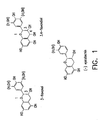
- the structures of 3-flavanol, 3,4-flavandiol and epicatechin are provided in Fig. 1 .
- the proanthocyanidins are similar in structure to the bacterial-binding receptors found on the surface of bladder or kidney cells. These compounds may act, not by killing the bacteria directly, but rather by binding bacterial fimbriae and thereby preventing adherence of the bacteria to bladder or kidney cell surface receptors. Alternatively, the proanthocyanidins may inhibit biosynthesis of the bacterial fimbriae, without which adherence cannot occur. No matter the mechanism, if the bacteria cannot bind to the cells, they cannot multiply, and these are two steps apparently necessary to cause a urinary tract infection. The bacteria are thus carried harmlessly out of the body in the urine stream. This anti-adherence property is advantageous since it eliminates the selective pressure to develop antibiotic resistance that can occur during multiplication of bacteria in the presence of antibiotics.
- this invention is directed to a substantially purified proanthocyanidin extract from vaccinium macrocarpon in which the extract is capable of inhibiting agglutination of P-type E . coli but not inhibiting agglutination of type 1 E . coli.
- the extract is prepared in accordance with the methods described herein. Inhibition of agglutination can be measured by known agglutination assay methods or known methods of measuring bacterial adherence to a surface. These assay methods can also be used to follow purification of the proanthocyanidin extract from plant homogenate material.
- A-positive (A+) blood type human red blood cells specifically bind P-type fimbriated E. coli and the extract of the invention will prevent (i.e., inhibit) agglutination of the A+ HRBC in the presence of P-type bacteria.
- HRBC blood type human red blood cells
- synthetic P-type receptor analogs known in the art which can be used to coat solid substrates, e.g ., latex beads, and then used to assay the extract for its ability to inhibit agglutination of P-type bacteria.
- Agglutination assays specific for type 1 fimbriated E specific for type 1 fimbriated E.
- HRBC guinea pig red blood cells
- yeast cells e.g., Saccharomyces cerevisiae and the agglutination is done in the presence of type 1-fimbriated bacteria. Details for performing these assays are provided in the Examples.
- the extract of the invention is substantially free of anthocyanins, flavonols, hydrolyzable tannins, alkaloids, lipids, carbohydrates, simple sugars, protein and amino acids, alcohols and organic acids.
- the presence or absence of these compounds can be determined by standard chemical testing, measures of purity or other conventional means known in the art.
- the extract (or other fraction to be tested) can be spotted on thin-layer chromatography (TLC) plates, developed in an appropriate solvent system and then treated with a test reagent for a specific class of compounds like tannins, alkaloids, lipids and the like to determine whether those compounds were present in the test sample.
- TLC thin-layer chromatography
- Other chemical or purity determining methods include colorimetric detection of anthocyanidin formation, HPLC purification and 1 H- and 13 C-NMR spectroscopic identification. These methods are known and some specific examples thereof are also set forth in Example 2.
- a proanthocyanidin extract prepared from V. macrocarpon in accordance with the methods of this invention comprises proanthocyanidin compounds consisting of an average of from at least four to twelve epicatechin flavanoid units, wherein each unit is linked to the next by B-type interflavanoid bonds.
- these proanthocyanidin compounds consist of an average of five to eight epicatechin flavanoid units.
- This extract also contains proanthocyanidin compounds consisting of five or six epicatechin flavanoid units, wherein at least two units are linked together by at least one A-type interflavanoid linkage and the remaining units are B-type interflavanoid bonds.
- carbons at specific positions are referred to by Cn, where the n represents the position number of the carbon in the standard flavanol ring numbering system.
- the carbon at the eight position of the ring is designated as C8
- the carbon at the four position of the ring is designated as C4, etc.
- linkages between ring positions can occur in either the ⁇ or ⁇ anomeric orientation.
- An A-type interflavanoid linkage is one which results when the flavanoid units are joined by two bonds, with one bond occurring between C4 of the "upper or first” unit and C8 of the “lower or second” unit and the other bond occurring between C2 of the upper unit and the oxygen attached to the C7 of the lower unit.
- This linkage leads to the formation of an additional 6-membered ring.
- a B-type interflavanoid bond (or linkage) is one which results when the flavanoid units are joined by a single bond. That bond occurs between either the upper unit C4 and the lower unit C8 or between the upper unit C4 and the lower unit C6.
- the present invention also embraces proanthocyanidin compounds prepared by chemical synthesis. Methods of synthesizing proanthocyanidins are known in the art, for example, Delcour et al., 1985, J. Chem. Soc. Perkin Trans. 1:669-676 .
- Another aspect of the invention is directed to a method of preparing a proanthocyanidin extract from a plant which comprises (a) homogenizing plant material in an aqueous extraction solvent comprising at least 10% water but no more than 30% water, 10% to 70% acetone, 5% to 60% methanol and 0.05% to 1% ascorbic acid to prepare a first extract; (b) subjecting that first extract to further purification steps; and (c) recovering therefrom a substantially purified proanthocyanidin extract, which is capable of inhibiting agglutination of P-type E. coli but not type 1 E. coli.
- the method is applicable to plant material from any proanthocyanidin-containing plant and is preferably used with Vaccinium spp., especially V . m acrocarpon or other cranberry species.
- the preferred aqueous extraction solvent comprises about 40% acetone, about 40% methanol and about 0.1% ascorbic acid.
- a proanthocyanidin extract of the invention is prepared by homogenizing plant material from a plant which contains proanthocyanidins with an aqueous solution of 40% acetone, 40% methanol and 0.1% ascorbic acid. After homogenization, the extract is clarified by filtration or centrifugation, the pulp is discarded and the supernatant designated as Fraction 1.
- the solvents are then removed from the supernatant by evaporation and the residue is resuspended in distilled water and subjected to further purification by (1) fractionation on a reverse-phase lipophilic column, such as a C-18 column or other comparable column, equilibrated in distilled water and eluted with successive washes of water (yielding Fraction 2), 15% aqueous methanol (yielding Fraction 3), or acidified 100% methanol (yielding Fraction 4 which can be evaporated to dryness before further purification) or (2) by extraction with a non-polar solvent such as petroleum ether, hexane and the like.
- the non-polar phase, Fraction 5, is discarded and the aqueous phase, Fraction 6, can also be evaporated to dryness before further purification.
- the next step in the purification process is to resuspend Fraction 4 or 6 in 50% aqueous ethanol and apply that solution to a mixed lipophilic-hydrophilic column such as Sephadex TM LH-20 or LH-60 (Pharmacia Biotech) equilibrated in 50% ethanol.
- a mixed lipophilic-hydrophilic column such as Sephadex TM LH-20 or LH-60 (Pharmacia Biotech) equilibrated in 50% ethanol.
- Other separation media such as MCI gel (Mitsubishi Chemical) or TSK gel (Tosohaus) can be substituted.
- the column is washed in the same solvent system until the non-proanthocyanidin polyphenolic compounds are removed (Fraction 7). Hence complete washing can be monitored by removal of the red color attributed to the anthocyanin pigment.
- a purified mixture of proanthocyanidins is then obtained by eluting the column with 70% aqueous acetone.
- the resulting mixture (F
- Fractions 4 or 6 can be further separated into low and higher molecular weight proanthocyanidins mixtures by liquid-liquid extraction with ethyl acetate and water prior to further purification.
- Fractions 4 or 6 are resuspended in water and extracted four times with an equal volume of ethyl acetate.
- the ethyl acetate phases are combined and contain the lower molecular weight proanthocyanidins, whereas the aqueous phase contains the higher molecular weight proanthocyanidins.
- Both post-extraction phases are evaporated to dryness to remove solvent and then further purified on Sephadex LH-20 as described above.
- Fraction 8a The purified material obtained from fractionating the water-soluble phase on the Sephadex LH-20 column is designated as Fraction 8a.
- Fraction 8b The purifed material obtained from fractionating the combined ethyl acetate-soluble phases on the Sephadex LH-20 column is designated as Fraction 8b.
- an aqueous alcohol solution means a solution of water and alcohol having the specified percentage of alcohol.
- 15% aqueous methanol means a solution having 15 parts methanol and 85 parts water and 50% aqueous ethanol means a solution having 50 parts ethanol and 50 parts water.
- an aqueous acetone solution means a solution of water and acetone having the specified percentage of acetone.
- 100% acidified methanol means methanol containing from 0.005% to 0.1% acid. The 100% methanol solution of the Examples is methanol and 0.01% ascorbic acid.
- the plant material can be from any part of the plant and preferably is from a part of the plant rich in proanthocyanidins.
- plant material includes leaves, fruit (both mature or ripe fruit, and immature or unripe fruit), stems, seeds, bark and roots, and can be used for preparation of the proanthocyanidin extract.
- the plant material is preferably from leaves or fruit.
- leaves provide the richest source of proanthocyanidins. The mature fruit from V . macrocarpon is red whereas the immature fruit is green.
- the solution used to homogenize the plant material is important in obtaining high extraction yields of the proanthocyanidins.
- the preferred solution is an aqueous solution of 40% acetone, 40% methanol and 0.1 % ascorbic acid.
- the amounts of each component in the extraction solvent range from 10% to 70% for acetone, from 5% to 60% for methanol and from 0.05% to 1% ascorbic acid, provided that in all cases there is a minimum of at least 10% water to a maximum of 30% water.
- the ascorbic acid can also range from 0.05% to 0.2%.
- Acetone is more effective than alcohols alone or aqueous alcohols for solubilizing and extracting proanthocyanidins from plant tissues ( Hagerman, 1988, J. Chem. Ecol. 14 (2): 453-461 ). If extracting from leaf tissue, acetone inhibits the interaction between proanthocyanidins and proteins, preventing binding of the proanthocyanidins to leaf proteins during the homogenization process (Hagerman, 1988) and resulting in a higher yield of extracted proanthocyanidins. In addition, because skin waxes, proteins, and polysaccharides are relatively insoluble in acetone, these components tend to be left in the pulp.
- Methanol acts as a mild antioxidant and is important when extracting plant materials which contain large amounts of oxidase enzymes, such as found in fruit tissue.
- Water increases the polarity of the solvent mixture and enhances the solubility of the sample thereby increasing yields of the proanthocyanidins since these molecules are associated with the water-soluble components of the sample.
- Ascorbic acid acts as an antioxidant by reducing the quinones that are initially formed ( Lea, 1992, Flavor, Color, and Stability in Fruit Products: The Effect of Polyphenols. In: Hemingway, R.W. (ed.) Plant Polyphenols. Plenum Press, New York ) and also helps to maintain slightly acidic to neutral conditions during the homogenization and extraction process.
- proanthocyanidin molecules are known to undergo base-catalyzed structural rearrangements at high pH that cannot be reversed upon exposure to acidic conditions (see, for example, Laks et al., 1987, J. Chem. Soc., Perkin Trans. 1: 1875 ). Upon testing, it was established that such structurally rearranged molecules (which are no longer proanthocyanidins) lose the ability to inhibit adherence of P-type E . coli bacteria to cellular surfaces.
- the invention provides a composition comprising the proanthocyanidin extract or proanthocyanidin compounds of the invention for use in methods of preventing or treating urogenital infections in a mammal by administering said composition to the mammal in an amount and for a time sufficient to prevent, reduce or eliminate the symptoms associated with such infections and thereby lead to amelioration or curing of the infection.
- the composition can be a pharmaceutical composition or a food composition and is administered for a time and in an amount sufficient to reduce or eliminate the bacteria associated with urogenital infections and thereby ameliorate or cure the infection.
- the pharmaceutical composition can also be used to treat diarrhea.
- to prevent an infection is not limited to nor necessarily means total prevention of the infection or disease but also includes uses which lead to action as a preventative for the disease or infection.
- proanthocyanidin compounds and “proanthocyanidin polymers” of the proanthocyanidin compositions have the definitions of one or more of the following compounds or polymers.
- proanthocyanidins there are several type of proanthocyanidin molecules known in the art and any of these are contemplated unless specified otherwise.
- the proanthocyanidins include, but are not limited to, procyanidins, prodelphinidins, propelargonidins and profisetinidins.
- proanthocyanidin compounds of the invention include proanthocyanidin compounds capable of inhibiting agglutination of P-type E . coli but incapable of inhibiting agglutination of type 1 E . coli , and which consist of five or six flavanoid monomer units wherein at least two of said units are linked together by an A-type interflavanoid linkage by bonds between C4 and C8 and between the C2 and the oxygen of C7 of the units and the remainder of any units are linked to each other by a B-type interflavanoid bond between C4 and C8 or between C4 and C6 of the units.
- the molecules have at least one A-type interflavanoid linkage, and molecules having a few such linkages, e.g., 2-3 A-type interflavanoid linkages per 10 monomer units, as well as molecules having all of the subunits joined by A-type interflavanoid linkages are contemplated.
- the flavanoid monomer units can include any of those typically found in proanthocyanidin molecules and are further defined hereinbelow.
- the proanthocyanidin compounds of the invention further include proanthocyanidin compounds (a) consisting or five or six epicatechin flavanoid units, wherein at least two of said units are linked together by an A-type interflavanoid linkage by bonds between C4 and C8 and between the C2 and the oxygen of C7 of the units and the remainder of the units are linked to each other by a B-type interflavanoid bond between C4 and C8 or between C4 and C6 of the units and (b) proanthocyanidin compounds consisting of an average of from at least four to twelve epicatechin flavanoid units, and preferably from five to eight units, wherein each unit is linked to the next by a B-type interflavanoid bond between C4 and C8 or between C4 and C6 of the units.
- proanthocyanidin compounds consisting or five or six epicatechin flavanoid units, wherein at least two of said units are linked together by an A-type interflavanoid linkage by bonds between C4 and
- the proanthocyanidin polymers of the invention are those proanthocyanidin polymers capable of inhibiting agglutination of P-type E . coli but incapable of inhibiting agglutination of type 1 E. coli.
- the polymers include dimers, trimers, tetramers, pentamers, larger oligomers and long polymers of flavanoid monomer units so long as these polymers have the stated bioactivity.
- the proanthocyanidin compounds and polymers of the invention are composed of flavanoid monomers, i.e ., polyhydroxyflavan-3-ols, which include catechin, epicatechin, gallocatechin, epigallocatechin and the like. These monomers can be chemically modified at positions not involved in formation of the interflavanoid linkages, including modifications of any hydroxy group not involved in polymerization, so long as the compounds are capable of inhibiting agglutination of P-type E . coli but incapable of inhibiting agglutination of type 1 E. coli.
- alkyl refers to alkyl chains having from one to six carbon atoms, in any straight or branched configuration.
- such modifications can be found at the C3 and C5 positions, or the C6 or C8 position if those atoms are not involved in an interflavanoid linkage.
- aryl ring at the C2 position of the flavanoid monomer can be aryl or heteroaryl, optionally substituted with any of the substituents set forth above.
- Aryl groups include but are not limited to phenyl, indenyl and naphthyl and the like.
- Heteroaryl groups include but are not limited to, furyl, imidazolyl, triazolyl, triazinyl, oxazoyl, isoxazoyl, thiazolyl, isothiazoyl, pyrazolyl, pyrrolyl, pyrazinyl, tetrazolyl, pyridyl (or its N-oxide), thienyl, pyrimidinyl (or its N-oxide), indolyly, isoquinolyl (or its N-oxide) and quinolyl (or its N-oxide).
- furyl imidazolyl
- triazolyl triazinyl
- oxazoyl isoxazoyl
- thiazolyl isothiazoyl
- pyrazolyl pyrrolyl
- pyrazinyl tetrazolyl
- pyridyl or its N-oxide
- thienyl pyrimidinyl
- proanthocyanidin extract refers to one or more (a) substantially purified plant proanthocyanidin extracts capable of inhibiting agglutination of P-type E. coli but incapable of inhibiting agglutination of type 1 E .
- coli including extracts prepared from plants in the families Ericaceae, Rosaceae, Pinaceae and Vitaceae, and preferably plants which are a Vaccinium or a Vitis species; and (b) a proanthocyanidin extract prepared by a method of the invention including extracts prepared from plants in the families Ericaceae, Rosaceae, Pinaceae and Vitaceae, and preferably plants which are a Vaccinium or a Vitis species.
- one measure of efficacy includes monitoring the reduction or elimination of urinary bacterial counts associated with such infections during or after the course of treatment.
- Prevention as the term is used herein in connection with the methods of using the pharmaceutical and food compositions in accordance with the invention does not mean complete prevention of infection in any particular individual but rather means a statistical reduction in the incidence of urogenital infections in a population sample.
- compositions comprise proanthocyanidin extracts or proanthocyanidin compounds together with a pharmaceutically acceptable carrier.
- the pharmaceutical composition can be provided, e.g., in tablet or liquid form, oral rinse, douche, topical formulation, toothpaste or as an additive for a beverage or other food item, especially as an additive for a cranberry juice beverage (or cranberry-juice containing beverage) to allow enhancement of the cranberry juice's known benefits for preventing and treating urinary tract infections.
- compositions of the invention comprise a proanthocyanidin extract and a pharmaceutically-acceptable carrier, wherein the extract is capable of inhibiting agglutination of P-type E . coli and not capable of inhibiting agglutination of type 1 E. coli as well as any of the extracts prepared in accordance with a method of the invention.
- compositions of the invention comprises one or more proanthocyanidin compounds and a pharmaceutically-acceptable carrier, wherein the compounds are proanthocyanidin compounds consisting of an average of from at least four to twelve epicatechin flavanoid units, wherein each unit is linked to the next by B-type interflavanoid bonds and proanthocyanidin oligomers consisting of five or six epicatechin flavanoid units, wherein at least two units are linked together by at least one A-type interflavanoid linkage and the remaining units are B-type interflavanoid bonds.
- proanthocyanidin compounds consisting of an average of from at least four to twelve epicatechin flavanoid units, wherein each unit is linked to the next by B-type interflavanoid bonds and proanthocyanidin oligomers consisting of five or six epicatechin flavanoid units, wherein at least two units are linked together by at least one A-type interflavanoid linkage and the remaining units are B-type interflavanoid bonds
- the proanthocyanidin compositions of the invention can be used directly as food additives or mixed with a consumable carrier to be used as a food additive or food composition.
- One food additive of the invention comprises a proanthocyanidin extract of a Vaccinium species and a consumable carrier, wherein the extract is capable of inhibiting agglutination of P-type E . coli and not capable of inhibiting agglutination of type 1 E. coli.
- Another food additive of the invention comprises one or more proanthocyanidin compounds and a consumable carrier, wherein the compounds are proanthocyanidin compounds consisting of an average of from at least four to twelve epicatechin flavanoid units, wherein each unit is linked to the next by B-type interflavanoid bonds and proanthocyanidin oligomers consisting of five or six epicatechin flavanoid units, wherein at least two units are linked together by at least one A-type interflavanoid linkage and the remaining units are B-type interflavanoid bonds.
- the food compositions of the invention thus contain one of the proanthocyanidin compositions of the invention in admixture with livestock feed, domestic animal feed or with a consumable food product.
- Those food compositions which contain livestock feed are for cattle, pigs, turkeys, chickens and the like.
- Those food compositions which contain domestic animal feed are for dogs, cats, horses and the like.
- Those food compositions which contain a consumable food product are for mammals, preferably for humans and primates.
- the food compositions, especially beverages can be used as therapeutics to prevent or treat urogenital infections.
- the food compositions can be general consumables, for example, ground meat or other meat product, beverages, especially juice beverages, whether or not pasteurized, grain products, fruit products and the like. Beverages which contain cranberry juice are preferred.
- a consumable food product includes, but is not limited to, a cranberry-containing food product, a beverage, ground meat or any other edible product to which the proanthocyanidins can be added.
- Cranberry-containing food product include dried cranberries, sweetened and dried cranberries, flavored fruit pieces, cranberry sauces, cranberry jellies, cranberry relishes, cranberry juices or any other beverage or product containing cranberry juice and wine made from or with cranberries.
- Beverages include unpasteurized juice or pasteurized juice.
- the preferred dosage range of proanthocyanidin composition is from 1 mg to 500 mg per day, preferably from 10 to 250 mg per day and more preferably from 25 to 100 mg per day of extract, compound or polymer.
- Such dosages can be present in tablets or other pharmaceutical compositions as well as in the food compositions of the invention including beverages and other food items. If the beverage is cranberry juice, the dosage can be adjusted, if desired, to account for the proanthocyanidins already present in the juice. This adjustment can readily be made by one of skill in the art by determining the amount of proanthocyanidins present in the juice and making the appropriate compensation or desired supplementation.
- Vaccinium -derived (or other plant-derived) extract or pharmaceutical composition can be beneficial in places where cranberry juice is not available (third-world countries, etc.). Moreover, some people, especially the elderly, that suffer recurrent urinary tract infections cannot tolerate cranberry juice due to its high sugar and acid content and a proanthocyanidin-containing pharmaceutical composition would be an effective and desirable alternative.
- Another aspect of the invention relates to methods of reducing P-type E . coli contamination in ground meat, preferably from cattle but also from pigs, chickens, turkeys or other livestock sources of ground meat.
- raw meat can be obtained from a livestock animal and a food additive of the invention can be mixed with the raw meat before or during preparation of ground meat from the raw meat.
- Another way to reduce P-type E . coli contamination in ground meat comprises feeding a food composition of the invention to a livestock animal and preparing ground meat from that animal.
- the ground meat can be prepared solely from the meat of animals which have been fed a proanthocyanidin-containing food composition or can also contain meat from animals who did not feed on any proanthcyanidin-containing food compositions.
- the ground meat can be prepared, for example, using a proportion of raw meat from proanthocyanidin-fed animals sufficient to reduce the agglutination of P-type E . coli microorganisms in said ground meat relative to ground meat prepared only from raw meat of a similar livestock animal who has not been fed a proanthocyanidin-containing food composition of the invention.
- the livestock animals may not need to be fed a proanthocyanidin-containing food composition during the entire duration of their lifetime. It may be beneficial and cost effective to feed the animals the food composition of the invention for a period prior to slaughter, e.g., for a few days or weeks or for as long as several months depending on the animal and age at which the animal is destined for slaughter.
- the present invention provides a method of inhibiting adherence of P-type E . coli to a surface which comprises contacting said bacteria with at least one proanthocyanidin composition, prior to or concurrently with contacting said bacteria with said surface.
- the surface can be any substance or material, synthetic or biological, where it is desired to prevent bacterial contamination, accumulation or infection.
- the surface can also be or constitute a biofilm.
- the surface is a cellular surface such as an uroepithelial cell surface, cells exposed in a wound or on the skin or another surface such as teeth or a prosthetic device or implant or a biofilm on any of these objects.
- the proanthocyanidin composition used in this method can be any proanthocyanidin extract compound or polymer of the invention or a pharmaceutical product containing any of the foregoing.
- the proanthocyanidin compositions of the invention can also be used for reducing or treating infection after surgery, treating topical wounds or acne, or preventing or eliminating oral infection by administering a pharmaceutical composition of the invention to a site of infection or potential infection in a patient.
- the pharmaceutical composition is administered to the patient in accordance with the treatment being rendered. For example, it can be applied to a surgical incision or other opening as a liquid, topical cream or by any other suitable delivery means.
- the pharmaceutical composition can be a tropical cream, salve or spray.
- Oral infection can be treated by brushing with a toothpaste or by using a oral rinse or mouth wash formulated with proanthocyanidins in accordance with the invention.
- Yet another aspect of the invention is directed to a method of detecting P-type reactive bacteria in a body fluid sample which comprises (a) contacting a body fluid sample with a P-type receptor specific assay reagent for a time and in an amount to allow binding of any P-type reactive bacteria which may be present in the sample to the reagent, wherein the reagent comprises a solid-phase substrate coated with one or more proanthocyanidin compositions of the invention; and (b) determining whether P-type reactive bacteria are present in said sample by assessing the degree of agglutination in said sample.
- the presence of P-type reactive bacteria, especially P-type E . coli are present if agglutination occurs in the sample.
- Various modifications of the assay are contemplated including sandwich type assays and inhibition of agglutination assays.
- kits for use in detecting P-type reactive bacteria in a body fluid sample comprising a container adapted to contain a P-type receptor specific assay reagent which comprises a solid-phase substrate coated with one or more proanthocyanidin compositions of the invention.
- the kit can also contain diluent for the sample or the reagent.
- the kit may be adapted, if desired, for conducting the assay directly in the container containing the reagent.
- the kit can contain a container adapted for conducting the assay, and especially for multiple serial dilutions of the sample or reagent as appropriate.
- Leaves or fruit (red - mature and green - immature) (10 g fresh weight) of the plant Vaccinium macrocarpon (cranberry) were washed, dried, and homogenized with 60 mL of extraction solvent (40% acetone, 40% methanol, 20% water, 0.1% ascorbic acid) in a blender for 10 min.
- extraction solvent 50% acetone, 40% methanol, 20% water, 0.1% ascorbic acid
- the homogenized slurry was forced through 8 layers of cheesecloth, the pulp discarded, and the crude extract filtered or centrifuged at 5,000 rpm for 15 minutes to remove insoluble particulate matter.
- the clarified supernatant, designated as Fraction 1 was evaporated to dryness under reduced pressure to remove solvents and was resuspended in 17 mL distilled water.
- Fraction 1 the lipids and skin waxes present in Fraction 1 were removed by extracting Fraction 1 three times with an equal volume of petroleum ether.
- the petroleum ether-soluble phase, designated as Fraction 5 was discarded, and the aqueous phase, designated as Fraction 6, containing sugars, acids, and polyphenolic material was evaporated to dryness to remove all traces of solvent; the remaining sugars and acids were removed in subsequent steps.
- Fraction 6 was subjected to an additional extraction step prior to further purification.
- the aqueous phase designated as Fraction 6 was not evaporated to dryness but rather its volume was reduced and the resultant solution was extracted four times with an equal volume of ethyl acetate.
- the water-soluble fraction was reduced in volume and subjected to further purification on an Sephadex LH-20 column as described below.
- This purified preparation is designated as 8a and contains the water-soluble proanthocyanidins.
- the ethylacetate soluble fractions were combined, evaporated to dryness and further purified on a Sephadex LH-20 column as described below.
- This purified preparation is designated as 8b and contains ethyl acetate-soluble proanthocyanidins.
- Fraction 4 or 6 To separate the proanthocyanidins in Fraction 4 or 6 from other polyphenolic compounds, such as anthocyanins and flavonols, the dried fraction was resuspended in a minimum volume of 50% aqueous ethanol and applied to a glass column containing hydroxypropylated cross-linked dextran beads (Sephadex LH-20, Pharmacia Biotech) that had been equilibrated overnight in 50% aqueous ethanol. The column was washed with up to 10 column volumes of 50% aqueous ethanol or until all red color had been removed. This wash eluate, designated as Fraction 7, was composed of non-proanthocyanidin polyphenolic compounds (flavonols, anthocyanin pigments).
- Fraction 6 When Fraction 6 was applied to the LH-20 column, the eluate also included any sugars and acids remaining from solvent partitioning.
- the proanthocyanidins, designated as Fraction 8 were then eluted from the column with up to 8 column volumes of 70% aqueous acetone, freeze-dried and stored in the dark at 4°C to minimize oxidation. The freeze-dried material was weighed and the mg of proanthocyanidins (dry weight) per g fresh weight of unfractionated extract was calculated to determine the relative concentration of proanthocyanidins extracted from cranberry leaves and fruit (ripe and unripe) (Table 1).
- Fraction 8 contained purified proanthocyanidins and was free from other constituents.
- Thin layer chromatography (TLC) was performed on precoated silica gel plates with a fluorescence indicator (Fisher Scientific). Fraction 8 from ripe fruit was spotted (30 ⁇ l) onto TLC plates and developed with benzene-ethyl formate-formic acid (2:7:1) to determine whether a particular class of compounds was present. Each TLC plate was sprayed and/or treated with the chemical reagents for the indicated compounds as described below. After treatment, the TLC plates were examined and noted for development of spots and the color of those spots. The results are shown in Table 2 and demonstrate that the extracts are substantially pure proanthocyanidins.
- High performance liquid chromatography was also employed to demonstrate the purity of the proanthocyanidin extract, Fraction 8 from mature red fruit.
- the extract was injected onto an analytical C-8 column (Zorbax 300SB 4.6mm x 25cm, MacMod Analytical) and run using a gradient pump with a mobile phase of 100% methanol.
- Absorbance was measured using a photodiode array detector (Dionex Corp.) that detected all wavelengths simultaneously.
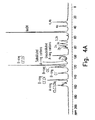
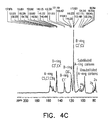
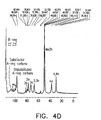
- Fraction 8a (the water-soluble fraction) consisted of a proanthocyanidin mixture where all signals of any significance could be attributed directly to the constitutive procyanidin flavanoid units ( Fig. 3 ).
- Procyanidin flavanoid units are characterized by a three ring system consisting of an aromatic A-ring based on phloroglucinol hydroxylation pattern, a pyran C-ring fused to the A-ring and an appending catechol B-ring attached to C2 of the pyran ring.
- the 13 C-NMR spectrum of Fraction 8a was fully in accord with this chemical structure.
- the oxygenated aromatic carbons C5, C7, and C8a of the A-ring were evident in the low field region of the spectrum (150-158 ppm), while those similarly substituted carbons (C3' and C4') of the B-ring were observed at 142-145 ppm, and those of the aliphatic pyran ring (C3) were found higher upfield at 64-74 ppm.
- Procyanidins consist of catechin and/or epicatechin flavanoid units.
- the distinguishing feature between a catechin and epicatechin unit is the low field position (80-84 ppm) of the C2 carbon chemical shift associated with the 2,3- trans configuration of the catechin unit compared to the more upfield position (75-79 ppm) of the C2 carbon chemical shift associated with the 2,3- cis configuration of the epicatechin unit.
- Fraction 8a exhibits only the higher field signals (75-79 ppm), indicating that these procyanidins are predominantly epicatechin units.
- ESI-MS electrospray ionization mass spectrometry
- E . coli strains were isolated from the urine of human and animal (dog and cat) patients suffering from urinary tract infections. After determining the fimbrial type of each strain, 5 strains specific for P-type fimbriae, and 5 strains specific for type 1 fimbriae were selected for use in bioactivity testing. Bacterial strains were subcultured in tryptose broth at 37°C for 16 h. P-type strains were transferred to colonization factor agar (CFA) plates and grown overnight at 37°C to enhance production of P-type fimbriae.
- CFA colonization factor agar
- Strains were harvested by centrifugation, washed once and suspended in phosphate-buffered saline solution (PBS) at pH 7.0 at a concentration of 5 x 10 8 bacteria/mL. The individual phenotypic strains were tested in each of the following bioassays and did not differ significantly in their ability to agglutinate red blood cells or yeast. Therefore, mixtures of P-type strains were used to test for P-type bioactivity, and mixtures of type 1 strains were used to test for type 1 bioactivity. Strains were kept frozen at -70°C in tryptose broth (30% glycerol) for long-term storage.
- PBS phosphate-buffered saline solution
- Dried Fractions 1-8 from Example 1 were rehydrated in PBS, neutralized, and tested for ability to inhibit agglutination of HRBC.
- Diluted fractions (30 ⁇ l) were incubated with 10 ⁇ l of a P-type bacterial suspension in a 24-well polystyrene plate for 10 min on a rotary shaker.
- HRBC (10 ⁇ l) were added to each well and incubation continued for 20 min on a rotary shaker.
- Controls which showed no agglutination or complete inhibition of agglutination included (1) bacteria only (2) HRBC only, (3) bacteria and test fraction and (4) bacteria, HRBC and epicatechin trimer, a proanthocyanidin standard. The control to show agglutination consisted of bacteria and HRBC.
- the relative agglutination in the dilution series was recorded by microscopic observation of the agglutination reaction and scored on a scale of 0 to 3 with a score of 0 representing 95-100% of HRBC agglutinated (no inhibition of agglutination by the test fraction), a score of 1 representing 50-95% of HRBC agglutinated, a score of 2 representing 5-50% of HRBC agglutinated, and a score of 3 representing less than 5% of the HRBC agglutinated, i.e., total inhibition of agglutination by the test fraction.
- Controls which showed no agglutination or complete inhibition of agglutination included (1) bacteria only (2) bacteria and uncoated beads, (3) bacteria and test fraction, (4) uncoated beads and test fractions, and (5) bacteria, coated beads and epicatechin trimer.
- the control to show agglutination consisted of bacteria and coated beads.
- the relative ability of each fraction to inhibit bacterial adherence in this assay was assessed microscopically and is provided in Table 4 under the column "P-receptor". A "+" indicates that the fraction inhibited P-type adherence and a "-" indicates that no adherence was observed.
- the fractions were also tested in the bioassay of Eschdat et al., 1978, Biochem. Biophys. Res. Commun. 85:1551-1559 , using yeast cells.
- Yeast cultures of Saccharomyces cerevisiae were grown in Sabouraud dextrose broth and incubated for 24 hr at 38°C.
- Yeast cells were transferred to Sabouraud dextrose agar plates and grown under the same conditions. Cells were harvested, washed and suspended in PBS at a concentration of 4 x 10 8 cells/mL.
Landscapes
- Health & Medical Sciences (AREA)
- Chemical & Material Sciences (AREA)
- Organic Chemistry (AREA)
- Life Sciences & Earth Sciences (AREA)
- Medicinal Chemistry (AREA)
- Veterinary Medicine (AREA)
- Pharmacology & Pharmacy (AREA)
- Animal Behavior & Ethology (AREA)
- General Health & Medical Sciences (AREA)
- Public Health (AREA)
- Engineering & Computer Science (AREA)
- General Chemical & Material Sciences (AREA)
- Nuclear Medicine, Radiotherapy & Molecular Imaging (AREA)
- Chemical Kinetics & Catalysis (AREA)
- Bioinformatics & Cheminformatics (AREA)
- Food Science & Technology (AREA)
- Polymers & Plastics (AREA)
- Epidemiology (AREA)
- Nutrition Science (AREA)
- Urology & Nephrology (AREA)
- Mycology (AREA)
- Communicable Diseases (AREA)
- Botany (AREA)
- Oncology (AREA)
- Medicines Containing Plant Substances (AREA)
- Agricultural Chemicals And Associated Chemicals (AREA)
- Pharmaceuticals Containing Other Organic And Inorganic Compounds (AREA)
- Pyrane Compounds (AREA)
- Jellies, Jams, And Syrups (AREA)
- Meat, Egg Or Seafood Products (AREA)
- Fodder In General (AREA)
- Compounds Of Unknown Constitution (AREA)
Claims (37)
- Gereinigter Pflanzen-Proanthocyanidin-Extrakt hergestellt aus Vaccinium macrocarpon, wobei der Extrakt zur Inhibierung einer Agglutination von E. coli vom P-Typ befähigt ist und zur Inhibierung einer Agglutination von E. coli vom Typ 1 nicht befähigt ist, und wobei der Extrakt eine oder mehrere Proanthocyanidin-Verbindungen umfasst, die aus fünf oder sechs Epicatechin-Flavanoid-Einheiten bestehen, wobei mindestens zwei der Einheiten durch eine Interflavanoid-Bindung vom A-Typ durch Bindungen zwischen C4 und C8 und zwischen dem C2 und dem Sauerstoff von dem C7 der Einheiten zusammenverbunden sind und die restlichen Einheiten durch eine Interflavanoid-Bindung vom B-Typ zwischen C4 und C8 oder zwischen C4 und C6 der Einheiten miteinander verbunden sind.
- Extrakt nach Anspruch 1, wobei der Extrakt frei von Anthocyaninen, Flavonolen, hydrolysierbaren Tanninen, Alkaloiden, Lipiden, Kohlenhydraten, einfachen Zuckern, Protein- und Aminosäuren, Alkoholen und organischen Säuren ist.
- Verfahren zur Herstellung eines Proanthocyanidin-Extrakts aus Vaccinium macrocarpon, welches umfasst, dass Pflanzenmaterial von Vaccinium macrocarpon mit einem Extraktionslösungsmittel unter Erhalt eines ersten Extrakts homogenisiert wird und der erste Extrakt weiteren Reinigungsschritten unter Erhalt eines Proanthocyanidin-Extrakts unterworfen wird, wobei der Extrakt zur Inhibierung einer Agglutination von E. coli vom P-Typ befähigt ist und zur Inhibierung einer Agglutination von E. coli vom Typ 1 nicht befähigt ist, und wobei der Extrakt eine oder mehrere Proanthocyanidin-Verbindungen umfasst, die aus fünf oder sechs Epicatechin-Flavanoid-Einheiten bestehen, wobei mindestens zwei der Einheiten durch eine Interflavanoid-Bindung vom A-Typ durch Bindungen zwischen C4 und C8 und zwischen dem C2 und dem Sauerstoff von dem C7 der Einheiten zusammenverbunden sind und die restlichen Einheiten durch eine Interflavanoid-Bindung vom B-Typ zwischen C4 und C8 oder zwischen C4 und C6 der Einheiten miteinander verbunden sind, wobei das Verfahren das Homogenisieren des Pflanzenmaterials in einem wässrigen Extraktionslösungsmittel, das mindestens 10 % Wasser, aber nicht mehr als 30 % Wasser, 10 % bis 70 % Aceton, 5 % bis 60 % Methanol und 0,05 % bis 1 % Ascorbinsäure umfasst, unter Erhalt des ersten Extrakts umfasst.
- Verfahren nach Anspruch 3, wobei das Verfahren umfasst, dass(a) das Pflanzenmaterial in einem wässrigen Extraktionslösungsmittel, das mindestens 10 % Wasser, aber nicht mehr als 30 % Wasser, 10 % bis 70 % Aceton, 5 % bis 60 % Methanol und 0,05 % bis 0,2 % Ascorbinsäure umfasst, unter Herstellung des ersten Extrakts homogenisiert wird;(b) der erste Extrakt einer weiteren Reinigung unterworfen wird; und(c) ein gereinigter Proanthocyanidin-Extrakt gewonnen wird.
- Verfahren nach Anspruch 3, wobei das Verfahren umfasst, dass(a) das Pflanzenmaterial von Vaccinium macrocarpon in einem wässrigen Extraktionslösungsmittel, das mindestens 10 % Wasser, aber nicht mehr als 30 % Wasser, 10 % bis 70 % Aceton, 5 % bis 60 % Methanol und 0,05 % bis 0,2 % Ascorbinsäure umfasst, unter Herstellung des ersten Extrakts homogenisiert wird;(b) der erste Extrakt geklärt und daraus eine überstehende Fraktion erhalten wird;(c) das Lösungsmittel von der überstehenden Fraktion unter Erhalt eines Rückstands entfernt und der Rückstand in destilliertem Wasser unter Erhalt einer wässrigen Rückstandslösung suspendiert wird;(d) die wässrige Rückstandslösung einer weiteren Reinigung unterworfen wird durch entweder (i) Aufbringen der wässrigen Rückstandslösung auf lipophiles Umkehrphasen-Chromatographiematerial, äquilibriert in destilliertem Wasser, und nacheinander Waschen des lipophilen Chromatographiematerials mit einer ausreichenden Menge an destilliertem Wasser zur Entfernung von Zuckern, einer ausreichenden Menge von etwa 15 %igem wässrigem Methanol zur Entfernung von Säuren und einer ausreichenden Menge von 100 % angesäuertem Methanol zum Eluieren polyphenolischer Verbindungen und dann Entfernen des Lösungsmittels von den polyphenolischen Verbindungen unter Erhalt einer ersten getrockneten Fraktion, oder (ii) Extrahieren der wässrigen Rückstandslösung mit einem nicht polaren Extraktionslösungsmittel, Gewinnen der wässrigen Phase daraus und Entfernen des Lösungsmittels von der wässrigen Phase unter Erhalt einer zweiten getrockneten Fraktion;(e) die erste oder zweite getrocknete Fraktion in etwa 50 %igem wässrigem Ethanol unter Erhalt einer Ethanollösung suspendiert, die Ethanollösung auf gemischt hydrophil-lipophiles Chromatographiematerial, äquilibriert in etwa 50% igem wässrigen Ethanol, aufgebracht, und das gemischt hydrophil-lipophile Chromatographiematerial mit einer Menge von etwa 50%igem wässrigem Ethanol, die zur Entfernung von nicht-proanthocyanidin-polyphenolischen Verbindungen ausreichend ist, gewaschen wird; und(f) das hydrophil-lipophile Chromatographiematerial mit einer Menge von etwa 70%igem wässrigem Aceton, die zum Erhalt des Proanthocyanidin-Extrakts ausreichend ist, eluiert wird.
- Verfahren nach Anspruch 4 oder 5, wobei das Pflanzenmaterial aus Blättern, reifer Frucht, unreifer Frucht, Stängeln oder Wurzeln stammt.
- Verfahren nach Anspruch 6, wobei das Pflanzenmaterial aus Blättern stammt.
- Verfahren nach einem der Ansprüche 3 bis 7, wobei das wässrige Extraktionslösungsmittel etwa 40 % Aceton, etwa 40 % Methanol und etwa 0,1 % Ascorbinsäure enthält.
- Proanthocyanidin-Extrakt nach Anspruch 1, hergestellt durch das Verfahren nach einem der Ansprüche 3 bis 8.
- Pharmazeutische Zusammensetzung umfassend ein Element ausgewählt aus einem Proanthocyanidin-Extrakt nach einem der Ansprüche 1 oder 2 und einem Proanthocyanidin-Extrakt nach Anspruch 9; und einen pharmazeutisch verträglichen Träger.
- Pharmazeutische Zusammensetzung nach Anspruch 10 zur Verwendung in einem Verfahren zur Verhinderung oder Behandlung einer urogenitalen Infektion in einem Säuger.
- Pharmazeutische Zusammensetzung nach Anspruch 11, wobei der Säuger eine Katze oder ein Hund oder ein Mensch ist.
- Pharmazeutische Zusammensetzung nach Anspruch 11, wobei die urogenitale Infektion eine Blaseninfektion oder eine Niereninfektion ist.
- Pharmazeutische Zusammensetzung nach Anspruch 13, wobei die Niereninfektion Pyelonephritis ist.
- Zusammensetzung umfassend einen Verbrauchsträger im Gemisch mit einem Proanthocyanidin-Extrakt hergestellt aus Vaccinium macrocarpon, wobei der Extrakt eine oder mehrere Proanthocyanidin-Verbindungen umfasst, die zur Inhibierung einer Agglutination von E. coli vom P-Typ befähigt sind, aber nicht zum Inhibieren einer Agglutination von E. coli vom Typ 1 befähigt sind, wobei die Verbindungen aus fünf oder sechs Epicatechin-Flavanoid-Einheiten bestehen, wobei mindestens zwei der Einheiten durch eine Interflavanoid-Bindung vom A-Typ durch Bindungen zwischen C4 und C8 und zwischen dem C2 und dem Sauerstoff von dem C7 der Einheiten zusammenverbunden sind und die restlichen Einheiten durch eine Interflavanoid-Bindung vom B-Typ zwischen C4 und C8 oder zwischen C4 und C6 der Einheiten miteinander verbunden sind.
- Zusammensetzung nach Anspruch 15, wobei der Verbrauchsträger Tierfutter ist.
- Zusammensetzung nach Anspruch 16 zur Verwendung in einem Verfahren zur Verhinderung oder Behandlung einer urogenitalen Infektion in einem Viehtier.
- Zusammensetzung nach Anspruch 16 zur Verwendung in einem Verfahren zur Verringerung der Pathogenität von E. coli vom P-Typ in den Verdauungstrakten eines Tieres.
- Zusammensetzung nach Anspruch 18, wobei das Tier eine Kuh, ein Ochse, ein Kalb, ein Schwein, ein Lamm, ein Huhn oder ein Truthahn ist.
- Verfahren zur Verringerung einer Verunreinigung von E. coli vom P-Typ in Hackfleisch, welches umfasst:(a) Erhalten von rohem Fleisch von einem Tier; und(b) Zugeben eines Proanthocyanidin-Extrakts, hergestellt aus Vaccinium macrocarpon, zu dem rohen Fleisch, wobei der Extrakt eine oder mehrere Proanthocyanidin-Verbindungen umfasst, die zur Inhibierung einer Agglutination von E. coli vom P-Typ befähigt sind, aber nicht zur Inhibierung einer Agglutination von E. coli vom Typ 1 befähigt sind, wobei die Verbindungen aus fünf oder sechs Epicatechin-Flavanoid-Einheiten bestehen, wobei mindestens zwei der Einheiten durch eine Interflavanoid-Bindung vom A-Typ durch Bindungen zwischen C4 und C8 und zwischen dem C2 und dem Sauerstoff von dem C7 der Einheiten zusammenverbunden sind und die restlichen Einheiten durch eine Interflavanoid-Bindung vom B-Typ zwischen C4 und C8 oder zwischen C4 und C6 der Einheiten miteinander verbunden sind; und(c) Herstellen von Hackfleisch aus dem rohen Fleisch.
- Verfahren nach Anspruch 20, wobei in Schritt (b) die Zusammensetzung nach Anspruch 15 zu dem rohen Fleisch zugegeben wird.
- Verfahren nach Anspruch 20 oder 21, wobei die Zusammensetzung zu dem rohen Fleisch vor oder während der Herstellung des Hackfleisches zugegeben wird.
- Verfahren zur Verringerung einer Verunreinigung von E. coli vom P-Typ in Hackfleisch, welches umfasst:(a) Verfüttern der Zusammensetzung nach Anspruch 16 an ein Viehtier;(b) Erhalten von rohem Fleisch von dem Tier; und(c) Herstellen von Hackfleisch aus dem rohen Fleisch.
- Zusammensetzung nach Anspruch 15, wobei der Verbrauchsträger Haustierfutter ist.
- Zusammensetzung nach Anspruch 24 zur Verwendung in einem Verfahren zur Verhinderung oder Behandlung einer urogenitalen Infektion in einem Haustier.
- Verfahren nach Anspruch 25, wobei das Tier eine Katze oder ein Hund ist.
- Zusammensetzung nach Anspruch 15, wobei der Verbrauchsträger ein Verbrauchsnahrungsmittel ist.
- Zusammensetzung nach Anspruch 27, wobei das Verbrauchsnahrungsmittel aus einem Cranberry enthaltenden Nahrungsmittel, einem Getränk und Hackfleisch ausgewählt ist.
- Zusammensetzung nach Anspruch 28, wobei das Cranberry enthaltende Nahrungsmittel getrocknete Cranberry, gesüßte und getrocknete Cranberry, ein aromatisiertes bzw. gewürztes Fruchtstück, eine Soße, ein Gelee, eine Würze, Saft, Wein oder ein Cranberry-Saft enthaltendes Erzeugnis ist.
- Zusammensetzung nach Anspruch 28, wobei das Getränk Cranberry-Saft, unpasteurisierten Saft oder pasteurisierten Saft enthält.
- Zusammensetzung nach einem der Ansprüche 27 bis 30 zur Verwendung in einem Verfahren zur Verhinderung oder Behandlung einer urogenitalen Infektion in einem Menschen.
- Pharmazeutische Zusammensetzung nach Anspruch 10 zur Verwendung in einem Verfahren zur Verhinderung oder Behandlung von Diarrhoe in einem Säuger.
- Pharmazeutische Zusammensetzung nach Anspruch 32, wobei der Säuger eine Katze oder ein Hund, oder ein Mensch ist.
- Verfahren zur Inhibierung eines Haftens von E. coli vom P-Typ an eine Oberfläche, welches das Inkontaktbringen der Bakterien mit mindestens einem Proanthocyanidin-Extrakt vor oder gleichzeitig mit dem Inkontaktbringen der Bakterien mit der Oberfläche umfasst, wobei der Proanthocyanidin-Extrakt aus Vaccinium macrocarpon hergestellt ist und aus der Gruppe bestehend aus einer Proanthocyanidin-Verbindung ausgewählt ist, die zur Inhibierung einer Agglutination von E. coli vom P-Typ befähigt ist, aber nicht zur Inhibierung einer Agglutination von E. coli vom Typ 1 befähigt ist, wobei die Verbindung aus fünf oder sechs Epicatechin-Flavanoid-Einheiten besteht, wobei mindestens zwei der Einheiten durch eine Interflavanoid-Bindung vom A-Typ durch Bindungen zwischen C4 und C8 und zwischen dem C2 und dem Sauerstoff von dem C7 der Einheiten zusammenverbunden sind und die restlichen Einheiten durch eine Interflavanoid-Bindung vom B-Typ zwischen C4 und C8 oder zwischen C4 und C6 der Einheiten miteinander verbunden sind.
- Verfahren nach Anspruch 34, wobei die Oberfläche eine ureopitheliale Zelloberfläche oder Biofilm ist.
- Pharmazeutische Zusammensetzung nach Anspruch 10 zur Verwendung in einem Verfahren zur Verringerung des Auftretens einer Infektion nach einer Operation, zur Behandlung von topischen Wunden oder Akne, oder zur Verhinderung oder Eliminierung einer oralen Infektion, wobei das Verfahren das Verabreichen der pharmazeutischen Zusammensetzung an eine Stelle der Infektion oder einer potentiellen Infektion in einem Patienten umfasst.
- Verfahren zum Erkennen von P-Typ reaktiven Bakterien in einer Körperfluidprobe, welches umfasst:(a) Inkontaktbringen der Körperfluidprobe mit einem für einen P-Typ-Rezeptor spezifischen Assayreagenz und für eine Zeit und in einer Menge, die ein Binden beliebiger, in der Probe vorliegender P-Typ reaktiver Bakterien an das Reagenz erlaubt, wobei das Reagenz ein Festphasensubstrat umfasst, das beschichtet ist mit einem oder mehreren Proanthocyanidin-Extrakten hergestellt aus Vaccinium macrocarpon und ausgewählt aus der Gruppe bestehend aus Proanthocyanidin-Verbindungen, die zur Inhibierung einer Agglutination von E. coli vom P-Typ befähigt sind, aber nicht zur Inhibierung einer Agglutination von E. coli vom Typ 1 befähigt sind, wobei die Verbindungen aus fünf oder sechs Epicatechin-Flavanoid-Einheiten bestehen, wobei mindestens zwei der Einheiten durch eine Interflavanoid-Bindung vom A-Typ durch Bindungen zwischen C4 und C8 und zwischen dem C2 und dem Sauerstoff von dem C7 der Einheiten zusammenverbunden sind und die restlichen Einheiten durch eine Interflavanoid-Bindung vom B-Typ zwischen C4 und C8 oder zwischen C4 und C6 der Einheiten miteinander verbunden sind;
und(b) Bestimmen, ob P-Typ reaktive Bakterien in der Probe vorliegen, indem der Grad der Agglutination in der Probe bewertet wird.
Applications Claiming Priority (3)
| Application Number | Priority Date | Filing Date | Title |
|---|---|---|---|
| US5830797P | 1997-09-09 | 1997-09-09 | |
| US58307P | 1997-09-09 | ||
| PCT/US1998/018267 WO1999012541A1 (en) | 1997-09-09 | 1998-09-02 | Plant proanthocyanidin extract effective at inhibiting adherence of bacteria with p-type fimbriae to surfaces |
Publications (3)
| Publication Number | Publication Date |
|---|---|
| EP1014969A1 EP1014969A1 (de) | 2000-07-05 |
| EP1014969A4 EP1014969A4 (de) | 2004-09-15 |
| EP1014969B1 true EP1014969B1 (de) | 2008-11-12 |
Family
ID=22016003
Family Applications (1)
| Application Number | Title | Priority Date | Filing Date |
|---|---|---|---|
| EP98943526A Expired - Lifetime EP1014969B1 (de) | 1997-09-09 | 1998-09-02 | Proanthocyanidinhaltiges pflanzenextrakt für die hemmung von p-type fimbriae-bakterieller adhäsion an oberflächen |
Country Status (13)
| Country | Link |
|---|---|
| US (3) | US6608102B1 (de) |
| EP (1) | EP1014969B1 (de) |
| JP (1) | JP2001515860A (de) |
| AT (1) | ATE413873T1 (de) |
| AU (1) | AU744527B2 (de) |
| CA (1) | CA2302743C (de) |
| DE (1) | DE69840211D1 (de) |
| DK (1) | DK1014969T3 (de) |
| ES (1) | ES2318874T3 (de) |
| IL (1) | IL134904A0 (de) |
| PL (1) | PL339144A1 (de) |
| PT (1) | PT1014969E (de) |
| WO (1) | WO1999012541A1 (de) |
Cited By (1)
| Publication number | Priority date | Publication date | Assignee | Title |
|---|---|---|---|---|
| WO2013182702A1 (fr) | 2012-06-07 | 2013-12-12 | Diana Naturals | Extrait de canneberge utile dans le traitement et la prévention des infections urinaires |
Families Citing this family (82)
| Publication number | Priority date | Publication date | Assignee | Title |
|---|---|---|---|---|
| PT762837E (pt) * | 1995-03-31 | 2002-07-31 | Schur Jorg Peter | Processo para melhorar a durabilidade e/ou estabilizacao de produtos degradaveis microbiologicamente |
| US20020176882A1 (en) * | 1997-06-23 | 2002-11-28 | Schur Jorg Peter | Additive the improvement and/or stabilization of the keeping quality of microbially perishable products |
| US6207842B1 (en) * | 1997-10-09 | 2001-03-27 | Mars Incorporated | Process for preparing procyanidin(4-6 or 4-8) oligomers and their derivatives |
| KR20010108193A (ko) * | 1999-02-15 | 2001-12-07 | 마사토시 노다 | 활성성분으로서 프로안토시아니딘을 함유하는에이디피-리보실화 억제제 및 엔테로톡신 타입 세균감염성질환 치료용 조성물 |
| US20040161523A1 (en) * | 1999-02-16 | 2004-08-19 | Michigan State University | Method and compositions for producing berry derived products |
| WO2000059834A1 (en) * | 1999-04-02 | 2000-10-12 | Betzdearborn Inc. | Methods for inhibiting the production of slime in aqueous systems |
| US6641847B1 (en) * | 1999-06-01 | 2003-11-04 | Ocean Spray Cranberries, Inc. | Cranberry seed oil extract and compositions containing components thereof |
| MXPA01012391A (es) * | 1999-06-02 | 2003-10-14 | Oxford Natural Products Plc | Formulaciones que contienen fruta de arandano, dl-metionina y hierbas chinas. |
| DE19931185A1 (de) * | 1999-07-07 | 2001-01-18 | Joerg Peter Schuer | Verfahren zur Entkeimung von Luft |
| DE19933912A1 (de) * | 1999-07-20 | 2001-01-25 | Greither Salus Haus Dr Otto | Zusammensetzung enthaltend Moosbeere und Heidelbeere |
| DE19940283A1 (de) * | 1999-08-25 | 2001-03-01 | Joerg Peter Schuer | Pflanzenschutz |
| DE19940605A1 (de) | 1999-08-27 | 2001-03-01 | Joerg Peter Schuer | Imprägnierungsverfahren |
| US6210681B1 (en) * | 1999-09-07 | 2001-04-03 | Jlb, Inc. | Plant proanthocyanidin extracts |
| US20030211183A1 (en) * | 1999-10-29 | 2003-11-13 | Kyowa Hakko Kogyo Co., Ltd. | Skin-improving agent |
| JP2001252009A (ja) * | 2000-03-15 | 2001-09-18 | Nakajima Suisan Co Ltd | 塩辛類、魚介類漬物及び塩漬加工品等の熟成制御方法 |
| TWI282275B (en) * | 2000-08-17 | 2007-06-11 | Control Ox Oy | Plant-derived and synthetic phenolic compounds and plant extracts, effective in the treatment and prevention of chlamydial infections |
| US7306815B2 (en) * | 2000-08-31 | 2007-12-11 | Phenolics, Llc | Compositions enriched in phenolic compounds and methods for producing the same |
| US6960360B2 (en) * | 2000-08-31 | 2005-11-01 | Phenolics, Llc | Efficient method for producing compositions enriched in total phenols |
| WO2002017945A1 (en) * | 2000-08-31 | 2002-03-07 | Hauser, Inc. | Efficient method for producing compositions enriched in anthocyanins |
| DE20100121U1 (de) * | 2001-01-05 | 2002-05-16 | Schür, Jörg Peter, Prof., 41844 Wegberg | Vorrichtung zur Anreicherung von Luft mit Luftbehandlungsmittel |
| DE10100595A1 (de) * | 2001-01-09 | 2002-07-18 | Joerg Peter Schuer | Verfahren zur untoxischen Geruchsneutralisierung von Luft |
| US20030031588A1 (en) * | 2001-06-13 | 2003-02-13 | Schur Jorg Peter | Device for enriching air with an air treatment agent, especially for the disinfection of air, and/or perfuming of air and/or for odor masking |
| US7022368B2 (en) | 2001-06-26 | 2006-04-04 | Ocean Spray Cranberries, Inc. | Process for producing sugars and acids-rich juice and phytochemical-rich juice |
| US20040013710A1 (en) * | 2001-07-20 | 2004-01-22 | Howell Amy B. | Hydrolyzable tannin extracts from plants effective at inhibiting bacterial adherence to surfaces |
| US6733813B2 (en) | 2001-08-02 | 2004-05-11 | Ocean Spray Cranberries, Inc. | Process for producing acids-enriched juice and acids-reduced juice |
| US20040109906A1 (en) * | 2002-09-06 | 2004-06-10 | Stefan Gafner | Extract of mad-dog skullcap |
| GB0230042D0 (en) * | 2002-12-23 | 2003-01-29 | Britannia Pharmaceuticals Ltd | Composition comprising plant extract and a sugar for use in inhibiting bacterial proliferation |
| FR2856304B1 (fr) * | 2003-06-20 | 2006-03-03 | Natural Product Consulting | Composition pour la prevention des infections du systeme urinaire |
| US7270837B2 (en) * | 2003-11-10 | 2007-09-18 | Rutgers, The State University Of New Jersey | Anti-inflammatory cranberry flavonol extract preparations |
| US7332179B2 (en) | 2003-12-12 | 2008-02-19 | Kimberly-Clark Worldwide, Inc. | Tissue products comprising a cleansing composition |
| CN1938015A (zh) * | 2004-01-28 | 2007-03-28 | 马尔斯公司 | A型矢车菊苷配基的组合物和使用方法 |
| US20060073220A1 (en) * | 2004-07-08 | 2006-04-06 | Daugherty F J | Cinnamon extract enriched for polyphenols and methods of preparing same |
| FR2874826B1 (fr) * | 2004-09-08 | 2006-12-22 | Pharmatoka Soc Par Actions Sim | Nouveaux dispositifs chirurgicaux et/ou medicaux et leur mode d'utilisation |
| EP1661576A1 (de) * | 2004-11-15 | 2006-05-31 | Pharmatoka SAS | Neue dermatologische und kosmetische Verwendung von einem Pflanzenextrakt |
| TW200637542A (en) * | 2004-12-22 | 2006-11-01 | Kikkoman Corp | Lipase inhibitor, preventing and treating agent of skin disease |
| US7642395B2 (en) | 2004-12-28 | 2010-01-05 | Kimberly-Clark Worldwide, Inc. | Composition and wipe for reducing viscosity of viscoelastic bodily fluids |
| US20060246129A1 (en) * | 2005-04-29 | 2006-11-02 | Linardakis Nikos M | Composition for use in treatment of sleep problems and method for same |
| ITMI20051485A1 (it) * | 2005-07-29 | 2007-01-30 | Indena Spa | Estratto da semi d'uva ottenibile per frazionamento su resina |
| CA2622286A1 (en) | 2005-09-27 | 2007-04-05 | University Of Kentucky Research Foundation | Anti-inflammatory composition comprising berry extract |
| US20070166409A1 (en) * | 2006-01-17 | 2007-07-19 | Royds Robert B | Therapeutic compositions containing trimethoprim and cranberry extract and methods for treating and preventing urinary tract infections |
| JP2007277100A (ja) * | 2006-04-03 | 2007-10-25 | Noevir Co Ltd | 保湿剤、細胞賦活剤、真皮線維芽細胞賦活剤、表皮細胞賦活剤、コラーゲン産生促進剤、抗酸化剤、抗老化剤、美白剤、メラニン産生抑制剤 |
| US8153166B2 (en) * | 2006-06-08 | 2012-04-10 | Chih-Hsiung Lin | Composition for prophylaxis or treatment of urinary system infection and method thereof |
| GB0615781D0 (en) * | 2006-08-09 | 2006-09-20 | Coressence Ltd | Prebiotic composition |
| US9040250B2 (en) * | 2006-09-07 | 2015-05-26 | The United States Of America, As Represented By The Secretary Of The Navy | Binding interaction of proanthocyanidins with bacteria and bacterial components |
| EP1913951B1 (de) * | 2006-10-17 | 2019-04-03 | Nexira | Verfahren zur Extraktion von Polyphenolen und ihre Verwendung |
| US20080306141A1 (en) * | 2007-01-10 | 2008-12-11 | Jan Glinski | Method of Extraction of Catechin Type-A Proanthocyanidins |
| ES2311403B1 (es) * | 2007-06-12 | 2010-01-12 | Consejo Superior De Investigaciones Cientificas | Extractos fenolicos de piel de almendra conteniendo procianidinas, propelargonidinas y prodelfinidinas, y su procedimiento de obtencion. |
| US20090035226A1 (en) * | 2007-07-31 | 2009-02-05 | Phenolics, Llc | Use of cranberry extract enriched in total phenols and free, essentially free, or substantially free of sugars, acids, sulfur and other contaminants, for periodontal treatment |
| PL2033641T3 (pl) | 2007-08-01 | 2012-05-31 | Ferlux | Sposób wytwarzania ekstraktów bogatych w proantocyjanidyny |
| US8173178B1 (en) | 2007-08-03 | 2012-05-08 | Decas Botanical Synergies, Llc | Compositions and methods for controlling metabolic syndrome using whole fruit-derived cranberry ingredient profile enriched in stress adapted bioactives (SABs) |
| US20090175843A1 (en) * | 2008-01-08 | 2009-07-09 | Medical Nutrition Usa, Inc. | Composition for prevention or treatment of urinary tract infection |
| DE202008002718U1 (de) * | 2008-02-26 | 2009-07-09 | Medical Service Gmbh | Katheter mit Proanthocyanidin enthaltender hydrophiler Beschichtung |
| FR2927811B1 (fr) * | 2008-02-27 | 2010-09-10 | Unither Dev | Colorant pharmaceutique extrait de cranberry concentre en proanthocyanidines a. |
| CN101525327B (zh) * | 2008-03-06 | 2011-12-14 | 陕西嘉禾植物化工有限责任公司 | 一种从越橘中提取花青素的方法 |
| CA2659498A1 (fr) * | 2008-04-09 | 2009-10-09 | Diana Naturals | Extrait de canneberge d'amerique et son utilisation |
| FR2929853B1 (fr) * | 2008-04-09 | 2010-10-08 | Diana Naturals | Extrait de canneberge d'amerique et son utilisation |
| FR2930730B1 (fr) * | 2008-05-05 | 2011-03-04 | Tournay Biotechnologies | Procede d'obtention d'un extrait de marc de canneberge utilisable notamment dans la prevention et le traitement d'affections telles que caries, gingivites, maux de gorge |
| US20110268664A1 (en) * | 2008-06-16 | 2011-11-03 | Hills Pet Nutrition, Inc | Composition for addition to drinking water |
| WO2010017213A1 (en) * | 2008-08-04 | 2010-02-11 | Phenolics, Llc | Novel compositions containing isolated tetrameric type a proanthocyanadin and methods of use and manufacture |
| JP5525716B2 (ja) * | 2008-11-04 | 2014-06-18 | オリザ油化株式会社 | 色素沈着抑制剤 |
| DE102009005201A1 (de) * | 2009-01-20 | 2010-07-22 | Universität Rostock | Verwendung von Polyphenol-haltigen Pflanzenextrakten zur Behandlung von Adipositas und Diabetes mellitus Typ 2 |
| EP2414509B1 (de) * | 2009-04-03 | 2015-09-23 | DianaPlantSciences S.A.S. | Herstellung und extraktion von procyanidinen aus pflanzenzellkulturen |
| US9167840B2 (en) | 2009-04-03 | 2015-10-27 | DianaPlantScience, Inc. | Production and extraction of procyanidins from plant cell cultures |
| WO2010115073A2 (en) * | 2009-04-03 | 2010-10-07 | Richard Rice | Natural blue flavorants and colorants |
| EP2792254B1 (de) | 2009-04-16 | 2016-10-05 | Ocean Spray Cranberries, Inc. | Phenolextraktion und Verwendung in Zusammensetzungen mit Fumarsäure |
| US8932468B2 (en) * | 2010-01-12 | 2015-01-13 | The United States Of America As Represented By The Secretary Of The Army | Separation of enzymatically synthesized polyepicatechin via high performance liquid chromatography |
| WO2011088420A1 (en) * | 2010-01-15 | 2011-07-21 | Ocean Spray Cranberries, Inc. | Process for extracting compound from cranberry leaves and related products |
| ES2568730T3 (es) * | 2010-10-06 | 2016-05-04 | The Board Of Trustees Of The University Of Arkansas | Composiciones anti-biopelícula y métodos de uso |
| CA2857368C (en) | 2011-12-16 | 2015-09-08 | Centre De Recherche Industrielle Du Quebec | Method for extracting anthocyanin derivatives from a plant source |
| US20140004214A1 (en) | 2012-06-15 | 2014-01-02 | Wisconsin Alumni Research Foundation | Methods to isolate anti-microbials from fruit or seed extracts |
| US9962364B2 (en) * | 2012-12-26 | 2018-05-08 | A-Z Ltd. | Wound healing accelerator |
| EP2929873A1 (de) | 2014-04-07 | 2015-10-14 | Intermed S.A. | Hautreinigungszusammensetzungen |
| GB201506526D0 (en) | 2015-04-17 | 2015-06-03 | Uropharma Ltd And Synesis Llc | Medicinal composition |
| RU2664709C2 (ru) * | 2016-12-01 | 2018-08-21 | Михаил Юрьевич Ахлебинин | Способ выделения биологически активных проантоцианидинов |
| MX2017016991A (es) * | 2017-12-20 | 2019-06-21 | Centro De Retina Medica Y Quirurgica S C | Formulación para la administración oral de extracto de arándano azul como auxiliar en la conservación de la salud de la película lagrimal en seres humanos. |
| BE1026370B1 (nl) * | 2018-06-15 | 2020-01-22 | United Petfood Producers Nv | Functionele voedersamenstelling voor katten op basis van veenbes, citroenzuur en ammoniumchloride |
| EP3846833A1 (de) * | 2018-09-07 | 2021-07-14 | Innophos, Inc. | Botanischer modulator von stoffwechselstörungen |
| CA3110995A1 (en) * | 2018-09-07 | 2020-03-12 | Innophos, Inc. | Botanical antioxidants |
| DE102018127408A1 (de) * | 2018-11-02 | 2020-05-07 | Ruhrpharm AG | Cranberry-Extrakt-PAC-A-Zusammensetzung und dessen Verwendung bei der Prävention und/oder Behandlung von Harnwegsinfekten |
| KR102716385B1 (ko) * | 2021-09-10 | 2024-10-15 | (재)전북바이오융합산업진흥원 | 곤충 소재와 농식품을 활용한 요로계 건강증진 습식 사료 및 그 제조 방법 |
| KR102759922B1 (ko) * | 2021-11-02 | 2025-01-23 | (재)전북바이오융합산업진흥원 | 크랜베리 추출분말 및 갈색거저리 가수분해물을 이용한 요로계 건강증진 기능성 식품 조성물의 제조방법 |
| WO2023182971A1 (en) * | 2022-03-21 | 2023-09-28 | Tintoria Piana, US Inc. | Compositions containing a high content of proanthocyanidins and methods of preparation and use thereof |
Family Cites Families (22)
| Publication number | Priority date | Publication date | Assignee | Title |
|---|---|---|---|---|
| FR2318908A1 (fr) | 1975-07-22 | 1977-02-18 | Sefcal Sarl | Procede de traitement d'extraits anthocyaniques |
| US4309207A (en) | 1980-01-07 | 1982-01-05 | Devlin Robert M | Plant growth inhibiting and antifungal extract prepared from the vegetative parts of plants of the genera vaccinium and myrica |
| US4652448A (en) | 1982-10-07 | 1987-03-24 | Molecular Genetics, Inc. | Use of monoclonal antibodies against bacterial adhesins |
| SE446940B (sv) | 1983-02-16 | 1986-10-20 | Carl Axel Virdalm | Medel for bekempande av sjukdomstillstand i matsmeltningsapparaten innehallande skal eller ytterdelar av ber eller frukter |
| US4698360B1 (en) | 1985-04-09 | 1997-11-04 | D Investigations Pharmacologiq | Plant extract with a proanthocyanidins content as therapeutic agent having radical scavenger effect and use thereof |
| US4775477A (en) | 1987-10-30 | 1988-10-04 | General Foods Corporation | Cranberry color extraction |
| IT1231725B (it) | 1989-08-11 | 1991-12-21 | Inverni Della Beffa Spa | Procedimento per la preparazione di estratti ad alto contenuto in antocianosidi. |
| US5128100A (en) | 1989-10-12 | 1992-07-07 | Buckman Laboratories, Intl., Inc. | Process for inhibiting bacterial adhesion and controlling biological fouling in aqueous systems |
| US5211944A (en) | 1990-10-12 | 1993-05-18 | Shaman Pharmaceuticals, Inc. | Proanthocyanidin polymers having antiviral activity and methods of obtaining same |
| US5650432A (en) | 1995-03-24 | 1997-07-22 | Jlb, Inc. | Method of treating or preventing non-viral microbial infection |
| US5525341A (en) | 1992-10-09 | 1996-06-11 | Jlb, Inc. | Partially purified cranberry anti-adhesion activity |
| US5646178A (en) * | 1992-10-09 | 1997-07-08 | Jlb, Inc. | Cranberry extract and biologically active compounds derived therefrom |
| FR2699819B1 (fr) | 1992-12-28 | 1995-02-24 | Dolisos Lab | Utilisation de prodelphinidines pour l'obtention de médicaments destinés au traitement de l'arthrose. |
| US5474774A (en) * | 1994-03-25 | 1995-12-12 | Jlb, Inc. | Adhesion inhibiting composition |
| FI955691L (fi) | 1994-11-28 | 1996-05-29 | Suntory Ltd | Lipoproteiini(a):ta alentava aine, kolesterolia alentava aine ja näitä aineita sisältävät lääkkeet |
| US5683678A (en) | 1995-03-09 | 1997-11-04 | The Procter & Gamble Company | Oral compositions |
| CA2245810A1 (en) * | 1996-02-14 | 1997-08-21 | The Procter & Gamble Company | Urogenital and intestinal compositions |
| AU1854297A (en) * | 1996-02-14 | 1997-09-02 | Procter & Gamble Company, The | Urogenital and intestinal disorder compositions comprising substance derived from plant species of the ericaceae family and a lactic acid bacteria growth factor |
| JPH09221484A (ja) | 1996-02-14 | 1997-08-26 | Kikkoman Corp | プロアントシアニジンの製造法 |
| US5840322A (en) | 1996-12-19 | 1998-11-24 | Ramot-University Authority For Applied Research & Industrial Devel. Ltd. | Anti-oral-microbial adhesion fraction derived from vaccinium |
| US5912363A (en) | 1997-08-29 | 1999-06-15 | Interhealth Nutraceuticals | Method for extraction of proanthocyanidins from plant material |
| US6210681B1 (en) | 1999-09-07 | 2001-04-03 | Jlb, Inc. | Plant proanthocyanidin extracts |
-
1998
- 1998-09-02 EP EP98943526A patent/EP1014969B1/de not_active Expired - Lifetime
- 1998-09-02 JP JP2000510438A patent/JP2001515860A/ja active Pending
- 1998-09-02 DE DE69840211T patent/DE69840211D1/de not_active Expired - Lifetime
- 1998-09-02 DK DK98943526T patent/DK1014969T3/da active
- 1998-09-02 AT AT98943526T patent/ATE413873T1/de not_active IP Right Cessation
- 1998-09-02 US US09/145,694 patent/US6608102B1/en not_active Expired - Lifetime
- 1998-09-02 PT PT98943526T patent/PT1014969E/pt unknown
- 1998-09-02 CA CA2302743A patent/CA2302743C/en not_active Expired - Lifetime
- 1998-09-02 AU AU91296/98A patent/AU744527B2/en not_active Ceased
- 1998-09-02 PL PL98339144A patent/PL339144A1/xx unknown
- 1998-09-02 IL IL13490498A patent/IL134904A0/xx unknown
- 1998-09-02 ES ES98943526T patent/ES2318874T3/es not_active Expired - Lifetime
- 1998-09-02 WO PCT/US1998/018267 patent/WO1999012541A1/en not_active Ceased
-
2003
- 2003-04-30 US US10/428,063 patent/US6720353B2/en not_active Expired - Lifetime
-
2004
- 2004-02-04 US US10/772,566 patent/US20040156925A1/en not_active Abandoned
Non-Patent Citations (1)
| Title |
|---|
| MORIMOTO S.; NONAKA G.-I.; NISHIOKA I.: "Tannins and related compounds. LX. Isolation and characterization of proanthocyanidins with a doubly-linked unit from Vaccinium vitis-idaea L.", CHEMICAL & PHARMACEUTICAL BULLETIN, vol. 36, no. 1, 1988, pages 33 - 38, XP008061064 * |
Cited By (1)
| Publication number | Priority date | Publication date | Assignee | Title |
|---|---|---|---|---|
| WO2013182702A1 (fr) | 2012-06-07 | 2013-12-12 | Diana Naturals | Extrait de canneberge utile dans le traitement et la prévention des infections urinaires |
Also Published As
| Publication number | Publication date |
|---|---|
| AU9129698A (en) | 1999-03-29 |
| JP2001515860A (ja) | 2001-09-25 |
| EP1014969A4 (de) | 2004-09-15 |
| US6608102B1 (en) | 2003-08-19 |
| CA2302743A1 (en) | 1999-03-18 |
| PT1014969E (pt) | 2009-02-17 |
| US20030203962A1 (en) | 2003-10-30 |
| WO1999012541A1 (en) | 1999-03-18 |
| AU744527B2 (en) | 2002-02-28 |
| US6720353B2 (en) | 2004-04-13 |
| DK1014969T3 (da) | 2009-03-16 |
| PL339144A1 (en) | 2000-12-04 |
| US20040156925A1 (en) | 2004-08-12 |
| CA2302743C (en) | 2012-11-06 |
| DE69840211D1 (de) | 2008-12-24 |
| IL134904A0 (en) | 2001-05-20 |
| ATE413873T1 (de) | 2008-11-15 |
| EP1014969A1 (de) | 2000-07-05 |
| ES2318874T3 (es) | 2009-05-01 |
Similar Documents
| Publication | Publication Date | Title |
|---|---|---|
| EP1014969B1 (de) | Proanthocyanidinhaltiges pflanzenextrakt für die hemmung von p-type fimbriae-bakterieller adhäsion an oberflächen | |
| US6210681B1 (en) | Plant proanthocyanidin extracts | |
| KR100302514B1 (ko) | 과실의폴리페놀혼합물의제조방법 | |
| Skrede et al. | Flavonoids from berries and grapes | |
| EP1750732B1 (de) | Krebszellenwachstumshemmung mittels extrakten aus der gartenbohne (phaseolus vulgaris l.) | |
| JP2009286796A (ja) | 抗新形成性のココア抽出物の製造および使用方法 | |
| WO2010073404A1 (ja) | カシューアップルのプロアントシアニジン、プロアントシアニジン含有組成物、およびその用途 | |
| AU2006283051A1 (en) | Methods for managing adipocyte fat accumulation | |
| US6264997B1 (en) | Anti-arteriosclerotic food | |
| WO2010092941A1 (ja) | 血管拡張作用を有する組成物、製造法および用途 | |
| JP2003146899A (ja) | 皮膚改善剤 | |
| AU773196B2 (en) | Plant proanthocyanidin extract effective at inhibiting adherence of bacteria with P-type fimbriae to surfaces | |
| Sieniawska et al. | Procyanidins in food | |
| WO2006068212A1 (ja) | リパーゼ阻害剤及び皮膚疾患の予防・治療剤 | |
| US20040013710A1 (en) | Hydrolyzable tannin extracts from plants effective at inhibiting bacterial adherence to surfaces | |
| WO2002007746A1 (en) | Hydrolyzable tannin extracts from plants effective at inhibiting bacterial adherence to surfaces | |
| Hodges et al. | Health functionality of small fruit | |
| KR102753180B1 (ko) | 비타민나무 잎 추출물을 유효성분으로 함유하는 당뇨합병증의 개선, 예방 또는 치료용 조성물 | |
| KR20200028378A (ko) | 모린을 유효성분으로 포함하는 패혈증 예방 또는 치료용 조성물 | |
| JP2005068081A (ja) | 発癌予防剤 | |
| JP5591122B2 (ja) | カシューアップルのプロアントシアニジン、プロアントシアニジン含有組成物、およびその用途 | |
| KR101654977B1 (ko) | 키레놀 또는 시게스벡키아 오리엔탈리스 추출물을 포함하는 항비만용 조성물 | |
| Tokusoglu et al. | Phytochemical bioactives in berries | |
| KR20250145514A (ko) | 생물전환된 풋귤 추출물을 유효성분으로 함유하는 항비만용 조성물 | |
| Bolling et al. | Raspberry juice |
Legal Events
| Date | Code | Title | Description |
|---|---|---|---|
| PUAI | Public reference made under article 153(3) epc to a published international application that has entered the european phase |
Free format text: ORIGINAL CODE: 0009012 |
|
| 17P | Request for examination filed |
Effective date: 20000410 |
|
| AK | Designated contracting states |
Kind code of ref document: A1 Designated state(s): AT BE CH CY DE DK ES FI FR GB GR IE IT LI LU MC NL PT SE |
|
| RIC1 | Information provided on ipc code assigned before grant |
Ipc: 7A 61P 1/12 B Ipc: 7A 61K 31/35 B Ipc: 7A 61K 35/78 B Ipc: 7A 61K 31/045 A |
|
| A4 | Supplementary search report drawn up and despatched |
Effective date: 20040726 |
|
| 17Q | First examination report despatched |
Effective date: 20050127 |
|
| GRAP | Despatch of communication of intention to grant a patent |
Free format text: ORIGINAL CODE: EPIDOSNIGR1 |
|
| GRAS | Grant fee paid |
Free format text: ORIGINAL CODE: EPIDOSNIGR3 |
|
| GRAA | (expected) grant |
Free format text: ORIGINAL CODE: 0009210 |
|
| AK | Designated contracting states |
Kind code of ref document: B1 Designated state(s): AT BE CH CY DE DK ES FI FR GB GR IE IT LI LU MC NL PT SE |
|
| REG | Reference to a national code |
Ref country code: GB Ref legal event code: FG4D |
|
| REG | Reference to a national code |
Ref country code: CH Ref legal event code: EP |
|
| REG | Reference to a national code |
Ref country code: IE Ref legal event code: FG4D |
|
| REF | Corresponds to: |
Ref document number: 69840211 Country of ref document: DE Date of ref document: 20081224 Kind code of ref document: P |
|
| REG | Reference to a national code |
Ref country code: PT Ref legal event code: SC4A Free format text: AVAILABILITY OF NATIONAL TRANSLATION Effective date: 20090206 |
|
| REG | Reference to a national code |
Ref country code: SE Ref legal event code: TRGR |
|
| REG | Reference to a national code |
Ref country code: DK Ref legal event code: T3 |
|
| PG25 | Lapsed in a contracting state [announced via postgrant information from national office to epo] |
Ref country code: AT Free format text: LAPSE BECAUSE OF FAILURE TO SUBMIT A TRANSLATION OF THE DESCRIPTION OR TO PAY THE FEE WITHIN THE PRESCRIBED TIME-LIMIT Effective date: 20081112 |
|
| REG | Reference to a national code |
Ref country code: ES Ref legal event code: FG2A Ref document number: 2318874 Country of ref document: ES Kind code of ref document: T3 |
|
| PLBE | No opposition filed within time limit |
Free format text: ORIGINAL CODE: 0009261 |
|
| STAA | Information on the status of an ep patent application or granted ep patent |
Free format text: STATUS: NO OPPOSITION FILED WITHIN TIME LIMIT |
|
| 26N | No opposition filed |
Effective date: 20090813 |
|
| PG25 | Lapsed in a contracting state [announced via postgrant information from national office to epo] |
Ref country code: MC Free format text: LAPSE BECAUSE OF NON-PAYMENT OF DUE FEES Effective date: 20090930 |
|
| REG | Reference to a national code |
Ref country code: CH Ref legal event code: PL |
|
| REG | Reference to a national code |
Ref country code: IE Ref legal event code: MM4A |
|
| PG25 | Lapsed in a contracting state [announced via postgrant information from national office to epo] |
Ref country code: IE Free format text: LAPSE BECAUSE OF NON-PAYMENT OF DUE FEES Effective date: 20090902 |
|
| PG25 | Lapsed in a contracting state [announced via postgrant information from national office to epo] |
Ref country code: LI Free format text: LAPSE BECAUSE OF NON-PAYMENT OF DUE FEES Effective date: 20090930 Ref country code: GR Free format text: LAPSE BECAUSE OF FAILURE TO SUBMIT A TRANSLATION OF THE DESCRIPTION OR TO PAY THE FEE WITHIN THE PRESCRIBED TIME-LIMIT Effective date: 20090213 Ref country code: CH Free format text: LAPSE BECAUSE OF NON-PAYMENT OF DUE FEES Effective date: 20090930 |
|
| PG25 | Lapsed in a contracting state [announced via postgrant information from national office to epo] |
Ref country code: LU Free format text: LAPSE BECAUSE OF NON-PAYMENT OF DUE FEES Effective date: 20090902 |
|
| PG25 | Lapsed in a contracting state [announced via postgrant information from national office to epo] |
Ref country code: CY Free format text: LAPSE BECAUSE OF FAILURE TO SUBMIT A TRANSLATION OF THE DESCRIPTION OR TO PAY THE FEE WITHIN THE PRESCRIBED TIME-LIMIT Effective date: 20081112 |
|
| REG | Reference to a national code |
Ref country code: PT Ref legal event code: MM4A Free format text: LAPSE DUE TO NON-PAYMENT OF FEES Effective date: 20160302 |
|
| REG | Reference to a national code |
Ref country code: PT Ref legal event code: NF4A Free format text: RESTITUTIO IN INTEGRUM Effective date: 20160309 |
|
| REG | Reference to a national code |
Ref country code: FR Ref legal event code: PLFP Year of fee payment: 18 |
|
| PG25 | Lapsed in a contracting state [announced via postgrant information from national office to epo] |
Ref country code: PT Free format text: LAPSE BECAUSE OF NON-PAYMENT OF DUE FEES Effective date: 20160302 |
|
| REG | Reference to a national code |
Ref country code: FR Ref legal event code: PLFP Year of fee payment: 19 |
|
| REG | Reference to a national code |
Ref country code: FR Ref legal event code: PLFP Year of fee payment: 20 |
|
| PGFP | Annual fee paid to national office [announced via postgrant information from national office to epo] |
Ref country code: FI Payment date: 20170911 Year of fee payment: 20 Ref country code: DE Payment date: 20170830 Year of fee payment: 20 Ref country code: GB Payment date: 20170830 Year of fee payment: 20 Ref country code: FR Payment date: 20170918 Year of fee payment: 20 Ref country code: IT Payment date: 20170925 Year of fee payment: 20 |
|
| PGFP | Annual fee paid to national office [announced via postgrant information from national office to epo] |
Ref country code: BE Payment date: 20170824 Year of fee payment: 20 Ref country code: PT Payment date: 20170825 Year of fee payment: 20 Ref country code: DK Payment date: 20170912 Year of fee payment: 20 Ref country code: SE Payment date: 20170912 Year of fee payment: 20 Ref country code: NL Payment date: 20170911 Year of fee payment: 20 |
|
| PGFP | Annual fee paid to national office [announced via postgrant information from national office to epo] |
Ref country code: ES Payment date: 20171002 Year of fee payment: 20 |
|
| REG | Reference to a national code |
Ref country code: DE Ref legal event code: R071 Ref document number: 69840211 Country of ref document: DE |
|
| REG | Reference to a national code |
Ref country code: DK Ref legal event code: EUP Effective date: 20180902 |
|
| REG | Reference to a national code |
Ref country code: NL Ref legal event code: MK Effective date: 20180901 |
|
| REG | Reference to a national code |
Ref country code: GB Ref legal event code: PE20 Expiry date: 20180901 |
|
| REG | Reference to a national code |
Ref country code: BE Ref legal event code: MK Effective date: 20180902 |
|
| PG25 | Lapsed in a contracting state [announced via postgrant information from national office to epo] |
Ref country code: GB Free format text: LAPSE BECAUSE OF EXPIRATION OF PROTECTION Effective date: 20180901 |
|
| PG25 | Lapsed in a contracting state [announced via postgrant information from national office to epo] |
Ref country code: PT Free format text: LAPSE BECAUSE OF EXPIRATION OF PROTECTION Effective date: 20181003 |
|
| REG | Reference to a national code |
Ref country code: ES Ref legal event code: FD2A Effective date: 20201204 |
|
| PG25 | Lapsed in a contracting state [announced via postgrant information from national office to epo] |
Ref country code: ES Free format text: LAPSE BECAUSE OF EXPIRATION OF PROTECTION Effective date: 20180903 |