EP1037645B1 - Verfahren zur herstellung von nordamerikanischen ginseng fraktionen, enthaltende produkte, und verwendung als immunmodulatoren - Google Patents
Verfahren zur herstellung von nordamerikanischen ginseng fraktionen, enthaltende produkte, und verwendung als immunmodulatoren Download PDFInfo
- Publication number
- EP1037645B1 EP1037645B1 EP98963784A EP98963784A EP1037645B1 EP 1037645 B1 EP1037645 B1 EP 1037645B1 EP 98963784 A EP98963784 A EP 98963784A EP 98963784 A EP98963784 A EP 98963784A EP 1037645 B1 EP1037645 B1 EP 1037645B1
- Authority
- EP
- European Patent Office
- Prior art keywords
- ginseng
- fraction
- mol
- solvent
- produce
- Prior art date
- Legal status (The legal status is an assumption and is not a legal conclusion. Google has not performed a legal analysis and makes no representation as to the accuracy of the status listed.)
- Expired - Lifetime
Links
- 235000003140 Panax quinquefolius Nutrition 0.000 title claims abstract description 220
- 240000005373 Panax quinquefolius Species 0.000 title claims abstract description 23
- 238000000034 method Methods 0.000 title claims description 81
- 230000008569 process Effects 0.000 title claims description 58
- 239000002955 immunomodulating agent Substances 0.000 title 1
- 229940121354 immunomodulator Drugs 0.000 title 1
- 238000004519 manufacturing process Methods 0.000 claims abstract description 15
- 239000008194 pharmaceutical composition Substances 0.000 claims abstract description 12
- 239000003814 drug Substances 0.000 claims abstract description 9
- 206010028980 Neoplasm Diseases 0.000 claims abstract description 7
- 201000011510 cancer Diseases 0.000 claims abstract description 7
- 230000036039 immunity Effects 0.000 claims abstract description 7
- 208000030507 AIDS Diseases 0.000 claims abstract description 5
- 206010008874 Chronic Fatigue Syndrome Diseases 0.000 claims abstract description 5
- 206010022000 influenza Diseases 0.000 claims abstract description 5
- 208000029766 myalgic encephalomeyelitis/chronic fatigue syndrome Diseases 0.000 claims abstract description 5
- 201000009240 nasopharyngitis Diseases 0.000 claims abstract description 5
- 235000008434 ginseng Nutrition 0.000 claims description 205
- 235000005035 Panax pseudoginseng ssp. pseudoginseng Nutrition 0.000 claims description 197
- LFQSCWFLJHTTHZ-UHFFFAOYSA-N Ethanol Chemical compound CCO LFQSCWFLJHTTHZ-UHFFFAOYSA-N 0.000 claims description 76
- 238000010828 elution Methods 0.000 claims description 55
- XLYOFNOQVPJJNP-UHFFFAOYSA-N water Substances O XLYOFNOQVPJJNP-UHFFFAOYSA-N 0.000 claims description 51
- 239000002904 solvent Substances 0.000 claims description 48
- 150000001720 carbohydrates Chemical class 0.000 claims description 44
- 210000004027 cell Anatomy 0.000 claims description 38
- IAJILQKETJEXLJ-UHFFFAOYSA-N Galacturonsaeure Natural products O=CC(O)C(O)C(O)C(O)C(O)=O IAJILQKETJEXLJ-UHFFFAOYSA-N 0.000 claims description 34
- 239000006228 supernatant Substances 0.000 claims description 33
- AEMOLEFTQBMNLQ-YMDCURPLSA-N D-galactopyranuronic acid Chemical compound OC1O[C@H](C(O)=O)[C@H](O)[C@H](O)[C@H]1O AEMOLEFTQBMNLQ-YMDCURPLSA-N 0.000 claims description 32
- WQZGKKKJIJFFOK-GASJEMHNSA-N Glucose Natural products OC[C@H]1OC(O)[C@H](O)[C@@H](O)[C@@H]1O WQZGKKKJIJFFOK-GASJEMHNSA-N 0.000 claims description 30
- SRBFZHDQGSBBOR-UHFFFAOYSA-N beta-D-Pyranose-Lyxose Natural products OC1COC(O)C(O)C1O SRBFZHDQGSBBOR-UHFFFAOYSA-N 0.000 claims description 27
- 239000006286 aqueous extract Substances 0.000 claims description 26
- PYMYPHUHKUWMLA-UHFFFAOYSA-N arabinose Natural products OCC(O)C(O)C(O)C=O PYMYPHUHKUWMLA-UHFFFAOYSA-N 0.000 claims description 26
- 229930182830 galactose Natural products 0.000 claims description 26
- 239000008103 glucose Substances 0.000 claims description 26
- PYMYPHUHKUWMLA-WDCZJNDASA-N arabinose Chemical compound OC[C@@H](O)[C@@H](O)[C@H](O)C=O PYMYPHUHKUWMLA-WDCZJNDASA-N 0.000 claims description 25
- SHZGCJCMOBCMKK-UHFFFAOYSA-N D-mannomethylose Natural products CC1OC(O)C(O)C(O)C1O SHZGCJCMOBCMKK-UHFFFAOYSA-N 0.000 claims description 23
- PNNNRSAQSRJVSB-UHFFFAOYSA-N L-rhamnose Natural products CC(O)C(O)C(O)C(O)C=O PNNNRSAQSRJVSB-UHFFFAOYSA-N 0.000 claims description 23
- 235000020710 ginseng extract Nutrition 0.000 claims description 23
- SHZGCJCMOBCMKK-JFNONXLTSA-N L-rhamnopyranose Chemical compound C[C@@H]1OC(O)[C@H](O)[C@H](O)[C@H]1O SHZGCJCMOBCMKK-JFNONXLTSA-N 0.000 claims description 22
- OKKJLVBELUTLKV-UHFFFAOYSA-N Methanol Chemical compound OC OKKJLVBELUTLKV-UHFFFAOYSA-N 0.000 claims description 21
- 229920002307 Dextran Polymers 0.000 claims description 19
- 210000003719 b-lymphocyte Anatomy 0.000 claims description 17
- 239000002244 precipitate Substances 0.000 claims description 17
- 108010002352 Interleukin-1 Proteins 0.000 claims description 15
- 239000000203 mixture Substances 0.000 claims description 15
- FAPWRFPIFSIZLT-UHFFFAOYSA-M Sodium chloride Chemical compound [Na+].[Cl-] FAPWRFPIFSIZLT-UHFFFAOYSA-M 0.000 claims description 14
- 108090001005 Interleukin-6 Proteins 0.000 claims description 13
- 238000001641 gel filtration chromatography Methods 0.000 claims description 12
- 238000010438 heat treatment Methods 0.000 claims description 12
- MZOFCQQQCNRIBI-VMXHOPILSA-N (3s)-4-[[(2s)-1-[[(2s)-1-[[(1s)-1-carboxy-2-hydroxyethyl]amino]-4-methyl-1-oxopentan-2-yl]amino]-5-(diaminomethylideneamino)-1-oxopentan-2-yl]amino]-3-[[2-[[(2s)-2,6-diaminohexanoyl]amino]acetyl]amino]-4-oxobutanoic acid Chemical compound OC[C@@H](C(O)=O)NC(=O)[C@H](CC(C)C)NC(=O)[C@H](CCCN=C(N)N)NC(=O)[C@H](CC(O)=O)NC(=O)CNC(=O)[C@@H](N)CCCCN MZOFCQQQCNRIBI-VMXHOPILSA-N 0.000 claims description 11
- 108060008682 Tumor Necrosis Factor Proteins 0.000 claims description 11
- 238000005194 fractionation Methods 0.000 claims description 11
- 230000016784 immunoglobulin production Effects 0.000 claims description 10
- 229920001577 copolymer Polymers 0.000 claims description 8
- 102000034238 globular proteins Human genes 0.000 claims description 8
- 108091005896 globular proteins Proteins 0.000 claims description 8
- 239000000463 material Substances 0.000 claims description 8
- 239000011159 matrix material Substances 0.000 claims description 8
- ZIUHHBKFKCYYJD-UHFFFAOYSA-N n,n'-methylenebisacrylamide Chemical compound C=CC(=O)NCNC(=O)C=C ZIUHHBKFKCYYJD-UHFFFAOYSA-N 0.000 claims description 8
- 108060003951 Immunoglobulin Proteins 0.000 claims description 7
- 239000012149 elution buffer Substances 0.000 claims description 7
- 102000018358 immunoglobulin Human genes 0.000 claims description 7
- 238000000338 in vitro Methods 0.000 claims description 7
- 238000002360 preparation method Methods 0.000 claims description 7
- 239000011780 sodium chloride Substances 0.000 claims description 7
- 230000035755 proliferation Effects 0.000 claims description 6
- 229940072221 immunoglobulins Drugs 0.000 claims description 5
- 238000001727 in vivo Methods 0.000 claims description 5
- QKNYBSVHEMOAJP-UHFFFAOYSA-N 2-amino-2-(hydroxymethyl)propane-1,3-diol;hydron;chloride Chemical compound Cl.OCC(N)(CO)CO QKNYBSVHEMOAJP-UHFFFAOYSA-N 0.000 claims description 4
- 239000003937 drug carrier Substances 0.000 claims description 4
- 229920006395 saturated elastomer Polymers 0.000 claims description 4
- 238000001035 drying Methods 0.000 claims description 3
- 241000208340 Araliaceae Species 0.000 claims 81
- 102000000852 Tumor Necrosis Factor-alpha Human genes 0.000 claims 1
- 102000004127 Cytokines Human genes 0.000 abstract description 3
- 108090000695 Cytokines Proteins 0.000 abstract description 3
- 238000001311 chemical methods and process Methods 0.000 abstract description 2
- 240000004371 Panax ginseng Species 0.000 description 124
- 239000000243 solution Substances 0.000 description 57
- 235000014633 carbohydrates Nutrition 0.000 description 30
- 229920001282 polysaccharide Polymers 0.000 description 28
- 239000005017 polysaccharide Substances 0.000 description 28
- 150000004804 polysaccharides Chemical class 0.000 description 28
- 241000699670 Mus sp. Species 0.000 description 26
- 210000002540 macrophage Anatomy 0.000 description 25
- WQZGKKKJIJFFOK-VFUOTHLCSA-N beta-D-glucose Chemical compound OC[C@H]1O[C@@H](O)[C@H](O)[C@@H](O)[C@@H]1O WQZGKKKJIJFFOK-VFUOTHLCSA-N 0.000 description 20
- 230000000694 effects Effects 0.000 description 18
- 239000002158 endotoxin Substances 0.000 description 15
- 229920006008 lipopolysaccharide Polymers 0.000 description 15
- 239000000523 sample Substances 0.000 description 15
- 102000000589 Interleukin-1 Human genes 0.000 description 14
- 238000012360 testing method Methods 0.000 description 13
- 210000001744 T-lymphocyte Anatomy 0.000 description 12
- 102100040247 Tumor necrosis factor Human genes 0.000 description 12
- 230000002297 mitogenic effect Effects 0.000 description 11
- 241001529936 Murinae Species 0.000 description 9
- HEMHJVSKTPXQMS-UHFFFAOYSA-M Sodium hydroxide Chemical compound [OH-].[Na+] HEMHJVSKTPXQMS-UHFFFAOYSA-M 0.000 description 9
- 210000004989 spleen cell Anatomy 0.000 description 9
- 235000002789 Panax ginseng Nutrition 0.000 description 8
- 238000003556 assay Methods 0.000 description 7
- AEMOLEFTQBMNLQ-AQKNRBDQSA-N D-glucopyranuronic acid Chemical compound OC1O[C@H](C(O)=O)[C@@H](O)[C@H](O)[C@H]1O AEMOLEFTQBMNLQ-AQKNRBDQSA-N 0.000 description 6
- 108010047620 Phytohemagglutinins Proteins 0.000 description 6
- 230000003171 anti-complementary effect Effects 0.000 description 6
- 239000000284 extract Substances 0.000 description 6
- 210000000416 exudates and transudate Anatomy 0.000 description 6
- 210000004698 lymphocyte Anatomy 0.000 description 6
- 239000003226 mitogen Substances 0.000 description 6
- 150000002772 monosaccharides Chemical class 0.000 description 6
- 230000001885 phytohemagglutinin Effects 0.000 description 6
- 239000000843 powder Substances 0.000 description 6
- 239000000047 product Substances 0.000 description 6
- 230000006433 tumor necrosis factor production Effects 0.000 description 6
- 241000699666 Mus <mouse, genus> Species 0.000 description 5
- 239000002253 acid Substances 0.000 description 5
- 239000007864 aqueous solution Substances 0.000 description 5
- 239000006285 cell suspension Substances 0.000 description 5
- 239000012091 fetal bovine serum Substances 0.000 description 5
- 229940097043 glucuronic acid Drugs 0.000 description 5
- 210000000987 immune system Anatomy 0.000 description 5
- 238000000746 purification Methods 0.000 description 5
- 230000004044 response Effects 0.000 description 5
- 238000011282 treatment Methods 0.000 description 5
- LZZYPRNAOMGNLH-UHFFFAOYSA-M Cetrimonium bromide Chemical compound [Br-].CCCCCCCCCCCCCCCC[N+](C)(C)C LZZYPRNAOMGNLH-UHFFFAOYSA-M 0.000 description 4
- 239000012981 Hank's balanced salt solution Substances 0.000 description 4
- 101001109419 Homo sapiens RNA-binding protein NOB1 Proteins 0.000 description 4
- 102000004889 Interleukin-6 Human genes 0.000 description 4
- ISWSIDIOOBJBQZ-UHFFFAOYSA-N Phenol Chemical compound OC1=CC=CC=C1 ISWSIDIOOBJBQZ-UHFFFAOYSA-N 0.000 description 4
- 102100022491 RNA-binding protein NOB1 Human genes 0.000 description 4
- 229920005654 Sephadex Polymers 0.000 description 4
- 239000012507 Sephadex™ Substances 0.000 description 4
- IQFYYKKMVGJFEH-XLPZGREQSA-N Thymidine Chemical compound O=C1NC(=O)C(C)=CN1[C@@H]1O[C@H](CO)[C@@H](O)C1 IQFYYKKMVGJFEH-XLPZGREQSA-N 0.000 description 4
- 238000002835 absorbance Methods 0.000 description 4
- 229920001284 acidic polysaccharide Polymers 0.000 description 4
- 150000004805 acidic polysaccharides Chemical class 0.000 description 4
- RJURFGZVJUQBHK-UHFFFAOYSA-N actinomycin D Natural products CC1OC(=O)C(C(C)C)N(C)C(=O)CN(C)C(=O)C2CCCN2C(=O)C(C(C)C)NC(=O)C1NC(=O)C1=C(N)C(=O)C(C)=C2OC(C(C)=CC=C3C(=O)NC4C(=O)NC(C(N5CCCC5C(=O)N(C)CC(=O)N(C)C(C(C)C)C(=O)OC4C)=O)C(C)C)=C3N=C21 RJURFGZVJUQBHK-UHFFFAOYSA-N 0.000 description 4
- AEMOLEFTQBMNLQ-UHFFFAOYSA-N beta-D-galactopyranuronic acid Natural products OC1OC(C(O)=O)C(O)C(O)C1O AEMOLEFTQBMNLQ-UHFFFAOYSA-N 0.000 description 4
- 239000002609 medium Substances 0.000 description 4
- 102000004169 proteins and genes Human genes 0.000 description 4
- 108090000623 proteins and genes Proteins 0.000 description 4
- 210000000952 spleen Anatomy 0.000 description 4
- 239000000126 substance Substances 0.000 description 4
- 235000000346 sugar Nutrition 0.000 description 4
- WEVYAHXRMPXWCK-UHFFFAOYSA-N Acetonitrile Chemical compound CC#N WEVYAHXRMPXWCK-UHFFFAOYSA-N 0.000 description 3
- 229920002271 DEAE-Sepharose Polymers 0.000 description 3
- 238000002965 ELISA Methods 0.000 description 3
- 229920002684 Sepharose Polymers 0.000 description 3
- 230000002378 acidificating effect Effects 0.000 description 3
- WQZGKKKJIJFFOK-PHYPRBDBSA-N alpha-D-galactose Chemical compound OC[C@H]1O[C@H](O)[C@H](O)[C@@H](O)[C@H]1O WQZGKKKJIJFFOK-PHYPRBDBSA-N 0.000 description 3
- 238000004458 analytical method Methods 0.000 description 3
- 230000004071 biological effect Effects 0.000 description 3
- 244000309464 bull Species 0.000 description 3
- 230000000295 complement effect Effects 0.000 description 3
- 239000012228 culture supernatant Substances 0.000 description 3
- 238000002474 experimental method Methods 0.000 description 3
- 238000005227 gel permeation chromatography Methods 0.000 description 3
- 230000002218 hypoglycaemic effect Effects 0.000 description 3
- 208000015181 infectious disease Diseases 0.000 description 3
- 230000001404 mediated effect Effects 0.000 description 3
- 230000003389 potentiating effect Effects 0.000 description 3
- 238000001556 precipitation Methods 0.000 description 3
- 238000013207 serial dilution Methods 0.000 description 3
- 210000002966 serum Anatomy 0.000 description 3
- 210000004988 splenocyte Anatomy 0.000 description 3
- 238000003756 stirring Methods 0.000 description 3
- 238000010600 3H thymidine incorporation assay Methods 0.000 description 2
- 108091003079 Bovine Serum Albumin Proteins 0.000 description 2
- WQZGKKKJIJFFOK-QTVWNMPRSA-N D-mannopyranose Chemical compound OC[C@H]1OC(O)[C@@H](O)[C@@H](O)[C@@H]1O WQZGKKKJIJFFOK-QTVWNMPRSA-N 0.000 description 2
- SRBFZHDQGSBBOR-IOVATXLUSA-N D-xylopyranose Chemical compound O[C@@H]1COC(O)[C@H](O)[C@H]1O SRBFZHDQGSBBOR-IOVATXLUSA-N 0.000 description 2
- 108010092160 Dactinomycin Proteins 0.000 description 2
- 239000012506 Sephacryl® Substances 0.000 description 2
- RJURFGZVJUQBHK-IIXSONLDSA-N actinomycin D Chemical compound C[C@H]1OC(=O)[C@H](C(C)C)N(C)C(=O)CN(C)C(=O)[C@@H]2CCCN2C(=O)[C@@H](C(C)C)NC(=O)[C@H]1NC(=O)C1=C(N)C(=O)C(C)=C2OC(C(C)=CC=C3C(=O)N[C@@H]4C(=O)N[C@@H](C(N5CCC[C@H]5C(=O)N(C)CC(=O)N(C)[C@@H](C(C)C)C(=O)O[C@@H]4C)=O)C(C)C)=C3N=C21 RJURFGZVJUQBHK-IIXSONLDSA-N 0.000 description 2
- 150000001298 alcohols Chemical class 0.000 description 2
- HIMXGTXNXJYFGB-UHFFFAOYSA-N alloxan Chemical compound O=C1NC(=O)C(=O)C(=O)N1 HIMXGTXNXJYFGB-UHFFFAOYSA-N 0.000 description 2
- 238000005571 anion exchange chromatography Methods 0.000 description 2
- 230000008901 benefit Effects 0.000 description 2
- 239000000872 buffer Substances 0.000 description 2
- 230000004663 cell proliferation Effects 0.000 description 2
- 238000005119 centrifugation Methods 0.000 description 2
- 150000001875 compounds Chemical class 0.000 description 2
- 238000001816 cooling Methods 0.000 description 2
- 229960000640 dactinomycin Drugs 0.000 description 2
- 238000000502 dialysis Methods 0.000 description 2
- 231100000673 dose–response relationship Toxicity 0.000 description 2
- 229940079593 drug Drugs 0.000 description 2
- QELUYTUMUWHWMC-UHFFFAOYSA-N edaravone Chemical compound O=C1CC(C)=NN1C1=CC=CC=C1 QELUYTUMUWHWMC-UHFFFAOYSA-N 0.000 description 2
- 210000003743 erythrocyte Anatomy 0.000 description 2
- 238000000605 extraction Methods 0.000 description 2
- 238000002523 gelfiltration Methods 0.000 description 2
- 230000012010 growth Effects 0.000 description 2
- 230000036541 health Effects 0.000 description 2
- 238000004128 high performance liquid chromatography Methods 0.000 description 2
- 230000001900 immune effect Effects 0.000 description 2
- 230000036737 immune function Effects 0.000 description 2
- 238000010348 incorporation Methods 0.000 description 2
- 238000011534 incubation Methods 0.000 description 2
- 230000005764 inhibitory process Effects 0.000 description 2
- 230000018276 interleukin-1 production Effects 0.000 description 2
- 230000017306 interleukin-6 production Effects 0.000 description 2
- 239000007788 liquid Substances 0.000 description 2
- 238000002156 mixing Methods 0.000 description 2
- 230000007935 neutral effect Effects 0.000 description 2
- 238000003359 percent control normalization Methods 0.000 description 2
- 210000003200 peritoneal cavity Anatomy 0.000 description 2
- 230000002265 prevention Effects 0.000 description 2
- 238000001959 radiotherapy Methods 0.000 description 2
- 238000011160 research Methods 0.000 description 2
- 239000012488 sample solution Substances 0.000 description 2
- 230000004936 stimulating effect Effects 0.000 description 2
- 150000008163 sugars Chemical class 0.000 description 2
- QAOWNCQODCNURD-UHFFFAOYSA-N sulfuric acid Substances OS(O)(=O)=O QAOWNCQODCNURD-UHFFFAOYSA-N 0.000 description 2
- 239000013589 supplement Substances 0.000 description 2
- 230000001629 suppression Effects 0.000 description 2
- XDIYNQZUNSSENW-NUVHGKSTSA-N (2r,3s,4s,5r)-2,3,4,5,6-pentahydroxyhexanal;(2r,3s,4r,5r)-2,3,4,5,6-pentahydroxyhexanal Chemical compound OC[C@@H](O)[C@H](O)[C@H](O)[C@@H](O)C=O.OC[C@@H](O)[C@@H](O)[C@H](O)[C@@H](O)C=O XDIYNQZUNSSENW-NUVHGKSTSA-N 0.000 description 1
- IQFYYKKMVGJFEH-OFKYTIFKSA-N 1-[(2r,4s,5r)-4-hydroxy-5-(tritiooxymethyl)oxolan-2-yl]-5-methylpyrimidine-2,4-dione Chemical compound C1[C@H](O)[C@@H](CO[3H])O[C@H]1N1C(=O)NC(=O)C(C)=C1 IQFYYKKMVGJFEH-OFKYTIFKSA-N 0.000 description 1
- BFSVOASYOCHEOV-UHFFFAOYSA-N 2-diethylaminoethanol Chemical compound CCN(CC)CCO BFSVOASYOCHEOV-UHFFFAOYSA-N 0.000 description 1
- UZOVYGYOLBIAJR-UHFFFAOYSA-N 4-isocyanato-4'-methyldiphenylmethane Chemical compound C1=CC(C)=CC=C1CC1=CC=C(N=C=O)C=C1 UZOVYGYOLBIAJR-UHFFFAOYSA-N 0.000 description 1
- 102000002260 Alkaline Phosphatase Human genes 0.000 description 1
- 108020004774 Alkaline Phosphatase Proteins 0.000 description 1
- SHOMMGQAMRXRRK-UHFFFAOYSA-N C1C2CCCC1C2 Chemical compound C1C2CCCC1C2 SHOMMGQAMRXRRK-UHFFFAOYSA-N 0.000 description 1
- OKTJSMMVPCPJKN-UHFFFAOYSA-N Carbon Chemical compound [C] OKTJSMMVPCPJKN-UHFFFAOYSA-N 0.000 description 1
- 208000005623 Carcinogenesis Diseases 0.000 description 1
- 241000700199 Cavia porcellus Species 0.000 description 1
- 108010001336 Horseradish Peroxidase Proteins 0.000 description 1
- 108010002350 Interleukin-2 Proteins 0.000 description 1
- 235000005769 Japanese ginseng Nutrition 0.000 description 1
- SRBFZHDQGSBBOR-HWQSCIPKSA-N L-arabinopyranose Chemical compound O[C@H]1COC(O)[C@H](O)[C@H]1O SRBFZHDQGSBBOR-HWQSCIPKSA-N 0.000 description 1
- 241001465754 Metazoa Species 0.000 description 1
- 241000283973 Oryctolagus cuniculus Species 0.000 description 1
- 241000168720 Panax japonicus Species 0.000 description 1
- 235000003174 Panax japonicus Nutrition 0.000 description 1
- 208000030852 Parasitic disease Diseases 0.000 description 1
- 239000004793 Polystyrene Substances 0.000 description 1
- 239000012979 RPMI medium Substances 0.000 description 1
- 239000012980 RPMI-1640 medium Substances 0.000 description 1
- 206010062237 Renal impairment Diseases 0.000 description 1
- PMZURENOXWZQFD-UHFFFAOYSA-L Sodium Sulfate Chemical compound [Na+].[Na+].[O-]S([O-])(=O)=O PMZURENOXWZQFD-UHFFFAOYSA-L 0.000 description 1
- 230000006052 T cell proliferation Effects 0.000 description 1
- 239000007983 Tris buffer Substances 0.000 description 1
- 238000000862 absorption spectrum Methods 0.000 description 1
- 238000005903 acid hydrolysis reaction Methods 0.000 description 1
- 230000009471 action Effects 0.000 description 1
- 239000013543 active substance Substances 0.000 description 1
- OIRDTQYFTABQOQ-KQYNXXCUSA-N adenosine Chemical compound C1=NC=2C(N)=NC=NC=2N1[C@@H]1O[C@H](CO)[C@@H](O)[C@H]1O OIRDTQYFTABQOQ-KQYNXXCUSA-N 0.000 description 1
- 238000001042 affinity chromatography Methods 0.000 description 1
- 238000013019 agitation Methods 0.000 description 1
- 229940107628 american ginseng root Drugs 0.000 description 1
- 238000010171 animal model Methods 0.000 description 1
- 230000001093 anti-cancer Effects 0.000 description 1
- 230000003110 anti-inflammatory effect Effects 0.000 description 1
- 230000000259 anti-tumor effect Effects 0.000 description 1
- 230000000767 anti-ulcer Effects 0.000 description 1
- 230000000840 anti-viral effect Effects 0.000 description 1
- 239000002246 antineoplastic agent Substances 0.000 description 1
- 239000012298 atmosphere Substances 0.000 description 1
- OHDRQQURAXLVGJ-HLVWOLMTSA-N azane;(2e)-3-ethyl-2-[(e)-(3-ethyl-6-sulfo-1,3-benzothiazol-2-ylidene)hydrazinylidene]-1,3-benzothiazole-6-sulfonic acid Chemical compound [NH4+].[NH4+].S/1C2=CC(S([O-])(=O)=O)=CC=C2N(CC)C\1=N/N=C1/SC2=CC(S([O-])(=O)=O)=CC=C2N1CC OHDRQQURAXLVGJ-HLVWOLMTSA-N 0.000 description 1
- 239000003855 balanced salt solution Substances 0.000 description 1
- 239000011324 bead Substances 0.000 description 1
- 230000009286 beneficial effect Effects 0.000 description 1
- MSWZFWKMSRAUBD-UHFFFAOYSA-N beta-D-galactosamine Natural products NC1C(O)OC(CO)C(O)C1O MSWZFWKMSRAUBD-UHFFFAOYSA-N 0.000 description 1
- 238000004166 bioassay Methods 0.000 description 1
- 238000012925 biological evaluation Methods 0.000 description 1
- 230000037396 body weight Effects 0.000 description 1
- 229940098773 bovine serum albumin Drugs 0.000 description 1
- 230000036952 cancer formation Effects 0.000 description 1
- 239000002775 capsule Substances 0.000 description 1
- 229910052799 carbon Inorganic materials 0.000 description 1
- 231100000504 carcinogenesis Toxicity 0.000 description 1
- 238000004113 cell culture Methods 0.000 description 1
- 230000001413 cellular effect Effects 0.000 description 1
- RLGQACBPNDBWTB-UHFFFAOYSA-N cetyltrimethylammonium ion Chemical compound CCCCCCCCCCCCCCCC[N+](C)(C)C RLGQACBPNDBWTB-UHFFFAOYSA-N 0.000 description 1
- 230000008859 change Effects 0.000 description 1
- 238000012512 characterization method Methods 0.000 description 1
- 239000003153 chemical reaction reagent Substances 0.000 description 1
- 238000002512 chemotherapy Methods 0.000 description 1
- 238000004587 chromatography analysis Methods 0.000 description 1
- 238000011260 co-administration Methods 0.000 description 1
- 238000012258 culturing Methods 0.000 description 1
- 230000016396 cytokine production Effects 0.000 description 1
- 229940127089 cytotoxic agent Drugs 0.000 description 1
- 230000003247 decreasing effect Effects 0.000 description 1
- 230000007812 deficiency Effects 0.000 description 1
- 230000001419 dependent effect Effects 0.000 description 1
- 235000015872 dietary supplement Nutrition 0.000 description 1
- 238000010790 dilution Methods 0.000 description 1
- 239000012895 dilution Substances 0.000 description 1
- 201000010099 disease Diseases 0.000 description 1
- 208000037265 diseases, disorders, signs and symptoms Diseases 0.000 description 1
- 238000009826 distribution Methods 0.000 description 1
- 239000012636 effector Substances 0.000 description 1
- 239000003480 eluent Substances 0.000 description 1
- 230000007613 environmental effect Effects 0.000 description 1
- 238000012869 ethanol precipitation Methods 0.000 description 1
- DNJIEGIFACGWOD-UHFFFAOYSA-N ethyl mercaptane Natural products CCS DNJIEGIFACGWOD-UHFFFAOYSA-N 0.000 description 1
- 238000001704 evaporation Methods 0.000 description 1
- 230000008020 evaporation Effects 0.000 description 1
- 210000002950 fibroblast Anatomy 0.000 description 1
- 239000000706 filtrate Substances 0.000 description 1
- 238000004108 freeze drying Methods 0.000 description 1
- 229930182494 ginsenoside Natural products 0.000 description 1
- 239000011521 glass Substances 0.000 description 1
- 230000008821 health effect Effects 0.000 description 1
- 150000002402 hexoses Chemical class 0.000 description 1
- 230000002519 immonomodulatory effect Effects 0.000 description 1
- 230000003832 immune regulation Effects 0.000 description 1
- 230000003053 immunization Effects 0.000 description 1
- 238000002649 immunization Methods 0.000 description 1
- 230000004957 immunoregulator effect Effects 0.000 description 1
- 230000001939 inductive effect Effects 0.000 description 1
- 238000001802 infusion Methods 0.000 description 1
- 238000002347 injection Methods 0.000 description 1
- 239000007924 injection Substances 0.000 description 1
- 230000019171 interleukin-1 alpha production Effects 0.000 description 1
- 238000001990 intravenous administration Methods 0.000 description 1
- 238000002955 isolation Methods 0.000 description 1
- 238000005567 liquid scintillation counting Methods 0.000 description 1
- 239000006210 lotion Substances 0.000 description 1
- 239000007937 lozenge Substances 0.000 description 1
- 210000003810 lymphokine-activated killer cell Anatomy 0.000 description 1
- 108091005452 macrophage Fc receptors Proteins 0.000 description 1
- 238000005259 measurement Methods 0.000 description 1
- 210000004379 membrane Anatomy 0.000 description 1
- 239000012528 membrane Substances 0.000 description 1
- 238000012986 modification Methods 0.000 description 1
- 230000004048 modification Effects 0.000 description 1
- 210000000822 natural killer cell Anatomy 0.000 description 1
- 229930014626 natural product Natural products 0.000 description 1
- PGSADBUBUOPOJS-UHFFFAOYSA-N neutral red Chemical compound Cl.C1=C(C)C(N)=CC2=NC3=CC(N(C)C)=CC=C3N=C21 PGSADBUBUOPOJS-UHFFFAOYSA-N 0.000 description 1
- 231100000404 nontoxic agent Toxicity 0.000 description 1
- 229920001542 oligosaccharide Polymers 0.000 description 1
- 150000002482 oligosaccharides Chemical class 0.000 description 1
- 229940124595 oriental medicine Drugs 0.000 description 1
- 229920001277 pectin Polymers 0.000 description 1
- 239000008188 pellet Substances 0.000 description 1
- 102000013415 peroxidase activity proteins Human genes 0.000 description 1
- 108040007629 peroxidase activity proteins Proteins 0.000 description 1
- 235000020030 perry Nutrition 0.000 description 1
- 230000000144 pharmacologic effect Effects 0.000 description 1
- 239000008363 phosphate buffer Substances 0.000 description 1
- 230000004962 physiological condition Effects 0.000 description 1
- 238000009160 phytotherapy Methods 0.000 description 1
- 229920000136 polysorbate Polymers 0.000 description 1
- 229920002223 polystyrene Polymers 0.000 description 1
- 230000003449 preventive effect Effects 0.000 description 1
- 108090000765 processed proteins & peptides Proteins 0.000 description 1
- 230000009696 proliferative response Effects 0.000 description 1
- 238000004451 qualitative analysis Methods 0.000 description 1
- 238000004445 quantitative analysis Methods 0.000 description 1
- 230000004043 responsiveness Effects 0.000 description 1
- 239000012465 retentate Substances 0.000 description 1
- 230000003307 reticuloendothelial effect Effects 0.000 description 1
- 229930182490 saponin Natural products 0.000 description 1
- 150000007949 saponins Chemical class 0.000 description 1
- 235000017709 saponins Nutrition 0.000 description 1
- 238000003345 scintillation counting Methods 0.000 description 1
- 238000012216 screening Methods 0.000 description 1
- AJPJDKMHJJGVTQ-UHFFFAOYSA-M sodium dihydrogen phosphate Chemical compound [Na+].OP(O)([O-])=O AJPJDKMHJJGVTQ-UHFFFAOYSA-M 0.000 description 1
- 229910000162 sodium phosphate Inorganic materials 0.000 description 1
- 229910052938 sodium sulfate Inorganic materials 0.000 description 1
- 235000011152 sodium sulphate Nutrition 0.000 description 1
- 241000894007 species Species 0.000 description 1
- 230000003595 spectral effect Effects 0.000 description 1
- 239000007921 spray Substances 0.000 description 1
- 229960005322 streptomycin Drugs 0.000 description 1
- 238000012916 structural analysis Methods 0.000 description 1
- 239000000758 substrate Substances 0.000 description 1
- 239000000829 suppository Substances 0.000 description 1
- 239000000725 suspension Substances 0.000 description 1
- 239000003826 tablet Substances 0.000 description 1
- 238000010998 test method Methods 0.000 description 1
- 230000001225 therapeutic effect Effects 0.000 description 1
- CWERGRDVMFNCDR-UHFFFAOYSA-M thioglycolate(1-) Chemical compound [O-]C(=O)CS CWERGRDVMFNCDR-UHFFFAOYSA-M 0.000 description 1
- 238000012546 transfer Methods 0.000 description 1
- 230000009466 transformation Effects 0.000 description 1
- LENZDBCJOHFCAS-UHFFFAOYSA-N tris Chemical compound OCC(N)(CO)CO LENZDBCJOHFCAS-UHFFFAOYSA-N 0.000 description 1
- 230000004614 tumor growth Effects 0.000 description 1
- 230000035899 viability Effects 0.000 description 1
- 238000005406 washing Methods 0.000 description 1
- DGVVWUTYPXICAM-UHFFFAOYSA-N β‐Mercaptoethanol Chemical compound OCCS DGVVWUTYPXICAM-UHFFFAOYSA-N 0.000 description 1
Images




Classifications
-
- A—HUMAN NECESSITIES
- A61—MEDICAL OR VETERINARY SCIENCE; HYGIENE
- A61K—PREPARATIONS FOR MEDICAL, DENTAL OR TOILETRY PURPOSES
- A61K39/00—Medicinal preparations containing antigens or antibodies
- A61K39/39—Medicinal preparations containing antigens or antibodies characterised by the immunostimulating additives, e.g. chemical adjuvants
-
- A—HUMAN NECESSITIES
- A61—MEDICAL OR VETERINARY SCIENCE; HYGIENE
- A61K—PREPARATIONS FOR MEDICAL, DENTAL OR TOILETRY PURPOSES
- A61K36/00—Medicinal preparations of undetermined constitution containing material from algae, lichens, fungi or plants, or derivatives thereof, e.g. traditional herbal medicines
- A61K36/18—Magnoliophyta (angiosperms)
- A61K36/185—Magnoliopsida (dicotyledons)
- A61K36/25—Araliaceae (Ginseng family), e.g. ivy, aralia, schefflera or tetrapanax
- A61K36/258—Panax (ginseng)
-
- A—HUMAN NECESSITIES
- A61—MEDICAL OR VETERINARY SCIENCE; HYGIENE
- A61P—SPECIFIC THERAPEUTIC ACTIVITY OF CHEMICAL COMPOUNDS OR MEDICINAL PREPARATIONS
- A61P3/00—Drugs for disorders of the metabolism
-
- A—HUMAN NECESSITIES
- A61—MEDICAL OR VETERINARY SCIENCE; HYGIENE
- A61P—SPECIFIC THERAPEUTIC ACTIVITY OF CHEMICAL COMPOUNDS OR MEDICINAL PREPARATIONS
- A61P31/00—Antiinfectives, i.e. antibiotics, antiseptics, chemotherapeutics
- A61P31/12—Antivirals
-
- A—HUMAN NECESSITIES
- A61—MEDICAL OR VETERINARY SCIENCE; HYGIENE
- A61P—SPECIFIC THERAPEUTIC ACTIVITY OF CHEMICAL COMPOUNDS OR MEDICINAL PREPARATIONS
- A61P31/00—Antiinfectives, i.e. antibiotics, antiseptics, chemotherapeutics
- A61P31/12—Antivirals
- A61P31/14—Antivirals for RNA viruses
- A61P31/16—Antivirals for RNA viruses for influenza or rhinoviruses
-
- A—HUMAN NECESSITIES
- A61—MEDICAL OR VETERINARY SCIENCE; HYGIENE
- A61P—SPECIFIC THERAPEUTIC ACTIVITY OF CHEMICAL COMPOUNDS OR MEDICINAL PREPARATIONS
- A61P31/00—Antiinfectives, i.e. antibiotics, antiseptics, chemotherapeutics
- A61P31/12—Antivirals
- A61P31/14—Antivirals for RNA viruses
- A61P31/18—Antivirals for RNA viruses for HIV
-
- A—HUMAN NECESSITIES
- A61—MEDICAL OR VETERINARY SCIENCE; HYGIENE
- A61P—SPECIFIC THERAPEUTIC ACTIVITY OF CHEMICAL COMPOUNDS OR MEDICINAL PREPARATIONS
- A61P35/00—Antineoplastic agents
-
- A—HUMAN NECESSITIES
- A61—MEDICAL OR VETERINARY SCIENCE; HYGIENE
- A61P—SPECIFIC THERAPEUTIC ACTIVITY OF CHEMICAL COMPOUNDS OR MEDICINAL PREPARATIONS
- A61P37/00—Drugs for immunological or allergic disorders
-
- A—HUMAN NECESSITIES
- A61—MEDICAL OR VETERINARY SCIENCE; HYGIENE
- A61P—SPECIFIC THERAPEUTIC ACTIVITY OF CHEMICAL COMPOUNDS OR MEDICINAL PREPARATIONS
- A61P37/00—Drugs for immunological or allergic disorders
- A61P37/02—Immunomodulators
-
- A—HUMAN NECESSITIES
- A61—MEDICAL OR VETERINARY SCIENCE; HYGIENE
- A61P—SPECIFIC THERAPEUTIC ACTIVITY OF CHEMICAL COMPOUNDS OR MEDICINAL PREPARATIONS
- A61P37/00—Drugs for immunological or allergic disorders
- A61P37/02—Immunomodulators
- A61P37/04—Immunostimulants
-
- A—HUMAN NECESSITIES
- A61—MEDICAL OR VETERINARY SCIENCE; HYGIENE
- A61P—SPECIFIC THERAPEUTIC ACTIVITY OF CHEMICAL COMPOUNDS OR MEDICINAL PREPARATIONS
- A61P37/00—Drugs for immunological or allergic disorders
- A61P37/02—Immunomodulators
- A61P37/06—Immunosuppressants, e.g. drugs for graft rejection
-
- A—HUMAN NECESSITIES
- A61—MEDICAL OR VETERINARY SCIENCE; HYGIENE
- A61P—SPECIFIC THERAPEUTIC ACTIVITY OF CHEMICAL COMPOUNDS OR MEDICINAL PREPARATIONS
- A61P37/00—Drugs for immunological or allergic disorders
- A61P37/08—Antiallergic agents
-
- A—HUMAN NECESSITIES
- A61—MEDICAL OR VETERINARY SCIENCE; HYGIENE
- A61P—SPECIFIC THERAPEUTIC ACTIVITY OF CHEMICAL COMPOUNDS OR MEDICINAL PREPARATIONS
- A61P43/00—Drugs for specific purposes, not provided for in groups A61P1/00-A61P41/00
-
- A—HUMAN NECESSITIES
- A61—MEDICAL OR VETERINARY SCIENCE; HYGIENE
- A61K—PREPARATIONS FOR MEDICAL, DENTAL OR TOILETRY PURPOSES
- A61K39/00—Medicinal preparations containing antigens or antibodies
- A61K2039/555—Medicinal preparations containing antigens or antibodies characterised by a specific combination antigen/adjuvant
- A61K2039/55511—Organic adjuvants
- A61K2039/55583—Polysaccharides
-
- A—HUMAN NECESSITIES
- A61—MEDICAL OR VETERINARY SCIENCE; HYGIENE
- A61K—PREPARATIONS FOR MEDICAL, DENTAL OR TOILETRY PURPOSES
- A61K39/00—Medicinal preparations containing antigens or antibodies
- A61K2039/555—Medicinal preparations containing antigens or antibodies characterised by a specific combination antigen/adjuvant
- A61K2039/55588—Adjuvants of undefined constitution
Definitions
- This invention relates to chemical processes of making fractions from North American ginseng (Panax quinquefolium) and compositions containing these fractions.
- the products of the present invention may be used to stimulate the production of antibodies, or as therapeutics targeted at conditions characterized by low immunity, such as the common cold, influenza, chronic fatigue syndrome, AIDS, cancer, etc.
- the products of the present invention may also be used as a supplement for cancer patients undergoing chemotherapy or radiation therapy, which is known to cause serious suppression of the immune system.
- ginseng polysaccharides were fractionated based on their acidity. Two acidic polysaccharides having immunological activities have been isolated from root of Korean ginseng ( Panax ginseng ) [1,2] . The sliced roots were extracted with hot water. The extract was treated with cetyltrimethylammonium bromide (CTAB) in the presence of sodium sulfate.
- CTCAB cetyltrimethylammonium bromide
- ginsenan PA contained 21.3% arabinose, 53.4% galactose, 2.0% rhamnose, 16.0% galacturonic acid and 2.7% glucuronic acid.
- the molar ratio of these component sugars was 11:22:1:6:1.
- Ginsenan PB contained 11.0% arabinose, 32.2% galactose, 8.1% rhamnose, 39.9% galacturonic acid, and 5.0% glucuronic acid. The molar ratio was 3:7:2:8:1. Both polysaccharides showed marked reticuloendothelial system-potentiating activity in a carbon clearance test, and pronounced anti-complementary activity and alkaline phosphatase-inducing activity in a dose dependent manner.
- Ginsenan S-IA contains 42.3% arabinose, 50.8% galactose and 6.9% galacturonic acid with the molar ratio of 8:8:1.
- Ginsenan S-IIA is composed of 42.0% L-arabinose, 32.6% galactose, 6.2% glucose, and 19.2% galacturonic acid. The molar ratio is 15:10:2:5.
- Ginseng roots and leaves from China after treated with ethanol to remove their ginsenosides, were extracted with water, and the residue were extracted with 0.5 M NaOH to give water-soluble and alkaline soluble polysaccharide fractions (designated as GR-2 and GL-2 for the water-soluble fractions and GRA-2 and GLA-2 for the alkaline-soluble fractions, respectively).
- fraction with highest anti-complementary activity GL-3
- All fractions contained 32-44% uronic acid.
- Fraction PI had the highest molecular weight of 50,000.
- PI and PII consisted mainly of Rha, Gal, and GalA, and PIII contained Fuc in addition, whereas PIV consisted of Gal, Glc, and GalA. A detailed structural determination was performed.
- GL-BIII An anti-ulcer pectic polysaccharide (GL-BIII) was isolated from weakly acidic polysaccharide fraction GL-4 by chromatography on DEAE Sepharose CL-6B and Sepharose CL-6B. It was mainly composed of Rha, Ara, Man, Gal, Glc, GalA, and GlcA in the molar ratio of 3:4:2:10:1:7:4. Detailed structural determination was performed. [6]
- GL-4IIb2 Another macrophage Fc receptor expression-enhancing polysaccharide (GL-4IIb2) was separated from GL-4 by anion-exchange chromatography on DEAE-Sepharose CL-6B. Chemical analysis showed that the sample contained 65% total carbohydrate and 33.7% uronic acid. The composition analysis and structural determination were performed. [7]
- G-115 Another Panax ginseng extract with anticomplementary activity, G-115 was studied by the same group.
- G-115 was fractionated in order to characterize the active substances for anticomplementary and mitogenic activities. The most potent anticomplementary activity was observed in the crude polysaccharide fraction, G-115G, whereas the water-soluble dialyzable fraction, G-115E, showed the most potent mitogenic activity.
- G-115G was further purified by precipitation with cetyltrimethylammonium bromide, anion-exchange chromatography on DEAE-Sepharose and gel filtration on Sepharose CL-4B, and a major potent anticomplementary polysaccharide, G-115I1-Ila-2-3 was obtained.
- This polysaccharide was homogeneous. Its molecular weight was estimated to be 3.68 x 10 5 . It consisted mainly of arabinose, galactose and glucose in addition to small amounts of galacturonic acid, glucuronic acid and rhamnose.
- Ginseng polysaccharides were isolated from Korean, Chinese, and Japanese ginseng by Hikino's group at the Pharmaceutical Institute, Tohoku University, Japan. The hypoglycemic activities of the ginseng polysaccharides have been tested. The composition and some structure feature have been elucidated. [9-14]
- quinquefolans A through C Three polysaccharides, quinquefolans A through C, were isolated from American ginseng. [14] Their molecular weights were estimated to be higher than 2.0 x 10 6 by gel chromatography over Sephacryl S-500. The neutral sugar components were mannose and glucose (molar ratio, 1.0:2.3) for quinquefolan A, mannose and glucose (1.0:5.5) for quinquefolan B, and xylose for quinquefolan C. The acidic sugar components in quinquefolans A through C were found to be 10.8, 11.7, and 7.1% respectively. The content of peptide moieties in these glycans was 2.7, 2.9, and 2.3% for quinquefolans A through C respectively. All of these polysaccharides showed hypoglycemic effects in normal and alloxan-reduced hypoglycemic mice.
- ginsan An acidic polysaccharide with the molecular weight of 150,000, called ginsan, was isolated from Panax ginseng by a research group at the Laboratory of Immunology, Korean Cancer Center Hospital, Seoul, Korea. [15] This polysaccharide was composed of 3.7% protein and 47.1% hexose (glucose and galactose) and 43.1% uronic acid (galacturonic acid). Ginsan induced the proliferation of T cells and B cells and generated lymphokine activated killer cells from both natural killer and T cells through endogenously produced multiple cytokines. [16]
- the present inventors have found that certain American ginseng extracts have immunoregulating properties.
- CVT-E002 and purified fractions PQ 2 and PQ 223 therefrom, specifically stimulates murine spleen cells to proliferate B cells, which subsequently produce a large amount of antibody.
- the fractions also increase serum immunoglobulin (e.g., total IgG) levels and stimulate macrophages to produce IL-1, IL-6 and TNF- ⁇ . These fractions may be used for the prevention or treatment of general infection and other immune deficiency associated diseases.
- the present invention is directed to processes of preparing ginseng fractions PQ 2 , PQ 223 and CVT-E002 from samples of American ginseng.
- a process of preparing ginseng fraction PQ 2 comprises:
- a process of preparing ginseng fraction PQ 223 comprises:
- a process of preparing ginseng fraction CVT-E002 comprises:
- the present invention also includes ginseng fractions PQ 2 , PQ 223 and CVT-E002, which are prepared according to the processes described above.
- the invention further includes ginseng fractions having specific carbohydrate contents.
- a first ginseng fraction has a carbohydrate content which comprises about 2-6 mol% rhamnose, about 41-49 mol% galacturonic acid, about 12-18 mol% glucose, about 16-22 mol% galactose and about 12-19 mol% arabinose.
- a second ginseng fraction has a carbohydrate content which comprises about 3-8 mol% rhamnose, about 36-44 mol% galacturonic acid, about 2-7 mol% glucose, about 25-33 mol% galactose and about 17-25 mol% arabinose.
- a third ginseng fraction has a carbohydrate content which comprises about 0.5-5 mol% rhamnose, about 11-22 mol% galacturonic acid, about 40-60 mol% glucose, about 10-19 mol% galactose and about 11-19 mol% arabinose.
- the invention also includes pharmaceutical compositions, comprising the ginseng fractions of the invention, in combination with a pharmaceutically acceptable carrier.
- the invention further includes the use of a ginseng fraction according to the invention, alone or in combination with another medicament, in the preparation of a pharmaceutical composition suitable for treating a condition characterized by low immunity.
- the invention also includes the use of a ginseng fraction of the invention to stimulate the production of IL-1, IL-6 and/or TNF- ⁇ in cells.
- the invention further includes the use of a ginseng fraction according to the invention to stimulate the in vitro or in vivo production of immunoglobulins.
- a ginseng fraction according to the invention to activate B-lymphocyte proliferation and antibody production therefrom.
- the invention also describes a method of treating a condition characterized by low immunity in a patient in need thereof, comprising administering to the patient a condition treating effective amount of a ginseng fraction according to the invention.
- a process of preparing ginseng fraction PQ 2 comprises:
- the alcohol in each of the first solvent, second solvent and third solvent comprises an alcohol which is inert to the ginseng and is easily separated from the desired product.
- the alcohol in each case independently comprises a saturated or unsaturated C 1 -C 6 alcohol. More preferably, the alcohol in each case independently comprises ethanol or methanol.
- step (a) it is preferred that the resulting solution is heated for a time period of about 3 hours. It is also preferred that in step (a) the first solvent and the ginseng are combined in a proportion of about 7-9 ml of first solvent per gram of ginseng, most preferred about 8 ml of first solvent per gram of ginseng. In step (c), it is preferred that the water and the first ginseng residue are combined in a proportion of about 7-9 ml of water per gram of ginseng residue, most preferred about 8 ml of water per gram of ginseng residue.
- the first ginseng extract may optionally be concentrated. This may be accomplished in any way according to procedures well known to those of skill in the art.
- the first aqueous solution containing the first ginseng extract may be centrifuged (e.g., at a speed of 2500 to 10,000 rpm for about 5-15 minutes).
- the first aqueous solution may also be filtered.
- the first ginseng extract may be freeze dried for later use.
- the second aqueous extract solution comprises at least a part of the first ginseng extract. It is important that the ratio of first ginseng extract to water in the second aqueous extract solution be about 1:18 to 1:22, more preferably about 1:20. This may be achieved in any of a number of ways. If the first ginseng extract is concentrated and/or freeze dried following step (d), as described above, water should be added to the first ginseng extract to achieve the desired ratio. Alternatively, a part of the first aqueous extract solution, or the entire first aqueous extract solution, may be used in the second aqueous extract solution. If needed, additional water may be added to achieve the desired ratio. The use of at least a part of the first aqueous extract solution which contains the desired amount of first ginseng extract would avoid the need to conduct additional concentrating or freeze drying steps between steps (d) and (e).
- step (f) it is preferred that the proportion of the second solvent to water is about 3:4.
- step (g) it is preferred that the proportion of the third solvent to first supernatant is about 2:1.
- a process of preparing ginseng fraction PQ 223 comprises:
- the first elution fraction is also known as PQ 2 A
- the second elution fraction is also known as PQ 2 B.
- These elution fractions may be isoated separately. Additionally, the same process as noted above may be used to produce additional elution fractions PQ 2 C (which corresponds to a carbohydrate peak observed between 95 and 110 ml of elution volume, and PQ 2 D (which corresponds to a carbohydrate peak observed between 120 and 250 ml of elution volume). Each of these fractions may also be separately isolated.
- compositions besides PQ 223 which comprise two or more of fractions PQ 2 A through PQ 2 D may be also made.
- ginseng fraction PQ 2 is fractionated using gel filtration chromatography.
- any other types of fractionation known to the skilled artisan are suitable.
- Determination of carbohydrate content may be made by any procedure known in the art. It is preferred that a microtiter plate assay be conducted for the determination of the carbohydrate composition of the fraction. Such an assay is well known to those of skill in the art. See, for example, Dubois et al. Anal. Chem. 28: 350-56 (1956). Absorbance of the sample provided according to the microtiter plate assay is preferably conducted at 492 nm.
- a process of preparing ginseng fraction CVT-E002 comprises:
- the alcohol in the first solvent comprises an alcohol which is inert to the ginseng and is easily separated from the desired product. Those of skill in the art would readily be able to select alcohols which meet these requirements.
- the alcohol comprises a saturated or unsaturated C 1 -C 6 alcohol. More preferably, the alcohol comprises ethanol or methanol.
- step (a) the first solvent and the sample are combined in a proportion of about 8 ml of first solvent per gram of sample. It is also preferred that in step (c) the water and the first ginseng residue are combined in a proportion of about 8 ml of water per gram of ginseng residue.
- steps (a) and (c) it is preferred that the first ginseng solution is heated for a time period of about 3 hours.
- the invention also includes several ginseng fractions.
- a first ginseng fraction has a carbohydrate content which comprises about 2-6 mol% rhamnose, about 41-49 mol% galacturonic acid, about 12-18 mol% glucose, about 16-22 mol% galactose and about 12-19 mol% arabinose.
- the carbohydrate content comprises about 3-5 mol% rhamnose, about 43-47 mol% galacturonic acid, about 14-16 mol% glucose, about 18-20 mol% galactose and about 14-17 mol% arabinose.
- the carbohydrate content comprises about 4 mol% rhamnose, about 45 mol% galacturonic acid, about 15 mol% glucose, about 19 mol% galactose and about 15 mol% arabinose.
- a second ginseng fraction in accordance with the invention has a carbohydrate content which comprises about 3-8 mol% rhamnose, about 36-44 mol% galacturonic acid, about 2-7 mol% glucose, about 25-33 mol% galactose and about 17-25 mol% arabinose.
- the carbohydrate content comprises about 4-7 mol% rhamnose, about 37-42 mol% galacturonic acid, about 3-6 mol% glucose, about 27-32 mol% galactose and about 19-24 mol% arabinose.
- the carbohydrate content comprises about 5 mol% rhamnose, about 39 mol% galacturonic acid, about 4 mol% glucose, about 29 mol% galactose and about 21 mol% arabinose.
- a third ginseng fraction according to the invention has a carbohydrate content which comprises about 0.5-5 mol% rhamnose, about 11-22 mol% galacturonic acid, about 40-60 mol% glucose, about 10-19 mol% galactose and about 11-19 mol% arabinose.
- the carbohydrate content comprises about 1-3 mol% rhamnose, about 13-20 mol% galacturonic acid, about 42-57 mol% glucose, about 12-17 mol% galactose and about 13-17 mol% arabinose.
- the invention also includes pharmaceutical compositions, comprising any of the ginseng fractions according to the invention in combination with a pharmaceutically acceptable carrier.
- a pharmaceutically acceptable carrier Those of skill in the art are familiar with any pharmaceutically acceptable carrier which would be useful in this regard, and therefore the procedure for making pharmaceutical compositions in accordance with the invention will not be discussed in detail.
- the pharmaceutical compositions may be in the form of tablets, capsules, liquids, lozenges, lotions or suppositories.
- the invention includes the use of a ginseng fraction according to the invention in the preparation of a pharmaceutical composition suitable for treating a condition characterized by low immunity, such as common cold, influenza, chronic fatigue syndrome, AIDS and cancer.
- the ginseng fraction may be used alone or in combination with another medicament.
- the ginseng fractions of the invention are especially suitable for co-administration with a chemotherapeutic agent or as a supplement to radiation therapy, since cancer patients are known to have serious suppression of the immune system.
- the invention also describes a method of treating a condition characterized by low immunity in a patient in need thereof, comprising administering to the patient a condition treating effective amount of a ginseng fraction according to the invention.
- the condition is selected from the group consisting of common cold, influenza, chronic fatigue syndrome, AIDS and cancer.
- Dosages of ginseng fractions in accordance with the invention depend upon the particular condition to be treated, as well as the age, sex and general health condition of the patient. However, suitable dosages may be found in the range between 1 and 5000 mg/kg body weight per day, in between 1 and 10 daily doses.
- the ginseng fractions may be administered orally, via injection or infusion, topically, nasally, ocularly, vaginally or rectally.
- a portion of the aqueous solution was used for further purification, and an equal volume of 95% ethanol was added to the aqueous solution, which caused precipitation.
- the precipitate was centrifuged and lyophilized to give the fraction G 1 .
- the supernatant was reduced in volume by evaporation.
- An equal volume of 95% ethanol was added to give the next precipitate, G 2 , and the remaining supernatant was removed with ethanol and lyophilized to produce a powder, G 3 .
- G 2 The further purification of G 2 was conducted as follows. Two grams of G 2 were dissolved in 80 ml of water and dialyzed against 3 volumes of water in a Sigma D-7884 dialysis tubing with a 1200 molecular weight cut-off. The dialysis was done at 4°C for 72 hours, collecting dialysate twice every 24 hours. The resulting dialysate was concentrated to 15 ml, then precipitated with an equal volume of methanol. The precipitate was dissolved in water and lyophilized to yield a powder, G 22 .
- CVT-E002 was further fractionated as follows. 1600 ml of 95% ethanol was added to a solution of 100 grams of CVT-E002 powder in 2000 ml of water. The precipitate was isolated as PQ 1 . The supernatant was concentrated to 500 ml. Another portion of 95% ethanol (1000 ml) was added to this concentrated solution again to give second precipitate fraction. The precipitate was isolated and freeze dried to give fraction PQ 2 . The supernatant was concentrated and freeze dried to give PQ 3 .
- mice were used for the test.
- Balb/C mice were obtained from the Health Sciences Laboratory Animal Services facility (University of Alberta, Edmonton, Canada).
- C57B1/6J mice were obtained from the Jackson Laboratory (Bar Harbor, ME).
- Mice from 7 to 10 weeks old were age and sex matched for each experiment.
- Mice were killed by cervical dislocation. Spleens were removed by using aseptic techniques and were crushed between the frosted ends of two glass slides.
- HBSS Hanks Balanced Salt Solution
- Control cultures consisted of a group without mitogen and groups with 20 ⁇ g/ml phytohemagglutinin (PHA) or 25 ⁇ g/ml lipopolysaccharide (LPS). It is known that PHA specifically stimulates the T- type of spleen cells while LPS stimulates the B-type of spleen cells.
- PHA phytohemagglutinin
- LPS lipopolysaccharide
- Total carbohydrate content of each individual portion of eluate was tested with a microtiter plate assay for total carbohydrate content. This is a modification of a method described in Dubois et al. Anal. Chem. 28 : 350-56 (1956).
- the total carbohydrates in the eluate are derivatized in order to be detectable at a certain absorbance spectrum. D-glucose was used as the standard sample, and other materials used were concentrated sulfuric acid (98%) and 5% phenol.
- the polystyrene microtiter plates were purchased from SARSTDT (Quebec, Canada).
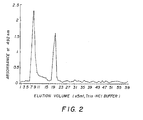
- the gel filtration chromatogram of CVT-E002 ( Figure 2) showed mainly three peaks.
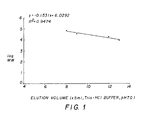
- the molecular weight for first peak (elution fraction 7-10) was estimated to be 70,000 or higher according to the standard curve ( Figure 1).
- the molecular weight for the third peak (elution fraction 18-22) was estimated to be about 1,000.
- a small broad second peak (elution fraction 10-17) was also observed. The ratio of these three peaks was 57.2:8.5:34.4.
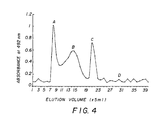
- the chromatogram of PQ 2 ( Figure 4) showed three main peaks.
- the peak designated A (elution fraction 7-10) and the peak designated C (elution fraction 19-22) correspond to the two main peaks of CVT-E002.
- Another broad peak, designated B (elution fraction 10-17), was observed between peaks A and C.
- the molecular weight for this peak was estimated to be about 2,000-60,000.
- the ratio of the three peaks A-C was 34.1:45.7:20.3.
- a region of small peaks, designated D (elution fraction 24-50, a portion of which is shown in Figure 4), was also observed.
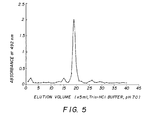
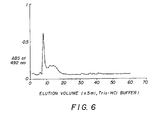
- Fractions A, B, C and D of PQ 2 were collected and freeze dried. The dried powders were renamed as PQ 2 A, PQ 2 B, PQ 2 C and PQ 2 D, respectively. Fractions A and B were also combined, and the combined fraction was called PQ 223 (a chromatograph of which is shown in Figure 6). The mitogenic activity of PQ 2 A, PQ 2 B, PQ 2 C and PQ 2 D were tested and compared with the activity of fractions PQ 223 , PQ 2 and CVT-E002. The results are shown in the following Table. Table 3.
- the order of the potency is PQ 223 > PQ 2 > CVT-E002.
- EXAMPLE 5 Chemical Determination of Total Carbohydrate and Protein Composition of CVT-E002. PQ 1 , PQ 2 , PQ 3 , and PQ 223
- EXAMPLE 6 Chemical Determination of Monosaccharide Composition of CVT-E002. PQ 1 , PQ 2 and PQ 223
- the mixture was diluted (1:10) with water and analyzed by HPLC.
- the MPP-derivatized samples were analyzed with a C-18 column, with an eluent of 18% acetonitrile in 0.1 M phosphate buffer (pH 7), at a flow rate of 1 ml/min, UV detector at 245 nm.
- the following Table shows the molar ratio of monosaccharides of CVT-E002, PQ 1 , PQ 2 and PQ 223 . Trace amounts of glucuronic acid was found in some CVT-E002, PQ 1 and PQ 2 samples. Table 5.
- the order of glucose content is as follows: PQ1 > CVT-E002 > PQ2 > PQ3; and the content of the galacturonic acid is as follows: PQ2 > PQ223 > CVT-E002 > PQ1.
- CVT-E002, PQ 2 , G 2 and PQ 223 were studied in vitro using peritoneal exudate macrophages from C57B1/6 mice which preferentially mount a cell-mediated response and Balb/c mice which preferentially mount an antibody-mediated response.
- IL-1, IL-6 and TNF- ⁇ production were measured after macrophages were stimulated with 100 ⁇ g/ml of test samples. The methods are described as follows.
- the NOB1 cell line is a TK-variant of the EL4 cell line that generates CTLL growth stimulating activity (IL-2) in response to IL-1. Since NOB1 cells do not incorporate 3 HTdR, a response to IL-1 can be measured in terms of uptake by the CTLL line. The procedure is described as follows.
- B9 The proliferation of a murine B cell hybridoma cell line, B9, is IL-6-dependent. B9 cells were cultured in a series of microwells containing decreasing concentration of the test samples. The procedure was as follows.
- PQ 2 and PQ 223 increased the production of IL-6 in supernatant of macrophages from C57B1/6 and Balb/c mice.
- the potency is PQ 223 > PQ 2 > CVT-E002.
- the following protocol employed TNF-sensitive, actinomycin D-treated murine L929 fibroblasts to quantify TNF activity in supernatants derived from cell cultures. 1). 4 x 10 4 L929 cells in 50 ⁇ l of IMDM-5% FSC were added into each well. 2). 50 ⁇ l of test sample was added to the second well of each row (column 2). Two-fold serial dilutions were made by gently mixing the contents of well 2 and transferring 50 ⁇ l from well 2 into well 3. The contents of well 3 were mixed gently, and 50 ⁇ l from well 3 was transferred into well 4. This procedure was continued through well 12. Finally, the contents of all wells in column 12 were gently mixed and 50 ⁇ l was discarded from each well.
- TNF- ⁇ concentration was calculated. The results are shown in the following Table. Table 8. Effect of ginseng on TNF- ⁇ production by murine macrophages Macrophages 1 stimulated with...
- TNF- ⁇ 2 (pg/ml) C57B1/6 mice
- Balb/c mice cells only 6.1 ⁇ 1.9 4.8 ⁇ 0.7 LPS 55.2 ⁇ 1.6** 71.4 ⁇ 15.5** CVT-E002 19.7 ⁇ 2.5** 17.9 ⁇ 2.8** PQ 2 3.5 ⁇ 0.8 3.9 ⁇ 0.2 G 2 6.1 ⁇ 1.2 7.2 ⁇ 0.1* PQ 223 16.9 ⁇ 2.5** 15.2 ⁇ 2.2** 1.
- Peritoneal exudate macrophages 5 x 10 5 /ml were cultured with 100 ⁇ g/ml samples, 10 ⁇ g/ml LPS for 48 hrs and culture supernatant was harvested.
- Assay of TNF- ⁇ was performed using L929-8 cell line and results were expressed as mean ⁇ SD of TNF- ⁇ production by macrophages. * P ⁇ 0.05; ** P ⁇ 0.01
- TNF- ⁇ production was induced by CVT-E002 and PQ 223 in supernatant of macrophages from Balb/c or C57B1/6 cell lines.
- TNF- ⁇ in the supernatant of macrophages from Balb/c mice was significantly stimulated by G 2 .
- PQ 2 seemed not to stimulate TNF- ⁇ production by macrophages.
- Serum immunoglobulin production (total IgG) increased 21% in mice fed with CVT-E002, 26% in mice fed with PQ 2 and 31 % in mice fed with PQ 223 compared with mice fed with water.
- the potency is PQ223 > PQ2 > CVT-E002.
- Results are shown in Table 9.
- Table 10. In vivo immunoglobulin production by mice (n 15) Mice fed with... IgG ( ⁇ g/ml) ⁇ SD Water 275.16 ⁇ 32.34 CVT-E002 333.01 ⁇ 50.88** PQ 2 346.81 ⁇ 31.39** PQ 223 400.46 ⁇ 54.48**
- T cells Well known mitogens such as PHA or LPS show specificity as to the type of cells they stimulate. It is important to know which specific type of spleen cells are stimulated by ginseng fractions. We therefore separated T cells by an affinity column and enriched for B cells by T cell depletion.
- lymphocyte-M (Cedarlane Labs) to remove red blood cells.
- the lymphocytes were then passed through an affinity chromatography column (Biotex Co. Ltd., Edmonton, Alberta) which removes B cells by adherence to the mouse immunoglobulin coated beads.
- the eluant consisted of an enriched population of T cells. Determination of the percentage of T cells relative to other cell types was done by the viability test using anti-thy 1.2 monoclonal antibody and complement treatment.
- lymphocytes After removal of red blood cells from the spleen cell population, the lymphocytes were incubated with monoclonal anti-thy 1.2 antibody for one hour at 37°C. Low-tox rabbit complement was then added and incubated for half an hour at 4°C. This procedure depleted the cell suspension of T cells, resulting in an enriched B cell population.
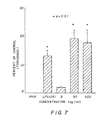
- B or T cells were cultured with varying doses of PQ 223 , and the responses were measured in terms of tritiated thymidine incorporation.
- Figures 7 and 8 show the proliferation effect of PQ 223 on relatively purified B and T cells, respectively.
- Control groups included cells treated with LPS, a B cell-specific mitogen, and PHA, a T cell-specific mitogen.
- PQ 223 was found to be B cell-specific (see Figure 9).
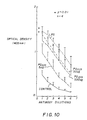
- Spleen cells were cultured for 72 hours in the presence of varying doses of PQ 223 .
- Control cultures consisted of a group to which 25 ⁇ g of LPS was added, and another to which no mitogen was added.
- the supernatants were tested for the presence of soluble immunoglobulins using the Enzyme Linked Immunosorbent Assay (ELISA).
- ELISA Enzyme Linked Immunosorbent Assay
- the supernatant containing soluble immunoglobulins was serially diluted in 0.1M tris buffer (pH 9). Microtiter plates were coated with this supernatant and incubated at 4°C overnight.
- the plates were washed with PBS Tween three times, then 100 ⁇ l of the antibody-enzyme conjugate Goat F(ab')2 anti-mouse lg horseradish peroxidase (Tago Inc., Burlingame California) was added at a 1:1000 dilution. The plate was incubated for one hour at room temperature. The plate was again washed three times with PBS, then 100 ⁇ l of ABTS peroxidase substrate (Kirkegaard and Perry Lab Inc.) was added to each well. One hour later absorbance was measured at a wavelength of 405 nm by a Flow Multiscan ELISA reader.
- Figure 10 shows that 50 ⁇ g/ml PQ 223 stimulated the production of immunoglobulins comparable to that of 25 ⁇ g LPS. A higher concentration of PQ 223 , 500 ⁇ g/ml, did not elicit a higher degree of antibody production. This dose response curve is consistent with the proliferative responses of heterogeneous spleen cell population and purified B cells. These results were based on four experiments.
- mice Three concentrations of PQ 223 were i.v injected to three groups of 3 mice each.
- a control group was injected with a balanced salt solution.
- the mice were immunized with 0.2 ml of a 10% SRBC suspension in HBSS.
- Five days after immunization the mice were sacrificed and single cell suspensions from the spleens were prepared and adjusted to 4 x 10 6 cells per ml.
- a 0.1 ml aliquot of this cell suspension was mixed with 0.3 ml of a 10% SRBC solution guinea pig complement and 0.5 ml RPMI medium. Seventy microliters of this mixture was transferred to a Cunningham chamber.
- the chamber was sealed with paraplast wax and was incubated at 37°C for one hour prior to counting of plaque forming cells. All PFC levels are expressed as per one million spleen cells. Figure 11 shows that all three doses significantly enhanced antibody production in mice injected with the compound.
- the results of the present studies indicate that the ginseng fractions of the invention activate macrophages to produce cytokines such as IL-1, IL-6 and TNF- ⁇ . They also activate lymphocytes, particurlarly B-lymphocyte proliferation and antibody production.
- the overall humoral mediated immune system was stimulated indicating the preventive effects on infections.
- the reported action of TNF- ⁇ production includes antiviral and anti-tumor benefits.
- TNF- ⁇ has also been reported to be of therapeutic benefit in the treatment of a variety of parasitic infections.
Landscapes
- Health & Medical Sciences (AREA)
- Life Sciences & Earth Sciences (AREA)
- Chemical & Material Sciences (AREA)
- Veterinary Medicine (AREA)
- Public Health (AREA)
- Medicinal Chemistry (AREA)
- General Health & Medical Sciences (AREA)
- Animal Behavior & Ethology (AREA)
- Pharmacology & Pharmacy (AREA)
- Natural Medicines & Medicinal Plants (AREA)
- Chemical Kinetics & Catalysis (AREA)
- General Chemical & Material Sciences (AREA)
- Immunology (AREA)
- Organic Chemistry (AREA)
- Nuclear Medicine, Radiotherapy & Molecular Imaging (AREA)
- Engineering & Computer Science (AREA)
- Bioinformatics & Cheminformatics (AREA)
- Virology (AREA)
- Microbiology (AREA)
- Epidemiology (AREA)
- Mycology (AREA)
- Oncology (AREA)
- Communicable Diseases (AREA)
- Medical Informatics (AREA)
- Botany (AREA)
- Biotechnology (AREA)
- Alternative & Traditional Medicine (AREA)
- Molecular Biology (AREA)
- Pulmonology (AREA)
- Obesity (AREA)
- Hematology (AREA)
- Diabetes (AREA)
- Transplantation (AREA)
- Tropical Medicine & Parasitology (AREA)
- AIDS & HIV (AREA)
- Medicines Containing Plant Substances (AREA)
- Compounds Of Unknown Constitution (AREA)
Claims (48)
- Verfahren zur Herstellung einer Ginsengfraktion PQ2, wobei das Verfahren umfasst:(a) Vereinigen von Amerikanischem Ginseng mit einem ersten Lösungsmittel, welches einen Alkohol umfasst, und Erwärmen der sich ergebenden Lösung bei einer Temperatur von 80 - 100 °C für eine Zeitdauer von 2-4 Stunden zur Herstellung einer ersten Ginsenglösung;(b) anschließendes Abtrennen der ersten Ginsenglösung zur Herstellung einer Alkohol/Ginsenglösung und eines ersten Ginsengrückstandes;(c) anschließendes Vereinigen des ersten Ginsengrückstandes mit Wasser und Erwärmen der sich ergebenden Lösung bei einer Temperatur von 80-100 °C für eine Zeitdauer von 2-4 Stunden zur Herstellung einer Lösung des Ginsengrückstandes;(d) anschließendes Abtrennen der Lösung des Ginsengrückstandes zur Herstellung eines zweiten Ginsengrückstandes und einer ersten wässrigen Extraktlösung, welche einen ersten Ginsengextrakt enthält;(e) Bereitstellen einer zweiten wässrigen Extraktlösung, welche mindestens einen Teil des ersten Ginsengextraktes umfasst, wobei in der zweiten wässrigen Extraktlösung das Verhältnis von erstem Ginsengextrakt zu Wasser 1:18 bis 1:22 beträgt;(f) anschließendes Vereinigen der zweiten wässrigen Extraktlösung mit einem zweiten Lösungsmittel, welches einen Alkohol umfasst, wobei das Verhältnis von zweitem Lösungsmittel zu Wasser 1:1 bis 3:5 beträgt, zur Herstellung eines ersten Präzipitates und eines ersten Überstandes;(g) anschließendes Vereinigen des ersten Überstandes, der in Schritt (f) hergestellt wurde, mit einem dritten Lösungsmittel, welches einen Alkohol umfasst, wobei das Verhältnis von drittem Lösungsmittel zu erstem Überstand 3:2 bis 3:1 beträgt, zur Herstellung eines zweiten Präzipitates und eines zweiten Überstandes; und(h) Isolieren des zweiten Präzipitates zur Herstellung einer Ginsengfraktion PQ2.
- Verfahren nach Anspruch 1, wobei der Alkohol in dem ersten Lösungsmittel, dem zweiten Lösungsmittel und dem dritten Lösungsmittel jeweils unabhängig voneinander einen gesättigten oder ungesättigten C1-C6-Alkohol umfasst.
- Verfahren nach Anspruch 1, wobei der Alkohol in dem ersten Lösungsmittel, dem zweiten Lösungsmittel und dem dritten Lösungsmittel jeweils unabhängig voneinander Ethanol oder Methanol umfasst.
- Verfahren nach Anspruch 1, wobei in Schritt (e) die zweite wässrige Extraktlösung mindestens einen Teil der ersten wässrigen Extraktlösung umfasst.
- Verfahren nach Anspruch 1, wobei in Schritt (a) die sich ergebende Lösung für eine Zeitdauer von 3 Stunden erwärmt wird.
- Verfahren nach Anspruch 1, wobei in Schritt (c) die sich ergebende Lösung für eine Zeitdauer von 3 Stunden erwärmt wird.
- Verfahren nach Anspruch 1, wobei in Schritt (e) das Verhältnis von erstem Ginsengextrakt zu Wasser 1:20 beträgt.
- Verfahren nach Anspruch 1, wobei in Schritt (f) das Verhältnis von zweitem Lösungsmittel zu Wasser 3:4 beträgt.
- Verfahren nach Anspruch 1, wobei in Schritt (g) das Verhältnis von drittem Lösungsmittel zu erstem Überstand 2:1 beträgt.
- Verfahren nach Anspruch 1, wobei in Schritt (a) das erste Lösungsmittel und der Ginseng in einem Verhältnis von 7-9 ml von erstem Lösungsmittel pro Gramm Ginseng vereinigt werden.
- Verfahren nach Anspruch 1, wobei in Schritt (a) das erste Lösungsmittel und der Ginseng in einem Verhältnis von 8 ml von erstem Lösungsmittel pro Gramm Ginseng vereinigt werden.
- Verfahren nach Anspruch 1, wobei in Schritt (c) das Wasser und der erste Ginsengrückstand in einem Verhältnis von 7-9 ml Wasser pro Gramm Ginsengrückstand vereinigt werden.
- Verfahren nach Anspruch 1, wobei in Schritt (c) das Wasser und der erste Ginsengrückstand in einem Verhältnis von 8 ml Wasser pro Gramm Ginsengrückstand vereinigt werden.
- Ginsengfraktion PQ2, erhältlich durch das Verfahren nach einem der Ansprüche 1-13.
- Verfahren zur Herstellung einer Ginsengfraktion PQ223, wobei das Verfahren umfasst:(a) Bereitstellen einer Ginsengfraktion PQ2, die gemäß dem Verfahren nach einem der Ansprüche 1-13 hergestellt wurde;(b) Fraktionieren der Ginsengfraktion PQ2 zur Herstellung einer ersten Elutionsfraktion und einer zweiten Elutionsfraktion, wobei die erste Elutionsfraktion einem Kohlenhydratpeak entspricht, der zwischen 35 und 50 ml des Elutionsvolumens beobachtet wurde und die zweite Elutionsfraktion einem Kohlenhydratpeak entspricht, der zwischen 50 und 85 ml des Elutionsvolumens beobachtet wurde, wie durch Gelfiltrationschromatographie unter Verwendung der folgenden Materialien bestimmt wurde:(1) eine Chromatographiesäule, die eine Matrix aus einem kugelförmigen vernetzten Copolymer von Allyldextran und N,N'-Methylenbisacrylamid enthält, welche ein Bett mit einem Ausmaß von 16 x 600 mm, ein Bettvolumen von 120 ml und einen Fraktionierungsbereich für globuläre Proteine (MG) von 5000 bis 250.000 und für Dextrane von 1000 bis 80.000 aufweist und(2) ein Elutionspuffer von Tris-HCl, der 0,1 N HCl und 0,3 M NaCl mit einem pH-Wert von 7,0 enthält; und(c) Isolieren und Vereinigen der ersten Elutionsfraktion und der zweiten Elutionsfraktion zur Herstellung der Ginsengfraktion PQ223.
- Verfahren nach Anspruch 15, wobei die Ginsengfraktion PQ2 unter Verwendung von Gelfiltrationschromatographie fraktioniert wird.
- Ginsengfraktion PQ223, erhältlich durch das Verfahren nach Anspruch 15 oder 16.
- Verfahren zur Herstellung einer Ginsengfraktion CVT-E002, wobei das Verfahren umfasst:(a) Vereinigen von Amerikanischem Ginseng mit einem ersten Lösungsmittel, welcher einen Alkohol in einem Verhältnis von etwa 7-9 ml von erstem Lösungsmittel pro Gramm Ginseng umfasst, und Erwärmen der sich ergebenden Lösung bei einer Temperatur von 80-100 °C für eine Zeitdauer von 2-4 Stunden zur Herstellung einer ersten Ginsenglösung;(b) anschließendes Abtrennen der ersten Ginsenglösung zur Herstellung einer Alkohol/Ginsenglösung und eines ersten Ginsengrückstandes;(c) anschließendes Vereinigen des ersten Ginsengrückstandes mit Wasser in einem Verhältnis von 7-9 ml Wasser pro Gramm Ginsengrückstand und Erwärmen der Lösung des Ginsengrückstandes bei einer Temperatur von 80-100 °C für eine Zeitdauer von 2-4 Stunden zur Herstellung einer Lösung des Ginsengrückstandes;(d) anschließendes Abtrennen der Lösung des es zur Herstellung eines zweiten Ginsengrückstandes und einer wässrigen Extraktlösung, die einen Ginsengextrakt enthält; und(e) Trocknen oder Konzentrieren der wässrigen Extraktlösung zur Herstellung der Ginsengfraktion CVT-E002.
- Verfahren nach Anspruch 18, wobei in Schritt (a) das erste Lösungsmittel und die Probe in einem Verhältnis von 8 ml von erstem Lösungsmittel pro Gramm Probe vereinigt werden.
- Verfahren nach Anspruch 18, wobei in Schritt (c) das Wasser und der erste Ginsengrückstand in einem Verhältnis von 8 ml Wasser pro Gramm Ginsengrückstand vereinigt werden.
- Verfahren nach Anspruch 18, wobei in Schritt (a) die erste Ginsenglösung für eine Zeitdauer von 3 Stunden erwärmt wird.
- Verfahren nach Anspruch 18, wobei in Schritt (c) die Lösung des Ginsengrückstandes für eine Zeitdauer von 3 Stunden erwärmt wird.
- Verfahren nach Anspruch 18, wobei der Alkohol in dem ersten Lösungsmittel einen gesättigten oder ungesättigten C1-C6-Alkohol umfasst.
- Verfahren nach Anspruch 18, wobei der Alkohol in dem ersten Lösungsmittel Ethanol oder Methanol umfasst.
- Ginsengfraktion CVT-E002, erhältlich durch das Verfahren nach einem der Ansprüche 18-24.
- Ginsengfraktion mit einem Kohlenhydratgehalt, welcher 2-6 mol% Rhamnose, 41-49 mol% Galacturonsäure, 12-18 mol% Glucose, 16-22 mol% Galactose und 12-19 mol% Arabinose umfasst.
- Ginsengfraktion nach Anspruch 26, wobei der Kohlenhydratgehalt 3-5 mol% Rhamnose, 43-47 mol% Galacturonsäure, 14-16 mol% Glucose, 18-20 mol% Galactose und 14-17 mol% Arabinose umfasst.
- Ginsengfraktion nach Anspruch 26, wobei der Kohlenhydratgehalt 4 mol% Rhamnose, 45 mol% Galacturonsäure, 15 mol% Glucose, 19 mol% Galactose und 15 mol% Arabinose umfasst.
- Ginsengfraktion mit einem Kohlenhydratgehalt, welcher 3-8 mol% Rhamnose, 36-44 mol% Galacturonsäure, 2-7 mol% Glucose, 25-33 mol% Galactose und 17-25 mol% Arabinose umfasst.
- Ginsengfraktion nach Anspruch 29, wobei der Kohlenhydratgehalt 4-7 mol% Rhamnose, 37-42 mol% Galacturonsäure, 3-6 mol% Glucose, 27-32 mol% Galactose und 19-24 mol% Arabinose umfasst.
- Ginsengfraktion nach Anspruch 29, wobei der Kohlenhydratgehalt 5 mol% Rhamnose, 39 mol% Galacturonsäure, 4 mol% Glucose, 29 mol% Galactose und 21 mol% Arabinose umfasst.
- Ginsengfraktion mit einem Kohlenhydratgehalt, welcher 0,5-5 mol% Rhamnose, 11-22 mol% Galacturonsäure, 40-60 mol% Glucose, 10-19 mol% Galactose und 11-19 mol% Arabinose umfasst.
- Ginsengfraktion nach Anspruch 32, wobei der Kohlenhydratgehalt 1-3 mol% Rhamnose, 13-20 mol% Galacturonsäure, 42-57 mol% Glucose, 12-17 mol% Galactose und 13-17 mol% Arabinose umfasst.
- Pharmazeutische Zusammensetzung, die die Ginsengfraktion gemäß einem der Ansprüche 14, 17 oder 25-33 in Kombination mit einem pharmazeutisch annehmbaren Träger umfasst.
- Verwendung einer Ginsengfraktion nach einem der Ansprüche 14, 17 oder 25-33 allein oder in Kombination mit einem anderen Arzneimittel zur Herstellung einer pharmazeutischen Zusammensetzung, die für die Behandlung eines Zustands geeignet ist, welcher durch Immunschwäche charakterisiert ist.
- Verwendung nach Anspruch 35, wobei der Zustand ausgewählt ist aus der Gruppe bestehend aus Erkältung, Grippe, chronischem Erschöpfungssyndrom, AIDS und Krebs.
- Verwendung einer Ginsengfraktion nach einem der Ansprüche 14, 17 oder 25-33 zur Herstellung einer pharmazeutischen Zusammensetzung, die zur Stimulierung der Produktion von IL-1, IL-6 und/oder TNFα in Zellen geeignet ist.
- Verwendung einer Ginsengfraktion nach einem der Ansprüche 14, 17 oder 25-33 zur Herstellung einer pharmazeutischen Zusammensetzung, die zur Stimulierung der in vitro- oder in vivo-Produktion von Immunglobulinen geeignet ist.
- Verwendung einer Ginsengfraktion nach einem der Ansprüche 14, 17 oder 25-33 zur Herstellung einer pharmazeutischen Zusammensetzung, die zur Aktivierung von B-Lymphozytenproliferation und Antikörperproduktion davon geeignet ist.
- Verfahren zur Herstellung einer Ginsengfraktion PQ2A, wobei das Verfahren umfasst:(a) Bereitstellen einer Ginsengfraktion PQ2, die gemäß dem Verfahren nach einem der Ansprüche 1-13 hergestellt wurde;(b) Fraktionieren der Ginsengfraktion PQ2 zur Herstellung einer Elutionsfraktion, welche einem Kohlenhydratpeak entspricht, der zwischen 35 und 50 ml Elutionsvolumen beobachtet wird, wie durch Gelfiltrationschromatographie unter Verwendung der folgenden Materialien bestimmt wurde:(1) eine Chromatographiesäule, die eine Matrix aus einem kugelförmigen vernetzten Copolymer von Allyldextran und N,N'-Methylenbisacrylamid enthält, welche ein Bett mit einem Ausmaß von 16 x 600 mm, ein Bettvolumen von 120 ml und einen Fraktionierungsbereich (MW) für globuläre Proteine von 5000 bis 250.000 und für Dextrane von 1000 bis 80.000 aufweist und(2) ein Elutionspuffer von Tris-HCl, der 0,1 N HCI und 0,3 M NaCI mit einem pH-Wert von 7,0 enthält; und(c) Isolieren der Elutionsfraktion zur Herstellung der Ginsengfraktion PQ2A.
- Ginsengfraktion PQ2A, erhältlich durch das Verfahren nach Anspruch 40.
- Verfahren zur Herstellung einer Ginsengfraktion PQ2B, wobei das Verfahren umfasst:(a) Bereitstellen einer Ginsengfraktion PQ2, die gemäß dem Verfahren nach einem der Ansprüche 1-13 hergestellt wurde;(b) Fraktionieren der Ginsengfraktion PQ2B zur Herstellung einer Elutionsfraktion, welche einem Kohlenhydratpeak entspricht, der zwischen 50 und 85 ml Elutionsvolumen beobachtet wurde, wie durch Gelfiltrationschromatographie unter Verwendung der folgenden Materialien bestimmt wurde:(1) eine Chromatographiesäule, die eine Matrix aus einem kugelförmigen vernetzten Copolymer von Allyldextran und N,N'-Methylenbisacrylamid enthält, welche ein Bett mit einem Ausmaß von 16 x 600 mm, ein Bettvolumen von 120 ml und einen Fraktionierungsbereich (MW) für globuläre Proteine von 5000 bis 250.000 und für Dextrane von 1000 bis 80.000 aufweist und(2) ein Elutionspuffer von Tris-HCl, der 0,1 N HCl und 0,3 M NaCl mit einem pH-Wert von 7,0 enthält; und(c) Isolieren der Elutionsfraktion zur Herstellung der Ginsengfraktion PQ2B.
- Ginsengfraktion PQ2B, erhältlich durch das Verfahren nach Anspruch 42.
- Verfahren zur Herstellung einer Ginsengfraktion PQ2C, wobei das Verfahren umfasst:(a) Bereitstellen einer Ginsengfraktion PQ2, die gemäß dem Verfahren nach einem der Ansprüche 1-13 hergestellt wurde;(b) Fraktionieren der Ginsengfraktion PQ2 zur Herstellung einer Elutionsfraktion, welche dem Kohlenhydratpeak entspricht, der zwischen 95 und 110 ml Elutionsvolumen beobachtet wurde, wie durch Gelfiltrationschromatographie unter Verwendung der folgenden Materialien bestimmt wurde:(1) eine Chromatographiesäule, die eine Matrix, die auf einem kugelförmigen vernetzten Copolymer von Allyldextran und N,N'-Methylenbisacrylamid enthält, welche ein Bett mit einem Ausmaß von 16 x 600 mm, ein Bettvolumen von 120 ml und einen Fraktionierungsbereich (MW) für globuläre Proteine von 5000 bis 250.000 und für Dextrane von 1000 bis 80.000 aufweist und(2) ein Elutionspuffer von Tris-HCl, der 0,1 N HCl und 0,3 M NaCl mit einem pH-Wert von 7,0 enthält; und(c) Isolieren der Elutionsfraktion zur Herstellung der Ginsengfraktion PQ2C.
- Ginsengfraktion PQ2C, erhältlich durch das Verfahren nach Anspruch 44.
- Verfahren zur Herstellung einer Ginsengfraktion PQ2D, wobei das Verfahren umfasst:(a) Bereitstellen einer Ginsengfraktion PQ2, die gemäß dem Verfahren nach einem der Ansprüche 1-13 hergestellt wurde;(b) Fraktionieren der Ginsengfraktion PQ2 zur Herstellung einer Elutionsfraktion, welche einem Kohlenhydratpeak entspricht, der zwischen 120 und 250 ml Elutionsvolumen beobachtet wurde, wie durch Gelfiltrationschromatographie unter Verwendung der folgenden Materialien bestimmt wurde:(1) eine Chromatographiesäule, die eine Matrix aus einem kugelförmigen vernetzten Copolymer von Allyldextran und N,N'-Methylenbisacrylamid enthält, welche ein Bett mit einem Ausmaß von 16 x 600 mm, ein Bettvolumen von 120 ml und einen Fraktionierungsbereich (MW) für globuläre Proteine von 5000 bis 250.000 und für Dextrane von 1000 bis 80.000 aufweist und(2) ein Elutionspuffer von Tris-HCl, der 0,1 N HCl und 0,3 M NaCl mit einem pH-Wert von 7,0 enthält; und(c) Isolieren der Elutionsfraktion zur Herstellung der Ginsengfraktion PQ2D.
- Ginsengfraktion PQ2D, erhältlich durch das Verfahren nach Anspruch 46.
- Zusammensetzung, welche mindestens zwei der folgenden Ginsengfraktionen umfasst:(a) Ginsengfraktion PQ2A nach Anspruch 41;(b) Ginsengfraktion PQ2B nach Anspruch 43;(c) Ginsengfraktion PQ2C nach Anspruch 45; und(d) Ginsengfraktion PQ2D nach Anspruch 47.
Applications Claiming Priority (3)
| Application Number | Priority Date | Filing Date | Title |
|---|---|---|---|
| US6953497P | 1997-12-12 | 1997-12-12 | |
| US69534P | 1997-12-12 | ||
| PCT/US1998/025724 WO1999030725A1 (en) | 1997-12-12 | 1998-12-11 | Processes of making north american ginseng fractions, products containing them, and use as immunomodulators |
Publications (3)
| Publication Number | Publication Date |
|---|---|
| EP1037645A1 EP1037645A1 (de) | 2000-09-27 |
| EP1037645A4 EP1037645A4 (de) | 2004-03-03 |
| EP1037645B1 true EP1037645B1 (de) | 2006-07-12 |
Family
ID=22089640
Family Applications (1)
| Application Number | Title | Priority Date | Filing Date |
|---|---|---|---|
| EP98963784A Expired - Lifetime EP1037645B1 (de) | 1997-12-12 | 1998-12-11 | Verfahren zur herstellung von nordamerikanischen ginseng fraktionen, enthaltende produkte, und verwendung als immunmodulatoren |
Country Status (12)
| Country | Link |
|---|---|
| US (7) | US6432454B1 (de) |
| EP (1) | EP1037645B1 (de) |
| JP (2) | JP4458505B2 (de) |
| KR (2) | KR100855409B1 (de) |
| CN (1) | CN1285752B (de) |
| AT (1) | ATE332701T1 (de) |
| AU (1) | AU752702B2 (de) |
| CA (1) | CA2314453C (de) |
| DE (1) | DE69835230T2 (de) |
| DK (1) | DK1037645T3 (de) |
| NZ (1) | NZ504975A (de) |
| WO (1) | WO1999030725A1 (de) |
Cited By (1)
| Publication number | Priority date | Publication date | Assignee | Title |
|---|---|---|---|---|
| WO2009106975A3 (en) * | 2008-02-29 | 2009-10-29 | Cv Technologies Inc. | Activation of innate and adaptive immune responses by a ginseng extract |
Families Citing this family (35)
| Publication number | Priority date | Publication date | Assignee | Title |
|---|---|---|---|---|
| US6432454B1 (en) | 1997-12-12 | 2002-08-13 | C. V. Technologies, Inc. | Processes of making north american ginseng fractions, products containing them, and use as immunomodulators |
| ATE380555T1 (de) * | 1999-02-25 | 2007-12-15 | Fx Life Sciences Internat Gmbh | Behandlung von autoimmunkrankheiten mit einem extrakt von amerikanischem ginseng |
| TWI222357B (en) | 2000-01-11 | 2004-10-21 | Medical & Pharm Ind Tech & Dev | Anti-ulcer pharmaceutical composition and the preparation and use thereof |
| GB2364640B (en) * | 2000-07-11 | 2002-12-04 | Pharmaceutical Ind Tech & Dev | Anti-ulcer pharmaceutical composition and the preparation thereof |
| ES2193874B1 (es) * | 2002-04-03 | 2005-03-01 | Puleva Biotech, S.A. | Compuestos naturales y derivados de estos para la prevencion y el tratamiento de enfermedades cardiovasculares, hepaticas, renales y cosmeticas. |
| KR100594353B1 (ko) * | 2002-05-28 | 2006-07-03 | 주식회사 엠디바이오알파 | 신규한 인삼잎 및 줄기 다당체, 그 제조방법 및 그를활성성분으로 함유하는 항암제 및 항암보조제 조성물 |
| CN1951411B (zh) * | 2002-08-23 | 2010-08-25 | 纽约州立大学研究基金会 | 一氧化氮及其生物医学重要作用 |
| EP1659881B1 (de) | 2003-08-06 | 2019-04-03 | Senomyx Inc. | Neue geschmacke, geschmacksmodifikatoren, geschmacksstoffe, geschmacksverstärker, geschmacksstoffe für umami oder süss, und/oder verstärker und ihre verwendung |
| US20050079234A1 (en) * | 2003-08-27 | 2005-04-14 | Chiang Yang Chi | Compositions comprising herbs and method for immunomodulation |
| KR101102480B1 (ko) * | 2004-04-27 | 2012-01-05 | 노부유키 하야시 | 가압 열매체를 이용한 추출방법 및 그 장치 |
| KR100456089B1 (ko) * | 2004-07-15 | 2004-11-09 | 박용진 | 항암 활성을 갖는 산삼 추출정제액을 정제하는 방법 및이를 함유하는 조성물 |
| CN100509006C (zh) * | 2005-03-25 | 2009-07-08 | 北京欧纳尔生物工程技术有限公司 | 治疗抑郁症的药物组合物及其制法 |
| EP1947962B1 (de) * | 2005-11-14 | 2010-10-06 | Unilever N.V. | Essbares produkt, das ginseng-polysaccharide und gesunde bakterien enthält |
| BRPI0721682A2 (pt) * | 2007-05-16 | 2013-01-22 | Fx Life Sciences Ag | uso de fraÇÕes de ginseng norte-americano para o tratamento de leucemia |
| US20120263806A1 (en) * | 2007-05-16 | 2012-10-18 | Miller Sandra | Uses of North American Ginseng Fractions for Treating Leukemia |
| US20090047405A1 (en) * | 2007-08-16 | 2009-02-19 | Conopco, Inc., D/B/A Unilever | Food composition with therapeutic agents |
| KR101018989B1 (ko) | 2007-10-31 | 2011-03-07 | 내추럴초이스 (주) | 홍삼박을 이용한 홍삼 다당체의 생산방법 |
| WO2009071425A1 (en) * | 2007-12-07 | 2009-06-11 | Unilever Nv | Edible product having an immunostimulating effect |
| BRPI0919298A2 (pt) * | 2008-09-30 | 2019-09-24 | Unhwa Corp | composição para a prevenção ou o tratamento da aids que compreende a linhagem de células do tronco da planta derivada do câmbio da panax ginseng incluindo ginseng selvagem ou ginseng como ingrediente ativo. |
| KR101067959B1 (ko) * | 2008-10-29 | 2011-09-26 | 구성학 | 감기 및 독감의 치료와 예방에 효과적인 발효유지 조성물의제조방법 |
| KR101184389B1 (ko) | 2009-02-23 | 2012-09-24 | 주식회사 운화 | 산삼 또는 인삼을 포함한 인삼류의 형성층 유래 식물줄기세포주를 유효성분으로 함유하는 면역증강용 조성물 |
| US8574639B2 (en) | 2010-08-17 | 2013-11-05 | ILHWA Co., Ltd. | Fermented ginseng concentrate having IH-901 |
| ES2689261T3 (es) | 2011-04-29 | 2018-11-12 | Nutrileads B.V. | Método para el aislamiento de polisacáridos |
| GB2509439A (en) * | 2011-10-28 | 2014-07-02 | Afexa Life Sciences Inc | Use of a ginseng extract to prevent and treat alopecia areata |
| CN109512931A (zh) * | 2012-09-13 | 2019-03-26 | 江中药业股份有限公司 | 改善男性性功能的组合物及其应用 |
| CN102928373B (zh) * | 2012-11-26 | 2015-05-13 | 广东省农业科学院花卉研究所 | 一种石斛多糖含量的测定方法及其应用 |
| KR102200012B1 (ko) * | 2013-04-02 | 2021-01-08 | (주)아모레퍼시픽 | 인삼열매 추출물을 포함하는 뇌 활성화 조성물 |
| WO2014196817A1 (ko) * | 2013-06-04 | 2014-12-11 | 중앙대학교 산학협력단 | 자일리톨을 유효성분으로 함유하는 인플루엔자 바이러스 감염증 예방 또는 치료용 조성물 |
| US20150044306A1 (en) | 2013-08-12 | 2015-02-12 | Melvin Mitchell | Process for fractionation and extraction of herbal plant material to isolate extractives for pharmaceuticals and nutraceuticals |
| KR102184157B1 (ko) * | 2019-01-08 | 2020-11-30 | 주식회사 바이오에프디엔씨 | 항상성 증가를 통한 피부면역개선, 외부환경에 대한 피부보호 및 피부활력증진을 위한 인삼 유래 테트라펩타이드를 함유하는 화장료 조성물 |
| WO2022126261A1 (en) * | 2020-12-15 | 2022-06-23 | Shan Jacqueline J | American ginseng root fractions, processes of their preparation and uses thereof |
| CN114848695A (zh) * | 2022-03-25 | 2022-08-05 | 潍坊医学院 | 一种人参稀有皂苷与西洋参多糖的组合物及其应用 |
| CN117050207A (zh) * | 2023-09-11 | 2023-11-14 | 湖南省中医药研究院 | 一种西洋参多糖、提取方法与其调节机体抗流感免疫的应用 |
| GB202316295D0 (en) | 2023-10-24 | 2023-12-06 | Amazentis Sa | Composition |
| GB202411739D0 (en) | 2024-08-08 | 2024-09-25 | Amazentis Sa | Compositions |
Family Cites Families (24)
| Publication number | Priority date | Publication date | Assignee | Title |
|---|---|---|---|---|
| JPS4912020A (de) * | 1972-05-17 | 1974-02-02 | ||
| DE3070086D1 (en) * | 1979-12-03 | 1985-03-14 | Kitasato Inst | A process for preparing substances having interferon inducing activity |
| JPS6118722A (ja) * | 1984-07-05 | 1986-01-27 | Wakunaga Seiyaku Kk | 生体防御能亢進剤 |
| JPS61109732A (ja) * | 1984-10-31 | 1986-05-28 | Wakunaga Seiyaku Kk | 殺腫瘍性物質誘発剤 |
| US4708949A (en) * | 1985-09-24 | 1987-11-24 | Yaguang Liu | Therapeutic composition from plant extracts |
| US4706949A (en) * | 1985-12-17 | 1987-11-17 | Dossey Robert L | Vise jaw support system and interchangeable vise jaws therefor |
| SU1410322A1 (ru) * | 1986-03-07 | 1996-03-27 | Владивостокский государственный медицинский институт | Способ получения тритерпеновых гликозидов-панаксозидов из корней женьшеня (panax ginseng c.a.mey) |
| JPH0643327B2 (ja) * | 1987-03-27 | 1994-06-08 | 株式会社ツムラ | 免疫賦活剤 |
| US5071839A (en) * | 1987-11-02 | 1991-12-10 | Yaguang Liu | Safe pharmaceutical composition for decreasing side effects of antiviral drugs and increasing the immune function (SDI) II |
| JPH0245499A (ja) * | 1988-08-06 | 1990-02-15 | Wakunaga Pharmaceut Co Ltd | オタネニンジン糖タンパク質およびその用途 |
| JPH0245501A (ja) * | 1988-08-06 | 1990-02-15 | Wakunaga Pharmaceut Co Ltd | 竹節ニンジン多糖およびその用途 |
| JPH05317041A (ja) * | 1991-06-05 | 1993-12-03 | Nippon Oil Co Ltd | 動物細胞増殖促進剤及び無血清培地 |
| JPH0639759A (ja) * | 1992-04-20 | 1994-02-15 | Tokico Ltd | 工業用ロボット装置 |
| JPH069418A (ja) * | 1992-06-29 | 1994-01-18 | Nitto Denko Corp | パナキンケコール化合物、及び制癌剤 |
| CN1088448A (zh) * | 1992-12-25 | 1994-06-29 | 彭德赐 | 西洋参多糖营养液和西洋参多糖胶囊及其制备方法 |
| JPH0782167A (ja) * | 1993-06-29 | 1995-03-28 | Japan Energy Corp | 血清csf活性誘導剤及びその製造方法 |
| US5840309A (en) * | 1994-10-03 | 1998-11-24 | La Prairie Sa | Stimulating fibroblasts and/or keratinocytes |
| KR100192678B1 (ko) * | 1995-06-07 | 1999-06-15 | 손경식 | 약효가 증강된 가공인삼 제품 |
| US6083932A (en) * | 1997-04-18 | 2000-07-04 | Cv Technologies Inc. | Pharmaceutical compositions derived from ginseng and methods of treatment using same |
| US6156291A (en) * | 1997-08-28 | 2000-12-05 | Cv Technologies Inc. | Chemical and pharmacological standardization of herbal extracts |
| US6432454B1 (en) * | 1997-12-12 | 2002-08-13 | C. V. Technologies, Inc. | Processes of making north american ginseng fractions, products containing them, and use as immunomodulators |
| ATE380555T1 (de) | 1999-02-25 | 2007-12-15 | Fx Life Sciences Internat Gmbh | Behandlung von autoimmunkrankheiten mit einem extrakt von amerikanischem ginseng |
| KR20010114214A (ko) * | 1999-02-26 | 2001-12-31 | 인스파이어 파마슈티컬스 인코퍼레이티드 | 우리딘, 아데닌 및 시티딘 디포스페이트 및 그의 유사체에의한 점막수화 촉진방법 |
| US6555527B1 (en) * | 1999-08-27 | 2003-04-29 | Korea Atomic Energy Research Institute | Hematopoietic, myeloprotecting, antitumor immune cells generating and radiosensitizing polysaccharide isolated from Panax ginseng |
-
1998
- 1998-11-11 US US09/581,161 patent/US6432454B1/en not_active Expired - Lifetime
- 1998-12-11 AU AU19034/99A patent/AU752702B2/en not_active Expired
- 1998-12-11 DE DE69835230T patent/DE69835230T2/de not_active Expired - Lifetime
- 1998-12-11 JP JP2000538705A patent/JP4458505B2/ja not_active Expired - Lifetime
- 1998-12-11 CA CA002314453A patent/CA2314453C/en not_active Expired - Lifetime
- 1998-12-11 WO PCT/US1998/025724 patent/WO1999030725A1/en not_active Ceased
- 1998-12-11 AT AT98963784T patent/ATE332701T1/de active
- 1998-12-11 KR KR1020077020271A patent/KR100855409B1/ko not_active Expired - Lifetime
- 1998-12-11 CN CN988120690A patent/CN1285752B/zh not_active Expired - Lifetime
- 1998-12-11 EP EP98963784A patent/EP1037645B1/de not_active Expired - Lifetime
- 1998-12-11 DK DK98963784T patent/DK1037645T3/da active
- 1998-12-11 KR KR1020007006333A patent/KR100780521B1/ko not_active Expired - Lifetime
- 1998-12-11 NZ NZ504975A patent/NZ504975A/xx not_active IP Right Cessation
-
2002
- 2002-07-02 US US10/186,733 patent/US20030077341A1/en not_active Abandoned
- 2002-07-02 US US10/187,289 patent/US7067160B2/en not_active Expired - Lifetime
-
2003
- 2003-10-23 US US10/690,628 patent/US7186423B2/en not_active Expired - Lifetime
-
2005
- 2005-04-26 US US11/114,089 patent/US7413756B2/en not_active Expired - Fee Related
-
2008
- 2008-07-16 US US12/173,966 patent/US7763290B2/en not_active Expired - Fee Related
-
2009
- 2009-08-10 JP JP2009186027A patent/JP2009256387A/ja active Pending
-
2010
- 2010-07-19 US US12/839,386 patent/US20100278945A1/en not_active Abandoned
Cited By (1)
| Publication number | Priority date | Publication date | Assignee | Title |
|---|---|---|---|---|
| WO2009106975A3 (en) * | 2008-02-29 | 2009-10-29 | Cv Technologies Inc. | Activation of innate and adaptive immune responses by a ginseng extract |
Also Published As
| Publication number | Publication date |
|---|---|
| US6432454B1 (en) | 2002-08-13 |
| DK1037645T3 (da) | 2006-11-06 |
| US20030124207A1 (en) | 2003-07-03 |
| US20040137087A1 (en) | 2004-07-15 |
| JP4458505B2 (ja) | 2010-04-28 |
| KR20010032984A (ko) | 2001-04-25 |
| JP2009256387A (ja) | 2009-11-05 |
| AU752702B2 (en) | 2002-09-26 |
| CN1285752A (zh) | 2001-02-28 |
| US7186423B2 (en) | 2007-03-06 |
| DE69835230T2 (de) | 2007-07-05 |
| US7763290B2 (en) | 2010-07-27 |
| CA2314453A1 (en) | 1999-06-24 |
| CA2314453C (en) | 2009-03-03 |
| US20100278945A1 (en) | 2010-11-04 |
| WO1999030725A1 (en) | 1999-06-24 |
| US7413756B2 (en) | 2008-08-19 |
| DE69835230D1 (de) | 2006-08-24 |
| CN1285752B (zh) | 2011-05-25 |
| AU1903499A (en) | 1999-07-05 |
| EP1037645A4 (de) | 2004-03-03 |
| HK1032358A1 (en) | 2001-07-20 |
| US20050196471A1 (en) | 2005-09-08 |
| US20030077341A1 (en) | 2003-04-24 |
| JP2002508329A (ja) | 2002-03-19 |
| KR100855409B1 (ko) | 2008-08-29 |
| NZ504975A (en) | 2004-02-27 |
| EP1037645A1 (de) | 2000-09-27 |
| KR100780521B1 (ko) | 2007-11-29 |
| US7067160B2 (en) | 2006-06-27 |
| KR20070093155A (ko) | 2007-09-17 |
| US20080286389A1 (en) | 2008-11-20 |
| ATE332701T1 (de) | 2006-08-15 |
Similar Documents
| Publication | Publication Date | Title |
|---|---|---|
| US7763290B2 (en) | Processes of making north american ginseng fractions, products containing them, and use as immunomodulators | |
| Xu et al. | Chemical composition and antitumor activity of different polysaccharides from the roots of Actinidia eriantha | |
| Wang et al. | Pharmacological functions of Chinese medicinal fungus Cordyceps sinensis and related species | |
| Wu et al. | Effect of various extracts and a polysaccharide from the edible mycelia of Cordyceps sinensis on cellular and humoral immune response against ovalbumin in mice | |
| JP2004505925A (ja) | 免疫調節特性を示すクロレラ調製物 | |
| JP4010768B2 (ja) | アンジェリカ・ギガス・ナカイから精製した新規のペクチン質多糖類とその精製方法およびその免疫刺激剤としての使用 | |
| JP2002508329A5 (de) | ||
| CN107098984B (zh) | 牛膝粗多糖、多糖组分和均一多糖、其制备方法及其用途 | |
| EP2305268B1 (de) | Pharmazeutische zusammensetzung zur behandlung von erkrankungen, die durch immunstörungen verursacht werden, und goldkeulenextrakt | |
| Kumazawa et al. | Activation of murine peritoneal macrophages by intraperitoneal administration of a traditional Chinese herbal medicine, xiao-chai-hu-tang (Japanese name: shosaiko-to) | |
| EP1789439B1 (de) | Aufgereinigte arabinogalactanprotein-(agp-)zusammensetzung | |
| US6241995B1 (en) | Polygala senega compositions and methods of use | |
| Kumazawa et al. | Immunopotentiator separated from hot water extract of the seed of Benincasa cerifera Savi (Tohgashi) | |
| US5712123A (en) | Mixture having antitumor activities | |
| Wong et al. | Tumor necrosis factor eliciting fractions separated from Pseudostellaria heterophylla | |
| HK1032358B (en) | Processes of making north american ginseng fractions, products containing them, and use as immunomodulators | |
| JPH0379602A (ja) | 免疫刺激・抗増殖作用を有する多糖類、その製造方法及びこの物質を含有した薬剤 | |
| EP0965346B1 (de) | Verwendung von acetylierten Mannanderivaten zur Behandlung von chronischen Atemwegserkrankungen | |
| Lee | 4.7 Immunomodulatory activity. | |
| 山田陽城 | Studies on elucidation of action mechanisms and active ingredients of Kampo medicines by basic research | |
| DE4001756A1 (de) | Polysaccharidgemisch mit immunstimulierender und antiproliferativer wirkung, verfahren zu dessen gewinnung und dieses enthaltende arzneimittel |
Legal Events
| Date | Code | Title | Description |
|---|---|---|---|
| PUAI | Public reference made under article 153(3) epc to a published international application that has entered the european phase |
Free format text: ORIGINAL CODE: 0009012 |
|
| 17P | Request for examination filed |
Effective date: 20000628 |
|
| AK | Designated contracting states |
Kind code of ref document: A1 Designated state(s): AT BE CH DE DK FI FR GB IT LI |
|
| A4 | Supplementary search report drawn up and despatched |
Effective date: 20040120 |
|
| GRAP | Despatch of communication of intention to grant a patent |
Free format text: ORIGINAL CODE: EPIDOSNIGR1 |
|
| RIC1 | Information provided on ipc code assigned before grant |
Ipc: A61P 37/04 00000000ALI20051202BHEP Ipc: A61K 125/00 00000000ALI20051202BHEP Ipc: A61K 36/258 00000000AFI20051202BHEP |
|
| GRAS | Grant fee paid |
Free format text: ORIGINAL CODE: EPIDOSNIGR3 |
|
| GRAA | (expected) grant |
Free format text: ORIGINAL CODE: 0009210 |
|
| AK | Designated contracting states |
Kind code of ref document: B1 Designated state(s): AT BE CH DE DK FI FR GB IT LI |
|
| REG | Reference to a national code |
Ref country code: GB Ref legal event code: FG4D |
|
| REG | Reference to a national code |
Ref country code: CH Ref legal event code: EP |
|
| REF | Corresponds to: |
Ref document number: 69835230 Country of ref document: DE Date of ref document: 20060824 Kind code of ref document: P |
|
| REG | Reference to a national code |
Ref country code: DK Ref legal event code: T3 |
|
| REG | Reference to a national code |
Ref country code: CH Ref legal event code: NV Representative=s name: A. BRAUN, BRAUN, HERITIER, ESCHMANN AG PATENTANWAE |
|
| ET | Fr: translation filed | ||
| PLBE | No opposition filed within time limit |
Free format text: ORIGINAL CODE: 0009261 |
|
| STAA | Information on the status of an ep patent application or granted ep patent |
Free format text: STATUS: NO OPPOSITION FILED WITHIN TIME LIMIT |
|
| REG | Reference to a national code |
Ref country code: GB Ref legal event code: 732E |
|
| 26N | No opposition filed |
Effective date: 20070413 |
|
| REG | Reference to a national code |
Ref country code: CH Ref legal event code: PUE Owner name: FX LIFE SCIENCES INTERNATIONAL GMBH Free format text: C.V. TECHNOLOGIES INC.#SUITE 308 CAMPUS TOWERS, 8625-112 STREET#EDMONTON, ALBERTA T6G 1K8 (CA) -TRANSFER TO- FX LIFE SCIENCES INTERNATIONAL GMBH#BAARERSTRASSE 135#6301 ZUG (CH) |
|
| BECA | Be: change of holder's address |
Owner name: *FX LIFE SCIENCES INTERNATIONAL G.M.B.H.BAARERSTRA Effective date: 20070912 Owner name: *FX LIFE SCIENCES INTERNATIONAL G.M.B.H.BAARERSTRA Effective date: 20060712 |
|
| BECH | Be: change of holder |
Owner name: *FX LIFE SCIENCES INTERNATIONAL G.M.B.H.BAARERSTRA Effective date: 20060712 |
|
| REG | Reference to a national code |
Ref country code: FR Ref legal event code: TP Ref country code: FR Ref legal event code: CA |
|
| REG | Reference to a national code |
Ref country code: CH Ref legal event code: PFA Owner name: FX LIFE SCIENCES INTERNATIONAL GMBH Free format text: FX LIFE SCIENCES INTERNATIONAL GMBH#BAARERSTRASSE 135#6301 ZUG (CH) -TRANSFER TO- FX LIFE SCIENCES INTERNATIONAL GMBH#BAARERSTRASSE 135#6301 ZUG (CH) |
|
| REG | Reference to a national code |
Ref country code: CH Ref legal event code: PUE Owner name: FX LIFE SCIENCES AG Free format text: FX LIFE SCIENCES INTERNATIONAL GMBH#BAARERSTRASSE 135#6301 ZUG (CH) -TRANSFER TO- FX LIFE SCIENCES AG#GRAFENAUSTRASSE 11#6300 ZUG (CH) |
|
| REG | Reference to a national code |
Ref country code: GB Ref legal event code: 732E Free format text: REGISTERED BETWEEN 20090212 AND 20090218 |
|
| REG | Reference to a national code |
Ref country code: FR Ref legal event code: TP Ref country code: FR Ref legal event code: CA |
|
| REG | Reference to a national code |
Ref country code: CH Ref legal event code: PCAR Free format text: NEW ADDRESS: HOLBEINSTRASSE 36-38, 4051 BASEL (CH) |
|
| REG | Reference to a national code |
Ref country code: FR Ref legal event code: PLFP Year of fee payment: 18 |
|
| REG | Reference to a national code |
Ref country code: FR Ref legal event code: PLFP Year of fee payment: 19 |
|
| REG | Reference to a national code |
Ref country code: GB Ref legal event code: 732E Free format text: REGISTERED BETWEEN 20170518 AND 20170524 |
|
| REG | Reference to a national code |
Ref country code: FR Ref legal event code: PLFP Year of fee payment: 20 |
|
| PGFP | Annual fee paid to national office [announced via postgrant information from national office to epo] |
Ref country code: FI Payment date: 20171128 Year of fee payment: 20 Ref country code: FR Payment date: 20171120 Year of fee payment: 20 Ref country code: DK Payment date: 20171128 Year of fee payment: 20 |
|
| PGFP | Annual fee paid to national office [announced via postgrant information from national office to epo] |
Ref country code: BE Payment date: 20171213 Year of fee payment: 20 Ref country code: AT Payment date: 20171128 Year of fee payment: 20 Ref country code: GB Payment date: 20171128 Year of fee payment: 20 Ref country code: CH Payment date: 20171025 Year of fee payment: 20 Ref country code: IT Payment date: 20171218 Year of fee payment: 20 |
|
| PGFP | Annual fee paid to national office [announced via postgrant information from national office to epo] |
Ref country code: DE Payment date: 20171221 Year of fee payment: 20 |
|
| REG | Reference to a national code |
Ref country code: DE Ref legal event code: R071 Ref document number: 69835230 Country of ref document: DE |
|
| REG | Reference to a national code |
Ref country code: CH Ref legal event code: PL |
|
| REG | Reference to a national code |
Ref country code: DK Ref legal event code: EUP Effective date: 20181211 |
|
| REG | Reference to a national code |
Ref country code: GB Ref legal event code: PE20 Expiry date: 20181210 |
|
| REG | Reference to a national code |
Ref country code: AT Ref legal event code: MK07 Ref document number: 332701 Country of ref document: AT Kind code of ref document: T Effective date: 20181211 |
|
| REG | Reference to a national code |
Ref country code: BE Ref legal event code: MK Effective date: 20181211 |
|
| PG25 | Lapsed in a contracting state [announced via postgrant information from national office to epo] |
Ref country code: GB Free format text: LAPSE BECAUSE OF EXPIRATION OF PROTECTION Effective date: 20181210 |