EP1109151A1 - Elektronisches dokumenten-verarbeitungsprogramm - Google Patents
Elektronisches dokumenten-verarbeitungsprogramm Download PDFInfo
- Publication number
- EP1109151A1 EP1109151A1 EP00940814A EP00940814A EP1109151A1 EP 1109151 A1 EP1109151 A1 EP 1109151A1 EP 00940814 A EP00940814 A EP 00940814A EP 00940814 A EP00940814 A EP 00940814A EP 1109151 A1 EP1109151 A1 EP 1109151A1
- Authority
- EP
- European Patent Office
- Prior art keywords
- electronic document
- read
- speech
- attribute information
- document processing
- Prior art date
- Legal status (The legal status is an assumption and is not a legal conclusion. Google has not performed a legal analysis and makes no representation as to the accuracy of the status listed.)
- Withdrawn
Links
Images







Classifications
-
- G—PHYSICS
- G10—MUSICAL INSTRUMENTS; ACOUSTICS
- G10L—SPEECH ANALYSIS TECHNIQUES OR SPEECH SYNTHESIS; SPEECH RECOGNITION; SPEECH OR VOICE PROCESSING TECHNIQUES; SPEECH OR AUDIO CODING OR DECODING
- G10L13/00—Speech synthesis; Text to speech systems
Definitions
- This invention relates to an electronic document processing apparatus for processing electronic documents.
- WWW World Wide Web
- the WWW is a system executing document processing for document formulation, publication or co-owning for showing what should be the document of a new style.
- an advanced documentation surpassing the WWW such as document classification or summary derived from document contents, is retained to be desirable.
- mechanical processing of the document contents is indispensable.
- the HTML Hyper Text Markup Language
- the network of the hypertext network, formed between the documents is not necessarily utilizable readily for a reader of the document desirous to understand the document contents.
- an author of a document writes without taking the convenience in reading for a reader into account, however, it never occurs that the convenience for the reader of the document is compromised with the convenience for the author.
- the WWW which is a system showing what should be the new document
- the WWW is unable to perform advanced document processing because it cannot process the document mechanically.
- mechanical document processing is necessary in order to execute highly advanced document processing.
- This information retrieval system is a system for retrieving the information based on the specified keyword to furnish the retrieved information to the user, who then selects the desired information from the so-furnished information.
- the information retrieval system In the information retrieval system, the information can be retrieved in this manner extremely readily. However, the user has to take a glance of the information furnished on retrieval to understand the schematics to check whether or not the information is what the or she desires. This operation means a significant load on the user if the furnished information is voluminous. So, notice is recently directed to a so-called automatic summary formulating system which automatically summarizes the contents of the text information, that is document contents.
- the automatic summary formulating system is such a system which formulates a summary by decreasing the length or complexity of the text information while retaining the purport of the original information, that is the document. The user may take a glance through the summary prepared by this automatic summary formulating system to understand the schematics of the document.
- the automatic summary formulating system adds the degree of importance derived from some information to the sentences or words in the text as units by way of sequencing.
- the automatic summary formulating system agglomerates the sentences or words of an upper order in the sequence to formulate a summary.
- speech synthesis generates the speech mechanically based on the results of speech analysis and on the simulation of the speech generating mechanism of the human being, and assembles elements or phonemes of the individual language under digital control.
- the present invention provides an electronic document processing apparatus for processing an electronic document, including document inputting means fed with an electronic document, and speech read-out data generating means for generating speech read-out data for reading out by a speech synthesizer based on the electronic document.
- speech read-out data is generated based on the electronic document.
- the present invention provides an electronic document processing method for processing an electronic document, including a document inputting step of being fed with an electronic document, and a speech read-out data generating step of generating speech read-out data for reading out by a speech synthesizer based on the electronic document.
- speech read-out data is generated based on the electronic document.
- the present invention provides a recording medium having recorded thereon a computer-controllable electronic document processing program for processing an electronic document, in which the program includes a document inputting step of being fed with an electronic document, and a speech read-out data generating step of generating speech read-out data for reading out by a speech synthesizer based on the electronic document.
- this recording medium having recorded thereon a computer-controllable electronic document processing program for processing an electronic document, the program generates speech read-out data based on the electronic document.
- the present invention provides an electronic document processing apparatus for processing an electronic document, including document inputting means for being fed with the electronic document of a hierarchical structure having a plurality of elements and to which is added the tag information indicating the inner structure of the electronic document, and document read-out means for speech-synthesizing and reading out the electronic document based on the tag information.
- the electronic document, to which is added the tag information indicating its inner structure is input, and the electronic document is directly read out based on the tag information added to the electronic document.
- the present invention provides an electronic document processing method for processing an electronic document, including a document inputting step of being fed with the electronic document of a hierarchical structure having a plurality of elements and to which is added the tag information indicating the inner structure of the electronic document, and a document read-out step of speech-synthesizing and reading out the electronic document based on the tag information.
- the electronic document having a plurality of elements, and to which is added the tag information indicating the inner structure of the electronic document, is input, and the electronic document is directly read out based on the tag information added to the electronic document.
- the present invention provides a recording medium having recorded thereon a computer-controllable electronic document processing program for processing an electronic document, in which the program includes a document inputting step of being fed with the electronic document of a hierarchical structure having a plurality of elements and having added thereto the tag information indicating its inner structure, and a document read-out step of speech-synthesizing and reading out the electronic document based on the tag information.
- this recording medium having a computer-controllable electronic document processing program, recorded thereon, there is provided an electronic document processing program in which the electronic document of a hierarchical structure having a plurality of elements and having added thereto the tag information indicating its inner structure is input and in which the electronic document is directly read out based on the tag information added to the electronic document.
- the present invention provides an electronic document processing apparatus for processing an electronic document, including summary text forming means for forming a summary text of the electronic document, and speech read-out data generating means for generating speech read-out data for reading the electronic document out by a speech synthesizer, in which the speech read-out data generating means generates the speech read-out data as the attribute information indicating reading out a portion of the electronic document included in the summary text with emphasis as compared to a portion thereof not included in the summary text.
- the attribute information indicating reading out a portion of the electronic document included in the summary text with emphasis as compared to a portion thereof not included in the summary text is added in generating the speech read-out data.
- the present invention provides a recording program having recorded thereon a computer-controllable program for processing an electronic document, in which the program includes a summary text forming step of forming a summary text of the electronic document, and a speech read-out data generating step of generating speech read-out data for reading the electronic document out by a speech synthesizer.
- the speech read-out data generating step generates the speech read-out data as it adds the attribute information indicating reading out a portion of the electronic document included in the summary text with emphasis as compared to a portion thereof not included in the summary text.
- this recording program having recorded thereon a computer-controllable program for processing an electronic document
- an electronic document processing program in which the attribute information indicating reading out a portion of the electronic document included in the summary text with emphasis as compared to a portion thereof not included in the summary text is added in generating speech read-out data.
- the present invention provides an electronic document processing apparatus for processing an electronic document, including summary text forming means for preparing a summary text of the electronic document, and document read-out means for reading out a portion of the electronic document included in the summary text with emphasis as compared to a portion thereof not included in the summary text.
- the portion of the electronic document included in the summary text is read out with emphasis as compared to the portion thereof not included in the summary text.
- the present invention provides an electronic document processing method for processing an electronic document, including a summary text forming step for forming a summary text of the electronic document, and a document read out step of reading out a portion of the electronic document included in the summary text with emphasis as compared to the portion thereof not included in the summary text.
- the portion of the electronic document included in the summary text is read out with emphasis as compared to the portion thereof not included in the summary text.
- the present invention provides a recording medium having recorded thereon a computer-controllable electronic document processing program for processing an electronic document, the program including a summary text forming step for forming a summary text of the electronic document, and a document read out step of reading out a portion of the electronic document included in the summary text with emphasis as compared to the portion thereof not included in the summary text.
- an electronic document processing program in which the portion of the electronic document included in the summary text is read out with emphasis as compared to the portion thereof not included in the summary text.
- the present invention provides an electronic document processing apparatus for processing an electronic document including detection means for detecting beginning positions of at least two of the paragraph, sentence and phrase among plural elements making up the electronic document, and speech read-out data generating means for reading the electronic document out by the speech synthesizer by adding to the electronic document speech read-out data the attribute information indicating providing respective different pause periods at beginning positions of at least two of the paragraph, sentence and phrase based on detected results obtained by the detection means.
- the attribute information indicating providing respective different pause periods at beginning positions of at least two of the paragraph, sentence and phrase is added in generating speech read-out data.
- the present invention provides an electronic document processing method for processing an electronic document including a detection step of detecting beginning positions of at least two of the paragraph, sentence and phrase among plural elements making up the electronic document, and a speech read-out data generating step of reading the electronic document out by the speech synthesizer by adding to the electronic document speech read-out data the attribute information indicating providing respective different pause periods at beginning positions of at least two of the paragraph, sentence and phrase based on detected results obtained by the detection means.
- the attribute information indicating providing respective different pause periods at beginning positions of at least two of the paragraph, sentence and phrase is added to generate speech read-out data.
- the present invention provides a recording medium having recorded thereon a computer-controllable electronic document processing program for processing an electronic document, in which the program includes a detection step of detecting beginning positions of at least two of the paragraph, sentence and phrase among plural elements making up the electronic document, and a step of generating speech read-out data for reading out in a speech synthesizer by adding to the electronic document the attribute information indicating providing respective different pause periods at beginning positions of at least two of the paragraph, sentence and phrase.
- an electronic document processing program in which the attribute information indicating providing respective different pause periods at beginning positions of at least two of the paragraph, sentence and phrase is added to generate speech read-out data.
- the present invention provides an electronic document processing apparatus for processing an electronic document including detection means for detecting beginning positions of at least two of the paragraph, sentence and phrase among plural elements making up the electronic document, and document read out means for speech-synthesizing and reading out the electronic document by providing respective different pause periods at beginning positions of at least two of the paragraph, sentence and phrase, based on the result of detection by the detection means.
- the electronic document is read out by providing respective different pause periods at beginning positions of at least two of the paragraph, sentence and phrase.
- the present invention provides an electronic document processing method for processing an electronic document including a detection step for detecting beginning positions of at least two of the paragraph, sentence and phrase among plural elements making up the electronic document, and a document read-out step for speech-synthesizing and reading out the electronic document by providing respective different pause periods at beginning positions of at least two of the paragraph, sentence and phrase, based on the result of detection by the detection step.
- the electronic document is read out as respective different pause periods are provided at beginning positions of at least two of the paragraph, sentence and phrase.
- the present invention provides a recording medium having recorded thereon a computer-controllable electronic document processing program for processing an electronic document, in which the program includes a detection step for detecting beginning positions of at least two of the paragraph, sentence and phrase among plural elements making up the electronic document, and a document read-out step for speech-synthesizing and reading out the electronic document, as respective different pause periods are provided at beginning positions of at least two of the paragraph, sentence and phrase, based on the result of detection by the detection step.
- this recording medium having recorded thereon a computer-controllable electronic document processing program for processing an electronic document
- an electronic document processing program in which the electronic document is read out as respective different pause periods are provided at beginning positions of at least two of the paragraph, sentence and phrase.
- Fig.1 is a block diagram for illustrating the configuration of a document processing apparatus embodying the present invention.
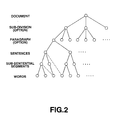
- Fig.2 illustrates an inner structure of a document.
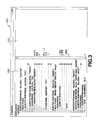
- Fig.3 illustrates the display contents of a display unit and shows a window in which the inner structure of a document is indicated by tags.
- Fig.4 is a flowchart for illustrating the sequence of processing operations in reading a document out.
- Fig.5 shows a typical Japanese document received or formulated and specifically shows a window demonstrating a document.
- Fig.6 shows a typical English document received or formulated and specifically shows a window demonstrating a document.
- Fig.7A shows a tag file which is a tagged Japanese document shown in Fig.5 and specifically shows its heading portion.
- Fig.7B shows a tag file which is the tagged Japanese document shown in Fig.5 and specifically shows its last paragraph.
- Fig.8 shows a tag file which is a tagged Japanese document shown in Fig.5
- Fig.9A shows a speech reading file generated from the tag file shown in Fig.7 and corresponds to extract of the heading portion shown in Fig.7A.
- Fig.9B shows a speech reading file generated from the tag file shown in Fig.7 and corresponds to extract of the last paragraph shown in Fig.7B.
- Fig.10 shows a speech reading file generated from the tag file shown in Fig.8.
- Fig.11 is a flowchart for illustrating the sequence of operations in generating the speech reading file.
- Fig.12 shows a user interface window.
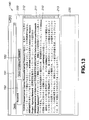
- Fig.13 shows a window demonstrating a document.
- Fig.14 shows a window demonstrating a document and particularly showing a summary text demonstrating display area enlarged as compared to a display area shown in Fig.13.
- Fig.15 is a flowchart for illustrating a sequence of processing operations in preparing a summary text.
- Fig.16 is a flowchart for illustrating a sequence of processing operations in executing active diffusion.
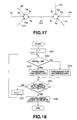
- Fig.17 illustrates an element linking structure for illustrating the processing for active diffusion.
- Fig.18 is a flowchart for illustrating a sequence of processing operations in performing link processing for active diffusion.
- Fig.19 shows a document and a window demonstrating its summary test.
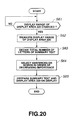
- Fig.20 is a flowchart for illustrating a sequence of processing operations in changing a demonstration area for a summary text to prepare a summary text newly.
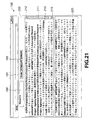
- Fig.21 shows a window representing a document and a window demonstrating its summary text and specifically shows a summary text demonstrated on the window shown in Fig.14.
- Fig.22 is a flowchart for illustrating a sequence of processing operations inpreparing a summary text to read out a document.
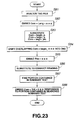
- Fig.23 is a flowchart for illustrating a sequence of processing operations in preparing a summary text to then read out a document.
- a document processing apparatus has the function of processing a given electronic document or a summary text prepared therefrom with a speech synthesis engine for speech synthesis for reading out.
- a speech synthesis engine for speech synthesis for reading out.
- the elements comprehended in the summary text are read out with an increased volume, whilst the paragraphs making up the electronic document or the summary text, or the start positions of the sentences and phrases, are read out with a pre-set pause period.
- the electronic document is simply termed a document.
- the document processing apparatus includes a main body portion 10, having a controller 11 and an interface 12, an input unit 20 for furnishing the information input by a user to the main body portion 10, a receiving unit 21 for receiving an external signal to supply the received signal to the main body portion 10, a communication unit 22 for performing communication between a server 24 and the main body portion 10, a speech output unit 30 for outputting the information input by the user to the main body portion 10 and a display unit 31 for demonstrating the information output from the main body portion 10.
- the document processing apparatus also includes a recording and/or reproducing unit 32 for recording and/or reproducing the information to or from a recording medium 33, and a hard disc drive HDD 34.
- the main body portion 10 includes a controller 11 and an interface 12 and forms a major portion of this document processing apparatus.
- the controller 11 includes a CPU (central processing unit) 13 for executing the processing in this document processing apparatus, a RAM (random access memory) 14, as a volatile memory, and a ROM ( read-only memory) 15 as a non-volatile memory.
- a CPU central processing unit
- RAM random access memory
- ROM read-only memory
- the CPU 13 manages control to execute a program in accordance with a program recorded on e.g., the ROM 15 or on the hard disc.
- a program recorded on e.g., the ROM 15 or on the hard disc In the RAM 14 are transiently recorded a program or data necessary for executing variable processing operations.
- the interface 12 is connected to the input unit 20, receiving unit 21, communication unit 22, display unit 31, recording and/or reproducing unit 32 and to the hard disc drive 34.
- the interface 12 operates under control of the controller 11 to adjust the data input/output timing in inputting data furnished from the input unit 20, receiving unit 21 and the communication unit 22, outputting data to the display unit 31 and inputting/outputting data to or from the recording and/or reproducing unit 32 to convert the data form.
- the input unit 20 is a portion receiving a user input to this document processing apparatus.
- This input unit 20 is formed by e.g., a keyboard or a mouse.
- the user employing this input unit 20 is able to input a key word by a keyboard or select and elements of a document demonstrated on the display unit 31 by a mouse.
- the elements denote elements making up the document and comprehends e.g., a document, a sentence and a word.
- the receiving unit 21 receives data transmitted from outside via e.g., a communication network.
- the receiving unit 21 receives plural documents, as electronic documents, and an electronic document processing program for processing these documents.
- the data received by the receiving unit 21 is supplied to the main body portion 10.
- the communication unit 22 is made up e.g., of a modem or a terminal adapter, and is connected over a telephone network to the Internet 23.
- the server 24 which holds data such as documents.
- the communication unit 22 is able to access the server 24 over the Internet 23 to receive data from the server 24.
- the data received by the communication unit 22 is sent to the main body portion 10.
- the speech output unit 30 is made up e.g., of a loudspeaker.
- the speech output unit 30 is fed over the Interface 12 with electrical speech signals obtained on speech synthesis by e.g., a speech synthesis engine or other variable speech signals.
- the speech output unit 30 outputs the speech converted from the input signal.
- the display unit 31 is fed over the interface 12 with text or picture information to display the input information.
- the display unit 31 is made up e.g., of a cathode ray tube (CRT) or a liquid crystal display (LCD) and demonstrates one or more windows on which to display the text or figures.
- CTR cathode ray tube
- LCD liquid crystal display
- the recording and/or reproducing unit 32 records and/or reproduces data to or from a removable recording medium 33, such as a floppy disc, an optical disc or a magneto-optical disc.
- the recording medium 33 has recorded therein an electronic processing program for processing documents and documents to be processed.
- the hard disc drive 34 records and/or reproduces data to or from a hard disc as a large-capacity magnetic recording medium.
- the document processing apparatus receives a desired document to demonstrate the received document on the display unit 31, substantially as follows:
- the controller 11 controls the communication unit 22 to access the server 24.
- the server 24 accordingly outputs data of a picture for retrieval to the communication unit 22 of the document processing apparatus overt the Internet 23.
- the CPU 13 outputs the data over the interface 12 on the display unit 31 for display thereon.
- a command for retrieval is transmitted from the communication unit 22 over the Internet 23 to the server 24 as a search engine.
- the server 24 executes the this retrieval command to transmit the result of retrieval to the communication unit 22.
- the controller 11 controls the communication unit 22 to receive the result of retrieval transmitted from the server 24 to demonstrate its portion on the display unit 31.
- variable information including the keyword TCP is transmitted from the server 24 so that the following document, for example, is demonstrated on the display unit 31: (which reads: "It is not too much to say that the history of TCP/IP ( Transmission Control Protocol/Internet protocol) is the history of the computer network of North America or even that of the world. The history of the TCP/IP cannot be discussed if APPANET is discounted.
- the APPANET an acronym of Advanced Research Project Agency Network, is a packet exchanging network for experimentation and research constructed under the sponsorship of the DARPA (Defence Advanced Research Project Agency) of the DOD (Department of Defense) of the Department of Defense.
- the APPANET was initiated from a network of an extremely small scale which has interconnected host computers of four universities and research laboratories on the west coast of North America in 1969.
- This document has its inner structure described by the tagged attribute information as later explained.
- the document processing in the document processing apparatus is by referencing tags added to the document. That is, in the present embodiment, not only the syntactic tags, representing a document structure, but also the semantic and pragmatic tags, which enable mechanical understanding of document contents among plural languages, are added to the document.
- tagging stating a tree-like inner document structure. That is, in the present embodiment, the inner structure by tagging, elements, such as document, sentences or vocabulary elements, normal links, referencing links or referenced links, are previously added as tags to the document.
- white circles ⁇ denote document elements, such as vocabulary, segments or sentences, with the lowermost circles ⁇ denoting vocabulary elements corresponding to the smallest level words in the document.
- the solid lines denote normal links indicating connection between document elements, such as words, phrases, clauses or sentences, whilst broken lines denote reference links indicating the modifying/modified relation by the referencing/referenced relation.
- the inner document structure is comprised of a document, subdivision, paragraph, sub-sentential segment, ..., vocabulary elements. Of these, the subdivision and the paragraphs are optional.
- the semantic and pragmatic tagging includes tagging pertinent to the syntactic structure representing the modifying/modified relation, such as an object indicated by a pronoun, and tagging stating the semantic information, such as meaning of equivocal words.
- Th tagging in the present embodiment is of the form of XML (eXtensible Markup Language) similar to the HTML (Hyper Text Markup Language).
- ⁇ sentence>, ⁇ noun>, ⁇ noun phrase>, ⁇ verb>, ⁇ verb phrase>, ⁇ adjective verb> and ⁇ adjective verb phrase> denote a syntactic structure of a sentence, such as prepositional phrase, postpositional phrase/adjective phrase, or adjective phrase/adjective verb phrase, including the sentence, noun, noun phrase, verb, verb phrase and adjective, respectively.
- the tag is placed directly before the leading end of the element and directly after the end of the element.
- the tag placed directly below the element denotes the trailing end of the element by a symbol "/".
- the element means syntactic structural element, that is a phrase, a clause or a sentence.
- word sense "time0” denotes the zeroth meaning of plural meanings, that is plural word senses, proper to the word "time”. Specifically, the "time”, which may be a noun or a verb, it is indicated that, here, it is noun.
- word “orange” has the meaning of at least the name or color of a plant or a fruit, which can be differentiated from one another by the meaning.
- the syntactic structure may be demonstrated on a window 101 of the display unit 31.
- the vocabulary elements are displayed in its right half 103, whilst the inner structure of the sentence is demonstrated in its left half 102.
- the syntactic structure may be demonstrated not only in the document expressed in Japanese, but also in documents expressed in optional other languages, inclusive of English.
- the grammatical functions such as subject, object or indirect object, subjective roles, such as an actor, an actee or benefiting party and the modifying relation, such as reason or result, are stated by relational attributes.
- tags of e.g., place names, personal names or names of organizations are stated by tags of e.g., place names, personal names or names of organizations. These tagged words, such as place names, personal names or names of organizations, are proper nouns.
- the document processing apparatus is able to receive such tagged document. If a speech read-out program of the electronic document processing program, recorded on the ROM 15 or on the hard disc, is booted by the CPU 13, the document processing apparatus reads the document out through a series of steps shown in Fig.4. Here, respective simplified steps are first explained, and respective steps areexplained in detail, taking a typical document as examples.
- the document processing apparatus receives a tagged document at step S1 in Fig.4. Meanwhile, it is assumed that tags necessary for speech synthesis have been added to this document.
- the document processing apparatus is also able to receive a tagged document to add tags necessary to perform speech synthesis to the document to prepare a document.
- the document processing apparatus is also able to receive a non-tagged document to add tags inclusive of those necessary to effect speech synthesis to the document to prepare a tagged file.
- the tagged document, thus received or prepared is termed a tagged file.
- the document processing apparatus then generates, at step S2, a speech read-out file (read-out speech data) based on the tagged file, under control by the CPU 13.
- the read-out file is generated by deriving the attribute information for read-out from the tag in the tagged file, and by embedding the attribute information, as will be explained subsequently.
- the document processing apparatus then at step S3 performs processing suited to the speech synthesis engine, using the speech read-out file, under control by the CPU 13.
- the speech synthesis engine may be realized by hardware, or constructed by software. If the speech synthesis engine is to be realized by software, the corresponding application program is stored from the outset in the ROM 15 or on the hard disc of the document processing apparatus.
- the document processing apparatus then performs the processing in keeping with operations performed by the user through a user interface which will be explained subsequently.
- the document processing apparatus is able to read out the given document on speech synthesis.
- the respective steps will now be explained in detail.
- the document processing apparatus accesses the server 24 shown in Fig.1, as discussed above, and receives a document as a result obtained on retrieval based on e.g., a keyword.
- the document processing apparatus receives the tagged document and newly adds tags required for speech synthesis to formulate a document.
- the document processing apparatus is also able to receive a non-tagged document and adds tags to the document including tags necessary for speech synthesis to prepare a tagged file.
- the cancer is not so dreadful, because mere dissection leads to complete curing.
- the importance of suppressing the transposition lies the importance of suppressing the transposition.
- the cancer cells dissolve the protein between the cells to find their way to intrude into the blood vessel or lymphatic vessel. It has recently discovered that the cancer cells perform complex movements of searching for new abodes as they are circulated to intrude into the so-found-out abodes".
- the document processing apparatus demonstrates the document in the window 110 in the display unit 31.
- the window 110 is divided into a display area 120, in which are demonstrated the document name display unit 111, a key word input unit 112, into which the keyword is input, a summary preparation execution button 113, as an executing button for creating a summary text of the document, as later explained, and a read-out executing button 114 for executing reading out, and a document display area 130.
- a scroll bar 131 On the right end of the document display area 130 are provided a scroll bar 131 and buttons 132, 133 for vertically moving the scroll bar 131.
- the scroll bar 131 If the user directly moves the scroll bar 131 in the up-and-down direction, using the mouse of e.g., the input unit 20, or thrusts the buttons 132, 133 to move the scroll bar 131 vertically, the display contents on the document display area 130 can be scrolled vertically.
- the document processing apparatus On receipt of this English document, the document processing apparatus displays the document in the window 140 demonstrated on the display unit 31. Similarly to the window 110, the window 140 is divided into a display area 150 for displaying a document name display portion 141, for demonstrating the document name, a key word input portion 142 for inputting the key word, a summary text creating button 143, as an execution button for preparing the summary text of the document, and a read-out execution button 144, as an execution button for reading out, and a document display area 160. On the right end of the document display area 160 are provided a scroll bar 161 and buttons 162, 163 for vertically moving the scroll bar 161.
- the display contents on the document display area 160 can be scrolled vertically.
- Fig.7A shows the heading portion which reads: "[Aging Wonderfully] /8 is cancer transposition suppressible?]” extracted from the Japanese document.
- the tagged file shown in Fig.7B shows the lastparagraph of the document which reads: "This transposition is not produced simply due to multiplication of cancer cells.
- the cancer cells dissolve the protein between the cells to find their way to intrude into the blood vessel or lymphatic vessel. It has recently discovered that the cancer cells perform complex movements of searching for new abodes as they are circulated to intrude into the so-found-out abodes", as extracted from the same document, with the remaining paragraphs being omitted. It is noted that the real tagged file is constructed as one file from the heading portion to the last paragraph.
- Fig.7A the ⁇ heading> indicates that this portion is the heading.
- Fig.7B a tag indicating that the relational attribute is "condition” or "means” is added.
- Fig.7B shows an example of a tag necessary to effect the above-mentioned speech synthesis.
- tags necessary for speech synthesis there is such tag which is added when the information indicating the pronunciation (Japanese hiragana letters to indicate the pronunciation) is added to the original document, as in the casse of " (protein, uttered as “tanpaku”) ( (uttered as “tanpaku”)) ".
- the information that it has a special function for this tag, there is also shown the information that it has a special function.
- the tag indicating that the sentence is a complement sentence or that plural sentences are formed in succession to form a sole sentence.
- a citation is included in a document, there is added a tag indicating that the sentence is a citation, although such tag is not shown. Moreover, if an interrogative sentence is included in a document, a tag, not shown, indicating that the sentence is an interrogative sentence, is added to the tagged file.
- the document processing apparatus receives or prepares the document, having added thereto a tag necessary for speech synthesis, at step S1 in Fig.4.
- the generation of the speech read-out file at step S2 is explained.
- the document processing apparatus derives the attribute information for reading out, from the tags of the tagged file, and embeds the attribute information, to prepare the speech read-out file.
- the document processing apparatus finds out tags indicating the beginning locations of the paragraphs, sentences and phrases of the document, and embeds the attribute information for reading out in keeping with these tags. If the summary text of the document has been prepared, as later explained, it is also possible for the document processing apparatus to find out the beginning location of the summary text from the document to embed the attribute information indicating enhancing the sound volume in reading out the document to emphasize that the portion being read is the summary text.
- the document processing apparatus From the tagged file, shown in Fig.7 or 8, the document processing apparatus generates a speech read-out file. Meanwhile, the speech read-out file, shown in Fig.9A, corresponds to the extract of the heading shown in Fig.7A, while the speech read-out file shown in Fig.9B corresponds to the extract of the last paragraph shown in Fig.7B.
- the actual speech read-out file is constructed as a sole file from the header portion to the last paragraph.
- This attribute information denotes the language with which a document is formed.
- this attribute information may be referenced to select the proper speech synthesis engine conforming to the language from one document to another.
- the document processing apparatus detects at least two beginning positions of the paragraphs, sentences and the phrases.
- These attribute information indicate that pause periods of 500 msec, 100 msec and 50 msec are to be provided in reading out the document. That is, the document processing apparatus reads the document out by the speech synthesis engine by providing pause periods of 500 msec, 100 msec and 50 msec at the beginning portions of the paragraphs, sentences and phrases of the document, respectively.
- the document processing apparatus reads out the document portion with a pause period of 650 msec corresponding to the sum of the respective pause periods for the paragraph, sentence and the phrase of the document .
- a pause period of 650 msec corresponding to the sum of the respective pause periods for the paragraph, sentence and the phrase of the document .
- the attribute information for intoning the terminating portion of the sentence based on the tag indicating that the sentence is an interrogative sentence may be embedded in the speech read-out file.
- the attribute information for converting the bookish style by so-called “ ('is')” into more colloquial style by " (again 'is' in English context)" as necessary may be embedded in the speech read-out file.
- the document processing apparatus generates the above-described speech read- out file through the sequence of steps shown in Fig.11.
- the document processing apparatus at step S11 analyzes the tagged file, received or formulated, as shown in Fig.11.
- the document processing apparatus checks the language with which the document is formulated, while searching the paragraphs in the document, beginning portions of the sentence and the phrases, and the reading attribute information, based on tags.
- the document processing apparatus performs the processing shown in Fig.1 to generate the speech read-out file automatically.
- the document processing apparatus causes the speech read-out file so generated in the RAM 14.
- the processing for employing the speech read-out file at step S3 in Fig.4 is explained.
- the document processing apparatus uses the speech read-out file to perform processing suited to the speech synthesis engine pre-stored in the ROM 15 or in the hard disc under control by the CPU 13.
- the speech synthesis engine has identifiers added in keeping with the language or with the distinction between male and female speech.
- the corresponding information is recorded as e.g., initial setting file on a hard disc.
- the document processing apparatus references the initial setting file to select the speech synthesis engine of the identifier associated with the language.
- the document processing apparatus finds the sound volume on conversion of the percent information into the absolute value information based on this attribute information.
- the document processing apparatus converts the speech read-out file into a form which permits the speech synthesis engine to read out the speech read-out file.
- the document processing apparatus acts on e.g., a mouse of the input unit 20 to thrust the read-out executing button 114 or read-out execution button 144 shown in Figs.5 and 6 to boot the speech synthesis engine.
- the document processing apparatus causes a user interface window 170 shown in Fig.12 to be demonstrated on the display unit 31.
- the user interface window 170 includes a replay button 171 for reading out the document, a stop button 172 for stopping the reading and a pause button 173 for transiently stopping the reading, as shown in Fig.12.
- the user interface window 170 also includes a button for locating including rewind and fast feed.
- the user interface window 170 includes a locating button 174, a rewind button 175 and a fast feed button 176 for locate, rewind and fast feed on the sentence basis, a locating button 177, a rewind button 178 and a fast feed button 179 for locate, rewind and fast feed on the paragraph basis, and, a locating button 180, a rewind button 181 and a fast feed button 182 for locate, rewind and fast feed on the phrase basis.
- the user interface window 170 also includes selection switches 183, 184 for selecting whether the object to be read is to be the entire text or a summary text prepared as will be explained subsequently.
- the user interface window 170 may include a button for increasing or decreasing the sound volume, a button for increasing or decreasing the read out rate, a button for changing the voice of the male/female speech, and so on.
- the document processing apparatus performs the operation of reading out by the speech synthesis engine by the user acting on the various buttons/switches by thrusting/selecting e.g., the mouse of the input unit 20. For example, if the user thrusts the replay button 171 to start reading the document out, whereas, if the user thrusts the locating button 174 during reading, the document processing apparatus jumps to the start position of the sentence currently read out to re-start reading. By the marking made st step S3 in Fig.4, the document processing apparatus is able to make mark-based jump when reading out.
- the document processing apparatus makes a jump based on the paragraph or phrase basis at the time of reading out the document to respond to the request such as the request for repeated replay of the document portion desired by the user.
- the document processing apparatus causes the speech synthesis engine to read out the document by the user performing the processing employing the user interface at step S4.
- the information thus read out is output from the speech output unit 30.
- the document processing apparatus is able to read the desireddocument by the speech synthesis engine without extraneous feeling.
- the user acts on the input unit 20, as the document is displayed on the display unit 31, to command execution of the automatic summary creating mode. That is, the document processing apparatus drives the hard disc drive 34, under control by the CPU 13, to boot the automatic summary creating mode of the electronic document processing program stored in the hard disc.
- the document processing apparatus controls the display unit 31 by the CPU 13 to demonstrate an initial picture for the automatic document processing program shown in Fig.13.
- the window 190 demonstrated on the display unit 31, is divided into a display area 200 for displaying a document name display portion 191, for demonstrating the document name, a key word input portion 192 for inputting a key word, and a summary text creating button 193, as an execution button for preparing the summary text of the document, a document display area 210 and a document summary text display area 220.
- the document name display portion 191 of the display area 200 is demonstrated the name etc., of the document demonstrated on the display area 210.
- the key word input portion 192 is input a keyword for preparing the summary text of the document using e.g., a key word for formulating the document.
- the summary text creating button 193 is a button for starting the processing of formulating the summary of the document demonstrated on the display area 210 on pushing e.g., a mouse of the input unit 20.
- the display area 210 In the display area 210 is demonstrated the document. On the right end of the document display area 210 are provided a scroll bar 211 and buttons 212, 213 for vertically moving the scroll bar 211. If the user directly moves the scroll bar 211 in the up-and-down direction, using the mouse of e.g., the input unit 20, or thrusts the buttons 212, 213 to move the scroll bar 211 vertically, the display contents on the document display area 210 can be scrolled vertically. The user is also able to act on the input unit 20 to select a portion of the document demonstrated on the display area 210 to formulate a summary or a summary of the entire text.
- the summary text In the display area 220 is demonstrated the summary text. Since the summary text has as yet not been formulated, nothing is demonstrated in Fig.13 on the display area 220.
- the user may act on the input unit 20 to change the display area (size) of the display area 220. Specifically, the user may enlarge the display area (size) of the display area 220, as shown for example in Fig.14.
- the document processing apparatus executes the processing shown in Fig.15 to start the preparation of the summary text, under control by the CPU 13.
- the processing for creating the summary text from the document is executed on the basis of the tagging pertinent to the inner document structure.
- the size of the display area 220 of the window 190 can be changed, as shown in Fig.14. If, after the window 190 is newly drawn on the display unit 31, under control by the CPU 13, or the size of the display area 220 is changed, the summary text creating button 193 is thrust, the document processing apparatus executes the processing of preparing the summary text, from the document at least partially demonstrated on the display area 210 of the window 190, so that the summary text will fit in the display area 220.
- the document processing apparatus performs, at step S21, the processing termed active diffusion, under control by the CPU 13.
- the summary text of the document is prepared by adopting a center active value, obtained by the active diffusion, as the degree of criticality. That is, in the document tagged with respect to its inner structure, each element may be added by this active diffusion with a center active value corresponding to tagging pertinent to its inner structure.
- the active diffusion is the processing of adding the maximum center active value even to elements pertinent to elements having high center active values.
- the center active value is equal between an element represented in anaphora (co-reference) and its antecedent, with each center active value converging to the same value otherwise. Since the center active value is determined responsive to the tagging pertinent to the inner document structure, the center active value can be exploited for document analyses which takes the inner document structure into account.
- the document processing apparatus executes active diffusion by a sequence of steps shown in Fig.16.
- the document processing apparatus first initializes each element, at step S41, under control by the CPU 13, as shown in Fig.16.
- the document processing apparatus allocates an initial center active value to each of the totality of elements excluding the vocabulary elements and to each of the vocabulary elements. For example, the document processing apparatus allocates "1" and "0", as the initial center active values, to each of the totality of elements excluding the vocabulary elements and to each of the vocabulary elements.
- the document processing apparatus is also able to allocate a non-uniform value as the initial center active value of each element at the outset to get the offset in the initial value reflected in the center active value obtained on active diffusion. For example, in the document processing apparatus, a higher initial center active value may be set for elements in which the user is interested to achieve the center active value which reflects the user's interest.
- a terminal point active value at terminal points of the link interconnecting the elements is set to "0".
- the document processing apparatus causes the initial terminal point active value, thus added, to be stored in the RAM 14.
- a typical element-to-element connecting structure is shown in Fig.17, in which an element E i and an element E j as part of the structure of the element and the link making up a document.
- the element E i and the element E i having center active values of e i and e j , respectively, are interconnected by a link L ij .
- the terminal points of the link L ij connecting to the element E i and to the element E i are T ij and T ji , respectively.
- the element E i is connected to elements E k , E l and Em, not shown, through links L ik , L il and L im , respectively, in addition of to the element E j connected over the link L ij .
- the element E j is connected to elements E p , E q and Er, not shown, through links L ip , L jq and L jr , respectively, in addition of to the element E i connected over the link L
- the document processing apparatus then at step S42 of Fig.16 initializes a counter adapted for counting the element E i of the document, under control by the CPU 13. That is, the document processing apparatus sets the count value i of the element counting counter to "1". So, the counter references the first element E l .
- the document processing apparatus at step S43 then executes the link processing of newly counting the center active value of the elements referenced by the counter, under control by the CPU 13. This link processing will be explained later in detail.
- the document processing apparatus checks, under control by the CPU 13, whether or not new center active values of the totality of elements in the document have been computed.
- the document processing apparatus transfers to the processing at step S45. If the document processing apparatus has verified that the new center active values of the totality of elements in the document have not been computed, the document processing apparatus transfers to the processing at step S47.
- the document processing apparatus verifies, under control by the CPU 13, whether or not the count value i of the counter has reached the total number of the elements included in the document. If the document processing apparatus has verified that the count value i of the counter has reached the total number of the elements included in the document, the document processing apparatus proceeds to step S45, on the assumption that the totality of the elements have been computed. If conversely the document processing apparatus has verified that the count value i of thecounter has not reached the total number of the elements included in the document, the document processing apparatus proceeds to step S47, on the assumption that the totality of the elements have not been computed.
- the document processing apparatus If the document processing apparatus has verified that the count value i of the counter has not reached the total number of the elements making up the document, the document processing apparatus at step S47 causes the count value i of the counter to be incremented by "1" to set the count value of the counter to "i+1". The counter then references the i+1st element, that is the next element. The document processing apparatus then proceeds to the processing at step S43 where the calculation of terminal point active value and the next following sequence of operations are performed on the next i+1st element.
- the document processing apparatus determines whether the count value i of the counter has reached the total number of the elements making up the document. If the document processing apparatus has verified that the count value i of the counter has reached the total number of the elements making up the document, the document processing apparatus at step S45 computes an average value of the variants of the center active values of the totality of the elements included in the document, that is an average value of the variants of the newly calculated center active values with respect to the original center active values.
- the document processing apparatus reads out the original center active values memorized in the RAM 14 and the newly calculated center active values with respect to the totality of the elements making up the document, under control by the CPU 13.
- the document processing apparatus divides the sum of the variants of the newly calculated center active values with respect to the original center active values by the total number of the elements contained in the document to find an average value of the variants of the center active values of the totality of the elements.
- the document processing apparatus also causes the co-calculated average value of the variants of the center active values of the totality of the elements to be stored im e.g., the RAM 14.
- the document processing apparatus at step S46 verifies, under control by the CPU 13, whether or not the average value of the variants of the center active values of the totality of the elements, calculated at step S45, is within a pre-set threshold value. On the other hand, if the document processing apparatus finds that the variants are not within the threshold value, the document processing apparatus transfers its processing to step S42 to set the count value i of the counter to "1" to execute again the sequence of steps of calculating the center active value of the elements of the document. In the document processing apparatus, the variants are decreased gradually each time the loop from step S42 to step S46 is repeated.
- the document processing apparatus is able to execute the active diffusion in the manner described above.
- the link processing performed at step S43 to carry out this active diffusion is now explained with reference to Fig.18. Meanwhile, although the flowchart of Fig.18 shows the processing on the sole element E i , this processing is executed on the totality of the elements.
- the document processing apparatus initializes the counter adapted for counting the link having its one end connected to an element E i constituting the document, as shown in Fig.18. That is, the document processing apparatus sets the count value j of the link counting counter to "1". This counter references a first link L ij connected to the element E i .
- the document processing apparatus then references at step S52 a tag of the relational attribute on the link L ij interconnecting the elements E i and E j , under control by the CPU 13, to verify whether or not the link L ij is the normal link.
- the document processing apparatus verifies which one of the normal link showing the relation between the vocabulary element associated with a word, a sentence element associated with the sentence and a paragraph element associated with the paragraph and the reference link indicating the modifying/modified relation by the referencing/referenced relation is the link L ij . If the document processing apparatus finds that the link L ij is the normal link, the document processing apparatus transfers its processing to step S53. If the document processing apparatus finds that the link L ij is the reference link, it transfers its processing to step S54.
- the document processing apparatus verifies that the link L ij is the normal link, it performs at step S53 the processing of calculating a new terminal point active value of a terminal point T ij of the element E connected to the normal link L ij .
- the link L ij has been clarified to be a normal link by the verification at step S52.
- the new terminal point active value t ij of the terminal point T ij of the element E i may be found by summing terminal point active values t jp t jq and t jr of the totality of the terminal points T jp , T jq and T jr connected to the links other than the link L ij , among the terminal point active values of the element E j , to the center active value e j of the element E j connected to the element E by the link L ij , and by dividing the resulting sum by the total number of the elements contained in the document.
- the document processing apparatus reads out the terminal point active values and the center active values as required for e.g., the RAM 14, and calculates a new terminal point active value of the terminal point connected to the normal link on the read-out terminal point and center active values. The document processing apparatus then causes the new terminal point active values, thus calculated, to be stored e.g., in the RAM 14.
- the document processing apparatus finds that the link L j is not the normal link, the document processing apparatus at step S54 performs the processing of calculating the terminal point active value of the terminal point T ij connected to the reference link of the element E i .
- the link L ij has been clarified to be a reference link by the verification at step S52.
- the terminal point active value t ij of the terminal point L ij of the element E i connected to the reference link L ij may be found by summing terminal point active values t jp t jq and t jr of the totality of the terminal points T jp , T jq and t ij connected to the links other than the link L ij , among the terminal point active values of the element E j , to the center active value e j of the element E j connected to the element E i by the link L ij , and by dividing the resulting sum by the total number of the elements contained in the document.
- the document processing apparatus reads out the terminal point active values and the center active values as required for e.g., the RAM 14, and calculates a terminal point active value and a center active value from the terminal point active value and the center active value stored in the RAM 14.
- the document processing apparatus calculates a new terminal point active value and a center active value, connected to the reference link as discussed above, using the read-out terminal point active value and center active value thus read out.
- the document processing apparatus then causes the new terminal point active values, thus calculated, to be stored e.g., in the RAM 14.
- the processing of the normal link at step S53 and the processing of the reference link at step S54 are executed on the totality of links L ij connected to the element E i referenced by the count value i, as shown by the loop proceeding from step S52 to step S55 and reverting through step S57 to step S52. Meanwhile, the count value j counting the link connected to the element E i is incremented at step S57.
- the document processing apparatus at step S55 verifies, under control by the CPU 13, whether or not the terminal point active values have been calculated for the totality of links connected to the element E i . If the document processing apparatus has verified that the terminal point active values have been calculated on the totality of links, it transfers the processing to step S56. If the document processing apparatus has verified that the terminal point active values have not been calculated on the totality of links, it transfers the processing to step S57.
- the document processing apparatus executes updating of the center active values e i of the element E i , under control by the CPU 13.
- the prime symbol ""' means a new value.
- the new center active value may be found by summing the original center active value of the element to the sum total of the new terminal point active value of the terminal point of the element.
- the document processing apparatus reads out necessary terminal point active value from the terminal point active values and the center active values stored e.g., in the RAM 14.
- the document processing apparatus executes the above-described calculations to find the center active value e j of the element E i , and causes the so-calculated new center active value e j to be stored in e.g., the RAM 14.
- the document processing apparatus calculates the new center active value for each element in the document, and executes active diffusion shown at step S21 in Fig.15.
- the document processing apparatus sets the size of the display area 220 of the window 190 demonstrated on the display unit 31 shown in Fig.13, that is the maximum number of characters that can be demonstrated on the display area 220, to W s , under control by the CPU 13.
- the document processing apparatus causes the maximum number of characters W s that can be demonstrated on the display area 220, and the initial value So of the summary S, thus set, to be memorized e.g., in the RAM 14.
- the document processing apparatus causes the so-set count value i to be stored e.g., in the RAM 14.
- the document processing apparatus then extracts at step S24 the skeleton of a sentence having the i'th highest average center active value from the sentence, the summary text of which is to be prepared, for the count value i of the counter, under control by the CPU 13.
- the average center active value is an average value of the center active values of the respective elements making up a sentence.
- the document processing apparatus reads out the summary text S i-l stored in the RAM 14 and sums the letter queue of the skeleton of the extracted sentence to the summary S i-l to give a summary text S i .
- the document processing apparatus causes the resulting summary text S i to be stored e.g., in the RAM 14. Simultaneously the document processing apparatus formulates a list l i . of the elements not contained in the sentence skeleton, in the order of the decreasing center active values, to cause the list l i to be stored e.g., in the RAM 14.
- the document processing apparatus selects the sentences in the order of the decreasing average center active values, using the results of the active diffusion, under control by the CPU 13, to extract the skeleton of the selected sentence.
- the sentence skeleton is constituted by indispensable elements extracted from the sentence. What can become the indispensable elements are elements having the relational attribute of a head of an element, a subject, an indirect object, a possessor, a cause, a condition or comparison, and elements directly contained in a coordinate structure in the relevant element retained to be the coordinate structure is an indispensable element.
- the document processing apparatus connects the indispensable elements to form a sentence skeleton to add it to the summary text.
- the document processing apparatus verifies, at step S25, whether or not the length of a summary S i , that is the number of letters, is more than the maximum number of letters W s in the display area 220 of the window 190, under control by the CPU 13.
- the document processing apparatus verifies that the number of letters of the summary S i is not larger than the maximum number of letters W s , it transfers to processing at step S26 to compare the center active value of the sentence having the (i+1)summary text largest average center active value to the center active value of the element having the largest center active value among the elements of the list l i . prepared at step S24, under control by the CPU 13. If the document processing apparatus has verified that the center active value of the sentence having the (i+1)summary text largest center active value is larger than the center active value of the element having the largest center active value among the elements of the list l i , it transfers to processing at step S28.
- the document processing apparatus If conversely the document processing apparatus has verified that the center active value of the sentence having the (i+1)summary text largest center active value is larger than the center active value of the element having the largest center active value among the elements of the list l i , it transfers to processing at step S27.
- the document processing apparatus If the document processing apparatus has verified that the center active value of the sentence having the (i+1)summary text largest center active value is not larger than the center active value of the element having the largest center active value among the elements of the list l i , it increments the count value i of the counter by "1" at step S27, under control by the CPU 13, to then revert to the processing of step S24.
- the document processing apparatus If the document processing apparatus has verified that the center active value of the sentence having the (i+1)summary text largest center active value is larger than the center active value of the element having the largest center active value among the elements of the list l i , it sums the element e with the largest center active value mong the elements of the list l i to the summary S i to generate SS i while deleting the element e from the list l i .
- the document processing apparatus causes the summary SS l thus generated to be memorized in e.g., the RAM 14.
- the document processing apparatus then verifies, at step S29, whether or not the number of letters of the summary SS i is larger than the maximum number of letters Ws of the display area 220 of the window 190, under control by the CPU 13. If the document processing apparatus has verified that the number of letters of the summary SS i is not larger than the maximum number of letters W s of the display area 220 of the window 190, the document processing apparatus repeats the processing as from step S26. If conversely the document processing apparatus has verified that the number of letters of the summary SS i is larger than the maximum number of letters W s , the document processing apparatus sets the summary S i at step S31 as being the ultimate summary text, under control by the CPU 13, and displays the summary S i to finish the sequence of operations. In this manner, the document processing apparatus generates the summary text so that its number of letters is not larger than the maximum number of letters W s .
- the document processing apparatus formulates a summary text by summarizing the tagged document. If the document shown in Fig.13 is summarized, the document processing apparatus forms the summary text shown for example in Fig.19 to display the summary text in the display area 220 of the display range.
- the document processing apparatus forms the summary text: " which reads: "The history of the TCP/IP cannot be discussed if APPANET is discounted.
- the APPANET was initiated from a network of an extremely small scale which interconnected host computers of four universities and research laboratories on the west coast of North America in 1969. At the time, a main-frame general-purpose computer was developed in 1964. In light of this historical background, such project, which predicted the citizenship of future computer communication, may be said to be truly American", to demonstrate the summary text in the display area 220.
- the user reading this summary text instead of the entire document is able to comprehend the gist of the document to verify whether or not the sentence is the desired information.
- the document processing apparatus is able to enlarge the display range of the display area 220 of the window 190 demonstrated on the display unit 31. If, with the formulated summary text displayed on the display area 220, the display range of the display area 220 is changed, the information volume of the summary text can be changed responsive to the display range. In such case, the document processing apparatus performs the processing shown in Fig.20.
- the document processing apparatus is responsive to actuation by the user on the input unit 20, at step S61, under control by the CPU 13, to wait until the display range of the display area 220 of the window 190 demonstrated on the display unit 31 is changed.
- step S62 ro measure the display range of the display area 220 under control by the CPU 13.
- steps S63 to S65 is similar to that performed at step S22 et seq., such that the processing is finished when the summary text corresponding to the display range of the display area 220 is created.
- the document processing apparatus at step S63 determines the total number of letters of the summary text demonstrated on the display area 220, based on the measured result of the display area 220 and on the previously specified letter size.
- the document processing apparatus at step S64 selects sentences or words from the RAM 14, under control by the CPU 13, in the order of the decreasing degree of importance, so that the number of letters of the created summary as determined at step S63 will not be exceeded.
- the document processing apparatus at step S65 joins the sentences or paragraphs selected at step S64 to prepare a summary text which is demonstrated on the display area 220 of the display unit 31.
- the document processing apparatus performing the above processing, is able to newly formulate the summary text conforming to the display range of the display area 220. For example, if the user enlarges the display range of the display area 220 by dragging the mouse of the input unit 20, the document processing apparatus newly forms a more detailed summary text to demonstrate the new summary text in the display area 220 of the window 190, as shown in Fig.21.
- the document processing apparatus forms the following summary text: which reads: "The history of the TCP/IP cannot be discussed if APPANET is discounted.
- the APPANET is a packet exchanging network for experimentation and research constructed under the sponsorship of the DARPA (Defence Advanced Research Project Agency) of the DOD (Department of Defense) of the Department of Defense.
- the APPANET was initiated from a network of an extremely small scale which interconnected host computers of four universities and research laboratories on the west coast of North America in 1969. Historically, the ENIAC, as the first computer in the world, was developed in 1945 in Pennsylvania University.
- the user may enlarge the display range of the display area 220 to reference a more detailed summary text having a larger information volume.
- the summary text of a document is to be formulated as described above, and the signal recording pattern of the electronic document processing program, recorded on the ROM 15 or the hard disc, is booted by the CPU 13, the document or the summary text can be read out by carrying out the sequence of steps shown in Fig.22.
- the document shown in Fig.6 is taken as an example for explanation.
- the document processing apparatus receives a tagged document at step S71, as shown in Fig.22. Meanwhile, the document is added with tags necessary for speech synthesis and is constructed as a tagged file shown in Fig.8.
- the document processing apparatus is also able to receive the tagged document and adds new tags necessary for speech synthesis to form a document.
- the document processing apparatus is also able to receive a non-tagged document to add tags inclusive of those necessary for speech synthesis to the received document to prepare a tagged file. This process corresponds to step S1 in Fig.4.
- the document processing apparatus then prepares at step S72 a summary text of the document, by a method as described above, under control by the CPU 13. Since the document, the summary text of which has now been prepared, is tagged as shown at step S71, the tags corresponding to the document are similarly added to the prepared summary text.
- the document processing apparatus then generates at step S73 a speech read-out file for the total contents of the document, based on the tagged file, under control by the CPU 13.
- This speech read-out file is generated by deriving the attribute information for reading out the document from the tags included in the tagged file to embed this attribute information.
- the document processing apparatus generates the speech read-out file by carrying out the sequence of steps shown in Fig.23.
- the document processing apparatus at step S81 analyzes the tagged file, received or formed, by the CPU 13. At this time, the document processing apparatus checks the language with which the document is formed and finds out the beginning positions of the paragraphs, sentences and phrases of the document and the reading attribute information based on the tags.
- the document processing apparatus substitutes correct reading by the CPU 13 based on the reading attribute information.
- the document processing apparatus finds out at step S87 the portion included in the summary text by the CPU 13.
- the sound volume need not be increased by 80% from the default sound volume, but may he suitably modified:
- the document portion included in the summary text may be intoned in reading it out to instigate the user attention.
- the document processing apparatus performs the processing shown in Fig.23 at step S73 in Fig.22 to generate the speech read-out file automatically.
- the document processing apparatus causes the generated speech read-out file to be stored in the RAM 14. Meanwhile, this process corresponds to step S2 in Fig.4.
- step S74 in Fig.22 the document processing apparatus performs processing suited to the speech synthesis engine pre-stored in the ROM 15 or in the hard disc, under control by the CPU 13. This process corresponds to step S3 in Fig.4.
- the document processing apparatus at step S75 performs the processing conforming to the user operation employing the above-mentioned user interface. This process corresponds to the step S4 in Fig.4.
- the summary text prepared at step S72 may be selected as an object to be read out.
- the document processing apparatus may start to read the summary text out if the user pushes the replay button 171 by the user acting on e.g., the mouse of the input unit 20. Also, if the user selects the selection switch 183 using the mouse of the input unit 20 to press the replay button 171, the document processing apparatus starts reading the document out, as described above.
- the document processing apparatus may read out the document not only by increasing the sound volume of the voice for the document portion included in the summary text but also by emphasizing the accents as necessary or by reading out the document portion included in the summary text with a voice having different characteristics from those of the voice reading out the document portion not included in the summary text.
- the document processing apparatus can read out a given text or a summary text formulated.
- the document processing apparatus in reading out a given document is able to change the manner of reading out the document depending on the formulated summary text such as by intoning the document portion included in the formulated summary text.
- the document processing apparatus is able to generate the speech read-out file automatically from a given document to read out the document or the summary text prepared therefrom using a proper speech synthesis engine. At this time, the document processing apparatus is able to increase the sound volume of the document portion included in the summary text prepared to intone the document portion to instigate user's attention. Also, the document processing apparatus discriminates the beginning portions of the paragraphs, sentences and phrases, and provides respective different pause periods at respective beginning portions. Thus, natural reading without extraneous feeling can be achieved.
- the present invention is not limited to the above-described embodiment.
- the tagging to the document or the speech read-out file is, of course, not limited to that described above.
- the present invention is not limited to this embodiment.
- the present invention may be applied to a case in which the document is transmitted over a satellite, while it may also be applied to a case in which the document is read out from a recording medium 33 in a recording and/or reproducing unit 32 or in which the document is recorded from the outset in the ROM 15.
- the speech read-out file is prepared from the tagged file received or formulated, it is also possible to directly read out the tagged file without preparing such speech read-out file.
- the document processing apparatus may discriminate the paragraphs, sentences and phrases, after receiving or preparing the tagged file, using the speech synthesis engine, based on tags appended to the tagged file for indicating the paragraphs, sentences and phrases, to read out the file with a pre-set pause period at the beginning portions of these paragraphs, sentences and phrases.
- the tagged file is added with the attribute information for inhibiting the reading out or indicating the pronunciation. So, the document processing apparatus reads the tagged file out as it removes the passages for which the reading out is inhibited, and as it substitutes the correct reading or pronunciation.
- the document processing apparatus is also able to execute locating, fast feed and rewind in reading out the file from one paragraph, sentence or phrase to another, based on tags indicating the paragraph, sentence or phrase, by the user acting on the above-mentioned user interface during reading out.
- the document processing apparatus is able to directly read the document out based on the tagged file, without generating a speech read-out file.
- a disc-shaped recording medium or a tape-shaped recording medium having the above-described electronic document processing program recorded therein, may be furnished as the recording medium 33.
- the mouse of the input unit 20 is shown as an example as a device for acting on variable windows demonstrated on the display unit 31, the present invention is also not to be limited thereto since a tablet or a write pen may be used as this sort of the device.
- the electronic document processing apparatus for processing an electronic document, described above, includes document inputting means fed with an electronic document, and speech read-out data generating means for generating speech read-out data for reading out by a speech synthesizer based on an electronic document.
- the electronic document processing apparatus is able to generate speech read-out data based on the electronic document to read out an optional electronic document by speech synthesis to high precision without extraneous feeling.
- the electronic document processing method includes a document inputting step of being fed with an electronic document and a speech read-out data generating step of generating speech read-out data for reading out on the speech synthesizer based on the electronic document.
- the electronic document processing method is able to generate speech read-out data based on the electronic document to read out an optional electronic document by speech synthesis to high precision without extraneous feeling.
- the recording medium having an electronic document processing program recorded thereon, is a recording medium having recorded thereon a computer-controllable electronic document processing program for processing the electronic document.
- the program includes a document inputting step of being fed with an electronic document and a speech read-out data generating step of generating speech read-out data for reading out on the speech synthesizer based on the electronic document.
- an electronic document processing program for processing the electronic document, recorded thereon there may be provided an electronic document processing program for generating speech read-out data based on the electronic document.
- an apparatus furnished with this electronic document processing program is able to read an optional electronic document out to high accuracy without extraneous feeling by speech synthesis using the speech read-out data.
- the electronic document processing apparatus includes document inputting means for being fed with the electronic document of a hierarchical structure having a plurality of elements and to which is added the tag information indicating the inner structure of the electronic document, and document read-out means for speech-synthesizing and reading out the electronic document based on the tag information.
- the electronic document processing apparatus fed with the electronic document of a hierarchical structure having a plurality of elements and to which is added the tag information indicating its inner structure, the electronic document can be directly read out with high accuracy without extraneous feeling based on the tag information added to the document.
- the electronic document processing apparatus includes an electronic document processing method for processing an electronic document, including a document inputting step of being fed with the electronic document of a hierarchical structure having a plurality of elements and to which is added the tag information indicating the inner structure of the electronic document, and a document read-out step of speech-synthesizing and reading out the electronic document based on the tag information.
- the electronic document processing method fed with the electronic document of a hierarchical structure having a plurality of elements and to which is added the tag information indicating its inner structure, the electronic document can be directly read out with high accuracy without extraneous feeling based on the tag information added to the document.
- a computer-controllable electronic document processing program including a document inputting step of being fed with the electronic document of a hierarchical structure having a plurality of elements and having added thereto the tag information indicating its inner structure and a document read-out step of speech-synthesizing and reading out the electronic document based on the tag information.
- an electronic document processing program having a step of being fed with the electronic document of a hierarchical structure having a plurality of elements and having the tag information indicating its inner structure and a step of directly reading out the electronic document high accurately without extraneous feeling.
- the device furnished with this electronic document processing program is able to be fed with the electronic document to read out the document highly accurately without extraneous feeling.
- the electronic document processing apparatus provided with summary text forming means for forming a summary text of the electronic document, and speech read-out data generating means for generating speech read-out data for reading the electronic document out by a speech synthesizer, in which the speech read-out data generating means generates the speech read-out data as it adds the attribute information indicating reading out a portion of the electronic document included in the summary text with emphasis as compared to a portion thereof not included in the summary text.
- any optional electronic document may be read out highly accurately without extraneous feeling using the speech read-out data with emphasis as to the crucial portion included in the summary text.
- the electronic document processing method includes a summary text forming step of forming a summary text of the electronic document and a speech read-out data generating step of generating speech read-out data for reading the electronic document out by a speech synthesizer.
- the speech read-out data generating step generates the speech read-out data as it adds the attribute information indicating reading out a portion of the electronic document included in the summary text with emphasis as compared to a portion thereof not included in the summary text.
- any optional electronic document may be read out highly accurately without extraneous feeling using the speech read-out data with emphasis as to the crucial portion included in the summary text.
- the program includes a summary text forming step of forming a summary text of the electronic document and a speech read-out data generating step of generating speech read-out data for reading the electronic document out by a speech synthesizer.
- the speech read-out data generating step generates the speech read-out data as the attribute information indicating reading out a portion of the electronic document included in the summary text with emphasis as compared to a portion thereof not included in the summary text.
- the recording medium having recorded thereon the electronic document processing program there may be provided such a program in which the attribute information indicating reading out a portion of the electronic document included in the summary text with emphasis as compared to a portion thereof not included in the summary text is added to generate speech read-out data.
- an apparatus furnished with this electronic document processing program is able to read any optional electronic document out highly accurately without extraneous feeling using the speech read-out data with emphasis as to the crucial portion included in the summary text.
- the electronic document processing apparatus includes summary text forming means for preparing a summary text of the electronic document and document read-out means for reading out a portion of the electronic document included in the summary text with emphasis as compared to a portion thereof not included in the summary text.
- the electronic document processing apparatus is able to read any optional electronic document out highly accurately without extraneous feeling using the speech read-out data with emphasis as to the crucial portion included in the summary text.
- the electronic document processing method includes a summary text forming step for forming a summary text of the electronic document and a document read out step of reading out a portion of the electronic document included in the summary text with emphasis as compared to the portion thereof not included in the summary text.
- the electronic document processing method renders it possible to read any optional electronic document out highly accurately without extraneous feeling using the speech read-out data with emphasis as to the crucial portion included in the summary text.
- the recording medium having recorded thereon the electronic document processing program there may b e provided such a program including a summary text forming step for forming a summary text of the electronic document and a document read out step of reading out a portion of the electronic document included in the summary text with emphasis as compared to the portion thereof not included in the summary text.
- an electronic document processing program which enables the portion of the electronic document contained in the summary text to be directly read out with emphasis as compared to the document portion not contained in the summary text.
- an apparatus furnished with this electronic document processing program is able to read any optional electronic document out highly accurately without extraneous feeling using the speech read-out data with emphasis as to the crucial portion included in the summary text.
- the electronic document processing apparatus for processing an electronic document includes detection means for detecting beginning positions of at least two of the paragraph, sentence and phrase among plural elements making up the electronic document, and speech read-out data generating means for reading the electronic document out by the speech synthesizer by adding to the electronic document speech read-out data the attribute information indicating providing respective different pause periods at beginning positions of at least two of the paragraph, sentence and phrase based on detected results obtained by the detection means.
- the attribute information indicating providing respective different pause periods at beginning positions of at least two of the paragraph, sentence and phrase is added to generate speech read-out data whereby speech read-out data may be read out highly accurately without extraneous feeling by speech synthesis by generating speech read-out data by providing different pause periods at beginning positions of at least two of the paragraph, sentence and phrase.
- the electronic document processing method for processing an electronic document includes a detection step of detecting beginning positions of at least two of the paragraph, sentence and phrase among plural elements making up the electronic document and a speech read-out data generating step of reading the electronic document out by the speech synthesizer by adding to the electronic document speech read-out data the attribute information indicating providing respective different pause periods at beginning positions of at least two of the paragraph, sentence and phrase based on detected results obtained by the detection means.
- the attribute information indicating providing respective different pause periods at beginning positions of at least two of the paragraph, sentence and phrase to generate speech read-out data is added to render it possible to read any optional electronic document out highly accurately without extraneous feeling using the speech read-out data.
- the program includes a detection step of detecting beginning positions of at least two of the paragraph, sentence and phrase among plural elements making up the electronic document, and a step of generating speech read- out data for reading out in a speech synthesizer by adding to the electronic document the attribute information indicating providing respective different pause periods at beginning positions of at least two of the paragraph, sentence and phrase.
- the attribute information indicating providing respective different pause periods at beginning positions of at least two of the paragraph, sentence and phrase is added to generate speech read-out data.
- an apparatus furnished with this electronic document processing program is able to read any optional electronic document out highly accurately without extraneous feeling using the speech read-out data.
- the electronic document processing apparatus for processing an electronic document includes detection means for detecting beginning positions of at least two of the paragraph, sentence and phrase among plural elements making up the electronic document, and document read out means for speech-synthesizing and reading out the electronic document by providing respective different pause periods at beginning positions of at least two of the paragraph, sentence and phrase, based on the result of detection by the detection means.
- the electronic document processing apparatus is able to directly read out any optional electronic document by speech synthesis by providing respective different pause periods at beginning positions of at least two of the paragraph, sentence and phrase.
- the electronic document processing method for processing an electronic document includes a detection step for detecting beginning positions of at least two of the paragraph, sentence and phrase among plural elements making up the electronic document, and a document read out step for speech-synthesizing and reading out the electronic document by providing respective different pause periods at beginning positions of at least two of the paragraph, sentence and phrase, based on the result of detection by the detection step.
- the electronic document processing method for processing an electronic document renders it possible to read any optional electronic document out highly accurately without extraneous feeling by providing respective different pause periods at beginning positions of at least two of the paragraph, sentence and phrase.
- the program includes a detection step for detecting beginning positions of at least two of the paragraph, sentence and phrase among plural elements making up the electronic document, and a document read out step for speech-synthesizing and reading out the electronic document by providing respective different pause periods at beginning positions of at least two of the paragraph, sentence and phrase, based on the result of detection by the detection step.
- an electronic document processing program which allows to directly read out any optional electronic document by providing respective different pause periods at beginning positions of at least two of the paragraph, sentence and phrase.
- an apparatus furnished with this electronic document processing program is able to read any optional electronic document out highly accurately without extraneous feeling by speech synthesis.
Landscapes
- Engineering & Computer Science (AREA)
- Computational Linguistics (AREA)
- Health & Medical Sciences (AREA)
- Audiology, Speech & Language Pathology (AREA)
- Human Computer Interaction (AREA)
- Physics & Mathematics (AREA)
- Acoustics & Sound (AREA)
- Multimedia (AREA)
- Document Processing Apparatus (AREA)
- Machine Translation (AREA)
- Information Retrieval, Db Structures And Fs Structures Therefor (AREA)
Applications Claiming Priority (3)
| Application Number | Priority Date | Filing Date | Title |
|---|---|---|---|
| JP11186839A JP2001014306A (ja) | 1999-06-30 | 1999-06-30 | 電子文書処理方法及び電子文書処理装置並びに電子文書処理プログラムが記録された記録媒体 |
| JP18683999 | 1999-06-30 | ||
| PCT/JP2000/004109 WO2001001390A1 (fr) | 1999-06-30 | 2000-06-22 | Trieuse-liseuse electronique |
Publications (2)
| Publication Number | Publication Date |
|---|---|
| EP1109151A1 true EP1109151A1 (de) | 2001-06-20 |
| EP1109151A4 EP1109151A4 (de) | 2001-09-26 |
Family
ID=16195543
Family Applications (1)
| Application Number | Title | Priority Date | Filing Date |
|---|---|---|---|
| EP00940814A Withdrawn EP1109151A4 (de) | 1999-06-30 | 2000-06-22 | Elektronisches dokumenten-verarbeitungsprogramm |
Country Status (4)
| Country | Link |
|---|---|
| US (2) | US7191131B1 (de) |
| EP (1) | EP1109151A4 (de) |
| JP (1) | JP2001014306A (de) |
| WO (1) | WO2001001390A1 (de) |
Cited By (2)
| Publication number | Priority date | Publication date | Assignee | Title |
|---|---|---|---|---|
| WO2004111997A1 (en) * | 2003-06-19 | 2004-12-23 | International Business Machines Corporation | System and method for configuring voice readers using semantic analysis |
| DE102016125068B4 (de) | 2016-01-05 | 2024-04-04 | Motorola Mobility Llc | Verfahren und Vorrichtung zum Handhaben von Audioausgaben |
Families Citing this family (150)
| Publication number | Priority date | Publication date | Assignee | Title |
|---|---|---|---|---|
| US20060116865A1 (en) | 1999-09-17 | 2006-06-01 | Www.Uniscape.Com | E-services translation utilizing machine translation and translation memory |
| US8645137B2 (en) | 2000-03-16 | 2014-02-04 | Apple Inc. | Fast, language-independent method for user authentication by voice |
| GB0215123D0 (en) * | 2002-06-28 | 2002-08-07 | Ibm | Method and apparatus for preparing a document to be read by a text-to-speech-r eader |
| GB2390704A (en) * | 2002-07-09 | 2004-01-14 | Canon Kk | Automatic summary generation and display |
| US7535922B1 (en) * | 2002-09-26 | 2009-05-19 | At&T Intellectual Property I, L.P. | Devices, systems and methods for delivering text messages |
| US7299261B1 (en) * | 2003-02-20 | 2007-11-20 | Mailfrontier, Inc. A Wholly Owned Subsidiary Of Sonicwall, Inc. | Message classification using a summary |
| US20050120300A1 (en) * | 2003-09-25 | 2005-06-02 | Dictaphone Corporation | Method, system, and apparatus for assembly, transport and display of clinical data |
| EP1668494B1 (de) * | 2003-09-30 | 2008-12-31 | Siemens Aktiengesellschaft | Verfahren und system zur sprachkonfigurierung eines computerprogramms |
| US7783474B2 (en) * | 2004-02-27 | 2010-08-24 | Nuance Communications, Inc. | System and method for generating a phrase pronunciation |
| US7983896B2 (en) * | 2004-03-05 | 2011-07-19 | SDL Language Technology | In-context exact (ICE) matching |
| US8677377B2 (en) | 2005-09-08 | 2014-03-18 | Apple Inc. | Method and apparatus for building an intelligent automated assistant |
| US8036894B2 (en) * | 2006-02-16 | 2011-10-11 | Apple Inc. | Multi-unit approach to text-to-speech synthesis |
| US9318108B2 (en) | 2010-01-18 | 2016-04-19 | Apple Inc. | Intelligent automated assistant |
| US8027837B2 (en) * | 2006-09-15 | 2011-09-27 | Apple Inc. | Using non-speech sounds during text-to-speech synthesis |
| US9087507B2 (en) * | 2006-09-15 | 2015-07-21 | Yahoo! Inc. | Aural skimming and scrolling |
| US8521506B2 (en) | 2006-09-21 | 2013-08-27 | Sdl Plc | Computer-implemented method, computer software and apparatus for use in a translation system |
| US8977255B2 (en) | 2007-04-03 | 2015-03-10 | Apple Inc. | Method and system for operating a multi-function portable electronic device using voice-activation |
| US20080300872A1 (en) * | 2007-05-31 | 2008-12-04 | Microsoft Corporation | Scalable summaries of audio or visual content |
| WO2008152556A1 (en) * | 2007-06-15 | 2008-12-18 | Koninklijke Philips Electronics N.V. | Method and apparatus for automatically generating summaries of a multimedia file |
| US8145490B2 (en) * | 2007-10-24 | 2012-03-27 | Nuance Communications, Inc. | Predicting a resultant attribute of a text file before it has been converted into an audio file |
| US20090157407A1 (en) * | 2007-12-12 | 2009-06-18 | Nokia Corporation | Methods, Apparatuses, and Computer Program Products for Semantic Media Conversion From Source Files to Audio/Video Files |
| US9330720B2 (en) | 2008-01-03 | 2016-05-03 | Apple Inc. | Methods and apparatus for altering audio output signals |
| US8996376B2 (en) | 2008-04-05 | 2015-03-31 | Apple Inc. | Intelligent text-to-speech conversion |
| JP2009265279A (ja) | 2008-04-23 | 2009-11-12 | Sony Ericsson Mobilecommunications Japan Inc | 音声合成装置、音声合成方法、音声合成プログラム、携帯情報端末、および音声合成システム |
| US10496753B2 (en) | 2010-01-18 | 2019-12-03 | Apple Inc. | Automatically adapting user interfaces for hands-free interaction |
| US20100030549A1 (en) | 2008-07-31 | 2010-02-04 | Lee Michael M | Mobile device having human language translation capability with positional feedback |
| US8984398B2 (en) * | 2008-08-28 | 2015-03-17 | Yahoo! Inc. | Generation of search result abstracts |
| US20100070863A1 (en) * | 2008-09-16 | 2010-03-18 | International Business Machines Corporation | method for reading a screen |
| US8990087B1 (en) * | 2008-09-30 | 2015-03-24 | Amazon Technologies, Inc. | Providing text to speech from digital content on an electronic device |
| JP4785909B2 (ja) * | 2008-12-04 | 2011-10-05 | 株式会社ソニー・コンピュータエンタテインメント | 情報処理装置 |
| US9959870B2 (en) | 2008-12-11 | 2018-05-01 | Apple Inc. | Speech recognition involving a mobile device |
| US9262403B2 (en) | 2009-03-02 | 2016-02-16 | Sdl Plc | Dynamic generation of auto-suggest dictionary for natural language translation |
| US10241752B2 (en) | 2011-09-30 | 2019-03-26 | Apple Inc. | Interface for a virtual digital assistant |
| US10255566B2 (en) | 2011-06-03 | 2019-04-09 | Apple Inc. | Generating and processing task items that represent tasks to perform |
| US10241644B2 (en) | 2011-06-03 | 2019-03-26 | Apple Inc. | Actionable reminder entries |
| US9858925B2 (en) | 2009-06-05 | 2018-01-02 | Apple Inc. | Using context information to facilitate processing of commands in a virtual assistant |
| US9431006B2 (en) | 2009-07-02 | 2016-08-30 | Apple Inc. | Methods and apparatuses for automatic speech recognition |
| US10679605B2 (en) | 2010-01-18 | 2020-06-09 | Apple Inc. | Hands-free list-reading by intelligent automated assistant |
| US10705794B2 (en) | 2010-01-18 | 2020-07-07 | Apple Inc. | Automatically adapting user interfaces for hands-free interaction |
| US10553209B2 (en) | 2010-01-18 | 2020-02-04 | Apple Inc. | Systems and methods for hands-free notification summaries |
| US10276170B2 (en) | 2010-01-18 | 2019-04-30 | Apple Inc. | Intelligent automated assistant |
| DE202011111062U1 (de) | 2010-01-25 | 2019-02-19 | Newvaluexchange Ltd. | Vorrichtung und System für eine Digitalkonversationsmanagementplattform |
| US8103554B2 (en) * | 2010-02-24 | 2012-01-24 | GM Global Technology Operations LLC | Method and system for playing an electronic book using an electronics system in a vehicle |
| US8682667B2 (en) | 2010-02-25 | 2014-03-25 | Apple Inc. | User profiling for selecting user specific voice input processing information |
| US8423365B2 (en) | 2010-05-28 | 2013-04-16 | Daniel Ben-Ezri | Contextual conversion platform |
| US20110313756A1 (en) * | 2010-06-21 | 2011-12-22 | Connor Robert A | Text sizer (TM) |
| US10762293B2 (en) | 2010-12-22 | 2020-09-01 | Apple Inc. | Using parts-of-speech tagging and named entity recognition for spelling correction |
| US9128929B2 (en) | 2011-01-14 | 2015-09-08 | Sdl Language Technologies | Systems and methods for automatically estimating a translation time including preparation time in addition to the translation itself |
| US9262612B2 (en) | 2011-03-21 | 2016-02-16 | Apple Inc. | Device access using voice authentication |
| US10057736B2 (en) | 2011-06-03 | 2018-08-21 | Apple Inc. | Active transport based notifications |
| US8994660B2 (en) | 2011-08-29 | 2015-03-31 | Apple Inc. | Text correction processing |
| US10134385B2 (en) | 2012-03-02 | 2018-11-20 | Apple Inc. | Systems and methods for name pronunciation |
| US9483461B2 (en) | 2012-03-06 | 2016-11-01 | Apple Inc. | Handling speech synthesis of content for multiple languages |
| US9280610B2 (en) | 2012-05-14 | 2016-03-08 | Apple Inc. | Crowd sourcing information to fulfill user requests |
| US9721563B2 (en) | 2012-06-08 | 2017-08-01 | Apple Inc. | Name recognition system |
| US9495129B2 (en) | 2012-06-29 | 2016-11-15 | Apple Inc. | Device, method, and user interface for voice-activated navigation and browsing of a document |
| US9576574B2 (en) | 2012-09-10 | 2017-02-21 | Apple Inc. | Context-sensitive handling of interruptions by intelligent digital assistant |
| US9547647B2 (en) | 2012-09-19 | 2017-01-17 | Apple Inc. | Voice-based media searching |
| DE112014000709B4 (de) | 2013-02-07 | 2021-12-30 | Apple Inc. | Verfahren und vorrichtung zum betrieb eines sprachtriggers für einen digitalen assistenten |
| US9368114B2 (en) | 2013-03-14 | 2016-06-14 | Apple Inc. | Context-sensitive handling of interruptions |
| WO2014144949A2 (en) | 2013-03-15 | 2014-09-18 | Apple Inc. | Training an at least partial voice command system |
| WO2014144579A1 (en) | 2013-03-15 | 2014-09-18 | Apple Inc. | System and method for updating an adaptive speech recognition model |
| WO2014197334A2 (en) | 2013-06-07 | 2014-12-11 | Apple Inc. | System and method for user-specified pronunciation of words for speech synthesis and recognition |
| US9582608B2 (en) | 2013-06-07 | 2017-02-28 | Apple Inc. | Unified ranking with entropy-weighted information for phrase-based semantic auto-completion |
| WO2014197336A1 (en) | 2013-06-07 | 2014-12-11 | Apple Inc. | System and method for detecting errors in interactions with a voice-based digital assistant |
| WO2014197335A1 (en) | 2013-06-08 | 2014-12-11 | Apple Inc. | Interpreting and acting upon commands that involve sharing information with remote devices |
| US10176167B2 (en) | 2013-06-09 | 2019-01-08 | Apple Inc. | System and method for inferring user intent from speech inputs |
| KR101959188B1 (ko) | 2013-06-09 | 2019-07-02 | 애플 인크. | 디지털 어시스턴트의 둘 이상의 인스턴스들에 걸친 대화 지속성을 가능하게 하기 위한 디바이스, 방법 및 그래픽 사용자 인터페이스 |
| KR101809808B1 (ko) | 2013-06-13 | 2017-12-15 | 애플 인크. | 음성 명령에 의해 개시되는 긴급 전화를 걸기 위한 시스템 및 방법 |
| KR101749009B1 (ko) | 2013-08-06 | 2017-06-19 | 애플 인크. | 원격 디바이스로부터의 활동에 기초한 스마트 응답의 자동 활성화 |
| US9620105B2 (en) | 2014-05-15 | 2017-04-11 | Apple Inc. | Analyzing audio input for efficient speech and music recognition |
| US10592095B2 (en) | 2014-05-23 | 2020-03-17 | Apple Inc. | Instantaneous speaking of content on touch devices |
| US9502031B2 (en) | 2014-05-27 | 2016-11-22 | Apple Inc. | Method for supporting dynamic grammars in WFST-based ASR |
| US10170123B2 (en) | 2014-05-30 | 2019-01-01 | Apple Inc. | Intelligent assistant for home automation |
| US9760559B2 (en) | 2014-05-30 | 2017-09-12 | Apple Inc. | Predictive text input |
| US9633004B2 (en) | 2014-05-30 | 2017-04-25 | Apple Inc. | Better resolution when referencing to concepts |
| US9842101B2 (en) | 2014-05-30 | 2017-12-12 | Apple Inc. | Predictive conversion of language input |
| US9430463B2 (en) | 2014-05-30 | 2016-08-30 | Apple Inc. | Exemplar-based natural language processing |
| WO2015184186A1 (en) | 2014-05-30 | 2015-12-03 | Apple Inc. | Multi-command single utterance input method |
| US9715875B2 (en) | 2014-05-30 | 2017-07-25 | Apple Inc. | Reducing the need for manual start/end-pointing and trigger phrases |
| US10078631B2 (en) | 2014-05-30 | 2018-09-18 | Apple Inc. | Entropy-guided text prediction using combined word and character n-gram language models |
| US9734193B2 (en) | 2014-05-30 | 2017-08-15 | Apple Inc. | Determining domain salience ranking from ambiguous words in natural speech |
| US9785630B2 (en) | 2014-05-30 | 2017-10-10 | Apple Inc. | Text prediction using combined word N-gram and unigram language models |
| US10289433B2 (en) | 2014-05-30 | 2019-05-14 | Apple Inc. | Domain specific language for encoding assistant dialog |
| US10659851B2 (en) | 2014-06-30 | 2020-05-19 | Apple Inc. | Real-time digital assistant knowledge updates |
| US9338493B2 (en) | 2014-06-30 | 2016-05-10 | Apple Inc. | Intelligent automated assistant for TV user interactions |
| US10446141B2 (en) | 2014-08-28 | 2019-10-15 | Apple Inc. | Automatic speech recognition based on user feedback |
| US9818400B2 (en) | 2014-09-11 | 2017-11-14 | Apple Inc. | Method and apparatus for discovering trending terms in speech requests |
| US10789041B2 (en) | 2014-09-12 | 2020-09-29 | Apple Inc. | Dynamic thresholds for always listening speech trigger |
| US10074360B2 (en) | 2014-09-30 | 2018-09-11 | Apple Inc. | Providing an indication of the suitability of speech recognition |
| US9668121B2 (en) | 2014-09-30 | 2017-05-30 | Apple Inc. | Social reminders |
| US9886432B2 (en) | 2014-09-30 | 2018-02-06 | Apple Inc. | Parsimonious handling of word inflection via categorical stem + suffix N-gram language models |
| US10127911B2 (en) | 2014-09-30 | 2018-11-13 | Apple Inc. | Speaker identification and unsupervised speaker adaptation techniques |
| US9646609B2 (en) | 2014-09-30 | 2017-05-09 | Apple Inc. | Caching apparatus for serving phonetic pronunciations |
| US10552013B2 (en) | 2014-12-02 | 2020-02-04 | Apple Inc. | Data detection |
| US9711141B2 (en) | 2014-12-09 | 2017-07-18 | Apple Inc. | Disambiguating heteronyms in speech synthesis |
| US9865280B2 (en) | 2015-03-06 | 2018-01-09 | Apple Inc. | Structured dictation using intelligent automated assistants |
| US9721566B2 (en) | 2015-03-08 | 2017-08-01 | Apple Inc. | Competing devices responding to voice triggers |
| US9886953B2 (en) | 2015-03-08 | 2018-02-06 | Apple Inc. | Virtual assistant activation |
| US10567477B2 (en) | 2015-03-08 | 2020-02-18 | Apple Inc. | Virtual assistant continuity |
| US9899019B2 (en) | 2015-03-18 | 2018-02-20 | Apple Inc. | Systems and methods for structured stem and suffix language models |
| US9842105B2 (en) | 2015-04-16 | 2017-12-12 | Apple Inc. | Parsimonious continuous-space phrase representations for natural language processing |
| US10083688B2 (en) | 2015-05-27 | 2018-09-25 | Apple Inc. | Device voice control for selecting a displayed affordance |
| US10127220B2 (en) | 2015-06-04 | 2018-11-13 | Apple Inc. | Language identification from short strings |
| US9578173B2 (en) | 2015-06-05 | 2017-02-21 | Apple Inc. | Virtual assistant aided communication with 3rd party service in a communication session |
| US10101822B2 (en) | 2015-06-05 | 2018-10-16 | Apple Inc. | Language input correction |
| US10186254B2 (en) | 2015-06-07 | 2019-01-22 | Apple Inc. | Context-based endpoint detection |
| US11025565B2 (en) | 2015-06-07 | 2021-06-01 | Apple Inc. | Personalized prediction of responses for instant messaging |
| US10255907B2 (en) | 2015-06-07 | 2019-04-09 | Apple Inc. | Automatic accent detection using acoustic models |
| US10671428B2 (en) | 2015-09-08 | 2020-06-02 | Apple Inc. | Distributed personal assistant |
| US10747498B2 (en) | 2015-09-08 | 2020-08-18 | Apple Inc. | Zero latency digital assistant |
| US9697820B2 (en) | 2015-09-24 | 2017-07-04 | Apple Inc. | Unit-selection text-to-speech synthesis using concatenation-sensitive neural networks |
| US11010550B2 (en) | 2015-09-29 | 2021-05-18 | Apple Inc. | Unified language modeling framework for word prediction, auto-completion and auto-correction |
| US10366158B2 (en) | 2015-09-29 | 2019-07-30 | Apple Inc. | Efficient word encoding for recurrent neural network language models |
| US11587559B2 (en) | 2015-09-30 | 2023-02-21 | Apple Inc. | Intelligent device identification |
| US10691473B2 (en) | 2015-11-06 | 2020-06-23 | Apple Inc. | Intelligent automated assistant in a messaging environment |
| US10049668B2 (en) | 2015-12-02 | 2018-08-14 | Apple Inc. | Applying neural network language models to weighted finite state transducers for automatic speech recognition |
| US10223066B2 (en) | 2015-12-23 | 2019-03-05 | Apple Inc. | Proactive assistance based on dialog communication between devices |
| US10446143B2 (en) | 2016-03-14 | 2019-10-15 | Apple Inc. | Identification of voice inputs providing credentials |
| CN108885869B (zh) * | 2016-03-16 | 2023-07-18 | 索尼移动通讯有限公司 | 控制包含语音的音频数据的回放的方法、计算设备和介质 |
| US9934775B2 (en) | 2016-05-26 | 2018-04-03 | Apple Inc. | Unit-selection text-to-speech synthesis based on predicted concatenation parameters |
| US9972304B2 (en) | 2016-06-03 | 2018-05-15 | Apple Inc. | Privacy preserving distributed evaluation framework for embedded personalized systems |
| US10249300B2 (en) | 2016-06-06 | 2019-04-02 | Apple Inc. | Intelligent list reading |
| US10049663B2 (en) | 2016-06-08 | 2018-08-14 | Apple, Inc. | Intelligent automated assistant for media exploration |
| DK179588B1 (en) | 2016-06-09 | 2019-02-22 | Apple Inc. | INTELLIGENT AUTOMATED ASSISTANT IN A HOME ENVIRONMENT |
| US10067938B2 (en) | 2016-06-10 | 2018-09-04 | Apple Inc. | Multilingual word prediction |
| US10490187B2 (en) | 2016-06-10 | 2019-11-26 | Apple Inc. | Digital assistant providing automated status report |
| US10192552B2 (en) | 2016-06-10 | 2019-01-29 | Apple Inc. | Digital assistant providing whispered speech |
| US10586535B2 (en) | 2016-06-10 | 2020-03-10 | Apple Inc. | Intelligent digital assistant in a multi-tasking environment |
| US10509862B2 (en) | 2016-06-10 | 2019-12-17 | Apple Inc. | Dynamic phrase expansion of language input |
| DK179415B1 (en) | 2016-06-11 | 2018-06-14 | Apple Inc | Intelligent device arbitration and control |
| DK179049B1 (en) | 2016-06-11 | 2017-09-18 | Apple Inc | Data driven natural language event detection and classification |
| DK201670540A1 (en) | 2016-06-11 | 2018-01-08 | Apple Inc | Application integration with a digital assistant |
| DK179343B1 (en) | 2016-06-11 | 2018-05-14 | Apple Inc | Intelligent task discovery |
| US10043516B2 (en) | 2016-09-23 | 2018-08-07 | Apple Inc. | Intelligent automated assistant |
| US11281993B2 (en) | 2016-12-05 | 2022-03-22 | Apple Inc. | Model and ensemble compression for metric learning |
| US10593346B2 (en) | 2016-12-22 | 2020-03-17 | Apple Inc. | Rank-reduced token representation for automatic speech recognition |
| DK201770383A1 (en) | 2017-05-09 | 2018-12-14 | Apple Inc. | USER INTERFACE FOR CORRECTING RECOGNITION ERRORS |
| DK201770439A1 (en) | 2017-05-11 | 2018-12-13 | Apple Inc. | Offline personal assistant |
| DK179496B1 (en) | 2017-05-12 | 2019-01-15 | Apple Inc. | USER-SPECIFIC Acoustic Models |
| DK201770428A1 (en) | 2017-05-12 | 2019-02-18 | Apple Inc. | LOW-LATENCY INTELLIGENT AUTOMATED ASSISTANT |
| DK179745B1 (en) | 2017-05-12 | 2019-05-01 | Apple Inc. | SYNCHRONIZATION AND TASK DELEGATION OF A DIGITAL ASSISTANT |
| DK201770432A1 (en) | 2017-05-15 | 2018-12-21 | Apple Inc. | Hierarchical belief states for digital assistants |
| DK201770431A1 (en) | 2017-05-15 | 2018-12-20 | Apple Inc. | Optimizing dialogue policy decisions for digital assistants using implicit feedback |
| DK179560B1 (en) | 2017-05-16 | 2019-02-18 | Apple Inc. | FAR-FIELD EXTENSION FOR DIGITAL ASSISTANT SERVICES |
| US10635863B2 (en) | 2017-10-30 | 2020-04-28 | Sdl Inc. | Fragment recall and adaptive automated translation |
| US10482159B2 (en) * | 2017-11-02 | 2019-11-19 | International Business Machines Corporation | Animated presentation creator |
| US10817676B2 (en) | 2017-12-27 | 2020-10-27 | Sdl Inc. | Intelligent routing services and systems |
| US11256867B2 (en) | 2018-10-09 | 2022-02-22 | Sdl Inc. | Systems and methods of machine learning for digital assets and message creation |
| KR102392904B1 (ko) * | 2020-09-25 | 2022-05-02 | 주식회사 딥브레인에이아이 | 텍스트 기반의 음성 합성 방법 및 장치 |
Family Cites Families (31)
| Publication number | Priority date | Publication date | Assignee | Title |
|---|---|---|---|---|
| US3704345A (en) * | 1971-03-19 | 1972-11-28 | Bell Telephone Labor Inc | Conversion of printed text into synthetic speech |
| US4864502A (en) * | 1987-10-07 | 1989-09-05 | Houghton Mifflin Company | Sentence analyzer |
| JP2783558B2 (ja) * | 1988-09-30 | 1998-08-06 | 株式会社東芝 | 要約生成方法および要約生成装置 |
| US5185698A (en) * | 1989-02-24 | 1993-02-09 | International Business Machines Corporation | Technique for contracting element marks in a structured document |
| EP0598598B1 (de) * | 1992-11-18 | 2000-02-02 | Canon Information Systems, Inc. | Prozessor zur Umwandlung von Daten in Sprache und Ablaufsteuerung hierzu |
| US5384703A (en) * | 1993-07-02 | 1995-01-24 | Xerox Corporation | Method and apparatus for summarizing documents according to theme |
| US5572625A (en) | 1993-10-22 | 1996-11-05 | Cornell Research Foundation, Inc. | Method for generating audio renderings of digitized works having highly technical content |
| JP3340585B2 (ja) * | 1995-04-20 | 2002-11-05 | 富士通株式会社 | 音声応答装置 |
| US5907323A (en) * | 1995-05-05 | 1999-05-25 | Microsoft Corporation | Interactive program summary panel |
| JPH08328590A (ja) * | 1995-05-29 | 1996-12-13 | Sanyo Electric Co Ltd | 音声合成装置 |
| JP3384646B2 (ja) * | 1995-05-31 | 2003-03-10 | 三洋電機株式会社 | 音声合成装置及び読み上げ時間演算装置 |
| US5675710A (en) * | 1995-06-07 | 1997-10-07 | Lucent Technologies, Inc. | Method and apparatus for training a text classifier |
| JP3094896B2 (ja) * | 1996-03-11 | 2000-10-03 | 日本電気株式会社 | 文章読み上げ方式 |
| JPH09258763A (ja) * | 1996-03-18 | 1997-10-03 | Nec Corp | 音声合成装置 |
| JPH09259028A (ja) * | 1996-03-19 | 1997-10-03 | Toshiba Corp | 情報呈示方法 |
| JPH09325787A (ja) | 1996-05-30 | 1997-12-16 | Internatl Business Mach Corp <Ibm> | 音声合成方法、音声合成装置、文章への音声コマンド組み込み方法、及び装置 |
| US6029131A (en) * | 1996-06-28 | 2000-02-22 | Digital Equipment Corporation | Post processing timing of rhythm in synthetic speech |
| US5850629A (en) * | 1996-09-09 | 1998-12-15 | Matsushita Electric Industrial Co., Ltd. | User interface controller for text-to-speech synthesizer |
| JPH10105370A (ja) * | 1996-09-25 | 1998-04-24 | Canon Inc | 文書読み上げ装置,文書読み上げ方法および記憶媒体 |
| JPH10105371A (ja) | 1996-10-01 | 1998-04-24 | Canon Inc | 文書読み上げ装置及び文書読み上げ方法 |
| JPH10254861A (ja) * | 1997-03-14 | 1998-09-25 | Nec Corp | 音声合成装置 |
| JPH10260814A (ja) * | 1997-03-17 | 1998-09-29 | Toshiba Corp | 情報処理装置及び情報処理方法 |
| JPH10274999A (ja) * | 1997-03-31 | 1998-10-13 | Sanyo Electric Co Ltd | 文書読み上げ装置 |
| JPH1152973A (ja) * | 1997-08-07 | 1999-02-26 | Ricoh Co Ltd | 文書読み上げ方式 |
| US20020002458A1 (en) * | 1997-10-22 | 2002-01-03 | David E. Owen | System and method for representing complex information auditorially |
| GB9806085D0 (en) * | 1998-03-23 | 1998-05-20 | Xerox Corp | Text summarisation using light syntactic parsing |
| US6446040B1 (en) * | 1998-06-17 | 2002-09-03 | Yahoo! Inc. | Intelligent text-to-speech synthesis |
| JP2000099072A (ja) * | 1998-09-21 | 2000-04-07 | Ricoh Co Ltd | 文書読み上げ装置 |
| US6317708B1 (en) * | 1999-01-07 | 2001-11-13 | Justsystem Corporation | Method for producing summaries of text document |
| JP3232289B2 (ja) * | 1999-08-30 | 2001-11-26 | インターナショナル・ビジネス・マシーンズ・コーポレーション | 記号挿入装置およびその方法 |
| WO2001033549A1 (en) | 1999-11-01 | 2001-05-10 | Matsushita Electric Industrial Co., Ltd. | Electronic mail reading device and method, and recorded medium for text conversion |
-
1999
- 1999-06-30 JP JP11186839A patent/JP2001014306A/ja not_active Withdrawn
-
2000
- 2000-06-22 WO PCT/JP2000/004109 patent/WO2001001390A1/ja not_active Ceased
- 2000-06-22 US US09/763,832 patent/US7191131B1/en not_active Expired - Fee Related
- 2000-06-22 EP EP00940814A patent/EP1109151A4/de not_active Withdrawn
-
2004
- 2004-08-26 US US10/926,805 patent/US6985864B2/en not_active Expired - Fee Related
Cited By (4)
| Publication number | Priority date | Publication date | Assignee | Title |
|---|---|---|---|---|
| WO2004111997A1 (en) * | 2003-06-19 | 2004-12-23 | International Business Machines Corporation | System and method for configuring voice readers using semantic analysis |
| KR100745443B1 (ko) * | 2003-06-19 | 2007-08-03 | 인터내셔널 비지네스 머신즈 코포레이션 | 텍스트 변환 방법, 정보 처리 시스템 및 컴퓨터 판독가능한 저장 매체 |
| CN1788305B (zh) * | 2003-06-19 | 2011-05-04 | 国际商业机器公司 | 使用语义分析配置语音阅读器的系统和方法 |
| DE102016125068B4 (de) | 2016-01-05 | 2024-04-04 | Motorola Mobility Llc | Verfahren und Vorrichtung zum Handhaben von Audioausgaben |
Also Published As
| Publication number | Publication date |
|---|---|
| US6985864B2 (en) | 2006-01-10 |
| JP2001014306A (ja) | 2001-01-19 |
| US7191131B1 (en) | 2007-03-13 |
| EP1109151A4 (de) | 2001-09-26 |
| WO2001001390A1 (fr) | 2001-01-04 |
| US20050055212A1 (en) | 2005-03-10 |
Similar Documents
| Publication | Publication Date | Title |
|---|---|---|
| US7191131B1 (en) | Electronic document processing apparatus | |
| US20080177528A1 (en) | Method of enabling any-directional translation of selected languages | |
| WO2023060795A1 (zh) | 关键词自动提取方法、装置、设备及存储介质 | |
| US7076732B2 (en) | Document processing apparatus having an authoring capability for describing a document structure | |
| US8332208B2 (en) | Information processing apparatus, information processing method, and program | |
| US20080300872A1 (en) | Scalable summaries of audio or visual content | |
| US20180366013A1 (en) | System and method for providing an interactive visual learning environment for creation, presentation, sharing, organizing and analysis of knowledge on subject matter | |
| US8090583B1 (en) | System and method of automatically generating building dialog services by exploiting the content and structure of websites | |
| US20030191645A1 (en) | Statistical pronunciation model for text to speech | |
| US20080040115A1 (en) | System and method for evaluating the difficulty of understanding a document | |
| JPH1078952A (ja) | 音声合成方法、音声合成装置、ハイパーテキストの制御方法及び制御装置 | |
| KR102552811B1 (ko) | 클라우드 기반 문법 교정 서비스 제공 시스템 | |
| CN101526938A (zh) | 文档处理装置 | |
| JPH11345233A (ja) | 文書処理方法および装置ならびに記録媒体 | |
| Neubig et al. | A summary of the first workshop on language technology for language documentation and revitalization | |
| US20080243510A1 (en) | Overlapping screen reading of non-sequential text | |
| JP2004240859A (ja) | 言い換えシステム | |
| JP5382965B2 (ja) | 出願文書情報作成装置、出願文書情報作成方法、及びプログラム | |
| JP4558680B2 (ja) | 出願文書情報作成装置、説明情報抽出装置、出願文書情報作成方法、説明情報抽出方法 | |
| JP4579281B2 (ja) | 出願文書情報作成装置、出願文書情報作成方法、及びプログラム | |
| JP4622272B2 (ja) | 言語処理装置、言語処理方法およびプログラム | |
| JP2001109762A (ja) | 文書処理方法及び装置並びに記録媒体 | |
| JP2001043220A (ja) | 文書処理方法及び装置並びに記録媒体 | |
| JP2001027997A (ja) | 電子文書処理方法及び電子文書処理装置並びに電子文書処理プログラムが記録された記録媒体 | |
| JP2001014305A (ja) | 電子文書処理方法及び電子文書処理装置並びに電子文書処理プログラムが記録された記録媒体 |
Legal Events
| Date | Code | Title | Description |
|---|---|---|---|
| PUAI | Public reference made under article 153(3) epc to a published international application that has entered the european phase |
Free format text: ORIGINAL CODE: 0009012 |
|
| 17P | Request for examination filed |
Effective date: 20010309 |
|
| AK | Designated contracting states |
Kind code of ref document: A1 Designated state(s): AT BE CH CY DE DK ES FI FR GB GR IE IT LI LU MC NL PT SE |
|
| A4 | Supplementary search report drawn up and despatched |
Effective date: 20010816 |
|
| AK | Designated contracting states |
Kind code of ref document: A4 Designated state(s): AT BE CH CY DE DK ES FI FR GB GR IE IT LI LU MC NL PT SE |
|
| STAA | Information on the status of an ep patent application or granted ep patent |
Free format text: STATUS: THE APPLICATION HAS BEEN WITHDRAWN |
|
| 18W | Application withdrawn |
Withdrawal date: 20020708 |