EP1131441B1 - Luciferases thermostables provenant du photuris pennsylvanica et du pyrophorus plagiophthalamus et procedes de production - Google Patents
Luciferases thermostables provenant du photuris pennsylvanica et du pyrophorus plagiophthalamus et procedes de production Download PDFInfo
- Publication number
- EP1131441B1 EP1131441B1 EP99966651A EP99966651A EP1131441B1 EP 1131441 B1 EP1131441 B1 EP 1131441B1 EP 99966651 A EP99966651 A EP 99966651A EP 99966651 A EP99966651 A EP 99966651A EP 1131441 B1 EP1131441 B1 EP 1131441B1
- Authority
- EP
- European Patent Office
- Prior art keywords
- luciferase
- luciferases
- luminescence
- mutant
- clones
- Prior art date
- Legal status (The legal status is an assumption and is not a legal conclusion. Google has not performed a legal analysis and makes no representation as to the accuracy of the status listed.)
- Expired - Lifetime
Links
- 108060001084 Luciferase Proteins 0.000 title claims abstract description 341
- 238000000034 method Methods 0.000 title claims abstract description 141
- 238000004519 manufacturing process Methods 0.000 title description 8
- 241001427618 Pyrophorus plagiophthalamus Species 0.000 title description 7
- 241001505950 Photuris pensylvanica Species 0.000 title description 5
- 239000005089 Luciferase Substances 0.000 claims description 148
- 230000000694 effects Effects 0.000 claims description 67
- IGXWBGJHJZYPQS-SSDOTTSWSA-N D-Luciferin Chemical compound OC(=O)[C@H]1CSC(C=2SC3=CC=C(O)C=C3N=2)=N1 IGXWBGJHJZYPQS-SSDOTTSWSA-N 0.000 claims description 48
- 239000000758 substrate Substances 0.000 claims description 46
- CYCGRDQQIOGCKX-UHFFFAOYSA-N Dehydro-luciferin Natural products OC(=O)C1=CSC(C=2SC3=CC(O)=CC=C3N=2)=N1 CYCGRDQQIOGCKX-UHFFFAOYSA-N 0.000 claims description 43
- BJGNCJDXODQBOB-UHFFFAOYSA-N Fivefly Luciferin Natural products OC(=O)C1CSC(C=2SC3=CC(O)=CC=C3N=2)=N1 BJGNCJDXODQBOB-UHFFFAOYSA-N 0.000 claims description 43
- DDWFXDSYGUXRAY-UHFFFAOYSA-N Luciferin Natural products CCc1c(C)c(CC2NC(=O)C(=C2C=C)C)[nH]c1Cc3[nH]c4C(=C5/NC(CC(=O)O)C(C)C5CC(=O)O)CC(=O)c4c3C DDWFXDSYGUXRAY-UHFFFAOYSA-N 0.000 claims description 43
- 108090000623 proteins and genes Proteins 0.000 claims description 37
- 238000006243 chemical reaction Methods 0.000 claims description 31
- 239000000203 mixture Substances 0.000 claims description 24
- 230000002068 genetic effect Effects 0.000 claims description 17
- 239000003112 inhibitor Substances 0.000 claims description 16
- 239000013598 vector Substances 0.000 claims description 16
- 102000004169 proteins and genes Human genes 0.000 claims description 14
- 102000039446 nucleic acids Human genes 0.000 claims description 13
- 108020004707 nucleic acids Proteins 0.000 claims description 13
- 150000007523 nucleic acids Chemical class 0.000 claims description 13
- 239000007787 solid Substances 0.000 claims description 4
- 238000002372 labelling Methods 0.000 claims description 3
- 239000003795 chemical substances by application Substances 0.000 claims 3
- 108020001507 fusion proteins Proteins 0.000 claims 2
- 102000037865 fusion proteins Human genes 0.000 claims 2
- 239000005022 packaging material Substances 0.000 claims 2
- 230000003190 augmentative effect Effects 0.000 claims 1
- 230000000295 complement effect Effects 0.000 claims 1
- 239000012678 infectious agent Substances 0.000 claims 1
- 238000002703 mutagenesis Methods 0.000 abstract description 93
- 231100000350 mutagenesis Toxicity 0.000 abstract description 93
- 108020004635 Complementary DNA Proteins 0.000 abstract description 2
- 238000007796 conventional method Methods 0.000 abstract 1
- 238000004020 luminiscence type Methods 0.000 description 153
- 108020004414 DNA Proteins 0.000 description 118
- 102000004190 Enzymes Human genes 0.000 description 117
- 108090000790 Enzymes Proteins 0.000 description 117
- 229940088598 enzyme Drugs 0.000 description 117
- 230000035772 mutation Effects 0.000 description 99
- 235000001014 amino acid Nutrition 0.000 description 71
- 229940024606 amino acid Drugs 0.000 description 61
- 150000001413 amino acids Chemical class 0.000 description 60
- 238000002474 experimental method Methods 0.000 description 60
- 238000003556 assay Methods 0.000 description 56
- 210000004027 cell Anatomy 0.000 description 47
- 230000008569 process Effects 0.000 description 47
- 125000003275 alpha amino acid group Chemical group 0.000 description 45
- 241000254173 Coleoptera Species 0.000 description 41
- 239000002773 nucleotide Substances 0.000 description 40
- 125000003729 nucleotide group Chemical group 0.000 description 40
- LFQSCWFLJHTTHZ-UHFFFAOYSA-N Ethanol Chemical compound CCO LFQSCWFLJHTTHZ-UHFFFAOYSA-N 0.000 description 39
- 238000012216 screening Methods 0.000 description 36
- 238000003752 polymerase chain reaction Methods 0.000 description 33
- 108091034117 Oligonucleotide Proteins 0.000 description 32
- 108020004705 Codon Proteins 0.000 description 28
- 241000588724 Escherichia coli Species 0.000 description 27
- 238000011534 incubation Methods 0.000 description 27
- 230000006798 recombination Effects 0.000 description 27
- 238000005215 recombination Methods 0.000 description 27
- 235000018417 cysteine Nutrition 0.000 description 25
- 239000006166 lysate Substances 0.000 description 25
- 238000005259 measurement Methods 0.000 description 25
- 108091033319 polynucleotide Proteins 0.000 description 24
- 102000040430 polynucleotide Human genes 0.000 description 24
- 239000002157 polynucleotide Substances 0.000 description 24
- 239000003153 chemical reaction reagent Substances 0.000 description 23
- 238000002708 random mutagenesis Methods 0.000 description 21
- 239000002131 composite material Substances 0.000 description 20
- 238000002741 site-directed mutagenesis Methods 0.000 description 20
- JLCPHMBAVCMARE-UHFFFAOYSA-N [3-[[3-[[3-[[3-[[3-[[3-[[3-[[3-[[3-[[3-[[3-[[5-(2-amino-6-oxo-1H-purin-9-yl)-3-[[3-[[3-[[3-[[3-[[3-[[5-(2-amino-6-oxo-1H-purin-9-yl)-3-[[5-(2-amino-6-oxo-1H-purin-9-yl)-3-hydroxyoxolan-2-yl]methoxy-hydroxyphosphoryl]oxyoxolan-2-yl]methoxy-hydroxyphosphoryl]oxy-5-(5-methyl-2,4-dioxopyrimidin-1-yl)oxolan-2-yl]methoxy-hydroxyphosphoryl]oxy-5-(6-aminopurin-9-yl)oxolan-2-yl]methoxy-hydroxyphosphoryl]oxy-5-(6-aminopurin-9-yl)oxolan-2-yl]methoxy-hydroxyphosphoryl]oxy-5-(6-aminopurin-9-yl)oxolan-2-yl]methoxy-hydroxyphosphoryl]oxy-5-(6-aminopurin-9-yl)oxolan-2-yl]methoxy-hydroxyphosphoryl]oxyoxolan-2-yl]methoxy-hydroxyphosphoryl]oxy-5-(5-methyl-2,4-dioxopyrimidin-1-yl)oxolan-2-yl]methoxy-hydroxyphosphoryl]oxy-5-(4-amino-2-oxopyrimidin-1-yl)oxolan-2-yl]methoxy-hydroxyphosphoryl]oxy-5-(5-methyl-2,4-dioxopyrimidin-1-yl)oxolan-2-yl]methoxy-hydroxyphosphoryl]oxy-5-(5-methyl-2,4-dioxopyrimidin-1-yl)oxolan-2-yl]methoxy-hydroxyphosphoryl]oxy-5-(6-aminopurin-9-yl)oxolan-2-yl]methoxy-hydroxyphosphoryl]oxy-5-(6-aminopurin-9-yl)oxolan-2-yl]methoxy-hydroxyphosphoryl]oxy-5-(4-amino-2-oxopyrimidin-1-yl)oxolan-2-yl]methoxy-hydroxyphosphoryl]oxy-5-(4-amino-2-oxopyrimidin-1-yl)oxolan-2-yl]methoxy-hydroxyphosphoryl]oxy-5-(4-amino-2-oxopyrimidin-1-yl)oxolan-2-yl]methoxy-hydroxyphosphoryl]oxy-5-(6-aminopurin-9-yl)oxolan-2-yl]methoxy-hydroxyphosphoryl]oxy-5-(4-amino-2-oxopyrimidin-1-yl)oxolan-2-yl]methyl [5-(6-aminopurin-9-yl)-2-(hydroxymethyl)oxolan-3-yl] hydrogen phosphate Polymers Cc1cn(C2CC(OP(O)(=O)OCC3OC(CC3OP(O)(=O)OCC3OC(CC3O)n3cnc4c3nc(N)[nH]c4=O)n3cnc4c3nc(N)[nH]c4=O)C(COP(O)(=O)OC3CC(OC3COP(O)(=O)OC3CC(OC3COP(O)(=O)OC3CC(OC3COP(O)(=O)OC3CC(OC3COP(O)(=O)OC3CC(OC3COP(O)(=O)OC3CC(OC3COP(O)(=O)OC3CC(OC3COP(O)(=O)OC3CC(OC3COP(O)(=O)OC3CC(OC3COP(O)(=O)OC3CC(OC3COP(O)(=O)OC3CC(OC3COP(O)(=O)OC3CC(OC3COP(O)(=O)OC3CC(OC3COP(O)(=O)OC3CC(OC3COP(O)(=O)OC3CC(OC3COP(O)(=O)OC3CC(OC3COP(O)(=O)OC3CC(OC3CO)n3cnc4c(N)ncnc34)n3ccc(N)nc3=O)n3cnc4c(N)ncnc34)n3ccc(N)nc3=O)n3ccc(N)nc3=O)n3ccc(N)nc3=O)n3cnc4c(N)ncnc34)n3cnc4c(N)ncnc34)n3cc(C)c(=O)[nH]c3=O)n3cc(C)c(=O)[nH]c3=O)n3ccc(N)nc3=O)n3cc(C)c(=O)[nH]c3=O)n3cnc4c3nc(N)[nH]c4=O)n3cnc4c(N)ncnc34)n3cnc4c(N)ncnc34)n3cnc4c(N)ncnc34)n3cnc4c(N)ncnc34)O2)c(=O)[nH]c1=O JLCPHMBAVCMARE-UHFFFAOYSA-N 0.000 description 18
- 239000000872 buffer Substances 0.000 description 18
- 238000004458 analytical method Methods 0.000 description 17
- XLYOFNOQVPJJNP-UHFFFAOYSA-N water Substances O XLYOFNOQVPJJNP-UHFFFAOYSA-N 0.000 description 15
- LRHPLDYGYMQRHN-UHFFFAOYSA-N N-Butanol Chemical compound CCCCO LRHPLDYGYMQRHN-UHFFFAOYSA-N 0.000 description 14
- FAPWRFPIFSIZLT-UHFFFAOYSA-M Sodium chloride Chemical compound [Na+].[Cl-] FAPWRFPIFSIZLT-UHFFFAOYSA-M 0.000 description 14
- 239000007864 aqueous solution Substances 0.000 description 14
- 238000006467 substitution reaction Methods 0.000 description 14
- 230000008859 change Effects 0.000 description 13
- 150000001945 cysteines Chemical class 0.000 description 13
- 230000003247 decreasing effect Effects 0.000 description 13
- 238000010790 dilution Methods 0.000 description 13
- 239000012895 dilution Substances 0.000 description 13
- XUJNEKJLAYXESH-UHFFFAOYSA-N cysteine Natural products SCC(N)C(O)=O XUJNEKJLAYXESH-UHFFFAOYSA-N 0.000 description 12
- 238000000746 purification Methods 0.000 description 12
- 230000003287 optical effect Effects 0.000 description 11
- 108090000331 Firefly luciferases Proteins 0.000 description 10
- 235000018102 proteins Nutrition 0.000 description 10
- 230000003321 amplification Effects 0.000 description 9
- 239000012634 fragment Substances 0.000 description 9
- 238000000338 in vitro Methods 0.000 description 9
- 238000001727 in vivo Methods 0.000 description 9
- 238000003199 nucleic acid amplification method Methods 0.000 description 9
- 239000011347 resin Substances 0.000 description 9
- 229920005989 resin Polymers 0.000 description 9
- 238000012546 transfer Methods 0.000 description 9
- KFZMGEQAYNKOFK-UHFFFAOYSA-N Isopropanol Chemical compound CC(C)O KFZMGEQAYNKOFK-UHFFFAOYSA-N 0.000 description 8
- 239000000243 solution Substances 0.000 description 8
- 239000002299 complementary DNA Substances 0.000 description 7
- 230000012010 growth Effects 0.000 description 7
- 239000013612 plasmid Substances 0.000 description 7
- 239000011780 sodium chloride Substances 0.000 description 7
- 230000009466 transformation Effects 0.000 description 7
- JKMHFZQWWAIEOD-UHFFFAOYSA-N 2-[4-(2-hydroxyethyl)piperazin-1-yl]ethanesulfonic acid Chemical compound OCC[NH+]1CCN(CCS([O-])(=O)=O)CC1 JKMHFZQWWAIEOD-UHFFFAOYSA-N 0.000 description 6
- 229920000936 Agarose Polymers 0.000 description 6
- 108700010070 Codon Usage Proteins 0.000 description 6
- 102000053602 DNA Human genes 0.000 description 6
- 239000007995 HEPES buffer Substances 0.000 description 6
- CSNNHWWHGAXBCP-UHFFFAOYSA-L Magnesium sulfate Chemical compound [Mg+2].[O-][S+2]([O-])([O-])[O-] CSNNHWWHGAXBCP-UHFFFAOYSA-L 0.000 description 6
- ISWSIDIOOBJBQZ-UHFFFAOYSA-N Phenol Chemical compound OC1=CC=CC=C1 ISWSIDIOOBJBQZ-UHFFFAOYSA-N 0.000 description 6
- 108020004682 Single-Stranded DNA Proteins 0.000 description 6
- 229920004890 Triton X-100 Polymers 0.000 description 6
- 239000013504 Triton X-100 Substances 0.000 description 6
- 229960000723 ampicillin Drugs 0.000 description 6
- AVKUERGKIZMTKX-NJBDSQKTSA-N ampicillin Chemical compound C1([C@@H](N)C(=O)N[C@H]2[C@H]3SC([C@@H](N3C2=O)C(O)=O)(C)C)=CC=CC=C1 AVKUERGKIZMTKX-NJBDSQKTSA-N 0.000 description 6
- 230000008901 benefit Effects 0.000 description 6
- 125000000151 cysteine group Chemical group N[C@@H](CS)C(=O)* 0.000 description 6
- 239000000499 gel Substances 0.000 description 6
- 230000014759 maintenance of location Effects 0.000 description 6
- 239000000047 product Substances 0.000 description 6
- 150000003839 salts Chemical class 0.000 description 6
- 230000000007 visual effect Effects 0.000 description 6
- 241000254060 Aquatica lateralis Species 0.000 description 5
- 102000007260 Deoxyribonuclease I Human genes 0.000 description 5
- 108010008532 Deoxyribonuclease I Proteins 0.000 description 5
- KCXVZYZYPLLWCC-UHFFFAOYSA-N EDTA Chemical compound OC(=O)CN(CC(O)=O)CCN(CC(O)=O)CC(O)=O KCXVZYZYPLLWCC-UHFFFAOYSA-N 0.000 description 5
- 239000000020 Nitrocellulose Substances 0.000 description 5
- XAGFODPZIPBFFR-UHFFFAOYSA-N aluminium Chemical compound [Al] XAGFODPZIPBFFR-UHFFFAOYSA-N 0.000 description 5
- 229910052782 aluminium Inorganic materials 0.000 description 5
- 239000012131 assay buffer Substances 0.000 description 5
- 239000013592 cell lysate Substances 0.000 description 5
- 230000007423 decrease Effects 0.000 description 5
- 239000007857 degradation product Substances 0.000 description 5
- 238000004925 denaturation Methods 0.000 description 5
- 230000036425 denaturation Effects 0.000 description 5
- BPHPUYQFMNQIOC-NXRLNHOXSA-N isopropyl beta-D-thiogalactopyranoside Chemical compound CC(C)S[C@@H]1O[C@H](CO)[C@H](O)[C@H](O)[C@H]1O BPHPUYQFMNQIOC-NXRLNHOXSA-N 0.000 description 5
- 238000012417 linear regression Methods 0.000 description 5
- 238000002156 mixing Methods 0.000 description 5
- 231100000219 mutagenic Toxicity 0.000 description 5
- 230000003505 mutagenic effect Effects 0.000 description 5
- 229920001220 nitrocellulos Polymers 0.000 description 5
- 238000012545 processing Methods 0.000 description 5
- 230000003595 spectral effect Effects 0.000 description 5
- 239000002023 wood Substances 0.000 description 5
- HEDRZPFGACZZDS-UHFFFAOYSA-N Chloroform Chemical compound ClC(Cl)Cl HEDRZPFGACZZDS-UHFFFAOYSA-N 0.000 description 4
- 108010010803 Gelatin Proteins 0.000 description 4
- TWRXJAOTZQYOKJ-UHFFFAOYSA-L Magnesium chloride Chemical compound [Mg+2].[Cl-].[Cl-] TWRXJAOTZQYOKJ-UHFFFAOYSA-L 0.000 description 4
- SEQKRHFRPICQDD-UHFFFAOYSA-N N-tris(hydroxymethyl)methylglycine Chemical compound OCC(CO)(CO)[NH2+]CC([O-])=O SEQKRHFRPICQDD-UHFFFAOYSA-N 0.000 description 4
- 241000254064 Photinus pyralis Species 0.000 description 4
- 230000009286 beneficial effect Effects 0.000 description 4
- 230000015556 catabolic process Effects 0.000 description 4
- 230000001186 cumulative effect Effects 0.000 description 4
- 230000009089 cytolysis Effects 0.000 description 4
- 238000004520 electroporation Methods 0.000 description 4
- 230000009088 enzymatic function Effects 0.000 description 4
- 239000008273 gelatin Substances 0.000 description 4
- 229920000159 gelatin Polymers 0.000 description 4
- 235000019322 gelatine Nutrition 0.000 description 4
- 235000011852 gelatine desserts Nutrition 0.000 description 4
- 230000005764 inhibitory process Effects 0.000 description 4
- 210000004962 mammalian cell Anatomy 0.000 description 4
- 239000002609 medium Substances 0.000 description 4
- 239000006151 minimal media Substances 0.000 description 4
- 230000000869 mutational effect Effects 0.000 description 4
- 238000005457 optimization Methods 0.000 description 4
- 229920001184 polypeptide Polymers 0.000 description 4
- 239000002244 precipitate Substances 0.000 description 4
- 108090000765 processed proteins & peptides Proteins 0.000 description 4
- 102000004196 processed proteins & peptides Human genes 0.000 description 4
- 238000012163 sequencing technique Methods 0.000 description 4
- 238000005406 washing Methods 0.000 description 4
- PEDCQBHIVMGVHV-UHFFFAOYSA-N Glycerine Chemical compound OCC(O)CO PEDCQBHIVMGVHV-UHFFFAOYSA-N 0.000 description 3
- ROHFNLRQFUQHCH-YFKPBYRVSA-N L-leucine Chemical compound CC(C)C[C@H](N)C(O)=O ROHFNLRQFUQHCH-YFKPBYRVSA-N 0.000 description 3
- 241000254158 Lampyridae Species 0.000 description 3
- ROHFNLRQFUQHCH-UHFFFAOYSA-N Leucine Natural products CC(C)CC(N)C(O)=O ROHFNLRQFUQHCH-UHFFFAOYSA-N 0.000 description 3
- 108091028043 Nucleic acid sequence Proteins 0.000 description 3
- 239000007983 Tris buffer Substances 0.000 description 3
- 239000011543 agarose gel Substances 0.000 description 3
- 230000002939 deleterious effect Effects 0.000 description 3
- 238000001514 detection method Methods 0.000 description 3
- 230000002255 enzymatic effect Effects 0.000 description 3
- 238000001704 evaporation Methods 0.000 description 3
- 230000008020 evaporation Effects 0.000 description 3
- 239000001963 growth medium Substances 0.000 description 3
- 238000012750 in vivo screening Methods 0.000 description 3
- 238000003780 insertion Methods 0.000 description 3
- 230000037431 insertion Effects 0.000 description 3
- 238000002955 isolation Methods 0.000 description 3
- 229910052943 magnesium sulfate Inorganic materials 0.000 description 3
- 230000007246 mechanism Effects 0.000 description 3
- 239000002480 mineral oil Substances 0.000 description 3
- 235000010446 mineral oil Nutrition 0.000 description 3
- 229910052698 phosphorus Inorganic materials 0.000 description 3
- 238000002360 preparation method Methods 0.000 description 3
- 230000009467 reduction Effects 0.000 description 3
- 239000012146 running buffer Substances 0.000 description 3
- 238000001228 spectrum Methods 0.000 description 3
- 238000003860 storage Methods 0.000 description 3
- 230000002459 sustained effect Effects 0.000 description 3
- 238000012360 testing method Methods 0.000 description 3
- LENZDBCJOHFCAS-UHFFFAOYSA-N tris Chemical compound OCC(N)(CO)CO LENZDBCJOHFCAS-UHFFFAOYSA-N 0.000 description 3
- 230000007306 turnover Effects 0.000 description 3
- 108091032973 (ribonucleotides)n+m Proteins 0.000 description 2
- QKNYBSVHEMOAJP-UHFFFAOYSA-N 2-amino-2-(hydroxymethyl)propane-1,3-diol;hydron;chloride Chemical compound Cl.OCC(N)(CO)CO QKNYBSVHEMOAJP-UHFFFAOYSA-N 0.000 description 2
- 231100000582 ATP assay Toxicity 0.000 description 2
- 101100494267 Caenorhabditis elegans best-18 gene Proteins 0.000 description 2
- 241000819038 Chichester Species 0.000 description 2
- FCKYPQBAHLOOJQ-UHFFFAOYSA-N Cyclohexane-1,2-diaminetetraacetic acid Chemical compound OC(=O)CN(CC(O)=O)C1CCCCC1N(CC(O)=O)CC(O)=O FCKYPQBAHLOOJQ-UHFFFAOYSA-N 0.000 description 2
- 238000001712 DNA sequencing Methods 0.000 description 2
- 102000016911 Deoxyribonucleases Human genes 0.000 description 2
- 108010053770 Deoxyribonucleases Proteins 0.000 description 2
- WQZGKKKJIJFFOK-GASJEMHNSA-N Glucose Natural products OC[C@H]1OC(O)[C@H](O)[C@@H](O)[C@@H]1O WQZGKKKJIJFFOK-GASJEMHNSA-N 0.000 description 2
- 102000003960 Ligases Human genes 0.000 description 2
- 108090000364 Ligases Proteins 0.000 description 2
- 108091005461 Nucleic proteins Proteins 0.000 description 2
- ONIBWKKTOPOVIA-UHFFFAOYSA-N Proline Natural products OC(=O)C1CCCN1 ONIBWKKTOPOVIA-UHFFFAOYSA-N 0.000 description 2
- UZMAPBJVXOGOFT-UHFFFAOYSA-N Syringetin Natural products COC1=C(O)C(OC)=CC(C2=C(C(=O)C3=C(O)C=C(O)C=C3O2)O)=C1 UZMAPBJVXOGOFT-UHFFFAOYSA-N 0.000 description 2
- 108020005038 Terminator Codon Proteins 0.000 description 2
- 239000007997 Tricine buffer Substances 0.000 description 2
- 230000001580 bacterial effect Effects 0.000 description 2
- 230000006399 behavior Effects 0.000 description 2
- 238000005415 bioluminescence Methods 0.000 description 2
- 230000029918 bioluminescence Effects 0.000 description 2
- 101150049515 bla gene Proteins 0.000 description 2
- 238000004364 calculation method Methods 0.000 description 2
- 230000003197 catalytic effect Effects 0.000 description 2
- 238000012412 chemical coupling Methods 0.000 description 2
- 239000007795 chemical reaction product Substances 0.000 description 2
- 239000007979 citrate buffer Substances 0.000 description 2
- 239000003086 colorant Substances 0.000 description 2
- 238000011109 contamination Methods 0.000 description 2
- 238000006731 degradation reaction Methods 0.000 description 2
- 238000012217 deletion Methods 0.000 description 2
- 230000037430 deletion Effects 0.000 description 2
- 238000013461 design Methods 0.000 description 2
- 238000011161 development Methods 0.000 description 2
- 230000029087 digestion Effects 0.000 description 2
- KCFYHBSOLOXZIF-UHFFFAOYSA-N dihydrochrysin Natural products COC1=C(O)C(OC)=CC(C2OC3=CC(O)=CC(O)=C3C(=O)C2)=C1 KCFYHBSOLOXZIF-UHFFFAOYSA-N 0.000 description 2
- 230000006870 function Effects 0.000 description 2
- 238000012224 gene deletion Methods 0.000 description 2
- 239000008103 glucose Substances 0.000 description 2
- 238000013537 high throughput screening Methods 0.000 description 2
- 238000009396 hybridization Methods 0.000 description 2
- 230000006872 improvement Effects 0.000 description 2
- 230000006698 induction Effects 0.000 description 2
- 230000000977 initiatory effect Effects 0.000 description 2
- 230000003834 intracellular effect Effects 0.000 description 2
- 238000011005 laboratory method Methods 0.000 description 2
- 239000007788 liquid Substances 0.000 description 2
- 238000007422 luminescence assay Methods 0.000 description 2
- 238000001748 luminescence spectrum Methods 0.000 description 2
- 229910001629 magnesium chloride Inorganic materials 0.000 description 2
- 239000000463 material Substances 0.000 description 2
- 238000002844 melting Methods 0.000 description 2
- 230000008018 melting Effects 0.000 description 2
- 238000012986 modification Methods 0.000 description 2
- 230000004048 modification Effects 0.000 description 2
- 230000003647 oxidation Effects 0.000 description 2
- 238000007254 oxidation reaction Methods 0.000 description 2
- 230000000858 peroxisomal effect Effects 0.000 description 2
- 238000007747 plating Methods 0.000 description 2
- 238000011084 recovery Methods 0.000 description 2
- 238000011160 research Methods 0.000 description 2
- 230000000087 stabilizing effect Effects 0.000 description 2
- 239000000126 substance Substances 0.000 description 2
- 238000003786 synthesis reaction Methods 0.000 description 2
- 230000008685 targeting Effects 0.000 description 2
- 238000013519 translation Methods 0.000 description 2
- 230000014616 translation Effects 0.000 description 2
- 238000011144 upstream manufacturing Methods 0.000 description 2
- 239000002699 waste material Substances 0.000 description 2
- NKDFYOWSKOHCCO-YPVLXUMRSA-N 20-hydroxyecdysone Chemical compound C1[C@@H](O)[C@@H](O)C[C@]2(C)[C@@H](CC[C@@]3([C@@H]([C@@](C)(O)[C@H](O)CCC(C)(O)C)CC[C@]33O)C)C3=CC(=O)[C@@H]21 NKDFYOWSKOHCCO-YPVLXUMRSA-N 0.000 description 1
- 244000153158 Ammi visnaga Species 0.000 description 1
- 235000010585 Ammi visnaga Nutrition 0.000 description 1
- 241000615866 Antho Species 0.000 description 1
- 241000894006 Bacteria Species 0.000 description 1
- 241000178041 Ceropegia media Species 0.000 description 1
- KRKNYBCHXYNGOX-UHFFFAOYSA-K Citrate Chemical compound [O-]C(=O)CC(O)(CC([O-])=O)C([O-])=O KRKNYBCHXYNGOX-UHFFFAOYSA-K 0.000 description 1
- 102000012410 DNA Ligases Human genes 0.000 description 1
- 108010061982 DNA Ligases Proteins 0.000 description 1
- 241000724791 Filamentous phage Species 0.000 description 1
- 108010044467 Isoenzymes Proteins 0.000 description 1
- AGPKZVBTJJNPAG-WHFBIAKZSA-N L-isoleucine Chemical compound CC[C@H](C)[C@H](N)C(O)=O AGPKZVBTJJNPAG-WHFBIAKZSA-N 0.000 description 1
- KZSNJWFQEVHDMF-BYPYZUCNSA-N L-valine Chemical compound CC(C)[C@H](N)C(O)=O KZSNJWFQEVHDMF-BYPYZUCNSA-N 0.000 description 1
- 241000131894 Lampyris noctiluca Species 0.000 description 1
- 241000254054 Luciola cruciata Species 0.000 description 1
- 241001124207 Luciola mingrelica Species 0.000 description 1
- 102000016943 Muramidase Human genes 0.000 description 1
- 108010014251 Muramidase Proteins 0.000 description 1
- 108010062010 N-Acetylmuramoyl-L-alanine Amidase Proteins 0.000 description 1
- PWTOMWQKTVMNMM-UHFFFAOYSA-N OOOOOOOOOOOOOOOOOOOOOOOO Chemical compound OOOOOOOOOOOOOOOOOOOOOOOO PWTOMWQKTVMNMM-UHFFFAOYSA-N 0.000 description 1
- 108010085186 Peroxisomal Targeting Signals Proteins 0.000 description 1
- 241000342073 Phengodes Species 0.000 description 1
- 241001530631 Pyrocoelia miyako Species 0.000 description 1
- 241000220317 Rosa Species 0.000 description 1
- 239000012506 Sephacryl® Substances 0.000 description 1
- 238000012300 Sequence Analysis Methods 0.000 description 1
- 108091081024 Start codon Proteins 0.000 description 1
- 239000004098 Tetracycline Substances 0.000 description 1
- AYFVYJQAPQTCCC-UHFFFAOYSA-N Threonine Natural products CC(O)C(N)C(O)=O AYFVYJQAPQTCCC-UHFFFAOYSA-N 0.000 description 1
- 239000004473 Threonine Substances 0.000 description 1
- KZSNJWFQEVHDMF-UHFFFAOYSA-N Valine Natural products CC(C)C(N)C(O)=O KZSNJWFQEVHDMF-UHFFFAOYSA-N 0.000 description 1
- 230000001594 aberrant effect Effects 0.000 description 1
- 230000009471 action Effects 0.000 description 1
- 230000002411 adverse Effects 0.000 description 1
- 125000000539 amino acid group Chemical group 0.000 description 1
- BFNBIHQBYMNNAN-UHFFFAOYSA-N ammonium sulfate Chemical compound N.N.OS(O)(=O)=O BFNBIHQBYMNNAN-UHFFFAOYSA-N 0.000 description 1
- 229910052921 ammonium sulfate Inorganic materials 0.000 description 1
- 235000011130 ammonium sulphate Nutrition 0.000 description 1
- 239000003242 anti bacterial agent Substances 0.000 description 1
- 229940088710 antibiotic agent Drugs 0.000 description 1
- 230000037429 base substitution Effects 0.000 description 1
- 230000015572 biosynthetic process Effects 0.000 description 1
- 239000007853 buffer solution Substances 0.000 description 1
- 229940041514 candida albicans extract Drugs 0.000 description 1
- 238000004113 cell culture Methods 0.000 description 1
- 210000000170 cell membrane Anatomy 0.000 description 1
- 230000001413 cellular effect Effects 0.000 description 1
- 238000012512 characterization method Methods 0.000 description 1
- YTRQFSDWAXHJCC-UHFFFAOYSA-N chloroform;phenol Chemical compound ClC(Cl)Cl.OC1=CC=CC=C1 YTRQFSDWAXHJCC-UHFFFAOYSA-N 0.000 description 1
- 210000004748 cultured cell Anatomy 0.000 description 1
- 230000001351 cycling effect Effects 0.000 description 1
- 230000003111 delayed effect Effects 0.000 description 1
- 230000001419 dependent effect Effects 0.000 description 1
- 230000001687 destabilization Effects 0.000 description 1
- 239000003599 detergent Substances 0.000 description 1
- 238000010586 diagram Methods 0.000 description 1
- 230000009699 differential effect Effects 0.000 description 1
- 238000009792 diffusion process Methods 0.000 description 1
- 238000003113 dilution method Methods 0.000 description 1
- 230000003292 diminished effect Effects 0.000 description 1
- -1 e.g. Proteins 0.000 description 1
- 230000001516 effect on protein Effects 0.000 description 1
- 238000006911 enzymatic reaction Methods 0.000 description 1
- 238000011067 equilibration Methods 0.000 description 1
- 238000012869 ethanol precipitation Methods 0.000 description 1
- 238000011156 evaluation Methods 0.000 description 1
- 230000010429 evolutionary process Effects 0.000 description 1
- 239000013604 expression vector Substances 0.000 description 1
- 239000000284 extract Substances 0.000 description 1
- LIYGYAHYXQDGEP-UHFFFAOYSA-N firefly oxyluciferin Natural products Oc1csc(n1)-c1nc2ccc(O)cc2s1 LIYGYAHYXQDGEP-UHFFFAOYSA-N 0.000 description 1
- 230000008014 freezing Effects 0.000 description 1
- 238000007710 freezing Methods 0.000 description 1
- 239000012737 fresh medium Substances 0.000 description 1
- 239000003517 fume Substances 0.000 description 1
- 230000004927 fusion Effects 0.000 description 1
- 230000036541 health Effects 0.000 description 1
- 238000010438 heat treatment Methods 0.000 description 1
- 230000003100 immobilizing effect Effects 0.000 description 1
- 238000003119 immunoblot Methods 0.000 description 1
- 238000002347 injection Methods 0.000 description 1
- 239000007924 injection Substances 0.000 description 1
- 238000011081 inoculation Methods 0.000 description 1
- 230000003993 interaction Effects 0.000 description 1
- 229960000310 isoleucine Drugs 0.000 description 1
- AGPKZVBTJJNPAG-UHFFFAOYSA-N isoleucine Natural products CCC(C)C(N)C(O)=O AGPKZVBTJJNPAG-UHFFFAOYSA-N 0.000 description 1
- 125000001972 isopentyl group Chemical group [H]C([H])([H])C([H])(C([H])([H])[H])C([H])([H])C([H])([H])* 0.000 description 1
- 238000005304 joining Methods 0.000 description 1
- 239000012160 loading buffer Substances 0.000 description 1
- 238000011068 loading method Methods 0.000 description 1
- 229960000274 lysozyme Drugs 0.000 description 1
- 239000004325 lysozyme Substances 0.000 description 1
- 235000010335 lysozyme Nutrition 0.000 description 1
- 239000003550 marker Substances 0.000 description 1
- 230000001404 mediated effect Effects 0.000 description 1
- 230000007935 neutral effect Effects 0.000 description 1
- 229910052757 nitrogen Inorganic materials 0.000 description 1
- 238000000424 optical density measurement Methods 0.000 description 1
- JJVOROULKOMTKG-UHFFFAOYSA-N oxidized Photinus luciferin Chemical compound S1C2=CC(O)=CC=C2N=C1C1=NC(=O)CS1 JJVOROULKOMTKG-UHFFFAOYSA-N 0.000 description 1
- 230000000886 photobiology Effects 0.000 description 1
- 230000001376 precipitating effect Effects 0.000 description 1
- 238000001556 precipitation Methods 0.000 description 1
- 230000037452 priming Effects 0.000 description 1
- 238000003672 processing method Methods 0.000 description 1
- 230000001915 proofreading effect Effects 0.000 description 1
- 238000001742 protein purification Methods 0.000 description 1
- 238000004445 quantitative analysis Methods 0.000 description 1
- 238000012207 quantitative assay Methods 0.000 description 1
- 230000008439 repair process Effects 0.000 description 1
- 230000010076 replication Effects 0.000 description 1
- 230000004044 response Effects 0.000 description 1
- 229920006395 saturated elastomer Polymers 0.000 description 1
- 238000010187 selection method Methods 0.000 description 1
- 238000000926 separation method Methods 0.000 description 1
- 230000001568 sexual effect Effects 0.000 description 1
- 230000014639 sexual reproduction Effects 0.000 description 1
- 239000001509 sodium citrate Substances 0.000 description 1
- NLJMYIDDQXHKNR-UHFFFAOYSA-K sodium citrate Chemical compound O.O.[Na+].[Na+].[Na+].[O-]C(=O)CC(O)(CC([O-])=O)C([O-])=O NLJMYIDDQXHKNR-UHFFFAOYSA-K 0.000 description 1
- 241000894007 species Species 0.000 description 1
- 239000011550 stock solution Substances 0.000 description 1
- 239000013589 supplement Substances 0.000 description 1
- 230000009897 systematic effect Effects 0.000 description 1
- 229960002180 tetracycline Drugs 0.000 description 1
- 229930101283 tetracycline Natural products 0.000 description 1
- 235000019364 tetracycline Nutrition 0.000 description 1
- 150000003522 tetracyclines Chemical class 0.000 description 1
- 229960003495 thiamine Drugs 0.000 description 1
- DPJRMOMPQZCRJU-UHFFFAOYSA-M thiamine hydrochloride Chemical compound Cl.[Cl-].CC1=C(CCO)SC=[N+]1CC1=CN=C(C)N=C1N DPJRMOMPQZCRJU-UHFFFAOYSA-M 0.000 description 1
- 235000019190 thiamine hydrochloride Nutrition 0.000 description 1
- 239000011747 thiamine hydrochloride Substances 0.000 description 1
- 238000013518 transcription Methods 0.000 description 1
- 230000035897 transcription Effects 0.000 description 1
- 238000000844 transformation Methods 0.000 description 1
- 230000005945 translocation Effects 0.000 description 1
- 239000004474 valine Substances 0.000 description 1
- 239000012138 yeast extract Substances 0.000 description 1
Images






















Classifications
-
- C—CHEMISTRY; METALLURGY
- C12—BIOCHEMISTRY; BEER; SPIRITS; WINE; VINEGAR; MICROBIOLOGY; ENZYMOLOGY; MUTATION OR GENETIC ENGINEERING
- C12N—MICROORGANISMS OR ENZYMES; COMPOSITIONS THEREOF; PROPAGATING, PRESERVING, OR MAINTAINING MICROORGANISMS; MUTATION OR GENETIC ENGINEERING; CULTURE MEDIA
- C12N9/00—Enzymes; Proenzymes; Compositions thereof; Processes for preparing, activating, inhibiting, separating or purifying enzymes
- C12N9/0004—Oxidoreductases (1.)
- C12N9/0069—Oxidoreductases (1.) acting on single donors with incorporation of molecular oxygen, i.e. oxygenases (1.13)
-
- C—CHEMISTRY; METALLURGY
- C12—BIOCHEMISTRY; BEER; SPIRITS; WINE; VINEGAR; MICROBIOLOGY; ENZYMOLOGY; MUTATION OR GENETIC ENGINEERING
- C12N—MICROORGANISMS OR ENZYMES; COMPOSITIONS THEREOF; PROPAGATING, PRESERVING, OR MAINTAINING MICROORGANISMS; MUTATION OR GENETIC ENGINEERING; CULTURE MEDIA
- C12N15/00—Mutation or genetic engineering; DNA or RNA concerning genetic engineering, vectors, e.g. plasmids, or their isolation, preparation or purification; Use of hosts therefor
- C12N15/09—Recombinant DNA-technology
- C12N15/10—Processes for the isolation, preparation or purification of DNA or RNA
-
- C—CHEMISTRY; METALLURGY
- C07—ORGANIC CHEMISTRY
- C07K—PEPTIDES
- C07K2319/00—Fusion polypeptide
-
- Y—GENERAL TAGGING OF NEW TECHNOLOGICAL DEVELOPMENTS; GENERAL TAGGING OF CROSS-SECTIONAL TECHNOLOGIES SPANNING OVER SEVERAL SECTIONS OF THE IPC; TECHNICAL SUBJECTS COVERED BY FORMER USPC CROSS-REFERENCE ART COLLECTIONS [XRACs] AND DIGESTS
- Y10—TECHNICAL SUBJECTS COVERED BY FORMER USPC
- Y10S—TECHNICAL SUBJECTS COVERED BY FORMER USPC CROSS-REFERENCE ART COLLECTIONS [XRACs] AND DIGESTS
- Y10S977/00—Nanotechnology
- Y10S977/84—Manufacture, treatment, or detection of nanostructure
- Y10S977/895—Manufacture, treatment, or detection of nanostructure having step or means utilizing chemical property
- Y10S977/896—Chemical synthesis, e.g. chemical bonding or breaking
- Y10S977/898—Enzymatic
Definitions
- the invention is directed to mutant luciferase enzymes having greatly increased thermostability compared to natural luciferases or to luciferases from which they are derived as measured, e.g., by half-lives of at least 2 hours at 50°C in aqueous solution and that are resistant to inhibition by a substrate inhibitor, e.g., a substrate analog.
- the invention is also drawn to polynucleotides encoding the novel luciferases, and to hosts transformed to express the luciferases.
- the invention is further drawn to the use of these luciferases in any method in which previously known luciferases are conventionally employed. Some of the uses employ kits.
- Luciferases are defined by their ability to produce luminescence. Beetle luciferases form a distinct class with unique evolutionary origins and chemical mechanisms (Wood, 1995).
- beetle luciferases Although the enzymes known as beetle luciferases are widely recognized for their use in highly sensitive luminescent assays, their general utility has been limited due to low thermostability. Beetle luciferases having amino acid sequences encoded by cDNA sequences cloned from luminous beetles are not stable even at moderate temperatures. For example, even the most stable of the lucifer es, Luc Ppe2 , obtained from a firefly has very little stability at the moderate temperature of 37°C. Firefly luciferases are a sub-group of the beetle luciferases.
- firefly luciferase referred to the enzyme Luc Ppy from a single species Photinus pyralis (Luc + is a mutant version of LucPpy, see U.S. Patent No. 5,670,356).
- the invention is drawn to novel and remarkably thermostable luciferases, including luciferase enzymes with half-lives of at least 2 hours at 50°C, or at least 5 hours at 50°C, in an aqueous solution, and having resistance to inhibition by a luciferase inhibitor.
- a thermostable luciferase of the invention lost less than 5% luminescence activity.
- the mutant luciferases of the present invention display remarkable and heretofore unrealized thermostability at 22°C in an aqueous solution and at temperatures at least as high as 60°C in an aqueous solution.
- the luciferases of the invention are thermostable for at least 10 hours at 50°C; for at least 2 hours, preferably at least 5 hours, more preferably at least 10 hours, and even more preferably at least 24 hours, at 60°C; and/or for at least 100 days, preferably at least 200 days, more preferably at least 500 days, and even more preferably at least 800 days, at 22°C, in aqueous solution.
- a thermostable luciferase of the invention lost less than 5% luminescence activity.
- thermostable luciferases of the invention have enhanced luminescence intensity, enhanced signal stability, enhanced substrate utilization, and/or decreased Km, relative to a reference, e.g., a native wild-type, luciferase
- the invention is further directed to me mutant luciferase genes (e.g., cDNA or RNA) which encode the novel luciferase enzymes.
- me mutant luciferase genes e.g., cDNA or RNA
- the terminology used herein is, e.g., for the mutants isolated in experiment 90, plate number 1, well B5, the E. coli strain is 90-1B5, the mutant gene is luc90-1B5, and the mutated luciferase is Luc90-1B5.
- thermostable enzyme e.g., a luciferase, or an enzyme which has “thermostability”
- a reference luciferase may be native wild-type luciferase or recombinant wild-type luciferase.
- the activity is luminescence under conditions of saturation with luciferin and ATP.
- One measure of thermostability of an enzyme is the half-life of the enzyme in an aqueous solution (the time over which 50% of the activity is lost) at a stated temperature.
- the invention further encompasses expression vectors and other genetic constructs containing the mutant luciferases, as well as hosts, bacterial and otherwise, transformed to express the mutant luciferases.
- the invention is also drawn to compositions and kits which contain the novel luciferases, and use of these luciferases in any methodology where luciferases are employed.
- luciferase gene nucleotide sequence
- This library was expressed in colonies of E. coli and visually screened for efficient luminescence to select a subset library of modified luciferases. Lysates of these E. coli strains were then made, and quantitatively measured for luciferase activity and thermostability. From this, a smaller subset of modified luciferases was chosen, and the selected mutations were combined to make composite modified luciferases. New libraries were made from the composite modified luciferases by random mutagenesis and the process was repeated. The luciferases with the best overall performance were selected after several cycles of this process.
- Methods of producing improved luciferases include directed evolution using a polynucleotide sequence encoding a first beetle luciferase as a starting (parent) sequence, to produce a polynucleotide sequence encoding a second luciferase with increased thermostability, compared to the first luciferase, while maintaining other characteristics of the enzymes.
- a cDNA designated lucPpe2 encodes a firefly luciferase derived from Photuris pennsylvanica that displays increased thermostability as compared to the widely utilized luciferase designated Luc Ppy from Photinus pyralis.
- the cDNA encoding Luc Ppe2 was isolated, sequenced and cloned (see Leach et al., 1997).
- a mutant of this gene encodes a first luciferase Luc Ppe 2 [T249M].
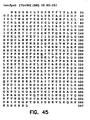
- a mutant luciferase amino acid sequence is that of Luc Ppe2 shown in Figure 45 with the exception that at residue 249 there is a M (designated T249M) rather than the T reported by Leach et al.
- the underlined residue (249) shows mutation from T to M. This enzyme produced approximately 5-fold more light in vivo when expressed in E. coli.
- Diluted extracts of recombinant E. coli that expressed mutant luciferases made by the methods of the invention were simultaneously screened for a plurality of characteristics including light intensity, signal stability, substrate Utilization (K m ), and thermostability.
- K m substrate Utilization
- thermostability A fully automated robotic system was used to screen large numbers of mutants in each generation of the evolution.
- thermostability compared to Luc Ppe2 [T249M] was achieved for clone Luc90-1 B5 which also essentially maintained enzymatic activity (there was only negligible loss in activity of 5%) when kept in aqueous solution over 2 hours at 50°C, 5 hours at 65°C, or over 6 weeks at 22°C.
- Mutant luciferases of the present invention display increased thermostability for at least 2 hours at 50°C, preferably at least 5 hours at 50°C, and in the range of at least 2 hours, preferably at least 24 hours, and more preferably at least 50 hours, at temperatures including 50°C, 60°C, and/or at temperatures up to 65°C.
- the present invention comprises thermostable mutant luciferases which, when solubilized in a suitable aqueous solution, have a thermostability greater than about 2 hours at about 50°C, more preferably greater than about 10 hours at 50°C, and more preferably still greater than 5 hours at 50°C.
- the present invention also comprises mutant luciferases which, when solubilized in a suitable aqueous solution, have a thermostability greater than about 2 hours, more preferably at least 5 hours, even more preferably greater than about 10 hours, and even more preferably still greater than about 24 hours, at about 60°C.
- the present invention further comprises mutant luciferases which when solubilized in a suitable aqueous solution have a thermostability greater than about 3 months at about 22°C, and more preferably a thermostability of at least 6 months at 22°C.
- An embodiment of the invention is a luciferase mutant having thermostability at 65°C, wherein a loss of activity of about 5-6% was found after 6 hours (equivalent to a half-life of 2 days).
- the half-lives of enzymes from the most stable clones of the present invention, extrapolated from data showing small relative changes; is greater than 2 days at 65°C (corresponding to 6% loss over 6 hours), and about 2 years at 22°C (corresponding to 5% loss over 9 weeks).
- Luciferase enzymes with amino acid sequences disclosed herein e.g., mutant luciferases designated Luc49-7C6, Luc78-0B10; Luc90-1B5, Luc133-1B2, and Luc146-1H2 have thermostability as measured in half-lives of at least 2 hours at 50°C.
- mutant luciferases designated Luc49-7C6, Luc78-0B10; Luc90-1B5, Luc133-1B2, and Luc146-1H2 have thermostability as measured in half-lives of at least 2 hours at 50°C.
- mutated polynucleotide sequences encoding luciferase enzymes containing any single mutation or any combination of mutations of the type which convert an amino acid of the reference beetle luciferase into a consensus amino acid.
- conserveed amino acids are defined as those that occur at a particular position in all sequences in a given set of related enzymes.
- Consensus amino acids are defined as
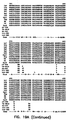
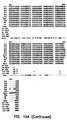
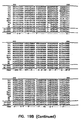
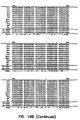
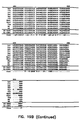
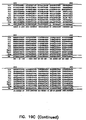
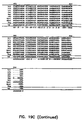
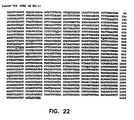
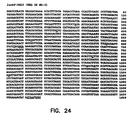
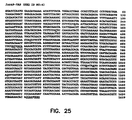
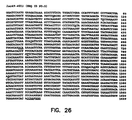
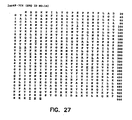
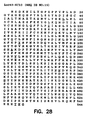
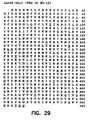
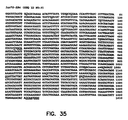
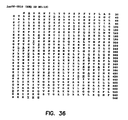
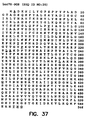
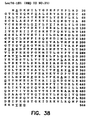
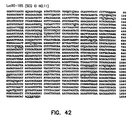
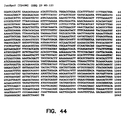
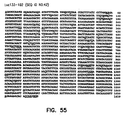
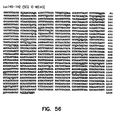
- Nucleotide sequences encoding beetle luciferases are aligned in Figure 19. Eleven sequences found in nature in various genera, and species within genera, are aligned, including lucPpe2. There are at least three mutations present in each mutant luciferase that show increased thermostability. In general, mutations are not of a conserved amino acid residue. The mutations in the mutant luciferases are indicated in Figures 22-47 by underlining.
- the specification also discloses methods to prepare enzymes having one or more desired properties, e.g., resistance to inhibition by a substrate analog of the enzyme or enhanced enzymological properties.
- the method comprises selecting at least one isolated polynucleotide sequence encoding an enzyme with the desired property, e.g., an enzymological property, from a first population of mutated polynucleotide sequences.
- the selected, isolated polynucleotide sequence is then mutated to yield a second population of mutated polynucleotide sequences.
- a mixture of selected isolated polynucleotide sequences are mutated to yield a second population of mutated polynucleotide sequences.
- the process may be repeated until a further polynucleotide sequence is obtained, e.g., selected and/or isolated, which further polynucleotide sequence encodes an enzyme which has at least one of the desired properties.
- isolated and/or purified refer to in vitro isolation of a RNA, DNA or polypeptide molecule from its natural cellular environment, and from association with other components of the cell, such as nucleic acid or polypeptide, e.g., so that it can be sequenced, replicated, and/or expressed.
- the invention rotates to enzymes, e.g., beetle luciferases, that are created by mutations made in the encoding genes, generally by recursive mutagenesis, which mutated enzymes have two or more desired properties, i.e., increased thermostability, increased resistance to inhibitors, and possibly enhanced enzymological properties, relative to a reference enzyme, e.g., the wild-type enzyme.
- the polynucleotide sequence which encodes an enzyme of the invention comprises mutations that encode a plurality of amino acid substitutions relative to the polynucleotide sequence encoding the enzyme from which the enzyme of the invention was derived.
- the invention relates to enzymes, e.g., luciferases, that are thermostable.
- the increased thermostability allows storage of enzymes such as luciferases without altering their activity, and improves reproducibility and accuracy of assays using the mutated luciferases.
- one embodiment of the invention comprises isolated polynucleotide sequences (cDNAs) which encode mutant luciferases with increased thermostability and increased resistance to luciferase inhibitor, vectors containing the polynucleotide sequences, and hosts transformed to express the polynucleotide sequences.
- Table 1 shows results of about 250 clones and characteristics of the luciferases from the clones including thermostability.
- the invention also encompasses the use of the mutant luciferases in any application where luciferases are conventionally utilized, and kits useful for some of the applications.
- beetle luciferases with the sought after improved properties were achieved in the present invention through a process of recursive mutagenesis and selection (sometimes referred to as "directed evolution").
- a strategy of recursive mutagenesis and selection is an aspect of the present invention, in particular the use of multi-parameter automated screens.
- simultaneous screening was done for additional characteristics of enzyme activity and efficiency.
- one property is less likely to "evolve” at the expense of another, resulting in increased thermostability, but decreased activity, for example.
- Table 1 presents examples of parameter values (Li, Tau, K m and S, see below) derived from experiments using different luciferases as starting (parent) sequences.
- the subtitles refer to designations of the temperature at which the enzyme stability was measured and the starting luciferase, e.g., Luc39-5B10 at 51°C and so forth. All parameters in each experiment are recorded as relative values to the respective starting sequence, e.g., the parameter values for the starting sequence in any experiment equals "1.” (See Example 2 herein for definitions.)
- thermostable isozymes found in thermophilic bacteria. Natural evolution works by a process of random mutagenesis (base substitutions, gene deletions; gene insertions), followed by selection of those mutants with improved characteristics. The process is recursive over time. Although the existence of thermostable enzymes in nature suggests that thermostability can be achieved through mutagenesis on an evolutionary scale, the feasibility of achieving a given level of thermostability fora particular class of enzymes by using short term laboratory methods was unpredictable. The natural process of evolution, which generally involves extremely large populations and many millions of generations and genes, by mutation and selection cannot be used to predict the capabilities of a modern laboratory to produce improved genes by directed evolution until such mutants are produced.
- Figure 17 shows an evolutionary relationship among beetles luciferases, all of which have a similar overall architecture.
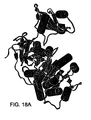
- the structural class to which the beetle luciferases belong is determined by the secondary structure (e.g. helices are symbolized by cylinders, sheets by collections of arrows, loops connect helices with sheets (Figure 18A).
- Figure 18B shows the amino acids of the Luc Ppe2 luciferase wherein small spirals correspond to cylinders of Figure 18A;
- Figure 18C shows that the general beetle architecture matches (is superimposed on) that of Luc Ppe2 . This is support for the expectation that the methods used in the present invention can be generalized to all beetle luciferases.
- Enzymes belong to different structural classes based on the three-dimensional arrangement of secondary elements such as helices, sheets, and loops. Thermostability is determined by how efficiently the secondary elements are packed together into a three-dimensional structure. For each structural class, there also exists a theoretical limit for thermostability. All beetle luciferases belong to a common structural class as evident by their common ancestry ( Figure 17), homologous amino acid sequences, and common catalytic mechanisms.
- thermostability for any structural class is not known, the potential thermostability of beetle luciferases was not known until demonstrations of the present invention.
- thermostability even if the theoretical limits of thermostability were known, because only a very small number of the possible luciferase mutants can be screened, the a priori probability of finding such a thermostable enzyme was low.
- methods were employed to maximize assay precision and to re-screen previously selected mutations in new permutations.
- methods for maximizing assay precision were closely controlling culture conditions by using specialized media, reducing growth rates, controlling heat transfer, and analyzing parameters from mid-logarithmic phase growth of the culture.
- the robotic processes maximized for precision include controlling mixing, heat transfers, and evaporation of samples in the robotic screening process; and normalizing data to spatially distributed control samples.
- New permutations of the selected mutations were created by a method of DNA shuffling using proof-reading polymerases.
- the difficulty in predicting the outcome of the recursive process is exemplified by the variable success with the other characteristics of luciferase that were also selected for.
- the primary focus was on the enzyme thermostability, selection for mutants producing brighter luminescence, with more efficient substrate utilization, and an extended luminescence signal was also attempted.
- the definitions are given by equations herewith.
- the selection process was determined by changes relative to the parent clones for each iteration of the recursive process. The amount of the change was whatever was observed during the screening process.
- the expression of luciferase in E. coli was relatively inefficient, for Luc Ppe2, compared to Luc +. Other luciferases varied (see Figure 21).
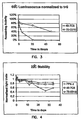
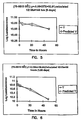
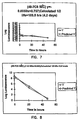
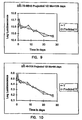
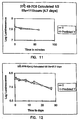
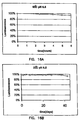
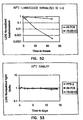
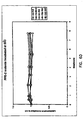
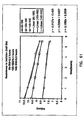
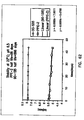
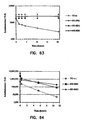
- Figures 1-13, 16, 48-53, 60 and 62 present measurements of thermostability of mutant luciferases.
- Figures 48-53 present other results of the mutant luciferases.
- Compositions of the invention include luciferases having greater than the natural level of thermostability. Each mutant luciferase is novel, because its individual characteristics have not been reported. Specific luciferases are known by both their protein and gene sequences. Many other luciferases were isolated that have increased, high thermostability, but whose sequences are not known. These luciferases were identified during the directed evolution process, and were recognized as distinct by their enzymological characteristics.
- the mutant luciferases of the present invention can display remarkable and heretofore unrealized thermostability at temperatures ranging from 22°C to at least as high as 60°C.
- thermostable luciferases specifically beetle luciferases having high thermostability and resistance to inhibition by a substrate inhibitor.
- oligonucleotide-mediated mutagenesis is then employed to introduce at least one codon which encodes a consensus amino acid to at least one of the selected, isolated polynucleotide sequences encoding the enzymes to yield a further polynucleotide sequence encoding the enzyme and having the codon which encodes the consensus amino acid, wherein the codon which is introduced is not present in the first polynucleotide sequence.
- the method of making luciferases with increased thermostability is recursive mutagenesis followed by selection.
- Embodiments of the highly thermostable mutant luciferases of the invention were generated by a reiterative process of random point mutations beginning with a source nucleotide sequence, e.g., the lucPpe2 [T249M] cDNA.
- Recombination mutagenesis is a part of the mutagenesis process, along with point mutagenesis. Both recombination mutagenesis and point mutagenesis are performed recursively.
- the process is sometimes referred to as the sexual polymerase chain reaction (sPCR).
- sPCR sexual polymerase chain reaction
- the gene was mutated to yield mutant luciferases which are far more thermostable.
- a single point mutation to the lucPpe2 sequence yielded the luciferase whose sequence is depicted as T249M.
- This mutant is approximately 5 times brighter in vivo than that of lucPpe2, it was utilized as a template for further mutation. It was also used a baseline for measuring the thermostability of the other mutant luciferases described herein.
- Figure 45 shows the amino acid sequence of the Luc Ppe2 luciferase (T249M).
- the sequence contains a single mutation at position 249 from T to M (underlined) which distinguishes it from the sequence reported by Leach et al. (1997).
- This luciferase has a spectral maximum of 552 nm, which is yellow shifted from that of the luciferase of Leach et al.
- This mutant was selected for use as an original template in some of the Examples because it is approximately 5 times brighter in vivo, than the form reported by Leach et al. which allowed for more efficient screening by the assay.
- These sequences show changes from the starting sequence (T249M) by underlining. Note that "x" in the sequence denotes an ambiguity in the sequence.
- Directed evolution is a recursive process of creating diversity through mutagenesis and screening for desired changes. For enzymological properties that result from the cumulative action of multiple amino acids, directed evolution provides a means to alter these properties. Each step of the process typically produces small changes in enzyme function, but the cumulative effect of many rounds of this process can lead to substantial overall change.
- thermostability is a candidate for directed evolution because it is determined by the combined action of many of the amino acids making up the enzyme structure. Luminescence output and efficiency of substrate binding of the modified luciferase were also screened. This was to ensure that changes in thermostability did not also produce undesirable changes in other important enzymological properties.
- the screening strategy incorporated multiple re-screens of the initially selected mutations. However, before re-screening, the selected mutations were "shuffled" to create a library of random intragenetic recombinations. This process allows beneficial mutations among different clones to be recombined together into fewer common coding sequences, and unlinks deleterious mutations to be segregated and omitted. Thus, although essentially the same set of selected mutations was screened again, they were screened under different permutations as a result of the recombination or shuffling.
- Table 1 summarizes the characteristics of various clones obtained using the above methods.
- thermostability was dramatic.
- the mutant enzymes from the related clones showed thermostability over several hours (see also Table 1, and Figures 1-3, 5-8, 11, 13, 50-52 and 60). Even at room temperature, these mutants are several fold more thermostable than the parent enzyme (see also Figures 4, 9-10, 12, 53, and 62).
- Subsequent analysis of Luc90-1B5 showed this enzyme to be even more thermostable, having a half-life of 27 hours at 65°C when tested under the same buffer conditions (Figure 16A). With some optimization of buffer conditions, this enzyme showed very little activity loss at 65°C over several hours (citrate buffer at pH 6.5; Figure 16A).
- Luc90-1B5 maintains 75% activity after 120 hours (5 days) incubation under similar conditions (50°C, 25 mol/L citrate pH 6.5, 150 mmol/L NaCl, 1 mg/mL BSA, 0.1 mmol/L EDTA, 5% glycerol).
- the Luc Ppe2 reported by Leach et al. already contains isoleucine at the homologous position described for the L. lateralis mutant.
- thermostability was the characteristic of interest, clones were selected based on the other enzymological parameters in the screens. By selecting clones having greater luminescence expression, mutants were found that yielded greater luminescence intensity in colonies of E. coli. However, the process showed little ability to alter the kinetic profile of luminescence by the enzymes. This failure suggests that the ability to support steady-state luminescence is integral to the catalytic mechanism, and is not readily influenced by a cumulative effect of many amino acids.
- Substrate binding was screened by measuring an apparent composite K m (see Example 2) for luciferin and ATP. Although the apparent composite K m remained relatively constant, later analysis showed that the individual K m 's systematically changed. The K m for luciferin rose while the K m for ATP declined (Table 3). The reason for this change is unknown, although it can be speculated that more efficient release of oxyluciferin or luciferin inhibitors could lead to more rapid enzyme turnover.
- An illustrative mutagenesis strategy is as follows: From the "best" wild-type luciferase clone, that is a clone with increased thermostability and not appreciably diminished values for other parameters, random mutagenesis was performed by three variations of error-prone PCR. From each cycle of random mutagenesis, 18 of the best clones were selected. DNA was prepared from these clones yielding a total of 54 clones. These clones represent new genetic diversity.
- Heat transfers were controlled in the robot process by using thick aluminum at many positions where the 96-well plates were placed by the robotic arm.
- all shelves in the incubators or refrigerator were constructed from 1 ⁇ 4 inch aluminum.
- any 96-well plate was moved from a high temperature (e.g., incubators) or low temperature (e.g., refrigerator) to a device at room temperature, it was first placed on the large aluminum block for temperature equilibration. By this means, the entire plate would rapidly reach the new temperature, thus minimizing unequal evaporation for the various wells in the plate due to temperature differences.
- Heat transfers in a stack of 96-well plates placed in an incubator were controlled by placing 1 mm thick sheets of aluminum between the plates. This allowed for more efficient heat transfer from the edges of the stack to the center.
- Mixing in the robotic process was controlled by having the plate placed on a shaker for several second after each reagent addition.
- Figure 14 Please refer to Figure 14 for a schematic of the order in which the plates are analyzed and to Figure 15 for a robotic apparatus which can be programmed to perform the following functions:
- a plate with lid (Falcon 3075) containing cells ( E. coli JM109) is placed on a shaker and mixed for 3-5 minutes.
- a plate (with lid) is obtained from a carousel and placed in the reagent dispenser. 180 ⁇ l of media (M9 minimal media) is added after removing the lid and placing on the locator near the pipetter. The plate is then placed in the pipetter.
- media M9 minimal media
- the plate on the shaker is placed in the pipetter, and the lid removed and placed on the locator. Cells are transferred to the new plate using pipetting procedure (see “Dilution of Cells into New Cell Plate”).
- the lids are replaced onto both plates.
- the new plate is placed in the refrigerator and the old plate is returned to the carousel.
- a plate containing cells is retrieved from the carousel and placed on the shaker for 3-5 minutes to fully mix the cells. The cells tend to settle from solution upon standing.
- O.D. Optical Density
- the plate When it is finished, the plate is then placed in the refrigerator for storage.
- the plate of cells is first retrieved from the refrigerator and mixed on the shaker to resuspend the cells.
- a new plate from the carousel without a lid is placed in the reagent dispenser and 20 ⁇ l of Buffer A is added to each well. This is placed in the pipetting station.
- the plate of cells in the shaker is placed in the pipetting station.
- a daughter plate is prepared using pipetting procedure (see “Pipetting Cells into the Lysis Plate”) to prepare a daughter plate of cells.
- the new daughter plate is placed on the shaker for mixing.
- the Lysate Plate is placed into a solid CO 2 freezing station to freeze the samples. The plate is then moved to the thaw block to thaw for 10 minutes.
- the plate is then moved to the reagent dispenser to add 175 ⁇ l of Buffer B, and then mixed on the shaker for about 15 minutes or more.
- the combination of the freeze/thaw and Buffer B will cause the cells to lyse.
- a new plate with a lid from the carousel is used to prepare the dilution plate from which all assays will be derived.
- the plate is placed in the reagent dispenser and the lid removed to the locator near the pipetter. 285 ⁇ l of Buffer C is added to each well with the reagent dispenser, then the plate is placed in the pipetting station.
- the Lysate Plate in the shaker is moved to the pipetting station and pipetting procedure (see “Dilution from Lysis Plate to Incubation Plate") is used. After pipetting, the new daughter plate is placed on the shaker for mixing. The Lysate Plate is discarded.
- Two white assay plates (Labsystems #9502887) are obtained from the plate feeder and placed in the pipetter.
- the incubation plate from the shaker is placed in the pipetter, and the lid removed and placed on the nearby locator.
- Two daughter plates are made using the pipetting procedure (see “Create Pair of Daughter Plates from Incubation Plate”). Afterwards, the lid is replaced on the parent plate, and the plate is placed in a high temperature incubator. [ranging from 31°C to about 65°C depending on the clone.]
- One daughter plate is placed in the luminometer and the 1X assay method is used. After the assay, the plate is placed in the ambient incubator, and the second daughter plate is placed in the luminometer. For the second plate, the 0.02X assay method is used. This plate is discarded, and the first plate is returned from the incubator to the luminometer. The repeat assay method is used (i.e., no reagent is injected). Afterwards, the plate is again returned to the ambient incubator.
- the plate from the high temperature incubator is placed in the shaker to mix.
- the plate in the ambient incubator is returned to the luminometer and the repeat assay method is again used.
- the plate is returned afterwards to the ambient incubator.
- Two white assay plates again are obtained from the plate feeder and placed in the pipetter.
- the plate on the shaker is placed in the pipetter, and the lid removed and placed on the nearby locator.
- Two daughter plates are again made using the pipetting procedure (see “Create Pair of Daughter Plates from Incubation Plate”). Afterwards, the lid is replaced on the parent plate, and the plate is returned to the high temperature incubator.
- One daughter plate is placed in the luminometer and the 1X assay method is again used. The plate is discarded after the assay. The second daughter plate is then placed in the luminometer and the 0.06X assay method is used. This plate is also discarded.
- the plate from the high temperature incubator is again placed in the shaker to mix.
- the plate in the ambient incubator is returned to the luminometer and the repeat assay method is again used.
- the plate is discarded afterwards.
- One white assay plate is taken from the plate feeder and placed in the pipetter.
- the plate from the shaker is placed in the pipetter, and the lid removed and placed on the nearby locator.
- One daughter plate is made using the pipetting procedure (see “Create Single Daughter Plate from Incubation Plate”).
- the lid is replaced on the parent plate and the plate is discarded.
- the daughter plate is placed in the luminometer and the 1X assay method is used. The plate is discarded after the assay.
- This procedure is used to prepare the cell plates used in the main analysis procedure. 180 ⁇ l of M9 minimal growth medium is added by the reagent dispenser to each of the new cell plates just prior to initiating the pipetting procedure. The dispenser is flushed with 75% isopropanol before priming with medium. The medium also contains selective antibiotics to reduce potential contamination.
- the reference clones are made by placing colonies from DNA transformed from the parent clone into the reference wells. To identify these wells prior to inoculation of the microplate, the wells are marked with a black marking pen on the bottom of each well.
- the temperature chosen for the enzyme stability parameter was such that the parent enzyme would decay 100 to 1000 fold over 10 hours (see Table 1). Criteria 1 is achieved manually; data for criteria 2-6 is generated by robotic analysis. For all criteria, the maximum value as described is selected.
- the composite, C Sum(criteria 2-5 weighted by relative value, e.g., more weight is on stability because that was a major goal).
- Each file created by a luminometer represents the data from one microplate. These files are stored in the computer controlling the luminometer, and connected to the database computer by a network link. From each microplate of samples, nine microplates are read by the luminometer (the original microplate for optical density and eight daughter microplates for luminescence).
- Each data set contains the sample number, time of each measurement relative to the first measurement of the plate, luminometer reading, and background corrected luminometer reading. Other file header information is also given. The time that each microplate is read is also needed for analysis. This can be obtained from the robot log or the file creation time.
- a naming convention for the files is used by the robot during file creation that can be recognized by SQL (e.g. YYMMDDPR.DAT where YY is the year, MM is the month, DD is the day, P is the initial plate [0-9], and R is the reading [0-8]).
- Normalize luminescence data For each measurement of luminescence in the eight daughter plates, the normalized luminescence is calculated by dividing the relative light units by the optical density of the original plate. If any value of normalized luminescence is less than zero, assign the value of 0.1 sL where sL is the standard deviation for measurements of normalized luminescence.
- the time of the measurement is calculated relative to the first measurement of the sample. For example, the times of all luminescence measurements of sample B6 in plate 7 (i.e., 7:B06) are calculated relative to the first reading of 7:B06. This time calculation involves both the time when the plate is read and the relative time of when the sample is read in the plate.
- K m:app,total is calculated as the slope/intercept. Also calculate the regression coefficient.
- a three dimensional coordinate system can be defined by using the grid positions of the samples within a microplate as the horizontal coordinates, and the calculated values for the samples (L i , ⁇ , K m:app,total , or S) as the vertical coordinates.
- This three dimensional system is referred to as a "plate map”.
- a smooth surface in the plate maps representing a reference level can be determined by least squares fit of the values determined for the 8 reference clones in each microplate. For each of the 10 initial microplates of samples, respective reference surfaces are determined for the criteria parameters L i , ⁇ K m:app,total , and S (40 surfaces total).
- the vertical coordinates i.e., the criteria parameters
- the horizontal coordinates are the independent variables.
- the residuals to each reference clone are calculated. If any of these residuals is outside of a given cutoff range, the reference surface is recalculated with omission of the aberrant reference clone.
- a reference-normalized value is determined by calculating the ratio or inverse ratio with the respective reference value.
- the reference-normalized values are L i /L ir , ⁇ / ⁇ r , K mr /K m:app,total , and S r /S, where reference values are calculated from the equations of the appropriate reference surface.
- Display sorted table of reference-normalized values Present a table of data for each sample showing in each row the following data:
- the table is sorted by the composite score (C).
- the table is sorted by the composite score (C); the reference clones are excluded from the table. Same entry coding by standard deviation as described above.
- the table is sorted by the composite score (C); the reference clones are excluded from the table. Same entry coding by standard deviation as described above.
- the table is sorted by the composite score (C). Same entry coding by standard deviation as described above.
- the table is sorted by the composite score (C). Same entry coding by standard deviation as described above.
- Any table may be sorted by any entries as primary and secondary key.
- a histogram of criteria parameter vs. bin number may be displayed for any criteria parameter.
- a plate map may be displayed showing a choice of:
- any entry value in a table may be selected to display the luminescence and optical density reading underlying the value calculation, and a graphical representation of the curve fit where appropriate.
- the equations involved and the final result and correlation coefficient will also be displayed.
- K m:app,total or K mr /K m:app,total Display the optical density and luminescence value from the chosen sample in Plate 0, Plate 1, Plate 2, Plate 5, and Plate 6. Display graph of 1/L vs. 1/[S], showing data points and best line.
- the gene shown in Figure 45 contains a single base pair mutation which encodes an amino acid substitution at position 249, T to M.
- This clone has a spectral maximum of 552 nm which is yellow shifted from the sequence of Luc.
- This mutant was selected as an original template because it produces about 5 times brighter luminosity in vivo which allowed for more efficient screening.
- the L was mutated to a STOP codon and the 3 codons immediately upstream were randomized according to the oligonucleotide mutagenesis procedure described herein.
- the mutagenic oligonucleotide designed to accomplish this also introduces a unique SpeI site to allow mutant identification without sequencing.
- the mutants were screened in vivo and 13 colonies picked, 12 of which contained the SpeI site.
- the 3 codons immediately downstream from the initiation Met were randomized as described herein.
- the mutagenic oligo designed to accomplish this also introduces a unique ApaI site to allow mutant identification without sequencing. Seven clones were selected, and six of the isolated plasmids were confirmed to be mutants.
- the C- and N-terminus mutagenesis were performed side-by-side. To combine the N- and C-terminus mutations, selected clones from each mutagenesis experiment were combined with the use of recombination mutagenesis according to the recombination mutagenesis protocol described herein. The shuffled mutants were subcloned into amps pRAM backbone and screened in DH5 F'IQ (BRL; Hanahan, 1985). A total of 24 clones were picked, only 4 contained both the N- and C- terminus mutations. These 4 clones were used as templates for randomization of the cysteine positions in the gene.
- cysteine positions in LucPpe2 There are 7 cysteine positions in LucPpe2. It is known that these positions are susceptible to oxidation which could cause destabilization of the protein. Seven oligonucleotides were ordered to randomize the cysteine positions.
- the oligonucleotides were organized into two groups based upon the conservation of cysteine in other luciferase genes from different families. Group 1 randomizes the conserved cysteine positions C-60, C-80, and C-162. Group 2 randomizes cysteines that are not strictly conserved at positions C-38, C-127, C-221, and C-257.
- the four selected templates from the N- and C-terminus mutagenesis were sub-cloned into an ampicillin-sensitive backbone and single-stranded DNA was prepared for each of the templates. These templates were combined in equal amounts and oligonucleotide mutagenesis was completed as described herein. It was determined by plating an aliquot of the mutS transformation prior to overnight incubation that each of the 2 groups contained 2x10 4 independent transformants. MutS-DNA was prepared for the 2 groups and was then transformed into JM109 cells for screening. Mutants from group 1 were screened in vivo and picks were made for a full robotic run. Five clones were selected that had improved characteristics. Mutants from group 2 were screened in vivo and picks were made for a full robotic run.
- the temperature incubator on the robot was set at 33°C for this set of experiments. Ten clones were selected that had improved characteristics. The fifteen best picks from both groups of the cysteine mutagenesis experiments were shuffled together as described herein and 18 of the best clones were selected after robotic processing.
- the "best" clone from the above experiment (Luc31-1G8) was selected as a template for subsequent rounds of mutagenesis. (The high temperature robot incubator temperature was set to 42°C.) Another complete round of mutagenesis was completed.
- the 18 best clones from the above mutagenesis were picked and clone (Luc39-5B 10) was selected as the best clone and was used as a template for another round of mutagenesis.
- the high temperature robot incubator temperature was set at 49°C).
- the randomization oligonucleotides were divided into 4 groups, and transformants from these experiments were picked and two robotic runs were completed. Ten clones were selected from the two experiments. (The high temperature robot incubator temperature on robot was set at 56°C).
- the 18 best clones were selected and clone Luc58-0A5 was determined to be the best clone. This clone was then used as a template for another round of mutagenesis.
- the high temperature robot incubator temperature was set at 58°C.
- Clone Luc71-504 was selected as a new lead clone and another round of mutagenesis was completed. Incubator set at 60°C.
- oligonucleotides Twenty-three oligonucleotides were prepared to change 28 positions to consensus. All of the oligonucleotides were tested individually using oligonucleotide directed mutagenesis with single stranded DNA from clone luc78-0B10 as a template to determine which oligonucleotides gave an improvement in thermostability. Table 4 lists the mutagenic oligonucleotides.
- oligonucleotide-directed mutagenesis experiments with clone luc78-0B10 as a template were completed.
- the oligonucleotides for these experiments were divided in the following manner:
- Single stranded DNA was prepared from three clones, luc85-3E12, luc85-4F12, luc85-5A4.
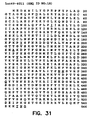
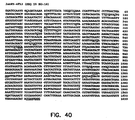
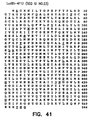
- the nucleotide sequence and inferred amino acid sequence of luc85-4F12 are shown in Figures 40 and 41, respectively.
- These clones were used as templates for oligonucleotide-directed mutagenesis to improve codon usage. Positions were selected based upon a codon usage table published in Nucleic Acids Research , vol. 18 (supplement) 1990, page 2402. The table below lists oligonucleotides that were used to improve codon usage in E. coli.
- mutant luciferases disclosed herein were produced via random mutagenesis with subsequent in vivo screening of the mutated genes for a plurality of characteristics including light output and thermostability of the encoded luciferase gene product.
- the mutagenesis was achieved by generally following a three-step method:
- Both the N-terminus and the C-terminus of the starting sequence were modified by oligonucleotide-directed mutagenesis to optimize expression and remove the peroxisomal targeting sequence.
- nine bases downstream of the initiation codon were randomized.
- nine bases upstream of the termination codon were randomized. Mutants were analyzed using an in vivo screen, resulting in no significant change in expression.
- PCR polymerase chain reaction
- a preferred vector (pRAM) (see Figure 20) used for the mutagenesis procedure contains several unique features that allow for the mutagenesis strategy to work efficiently:
- the pRAM vector contains a filamentous phage origin, f1, which is necessary for the production of single-stranded DNA.
- the vector contains a tac promoter.
- Templates to be used for oligonucleotide mutagenesis contain a 4 base-pair deletion in the bla gene which makes the vector ampicillin-sensitive.
- the oligonucleotide mutagenesis procedure uses a mutant oligonucleotide as well as an ampicillin repair oligonucleotide that restores function to the bla gene. This allows for the selection of a high percentage of mutants. (If selection is not used, it is difficult to obtain a high percentage of mutants.)
- mutant luciferases of the present invention are suitable for use in any application for which previously known luciferases were used, including the following:
- the firefly luciferase gene chosen for directed evolution was Luc Ppe2 isolated from Photuris pennsylvanica.
- the luciferase was cloned from fireflies collected in Maryland by Wood et al. and later was independently cloned by Dr. Leach using fireflies collected in Oklahoma (Ye et al., 1997).
- a mutant of this luciferase (T249M) was made by Wood et al. and used in the present invention because it produced approximately 5-fold more light when expressed in colonies of E. coli.
- lysates of the E. coli cultures were measured for 1) luminescence activity, 2) enzyme stability, 3) sustained enzymatic turnover, and 4) substrate binding.
- Luminescence activity was measured as the ratio of luminescence intensity to the optical density of the cell culture.
- Enzyme stability was determined by the rate of activity loss from cell lysates over 10 hours. In successive rounds of evolution the incubation temperature of the lysates was increased.
- Substrate binding was determined by the relative activity of the lysate when assayed with diluted substrate mixtures. Of these four parameters, the highest priority for selection was placed on thermostability.
- Robotic Automation was used in the quantitative screens to accurately perform the large number of required quantitative assays on the cultured cells. Overnight cultures were first diluted into fresh medium and
- oligonucleotide-directed mutagenesis was used to randomize these codons.
- the resulting clones were screened as described herein, and 18 selected clones were used to initiate two new rounds of directed evolution. Of the 18 clones resulting from this second set of rounds, the clone designated Luc78-0B10 was chosen for additional study and mutagenesis. This clone encoded a luciferase that contained 23 new amino acid substitutions compared to Luc[T249M].
- oligonucleotide directed mutagenesis with Luc78-0B10 as the template, codons were selected for substitution to consensus amino acids previously known among beetle luciferases. Selections from this mutagenesis experiment were shuffled together and three clones, determined to be the most stable were then used as templates for oligonucleotide mutagenesis to improve codon usage in E. coli.
- a clone designated Luc90-1B5 selected from this experiment contained 34 amino acid substitutions relative to Luc[T249M] (see Figures 42 and 43 for the nucleotide sequence and inferred amino acid sequence of luc90-1B5, and Figures 44 and 45 for the nucleotide sequence encoding and the inferred amino acid sequence of Luc[T249M]).
- Out of 25 codons selected for change to consensus amino acids, 11 were replaced in the clone designated Luc90-1B5. Only five out of the 30 positions that were selected for improved codon usage were substituted and had little effect on enzyme expression.
- Protein purification Four mutants that are described herein (Luc[T249M], Luc49-7C6, Luc78-0B10, and Luc90-1B5) were purified using a previously published procedure (Hastings et al., 1996).
- Enzymological characterization Purified proteins were diluted in 25 mmol/L HEPES pH 7.8, 150 mmol/L NaCl, 0.1 mmol/L EDTA, 1 mg/ml BSA. Enzyme stability was determined from diluted proteins incubated at different temperatures, and aliquots were removed at different time points. A linear regression of the natural log of the luminescence and time was calculated. Half-life was calculated as the ln(0.5)/slope of the regression.
- JM109 clones (from a transformation reaction) are plated onto nitrocellulose filters placed on LB amp plates at a screening density of about 500 colonies per plate.
- the plates containing the transformants are removed from the incubator and placed at room temperature.
- the nitrocellulose filter is lifted on one side and 500 ⁇ l of 10 mM IPTG is added to each of the plates. The filter is then placed back onto the plate to allow diffusion of the IPTG into the colonies containing the different mutant luciferase genes. The plates are then incubated for about 4 hours at room temperature.
- One (1) ml of a solution contains 1 mM luciferin and 100 mM sodium citrate is pipetted onto a slide warmer that is set at 50°C.
- a nitrocellulose filter that contains mutant luciferase colonies and has been treated with IPTG is then placed on top of the luciferin solution. After several minutes, the brightest colonies are picked with tooth picks which are used to inoculate wells in a microtiter plate that contain M9- minimal media with 1% gelatin.
- the plates are placed in an incubator at 350 rpm at 30°C incubation and are grown overnight.
- the plates are loaded to the robot for the main assay procedure.
- luciferin Upon storage, luciferin degrades and the degradation products inhibit luciferase. The production of inhibitors causes an apparent instability in the reagent containing both luciferase and luciferin. There are two ways to reduce this problem: 1) Store the luciferin and luciferase at pH 5.5-6.0 to reduce the rate of luciferin degradation, and/or 2) Evolve an enzyme that is resistant to the luciferin degradation products.
- LucPpe2 mutants that were evolved after clone Luc90-1B5 were evolved to be more stable at low pH and have resistance to luciferin degradation products. These mutant enzymes are useful, for example, in an ATP detection kit.
- One embodiment of such a kit comprises a mixture of luciferin and luciferase. A luminescent reaction occurs when a sample comprising ATP is added to the mixture.
- the clone that was determined to have the most improved characteristics was clone Luc117-3C1 and it was selected as a template for random mutagenesis. Two populations of random mutants were screened and then run on the robot as experiments 118 and 119. Seven clones from experiment 118 and five clones from experiment 119 were saved.
- Clones from experiments 114, 115, 116, 117, 118, and 119 were selected based upon the following characteristics: brighter luminescence than Luc901B5, and increased retention of luminescence activity over time at pH 4.5. These select clones were shuffled together and were run on the robot as experiment 122. Eleven clones from this experiment were saved.
- Three populations of random mutants were prepared from clone Luc122-4D5 and run on the robot as experiments 125, 126, and 127. Thirteen clones from experiment 125, four clones from experiment 126, and three clones from experiment 127 were shuffled together and run on the robot as experiment 128. For experiments 125, 126, 127 and 128 the screen for K m was altered to select for clones that are more resistant to luciferin degradation products. The clones were also screened for retention of luminescence over time at pH 4.5.
- a screen for resistance to inhibitor was conducted.
- a 75:25 mix ofD to L luciferin in 1X assay buffer was used and designated as "0.75X”.
- a 50:50 mix ofD to L luciferin in 1X assay buffer was designated as "0.5X”.
- the 1X assay buffer in these experiments contained the following: 10 ⁇ M ATP, 50 mM HEPES pH 7.8, 8 mM MgSO 4 , and 0.1 mM EDTA.
- the 0.75X sample contained 75 ⁇ M D-luciferin and 25 ⁇ M L-luciferin.
- the 0.5X sample contained 50 ⁇ M D-luciferin and 50 ⁇ M L-luciferin.
- the 1X sample contained 250 ⁇ M D-luciferin.
- a K m regression was used as before and a K m value was calculated. Normalized values of greater than 1 indicate more resistance to inhibitor. Clones from these experiments that were shown to have greater resistance to L-luciferin were also more resistant to luciferin degradation products.
- the "Q" variable replaces the K m variable used previously.
- the luminescence ratio is calculated the same as in the K m measurement, then the natural log (In) of each luminescence ratio is calculated (Y-axis).
- the X-axis is an arbitrary time that is entered by the user. The first time point is zero and the samples are measured with 1X assay buffer that contains 250 ⁇ M D-luciferin. The next two time points have the same time value (i.e., 4 hours to simulate incubation of luciferin) and samples are measured with 1X assay buffer that contains a 50:50 mixture (as described above) of D-luciferin to L-luciferin. A linear regression correlating ln(lum ratio) to time is calculated. Q is calculated as the ln(0.5)/slope. Normalized values of "Q" greater than 1 indicate more resistance to inhibitor. Experiments 133 and higher were run using this program.
- FIG. 59 A comparison of the luminescence signal for Luc49-7C6, Luc78-0B10, Luc90-1B5, Luc133-1B2, and Luc146-1H2 is shown in Figure 59.
- Figure 60 A comparison of the thermostability at 50°C for clones for Luc49-7C6, Luc78-0B10, Luc90-1B5, Luc133-1B2, and Luc146-1H2 is shown in Figure 60.
- Figures 55-58 show the nucleotide sequence encoding and the inferred amino acid sequence of Luc133-1B2 and Luc146-1H2.
- a 10 mM stock solution of luciferin is incubated at 50°C in 50 mM HEPES, pH 7.8, to accelerate the production of luciferin breakdown products. At different time points an aliquot is removed and then placed at -20°C. After incubation is complete, assay reagent (100 ⁇ M Luciferin, 1 ⁇ M ATP, 50 mM HEPES, pH 7.8 and 8 mM MgSO 4 ) is prepared with luciferin from each of the different time points and a diluted lysate is then assayed with each assay reagent.
- assay reagent 100 ⁇ M Luciferin, 1 ⁇ M ATP, 50 mM HEPES, pH 7.8 and 8 mM MgSO 4
- the lysate is prepared as follows. Overnight cultures of clones to be tested are prepared in LB supplemented with 100 ⁇ g/ml AMP. The cultures are diluted 1:10 in M-9 minimal media supplemented with 1 mM IPTG, 100 ⁇ g/ml AMP and grown for 3 hours at 30°C. Forty-five ⁇ l of cells is mixed with 20 ⁇ l of Buffer A and frozen. The mixture is thawed, 175 ⁇ l of Buffer B added, and the resulting mixture diluted 1:10 in Buffer C. A regression of luminescence versus time of luciferin incubation is then calculated, and from this graph half-life is extrapolated. A longer half-life means that the mutant being tested is more resistant to luciferin breakdown products.
- Amino acid substituted Luc Ppl were prepared which have the following properties:
- thermostabilities of the Luc Ppl luciferases are also near the physiological temperature of mammalian cells.
- the green-emitting luciferase (Luc Ppl GR) and red-emitting luciferase (Luc Ppl RD) have different thermostabilities which may cause differences in the behaviors as genetic reporters within cells.
- the influence of temperature should be greatest near the point of denaturation for the enzymes, where small changes in temperature will have the greatest effect on protein structure. In contrast, temperature will have much less affect on protein structure when it is much below the denaturation point.
- the differential effect on two enzymes having slightly different denaturation temperatures will be less at relatively lower temperatures. It might therefore be preferable to have the denaturation temperature of the reporter enzyme significantly above the growth temperature of mammalian cells.
- the two luciferase reporters would be identical in all characteristics except for the color of luminescence.
- the physical stability of the luciferases was not identical. It was also found that mutations resulting in red-shifted luminescence also caused an increase in the K M for luciferin. Although some of these differences may be unavoidable, it is not clear whether the properties are fundamentally associated. For instance, luciferases from different beetle species sometimes have significantly differing K M even though their luminescence spectra are similar.
- thermostability of a prototype of the red-emitting luciferase was increased without significantly altering the luminescence spectrum.
- the luminescent signal was a relatively brief flash initiated upon injection of the reaction substrates. Subsequent development of the luminescent chemistry made the assay more convenient by enabling a stable signal for several minutes. Presently, such stabilized assays are standard for general laboratory applications. However, to allow high throughput screening in pharmaceutical research, the luminescence signal was further stabilized to extend for over an hour. This was necessary to allow sufficient time to assay several thousand samples in a batch. Although the luminescent signal of the new multiplexed luciferases was stable for minutes, they did not provide the extended signal stability needed for high throughput screening. It would be preferable if the signal stability could be further increased while optimizing other properties.
- luciferases having certain performance To prepare luciferases having certain performance, a method for in vitro evolution of enzyme function, as described above, was employed. Briefly described, the method is a recursive process of generating random mutations and screening for desirable properties. It was originally developed primarily to increase the thermostability of luciferases, although other enzymological characteristics are also subject to optimization by the screening criteria. A slightly different strategy was used to achieve the properties described above since two related luciferases needed to be optimized concomitantly.
- a single prototype enzyme is subjected to in vitro evolution to optimize physical stability and the luminescence signal.
- the mutant libraries are also screened for any new mutations causing changes in color. Particular emphasis is placed on isolating green shifted mutants.
- a green- and red-emitting form of the enzymes is created, and these are further optimized separately to harmonize their physical and chemical properties. Particular attention is given to matching their physical stabilities and their substrate binding constants, especially for luciferin.
- the choice for the initial prototype for optimization was the wild-type yellow-green-emitting luciferase isolated from the luminous beetles (Luc Ppl YG). Of the luciferases originally cloned from P. plagiophthalamus, this one produced the brightest luminescence when expressed in E. coli. Furthermore, there was concern that the lack of green-shifting mutation resulted because the prior mutagenesis studies were done using a luciferase that already had the greenest luminescence. It was possible that if additional green-shifting mutations existed, they might be more evident when screened in a red-shifted background. The mutagenesis was performed as follows:
- the translocation signal at the C-terminus of the luciferases was removed. This was done using oligonucleotide-directed mutagenesis to convert the normal -KSKL to -XXX* (where X represents any amino acid, and * represents a termination codon). Several colonies yielding bright luminescence were selected and used as templates for the next stage of mutagenesis.
- the luciferases from P. plagiophthalamus have 13 cysteines, which are potentially sensitive to oxidation. This is in contrast to the commonly used firefly luciferase, which has only 4 cysteines. To remove any cysteines that may limit enzyme stability, oligonucleotide-directed mutagenesis was used to randomize the cysteine codons.
- non-conserved cysteines in regions of low sequence homology positions 69, 114, 160, 194, 335, and 460
- non-conserved cysteines in regions of higher sequence homology positions 127, 213, 310, and 311
- highly conserved cysteines positions 60, 80, and 388.
- the best clones from each of these screens were isolated, and a new mutant library made by sPCR and screened again.
- the activity of the wild-type yellow-green-emitting luciferase decreased about 500-fold over 10 hours.
- the activity of the most stable mutant (Luc20-4C10) was more stable, decreasing only about 2 fold.
- the mutagenesis was performed with four sets of oligonucleotides (Table 13), and the best clones from each set were selected. These were recombined by sPCR together with the selected clones from the previous random mutagenesis and screened again.
- the activity of the best clone from this process (Luc47-7A11) decreased 2.3 fold at 42°C; the activity of the parent clone (Luc30-4B02) decreased greater than 2000 fold.
- the random mutagenesis process using error-prone PCR was applied again to the best clone from the oligonucleotide-directed mutagenesis (Luc47-7A11).
- Three libraries were again created and screened, and selected mutants were recombined by sPCR and screened again.
- the activity of the best mutant (Luc53-0G01) decreased 1.2 fold at 43°C.
- the parent clone (Luc47-7A11) decreased 150 fold.
- the activity of the new best mutant (Luc55-2E09) decreased 31 fold at 47°C, compared to 80 fold for the parent (Luc53-0G01).
- the random mutagenesis process was repeated using the best clone from the previous cycle of mutagenesis (Luc53-0G01). After recombining the selected mutants with the mutants from the second cycle of mutagenesis, the activity of the best clone (Luc81-6G01) decreased 100-fold at 47°C, compared with 750 fold for the parent (Luc53-0G01). The discrepancy in measured activity of Luc53-0G01 in this cycle of mutagenesis compared to the previous cycle may be due to changes in the assay procedure and recalibration of the incubator temperature. It should be noted that the recorded thermostabilities from each stage of mutagenesis are calculated from robotic data using abbreviated assay procedures. The data are intended to indicate the relative stabilities of enzyme mutants when assayed in the same screen, rather than providing an accurate quantitation of thermostability.
- Luc81-5F01 and Luc81-6G01 produced luminescence most rapidly at room temperature upon addition of luciferin. The luminescence was more rapid and brighter than colonies expressing the wild-type green- and yellow-green-emitting luciferases. The luminescence from all the selected colonies appeared green-shifted compared to the yellow-green parent clone. When the colonies are heated to 65°C, the yellow-green clone looses most luminescence and the green clone becomes dimmer. Some of the mutant clones loose their luminescence at 65°C, but the three preferred clones remain bright above 70°C.
- thermostability of the mutant luciferases in cell lysates was compared at room temperature ( Figure 63). Dilute lysates were buffered at pH 7.5 and contained 1% Triton X-100; typical conditions for lysates of mammalian cells. The luminescence activity of all three mutant enzyme showed no decrease over 20 hours, whereas the activity of the wild-type yellow-green-emitting luciferase decreased substantially.
- the wild-type yellow-green-emitting luciferase produces a very stable signal (the initial rise in the signal evident in the first 2 seconds is due to the response time of the luminometer, not the kinetics of the luminescence reaction) ( Figure 64A).
- the signal intensity was reduced about 30% by the presence of 1% Triton X-100 in the lysate (diluted 1:5 with the addition of assay reagent).
- the luminescence intensity of the mutant luciferases was unaffected by the presence of Triton X-100. Under these conditions, the most stable signal was produced by Luc81-6G01, although the signal intensity was somewhat brighter for Luc81-5F01.
- the data are not corrected for the efficiency of enzyme expression in E. coli. Thus, differences in luminescence intensity may not correlate to changes in enzyme specific activity, nor is the expression efficiency in E. coli necessarily relevant to expression in mammalian cells.
- the mutant Luc81-6G01 was chosen as the best clone from which to subsequently create the green- and red-emitting luciferases.
- the sequence of Luc81-6G01 ( Figures 46-47) and Luc81-0B11 was determined and compared with the sequences of Luc30-4B02 from earlier in the in vitro evolution process, and the wild-type yellow-green-emitting luciferase used as the initial parent clone ( Figure 19B).
- the Luc81-6G01 mutant acquired new mutations in 9 codons, of which 8 caused changes in the amino acid sequence.
- the novel mutations in Luc81-6G01 were not found in the earlier sequence data, it is not certain when they were generated in the process. Most likely they were produced in the second and third cycles of random mutagenesis; however, they may have been present among other selected mutants prior to Luc30-4B02. Relative to the initial yellow-green-emitting luciferase, the Luc81-6G01 mutant has acquired 17 amino acid changes and 3 codon mutations not affecting the amino acid sequence.
- the luminescence from the mutant luciferases might be expected to fade more quickly than the wild-type luciferase during the first 30 minutes. Following this, the luminescence should be most stable in the mutants. However, this has not been noticed in the colonies of E. coli, and it may be that the kinetics of luminescence are different within cells compared to diluted enzyme in buffer.
Landscapes
- Chemical & Material Sciences (AREA)
- Health & Medical Sciences (AREA)
- Life Sciences & Earth Sciences (AREA)
- Engineering & Computer Science (AREA)
- Genetics & Genomics (AREA)
- Bioinformatics & Cheminformatics (AREA)
- Organic Chemistry (AREA)
- Zoology (AREA)
- Wood Science & Technology (AREA)
- Biomedical Technology (AREA)
- Biotechnology (AREA)
- General Engineering & Computer Science (AREA)
- General Health & Medical Sciences (AREA)
- Biochemistry (AREA)
- Microbiology (AREA)
- Molecular Biology (AREA)
- Medicinal Chemistry (AREA)
- Crystallography & Structural Chemistry (AREA)
- Physics & Mathematics (AREA)
- Plant Pathology (AREA)
- Biophysics (AREA)
- Enzymes And Modification Thereof (AREA)
- Measuring Or Testing Involving Enzymes Or Micro-Organisms (AREA)
- Micro-Organisms Or Cultivation Processes Thereof (AREA)
- Investigating Or Analysing Materials By The Use Of Chemical Reactions (AREA)
- Pharmaceuticals Containing Other Organic And Inorganic Compounds (AREA)
Claims (20)
- Luciférase thermostable ayant une demi-vie d'au moins 2 heures à 50°C,
ladite luciférase thermostable étant caractérisée en qu'elle comprend la SEQ ID N° 44 ou la SEQ ID N° 45 ou une portion enzymatiquement active de celle-ci, et elle est résistante à un inhibiteur de la réaction de bioluminescence. - Molécule d'acide nucléique isolée et purifiée comprenant un segment d'acide nucléique codant pour la luciférase de la revendication 1 ou son complément.
- Molécule d'acide nucléique isolée et purifiée suivant la revendication 2, comprenant un segment d'acide nucléique comprenant la SEQ ID N° 42 ou la SEQ ID N° 43.
- Vecteur contenant la molécule d'acide nucléique de la revendication 2.
- Cellule hôte, dont le génome est augmenté avec la molécule d'acide nucléique de la revendication 2.
- Substrat solide comprenant la luciférase de la revendication 1.
- Protéine de fusion comprenant la luciférase de la revendication 1.
- Molécule d'acide nucléique isolée et purifiée comprenant un segment d'acide nucléique codant pour la protéine de fusion de la revendication 7.
- Méthode d'utilisation d'une luciférase, comprenant : la liaison d'un agent avec la luciférase de la revendication 1 de manière à obtenir un agent marqué.
- Utilisation de la luciférase de la revendication 1 pour la détection de l'ATP, pour le marquage d'une molécule, comme rapporteur génétique, pour l'immobilisation sur une surface solide, pour produire des protéines hybrides, pour des réactions à haute température ou pour créer des solutions luminescentes.
- Méthode d'utilisation d'un vecteur codant pour une luciférase, comprenant :a) l'introduction du vecteur de la revendication 4 dans un cellule hôte : etb) la détection ou la détermination de la présence de la luciférase dans la cellule hôte.
- Kit comprenant : un récipient comprenant la luciférase de la revendication 1.
- Kit suivant la revendication 12, dans lequel le récipient comprend un mélange aqueux comprenant la luciférase.
- Kit suivant la revendication 12, dans lequel le récipient contient de la luciférase lyophilisée.
- Kit suivant la revendication 12, comprenant en outre un récipient contenant de la luciférine.
- Kit suivant la revendication 12, dans lequel le récipient comprend en outre de la luciférine.
- Kit suivant la revendication 14, dans lequel le récipient comprend en outre de la luciférine lyophilisée.
- Kit suivant la revendication 15, dans lequel le récipient qui comprend de la luciférine comprend de la luciférine lyophilisée.
- Kit suivant la revendication 12, comprenant en outre un matériau d'emballage renfermant, à l'état emballé séparément, le récipient et des moyens d'instructions destinés à permettre à l'utilisateur d'établir une corrélation entre l'activité de luciférase dans un échantillon supposé comprendre de l'ATP avec le taux d'ATP dans l'échantillon.
- Kit suivant la revendication 12, comprenant en outre un matériau d'emballage renfermant, à l'état emballé séparément, le récipient et des moyens d'instructions destinés à permettre à l'utilisateur d'établir une corrélation entre l'activité de luciférase dans un échantillon supposé comprendre un agent infectieux qui produit de l'ATP avec le taux ou la présence de l'agent dans l'échantillon.
Priority Applications (1)
| Application Number | Priority Date | Filing Date | Title |
|---|---|---|---|
| EP05076634A EP1630231A3 (fr) | 1999-09-15 | 1999-12-22 | Luciferases thermostables provenant du photuris pennsylvanica et du pyrophorus plagiophthalamus et procedes de production |
Applications Claiming Priority (3)
| Application Number | Priority Date | Filing Date | Title |
|---|---|---|---|
| US09/396,154 US6602677B1 (en) | 1997-09-19 | 1999-09-15 | Thermostable luciferases and methods of production |
| US396154 | 1999-09-15 | ||
| PCT/US1999/030925 WO2001020002A1 (fr) | 1999-09-15 | 1999-12-22 | Luciferases thermostables provenant du photuris pennsylvanica et du pyrophorus plagiophthalamus et procedes de production |
Related Child Applications (1)
| Application Number | Title | Priority Date | Filing Date |
|---|---|---|---|
| EP05076634A Division EP1630231A3 (fr) | 1999-09-15 | 1999-12-22 | Luciferases thermostables provenant du photuris pennsylvanica et du pyrophorus plagiophthalamus et procedes de production |
Publications (2)
| Publication Number | Publication Date |
|---|---|
| EP1131441A1 EP1131441A1 (fr) | 2001-09-12 |
| EP1131441B1 true EP1131441B1 (fr) | 2005-11-30 |
Family
ID=23566077
Family Applications (2)
| Application Number | Title | Priority Date | Filing Date |
|---|---|---|---|
| EP99966651A Expired - Lifetime EP1131441B1 (fr) | 1999-09-15 | 1999-12-22 | Luciferases thermostables provenant du photuris pennsylvanica et du pyrophorus plagiophthalamus et procedes de production |
| EP05076634A Withdrawn EP1630231A3 (fr) | 1999-09-15 | 1999-12-22 | Luciferases thermostables provenant du photuris pennsylvanica et du pyrophorus plagiophthalamus et procedes de production |
Family Applications After (1)
| Application Number | Title | Priority Date | Filing Date |
|---|---|---|---|
| EP05076634A Withdrawn EP1630231A3 (fr) | 1999-09-15 | 1999-12-22 | Luciferases thermostables provenant du photuris pennsylvanica et du pyrophorus plagiophthalamus et procedes de production |
Country Status (9)
| Country | Link |
|---|---|
| US (6) | US6602677B1 (fr) |
| EP (2) | EP1131441B1 (fr) |
| JP (1) | JP4520084B2 (fr) |
| AT (1) | ATE311461T1 (fr) |
| AU (1) | AU785294B2 (fr) |
| CA (1) | CA2350823A1 (fr) |
| DE (1) | DE69928687T2 (fr) |
| ES (1) | ES2253929T3 (fr) |
| WO (1) | WO2001020002A1 (fr) |
Cited By (4)
| Publication number | Priority date | Publication date | Assignee | Title |
|---|---|---|---|---|
| US8809529B2 (en) | 2010-11-02 | 2014-08-19 | Promega Corporation | Imidazo[1,2-α]pyrazine derivatives |
| US9487520B2 (en) | 2010-11-02 | 2016-11-08 | Promega Corporation | Coelenterazine derivatives and methods of using same |
| US9790537B2 (en) | 2014-01-29 | 2017-10-17 | Promega Corporation | Quinone-masked probes as labeling reagents for cell uptake measurements |
| US9927430B2 (en) | 2014-01-29 | 2018-03-27 | Promega Corporation | Pro-substrates for live cell applications |
Families Citing this family (195)
| Publication number | Priority date | Publication date | Assignee | Title |
|---|---|---|---|---|
| US6602677B1 (en) * | 1997-09-19 | 2003-08-05 | Promega Corporation | Thermostable luciferases and methods of production |
| GB9823468D0 (en) * | 1998-10-28 | 1998-12-23 | Secr Defence | Novel enzyme |
| NZ518413A (en) * | 1999-10-26 | 2004-11-26 | Secr Defence | Novel enzyme |
| GB9925161D0 (en) * | 1999-10-26 | 1999-12-22 | Secr Defence | Novel enzyme |
| US20030157643A1 (en) * | 2000-08-24 | 2003-08-21 | Almond Brian D | Synthetic nucleic acids from aquatic species |
| US7879540B1 (en) * | 2000-08-24 | 2011-02-01 | Promega Corporation | Synthetic nucleic acid molecule compositions and methods of preparation |
| US7083911B2 (en) | 2001-02-16 | 2006-08-01 | Promega Corporation | Method for detection of ATP |
| GB0111275D0 (en) | 2001-05-09 | 2001-06-27 | Secr Defence | Analytical method and kit |
| WO2004027378A2 (fr) | 2002-09-20 | 2004-04-01 | Promega Corporation | Procedes fondes sur la luminescence et sondes permettant de mesurer l'activite du cytochrome p450 |
| JP4485470B2 (ja) | 2002-12-23 | 2010-06-23 | プロメガ コーポレイション | ルシフェラーゼ酵素活性を保護するための方法及びキット |
| DE10315640A1 (de) * | 2003-04-04 | 2004-10-14 | Ignatov, Konstantin | Verfahren zur kontrollierten Freisetzung von Komponenten in eine Lösung |
| US7183092B2 (en) * | 2003-10-03 | 2007-02-27 | Board Of Control Of Michigan Technological University | Modified luciferase |
| CA2541765A1 (fr) | 2003-10-10 | 2004-10-01 | Promega Corporation | Biocapteur de la luciferase |
| EP2478912B1 (fr) | 2003-11-06 | 2016-08-31 | Seattle Genetics, Inc. | Conjugués d'auristatin avec des anticorps dirigés contre le HER2 ou le CD22 et leur usage thérapeutique |
| NZ579482A (en) | 2004-06-01 | 2011-02-25 | Genentech Inc | Antibody drug conjugates and methods |
| US7422868B2 (en) * | 2004-07-02 | 2008-09-09 | Promega Corporation | Microbial ATP extraction and detection system |
| US7728118B2 (en) * | 2004-09-17 | 2010-06-01 | Promega Corporation | Synthetic nucleic acid molecule compositions and methods of preparation |
| DK1791565T3 (en) | 2004-09-23 | 2016-08-01 | Genentech Inc | Cysteingensplejsede antibodies and conjugates |
| US8288352B2 (en) | 2004-11-12 | 2012-10-16 | Seattle Genetics, Inc. | Auristatins having an aminobenzoic acid unit at the N terminus |
| EP2778234B1 (fr) | 2005-05-31 | 2017-09-27 | Promega Corporation | Composés luminogènes et fluorogènes et procédés pour la détection de molécules ou de conditions |
| EP1935986B1 (fr) | 2005-05-31 | 2014-04-16 | Promega Corporation | Composés luminogènes et fluorogènes et procédés pour la détection de molécules ou de conditions |
| GB0513535D0 (en) * | 2005-07-01 | 2005-08-10 | Iseao Technologies Ltd | Improved methods of detecting microbes |
| ES2708763T3 (es) | 2005-07-07 | 2019-04-11 | Seattle Genetics Inc | Compuestos de monometilvalina que tienen modificaciones de la cadena lateral de fenilalanina en el extremo C |
| GB0516455D0 (en) * | 2005-08-10 | 2005-09-14 | Lumora Ltd | pH tolerant luciferase |
| GB0517005D0 (en) | 2005-08-19 | 2005-09-28 | Enigma Diagnostics Ltd | Analytical method and kit |
| EP2327768B1 (fr) * | 2006-04-03 | 2015-09-09 | Promega Corporation | Biocapteurs de luciférase permutés et non permutés |
| EP2032606B1 (fr) | 2006-05-30 | 2013-11-27 | Genentech, Inc. | Anticorps et immuno-conjugués, et leurs utilisations |
| ES2372217T3 (es) | 2006-09-12 | 2012-01-17 | Genentech, Inc. | Procedimientos y composiciones para el diagnóstico y tratamiento del cáncer de pulmón utilizando el gen de pdgfra, kit o kdr como marcador genético. |
| BRPI0717638A2 (pt) | 2006-10-27 | 2013-11-12 | Genentech Inc | Anticorpors e imunoconjugados e usos para os mesmos |
| MX2009005950A (es) | 2006-12-07 | 2009-10-12 | Genentech Inc | Compuestos inhibidores de fosfoinositido 3-quinasas y metodos de uso. |
| EP2176295B1 (fr) | 2007-07-16 | 2014-11-19 | Genentech, Inc. | Anticorps anti-cd79b humanisés, immunoconjugués, et procédés d'utilisation |
| PE20090943A1 (es) | 2007-07-16 | 2009-08-05 | Genentech Inc | Anticuerpos anti-cd79b e inmunoconjugados |
| CA2704711C (fr) | 2007-09-24 | 2016-07-05 | Genentech, Inc. | Composes inhibiteurs de la pi3k a base de thiazolopyrimidine |
| KR101607346B1 (ko) | 2008-01-31 | 2016-03-29 | 제넨테크, 인크. | 항-cd79b 항체 및 면역접합체 및 사용 방법 |
| DK2265283T3 (da) | 2008-03-18 | 2014-10-20 | Seattle Genetics Inc | Auristatin-lægemiddel-linker-konjugater |
| DK2644194T3 (en) | 2008-03-18 | 2017-07-03 | Genentech Inc | Combinations of an anti-HER2 antibody-drug conjugate and docetaxel |
| WO2009140662A1 (fr) * | 2008-05-15 | 2009-11-19 | Illumina, Inc. | Luciférases manipulées |
| WO2009142735A2 (fr) | 2008-05-19 | 2009-11-26 | Promega Corporation | Biocapteurs de luciférase pour l'ampc |
| US7852663B2 (en) | 2008-05-23 | 2010-12-14 | Seagate Technology Llc | Nonvolatile programmable logic gates and adders |
| JP2010004758A (ja) * | 2008-06-24 | 2010-01-14 | Probex Inc | cyclicGMP検出方法 |
| AU2009270988A1 (en) | 2008-07-15 | 2010-01-21 | Genentech, Inc. | Anthracycline derivative conjugates, process for their preparation and their use as antitumor compounds |
| EP2326953B1 (fr) | 2008-07-22 | 2018-03-21 | Promega Corporation | Dosage luminescent de la phosphotransférase ou de l atp hydrolase basé sur la détection de l adp |
| JP5597200B2 (ja) | 2008-08-18 | 2014-10-01 | プロメガ コーポレイション | ルミネッセンスを生じる化合物およびチトクロムp4503a酵素を検出するための方法 |
| US7985994B2 (en) | 2008-09-29 | 2011-07-26 | Seagate Technology Llc | Flux-closed STRAM with electronically reflective insulative spacer |
| US8089132B2 (en) | 2008-10-09 | 2012-01-03 | Seagate Technology Llc | Magnetic memory with phonon glass electron crystal material |
| US8045366B2 (en) | 2008-11-05 | 2011-10-25 | Seagate Technology Llc | STRAM with composite free magnetic element |
| US8289756B2 (en) | 2008-11-25 | 2012-10-16 | Seagate Technology Llc | Non volatile memory including stabilizing structures |
| US7826259B2 (en) | 2009-01-29 | 2010-11-02 | Seagate Technology Llc | Staggered STRAM cell |
| UA103918C2 (en) | 2009-03-02 | 2013-12-10 | Айерем Элелси | N-(hetero)aryl, 2-(hetero)aryl-substituted acetamides for use as wnt signaling modulators |
| JP5709766B2 (ja) | 2009-03-12 | 2015-04-30 | ジェネンテック, インコーポレイテッド | 造血器腫瘍の治療のためのホスホイノシチド3キナーゼ阻害剤化合物と化学療法剤の併用 |
| RU2587621C2 (ru) | 2009-04-01 | 2016-06-20 | Дженентек, Инк. | АНТИТЕЛА К FcRH5, ИХ ИММУНОКОНЪЮГАТЫ И СПОСОБЫ ИХ ПРИМЕНЕНИЯ |
| US9290577B2 (en) | 2009-07-03 | 2016-03-22 | Avipep Pty Limited | Immuno-conjugates and methods for producing them |
| US8102703B2 (en) * | 2009-07-14 | 2012-01-24 | Crocus Technology | Magnetic element with a fast spin transfer torque writing procedure |
| SG178986A1 (en) | 2009-09-08 | 2012-04-27 | Hoffmann La Roche | 4-substituted pyridin-3-yl-carboxamide compounds and methods of use |
| US8263633B2 (en) | 2009-09-28 | 2012-09-11 | F. Hoffman-La Roche Ag | Benzoxepin PI3K inhibitor compounds and methods of use |
| MY160064A (en) | 2009-09-28 | 2017-02-15 | Hoffmann La Roche | Benzoxazepin pi3k inhibitor compounds and methods of use |
| CN102770456B (zh) | 2009-12-04 | 2018-04-06 | 弗·哈夫曼-拉罗切有限公司 | 多特异性抗体、抗体类似物、组合物和方法 |
| JP2013514788A (ja) | 2009-12-23 | 2013-05-02 | アビペップ ピーティーワイ リミテッド | イムノコンジュゲート及びその作製方法2 |
| US9556249B2 (en) | 2010-02-18 | 2017-01-31 | Genentech, Inc. | Neuregulin antagonists and use thereof in treating cancer |
| SI2528625T1 (sl) | 2010-04-15 | 2013-11-29 | Spirogen Sarl | Pirolobenzodiazepini in njihovi konjugati |
| US9290794B2 (en) | 2010-05-11 | 2016-03-22 | Promega Corporation | Mutant protease biosensors with enhanced detection characteristics |
| US8735559B2 (en) | 2010-05-11 | 2014-05-27 | Promega Corporation | Mutant protease biosensors with enhanced detection characteristics |
| NZ701208A (en) | 2010-06-03 | 2016-05-27 | Genentech Inc | Immuno-pet imaging of antibodies and immunoconjugates and uses thereof |
| CA2799540A1 (fr) | 2010-06-08 | 2011-12-15 | Genentech, Inc. | Anticorps et conjugues modifies par la cysteine |
| RU2577986C2 (ru) | 2010-06-18 | 2016-03-20 | Дженентек, Инк. | Антитела против axl и способы их применения |
| UY33469A (es) | 2010-06-29 | 2012-01-31 | Irm Llc Y Novartis Ag | Composiciones y metodos para modular la via de señalizacion de wnt |
| US20120121615A1 (en) | 2010-11-17 | 2012-05-17 | Flygare John A | Alaninyl maytansinol antibody conjugates |
| TW201500358A (zh) | 2010-12-16 | 2015-01-01 | 赫夫門羅氏藥廠股份有限公司 | 三環pi3k抑制劑化合物及其使用方法 |
| BR112013014527A2 (pt) | 2010-12-20 | 2017-03-07 | Genentech Inc | anticorpo isolado, ácido nucleico isolado, célula hospedeira, método para produzir um anticorpo, imunoconjugado, formulação farmacêutica, uso do imunoconjugado, método para tratamento de um indivíduo que tem um câncer positivo para mesotelina, para inibição de proliferação de uma célula positiva para mesotelina, para detecção de mesotelina humana em uma amostra biológica e para detectar um câncer positivo para mesotelina |
| AU2012236511B2 (en) | 2011-03-30 | 2016-04-28 | Arizona Board Of Regents, For And On Behalf Of, Arizona State University | Auristatin tyramine phosphate salts and auristatin aminoquinoline derivatives and prodrugs thereof |
| RU2013148817A (ru) | 2011-04-01 | 2015-05-10 | Дженентек, Инк. | Комбинации соединений-ингибиторов акт и мек и способы их применения |
| WO2012135781A1 (fr) | 2011-04-01 | 2012-10-04 | Genentech, Inc. | Combinaisons de composés inhibiteurs d'akt et d'agents chimiothérapeutiques, et procédés d'utilisation |
| CA2828890A1 (fr) | 2011-04-07 | 2012-10-11 | Genentech, Inc. | Anticorps anti-fgfr4 et procedes d'utilisation |
| EP2524918A1 (fr) | 2011-05-19 | 2012-11-21 | Centro Nacional de Investigaciones Oncológicas (CNIO) | Imidazopyrazines en tant qu'inhibiteurs de kinase |
| PL2710018T3 (pl) | 2011-05-19 | 2022-04-04 | Fundación Del Sector Público Estatal Centro Nacional De Investigaciones Oncológicas Carlos III (F.S.P. CNIO) | Związki makrocykliczne jako inhibitory kinaz białkowych |
| MX2014001766A (es) | 2011-08-17 | 2014-05-01 | Genentech Inc | Anticuerpos de neuregulina y sus usos. |
| BR112014009050B1 (pt) | 2011-10-14 | 2022-06-21 | Medimmune Limited | Conjugado anticorpo-fármaco de pirrolbenzodiazepinas, composição farmacêutica que compreende o mesmo, bem como compostos de pirrolbenzodiazepinas |
| MX2014005285A (es) | 2011-11-03 | 2014-05-30 | Hoffmann La Roche | Compuestos biciclicos de piperazina. |
| MX2014005282A (es) | 2011-11-03 | 2014-05-30 | Hoffmann La Roche | Compuestos de 8-fluoroftalazin-1 (2h) -ona. |
| UA111756C2 (uk) | 2011-11-03 | 2016-06-10 | Ф. Хоффманн-Ля Рош Аг | Сполуки гетероарилпіридону та азапіридону як інгібітори тирозинкінази брутона |
| EP2773639B1 (fr) | 2011-11-03 | 2017-04-26 | F. Hoffmann-La Roche AG | Piperazines alkyles comme inhibiteurs de l'activite btk |
| US8815538B2 (en) | 2011-11-08 | 2014-08-26 | The Procter & Gamble Company | Method of making cosmetic compositions containing a prebiotic |
| EP3467119B1 (fr) * | 2011-11-11 | 2022-02-23 | Promega Corporation | Biocapteurs de protéase mutante présentant de meilleures caractéristiques de détection |
| BR112014012590A8 (pt) | 2011-11-23 | 2017-12-19 | Igenica Inc | Anticorpos anti-cd98 e métodos de uso dos mesmos |
| AR090549A1 (es) | 2012-03-30 | 2014-11-19 | Genentech Inc | Anticuerpos anti-lgr5 e inmunoconjugados |
| US9056910B2 (en) | 2012-05-01 | 2015-06-16 | Genentech, Inc. | Anti-PMEL17 antibodies and immunoconjugates |
| JO3300B1 (ar) | 2012-06-06 | 2018-09-16 | Novartis Ag | مركبات وتركيبات لتعديل نشاط egfr |
| US20150152083A1 (en) | 2012-06-06 | 2015-06-04 | Irm Llc, A Delaware Limited Liability Company | Compounds and Compositions for Modulating EGFR Activity |
| BR112014028376A2 (pt) | 2012-06-08 | 2018-04-24 | Hoffmann La Roche | métodos para o tratamento de um distúrbio hiperproliferativo, para a determinação dos compostos, para monitorar, para optimizar a eficácia terapêutica e de identificação de um biomarcador; formulação farmacêutica; utilização de uma combinação terapêutica e de gdc-0032, artigo de manufatura, produto e invenção |
| CN104428007B (zh) | 2012-07-09 | 2018-03-16 | 基因泰克公司 | 包含抗cd22抗体的免疫缀合物 |
| CN104411337A (zh) | 2012-07-09 | 2015-03-11 | 基因泰克公司 | 包含抗cd79b抗体的免疫偶联物 |
| AR091703A1 (es) | 2012-07-09 | 2015-02-25 | Genentech Inc | Anticuerpos e inmunoconjugados que comprenden anticuerpos anti-cd22 |
| IN2014DN10652A (fr) | 2012-07-09 | 2015-09-11 | Genentech Inc | |
| BR112015002493A8 (pt) | 2012-08-30 | 2019-07-30 | Hoffmann La Roche | composto, composição farmacêutica, processo para a preparação de uma composição farmacêutica, kit e uso de um composto” |
| CA2887129A1 (fr) | 2012-10-09 | 2014-04-17 | Igenica, Inc. | Anticorps anti-c16orf54 et leurs methodes d'utilisation |
| ES2680153T3 (es) | 2012-10-12 | 2018-09-04 | Adc Therapeutics Sa | Conjugados de anticuerpos anti-PSMA-pirrolobenzodiazepinas |
| HRP20182129T1 (hr) | 2012-10-12 | 2019-02-08 | Adc Therapeutics Sa | Konjugati protutijelo - pirolobenzodiazepin |
| HRP20190366T1 (hr) | 2012-10-12 | 2019-04-19 | Medimmune Limited | Pirolobenzodiazepini i njihovi konjugati |
| EP2906296B1 (fr) | 2012-10-12 | 2018-03-21 | ADC Therapeutics SA | Conjugués anticorps - pyrrolobenzodiazépine |
| RS57694B1 (sr) | 2012-10-12 | 2018-11-30 | Adc Therapeutics Sa | Pirolobenzodiazepin - anti-psma konjugati antitela |
| MX338711B (es) | 2012-10-12 | 2016-04-28 | Medimmune Ltd | Pirrolobenzodiazepinas y conjugados de las mismas. |
| EP2906297B1 (fr) | 2012-10-12 | 2017-12-06 | ADC Therapeutics SA | Conjugués anticorps - pyrrolobenzodiazépine |
| JP6392765B2 (ja) | 2012-10-12 | 2018-09-19 | エイディーシー・セラピューティクス・エス・アーAdc Therapeutics Sa | ピロロベンゾジアゼピン−抗体結合体 |
| CN105189507A (zh) | 2012-12-21 | 2015-12-23 | 斯皮罗根有限公司 | 吡咯并苯并二氮杂卓及其结合物 |
| CN110627797A (zh) | 2012-12-21 | 2019-12-31 | 麦迪穆有限责任公司 | 用于治疗增殖性和自身免疫疾病的非对称吡咯并苯并二氮杂卓二聚物 |
| US9487814B2 (en) * | 2013-02-22 | 2016-11-08 | Promega Corporation | Stabilized formulation for luminescent detection of luciferase and nucleoside phosphates |
| EP2959014B1 (fr) | 2013-02-25 | 2019-11-13 | Genentech, Inc. | Procédés et compositions pour détecter et traiter un mutant d'akt résistant aux médicaments |
| TWI680766B (zh) | 2013-03-13 | 2020-01-01 | 英商梅迪繆思有限公司 | 吡咯并苯并二氮呯及其共軛物 |
| MX362970B (es) | 2013-03-13 | 2019-02-28 | Medimmune Ltd | Pirrolobenzodiazepinas y conjugados de las mismas. |
| AU2014229529B2 (en) | 2013-03-13 | 2018-02-15 | Medimmune Limited | Pyrrolobenzodiazepines and conjugates thereof |
| JP6436965B2 (ja) | 2013-03-14 | 2018-12-12 | ジェネンテック, インコーポレイテッド | 抗b7−h4抗体及びイムノコンジュゲート |
| AR095443A1 (es) | 2013-03-15 | 2015-10-14 | Fundación Centro Nac De Investig Oncológicas Carlos Iii | Heterociclos condensados con acción sobre atr |
| SG11201507427QA (en) | 2013-03-15 | 2015-10-29 | Genentech Inc | Compositions and methods for diagnosis and treatment of hepatic cancers |
| WO2015000949A1 (fr) | 2013-07-03 | 2015-01-08 | F. Hoffmann-La Roche Ag | Composés hétéroaryl pyridone et aza-pyridone amide |
| BR112016002829A2 (pt) | 2013-08-12 | 2017-09-19 | Genentech Inc | Composto e processo para preparar o composto de conjugado anticorpo-¿droga, composição farmacêutica, método de tratamento do câncer, kit para o tratamento do câncer, intermediário ligante¿-droga, porção e composto de porção droga de dímero cbi |
| JP2016537399A (ja) | 2013-09-17 | 2016-12-01 | ジェネンテック, インコーポレイテッド | 抗lgr5抗体を使用する方法 |
| WO2015052535A1 (fr) | 2013-10-11 | 2015-04-16 | Spirogen Sàrl | Conjugués anticorps-pyrrolobenzodiazépine |
| WO2015052534A1 (fr) | 2013-10-11 | 2015-04-16 | Spirogen Sàrl | Conjugués anticorps-pyrrolobenzodiazépine |
| GB201317982D0 (en) | 2013-10-11 | 2013-11-27 | Spirogen Sarl | Pyrrolobenzodiazepines and conjugates thereof |
| EP3054983B1 (fr) | 2013-10-11 | 2019-03-20 | Medimmune Limited | Conjugués anticorps-pyrrolobenzodiazépines |
| WO2015083059A1 (fr) | 2013-12-02 | 2015-06-11 | Novartis Ag | Formes de l'inhibiteur du récepteur du facteur de croissance épidermique (egfr) |
| WO2015082583A1 (fr) | 2013-12-05 | 2015-06-11 | F. Hoffmann-La Roche Ag | Composés de pyridone hétéroarylique et d'aza-pyridone à fonctionnalité électrophile |
| SG11201604784XA (en) | 2013-12-13 | 2016-07-28 | Genentech Inc | Anti-cd33 antibodies and immunoconjugates |
| EP3082876B1 (fr) | 2013-12-16 | 2018-01-17 | Genentech, Inc. | Composés conjugués anticorps-médicament dimérique à base de 1-(chlorométhyl)-2,3-dihydro-1 h-benzo [e]indole, et méthodes d'utilisation et de traitement |
| EP3096797A1 (fr) | 2014-01-24 | 2016-11-30 | F. Hoffmann-La Roche AG | Procédés d'utilisation d'anticorps anti-steap1 et immunoconjugués |
| WO2015136016A2 (fr) | 2014-03-13 | 2015-09-17 | F. Hoffmann-La Roche Ag | Combinaisons thérapeutiques avec des modulateurs du récepteur des œstrogènes |
| GB201406767D0 (en) | 2014-04-15 | 2014-05-28 | Cancer Rec Tech Ltd | Humanized anti-Tn-MUC1 antibodies anf their conjugates |
| WO2015179658A2 (fr) | 2014-05-22 | 2015-11-26 | Genentech, Inc. | Immunoconjugués et anticorps anti-gpc3 |
| CN106459202A (zh) | 2014-06-11 | 2017-02-22 | 豪夫迈·罗氏有限公司 | 抗LgR5抗体及其用途 |
| EP3193940A1 (fr) | 2014-09-10 | 2017-07-26 | Medimmune Limited | Pyrrolobenzodiazépines et leurs conjugués |
| US9732373B2 (en) | 2014-09-11 | 2017-08-15 | Promega Corporation | Luciferase sequences utilizing infrared-emitting substrates to produce enhanced luminescence |
| SG11201701128YA (en) | 2014-09-12 | 2017-03-30 | Genentech Inc | Cysteine engineered antibodies and conjugates |
| WO2016040825A1 (fr) | 2014-09-12 | 2016-03-17 | Genentech, Inc. | Intermédiaires disulfure d'anthracycline, conjugué anticorps-médicaments et procédés |
| LT3191135T (lt) | 2014-09-12 | 2020-11-25 | Genentech, Inc. | Anti-her2 antikūnai ir imunokonjugatai |
| MA40579A (fr) | 2014-09-12 | 2016-03-17 | Genentech Inc | Anticorps anti-cll-1 et immunoconjugués |
| GB201416112D0 (en) | 2014-09-12 | 2014-10-29 | Medimmune Ltd | Pyrrolobenzodiazepines and conjugates thereof |
| CN107073136A (zh) | 2014-09-17 | 2017-08-18 | 健泰科生物技术公司 | 吡咯并苯并二氮杂卓及其抗体二硫化物偶联物 |
| MX2017003472A (es) | 2014-09-17 | 2017-10-31 | Genentech Inc | Inmunoconjugados que comprenden anticuerpos anti-her2. |
| CN106922146B (zh) | 2014-10-02 | 2020-05-26 | 豪夫迈·罗氏有限公司 | 用于治疗由布鲁顿酪氨酸激酶(btk)介导的疾病的吡唑甲酰胺化合物 |
| EP3204509B1 (fr) | 2014-10-08 | 2019-07-10 | Promega Corporation | Dosage de détection de succinate bioluminescente |
| CN107148285B (zh) | 2014-11-25 | 2022-01-04 | Adc治疗股份有限公司 | 吡咯并苯并二氮杂䓬-抗体缀合物 |
| CA2982205A1 (fr) | 2015-04-10 | 2016-10-13 | David W. Andrews | Procedes et compositions de traitement de cancers et d'amelioration de l'immunite therapeutique par reduction selective des monocytes m2 immunomodulateurs |
| GB201506411D0 (en) | 2015-04-15 | 2015-05-27 | Bergenbio As | Humanized anti-axl antibodies |
| GB201506389D0 (en) | 2015-04-15 | 2015-05-27 | Berkel Patricius H C Van And Howard Philip W | Site-specific antibody-drug conjugates |
| GB201506402D0 (en) | 2015-04-15 | 2015-05-27 | Berkel Patricius H C Van And Howard Philip W | Site-specific antibody-drug conjugates |
| CN108064246A (zh) | 2015-06-15 | 2018-05-22 | 基因泰克公司 | 抗体和免疫结合物 |
| US10501545B2 (en) | 2015-06-16 | 2019-12-10 | Genentech, Inc. | Anti-CLL-1 antibodies and methods of use |
| ES2862727T3 (es) | 2015-08-26 | 2021-10-07 | Fundacion Del Sector Publico Estatal Centro Nac De Investigaciones Oncologicas Carlos Iii F S P Cnio | Compuestos tricíclicos condensados como inhibidores de proteínas quinasas |
| CR20180243A (es) | 2015-10-02 | 2018-07-31 | Genentech Inc | Conjugados de anticuerpo-fármaco de pirrolobenzodiazepina y métodos de uso |
| MA43354A (fr) | 2015-10-16 | 2018-08-22 | Genentech Inc | Conjugués médicamenteux à pont disulfure encombré |
| EP3365025B1 (fr) | 2015-10-20 | 2020-07-15 | Genentech, Inc. | Conjugués calichéamicine-anticorps-médicament et procédés d'utilisation |
| GB201601431D0 (en) | 2016-01-26 | 2016-03-09 | Medimmune Ltd | Pyrrolobenzodiazepines |
| GB201602356D0 (en) | 2016-02-10 | 2016-03-23 | Medimmune Ltd | Pyrrolobenzodiazepine Conjugates |
| GB201602359D0 (en) | 2016-02-10 | 2016-03-23 | Medimmune Ltd | Pyrrolobenzodiazepine Conjugates |
| GB201607478D0 (en) | 2016-04-29 | 2016-06-15 | Medimmune Ltd | Pyrrolobenzodiazepine Conjugates |
| WO2017214024A1 (fr) | 2016-06-06 | 2017-12-14 | Genentech, Inc. | Médicaments conjugués d'anticorps silvestrol et procédés d'utilisation |
| JP6493316B2 (ja) * | 2016-06-21 | 2019-04-03 | 東亜ディーケーケー株式会社 | 変異型甲虫ルシフェラーゼ、遺伝子、組換えベクター、形質転換体、及び変異型甲虫ルシフェラーゼの製造方法 |
| CN109689111B (zh) | 2016-08-11 | 2024-04-05 | 基因泰克公司 | 吡咯并苯并二氮杂䓬前药及其抗体缀合物 |
| EP4596707A3 (fr) * | 2016-09-19 | 2025-10-08 | University of Southern California | Dosages de cytotoxicite non radioactifs |
| JP7175881B2 (ja) * | 2016-10-13 | 2022-11-21 | プロメガ コーポレイション | ルシフェリン分解産物による阻害に対して改善された耐性を持つ熱安定性ルシフェラーゼ |
| GB201617466D0 (en) | 2016-10-14 | 2016-11-30 | Medimmune Ltd | Pyrrolobenzodiazepine conjugates |
| EP4015532A1 (fr) | 2016-11-21 | 2022-06-22 | cureab GmbH | Anticorps et immunoconjugués anti-gp73 |
| HUE056289T2 (hu) | 2017-02-08 | 2022-02-28 | Adc Therapeutics Sa | Pirrolobenzodiazepin-antitest konjugátumok |
| RS61795B1 (sr) | 2017-02-08 | 2021-06-30 | Adc Therapeutics Sa | Konjugati pirolobenzodiazepin antitela |
| GB201702031D0 (en) | 2017-02-08 | 2017-03-22 | Medlmmune Ltd | Pyrrolobenzodiazepine-antibody conjugates |
| CN110582505B (zh) | 2017-04-18 | 2021-04-02 | 免疫医疗有限公司 | 吡咯并苯并二氮杂*缀合物 |
| WO2018193102A1 (fr) | 2017-04-20 | 2018-10-25 | Adc Therapeutics Sa | Polythérapie avec un conjugué anticorps anti-axl-médicament |
| CA3064804A1 (fr) | 2017-06-14 | 2018-12-20 | Adc Therapeutics Sa | Regimes posologiques pour l'administration d'un cam anti-cd19 |
| EP3661932B1 (fr) | 2017-08-04 | 2021-10-06 | Promega Corporation | Compositions et procédés de stabilisation d'analogues de benzothiazole luciférine |
| KR102270107B1 (ko) | 2017-08-18 | 2021-06-30 | 메디뮨 리미티드 | 피롤로벤조디아제핀 컨쥬게이트 |
| EP3684773B1 (fr) | 2017-09-20 | 2026-04-29 | pH Pharma Co., Ltd. | Analogues de thailanstatine |
| GB201803342D0 (en) | 2018-03-01 | 2018-04-18 | Medimmune Ltd | Methods |
| GB201806022D0 (en) | 2018-04-12 | 2018-05-30 | Medimmune Ltd | Pyrrolobenzodiazepines and conjugates thereof |
| WO2019236731A1 (fr) * | 2018-06-05 | 2019-12-12 | Promega Corporation | Enzymes luciférase destinées à être utilisées avec des luciférines thermostables dans des dosages bioluminescents |
| CN113631560B (zh) | 2019-03-15 | 2025-02-18 | 麦迪穆有限责任公司 | 氮杂环丁烷并苯并二氮杂䓬二聚体和用于治疗癌症的包含它们的缀合物 |
| GB201908128D0 (en) | 2019-06-07 | 2019-07-24 | Adc Therapeutics Sa | Pyrrolobenzodiazepine-antibody conjugates |
| UA128549C2 (uk) | 2019-12-27 | 2024-08-07 | Чугаі Сейяку Кабусікі Кайся | Антитіло до ctla-4 та його застосування |
| TW202200212A (zh) | 2020-05-03 | 2022-01-01 | 中國大陸商聯寧(蘇州)生物製藥有限公司 | 包含抗-trop-2抗體之抗體藥物結合物 |
| WO2021231400A1 (fr) | 2020-05-12 | 2021-11-18 | Accutar Biotechnology, Inc. | Bis-aryl éthers contenant de la n-acyl azétidine en tant qu'inhibiteurs de l'egfr/her2 |
| MX2023008000A (es) | 2021-01-04 | 2023-07-13 | Mersana Therapeutics Inc | Conjugados de anticuerpo dirigido a b7-h4 y farmaco, y metodos de uso de los mismos. |
| US20240181073A1 (en) | 2021-03-03 | 2024-06-06 | Sorrento Therapeutics, Inc. | Antibody-Drug Conjugates Comprising an Anti-BCMA Antibody |
| CA3216716A1 (fr) | 2021-05-03 | 2022-11-10 | Tim BERGBREDE | Composition comprenant un inhibiteur de la transcription mitochondriale |
| AR126220A1 (es) | 2021-06-25 | 2023-09-27 | Chugai Pharmaceutical Co Ltd | Anticuerpo anti-ctla-4 |
| TWI879694B (zh) | 2021-06-25 | 2025-04-01 | 日商中外製藥股份有限公司 | 抗ctla-4抗體的用途 |
| EP4489790A1 (fr) | 2022-03-10 | 2025-01-15 | Vivasor, Inc. | Conjugués anticorps-médicament et leurs utilisations |
| AU2023264069A1 (en) | 2022-05-03 | 2024-10-24 | Genentech, Inc. | Anti-ly6e antibodies, immunoconjugates, and uses thereof |
| EP4577578A1 (fr) | 2022-08-22 | 2025-07-02 | Abdera Therapeutics Inc. | Molécules de liaison à dll3 et leurs utilisations |
| WO2024138128A2 (fr) | 2022-12-23 | 2024-06-27 | Genentech, Inc. | Conjugués d'agent de dégradation de céréblon et leurs utilisations |
| EP4652193A1 (fr) * | 2023-01-18 | 2025-11-26 | Enzyre B.V. | Détection luminescente d'adamts13 |
| JPWO2024158050A1 (fr) | 2023-01-27 | 2024-08-02 | ||
| CN121969398A (zh) | 2023-04-05 | 2026-05-01 | 维硕公司 | 抗体偶联药物及其用途 |
| WO2024211235A1 (fr) | 2023-04-05 | 2024-10-10 | Sorrento Therapeutics, Inc. | Conjugués anticorps-médicament et leurs utilisations |
| CN121969397A (zh) | 2023-04-05 | 2026-05-01 | 维硕公司 | 抗体偶联药物及其用途 |
| WO2024259216A1 (fr) | 2023-06-16 | 2024-12-19 | Accutar Biotechnology, Inc. | Sulfonamides dérivés de quinoxaline ayant des activités de dégradation de l'egfr et leurs utilisations |
| CN117925547B (zh) * | 2023-08-01 | 2024-10-11 | 上海碧云天生物技术股份有限公司 | 经改造的萤火虫萤光素酶、其制备方法及应用 |
Family Cites Families (62)
| Publication number | Priority date | Publication date | Assignee | Title |
|---|---|---|---|---|
| US518155A (en) * | 1894-04-10 | martin | ||
| SE428379B (sv) * | 1978-05-31 | 1983-06-27 | Lkb Produkter Ab | Bioluminiscens bestemning av atp och reagens herfor |
| US4412001A (en) * | 1981-01-30 | 1983-10-25 | Board Of Trustees Of The University Of Illinois | Isolation of bacterial luciferase |
| US4503142A (en) * | 1982-06-25 | 1985-03-05 | Litton Bionetics, Inc. | Open reading frame vectors |
| US4581335A (en) * | 1982-12-01 | 1986-04-08 | Texas A&M University System | Process for producing a cloned luciferase-synthesizing microorganism |
| US5096825A (en) * | 1983-01-12 | 1992-03-17 | Chiron Corporation | Gene for human epidermal growth factor and synthesis and expression thereof |
| US5380831A (en) * | 1986-04-04 | 1995-01-10 | Mycogen Plant Science, Inc. | Synthetic insecticidal crystal protein gene |
| US5168062A (en) | 1985-01-30 | 1992-12-01 | University Of Iowa Research Foundation | Transfer vectors and microorganisms containing human cytomegalovirus immediate-early promoter-regulatory DNA sequence |
| US5583024A (en) * | 1985-12-02 | 1996-12-10 | The Regents Of The University Of California | Recombinant expression of Coleoptera luciferase |
| US5221623A (en) * | 1986-07-22 | 1993-06-22 | Boyce Thompson Institute For Plant Research, Inc. | Use of bacterial luciferase structural genes for cloning and monitoring gene expression in microorganisms and for tagging and identification of genetically engineered organisms |
| US4968613A (en) * | 1987-07-29 | 1990-11-06 | Kikkoman Corporation | Luciferase gene and novel recombinant DNA as well as a method of producing luciferase |
| US5182202A (en) | 1987-11-30 | 1993-01-26 | Kikkoman Corporation | Purified luciferase from luciola cruciata |
| JPH088864B2 (ja) * | 1988-04-12 | 1996-01-31 | キッコーマン株式会社 | ルシフェラーゼ |
| US5604123A (en) * | 1988-08-09 | 1997-02-18 | Toray Industries, Inc. | Luciferase, gene encoding the same and production process of the same |
| US5049358A (en) * | 1988-09-30 | 1991-09-17 | Miles Inc. | Composition and test device for assaying for proteins |
| US5196524A (en) * | 1989-01-06 | 1993-03-23 | Eli Lilly And Company | Fusion reporter gene for bacterial luciferase |
| CA2009925C (fr) * | 1989-02-14 | 2002-10-01 | Koichi Kondo | Methode d'augmentation de la chimioluminescence |
| US5292658A (en) | 1989-12-29 | 1994-03-08 | University Of Georgia Research Foundation, Inc. Boyd Graduate Studies Research Center | Cloning and expressions of Renilla luciferase |
| US5219737A (en) | 1990-03-27 | 1993-06-15 | Kikkoman Corporation | Mutant luciferase of a firefly, mutant luciferase genes, recombinant dnas containing the genes and a method of producing mutant luciferase |
| US5283179A (en) * | 1990-09-10 | 1994-02-01 | Promega Corporation | Luciferase assay method |
| US5480789A (en) * | 1991-04-01 | 1996-01-02 | Florigene Europe B.V. | Genetically transformed rose plants and methods for their production |
| JP3048466B2 (ja) * | 1991-06-27 | 2000-06-05 | キッコーマン株式会社 | 耐熱性ホタルルシフェラーゼ、耐熱性ホタルルシフェラーゼ遺伝子、新規な組み換え体dna、及び耐熱性ホタルルシフェラーゼの製造法 |
| US5229285A (en) * | 1991-06-27 | 1993-07-20 | Kikkoman Corporation | Thermostable luciferase of firefly, thermostable luciferase gene of firefly, novel recombinant dna, and process for the preparation of thermostable luciferase of firefly |
| US5168202A (en) * | 1991-08-30 | 1992-12-01 | Platt Saco Lowell Corporation | Microprocessor control of electric motors |
| US5952547A (en) * | 1991-10-30 | 1999-09-14 | Plant Genetic Systems, N.V. | Modified Bacillus thuringiensis genes with improved expression in plant cells, methods of production on and use |
| US5629168A (en) * | 1992-02-10 | 1997-05-13 | British Technology Group Limited | Chemiluminescent enhancers |
| GB9301118D0 (en) | 1993-01-21 | 1993-03-10 | Secr Defence | Enzyme linked assays |
| AT401526B (de) * | 1993-02-10 | 1996-09-25 | Scheirer Winfried | Reagenzlösung zur stabilisierung der lumineszenz bei der luciferasemessung |
| CA2104815A1 (fr) * | 1993-02-26 | 1994-08-27 | Naotaka Kuroda | Methode pour analyser des substances renfermant le groupe adenyle |
| US6387675B1 (en) * | 1994-01-03 | 2002-05-14 | Promega Corporation | Mutant luciferases |
| EP1978091A1 (fr) | 1994-01-03 | 2008-10-08 | Promega Corporation | Luciférases mutantes |
| US5605793A (en) | 1994-02-17 | 1997-02-25 | Affymax Technologies N.V. | Methods for in vitro recombination |
| GB9501170D0 (en) * | 1994-03-23 | 1995-03-08 | Secr Defence | Luciferases |
| GB2301592B (en) | 1994-03-23 | 1998-06-17 | Secr Defence | Luciferases |
| ATE215608T1 (de) | 1994-07-13 | 2002-04-15 | Secr Defence Brit | Mikrobiologisches testverfahren und reagenzien |
| US5795737A (en) * | 1994-09-19 | 1998-08-18 | The General Hospital Corporation | High level expression of proteins |
| US5786464C1 (en) * | 1994-09-19 | 2012-04-24 | Gen Hospital Corp | Overexpression of mammalian and viral proteins |
| US5670356A (en) | 1994-12-12 | 1997-09-23 | Promega Corporation | Modified luciferase |
| DE69633171T2 (de) | 1995-01-20 | 2005-08-18 | The Secretary Of State For Defence, Salisbury | Mutierte luziferasen |
| US5744320A (en) * | 1995-06-07 | 1998-04-28 | Promega Corporation | Quenching reagents and assays for enzyme-mediated luminescence |
| US5716851A (en) * | 1996-01-16 | 1998-02-10 | Bayer Corporation | Glass/cellulose as protein reagent |
| US6020192A (en) * | 1996-01-18 | 2000-02-01 | University Of Florida | Humanized green fluorescent protein genes and methods |
| US5874304A (en) * | 1996-01-18 | 1999-02-23 | University Of Florida Research Foundation, Inc. | Humanized green fluorescent protein genes and methods |
| JPH09294600A (ja) | 1996-04-26 | 1997-11-18 | Kikkoman Corp | 複数のプロモーター活性の測定法 |
| US6114148C1 (en) * | 1996-09-20 | 2012-05-01 | Gen Hospital Corp | High level expression of proteins |
| JP2001504325A (ja) * | 1996-09-27 | 2001-04-03 | マキシジェン,インコーポレイテッド | 回帰的配列シャフリングおよび選択による遺伝子治療の最適化のための方法 |
| US5976796A (en) * | 1996-10-04 | 1999-11-02 | Loma Linda University | Construction and expression of renilla luciferase and green fluorescent protein fusion genes |
| GB9707486D0 (en) * | 1997-04-11 | 1997-05-28 | Secr Defence | Enzyme assays |
| US6074859A (en) * | 1997-07-08 | 2000-06-13 | Kikkoman Corporation | Mutant-type bioluminescent protein, and process for producing the mutant-type bioluminescent protein |
| US6169232B1 (en) * | 1997-07-15 | 2001-01-02 | Dow Agrosciences Llc | Nucleotide sequences of genes encoding sink protein and uses thereof for improving the nutritional quality of feeds |
| US6602677B1 (en) | 1997-09-19 | 2003-08-05 | Promega Corporation | Thermostable luciferases and methods of production |
| CA2301828A1 (fr) * | 1997-09-19 | 1999-03-25 | Promega Corporation | Luciferases thermostables et leurs procedes de production |
| US6130313A (en) * | 1997-10-02 | 2000-10-10 | Clontech Laboratories, Inc. | Rapidly degrading GFP-fusion proteins |
| US6306600B1 (en) * | 1998-04-17 | 2001-10-23 | Clontech Laboratories, Inc. | Rapidly degrading GFP-fusion proteins and methods of use |
| GB9823468D0 (en) | 1998-10-28 | 1998-12-23 | Secr Defence | Novel enzyme |
| GB9925161D0 (en) | 1999-10-26 | 1999-12-22 | Secr Defence | Novel enzyme |
| NZ518413A (en) | 1999-10-26 | 2004-11-26 | Secr Defence | Novel enzyme |
| US7879540B1 (en) * | 2000-08-24 | 2011-02-01 | Promega Corporation | Synthetic nucleic acid molecule compositions and methods of preparation |
| US20030157643A1 (en) * | 2000-08-24 | 2003-08-21 | Almond Brian D | Synthetic nucleic acids from aquatic species |
| US7083911B2 (en) * | 2001-02-16 | 2006-08-01 | Promega Corporation | Method for detection of ATP |
| US7183092B2 (en) * | 2003-10-03 | 2007-02-27 | Board Of Control Of Michigan Technological University | Modified luciferase |
| JP5244942B2 (ja) | 2011-04-25 | 2013-07-24 | 株式会社グレイプ | 筋交い取付構造 |
-
1999
- 1999-09-15 US US09/396,154 patent/US6602677B1/en not_active Expired - Lifetime
- 1999-12-22 DE DE69928687T patent/DE69928687T2/de not_active Expired - Lifetime
- 1999-12-22 JP JP2001523773A patent/JP4520084B2/ja not_active Expired - Lifetime
- 1999-12-22 WO PCT/US1999/030925 patent/WO2001020002A1/fr not_active Ceased
- 1999-12-22 AT AT99966651T patent/ATE311461T1/de not_active IP Right Cessation
- 1999-12-22 CA CA002350823A patent/CA2350823A1/fr not_active Abandoned
- 1999-12-22 AU AU22156/00A patent/AU785294B2/en not_active Ceased
- 1999-12-22 ES ES99966651T patent/ES2253929T3/es not_active Expired - Lifetime
- 1999-12-22 EP EP99966651A patent/EP1131441B1/fr not_active Expired - Lifetime
- 1999-12-22 EP EP05076634A patent/EP1630231A3/fr not_active Withdrawn
-
2003
- 2003-02-28 US US10/378,168 patent/US7241584B2/en not_active Expired - Lifetime
-
2005
- 2005-12-01 US US11/291,644 patent/US20060183212A1/en not_active Abandoned
-
2007
- 2007-06-12 US US11/811,898 patent/US20090137019A1/en not_active Abandoned
-
2009
- 2009-07-31 US US12/462,320 patent/US8030017B2/en not_active Expired - Fee Related
-
2011
- 2011-08-19 US US13/213,457 patent/US8822170B2/en not_active Expired - Fee Related
Cited By (6)
| Publication number | Priority date | Publication date | Assignee | Title |
|---|---|---|---|---|
| US8809529B2 (en) | 2010-11-02 | 2014-08-19 | Promega Corporation | Imidazo[1,2-α]pyrazine derivatives |
| US9139836B2 (en) | 2010-11-02 | 2015-09-22 | Promega Corporation | Imidazo[1,2-a]pyrazine derivatives |
| US9487520B2 (en) | 2010-11-02 | 2016-11-08 | Promega Corporation | Coelenterazine derivatives and methods of using same |
| US9938564B2 (en) | 2010-11-02 | 2018-04-10 | Promega Corporation | Substituted imidazo[1,2-a]pyrazines for use in bioluminogenic methods |
| US9790537B2 (en) | 2014-01-29 | 2017-10-17 | Promega Corporation | Quinone-masked probes as labeling reagents for cell uptake measurements |
| US9927430B2 (en) | 2014-01-29 | 2018-03-27 | Promega Corporation | Pro-substrates for live cell applications |
Also Published As
| Publication number | Publication date |
|---|---|
| US20120009647A1 (en) | 2012-01-12 |
| AU2215600A (en) | 2001-04-17 |
| DE69928687D1 (en) | 2006-01-05 |
| JP4520084B2 (ja) | 2010-08-04 |
| WO2001020002A1 (fr) | 2001-03-22 |
| EP1630231A2 (fr) | 2006-03-01 |
| US8822170B2 (en) | 2014-09-02 |
| EP1131441A1 (fr) | 2001-09-12 |
| JP2003509051A (ja) | 2003-03-11 |
| US20090311769A1 (en) | 2009-12-17 |
| ATE311461T1 (de) | 2005-12-15 |
| CA2350823A1 (fr) | 2001-03-22 |
| ES2253929T3 (es) | 2006-06-01 |
| EP1630231A3 (fr) | 2006-05-31 |
| US20030232404A1 (en) | 2003-12-18 |
| AU785294B2 (en) | 2007-01-04 |
| US20090137019A1 (en) | 2009-05-28 |
| US20060183212A1 (en) | 2006-08-17 |
| DE69928687T2 (de) | 2006-08-24 |
| US8030017B2 (en) | 2011-10-04 |
| US7241584B2 (en) | 2007-07-10 |
| US6602677B1 (en) | 2003-08-05 |
Similar Documents
| Publication | Publication Date | Title |
|---|---|---|
| EP1131441B1 (fr) | Luciferases thermostables provenant du photuris pennsylvanica et du pyrophorus plagiophthalamus et procedes de production | |
| AU754312C (en) | Thermostable luciferases and methods of production | |
| JP5154724B2 (ja) | 変異型ルシフェラーゼ | |
| JPH08510387A (ja) | 突然変異体ルシフェラーゼ | |
| Ivleva et al. | The carboxyl-terminal extension of the precursor D1 protein of photosystem II is required for optimal photosynthetic performance of the cyanobacterium Synechocystis sp. PCC 6803 | |
| JP2011083289A (ja) | 変異型ルシフェラーゼ | |
| Cárcamo et al. | Spiked genes: A method to introduce random point nucleotide mutations evenly throughout an entire gene using a complete set of spiked oligonucleotides for the assembly | |
| AU2007201503A1 (en) | Thermostable luciferases from photuris pennsylvanica and pyrophorus plagiophthalamus and methods of production | |
| AU2007201517A1 (en) | Thermostable luciferases from photuris pennsylvanica and pyrophorus plagiophthalamus and methods of production | |
| US20020164706A1 (en) | High level promoters from cyanobacteria | |
| Branchini et al. | Rational and random mutagenesis of firefly luciferase to identify an efficient emitter of red bioluminescence | |
| GAUTHIER | EXPLORING THE SPACE OF CHANGE IN BIOLUMINESCENT CLICK-BEETLE LUCIFERASE | |
| Chang et al. | Fluorescent intensity of a novel NADPH-binding protein of Vibrio vulnificus can be improved by directed evolution | |
| CN119571472A (zh) | 一种基于易错dna合成的定向进化方法及其应用 | |
| Loo | Optimization of recombination methods and expanding the utility of penicillin G acylase | |
| Van Berkel | A novel oxidoreductase family sharing a conserved FAD-binding domain | |
| Yang | Enabling directed evolution 3.0 by a promoter toolbox, casting epPCR and engineered polymerase | |
| MXPA96004194A (en) | Lucifera |
Legal Events
| Date | Code | Title | Description |
|---|---|---|---|
| PUAI | Public reference made under article 153(3) epc to a published international application that has entered the european phase |
Free format text: ORIGINAL CODE: 0009012 |
|
| 17P | Request for examination filed |
Effective date: 20010517 |
|
| AK | Designated contracting states |
Kind code of ref document: A1 Designated state(s): AT BE CH CY DE DK ES FI FR GB GR IE IT LI LU MC NL PT SE |
|
| AX | Request for extension of the european patent |
Free format text: AL PAYMENT 20010517;LT PAYMENT 20010517;LV PAYMENT 20010517;MK PAYMENT 20010517;RO PAYMENT 20010517;SI PAYMENT 20010517 |
|
| 17Q | First examination report despatched |
Effective date: 20031219 |
|
| GRAP | Despatch of communication of intention to grant a patent |
Free format text: ORIGINAL CODE: EPIDOSNIGR1 |
|
| GRAP | Despatch of communication of intention to grant a patent |
Free format text: ORIGINAL CODE: EPIDOSNIGR1 |
|
| GRAS | Grant fee paid |
Free format text: ORIGINAL CODE: EPIDOSNIGR3 |
|
| GRAA | (expected) grant |
Free format text: ORIGINAL CODE: 0009210 |
|
| AK | Designated contracting states |
Kind code of ref document: B1 Designated state(s): AT BE CH CY DE DK ES FI FR GB GR IE IT LI LU MC NL PT SE |
|
| AX | Request for extension of the european patent |
Extension state: AL LT LV MK RO SI |
|
| PG25 | Lapsed in a contracting state [announced via postgrant information from national office to epo] |
Ref country code: FI Free format text: LAPSE BECAUSE OF FAILURE TO SUBMIT A TRANSLATION OF THE DESCRIPTION OR TO PAY THE FEE WITHIN THE PRESCRIBED TIME-LIMIT Effective date: 20051130 Ref country code: BE Free format text: LAPSE BECAUSE OF FAILURE TO SUBMIT A TRANSLATION OF THE DESCRIPTION OR TO PAY THE FEE WITHIN THE PRESCRIBED TIME-LIMIT Effective date: 20051130 Ref country code: AT Free format text: LAPSE BECAUSE OF FAILURE TO SUBMIT A TRANSLATION OF THE DESCRIPTION OR TO PAY THE FEE WITHIN THE PRESCRIBED TIME-LIMIT Effective date: 20051130 |
|
| REG | Reference to a national code |
Ref country code: GB Ref legal event code: FG4D Ref country code: CH Ref legal event code: EP |
|
| PG25 | Lapsed in a contracting state [announced via postgrant information from national office to epo] |
Ref country code: IE Free format text: LAPSE BECAUSE OF NON-PAYMENT OF DUE FEES Effective date: 20051222 Ref country code: CY Free format text: LAPSE BECAUSE OF FAILURE TO SUBMIT A TRANSLATION OF THE DESCRIPTION OR TO PAY THE FEE WITHIN THE PRESCRIBED TIME-LIMIT Effective date: 20051222 |
|
| REG | Reference to a national code |
Ref country code: IE Ref legal event code: FG4D |
|
| PG25 | Lapsed in a contracting state [announced via postgrant information from national office to epo] |
Ref country code: MC Free format text: LAPSE BECAUSE OF NON-PAYMENT OF DUE FEES Effective date: 20051231 |
|
| REF | Corresponds to: |
Ref document number: 69928687 Country of ref document: DE Date of ref document: 20060105 Kind code of ref document: P |
|
| PG25 | Lapsed in a contracting state [announced via postgrant information from national office to epo] |
Ref country code: LU Free format text: LAPSE BECAUSE OF NON-PAYMENT OF DUE FEES Effective date: 20060130 |
|
| PG25 | Lapsed in a contracting state [announced via postgrant information from national office to epo] |
Ref country code: SE Free format text: LAPSE BECAUSE OF FAILURE TO SUBMIT A TRANSLATION OF THE DESCRIPTION OR TO PAY THE FEE WITHIN THE PRESCRIBED TIME-LIMIT Effective date: 20060228 Ref country code: GR Free format text: LAPSE BECAUSE OF FAILURE TO SUBMIT A TRANSLATION OF THE DESCRIPTION OR TO PAY THE FEE WITHIN THE PRESCRIBED TIME-LIMIT Effective date: 20060228 Ref country code: DK Free format text: LAPSE BECAUSE OF FAILURE TO SUBMIT A TRANSLATION OF THE DESCRIPTION OR TO PAY THE FEE WITHIN THE PRESCRIBED TIME-LIMIT Effective date: 20060228 |
|
| REG | Reference to a national code |
Ref country code: CH Ref legal event code: NV Representative=s name: E. BLUM & CO. PATENTANWAELTE |
|
| PG25 | Lapsed in a contracting state [announced via postgrant information from national office to epo] |
Ref country code: PT Free format text: LAPSE BECAUSE OF FAILURE TO SUBMIT A TRANSLATION OF THE DESCRIPTION OR TO PAY THE FEE WITHIN THE PRESCRIBED TIME-LIMIT Effective date: 20060502 |
|
| LTIE | Lt: invalidation of european patent or patent extension |
Effective date: 20051130 |
|
| REG | Reference to a national code |
Ref country code: ES Ref legal event code: FG2A Ref document number: 2253929 Country of ref document: ES Kind code of ref document: T3 |
|
| ET | Fr: translation filed | ||
| REG | Reference to a national code |
Ref country code: IE Ref legal event code: MM4A |
|
| PLBE | No opposition filed within time limit |
Free format text: ORIGINAL CODE: 0009261 |
|
| STAA | Information on the status of an ep patent application or granted ep patent |
Free format text: STATUS: NO OPPOSITION FILED WITHIN TIME LIMIT |
|
| 26N | No opposition filed |
Effective date: 20060831 |
|
| REG | Reference to a national code |
Ref country code: CH Ref legal event code: PFA Owner name: PROMEGA CORPORATION Free format text: PROMEGA CORPORATION#2800 WOODS HOLLOW ROAD#MADISON, WI 53711-5399 (US) -TRANSFER TO- PROMEGA CORPORATION#2800 WOODS HOLLOW ROAD#MADISON, WI 53711-5399 (US) |
|
| PGFP | Annual fee paid to national office [announced via postgrant information from national office to epo] |
Ref country code: ES Payment date: 20091228 Year of fee payment: 11 Ref country code: CH Payment date: 20091228 Year of fee payment: 11 |
|
| PGFP | Annual fee paid to national office [announced via postgrant information from national office to epo] |
Ref country code: NL Payment date: 20091224 Year of fee payment: 11 |
|
| PGFP | Annual fee paid to national office [announced via postgrant information from national office to epo] |
Ref country code: IT Payment date: 20091229 Year of fee payment: 11 |
|
| REG | Reference to a national code |
Ref country code: NL Ref legal event code: V1 Effective date: 20110701 |
|
| REG | Reference to a national code |
Ref country code: CH Ref legal event code: PL |
|
| PG25 | Lapsed in a contracting state [announced via postgrant information from national office to epo] |
Ref country code: LI Free format text: LAPSE BECAUSE OF NON-PAYMENT OF DUE FEES Effective date: 20101231 Ref country code: CH Free format text: LAPSE BECAUSE OF NON-PAYMENT OF DUE FEES Effective date: 20101231 |
|
| PG25 | Lapsed in a contracting state [announced via postgrant information from national office to epo] |
Ref country code: NL Free format text: LAPSE BECAUSE OF NON-PAYMENT OF DUE FEES Effective date: 20110701 Ref country code: IT Free format text: LAPSE BECAUSE OF NON-PAYMENT OF DUE FEES Effective date: 20101222 |
|
| REG | Reference to a national code |
Ref country code: ES Ref legal event code: FD2A Effective date: 20120305 |
|
| PG25 | Lapsed in a contracting state [announced via postgrant information from national office to epo] |
Ref country code: ES Free format text: LAPSE BECAUSE OF NON-PAYMENT OF DUE FEES Effective date: 20101223 |
|
| REG | Reference to a national code |
Ref country code: FR Ref legal event code: PLFP Year of fee payment: 17 |
|
| REG | Reference to a national code |
Ref country code: FR Ref legal event code: PLFP Year of fee payment: 18 |
|
| REG | Reference to a national code |
Ref country code: FR Ref legal event code: PLFP Year of fee payment: 19 |
|
| PGFP | Annual fee paid to national office [announced via postgrant information from national office to epo] |
Ref country code: FR Payment date: 20181226 Year of fee payment: 20 Ref country code: GB Payment date: 20181227 Year of fee payment: 20 |
|
| PGFP | Annual fee paid to national office [announced via postgrant information from national office to epo] |
Ref country code: DE Payment date: 20181231 Year of fee payment: 20 |
|
| REG | Reference to a national code |
Ref country code: DE Ref legal event code: R071 Ref document number: 69928687 Country of ref document: DE |
|
| REG | Reference to a national code |
Ref country code: GB Ref legal event code: PE20 Expiry date: 20191221 |
|
| PG25 | Lapsed in a contracting state [announced via postgrant information from national office to epo] |
Ref country code: GB Free format text: LAPSE BECAUSE OF EXPIRATION OF PROTECTION Effective date: 20191221 |