EP1131444B1 - Polypeptides ayant une activite de lysophospholipase et acides nucleiques les codant - Google Patents
Polypeptides ayant une activite de lysophospholipase et acides nucleiques les codant Download PDFInfo
- Publication number
- EP1131444B1 EP1131444B1 EP99965794A EP99965794A EP1131444B1 EP 1131444 B1 EP1131444 B1 EP 1131444B1 EP 99965794 A EP99965794 A EP 99965794A EP 99965794 A EP99965794 A EP 99965794A EP 1131444 B1 EP1131444 B1 EP 1131444B1
- Authority
- EP
- European Patent Office
- Prior art keywords
- polypeptide
- nucleic acid
- acid sequence
- lysophospholipase
- fusarium
- Prior art date
- Legal status (The legal status is an assumption and is not a legal conclusion. Google has not performed a legal analysis and makes no representation as to the accuracy of the status listed.)
- Expired - Lifetime
Links
- 108090000765 processed proteins & peptides Proteins 0.000 title claims abstract description 217
- 229920001184 polypeptide Polymers 0.000 title claims abstract description 214
- 102000004196 processed proteins & peptides Human genes 0.000 title claims abstract description 214
- 150000007523 nucleic acids Chemical class 0.000 title claims abstract description 132
- 108020002496 Lysophospholipase Proteins 0.000 title claims abstract description 113
- 102100031415 Hepatic triacylglycerol lipase Human genes 0.000 title claims abstract description 111
- 230000000694 effects Effects 0.000 title claims abstract description 76
- 108020004707 nucleic acids Proteins 0.000 title claims abstract description 28
- 102000039446 nucleic acids Human genes 0.000 title claims abstract description 28
- 238000000034 method Methods 0.000 claims abstract description 91
- 108091028043 Nucleic acid sequence Proteins 0.000 claims description 89
- 108090000623 proteins and genes Proteins 0.000 claims description 79
- 150000001413 amino acids Chemical class 0.000 claims description 52
- 125000003275 alpha amino acid group Chemical group 0.000 claims description 36
- 230000014509 gene expression Effects 0.000 claims description 29
- 125000003729 nucleotide group Chemical group 0.000 claims description 28
- 239000012634 fragment Substances 0.000 claims description 27
- 239000002773 nucleotide Substances 0.000 claims description 27
- 238000004519 manufacturing process Methods 0.000 claims description 22
- 102000004169 proteins and genes Human genes 0.000 claims description 16
- 150000003904 phospholipids Chemical class 0.000 claims description 13
- 239000013604 expression vector Substances 0.000 claims description 12
- 239000003921 oil Substances 0.000 claims description 8
- 238000003259 recombinant expression Methods 0.000 claims description 5
- 150000001720 carbohydrates Chemical class 0.000 claims description 4
- 239000002002 slurry Substances 0.000 claims description 4
- 239000008157 edible vegetable oil Substances 0.000 claims description 3
- 239000013598 vector Substances 0.000 abstract description 40
- 210000004027 cell Anatomy 0.000 description 139
- 240000004808 Saccharomyces cerevisiae Species 0.000 description 61
- 235000014680 Saccharomyces cerevisiae Nutrition 0.000 description 61
- 235000001014 amino acid Nutrition 0.000 description 58
- 229940024606 amino acid Drugs 0.000 description 54
- 108091026890 Coding region Proteins 0.000 description 44
- 241000567178 Fusarium venenatum Species 0.000 description 43
- 239000000047 product Substances 0.000 description 39
- 108020004414 DNA Proteins 0.000 description 35
- 229940088598 enzyme Drugs 0.000 description 32
- 102000004190 Enzymes Human genes 0.000 description 31
- 108090000790 Enzymes Proteins 0.000 description 31
- 239000002299 complementary DNA Substances 0.000 description 26
- 230000002538 fungal effect Effects 0.000 description 25
- 108010076504 Protein Sorting Signals Proteins 0.000 description 23
- 239000000243 solution Substances 0.000 description 21
- 239000013612 plasmid Substances 0.000 description 20
- 230000004048 modification Effects 0.000 description 18
- 238000012986 modification Methods 0.000 description 18
- 241000233732 Fusarium verticillioides Species 0.000 description 17
- 238000006467 substitution reaction Methods 0.000 description 17
- 230000001105 regulatory effect Effects 0.000 description 16
- 239000002609 medium Substances 0.000 description 15
- 238000003752 polymerase chain reaction Methods 0.000 description 15
- 239000000523 sample Substances 0.000 description 15
- 241000588724 Escherichia coli Species 0.000 description 14
- 241000223218 Fusarium Species 0.000 description 14
- 108020004999 messenger RNA Proteins 0.000 description 14
- 235000018102 proteins Nutrition 0.000 description 14
- 238000013518 transcription Methods 0.000 description 14
- 230000035897 transcription Effects 0.000 description 14
- UHPMCKVQTMMPCG-UHFFFAOYSA-N 5,8-dihydroxy-2-methoxy-6-methyl-7-(2-oxopropyl)naphthalene-1,4-dione Chemical compound CC1=C(CC(C)=O)C(O)=C2C(=O)C(OC)=CC(=O)C2=C1O UHPMCKVQTMMPCG-UHFFFAOYSA-N 0.000 description 13
- 230000001580 bacterial effect Effects 0.000 description 13
- 230000010076 replication Effects 0.000 description 13
- 125000003412 L-alanyl group Chemical group [H]N([H])[C@@](C([H])([H])[H])(C(=O)[*])[H] 0.000 description 12
- FAPWRFPIFSIZLT-UHFFFAOYSA-M Sodium chloride Chemical compound [Na+].[Cl-] FAPWRFPIFSIZLT-UHFFFAOYSA-M 0.000 description 12
- -1 aromatic amino acids Chemical class 0.000 description 12
- 210000001938 protoplast Anatomy 0.000 description 12
- 238000002415 sodium dodecyl sulfate polyacrylamide gel electrophoresis Methods 0.000 description 12
- XLYOFNOQVPJJNP-UHFFFAOYSA-N water Substances O XLYOFNOQVPJJNP-UHFFFAOYSA-N 0.000 description 12
- 108020005067 RNA Splice Sites Proteins 0.000 description 11
- 125000000539 amino acid group Chemical group 0.000 description 11
- 238000006243 chemical reaction Methods 0.000 description 11
- 239000000126 substance Substances 0.000 description 11
- 240000006439 Aspergillus oryzae Species 0.000 description 10
- 235000002247 Aspergillus oryzae Nutrition 0.000 description 10
- DHMQDGOQFOQNFH-UHFFFAOYSA-N Glycine Chemical compound NCC(O)=O DHMQDGOQFOQNFH-UHFFFAOYSA-N 0.000 description 10
- 238000012163 sequencing technique Methods 0.000 description 10
- 241000193830 Bacillus <bacterium> Species 0.000 description 9
- LFQSCWFLJHTTHZ-UHFFFAOYSA-N Ethanol Chemical compound CCO LFQSCWFLJHTTHZ-UHFFFAOYSA-N 0.000 description 9
- 101000759028 Fusarium oxysporum Trypsin Proteins 0.000 description 9
- 241000228150 Penicillium chrysogenum Species 0.000 description 9
- 239000000872 buffer Substances 0.000 description 9
- KRKNYBCHXYNGOX-UHFFFAOYSA-N citric acid Chemical compound OC(=O)CC(O)(C(O)=O)CC(O)=O KRKNYBCHXYNGOX-UHFFFAOYSA-N 0.000 description 9
- 239000000203 mixture Substances 0.000 description 9
- VLKZOEOYAKHREP-UHFFFAOYSA-N n-Hexane Chemical compound CCCCCC VLKZOEOYAKHREP-UHFFFAOYSA-N 0.000 description 9
- 230000002829 reductive effect Effects 0.000 description 9
- 230000008685 targeting Effects 0.000 description 9
- ASWBNKHCZGQVJV-UHFFFAOYSA-N (3-hexadecanoyloxy-2-hydroxypropyl) 2-(trimethylazaniumyl)ethyl phosphate Chemical compound CCCCCCCCCCCCCCCC(=O)OCC(O)COP([O-])(=O)OCC[N+](C)(C)C ASWBNKHCZGQVJV-UHFFFAOYSA-N 0.000 description 8
- 239000004382 Amylase Substances 0.000 description 8
- 102000013142 Amylases Human genes 0.000 description 8
- 108010065511 Amylases Proteins 0.000 description 8
- 241000228245 Aspergillus niger Species 0.000 description 8
- IJGRMHOSHXDMSA-UHFFFAOYSA-N Atomic nitrogen Chemical compound N#N IJGRMHOSHXDMSA-UHFFFAOYSA-N 0.000 description 8
- 241000233866 Fungi Species 0.000 description 8
- 235000019418 amylase Nutrition 0.000 description 8
- 238000003780 insertion Methods 0.000 description 8
- 230000037431 insertion Effects 0.000 description 8
- 238000002703 mutagenesis Methods 0.000 description 8
- 231100000350 mutagenesis Toxicity 0.000 description 8
- 241000894007 species Species 0.000 description 8
- 239000000758 substrate Substances 0.000 description 8
- 241000351920 Aspergillus nidulans Species 0.000 description 7
- 244000063299 Bacillus subtilis Species 0.000 description 7
- 235000014469 Bacillus subtilis Nutrition 0.000 description 7
- AYFVYJQAPQTCCC-GBXIJSLDSA-N L-threonine Chemical compound C[C@@H](O)[C@H](N)C(O)=O AYFVYJQAPQTCCC-GBXIJSLDSA-N 0.000 description 7
- 241000221961 Neurospora crassa Species 0.000 description 7
- 238000004458 analytical method Methods 0.000 description 7
- 239000003153 chemical reaction reagent Substances 0.000 description 7
- 239000003795 chemical substances by application Substances 0.000 description 7
- PEDCQBHIVMGVHV-UHFFFAOYSA-N glycerol group Chemical group OCC(O)CO PEDCQBHIVMGVHV-UHFFFAOYSA-N 0.000 description 7
- 230000010354 integration Effects 0.000 description 7
- 239000003550 marker Substances 0.000 description 7
- 230000035772 mutation Effects 0.000 description 7
- 239000008188 pellet Substances 0.000 description 7
- 150000003839 salts Chemical class 0.000 description 7
- 239000001488 sodium phosphate Substances 0.000 description 7
- 229910000162 sodium phosphate Inorganic materials 0.000 description 7
- RYFMWSXOAZQYPI-UHFFFAOYSA-K trisodium phosphate Chemical compound [Na+].[Na+].[Na+].[O-]P([O-])([O-])=O RYFMWSXOAZQYPI-UHFFFAOYSA-K 0.000 description 7
- MTCFGRXMJLQNBG-REOHCLBHSA-N (2S)-2-Amino-3-hydroxypropansäure Chemical compound OC[C@H](N)C(O)=O MTCFGRXMJLQNBG-REOHCLBHSA-N 0.000 description 6
- QTBSBXVTEAMEQO-UHFFFAOYSA-N Acetic acid Chemical compound CC(O)=O QTBSBXVTEAMEQO-UHFFFAOYSA-N 0.000 description 6
- UXVMQQNJUSDDNG-UHFFFAOYSA-L Calcium chloride Chemical compound [Cl-].[Cl-].[Ca+2] UXVMQQNJUSDDNG-UHFFFAOYSA-L 0.000 description 6
- 241000223221 Fusarium oxysporum Species 0.000 description 6
- 241000221779 Fusarium sambucinum Species 0.000 description 6
- WHUUTDBJXJRKMK-UHFFFAOYSA-N Glutamic acid Natural products OC(=O)C(N)CCC(O)=O WHUUTDBJXJRKMK-UHFFFAOYSA-N 0.000 description 6
- 125000000570 L-alpha-aspartyl group Chemical group [H]OC(=O)C([H])([H])[C@]([H])(N([H])[H])C(*)=O 0.000 description 6
- DCXYFEDJOCDNAF-REOHCLBHSA-N L-asparagine Chemical compound OC(=O)[C@@H](N)CC(N)=O DCXYFEDJOCDNAF-REOHCLBHSA-N 0.000 description 6
- WHUUTDBJXJRKMK-VKHMYHEASA-N L-glutamic acid Chemical compound OC(=O)[C@@H](N)CCC(O)=O WHUUTDBJXJRKMK-VKHMYHEASA-N 0.000 description 6
- OKKJLVBELUTLKV-UHFFFAOYSA-N Methanol Chemical compound OC OKKJLVBELUTLKV-UHFFFAOYSA-N 0.000 description 6
- 108020004711 Nucleic Acid Probes Proteins 0.000 description 6
- 108010064785 Phospholipases Proteins 0.000 description 6
- HEMHJVSKTPXQMS-UHFFFAOYSA-M Sodium hydroxide Chemical compound [OH-].[Na+] HEMHJVSKTPXQMS-UHFFFAOYSA-M 0.000 description 6
- 108090000637 alpha-Amylases Proteins 0.000 description 6
- WQZGKKKJIJFFOK-VFUOTHLCSA-N beta-D-glucose Chemical compound OC[C@H]1O[C@@H](O)[C@H](O)[C@@H](O)[C@@H]1O WQZGKKKJIJFFOK-VFUOTHLCSA-N 0.000 description 6
- 235000008429 bread Nutrition 0.000 description 6
- 239000001110 calcium chloride Substances 0.000 description 6
- 229910001628 calcium chloride Inorganic materials 0.000 description 6
- 238000010276 construction Methods 0.000 description 6
- 238000012217 deletion Methods 0.000 description 6
- 230000037430 deletion Effects 0.000 description 6
- 238000005516 engineering process Methods 0.000 description 6
- 238000002744 homologous recombination Methods 0.000 description 6
- 230000006801 homologous recombination Effects 0.000 description 6
- 239000007788 liquid Substances 0.000 description 6
- 244000005700 microbiome Species 0.000 description 6
- 239000002853 nucleic acid probe Substances 0.000 description 6
- 235000019198 oils Nutrition 0.000 description 6
- 238000002360 preparation method Methods 0.000 description 6
- 125000002924 primary amino group Chemical group [H]N([H])* 0.000 description 6
- 230000008569 process Effects 0.000 description 6
- 238000000746 purification Methods 0.000 description 6
- 230000002441 reversible effect Effects 0.000 description 6
- 239000011780 sodium chloride Substances 0.000 description 6
- 239000006228 supernatant Substances 0.000 description 6
- 230000009466 transformation Effects 0.000 description 6
- 238000013519 translation Methods 0.000 description 6
- 229920000936 Agarose Polymers 0.000 description 5
- 241000228212 Aspergillus Species 0.000 description 5
- 101000757144 Aspergillus niger Glucoamylase Proteins 0.000 description 5
- 241000894006 Bacteria Species 0.000 description 5
- 241000193385 Geobacillus stearothermophilus Species 0.000 description 5
- WQZGKKKJIJFFOK-GASJEMHNSA-N Glucose Natural products OC[C@H]1OC(O)[C@H](O)[C@@H](O)[C@@H]1O WQZGKKKJIJFFOK-GASJEMHNSA-N 0.000 description 5
- 108700026244 Open Reading Frames Proteins 0.000 description 5
- 102000015439 Phospholipases Human genes 0.000 description 5
- 102000012288 Phosphopyruvate Hydratase Human genes 0.000 description 5
- 108010022181 Phosphopyruvate Hydratase Proteins 0.000 description 5
- 241000235403 Rhizomucor miehei Species 0.000 description 5
- 102000004139 alpha-Amylases Human genes 0.000 description 5
- 229940024171 alpha-amylase Drugs 0.000 description 5
- BFNBIHQBYMNNAN-UHFFFAOYSA-N ammonium sulfate Chemical compound N.N.OS(O)(=O)=O BFNBIHQBYMNNAN-UHFFFAOYSA-N 0.000 description 5
- 229910052921 ammonium sulfate Inorganic materials 0.000 description 5
- 238000005119 centrifugation Methods 0.000 description 5
- 230000002950 deficient Effects 0.000 description 5
- 235000014113 dietary fatty acids Nutrition 0.000 description 5
- 229930195729 fatty acid Natural products 0.000 description 5
- 239000000194 fatty acid Substances 0.000 description 5
- 150000004665 fatty acids Chemical class 0.000 description 5
- 230000002068 genetic effect Effects 0.000 description 5
- 239000008103 glucose Substances 0.000 description 5
- 230000007062 hydrolysis Effects 0.000 description 5
- 238000006460 hydrolysis reaction Methods 0.000 description 5
- 230000002779 inactivation Effects 0.000 description 5
- 239000004615 ingredient Substances 0.000 description 5
- 229910052751 metal Inorganic materials 0.000 description 5
- 239000002184 metal Substances 0.000 description 5
- 150000002739 metals Chemical class 0.000 description 5
- 230000008488 polyadenylation Effects 0.000 description 5
- YBJHBAHKTGYVGT-ZKWXMUAHSA-N (+)-Biotin Chemical compound N1C(=O)N[C@@H]2[C@H](CCCCC(=O)O)SC[C@@H]21 YBJHBAHKTGYVGT-ZKWXMUAHSA-N 0.000 description 4
- DRCWOKJLSQUJPZ-DZGCQCFKSA-N (4ar,9as)-n-ethyl-1,4,9,9a-tetrahydrofluoren-4a-amine Chemical compound C1C2=CC=CC=C2[C@]2(NCC)[C@H]1CC=CC2 DRCWOKJLSQUJPZ-DZGCQCFKSA-N 0.000 description 4
- 108091032973 (ribonucleotides)n+m Proteins 0.000 description 4
- IIZPXYDJLKNOIY-JXPKJXOSSA-N 1-palmitoyl-2-arachidonoyl-sn-glycero-3-phosphocholine Chemical compound CCCCCCCCCCCCCCCC(=O)OC[C@H](COP([O-])(=O)OCC[N+](C)(C)C)OC(=O)CCC\C=C/C\C=C/C\C=C/C\C=C/CCCCC IIZPXYDJLKNOIY-JXPKJXOSSA-N 0.000 description 4
- DLFVBJFMPXGRIB-UHFFFAOYSA-N Acetamide Chemical compound CC(N)=O DLFVBJFMPXGRIB-UHFFFAOYSA-N 0.000 description 4
- 229920001817 Agar Polymers 0.000 description 4
- 241000194108 Bacillus licheniformis Species 0.000 description 4
- OKTJSMMVPCPJKN-UHFFFAOYSA-N Carbon Chemical compound [C] OKTJSMMVPCPJKN-UHFFFAOYSA-N 0.000 description 4
- HEDRZPFGACZZDS-UHFFFAOYSA-N Chloroform Chemical compound ClC(Cl)Cl HEDRZPFGACZZDS-UHFFFAOYSA-N 0.000 description 4
- FBPFZTCFMRRESA-FSIIMWSLSA-N D-Glucitol Natural products OC[C@H](O)[C@H](O)[C@@H](O)[C@H](O)CO FBPFZTCFMRRESA-FSIIMWSLSA-N 0.000 description 4
- 238000001712 DNA sequencing Methods 0.000 description 4
- 241000567163 Fusarium cerealis Species 0.000 description 4
- 241000146406 Fusarium heterosporum Species 0.000 description 4
- 108700007698 Genetic Terminator Regions Proteins 0.000 description 4
- 101001008429 Homo sapiens Nucleobindin-2 Proteins 0.000 description 4
- 125000003440 L-leucyl group Chemical group O=C([*])[C@](N([H])[H])([H])C([H])([H])C(C([H])([H])[H])([H])C([H])([H])[H] 0.000 description 4
- 125000002842 L-seryl group Chemical group O=C([*])[C@](N([H])[H])([H])C([H])([H])O[H] 0.000 description 4
- QIVBCDIJIAJPQS-VIFPVBQESA-N L-tryptophane Chemical compound C1=CC=C2C(C[C@H](N)C(O)=O)=CNC2=C1 QIVBCDIJIAJPQS-VIFPVBQESA-N 0.000 description 4
- 229910009891 LiAc Inorganic materials 0.000 description 4
- CSNNHWWHGAXBCP-UHFFFAOYSA-L Magnesium sulfate Chemical compound [Mg+2].[O-][S+2]([O-])([O-])[O-] CSNNHWWHGAXBCP-UHFFFAOYSA-L 0.000 description 4
- 102100027441 Nucleobindin-2 Human genes 0.000 description 4
- 102000035195 Peptidases Human genes 0.000 description 4
- 108091005804 Peptidases Proteins 0.000 description 4
- NBIIXXVUZAFLBC-UHFFFAOYSA-N Phosphoric acid Chemical compound OP(O)(O)=O NBIIXXVUZAFLBC-UHFFFAOYSA-N 0.000 description 4
- 108010019653 Pwo polymerase Proteins 0.000 description 4
- 241000235070 Saccharomyces Species 0.000 description 4
- 108091081024 Start codon Proteins 0.000 description 4
- 229930006000 Sucrose Natural products 0.000 description 4
- CZMRCDWAGMRECN-UGDNZRGBSA-N Sucrose Chemical compound O[C@H]1[C@H](O)[C@@H](CO)O[C@@]1(CO)O[C@@H]1[C@H](O)[C@@H](O)[C@H](O)[C@@H](CO)O1 CZMRCDWAGMRECN-UGDNZRGBSA-N 0.000 description 4
- AYFVYJQAPQTCCC-UHFFFAOYSA-N Threonine Natural products CC(O)C(N)C(O)=O AYFVYJQAPQTCCC-UHFFFAOYSA-N 0.000 description 4
- 239000004473 Threonine Substances 0.000 description 4
- 244000288561 Torulaspora delbrueckii Species 0.000 description 4
- 235000014681 Torulaspora delbrueckii Nutrition 0.000 description 4
- QIVBCDIJIAJPQS-UHFFFAOYSA-N Tryptophan Natural products C1=CC=C2C(CC(N)C(O)=O)=CNC2=C1 QIVBCDIJIAJPQS-UHFFFAOYSA-N 0.000 description 4
- 238000002835 absorbance Methods 0.000 description 4
- 108010048241 acetamidase Proteins 0.000 description 4
- 239000008272 agar Substances 0.000 description 4
- 230000000692 anti-sense effect Effects 0.000 description 4
- 238000003556 assay Methods 0.000 description 4
- 230000015572 biosynthetic process Effects 0.000 description 4
- 235000010633 broth Nutrition 0.000 description 4
- 229940041514 candida albicans extract Drugs 0.000 description 4
- 229910052799 carbon Inorganic materials 0.000 description 4
- 238000010367 cloning Methods 0.000 description 4
- 230000000052 comparative effect Effects 0.000 description 4
- 125000001924 fatty-acyl group Chemical group 0.000 description 4
- 239000008187 granular material Substances 0.000 description 4
- 238000009396 hybridization Methods 0.000 description 4
- PHTQWCKDNZKARW-UHFFFAOYSA-N isoamylol Chemical compound CC(C)CCO PHTQWCKDNZKARW-UHFFFAOYSA-N 0.000 description 4
- 229930027917 kanamycin Natural products 0.000 description 4
- SBUJHOSQTJFQJX-NOAMYHISSA-N kanamycin Chemical compound O[C@@H]1[C@@H](O)[C@H](O)[C@@H](CN)O[C@@H]1O[C@H]1[C@H](O)[C@@H](O[C@@H]2[C@@H]([C@@H](N)[C@H](O)[C@@H](CO)O2)O)[C@H](N)C[C@@H]1N SBUJHOSQTJFQJX-NOAMYHISSA-N 0.000 description 4
- 229960000318 kanamycin Drugs 0.000 description 4
- 229930182823 kanamycin A Natural products 0.000 description 4
- 239000000787 lecithin Substances 0.000 description 4
- 229940067606 lecithin Drugs 0.000 description 4
- 235000010445 lecithin Nutrition 0.000 description 4
- 229910052757 nitrogen Inorganic materials 0.000 description 4
- 235000015097 nutrients Nutrition 0.000 description 4
- YBYRMVIVWMBXKQ-UHFFFAOYSA-N phenylmethanesulfonyl fluoride Chemical compound FS(=O)(=O)CC1=CC=CC=C1 YBYRMVIVWMBXKQ-UHFFFAOYSA-N 0.000 description 4
- 238000011160 research Methods 0.000 description 4
- 238000002741 site-directed mutagenesis Methods 0.000 description 4
- VWDWKYIASSYTQR-UHFFFAOYSA-N sodium nitrate Chemical compound [Na+].[O-][N+]([O-])=O VWDWKYIASSYTQR-UHFFFAOYSA-N 0.000 description 4
- 239000000600 sorbitol Substances 0.000 description 4
- 239000011550 stock solution Substances 0.000 description 4
- 239000005720 sucrose Substances 0.000 description 4
- 238000012360 testing method Methods 0.000 description 4
- 239000012138 yeast extract Substances 0.000 description 4
- 239000007222 ypd medium Substances 0.000 description 4
- ZIIUUSVHCHPIQD-UHFFFAOYSA-N 2,4,6-trimethyl-N-[3-(trifluoromethyl)phenyl]benzenesulfonamide Chemical compound CC1=CC(C)=CC(C)=C1S(=O)(=O)NC1=CC=CC(C(F)(F)F)=C1 ZIIUUSVHCHPIQD-UHFFFAOYSA-N 0.000 description 3
- QKNYBSVHEMOAJP-UHFFFAOYSA-N 2-amino-2-(hydroxymethyl)propane-1,3-diol;hydron;chloride Chemical compound Cl.OCC(N)(CO)CO QKNYBSVHEMOAJP-UHFFFAOYSA-N 0.000 description 3
- WEVYAHXRMPXWCK-UHFFFAOYSA-N Acetonitrile Chemical compound CC#N WEVYAHXRMPXWCK-UHFFFAOYSA-N 0.000 description 3
- 102100034044 All-trans-retinol dehydrogenase [NAD(+)] ADH1B Human genes 0.000 description 3
- 101710193111 All-trans-retinol dehydrogenase [NAD(+)] ADH4 Proteins 0.000 description 3
- 108010037870 Anthranilate Synthase Proteins 0.000 description 3
- 239000004475 Arginine Substances 0.000 description 3
- 102000004580 Aspartic Acid Proteases Human genes 0.000 description 3
- 108010017640 Aspartic Acid Proteases Proteins 0.000 description 3
- 241000193422 Bacillus lentus Species 0.000 description 3
- 108010059892 Cellulase Proteins 0.000 description 3
- IAZDPXIOMUYVGZ-UHFFFAOYSA-N Dimethylsulphoxide Chemical compound CS(C)=O IAZDPXIOMUYVGZ-UHFFFAOYSA-N 0.000 description 3
- KCXVZYZYPLLWCC-UHFFFAOYSA-N EDTA Chemical compound OC(=O)CN(CC(O)=O)CCN(CC(O)=O)CC(O)=O KCXVZYZYPLLWCC-UHFFFAOYSA-N 0.000 description 3
- 108010000912 Egg Proteins Proteins 0.000 description 3
- 102000002322 Egg Proteins Human genes 0.000 description 3
- 241000196324 Embryophyta Species 0.000 description 3
- 241000206602 Eukaryota Species 0.000 description 3
- 108700024394 Exon Proteins 0.000 description 3
- 241000223195 Fusarium graminearum Species 0.000 description 3
- 241001480714 Humicola insolens Species 0.000 description 3
- 239000007836 KH2PO4 Substances 0.000 description 3
- 102100027612 Kallikrein-11 Human genes 0.000 description 3
- 108010029541 Laccase Proteins 0.000 description 3
- 108090001060 Lipase Proteins 0.000 description 3
- 102000004882 Lipase Human genes 0.000 description 3
- 239000004367 Lipase Substances 0.000 description 3
- 102000004316 Oxidoreductases Human genes 0.000 description 3
- 108090000854 Oxidoreductases Proteins 0.000 description 3
- 102100037883 Phospholipase B1, membrane-associated Human genes 0.000 description 3
- 241000235648 Pichia Species 0.000 description 3
- 235000018370 Saccharomyces delbrueckii Nutrition 0.000 description 3
- 241000235347 Schizosaccharomyces pombe Species 0.000 description 3
- 241000223258 Thermomyces lanuginosus Species 0.000 description 3
- 241001313536 Thermothelomyces thermophila Species 0.000 description 3
- 239000007983 Tris buffer Substances 0.000 description 3
- 101710152431 Trypsin-like protease Proteins 0.000 description 3
- IXKSXJFAGXLQOQ-XISFHERQSA-N WHWLQLKPGQPMY Chemical compound C([C@@H](C(=O)N[C@@H](CC=1C2=CC=CC=C2NC=1)C(=O)N[C@@H](CC(C)C)C(=O)N[C@@H](CCC(N)=O)C(=O)N[C@@H](CC(C)C)C(=O)N1CCC[C@H]1C(=O)NCC(=O)N[C@@H](CCC(N)=O)C(=O)N[C@@H](CC(O)=O)C(=O)N1CCC[C@H]1C(=O)N[C@@H](CCSC)C(=O)N[C@@H](CC=1C=CC(O)=CC=1)C(O)=O)NC(=O)[C@@H](N)CC=1C2=CC=CC=C2NC=1)C1=CNC=N1 IXKSXJFAGXLQOQ-XISFHERQSA-N 0.000 description 3
- 239000002253 acid Substances 0.000 description 3
- 238000007792 addition Methods 0.000 description 3
- 230000003321 amplification Effects 0.000 description 3
- 239000008346 aqueous phase Substances 0.000 description 3
- ODKSFYDXXFIFQN-UHFFFAOYSA-N arginine Natural products OC(=O)C(N)CCCNC(N)=N ODKSFYDXXFIFQN-UHFFFAOYSA-N 0.000 description 3
- 238000003149 assay kit Methods 0.000 description 3
- 230000003197 catalytic effect Effects 0.000 description 3
- 210000002421 cell wall Anatomy 0.000 description 3
- 229940106157 cellulase Drugs 0.000 description 3
- 230000008859 change Effects 0.000 description 3
- 238000012512 characterization method Methods 0.000 description 3
- 230000002759 chromosomal effect Effects 0.000 description 3
- 230000000295 complement effect Effects 0.000 description 3
- 239000000470 constituent Substances 0.000 description 3
- 239000012228 culture supernatant Substances 0.000 description 3
- 230000020176 deacylation Effects 0.000 description 3
- 238000005947 deacylation reaction Methods 0.000 description 3
- 238000001514 detection method Methods 0.000 description 3
- 235000013345 egg yolk Nutrition 0.000 description 3
- 210000002969 egg yolk Anatomy 0.000 description 3
- 238000000855 fermentation Methods 0.000 description 3
- 230000004151 fermentation Effects 0.000 description 3
- 239000000796 flavoring agent Substances 0.000 description 3
- 235000019634 flavors Nutrition 0.000 description 3
- 235000013312 flour Nutrition 0.000 description 3
- 230000006870 function Effects 0.000 description 3
- 230000004927 fusion Effects 0.000 description 3
- 239000000499 gel Substances 0.000 description 3
- 102000006602 glyceraldehyde-3-phosphate dehydrogenase Human genes 0.000 description 3
- 108020004445 glyceraldehyde-3-phosphate dehydrogenase Proteins 0.000 description 3
- 230000002209 hydrophobic effect Effects 0.000 description 3
- 235000019421 lipase Nutrition 0.000 description 3
- 229910000402 monopotassium phosphate Inorganic materials 0.000 description 3
- 230000007935 neutral effect Effects 0.000 description 3
- 238000003199 nucleic acid amplification method Methods 0.000 description 3
- 229920001223 polyethylene glycol Polymers 0.000 description 3
- GNSKLFRGEWLPPA-UHFFFAOYSA-M potassium dihydrogen phosphate Chemical compound [K+].OP(O)([O-])=O GNSKLFRGEWLPPA-UHFFFAOYSA-M 0.000 description 3
- 239000000843 powder Substances 0.000 description 3
- 238000012216 screening Methods 0.000 description 3
- 239000011734 sodium Substances 0.000 description 3
- 235000000346 sugar Nutrition 0.000 description 3
- 230000002103 transcriptional effect Effects 0.000 description 3
- LENZDBCJOHFCAS-UHFFFAOYSA-N tris Chemical compound OCC(N)(CO)CO LENZDBCJOHFCAS-UHFFFAOYSA-N 0.000 description 3
- 238000011144 upstream manufacturing Methods 0.000 description 3
- OCUSNPIJIZCRSZ-ZTZWCFDHSA-N (2s)-2-amino-3-methylbutanoic acid;(2s)-2-amino-4-methylpentanoic acid;(2s,3s)-2-amino-3-methylpentanoic acid Chemical compound CC(C)[C@H](N)C(O)=O.CC[C@H](C)[C@H](N)C(O)=O.CC(C)C[C@H](N)C(O)=O OCUSNPIJIZCRSZ-ZTZWCFDHSA-N 0.000 description 2
- WRIDQFICGBMAFQ-UHFFFAOYSA-N (E)-8-Octadecenoic acid Natural products CCCCCCCCCC=CCCCCCCC(O)=O WRIDQFICGBMAFQ-UHFFFAOYSA-N 0.000 description 2
- LQJBNNIYVWPHFW-UHFFFAOYSA-N 20:1omega9c fatty acid Natural products CCCCCCCCCCC=CCCCCCCCC(O)=O LQJBNNIYVWPHFW-UHFFFAOYSA-N 0.000 description 2
- OSJPPGNTCRNQQC-UWTATZPHSA-N 3-phospho-D-glyceric acid Chemical compound OC(=O)[C@H](O)COP(O)(O)=O OSJPPGNTCRNQQC-UWTATZPHSA-N 0.000 description 2
- QSBYPNXLFMSGKH-UHFFFAOYSA-N 9-Heptadecensaeure Natural products CCCCCCCC=CCCCCCCCC(O)=O QSBYPNXLFMSGKH-UHFFFAOYSA-N 0.000 description 2
- 241001019659 Acremonium <Plectosphaerellaceae> Species 0.000 description 2
- 102000007698 Alcohol dehydrogenase Human genes 0.000 description 2
- 108010021809 Alcohol dehydrogenase Proteins 0.000 description 2
- 101100163849 Arabidopsis thaliana ARS1 gene Proteins 0.000 description 2
- DCXYFEDJOCDNAF-UHFFFAOYSA-N Asparagine Natural products OC(=O)C(N)CC(N)=O DCXYFEDJOCDNAF-UHFFFAOYSA-N 0.000 description 2
- 241001513093 Aspergillus awamori Species 0.000 description 2
- 241000892910 Aspergillus foetidus Species 0.000 description 2
- 241001480052 Aspergillus japonicus Species 0.000 description 2
- 101000690713 Aspergillus niger Alpha-glucosidase Proteins 0.000 description 2
- 241000193744 Bacillus amyloliquefaciens Species 0.000 description 2
- 241000193752 Bacillus circulans Species 0.000 description 2
- 241000193749 Bacillus coagulans Species 0.000 description 2
- 101000695691 Bacillus licheniformis Beta-lactamase Proteins 0.000 description 2
- 108010029675 Bacillus licheniformis alpha-amylase Proteins 0.000 description 2
- 241000194107 Bacillus megaterium Species 0.000 description 2
- 241000193388 Bacillus thuringiensis Species 0.000 description 2
- 241000193764 Brevibacillus brevis Species 0.000 description 2
- 241000222120 Candida <Saccharomycetales> Species 0.000 description 2
- 108020004705 Codon Proteins 0.000 description 2
- 101710121765 Endo-1,4-beta-xylanase Proteins 0.000 description 2
- 102000010911 Enzyme Precursors Human genes 0.000 description 2
- 108010062466 Enzyme Precursors Proteins 0.000 description 2
- PLUBXMRUUVWRLT-UHFFFAOYSA-N Ethyl methanesulfonate Chemical compound CCOS(C)(=O)=O PLUBXMRUUVWRLT-UHFFFAOYSA-N 0.000 description 2
- 241000145614 Fusarium bactridioides Species 0.000 description 2
- 241000223194 Fusarium culmorum Species 0.000 description 2
- 241001112697 Fusarium reticulatum Species 0.000 description 2
- 241001014439 Fusarium sarcochroum Species 0.000 description 2
- 241000223192 Fusarium sporotrichioides Species 0.000 description 2
- 241001465753 Fusarium torulosum Species 0.000 description 2
- 102000048120 Galactokinases Human genes 0.000 description 2
- 108700023157 Galactokinases Proteins 0.000 description 2
- 101100369308 Geobacillus stearothermophilus nprS gene Proteins 0.000 description 2
- 101100080316 Geobacillus stearothermophilus nprT gene Proteins 0.000 description 2
- 108010073178 Glucan 1,4-alpha-Glucosidase Proteins 0.000 description 2
- 239000004366 Glucose oxidase Substances 0.000 description 2
- 108010015776 Glucose oxidase Proteins 0.000 description 2
- 239000004471 Glycine Substances 0.000 description 2
- 241000223198 Humicola Species 0.000 description 2
- VEXZGXHMUGYJMC-UHFFFAOYSA-N Hydrochloric acid Chemical compound Cl VEXZGXHMUGYJMC-UHFFFAOYSA-N 0.000 description 2
- DGAQECJNVWCQMB-PUAWFVPOSA-M Ilexoside XXIX Chemical compound C[C@@H]1CC[C@@]2(CC[C@@]3(C(=CC[C@H]4[C@]3(CC[C@@H]5[C@@]4(CC[C@@H](C5(C)C)OS(=O)(=O)[O-])C)C)[C@@H]2[C@]1(C)O)C)C(=O)O[C@H]6[C@@H]([C@H]([C@@H]([C@H](O6)CO)O)O)O.[Na+] DGAQECJNVWCQMB-PUAWFVPOSA-M 0.000 description 2
- 241000235649 Kluyveromyces Species 0.000 description 2
- QNAYBMKLOCPYGJ-REOHCLBHSA-N L-alanine Chemical compound C[C@H](N)C(O)=O QNAYBMKLOCPYGJ-REOHCLBHSA-N 0.000 description 2
- ODKSFYDXXFIFQN-BYPYZUCNSA-P L-argininium(2+) Chemical compound NC(=[NH2+])NCCC[C@H]([NH3+])C(O)=O ODKSFYDXXFIFQN-BYPYZUCNSA-P 0.000 description 2
- CKLJMWTZIZZHCS-REOHCLBHSA-N L-aspartic acid Chemical compound OC(=O)[C@@H](N)CC(O)=O CKLJMWTZIZZHCS-REOHCLBHSA-N 0.000 description 2
- ZDXPYRJPNDTMRX-VKHMYHEASA-N L-glutamine Chemical compound OC(=O)[C@@H](N)CCC(N)=O ZDXPYRJPNDTMRX-VKHMYHEASA-N 0.000 description 2
- HNDVDQJCIGZPNO-YFKPBYRVSA-N L-histidine Chemical compound OC(=O)[C@@H](N)CC1=CN=CN1 HNDVDQJCIGZPNO-YFKPBYRVSA-N 0.000 description 2
- KDXKERNSBIXSRK-YFKPBYRVSA-N L-lysine Chemical compound NCCCC[C@H](N)C(O)=O KDXKERNSBIXSRK-YFKPBYRVSA-N 0.000 description 2
- 125000001176 L-lysyl group Chemical group [H]N([H])[C@]([H])(C(=O)[*])C([H])([H])C([H])([H])C([H])([H])C(N([H])[H])([H])[H] 0.000 description 2
- FFEARJCKVFRZRR-BYPYZUCNSA-N L-methionine Chemical compound CSCC[C@H](N)C(O)=O FFEARJCKVFRZRR-BYPYZUCNSA-N 0.000 description 2
- COLNVLDHVKWLRT-QMMMGPOBSA-N L-phenylalanine Chemical compound OC(=O)[C@@H](N)CC1=CC=CC=C1 COLNVLDHVKWLRT-QMMMGPOBSA-N 0.000 description 2
- 125000000769 L-threonyl group Chemical group [H]N([H])[C@]([H])(C(=O)[*])[C@](O[H])(C([H])([H])[H])[H] 0.000 description 2
- OUYCCCASQSFEME-QMMMGPOBSA-N L-tyrosine Chemical compound OC(=O)[C@@H](N)CC1=CC=C(O)C=C1 OUYCCCASQSFEME-QMMMGPOBSA-N 0.000 description 2
- 125000003798 L-tyrosyl group Chemical group [H]N([H])[C@]([H])(C(=O)[*])C([H])([H])C1=C([H])C([H])=C(O[H])C([H])=C1[H] 0.000 description 2
- 125000003580 L-valyl group Chemical group [H]N([H])[C@]([H])(C(=O)[*])C(C([H])([H])[H])(C([H])([H])[H])[H] 0.000 description 2
- 241000235087 Lachancea kluyveri Species 0.000 description 2
- KDXKERNSBIXSRK-UHFFFAOYSA-N Lysine Natural products NCCCCC(N)C(O)=O KDXKERNSBIXSRK-UHFFFAOYSA-N 0.000 description 2
- 239000004472 Lysine Substances 0.000 description 2
- 239000007993 MOPS buffer Substances 0.000 description 2
- 241000235395 Mucor Species 0.000 description 2
- 241000226677 Myceliophthora Species 0.000 description 2
- 230000004988 N-glycosylation Effects 0.000 description 2
- VZUNGTLZRAYYDE-UHFFFAOYSA-N N-methyl-N'-nitro-N-nitrosoguanidine Chemical compound O=NN(C)C(=N)N[N+]([O-])=O VZUNGTLZRAYYDE-UHFFFAOYSA-N 0.000 description 2
- 241000221960 Neurospora Species 0.000 description 2
- 239000005642 Oleic acid Substances 0.000 description 2
- ZQPPMHVWECSIRJ-UHFFFAOYSA-N Oleic acid Natural products CCCCCCCCC=CCCCCCCCC(O)=O ZQPPMHVWECSIRJ-UHFFFAOYSA-N 0.000 description 2
- 241000233654 Oomycetes Species 0.000 description 2
- 229910019142 PO4 Inorganic materials 0.000 description 2
- 239000002033 PVDF binder Substances 0.000 description 2
- 241000228143 Penicillium Species 0.000 description 2
- 102000003992 Peroxidases Human genes 0.000 description 2
- ISWSIDIOOBJBQZ-UHFFFAOYSA-N Phenol Chemical compound OC1=CC=CC=C1 ISWSIDIOOBJBQZ-UHFFFAOYSA-N 0.000 description 2
- OAICVXFJPJFONN-UHFFFAOYSA-N Phosphorus Chemical compound [P] OAICVXFJPJFONN-UHFFFAOYSA-N 0.000 description 2
- 239000004743 Polypropylene Substances 0.000 description 2
- 102000006010 Protein Disulfide-Isomerase Human genes 0.000 description 2
- 241000589774 Pseudomonas sp. Species 0.000 description 2
- 108020004511 Recombinant DNA Proteins 0.000 description 2
- 235000003534 Saccharomyces carlsbergensis Nutrition 0.000 description 2
- 235000001006 Saccharomyces cerevisiae var diastaticus Nutrition 0.000 description 2
- 244000206963 Saccharomyces cerevisiae var. diastaticus Species 0.000 description 2
- 241000204893 Saccharomyces douglasii Species 0.000 description 2
- 241001407717 Saccharomyces norbensis Species 0.000 description 2
- 241001123227 Saccharomyces pastorianus Species 0.000 description 2
- 241000235346 Schizosaccharomyces Species 0.000 description 2
- 101100097319 Schizosaccharomyces pombe (strain 972 / ATCC 24843) ala1 gene Proteins 0.000 description 2
- 238000012300 Sequence Analysis Methods 0.000 description 2
- MTCFGRXMJLQNBG-UHFFFAOYSA-N Serine Natural products OCC(N)C(O)=O MTCFGRXMJLQNBG-UHFFFAOYSA-N 0.000 description 2
- 238000002105 Southern blotting Methods 0.000 description 2
- 229920002472 Starch Polymers 0.000 description 2
- 241000187747 Streptomyces Species 0.000 description 2
- 241000187398 Streptomyces lividans Species 0.000 description 2
- 241001468239 Streptomyces murinus Species 0.000 description 2
- KDYFGRWQOYBRFD-UHFFFAOYSA-N Succinic acid Natural products OC(=O)CCC(O)=O KDYFGRWQOYBRFD-UHFFFAOYSA-N 0.000 description 2
- 241001540751 Talaromyces ruber Species 0.000 description 2
- WYURNTSHIVDZCO-UHFFFAOYSA-N Tetrahydrofuran Chemical compound C1CCOC1 WYURNTSHIVDZCO-UHFFFAOYSA-N 0.000 description 2
- 241001494489 Thielavia Species 0.000 description 2
- 241001149964 Tolypocladium Species 0.000 description 2
- 108060008539 Transglutaminase Proteins 0.000 description 2
- 241000223259 Trichoderma Species 0.000 description 2
- 241000223260 Trichoderma harzianum Species 0.000 description 2
- 241000378866 Trichoderma koningii Species 0.000 description 2
- 241000223262 Trichoderma longibrachiatum Species 0.000 description 2
- 241000499912 Trichoderma reesei Species 0.000 description 2
- 241000223261 Trichoderma viride Species 0.000 description 2
- 102000005924 Triose-Phosphate Isomerase Human genes 0.000 description 2
- 108700015934 Triose-phosphate isomerases Proteins 0.000 description 2
- 108090000631 Trypsin Proteins 0.000 description 2
- 102000004142 Trypsin Human genes 0.000 description 2
- XSQUKJJJFZCRTK-UHFFFAOYSA-N Urea Chemical compound NC(N)=O XSQUKJJJFZCRTK-UHFFFAOYSA-N 0.000 description 2
- 241000235013 Yarrowia Species 0.000 description 2
- 230000002378 acidificating effect Effects 0.000 description 2
- 239000011543 agarose gel Substances 0.000 description 2
- 238000000246 agarose gel electrophoresis Methods 0.000 description 2
- 238000013019 agitation Methods 0.000 description 2
- 235000004279 alanine Nutrition 0.000 description 2
- 229910000147 aluminium phosphate Inorganic materials 0.000 description 2
- AVKUERGKIZMTKX-NJBDSQKTSA-N ampicillin Chemical compound C1([C@@H](N)C(=O)N[C@H]2[C@H]3SC([C@@H](N3C2=O)C(O)=O)(C)C)=CC=CC=C1 AVKUERGKIZMTKX-NJBDSQKTSA-N 0.000 description 2
- 229960000723 ampicillin Drugs 0.000 description 2
- 230000000890 antigenic effect Effects 0.000 description 2
- 235000009582 asparagine Nutrition 0.000 description 2
- 229960001230 asparagine Drugs 0.000 description 2
- 235000003704 aspartic acid Nutrition 0.000 description 2
- 229940054340 bacillus coagulans Drugs 0.000 description 2
- 229940097012 bacillus thuringiensis Drugs 0.000 description 2
- 101150103518 bar gene Proteins 0.000 description 2
- 239000011324 bead Substances 0.000 description 2
- 108010051210 beta-Fructofuranosidase Proteins 0.000 description 2
- OQFSQFPPLPISGP-UHFFFAOYSA-N beta-carboxyaspartic acid Natural products OC(=O)C(N)C(C(O)=O)C(O)=O OQFSQFPPLPISGP-UHFFFAOYSA-N 0.000 description 2
- 230000003115 biocidal effect Effects 0.000 description 2
- 239000012620 biological material Substances 0.000 description 2
- 229960002685 biotin Drugs 0.000 description 2
- 235000020958 biotin Nutrition 0.000 description 2
- 239000011616 biotin Substances 0.000 description 2
- KDYFGRWQOYBRFD-NUQCWPJISA-N butanedioic acid Chemical compound O[14C](=O)CC[14C](O)=O KDYFGRWQOYBRFD-NUQCWPJISA-N 0.000 description 2
- 239000012876 carrier material Substances 0.000 description 2
- 230000015556 catabolic process Effects 0.000 description 2
- 230000001413 cellular effect Effects 0.000 description 2
- 229920002301 cellulose acetate Polymers 0.000 description 2
- 229910052927 chalcanthite Inorganic materials 0.000 description 2
- 229960001231 choline Drugs 0.000 description 2
- OEYIOHPDSNJKLS-UHFFFAOYSA-N choline Chemical compound C[N+](C)(C)CCO OEYIOHPDSNJKLS-UHFFFAOYSA-N 0.000 description 2
- 210000000349 chromosome Anatomy 0.000 description 2
- 238000003776 cleavage reaction Methods 0.000 description 2
- SUYVUBYJARFZHO-RRKCRQDMSA-N dATP Chemical compound C1=NC=2C(N)=NC=NC=2N1[C@H]1C[C@H](O)[C@@H](COP(O)(=O)OP(O)(=O)OP(O)(O)=O)O1 SUYVUBYJARFZHO-RRKCRQDMSA-N 0.000 description 2
- SUYVUBYJARFZHO-UHFFFAOYSA-N dATP Natural products C1=NC=2C(N)=NC=NC=2N1C1CC(O)C(COP(O)(=O)OP(O)(=O)OP(O)(O)=O)O1 SUYVUBYJARFZHO-UHFFFAOYSA-N 0.000 description 2
- RGWHQCVHVJXOKC-SHYZEUOFSA-J dCTP(4-) Chemical compound O=C1N=C(N)C=CN1[C@@H]1O[C@H](COP([O-])(=O)OP([O-])(=O)OP([O-])([O-])=O)[C@@H](O)C1 RGWHQCVHVJXOKC-SHYZEUOFSA-J 0.000 description 2
- HAAZLUGHYHWQIW-KVQBGUIXSA-N dGTP Chemical compound C1=NC=2C(=O)NC(N)=NC=2N1[C@H]1C[C@H](O)[C@@H](COP(O)(=O)OP(O)(=O)OP(O)(O)=O)O1 HAAZLUGHYHWQIW-KVQBGUIXSA-N 0.000 description 2
- NHVNXKFIZYSCEB-XLPZGREQSA-N dTTP Chemical compound O=C1NC(=O)C(C)=CN1[C@@H]1O[C@H](COP(O)(=O)OP(O)(=O)OP(O)(O)=O)[C@@H](O)C1 NHVNXKFIZYSCEB-XLPZGREQSA-N 0.000 description 2
- POULHZVOKOAJMA-UHFFFAOYSA-N dodecanoic acid Chemical compound CCCCCCCCCCCC(O)=O POULHZVOKOAJMA-UHFFFAOYSA-N 0.000 description 2
- 238000010410 dusting Methods 0.000 description 2
- 229910052564 epsomite Inorganic materials 0.000 description 2
- 230000001747 exhibiting effect Effects 0.000 description 2
- 238000000605 extraction Methods 0.000 description 2
- 235000019387 fatty acid methyl ester Nutrition 0.000 description 2
- 238000009472 formulation Methods 0.000 description 2
- 230000008014 freezing Effects 0.000 description 2
- 238000007710 freezing Methods 0.000 description 2
- 235000012470 frozen dough Nutrition 0.000 description 2
- 108010061330 glucan 1,4-alpha-maltohydrolase Proteins 0.000 description 2
- 229940116332 glucose oxidase Drugs 0.000 description 2
- 235000019420 glucose oxidase Nutrition 0.000 description 2
- 235000013922 glutamic acid Nutrition 0.000 description 2
- 239000004220 glutamic acid Substances 0.000 description 2
- ZDXPYRJPNDTMRX-UHFFFAOYSA-N glutamine Natural products OC(=O)C(N)CCC(N)=O ZDXPYRJPNDTMRX-UHFFFAOYSA-N 0.000 description 2
- 229910001385 heavy metal Inorganic materials 0.000 description 2
- XLYOFNOQVPJJNP-ZSJDYOACSA-N heavy water Substances [2H]O[2H] XLYOFNOQVPJJNP-ZSJDYOACSA-N 0.000 description 2
- 108010002430 hemicellulase Proteins 0.000 description 2
- 229940059442 hemicellulase Drugs 0.000 description 2
- 238000004128 high performance liquid chromatography Methods 0.000 description 2
- HNDVDQJCIGZPNO-UHFFFAOYSA-N histidine Natural products OC(=O)C(N)CC1=CN=CN1 HNDVDQJCIGZPNO-UHFFFAOYSA-N 0.000 description 2
- 238000000338 in vitro Methods 0.000 description 2
- 238000011534 incubation Methods 0.000 description 2
- 239000001573 invertase Substances 0.000 description 2
- 235000011073 invertase Nutrition 0.000 description 2
- 238000002955 isolation Methods 0.000 description 2
- QXJSBBXBKPUZAA-UHFFFAOYSA-N isooleic acid Natural products CCCCCCCC=CCCCCCCCCC(O)=O QXJSBBXBKPUZAA-UHFFFAOYSA-N 0.000 description 2
- JVTAAEKCZFNVCJ-UHFFFAOYSA-N lactic acid Chemical compound CC(O)C(O)=O JVTAAEKCZFNVCJ-UHFFFAOYSA-N 0.000 description 2
- 125000000400 lauroyl group Chemical group O=C([*])C([H])([H])C([H])([H])C([H])([H])C([H])([H])C([H])([H])C([H])([H])C([H])([H])C([H])([H])C([H])([H])C([H])([H])C([H])([H])[H] 0.000 description 2
- 238000007834 ligase chain reaction Methods 0.000 description 2
- 150000002632 lipids Chemical class 0.000 description 2
- XIXADJRWDQXREU-UHFFFAOYSA-M lithium acetate Chemical compound [Li+].CC([O-])=O XIXADJRWDQXREU-UHFFFAOYSA-M 0.000 description 2
- 229910052943 magnesium sulfate Inorganic materials 0.000 description 2
- 230000014759 maintenance of location Effects 0.000 description 2
- SQQMAOCOWKFBNP-UHFFFAOYSA-L manganese(II) sulfate Chemical compound [Mn+2].[O-]S([O-])(=O)=O SQQMAOCOWKFBNP-UHFFFAOYSA-L 0.000 description 2
- 229910000357 manganese(II) sulfate Inorganic materials 0.000 description 2
- 239000011159 matrix material Substances 0.000 description 2
- 239000012528 membrane Substances 0.000 description 2
- BDAGIHXWWSANSR-UHFFFAOYSA-N methanoic acid Natural products OC=O BDAGIHXWWSANSR-UHFFFAOYSA-N 0.000 description 2
- 229930182817 methionine Natural products 0.000 description 2
- 125000001360 methionine group Chemical group N[C@@H](CCSC)C(=O)* 0.000 description 2
- 230000000813 microbial effect Effects 0.000 description 2
- 230000002906 microbiologic effect Effects 0.000 description 2
- 230000000877 morphologic effect Effects 0.000 description 2
- ZQPPMHVWECSIRJ-KTKRTIGZSA-N oleic acid Chemical compound CCCCCCCC\C=C/CCCCCCCC(O)=O ZQPPMHVWECSIRJ-KTKRTIGZSA-N 0.000 description 2
- 230000036961 partial effect Effects 0.000 description 2
- 230000037361 pathway Effects 0.000 description 2
- 229940072417 peroxidase Drugs 0.000 description 2
- 108040007629 peroxidase activity proteins Proteins 0.000 description 2
- COLNVLDHVKWLRT-UHFFFAOYSA-N phenylalanine Natural products OC(=O)C(N)CC1=CC=CC=C1 COLNVLDHVKWLRT-UHFFFAOYSA-N 0.000 description 2
- 239000010452 phosphate Substances 0.000 description 2
- 229910052698 phosphorus Inorganic materials 0.000 description 2
- 239000011574 phosphorus Substances 0.000 description 2
- 229920001155 polypropylene Polymers 0.000 description 2
- 229920002981 polyvinylidene fluoride Polymers 0.000 description 2
- 108020003519 protein disulfide isomerase Proteins 0.000 description 2
- 101150054232 pyrG gene Proteins 0.000 description 2
- 230000007017 scission Effects 0.000 description 2
- 230000003248 secreting effect Effects 0.000 description 2
- 230000028327 secretion Effects 0.000 description 2
- 238000000926 separation method Methods 0.000 description 2
- 229910052708 sodium Inorganic materials 0.000 description 2
- 238000000527 sonication Methods 0.000 description 2
- 239000007362 sporulation medium Substances 0.000 description 2
- 238000010561 standard procedure Methods 0.000 description 2
- 150000005846 sugar alcohols Chemical class 0.000 description 2
- 238000003786 synthesis reaction Methods 0.000 description 2
- 102000003601 transglutaminase Human genes 0.000 description 2
- 239000012588 trypsin Substances 0.000 description 2
- OUYCCCASQSFEME-UHFFFAOYSA-N tyrosine Natural products OC(=O)C(N)CC1=CC=C(O)C=C1 OUYCCCASQSFEME-UHFFFAOYSA-N 0.000 description 2
- 230000009105 vegetative growth Effects 0.000 description 2
- 238000005406 washing Methods 0.000 description 2
- 239000007220 yepg medium Substances 0.000 description 2
- NWONKYPBYAMBJT-UHFFFAOYSA-L zinc sulfate Chemical compound [Zn+2].[O-]S([O-])(=O)=O NWONKYPBYAMBJT-UHFFFAOYSA-L 0.000 description 2
- 229910000368 zinc sulfate Inorganic materials 0.000 description 2
- 239000011686 zinc sulphate Substances 0.000 description 2
- BWKILASWCLJPBO-UHFFFAOYSA-N (3-dodecanoyloxy-2-hydroxypropyl) 2-(trimethylazaniumyl)ethyl phosphate Chemical compound CCCCCCCCCCCC(=O)OCC(O)COP([O-])(=O)OCC[N+](C)(C)C BWKILASWCLJPBO-UHFFFAOYSA-N 0.000 description 1
- BHQCQFFYRZLCQQ-UHFFFAOYSA-N (3alpha,5alpha,7alpha,12alpha)-3,7,12-trihydroxy-cholan-24-oic acid Natural products OC1CC2CC(O)CCC2(C)C2C1C1CCC(C(CCC(O)=O)C)C1(C)C(O)C2 BHQCQFFYRZLCQQ-UHFFFAOYSA-N 0.000 description 1
- RYCNUMLMNKHWPZ-SNVBAGLBSA-N 1-acetyl-sn-glycero-3-phosphocholine Chemical compound CC(=O)OC[C@@H](O)COP([O-])(=O)OCC[N+](C)(C)C RYCNUMLMNKHWPZ-SNVBAGLBSA-N 0.000 description 1
- AXAVXPMQTGXXJZ-UHFFFAOYSA-N 2-aminoacetic acid;2-amino-2-(hydroxymethyl)propane-1,3-diol Chemical compound NCC(O)=O.OCC(N)(CO)CO AXAVXPMQTGXXJZ-UHFFFAOYSA-N 0.000 description 1
- OSWFIVFLDKOXQC-UHFFFAOYSA-N 4-(3-methoxyphenyl)aniline Chemical compound COC1=CC=CC(C=2C=CC(N)=CC=2)=C1 OSWFIVFLDKOXQC-UHFFFAOYSA-N 0.000 description 1
- QFVHZQCOUORWEI-UHFFFAOYSA-N 4-[(4-anilino-5-sulfonaphthalen-1-yl)diazenyl]-5-hydroxynaphthalene-2,7-disulfonic acid Chemical compound C=12C(O)=CC(S(O)(=O)=O)=CC2=CC(S(O)(=O)=O)=CC=1N=NC(C1=CC=CC(=C11)S(O)(=O)=O)=CC=C1NC1=CC=CC=C1 QFVHZQCOUORWEI-UHFFFAOYSA-N 0.000 description 1
- 101710163881 5,6-dihydroxyindole-2-carboxylic acid oxidase Proteins 0.000 description 1
- 108010011619 6-Phytase Proteins 0.000 description 1
- RZVAJINKPMORJF-UHFFFAOYSA-N Acetaminophen Chemical compound CC(=O)NC1=CC=C(O)C=C1 RZVAJINKPMORJF-UHFFFAOYSA-N 0.000 description 1
- 108020004774 Alkaline Phosphatase Proteins 0.000 description 1
- 102000002260 Alkaline Phosphatase Human genes 0.000 description 1
- GUBGYTABKSRVRQ-XLOQQCSPSA-N Alpha-Lactose Chemical compound O[C@@H]1[C@@H](O)[C@@H](O)[C@@H](CO)O[C@H]1O[C@@H]1[C@@H](CO)O[C@H](O)[C@H](O)[C@H]1O GUBGYTABKSRVRQ-XLOQQCSPSA-N 0.000 description 1
- 102000004400 Aminopeptidases Human genes 0.000 description 1
- 108090000915 Aminopeptidases Proteins 0.000 description 1
- 239000004254 Ammonium phosphate Substances 0.000 description 1
- 241000534414 Anotopterus nikparini Species 0.000 description 1
- 241000235349 Ascomycota Species 0.000 description 1
- 241000228215 Aspergillus aculeatus Species 0.000 description 1
- 101000961203 Aspergillus awamori Glucoamylase Proteins 0.000 description 1
- 101900127796 Aspergillus oryzae Glucoamylase Proteins 0.000 description 1
- 101900318521 Aspergillus oryzae Triosephosphate isomerase Proteins 0.000 description 1
- 241000556600 Athelia epiphylla Species 0.000 description 1
- 241000223651 Aureobasidium Species 0.000 description 1
- 108090001008 Avidin Proteins 0.000 description 1
- 108090000145 Bacillolysin Proteins 0.000 description 1
- 241001328122 Bacillus clausii Species 0.000 description 1
- 108010045681 Bacillus stearothermophilus neutral protease Proteins 0.000 description 1
- 101900040182 Bacillus subtilis Levansucrase Proteins 0.000 description 1
- 108010023063 Bacto-peptone Proteins 0.000 description 1
- 108091005658 Basic proteases Proteins 0.000 description 1
- 241000221198 Basidiomycota Species 0.000 description 1
- 102100030981 Beta-alanine-activating enzyme Human genes 0.000 description 1
- 102100026189 Beta-galactosidase Human genes 0.000 description 1
- 240000002791 Brassica napus Species 0.000 description 1
- 235000004977 Brassica sinapistrum Nutrition 0.000 description 1
- 102000005367 Carboxypeptidases Human genes 0.000 description 1
- 108010006303 Carboxypeptidases Proteins 0.000 description 1
- 102100035882 Catalase Human genes 0.000 description 1
- 108010053835 Catalase Proteins 0.000 description 1
- 108010031396 Catechol oxidase Proteins 0.000 description 1
- 102000030523 Catechol oxidase Human genes 0.000 description 1
- 102100037633 Centrin-3 Human genes 0.000 description 1
- 229920002101 Chitin Polymers 0.000 description 1
- 108010022172 Chitinases Proteins 0.000 description 1
- 102000012286 Chitinases Human genes 0.000 description 1
- 229920001661 Chitosan Polymers 0.000 description 1
- 239000004380 Cholic acid Substances 0.000 description 1
- 241000233652 Chytridiomycota Species 0.000 description 1
- 108700010070 Codon Usage Proteins 0.000 description 1
- 201000007336 Cryptococcosis Diseases 0.000 description 1
- 241001337994 Cryptococcus <scale insect> Species 0.000 description 1
- 241000221204 Cryptococcus neoformans Species 0.000 description 1
- 229920000858 Cyclodextrin Polymers 0.000 description 1
- 108010025880 Cyclomaltodextrin glucanotransferase Proteins 0.000 description 1
- 102000018832 Cytochromes Human genes 0.000 description 1
- 108010052832 Cytochromes Proteins 0.000 description 1
- 230000004544 DNA amplification Effects 0.000 description 1
- 239000003298 DNA probe Substances 0.000 description 1
- 108010014303 DNA-directed DNA polymerase Proteins 0.000 description 1
- 102000016928 DNA-directed DNA polymerase Human genes 0.000 description 1
- 108010053770 Deoxyribonucleases Proteins 0.000 description 1
- 102000016911 Deoxyribonucleases Human genes 0.000 description 1
- 101100342470 Dictyostelium discoideum pkbA gene Proteins 0.000 description 1
- 108090000204 Dipeptidase 1 Proteins 0.000 description 1
- 244000024675 Eruca sativa Species 0.000 description 1
- 235000014755 Eruca sativa Nutrition 0.000 description 1
- 101100385973 Escherichia coli (strain K12) cycA gene Proteins 0.000 description 1
- 241001131785 Escherichia coli HB101 Species 0.000 description 1
- 108090000371 Esterases Proteins 0.000 description 1
- 102000018389 Exopeptidases Human genes 0.000 description 1
- 108010091443 Exopeptidases Proteins 0.000 description 1
- 241000192125 Firmicutes Species 0.000 description 1
- 108010058643 Fungal Proteins Proteins 0.000 description 1
- 241000605952 Fusobacterium necrophorum Species 0.000 description 1
- 101150108358 GLAA gene Proteins 0.000 description 1
- 108010093031 Galactosidases Proteins 0.000 description 1
- 102000002464 Galactosidases Human genes 0.000 description 1
- 206010064571 Gene mutation Diseases 0.000 description 1
- 101100001650 Geobacillus stearothermophilus amyM gene Proteins 0.000 description 1
- 229920001503 Glucan Polymers 0.000 description 1
- 102100022624 Glucoamylase Human genes 0.000 description 1
- 102000004366 Glucosidases Human genes 0.000 description 1
- 108010056771 Glucosidases Proteins 0.000 description 1
- 108010068370 Glutens Proteins 0.000 description 1
- 235000010469 Glycine max Nutrition 0.000 description 1
- 108700023372 Glycosyltransferases Proteins 0.000 description 1
- 102000051366 Glycosyltransferases Human genes 0.000 description 1
- 101150009006 HIS3 gene Proteins 0.000 description 1
- 101100295959 Halobacterium salinarum (strain ATCC 700922 / JCM 11081 / NRC-1) arcB gene Proteins 0.000 description 1
- 101100246753 Halobacterium salinarum (strain ATCC 700922 / JCM 11081 / NRC-1) pyrF gene Proteins 0.000 description 1
- HTTJABKRGRZYRN-UHFFFAOYSA-N Heparin Chemical compound OC1C(NC(=O)C)C(O)OC(COS(O)(=O)=O)C1OC1C(OS(O)(=O)=O)C(O)C(OC2C(C(OS(O)(=O)=O)C(OC3C(C(O)C(O)C(O3)C(O)=O)OS(O)(=O)=O)C(CO)O2)NS(O)(=O)=O)C(C(O)=O)O1 HTTJABKRGRZYRN-UHFFFAOYSA-N 0.000 description 1
- 241000238631 Hexapoda Species 0.000 description 1
- 101000773364 Homo sapiens Beta-alanine-activating enzyme Proteins 0.000 description 1
- 101000880522 Homo sapiens Centrin-3 Proteins 0.000 description 1
- AVXURJPOCDRRFD-UHFFFAOYSA-N Hydroxylamine Chemical compound ON AVXURJPOCDRRFD-UHFFFAOYSA-N 0.000 description 1
- 102000004195 Isomerases Human genes 0.000 description 1
- 108090000769 Isomerases Proteins 0.000 description 1
- 241001138401 Kluyveromyces lactis Species 0.000 description 1
- 108010008292 L-Amino Acid Oxidase Proteins 0.000 description 1
- 102000007070 L-amino-acid oxidase Human genes 0.000 description 1
- FBOZXECLQNJBKD-ZDUSSCGKSA-N L-methotrexate Chemical compound C=1N=C2N=C(N)N=C(N)C2=NC=1CN(C)C1=CC=C(C(=O)N[C@@H](CCC(O)=O)C(O)=O)C=C1 FBOZXECLQNJBKD-ZDUSSCGKSA-N 0.000 description 1
- GUBGYTABKSRVRQ-QKKXKWKRSA-N Lactose Natural products OC[C@H]1O[C@@H](O[C@H]2[C@H](O)[C@@H](O)C(O)O[C@@H]2CO)[C@H](O)[C@@H](O)[C@H]1O GUBGYTABKSRVRQ-QKKXKWKRSA-N 0.000 description 1
- 239000005639 Lauric acid Substances 0.000 description 1
- 241001671311 Laurus Species 0.000 description 1
- 102000003960 Ligases Human genes 0.000 description 1
- 108090000364 Ligases Proteins 0.000 description 1
- 108010013563 Lipoprotein Lipase Proteins 0.000 description 1
- 102000003820 Lipoxygenases Human genes 0.000 description 1
- 108090000128 Lipoxygenases Proteins 0.000 description 1
- 102000004317 Lyases Human genes 0.000 description 1
- 108090000856 Lyases Proteins 0.000 description 1
- 101150068888 MET3 gene Proteins 0.000 description 1
- 241001344133 Magnaporthe Species 0.000 description 1
- 239000005913 Maltodextrin Substances 0.000 description 1
- 229920002774 Maltodextrin Polymers 0.000 description 1
- 229920000057 Mannan Polymers 0.000 description 1
- 108010054377 Mannosidases Proteins 0.000 description 1
- 102000001696 Mannosidases Human genes 0.000 description 1
- 108091027974 Mature messenger RNA Proteins 0.000 description 1
- 108090000157 Metallothionein Proteins 0.000 description 1
- GMPKIPWJBDOURN-UHFFFAOYSA-N Methoxyamine Chemical compound CON GMPKIPWJBDOURN-UHFFFAOYSA-N 0.000 description 1
- 229910017621 MgSO4-7H2O Inorganic materials 0.000 description 1
- 239000012901 Milli-Q water Substances 0.000 description 1
- 229920000715 Mucilage Polymers 0.000 description 1
- 108010086093 Mung Bean Nuclease Proteins 0.000 description 1
- 238000005481 NMR spectroscopy Methods 0.000 description 1
- 229910018890 NaMoO4 Inorganic materials 0.000 description 1
- 229920002274 Nalgene Polymers 0.000 description 1
- 241000233892 Neocallimastix Species 0.000 description 1
- 101100022915 Neurospora crassa (strain ATCC 24698 / 74-OR23-1A / CBS 708.71 / DSM 1257 / FGSC 987) cys-11 gene Proteins 0.000 description 1
- 101900039955 Neurospora crassa Lysophospholipase Proteins 0.000 description 1
- 229910021586 Nickel(II) chloride Inorganic materials 0.000 description 1
- 108090000913 Nitrate Reductases Proteins 0.000 description 1
- IOVCWXUNBOPUCH-UHFFFAOYSA-N Nitrous acid Chemical compound ON=O IOVCWXUNBOPUCH-UHFFFAOYSA-N 0.000 description 1
- 108091034117 Oligonucleotide Proteins 0.000 description 1
- 102000007981 Ornithine carbamoyltransferase Human genes 0.000 description 1
- 101710113020 Ornithine transcarbamylase, mitochondrial Proteins 0.000 description 1
- 102100037214 Orotidine 5'-phosphate decarboxylase Human genes 0.000 description 1
- 108010055012 Orotidine-5'-phosphate decarboxylase Proteins 0.000 description 1
- 241001236817 Paecilomyces <Clavicipitaceae> Species 0.000 description 1
- 241000194109 Paenibacillus lautus Species 0.000 description 1
- 206010034133 Pathogen resistance Diseases 0.000 description 1
- 241001507683 Penicillium aurantiogriseum Species 0.000 description 1
- 241000364057 Peoria Species 0.000 description 1
- 239000001888 Peptone Substances 0.000 description 1
- 108010080698 Peptones Proteins 0.000 description 1
- IAJOBQBIJHVGMQ-UHFFFAOYSA-N Phosphinothricin Natural products CP(O)(=O)CCC(N)C(O)=O IAJOBQBIJHVGMQ-UHFFFAOYSA-N 0.000 description 1
- 108010058864 Phospholipases A2 Proteins 0.000 description 1
- 108091000080 Phosphotransferase Proteins 0.000 description 1
- 241000425347 Phyla <beetle> Species 0.000 description 1
- 241000235379 Piromyces Species 0.000 description 1
- 241000276498 Pollachius virens Species 0.000 description 1
- 229920001030 Polyethylene Glycol 4000 Polymers 0.000 description 1
- 239000004365 Protease Substances 0.000 description 1
- 108010009736 Protein Hydrolysates Proteins 0.000 description 1
- 102000001253 Protein Kinase Human genes 0.000 description 1
- 239000012614 Q-Sepharose Substances 0.000 description 1
- 108091034057 RNA (poly(A)) Proteins 0.000 description 1
- 108020004518 RNA Probes Proteins 0.000 description 1
- 238000002123 RNA extraction Methods 0.000 description 1
- 239000003391 RNA probe Substances 0.000 description 1
- 239000013614 RNA sample Substances 0.000 description 1
- 235000019484 Rapeseed oil Nutrition 0.000 description 1
- 101000968489 Rhizomucor miehei Lipase Proteins 0.000 description 1
- 101100394989 Rhodopseudomonas palustris (strain ATCC BAA-98 / CGA009) hisI gene Proteins 0.000 description 1
- 108010083644 Ribonucleases Proteins 0.000 description 1
- 102000006382 Ribonucleases Human genes 0.000 description 1
- 101900354623 Saccharomyces cerevisiae Galactokinase Proteins 0.000 description 1
- 241000235343 Saccharomycetales Species 0.000 description 1
- 206010039509 Scab Diseases 0.000 description 1
- 241000222480 Schizophyllum Species 0.000 description 1
- 101100022918 Schizosaccharomyces pombe (strain 972 / ATCC 24843) sua1 gene Proteins 0.000 description 1
- PMZURENOXWZQFD-UHFFFAOYSA-L Sodium Sulfate Chemical compound [Na+].[Na+].[O-]S([O-])(=O)=O PMZURENOXWZQFD-UHFFFAOYSA-L 0.000 description 1
- VMHLLURERBWHNL-UHFFFAOYSA-M Sodium acetate Chemical compound [Na+].CC([O-])=O VMHLLURERBWHNL-UHFFFAOYSA-M 0.000 description 1
- DWAQJAXMDSEUJJ-UHFFFAOYSA-M Sodium bisulfite Chemical compound [Na+].OS([O-])=O DWAQJAXMDSEUJJ-UHFFFAOYSA-M 0.000 description 1
- 101100309436 Streptococcus mutans serotype c (strain ATCC 700610 / UA159) ftf gene Proteins 0.000 description 1
- 241000187432 Streptomyces coelicolor Species 0.000 description 1
- 101100370749 Streptomyces coelicolor (strain ATCC BAA-471 / A3(2) / M145) trpC1 gene Proteins 0.000 description 1
- 241000187391 Streptomyces hygroscopicus Species 0.000 description 1
- 108090000787 Subtilisin Proteins 0.000 description 1
- QAOWNCQODCNURD-UHFFFAOYSA-L Sulfate Chemical compound [O-]S([O-])(=O)=O QAOWNCQODCNURD-UHFFFAOYSA-L 0.000 description 1
- 235000019486 Sunflower oil Nutrition 0.000 description 1
- 241000228341 Talaromyces Species 0.000 description 1
- 239000004098 Tetracycline Substances 0.000 description 1
- 101100157012 Thermoanaerobacterium saccharolyticum (strain DSM 8691 / JW/SL-YS485) xynB gene Proteins 0.000 description 1
- 241000228178 Thermoascus Species 0.000 description 1
- 241001495429 Thielavia terrestris Species 0.000 description 1
- 108091036066 Three prime untranslated region Proteins 0.000 description 1
- 108010022394 Threonine synthase Proteins 0.000 description 1
- 102000004357 Transferases Human genes 0.000 description 1
- 108090000992 Transferases Proteins 0.000 description 1
- 244000098345 Triticum durum Species 0.000 description 1
- 235000007264 Triticum durum Nutrition 0.000 description 1
- 229920004890 Triton X-100 Polymers 0.000 description 1
- 239000013504 Triton X-100 Substances 0.000 description 1
- 102000003425 Tyrosinase Human genes 0.000 description 1
- 108060008724 Tyrosinase Proteins 0.000 description 1
- 101150050575 URA3 gene Proteins 0.000 description 1
- 241000700605 Viruses Species 0.000 description 1
- 241000235015 Yarrowia lipolytica Species 0.000 description 1
- 240000008042 Zea mays Species 0.000 description 1
- 235000005824 Zea mays ssp. parviglumis Nutrition 0.000 description 1
- 235000002017 Zea mays subsp mays Nutrition 0.000 description 1
- 241000758405 Zoopagomycotina Species 0.000 description 1
- 230000009471 action Effects 0.000 description 1
- 230000004913 activation Effects 0.000 description 1
- 239000004480 active ingredient Substances 0.000 description 1
- 239000000853 adhesive Substances 0.000 description 1
- 238000005273 aeration Methods 0.000 description 1
- 108010045649 agarase Proteins 0.000 description 1
- 238000012867 alanine scanning Methods 0.000 description 1
- 238000005904 alkaline hydrolysis reaction Methods 0.000 description 1
- 150000001414 amino alcohols Chemical class 0.000 description 1
- 229910000148 ammonium phosphate Inorganic materials 0.000 description 1
- 235000019289 ammonium phosphates Nutrition 0.000 description 1
- 238000012870 ammonium sulfate precipitation Methods 0.000 description 1
- 230000003625 amylolytic effect Effects 0.000 description 1
- 101150009206 aprE gene Proteins 0.000 description 1
- 239000007864 aqueous solution Substances 0.000 description 1
- 101150008194 argB gene Proteins 0.000 description 1
- 210000004507 artificial chromosome Anatomy 0.000 description 1
- QVGXLLKOCUKJST-UHFFFAOYSA-N atomic oxygen Chemical compound [O] QVGXLLKOCUKJST-UHFFFAOYSA-N 0.000 description 1
- 108010019077 beta-Amylase Proteins 0.000 description 1
- 108010005774 beta-Galactosidase Proteins 0.000 description 1
- 239000003139 biocide Substances 0.000 description 1
- 230000033228 biological regulation Effects 0.000 description 1
- 235000015895 biscuits Nutrition 0.000 description 1
- 229960001506 brilliant green Drugs 0.000 description 1
- 239000007853 buffer solution Substances 0.000 description 1
- AIYUHDOJVYHVIT-UHFFFAOYSA-M caesium chloride Chemical compound [Cl-].[Cs+] AIYUHDOJVYHVIT-UHFFFAOYSA-M 0.000 description 1
- 235000012970 cakes Nutrition 0.000 description 1
- 238000004422 calculation algorithm Methods 0.000 description 1
- 238000004364 calculation method Methods 0.000 description 1
- 239000004202 carbamide Substances 0.000 description 1
- 235000014633 carbohydrates Nutrition 0.000 description 1
- 125000003178 carboxy group Chemical group [H]OC(*)=O 0.000 description 1
- 150000001733 carboxylic acid esters Chemical class 0.000 description 1
- 230000034303 cell budding Effects 0.000 description 1
- 239000013592 cell lysate Substances 0.000 description 1
- 108091092328 cellular RNA Proteins 0.000 description 1
- 239000001913 cellulose Substances 0.000 description 1
- 229920002678 cellulose Polymers 0.000 description 1
- 239000007795 chemical reaction product Substances 0.000 description 1
- WIIZWVCIJKGZOK-RKDXNWHRSA-N chloramphenicol Chemical compound ClC(Cl)C(=O)N[C@H](CO)[C@H](O)C1=CC=C([N+]([O-])=O)C=C1 WIIZWVCIJKGZOK-RKDXNWHRSA-N 0.000 description 1
- 229960005091 chloramphenicol Drugs 0.000 description 1
- BHQCQFFYRZLCQQ-OELDTZBJSA-N cholic acid Chemical compound C([C@H]1C[C@H]2O)[C@H](O)CC[C@]1(C)[C@@H]1[C@@H]2[C@@H]2CC[C@H]([C@@H](CCC(O)=O)C)[C@@]2(C)[C@@H](O)C1 BHQCQFFYRZLCQQ-OELDTZBJSA-N 0.000 description 1
- 235000019416 cholic acid Nutrition 0.000 description 1
- 229960002471 cholic acid Drugs 0.000 description 1
- 238000011098 chromatofocusing Methods 0.000 description 1
- 238000004587 chromatography analysis Methods 0.000 description 1
- 239000007979 citrate buffer Substances 0.000 description 1
- 239000013599 cloning vector Substances 0.000 description 1
- 239000002361 compost Substances 0.000 description 1
- 150000001875 compounds Chemical class 0.000 description 1
- 238000004590 computer program Methods 0.000 description 1
- 239000012141 concentrate Substances 0.000 description 1
- 230000021615 conjugation Effects 0.000 description 1
- 238000011109 contamination Methods 0.000 description 1
- 238000007796 conventional method Methods 0.000 description 1
- 235000014510 cooky Nutrition 0.000 description 1
- 235000005822 corn Nutrition 0.000 description 1
- 235000012777 crisp bread Nutrition 0.000 description 1
- 238000012864 cross contamination Methods 0.000 description 1
- 108010005400 cutinase Proteins 0.000 description 1
- 230000001461 cytolytic effect Effects 0.000 description 1
- 101150005799 dagA gene Proteins 0.000 description 1
- 230000000593 degrading effect Effects 0.000 description 1
- KXGVEGMKQFWNSR-UHFFFAOYSA-N deoxycholic acid Natural products C1CC2CC(O)CCC2(C)C2C1C1CCC(C(CCC(O)=O)C)C1(C)C(O)C2 KXGVEGMKQFWNSR-UHFFFAOYSA-N 0.000 description 1
- 238000013461 design Methods 0.000 description 1
- 230000006866 deterioration Effects 0.000 description 1
- MNNHAPBLZZVQHP-UHFFFAOYSA-N diammonium hydrogen phosphate Chemical compound [NH4+].[NH4+].OP([O-])([O-])=O MNNHAPBLZZVQHP-UHFFFAOYSA-N 0.000 description 1
- 238000002050 diffraction method Methods 0.000 description 1
- 229940079919 digestives enzyme preparation Drugs 0.000 description 1
- 230000008034 disappearance Effects 0.000 description 1
- 235000021186 dishes Nutrition 0.000 description 1
- 238000011549 displacement method Methods 0.000 description 1
- 239000012153 distilled water Substances 0.000 description 1
- 238000009826 distribution Methods 0.000 description 1
- 238000001962 electrophoresis Methods 0.000 description 1
- 238000004520 electroporation Methods 0.000 description 1
- 239000003995 emulsifying agent Substances 0.000 description 1
- 239000000839 emulsion Substances 0.000 description 1
- YERABYSOHUZTPQ-UHFFFAOYSA-P endo-1,4-beta-Xylanase Chemical compound C=1C=CC=CC=1C[N+](CC)(CC)CCCNC(C(C=1)=O)=CC(=O)C=1NCCC[N+](CC)(CC)CC1=CC=CC=C1 YERABYSOHUZTPQ-UHFFFAOYSA-P 0.000 description 1
- 239000003623 enhancer Substances 0.000 description 1
- 238000001952 enzyme assay Methods 0.000 description 1
- 238000010931 ester hydrolysis Methods 0.000 description 1
- 238000001704 evaporation Methods 0.000 description 1
- 230000008020 evaporation Effects 0.000 description 1
- 230000007717 exclusion Effects 0.000 description 1
- 239000013613 expression plasmid Substances 0.000 description 1
- 150000002190 fatty acyls Chemical group 0.000 description 1
- 239000000706 filtrate Substances 0.000 description 1
- 238000001914 filtration Methods 0.000 description 1
- 235000019253 formic acid Nutrition 0.000 description 1
- 235000021588 free fatty acids Nutrition 0.000 description 1
- 229930182830 galactose Natural products 0.000 description 1
- 239000007789 gas Substances 0.000 description 1
- 238000004817 gas chromatography Methods 0.000 description 1
- 238000010353 genetic engineering Methods 0.000 description 1
- 239000011521 glass Substances 0.000 description 1
- IAJOBQBIJHVGMQ-BYPYZUCNSA-N glufosinate-P Chemical group CP(O)(=O)CC[C@H](N)C(O)=O IAJOBQBIJHVGMQ-BYPYZUCNSA-N 0.000 description 1
- 235000021312 gluten Nutrition 0.000 description 1
- 150000004676 glycans Chemical class 0.000 description 1
- MNQZXJOMYWMBOU-UHFFFAOYSA-N glyceraldehyde Chemical compound OCC(O)C=O MNQZXJOMYWMBOU-UHFFFAOYSA-N 0.000 description 1
- 239000011544 gradient gel Substances 0.000 description 1
- 230000012010 growth Effects 0.000 description 1
- 239000003102 growth factor Substances 0.000 description 1
- 125000001475 halogen functional group Chemical group 0.000 description 1
- 229920000669 heparin Polymers 0.000 description 1
- 229960002897 heparin Drugs 0.000 description 1
- 230000002363 herbicidal effect Effects 0.000 description 1
- 239000004009 herbicide Substances 0.000 description 1
- 239000005556 hormone Substances 0.000 description 1
- 229940088597 hormone Drugs 0.000 description 1
- 239000000413 hydrolysate Substances 0.000 description 1
- 108010002685 hygromycin-B kinase Proteins 0.000 description 1
- 230000036039 immunity Effects 0.000 description 1
- 230000006872 improvement Effects 0.000 description 1
- 238000001727 in vivo Methods 0.000 description 1
- 238000010348 incorporation Methods 0.000 description 1
- 208000015181 infectious disease Diseases 0.000 description 1
- 239000002054 inoculum Substances 0.000 description 1
- 230000003993 interaction Effects 0.000 description 1
- 230000003834 intracellular effect Effects 0.000 description 1
- 238000005342 ion exchange Methods 0.000 description 1
- BAUYGSIQEAFULO-UHFFFAOYSA-L iron(2+) sulfate (anhydrous) Chemical compound [Fe+2].[O-]S([O-])(=O)=O BAUYGSIQEAFULO-UHFFFAOYSA-L 0.000 description 1
- 229910000359 iron(II) sulfate Inorganic materials 0.000 description 1
- 238000001155 isoelectric focusing Methods 0.000 description 1
- 238000002372 labelling Methods 0.000 description 1
- 239000004310 lactic acid Substances 0.000 description 1
- 235000014655 lactic acid Nutrition 0.000 description 1
- 239000008101 lactose Substances 0.000 description 1
- 230000000670 limiting effect Effects 0.000 description 1
- 230000002366 lipolytic effect Effects 0.000 description 1
- 239000007791 liquid phase Substances 0.000 description 1
- 101150039489 lysZ gene Proteins 0.000 description 1
- 229940035034 maltodextrin Drugs 0.000 description 1
- 229910052603 melanterite Inorganic materials 0.000 description 1
- 229960000485 methotrexate Drugs 0.000 description 1
- RUAIJHHRCIHFEV-UHFFFAOYSA-N methyl 4-amino-5-chlorothiophene-2-carboxylate Chemical compound COC(=O)C1=CC(N)=C(Cl)S1 RUAIJHHRCIHFEV-UHFFFAOYSA-N 0.000 description 1
- 125000002496 methyl group Chemical group [H]C([H])([H])* 0.000 description 1
- 238000000329 molecular dynamics simulation Methods 0.000 description 1
- QXYJCZRRLLQGCR-UHFFFAOYSA-N molybdenum(IV) oxide Inorganic materials O=[Mo]=O QXYJCZRRLLQGCR-UHFFFAOYSA-N 0.000 description 1
- 239000013642 negative control Substances 0.000 description 1
- 101150095344 niaD gene Proteins 0.000 description 1
- QMMRZOWCJAIUJA-UHFFFAOYSA-L nickel dichloride Chemical compound Cl[Ni]Cl QMMRZOWCJAIUJA-UHFFFAOYSA-L 0.000 description 1
- 101150105920 npr gene Proteins 0.000 description 1
- 101150017837 nprM gene Proteins 0.000 description 1
- 150000007524 organic acids Chemical class 0.000 description 1
- 108090000021 oryzin Proteins 0.000 description 1
- 239000001301 oxygen Substances 0.000 description 1
- 229910052760 oxygen Inorganic materials 0.000 description 1
- 235000012771 pancakes Nutrition 0.000 description 1
- 239000002245 particle Substances 0.000 description 1
- 235000015927 pasta Nutrition 0.000 description 1
- 230000002351 pectolytic effect Effects 0.000 description 1
- 101150019841 penP gene Proteins 0.000 description 1
- 235000019319 peptone Nutrition 0.000 description 1
- 239000012071 phase Substances 0.000 description 1
- JTJMJGYZQZDUJJ-UHFFFAOYSA-N phencyclidine Chemical compound C1CCCCN1C1(C=2C=CC=CC=2)CCCCC1 JTJMJGYZQZDUJJ-UHFFFAOYSA-N 0.000 description 1
- 125000001997 phenyl group Chemical group [H]C1=C([H])C([H])=C(*)C([H])=C1[H] 0.000 description 1
- NBIIXXVUZAFLBC-UHFFFAOYSA-K phosphate Chemical compound [O-]P([O-])([O-])=O NBIIXXVUZAFLBC-UHFFFAOYSA-K 0.000 description 1
- WTJKGGKOPKCXLL-RRHRGVEJSA-N phosphatidylcholine Chemical compound CCCCCCCCCCCCCCCC(=O)OC[C@H](COP([O-])(=O)OCC[N+](C)(C)C)OC(=O)CCCCCCCC=CCCCCCCCC WTJKGGKOPKCXLL-RRHRGVEJSA-N 0.000 description 1
- 108010082527 phosphinothricin N-acetyltransferase Proteins 0.000 description 1
- 102000020233 phosphotransferase Human genes 0.000 description 1
- 229940085127 phytase Drugs 0.000 description 1
- 235000015108 pies Nutrition 0.000 description 1
- 235000012796 pita bread Nutrition 0.000 description 1
- 239000004033 plastic Substances 0.000 description 1
- 229920003023 plastic Polymers 0.000 description 1
- 229920005862 polyol Polymers 0.000 description 1
- 150000003077 polyols Chemical class 0.000 description 1
- 229920001282 polysaccharide Polymers 0.000 description 1
- 239000005017 polysaccharide Substances 0.000 description 1
- 230000004481 post-translational protein modification Effects 0.000 description 1
- 230000001124 posttranscriptional effect Effects 0.000 description 1
- 238000001556 precipitation Methods 0.000 description 1
- 235000019833 protease Nutrition 0.000 description 1
- 235000019419 proteases Nutrition 0.000 description 1
- 108060006633 protein kinase Proteins 0.000 description 1
- 238000001742 protein purification Methods 0.000 description 1
- 238000000734 protein sequencing Methods 0.000 description 1
- 101150108007 prs gene Proteins 0.000 description 1
- 101150086435 prs1 gene Proteins 0.000 description 1
- 101150070305 prsA gene Proteins 0.000 description 1
- 108010001816 pyranose oxidase Proteins 0.000 description 1
- 230000035484 reaction time Effects 0.000 description 1
- 108020003175 receptors Proteins 0.000 description 1
- 230000006798 recombination Effects 0.000 description 1
- 238000005215 recombination Methods 0.000 description 1
- 230000009467 reduction Effects 0.000 description 1
- 238000007670 refining Methods 0.000 description 1
- 235000012471 refrigerated dough Nutrition 0.000 description 1
- 230000008929 regeneration Effects 0.000 description 1
- 238000011069 regeneration method Methods 0.000 description 1
- 230000022532 regulation of transcription, DNA-dependent Effects 0.000 description 1
- 230000009711 regulatory function Effects 0.000 description 1
- 230000003362 replicative effect Effects 0.000 description 1
- 239000011347 resin Substances 0.000 description 1
- 229920005989 resin Polymers 0.000 description 1
- 230000004044 response Effects 0.000 description 1
- 230000000979 retarding effect Effects 0.000 description 1
- 238000012552 review Methods 0.000 description 1
- 229940100486 rice starch Drugs 0.000 description 1
- 235000012780 rye bread Nutrition 0.000 description 1
- 101150025220 sacB gene Proteins 0.000 description 1
- 239000012266 salt solution Substances 0.000 description 1
- 239000012723 sample buffer Substances 0.000 description 1
- 238000007127 saponification reaction Methods 0.000 description 1
- HFHDHCJBZVLPGP-UHFFFAOYSA-N schardinger α-dextrin Chemical compound O1C(C(C2O)O)C(CO)OC2OC(C(C2O)O)C(CO)OC2OC(C(C2O)O)C(CO)OC2OC(C(O)C2O)C(CO)OC2OC(C(C2O)O)C(CO)OC2OC2C(O)C(O)C1OC2CO HFHDHCJBZVLPGP-UHFFFAOYSA-N 0.000 description 1
- 238000011218 seed culture Methods 0.000 description 1
- 239000001632 sodium acetate Substances 0.000 description 1
- 235000017281 sodium acetate Nutrition 0.000 description 1
- 239000001509 sodium citrate Substances 0.000 description 1
- NLJMYIDDQXHKNR-UHFFFAOYSA-K sodium citrate Chemical compound O.O.[Na+].[Na+].[Na+].[O-]C(=O)CC(O)(CC([O-])=O)C([O-])=O NLJMYIDDQXHKNR-UHFFFAOYSA-K 0.000 description 1
- 239000004289 sodium hydrogen sulphite Substances 0.000 description 1
- 235000010267 sodium hydrogen sulphite Nutrition 0.000 description 1
- 239000004317 sodium nitrate Substances 0.000 description 1
- 235000010344 sodium nitrate Nutrition 0.000 description 1
- 239000012064 sodium phosphate buffer Substances 0.000 description 1
- 229910052938 sodium sulfate Inorganic materials 0.000 description 1
- 235000011152 sodium sulphate Nutrition 0.000 description 1
- QWSZRRAAFHGKCH-UHFFFAOYSA-M sodium;hexane-1-sulfonate Chemical compound [Na+].CCCCCCS([O-])(=O)=O QWSZRRAAFHGKCH-UHFFFAOYSA-M 0.000 description 1
- 239000002689 soil Substances 0.000 description 1
- 238000010563 solid-state fermentation Methods 0.000 description 1
- 235000012424 soybean oil Nutrition 0.000 description 1
- 239000003549 soybean oil Substances 0.000 description 1
- 238000001694 spray drying Methods 0.000 description 1
- 238000005507 spraying Methods 0.000 description 1
- 239000003381 stabilizer Substances 0.000 description 1
- 239000008107 starch Substances 0.000 description 1
- 235000019698 starch Nutrition 0.000 description 1
- 239000008223 sterile water Substances 0.000 description 1
- 238000003756 stirring Methods 0.000 description 1
- 238000003860 storage Methods 0.000 description 1
- 150000008163 sugars Chemical class 0.000 description 1
- 239000002600 sunflower oil Substances 0.000 description 1
- 239000013595 supernatant sample Substances 0.000 description 1
- 239000000725 suspension Substances 0.000 description 1
- 229960002180 tetracycline Drugs 0.000 description 1
- 229930101283 tetracycline Natural products 0.000 description 1
- 235000019364 tetracycline Nutrition 0.000 description 1
- 150000003522 tetracyclines Chemical class 0.000 description 1
- YLQBMQCUIZJEEH-UHFFFAOYSA-N tetrahydrofuran Natural products C=1C=COC=1 YLQBMQCUIZJEEH-UHFFFAOYSA-N 0.000 description 1
- WROMPOXWARCANT-UHFFFAOYSA-N tfa trifluoroacetic acid Chemical compound OC(=O)C(F)(F)F.OC(=O)C(F)(F)F WROMPOXWARCANT-UHFFFAOYSA-N 0.000 description 1
- 210000001519 tissue Anatomy 0.000 description 1
- 235000012184 tortilla Nutrition 0.000 description 1
- 230000001131 transforming effect Effects 0.000 description 1
- 230000014616 translation Effects 0.000 description 1
- 230000017105 transposition Effects 0.000 description 1
- 150000003626 triacylglycerols Chemical class 0.000 description 1
- 101150016309 trpC gene Proteins 0.000 description 1
- 235000015112 vegetable and seed oil Nutrition 0.000 description 1
- 239000008158 vegetable oil Substances 0.000 description 1
- 230000003313 weakening effect Effects 0.000 description 1
- 229940100445 wheat starch Drugs 0.000 description 1
- 235000012794 white bread Nutrition 0.000 description 1
- 235000012799 wholemeal bread Nutrition 0.000 description 1
- 101150110790 xylB gene Proteins 0.000 description 1
- 210000005253 yeast cell Anatomy 0.000 description 1
Images


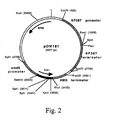


Classifications
-
- C—CHEMISTRY; METALLURGY
- C12—BIOCHEMISTRY; BEER; SPIRITS; WINE; VINEGAR; MICROBIOLOGY; ENZYMOLOGY; MUTATION OR GENETIC ENGINEERING
- C12N—MICROORGANISMS OR ENZYMES; COMPOSITIONS THEREOF; PROPAGATING, PRESERVING, OR MAINTAINING MICROORGANISMS; MUTATION OR GENETIC ENGINEERING; CULTURE MEDIA
- C12N9/00—Enzymes; Proenzymes; Compositions thereof; Processes for preparing, activating, inhibiting, separating or purifying enzymes
- C12N9/14—Hydrolases (3)
- C12N9/16—Hydrolases (3) acting on ester bonds (3.1)
- C12N9/18—Carboxylic ester hydrolases (3.1.1)
- C12N9/20—Triglyceride splitting, e.g. by means of lipase
-
- C—CHEMISTRY; METALLURGY
- C12—BIOCHEMISTRY; BEER; SPIRITS; WINE; VINEGAR; MICROBIOLOGY; ENZYMOLOGY; MUTATION OR GENETIC ENGINEERING
- C12N—MICROORGANISMS OR ENZYMES; COMPOSITIONS THEREOF; PROPAGATING, PRESERVING, OR MAINTAINING MICROORGANISMS; MUTATION OR GENETIC ENGINEERING; CULTURE MEDIA
- C12N9/00—Enzymes; Proenzymes; Compositions thereof; Processes for preparing, activating, inhibiting, separating or purifying enzymes
- C12N9/14—Hydrolases (3)
- C12N9/16—Hydrolases (3) acting on ester bonds (3.1)
- C12N9/18—Carboxylic ester hydrolases (3.1.1)
Definitions
- the present invention relates to isolated polypeptides having lysophospholipase activity and isolated nucleic acid sequences encoding the polypeptides.
- the invention also relates to nucleic acid constructs, vectors, and host cells comprising the nucleic acid sequences as well as methods for producing and using the polypeptides.
- Phospholipases are enzymes that participate in the hydrolysis of phospholipids which consist of a glycerol backbone with two fatty acids in an outer (sn-1) and the middle (sn-2) positions and esterified with phosphoric acid in the third position.
- the phosphoric acid may, in turn, be esterified to an amino alcohol.
- phospholipase activity can be distinguished which hydrolyze the fatty acyl moieties.
- Phospholipase A1 and A2 catalyze the deacylation of one fatty acyl group in the sn-1 and sn-2 positions, respectively, from a diacylglycerophospholipid to produce lysophospholipid.
- Lysophospholipase also called phospholipase B by the Nomenclature Committee of the International Union of Biochemistry on the Nomenclature and Classification of Enzymes ⁇ Enzyme Nomenclature, Academic Press, New York, 1992 ⁇
- a phospholipase B has been reported from Penicillium notatum (Saito et al ., 1991, Methods in Enzymology 197:446-456) which catalyzes the deacylation of both fatty acids from a diacylglycerophospholipid and intrinsicly possesses lysophospholipase activity.
- Fungal phospholipase genes have been cloned from several sources including Penicillum notatum (Masuda et al ., 1991, supra ), Torulaspora delbrueckii (Watanabe et al ., 1994, FEMS Microbiology Letters 124: 29-34), Saccharomyces cerevisiae (Lee e t al ., 1994, Journal of Biological Chemistry 269: 19725-19730), Aspergillus (JP 10155493), Neurospora crassa (EMBL 042791), and Schizosaccharomyces pombe (EMBL O13857).
- Penicillum notatum Mosuda et al ., 1991, supra
- Torulaspora delbrueckii Wanganabe et al ., 1994, FEMS Microbiology Letters 124: 29-34
- Saccharomyces cerevisiae Lee e t al .
- the present invention relates to isolated polypeptides having lysophospholipase activity selected from the group consisting of:
- the present invention also relates to isolated nucleic acid sequences encoding the polypeptides and to nucleic acid constructs, vectors, and host cells comprising the nucleic acid sequences as well as methods for producing and using the polypeptides.
- lysophospholipase activity is defined herein as a carboxylic ester hydrolysis activity which catalyzes the deacylation of one or both of the fatty acyl groups in the sn-1 and sn-2 positions of a diacylglyccrophospholipid.
- lysophospholipase activity is determined by incubating the lysophospholipase with lysolecithin (or L- ⁇ -lysophosphatidylcholine) in the presence of calcium chloride at 37°C.
- lysophospholipasc activity is defined as 1.0 ⁇ mole of free fatty acid produced per minute at 37°C, ph 5.0 or pH 7.0.
- the present invention relates to isolated polypeptides having an amino acid sequence which has a degree of identity to amino acids 38 to 654 of SEQ ID NO. 2, of at least about 65%, preferably at least about 70%, more preferably at least about 80%, even more preferably at least about 90%, most preferably at least about 95%, and even most preferably at least about 97%, which have lysophospholipase activity (hereinafter "homologous polypeptides").
- the homologous polypeptides have an amino acid sequence which differs by five amino acids, preferably by four amino acids, more preferably by three amino acids, even more preferably by two amino acids, and most preferably by one amino acid from amino acids 38 to 654 of SEQ ID NO. 2 or amino acids 17 to 648 of SEQ ID NO. 16.
- the polypeptides of the present invention comprise the amino acid sequence of SEQ ID NO. 2 or an allelic variant thereof; or a fragment thereof that has lysophospholipase activity.
- the polypeptide of the present invention comprise the amino acid sequence of SEQ ID NO. 2.
- the polypeptide of the present invention comprises amino acids 38 to 654 of SEQ ID NO. 2, which is the mature polypeptide of SEQ ID NO. 2, or an allelic variant thereof; or a fragment thereof, wherein the fragment has lysophospholipase activity.
- the polypeptide of the present invention comprises amino acids 38 to 654 of SEQ ID NO. 2.
- the polypeptide of the present invention consists of the amino acid sequence of SEQ ID NO. 2 or an allelic variant thereof; or a fragment thereof, wherein the fragment has lysophospholipase activity.
- the polypeptide of the present invention consists of the amino acid sequence of SEQ ID NO. 2.
- the polypeptide consists of amino acids 38 to 654 of SEQ ID NO. 2 or an allelic variant thereof; or a fragment thereof, wherein the fragment has lysophospholipase activity.
- the polypeptide consists of amino acids 38 to 654 of SEQ ID NO. 2.
- a fragment of SEQ ID NO. 2 is a polypeptide having one or more amino acids deleted from the amino and/or carboxyl terminus of this amino acid sequence.
- a fragment contains at least 500 amino acid residues, more preferably at least 550 amino acid residues, and most preferably at least 600 amino acid residues.
- allelic variant denotes any of two or more alternative forms of a gene occupying the same chromosomal locus. Allelic variation arises naturally through mutation, and may result in polymorphism within populations. Gene mutations can be silent (no change in the encoded polypeptide) or may encode polypeptides having altered amino acid sequences.
- An allelic variant of a polypeptide is a polypeptide encoded by an allelic variant of a gene.
- amino acid sequences of the homologous polypeptides may differ from the amino acid sequence of SEQ ID NO. 2 or the mature polypeptide thereof, by an insertion or deletion of one or more amino acid residues and/or the substitution of one or more amino acid residues by different amino acid residues.
- amino acid changes are of a minor nature, that is conservative amino acid substitutions that do not significantly affect the folding and/or activity of the protein; small deletions, typically of one to about 30 amino acids; small amino- or carboxyl-terminal extensions, such as an amino-terminal methionine residue; a small linker peptide of up to about 20-25 residues; or a small extension that facilitates purification by changing net charge or another function, such as a poly-histidine tract, an antigenic cpitope or a binding domain.
- conservative substitutions are within the group of basic amino acids (arginine, lysine and histidine), acidic amino acids (glutamic acid and aspartic acid), polar amino acids (glutamine and asparagine), hydrophobic amino acids (leucine, isoleucine and valine), aromatic amino acids (phenylalanine, tryptophan and tyrosine), and small amino acids (glycine, alanine, serine, threonine and methionine).
- Amino acid substitutions which do not generally alter the specific activity are known in the art and are described, for example, by H. Neurath and R.L. Hill, 1979, In, The Proteins , Academic Press, New York.
- the most commonly occurring exchanges are Ala/Ser, Val/Ile, Asp/Glu, Thr/Ser, Ala/Gly, Ala/Thr, Ser/Asn, Ala/Val, Ser/Gly, Tyr/Phe, Ala/Pro, Lys/Arg, Asp/Asn, Leu/Ile, Leu/Val, Ala/Glu, and Asp/Gly as well as these in reverse.
- nucleic acid sequence of SEQ ID NO. 1 or SEQ ID NO. 15 or a subsequence thereof, as well as the amino acid sequence of SEQ ID NO. 2 or SEQ ID NO. 16, or a fragment thereof, may be used to design a nucleic acid probe to identify and clone DNA encoding polypeptides having lysophospholipase activity from strains of different genera or species according to methods well known in the art.
- probes can be used for hybridization with the genomic or cDNA of the genus or species of interest, following standard Southern blotting procedures, in order to identify and isolate the corresponding gene therein.
- Such probes can be considerably shorter than the entire sequence, but should be at least 15.
- probes are typically labeled for detecting the corresponding gene (for example, with 32 P, 3 H, 35 S, biotin, or avidin).
- the nucleic acid probe is a nucleic acid sequence which encodes the polypeptide of SEQ ID NO. 2, or a subsequence thereof. In another preferred embodiment, the nucleic acid probe is SEQ ID NO. 1. In another preferred embodiment, the nucleic acid probe is nucleotides 214 to 2061 of SEQ ID NO. 1, which encodes a mature polypeptide having lysophospholipase activity. In another preferred embodiment, the nucleic acid probe is the nucleic acid sequence contained in plasmid pFB0346 which is contained in Escherichia coli NRRL B-30073, wherein the nucleic acid sequence encodes a polypeptide having lysophospholipase activity. In another preferred embodiment, the nucleic acid probe is the nucleic acid sequence encoding the mature polypeptide coding region contained in plasmid pFB0346 which is contained in Escherichia coli NRRL B-30073.
- the carrier material is finally washed three times each for 15 minutes using 2 x SSC, 0.2% SDS preferably at least at 45°C (very low stringency), more preferably at least at 50°C (low stringency), more preferably at least at 55°C (medium stringency), more preferably at least at 60°C (medium-high stringency), even more preferably at least at 65°C (high stringency), and most preferably at least at 70°C (very high stringency).
- 2 x SSC 0.2% SDS preferably at least at 45°C (very low stringency), more preferably at least at 50°C (low stringency), more preferably at least at 55°C (medium stringency), more preferably at least at 60°C (medium-high stringency), even more preferably at least at 65°C (high stringency), and most preferably at least at 70°C (very high stringency).
- stringency conditions are defined as prehybridization, hybridization, and washing post-hybridization at 5°C to 10°C below the calculated T m using the calculation according to Bolton and McCarthy (1962, Proceedings of the National Academy of Sciences USA 48:1390) in 0.9 M NaCl, 0.09 M Tris-HCl pH 7.6, 6 mM EDTA, 0.5% NP-40, 1X Denhardt's solution, 1 mM sodium pyrophosphale, 1 mM sodium monobasic phosphate, 0.1 mM ATP, and 0.2 mg of yeast RNA per ml following standard Southern blotting procedures.
- the carrier material is washed once in 6X SCC plus 0.1% SDS for 15 minutes and twice each for 15 minutes using 6X SSC at 5°C to 10°C below the calculated T m .
- the present invention relates to variants of the polypeptide having an amino acid sequence of SEQ ID NO. 2 comprising a substitution, deletion, and/or insertion of one or more amino acids.
- the amino acid sequences of the variant polypeptides may differ from the amino acid sequence of SEQ ID NO. 2, or the mature polypeptide thereof, by an insertion or deletion of one or more amino acid residues and/or the substitution of one or more amino acid residues by different amino acid residues.
- amino acid changes are of a minor nature, that is conservative amino acid substitutions that do not significantly affect the folding and/or activity of the protein; small deletions, typically of one to about 30 amino acids; small amino- or carboxyl-terminal extensions, such as an amino-terminal methionine residue; a small linker peptide of up to about 20-25 residues; or a small extension that facilitates purification by changing net charge or another function, such as a poly-histidine tract, an antigenic epitope or a binding domain.
- conservative substitutions are within the group of basic amino acids (arginine, lysine and histidine), acidic amino acids (glutamic acid and aspartic acid), polar amino acids (glutamine and asparagine), hydrophobic amino acids (leucine, isoleucine and valine), aromatic amino acids (phenylalanine, tryptophan and tyrosine), and small amino acids (glycine, alanine, serine, threonine and methionine).
- Amino acid substitutions which do not generally alter the specific activity are known in the art and are described, for example, by H. Neurath and R.L. Hill, 1979, In, The Proteins, Academic Press, New York.
- the most commonly occurring exchanges are Ala/Ser, Val/Ile, Asp/Glu, Thr/Ser, Ala/Gly, Ala/Thr, Ser/Asn, Ala/Val, Ser/Gly, Tyr/Phe, Ala/Pro, Lys/Arg, Asp/Asn, Leu/Ile, Leu/Val, Ala/Glu, and Asp/Gly as well as these in reverse.
- polypeptides of the present invention have at least 20%, preferably at least 40%, more preferably at least 60%, even more preferably at icast 80%, even more preferably at least 90%, and most preferably at least 100% of the lysophospholipase activity of the mature polypeptide of SEQ ID NO. 2.
- a polypeptide of the present invention may be obtained from microorganisms of any genus.
- the term "obtained from” as used herein in connection with a given source shall mean that the polypeptide encoded by the nucleic acid sequence is produced by the source or by a cell in which the nucleic acid sequence from the source has been inserted.
- the polypeptide is secreted extraccllularly.
- a polypeptide of the present invention may be a bacterial polypeptide.
- the polypeptide may be a gram positive bacterial polypeptide such as a Bacillus polypeptide, e . g ., a Bacillus alkalophilus, Bacillus amyloliquefaci e ns , Bacillus brevis, Bacillus circulans, Bacillus coagulans, Bacillus laurus, Bacillus lentus, Bacillus licheniformis, Bacillus megaterium, Bacillus stearothermophilus, Bacillus subtilis, or Bacillus thuringiensis polypeptide; or a Streptomyces polypeptide, e .
- a Streptomyces lividans or Streptomyces murinus polypeptide or a gram negative bacterial polypeptide, e . g ., an E. coli or a Pseudomonas sp. polypeptide.
- a polypeptide of the present invention may be a fungal polypeptide, and more preferably a yeast polypeptide such as a Candida, Kluyveromyces, Pichia, Saccharomyces, Schizosaccharomyces, or Yarrowia polypeptide; or more preferably a filamentous fungal polypeptide such as an Acremonium, Aspergillus, Aureobasidium, Cryptococcus, Filibasidium, Fusarium, Humicola, Magnaporthe, Mucor, Myceliophthora, Neocallimastix, Neurospora, Paecilomyces. Penicillium, Piromyces, Schizophyllum, Talaromyces, Thermoascus, Thielavia, Tolypocladium , or Trichoderma polypeptide.
- yeast polypeptide such as a Candida, Kluyveromyces, Pichia, Saccharomyces, Schizosaccharomyces, or Yarrowia poly
- the polypeptide is a Saccharomyces carlsbergensis, Saccharomyces cerevisiae, Saccharomyces diastaticus, Saccharomyces douglasii, Saccharomyces kluyveri , Saccharomyces norbensis or Saccharomyces oviformis polypeptide.
- the polypeptide is an Aspergillus aculeatus, Aspergillus awamori, Aspergillus foetidus, Aspergillus japonicus, Aspergillus nidulans, Aspergillus niger, Aspergillus oryzae, Humicola insolens, Humicola lanuginosa, Mucor miehei, Myceliophthora thermophila, Neurospora crassa, Penicillium purpurogenum, Trichoderma harzianum, Trichoderma koningii, Trichoderma longibrachiatum, Trichoderma reesei, or Trichoderma viride polypeptide.
- the polypeptide is a Fusarium bactridioides, Fusarium cerealis, Fusarium crookwellense, Fusarium culmorum, Fusarium graminearum, Fusarium graminum, Fusarium heterosporum, Fusarium negundi, Fusarium oxysporum, Fusarium reticulatum, Fusarium roseum, Fusarium sambucinum, Fusarium sarcochroum, Fusarium sporotrichioides, Fusarium sulphureum, Fusarium torulosum, Fusarium trichothecioides, Fusarium venenatum, or Fusarium verticillioides polypeptide.
- the Fusarium venenatum cell is Fusarium venenatum A3/5, which was originally deposited as Fusarium graminearum ATCC 20334 and recently reclassified as Fusarium venenatum by Yoder and Christianson, 1998, Fungal Genetics and Biology 23: 62-80 and O'Donnell et al ., 1998, Fungal Genetics and Biology 23: 57-67; as well as taxonomic equivalents of Fusarium venenatum regardless of the species name by which they are currently known.
- the Fusarium venenatum cell is a morphological mutant of Fusarium venenatum A3/5 or Fusarium venenatum ATCC 20334, as disclosed in WO 97/26330.
- the Fusarium verticillioides cell is Fusarium verticillioides CBS 650.96.
- taxonomic equivalents of Fusarium are defined by D.L. Hawksworth, P.M. Kirk, B.C. Sutton, and D.N. Pegler (editors), 1995, In Ainsworth & Bisby's Dictionary of the Fungi, Eighth Edition, CAB International, University Press, Cambridge, England, pp. 173-174.
- ATCC American Type Culture Collection
- DSM Deutsche Sammlung von Mikroorganismen und Zellkulturen GmbH
- CBS Centraalbureau Voor Schimmelcultures
- NRRL Northern Regional Research Center
- polypeptides may be identified and obtained from other sources including microorganisms isolated from nature (e.g. , soil, composts, water, etc.) using the above-mentioned probes. Techniques for isolating microorganisms from natural habitats are well known in the art.
- the nucleic acid sequence may then be derived by similarly screening a genomic or cDNA library of another microorganism. Once a nucleic acid sequence encoding a polypeptide has been detected with the probe(s), the sequence may be isolated or cloned by utilizing techniques which are known to those of ordinary skill in the art (see, e.g., Sambrook et al., 1989, supra ).
- an "isolated" polypeptide is a polypeptide which is essentially free of other non-lysophospholipase polypeptides, e.g. , at least about 20% pure, preferably at least about 40% pure, more preferably about 60% pure, even more preferably about 80% pure, most preferably about 90% pure, and even most preferably about 95% pure, as determined by SDS-PAGE.
- Polypeptides encoded by nucleic acid sequences of the present invention also include fused polypeptides or cleavable fusion polypeptides in which another polypeptide is fused at the N-terminus or the C-terminus of the polypeptide or fragment thereof.
- a fused polypeptide is produced by fusing a nucleic acid sequence (or a portion thereof) encoding another polypeptide to a nucleic acid sequence (or a portion thereof) of the present invention.
- Techniques for producing fusion polypeptides are known in the art, and include ligating the coding sequences encoding the polypeptides so that they are in frame and that expression of the fused polypeptide is under control of the same promoter(s) and terminator.
- the present invention also relates to isolated nucleic acid sequences which encode a polypeptide of the present invention.
- the nucleic acid sequence is set forth in SEQ ID NO. 1.
- the nucleic acid sequence is set forth in SEQ ID NO. 15.
- the nucleic acid sequence is the sequence contained in plasmid pFB0346 that is contained in Escherichia coli NRRL B-30073.
- the nucleic acid sequence is the sequence contained in Fusarium verticilliodes CBS 650.96.
- the nucleic acid sequence is the mature polypeptide coding region of SEQ ID NO. 1.
- the nucleic acid sequence is the mature polypeptide coding region of SEQ ID NO. 15. In another more preferred embodiment, the nucleic acid sequence is the mature polypeptide coding region contained in plasmid pFB0346 that is contained in Escherichia coli NRRL B-30073. In another more preferred embodiment, the nucleic acid sequence is the mature polypeptide coding region contained in Fusarium verticilliodes CBS 650.96.
- the present invention also encompasses nucleic acid sequences which encode a polypeptide having the amino acid sequence of SEQ ID NO. 2 or SEQ ID NO. 15, or the mature polypeptide thereof, which differ from SEQ ID NO. 1 or SEQ ID NO.
- the present invention also relates to subsequences of SEQ ID NO. I or SEQ ID NO. 15, which encode fragments of SEQ ID NO. 2 or SEQ ID NO. 17, respectively, that have lysophospholipase activity.
- the present invention also relates to mutant nucleic acid sequences comprising at least one mutation in the mature polypeptide coding sequence of SEQ ID NO. 1, in which the mutant nucleic acid sequence encodes a polypeptide which consists of amino acids 38 to 654 of SEQ ID NO. 2.
- the present invention also relates to mutant nucleic acid sequences comprising at least one mutation in the mature polypeptide coding sequence of SEQ ID NO. 15, in which the mutant nucleic acid sequence encodes a polypeptide which consists of amino acids 17 to 648 of SEQ ID NO. 16.
- the techniques used to isolate or clone a nucleic acid sequence encoding a polypeptide are known in the art and include isolation from genomic DNA, preparation from cDNA, or a combination thereof.
- the cloning of the nucleic acid sequences of the present invention from such genomic DNA can be effected, e.g. , by using the well known polymerase chain reaction (PCR) or amibody screening of expression libraries to detect cloned DNA fragments with shared structural features. See, e.g., Innis et al ., 1990, PCR: A Guide to Methods and Application , Academic Press, New York.
- nucleic acid amplification procedures such as ligase chain reaction (LCR), ligated activated transcription (LAT) and nucleic acid sequence-based amplification (NASBA) may be used.
- LCR ligase chain reaction
- LAT ligated activated transcription
- NASBA nucleic acid sequence-based amplification
- the nucleic acid sequence may be cloned from a strain of Fusarium , or another or related organism and thus, for example, may be an allelic or species variant of the polypeptide encoding region of the nucleic acid sequence.
- isolated nucleic acid sequence refers to a nucleic acid sequence which is essentially free of other nucleic acid sequences, e.g., at least about 20% pure, preferably at least about 40% pure, more preferably at least about 60% pure, even more preferably at least about 80% pure, and most preferably at least about 90% pure as determined by agarose electrophoresis.
- an isolated nucleic acid sequence can be obtained by standard cloning procedures used in genetic engineering to relocate the nucleic acid sequence from its natural location to a different site where it will be reproduced.
- the cloning procedures may involve excision and isolation of a desired nucleic acid fragment comprising the nucleic acid sequence encoding the polypeptide, insertion of the fragment into a vector molecule, and incorporation of the recombinant vector into a host cell where multiple copies or clones of the nucleic acid sequence will be replicated.
- the nucleic acid sequence may be of genomic, cDNA, RNA, semisynthetic, synthetic origin, or any combinations thereof.
- Modification of a nucleic acid sequence encoding a polypeptide of the present invention may be necessary for the synthesis of polypeptides substantially similar to the polypeptide.
- the term "substantially similar" to the polypeptide refers to non-naturally occurring forms of the polypeptide.
- These polypeptides may differ in some engineered way from the polypeptide isolated from its native source, e . g ., variants that differ in specific activity, thermostability, pH optimum, or the like.
- the variant sequence may be constructed on the basis of the nucleic acid sequence presented as the polypeptide encoding part of SEQ ID NO. 1 e .
- nucleotide substitutions which do not give rise to another amino acid sequence of the polypeptide encoded by the nucleic acid sequence, but which correspond to the codon usage of the host organism intended for production of the enzyme, or by introduction of nucleotide substitutions which may give rise to a different amino acid sequence.
- nucleotide substitution see, e . g ., Ford et al ., 1991, Protein Expression and Purification 2: 95-107.
- amino acid residues essential to the activity of the polypeptide encoded by the isolated nucleic acid sequence of the invention may be identified according to procedures known in the art, such as site-directed mutagenesis or alanine-scanning mutagenesis (see, e . g ., Cunningham and Wells, 1989, Science 244: 1081-1085).
- Sites of substrate-enzyme interaction can also be determined by analysis of the three-dimensional structure as determined by such techniques as nuclear magnetic resonance analysis, crystallography or photoaffinity labelling (see, e.g., de Vos et al ., 1992, Science 255: 306-312; Smith et al ., 1992, Journal of Molecular Biology 224: 899-904; Wlodaver et al ., 1992, FEBS Letters 309: 59-64).
- the present invention also relates to nucleic acid constructs comprising a nucleic acid sequence of the present invention operably linked to one or more control sequences which direct the expression of the coding sequence in a suitable host cell under conditions compatible with the control sequences.
- Expression will be understood to include any step involved in the production of the polypeptide including, but not limited to, transcription, post-transcriptional modification, translation, post-translational modification, and secretion.
- Nucleic acid construct is defined herein as a nucleic acid molecule, either single- or double-stranded, which is isolated from a naturally occurring gene or which has been modified to contain segments of nucleic acid which are combined and juxtaposed in a manner which would not otherwise exist in nature.
- nucleic acid construct is synonymous with the term expression casserte when the nucleic acid construct contains all the control sequences required for expression of a coding sequence of the present invention.
- coding sequence is defined herein as a portion of a nucleic acid sequence which directly specifies the amino acid sequence of its protein product.
- the boundaries of the coding sequence are generally determined by a ribosome binding site (prokaryotes) or by the ATG start codon (eukaryotes) located just upstream of the open reading frame at the 5' end of the mRNA and a transcription terminator sequence located just downstream of the open reading frame at the 3' end of the mRNA.
- a coding sequence can include, but is not limited to, DNA, cDNA, and recombinant nucleic acid sequences.
- An isolated nucleic acid sequence encoding a polypeptide of the present invention may be manipulated in a variety of ways to provide for expression of the polypeptide. Manipulation of the nucleic acid sequence prior to its insertion into a vector may be desirable or necessary depending on the expression vector. The techniques for modifying nucleic acid sequences utilizing recombinant DNA methods are well known in the art.
- control sequences is defined herein to include all components which are necessary or advantageous for the expression of a polypeptide of the present invention.
- Each control sequence may be native or foreign to the nucleic acid sequence encoding the polypeptide.
- control sequences include, but are not limited to, a leader, polyadenylation sequence, propeptide sequence, promoter, signal peptide sequence, and transcription terminator.
- the control sequences include a promoter, and transcriptional and translational stop signals.
- the control sequences may be provided with linkers for the purpose of introducing specific restriction sites facilitating ligation of the control sequences with the coding region of the nucleic acid sequence encoding a polypeptide.
- operably linked is defined herein as a configuration in which a control sequence is appropriately placed at a position relative to the coding sequence of the DNA sequence such that the control sequence directs the expression of a polypeptide.
- the control sequence may be an appropriate promoter sequence, a nucleic acid sequence which is recognized by a host cell for expression of the nucleic acid sequence.
- the promoter sequence contains transcriptional control sequences which mediate the expression of the polypeptide.
- the promoter may be any nucleic acid sequence which shows transcriptional activity in the host cell of choice including mutant, truncated, and hybrid promoters, and may be obtained from genes encoding extracellular or intracellular polypeptides either homologous or heterologous to the host cell.
- Suitable promoters for directing the transcription of the nucleic acid constructs of the present invention are the promoters obtained from the E . coli lac operon, Streptomyces coelicolor agarase gene ( dagA ), Bacillus subtilis levansucrase gene ( sacB ), Bacillus licheniformis alpha-amylase gene ( amyL ), Bacillus stearothermophilus maltogenic amylase gene ( amyM ), Bocillus amyloliquefaciens alpha-amylase gene ( amyQ ), Bacillus licheniformis penicillinase gene ( penP ), Bacillus subtilis xylA and xylB genes, and prokaryotic beta-lactamase gene (Villa-Kamaroff et al ., 1978, Proceedings of the National Academy of Sciences USA 75: 3727-3731), as well as the tac promoter (DeBoer et
- promoters for directing the transcription of the nucleic acid constructs of the present invention in a filamentous fungal host cell are promoters obtained from the genes for Aspergillus oryzae TAKA amylase, Rhizomucor miehei aspartic proteinase, Aspergillus niger neutral alpha-amylase, Aspergillus niger acid stable alpha-amylase, Aspergillus niger or Aspergillus awamori glucoamylase ( glaA ), Rhizomucor miehei lipase, Aspergillus oryzae alkaline protease, Aspergillus oryzae triose phosphate isomerase, Aspergillus nidulans acetamidase, and Fusarium oxysporum trypsin-like protease (WO 96/00787), as well as the NA2-tpi promoter (a hybrid of the promoters from the genes
- useful promoters are obtained from the genes for Saccharomyces cerevisiae enolase (ENO-1), Saccharomyces cerevisiae galactokinase (GAL1), Saccharomyces cerevisiae alcohol dehydrogenase/glyceraldehyde-3-phosphate dehydrogenase (ADH2/GAP), and Saccharomyces cerevisiae 3-phosphoglycerate kinase.
- ENO-1 Saccharomyces cerevisiae enolase
- GAL1 Saccharomyces cerevisiae galactokinase
- ADH2/GAP Saccharomyces cerevisiae alcohol dehydrogenase/glyceraldehyde-3-phosphate dehydrogenase
- Saccharomyces cerevisiae 3-phosphoglycerate kinase Other useful promoters for yeast host cells are described by Romanos et al., 1992, Yeast 8: 423
- the control sequence may also be a suitable transcription terminator sequence, a sequence recognized by a host cell to terminate transcription.
- the terminator sequence is operably linked to the 3' terminus of the nucleic acid sequence encoding the polypeptide. Any terminator which is functional in the host cell of choice may be used in the present invention.
- Preferred terminators for filamentous fungal host cells are obtained from the genes for Aspergillus oryzae TAKA amylase, Aspergillus niger glucoamylase, Aspergillus nidulans anthranilate synthase, Aspergillus niger alpha-glucosidase, and Fusarium oxysporum trypsin-like protease.
- Preferred terminators for yeast host cells are obtained from the genes for Saccharomyces cerevisiae enolase, Saccharomyces cerevisiae cytochrome C (CYC1), and Saccharomyces cerevisiae glyceraldehyde-3-phosphate dehydrogenase.
- Other useful terminators for yeast host cells are described by Romanos et al ., 1992, supra.
- the control sequence may also be a suitable leader sequence, a nontranslated region of an mRNA which is important for translation by the host cell.
- the leader sequence is operably linked to the 5' terminus of the nucleic acid sequence encoding the polypeptide. Any leader sequence that is functional in the host cell of choice may be used in the present invention.
- Preferred leaders for filamentous fungal host cells are obtained from the genes for Aspergillus oryzae TAKA amylase and Aspergillus nidulans triose phosphate isomerase.
- Suitable leaders for yeast host cells are obtained from the genes for Saccharomyces cerevisiae enolase (ENO-1), Saccharomyces cerevisiae 3-phosphoglycerate kinase, Saccharomyces cerevisiae alpha-factor, and Saccharomyces cerevisiae alcohol dehydrogenase/glyceraldehyde-3-phosphate dehydrogenase (ADH2/GAP).
- ENO-1 Saccharomyces cerevisiae enolase
- Saccharomyces cerevisiae 3-phosphoglycerate kinase Saccharomyces cerevisiae alpha-factor
- Saccharomyces cerevisiae alcohol dehydrogenase/glyceraldehyde-3-phosphate dehydrogenase ADH2/GAP
- the control sequence may also be a polyadenylation sequence, a sequence operably linked to the 3' terminus of the nucleic acid sequence and which, when transcribed, is recognized by the host cell as a signal to add polyadenosine residues to transcribed mRNA. Any polyadenylation sequence which is functional in the host cell of choice may be used in the present invention.
- Preferred polyadenylation sequences for filamentous fungal host cells are obtained from the genes for Aspergillus oryzae TAKA amylase, Aspergillus niger glucoamylase, Aspergillus nidulans anthranilate synthase, Fusarium oxysporum trypsin-like protease, and Aspergillus niger alpha-glucosidase.
- the control sequence may also be a signal peptide coding region that codes for an amino acid sequence linked to the amino terminus of a polypeptide and directs the encoded polypeptide into the cell's secretory pathway.
- the 5' end of the coding sequence of the nucleic acid sequence may inherently contain a signal peptide coding region naturally linked in translation reading frame with the segment of the coding region which encodes the secreted polypeptide.
- the 5' end of the coding sequence may contain a signal peptide coding region which is foreign to the coding sequence.
- the foreign signal peptide coding region may be required where the coding sequence does not naturally contain a signal peptide coding region.
- the foreign signal peptide coding region may simply replace the natural signal peptide coding region in order to enhance secretion of the polypeptide.
- any signal peptide coding region which directs the expressed polypeptide into the secretory pathway of a host cell of choice may be used in the present invention.
- Effective signal peptide coding regions for bacterial host cells are the signal peptide coding regions obtained from the genes for Bacillus NCIB 11837 maltogenic amylase, Bacillus stearothermophilus alpha-amylase, Bacillus licheniformis subtilisin, Bacillus licheniformis beta-lactamase, Bacillus stearothermophilus neutral proteases ( nprT, nprS, nprM ), and Bacillus subtilis prsA . Further signal peptides are described by Simonen and Palva, 1993, Microbiological Reviews 57: 109-137.
- Effective signal peptide coding regions for filamentous fungal host cells are the signal peptide coding regions obtained from the genes for Aspergillus oryzae TAKA amylase, Aspergillus niger neutral amylase, Aspergillus niger glucoamylase, Rhizomucor miehei aspartic proteinase, Humicola insolens cellulase, and Humicola lanuginosa lipase.
- the signal peptide coding region is nucleotides 100 to 150 of SEQ ID NO. 1 which encodes amino acids 1 to 17 of SEQ ID NO. 2.
- the signal peptide coding region is nucleotides 1 to 48 of SEQ ID NO. 15 which encodes amino acids 1 to 16 of SEQ ID NO. 16.
- Useful signal peptides for yeast host cells are obtained from the genes for Saccharomyces cerevisiae alpha-factor and Saccharomyces cerevisiae invertase. Other useful signal peptide coding regions are described by Romanos et al ., 1992, supra.
- the control sequence may also be a propeptide coding region that codes for an amino acid sequence positioned at the amino terminus of a polypeptide.
- the resultant polypeptide is known as a proenzyme or propolypeptide (or a zymogen in some cases).
- a propolypeptide is generally inactive and can be converted to a mature active polypeptide by catalytic or autocatalytic cleavage of the propeptide from the propolypeptide.
- the propeptide coding region may be obtained from the genes for Bacillus subtilis alkaline protease ( aprE ), Bacillus subtilis neutral protease ( nprT ), Saccharomyces cerevisiae alpha-factor, Rhizomucor miehei aspartic proteinase, and Myceliophthora thermophila laccase (WO 95/33836).
- the propeptide coding region is nucleotides 151 to 213 of SEQ ID NO. 1 which encodes amino acids 18 to 37 of SEQ ID NO. 2.
- the propeptide region is positioned next to the amino terminus of a polypeptide and the signal peptide region is positioned next to the amino terminus of the propeptide region.
- regulatory sequences which allow the regulation of the expression of the polypeptide relative to the growth of the host cell.
- regulatory systems are those which cause the expression of the gene to be turned on or off in response to a chemical or physical stimulus, including the presence of a regulatory compound.
- Regulatory systems in prokaryotic systems include the lac, tac, and trp operator systems.
- yeast the ADH2 system or GAL1 system may be used.
- filamentous fungi the TAKA alpha-amylase promoter, Aspergillus niger glucoamylase promoter, and Aspergillus oryzae glucoamylase promoter may be used as regulatory sequences.
- Other examples of regulatory sequences are those which allow for gene amplification.
- these include the dihydrofolate reductase gene which is amplified in the presence of methotrexate, and the metallothionein genes which are amplified with heavy metals.
- the nucleic acid sequence encoding the polypeptide would be operably linked with the regulatory sequence.
- the present invention also relates to nucleic acid constructs for altering the expression of an endogenous gene encoding a polypeptide of the present invention.
- the constructs may contain the minimal number of components necessary for altering expression of the endogenous gene.
- the nucleic acid constructs preferably contain (a) a targeting sequence, (b) a regulatory sequence, (c) an exon, and (d) a splice-donor site. Upon introduction of the nucleic acid construct into a cell, the construct inserts by homologous recombination into the cellular genome at the endogenous gene site.
- the targeting sequence directs the integration of elements (a)-(d) into the endogenous gene such that elements (b)-(d) are operably linked to the endogenous gene.
- the nucleic acid constructs contain (a) a targeting sequence, (b) a regulatory sequence, (c) an exon, (d) a splice-donor site, (e) an intron, and (f) a splice-acceptor site, wherein the targeting sequence directs the integration of elements (a)-(f) such that elements (b)-(f) are operably linked to the endogenous gene.
- the constructs may contain additional components such as a selectable marker.
- the introduction of these components results in production of a new transcription unit in which expression of the endogenous gene is altered.
- the new transcription unit is a fusion product of the sequences introduced by the targeting constructs and the endogenous gene.
- the gene is activated.
- homologous recombination is used to replace, disrupt, or disable the regulatory region normally associated with the endogenous gene of a parent cell through the insertion of a regulatory sequence which causes the gene to be expressed at higher levels than evident in the corresponding parent cell.
- the activated gene can be further amplified by the inclusion of an amplifiable selectable marker gene in the construct using methods well known in the art (see, for example, U.S. Patent No. 5,641,670).
- expression of the gene is reduced.
- the targeting sequence can be within the endogenous gene, immediately adjacent to the gene, within an upstream gene, or upstream of and at a distance from the endogenous gene.
- One or more targeting sequences can be used.
- a circular plasmid or DNA fragment preferably employs a single targeting sequence, while a linear plasmid or DNA fragment preferably employs two targeting sequences.
- the regulatory sequence of the construct can be comprised of one or more promoters, enhancers, scaffold-attachment regions or matrix attachment sites, negative regulatory elements, transcription binding sites, or combinations of these sequences.
- the constructs further contain one or more exons of the endogenous gene.
- An exon is defined as a DNA sequence which is copied into RNA and is present in a mature mRNA molecule such that the exon sequence is in-frame with the coding region of the endogenous gene.
- the exons can, optionally, contain DNA which encodes one or more amino acids and/or partially encodes an amino acid. Alternatively, the exon contains DNA which corresponds to a 5' non-encoding region.
- the nucleic acid construct is designed such that, upon transcription and splicing, the reading frame is in-frame with the coding region of the endogenous gene so that the appropriate reading frame of the portion of the mRNA derived from the second exon is unchanged.
- the splice-donor site of the constructs directs the splicing of one exon to another exon.
- the first exon lies 5' of the second exon
- the splice-donor site overlapping and flanking the first exon on its 3' side recognizes a splice-acceptor site flanking the second exon on the 5' side of the second exon.
- a splice-acceptor site like a splice-donor site, is a sequence which directs the splicing of one exon to another exon. Acting in conjunction with a splice-donor site, the splicing apparatus uses a splice-acceptor site to effect the removal of an intron.
- the present invention also relates to recombinant expression vectors comprising a nucleic acid sequence of the present invention, a promoter, and transcriptional and translational stop signals.
- the various nucleic acid and control sequences described above may be joined together to produce a recombinant expression vector which may include one or more convenient restriction sites to allow for insertion or substitution of the nucleic acid sequence encoding the polypeptide at such sites.
- the nucleic acid sequence of the present invention may be expressed by inserting the nucleic acid sequence or a nucleic acid construct comprising the sequence into an appropriate vector for expression.
- the coding sequence is located in the vector so that the coding sequence is operably linked with the appropriate control sequences for expression.
- the recombinant expression vector may be any vector (e . g ., a plasmid or virus) which can be conveniently subjected to recombinant DNA procedures and can bring about the expression of the nucleic acid sequence.
- the choice of the vector will typically depend on the compatibility of the vector with the host cell into which the vector is to be introduced.
- the vectors may be linear or closed circular plasmids.
- the vector may be an autonomously replicating vector, i . e ., a vector which exists as an extrachromosomal entity, the replication of which is independent of chromosomal replication, e.g. , a plasmid, an extrachromosomal element, a minichromosome, or an artificial chromosome.
- the vector may contain any means for assuring self-replication.
- the vector may be one which, when introduced into the host cell, is integrated into the genome and replicated together with the chromosome(s) into which it has been integrated.
- a single vector or plasmid or two or more vectors or plasmids which together contain the total DNA to be introduced into the genome of the host cell, or a transposon may be used.
- the vectors of the present invention preferably contain one or more selectable markers which permit easy selection of transformed cells.
- a selectable marker is a gene the product of which provides for biocide or viral resistance, resistance to heavy metals, prototrophy to auxotrophs, and the like.
- Examples of bacterial selectable markers are the dal genes from Bacillus subtilis or Bacillus licheniformis, or markers which confer antibiotic resistance such as ampicillin, kanamycin, chloramphenicol or tetracycline resistance.
- Suitable markers for yeast host cells are ADE2, HIS3, LEU2, LYS2, MET3, TRP1, and URA3.
- Selectable markers for use in a filamentous fungal host cell include, but are not limited to, amdS (acetamidase), argB (ornithine carbamoyltransferase), bar (phosphinothricin acetyltransferase), hph (hygromycin phosphotransferase), niaD (nitrate reductase), pyrG (orotidine-5'-phosphate decarboxylase), sC (sulfate adenyltransferase), and trpC (anthranilate synthase), as well as equivalents thereof.
- Preferred for use in an Aspergillus cell are the amdS and pyrG genes of Aspergillus nidulans or Aspergillus oryzae and the bar gene of Streptomyces hygroscopicus.
- the vectors of the present invention preferably contain an element(s) that permits stable integration of the vector into the host cell genome or autonomous replication of the vector in the cell independent of the genome of the cell.
- the vector may rely on the nucleic acid sequence encoding the polypeptide or any other element of the vector for stable integration of the vector into the genome by homologous or nonhomologous recombination.
- the vector may contain additional nucleic acid sequences for directing integration by homologous recombination into the genome of the host cell.
- the additional nucleic acid sequences enable the vector to be integrated into the host cell genome at a precise location(s) in the chromosome(s).
- the integrational elements should preferably contain a sufficient number of nucleic acids, such as 100 to 10,000 base pairs, preferably 400 to 10,000 base pairs, and most preferably 800 to 10,000 base pairs, which are highly homologous with the corresponding target sequence to enhance the probability of homologous recombination.
- the integrational elements may be any sequence that is homologous with the target sequence in the genome of the host cell.
- the integrational elements may be non-encoding or encoding nucleic acid sequences.
- the vector may be integrated into the genome of the host cell by non-homologous recombination.
- the vector may further comprise an origin of replication enabling the vector to replicate autonomously in the host cell in question.
- origins of replication are the origins of replication of plasmids pBR322, pUC 19, pACYC 177, and pACYC184 permitting replication in E. coli, and pUB110, pE194, pTA1060, and pAM131 permitting replication in Bacillus.
- origins of replication for use in a yeast host cell are the 2 micron origin of replication, ARS1, ARS4, the combination of ARS1 and CEN3, and the combination of ARS4 and CEN6.
- the origin of replication may be one having a mutation which makes its functioning temperature-sensitive in the host cell (see, e.g., Ehrlich, 1978, Proceedings of the National Academy of Sciences USA 75: 1433).
- More than one copy of a nucleic acid sequence of the present invention may be inserted into the host cell to increase production of the gene product.
- An increase in the copy number of the nucleic acid sequence can be obtained by integrating at least one additional copy of the sequence into the host cell genome or by including an amplifiable selectable marker gene with the nucleic acid sequence where cells containing amplified copies of the selectable marker gene, and thereby additional copies of the nucleic acid sequence, can be selected for by cultivating the cells in the presence of the appropriate selectable agent.
- the present invention also relates to recombinant host cells, comprising a nucleic acid sequence of the invention, which are advantageously used in the recombinant production of the polypeptides.
- a vector comprising a nucleic acid sequence of the present invention is introduced into a host cell so that the vector is maintained as a chromosomal integrant or as a self-replicating extra-chromosomal vector as described earlier.
- the term "host cell” encompasses any progeny of a parent cell that is not identical to the parent cell due to mutations that occur during replication. The choice of a host cell will to a large extent depend upon the gene encoding the polypeptide and its source.
- the host cell may be a unicellular microorganism, e.g. , a prokaryote, or a non-unicellular microorganism, e.g. , a eukaryote.
- Useful unicellular cells are bacterial cells such as gram positive bacteria including, but not limited to, a Bacillus cell, e.g., Bacillus alkalophilus, Bacillus amyloliquefaciens, Bacillus brevis, Bacillus circulans, Bacillus clausii, Bacillus coagulans, Bacillus lautus, Bacillus lentus, Bacillus licheniformis, Bacillus megaterium, Bacillus stearothermophilus, Bacillus subtilis, and Bacillus thuringiensis; or a Streptomyces cell, e.g., Streptomyces lividans and Streptomyces murinus, or gram negative bacteria such as E.
- a Bacillus cell e.g., Bacillus alkalophilus, Bacillus amyloliquefaciens, Bacillus brevis, Bacillus circulans, Bacillus clausii, Bacillus coagulans, Bacillus
- the bacterial host cell is a Bacillus lentus, Bacillus licheniformis, Bacillus stearothermophilus , or Bacillus subtilis cell.
- the Bacillus cell is an alkalophilic Bacillus.
- the introduction of a vector into a bacterial host cell may, for instance, be effected by protoplast transformation (see, e.g., Chang and Cohen, 1979, Molecular General Genetics 168: 111-115), using competent cells (see, e.g. , Young and Spizizin, 1961, Journal of Bacteriology 81: 823-829, or Dubnau and Davidoff-Abelson, 1971, Journal of Molecular Biology 56: 209-221), electroporation (see, e.g., Shigekawa and Dower, 1988, Biotechniques 6: 742-751), or conjugation (see, e.g., Koehler and Thorne, 1987, Journal of Bacteriology 169: 5771-5278).
- the host cell may be a eukaryote, such as a mammalian, insect, plant, or fungal cell.
- the host cell is a fungal cell.
- "Fungi” as used herein includes the phyla Ascomycota, Basidiomycota, Chytridiomycota, and Zygomycota (as defined by Hawksworth et al., In, Ainsworth and Bisby's Dictionary of The Fungi, 8th edition, 1995, CAB International, University Press, Cambridge, UK) as well as the Oomycota (as cited in Hawksworth et al ., 1995, supra, page 171) and all mitosporic fungi (Hawksworth et al ., 1995, supra ).
- the fungal host cell is a yeast cell.
- yeast as used herein includes ascosporogenous yeast (Endomycetales), basidiosporogenous yeast, and yeast belonging to the Fungi Imperfecti (Blastomycetes). Since the classification of yeast may change in the future, for the purposes of this invention, yeast shall be defined as described in Biology and Activities of Yeast (Skinner, F.A., Passmore, S.M., and Davenport, R.R., eds, Soc. App. Bacteriol. Symposium Series No. 9, 1980).
- the yeast host cell is a Candida, Hansenula, Kluyveromyces, Pichia, Saccharomyces, Schizosaccharomyces, or Yarrowia cell.
- the yeast host cell is a Saccharomyces carlsbergensis, Saccharomyces cerevisiae, Saccharomyces diastaticus, Saccharomyces douglasii, Saccharomyces kluyveri, Saccharomyces norbensis or Saccharomyces oviformis cell.
- the yeast host cell is a Kluyveromyces lactis cell.
- the yeast host cell is a Yarrowia lipolytica cell.
- the fungal host cell is a filamentous fungal cell.
- filamentous fungi include all filamentous forms of the subdivision Eumycota and Oomycota (as defined by Hawksworth et al., 1995, supra ).
- the filamentous fungi are generally characterized by a mycelial wall composed of chitin, cellulose, glucan, chitosan, mannan, and other complex polysaccharides.
- Vegetative growth is by hyphal elongation and carbon catabolism is obligately aerobic.
- vegetative growth by yeasts such as Saccharomyces cerevisiae is by budding of a unicellular thallus and carbon catabolism may be fermentative.
- the filamentous fungal host cell is a cell of a species of, but not limited to, Acremonium, Aspergillus, Fusarium, Humicola, Mucor, Myceliophthora, Neurospora, Penicillium, Thielavia, Tolypocladium , or Trichoderma.
- the filamentous fungal host cell is an Aspergillus awamori, Aspergillus foetidus, Aspergillus japonicus, Aspergillus nidulans, Aspergillus niger or Aspergillus oryzae cell.
- the filamentous fungal host cell is a Fusarium bactridioides, Fusarium cerealis, Fusarium crookwellense, Fusarium culmorum, Fusarium graminearum, Fusarium graminum, Fusarium heterosporum, Fusarium negundi, Fusarium oxysporum, Fusarium reticulatum, Fusarium roseum, Fusarium sambucinum, Fusarium sarcochroum, Fusarium sporotrichioides, Fusarium sulphureum, Fusarium torulosum, Fusarium trichothecioides, Fusarium venenatum, or Fusarium verticillioides cell.
- Fusarium bactridioides Fusarium cerealis, Fusarium crookwellense, Fusarium culmorum, Fusarium graminearum, Fusarium graminum, Fu
- the filamentous fungal parent cell is a Fusarium venenatum (Nirenberg sp. nov.) cell.
- the filamentous fungal host cell is a Humicola insolens, Humicola lanuginosa, Mucor miehei, Myceliophthora thermophila, Neurospora crassa, Penicillium purpurogenum, Thielavia terrestris, Trichoderma harzianum, Trichoderma koningii, Trichoderma longibrachiatum, Trichoderma reesei, or Trichoderma viride cell.
- Fungal cells may be transformed by a process involving protoplast formation, transformation of the protoplasts, and regeneration of the cell wall in a manner known per se. Suitable procedures for transformation of Aspergillus host cells are described in EP 238 023 and Yelton et al ., 1984, Proceedings of the National Academy of Sciences USA 81: 1470-1474. Suitable methods for transforming Fusarium species are described by Malardier et al., 1989, Gene 78: 147-156, and WO 96/00787. Yeast may be transformed using the procedures described by Becker and Guarente, In Abelson, J.N.
- the present invention also relates to methods for producing a polypeptide of the present invention comprising (a) cultivating a strain, which in its wild-type form is capable of producing the polypeptide, to produce a supernatant comprising the polypeptide; and (b) recovering the polypeptide.
- the strain is of the genus Fusarium, and more preferably Fusarium venenatum or Fusarium verticillioides.
- the present invention also relates to methods for producing a polypeptide of the present invention comprising (a) cultivating a host cell under conditions conducive for production of the polypeptide; and (b) recovering the polypeptide.
- the present invention also relates to methods for producing a polypeptide of the present invention comprising (a) cultivating a host cell under conditions conducive for production of the polypeptide, wherein the host cell comprises a mutant nucleic acid sequence having at least one mutation in the mature polypeptide coding region of SEQ ID NO. 1 or SEQ ID NO. 15, wherein the mutant nucleic acid sequence encodes a polypeptide which consists of amino acids 38 to 654 of SEQ ID NO. 2 or amino acids 17 to 648 of SEQ ID NO. 16, respectively, and (b) recovering the polypeptide.
- the present invention further relates to methods for producing a polypeptide of the present invention comprising (a) cultivating a homologously recombinant cell, having incorporated therein a new transcription unit comprising a regulatory sequence, an exon, and/or a splice donor site operably linked to a second exon of an endogenous nucleic acid sequence encoding the polypeptide, under conditions conducive for production of the polypeptide; and (b) recovering the polypeptide.
- the methods are based on the use of gene activation technology, for example, as described in U.S. Patent No. 5,641,670.
- the cells are cultivated in a nutrient medium suitable for production of the polypeptide using methods known in the art.
- the cell may be cultivated by shake flask cultivation, and small-scale or large-scale fermentation (including continuous, batch, fed-batch, or solid state fermentations) in laboratory or industrial fermentors performed in a suitable medium and under conditions allowing the polypeptide to be expressed and/or isolated.
- the cultivation takes place in a suitable nutrient medium comprising carbon and nitrogen sources and inorganic salts, using procedures known in the art. Suitable media are available from commercial suppliers or may be prepared according to published compositions ( e.g. , in catalogues of the American Type Culture Collection). If the polypeptide is secreted into the nutrient medium, the polypeptide can be recovered directly from the medium. If the polypeptide is not secreted, it can be recovered from cell lysates.
- the polypeptides may be detected using methods known in the art that are specific for the polypeptides. These detection methods may include use of specific antibodies, formation of an enzyme product, or disappearance of an enzyme substrate. For example, an enzyme assay may be used to determine the activity of the polypeptide as described herein.
- the resulting polypeptide may be recovered by methods known in the art.
- the polypeptide may be recovered from the nutrient medium by conventional procedures including, but not limited to, centrifugation, filtration, extraction, spray-drying, evaporation, or precipitation.
- polypeptides of the present invention may be purified by a variety of procedures known in the art including, but not limited to, chromatography (e . g ., ion exchange, affinity, hydrophobic, chromatofocusing, and size exclusion), electrophoretic procedures (e . g ., preparative isoelectric focusing), differential solubility (e . g ., ammonium sulfate precipitation), SDS-PAGE, or extraction (see, e . g ., Protein Purification , J.-C. Janson and Lars Ryden, editors, VCH Publishers, New York, 1989).
- chromatography e . g ., ion exchange, affinity, hydrophobic, chromatofocusing, and size exclusion
- electrophoretic procedures e . g ., preparative isoelectric focusing
- differential solubility e . g ., ammonium sulfate precipitation
- SDS-PAGE or extraction
- the present invention also relates to methods for producing a mutant cell of a parent cell, which comprises disrupting or deleting a nucleic acid sequence encoding the polypeptide or a control sequence thereof, which results in the mutant cell producing less of the polypeptide than the parent cell when cultivated under the same conditions.
- strains which have reduced lysophospholipase activity may be conveniently accomplished by modification or inactivation of a nucleic acid sequence necessary for expression of the polypeptide having lysophospholipase activity in the cell.
- the nucleic acid sequence to be modified or inactivated may be, for example, a nucleic acid sequence encoding the polypeptide or a part thereof essential for exhibiting lysophospholipase activity, or the nucleic acid sequence may have a regulatory function required for the expression of the polypeptide from the coding sequence of the nucleic acid sequence.
- An example of such a regulatory or control sequence may be a promoter sequence or a functional part thereof, i . e ., a part which is sufficient for affecting expression of the polypeptide.
- Other control sequences for possible modification are described above.
- Modification or inactivation of the nucleic acid sequence may be performed by subjecting the cell to mutagenesis and selecting or screening for cells in which the lysophospholipase producing capability has been reduced.
- the mutagenesis which may be specific or random, may be performed, for example, by use of a suitable physical or chemical mutagenizing agent, by use of a suitable oligonucleotide, or by subjecting the DNA sequence to PCR generated mutagenesis.
- the mutagenesis may be performed by use of any combination of these mutagenizing agents.
- Examples of a physical or chemical mutagenizing agent suitable for the present purpose include ultraviolet (UV) irradiation, hydroxylamine, N-methyl-N'-nitro-N-nitrosoguanidine (MNNG), O-methyl hydroxylamine, nitrous acid, ethyl methane sulphonate (EMS), sodium bisulphite, formic acid, and nucleotide analogues.
- UV ultraviolet
- MNNG N-methyl-N'-nitro-N-nitrosoguanidine
- EMS ethyl methane sulphonate
- sodium bisulphite formic acid
- nucleotide analogues examples include ultraviolet (UV) irradiation, hydroxylamine, N-methyl-N'-nitro-N-nitrosoguanidine (MNNG), O-methyl hydroxylamine, nitrous acid, ethyl methane sulphonate (EMS), sodium bisulphite, formic acid, and nucleotide ana
- the mutagenesis is typically performed by incubating the cell to be mutagenized in the presence of the mutagenizing agent of choice under suitable conditions, and selecting for cells exhibiting reduced lysophospholipase activity or production.
- Modification or inactivation of production of a polypeptide of the present invention may be accomplished by introduction, substitution, or removal of one or more nucleotides in the nucleic acid sequence encoding the polypeptide or a regulatory element required for the transcription or translation thereof.
- nucleotides may be inserted or removed so as to result in the introduction of a stop codon, the removal of the start codon, or a change of the open reading frame.
- modification or inactivation may be accomplished by site-directed mutagenesis or PCR generated mutagenesis in accordance with methods known in the art.
- the modification may be performed in vivo, i . e ., directly on the cell expressing the nucleic acid sequence to be modified, it is preferred that the modification be performed in vitro as exemplified below.
- a nucleic acid sequence corresponding to the endogenous gene or gene fragment of interest is mutagenized in vitro to produce a defective nucleic acid sequence which is then transformed into the host cell to produce a defective gene.
- the defective nucleic acid sequence replaces the endogenous gene or gene fragment. It may be desirable that the defective gene or gene fragment also encodes a marker which may be used for selection of transformants in which the gene encoding the polypeptide has been modified or destroyed.
- modification or inactivation of the nucleic acid sequence may be performed by established anti-sense techniques using a nucleotide sequence complementary to the polypeptide encoding sequence. More specifically, production of the polypeptide by a cell may be reduced or eliminated by introducing a nucleotide sequence complementary to the nucleic acid sequence encoding the polypeptide which may be transcribed in the cell and is capable of hybridizing to the polypeptide mRNA produced in the cell. Under conditions allowing the complementary anti-sense nucleotide sequence to hybridize to the polypeptide mRNA, the amount of polypeptide translated is thus reduced or eliminated.
- the cell to be modified in accordance with the methods of the present invention is of microbial origin, for example, a fungal strain which is suitable for the production of desired protein products, either homologous or heterologous to the cell.
- the combined pH and temperature treatment is preferably carried out at a pH in the range of 6.5-8.0 and a temperature in the range of 45-70°C for a sufficient period of time to attain the desired effect, where typically, 30 to 60 minutes is sufficient.
- the methods used for cultivation and purification of the product of interest may be performed by methods known in the art.
- the methods of the present invention for producing an essentially lysaphospholipase-free product is of particular interest in the production of eukaryotic polypeptides, in particular fungal proteins such as enzymes.
- the enzyme may be selected from, e . g ., an amylolytic enzyme, lipolytic enzyme, proteolytic enzyme, cellulytic enzyme, oxidoreductase, or plant cell-wall degrading enzyme.
- enzymes include an aminopeptidase, amylase, amyloglucosidase, carbohydrasc, carboxypeptidase, catalase, cellulase, chitinase, cutinase, cyclodextrin glycasyltransferase, deoxyribonuclease, esterase, galactosidase, beta-galactosidase, glucoamylase, glucose oxidase, glucosidase, haloperoxidase, hemicellulase, invertase, isomerase, laccase, ligase, lipase, lyase, mannosidase, oxidase, pectinolytic enzyme, peroxidase, phytase, phenoloxidase, polyphenoloxidase, proteolytic enzyme, ribonuclease, transferase, transglutamina
- eukaryotic polypeptides includes not only native polypeptides, but also those polypeptides, e . g ., enzymes, which have been modified by amino acid substitutions, deletions or additions, or other such modifications to enhance activity, thermostability, pH tolerance and the like.
- the present invention is also directed to methods for using the polypeptides having lysophospholipase activity.
- polypeptides of the present invention may be used in any application where it is desired to hydrolyze the fatty acyl group(s) of a phospholipid or lysophospholipid, such as lecithin or lysolecithin.
- the polypeptides of the present invention are preferably used at a pH optimal for activity.
- a polypeptide having lysophospholipase activity of the present invention may be used for degumming an aqueous carbohydrate solution or slurry to improve its filterability, particularly, a starch hydrolysate, especially a wheat starch hydrolysate which is difficult to filter and yields cloudy filtrates.
- the treatment may be performed using methods well known in the art. See, for example, EP 219,269 and EP 808,903.
- a polypeptide having lysophospholipase activity of the present invention may be used in a process to reduce the phospholipid content in an edible oil by treating the oil with the polypeptide to hydrolyze a major portion of the phospholipid and separating an aqueous phase containing the hydrolyzed phospholipid from the oil.
- Such a process is applicable to the purification of any edible oil which contains phospholipid, e.g. , vegetable oil such as soybean oil, rape seed oil, and sunflower oil.
- the oil Prior to the lysophospholipase treatment, the oil is preferably pretreated to remove slime (mucilage), e.g. , by wet refining.
- the oil will contain 50-250 ppm of phosphorus as phospholipid at the beginning of the treatment with the lysophospholipase, and the treatment may reduce the phosphorus value to below 5-10 ppm.
- the lysophospholipase treatment is conducted by dispersing an aqueous solution of the lysophospholipase, preferably as droplets with an average diameter below 10 ⁇ m.
- the amount of water is preferably 0.5-5% by weight in relation to the oil.
- An emulsifier may optionally be added. Mechanical agitation may be applied to maintain the emulsion.
- the lysophospholipase treatment can be conducted at a pH in the range of about 1.5 to about 5.0.
- the process pH may be in the range of about 3.5 to about 5 to maximize the enzyme's performance, or a pH in the range of about 1.5 to about 3 ( e.g. , 2-3) may be used in order to suppress the alkaline hydrolysis of triglycerides (saponification).
- the pH may be adjusted by adding citric acid, a citrate buffer, or hydrochloric acid.
- a suitable temperature is generally 30-70°C (particularly 30-45°C, e.g. , 35-40°C).
- the reaction time will typically be 1-12 hours ( e.g. , 2-6 hours).
- a suitable enzyme dosage will usually be 0.1-10 mg per liter ( e.g. , 0.5-5 mg per liter).
- the lysophospholipase treatment may be conducted batchwise, e.g., in a tank with stirring, or it may be continuous, e.g., a series of stirred tank reactors.
- the lysophospholipase treatment is followed by separation of an aqueous phase and an oil phase.
- the separation may be performed by conventional means, e.g. , centrifugation.
- the aqueous phase will contain lysophospholipase, and the enzyme may be re-used to improve the process economy.
- the treatment may be performed using any of the methods known in the art. See, for example, U.S. Patent No. 5,264,367, EP 654,527, JP-A 2-153997.
- a polypeptide having lysophospholipase activity of the present invention may be used in the preparation of dough, bread, or cakes.
- the lysophospholipase is added to the ingredients of a dough which is kneaded and baked to make the bread using methods well known in the art. See, for example, U.S. Patent No. 4,567,046, EP 426,211, JP-A 60-78529, JP-A 62-111629, and JP-A 63-258528.
- the present invention also relates to methods for preparing a dough or a baked product comprising incorporating into the dough an effective amount of a polypeptide of the present invention which improves one or more properties of the dough or the baked product obtained from the dough relative to a dough or a baked product in which the polypeptide is not incorporated.
- incorporating into the dough is defined herein as adding the polypeptide having lysophospholipase activity to the dough, any ingredient from which the dough is to be made, and/or any mixture of dough ingredients from which the dough is to be made.
- the lysophospholipase may be added in any step of the dough preparation and may be added in one, two, or more steps.
- the lysophospholipase is added to the ingredients of a dough which is kneaded and baked to make the baked product using methods well known in the art. See, for example, U.S. Patent No. 4,567,046, EP 426,211, JP-A 60-78529, JP-A 62-111629, and JP-A 63-258528.
- an effective amount is defined herein as an amount of the polypeptide having lysophospholipase activity that is sufficient for providing a measurable effect on at least one property of interest of the dough and/or baked product.
- improved property is defined herein as any property of a dough and/or a product obtained from the dough, particularly a baked product, which is improved by the action of the lysophospholipase activity relative to a dough or product in which the polypeptide having lysophospholipase activity is not incorporated.
- the improved property may include, but is not limited to, increased strength of the dough, increased elasticity of the dough, increased stability of the dough, reduced stickiness of the dough, improved extensibility of the dough, improved machinability of the dough, increased volume of the baked product, improved crumb structure of the baked product, improved softness of the baked product, improved flavor of the baked product, and/or improved antistaling of the baked product.
- the improved property may be determined by comparison of a dough and/or a baked product prepared with and without addition of a polypeptide having lysophospholipase activity of the present invention in accordance with the methods of the present invention. Techniques which can be used to determine improvements achieved by use of the methods of present invention are described below in the Examples. Organoleptic qualities may be evaluated using procedures well established in the baking industry, and may include, for example, the use of a panel of trained taste-testers.
- the term "increased strength of the dough” is defined herein as the property of a dough that has generally more elastic properties and/or requires more work input to mould and shape.
- the term "increased elasticity of the dough” is defined herein as the property of a dough which has a higher tendency to regain its original shape after being subjected to a certain physical strain.
- the term "increased stability of the dough” is defined herein as the property of a dough that is less susceptible to mechanical abuse thus better maintaining its shape and volume.
- reduced stickiness of the dough is defined herein as the property of a dough that has less tendency to adhere to surfaces, e.g. , in the dough production machinery, and is either evaluated empirically by the skilled test baker or measured by the use of a texture analyzer ( e.g. , TAXT2) as known in the art.
- a texture analyzer e.g. , TAXT2
- improved extensibility of the dough is defined herein as the property of a dough that can be subjected to increased strain or stretching without rupture.
- improved machinability of the dough is defined herein as the property of a dough that is generally less sticky and/or more firm and/or more elastic.
- the term "increased volume of the baked product” is measured as the specific volume of a given loaf of bread (volume/weight) determined typically by the traditional rape seed displacement method.
- improved crumb structure of the baked product is defined herein as the property of a baked product with finer and/or thinner cell walls in the crumb and/or more uniform/homogenous distribution of cells in the crumb and is usually evaluated empirically by the skilled test baker.
- improved softness of the baked product is the opposite of "firmness” and is defined herein as the property of a baked product that is more easily compressed and is evaluated either empirically by the skilled test baker or measured by the use of a texture analyzer (e.g. , TAXT2) as known in the art.
- a texture analyzer e.g. , TAXT2
- the term "improved flavor of the baked product" is evaluated by a trained test panel.
- improved antistaling of the baked product is defined herein as the properties of a baked product that have a reduced rate of deterioration of quality parameters, e.g. , softness and/or elasticity, during storage.
- the term "dough” is defined herein as a mixture of flour and other ingredients firm enough to knead or roll.
- the dough may be fresh, frozen, pre-bared, or pre-baked.
- the preparation of frozen dough is described by Kulp and Lorenz in Frozen and Refrigerated Doughs and Batters.
- baked product is defined herein as any product prepared from a dough, either of a soft or a crisp character.
- baked products whether of a white, light or dark type, which may be advantageously produced by the present invention are bread (in particular white, whole-meal or rye bread), typically in the form of loaves or rolls, French baguette-type bread, pasta, pita bread, tortillas, tacos, cakes, pancakes, biscuits, cookies, pie crusts, steamed bread, and crisp bread, and the like.
- the polypeptide having lysophospholipase activity and/or additional enzymes to be used in the methods of the present invention may be in any form suitable for the use in question, e.g. , in the form of a dry powder, agglomerated powder, or granulate, in particular a non-dusting granulate, liquid, in particular a stabilized liquid, or protected enzyme.
- Granulates and agglomerated powders may be prepared by conventional methods, e.g. , by spraying the lysophospholipase onto a carrier in a fluid-bed granulator.
- the carrier may consist of particulate cores having a suitable particle size.
- the carrier may be soluble or insoluble, e.g., a salt (such as NaCl or sodium sulfate), sugar (such as sucrose or lactose), sugar alcohol (such as sorbitol), starch, rice, corn grits, or soy.
- a salt such as NaCl or sodium sulfate
- sugar such as sucrose or lactose
- sugar alcohol such as sorbitol
- starch rice, corn grits, or soy.
- the lysophospholipase and/or additional enzymes may be contained in slow-release formulations. Methods for preparing slow-release formulations are well known in the art. Liquid enzyme preparations may, for instance, be stabilized by adding nutritionally acceptable stabilizers such as a sugar, sugar alcohol, or another polyol, and/or lactic acid or another organic acid according to established methods.
- the polypeptide having lysophospholipase activity is in the form of a dry product, e.g. , a non-dusting granulate, whereas for inclusion together with a liquid it is advantageously in a liquid form.
- the additional enzyme may be of any origin, including mammalian and plant, and preferably of microbial (bacterial, yeast or fungal) origin and may be obtained by techniques conventionally used in the art.
- the additional enzyme may be an amylase, such as an alpha-amylase (useful for providing sugars fermentable by yeast and retarding staling) or beta-amylase, cyclodextrin glucanotransferase, peptidase, in particular, an exopeptidase (useful in flavour enhancement), transglutaminase, lipase (useful for the modification of lipids present in the dough or dough constituents so as to soften the dough), phospholipase (useful for the modification of lipids present in the dough or dough constituents so as to soften the dough and improve gas retention in the dough), cellulase, hemicellulase, in particular a pentosanase such as xylanase (useful for the partial hydrolysis of pentosans which increases the extensibility of the dough), protease (useful for gluten weakening in particular when using hard wheat flour), protein disulfide isomerase, e
- a protein disulfide isomerase as disclosed in WO 95/00636, glycosyltransferase, peroxidase (useful for improving the dough consistency), laccase, or oxidase, e.g. , an aldose oxidase, glucose oxidase, pyranose oxidase, lipoxygenase, or L-amino acid oxidase (useful in improving dough consistency).
- these activities may be added separately or together with the polypeptide having lysophospholipase activity, optionally as constituent(s) of the bread-improving and/or dough-improving composition.
- the other enzyme activities may be any of the enzymes described above and may be dosed in accordance with established baking practices.
- the present invention also relates to methods for preparing a baked product, comprising baking a dough obtained by a method of the present invention to produce a baked product-
- the baking of the dough to produce a baked product may be performed using methods well known in the art.
- Chemicals used as buffers and substrates were commercial products of at least reagent grade.
- COVE trace metals solution was composed per liter of 0.04 g of NaB 4 O 2 ⁇ 10H 2 O, 0.4 g of CuSO 4 ⁇ 5H 2 O, 1.2 g of FeSO 4 ⁇ 7H 2 O, 0.7 g of MnSO 4 ⁇ H 2 O, 0.8 g of Na 2 MoO 2 ⁇ 2H 2 O, and 10 g of ZnSO 4 ⁇ 7H 2 O.
- 50X COVE salts solution was composed per liter of 26 g of KCl, 26 g of MgSO 4 -7H 2 O, 76 g of KH 2 PO 4 , and 50 ml of COVE trace metals.
- COVE medium was composed per liter of 342.3 g of sucrose, 20 ml of 50X COVE salt solution, 10 ml of 1 M acetamide, 10 ml of 1.5 M CsCl 2 , and 25 g of Noble agar.
- 50X Vogels medium was composed per liter of 150 g of sodium citrate, 250 g of KH 2 PO 4 , 10 g of MgSO 4 ⁇ 7H 2 O, 10 g of CaCl 2 ⁇ 2H 2 O, 2.5 ml of biotin stock solution, and 5.0 ml of trace metals solution.
- Trace metals solution was composed per liter of 14.3 g of ZnSO 4 ⁇ 7H 2 O, 2.5 g of CuSO 4 ⁇ 5H 2 O, 0.5 g of NiCl 2 , 13.8 g of FeSO 4 , 8.5 g of MnSO 4 , and 3.0 g of citric acid.
- COVE top agarose was composed per liter of 20 ml of 50X COVE salts, 0.8 M sucrose, 1.5 M cesium chloride, 1.0 M acetamide, and 10 g of low melt agarose, pH adjusted to 6.0.
- RA sporulation medium was composed per liter of 50 g of succinic acid, 12.1 g of NaNO 3 , 1 g of glucose, 20 ml of 50X Vogels, and 0.5 ml of a 10 mg/ml NaMoO 4 stock solution, pH to 6.0.
- YEPG medium was composed per liter of 10 g of yeast extract, 20 g of peptone, and 20 g of glucose.
- STC was composed of 0.8 M sorbitol, 25 mM Tris pH 8, 25 mM CaCl 2 .
- SPTC was composed of 40% PEG 4000, 0.8 M sorbitol, 25 mM Tris pH 8, 25 mM CaCl 2 .
- M400Da medium was composed per liter of 50 g of maltodextrin, 2 g of MgSO 4 ⁇ 7H 2 O, 2 g of KH 2 PO 4 , 4 g of citric acid, 8 g of yeast extract, 2 g of urea, and 1 ml of COVE trace metals solution.
- 10X basal salts w/o amino acid was composed per liter of 66.8 g of yeast nitrogen base w/o amino acids (Diffco), 100 g of succinic acid, and 60 g of NaOH.
- SC Ura-glc medium was composed per liter of 100 ml of 20% glucose, 100 ml of 10X basal salts w/o amino acid, 25 ml of 20% (w/v) casamino acid, 4 ml of 5% of threonine, 10 ml of 1% tryptophan, and 20 g of Agar Noble.
- SC Ura-gal medium was composed per liter of 100 ml of 20% galactose, 100 ml of 10X basal salts w/o amino acid , 25 ml of 20% (w/v) casamino acid, 4 ml of 5% of threonine, 10 ml of 1% tryptophan and 20 g of Noble agar.
- YPD medium was composed per liter of 10 g of yeast extract, 20 g of bactopeptone, and 100 ml of 20% glucose.
- 1X TE/LiAc was composed per 10 ml of 1 ml of 10X TE (100 mM of Tris and 10 mM of EDTA at pH), 1 ml of 1 M lithium acetate, and 8 ml of milli Q water.
- PEG/LiAc solution was composed of 50 ml of 40% of PEG and 1 ml of 5 M lithium acetate.
- Assay plates for detecting lysophospholipase activity were composed per liter of 5 g of L-alpha phosphatidylcholine 95%, 2.5 g of cholic acid, 50 ml of 1 M Tris-HCl pH 8.0 buffer, 100 ml of 100 mM CaCl 2 , 15 ml of 2% Brilliant green, and 20 g of Agar Noble. The solution was poured into Falcon 1058 plates in 50 ml aliquots.
- STET solution was composed of 8% of sucrose, 50 mM Tris-HCl pH 8.0, 50mM EDTA, and 5% of Triton X-100.
- Fusarium venenatum CC1-3 a morphological mutant of Fusarium strain ATCC 20334 (Wiebe et al., 1991, Mycol. Research 95: 1284-1288), was grown in a two-liter lab-scale fermentor using a fed-batch fermentation scheme with NUTRIOSETM (Roquette Freres, S.A., Beinheim, France) as the carbon source and yeast extract. Ammonium phosphate was provided in the feed. The pH was maintained at 6 to 6.5, and the temperature was kept at 30°C with positive dissolved oxygen.
- Mycelial samples were harvested at 2, 4, 6, and 8 days post-inoculum and quick-frozen in liquid nitrogen. The samples were stored at -80°C until they were disrupted for RNA extraction.
- Double-stranded cDNA was synthesized using approximately 5 ⁇ g of poly(A)+ mRNA according to the method of Gubler and Hoffman (1983, Gene 25: 263-269) except a Not I-(dT)18 primer (Pharinacia Biotech, Inc., Piscataway, NJ) was used to initiate first strand synthesis.
- the cDNA was treated with mung bean nuclease (Boehringer Mannheim Corporation, Indianapolis, IN) and the ends were made blunt with T4 DNA polymerase (New England Biolabs, Beverly, MA).
- the cDNA was digested with Not I, size selected by agarose gel electrophoresis (ca. 0.7-4.5 kb), and ligated with pZErO-2.1 (Invitrogen Corporation, Carlsbad, CA) which had been cleaved with Not I plus Eco RV and dephosphorylated with calf-intestine alkaline phosphatase (Boehringer Mannheim Corporation, Indianapolis, IN).
- the ligation mixture was used to transform competent E. coli TOP10 cells (Invitrogen Corporation, Carlsbad, CA). Transformants were selected on 2YT agar plates (Miller, 1992, A Short Course in Bacterial Genetics. A Laboratory Manual and Handbook for Escherichia coli and Related Bacteria, Cold Spring Harbor Press, Cold Spring Harbor, New York) which contained kanamycin at a final concentration of 50 ⁇ g/ml.
- Two independent directional cDNA libraries were constructed using the plasmid cloning vector pZErO-2.1.
- Library A was made using mRNA from mycelia harvested at four days, and
- Library B was constructed with mRNA from the six day time point.
- Neither cDNA library was amplified in order to examine a representative "snapshot" of the gene expression profile in the cells. Instead the libraries were plated, titered, and independent clones from each was analyzed by DNA sequencing.
- Library A (4 day cells) consisted about 7.5 x 10 4 independent clones and Library B (6 day cells) consisted of roughly 1.2 x 10 5 clones.
- the primary microtiter plates were stored frozen at -80°C.
- the secondary deep-dish plates were incubated at 37°C overnight with vigorous agitation (300 rpm) on rotary shaker. To prevent spilling and cross-contamination, and to allow sufficient aeration, each secondary culture plate was covered with a polypropylene pad (Advanced Genetic Technologies Corporation, Gaithersburg, MD) and a plastic microtiter dish cover.
- DNA was isolated from each well using the 96-well Miniprep Kit protocol of Advanced Genetic Technologies Corporation (Gaithersburg, MD) as modified by Utterback et al . (1995, Genome Sci. Technol . 1: 1-8). Single-pass DNA sequencing was done with a Perkin-Elmer Applied Biosystems Model 377 Sequencer XL (Perkin-Elmer Applied Biosystems, Inc., Foster City, CA) using dye-terminator chemistry (Giesecke et al ., 1992, Journal of Virology Methods 38: 47-60) and the reverse lac sequencing primer.
- Nucleotide sequence data were scrutinized for quality, and samples giving improper spacing or ambiguity levels exceeding 2% were discarded or re-run. Vector sequences were trimmed manually with assistance of FACTURATM software (Perkin-Elmer Applied Biosystems, Inc., Foster City, CA). In addition, sequences were truncated at the end of each sample when the number of ambiguous base calls increased. All sequences were compared to each other to determine multiplicity using AutoAssemblerTM software (Perkin-Elmer Applied Biosystems, Inc., Foster City, CA).
- NRDB non-redundant database
- GeneAssistTM software Perkin-Elmer Applied Biosystems, Inc., Foster City, CA
- Smith-Waterman algorithm using the BLOSUM 62 matrix with a threshold score of 70.
- the NRDB was assembled from Genpept, Swiss-Prot, and PIR databases.
- Putative lysophospholipase clones were identified by partial sequencing of random cDNA clones using an Applied Biosystems Model 377 XL Automated DNA Sequencer according to the manufacturer's instructions and comparison of the deduced amino acid sequence to the amino acid sequence of Penicillium notatum lysophospholipase (Swissprot accession number P39457) as described in Example 4.
- DNA sequencing was performed with an Applied Biosystems Model 377 XL Automated DNA Sequencer using dye-terminator chemistry. Contiguous sequences were generated using a transposon insertion strategy (Primer Island Transposition Kit, Perkin-Elmer/Applied Biosystems, Inc., Foster City, CA). The lysophospholipase clone from E. coli FB0346 was sequenced to an average redundancy of 6.9.
- SignalP program Nielsen et al., 1997, Protein Engineering 10: 1-6
- a signal peptide of 17 residues was predicted and N-terminal analysis of the secreted protein indicated the presence of a pro region of 20 amino acids (see Example 11), hence indicating a predicted molecular weight of approximately 67 kDa for the secreted lysophospholipase.
- the mature lysophospholipase is composed of 617 amino acids.
- the comparative alignment showed that the Fusarium venenatum lysophospholipase shares regions of identity with lysophospholipase proteins from Neurospora crassa of 59% (TREMBL 042791), Penicillium notatum of 52% (Swissprot P39457), Saccharomyces cerevisiae of 44% (Swissprot P39105), and Schizosaccharomyces pombe of 39% (TREMBL 013857).
- the identities are highest between regions that are likely to be important for catalytic and/or structural roles of the enzyme.
- N-linked glycosylation sites There are 19 potential N-linked glycosylation sites (Asn-X-Ser/Thr) within Fusarium venenatum lysophospholipase, and 11 of these are conserved in Neurospora crassa lysophospholipase, whereas 10 are conserved in Penicillium notatum lysophospholipase.
- the alignment also indicates the presence of eight Cys residues whose positions are strictly conserved among Fusarium venenatum, Neurospora crassa, Penicillium notatum, Saccharomyces pombe, and Saccharomyces cerevisiae lysophospholipases.
- Plasmid pDM181 was constructed using the technique of splice overlap extension to fuse the 1.2 kb Fusarium oxysporum trypsin promoter (SP387) to the 1.1 kb Fusarium oxysporum trypsin terminator (SP387).
- a polylinker containing Swa I, Kpn I and Pac I restriction sites was inserted between the promoter and terminator as part of the overlapping PCR strategy.
- a Xho I site was added and the native EcoR I site was preserved.
- Hind III and Nsi I sites were incorporated by the PCR reaction.
- a PCR fragment containing -1208 to -1 of the Fusarium oxysporum trypsin promoter plus a 25 base pair polylinker was generated from plasmid pJRoy20 (Royer et al ., 1995, Biotechnology 13: 1479-1483) using the following primers:
- the final 2.3 kb overlapping PCR fragment which contained -1208 to -1 of the Fusarium oxysporum trypsin promoter, the 25 base pair polylinker and 1060 base pairs of the Fusarium oxysporum trypsin terminator was obtained using 0.2 ⁇ l of the first PCR (promoter) reaction and 3 ⁇ l of the second (terminator) reaction as templated and primers 1 and 4.
- the PCR conditions used were 95°C for 3 minutes followed by 30 cycles each at 95°C for 30 seconds, 62°C for 1 minute, and 72°C for 3 minutes.
- the final extension cycle was at 72°C for 5 minutes.
- Pwo DNA polymerase was also used for this reaction.
- the resulting 2.3 kb fragment containing the trypsin promoter, the polylinker, and the trypsin terminator was digested with EcoR I and ligated into the EcoR I digested vector pMT1612 containing the bar gene (WO 97/26330) to create pDM181 ( Figure 2).
- the Fusarium venenatum expression vector pSheB1 ( Figure 3) was generated by modification of pDM181.
- the modifications included (a) removal of two Nco I sites within the pDM181 sequence, and (b) restoration of the natural translation start of the Fusarium oxysporum trypsin promoter (reconstruction of an Nco I site at the ATG start codon).
- the lysophospholipase-expression vector, pRaMB54 was constructed as shown in Figure 4.
- the lysophospholipase coding region was amplified from clone FB0346 using the following pair of primers: 5'-dGGCACATGTTGGGCCCTCTCGTCTTTACT-3' (forward) (SEQ ID NO. 13) and 5'-dGACTTAATTAATTTACGAAATAGCCAAGAATAAAGC-3' (reverse) (SEQ ID NO. 14).
- the forward primer introduces a Bsp LU11I restriction site at the start codon
- the reverse primer introduces a Pac I site after the stop codon.
- the amplification reaction (100 ⁇ l) contained the following components: 0.8 ⁇ g of clone FB0346 cDNA, 40 pmol of the forward primer, 40 pmol of the reverse primer, 200 ⁇ M each of dATP, dCTP, dGTP, and dTTP, 1X Pwo DNA polymerase buffer, and 2.5 units of Pwo DNA polymerase.
- the reactions were incubated in a Perkin-Elmer Model 480 Thermal Cycler programmed for 30 cycles each at 95°C for 3 minutes, 58°C for 2 minutes, and 72°C for 2 minutes.
- reaction products were isolated on a 1.5% agarose gel (Eastman Kodak, Rochester, NY) where a 2 kb product band was excised from the gel and purified using Qiaex II (Qiagen, Chatsworth, CA) according to the manufacturer's instructions.
- the amplified lysophospholipase segment was digested with Bsp LU11I and Pac I, purified by agarose gel electrophoresis using standard methods (Sambrook et al., 1989, supra ), and ligated to the vector pSheB1 which had been previously cleaved with Nco I and Pac I (note: Bsp LU11I and Nco I generate compatible cohesive ends).
- the resulting expression plasmid was designated as pRaMB54.
- Example 10 Expression of lysophospholipase cDNA in Fusarium venenatum
- Spores of Fusarium venenatum CC1-3 were generated by inoculating a flask containing 500 ml of RA sporulation medium with 10 plugs from a 1X Vogels medium plate (2.5% Noble agar) supplemented with 2.5% glucose and 2.5 mM sodium nitrate and incubating at 28°C, 150 rpm for 2 to 3 days. Spores were harvested through Miracloth (Calbiochem, San Diego, CA) and centrifuged 20 minutes at 7000 rpm in a Sorvall RC-5B centrifuge (E. I. DuPont De Nemours and Co., Wilmington, DE). Pelleted spores were washed twice with sterile distilled water, resuspended in a small volume of water, and then counted using a hemocytometer.
- Protoplasts were prepared by inoculating 100 ml of YEPG medium with 4 X 10 7 spores of Fusarium venenatum CC1-3 and incubating for 16 hours at 24°C and 150 rpm. The culture was centrifuged for 7 minutes at 3500 rpm in a Sorvall RT 6000D (E. I. DuPont De Nemours and Co., Wilmington, DE). Pellets were washed twice with 30 ml of 1 M MgSO 4 and resuspended in 15 ml of 5 mg/ml of NOVOZYME 234TM (batch PPM 4356, Novo Nordisk A/S, Bagsvaerd, Denmark) in 1 M MgSO 4 .
- Frozen protoplasts of Fusarium venenatum CC1-3 were thawed on ice.
- Five ⁇ g of pRaMB54 described in Example 9 and 5 ⁇ l of heparin (5 mg per ml of STC) was added to a 50 ml sterile polypropylene tube.
- One hundred ⁇ l of protoplasts was added, mixed gently, and incubated on ice for 30 minutes.
- One ml of SPTC was added and incubated 20 minutes at room temperature. After the addition of 25 ml of 40°C COVE top agarose, the mixture was poured onto an empty 150 mm diameter plate and incubated overnight at room temperature.
- BASTATM was obtained from AgrEvo (Hoechst Schering, Rodovre, Denmark) and was extracted twice with phenol:chloroform:isoamyl alcohol (25:24:1), and once with chloroform:isoamyl alcohol (24:1) before use.
- Flasks were sampled at 5 days. Cells were removed by centrifugation, and 10 ⁇ l of each supernatant sample was heated to 95°C for 5 minutes with an equal volume of SDS-PAGE sample buffer (Novex Experimental Technology, San Diego, CA). The denatured supernatant proteins were separated on a 10-20% gradient gel (Novex Experimental Technology, San Diego, CA) and stained with Coomassie blue.
- Lysophospholipase activity in culture supernatants was also measured using egg yolk lysolecithin as the substrate with a NEFA C assay kit (Wako Chemicals, Richmond, VA). Specifically, a 10 ⁇ l sample of the supernatant was added to 160 ⁇ l of 20 mM MOPS pH 7.0 buffer and 30 ⁇ l of a stock solution of 5 mg of lysolecithin per ml of 100 mM NaCl and incubated at 37°C for 20 minutes. Then 20 ⁇ l of the reaction was added to 200 ⁇ l of Reagent A (Wako Chemicals, Richmond, VA) and incubated at 37°C for 10 minutes.
- Reagent A (Wako Chemicals, Richmond, VA)
- Reagent B (Wako Chemicals, Richmond, VA) was added and the solution incubated at 37°C for an additional 10 minutes.
- the absorbance at 550 nm was measured by transferring 200 ⁇ l of the final solution to a 96 well plate and measuring the absorbance with a SpectraMax Model 340 (Molecular Dynamics, Sunnyvale, CA) relative to a standard curve constructed with oleic acid as the standard.
- ⁇ Activity reflects the rate of hydrolysis of egg yolk lysolecithin at pH 7 and 37°C measured in micromoles of product per minute per ml relative to the activity of the highest producer RamB54.01 which is normalized to 1.00. N.D., not detected.
- Example 11 Purification of recombinant Fusarium venenatum lysophospholipase
- Fusarium venenatum /pRaMB54 was cultivated as described in Example 10 for 4 days in two 500 ml shake flasks containing 100 ml of M400Da medium.
- the 4 day whole culture broths were filtered through Miracloth followed by a 0.45 ⁇ m syringe filter (Whatman, Inc., Fairfield, NJ) to yield a sample volume of approximately 150 ml.
- 25 mM PMSF in 75% ethanol/25% methanol was added to the filtered broth to a final concentration of 0.5 mM.
- the sample was then diluted with water and 20 mM sodium phosphate pH 7 to achieve a pH of 7.45 and a conductivity of 2.3 mS.
- Q-Sepharose Big Beads (Pharmacia Biotech, Inc., Piscataway, NJ) were prepared in a XK-26 column with a volume of approximately 80 ml of resin.
- the column had been pre-equilibrated with 500 ml of 20 mM sodium phosphate buffer pH 7.0. The sample was then loaded, followed by washing with 20 mM sodium phosphate pH 7.0 until baseline was achieved. A 600 ml gradient was run from 0 to 0.35 M NaCl at a flow rate of 5 ml/min for 120 minutes. Fractions of 12.5 ml were collected and assayed using lauroyl lysophosphatidylcholine (Sigma Chemical Co., St.
- Example 10 As substrate at a concentration of 1.2 mg/ml using the same method described in Example 10.
- the release of lauric acid was measured using a NEFA C kit. Active fractions were pooled, (NH 4 ) 2 SO 4 was added to the pooled fractions to achieve a concentration of 2.2 M, and the pH was adjusted to 7.0 using 1 M NaOH.
- the pooled fractions were then loaded onto a Phenyl Superose 16/10 column (Pharmacia Biotech, Inc., Piscataway, NJ) washed with 100 ml of 50 mM sodium phosphate pH 7.0 and pre-equilibrated with 200 ml of 2.2 M (NH 4 ) 2 SO 4 in 50 mM sodium phosphate pH 7.0. The column was then washed with 2.2 M (NH 4 ) 2 SO 4 in 50 mM sodium phosphate pH 7.0 buffer until baseline was achieved.
- Example 12 Protein sequencing and amino acid analysis of recombinant Fusarium venenatum lysophopholipase
- N-terminal sequencing of a semi-purified lysophospholipase obtained as described in Example 11 and an unpurified lysophospholipase isolated from a broth (5 days) prepared as described in Example 10 was performed on an Applied Biosystems 476A Protein Sequencer (Perkin Elmer/Applied Biosystems Division, Foster City, CA) with on-line HPLC and liquid phase trifluoroacetic acid (TFA) delivery.
- the lysophospholipase preparations were submitted to SDS-PAGE using Novex 8-16% Tris-glycine SDS-PAGE gels under reducing conditions in the presence of 1 mM PMSF.
- the gels were transblotted to PVDF membranes (Novex, San Diego, CA) for 2 hours at 25 volts in 10 mM CAPS pH 11.0 buffer.
- the PVDF membranes were stained in 0.1% Commassie Blue R250 in 40% methanol/1% acetic acid and the observed bands excised.
- the excised bands were sequenced from a blot cartridge using sequencing reagents (Perkin Elmer/Applied Biosystems Division, Foster City, CA).
- Detection of phenylthiohydantoin-amino acids was accomplished by on-line HPLC using Buffer A containing 3.5% tetrahydrofuran in water with 18 ml of the Premix concentrate (Perkin Elmer/Applied Biosystems Division, Foster City, CA) containing acetic acid, sodium acetate, and sodium hexanesulfonate and Buffer B containing acetonitrile. Data was collected and analyzed on a Macintosh IIsi using Applied Biosystems 610 Data Analysis software.
- Run# AB0917 - 116 kDa band sequence: ALPDSPSGGYAPKVVD?P (SEQ ID NO. 2) (? Cys which is undetected without modification in Edman chemistry).
- the N-terminus appeared to be processed with a 20 amino acid pro-peptide. Cleavage occurred following an arginine.
- the lysophospholipase purified as described in Example 11 was assayed using lysolecithin, dilauroyl L-phosphotidyl choline, and lecithin as substrates.
- the assay was performed as follows: Lysophospholipase activity in culture supernatants was also measured using egg yolk lysolecithin as the substrate with a NEFA C assay kit (Wako Chemicals, Richmond, VA).
- a 10 ⁇ l sample of the supernatant was added to 160 ⁇ l of 20 mM MOPS pH 7.0 buffer and 30 ⁇ l of a stock solution of 4 mg of lysolecithin, 5 mg of dilauroyl L-phosphotidyl choline (dispersed by sonication), or 5 mg of lecithin (dispersed by sonication) per ml of 100 mM NaCl and incubated at 37°C for 20 minutes. Then 20 ⁇ l of the reaction was added to 200 ⁇ l of Wako Chemicals Reagent A and incubated at 37°C for 10 minutes.
- the pH optimum of the lysophospholipase was determined as follows. Solutions of 0.125 M glycine-acetate-MES-phosphate were prepared at pHs 2,3,4,5,6,7, and 8. A 50 ⁇ l volume of a 16 mg/ml solution of lysophosphatidyl choline, lauroyl in 100 mM NaCl was added to 445 ⁇ l of the buffer solutions at the different pHs followed by 5 ⁇ l of the enzyme solution. After a 5 minute incubation, 1 ml of 5% TCA was added to stop the reaction, followed by1.5 ml of hexane and 0.5 ml of ethanol.
- the solution was vortexed and 500 ⁇ l of the hexane layer was removed and added to a conical vial.
- the hexane was evaporated under nitrogen and the fatty acids were esterified using the Methyl 8 reagent (Pierce, Rockville, IL).
- the resulting samples were the analyzed by gas chromatography using a DB WAX column (length 30 m, I.D. 0.32 mm, film 0.5 ⁇ m) (J&W Scientific, Folsom, CA) and a temperature gradient from 100 to 200°C at 4°C per minute followed by 200 to 270°C at 35°C per minute. Detection was by flame ionization.
- a Grain Fatty Acid Methyl Ester Mix (Supelco, Inc., Bellefonte, PA) was used to determine the retention time for lauroyl fatty acid methyl ester and also for quantitation of the fatty acid peaks.
- Example 14 Construction of Fusarium verticillioides lysophospholipase cDNA library
- Mycelia of Fusarium verticillioides were prepared similarly as described in Example 1.
- Poly A + mRNA was isolated from mycelia of Fusarium verticillioides and cDNA was synthesized from the Poly A + mRNA with Bst XI and Not I linkers similarly as described in Example 2.
- Example 15 Transformation of Saccharomyces cerevisiae with Fusarium verticillioides lysophospholipase cDNA library
- Transformation of Saccharomyces cerevisiae YNG318 was performed with the Fusarium verticillioides cDNA library described in Example 14 using the following procedure.
- a 100 ⁇ l volume of competent cells was thawed on ice and transferred into a sterile tube containing 10 ⁇ l of carrier DNA (yeast marker carrier DNA; Clontech Laboratories, Inc., Palo Alto, CA).
- carrier DNA yeast marker carrier DNA
- Clontech Laboratories, Inc. Palo Alto, CA
- plasmid DNA from Example 14 was added to the tube and the tube was gently mixed.
- 0.6 ml of sterile PEG/LiAc solution was added to the tube.
- the tube was incubated at 30°C with shaking at 200 rpm for 30 minutes and then heat-shocked at 42°C for 15 minutes.
- the tube was placed on ice and then centrifuged for 5 seconds. The supernatant was removed and the pellet was dissolved in 1.5 ml of YPD.
- the cells were incubated at 30°C with shaking at 200 rpm for 45 minutes.
- the transformants were spread onto sterilized cellulose acetate filters, placed on SC Ura-glc plates, and incubated for 1 day at 30°C.
- the cellulose acetate filters were transferred onto sterilized Hybond N+ filter, placed onto SC Ura-gal plates, and incubated for 3 days at 30°C.
- yeast transformants A total of 89,000 yeast transformants were obtained and screened using the following procedure for expression of lysophospholipase activity. Hybond N+ filters were placed on assay plates and incubated overnight at 30°C. One transformant containing p87YES showed lysophospholipase activity on the assay plate as a green halo.
- p87YES was recovered from the yeast transformant using the following procedure.
- the yeast transformant was grown at 30°C in 1.5 ml of YPD medium overnight.
- the cells were harvested by centrifugation and the pellet was re-suspended in 100 ⁇ l of STET.
- a 0.2 g quantity of 0.45 mn glass beads were added and they were mixed with vortex for 5 minutes.
- Another 100 ⁇ l of STET was added and the tube was boiled for 3 minutes.
- a 100 ⁇ l volume of supernatant was transferred to a fresh tube and plasmid DNA was precipitated with ethanol.
- E. coli HB101 was transformed with the precipitated plasmid DNA using standard methods.
- p87YES was isolated from one of the E. coli transformants and sequenced to determine the nucleotide sequence of the Fusarium verticillioides lysophospholipase gene.
- DNA sequencing of p87YES was performed with an ABI PRISM 310 Genetic Analyzer Automated DNA Sequencer using a Dye Terminator Cycle Sequencing FS Ready Reaction Kit according to manufacturer's instructions.
- SignalP program Nielsen et al., 1997, supra .
- a signal peptide of 16 residues was predicted.
- the mature lysophospholipase is composed of 632 amino acids.
- the comparative alignment showed that the Fusarium verticillioides lysophospholipase shares regions of identity with phospholipase proteins Neurospora crassa of 55.4% (042791), Penicillium notatum of 49.3% (Swissprot P39457), Saccharomyces cerevisiae of 37.0% (EMBL L23089), and Torulaspora delbrueckii of 38.3% (EMBL D32134).
- the identities are highest between regions that are likely to be important for catalytic and/or structural roles of the enzyme.
Landscapes
- Life Sciences & Earth Sciences (AREA)
- Chemical & Material Sciences (AREA)
- Health & Medical Sciences (AREA)
- Genetics & Genomics (AREA)
- Organic Chemistry (AREA)
- Zoology (AREA)
- Engineering & Computer Science (AREA)
- Bioinformatics & Cheminformatics (AREA)
- Wood Science & Technology (AREA)
- Microbiology (AREA)
- Biotechnology (AREA)
- Biomedical Technology (AREA)
- Molecular Biology (AREA)
- Biochemistry (AREA)
- General Engineering & Computer Science (AREA)
- General Health & Medical Sciences (AREA)
- Medicinal Chemistry (AREA)
- Micro-Organisms Or Cultivation Processes Thereof (AREA)
- Preparation Of Compounds By Using Micro-Organisms (AREA)
- Enzymes And Modification Thereof (AREA)
- Peptides Or Proteins (AREA)
Claims (11)
- Polypeptide ayant une activité de lysophospholipase, choisi dans le groupe consistant en :a) un polypeptide ayant une séquence d'acides aminés qui présente au moins 65 % d'identité avec les acides aminés 38 à 654 de SEQ ID n° 2 ;b) une variante allélique de (a) ; etc) un fragment de (a) ou de (b), dans lequel le fragment présente une activité de lysophospholipase.
- Séquence d'acides nucléiques comprenant une séquence d'acides nucléiques qui code le polypeptide de la revendication 1.
- Structure d'acides nucléiques comprenant la séquence d'acides nucléiques de la revendication 2, liée de façon opérante à une ou plusieurs séquences de contrôle qui dirigent la production du polypeptide dans un hôte d'expression approprié.
- Vecteur d'expression recombiné comprenant la structure d'acides nucléiques de la revendication 3.
- Cellule hôte recombinée comprenant la structure d'acides nucléiques de la revendication 3.
- Procédé pour la production du polypeptide de la revendication 1 comprenant (a) la mise en culture de la cellule hôte recombinée selon la revendication 5 dans des conditions appropriées pour la production du polypeptide ; et (b) récupération du polypeptide.
- Procédé pour la production d'un mutant d'une cellule parente, qui comprend la destruction ou la délétion d'une séquence d'acides nucléiques codant le polypeptide de la revendication 1 ou sa séquence de contrôle, qui se traduit par le fait que la cellule mutante produit moins de polypeptide que la cellule parente.
- Structure d'acides nucléiques comprenant un gène codant une protéine liée de façon opérante à une séquence d'acides nucléiques codant un propeptide constitué des nucléotides 151 à 213 de SEQ ID n° 1, dans laquelle le gène est étranger aux première et seconde séquences d'acides nucléiques.
- Procédé pour la réduction de la teneur en phospholipides dans une huile comestible, comprenant le traitement de l'huile avec le polypeptide de la revendication 1 pour hydrolyser le phospholipide et séparer le phospholipide hydrolysé de l'huile.
- Procédé pour la réduction de la teneur en phospholipides d'une solution ou suspension d'hydrate de carbone aqueuse, comprenant le traitement de la solution ou suspension d'hydrate de carbone aqueuse avec le polypeptide de la revendication 1 pour hydrolyser le phospholipide et séparer le phospholipide hydrolysé de la solution ou bouillie d'hydrate de carbone aqueuse.
- Procédé pour préparer une pâte ou un produit de pâtisserie réalisé à partir de la pâte, comprenant l'incorporation dans la pâte du polypeptide de la revendication 1.
Applications Claiming Priority (3)
| Application Number | Priority Date | Filing Date | Title |
|---|---|---|---|
| US18948698A | 1998-11-10 | 1998-11-10 | |
| US189486 | 1998-11-10 | ||
| PCT/US1999/026789 WO2000028044A1 (fr) | 1998-11-10 | 1999-11-10 | Polypeptides ayant une activite de lysophospholipase et acides nucleiques les codant |
Publications (2)
| Publication Number | Publication Date |
|---|---|
| EP1131444A1 EP1131444A1 (fr) | 2001-09-12 |
| EP1131444B1 true EP1131444B1 (fr) | 2006-04-19 |
Family
ID=22697542
Family Applications (1)
| Application Number | Title | Priority Date | Filing Date |
|---|---|---|---|
| EP99965794A Expired - Lifetime EP1131444B1 (fr) | 1998-11-10 | 1999-11-10 | Polypeptides ayant une activite de lysophospholipase et acides nucleiques les codant |
Country Status (8)
| Country | Link |
|---|---|
| US (2) | US6489154B1 (fr) |
| EP (1) | EP1131444B1 (fr) |
| AT (1) | ATE323770T1 (fr) |
| AU (1) | AU768657B2 (fr) |
| CA (2) | CA2848113A1 (fr) |
| DE (1) | DE69930955T2 (fr) |
| DK (1) | DK1131444T3 (fr) |
| WO (1) | WO2000028044A1 (fr) |
Cited By (1)
| Publication number | Priority date | Publication date | Assignee | Title |
|---|---|---|---|---|
| EP1786908B1 (fr) * | 2004-08-18 | 2010-03-03 | Bayer CropScience AG | Vegetaux a activite plastidique accrue de l'enzyme r3 de phosphorylation de l'amidon |
Families Citing this family (28)
| Publication number | Priority date | Publication date | Assignee | Title |
|---|---|---|---|---|
| US6936289B2 (en) | 1995-06-07 | 2005-08-30 | Danisco A/S | Method of improving the properties of a flour dough, a flour dough improving composition and improved food products |
| EP1559788A1 (fr) | 1997-04-09 | 2005-08-03 | Danisco A/S | Utilisation de lipase pour améliorer des pâte à pain et des produits de boulangerie |
| ATE231186T1 (de) * | 1998-07-21 | 2003-02-15 | Danisco | Lebensmittel |
| EP2287296A1 (fr) * | 2000-06-26 | 2011-02-23 | Novozymes A/S | Enzyme lipolytique |
| WO2002003805A1 (fr) | 2000-07-06 | 2002-01-17 | Novozymes A/S | Procede de preparation d'une pate ou d'un produit de cuisson a partir d'une pate avec apport d'enzymes lipolytiques |
| DK1301080T3 (da) * | 2000-07-06 | 2012-01-16 | Novozymes As | Fremgangsmåde til fremstilling af dej eller bagværk lavet af dej med tilsætning af lipolytiske enzymer |
| ES2284897T3 (es) | 2001-05-18 | 2007-11-16 | Danisco A/S | Procedimiento para la preparacion de una masa con una enzima. |
| MXPA05007653A (es) | 2003-01-17 | 2005-09-30 | Danisco | Metodo. |
| US7955814B2 (en) * | 2003-01-17 | 2011-06-07 | Danisco A/S | Method |
| US20050196766A1 (en) * | 2003-12-24 | 2005-09-08 | Soe Jorn B. | Proteins |
| US7718408B2 (en) | 2003-12-24 | 2010-05-18 | Danisco A/S | Method |
| GB0716126D0 (en) | 2007-08-17 | 2007-09-26 | Danisco | Process |
| US7906307B2 (en) | 2003-12-24 | 2011-03-15 | Danisco A/S | Variant lipid acyltransferases and methods of making |
| GB0405637D0 (en) | 2004-03-12 | 2004-04-21 | Danisco | Protein |
| DK1735454T3 (en) | 2004-03-25 | 2017-08-28 | Novozymes Inc | PROCEDURES FOR DEVELOPMENT OR CONVERSION OF PLANT CELL CELL POLICY ACCHARIDES |
| CN102533440B (zh) | 2004-07-16 | 2017-09-19 | 杜邦营养生物科学有限公司 | 用酶使油脱胶的方法 |
| DE102006046857A1 (de) | 2006-10-02 | 2008-04-03 | Ab Enzymes Gmbh | Klonierung, Expression und Verwendung saurer Lysophospholipasen |
| DE102006046719A1 (de) | 2006-10-02 | 2008-04-03 | Ab Enzymes Gmbh | Klonierung, Expression und Verwendung saurer Phospholipasen |
| MX2009008021A (es) * | 2007-01-25 | 2009-08-07 | Danisco | Produccion de una aciltransferasa de lipido de celulas de bacillus licheniformis transformadas. |
| US8956853B2 (en) * | 2007-01-30 | 2015-02-17 | Bunge Oils, Inc. | Enzymatic degumming utilizing a mixture of PLA and PLC phospholipases |
| US8460905B2 (en) * | 2007-09-11 | 2013-06-11 | Bunge Oils, Inc. | Enzymatic degumming utilizing a mixture of PLA and PLC phospholipases with reduced reaction time |
| US8241876B2 (en) | 2008-01-07 | 2012-08-14 | Bunge Oils, Inc. | Generation of triacylglycerols from gums |
| DE102010044762A1 (de) | 2010-09-08 | 2012-03-08 | Honeywell Technologies S.A.R.L. | Vorrichtung zur Kalibrierung einer Gasbrennerregelung |
| EP2627777A1 (fr) | 2010-10-13 | 2013-08-21 | Novozymes A/S | Traitement d'huiles et de graisses |
| DK2840900T3 (da) | 2012-04-25 | 2019-09-09 | Novozymes As | Fremgangsmåde til bagning |
| CN110283773A (zh) * | 2019-06-25 | 2019-09-27 | 云南农业大学 | 一种饥饿诱导镰刀菌产生分生孢子的方法 |
| CN111387254A (zh) * | 2020-03-29 | 2020-07-10 | 重庆嘉利华食品有限公司 | 面包类包装食品的保鲜方法 |
| US20250376666A1 (en) * | 2021-12-23 | 2025-12-11 | Wilmar (Shanghai) Biotechnology Research & Development Center Co., Ltd. | Mutated lysophospholipase, and mutated aspergillus niger strain for expressing lysophospholipase |
Family Cites Families (2)
| Publication number | Priority date | Publication date | Assignee | Title |
|---|---|---|---|---|
| JPH10155493A (ja) | 1996-10-04 | 1998-06-16 | Sankyo Co Ltd | アスペルギルス属由来のホスホリパーゼa1をコードする遺伝子 |
| AU5187898A (en) | 1996-12-09 | 1998-07-03 | Novo Nordisk A/S | Reduction of phosphorus containing components in edible oils comprising a high amount of non-hydratable phosphorus by use of a phospholipase, a phospholipase from a filamentous fungus having phospholipase a and/or b activity |
-
1999
- 1999-11-10 EP EP99965794A patent/EP1131444B1/fr not_active Expired - Lifetime
- 1999-11-10 AT AT99965794T patent/ATE323770T1/de not_active IP Right Cessation
- 1999-11-10 US US09/437,687 patent/US6489154B1/en not_active Expired - Lifetime
- 1999-11-10 AU AU21484/00A patent/AU768657B2/en not_active Ceased
- 1999-11-10 CA CA2848113A patent/CA2848113A1/fr not_active Abandoned
- 1999-11-10 DK DK99965794T patent/DK1131444T3/da active
- 1999-11-10 WO PCT/US1999/026789 patent/WO2000028044A1/fr not_active Ceased
- 1999-11-10 CA CA2354182A patent/CA2354182C/fr not_active Expired - Fee Related
- 1999-11-10 DE DE69930955T patent/DE69930955T2/de not_active Expired - Lifetime
-
2002
- 2002-10-02 US US10/263,250 patent/US6682922B2/en not_active Expired - Fee Related
Cited By (1)
| Publication number | Priority date | Publication date | Assignee | Title |
|---|---|---|---|---|
| EP1786908B1 (fr) * | 2004-08-18 | 2010-03-03 | Bayer CropScience AG | Vegetaux a activite plastidique accrue de l'enzyme r3 de phosphorylation de l'amidon |
Also Published As
| Publication number | Publication date |
|---|---|
| US6682922B2 (en) | 2004-01-27 |
| EP1131444A1 (fr) | 2001-09-12 |
| AU768657B2 (en) | 2003-12-18 |
| DE69930955T2 (de) | 2006-12-21 |
| AU2148400A (en) | 2000-05-29 |
| CA2354182A1 (fr) | 2000-05-18 |
| US20030100092A1 (en) | 2003-05-29 |
| DK1131444T3 (da) | 2006-08-07 |
| ATE323770T1 (de) | 2006-05-15 |
| CA2354182C (fr) | 2014-06-17 |
| DE69930955D1 (de) | 2006-05-24 |
| US6489154B1 (en) | 2002-12-03 |
| CA2848113A1 (fr) | 2000-05-18 |
| WO2000028044A1 (fr) | 2000-05-18 |
Similar Documents
| Publication | Publication Date | Title |
|---|---|---|
| EP1131444B1 (fr) | Polypeptides ayant une activite de lysophospholipase et acides nucleiques les codant | |
| US20050118697A1 (en) | Method of preparing a dough or baked product made from a dough, with addition of lipolytic enzymes | |
| US7091003B1 (en) | Polypeptides having phospholipase B activity and nucleic acids encoding same | |
| JP5264825B2 (ja) | 菌類細胞中で遺伝子を発現させるためのプロモーター | |
| JP4040677B2 (ja) | アミノペプチダーゼ活性を有する酵素 | |
| US6730346B2 (en) | Methods for using lipases in baking | |
| CN106929494B (zh) | 产生gh8木聚糖酶变体的方法 | |
| JP4050329B2 (ja) | プロリルピペプチジルアミノペプチダーゼ活性を有するポリペプチド及びそれをコードする核酸 | |
| EP1549745B1 (fr) | Polypeptides de la famille gh-61 | |
| WO1997035016A1 (fr) | Polypeptides a activite phytase et acides nucleiques codant pour lesdites polypeptides | |
| US7803590B2 (en) | Family GH 61 polypeptides | |
| US6432898B1 (en) | Polypeptides having lipase activity and nucleic acids encoding same | |
| EP0981631B1 (fr) | Polypeptides possedant une activite d'aminopeptidase et acides nucleiques codant ces polypeptides | |
| US6667169B2 (en) | Polypeptides having acid phosphatase activity and nucleic acids encoding same | |
| JP2003512016A (ja) | コリン・オキシダーゼ活性を有するポリペプチド及び当該ポリペプチドをコードする核酸 | |
| US20080032331A1 (en) | Polypeptides having aminopeptidase activity and nucleic acids encoding same |
Legal Events
| Date | Code | Title | Description |
|---|---|---|---|
| PUAI | Public reference made under article 153(3) epc to a published international application that has entered the european phase |
Free format text: ORIGINAL CODE: 0009012 |
|
| 17P | Request for examination filed |
Effective date: 20010611 |
|
| AK | Designated contracting states |
Kind code of ref document: A1 Designated state(s): AT BE CH CY DE DK ES FI FR GB GR IE IT LI LU MC NL PT SE |
|
| AX | Request for extension of the european patent |
Free format text: AL;LT;LV;MK;RO;SI |
|
| 17Q | First examination report despatched |
Effective date: 20031015 |
|
| RAP1 | Party data changed (applicant data changed or rights of an application transferred) |
Owner name: NOVOZYMES JAPAN, LTD. Owner name: NOVOZYMES, INC. |
|
| GRAP | Despatch of communication of intention to grant a patent |
Free format text: ORIGINAL CODE: EPIDOSNIGR1 |
|
| GRAS | Grant fee paid |
Free format text: ORIGINAL CODE: EPIDOSNIGR3 |
|
| GRAA | (expected) grant |
Free format text: ORIGINAL CODE: 0009210 |
|
| AK | Designated contracting states |
Kind code of ref document: B1 Designated state(s): AT BE CH CY DE DK ES FI FR GB GR IE IT LI LU MC NL PT SE |
|
| PG25 | Lapsed in a contracting state [announced via postgrant information from national office to epo] |
Ref country code: LI Free format text: LAPSE BECAUSE OF FAILURE TO SUBMIT A TRANSLATION OF THE DESCRIPTION OR TO PAY THE FEE WITHIN THE PRESCRIBED TIME-LIMIT Effective date: 20060419 Ref country code: IT Free format text: LAPSE BECAUSE OF FAILURE TO SUBMIT A TRANSLATION OF THE DESCRIPTION OR TO PAY THE FEE WITHIN THE PRE;WARNING: LAPSES OF ITALIAN PATENTS WITH EFFECTIVE DATE BEFORE 2007 MAY HAVE OCCURRED AT ANY TIME BEFORE 2007. THE CORRECT EFFECTIVE DATE MAY BE DIFFERENT FROM THE ONE RECORDED.SCRIBED TIME-LIMIT Effective date: 20060419 Ref country code: FI Free format text: LAPSE BECAUSE OF FAILURE TO SUBMIT A TRANSLATION OF THE DESCRIPTION OR TO PAY THE FEE WITHIN THE PRESCRIBED TIME-LIMIT Effective date: 20060419 Ref country code: CH Free format text: LAPSE BECAUSE OF FAILURE TO SUBMIT A TRANSLATION OF THE DESCRIPTION OR TO PAY THE FEE WITHIN THE PRESCRIBED TIME-LIMIT Effective date: 20060419 Ref country code: BE Free format text: LAPSE BECAUSE OF FAILURE TO SUBMIT A TRANSLATION OF THE DESCRIPTION OR TO PAY THE FEE WITHIN THE PRESCRIBED TIME-LIMIT Effective date: 20060419 Ref country code: AT Free format text: LAPSE BECAUSE OF FAILURE TO SUBMIT A TRANSLATION OF THE DESCRIPTION OR TO PAY THE FEE WITHIN THE PRESCRIBED TIME-LIMIT Effective date: 20060419 |
|
| REG | Reference to a national code |
Ref country code: GB Ref legal event code: FG4D |
|
| REF | Corresponds to: |
Ref document number: 69930955 Country of ref document: DE Date of ref document: 20060524 Kind code of ref document: P |
|
| REG | Reference to a national code |
Ref country code: IE Ref legal event code: FG4D |
|
| PG25 | Lapsed in a contracting state [announced via postgrant information from national office to epo] |
Ref country code: SE Free format text: LAPSE BECAUSE OF FAILURE TO SUBMIT A TRANSLATION OF THE DESCRIPTION OR TO PAY THE FEE WITHIN THE PRESCRIBED TIME-LIMIT Effective date: 20060719 |
|
| PG25 | Lapsed in a contracting state [announced via postgrant information from national office to epo] |
Ref country code: ES Free format text: LAPSE BECAUSE OF FAILURE TO SUBMIT A TRANSLATION OF THE DESCRIPTION OR TO PAY THE FEE WITHIN THE PRESCRIBED TIME-LIMIT Effective date: 20060730 |
|
| REG | Reference to a national code |
Ref country code: DK Ref legal event code: T3 |
|
| PG25 | Lapsed in a contracting state [announced via postgrant information from national office to epo] |
Ref country code: PT Free format text: LAPSE BECAUSE OF FAILURE TO SUBMIT A TRANSLATION OF THE DESCRIPTION OR TO PAY THE FEE WITHIN THE PRESCRIBED TIME-LIMIT Effective date: 20060919 |
|
| REG | Reference to a national code |
Ref country code: CH Ref legal event code: PL |
|
| PG25 | Lapsed in a contracting state [announced via postgrant information from national office to epo] |
Ref country code: IE Free format text: LAPSE BECAUSE OF NON-PAYMENT OF DUE FEES Effective date: 20061110 |
|
| PG25 | Lapsed in a contracting state [announced via postgrant information from national office to epo] |
Ref country code: MC Free format text: LAPSE BECAUSE OF NON-PAYMENT OF DUE FEES Effective date: 20061130 |
|
| ET | Fr: translation filed | ||
| PLBE | No opposition filed within time limit |
Free format text: ORIGINAL CODE: 0009261 |
|
| STAA | Information on the status of an ep patent application or granted ep patent |
Free format text: STATUS: NO OPPOSITION FILED WITHIN TIME LIMIT |
|
| 26N | No opposition filed |
Effective date: 20070122 |
|
| PG25 | Lapsed in a contracting state [announced via postgrant information from national office to epo] |
Ref country code: GR Free format text: LAPSE BECAUSE OF FAILURE TO SUBMIT A TRANSLATION OF THE DESCRIPTION OR TO PAY THE FEE WITHIN THE PRESCRIBED TIME-LIMIT Effective date: 20060720 |
|
| PG25 | Lapsed in a contracting state [announced via postgrant information from national office to epo] |
Ref country code: LU Free format text: LAPSE BECAUSE OF NON-PAYMENT OF DUE FEES Effective date: 20061110 |
|
| PG25 | Lapsed in a contracting state [announced via postgrant information from national office to epo] |
Ref country code: CY Free format text: LAPSE BECAUSE OF FAILURE TO SUBMIT A TRANSLATION OF THE DESCRIPTION OR TO PAY THE FEE WITHIN THE PRESCRIBED TIME-LIMIT Effective date: 20060419 |
|
| PGFP | Annual fee paid to national office [announced via postgrant information from national office to epo] |
Ref country code: DK Payment date: 20131129 Year of fee payment: 15 |
|
| PGFP | Annual fee paid to national office [announced via postgrant information from national office to epo] |
Ref country code: GB Payment date: 20131106 Year of fee payment: 15 Ref country code: DE Payment date: 20131106 Year of fee payment: 15 Ref country code: FR Payment date: 20131108 Year of fee payment: 15 |
|
| PGFP | Annual fee paid to national office [announced via postgrant information from national office to epo] |
Ref country code: NL Payment date: 20131109 Year of fee payment: 15 |
|
| REG | Reference to a national code |
Ref country code: DE Ref legal event code: R119 Ref document number: 69930955 Country of ref document: DE |
|
| REG | Reference to a national code |
Ref country code: NL Ref legal event code: V1 Effective date: 20150601 |
|
| REG | Reference to a national code |
Ref country code: DK Ref legal event code: EBP Effective date: 20141130 |
|
| GBPC | Gb: european patent ceased through non-payment of renewal fee |
Effective date: 20141110 |
|
| REG | Reference to a national code |
Ref country code: FR Ref legal event code: ST Effective date: 20150731 |
|
| PG25 | Lapsed in a contracting state [announced via postgrant information from national office to epo] |
Ref country code: NL Free format text: LAPSE BECAUSE OF NON-PAYMENT OF DUE FEES Effective date: 20150601 |
|
| PG25 | Lapsed in a contracting state [announced via postgrant information from national office to epo] |
Ref country code: DK Free format text: LAPSE BECAUSE OF NON-PAYMENT OF DUE FEES Effective date: 20141130 Ref country code: GB Free format text: LAPSE BECAUSE OF NON-PAYMENT OF DUE FEES Effective date: 20141110 Ref country code: DE Free format text: LAPSE BECAUSE OF NON-PAYMENT OF DUE FEES Effective date: 20150602 |
|
| PG25 | Lapsed in a contracting state [announced via postgrant information from national office to epo] |
Ref country code: FR Free format text: LAPSE BECAUSE OF NON-PAYMENT OF DUE FEES Effective date: 20141201 |