EP1138773A2 - Verwendung von Plasmiden zur Herstellung eines Impfstoffs bei Mensch und Tier - Google Patents
Verwendung von Plasmiden zur Herstellung eines Impfstoffs bei Mensch und Tier Download PDFInfo
- Publication number
- EP1138773A2 EP1138773A2 EP01102630A EP01102630A EP1138773A2 EP 1138773 A2 EP1138773 A2 EP 1138773A2 EP 01102630 A EP01102630 A EP 01102630A EP 01102630 A EP01102630 A EP 01102630A EP 1138773 A2 EP1138773 A2 EP 1138773A2
- Authority
- EP
- European Patent Office
- Prior art keywords
- gene
- vector
- vaccine
- promoter
- env
- Prior art date
- Legal status (The legal status is an assumption and is not a legal conclusion. Google has not performed a legal analysis and makes no representation as to the accuracy of the status listed.)
- Withdrawn
Links
- 229960005486 vaccine Drugs 0.000 title claims abstract description 40
- 239000000203 mixture Substances 0.000 title claims description 28
- 238000004519 manufacturing process Methods 0.000 title claims description 17
- 239000013612 plasmid Substances 0.000 title description 22
- 241001465754 Metazoa Species 0.000 title description 9
- 238000011282 treatment Methods 0.000 title description 4
- 108090000623 proteins and genes Proteins 0.000 claims abstract description 96
- 239000002245 particle Substances 0.000 claims abstract description 64
- 241000700605 Viruses Species 0.000 claims abstract description 56
- 230000003612 virological effect Effects 0.000 claims abstract description 56
- 239000013598 vector Substances 0.000 claims abstract description 41
- 230000014509 gene expression Effects 0.000 claims abstract description 37
- 230000002950 deficient Effects 0.000 claims abstract description 25
- 238000001727 in vivo Methods 0.000 claims abstract description 12
- 108700004025 env Genes Proteins 0.000 claims description 25
- 230000002163 immunogen Effects 0.000 claims description 25
- 108090000765 processed proteins & peptides Proteins 0.000 claims description 21
- 241001430294 unidentified retrovirus Species 0.000 claims description 21
- 101150030339 env gene Proteins 0.000 claims description 20
- 102000004169 proteins and genes Human genes 0.000 claims description 18
- 230000001177 retroviral effect Effects 0.000 claims description 18
- 239000012634 fragment Substances 0.000 claims description 15
- 238000000034 method Methods 0.000 claims description 13
- 102000004196 processed proteins & peptides Human genes 0.000 claims description 13
- 108700004029 pol Genes Proteins 0.000 claims description 11
- 229920001184 polypeptide Polymers 0.000 claims description 11
- 108700004026 gag Genes Proteins 0.000 claims description 10
- 238000002649 immunization Methods 0.000 claims description 8
- 230000015572 biosynthetic process Effects 0.000 claims description 7
- 230000003053 immunization Effects 0.000 claims description 7
- 230000035772 mutation Effects 0.000 claims description 7
- 108090000695 Cytokines Proteins 0.000 claims description 6
- 208000036142 Viral infection Diseases 0.000 claims description 6
- 230000009385 viral infection Effects 0.000 claims description 6
- 241001135958 Human type D retrovirus Species 0.000 claims description 5
- 241000713675 Spumavirus Species 0.000 claims description 5
- 101710172711 Structural protein Proteins 0.000 claims description 5
- 102000006601 Thymidine Kinase Human genes 0.000 claims description 5
- 108020004440 Thymidine kinase Proteins 0.000 claims description 5
- 150000007523 nucleic acids Chemical class 0.000 claims description 5
- 238000001890 transfection Methods 0.000 claims description 5
- 241000598436 Human T-cell lymphotropic virus Species 0.000 claims description 4
- 230000008488 polyadenylation Effects 0.000 claims description 4
- 241000713666 Lentivirus Species 0.000 claims description 3
- 230000001413 cellular effect Effects 0.000 claims description 3
- 108020004707 nucleic acids Proteins 0.000 claims description 3
- 102000039446 nucleic acids Human genes 0.000 claims description 3
- 230000004044 response Effects 0.000 claims description 3
- 101150098622 gag gene Proteins 0.000 claims description 2
- 238000003780 insertion Methods 0.000 claims description 2
- 230000037431 insertion Effects 0.000 claims description 2
- 238000011321 prophylaxis Methods 0.000 claims description 2
- 238000002560 therapeutic procedure Methods 0.000 claims description 2
- 239000003053 toxin Substances 0.000 claims description 2
- 231100000765 toxin Toxicity 0.000 claims description 2
- IQFYYKKMVGJFEH-XLPZGREQSA-N Thymidine Chemical compound O=C1NC(=O)C(C)=CN1[C@@H]1O[C@H](CO)[C@@H](O)C1 IQFYYKKMVGJFEH-XLPZGREQSA-N 0.000 claims 2
- 230000001939 inductive effect Effects 0.000 claims 2
- 230000004936 stimulating effect Effects 0.000 claims 2
- DWRXFEITVBNRMK-UHFFFAOYSA-N Beta-D-1-Arabinofuranosylthymine Natural products O=C1NC(=O)C(C)=CN1C1C(O)C(O)C(CO)O1 DWRXFEITVBNRMK-UHFFFAOYSA-N 0.000 claims 1
- 108091000080 Phosphotransferase Proteins 0.000 claims 1
- 206010038997 Retroviral infections Diseases 0.000 claims 1
- 241000251539 Vertebrata <Metazoa> Species 0.000 claims 1
- IQFYYKKMVGJFEH-UHFFFAOYSA-N beta-L-thymidine Natural products O=C1NC(=O)C(C)=CN1C1OC(CO)C(O)C1 IQFYYKKMVGJFEH-UHFFFAOYSA-N 0.000 claims 1
- 210000000987 immune system Anatomy 0.000 claims 1
- 102000020233 phosphotransferase Human genes 0.000 claims 1
- 230000008685 targeting Effects 0.000 claims 1
- 229940104230 thymidine Drugs 0.000 claims 1
- 210000004027 cell Anatomy 0.000 description 55
- 238000002255 vaccination Methods 0.000 description 22
- 208000015181 infectious disease Diseases 0.000 description 15
- 241000725303 Human immunodeficiency virus Species 0.000 description 13
- 102100034349 Integrase Human genes 0.000 description 11
- 238000010276 construction Methods 0.000 description 11
- 238000002347 injection Methods 0.000 description 11
- 239000007924 injection Substances 0.000 description 11
- 230000002238 attenuated effect Effects 0.000 description 10
- 239000002671 adjuvant Substances 0.000 description 9
- 230000028993 immune response Effects 0.000 description 9
- 108020004705 Codon Proteins 0.000 description 8
- 241000699670 Mus sp. Species 0.000 description 7
- 239000000427 antigen Substances 0.000 description 7
- 108091007433 antigens Proteins 0.000 description 7
- 102000036639 antigens Human genes 0.000 description 7
- 230000002458 infectious effect Effects 0.000 description 7
- 210000000952 spleen Anatomy 0.000 description 7
- 210000002845 virion Anatomy 0.000 description 7
- 230000009471 action Effects 0.000 description 6
- 238000013459 approach Methods 0.000 description 6
- 230000005847 immunogenicity Effects 0.000 description 6
- 238000004806 packaging method and process Methods 0.000 description 6
- 108091032973 (ribonucleotides)n+m Proteins 0.000 description 5
- 108010092799 RNA-directed DNA polymerase Proteins 0.000 description 5
- 108700019146 Transgenes Proteins 0.000 description 5
- 238000000338 in vitro Methods 0.000 description 5
- 210000004185 liver Anatomy 0.000 description 5
- 108020004414 DNA Proteins 0.000 description 4
- 241000702421 Dependoparvovirus Species 0.000 description 4
- 241000282412 Homo Species 0.000 description 4
- 241000699666 Mus <mouse, genus> Species 0.000 description 4
- 230000004913 activation Effects 0.000 description 4
- 238000006243 chemical reaction Methods 0.000 description 4
- 230000006870 function Effects 0.000 description 4
- 208000032839 leukemia Diseases 0.000 description 4
- 230000001717 pathogenic effect Effects 0.000 description 4
- 108020003175 receptors Proteins 0.000 description 4
- 102000005962 receptors Human genes 0.000 description 4
- 230000010076 replication Effects 0.000 description 4
- 230000000638 stimulation Effects 0.000 description 4
- 102000004127 Cytokines Human genes 0.000 description 3
- 101710091045 Envelope protein Proteins 0.000 description 3
- 241000700588 Human alphaherpesvirus 1 Species 0.000 description 3
- 101710188315 Protein X Proteins 0.000 description 3
- 210000001744 T-lymphocyte Anatomy 0.000 description 3
- 108010003533 Viral Envelope Proteins Proteins 0.000 description 3
- 230000000295 complement effect Effects 0.000 description 3
- 229940079593 drug Drugs 0.000 description 3
- 239000003814 drug Substances 0.000 description 3
- 230000000694 effects Effects 0.000 description 3
- IRSCQMHQWWYFCW-UHFFFAOYSA-N ganciclovir Chemical compound O=C1NC(N)=NC2=C1N=CN2COC(CO)CO IRSCQMHQWWYFCW-UHFFFAOYSA-N 0.000 description 3
- 229960002963 ganciclovir Drugs 0.000 description 3
- 230000002779 inactivation Effects 0.000 description 3
- 238000010348 incorporation Methods 0.000 description 3
- 210000004779 membrane envelope Anatomy 0.000 description 3
- 230000004048 modification Effects 0.000 description 3
- 238000012986 modification Methods 0.000 description 3
- 101150088264 pol gene Proteins 0.000 description 3
- 230000008569 process Effects 0.000 description 3
- 239000000047 product Substances 0.000 description 3
- 230000001681 protective effect Effects 0.000 description 3
- 230000010415 tropism Effects 0.000 description 3
- IIZPXYDJLKNOIY-JXPKJXOSSA-N 1-palmitoyl-2-arachidonoyl-sn-glycero-3-phosphocholine Chemical compound CCCCCCCCCCCCCCCC(=O)OC[C@H](COP([O-])(=O)OCC[N+](C)(C)C)OC(=O)CCC\C=C/C\C=C/C\C=C/C\C=C/CCCCC IIZPXYDJLKNOIY-JXPKJXOSSA-N 0.000 description 2
- 241000282693 Cercopithecidae Species 0.000 description 2
- 101100536354 Drosophila melanogaster tant gene Proteins 0.000 description 2
- 108010017080 Granulocyte Colony-Stimulating Factor Proteins 0.000 description 2
- 102000004269 Granulocyte Colony-Stimulating Factor Human genes 0.000 description 2
- 108010017213 Granulocyte-Macrophage Colony-Stimulating Factor Proteins 0.000 description 2
- 102000004457 Granulocyte-Macrophage Colony-Stimulating Factor Human genes 0.000 description 2
- 101100005713 Homo sapiens CD4 gene Proteins 0.000 description 2
- 108010061833 Integrases Proteins 0.000 description 2
- 108700018351 Major Histocompatibility Complex Proteins 0.000 description 2
- 206010035226 Plasma cell myeloma Diseases 0.000 description 2
- 230000024932 T cell mediated immunity Effects 0.000 description 2
- 239000004480 active ingredient Substances 0.000 description 2
- 238000010171 animal model Methods 0.000 description 2
- 230000000890 antigenic effect Effects 0.000 description 2
- 210000003719 b-lymphocyte Anatomy 0.000 description 2
- 230000008901 benefit Effects 0.000 description 2
- 230000008859 change Effects 0.000 description 2
- 239000012228 culture supernatant Substances 0.000 description 2
- 238000012217 deletion Methods 0.000 description 2
- 230000037430 deletion Effects 0.000 description 2
- 238000011161 development Methods 0.000 description 2
- 201000010099 disease Diseases 0.000 description 2
- 208000037265 diseases, disorders, signs and symptoms Diseases 0.000 description 2
- 230000008105 immune reaction Effects 0.000 description 2
- 238000010255 intramuscular injection Methods 0.000 description 2
- 238000010253 intravenous injection Methods 0.000 description 2
- 210000004698 lymphocyte Anatomy 0.000 description 2
- 210000002540 macrophage Anatomy 0.000 description 2
- 239000012528 membrane Substances 0.000 description 2
- 102000006240 membrane receptors Human genes 0.000 description 2
- 108020004084 membrane receptors Proteins 0.000 description 2
- 201000000050 myeloid neoplasm Diseases 0.000 description 2
- 239000002777 nucleoside Substances 0.000 description 2
- 150000003833 nucleoside derivatives Chemical class 0.000 description 2
- 238000002360 preparation method Methods 0.000 description 2
- 238000010254 subcutaneous injection Methods 0.000 description 2
- 239000000126 substance Substances 0.000 description 2
- 239000006228 supernatant Substances 0.000 description 2
- 230000020382 suppression by virus of host antigen processing and presentation of peptide antigen via MHC class I Effects 0.000 description 2
- 239000000725 suspension Substances 0.000 description 2
- 238000003786 synthesis reaction Methods 0.000 description 2
- 229960001005 tuberculin Drugs 0.000 description 2
- 210000003501 vero cell Anatomy 0.000 description 2
- 102100027211 Albumin Human genes 0.000 description 1
- 108010088751 Albumins Proteins 0.000 description 1
- 206010010144 Completed suicide Diseases 0.000 description 1
- 101710121417 Envelope glycoprotein Proteins 0.000 description 1
- 208000031886 HIV Infections Diseases 0.000 description 1
- 208000037357 HIV infectious disease Diseases 0.000 description 1
- 206010019842 Hepatomegaly Diseases 0.000 description 1
- 241000713772 Human immunodeficiency virus 1 Species 0.000 description 1
- 241000713340 Human immunodeficiency virus 2 Species 0.000 description 1
- 102000015696 Interleukins Human genes 0.000 description 1
- 108010063738 Interleukins Proteins 0.000 description 1
- 241000282553 Macaca Species 0.000 description 1
- 241001529936 Murinae Species 0.000 description 1
- 241000714177 Murine leukemia virus Species 0.000 description 1
- -1 N-acetyl-muramyl Chemical group 0.000 description 1
- 108091061960 Naked DNA Proteins 0.000 description 1
- 108091028043 Nucleic acid sequence Proteins 0.000 description 1
- MXRIRQGCELJRSN-UHFFFAOYSA-N O.O.O.[Al] Chemical compound O.O.O.[Al] MXRIRQGCELJRSN-UHFFFAOYSA-N 0.000 description 1
- 108700020796 Oncogene Proteins 0.000 description 1
- 206010041660 Splenomegaly Diseases 0.000 description 1
- 241001080024 Telles Species 0.000 description 1
- 240000008042 Zea mays Species 0.000 description 1
- 230000003213 activating effect Effects 0.000 description 1
- 230000030741 antigen processing and presentation Effects 0.000 description 1
- 210000000612 antigen-presenting cell Anatomy 0.000 description 1
- 238000012550 audit Methods 0.000 description 1
- 229920002988 biodegradable polymer Polymers 0.000 description 1
- 239000004621 biodegradable polymer Substances 0.000 description 1
- 238000004113 cell culture Methods 0.000 description 1
- 210000000170 cell membrane Anatomy 0.000 description 1
- 230000007969 cellular immunity Effects 0.000 description 1
- 230000036755 cellular response Effects 0.000 description 1
- 230000000052 comparative effect Effects 0.000 description 1
- 239000002299 complementary DNA Substances 0.000 description 1
- 239000000470 constituent Substances 0.000 description 1
- 238000007796 conventional method Methods 0.000 description 1
- 230000008878 coupling Effects 0.000 description 1
- 238000010168 coupling process Methods 0.000 description 1
- 238000005859 coupling reaction Methods 0.000 description 1
- 210000000805 cytoplasm Anatomy 0.000 description 1
- 230000001419 dependent effect Effects 0.000 description 1
- 238000010586 diagram Methods 0.000 description 1
- BABWHSBPEIVBBZ-UHFFFAOYSA-N diazete Chemical compound C1=CN=N1 BABWHSBPEIVBBZ-UHFFFAOYSA-N 0.000 description 1
- 238000002474 experimental method Methods 0.000 description 1
- 230000003328 fibroblastic effect Effects 0.000 description 1
- 230000002344 fibroplastic effect Effects 0.000 description 1
- 230000004927 fusion Effects 0.000 description 1
- 230000000799 fusogenic effect Effects 0.000 description 1
- 244000144993 groups of animals Species 0.000 description 1
- 208000033519 human immunodeficiency virus infectious disease Diseases 0.000 description 1
- 230000028996 humoral immune response Effects 0.000 description 1
- 230000004727 humoral immunity Effects 0.000 description 1
- 230000008348 humoral response Effects 0.000 description 1
- BHEPBYXIRTUNPN-UHFFFAOYSA-N hydridophosphorus(.) (triplet) Chemical group [PH] BHEPBYXIRTUNPN-UHFFFAOYSA-N 0.000 description 1
- 230000009851 immunogenic response Effects 0.000 description 1
- 239000002955 immunomodulating agent Substances 0.000 description 1
- 229940121354 immunomodulator Drugs 0.000 description 1
- 230000003308 immunostimulating effect Effects 0.000 description 1
- 238000002513 implantation Methods 0.000 description 1
- 230000006698 induction Effects 0.000 description 1
- 230000000977 initiatory effect Effects 0.000 description 1
- 230000002452 interceptive effect Effects 0.000 description 1
- 229940047122 interleukins Drugs 0.000 description 1
- 238000007918 intramuscular administration Methods 0.000 description 1
- 238000001990 intravenous administration Methods 0.000 description 1
- 229940067606 lecithin Drugs 0.000 description 1
- 235000010445 lecithin Nutrition 0.000 description 1
- 239000000787 lecithin Substances 0.000 description 1
- 239000003446 ligand Substances 0.000 description 1
- 230000000670 limiting effect Effects 0.000 description 1
- 239000002502 liposome Substances 0.000 description 1
- 238000005259 measurement Methods 0.000 description 1
- 230000001404 mediated effect Effects 0.000 description 1
- 210000000663 muscle cell Anatomy 0.000 description 1
- 230000002071 myeloproliferative effect Effects 0.000 description 1
- 210000000056 organ Anatomy 0.000 description 1
- 244000052769 pathogen Species 0.000 description 1
- 231100000255 pathogenic effect Toxicity 0.000 description 1
- 239000008188 pellet Substances 0.000 description 1
- 230000035515 penetration Effects 0.000 description 1
- 239000000825 pharmaceutical preparation Substances 0.000 description 1
- 229940127557 pharmaceutical product Drugs 0.000 description 1
- 230000003449 preventive effect Effects 0.000 description 1
- 230000035755 proliferation Effects 0.000 description 1
- 230000001737 promoting effect Effects 0.000 description 1
- 230000000069 prophylactic effect Effects 0.000 description 1
- 230000006798 recombination Effects 0.000 description 1
- 238000005215 recombination Methods 0.000 description 1
- 230000002829 reductive effect Effects 0.000 description 1
- 230000003362 replicative effect Effects 0.000 description 1
- 238000011160 research Methods 0.000 description 1
- 238000012552 review Methods 0.000 description 1
- 238000005070 sampling Methods 0.000 description 1
- 238000001228 spectrum Methods 0.000 description 1
- 238000003860 storage Methods 0.000 description 1
- 238000007920 subcutaneous administration Methods 0.000 description 1
- 239000007929 subcutaneous injection Substances 0.000 description 1
- 238000012360 testing method Methods 0.000 description 1
- 230000001225 therapeutic effect Effects 0.000 description 1
- 229940021747 therapeutic vaccine Drugs 0.000 description 1
- 238000013518 transcription Methods 0.000 description 1
- 230000035897 transcription Effects 0.000 description 1
- 230000009466 transformation Effects 0.000 description 1
- 238000013519 translation Methods 0.000 description 1
- 230000001960 triggered effect Effects 0.000 description 1
- 241000701161 unidentified adenovirus Species 0.000 description 1
- 239000013603 viral vector Substances 0.000 description 1
Images


Classifications
-
- A—HUMAN NECESSITIES
- A61—MEDICAL OR VETERINARY SCIENCE; HYGIENE
- A61K—PREPARATIONS FOR MEDICAL, DENTAL OR TOILETRY PURPOSES
- A61K39/00—Medicinal preparations containing antigens or antibodies
- A61K39/12—Viral antigens
- A61K39/21—Retroviridae, e.g. equine infectious anemia virus
-
- A—HUMAN NECESSITIES
- A61—MEDICAL OR VETERINARY SCIENCE; HYGIENE
- A61K—PREPARATIONS FOR MEDICAL, DENTAL OR TOILETRY PURPOSES
- A61K39/00—Medicinal preparations containing antigens or antibodies
- A61K39/12—Viral antigens
-
- A—HUMAN NECESSITIES
- A61—MEDICAL OR VETERINARY SCIENCE; HYGIENE
- A61P—SPECIFIC THERAPEUTIC ACTIVITY OF CHEMICAL COMPOUNDS OR MEDICINAL PREPARATIONS
- A61P31/00—Antiinfectives, i.e. antibiotics, antiseptics, chemotherapeutics
-
- A—HUMAN NECESSITIES
- A61—MEDICAL OR VETERINARY SCIENCE; HYGIENE
- A61P—SPECIFIC THERAPEUTIC ACTIVITY OF CHEMICAL COMPOUNDS OR MEDICINAL PREPARATIONS
- A61P31/00—Antiinfectives, i.e. antibiotics, antiseptics, chemotherapeutics
- A61P31/12—Antivirals
-
- A—HUMAN NECESSITIES
- A61—MEDICAL OR VETERINARY SCIENCE; HYGIENE
- A61P—SPECIFIC THERAPEUTIC ACTIVITY OF CHEMICAL COMPOUNDS OR MEDICINAL PREPARATIONS
- A61P31/00—Antiinfectives, i.e. antibiotics, antiseptics, chemotherapeutics
- A61P31/12—Antivirals
- A61P31/14—Antivirals for RNA viruses
- A61P31/18—Antivirals for RNA viruses for HIV
-
- A—HUMAN NECESSITIES
- A61—MEDICAL OR VETERINARY SCIENCE; HYGIENE
- A61P—SPECIFIC THERAPEUTIC ACTIVITY OF CHEMICAL COMPOUNDS OR MEDICINAL PREPARATIONS
- A61P37/00—Drugs for immunological or allergic disorders
-
- C—CHEMISTRY; METALLURGY
- C03—GLASS; MINERAL OR SLAG WOOL
- C03C—CHEMICAL COMPOSITION OF GLASSES, GLAZES OR VITREOUS ENAMELS; SURFACE TREATMENT OF GLASS; SURFACE TREATMENT OF FIBRES OR FILAMENTS MADE FROM GLASS, MINERALS OR SLAGS; JOINING GLASS TO GLASS OR OTHER MATERIALS
- C03C17/00—Surface treatment of glass, not in the form of fibres or filaments, by coating
- C03C17/28—Surface treatment of glass, not in the form of fibres or filaments, by coating with organic material
- C03C17/30—Surface treatment of glass, not in the form of fibres or filaments, by coating with organic material with silicon-containing compounds
-
- C—CHEMISTRY; METALLURGY
- C07—ORGANIC CHEMISTRY
- C07K—PEPTIDES
- C07K14/00—Peptides having more than 20 amino acids; Gastrins; Somatostatins; Melanotropins; Derivatives thereof
- C07K14/005—Peptides having more than 20 amino acids; Gastrins; Somatostatins; Melanotropins; Derivatives thereof from viruses
-
- C—CHEMISTRY; METALLURGY
- C09—DYES; PAINTS; POLISHES; NATURAL RESINS; ADHESIVES; COMPOSITIONS NOT OTHERWISE PROVIDED FOR; APPLICATIONS OF MATERIALS NOT OTHERWISE PROVIDED FOR
- C09D—COATING COMPOSITIONS, e.g. PAINTS, VARNISHES OR LACQUERS; FILLING PASTES; CHEMICAL PAINT OR INK REMOVERS; INKS; CORRECTING FLUIDS; WOODSTAINS; PASTES OR SOLIDS FOR COLOURING OR PRINTING; USE OF MATERIALS THEREFOR
- C09D4/00—Coating compositions, e.g. paints, varnishes or lacquers, based on organic non-macromolecular compounds having at least one polymerisable carbon-to-carbon unsaturated bond ; Coating compositions, based on monomers of macromolecular compounds of groups C09D183/00 - C09D183/16
-
- C—CHEMISTRY; METALLURGY
- C12—BIOCHEMISTRY; BEER; SPIRITS; WINE; VINEGAR; MICROBIOLOGY; ENZYMOLOGY; MUTATION OR GENETIC ENGINEERING
- C12N—MICROORGANISMS OR ENZYMES; COMPOSITIONS THEREOF; PROPAGATING, PRESERVING, OR MAINTAINING MICROORGANISMS; MUTATION OR GENETIC ENGINEERING; CULTURE MEDIA
- C12N15/00—Mutation or genetic engineering; DNA or RNA concerning genetic engineering, vectors, e.g. plasmids, or their isolation, preparation or purification; Use of hosts therefor
- C12N15/09—Recombinant DNA-technology
- C12N15/63—Introduction of foreign genetic material using vectors; Vectors; Use of hosts therefor; Regulation of expression
- C12N15/79—Vectors or expression systems specially adapted for eukaryotic hosts
- C12N15/85—Vectors or expression systems specially adapted for eukaryotic hosts for animal cells
- C12N15/86—Viral vectors
-
- C—CHEMISTRY; METALLURGY
- C12—BIOCHEMISTRY; BEER; SPIRITS; WINE; VINEGAR; MICROBIOLOGY; ENZYMOLOGY; MUTATION OR GENETIC ENGINEERING
- C12N—MICROORGANISMS OR ENZYMES; COMPOSITIONS THEREOF; PROPAGATING, PRESERVING, OR MAINTAINING MICROORGANISMS; MUTATION OR GENETIC ENGINEERING; CULTURE MEDIA
- C12N7/00—Viruses; Bacteriophages; Compositions thereof; Preparation or purification thereof
-
- A—HUMAN NECESSITIES
- A61—MEDICAL OR VETERINARY SCIENCE; HYGIENE
- A61K—PREPARATIONS FOR MEDICAL, DENTAL OR TOILETRY PURPOSES
- A61K39/00—Medicinal preparations containing antigens or antibodies
- A61K2039/51—Medicinal preparations containing antigens or antibodies comprising whole cells, viruses or DNA/RNA
-
- A—HUMAN NECESSITIES
- A61—MEDICAL OR VETERINARY SCIENCE; HYGIENE
- A61K—PREPARATIONS FOR MEDICAL, DENTAL OR TOILETRY PURPOSES
- A61K39/00—Medicinal preparations containing antigens or antibodies
- A61K2039/51—Medicinal preparations containing antigens or antibodies comprising whole cells, viruses or DNA/RNA
- A61K2039/525—Virus
- A61K2039/5256—Virus expressing foreign proteins
-
- A—HUMAN NECESSITIES
- A61—MEDICAL OR VETERINARY SCIENCE; HYGIENE
- A61K—PREPARATIONS FOR MEDICAL, DENTAL OR TOILETRY PURPOSES
- A61K39/00—Medicinal preparations containing antigens or antibodies
- A61K2039/51—Medicinal preparations containing antigens or antibodies comprising whole cells, viruses or DNA/RNA
- A61K2039/525—Virus
- A61K2039/5258—Virus-like particles
-
- A—HUMAN NECESSITIES
- A61—MEDICAL OR VETERINARY SCIENCE; HYGIENE
- A61K—PREPARATIONS FOR MEDICAL, DENTAL OR TOILETRY PURPOSES
- A61K39/00—Medicinal preparations containing antigens or antibodies
- A61K2039/51—Medicinal preparations containing antigens or antibodies comprising whole cells, viruses or DNA/RNA
- A61K2039/53—DNA (RNA) vaccination
-
- A—HUMAN NECESSITIES
- A61—MEDICAL OR VETERINARY SCIENCE; HYGIENE
- A61K—PREPARATIONS FOR MEDICAL, DENTAL OR TOILETRY PURPOSES
- A61K38/00—Medicinal preparations containing peptides
-
- A—HUMAN NECESSITIES
- A61—MEDICAL OR VETERINARY SCIENCE; HYGIENE
- A61K—PREPARATIONS FOR MEDICAL, DENTAL OR TOILETRY PURPOSES
- A61K48/00—Medicinal preparations containing genetic material which is inserted into cells of the living body to treat genetic diseases; Gene therapy
-
- C—CHEMISTRY; METALLURGY
- C12—BIOCHEMISTRY; BEER; SPIRITS; WINE; VINEGAR; MICROBIOLOGY; ENZYMOLOGY; MUTATION OR GENETIC ENGINEERING
- C12N—MICROORGANISMS OR ENZYMES; COMPOSITIONS THEREOF; PROPAGATING, PRESERVING, OR MAINTAINING MICROORGANISMS; MUTATION OR GENETIC ENGINEERING; CULTURE MEDIA
- C12N2710/00—MICROORGANISMS OR ENZYMES; COMPOSITIONS THEREOF; PROPAGATING, PRESERVING, OR MAINTAINING MICROORGANISMS; MUTATION OR GENETIC ENGINEERING; CULTURE MEDIA dsDNA viruses
- C12N2710/00011—Details
- C12N2710/16011—Herpesviridae
- C12N2710/16611—Simplexvirus, e.g. human herpesvirus 1, 2
- C12N2710/16622—New viral proteins or individual genes, new structural or functional aspects of known viral proteins or genes
-
- C—CHEMISTRY; METALLURGY
- C12—BIOCHEMISTRY; BEER; SPIRITS; WINE; VINEGAR; MICROBIOLOGY; ENZYMOLOGY; MUTATION OR GENETIC ENGINEERING
- C12N—MICROORGANISMS OR ENZYMES; COMPOSITIONS THEREOF; PROPAGATING, PRESERVING, OR MAINTAINING MICROORGANISMS; MUTATION OR GENETIC ENGINEERING; CULTURE MEDIA
- C12N2740/00—Reverse transcribing RNA viruses
- C12N2740/00011—Details
- C12N2740/10011—Retroviridae
- C12N2740/13011—Gammaretrovirus, e.g. murine leukeamia virus
- C12N2740/13034—Use of virus or viral component as vaccine, e.g. live-attenuated or inactivated virus, VLP, viral protein
-
- C—CHEMISTRY; METALLURGY
- C12—BIOCHEMISTRY; BEER; SPIRITS; WINE; VINEGAR; MICROBIOLOGY; ENZYMOLOGY; MUTATION OR GENETIC ENGINEERING
- C12N—MICROORGANISMS OR ENZYMES; COMPOSITIONS THEREOF; PROPAGATING, PRESERVING, OR MAINTAINING MICROORGANISMS; MUTATION OR GENETIC ENGINEERING; CULTURE MEDIA
- C12N2740/00—Reverse transcribing RNA viruses
- C12N2740/00011—Details
- C12N2740/10011—Retroviridae
- C12N2740/16011—Human Immunodeficiency Virus, HIV
- C12N2740/16022—New viral proteins or individual genes, new structural or functional aspects of known viral proteins or genes
-
- C—CHEMISTRY; METALLURGY
- C12—BIOCHEMISTRY; BEER; SPIRITS; WINE; VINEGAR; MICROBIOLOGY; ENZYMOLOGY; MUTATION OR GENETIC ENGINEERING
- C12N—MICROORGANISMS OR ENZYMES; COMPOSITIONS THEREOF; PROPAGATING, PRESERVING, OR MAINTAINING MICROORGANISMS; MUTATION OR GENETIC ENGINEERING; CULTURE MEDIA
- C12N2740/00—Reverse transcribing RNA viruses
- C12N2740/00011—Details
- C12N2740/10011—Retroviridae
- C12N2740/16011—Human Immunodeficiency Virus, HIV
- C12N2740/16023—Virus like particles [VLP]
-
- C—CHEMISTRY; METALLURGY
- C12—BIOCHEMISTRY; BEER; SPIRITS; WINE; VINEGAR; MICROBIOLOGY; ENZYMOLOGY; MUTATION OR GENETIC ENGINEERING
- C12N—MICROORGANISMS OR ENZYMES; COMPOSITIONS THEREOF; PROPAGATING, PRESERVING, OR MAINTAINING MICROORGANISMS; MUTATION OR GENETIC ENGINEERING; CULTURE MEDIA
- C12N2740/00—Reverse transcribing RNA viruses
- C12N2740/00011—Details
- C12N2740/10011—Retroviridae
- C12N2740/16011—Human Immunodeficiency Virus, HIV
- C12N2740/16041—Use of virus, viral particle or viral elements as a vector
- C12N2740/16043—Use of virus, viral particle or viral elements as a vector viral genome or elements thereof as genetic vector
-
- C—CHEMISTRY; METALLURGY
- C12—BIOCHEMISTRY; BEER; SPIRITS; WINE; VINEGAR; MICROBIOLOGY; ENZYMOLOGY; MUTATION OR GENETIC ENGINEERING
- C12N—MICROORGANISMS OR ENZYMES; COMPOSITIONS THEREOF; PROPAGATING, PRESERVING, OR MAINTAINING MICROORGANISMS; MUTATION OR GENETIC ENGINEERING; CULTURE MEDIA
- C12N2740/00—Reverse transcribing RNA viruses
- C12N2740/00011—Details
- C12N2740/10011—Retroviridae
- C12N2740/16011—Human Immunodeficiency Virus, HIV
- C12N2740/16051—Methods of production or purification of viral material
-
- C—CHEMISTRY; METALLURGY
- C12—BIOCHEMISTRY; BEER; SPIRITS; WINE; VINEGAR; MICROBIOLOGY; ENZYMOLOGY; MUTATION OR GENETIC ENGINEERING
- C12N—MICROORGANISMS OR ENZYMES; COMPOSITIONS THEREOF; PROPAGATING, PRESERVING, OR MAINTAINING MICROORGANISMS; MUTATION OR GENETIC ENGINEERING; CULTURE MEDIA
- C12N2740/00—Reverse transcribing RNA viruses
- C12N2740/00011—Details
- C12N2740/10011—Retroviridae
- C12N2740/16011—Human Immunodeficiency Virus, HIV
- C12N2740/16061—Methods of inactivation or attenuation
Definitions
- the present invention relates to preventive or therapeutic vaccines consisting of viral particles as obtained in vivo after the expression of genes carried by a plasmovirus.
- a plasmovirus is defined as a plasmid or a viral vector, carrying all the sequences necessary for the reconstitution of a viral particle after expression in a host cell, in vivo , in vitro or ex vivo .
- the introduction of the plasmovirus into the host cell transforms the latter into a virion-producing packaging cell.
- Vaccination against viruses and in particular retroviruses is a complex operation. Some strategies have proven to be more or less effective for vaccination against oncoviruses, but trials of vaccines against lentiviruses do not give satisfactory results. One of the reasons which could explain this state of affairs is that all of the phenomena leading to immunization against a virus probably require the existence of physical viral particles and the production of these particles by host cells. Better evidence is that the best vaccination results for monkeys against the SIV virus have been by using attenuated viruses that replicate in vaccinated monkeys. A therapeutic vaccination strategy has been explored by Salk et al, (Proc. Natl. Acad. Sci. USA (1991) 88 : 3348-52) using inactivated HIV particles. This strategy has proven unsatisfactory for two reasons. The first is that it is difficult to produce HIV virus in vitro in sufficient quantity and the second is that the methods of inactivation of said viruses to be effective destroy part of the immunogenic epitopes of the viral particles.
- the object of the present invention is to have produced by the host cell of viral particles closely reproducing the wild virus particles that are either attenuated or unable to replicate with the host.
- This vaccination approach consisting in injecting a plasmovirus, the expression of which results in the formation of viral particles, is particularly advantageous in the case where vaccination with viral subunits has not yet succeeded.
- the idea contained in this approach is that there is no better immunization than that obtained with a physical particle reproducing the infectious particle. This is also why vaccination against many pathogens and viruses in particular, is done using these viruses in attenuated form.
- all of the current trials show that the only way to effectively protect a macaque from infection with an SIV is to administer an attenuated strain which effectively protects a challenge against a different and pathogenic virus.
- the present invention relates to a new means of vaccination which, consisting of physical viral particles, either empty or containing a viral genome, defective attenuated or not, and as obtained in vivo in humans or animals infected or susceptible to be infected with a virus, after expression of a plasmovirus.
- Said plasmovirus is a vector comprising the structural genes necessary for the constitution of said viral particle.
- Attenuated viral genome any viral genome modified in such a way that replication is not very efficient, for example a modification of a gene that would allow infection only by contact and not by dissemination, for example a deletion of the extracellular part of the env gene to keep only the transmembrane, fusogenic part.
- Any modification of the viral genome likely to confer to the virus this characteristic of attenuation can be qualified by a test infectivity in cell culture where, by conventional techniques, the rate infectious virus present in the culture supernatant is dramatically reduced while cell-to-cell infection is low affected by this change.
- plasmovirus allowing a reconstitution of viral particles can be implemented in different ways depending on the properties which it is desired to confer on the final pharmaceutical product.
- plasmovirus Different embodiments of the plasmovirus are conceivable, from the moment when on the same plasmid or vector, or on several plasmids or associated vectors, all of the sequences which after entering DNA or RNA into the cells and being expressed there, reconstitutes a physical viral particle.
- plasmids or associated vectors By plasmids or associated vectors is meant plasmids, vector or nucleic acid sequences whose expression is substantially simultaneous in cells and are: either unbound or directly or indirectly coupled, covalently or not.
- the embodiments are then chosen according to the function that we want to give to the virion reconstituted from the construction plasmoviral.
- the nucleocapsid framework of the virus is that of a retrovirus
- the embodiments are diverse and may favor either safety, efficiency, or selectivity to a target, or the expression of a particular transgene, i.e. several of these functions simultaneously.
- the vector may in particular contain the gag gene or the genes gag and env or finally the gag, pol and env genes of the retrovirus, these genes being possibly under the control of independent promoters and / or specific, as well as transgenes of interest under the control of one or the other promoter or an independent promoter.
- a promoter is said specific or independent if it is different from the promoter of the virus that is reconstituted from the plasmovirus, for example from an LTR.
- a vaccine against a retrovirus for example an HIV and consisting of express by host cells retroviral particles carrying the envelope proteins of the virus but lacking the viral genome.
- the host cell is transduced by a plasmovirus comprising all the sequences necessary for the production by the cell of a virus (gag, pol and env and in particular those of the HIV1 or / and HIV2 virus) but lacking the ⁇ packaging sequence, the pol gene comprising, where appropriate, mutations in INT and // or in RT. which leads to the reconstitution in the target cell of an empty particle or carrier of a defective genome.
- a plasmovirus comprising all the sequences necessary for the production by the cell of a virus (gag, pol and env and in particular those of the HIV1 or / and HIV2 virus) but lacking the ⁇ packaging sequence, the pol gene comprising, where appropriate, mutations in INT and // or in RT. which leads to the reconstitution in the target cell of an empty particle or carrier of a defective genome.
- the host cell is transduced by a plasmovirus comprising the sequences gag, pol and with a mutated or deficient env gene.
- Another embodiment is that in which the plasmovirus is provided with the packaging sequence but devoid of certain genes especially those of reverse transcriptase and / or integrase removing the latter any ability to replicate and / or propagate in the organism.
- the gene can be inserted either under the control of the gag / pol promoters or under the control of the env promoter. If its expression is under the control of a retrovirus LTR, and the nucleocapsid framework contains the sequence ⁇ , this gene will be reintegrated into the virions formed after transfection of the target cells, and its expression may be continued after the formation of the virion in if you.
- the physical particle reconstituted in vivo which acts as a vaccine eliciting a cellular and humoral response.
- This approach is particularly interesting in the case of the search for a protective vaccine against a virus for which no vaccine has been developed.
- This is particularly the case for HIV and HTLV, spumaviruses or type D retroviruses, for which all attempts to develop vaccines have proved insufficient as regards their protective effect (Medicine / Science, 1996 n ° 1 volume 12 , pages 87-93).
- the vaccine is particularly advantageous when the viral genome of the plasmovirus is that of a retrovirus, and the coding vector contains at least one gene of HIV structure.
- the properties of plasmoviruses, and therefore of the invention also result from the type of envelope used.
- the envelope protein is involved not only in the effectiveness of production of infectious mature particles but also allows give this particle a specificity of infection (tropism) because it is this protein which intervenes in the phenomena of binding of the virion to the cell through membrane receptors, and it's involved in the fusion of viral and plasma membranes, which allows release of the nucleocapsid into the cytoplasm of infected cells.
- the envelope plays an important role in the resistance of the vector to inactivation by complement. That way, on a frame nucleocapsid, the vector's infection spectrum can be changed to modifying the envelope gene, thus allowing it to be adapted to the the vaccination strategy that we wish to adopt.
- VSV vesicular stomatal virus
- a protein of the herpes simplex virus type 1 (HSV-1) called Us11 is capable of activating in trans expression of the envelope glycoprotein of the retrovirus and in particular of HIV. or HTLV (J. Diaz et al. (1996), Nature 379 : 273).
- the inclusion of the gene encoding Us11 in the plasmovirus either under the dependence of the promoter of the retrovirus, or under the dependence of another promoter, for example the promoter pCMV used for the transcription of a structural gene of the retrovirus is particularly advantageous. .
- the target cells that we wish to target can be determined.
- each of the required proteins can be placed in a independent expression cassette.
- several cassettes can follow one another (gag / pol, env, tat, rev, nave).
- This construction close to that of the plasmoviruses already described in the state of the art allows the expression by the transduced cell of a foreign gene which can for example be a gene coding for an immunostimulatory protein.
- infectious but defective particles are produced.
- cells can become infected and re-express the proteins necessary for the formation of viral particles. If these cells are antigen presenting cells, this may be particularly advantageous.
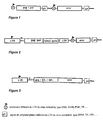
- FIG. 3 Another example of a plasmovirus is shown in the Figure 3 and includes an attenuated viral genome lacking the séquence sequence and of which several modifications are introduced into the genome to avoid the appearance of replicating viruses.
- the 3 'LTR is replaced by a different polyadenylation; mutations (point mutations, deletions, change of phase of readings ...) are carried out in one or more non-structural proteins (RT reverse transcriptase, IN integrase).
- RT reverse transcriptase RT reverse transcriptase, IN integrase
- the present invention also relates to a composition immunogen, including a vaccine, for prophylaxis and / or therapy of individuals infected or likely to be infected with a virus, and containing at least one plasmovirus as defined above.
- immunogenic compositions or vaccines may be medical human or veterinary.
- composition is more particularly immunogenic in the sense that the injection of the vector carrying the defective viral genome allows the reconstitution of a physical particle likely to elicit a cellular and / or humoral immune response.
- the defective viral genome and the sequences encoding the or the gene (s) allowing the reconstitution of the viral envelope can be carried by one or two vectors, which are associated in the composition, these can be linked by means known to those skilled in the art, in particular those described in patent application WO 95/26411.
- the term plasmovirus applies equally to a single vector carrying both the specific sequences of the defective viral genome, and the sequences encoding the structural protein (s) as well as the where appropriate, the sequences coding for the exogenous genes mentioned above, either to increase immunogenicity or to increase system security, or finally to allow better expression proteins from the viral envelope.
- the immunogenic composition can also contain, as active principle, cells which have been previously transfected in vitro with a plasmovirus or a vector as described above.
- an injection of the composition allows the transplant of the host cell in vivo , and the reconstitution of a viral particle which is then capable of triggering the desired immune response.
- the immunogenic composition can, if appropriate, contain associated with the plasmovirus a vaccination adjuvant.
- Adjuvants can be of several types; some promote the classic immune response as an N-acetyl-muramyl type adjuvant associated with a peptide such as MDP or its various derivatives such as those described in. CRS Critical Reviews in Immunology, 1988, Vol. 8, pages 83-100.
- Other types of adjuvant can be envisaged, such as those which promote the penetration of nucleic acid sequences into cells; finally, the plasmovirus in the immunogenic composition can be linked to a sequence known as or presumed to be T-dependent or alternatively linked or encompassed in liposomes.
- aqueous or oily media in the form of subcutaneous, intramuscular or intravenous injections by "pellets” (biodegradable polymers containing the product) and / or by implantation of the release system by micropump.
- Other adjuvants such as PAO, alone or combined with lecithin (EP445-710) ZN (OH) or HBW538 (Drugs experimental clinical research (1991) 17 (9): 445450) associated with aluminum hydroxide (Al (OH) 3) may or may not be covalently associated with the active ingredient for the composition.
- the immunogenic composition one of the active principles of which is the plasmovirus, is also characterized in that the defective viral genome carries a suicide gene in order to allow system security by the addition, if necessary, of ganciclovir when it is desired to stop the proliferation of said virus.
- the plasmovirus can be either naked or coated DNA or naked DNA associated with a packaging cell type cell or a cell established in line which can be chosen for example from the lines fibroblastics such as the 3T3 line or lines likely to be grown in suspension like myeloma cells, Vero cells or MRC5 cells.
- the immunogenic composition is the whole of the plasmovirus and the host cell which acts, in this case, like a cell transplant to produce the viral particle which, itself, will elicit the vaccine reaction.
- the immunogenic composition of the invention is characterized in that it contains from 0.1 to 1000 ⁇ g of constituent nucleic acids of said vector per dose and preferably from 10 to 500 ⁇ g per dose. These doses are defined as unit dose for humans.
- the plasmovirus can also be a virus such as adenovirus or AAV (adenoassociated virus) defective and carrying all the sequences necessary for the reconstruction of a retrovirion; in other words, the defective virus, carrier of retroviral sequences play the role of transporter towards cells which should be targeted preferentially.
- viruses such as adenovirus or AAV (adenoassociated virus) defective and carrying all the sequences necessary for the reconstruction of a retrovirion; in other words, the defective virus, carrier of retroviral sequences play the role of transporter towards cells which should be targeted preferentially.
- the AAV has a particular tropism for muscle cells that have a strong immunogenic capacity; the introduction of the genome carrying retroviral sequences in this type of cell may increase the vaccinating effect.
- the plasmovirus composition contains from 100 to 10 6 defective viral particles per unit dose preferably intended for humans.
- the present invention also relates to a method immunization activates the individual against a viral infection, said method consisting in injecting an individual with a plasmovirus carrying genes structure necessary for the reconstitution of a viral particle.
- the injected plasmovirus can also carry a viral genome or retroviral, preferably defective and carrying non-coding sequences and / or regulators of the virus or retrovirus, and where appropriate of a packaging sequence.
- the retroviral genomes that are preferred in as part of a vaccination method are those of lentiviruses, oncornavirus, spumavirus or type D retrovirus.
- the structural genes necessary for the constitution of the virus particles are preferably the genes coding for gag and / or env. The gene approx. is chosen according to the purpose assigned to the plasmovirus, different examples being cited above.
- the env gene can be recombined in such a way way that a chimera is produced, which carries both the function attachment to the target cell receptor of the virion and the receptor for the insert in the molecule approx.
- it can be also advantageous to add to the plasmovirus the Us11 gene of HSV1 so as to stimulate the synthesis of structural proteins.
- the vaccination method can also consist of treating the individual infected or likely to be infected with a host cell previously transfected with the vectors of the invention and in particular the 3T3 fibroplastic lines or lines grown in suspension like myeloma cells or Vero cells.
- the retroviral genome lacks the sequence encapsidation, the reconstituted physical particles are then lacking a genome.
- the viral genome carries this packaging sequence, it may be interesting to construct the vector in such a way that depending on the retroviral promoter, a gene of interest either added to increase system security or increase the immune response of the vaccine.
- This immunization can be obtained after percutaneous injection or subcutaneous, intramuscular or intravenous immunogenic composition as described above.
- These plasmoviruses can also be used in the manufacture of the composition immunogen including a vaccine to prevent or treat viral infections, this use forming part of the invention.
- plasmoviruses are advantageous insofar as where the preparation and storage of nucleic acids is easier to implement that the production and conservation of viral particles complete.
- defective viral particles can be induced either in vitro in cells in culture, or in vivo after intramuscular, intravenous or subcutaneous injection of the immunogenic composition, or ex-vivo after injection of the transformed cells.
- the process for manufacturing a live vaccine consisting of a reconstituted viral particle, preferably defective is part of the invention; it includes transfection of cells with a vector such as described above comprising, on the one hand, the structural gene necessary for reconstitution of the viral particle, on the other hand, the retroviral genome defective; the structural genes of the virus being either under dependence of a specific promoter, or under the dependence of viral promoter.
- the cells transfected in the method of the invention are either cells in culture and the transformation is carried out in vitro , or the cells are those of an individual and are transfected in vivo or ex vivo .
- FIG. 4 represents the plasmid pBMC-3 comprising an HSV1-TK gene under the control of a 5 'Mo-MuLV LTR promoter.
- FIG. 5 represents the plasmid pNP-2.
- Figure 6 shows the variation in weight of the animals vaccinated with these constructs and infected with the leukemia virus murine myeloproliferative. On the abscissa are indicated the examination days and on the ordinate the variations in the weights of the animals.
- the experimental model used is the induction of leukemia megakaryocytic in mice.
- This leukemia is induced by infection of the mouse with a pathogenic MPLV retrovirus.
- the MPLV virus is derived from friend-like murine leukemia viruses.
- the latter have LTR sequences distinct from moloney-like viruses but have extremely similar structural protein sequences. It is therefore possible to vaccinate against MPLV using protein derived moloney viruses.
- Such a virus carries a v-mpl oncogene, which is the ligand for thrompoietin. After infection with such a virus, the mouse develops a few weeks megakaryotic leukemia. This disease is characterized by spleno-megaly and hepatomegaly; more specifically, after viral infection, an extremely large number of lymphocytes accumulate in the spleen. Also a vaccinating effect can be appreciated by the absence of an increase in the weight of the spleen, liver or of the whole animal after a challenge with pathogenic virus.
- Plasmoviruses used in this model were used in this model.
- mice are injected intramuscularly as described by Ulmer et al, Science, 1993 259 : 1745-1749.
- mice are injected with plasmid DNA completely foreign to the MPLV virus.
- the animals are injected intravenously with a culture supernatant from a line cell producing MPLV virus.
- This undiluted supernatant has a reverse transcriptase (RT) activity of 66,152 CPM / 10 6 cells.
- RT reverse transcriptase
- FIG. 6 represents the variation in the weight of the animal at different times after the challenge by MPLV particles.
- the circles blanks represent the results after vaccination with the plasmid pBMC-3.
- the black circle represents the results obtained after vaccination with pNP-2.
- the white square represents the results obtained with pBXT4, plasmid providing the cDNA of human CD4, and the squares black represent the control in which the mice were not vaccinated prior to the injection of the viral particles.
- the table below indicates the weight of the spleen and the liver respectively after sampling, 21 days after the injection of the viral particles.
- Type of vaccination Increase in the weight of the spleen on the 21st day Increase in liver weight on the 21st day pBMC-3 x 1 x 0.8 pNP-2 x 16.3 x 1.3 hCD4 x 12.5 x 1.3 no vaccine x 11.0 x 1.1
Landscapes
- Health & Medical Sciences (AREA)
- Life Sciences & Earth Sciences (AREA)
- Chemical & Material Sciences (AREA)
- Organic Chemistry (AREA)
- Virology (AREA)
- Engineering & Computer Science (AREA)
- General Health & Medical Sciences (AREA)
- Genetics & Genomics (AREA)
- Medicinal Chemistry (AREA)
- Wood Science & Technology (AREA)
- Bioinformatics & Cheminformatics (AREA)
- Pharmacology & Pharmacy (AREA)
- Animal Behavior & Ethology (AREA)
- Microbiology (AREA)
- Public Health (AREA)
- Veterinary Medicine (AREA)
- Zoology (AREA)
- Immunology (AREA)
- Biotechnology (AREA)
- Chemical Kinetics & Catalysis (AREA)
- General Chemical & Material Sciences (AREA)
- Biomedical Technology (AREA)
- Biochemistry (AREA)
- General Engineering & Computer Science (AREA)
- Molecular Biology (AREA)
- Communicable Diseases (AREA)
- Nuclear Medicine, Radiotherapy & Molecular Imaging (AREA)
- Materials Engineering (AREA)
- Mycology (AREA)
- Biophysics (AREA)
- Epidemiology (AREA)
- Oncology (AREA)
- Proteomics, Peptides & Aminoacids (AREA)
- Physics & Mathematics (AREA)
- Gastroenterology & Hepatology (AREA)
- Geochemistry & Mineralogy (AREA)
- Plant Pathology (AREA)
- Hematology (AREA)
- AIDS & HIV (AREA)
- Tropical Medicine & Parasitology (AREA)
Applications Claiming Priority (4)
| Application Number | Priority Date | Filing Date | Title |
|---|---|---|---|
| FR9604370 | 1996-04-05 | ||
| FR9604370A FR2747046B1 (fr) | 1996-04-05 | 1996-04-05 | Nouveaux vaccins issus de plasmovirus |
| EP97400796A EP0799893B1 (de) | 1996-04-05 | 1997-04-07 | Verwendung von Plasmiden zur Herstellung eines Impfstoffs bei Mensch und Tier |
| US09/166,147 US6140114A (en) | 1996-04-05 | 1998-10-05 | Defective viral vaccine particles obtained in vivo or ex vivo |
Related Parent Applications (1)
| Application Number | Title | Priority Date | Filing Date |
|---|---|---|---|
| EP97400796A Division EP0799893B1 (de) | 1996-04-05 | 1997-04-07 | Verwendung von Plasmiden zur Herstellung eines Impfstoffs bei Mensch und Tier |
Publications (1)
| Publication Number | Publication Date |
|---|---|
| EP1138773A2 true EP1138773A2 (de) | 2001-10-04 |
Family
ID=26232637
Family Applications (2)
| Application Number | Title | Priority Date | Filing Date |
|---|---|---|---|
| EP01102630A Withdrawn EP1138773A2 (de) | 1996-04-05 | 1997-04-07 | Verwendung von Plasmiden zur Herstellung eines Impfstoffs bei Mensch und Tier |
| EP97400796A Expired - Lifetime EP0799893B1 (de) | 1996-04-05 | 1997-04-07 | Verwendung von Plasmiden zur Herstellung eines Impfstoffs bei Mensch und Tier |
Family Applications After (1)
| Application Number | Title | Priority Date | Filing Date |
|---|---|---|---|
| EP97400796A Expired - Lifetime EP0799893B1 (de) | 1996-04-05 | 1997-04-07 | Verwendung von Plasmiden zur Herstellung eines Impfstoffs bei Mensch und Tier |
Country Status (10)
| Country | Link |
|---|---|
| US (1) | US6140114A (de) |
| EP (2) | EP1138773A2 (de) |
| JP (1) | JP2000508893A (de) |
| AT (1) | ATE205537T1 (de) |
| AU (1) | AU2394297A (de) |
| CA (1) | CA2251027C (de) |
| DE (1) | DE69706593T2 (de) |
| ES (1) | ES2164309T3 (de) |
| FR (1) | FR2747046B1 (de) |
| WO (1) | WO1997038118A1 (de) |
Families Citing this family (25)
| Publication number | Priority date | Publication date | Assignee | Title |
|---|---|---|---|---|
| JP2001516729A (ja) * | 1997-09-15 | 2001-10-02 | ジェネティック・イミューナティ・リミテッド・ライアビリティ・カンパニー | 皮膚の抗原提示細胞に遺伝子を運搬する方法 |
| WO1999019501A1 (en) * | 1997-10-14 | 1999-04-22 | Institute For Vaccine Development | Non-integrating dna vector of retroviral origin having high-protein expression, and secreted immunogenic antigens |
| EP1141338A4 (de) * | 1998-12-31 | 2002-09-25 | Arch Dev Corp | Rekombinantes herpes simplex virus zur behandlung von neoplastischen erkrankungen |
| CN1311871C (zh) | 2000-03-02 | 2007-04-25 | 爱莫里大学 | Dna表达载体及其应用方法 |
| US8623379B2 (en) * | 2000-03-02 | 2014-01-07 | Emory University | Compositions and methods for generating an immune response |
| US20040105871A1 (en) * | 2000-03-02 | 2004-06-03 | Robinson Harriet L. | Compositions and methods for generating an immune response |
| AU2002218218A1 (en) * | 2000-10-10 | 2002-04-22 | Austrian Nordic Biotherapeutics Ag | A novel system for the evaluation of the activity and/or specificity of a viral component |
| EP1201750A1 (de) | 2000-10-26 | 2002-05-02 | Genopoietic | Synthetische Viren und ihre Verwendungen |
| WO2002079396A2 (en) * | 2001-02-13 | 2002-10-10 | Mosca Joseph D | Biological carriers for induction of immune responses |
| JP4554887B2 (ja) * | 2001-03-08 | 2010-09-29 | アメリカ合衆国 | 改変HIVエンベロープ、gag、およびpol遺伝子を発現するMVA |
| US20050196381A1 (en) * | 2003-09-09 | 2005-09-08 | Xiaobin Lu | Lentivirus vector-based approaches for generating an immune response to HIV in humans |
| JP2008518584A (ja) * | 2004-05-27 | 2008-06-05 | セントカー・インコーポレーテツド | カニクイザルの前立腺特異的抗原 |
| US20050276758A1 (en) * | 2004-06-15 | 2005-12-15 | Marshall Deborah J | Method for screening agents against human prostate disease |
| WO2006036406A2 (en) * | 2004-08-25 | 2006-04-06 | The Government Of The United States Of America As Represented By The Secretary Of The Department Of Health And Human Services | Live microbial microbicides |
| AU2006252406B2 (en) * | 2005-06-01 | 2012-05-17 | California Institute Of Technology | Method of targeted gene delivery using viral vectors |
| GB0526211D0 (en) * | 2005-12-22 | 2006-02-01 | Oxford Biomedica Ltd | Viral vectors |
| BRPI0714495B8 (pt) | 2006-07-21 | 2021-05-25 | California Inst Of Techn | lentivírus deficiente para replicação recombinante pseudotipado |
| EP2125009B1 (de) * | 2007-02-21 | 2012-05-16 | Rajesh Shah | Medizinische formulierung mit einer kombination von hiv typ i und hiv typ ii |
| ES2455544T5 (es) | 2009-07-24 | 2017-08-16 | Immune Design Corp | Vectores de lentivirus pseudotipificados con una glucoproteína de envoltura de virus sindbis |
| EP2550362B1 (de) | 2010-03-25 | 2017-01-04 | Oregon Health&Science University | Cmv-glycoproteine und rekombinante vektoren |
| US8323662B1 (en) | 2012-03-30 | 2012-12-04 | Immune Design Corp. | Methods useful for generating highly mannosylated pseudotyped lentiviral vector particles comprising a Vpx protein |
| US9713635B2 (en) | 2012-03-30 | 2017-07-25 | Immune Design Corp. | Materials and methods for producing improved lentiviral vector particles |
| PT2831095T (pt) | 2012-03-30 | 2019-01-30 | Immune Design Corp | Partículas de vectores lentivirais com melhor eficácia de transdução de células que expressam dc-sign |
| CA3028827A1 (en) | 2016-06-22 | 2017-12-28 | Aeras | Recombinant cytomegalovirus vectors as vaccines for tuberculosis |
| US11638749B2 (en) | 2017-10-17 | 2023-05-02 | International Aids Vaccine Initiative, Inc. | Tuberculosis antigen cassettes |
Family Cites Families (11)
| Publication number | Priority date | Publication date | Assignee | Title |
|---|---|---|---|---|
| JP4041535B2 (ja) * | 1989-08-18 | 2008-01-30 | オックスフォード バイオメディカ(ユーケー)リミテッド | 標的細胞にベクター構造体を運搬する組換レトロウィルス |
| US5512421A (en) * | 1991-02-19 | 1996-04-30 | The Regents Of The University Of California | Generation, concentration and efficient transfer of VSV-G pseudotyped retroviral vectors |
| US5747307A (en) * | 1992-02-28 | 1998-05-05 | Syngenix Limited | Mason-Pfizer Monkey Retroviral packaging defective vectors |
| WO1993020220A1 (en) * | 1992-03-27 | 1993-10-14 | Whitehead Institute For Biomedical Research | Non-infectious hiv particles and uses therefor |
| JPH06261764A (ja) * | 1993-02-17 | 1994-09-20 | Wisconsin Alumni Res Found | 混合型ltr含有超複合型レトロウイルス及びその使用方法 |
| FR2716459B1 (fr) * | 1994-02-22 | 1996-05-10 | Univ Paris Curie | Système hôte-vecteur utilisable en thérapie génique. |
| WO1995026411A2 (en) * | 1994-03-25 | 1995-10-05 | The Uab Research Foundation | Composition and methods for creating syngeneic recombinant virus-producing cells |
| FR2722208B1 (fr) * | 1994-07-05 | 1996-10-04 | Inst Nat Sante Rech Med | Nouveau site interne d'entree des ribosomes, vecteur le contenant et utilisation therapeutique |
| AT402898B (de) * | 1994-08-08 | 1997-09-25 | Int Centre Genetic Eng & Bio | Molekulares präsentiersystem |
| US6080408A (en) * | 1994-08-22 | 2000-06-27 | Connaught Laboratories Limited | Human immunodeficiency virus type 1 nucleic acids devoid of long terminal repeats capable of encoding for non-infectious, immunogenic, retrovirus-like particles |
| CZ259197A3 (cs) * | 1995-02-24 | 1998-01-14 | Clipmate Corporation | Rozbušková sestava, balení rozbuškových sestav a způsob sestavování rozbušky a zesilovací nálože |
-
1996
- 1996-04-05 FR FR9604370A patent/FR2747046B1/fr not_active Expired - Fee Related
-
1997
- 1997-04-07 EP EP01102630A patent/EP1138773A2/de not_active Withdrawn
- 1997-04-07 CA CA002251027A patent/CA2251027C/fr not_active Expired - Lifetime
- 1997-04-07 DE DE69706593T patent/DE69706593T2/de not_active Expired - Lifetime
- 1997-04-07 EP EP97400796A patent/EP0799893B1/de not_active Expired - Lifetime
- 1997-04-07 AT AT97400796T patent/ATE205537T1/de not_active IP Right Cessation
- 1997-04-07 JP JP9535922A patent/JP2000508893A/ja active Pending
- 1997-04-07 AU AU23942/97A patent/AU2394297A/en not_active Abandoned
- 1997-04-07 ES ES97400796T patent/ES2164309T3/es not_active Expired - Lifetime
- 1997-04-07 WO PCT/FR1997/000619 patent/WO1997038118A1/fr not_active Ceased
-
1998
- 1998-10-05 US US09/166,147 patent/US6140114A/en not_active Expired - Lifetime
Also Published As
| Publication number | Publication date |
|---|---|
| JP2000508893A (ja) | 2000-07-18 |
| DE69706593T2 (de) | 2002-07-11 |
| FR2747046B1 (fr) | 1998-06-19 |
| FR2747046A1 (fr) | 1997-10-10 |
| EP0799893B1 (de) | 2001-09-12 |
| AU2394297A (en) | 1997-10-29 |
| CA2251027A1 (fr) | 1997-10-16 |
| US6140114A (en) | 2000-10-31 |
| CA2251027C (fr) | 2009-11-10 |
| EP0799893A1 (de) | 1997-10-08 |
| DE69706593D1 (de) | 2001-10-18 |
| WO1997038118A1 (fr) | 1997-10-16 |
| ES2164309T3 (es) | 2002-02-16 |
| ATE205537T1 (de) | 2001-09-15 |
Similar Documents
| Publication | Publication Date | Title |
|---|---|---|
| EP0799893B1 (de) | Verwendung von Plasmiden zur Herstellung eines Impfstoffs bei Mensch und Tier | |
| Travieso et al. | The use of viral vectors in vaccine development | |
| CA2183151C (fr) | Systeme hote-vecteur utilisable en therapie genique | |
| BE1023087B1 (fr) | Antigenes du cytomegalovirus et leurs utilisations | |
| Doan et al. | Virus‐like particles as HIV‐1 vaccines | |
| EP1761635B1 (de) | Nicht integrativer und nicht replikativer lentivirus, herstellung und verwendungen | |
| JPH08509606A (ja) | 細胞内感染因子に感染した個体を処置する方法および物質 | |
| JPH09508622A (ja) | Dna転写ユニットの接種による免疫化 | |
| NO327491B1 (no) | Genavleveringskompleks for transkutan avlevering av gener samt anvendelse derav | |
| US20150030627A1 (en) | Trans-complementing, replication deficient lentiviral vectors and methods for making and using them | |
| Lee et al. | DNA inoculations with HIV-1 recombinant genomes that express cytokine genes enhance HIV-1 specific immune responses | |
| EP0951554A1 (de) | Fusionsprotein, welches das protein pp65 des menschlichen cmv ganz oder teilweise enthält, und seine verwendung speziell für die herstellung eines impfstoffes | |
| Schultz et al. | The HIV vaccine pipeline, from preclinical to phase III | |
| EP2020444B1 (de) | Defekte nicht-integrative lentivirale Transfervektoren für Impfstoffe | |
| EP0354109B1 (de) | Rekombinante HBsAg Hybridpartikel, die morphologische Eigenschaften von HBsAg-Antigen haben und eine immunogene Sequenz enthalten, die neutralisierende Antikörper gegen HIV induziert oder die von diesen Antikörpern erkannt ist, Nukleotide Sequenzen, die diese Partikel codieren und sie enthaltende Impfstoffe | |
| CA2448947C (fr) | Pseudotypage des vecteurs vih-1 par des enveloppes de rhabdovirus | |
| CN101516199B (zh) | 用于树突状细胞免疫的靶向基因输送 | |
| WO1991005055A1 (fr) | Procede de preparation de composition immunisante | |
| WO2002088339A2 (fr) | Particules pseudovirales de birnavirus | |
| EP2292262A2 (de) | Verwendung veränderte Novirhabdoviren zur Herstellung von Impfstoffe | |
| JP2024509976A (ja) | 抗原をmhc-ii経路にターゲティングし、宿主におけるcd8+及びcd4+t細胞による防御免疫を誘導するレンチウイルスベクター | |
| WO2022191801A2 (en) | Integrase defective hiv-based lentivirus mediated new generation covid-19 vaccine encoding sars-cov-2 spike protein | |
| WO2004110485A1 (en) | Materials and methods for improved vaccination | |
| FR2716461A1 (fr) | Système hôte-vecteur utilisable en thérapie génique. | |
| FR2652504A1 (fr) | Composition immunisante et procede de preparation. |
Legal Events
| Date | Code | Title | Description |
|---|---|---|---|
| PUAI | Public reference made under article 153(3) epc to a published international application that has entered the european phase |
Free format text: ORIGINAL CODE: 0009012 |
|
| AC | Divisional application: reference to earlier application |
Ref document number: 799893 Country of ref document: EP |
|
| AK | Designated contracting states |
Kind code of ref document: A2 Designated state(s): AT BE CH DE DK ES FI FR GB GR IE IT LI LU MC NL PT SE |
|
| STAA | Information on the status of an ep patent application or granted ep patent |
Free format text: STATUS: THE APPLICATION IS DEEMED TO BE WITHDRAWN |
|
| 18D | Application deemed to be withdrawn |
Effective date: 20031031 |