EP1201747A1 - Verfahren zur herstellung von gamma-gltamylcystein - Google Patents
Verfahren zur herstellung von gamma-gltamylcystein Download PDFInfo
- Publication number
- EP1201747A1 EP1201747A1 EP01932249A EP01932249A EP1201747A1 EP 1201747 A1 EP1201747 A1 EP 1201747A1 EP 01932249 A EP01932249 A EP 01932249A EP 01932249 A EP01932249 A EP 01932249A EP 1201747 A1 EP1201747 A1 EP 1201747A1
- Authority
- EP
- European Patent Office
- Prior art keywords
- strain
- glutathione
- saccharomyces cerevisiae
- medium
- glutamylcysteine
- Prior art date
- Legal status (The legal status is an assumption and is not a legal conclusion. Google has not performed a legal analysis and makes no representation as to the accuracy of the status listed.)
- Granted
Links
Images


Classifications
-
- C—CHEMISTRY; METALLURGY
- C12—BIOCHEMISTRY; BEER; SPIRITS; WINE; VINEGAR; MICROBIOLOGY; ENZYMOLOGY; MUTATION OR GENETIC ENGINEERING
- C12N—MICROORGANISMS OR ENZYMES; COMPOSITIONS THEREOF; PROPAGATING, PRESERVING, OR MAINTAINING MICROORGANISMS; MUTATION OR GENETIC ENGINEERING; CULTURE MEDIA
- C12N1/00—Microorganisms; Compositions thereof; Processes of propagating, maintaining or preserving microorganisms or compositions thereof; Processes of preparing or isolating a composition containing a microorganism; Culture media therefor
- C12N1/14—Fungi; Culture media therefor
- C12N1/16—Yeasts; Culture media therefor
-
- C—CHEMISTRY; METALLURGY
- C12—BIOCHEMISTRY; BEER; SPIRITS; WINE; VINEGAR; MICROBIOLOGY; ENZYMOLOGY; MUTATION OR GENETIC ENGINEERING
- C12P—FERMENTATION OR ENZYME-USING PROCESSES TO SYNTHESISE A DESIRED CHEMICAL COMPOUND OR COMPOSITION OR TO SEPARATE OPTICAL ISOMERS FROM A RACEMIC MIXTURE
- C12P13/00—Preparation of nitrogen-containing organic compounds
- C12P13/04—Alpha- or beta- amino acids
-
- A—HUMAN NECESSITIES
- A23—FOODS OR FOODSTUFFS; TREATMENT THEREOF, NOT COVERED BY OTHER CLASSES
- A23L—FOODS, FOODSTUFFS OR NON-ALCOHOLIC BEVERAGES, NOT OTHERWISE PROVIDED FOR; PREPARATION OR TREATMENT THEREOF
- A23L31/00—Edible extracts or preparations of fungi; Preparation or treatment thereof
-
- A—HUMAN NECESSITIES
- A23—FOODS OR FOODSTUFFS; TREATMENT THEREOF, NOT COVERED BY OTHER CLASSES
- A23L—FOODS, FOODSTUFFS OR NON-ALCOHOLIC BEVERAGES, NOT OTHERWISE PROVIDED FOR; PREPARATION OR TREATMENT THEREOF
- A23L31/00—Edible extracts or preparations of fungi; Preparation or treatment thereof
- A23L31/10—Yeasts or derivatives thereof
- A23L31/15—Extracts
-
- A—HUMAN NECESSITIES
- A23—FOODS OR FOODSTUFFS; TREATMENT THEREOF, NOT COVERED BY OTHER CLASSES
- A23L—FOODS, FOODSTUFFS OR NON-ALCOHOLIC BEVERAGES, NOT OTHERWISE PROVIDED FOR; PREPARATION OR TREATMENT THEREOF
- A23L33/00—Modifying nutritive qualities of foods; Dietetic products; Preparation or treatment thereof
- A23L33/10—Modifying nutritive qualities of foods; Dietetic products; Preparation or treatment thereof using additives
- A23L33/14—Yeasts or derivatives thereof
- A23L33/145—Extracts
-
- A—HUMAN NECESSITIES
- A23—FOODS OR FOODSTUFFS; TREATMENT THEREOF, NOT COVERED BY OTHER CLASSES
- A23L—FOODS, FOODSTUFFS OR NON-ALCOHOLIC BEVERAGES, NOT OTHERWISE PROVIDED FOR; PREPARATION OR TREATMENT THEREOF
- A23L5/00—Preparation or treatment of foods or foodstuffs, in general; Food or foodstuffs obtained thereby; Materials therefor
-
- C—CHEMISTRY; METALLURGY
- C12—BIOCHEMISTRY; BEER; SPIRITS; WINE; VINEGAR; MICROBIOLOGY; ENZYMOLOGY; MUTATION OR GENETIC ENGINEERING
- C12N—MICROORGANISMS OR ENZYMES; COMPOSITIONS THEREOF; PROPAGATING, PRESERVING, OR MAINTAINING MICROORGANISMS; MUTATION OR GENETIC ENGINEERING; CULTURE MEDIA
- C12N1/00—Microorganisms; Compositions thereof; Processes of propagating, maintaining or preserving microorganisms or compositions thereof; Processes of preparing or isolating a composition containing a microorganism; Culture media therefor
- C12N1/14—Fungi; Culture media therefor
- C12N1/16—Yeasts; Culture media therefor
- C12N1/18—Baker's yeast; Brewer's yeast
- C12N1/185—Saccharomyces isolates
-
- C—CHEMISTRY; METALLURGY
- C12—BIOCHEMISTRY; BEER; SPIRITS; WINE; VINEGAR; MICROBIOLOGY; ENZYMOLOGY; MUTATION OR GENETIC ENGINEERING
- C12N—MICROORGANISMS OR ENZYMES; COMPOSITIONS THEREOF; PROPAGATING, PRESERVING, OR MAINTAINING MICROORGANISMS; MUTATION OR GENETIC ENGINEERING; CULTURE MEDIA
- C12N9/00—Enzymes; Proenzymes; Compositions thereof; Processes for preparing, activating, inhibiting, separating or purifying enzymes
- C12N9/93—Ligases (6)
-
- C—CHEMISTRY; METALLURGY
- C12—BIOCHEMISTRY; BEER; SPIRITS; WINE; VINEGAR; MICROBIOLOGY; ENZYMOLOGY; MUTATION OR GENETIC ENGINEERING
- C12P—FERMENTATION OR ENZYME-USING PROCESSES TO SYNTHESISE A DESIRED CHEMICAL COMPOUND OR COMPOSITION OR TO SEPARATE OPTICAL ISOMERS FROM A RACEMIC MIXTURE
- C12P1/00—Preparation of compounds or compositions, not provided for in groups C12P3/00 - C12P39/00, by using microorganisms or enzymes
- C12P1/02—Preparation of compounds or compositions, not provided for in groups C12P3/00 - C12P39/00, by using microorganisms or enzymes by using fungi
-
- A—HUMAN NECESSITIES
- A23—FOODS OR FOODSTUFFS; TREATMENT THEREOF, NOT COVERED BY OTHER CLASSES
- A23V—INDEXING SCHEME RELATING TO FOODS, FOODSTUFFS OR NON-ALCOHOLIC BEVERAGES AND LACTIC OR PROPIONIC ACID BACTERIA USED IN FOODSTUFFS OR FOOD PREPARATION
- A23V2002/00—Food compositions, function of food ingredients or processes for food or foodstuffs
-
- C—CHEMISTRY; METALLURGY
- C12—BIOCHEMISTRY; BEER; SPIRITS; WINE; VINEGAR; MICROBIOLOGY; ENZYMOLOGY; MUTATION OR GENETIC ENGINEERING
- C12R—INDEXING SCHEME ASSOCIATED WITH SUBCLASSES C12C - C12Q, RELATING TO MICROORGANISMS
- C12R2001/00—Microorganisms ; Processes using microorganisms
- C12R2001/645—Fungi ; Processes using fungi
- C12R2001/85—Saccharomyces
- C12R2001/865—Saccharomyces cerevisiae
Definitions
- the present invention relates to yeast and yeast extract having a high ⁇ -glutamylcysteine content as well as a method for breeding such yeast.
- ⁇ -Glutamylcysteine and cysteine produced therefrom are useful in the food industry.
- Cysteine is used for the purpose of improving flavor of foodstuffs and so forth. While the proteolysis method, semi-synthetic method and so forth are known as methods for producing cysteine, mainly used methods at present are the proteolysis method and the semi-synthetic method. In order to utilize cysteine for improving flavor of foodstuffs, natural food materials having a high cysteine content are desired. However, such natural food materials have hardly been known so far.
- Glutathione which is a tripeptide consisting of cysteine bonded with glutamic acid and glycine, is also known to be used for improving flavor of foodstuffs. Glutathione is synthesized from cysteine via ⁇ -glutamylcysteine. However, ⁇ -glutamylcysteine is scarcely used for improving flavor of foodstuffs.
- ⁇ -Glutamylcysteine is synthesized from cysteine and glutamic acid with the aid of ⁇ -glutamylcysteine synthetase (GSH1).
- glutathione is synthesized from ⁇ -glutamylcysteine and glycine with the aid of glutathione synthetase (GSH2).
- the YL1 strain shows significantly different proliferation abilities during the logarithmic growth phase in a medium containing glutathione and a medium not containing glutathione, it is essentially different from the glutathione synthetase weakened strain of the present invention.
- an object of the present invention is to provide a natural food material that can practically be used for improving flavor of foodstuffs like cysteine, more specifically, to provide yeast ,which can be used even for production at industrial level and shows a large accumulation amount of ⁇ -glutamylcysteine, and yeast extract produced by using such yeast.
- the inventors of the present invention found that cysteine is released when ⁇ -glutamylcysteine is heated, and conceived that if a natural food material containing ⁇ -glutamylcysteine is heated, a natural food material that can be used like a natural food material containing cysteine could be produced. Therefore, aiming at breeding yeast strains showing a high ⁇ -glutamylcysteine content, the inventors attempted to disrupt the glutathione synthetase gene. However, satisfactory results could not be obtained. The inventors further assiduously studied, and as a result, they successfully obtained a strain showing a high ⁇ -glutamylcysteine content and good growth. Thus, the present invention was accomplished.
- the present invention provides the followings.
- the strain of Saccharomyces cerevisiae of the present invention produces ⁇ -glutamylcysteine exceeding a certain amount and shows good growth in an industrially used medium such as one not containing glutathione. Therefore, it is useful for efficient production of yeast extract containing ⁇ -glutamylcysteine.
- cysteine is obtained when ⁇ -glutamylcysteine is heated. If ⁇ -glutamylcysteine is heated at 50-120°C for 3 to 300 minutes at pH 1-7, ⁇ -glutamylcysteine is decomposed into cysteine and PCA (pyrolidonecarboxylic acid), and therefore cysteine can be obtained with high yield as a whole.
- PCA pyrolidonecarboxylic acid
- cysteine may be used hereinafter to refer to both of L-cysteine and cystine, which is an oxidized type disulfide of L-cysteine.
- the Saccharomyces cerevisiae strain of the present invention is produced based on the aforementioned finding for the purpose of improving flavor of foodstuffs and so forth.
- the Saccharomyces cerevisiae strain of the present invention is cultured in a medium in which a glutathione synthetase deficient strain of Saccharomyces cerevisiae shows a slower growth rate than a wild strain, it contains 1% by weight or more of ⁇ -glutamylcysteine in terms of a ratio with respect to solid components during its logarithmic growth phase.
- the content of ⁇ -glutamylcysteine or glutathione refers to a content (%) of ⁇ -glutamylcysteine or glutathione with respect to solid components of cells, for example, cell weight after heated at 105°C for 4 hours.
- Saccharomyces cerevisiae strain of the present invention when cultured in a medium in which a glutathione synthetase deficient strain of Saccharomyces cerevisiae shows a slower growth rate than a wild strain, it can contain 1% by weight or more, preferably 1.7% by weight or more, of ⁇ -glutamylcysteine and contains 0.004-0.1% by weight, preferably 0.004-0.01% by weight, of glutathione during its logarithmic growth phase.
- the Saccharomyces cerevisiae strain of the present invention produces a trace amount of glutathione, and shows growth better than that of a glutathione synthetase deficient strain in a medium that does not contain glutathione.
- a strain which has feeble glutathione synthetase activity in such a degree that it should produce 0.004-0.1% by weight of glutathione in the aforementioned medium may also be referred to as "glutathione synthetase weakened strain".
- a “glutathione synthetase deficient strain” refers to a strain that is substantially deficient in glutathione synthetase activity and cannot produce glutathione in a minimal medium.
- the term “logarithmic growth phase” refers to a stage during culture in which number of cells of the Saccharomyces cerevisiae in culture increases logarithmically to culture time.
- the ⁇ -glutamylcysteine content need not be always 1% by weight or more during the whole logarithmic growth phase, and it is sufficient that the content becomes 1% by weight or more at any point during the logarithmic growth phase, preferably during such a logarithmic growth phase that culture broth should show an absorbance that corresponds to 1/2 or more of absorbance during stationary phase after the logarithmic growth phase.
- the Saccharomyces cerevisiae strain of the present invention produces ⁇ -glutamylcysteine in an amount exceeding a certain level and shows good growth in an industrially used medium, for example, a medium not containing glutathione as described above. Therefore, it shows superior productivity of ⁇ -glutamylcysteine per unit time and is suitable for efficient production of yeast extract containing ⁇ -glutamylcysteine. Further, yeast extract of high cysteine content can be produced by heating the obtained yeast extract.
- Examples of the medium in which a glutathione synthetase deficient strain of Saccharomyces cerevisiae shows a slower growth rate than a wild strain, i.e ., a strain that has glutathione synthetase activity and produces glutathione include, for example, a medium not containing glutathione and a medium not containing glutathione, ⁇ -glutamylcysteine, L-cysteine and cystine.
- various kinds of minimal media such as SD medium can be mentioned.
- the aforementioned medium should contain a nutrient corresponding to such auxotrophy, for example, various amino acids other than cysteine, nucleotides, vitamins and so forth, as required.
- Saccharomyces cerevisiae strain of the present invention include a Saccharomyces cerevisiae strain that produces a glutathione synthetase having a deletion of a C-terminus region from an arginine residue at a position of 370, i.e ., a glutathione synthetase of which amino acid residues of 370th position and thereafter are deleted.
- the Saccharomyces cerevisiae strain of the present invention can be obtained by weakening the glutathione synthetase activity of cells.
- a method of changing the promoter of the glutathione synthetase gene from the proper promoter of the gene to a weaker promoter derived from another gene a method of weakening expression or activity or the both of glutathione synthetase by modifying the promoter or a coding region of glutathione synthetase gene, a method of weakening activity of transcription factor of the gene or the like.
- the glutathione synthetase gene sequence can be modified by, for example, usual mutagenesis treatments such as UV irradiation, treatment with a mutagenizing agent such as N-methyl-N-nitrosoguanidine (NTG), ethyl methanesulfonate (EMS), nitrous acid and acridine, or gene substitution utilizing a genetic recombination technique.
- mutagenesis treatments such as UV irradiation
- EMS ethyl methanesulfonate
- nitrous acid and acridine or gene substitution utilizing a genetic recombination technique.
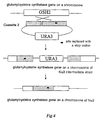
- the gene substitution can be performed as follows (see Fig. 4).
- a Saccharomyces cerevisiae strain is transformed with a recombinant DNA containing a glutathione synthetase gene modified so that glutathione synthetase having feeble activity should be encoded (weakened-type glutathione synthetase gene), for example, a glutathione synthetase gene in which the 370th codon is changed to a stop codon, to cause recombination between the weakened-type glutathione synthetase gene and the glutathione synthetase gene on a chromosome.
- weakened-type glutathione synthetase gene for example, a glutathione synthetase gene in which the 370th codon is changed to a stop codon
- a marker gene is included in a plasmid according to a phenotype of host such as auxotrophy, handling will become easy. Further, after the production of the aforementioned recombinant DNA using a plasmid, if it is linearized by digestion with a restriction enzyme and its replication control region which functions in Saccharomyces cerevisiae is removed, strains in which the recombinant DNA is taken up into a chromosome can efficiently be obtained.
- the recombinant DNA causes recombination with a glutathione synthetase gene sequence that originally exists on the chromosome, and two of fused genes of the normal glutathione synthetase gene and the weakened-type glutathione synthetase gene are inserted into the chromosome so that other portions of the recombinant DNA (vector portion and marker gene) should be interposed between them. Therefore, in this state, the normal glutathione synthetase gene functions.
- one copy of the glutathione synthetase gene is dropped from the chromosome DNA together with the vector portion (including the marker gene) by recombination of two of the glutathione synthetase genes.
- the normal glutathione synthetase gene is left on the chromosome DNA and the weakened-type glutathione synthetase gene is excised, or conversely, the weakened-type glutathione synthetase gene is left on the chromosome DNA and the normal glutathione synthetase gene is excised.
- the occurrence of the second recombination can be confirmed by examining an expression trait corresponding to the marker gene.
- the desired gene disrupted strain can be selected by amplifying the glutathione synthetase gene by PCR and investigating its structure.
- Saccharomyces cerevisiae can be transformed by a method usually used for transformation of yeast, for example, the protoplast method, KU method, KUR method, electroporation method and so forth.
- Saccharomyces cerevisiae stain of the present invention may further show enhanced ⁇ -glutamylcysteine synthetase activity, in addition to the feeble glutathione synthetase activity.
- Saccharomyces cerevisiae strain of the present invention or a parent strain used for the production thereof may be a haploid, diploid or further higher polyploid.
- the Saccharomyces cerevisiae strain of the present invention can be obtained by culturing strains of Saccharomyces cerevisiae modified as described above in a medium in which a glutathione synthetase deficient strain of Saccharomyces cerevisiae shows a slower growth rate than a wild strain and selecting a recombinant strain containing glutathione in the range of 0.004-0.1% by weight during its logarithmic growth phase.
- Yeast extract containing ⁇ -glutamylcysteine can be produced by culturing the Saccharomyces cerevisiae strain of the present invention in a suitable medium and using the obtained cells. Further, by heating the obtained yeast extract, yeast extract with a high cysteine content can be produced.
- the medium used for the production of yeast extract is not particularly limited, so long as the Saccharomyces cerevisiae strain of the present invention shows good growth and efficiently produces ⁇ -glutamylcysteine in it.
- a medium usually used for industrial purpose can be used. Necessary nutrients are further added to the medium as required depending on traits of a strain to be used.
- yeast extract Culture conditions and procedure for the preparation of yeast extract may be similar to those for usual culture of Saccharomyces cerevisiae and preparation of yeast extract.
- the yeast extract may be prepared by treating an extract obtained from extraction of yeast cells with hot water or treating digested yeast cells.
- a haploid N ⁇ strain was obtained from Saccharomyces cerevisiae isolated from the nature.
- An N ⁇ 1 strain showing uracil auxotrophy was obtained from the N ⁇ strain using an SDFOA plate containing uracil (SD medium containing 2% of purified agar, 50 mg/L of uracil and 1 g/L of 5-fluoroorotic acid hydrate as the final concentrations). Since the uracil auxotrophy of the N ⁇ 1 strain was complemented with the URA3 gene as will be described later, the strain was considered to be a variant strain for the URA3 gene.
- composition of SD medium Glucose 2% Nitrogen Base 1-fold concentration (Nitrogen Base of 10-fold concentration was prepared by dissolving a mixture of 1.7 g Bacto Yeast Nitrogen Base w/o Amino Acids and Ammonium Sulfate (Difco) and 5 g of ammonium sulfate in 100 ml of sterilized water, adjusting the solution to about pH 5.2, and subjecting the solution to filtration sterilization using a filter)
- a glutathione synthetase gene disrupted strain was constructed by using the N ⁇ 1 strain as a parent strain.
- a region from the upstream region to the terminus region of the glutathione synthetase (GSH2) gene was amplified by PCR using chromosome DNA of the N ⁇ 1 strain as a template. PCR was performed by allowing a reaction at 94°C for 1 minute and then repeating 30 times a cycle consisting of reactions at 94°C for 30 seconds, 60°C for 40 seconds and 74°C for 1 minute and 30 seconds using a reaction solution having the following composition.
- the GSH2 gene fragment amplified as described above was ligated to a plasmid pGEM-T Easy (Promega) according to the manufacturer's instruction to obtain GSH2/pGEM.
- the URA3 gene was obtained as a selection gene marker by PCR using a plasmid pYES2 (Invitrogen) containing the gene as a template. PCR was performed by allowing a reaction at 94°C for 1 minute and then repeating 30 times a cycle consisting of reactions at 94°C for 30 seconds, 52°C for 30 seconds and 74°C for 40 seconds using a reaction solution having the following composition.
- composition of reaction solution for PCR 10 ng/ ⁇ l pYES2 1 ⁇ l 10X PCR buffer 10 ⁇ l 10 mM dNTPs 10 ⁇ l 10 pmol/ ⁇ l URA3F2 (SEQ ID NO: 3) 1 ⁇ l 10 pmol/ ⁇ l URA3R2 (SEQ ID NO: 4) 1 ⁇ l Purified water 76 ⁇ l KOD Dash 1 ⁇ l Total 100 ⁇ l
- GSH2/pGEM was digested with a restriction enzyme Mun I, and the termini were blunt-ended.
- Mun I restriction enzyme
- an URA3 gene fragment of which ends were blunt-ended with a restriction enzyme Sma I was ligated to prepare a plasmid URA3-GSH2/pGEM.
- PCR was performed by using this URA3-GSH2/pGEM as a template and primers having sequences corresponding to the end regions of the GSH2 gene to prepare Cassette 1. PCR was performed by allowing a reaction at 94°C for 1 minute and then repeating 30 times a cycle consisting of reactions at 94°C for 30 seconds, 56°C for 30 seconds and 74°C for 1 minute using a reaction solution having the following composition.
- composition of reaction solution for PCR 10 ng/ ⁇ l URA3-GSH2/pGEM 1 ⁇ l 10X PCR buffer 10 ⁇ l 10 mM dNTPs 10 ⁇ l 10 pmol/ ⁇ l GAL11F (SEQ ID NO: 1) 1 ⁇ l 10 pmol/ ⁇ l GSH2R (SEQ ID NO: 5) 1 ⁇ l Purified water 76 ⁇ l KOD Dash 1 ⁇ l Total 100 ⁇ l
- the glutathione synthetase gene of the N ⁇ 1 strain was disrupted by using Cassette 1 produced as described above.
- the N ⁇ 1 strain was precultured, and the culture was subcultured in 50 ml of YPD medium until the culture reached the logarithmic growth phase.
- the cultured cells were suspended in 1 M sorbitol and mixed with Cassette 1, and transformation was performed by electroporation.
- Transformant strains were cultured on SD plates containing 1 mM of glutathione, and grown strains were selected. By PCR and measurement of glutathione content in cells as described later, a strain of which glutathione synthetase gene was replaced with Cassette 1 was selected to obtain N ⁇ 2 strain.
- the glutathione synthetase gene fragment of the N ⁇ 1 strain was amplified by PCR. PCR was performed by allowing a reaction at 98°C for 10 seconds and then repeating 30 times a cycle consisting of reactions at 98°C for 10 seconds, 60°C for 30 seconds and 72°C for 1 minute using a reaction solution having the following composition.
- the gene fragment amplified as described above was purified, and nucleotides A were added to its end by an enzymatic reaction performed at 72°C for 10 minutes in a reaction solution having the following composition.
- Composition of reaction solution Solution of gene fragment 5 ⁇ l 10X PCR buffer (MgCl 2 free) 10 ⁇ l 25 mM MgCl 2 3 ⁇ l 2.5 mM dATP 5 ⁇ l Taq DNA polymerase (Takara Shuzo) 0.5 ⁇ l Purified water 31.5 ⁇ l Total 50 ⁇ l
- the reaction product was ligated to a plasmid pGEM-T Easy (Promega) according to the manufacturer's instruction to obtain a plasmid GSH2dash/pGEM.
- GSH2M-F1 SEQ ID NO: 8
- GSH2M-R1 SEQ ID NO: 9
- a plasmid corresponding to the plasmid pYES2 (Invitrogen) of which 2 ⁇ ori was removed was produced.
- pYES2 was digested with restriction enzymes SspI and NheI, the digested ends were blunt-ended, and the products were ligated to obtain a plasmid pYES2dash.
- Each of pYES2dash and GSH2Mdash/pGEM was digested with restriction enzymes SacI and SphI to obtain a fragment containing URA3 gene from pYES2dash and a glutathione synthetase gene fragment having a mutation from GSH2Mdash/pGEM, and these fragments were ligated.
- GSH2Mdash/pYES2dash was digested with a restriction enzyme MunI to obtain Cassette 2 (Fig. 3).
- the N ⁇ 3 intermediate strain was cultured in YPD medium, and the culture product was inoculated on an SDFOA plate containing 1 mM of glutathione.
- the sequence of the glutathione synthetase gene of a strain grown on the plate was determined to confirm the sequence of the target site was correctly substituted. Thus, an N ⁇ 3 strain was obtained.
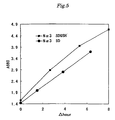
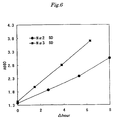
- the N ⁇ 2 strain and the N ⁇ 3 strain were precultured in YPD medium, and the cultures were each inoculated in 50 ml of SD medium (containing 50 mg/L of uracil) or SD medium (containing 50 mg/L of uracil) containing 1 mM of glutathione, and cultured at 30°C with shaking.
- the results are shown in Figs. 5 and 6.
- the N ⁇ 3 strain did not show significant difference of proliferation ability in the medium not containing glutathione compared with the medium containing glutathione.
- the N ⁇ 3 strain showed better growth in the logarithmic growth phase in the medium not containing glutathione compared with the N ⁇ 2 strain (Fig. 6).
- N ⁇ 2 strain and the N ⁇ 3 strain were precultured in YPD medium, and the cultures were each inoculated in 50 ml of SD medium (containing a required amount of uracil), and cultured at 30°C with shaking.
- the production amounts of ⁇ -glutamylcysteine and glutathione were measured as follows. Cells were collected by centrifugation of each culture, and the cells were washed twice with distilled water and extracted with hot wafer at 70°C for 10 minutes to obtain cell content. The cell content was centrifuged, and ⁇ -glutamylcysteine and glutathione contents in the obtained supernatant were measured. Further, yeast cells contained in a predetermined amount of medium was taken on filter paper, and heated at 105°C for 4 hours. Then, the remained cells were weighed and the weight was used as dry cell weight. Contents of ⁇ -glutamylcysteine and glutathione per dry cell weight are shown in Table 1.
- ⁇ -glutamylcysteine production amount per unit time was calculated for each strain.
- results for the strain showing a higher ⁇ -glutamylcysteine content (N ⁇ 2 strain No.1) among the N ⁇ 2 strains and the strain showing a lower ⁇ -glutamylcysteine content (N ⁇ 3 strain No.1) among the N ⁇ 3 strains were used for the calculation. That is, a maximum value was calculated for the N ⁇ 2 strain, and a minimum value for the N ⁇ 3 strain. As a result, the production amounts were 0.116 mg/hour for the N ⁇ 2 strain and 0.124 mg/hour for the N ⁇ 3 strain.
Landscapes
- Life Sciences & Earth Sciences (AREA)
- Chemical & Material Sciences (AREA)
- Engineering & Computer Science (AREA)
- Health & Medical Sciences (AREA)
- Organic Chemistry (AREA)
- Mycology (AREA)
- Zoology (AREA)
- Wood Science & Technology (AREA)
- Microbiology (AREA)
- Bioinformatics & Cheminformatics (AREA)
- Genetics & Genomics (AREA)
- Biotechnology (AREA)
- General Health & Medical Sciences (AREA)
- Biochemistry (AREA)
- General Engineering & Computer Science (AREA)
- Food Science & Technology (AREA)
- Nutrition Science (AREA)
- Polymers & Plastics (AREA)
- Medicinal Chemistry (AREA)
- Biomedical Technology (AREA)
- General Chemical & Material Sciences (AREA)
- Chemical Kinetics & Catalysis (AREA)
- Botany (AREA)
- Tropical Medicine & Parasitology (AREA)
- Virology (AREA)
- Molecular Biology (AREA)
- Micro-Organisms Or Cultivation Processes Thereof (AREA)
- Preparation Of Compounds By Using Micro-Organisms (AREA)
- Organic Low-Molecular-Weight Compounds And Preparation Thereof (AREA)
- Coloring Foods And Improving Nutritive Qualities (AREA)
Applications Claiming Priority (3)
| Application Number | Priority Date | Filing Date | Title |
|---|---|---|---|
| JP2000155121 | 2000-05-25 | ||
| JP2000155121 | 2000-05-25 | ||
| PCT/JP2001/004366 WO2001090310A1 (fr) | 2000-05-25 | 2001-05-24 | Procede de production de $g(g)-glutamylcysteine |
Publications (3)
| Publication Number | Publication Date |
|---|---|
| EP1201747A1 true EP1201747A1 (de) | 2002-05-02 |
| EP1201747A4 EP1201747A4 (de) | 2003-01-22 |
| EP1201747B1 EP1201747B1 (de) | 2004-10-27 |
Family
ID=18660112
Family Applications (1)
| Application Number | Title | Priority Date | Filing Date |
|---|---|---|---|
| EP20010932249 Expired - Lifetime EP1201747B1 (de) | 2000-05-25 | 2001-05-24 | Verfahren zur herstellung von gamma-glutamylcystein |
Country Status (12)
| Country | Link |
|---|---|
| US (1) | US20030124684A1 (de) |
| EP (1) | EP1201747B1 (de) |
| JP (1) | JP4622204B2 (de) |
| KR (1) | KR20020019564A (de) |
| CN (1) | CN1386134A (de) |
| AT (1) | ATE280824T1 (de) |
| BR (1) | BR0106663A (de) |
| DE (1) | DE60106711T2 (de) |
| DK (1) | DK1201747T3 (de) |
| ES (1) | ES2230306T3 (de) |
| MY (1) | MY128920A (de) |
| WO (1) | WO2001090310A1 (de) |
Cited By (6)
| Publication number | Priority date | Publication date | Assignee | Title |
|---|---|---|---|---|
| EP1428873A3 (de) * | 2002-12-13 | 2004-09-01 | Ajinomoto Co., Inc. | Verfahren für die Produktion von gamma-glutamylcystein |
| EP1512747A1 (de) * | 2003-09-02 | 2005-03-09 | Ajinomoto Co., Inc. | Gen, das für Glutathionsynthetase aus Candida utilis kodiert. |
| EP1449913A4 (de) * | 2001-11-26 | 2005-05-11 | Ajinomoto Kk | Gamma-glutamylcystein produzierende hefe |
| EP1452585A4 (de) * | 2001-11-26 | 2005-07-27 | Ajinomoto Kk | Gamma-glutamylcystein produzierende hefe und screening-verfahren dafür |
| US7371557B2 (en) | 2006-02-22 | 2008-05-13 | Food Industry Research And Development Institute | Saccharomyces cerevisiae strains for hyper-producing glutathione and γ-glutamylcysteine and processes of use |
| WO2009102050A1 (ja) | 2008-02-15 | 2009-08-20 | Ajinomoto Co., Inc. | 腸管免疫賦活剤 |
Families Citing this family (15)
| Publication number | Priority date | Publication date | Assignee | Title |
|---|---|---|---|---|
| PE20031013A1 (es) * | 2002-03-26 | 2004-02-05 | Ajinomoto Kk | CANDIDA UTILIS QUE PRODUCE y-GLUTAMILCISTEINA |
| BRPI0400697B1 (pt) * | 2003-03-10 | 2015-07-28 | Ajinomoto Co. Inc. | Método para a produção de um material alimentício contendo uma alta quantidade de cisteína |
| CN100347287C (zh) * | 2004-09-30 | 2007-11-07 | 汪和睦 | 一种重组多形汉逊酵母菌及其构建方法与应用 |
| CN1313597C (zh) * | 2004-10-17 | 2007-05-02 | 肖强 | 一种生物工程法生产谷胱甘肽的方法 |
| CN100334066C (zh) * | 2006-02-21 | 2007-08-29 | 南京大学 | γ-L-谷氨酰-L-半胱氨酸的合成方法 |
| CN101215588B (zh) * | 2008-01-04 | 2010-12-15 | 南京工业大学 | 酶法合成γ-L-谷氨酰-L-半胱氨酸的方法 |
| ES2485990T3 (es) | 2008-01-11 | 2014-08-14 | Ajinomoto Co., Inc. | Uso de potenciador de resistencia a la enfermedad para plantas y procedimiento de control de una enfermedad de planta usando el mismo |
| EP2251413A4 (de) * | 2008-03-04 | 2015-03-25 | Ajinomoto Kk | Gamma-glutamylcystein produzierende hefe und verfahren zur herstellung eines hefeextrakts |
| TWI491361B (zh) * | 2008-06-10 | 2015-07-11 | Oriental Yeast Co Ltd | 對食品用抗老化劑賦予耐熱性之用途 |
| JP5883780B2 (ja) * | 2010-03-26 | 2016-03-15 | アサヒグループホールディングス株式会社 | 酵母の培養方法 |
| CN103348014B (zh) * | 2010-10-05 | 2020-11-03 | 味之素株式会社 | 含有γ-Glu-Abu的酵母和酵母提取物以及它们的制备方法 |
| DE102013209274A1 (de) | 2013-05-17 | 2014-11-20 | Wacker Chemie Ag | Mikroorganismus und Verfahren zur fermentativen Überproduktion von Gamma-Glutamylcystein und Derivaten dieses Dipeptids |
| WO2016186010A1 (ja) * | 2015-05-15 | 2016-11-24 | 味の素株式会社 | 酵母エキス含有乾燥組成物及びその製造方法 |
| CN105238797B (zh) * | 2015-10-23 | 2018-10-02 | 山东金城生物药业有限公司 | 一种无乳链球菌的gshF基因的突变基因及其应用 |
| KR102546738B1 (ko) * | 2021-01-04 | 2023-06-22 | 씨제이제일제당 주식회사 | 글루타메이트-시스테인 리가아제 변이체 및 이를 이용한 글루타치온 생산방법 |
Family Cites Families (5)
| Publication number | Priority date | Publication date | Assignee | Title |
|---|---|---|---|---|
| JPS6174596A (ja) * | 1984-09-21 | 1986-04-16 | Kyowa Hakko Kogyo Co Ltd | γ−グルタミルシステインの製造法 |
| JP2903659B2 (ja) * | 1990-07-06 | 1999-06-07 | 味の素株式会社 | 調味料の製造法 |
| JPH0753102B2 (ja) * | 1992-06-23 | 1995-06-07 | アサヒビール株式会社 | グルタチオン高含有酵母及びその製造法 |
| JP3458514B2 (ja) * | 1995-03-01 | 2003-10-20 | 味の素株式会社 | 糖及びアミノ酸を含有する調味料の製造方法 |
| ATE319326T1 (de) * | 1998-11-26 | 2006-03-15 | Ajinomoto Kk | Verfahren zur herstellung einer geschmacksverstaerkenden verbindung fuer lebensmittel |
-
2001
- 2001-05-23 MY MYPI20012439A patent/MY128920A/en unknown
- 2001-05-24 JP JP2001587106A patent/JP4622204B2/ja not_active Expired - Lifetime
- 2001-05-24 BR BR0106663-3A patent/BR0106663A/pt not_active Application Discontinuation
- 2001-05-24 AT AT01932249T patent/ATE280824T1/de not_active IP Right Cessation
- 2001-05-24 US US10/030,132 patent/US20030124684A1/en not_active Abandoned
- 2001-05-24 ES ES01932249T patent/ES2230306T3/es not_active Expired - Lifetime
- 2001-05-24 EP EP20010932249 patent/EP1201747B1/de not_active Expired - Lifetime
- 2001-05-24 WO PCT/JP2001/004366 patent/WO2001090310A1/ja not_active Ceased
- 2001-05-24 CN CN01802107A patent/CN1386134A/zh active Pending
- 2001-05-24 DE DE60106711T patent/DE60106711T2/de not_active Expired - Lifetime
- 2001-05-24 DK DK01932249T patent/DK1201747T3/da active
- 2001-05-24 KR KR1020027000985A patent/KR20020019564A/ko not_active Withdrawn
Cited By (10)
| Publication number | Priority date | Publication date | Assignee | Title |
|---|---|---|---|---|
| EP1449913A4 (de) * | 2001-11-26 | 2005-05-11 | Ajinomoto Kk | Gamma-glutamylcystein produzierende hefe |
| EP1452585A4 (de) * | 2001-11-26 | 2005-07-27 | Ajinomoto Kk | Gamma-glutamylcystein produzierende hefe und screening-verfahren dafür |
| US7569360B2 (en) | 2001-11-26 | 2009-08-04 | Ajinomoto Co., Inc. | γ-glutamylcysteine producing yeast |
| KR100951069B1 (ko) * | 2001-11-26 | 2010-04-07 | 아지노모토 가부시키가이샤 | γ-글루타밀시스테인 생산 효모 |
| EP1428873A3 (de) * | 2002-12-13 | 2004-09-01 | Ajinomoto Co., Inc. | Verfahren für die Produktion von gamma-glutamylcystein |
| US7410790B2 (en) | 2002-12-13 | 2008-08-12 | Ajinomoto Co., Inc. | Method for producing γ-glutamylcysteine |
| EP1512747A1 (de) * | 2003-09-02 | 2005-03-09 | Ajinomoto Co., Inc. | Gen, das für Glutathionsynthetase aus Candida utilis kodiert. |
| US7297513B2 (en) | 2003-09-02 | 2007-11-20 | Ajinomoto Co., Inc. | Gene encoding glutathione synthetase from Candida utilis |
| US7371557B2 (en) | 2006-02-22 | 2008-05-13 | Food Industry Research And Development Institute | Saccharomyces cerevisiae strains for hyper-producing glutathione and γ-glutamylcysteine and processes of use |
| WO2009102050A1 (ja) | 2008-02-15 | 2009-08-20 | Ajinomoto Co., Inc. | 腸管免疫賦活剤 |
Also Published As
| Publication number | Publication date |
|---|---|
| JP4622204B2 (ja) | 2011-02-02 |
| ATE280824T1 (de) | 2004-11-15 |
| ES2230306T3 (es) | 2005-05-01 |
| EP1201747A4 (de) | 2003-01-22 |
| EP1201747B1 (de) | 2004-10-27 |
| BR0106663A (pt) | 2002-04-02 |
| CN1386134A (zh) | 2002-12-18 |
| DE60106711T2 (de) | 2005-07-07 |
| KR20020019564A (ko) | 2002-03-12 |
| DE60106711D1 (de) | 2004-12-02 |
| MY128920A (en) | 2007-02-28 |
| WO2001090310A1 (fr) | 2001-11-29 |
| US20030124684A1 (en) | 2003-07-03 |
| DK1201747T3 (da) | 2004-12-06 |
Similar Documents
| Publication | Publication Date | Title |
|---|---|---|
| EP1201747B1 (de) | Verfahren zur herstellung von gamma-glutamylcystein | |
| JP5874286B2 (ja) | γ−グルタミル化合物を含有する酵母エキスの製造方法及び当該方法に用いられる酵母 | |
| JPWO2001090310A1 (ja) | γ−グルタミルシステインの製造法 | |
| US7569360B2 (en) | γ-glutamylcysteine producing yeast | |
| WO2016140349A1 (ja) | グルタチオンの製造方法 | |
| EP2251413A1 (de) | Gamma-glutamylcystein produzierende hefe und verfahren zur herstellung eines hefeextrakts | |
| US7297513B2 (en) | Gene encoding glutathione synthetase from Candida utilis | |
| US7553638B2 (en) | Candida utilis containing γ-glutamylcysteine | |
| WO2020050273A1 (ja) | グルタチオンの製造方法 | |
| JP4228644B2 (ja) | γ−グルタミルシステインの製造法 | |
| US7410790B2 (en) | Method for producing γ-glutamylcysteine | |
| JP5998589B2 (ja) | γ−Glu−Xを含有する酵母 | |
| JP2004201677A (ja) | γ−グルタミルシステインの製造法 | |
| JP2012523230A (ja) | 含硫化合物含量が増加した酵母、そのスクリーニング方法、及び培養方法 |
Legal Events
| Date | Code | Title | Description |
|---|---|---|---|
| PUAI | Public reference made under article 153(3) epc to a published international application that has entered the european phase |
Free format text: ORIGINAL CODE: 0009012 |
|
| 17P | Request for examination filed |
Effective date: 20020222 |
|
| AK | Designated contracting states |
Kind code of ref document: A1 Designated state(s): AT BE CH CY DE DK ES FI FR GB GR IE IT LI LU MC NL PT SE TR |
|
| RIC1 | Information provided on ipc code assigned before grant |
Free format text: 7C 12N 9/00 A, 7C 12P 13/04 B, 7C 12P 1/02 B, 7A 23L 1:28 Z |
|
| A4 | Supplementary search report drawn up and despatched |
Effective date: 20021205 |
|
| AK | Designated contracting states |
Kind code of ref document: A4 Designated state(s): AT BE CH CY DE DK ES FI FR GB GR IE IT LI LU MC NL PT SE TR |
|
| 17Q | First examination report despatched |
Effective date: 20030219 |
|
| GRAP | Despatch of communication of intention to grant a patent |
Free format text: ORIGINAL CODE: EPIDOSNIGR1 |
|
| GRAS | Grant fee paid |
Free format text: ORIGINAL CODE: EPIDOSNIGR3 |
|
| GRAA | (expected) grant |
Free format text: ORIGINAL CODE: 0009210 |
|
| AK | Designated contracting states |
Kind code of ref document: B1 Designated state(s): AT BE CH CY DE DK ES FI FR GB GR IE IT LI LU MC NL PT SE TR |
|
| PG25 | Lapsed in a contracting state [announced via postgrant information from national office to epo] |
Ref country code: FI Free format text: LAPSE BECAUSE OF FAILURE TO SUBMIT A TRANSLATION OF THE DESCRIPTION OR TO PAY THE FEE WITHIN THE PRESCRIBED TIME-LIMIT Effective date: 20041027 Ref country code: TR Free format text: LAPSE BECAUSE OF FAILURE TO SUBMIT A TRANSLATION OF THE DESCRIPTION OR TO PAY THE FEE WITHIN THE PRESCRIBED TIME-LIMIT Effective date: 20041027 Ref country code: BE Free format text: LAPSE BECAUSE OF FAILURE TO SUBMIT A TRANSLATION OF THE DESCRIPTION OR TO PAY THE FEE WITHIN THE PRESCRIBED TIME-LIMIT Effective date: 20041027 Ref country code: AT Free format text: LAPSE BECAUSE OF FAILURE TO SUBMIT A TRANSLATION OF THE DESCRIPTION OR TO PAY THE FEE WITHIN THE PRESCRIBED TIME-LIMIT Effective date: 20041027 |
|
| REG | Reference to a national code |
Ref country code: GB Ref legal event code: FG4D |
|
| REG | Reference to a national code |
Ref country code: CH Ref legal event code: EP |
|
| REG | Reference to a national code |
Ref country code: CH Ref legal event code: NV Representative=s name: A. BRAUN, BRAUN, HERITIER, ESCHMANN AG PATENTANWAE |
|
| REG | Reference to a national code |
Ref country code: IE Ref legal event code: FG4D |
|
| REF | Corresponds to: |
Ref document number: 60106711 Country of ref document: DE Date of ref document: 20041202 Kind code of ref document: P |
|
| REG | Reference to a national code |
Ref country code: DK Ref legal event code: T3 |
|
| PG25 | Lapsed in a contracting state [announced via postgrant information from national office to epo] |
Ref country code: GR Free format text: LAPSE BECAUSE OF FAILURE TO SUBMIT A TRANSLATION OF THE DESCRIPTION OR TO PAY THE FEE WITHIN THE PRESCRIBED TIME-LIMIT Effective date: 20050127 Ref country code: SE Free format text: LAPSE BECAUSE OF FAILURE TO SUBMIT A TRANSLATION OF THE DESCRIPTION OR TO PAY THE FEE WITHIN THE PRESCRIBED TIME-LIMIT Effective date: 20050127 |
|
| REG | Reference to a national code |
Ref country code: ES Ref legal event code: FG2A Ref document number: 2230306 Country of ref document: ES Kind code of ref document: T3 |
|
| PG25 | Lapsed in a contracting state [announced via postgrant information from national office to epo] |
Ref country code: IT Free format text: LAPSE BECAUSE OF NON-PAYMENT OF DUE FEES Effective date: 20050524 Ref country code: CY Free format text: LAPSE BECAUSE OF FAILURE TO SUBMIT A TRANSLATION OF THE DESCRIPTION OR TO PAY THE FEE WITHIN THE PRESCRIBED TIME-LIMIT Effective date: 20050524 Ref country code: IE Free format text: LAPSE BECAUSE OF NON-PAYMENT OF DUE FEES Effective date: 20050524 |
|
| PG25 | Lapsed in a contracting state [announced via postgrant information from national office to epo] |
Ref country code: ES Free format text: LAPSE BECAUSE OF NON-PAYMENT OF DUE FEES Effective date: 20050525 |
|
| PG25 | Lapsed in a contracting state [announced via postgrant information from national office to epo] |
Ref country code: CH Free format text: LAPSE BECAUSE OF NON-PAYMENT OF DUE FEES Effective date: 20050531 Ref country code: DK Free format text: LAPSE BECAUSE OF NON-PAYMENT OF DUE FEES Effective date: 20050531 Ref country code: LI Free format text: LAPSE BECAUSE OF NON-PAYMENT OF DUE FEES Effective date: 20050531 Ref country code: MC Free format text: LAPSE BECAUSE OF NON-PAYMENT OF DUE FEES Effective date: 20050531 |
|
| PLBE | No opposition filed within time limit |
Free format text: ORIGINAL CODE: 0009261 |
|
| STAA | Information on the status of an ep patent application or granted ep patent |
Free format text: STATUS: NO OPPOSITION FILED WITHIN TIME LIMIT |
|
| ET | Fr: translation filed | ||
| 26N | No opposition filed |
Effective date: 20050728 |
|
| PG25 | Lapsed in a contracting state [announced via postgrant information from national office to epo] |
Ref country code: NL Free format text: LAPSE BECAUSE OF NON-PAYMENT OF DUE FEES Effective date: 20051201 |
|
| REG | Reference to a national code |
Ref country code: CH Ref legal event code: PL |
|
| NLV4 | Nl: lapsed or anulled due to non-payment of the annual fee |
Effective date: 20051201 |
|
| REG | Reference to a national code |
Ref country code: IE Ref legal event code: MM4A |
|
| REG | Reference to a national code |
Ref country code: DK Ref legal event code: EBP |
|
| REG | Reference to a national code |
Ref country code: ES Ref legal event code: FD2A Effective date: 20050525 |
|
| PG25 | Lapsed in a contracting state [announced via postgrant information from national office to epo] |
Ref country code: PT Free format text: LAPSE BECAUSE OF NON-PAYMENT OF DUE FEES Effective date: 20050327 |
|
| REG | Reference to a national code |
Ref country code: FR Ref legal event code: PLFP Year of fee payment: 16 |
|
| REG | Reference to a national code |
Ref country code: FR Ref legal event code: PLFP Year of fee payment: 17 |
|
| REG | Reference to a national code |
Ref country code: FR Ref legal event code: PLFP Year of fee payment: 18 |
|
| PGFP | Annual fee paid to national office [announced via postgrant information from national office to epo] |
Ref country code: FR Payment date: 20200414 Year of fee payment: 20 Ref country code: DE Payment date: 20200512 Year of fee payment: 20 |
|
| PGFP | Annual fee paid to national office [announced via postgrant information from national office to epo] |
Ref country code: GB Payment date: 20200513 Year of fee payment: 20 |
|
| REG | Reference to a national code |
Ref country code: DE Ref legal event code: R071 Ref document number: 60106711 Country of ref document: DE |
|
| REG | Reference to a national code |
Ref country code: GB Ref legal event code: PE20 Expiry date: 20210523 |
|
| PG25 | Lapsed in a contracting state [announced via postgrant information from national office to epo] |
Ref country code: GB Free format text: LAPSE BECAUSE OF EXPIRATION OF PROTECTION Effective date: 20210523 |