EP1240778B1 - System und gerät zur erzeugung von nachrichten in mehreren sprachen für die verteilung an set-top-endgeräte in einem rundfunkfernsehsystem - Google Patents
System und gerät zur erzeugung von nachrichten in mehreren sprachen für die verteilung an set-top-endgeräte in einem rundfunkfernsehsystem Download PDFInfo
- Publication number
- EP1240778B1 EP1240778B1 EP00990242A EP00990242A EP1240778B1 EP 1240778 B1 EP1240778 B1 EP 1240778B1 EP 00990242 A EP00990242 A EP 00990242A EP 00990242 A EP00990242 A EP 00990242A EP 1240778 B1 EP1240778 B1 EP 1240778B1
- Authority
- EP
- European Patent Office
- Prior art keywords
- message
- language
- component
- terminal
- messages
- Prior art date
- Legal status (The legal status is an assumption and is not a legal conclusion. Google has not performed a legal analysis and makes no representation as to the accuracy of the status listed.)
- Expired - Lifetime
Links
Images


Classifications
-
- H—ELECTRICITY
- H04—ELECTRIC COMMUNICATION TECHNIQUE
- H04N—PICTORIAL COMMUNICATION, e.g. TELEVISION
- H04N21/00—Selective content distribution, e.g. interactive television or video on demand [VOD]
- H04N21/40—Client devices specifically adapted for the reception of or interaction with content, e.g. set-top-box [STB]; Operations thereof
- H04N21/47—End-user applications
- H04N21/475—End-user interface for inputting end-user data, e.g. personal identification number [PIN], preference data
- H04N21/4755—End-user interface for inputting end-user data, e.g. personal identification number [PIN], preference data for defining user preferences, e.g. favourite actors or genre
-
- H—ELECTRICITY
- H04—ELECTRIC COMMUNICATION TECHNIQUE
- H04N—PICTORIAL COMMUNICATION, e.g. TELEVISION
- H04N21/00—Selective content distribution, e.g. interactive television or video on demand [VOD]
- H04N21/20—Servers specifically adapted for the distribution of content, e.g. VOD servers; Operations thereof
- H04N21/23—Processing of content or additional data; Elementary server operations; Server middleware
- H04N21/234—Processing of video elementary streams, e.g. splicing of video streams or manipulating encoded video stream scene graphs
- H04N21/2343—Processing of video elementary streams, e.g. splicing of video streams or manipulating encoded video stream scene graphs involving reformatting operations of video signals for distribution or compliance with end-user requests or end-user device requirements
- H04N21/23439—Processing of video elementary streams, e.g. splicing of video streams or manipulating encoded video stream scene graphs involving reformatting operations of video signals for distribution or compliance with end-user requests or end-user device requirements for generating different versions
-
- H—ELECTRICITY
- H04—ELECTRIC COMMUNICATION TECHNIQUE
- H04N—PICTORIAL COMMUNICATION, e.g. TELEVISION
- H04N21/00—Selective content distribution, e.g. interactive television or video on demand [VOD]
- H04N21/20—Servers specifically adapted for the distribution of content, e.g. VOD servers; Operations thereof
- H04N21/23—Processing of content or additional data; Elementary server operations; Server middleware
- H04N21/235—Processing of additional data, e.g. scrambling of additional data or processing content descriptors
-
- H—ELECTRICITY
- H04—ELECTRIC COMMUNICATION TECHNIQUE
- H04N—PICTORIAL COMMUNICATION, e.g. TELEVISION
- H04N21/00—Selective content distribution, e.g. interactive television or video on demand [VOD]
- H04N21/20—Servers specifically adapted for the distribution of content, e.g. VOD servers; Operations thereof
- H04N21/23—Processing of content or additional data; Elementary server operations; Server middleware
- H04N21/236—Assembling of a multiplex stream, e.g. transport stream, by combining a video stream with other content or additional data, e.g. inserting a URL [Uniform Resource Locator] into a video stream, multiplexing software data into a video stream; Remultiplexing of multiplex streams; Insertion of stuffing bits into the multiplex stream, e.g. to obtain a constant bit-rate; Assembling of a packetised elementary stream
- H04N21/2368—Multiplexing of audio and video streams
-
- H—ELECTRICITY
- H04—ELECTRIC COMMUNICATION TECHNIQUE
- H04N—PICTORIAL COMMUNICATION, e.g. TELEVISION
- H04N21/00—Selective content distribution, e.g. interactive television or video on demand [VOD]
- H04N21/20—Servers specifically adapted for the distribution of content, e.g. VOD servers; Operations thereof
- H04N21/25—Management operations performed by the server for facilitating the content distribution or administrating data related to end-users or client devices, e.g. end-user or client device authentication, learning user preferences for recommending movies
- H04N21/258—Client or end-user data management, e.g. managing client capabilities, user preferences or demographics, processing of multiple end-users preferences to derive collaborative data
- H04N21/25866—Management of end-user data
- H04N21/25883—Management of end-user data being end-user demographical data, e.g. age, family status or address
-
- H—ELECTRICITY
- H04—ELECTRIC COMMUNICATION TECHNIQUE
- H04N—PICTORIAL COMMUNICATION, e.g. TELEVISION
- H04N21/00—Selective content distribution, e.g. interactive television or video on demand [VOD]
- H04N21/20—Servers specifically adapted for the distribution of content, e.g. VOD servers; Operations thereof
- H04N21/25—Management operations performed by the server for facilitating the content distribution or administrating data related to end-users or client devices, e.g. end-user or client device authentication, learning user preferences for recommending movies
- H04N21/258—Client or end-user data management, e.g. managing client capabilities, user preferences or demographics, processing of multiple end-users preferences to derive collaborative data
- H04N21/25866—Management of end-user data
- H04N21/25891—Management of end-user data being end-user preferences
-
- H—ELECTRICITY
- H04—ELECTRIC COMMUNICATION TECHNIQUE
- H04N—PICTORIAL COMMUNICATION, e.g. TELEVISION
- H04N21/00—Selective content distribution, e.g. interactive television or video on demand [VOD]
- H04N21/40—Client devices specifically adapted for the reception of or interaction with content, e.g. set-top-box [STB]; Operations thereof
- H04N21/43—Processing of content or additional data, e.g. demultiplexing additional data from a digital video stream; Elementary client operations, e.g. monitoring of home network or synchronising decoder's clock; Client middleware
- H04N21/434—Disassembling of a multiplex stream, e.g. demultiplexing audio and video streams, extraction of additional data from a video stream; Remultiplexing of multiplex streams; Extraction or processing of SI; Disassembling of packetised elementary stream
- H04N21/4341—Demultiplexing of audio and video streams
-
- H—ELECTRICITY
- H04—ELECTRIC COMMUNICATION TECHNIQUE
- H04N—PICTORIAL COMMUNICATION, e.g. TELEVISION
- H04N21/00—Selective content distribution, e.g. interactive television or video on demand [VOD]
- H04N21/40—Client devices specifically adapted for the reception of or interaction with content, e.g. set-top-box [STB]; Operations thereof
- H04N21/43—Processing of content or additional data, e.g. demultiplexing additional data from a digital video stream; Elementary client operations, e.g. monitoring of home network or synchronising decoder's clock; Client middleware
- H04N21/435—Processing of additional data, e.g. decrypting of additional data, reconstructing software from modules extracted from the transport stream
-
- H—ELECTRICITY
- H04—ELECTRIC COMMUNICATION TECHNIQUE
- H04N—PICTORIAL COMMUNICATION, e.g. TELEVISION
- H04N21/00—Selective content distribution, e.g. interactive television or video on demand [VOD]
- H04N21/40—Client devices specifically adapted for the reception of or interaction with content, e.g. set-top-box [STB]; Operations thereof
- H04N21/43—Processing of content or additional data, e.g. demultiplexing additional data from a digital video stream; Elementary client operations, e.g. monitoring of home network or synchronising decoder's clock; Client middleware
- H04N21/443—OS processes, e.g. booting an STB, implementing a Java virtual machine in an STB or power management in an STB
-
- H—ELECTRICITY
- H04—ELECTRIC COMMUNICATION TECHNIQUE
- H04N—PICTORIAL COMMUNICATION, e.g. TELEVISION
- H04N21/00—Selective content distribution, e.g. interactive television or video on demand [VOD]
- H04N21/40—Client devices specifically adapted for the reception of or interaction with content, e.g. set-top-box [STB]; Operations thereof
- H04N21/45—Management operations performed by the client for facilitating the reception of or the interaction with the content or administrating data related to the end-user or to the client device itself, e.g. learning user preferences for recommending movies, resolving scheduling conflicts
- H04N21/4508—Management of client data or end-user data
- H04N21/4532—Management of client data or end-user data involving end-user characteristics, e.g. viewer profile, preferences
-
- H—ELECTRICITY
- H04—ELECTRIC COMMUNICATION TECHNIQUE
- H04N—PICTORIAL COMMUNICATION, e.g. TELEVISION
- H04N21/00—Selective content distribution, e.g. interactive television or video on demand [VOD]
- H04N21/40—Client devices specifically adapted for the reception of or interaction with content, e.g. set-top-box [STB]; Operations thereof
- H04N21/45—Management operations performed by the client for facilitating the reception of or the interaction with the content or administrating data related to the end-user or to the client device itself, e.g. learning user preferences for recommending movies, resolving scheduling conflicts
- H04N21/454—Content or additional data filtering, e.g. blocking advertisements
-
- H—ELECTRICITY
- H04—ELECTRIC COMMUNICATION TECHNIQUE
- H04N—PICTORIAL COMMUNICATION, e.g. TELEVISION
- H04N21/00—Selective content distribution, e.g. interactive television or video on demand [VOD]
- H04N21/80—Generation or processing of content or additional data by content creator independently of the distribution process; Content per se
- H04N21/81—Monomedia components thereof
- H04N21/8126—Monomedia components thereof involving additional data, e.g. news, sports, stocks, weather forecasts
- H04N21/8133—Monomedia components thereof involving additional data, e.g. news, sports, stocks, weather forecasts specifically related to the content, e.g. biography of the actors in a movie, detailed information about an article seen in a video programme
-
- H—ELECTRICITY
- H04—ELECTRIC COMMUNICATION TECHNIQUE
- H04N—PICTORIAL COMMUNICATION, e.g. TELEVISION
- H04N5/00—Details of television systems
- H04N5/44—Receiver circuitry for the reception of television signals according to analogue transmission standards
- H04N5/445—Receiver circuitry for the reception of television signals according to analogue transmission standards for displaying additional information
-
- H—ELECTRICITY
- H04—ELECTRIC COMMUNICATION TECHNIQUE
- H04N—PICTORIAL COMMUNICATION, e.g. TELEVISION
- H04N5/00—Details of television systems
- H04N5/44—Receiver circuitry for the reception of television signals according to analogue transmission standards
- H04N5/445—Receiver circuitry for the reception of television signals according to analogue transmission standards for displaying additional information
- H04N5/44504—Circuit details of the additional information generator, e.g. details of the character or graphics signal generator, overlay mixing circuits
-
- H—ELECTRICITY
- H04—ELECTRIC COMMUNICATION TECHNIQUE
- H04N—PICTORIAL COMMUNICATION, e.g. TELEVISION
- H04N7/00—Television systems
- H04N7/08—Systems for the simultaneous or sequential transmission of more than one television signal, e.g. additional information signals, the signals occupying wholly or partially the same frequency band, e.g. by time division
- H04N7/087—Systems for the simultaneous or sequential transmission of more than one television signal, e.g. additional information signals, the signals occupying wholly or partially the same frequency band, e.g. by time division with signal insertion during the vertical blanking interval only
- H04N7/088—Systems for the simultaneous or sequential transmission of more than one television signal, e.g. additional information signals, the signals occupying wholly or partially the same frequency band, e.g. by time division with signal insertion during the vertical blanking interval only the inserted signal being digital
- H04N7/0884—Systems for the simultaneous or sequential transmission of more than one television signal, e.g. additional information signals, the signals occupying wholly or partially the same frequency band, e.g. by time division with signal insertion during the vertical blanking interval only the inserted signal being digital for the transmission of additional display-information, e.g. menu for programme or channel selection
- H04N7/0885—Systems for the simultaneous or sequential transmission of more than one television signal, e.g. additional information signals, the signals occupying wholly or partially the same frequency band, e.g. by time division with signal insertion during the vertical blanking interval only the inserted signal being digital for the transmission of additional display-information, e.g. menu for programme or channel selection for the transmission of subtitles
-
- H—ELECTRICITY
- H04—ELECTRIC COMMUNICATION TECHNIQUE
- H04N—PICTORIAL COMMUNICATION, e.g. TELEVISION
- H04N7/00—Television systems
- H04N7/16—Analogue secrecy systems; Analogue subscription systems
-
- H—ELECTRICITY
- H04—ELECTRIC COMMUNICATION TECHNIQUE
- H04N—PICTORIAL COMMUNICATION, e.g. TELEVISION
- H04N7/00—Television systems
- H04N7/16—Analogue secrecy systems; Analogue subscription systems
- H04N7/173—Analogue secrecy systems; Analogue subscription systems with two-way working, e.g. subscriber sending a programme selection signal
- H04N7/17309—Transmission or handling of upstream communications
-
- H—ELECTRICITY
- H04—ELECTRIC COMMUNICATION TECHNIQUE
- H04N—PICTORIAL COMMUNICATION, e.g. TELEVISION
- H04N21/00—Selective content distribution, e.g. interactive television or video on demand [VOD]
- H04N21/40—Client devices specifically adapted for the reception of or interaction with content, e.g. set-top-box [STB]; Operations thereof
- H04N21/47—End-user applications
- H04N21/485—End-user interface for client configuration
- H04N21/4856—End-user interface for client configuration for language selection, e.g. for the menu or subtitles
Definitions
- the present invention relates to a method and apparatus for providing multiple language messages for display via set-top terminals in a broadcast television network, such as a cable of satellite television network.
- a broadcast television network such as a cable of satellite television network.
- the invention allows different terminals in a common network to display a message in a corresponding assigned language.
- the messages can be targeted from a network headend to specific terminals.
- US-A-5,497,186 discloses a CATV system comprising a centre facility for transmitting, together with a television signal carrying a broadcast program, a message directed to a particular terminal apparatus, address data of the particular terminal apparatus, and quantity data indicating a quantity of the message.
- a plurality of terminal apparatuses is provided, wherein each of the terminal apparatuses is operable to receive the address data.
- the address data enables the particular terminal apparatus to display the entire message on an associated TV receiver based on the quantity data and to finish the display of the message when receiving an instruction from a user indicating reception of the entire message.
- WO-A-98/27759 discloses a method of forwarding voice messages to a subscriber in a mobile telephone system; the system comprises a subscriber register arranged in connection with a mobile services switching centre for maintaining subscriber-specific information.
- a subscriber-specific language code is stored indicating the language in which the subscriber wants to hear the messages addressed to him in the subscriber register arranged in connection with a mobile services switching centre.
- Voice messages are forwarded to the subscriber in the language indicated by the language code stored in the subscriber register.
- broadcast networks such as broadband communication networks
- broadband communication networks often have a need to communicate with the terminal users in the network. For example, there may be a need to inform the users of their account status, such as an overdue bill, or provide emergency messages, e.g., to report weather or other emergencies.
- a common network may cover a number of multi-lingual regions, such as in Europe or Asia. It is inefficient to provide customized terminals for each region. Moreover, even within a small geographic region, the language preferences of different subscribers can vary.
- the system should allow a terminal to have a multi-lingual capability.
- system should be implementable with a relatively low cost and degree of complication.
- the system should allow a network operator to set the language preferences of the terminals in a network.
- the system should enable a network operator to broadcast messages that are, or are not, related to other programming, such as television programs.
- the system should allow messages to be broadcast either in-band and/or out-of-band with programming service signals.
- the system should provide identifying information for the different languages in which a message is provided without requiring analysis of the message itself at the terminals to identify the language.
- the system should be suited for use with virtually any desired language and corresponding character set, including those specified in the Unicode standard.
- system should be suitable for use in an analog or digital video environment.
- system should be suitable for use with virtually any type of broadcast or interactive network, including a satellite network and a cable television network.
- the present invention provides a system having the above and other advantages.
- the present invention relates to a system for providing multiple language messages for display via set-top terminals in a broadcast television network.
- the invention provides the capability to generate individual component messages, each in a different language, and to combine them into a compound message.
- Each component message within the compound message is given a designator that identifies the language in which the component message is provided.
- the compound message is then broadcast to all terminals in the system. Addressing techniques may be used to address the messages for recovery only by specific terminals.
- an operating system is used that can be adapted to support all character sets for all languages of the world.
- An operator runs a message editor, e.g., at a headend, to compose a component text message.
- a language is selected which causes the message editor to make available the appropriate character set for the language.
- the component message is created, it is saved and a language identifier which is unique for that language is attached to the message. Additional component messages typically related to the same topic are composed using alternate language selections.
- the operator combines them into a compound message. This compound message is ready for broadcast to the terminals in the television network.
- the compound message is handled in the system as a single message. For example, it can be scheduled, given a destination, and added and deleted from the controller's database as a single unit.
- the controller can manage the broadcast of messages to the terminals in the system on a dedicated control channel (e.g., out-of-band).
- the controller optionally transmits the compound message to a data insertion/scrambling device which transmits the message in-band, e.g., in the vertical blanking interval (VBI) of an analog television signal, or interleaved with video packets of a digital television multiplex.
- VBI vertical blanking interval
- the language identifier in each component message is checked to see if it matches the terminal's assigned language preference. If there is a matching language identifier, then the corresponding message is acquired and displayed. All other component messages are discarded.
- the component messages comprise bit-map data for the alphanumeric (text) component messages that can be rendered directly on screen, without the need for converting codewords for text characters to bit-map data.
- a particular method for providing multi-lingual messages to a subscriber terminal population in a television network in accordance with the invention includes the step of providing the terminals in the terminal population with language preference data identifying a language preference thereof.
- a plurality of component messages are formed at a distribution point of the network, such as a headend. Each component message is provided in a different language.
- a language identifier is provided for each of the component messages to identify the language thereof, and the component messages are assembled to form a compound message.
- the compound message is broadcast to the terminal population.
- the terminals are adapted to retrieve the component message of the compound message whose language identifier corresponds to the terminal's language preference data.
- the present invention relates to a system for providing multiple language messages for display via set-top terminals in a broadcast television network.
- FIG. 1 illustrates a headend and a representative terminal in a broadcast network in accordance with the present invention.
- the terminal is also known in the art a decoder, a set-top box, an integrated receiver-decoder (IRD) or the like.
- ILD integrated receiver-decoder
- a "set-top" terminal for a television need not be located on top of the television but can be located nearby or otherwise have its functions incorporated into the television.
- the headend 110 may be, e.g., the headend of a cable television network, or an intermediate redistribution point in a network.
- the headend 110 is a distribution or broadcast point of the network, and includes a message editor 115 which provides compound messages to a controller 120.
- the compound messages are discussed further in connection with FIG. 2.
- the messaging editor 115 offers the network operator the ability to compose text messages and send them to the terminals in the system.
- the controller 120 can provide the compound messages to the terminal 180 either via an out-of-band dedicated control channel 130, and/or via an in-band network connection 135 and an in-band television channel 140.
- a data insertion device 125 with an optional scrambling capability for the television programs is used to insert the compound messages into the TV channel 140, such as in the VBI.
- a terminal language preference function 122 controls the assignment of a language preference for specific terminals.
- the headend 110 transmits initialization data to each terminal using addressing techniques to set the preference of each terminal at the time the terminal is placed into service for a household, or at other times as appropriate, e.g., upon request by the household.
- the representative terminal 180 receives the compound messages via either or both of the channels 130 and 140.
- the other terminals in the network similarly receive the compound messages.
- the terminal 180 processes the compound message according to its assigned language preference to provide an alphanumeric message comprising text and/or numbers to an output display device, such as a television or other video monitor.
- an output display device such as a television or other video monitor.
- the text used by the set-top terminal in communicating with the viewer is selected based on the preferences of the household.
- a single terminal model can be set to one of several languages.
- the language setting can vary from terminal to terminal within the system.
- the language preference of the same terminal can be changed over time according to the needs of the household using it.
- the household may communicate with the network operator to request a re-assignment of the language preference, or change the preference locally.
- the message editor 115 can compose several types of messages, including general purpose e-mail type messages, referred to as stored messages since they can be stored at a terminal, system error messages, referred to as barker messages (e.g., "you are out of credit”, “not authorized to view this channel", “this channel parentally controlled”), and channel identifier maps, which comprise lists of short strings that augment the channel number and typically hold the call sign of the channel, e.g., "ABC”.
- general purpose e-mail type messages referred to as stored messages since they can be stored at a terminal
- system error messages referred to as barker messages (e.g., "you are out of credit”, “not authorized to view this channel”, “this channel parentally controlled")
- channel identifier maps which comprise lists of short strings that augment the channel number and typically hold the call sign of the channel, e.g., "ABC”.
- the messages can be broadcast to all terminals, or can be addressed to individual or groups of terminals using known addressing techniques. For example, a message regarding the overdue status of an account can be addressed only to those affected viewers, while an emergency message regarding a snow storm can be broadcast to all viewers.
- the component messages can comprise codewords for text (e.g., characters, such as those comprising letters and/or numbers), or optionally, codewords for bit-map data of the characters that are to be rendered on-screen.
- codewords for text e.g., characters, such as those comprising letters and/or numbers
- bit-map data can be rendered directly at a terminal, whereas the text must be converted to a bit-map data at the terminal prior to rendering.
- a capability for encrypting the messages may be provided at the headend 110, if desired.
- FIG. 2 illustrates the formation of a compound message with different component messages in accordance with the present invention.
- the message editor 115 provides component messages in a number of different languages. Three different languages are assumed in the present example although essentially any number can be used depending on the needs of the network.
- the messages may be generated locally by an operator or by some automated means, such as a computer, or received via a remote link, such as a news service link.
- a first component message 210 e.g., in English, has an associated language identifier 215, while a second component message 220, e.g., in Spanish, has an associated language identifier 225, and a third component message 230, e.g., in French, has an associated language identifier 235.
- the component message may include other information regarding the characters in the message, such as display color, location on screen, size, style, scroll speed, special effects such as flashing, and so forth
- the first component message 210 may comprise the text "weather alert - tornado warning in effect.”
- Corresponding text is provided in the designated languages for the second 220 and third component messages 230.
- the component messages may comprise codewords from the Unicode character set, for example.
- the component messages include codewords for bit-map data of the characters that are to be rendered.
- a compound message 250 is then formed that comprises each of the component messages and their respective identifiers for transmission to the terminals.
- the compound message 250 optionally includes addressing information 255 for addressing the compound message as a single entity to one or more terminals in the network. Any known addressing technique can be used. For user- or group-specific messages, the compound message is addressed only to those affected users or groups, while for general interest messages, the compound message is addressed to all terminals. The compound message is essentially broadcast to all users, but is only retrieved by the users designated by the addressing information.
- a "wild card", or "all terminals” data field may be used to indicate that all terminals in the population are to retrieve the compound message.
- each component message is sent in its entirety as a block.
- the entire message is then scheduled for transmission on the data channel.
- all of the bytes of the component message are sent back to back until the entire component message has been transmitted.
- the bytes of the following component message are transmitted, and so forth.
- the bytes in a first portion of the first component message are sent, then the bytes in a first portion of the second component message are sent, and so forth in a time-multiplexed manner. Subsequently, the bytes in a second portion of the first component message are sent, the bytes in a second portion of the second component message are sent, and so forth.
- the component message and compound message may be provided using any known messaging technique and syntax.
- the compound message is handled in the system as a single message. It can be scheduled, given a destination, and added and deleted from the controller's database as a single unit. Also, there is less overhead data (e.g., error correcting data and the like) with the compound message so less bandwidth is consumed. Moreover, the tasks of setup, preparation and management are reduced for the network operator. The network operator only has to transfer, schedule, and maintain one message for each message subject. This helps to keep the controller's database organized.
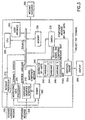
- FIG. 3 illustrates a terminal in accordance with the present invention.
- the terminal 180 receives an assigned language message via a path 305 from the headend to set the language preference of the terminal.
- the message can be stored in a non-volatile memory, such as the memory 330, after processing at a message processor 310 and, e.g., transport on a bus 325. It is also possible to have the language preference set locally, via a user input to an optional user interface 395. Other initialization data can also be provided via the path 305.
- the terminal receives the compound message via path 306, which can be in-band with programming services, or out-of-band.
- the compound message includes the component messages in the different languages, their associated language identifiers and, optionally, addressing information for addressing the compound message to one or more specific terminals.
- the addressing data if present, is processed at an addressing data processor 375 to determine if the compound message is intended for the terminal 180. If it is not addressed to the terminal 180, the compound message is discarded. If the compound message is addressed to the terminal 180, the addressing data processor 375 sends a signal to the demultiplexer (demux) 380 to indicate that one of the component message is to be retrieved.
- the demultiplexer (demux) 380 to indicate that one of the component message is to be retrieved.
- a language identifier detector 315 compares the assigned language of the terminal 180 to the respective language identifiers of the component messages to determine a matching component message.
- the matching component message is recovered at the demux 380 and provided to a switch 332 via the bus 325.
- the message may be immediately processed for display, or stored, e.g., in the memory 330, and processed for display at a later time.
- the switch 33 under the control of a CPU 320, sends the component message to a character bit-map function 340 if the message comprises text, or to the graphics engine 350 directly if the message comprises bit-map data.
- the character bit-map function 340 may include bit map data for different languages, e.g., language 1 (342), language 2 (344), and language 3 (346).
- bit map data for the common characters can be provided.
- the common characters and language-specific characters then form the total character set.
- each terminal with a bit-map only for the character set for the corresponding assigned language. This can be achieved by providing the appropriate data at the time the terminal is manufactured or installed in the user's home, or by downloading the necessary information to the terminal from a headend in an initialization procedure.
- the headend sets the language preference of the terminals, and provides a variety of other operating parameters, such as channel maps, frequency maps, services to descramble and other information.
- a single font set can be stored in memory, and tables that map character codes to character bit map can be provided for each language.
- the language assignment determines which table is actively used.
- the bit map function 340 receives character code words from the matching component message, such as two-byte unicode codewords, and outputs a corresponding pixel map.
- the terminal 180 may be designed to handle different types of languages, such as those that use single-byte character sets (e.g., ASCII) and those that require two bytes (e.g., Unicode). The language assignment determines which type of character set is used.
- Pixel map data corresponding to the matching component message is output from the bit map function 340 to a graphics engine 350 to render the message on a display 360, such as a television screen.
- the component message data can include information regarding the color, location, size, and other details for the display of the message, or these details can be implemented according to default data stored locally at the terminal 180.
- Other information may designate how the message is displayed, e.g., on a separate channel, on the currently-viewed channel, overlaid with other programming or by itself, in a split-screen format, as a moving banner, and so forth.
- a message indicator 390 such as a light-emitting diode (LED) 390
- a beeper may be activated to notify the user that a message came in.
- the user can then view the message by navigating the menu system using keys on a hand-held remote control, for example.
- the terminal can be tuned to any channel when the message is being viewed.
- the currently-viewed program from the tuner is de-selected and replaced with a raster generated by hardware in the terminal.
- the message is written to an area of memory, such as random access memory (RAM), that is used by the hardware to generate the image containing the message.
- RAM random access memory
- the message may be overlaid on the video where live video can be seen around the edge of the message or completely override the video, where the message is placed on a black background and no video is seen.
- the viewer presses a button on the remote control to select the message it stays on the screen until the viewer exits the screen.
- the message can be multiple pages and the viewer may have to page down a few times to read it all.
- a central processing unit (CPU) 320 may provide overall control of the functions of the terminal 180.
- terminal 180 (as well as of the headend 110 of FIG. 1) can be implemented using shared circuitry and any known hardware, firmware and/or software techniques.
- the depiction of a block for performing a specific function does not imply that the function is implemented independently of the other functions using separate circuitry.
- the terminals may employ demodulators, equalizers, error-correcting circuits, deinterleavers, decompression circuitry, descrambling circuitry, look-up tables, and so forth. Additionally, circuitry for processing the audio and video data of the programming services is not shown.
- initialization data can be stored in the non-volatile memory 330 at terminal 180.
- control data can be set, e.g., by the person who composes the message at the headend, to allow the viewer to discard the message after it has been read, or to not permit viewer deletion.
- a command from the controller 120 at the headend 110 can indicate whether viewer deletion is permitted, or designate a schedule for deleting the message, e.g., delete the message seven days after transmission.
- the non-volatile memory 330 is used so that the message can be recalled whenever the viewer wants to read it again, assuming it has not been deleted. Non-volatile memory is also useful to save a message that has been received, where the terminal subsequently loses power before the viewer has a chance to view the message.
- a capability for decrypting the retrieved component message is optionally provided at the terminal 180, if required.
- an instant-on option may be provided that causes the message to be displayed even when the terminal is not turned on when the message is received.
- the present invention provides a multiple-language messaging capability for terminals in a television network.
- the invention allows a common terminal to be deployed in any location.
- a language preference of the terminal is set individually, preferably by the headend of the network.
- terminals in the same geographic location can be set to have a different language preference depending the needs of the household.
- Corresponding initialization data is sent to each terminal to enable it to receive messages.
- component messages are composed in a number of different languages, and language identifiers are associated with each component message.
- the component messages are combined into a single compound message that can be conveniently stored, scheduled, addressed and otherwise handled as a single entity.
- the compound message is broadcast to the terminals in a network so that one of the component messages can be recovered according to the language preference of the terminal.
- Bit-map data is then selected to render the message in a pixel map for display on a television.
- the compound message can be addressed to specific terminals or to all terminals in the network depending on the message content.
- the component messages comprise bit-map data for the text message that can be rendered directly on screen, without requiring converting codewords for the text characters to bit-map data.
- LANs local area networks
- MANs metropolitan area networks
- WANs wide area networks
- internets intranets
- intranets and the Internet, or combinations thereof, may be used.
Landscapes
- Engineering & Computer Science (AREA)
- Multimedia (AREA)
- Signal Processing (AREA)
- Databases & Information Systems (AREA)
- Computer Graphics (AREA)
- Human Computer Interaction (AREA)
- Software Systems (AREA)
- Two-Way Televisions, Distribution Of Moving Picture Or The Like (AREA)
- Information Transfer Between Computers (AREA)
- Television Systems (AREA)
Claims (27)
- Ein Verfahren zum Bereitstellen von mehrsprachigen Textnachrichten für eine Teilnehmerendgerätgesamtheit in einem Fernsehnetz, das die folgenden Schritte beinhaltet:wobei die Endgeräte so angepasst sind, dass sie die Komponentennachricht der Verbundnachricht abfangen, deren Sprachkennzeichnerdaten den Sprachbevorzugungsdaten des Endgerätes entsprechen.Versorgen der Endgeräte in der Endgerätgesamtheit mit Sprachbevorzugungsdaten, die deren Sprachbevorzugung kennzeichnen;Bilden einer Vielzahl von Komponentennachrichten an einem Endverzweiger des Netzwerkes, wobei jede Komponentennachricht in einer anderen Sprache bereitgestellt wird;Bereitstellen von Sprachkennzeichnerdaten für jede der Komponentennachrichten zur jeweiligen Kennzeichnung ihrer Sprache;Zusammensetzen der Komponentennachrichten, um eine Verbundnachricht zu bilden; undAussenden der Verbundnachricht an die Endgerätgesamtheit;
- Verfahren gemäß Anspruch 1, das den folgenden weiteren Schritt beinhaltet:wobei nur die von den Adressierinformationen festgelegten Endgeräte angepasst sind, die entsprechenden Kompenentennachrichten abzufangen.Bereitstellen von Adressierinformationen für die Verbundnachricht, so dass die Verbundnachricht an mindestens ein Endgerät adressiert wird;
- Verfahren gemäß Anspruch 1 oder 2, wobei:eine Kopfstelle des Netzwerkes die Sprachbevorzugungsdaten in einem Initialisierungsschritt an mindestens eins der Endgeräte überträgt.
- Verfahren gemäß Anspruch 3, wobei:die Sprachbevorzugungsdaten an den Endgeräten in Übereinstimmung mit einer dortigen Benutzereingabe bereitgestellt werden.
- Verfahren gemäß einem der Ansprüche 1 bis 4, wobei die Komponentennachrichten Text beinhalten, das den folgenden weiteren Schritt beinhaltet:Auswählen von Zeichen-Bitmap-Daten an den Endgeräten in Übereinstimmung mit deren jeweiligen Sprachbevorzugungsdaten zum Bilden einer Bildschirmmitteilung mit dem Text der entsprechenden abgefangenen Komponentennachricht.
- Verfahren gemäß Anspruch 5, wobei:zumindest ein Teil der Zeichen-Bitmap-Daten von einer Kopfstelle des Netzwerkes an die Endgeräte übertragen wird, um dort gespeichert zu werden.
- Verfahren gemäß einem der Ansprüche 1 bis 6, das den folgenden weiteren Schritt beinhaltet:Speichern der Verbundnachricht und ihr Terminieren zur darauf folgenden Aussendung an die Endgerätgesamtheit.
- Verfahren gemäß einem der Ansprüche 1 bis 7, wobei:die Endgeräte so angepasst sind, dass sie die Komponentennachrichten der Verbundnachricht, deren Sprachkennzeichnerdaten nicht den Sprachbevorzugungsdaten des Endgerätes entsprechen, aussondern.
- Verfahren gemäß einem der Ansprüche 1 bis 8, wobei die Komponentennachrichten Bitmap-Daten beinhalten, das den folgenden weiteren Schritt beinhaltet:Bilden einer Bildschirmmitteilung mit den Bitmap-Daten der entsprechenden abgefangenen Komponentennachricht.
- Eine Vorrichtung zum Bereitstellen von mehrsprachigen Textnachrichten für eine Teilnehmerendgerätgesamtheit in einem Fernsehnetz, die Folgendes beinhaltet:wobei die Endgeräte (180) so angepasst sind, dass sie die Komponentennachricht der Verbundnachricht, deren Sprachkennzeichnerdaten den Sprachbevorzugungsdaten des Endgerätes entsprechen, abfangen.Mittel (122) zum Versorgen der Endgeräte (180) der Endgerätgesamtheit mit Sprachbevorzugungsdaten, die deren Sprachbevorzugung kennzeichnen;Mittel (115) zum Bilden einer Vielzahl von Komponentennachrichten (210, 220, 230) an einem Endverzweiger des Netzwerkes, wobei jede Komponentennachricht in einer anderen Sprache bereitgestellt wird;Mittel (115) zum Bereitstellen von Sprachkennzeichnerdaten (215, 225, 235) für jede der Komponentennachrichten (210, 220, 230) zur Kennzeichnung ihrer Sprache;Mittel (115) für das Zusammensetzen der Komponentennachrichten (210, 220, 230), um eine Verbundnachricht (250) zu bilden; undMittel (120, 130; 120, 135, 140) zur Aussendung der Verbundnachricht (250) an die Endgerätgesamtheit;
- Ein Decodierverfahren zur Verwendung durch eine Teilnehmerendgerätgesamtheit eines Fernsehnetzes, welches mehrsprachige Textnachrichten bereitstellt, wobei das Verfahren die folgenden Schritte beinhaltet:wobei die Verbundnachricht durch das Zusammensetzen einer Vielzahl von Komponentennachrichten an dem Endverzweiger des Netzwerkes gebildet wird, wobei jede Komponentennachricht in einer anderen Sprache bereitgestellt wird und für jede Komponentennachricht Sprachkennzeichnerdaten zur Kennzeichnung ihrer Sprache bereitgestellt werden; undSpeichern von Sprachbevorzugungsdaten, die eine Sprachbevorzugung in den Endgeräten der Endgerätgesamtheit kennzeichnen;Empfangen einer Verbundnachricht, die von einem Endverzweiger des Netzwerkes ausgesendet wurde;
Abfangen der Komponentennachricht der Verbundnachricht, deren Sprachkennzeichnerdaten den Sprachbevorzugungsdaten des jeweiligen Endgerätes entsprechen. - Verfahren gemäß Anspruch 11, wobei:Adressierinformationen für die Verbundnachricht bereitgestellt werden, so dass die Verbundnachricht an mindestens ein Endgerät adressiert wird; undnur die von den Adressierinformationen festgelegten Endgeräte angepasst sind, die entsprechenden Kompenentennachrichten abzufangen.
- Verfahren gemäß Anspruch 11 oder 12, das den folgenden weiteren Schritt beinhaltet:Empfangen der Sprachbevorzugung von einer Kopfstelle des Netzwerkes.
- Verfahren gemäß einem der Ansprüche 11 bis 13, das den folgenden weiteren Schritt beinhaltet:Empfangen einer Benutzereingabe an den Endgeräten, durch die die jeweiligen Sprachbevorzugungsdaten bestimmt werden.
- Verfahren gemäß einem der Ansprüche 11 bis 14, wobei die Komponentennachrichten Text beinhalten, das den folgenden weiteren Schritt beinhaltet:Auswählen von Zeichen-Bitmap-Daten an den Endgeräten in Übereinstimmung mit deren Sprachbevorzugungsdaten zum Bilden einer Bildschirmmitteilung mit dem Text der entsprechenden abgefangenen Komponentennachricht.
- Verfahren gemäß Anspruch 15, wobei:zumindest ein Teil der Zeichen-Bitmap-Daten von einer Kopfstelle des Netzwerkes an die Endgeräte übertragen wird, um dort gespeichert zu werden.
- Verfahren gemäß einem der Ansprüche 11 bis 16, wobei:die Endgeräte so angepasst sind, dass sie die Komponentennachrichten der Verbundnachricht, deren Sprachkennzeichnerdaten nicht den Sprachbevorzugungsdaten des Endgerätes entsprechen, aussondern.
- Verfahren gemäß einem der Ansprüche 11 bis 17, wobei die Komponentennachrichten Bitmap-Daten beinhalten, das den folgenden weiteren Schritt beinhaltet:Bilden einer Bildschirmmitteilung mit Bitmap-Daten der entsprechenden abgefangenen Komponentennachricht.
- Ein Teilnehmerendgerät in einer Endgerätgesamtheit eines Fernsehnetzes, das mehrsprachige Textnachrichten bereitstellt, wobei das Teilnehmerendgerät Folgendes beinhaltet:wobei die Verbundnachricht durch das Zusammensetzen einer Vielzahl von Komponentennachrichten an dem Endverzweiger des Netzwerkes gebildet wird, wobei jede Komponentennachricht in einer anderen Sprache bereitgestellt wird und für jede Komponentennachricht Sprachkennzeichnerdaten zu ihrer Sprachkennzeichnung bereitgestellt werden; undMittel (330) zum Speichern von Sprachbevorzugungsdaten, die eine Sprachbevorzugung des Endgerätes (180) kennzeichnen;Mittel (306, 375) zum Empfangen einer Verbundnachricht, die von einem Endverzweiger des Netzwerkes ausgesendet wird;
Mittel (315, 380) zum Abfangen der Komponentennachricht der Verbundnachricht, deren Sprachkennzeichnerdaten den Sprachbevorzugungsdaten des Endgerätes entsprechen. - Endgerät gemäß Anspruch 19, wobei Adressierinformationen für die Verbundnachricht bereitgestellt werden, so dass die Verbundnachricht an ein Endgerät adressiert wird, das ferner Folgendes beinhaltet:Mittel (315, 380), die dazu dienen, dass die entsprechenden Komponentennachrichten nur dann abgefangen werden, wenn sie von den Adressierinformationen festgelegt worden sind.
- Endgerät gemäß Anspruch 19 oder 20, das ferner Folgendes beinhaltet:Mittel (305, 310) zum Empfangen der Sprachbevorzugungsdaten von einer Kopfstelle des Netzwerkes.
- Endgerät gemäß einem der Ansprüche 19 bis 21, das ferner Folgendes beinhaltet:Mittel (395) zum Empfangen einer Benutzereingabe, die die jeweiligen Sprachbevorzugungsdaten bestimmt.
- Endgerät gemäß einem der Ansprüche 19 bis 22, wobei die Komponentennachrichten Text beinhalten, das ferner Folgendes beinhaltet:Mittel (320, 332, 340) zum Auswählen von Zeichen-Bitmap-Daten an den Endgeräten in Übereinstimmung mit deren Sprachbevorzugungsdaten zum Bilden einer Bildschirmmitteilung mit dem Text der entsprechenden abgefangenen Komponentennachricht.
- Endgerät gemäß Anspruch 23, wobei:zumindest ein Teil der Zeichen-Bitmap-Daten von einer Kopfstelle des Netzwerkes an die Endgeräte übertragen wird, um dort gespeichert zu werden.
- Endgerät gemäß einem der Ansprüche 19 bis 24, das ferner Folgendes beinhaltet:Mittel (375) zum Aussondern der Komponentennachrichten der Verbundnachricht, deren Sprachkennzeichnerdaten nicht den Sprachbevorzugungsdaten des Endgerätes entsprechen.
- Endgerät gemäß einem der Ansprüche 19 bis 25, wobei die Komponentennachrichten Bitmap-Daten beinhalten, das ferner Folgendes beinhaltet:Mittel (350) zum Bilden einer Bildschirmmitteilung mit den Bitmap-Daten der entsprechenden abgefangenen Komponentennachricht.
- Ein Rundfunksignal zum Bereitstellen von mehrsprachigen Textnachrichten für eine Teilnehmerendgerätgesamtheit in einem Fernsehnetz, das Folgendes beinhaltet:eine Verbundnachricht, die eine Vielzahl von Komponentennachrichten, die in entsprechenden unterschiedlichen Sprachen bereitgestellt sind, und entsprechenden Sprachkennzeichnerdaten zum Kennzeichnen jeder der unterschiedlichen Sprachen beinhaltet; wobei:die Verbundnachricht durch das Bereitstellen der Vielzahl von Komponentennachrichten an einem Endverzweiger des Netzwerkes, das Bereitstellen der entsprechenden Sprachkennzeichnerdaten für jede Komponentennachricht und das Zusammensetzen der Komponentennachrichten zum Bilden der Verbundnachricht gebildet wird.
Applications Claiming Priority (3)
| Application Number | Priority Date | Filing Date | Title |
|---|---|---|---|
| US47008399A | 1999-12-22 | 1999-12-22 | |
| US470083 | 1999-12-22 | ||
| PCT/US2000/034464 WO2001047286A2 (en) | 1999-12-22 | 2000-12-19 | Method and device for generating multiple language messages for distribution to set-top terminals in a broadcast television system |
Publications (2)
| Publication Number | Publication Date |
|---|---|
| EP1240778A2 EP1240778A2 (de) | 2002-09-18 |
| EP1240778B1 true EP1240778B1 (de) | 2005-04-27 |
Family
ID=23866204
Family Applications (1)
| Application Number | Title | Priority Date | Filing Date |
|---|---|---|---|
| EP00990242A Expired - Lifetime EP1240778B1 (de) | 1999-12-22 | 2000-12-19 | System und gerät zur erzeugung von nachrichten in mehreren sprachen für die verteilung an set-top-endgeräte in einem rundfunkfernsehsystem |
Country Status (10)
| Country | Link |
|---|---|
| EP (1) | EP1240778B1 (de) |
| CN (1) | CN1191716C (de) |
| AR (1) | AR029425A1 (de) |
| AT (1) | ATE294484T1 (de) |
| AU (1) | AU2729301A (de) |
| CA (1) | CA2395649A1 (de) |
| DE (1) | DE60019802T2 (de) |
| PE (1) | PE20010897A1 (de) |
| TW (1) | TW497362B (de) |
| WO (1) | WO2001047286A2 (de) |
Families Citing this family (5)
| Publication number | Priority date | Publication date | Assignee | Title |
|---|---|---|---|---|
| US8832731B1 (en) | 2007-04-03 | 2014-09-09 | At&T Mobility Ii Llc | Multiple language emergency alert system message |
| CN101437149B (zh) * | 2007-11-12 | 2010-10-20 | 华为技术有限公司 | 一种提供多语种节目的方法、系统及装置 |
| WO2011146059A1 (en) * | 2010-05-19 | 2011-11-24 | Ericsson Television Inc. | Preferred language for video on demand & cable tv and audio |
| ITTO20110867A1 (it) * | 2011-09-29 | 2013-03-30 | Sisvel Technology Srl | Metodo per la trasmissione e ricezione in radio diffusione punto-multipunto di messaggi multilingue in comunicazioni mobili cellulari, rete di telecomunicazioni mobili e terminale mobile atti alla realizzazione del metodo |
| ITTO20120966A1 (it) | 2012-11-06 | 2014-05-07 | Inst Rundfunktechnik Gmbh | Mehrsprachige grafikansteuerung in fernsehsendungen |
Family Cites Families (3)
| Publication number | Priority date | Publication date | Assignee | Title |
|---|---|---|---|---|
| JP2829159B2 (ja) * | 1991-09-10 | 1998-11-25 | パイオニア株式会社 | Catvシステムにおける告知情報通信方法 |
| FI104677B (fi) * | 1996-12-04 | 2000-04-14 | Nokia Networks Oy | Menetelmä äänitiedotusten välittämiseksi tilaajalle |
| US6175743B1 (en) * | 1998-05-01 | 2001-01-16 | Ericsson Inc. | System and method for delivery of short message service messages to a restricted group of subscribers |
-
2000
- 2000-12-19 CN CNB008189153A patent/CN1191716C/zh not_active Expired - Fee Related
- 2000-12-19 AT AT00990242T patent/ATE294484T1/de not_active IP Right Cessation
- 2000-12-19 CA CA002395649A patent/CA2395649A1/en not_active Abandoned
- 2000-12-19 WO PCT/US2000/034464 patent/WO2001047286A2/en not_active Ceased
- 2000-12-19 DE DE60019802T patent/DE60019802T2/de not_active Expired - Fee Related
- 2000-12-19 AU AU27293/01A patent/AU2729301A/en not_active Abandoned
- 2000-12-19 EP EP00990242A patent/EP1240778B1/de not_active Expired - Lifetime
- 2000-12-21 TW TW089127517A patent/TW497362B/zh not_active IP Right Cessation
- 2000-12-22 AR ARP000106904A patent/AR029425A1/es unknown
- 2000-12-22 PE PE2000001389A patent/PE20010897A1/es not_active Application Discontinuation
Also Published As
| Publication number | Publication date |
|---|---|
| WO2001047286A2 (en) | 2001-06-28 |
| DE60019802D1 (de) | 2005-06-02 |
| TW497362B (en) | 2002-08-01 |
| AR029425A1 (es) | 2003-06-25 |
| WO2001047286A3 (en) | 2002-03-21 |
| AU2729301A (en) | 2001-07-03 |
| DE60019802T2 (de) | 2006-01-19 |
| PE20010897A1 (es) | 2001-08-20 |
| ATE294484T1 (de) | 2005-05-15 |
| EP1240778A2 (de) | 2002-09-18 |
| CA2395649A1 (en) | 2001-06-28 |
| CN1191716C (zh) | 2005-03-02 |
| CN1435053A (zh) | 2003-08-06 |
Similar Documents
| Publication | Publication Date | Title |
|---|---|---|
| KR100487681B1 (ko) | 단일전자프로그램가이드서버로부터전자프로그램가이드정보를제공하기위한방법및장치 | |
| EP0594351B1 (de) | Umsetzer für interaktives Fernsehen | |
| US6005562A (en) | Electronic program guide system using images of reduced size to identify respective programs | |
| EP1657849B1 (de) | Adressierte Rundfunknachrichtenübertragung | |
| US5850218A (en) | Inter-active program guide with default selection control | |
| JPH07203420A (ja) | 双方向放送方式およびその受信装置とその遠隔制御装置 | |
| US20030084443A1 (en) | System and method for creating program enhancements for use in an interactive broadcast network | |
| JPH08307840A (ja) | テレビジョン受信機用の通知システムおよび通知方法 | |
| KR20050073623A (ko) | 프로그램 분배 네트워크에서 유포를 위한 경보 메시지들의변환 | |
| EP1944973B1 (de) | Digitaler Fernsehempfänger und Verfahren zur Verarbeitung des digitalen Fernsehsignals | |
| KR100495964B1 (ko) | 정보서버로부터다양한정보를제공하기위한방법및장치 | |
| EP1240778B1 (de) | System und gerät zur erzeugung von nachrichten in mehreren sprachen für die verteilung an set-top-endgeräte in einem rundfunkfernsehsystem | |
| US20080039135A1 (en) | Broadcast communication system for mobile phone | |
| US20030031207A1 (en) | Method for generating blocks of data, method for processing the same, television broadcasting system employing such methods, and teletext receiver arrangement for use in the system | |
| EP1149489A1 (de) | Verfahren und gerät für die zuführung von videofilmausschnitten an sichtgeräte | |
| KR20010090979A (ko) | 디지털 텔레비젼 방송 시스템을 사용한 데이터 서비스방법과 그 데이터 서비스 시스템 및 단말기 | |
| JP3539451B2 (ja) | 電子番組ガイド装置および方法 | |
| US20030121039A1 (en) | Television system | |
| KR102415961B1 (ko) | 유료방송 서비스 사업자의 전체 방송채널을 통해 재난정보를 송출하는 시스템 및 방법 | |
| JP2004222318A (ja) | 放送送受信方法 | |
| HK1091340B (en) | Addressed broadcast messaging | |
| HK1007058B (en) | Interactive television converter | |
| HK1060228B (en) | Addressed broadcast messaging |
Legal Events
| Date | Code | Title | Description |
|---|---|---|---|
| PUAI | Public reference made under article 153(3) epc to a published international application that has entered the european phase |
Free format text: ORIGINAL CODE: 0009012 |
|
| 17P | Request for examination filed |
Effective date: 20020625 |
|
| AK | Designated contracting states |
Kind code of ref document: A2 Designated state(s): AT BE CH CY DE DK ES FI FR GB GR IE IT LI LU MC NL PT SE TR |
|
| AX | Request for extension of the european patent |
Free format text: AL;LT;LV;MK;RO;SI |
|
| 17Q | First examination report despatched |
Effective date: 20021219 |
|
| GRAP | Despatch of communication of intention to grant a patent |
Free format text: ORIGINAL CODE: EPIDOSNIGR1 |
|
| GRAS | Grant fee paid |
Free format text: ORIGINAL CODE: EPIDOSNIGR3 |
|
| GRAA | (expected) grant |
Free format text: ORIGINAL CODE: 0009210 |
|
| AK | Designated contracting states |
Kind code of ref document: B1 Designated state(s): AT BE CH CY DE DK ES FI FR GB GR IE IT LI LU MC NL PT SE TR |
|
| PG25 | Lapsed in a contracting state [announced via postgrant information from national office to epo] |
Ref country code: TR Free format text: LAPSE BECAUSE OF FAILURE TO SUBMIT A TRANSLATION OF THE DESCRIPTION OR TO PAY THE FEE WITHIN THE PRESCRIBED TIME-LIMIT Effective date: 20050427 Ref country code: CH Free format text: LAPSE BECAUSE OF FAILURE TO SUBMIT A TRANSLATION OF THE DESCRIPTION OR TO PAY THE FEE WITHIN THE PRESCRIBED TIME-LIMIT Effective date: 20050427 Ref country code: ES Free format text: LAPSE BECAUSE OF FAILURE TO SUBMIT A TRANSLATION OF THE DESCRIPTION OR TO PAY THE FEE WITHIN THE PRESCRIBED TIME-LIMIT Effective date: 20050427 Ref country code: LI Free format text: LAPSE BECAUSE OF FAILURE TO SUBMIT A TRANSLATION OF THE DESCRIPTION OR TO PAY THE FEE WITHIN THE PRESCRIBED TIME-LIMIT Effective date: 20050427 Ref country code: NL Free format text: LAPSE BECAUSE OF FAILURE TO SUBMIT A TRANSLATION OF THE DESCRIPTION OR TO PAY THE FEE WITHIN THE PRESCRIBED TIME-LIMIT Effective date: 20050427 Ref country code: FI Free format text: LAPSE BECAUSE OF FAILURE TO SUBMIT A TRANSLATION OF THE DESCRIPTION OR TO PAY THE FEE WITHIN THE PRESCRIBED TIME-LIMIT Effective date: 20050427 Ref country code: AT Free format text: LAPSE BECAUSE OF FAILURE TO SUBMIT A TRANSLATION OF THE DESCRIPTION OR TO PAY THE FEE WITHIN THE PRESCRIBED TIME-LIMIT Effective date: 20050427 Ref country code: BE Free format text: LAPSE BECAUSE OF FAILURE TO SUBMIT A TRANSLATION OF THE DESCRIPTION OR TO PAY THE FEE WITHIN THE PRESCRIBED TIME-LIMIT Effective date: 20050427 Ref country code: IT Free format text: LAPSE BECAUSE OF FAILURE TO SUBMIT A TRANSLATION OF THE DESCRIPTION OR TO PAY THE FEE WITHIN THE PRE;WARNING: LAPSES OF ITALIAN PATENTS WITH EFFECTIVE DATE BEFORE 2007 MAY HAVE OCCURRED AT ANY TIME BEFORE 2007. THE CORRECT EFFECTIVE DATE MAY BE DIFFERENT FROM THE ONE RECORDED.SCRIBED TIME-LIMIT Effective date: 20050427 |
|
| REG | Reference to a national code |
Ref country code: GB Ref legal event code: FG4D |
|
| REG | Reference to a national code |
Ref country code: CH Ref legal event code: EP |
|
| REG | Reference to a national code |
Ref country code: IE Ref legal event code: FG4D |
|
| REF | Corresponds to: |
Ref document number: 60019802 Country of ref document: DE Date of ref document: 20050602 Kind code of ref document: P |
|
| PG25 | Lapsed in a contracting state [announced via postgrant information from national office to epo] |
Ref country code: DK Free format text: LAPSE BECAUSE OF FAILURE TO SUBMIT A TRANSLATION OF THE DESCRIPTION OR TO PAY THE FEE WITHIN THE PRESCRIBED TIME-LIMIT Effective date: 20050727 Ref country code: SE Free format text: LAPSE BECAUSE OF FAILURE TO SUBMIT A TRANSLATION OF THE DESCRIPTION OR TO PAY THE FEE WITHIN THE PRESCRIBED TIME-LIMIT Effective date: 20050727 Ref country code: GR Free format text: LAPSE BECAUSE OF FAILURE TO SUBMIT A TRANSLATION OF THE DESCRIPTION OR TO PAY THE FEE WITHIN THE PRESCRIBED TIME-LIMIT Effective date: 20050727 |
|
| PG25 | Lapsed in a contracting state [announced via postgrant information from national office to epo] |
Ref country code: PT Free format text: LAPSE BECAUSE OF FAILURE TO SUBMIT A TRANSLATION OF THE DESCRIPTION OR TO PAY THE FEE WITHIN THE PRESCRIBED TIME-LIMIT Effective date: 20051010 |
|
| REG | Reference to a national code |
Ref country code: CH Ref legal event code: PL |
|
| NLV1 | Nl: lapsed or annulled due to failure to fulfill the requirements of art. 29p and 29m of the patents act | ||
| PGFP | Annual fee paid to national office [announced via postgrant information from national office to epo] |
Ref country code: GB Payment date: 20051104 Year of fee payment: 6 |
|
| PGFP | Annual fee paid to national office [announced via postgrant information from national office to epo] |
Ref country code: FR Payment date: 20051201 Year of fee payment: 6 |
|
| PG25 | Lapsed in a contracting state [announced via postgrant information from national office to epo] |
Ref country code: IE Free format text: LAPSE BECAUSE OF NON-PAYMENT OF DUE FEES Effective date: 20051219 Ref country code: CY Free format text: LAPSE BECAUSE OF FAILURE TO SUBMIT A TRANSLATION OF THE DESCRIPTION OR TO PAY THE FEE WITHIN THE PRESCRIBED TIME-LIMIT Effective date: 20051219 |
|
| PGFP | Annual fee paid to national office [announced via postgrant information from national office to epo] |
Ref country code: DE Payment date: 20051230 Year of fee payment: 6 |
|
| PG25 | Lapsed in a contracting state [announced via postgrant information from national office to epo] |
Ref country code: LU Free format text: LAPSE BECAUSE OF NON-PAYMENT OF DUE FEES Effective date: 20051231 Ref country code: MC Free format text: LAPSE BECAUSE OF NON-PAYMENT OF DUE FEES Effective date: 20051231 |
|
| PLBE | No opposition filed within time limit |
Free format text: ORIGINAL CODE: 0009261 |
|
| STAA | Information on the status of an ep patent application or granted ep patent |
Free format text: STATUS: NO OPPOSITION FILED WITHIN TIME LIMIT |
|
| ET | Fr: translation filed | ||
| 26N | No opposition filed |
Effective date: 20060130 |
|
| REG | Reference to a national code |
Ref country code: IE Ref legal event code: MM4A |
|
| PG25 | Lapsed in a contracting state [announced via postgrant information from national office to epo] |
Ref country code: DE Free format text: LAPSE BECAUSE OF NON-PAYMENT OF DUE FEES Effective date: 20070703 |
|
| GBPC | Gb: european patent ceased through non-payment of renewal fee |
Effective date: 20061219 |
|
| REG | Reference to a national code |
Ref country code: FR Ref legal event code: ST Effective date: 20070831 |
|
| PG25 | Lapsed in a contracting state [announced via postgrant information from national office to epo] |
Ref country code: GB Free format text: LAPSE BECAUSE OF NON-PAYMENT OF DUE FEES Effective date: 20061219 |
|
| PG25 | Lapsed in a contracting state [announced via postgrant information from national office to epo] |
Ref country code: FR Free format text: LAPSE BECAUSE OF NON-PAYMENT OF DUE FEES Effective date: 20070102 |
|
| P01 | Opt-out of the competence of the unified patent court (upc) registered |
Effective date: 20230520 |