EP1242603B1 - Vecteurs et procede de production de proteines recombinantes dans des champignons - Google Patents
Vecteurs et procede de production de proteines recombinantes dans des champignons Download PDFInfo
- Publication number
- EP1242603B1 EP1242603B1 EP00985088A EP00985088A EP1242603B1 EP 1242603 B1 EP1242603 B1 EP 1242603B1 EP 00985088 A EP00985088 A EP 00985088A EP 00985088 A EP00985088 A EP 00985088A EP 1242603 B1 EP1242603 B1 EP 1242603B1
- Authority
- EP
- European Patent Office
- Prior art keywords
- host organism
- sequence
- rdna
- yeast
- integration
- Prior art date
- Legal status (The legal status is an assumption and is not a legal conclusion. Google has not performed a legal analysis and makes no representation as to the accuracy of the status listed.)
- Expired - Lifetime
Links
- 239000013598 vector Substances 0.000 title claims abstract description 153
- 241000233866 Fungi Species 0.000 title claims abstract description 20
- 238000004519 manufacturing process Methods 0.000 title abstract description 17
- 102000007056 Recombinant Fusion Proteins Human genes 0.000 title abstract description 4
- 108010008281 Recombinant Fusion Proteins Proteins 0.000 title abstract description 4
- 108090000623 proteins and genes Proteins 0.000 claims abstract description 117
- 230000010354 integration Effects 0.000 claims abstract description 109
- 241000320412 Ogataea angusta Species 0.000 claims abstract description 84
- 240000004808 Saccharomyces cerevisiae Species 0.000 claims abstract description 67
- 230000014509 gene expression Effects 0.000 claims abstract description 48
- 102000004169 proteins and genes Human genes 0.000 claims abstract description 25
- 239000003550 marker Substances 0.000 claims abstract description 14
- 230000002950 deficient Effects 0.000 claims abstract description 10
- 235000014680 Saccharomyces cerevisiae Nutrition 0.000 claims description 64
- 108020004414 DNA Proteins 0.000 claims description 62
- 239000012634 fragment Substances 0.000 claims description 62
- 238000000034 method Methods 0.000 claims description 19
- 241000235648 Pichia Species 0.000 claims description 18
- 241000588724 Escherichia coli Species 0.000 claims description 14
- 108091026890 Coding region Proteins 0.000 claims description 12
- 108020004463 18S ribosomal RNA Proteins 0.000 claims description 8
- 241001523626 Arxula Species 0.000 claims description 8
- 241000222120 Candida <Saccharomycetales> Species 0.000 claims description 8
- 241000235649 Kluyveromyces Species 0.000 claims description 8
- 241000235070 Saccharomyces Species 0.000 claims description 8
- 241000311088 Schwanniomyces Species 0.000 claims description 8
- 241000223230 Trichosporon Species 0.000 claims description 8
- 241000235013 Yarrowia Species 0.000 claims description 8
- 229920001184 polypeptide Polymers 0.000 claims description 7
- 108090000765 processed proteins & peptides Proteins 0.000 claims description 7
- 102000004196 processed proteins & peptides Human genes 0.000 claims description 7
- 241001019659 Acremonium <Plectosphaerellaceae> Species 0.000 claims description 6
- 241000228212 Aspergillus Species 0.000 claims description 6
- 241000235395 Mucor Species 0.000 claims description 6
- 241000221960 Neurospora Species 0.000 claims description 6
- 241000228143 Penicillium Species 0.000 claims description 6
- 241000221948 Sordaria Species 0.000 claims description 6
- 241000223259 Trichoderma Species 0.000 claims description 6
- 108091008146 restriction endonucleases Proteins 0.000 claims description 5
- 241000235058 Komagataella pastoris Species 0.000 claims description 4
- 230000004071 biological effect Effects 0.000 claims description 4
- 101001082110 Acanthamoeba polyphaga mimivirus Eukaryotic translation initiation factor 4E homolog Proteins 0.000 claims description 3
- 101001082109 Danio rerio Eukaryotic translation initiation factor 4E-1B Proteins 0.000 claims description 3
- 101150103556 cmk2 gene Proteins 0.000 claims description 3
- 238000012217 deletion Methods 0.000 claims description 3
- 230000037430 deletion Effects 0.000 claims description 3
- 238000006467 substitution reaction Methods 0.000 claims description 3
- 101150094232 CDC33 gene Proteins 0.000 claims description 2
- 102000019025 Calcium-Calmodulin-Dependent Protein Kinases Human genes 0.000 claims description 2
- 108010026870 Calcium-Calmodulin-Dependent Protein Kinases Proteins 0.000 claims description 2
- 241001452677 Ogataea methanolica Species 0.000 claims description 2
- 108010044843 Peptide Initiation Factors Proteins 0.000 claims description 2
- 102000005877 Peptide Initiation Factors Human genes 0.000 claims description 2
- 108091058545 Secretory proteins Proteins 0.000 claims description 2
- 102000040739 Secretory proteins Human genes 0.000 claims description 2
- 241000222124 [Candida] boidinii Species 0.000 claims description 2
- 230000000295 complement effect Effects 0.000 claims description 2
- 230000029087 digestion Effects 0.000 claims description 2
- 230000028327 secretion Effects 0.000 claims description 2
- 230000014621 translational initiation Effects 0.000 claims description 2
- NOESYZHRGYRDHS-UHFFFAOYSA-N insulin Chemical compound N1C(=O)C(NC(=O)C(CCC(N)=O)NC(=O)C(CCC(O)=O)NC(=O)C(C(C)C)NC(=O)C(NC(=O)CN)C(C)CC)CSSCC(C(NC(CO)C(=O)NC(CC(C)C)C(=O)NC(CC=2C=CC(O)=CC=2)C(=O)NC(CCC(N)=O)C(=O)NC(CC(C)C)C(=O)NC(CCC(O)=O)C(=O)NC(CC(N)=O)C(=O)NC(CC=2C=CC(O)=CC=2)C(=O)NC(CSSCC(NC(=O)C(C(C)C)NC(=O)C(CC(C)C)NC(=O)C(CC=2C=CC(O)=CC=2)NC(=O)C(CC(C)C)NC(=O)C(C)NC(=O)C(CCC(O)=O)NC(=O)C(C(C)C)NC(=O)C(CC(C)C)NC(=O)C(CC=2NC=NC=2)NC(=O)C(CO)NC(=O)CNC2=O)C(=O)NCC(=O)NC(CCC(O)=O)C(=O)NC(CCCNC(N)=N)C(=O)NCC(=O)NC(CC=3C=CC=CC=3)C(=O)NC(CC=3C=CC=CC=3)C(=O)NC(CC=3C=CC(O)=CC=3)C(=O)NC(C(C)O)C(=O)N3C(CCC3)C(=O)NC(CCCCN)C(=O)NC(C)C(O)=O)C(=O)NC(CC(N)=O)C(O)=O)=O)NC(=O)C(C(C)CC)NC(=O)C(CO)NC(=O)C(C(C)O)NC(=O)C1CSSCC2NC(=O)C(CC(C)C)NC(=O)C(NC(=O)C(CCC(N)=O)NC(=O)C(CC(N)=O)NC(=O)C(NC(=O)C(N)CC=1C=CC=CC=1)C(C)C)CC1=CN=CN1 NOESYZHRGYRDHS-UHFFFAOYSA-N 0.000 description 34
- PEDCQBHIVMGVHV-UHFFFAOYSA-N Glycerine Chemical compound OCC(O)CO PEDCQBHIVMGVHV-UHFFFAOYSA-N 0.000 description 33
- 210000004027 cell Anatomy 0.000 description 27
- 230000009466 transformation Effects 0.000 description 25
- 239000002609 medium Substances 0.000 description 24
- 108090001061 Insulin Proteins 0.000 description 22
- LFQSCWFLJHTTHZ-UHFFFAOYSA-N Ethanol Chemical compound CCO LFQSCWFLJHTTHZ-UHFFFAOYSA-N 0.000 description 18
- 108010011619 6-Phytase Proteins 0.000 description 17
- 102000004877 Insulin Human genes 0.000 description 17
- 229940125396 insulin Drugs 0.000 description 17
- 108010025188 Alcohol oxidase Proteins 0.000 description 16
- ISAKRJDGNUQOIC-UHFFFAOYSA-N Uracil Chemical compound O=C1C=CNC(=O)N1 ISAKRJDGNUQOIC-UHFFFAOYSA-N 0.000 description 16
- 235000018102 proteins Nutrition 0.000 description 16
- 101150066555 lacZ gene Proteins 0.000 description 15
- 239000013612 plasmid Substances 0.000 description 15
- 101000795074 Homo sapiens Tryptase alpha/beta-1 Proteins 0.000 description 14
- 101000662819 Physarum polycephalum Terpene synthase 1 Proteins 0.000 description 14
- 238000002105 Southern blotting Methods 0.000 description 14
- 102100029639 Tryptase alpha/beta-1 Human genes 0.000 description 14
- 229940085127 phytase Drugs 0.000 description 13
- HEMHJVSKTPXQMS-UHFFFAOYSA-M Sodium hydroxide Chemical compound [OH-].[Na+] HEMHJVSKTPXQMS-UHFFFAOYSA-M 0.000 description 12
- 235000011187 glycerol Nutrition 0.000 description 12
- 239000000523 sample Substances 0.000 description 12
- 108700008625 Reporter Genes Proteins 0.000 description 11
- FAPWRFPIFSIZLT-UHFFFAOYSA-M Sodium chloride Chemical compound [Na+].[Cl-] FAPWRFPIFSIZLT-UHFFFAOYSA-M 0.000 description 10
- 238000001514 detection method Methods 0.000 description 10
- 230000000694 effects Effects 0.000 description 10
- 238000004458 analytical method Methods 0.000 description 9
- 238000011534 incubation Methods 0.000 description 9
- ISWSIDIOOBJBQZ-UHFFFAOYSA-N Phenol Chemical compound OC1=CC=CC=C1 ISWSIDIOOBJBQZ-UHFFFAOYSA-N 0.000 description 8
- 239000000872 buffer Substances 0.000 description 8
- 239000012528 membrane Substances 0.000 description 8
- 238000002360 preparation method Methods 0.000 description 8
- 229940035893 uracil Drugs 0.000 description 8
- 108090000790 Enzymes Proteins 0.000 description 7
- 108010005774 beta-Galactosidase Proteins 0.000 description 7
- 239000013611 chromosomal DNA Substances 0.000 description 7
- 239000000463 material Substances 0.000 description 7
- 230000000394 mitotic effect Effects 0.000 description 7
- 239000000047 product Substances 0.000 description 7
- HEDRZPFGACZZDS-UHFFFAOYSA-N Chloroform Chemical compound ClC(Cl)Cl HEDRZPFGACZZDS-UHFFFAOYSA-N 0.000 description 6
- 108010054576 Deoxyribonuclease EcoRI Proteins 0.000 description 6
- 102000004190 Enzymes Human genes 0.000 description 6
- WQZGKKKJIJFFOK-GASJEMHNSA-N Glucose Natural products OC[C@H]1OC(O)[C@H](O)[C@@H](O)[C@@H]1O WQZGKKKJIJFFOK-GASJEMHNSA-N 0.000 description 6
- 102100031004 Histidine-tRNA ligase, cytoplasmic Human genes 0.000 description 6
- 101000843187 Homo sapiens Histidine-tRNA ligase, cytoplasmic Proteins 0.000 description 6
- DBMJMQXJHONAFJ-UHFFFAOYSA-M Sodium laurylsulphate Chemical compound [Na+].CCCCCCCCCCCCOS([O-])(=O)=O DBMJMQXJHONAFJ-UHFFFAOYSA-M 0.000 description 6
- 101150050575 URA3 gene Proteins 0.000 description 6
- 238000013459 approach Methods 0.000 description 6
- 239000008103 glucose Substances 0.000 description 6
- LENZDBCJOHFCAS-UHFFFAOYSA-N tris Chemical compound OCC(N)(CO)CO LENZDBCJOHFCAS-UHFFFAOYSA-N 0.000 description 6
- XLYOFNOQVPJJNP-UHFFFAOYSA-N water Substances O XLYOFNOQVPJJNP-UHFFFAOYSA-N 0.000 description 6
- OPIFSICVWOWJMJ-AEOCFKNESA-N 5-bromo-4-chloro-3-indolyl beta-D-galactoside Chemical compound O[C@@H]1[C@@H](O)[C@@H](O)[C@@H](CO)O[C@H]1OC1=CNC2=CC=C(Br)C(Cl)=C12 OPIFSICVWOWJMJ-AEOCFKNESA-N 0.000 description 5
- 102100026189 Beta-galactosidase Human genes 0.000 description 5
- 239000007983 Tris buffer Substances 0.000 description 5
- 238000010790 dilution Methods 0.000 description 5
- 239000012895 dilution Substances 0.000 description 5
- 229940088598 enzyme Drugs 0.000 description 5
- 239000013604 expression vector Substances 0.000 description 5
- 239000000499 gel Substances 0.000 description 5
- 238000009396 hybridization Methods 0.000 description 5
- 239000011780 sodium chloride Substances 0.000 description 5
- 238000005406 washing Methods 0.000 description 5
- IJGRMHOSHXDMSA-UHFFFAOYSA-N Atomic nitrogen Chemical compound N#N IJGRMHOSHXDMSA-UHFFFAOYSA-N 0.000 description 4
- KCXVZYZYPLLWCC-UHFFFAOYSA-N EDTA Chemical compound OC(=O)CN(CC(O)=O)CCN(CC(O)=O)CC(O)=O KCXVZYZYPLLWCC-UHFFFAOYSA-N 0.000 description 4
- 244000286779 Hansenula anomala Species 0.000 description 4
- ZMXDDKWLCZADIW-UHFFFAOYSA-N N,N-Dimethylformamide Chemical compound CN(C)C=O ZMXDDKWLCZADIW-UHFFFAOYSA-N 0.000 description 4
- 239000011543 agarose gel Substances 0.000 description 4
- 229960000723 ampicillin Drugs 0.000 description 4
- AVKUERGKIZMTKX-NJBDSQKTSA-N ampicillin Chemical compound C1([C@@H](N)C(=O)N[C@H]2[C@H]3SC([C@@H](N3C2=O)C(O)=O)(C)C)=CC=CC=C1 AVKUERGKIZMTKX-NJBDSQKTSA-N 0.000 description 4
- 238000006243 chemical reaction Methods 0.000 description 4
- 238000002474 experimental method Methods 0.000 description 4
- 238000002955 isolation Methods 0.000 description 4
- 150000007523 nucleic acids Chemical class 0.000 description 4
- 239000008188 pellet Substances 0.000 description 4
- 108020004418 ribosomal RNA Proteins 0.000 description 4
- FGDZQCVHDSGLHJ-UHFFFAOYSA-M rubidium chloride Chemical compound [Cl-].[Rb+] FGDZQCVHDSGLHJ-UHFFFAOYSA-M 0.000 description 4
- 239000000243 solution Substances 0.000 description 4
- 239000006228 supernatant Substances 0.000 description 4
- OKTJSMMVPCPJKN-UHFFFAOYSA-N Carbon Chemical compound [C] OKTJSMMVPCPJKN-UHFFFAOYSA-N 0.000 description 3
- 101150066002 GFP gene Proteins 0.000 description 3
- 101100167640 Glycine max CLV1B gene Proteins 0.000 description 3
- 101100246753 Halobacterium salinarum (strain ATCC 700922 / JCM 11081 / NRC-1) pyrF gene Proteins 0.000 description 3
- 102100028171 Homeobox-containing protein 1 Human genes 0.000 description 3
- 101001006354 Homo sapiens Homeobox-containing protein 1 Proteins 0.000 description 3
- ROHFNLRQFUQHCH-YFKPBYRVSA-N L-leucine Chemical compound CC(C)C[C@H](N)C(O)=O ROHFNLRQFUQHCH-YFKPBYRVSA-N 0.000 description 3
- 229910052799 carbon Inorganic materials 0.000 description 3
- 238000005119 centrifugation Methods 0.000 description 3
- 230000009089 cytolysis Effects 0.000 description 3
- 238000011161 development Methods 0.000 description 3
- 238000001035 drying Methods 0.000 description 3
- 238000004520 electroporation Methods 0.000 description 3
- 230000006801 homologous recombination Effects 0.000 description 3
- 238000002744 homologous recombination Methods 0.000 description 3
- 230000001900 immune effect Effects 0.000 description 3
- 238000002372 labelling Methods 0.000 description 3
- 238000002844 melting Methods 0.000 description 3
- 108020004707 nucleic acids Proteins 0.000 description 3
- 102000039446 nucleic acids Human genes 0.000 description 3
- 239000013641 positive control Substances 0.000 description 3
- SCVFZCLFOSHCOH-UHFFFAOYSA-M potassium acetate Chemical compound [K+].CC([O-])=O SCVFZCLFOSHCOH-UHFFFAOYSA-M 0.000 description 3
- 210000001938 protoplast Anatomy 0.000 description 3
- 230000006798 recombination Effects 0.000 description 3
- 238000005215 recombination Methods 0.000 description 3
- 239000011734 sodium Substances 0.000 description 3
- 125000006850 spacer group Chemical group 0.000 description 3
- 239000000126 substance Substances 0.000 description 3
- 238000013518 transcription Methods 0.000 description 3
- 230000035897 transcription Effects 0.000 description 3
- 238000012546 transfer Methods 0.000 description 3
- 108010082737 zymolyase Proteins 0.000 description 3
- QDGAVODICPCDMU-UHFFFAOYSA-N 2-amino-3-[3-[bis(2-chloroethyl)amino]phenyl]propanoic acid Chemical compound OC(=O)C(N)CC1=CC=CC(N(CCCl)CCCl)=C1 QDGAVODICPCDMU-UHFFFAOYSA-N 0.000 description 2
- 229920001817 Agar Polymers 0.000 description 2
- 229920000936 Agarose Polymers 0.000 description 2
- 239000004475 Arginine Substances 0.000 description 2
- KRKNYBCHXYNGOX-UHFFFAOYSA-K Citrate Chemical compound [O-]C(=O)CC(O)(CC([O-])=O)C([O-])=O KRKNYBCHXYNGOX-UHFFFAOYSA-K 0.000 description 2
- 238000002965 ELISA Methods 0.000 description 2
- 108700007698 Genetic Terminator Regions Proteins 0.000 description 2
- SQUHHTBVTRBESD-UHFFFAOYSA-N Hexa-Ac-myo-Inositol Natural products CC(=O)OC1C(OC(C)=O)C(OC(C)=O)C(OC(C)=O)C(OC(C)=O)C1OC(C)=O SQUHHTBVTRBESD-UHFFFAOYSA-N 0.000 description 2
- KFZMGEQAYNKOFK-UHFFFAOYSA-N Isopropanol Chemical compound CC(C)O KFZMGEQAYNKOFK-UHFFFAOYSA-N 0.000 description 2
- AGPKZVBTJJNPAG-WHFBIAKZSA-N L-isoleucine Chemical compound CC[C@H](C)[C@H](N)C(O)=O AGPKZVBTJJNPAG-WHFBIAKZSA-N 0.000 description 2
- OUYCCCASQSFEME-QMMMGPOBSA-N L-tyrosine Chemical compound OC(=O)[C@@H](N)CC1=CC=C(O)C=C1 OUYCCCASQSFEME-QMMMGPOBSA-N 0.000 description 2
- KZSNJWFQEVHDMF-BYPYZUCNSA-N L-valine Chemical compound CC(C)[C@H](N)C(O)=O KZSNJWFQEVHDMF-BYPYZUCNSA-N 0.000 description 2
- ROHFNLRQFUQHCH-UHFFFAOYSA-N Leucine Natural products CC(C)CC(N)C(O)=O ROHFNLRQFUQHCH-UHFFFAOYSA-N 0.000 description 2
- 101500023488 Lithobates catesbeianus GnRH-associated peptide 1 Proteins 0.000 description 2
- 101150023946 MOX gene Proteins 0.000 description 2
- 108091028043 Nucleic acid sequence Proteins 0.000 description 2
- 239000004677 Nylon Substances 0.000 description 2
- 108020004511 Recombinant DNA Proteins 0.000 description 2
- 108020001027 Ribosomal DNA Proteins 0.000 description 2
- AYFVYJQAPQTCCC-UHFFFAOYSA-N Threonine Natural products CC(O)C(N)C(O)=O AYFVYJQAPQTCCC-UHFFFAOYSA-N 0.000 description 2
- 239000004473 Threonine Substances 0.000 description 2
- 101710183280 Topoisomerase Proteins 0.000 description 2
- KZSNJWFQEVHDMF-UHFFFAOYSA-N Valine Natural products CC(C)C(N)C(O)=O KZSNJWFQEVHDMF-UHFFFAOYSA-N 0.000 description 2
- 239000008272 agar Substances 0.000 description 2
- 239000003242 anti bacterial agent Substances 0.000 description 2
- 239000008346 aqueous phase Substances 0.000 description 2
- ODKSFYDXXFIFQN-UHFFFAOYSA-N arginine Natural products OC(=O)C(N)CCCNC(N)=N ODKSFYDXXFIFQN-UHFFFAOYSA-N 0.000 description 2
- 238000003556 assay Methods 0.000 description 2
- 230000001580 bacterial effect Effects 0.000 description 2
- WQZGKKKJIJFFOK-VFUOTHLCSA-N beta-D-glucose Chemical compound OC[C@H]1O[C@@H](O)[C@H](O)[C@@H](O)[C@@H]1O WQZGKKKJIJFFOK-VFUOTHLCSA-N 0.000 description 2
- 102000005936 beta-Galactosidase Human genes 0.000 description 2
- 230000003115 biocidal effect Effects 0.000 description 2
- 229940041514 candida albicans extract Drugs 0.000 description 2
- 210000002421 cell wall Anatomy 0.000 description 2
- 238000012512 characterization method Methods 0.000 description 2
- 238000004590 computer program Methods 0.000 description 2
- 239000012228 culture supernatant Substances 0.000 description 2
- 230000003247 decreasing effect Effects 0.000 description 2
- 230000004927 fusion Effects 0.000 description 2
- HNDVDQJCIGZPNO-UHFFFAOYSA-N histidine Natural products OC(=O)C(N)CC1=CN=CN1 HNDVDQJCIGZPNO-UHFFFAOYSA-N 0.000 description 2
- 230000000977 initiatory effect Effects 0.000 description 2
- 229960000367 inositol Drugs 0.000 description 2
- CDAISMWEOUEBRE-GPIVLXJGSA-N inositol Chemical compound O[C@H]1[C@H](O)[C@@H](O)[C@H](O)[C@H](O)[C@@H]1O CDAISMWEOUEBRE-GPIVLXJGSA-N 0.000 description 2
- PHTQWCKDNZKARW-UHFFFAOYSA-N isoamylol Chemical compound CC(C)CCO PHTQWCKDNZKARW-UHFFFAOYSA-N 0.000 description 2
- 229930027917 kanamycin Natural products 0.000 description 2
- 229960000318 kanamycin Drugs 0.000 description 2
- SBUJHOSQTJFQJX-NOAMYHISSA-N kanamycin Chemical compound O[C@@H]1[C@@H](O)[C@H](O)[C@@H](CN)O[C@@H]1O[C@H]1[C@H](O)[C@@H](O[C@@H]2[C@@H]([C@@H](N)[C@H](O)[C@@H](CO)O2)O)[C@H](N)C[C@@H]1N SBUJHOSQTJFQJX-NOAMYHISSA-N 0.000 description 2
- 229930182823 kanamycin A Natural products 0.000 description 2
- 238000009630 liquid culture Methods 0.000 description 2
- 239000000203 mixture Substances 0.000 description 2
- 229910052757 nitrogen Inorganic materials 0.000 description 2
- 229920001778 nylon Polymers 0.000 description 2
- 230000008520 organization Effects 0.000 description 2
- 239000012071 phase Substances 0.000 description 2
- 238000013492 plasmid preparation Methods 0.000 description 2
- 238000000746 purification Methods 0.000 description 2
- 108700022487 rRNA Genes Proteins 0.000 description 2
- 238000011084 recovery Methods 0.000 description 2
- 238000005070 sampling Methods 0.000 description 2
- CDAISMWEOUEBRE-UHFFFAOYSA-N scyllo-inosotol Natural products OC1C(O)C(O)C(O)C(O)C1O CDAISMWEOUEBRE-UHFFFAOYSA-N 0.000 description 2
- 230000003248 secreting effect Effects 0.000 description 2
- 239000006152 selective media Substances 0.000 description 2
- 239000013605 shuttle vector Substances 0.000 description 2
- IFGCUJZIWBUILZ-UHFFFAOYSA-N sodium 2-[[2-[[hydroxy-(3,4,5-trihydroxy-6-methyloxan-2-yl)oxyphosphoryl]amino]-4-methylpentanoyl]amino]-3-(1H-indol-3-yl)propanoic acid Chemical compound [Na+].C=1NC2=CC=CC=C2C=1CC(C(O)=O)NC(=O)C(CC(C)C)NP(O)(=O)OC1OC(C)C(O)C(O)C1O IFGCUJZIWBUILZ-UHFFFAOYSA-N 0.000 description 2
- 241000894007 species Species 0.000 description 2
- 238000012360 testing method Methods 0.000 description 2
- 230000007704 transition Effects 0.000 description 2
- OUYCCCASQSFEME-UHFFFAOYSA-N tyrosine Natural products OC(=O)C(N)CC1=CC=C(O)C=C1 OUYCCCASQSFEME-UHFFFAOYSA-N 0.000 description 2
- 239000004474 valine Substances 0.000 description 2
- 239000012138 yeast extract Substances 0.000 description 2
- FQVLRGLGWNWPSS-BXBUPLCLSA-N (4r,7s,10s,13s,16r)-16-acetamido-13-(1h-imidazol-5-ylmethyl)-10-methyl-6,9,12,15-tetraoxo-7-propan-2-yl-1,2-dithia-5,8,11,14-tetrazacycloheptadecane-4-carboxamide Chemical compound N1C(=O)[C@@H](NC(C)=O)CSSC[C@@H](C(N)=O)NC(=O)[C@H](C(C)C)NC(=O)[C@H](C)NC(=O)[C@@H]1CC1=CN=CN1 FQVLRGLGWNWPSS-BXBUPLCLSA-N 0.000 description 1
- NZQLLBQLFWYNQV-WKUSAUFCSA-N 2-[2-[bis(carboxymethyl)amino]ethyl-(carboxymethyl)amino]acetic acid;(2s,3s)-1,4-bis(sulfanyl)butane-2,3-diol Chemical compound SC[C@@H](O)[C@H](O)CS.OC(=O)CN(CC(O)=O)CCN(CC(O)=O)CC(O)=O NZQLLBQLFWYNQV-WKUSAUFCSA-N 0.000 description 1
- BLWZOYNPKKUDEW-UHFFFAOYSA-N 2-[3-[(2-amino-7H-purin-6-yl)oxy]phenyl]acetic acid Chemical compound Nc1nc(Oc2cccc(CC(O)=O)c2)c2[nH]cnc2n1 BLWZOYNPKKUDEW-UHFFFAOYSA-N 0.000 description 1
- KUWPCJHYPSUOFW-YBXAARCKSA-N 2-nitrophenyl beta-D-galactoside Chemical compound O[C@@H]1[C@@H](O)[C@@H](O)[C@@H](CO)O[C@H]1OC1=CC=CC=C1[N+]([O-])=O KUWPCJHYPSUOFW-YBXAARCKSA-N 0.000 description 1
- XZKIHKMTEMTJQX-UHFFFAOYSA-N 4-Nitrophenyl Phosphate Chemical compound OP(O)(=O)OC1=CC=C([N+]([O-])=O)C=C1 XZKIHKMTEMTJQX-UHFFFAOYSA-N 0.000 description 1
- 101710163881 5,6-dihydroxyindole-2-carboxylic acid oxidase Proteins 0.000 description 1
- 108020005075 5S Ribosomal RNA Proteins 0.000 description 1
- -1 ADE2 Proteins 0.000 description 1
- 102100034035 Alcohol dehydrogenase 1A Human genes 0.000 description 1
- 102100036826 Aldehyde oxidase Human genes 0.000 description 1
- 108091093088 Amplicon Proteins 0.000 description 1
- 108010023063 Bacto-peptone Proteins 0.000 description 1
- 102100030981 Beta-alanine-activating enzyme Human genes 0.000 description 1
- 108091003079 Bovine Serum Albumin Proteins 0.000 description 1
- 101100327917 Caenorhabditis elegans chup-1 gene Proteins 0.000 description 1
- 241000222122 Candida albicans Species 0.000 description 1
- 101100351264 Candida albicans (strain SC5314 / ATCC MYA-2876) PDC11 gene Proteins 0.000 description 1
- 229920000742 Cotton Polymers 0.000 description 1
- FBPFZTCFMRRESA-FSIIMWSLSA-N D-Glucitol Natural products OC[C@H](O)[C@H](O)[C@@H](O)[C@H](O)CO FBPFZTCFMRRESA-FSIIMWSLSA-N 0.000 description 1
- 238000007399 DNA isolation Methods 0.000 description 1
- 102000004163 DNA-directed RNA polymerases Human genes 0.000 description 1
- 108090000626 DNA-directed RNA polymerases Proteins 0.000 description 1
- 101100406523 Dictyostelium discoideum orcA gene Proteins 0.000 description 1
- 101100229963 Drosophila melanogaster grau gene Proteins 0.000 description 1
- 108090000698 Formate Dehydrogenases Proteins 0.000 description 1
- 230000005526 G1 to G0 transition Effects 0.000 description 1
- 101000892220 Geobacillus thermodenitrificans (strain NG80-2) Long-chain-alcohol dehydrogenase 1 Proteins 0.000 description 1
- 108010017080 Granulocyte Colony-Stimulating Factor Proteins 0.000 description 1
- 102100039619 Granulocyte colony-stimulating factor Human genes 0.000 description 1
- 101150009006 HIS3 gene Proteins 0.000 description 1
- 102000007625 Hirudins Human genes 0.000 description 1
- 108010007267 Hirudins Proteins 0.000 description 1
- 101000780443 Homo sapiens Alcohol dehydrogenase 1A Proteins 0.000 description 1
- 101000928314 Homo sapiens Aldehyde oxidase Proteins 0.000 description 1
- 101000773364 Homo sapiens Beta-alanine-activating enzyme Proteins 0.000 description 1
- 241001138401 Kluyveromyces lactis Species 0.000 description 1
- 101150007280 LEU2 gene Proteins 0.000 description 1
- 108010063045 Lactoferrin Proteins 0.000 description 1
- 102100032241 Lactotransferrin Human genes 0.000 description 1
- 239000006137 Luria-Bertani broth Substances 0.000 description 1
- 239000000020 Nitrocellulose Substances 0.000 description 1
- 108091034117 Oligonucleotide Proteins 0.000 description 1
- 108010055012 Orotidine-5'-phosphate decarboxylase Proteins 0.000 description 1
- 101150050255 PDC1 gene Proteins 0.000 description 1
- 101150023810 PHO1 gene Proteins 0.000 description 1
- 101150101848 PMA1 gene Proteins 0.000 description 1
- 239000001888 Peptone Substances 0.000 description 1
- 108010080698 Peptones Proteins 0.000 description 1
- 101100008882 Pichia angusta DAS gene Proteins 0.000 description 1
- 108010076504 Protein Sorting Signals Proteins 0.000 description 1
- 101100438988 Pyrococcus furiosus (strain ATCC 43587 / DSM 3638 / JCM 8422 / Vc1) cdc6 gene Proteins 0.000 description 1
- 230000006819 RNA synthesis Effects 0.000 description 1
- 108020005091 Replication Origin Proteins 0.000 description 1
- 101100394989 Rhodopseudomonas palustris (strain ATCC BAA-98 / CGA009) hisI gene Proteins 0.000 description 1
- 101100271429 Saccharomyces cerevisiae (strain ATCC 204508 / S288c) ATP6 gene Proteins 0.000 description 1
- 101100257766 Streptococcus agalactiae serotype III (strain NEM316) strA gene Proteins 0.000 description 1
- 101100370749 Streptomyces coelicolor (strain ATCC BAA-471 / A3(2) / M145) trpC1 gene Proteins 0.000 description 1
- 101100043717 Streptomyces griseus aphD gene Proteins 0.000 description 1
- 229930006000 Sucrose Natural products 0.000 description 1
- CZMRCDWAGMRECN-UGDNZRGBSA-N Sucrose Chemical compound O[C@H]1[C@H](O)[C@@H](CO)O[C@@]1(CO)O[C@@H]1[C@H](O)[C@@H](O)[C@H](O)[C@@H](CO)O1 CZMRCDWAGMRECN-UGDNZRGBSA-N 0.000 description 1
- 101710137302 Surface antigen S Proteins 0.000 description 1
- 101150077059 TPS1 gene Proteins 0.000 description 1
- 239000004098 Tetracycline Substances 0.000 description 1
- 101100115751 Trypanosoma brucei brucei dnaaf11 gene Proteins 0.000 description 1
- 229930003451 Vitamin B1 Natural products 0.000 description 1
- FZNCGRZWXLXZSZ-CIQUZCHMSA-N Voglibose Chemical compound OCC(CO)N[C@H]1C[C@](O)(CO)[C@@H](O)[C@H](O)[C@H]1O FZNCGRZWXLXZSZ-CIQUZCHMSA-N 0.000 description 1
- JLCPHMBAVCMARE-UHFFFAOYSA-N [3-[[3-[[3-[[3-[[3-[[3-[[3-[[3-[[3-[[3-[[3-[[5-(2-amino-6-oxo-1H-purin-9-yl)-3-[[3-[[3-[[3-[[3-[[3-[[5-(2-amino-6-oxo-1H-purin-9-yl)-3-[[5-(2-amino-6-oxo-1H-purin-9-yl)-3-hydroxyoxolan-2-yl]methoxy-hydroxyphosphoryl]oxyoxolan-2-yl]methoxy-hydroxyphosphoryl]oxy-5-(5-methyl-2,4-dioxopyrimidin-1-yl)oxolan-2-yl]methoxy-hydroxyphosphoryl]oxy-5-(6-aminopurin-9-yl)oxolan-2-yl]methoxy-hydroxyphosphoryl]oxy-5-(6-aminopurin-9-yl)oxolan-2-yl]methoxy-hydroxyphosphoryl]oxy-5-(6-aminopurin-9-yl)oxolan-2-yl]methoxy-hydroxyphosphoryl]oxy-5-(6-aminopurin-9-yl)oxolan-2-yl]methoxy-hydroxyphosphoryl]oxyoxolan-2-yl]methoxy-hydroxyphosphoryl]oxy-5-(5-methyl-2,4-dioxopyrimidin-1-yl)oxolan-2-yl]methoxy-hydroxyphosphoryl]oxy-5-(4-amino-2-oxopyrimidin-1-yl)oxolan-2-yl]methoxy-hydroxyphosphoryl]oxy-5-(5-methyl-2,4-dioxopyrimidin-1-yl)oxolan-2-yl]methoxy-hydroxyphosphoryl]oxy-5-(5-methyl-2,4-dioxopyrimidin-1-yl)oxolan-2-yl]methoxy-hydroxyphosphoryl]oxy-5-(6-aminopurin-9-yl)oxolan-2-yl]methoxy-hydroxyphosphoryl]oxy-5-(6-aminopurin-9-yl)oxolan-2-yl]methoxy-hydroxyphosphoryl]oxy-5-(4-amino-2-oxopyrimidin-1-yl)oxolan-2-yl]methoxy-hydroxyphosphoryl]oxy-5-(4-amino-2-oxopyrimidin-1-yl)oxolan-2-yl]methoxy-hydroxyphosphoryl]oxy-5-(4-amino-2-oxopyrimidin-1-yl)oxolan-2-yl]methoxy-hydroxyphosphoryl]oxy-5-(6-aminopurin-9-yl)oxolan-2-yl]methoxy-hydroxyphosphoryl]oxy-5-(4-amino-2-oxopyrimidin-1-yl)oxolan-2-yl]methyl [5-(6-aminopurin-9-yl)-2-(hydroxymethyl)oxolan-3-yl] hydrogen phosphate Polymers Cc1cn(C2CC(OP(O)(=O)OCC3OC(CC3OP(O)(=O)OCC3OC(CC3O)n3cnc4c3nc(N)[nH]c4=O)n3cnc4c3nc(N)[nH]c4=O)C(COP(O)(=O)OC3CC(OC3COP(O)(=O)OC3CC(OC3COP(O)(=O)OC3CC(OC3COP(O)(=O)OC3CC(OC3COP(O)(=O)OC3CC(OC3COP(O)(=O)OC3CC(OC3COP(O)(=O)OC3CC(OC3COP(O)(=O)OC3CC(OC3COP(O)(=O)OC3CC(OC3COP(O)(=O)OC3CC(OC3COP(O)(=O)OC3CC(OC3COP(O)(=O)OC3CC(OC3COP(O)(=O)OC3CC(OC3COP(O)(=O)OC3CC(OC3COP(O)(=O)OC3CC(OC3COP(O)(=O)OC3CC(OC3COP(O)(=O)OC3CC(OC3CO)n3cnc4c(N)ncnc34)n3ccc(N)nc3=O)n3cnc4c(N)ncnc34)n3ccc(N)nc3=O)n3ccc(N)nc3=O)n3ccc(N)nc3=O)n3cnc4c(N)ncnc34)n3cnc4c(N)ncnc34)n3cc(C)c(=O)[nH]c3=O)n3cc(C)c(=O)[nH]c3=O)n3ccc(N)nc3=O)n3cc(C)c(=O)[nH]c3=O)n3cnc4c3nc(N)[nH]c4=O)n3cnc4c(N)ncnc34)n3cnc4c(N)ncnc34)n3cnc4c(N)ncnc34)n3cnc4c(N)ncnc34)O2)c(=O)[nH]c1=O JLCPHMBAVCMARE-UHFFFAOYSA-N 0.000 description 1
- 238000002835 absorbance Methods 0.000 description 1
- BFNBIHQBYMNNAN-UHFFFAOYSA-N ammonium sulfate Chemical compound N.N.OS(O)(=O)=O BFNBIHQBYMNNAN-UHFFFAOYSA-N 0.000 description 1
- 229910052921 ammonium sulfate Inorganic materials 0.000 description 1
- 235000011130 ammonium sulphate Nutrition 0.000 description 1
- 101150032070 aro7 gene Proteins 0.000 description 1
- 238000002869 basic local alignment search tool Methods 0.000 description 1
- 239000011942 biocatalyst Substances 0.000 description 1
- 230000015572 biosynthetic process Effects 0.000 description 1
- 229940098773 bovine serum albumin Drugs 0.000 description 1
- 230000003139 buffering effect Effects 0.000 description 1
- 229940095731 candida albicans Drugs 0.000 description 1
- 239000005018 casein Substances 0.000 description 1
- BECPQYXYKAMYBN-UHFFFAOYSA-N casein, tech. Chemical compound NCCCCC(C(O)=O)N=C(O)C(CC(O)=O)N=C(O)C(CCC(O)=N)N=C(O)C(CC(C)C)N=C(O)C(CCC(O)=O)N=C(O)C(CC(O)=O)N=C(O)C(CCC(O)=O)N=C(O)C(C(C)O)N=C(O)C(CCC(O)=N)N=C(O)C(CCC(O)=N)N=C(O)C(CCC(O)=N)N=C(O)C(CCC(O)=O)N=C(O)C(CCC(O)=O)N=C(O)C(COP(O)(O)=O)N=C(O)C(CCC(O)=N)N=C(O)C(N)CC1=CC=CC=C1 BECPQYXYKAMYBN-UHFFFAOYSA-N 0.000 description 1
- 235000021240 caseins Nutrition 0.000 description 1
- 210000003850 cellular structure Anatomy 0.000 description 1
- PBAYDYUZOSNJGU-UHFFFAOYSA-N chelidonic acid Natural products OC(=O)C1=CC(=O)C=C(C(O)=O)O1 PBAYDYUZOSNJGU-UHFFFAOYSA-N 0.000 description 1
- 239000003795 chemical substances by application Substances 0.000 description 1
- 210000000349 chromosome Anatomy 0.000 description 1
- 238000003776 cleavage reaction Methods 0.000 description 1
- 238000010367 cloning Methods 0.000 description 1
- 238000010276 construction Methods 0.000 description 1
- 238000007796 conventional method Methods 0.000 description 1
- 230000027832 depurination Effects 0.000 description 1
- 238000013461 design Methods 0.000 description 1
- 238000009826 distribution Methods 0.000 description 1
- 108010048367 enhanced green fluorescent protein Proteins 0.000 description 1
- 230000002255 enzymatic effect Effects 0.000 description 1
- 238000006911 enzymatic reaction Methods 0.000 description 1
- 210000003527 eukaryotic cell Anatomy 0.000 description 1
- 230000003203 everyday effect Effects 0.000 description 1
- 230000005284 excitation Effects 0.000 description 1
- 238000000605 extraction Methods 0.000 description 1
- 239000000706 filtrate Substances 0.000 description 1
- 238000009432 framing Methods 0.000 description 1
- 101150045500 galK gene Proteins 0.000 description 1
- 101150041954 galU gene Proteins 0.000 description 1
- 239000001963 growth medium Substances 0.000 description 1
- 101150096208 gtaB gene Proteins 0.000 description 1
- SPSXSWRZQFPVTJ-ZQQKUFEYSA-N hepatitis b vaccine Chemical compound C([C@H](NC(=O)[C@H]([C@@H](C)O)NC(=O)[C@H]([C@@H](C)O)NC(=O)[C@H](CO)NC(=O)[C@H](CC(N)=O)NC(=O)[C@H](CC=1C2=CC=CC=C2NC=1)NC(=O)[C@H](CCC(N)=O)NC(=O)[C@@H](N)CCSC)C(=O)N[C@@H](CC1N=CN=C1)C(=O)N[C@@H](CCC(N)=O)C(=O)N[C@@H]([C@@H](C)O)C(=O)N[C@@H](CC(C)C)C(=O)N[C@@H](CCC(N)=O)C(=O)N[C@@H](CC(O)=O)C(=O)N1[C@@H](CCC1)C(=O)N[C@@H](CCCNC(N)=N)C(=O)N[C@@H](C(C)C)C(=O)OC(=O)CNC(=O)CNC(=O)[C@H](C)NC(=O)[C@H]1N(CCC1)C(=O)[C@H](CC=1C=CC=CC=1)NC(=O)[C@H](CC=1C=CC(O)=CC=1)NC(=O)[C@H](CC(C)C)NC(=O)CNC(=O)[C@@H](N)CCCNC(N)=N)C1=CC=CC=C1 SPSXSWRZQFPVTJ-ZQQKUFEYSA-N 0.000 description 1
- 229940124736 hepatitis-B vaccine Drugs 0.000 description 1
- 229940006607 hirudin Drugs 0.000 description 1
- WQPDUTSPKFMPDP-OUMQNGNKSA-N hirudin Chemical compound C([C@@H](C(=O)N[C@@H](CCC(O)=O)C(=O)N[C@@H](CCC(O)=O)C(=O)N[C@@H]([C@@H](C)CC)C(=O)N1[C@@H](CCC1)C(=O)N[C@@H](CCC(O)=O)C(=O)N[C@@H](CCC(O)=O)C(=O)N[C@@H](CC=1C=CC(OS(O)(=O)=O)=CC=1)C(=O)N[C@@H](CC(C)C)C(=O)N[C@@H](CCC(N)=O)C(O)=O)NC(=O)[C@H](CC(O)=O)NC(=O)CNC(=O)[C@H](CC(O)=O)NC(=O)[C@H](CC(N)=O)NC(=O)[C@H](CC=1NC=NC=1)NC(=O)[C@H](CO)NC(=O)[C@H](CCC(N)=O)NC(=O)[C@H]1N(CCC1)C(=O)[C@H](CCCCN)NC(=O)[C@H]1N(CCC1)C(=O)[C@@H](NC(=O)CNC(=O)[C@H](CCC(O)=O)NC(=O)CNC(=O)[C@@H](NC(=O)[C@@H](NC(=O)[C@H]1NC(=O)[C@H](CCC(N)=O)NC(=O)[C@H](CC(N)=O)NC(=O)[C@H](CCCCN)NC(=O)[C@H](CCC(O)=O)NC(=O)CNC(=O)[C@H](CC(O)=O)NC(=O)[C@H](CO)NC(=O)CNC(=O)[C@H](CC(C)C)NC(=O)[C@H]([C@@H](C)CC)NC(=O)[C@@H]2CSSC[C@@H](C(=O)N[C@@H](CCC(O)=O)C(=O)NCC(=O)N[C@@H](CO)C(=O)N[C@@H](CC(N)=O)C(=O)N[C@H](C(=O)N[C@H](C(NCC(=O)N[C@@H](CCC(N)=O)C(=O)NCC(=O)N[C@@H](CC(N)=O)C(=O)N[C@@H](CCCCN)C(=O)N2)=O)CSSC1)C(C)C)NC(=O)[C@H](CC(C)C)NC(=O)[C@H]1NC(=O)[C@H](CC(C)C)NC(=O)[C@H](CC(N)=O)NC(=O)[C@H](CCC(N)=O)NC(=O)CNC(=O)[C@H](CO)NC(=O)[C@H](CCC(O)=O)NC(=O)[C@H]([C@@H](C)O)NC(=O)[C@@H](NC(=O)[C@H](CC(O)=O)NC(=O)[C@@H](NC(=O)[C@H](CC=2C=CC(O)=CC=2)NC(=O)[C@@H](NC(=O)[C@@H](N)C(C)C)C(C)C)[C@@H](C)O)CSSC1)C(C)C)[C@@H](C)O)[C@@H](C)O)C1=CC=CC=C1 WQPDUTSPKFMPDP-OUMQNGNKSA-N 0.000 description 1
- 239000003262 industrial enzyme Substances 0.000 description 1
- 238000011081 inoculation Methods 0.000 description 1
- 230000003914 insulin secretion Effects 0.000 description 1
- 230000001678 irradiating effect Effects 0.000 description 1
- CSSYQJWUGATIHM-IKGCZBKSSA-N l-phenylalanyl-l-lysyl-l-cysteinyl-l-arginyl-l-arginyl-l-tryptophyl-l-glutaminyl-l-tryptophyl-l-arginyl-l-methionyl-l-lysyl-l-lysyl-l-leucylglycyl-l-alanyl-l-prolyl-l-seryl-l-isoleucyl-l-threonyl-l-cysteinyl-l-valyl-l-arginyl-l-arginyl-l-alanyl-l-phenylal Chemical compound C([C@H](N)C(=O)N[C@@H](CCCCN)C(=O)N[C@@H](CS)C(=O)N[C@@H](CCCNC(N)=N)C(=O)N[C@@H](CCCNC(N)=N)C(=O)N[C@@H](CC=1C2=CC=CC=C2NC=1)C(=O)N[C@@H](CCC(N)=O)C(=O)N[C@@H](CC=1C2=CC=CC=C2NC=1)C(=O)N[C@@H](CCCNC(N)=N)C(=O)N[C@@H](CCSC)C(=O)N[C@@H](CCCCN)C(=O)N[C@@H](CCCCN)C(=O)N[C@@H](CC(C)C)C(=O)NCC(=O)N[C@@H](C)C(=O)N1CCC[C@H]1C(=O)N[C@@H](CO)C(=O)N[C@@H]([C@@H](C)CC)C(=O)N[C@@H]([C@@H](C)O)C(=O)N[C@@H](CS)C(=O)N[C@@H](C(C)C)C(=O)N[C@@H](CCCNC(N)=N)C(=O)N[C@@H](CCCNC(N)=N)C(=O)N[C@@H](C)C(=O)N[C@@H](CC=1C=CC=CC=1)C(O)=O)C1=CC=CC=C1 CSSYQJWUGATIHM-IKGCZBKSSA-N 0.000 description 1
- 101150109249 lacI gene Proteins 0.000 description 1
- 229940078795 lactoferrin Drugs 0.000 description 1
- 235000021242 lactoferrin Nutrition 0.000 description 1
- 239000007788 liquid Substances 0.000 description 1
- 239000006166 lysate Substances 0.000 description 1
- 239000011159 matrix material Substances 0.000 description 1
- 238000005259 measurement Methods 0.000 description 1
- 239000000155 melt Substances 0.000 description 1
- 108020004999 messenger RNA Proteins 0.000 description 1
- 244000005700 microbiome Species 0.000 description 1
- 235000013336 milk Nutrition 0.000 description 1
- 239000008267 milk Substances 0.000 description 1
- 210000004080 milk Anatomy 0.000 description 1
- 238000006386 neutralization reaction Methods 0.000 description 1
- 229920001220 nitrocellulos Polymers 0.000 description 1
- 230000003287 optical effect Effects 0.000 description 1
- 101150095319 orc1 gene Proteins 0.000 description 1
- 235000019319 peptone Nutrition 0.000 description 1
- 230000008569 process Effects 0.000 description 1
- 230000010076 replication Effects 0.000 description 1
- 230000003362 replicative effect Effects 0.000 description 1
- 238000011160 research Methods 0.000 description 1
- 101150098466 rpsL gene Proteins 0.000 description 1
- 230000007017 scission Effects 0.000 description 1
- 238000000926 separation method Methods 0.000 description 1
- 230000035939 shock Effects 0.000 description 1
- 239000007787 solid Substances 0.000 description 1
- 239000000600 sorbitol Substances 0.000 description 1
- 238000010561 standard procedure Methods 0.000 description 1
- 239000000758 substrate Substances 0.000 description 1
- 239000005720 sucrose Substances 0.000 description 1
- 238000003786 synthesis reaction Methods 0.000 description 1
- 229960002180 tetracycline Drugs 0.000 description 1
- 229930101283 tetracycline Natural products 0.000 description 1
- 235000019364 tetracycline Nutrition 0.000 description 1
- 150000003522 tetracyclines Chemical class 0.000 description 1
- 229960003495 thiamine Drugs 0.000 description 1
- DPJRMOMPQZCRJU-UHFFFAOYSA-M thiamine hydrochloride Chemical compound Cl.[Cl-].CC1=C(CCO)SC=[N+]1CC1=CN=C(C)N=C1N DPJRMOMPQZCRJU-UHFFFAOYSA-M 0.000 description 1
- 238000000844 transformation Methods 0.000 description 1
- 230000001131 transforming effect Effects 0.000 description 1
- 238000013519 translation Methods 0.000 description 1
- 108010020589 trehalose-6-phosphate synthase Proteins 0.000 description 1
- YNJBWRMUSHSURL-UHFFFAOYSA-N trichloroacetic acid Chemical compound OC(=O)C(Cl)(Cl)Cl YNJBWRMUSHSURL-UHFFFAOYSA-N 0.000 description 1
- 101150016309 trpC gene Proteins 0.000 description 1
- 108700026220 vif Genes Proteins 0.000 description 1
- 239000011691 vitamin B1 Substances 0.000 description 1
- 235000010374 vitamin B1 Nutrition 0.000 description 1
- 238000004383 yellowing Methods 0.000 description 1
- DGVVWUTYPXICAM-UHFFFAOYSA-N β‐Mercaptoethanol Chemical compound OCCS DGVVWUTYPXICAM-UHFFFAOYSA-N 0.000 description 1
Images




Classifications
-
- C—CHEMISTRY; METALLURGY
- C07—ORGANIC CHEMISTRY
- C07K—PEPTIDES
- C07K14/00—Peptides having more than 20 amino acids; Gastrins; Somatostatins; Melanotropins; Derivatives thereof
- C07K14/435—Peptides having more than 20 amino acids; Gastrins; Somatostatins; Melanotropins; Derivatives thereof from animals; from humans
- C07K14/575—Hormones
- C07K14/62—Insulins
-
- C—CHEMISTRY; METALLURGY
- C12—BIOCHEMISTRY; BEER; SPIRITS; WINE; VINEGAR; MICROBIOLOGY; ENZYMOLOGY; MUTATION OR GENETIC ENGINEERING
- C12N—MICROORGANISMS OR ENZYMES; COMPOSITIONS THEREOF; PROPAGATING, PRESERVING, OR MAINTAINING MICROORGANISMS; MUTATION OR GENETIC ENGINEERING; CULTURE MEDIA
- C12N15/00—Mutation or genetic engineering; DNA or RNA concerning genetic engineering, vectors, e.g. plasmids, or their isolation, preparation or purification; Use of hosts therefor
- C12N15/09—Recombinant DNA-technology
- C12N15/63—Introduction of foreign genetic material using vectors; Vectors; Use of hosts therefor; Regulation of expression
- C12N15/79—Vectors or expression systems specially adapted for eukaryotic hosts
- C12N15/80—Vectors or expression systems specially adapted for eukaryotic hosts for fungi
-
- C—CHEMISTRY; METALLURGY
- C12—BIOCHEMISTRY; BEER; SPIRITS; WINE; VINEGAR; MICROBIOLOGY; ENZYMOLOGY; MUTATION OR GENETIC ENGINEERING
- C12N—MICROORGANISMS OR ENZYMES; COMPOSITIONS THEREOF; PROPAGATING, PRESERVING, OR MAINTAINING MICROORGANISMS; MUTATION OR GENETIC ENGINEERING; CULTURE MEDIA
- C12N15/00—Mutation or genetic engineering; DNA or RNA concerning genetic engineering, vectors, e.g. plasmids, or their isolation, preparation or purification; Use of hosts therefor
- C12N15/09—Recombinant DNA-technology
- C12N15/63—Introduction of foreign genetic material using vectors; Vectors; Use of hosts therefor; Regulation of expression
- C12N15/79—Vectors or expression systems specially adapted for eukaryotic hosts
- C12N15/80—Vectors or expression systems specially adapted for eukaryotic hosts for fungi
- C12N15/81—Vectors or expression systems specially adapted for eukaryotic hosts for fungi for yeasts
- C12N15/815—Vectors or expression systems specially adapted for eukaryotic hosts for fungi for yeasts for yeasts other than Saccharomyces
-
- C—CHEMISTRY; METALLURGY
- C12—BIOCHEMISTRY; BEER; SPIRITS; WINE; VINEGAR; MICROBIOLOGY; ENZYMOLOGY; MUTATION OR GENETIC ENGINEERING
- C12N—MICROORGANISMS OR ENZYMES; COMPOSITIONS THEREOF; PROPAGATING, PRESERVING, OR MAINTAINING MICROORGANISMS; MUTATION OR GENETIC ENGINEERING; CULTURE MEDIA
- C12N9/00—Enzymes; Proenzymes; Compositions thereof; Processes for preparing, activating, inhibiting, separating or purifying enzymes
- C12N9/14—Hydrolases (3)
- C12N9/16—Hydrolases (3) acting on ester bonds (3.1)
Definitions
- the present invention relates to integration vectors for targeted and stable integration heterologous DNA into the genome of a host organism, especially a fungus, and their use.
- the invention further relates to a method for producing a or several recombinant proteins using the vectors according to the invention.
- Fungi and especially yeasts are attractive systems for the production of recombinant proteins.
- a prominent representative is the optional methylotrophic yeast Hansenula polymorpha , which is used for the production of pharmaceutical substances and industrial enzymes.
- Recombinant strains of H. polymorpha are routinely generated using vectors that are integrated into the genome of the yeast. Due to the genomic location of the heterologous DNA, the recombinant strains of H. polymorpha are characterized by high mitotic stability. However, each transformation approach results in different recombinant strains, which differ in the location and number of copies of the integrated heterologous DNA; the number of copies can vary from 1 to 80. Since the integration site is random, a non-homologous recombination into gene loci not characterized in more detail is assumed for the integration.
- a targeted homologous integration into a gene locus that offers good conditions for expressibility would be advantageous. This usually applies to those areas of a chromosome that contain a highly expressed gene, such as the MOX gene mentioned above. For a targeted integration of foreign sequences, a highly expressed genome area containing the genes for the ribosomal RNAs (the so-called rDNA) was also considered.
- the plasmids used must have different selection marker genes. Examples include strains for the coexpression of the genes for the HbsAg-L and S antigen (Janowicz et al ., 1991), for the development of a hepatitis B vaccine or the coexpression of two enzyme genes for the development of a biocatalyst (Gellissen et al ., 1996). There is therefore a need for vectors which allow the simultaneous integration of different heterologous DNA sequences into the genome of a host organism.
- the object of the invention is therefore to provide further integration vectors that it allow the foreign DNA to be stable in high copy number in the genome of a host organism to integrate and, if necessary, different genes for simultaneous co-production to express different proteins.
- Another object of the invention is to be stable To provide production strains and a process for the production of heterologous proteins.
- a “yeast rDNA sequence” is understood to mean a sequence which is derived from a section of the genome of a yeast which contains the genes for the ribosomal RNAs.
- RDNA sequences which are suitable for carrying out the invention come from yeasts of the genera Hansenula, Pichia, Saccharomyces, Kluyveromyces, Candida, Schwanniomyces, Yarrowia, Arxula or Trichosporon, and in particular from the methylotrophic yeasts Hansenula polymorpha and Pichia pastoris .
- non-deficient selection marker gene denotes a gene whose protein product gives the host organism certain selectable properties which it did not have before the transformation and integration of the vector or vectors according to the invention (for example resistance to an antibiotic, complementation auxotrophy), the activity of the product encoded by a single copy of the selection marker gene being sufficient for normal growth of the host organism.
- non-deficient selection marker genes which are suitable for carrying out the invention include the URA3, HIS3 , ADE2 , LYS2, ARO7 and TRP1 genes from S. cerevisiae and the LEU2 gene from H polymorpha .
- a dominant selection marker gene such as the bacterial kanamycin resistance gene can be used.
- “Expression cassette”, as used herein, means a DNA fragment that is in at least an mRNA is transcribed, which is subsequently translated into a gene product.
- the expression cassette comprises a functional one in the host organism Promoter element, a region of a heterologous coding for a desired protein Genes and a terminator element that is functional in the host organism.
- the Expression cassette can also be a sequence for a signal peptide and / or a polylinker sequence contain.
- the aforementioned components of an expression cassette can come from one gene or from different genes.
- a "promoter element that is functional in the host organism”, as used here, denotes a DNA fragment by means of which the initiation point and the initiation frequency of the transcription (RNA synthesis) of a gene under the control of the promoter element are determined in the host organism.
- Promoter elements suitable for carrying out the invention include, among others, the FMD , MOX , TPS1 , PMA1 and DAS promoters from Hansenula polymorpha , the MOX, AOX1 and GAP1 promoters from Pichia pastoris and the ADH1, PDC1 , GAP1 and CUP1 promoters from S. cerevisiae .
- heterologous gene as used herein means a gene that is different from another Organism comes from the host organism in which it is to be expressed.
- expressable heterologous genes include the genes for insulin, Phytase, HGH, hirudin, lactoferrin or G-CSF.
- a “genuine gene” in the sense of the invention is a gene that consists of an organism of the same type as the host organism, in which the gene is to be expressed.
- Examples of terminator elements that can be used are the MOX or PHO1 terminator from H. polymorpha .
- Suitable host organisms for carrying out the present invention are, in particular, fungi, for example filamentous fungi such as Aspergillus, Neurospora, Mucor, Trichoderma, Acremonium, Sordaria and Penicillium or yeasts such as Saccharomyces, Hansenula, Pichia, Kluyveromyces, Schwanniomyces, Yarrowia, Arxula and Trichosporon Candida.
- the host organism in which the expression of heterologous genes for the production of one or more proteins with the aid of the integration vectors according to the invention takes place is preferably a yeast, in particular a methylotrophic yeast.
- the integration vectors according to the invention are used for the production of proteins in a yeast of the genus Hansenula, preferably Hansenula polymorpha .
- the rDNA sequence contained in the vector according to the invention is derived from a section of the genome of a yeast which contains the genes for the ribosomal RNAs.
- Such an rDNA sequence can include, for example, an approximately 1 Kb segment from the 3 'region of the 25S rDNA gene and an approximately 1 Kb segment from the 5' region of the 18S rDNA gene and the sequences in between of the 5S rDNA sequence.
- the "section from the 3 'region of the 25S rDNA gene” and “section from the 5' region of the 18S rDNA gene” refer to coding regions of the 25S and 18S rDNA, respectively gene.
- An rDNA fragment which by means of PCR with genomic DNA of a yeast, for example a methylotrophic yeast such as Hansenula polymorpha , as a template and the primer A (5'-ACG GGA TCC GGG TTT AGA CCG TCG TGA GAC AGG-3 '; SEQ ID NO . 2) and B (5'-CCT GGA TCC TAC CAT CGA AAG TTG ATA GGG-3 '; SEQ ID NO. 3) and can be obtained by digestion with the restriction enzyme Bam HI, is also suitable as an rDNA sequence in the sense of this invention.
- Integration vectors according to the invention have proven to be particularly advantageous in which at least one rDNA sequence originates from a region of the rDNA of a methylotrophic yeast which contains a 400 bp fragment from the 3 'region of the 25S rDNA gene and a 600 bp fragment from the 5 'region of the 18S rDNA gene and the intermediate sequences including the 5S rDNA sequence.
- the "fragment from the 3 'region of the 25S rDNA gene” and “fragment from the 5' region of the 18S rDNA gene” refer to coding regions of the 25S and 18S rDNA, respectively -Gens.
- this approximately 3 Kb region contains a TOP sequence, one or more HOT1 sequences and NTS1 and NTS2 sequences.
- Vectors according to the invention which contain such an rDNA sequence are integrated in a high copy number and stably. These rDNA sequences preferably originate from Hansenula polymorpha . Alternatively, rDNA sequences from other methylotrophic yeasts such as. B. Pichia pastoris, Pichia methanolica or Candida boidinii can be used.
- the 2.4 Kb long rDNA sequence according to SEQ ID NO 1, which can be isolated as a Bam HI / Eco RI fragment, comprises 400 bp of the 3 ′ region of the 25S rDNA gene and TOP, HOT1, NTS1 and NTS2 Sequences flanking the 5S rDNA gene.
- fragments of this sequence can also be used which are suitable for the stable integration of sequences of the vector in high copy number into the genome of a host organism, in particular a yeast, for example a fragment which does not contain any sequences of the 25S rDNA gene , or a fragment comprising the TOP, HOT1, NTS and 5S sequences located between the 3 'end of the 25S gene and the 5' end of the 5S gene.
- Fragments in which one or more of the HOT and / or NTS sequences are missing, and fragments in which the TOP and / or the 5S rDNA sequence is missing, are also suitable for carrying out the invention.
- fragments of SEQ ID NO 1 are preferred which contain at least one TOP sequence and at least one HOT sequence.
- stable integration means an integration at the restriction pattern and number of copies after at least 100 generations of permanent culture in non-selective medium remain essentially unchanged.
- sequence according to group d) is preferably with a sequence according to group a) or b) in the coding region of the 5S gene (positions 956-1074 in SEQ ID NO 1) and / or in the section of the coding region of the contained in SEQ ID NO 1 25S genes (positions 1977-2420 in SEQ ID NO 1) at least 80%, especially preferably identical to at least 90%.
- the terms “at least 70% identical”, “at least 80% identical” and “at least 90% identical” refer to identity at the DNA level, which are carried out according to known methods, for example computer-aided sequence comparisons (basic local alignment search tool , SF Altschul et al ., J. Mol. Biol. 215 (1990), 403-410).
- identity known to the person skilled in the art denotes the degree of kinship between two or more DNA molecules, determined by the match between the sequences is determined. The percentage of “identity” results from the Percentage of identical areas in two or more sequences taking into account of gaps or other sequence peculiarities.
- the identity of related DNA molecules can be determined using known methods. As a rule, special computer programs with algorithms that take account of the special requirements are used. Preferred methods for determining identity initially produce the greatest agreement between the sequences examined. Computer programs for determining identity between two sequences include, but are not limited to, the GCG program package, including GAP (Devereux, J., et al ., Nucleic Acids Research 12 (12): 387 (1984); Genetics Computer Group University of Wisconsin, Madison, (WI)); BLASTP, BLASTN and FASTA (Altschul, S. et al ., J. Molec Biol 215: 403/410 (1990)).
- the BLAST X program can be obtained from the National Center for Biotechnology Information (NCBI) and from other sources (BLAST Handbuch, Altschul S., et al ., NCB NLM NIH Bethesda MD 20894; Altschul, S., et al ., J. Mol. 215: 403/410 (1990)).
- NCBI National Center for Biotechnology Information
- the well-known Smith Waterman algorithm can also be used to determine identity.
- the GAP program is also suitable for use with the above parameters.
- the above parameters are the default parameters for Nucleic acid sequence comparisons.
- gap opening penalties including comparison matrices those mentioned in the Program Guide, Wisconsin Package, Version 9, September 1997 can be used. The choice will depend on the comparison to be made and whether the comparison between sequence pairs, where GAP or best fit are preferred, or between a sequence and an extensive sequence database, FASTA or BLAST are preferred.
- sequence which hybridizes with the opposite strand of a sequence according to a) or d) indicates a sequence that is under stringent conditions with the opposite strand a sequence hybridized with the features specified under a) or b).
- the integration vectors according to the invention comprise an additional selection marker gene for E. coli , for example an ampicillin resistance gene, a tetracycline resistance gene or a kanamycin resistance gene.
- the URA3 gene from S. cerevisiae is also suitable as a selection marker gene for E. coli , which allows a selection of transformants of the uracil auxotrophic E. coli strain MC1066.
- the vectors according to the invention preferably have a length of 7 to 12 Kb. Such vectors offer good handling in E. coli and easy transformation of yeast.
- the integration vectors according to the invention can contain sequences which encode one or more polypeptides which enable an improved secretion of a cointegrated recombinant secretory protein from a host organism.
- sequences are, for example, sequences which encode a polypeptide with the biological activity of a Ca 2+ / calmodulin-dependent protein kinase and / or a polypeptide with the biological activity of a translation initiation factor 4E (eIF4E), and in particular sequences which encode the coding region of the CMK2 - Include gene and / or the coding region of the CDC33 gene from Saccharomyces cerevisiae and encode the complete CMK2 and / or eIF4E protein.
- Sequences that encode polypeptides that help to overcome bottlenecks that occur when a protein is secreted from a eukaryotic cell can be identified using the method described in DE 199 20 712 A1.
- a host organism which comprises at least one integration vector according to the invention stably integrated in the genome is also provided by the invention.
- the host organism can be a filamentous fungus, for example a fungus of the genera Aspergillus, Neurospora, Mucor, Trichoderma, Acremonium, Sordaria or Penicillium .
- the host organism is preferably a yeast, for example a yeast of the genera Hansenula, Pichia, Saccharomyces, Kluyveromyces, Candida, Schwanniomyces, Yarrowia, Arxula or Trichosporon .
- the host organism is a methylotrophic yeast, preferably a yeast of the genus Hansenula; the methylotrophic yeast Hansenula polymorpha is particularly preferred as the host organism.
- the invention further provides a host organism which can be obtained by stable integration of one or more integration vectors according to the invention into the genome of a fungus.
- the host organism can be a filamentous fungus, preferably a fungus of the genus Aspergillus, Neurospora, Mucor, Trichoderma, Acremonium, Sordaria or Penicillium, or a yeast.
- the yeast preferably belongs to the genus Hansenula, Pichia, Saccharomyces, Kluyveromyces, Candida, Schwanniomyces, Yarrowia, Arxula or Trichosporon .
- the yeast is a methylotrophic yeast;
- the methylotrophic yeast Hansenula polymorpha is particularly preferred.
- the host organism can be obtained by stable integration of several vectors which comprise expression cassettes which differ from one another.
- the invention further provides a method of making one or more Proteins in a eukaryotic microorganism.
- a host organism according to the invention is cultivated in a manner known per se and the protein produced.
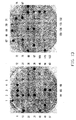
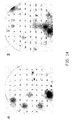
- the positive control is at position 67.
- Filter B shows the strains RB4T 67-132.
- the positive control is at position 133.
- Complete medium 2% glucose or glycerin, 1% yeast extract, 2% Bacto-Peptone.
- Selection medium 0.17% yeast nitrogen base, 0.5% ammonium sulfate, 2% glucose or Glycerol, 38.4 mg / l arginine, 57.6 mg / l isoleucine, 48 mg / l phenylalanine, 57.6 mg / l valine, 6 mg / ml threonine, 50 mg / l inositol, 40 mg / l tryptophan, 15 mg / l tyrosine, 60 mg / l leucine, 4 mg / l histidine. Uracil is missing in the selection medium.
- Luria Broth medium 10 g / l casein hydrolyzate (Peptone No.140, Gibco), 5 g / l yeast extract, 5 g / l NaCl.
- Ampicillin (Roth) was used as an antibiotic in a concentration of 500 mg / l added after autoclaving.
- M9 medium 2% glucose, 30 g / l Na 2 HPO 4 , 15 g / l KH 2 PO 4 , 5 g / l NH 4 Cl, 2.5 g / l NaCl, 0.015 g / l CaCl 2 , 2 , 28 g / l MgSO 4 , 0.05% vitamin B1 (not autoclaved) 38.4 mg / l arginine, 57.6 mg / l isoleucine, 48 mg / l phenylalanine, 57.6 mg / l valine, 6 mg / ml threonine, 50 mg / l inositol, 40 mg / l tryptophan, 15 mg / l tyrosine, 60 mg / l leucine, 4 mg / l histidine.
- Solid culture media were prepared by adding 1.6% agar to the liquid media.
- 400 ml LB medium were diluted 1: 100 inoculated from a ÜK and cultivated at 37 ° C up to an OD 600 of 0.5-1. After 30 min. The culture was incubated on ice at 4 ° C. and 3000 rpm for 15 min. centrifuged. The cells were washed 2x with ice-cold water (1 vol./1/4 vol.) And 1x with 1/50 vol. 10% glycerol. The cell pellet was then taken up in 1.5 ml of 10% glycerol and 40 ⁇ l aliquots were stored at -70 ° C.
- RbCl 2 cells The transformation of RbCl 2 cells was carried out according to the Hanahan protocol (1985). For each transformation 20-500 ng DNA were mixed with 200 ⁇ l competent cells thawed on ice. After 20 min. Incubation on ice, 45 sec. Heat shock (42 ° C) and another 2 min. Incubation on ice, the cells were mixed with 1 ml LB medium for recovery and incubated at 37 ° C. for 30-45 min. The cells were then plated on LB-amp plates, which were then incubated at 37 ° C. overnight.
- the cells were then taken up in 0.25 ml of STM buffer and 60 ⁇ l aliquots were stored at -70 ° C.
- the plasmid DNA was first linearized with Xho I or Sac I. 0.1-1 ⁇ g of the linearized plasmid DNA were mixed with fresh, competent cells thawed on ice, these batches were then placed in a cuvette in 2 mm. The transformation was carried out in a gene pulser (Bio-Rad, Munich) at 2.0 kV, 25 ⁇ F and 200 ohms. The cells were then incubated for recovery in 1 ml of YPD for 1 hour at 37 ° C. and then plated out on selection medium. After 2-4 days of incubation at 37 ° C, macroscopic colonies became visible.
- the uracil-prototrophic clones resulting from the transformation were transferred three times in succession to selection medium plates, once to full medium plates, and then again to selection medium plates (depending on the 24 hour growth at 37 ° C. ).
- the DNA preparation from low-melting agarose gels was carried out with the aid of phenol / chloroform extraction.
- Gel blocks with DNA fragments were cut out under UV light mixed with 130 ul water and heated to 70 ° C until the agarose melts.
- the sample was centrifuged (2 min. At 13000 rpm) and the lower phenol phase discarded.
- 150 ul phenol / chloroform (1: 1 mixture) added to the aqueous phase, mixed and again centrifuged.
- the lower phase was again discarded and the aqueous phase twice washed with chloroform / isoamyl alcohol (1:24) (150 ⁇ l each).
- the fragment isolation from PCR batches and from low-melting gels is carried out with the help PCR purification kit (Quiagen, Hilden) according to the manufacturer's instructions.
- E. coli plasmid DNA was prepared by the alkaline lysis method described by Maniatis et al (1982). 1.5 ml of a ÜK were centrifuged off at 13000 rpm (2 min.). The cell pellet was resuspended in 100 ul P1 (50 mM Tris / HCl, 10 mM EDTA). The lysis is carried out by adding 100 ul P2 (200 mM NaOH, 1% SDS). Proteins and other cell components were then precipitated by adding 100 ⁇ l P3 (2.55 M KOAc, pH 4.8). After centrifugation for 10 min. at 13000 rpm, the DNA was precipitated from the supernatant with twice the volume of 96% ethanol. After washing and drying, the pellet was taken up in 20 ul water. The degree of purity of this DNA was sufficient for restriction analyzes.
- the plasmid midi kit was used for DNA preparations of higher purity and larger quantities Quiagen used according to the manufacturer's instructions.
- the concentration of low molecular weight DNA was carried out by absorbance determination at 260 nm.
- the concentration of high molecular weight DNA was estimated by comparison with a calibrated quantity standard ( KB ladder, Pharmacia) in the agarose gel.
- Cells from a 2 ml ÜK were harvested at 13,000 rpm and in 0.5 ml STEHp buffer (0.5 M sorbitol; 0.1 M Tris / HCl; pH 8; 0.1 M EDTA) resuspended.
- the cell wall was by adding 10 ⁇ l zymolyase (2.5 mg / ml) and 1 ⁇ l ⁇ -mercaptoethanol and incubation removed for 1 hour at 37 ° C. It was checked under the microscope whether the cells as Protoplasts are present.
- the protoplasts were then carefully centrifuged off (5 min at 3000 rpm), resuspended in TEHp buffer (50 mM Tris / HCl, pH 8, 20 mM EDTA) and mixed with 25 ul SDS (20%).
- the lysis was carried out by incubation for 20 min. at 65 ° C. By adding 200 ⁇ l KOAc and incubation on ice (30 min.) Proteins and Cell debris felled. After centrifugation at 13,000 rpm for 10 min. became the supernatant filtered through cotton wool and the DNA dissolved in the filtrate was precipitated with 0.7 volume of isopropanol. After washing with 70% ethanol, the dried DNA pellet was in 20-30 ul water added.
- H. polymorpha cells were harvested from 50 ml ÜK at 3000 rpm. The cells were resuspended in 30 ml of STEHp buffer, centrifuged and then taken up in 1.5 ml of STEHp. 30 ⁇ l zymolyase was added to dissolve the cell wall. The protoplasts were mixed with 2 ml of 5 M KOAc, the lysate for 30 min. centrifuged at 13,000 rpm (4 ° C). Now the supernatant was mixed with 2 ml of 5 M NH 4 OAc and the dissolved DNA was precipitated with 10 ml of cold 96% ethanol. After 5 min.
- the DNA transfer to a nylon membrane was carried out in a vacuum blot apparatus (L KB 2016 Vacugene, Pharmacia). This was first done for 15 min. transferred with depurination solution (0.25 M HCl). This additional step enables the transfer of very large fragments. With denaturing solution (1.5 M NaCl, 0.5 N NaOH) and neutralization buffer (3 M NaAc, pH 5.5), the gel was each 20 min. long layered. Finally, for 20 min. overlaid with 20 x SSC transfer buffer (3 M NaCl, 0.3 M Na citrate, pH 7). The DNA was fixed to the nylon membrane by irradiating the membrane with UV light (254 nm) for 2 minutes and then incubating at 80 ° C. for 30 minutes.
- the preparation of the probe, the hybridization and the detection of the hybrid were carried out with An enzymatic reaction is carried out according to the protocol of the dioxygenin labeling kit from Boehringer (Mannheim).
- the Southem blots were included hybridized and developed a second probe.
- the first probe was replaced by a Sequence of washing steps removed from the membrane (1 hour in dimethylformamide at 60 ° C, then washing in solution 1 (0.2 M NaOH, 0.1% SDS) and solution 2 (0.3 M NaCl, 0.03 M citrate) for 10 min each).
- the ⁇ -galactosidase activity was detected according to Suckow and Hollenberg (1998).
- the strains to be tested were cultivated for 4-6 hours in selection medium at 37 ° C. A 4 ul drop of each culture was placed on a selection plate and incubated overnight at 37 ° C. The plate was washed with fresh overlay agar (0.5% agarose, 0.5 M Na 2 HPO 4 / NaH 2 PO 4 (pH 7); 0.2% SDS; 2% DMF (dimethylformamide) 2 mg / ml X-gal (o-nitrophenyl- ⁇ -D-galactopyranoside) overlaid at 70 ° C. After a few minutes, the clones with lacZ expression showed a blue color.
- the H. polymorpha cells were harvested from 3 ml ÜK and taken up in 200 ⁇ l YNB medium and 1 ml 5% glycerol. After 1-2 days of growth, the OD 600 was first determined. The cells were then centrifuged off and 25 ul of the supernatant were used again. 25 ⁇ l of 5 M NaAc and 50 ⁇ l of 4-nitrophenyl phosphate were added to this aliquot. The batch was 30 min. incubated at 37 ° C. The enzymatic conversion of the substrate was stopped by adding 100 ⁇ l of 15% trichloroacetic acid. After addition of 100 ⁇ l of 1 M NaOH, positive culture supernatant samples appeared colored intensely yellow. The yellowing was quantified by OD 405 measurement in a photometer.
- the cells were cultured in 2 ml of selection medium (2% glycerol) at 37 ° C. for 1-2 days. 4 ⁇ l aliquots of these cultures were dropped onto a selection plate and this incubated overnight at 37 ° C. A nitrocellulose membrane (Amersham Int., England) was placed on the plate, then incubated again overnight 37 ° C. The membrane was carefully peeled off and all adhered to the membrane Cells were rinsed carefully with water. After drying the membrane could the secreted gene product is immunologically detected on the filters with insulin antibodies become. The detection was carried out according to standard methods with the help of the NOVEX anti-mouse kit. Insulin-secreting clones could be clearly detected with this method become.
- selection medium 20% glycerol
- the prerequisite for the integration of a vector into the H. polymorpha rDNA is the presence of a sequence which is homologous to this region.
- a 2.4 Kb rDNA fragment from the rDNA region of H. polymorpha was determined.
- this 2.4 Kb long sequence (SEQ ID NO 1) (FIG. 2) is referred to as the integration sequence.
- polymorpha was carried out with the aid of a PCR reaction with the primers A (5'-ACG GGA TCC GGG TTT AGA CCG TCG TGA GAC AGG-3 ') and B (5'-CCT GGA TCC TAC CAT CGA AAG TTG ATA GGG-3 ') first amplified a 3 Kb fragment from the chromosomal DNA of H. polymorpha .
- the primers were determined according to sequences of the 18S and 25S rDNA from S. cerevisiae with flanking Bam HI recognition sequences.
- the amplificate was later shortened to 2.4 Kb by Eco RI / Bam HI restriction (the fragment contains an internal Eco RI recognition sequence).
- the 2.4 Kb fragment was cloned into the vector pM1 and completely sequenced.
- the base vector pM2 (FIG. 3) arose, from which all the plasmids described in this application have arisen.
- the 5S rRNA gene could be detected within the cloned sequence by comparison with known sequences from the rDNA unit of S. cerevisiae .
- the 5S DNA from H. polymorpha has a 96% homology to the corresponding gene from S. cerevisiae .
- the 5S gene is located at position 958-1079 of the integration sequence, counted from the flanking Eco RI site. With this finding and knowledge of the isolation of the integration sequence, the position of the cloned rDNA fragment in an rDNA repeat of H. polymorpha could be determined and a similar organization of the rDNA sequences as in S. cerevisiae assumed. Parts of the ITS2 and the 18S sequence are lost when shortened.
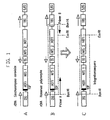
- the position of the cloned fragment in the H. polymorpha rDNA unit is shown in Figure 1 (C). Its complete sequence is documented in Figure 2 below. The gray shaded sequence shows the location of the 121 bp 5S rDNA.
- the 2.4 Kb Eco RI / Bam HI-rDNA fragment described in the previous example was introduced into an E. coli / H. polymorpha shuttle vector pM1 which contains the following elements: HARS1 and MOX terminator from H. polymorpha; ori and amp R from E. coli .
- a polycloning site is positioned between HARS1 and MOX terminator for the uptake of heterologous promoter / gene fusions.
- Some examples of the resulting integration / expression vectors are given in Examples 3 and 4.
- the integrated rDNA contains a Brs GI, Sac I, Sna I and an Xho I recognition sequence for linearization of the resulting vector M2.
- the vector is shown in Figure 2.
- the vector pM2 was digested with Dra I / Aat II, and the resulting 8.7 Kb fragment was religated with T4 polymerase after removal of the 3 ′ overhang of the Aat II cohesive end.
- the result is a shortened shuttle vector without amp R.
- the propagation of this vector and its derivatives was carried out in the E. coli strain MC1066, which is uracil auxotrophic, and thus could be used to select uracil prototrophy via the Ura3 gene.
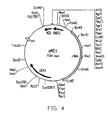
- the basic vector M2 ⁇ is shown in FIG. 4.
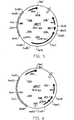
- the vector pM2ZT shown in FIG. 5 was generated by integrating an expression cassette for the bacterial lacZ gene into the polycloning site of pM2.
- the H. polymorpha TPS1 promoter (pM2ZT) was used as the promoter element; in Example 4, an expression cassette for GFP was generated by integrating a suitable fragment into pM2.
- the TPS1 promoter from H. polymorpha was used as the promoter element.
- the vector pM2GT shown in FIG. 6 was generated by integrating an expression cassette for GFP into the polycloning site of pM2.
- the TPS1 promoter from H. polymorpha was used as the promoter element.
- the transformation of RB11 with rDNA integration vectors was based on a general principle that applies to all transformations shown here. Due to the restriction with an enzyme for which there is only a single cleavage site within the integration sequence (eg Sac I or Xho I), the integration sequence was divided into two terminal partial sequences which can be homologously recombined with corresponding sequences on the rDNA unit. No integration into the rDNA has yet been demonstrated for non-tinearized plasmids.
- the rDNA integration vectors contained the intact URA3 gene from S. cerevisiae as a selection marker gene. The use of such an intact gene leads, as shown in the examples below, to mitotically stable strains in which the recombinant integrated DNA can be present in 40-50 copies.
- the transformation was carried out by electroporation (see material and methods).
- the integration into the genome takes place through growth under selection pressure over 30 generations (YNB plates or media that do not contain uracil).
- YNB plates or media that do not contain uracil In the conventional method for generating recombinant H. polymorpha strains with circular plasmids, at least 80 generations of growth on selective media are necessary (Gatzke et al. 1995).
- rDNA integration vectors a simpler and faster method for generating recombinant H. polymorpha strains is available compared to the established protocols.
- the rDNA in H. polymorpha consists of approx. 40 consecutive units, which are constructed identically (example 1).
- the length of one unit is approx. 8 Kb. This length can be determined by hybridization experiments with rDNA probes if, in restrictions, enzymes are used which only cut once in an rDNA repeat. Bgl II is one of these enzymes. Integration into one or more of these rDNA units is possible.
- the uracil auxotrophic strain RB11 was transformed with pB14 according to the method described above.
- the linearization was carried out by Sac I.
- the rDNA fragment of the vector was distributed over approximately two equally long edge sequences.
- a representative example of the generated recombinant strains is documented below.
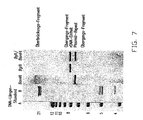
- the structural detection of the heterologous DNA integrated in the rDNA is based on the following preliminary considerations: If an enzyme is used which cuts in the vector but not in the rDNA ( Bam HI), and this is used together with Bgl II (cuts in the rDNA unit, but not in the vector), it should be possible to identify fragment sizes which indicate the transition from an rDNA repeating unit to a vector copy. In the event that several copies of the vector are integrated at different positions, very long bridging fragments should also be detectable, since Bam HI only cuts in the vector and Bgl II only in the rDNA. Figure 7 shows this analysis.
- the DNA cut with the specified restriction enzymes hybridizes with the probe which resulted from the labeling reaction of the integration sequence (see material and methods).
- a strong signal at 7.4 Kb can be seen in the lane with the Bam HI-treated DNA. This corresponds to the vector fragment. In this track a weakly recognizable signal is still visible at over 21 Kb. This fragment is interpreted as a bridging fragment.
- a strong signal at 8 Kb can be seen in the track with Bgl II-treated DNA, which corresponds to the length of an rDNA unit. Both the rDNA and the vector signals can be seen in the lane with the double digest.
- weak signals can be seen which represent transition fragments of rDNA in plasmid DNA.
- the kilobase ladder was applied as the DNA length standard, in the second lane Eco RI / Hind III digested ⁇ DNA was applied.
- the heterologous DNA lies in at least two Clusters before.
- the number of plasmid copies per cluster must be significantly more than two be.
- At least one intact rDNA unit lies between the plasmid clusters.
- FIG. 8 shows the structure derived from the analysis.
- RB11 was therefore transformed with the three vectors pM2, pB11 and pB14 (see Examples 2 and 5) and the 40 resulting recombinant strains were examined for the presence of integrated vectors.
- the vectors pB11 and pB14 were linearized by Sac I restriction, pM2 by Xho I restriction within the integration sequence and used in a transformation approach in equimolar amounts.
- the three vectors all have the 2.4 Kb integration sequence for homologous recombination in the rDNA region of the genome of H. polymorpha and the URA3 gene from S. cerevisiae (see Example 1).
- the chromosomal DNA of the recombinant strains resulting from the mixture was cut with Aat II (cuts only once in each of the three vectors), the fragments separated on an agarose gel and subjected to a Southern blot analysis.
- the digoxygenin-labeled integration sequence was used as the probe. By restricting the heterologous DNA with a "single cutter", it was ensured that fragments would arise for the vectors which could be clearly assigned and which would hybridize with the probe.
- Figure 9 shows a selection of the strains analyzed.
- the bold digits identify the trunks that carry two or three different vectors integrated at the same time.
- the strains RB3T-13, RB3T-17 and RB3T-37 show signals at the level of pM2 and pB14, they carry both vectors genomically integrated.
- RB3T-19 shows a signal for all three vectors. Due to the restriction with Aat II, a signal at 6.5 Kb appears in the control RB11, which represents the rDNA unit and also appears in the recombinant strains.
- Strain RB3T-34 shows a strong band for pB14 and a weaker band for pM2. at this recombinant strain had a different combination of cointegration.
- the DNA length standard (KBL) is plotted in the last lane.
- the vector pM2 could be found in 20 strains (No.1-13,17,19,22,33-40), pB14 in seven strains (No.4,6,11,19,21,22,34) and pB11 in seven Strains (No.4,6,11,19,21,22,34) can be detected.
- Four recombinant strains were identified in which two different vectors were integrated (No. 17, 13 and 37 with pM2 and pB11; No. 34 with pM2 and pB14).
- One strain (No. 19) contains all three vectors.
- the recombinant strains were designated according to the following nomenclature: RB for H. polymorpha strain RB 11; 3T for T ransformation of RB11 with 3 different vectors.
- Copy numbers between 40 and 50 were detected for all generated recombinant strains of the transformation approach described in Example 8. It therefore corresponds approximately to the total number of rDNA repetition units in the rDNA in H. polymorpha . When different vectors are integrated, this total number is divided between the number of copies of the individual vectors.
- the RB3T-19 strain with three different integrated vectors was chosen as an example for the copy number determination.
- a MOX terminator probe was used for the hybridization. The sequence for the MOX terminator occurs only once in the H. polymorpha genome and is found on all three vectors. A probe was thus generated which hybridized both with the vector fragments and with the genuine "single copy" MOX terminator sequence of the host.
- the chromosomal DNA of RB3T-19 was cut with Aat II and analyzed.
- the cut DNA was applied in defined dilution levels.
- the strength of the hybridization signal of the heterologous sequence in the dilutions can be compared with that of the genuine gene. All three signals for the integrated vectors can be seen in the respective dilutions with decreasing intensity.
- the signal for the genuine MOX terminator fragment is only weakly recognizable.
- the signals for pB11 and pM2 in the 1/20 dilution correspond approximately to the MOX terminator signal.
- the 1/5 dilution shows a comparable signal. This results in the number of copies mentioned in the text of 20 for the vectors pM2 and pB11, and five copies for pB14.
- a copy number of 20 each could be determined for the co-integrated vectors pB11 and pM2.
- the mitotic stability of recombinant strains which had been generated by transforming H. polymorpha with three rDNA integration vectors was investigated using the strains RB3T-13, RB3T-17, RB3T-19 and RB3T-37 as examples.
- the strains were cultivated for 27 days in a 50 ml liquid culture in non-selective (YPD) medium. Samples were taken and collected at regular intervals. The genomic DNA of the collected samples was prepared and subjected to Southern blot analysis after restriction with Aat II. The Aat II / Bgl II MOX terminator fragment from the vector pM2 was used as the probe. Mitotic stability was demonstrated for all four recombinant strains in Southern blot analyzes.
- FIG. 11 shows the result of the Southern blot analyzes as an example for the strain RB3T-19. The unchanged intensity of all signals for the vector fragments over the entire period shows the mitotic stability of the analyzed strain.
- RB11 was co-transformed with the vectors pB11 (10.7 Kb), pB14 (9.7 Kb), pB14X (8.7 Kb), pM2 (8.2 Kb) and pM2X (6.7 Kb).
- the recombinant strains were checked in Southern blot analyzes. 80 recombinant strains were analyzed. The genomic DNA of the recombinant strains was cut with Nco I, for which there is also only one restriction site in all vectors. The digoxygenin-labeled MOX terminator sequence was used as the probe.
- FIG. 12 shows the Southern blot analysis for four selected strains, three of these strains containing sequences from at least one integration vector.
- the chromosomal DNA was cut with Xho I.
- the cut DNA was analyzed as in FIG. 11.
- Strain RB5T-31 contains four different vector species (pM2, pM2X, pB14X and pB11).
- the signal for pB14 at 9.7 Kb is particularly strong. This speaks for a significantly higher number of copies compared to the other vectors.
- GFP GFP
- lac Z a gene for an insulin variant and a phytase gene
- the reporter genes are contained on the vectors pM2GT ( GFP ) pM2TZ ( lacZ ), pB11 (insulin) and pB14 (phytase).
- the four vectors were each linearized by Sac I restriction within the integration sequence and placed in equimolar amounts in a co-transformation batch. 132 resulting recombinant strains were analyzed for the presence of the gene products.
- the lacZ gene is located behind the TPS1 promoter from H. polymorpha .
- This promoter is activated by higher cultivation temperatures. When growing at 40 ° C on YNB plates with glucose as the only carbon source, the promoter is sufficiently activated.
- the cells were cultivated in selection medium at 40 ° C. for 6 hours and then 5 ⁇ l of the cultures were dropped onto selection plates. After 24 hours of growth, the colonies were examined for ⁇ -galactosidase activity using an X-Gal overlay assay (see material and methods). After 5 hours of incubation, the result was documented (Figure 13). A blackening of the colony corresponds to a strong ⁇ -galactosidase activity. Gray colonies show moderate or weak activity. 61 of the 132 recombinant strains showed ⁇ -galactosidase activity. This result was confirmed in a repeat experiment.
- the vector pB14 used carries an expression cassette with the gene for an insulin variant under the control of the FMD promoter.
- the cells were incubated in a preculture (YNB, 5% glycerol) for 6 hours at 37 ° C. and 5 ⁇ l of each was dropped onto YNB plates (2% glycerol).
- glycerol was used as the carbon source, since the insulin gene is under the control of the FMD promoter. This promoter is repressed by glucose and derepressed by glycerin.
- An immunological filter test was used to identify the insulin-producing strains (see material and methods). After development of the filter, colorations are seen at the positions of insulin-positive colonies (see FIG. 14).
- the color of the filter is proportional to the amount of insulin secreted. Insulin secretion was demonstrated in 17 of the 132 recombinant strains. Four strains on filter A in FIG. 14 show a moderately strong signal. Strain No. 51 and Strain No. 56 show a weak color. Strain No. 126 shows a signal comparable to the positive control. Strains No. 80, 94 and 114 show weak colorations.
- the vector pB11 carries the gene for the con-phytase under the control of the FMD promoter.
- This phytase is a mutein (Hoffman La Roche, Basel).
- the strains in 3 ml overnight cultures (YPD, 37 ° C.) were used to determine the phytase activity, and the phytase activity was then determined photometrically in the culture supernatant (see material and methods). 20 strains showed phytase activity.
- the vector pM2GT carries the yEGFP gene under the control of the H. polymorpha TPS1 promoter. If the reporter protein has accumulated in sufficient quantities in the recombinant cell, fluorescence with the emission maximum at 510 nm occurs after excitation with light of the wavelength of 395 nm (Morise et al ., 1974); the cells glow intensely green (see material and methods). The strains were incubated for 24 hours in YNB medium at 37 ° C. Strains with a GFP signal were then identified under the fluorescence microscope. The experiment was repeated three times in total and those strains were determined as positive that showed a signal in all three analyzes. GFP was detected in 36 of the 132 strains.
- the 132 recombinant strains documented in Examples 12 to 15 were generated by cotransformation with four different vectors. All strains were examined for the expression of the reporter genes described above. 28 showed no expression. A random distribution of the vectors appears to have taken place in the remaining H. polymorpha strains. 52 strains show an expression of lacZ , which lies behind the very strong TPS1 promoter in H. polymorpha . The GFP gene was expressed in 36 cases. On the vector used, the GFP gene is also behind the TPS1 promoter. Expression of the phytase gene was observed in 20 strains and expression of the insulin gene in 17. 24 strains have a coexpression of two reporter genes. In these cases, the occurrence of all combinations of the four reporter genes was observed. Two recombinant strains were found which show a coexpression of three reporter genes: A combination of GFP, lacZ and insulin was found in strain RB4T-75, phytase and insulin in strain RB4T-81 lac Z.
- yEGFP Yeast enhanced green fluorescent proteins
Landscapes
- Health & Medical Sciences (AREA)
- Life Sciences & Earth Sciences (AREA)
- Genetics & Genomics (AREA)
- Chemical & Material Sciences (AREA)
- Engineering & Computer Science (AREA)
- Organic Chemistry (AREA)
- Zoology (AREA)
- Wood Science & Technology (AREA)
- Bioinformatics & Cheminformatics (AREA)
- General Engineering & Computer Science (AREA)
- Biotechnology (AREA)
- Biomedical Technology (AREA)
- Molecular Biology (AREA)
- General Health & Medical Sciences (AREA)
- Biochemistry (AREA)
- Mycology (AREA)
- Biophysics (AREA)
- Microbiology (AREA)
- Plant Pathology (AREA)
- Medicinal Chemistry (AREA)
- Physics & Mathematics (AREA)
- Gastroenterology & Hepatology (AREA)
- Diabetes (AREA)
- Endocrinology (AREA)
- Toxicology (AREA)
- Proteomics, Peptides & Aminoacids (AREA)
- Preparation Of Compounds By Using Micro-Organisms (AREA)
- Micro-Organisms Or Cultivation Processes Thereof (AREA)
- Peptides Or Proteins (AREA)
Claims (37)
- Vecteur d'intégration pour l'expression d'au moins une protéine dans un organisme hôte, en particulier dans un champignon, qui comprenddans lequel la cassette d'expression comprend un élément promoteur fonctionnel dans l'organisme hôte, un domaine d'un gène hétérologue ou d'origine codant une protéine souhaitée et un élément terminateur fonctionnel dans l'organisme hôte, caractérisé en ce qu'au moins une séquence d'ADNr provient d'un domaine de l'ADNr d'une levure méthylotrophe qui comprend un fragment long de 400 pb du domaine 3' du gène 25S-ADNr et un fragment long de 600 pb du domaine 5' du gène 18S-ADNr ainsi que les séquences se trouvant entre ces fragments, y compris la séquence 5S-ADNr.a) au moins une séquence d'ADNr de levure,b) au moins un marqueur génétique de sélection non déficient etc) au moins une cassette d'expression,
- Vecteur d'intégration selon la revendication 1, caractérisé en ce que l'organisme hôte est un champignon filamenteux.
- Vecteur d'intégration selon la revendication 2, caractérisé en ce que le champignon filamenteux appartient à l'espèce Aspergillus, Neurospora, Mucor, Trichoderma, Acremonium, Sordaria ou Penicillium.
- Vecteur d'intégration selon la revendication 1, caractérisé en ce que l'organisme hôte est une levure.
- Vecteur d'intégration selon la revendication 4, caractérisé en ce que la levure est une levure méthylotrophe.
- Vecteur d'intégration selon la revendication 4 ou la revendication 5, caractérisé en ce que la levure appartient à l'espèce Saccharomyces, Hansenula, Pichia, Kluyveromyces, Schwanniomyces, Yarrowia, Arxula, Trichosporon ou Candida.
- Vecteur d'intégration selon la revendication 6, caractérisé en ce que la levure méthylotrophe est Hansenula polymorpha.
- Vecteur d'intégration selon l'une quelconque des revendications 1 à 7, caractérisé en ce que la séquence d'ADNr est un fragment d'ADNr qui est amplifié par PCR avec l'ADN génomique d'une levure comme matrice et les amorces Aet B
 et qui peut être obtenu par digestion avec l'enzyme de restriction BamHI.
- Vecteur d'intégration selon l'une quelconque des revendications 1 à 8, caractérisé en ce que la séquence d'ADNr provient d'une levure de l'espèce Hansenula, Pichia, Saccharomyces, Kluyveromyces, Candida, Schwanniomyces, Yarrowia, Arxula ou Trichosporon.
- Vecteur d'intégration selon la revendication 9, caractérisé en ce que la séquence d'ADNr provient de Hansenula polymorpha.
- Vecteur d'intégration selon la revendication 10, caractérisé en ce que la séquence d'ADNr provient de Pichia pastoris, Pichia methanolica ou Candida boidinii.
- Vecteur d'intégration selon l'une quelconque des revendications 1 à 6, caractérisé en ce que la séquence d'ADNr est choisie parmi les séquences suivantes :a) une séquence selon SEQ ID N° 1 ;b) un fragment de la séquence selon a) qui est adapté pour l'intégration stable de séquences du vecteur en un grand nombre de copies dans le génome d'un organisme hôte, en particulier une levure ;c) une séquence qui est identique à une séquence selon a) ou b) à au moins 70 % ;d) une séquence qui est identique dans le domaine codant du gène 5S (positions 956-1074 de SEQ ID N°1) et/ou dans la partie contenant SEQ ID N° 1 du domaine codant du gène 25S (positions 1977-2420 de SEQ ID N° 1) à une séquence selon a) ou b) à au moins 70 % ;e) une séquence qui s'hybride avec le brin inverse d'une séquence selon a) ou b) ;f) un dérivé, obtenu par substitution, addition, inversion et/ou délétion d'une ou plusieurs bases, d'une séquence selon un des groupes a) à d) qui est adapté pour l'intégration stable de séquences du vecteur en un grand nombre de copies dans le génome d'un organisme hôte, en particulier une levure, etg) une séquence complémentaire d'une séquence selon l'un des groupes a) à f).
- Vecteur d'intégration selon la revendication 12, caractérisé en ce que la séquence selon le groupe d) est identique à une séquence selon le groupe a) ou b) à au moins 80 %.
- Vecteur d'intégration selon la revendication 13, caractérisé en ce que la séquence selon le groupe d) est identique à une séquence selon le groupe a) ou b) à au moins 90 %.
- Vecteur d'intégration selon l'une quelconque des revendications 1 à 14, caractérisé en ce qu'il comprend un gène marqueur de sélection supplémentaire pour E. coli.
- Vecteur d'intégration selon l'une quelconque des revendications 1 à 15 d'une longueur comprise entre 7 et 12 kb.
- Vecteur d'intégration selon l'une quelconque des revendications 1 à 16, caractérisé en ce qu'il contient des séquences qui codent un ou plusieurs polypeptides qui permettent une meilleure sécrétion d'une protéine sécrétrice recombinante co-intégrée par un organisme hôte.
- Vecteur d'intégration selon la revendication 17, caractérisé en ce que les séquences codent un polypeptide doté de l'activité biologique d'une protéine kinase Ca2+/calmoduline dépendante et/ou un polypeptide doté de l'activité biologique d'un facteur d'initiation de la traduction 4E (eIF4E).
- Vecteur d'intégration selon la revendication 18, caractérisé en ce que les séquences comprennent le domaine codant du gène CMK2 et/ou le domaine codant du gène CDC33 de Saccharomyces cerevisiae.
- Organisme hôte qui comprend au moins un vecteur d'intégration selon l'une quelconque des revendications 1 à 19 intégré de manière stable dans son génome.
- Organisme hôte selon la revendication 20, caractérisé en ce qu'il s'agit d'un champignon filamenteux.
- Organisme hôte selon la revendication 21, caractérisé en ce qu'il appartient à l'espèce Aspergillus, Neurospora, Mucor, Trichoderma, Acremonium, Sordaria ou Penicillium.
- Organisme hôte selon la revendication 22, caractérisé en ce qu'il s'agit d'une levure.
- Organisme hôte selon la revendication 23, caractérisé en ce que la levure est une levure méthylotrophe.
- Organisme hôte selon la revendication 23 ou 24, caractérisé en ce qu'il appartient à l'espèce Saccharomyces, Hansenula, Pichia, Kluyveromyces, Schwanniomyces, Yarrowia, Arxula, Trichosporon ou Candida.
- Organisme hôte selon la revendication 25, caractérisé en ce que la levure est Hansenula polymorpha.
- Organisme hôte qui peut être obtenu par intégration stable d'un ou plusieurs vecteurs d'intégration selon l'une quelconque des revendications 1 à 15 dans le génome d'un champignon.
- Organisme hôte selon la revendication 27, caractérisé en ce que le champignon est un champignon filamenteux.
- Organisme hôte selon la revendication 28, caractérisé en ce que le champignon filamenteux appartient à l'espèce Aspergillus, Neurospora, Mucor, Trichoderma, Acremonium, Sordaria ou Penicillium.
- Organisme hôte selon la revendication 29, caractérisé en ce que le champignon est une levure.
- Organisme hôte selon la revendication 30, caractérisé en ce que la levure est une levure méthylotrophe.
- Organisme hôte selon la revendication 30 ou la revendication 31, caractérisé en ce que la levure appartient à l'espèce Saccharomyces, Hansenula, Pichia, Kluyveromyces, Schwanniomyces, Yarrowia, Arxula, Trichosporon ou Candida.
- Organisme hôte selon la revendication 32, caractérisé en ce que la levure est Hansenula polymorpha.
- Organisme hôte selon l'une quelconque des revendications 27 à 31, caractérisé en ce qu'il peut être obtenu par intégration de plusieurs vecteurs comprenant des cassettes d'expression différentes les unes des autres.
- Procédé pour la fabrication d'une ou plusieurs protéines, caractérisé en ce qu'un organisme hôte selon l'une quelconque des revendications 20 à 34 est cultivé de manière connue en soi et en ce que la protéine produite est récoltée.
- Utilisation d'un vecteur d'intégration selon l'une quelconque des revendications 1 à 20 pour la fabrication d'une ou plusieurs protéines dans un organisme hôte selon l'une quelconque des revendications 20 à 34.
- Utilisation d'un organisme hôte selon l'une quelconque des revendications 20 à 34 pour la fabrication d'une ou plusieurs protéines.
Applications Claiming Priority (7)
| Application Number | Priority Date | Filing Date | Title |
|---|---|---|---|
| DE19956297 | 1999-11-23 | ||
| DE19956297 | 1999-11-23 | ||
| DE19958327 | 1999-12-03 | ||
| DE19958327 | 1999-12-03 | ||
| DE19963690 | 1999-12-29 | ||
| DE19963690A DE19963690A1 (de) | 1999-11-23 | 1999-12-29 | Vektoren und Verfahren zur Herstellung rekombinanter Proteine in Pilzen |
| PCT/EP2000/011687 WO2001038510A2 (fr) | 1999-11-23 | 2000-11-23 | Vecteurs et procede de production de proteines recombinantes dans des champignons |
Publications (2)
| Publication Number | Publication Date |
|---|---|
| EP1242603A2 EP1242603A2 (fr) | 2002-09-25 |
| EP1242603B1 true EP1242603B1 (fr) | 2004-04-21 |
Family
ID=27219346
Family Applications (1)
| Application Number | Title | Priority Date | Filing Date |
|---|---|---|---|
| EP00985088A Expired - Lifetime EP1242603B1 (fr) | 1999-11-23 | 2000-11-23 | Vecteurs et procede de production de proteines recombinantes dans des champignons |
Country Status (7)
| Country | Link |
|---|---|
| EP (1) | EP1242603B1 (fr) |
| AT (1) | ATE264917T1 (fr) |
| AU (1) | AU2162101A (fr) |
| DK (1) | DK1242603T3 (fr) |
| ES (1) | ES2221865T3 (fr) |
| PT (1) | PT1242603E (fr) |
| WO (1) | WO2001038510A2 (fr) |
Cited By (1)
| Publication number | Priority date | Publication date | Assignee | Title |
|---|---|---|---|---|
| RU2822738C1 (ru) * | 2023-07-05 | 2024-07-12 | федеральное государственное бюджетное образовательное учреждение высшего образования "Воронежский государственный университет" (ФГБОУ ВО "ВГУ") | Способ идентификации значимых для сельского хозяйства грибов рода Trichoderma - T. harzianum, T. viride и T. atroviride на основе ПЦР-ПДРФ |
Families Citing this family (5)
| Publication number | Priority date | Publication date | Assignee | Title |
|---|---|---|---|---|
| AU2002240882A1 (en) * | 2000-12-29 | 2002-07-16 | Rhein Biotech Gesellschaft Fur Neue Biotechnologische Prozesse Und Produkte Mbh | Method for producing heterologous proteins in a homothallic fungus of the sordariaceae family |
| ITMI20011728A1 (it) * | 2001-08-06 | 2003-02-06 | Consorzio Per Le Ricerche E Lo | Vettore per l'integrazione sito-specifica di sequenze di dna eterologhe in lieviti metilotrofi |
| ATE546534T1 (de) * | 2005-03-02 | 2012-03-15 | Pharmedartis Gmbh | Expression system für rekombinante proteine |
| HUE050997T2 (hu) * | 2008-05-06 | 2021-03-01 | Archer Daniels Midland Co | Keményítõ- és xilánbontó enzimek expresszálásával keményítõ és xilán alkoholos fermentációjára képes hõtûrõ Hansenula polymorpha élesztõtörzsek kifejlesztése |
| EP3184639B1 (fr) * | 2014-08-21 | 2019-06-12 | Chung-Ang University Industry-Academy Cooperation Foundation | Ensemble de cassette d'insertion multiple de gènes à base de rdna nts et souche de levure recombinée de qualité gras |
Family Cites Families (1)
| Publication number | Priority date | Publication date | Assignee | Title |
|---|---|---|---|---|
| WO1999057279A1 (fr) * | 1998-05-07 | 1999-11-11 | Doosan Corporation | Plasmide pour l'expression dans pichia ciferrii, et procede de transformation faisant appel a ce plasmide |
-
2000
- 2000-11-23 DK DK00985088T patent/DK1242603T3/da active
- 2000-11-23 WO PCT/EP2000/011687 patent/WO2001038510A2/fr not_active Ceased
- 2000-11-23 AT AT00985088T patent/ATE264917T1/de not_active IP Right Cessation
- 2000-11-23 EP EP00985088A patent/EP1242603B1/fr not_active Expired - Lifetime
- 2000-11-23 PT PT00985088T patent/PT1242603E/pt unknown
- 2000-11-23 ES ES00985088T patent/ES2221865T3/es not_active Expired - Lifetime
- 2000-11-23 AU AU21621/01A patent/AU2162101A/en not_active Abandoned
Cited By (1)
| Publication number | Priority date | Publication date | Assignee | Title |
|---|---|---|---|---|
| RU2822738C1 (ru) * | 2023-07-05 | 2024-07-12 | федеральное государственное бюджетное образовательное учреждение высшего образования "Воронежский государственный университет" (ФГБОУ ВО "ВГУ") | Способ идентификации значимых для сельского хозяйства грибов рода Trichoderma - T. harzianum, T. viride и T. atroviride на основе ПЦР-ПДРФ |
Also Published As
| Publication number | Publication date |
|---|---|
| EP1242603A2 (fr) | 2002-09-25 |
| WO2001038510A3 (fr) | 2002-07-04 |
| AU2162101A (en) | 2001-06-04 |
| WO2001038510A2 (fr) | 2001-05-31 |
| ATE264917T1 (de) | 2004-05-15 |
| ES2221865T3 (es) | 2005-01-16 |
| DK1242603T3 (da) | 2004-06-28 |
| PT1242603E (pt) | 2004-09-30 |
Similar Documents
| Publication | Publication Date | Title |
|---|---|---|
| DE69822142T2 (de) | Transformation von schimmeln durch agrobacterium, insbesondere von der gattung aspergillus | |
| DE60222857T2 (de) | Concatemere unterschiedlich exprimierter multipler gene | |
| DE3854249T2 (de) | Rekombinante Humicola-Lipase und Verfahren zur Herstellung von rekombinanten Humicola-Lipasen. | |
| DE69838106T2 (de) | Expressionsklonierung in filamentösen pilzen | |
| DE69932345T2 (de) | Erstellung und durchmusterung von interessierenden dna-banken in zellen von filamentösen pilzen | |
| DE68928545T2 (de) | Herstellung von glukoseoxidase in rekombinanten systemen | |
| DE69132812T2 (de) | Pichia pastoris Säure-Phosphatase-Gen | |
| DE69633343T2 (de) | Verbesserte verfahren zur transformation von phaffiastämmen,transformierte phaffiastämme auf diese weise erhaltend, und rekominante dns in besagtem verfahren verwendbar | |
| DE69231995T2 (de) | Verfahren zur Herstellung/Sekretion eines Proteins durch einen transformiertenSchimmelpilz unter Verwendung von Expressions-/Sekretions- Regulationsregionenaus Aspergillus | |
| DE69738158T2 (de) | Alpha-Amylase Transkriptionsfaktor | |
| DE69333249T2 (de) | Neue Schimmel-Protease | |
| EP1242603B1 (fr) | Vecteurs et procede de production de proteines recombinantes dans des champignons | |
| WO1999033993A1 (fr) | Promoteur issu d'ashbya gossypii | |
| DE69027970T2 (de) | Hefe-Promoter | |
| DE68907166T2 (de) | Verfahren zur Herstellung von menschlichem Lysozym. | |
| DE69325169T2 (de) | Verfahren zur herstellung von häm-proteinen | |
| DE69303943T2 (de) | Neuer Vektor, einen von Methanol und/oder Glyzerin induzierbaren Promotor enthaltend | |
| EP1504103B1 (fr) | Promoteurs ayant une efficacité de transcription modifiée, derivés de levure methylotrophe hanseluna polymorpha | |
| DE69333304T2 (de) | Erhöhte produktion von sekretierten proteinen durch rekombinante eukaryotische zellen | |
| DE69228665T2 (de) | Eukaryotisches Expressionssystem | |
| EP1763578A2 (fr) | Polypeptides ayant une activite de tannase et/ou de lipase | |
| DE69823188T2 (de) | Klonierung der upd-galaktose-epimerase | |
| DE19963690A1 (de) | Vektoren und Verfahren zur Herstellung rekombinanter Proteine in Pilzen | |
| DE69831242T2 (de) | Erhöhte herstellung von sekretierten proteinen durch rekombinante hefezellen | |
| DE69025081T2 (de) | DNS für Expression und Sekretion |
Legal Events
| Date | Code | Title | Description |
|---|---|---|---|
| PUAI | Public reference made under article 153(3) epc to a published international application that has entered the european phase |
Free format text: ORIGINAL CODE: 0009012 |
|
| 17P | Request for examination filed |
Effective date: 20020426 |
|
| AK | Designated contracting states |
Kind code of ref document: A2 Designated state(s): AT BE CH CY DE DK ES FI FR GB GR IE IT LI LU MC NL |
|
| AX | Request for extension of the european patent |
Free format text: AL;LT;LV;MK;RO;SI |
|
| GRAP | Despatch of communication of intention to grant a patent |
Free format text: ORIGINAL CODE: EPIDOSNIGR1 |
|
| GRAS | Grant fee paid |
Free format text: ORIGINAL CODE: EPIDOSNIGR3 |
|
| GRAA | (expected) grant |
Free format text: ORIGINAL CODE: 0009210 |
|
| AK | Designated contracting states |
Kind code of ref document: B1 Designated state(s): AT BE CH CY DE DK ES FI FR GB GR IE IT LI LU MC NL PT SE |
|
| REG | Reference to a national code |
Ref country code: GB Ref legal event code: FG4D Free format text: NOT ENGLISH |
|
| REG | Reference to a national code |
Ref country code: CH Ref legal event code: NV Representative=s name: BOVARD AG PATENTANWAELTE Ref country code: CH Ref legal event code: EP |
|
| REG | Reference to a national code |
Ref country code: IE Ref legal event code: FG4D Free format text: GERMAN |
|
| REF | Corresponds to: |
Ref document number: 50006189 Country of ref document: DE Date of ref document: 20040527 Kind code of ref document: P |
|
| GBT | Gb: translation of ep patent filed (gb section 77(6)(a)/1977) |
Effective date: 20040525 |
|
| REG | Reference to a national code |
Ref country code: DK Ref legal event code: T3 |
|
| REG | Reference to a national code |
Ref country code: GR Ref legal event code: EP Ref document number: 20040401829 Country of ref document: GR |
|
| REG | Reference to a national code |
Ref country code: SE Ref legal event code: TRGR |
|
| LTIE | Lt: invalidation of european patent or patent extension |
Effective date: 20040421 |
|
| REG | Reference to a national code |
Ref country code: PT Ref legal event code: SC4A Free format text: AVAILABILITY OF NATIONAL TRANSLATION Effective date: 20040721 |
|
| ET | Fr: translation filed | ||
| REG | Reference to a national code |
Ref country code: ES Ref legal event code: FG2A Ref document number: 2221865 Country of ref document: ES Kind code of ref document: T3 |
|
| PLBE | No opposition filed within time limit |
Free format text: ORIGINAL CODE: 0009261 |
|
| STAA | Information on the status of an ep patent application or granted ep patent |
Free format text: STATUS: NO OPPOSITION FILED WITHIN TIME LIMIT |
|
| 26N | No opposition filed |
Effective date: 20050124 |
|
| REG | Reference to a national code |
Ref country code: CH Ref legal event code: PUEA Owner name: RHEIN BIOTECH GESELLSCHAFT FUER NEUE BIOTECHNOLOG Free format text: RHEIN BIOTECH GESELLSCHAFT FUER NEUE BIOTECHNOLOGISCHE PROZESSE UND PRODUKTE MBH#EICHSFELDER STRASSE 11#40595 DUESSELDORF (DE) -TRANSFER TO- RHEIN BIOTECH GESELLSCHAFT FUER NEUE BIOTECHNOLOGISCHE PROZESSE UND PRODUKTE MBH#EICHSFELDER STRASSE 11#40595 DUESSELDORF (DE) $ PROFESSOR DR. GERD GELLISSEN#RINGSTRASSE 30#42489 WUELFRATH (DE) |
|
| REG | Reference to a national code |
Ref country code: GB Ref legal event code: 732E |
|
| NLS | Nl: assignments of ep-patents |
Owner name: RHEIN BIOTECH GESELLSCHAFT FUR NEUE BIOTECHNOLOGIS Effective date: 20050920 Owner name: PROF. DR. GERD GELLISSEN Effective date: 20050920 |
|
| REG | Reference to a national code |
Ref country code: ES Ref legal event code: PC2A |
|
| REG | Reference to a national code |
Ref country code: FR Ref legal event code: TQ |
|
| PGFP | Annual fee paid to national office [announced via postgrant information from national office to epo] |
Ref country code: DK Payment date: 20081125 Year of fee payment: 9 Ref country code: IE Payment date: 20081114 Year of fee payment: 9 Ref country code: LU Payment date: 20081126 Year of fee payment: 9 Ref country code: MC Payment date: 20081118 Year of fee payment: 9 Ref country code: NL Payment date: 20081125 Year of fee payment: 9 |
|
| PGFP | Annual fee paid to national office [announced via postgrant information from national office to epo] |
Ref country code: AT Payment date: 20081118 Year of fee payment: 9 Ref country code: ES Payment date: 20081113 Year of fee payment: 9 Ref country code: FI Payment date: 20081119 Year of fee payment: 9 Ref country code: PT Payment date: 20081030 Year of fee payment: 9 |
|
| PGFP | Annual fee paid to national office [announced via postgrant information from national office to epo] |
Ref country code: BE Payment date: 20081205 Year of fee payment: 9 Ref country code: SE Payment date: 20081119 Year of fee payment: 9 |
|
| PGFP | Annual fee paid to national office [announced via postgrant information from national office to epo] |
Ref country code: GR Payment date: 20081128 Year of fee payment: 9 |
|
| PGFP | Annual fee paid to national office [announced via postgrant information from national office to epo] |
Ref country code: CY Payment date: 20081031 Year of fee payment: 9 |
|
| BERE | Be: lapsed |
Owner name: *GELLISSEN GERD Effective date: 20091130 Owner name: *RHEIN BIOTECH GESELLSCHAFT FUER NEUE BIOTECHNOLOG Effective date: 20091130 |
|
| REG | Reference to a national code |
Ref country code: PT Ref legal event code: MM4A Free format text: LAPSE DUE TO NON-PAYMENT OF FEES Effective date: 20100524 |
|
| REG | Reference to a national code |
Ref country code: NL Ref legal event code: V1 Effective date: 20100601 |
|
| EUG | Se: european patent has lapsed | ||
| PG25 | Lapsed in a contracting state [announced via postgrant information from national office to epo] |
Ref country code: MC Free format text: LAPSE BECAUSE OF NON-PAYMENT OF DUE FEES Effective date: 20091130 |
|
| REG | Reference to a national code |
Ref country code: DK Ref legal event code: EBP |
|
| PG25 | Lapsed in a contracting state [announced via postgrant information from national office to epo] |
Ref country code: PT Free format text: LAPSE BECAUSE OF NON-PAYMENT OF DUE FEES Effective date: 20100524 |
|
| REG | Reference to a national code |
Ref country code: IE Ref legal event code: MM4A |
|
| PG25 | Lapsed in a contracting state [announced via postgrant information from national office to epo] |
Ref country code: FI Free format text: LAPSE BECAUSE OF NON-PAYMENT OF DUE FEES Effective date: 20091123 Ref country code: AT Free format text: LAPSE BECAUSE OF NON-PAYMENT OF DUE FEES Effective date: 20091123 |
|
| PG25 | Lapsed in a contracting state [announced via postgrant information from national office to epo] |
Ref country code: IE Free format text: LAPSE BECAUSE OF NON-PAYMENT OF DUE FEES Effective date: 20091123 Ref country code: NL Free format text: LAPSE BECAUSE OF NON-PAYMENT OF DUE FEES Effective date: 20100601 Ref country code: BE Free format text: LAPSE BECAUSE OF NON-PAYMENT OF DUE FEES Effective date: 20091130 Ref country code: CY Free format text: LAPSE BECAUSE OF NON-PAYMENT OF DUE FEES Effective date: 20091123 Ref country code: GR Free format text: LAPSE BECAUSE OF NON-PAYMENT OF DUE FEES Effective date: 20100602 |
|
| PG25 | Lapsed in a contracting state [announced via postgrant information from national office to epo] |
Ref country code: DK Free format text: LAPSE BECAUSE OF NON-PAYMENT OF DUE FEES Effective date: 20091130 |
|
| REG | Reference to a national code |
Ref country code: CH Ref legal event code: PFA Owner name: RHEIN BIOTECH GESELLSCHAFT FUER NEUE BIOTECHNOLOG Free format text: RHEIN BIOTECH GESELLSCHAFT FUER NEUE BIOTECHNOLOGISCHE PROZESSE UND PRODUKTE MBH#EICHSFELDER STRASSE 11#40595 DUESSELDORF (DE) $ PROFESSOR DR. GERD GELLISSEN#RINGSTRASSE 30#42489 WUELFRATH (DE) -TRANSFER TO- RHEIN BIOTECH GESELLSCHAFT FUER NEUE BIOTECHNOLOGISCHE PROZESSE UND PRODUKTE MBH#EICHSFELDER STRASSE 11#40595 DUESSELDORF (DE) $ PROFESSOR DR. GERD GELLISSEN#RINGSTRASSE 30#42489 WUELFRATH (DE) |
|
| PG25 | Lapsed in a contracting state [announced via postgrant information from national office to epo] |
Ref country code: LU Free format text: LAPSE BECAUSE OF NON-PAYMENT OF DUE FEES Effective date: 20091123 |
|
| PG25 | Lapsed in a contracting state [announced via postgrant information from national office to epo] |
Ref country code: SE Free format text: LAPSE BECAUSE OF NON-PAYMENT OF DUE FEES Effective date: 20091124 |
|
| REG | Reference to a national code |
Ref country code: ES Ref legal event code: FD2A Effective date: 20111116 |
|
| PG25 | Lapsed in a contracting state [announced via postgrant information from national office to epo] |
Ref country code: ES Free format text: LAPSE BECAUSE OF NON-PAYMENT OF DUE FEES Effective date: 20091124 |
|
| REG | Reference to a national code |
Ref country code: FR Ref legal event code: PLFP Year of fee payment: 16 |
|
| REG | Reference to a national code |
Ref country code: FR Ref legal event code: PLFP Year of fee payment: 17 |
|
| PGFP | Annual fee paid to national office [announced via postgrant information from national office to epo] |
Ref country code: CH Payment date: 20161127 Year of fee payment: 17 Ref country code: DE Payment date: 20161205 Year of fee payment: 17 Ref country code: FR Payment date: 20161127 Year of fee payment: 17 Ref country code: GB Payment date: 20161128 Year of fee payment: 17 |
|
| PGFP | Annual fee paid to national office [announced via postgrant information from national office to epo] |
Ref country code: IT Payment date: 20161130 Year of fee payment: 17 |
|
| REG | Reference to a national code |
Ref country code: DE Ref legal event code: R119 Ref document number: 50006189 Country of ref document: DE |
|
| GBPC | Gb: european patent ceased through non-payment of renewal fee |
Effective date: 20171123 |
|
| PG25 | Lapsed in a contracting state [announced via postgrant information from national office to epo] |
Ref country code: CH Free format text: LAPSE BECAUSE OF NON-PAYMENT OF DUE FEES Effective date: 20171130 Ref country code: LI Free format text: LAPSE BECAUSE OF NON-PAYMENT OF DUE FEES Effective date: 20171130 |
|
| REG | Reference to a national code |
Ref country code: FR Ref legal event code: ST Effective date: 20180731 |
|
| PG25 | Lapsed in a contracting state [announced via postgrant information from national office to epo] |
Ref country code: DE Free format text: LAPSE BECAUSE OF NON-PAYMENT OF DUE FEES Effective date: 20180602 Ref country code: FR Free format text: LAPSE BECAUSE OF NON-PAYMENT OF DUE FEES Effective date: 20171130 Ref country code: IT Free format text: LAPSE BECAUSE OF NON-PAYMENT OF DUE FEES Effective date: 20171123 |
|
| PG25 | Lapsed in a contracting state [announced via postgrant information from national office to epo] |
Ref country code: GB Free format text: LAPSE BECAUSE OF NON-PAYMENT OF DUE FEES Effective date: 20171123 |