EP1264083B1 - Procede pour reduire les polluants emis par un moteur diesel - Google Patents
Procede pour reduire les polluants emis par un moteur diesel Download PDFInfo
- Publication number
- EP1264083B1 EP1264083B1 EP00970978A EP00970978A EP1264083B1 EP 1264083 B1 EP1264083 B1 EP 1264083B1 EP 00970978 A EP00970978 A EP 00970978A EP 00970978 A EP00970978 A EP 00970978A EP 1264083 B1 EP1264083 B1 EP 1264083B1
- Authority
- EP
- European Patent Office
- Prior art keywords
- polyisobutene
- group
- fuel
- acylating agent
- amine
- Prior art date
- Legal status (The legal status is an assumption and is not a legal conclusion. Google has not performed a legal analysis and makes no representation as to the accuracy of the status listed.)
- Expired - Lifetime
Links
Images
Classifications
-
- B—PERFORMING OPERATIONS; TRANSPORTING
- B01—PHYSICAL OR CHEMICAL PROCESSES OR APPARATUS IN GENERAL
- B01J—CHEMICAL OR PHYSICAL PROCESSES, e.g. CATALYSIS OR COLLOID CHEMISTRY; THEIR RELEVANT APPARATUS
- B01J23/00—Catalysts comprising metals or metal oxides or hydroxides, not provided for in group B01J21/00
- B01J23/38—Catalysts comprising metals or metal oxides or hydroxides, not provided for in group B01J21/00 of noble metals
- B01J23/40—Catalysts comprising metals or metal oxides or hydroxides, not provided for in group B01J21/00 of noble metals of the platinum group metals
-
- B—PERFORMING OPERATIONS; TRANSPORTING
- B01—PHYSICAL OR CHEMICAL PROCESSES OR APPARATUS IN GENERAL
- B01D—SEPARATION
- B01D53/00—Separation of gases or vapours; Recovering vapours of volatile solvents from gases; Chemical or biological purification of waste gases, e.g. engine exhaust gases, smoke, fumes, flue gases, aerosols
- B01D53/34—Chemical or biological purification of waste gases
- B01D53/92—Chemical or biological purification of waste gases of engine exhaust gases
- B01D53/94—Chemical or biological purification of waste gases of engine exhaust gases by catalytic processes
- B01D53/9404—Removing only nitrogen compounds
- B01D53/9409—Nitrogen oxides
-
- B—PERFORMING OPERATIONS; TRANSPORTING
- B01—PHYSICAL OR CHEMICAL PROCESSES OR APPARATUS IN GENERAL
- B01J—CHEMICAL OR PHYSICAL PROCESSES, e.g. CATALYSIS OR COLLOID CHEMISTRY; THEIR RELEVANT APPARATUS
- B01J35/00—Catalysts, in general, characterised by their form or physical properties
- B01J35/50—Catalysts, in general, characterised by their form or physical properties characterised by their shape or configuration
- B01J35/56—Foraminous structures having flow-through passages or channels, e.g. grids or three-dimensional [3D] monoliths
-
- F—MECHANICAL ENGINEERING; LIGHTING; HEATING; WEAPONS; BLASTING
- F01—MACHINES OR ENGINES IN GENERAL; ENGINE PLANTS IN GENERAL; STEAM ENGINES
- F01N—GAS-FLOW SILENCERS OR EXHAUST APPARATUS FOR MACHINES OR ENGINES IN GENERAL; GAS-FLOW SILENCERS OR EXHAUST APPARATUS FOR INTERNAL-COMBUSTION ENGINES
- F01N3/00—Exhaust or silencing apparatus having means for purifying, rendering innocuous, or otherwise treating exhaust
- F01N3/08—Exhaust or silencing apparatus having means for purifying, rendering innocuous, or otherwise treating exhaust for rendering innocuous
- F01N3/10—Exhaust or silencing apparatus having means for purifying, rendering innocuous, or otherwise treating exhaust for rendering innocuous by thermal or catalytic conversion of noxious components of exhaust
- F01N3/24—Exhaust or silencing apparatus having means for purifying, rendering innocuous, or otherwise treating exhaust for rendering innocuous by thermal or catalytic conversion of noxious components of exhaust characterised by constructional aspects of converting apparatus
- F01N3/28—Construction of catalytic reactors
- F01N3/2803—Construction of catalytic reactors characterised by structure, by material or by manufacturing of catalyst support
- F01N3/2825—Ceramics
- F01N3/2828—Ceramic multi-channel monoliths, e.g. honeycombs
-
- Y—GENERAL TAGGING OF NEW TECHNOLOGICAL DEVELOPMENTS; GENERAL TAGGING OF CROSS-SECTIONAL TECHNOLOGIES SPANNING OVER SEVERAL SECTIONS OF THE IPC; TECHNICAL SUBJECTS COVERED BY FORMER USPC CROSS-REFERENCE ART COLLECTIONS [XRACs] AND DIGESTS
- Y02—TECHNOLOGIES OR APPLICATIONS FOR MITIGATION OR ADAPTATION AGAINST CLIMATE CHANGE
- Y02C—CAPTURE, STORAGE, SEQUESTRATION OR DISPOSAL OF GREENHOUSE GASES [GHG]
- Y02C20/00—Capture or disposal of greenhouse gases
- Y02C20/10—Capture or disposal of greenhouse gases of nitrous oxide (N2O)
Definitions
- This invention relates to a process for reducing the level of pollutants from the exhaust of a diesel engine. More particularly, this invention relates to a process for reducing the level of pollutants such as NOx and diesel particulate emissions from the exhaust of a diesel engine wherein a water-diesel fuel emulsion is used as the fuel and an oxidation catalyst is used to treat the engine exhaust.
- NOx is used herein to refer to any of the nitrogen oxides NO, NO 2 , N 2 O, or mixtures of two or more thereof.
- Emission reductions are also being sought from the on and off-highway in-use fleets.
- Within the heavy duty engine population it is becoming more apparent that older engines are contributing a disproportionate amount of emissions toward the overall mobile source emissions inventories. Many of these engines have useful lives of over 15 years.
- reductions in NOx and diesel particulate emissions will need to be derived from the in-use, mobile source engine population.
- the proposed or required emission reductions from the engines in use potentially represent an even greater challenge than the emission limits proposed for new engines.
- Recent engine work focuses on improvements or incorporation of new technologies to the power cylinder, air delivery, fuel management, and electronic systems. These improvements typically satisfy the emission requirements of new engines. Some improvements can also be implemented during the engine rebuild process; however, internal engine modifications are not broadly and practically applicable to in-use fleets.
- ultra low sulfur diesel which has a maximum 50 parts per million (ppm) sulfur content and a 95% distillation temperature of less than 345°C.
- ppm parts per million
- Diesel fuel improvements typically Involve the reduction of fuel sulfur via hydrotreating to levels as low as 10 ppm (Swedish Mk 1 fuel). Other fuel parameters such as aromatics and cetane have also been the subject of investigation. Specially manufactured fuels and the incorporation of special fuel components such as biodiesels, Fisher Tropsch blends, methanol, and ethanol, are also gaining attention.
- WO 96/28524 discloses a method for improving the operation of a diesel engine which comprises introducing a fuel comprising a platinum group metal composition into a combustion chamber of a diesel engine, said platinum group metal composition being stable in the fuel composition prior to combustion and consumable during combustion to release platinum metal catalyst in active form.
- the platinum metal catalyst in active form after combustion of the fuel within the combustion chamber, is released and is deposited within the pass through catalyst support to thereby catalyse the support and maintain the catalytic activity thereof.
- WO 96/28524 discloses fuel mixtures which can be prepared as emulsions of diesel fuel and water and which contain a lipophilic emulsifier and a hydrophilic emulsifier.
- This invention relates to a process for reducing the level of pollutants in the exhaust of a diesel engine, comprising: operating said diesel engine using as the fuel a water-diesel fuel emulsion; and contacting the exhaust from said diesel engine with an oxidation catalyst.
- the water-diesel fuel emulsion is comprised of water, diesel fuel and an emulsifier.
- the emulsifier may comprise: (i) at least one fuel-soluble product made by reacting at least one hydrocarbyl substituted carboxylic acid acylating agent with ammonia or an amine, the hydrocarbyl substituent of said acylating agent having about 50 to about 500 carbon atoms; (ii) an ionic or a nonionic compound having a hydrophilic-lipophilic balance (HLB) of about 1 to about 10; or a mixture of (i) and (ii); in combination with (iii) a water-soluble compound selected from the group consisting of amine salts, ammonium salts, azide compounds, nitro compounds, alkali metal salts, alkaline earth metal salts, and mixtures of two or more thereof.
- the water-diesel fuel emulsion may further comprise a cetane improver, organic solvent, antifreeze agent, and/or other
- the oxidation catalyst is comprised of flow-through passages of ceramic or metal coated with a washcoat comprised of zeolite, Al 2 O 3 , SiO 2 , TiO 2 , CeO 2 , ZrO 2 , V 2 O 5 , La 2 O 3 , or mixtures of two or more thereof, said washcoat supporting a catalyst selected from the group consisting of Pt, Pd, Rh, Ir, Ru, V, Cr, Mn, Fe, Co, Ni, Cu, Zn, Ag, Ce, Ga, or a mixture of two or more thereof.
- the oxidation catalyst may be housed in an in-line converter or converter muffler.
- hydrocarbyl substituent As used herein, the terms "hydrocarbyl substituent,” “hydrocarbyl group,” “hydrocarbyl substituted,” “hydrocarbon group,” and the like, are used to refer to a group having one or more carbon atoms directly attached to the remainder of a molecule and having a hydrocarbon or predominantly hydrocarbon character. Examples include:
- lower when used in conjunction with terms such as alkyl, alkenyl, and alkoxy, is intended to describe such groups that contain a total of up to 7 carbon atoms.
- water-soluble refers to materials that are soluble in water to the extent of at least one gram per 100 milliliters of water at 25°C.
- fuel-soluble refers to materials that are soluble in diesel fuel to the extent of at least one gram per 100 milliliters of diesel fuel at 25 ° C.
- the diesel engines that may be operated in accordance with the invention include all compression-ignition engines for both mobile (including marine) and stationary power plants. These include diesel engines of the two-stroke per cycle and four-stroke per cycle types.
- the diesel engines include heavy duty diesel engines. Included are on and off-highway engines, including new engines as well as in-use engines.
- the diesel engines that can be used include those used in automobiles, trucks, buses, locomotives, and the like. These include urban buses, as well as all classes of trucks.
- the water-diesel fuel emulsions are comprised of: a continuous diesel fuel phase; a discontinuous water or aqueous phase; and an emulsifying amount of an emulsifier.
- These emulsions may contain other chemical additives such as cetane improvers, organic solvents, antifreeze agents, and the like.
- These emulsions may be prepared by the steps of (1) mixing the diesel fuel, emulsifier and other desired chemical additives using standard mixing techniques to form a diesel fuel-chemical additives mixture; and (2) mixing the diesel fuel-chemical additives mixture with water (and optionally an antifreeze agent) under high shear mixing conditions to form the desired water-diesel fuel emulsion.
- the water soluble compounds (iii) used in the emulsifier can be mixed with the water prior to the high sheer mixing.
- a high-shear mixer that may be used is a Dispax-Reactor DR 3/9 made by IKA-Maschinbau equipped with a 20 HP motor.
- this mixer has three Ultra-Turrax UTL-T.../8 rotor-stators arranged in series, and the rotors rotate at about 5500 rpm.
- the water or aqueous phase of the water-diesel fuel emulsion is comprised of droplets having a mean diameter of 1.0 micron or less.
- the high shear mixing is conducted under sufficient conditions to provide such a droplet size.
- the mean droplet size is less than about 0.95 micron, and in one embodiment less than about 0.8 micron, and in one embodiment less than about 0.7 micron.
- the mean droplet size is in the range of about 0.001 to about 1.0 micron, and in one embodiment about 0.001 to about 0.95 micron, and in one embodiment about 0.01 to about 0.95 micron, and in one embodiment about 0.01 to about 0.8 micron, and in one embodiment about 0.01 to about 0.7 micron.
- the mean droplet size is in the range of about 0.1 to about 0.7 micron.
- the diesel fuel may be any diesel fuel. These diesel fuels typically have a 90% point distillation temperature in the range of about 295 °C to about 390°C, and in one embodiment about 330°C to about 350°C. The viscosity for these fuels typically ranges from about 1 to about 24 centistokes at 40°C.
- the diesel fuels may be classified as any of Grade Nos. 1-D, 2-D or 4-D as specified in ASTM D975. These diesel fuels may contain alcohols (e.g., methanol, ethanol, and the like), esters, and fuel components such as biodiesels, Fisher Tropsch blends, and the like.
- the diesel fuel is an ultra low sulfur diesel fuel (ULSD) having a maximum of 50 ppm sulfur and a 95% distillation temperature of less than about 345°C. In one embodiment the diesel fuel has a sulfur content of up to about 0.05% by weight as determined by the test method specified in ASTM D2622-87. In one embodiment, the diesel fuel is a chlorine-free or low-chlorine diesel fuel characterized by a chlorine content of no more than about 10 ppm.
- ULSD ultra low sulfur diesel fuel
- the diesel fuel may be present in the water-diesel fuel emulsions at a concentration of about 50% to about 98% by weight, and in one embodiment about 50% to about 95% by weight, and in one embodiment about 60% to about 95% by weight, and in one embodiment about 75% to about 95% by weight, and in one embodiment about 75% to about 92% by weight.
- the water used in forming the water-diesel fuel emulsions may be taken from any source.
- the water is deionized or demineralized prior to being mixed with the diesel fuel.
- the water is purified using reverse osmosis or distillation.
- the water may be present in the water-diesel fuel emulsions at a concentration of about 1 % to about 50% by weight, and in one embodiment about 5% to about 50% by weight, and in one embodiment about 5% to about 40% being weight, and in one embodiment about 5% to about 25% by weight, and in one embodiment about 10% to about 20% water.
- the emulsifier is comprised of: (i) at least one fuel-soluble product made by reacting at least one hydrocarbyl substituted carboxylic acid acylating agent with ammonia or an amine, the hydrocarbyl substituent of said acylating agent having about 50 to about 500 carbon atoms; (ii) an ionic or a nonionic compound having a hydrophilic-lipophilic balance (HLB) of about 1 to about 10; or a mixture of (i) and (ii); in combination with (iii) a water-soluble compound selected from the group consisting of amine salts, ammonium salts, azide compounds, nitro compounds, alkali metal salts, alkaline earth metal salts, and mixtures of two or more thereof. Mixtures of (i), (ii) and (iii) are useful.
- the emulsifier may be present in the water-diesel fuel emulsion at a concentration of about 0.05% to about 20% by weight, and in one embodiment about 0.05% to about 10% by weight, and in one embodiment about 0.1 % to about 5% by weight, and in one embodiment about 0.1 % to about 3% by weight.
- the fuel soluble product (i) may be at least one fuel-soluble product made by reacting at least one hydrocarbyl substituted carboxylic acid acylating agent with ammonia or an amine, the hydrocarbyl substituent of said acylating agent having about 50 to about 500 carbon atoms.
- the hydrocarbyl substituted carboxylic acid acylating agents may be carboxylic acids or reactive equivalents of such acids.
- the reactive equivalents may be an acid halides, anhydrides, or esters, including partial esters and the like.
- the hydrocarbyl substituents for these carboxylic acid acylating agents may contain from about 50 to about 500 carbon atoms, and in one embodiment about 50 to about 300 carbon atoms, and in one embodiment about 60 to about 200 carbon atoms.
- the hydrocarbyl substituents of these acylating agents have number average molecular weights of about 700 to about 3000, and in one embodiment about 900 to about 2300.
- the hydrocarbyl substituted carboxylic acid acylating agents may be made by reacting one or more alpha-beta olefinically unsaturated carboxylic acid reagents containing 2 to about 20 carbon atoms, exclusive of the carboxyl groups, with one or more olefin polymers as described more fully hereinafter.
- the alpha-beta olefinically unsaturated carboxylic acid reagents may be either monobasic or polybasic in nature.
- Exemplary of the monobasic alpha-beta olefinically unsaturated carboxylic acid include the carboxylic acids corresponding to the formula wherein R is hydrogen, or a saturated aliphatic or alicyclic, aryl, alkylaryl or heterocyclic group, preferably hydrogen or a lower alkyl group, and R' is hydrogen or a lower alkyl group.
- R is hydrogen, or a saturated aliphatic or alicyclic, aryl, alkylaryl or heterocyclic group, preferably hydrogen or a lower alkyl group, and R' is hydrogen or a lower alkyl group.
- the total number of carbon atoms in R and R' typically does not exceed about 18 carbon atoms.
- useful monobasic alpha-beta olefinically unsaturated carboxylic acids include acrylic acid; methacrylic acid; cinnamic acid; crotonic acid; 3-phenyl propenoic acid; alpha, and beta-decenoic acid.
- the polybasic acid reagents are preferably dicarboxylic, although tri- and tetracarboxylic acids can be used.
- Exemplary polybasic acids include maleic acid, fumaric acid, mesaconic acid, itaconic acid and citraconic acid.
- Reactive equivalents of the alpha-beta olefinically unsaturated carboxylic acid reagents include the anhydride, ester or amide functional derivatives of the foregoing acids.
- a useful reactive equivalent is maleic anhydride.
- the olefin polymers may also include aromatic groups (especially phenyl groups and lower alkyl and/or lower alkoxy-substituted phenyl groups such as para(tertiary-butyl)-phenyl groups) and alicyclic groups such as would be obtained from polymerizable cyclic olefins or alicyclic-substituted polymerizable cyclic olefins, the olefin polymers are usually free from such groups.
- olefin polymers derived from such interpolymers of both 1,3-dienes and styrenes such as 1,3-butadiene and styrene or para-(tertiary butyl) styrene are exceptions to this general rule.
- the olefin polymer is a partially hydrogenated polymer derived from one or more dienes.
- the olefin polymers are homo- or interpolymers of terminal hydrocarbyl olefins of about 2 to about 30 carbon atoms, and in one embodiment about 2 to about 16 carbon atoms.
- a more typical class of olefin polymers is selected from that group consisting of homo- and interpolymers of terminal olefins of 2 to about 6 carbon atoms, and in one embodiment 2 to about 4 carbon atoms.
- terminal and medial olefin monomers which can be used to prepare the olefin polymers include ethylene, propylene, 1-butene, 2-butene, isobutene, 1-pentene, 1-hexene, 1-heptene, 1-octene, 1-nonene, 1-decene, 2-pentene, propylene tetramer, diisobutylene, isobutylene trimer, 1,2-butadiene, 1,3-butadiene, 1,2-pentadiene, 1,3-pentadiene, isoprene, 1,5-hexadiene, 2-chloro 1, 3-butadiene, 2-methyl-1-heptene, 3-cyclohexyl-1 butene, 3,3-dimethyl 1-pentene, styrene, divinylbenzene, vinyl-acetate, allyl alcohol,1-methylvinylacetate, acrylonitrile, ethyl acrylate, eth
- the olefin polymers are polyisobutenes such as those obtained by polymerization of a C 4 refinery stream having a butene content of about 35 to about 75% by weight and an isobutene content of about 30 to about 60% by weight in the presence of a Lewis acid catalyst such as aluminum chloride or boron trifluoride.
- a Lewis acid catalyst such as aluminum chloride or boron trifluoride.
- the olefin polymer is a polyisobutene group (or polyisobutylene group) having a number average molecular weight of about 700 to about 3000, and in one embodiment about 900 to about 2300.
- the hydrocarbyl substituted carboxylic acid acylating agent is a hydrocarbyl-substituted succinic acid or anhydride represented correspondingly by the formulae or wherein R is hydrocarbyl group of about 50 to about 500 carbon atoms, and in one embodiment from about 50 to about 300, and in one embodiment from about 60 to about 200 carbon atoms.
- R is hydrocarbyl group of about 50 to about 500 carbon atoms, and in one embodiment from about 50 to about 300, and in one embodiment from about 60 to about 200 carbon atoms.
- the hydrocarbyl substituted carboxylic acid acylating agent may be a hydrocarbyl-substituted succinic acylating agent consisting of hydrocarbyl substituent groups and succinic groups.
- the hydrocarbyl substituent groups are derived from olefin polymers as discussed above.
- the hydrocarbyl substituted carboxylic acid acylating agent is characterized by the presence within its structure of an average of at least 1.3 succinic groups, and in one embodiment from about 1.3 to about 2.5, and in one embodiment about 1.5 to about 2.5, and in one embodiment from about 1.7 to about 2.1 succinic groups for each equivalent weight of the hydrocarbyl substituent.
- the hydrocarbyl substituted carboxylic acid acylating agent is characterized by the presence within its structure of about 1.0 to about 1.3, and in one embodiment about 1.0 to about 1.2, and in one embodiment from about 1.0 to about 1.1 succinic groups for each equivalent weight of the hydrocarbyl substituent.
- the hydrocarbyl substituted carboxylic acid acylating agent is a polyisobutene substituted succinic anhydride, the polyisobutene substituent having a number average molecular weight of about 1500 to about 3000, and in one embodiment about 1800 to about 2300, said first polyisobutene substituted succinic anhydride being characterized by about 1.3 to about 2.5, and in one embodiment about 1.7 to about 2.1 succinic groups per equivalent weight of the polyisobutene substituent.
- the hydrocarbyl substituted carboxylic acid acylating agent is a polyisobutene substituted succinic anhydride, the polyisobutene substituent having a number average molecular weight of about 700 to about 1300, and in one embodiment about 800 to about 1000, said polyisobutene substituted succinic anhydride being characterized by about 1.0 to about 1.3, and in one embodiment about 1.0 to about 1.2 succinic groups per equivalent weight of the polyisobutene substituent.
- the equivalent weight of the hydrocarbyl substituent group of the hydrocarbyl-substituted succinic acylating agent is deemed to be the number obtained by dividing the number average molecular weight (M n ) of the polyolefin from which the hydrocarbyl substituent is derived into the total weight of all the hydrocarbyl substituent groups present in the hydrocarbyl-substituted succinic acylating agents.
- Al is the active ingredient content expressed as a number between 0 and 1, but not equal to zero.
- an active ingredient content of 80% corresponds to an Al value of 0.8.
- the Al value can be calculated by using techniques such as column chromatography which can be used to determine the amount of unreacted polyalkene in the final reaction mixture. As a rough approximation, the value of Al is determined after subtracting the percentage of unreacted polyalkene from 100.
- the fuel-soluble product (i) may be formed using ammonia and/or an amine.
- the amines useful for reacting with the acylating agent to form the product (i) include monoamines, polyamines, and mixtures thereof.
- the monoamines have only one amine functionality whereas the polyamines have two or more.
- the amines may be primary, secondary or tertiary amines.
- the primary amines are characterized by the presence of at least one -NH 2 group; the secondary by the presence of at least one H-N ⁇ group.
- the tertiary amines are analogous to the primary and secondary amines with the exception that the hydrogen atoms in the -NH 2 or H-N ⁇ groups are replaced by hydrocarbyl groups.
- primary and secondary monoamines examples include ethylamine, diethylamine, n-butylamine, di-n-butylamine, allylamine, isobutylamine, cocoamine, stearylamine, laurylamine, methyllaurylamine, oleylamine, N-methyloctylamine, dodecylamine, and octadecylamine.
- Suitable examples of tertiary monoamines include trimethylamine, triethylamine, tripropylamine, tributylamine, monomethyldimethylamine, monoethyldimethylamine, dimethylpropylamine, dimethylbutylamine, dimethylpentylamine, dimethylhexylamine, dimethylheptylamine, and dimethyloctylamine.
- the amine may be a hydroxyamine.
- the hydroxyamine may be a primary, secondary or tertiary amine.
- the hydroxamines are primary, secondary or tertiary alkanol amines.
- the alkanol amines may be represented by the formulae: wherein in the above formulae each R is independently a hydrocarbyl group of 1 to about 8 carbon atoms, or a hydroxy-substituted hydrocarbyl group of 2 to about 8 carbon atoms and each R' independently is a hydrocarbylene (i.e., a divalent hydrocarbon) group of 2 to about 18 carbon atoms.
- the group -R'-OH in such formulae represents the hydroxy-substituted hydrocarbylene group.
- R' may be an acyclic, alicyclic, or aromatic group.
- R' is an acyclic straight or branched alkylene group such as ethylene, 1,2-propylene, 1,2-butylene, 1,2-octadecylene, etc. group.
- R groups When two R groups are present in the same molecule they may be joined by a direct carbon-to-carbon bond or through a heteroatom (e.g., oxygen, nitrogen or sulfur) to form a 5-, 6-, 7- or 8-membered ring structure.
- heterocyclic amines examples include N-(hydroxy lower alkyl)-morpholines, -thiomorpholines, -piperidines, -oxazolidines, -thiazolidines and the like.
- each R is independently a lower alkyl group of up to seven carbon atoms.
- Suitable examples of the above hydroxyamines include mono-, di-, and triethanolamine, dimethylethanol amine, diethylethanol amine, di-(3-hydroxy propyl) amine, N-(3-hydroxybutyl) amine, N-(4-hydroxy butyl) amine, and N,N-di-(2-hydroxypropyl) amine.
- the amine may be an alkylene polyamine.
- alkylene polyamines represented by the formula wherein n has an average value between 1 and about 10, and in one embodiment about 2 to about 7, the "Alkylene" group has from 1 to about 10 carbon atoms, and in one embodiment about 2 to about 6 carbon atoms, and each R is independently hydrogen, an aliphatic or hydroxy-substituted aliphatic group of up to about 30 carbon atoms.
- These alkylene polyamines include methylene polyamines, ethylene polyamines, butylene polyamines, propylene polyamines, pentylene polyamines, etc.
- polyamines include ethylene diamine, triethylene tetramine, propylene diamine, trimethylene diamine, tripropylene tetramine, tetraethylene pentamine, hexaethylene heptamine, pentaethylene hexamine, or a mixture of two or more thereof.
- Ethylene polyamines are useful. These are described in detail under the heading Ethylene Amines in Kirk Othmer's " Encyclopedia of Chemical Technology", 2d Edition, Vol. 7, pages 22-37, Interscience Publishers, New York (1965 ). These polyamines may be prepared by the reaction of ethylene dichloride with ammonia or by reaction of an ethylene imine with a ring opening reagent such as water, ammonia, etc. These reactions result in the production of a complex mixture of polyalkylene polyamines including cyclic condensation products such as piperazines.
- the amine is a polyamine bottoms or a heavy polyamine.
- polyamine bottoms refers to those polyamines resulting from the stripping of a polyamine mixture to remove lower molecular weight polyamines and volatile components to leave, as residue, the polyamine bottoms.
- the polyamine bottoms are characterized as having less than about 2% by weight total diethylene triamine or triethylene tetramine.
- a useful polyamine bottoms is available from Dow Chemical under the trade designation E-100. This material is described as having a specific gravity at 15.6°C. of 1.0168, a nitrogen content of 33.15% by weight, and a viscosity at 40°C. of 121 centistokes.
- polyamine bottoms that may be used is commercially available from Union Carbide under the trade designation HPA-X.
- HPA-X This polyamine bottoms product contains cyclic condensation products such as piperazine and higher analogs of diethylene triamine, triethylene tetramine, and the like.
- heavy polyamine refers to polyamines that contain seven or more nitrogen atoms per molecule, or polyamine oligomers containing seven or more nitrogens per molecule, and two or more primary amines per molecule. These are described in European Patent No. EP 0770098 .
- the fuel-soluble product (i) may be a salt, an ester, an ester/salt, an amide, an imide, or a combination of two or more thereof.
- the salt may be an internal salt involving residues of a molecule of the acylating agent and the ammonia or amine wherein one of the carboxyl groups becomes ionically bound to a nitrogen atom within the same group; or it may be an external salt wherein the ionic salt group is formed with a nitrogen atom that is not part of the same molecule.
- the amine is a hydroxyamine
- the hydrocarbyl substituted carboxylic acid acylating agent is a hydrocarbyl substituted succinic anhydride
- the resulting fuel-soluble product is a half ester and half salt, i.e., an ester/salt.
- the amine is an alkylene polyamine
- the hydrocarbyl substituted carboxylic acid acylating agent is a hydrocarbyl substituted succinic anhydride
- the resulting fuel-soluble product is a succinimide.
- the reaction between the hydrocarbyl substituted carboxylic acid acylating agent and the ammonia or amine is carried out under conditions that provide for the formation of the desired product.
- the hydrocarbyl substituted carboxylic acid acylating agent and the ammonia or amine are mixed together and heated to a temperature in the range of from about 50°C to about 250°C, and in one embodiment from about 80°C to about 200°C; optionally in the presence of a normally liquid, substantially inert organic liquid solvent/diluent, until the desired product has formed.
- the hydrocarbyl substituted carboxylic acid acylating agent and the ammonia or amine are reacted in amounts sufficient to provide from about 0.3 to about 3 equivalents of hydrocarbyl substituted carboxylic acid acylating agent per equivalent of ammonia or amine. In one embodiment, this ratio is from about 0.5:1 to about 2:1, and in one embodiment about 1:1.
- the fuel soluble product (i) comprises: (i)(a) a first fuel-soluble product made by reacting a first hydrocarbyl substituted carboxylic acid acylating agent with ammonia or an amine, the hydrocarbyl substituent of said first acylating agent having about 50 to about 500 carbon atoms; and (i)(b) a second fuel-soluble product made by reacting a second hydrocarbyl substituted carboxylic acid acylating agent with ammonia or an amine, the hydrocarbyl substituent of said second acylating agent having about 50 to about 500 carbon atoms.
- the products (i)(a) and (i)(b) are different.
- the molecular weight of the hydrocarbyl substituent for the first acylating agent may be different than the molecular weight of the hydrocarbyl substituent for the second acylating agent.
- the number average molecular weight for the hydrocarbyl substituent for the first acylating agent may be in the range of about 1500 to about 3000, and in one embodiment about 1800 to about 2300
- the number average molecular weight for the hydrocarbyl substituent for the second acylating agent may be in the range of about 700 to about 1300, and in one embodiment about 800 to about 1000.
- the first hydrocarbyl substituted carboxylic acid acylating agent may be a polyisobutene substituted succinic anhydride, the polyisobutene substituent having a number average molecular weight of about 1 500 to about 3000, and in one embodiment about 1800 to about 2300.
- This first polyisobutene substituted succinic anhydride may be characterized by at least about 1.3, and in one embodiment about 1.3 to about 2.5, and in one embodiment about 1.7 to about 2.1 succinic groups per equivalent weight of the polyisobutene substituent.
- the amine used in this first fuel-soluble product (i)(a) may be an alkanol amine and the product may be in the form of an ester/salt.
- the second hydrocarbyl substituted carboxylic acid acylating agent may be a polyisobutene substituted succinic anhydride, the polyisobutene substituent of said second polyisobutene substituted succinic anhydride having a number average molecular weight of about 700 to about 1300, and in one embodiment about 800 to about 1000.
- This second polyisobutene substituted succinic anhydride may be characterized by about 1.0 to about 1.3, and in one embodiment about 1.0 to about 1.2 succinic groups per equivalent weight of the polyisobutene substituent.
- the amine used in this second fuel-soluble product (i)(b) may be an alkanol amine and the product may be in the form of an ester/salt, or the amine may be an alkylene polyamine and the product may be in the form of a succinimide.
- the fuel-soluble product (i) may be comprised of: about 1 % to about 99% by weight, and in one embodiment about 30% to about 70% by weight of the product (i)(a); and about 99% to about 1% by weight, and in one embodiment about 70% to about 30% by weight of the product (i)(b).
- the fuel soluble product (i) comprises: (i)(a) a first hydrocarbyl substituted carboxylic acid acylating agent, the hydrocarbyl substituent of said first acylating agent having about 50 to about 500 carbon atoms; and (i)(b) a second hydrocarbyl substituted carboxylic acid acylating agent, the hydrocarbyl substituent of said second acylating agent having about 50 to about 500 carbon atoms, said first acylating agent and said second acylating agent being the same or different; said first acylating agent and said second acylating agent being coupled together by a linking group derived from a compound having two or more primary amino groups, two or more secondary amino groups, at least one primary amino group and at least one secondary amino group, at least two hydroxyl groups, or at least one primary or secondary amino group and at least one hydroxyl group; said coupled acylating agents being reacted with ammonia or an amine.
- the molecular weight of the hydrocarbyl substituent for the first acylating agent may be the same as or it may be different than the molecular weight of the hydrocarbyl substituent for the second acylating agent.
- the number average molecular weight for the hydrocarbyl substituent for the first and/or second acylating agent is in the range of about 1500 to about 3000, and in one embodiment about 1800 to about 2300. In one embodiment, the number average molecular weight for the hydrocarbyl substituent for the first and/or second acylating agent is in the range of about 700 to about 1300, and in one embodiment about 800 to about 1000.
- the first and/or second hydrocarbyl substituted carboxylic acid acylating agent may be a polyisobutene substituted succinic anhydride, the polyisobutene substituent having a number average molecular weight of about 1500 to about 3000, and in one embodiment about 1800 to about 2300.
- This first and/or second polyisobutene substituted succinic anhydride may be characterized by at least about 1.3, and in one embodiment about 1.3 to about 2.5, and in one embodiment about 1.7 to about 2.1 succinic groups per equivalent weight of the polyisobutene substituent.
- the first and/or second hydrocarbyl substituted carboxylic acid acylating agent may be a polyisobutene substituted succinic anhydride, the polyisobutene substituent having a number average molecular weight of about 700 to about 1300, and in one embodiment about 800 to about 1000.
- This first and/or second polyisobutene substituted succinic anhydride may be characterized by about 1.0 to about 1.3, and in one embodiment about 1.0 to about 1.2 succinic groups per equivalent weight of the polyisobutene substituent.
- the linking group may be derived from any of the amines or hydroxamines discussed above having two or more primary amino groups, two or more secondary amino groups, at least one primary amino group and at least one secondary amino group, or at least one primary or secondary amino group and at least one hydroxyl group.
- the linking group may also be derived from a polyol.
- the polyol may be a compound represented by the formula R - (OH) m wherein in the foregoing formula, R is an organic group having a valency of m, R is joined to the OH groups through carbon-to-oxygen bonds, and m is an integer from 2 to about 10, and in one embodiment 2 to about 6.
- the polyol may be a glycol.
- the alkylene glycols are useful.
- polyols examples include ethylene glycol, diethylene glycol, triethylene glycol, tetraethylene glycol, propylene glycol, dipropylene glycol, tripropylene glycol, dibutylene glycol, tributylene glycol, 1,2-butanediol, 2,3-dimethyl-2,3-butanediol, 2,3-hexanediol, 1 ,2-cyclohexanediol, pentaerythritol, dipentaerythritol, 1,7-heptanediol, 2,4-heptanediol, 1,2,3-hexanetriol, 1,2,4-hexanetriol, 1,2,5-hexanetriol, 2,3,4-hexanetriol, 1,2,3-butanetriol, 1,2,4-butanetriol, 2,2,66-tetrakis-(hydroxymethyl) cyclohexanol, 1,10-decan
- the ratio of reactants utilized in the preparation of these linked products may be varied over a wide range. Generally, for each equivalent of each of the first and second acylating agents, at least about one equivalent of the linking compound is used.
- the upper limit of linking compound is about two equivalents of linking compound for each equivalent of the first and second acylating agents. Generally the ratio of equivalents of the first acylating agent to the second acylating agent is about 4:1 to about 1:4, and in one embodiment about 1.5:1.
- the number of equivalents for the first and second acylating agents is dependent on the total number of carboxylic functions present in each. In determining the number of equivalents for each of the acylating agents, those carboxyl functions which are not capable of reacting as a carboxylic acid acylating agent are excluded. In general, however, there is one equivalent of each acylating agent for each carboxy group in the acylating agents. For example, there would be two equivalents in an anhydride derived from the reaction of one mole of olefin polymer and one mole of maleic anhydride.
- the weight of an equivalent of a polyamine is the molecular weight of the polyamine divided by the total number of nitrogens present in the molecule.
- the weight of an equivalent of a commercially available mixture of polyamines can be determined by dividing the atomic weight of nitrogen (14) by the % N contained in the polyamine; thus, a polyamine mixture having a % N of 34 would have an equivalent weight of 41.2.
- the weight of an equivalent of ammonia or a monoamine is equal to its molecular weight.
- the weight of an equivalent of a polyol is its molecular weight divided by the total number of hydroxyl groups present in the molecule.
- the weight of an equivalent of ethylene glycol is one-half its molecular weight.
- the weight of an equivalent of a hydroxyamine which is to be used as a linking compound is equal to its molecular weight divided by the total number of -OH, > NH and -NH 2 groups present in the molecule.
- the first and second acylating agents may be reacted with the linking compound according to conventional ester and/or amide-forming techniques. This normally involves heating acylating agents with the linking compound, optionally in the presence of a normally liquid, substantially inert, organic liquid solvent/diluent. Temperatures of at least about 30°C up to the decomposition temperature of the reaction component and/or product having the lowest such temperature can be used. This temperature may be in the range of about 50°C to about 130°C, and in one embodiment about 80°C to about 100°C when the acylating agents are anhydrides. On the other hand, when the acylating agents are acids, this temperature may be in the range of about 100°C to about 300°C with temperatures in the range of about 125°C to about 250°C often being employed.
- the linked product made by this reaction may be in the form of statistical mixture that is dependent on the charge of each of the acylating agents, and on the number of reactive sites on the linking compound. For example, if an equal molar ratio of the first and second acylating agents is reacted with ethylene glycol, the product would be comprised of a mixture of (1) about 50% of compounds wherein one molecule the first acylating agent is linked to one molecule of the second acylating agent through the ethylene glycol; (2) about 25% of compounds wherein two molecules of the first acylating agent are linked together through the ethylene glycol; and (3) about 25% of compounds wherein two molecules of the second acylating agent are linked together through the ethylene glycol.
- the reaction between the linked acylating agents and the ammonia or amine may be carried out under salt, ester/salt, amide or imide forming conditions using conventional techniques.
- these components are mixed together and heated to a temperature in the range of about 20°C up to the decomposition temperature of the reaction component and/or product having the lowest such temperature, and in one embodiment about 50°C to about 130°C, and in one embodiment about 80°C to about 110° C; optionally, in the presence of a normally liquid, substantially inert organic liquid solvent/diluent, until the desired salt product has formed.
- Adibis ADX 101 G which is a product available from Lubrizol Adibis, is comprised of a polyisobutene substituted succinic anhydride mixture wherein 60% by weight is a first polyisobutene substituted succinic anhydride wherein the polyisobutene substituent has a number average molecular weight of 2300 and is derived from a polyisobutene having methylvinylidene isomer content of 80% by weight, and 40% by weight is a second polyisobutene substituted succinic anhydride wherein the polyisobutene substituent has a number average molecular weight of 1000 and is derived from a polyisobutene having methylvinylidene isomer content of 85% by weight.
- the product has a diluent oil content of 30% by weight and a succination ratio of 1.4 (after correcting for unreacted polyisobutene).
- the flask is equipped with an overhead stirrer, a thermocouple, an addition funnel topped with an N 2 inlet, and a condenser.
- the succinic anhydride mixture is stirred and heated at 95°C, and ethylene glycol (137 grams) is added via the addition funnel over five minutes.
- the resulting mixture is stirred and maintained at 102-107°C for 4 hours.
- Dimethylethanol amine (392 grams) is charged to the mixture over 30 minutes such that the reaction temperature does not exceed 107°C.
- the mixture is maintained at 100-105 ° C for 2 hours, and filtered to provide a brown, viscous product.
- a three-liter, four-neck flask is charged with Adibis ADX 101 G (1410 grams).
- the flask is equipped with an overhead stirrer, a thermocouple, an addition funnel topped with an N 2 inlet, and a condenser.
- the succinic anhydride mixture is stirred and heated to 61 °C.
- Ethylene glycol (26.3 grams) is added via the addition funnel over five minutes.
- the resulting mixture is stirred and heated to 105-110°C and maintained at that temperature for 4.5 hours.
- the mixture is cooled to 96°C, and dimethylaminoethanol (77.1 grams) is charged to the mixture over 5 minutes such that the reaction temperature does not exceed 100°C.
- the mixture is maintained at 95°C for 1 hour, and then at 160°C for 4 hours.
- the product is a brown, viscous product.
- the fuel-soluble product (i) may be present in the water-diesel fuel emulsion at a concentration of up to about 15% by weight based on the overall weight of the emulsion, and in one embodiment about 0.1 to about 15 % by weight, and an one embodiment about 0.1 to about 10% by weight, and in one embodiment about 0.1 to about 5% by weight, and in one embodiment about 0.1 to about 2% by weight, and in one embodiment about 0.1 to about 1 % by weight, and in one embodiment about 0.1 to about 0.7% by weight.
- the ionic or nonionic compound (ii) has a hydrophilic-lipophilic balance (HLB) in the range of about 1 to about 10, and in one embodiment about 4 to about 8. Examples of these compounds are disclosed in McCutcheon's Emulsifiers and Detergents, 1998, North American & International Editi on. Pages 1-235 of the North American Edition and pages 1-199 of the International Edition referring to such ionic and nonionic compounds having an HLB in the range of about 1 to about 10.
- HLB hydrophilic-lipophilic balance
- Useful compounds include alkanolamides, alkylarylsulfonates, amine oxides, poly(oxyalkylene) compounds, including block copolymers comprising alkylene oxide repeat units, carboxylated alcohol ethoxylates, ethoxylated alcohols, ethoxylated alkyl phenols, ethoxylated amines and amides, ethoxylated fatty acids, ethoxylated fatty esters and oils, fatty esters, fatty acid amides, glycerol esters, glycol esters, sorbitan esters, imidazoline derivatives, lecithin and derivatives, lignin and derivatives, monoglycerides and derivatives, olefin sulfonates, phosphate esters and derivatives, propoxylated and ethoxylated fatty acids or alcohols or alkyl phenols, sorbitan derivatives, sucrose esters and derivatives, sulfates or alcohols
- the ionic or nonionic compound (ii) is a fuel-soluble product made by reacting an acylating agent having about 12 to about 30 carbon atoms with ammonia or an amine.
- the acylating agent may contain about 12 to about 24 carbon atoms, and in one embodiment about 1 2 to about 18 carbon atoms.
- the acylating agent may be a carboxylic acid or a reactive equivalent thereof.
- the reactive equivalents include acid halides, anhydrides, esters, and the like.
- These acylating agents may be monobasic acids or polybasic acids.
- the polybasic acids are preferably dicarboxylic, although tri- and tetra-carboxylic acids may be used.
- These acylating agents may be fatty acids.
- acylating agents may be succinic acids or anhydrides represented, respectively, by the formulae wherein each of the foregoing formulae R is a hydrocarbyl group of about 10 to about 28 carbon atoms, and in one embodiment about 12 to about 20 carbon atoms.
- R is a hydrocarbyl group of about 10 to about 28 carbon atoms, and in one embodiment about 12 to about 20 carbon atoms.
- examples include tetrapropylene substituted succinic acid or anhydride, hexadecyl succinic acid or anhydride, and the like.
- the amine may be any of the amines described above as being useful in making the fuel-soluble product (i).
- the product of the reaction between the acylating agent and the ammonia or amine may be a salt, an ester, an amide, an imide, or a combination thereof.
- the salt may be an internal salt involving residues of a molecule of the acylating agent and the ammonia or amine wherein one of the carboxyl groups becomes ionically bound to a nitrogen atom within the same group; or it may be an external salt wherein the ionic salt group is formed with a nitrogen atom that is not part of the same molecule.
- the reaction between the acylating agent and the ammonia or amine is carried out under conditions that provide for the formation of the desired product.
- the acylating agent and the ammonia or amine are mixed together and heated to a temperature in the range of from about 50°C to about 250°C, and in one embodiment from about 80°C to about 200°C; optionally in the presence of a normally liquid, substantially inert organic liquid solvent/diluent, until the desired product has formed.
- the acylating agent and the ammonia or amine are reacted in amounts sufficient to provide from about 0.3 to about 3 equivalents of acylating agent per equivalent of ammonia or amine. In one embodiment, this ratio is from about 0.5:1 to about 2:1, and in one embodiment about 1:1.
- the ionic or nonionic compound (ii) is an ester/salt made by reacting hexadecyl succinic anhydride with dimethylethanol amine in an equivalent ratio (i.e., carbonyl to amine ratio) of about 1:1 to about 1:1.5, and in one embodiment about 1:1.35.
- the ionic or nonionic compound (ii) may be present in the water-diesel fuel emulsion at a concentration of up to about 15% by weight, and in one embodiment about 0.01 to about 15% by weight, and in one embodiment about 0.01 to about 10% by weight, and one embodiment about 0.01 to about 5% by weight, and in one embodiment about 0.01 to about 3% by weight, and in one embodiment about 0.1 to about 1 % by weight.
- the water-soluble compound may be an amine salt, ammonium salt, azide compound, nitro compound, alkali metal salt, alkaline earth metal salt, or mixtures of two or more thereof. These compounds are distinct from the fuel-soluble product (i) and the ionic or nonionic compound (ii) discussed above. These water-soluble compounds include organic amine nitrates, azides, and nitro compounds. Also included are alkali and alkaline earth metal carbonates, sulfates, sulfides, sulfonates, and the like.
- amine or ammonium salts represented by the formula k[G(NR 3 ) y ] y+ nX p- wherein G is hydrogen or an organic group of 1 to about 8 carbon atoms, and in one embodiment 1 to about 2 carbon atoms, having a valence of y; each R independently is hydrogen or a hydrocarbyl group of 1 to about 10 carbon atoms, and in one embodiment 1 to about 5 carbon atoms, and in one embodiment 1 to about 2 carbon atoms; X p- is an anion having a valence of p; and k, y, n and p are independently integers of at least 1. When G is H, y is 1.
- the sum of the positive charge ky + is equal to the sum of the negative charge nX p- .
- X is a nitrate ion; and in one embodiment it is an acetate ion. Examples include ammonium nitrate, ammonium acetate, methylammonium nitrate, methylammonium acetate, ethylene diamine diacetate, urea nitrate, and guanidinium nitrate. Ammonium nitrate is particularly useful.
- the water-soluble compound (iii) functions as an emulsion stabilizer, i.e., it acts to stabilize the water-diesel fuel emulsion.
- the water-soluble compound (iii) is present in the water-diesel fuel emulsion in an emulsion stabilizing amount.
- the water-soluble compound (iii) functions as a combustion improver.
- a combustion improver is characterized by its ability to increase the mass burning rate of the fuel composition. The presence of such a combustion improver has the effect of improving the power output of an engine.
- the water-soluble compound (iii) is present in the water-diesel fuel emulsion in a combustion improving amount.
- the water-soluble compound (iii) may be present in the water-diesel fuel emulsion at a concentration of about 0.001 to about 1 % by weight, and in one embodiment from about 0.01 to about 1 % by weight.
- the water-diesel fuel emulsion contains a cetane improver.
- the cetane improvers that are useful include peroxides, nitrates, nitrites, nitrocarbamates, and the like.
- Useful cetane improvers include nitropropane, dinitropropane, tetranitromethane, 2-nitro-2-methyl-1-butanol, 2-methyl-2-nitro-1-propanol, and the like.
- nitrate esters of substituted or unsubstituted aliphatic or cycloaliphatic alcohols which may be monohydric or polyhydric.
- alkyl or cycloalkyl nitrates having up to about 10 carbon atoms, and in one embodiment about 2 to about 10 carbon atoms.
- the alkyl group may be either linear or branched, or a mixture of linear or branched alkyl groups.
- Examples include methyl nitrate, ethyl nitrate, n-propyl nitrate, isopropyl nitrate, allyl nitrate, n-butyl nitrate, isobutyl nitrate, sec-butyl nitrate, tert-butyl nitrate, n-amyl nitrate, isoamyl nitrate, 2-amyl nitrate, 3-amyl nitrate, tert-amyl nitrate, n-hexyl nitrate, n-heptyl nitrate, n-octyl nitrate, 2-ethylhexyl nitrate, sec-octyl nitrate, n-nonyl nitrate, n-decyl nitrate, cyclopentyl nitrate, cyclohexyl nitrate, methyl
- nitrate esters of alkoxy substituted aliphatic alcohols such as 2-ethoxyethyl nitrate, 2-(2-ethoxy-ethoxy) ethyl nitrate, 1-methoxypropyl-2-nitrate, 4-ethoxybutyl nitrate, etc., as well as diol nitrates such as 1,6-hexamethylene dinitrate.
- a useful cetane improver is 2-ethylhexyl nitrate.
- the concentration of the cetane improver in the water-diesel fuel emulsion may be at any concentration sufficient to provide the emulsion with the desired cetane number.
- the concentration of the cetane improver is at a level of up to about 10% by weight, and in one embodiment about 0.05 to about 10% by weight, and in one embodiment about 0.05 to about 5% by weight, and in one embodiment about 0.05 to about 1 % by weight.
- diesel fuel additives which are well known to those of skill in the art may be used in the water-diesel fuel emulsions of the invention. These include dyes, rust inhibitors such as alkylated succinic acids and anhydrides, bacteriostatic agents, gum inhibitors, metal deactivators, upper cylinder lubricants, and the like. These additional additives may be used at concentrations of up to about 1 % by weight based on the total weight of the water-diesel fuel emulsions, and in one embodiment about 0.01 to about 1 % by weight.
- the total concentration of chemical additives, including the foregoing emulsifiers, in the water-diesel fuel emulsions of the invention may range from about 0.05 to about 30% by weight, and in one embodiment about 0.1 to about 20% by weight, and in one embodiment about 0.1 to about 15% by weight, and in one embodiment about 0.1 to about 10% by weight, and in one embodiment about 0.1 to about 5% by weight.
- the chemical additives may be diluted with a substantially inert, normally liquid organic solvent such as naphtha, benzene, toluene, xylene or diesel fuel to form an additive concentrate which is then mixed with the diesel fuel and water to form the water-diesel fuel emulsion.
- a substantially inert, normally liquid organic solvent such as naphtha, benzene, toluene, xylene or diesel fuel
- These concentrates generally contain from about 10% to about 90% by weight of the foregoing solvent.
- the water-diesel fuel emulsions may contain up to about 60% by weight organic solvent, and in one embodiment about 0.01 to about 50% by weight, and in one embodiment about 0.01 to about 20% by weight, and in one embodiment about 0.1 to about 5% by weight, and in one embodiment about 0.1 to about 3% by weight.
- the water-diesel fuel emulsions of the invention contain an antifreeze agent.
- the antifreeze agent is typically an alcohol. Examples include ethylene glycol, propylene glycol, methanol, ethanol, glycerol and mixtures of two or more thereof.
- the antifreeze agent is typically used at a concentration sufficient to prevent freezing of the water used in the water-diesel fuel emulsions. The concentration is therefore dependent upon the temperature at which the fuel is stored or used. In one embodiment, the concentration is at a level of up to about 20% by weight based on the weight of the water-diesel fuel emulsion, and in one embodiment about 0.1 to about 20% by weight, and in one embodiment about 1 to about 10% by weight.
- This example provides an illustrative example of the water-diesel fuel emulsions of the invention.
- the numerical values indicated below are in parts by weight.
- Components A B ULSD Diesel Fuel 76.48 88.24 Demineralized Water 20.00 10.00
- Product of Example 1 0.890 0.445 Emulsifier 1 1 0.232 0.116 Organic Solvent 2 1.391 0.696 2-Ethylhexyl nitrate 0.476 0.238 Ammonium nitrate (54% 0.532 0.266 by wt. NH 4 NO 3 in water) 1 Ester/salt prepared by reacting a hexadecyl succinic anhydride with dimethylethanol amine at a mole ratio of 1:1.35. 2 Aliphatic solvent.
- the emulsion is prepared by mixing all of the ingredients in formulations A and B except for the water using conventional mixing.
- the resulting diesel fuel-chemical additives mixture is then mixed with the water under high-shear mixing conditions to provide the water-diesel fuel emulsion.
- the high-shear mixer is provided by Advanced Engineering Ltd. under Model No. ADIL 4S-30 and is identified as a four-stage multi-shear in-line mixer fitted with four superfine dispersion heads and a double acting mechanical seal.
- Emulsifier 1 is the same as indicated in Example 3.
- the Organic Solvent is an aromatic solvent.
- This example is illustrative of concentrates that can be used to make the water-diesel fuel emulsions of the invention.
- the numerical values indicated below are in parts by weight.
- the Emulsifier 1 indicated below is the same as indicated in Example 3.
- the Organic Solvent is an aromatic solvent.
- H I Product of Example 1 34 - Product of Example 2 - 34 Emulsifier 1 6 6
- the oxidation catalyst used in accordance with the invention is selected from those catalysts which promote the chemical oxidation of carbon monoxide (CO), gaseous phase hydrocarbons (HC) and diesel particulate matter (PM).
- the oxidation catalyst displays passive lean NOx catalytic activity.
- a catalyst which display lean NOx catalytic activity is a catalyst which selectively promotes the reduction of NOx by hydrocarbons. In this selective catalytic reduction, hydrocarbons selectively react with NOx, rather than with O 2 , to form nitrogen, CO 2 and water.
- Passive lean NOx catalytic activity refers to the use of a catalyst in which no supplemental hydrocarbon addition is made.
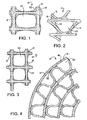
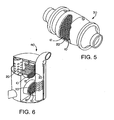
- the oxidation catalyst may be in the form of a cellular monolith 10.
- the monolith may be housed in an in-line converter 30 or a converter muffler 40.
- the monolith substrate may be either a ceramic extrusion 12 or a corrugated metal foil assembly 14.
- the monolith is in the form of a honeycomb structure having small, parallel channels 20 running axially through it.
- the channel walls are coated with an intermediate layer of an inorganic oxide 16, called washcoat, in order to provide a high surface area.
- washcoat an inorganic oxide
- a catalyst 18 is deposited on the washcoat.
- These monoliths are sometimes referred to as "flow-through" structures.
- the cross-section is typically circular or oval, but asymmetric contours may be used. Exhaust gases flowing through the channels contact the catalyst and undergo catalytic reaction.
- the walls of ceramic honeycombs have relatively large pores and low specific surface areas of typically less than 1 m 2 /g, and in one embodiment about 0.3 m 2 /g.
- the walls of the ceramic honeycomb structure typically has a relatively large geometric surface area, for example, about 16 cm 2 /cm 3 to about 30 cm 2 /cm 3 , and in one embodiment about 23.5 cm 2 /cm 3 .
- This high geometric surface area is further extended by the application of the washcoat, which further increases the surface area.
- Foils used as metal substrates are not porous.
- the metal substrate may be pre-oxidized to form surface roughness using Al 2 O 3 prior to applying the washcoat. This oxidizing step enhances adhesion of the washcoat.
- the washcoat may be composed of a porous, high surface area inorganic oxide such as one or more zeolites (e.g., ZSM5), Al 2 O 3 , SiO 2 , TiO 2 , CeO 2 , ZrO 2 , V 2 O 5 , La 2 O 3 , and mixtures of two or more thereof.
- the surface area of the washcoat is typically in the range about 5 to about 100 m 2 /g, and in one embodiment about 10 to about 15 m 2 /g.
- the catalytic species is deposited on the surface and within the pores of the washcoat.
- the catalyst may be Pt, Pd, Rh, lr, Ru, V, Cr, Mn, Fe, Co, Ni, Cu, Zn, Ag, Ce, Ga, or a mixture of two or more thereof.
- Useful catalysts include Pt, Pd, Rh, Ir, and mixtures of two or more thereof.
- the catalyst is typically in the form of a metal or a mixture of metal and oxide although the metal species is believed to be the portion of the catalyst that provides catalytic activity.
- the average particle size of the catalyst applied to the washcoat is typically in the range of up to about 110 nanometers, and in one embodiment up to about 40 nanometers, and in one embodiment about 10 to about 20 nanometers.
- the washcoat layer on a metallic foil and on a ceramic substrate is illustrated in Figs. 1 and 3, and Figs. 2 and 4, respectively.
- the washcoat may be applied to the metal or ceramic substrate from a water based slurry having a solids content of, for example, about 30% to about 50% by weight.
- the wet washcoated monolith is then dried at a temperature of about 80°C to about 200°C, and calcined at a temperature of about 200°C to about 1000°C.
- the thickness of the washcoat layer may be in the range of about 1 5 to about 50 microns, and in one embodiment about 20 to about 40 microns.
- Thicker washcoat deposits 22 ("fillets") are formed in the cell corners, especially in the sinusoidal channels of metallic substrates.
- the metal foil is washcoated prior to forming the honeycomb. In this embodiment, clean channels with no fillets in the corners are formed, but these tend to compromise the mechanical strength and durability of the monolith.
- the ceramic monolith may be made of corderite, 2MgO•2Al 2 O 3 •5SiO 2 .
- the ceramic monolith is comprised of a major amount (in excess of about 90%) of corderite and a minor amount of spinel.
- the ceramic monolith may be manufactured using an extrusion process. Raw materials such as alumina, talc, clay (kaolinite), and silica are reduced to powder and blended into a water-based paste. Additives which may be added in the process include lubricants (e.g. ethylene glycol), bonding agents (e.g. methylcellulose), and fluxes (alkaline hydroxides). Extrusions made from the paste are dried and cut to the desired length.
- lubricants e.g. ethylene glycol
- bonding agents e.g. methylcellulose
- fluxes alkaline hydroxides
- Metal foil may be corrugated, catalyst coated, and folded into a package to match the housing or shell contour of the catalytic converter or converter muffler.
- the metal may be steel or stainless steel.
- the foil thickness may be in the range of about 0.04 to about 0.15 mm, and in one embodiment about 0.05 mm.
- a slanted or "herring-bone” corrugation pattern may be used. The use of such a pattern makes it possible to use a single strip of foil.
- the folded foil package may be placed into a housing or shell.
- the catalytic species may be applied to the washcoat using techniques known in the art. These include impregnation, incipient wetness or capillary impregnation, electrostatic adsorption, ion exchange, and the like. Impregnation involves soaking the washcoated monolith in an aqueous solution containing a salt (precursor) of the catalytic element or elements. In one embodiment, the washcoated monolith is soaked in the aqueous solution and capillary and/or electrostatic forces distribute the salt over the internal surface of the porous network.
- the salt generating the cations or anions containing the catalytic element are chosen to be compatible with the surface charge of the washcoated monolith to obtain efficient adsorption or, in some cases, ion exchange.
- Pt(NH 3 ) 2 +2 salts can ion exchange with the H + present on the hydroxy containing surfaces of Al 2 O 3 .
- Anions such as PtCl -2 are electrostatically attracted to the H + sites.
- Electrostatic adsorption involves using a precursor salt that generates a charge opposite to that of the surface of the washcoated monolith.
- the surface charge on Al 2 O 3 or SiO 2 is generally negative, so cations preferentially adsorb uniformly over the entire surface.
- Cations such as Pd +2 , Pt(NH 3 ) 2 + , and others derived from nitrates or oxalate salts may be used.
- Ion exchange involves the use of a cation salt containing the catalytic species which exchange with cations on the surface of the washcoat. This technique may be used when a zeolite washcoat is used.
- the acid form of the zeolite (HZ) is first treated with an aqueous solution containing NH 4 + (NH 4 NO 3 ) to form the ammonium exchanged zeolite (NH 4 + Z - ).
- This is then treated with a salt solution containing a catalytic cation forming the metal exchanged zeolite (MZ).
- MZ metal exchanged zeolite
- the finished exchanged zeolite is washed, dried and an aqueous slurry is then prepared for coating onto the walls of the monolith.
- Incipient wetness or capillary impregnation involves dissolving the precursor salt of the catalytic element or elements in an amount of water equal to the water pore volume of the washcoated monolith, and soaking the monolith in the solution to distribute the solution over the washcoat surface.
- the water pore volume is determined by slowly adding water to the washcoated monolith until it is saturated, as evidenced by the beading of excess water. Once dried, the washcoated monolith pore structure contains a predetermined amount of catalytic species.
- a multiple catalyst system is used and a segreated washcoat is used to physically separate one or more of the catalysts.
- the catalysts are separated to prevent undesirable reactions with each other, with washcoat components and/or with the metal or ceramic substrate.
- the catalytic species may be separated by fixing each to a particular base metal oxide of the washcoat before the washcoat is applied to the metal or ceramic substrate.
- An example of such a catalyst is a tri-metal system which includes Pt, Pd and Rh.
- the first layer of the catalyst is composed of Pd/Al 2 O 3 .
- the second (surface) layer is composed of Rh/Pt/Ce-Zr. This design prevents the formation of palladium-rhodium alloys which may cause catalyst deactivation.
- the catalyst loading may be in the range of about 0.007 to about 2.65 g/l (0.2 to about 75 grams per cubic foot (g/ft 3 )) and in one embodiment about 0.18 to about 0.53 g/l (5 to about 15 g/ft 3 ).
- One approach involves adjusting the pH of the solution used to precipitate the catalytic species in the pores of the washcoated monolith. For example, by presoaking Al 2 O 3 in a solution of NH 4 OH, the addition of an acidic Pd salt, such as Pd(NO 3 ) 2 , precipitates hydrated PdO on the surfaces of the pores within the carrier.
- An alternative approach involves the use of reducing agents (e.g., formic acid) in the precipitation of the catalytic species as metals within the pore structure of the carrier. This method is advantageously used with precious metals because they tend to be easily reduced to their metallic states.
- An advantage of the use of such reducing agents is that upon subsequent heat treatment such reducing agents tend to leave no residue.
- the following test illustrates the inventive process.
- the vehicle tested is a Euro II Olympian B10A bus which is mechanically fuel injected and equipped with an automatic gearbox.
- the diesel engine has a maximum rated power of 183 kW at 2000 rpm, and 1050 Nm torque at 1450 rpm.
- a chassis dynamometer is installed on the vehicle.
- the vehicle is tested at curb weight with an additional load value simulating a typical passenger load.
- the tests are conducted at a dynamometer road load of 13,723 kg, which represents the vehicle weight plus a nominal passenger load of 75%.
- Test Nos. 1 and 3 are illustrative of the invention while Test Nos. 2 and 4-6 are provided for purposes of comparison.
- Test Nos. 1 and 2 are conducted using as the fuel formulation A from Example 3.
- Test Nos. 3 and 4 are conducted using as the fuel formulation B from Example 3.
- Test Nos. 5 and 6 are conducted using a conventional ULSD fuel.
- an oxidation catalyst is used while no catalyst is used with Test Nos. 2, 4 and 6.
- the oxidation catalyst is housed in an integrated converter muffler that is commercially available under the tradename AZ Purimuffler.
- the test unit uses two, 46.5 cells/cm 2 , large frontal area substrates each with a catalyst volume of 5.05 liters for a total catalyst volume of 10.1 liters.
- the substrates are ceramic substrates with a zeolite washcoat and a platinum catalytic component supported by the washcoat.
- the test unit is designed as a direct replacement for the original vehicle muffler and affords comparable exhaust backpressure and sound attenuation.
- the vehicle is tested over the Millbrook London Transport Bus (MLTB) Cycle.
- the MLTB test cycle is an actual driving cycle developed from monitoring an actual in-service bus operating in London, England.
- the cycle represents London Transport Bus Route 159, from Brixton Station via Lambeth Bridge to Trafalgar Square to Oxford Circus along Oxford Street and finally to the end of Baker Street.
- the overall length of the cycle is 2281 seconds representing a total distance of 8.92 km.
- Table 1 The results of the tests are indicated in Table 1.
- the numerical values in Table 1 are in grams of emission per kilometer of vehicle travel.
Landscapes
- Chemical & Material Sciences (AREA)
- Engineering & Computer Science (AREA)
- Chemical Kinetics & Catalysis (AREA)
- Combustion & Propulsion (AREA)
- Materials Engineering (AREA)
- Organic Chemistry (AREA)
- Ceramic Engineering (AREA)
- Health & Medical Sciences (AREA)
- General Engineering & Computer Science (AREA)
- Oil, Petroleum & Natural Gas (AREA)
- Toxicology (AREA)
- Biomedical Technology (AREA)
- Environmental & Geological Engineering (AREA)
- Analytical Chemistry (AREA)
- General Chemical & Material Sciences (AREA)
- Mechanical Engineering (AREA)
- Liquid Carbonaceous Fuels (AREA)
- Exhaust Gas After Treatment (AREA)
- Treating Waste Gases (AREA)
- Solid Fuels And Fuel-Associated Substances (AREA)
- Catalysts (AREA)
- Emulsifying, Dispersing, Foam-Producing Or Wetting Agents (AREA)
- Devices For Use In Laboratory Experiments (AREA)
Claims (14)
- Procédé de réduction du taux de polluants dans les gaz d'échappement d'un moteur diesel, comprenant :le fonctionnement dudit moteur diesel en utilisant comme carburant une émulsion eau-carburant diesel ; etla mise en contact des gaz d'échappement issus dudit moteur diesel avec un catalyseur d'oxydation, dans lequel ladite émulsion eau-carburant diesel comprend de l'eau, du carburant diesel et un émulsifiant, et dans lequel ledit émulsifiant comprend : (i) au moins un produit soluble dans du carburant préparé par la réaction d'au moins un agent d'acylation d'acide carboxylique substitué par hydrocarbyle avec de l'ammoniac ou une amine, le substituant hydrocarbyle dudit agent d'acylation ayant environ 50 à environ 500 atomes de carbone ; ou un mélange de (i) et (ii) un composé ionique ou non ionique ayant un rapport hydrophile-lipophile d'environ 1 à environ 10, en association avec (iii) un composé hydrosoluble choisi parmi le groupe constitué par les sels d'amine, les sels d'ammonium, les composés d'azide, les composés nitrés, les sels de métaux alcalins, les sels de métaux alcalino-terreux, et des mélanges de deux ou plusieurs de ceux-ci, ou des associations de ceux-ci.
- Procédé selon la revendication 1, dans lequel ledit moteur diesel est un groupe moteur mobile, un groupe moteur stationnaire, un moteur à deux temps ou un moteur à quatre temps, et dans lequel ledit catalyseur d'oxydation est logé dans un convertisseur en ligne ou un silencieux de convertisseur.
- Procédé selon la revendication 1, dans lequel ladite émulsion eau-carburant diesel comprend environ 50 à environ 98% en poids de carburant diesel ; environ 1 à environ 50% en poids d'eau ; et environ 0,05 à environ 20% en poids d'un émulsifiant, et dans lequel ladite émulsion eau-carburant diesel est composée d'une phase continue de carburant diesel et d'une phase aqueuse discontinue.
- Procédé selon la revendication 1, dans lequel ledit produit soluble dans du carburant (i) comprend :(i)(a) un premier produit soluble dans du carburant préparé par la réaction d'un premier agent d'acylation d'acide carboxylique substitué par hydrocarbyle avec de l'ammoniac ou une amine, le substituant hydrocarbyle dudit premier agent d'acylation ayant environ 50 à environ 500 atomes de carbone ; et(i)(b) un deuxième produit soluble dans du carburant produit par la réaction d'un deuxième agent d'acylation d'acide carboxylique substitué par hydrocarbyle avec de l'ammoniac ou une amine, le substituant hydrocarbyle dudit deuxième agent d'acylation ayant environ 50 à environ 500 atomes de carbone, le composant (i)(a) étant différent du composant (i)(b).
- Procédé selon la revendication 1, dans lequel ledit produit soluble dans du carburant (i) comprend :(i)(a) un premier produit soluble dans du carburant produit par la réaction d'un premier anhydride succinique substitué par polyisobutène avec une alcanolamine ou une alkylènepolyamine, le substituant polyisobutène dudit premier anhydride succinique substitué par polyisobutène ayant un poids moléculaire moyen en nombre d'environ 1500 à environ 3000, ledit premier anhydride succinique substitué par polyisobutène étant caractérisé par au moins environ 1,3 groupements succiniques par équivalent pondéral du substituant polyisobutène ; et(i)(b) un deuxième produit soluble dans du carburant produit par la réaction d'un deuxième anhydride succinique substitué par polyisobutène avec une alcanolamine ou une alkylènepolyamine, le substituant polyisobutène dudit deuxième anhydride succinique substitué par polyisobutène ayant un poids moléculaire moyen en nombre d'environ 700 à environ 1300, ledit deuxième anhydride succinique substitué par polyisobutène étant caractérisé par environ 1,0 à environ 1,3 groupements succiniques par équivalent pondéral du substituant polyisobutène.
- Procédé selon la revendication 1, dans lequel ledit produit soluble dans du carburant (i) comprend :(i)(a) un premier agent d'acylation d'acide carboxylique substitué par hydrocarbyle, le substituant hydrocarbyle dudit premier agent d'acylation ayant environ 50 à environ 500 atomes de carbone ; et(i)(b) un deuxième agent d'acylation d'acide carboxylique substitué par hydrocarbyle avec de l'ammoniac ou une amine, le substituant hydrocarbyle dudit deuxième agent d'acylation ayant environ 50 à environ 500 atomes de carbone, ledit premier agent d'acylation et ledit deuxième agent d'acylation étant identiques ou différents ;ledit premier agent d'acylation et ledit deuxième agent d'acylation étant couplés ensemble par un groupement de liaison dérivé d'un composé ayant deux ou plusieurs groupements amino primaires, deux ou plusieurs groupements amino secondaires, au moins un groupement amino primaire et au moins un groupement amino secondaire, au moins deux groupements hydroxyle, ou au moins un groupement amino primaire ou secondaire et au moins un groupement hydroxyle ;
lesdits agents d'acylation couplés étant mis en réaction avec de l'ammoniac ou une amine. - Procédé selon la revendication 3, dans lequel ledit émulsifiant comprend : au moins un produit soluble dans du carburant préparé par la réaction d'au moins un anhydride ou acide succinique substitué par polyisobutène avec de l'ammoniac ou une amine, dans lequel le groupement polyisobutène a un poids moléculaire moyen en nombre dans la plage d'environ 700 à environ 3000 ; un produit préparé par la réaction d'un anhydride ou acide succinique substitué par alkyle avec une alcanolamine, dans lequel le groupement alkyle a environ 8 à environ 24 atomes de carbone ; et du nitrate d'ammonium.
- Procédé selon la revendication 1, dans lequel ladite émulsion eau-carburant diesel comprend en outre un matériau choisi parmi le groupe comprenant un améliorateur de cétane, un solvant organique, un agent antigel, ou des associations de ceux-ci.
- Procédé selon la revendication 1, dans lequel ledit catalyseur d'oxydation est composé de passages à écoulement continu en céramique ou en métal revêtus d'une couche d'imprégnateur constituée de zéolite, d'Al2O3, de SiO2, de TiO2, de CeO2, de ZrO2, de V2O5 , de La2O3, ou de mélanges de deux ou plusieurs de ceux-ci, ladite couche d'imprégnateur supportant un catalyseur choisi parmi le groupe constitué par Pt, Pd, Rh, Ir, Ru, V, Cr, Mn, Fe, Co, Ni, Cu, Zn, Ag, Ce, Ga, ou un mélange de deux ou plusieurs de ceux-ci.
- Procédé selon la revendication 9, dans lequel ledit catalyseur est Pt, Pd, Rh, Ir ou un mélange de deux ou plusieurs de ceux-ci.
- Procédé de réduction du taux de polluants dans les gaz d'échappement d'un moteur diesel selon la revendication 1, dans lequel ledit catalyseur d'oxydation comprend des passages à écoulement continu en céramique ou en métal revêtus d'une couche d'imprégnateur constituée de zéolite, d'Al2O3, de SiO2, de TiO2, de CeO2, de ZrO2, de V2O5, de La2O3, ou de mélanges de deux ou plusieurs de ceux-ci, ladite couche d'imprégnateur supportant un catalyseur choisi parmi le groupe constitué par Pt, Pd, Rh, Ir, Ru, V, Cr, Mn, Fe, Co, Ni, Cu, Zn, Ag, Ce, Ga, ou un mélange de deux ou plusieurs de ceux-ci.
- Procédé de réduction du taux de polluants dans les gaz d'échappement d'un moteur diesel selon la revendication 1, dans lequel :ledit émulsifiant comprend : au moins un produit soluble dans du carburant préparé par la réaction d'au moins un anhydride ou acide succinique substitué par polyisobutène avec de l'ammoniac ou une amine, dans lequel le groupement polyisobutène a un poids moléculaire moyen en nombre dans la plage d'environ 700 à environ 3000 ; un produit préparé par la réaction d'un anhydride ou acide succinique substitué par alkyle avec une alcanolamine, dans lequel le groupement alkyle a environ 8 à environ 24 atomes de carbone ; et du nitrate d'ammonium ; etledit catalyseur d'oxydation comprend des passages à écoulement continu en céramique ou en métal revêtus d'une couche d'imprégnateur constituée de zéolite, d'Al2O3, de SiO2, de TiO2, de CeO2, de ZrO2, de V2O5, de La2O3, ou de mélanges de deux ou plusieurs de ceux-ci, ladite couche d'imprégnateur supportant un catalyseur choisi parmi le groupe constitué par Pt, Pd, Rh, Ir, ou un mélange de deux ou plusieurs de ceux-ci.
- Procédé de réduction du taux de polluants dans les gaz d'échappement d'un moteur diesel selon la revendication 1, dans lequel :ledit émulsifiant comprend : un ester/sel dérivé d'un anhydride succinique substitué par polyisobutène et d'une alcanolamine, dans lequel le groupement polyisobutène a un poids moléculaire moyen en nombre dans la plage d'environ 700 à environ 3000 ; un produit préparé par la réaction d'un anhydride ou acide succinique substitué par alkyle avec une alcanolamine, dans lequel le groupement alkyle a d'environ 8 à environ 24 atomes de carbone ; et du nitrate d'ammonium ; etledit catalyseur d'oxydation comprend des passages à écoulement continu en céramique ou en métal revêtus d'une couche d'imprégnateur constituée de zéolite, d'Al2O3, de SiO2, de TiO2, de CeO2, de ZrO2, de V2O5, de La2O3, ou de mélanges de deux ou plusieurs de ceux-ci, ladite couche d'imprégnateur supportant un catalyseur choisi parmi le groupe constitué par Pt, Pd, Rh, Ir, ou un mélange de deux ou plusieurs de ceux-ci.
- Procédé de réduction du taux de polluants dans les gaz d'échappement d'un moteur diesel selon la revendication 1, dans lequel :ledit émulsifiant comprend : un ester/sel dérivé d'un anhydride succinique substitué par polyisobutène et d'une alcanolamine, dans lequel le groupement polyisobutène a un poids moléculaire moyen en nombre dans la plage d'environ 1500 à environ 3000 ; un succinimide dérivé d'un anhydride succinique substitué par polyisobutène et d'une alkylènepolyamine, dans lequel le groupement polyisobutène a un poids moléculaire moyen en nombre d'environ 700 à environ 1300 ; un produit préparé par la réaction d'un anhydride ou acide succinique substitué par alkyle avec une alcanolamine, dans lequel le groupement alkyle a environ 8 à environ 24 atomes de carbone ; et du nitrate d'ammonium ; etledit catalyseur d'oxydation comprend des passages à écoulement continu en céramique ou en métal revêtus d'une couche d'imprégnateur constituée de zéolite, d'Al2O3, de SiO2, de TiO2, de CeO2, de ZrO2, de V2O5, de La2O3, ou de mélanges de deux ou plusieurs de ceux-ci, ladite couche d'imprégnateur supportant un catalyseur choisi parmi le groupe constitué par Pt, Pd, Rh, Ir, ou un mélange de deux ou plusieurs de ceux-ci.
Applications Claiming Priority (5)
| Application Number | Priority Date | Filing Date | Title |
|---|---|---|---|
| US51905600A | 2000-03-03 | 2000-03-03 | |
| US519056 | 2000-03-03 | ||
| US557953 | 2000-04-24 | ||
| US09/557,953 US6606856B1 (en) | 2000-03-03 | 2000-04-24 | Process for reducing pollutants from the exhaust of a diesel engine |
| PCT/US2000/028757 WO2001066918A1 (fr) | 2000-03-03 | 2000-10-17 | Procede pour reduire les polluants emis par un moteur diesel |
Publications (3)
| Publication Number | Publication Date |
|---|---|
| EP1264083A1 EP1264083A1 (fr) | 2002-12-11 |
| EP1264083A4 EP1264083A4 (fr) | 2004-05-26 |
| EP1264083B1 true EP1264083B1 (fr) | 2007-09-12 |
Family
ID=27059692
Family Applications (1)
| Application Number | Title | Priority Date | Filing Date |
|---|---|---|---|
| EP00970978A Expired - Lifetime EP1264083B1 (fr) | 2000-03-03 | 2000-10-17 | Procede pour reduire les polluants emis par un moteur diesel |
Country Status (10)
| Country | Link |
|---|---|
| US (3) | US6606856B1 (fr) |
| EP (1) | EP1264083B1 (fr) |
| JP (1) | JP2003526042A (fr) |
| AT (1) | ATE373164T1 (fr) |
| AU (2) | AU8028000A (fr) |
| BR (1) | BR0017155A (fr) |
| CA (1) | CA2401004A1 (fr) |
| DE (1) | DE60036414T2 (fr) |
| ES (1) | ES2292477T3 (fr) |
| WO (1) | WO2001066918A1 (fr) |
Families Citing this family (72)
| Publication number | Priority date | Publication date | Assignee | Title |
|---|---|---|---|---|
| US6606856B1 (en) * | 2000-03-03 | 2003-08-19 | The Lubrizol Corporation | Process for reducing pollutants from the exhaust of a diesel engine |
| US20030084658A1 (en) * | 2000-06-20 | 2003-05-08 | Brown Kevin F | Process for reducing pollutants from the exhaust of a diesel engine using a water diesel fuel in combination with exhaust after-treatments |
| US20050160663A1 (en) * | 2000-08-01 | 2005-07-28 | Valentine James M. | Cleaner burning diesel fuel |
| US7279017B2 (en) | 2001-04-27 | 2007-10-09 | Colt Engineering Corporation | Method for converting heavy oil residuum to a useful fuel |
| US20030110684A1 (en) * | 2001-12-18 | 2003-06-19 | Henly Timothy J. | Extremely stable diesel fuel compositions |
| AU2002302481A1 (en) * | 2002-03-28 | 2003-10-13 | Cam Tecnologie S.P.A. | Method for reducing emission of pollutants from an internal combustion engine, and fuel emulsion comprising water and a liquid hydrocarbon |
| US20030226312A1 (en) * | 2002-06-07 | 2003-12-11 | Roos Joseph W. | Aqueous additives in hydrocarbonaceous fuel combustion systems |
| US20050244764A1 (en) * | 2002-07-19 | 2005-11-03 | Frank Haase | Process for combustion of a liquid hydrocarbon |
| US7278259B2 (en) * | 2002-08-23 | 2007-10-09 | Donaldson Company, Inc. | Apparatus for emissions control, system, and methods |
| DE10239841A1 (de) * | 2002-08-29 | 2004-03-11 | Basf Ag | Additivgemische für Kraft- und Schmierstoffe |
| JP2005538301A (ja) * | 2002-09-13 | 2005-12-15 | ジョンソン、マッセイ、パブリック、リミテッド、カンパニー | 圧縮着火機関排ガスの処理方法 |
| US7176174B2 (en) * | 2003-03-06 | 2007-02-13 | The Lubrizol Corporation | Water-in-oil emulsion |
| EP1484103A1 (fr) * | 2003-06-06 | 2004-12-08 | Umicore AG & Co. KG | Procédé et dispositif pour la conversion catalytique d'hydrocarburess pour la génération d'un gaz riche en hydrogène |
| JP2005185885A (ja) * | 2003-12-24 | 2005-07-14 | Toshiyuki Aeba | 吸着材とその製造方法及び製造装置 |
| US7188469B2 (en) * | 2003-12-29 | 2007-03-13 | Delphi Technologies, Inc. | Exhaust system and methods of reducing contaminants in an exhaust stream |
| US7240484B2 (en) * | 2003-12-29 | 2007-07-10 | Delphi Technologies, Inc. | Exhaust treatment systems and methods for using the same |
| JP2007526363A (ja) * | 2004-02-09 | 2007-09-13 | オー2ディーゼル コーポレーション | ディーゼル酸化触媒と合わせてエタノール/ディーゼル燃料を使用する、ディーゼルエンジン排気からの粒子状物質の排出を減少させる方法 |
| US7425266B2 (en) * | 2004-03-04 | 2008-09-16 | Freeman Mark C | Water-filtering media and filters |
| US7341102B2 (en) | 2005-04-28 | 2008-03-11 | Diamond Qc Technologies Inc. | Flue gas injection for heavy oil recovery |
| US8206470B1 (en) * | 2005-08-03 | 2012-06-26 | Jacobson William O | Combustion emission-reducing method |
| US7412824B1 (en) * | 2005-12-19 | 2008-08-19 | Miratech Corporation | Catalytic converter system for diesel engines |
| EP1816314B1 (fr) | 2006-02-07 | 2010-12-15 | Diamond QC Technologies Inc. | Injection de gaz de carburant enrichi au dioxyde de carbone pour une récupération des hydrocarbures |
| US7934474B2 (en) * | 2006-03-30 | 2011-05-03 | Eric William Cottell | Real time in-line hydrosonic water-in-fuel emulsion apparatus, process and system |
| US7930998B2 (en) | 2006-03-30 | 2011-04-26 | Eric William Cottell | Real time in-line water-in-fuel emulsion apparatus, process and system |
| US7576031B2 (en) * | 2006-06-09 | 2009-08-18 | Basf Catalysts Llc | Pt-Pd diesel oxidation catalyst with CO/HC light-off and HC storage function |
| WO2008013844A2 (fr) * | 2006-07-25 | 2008-01-31 | General Vortex Energy, Inc. | Système, appareil et procédé de combustion d'un métal et autres combustibles |
| US7820583B2 (en) * | 2006-08-24 | 2010-10-26 | Millennium Inorganic Chemicals, Inc. | Nanocomposite particle and process of preparing the same |
| US7453271B2 (en) * | 2006-12-21 | 2008-11-18 | Gm Global Technology Operations, Inc. | Apparatus and method for sensing water within a fuel-water separator assembly |
| PL2111287T3 (pl) * | 2006-12-23 | 2011-08-31 | Alzchem Trostberg Gmbh | Zastosowanie wodnych roztworów mrówczanu guanidyniowego do selektywnej katalitycznej redukcji tlenków azotu w spalinach pojazdów |
| US7998423B2 (en) | 2007-02-27 | 2011-08-16 | Basf Corporation | SCR on low thermal mass filter substrates |
| JP5761917B2 (ja) * | 2007-02-27 | 2015-08-12 | ビーエーエスエフ コーポレーション | 選択的アンモニア酸化用の二官能性触媒 |
| MX2009009095A (es) * | 2007-02-27 | 2009-09-14 | Basf Catalysts Llc | Catalizadores de zeolita cha de cobre. |
| US9011556B2 (en) * | 2007-03-09 | 2015-04-21 | Afton Chemical Corporation | Fuel composition containing a hydrocarbyl-substituted succinimide |
| JP2009219971A (ja) * | 2007-03-20 | 2009-10-01 | Denso Corp | セラミックハニカム構造体 |
| JP4992773B2 (ja) * | 2007-03-20 | 2012-08-08 | 株式会社デンソー | 触媒材料 |
| JP2009219972A (ja) * | 2007-03-20 | 2009-10-01 | Denso Corp | 触媒材料の製造方法 |
| BRPI0810133B1 (pt) | 2007-04-26 | 2023-01-17 | Johnson Matthey Public Limited Company | Método para converter óxidos de nitrogênio de um gás em nitrogênio, sistema de escapamento para um motor de combustão interna de queima pobre veicular, e, aparelho |
| US20080289249A1 (en) * | 2007-05-22 | 2008-11-27 | Peter Wangqi Hou | Fuel additive to control deposit formation |
| DE102007030283A1 (de) * | 2007-06-29 | 2009-01-08 | Emitec Gesellschaft Für Emissionstechnologie Mbh | SCR-Katalysatoranordnung |
| US20090196812A1 (en) | 2008-01-31 | 2009-08-06 | Basf Catalysts Llc | Catalysts, Systems and Methods Utilizing Non-Zeolitic Metal-Containing Molecular Sieves Having the CHA Crystal Structure |
| US8690968B2 (en) * | 2008-04-04 | 2014-04-08 | Afton Chemical Corporation | Succinimide lubricity additive for diesel fuel and a method for reducing wear scarring in an engine |
| US20090324468A1 (en) * | 2008-06-27 | 2009-12-31 | Golden Stephen J | Zero platinum group metal catalysts |
| US10583424B2 (en) | 2008-11-06 | 2020-03-10 | Basf Corporation | Chabazite zeolite catalysts having low silica to alumina ratios |
| CN101485980B (zh) * | 2009-02-27 | 2012-09-05 | 中国科学院大连化学物理研究所 | 沸石和氧化还原氧化物组合催化剂结构体 |
| JP2010227767A (ja) * | 2009-03-26 | 2010-10-14 | Ngk Insulators Ltd | ハニカムフィルタ |
| CN101629509A (zh) * | 2009-04-29 | 2010-01-20 | 中国第一汽车集团公司 | 柴油车用颗粒氧化器金属载体后处理器及其制备工艺 |
| CN101629507A (zh) * | 2009-04-29 | 2010-01-20 | 中国第一汽车集团公司 | 二个缓冲间隙的颗粒氧化器金属载体后处理器及制备工艺 |
| CN101629508A (zh) * | 2009-04-29 | 2010-01-20 | 中国第一汽车集团公司 | 一个缓冲间隙的颗粒氧化器金属载体后处理器及制备工艺 |
| JP5960602B2 (ja) * | 2009-11-23 | 2016-08-02 | フ ユ トゥ ケミカル テクノロジー (シェンチェン) カンパニー リミテッド | ディーゼルエンジン乳化油生成促進システム及び方法 |
| CN102639232A (zh) * | 2009-11-25 | 2012-08-15 | 株式会社F.C.C. | 催化剂载体或催化剂及其制造方法 |
| US8293199B2 (en) * | 2009-12-18 | 2012-10-23 | Basf Corporation | Process for preparation of copper containing molecular sieves with the CHA structure, catalysts, systems and methods |
| US8293198B2 (en) * | 2009-12-18 | 2012-10-23 | Basf Corporation | Process of direct copper exchange into Na+-form of chabazite molecular sieve, and catalysts, systems and methods |
| US8511535B1 (en) * | 2010-04-19 | 2013-08-20 | Aegis Technology Inc. | Innovative braze and brazing process for hermetic sealing between ceramic and metal components in a high-temperature oxidizing or reducing atmosphere |
| US8756923B2 (en) * | 2010-11-24 | 2014-06-24 | Cnh Industrial America Llc | Mixing pipe for SCR mufflers |
| US8943811B2 (en) * | 2010-12-22 | 2015-02-03 | GM Global Technology Operations LLC | Perovskite-based catalysts, catalyst combinations and methods of making and using the same |
| CN103842487A (zh) | 2011-03-29 | 2014-06-04 | 富林纳技术有限公司 | 混合燃料及其制备方法 |
| CN102168598A (zh) * | 2011-04-18 | 2011-08-31 | 长沙矿山研究院 | 柴油机尾气净化消声装置 |
| US20130019589A1 (en) * | 2011-07-19 | 2013-01-24 | GM Global Technology Operations LLC | Exhaust aftertreatment system for compression-ignition engines |
| WO2013130467A1 (fr) | 2012-02-27 | 2013-09-06 | Deec, Inc. | Générateurs de plasma riche en oxygène pour augmenter la puissance de moteurs à combustion interne |
| USD702735S1 (en) * | 2012-09-14 | 2014-04-15 | Yanmar Co., Ltd. | Exhaust gas purifying device |
| US9511355B2 (en) | 2013-11-26 | 2016-12-06 | Clean Diesel Technologies, Inc. (Cdti) | System and methods for using synergized PGM as a three-way catalyst |
| US9511350B2 (en) | 2013-05-10 | 2016-12-06 | Clean Diesel Technologies, Inc. (Cdti) | ZPGM Diesel Oxidation Catalysts and methods of making and using same |
| US9511353B2 (en) | 2013-03-15 | 2016-12-06 | Clean Diesel Technologies, Inc. (Cdti) | Firing (calcination) process and method related to metallic substrates coated with ZPGM catalyst |
| US9545626B2 (en) | 2013-07-12 | 2017-01-17 | Clean Diesel Technologies, Inc. | Optimization of Zero-PGM washcoat and overcoat loadings on metallic substrate |
| US9511358B2 (en) | 2013-11-26 | 2016-12-06 | Clean Diesel Technologies, Inc. | Spinel compositions and applications thereof |
| AU2015358565B2 (en) | 2014-12-03 | 2020-11-05 | Drexel University | Direct incorporation of natural gas into hydrocarbon liquid fuels |
| AU2017229114B2 (en) | 2016-03-07 | 2023-01-12 | HyTech Power, Inc. | A method of generating and distributing a second fuel for an internal combustion engine |
| JP6692256B2 (ja) * | 2016-08-25 | 2020-05-13 | 日本碍子株式会社 | 多孔質セラミックス構造体 |
| CN108087071B (zh) * | 2017-12-05 | 2021-09-28 | 南京依柯卡特排放技术股份有限公司 | 对dpf碳载量的判断方法 |
| US20190234348A1 (en) | 2018-01-29 | 2019-08-01 | Hytech Power, Llc | Ultra Low HHO Injection |
| CN110367193A (zh) * | 2019-08-13 | 2019-10-25 | 北京桃古图生物科技有限公司 | 一种用于改善养殖圈舍环境的改善剂及其制备方法和应用 |
| BR112023000330A2 (pt) | 2020-07-09 | 2023-03-28 | Clearflame Engines Inc | Sistemas e métodos de desativação de cilindro em motores com controle de mistura em alta temperatura |
Family Cites Families (61)
| Publication number | Priority date | Publication date | Assignee | Title |
|---|---|---|---|---|
| US2858200A (en) | 1954-06-28 | 1958-10-28 | Union Oil Co | Diesel engine fuel |
| US3540866A (en) * | 1964-06-22 | 1970-11-17 | Lubrizol Corp | Fuel oil-water composition containing metal oxide |
| GB1260473A (en) | 1968-07-22 | 1972-01-19 | Shell Int Research | Emulsified hydrocarbon fuel |
| US4084940A (en) | 1974-12-23 | 1978-04-18 | Petrolite Corporation | Emulsions of enhanced ignitibility |
| US4048080A (en) | 1976-06-07 | 1977-09-13 | Texaco Inc. | Lubricating oil composition |
| US4329249A (en) | 1978-09-27 | 1982-05-11 | The Lubrizol Corporation | Carboxylic acid derivatives of alkanol tertiary monoamines and lubricants or functional fluids containing the same |
| US4368133A (en) * | 1979-04-02 | 1983-01-11 | The Lubrizol Corporation | Aqueous systems containing nitrogen-containing, phosphorous-free carboxylic solubilizer/surfactant additives |
| US4207078A (en) | 1979-04-25 | 1980-06-10 | Texaco Inc. | Diesel fuel containing manganese tricarbonyl and oxygenated compounds |
| US4447348A (en) | 1981-02-25 | 1984-05-08 | The Lubrizol Corporation | Carboxylic solubilizer/surfactant combinations and aqueous compositions containing same |
| US4452712A (en) | 1983-01-20 | 1984-06-05 | Aluminum Company Of America | Metalworking with an aqueous synthetic lubricant containing polyoxypropylene-polyoxyethylene-polyoxypropylene block copolymers |
| US4482356A (en) | 1983-12-30 | 1984-11-13 | Ethyl Corporation | Diesel fuel containing alkenyl succinimide |
| US4585461A (en) | 1984-08-01 | 1986-04-29 | Gorman Jeremy W | Method of manufacturing a diesel fuel additive to improve cetane rating |
| US4561861A (en) | 1984-11-01 | 1985-12-31 | Texaco Inc. | Motor fuel composition |
| US4892562A (en) | 1984-12-04 | 1990-01-09 | Fuel Tech, Inc. | Diesel fuel additives and diesel fuels containing soluble platinum group metal compounds and use in diesel engines |
| US4613341A (en) | 1985-05-31 | 1986-09-23 | Ethyl Corporation | Fuel compositions |
| US4629472A (en) | 1985-06-19 | 1986-12-16 | Fuel Tech, Inc. | Method and apparatus for improving combustion, thermal efficiency and reducing emissions by treating fuel |
| US4708753A (en) | 1985-12-06 | 1987-11-24 | The Lubrizol Corporation | Water-in-oil emulsions |
| US5047175A (en) | 1987-12-23 | 1991-09-10 | The Lubrizol Corporation | Salt composition and explosives using same |
| US4907368A (en) | 1987-11-23 | 1990-03-13 | Atlas Powder Company | Stable fluid systems for preparing high density explosive compositions |
| US4952328A (en) | 1988-05-27 | 1990-08-28 | The Lubrizol Corporation | Lubricating oil compositions |
| US5501714A (en) | 1988-12-28 | 1996-03-26 | Platinum Plus, Inc. | Operation of diesel engines with reduced particulate emission by utilization of platinum group metal fuel additive and pass-through catalytic oxidizer |
| US5693106A (en) | 1992-07-22 | 1997-12-02 | Platinum Plus, Inc. | Platinum metal fuel additive for water-containing fuels |
| US5584894A (en) | 1992-07-22 | 1996-12-17 | Platinum Plus, Inc. | Reduction of nitrogen oxides emissions from vehicular diesel engines |
| CA2000964A1 (fr) | 1989-03-02 | 1990-09-02 | Richard W. Jahnke | Emulsions huile-eau |
| CA2048906C (fr) | 1990-09-07 | 2002-12-10 | Jan Bock | Compositions de combustible diesel a microemulsions et methode d'utilisation connexe |
| US5271370A (en) * | 1991-07-31 | 1993-12-21 | Mitsubishi Jidosha Kogyo Kabushiki Kaisha | Emulsion fuel engine |
| US5260043A (en) * | 1991-08-01 | 1993-11-09 | Air Products And Chemicals, Inc. | Catalytic reduction of NOx and carbon monoxide using methane in the presence of oxygen |
| CA2124439A1 (fr) | 1991-11-26 | 1993-06-10 | Kenneth E. Voss | Catalyseur d'oxydation et applications |
| ATE190241T1 (de) | 1991-11-26 | 2000-03-15 | Engelhard Corp | Ceroxid-aluminiumoxid enthaltender oxidationskatalysator und verfahren zur anwendung. |
| US5419852A (en) | 1991-12-02 | 1995-05-30 | Intevep, S.A. | Bimodal emulsion and its method of preparation |
| CA2091405C (fr) | 1992-03-17 | 2004-05-18 | Richard W. Jahnke | Emulsions eau dans l'huile |
| DE4213018C1 (de) | 1992-04-21 | 1993-12-09 | Degussa | Katalysator zur oxidativen Reinigung der Abgase von Dieselmotoren |
| US5389112A (en) | 1992-05-01 | 1995-02-14 | Chevron Research And Technology Company | Low emissions diesel fuel |
| US5389111A (en) | 1993-06-01 | 1995-02-14 | Chevron Research And Technology Company | Low emissions diesel fuel |
| US5279626A (en) | 1992-06-02 | 1994-01-18 | Ethyl Petroleum Additives Inc. | Enhanced fuel additive concentrate |
| US5743922A (en) | 1992-07-22 | 1998-04-28 | Nalco Fuel Tech | Enhanced lubricity diesel fuel emulsions for reduction of nitrogen oxides |
| EP0590814B1 (fr) * | 1992-09-28 | 1996-12-18 | Ford Motor Company Limited | Système de contrÔle d'émission de particules et de gaz d'échappement |
| US6003303A (en) * | 1993-01-11 | 1999-12-21 | Clean Diesel Technologies, Inc. | Methods for reducing harmful emissions from a diesel engine |
| US5352377A (en) | 1993-02-08 | 1994-10-04 | Mobil Oil Corporation | Carboxylic acid/ester products as multifunctional additives for lubricants |
| DE4314204C1 (de) | 1993-04-30 | 1994-11-03 | Daimler Benz Ag | Abgasanlage für eine Brennkraftmaschine eines Fahrzeuges |
| GB9309121D0 (en) | 1993-05-04 | 1993-06-16 | Bp Chem Int Ltd | Substituted acylating agents |
| US5404841A (en) | 1993-08-30 | 1995-04-11 | Valentine; James M. | Reduction of nitrogen oxides emissions from diesel engines |
| DE4406648C1 (de) * | 1994-03-01 | 1995-08-10 | Daimler Benz Ag | Verfahren und Vorrichtung zur Reinigung von Abgasen aus Verbrennungsmotoren |
| US5746783A (en) | 1994-03-30 | 1998-05-05 | Martin Marietta Energy Systems, Inc. | Low emissions diesel fuel |
| US6284210B1 (en) * | 1994-11-15 | 2001-09-04 | Institut Francais Du Petrole | Combustion catalyst and combustion process using such a catalyst |
| JPH08325582A (ja) | 1995-06-01 | 1996-12-10 | Kao Corp | 超重質油エマルション燃料の製造方法 |
| US5669938A (en) | 1995-12-21 | 1997-09-23 | Ethyl Corporation | Emulsion diesel fuel composition with reduced emissions |
| FR2746106B1 (fr) | 1996-03-15 | 1998-08-28 | Combustible emulsionne et l'un de ses procedes d'obtention | |
| US5987882A (en) | 1996-04-19 | 1999-11-23 | Engelhard Corporation | System for reduction of harmful exhaust emissions from diesel engines |
| US5948377A (en) * | 1996-09-04 | 1999-09-07 | Engelhard Corporation | Catalyst composition |
| US5809774A (en) | 1996-11-19 | 1998-09-22 | Clean Diesel Technologies, Inc. | System for fueling and feeding chemicals to internal combustion engines for NOx reduction |
| US5976475A (en) | 1997-04-02 | 1999-11-02 | Clean Diesel Technologies, Inc. | Reducing NOx emissions from an engine by temperature-controlled urea injection for selective catalytic reduction |
| US5809775A (en) | 1997-04-02 | 1998-09-22 | Clean Diesel Technologies, Inc. | Reducing NOx emissions from an engine by selective catalytic reduction utilizing solid reagents |
| US5924280A (en) | 1997-04-04 | 1999-07-20 | Clean Diesel Technologies, Inc. | Reducing NOx emissions from an engine while maximizing fuel economy |
| US5968464A (en) * | 1997-05-12 | 1999-10-19 | Clean Diesel Technologies, Inc. | Urea pyrolysis chamber and process for reducing lean-burn engine NOx emissions by selective catalytic reduction |
| US5820640A (en) | 1997-07-09 | 1998-10-13 | Natural Resources Canada | Pyrolysis liquid-in-diesel oil microemulsions |
| US5873916A (en) | 1998-02-17 | 1999-02-23 | Caterpillar Inc. | Fuel emulsion blending system |
| US6648929B1 (en) * | 1998-09-14 | 2003-11-18 | The Lubrizol Corporation | Emulsified water-blended fuel compositions |
| US6176078B1 (en) * | 1998-11-13 | 2001-01-23 | Engelhard Corporation | Plasma fuel processing for NOx control of lean burn engines |
| US6606856B1 (en) * | 2000-03-03 | 2003-08-19 | The Lubrizol Corporation | Process for reducing pollutants from the exhaust of a diesel engine |
| US20030084658A1 (en) * | 2000-06-20 | 2003-05-08 | Brown Kevin F | Process for reducing pollutants from the exhaust of a diesel engine using a water diesel fuel in combination with exhaust after-treatments |
-
2000
- 2000-04-24 US US09/557,953 patent/US6606856B1/en not_active Expired - Fee Related
- 2000-10-17 BR BR0017155-7A patent/BR0017155A/pt not_active IP Right Cessation
- 2000-10-17 JP JP2001565511A patent/JP2003526042A/ja not_active Withdrawn
- 2000-10-17 AT AT00970978T patent/ATE373164T1/de not_active IP Right Cessation
- 2000-10-17 AU AU8028000A patent/AU8028000A/xx active Pending
- 2000-10-17 DE DE60036414T patent/DE60036414T2/de not_active Expired - Fee Related
- 2000-10-17 ES ES00970978T patent/ES2292477T3/es not_active Expired - Lifetime
- 2000-10-17 AU AU2000280280A patent/AU2000280280B2/en not_active Ceased
- 2000-10-17 CA CA002401004A patent/CA2401004A1/fr not_active Abandoned
- 2000-10-17 WO PCT/US2000/028757 patent/WO2001066918A1/fr not_active Ceased
- 2000-10-17 EP EP00970978A patent/EP1264083B1/fr not_active Expired - Lifetime
-
2003
- 2003-04-07 US US10/408,507 patent/US7028468B2/en not_active Expired - Fee Related
- 2003-06-09 US US10/457,510 patent/US6949235B2/en not_active Expired - Fee Related
Also Published As
| Publication number | Publication date |
|---|---|
| AU2000280280B2 (en) | 2004-12-23 |
| BR0017155A (pt) | 2004-04-20 |
| JP2003526042A (ja) | 2003-09-02 |
| ES2292477T3 (es) | 2008-03-16 |
| US6606856B1 (en) | 2003-08-19 |
| WO2001066918A1 (fr) | 2001-09-13 |
| US20030167758A1 (en) | 2003-09-11 |
| EP1264083A1 (fr) | 2002-12-11 |
| US7028468B2 (en) | 2006-04-18 |
| CA2401004A1 (fr) | 2001-09-13 |
| ATE373164T1 (de) | 2007-09-15 |
| DE60036414D1 (de) | 2007-10-25 |
| US6949235B2 (en) | 2005-09-27 |
| DE60036414T2 (de) | 2008-06-12 |
| EP1264083A4 (fr) | 2004-05-26 |
| AU8028000A (en) | 2001-09-17 |
| US20030221360A1 (en) | 2003-12-04 |
Similar Documents
| Publication | Publication Date | Title |
|---|---|---|
| EP1264083B1 (fr) | Procede pour reduire les polluants emis par un moteur diesel | |
| AU2000280280A1 (en) | Process for reducing pollutants from the exhaust of a diesel engine | |
| EP3946693B1 (fr) | Article catalytique et son utilisation pour le filtrage des particules fines | |
| EP2989303B1 (fr) | Moteur à allumage commandé et système d'échappement comprenant un monolithe filtre imprégné par zones et catalysé | |
| RU2527462C2 (ru) | Фильтр для поглощения твердых частиц из отработавших газов двигателя с воспламенением от сжатия | |
| US9327239B2 (en) | Filter substrate comprising three-way catalyst | |
| EP2964365B1 (fr) | Moteur à allumage commandé et système d'échappement comprenant un filtre catalysé trifonctionnel | |
| US20030196430A1 (en) | Process for reducing pollutants from the exhaust of a diesel engine using a water diesel fuel in combination with exhaust after-treatments | |
| US11285467B2 (en) | Catalyst article and the use thereof for filtering fine particles | |
| JP2018035808A (ja) | ガソリン車用の汚染物質低減装置 | |
| KR102478927B1 (ko) | 압축 점화 내연기관을 위한 복합 구역화 산화 촉매 | |
| US6245307B1 (en) | Catalyst for purifying exhaust gas from lean burn engine and method for purification | |
| EP1294467B1 (fr) | Diminution des emissions polluantes d'un moteur diesel par l'emploi combine d'un gazole renfermant de l'eau et de post-traitements a l'echappement | |
| JP2004508189A (ja) | 窒素酸化物の接触還元のための触媒と方法 | |
| KR100774576B1 (ko) | 배기가스 정화용 촉매 및 배기가스 정화 방법 | |
| EP4221869A1 (fr) | Article de catalyseur et son utilisation pour le filtrage des particules fines | |
| JP3764760B2 (ja) | リーンバーンエンジンからの排気ガスを浄化するための触媒および浄化方法 | |
| CA2151859C (fr) | Convertisseur catalytique servant a purifier les gaz d'echappement produits par un moteur a melange maigre et methode connexe | |
| WO2018130841A1 (fr) | Contrôle des émissions de suie et de nox | |
| JPH0462779B2 (fr) | ||
| JPS63126528A (ja) | 窒素酸化物の除去方法 | |
| JPH1024238A (ja) | 窒素酸化物接触還元除去触媒及び窒素酸化物接触還元除去方法 | |
| JPH07136466A (ja) | 窒素酸化物の還元除去方法 |
Legal Events
| Date | Code | Title | Description |
|---|---|---|---|
| PUAI | Public reference made under article 153(3) epc to a published international application that has entered the european phase |
Free format text: ORIGINAL CODE: 0009012 |
|
| 17P | Request for examination filed |
Effective date: 20021001 |
|
| AK | Designated contracting states |
Kind code of ref document: A1 Designated state(s): AT BE CH CY DE DK ES FI FR GB GR IE IT LI LU MC NL PT SE |
|
| AX | Request for extension of the european patent |
Free format text: AL;LT;LV;MK;RO;SI |
|
| A4 | Supplementary search report drawn up and despatched |
Effective date: 20040415 |
|
| RIC1 | Information provided on ipc code assigned before grant |
Ipc: 7F 01N 3/00 A Ipc: 7B 01D 53/94 B Ipc: 7B 01D 47/00 B Ipc: 7C 10L 1/32 B Ipc: 7B 01J 8/02 B Ipc: 7C 01G 28/00 B Ipc: 7C 01B 31/00 B Ipc: 7F 01N 3/10 B Ipc: 7C 01B 21/00 B Ipc: 7F 02M 25/02 B Ipc: 7C 01B 33/00 B Ipc: 7C 01B 25/00 B Ipc: 7C 01B 35/00 B Ipc: 7B 01J 8/00 B |
|
| 17Q | First examination report despatched |
Effective date: 20050309 |
|
| GRAP | Despatch of communication of intention to grant a patent |
Free format text: ORIGINAL CODE: EPIDOSNIGR1 |
|
| RIC1 | Information provided on ipc code assigned before grant |
Ipc: C01B 31/00 19680901ALI20051125BHEP Ipc: C01G 28/00 19800101ALI20051125BHEP Ipc: B01J 8/00 19740701ALI20051125BHEP Ipc: C10L 1/32 19680901ALI20051125BHEP Ipc: C01B 25/00 19680901ALI20051125BHEP Ipc: F02M 25/022 19950101ALI20051125BHEP Ipc: B01D 47/00 19680901ALI20051125BHEP Ipc: F01N 3/00 19680901AFI20051125BHEP Ipc: B01J 8/02 19740701ALI20051125BHEP Ipc: C01B 33/00 19680901ALI20051125BHEP Ipc: B01D 53/94 19950101ALI20051125BHEP Ipc: F01N 3/10 19680901ALI20051125BHEP Ipc: C01B 35/00 19680901ALI20051125BHEP Ipc: C01B 21/00 19680901ALI20051125BHEP |
|
| GRAS | Grant fee paid |
Free format text: ORIGINAL CODE: EPIDOSNIGR3 |
|
| GRAA | (expected) grant |
Free format text: ORIGINAL CODE: 0009210 |
|
| AK | Designated contracting states |
Kind code of ref document: B1 Designated state(s): AT BE CH CY DE DK ES FI FR GB GR IE IT LI LU MC NL PT SE |
|
| REG | Reference to a national code |
Ref country code: GB Ref legal event code: FG4D |
|
| REG | Reference to a national code |
Ref country code: CH Ref legal event code: EP |
|
| REF | Corresponds to: |
Ref document number: 60036414 Country of ref document: DE Date of ref document: 20071025 Kind code of ref document: P |
|
| REG | Reference to a national code |
Ref country code: IE Ref legal event code: FG4D |
|
| PG25 | Lapsed in a contracting state [announced via postgrant information from national office to epo] |
Ref country code: FI Free format text: LAPSE BECAUSE OF FAILURE TO SUBMIT A TRANSLATION OF THE DESCRIPTION OR TO PAY THE FEE WITHIN THE PRESCRIBED TIME-LIMIT Effective date: 20070912 |
|
| PGFP | Annual fee paid to national office [announced via postgrant information from national office to epo] |
Ref country code: DE Payment date: 20071130 Year of fee payment: 8 |
|
| ET | Fr: translation filed | ||
| PG25 | Lapsed in a contracting state [announced via postgrant information from national office to epo] |
Ref country code: LI Free format text: LAPSE BECAUSE OF FAILURE TO SUBMIT A TRANSLATION OF THE DESCRIPTION OR TO PAY THE FEE WITHIN THE PRESCRIBED TIME-LIMIT Effective date: 20070912 Ref country code: AT Free format text: LAPSE BECAUSE OF FAILURE TO SUBMIT A TRANSLATION OF THE DESCRIPTION OR TO PAY THE FEE WITHIN THE PRESCRIBED TIME-LIMIT Effective date: 20070912 Ref country code: CH Free format text: LAPSE BECAUSE OF FAILURE TO SUBMIT A TRANSLATION OF THE DESCRIPTION OR TO PAY THE FEE WITHIN THE PRESCRIBED TIME-LIMIT Effective date: 20070912 |
|
| NLV1 | Nl: lapsed or annulled due to failure to fulfill the requirements of art. 29p and 29m of the patents act | ||
| REG | Reference to a national code |
Ref country code: ES Ref legal event code: FG2A Ref document number: 2292477 Country of ref document: ES Kind code of ref document: T3 |
|
| PGFP | Annual fee paid to national office [announced via postgrant information from national office to epo] |
Ref country code: BE Payment date: 20071107 Year of fee payment: 8 |
|
| REG | Reference to a national code |
Ref country code: CH Ref legal event code: PL |
|
| PG25 | Lapsed in a contracting state [announced via postgrant information from national office to epo] |
Ref country code: GR Free format text: LAPSE BECAUSE OF FAILURE TO SUBMIT A TRANSLATION OF THE DESCRIPTION OR TO PAY THE FEE WITHIN THE PRESCRIBED TIME-LIMIT Effective date: 20071213 Ref country code: NL Free format text: LAPSE BECAUSE OF FAILURE TO SUBMIT A TRANSLATION OF THE DESCRIPTION OR TO PAY THE FEE WITHIN THE PRESCRIBED TIME-LIMIT Effective date: 20070912 |
|
| PGFP | Annual fee paid to national office [announced via postgrant information from national office to epo] |
Ref country code: GB Payment date: 20071029 Year of fee payment: 8 |
|
| PG25 | Lapsed in a contracting state [announced via postgrant information from national office to epo] |
Ref country code: MC Free format text: LAPSE BECAUSE OF NON-PAYMENT OF DUE FEES Effective date: 20071031 Ref country code: PT Free format text: LAPSE BECAUSE OF FAILURE TO SUBMIT A TRANSLATION OF THE DESCRIPTION OR TO PAY THE FEE WITHIN THE PRESCRIBED TIME-LIMIT Effective date: 20080212 |
|
| PG25 | Lapsed in a contracting state [announced via postgrant information from national office to epo] |
Ref country code: SE Free format text: LAPSE BECAUSE OF FAILURE TO SUBMIT A TRANSLATION OF THE DESCRIPTION OR TO PAY THE FEE WITHIN THE PRESCRIBED TIME-LIMIT Effective date: 20071212 |
|
| PLBE | No opposition filed within time limit |
Free format text: ORIGINAL CODE: 0009261 |
|
| STAA | Information on the status of an ep patent application or granted ep patent |
Free format text: STATUS: NO OPPOSITION FILED WITHIN TIME LIMIT |
|
| PG25 | Lapsed in a contracting state [announced via postgrant information from national office to epo] |
Ref country code: DK Free format text: LAPSE BECAUSE OF FAILURE TO SUBMIT A TRANSLATION OF THE DESCRIPTION OR TO PAY THE FEE WITHIN THE PRESCRIBED TIME-LIMIT Effective date: 20070912 |
|
| 26N | No opposition filed |
Effective date: 20080613 |
|
| PG25 | Lapsed in a contracting state [announced via postgrant information from national office to epo] |
Ref country code: IE Free format text: LAPSE BECAUSE OF NON-PAYMENT OF DUE FEES Effective date: 20071017 |
|
| PGFP | Annual fee paid to national office [announced via postgrant information from national office to epo] |
Ref country code: ES Payment date: 20081027 Year of fee payment: 9 |
|
| PGFP | Annual fee paid to national office [announced via postgrant information from national office to epo] |
Ref country code: IT Payment date: 20081028 Year of fee payment: 9 |
|
| BERE | Be: lapsed |
Owner name: THE LUBRIZOL CORP. Effective date: 20081031 |
|
| PGFP | Annual fee paid to national office [announced via postgrant information from national office to epo] |
Ref country code: FR Payment date: 20081018 Year of fee payment: 9 |
|
| GBPC | Gb: european patent ceased through non-payment of renewal fee |
Effective date: 20081017 |
|
| PG25 | Lapsed in a contracting state [announced via postgrant information from national office to epo] |
Ref country code: CY Free format text: LAPSE BECAUSE OF FAILURE TO SUBMIT A TRANSLATION OF THE DESCRIPTION OR TO PAY THE FEE WITHIN THE PRESCRIBED TIME-LIMIT Effective date: 20070912 |
|
| PG25 | Lapsed in a contracting state [announced via postgrant information from national office to epo] |
Ref country code: LU Free format text: LAPSE BECAUSE OF NON-PAYMENT OF DUE FEES Effective date: 20071017 Ref country code: DE Free format text: LAPSE BECAUSE OF NON-PAYMENT OF DUE FEES Effective date: 20090501 |
|
| PG25 | Lapsed in a contracting state [announced via postgrant information from national office to epo] |
Ref country code: BE Free format text: LAPSE BECAUSE OF NON-PAYMENT OF DUE FEES Effective date: 20081031 |
|
| PG25 | Lapsed in a contracting state [announced via postgrant information from national office to epo] |
Ref country code: GB Free format text: LAPSE BECAUSE OF NON-PAYMENT OF DUE FEES Effective date: 20081017 |
|
| REG | Reference to a national code |
Ref country code: FR Ref legal event code: ST Effective date: 20100630 |
|
| PG25 | Lapsed in a contracting state [announced via postgrant information from national office to epo] |
Ref country code: FR Free format text: LAPSE BECAUSE OF NON-PAYMENT OF DUE FEES Effective date: 20091102 |
|
| REG | Reference to a national code |
Ref country code: ES Ref legal event code: FD2A Effective date: 20110325 |
|
| PG25 | Lapsed in a contracting state [announced via postgrant information from national office to epo] |
Ref country code: IT Free format text: LAPSE BECAUSE OF NON-PAYMENT OF DUE FEES Effective date: 20091017 |
|
| PG25 | Lapsed in a contracting state [announced via postgrant information from national office to epo] |
Ref country code: ES Free format text: LAPSE BECAUSE OF NON-PAYMENT OF DUE FEES Effective date: 20110314 |
|
| PG25 | Lapsed in a contracting state [announced via postgrant information from national office to epo] |
Ref country code: ES Free format text: LAPSE BECAUSE OF NON-PAYMENT OF DUE FEES Effective date: 20091018 |