EP1265698B1 - Lipidnanokapseln, seine herstellungsverfahren sowie verwendung als medizin - Google Patents
Lipidnanokapseln, seine herstellungsverfahren sowie verwendung als medizin Download PDFInfo
- Publication number
- EP1265698B1 EP1265698B1 EP01911828A EP01911828A EP1265698B1 EP 1265698 B1 EP1265698 B1 EP 1265698B1 EP 01911828 A EP01911828 A EP 01911828A EP 01911828 A EP01911828 A EP 01911828A EP 1265698 B1 EP1265698 B1 EP 1265698B1
- Authority
- EP
- European Patent Office
- Prior art keywords
- nanocapsules
- temperature
- lipid
- oil
- phase
- Prior art date
- Legal status (The legal status is an assumption and is not a legal conclusion. Google has not performed a legal analysis and makes no representation as to the accuracy of the status listed.)
- Expired - Lifetime
Links
- 239000002088 nanocapsule Substances 0.000 title claims abstract description 72
- 150000002632 lipids Chemical class 0.000 title claims abstract description 28
- 239000003814 drug Substances 0.000 title claims abstract description 4
- 238000002360 preparation method Methods 0.000 title description 7
- 239000000839 emulsion Substances 0.000 claims abstract description 31
- 239000007787 solid Substances 0.000 claims abstract description 24
- 238000000034 method Methods 0.000 claims abstract description 15
- 239000007788 liquid Substances 0.000 claims abstract description 12
- 239000004094 surface-active agent Substances 0.000 claims description 46
- XLYOFNOQVPJJNP-UHFFFAOYSA-N water Substances O XLYOFNOQVPJJNP-UHFFFAOYSA-N 0.000 claims description 44
- 239000012071 phase Substances 0.000 claims description 43
- 239000000203 mixture Substances 0.000 claims description 30
- FAPWRFPIFSIZLT-UHFFFAOYSA-M Sodium chloride Chemical compound [Na+].[Cl-] FAPWRFPIFSIZLT-UHFFFAOYSA-M 0.000 claims description 21
- -1 fatty acid ester Chemical class 0.000 claims description 15
- 235000014113 dietary fatty acids Nutrition 0.000 claims description 12
- 229930195729 fatty acid Natural products 0.000 claims description 12
- 239000000194 fatty acid Substances 0.000 claims description 12
- WTJKGGKOPKCXLL-RRHRGVEJSA-N phosphatidylcholine Chemical compound CCCCCCCCCCCCCCCC(=O)OC[C@H](COP([O-])(=O)OCC[N+](C)(C)C)OC(=O)CCCCCCCC=CCCCCCCCC WTJKGGKOPKCXLL-RRHRGVEJSA-N 0.000 claims description 10
- 239000011780 sodium chloride Substances 0.000 claims description 10
- 230000008569 process Effects 0.000 claims description 9
- 150000003839 salts Chemical class 0.000 claims description 9
- XIRNKXNNONJFQO-UHFFFAOYSA-N ethyl hexadecanoate Chemical compound CCCCCCCCCCCCCCCC(=O)OCC XIRNKXNNONJFQO-UHFFFAOYSA-N 0.000 claims description 8
- MMKRHZKQPFCLLS-UHFFFAOYSA-N ethyl myristate Chemical compound CCCCCCCCCCCCCC(=O)OCC MMKRHZKQPFCLLS-UHFFFAOYSA-N 0.000 claims description 8
- IIZPXYDJLKNOIY-JXPKJXOSSA-N 1-palmitoyl-2-arachidonoyl-sn-glycero-3-phosphocholine Chemical compound CCCCCCCCCCCCCCCC(=O)OC[C@H](COP([O-])(=O)OCC[N+](C)(C)C)OC(=O)CCC\C=C/C\C=C/C\C=C/C\C=C/CCCCC IIZPXYDJLKNOIY-JXPKJXOSSA-N 0.000 claims description 7
- 239000008346 aqueous phase Substances 0.000 claims description 7
- 229940067606 lecithin Drugs 0.000 claims description 7
- 239000000787 lecithin Substances 0.000 claims description 7
- 235000010445 lecithin Nutrition 0.000 claims description 7
- 239000000126 substance Substances 0.000 claims description 7
- 239000000725 suspension Substances 0.000 claims description 7
- UFTFJSFQGQCHQW-UHFFFAOYSA-N triformin Chemical compound O=COCC(OC=O)COC=O UFTFJSFQGQCHQW-UHFFFAOYSA-N 0.000 claims description 6
- WWZKQHOCKIZLMA-UHFFFAOYSA-N Caprylic acid Natural products CCCCCCCC(O)=O WWZKQHOCKIZLMA-UHFFFAOYSA-N 0.000 claims description 5
- LVGKNOAMLMIIKO-UHFFFAOYSA-N Elaidinsaeure-aethylester Natural products CCCCCCCCC=CCCCCCCCC(=O)OCC LVGKNOAMLMIIKO-UHFFFAOYSA-N 0.000 claims description 5
- 150000001875 compounds Chemical class 0.000 claims description 5
- GHVNFZFCNZKVNT-UHFFFAOYSA-N decanoic acid Chemical compound CCCCCCCCCC(O)=O GHVNFZFCNZKVNT-UHFFFAOYSA-N 0.000 claims description 5
- LVGKNOAMLMIIKO-QXMHVHEDSA-N ethyl oleate Chemical compound CCCCCCCC\C=C/CCCCCCCC(=O)OCC LVGKNOAMLMIIKO-QXMHVHEDSA-N 0.000 claims description 5
- 229940093471 ethyl oleate Drugs 0.000 claims description 5
- BGRXBNZMPMGLQI-UHFFFAOYSA-N 2-octyldodecyl tetradecanoate Chemical compound CCCCCCCCCCCCCC(=O)OCC(CCCCCCCC)CCCCCCCCCC BGRXBNZMPMGLQI-UHFFFAOYSA-N 0.000 claims description 4
- HIQIXEFWDLTDED-UHFFFAOYSA-N 4-hydroxy-1-piperidin-4-ylpyrrolidin-2-one Chemical compound O=C1CC(O)CN1C1CCNCC1 HIQIXEFWDLTDED-UHFFFAOYSA-N 0.000 claims description 4
- 229940067592 ethyl palmitate Drugs 0.000 claims description 4
- 238000002347 injection Methods 0.000 claims description 4
- 239000007924 injection Substances 0.000 claims description 4
- 238000004519 manufacturing process Methods 0.000 claims description 4
- 229940073665 octyldodecyl myristate Drugs 0.000 claims description 4
- 229940074928 isopropyl myristate Drugs 0.000 claims description 3
- 239000005632 Capric acid (CAS 334-48-5) Substances 0.000 claims 2
- 239000005635 Caprylic acid (CAS 124-07-2) Substances 0.000 claims 2
- 229960002446 octanoic acid Drugs 0.000 claims 2
- 238000000137 annealing Methods 0.000 claims 1
- 238000010253 intravenous injection Methods 0.000 claims 1
- 239000002245 particle Substances 0.000 description 29
- 239000003921 oil Substances 0.000 description 22
- 238000009472 formulation Methods 0.000 description 20
- 238000003760 magnetic stirring Methods 0.000 description 15
- RJKFOVLPORLFTN-LEKSSAKUSA-N Progesterone Chemical compound C1CC2=CC(=O)CC[C@]2(C)[C@@H]2[C@@H]1[C@@H]1CC[C@H](C(=O)C)[C@@]1(C)CC2 RJKFOVLPORLFTN-LEKSSAKUSA-N 0.000 description 14
- 239000004480 active ingredient Substances 0.000 description 10
- COVZYZSDYWQREU-UHFFFAOYSA-N Busulfan Chemical compound CS(=O)(=O)OCCCCOS(C)(=O)=O COVZYZSDYWQREU-UHFFFAOYSA-N 0.000 description 9
- 229960002092 busulfan Drugs 0.000 description 9
- 238000010791 quenching Methods 0.000 description 9
- 230000000171 quenching effect Effects 0.000 description 9
- 230000007423 decrease Effects 0.000 description 8
- 238000005538 encapsulation Methods 0.000 description 8
- 238000001816 cooling Methods 0.000 description 7
- 229960003387 progesterone Drugs 0.000 description 7
- 239000000186 progesterone Substances 0.000 description 7
- 239000012153 distilled water Substances 0.000 description 5
- 238000010438 heat treatment Methods 0.000 description 5
- 239000002077 nanosphere Substances 0.000 description 5
- 239000000243 solution Substances 0.000 description 5
- FXHOOIRPVKKKFG-UHFFFAOYSA-N N,N-Dimethylacetamide Chemical compound CN(C)C(C)=O FXHOOIRPVKKKFG-UHFFFAOYSA-N 0.000 description 4
- LRHPLDYGYMQRHN-UHFFFAOYSA-N N-Butanol Chemical compound CCCCO LRHPLDYGYMQRHN-UHFFFAOYSA-N 0.000 description 4
- 230000008859 change Effects 0.000 description 4
- 101000656751 Haloarcula marismortui (strain ATCC 43049 / DSM 3752 / JCM 8966 / VKM B-1809) 30S ribosomal protein S24e Proteins 0.000 description 3
- FHNINJWBTRXEBC-UHFFFAOYSA-N Sudan III Chemical compound OC1=CC=C2C=CC=CC2=C1N=NC(C=C1)=CC=C1N=NC1=CC=CC=C1 FHNINJWBTRXEBC-UHFFFAOYSA-N 0.000 description 3
- 239000000470 constituent Substances 0.000 description 3
- 239000007888 film coating Substances 0.000 description 3
- 238000009501 film coating Methods 0.000 description 3
- 230000002209 hydrophobic effect Effects 0.000 description 3
- 238000010348 incorporation Methods 0.000 description 3
- 230000004048 modification Effects 0.000 description 3
- 238000012986 modification Methods 0.000 description 3
- 238000003756 stirring Methods 0.000 description 3
- 229940099373 sudan iii Drugs 0.000 description 3
- 150000003626 triacylglycerols Chemical class 0.000 description 3
- 238000005303 weighing Methods 0.000 description 3
- KIHBGTRZFAVZRV-UHFFFAOYSA-N 2-hydroxyoctadecanoic acid Chemical compound CCCCCCCCCCCCCCCCC(O)C(O)=O KIHBGTRZFAVZRV-UHFFFAOYSA-N 0.000 description 2
- OKTJSMMVPCPJKN-UHFFFAOYSA-N Carbon Chemical group [C] OKTJSMMVPCPJKN-UHFFFAOYSA-N 0.000 description 2
- 241000209504 Poaceae Species 0.000 description 2
- 241000700159 Rattus Species 0.000 description 2
- 238000013270 controlled release Methods 0.000 description 2
- 238000007865 diluting Methods 0.000 description 2
- 239000006185 dispersion Substances 0.000 description 2
- 238000006073 displacement reaction Methods 0.000 description 2
- 150000004665 fatty acids Chemical class 0.000 description 2
- 239000011159 matrix material Substances 0.000 description 2
- 238000000386 microscopy Methods 0.000 description 2
- 239000002105 nanoparticle Substances 0.000 description 2
- 239000002244 precipitate Substances 0.000 description 2
- 108090000623 proteins and genes Proteins 0.000 description 2
- 102000004169 proteins and genes Human genes 0.000 description 2
- 108020004414 DNA Proteins 0.000 description 1
- JZNWSCPGTDBMEW-UHFFFAOYSA-N Glycerophosphorylethanolamin Natural products NCCOP(O)(=O)OCC(O)CO JZNWSCPGTDBMEW-UHFFFAOYSA-N 0.000 description 1
- 102000006947 Histones Human genes 0.000 description 1
- 108010033040 Histones Proteins 0.000 description 1
- 241000699729 Muridae Species 0.000 description 1
- 241000699670 Mus sp. Species 0.000 description 1
- 108091034117 Oligonucleotide Proteins 0.000 description 1
- 241000287107 Passer Species 0.000 description 1
- 239000004264 Petrolatum Substances 0.000 description 1
- 239000004698 Polyethylene Substances 0.000 description 1
- 241000862632 Soja Species 0.000 description 1
- JLCPHMBAVCMARE-UHFFFAOYSA-N [3-[[3-[[3-[[3-[[3-[[3-[[3-[[3-[[3-[[3-[[3-[[5-(2-amino-6-oxo-1H-purin-9-yl)-3-[[3-[[3-[[3-[[3-[[3-[[5-(2-amino-6-oxo-1H-purin-9-yl)-3-[[5-(2-amino-6-oxo-1H-purin-9-yl)-3-hydroxyoxolan-2-yl]methoxy-hydroxyphosphoryl]oxyoxolan-2-yl]methoxy-hydroxyphosphoryl]oxy-5-(5-methyl-2,4-dioxopyrimidin-1-yl)oxolan-2-yl]methoxy-hydroxyphosphoryl]oxy-5-(6-aminopurin-9-yl)oxolan-2-yl]methoxy-hydroxyphosphoryl]oxy-5-(6-aminopurin-9-yl)oxolan-2-yl]methoxy-hydroxyphosphoryl]oxy-5-(6-aminopurin-9-yl)oxolan-2-yl]methoxy-hydroxyphosphoryl]oxy-5-(6-aminopurin-9-yl)oxolan-2-yl]methoxy-hydroxyphosphoryl]oxyoxolan-2-yl]methoxy-hydroxyphosphoryl]oxy-5-(5-methyl-2,4-dioxopyrimidin-1-yl)oxolan-2-yl]methoxy-hydroxyphosphoryl]oxy-5-(4-amino-2-oxopyrimidin-1-yl)oxolan-2-yl]methoxy-hydroxyphosphoryl]oxy-5-(5-methyl-2,4-dioxopyrimidin-1-yl)oxolan-2-yl]methoxy-hydroxyphosphoryl]oxy-5-(5-methyl-2,4-dioxopyrimidin-1-yl)oxolan-2-yl]methoxy-hydroxyphosphoryl]oxy-5-(6-aminopurin-9-yl)oxolan-2-yl]methoxy-hydroxyphosphoryl]oxy-5-(6-aminopurin-9-yl)oxolan-2-yl]methoxy-hydroxyphosphoryl]oxy-5-(4-amino-2-oxopyrimidin-1-yl)oxolan-2-yl]methoxy-hydroxyphosphoryl]oxy-5-(4-amino-2-oxopyrimidin-1-yl)oxolan-2-yl]methoxy-hydroxyphosphoryl]oxy-5-(4-amino-2-oxopyrimidin-1-yl)oxolan-2-yl]methoxy-hydroxyphosphoryl]oxy-5-(6-aminopurin-9-yl)oxolan-2-yl]methoxy-hydroxyphosphoryl]oxy-5-(4-amino-2-oxopyrimidin-1-yl)oxolan-2-yl]methyl [5-(6-aminopurin-9-yl)-2-(hydroxymethyl)oxolan-3-yl] hydrogen phosphate Polymers Cc1cn(C2CC(OP(O)(=O)OCC3OC(CC3OP(O)(=O)OCC3OC(CC3O)n3cnc4c3nc(N)[nH]c4=O)n3cnc4c3nc(N)[nH]c4=O)C(COP(O)(=O)OC3CC(OC3COP(O)(=O)OC3CC(OC3COP(O)(=O)OC3CC(OC3COP(O)(=O)OC3CC(OC3COP(O)(=O)OC3CC(OC3COP(O)(=O)OC3CC(OC3COP(O)(=O)OC3CC(OC3COP(O)(=O)OC3CC(OC3COP(O)(=O)OC3CC(OC3COP(O)(=O)OC3CC(OC3COP(O)(=O)OC3CC(OC3COP(O)(=O)OC3CC(OC3COP(O)(=O)OC3CC(OC3COP(O)(=O)OC3CC(OC3COP(O)(=O)OC3CC(OC3COP(O)(=O)OC3CC(OC3COP(O)(=O)OC3CC(OC3CO)n3cnc4c(N)ncnc34)n3ccc(N)nc3=O)n3cnc4c(N)ncnc34)n3ccc(N)nc3=O)n3ccc(N)nc3=O)n3ccc(N)nc3=O)n3cnc4c(N)ncnc34)n3cnc4c(N)ncnc34)n3cc(C)c(=O)[nH]c3=O)n3cc(C)c(=O)[nH]c3=O)n3ccc(N)nc3=O)n3cc(C)c(=O)[nH]c3=O)n3cnc4c3nc(N)[nH]c4=O)n3cnc4c(N)ncnc34)n3cnc4c(N)ncnc34)n3cnc4c(N)ncnc34)n3cnc4c(N)ncnc34)O2)c(=O)[nH]c1=O JLCPHMBAVCMARE-UHFFFAOYSA-N 0.000 description 1
- 230000001944 accentuation Effects 0.000 description 1
- 239000008186 active pharmaceutical agent Substances 0.000 description 1
- 239000003242 anti bacterial agent Substances 0.000 description 1
- 230000002924 anti-infective effect Effects 0.000 description 1
- 230000001857 anti-mycotic effect Effects 0.000 description 1
- 230000000648 anti-parkinson Effects 0.000 description 1
- 229940088710 antibiotic agent Drugs 0.000 description 1
- 229960005475 antiinfective agent Drugs 0.000 description 1
- 239000002543 antimycotic Substances 0.000 description 1
- 239000002246 antineoplastic agent Substances 0.000 description 1
- 229940041181 antineoplastic drug Drugs 0.000 description 1
- 239000000939 antiparkinson agent Substances 0.000 description 1
- 230000003416 augmentation Effects 0.000 description 1
- 230000008901 benefit Effects 0.000 description 1
- 102000005936 beta-Galactosidase Human genes 0.000 description 1
- 108010005774 beta-Galactosidase Proteins 0.000 description 1
- 239000003833 bile salt Substances 0.000 description 1
- 230000005540 biological transmission Effects 0.000 description 1
- 230000015572 biosynthetic process Effects 0.000 description 1
- 230000008499 blood brain barrier function Effects 0.000 description 1
- 210000001218 blood-brain barrier Anatomy 0.000 description 1
- 244000309466 calf Species 0.000 description 1
- 229910052799 carbon Inorganic materials 0.000 description 1
- 210000003169 central nervous system Anatomy 0.000 description 1
- 238000005119 centrifugation Methods 0.000 description 1
- 239000003795 chemical substances by application Substances 0.000 description 1
- 239000006184 cosolvent Substances 0.000 description 1
- 239000013078 crystal Substances 0.000 description 1
- 239000008367 deionised water Substances 0.000 description 1
- 229910021641 deionized water Inorganic materials 0.000 description 1
- 238000010790 dilution Methods 0.000 description 1
- 239000012895 dilution Substances 0.000 description 1
- 230000000694 effects Effects 0.000 description 1
- 150000002148 esters Chemical class 0.000 description 1
- 125000004494 ethyl ester group Chemical group 0.000 description 1
- 238000000265 homogenisation Methods 0.000 description 1
- 230000003993 interaction Effects 0.000 description 1
- 150000002500 ions Chemical class 0.000 description 1
- 239000002502 liposome Substances 0.000 description 1
- 229940126601 medicinal product Drugs 0.000 description 1
- 229940057917 medium chain triglycerides Drugs 0.000 description 1
- 239000004530 micro-emulsion Substances 0.000 description 1
- 230000004770 neurodegeneration Effects 0.000 description 1
- 208000015122 neurodegenerative disease Diseases 0.000 description 1
- 231100000252 nontoxic Toxicity 0.000 description 1
- 230000003000 nontoxic effect Effects 0.000 description 1
- 239000007764 o/w emulsion Substances 0.000 description 1
- 238000000399 optical microscopy Methods 0.000 description 1
- 230000008520 organization Effects 0.000 description 1
- 229940066842 petrolatum Drugs 0.000 description 1
- 235000019271 petrolatum Nutrition 0.000 description 1
- 125000001095 phosphatidyl group Chemical group 0.000 description 1
- 150000008104 phosphatidylethanolamines Chemical class 0.000 description 1
- IYDGMDWEHDFVQI-UHFFFAOYSA-N phosphoric acid;trioxotungsten Chemical compound O=[W](=O)=O.O=[W](=O)=O.O=[W](=O)=O.O=[W](=O)=O.O=[W](=O)=O.O=[W](=O)=O.O=[W](=O)=O.O=[W](=O)=O.O=[W](=O)=O.O=[W](=O)=O.O=[W](=O)=O.O=[W](=O)=O.OP(O)(O)=O IYDGMDWEHDFVQI-UHFFFAOYSA-N 0.000 description 1
- 239000013612 plasmid Substances 0.000 description 1
- 229920000573 polyethylene Polymers 0.000 description 1
- 229920000642 polymer Polymers 0.000 description 1
- 108090000765 processed proteins & peptides Proteins 0.000 description 1
- 102000004196 processed proteins & peptides Human genes 0.000 description 1
- 239000000047 product Substances 0.000 description 1
- 238000002791 soaking Methods 0.000 description 1
- 239000002047 solid lipid nanoparticle Substances 0.000 description 1
- 239000002904 solvent Substances 0.000 description 1
- 239000008347 soybean phospholipid Substances 0.000 description 1
- 230000006641 stabilisation Effects 0.000 description 1
- 238000011105 stabilization Methods 0.000 description 1
- 230000000087 stabilizing effect Effects 0.000 description 1
- AWDRATDZQPNJFN-VAYUFCLWSA-N taurodeoxycholic acid Chemical compound C([C@H]1CC2)[C@H](O)CC[C@]1(C)[C@@H]1[C@@H]2[C@@H]2CC[C@H]([C@@H](CCC(=O)NCCS(O)(=O)=O)C)[C@@]2(C)[C@@H](O)C1 AWDRATDZQPNJFN-VAYUFCLWSA-N 0.000 description 1
- TUNFSRHWOTWDNC-UHFFFAOYSA-N tetradecanoic acid Chemical class CCCCCCCCCCCCCC(O)=O TUNFSRHWOTWDNC-UHFFFAOYSA-N 0.000 description 1
- 210000001541 thymus gland Anatomy 0.000 description 1
- 125000005457 triglyceride group Chemical group 0.000 description 1
Images
Classifications
-
- B—PERFORMING OPERATIONS; TRANSPORTING
- B01—PHYSICAL OR CHEMICAL PROCESSES OR APPARATUS IN GENERAL
- B01J—CHEMICAL OR PHYSICAL PROCESSES, e.g. CATALYSIS OR COLLOID CHEMISTRY; THEIR RELEVANT APPARATUS
- B01J13/00—Colloid chemistry, e.g. the production of colloidal materials or their solutions, not otherwise provided for; Making microcapsules or microballoons
- B01J13/02—Making microcapsules or microballoons
-
- A—HUMAN NECESSITIES
- A61—MEDICAL OR VETERINARY SCIENCE; HYGIENE
- A61K—PREPARATIONS FOR MEDICAL, DENTAL OR TOILETRY PURPOSES
- A61K9/00—Medicinal preparations characterised by special physical form
- A61K9/48—Preparations in capsules, e.g. of gelatin, of chocolate
- A61K9/50—Microcapsules having a gas, liquid or semi-solid filling; Solid microparticles or pellets surrounded by a distinct coating layer, e.g. coated microspheres, coated drug crystals
- A61K9/51—Nanocapsules; Nanoparticles
- A61K9/5107—Excipients; Inactive ingredients
- A61K9/5123—Organic compounds, e.g. fats, sugars
-
- A—HUMAN NECESSITIES
- A61—MEDICAL OR VETERINARY SCIENCE; HYGIENE
- A61K—PREPARATIONS FOR MEDICAL, DENTAL OR TOILETRY PURPOSES
- A61K9/00—Medicinal preparations characterised by special physical form
- A61K9/48—Preparations in capsules, e.g. of gelatin, of chocolate
- A61K9/50—Microcapsules having a gas, liquid or semi-solid filling; Solid microparticles or pellets surrounded by a distinct coating layer, e.g. coated microspheres, coated drug crystals
- A61K9/51—Nanocapsules; Nanoparticles
- A61K9/5107—Excipients; Inactive ingredients
- A61K9/513—Organic macromolecular compounds; Dendrimers
- A61K9/5146—Organic macromolecular compounds; Dendrimers obtained otherwise than by reactions only involving carbon-to-carbon unsaturated bonds, e.g. polyethylene glycol, polyamines, polyanhydrides
-
- B—PERFORMING OPERATIONS; TRANSPORTING
- B01—PHYSICAL OR CHEMICAL PROCESSES OR APPARATUS IN GENERAL
- B01J—CHEMICAL OR PHYSICAL PROCESSES, e.g. CATALYSIS OR COLLOID CHEMISTRY; THEIR RELEVANT APPARATUS
- B01J13/00—Colloid chemistry, e.g. the production of colloidal materials or their solutions, not otherwise provided for; Making microcapsules or microballoons
- B01J13/0004—Preparation of sols
- B01J13/0026—Preparation of sols containing a liquid organic phase
-
- B—PERFORMING OPERATIONS; TRANSPORTING
- B01—PHYSICAL OR CHEMICAL PROCESSES OR APPARATUS IN GENERAL
- B01J—CHEMICAL OR PHYSICAL PROCESSES, e.g. CATALYSIS OR COLLOID CHEMISTRY; THEIR RELEVANT APPARATUS
- B01J13/00—Colloid chemistry, e.g. the production of colloidal materials or their solutions, not otherwise provided for; Making microcapsules or microballoons
- B01J13/02—Making microcapsules or microballoons
- B01J13/06—Making microcapsules or microballoons by phase separation
-
- C—CHEMISTRY; METALLURGY
- C09—DYES; PAINTS; POLISHES; NATURAL RESINS; ADHESIVES; COMPOSITIONS NOT OTHERWISE PROVIDED FOR; APPLICATIONS OF MATERIALS NOT OTHERWISE PROVIDED FOR
- C09K—MATERIALS FOR MISCELLANEOUS APPLICATIONS, NOT PROVIDED FOR ELSEWHERE
- C09K23/00—Use of substances as emulsifying, wetting, dispersing, or foam-producing agents
- C09K23/017—Mixtures of compounds
-
- C—CHEMISTRY; METALLURGY
- C09—DYES; PAINTS; POLISHES; NATURAL RESINS; ADHESIVES; COMPOSITIONS NOT OTHERWISE PROVIDED FOR; APPLICATIONS OF MATERIALS NOT OTHERWISE PROVIDED FOR
- C09K—MATERIALS FOR MISCELLANEOUS APPLICATIONS, NOT PROVIDED FOR ELSEWHERE
- C09K23/00—Use of substances as emulsifying, wetting, dispersing, or foam-producing agents
- C09K23/14—Derivatives of phosphoric acid
-
- C—CHEMISTRY; METALLURGY
- C09—DYES; PAINTS; POLISHES; NATURAL RESINS; ADHESIVES; COMPOSITIONS NOT OTHERWISE PROVIDED FOR; APPLICATIONS OF MATERIALS NOT OTHERWISE PROVIDED FOR
- C09K—MATERIALS FOR MISCELLANEOUS APPLICATIONS, NOT PROVIDED FOR ELSEWHERE
- C09K23/00—Use of substances as emulsifying, wetting, dispersing, or foam-producing agents
- C09K23/34—Higher-molecular-weight carboxylic acid esters
-
- B—PERFORMING OPERATIONS; TRANSPORTING
- B82—NANOTECHNOLOGY
- B82Y—SPECIFIC USES OR APPLICATIONS OF NANOSTRUCTURES; MEASUREMENT OR ANALYSIS OF NANOSTRUCTURES; MANUFACTURE OR TREATMENT OF NANOSTRUCTURES
- B82Y5/00—Nanobiotechnology or nanomedicine, e.g. protein engineering or drug delivery
Definitions
- the present invention relates to lipid nanocapsules, a process for their preparation and their use for the manufacture of a medicinal product, intended in particular to be administered by injectable route, oral or nasal.
- Nanocapsules are understood to mean particles formed a liquid or semi-liquid core at room temperature, coated with a solid film at room temperature, as opposed to nanospheres which are matrix particles, i.e. whose entire mass is solid. When the nanospheres contain a pharmaceutical principle active, it is finely dispersed in the solid matrix.
- temperature is meant room temperature between 15 and 25 ° C.
- the present invention relates to size nanocapsules average less than 150 nm, preferably less than 100 nm, of preferably still less than 50 nm.
- the nanocapsules are each consisting of an essentially liquid or semi-liquid lipid core with ambient temperature, coated with an essentially lipid film which is solid at ambient temperature.
- the nanocapsules of the invention are colloidal lipid particles.
- the polydispersity index of the nanocapsules of the invention is advantageously between 5 and 15%.
- the thickness of the solid film is advantageously between 2 to 10 nm. It is approximately one tenth of the particle diameter.
- the core of nanocapsules is essentially made up of a body liquid or semi-liquid fat at room temperature, for example a triglyceride or a fatty acid ester, representing 20 to 60%, preferably 25 to 50% by weight of the nanocapsules.
- the solid film coating the nanocapsules is preferably essentially consisting of a lipophilic surfactant, for example a lecithin with a proportion of phosphatidylcholine between 40 and 80%.
- the solid film can also contain a hydrophilic surfactant, for example Solutol® HS 15.
- the hydrophilic surfactant contained in the solid film coating the nanocapsules preferably represents between 2 to 10% by weight of the nanocapsules, preferably around 8%.
- the triglyceride constituting the core of the nanocapsules is in particular chosen from C 8 to C 12 triglycerides, for example triglycerides of capric and caprylic acids and their mixtures.
- the fatty acid ester is chosen from C 8 to C 18 fatty acid esters, for example ethyl palmitate, ethyl oleate, ethyl myristate, isopropyl myristate, octyldodecyl myristate, and mixtures thereof.
- the fatty acid ester is preferably C 8 to C 12 .
- the nanocapsules of the invention are particularly suitable for the formulation of active pharmaceutical ingredients.
- the surfactant lipophilic can advantageously be solid at 20 ° C and liquid at 37 ° C about.
- the amount of lipophilic surfactant contained in the solid film coating the nanocapsules is fixed so that the mass ratio liquid fatty substance / solid surfactant compound is chosen between 1 and 15, preferably between 1.5 and 13, more preferably between 3 and 8.
- the present invention also relates to a method of preparation of the nanocapsules described above.
- the method of the invention is based on the phase inversion of a oil / water emulsion caused by several rise and fall cycles temperature drop.
- nanocapsules obtained according to the process of the invention are advantageously devoid of co-surfactants, such as C 1 - C 4 alcohols.
- the number of cycles applied to the emulsion depends on the quantity of energy required to form the nanocapsules.
- phase reversal can be visualized by canceling the conductivity of the formulation when the water / oil emulsion is formed.
- the method of the invention comprises two stages.
- the first step consists in weighing all the constituents, in heating them beyond a temperature T 2 with gentle stirring (for example magnetic) and then optionally in cooling them to a temperature T 1 (T 1 ⁇ T 2 ). After a certain number of temperature cycles, a water / oil emulsion is obtained.
- phase inversion between the oil / water emulsion and the emulsion water / oil results in a decrease in conductivity when the temperature increases until it cancels.
- Temperature mean of the phase inversion zone corresponds to the temperature phase inversion (TIP).
- TIP temperature phase inversion
- the organization of the system in the form of nanocapsules visually results in a change in appearance of the initial system which goes from white-opaque to white-translucent. This change occurs at a temperature below the TIP. This temperature is generally between 6 to 15 ° C below the TIP.
- T 1 is a temperature at which the conductivity is at least equal to 90 - 95% of the conductivity measured at 20 ° C.
- T 2 is the temperature at which the conductivity is canceled.
- the second step consists in abrupt cooling (or quenching) of the oil / water emulsion to a temperature close to T 1 , preferably higher than T 1 , with magnetic stirring, diluting it between 3 and 10 times using deionized water at 2 ° C +/- 1 ° C thrown into the fine emulsion.
- the particles obtained are kept under stirring for 5 min.
- the fatty phase is a fatty acid triglyceride
- the solid lipophilic surfactant is a lecithin
- the hydrophilic surfactant is Solutol® HS15.
- the liquid body / solid surfactant compound ratio is chosen between 1 and 15, preferably between 1.5 and 13, more preferably between 3 and 8.
- the oil / water emulsion advantageously contains 1 to 3% of surfactant lipophilic, 5 to 15% hydrophilic surfactant, 5 to 15% fatty substance oily, 64 to 89% water (the percentages are expressed by weight).
- HLB index or hydrophilic-lipophilic balance is as defined by C. Larpent in Treaty K.342 of TECHNICAL Editions THE ENGINEER.
- the particle size decreases when the proportion of surfactant hydrophilic increases and when the proportion of surfactants (hydrophilic and lipophilic) increases. Indeed, the surfactant causes a decrease in interfacial tension and therefore a stabilization of the system which favors obtaining small particles.
- the particle size increases when the proportion of oil increases.
- the aqueous phase of the oil / water emulsion may also contain 1 to 4% of a salt such as sodium chloride.
- a salt such as sodium chloride.
- the modification of the salt concentration causes a displacement of the inversion zone of phase.
- the nanocapsules of the invention can advantageously contain an active ingredient and enter into the composition of a medicament intended for be administered by injection, especially intravenously, by oral or nasal.
- a co-solvent for example N, N-dimethylacetamide.
- the pharmaceutically active principle may first of all be soluble or dispersible in oily fatty phase, and in this case, it will be incorporated in the core of the nanocapsule. To do this, it is incorporated at the stage of the first stage of preparation of the oil / water emulsion which contains in addition, the oily fatty phase, a nonionic hydrophilic surfactant and a solid lipophilic surfactant at 20 ° C.
- the pharmaceutically active principle can also be of water-soluble or dispersible in aqueous phase, and in such cases, it will not be attached to the surface of the nanocapsules until after the phase ultimate preparation of stable nanocapsules.
- Such an active ingredient water soluble can be of any kind, including protein, peptides, oligonucleotides and DNA plasmids.
- Such an active ingredient is fixed to the surface of the nanocapsules by introduction of said active ingredient in the solution in which the stable nanocapsules obtained at the end of the process according to the invention.
- the presence of a nonionic hydrophilic surfactant promotes interaction bonds between the water-soluble active principle and the free surface nanocapsules.
- the water-soluble active principle can also be introduced into the aqueous phase during the first initial preparation stage oil / water.
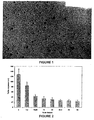
- Figure 1 is a photograph of the nanocapsules of the invention obtained in Example 1. The scale is 1 cm for 50 nm.
- Figure 2 shows the evolution of the average size of particles as a function of the proportion of hydrophilic surfactant (Solutol®).
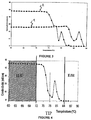
- FIG. 3 represents the evolution of the conductivity as a function of the temperature for different salt concentrations.
- the salt concentration is 2.0% by weight.
- the concentration is 3.4% by weight.
- FIG. 4 represents the evolution of the conductivity of an emulsion oil / water (O / W) described in Example 1, depending on the temperature after three cycles of rise and fall in temperature between 60 and 85 ° C.
- the whole is assembled in the same beaker and placed under stirring magnetic. Heating is applied until a temperature is reached 85 ° C. Still under magnetic stirring, the system up to a temperature of 60 ° C. This cycle (between 85 ° C and 60 ° C) is carried out until the cancellation of the conductivity is observed in function of the temperature (figure 4). Phase reversal occurs at after three cycles. At the last cooling, quenching is carried out by throwing 12.5 ml of distilled water at 2 ° C +/- 1 ° C on the mixture at 70 ° C. The the system is then kept under magnetic stirring for 5 min.
- Microscopy transmission electronics using phosphotungstic acid has us allowed to highlight medium-sized particles of the order 50 nm (see Figure 1). Furthermore, an observation made under microscopy of atomic force in contact mode (Park Scientic equipment Instruments, Geneva, Switzerland) shows that nanocapsules are actually solid at a temperature of 25 ° C.
- Table I below presents different formulations of nanocapsules prepared with variable concentrations of hydrophilic surfactant.
- Table II below presents nanocapsule formulations prepared with different concentrations of surfactants.
- Table III below presents two nanocapsule formulations prepared with two different NaCl salt concentrations.
- the formulation corresponds to that of Example 1: 5 g of the initial emulsion weighing 75 mg of Lipoid® S75-3, 504 mg of Lipophilic Labrafac® and 504 mg of Solutol®, 3.829 g of water and 88 mg of sodium chloride. 200 mg of Sudan III, dissolved in petrolatum oil. The whole is weighed in the same beaker and placed under magnetic stirring. Heating is applied until reaching a temperature of 85 ° C. Still under magnetic stirring, we leave cool the system to a temperature of 60 ° C. This cycle (between 85 ° C and 60 ° C) is carried out three times. At the last cooling, quenching at 70 ° C by throwing 12.5 ml of distilled water at 2 ° C +/- 1 ° C. The the system is then kept under magnetic stirring for 5 min.
- Example 3 Encapsulation of progesterone.
- the formulation corresponds to that of Example 1: 5 g of the initial emulsion weighing 75 mg of Lipo ⁇ d® S75-3. 504 mg of Lipophilic Labrafac® and 504 mg of Solutol®, 3.829 g of water and 88 mg of sodium chloride. 10 mg of progesterone are added. The set is weighed in the same beaker and placed under magnetic stirring. A heating is applied until a temperature of 85 ° C is reached. Still with magnetic stirring, the system is allowed to cool until a temperature of 60 ° C. This cycle (between 85 ° C and 60 ° C) is carried out three times time. At the last cooling, quenching is carried out at 70 ° C. by throwing 12.5 ml of distilled water at 2 ° C +/- 1 ° C. The system is then kept under magnetic stirring for 5 min.
- Progesterone is not found in the aqueous phase at a concentration higher than its solubility. Indeed, centrifugation at 200,000 rpm for 30 minutes allows a slight precipitate to be obtained, the composition has been studied by DSC. This precipitate does not contain progesterone. Since progesterone is almost insoluble in water, this indicates an incorporation of the active principle in the nanocapsules.
- Busulfan suspension (at a concentration of 0.25 mg / ml)
- the first step in encapsulating busulfan is to dissolve it in N, N-dimethyl-acetamide. So we realize a 24 mg solution of busulfan per mL of N, N dimethyl acetamide. We takes 175 mg of this solution which is added to the 504 mg of Labrafac®. We also weigh 75 mg of Lipoid® S75-3, 504 mg of Solutol®, 3.829 g of water and 88 mg of sodium chloride. The initial emulsion is therefore at a concentration of 0.88 mg / g of emulsion. The set is assembled in the same beaker and placed under magnetic stirring. A heating is applied until a temperature of 85 ° C is reached.
- the system is allowed to cool until a temperature of 60 ° C. This cycle (between 85 ° C and 60 ° C) is carried out three times time. At the last cooling, quenching is carried out at 70 ° C. by throwing 12.5 ml of distilled water at 2 ° C +/- 1 ° C. The system is then kept under magnetic stirring for 5 min. The final concentration, that is to say after quenching therefore dilution, is 0.25 mg / ml.
- the size of the particles obtained is slightly larger than that from example 1 due to the higher proportion of fatty phase (63 +/- 5 nm).
- busulfan is not found in the aqueous phase at a concentration higher than its solubility. In effect, no crystal is visible by optical microscopy in the phase aqueous after encapsulation. However, busulfan being almost insoluble in water, this indicates incorporation of busulfan in the nanocapsules.
- a suspension of particles at 0.50 mg / l is prepared in the same conditions as above after having dissolved 50 mg of busulfan in 1 ml of N, N-dimethyl-acetamide. 175 mg of this solution which is added to the 504 mg of Labrafac®. We weigh also 75 mg of Lipo ⁇ d® S75-3, 504 mg of Solutol®, 3.829 g of water and 88 mg sodium chloride. The initial emulsion is therefore at a 1.76 mg / ml emulsion concentration. The whole is gathered in a same beaker and placed under magnetic stirring. A heater is applied until a temperature of 85 ° C is reached. Always under magnetic stirring, the system is allowed to cool to a temperature of 60 ° C.
- This cycle (between 85 ° C and 60 ° C) is carried out three times. At the last cooling, quenching is carried out at 70 ° C. by throwing 12.5 ml of distilled water at 2 ° C +/- 1 ° C. The system is then kept under magnetic stirring for 5 min. The final concentration, that is to say after soaking, therefore diluting, is 0.50 mg / ml.
- Labrafac® an oil composed of triglycerides of capric and caprylic acids, with fatty acid esters.
- An increase in the phase inversion temperature is observed with an increase in the size of the groups.
- the change in appearance is visible at 69.5 ° C for the ethyl ester, at 71.5 ° C for the isopropyl ester and at 86.5 ° C for the octyldodecyl ester .
- This increase means that we get an oil-in-water emulsion more easily when the oil has a lower HLB index (more lipophilic).
- the fat HLB value does not seem to affect the size of particles significantly.
- the phosphatidylcholine proportions of which vary from 40 to 90% have been used.
- the average particle size increases with the content of phosphatidylcholine in lecithin (Table V below). Indeed, for 40% of phosphatidylcholine, the size of the nanocapsules is 35 +/- 8 nm. while it is respectively 43 +/- 7 nm and 78 +/- 12 nm for a proportion of 75 and 90% of phosphatidylcholine in lecithin.
- the use of charged molecules has not made it possible to obtain nanocapsules.
- Example 7 Lipid nanocapsules having a water-soluble active principle attached to their surface.
- the lipid nanocapsules obtained have a size of 43 ⁇ 7 nm.
- 50 mg of the dispersion of lipid nanocapsules obtained are diluted in 1 ml of water and incubated with gentle shaking with a solution aqueous containing 50 ⁇ g of DNA (pSV ⁇ -galactosidase, Promega, France) for one hour in the presence of a mixture of histones from calf thymus (Boehringer Mannheim, Germany).
- pSV ⁇ -galactosidase Promega, France
Landscapes
- Chemical & Material Sciences (AREA)
- Organic Chemistry (AREA)
- Engineering & Computer Science (AREA)
- Health & Medical Sciences (AREA)
- Bioinformatics & Cheminformatics (AREA)
- Materials Engineering (AREA)
- Dispersion Chemistry (AREA)
- Chemical Kinetics & Catalysis (AREA)
- Pharmacology & Pharmacy (AREA)
- Veterinary Medicine (AREA)
- Medicinal Chemistry (AREA)
- Biomedical Technology (AREA)
- Epidemiology (AREA)
- Life Sciences & Earth Sciences (AREA)
- Animal Behavior & Ethology (AREA)
- General Health & Medical Sciences (AREA)
- Optics & Photonics (AREA)
- Physics & Mathematics (AREA)
- Public Health (AREA)
- Nanotechnology (AREA)
- Medicinal Preparation (AREA)
- Pharmaceuticals Containing Other Organic And Inorganic Compounds (AREA)
- Manufacturing Of Micro-Capsules (AREA)
- Medical Preparation Storing Or Oral Administration Devices (AREA)
- Medicines That Contain Protein Lipid Enzymes And Other Medicines (AREA)
Claims (21)
- Nanokapseln mit einer mittleren Größe von unter 150 nm, vorzugsweise unter 100 nm, noch mehr bevorzugt unter 50 nm, welche aus einem im wesentlichen lipidischen, bei Umgebungstemperatur flüssigen oder halbflüssigen Kern; welcher von einem im wesentlichen lipidischen, bei Umgebungstemperatur festen Film umhüllt ist, gebildet werden.
- Lipidische Nanokapseln nach Anspruch 1, dadurch gekennzeichnet, dass ihr Polydispersitätsindex zwischen 5 und 15% beträgt.
- Lipidische Nanokapseln nach Anspruch 1 oder 2, dadurch gekennzeichnet, dass die Dicke des festen Films zwischen 2 und 10 nm beträgt.
- Lipidische Nanokapseln nach einem der Ansprüche 1 bis 3, dadurch gekennzeichnet, dass der Kern der Nanokapseln im wesentlichen aus einem Fett, wie einem Triglycerid oder einem Fettsäureester, welches bzw. welcher 20 bis 60 Gew.-%, vorzugsweise 25 bis 50 Gew.-% der Nanokapseln ausmacht, gebildet wird.
- Lipidische Nanokapseln nach Anspruch 4, dadurch gekennzeichnet, dass das Triglycerid, welches den Kern der Nanokapseln bildet, ausgewählt wird unter den C.8- bis C12-Triglyceriden, beispielsweise Triglyceriden der Caprin- und Caprylsäure und deren Mischungen.
- Lipidische Nanokapseln nach Anspruch 4, dadurch gekennzeichnet, der Fettsäureester, welcher den Kern der Nanokapseln bildet, ausgewählt wird unter den C8- bis C18-Fettsäureestern, beispielsweise Ethylpalmitat, Ethyloleat, Ethylmyristat, Isopropylmyristat, Octyldodecylmyristat und deren Mischungen.
- Lipidische Nanokapseln nach Anspruch 6, dadurch gekennzeichnet, dass der Fettsäureester ein C8- bis C12-Fettsäureester ist.
- Lipidische Nanokapseln nach einem der Ansprüche 1 bis 7, dadurch gekennzeichnet, dass der feste Film im wesentlichen aus einer lipophilen grenzflächenaktiven Substanz gebildet wird.
- Nanokapseln nach Anspruch 8, dadurch gekennzeichnet, dass das Verhältnis Fett/lipophile grenzflächenaktive Verbindung zwischen 1 und 15, vorzugsweise zwischen 1,5 und 13, mehr bevorzugt zwischen 3 und 8 ausgewählt wird.
- Lipidische Nanokapseln nach Anspruch 8 oder 9, dadurch gekennzeichnet, dass die lipophile grenzflächenaktive Substanz ein Lecithin ist, dessen Anteil an Phosphatidylcholin zwischen 40 und 90% beträgt.
- Lipidische Nanokapseln nach einem der Ansprüche 1 bis 10, dadurch gekennzeichnet, dass der feste Film außerdem eine hydrophile, nicht-ionische grenzflächenaktive Substanz, beispielsweise Solutol® HS 15, welche 2 bis 10 Gew.-% der Nanokapseln ausmacht, enthält.
- Lipidische Nanokapseln nach einem der Ansprüche 1 bis 11, dadurch gekennzeichnet, dass diese einen pharmazeutisch wirksamen Wirkstoff enthalten.
- Verfahren zur Herstellung der Nanokapseln nach einem der Ansprüche 1 bis 12, welches die Verfahrensschritte umfasst, welche darin bestehen:a)eine Öl/Wasser-Emulsion herzustellen, die eine ölartige Fettphase, eine hydrophile, nicht-ionische grenzflächenaktive Substanz, eine bei 20°C feste lipophile grenzflächenaktive Substanz und gegebenenfalls einen pharmazeutisch wirksamen Wirkstoff, welcher in einer ölartigen Fettphase löslich oder dispergierbar ist, oder einen pharmazeutisch wirksamen Wirkstoff, welcher in einer wässrigen Phase löslich oder dispergierbar ist, enthält,die Phasenumkehr der Öl/Wasser-Emulsion durch Erhöhung der Temperatur bis auf eine Temperatur T2, welche höher als die Phasenumkehrtemperatur (TIP) ist, hervorzurufen, um eine Wasser/Öl-Emulsion zu erhalten, gefolgt von einer Verringerung der Temperatur bis auf eine Temperatur T1, wobei T1 < TIP < T2,wenigstens einen oder mehrere Temperaturzyklen um die Phasenumkehrzone zwischen T1 und T2 auszuführen, bis eine durchscheinende Suspension beobachtet wird,b) die Abschreckung der Öl/Wasser-Emulsion auf eine Temperatur nahe T1, vorzugsweise über T1 auszuführen, um stabile Nanokapseln zu erhalten,
- Verfahren nach Anspruch 13, dadurch gekennzeichnet, dass die ölartige Fettphase ein C8- bis C12-Triglycerid ist, beispielsweise Triglyceride der Caprin- und Caprylsäure und deren Mischungen oder ein C8-C18-Fettsäureester, beispielsweise Ethylpalmitat, Ethyloleat, Ethylmyristat, Isopropylmyristat, Octyldodecylmyristat und deren Mischungen.
- Verfahren nach Anspruch 13 oder 14, dadurch gekennzeichnet, dass die hydrophile, nicht-ionische grenzflächenaktive Substanz Solutol® HS 15 ist.
- Verfahren nach einem der Ansprüche 13 bis 15, dadurch gekennzeichnet, dass die lipophile grenzflächenaktive Substanz ein Lecithin, dessen Anteil an Phosphatidylcholin zwischen 40 und 90% beträgt, beispielsweise Labrafac® WL 1349, ist.
- Verfahren nach einem der Ansprüche 13 bis 16, dadurch gekennzeichnet, dass die Öl/Wasser-Emulsion enthält:wobei die Prozentsätze auf das Gewicht bezogen ausgedrückt sind.1 bis 3% lipophile grenzflächenaktive Substanz,5 bis 15% hydrophile grenzflächenaktive Substanz,5 bis 15% ölartiges Fett,64 bis 89% Wasser,
- Verfahren nach einem der Ansprüche 13 bis 17, dadurch gekennzeichnet, dass die Öl/Wasser-Emulsion außerdem 1 bis 4% eines Salzes, wie Natriumchlorid, enthält.
- Verfahren nach einem der Ansprüche 13 bis 18, dadurch gekennzeichnet, dass die lipophile grenzflächenaktive Substanz bei 37°C fest ist.
- Verfahren zur Herstellung von Nanokapseln nach einem der Ansprüche 13 bis 19, dadurch gekennzeichnet, dass ein wasserlöslicher, pharmazeutisch wirksamer Wirkstoff auf der freien Oberfläche der stabilen Nanokapseln, die am Ende von Schritt b) erhalten werden, adsorbiert wird.
- Verwendung der Nanokapseln nach einem der Ansprüche 1 bis 12 für die Herstellung eines Arzneimittels, welches durch Injektion, insbesondere auf intravenösem Wege, auf oralem Wege oder auf nasalem Wege verabreicht wird.
Priority Applications (1)
| Application Number | Priority Date | Filing Date | Title |
|---|---|---|---|
| SI200130157T SI1265698T1 (en) | 2000-03-02 | 2001-03-02 | Lipid nanocapsules, preparation method and use as medicine |
Applications Claiming Priority (3)
| Application Number | Priority Date | Filing Date | Title |
|---|---|---|---|
| FR0002688 | 2000-03-02 | ||
| FR0002688A FR2805761B1 (fr) | 2000-03-02 | 2000-03-02 | Nanocapsules lipidiques, procede de preparation et utilisation comme medicament |
| PCT/FR2001/000621 WO2001064328A1 (fr) | 2000-03-02 | 2001-03-02 | Nanocapsules lipidiques, procede de preparation et utilisation comme medicament |
Publications (2)
| Publication Number | Publication Date |
|---|---|
| EP1265698A1 EP1265698A1 (de) | 2002-12-18 |
| EP1265698B1 true EP1265698B1 (de) | 2004-06-16 |
Family
ID=8847644
Family Applications (1)
| Application Number | Title | Priority Date | Filing Date |
|---|---|---|---|
| EP01911828A Expired - Lifetime EP1265698B1 (de) | 2000-03-02 | 2001-03-02 | Lipidnanokapseln, seine herstellungsverfahren sowie verwendung als medizin |
Country Status (22)
| Country | Link |
|---|---|
| US (2) | US8057823B2 (de) |
| EP (1) | EP1265698B1 (de) |
| JP (1) | JP4790187B2 (de) |
| KR (1) | KR100638527B1 (de) |
| CN (1) | CN1257011C (de) |
| AT (1) | ATE269154T1 (de) |
| AU (2) | AU2001240753B2 (de) |
| BR (1) | BRPI0108921B8 (de) |
| CA (1) | CA2401766C (de) |
| DE (1) | DE60103863T2 (de) |
| DK (1) | DK1265698T3 (de) |
| ES (1) | ES2221640T3 (de) |
| FR (1) | FR2805761B1 (de) |
| HU (1) | HU226483B1 (de) |
| IL (1) | IL151560A0 (de) |
| MX (1) | MXPA02008638A (de) |
| NO (1) | NO334188B1 (de) |
| PT (1) | PT1265698E (de) |
| SI (1) | SI1265698T1 (de) |
| TR (1) | TR200401812T4 (de) |
| WO (1) | WO2001064328A1 (de) |
| ZA (1) | ZA200206985B (de) |
Cited By (3)
| Publication number | Priority date | Publication date | Assignee | Title |
|---|---|---|---|---|
| WO2012114201A1 (en) | 2011-02-25 | 2012-08-30 | Aroma Technologies | Nanocapsulation of essential oils for preventing or curing infectious diseases alone or with an antibiotic |
| WO2015118496A1 (fr) * | 2014-02-07 | 2015-08-13 | Atlangram | Nanocapsules lipidiques comprenant un antibiotique et leurs utilisations en therapie |
| US12121615B2 (en) | 2019-01-08 | 2024-10-22 | Amokrane REGHAL | Gel type pharmaceutical composition for treating/preventing an infection |
Families Citing this family (50)
| Publication number | Priority date | Publication date | Assignee | Title |
|---|---|---|---|---|
| GB0104698D0 (en) | 2001-02-26 | 2001-04-11 | Syngenta Ltd | Process for producing microcapsules |
| FR2835430A1 (fr) * | 2002-05-31 | 2003-08-08 | Oreal | Composition comprenant des nanocapsules enrobees de lecithine et un polymere d'acrylamide |
| FR2840532B1 (fr) * | 2002-06-11 | 2005-05-06 | Ethypharm Sa | Nanocapsules lipidiques furtives, procede de preparation et utilisation comme vecteur de principes(s) actif(s) |
| BR0314767A (pt) * | 2002-06-11 | 2005-07-26 | Ethypharm Sa | Nanocápsulas lipidìcas furtivas, processos para a preparação das mesmas e uso das mesmas como um veìculo para princìpio(s) ativo(s) |
| JP4886297B2 (ja) * | 2002-11-01 | 2012-02-29 | バイオデリバリー サイエンシーズ インターナショナル インコーポレイティッド | ジオデート送達媒体 |
| FR2849379B1 (fr) * | 2002-12-26 | 2005-02-11 | Cosnessens | Encapsulation d'actifs liposolubles |
| US20060073196A1 (en) * | 2003-02-12 | 2006-04-06 | Institut National De La Sante Et De La Recherche Medicale (Inserm) | Use of p-glycoprotein inhibitor surfactants at the surface of a colloidal carrier |
| FR2864900B1 (fr) | 2004-01-09 | 2007-10-12 | Oreal | Dispersion aqueuse de nanocapsules a coeur huileux |
| US20110135734A1 (en) * | 2004-04-20 | 2011-06-09 | Yissum Research Development Company Of The Hebrew University Of Jerusalem | Method For the Preparation of Nanoparticles From Nanoemulsions |
| DE102005037844A1 (de) * | 2005-08-04 | 2007-04-05 | Intendis Gmbh | Wasserfreies Mehr-Phasen-Gel-System |
| US9486408B2 (en) | 2005-12-01 | 2016-11-08 | University Of Massachusetts Lowell | Botulinum nanoemulsions |
| FR2907012B1 (fr) * | 2006-10-12 | 2012-09-21 | Galderma Sa | Composition dermatologique comprenant des nanocapsules d'avermectine, son procede de preparation et son utilisation |
| GB0623838D0 (en) | 2006-11-29 | 2007-01-10 | Malvern Cosmeceutics Ltd | Novel compositions |
| EP1955695A1 (de) * | 2007-02-06 | 2008-08-13 | Institut National De La Sante Et De La Recherche Medicale (Inserm) | Nanokapseln lipophiler Komplexe von Nukleinsäuren |
| FR2916974B1 (fr) * | 2007-06-11 | 2010-11-26 | Univ Angers | Procede de preparation de nanoparticules lipidiques |
| FR2916973B1 (fr) | 2007-06-11 | 2010-02-26 | Univ Angers | Nanocapsules a coeur lipidique chargees en actif(s) hydrosoluble(s) ou hydrodispersible(s) |
| FR2917976B1 (fr) * | 2007-06-29 | 2010-05-28 | Galderma Sa | Composition dermatologique comprenant des vehicules lipidiques de calcitriol, son procede de preparation et son utilisation |
| EP2036577A1 (de) * | 2007-09-14 | 2009-03-18 | mivenion GmbH | Diagnostische Stoffe für die optische bildgebende Untersuchung auf der Basis von nanopartikulären Formulierungen |
| EP2039352A1 (de) * | 2007-09-18 | 2009-03-25 | Institut National De La Sante Et De La Recherche Medicale (Inserm) | Lipid-Nanokapseln mit wässrigem Kern zur Einkapselung hydrophiler und/oder lipophiler Moleküle |
| FR2934953B1 (fr) | 2008-08-14 | 2011-01-21 | Commissariat Energie Atomique | Nanoemulsions de nanocristaux |
| FR2934954B1 (fr) | 2008-08-14 | 2011-07-22 | Commissariat Energie Atomique | Emulsion fluorescente de vert d'indocyanine |
| FR2934955B1 (fr) * | 2008-08-14 | 2011-07-08 | Commissariat Energie Atomique | Encapsulation d'agents therapeutiques lipophiles ou amphiphiles dans des nanoemulsions |
| FR2939699B1 (fr) * | 2008-12-12 | 2011-05-06 | Univ Angers | Procede de preparation de nanoparticules lipidiques |
| FR2943544B1 (fr) * | 2009-03-31 | 2012-04-20 | Univ Angers | Procede de preparation de capsules lipidiques fonctionnalisees. |
| FR2949063B1 (fr) | 2009-08-11 | 2011-09-30 | Pf Medicament | Composition pharmaceutique comprenant un ester de dha destinee a etre administree par voie parenterale |
| FR2950253B1 (fr) | 2009-09-24 | 2011-09-23 | Ethypharm Sa | Nanocapsules lipidiques, procede de preparation et utilisation comme medicament |
| IT1396951B1 (it) * | 2009-12-18 | 2012-12-20 | Neuroscienze Pharmaness S C A R L | Composti farmaceutici |
| JP5943258B2 (ja) * | 2011-01-24 | 2016-07-05 | アンテリオス, インコーポレイテッド | ナノ粒子組成物、その製剤およびその使用 |
| FR2988609B1 (fr) * | 2012-03-30 | 2015-09-04 | Commissariat Energie Atomique | Formulation pour l'hormonotherapie |
| US10511150B2 (en) | 2012-04-06 | 2019-12-17 | Furukawa Electric Co., Ltd. | Wavelength-variable laser |
| WO2013178749A1 (fr) | 2012-06-01 | 2013-12-05 | Galderma Research & Development | Nanocapsules lipidiques comprenant un rétinoide, nanodispersion et composition les contenant, leur procédé de préparation et leur utilisation en dermatologie |
| CN105007947B (zh) * | 2013-01-14 | 2019-02-15 | 因佛斯特医疗有限公司 | 固溶体组合物及其在心血管疾病中的用途 |
| EP2789619A1 (de) | 2013-04-12 | 2014-10-15 | Kemotech S.r.l. | Pharmazeutische Verbindungen mit angiogenesehemmender Wirkung |
| FR3008900B1 (fr) | 2013-07-25 | 2018-03-30 | Centre Nat Rech Scient | Nanoparticules lipidiques multicompartimentees |
| AU2014351831B2 (en) * | 2013-11-22 | 2018-02-01 | Dsm Ip Assets B.V. | Process for making an anti-reflective coating composition and a porous coating made therefrom |
| MX2016006896A (es) | 2013-12-04 | 2016-08-17 | Galderma Res & Dev | Microcapsulas de lipidos que comprenden preferiblemente una substancia activa lipofilica y composicion que las contiene, su metodo de preparacion y su uso en dermatolgia y cosmetica. |
| US20170189344A1 (en) * | 2014-05-30 | 2017-07-06 | AbbVie Deutschland GmbH & Co. KG | Highly drug-loaded poly(alkyl 2-cyanoacrylate) nanocapsules |
| JP2016163851A (ja) * | 2015-03-06 | 2016-09-08 | 国立大学法人福井大学 | コンポジット型可溶化ナノリポソーム及びその製造方法 |
| US11197831B2 (en) | 2015-05-29 | 2021-12-14 | Galderma Research And Development | Compositions comprising at least one dispersed active principle and lipid microcapsules |
| EP3541358A1 (de) | 2016-11-21 | 2019-09-25 | Eirion Therapeutics, Inc. | Transdermale verabreichung von grossen wirkstoffen |
| JPWO2018180966A1 (ja) * | 2017-03-28 | 2019-06-27 | 富士フイルム株式会社 | マイクロカプセル及びその製造方法 |
| KR20200024940A (ko) * | 2017-07-27 | 2020-03-09 | 로커스 아이피 컴퍼니 엘엘씨 | 의약품, 보충제 및 섭취된 물질의 생체 이용률을 향상시키기 위한 조성물 |
| EP3453386A1 (de) | 2017-09-08 | 2019-03-13 | Universite D'angers | Nanokapseln mit modifizierten nukleobasen und/oder nukleosiden, hydrogele und oleogele damit und verwendungen davon |
| GB201721832D0 (en) * | 2017-12-22 | 2018-02-07 | Waterford Institute Of Tech | Ocular drug delivery |
| WO2020021052A2 (en) | 2018-07-27 | 2020-01-30 | INSERM (Institut National de la Santé et de la Recherche Médicale) | Use of acyclic terpene alcohols for enhancing the antimicrobial activity of colistin |
| IT201900009258A1 (it) | 2019-06-17 | 2020-12-17 | R Bio Transfer S R L | Metodo per la preparazione di nanoparticelle lipidiche |
| FR3099069A1 (fr) * | 2019-07-24 | 2021-01-29 | Université D`Angers | Procede continu de nano-emulsification par inversion de phase en concentration |
| CN112773776B (zh) * | 2019-11-11 | 2023-06-20 | 上海胜联医药科技有限公司 | 一种载药纳米粒体系 |
| CN115006369B (zh) * | 2021-03-03 | 2023-08-29 | 浙江大学 | 一种脑靶向类脂纳米囊载药系统及其制备方法和应用 |
| IT202100023570A1 (it) | 2021-09-13 | 2023-03-13 | Bioema S R L S Biotecnologia Energia Mat Ambiente | Metodo per la preparazione di nanoparticelle lipidiche |
Family Cites Families (23)
| Publication number | Priority date | Publication date | Assignee | Title |
|---|---|---|---|---|
| US4235871A (en) * | 1978-02-24 | 1980-11-25 | Papahadjopoulos Demetrios P | Method of encapsulating biologically active materials in lipid vesicles |
| US5174930A (en) * | 1986-12-31 | 1992-12-29 | Centre National De La Recherche Scientifique (Cnrs) | Process for the preparation of dispersible colloidal systems of amphiphilic lipids in the form of oligolamellar liposomes of submicron dimensions |
| FR2608942B1 (fr) * | 1986-12-31 | 1991-01-11 | Centre Nat Rech Scient | Procede de preparation de systemes colloidaux dispersibles d'une substance, sous forme de nanocapsules |
| CA2068216C (en) * | 1989-11-13 | 1999-04-13 | Abraham J. Domb | Lipospheres for controlled delivery of substances |
| FR2659554B1 (fr) * | 1990-03-16 | 1994-09-30 | Oreal | Composition pour le traitement cosmetique et/ou pharmaceutique des couches superieures de l'epiderme par application topique sur la peau et procede de preparation correspondant. |
| ES2034891B1 (es) * | 1991-08-08 | 1993-12-16 | Cusi Lab | Procedimiento de elaboracion en continuo de sistemas coloidales dispersos, en forma de nanocapsulas o nanoparticulas. |
| FR2681248B1 (fr) * | 1991-09-13 | 1995-04-28 | Oreal | Composition pour un traitement cosmetique et/ou pharmaceutique de longue duree des couches superieures de l'epiderme par une application topique sur la peau. |
| IL101387A (en) * | 1992-03-26 | 1999-11-30 | Pharmos Ltd | Emulsion with enhanced topical and/or transdermal systemic effect utilizing submicron oil droplets |
| FR2692167B1 (fr) | 1992-06-16 | 1994-09-16 | Centre Nat Rech Scient | Préparation et application de nouveaux systèmes colloïdaux nanovésiculaires dispersibles à base de cyclodextrine, sous forme de nanocapsules. |
| ES2070076B1 (es) * | 1993-04-20 | 1996-04-16 | Cusi Lab | Metodo para aumentar la estabilidad de las nanocapsulas durante su almacenamiento. |
| US5576016A (en) * | 1993-05-18 | 1996-11-19 | Pharmos Corporation | Solid fat nanoemulsions as drug delivery vehicles |
| US5514670A (en) * | 1993-08-13 | 1996-05-07 | Pharmos Corporation | Submicron emulsions for delivery of peptides |
| US5961970A (en) * | 1993-10-29 | 1999-10-05 | Pharmos Corporation | Submicron emulsions as vaccine adjuvants |
| DE4337030A1 (de) * | 1993-10-29 | 1995-05-04 | Henkel Kgaa | Verfahren zur Herstellung von Wachsdispersionen |
| ES2078190B1 (es) * | 1994-05-20 | 1996-08-01 | Cusi Lab | Procedimiento para el recubrimiento de goticulas o particulas de tamaño nanometrico. |
| US5578298A (en) * | 1994-05-27 | 1996-11-26 | General Electric Company | Microemulsions for high viscosity amino silicone fluids and gums and their preparation |
| FR2725369B1 (fr) * | 1994-10-07 | 1997-01-03 | Oreal | Composition cosmetique ou dermatologique constituee d'une emulsion huile dans eau a base de globules huileux pourvus d'un enrobage cristal liquide lamellaire |
| US6245349B1 (en) * | 1996-02-23 | 2001-06-12 | éLAN CORPORATION PLC | Drug delivery compositions suitable for intravenous injection |
| US5972389A (en) * | 1996-09-19 | 1999-10-26 | Depomed, Inc. | Gastric-retentive, oral drug dosage forms for the controlled-release of sparingly soluble drugs and insoluble matter |
| FR2755856B1 (fr) * | 1996-11-21 | 1999-01-29 | Merck Clevenot Laboratoires | Microcapsules de chitine ou de derives de chitine contenant une substance hydrophobe, notamment un filtre solaire et procede de preparation de telles microcapsules |
| CA2294032A1 (en) * | 1997-07-29 | 1999-02-11 | Pharmacia & Upjohn Company | Self-emulsifying formulation for lipophilic compounds |
| TWI241915B (en) * | 1998-05-11 | 2005-10-21 | Ciba Sc Holding Ag | A method of preparing a pharmaceutical end formulation using a nanodispersion |
| US6248363B1 (en) * | 1999-11-23 | 2001-06-19 | Lipocine, Inc. | Solid carriers for improved delivery of active ingredients in pharmaceutical compositions |
-
2000
- 2000-03-02 FR FR0002688A patent/FR2805761B1/fr not_active Expired - Lifetime
-
2001
- 2001-03-02 WO PCT/FR2001/000621 patent/WO2001064328A1/fr not_active Ceased
- 2001-03-02 US US10/220,506 patent/US8057823B2/en not_active Expired - Fee Related
- 2001-03-02 IL IL15156001A patent/IL151560A0/xx active IP Right Grant
- 2001-03-02 BR BRPI0108921A patent/BRPI0108921B8/pt not_active IP Right Cessation
- 2001-03-02 KR KR1020027011526A patent/KR100638527B1/ko not_active Expired - Lifetime
- 2001-03-02 ES ES01911828T patent/ES2221640T3/es not_active Expired - Lifetime
- 2001-03-02 HU HU0300209A patent/HU226483B1/hu unknown
- 2001-03-02 AU AU2001240753A patent/AU2001240753B2/en not_active Expired
- 2001-03-02 AT AT01911828T patent/ATE269154T1/de active
- 2001-03-02 DK DK01911828T patent/DK1265698T3/da active
- 2001-03-02 CN CNB018071422A patent/CN1257011C/zh not_active Expired - Lifetime
- 2001-03-02 EP EP01911828A patent/EP1265698B1/de not_active Expired - Lifetime
- 2001-03-02 JP JP2001563219A patent/JP4790187B2/ja not_active Expired - Lifetime
- 2001-03-02 MX MXPA02008638A patent/MXPA02008638A/es active IP Right Grant
- 2001-03-02 AU AU4075301A patent/AU4075301A/xx active Pending
- 2001-03-02 DE DE60103863T patent/DE60103863T2/de not_active Expired - Lifetime
- 2001-03-02 PT PT01911828T patent/PT1265698E/pt unknown
- 2001-03-02 SI SI200130157T patent/SI1265698T1/xx unknown
- 2001-03-02 CA CA002401766A patent/CA2401766C/fr not_active Expired - Lifetime
- 2001-03-02 TR TR2004/01812T patent/TR200401812T4/xx unknown
-
2002
- 2002-08-30 ZA ZA200206985A patent/ZA200206985B/xx unknown
- 2002-09-02 NO NO20024181A patent/NO334188B1/no not_active IP Right Cessation
-
2009
- 2009-05-29 US US12/474,958 patent/US20090238865A1/en not_active Abandoned
Cited By (4)
| Publication number | Priority date | Publication date | Assignee | Title |
|---|---|---|---|---|
| WO2012114201A1 (en) | 2011-02-25 | 2012-08-30 | Aroma Technologies | Nanocapsulation of essential oils for preventing or curing infectious diseases alone or with an antibiotic |
| WO2015118496A1 (fr) * | 2014-02-07 | 2015-08-13 | Atlangram | Nanocapsules lipidiques comprenant un antibiotique et leurs utilisations en therapie |
| FR3017294A1 (fr) * | 2014-02-07 | 2015-08-14 | Atlangram | Nanoparticules lipidiques comprenant un antibiotique et leurs utilisations en therapie |
| US12121615B2 (en) | 2019-01-08 | 2024-10-22 | Amokrane REGHAL | Gel type pharmaceutical composition for treating/preventing an infection |
Also Published As
Similar Documents
| Publication | Publication Date | Title |
|---|---|---|
| CA2401766C (fr) | Nanocapsules lipidiques, procede de preparation et utilisation comme medicament | |
| Chin et al. | Development and optimization of chitosan coated nanoemulgel of telmisartan for intranasal delivery: A comparative study | |
| US9005666B2 (en) | Process for preparing lipid nanoparticles | |
| Vega et al. | PLGA nanospheres for the ocular delivery of flurbiprofen: drug release and interactions | |
| EP2129455B1 (de) | Verfahren zur herstellung von nanoemulsionen | |
| EP2376218B1 (de) | Verfahren zur herstellung von lipidnanopartikeln | |
| EP1003488B1 (de) | Verfahren zur herstellung von nanokapseln des vesikulären typs | |
| WO1996033697A1 (fr) | Formulation auto-emulsionnable formant une emulsion huile dans l'eau | |
| WO2009001019A2 (fr) | Nanocapsules a coeur lipidique liquide chargees en actifs(s) hydrosoluble(s) ou hydrodispersible(s) | |
| EP2459306A1 (de) | Kern-/hülle-material, herstellungsverfahren dafür und verwendung für die wärmestimulierte herstellung von bestimmten stoffen | |
| FR2782006A1 (fr) | Composition a liberation prolongee apte a former une micro-emulsion | |
| FR2950253A1 (fr) | Nanocapsules lipidiques, procede de preparation et utilisation comme medicament | |
| FR2943544A1 (fr) | Procede de preparation de capsules lipidiques fonctionnalisees. | |
| CA2541009C (fr) | Compositions de particules lipidiques solides monodisperses | |
| EP0726760B1 (de) | Selbstemulgierende formulierung zur bildung einer öl-in-wasser-emulsion |
Legal Events
| Date | Code | Title | Description |
|---|---|---|---|
| PUAI | Public reference made under article 153(3) epc to a published international application that has entered the european phase |
Free format text: ORIGINAL CODE: 0009012 |
|
| 17P | Request for examination filed |
Effective date: 20020913 |
|
| AK | Designated contracting states |
Kind code of ref document: A1 Designated state(s): AT BE CH CY DE DK ES FI FR GB GR IE IT LI LU MC NL PT SE TR |
|
| AX | Request for extension of the european patent |
Free format text: AL;LT;LV;MK;RO;SI PAYMENT 20020913 |
|
| 17Q | First examination report despatched |
Effective date: 20030902 |
|
| GRAP | Despatch of communication of intention to grant a patent |
Free format text: ORIGINAL CODE: EPIDOSNIGR1 |
|
| GRAS | Grant fee paid |
Free format text: ORIGINAL CODE: EPIDOSNIGR3 |
|
| GRAA | (expected) grant |
Free format text: ORIGINAL CODE: 0009210 |
|
| AK | Designated contracting states |
Kind code of ref document: B1 Designated state(s): AT BE CH CY DE DK ES FI FR GB GR IE IT LI LU MC NL PT SE TR |
|
| AX | Request for extension of the european patent |
Extension state: SI |
|
| REG | Reference to a national code |
Ref country code: GB Ref legal event code: FG4D Free format text: NOT ENGLISH |
|
| REG | Reference to a national code |
Ref country code: CH Ref legal event code: EP |
|
| REG | Reference to a national code |
Ref country code: CH Ref legal event code: NV Representative=s name: MICHELI & CIE INGENIEURS-CONSEILS |
|
| REF | Corresponds to: |
Ref document number: 60103863 Country of ref document: DE Date of ref document: 20040722 Kind code of ref document: P |
|
| REG | Reference to a national code |
Ref country code: IE Ref legal event code: FG4D Free format text: FRENCH |
|
| GBT | Gb: translation of ep patent filed (gb section 77(6)(a)/1977) |
Effective date: 20040712 |
|
| REG | Reference to a national code |
Ref country code: GR Ref legal event code: EP Ref document number: 20040402315 Country of ref document: GR |
|
| REG | Reference to a national code |
Ref country code: SE Ref legal event code: TRGR |
|
| REG | Reference to a national code |
Ref country code: DK Ref legal event code: T3 |
|
| LTIE | Lt: invalidation of european patent or patent extension |
Effective date: 20040616 |
|
| REG | Reference to a national code |
Ref country code: PT Ref legal event code: SC4A Free format text: AVAILABILITY OF NATIONAL TRANSLATION Effective date: 20040915 |
|
| REG | Reference to a national code |
Ref country code: ES Ref legal event code: FG2A Ref document number: 2221640 Country of ref document: ES Kind code of ref document: T3 |
|
| REG | Reference to a national code |
Ref country code: SI Ref legal event code: IF |
|
| PLBE | No opposition filed within time limit |
Free format text: ORIGINAL CODE: 0009261 |
|
| STAA | Information on the status of an ep patent application or granted ep patent |
Free format text: STATUS: NO OPPOSITION FILED WITHIN TIME LIMIT |
|
| 26N | No opposition filed |
Effective date: 20050317 |
|
| REG | Reference to a national code |
Ref country code: FR Ref legal event code: TQ |
|
| REG | Reference to a national code |
Ref country code: FR Ref legal event code: TQ Ref country code: FR Ref legal event code: ER |
|
| REG | Reference to a national code |
Ref country code: GB Ref legal event code: 732E Free format text: REGISTERED BETWEEN 20101014 AND 20101020 |
|
| REG | Reference to a national code |
Ref country code: PT Ref legal event code: PC4A Owner name: ETHYPHARM S.A., FR Effective date: 20101207 |
|
| REG | Reference to a national code |
Ref country code: SI Ref legal event code: SP73 Owner name: ETHYPHARM S.A.; FR Effective date: 20110404 |
|
| REG | Reference to a national code |
Ref country code: ES Ref legal event code: PC2A Owner name: ETHYPHARM S.A. Effective date: 20110607 |
|
| REG | Reference to a national code |
Ref country code: NL Ref legal event code: SD Effective date: 20120306 |
|
| REG | Reference to a national code |
Ref country code: FR Ref legal event code: GC Effective date: 20140519 |
|
| REG | Reference to a national code |
Ref country code: FR Ref legal event code: PLFP Year of fee payment: 15 |
|
| REG | Reference to a national code |
Ref country code: FR Ref legal event code: GC Effective date: 20160120 Ref country code: FR Ref legal event code: PLFP Year of fee payment: 16 |
|
| REG | Reference to a national code |
Ref country code: FR Ref legal event code: RG Effective date: 20160226 |
|
| REG | Reference to a national code |
Ref country code: CH Ref legal event code: PUEA Owner name: UNIVERSITE D'ANGERS, FR Free format text: FORMER OWNER: UNIVERSITE D'ANGERS, FR |
|
| REG | Reference to a national code |
Ref country code: FR Ref legal event code: PLFP Year of fee payment: 17 |
|
| REG | Reference to a national code |
Ref country code: FR Ref legal event code: RG Effective date: 20170418 |
|
| REG | Reference to a national code |
Ref country code: FR Ref legal event code: PLFP Year of fee payment: 18 |
|
| REG | Reference to a national code |
Ref country code: AT Ref legal event code: PC Ref document number: 269154 Country of ref document: AT Kind code of ref document: T Owner name: ETHYPHARM S.A., FR Effective date: 20181029 Ref country code: AT Ref legal event code: PC Ref document number: 269154 Country of ref document: AT Kind code of ref document: T Owner name: UNIVERSITE D'ANGERS, FR Effective date: 20181029 |
|
| PGFP | Annual fee paid to national office [announced via postgrant information from national office to epo] |
Ref country code: NL Payment date: 20200302 Year of fee payment: 20 Ref country code: PT Payment date: 20200219 Year of fee payment: 20 Ref country code: GB Payment date: 20200221 Year of fee payment: 20 Ref country code: SE Payment date: 20200227 Year of fee payment: 20 Ref country code: MC Payment date: 20200228 Year of fee payment: 20 Ref country code: GR Payment date: 20200227 Year of fee payment: 20 Ref country code: FI Payment date: 20200227 Year of fee payment: 20 Ref country code: IT Payment date: 20200218 Year of fee payment: 20 Ref country code: IE Payment date: 20200227 Year of fee payment: 20 Ref country code: DK Payment date: 20200225 Year of fee payment: 20 Ref country code: AT Payment date: 20200227 Year of fee payment: 20 Ref country code: DE Payment date: 20200218 Year of fee payment: 20 |
|
| PGFP | Annual fee paid to national office [announced via postgrant information from national office to epo] |
Ref country code: LU Payment date: 20200228 Year of fee payment: 20 Ref country code: BE Payment date: 20200228 Year of fee payment: 20 Ref country code: CH Payment date: 20200221 Year of fee payment: 20 Ref country code: CY Payment date: 20200219 Year of fee payment: 20 |
|
| PGFP | Annual fee paid to national office [announced via postgrant information from national office to epo] |
Ref country code: FR Payment date: 20200220 Year of fee payment: 20 Ref country code: TR Payment date: 20200228 Year of fee payment: 20 |
|
| PGFP | Annual fee paid to national office [announced via postgrant information from national office to epo] |
Ref country code: ES Payment date: 20200401 Year of fee payment: 20 |
|
| REG | Reference to a national code |
Ref country code: DE Ref legal event code: R071 Ref document number: 60103863 Country of ref document: DE |
|
| REG | Reference to a national code |
Ref country code: NL Ref legal event code: MK Effective date: 20210301 |
|
| REG | Reference to a national code |
Ref country code: DK Ref legal event code: EUP Expiry date: 20210302 |
|
| REG | Reference to a national code |
Ref country code: CH Ref legal event code: PL |
|
| REG | Reference to a national code |
Ref country code: GB Ref legal event code: PE20 Expiry date: 20210301 |
|
| REG | Reference to a national code |
Ref country code: AT Ref legal event code: MK07 Ref document number: 269154 Country of ref document: AT Kind code of ref document: T Effective date: 20210302 Ref country code: FI Ref legal event code: MAE |
|
| REG | Reference to a national code |
Ref country code: IE Ref legal event code: MK9A Ref country code: BE Ref legal event code: MK Effective date: 20210302 |
|
| PG25 | Lapsed in a contracting state [announced via postgrant information from national office to epo] |
Ref country code: GB Free format text: LAPSE BECAUSE OF EXPIRATION OF PROTECTION Effective date: 20210301 Ref country code: PT Free format text: LAPSE BECAUSE OF EXPIRATION OF PROTECTION Effective date: 20210311 |
|
| PG25 | Lapsed in a contracting state [announced via postgrant information from national office to epo] |
Ref country code: IE Free format text: LAPSE BECAUSE OF EXPIRATION OF PROTECTION Effective date: 20210302 |
|
| REG | Reference to a national code |
Ref country code: SE Ref legal event code: EUG |
|
| REG | Reference to a national code |
Ref country code: ES Ref legal event code: FD2A Effective date: 20211230 |
|
| PG25 | Lapsed in a contracting state [announced via postgrant information from national office to epo] |
Ref country code: ES Free format text: LAPSE BECAUSE OF EXPIRATION OF PROTECTION Effective date: 20210303 |