EP1280319A2 - Tastenloses Kommunikationsgerät mit berührungsempfindlichen Bildschirm - Google Patents
Tastenloses Kommunikationsgerät mit berührungsempfindlichen Bildschirm Download PDFInfo
- Publication number
- EP1280319A2 EP1280319A2 EP02254743A EP02254743A EP1280319A2 EP 1280319 A2 EP1280319 A2 EP 1280319A2 EP 02254743 A EP02254743 A EP 02254743A EP 02254743 A EP02254743 A EP 02254743A EP 1280319 A2 EP1280319 A2 EP 1280319A2
- Authority
- EP
- European Patent Office
- Prior art keywords
- tactile
- display
- telephone
- communications device
- controller
- Prior art date
- Legal status (The legal status is an assumption and is not a legal conclusion. Google has not performed a legal analysis and makes no representation as to the accuracy of the status listed.)
- Withdrawn
Links
Images



Classifications
-
- H—ELECTRICITY
- H04—ELECTRIC COMMUNICATION TECHNIQUE
- H04M—TELEPHONIC COMMUNICATION
- H04M1/00—Substation equipment, e.g. for use by subscribers
- H04M1/60—Substation equipment, e.g. for use by subscribers including speech amplifiers
- H04M1/6033—Substation equipment, e.g. for use by subscribers including speech amplifiers for providing handsfree use or a loudspeaker mode in telephone sets
- H04M1/6041—Portable telephones adapted for handsfree use
- H04M1/6058—Portable telephones adapted for handsfree use involving the use of a headset accessory device connected to the portable telephone
- H04M1/6066—Portable telephones adapted for handsfree use involving the use of a headset accessory device connected to the portable telephone including a wireless connection
-
- G—PHYSICS
- G06—COMPUTING OR CALCULATING; COUNTING
- G06F—ELECTRIC DIGITAL DATA PROCESSING
- G06F3/00—Input arrangements for transferring data to be processed into a form capable of being handled by the computer; Output arrangements for transferring data from processing unit to output unit, e.g. interface arrangements
- G06F3/01—Input arrangements or combined input and output arrangements for interaction between user and computer
- G06F3/016—Input arrangements with force or tactile feedback as computer generated output to the user
-
- G—PHYSICS
- G06—COMPUTING OR CALCULATING; COUNTING
- G06F—ELECTRIC DIGITAL DATA PROCESSING
- G06F3/00—Input arrangements for transferring data to be processed into a form capable of being handled by the computer; Output arrangements for transferring data from processing unit to output unit, e.g. interface arrangements
- G06F3/01—Input arrangements or combined input and output arrangements for interaction between user and computer
- G06F3/03—Arrangements for converting the position or the displacement of a member into a coded form
- G06F3/041—Digitisers, e.g. for touch screens or touch pads, characterised by the transducing means
- G06F3/0416—Control or interface arrangements specially adapted for digitisers
-
- G—PHYSICS
- G06—COMPUTING OR CALCULATING; COUNTING
- G06F—ELECTRIC DIGITAL DATA PROCESSING
- G06F3/00—Input arrangements for transferring data to be processed into a form capable of being handled by the computer; Output arrangements for transferring data from processing unit to output unit, e.g. interface arrangements
- G06F3/01—Input arrangements or combined input and output arrangements for interaction between user and computer
- G06F3/048—Interaction techniques based on graphical user interfaces [GUI]
- G06F3/0487—Interaction techniques based on graphical user interfaces [GUI] using specific features provided by the input device, e.g. functions controlled by the rotation of a mouse with dual sensing arrangements, or of the nature of the input device, e.g. tap gestures based on pressure sensed by a digitiser
- G06F3/0488—Interaction techniques based on graphical user interfaces [GUI] using specific features provided by the input device, e.g. functions controlled by the rotation of a mouse with dual sensing arrangements, or of the nature of the input device, e.g. tap gestures based on pressure sensed by a digitiser using a touch-screen or digitiser, e.g. input of commands through traced gestures
- G06F3/04886—Interaction techniques based on graphical user interfaces [GUI] using specific features provided by the input device, e.g. functions controlled by the rotation of a mouse with dual sensing arrangements, or of the nature of the input device, e.g. tap gestures based on pressure sensed by a digitiser using a touch-screen or digitiser, e.g. input of commands through traced gestures by partitioning the display area of the touch-screen or the surface of the digitising tablet into independently controllable areas, e.g. virtual keyboards or menus
-
- G—PHYSICS
- G09—EDUCATION; CRYPTOGRAPHY; DISPLAY; ADVERTISING; SEALS
- G09B—EDUCATIONAL OR DEMONSTRATION APPLIANCES; APPLIANCES FOR TEACHING, OR COMMUNICATING WITH, THE BLIND, DEAF OR MUTE; MODELS; PLANETARIA; GLOBES; MAPS; DIAGRAMS
- G09B21/00—Teaching, or communicating with, the blind, deaf or mute
- G09B21/001—Teaching or communicating with blind persons
- G09B21/003—Teaching or communicating with blind persons using tactile presentation of the information, e.g. Braille displays
-
- H—ELECTRICITY
- H04—ELECTRIC COMMUNICATION TECHNIQUE
- H04M—TELEPHONIC COMMUNICATION
- H04M1/00—Substation equipment, e.g. for use by subscribers
- H04M1/02—Constructional features of telephone sets
- H04M1/0202—Portable telephone sets, e.g. cordless phones, mobile phones or bar type handsets
-
- H—ELECTRICITY
- H04—ELECTRIC COMMUNICATION TECHNIQUE
- H04M—TELEPHONIC COMMUNICATION
- H04M1/00—Substation equipment, e.g. for use by subscribers
- H04M1/56—Arrangements for indicating or recording the called number at the calling subscriber's set
-
- H—ELECTRICITY
- H04—ELECTRIC COMMUNICATION TECHNIQUE
- H04M—TELEPHONIC COMMUNICATION
- H04M1/00—Substation equipment, e.g. for use by subscribers
- H04M1/72—Mobile telephones; Cordless telephones, i.e. devices for establishing wireless links to base stations without route selection
- H04M1/724—User interfaces specially adapted for cordless or mobile telephones
- H04M1/72403—User interfaces specially adapted for cordless or mobile telephones with means for local support of applications that increase the functionality
-
- H—ELECTRICITY
- H04—ELECTRIC COMMUNICATION TECHNIQUE
- H04M—TELEPHONIC COMMUNICATION
- H04M1/00—Substation equipment, e.g. for use by subscribers
- H04M1/72—Mobile telephones; Cordless telephones, i.e. devices for establishing wireless links to base stations without route selection
- H04M1/724—User interfaces specially adapted for cordless or mobile telephones
- H04M1/72475—User interfaces specially adapted for cordless or mobile telephones specially adapted for disabled users
- H04M1/72481—User interfaces specially adapted for cordless or mobile telephones specially adapted for disabled users for visually impaired users
-
- G—PHYSICS
- G06—COMPUTING OR CALCULATING; COUNTING
- G06F—ELECTRIC DIGITAL DATA PROCESSING
- G06F2203/00—Indexing scheme relating to G06F3/00 - G06F3/048
- G06F2203/048—Indexing scheme relating to G06F3/048
- G06F2203/04809—Textured surface identifying touch areas, e.g. overlay structure for a virtual keyboard
-
- H—ELECTRICITY
- H04—ELECTRIC COMMUNICATION TECHNIQUE
- H04M—TELEPHONIC COMMUNICATION
- H04M1/00—Substation equipment, e.g. for use by subscribers
- H04M1/72—Mobile telephones; Cordless telephones, i.e. devices for establishing wireless links to base stations without route selection
- H04M1/724—User interfaces specially adapted for cordless or mobile telephones
- H04M1/72403—User interfaces specially adapted for cordless or mobile telephones with means for local support of applications that increase the functionality
- H04M1/7243—User interfaces specially adapted for cordless or mobile telephones with means for local support of applications that increase the functionality with interactive means for internal management of messages
-
- H—ELECTRICITY
- H04—ELECTRIC COMMUNICATION TECHNIQUE
- H04M—TELEPHONIC COMMUNICATION
- H04M1/00—Substation equipment, e.g. for use by subscribers
- H04M1/72—Mobile telephones; Cordless telephones, i.e. devices for establishing wireless links to base stations without route selection
- H04M1/724—User interfaces specially adapted for cordless or mobile telephones
- H04M1/72403—User interfaces specially adapted for cordless or mobile telephones with means for local support of applications that increase the functionality
- H04M1/72445—User interfaces specially adapted for cordless or mobile telephones with means for local support of applications that increase the functionality for supporting Internet browser applications
-
- H—ELECTRICITY
- H04—ELECTRIC COMMUNICATION TECHNIQUE
- H04M—TELEPHONIC COMMUNICATION
- H04M2250/00—Details of telephonic subscriber devices
- H04M2250/02—Details of telephonic subscriber devices including a Bluetooth® interface
-
- H—ELECTRICITY
- H04—ELECTRIC COMMUNICATION TECHNIQUE
- H04M—TELEPHONIC COMMUNICATION
- H04M2250/00—Details of telephonic subscriber devices
- H04M2250/22—Details of telephonic subscriber devices including a touch pad, a touch sensor or a touch detector
Definitions
- the present invention relates generally to communications. More particularly, the present invention relates to telephone handsets.
- Many cellular telephone manufacturers enable the personal digital assistant and cellular telephone capability by providing a larger display on the telephone.
- the larger display is able to show multiple lines of information as well as icons for accessing the personal digital assistant functions of the device.
- the present invention encompasses a communications device that transmits and receives communication signals.
- the communications device is a wireless radiotelephone for operation in a cellular system.
- the radiotelephone comprises a transmitter that converts electrical representations of sound signals into communication signals for transmission over a medium.
- a receiver receives communication signals that are converted into received electrical representations of sound signals.
- a touch-screen display is comprised of icons that represent numbers. The icons are used to enter a number in response to a contact, on the display, over a particular icon to be entered.
- a controller controls the transmitter, the receiver, and the touch-screen display. The controller controls the operation of the communications device and comprises an apparatus that generates the icons representing numbers for display on the touch-screen display. The controller also comprises an apparatus that generates an accumulated telephone number in response to the particular icons contacted on the touch-screen display.
- the communication device of the present invention provides a telephone with a full length, tactile response, touchscreen display.
- the touchscreen display can display a keypad while in the telephone dialing mode but then replace the keypad with extra display space for data.
- the display also features dynamically raised keys and buttons in response to what is being displayed.
- FIG. 1 illustrates a typical radiotelephone using a fixed keypad (101).
- the small display (105) is very limited in the amount of information that it can display.
- the keypad (101) cannot be moved or removed to enlarge the display in any way.
- FIG. 2 illustrates the buttonless communication device of the present invention.
- this communication device is a wireless radiotelephone for use in a cellular system.
- Alternate embodiments use other types of telephones such as cordless telephones, for use in the home, that are coupled to the public switched telephone system.
- the cellular radiotelephone of the present invention is not constrained to any one air-interface standard. It works equally well with code division multiple access (CDMA), global system for mobile communication (GSM), time division multiple access (TDMA), or even advanced mobile phone system (AMPS).
- CDMA code division multiple access
- GSM global system for mobile communication
- TDMA time division multiple access
- AMPS advanced mobile phone system
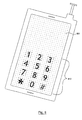
- FIG. 2 illustrates the present invention in the telephone mode.
- the device displays number icons (205) or other informational symbols (not shown) which form and are used as a telephone keypad for entering telephone numbers.
- the display also displays a "SEND” key (207) and an "END” key (2 10) (for purposes of this disclosure, the term 'key” does not refer to a physical button or switch but instead refers to an area of the display screen which when contacted or touched causes the generation of a signal to the phone that is representative of the "button” or “pad” that was actuated.
- the functions of a "SEND” and “END” key are generally known to start and stop a wireless phone call.
- a portion of the display (215) is reserved for displaying the telephone number as it is being typed in.
- the user inputs a telephone number, as well as the "*" and "#” keys by touching the touchscreen over the number or symbol desired. This number (or symbol) is then added to the telephone number at the top of the screen (215). Once the entire telephone number has been entered, the user touches the screen over the send key (207) to transmit the number to the systems switch for dialing.
- the term "number” should be construed as including the numerals zero through nine as well as the "*" and "#” keys but also including possibly any other alphanumeric symbol.
- the user receives an aural feedback whenever a "key" is contacted. Since the surface of the screen of the preferred embodiment is smooth and there is no key movement to let the user know that data has been entered, the telephone can be set up to generate an electronic beep, clicking noise, or some other sound to indicate the successful actuation of each "key".
- the chosen sound may be chosen by setting up user preferences of the telephone operator or the sound may be turned off for silent operation.
- the touchscreen display in the preferred embodiment, is responsive to a touch sensor that detects mechanical pressure from a users finger on a particular portion of the screen.
- the touch sensor may be a film behind a flexible tactile transducer film or a thin film in front of tactile elements (discussed subsequently in FIG. 8), with sufficient flexibility and compliance that it does not impair the tactile perception of the screen.
- the touch sensor may also be a film layer of the tactile surface itself, or may include touch sensitive elements interspersed adjacent to the tactile dot elements so that neither the touch sensor nor the tactile display elements overlay the other.
- Other touch screens embodiments use grids of interruptible light beams, capacitive discharge sensors, and conductive grids sensing a circuit made across nearby nodes, all of which are considered herein to be structures (circuits and components) equivalent to each other.
- the telephone of the present invention is capable of multiple operating modes to take advantage of the large touchscreen display.
- FIG. 3 illustrates an example of some of these modes.
- the user touches the telephone mode icon (301).
- An address/telephone book icon (305) takes the user to listings of stored telephone numbers and addresses. By touching a desired telephone number, the telephone of the present invention will automatically go to the telephone mode and dial that number.
- the display also has a browser icon (3 10) that takes the user to the browser program used by the telephone.
- the browser is a scaled down version of a personal computer browser such as NETSCAPE NAVIGATOR and, in the preferred embodiment, conforms to the wireless access protocol (WAR) standard for wireless Internet access.
- WAR wireless access protocol
- This browser program enables the user to access selected Web sites over the Internet and display the accessed data on the large telephone display. It can be seen the that lack of a fixed telephone keypad enables substantially more data to be displayed while in this mode than would be possible with the fixed keypad.
- another method for the present invention to display information is using NTT Do-Co-Mo's I-mode. This mode is well known in the art and is not discussed further.
- FIG. 3 Also illustrated in FIG. 3 is the email icon (3 15) for accessing the email program of the telephone of the present invention. By touching the screen over this icon, the telephone runs the email program that allows the user to enter and send emails using the wireless telephone.
- the telephone of the present invention has a built-in speaker (325) to enable the user to hear telephone conversations.
- the telephone in this embodiment also has a microphone (320) built in to the telephone to enable the user to speak to the other parties on the telephone conversation.
- FIG. 4 illustrates an alternate embodiment of the present invention that uses a wireless headset (405) to communicate with the telephone (401) of the present invention.
- this embodiment does not have a built-in speaker and microphone. Instead, the wireless headset (405) performs the same task as a built-in speaker and microphone.
- Bluetooth standard is the Bluetooth standard being developed by cellular telephone manufacturers.
- the Bluetooth standard uses a low power (1 mW) transmitter in the headset (405) and telephone (401) that enables them to communicate back and forth without wires.
- the information communicated between the headset (405) and the telephone (401) operates at 2.4 GHz, a data rate of up to 720 kb/s, and can reach distances of 10 meters.
- FIG. 9 illustrates a block diagram of the embodiment of FIG. 4.
- the unit includes the low-power transceiver (901) that communicates with the headset (905).
- This type of headset allows the user to better use the display while talking on the telephone. For example, if the party on the other end of the conversation asks to set up a meeting with the telephone user, the telephone user can access and view his datebook in the device while still carrying on the conversation.
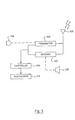
- FIG. 5 illustrates a block diagram of the preferred embodiment of the present invention.
- the telephone is comprised of a transmitter (501) and receiver (505) that are coupled to an antenna (520).
- the antenna (520) receives the radiotelephone signals from the base station for the receiver (505) to demodulate into speech signals.
- the antenna (520) also transmits modulated signals from the transmitter (501) to the base station.
- the telephone is controlled by a controller (5 10) that is coupled to the transmitter (501), receiver (505), and the touchscreen display (5 15) of the present invention.
- the controller (5 10) in the preferred embodiment, is a microcontroller that uses microcode. Alternate embodiments use other types of controllers such as microprocessors, application specific integrated circuits (ASIC), or other such controllers.
- the embodiment includes a microphone (520), it would be coupled to the transmitter (501) for modulation of the speech signal for transmission. Similarly, if the embodiment incorporated a speaker (525), it would be coupled to the receiver (505) for changing the demodulated signal received from the base station into an aural signal to be radiated by the speaker (525).
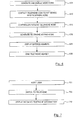
- the process of the present invention is illustrated in FIG. 6.
- This process begins with the controller generating the icons indicating the different modes of the communication device (step 60 1).
- the controller then displays these icons on the touchscreen display.
- the user touches the telephone icon to put the communication device into the telephone mode (step 610).
- the controller reads the contact on the touchscreen display and, knowing the coordinates of the telephone mode icon on the display, puts the device into the telephone mode (step 615).
- the controller Once in the telephone mode, the controller generates the number icons and causes the touchscreen display to display them in a keypad-style format (step 620).
- the controller also generates the other telephone keys, such as "send", "end”, and the telephone number display and displays them in the proper format on the touchscreen display.
- the controller When the user contacts the touchscreen over the appropriate number to generate the desired telephone number, the controller reads these contacts and displays those numbers in the telephone display section of the touchscreen display (step 625). The user then contacts the "SEND" icon to instruct the controller to transmit the telephone number to the central switch for dialing (step 630).
- FIG. 7 illustrates a received call process of the present invention. If the communication device receives a call, the device alerts the user by vibrating, flashing the display, or generating an alert tone (step 701). In the preferred embodiment, the communication device automatically changes to the telephone mode (step 705) and displays any information received regarding the incoming call (710). This information includes the calling telephone number and calling party name.
- FIG. 8 illustrates a tactile touchscreen as used on the communication device of the present invention.
- the screen is capable of providing raised keys for the telephone numbers or other icons.
- the user has a tactile feedback, similar to depressing a telephone keypad button, when operating the communications device.
- the tactile touchscreen also provides assistance to visually impaired people by having the capability to display the Braille character set.
- the display is comprised of a matrix of individually addressable dot or tactile elements.
- the elements are arranged in an evenly spaced grid covering the entire display.
- the tactile portion of the display is only on part of the display, such as the lower half, in order to provide a 'telephone keypad" area when in that particular mode.
- the elements are spaced less than 0.10 inch apart in order to allow the sensation of a continuous line.
- Each tactile element is switchable between an inactive position in which the dot is flush with the surrounding surface and an active position in which the dot is raised above the surrounding surface.
- the mechanism to provide this may be of any type including: electro-mechanical, electromagnetic, and switchable dimpled plastic film.
- the tactile display is transparent in order to permit the conventional liquid crystal display to be seen below the raised surface.
- the tactile display uses a clear fluid that can be pumped to each element by x/y coordinate addressing by the communications device controller.
- the controller switches the appropriate valves along the x and y axes in order to allow fluid to flow to a certain element or elements. This has the effect of raising that element or elements.
- Another embodiment uses a clear material that warps when a predetermined voltage is applied to the element. Again using the x/y coordinate addressing, the controller applies the predetermined voltage to the particular element or elements that are desired to be raised. The memory effect of the material causes it to return to its flat state when the voltage is removed.
- the controller when the communications device is in the telephone mode, it raises the tactile elements in the appropriate positions on the display in order to simulate buttons on a telephone keypad (8 10). Additionally, the icon for each key is generated and displayed behind each tactile element-by way of a darkened (or lightened) area simulating a key on the liquid crystal display.
- the controller also raises the appropriate elements for other such displays. For example, if a multimedia display is being presented, the controller can raise the appropriate elements to form fast forward, reverse, and other types of keys. The controller can also shape the screen to produce maps.
- the tacstile display of the present invention also has the added benefit of providing vision-impaired individuals with Braille elements so as to allow the visually-impaired user to operate the communications device.
- the controller can raise the Braille equivalent of the numbers on a telephone in order for the impaired user to input a telephone number.
- the controller can also use the Braille elements in order to display directions to a location that the user desires to find.
- the size of the touchscreen display of the present invention provides the communication device with the ability to display multimedia deliveries from the Internet or other sources.
- the display could show the presentation along with dynamically changing control buttons such as fast forward, back, review, stop, and pause.
- the present invention also has the ability to display local maps and the present position of the communications device. Using either a built-in GPS receiver or the cell-phone network's locator capability, the map can display present position and directions on going to another location. Additional maps can be downloaded from the Internet.
- the present invention provides a communication device having a full-length touchscreen display. This enables the display of additional data and information not possible on communication devices having a fixed keypad.
Landscapes
- Engineering & Computer Science (AREA)
- General Engineering & Computer Science (AREA)
- Theoretical Computer Science (AREA)
- Signal Processing (AREA)
- Human Computer Interaction (AREA)
- Physics & Mathematics (AREA)
- General Physics & Mathematics (AREA)
- Computer Networks & Wireless Communication (AREA)
- Health & Medical Sciences (AREA)
- Audiology, Speech & Language Pathology (AREA)
- General Health & Medical Sciences (AREA)
- Business, Economics & Management (AREA)
- Educational Administration (AREA)
- Educational Technology (AREA)
- Mobile Radio Communication Systems (AREA)
- Telephone Set Structure (AREA)
- Telephone Function (AREA)
- Position Input By Displaying (AREA)
- User Interface Of Digital Computer (AREA)
Applications Claiming Priority (2)
| Application Number | Priority Date | Filing Date | Title |
|---|---|---|---|
| US09/915,414 US20030022701A1 (en) | 2001-07-25 | 2001-07-25 | Buttonless communication device with touchscreen display |
| US915414 | 2001-07-25 |
Publications (2)
| Publication Number | Publication Date |
|---|---|
| EP1280319A2 true EP1280319A2 (de) | 2003-01-29 |
| EP1280319A3 EP1280319A3 (de) | 2003-10-29 |
Family
ID=25435685
Family Applications (1)
| Application Number | Title | Priority Date | Filing Date |
|---|---|---|---|
| EP02254743A Withdrawn EP1280319A3 (de) | 2001-07-25 | 2002-07-08 | Tastenloses Kommunikationsgerät mit berührungsempfindlichen Bildschirm |
Country Status (3)
| Country | Link |
|---|---|
| US (1) | US20030022701A1 (de) |
| EP (1) | EP1280319A3 (de) |
| JP (1) | JP2003101622A (de) |
Cited By (13)
| Publication number | Priority date | Publication date | Assignee | Title |
|---|---|---|---|---|
| WO2006129290A1 (en) * | 2005-06-03 | 2006-12-07 | Nokia Corporation | Headset |
| WO2008004219A1 (en) * | 2006-07-03 | 2008-01-10 | Ben Meir, Yoram | A variably displayable mobile device keyboard |
| WO2008124335A1 (en) * | 2007-04-04 | 2008-10-16 | Motorola, Inc. | Method and apparatus for controlling a skin texture surface on a device |
| WO2008124337A1 (en) * | 2007-04-04 | 2008-10-16 | Motorola, Inc. | Method and apparatus for controlling a skin texture surface on a device using hydraulic control |
| EP2060970A1 (de) * | 2007-11-12 | 2009-05-20 | Research In Motion Limited | Benutzerschnittstelle für ein Gerät mit Touchscreen |
| WO2009094293A1 (en) | 2008-01-21 | 2009-07-30 | Sony Computer Entertainment America Inc. | Hand-held device with touchscreen and digital tactile pixels |
| WO2009156810A1 (en) * | 2008-06-24 | 2009-12-30 | Nokia Corporation | Method and apparatus for executing a feature using a tactile cue |
| WO2009156813A1 (en) * | 2008-06-24 | 2009-12-30 | Nokia Corporation | Method and apparatus for assigning a tactile cue |
| GB2463012A (en) * | 2008-08-27 | 2010-03-03 | Roke Manor Research | Touch sensitive display with an actuator grid providing soft key feedback |
| FR2945695A1 (fr) * | 2009-05-13 | 2010-11-19 | Raoul Parienti | Appareil telephonique portable a ecran tactile particulierement adapte pour des utilisateurs malvoyants |
| US8135157B2 (en) | 2005-06-03 | 2012-03-13 | Nokia Corporation | Headset with adjustable boom |
| WO2012054005A1 (en) * | 2010-10-20 | 2012-04-26 | Yota Devices Ipr Ltd | Mobile device with input arrangement |
| WO2013000701A1 (en) * | 2011-06-30 | 2013-01-03 | Gn Netcom A/S | Remote controlled headset with built-in cellular telephone module |
Families Citing this family (86)
| Publication number | Priority date | Publication date | Assignee | Title |
|---|---|---|---|---|
| US6429846B2 (en) * | 1998-06-23 | 2002-08-06 | Immersion Corporation | Haptic feedback for touchpads and other touch controls |
| US6822635B2 (en) * | 2000-01-19 | 2004-11-23 | Immersion Corporation | Haptic interface for laptop computers and other portable devices |
| US7202851B2 (en) * | 2001-05-04 | 2007-04-10 | Immersion Medical Inc. | Haptic interface for palpation simulation |
| US6937033B2 (en) * | 2001-06-27 | 2005-08-30 | Immersion Corporation | Position sensor with resistive element |
| US20030032449A1 (en) * | 2001-08-13 | 2003-02-13 | Giobbi John J. | Personal digital assistant telephone with wireless headset |
| US20030104842A1 (en) * | 2001-11-30 | 2003-06-05 | Samsung Electronics Co., Ltd. | Hands-free speakerphone device for mobile terminals |
| EP1337093B1 (de) * | 2002-02-19 | 2006-08-23 | Nokia Corporation | Verfahren zum Ermöglichen einer Kommunikation mittels eines Mobilfunkgeräts und Mobilfunkgerät zum Ermöglichen einer Kommunikation |
| US7027842B2 (en) * | 2002-09-24 | 2006-04-11 | Bellsouth Intellectual Property Corporation | Apparatus and method for providing hands-free operation of a device |
| US7899500B2 (en) * | 2002-09-24 | 2011-03-01 | At&T Intellectual Property I, L. P. | Apparatus and method for providing hands-free operation of a device |
| GB2410995B (en) * | 2002-10-15 | 2007-05-09 | Immersion Corp | Products and processes for providing force sensations in a user interface |
| GB2410316B (en) | 2002-10-20 | 2007-03-21 | Immersion Corp | System and method for providing rotational haptic feedback |
| US8059088B2 (en) * | 2002-12-08 | 2011-11-15 | Immersion Corporation | Methods and systems for providing haptic messaging to handheld communication devices |
| US8316166B2 (en) | 2002-12-08 | 2012-11-20 | Immersion Corporation | Haptic messaging in handheld communication devices |
| US8830161B2 (en) | 2002-12-08 | 2014-09-09 | Immersion Corporation | Methods and systems for providing a virtual touch haptic effect to handheld communication devices |
| US7620433B2 (en) * | 2003-01-15 | 2009-11-17 | Gn Netcom, Inc. | Display headset |
| US8849185B2 (en) * | 2003-04-15 | 2014-09-30 | Ipventure, Inc. | Hybrid audio delivery system and method therefor |
| JP4378996B2 (ja) * | 2003-05-14 | 2009-12-09 | 日本電気株式会社 | 携帯電話機、データ操作処理プログラム及び制御方法 |
| US20050003830A1 (en) * | 2003-06-27 | 2005-01-06 | Microsoft Corporation | Smart telephone call routing for wireless communication devices |
| US7133030B2 (en) * | 2003-07-31 | 2006-11-07 | Microsoft Corporation | Context sensitive labels for a hardware input device |
| US8164573B2 (en) | 2003-11-26 | 2012-04-24 | Immersion Corporation | Systems and methods for adaptive interpretation of input from a touch-sensitive input device |
| US7742036B2 (en) * | 2003-12-22 | 2010-06-22 | Immersion Corporation | System and method for controlling haptic devices having multiple operational modes |
| WO2005086802A2 (en) | 2004-03-08 | 2005-09-22 | Proxense, Llc | Linked account system using personal digital key (pdk-las) |
| US10514816B2 (en) | 2004-12-01 | 2019-12-24 | Uber Technologies, Inc. | Enhanced user assistance |
| US9747579B2 (en) | 2004-09-30 | 2017-08-29 | The Invention Science Fund I, Llc | Enhanced user assistance |
| US20130238991A1 (en) * | 2004-10-27 | 2013-09-12 | Searete Llc | Enhanced Contextual User Assistance |
| US10687166B2 (en) | 2004-09-30 | 2020-06-16 | Uber Technologies, Inc. | Obtaining user assistance |
| US10445799B2 (en) | 2004-09-30 | 2019-10-15 | Uber Technologies, Inc. | Supply-chain side assistance |
| US9038899B2 (en) | 2004-09-30 | 2015-05-26 | The Invention Science Fund I, Llc | Obtaining user assistance |
| US9098826B2 (en) | 2004-09-30 | 2015-08-04 | The Invention Science Fund I, Llc | Enhanced user assistance |
| AU2005319019A1 (en) | 2004-12-20 | 2006-06-29 | Proxense, Llc | Biometric personal data key (PDK) authentication |
| US20070011171A1 (en) * | 2005-07-08 | 2007-01-11 | Nurminen Jukka K | System and method for operation control functionality |
| TWM281363U (en) * | 2005-08-19 | 2005-11-21 | Elan Microelectronics Corp | Internet protocol phone with integral touch panel function |
| US20070150415A1 (en) * | 2005-12-22 | 2007-06-28 | Bundy Ross E | Method and apparatus for creating and entering a PIN code |
| US8340672B2 (en) | 2006-01-06 | 2012-12-25 | Proxense, Llc | Wireless network synchronization of cells and client devices on a network |
| US11206664B2 (en) | 2006-01-06 | 2021-12-21 | Proxense, Llc | Wireless network synchronization of cells and client devices on a network |
| US8358976B2 (en) | 2006-03-24 | 2013-01-22 | The Invention Science Fund I, Llc | Wireless device with an aggregate user interface for controlling other devices |
| US20070229650A1 (en) * | 2006-03-30 | 2007-10-04 | Nokia Corporation | Mobile communications terminal and method therefor |
| US8412949B2 (en) | 2006-05-05 | 2013-04-02 | Proxense, Llc | Personal digital key initialization and registration for secure transactions |
| US20080233937A1 (en) * | 2006-05-08 | 2008-09-25 | Marja-Leena Nurmela | Mobile communication terminal and method |
| US7916002B2 (en) * | 2006-06-30 | 2011-03-29 | Nokia Corporation | Haptic operative user interface input apparatus |
| US7907702B2 (en) * | 2006-08-04 | 2011-03-15 | Inter-Tel (Delaware), Inc | Communication device for visually impaired persons |
| US20080046324A1 (en) * | 2006-08-17 | 2008-02-21 | Derek Wayne Bailey | Telephone apparatus and advertising method using telephone apparatus |
| US7956849B2 (en) * | 2006-09-06 | 2011-06-07 | Apple Inc. | Video manager for portable multifunction device |
| US9269221B2 (en) | 2006-11-13 | 2016-02-23 | John J. Gobbi | Configuration of interfaces for a location detection system and application |
| US8731146B2 (en) | 2007-01-04 | 2014-05-20 | At&T Intellectual Property I, L.P. | Call re-directed based on voice command |
| US20080204463A1 (en) * | 2007-02-27 | 2008-08-28 | Adam Cybart | Adaptable User Interface and Mechanism for a Title Portable Electronic Device |
| KR100849293B1 (ko) | 2007-04-09 | 2008-07-29 | 삼성전자주식회사 | 슬라이드 타입 휴대단말기에서 키 입력 장치 및 방법 |
| US8902152B2 (en) | 2007-04-30 | 2014-12-02 | Motorola Mobility Llc | Dual sided electrophoretic display |
| US9122092B2 (en) | 2007-06-22 | 2015-09-01 | Google Technology Holdings LLC | Colored morphing apparatus for an electronic device |
| US8077154B2 (en) | 2007-08-13 | 2011-12-13 | Motorola Mobility, Inc. | Electrically non-interfering printing for electronic devices having capacitive touch sensors |
| JP5106955B2 (ja) * | 2007-09-07 | 2012-12-26 | ソニーモバイルコミュニケーションズ株式会社 | ユーザインターフェース装置及び携帯情報端末 |
| EP2042975A1 (de) * | 2007-09-28 | 2009-04-01 | NTT DoCoMo, Inc. | Berührungsbildschirm |
| US8659427B2 (en) | 2007-11-09 | 2014-02-25 | Proxense, Llc | Proximity-sensor supporting multiple application services |
| US8171528B1 (en) | 2007-12-06 | 2012-05-01 | Proxense, Llc | Hybrid device having a personal digital key and receiver-decoder circuit and methods of use |
| WO2009079666A1 (en) | 2007-12-19 | 2009-06-25 | Proxense, Llc | Security system and method for controlling access to computing resources |
| US8139195B2 (en) | 2007-12-19 | 2012-03-20 | Motorola Mobility, Inc. | Field effect mode electro-optical device having a quasi-random photospacer arrangement |
| US7864270B2 (en) | 2008-02-08 | 2011-01-04 | Motorola, Inc. | Electronic device and LC shutter with diffusive reflective polarizer |
| US8059232B2 (en) | 2008-02-08 | 2011-11-15 | Motorola Mobility, Inc. | Electronic device and LC shutter for polarization-sensitive switching between transparent and diffusive states |
| US8508336B2 (en) | 2008-02-14 | 2013-08-13 | Proxense, Llc | Proximity-based healthcare management system with automatic access to private information |
| US11120449B2 (en) | 2008-04-08 | 2021-09-14 | Proxense, Llc | Automated service-based order processing |
| US9664808B2 (en) * | 2009-03-06 | 2017-05-30 | Milwaukee Electric Tool Corporation | Wall scanner |
| WO2011011224A1 (en) * | 2009-07-24 | 2011-01-27 | Dynavox Systems, Llc | Hand-held speech generation device |
| US8686957B2 (en) * | 2009-11-06 | 2014-04-01 | Bose Corporation | Touch-based user interface conductive rings |
| US20110113371A1 (en) * | 2009-11-06 | 2011-05-12 | Robert Preston Parker | Touch-Based User Interface User Error Handling |
| US20110109560A1 (en) | 2009-11-06 | 2011-05-12 | Santiago Carvajal | Audio/Visual Device Touch-Based User Interface |
| US8692815B2 (en) * | 2009-11-06 | 2014-04-08 | Bose Corporation | Touch-based user interface user selection accuracy enhancement |
| US9201584B2 (en) | 2009-11-06 | 2015-12-01 | Bose Corporation | Audio/visual device user interface with tactile feedback |
| US8638306B2 (en) * | 2009-11-06 | 2014-01-28 | Bose Corporation | Touch-based user interface corner conductive pad |
| US8350820B2 (en) * | 2009-11-06 | 2013-01-08 | Bose Corporation | Touch-based user interface user operation accuracy enhancement |
| US8669949B2 (en) * | 2009-11-06 | 2014-03-11 | Bose Corporation | Touch-based user interface touch sensor power |
| US20110111375A1 (en) * | 2009-11-11 | 2011-05-12 | At&T Mobility Ii Llc | Messaging Device Having Braille Output |
| TW201203041A (en) * | 2010-03-05 | 2012-01-16 | Canatu Oy | A touch sensitive film and a touch sensing device |
| US9418205B2 (en) | 2010-03-15 | 2016-08-16 | Proxense, Llc | Proximity-based system for automatic application or data access and item tracking |
| US8451240B2 (en) * | 2010-06-11 | 2013-05-28 | Research In Motion Limited | Electronic device and method of providing tactile feedback |
| US8918854B1 (en) | 2010-07-15 | 2014-12-23 | Proxense, Llc | Proximity-based system for automatic application initialization |
| JP5862271B2 (ja) * | 2010-12-29 | 2016-02-16 | 株式会社リコー | ユーザインターフェイス装置、画像形成装置、ユーザインターフェイス制御方法およびプログラム |
| US8857716B1 (en) | 2011-02-21 | 2014-10-14 | Proxense, Llc | Implementation of a proximity-based system for object tracking and automatic application initialization |
| US8717151B2 (en) * | 2011-05-13 | 2014-05-06 | Qualcomm Incorporated | Devices and methods for presenting information to a user on a tactile output surface of a mobile device |
| US9582178B2 (en) | 2011-11-07 | 2017-02-28 | Immersion Corporation | Systems and methods for multi-pressure interaction on touch-sensitive surfaces |
| EP2974245A1 (de) | 2013-03-15 | 2016-01-20 | Simple Matters LLC | Vibrierende alarmvorrichtung |
| US20140274216A1 (en) * | 2013-03-15 | 2014-09-18 | Onbeond, Llc | Mobile communication device |
| US9405898B2 (en) | 2013-05-10 | 2016-08-02 | Proxense, Llc | Secure element as a digital pocket |
| US10458801B2 (en) | 2014-05-06 | 2019-10-29 | Uber Technologies, Inc. | Systems and methods for travel planning that calls for at least one transportation vehicle unit |
| US9552559B2 (en) | 2014-05-06 | 2017-01-24 | Elwha Llc | System and methods for verifying that one or more directives that direct transport of a second end user does not conflict with one or more obligations to transport a first end user |
| US9483744B2 (en) | 2014-05-06 | 2016-11-01 | Elwha Llc | Real-time carpooling coordinating systems and methods |
| US11100434B2 (en) | 2014-05-06 | 2021-08-24 | Uber Technologies, Inc. | Real-time carpooling coordinating system and methods |
Family Cites Families (23)
| Publication number | Priority date | Publication date | Assignee | Title |
|---|---|---|---|---|
| DE4007945A1 (de) * | 1990-03-13 | 1991-09-19 | Joerg Fricke | Geraet zur tastbaren darstellung von information |
| DE4012267A1 (de) * | 1990-03-13 | 1991-11-28 | Joerg Fricke | Geraet zur tastbaren darstellung von information |
| US5412189A (en) * | 1992-12-21 | 1995-05-02 | International Business Machines Corporation | Touch screen apparatus with tactile information |
| JPH086493A (ja) * | 1993-07-21 | 1996-01-12 | Texas Instr Inc <Ti> | 点字テキストおよび点字図形用の電子的にリフレッシュ可能な触知型ディスプレイ |
| JPH08221205A (ja) * | 1995-02-09 | 1996-08-30 | Hitachi Ltd | タッチパネル |
| JP3550207B2 (ja) * | 1995-03-01 | 2004-08-04 | 富士通株式会社 | モード切替え式電話機及び同電話機におけるモード設定方法 |
| JP2705631B2 (ja) * | 1995-04-26 | 1998-01-28 | 日本電気株式会社 | 携帯用電子機器 |
| US5736978A (en) * | 1995-05-26 | 1998-04-07 | The United States Of America As Represented By The Secretary Of The Air Force | Tactile graphics display |
| US5848356A (en) * | 1995-10-02 | 1998-12-08 | Motorola, Inc. | Method for implementing icons in a radio communication device |
| US6049328A (en) * | 1995-10-20 | 2000-04-11 | Wisconsin Alumni Research Foundation | Flexible access system for touch screen devices |
| US6097964A (en) * | 1997-09-04 | 2000-08-01 | Nokia Mobile Phones Limited | Navigation key for a handset |
| US5917906A (en) * | 1997-10-01 | 1999-06-29 | Ericsson Inc. | Touch pad with tactile feature |
| JPH11203025A (ja) * | 1998-01-20 | 1999-07-30 | Fuji Xerox Co Ltd | 凹凸形成パネルおよび前記凹凸形成パネルを使用した情報入力装置 |
| US5977867A (en) * | 1998-05-29 | 1999-11-02 | Nortel Networks Corporation | Touch pad panel with tactile feedback |
| TW399537U (en) * | 1998-07-29 | 2000-07-21 | Shiu Shuei Jen | Tire tube with anti-piercing and anti-leaking multiple air room structure |
| US6059575A (en) * | 1998-10-21 | 2000-05-09 | Murphy; Kevin C. | Tactile recognition input device and overlay for use with an input device |
| US6522765B1 (en) * | 1999-04-02 | 2003-02-18 | Hm Electronics, Inc. | Headset communication system and method of using same |
| US6363265B1 (en) * | 1999-04-19 | 2002-03-26 | Lucent Technologies, Inc. | Volume control for an alert generator |
| FI19992510L (fi) * | 1999-11-24 | 2001-05-25 | Nokia Mobile Phones Ltd | Elektroniikkalaite ja menetelmä elektroniikkalaitteessa |
| JP2001296958A (ja) * | 2000-04-13 | 2001-10-26 | Nec Corp | キー入力装置 |
| JP3942808B2 (ja) * | 2000-06-13 | 2007-07-11 | パイオニア株式会社 | 携帯情報端末機 |
| US6636203B1 (en) * | 2001-05-17 | 2003-10-21 | Palm, Inc. | Keyboard equivalent pad overlay encasement for a handheld electronic device |
| US6822432B2 (en) * | 2001-06-22 | 2004-11-23 | Network Technologies Group, Llc | Methods and systems for automated pipeline testing |
-
2001
- 2001-07-25 US US09/915,414 patent/US20030022701A1/en not_active Abandoned
-
2002
- 2002-07-08 EP EP02254743A patent/EP1280319A3/de not_active Withdrawn
- 2002-07-23 JP JP2002213744A patent/JP2003101622A/ja active Pending
Cited By (25)
| Publication number | Priority date | Publication date | Assignee | Title |
|---|---|---|---|---|
| US8331603B2 (en) | 2005-06-03 | 2012-12-11 | Nokia Corporation | Headset |
| CN101185366B (zh) * | 2005-06-03 | 2012-07-18 | 诺基亚公司 | 耳机 |
| US8135157B2 (en) | 2005-06-03 | 2012-03-13 | Nokia Corporation | Headset with adjustable boom |
| WO2006129290A1 (en) * | 2005-06-03 | 2006-12-07 | Nokia Corporation | Headset |
| WO2008004219A1 (en) * | 2006-07-03 | 2008-01-10 | Ben Meir, Yoram | A variably displayable mobile device keyboard |
| US8959441B2 (en) | 2006-07-03 | 2015-02-17 | Yoram Ben-Meir | Variably displayable mobile device keyboard |
| WO2008124335A1 (en) * | 2007-04-04 | 2008-10-16 | Motorola, Inc. | Method and apparatus for controlling a skin texture surface on a device |
| WO2008124337A1 (en) * | 2007-04-04 | 2008-10-16 | Motorola, Inc. | Method and apparatus for controlling a skin texture surface on a device using hydraulic control |
| US8761846B2 (en) | 2007-04-04 | 2014-06-24 | Motorola Mobility Llc | Method and apparatus for controlling a skin texture surface on a device |
| EP2060970A1 (de) * | 2007-11-12 | 2009-05-20 | Research In Motion Limited | Benutzerschnittstelle für ein Gerät mit Touchscreen |
| KR101036217B1 (ko) * | 2007-11-12 | 2011-05-20 | 리서치 인 모션 리미티드 | 터치스크린 디바이스용 사용자 인터페이스 |
| US8441463B2 (en) | 2008-01-21 | 2013-05-14 | Sony Computer Entertainment America Llc | Hand-held device with touchscreen and digital tactile pixels |
| EP2235638A4 (de) * | 2008-01-21 | 2011-06-29 | Sony Comp Entertainment Us | Handgerät mit berührungsbildschirm und digitalen berührungsempfindlichen pixeln |
| US8004501B2 (en) | 2008-01-21 | 2011-08-23 | Sony Computer Entertainment America Llc | Hand-held device with touchscreen and digital tactile pixels |
| WO2009094293A1 (en) | 2008-01-21 | 2009-07-30 | Sony Computer Entertainment America Inc. | Hand-held device with touchscreen and digital tactile pixels |
| US8248386B2 (en) | 2008-01-21 | 2012-08-21 | Sony Computer Entertainment America Llc | Hand-held device with touchscreen and digital tactile pixels |
| WO2009156810A1 (en) * | 2008-06-24 | 2009-12-30 | Nokia Corporation | Method and apparatus for executing a feature using a tactile cue |
| CN102084328A (zh) * | 2008-06-24 | 2011-06-01 | 诺基亚公司 | 用于使用触觉提示执行特征的方法和装置 |
| US8659555B2 (en) | 2008-06-24 | 2014-02-25 | Nokia Corporation | Method and apparatus for executing a feature using a tactile cue |
| WO2009156813A1 (en) * | 2008-06-24 | 2009-12-30 | Nokia Corporation | Method and apparatus for assigning a tactile cue |
| GB2463012A (en) * | 2008-08-27 | 2010-03-03 | Roke Manor Research | Touch sensitive display with an actuator grid providing soft key feedback |
| FR2945695A1 (fr) * | 2009-05-13 | 2010-11-19 | Raoul Parienti | Appareil telephonique portable a ecran tactile particulierement adapte pour des utilisateurs malvoyants |
| WO2012054005A1 (en) * | 2010-10-20 | 2012-04-26 | Yota Devices Ipr Ltd | Mobile device with input arrangement |
| WO2012053941A3 (en) * | 2010-10-20 | 2012-09-27 | Yota Devices Ipr Ltd | Mobile device with housing |
| WO2013000701A1 (en) * | 2011-06-30 | 2013-01-03 | Gn Netcom A/S | Remote controlled headset with built-in cellular telephone module |
Also Published As
| Publication number | Publication date |
|---|---|
| EP1280319A3 (de) | 2003-10-29 |
| JP2003101622A (ja) | 2003-04-04 |
| US20030022701A1 (en) | 2003-01-30 |
Similar Documents
| Publication | Publication Date | Title |
|---|---|---|
| US20030022701A1 (en) | Buttonless communication device with touchscreen display | |
| US9521269B2 (en) | Method of giving the user information and portable device | |
| EP1286250B1 (de) | Eingabevorrichtung zur Durchführung von Anzeigemarke entsprechenden Eingabeoperationen und Koordinateneingabeoperationen auf der gleichen Betriebsfläche | |
| US6073036A (en) | Mobile station with touch input having automatic symbol magnification function | |
| JP5065486B2 (ja) | 触覚タッチガラスを有するキーパッド | |
| CN100478850C (zh) | 电子装置和控制元件 | |
| KR100881952B1 (ko) | 터치스크린을 구비하는 이동통신 단말기 및 그 동작제어방법 | |
| JP4331708B2 (ja) | 端末装置 | |
| US20060007178A1 (en) | Electronic device having an imporoved user interface | |
| CN101675652A (zh) | 在移动通信终端中用于不同模式之间切换的改进的方法和装置 | |
| EP1956805B1 (de) | Tragbares Endgerät | |
| US6943777B2 (en) | Electronic device with user interface capability and method therefor | |
| US7397413B2 (en) | Communication unit provided with intra-changeable elements | |
| KR100334796B1 (ko) | 터치 스크린을 구비하는 이동통신 단말기의 키패드 장치 | |
| JP2015102916A (ja) | 情報伝達装置、情報伝達方法およびプログラム | |
| GB2327558A (en) | Two-way communication apparatus having a touchpad-based user interface | |
| KR20080084208A (ko) | 전자장치와 전자장치의 동작모드 제어방법 및이동통신단말기 | |
| KR20060062962A (ko) | 이동통신 단말기에서 터치 스크린을 이용한 디스플레이제어 장치 및 방법 | |
| JP2003005905A (ja) | 電子機器 | |
| WO2003065694A1 (en) | Telephone handset unit | |
| KR100434460B1 (ko) | 이동 통신 단말의 문자 디스플레이 방법 | |
| GB2338148A (en) | Display arrangement for touchpad-based user interface of communication apparatus | |
| JP5551357B2 (ja) | 携帯電子機器 | |
| EP2052313A2 (de) | Scrollbar und touchpad mit fühlbarer und/oder hörbarer rückmeldung | |
| KR20020038849A (ko) | 터치 패드를 가지는 이동 통신단말기 및 그에 의한 메뉴선택 방법 |
Legal Events
| Date | Code | Title | Description |
|---|---|---|---|
| PUAI | Public reference made under article 153(3) epc to a published international application that has entered the european phase |
Free format text: ORIGINAL CODE: 0009012 |
|
| AK | Designated contracting states |
Designated state(s): AT BE BG CH CY CZ DE DK EE ES FI FR GB GR IE IT LI LU MC NL PT SE SK TR |
|
| AX | Request for extension of the european patent |
Extension state: AL LT LV MK RO SI |
|
| PUAL | Search report despatched |
Free format text: ORIGINAL CODE: 0009013 |
|
| AK | Designated contracting states |
Kind code of ref document: A3 Designated state(s): AT BE BG CH CY CZ DE DK EE ES FI FR GB GR IE IT LI LU MC NL PT SE SK TR |
|
| AX | Request for extension of the european patent |
Extension state: AL LT LV MK RO SI |
|
| 17P | Request for examination filed |
Effective date: 20040408 |
|
| AKX | Designation fees paid |
Designated state(s): DE FI SE |
|
| 17Q | First examination report despatched |
Effective date: 20050217 |
|
| STAA | Information on the status of an ep patent application or granted ep patent |
Free format text: STATUS: THE APPLICATION IS DEEMED TO BE WITHDRAWN |
|
| 18D | Application deemed to be withdrawn |
Effective date: 20050830 |