EP1368342B3 - Benzimidiazole und pyridylimidazole derivate als liganden für gaba rezeptoren - Google Patents
Benzimidiazole und pyridylimidazole derivate als liganden für gaba rezeptoren Download PDFInfo
- Publication number
- EP1368342B3 EP1368342B3 EP01992307A EP01992307A EP1368342B3 EP 1368342 B3 EP1368342 B3 EP 1368342B3 EP 01992307 A EP01992307 A EP 01992307A EP 01992307 A EP01992307 A EP 01992307A EP 1368342 B3 EP1368342 B3 EP 1368342B3
- Authority
- EP
- European Patent Office
- Prior art keywords
- alkyl
- methyl
- imidazol
- ethyl
- pyridine
- Prior art date
- Legal status (The legal status is an assumption and is not a legal conclusion. Google has not performed a legal analysis and makes no representation as to the accuracy of the status listed.)
- Expired - Lifetime
Links
- 0 CNC(C(*)C*)=O Chemical compound CNC(C(*)C*)=O 0.000 description 110
- XDTMQSROBMDMFD-UHFFFAOYSA-N C1CCCCC1 Chemical compound C1CCCCC1 XDTMQSROBMDMFD-UHFFFAOYSA-N 0.000 description 4
- ZBFHYTLUVCNXEE-UHFFFAOYSA-N C=C/N=C(/c1cccc(F)c1)\N Chemical compound C=C/N=C(/c1cccc(F)c1)\N ZBFHYTLUVCNXEE-UHFFFAOYSA-N 0.000 description 1
- IBBJWCWLPUQFJX-OAHLLOKOSA-N C=CCC[n]1c(cc(C(F)(F)F)cc2)c2nc1C[C@@H](C1)C=CN=C1c1ncccn1 Chemical compound C=CCC[n]1c(cc(C(F)(F)F)cc2)c2nc1C[C@@H](C1)C=CN=C1c1ncccn1 IBBJWCWLPUQFJX-OAHLLOKOSA-N 0.000 description 1
- RVGGLIFZIYTJON-PCLIKHOPSA-N CC1=CC2NC2C=C1/N=C(\CCCF)/CC1C(c2ccccn2)=NC=C1 Chemical compound CC1=CC2NC2C=C1/N=C(\CCCF)/CC1C(c2ccccn2)=NC=C1 RVGGLIFZIYTJON-PCLIKHOPSA-N 0.000 description 1
- SCSSTWUHNUCCJX-BKUYFWCQSA-N CCC1c(ccc(N(/C=C(/C(OCC)=O)\N)N)c2)c2N=C1C[n]1c(-c(cc(cc2)F)c2F)ncc1 Chemical compound CCC1c(ccc(N(/C=C(/C(OCC)=O)\N)N)c2)c2N=C1C[n]1c(-c(cc(cc2)F)c2F)ncc1 SCSSTWUHNUCCJX-BKUYFWCQSA-N 0.000 description 1
- BGLNYQZIRYSVDX-UHFFFAOYSA-N CCCCN1CCN(Cc(cc2)cc3c2[n](CC)c(Cc2ccn[n]2-c2cc(F)ccc2)n3)CC1 Chemical compound CCCCN1CCN(Cc(cc2)cc3c2[n](CC)c(Cc2ccn[n]2-c2cc(F)ccc2)n3)CC1 BGLNYQZIRYSVDX-UHFFFAOYSA-N 0.000 description 1
- RPAREUPPLXQTIZ-UHFFFAOYSA-N CCCC[n]1c(nccc2)c2nc1Cc1ccn[n]1-c(cc(cc1)F)c1F Chemical compound CCCC[n]1c(nccc2)c2nc1Cc1ccn[n]1-c(cc(cc1)F)c1F RPAREUPPLXQTIZ-UHFFFAOYSA-N 0.000 description 1
- SJSPLANYMLHLQY-WIIYFNMSSA-N CCC[n](c(C[n]1c(-c2cccc(F)n2)ncc1)nc1c2)c1ccc2C(N1[C@@]2(C)OC2C1)=O Chemical compound CCC[n](c(C[n]1c(-c2cccc(F)n2)ncc1)nc1c2)c1ccc2C(N1[C@@]2(C)OC2C1)=O SJSPLANYMLHLQY-WIIYFNMSSA-N 0.000 description 1
- ZBODWGAANATFAV-UHFFFAOYSA-N CCN(CC1)CCN1c(cc1)ccc1F Chemical compound CCN(CC1)CCN1c(cc1)ccc1F ZBODWGAANATFAV-UHFFFAOYSA-N 0.000 description 1
- WDOVRUULOAXMCL-UHFFFAOYSA-N CCN(CC1)CCN1c1ccc(C)cc1 Chemical compound CCN(CC1)CCN1c1ccc(C)cc1 WDOVRUULOAXMCL-UHFFFAOYSA-N 0.000 description 1
- GLGZHTCVQFSKPU-UHFFFAOYSA-N CCN(CC1)CCN1c1ccccc1Cl Chemical compound CCN(CC1)CCN1c1ccccc1Cl GLGZHTCVQFSKPU-UHFFFAOYSA-N 0.000 description 1
- UJGFFSLEQIFGIL-UHFFFAOYSA-N CCN1C(CCC(S)=C2)=C2N(C)C1Cc1c[nH]nc1-c1cccc(F)c1 Chemical compound CCN1C(CCC(S)=C2)=C2N(C)C1Cc1c[nH]nc1-c1cccc(F)c1 UJGFFSLEQIFGIL-UHFFFAOYSA-N 0.000 description 1
- GITSLLAMQWIMKE-OPEAARRCSA-N CC[C@@](C1)(C1c1c2)C(C[n]3c(-c4ncccn4)ncc3)=Nc1ccc2-c1ccccn1 Chemical compound CC[C@@](C1)(C1c1c2)C(C[n]3c(-c4ncccn4)ncc3)=Nc1ccc2-c1ccccn1 GITSLLAMQWIMKE-OPEAARRCSA-N 0.000 description 1
- LMDAKDPXLABMDL-UHFFFAOYSA-N CC[n](c(Cc1c(-c2cccc(F)c2)nc[s]1)nc1c2)c1ccc2Br Chemical compound CC[n](c(Cc1c(-c2cccc(F)c2)nc[s]1)nc1c2)c1ccc2Br LMDAKDPXLABMDL-UHFFFAOYSA-N 0.000 description 1
- UFDGBPWAUJUWFJ-UHFFFAOYSA-N CC[n]1c(ccc(C#N)c2)c2nc1C[n]1c(-c2ncccc2)ncc1 Chemical compound CC[n]1c(ccc(C#N)c2)c2nc1C[n]1c(-c2ncccc2)ncc1 UFDGBPWAUJUWFJ-UHFFFAOYSA-N 0.000 description 1
- SBVPAYWFPZTIID-UHFFFAOYSA-N CC[n]1c(ccc(C(CCC(C)O)=O)c2)c2nc1CN1C(c2ncc[s]2)=NCC=C1 Chemical compound CC[n]1c(ccc(C(CCC(C)O)=O)c2)c2nc1CN1C(c2ncc[s]2)=NCC=C1 SBVPAYWFPZTIID-UHFFFAOYSA-N 0.000 description 1
- ZFLNBONQNKCZQE-UHFFFAOYSA-N CC[n]1c(ccc(F)c2)c2nc1C[n]1c(-c(cc(cc2)F)c2F)ncc1 Chemical compound CC[n]1c(ccc(F)c2)c2nc1C[n]1c(-c(cc(cc2)F)c2F)ncc1 ZFLNBONQNKCZQE-UHFFFAOYSA-N 0.000 description 1
- AGKKSMNEZWQYFB-UHFFFAOYSA-N CC[n]1c(ccc(F)c2)c2nc1C[n]1c(-c2cc(Cl)ccc2)ncc1 Chemical compound CC[n]1c(ccc(F)c2)c2nc1C[n]1c(-c2cc(Cl)ccc2)ncc1 AGKKSMNEZWQYFB-UHFFFAOYSA-N 0.000 description 1
- SSOFONJLFNWKGP-UHFFFAOYSA-N CC[n]1c(ccnc2)c2nc1Cc1c(-c2ncc[s]2)nc[s]1 Chemical compound CC[n]1c(ccnc2)c2nc1Cc1c(-c2ncc[s]2)nc[s]1 SSOFONJLFNWKGP-UHFFFAOYSA-N 0.000 description 1
- FYDXDPJQHZKZEF-UHFFFAOYSA-N Cc1ccc(C2N(Cc([n]3CCF)nc4c3nccc4)C=CN2)cc1F Chemical compound Cc1ccc(C2N(Cc([n]3CCF)nc4c3nccc4)C=CN2)cc1F FYDXDPJQHZKZEF-UHFFFAOYSA-N 0.000 description 1
- WTWHWIBYLOHJHT-UHFFFAOYSA-N FCC[n]1c(nccc2)c2nc1C[n]1c(-c2cc(F)ccc2)ncc1 Chemical compound FCC[n]1c(nccc2)c2nc1C[n]1c(-c2cc(F)ccc2)ncc1 WTWHWIBYLOHJHT-UHFFFAOYSA-N 0.000 description 1
- VQWJQJWRWJGSHN-UHFFFAOYSA-N c1cnc(-c2ncc[s]2)[nH]1 Chemical compound c1cnc(-c2ncc[s]2)[nH]1 VQWJQJWRWJGSHN-UHFFFAOYSA-N 0.000 description 1
Classifications
-
- C—CHEMISTRY; METALLURGY
- C07—ORGANIC CHEMISTRY
- C07D—HETEROCYCLIC COMPOUNDS
- C07D401/00—Heterocyclic compounds containing two or more hetero rings, having nitrogen atoms as the only ring hetero atoms, at least one ring being a six-membered ring with only one nitrogen atom
- C07D401/02—Heterocyclic compounds containing two or more hetero rings, having nitrogen atoms as the only ring hetero atoms, at least one ring being a six-membered ring with only one nitrogen atom containing two hetero rings
- C07D401/04—Heterocyclic compounds containing two or more hetero rings, having nitrogen atoms as the only ring hetero atoms, at least one ring being a six-membered ring with only one nitrogen atom containing two hetero rings directly linked by a ring-member-to-ring-member bond
-
- A—HUMAN NECESSITIES
- A61—MEDICAL OR VETERINARY SCIENCE; HYGIENE
- A61P—SPECIFIC THERAPEUTIC ACTIVITY OF CHEMICAL COMPOUNDS OR MEDICINAL PREPARATIONS
- A61P25/00—Drugs for disorders of the nervous system
-
- A—HUMAN NECESSITIES
- A61—MEDICAL OR VETERINARY SCIENCE; HYGIENE
- A61P—SPECIFIC THERAPEUTIC ACTIVITY OF CHEMICAL COMPOUNDS OR MEDICINAL PREPARATIONS
- A61P25/00—Drugs for disorders of the nervous system
- A61P25/04—Centrally acting analgesics, e.g. opioids
-
- A—HUMAN NECESSITIES
- A61—MEDICAL OR VETERINARY SCIENCE; HYGIENE
- A61P—SPECIFIC THERAPEUTIC ACTIVITY OF CHEMICAL COMPOUNDS OR MEDICINAL PREPARATIONS
- A61P25/00—Drugs for disorders of the nervous system
- A61P25/14—Drugs for disorders of the nervous system for treating abnormal movements, e.g. chorea, dyskinesia
- A61P25/16—Anti-Parkinson drugs
-
- A—HUMAN NECESSITIES
- A61—MEDICAL OR VETERINARY SCIENCE; HYGIENE
- A61P—SPECIFIC THERAPEUTIC ACTIVITY OF CHEMICAL COMPOUNDS OR MEDICINAL PREPARATIONS
- A61P25/00—Drugs for disorders of the nervous system
- A61P25/18—Antipsychotics, i.e. neuroleptics; Drugs for mania or schizophrenia
-
- A—HUMAN NECESSITIES
- A61—MEDICAL OR VETERINARY SCIENCE; HYGIENE
- A61P—SPECIFIC THERAPEUTIC ACTIVITY OF CHEMICAL COMPOUNDS OR MEDICINAL PREPARATIONS
- A61P25/00—Drugs for disorders of the nervous system
- A61P25/20—Hypnotics; Sedatives
-
- A—HUMAN NECESSITIES
- A61—MEDICAL OR VETERINARY SCIENCE; HYGIENE
- A61P—SPECIFIC THERAPEUTIC ACTIVITY OF CHEMICAL COMPOUNDS OR MEDICINAL PREPARATIONS
- A61P25/00—Drugs for disorders of the nervous system
- A61P25/22—Anxiolytics
-
- A—HUMAN NECESSITIES
- A61—MEDICAL OR VETERINARY SCIENCE; HYGIENE
- A61P—SPECIFIC THERAPEUTIC ACTIVITY OF CHEMICAL COMPOUNDS OR MEDICINAL PREPARATIONS
- A61P25/00—Drugs for disorders of the nervous system
- A61P25/24—Antidepressants
-
- A—HUMAN NECESSITIES
- A61—MEDICAL OR VETERINARY SCIENCE; HYGIENE
- A61P—SPECIFIC THERAPEUTIC ACTIVITY OF CHEMICAL COMPOUNDS OR MEDICINAL PREPARATIONS
- A61P25/00—Drugs for disorders of the nervous system
- A61P25/26—Psychostimulants, e.g. nicotine, cocaine
-
- A—HUMAN NECESSITIES
- A61—MEDICAL OR VETERINARY SCIENCE; HYGIENE
- A61P—SPECIFIC THERAPEUTIC ACTIVITY OF CHEMICAL COMPOUNDS OR MEDICINAL PREPARATIONS
- A61P25/00—Drugs for disorders of the nervous system
- A61P25/28—Drugs for disorders of the nervous system for treating neurodegenerative disorders of the central nervous system, e.g. nootropic agents, cognition enhancers, drugs for treating Alzheimer's disease or other forms of dementia
-
- A—HUMAN NECESSITIES
- A61—MEDICAL OR VETERINARY SCIENCE; HYGIENE
- A61P—SPECIFIC THERAPEUTIC ACTIVITY OF CHEMICAL COMPOUNDS OR MEDICINAL PREPARATIONS
- A61P43/00—Drugs for specific purposes, not provided for in groups A61P1/00-A61P41/00
-
- C—CHEMISTRY; METALLURGY
- C07—ORGANIC CHEMISTRY
- C07D—HETEROCYCLIC COMPOUNDS
- C07D233/00—Heterocyclic compounds containing 1,3-diazole or hydrogenated 1,3-diazole rings, not condensed with other rings
- C07D233/04—Heterocyclic compounds containing 1,3-diazole or hydrogenated 1,3-diazole rings, not condensed with other rings having one double bond between ring members or between a ring member and a non-ring member
- C07D233/20—Heterocyclic compounds containing 1,3-diazole or hydrogenated 1,3-diazole rings, not condensed with other rings having one double bond between ring members or between a ring member and a non-ring member with substituted hydrocarbon radicals, directly attached to ring carbon atoms
-
- C—CHEMISTRY; METALLURGY
- C07—ORGANIC CHEMISTRY
- C07D—HETEROCYCLIC COMPOUNDS
- C07D401/00—Heterocyclic compounds containing two or more hetero rings, having nitrogen atoms as the only ring hetero atoms, at least one ring being a six-membered ring with only one nitrogen atom
- C07D401/14—Heterocyclic compounds containing two or more hetero rings, having nitrogen atoms as the only ring hetero atoms, at least one ring being a six-membered ring with only one nitrogen atom containing three or more hetero rings
-
- C—CHEMISTRY; METALLURGY
- C07—ORGANIC CHEMISTRY
- C07D—HETEROCYCLIC COMPOUNDS
- C07D403/00—Heterocyclic compounds containing two or more hetero rings, having nitrogen atoms as the only ring hetero atoms, not provided for by group C07D401/00
- C07D403/02—Heterocyclic compounds containing two or more hetero rings, having nitrogen atoms as the only ring hetero atoms, not provided for by group C07D401/00 containing two hetero rings
- C07D403/04—Heterocyclic compounds containing two or more hetero rings, having nitrogen atoms as the only ring hetero atoms, not provided for by group C07D401/00 containing two hetero rings directly linked by a ring-member-to-ring-member bond
-
- C—CHEMISTRY; METALLURGY
- C07—ORGANIC CHEMISTRY
- C07D—HETEROCYCLIC COMPOUNDS
- C07D403/00—Heterocyclic compounds containing two or more hetero rings, having nitrogen atoms as the only ring hetero atoms, not provided for by group C07D401/00
- C07D403/02—Heterocyclic compounds containing two or more hetero rings, having nitrogen atoms as the only ring hetero atoms, not provided for by group C07D401/00 containing two hetero rings
- C07D403/06—Heterocyclic compounds containing two or more hetero rings, having nitrogen atoms as the only ring hetero atoms, not provided for by group C07D401/00 containing two hetero rings linked by a carbon chain containing only aliphatic carbon atoms
-
- C—CHEMISTRY; METALLURGY
- C07—ORGANIC CHEMISTRY
- C07D—HETEROCYCLIC COMPOUNDS
- C07D403/00—Heterocyclic compounds containing two or more hetero rings, having nitrogen atoms as the only ring hetero atoms, not provided for by group C07D401/00
- C07D403/14—Heterocyclic compounds containing two or more hetero rings, having nitrogen atoms as the only ring hetero atoms, not provided for by group C07D401/00 containing three or more hetero rings
-
- C—CHEMISTRY; METALLURGY
- C07—ORGANIC CHEMISTRY
- C07D—HETEROCYCLIC COMPOUNDS
- C07D405/00—Heterocyclic compounds containing both one or more hetero rings having oxygen atoms as the only ring hetero atoms, and one or more rings having nitrogen as the only ring hetero atom
- C07D405/14—Heterocyclic compounds containing both one or more hetero rings having oxygen atoms as the only ring hetero atoms, and one or more rings having nitrogen as the only ring hetero atom containing three or more hetero rings
-
- C—CHEMISTRY; METALLURGY
- C07—ORGANIC CHEMISTRY
- C07D—HETEROCYCLIC COMPOUNDS
- C07D409/00—Heterocyclic compounds containing two or more hetero rings, at least one ring having sulfur atoms as the only ring hetero atoms
- C07D409/14—Heterocyclic compounds containing two or more hetero rings, at least one ring having sulfur atoms as the only ring hetero atoms containing three or more hetero rings
-
- C—CHEMISTRY; METALLURGY
- C07—ORGANIC CHEMISTRY
- C07D—HETEROCYCLIC COMPOUNDS
- C07D413/00—Heterocyclic compounds containing two or more hetero rings, at least one ring having nitrogen and oxygen atoms as the only ring hetero atoms
- C07D413/02—Heterocyclic compounds containing two or more hetero rings, at least one ring having nitrogen and oxygen atoms as the only ring hetero atoms containing two hetero rings
- C07D413/06—Heterocyclic compounds containing two or more hetero rings, at least one ring having nitrogen and oxygen atoms as the only ring hetero atoms containing two hetero rings linked by a carbon chain containing only aliphatic carbon atoms
-
- C—CHEMISTRY; METALLURGY
- C07—ORGANIC CHEMISTRY
- C07D—HETEROCYCLIC COMPOUNDS
- C07D413/00—Heterocyclic compounds containing two or more hetero rings, at least one ring having nitrogen and oxygen atoms as the only ring hetero atoms
- C07D413/14—Heterocyclic compounds containing two or more hetero rings, at least one ring having nitrogen and oxygen atoms as the only ring hetero atoms containing three or more hetero rings
-
- C—CHEMISTRY; METALLURGY
- C07—ORGANIC CHEMISTRY
- C07D—HETEROCYCLIC COMPOUNDS
- C07D417/00—Heterocyclic compounds containing two or more hetero rings, at least one ring having nitrogen and sulfur atoms as the only ring hetero atoms, not provided for by group C07D415/00
- C07D417/02—Heterocyclic compounds containing two or more hetero rings, at least one ring having nitrogen and sulfur atoms as the only ring hetero atoms, not provided for by group C07D415/00 containing two hetero rings
- C07D417/04—Heterocyclic compounds containing two or more hetero rings, at least one ring having nitrogen and sulfur atoms as the only ring hetero atoms, not provided for by group C07D415/00 containing two hetero rings directly linked by a ring-member-to-ring-member bond
-
- C—CHEMISTRY; METALLURGY
- C07—ORGANIC CHEMISTRY
- C07D—HETEROCYCLIC COMPOUNDS
- C07D417/00—Heterocyclic compounds containing two or more hetero rings, at least one ring having nitrogen and sulfur atoms as the only ring hetero atoms, not provided for by group C07D415/00
- C07D417/02—Heterocyclic compounds containing two or more hetero rings, at least one ring having nitrogen and sulfur atoms as the only ring hetero atoms, not provided for by group C07D415/00 containing two hetero rings
- C07D417/06—Heterocyclic compounds containing two or more hetero rings, at least one ring having nitrogen and sulfur atoms as the only ring hetero atoms, not provided for by group C07D415/00 containing two hetero rings linked by a carbon chain containing only aliphatic carbon atoms
-
- C—CHEMISTRY; METALLURGY
- C07—ORGANIC CHEMISTRY
- C07D—HETEROCYCLIC COMPOUNDS
- C07D417/00—Heterocyclic compounds containing two or more hetero rings, at least one ring having nitrogen and sulfur atoms as the only ring hetero atoms, not provided for by group C07D415/00
- C07D417/14—Heterocyclic compounds containing two or more hetero rings, at least one ring having nitrogen and sulfur atoms as the only ring hetero atoms, not provided for by group C07D415/00 containing three or more hetero rings
-
- C—CHEMISTRY; METALLURGY
- C07—ORGANIC CHEMISTRY
- C07D—HETEROCYCLIC COMPOUNDS
- C07D471/00—Heterocyclic compounds containing nitrogen atoms as the only ring hetero atoms in the condensed system, at least one ring being a six-membered ring with one nitrogen atom, not provided for by groups C07D451/00 - C07D463/00
- C07D471/02—Heterocyclic compounds containing nitrogen atoms as the only ring hetero atoms in the condensed system, at least one ring being a six-membered ring with one nitrogen atom, not provided for by groups C07D451/00 - C07D463/00 in which the condensed system contains two hetero rings
- C07D471/04—Ortho-condensed systems
-
- C—CHEMISTRY; METALLURGY
- C07—ORGANIC CHEMISTRY
- C07D—HETEROCYCLIC COMPOUNDS
- C07D473/00—Heterocyclic compounds containing purine ring systems
-
- C—CHEMISTRY; METALLURGY
- C07—ORGANIC CHEMISTRY
- C07D—HETEROCYCLIC COMPOUNDS
- C07D491/00—Heterocyclic compounds containing in the condensed ring system both one or more rings having oxygen atoms as the only ring hetero atoms and one or more rings having nitrogen atoms as the only ring hetero atoms, not provided for by groups C07D451/00 - C07D459/00, C07D463/00, C07D477/00 or C07D489/00
- C07D491/02—Heterocyclic compounds containing in the condensed ring system both one or more rings having oxygen atoms as the only ring hetero atoms and one or more rings having nitrogen atoms as the only ring hetero atoms, not provided for by groups C07D451/00 - C07D459/00, C07D463/00, C07D477/00 or C07D489/00 in which the condensed system contains two hetero rings
- C07D491/08—Bridged systems
-
- C—CHEMISTRY; METALLURGY
- C07—ORGANIC CHEMISTRY
- C07D—HETEROCYCLIC COMPOUNDS
- C07D491/00—Heterocyclic compounds containing in the condensed ring system both one or more rings having oxygen atoms as the only ring hetero atoms and one or more rings having nitrogen atoms as the only ring hetero atoms, not provided for by groups C07D451/00 - C07D459/00, C07D463/00, C07D477/00 or C07D489/00
- C07D491/02—Heterocyclic compounds containing in the condensed ring system both one or more rings having oxygen atoms as the only ring hetero atoms and one or more rings having nitrogen atoms as the only ring hetero atoms, not provided for by groups C07D451/00 - C07D459/00, C07D463/00, C07D477/00 or C07D489/00 in which the condensed system contains two hetero rings
- C07D491/10—Spiro-condensed systems
Definitions
- This invention relates to benzimidazole and pyridylimidazole derivatives, and, more specifically, to such derivatives that bind with high selectivety and/or high affinity to the benzodiazepine site of GABA A receptors.
- This invention also relates to pharmaceutical compositions comprising such compounds and to the use of such compounds in the treatment of central nervous system (CNS) diseases.
- CNS central nervous system
- the GABA A receptor superfamily represents one of the classes of receptors through which the major inhibitory neurotransmitter, ⁇ -aminobutyric acid, or GABA, acts. Widely, although unequally, distributed throughout the mammalian brain, GABA mediates many of its actions through a complex of proteins called the GABA A receptor, which causes alteration in chloride conductance and membrane polarization. In addition to being the site of neurotransmitter action, a number of drugs including the anxiolytic and sedating benzodiazepines bind to this receptor.
- the GABA A receptor comprises a chloride channel that generally, but not invariably, opens in response to GABA, allowing chloride to enter the cell. This, in turn, effects a slowing of neuronal activity through hyperpolarization of the cell membrane potential.
- GABA A receptors are composed of five protein subunits. A number of cDNAs for these GABA A receptor subunits have been cloned and their primary structures determined. While these subunits share a basic motif of 4 membrane-spanning helices, there is sufficient sequence diversity to classify them into several groups. To date at least 6 ⁇ , 3 ⁇ , 3 ⁇ , 1 ⁇ , 1 ⁇ and 2 ⁇ subunits have been identified. Native GABA A receptors are typically composed of 2 ⁇ , 2 ⁇ , and 1 ⁇ .
- the GABA A receptor binding sites for GABA (2 per receptor complex) are formed by amino acids from the ⁇ and ⁇ subunits. Amino acids from the ⁇ and ⁇ subunits together form one benzodiazepine site per receptor. Benzodiazepines exert their pharmacological actions by interacting with the benzodiazepine binding sites associated with the GABA A receptor. In addition to the benzodiazepine site (sometimes referred to as the benzodiazepine or BDZ receptor), the GABA A receptor contains sites of interaction for several other classes of drugs. These include a steroid binding site, a picrotoxin site, and a barbiturate site.
- the benzodiazepine site of the GABA A receptor is a distinct site on the receptor complex that does not overlap with the site of interaction for other classes of drugs that bind to the receptor or for GABA (see, e.g., Cooper, et al., The Biochemical Basis of Neuropharmacology, 6th ed., 1991, pp. 145-148, Oxford University Press, New York ).
- GABA A receptor antagonists In a classic allosteric mechanism, the binding of a drug to the benzodiazepine site increases the affinity of the GABA receptor for GABA.
- Benzodiazepines and related drugs that enhance the ability of GABA to open GABA A receptor channels are known as agonists or partial agonists depending on the level of GABA enhancement.
- Other classes of drugs, such as ⁇ -carboline derivatives, that occupy the same site and negatively modulate the action of GABA are called inverse agonists.
- a third class of compounds exists which occupy the same site as both the agonists and inverse agonists and yet have little or no effect on GABA activity. These compounds will, however, block the action of agonists or inverse agonists and are thus referred to as GABA A receptor antagonists.
- GABA A selective ligands may also act to potentiate the effects of certain other CNS active compounds.
- selective serotonin reuptake inhibitors SSRIs
- SSRIs selective serotonin reuptake inhibitors
- This invention provides benzimidazole and pyridylimidazole derivatives that bind to the benzodiazepine site of GABA A receptors, including human GABA A receptors.
- Preferred compounds of the invention bind with high selectivity and/or high affinity to GABA A receptors.
- Preferred compounds act as agonists, antagonists or inverse agonists of such receptors. As such, they are useful in the treatment of various CNS disorders.
- the invention provides compounds of Formula I (shown below), and pharmaceutical compositions comprising compounds of Formula I.
- the invention provides methods for synthesizing compounds of Formula I.
- the invention provides methods of potentiating the actions of other CNS active compounds. These methods comprise administering an effective amount of a compound of the invention in conjunction with the administration of another CNS active compound.
- this invention relates to the use of compounds of Formula I as probes for the localization of GABA A receptors in tissue sections.
- the invention provides compounds of Formula I and the pharmaceutically acceptable salts thereof.
- Z 1 is nitrogen or CR 1 ;
- Z 2 is nitrogen or CR 2 ;
- Z 3 is nitrogen or CR 3 ; and
- Z 4 is nitrogen or CR 4 ; provided that no more than two of Z 1 , Z 2 , Z 3 , and Z 4 are nitrogen.
- R 1 , R 2 , R 3 , and R 4 are independently selected from
- the group represents a 5 to 7 membered heteroaryl or heterocycloalkyl ring containing up to 4 heteroatoms selected from nitrogen, sulfur, and oxygen, said 5 to 7 membered heteroaryl or heterocycloalkyl ring is substituted at each carbon atom by R, and substituted at each nitrogen atom available for substitution by R'.
- R is independently chosen at each occurrence from hydrogen, halogen, amino, alkyl, alkenyl, alkynyl, alkoxy, cycloalkyl, (cycloalkyl)alkyl, haloalkyl, haloalkoxy, carboxamido, and 3- to 7-membered carbocyclic or heterocyclic groups which are saturated, unsaturated, or aromatic, which may be further substituted with one or more substituents independently selected from halogen, oxo, hydroxy, alkyl, and alkoxy.
- R' is independently chosen at each occurrence from alkyl, hydrogen, cycloalkyl, cycloalkyl(alkyl), and 3- to 7-membered carbocyclic or heterocyclic groups which are saturated, unsaturated, or aromatic, which 3- to 7-membered carbocyclic or heterocyclic groups are optionally substituted with one or more substituents independently selected from halogen, oxo, hydroxy, alkyl, and alkoxy.
- X 1 and X 2 independently represent nitrogen, carbon or CH.
- Y is nitrogen, oxygen, carbon, -CH-, -CH 2 -, or absent.
- R 1 , R 2 , R 3 , and R 4 are independently selected from
- a particular aspect of the invention is directed to compounds and pharmaceutically acceptable salts of Formula II
- the variables Z 1 , Z 2 , Z 3 , Z 4 , R 5 , Q, X 1 , X 2 , and W carry the definition set forth for Formula I, or more preferably, for Formula IA;
- X 3 and X 4 are independently selected from the group consisting of carbon, CR, N, O, S, NH, and N(C 1 -C 6 )alkyl; provided that at least one of X 1 , X 2 , X 3 , and X 4 is carbon or CR; and R is independently chosen at each occurrence from hydrogen, halogen, amino, (C 1 -C 6 )alkyl, (C 1 -C 6 )alkoxy, (C 3 -C 8 )cycloalkyl, (C 3 -C 8 )cycloalkyl(C 1 -C 6 )alkyl, (C 2 -C 6 )alkenyl, (C 2 -C 6 )alkynyl, halo (C
- the invention is particularly directed to compounds of Formula I, Formula IA, and Formula II, in which Z 1 is CR 1 , Z 2 is CR 2 , Z 3 is CR 3 , and Z 4 is CR 4 .
- the invention is also directed to compounds of Formula I, Formula IA, and Formula II, in which one, and only one, of Z 1 , Z 2 , Z 3 , and Z 4 is nitrogen.
- Another particular aspect of the invention provides compounds of Formula I, Formula IA, and Formula II, in which Z 1 is CR 1 , Z 4 is CR 4 , and only one, of Z 2 and Z 3 is nitrogen.
- the invention is further directed to compounds of Formula I, Formula IA, and Formula II wherein:
- preferred compounds are those where Z 1 is CR 1 , Z 2 is CR 2 , Z 3 is CR 3 , and Z 4 is CR 4 .
- preferred compounds are those in which one, and only one, of Z 1 , Z 2 , Z 3 , and Z 4 is nitrogen.
- compounds in which Z 1 is CR 2 , and only one, of Z 2 and Z 3 is nitrogen are particularly preferred.
- the invention provides compounds of Formula III and Formula IV: wherein R, R 1 , R 2 , R 3 , R 4 , R 5 , Q, and W carry the definitions set forth for Formula I, or more preferably for Formula IA.
- Particular compounds of Formula III included in the invention are those wherein Q is C(R 6 )(R 7 ).
- Preferred compounds of Formula IV include those where R 6 and R 7 are hydrogen, methyl or fluoro and the other is ethyl, or where one of R 6 and R 7 is hydrogen, methyl or fluoro and the other is ethyl.
- R 1 , R 2 , R 3 , and R 4 are independently selected from hydrogen, halogen, hydroxy, nitro, cyano, amino, (C 1 -C 6 )alkyl, (C 1 -C 6 )alkoxy, (C 3 -C 8 )cycloalkyl, (C 3 -C 8 )cycloalkyl(C 1 -C 6 )alkyl, (C 2 -C 6 )alkenyl, (C 2 -C 6 )alkynyl, heterocycloalkyl, halo (C 1 -C 6 )alkyl, halo(C 1 -C 6 )alkoxy, mono or di(C 1 -C 6 )alkylamino, amino (C 1 -C 6 )alkyl, and mono- and di(C 1 -C 6 )alkylamino(C 1 -C 6 )alkyl; R 5 represents hydrogen, (C 1 -C 6
- R, R 1 , R 2 , R 3 , R 4 , R 5 , Q, and W carry the definition set forth for Formula I, or more preferably for Formula IA
- m is 0, 1, or 2
- R E carries the definition set forth for Formula I, or more preferably R E carries the definition set forth for Formula IA and R 30 carries the definition set forth above with respect to Formula IA.
- the compounds of Formula III or Formula IV are those in which one of R 2 or R 3 carries the definition set forth for Formula I, or more preferably for Formula IA.
- R is independently selected at each occurrence from the group consisting of hydrogen, halogen, and (C 1 -C 2 )alkyl;
- R 1 , R 4 , and the other of R 2 and R 3 are independently selected from hydrogen, halogen, hydroxy, nitro, cyano, amino, (C 1 -C 6 )alkyl, (C 1 -C 6 )alkoxy, (C 3 -C 8 )cycloalkyl, (C 3 -C 8 )cycloalkyl(C 1 -C 6 )alkyl, halo(C 1 -C 6 )alkyl, halo(C 1 -C 6 )alkoxy, mono or di(C 1 -C 6 )alkylamino, amino(C 1 -C 6 )alkyl, and mono- and di(C 1 -C 6 )alkylamino(C 1 -C 6 )alkyl;
- R 5 represents (C 1 -C 6 )
- Still other preferred W groups are 4-pyrimidinyl, 5-halo-2-pyrimidinyl, 3,6-dihalopyrimidin-2-yl, and 2,6-, 4,6-, and 5,6-dihalopyridin-2-yl.
- Other preferred W groups are phenyl substituted with one or two independently selected C 1 -C 2 alkyl, C 1 -C 2 alkoxy, amino, halogen, trifluoromethyl, or cyano groups.
- Still other preferred W groups are 2-thiazolyl groups carrying one or two independently selected C 1 -C 2 alkyl, amino, (C 1 -C 3 ) alkyl, hydroxy, (C 1 -C 3 )alkyl, or trifluoromethyl groups.
- R is independently selected at each occurrence from the group consisting of hydrogen, halogen, and (C 1 -C 2 )alkyl; R 1 , R 4 , and one of R 2 and R 3 are independently selected from hydrogen, halogen, trifluoromethyl, C 1 -C 2 alkyl, and cyano; the other of R 2 and R 3 carries the definition set forth for Formula I, or more preferably for Formula IA; and R 5 represents (C 1 -C 6 )alkyl, and preferably C 2 -C 4 alkyl.
- R 1 and R 4 are hydrogen; Preferred R groups are independently selected from hydrogen and C 1 -C 3 alkyl, more preferably hydrogen and methyl, and most preferably are hydrogen.
- R 5 groups are ethyl and n-propyl.
- Q in Formula III is CH 2
- R 6 and R 7 in Formula IV are hydrogen
- W is phenyl, pyridyl, or thiazolyl, each which is optionally substituted by one or more substituents independently chosen from halogen, cyano, hydroxy, oxo, C 1 -C 2 haloalkyl, C 1 -C 2 alkyl, and C 1 -C 2 alkoxy, or more preferably W is 2-thiazolyl, 2-pyrimidinyl, 3-fluorophenyl, or 6-fluoro-2-pyridinyl.
- Such compounds will be referred to as compounds of Formula III-A and Formula IV-A.
- a particular aspect of the invention provides compounds of Formula III-A and Formula IV-A, wherein:
- preferred compounds of Formula III-A and IV-A include those where one of R 2 and R 3 is hydrogen, halogen, hydroxy, nitro, cyano, amino, C 1 -C 3 alkyl, C 1 -C 2 alkoxy, cyclopropyl, cyclopropylmethyl, trifluromethyl, or mono- or di(C 1 -C 2 )alkylamino, and the other is hydrogen, halogen, or C 1 -C 3 alkyl, preferably hydrogen or methyl.
- More preferred compounds of Formula IV-A include those where R 2 is hydrogen, halogen, more preferably fluoro or chloro, cyano, amino, C 1 -C 2 alkyl or C 1 -C 2 alkoxy and R 3 is hydrogen or methyl.
- R 2 is hydrogen, methyl, or ethyl
- R 3 is hydrogen, halogen, preferably fluoro or chloro, cyano, amino, or C 1 -C 3 alkoxy.
- Another aspect of the invention provides compounds of Formula III-A and Formula IV-A, wherein:
- R 20 carries the definition set forth with respect to Formula I, or more preferably R 20 carries the definition set forth for R 20 Formula IA.
- the invention also provides compounds of Formula III-A and Formula IV-A, wherein:
- R A is chosen from phenyl, pyrrolyl, pyrazolyl, thiazolyl, isoxazolyl, triazolyl, tetrazolyl, oxadiazolyl, and oxazolyl each of which is optionally substituted with 1, 2, 3, or 4 of R 20 .
- Another aspect of the invention is directed to compounds of Formula I, Formula IA and Formula II wherein one and only one of Z 1 is CR 1 , Z 4 is CR 4 , either Z 2 or Z 3 is nitrogen; and
- the invention includes compounds represented by Formula V and Formula VI wherein R, R 1 , R 2 , R 3 , R 4 , R 5 , and Q carry the definitions set forth for Formula I, or more preferably for Formula IA, and W is a 5-membered heteroaryl group as described above.
- the invention further includes compounds of Formula V and Formula VI wherein R is independently selected at each occurrence from the group consisting of
- Preferred compounds of Formula V an VI include those where R 2 and R 3 independently represent hydrogen, halogen, preferably fluoro or chloro, C 1 -C 3 alkyl, cyclopropyl, cyclopropylmethyl, C 1 -C 3 alkoxy, trifluoromethyl, nitro, cyano, amino, or mono-or di(C 1 -C 3 ) alkylamino.
- R 2 and R 3 groups are mono- or di(C 1 -C 3 )alkylamino(C 2 -C 3 )alkoxy, morpholinyl(C 2 -C 3 )alkoxy, piperidin-1-yl(C 2 -C 3 )alkoxy, and piperazin-1-yl(C 2 -C 3 )alkoxy.
- the invention is directed to compounds of Formula V and Formula VI wherein:
- Preferred R groups are hydrogen and C 1 -C 3 alkyl, more preferably hydrogen and methyl, and most preferably hydrogen.
- R 1 and R 4 groups for this aspect of the invention include hydrogen, halogen, trifluoromethyl, C 1 -C 2 alkyl, and cyano.
- R 1 and R 4 are hydrogen. More preferably R, R 1 , and R 4 are all hydrogen.
- Preferred compounds of this aspect of the invention in which W is a 5-membered heteroaryl group include those wherein W is thiazolyl which is optionally substituted by one or more substituents independently chosen from halogen, cyano, hydroxy, oxo, C 1 -C 2 haloalkyl, C 1 -C 2 alkyl, and C 1 -C 2 alkoxy.
- Other preferred compounds are those wherein W is 2-thiazolyl.
- W is a 6-membered heteroaryl group
- W is phenyl or pyridyl, each of which is optionally substituted by one or more substituents independently chosen from halogen, cyano, hydroxy, oxo, C 1 -C 2 haloalkyl, C 1 -C 2 alkyl, and C 1 -C 2 alkoxy.
- W is 2-pyrimidinyl, 3-fluorophenyl, or 6-fluoro-2-pyridinyl.
- Still other preferred W groups are 4-pyrimidinyl, 5-halo-2-pyrimidinyl, 3,6-dihalopyrimidin-2-yl, and 2,6-, 4,6-, and 5,6-dihalopyridin-2-yl.
- Other preferred W groups are phenyl substituted with one or two independently selected C 1 -C 2 alkyl, C 1 -C 2 alkoxy, amino, halogen, trifluoromethyl, or cyano groups.
- Still other preferred W groups are 2-thiazolyl groups carrying one or two independently selected C 1 -C 2 alkyl, amino, (C 1 -C 3 ) alkyl, hydroxy, (C 1 -C 3 )alkyl, or trifluoromethyl groups.
- R 2 for Formula V-A
- R 3 for Formula VI-A
- R 2 is chosen from hydrogen, halogen, hydroxy, nitro, cyano, amino, halo(C 1 -C 6 )alkyl, and halo(C 1 -C 6 )alkoxy.
- R B and R C are independently selected from the group consisting of hydrogen, (C 1 -C 6 )alkyl, (C 2 -C 6 )alkenyl, (C 2 -C 6 )alkynyl, C 3 -C 8 )cycloalkyl, and (C 3 -C 8 cycloalkyl) (C 1 -C 4 )alkyl; or
- R B and R C and the atom to which they are attached form a 4-to 10-membered monocyclic or bicyclic ring, which may contain a) one or more double bonds, b) one or more of oxo, O, S, SO, SO 2 , and N-R D wherein R D is hydrogen or (C 1 -C 6 )alkyl; and/or c) one or more substituents R 20 , where R 20 carries the definition set forth for compounds of Formula I, or more preferably that set forth for compounds of Formula IA.
- G is a bond or C 1 -C 2 alkyl
- R A is a saturated, partially unsaturated, or aromatic carbocycle consisting of 1 ring or 2 fused, pendant, or spiro rings, each ring containing 0, 1, or 2 heteroatoms independently selected from N, S, and O, where the saturated, partially unsaturated, or aromatic carbocycle is optionally substituted with 1, 2, 3, or 4 of R 20 .
- Preferred compounds of this class are those where R A is chosen from phenyl, pyrrolyl, pyrazolyl, thiazolyl, isoxazolyl, triazolyl, tetrazolyl, oxadiazolyl, and oxazolyl each of which is optionally substituted with 1, 2, 3, or 4 of R 20 .
- R 20 carries the definition set forth for compounds of Formula I, or more preferably that set forth for compounds of Formula IA.
- Particularly embodied in the invention are compounds of Formulae X - XVIII wherein Q (when present) is C(R 6 )(R 7 ).
- Q when present is C(R 6 )(R 7 ).
- R 6 and R 7 are hydrogen.
- FIG. 1 A block diagram illustrating an exemplary embodiment of the invention.
- FIG. 1 A block diagram illustrating an exemplary embodiment of the invention.
- FIG. 1 A block diagram illustrating an exemplary embodiment of the invention.
- FIG. 1 A block diagram illustrating an exemplary embodiment of the invention.
- FIG. 1 A block diagram illustrating an exemplary embodiment of the invention.
- FIG. 1 A block diagram illustrating an exemplary embodiment of the invention.
- FIG. 1 A block diagram illustrating an exemplary embodiment of the invention.
- FIG. 1 A block diagram illustrating an exemplary embodiment of the invention.
- FIG. 1 A block diagram illustrating an exemplary embodiment of the invention.
- FIG. 1 A block diagram illustrating an exemplary embodiment of the invention.
- FIG. 1 A block diagram illustrating an exemplary embodiment of the invention.
- FIG. 1 A block diagram illustrating an exemplary embodiment of the invention.
- FIG. 1 A block diagram illustrating an
- Preferred compounds of this class are compounds wherein wherein Z 1 is CR 1 , Z 2 is CR 2 , Z 3 is CR 3 , and Z 4 is CR 4 or wherein one and only one Z 1 , Z 2 , Z 3 , Z 4 is nitrogen are also preferred; compounds of this class wherein one and only one Z 1 , Z 2 , Z 3 , Z 4 is nitrogen, and either Z 2 or Z 3 is nitrogen are particularly preferred.
- This invention provides benzimidazole and pyridylimidazole derivatives, preferred examples of which bind with high affinity to the benzodiazepine site of GABA A receptors, including human GABA A receptors.
- the affinity of compounds of Formula I for the benzodiazepine site may be determined using a GABA A receptor binding assay, such as the assay presented in Example 53.
- Preferred compounds of Formula I that bind with high affinity to the benzodiazepine site of the GABA A receptor exhibit K i values of less than 1 ⁇ M in that assay.
- Very high affinity compounds of the invention exhibit K i values of less than 100 nM or more preferably less than 10 nM in the assay presented in Example 53.
- Benzimidazole and pyridylimidazole derivatives that bind with high selectivity to the benzodiazepine site of GABA A receptors, including human GABA A receptors are also included in this invention.
- Preferred compounds of Formula I which exhibit high selectivity (or high specificity) exhibit affinity for the benzodiazepine site of the GABA receptor that is at least 10-fold greater, and preferably 100-fold greater, than the affinity exhibited at any other membrane-bound receptor which is a known drug target. More preferred compounds of Formula I do not exhibit a binding affinity at any other membrane-bound receptor which is a known drug target that is less than 1 micromolar.
- Membrane-bound receptors that are known drug targets include, but are not limited to dopamine receptors, CRF receptors, bradykinin receptors, NPY receptors, beta-adrenergic receptors, capsaicin receptors, galanin receptors, MCH receptors, melanocortin receptors, and neurokinin receptors. Binding affinities for membrane-bound receptors which are known drug targets may be determined via radioligand binding assays which are generally well known in the art.
- Compounds of the inventions that act as agonists at ⁇ 2 ⁇ 3 ⁇ 2 and ⁇ 2 ⁇ 3 ⁇ 2 receptor subtypes are useful in treating anxiety disorders such as panic disorder, obsessive compulsive disorder and generalized anxiety disorder; stress disorders including post-traumatic stress, and acute stress disorders.
- Compounds of the inventions that act as agonists at ⁇ 2 ⁇ 3 ⁇ 2 and ⁇ 3 ⁇ 3 ⁇ 2 receptor subtypes are also useful in treating depressive or bipolar disorders and in treating sleep disorders.
- Compounds of the invention that act as inverse agonists at the ⁇ 5 ⁇ 3 ⁇ 2 receptor subtype or ⁇ 1 ⁇ 2 ⁇ 2 and ⁇ 5 ⁇ 3 ⁇ 2 receptor subtypes are useful in treating cognitive disorders including those resulting from Down Syndrome, neurodegenerative diseases such as Alzheimer's disease and Parkinson's disease, and stroke related dementia.
- Compounds of the invention that act as inverse agonists at the ⁇ 5 ⁇ 3 ⁇ 2 are particularly useful in treating cognitive disorders through the enhancement of memory, and particularly short-term memory, in memory-impaired patients.
- Compounds of the invention that act as agonists at the ⁇ 1 ⁇ 2 ⁇ 2 receptor subtype are useful in treating convulsive disorders such as epilepsy.
- Compounds that act as antagonists at the benzodiazepine site are useful in reversing the effect of benzodiazepine overdose and in treating drug and alcohol addiction.
- the diseases and/or disorders that can also be treated using compounds and compositions according to the invention include:
- the invention also provides pharmaceutical compositions comprising one or more compounds of the invention together with a pharmaceutically acceptable carrier or excipient, for treating disorders responsive to GABA A receptor modulation, e.g., treatment of anxiety, depression, sleep disorders or cognitive impairment by GABA A receptor modulation.
- Pharmaceutical compositions include packaged pharmaceutical compositions comprising a container holding a therapeutically effective amount of at least one GABA A receptor modulator as described supra and instructions (e.g., labeling) indicating the contained GABA A receptor ligand is to be used for treating a disorder responsive to GABA A receptor modulation in the patient.
- the invention provides a method of potentiating the actions of other CNS active compounds, which comprises administering an effective amount of a compound of the invention in combination with another CNS active compound.
- CNS active compounds include, but are not limited to the following: for anxiety, serotonin receptor (e.g. 5-HT A ) agonists and antagonists; for anxiety and depression, neurokinin receptor antagonists or corticotropin releasing factor receptor (CRF 1 ) antagonists; for sleep disorders, melatonin receptor agonists; and for neurodegenerative disorders, such as Alzheimer's dementia, nicotinic agonists, muscarinic agents, acetylcholinesterase inhibitors and dopamine receptor agonists.
- SSRIs selective serotonin reuptake inhibitors
- Combination administration can be carried out in a fashion analogous to that disclosed in Da-Rocha, et al., J. Psychopharmacology (1997) 11(3) 211-218 ; Smith, et al., Am. J. Psychiatry (1998) 155(10) 1339-45 ; or Le, et al., Alcohol and Alcoholism (1996) 31 Suppl. 127-132 .
- the present invention also pertains to methods of inhibiting the binding of benzodiazepine compounds, such as Ro15-1788, or GABA to the GABA A receptors which methods involve contacting a solution containing compound of the invention with cells expressing GABA A receptors, wherein the compound is present at a concentration sufficient to inhibit benzodiazepine binding or GABA binding to GABA A receptors in vitro.
- This method includes inhibiting the binding of benzodiazepine compounds to GABA A receptors in vivo , e.g., in a patient given an amount of a compound of Formula I that would be sufficient to inhibit the binding of benzodiazepine compounds or GABA to GABA A receptors in vitro.
- such methods are useful in treating benzodiazepine drug overdose.
- the amount of a compound that would be sufficient to inhibit the binding of a benzodiazepine compound to the GABA A receptor may be readily determined via a GABA A receptor binding assay, such as the assay described in Example 53.
- the GABA A receptors used to determine in vitro binding may be obtained from a variety of sources, for example from preparations of rat cortex or from cells expressing cloned human GABA A receptors.
- the invention also provides methods for altering the signal-transducing activity, particularly the chloride ion conductance of GABA A receptors, said method comprising exposing cells expressing such receptors to an effective amount of a compound of the invention.
- This method includes altering the signal-transducing activity of GABA A receptors in vivo, e.g., in a patient given an amount of a compound of Formula I that would be sufficient to alter the signal-transducing activity of GABA A receptors in vitro.
- the amount of a compound that would be sufficient to alter the signal-transducing activity of GABA A receptors may be determined via a GABA A receptor signal transduction assay, such as the assay described in Example 54.
- the cells expressing the GABA receptors in vivo may be, but are not limited to, neuronal cells or brain cells. Such cells may be contacted with compounds of the invention through contact with a body fluid containing the compound, for example through contact with cerebrospinal fluid. Alteration of the signal-transducing activity of GABA A receptors in vitro may be determined from a detectable change in the electrophysiology of cells exprssing GABA A receptors, when such cells are contacted with an compound of the invention in the presence of GABA. For example, a change in the electrophysiology of cells expressing GABA A receptors may be detected using a voltage-clamp assay performed on oocytes injected with GABA A receptor mRNA. Such an assay is shown in Example 54.
- Intracellular recording or patch-clamp recording may be used to quantitate changes in electrophysiology of cells.
- a reproducible change in behavior of an animal given a compound of the invention may also be used to indicate that changes in the electrophysiology of the animal's cells expressing GABA A receptors has occurred.
- the GABA A receptor ligands provided by this invention and labeled derivatives thereof are also useful as standards and reagents in determining the ability of a potential pharmaceutical to bind to the GABA A receptor.
- Radiolabeled derivatives the GABA A receptor ligands provided by this invention are also useful as radiotracers for positron emission tomography (PET) imaging or for single photon emission computerized tomography (SPECT).
- PET positron emission tomography
- SPECT single photon emission computerized tomography
- More particularly compounds of the invention may be used for demonstrating the presence of GABA A receptors in cell or tissue samples. This may be done by preparing a plurality of matched cell or tissue samples, at least one of which is prepared as an experimental sample and at least one of which is prepared as a control sample.
- the experimental sample is prepared by contacting (under conditions that permit binding of RO15-1788 to GABA A receptors within cell and tissue samples) at least one of the matched cell or tissue samples that has not previously been contacted with any compound or salt of the invention with an experimental solution comprising the detectably-labeled preparation of the selected compound or salt at the first measured molar concentration.
- the control sample is prepared in the same manner as the experimental sample and also contains an unlabelled preparation of the same compound or salt of the invention at a greater molar concentration.
- the experimental and control samples are then washed to remove unbound detectably-labeled compound.
- the amount of remaining bound detectably-labeled compound is then measured and the amount of detectably-labeled compound in the experimental and control samples is compared.
- a comparison that indicates the detection of a greater amount of detectable label in the at least one washed experimental sample than is detected in any of control samples demonstrates the presence of GABA A receptors in that experimental sample.
- the detectably-labeled compound used in this procedure may be labeled with a radioactive label or a directly or indirectly luminescent label.
- tissue sections are used in this procedure and the detectably-labeled compound is radiolabeled, the bound, labeled compound may be detected autoradiographically to generate an autoradiogram.
- the amount of detectable label in an experimental or control sample may be measured by viewing the autoradiograms and comparing the exposure density of the autoradiograms.
- the invention provides a method for preparing a compound of Formula A which comprises reacting a compound of Formula B with a compound of Formula C
- Z 1 , Z 2 , Z 3 , Z 4 , and R 5 carry the definitions forth for Formula I, or more preferably Z 1 , Z 2 , Z 3 , Z 4 , and R 5 carry the definitions forth for Formula Ia.
- R 6 and R 7 independently represent hydrogen, fluorine, or alkyl.
- R in Formula B is independently chosen at each occurrence from hydrogen, halogen, amino, C 1 -C 6 alkyl, (C 2 -C 6 )alkenyl, (C 2 -C 6 )alkynyl, C 1 -C 6 alkoxy, (C 3 -C 8 )cycloalkyl, (C 3 -C 8 cycloalkyl)(C 1 -C 4 )alkyl, halo (C 1 -C 6 ) alkyl, haloalkoxy, carboxamido, and 3- to 7-membered carbocyclic or heterocyclic groups which are saturated, unsaturated, or aromatic, which may be further substituted with one or more substituents independently selected from halogen, oxo, hydroxy, C 1-4 alkyl, and -O(C 1-4 alkyl).
- the invention includes a process of preparing a compound of Formula A as described above wherein: Z 1 is CR 1 , Z 2 is CR 2 , Z 3 is CR 3 , and Z 4 is CR 4 .
- R is independently selected at each occurrence from the group consisting of hydrogen, halogen, and (C 1 -C 2 )alkyl;
- R 1 , R 4 , and one of R 2 and R 3 are independently selected from hydrogen, halogen, hydroxy, nitro, cyano, amino, (C 1 -C 6 )alkyl, (C 1 -C 6 )alkoxy, (C 3 -C 8 )cycloalkyl, (C 3 -C 8 )cycloalkyl(C 1 -C 6 )alkyl, halo (C 1 -C 6 ) alkyl, halo(C 1 -C 6 )alkoxy, mono or di(C 1 -C 6 )alkylamino, amino (C 1 -C 6 )alkyl, and mono- and di(C 1 -C 6 )alkylamino(C 1 -C 6 )alkyl.
- R 2 and R 3 carries the definition set forth for Formula I, or preferably that set forth for Formula Ia, or in certain preferred embodiments this group is chosen from
- R, R 1 , and R 4 are all hydrogen.
- R 5 represents (C 1 -C 6 )alkyl. Preferred definitions of R 5 include ethyl and n-propyl.
- R 6 and R 7 are hydrogen.
- W represents phenyl, furanyl, thienyl, thiazolyl, imidazolyl, oxazolyl, triazolyl, tetrazolyl, pyrazolyl, isoxazolyl, pyrimidinyl, benzimidazolyl, quinolinyl, isoquinolinyl each of which is optionally substituted with up to 4 R 30 groups, where R 30 is as defined in the above process.
- Preferred W groups include, 2-thiazolyl, 2-pyrimidinyl, 3-fluorophenyl, or 6-fluoro-2-pyridinyl.
- the invention is directed to a process, as described as for Process 1, wherein Z 1 is CR 1 ; one and only one of Z 2 or Z 3 is nitrogen; Z 4 is CR 4 .
- R 1 and R 4 may carry the definition set forth in Process 1.
- Preferred definitions of R 1 and R 4 include hydrogen, halogen, trifluoromethyl, C 1 -C 2 alkyl, and cyano.
- R, R 1 , and R 4 are all hydrogen.
- R 2 or R 3 (for whichever one of Z 2 or Z 3 is CR 2 or CR 3 ) is chosen from
- W represents a 5-membered heteroaryl group
- W is preferably thiazolyl, thienyl, imidazolyl, oxazolyl, triazolyl, tetrazolyl, pyrazolyl, or isoxazolyl, each of which is optionally substituted by one or more substituents independently chosen from halogen, cyano, hydroxy, oxo, C 1 -C 2 haloalkyl, C 1 -C 2 alkyl, and C 1 -C 2 alkoxy.
- Unsubstituted 2-thiazolyl is a particularly preferred W group.
- W represents a 6-membered aryl or heteroaryl group
- W is preferably phenyl, pyrimidinyl, pyridyl, pyrazinyl, or pyridizinyl, each of which is optionally substituted by one or more substituents independently chosen from halogen, cyano, hydroxy, oxo, C 1 -C 2 haloalkyl, C 1 -C 2 alkyl, and C 1 -C 2 alkoxy.
- Particularly preferred W groups include 2-pyrimidinyl, 3-fluorophenyl, or 6-fluoro-2-pyridinyl.
- the reactants B and C are generally combined in a polar aprotic solvent, such as THF, DMF, or 1,4-dioxane, at temperatures ranging from 0 - 100 degrees C.
- a reducing agent such as NaH or other base, for example sodium hydroxide, potassium butoxide, potassium carbonate, or cesium carbonate, is then added, and the reaction is allowed to proceed.
- Choice of solvent, reaction temperature, and reducing agent will depend on the identity of the reactants B and C, but will be readily determined by a worker of ordinary skill in the art of chemical synthesis.
- Scheme I, step 4 provides further illustration of this process.
- Formula I includes, but is not limited to the subformulae exemplified as Formula Ia, Formulae II-VI and Formulae X - XVIII and their pharmaceutically acceptable acid and base addition salts.
- phrases "pharmaceutically acceptable” is employed herein to refer to those compounds, materials, compositions, and/or dosage forms which are, within the scope of sound medical judgment, suitable for use in contact with the tissues of human beings or animals without excessive toxicity, irritation, allergic response, or other problem or complication, commensurate with a reasonable benefit/risk ratio.
- pharmaceutically acceptable salts refer to derivatives of the disclosed compounds wherein the parent compound is modified by making acid or base salts thereof. Those skilled in the art will recognize a wide variety of non-toxic pharmaceutically acceptable addition salts.
- Examples of pharmaceutically acceptable salts include, but are not limited to, mineral or organic acid salts of basic residues such as amines; alkali or organic salts of acidic residues such as carboxylic acids; and the like.
- the pharmaceutically acceptable salts include the conventional non-toxic salts or the quaternary ammonium salts of the parent compound formed, for example, from non-toxic inorganic or organic acids.
- such conventional non-toxic salts include those derived from inorganic acids such as hydrochloric, hydrobromic, hydroiodic, sulfuric, sulfamic, sulfinic, phosphoric, nitric and the like; and the salts prepared from organic acids such as alkanoic such as acetic, HOOC-(CH 2 )n-ACOOH where n is 0-4, and the like, tartaric, maleic, propionic, succinic, glycolic, stearic, lactic, malic, tartaric, citric, ascorbic, pamoic, malefic, hydroxymaleic, phenylacetic, glutamic, benzoic, salicylic, sulfanilic, 2-acetoxybenzoic, fumaric, toluenesulfonic, methanesulfonic, ethane disulfonic, oxalic, isethionic, HOOC-(CH 2 )n-COOH where n is 0-4,
- the pharmaceutically acceptable salts of the present invention can be synthesized from the parent compound which contains a basic or acidic moiety by conventional chemical methods.
- such salts can be prepared by reacting the free acid or base forms of these compounds with a stoichiometric amount of the appropriate base or acid in water or in an organic solvent, or in a mixture of the two; generally, nonaqueous media like ether, ethyl acetate, ethanol, isopropanol, or acetonitrile are preferred. Lists of suitable salts are found in Remington's Pharmaceutical Sciences, 17th ed., Mack Publishing Company, Easton, PA, p. 1418 (1985 ).
- the invention includes hydrates of compounds of Formula I.
- the invention includes all crystalline forms of the compounds of Formula I. Certain crystalline forms may be preferred.
- the present invention also encompasses the acylated prodrugs of the compounds of Formula I.
- acylated prodrugs of the compounds of Formula I Those skilled in the art will recognize various synthetic methodologies that may be employed to prepare non-toxic pharmaceutically acceptable addition salts and acylated prodrugs of the compounds encompassed by Formula I.
- the invention further encompasses all enantiomers and diastereomers of the disclosed compounds. Those of ordinary skill in the art will readily recognize methods by which mixtures of enantiomers and diasteromers may be resolved.
- the definition of Formula I as used in herein include possible isomers, such as tautomers and rotamers.
- the compounds herein described may have one or more asymmetric centers or planes.
- Cis and trans geometric isomers of the compounds of the present invention are described and may be isolated as a mixture of isomers or as separated isomeric forms. All chiral (enantiomeric and diastereomeric), and racemic forms, as well as all geometric isomeric forms of a structure are intended, unless the specific stereochemistry or isomeric form is specifically indicated.
- any variable occurs more than one time in any constituent or formula for a compound, its definition at each occurrence is independent of its definition at every other occurrence.
- R * indicates any variable group such as R
- said group may optionally be substituted with up to three R * groups and R * at each occurrence is selected independently from the definition of R * .
- combinations of substituents and/or variables are permissible only if such combinations result in stable compounds.
- any group such as an aryl group, heteroaryl group, carbocyclic group, heterocyclic group, or monocylic or bicyclic ring is said to be "optionally substituted by one or more substituents" that group may contain 0 or from 1 to the maximum number of substituents allowable without exceeding the valency of the atoms of the substituted group.
- substituents such groups are substituted with 0 or from 1 to 4 substituents, and more preferably such groups are substituted with 0 or from 1 to 3 substituents.
- such groups are not substituted with more that one oxo substituent.
- a dash "-" that is not between two letters or symbols is used to indicate a point of attachement for a substituent.
- alkyl is intended to include both branched and straight-chain aliphatic hydrocarbon groups, having the specified number of carbon atoms. Alkyl groups of 2 or more carbon atoms may contain double or triple bonds. Examples of alkyl include, but are not limited to, methyl, ethyl, n-propyl, i-propyl, n-butyl, s-butyl, t-butyl, n-pentyl, and s-pentyl. Preferred alkyl groups are C 1 -C 6 alkyl groups. "C 1 -C 6 alkyl” indicates alkyl groups having from 1 to about 6 carbon atoms.
- alkoxy represents an alkyl group as defined above with the indicated number of carbon atoms attached through an oxygen bridge.
- alkoxy include, but are not limited to, methoxy, ethoxy, n-propoxy, i-propoxy, n-butoxy, 2-butoxy, t-butoxy, n-pentoxy, 2-pentoxy, 3-pentoxy, isopentoxy, neopentoxy, n-hexoxy, 2-hexoxy, 3-hexoxy, and 3-methylpentoxy.
- C 1 -C 6 alkoxy indicates alkoxy groups having from 1 to about 6 carbon atoms.
- Alkenyl is intended to include hydrocarbon chains of either a straight or branched configuration comprising one or more unsaturated carbon-carbon bonds which may occur in any stable point along the chain, such as ethenyl and propenyl. Alkenyl groups typically will have 2 to about 8 carbon atoms, more typically 2 to about 6 carbon atoms.
- Alkynyl is intended to include hydrocarbon chains of either a straight or branched configuration comprising one or more triple carbon-carbon bonds which may occur in any stable point along the chain, such as ethynyl and propynyl. Alkynyl groups typically will have 2 to about 8 carbon atoms, more typically 2 to about 6 carbon atoms.
- Aryl refers to aromatic groups having 1 or more rings, wherein the members of the aromatic ring or rings are carbon. When indicated such groups may be substituted. Preferred aryl groups include optionally substituted phenyl and optionally substituted naphthyl.
- Cycloalkyl is intended to include saturated ring groups, having the specified number of carbon atoms, such as cyclopropyl, cyclobutyl, cyclopentyl, or cyclohexyl. Cycloalkyl groups typically will have 3 to about 8 ring members.
- (cycloalkyl)alkyl Cycloalkyl and alkyl are as defined above and the point of attachment is on the alkyl group. This term encompasses, but is not limited to, cyclopropylmethyl, cyclohexylmethyl, cyclohexylmethyl.
- haloalkyl include, but are not limited to, trifluoromethyl, difluoromethyl, trichloromethyl, pentafluoroethyl, and pentachloroethyl.
- haloalkoxy indicates a haloalkyl group as defined above with the indicated number of carbon atoms attached through an oxygen bridge.
- haloalkoxy groups include, but are not limited to, trifluoromethoxy and trichloromethoxy.
- heteroaryl is intended to mean a stable 5-to 7-membered monocyclic or 7-to 10-membered bicyclic heterocyclic aromatic ring which consists of carbon atoms and from 1 to 4 heteroatoms independently selected from the group consisting of N, O and S. It is preferred that the total number of S and O atoms in the heteroaryl group is not more than 1.
- heteroaryl groups include, but are not limited to, pyrimidinyl, pyridyl, quinolinyl, benzothienyl, indolyl, pryidazinyl, pyazinyl, isoindolyl, isoquinolyl, quinazolinyl, quinoxalinyl, phthalazinyl, imidazolyl, isoxazolyl, pyrazolyl, oxazolyl, thienyl, thiazolyl, indolizinyl, indazolyl, benzothiazolyl, benzimidazolyl, benzofuranyl, benzoisoxolyl, dihydro-benzodioxinyl, furanyl, pyrrolyl, oxadiazolyl, thiadiazolyl, triazolyl, tetrazolyl, oxazolopyridinyl, imidazopyridinyl, isothi
- Preferred heteroaryl groups include imidazolyl, pyrrolyl, pyridyl, thiazolyl, pyrazolyl, thiazolyl, isoxazolyl, triazolyl, tetrazolyl, oxadiazolyl, pyrimidinyl, and oxazolyl.
- heterocycloalkyl is intended to include saturated ring groups having at least 1 heteroatom.
- Heterocycloalkyl groups typically include 3 to 8 ring atoms, preferably 5 to 7 ring atoms.
- Heterocycloalkyl groups typically have from 1 to 3 heteroatoms selected from N, S, and O with remaining ring atoms being carbon. Preferably not more than one S atom and one O atom is present in a heterocycloalkyl group.
- Preferred heterocycloalkyl groups include morpholinyl, piperidinyl, piperazinyl, thiomorpholinyl, and pyrrolidinyl.
- monocyclic or bicyclic ring refers to saturated, partially unsaturated, or aromatic rings or ring systems, which optionally contain from 1 to 4 heteroatoms independently chosen from N, S, and O with remaining ring members being carbon.
- Preferred monocyclic and bicyclic rings are saturated and partially unsaturated rings or ring systems.
- oxo indicates a carbonyl group. When an oxo group appears as a substituent the allowed valence of the substituted position is not exceeded.
- the compounds of general Formulas I may be administered orally, topically, parenterally, by inhalation or spray or rectally in dosage unit formulations containing conventional non-toxic pharmaceutically acceptable carriers, adjuvants and vehicles. Oral administration in the form of a pill, capsule, elixir, syrup, lozenge, troche, or the like is particularly preferred.
- parenteral as used herein includes subcutaneous injections, intradermal, intravascular (e.g., intravenous), intramuscular, spinal, intrathecal injection or like injection or infusion techniques.
- a pharmaceutical formulation comprising a compound of general Formula I and a pharmaceutically acceptable carrier.
- One or more compounds of general Formula I may be present in association with one or more non-toxic pharmaceutically acceptable carriers and/or diluents and/or adjuvants and if desired other active ingredients.
- the pharmaceutical compositions containing compounds of general Formula I may be in a form suitable for oral use, for example, as tablets, troches, lozenges, aqueous or oily suspensions, dispersible powders or granules, emulsion, hard or soft capsules, or syrups or elixirs.
- compositions intended for oral use may be prepared according to any method known to the art for the manufacture of pharmaceutical compositions and such compositions may contain one or more agents selected from the group consisting of sweetening agents, flavoring agents, coloring agents and preserving agents in order to provide pharmaceutically elegant and palatable preparations.
- Tablets contain the active ingredient in admixture with non-toxic pharmaceutically acceptable excipients that are suitable for the manufacture of tablets.
- excipients may be for example, inert diluents, such as calcium carbonate, sodium carbonate, lactose, calcium phosphate or sodium phosphate; granulating and disintegrating agents, for example, corn starch, or alginic acid; binding agents, for example starch, gelatin or acacia, and lubricating agents, for example magnesium stearate, stearic acid or talc.
- the tablets may be uncoated or they may be coated by known techniques to delay disintegration and absorption in the gastrointestinal tract and thereby provide a sustained action over a longer period.
- a time delay material such as glyceryl monosterate or glyceryl distearate may be employed.
- Formulations for oral use may also be presented as hard gelatin capsules wherein the active ingredient is mixed with an inert solid diluent, for example, calcium carbonate, calcium phosphate or kaolin, or as soft gelatin capsules wherein the active ingredient is mixed with water or an oil medium, for example peanut oil, liquid paraffin or olive oil.
- an inert solid diluent for example, calcium carbonate, calcium phosphate or kaolin
- water or an oil medium for example peanut oil, liquid paraffin or olive oil.
- Aqueous suspensions contain the active materials in admixture with excipients suitable for the manufacture of aqueous suspensions.
- excipients are suspending agents, for example sodium carboxymethylcellulose, methylcellulose, hydropropylmethylcellulose, sodium alginate, polyvinylpyrrolidone, gum tragacanth and gum acacia; dispersing or wetting agents may be a naturally-occurring phosphatide, for example, lecithin, or condensation products of an alkylene oxide with fatty acids, for example polyoxyethylene stearate, or condensation products of ethylene oxide with long chain aliphatic alcohols, for example heptadecaethyleneoxycetanol, or condensation products of ethylene oxide with partial esters derived from fatty acids and a hexitol such as polyoxyethylene sorbitol monooleate, or condensation products of ethylene oxide with partial esters derived from fatty acids and hexitol anhydrides, for example polyethylene sorbitan monooleate
- the aqueous suspensions may also contain one or more preservatives, for example ethyl, or n-propyl p-hydroxybenzoate, one or more coloring agents, one or more flavoring agents, and one or more sweetening agents, such as sucrose or saccharin.
- preservatives for example ethyl, or n-propyl p-hydroxybenzoate
- coloring agents for example ethyl, or n-propyl p-hydroxybenzoate
- flavoring agents for example ethyl, or n-propyl p-hydroxybenzoate
- sweetening agents such as sucrose or saccharin.
- Oily suspensions may be formulated by suspending the active ingredients in a vegetable oil, for example arachis oil, olive oil, sesame oil or coconut oil, or in a mineral oil such as liquid paraffin.
- the oily suspensions may contain a thickening agent, for example beeswax, hard paraffin or cetyl alcohol.
- Sweetening agents such as those set forth above, and flavoring agents may be added to provide palatable oral preparations. These compositions may be preserved by the addition of an antioxidant such as ascorbic acid.
- Dispersible powders and granules suitable for preparation of an aqueous suspension by the addition of water provide the active ingredient in admixture with a dispersing or wetting agent, suspending agent and one or more preservatives.
- a dispersing or wetting agent e.g., glycerol, glycerol, glycerol, glycerol, glycerol, glycerol, glycerin, glycerin, glycerin, glycerin, glycerin, sorbitol, sorbitol, sorbitol, sorbitol, sorbitol, sorbitol, sorbitol, sorbitol, sorbitol, sorbitol, glycerol, glycerol, glycerol, glycerol, glycerol, glycerol, glycerol, glycerol, glycerol
- compositions of the invention may also be in the form of oil-in-water emulsions.
- the oily phase may be a vegetable oil, for example olive oil or arachis oil, or a mineral oil, for example liquid paraffin or mixtures of these.
- Suitable emulsifying agents may be naturally-occurring gums, for example gum acacia or gum tragacanth, naturally-occurring phosphatides, for example soy bean, lecithin, and esters or partial esters derived from fatty acids and hexitol, anhydrides, for example sorbitan monoleate, and condensation products of the said partial esters with ethylene oxide, for example polyoxyethylene sorbitan monoleate.
- the emulsions may also contain sweetening and flavoring agents.
- Syrups and elixirs may be formulated with sweetening agents, for example glycerol, propylene glycol, sorbitol or sucrose. Such formulations may also contain a demulcent, a preservative and flavoring and coloring agents.
- the pharmaceutical compositions may be in the form of a sterile injectable aqueous or oleaginous suspension. This suspension may be formulated according to the known art using those suitable dispersing or wetting agents and suspending agents which have been mentioned above.
- the sterile injectable preparation may also be sterile injectable solution or suspension in a non-toxic parentally acceptable diluent or solvent, for example as a solution in 1,3-butanediol.
- Suitable vehicles and solvents that may be employed are water, Ringer's solution and isotonic sodium chloride solution.
- sterile, fixed oils are conventionally employed as a solvent or suspending medium.
- any bland fixed oil may be employed including synthetic mono- or diglycerides.
- fatty acids such as oleic acid find use in the preparation of injectables.
- the compounds of general Formulas I may also be administered in the form of suppositories, e.g., for rectal administration of the drug.
- suppositories e.g., for rectal administration of the drug.
- These compositions can be prepared by mixing the drug with a suitable non-irritating excipient that is solid at ordinary temperatures but liquid at the rectal temperature and will therefore melt in the rectum to release the drug.
- suitable non-irritating excipient that is solid at ordinary temperatures but liquid at the rectal temperature and will therefore melt in the rectum to release the drug.
- Such materials are cocoa butter and polyethylene glycols.
- Compounds of general Formulas I may be administered parenterally in a sterile medium.
- the drug depending on the vehicle and concentration used, can either be suspended or dissolved in the vehicle.
- adjuvants such as local anesthetics, preservatives and buffering agents can be dissolved in the vehicle.
- the composition may also be added to the animal feed or drinking water. It will be convenient to formulate these animal feed and drinking water compositions so that the animal takes in an appropriate quantity of the composition along with its diet. It will also be convenient to present the composition as a premix for addition to the feed or drinking water.
- Dosage levels of the order of from about 0.1 mg to about 140 mg per kilogram of body weight per day are useful in the treatment of the above-indicated conditions (about 0.5 mg to about 7 g per patient per day).
- the amount of active ingredient that may be combined with the carrier materials to produce a single dosage form will vary depending upon the host treated and the particular mode of administration. Dosage unit forms will generally contain between from about 1 mg to about 500 mg of an active ingredient.
- Frequency of dosage may also vary depending on the compound used and the particular disease treated. However, for treatment of most disorders, a dosage regimen of 4 times daily or less is preferred. For the treatment of anxiety, depression, or cognitive impairment a dosage regimen of 1 or 2 times daily is particularly preferred. For the treatment of sleep disorders a single dose that rapidly reaches effective concentrations is desirable.
- the specific dose level for any particular patient will depend upon a variety of factors including the activity of the specific compound employed, the age, body weight, general health, sex, diet, time of administration, route of administration, and rate of excretion, drug combination and the severity of the particular disease undergoing therapy.
- Preferred compounds of the invention will have certain pharmacological properties. Such properties include, but are not limited to high solubility (preferably 500 ng/ ml or more) in aqueous solutions, oral bioavailability, low toxicity, low serum protein binding, lack of clinically relevant EKG effects, and desirable in vitro and in vivo half-lifes. Penetration of the blood brain barrier for compounds used to treat CNS disorders is necessary, while low brain levels of compounds used to treat periphereal disorders are often preferred.
- Assays may be used to predict these desirable pharmacological properties. Assays used to predict bioavailability include transport across human intestinal cell monolayers, including Caco-2 cell monolayers. Toxicity to cultured hepatocyctes may be used to predict compound toxicity. Penetration of the blood brain barrier of a compound in humans may be predicted from the brain levels of the compound in laboratory animals given the compound intravenously.
- Serum protein binding may be predicted from albumin binding assays. Such assays are described in a review by Oravcová, et al. (Journal of Chromatography B (1996) volume 677, pages 1-27 ).
- Compound half-life is inversely proportional to the frequency of dosage of a compound.
- In vitro half-lifes of compounds may be predicted from assays of microsomal half-life as described by Kuhnz and Gieschen (Drug Metabolism and Disposition, (1998) volume 26, pages 1120-1127 ).
- Scheme I illustrates a route to selected compounds of Formula 6 via coupling of chloromethyl compounds 4 and aryl imidazoles 5.
- aryl and heteroaryl halides of formula 1 are reacted with appropriate amines in the presence of base to obtain amino adducts of formula 2.
- reduction of the nitro group in compounds of formula 2 yields diamines 3.
- diamines of formula 3 are reacted with 2-chloro-acetimidic acid methyl ester hydrochloride or a similar electrophile such as 2-chloro-1,1,1-trimethoxy-ethane or chloroacetic acid anhydride.
- Step 4 chloromethyl compounds of formula 4 are reacted with aryl and heteroaryl imidazoles of formula 5 in the presence of base and solvent to obtain compounds of formula 6.
- aryl and heteroaryl imidazoles of formula 5 in the presence of base and solvent to obtain compounds of formula 6.
- a stronger or weaker base may be selected to facilitate the reaction in Step 4.
- Scheme II illustrates the synthesis of compounds of formula 10 from diamines 3.
- reaction of malonyl dichloride with ethyl vinyl ether provides 7.
- Step 2 treatment of 7 with triethyl orthoformate in the presence of acid yields 8.
- Compound 8 is reacted in Step 3 with a variety of aryl and heteroaryl hydrazines to obtain compounds of formula 9 as a mixture with the undesired regioisomer.
- compounds of formula 9 can be hydrolyzed to the corresponding acids and coupled with compounds of formula 3 to obtain, following cyclization in refluxing acetic acid, compounds of formula 10.
- compounds of formula 9 may also be directly coupled to compounds of formula 3 in the presence of trimethylaluminum.
- cyclization may occur without need for heating in acetic acid as described in Step 5.
- Scheme III illustrates a method for preparing compounds of formula 21 and 22.
- Step 1 encompasses hydrolysis of compounds of formula 11 to the corresponding acids followed by dimerization in the presence of a suitable coupling reagent such as 1,1'-carbonyldiimidazole to form compounds of formula 12.
- Step 2 deacylation of compounds of formula 12 is accomplished by heating with concentrated sulfuric acid to obtain compounds of formula 13. Heating of compounds of formula 13 with ammonium hydroxide in Step 3 results in formation of compounds of formula 14.
- Nitration of compounds of formula 14 in Step 4 is accomplished using nitric acid to obtain compounds of formula 15.
- Compounds of formula 15 are converted to the corresponding chlorides 16 in Step 5 by heating with phosphorous oxychloride.
- Step 6 chlorides 16 are reacted with ammonia followed by heating with phosphorous oxychloride to obtain 2-chloropyridines 17, which are subsequently reduced to diamines 18 in Step 7.
- diamines 18 are reacted with esters of formula 19 in the presence of trimethylaluminum followed by heating in acetic acid to obtain compounds of formula 20.
- cyclization may occur without need for heating in acetic acid.
- Step 9 illustrates alkylation of compounds of formula 20 with ethyl iodide in the presence of base to obtain a mixture of compounds of formula 21 and 22. Those skilled in the art will realize that alternate alkylating agents may be employed to obtain similar compounds bearing different R 5 groups.
- Scheme IV illustrates a variation of Scheme III for specifically preparing compounds of formula 22.
- compounds of formula 16 are reacted with ethyl amine to form the amino adducts which are subsequently converted to 2-chloropyridines 23 by reaction with phosphorous oxychloride.
- Those skilled in the art will realize that numerous other suitable amines of formula R 6 NH 2 may be employed in Step 1 to yield other variants of Formula I.
- Steps 2 and 3 hydrogenation of compounds of formula 23 to diamines of formula 24 followed by trimethylaluminum-facilitated coupling and cyclization in acetic acid provides compounds of formula 22.
- cyclization may occur without need for heating in acetic acid
- Scheme V illustrates a route employing a protecting group strategy for preparing pyrazole compounds of formula 29.
- pyrazole 25 is reacted with di- tert -butyldicarbonate in the presence of 4-dimethylaminopyridine to obtain 26.
- Reaction with glyoxal and ammonium hydroxide provides 27.
- Reaction of 27 with chloromethyl compounds of formula 4 in the presence of base provides compounds of formula 28.
- Deprotection of compounds of formula 28 with acid in Step 4 provides pyrazoles of formula 29.
- Scheme VI provides a route for preparing thiazole compounds of formula 33.
- Step 1 involves bromination of ketoesters of formula 30 to form ⁇ -bromoketones of formula 31.
- compounds of formula 31 are reacted with thioformamide to obtain thiazoles of formula 32.
- Condensation of 32 with 3 in Step 3 in the presence of trimethylaluminum provides compounds of formula 33.
- the product mixture may require heating in a suitable solvent such as acetic acid to enhance formation of 33.
- Scheme VII provides routes to several heterocyclic systems via common intermediate 35.
- compounds of formula 34 are reacted with compounds of formula 4 at low temperature in the presence of a suitable base such as lithium diisopropylamide to form compounds of formula 35.
- Rxn 1 illustrates conversion of ketones of formula 35 to isoxazole derivatives of formula 36 by reaction of compounds of formula 35 with tris(dimethylamino) methane followed by treatement with hydroxylamine.
- compounds of formula 35 are reacted with tris(dimethylamino)methane followed by treatment with hydrazine acetate to obtain pyrazoles 37.
- Rxn 3 and 4 compounds of formula 35 are brominated to form ⁇ -bromoketones 38 that are subsequently reacted with thioformamide to obtain thiazoles of formula 39.
- Rxn 5 illustrates the synthesis of pyrazoles of formulas 40 and 41 by reaction of compounds of formula 35 with tris(dimethylamino)methane followed by treatment with methyl hydrazine.
- Scheme VIII provides a route for preparation of tetrazoles of formula 44.
- aryl and heteroaryl tetrazoles of formula 42 are heated with bis(tributyltin) oxide to form stannanes of formula 43.
- Step 2 heating compounds of formula 43 with compounds of formula 4 in a suitable solvent such as toluene gives compounds of formula 44.
- Scheme IX illustrates the synthesis of triazoles of formula 50.
- aryl and heteroaryl hydrazines are reacted with 1,3,5-triazine 45 to obtain triazoles of formula 46.
- heating compounds of formula 46 with formaldehyde provides alcohols of formula 47.
- alcohols of formula 47 are converted to the corresponding chlorides by treatment with thionyl chloride.
- the chlorides are subsequently converted to nitriles 48 by the action of tetraethyl ammonium cyanide.
- Cyanides 48 are hydrolyzed in Step 4 to carboxylic acids 49.
- carboxylic acids of formula 49 are coupled with diamines 3 in the presence of EDCI [1-(3-dimethylaminopropyl)-3-ethylcarbodiimide hydrochloride] or other suitable coupling reagents followed by heating in acetic acid to complete cyclization of the intermediate amino amides to compounds of formula 50.
- EDCI 1-(3-dimethylaminopropyl)-3-ethylcarbodiimide hydrochloride
- Scheme X illustrates two routes for the synthesis of imidazoles of formula 52, which are intermediates in the synthesis of selected compounds of Formula I.
- aryl and heteroaryl aldehydes are treated with glyoxal and ammonium hydroxide to form imidazoles of formula 52.
- imidazole 53 is treated with butyl lithium followed by tri-n-butyltin chloride to obtain compounds of formula 54, which must be handled with care to avoid decomposition.
- compounds of formula 54 are utilized in palladium cross-coupling reactions with aryl and heteroaryl halides to obtain compounds of formula 55. Subsequent treatment of compounds of formula 55 with acid in Step 3' provides compounds of formula 52.
- the starting materials and various intermediates may be obtained from commercial sources, prepared from commercially available organic compounds, or prepared using known synthetic methods. Representative examples of methods suitable for preparing intermediates of the invention are set forth below.
- Trimethylaluminum (0.54mL of 2.0M in toluene, 1.09mmol) is added dropwise to a solution of 3-Amino-4-propylaminobenzonitrile (152mg; 0.87mmol) in dichloromethane (10mL), and the mixture was stirred at room temperature for 1hr.
- a solution of [2-(2-Fluoropyridin-6-yl)-imidazol-1-yl] acetic acid methyl ester (102mg; 0.43mmol) in dichloromethane (5mL) is added all at once, and the mixture heated at reflux for 16 hr.
- the brown solution is cooled to room temperature and treated dropwise with methanol (1mL) then water (2mL) and stirred at room temperature for 15 min.
- Anhydrous sodium sulfate is added until the gel becomes solid, the mixture is diluted with dichloromethane (100mL) and filtered through celite.
- the filtrate is concentrated to give a brown oil which is dissolved in acetic acid (7 mL) and heated at 100° for 72 hr. The mixture is cooled to room temperature and concentrated.
- 1-(3-Fluorophenyl)-5-hydroxymethyl-1,2,4-triazole (1.7 g) is treated with thionyl chloride ( 10 mL) in dichloromethane (20 mL) at room temperature overnight. The solvent is then removed. To the residue is added acetonitrile (20 mL), tetraethylammonium cyanide (2.75 g, 17.6 mmol), and triethylamine (2.5 mL, 17.6 mmol). The mixture is stirred at room temperature for 2 h.
- aqueous layer is adjusted to pH 10 with 3 N NaOH, then extracted with ethyl acetate (3X), and the combined organic extracts washed with water (2X) then saturated aqueous sodium chloride, dried (MgSO 4 ), and concentrated to give 1-Ethyl-2- ⁇ [2-(2,5-difluorophenyl)-1H-imidazol-1-yl]methyl ⁇ -5-amino-1H-benzimidazole. LCMS MH + 354.4.
- Oxalyl chloride (2.5 eq of 2M in dichloromethane) is added dropwise to a solution of 1-ethyl-2- ⁇ [2-(2,5-difluorophenyl)-pyrazol-3-yl]methyl ⁇ -1H-benzimidazole-5-carboxylate (368 mg) in DMF (5 drops) and dichlormethane (30 mL) at 0°C. The mixture is stirred at 0°C for 0.5 h, then at room temperature for 1 h. The solution is concentrated, the residue taken up in DMF (30 ml), excess propargylamine added, and the mixture stirred for 6 h.
- 2-Fluoro-6-methylpyridine (14.4 g, 0.13 mol) and tert-butoxybis(dimethylamino)methane (Bredereck's reagent; 34.9 g, 0.20 mol) are heated at 140 °C for 24 h.
- the reaction is cooled and diluted with THF (100 mL).
- Sodium periodate (75 g) in water (400 mL) is added at 0-5 °C, and the reaction mixture is then stirred for 24 h at room temperature.
- the precipitate is filtered through celite, and the filtrate extracted 5X with diethyl ether.
- the combined ether layers are washed with water, brine, and dried (MgSO 4 ). Most of the solvent is removed by concentration at 0 °C (by keeping ice in the bath) to provide 2-Fluoropyridine-6-carboxaldehyde.
- 2-Fluoropyridine-6-carboxaldehyde can also be prepared as follows: To a solution of diisopropylamine (6.54 mL, 1.2 equiv) in 30 mL of THF at 0 °C a solution of n-butyllithium (17.1 mL, 2.5M in hexanes) is added dropwise. Stirring is continued for 15 minutes at 0 °C, the reaction is then cooled to -78 °C. 2-Fluoro-6-methylpyridine (4.00 mL, 38.9 mmol) is added dropwise to the cold solution.
- the reaction mixture is stirred at -78 °C for 1 h and then quenched with DMF (4.52 mL, 1.5 equiv). The reaction is maintained at -78 °C for 30 minutes and then warmed to 0 °C.
- the cold solution is added to a mixture of sodium periodate (24.9 g) in 120 mL of water at 0 °C.
- the reaction mixture is allowed to gradually warm to room temperature over 1 h and then stirred at room temperature for 24 h.
- the reaction mixture is filtered through a plug of celite to remove the precipitate and the plug is washed with ether.
- the organic layer is washed with brine (20 mL), diluted with hexanes (15 mL), passed through a plug of silica gel (1/4 inch deep x 1 1 ⁇ 4 inch diameter), and the plug washed with more 2:1 ethyl acetate/hexanes (20 mL).
- the combined eluents are concentrated in vacuo to yield crude 2-Fluoro-6-(1H-imidazol-2-yl)-pyridine.
- Aqueous hydrogen peroxide (30 mL of 30%) is added dropwise to an ice cold mixture of 3-chloropyridine (6.0 g, 53 mmol) in acetic anhydride (30 mL). The mixture is allowed to stir at ambient temperature for 24 h, water is then added and the mixture concentrated. The residue is taken up in concentrated sulfuric acid (10 mL) and fuming sulfuric acid (5 mL), and then cooled to 0°C. Concentrated nitric acid (24 mL) is added slowly, and the ice bath removed. The reaction is then heated at reflux for 2 h, cooled, and poured into ice water. Ammonium bicarbonate is added carefully until pH 8 is achieved, the solution is then extracted with dichloromethane.
- Trimethylaluminum (11ml of 2.0M in toluene, 22.4mmol) is added dropwise to a solution of N-propyl-pyridine-3,4-diamine(1.70g, 11.2mmol) in dichloromethane (50ml), and the mixture is stirred for 30 minutes at room temperature.
- a solution of [2-(6-fluoro-pyridin-2-yl)-imidazol-1-yl]-acetic acid methyl ester (1.32g, 5.61mmol) in dichloromethane (10ml)
- the mixture is heated at reflux for 18 hours.
- the resulting brown mixture is poured into ice-water and filtered through celite.
- Aqueous 30% H 2 O 2 (60 mL) is added dropwise to a magnetically stirred solution of 3-chloro-pyridine (12 g, 105 mmol) in acetic anhydride (60 mL) under cold conditions (0 to 10 °C). The resulting mixture is allowed to warm up to room temperature slowly and then stirred overnight at room temperature. The reaction mixture is quenched with water (50 mL), diluted with toluene and concentrated to obtain the crude N-oxide as an oil in near quantitative yield.
- H 2 SO 4 25 mL
- HNO 3 fluoride, 90%, 60 mL
- the resulting mixture is then heated at 120 °C for 4 h with stirring, cooled, poured into ice-cold water, and extracted with CHCl 3 .
- the mixture is further diluted with 0.5 N aq NaOH (10 mL) and then stirred vigorously for 30 min.
- the mixture is then extracted thrice with CH 2 Cl 2 containing some ( ⁇ 5%) MeOH, and the combined extracts are dried over K 2 CO 3 and concentrated.
- the mixture is diluted with CH 2 Cl 2 and stirred vigorously for 15 min. It is then filtered through a pad of Celite, and the filtrate concentrated.
- the crude material is partially purified by preparative thin layer chromatography, developing with 15:1 CHCl 3 -MeOH (+1% Et 3 N).
- the band containing the desired N 3 -ethyl-6-propyl-pyridine-3,4-diamine does not separate well from the approximately 10% of the slightly more polar, unreacted N -(4-amino-6-propyl-pyridin-3-yl)-acetamide. Both bands are collected, and the mixture is carried into the next reaction.
- N 3 -ethyl-6-propyl-pyridine-3,4-diamine (82 mg, -0.45 mmol, contaminated with ⁇ 10% of N -(4-amino-6-propylpyridin-3-yl)-acetamide) in 1,2-dichloroethane (4 mL) at room temperature under N 2 is treated with 2.0 M AlMe 3 (0.69 mL, 1.37 mmol).
- 2-Chloromethyl-3-ethyl-6-trifluoromethyl-3 H -imidazo[4,5-c]pyridine is made from N 3 -Ethyl 6-Trifluoromethyl-pyridine-3,4-diamine following the procedure described previously for the preparation of 2-Chloromethyl-1-ethyl-6-trifluoromethyl-1 H- imidazo[4,5-c]pyridine.
- 3-ethyl-2-[(2-pyrimidin-2-yl-1H-imidazol-1-yl)methyl]-3H-imidazo[4,5-c]pyridine-4-carbonitrile is obtained from 2-chloromethyl-3-ethyl-3 H -imidazo[4,5-c]pyridine-4-carbonitrile by nucleophilic displacement with 2-(1 H -Imidazol-2-yl)-pyrimidine, as described previously, followed by usual work up.
- a mixture of thiazol-2-ylhydrazine (2.2 g, 19.1 mmol) and 3,5,5-triethoxy-pent-2-enoic acid ethyl ester (70% purity, 7.1 g, 19.1 mmol) is refluxed in acetic acid overnight. Acetic acid is removed. To the residue is added NaHCO 3 (aq.) (40 mL) and ethyl acetate (100 mL). The insoluble material is filtered. The organic layer is dried and solvent removed. The crude is subjected to column separation (hexane/ethyl acetate 3:1) to give (2-thiazol-2-yl-2H-pyrazol-3-yl)-acetic acid ethyl ester as an oil.
- Trimethylaluminum (2M in toluene) (1.4 mL, 2.85 mmol) is added dropwise under N 2 to a solution of N 4 -Ethyl-pyridine-3,4-diamine (156 mg, 1.14 mmol) in DCM (5 mL). The mixture is stirred at room temperature for 1 hour. A solution of thiazol-2-yl-2H-pyrazol-3-yl)-acetic acid ethyl ester (270 mg, 1.14 mmol) in DCM (2 mL) is added. The mixture is reluxed for 25 hours. On cooling, the reaction is quenched with water added dropwise and DCM (20 mL) is added.
- Trimethylaluminum (2M in toluene) (0.5 mL, 1 mmol) is added dropwise under N 2 to a solution of N 4 -Ethyl-pyridine-3,4-diamine (44 mg, 0.32 mmol) in DCM (5 mL). The mixture is stirred at room temperature for 1 hour. A solution of thiazol-2-yl-2H-pyrazol-3-yl)-propionic acid ethyl ester in DCM (2 mL) is added. The mixture is reluxed for 3 days. On cooling, the reaction is quenched with water added dropwise and DCM (20 mL) is added.
- Phenyltrimethylammonium tribromide (3.4 g, 8.91 mmol) in DCM (20 mL) is added dropwise to a solution of 4-oxo-4-thiazol-2-yl-butyric acid ethyl ester (1.9 g, 8.91 mmol) in DCM (30 mL. The mixture is stirred overnight at room temperature. 5% NaHCO 3 (40 mL) is added to the mixture. The organic layer is separated and the aqueous layer is extracted with DCM (2 x 40 mL). The combined organic layers are dried and solvent removed. The residue is purified by column (hexanes/ethyl acetate 3:1) to give 3-bromo-4-oxo-4-thiazol-2-yl-butyric acid ethyl ester.
- Trimethylaluminum (2M in toluene) (2.2 mL, 4.4 mmol) is added dropwise under N 2 yo a solution of N 4 -Ethyl-pyridine-3,4-diamine (237 mg, 1.73 mmol) in DCM (5 mL). The mixture is stirred at room temperature for 1 hour. A solution of [2,4']bithiazolyl-5'-yl-acetic acid ethyl ester (440 mg, 1.73 mmol mmol) in DCM (2 mL) is added. The mixture is reluxed for 3 days. On cooling, the reaction is quenched with water added dropwise and DCM (40 mL) is added.
- a mixture of 3-(5-Bromo-1-ethyl-1H-benzoimidazol-2-yl)-1-(3-fluoro-phenyl)-propan-1-one (0.1 g, 0.27 mmol) and tris(dimethylamino)methane (0.077g, 0.54 mmol) is heated at 60 °C in a sealed tube for 6 hours. The volatile material is removed in vacuo. EtOH (5 mL) and methyl hydrazine (1.1 mmol) are added to the residue. The mixture is heated at 120 °C for 2 hours. The solvent is removed. NaHCO 3 (aq.) (10 mL) and DCM (30 mL) are added to the residue.
- R 5 in compound number (hereinafter "camp. #") 112 is an ethyl group
- R 5 in compound 134 is a cyclopropylmethyl group
- W 1 in compound 132 is a 3-chlorophenyl group.
- LC-MS data is provided for a number of the compounds in tables 1-5.
- the following HPLC method was used to obtain this data: YMC-pack pro C 18 column, 33 x 4.6 mm(L x ID), 5 ⁇ m particle size. 3 min gradient from 5% to 95% B with 0.5 min hold at 95% B.
- Solvent A 95% H 2 O-5%MeOH-0.05%TFA;
- Solvent B 95%MeOH-5%H 2 O-0.05%TFA).
- Flow rate 2.0 ml/min.
- Injection volume 1 ⁇ l.
- the LC data is given as HPLC retention times. TABLE 1 Cmp.
- the compounds of the invention are prepared as radiolabeled probes by carrying out their synthesis using precursors comprising at least one atom that is a radioisotope.
- the radioisotope is preferably selected from of at least one of carbon (preferably 14 C), hydrogen (preferably 3 H), sulfur (preferably 35 S), or iodine (preferably 125 I).
- Such radiolabeled probes are conveniently synthesized by a radioisotope supplier specializing in custom synthesis of radiolabeled probe compounds. Such suppliers include Amersham Corporation, Arlington Heights, IL; Cambridge Isotope Laboratories, Inc.
- Tritium labeled probe compounds are also conveniently prepared catalytically via platinum-catalyzed exchange in tritiated acetic acid, acid-catalyzed exchange in tritiated trifluoroacetic acid, or heterogeneous-catalyzed exchange with tritium gas. Such preparations are also conveniently carried out as a custom radiolabeling by any of the suppliers listed in the preceding paragraph using the compound of the invention as substrate. In addition, certain precursors may be subjected to tritium-halogen exchange with tritium gas, tritium gas reduction of unsaturated bonds, or reduction using sodium borotritide, as appropriate.
- Receptor autoradiography (receptor mapping) is carried out in vitro as described by Kuhar in sections 8.1.1 to 8.1.9 of Current Protocols in Pharmacology (1998) John Wiley & Sons, New York , using radiolabeled compounds of the invention prepared as described in the preceding Example.
- Rat cortical tissue is dissected and homogenized in 25 volumes (w/v) of Buffer A (0.05 M Tris HCl buffer, pH 7.4 at 4 °C).
- Buffer A 0.05 M Tris HCl buffer, pH 7.4 at 4 °C.
- the tissue homogenate is centrifuged in the cold (4 °C) at 20,000 x g for 20 minutes.
- the supernatant is decanted, the pellet rehomogenized in the same volume of buffer, and centrifuged again at 20,000 x g.
- the supernatant of this centrifugation step is decanted.
- the resulting pellet may be stored at -20 °C overnight.
- the pellet is then thawed and resuspended in 25 volumes of Buffer A (original wt/vol), centrifuged at 20,000 x g and the supernatant decanted. This wash step is repeated once. The pellet is finally resuspended in 50 volumes of Buffer A.
- Buffer A original wt/vol
- a competition binding curve may obtained with up to 11 points spanning the compound concentration range from 10 -12 M to 10 -5 M obtained per curve by the method described above for determining percent inhibition.
- K i values are calculated according the Cheng-Prussof equation. Each of the compounds disclosed in Tables 6-8 was tested in this fashion and each was found to have a K i of ⁇ 4 ⁇ M.
- Preferred compounds of the invention exhibit K i values of less than 100 nM and more preferred compounds of the invention exhibit K i values of less than 10 nM.
- the following assay can be used to determine if a compound of the invention acts as an agonist, an antagonist, or an inverse agonist at the benzodiazepine site of the GABA A receptor.
- Assays are carried out as described in White and Gurley (NeuroReport 6: 1313-1316, 1995 ) and White, Gurley, Hartnett, Stirling, and Gregory (Receptors and Channels 3: 1-5, 1995 ) with modifications. Electrophysiological recordings are carried out using the two electrode voltage-clamp technique at a membrane holding potential of -70 mV. Xenopus Laevis oocytes are enzymatically isolated and injected with non-polyadenylated cRNA mixed in a ratio of 4:1:4 for ⁇ , ⁇ and ⁇ subunits, respectively. Of the nine combinations of ⁇ , ⁇ and ⁇ subunits described in the White et al.
- preferred combinations are ⁇ 1 ⁇ 2 ⁇ 2 , ⁇ 2 ⁇ 3 ⁇ 2 , ⁇ 3 ⁇ 3 ⁇ 2 , and ⁇ 5 ⁇ 3 ⁇ 2 .
- Preferably all of the subunit cRNAs in each combination are human clones or all are rat clones.
- the sequence of each of these cloned subunits is available from GENBANK, e.g., human ⁇ 1 , GENBANK accession no. X14766, human ⁇ 2 , GENBANK accession no. A28100; human ⁇ 3 , GENBANK accession no. A28102; human ⁇ 5 , GENBANK accession no.
- Test compound efficacy is calculated as a percent-change in current amplitude: 100*((Ic/I)-1), where Ic is the GABA evoked current amplitude observed in the presence of test compound and I is the GABA evoked current amplitude observed in the absence of the test compound.
- test compound for the benzodiazepine site Specificity of a test compound for the benzodiazepine site is determined following completion of a concentration/effect curve. After washing the oocyte sufficiently to remove previously applied test compound, the oocyte is exposed to GABA + 1 ⁇ M RO15-1788, followed by exposure to GABA + 1 ⁇ M R015-1788 + test compound. Percent change due to addition of compound is calculated as described above. Any percent change observed in the presence of RO15-1788 is subtracted from the percent changes in current amplitude observed in the absence of 1 ⁇ M R015-1788. These net values are used for the calculation of average efficacy and EC 50 values by standard methods. To evaluate average efficacy and EC 50 values, the concentration/effect data are averaged across cells and fit to the logistic equation.
Landscapes
- Organic Chemistry (AREA)
- Chemical & Material Sciences (AREA)
- Health & Medical Sciences (AREA)
- Bioinformatics & Cheminformatics (AREA)
- Engineering & Computer Science (AREA)
- Neurosurgery (AREA)
- Neurology (AREA)
- Biomedical Technology (AREA)
- Medicinal Chemistry (AREA)
- Nuclear Medicine, Radiotherapy & Molecular Imaging (AREA)
- Life Sciences & Earth Sciences (AREA)
- Animal Behavior & Ethology (AREA)
- General Health & Medical Sciences (AREA)
- Public Health (AREA)
- Veterinary Medicine (AREA)
- Chemical Kinetics & Catalysis (AREA)
- General Chemical & Material Sciences (AREA)
- Pharmacology & Pharmacy (AREA)
- Psychiatry (AREA)
- Pain & Pain Management (AREA)
- Anesthesiology (AREA)
- Hospice & Palliative Care (AREA)
- Psychology (AREA)
- Pharmaceuticals Containing Other Organic And Inorganic Compounds (AREA)
- Plural Heterocyclic Compounds (AREA)
- Nitrogen Condensed Heterocyclic Rings (AREA)
- Nitrogen And Oxygen Or Sulfur-Condensed Heterocyclic Ring Systems (AREA)
Claims (95)
- Verbindung der Formel:
 Z1 Stickstoff oder CR1 ist;Z2 Stickstoff oder CR2 ist;Z3 Stickstoff oder CR3 ist;Z4 Stickstoff oder CR4 ist;vorausgesetzt, dass nicht mehr als zwei der Z1, Z2, Z3 und Z4 Stickstoff sind;R1, R2, R3 und R4 unabhängig gewählt sind unteri) Wasserstoff, Halogen, Hydroxy, Nitro, Cyano, Amino, Haloalkyl und Haloalkoxy,ii) Alkyl, Alkoxy, Cycloalkyl, Alkenyl, Alkynyl, (Cycloalkyl)alkyl, -NH(R10), -N(R10)(R11), Hydroxyalkyl, Aminoalkyl, (R10)NHalkyl-, (R10)(R11)Nalkyl-, Alkanoyl, Alkoxycarbonyl, (Heterocycloalkyl)alkyl, Alkylsulfonyl, Alkylthio, Mono- oder Dialkylaminocarbonyl, Heterocycloalkyl, Aryl und Heteroaryl, von denen jedes wahlweise mit 1, 2, 3 oder 4 R20 substituiert ist,
worin R10 und R11 bei jedem Auftreten unabhängig ausgewählt sind aus der Gruppe,
die aus Alkyl, Alkenyl, Alkynyl, Alkoxy, Cycloalkyl, (Cycloalkyl)alkyl, Aryl, Arylalkyl, Alkanoyl und Mono- und Dialkylaminoalkyl besteht; undiii) einer Gruppe der Formel:
RA ein gesättigter, teilweise ungesättigter oder aromatischer Carbocyclus ist, oder aus 1 Ring oder 2 kondensierten aneinanderhängenden oder Spiro-Ringen besteht, wobei jeder Ring 0, 1 oder 2 unter N, S oder O unabhängig ausgewählte Heteroatome enthält und wobei der gesättigte, teilweise ungesättigte oder aromatische Carbocyclus wahlweise mit 1, 2, 3 oder 4 R20 substituiert ist,iv) einer Gruppe der Formel:
RB und RC unabhängig ausgewählt sind aus der Gruppe bestehend aus Wasserstoff, Alkyl, Alkenyl, Alkynyl, Alkoxy, Cycloalkyl, (Cycloalkyl)alkyl, Heterocycloalkyl, Aryl, Arylalkyl, Alkanoyl, Heteroaryl und Mono- und Dialkylaminoalkyl, von denen jedes wahlweise durch 1 oder 2 Substituenten substituiert ist, die unabhängig unter Halogen, Hydroxy, Cyano, Amino, Nitro, Alkoxy und Alkyl ausgewählt sind;
RB und RC und das Atom, an dem sie hängen, einen 4- bis 10-gliedrigen monocyclischen oder bicyclischen Ring bilden, der enthalten kann:a) eine oder mehrere Doppelbindungen,b) ein oder mehrere Oxo, O, S, SO, SO2 oder N-RD, worin RD Wasserstoff, Ar1, Alkyl, Cydloalkyl, Heterocycloalkyl oder Ar1 Alkyl ist; worin Ar1 Aryl oder Heteroaryl ist, von denen jedes wahlweise durch 1 oder 2 unter Halogen, Hydroxy, Cyano, Amino, Nitro, Alkoxy und Alkyl ausgewählte Substituenten substituiert ist, und/oderc) einen oder mehrere Substituenten R20;v) -OC(=O)RE, -C(=O)ORE, -C(=O)NH2, -C(=O)NHRE, -C(=O)NRERF, -NHC(=O)RE, -C(=NRE)RF, -HC=N-OH, -HC=N(alkoxy), -HC=N(alkyl), -NREC(=O)RF, -NHS(O)mRE und -NRES(O)mRF, worin m 0, 1 oder 2 ist und
RE und RF bei jedem Auftreten unabhängig ausgewählt sind unter Alkyl, Cycloalkyl, Heterocycloalkyl, Alkoxy, Mono- und Dialkylamino, Aryl oder Heteroaryl, von denen jedes wahlweise durch 1, 2 oder 3 R30 substituiert ist;
R20 bei jedem Auftreten unabhängig ausgewählt ist aus der Gruppe, bestehend aus Halogen, Hydroxy, Nitro, Cyano, Amino, Alkyl, mit Amino oder Mono- oder Dialkylamino wahlweise substituiertem Alkoxy, Cycloalkyl, Cycloalkylalkyl, Cycloalkylalkoxy, Alkenyl, Alkenyl, Haloalkyl, Oxo, Haloalkoxy, Mono- und Dialkylamino, Aminoalkyl und Mono- und Dialkylaminoalkyl;
R30 bei dem Auftreten unabhängig ausgewählt ist unter Halogen, Hydroxy, Nitro, Cyano, Amino, Alkyl, wahlweise mit Amino oder Mono- oder Dialkylamino substituiertem Alkoxy, Cycloalkyl, Cycloalkylalkyl, Cycloalkylalkoxy, Heterocycloalkyl, Alkenyl, Alkynyl, Haloalkyl, Haloalkoxy, Oxo, Mono- und Dialkylamino, Aminoalkyl und Mono- und Dialkylaminoalkyl;R5 Haloalkyl darstellt, oderR5 Alkyl, Cycloalkyl oder (Cycloalkyl)alkyl darstellt, von denen jedes eine oder mehrere
Doppel- oder Dreifachbindungen enthalten kann und jedes wahlweise mit 1, 2, oder 3 R30 substituiert ist, oderR5 Aryl, Arylalkyl, Heteroaryl oder Heteroarylalkyl darstellt, von denen jedes wahlweise
mit 1, 2, oder 3 Substituenten substituiert ist, die aus der Gruppe ausgewählt sind, bestehend aus Haloalkyl, Amino, -NH(R10), -N(R10)(R11), Carboxamido, (R10)NHcarbonyl, (R10)(R11)Ncarbonyl-, Halogen, Hydroxy, Nitro, Cyano, Alkyl, mit Amino oder Mono- oder Dialkylamino wahlweise substituiertem Alkoxy, Cycloalkyl, Cycloalkylalkyl, Cycloalkylalkoxy, Heterocycloalkyl, Alkenyl, Alkynyl, Haloalkyl, Haloalkoxy, Aminoalkyl und Mono- und Dialkylaminoalkyl;Q -C(R6)(R7) oder Sauerstoff darstellt,
unter der Bedingung, dass Q nicht Sauerstoff ist,
wenn X2 Stickstoff ist;R6 und R7 unabhängig Wasserstoff, Fluor oder Alkyl darstellen;
die Gruppe einen 5- bis 7-gliedrigen Heteroaryl- oder Heterocycloalkylring mit bis zu 4 Heteroatomen darstellt, die unabhängig ausgewählt sind unter Stickstoff, Schwefel und Sauerstoff, wobei der genannte 5- bis 7-gliedrige Heteroaryl- oder Heterocycloalkylring an jedem Kohlenstoffatom durch R substituiert ist und an jedem für die Substitution verfügbaren Stickstoffatom durch R' substituiert ist, worin
R bei jedem Auftreten unabhängig ausgewählt ist unter Wasserstoff, Halogen, Amino, Alkyl, Alkenyl, Alkynyl, Alkoxy, Cycloalkyl, (Cycloalkyl)alkyl, Haloalkyl, Haloalkoxy, Carboxamido und 3- bis 7-gliedrigen carbocyclischen oder heterocyclischen Gruppen, die gesättigt, ungesättigt oder aromatisch sind, die ferner mit einem oder mehreren, unter Halogen, Oxo, Hydroxy, Alkyl und Alkoxy unabhängig ausgewählten Substituenten substituiert sein kann;
R' bei jedem Auftreten unabhängig ausgewählt ist unter Alkyl, Wasserstoff, Cycloalkyl, Cycloalkyl(alkyl) und 3- bis 7-gliedrigen carbocyclischen oder heterocyclischen, gesättigten, ungesättigten oder aromatischen Gruppen, die wahlweise mit einem oder mehreren Substituenten substituiert sind, die unabhängig unter Halogen, Oxo, Hydroxy, Alkyl und Alkoxy ausgewählt sind;X1 und X2 unabhängig Stickstoff, Kohlenstoff oder CH darstellen;Y Stickstoff, Sauerstoff, Kohlenstoff, -CH-, -CH2- oder abwesend ist; undW Aryl oder Heteroaryl darstellt, worin die Aryl- oder Heteroarylgruppe wahlweise mit bis zu 4 Gruppen substituiert ist, die unabhängig ausgewählt sind unter R30, -CO2H, -C(=O)ORE, -C(=O)NHRE, -C(=O)NRERF, -C(O)RE, und -S(O)mRE und -ORE, worin R30 und RE wie oben definiert sind und m 0, 1 oder 2 ist. - Verbindung oder Salz nach Anspruch 1 worin
R1, R2, R3 oder R4 unabhängig ausgewählt sind unteri) Wasserstoff, Halogen, Hydroxy, Nitro, Cyano, Amino, Halo(C1-C6)alkyl und Halo(C1-C6)alkoxy,ii) (C1-C6)Alkyl, (C1-C6)Alkoxy, (C3-C8)Cycloalkyl, (C2-C6)Alkenyl, Alkynyl, ((C3-C8)Cycloalkyl)(C1-C4)alkyl, -NH(R10), -N(R10)(R11), Hydroxy(C1-C6)alkyl, Amino(C1-C6)alkyl, (R10)NH(C1-C6)Alkyl, (R10)(R11)N(C1-C6)alkyl, (C1-C6)Alkanoyl, (C1-C6)Alkoxycarbonyl, (C1-C6)-Alkylsulfonyl, (C1-C6)Alkylthio, Mono- oder Di(C1-C6)alkylaminocarbonyl, Heterocycloalkyl, (Heterocycloalkyl)(C1-C4)alkyl, Aryl und Heteroaryl, von denen jedes wahlweise mit 1, 2, 3 oder 4 R20 substituiert ist,
worin R10 und R11 unabhängig aus der Gruppe ausgewählt sind, die aus (C1-C6)Alkyl, (C2-C6)Alkenyl, (C1-C6)Alkoxy, (C3-C8)Cycloalkyl), (C3-C8)-Cycloalkylalkyl, Aryl, Aryl(C1-C6)alkyl, (C1-C6)Alkanoyl, und Mono- und Di (C1-C6)alkylaminoalkyl besteht;iii) einer Gruppe der Formel:
RA ein gesättigter, teilweise ungesättigter oder aromatischer Carbocyclus ist, der aus 1 Ring oder 2 kondensierten zusammenhängenden oder Spiro-Ringen besteht, wobei jeder Ring aus 3 bist 8 Ringatomen besteht und 0, 1 oder 2 Heteroatome enthält, die unabhängig unter N, S und O ausgewählt sind, wobei der gesättigte, teilweise ungesättigte oder aromatische Carbocyclus wahlweise mit 1, 2, 3 oder 4 R20 substituiert ist, undiv) einer Gruppe der Formel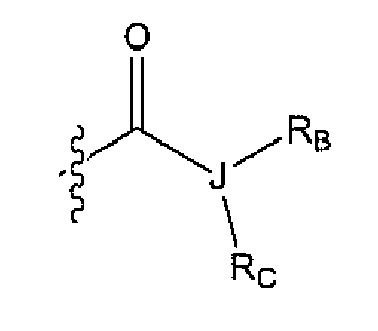
RB und RC unabhängig ausgewählt sind aus der Gruppe bestehend aus Wasserstoff, (C1-C6)Alkyl, (C2-C6)Alkenyl, (C2-C6)Alkynyl, (C1-C6)Alkoxy, (C3-C8)Cycloalkyl, (C3-C8Cycloalkyl) (C1-C4)alkyl, Heterocycloalkyl, Aryl, Aryl(C1-C4)alkyl, (C1-C6)Alkanoyl, Heteroaryl und Mono- und Di(C1-C6)alkylamino(C1-C6)alkyl, von denen jedes wahlweise durch 1 oder 2 Substituenten substituiert ist, die unabhängig unter Halogen, Hydroxy, Cyano, Amino, Nitro, (C1-C6)Alkoxy und (C1-C6 )Alkyl ausgewählt sind; oder
RB und RC und das Atom, an dem sie hängen, einen 4- bis 10-gliedrige, monocyclischen oder bicyclischen Ring bilden, der enthalten kann:a) eine oder mehrere Doppelbindungen,b) ein oder mehrere Oxo, O, S, SO, SO2 und N-RD, worin RD Wasserstoff, Ar1, (C1-C6)Alkyl, (C3-C8)Cycloalkyl, Heterocycloalkyl oder Ar1(C1-C6)alkyl ist; worin Ar1 Aryl oder Heteroaryl ist, von denen jedes wahlweise durch 1 oder 2 Substituenten substituiert ist, die unabhängig ausgewählt sind unter Halogen, Hydroxy, Cyano, Amino, Nitro, (C1-C6)Alkoxy und (C1-C6)Alkyl; und/oderc) einen oder mehrere Substituenten R20;v) -OC(=O)RE, -C(=O)ORE, -C(=O)NH2, -C(=O)NHRE, -C(=O)NRE,RF, -NHC(=O)RE, -C(=NRE)RF, -HC=N-OH, -HC=N(C1-C6alkoxy), -HC=N(C1-C6alkyl), -NREC(=O)RF, -NHS(O)mRE und -NRES(O)mRF, worin m 0, 1 oder 2 ist und RE und RF bei jedem Auftreten unabhängig ausgewählt sind unter (C1-C6)Alkyl, (C3-C8)Cycloalkyl, Heterocycloalkyl, (C1-C6)Alkoxy, Mono-und Di(C1-C6)alkylamino, Aryl und Heteroaryl, von denen jedes wahlweise durch 1, 2 oder 3 R30 substituiert ist,
R20 bei jedem Auftreten unabhängig ausgewählt ist aus der Gruppe bestehend aus Halogen, Hydroxy, Nitro, Cyano, Amino, (C1-C6)Alkyl, wahlweise mit Amino oder Mono- oder Di(C1-C6)alkylamino substituiertem (C1-C6)Alkoxyl, (C3-C8)Cycloalkyl, (C3-C8)Cycloalkyl(C1-C4)alkyl, (C3-C8)Cycloalkyl(C1-C4)alkoxy, (C2-C6)Alkenyl, (C2-C6)Alkynyl, Halo(C1-C6)alkyl, Halo(C3-C6)alkoxy, Oxo, Mono- und Di(C1-C6)alkylamino, Amino(C1-C6)alkyl und Mono- und Di(C1-C6)alkylamino(C1-C6)alkyl;
R30 bei jedem Auftreten unabhängig ausgewählt ist unter Halogen, Hydroxy, Nitro, Cyano, Amino, (C1-C6)Alkyl, (C1-C6)Alkoxyl, das wahlweise mit Amino oder Mono- oder Di(C1-C6)alkylamino substituiert ist, (C3-C8)Cycloalkyl, (C3-C8)Cycloalkyl(C1-C4)alkyl, (C3-C8)Cycloalkyl(C1-C4)alkoxy, Heterocycloalkyl, (C2-C6)Alkenyl, (C2-C6)Alkynyl, Halo(C1-C6)alkyl, Halo(C1-C6)alkoxy, Oxo, Mono- und Di(C1-C6)alkylamino, Amino(C1-C6)alkyl und Mono- und Di(C1-C6)alkylamino(C1-C6)alkyl,
R5 Halo(C1-C6)alkyl darstellt; oder
R5 (C1-C6)Alkyl, (C3-C8)Cycloalkyl oder (C3-C8Cycloalkyl)(C1-C4)alkyl bedeutet, von denen jedes eine oder mehrere Doppel- oder Dreifachbindungen enthalten kann und jedes wahlweise mit 1, 2 oder 3 R30 substituiert ist, oder
R5 Aryl, Aryl(C1-C4)alkyl, Heteroaryl oder Heteroaryl(C1-C4)alkyl darstellt, von denen jedes wahlweise mit 1, 2 oder 3 Substituenten substituiert ist, die ausgewählt sind aus der Gruppe bestehend aus
Halo(C1-C6)alkyl, Amino, NH(R10), N(R10)(R11), Carboxamido, NH(R10)carbonyl, N(R10)(R11)carbonyl, Halogen, Hydroxy, Nitro, Cyano, (C1-C6)Alkyl, (C1-C6)Alkoxy, das wahlweise mit Amino oder Mono oder Di(C1-C6)alkylamino substituiert ist, (C3-C8)Cycloalkyl, (C3-C8)-Cycloalkyl(C1-C4)alkyl, (C3-C8)Cycloalkyl(C1-C4)alkoxy, Heterocyclo(C1-C4)alkyl, (C2-C6)Alkenyl, (C2-C6)Alkyny, Halo(C1-C6)alkyl, Halo(C1-C6)alkoxy, Amino (C1-C6)alkyl und Mono- und Di (C1-C6)alkylamino(C1-C6)alkyl;
Q -C(R6)(R7) oder Sauerstoff darstellt, unter der Bedingung, dass Q nicht Sauerstoff ist, wenn X2 Stickstoff ist;
R6 und R7 unabhängig Wasserstoff, Fluor oder (C1-C6)Alkyl darstellen; die Gruppe:
R bei jedem Auftreten unabhängig ausgewählt ist unter Wasserstoff, Halogen, Amino, (C1-C6)Alkyl, (C2-C6)Alkenyl, (C2-C6)Alkynyl, (C1-C6)Alkoxy, (C3-C8)Cycloalkyl, (C3-C8Cycloalkyl)(C1-C4)alkyl, Halo(C1-C6)alkyl, Haloalkoxy, Carboxamido und 3- bis 7-gliedrigen carbocyclischen oder heterocyclischen Gruppen, die gesättigt, ungesättigt oder aromatisch sind und die ferner mit einem oder mehreren Substituenten substituiert sein können, die unabhängig unter Halogen, Oxo, Hydroxy, C1-4-Alkyl und -O(C1-4-Alkyl) ausgewählt sind;
R' bei jedem Auftreten unabhängig ausgewählt ist unter Wasserstoff, (C1-C6)Alkyl, (C3-C8)Cycloalkyl, (C3-C8)Cycloalkyl)(C1-C4)alkyl und 3- bis 7-gliedrigen carbocyclischen oder heterocyclischen Gruppen, die gesättigt, ungesättigt oder aromatisch sind und die wahlweise mit einem oder mehreren Substituenten substituiert sind, die unabhängig unter Halogen, Oxo, Hydroxy, C1-4-Alkyl und -O(C1-4-Alkyl) ausgewählt sind; und
X1, X2, W und Y wie in Anspruch 1 definiert sind. - Verbindung oder Salz nach Anspruch 2 der Formel:

X3 und X4 unabhängig aus der Gruppe ausgewählt sind, bestehend aus Kohlenstoff, CR, N, O, S, NH und N(C1-C6)Alkyl, unter der Voraussetzung, dass wenigstens eins von X1, X2, X3, X4 Kohlenstoff oder CR ist, worin
R bei jedem Auftreten unabhänig ausgewählt ist unter Wasserstoff, Halogen, Amino, (C1-C6)Alkyl, (C1-C6)Alkoxy, (C3-C8)Cycloalkyl, (C3-C8)Cycloalkyl(C1-C6)alkyl, (C2-C6)Alkenyl, (C2-C6)Alkynyl, Halo(C1-C6)alkyl, Halo(C1-C6)alkoxy, Carboxamid und 3- bis 7-gliedrigen carbocyclischen oder heterocyclischen Gruppen, die gesättigt, ungesättigt oder aromatisch sind und ferner mit einem oder mehreren Substituenten substituiert sein können, die unabhängig ausgewählt sind unter Halogen, Oxo, Hydroxy, C1-4-Alkyl und -D(C1-4-Alkyl). - Verbindung oder Salz nach einem der Ansprüche 1 bis 3, wobei Z1 CR1 ist; Z2 CR2 ist; Z3 CR3 ist; und Z4 CR4 ist.
- Verbindung oder Salz nach einem der Ansprüche 4, 48 oder 68, wobei X2 Kohlenstoff ist; und Q Sauerstoff ist.
- Verbindung oder Salz nach einem der Ansprüche 4, 48 oder 68, worin X2 N ist; und Q C(R6)(R7) ist.
- Verbindung oder Salz nach einem der Ansprüche 4, 48 oder 68, worin X2 Kohlenstoff ist; und Q C(R6)(R7) ist.
- Verbindung oder Salz nach einem der Ansprüche 4, 48 oder 68, worin X1 Kohlenstoff ist; X2 N ist; und Q C(R6)(R7) ist.
- Verbindung oder Salz nach einem der Ansprüche 4, 48 oder 68, worin X1 Stickstoff ist; X2 Kohlenstoff ist; und Q C(R6)(R7) ist.
- Verbindung oder Salz nach einem der Ansprüche 4, 11, 36, 37, 44, 60, 65, 67 oder 68, worin
Q C(R6)(R7) ist. - Verbindung oder Salz nach Anspruch 4 der Formel

- Verbindung oder Salz nach Anspruch 10 oder Anspruch 28, worin:R bei jedem Auftreten unabhängig ausgewählt ist aus der Gruppe bestehend aus, R2,i) Wasserstoff, Halogen, (C1-C6)Alkyl und (C3-C8)Cycloalkyl, (C3-C8)Cycloalkyl(C1-C6)alkyl, (C1-C6)Alkoxy, Halo(C1-C6)alkyl, Halo(C1-C6)alkoxy, undii) Phenyl und Pyridyl, von denen jedes wahlweise mit bis zu 3 Substituenten substituiert ist, die unabhängig unter Halogen, Hydroxy, (C1-C4)Alkyl und -O(C1-C4)Alkyl ausgewählt sind;R1, R2, R3 und R4 unabhängig ausgewählt sind unter Wasserstoff, Halogen, Hydroxy, Nitro, Cyano, Amino, (C1-C6)Alkyl, (C1-C6)Alkoxy, (C3-C8)Cycloalkyl, (C3-C8)Cycloalkyl(C1-C6)alkyl, (C2-C6)Alkenyl, (C2-C6)Alkynyl, Heterocycloalkyl, Halo(C1-C6)alkyl, Halo(C1-C6)alkoxy, Mono- oder Di(C1-C6)alkylamino, Amino(C1-C6)alkyl und Mono- und Di(C1-C6)alkylamino(C1-C6)alkyl;R5 (C1-C6)Alkyl, (C3-C8)Cycloalkyl, (C3-C8)Cycloalkyl(C1-C6)alky, Phenyl, Benzyl, Pyridyl, Imidazolyl, Pyrazolyl oder Pyrimidinyl darstellt;R6 und R7 unabhängig Wasserstoff, Fluor oder (C1-C6)Alkyl darstellen; undW Phenyl, Thienyl, Thiazolyl, Pyridyl, Imidazolyl, Oxazolyl, Triazolyl, Tetrazolyl, Pyrazolyl, Isoxazolyl oder Pyrimidinyl darstellen, von denen jedes wahlweise mit bis zu 4 unabhängig ausgewählten R30-Gruppen substituiert ist.
- Verbindung oder Salz nach Anspruch 10, worin
R bei jedem Auftreten unabhängig aus der aus Wasserstoff, Halogen und (C1-C2)Alkyl bestehenden Gruppe ausgewählt ist;
R1, R3 und R4 unabhängig ausgewählt sind unter Wasserstoff, Halogen, Hydroxy, Nitro, Cyano, Amino, (C1-C6)Alkyl, (C1-C6)Alkoxy, (C3-C8)Cycloalkyl, (C3-C8)Cycloalkyl(C1-C6)alkyl, Halo(C1-C6)alkyl, Halo(C1-C6)alkoxy, Mono- und Di(C1-C6)-alkylamino, Amino(C1-C6)alkyl und Mono- und Di(C1-C6)alkylamino(C1-C6)alkyl;
R5 (C1-C6)Alkyl darstellt;
Q CH2 ist; und
W Phenyl, Furanyl, Thienyl, Thiazolyl, Pyridyl, Imidazolyl, Oxazolyl, Triazolyl, Tetrazolyl, Pyrazolyl, Isoxazolyl, Pyrimidinyl, Benzimidazolyl, Chinolinyl, Isochinolinyl darstellt, von denen jedes wahlweise mit bis zu 4 R30-Gruppen substituiert ist. - Verbindung oder Salz nach Anspruch 13 oder Anspruch 31, worin
R1, R3 und R4 unabhängig unter Wasserstoff, Halogen, Trifluormethyl, (C1-C2)Alkyl und Cyano ausgewählt sind; und
W Phenyl, Pyridyl oder Thiazolyl ist, von denen jedes wahlweise durch einen oder mehrere Substituenten substituiert ist, die unabhängig unter Halogen, Cyano, Hydroxy, Oxo, (C1-C2)Haloalkyl, (C1-C2)Alkyl und (C1-C2)Alkoxy ausgewählt sind. - Verbindung oder Salz nach Anspruch 14 oder Anspruch 23, worin W 2-Thiazolyl, 2-Pyrimidinyl, 3-Fluorphenyl oder 6-Fluor-2-Pyridinyl ist.
- Verbindung oder Salz nach einem der Ansprüche 14, 23, 52 oder 72, worin R, R1 und R4 Wasserstoff sind.
- Verbindung oder Salz nach einem der Ansprüche 14, 23, 52 oder 72, worin R5 Ethyl oder n-Propyl ist.
- Verbindung oder Salz nach einem der Ansprüche 14, 52 oder 72, worin R2 ausgewählt ist unteri) Wasserstoff, Halogen, Hydroxy, Nitro, Cyano, Amino, Halo(C1-C6)alkyl und Halo(C1-C6)alkoxy, undii) (C1-C6)Alkyl, (C1-C6)Alkoxy, (C3-C8)Cycloalkyl, (C2-C6)Alkenyl, (C2-C6)Alkynyl, (C3-C8)Cycloalkyl(C1-C4)alkyl, -NH(R10), -N(R10)(R11), (R10)NH(C1-C6)alkyl, (R10)(R11)N(C1-C6)alkyl, (Heterocycloalkyl)alkyl und Heterocycloalkyl, von denen jedes wahlweise mit 1, 2, 3 oder 4 R20 substituiert ist.
- Verbindung oder Salz nach einem der Ansprüche 14, 52 oder 72, worin R2 eine Gruppe der Formel:
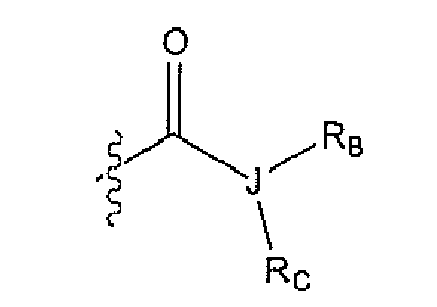
RB und RC unabhängig aus der Gruppe ausgewählt sind, bestehend aus Wasserstoff, (C1-C6)Alkyl, (C2-C6)Alkenyl, (C2-C6)Alkynyl, (C3-C8)Cycloalkyl und (C3-C8)Cycloalkyl (C1-C4)alkyl; oder
RB und RC und das Atom, an dem sie hängen, bilden einen 4- bis 10-gliedrigen monocyclischen oder bicyclischen Ring, dera) eine oder mehrere Doppelbindungen,b) ein oder mehrere Oxo, O, S, SO, SO2 und N-RD, worin RD Wasserstoff oder (C1-C6)Alkyl ist,c) einen oder mehrere Substituenten R20 enthalten kann. - Verbindung oder Salz nach einem der Ansprüche 14, 18 oder 72 worin R2 eine Gruppe der Formel:

RA ein gesättigter, teilweise ungesättigter oder aromatischer Carbocyclus aus 1 Ring oder 2 kondensierten, zusammenhängenden oder Spiro-Ringen ist, wobei jeder Ring 0, 1 oder 2 unabhängig unter N, S und O ausgewählte Heteroatome enthält, und der genannte gesättigte, teilweise ungesättigte oder aromatische Carbocyclus wahlweise mit 1, 2, 3 oder 4 R20 substituiert ist. - Verbindung oder Salz nach einem der Ansprüche 20, 26 oder 52 worin RA unter Phenyl, Pyrrolyl, Pyrazolyl, Thiazolyl, Isoxazolyl, Triazolyl, Tetrazolyl, Oxadiazolyl und Oxazolyl ausgewählt ist, von denen jedes wahlweise mit 1, 2, 3 oder 4 R20 substituiert ist.
- Verbindung oder Salz nach Anspruch 10, worin
R bei jedem Auftreten unabhängig aus der aus Wasserstoff, Halogen und (C1-C2)Alkyl bestehenden Gruppe ausgewählt ist;
R1, R2 und R4 unabhängig ausgewählt sind unter Wasserstoff, Halogen, Hydroxy, Nitro, Cyano, Amino, (C1-C6)Alkyl, (C1-C6)Alkoxy, (C3-C8)Cycloalkyl, (C3-C8)Cycloalkyl(C1-C6)alkyl, Halo(C1-C6)alkyl, Halo(C1-C6)alkoxy, Mono- und Di(C1-C6)-alkylamino, Amino(C1-C6)alkyl und Mono- und Di(C1-C6)alkylamino(C1-C6)alkyl;
R5 (C1-C6)Alkyl darstellt;
Q CH2 ist; und
W Phenyl, Furanyl, Thienyl, Thiazolyl, Pyridyl, Imidazolyl, Oxazolyl, Triazolyl, Tetrazolyl, Pyrazolyl, Isoxazolyl, Pyrimidinyl, Benzimidazolyl, Chinolinyl, Isochinolinyl darstellt, von denen jedes wahlweise mit bis zu 4 R30-Gruppen substituiert ist. - Verbindung oder Salz nach Anspruch 22 oder Anspruch 33, worin
R1, R2 und R4 unabhängig ausgewählt sind unter Wasserstoff, Halogen, Trifluormethyl, (C1-C2)Alkyl und Cyano; und
W Phenyl, Pyridyl oder Thiazolyl ist, von denen jedes wahlweise durch einen oder mehrere Substituenten substituiert ist, die unabhängig unter Halogen, Cyano, Hydroxy, Oxo, (C1-C2)Haloaikyl, (C1-C2)Alkyl und (C1-C2)Alkoxy ausgewählt sind. - Verbindung oder Salz nach einem der Ansprüche 23, 52 oder 72, worin R3 ausgewählt ist unteri) Wasserstoff, Halogen, Hydroxy, Nitro, Cyano, Amino, Halo(C1-C6)alkyl und Halo(C1-C6)alkoxy,ii) (C1-C6)Alkyl, (C1-C6)Alkoxy, (C3-C8)Cycloalkyl, (C2-C6)Alkenyl, (C2-C6)Alkynyl, (C3-C8)Cycloalkyl(C1-C4)alkyl, -NH(R10), -N(R10)(R11), (R10)NH(C1-C6)alkyl, (R10)(R11)N(C1-C6)alkyl, (Heterocycloalkyl)(C1-C4)alkyl und Heterocycloalkyl, von denen jedes wahlweise mit 1, 2, 3 oder 4 R20 substituiert ist.
- Verbindung oder Salz nach einem der Ansprüche 23, 52 oder 72, worin R3 eine Gruppe der Formel:

RB und RC unabhängig aus der Gruppe ausgewählt sind, bestehend aus Wasserstoff, (C1-C6)Alkyl, (C2-C6)Alkenyl, (C2-C6)Alkynyl, (C3-C8)Cycloalkyl und (C3-C8)Cycloalkyl (C1-C4)alkyl; oder
RB und RC und das Atom, an dem sie hängen, einen 4- bis 10-gliedrigen monocyclischen oder bicyclischen Ring bilden, dera) eine oder mehrere Doppelbindungen,b) ein oder mehrere Oxo, O, S, SO, SO2 und N-RD, worin RD Wasserstoff oder (C1-C6)Alkyl ist,c) einen oder mehrere Substituenten R20 enthalten kann. - Verbindung oder Salz nach einem der Ansprüche 23, 52 oder 72 worin R3 eine Gruppe der Formel:

RA ein gesättigter, teilweise ungesättigter oder aromatischer Carbocyclus aus 1 Ring oder 2 kondensierten, zusammenhängenden oder Spiro-Ringen ist, wobei jeder Ring 0, 1 oder 2 unabhängig unter N, S und O ausgewählte Heteroatome enthält, und der genannte gesättigte, teilweise ungesättigte oder aromatische Carbocyclus wahlweise mit 1, 2, 3 oder 4 R20 substituiert ist. - Verbindung oder Salz nach Anspruch 14 oder Anspruch 23, worin R3 -HC=N-OH oder -HC=N(C1-C6Alkoxy) ist.
- Verbindung oder Salz nach einem der Anspruch 4 der Formel:
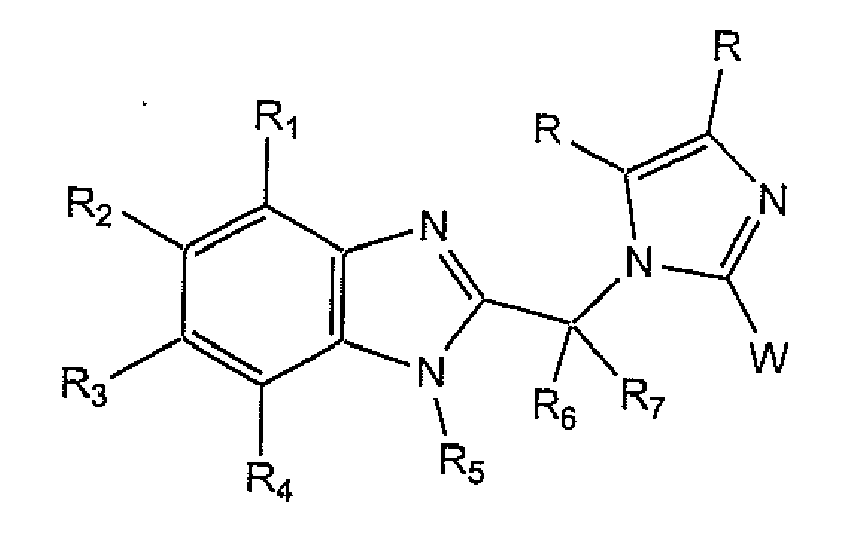
- Verbindung oder Salz nach Anspruch 28, worin
W eine 6-gliedrige Aryl- oder Heteroarylgruppe darstellt, wobei die 6-gliedrige Aryl-oder Heteroarylgruppe wahlweise mit bis zu 4 Gruppen substituiert ist, die unabhängig ausgewählt sind unter R30, -CO2H, -C(=O)ORE, -C(=O)NHRE, -C(=O)NRERF, -C(O)RE, -S(O)mRE und -ORE; und m 0, 1 oder 2 ist. - Verbindung oder Salz nach Anspruch 28, worin
W eine 5-gliedrige Heteroarylgruppe darstellt, die wahlweise mit bis zu 4 Gruppen substituiert ist, die unabhängig ausgewählt sind unter R30, -CO2H, -C(=O)ORE, -C(=O)NHRE, -C(=O)NRERF, -C(O)RE, -S(O)mRE, und -ORE; und m 0, 1 oder 2 ist. - Verbindung oder Salz nach Anspruch 28, worin
R bei jedem Auftreten unabhängig aus der aus Wasserstoff, Halogen und (C1-C2)Alkyl bestehenden Gruppe ausgewählt ist;
R1, R3 und R4 unabhängig ausgewählt sind unter Wasserstoff, Halogen, Hydroxy, Nitro, Cyano, Amino, (C1-C6)Alkyl, (C1-C6)Alkoxy, (C3-C8)Cycloalkyl, (C3-C8)Cycloalkyl(C1-C6)alkyl, Halo(C1-C6)alkyl, Halo(C1-C6)alkoxy, Mono- oder Di(C1-C6)-alkylamino, Amino(C1-C6)alkyl und Mono- und Di(C1-C6)alkylamino(C1-C6)alkyl;
R5 (C1-C6)Alkyl darstellt;
R6 und R7 Wasserstoff sind; und
W Phenyl, Furanyl, Thienyl, Thiazolyl, Pyridyl, Imidazolyl, Oxazolyl, Triazolyl, Tetrazolyl, Pyrazolyl, Isoxazolyl, Pyrimidinyl, Benzimidazolyl, Chinolinyl, Isochinolinyl darstellt, von denen jedes wahlweise mit bis zu 4 R30-Gruppen substituiert ist. - Verbindung oder Salz nach einem der Ansprüche 14, 52 und 72, worin R2 -HC=N-OH oder -HC=N(C1-C6)Alkoxy ist.
- Verbindung oder Salz nach Anspruch 28, worin
R bei jedem Auftreten unabhängig aus der aus Wasserstoff, Halogen und (C1-C2)Alkyl bestehenden Gruppe ausgewählt ist;
R1, R2 und R4 unabhängig ausgewählt sind unter Wasserstoff, Halogen, Hydroxy, Nitro, Cyano, Amino, (C1-C6)Alkyl, (C1-C6)Alkoxy, (C3-C8)Cycloalkyl, (C3-C8)Cycloalkyl(C1-C6)alkyl, Halo(C1-C6)alkyl, Halo(C1-C6)alkoxy, Mono- oder Di(C1-C6)-alkylamino, Amino(C1-C6)alkyl und Mono- und Di(C1-C6)alkylamino(C1-C6)alkyl;
R5 (C1-C6)Alkyl darstellt;
R6 und R7 Wasserstoff sind; und
W Phenyl, Furanyl, Thienyl, Thiazolyl, Pyridyl, Imidazolyl, Oxazolyl, Triazolyl, Tetrazolyl, Pyrazolyl, Isoxazolyl, Pyrimidinyl, Benzimidazolyl, Chinolinyl, Isochinolinyl darstellt, von denen jedes wahlweise mit bis zu 4 R30-Gruppen substituiert ist. - Verbindung oder Salz nach Anspruch 3, worin
Z1 CR1 ist; Z2 CR2 ist; Z3 CR3 ist; und Z4 CR4 ist;
X1 Kohlenstoff ist; X2 Stickstoff ist; X3 CR ist, X4 Stickstoff ist und Q C(R6)(R7) ist. - Verbindung oder Salz nach Anspruch 3, worin
Z1 CR1 ist; Z2 CR2 ist; Z3 CR3 ist; und Z4 CR4 ist;
X1 Kohlenstoff ist; X2 Stickstoff ist; X3 Stickstoff ist; X4 CR ist; und Q C(R6)(R7) ist. - Verbindung oder Salz nach Anspruch 3, worin
Z1 CR1 ist; Z2 CR2 ist; Z3 CR3 ist; und Z4 CR4 ist;
X1 Kohlenstoff ist; X2 Kohlenstoff ist; X3 S ist und X4 CR ist. - Verbindung oder Salz nach Anspruch 2, worin
Z1 CR1 ist; Z2 CR2 ist; Z3 CR3 ist; und Z4 CR4 ist; und die Gruppe
- Verbindung oder Salz nach Anspruch 3, worin
Z1 CR1 ist; Z2 CR2 ist; Z3 CR3 ist; und Z4 CR4 ist;
X1 Stickstoff ist; X2 Kohlenstoff ist; X3 Stickstoff ist und X4 CR ist. - Verbindung oder Salz nach Anspruch 3, worin
Z1 CR1 ist; Z2 CR2 ist; Z3 CR3 ist; und Z4 CR4 ist;
X1 Kohlenstoff ist; X2 Kohlenstoff ist; X3 NH oder N(C1-C6)alkyl ist; und X4 CR ist. - Verbindung oder Salz nach Anspruch 3, worin
Z1 CR1 ist; Z2 CR2 ist; Z3 CR3 ist; und Z4 CR4 ist;
X1 Kohlenstoff ist; X2 Stickstoff ist; X3 Stickstoff ist; X4 Stickstoff ist, und Q C(R6)(R7) ist. - Verbindung oder Salz nach Anspruch 3, worin
Z1 CR1 ist; Z2 CR2 ist; Z3 CR3 ist; und Z4 CR4 ist; und die Gruppe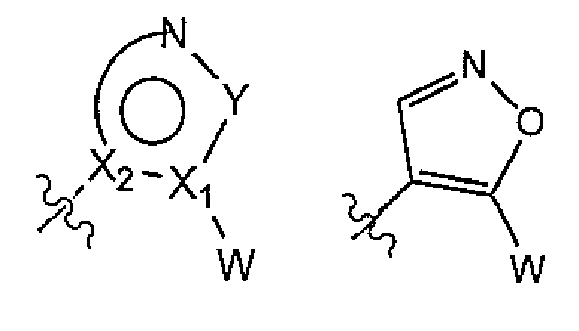
- Verbindung oder Salz nach Anspruch 3, worin Z1 CR1 ist; Z2 CR2 ist; Z3 CR3 ist; und Z4 CR4 ist;
X1 Stickstoff ist; X2 Kohlenstoff ist; X3 CR ist; und X4 Stickstoff ist. - Verbindung oder Salz nach Anspruch 42, worin QC(R6)(R7) ist.
- Verbindung oder Salz nach Anspruch 3, worin Z1 CR1 ist; Z2 CR2 ist; Z3 CR3 ist; und Z4 CR4 ist;
X1 Stickstoff ist; X2 Kohlenstoff ist; X3 Stickstoff ist; und X4 Stickstoff ist. - Verbindung oder Salz nach Anspruch 1, worin eins und nur eins von Z1, Z2, Z3 und Z4 Stickstoff ist.
- Verbindung oder Salz nach Anspruch 2, worin
eins und nur eins von Z1, Z2, Z3 und Z4 Stickstoff ist. - Verbindung oder Salz nach Anspruch 3, worin
eins und nur eins von Z1, Z2, Z3 und Z4 Stickstoff ist - Verbindung oder Salz nach Anspruch 47, worin
Z2 oder Z3 Stickstoff ist; und
W eine 5-gliedrige Heteroarylgruppe darstellt, die wahlweise mit bis zu 4 Gruppen substituiert ist, die unabhängig ausgewählt sind unter R30, -CO2H, -C(=O)ORE, -C(=O)NHRE, -C(=O)NRERF, -C(O)RE und -S(O)mRE, -ORE; worin R30 und RE wie oben definiert sind und m 0, 1 oder 2 ist. - Verbindung oder Salz nach Anspruch 48 der Formel:

- Verbindung oder Salz nach Anspruch 49, worin
R bei jedem Auftreten unabhängig aus der Gruppe ausgewählt ist, bestehend ausi) Wasserstoff, Halogen, (C1-C6)Alkyl, (C3-C8)Cycloalkyl, (C3-C8)Cycloalkyl(C1-C6)alkyl, (C1-C6)Alkoxy, Halo(C1-C6)alkyl, Halo(C1-C6)alkoxy, undii) Phenyl und Pyridyl, von denen jedes wahlweise mit bis zu 3 Substituenten substituiert ist, die unabhängig unter Halogen, Hydroxy, C1-4Alkyl und -O(C1-4Alkyl) ausgewählt sind;
R1, R2 und R4 unabhängig aus der Gruppe ausgewählt sind unter Wasserstoff, Halogen, Hydroxy, Nitro, Cyano, Amino, (C1-C6)Alkyl, (C1-C6)Alkoxy, (C3-C8)Cycloalkyl, (C3-C8)Cycloalkyl(C1-C6)alkyl, (C2-C6)Alkenyl, (C2-C6)Alkynyl, Heterocycloalkyl, Halo(C1-C6)alkyl, Halo(C1-C6)alkoxy, Mono- oder Di(C1-C6)alkylamino, Amino(C1-C6)alkyl und Mono- und Di(C1-C6)alkylamino(C1-C6)alkyl;
R5 (C1-C6)Alkyl, (C3-C8)Cycloalkyl, (C3-C8)Cycloalkyl(C1-C6)alky, Phenyl, Benzyl, Thienyl, Thiazolyl, Pyridyl, Imidazolyl, Pyrazolyl oder Pyrimidinyl darstellt;
R6 und R7 unabhängig Wasserstoff, Fluor oder (C1-C6)Alkyl darstellen; und
W Thienyl, Thiazolyl, Imidazolyl, Oxazolyl, Triazolyl, Tetrazolyl, Pyrazolyl oder Isoxazolyl darstellen, von denen jedes wahlweise mit bis zu 4 R30-Gruppen substituiert ist. - Verbindung oder Salz nach Anspruch 49 oder Anspruch 55, worin R bei jedem Auftreten unabhängig aus der aus Wasserstoff, Halogen und (C1-C2)Alkyl
bestehenden Gruppe ausgewählt ist.
R1 und R4 unabhängig ausgewählt sind unter Wasserstoff, Halogen, Hydroxy, Nitro, Cyano, Amino, (C1-C6)Alkyl, (C1-C6)Alkoxy, (C3-C8)Cycloalkyl, (C3-C8)Cycloalkyl(C1-C6)alkyl, Halo(C1-C6)alkyl, Halo(C1-C6)alkoxy, Mono- oder Di(C1-C6)alkylamino, Amino(C1-C6)alkyl und Mono- und Di(C1-C6)alkylamino(C1-C6)alkyl;
R5 (C1-C6)Alkyl darstellt;
R6 und R7 unabhängig Wasserstoff sind; und
W Furanyl, Thienyl, Thiazolyl, Imidazolyl, Oxazolyl, Triazolyl, Tetrazolyl, Pyrazolyl oder Isoxa-zolyl darstellt, von denen jedes wahlweise mit bis zu 4 R30-Gruppen substituiert ist. - Verbindung oder Salz nach Anspruch 51, worin
R1 und R4 unabhängig unter Wasserstoff, Halogen, Trifluormethyl, (C1-C2)Alkyl und Cyano ausgewählt sind; und
W Thiazolyl ist, das wahlweise durch einen oder mehrere Substituenten substituiert ist, die unabhängig unter Halogen, Cyano, Hydroxy, Oxo, (C1-C2)Haloalkyl, (C1-C2)Alkyl und (C1-C2)Alkoxy ausgewählt sind. - Verbindung oder Salz nach Anspruch 52, worin
W 2-Thiazolyl ist. - Verbindung oder Salz nach Anspruch 18 oder Anspruch 42, worin
R2 unter Wasserstoff, Halogen, Hydroxy, Nitro, Cyano, Amino, Halo(C1-C6)alkyl und Halo(C1-C6)alkoxy ausgewählt ist. - Verbindung oder Salz nach Anspruch 48 der Formel

- Verbindung oder Salz nach Anspruch 47, worin
R bei jedem Auftreten unabhängig aus der Gruppe ausgewählt ist, bestehend ausi) Wasserstoff, Halogen, (C1-C6)Alkyl, (C3-C8)Cycloalkyl, (C3-C8)Cycloalkyl(C1-C6)alkyl, (C1-C6)Alkoxy, Halo(C1-C6)alkyl, Halo(C1-C6)alkoxy, undii) Phenyl und Pyridyl, von denen jedes wahlweise mit bis zu 3 Substituenten substituiert ist, die unabhängig unter Halogen, Hydroxy, C1-4Alkyl und -O(C1-4Alkyl) ausgewählt sind;
R1, R3 und R4 unabhängig ausgewählt sind unter Wasserstoff, Halogen, Hydroxy, Nitro, Cyano, Amino, (C1-C6)Alkyl, (C1-C6)Alkoxy, (C3-C8)Cycloalkyl, (C3-C8)Cycloalkyl(C1-C6)alkyl, (C2-C6)Alkenyl, (C2-C6)Alkynyl, Heterocycloalkyl, Halo(C1-C6)alkyl, Halo(C1-C6)alkoxy, Mono- oder Di(C1-C6)alkylamino und Amino(C1-C6)alkyl und Mono- und Di(C1-C6)alkylamino(C1-C6)alkyl;
R5 (C1-C6)Alkyl, (C3-C8)Cycloalkyl, (C3-C8)Cycloalkyl(C1-C6)alky, Phenyl, Benzyl, Thienyl, Thiazolyl, Pyridyl, Imidazolyl, Pyrazolyl oder Pyrimidinyl darstellt;
R6 und R7 unabhängig Wasserstoff, Fluor oder (C1-C6)Alkyl darstellen; und
W Thienyl, Thiazolyl, Imidazolyl, Oxazolyl, Triazolyl, Tetrazolyl, Pyrazolyl oder Isoxazolyl darstellt, von denen jedes wahlweise mit bis zu 4 R30-Gruppen substituiert ist. - Verbindung oder Salz nach Anspruch 24, worin
R3 unter Wasserstoff, Halogen, Hydroxy, Nitro, Cyano, Amino, Halo(C1-C6)alkyl und Halo(C1-C6)alkoxy ausgewählt ist. - Verbindung oder Salz nach Anspruch 48 oder Anspruch 68, worin X1 Kohlenstoff ist; X2 Stickstoff ist; X3 CR ist; und X4 Stickstoff ist; und
Q C(R6)(R7) ist. - Verbindung oder Salz nach Anspruch 48 oder Anspruch 68, worin X1 Kohlenstoff ist; X2 Stickstoff ist; X3 Stickstoff ist; und X4 CR ist; und
Q C(R6)(R7) ist. - Verbindung oder Salz nach Anspruch 48 oder Anspruch 68, worin X1 Kohlenstoff ist; X2 Kohlenstoff ist; X3 S ist; und X4 CR ist.
- Verbindung oder Salz nach Anspruch 48 oder Anspruch 68, worin X1 Stickstoff ist; X2 Kohlenstoff ist; X3 Stickstoff ist; und X4 CR ist.
- Verbindung oder Salz nach Anspruch 48 oder Anspruch 68, worin X1 Kohlenstoff ist; X2 Kohlenstoff ist; X3 NH oder N(C1-C6alkyl) ist; und X4 CR ist.
- Verbindung oder Salz nach Anspruch 48 oder Anspruch 68, worin X1 Kohlenstoff ist; X2 Stickstoff ist; X3 Stickstoff ist; und X4 Stickstoff ist; und
Q C(R6)(R7) ist. - Verbindung oder Salz nach Anspruch 46, worin entweder Z2 oder Z3 Stickstoff ist,
und die Gruppe
W eine 5-gliedrige Heteroarylgruppe darstellt, die wahlweise mit bis zu 4 Gruppen substituiert ist, die unabhängig unter R30, -CO2H, -C(=O)ORE, -C(=O)NHRE, -C(=O)NRERF, -C(O)RE und -S(O)mRE, -ORE ausgewählt sind, worin R30 und RE wie oben definiert sind und m 0, 1 oder 2 ist. - Verbindung oder Salz nach Anspruch 48, worin
X1 Stickstoff ist; X2 Kohlenstoff ist; X3 CR ist; und X4 Stickstoff ist. - Verbindung oder Salz nach Anspruch 48 oder Anspruch 68, worin X1 Kohlenstoff ist; X2 Kohlenstoff ist; X3 NH oder NCH3 ist; und X4 CR ist.
- Verbindung oder Salz nach Anspruch 48 oder Anspruch 68, worin X1 Stickstoff ist; X2 Kohlenstoff ist; X3 Stickstoff ist; und X4 Stickstoff ist.
- Verbindung oder Salz nach Anspruch 47, worin
Z2 oder Z3 Stickstoff ist; und
W eine 6-gliedrige Arylgruppe oder Heteroarylgruppe darstellt, die wahlweise mit bis zu 4 Gruppen substituiert ist, die unabhängig unter R30, -CO2H, -C(=O)ORE, -C(=O)NHRE, -C(=O)NRERF, -C(O)RE und -S(O)mRE, -ORE ausgewählt sind, worin R30 und RE wie oben definiert sind und m 0, 1 oder 2 ist. - Verbindung oder Salz nach Anspruch 48 der Formel

- Verbindung oder Salz nach Anspruch 69, worin
R bei jedem Auftreten unabhängig aus der Gruppe ausgewählt ist, bestehend ausi) Wasserstoff, Halogen, (C1-C6)Alkyl, (C3-C8)Cycloalkyl, (C3-C8)Cycloalkyl(C1-C6)alkyl, (C1-C6)Alkoxy, Halo(C1-C6)alkyl, Halo(C1-C6)alkoxy, undii) Phenyl und Pyridyl, von denen jedes wahlweise mit bis zu 3 Substituenten substituiert ist, die unabhängig unter Halogen, Hydroxy, C1-4Alkyl und -O(C1-4Alkyl) ausgewählt sind;R1, R3 und R4 unabhängig ausgewählt sind unter Wasserstoff, Halogen, Hydroxy, Nitro, Cyano, Amino, (C1-C6)Alkyl, (C1-C6)Alkoxy, (C3-C8)Cycloalkyl, (C3-C8)Cycloalkyl(C1-C6)alkyl, (C2-C6)Alkenyl, (C2-C6)Alkynyl, Heterocycloalkyl, Halo(C1-C6)alkyl, Halo(C1-C6)alkoxy, Mono- oder Di(C1-C6)alkylamino, Amino(C1-C6)alkyl und Mono- und Di(C1-C6)alkylamino(C1-C6)alkyl;
R5 (C1-C6)Alkyl, (C3-C8)Cycloalkyl, (C3-C8)Cydoalkyl(C1-C6)alky, Phenyl, Benzyl, Thienyl, Thiazolyl, Pyridyl, Imidazolyl, Pyrazolyl oder Pyrimidinyl darstellt;
R6 und R7 unabhängig Wasserstoff, Fluor oder (C1-C6)Alkyl darstellen; und
W Phenyl Pyrimidinyl, Pyridyl, Pyridizinyl oder Pyrazinyl darstellt, von denen jedes wahlweise mit bis zu 4 R30-Gruppen substituiert ist. - Verbindung oder Salz nach Anspruch 69 oder Anspruch 75, worin
R bei jedem Auftreten unabhängig aus der aus Wasserstoff, Halogen und (C1-C2)Alkyl bestehenden Gruppe ausgewählt ist;
R1 und R4 unabhängig ausgewählt sind unter Wasserstoff, Halogen, Hydroxy, Nitro, Cyano, Amino, (C1-C6)Alkyl, (C1-C6)Alkoxy, (C3-C8)Cycloalkyl, (C3-C8)Cycloalkyl(C1-C6)alkyl, Halo(C1-C6)alkyl, Halo(C1-C6)alkoxy, Mono- oder Di(C1-C6)alkylamino, Amirlo(C1-C6)alkyl und Mono- und Di(C1-C6)alkylamino(C1-C6)alkyl;
R5 (C1-C6)Alkyl darstellt;
R6 und R7 Wasserstoff sind; und
W Phenyl Pyrimidinyl, Pyridyl, Pyridizinyl oder Pyrazinyl darstellt, von denen jedes wahlweise mit bis zu 4 R30-Gruppen substituiert ist. - Verbindung oder Salz nach Anspruch 71, worin
R1 und R4 unabhängig unter Wasserstoff, Halogen, Trifluormethyl, (C1-C2)Alkyl und Cyano ausgewählt sind; und
W Phenyl oder Pyridyl ist, von denen jedes wahlweise durch einen oder mehrere Substituenten substituiert ist, die unabhängig unter Halogen, Cyano, Hydroxy, Oxo, (C1-C2)Haloalkyl, (C1-C2)Alkyl und (C1-C2)Alkoxy ausgewählt sind. - Verbindung oder Salz nach Anspruch 72, worin
W 2-Pyrimidinyl, 3-Fluorphenyl oder 6-Fluor-2-Pyridinyl ist. - Verbindung oder Salz nach Anspruch 68 der Formel

- Verbindung oder Salz nach Anspruch 74, worin
R bei jedem Auftreten unabhängig aus der Gruppe ausgewählt ist, bestehend ausi) Wasserstoff, Halogen, (C1-C6)Alkyl, (C3-C8)Cycloalkyl, (C3-C8)Cycloalkyl(C1-C6)alkyl, (C1-C6)Alkoxy, Halo(C1-C6)alkyl, Halo(C1-C6)alkoxy, undii) Phenyl und Pyridyl, von denen jedes wahlweise mit bis zu 3 Substituenten substituiert ist, die unabhängig unter Halogen, Hydroxy, C1-4Alkyl und -O(C1-4Alkyl) ausgewählt sind;
R1, R3 und R4 unabhängig ausgewählt sind unter Wasserstoff, Halogen, Hydroxy, Nitro, Cyano, Amino, (C1-C6)Alkyl, (C1-C6)Alkoxy, (C3-C8)Cycloalkyl, (C3-C8)Cycloalkyl(C1-C6)alkyl, (C2-C6)Alkenyl, (C2-C6)Alkynyl, Heterocycloalkyl, Halo(C1-C6)alkyl, Halo(C1-C6)alkoxy, Mono- und Di(C1-C6)alkylamino, Amino(C1-C6)alkyl und Mono- und Di(C1-C6)alkylamino(C1-C6)alkyl;
R5 (C1-C6)Alkyl, (C3-C8)Cycloalkyl, (C3-C8)Cycloalkyl(C1-C6)alkyl, Phenyl, Benzyl, Thienyl, Thiazolyl, Pyridyl, Imidazolyl, Pyrazolyl oder Pyrimidinyl darstellt;
R6 und R7 unabhängig Wasserstoff, Fluor oder (C1-C6)Alkyl darstellen; und
W Phenyl Pyrimidinyl, Pyridyl, Pyridizinyl oder Pyrazinyl darstellt, von denen jedes wahlweise mit bis zu 4 R30-Gruppen substituiert ist. - Verbindung oder Salz nach Anspruch 67, worin
entweder Z2 oder Z3 Stickstoff ist,
und die Gruppe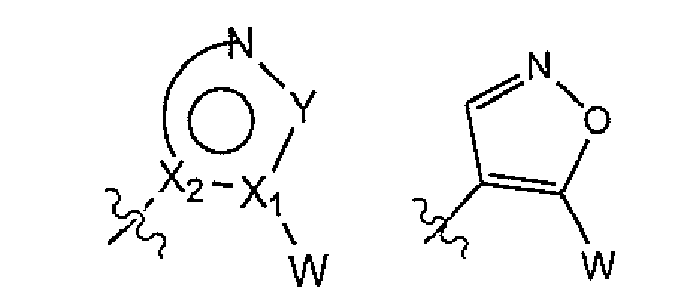
W eine 6-gliedrige Aryl- oder Heteroarylgruppe darstellt, die wahlweise mit bis zu 4 Gruppen substituiert ist, die unabhängig ausgewählt sind unter R30, -CO2H, -C(=O)ORE, -C(=O)NHRE, -C(=O)NRERF, -C(O)RE und -S(O)mRE, -ORE ausgewählt sind, worin R30 und RE wie oben definiert sind und m 0, 1 oder 2 ist. - Pharmazeutische Zusammensetzung mit einer Verbindung oder einem Salz nach Anspruch 1 kombiniert mit wenigstens einem pharmazeutisch zulässigen Träger oder Vehikel.
- Verfahren zur Änderung der signalübertragenden Aktivität eines GABAA-Rezeptors, bei dem man eine einen solchen Rezeptor exprimierende Zelle mit einer ausreichenden Menge einer Verbindung oder eines Salzes nach Anspruch 1 in Berührung bringt, um die Elektrophysiologie der Zelle nachweisbar zu verändern, wobei eine nachweisbare Änderung der Elektrophysiologie der Zelle eine Veränderung der signalübertragenden Aktivität des GABAA-Rezeptors anzeigt.
- Verfahren zur Änderung der signalübertragenden Aktivität eines GABAA-Rezeptors, bei dem man eine diesen Rezeptor exprimierende Zelle mit einer Menge einer Verbindung oder eines Salzes nach Anspruch 1 in Berührung bringt, um die Chlorid-Leitfähigkeit in vitro der GABAA-Rezeptoren exprimierenden Zelle nachweisbar zu verändern.
- Verfahren des Anspruchs 79, bei dem die Zelle einen heterologen GABAA-Rezeptor rekombinant exprimiert und die Änderung der Elektrophysiologie der Zelle durch intracelluläre Registrierung oder Patch-Clamp-Registrierung nachgewiesen wird.
- Verfahren des Anspruchs 79, bei dem die Zelle eine Neuronzelle ist, die in vivo in einem Lebewesen in Berührung gebracht wird, die Zelle mit der in einer Körperflüssigkeit gelösten Verbindung oder dem Salz in Berührung gebracht wird und die Änderung in der Elektrophysiologie der Zelle als Änderung in dem Verhalten des Lebewesens nachgewiesen wird.
- Verfahren des Anspruchs 81, bei dem das Lebewesen ein Mensch ist, die Neuronzelle eine Gehirnzelle ist und die Körperflüssigkeit Hirn-Rückenmark-Flüssigkeit ist.
- Verfahren zur Änderung der signaiübertragenden Aktivität eines GABAA-Rezeptors, bei dem man eine den GABAA-Rezeptar exprimierende Zelle einer genügenden Menge einer Verbindung oder eines Salzes nach Anspruch 1 aussetzt, um die RO15-1788-Bindung an einen menschlichen GABAA-Rezeptors exprimierende Zellen in vitro zu hemmen.
- Verfahren zur Demonstrierung der Anwesenheit eines GABAA-Rezeptors in einer Zelle oder einer Gewebeprobe, bei dem man
eine Zelle oder Gewebeprobe mit einer markierten Verbindung oder einem markierten Salz nach Anspruch 1 in Berührung bringt
die Zelle oder Gewebeprobe zur Entfernung von ungebundener markierter Verbindung oder Salz wäscht und
die Anwesenheit von markierter Verbindung oder markiertem Salz in einer Zelle oder Gewebeprobe nachweist. - Verfahren des Anspruchs 84, bei dem die Zelle oder Gewebeprobe ein Gewebeschnitt ist.
- Verfahren des Anspruchs 84, bei dem die markierte Verbindung oder das markierte Salz einen radioaktiven Marker oder einen direkt oder indirekt lumineszierenden Marker enthält.
- Verfahren des Anspruchs 84, bei dem die Zelle oder Gewebeprobe ein Gewebeschnitt ist, die markierte Verbindung oder das markierte Salz einen radioaktiven Marker oder einen direkt oder indirekt lumineszierenden Marker enthält und die markierte Verbindung oder das markierte Salz zur Erzeugung eines Autoradiogramms autoradiographisch nachgewiesen wird.
- Verfahren zur Demonstrierung der Anwesenheit eines GABAA-Rezeptors in einem Gewebeschnitt, bei dem man
den Gewebeschnitt mit einer radiomarkierten oder lumineszenzmarkierten Verbindung oder Salz nach Anspruch 1 in Kontakt bringt, um einen kontaktierten Gewebeschnitt zu ergeben,
den Gewebeschnitt zur Entfernung ungebundener markierter Verbindung oder Salz wäscht,
die markierte Verbindung oder das markierte Salz in demr Gewebeschnitt nachweist, und
die Exponierungsdichte des Gewebeschnitts mit der Exponierungsdichte eines zweiten Gewebeschnitts vergleicht, der nicht mit einer Verbindung oder einem Salz nach Anspruch 1 kontaktiert wurde. - Packung mit einer pharmazeutischen Zusammensetzung des Anspruchs 77 in einem Behälter und ferner mit wenigstens einer der
Anweisungen zur Anwendung der Zusammensetzung zur Behandlung eines Patienten, der unter Angststörungen leidet, oder
Anweisungen zur Anwendung der Zusammensetzung zur Behandlung eines Patienten, der unter Depression leidet,
Anweisungen zur Anwendung der Zusammensetzung zur Behandlung eines Patienten, der unter einer Schlafstörung leidet,
Anweisungen zur Anwendung der Zusammensetzung zur Behandlung eines Patienten, der unter Schizophrenie leidet, oder
Anweisungen zur Anwendung der Zusammensetzung zur Behandlung eines Patienten, der unter Störung durch Aufmerksamkeitsmangel-Überaktivität leidet. - Packung mit einer pharmazeutischen Zusammensetzung des Anspruchs 77 in einem Behälter und ferner mit Angaben, darunter wenigstens einer der
Anweisungen zur Anwendung der Zusammensetzung zur Behandlung eines Patienten, der unter Alzheimerscher Demenz leidet, oder
Anweisungen zur Anwendung der Zusammensetzung zur Stärkung des Gedächtnisses bei einem Patienten. - Verwendung einer Verbindung oder eines Salzes nach Anspruch 1 für die Herstellung eines Arzneimittels.
- Verwendung einer Verbindung oder eines Salzes nach Anspruch 1 für die Behandlung von Angst, Depression, Schlafstörung, Schizophrenie oder Störung durch Aufmerksamkeitsmangel-Überaktivität.
- Verwendung einer Verbindung oder eines Salzes nach Anspruch 1 für die Gedächtnisstärkung.
- Verfahren zur Herstellung einer Verbindung der Formel A


Z1 Stickstoff oder CR1 ist;
Z2 Stickstoff oder CR2 ist;
Z3 Stickstoff oder CR3 ist;
Z4 Stickstoff oder CR4 ist;
vorausgesetzt, dass nicht mehr als zwei der Z1, Z2, Z3 und Z4 Stickstoff sind;
R1, R2, R3 und R4 unabhängig gewählt sind unteri) Wasserstoff, Halogen, Hydroxy, Nitro, Cyano, Amino, Haloalkyl und Haloalkoxy,ii) Alkyl, Alkoxy, Cycloalkyl, Alkenyl, Alkynyl, (Cycloalkyl)alkyl, -NH(R10), -N(R10)(R11), Hydroxyalkyl, Aminoalkyl, (R10)NHalkyl-, (R10)(R11)Nalkyl-, Alkanoyl, Alkoxycarbonyl, (Heterocycloalkyl)alkyl, Alkylsulfonyl, Alkylthio, Mono- oder Dialkylaminocarbonyl, Heterocycloalkyl, Aryl und Heteroaryl, von denen jedes wahlweise mit 1, 2, 3 oder 4 R20 substituiert ist,
worin R10 und R11 unabhängig ausgewählt sind aus der Gruppe, die aus Alkyl, Alkenyl, Alkynyl, Alkoxy, Cycloalkyl, (Cycloalkyl)alkyl, Aryl, Arylalkyl, Alkanoyl und Mono- und Dialkylaminoalkyl besteht; undiii) einer Gruppe der Formel:
RA ein gesättigter, teilweise ungesättigter oder aromatischer Carbocyclus ist, oder aus 1 Ring oder 2 kondensierten aneinanderhängenden oder Spiro-Ringen besteht, wobei jeder Ring 0, 1 oder 2 unter N, S oder O unabhängig ausgewählte Heteroatome enthält und wobei der gesättigte, teilweise ungesättigte oder aromatische Carbocyclus wahlweise mit 1, 2, 3 oder 4 R20 substituiert ist, undiv) einer Gruppe der Formel:
RB und RC unabhängig ausgewählt sind aus der Gruppe bestehend aus Wasserstoff, Alkyl, Alkenyl, Alkynyl, Alkoxy, Cycloalkyl, (Cycloalkyl)alkyl, Heterocycloalkyl, Aryl, Arylalkyl, Alkanoyl, Heteroaryl und Mono- und Dialkylaminoalkyl, von denen jedes wahlweise durch 1 oder 2 Substituenten substituiert ist, die unabhängig unter Halogen, Hydroxy, Cyano, Amino, Nitro, Alkoxy und Alkyl ausgewählt sind;
RB und RC und das Atom, an dem sie hängen, einen 4- bis 10-gliedrigen monocyclischen oder bicyclischen Ring bilden, der enthalten kann:a) eine oder mehrere Doppelbindungen,b) ein oder mehrere Oxo, O, S, SO, SO2 oder N-RD, worin RD Wasserstoff, Ar1, Alkyl, Cycloalkyl, Heterocycloalkyl oder Ar1alkyl ist; worin Ar1 Aryl oder Heteroaryl ist, von denen jedes wahlweise durch 1 oder 2 unter Halogen, Hydroxy, Cyano, Amino, Nitro, Alkoxy und Alkyl ausgewählte Substituenten substituiert ist, und/oderc) einen oder mehrere Substituenten R20;v) -OC(=O)RE, -C(=O)ORE, -C(=O)NH2, -C(=O)NHRE, -C(=O)NRERF, -NHC(=O)RE, -C(=NRE)RF, -HC=N-OH, -HC=N(alkoxy), -HC=N(alkyl), -NREC(=O)RF, -NHS(O)mRE und -NRES(O)mRF, worin m 0, 1 oder 2 ist und RE und RF bei jedem Auftreten unabhängig ausgewählt sind unter Alkyl, Cycloalkyl, Heterocycloalkyl, Alkoxy, Mono- und Dialkylamino, Aryl oder Heteroaryl, von denen jedes wahlweise durch 1, 2 oder 3 R30 substituiert ist;
R20 bei jedem Auftreten unabhängig ausgewählt ist aus der Gruppe, bestehend aus Halogen, Hydroxy, Nitro, Cyano, Amino, Alkyl, mit Amino oder Mono- oder Dialkylamino wahlweise substituiertem Alkoxy, Cycloalkyl, Cycloalkylalkyl, Cycloalkyfalkoxy, Alkenyl, Alkynyl, Haloalkyl, Oxo, Haloalkoxy, Mono- und Dialkylamino, Aminoalkyl und Mono- und Dialkylaminoalkyl;
R30 bei jedem Auftreten unabhängig ausgewählt ist unter Halogen, Hydroxy, Nitro, Cyano, Amino, Alkyl, wahlweise mit Amino oder Mono- oder Dialkylamino substituiertem Alkoxy, Cycloalkyl, Cycloalkylalkyl, Cycloalkylalkoxy, Heterocycloalkyl, Alkenyl, Alkynyl, Haloalkyl, Haloalkoxy, Oxo, Mono- und Dialkylamino, Aminoalkyl und Mono- und Dialkylaminoalkyl,;
R5 Haloalkyl darstellt; oder
R5 Alkyl, Cycloalkyl oder (Cycloalkyl)alkyl darstellt, von denen jedes eine oder mehrere Doppel- oder Dreifachbindungen enthalten kann und jedes wahlweise mit 1, 2, oder 3 R30 substituiert ist, oder
R5 Aryl, Arylalkyl, Heteroaryl oder Heteroarylalkyl darstellt, von denen jedes wahlweise mit 1, 2, oder 3 R30 Substituenten substituiert ist, die aus der Gruppe ausgewählt sind, bestehend aus Haloalkyl, Amino, -NH(R10), -N(R10)(R11), Carboxamido, (R10)NHcarbonyl, (R10)(R11)Ncarbonyl-, Halogen, Hydroxy, Nitro, Cyano, Alkyl, mit Amino oder Mono- oder Dialkylamino wahlweise substituiertem Alkoxy, Cycloalkyl, Cycloalkylalkyl, Cycloalkylalkoxy, Heterocycloalkyl, Alkenyl, Alkynyl, Haloalkyl, Haloalkoxy, Aminoalkyl und Mono- und Dialkylaminoalkyl;
R6 und R7 unabhängig Wasserstoff, Fluor oder Alkyl darstellen;
R bei jedem Auftreten unabhängig unter Wasserstoff, Halogen, Amino, (C1-C6)Alkyl, (C2-C6)Alkenyl, (C2-C6)Alkynyl, (C1-C6)Alkoxy, (C3-C8)Cycloalkyl, (C3-C8)Cycloalkyl(C1-C4)alkyl, Halo(C1-C6)alkyl, Haloalkoxy, Carboxamido und 3- bis 7-gliedrigen carbocyclischen oder heterocyclischen Gruppen ausgewählt ist, die gesättigt, ungesättigt oder aromatisch sind und ferner mit einem oder mehreren Substituenten substituiert sein können, die unabhängig unter Halogen, Oxo, Hydroxy, C1-C4Alkyl und -O(C1-C4Alkyl) ausgewählt sind; und
W Aryl oder Heteroaryl darstellt, worin die Aryl- oder Heteroarylgruppe wahlweise mit bis zu 4 Gruppen substituiert ist, die unabhängig ausgewählt sind unter R30, -CO2H, -C(=O)ORE, -C(=O)NHRE, -C(=O)NRERF, -C(O)RE, und -3(O)mRE und -RE, worin R30 und RE wie oben definiert sind und m 0, 1 oder 2 ist. - Verbindung nach Anspruch 1, welche ist
1-Propyl-2-{[2-(2-fluoropyrid-6-yl)-1H-imidazol-1-yl]methyl}-5-cyano-1H-benzimidazol;
1-Ethyl-2-{[2-(3-fluorophenyl)-pyrazol-3-yl]methyl}-5-cyano-1H-benzimidazol;
1-Ethyl-2-{[2-(3-fluorophenyl)-pyrazol-3-yl]methyl}-5-acetyl-1H-benzimidazol;
2-{[2-(2,5-Di-fluorophenyl)-1H-imidazol-1-yl]methyl}-1-ethyl-1H-imidazol[4,5-b]pyridin;
2-[2-(6-Fluoro-pyridin-2-yl)-imidazol-1-ylmethyl]-1-propyl-1-H-imidazo[4,5-c]pyridin;
3-Ethyl-2-{[2-(1,3-thiazol-2-yl)-1H-imidazol-1-yl]methyl}-3H-imidazo[4,5-c]pyridin;
3-Ethyl-6-isopropyl-2-{[2-{1,3-thiazol-2-yl)-1H-imidazol-1-yl]methyl}-3H-imidazo[4,5-c]pyridin;
1-Ethyl-6-isopropyl-2-{[2-(1,3-thiazol-2-yl)-1H-imidazol-1-yl]methyl}-1H-imidazo[4,5-c]pyridin;
3-Ethyl-2-{[2-(6-fluoropyridin-2-yl)-1H-imidazol-1-yl]methyl}-6-propyl-3H-imidazo[4,5-c]pyridin;
1-Ethyl-2-{[2-(1,3-thiazol-2-yl)-1H-imidazol-1-yl]methyl}-6-(trifluoromethyl)-1H-imidazo[4,5-c]pyridin;
3-Ethyl-2-{[2-(1,3-thiazol-2-yl)-1H-imidazol-1-yl]methyl}-6-(trifluoromethyl)-3H-imidazo[4,5-c]pyridin;
1-(3-Ethyl-2-{[2-(1,3-thiazol-2-yl)-1H-imidazol-1-yl]methyl}-3H-imidazo[4,5-c]pyridin-6-yl)ethanon;
1-Ethyl-2-(2-thiazol-2-yl-2H-pyrazol-3-ylmethyl)-1H-imidazo[4,5-c]pyridin;
1-[3-Ethyl-2-(2-thiazol-2-yl-imidazol-1-ylmethyl)-3H-benzoimidazol-5yl]ethanon;
4-(1-Ethyl-2-{[2-(1,3-thiazol-2-yl)-1H-imidazol-1-yl]methyl}-1H-benzimidazol-5-yl-2-methylbutan-2-ol;
8-{[2-(6-Fluoropyridin-2-yl)-1H-imidazol-1-yl]methyl}-2,9-dimethyl-9H-purin;
2-{[2-(3-Fluorophenyl)-1H-imidazol-1-yl]methyl}-1-propyl-1H-benzimidazol;
2-{[2-(2-Fluorophenyl)-1H-imidazol-1-yl]methyl}-1-propyl-1H-benzimidazol;
2-{[2-(2,5-Difluorophenyl)-1H-imidazol-1-yl]methyl}-1-propyl-1H-benzimidazol;
8-Chloro-2-{[2-(2-fluorophenyl)-1H-imidazol-1-yl]methyl}-1-propyl-1H-benzimidazol;
6-Chloro-2-{[2-(3-fluorophenyl)-1H-imidazol-1-yl]methyl}-1-propyl-1H-benzimidazol;
6-Chloro-2-{[2-(4-fluorophenyl)-1H-imidazol-1-yl]methyl}-1-propyl-1H-benzimidazol;
6-Chloro-2-{[2-(2,5-difluorophenyl)-1H-imidazol-1-yl]methyl}-1-propyl-1H-benzimidazol;
2-{[2-(3-Fluorophenyl)-1H-imidazol-1-yl]methyl}-3-propyl-3H-imidazo[4,5-b]pyridin;
2-{[2-(2,5-Difluorophenyl)-1H-imidazol-1-yl]methyl}-3-propyl-3H-imidazo[4,5-b]pyridin;
6-Chloro-2-{[2-(2,5-difluorophenyl)-1H-imidazol-1-yl]methyl}-1-ethyl-1H-benzimidazol;
6-Chloro-1-ethyl-2-{[2-(3-fluorophenyl)-1H-imidazol-1-yl]methyl}-1H-benzimidazol;
6-Chloro-2-{[2-(3-chlorophenyl)-1H-imidazol-1-yl]methyl}-1-ethyl-1H-benzimidazol;
2-{[2-(3-Chlorophenyl)-1H-imidazol-1-yl]methyl}-1-propyl-1H-benzimidazol;
2-{[2-(3-Chlorophenyl)-1H-imidazol-1-yl]methyl}-3-ethyl-3H-imidazo[4,5-b]pyridin;
2-{[2-(3-Chlorophenyl)-1H-imidazol-1-yl]methyl}-3-propyl-3H-imidazo[4,5-b]pyridin;
1-Ethyl-2-{[2-(3-fluorophenyl)-1H-imidazol-1-yl]methyl}-1H-benzimidazol-5-carbonitril;
1-Ethyl-2-{[2-(3-fluorophenyl)-1H-imidazol-1-yl]methyl}-5-(trifluoromethyl)-1H-benzimidazol;
2-{[2-(3-Fluorophenyl)-1H-imidazol-1-yl]methyl}-3-(2,2,2-trifluoroethyl)-3H-imidazo[4,5-b]pyridin;
2-{[2-(2,5-Difiuorophenyl)-1H-imidazol-1-yl]methyl}-3-(2,2,2-trifluoroethyl)-3H-imidazo[4,5-b]pyridin;
2-{[2-(3-Chlorophenyl)-1H-imidazol-1-yl]methyl}-1-ethyl-5-(morpholin-4-ylmethyl)-1H-benzimidazol;
1-Ethyl-2-{[2-(3-fluorophenyl)-1H-imidazol-1-yl]methyl}-5-(morpholin-4-ylmethyl)-1H-benzimidazol;
1-Ethyl-2-{[2-(3-fluoropheny)-1H-imidazol-1-yl]methyl}-5-[(4-methylpiperidin-1-yl)methyl]-1H-benzimidazol;
2-{[2-(3-Chlorophenyl)-1H-imidazol-1-yl]methyl}-5-fluoro-1-propyl-1H-benzimidazol;
5-Fluoro-2-{[2-(3-Fluorophenyl)-1H-imidazol-1-yl]methyl}-1-propyl-1H-benzimidazol;
5-Chloro-2-{[2-(2,5-difluorophenyl)-1H-imidazol-1-yl]methyl}-1-ethyl-1H-benzimidazol;
2-{[2-(2,5-Difluorophenyl)-1H-imidazol-1-yl]methyl}-1-ethyl-5-fluoro-1H-benzimidazol;
5-Chloro-2-{[2-(3-chlorophenyl)-1H-imidazol-1-yl]methyl}-1-ethyl-1H-benzimidazol;
2-{[2-(3-Chlorophenyl)-1H-imidazol-1-yl]methyl}-1-ethyl-1H-benzimidazol-5-carbonitril;
2-{[2-(3-Chlorophenyl)-1H-imidazol-1-yl]methyl}-5-fluoro-1H-benzimidazol; 1-Ethyl-5-fluoro-2-{[2-(2-fluorophenyl)-1H-imidazol-1-yl]methyl}-1H-benzimidazol;
5-Bromo-1-ethyl-2-{[2-(3-fluorophenyl)-1H-imidazol-1-yl]methyl}-1H-benzimidazol;
2-{[2-(2,5-Difluorophenyl)-1H-imidazol-1-yl]methyl}-1-ethyl-1H-benzimidazol-5-carbonitril;
3-{1-[(1-Ethyl-5-fluoro-1H-imidazol-2-yl)methyl]-1H-imidazol-2-yl}benzonitril;
2-{[2-(3-Fluorophenyl)-1H-imidazol-1-yl]methyl}-1-propyl-1H-benzimidazol-5-carbonitril;
2-{[2-(3-Chlorophenyl)-1H-imidazol-1-yl]methyl}-1-propyl-1H-benzimidazol-5-carbonitril;
2-{[2-(2,5-Difluorophenyl)-1H-imidazol-1-yl]methyl}-1-propyl-1H-benzimidazol-5-carbonitrif;
1-Ethyl-5-(3-fluorophenyl)-2-{[2-(3-fluorophenyl)-1H-imidazol-1-yl]methyl}-1H-benzimidazol;
2-{[2-(3-Cyanophenyl)-1H-imidazol-1-yl]methyl}-1-ethyl-1H-benzimidazol-5-carbonitril;
5-Chloro-1-ethyl-2-{[2-(3-fluorophenyl)-1H-imidazol-1-yl]methyl}-1H-benzimidazol;
3-{1-[(5-Bromo-1-ethyl-1H-imidazol-2-yl)methyl]-1H-imidazol-2-yl}benzonitril; 1-(1-Ethyl-2-{[2-(3-fluorophenyl)-1H-imidazol-1-yl]methyl}-1H-benzimidazol-5-yl)ethanon;
1-Ethyl-2-{[2-(3-fluorophenyl)-1H-imidazol-1-yl]methyl}-1H-benzimidazol-5,6-dicarbonitril;
3-{1-[(5-Acetyl-1-ethyl-1H-benzimidazol-2-yl)methyl]-1H-imidazol-2-y}benzonitril;
1-Ethyl-2-{[2-(3-fluorophenyl)-1H-imidazol-1-yl]methyl}-5-(5-methyl-1,2,4-oxadiazol-3-yl)-1H-benzimidazol;
1-Ethyl-2-{[2-(3-fluorophenyl)-1H-imidazol-1-yl]methyl}-5-[(trifluoromethyl)sulfonyl]-1H-benzimidazol;
1-(2-{[2-(3-Chlorophenyl)-1H-imidazol-1-yl]methyl}-1-ethyl-1H-benzimidazol-5-yl)ethanon;
1-Ethyl-2-{[2-(3-fluorophenyl)-1H-imidazol-1-yl]methyl}-1H-benzimidazol-6-carbonitril;
1-Ethyl-2-{[2-(3-fluorophenyl)-1H-imidazol-9-yl]methyl}-1H-imidazo[4,5-c]pyridin;
1-Ethyl-2-{[2-(3-fluorophenyl)-1H-imidazol-1-yl]methyl}-5-(5-methyl-1,3-oxazol-2-yl)-1H-benzimidazol;
1-Ethyl-2-{[2-(6-fluoropyridin-2-yl)-1H-imidazol-1-yl]methyl}-1H-benzimidazol-5-carbonitril;
1-(1-Ethyl-2-{[2-(3-fluorophenyl)-1H-imidazol-1-yl]methyl}-1H-benzimidazol-5-yl)propan-1-on;
3-Ethyl-2-{[2-(3-fluorophenyl)-1H-imidazol-1-yl]methyl}-3H-imidazo[4,5-c]pyridin;
1-(1-Ethyl-2-{[2-(6-Fluoropyridin-2-yl)-1H-imidazol-1-yl]methyl}-1H-benzimidazol-5-yl)ethanon;
1-Ethyl-2-{[2-(6-fluoropyridin-2-yl)-1H-imidazol-1-yl]methyl}-5-(trifluoromethyl)-1H-benzimidazol;
2-{[2-(3-Fuorophenyl)-1H-imidazol-1-yl]methyl}-1-propyl-1H-imldazo[4,5-c]pyridin;
1-(2-Fluoroethyl)-2-{[2-(3-fluorophenyl)-1H-imidazol-1-yl]methyl}-1H-benzimidazole;
3-Propyl-2-{[2-pyrimidin-2-yl-1H-imidazol-1-yl]methyl}-3H-imidazo[4,5-b]pyridin;
3-Ethyl-2-{[2-(2-fluoro-5-methylphenyl)-1H-imidazol-1-yl]methyl}-3H-imidazo[4,5-b]pyridin;
3-Ethyl-2-{[2-(5-fluoro-2-methylphenyl)-1H-imidazol-1-yl]methyl}-3H-imidazo[4,5-b]pyridin;
2-{[2-(3-Chloro-2,6-difluorophenyl)-1H-imidazol-1-yl]methyl}-3-ethyl-3H-imidazo[4,5-b]pyridin;
3-Ethyl-2-{[2-(2-methoxyphenyl)-1H-imidazol-1-yl]methyl}-3H-imidazo[4,5-b]pyridin;
3-Ethyl-2-{[2-(5-fluoro-2-methoxyphenyl)-1H-imidazol-1-yl]methyl}-3H-imidazo[4,5-b]pyridin;
2-{[2-(6-Fluorypyridin-2-yl)-1H-imidazol-1-yl]methyl}-5-methyl-3-propyl-3H-imidazo[4,5-b]pyridin;
3-Ethyl-2-{[2-(2,3,5-trifluorophenyl)-1H-imidazol-1-yl]methyl}-3H-imidazo[4,5-b]pyridin;
3-{1-[(3-Ethyl-3H-imidazo[4,5-b]pyridin-2-yl)methyl]-1H-imidazol-2-yl}-4-fluorobenzonitril;
2-{[2-(2-Fluoro-5-methylphenyl)-1H-imidazol-1-yl]methyl}-1-propyl-1H-imidazo[4,5-c]pyridin;
1-Ethyl-2-{[2-(2-Fluoro-5-methylphenyl)-1H-imidazol-1-yl]methyl}-1H-imidazo[4,5-c]pyridin;
2-{[2-(3-Chloro-2,6-difluorophenyl)-1H-imidazol-1-yl]methyl}-1-thyl-1H-imidazo[4,5-c]pyridin;
6-Chloro-1-ethyl-2-{[2-(6-fluoropyridin-2-yl)-1H-imidazol-1-yl]methyl}-1H-benzimidazol;
1-Ethyl-2-{[2-(6-fluoropyridin-2-yl)-1H-imidazol-1-yl]methyl}-6-(trifluoromethyl)-1H-benzimidazol;
1-Ethyl-2-{[2-(3-fluoropyridin-2-yl)-1H-imidazol-1-yl]methyl}-6-(trifluoromethyl)-1H-benzimidazol;
1-Ethyl-2-{[2-(3-fluoropyridin-2-yl)-1H-imidazol-1-yl]methyl}-6-methyl-1H-benzimidazol;
6-Chloro-1-ethyl-2-{[2-(3-fluoropyridin-2-yl)-1H-imidazol-1-yl]methyl}-1H-benzimidazol;
1-Ethyl-2-{[2-(3-Fluoropyridin-2-yl)-1H-imidazol-1-yl]methyl}-6-methyl-1H-imidazo[4,5-c]pyridin;
1-(1-Ethyl-2-{[2-(3-fluoropyridin-2-yl)-1H-imidazol-1-yl]methyl}-1H-benzimidazol-5-yl)ethanon;
1-Ethyl-2-{[2-(3-Fluorypyridin-2-yl)-1H-imidazol-1-yl]methyl}-1H-imidazo[4,5-c]pyridin;
1-Ethyl-2-{[2-(3-fluoropyridin-2-yl)-1H-imidazol-1-yl]methyl}-1H-benzimidazol-5-carbonitril;
5-Chloro-1-ethyl-2-{[2-(3-fluoropyridin-2-yl)-1H-imidazol-1-yl]methyl}-1H-benzimidazol;
1-Ethyl-5-fluoro-2-{[2-(3-fluoropyridin-2-yl)-1H-imidazol-1-yl]methyl}-1H-benzimidazol;
9-Ethyl-8-{[2-(3-fluoropyridin-2-yl)-1H-imidazol-1-yl]methyl}-2-methyl-9H-purin; 3-Ethyl-2-{[2-(6-Fluoropyridin-2-yl)-1H-imidazol-1-yl]methyl}-3H-imidazo[4,5-c]pyridin;
6-Ethyl-2-{[2-(6-Fluoropyridin-2-yl)-1H-imidazol-1-yl]methyl}-1-methyl-1H-imidazo[4,5-c]pyridin;
9-Ethyl-8-{[2-(6-fluoropyridin-2-yl)-1H-imidazol-1-yl]methyl}-2-methyl-9H-purin; 1-Ethyl-2-{[2-(1,3-thiazol-2-yl)-1H-imidazol-1-yl]methyl}-1H-benzimidazol-5-carbonitril;
3-Ethyl-2-{[2-(3-fluoropyridin-2-yl)-1H-imidazol-1-yl]methyl}-3H-imidazo[4,5-c]pyridin;
1-Ethyl-2-{[2-(3-fluoropyridin-2-yl)-1H-imidazol-1-yl]methyl}-5-thien-3-yl-1H-benzimidazol;
1-(1-Propyl-2{[2-(6-fluoropyridin-2-yl)-1H-imidazol-1-yl]methyl}-1H-benzimidazyl-5-yl)ethanon;
1-Ethyl-2-{[2-(1,3-thiazol-2-yl)-1H-imidazol-1-yl]methyl}-6-(trifluoromethyl)-1H-benzimidazol;
1-Ethyl-2-{[2-pyrimidin-2-yl-1H-imidazol-1-yl)methyl]-6-(trifluoromethyl)-1H-benzimidazol;
1-Ethyl-2-{[2-(1,3-thiazol-2-yl)-1H-imidazol-1-yl]methyl}-5-(trifluoromethyl)-1H-benzimidazol;
1-Ethyl-2-{[2-pyrimidin-2-yl-1H-imidazol-1-yl)methyl]-5-(trifluoromethyl)-1H-benzimidazol;
5,8-Dichloro-1-ethyl-2-{[2-pyrimiidin-2-yl-1H-imidazol-1-yl)methyl]-1H-benzimidazol;
1-Ethyl-6-methyl-2-{[2-(1,3-thiazol-2-yl)-1H-imidazol-1-yl]methyl}-1H-benzimidazol;
3-Ethyl-2-{[2-(1,3-thiazol-2-yl)-1H-imidazol-1-yl]methyl}-5-(trifluoromethyl)-3H-imidazo[4,5-b]pyridin;
1-Ethyl-5-fluoro-2-{[2-(1,3-thiazol-2-yl)-1H-imidazol-1-yl]methyl}-1H-benzimidazol;
1,6-Diethyl-2-{[2-(1,3-thiazol-2-yl)-1H-imidazol-1-yl]methyl}-1H-imidazo[4,5-c]pyridin;
1,-Ethyl-6-isobutyl-2-{[2-(1,3-thiazol-2-yl)-1H-imidazol-1-yl]methyl}-1H-imidazo[4,5-c]pyridin;
3-Ethyl-6-isobutyl-2-{[2-(1,3-thiazol-2-yl)-1H-imidazol-1-yl]methyl}-3H-imidazo[4,5-c]pyridin;
1-Ethyl-2-{[2-(1,3-thiazol-2-yl)-1H-imidazol-1-yl]methyl}-1H-benzimidazol-6-carbonitril;
1-Ethyl-2-[(2-pyrimidin-2-yl-1H-imidazol-1-yl)methyl]-1H-benzimidazol-5-carbonitril;
1-Ethyl-2-[(2-pyrimidin-2-yl-1H-imidazol-1-yl)methyl]-1H-benzimidazol-6-carbonitril;
1-Ethyl-2-{[2-pyrimidin-2-yl-1H-imidazol-1-yl)methyl]-6-(trifluoromethyl)- H-imidazo[4,5-c]pyridin;
3-Ethyl-6-methyl-2-{[2-(1,3-thiazol-2-yl)-1H-imidazol-1-yl)methyl}-3H-imidazo[4,5-c]pyridin;
1-Ethyl-6-methyl-2-{[2-(1,3-thiazol-2-yl)-1H-imidazol-1-yl)methyl}-1H-imidazo[4,5-c]pyridin;
1-Ethyl-2-[(2-pyrimidin-2-yl-1H-imidazol-1-yl)methyl]-1H-benzimidazol; 6-Chloro-1-ethyl-2-[(2-pyrimidin-2-yl-1H-imidazol-1-yl)methyl]-1H-benzimidazol; 1-Ethyl-6-methyl-2-[(2-pyrimidin-2-yl-1H-imidazol-1-yl)methyl]-1H-benzimidazol; 1-Ethyl-5-fluoro-2-[(2-pyrimidin-2-yl-1H-imidazol-1-yl)methyl]-1H-benzimidazol; 5-Chloro-1-ethyl-2-[(2-pyrimidin-2-yl-1H-imidazol-1-yl)methyl]-1H-benzimidazol;
3-Ethyl-6-propyl-2-{[2-(1,3-thiazol-2-yl)-1H-imidazol-1-yl)methy}-3H-imidazo[4,5-c]pyridin;
1-Ethyl-6-propyl-2-{[2-(1,3-thiazol-2-yl)-1H-imidazol-1-yl)methyl}-1H-imidazo[4,5-c]pyridin;
3,6-Diethyl-2-{[2-(1,3-thiazol-2-yl)-1H-imidazol-1-yl)methyl}-3H-imidazo[4,5-c]pyridin;
1-Ethyl-5-fluoro-6-methyl-2-[(2-pyrimidin-2-yl-1H-imidazol-1-yl)methyl]-1H-benzimidazol;
1-Ethyl-6-methyl-2-[(2-pyrimidin-2-yl-1H-imidazol-1-yl)methyl]-3H-imidazo[4,5-c]pyridin;
3-Ethyl-2-[(2-pyrimidin-2-yl-1H-imidazol-1-yl)methyl]-3H-imidazo[4,5-c]pyridin; 1-Ethyl-6-isopropyl-2-[(2-pyrimidin-2-yl-1H-imidazol-1-yl)methyl]-1H-imidazo[4,5-c]pyridin;
1-Ethyl-6-fluoro-2-[(2-pyrimidin-2-yl-1H-imidazol-1-yl)methyl]-1H-benzimidazol; 1-Ethyl-6-fluoro-2-{[2-(1,3-thiazol-2-yl)-1H-imidazol-1-yl]ethyl}-1H-benzimidazol;
6-Isopropyl-3-propyl-2-{[2-(1,3-thiazol-2-yl)-1H-imidazol-1-yl]methyl}-3H-imidazo[4,5-c]pyridin;
6-Isopropyl-1-propyl-2-{[2-(1,3-thiazol-2-yl)-1H-imidazol-1-yl]methyl}-1H-imidazo[4,5-c]pyridin;
3-(2-Fluoroethyl)-2-[(2-pyrimidin-2-yl-1H-imidazol-1-yl)methyl]-3H-imidazo[4,5-c]pyridin;
3-Ethyl-2-{[2-(6-fluoropyridin-2-yl)-1H-imidazol-1-yl]methyl}-6-isopropyl-3H-imidazo[4,5-c]pyridin;
1-Ethyl-2-{[2-(6-fluoropyridin-2-yl)-1H-imidazol-1-yl]methyl}-6-isopropyl-1H-imidazo[4,5-c]pyridin;
3-Ethyl-2-{[2-(6-fluoropyridin-2-yl)-1H-imidazol-1-yl]methyl}-6-propyl-3H-imidazo[4,5-c]pyridin;
3-Ethyl-2-{[2-(6-fluoropyridin-2-yl)-1H-imidazol-1-yl]methyl}-3H-imidazo[4,5-b]pyridin;
2-{[2-(6-Fluoropyridin-2-yl)-1H-imidazol-1-yl]methyl}-3-propyl-3H-imidazo[4,5-b]pyridin;
1-Ethyl-2-{[2-(6-fluoropyridin-2-yl)-1H-imidazol-1-yl]methyl}-1H-imidazo[4,5-c]pyridin;
1-(2-{[2-(2,5-Difluorophenyl)-1H-imidazol-1-yl]methyl}-1-ethyl-1H-benzimidazol-5-yl)ethanon;
1-(2-{[2-(6-Fluoropyridin-2-yl)-1H-imidazol-1-yl]methyl}-3-propyl-3H-imidazo[4,5-b]pyridin-6-yl)ethanon;
2-{[2-(3-Fluoropyridin-2-yl)-1H-imidazol-1-yl]methyl}-3-propyl-3H-imidazo[4,5-b]pyridin;
2-{[2-(3-Fluoropyridin-2-yl)-1H-imidazol-1-yl]methyl}-1-propyl-1H-benzimidazo-5-carbonitril;
6-{1-[(1-Propyl-1H-imidazo[4,5-c]pyridin-2-yl)methyl]-1H-imidazol-2-yl}pyridin-2-carbonitril;
6-{1-[(3-Propyl-3H-imidazo[4,5-b]pyridin-2-yl)methyl]-1H-imidazol-2-yl}pyridin-2-carbonitril;
3-(2-Fluoroethyl)-2-{[2-(3-fluoropyridin-2-yl)-1H-imidazol-1-yl]methyl}-3H-imidazo[4,5-b]pyridin;
2-{[2-(2-Fluorophenyl)-1H-imidazol-1-yl]methyl}-3-propyl-3H-imidazo[4,5-b]pyridin;
2-{[2-(2-Chlorophenyl)-1H-imidazol-1-yl]methyl}-3-propyl-3H-imidazo[4,5-b]pyridin;
3-Ethyl-2-{[2-(3-fluoropyridin-2-yl)-1H-imidazol-1-yl]methyl}-3H-imidazo[4,5-b]pyridin;
6-{1-[(3-Ethyl-3H-imidazo[4,5-b]pyridin-2-yl)methyl]-1H-imidazol-2-yl}pyridin-2-carbonitril;
1-(2-Fluoroethyl)-2-{[2-(3-fluorophenyl)-1H-imidazol-1-yl]methyl}-1H-imidazo[4,5-c]pyridin;
3-Propyl-2-{[2-(1,3-thiazol-2-yl)-1H-imidazol-1-yl]methyl}-3H-imidazo[4,5-b]pyridin;
2-{[2-(2,6-Difluorophenyl)-1H-imidazol-1-yl]methyl}-3-(2-fluoroethyl)-3H-imidazo[4,5-b]pyridin;
6-(1-{[3-(2-Fluoroethyl)-3H-imidazo[4,5-b]pyridin-2-yl]methyl}-1H-imidazol-2-yl)pyridin-2-carbonitril;
3-(2-Fluoroethyl)-2-{[2-(5-fluoro-2-methylphenyl)-1H-imidazol-1-yl]methyl}-3H-imidazo[4,5-b]pyridin;
1-Propyl-2-{[2-(1,3-thiazol-2-yl)-1H-imidazol-1-yl]methyl}-1H-imidazo[4,5-c]pyridin;
1-Ethyl-2-{[2-(1,3-thiazol-2-yl)-1H-imidazol-1-yl]methyl}-1H-imidazo[4,5-c]pyridin;
2-{[2-(6-Fluoropyridin-2-yl)-1H-imidazol-1-yl]methyl}-6-methyl-1-propyl-1H-imidazo[4,5-c]pyridin;
2-{[2-(3-Fluorophenyl)-1H-imidazol-1-yl]methyl}-6-methyl-1-propyl-1H-imidazo[4,5-c]pyridin;
2-{1-[(3-Propyl-3H-imidazo[4,5-b]pyridin-2-yl)methyl]-1H-imidazol-2-yl}benzonitril;
1-{1-Ethyl-2-{[2-(thiazol-2-yl)-1H-imidazol-1-yl]methyl}-1H-benzimidazol-5-yl}ethanon;
2-{[2-(5-Fluoro-2-methylphenyl)-1H-imidazol-1-yl]methyl}-3-propyl-3H-imidazo[4,5-b]pyridin;
2-{[2-(2-Fluoro-5-methylphenyl)-1H-imidazol-1-yl]methyl}-3-propyl-3H-imidazo[4,5-b]pyridin;
2-{[2-(5-Fluoro-2-methoxyphenyl)-1H-imidazol-1-yl]methyl}-3-propyl-3H-imidazo[4,5-b]pyridin;
1-Ethyl-2-{[2-(5-fluoro-2-methylphenyl)-1H-imidazol-1-yl]methyl}-1H-benzimidazol-5-carbonitril;
2-{[2-(2,6-Difluorophenyl)-1H-imidazol-1-yl]methyl}-1-propyl-1H-imidazo[4,5-c]pyridin;
2-{[2-(2,6-Difluorophenyl)-1H-imidazol-1-yl]methyl}-1-ethyl-1H-imidazo[4,5-c]pyridin;
2-{[2-(5-Fluoro-2-methylphenyl)-1H-imidazol-1-yl]methyl}-1-propyl-1H-imidazo[4,5-c]pyridin;
1-Ethyl-2-{[2-(5-fluoro-2-methylphenyl)-1H-imidazol-1-yl]methyl}-1H-imidazo[4,5-c]pyridin;
2-{[2-(6-Fluoropyridin-2-yl)-1H-imidazol-1-yl]methyl}-3-(2,2,2-trifluoroethyl)-3H-imidazo[4,5-c]pyridin;
1-Propyl-2-(pyrimidin-2-yl-imidazol-1-ylmethyl)-1H-benzimidazol-5-carbonitril;
1-{1-Ethyl-2-[(2-pyrimidin-2-yl-1H-imidazol-1-yl)methyl]-1H-benzimidazol-5-yl}ethanon;
1-Ethyl-2-{[2-(6-fluoropyridin-2-yl)-1H-imidazol-1-yl]-6-methyl-1H-imidazo[4,5-c]pyridin;
1-Ethyl-2-{[2-(3-fluorophenyl)-1H-imidazol-1-yl]methyl}-6-methyl-1H-imidazo[4,5-c]pyridin;
1-Ethyl-2-{[1-(3-fluorophenyl)-1H-pyrazol-5-yl]methyl}-5-(morpholin-4-ylmethyl)-1H-benzimidazol;
2-{[1-(3-Chlorophenyl)-1H-pyrazol-5-yl]methyl}-1-ethyl-5-(morpholin-4-ylmethyl)-1H-benzimidazol;
1-Ethyl-5-fluoro-2-{[1-(3-fluorophenyl)-1H-pyrazol-5-yl]methyl}-1H-benzimidazole;
5-Chloro-1-ethyl-2-{[1-(3-fluorophenyl)-1H-pyrazol-5-yl]methyl}-1H-benzimidazol;
2-{[1-(2,5-Difluorophenyl)-1H-pyrazol-5-yl]methyl}-1-ethyl-1H-benzimidazol-5-carbonitril;
2-{[1-(3-Chlorophenyl)-1H-pyrazol-5-yl]methyl}-1-ethyl-1H-benzimidazol-5-carbonitril;
1-(2-{[1-(3-Chlorophenyl)-1H-pyrazol-5-yl]methyl}-1-ethyl-1H-benzimidazol-5-yl)ethanon;
1-Ethyl-2-{[1-(3-fluorophenyl)-1H-pyrazol-5-yl]methyl}-1H-imidazo[4,5-c]pyridin;
1-Ethyl-2-{[1-(3-fluorophenyl)-1H-pyrazol-5-yl]methyl}-1H-benzimidazol-6-carbonitril;
1-(1-Ethyl-2-{[1-(3-fluorophenyl)-1H-pyrazol-5-yl]methyl}-1H-benzimidazol-5-yl)propan-1-on;
1-Ethyl-2-{[1-(3-fluorophenyl)-1H-pyrazol-5-yl]methyl}-1H-imidazo[4,5-c]pyridin;
2-{[1-(3-Fluorophenyl)-1H-pyrazol-5-yl]methyl}-1-(3-fluoropropyl)-1H-benzimidazol;
1-(2-Fluoroethyl)-2-{[1-(3-fluorophenyl)-1H-pyrazol-5-yl]methyl}-1H-benzimidazol;
3-Ethyl-2-{[1-(3-fluorophenyl)-1H-pyrazol-5-yl]methyl}-3H-imidazo[4,5-b]pyridin;
2-{[1-(2, 5-Difluorophenyl)-1H-pyrazol-5-yl]methyl}-3-ethyl-3H-imidazo[4,5-b]pyridin;
2-{[1-(2,5-Difluorophenyl)-1H-pyrazol-5-yl]methyl}-1-propyl-1H-imidazo[4,5-b]pyridin;
2-{[1-(3-Fluorophenyl)-1H-pyrazol-5-yl]methyl}-3-propyl-3H-imidazo[4,5-b]pyridin;
2-{[1-(3-Fluorophenyl)-1H-pyrazol-5-yl]methyl}-5-methyl-3-propyl-3H-imidazo[4,5-b]pyridin;
3-Ethyl-2-{[1-(3-filuorophenyl)-1H-pyrazol-5-yl]methyl}-5-methyl-3H-imidazo[4,5-h]pyridin;
3-Ethyl-2-{[1-(6-fluoropyridin-2-yl)-1H-pyrazol-5-yl]methyl}-5-methyl-3H-imidazo[4,5-b]pyridin;
8-{[1-(3-Fluorophenyl)-1H-pyrazol-5-yl]methyl}-2,9-dimethyl-9H-purin; 9-Ethyl-8-{[1-(6-fluoropyridin-2-yl)-1H-pyrazol-5-yl]methyl}-2-methyl-9H-purin; 3-Ethyl-2-{[1-(6-fluoropyridin-2-yl)-1H-pyrazol-5-yl]methyl}-3H-imidazo[4,5-c]pyridin;
1-Ethyl-2-{[1-(3-fluoropyridin-2-yl)-1H-pyrazol-5-yl]methyl}-6-methyl-1H-imidazo[4,5-c]pyridin;
1-Ethyl-2-{[1-(1,3-thiazol-2-yl)-1H-pyrazol-5-yl]methyl}-6-(trifluoromethyl)-1H-imidazo[4,5-c]pyridin;
3-Ethyl-2-{[1-(1,3-thiazol-2-yl)-1H-pyrazol-5-yl]methyl}-3H-imidazo[4,5-c]pyridin; oder
ihr pharmazeutisch zulässiges Salz.
Applications Claiming Priority (3)
| Application Number | Priority Date | Filing Date | Title |
|---|---|---|---|
| US25749200P | 2000-12-21 | 2000-12-21 | |
| US257492P | 2000-12-21 | ||
| PCT/US2001/050038 WO2002050062A2 (en) | 2000-12-21 | 2001-12-21 | Benzimidazole and pyridylimidazole derivatives as ligands for gaba receptors |
Publications (3)
| Publication Number | Publication Date |
|---|---|
| EP1368342A2 EP1368342A2 (de) | 2003-12-10 |
| EP1368342B1 EP1368342B1 (de) | 2005-09-07 |
| EP1368342B3 true EP1368342B3 (de) | 2010-12-01 |
Family
ID=22976520
Family Applications (1)
| Application Number | Title | Priority Date | Filing Date |
|---|---|---|---|
| EP01992307A Expired - Lifetime EP1368342B3 (de) | 2000-12-21 | 2001-12-21 | Benzimidiazole und pyridylimidazole derivate als liganden für gaba rezeptoren |
Country Status (40)
| Country | Link |
|---|---|
| US (4) | US6916819B2 (de) |
| EP (1) | EP1368342B3 (de) |
| JP (1) | JP2004536782A (de) |
| KR (1) | KR100854174B1 (de) |
| CN (1) | CN1553909A (de) |
| AP (1) | AP1503A (de) |
| AR (1) | AR035774A1 (de) |
| AT (1) | ATE304008T1 (de) |
| AU (2) | AU3276802A (de) |
| BG (1) | BG107899A (de) |
| BR (1) | BR0116385A (de) |
| CA (1) | CA2431592A1 (de) |
| CO (1) | CO5390086A1 (de) |
| CZ (1) | CZ20031676A3 (de) |
| DE (1) | DE60113302T2 (de) |
| EA (1) | EA007157B1 (de) |
| EC (1) | ECSP034656A (de) |
| EE (1) | EE05108B1 (de) |
| EG (1) | EG24590A (de) |
| ES (1) | ES2256325T3 (de) |
| HR (1) | HRP20030483A9 (de) |
| HU (1) | HUP0303849A3 (de) |
| IL (1) | IL156294A0 (de) |
| IS (1) | IS6855A (de) |
| MA (1) | MA26974A1 (de) |
| MX (1) | MXPA03005493A (de) |
| MY (1) | MY141733A (de) |
| NO (1) | NO326558B1 (de) |
| NZ (1) | NZ526330A (de) |
| OA (1) | OA12539A (de) |
| PA (1) | PA8535601A1 (de) |
| PE (1) | PE20020720A1 (de) |
| PL (1) | PL366243A1 (de) |
| SK (1) | SK7672003A3 (de) |
| TW (1) | TWI304402B (de) |
| UA (1) | UA75902C2 (de) |
| UY (1) | UY27095A1 (de) |
| WO (1) | WO2002050062A2 (de) |
| YU (1) | YU51703A (de) |
| ZA (1) | ZA200304544B (de) |
Families Citing this family (106)
| Publication number | Priority date | Publication date | Assignee | Title |
|---|---|---|---|---|
| TWI248936B (en) * | 2001-03-21 | 2006-02-11 | Merck Sharp & Dohme | Imidazo-pyrimidine derivatives as ligands for GABA receptors |
| IL159811A0 (en) * | 2001-07-13 | 2004-06-20 | Neurogen Corp | Heteroaryl substituted fused bicyclic heteroaryl compounds as gabaa receptor ligands |
| WO2003059289A2 (en) | 2002-01-10 | 2003-07-24 | Neurogen Corporation | Melanin concentrating hormone receptor ligands: substituted benzoimidazole analogues |
| WO2003060475A2 (en) | 2002-01-10 | 2003-07-24 | Neurogen Corporation | Melanin concentrating hormone receptor ligands: substituted 2-(4-benzyl-piperazin-1-ylmethyl)- and 2-(4-benzyl-diazepan-1-ylmethyl)-1h-benzoimidazole analogues |
| US7030144B2 (en) * | 2002-05-02 | 2006-04-18 | Neurogen Corporation | Substituted imidazole derivatives: GABAA receptor ligands |
| CA2484936A1 (en) * | 2002-05-08 | 2004-05-21 | Neurogen Corporation | Substituted imidazolylmethyl pyridine and pyrazine derivatives and their use as gabaa receptor ligands |
| JP2006502974A (ja) | 2002-05-17 | 2006-01-26 | ニューロジェン コーポレイション | 置換環縮合イミダゾール誘導体:gabaa受容体リガンド |
| US20040063938A1 (en) * | 2002-09-30 | 2004-04-01 | Pfizer Inc | Process for preparing haloalkyl pyrimidines |
| CN100579579C (zh) * | 2002-10-01 | 2010-01-13 | 诺华疫苗和诊断公司 | 抗癌及抗感染性疾病组合物及其使用方法 |
| DE60307499T2 (de) * | 2002-11-08 | 2007-02-01 | Neurogen Corp., Branford | 4-imidazol-1-ylmethylpyrimidinderivate als liganden für gabaa-rezeptoren |
| US20060084682A1 (en) * | 2002-12-13 | 2006-04-20 | Heerding Dirk A | Thrombopoietin mimetics |
| US7375228B2 (en) * | 2003-03-17 | 2008-05-20 | Takeda San Diego, Inc. | Histone deacetylase inhibitors |
| SE0301699D0 (sv) * | 2003-06-10 | 2003-06-10 | Astrazeneca Ab | Benzimidazole derivatives, compositions containing them, preparation thereof and uses thereof |
| ATE350382T1 (de) * | 2003-07-25 | 2007-01-15 | Neurogen Corp | Imidazopyrimidine und triazolopyrimidine: benzodiazepinrezeptorliganden |
| EP1880998A1 (de) * | 2003-07-25 | 2008-01-23 | Neurogen Corporation | Imidazo-Pyrimide und Triazolo-Pyrimide: Benzodiazepin-Rezeptorliganden |
| CN100457756C (zh) * | 2003-07-25 | 2009-02-04 | 神经能质公司 | 咪唑-嘧啶类及三唑-嘧啶类:苯并二氮平受体配体 |
| KR101127201B1 (ko) | 2003-09-22 | 2012-04-12 | 에스*바이오 피티이 리미티드 | 벤즈이미다졸 유도체와 그의 제조방법 및 약학적 적용 |
| HUP0304101A3 (en) * | 2003-12-22 | 2008-10-28 | Sanofi Aventis | Pyrazole derivatives, process for producing them, their use, pharmaceutical compositions containing them and their intermediates |
| WO2005121132A1 (ja) * | 2004-06-11 | 2005-12-22 | Shionogi & Co., Ltd. | 抗hcv作用を有する縮合ヘテロ環化合物 |
| US7582634B2 (en) | 2005-02-18 | 2009-09-01 | Wyeth | 7-substituted imidazo[4,5-c]pyridine antagonists of gonadotropin releasing hormone receptor |
| US7538113B2 (en) | 2005-02-18 | 2009-05-26 | Wyeth | 4-substituted imidazo[4,5-c]pyridine antagonists of gonadotropin releasing hormone receptor |
| US7534796B2 (en) | 2005-02-18 | 2009-05-19 | Wyeth | Imidazo[4,5-b]pyridine antagonists of gonadotropin releasing hormone receptor |
| US7531542B2 (en) | 2005-05-18 | 2009-05-12 | Wyeth | Benzooxazole and benzothiazole antagonists of gonadotropin releasing hormone receptor |
| US7582636B2 (en) | 2005-05-26 | 2009-09-01 | Wyeth | Piperazinylimidazopyridine and piperazinyltriazolopyridine antagonists of Gonadotropin Releasing Hormone receptor |
| CN101277952B (zh) * | 2005-10-11 | 2011-09-28 | 弗·哈夫曼-拉罗切有限公司 | 异*唑衍生物 |
| RU2426731C2 (ru) | 2005-12-23 | 2011-08-20 | Ф. Хоффманн-Ля Рош Аг | Производные арил-изоксазоло-4-ил-оксадиазола |
| PL1968973T3 (pl) | 2005-12-27 | 2012-03-30 | Hoffmann La Roche | Pochodne aryloizoksazol-4-iloimidazolu |
| KR101062583B1 (ko) | 2006-01-17 | 2011-09-06 | 에프. 호프만-라 로슈 아게 | Gaba 수용체에 의해 알츠하이머병의 치료에 유용한아릴-아이속사졸-4-일-이미다조[1,2-a]피리딘 |
| KR101119365B1 (ko) | 2006-05-31 | 2012-03-07 | 에프. 호프만-라 로슈 아게 | 아릴-4-에틴일-아이속사졸 유도체 |
| TW200808772A (en) * | 2006-06-13 | 2008-02-16 | Astrazeneca Ab | Therapeutic compounds |
| US8492378B2 (en) | 2006-08-03 | 2013-07-23 | Takeda Pharmaceutical Company Limited | GSK-3β inhibitor |
| JP2010507664A (ja) * | 2006-10-25 | 2010-03-11 | 武田薬品工業株式会社 | ベンズイミダゾール化合物 |
| CN101965344B (zh) | 2007-06-22 | 2013-03-06 | 弗·哈夫曼-拉罗切有限公司 | 异*唑-咪唑衍生物 |
| TW200911803A (en) * | 2007-07-16 | 2009-03-16 | Organon Nv | 6-phenyl-1H-imidazo [4,5-c] pyridine-4-carbonitrile derivatives |
| ES2560095T3 (es) * | 2007-08-10 | 2016-02-17 | Cortex Pharmaceuticals, Inc. | Amidas bicíclicas para mejorar las respuestas sinápticas glutamatérgicas |
| US7943619B2 (en) | 2007-12-04 | 2011-05-17 | Hoffmann-La Roche Inc. | Isoxazolo-pyridazine derivatives |
| US7902201B2 (en) | 2007-12-04 | 2011-03-08 | Hoffmann-La Roche Inc. | Isoxazolo-pyrazine derivatives |
| US7618973B2 (en) | 2007-12-04 | 2009-11-17 | Hoffmann-La Roche Inc. | Isoxazolo-pyrazine derivatives |
| TW201033201A (en) | 2009-02-19 | 2010-09-16 | Hoffmann La Roche | Isoxazole-isoxazole and isoxazole-isothiazole derivatives |
| US8389550B2 (en) | 2009-02-25 | 2013-03-05 | Hoffmann-La Roche Inc. | Isoxazoles / O-pyridines with ethyl and ethenyl linker |
| US8222246B2 (en) | 2009-04-02 | 2012-07-17 | Hoffmann-La Roche Inc. | Substituted isoxazoles |
| US8227461B2 (en) | 2009-04-30 | 2012-07-24 | Hoffmann-La Roche Inc. | Isoxazoles |
| BRPI1014454A2 (pt) | 2009-05-05 | 2016-04-05 | Hoffmann La Roche | derivados de isoxazol-pirazol |
| ES2601181T3 (es) | 2009-05-05 | 2017-02-14 | F. Hoffmann-La Roche Ag | Derivados de isoxazol-tiazol como agonistas inversos del receptor GABA A para su uso en el tratamiento de trastornos cognitivos |
| BRPI1013762A2 (pt) | 2009-05-05 | 2015-08-25 | Hoffmann La Roche | "derivados isoxazol-piridazina" |
| US8415379B2 (en) | 2009-05-05 | 2013-04-09 | Hoffmann-La Roche Inc. | Pyridines |
| KR101354416B1 (ko) | 2009-05-07 | 2014-02-19 | 에프. 호프만-라 로슈 아게 | 감마-아미노부티르산 조절제로서 이속사졸-피리딘 유도체 |
| KR101889993B1 (ko) * | 2010-09-10 | 2018-08-20 | 시오노기세야쿠 가부시키가이샤 | Ampk 활성화 작용을 갖는 헤테로환 축합 이미다졸 유도체 |
| KR101594002B1 (ko) | 2010-10-06 | 2016-02-15 | 글락소스미스클라인 엘엘씨 | Pi3 키나제 억제제로서의 벤즈이미다졸 유도체 |
| AU2011328993B2 (en) | 2010-11-15 | 2017-03-02 | Agenebio, Inc. | Pyridazine derivatives, compositions and methods for treating cognitive impairment |
| CA2826649C (en) * | 2011-02-25 | 2016-07-26 | Merck Sharp & Dohme Corp. | Novel cyclic azabenzimidazole derivatives useful as anti-diabetic agents |
| CA2828456C (en) | 2011-03-03 | 2021-05-04 | Zalicus Pharmaceuticals Ltd. | N-benzl-amino-carboxamide inhibitors of the sodium channel |
| CN102653531B (zh) * | 2011-03-04 | 2014-08-13 | 上海爱普植物科技有限公司 | 一种马索亚内酯的合成方法 |
| WO2013021044A1 (de) * | 2011-08-11 | 2013-02-14 | Bayer Intellectual Property Gmbh | 1,2,4-triazolyl-substituierte ketoenole |
| US8785435B2 (en) | 2011-10-20 | 2014-07-22 | Hoffmann-La Roche Inc. | Solid forms |
| GB201119538D0 (en) * | 2011-11-10 | 2011-12-21 | Viral Ltd | Pharmaceutical compounds |
| BR112014016930A8 (pt) | 2012-01-11 | 2017-12-26 | Bayer Ip Gmbh | compostos tetrazol-5-il- e triazol-5-il-arila e uso destes como herbicidas |
| US20150374705A1 (en) | 2012-02-14 | 2015-12-31 | Shanghai Institues for Biological Sciences | Substances for treatment or relief of pain |
| US9296725B2 (en) | 2012-05-24 | 2016-03-29 | Cellzome Limited | Heterocyclyl pyrimidine analogues as TYK2 inhibitors |
| JP6230344B2 (ja) * | 2013-09-06 | 2017-11-15 | 株式会社東芝 | 蒸気タービンプラント |
| WO2015052178A1 (en) | 2013-10-10 | 2015-04-16 | Basf Se | 1,2,5-oxadiazole compounds and their use as herbicides |
| WO2015052173A1 (en) | 2013-10-10 | 2015-04-16 | Basf Se | Tetrazole and triazole compounds and their use as herbicides |
| EP4032889B1 (de) | 2013-12-20 | 2026-05-06 | Agenebio, Inc. | Benzodiazepinderivate, zusammensetzungen und verfahren zur behandlung von kognitiven störungen |
| WO2015115673A1 (en) * | 2014-01-31 | 2015-08-06 | Ono Pharmaceutical Co., Ltd. | Fused imidazole compounds |
| CA2939575A1 (en) * | 2014-02-17 | 2015-08-20 | Bayer Cropscience Aktiengesellschaft | 2-(het)aryl-substituted condensed bicyclic heterocycle derivatives as pest control agents |
| RU2732416C2 (ru) * | 2014-07-31 | 2020-09-16 | Институт Пастер Корея | Производные 2-амино-бензимидазола и их использование в качестве ингибиторов 5-липоксигеназы и/или простагландин е-синтазы |
| CA2978823C (en) | 2014-12-29 | 2023-10-10 | The United States Of America, As Represented By The Secretary, Department Of Health And Human Services | Small molecule inhibitors of lactate dehydrogenase and methods of use thereof |
| UY36547A (es) | 2015-02-05 | 2016-06-01 | Bayer Cropscience Ag | Derivados heterocíclicos condensados bicíclicos sustituidos por 2-(het)arilo como pesticidas |
| UY36548A (es) | 2015-02-05 | 2016-06-01 | Bayer Cropscience Ag | Derivados heterocíclicos condensados bicíclicos sustituidos por 2-(het)arilo como pesticidas |
| ES2779532T3 (es) | 2015-04-08 | 2020-08-18 | Bayer Cropscience Ag | Derivados de imidazo[1,2a]piridin-2-ilo como pesticidas y sus productos intermedios |
| EP3310785B1 (de) | 2015-06-19 | 2024-11-20 | Agenebio, Inc. | Benzodiazepinderivate, zusammensetzungen und verfahren zur behandlung kognitiver beeinträchtigung |
| CR20180109A (es) * | 2015-07-20 | 2018-05-03 | Genzyme Corp | Inhibidores de receptor del factor estimulador de colonias 1 (csf-1r) |
| AR105607A1 (es) | 2015-08-07 | 2017-10-18 | Bayer Cropscience Ag | Derivados heterocíclicos condensados sustituidos por 2-(het)arilo como pesticidas |
| CN108430986B (zh) | 2015-10-26 | 2021-08-31 | 拜耳作物科学股份公司 | 作为有害生物控制剂的稠合双环杂环衍生物 |
| WO2017093180A1 (de) | 2015-12-01 | 2017-06-08 | Bayer Cropscience Aktiengesellschaft | Kondensierte bicyclische heterocyclen-derivate als schädlingsbekämpfungsmittel |
| WO2017144341A1 (de) | 2016-02-23 | 2017-08-31 | Bayer Cropscience Aktiengesellschaft | Kondensierte bicyclische heterocyclen-derivate als schädlingsbekämpfungsmittel |
| CN107531679B (zh) * | 2016-03-18 | 2021-07-02 | 江苏恒瑞医药股份有限公司 | 芳香酰胺类衍生物、其制备方法及其在医药上的应用 |
| WO2017174414A1 (de) | 2016-04-05 | 2017-10-12 | Bayer Cropscience Aktiengesellschaft | Naphthalin-derivate als schädlingsbekämpfungsmittel |
| AR108257A1 (es) | 2016-05-02 | 2018-08-01 | Mei Pharma Inc | Formas polimórficas de 3-[2-butil-1-(2-dietilamino-etil)-1h-bencimidazol-5-il]-n-hidroxi-acrilamida y usos de las mismas |
| EP3241830A1 (de) | 2016-05-04 | 2017-11-08 | Bayer CropScience Aktiengesellschaft | Kondensierte bicyclische heterocyclen-derivate als schädlingsbekämpfungsmittel |
| US10561145B2 (en) | 2016-07-19 | 2020-02-18 | Bayer Cropscience Aktiengesellschaft | Fused bicyclic heterocycle derivatives as pesticides |
| AU2017314083B2 (en) | 2016-08-15 | 2020-12-10 | Bayer Aktiengesellschaft | Condensed bicyclic heterocycle derivatives as pest control agents |
| CN109819653A (zh) | 2016-08-16 | 2019-05-28 | 拜耳作物科学股份公司 | 制备2-(3,6-二卤代吡啶-2-基)-3H-咪唑[4,5-c]吡啶衍生物的方法以及通过3H-咪唑[4,5-c]吡啶衍生物与有机金属锌胺碱的反应得到的相关化合物 |
| CN109963860A (zh) | 2016-09-19 | 2019-07-02 | 拜耳作物科学股份公司 | 吡唑并[1,5-a]吡啶衍生物及其作为农药的用途 |
| WO2018065292A1 (de) | 2016-10-06 | 2018-04-12 | Bayer Cropscience Aktiengesellschaft | 2-(het)aryl-substituierte kondensierte bicyclische heterocyclen-derivate als schädlings-bekämpfungsmittel |
| CN117624038A (zh) | 2016-12-01 | 2024-03-01 | 先正达参股股份有限公司 | 具有含硫取代基的杀有害生物活性杂环衍生物 |
| US20180170941A1 (en) | 2016-12-19 | 2018-06-21 | Agenebio, Inc. | Benzodiazepine derivatives, compositions, and methods for treating cognitive impairment |
| WO2018138050A1 (de) | 2017-01-26 | 2018-08-02 | Bayer Aktiengesellschaft | Kondensierte bicyclische heterocyclen-derivate als schädlingsbekämpfungsmittel |
| TW201833107A (zh) | 2017-02-06 | 2018-09-16 | 德商拜耳廠股份有限公司 | 作為殺蟲劑之經2-(雜)芳基取代的稠合雜環衍生物 |
| AU2018257372B2 (en) | 2017-04-24 | 2022-06-02 | Bayer Aktiengesellschaft | Condensed bicyclic heterocyclic-compound derivatives as pest control agents |
| JP7290631B2 (ja) | 2017-10-04 | 2023-06-13 | バイエル・アクチエンゲゼルシヤフト | 有害生物防除剤としてのヘテロ環式化合物の誘導体 |
| EP3305786A3 (de) | 2018-01-22 | 2018-07-25 | Bayer CropScience Aktiengesellschaft | Kondensierte bicyclische heterocyclen-derivate als schädlingsbekämpfungsmittel |
| CN111741958A (zh) | 2018-02-21 | 2020-10-02 | 拜耳公司 | 作为害虫防治剂的稠合双环杂环衍生物 |
| BR112020020081A2 (pt) | 2018-04-20 | 2021-01-05 | Bayer Aktiengesellschaft | Derivados de heterocicleno como agentes de controle de pragas |
| AU2019288382B2 (en) | 2018-06-19 | 2024-07-25 | Agenebio, Inc. | Benzodiazepine derivatives, compositions, and methods for treating cognitive impairment |
| CN112119065B (zh) * | 2018-07-13 | 2024-01-23 | 四川科伦博泰生物医药股份有限公司 | 苯并二氮杂环类化合物、其制备方法及用途 |
| EP3636645A1 (de) | 2018-10-11 | 2020-04-15 | Bayer Aktiengesellschaft | Verfahren zur herstellung schwefel-substituierter pyridinderivate |
| PH12021552065A1 (en) | 2019-02-26 | 2022-05-23 | Bayer Ag | Condensed bicyclic heterocyclic derivatives as pest control agents |
| CN113710669A (zh) | 2019-02-26 | 2021-11-26 | 拜耳公司 | 作为农药的稠合双环杂环衍生物 |
| AR119140A1 (es) | 2019-06-13 | 2021-11-24 | Pi Industries Ltd | Compuestos heterocíclicos fusionados y su uso como agentes de control de plagas |
| CN110407744A (zh) * | 2019-08-13 | 2019-11-05 | 上海毕得医药科技有限公司 | 一种1-(4-氨基吡啶-2-基)乙酮的合成方法 |
| CN111072681B (zh) * | 2019-12-11 | 2020-11-06 | 郑州大学 | 一种靶向细胞膜表面gaba受体荧光探针及其制备方法和应用 |
| US11530216B2 (en) | 2020-12-23 | 2022-12-20 | Genzyme Corporation | Deuterated colony stimulating factor-1 receptor (CSF-1R) inhibitors |
| EP4572852A1 (de) | 2022-08-19 | 2025-06-25 | Agenebio, Inc. | Benzazepinderivate, zusammensetzungen und verfahren zur behandlung von kognitiver beeinträchtigung |
| CN115490646A (zh) * | 2022-10-10 | 2022-12-20 | 安徽昊帆生物有限公司 | 3-硝基-1,2,4-三氮唑的制备方法 |
| CN117486846B (zh) * | 2023-10-31 | 2025-10-03 | 陕西科技大学 | 一种卡瓦内酯类化合物的全合成方法 |
Family Cites Families (14)
| Publication number | Priority date | Publication date | Assignee | Title |
|---|---|---|---|---|
| DE3150486A1 (de) | 1981-12-19 | 1983-08-25 | Merck Patent Gmbh, 6100 Darmstadt | Imidazo(4,5-c)pyridine, diese enthaltende pharmazeutische zubereitungen und verfahren zu ihrer herstellung |
| CA2218493C (en) * | 1995-04-21 | 2005-02-22 | Neurosearch A/S | Benzimidazole compounds and their use as modulators of the gabaa receptor complex |
| GB9702524D0 (en) * | 1997-02-07 | 1997-03-26 | Merck Sharp & Dohme | Therapeutic agents |
| AU6444298A (en) | 1997-03-04 | 1998-09-22 | Medtronic, Inc. | Bioprothesis film strip for surgical stapler and method of attaching the same |
| EP1165518A2 (de) | 1999-04-02 | 2002-01-02 | Neurogen Corporation | Benzimidazol und imidazolopyridin derivate, deren herstellung und deren verwendung als selektive modulatoren von bradykinin b2 (= bk-2) rezeptoren |
| CA2369553A1 (en) | 1999-04-02 | 2000-10-12 | Raymond F. Horvath | N-benzimidazolylmethyl and n-indolylmethyl-benzamides and their use as crf modulators |
| CA2369549A1 (en) | 1999-04-02 | 2000-10-12 | Robert W. Desimone | Aryl and heteroaryl fused aminoalkyl-imidazole derivatives and their use as antidiabetics |
| DE60014339T8 (de) * | 1999-04-02 | 2006-04-27 | Neurogen Corp., Branford | Aryl- und heteroaryl-kondensierte aminoalkyl-imidazol-derivate: selektive modulatoren der gabaa-rezeptoren |
| US6512062B1 (en) * | 1999-04-08 | 2003-01-28 | The University Of North Carolina At Chapel Hill | Polymerization of non-fluorinated monomers in carbon dioxide |
| BR0011823A (pt) | 1999-06-22 | 2002-03-19 | Neurosearch As | Derivado de benzimidazol, composto, composição farmacêutica, uso de um derivado de benzimidazol, e, método para tratamento, prevenção ou alìvio de uma doença ou de um distúrbio ou de uma condição de um corpo animal vivo |
| GB9921150D0 (en) | 1999-09-07 | 1999-11-10 | Merck Sharp & Dohme | Therapeutic agents |
| AU7622500A (en) | 2000-09-29 | 2002-07-01 | Neurogen Corp | High affinity small molecule c5a receptor modulators |
| US20030055037A1 (en) | 2000-10-06 | 2003-03-20 | Delombaert Stephane | Benzimidazole and indole derivatives as CRF receptor modulators |
| US7030150B2 (en) | 2001-05-11 | 2006-04-18 | Trimeris, Inc. | Benzimidazole compounds and antiviral uses thereof |
-
2001
- 2001-12-20 PA PA20018535601A patent/PA8535601A1/es unknown
- 2001-12-21 CO CO01109589A patent/CO5390086A1/es not_active Application Discontinuation
- 2001-12-21 PL PL01366243A patent/PL366243A1/xx not_active Application Discontinuation
- 2001-12-21 KR KR1020037008480A patent/KR100854174B1/ko not_active Expired - Fee Related
- 2001-12-21 AP APAP/P/2003/002818A patent/AP1503A/en active
- 2001-12-21 CZ CZ20031676A patent/CZ20031676A3/cs unknown
- 2001-12-21 UY UY27095A patent/UY27095A1/es not_active Application Discontinuation
- 2001-12-21 JP JP2002551558A patent/JP2004536782A/ja active Pending
- 2001-12-21 YU YU51703A patent/YU51703A/sh unknown
- 2001-12-21 SK SK767-2003A patent/SK7672003A3/sk unknown
- 2001-12-21 ES ES01992307T patent/ES2256325T3/es not_active Expired - Lifetime
- 2001-12-21 EE EEP200300304A patent/EE05108B1/xx not_active IP Right Cessation
- 2001-12-21 CN CNA018223869A patent/CN1553909A/zh active Pending
- 2001-12-21 TW TW090131848A patent/TWI304402B/zh not_active IP Right Cessation
- 2001-12-21 OA OA1200300157A patent/OA12539A/en unknown
- 2001-12-21 DE DE60113302T patent/DE60113302T2/de not_active Expired - Lifetime
- 2001-12-21 BR BR0116385-0A patent/BR0116385A/pt not_active IP Right Cessation
- 2001-12-21 NZ NZ526330A patent/NZ526330A/en active IP Right Revival
- 2001-12-21 IL IL15629401A patent/IL156294A0/xx unknown
- 2001-12-21 AU AU3276802A patent/AU3276802A/xx active Pending
- 2001-12-21 AR ARP010105998A patent/AR035774A1/es unknown
- 2001-12-21 AT AT01992307T patent/ATE304008T1/de not_active IP Right Cessation
- 2001-12-21 EP EP01992307A patent/EP1368342B3/de not_active Expired - Lifetime
- 2001-12-21 MY MYPI20015821A patent/MY141733A/en unknown
- 2001-12-21 US US10/038,069 patent/US6916819B2/en not_active Expired - Fee Related
- 2001-12-21 MX MXPA03005493A patent/MXPA03005493A/es active IP Right Grant
- 2001-12-21 CA CA002431592A patent/CA2431592A1/en not_active Abandoned
- 2001-12-21 HR HR20030483A patent/HRP20030483A9/xx not_active Application Discontinuation
- 2001-12-21 UA UA2003065755A patent/UA75902C2/uk unknown
- 2001-12-21 HU HU0303849A patent/HUP0303849A3/hu unknown
- 2001-12-21 WO PCT/US2001/050038 patent/WO2002050062A2/en not_active Ceased
- 2001-12-21 PE PE2001001296A patent/PE20020720A1/es not_active Application Discontinuation
- 2001-12-21 EA EA200300713A patent/EA007157B1/ru not_active IP Right Cessation
- 2001-12-21 AU AU2002232768A patent/AU2002232768B2/en not_active Ceased
- 2001-12-22 EG EG20011360A patent/EG24590A/xx active
-
2003
- 2003-06-11 BG BG107899A patent/BG107899A/bg unknown
- 2003-06-11 ZA ZA2003/04544A patent/ZA200304544B/en unknown
- 2003-06-16 EC EC2003004656A patent/ECSP034656A/es unknown
- 2003-06-17 MA MA27199A patent/MA26974A1/fr unknown
- 2003-06-20 NO NO20032834A patent/NO326558B1/no not_active IP Right Cessation
- 2003-06-20 IS IS6855A patent/IS6855A/is unknown
-
2005
- 2005-07-12 US US11/179,458 patent/US7300945B2/en not_active Expired - Fee Related
-
2007
- 2007-11-19 US US11/942,480 patent/US7642267B2/en not_active Expired - Fee Related
-
2010
- 2010-01-05 US US12/652,435 patent/US20100267698A1/en not_active Abandoned
Also Published As
Similar Documents
| Publication | Publication Date | Title |
|---|---|---|
| US6916819B2 (en) | Benzimidazole and pyridylimidazole derivatives | |
| US10183933B2 (en) | Isoindolinone inhibitors of phosphatidylinositol 3-kinase | |
| AU2005321946B2 (en) | Enzyme modulators and treatments | |
| CN100369912C (zh) | 用作gabaa受体配体的杂芳基取代的稠合双环杂芳基化合物 | |
| US20080090834A1 (en) | Selective azole pde10a inhibitor compounds | |
| US20090253687A1 (en) | Fused Heterocyclic Compounds and Their Use as Mineralocorticoid Receptor Ligands | |
| JP2012514044A (ja) | Rafキナーゼ阻害剤として有用なヘテロアリール化合物 | |
| WO2013012500A1 (en) | Trpv4 antagonists | |
| JP2016510801A (ja) | Ssao阻害剤としてのイミダゾ[4,5−c]ピリジン誘導体およびピロロ[2,3−c]ピリジン誘導体 | |
| CA3094609A1 (en) | Fused cyclic urea derivatives as crhr2 antagonist | |
| KR20160081982A (ko) | 브루톤 티로신 키나아제의 억제제 | |
| AU2006303210A1 (en) | 6-heteroarylpyridoindolone derivatives, their preparation and therapeutic use thereof |
Legal Events
| Date | Code | Title | Description |
|---|---|---|---|
| PUAI | Public reference made under article 153(3) epc to a published international application that has entered the european phase |
Free format text: ORIGINAL CODE: 0009012 |
|
| 17P | Request for examination filed |
Effective date: 20030620 |
|
| AK | Designated contracting states |
Kind code of ref document: A2 Designated state(s): AT BE CH CY DE DK ES FI FR GB GR IE IT LI LU MC NL PT SE TR |
|
| AX | Request for extension of the european patent |
Extension state: AL LT LV MK RO SI |
|
| 17Q | First examination report despatched |
Effective date: 20040414 |
|
| GRAP | Despatch of communication of intention to grant a patent |
Free format text: ORIGINAL CODE: EPIDOSNIGR1 |
|
| GRAS | Grant fee paid |
Free format text: ORIGINAL CODE: EPIDOSNIGR3 |
|
| GRAA | (expected) grant |
Free format text: ORIGINAL CODE: 0009210 |
|
| AK | Designated contracting states |
Kind code of ref document: B1 Designated state(s): AT BE CH CY DE DK ES FI FR GB GR IE IT LI LU MC NL PT SE TR |
|
| AX | Request for extension of the european patent |
Extension state: AL LT LV MK RO SI |
|
| PG25 | Lapsed in a contracting state [announced via postgrant information from national office to epo] |
Ref country code: LI Free format text: LAPSE BECAUSE OF FAILURE TO SUBMIT A TRANSLATION OF THE DESCRIPTION OR TO PAY THE FEE WITHIN THE PRESCRIBED TIME-LIMIT Effective date: 20050907 Ref country code: AT Free format text: LAPSE BECAUSE OF FAILURE TO SUBMIT A TRANSLATION OF THE DESCRIPTION OR TO PAY THE FEE WITHIN THE PRESCRIBED TIME-LIMIT Effective date: 20050907 Ref country code: CH Free format text: LAPSE BECAUSE OF FAILURE TO SUBMIT A TRANSLATION OF THE DESCRIPTION OR TO PAY THE FEE WITHIN THE PRESCRIBED TIME-LIMIT Effective date: 20050907 Ref country code: BE Free format text: LAPSE BECAUSE OF FAILURE TO SUBMIT A TRANSLATION OF THE DESCRIPTION OR TO PAY THE FEE WITHIN THE PRESCRIBED TIME-LIMIT Effective date: 20050907 Ref country code: NL Free format text: LAPSE BECAUSE OF FAILURE TO SUBMIT A TRANSLATION OF THE DESCRIPTION OR TO PAY THE FEE WITHIN THE PRESCRIBED TIME-LIMIT Effective date: 20050907 Ref country code: TR Free format text: LAPSE BECAUSE OF FAILURE TO SUBMIT A TRANSLATION OF THE DESCRIPTION OR TO PAY THE FEE WITHIN THE PRESCRIBED TIME-LIMIT Effective date: 20050907 Ref country code: FI Free format text: LAPSE BECAUSE OF FAILURE TO SUBMIT A TRANSLATION OF THE DESCRIPTION OR TO PAY THE FEE WITHIN THE PRESCRIBED TIME-LIMIT Effective date: 20050907 |
|
| REG | Reference to a national code |
Ref country code: GB Ref legal event code: FG4D |
|
| REG | Reference to a national code |
Ref country code: CH Ref legal event code: EP |
|
| REG | Reference to a national code |
Ref country code: IE Ref legal event code: FG4D |
|
| REF | Corresponds to: |
Ref document number: 60113302 Country of ref document: DE Date of ref document: 20051013 Kind code of ref document: P |
|
| PG25 | Lapsed in a contracting state [announced via postgrant information from national office to epo] |
Ref country code: GR Free format text: LAPSE BECAUSE OF FAILURE TO SUBMIT A TRANSLATION OF THE DESCRIPTION OR TO PAY THE FEE WITHIN THE PRESCRIBED TIME-LIMIT Effective date: 20051207 Ref country code: DK Free format text: LAPSE BECAUSE OF FAILURE TO SUBMIT A TRANSLATION OF THE DESCRIPTION OR TO PAY THE FEE WITHIN THE PRESCRIBED TIME-LIMIT Effective date: 20051207 Ref country code: SE Free format text: LAPSE BECAUSE OF FAILURE TO SUBMIT A TRANSLATION OF THE DESCRIPTION OR TO PAY THE FEE WITHIN THE PRESCRIBED TIME-LIMIT Effective date: 20051207 |
|
| PG25 | Lapsed in a contracting state [announced via postgrant information from national office to epo] |
Ref country code: CY Free format text: LAPSE BECAUSE OF FAILURE TO SUBMIT A TRANSLATION OF THE DESCRIPTION OR TO PAY THE FEE WITHIN THE PRESCRIBED TIME-LIMIT Effective date: 20051221 |
|
| PG25 | Lapsed in a contracting state [announced via postgrant information from national office to epo] |
Ref country code: LU Free format text: LAPSE BECAUSE OF NON-PAYMENT OF DUE FEES Effective date: 20051231 Ref country code: MC Free format text: LAPSE BECAUSE OF NON-PAYMENT OF DUE FEES Effective date: 20051231 |
|
| PG25 | Lapsed in a contracting state [announced via postgrant information from national office to epo] |
Ref country code: PT Free format text: LAPSE BECAUSE OF FAILURE TO SUBMIT A TRANSLATION OF THE DESCRIPTION OR TO PAY THE FEE WITHIN THE PRESCRIBED TIME-LIMIT Effective date: 20060207 |
|
| LTIE | Lt: invalidation of european patent or patent extension |
Effective date: 20050907 |
|
| NLV1 | Nl: lapsed or annulled due to failure to fulfill the requirements of art. 29p and 29m of the patents act | ||
| REG | Reference to a national code |
Ref country code: CH Ref legal event code: PL |
|
| ET | Fr: translation filed | ||
| PLBE | No opposition filed within time limit |
Free format text: ORIGINAL CODE: 0009261 |
|
| REG | Reference to a national code |
Ref country code: ES Ref legal event code: FG2A Ref document number: 2256325 Country of ref document: ES Kind code of ref document: T3 |
|
| 26N | No opposition filed |
Effective date: 20060608 |
|
| PLCP | Request for limitation filed |
Free format text: ORIGINAL CODE: EPIDOSNLIM1 |
|
| PLCQ | Request for limitation of patent found admissible |
Free format text: ORIGINAL CODE: 0009231 |
|
| LIM1 | Request for limitation found admissible |
Free format text: SEQUENCE NO: 1; FILED AFTER OPPOSITION PERIOD Filing date: 20090602 |
|
| PLCO | Limitation procedure: reply received to communication from examining division + time limit |
Free format text: ORIGINAL CODE: EPIDOSNLIR3 |
|
| PLCR | Communication despatched that request for limitation of patent was allowed |
Free format text: ORIGINAL CODE: 0009245 |
|
| PGFP | Annual fee paid to national office [announced via postgrant information from national office to epo] |
Ref country code: ES Payment date: 20091228 Year of fee payment: 9 Ref country code: IE Payment date: 20091228 Year of fee payment: 9 |
|
| REG | Reference to a national code |
Ref country code: DE Ref legal event code: 8505 |
|
| PLCN | Payment of fee for limitation of patent |
Free format text: ORIGINAL CODE: EPIDOSNRAL3 |
|
| PGFP | Annual fee paid to national office [announced via postgrant information from national office to epo] |
Ref country code: FR Payment date: 20100106 Year of fee payment: 9 Ref country code: GB Payment date: 20091229 Year of fee payment: 9 Ref country code: IT Payment date: 20091228 Year of fee payment: 9 |
|
| PGFP | Annual fee paid to national office [announced via postgrant information from national office to epo] |
Ref country code: DE Payment date: 20091230 Year of fee payment: 9 |
|
| PUAM | (expected) publication of b3 document |
Free format text: ORIGINAL CODE: 0009410 |
|
| STAA | Information on the status of an ep patent application or granted ep patent |
Free format text: STATUS: THE PATENT HAS BEEN LIMITED |
|
| REG | Reference to a national code |
Ref country code: CH Ref legal event code: AEN Free format text: BESCHRAENKUNGANTRAG GUTGEHEISSEN |
|
| GBPC | Gb: european patent ceased through non-payment of renewal fee |
Effective date: 20101221 |
|
| REG | Reference to a national code |
Ref country code: FR Ref legal event code: ST Effective date: 20110831 |
|
| PG25 | Lapsed in a contracting state [announced via postgrant information from national office to epo] |
Ref country code: IE Free format text: LAPSE BECAUSE OF NON-PAYMENT OF DUE FEES Effective date: 20101221 Ref country code: FR Free format text: LAPSE BECAUSE OF NON-PAYMENT OF DUE FEES Effective date: 20110103 |
|
| REG | Reference to a national code |
Ref country code: DE Ref legal event code: R119 Ref document number: 60113302 Country of ref document: DE Effective date: 20110701 |
|
| PG25 | Lapsed in a contracting state [announced via postgrant information from national office to epo] |
Ref country code: GB Free format text: LAPSE BECAUSE OF NON-PAYMENT OF DUE FEES Effective date: 20101221 Ref country code: DE Free format text: LAPSE BECAUSE OF NON-PAYMENT OF DUE FEES Effective date: 20110701 |
|
| PG25 | Lapsed in a contracting state [announced via postgrant information from national office to epo] |
Ref country code: IT Free format text: LAPSE BECAUSE OF NON-PAYMENT OF DUE FEES Effective date: 20101221 |
|
| REG | Reference to a national code |
Ref country code: ES Ref legal event code: FD2A Effective date: 20120220 |
|
| PG25 | Lapsed in a contracting state [announced via postgrant information from national office to epo] |
Ref country code: ES Free format text: LAPSE BECAUSE OF NON-PAYMENT OF DUE FEES Effective date: 20101222 |