EP1384403A1 - Adjuvant für transkutane Immunisation - Google Patents
Adjuvant für transkutane Immunisation Download PDFInfo
- Publication number
- EP1384403A1 EP1384403A1 EP03017154A EP03017154A EP1384403A1 EP 1384403 A1 EP1384403 A1 EP 1384403A1 EP 03017154 A EP03017154 A EP 03017154A EP 03017154 A EP03017154 A EP 03017154A EP 1384403 A1 EP1384403 A1 EP 1384403A1
- Authority
- EP
- European Patent Office
- Prior art keywords
- antigen
- formulation
- immunization
- adjuvant
- mice
- Prior art date
- Legal status (The legal status is an assumption and is not a legal conclusion. Google has not performed a legal analysis and makes no representation as to the accuracy of the status listed.)
- Granted
Links
Images
Classifications
-
- A—HUMAN NECESSITIES
- A61—MEDICAL OR VETERINARY SCIENCE; HYGIENE
- A61K—PREPARATIONS FOR MEDICAL, DENTAL OR TOILETRY PURPOSES
- A61K9/00—Medicinal preparations characterised by special physical form
- A61K9/06—Ointments; Bases therefor; Other semi-solid forms, e.g. creams, sticks, gels
-
- A—HUMAN NECESSITIES
- A61—MEDICAL OR VETERINARY SCIENCE; HYGIENE
- A61K—PREPARATIONS FOR MEDICAL, DENTAL OR TOILETRY PURPOSES
- A61K39/00—Medicinal preparations containing antigens or antibodies
-
- A—HUMAN NECESSITIES
- A61—MEDICAL OR VETERINARY SCIENCE; HYGIENE
- A61K—PREPARATIONS FOR MEDICAL, DENTAL OR TOILETRY PURPOSES
- A61K39/00—Medicinal preparations containing antigens or antibodies
- A61K39/39—Medicinal preparations containing antigens or antibodies characterised by the immunostimulating additives, e.g. chemical adjuvants
-
- A—HUMAN NECESSITIES
- A61—MEDICAL OR VETERINARY SCIENCE; HYGIENE
- A61K—PREPARATIONS FOR MEDICAL, DENTAL OR TOILETRY PURPOSES
- A61K9/00—Medicinal preparations characterised by special physical form
- A61K9/08—Solutions
-
- A—HUMAN NECESSITIES
- A61—MEDICAL OR VETERINARY SCIENCE; HYGIENE
- A61K—PREPARATIONS FOR MEDICAL, DENTAL OR TOILETRY PURPOSES
- A61K9/00—Medicinal preparations characterised by special physical form
- A61K9/10—Dispersions; Emulsions
- A61K9/107—Emulsions ; Emulsion preconcentrates; Micelles
-
- A—HUMAN NECESSITIES
- A61—MEDICAL OR VETERINARY SCIENCE; HYGIENE
- A61K—PREPARATIONS FOR MEDICAL, DENTAL OR TOILETRY PURPOSES
- A61K9/00—Medicinal preparations characterised by special physical form
- A61K9/10—Dispersions; Emulsions
- A61K9/127—Synthetic bilayered vehicles, e.g. liposomes or liposomes with cholesterol as the only non-phosphatidyl surfactant
-
- A—HUMAN NECESSITIES
- A61—MEDICAL OR VETERINARY SCIENCE; HYGIENE
- A61K—PREPARATIONS FOR MEDICAL, DENTAL OR TOILETRY PURPOSES
- A61K9/00—Medicinal preparations characterised by special physical form
- A61K9/70—Web, sheet or filament bases ; Films; Fibres of the matrix type containing drug
- A61K9/7023—Transdermal patches and similar drug-containing composite devices, e.g. cataplasms
-
- A—HUMAN NECESSITIES
- A61—MEDICAL OR VETERINARY SCIENCE; HYGIENE
- A61P—SPECIFIC THERAPEUTIC ACTIVITY OF CHEMICAL COMPOUNDS OR MEDICINAL PREPARATIONS
- A61P37/00—Drugs for immunological or allergic disorders
-
- A—HUMAN NECESSITIES
- A61—MEDICAL OR VETERINARY SCIENCE; HYGIENE
- A61P—SPECIFIC THERAPEUTIC ACTIVITY OF CHEMICAL COMPOUNDS OR MEDICINAL PREPARATIONS
- A61P37/00—Drugs for immunological or allergic disorders
- A61P37/02—Immunomodulators
- A61P37/04—Immunostimulants
-
- B—PERFORMING OPERATIONS; TRANSPORTING
- B82—NANOTECHNOLOGY
- B82Y—SPECIFIC USES OR APPLICATIONS OF NANOSTRUCTURES; MEASUREMENT OR ANALYSIS OF NANOSTRUCTURES; MANUFACTURE OR TREATMENT OF NANOSTRUCTURES
- B82Y5/00—Nanobiotechnology or nanomedicine, e.g. protein engineering or drug delivery
-
- A—HUMAN NECESSITIES
- A61—MEDICAL OR VETERINARY SCIENCE; HYGIENE
- A61K—PREPARATIONS FOR MEDICAL, DENTAL OR TOILETRY PURPOSES
- A61K39/00—Medicinal preparations containing antigens or antibodies
- A61K2039/51—Medicinal preparations containing antigens or antibodies comprising whole cells, viruses or DNA/RNA
- A61K2039/53—DNA (RNA) vaccination
-
- A—HUMAN NECESSITIES
- A61—MEDICAL OR VETERINARY SCIENCE; HYGIENE
- A61K—PREPARATIONS FOR MEDICAL, DENTAL OR TOILETRY PURPOSES
- A61K39/00—Medicinal preparations containing antigens or antibodies
- A61K2039/54—Medicinal preparations containing antigens or antibodies characterised by the route of administration
-
- A—HUMAN NECESSITIES
- A61—MEDICAL OR VETERINARY SCIENCE; HYGIENE
- A61K—PREPARATIONS FOR MEDICAL, DENTAL OR TOILETRY PURPOSES
- A61K39/00—Medicinal preparations containing antigens or antibodies
- A61K2039/555—Medicinal preparations containing antigens or antibodies characterised by a specific combination antigen/adjuvant
- A61K2039/55511—Organic adjuvants
- A61K2039/55522—Cytokines; Lymphokines; Interferons
- A61K2039/55527—Interleukins
-
- A—HUMAN NECESSITIES
- A61—MEDICAL OR VETERINARY SCIENCE; HYGIENE
- A61K—PREPARATIONS FOR MEDICAL, DENTAL OR TOILETRY PURPOSES
- A61K39/00—Medicinal preparations containing antigens or antibodies
- A61K2039/555—Medicinal preparations containing antigens or antibodies characterised by a specific combination antigen/adjuvant
- A61K2039/55511—Organic adjuvants
- A61K2039/55544—Bacterial toxins
-
- A—HUMAN NECESSITIES
- A61—MEDICAL OR VETERINARY SCIENCE; HYGIENE
- A61K—PREPARATIONS FOR MEDICAL, DENTAL OR TOILETRY PURPOSES
- A61K39/00—Medicinal preparations containing antigens or antibodies
- A61K2039/555—Medicinal preparations containing antigens or antibodies characterised by a specific combination antigen/adjuvant
- A61K2039/55511—Organic adjuvants
- A61K2039/55555—Liposomes; Vesicles, e.g. nanoparticles; Spheres, e.g. nanospheres; Polymers
-
- A—HUMAN NECESSITIES
- A61—MEDICAL OR VETERINARY SCIENCE; HYGIENE
- A61K—PREPARATIONS FOR MEDICAL, DENTAL OR TOILETRY PURPOSES
- A61K39/00—Medicinal preparations containing antigens or antibodies
- A61K2039/555—Medicinal preparations containing antigens or antibodies characterised by a specific combination antigen/adjuvant
- A61K2039/55511—Organic adjuvants
- A61K2039/55566—Emulsions, e.g. Freund's adjuvant, MF59
Definitions
- the invention relates to transcutaneous immunization, and adjuvants useful therein, to induce an antigen-specific immune response.
- Transcutaneous immunization requires both passage of an antigen through the outer barriers of the skin, which are normally impervious to such passage, and an immune response to the antigen.
- U.S. Appln. No. 08/749,164 use of cholera toxin as an antigen was shown to elicit a strong antibody response that is highly reproducible; the antigen could be applied in a saline solution to the skin, with or without liposomes.
- adjuvants such as, for example, bacterial exotoxins, their subunits, and related toxins.
- transferosomes are used as a carrier for proteins (bovine serum albumin and gap junction proteins) against which the complement-mediated lysis of antigen-sensitized liposomes is directed.
- proteins bovine serum albumin and gap junction proteins
- An immune response was not induced when solution containing the protein was placed on the skin; only transferosomes were able to transport antigen across the skin and achieve immunization.
- transferosomes are not liposomes.
- Figure 1 of Paul et al. (1995) showed that only a formulation of antigen and transferosomes induced an immune response, assayed by lysis of antigen-sensitized liposomes.
- Formulations of antigen in solution, antigen and mixed micelles, and antigen and liposomes (i.e., smectic mesophases) applied to the skin did not induce an immune response equivalent to that induced by subcutaneous injection. Therefore, there was a positive control (i.e., antigen and transfersomes) to validate their negative conclusion that a formulation of antigen and liposomes did not cause transdermal immunization.
- OVA ovalbumin
- An object of the invention is to provide a system for transcutaneous immunization that induces an immune response (e.g., humoral and/or cellular effectors) in an animal or human.
- an immune response e.g., humoral and/or cellular effectors
- the system provides simple application to intact skin of an organism of a formulation comprised of antigen and adjuvant to induce a specific immune response against the antigen.
- the adjuvant may activate antigen presenting cells of the immune system (e.g., Langerhans cells in the epidermis, dermal dendritic cells, dendritic cells, macrophages, B lymphocytes) and/or induce the antigen presenting cells to phagocytose the antigen.
- the antigen presenting cells then present the antigen to T and B cells.
- the antigen presenting cells may migrate from the skin to the lymph nodes and present antigen to lymphocytes (e.g., B and/or T cells), thereby inducing an antigen-specific immune response.
- another object of the invention is to positively and/or negatively regulate components of the immune system by using the transcutaneous immunization system to affect antigen-specific helper T lymphocytes (Th1, Th2 or both).
- Th1, Th2 or both antigen-specific helper T lymphocytes
- a formulation containing antigen and adjuvant is applied to intact skin of an organism, the antigen is presented to immune cells, and an antigen-specific immune response is induced without perforating the skin.
- the formulation may include additional antigens such that transcutaneous application of the formulation induces an immune response to multiple antigens.
- the antigens may or may not be derived from the same source, but the antigens will have different chemical structures so as to induce immune responses specific for the different antigens.
- Antigen-specific lymphocytes may participate in the immune response and, in the case of participation by B lymphocytes, antigen-specific antibodies may be part of the immune response.
- the above method is used to treat an organism.
- the treatment vaccinates the organism against infection by the pathogen or against its pathogenic effects such as those caused by toxin secretion.
- a formulation that includes a tumor antigen may provide a cancer treatment
- a formulation that includes an autoantigen may provide a treatment for a disease caused by the organism's own immune system (e.g., autoimmune disease)
- a formulation that includes an allergen may be used in immunotherapy to treat an allergic disease.
- a patch for use in the above methods comprises a dressing, and effective amounts of antigen and adjuvant.
- the dressing may be occlusive or non-occlusive.
- the patch may include additional antigens such that application of the patch induces an immune response to multiple antigens.
- the antigens may or may not be derived from the same source, but the antigens will have different chemical structures so as to induce an immune response specific for the different antigens.
- multiple patches may be applied at frequent intervals or constantly over a period of time.
- the formulation is applied to intact skin overlying more than one draining lymph node field using either single or multiple applications.
- the formulation may include additional antigens such that application to intact skin induces an immune response to multiple antigens.
- the antigens may or may not be derived from the same source, but the antigens will have different chemical structures so as to induce an immune response specific for the different antigens.
- the products and methods of the invention may be used to treat existing disease, to prevent disease, or to reduce the severity and/or duration of disease.
- induction of allergy, atopic disease, dermatitis, or contact hypersensitivity is not preferred.
- the formulation may further comprise a hydrating agent (e.g., liposomes), a penetration enhancer, or both.
- the antigen-adjuvant formulation may further comprise an emulsion made with AQUAPHOR (petrolatum, mineral oil, mineral wax, wool wax, panthenol, bisabol, and glycerin), emulsions (e.g., aqueous creams), oil-in-water emulsions (e.g., oily creams), anhydrous lipids and oil-in-water emulsions, anhydrous lipids and water-in-oil emulsions, fats, waxes, oil, silicones, humectants (e.g., glycerol), a jelly (e.g., SURGILUBE, KY jelly), or a combination thereof.
- the formulation may be provided as an aqueous solution.
- the formulation preferably does not include an organic solvent.
- the formulation may be applied after the skin has been swabbed with alcohol. However, removal of the keratinocyte layer prior to application of the formulation to the extent achieved with a depilatory agent is not preferred.
- the antigen may be derived from a pathogen that can infect the organism (e.g., bacterium, virus, fungus, or parasite), or a cell (e.g., tumor cell or normal cell).
- the antigen may be a tumor antigen or an autoantigen.
- the antigen may be a carbohydrate, glycolipid, glycoprotein, lipid, lipoprotein, phospholipid, polypeptide, or chemical or recombinant conjugate of the above.
- the molecular weight of the antigen may be greater than 500 daltons, preferably greater than 800 daltons, and more preferably greater than 1000 daltons.
- Antigen may be obtained by recombinant means, chemical synthesis, or purification from a natural source. Preferred are proteinaceous antigen or conjugates with polysaccharide. Antigen may be at least partially purified in cell-free form. Alternatively, antigen may be provided in the form of a live virus, an attenuated live virus, or an inactivated virus.
- an adjuvant may allow potentiation or modulation of the immune response. Moreover, selection of a suitable antigen or adjuvant may allow preferential induction of a humoral or cellular immune response, specific antibody isotypes (e.g., IgM, IgD, IgA1, IgA2, IgE, IgG1, IgG2, IgG3, IgG4, or a combination thereof), and/or specific T-cell subsets (e.g., CTL, Th1, Th2, T DTH , or a combination thereof).
- specific antibody isotypes e.g., IgM, IgD, IgA1, IgA2, IgE, IgG1, IgG2, IgG3, IgG4, or a combination thereof
- specific T-cell subsets e.g., CTL, Th1, Th2, T DTH , or a combination thereof.
- the adjuvant is an ADP-ribosylating exotoxin or a subunit thereof.
- an activator of Langerhans cells may be used.
- antigen, adjuvant, or both may be provided in the formulation by means of a nucleic acid (e.g., DNA, RNA, cDNA, cRNA) encoding the antigen or adjuvant as appropriate.
- a nucleic acid e.g., DNA, RNA, cDNA, cRNA
- This technique is called genetic immunization.
- an antigen as used in the invention, is meant to describe a substance that induces a specific immune response when presented to immune cells of an organism.
- An antigen may comprise a single immunogenic epitope, or a multiplicity of immunogenic epitopes recognized by a B-cell receptor (i.e., antibody on the membrane of the B cell) or a T-cell receptor.
- a molecule may be both an antigen and an adjuvant (e.g., cholera toxin) and, thus, the formulation may contain only one component.
- adjuvant as used in the invention, is meant to describe a substance added to the formulation to assist in inducing an immune response to the antigen.
- a substance may act as both adjuvant and antigen by inducing both immunostimulation and a specific antibody or T-cell response.
- an effective amount is meant to describe that amount of antigen which induces an antigen-specific immune response.
- Such induction of an immune response may provide a treatment such as, for example, immunoprotection, desensitization, immunosuppression, modulation of autoimmune disease, potentiation of cancer immunosurveillance, or therapeutic vaccination against an established infectious disease.
- draining lymph node field means an anatomic area over which the lymph collected is filtered through a set of defined set of lymph nodes (e.g., cervical, axillary, inguinal, epitrochelear, popliteal, those of the abdomen and thorax).
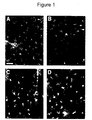
- FIG. 1 shows cholera toxin (CT) induces enhanced major histocompatibility complex (MHC) class II expression on Langerhans cells (LC), changes in LC morphology, and loss of LCs (presumably through migration).
- CT cholera toxin
- MHC major histocompatibility complex
- Panels indicate (A) saline alone as a negative control, (B) transcutaneous immunization with CT in saline, (C) transcutaneous immunization with CTB in saline, and (D) intradermal injection with tumor necrosis factor- ⁇ (10 ⁇ g) as a positive control.
- a transcutaneous immunization system delivers agents to specialized cells (e.g., antigen presentation cell, lymphocyte) that produce an immune response (Bos, 1997). These agents as a class are called antigens.
- Antigen may be composed of chemicals such as, for example, carbohydrate, glycolipid, glycoprotein, lipid, lipoprotein, phospholipid, polypeptide, protein, conjugates thereof, or any other material known to induce an immune response.
- Antigen may be provided as a whole organism such as, for example, a bacterium or virion; antigen may be obtained from an extract or lysate, either from whole cells or membrane alone; or antigen may be chemically synthesized or produced by recombinant means, or by inactivation of a virus.
- compositions suitable for administration to a human or animal may be applied in the form of an cream, emulsion, gel, lotion, ointment, paste, solution, suspension, or other forms known in the art. In particular, formulations that enhance skin hydration, penetration, or both are preferred. There may also be incorporated other pharmaceutically acceptable additives including, for example, diluents, binders, stabilizers, preservatives, and colorings.
- penetration enhancer does not include substances such as, for example: water, physiological buffers, saline solutions, and alcohols which would not perforate the skin.
- An object of the present invention is to provide a novel means for immunization through intact skin without the need for perforating the skin.
- the transcutaneous immunization system provides a method whereby antigens and adjuvant can be delivered to the immune system, especially specialized antigen presentation cells underlying the skin such as, for example, Langerhans cells.
- the transcutaneous immunization delivery system carries antigen to cells of the immune system where an immune response is induced.
- the antigen may pass through the normal protective outer layers of the skin (i.e., stratum corneum) and induce the immune response directly, or through an antigen presenting cell (e.g., macrophage, tissue macrophage, Langerhans cell, dendritic cell, dermal dendritic cell, B lymphocyte, or Kupffer cell) that presents processed antigen to a T lymphocyte.
- an antigen presenting cell e.g., macrophage, tissue macrophage, Langerhans cell, dendritic cell, dermal dendritic cell, B lymphocyte, or Kupffer cell
- the antigen may pass through the stratum corneum via a hair follicle or a skin organelle (e.g., sweat gland, oil gland).
- Transcutaneous immunization with bacterial ADP-ribosylating exotoxins may target the epidermal Langerhans cell, known to be among the most efficient of the antigen presenting cells (APCs) (Udey, 1997).
- APCs antigen presenting cells
- bAREs activate Langerhans cells when applied epicutaneously to the skin in saline solution.
- the Langerhans cells direct specific immune responses through phagocytosis of the antigens, and migration to the lymph nodes where they act as APCs to present the antigen to lymphocytes (Udey, 1997), and thereby induce a potent antibody response.
- the skin is generally considered a barrier to invading organisms
- the imperfection of this barrier is attested to by the numerous Langerhans cells distributed throughout the epidermis that are designed to orchestrate the immune response against organisms invading via the skin (Udey, 1997).
- a transcutaneous immune response using the skin immune system would require delivery of vaccine antigen only to Langerhans cells in the stratum corneum (the outermost layer of the skin consisting of cornified cells and lipids) via passive diffusion and subsequent activation of the Langerhans cells to take up antigen, migrate to B-cell follicles and/or T-cell dependent regions, and present the antigen to B and/or T cells (Stingl et al., 1989).
- antigens other that bAREs for example BSA
- BSA antigens other that bAREs
- these antigens could also be taken to the lymph node for presentation to T-cells and subsequently induce an immune response specific for that antigen (e.g., BSA).
- a feature of transcutaneous immunization is the activation of the Langerhans cell, presumably by a bacterial ADP-ribosylating exotoxin, ADP-ribosylating exotoxin binding subunits (e.g., cholera toxin B subunit), or other Langerhans cell activating substance.
- the mechanism of transcutaneous immunization via Langerhans cells activation, migration and antigen presentation is clearly shown by the upregulation of MHC class II expression in the epidermal Langerhans cells from epidermal sheets transcutaneously immunized with CT or CTB.
- the magnitude of the antibody response induced by transcutaneous immunization and isotype switching to predominantly IgG is generally achieved with T-cell help stimulated by antigen presenting cells such as Langerhans cells or dendritic cells (Janeway and Travers, 1996), and activation of both Th1 and Th2 pathways as suggested by the production of IgG1 and IgG2a (Paul and Seder, 1994; Seder and Paul, 1994).
- T cell proliferation to the antigen OVA is shown in mice immunized with CT + OVA.
- a large antibody response may be induced by a thymus-independent antigen type 1 (TI-1) which directly activates the B cell (Janeway and Travers, 1996).
- TI-1 thymus-independent antigen type 1
- contact dermatitis a pathogenic manifestation of LC activation
- Langerhans cells which phagocytose antigen, migrate to lymph nodes, present antigen, and sensitize T cells for the intense destructive cellular response that occurs at the affected skin site (Dahl, 1996; Leung, 1997).
- Atopic dermatitis may utilize the Langerhans cell in a similar fashion, but is identified with Th2 cells and is generally associated with high levels of IgE antibody (Dahl, 1996; Leung, 1997).
- Transcutaneous immunization with cholera toxin and related bAREs is a novel immune response with an absence of superficial and microscopic post-immunization skin findings (i.e., non-inflamed skin) shown by the absence of lymphocyte infiltration 24, 48 and 120 hours after immunization with cholera toxin.
- This indicates that Langerhans cells "comprise all of the accessory cell activity that is present in uninflammed epidermis, and in the current paradigm are essential for the initiation and propagation of immune responses directed against epicutaneously applied antigens" (Udey, 1997).
- the uniqueness of the transcutaneous immune response here is also indicated by the both high levels of antigen-specific IgG antibody, and the type of antibody produced (e.g., IgM, IgG1, IgG2a, IgG2b, IgG3 and IgA) and the absence of anti-CT IgE antibody.
- bacterial-derived toxins applied to the surface of the skin can activate Langerhans cells or other antigen presenting cells, and induce a potent immune response manifested as high levels of antigen-specific circulating IgG antibodies.
- adjuvants may be used in transcutaneous immunization to enhance the IgG antibody response to proteins not otherwise immunogenic by themselves when placed on the skin.
- Transcutaneous targeting of Langerhans cells may also be used to deactivate their antigen presenting function, thereby preventing immunization or sensitization.
- Techniques to deactivate Langerhans cells include, for example, the use of interleukin-10 (Peguet-Navarro et al., 1995), monoclonal antibody to interleukin-1 ⁇ (Enk et al., 1993), or depletion via superantigens such as through staphylococcal enterotoxin-A (SEA) induced epidermal Langerhans cell depletion (Shankar et al., 1996).
- SEA staphylococcal enterotoxin-A
- Transcutaneous immunization may be induced via the ganglioside GM1 binding activity of CT, LT or subunits such as CTB (Craig and Cuatrecasas, 1975).
- Ganglioside GM1 is a ubiquitous cell membrane glycolipid found in all mammalian cells (Plotkin and Mortimer, 1994).
- a hydrophilic pore is formed which allows the A subunit to penetrate across the lipid bilayer (Ribi et al., 1988).
- transcutaneous immunization by CT or CTB may require ganglioside GM1 binding activity.
- CTA contains the ADP-ribosylating exotoxin activity but only CT and CTB containing the binding activity were able to induce an immune response indicating that the B subunit was necessary and sufficient to immunize through the skin.
- the Langerhans cell or another antigen presenting cell may be activated by CTB binding to its cell surface.
- Antigen of the invention may be expressed by recombinant means, preferably as a fusion with an affinity or epitope tag (Summers and Smith, 1987; Goeddel, 1990; Ausubel et al., 1996); chemical synthesis of an oligopeptide, either free or conjugated to carrier proteins, may be used to obtain antigen of the invention (Bodanszky, 1993; Wisdom, 1994). Oligopeptides are considered a type of polypeptide.
- Oligopeptide lengths of 6 residues to 20 residues are preferred.
- Polypeptides may also by synthesized as branched structures such as those disclosed in U.S. Pat. Nos. 5,229,490 and 5,390,111.
- Antigenic polypeptides include, for example, synthetic or recombinant B-cell and T-cell epitopes, universal T-cell epitopes, and mixed T-cell epitopes from one organism or disease and B-cell epitopes from another.
- Antigen obtained through recombinant means or peptide synthesis, as well as antigen of the invention obtained from natural sources or extracts, may be purified by means of the antigen's physical and chemical characteristics, preferably by fractionation or chromatography (Janson and Ryden, 1989; Deutscher, 1990; Scopes, 1993).
- a multivalent antigen formulation may be used to induce an immune response to more than one antigen at the same time.
- Conjugates may be used to induce an immune response to multiple antigens, to boost the immune response, or both.
- toxins may be boosted by the use of toxoids, or toxoids boosted by the use of toxins.
- Transcutaneous immunization may be used to boost responses induced initially by other routes of immunization such as by injection, or the oral or intranasal routes.
- Antigen includes, for example, toxins, toxoids, subunits thereof, or combinations thereof (e.g., cholera toxin, tetanus toxoid).
- Antigen may be solubilized in water, a solvent such as methanol, or a buffer.
- Suitable buffers include, but are not limited to, phosphate buffered saline Ca ++ /Mg ++ free (PBS), normal saline (150 mM NaCl in water), and Tris buffer.
- Antigen not soluble in neutral buffer can be solubilized in 10 mM acetic acid and then diluted to the desired volume with a neutral buffer such as PBS.
- acetate-PBS at acid pH may be used as a diluent after solubilization in dilute acetic acid.
- Glycerol may be a suitable non-aqueous buffer for use in the present invention.
- an antigen such as, for example, hepatitis A virus
- the antigen may be present in the formulation in a suspension or even as an aggregate.
- Hydrophobic antigen can be solubilized in a detergent, for example a polypeptide containing a membrane-spanning domain.
- a detergent solution e.g., a cell membrane extract
- liposomes then may be formed by removal of the detergent by dilution, dialysis, or column chromatography.
- Certain antigens such as, for example, those from a virus (e.g., hepatitis A) need not be soluble per se, but can be incorporated directly into a liposome in the form of a virosome (Morein and Simons, 1985).
- Plotkin and Mortimer (1994) provide antigens which can be used to vaccinate animals or humans to induce an immune response specific for particular pathogens, as well as methods of preparing antigen, determining a suitable dose of antigen, assaying for induction of an immune response, and treating infection by a pathogen (e.g., bacterium, virus, fungus, or parasite).
- a pathogen e.g., bacterium, virus, fungus, or parasite.
- Bacteria include, for example: anthrax, campylobacter, cholera, diphtheria, enterotoxigenic E. coli, giardia, gonococcus, Helicobacter pylori (Lee and Chen, 1994), Hemophilus influenza B, Hemophilus influenza non-typable, meningococcus, pertussis, pneumococcus, salmonella, shigella, Streptococcus B, group A Streptococcus, tetanus, Vibrio cholerae, yersinia, Staphylococcus, Pseudomonas species and Clostridia species.
- Viruses include, for example: adenovirus, dengue serotypes 1 to 4 (Delenda et al., 1994; Fonseca et al., 1994; Smucny et al., 1995), ebola (setting et al., 1996), enterovirus, hepatitis serotypes A to E (Blum, 1995; Katkov, 1996; Lieberman and Greenberg, 1996; Mast, 1996; Shafara et al., 1995; Smedila et al., 1994; U.S. Pat. Nos.
- herpes simplex virus 1 or 2 human immunodeficiency virus (Deprez et al., 1996), influenza, Japanese equine encephalitis, measles, Norwalk, papilloma virus, parvovirus B19, polio, rabies, rotavirus, rubella, rubeola, vaccinia, vaccinia constructs containing genes coding for other antigens such as malaria antigens, varicella, and yellow fever.
- Parasites include, for example: Entamoeba histolytica (Zhang et al., 1995); Plasmodium (Bathurst et al., 1993; Chang et al., 1989, 1992, 1994; Fries et al., 1992a, 1992b; Herrington et al., 1991; Khusmith et al., 1991; Malik et al., 1991; Migliorini et al., 1993; Pessi et al., 1991; Tam, 1988; Vreden et al., 1991; White et al., 1993; Wiesmueller et al., 1991), Leishmania (Frankenburg et al., 1996), Toxoplasmosis, and the Helminths.
- Antigens may also comprise those used in biological warfare such as ricin, for which protection can be achieved via antibodies.
- the formulation also contains an adjuvant, although a single molecule may contain both adjuvant and antigen properties (e.g., cholera toxin) (Elson and Dertzbaugh, 1994).
- adjuvants are substances that are used to specifically or non-specifically potentiate an antigen-specific immune response.
- the adjuvant and the formulation are mixed prior to presentation of the antigen but, alternatively, they may be separately presented within a short interval of time.
- Adjuvants include, for example, an oil emulsion (e.g., complete or incomplete Freund's adjuvant), a chemokine (e.g., defensins 1 or 2, RANTES, MIP1- ⁇ , MIP-2, interleukin-8) or a cytokine (e.g., interleukin-1 ⁇ , -2, -6, -10 or -12; ⁇ -interferon; tumor necrosis factor- ⁇ ; or granulocyte-monocyte-colony stimulating factor) (reviewed in Nohria and Rubin, 1994), a muramyl dipeptide derivative (e.g., murabutide, threonyl-MDP or muramyl tripeptide), a heat shock protein or a derivative, a derivative of Leishmania major LeIF (Skeiky et al., 1995), cholera toxin or cholera toxin B, a lipopolysaccharide (LPS) derivative (e.
- An adjuvant may be chosen to preferentially induce antibody or cellular effectors, specific antibody isotypes (e.g., IgM, IgD, IgA1, IgA2, secretory IgA, IgE, IgG1, IgG2, IgG3, and/or IgG4), or specific T-cell subsets (e.g., CTL, Th1, Th2 and/or T DTH ) (Glenn et al., 1995).
- specific antibody isotypes e.g., IgM, IgD, IgA1, IgA2, secretory IgA, IgE, IgG1, IgG2, IgG3, and/or IgG4
- T-cell subsets e.g., CTL, Th1, Th2 and/or T DTH
- Cholera toxin is a bacterial exotoxin from the family of ADP-ribsoylating exotoxins (referred to as bAREs). Most bAREs are organized as A:B dimer with a binding B subunit and an A subunit containing the ADP-ribosyltransferase.
- toxins include diphtheria toxin, Pseudomonas exotoxin A, cholera toxin (CT), E. coli heat-labile enterotoxin (LT), pertussis toxin, C. botulinum toxin C2, C. botulinum toxin C3, C. limosum exoenzyme, B. cereus exoenzyme, Pseudomonas exotoxin S, Staphylococcus aureus EDIN, and B. sphaericus toxin.
- CT cholera toxin
- LT E. coli heat-labile enterotoxi
- Cholera toxin is an example of a bARE that is organized with A and B subunits.
- the B subunit is the binding subunit and consists of a B-subunit pentamer which is non-covalently bound to the A subunit.
- the B-subunit pentamer is arranged in a symmetrical doughnut-shaped structure that binds to GM 1 -ganglioside on the target cell.
- the A subunit serves to ADP ribosylate the alpha subunit of a subset of the hetero trimeric GTP proteins (G proteins) including the Gs protein which results in the elevated intracellular levels of cyclic AMP. This stimulates release of ions and fluid from intestinal cells in the case of cholera.
- G proteins hetero trimeric GTP proteins
- CT Cholera toxin
- CTB B subunit
- bARE Pseudomonas exotoxin A (ETA) binds to the ⁇ 2 -macroglobulin receptor-low density lipoprotein receptor-related protein (Kounnas et al., 1992). bAREs are reviewed by Krueger and Barbieri (1995).
- CT cholera toxin
- CTB B subunit
- LT E. coli heat-labile enterotoxin
- pertussis toxin are potent adjuvants for transcutaneous immunization, inducing high levels of IgG antibodies but not IgE antibodies.
- CTB without CT can also induce high levels of IgG antibodies.
- bAREs and a derivative thereof can effectively immunize when epicutaneouly applied to the skin in a simple solution.
- these examples demonstrate that CT, CTB and bAREs can act as both adjuvant and antigen.
- bAREs can act as adjuvants for non-immunogenic proteins in an transcutaneous immunization system.
- FLUZONE the split virion influenza A and B vaccine contains neuraminidase and hemagglutinin which are highly immunogenic, confers protection and may effectively immunize through the skin acting as its own adjuvant and antigen.
- Toxoids such as diphtheria toxoid which has been toxoided using formalin, pertussis toxoid which has been toxoided using hydrogen peroxide, or mutant toxins such as cholera or heat labile enterotoxin from E. coli which have been toxoided using genetic techniques to destroy the ribosyl transferase activity, may continue to harbor adjuvant qualities and act as both antigen and adjuvant.
- DPT tetanus
- toxins can be chemically inactivated to form toxoids which are less toxic but remain immunogenic.
- the transcutaneous immunization system using toxin-based immunogens and adjuvants can achieve anti-toxin levels adequate for protection against these diseases.
- the anti-toxin antibodies may be induced through immunization with the toxins, or genetically-detoxified toxoids themselves, or with toxoids and adjuvants such as CT or by the toxoids alone.
- Genetically toxoided toxins which have altered ADP-ribosylating exotoxin activity, but not binding activity, are envisioned to be especially useful as non-toxic activators of antigen presenting cells used in transcutaneous immunization.
- CT can also act as an adjuvant to induce antigen-specific CTLs through transcutaneous immunization (see Bowen et al., 1994; Porgador et al., 1997 for the use of CT as an adjuvant in oral immunization).
- the bARE adjuvant may be chemically conjugated to other antigens including, for example, carbohydrates, polypeptides, glycolipids, and glycoprotein antigens. Chemical conjugation with toxins, their subunits, or toxoids with these antigens would be expected to enhance the immune response to these antigens when applied epicutaneously.
- diphtheria toxin is known to be so toxic that one molecule can kill a cell
- several workers have taken a recombinant approach to producing genetically produced toxoids. This is based on inactivating the catalytic activity of the ADP-ribosyl transferase by genetic deletion. These toxins retain the binding capabilities, but lack the toxicity, of the natural toxins. This approach is described by Burnette et al. (1994), Rappuoli et al. (1995), and Rappuoli et al. (1996).
- Such genetically toxoided exotoxins could be useful for transcutaneous immunization system in that they would not create a safety concern as the toxoids would not be considered toxic. They may act as both antigens and adjuvants, enhancing the immune response to themselves or added antigens. Additionally, several techniques exist to chemically toxoid toxins which can address the same problem (Schneerson et al., 1996). Alternatively, fragments of the toxin or toxoids may be used such as the C fragment of Tetanus. These techniques could be important for certain applications, especially pediatric applications, in which ingested toxins (e.g., diphtheria toxin) might possibly create adverse reactions.
- ingested toxins e.g., diphtheria toxin
- an activator of Langerhans cells may be used as an adjuvant.
- activators include: inducers of heat shock protein; contact sensitizers (e.g., trinitrochlorobenzene, dinitrofluorobenzene, nitrogen mustard, pentadecylcatechol); toxins (e.g, Shiga toxin, Staph enterotoxin B); lipopolysaccharides, lipid A, or derivatives thereof; bacterial DNA (Stacey et al., 1996); cytokines (e.g., tumor necrosis factor- ⁇ , interleukin-1 ⁇ , -10, -12); and chemokines (e.g., defensins 1 or 2, RANTES, MIP-1 ⁇ , MIP-2, interleukin-8).
- inducers of heat shock protein include: contact sensitizers (e.g., trinitrochlorobenzene, dinitrofluorobenzene, nitrogen mustard, pentadecylcatechol
- a combination of different adjuvants may be used in the present invention.
- a combination of bacterial DNA containing CpG nucleotide sequences and an ADP-ribosylating exotoxin could be used to direct the T-helper response to antigens administered transcutaneously.
- Th1 or Th2 like responses to CT-adjuvanted antigens could be switched by the use of nonmethylated CpG bacterial DNA, or other proteins such as LeIF or calcium channel blockers.
- CpGs are among a class of structures which have patterns allowing the immune system to recognize their pathogenic origins to stimulate the innate immune response leading to adaptive immune responses. (Medzhitov and Janeway, Curr. Opin. Immunol., 9:4-9, 1997). These structures are called pathogen-associated molecular patterns (PAMPs) and include lipopolysaccharides, teichoic acids, unmethylated CpG motifs, double stranded RNA and mannins.
- PAMPs pathogen-associated molecular patterns
- PAMPs induce endogenous signals that can mediate the inflammatory response, act as costimulators of T-cell function and control the effector function.
- the ability of PAMPs to induce these responses play a role in their potential as adjuvants and their targets are APCs such as macrophages and dendritic cells.
- APCs such as macrophages and dendritic cells.
- the antigen presenting cells of the skin could likewise be stimulated by PAMPs transmitted through the skin.
- Langerhans cells a type of dendritic cell, could be activated by a PAMP in solution on the skin with a transcutaneously poorly immunogenic molecule and be induced to migrate and present this poorly immunogenic molecule to T-cells in the lymph node, inducing an antibody response to the poorly immunogenic molecule.
- PAMPs could also be used in conjunction with other skin adjuvants such as cholera toixn to induce different costimulatory molecules and control different effector functions to guide the immune response, for example from
- an immunizing antigen has sufficient Langerhans cell activating capabilities then a separate adjuvant may not be required, as in the case of CT which is both antigen and adjuvant. It is envisioned that whole cell preparations, live viruses, attenuated viruses, DNA plasmids, and bacterial DNA could be sufficient to immunize transcutaneously. It may be possible to use low concentrations of contact sensitizers or other activators of Langerhans cells to induce an immune response without inducing skin lesions.
- Liposomes are closed vesicles surrounding an internal aqueous space.
- the internal compartment is separated from the external medium by a lipid bilayer composed of discrete lipid molecules.
- antigen may be delivered through intact skin to specialized cells of the immune system, whereby an antigen-specific immune response is induced.
- Transcutaneous immunization may be achieved by using liposomes; however, as shown in the examples, liposomes are not required to elicit an antigen-specific immune response.
- Liposomes may be prepared using a variety of techniques and membrane lipids (reviewed in Gregoriadis, 1993). Liposomes may be pre-formed and then mixed with antigen. The antigen may be dissolved or suspended, and then added to (a) the pre-formed liposomes in a lyophilized state, (b) dried lipids as a swelling solution or suspension, or (c) the solution of lipids used to form liposomes. They may also be formed from lipids extracted from the stratum corneum including, for example, ceramide and cholesterol derivatives (Wertz, 1992).
- Chloroform is a preferred solvent for lipids, but it may deteriorate upon storage. Therefore, at one-to three-month intervals, chloroform is redistilled prior to its use as the solvent in forming liposomes. After distillation, 0.7% ethanol can be added as a preservative. Ethanol and methanol are other suitable solvents.
- the lipid solution used to form liposomes is placed in a round-bottomed flask.
- Pear-shaped boiling flasks are preferred, particularly those flasks sold by Lurex Scientific (Vineland, NJ, cat. no. JM-5490).
- the volume of the flask should be more than ten times greater than the volume of the anticipated aqueous suspension of liposomes to allow for proper agitation during liposome formation.
- solvent is removed at 37°C under negative pressure for 10 minutes with a filter aspirator attached to a water faucet.
- the flask is further dried under low vacuum (i.e., less than 50 mm Hg) for 1 hour in a dessicator.
- an aqueous solution containing antigen may be added to lyophilized liposome lipids in a volume that results in a concentration of approximately 200 mM with respect to liposome lipid, and shaken or vortexed until all the dried liposome lipids are wet.
- the liposome-antigen mixture may then be incubated for 18 hours to 72 hours at 4°C.
- the liposome-antigen formulation may be used immediately or stored for several years. It is preferred to employ such a formulation directly in the transcutaneous immunization system without removing unencapsulated antigen. Techniques such as bath sonication may be employed to decrease the size of liposomes, which may augment transcutaneous immunization.
- Liposomes may be formed as described above but without addition of antigen to the aqueous solution. Antigen may then be added to the pre-formed liposomes and, therefore, antigen would be in solution and/or associated with, but not encapsulated by, the liposomes. This process of making a liposome-containing formulation is preferred because of its simplicity. Techniques such as bath sonication may be employed to alter the size and/or lamellarity of the liposomes to enhance immunization.
- hydration of the stratum corneum may be enhanced by adding liposomes to the formulation.
- Liposomes have been used as carriers with adjuvants to enhance the immune response to antigens mixed with, encapsulated in, attached to, or associated with liposomes.
- transcutaneous delivery of antigen may target the Langerhans cell. These cells are found in abundance in the skin and are efficient antigen presenting cells leading to T-cell memory and potent immune responses (Udey, 1997). Because of the presence of large numbers of Langerhans cells in the skin, the efficiency of transcutaneous delivery may be related to the surface area exposed to antigen and adjuvant. In fact, the reason that transcutaneous immunization is so effective may be that it targets a larger number of these efficient antigen presenting cells than intramuscular immunization. However, even a small number of Langerhans cells or dendritic cells may be sufficient for immunization.
- transcutaneous immunization does not involve penetration of the skin and the complications and difficulties thereof, the requirements of trained personnel, sterile technique, and sterile equipment are reduced. Furthermore, the barriers to immunization at multiple sites or to multiple immunizations are diminished. Immunization by a single application of the formulation is also envisioned.
- Immunization may be achieved using epicutaneous application of a simple solution of antigen and adjuvant impregnated in gauze under an occlusive patch, or by using other patch technologies; creams, immersion, ointments and sprays are other possible methods of application.
- the immunization could be given by untrained personnel, and is amenable to self-application. Large-scale field immunization could occur given the easy accessibility to immunization. Additionally, a simple immunization procedure would improve access to immunization by pediatric patients and the elderly, and populations in Third World countries.
- animals could be immunized using the present invention.
- Application to anatomical sites such as the ear, underbelly, paws, conjunctiva, intertriginous regions, or anal region, or via dipping or immersion could be employed.
- the transcutaneous delivery system of the invention is also not concerned with penetration of intact skin by sound or electrical energy.
- Such a system that uses an electrical field to induce dielectric breakdown of the stratum corneum is disclosed in U.S. Pat. No. 5,464,386.
- transcutaneous immunization may be superior to immunization using needles as more immune cells would be targeted by the use of several locations targeting large surface areas of skin.
- a therapeutically effective amount of antigen sufficient to induce an immune response may be delivered transcutaneously either at a single cutaneous location, or over an area of intact skin covering multiple draining lymph node fields (e.g., cervical, axillary, inguinal, epitrochelear, popliteal, those of the abdomen and thorax).
- lymph node fields e.g., cervical, axillary, inguinal, epitrochelear, popliteal, those of the abdomen and thorax.
- Antigen passing through or into the skin may encounter antigen presenting cells which process the antigen in a way that induces an immune response.
- Multiple immunization sites may recruit a greater number of antigen presenting cells and the larger population of antigen presenting cells that were recruited would result in greater induction of the immune response.
- Transcutaneous immunization may allow application in close proximity to a lymph node draining site and thereby improve efficiency or potency of immunization.
- absorption through the skin may deliver antigen to phagocytic cells of the skin such as, for example, dermal dendritic cells, macrophages, and other skin antigen presenting cells; antigen may also be delivered to phagocytic cells of the liver, spleen, and bone marrow that are known to serve as the antigen presenting cells through the blood stream or lymphatic system.
- antigen may also be delivered to phagocytic cells of the liver, spleen, and bone marrow that are known to serve as the antigen presenting cells through the blood stream or lymphatic system.
- the result would be widespread distribution of antigen to antigen presenting cells to a degree that is rarely, if ever achieved, by current immunization practices.
- the transcutaneous immunization system may be applied directly to the skin and allowed to air dry; rubbed into the skin or scalp; held in place with a dressing, patch, or absorbent material; otherwise held by a device such as a stocking, slipper, glove, or shirt; or sprayed onto the skin to maximize contact with the skin.
- the formulation may be applied in an absorbant dressing or gauze.
- the formulation may be covered with an occlusive dressing such as, for example, in an emulsion of antigen solution and AQUAPHOR (petrolatum, mineral oil, mineral wax, wool wax, panthenol, bisabol, and glycerin from Beiersdorf), plastic film, impregnated polymer, COMFEEL (Coloplast) or vaseline; or a non-occlusive dressing such as, for example, DUODERM (3M) or OPSITE (Smith & Napheu).
- An occlusive dressing completely excludes the passage of water.
- a partially occlusive dressing such as TEGADERM may be applied to provide hydration and may allow longer application of the patch or may prevent maceration of the skin.
- the formulation may be applied to single or multiple sites, to single or multiple limbs, or to large surface areas of the skin by complete immersion.
- the formulation may be applied directly to the skin.
- the nucleic acid(s) contained in the formulation may encode the antigen, the adjuvant, or both.
- the nucleic acid may or may not be capable of replication; it may be non-integrating and non-infectious.
- the nucleic acid may further comprise a regulatory region (e.g., promoter, enhancer, silencer, transcription initiation and termination sites, RNA splice acceptor and donor sites, polyadenylation signal, internal ribosome binding site, translation initiation and termination sites) operably linked to the sequence encoding the antigen or adjuvant.
- the nucleic acid may be complexed with an agent that promotes transfection such as cationic lipid, calcium phosphate, DEAE-dextran, polybrene-DMSO, or a combination thereof.
- the nucleic acid may comprise regions derived from viral genomes. Such materials and techniques are described by Kriegler (1990) and Murray (1991).
- An immune response may comprise humoral (i.e., antigen-specific antibody) and/or cellular (i.e., antigen-specific lymphocytes such as B cells, CD4 + T cells, CD8 + T cells, CTL, Th1 cells, Th2 cells, and/or T DTH cells) effector arms.
- the immune response may comprise NK cells that mediate antibody-dependent cell-mediated cytotoxicity (ADCC).
- ADCC antibody-dependent cell-mediated cytotoxicity
- the immune response induced by the formulation of the invention may include the elicitation of antigen-specific antibodies and/or cytotoxic lymphocytes (CTL, reviewed in Alving and Wassef, 1994).
- CTL cytotoxic lymphocytes
- Antibody can be detected by immunoassay techniques, and the detection of various isotypes (e.g., IgM, IgD, IgA1, IgA2, secretory IgA, IgE, IgG1, IgG2, IgG3, or IgG4) may be expected.
- An immune response can also be detected by a neutralizing assay.
- Antibodies are protective proteins produced by B lymphocytes. They are highly specific, generally targeting one epitope of an antigen. Often, antibodies play a role in protection against disease by specifically reacting with antigens derived from the pathogens causing the disease. Immunization may induce antibodies specific for the immunizing antigen, such as cholera toxin. These antigen-specific antibodies are induced when antigen is delivered through the skin by liposomes.
- CTLs are particular protective immune cells produced to protect against infection by a pathogen. They are also highly specific. Immunization may induce CTLs specific for the antigen, such as a synthetic oligopeptide based on a malaria protein, in association with self-major histocompatibility antigen. CTLs induced by immunization with the transcutaneous delivery system may kill pathogen infected cells. Immunization may also produce a memory response as indicated by boosting responses in antibodies and CTLs, lymphocyte proliferation by culture of lymphocytes stimulated with the antigen, and delayed type hypersensitivity responses to intradermal skin challenge of the antigen alone.
- the antigen such as a synthetic oligopeptide based on a malaria protein
- the T-helper response induced by transcutaneous immunization may be manipulated by the use of calcium channel blockers (e.g., nifedipine, verpamil) which suppress the contact hypersensitivity reaction by inhibiting antigen catabolism and subsequent presentation by epidermal Langerhans cells.
- the transcutaneous application of a calcium channel blocker would be expected to affect surface expression of costimulatory molecules (e.g., B7-related family) and the generation of a subsequent T-helper response.
- costimulatory molecules e.g., B7-related family
- addition of the calcium channel blocker may inhibit delayed type hypersensitivity responses and could be used to select an immune response that is predominantly a cellular or a humoral response.
- serial dilutions of sera are added to host cells which are then observed for infection after challenge with infectious virus.
- serial dilutions of sera may be incubated with infectious titers of virus prior to inoculation of an animal, and the inoculated animals are then observed for signs of infection.
- the transcutaneous immunization system of the invention may be evaluated using challenge models in either animals or humans, which evaluate the ability of immunization with the antigen to protect the subject from disease. Such protection would demonstrate an antigen-specific immune response.
- achieving anti-diphtheria antibody titers of 5 IU/ml or greater is generally assumed to indicate optimum protection and serves as a surrogate marker for protection (Plotkin and Mortimer, 1994).
- the Plasmodium faciparum challenge model may be used as to induce an antigen-specific immune response in humans.
- Human volunteers may be immunized using the transcutaneous immunization system containing oligopeptides or proteins (polypeptides) derived from the malaria parasite, and then exposed to malaria experimentally or in the natural setting.
- the Plasmodium yoelii mouse malaria challenge model may be used to evaluate protection in the mouse against malaria (Wang et al, 1995).
- CSP circumsporozoite protein
- merozoite surface proteins of Plasmodium falciparum have been encapsulated in liposomes containing lipid A.
- All of the malaria antigens that have been encapsulated in liposomes containing lipid A have been shown to induce humoral effectors (i.e., antigen-specific antibodies), and some have been shown to induce cell-mediated responses as well.
- Generation of an immune response and immunoprotection in an animal vaccinated with a malaria antigen may be assayed by immunofluorescence to whole, fixed malaria sporozoites or CTLs killing of target cells transfected with CSP.
- mice transcutaneously immunized with cholera toxin can be protected against intranasal challenge with a 20 ⁇ g dose of cholera toxin.
- Mallet et al personal communication
- C57B1/6 mice develop a fatal hemorrhagic pneumonia in response to intranasal challenge with CT.
- the mice may be challenged with an intraperitoneal dose of CT (Dragunsky et al, 1992).
- Cholera toxin-specific IgG or IgA antibody may provide protection against cholera toxin challenge (Pierce, 1978; Pierce and Reynolds, 1974).
- mucosal immunity may be achieved via the trancutaneous route.
- Mucosal IgG and IgA can be detected in mice immunized with CT transcutaneously. This may be important for protection in diseases where the pathology occurs at mucosal sites such as in LT or CT mediated disease, where entry of the pathogenic organism occurs at a mucosal site, or where mucosal infection is important to pathogenesis.
- transcutaneous immunization against diseases such as influenza could be effective either by inducing mucosal immunity or by systemic immunity, or by a combination of immunity such as humoral, cellular or mucosal.
- Vaccines may be effective against host effects such as the binding of erythrocytes to vascular endothelium in malaria by inducing anti-sequestrin antibodies.
- Protective antibodies such as anti-hepatitis A, B or hepatitis E antibodies may be induced by the transcutaneous route using whole inactivated virus, virus-derived subunits or recombinant products.
- a tetanus "booster" patch could be envisioned that contained adjuvant such as CT and toxoids such as tetanus and diphtheria, or fragments such as the tetanus C fragment.
- Boosting could be achieved following primary immunization by injection or transcutaneous immunization with the same or similar antigens.
- a transcutaneous boost may be preferable.
- Oral or nasal immunization may conceivably be boosted using the transcutaneous route. Simultaneous use of injectable and transcutaneous immunizations could also be used.
- Vaccination has also been used as a treatment for cancer and autoimmune disease.
- a tumor antigen e.g., prostate specific antigen
- Targeting dendritic cells, of which Langerhans cells are a specific subset, has been shown to be an important strategy in cancer immunotherapy.
- Tumor antigens useful for vaccination have been described for melanoma (U.S. Pat. Nos. 5,102,663, 5,141,742, and 5,262,177), prostate carcinoma (U.S. Pat. No. 5,538,866), and lymphoma (U.S. Pat. Nos.
- Vaccination with T-cell receptor oligopeptide may induce an immune response that halts progression of autoimmune disease (U.S. Pat. Nos. 5,612,035 and 5,614,192; Antel et al, 1996; Vandenbark et al, 1996).
- U.S. Pat. No. 5,552,300 also describes antigens suitable for treating autoimmune disease.
- mice of 6 to 8 weeks were shaved with a #40 clipper. This shaving could be done without any signs of trauma to the skin. The shaving was done from the mid-thorax to just below the nape of the neck. The mice were then allowed to rest for 24 hours. Prior to this the mice had been ear-tagged for identification, and pre-bled to obtain a sample of pre-immune serum. Mice were also transcutaneously immunized without shaving by applying up to 50 ⁇ l of immunizing solution to each ear.
- mice were then immunized in the following way. Mice were anesthetized with 0.03-0.06 ml of a 20 mg/ml solution of xylazine and 0.5 ml of 100 mg/ml ketamine; mice were immobilized by this dose of anesthesia for approximately one hour. The mice were placed ventral side down on a warming blanket.
- the immunizing solution was then placed on the dorsal shaved skin of a mouse in the following manner: a 1.2 cm x 1.6 cm stencil made of polystyrene was laid gently on the back and a saline-wetted sterile gauze was used to partially wet the skin (this allowed even application of the immunizing solution), the immunizing solution was then applied with a pipet to the area circumscribed by the stencil to yield a 2 cm 2 patch of immunizing solution. Alternatively, a fixed volume of immunizing solution was evenly applied to the shaved area or the ear. Care was used not to scrape or rub the skin with the pipet tip. The immunizing solution was spread around the area to be covered with the smooth side of the pipet tip.
- the immunizing solution (between about 100 ⁇ l to about 200 ⁇ l) was left on the back of the mouse for 60 to 180 minutes. At the end of 60 minutes, the mouse was held gently by the nape of the neck and the tail under a copious stream of lukewarm tap water, and washed for 10 seconds. The mouse was then gently patted dry with a piece of sterile gauze and a second washing was performed for 10 seconds; the mouse was then patted dry a second time and left in the cage. The mice appeared to exhibit no adverse effects from the anesthesia, immunization, washing procedure, or toxicity from the exotoxins. No skin irritation, swelling or redness was seen after the immunization and the mice appeared to thrive. Immunization using the ear was performed as described above except that fur was not removed prior to immunization.
- Antibodies specific for CT, LT, ETA, pertussis toxin, diphtheria toxoid, tetanus toxoid, Hemophilus influenza B conjugate, influenza, sequestrin, and BSA were determined using ELISA in a technique similar to Glenn et al (1995). All antigens were dissolved in sterile saline at a concentration of 2 ⁇ g/ml. Fifty microlilters of this solution (0.1 ⁇ g) per well was put on IMMULON-2 polystyrene plates (Dynatech Laboratories, Chantilly, VA) and incubated at room temperature overnight.
- the plates were then washed in a PBS-0.05% Tween 20 wash solution four times, and goat anti-mouse IgG(H+L) horseradish peroxidase (HRP)-linked (Bio-Rad Laboratories, Richmond, CA, Cat #170-6516) secondary antibody was diluted in casein diluent at a dilution of 1/500 and left on the plates for one hour at room temperature.
- the plates were then washed four times in the PBS-Tween wash solution.
- IgG( ⁇ ), IgM( ⁇ ) and IgA( ⁇ ) anti-CT antibody levels were determined using ELISA with a technique similar to Glenn et al (1995).
- CT was dissolved in sterile saline at a concentration of 2 ⁇ g/ml.
- Fifty microliters of this solution (0.1 ⁇ g) per well were put on IMMULON-2 polystyrene plates (Dynatech Laboratories, Chantilly, VA) and incubated at room temperature overnight. The plates were then blocked with a 0.5% casein-Tween 20 blocking buffer solution for one hour.
- Sera was diluted and casein diluent and serial dilutions were done on the plate. This was incubated for two hours at room temperature.
- the plates were then washed in a PBS-Tween wash solution four times and goat anti-mouse IgG( ⁇ ) HRP-linked (Bio-Rad Laboratories, Richmond, CA, Cat #172-1038), goat anti-mouse IgM( ⁇ ) HRP-linked (BioRad Laboratories, Richmond, CA, Cat #172-1030), or goat anti-mouse IgA HRP-linked (Sigma, St. Louis, MO, Cat #1158985) secondary antibody was diluted in casein diluent in a dilution of 1/1000 and left on the plates for one hour at room temperature. The plates were then washed four times in a PBS-Tween wash solution.
- Antigen-specific IgG (IgG1, IgG2a, IgG2b, and IgG3) subclass antibody against CT, LT, ETA, and BSA was performed as described by Glenn et al (1995).
- the solid phase ELISA was performed in IMMULON-2 polystyrene plates (Dynatech Laboratories, Chantilly, VA). Wells were incubated with the respective antigens in saline overnight (0.1 ⁇ g/50 ⁇ l) and blocked with 0.5% casein-Tween 20. Individual mouse sera diluted in 0.5% casein were serially diluted, and incubated at room temperature for four hours.
- Secondary antibody consisted of horseradish peroxidase-conjugated goat anti-mouse isotype-specific antibody (IgG1, IgG2a, IgG2b, IgG3, The Binding Site, San Diego, CA).
- a standard curve for each subclass was determined using mouse myeloma IgG1, IgG2a, IgG2b, and IgG3 (The Binding Site, San Diego, CA).
- Standard wells were coated with goat anti-mouse IgG(H+L) (Bio-Rad Laboratories, Richmond, CA, Cat #172-1054) to capture the myeloma IgG subclass standards which were added in serial dilutions.
- the myeloma IgG subclass was also detected using the peroxidase-conjugated goat anti-mouse subclass-specific antibody. Both the test sera and myeloma standards were detected using 2,2'-azino-di(3-ethyl-benzthiazolone) sulphonic acid (Kirkegaard and Perry, Gaithersburg, MD) as substrate. Absorbances were read at 405 nm. Individual antigen specific subclasses were quantitated using the values from the linear titration curve computed against the myeloma standard curve and reported as ⁇ g/ml.
- Antigen-specific IgE antibody quantitation was performed using a protocol from Pharmingen Technical Protocols, page 541 of the Research Products Catalog, 1996-1997 (Pharmingen, San Diego, CA). Fifty microliters of 2 ⁇ g/ml purified anti-mouse IgE capture mAb (Pharmingen, Cat# 02111D) in 0.1 M NaHCO 3 (pH 8.2) were added to IMMUNO plates(Nunc, Cat #12-565-136). Plates were incubated overnight at room temperature, washed three times with PBS-Tween 20, blocked with 3% BSA in PBS for two hours, and washed three times with PBS-Tween.
- Sera were diluted in 1% BSA in PBS, added at dilutions of 1/100, and diluted serially down the columns (e.g., 1/100, 1/200, et cetera).
- Purified mouse IgE standards (Pharmingen, Cat # 0312D) were added with a starting dilution of 0.25 ⁇ g/ml and serially diluted down the columns. Plates were incubated for two hours and washed five times with PBS-Tween.
- Biotinylated anti-mouse IgE mAB (Pharmingen, Cat #02122D) to 2 ⁇ g/ml in 1% BSA in PBS, incubated for 45 minutes and washed five times with PBS-Tween.
- Avidin-peroxidase (Sigma A3151, 1:400 of 1 mg/ml solution) was added for 30 min and plates were washed six times with PBS-Tween. Both the test sera and IgE standards were detected using 2,2'-azino-di(3-ethylbenzthiazolone) sulphonic acid (Kirkegaard and Perry, Gaithersburg, MD) as substrate. Absorbances were read at 405 nm. Individual antigen specific subclasses were quantitated using the values from the linear titration curve computed against the IgE standard curve and reported as ⁇ g/ml.
- multilamellar liposomes composed of dimyristoyl phosphatidyl choline, dimyristoyl phosphatidyl glycerol, cholesterol were prepared according to Alving et al (1993). Dimyristoyl phosphatidylcholine, dimyristoyl phosphatidylglycerol, and cholesterol were purchased from Avanti Polar Lipids Inc. (Alabaster, AL). Stock solutions of the lipids in chloroform were removed from -20°C freezer where they were stored.
- the lipids were mixed in a molar ratio of 0.9:0.1:0.75 dimyristoyl phosphatidyl choline, dimyristoyl phosphatidyl glycerol, and cholesterol in a pear shaped flask. Using a rotary evaporator, the solvent was removed at 37°C under negative pressure for 10 minutes. The flask was further dried under low vacuum for two hours in a dessicator to remove residual solvent. The liposomes were swollen at 37 mM phospholipid using sterile water, lyophilized and stored at -20°C.
- liposomes were mixed in their lyophilized state with normal saline (pH 7.0) to achieve a designated phospholipid concentration in the saline.
- the dried lipids were swollen to make liposomes with normal saline (pH 7.0) and were not lyophilized.
- mice at 6 to 8 weeks of age were immunized transcutaneously as described above for "Immunization Procedure", in groups of five mice.
- the mice were immunized using 100 ⁇ l of immunization solution which was prepared as follows: liposomes prepared as described above for "Liposome Preparation” were mixed with saline to form the liposomes.
- the pre-formed liposomes were then diluted in either saline (liposome alone group) or with CT in saline to yield an immunizing solution containing liposomes at 10-150 mM phospholipid with 100 ⁇ g of CT per 100 ⁇ l of immunizing solution.
- CT was mixed in saline to make an immunizing solution containing 100 ⁇ g of CT per 100 ⁇ g of solution for the group receiving CT alone. Solutions were vortexed for 10 seconds prior to immunization.
- mice were immunized transcutaneously at 0 and 3 weeks.
- Antibody levels were determined using ELISA as described above for "ELISA IgG(H+L)" 3 weeks after the boosting immunization, and compared against pre-immune sera.
- Table 1 the level of anti-CT antibodies induced by CT without liposomes was not different from the level of anti-CT antibodies generated using liposomes except in the mice where 150 mM liposomes were used.
- CT in saline alone was able to immunize mice against CT to produce high antibody titers.
- Anti-CT antibodies Group ELISA Units SEM CT alone 27,482 (16,635-48,051) CT + 150 mM Liposomes 4,064 (2,845-5,072) CT + 100 mM Liposomes 35,055 (25,932-44,269) CT + 50 mM Liposomes 9,168 (4,283-12,395) CT + 25 mM Liposomes 18,855 (12,294-40,374) CT + 10 mM Liposomes 28,660 (18,208-31,498) 50 mM Liposomes 0
- mice at 6 to 8 weeks of age were immunized transcutaneously as described above for "Immunization Procedure", in groups of five mice.
- the mice were immunized at 0 and 3 weeks using 100 ⁇ l of immunization solution prepared as follows: BSA was mixed in saline to make an immunizing solution containing 200 ⁇ g of BSA per 100 ⁇ l of saline for the group receiving BSA alone; BSA and CT were mixed in saline to make an immunizing solution containing 200 ⁇ g of BSA and 100 ⁇ g of CT per 100 ⁇ l of saline for the group receiving BSA and CT.
- the liposomes were prepared as described above for "Liposome Preparation", and were first mixed with saline to form the liposomes. They were then diluted in BSA or BSA and CT in saline to yield an immunizing solution containing liposomes at 50 mM phospholipid with 200 ⁇ g of BSA per 100 ⁇ l of immunizing solution, or 200 ⁇ g BSA + 100 ⁇ g CT per 100 ⁇ l of immunizing solution. Solutions were vortexed for 10 seconds prior to immunization.
- the antibodies were determined using ELISA as described above for "ELISA IgG(H+L)" on sera 3 weeks after the second immunization. The results are shown in Table 2.
- CT stimulated an immune response to BSA.
- CT acted as a adjuvant for the immune response to BSA, and anti-BSA antibodies of high titer were produced.
- Anti-BSA antibodies Group ELISA Units SEM BSA in saline 0 BSA + 50 mM Liposomes 0 CT + BSA in saline 8,198 (5,533-11,932) CT + BSA + 50 mM 3,244 (128-3,242)
- mice at 6 to 8 weeks of age were immunized transcutaneously as described above for "Immunization Procedure", in groups of five mice.
- the mice were immunized at 0 and 3 weeks using 100 ⁇ l of immunization solution prepared as follows: LT was mixed in saline to make an immunizing solution containing 100 ⁇ g of LT per 100 ⁇ l of saline for the group receiving LT alone.
- liposomes were used the liposomes prepared as described above for "Liposome Preparation", and were first mixed with saline to form the liposomes.
- the pre-formed liposomes were then diluted in LT in saline to yield an immunizing solution containing liposomes at 50 mM phospholipid with 100 ⁇ g of LT per 100 ⁇ l of immunizing solution. Solutions were vortexed for 10 seconds prior to immunization.
- LT and CT are members of the family of bacterial ADP-ribosylating exotoxins (bAREs). They are organized as A:B proenzymes with the ADP-ribosyltransferase activity contained in the A subunit and the target cell binding a function of the B subunit.
- LT is 80% homologous with CT at the amino acid level and has a similar non-covalently bound subunit organization, stoichiometry (A:B5), the same binding target, ganglioside GM1, and is similar in size (MW ⁇ 80,000).
- the similarities of LT and CT appear to influence their immunogenicity by the transcutaneous route as reflected by the similar magnitude of the antibody response to both CT and LT (Tables 1 and 3).
- Anti-LT antibodies Group ELISA Units SEM LT in saline 23,461 (20,262-27,167) LT + 50 mM Liposomes 27,247 (19,430-38,211)
- mice at 6 to 8 weeks of age were immunized transcutaneously as described above for "Immunization Procedure", in groups of five mice.
- the mice were immunized once using 100 ⁇ l of immunization solution prepared as follows: LT was mixed in saline to make an immunizing solution containing 100 ⁇ g of LT per 100 ⁇ l of saline. The solution was vortexed for 10 seconds prior to immunization.
- the anti-LT antibodies were determined using ELISA as described above for "ELISA IgG (H+L)" 3 weeks after the single immunization. The results are shown in Table 4. LT was clearly immunogenic with a single immunization and antibodies were produced by 3 weeks. Rapid enhancement of antibody titers and responses to single immunization would be a useful aspect of the transcutaneous immunization method. It is conceivable that a rapid single immunization would be useful in epidemics, for travelers, and where access to medical care is poor.
- Anti-LT antibodies Mouse Number ELISA Units 5141 6,582 5142 198 5143 229 5144 6,115 5145 17,542 Geo Mean 2,000
- mice at 8 to 12 weeks of age were immunized transcutaneously as described above for "Immunization Procedure", in groups of five mice.
- the mice were immunized once using 100 ⁇ l of immunization solution prepared as follows: CT was mixed in saline to make an immunizing solution containing 100 ⁇ g of CT per 100 ⁇ l of saline. The solution was vortexed for 10 seconds prior to immunization.
- the anti-CT antibodies were determined using ELISA as described above for "ELISA IgG (H+L)" 3 weeks after the single immunization. The results are shown in Table 5.
- CT was highly immunogenic with a single immunization. Rapid enhancement of antibody titers and responses to single immunization may be a useful aspect of the transcutaneous immunization method. It is conceivable that a rapid single immunization would be useful in epidemics, for travelers, and where access to medical care is poor.
- Anti-CT antibodies Mouse Number ELISA Units 2932 18,310 2933 30,878 2934 48,691 2935 7,824 Geo Mean 21,543
- mice at 6 to 8 weeks of age were immunized transcutaneously as described above for "Immunization Procedure", in groups of five mice.
- the mice were immunized at 0 and 3 weeks using 100 ⁇ l of immunization solution prepared as follows: ETA was mixed in saline to make an immunizing solution containing 100 ⁇ g of ETA per 100 ⁇ l of saline for the group receiving ETA alone.
- the liposomes were prepared as described above for "Liposome Preparation", and were first mixed with saline to form the liposomes.
- the pre-formed liposomes were then diluted with ETA in saline to yield an immunizing solution containing liposomes at 50 mM phospholipid with 100 ⁇ g of ETA per 100 ⁇ l of immunizing solution. Solutions were vortexed for 10 seconds prior to immunization.
- ETA was clearly immunogenic both with and without liposomes, and no significant difference between the groups could be detected.
- ETA differs from CT and LT in that ETA is a single 613 amino acid peptide with A and B domains on the same peptide and binds to an entirely different receptor, the ⁇ 2-macroglobulin receptor/low density lipoprotein receptor-related protein (Kounnas et al, 1992).
- ETA Despite the dissimilarities between ETA and CT in size, structure, and binding target, ETA also induced a transcutaneous antibody response.
- Anti-ETA antibodies Group ELISA Units SEM ETA in saline 3,756 (1,926-7,326) ETA + 50 mM Liposomes 857 (588-1,251)
- mice at 6 to 8 weeks of age were immunized transcutaneously as described above for "Immunization Procedure", in groups of five mice.
- the mice were immunized using 100 ⁇ l of immunization solution which was prepared as follows: CT was mixed in saline to make 100 ⁇ g of CT per 100 ⁇ l of immunizing solution, LT was mixed in saline to make 100 ⁇ g of LT per 100 ⁇ l of immunizing solution, ETA was mixed in saline to make 100 ⁇ g of ETA per 100 ⁇ l of immunizing solution, and CT and BSA were mixed in saline to make 100 ⁇ g of CT per 100 ⁇ l of immunizing solution and 200 ⁇ g of BSA per 100 ⁇ l of immunizing solution. Solutions were vortexed for 10 seconds prior to immunization.
- mice were immunized transcutaneously at 0 and 3 weeks and the antibody levels were determined using ELISA as described above for "ELISA IgG Subclass", three weeks after the boosting immunization and compared against the pre-immune sera.
- the IgG subclass response to CT, BSA and LT had similar levels of IgG1 and IgG2a reflecting activation of T help from both Th1 and Th2 lymphocytes (Seder and Paul, 1994), whereas the IgG subclass response to ETA consisted of almost exclusively IgG1 and IgG3, consistent with a Th2-like response (Table 7).
- IgG subclasses of induced antibodies Imm Imm.
- IgG1 ( ⁇ g/ ⁇ l) IgG2a ( ⁇ g/ ⁇ l) IgG2b ( ⁇ g/ ⁇ l) IgG3 ( ⁇ g/ ⁇ l) CT CT 134 25 27 0 CT+BSA BSA 108 17 12 5 LT LT 155 28 10 8 ETA ETA 50 0 1 10
- mice at 6 to 8 weeks of age were immunized transcutaneously as described above for "Immunization Procedure", in groups of five mice.
- the mice were immunized using 100 ⁇ l of immunization solution which was prepared as follows: LT was mixed in saline to make an immunizing solution containing 100 ⁇ g of LT per 100 ⁇ l of saline for the group receiving LT alone, CT was mixed in saline to make an immunizing solution containing 100 ⁇ g of CT per 100 ⁇ l of saline for the group receiving CT alone, ETA was mixed in saline to make an immunizing solution containing 100 ⁇ g of ETA per 100 ⁇ l of saline for the group receiving ETA alone, and BSA and CT were mixed in saline to make an immunizing solution containing 100 ⁇ g of BSA and 100 ⁇ g of CT per 100 ⁇ l of saline for the group receiving BSA and CT.
- mice were immunized transcutaneously at 0 and 3 weeks and the antibody levels were determined using ELISA as described above for "ELISA IgE", one week after the boosting immunization and compared against the pre-immune sera. As shown in Table 8, no IgE antibodies were found although the sensitivity of detection was 0.003 ⁇ g/ml.
- IgG antibodies were determined in the same mice using "ELISA IgG(H+L)" on sera 3 weeks after the second immunization. The IgG antibody response to LT, ETA, CT and BSA are shown to indicate that the animals were successfully immunized and responded with high titers of antibodies to the respective antigens.
- mice at 6 to 8 weeks of age immunized transcutaneously as described above for "Immunization Procedure", in groups of five mice.
- the mice were immunized at 0 and 3 weeks using 100 ml of immunization solution which was prepared as follows: CT was mixed in saline to make an immunizing solution containing 100 mg of CT per 100 ml of immunizing solution. The immunization solution was vortexed for 10 seconds prior to immunization.
- mice were immunized transcutaneously at 0 and 3 weeks and the antibody levels were determined using ELISA as described above for "ELISA IgG(H+L)" and "ELISA IgG( ⁇ )". Determinations were done at 1 and 4 weeks after the initial immunization, and compared against the pre-immune sera. As shown in Table 9, high levels of anti-CT IgG( ⁇ ) antibodies were induced by CT in saline. Small amounts of IgM could be detected by using IgM( ⁇ ) specific secondary antibody. By 4 weeks, the antibody response was primarily IgG. Data are reported in ELISA units. IgG( ⁇ ) and IgM( ⁇ ) Imm. Group Week IgG ( ⁇ ) IgM( ⁇ ) CT 1 72 168 CT 4 21,336 38 L()+CT 1 33 38 L()+CT 4 22,239 70
- mice at 6 to 8 weeks of age were immunized transcutaneously as described above for "Immunization Procedure", in groups of five mice.
- the mice were immunized once using 100 ⁇ l of immunization solution prepared as follows: CT was mixed in saline to make an immunizing solution containing 100 ⁇ g of CT per 100 ⁇ l of saline. The solution was vortexed for 10 seconds prior to immunization.
- the mice were immunized transcutaneously at 0 and 3 weeks.
- Antibody levels were determined using ELISA as described above for "ELISA IgG (H+L)" 5 weeks after the boosting immunization, and compared against pre-immune sera. As shown in Table 10, serum anti-CT IgA antibodies were detected.
- Anti-CT IgA antibodies Mouse Number IgA (ng/ml) 1501 232 1502 22 1503 41 1504 16 1505 17
- mice at 6 to 8 weeks of age were immunized transcutaneously as described above for "Immunization Procedure", in groups of five mice.
- the mice were immunized using 100 ⁇ l of immunization solution which was prepared as follows: CT was mixed in saline to make an immunizing solution containing 100 ⁇ g of CT per 100 ⁇ l of immunizing solution. The immunization solution was vortexed for 10 seconds prior to immunization.
- mice were immunized with 100 ⁇ l of immunizing solution transcutaneously at 0 and 3 weeks and the antibody levels were determined using ELISA as described above for "ELISA IgG(H+L)" and "ELISA IgG( ⁇ )". Antibody determinations were done at 8 weeks after the initial immunization and compared against the pre-immune sera. As shown in Table 11, high levels of serum anti-CT antibodies were induced by CT in saline. Lung wash IgG could be detected by ELISA using IgG(H+L) or IgG( ⁇ ) specific antibody. The antibody found on the lung mucosal surface is diluted by the lavage method used to collect mucosal antibody and, thus, the exact amounts of antibody detected are not as significant as the mere presence of detectable antibody.
- Lung washes were obtained after sacrificing the mouse.
- the trachea and lungs were exposed by gentle dissection and trachea was transected above the bifurcation.
- a 22 gauge polypropylene tube was inserted and tied off on the trachea to form a tight seal at the edges.
- Half a milliliter of PBS was infused using a 1 ml syringe attached to the tubing and the lungs were gently inflated with the fluid. The fluid was withdrawn and reinfused for a total of 3 rounds of lavage.
- the lung wash was then frozen at -20°C.
- Table 11 shows the IgG(H+L) and IgG( ⁇ ) antibody response to cholera toxin in the sera and lung washes at 8 weeks. Data are expressed in ELISA units. Antibodies were clearly detectable for all mice in the lung washes. The presence of antibodies in the mucosa may be important for protection against mucosally active diseases. Mucosal Antibody to CT Animal# Imm.
- mice were immunized transcutaneously at 0 and 3 weeks as described above for "Immunization Procedure", in groups of four mice.
- Liposomes were prepared as described above for "Liposome Preparation", and were first mixed with saline to form the liposomes. The pre-formed liposomes were then diluted with either CT, CTA or CTB in saline to yield an immunizing solution containing liposomes at 50 mM phospholipid with 50 ⁇ g of antigen (CT, CTA or CTB) per 100 ⁇ l of immunizing solution. Solutions were vortexed for 10 seconds prior to immunization.
- the antibodies were determined using ELISA as described above for "ELISA IgG(H+L)", one week after the boosting immunization and compared against the pre-immune sera. The results are shown in Table 12. CT and CTB were clearly immunogenic whereas CTA was not. Thus, the B subunit of CT is necessary and sufficient to induce a strong antibody response.
- Antibodies to CT, CTA and CTB Group Anti-CT Anti-CTA Anti-CTB CT + 50 mM Liposomes 12,636 136 7,480 CTB + 50 mM Liposomes 757 20 1,986 CTA + 50 mM Liposomes 0 0 0
- mice were immunized transcutaneously as described above for "Immunization Procedure", in groups of five mice. Mice were immunized at 0 and 3 weeks with 100 ⁇ g of diphtheria toxoid and 10 ⁇ g of pertussis toxin per 100 ⁇ l of saline solution. Solutions were vortexed for 10 seconds prior to immunization.
- the antibodies were quantitated using ELISA as described for "ELISA IgG(H+L)".
- Anti-diphtheria toxoid antibodies were detected only in animals immunized with both pertussis toxin and diphtheria toxoid. The highest responder had anti-diphtheria toxoid antibody ELISA units of 1,038.
- a small amount of pertussis toxin acts as an adjuvant for diphtheria toxoid antigen.
- the toxoid alone did not induce an immune response suggesting that the toxoiding process has affected the portion of the molecule responsible for the adjuvant effects found in the ADP-ribosylating exotoxin.
- mice were immunized transcutaneously as described above for "Immunization Procedure", in groups of five mice. Mice were immunized once at 0, 8 and 20 weeks with 50 ⁇ g of pertussis toxin (List, catalog # 181, lot #181-20a) per 100 ⁇ l of saline solution.
- pertussis toxin acts as an adjuvant for itself and induces PT-specific PT-specific IgG antibodies.
- the adjuvant effect of PT may be useful in combination vaccines such as Diphtheria/Pertussis/Tetanus/Hib in enhancing the antibody response to coadministered antigens as well as to PT itself.
- Antibody response to Pertussis toxin Mouse Number Antigen 2 weeks 21 weeks 5156 PT 14 256 5157 PT 22 330 5158 PT 17 303 5159 PT 33 237 5160 PT 75 418
- mice were immunized transcutaneously as described above for "Immunization Procedure", in groups of five mice. Mice were immunized once at 0 weeks with 50 ⁇ g of tetanus toxoid and 100 ⁇ g of cholera toxin per 100 ⁇ l of saline solution.
- the antibodies were quantitated using ELISA as described for "ELISA IgG(H+L)". Anti-tetanus toxoid antibodies were detected at 8 weeks in animal 5173 at 443 ELISA units.
- mice were anesthetized, transcutaneously immunized as described above for "Immunization Procedure" with 100 ⁇ g of 125 I-labeled CT (150,000 cpm/ ⁇ g CT). Control mice remained anesthetized for 6 hours to exclude grooming, and experimental mice were anesthetized for one hour and then allowed to groom after washing. Mice were sacrificed at 6 hours and organs weighed and counted for 125 I on a Packard gamma counter.
- a total of 2-3 ⁇ g of CT was detected on the shaved skin at the site of immunization (14,600 cpm/ ⁇ g tissue) while a maximum of 0.5 ⁇ g of CT was detected in the stomach (661 cpm/ ⁇ g tissue) and intestine (9 cpm/ ⁇ g tissue).
- Induction of an immune response to orally fed CT requires the addition of NaHCO 3 to the immunizing solution (Piece, 1978; Lycke and Holmgren, 1986).
- oral immunization does not significantly contribute to the antibodies detected when CT is applied epicutaneously to the skin.
- BALB/c mouse ears were coated on the dorsal side with either 100 ⁇ g of CT in saline, 100 ⁇ g of CTB in saline, saline alone, or an intradermal injection of the positive controls 100 pg LPS or 10 ⁇ g TNF ⁇ , for one hour while the mouse was anesthetized. The ears were then thoroughly washed and, after 24 hours, the ears were removed and epidermal sheets were harvested and stained for MHC class II expression as described by Caughman et al (1986).
- Epidermal sheets were stained with MKD6 (anti-I-A d ) or negative control Y3P (anti-I-A k ), and goat anti-mouse FITC F(ab) 2 was used as a second step reagent. Mice transcutaneously immunized on the ear (as described above without shaving) had previously been found to have anti-CT antibodies of 7,000 ELISA units three weeks after a single immunization.
- Langerhans cells represent the epidermal contingent of a family of potent accessory cells termed 'dendritic cells'. Langerhans cells (and perhaps related cells in the dermis) are thought to be required for immune responses directed against foreign antigens that are encountered in skin. The 'life cycle' of the Langerhans cell is characterized by at least two distinct stages. Langerhans cells in epidermis (the 'sentinels') can ingest particulates and process antigens efficiently, but are weak stimulators of unprimed T cells.
- Langerhans cells that have been induced to migrate to lymph nodes after contact with antigen in epidermis are poorly phagocytic and have limited antigen-processing capabilities, but are potent stimulators of naive T cells. If Langerhans cells are to fulfill both their 'sentinel' and ' messengerger' roles, they must be able to persist in epidermis, and also be able to exit epidermis in a controlled fashion after exposure to antigen. Thus, regulation of Langerhans cell-keratinocyte adhesion represents a key control point in Langerhans cell trafficking and function.
- Langerhans cells express E-cadherin (Blauvelt et al, 1995), a homophilic adhesion molecule that is prominently represented in epithelia. Keratinocytes also express this adhesion molecule, and E-cadherin clearly mediates adhesion of murine Langerhans cells to keratinocytes in vitro. It is known that E-cadherin is involved in the localization of Langerhans cells in epidermis. See Stingl et al (1989) for a review of the characterization and properties of Langerhans cells and keratinocytes.
- LC epidermal Langerhans cells
- LC epidermal Langerhans cells
- LC epidermal Langerhans cells
- LC epidermal Langerhans cells
- phenotypic changes required for their movement from the skin and acquisition of the capacity for antigen presentation.
- adhesion molecules that regulate interactions with the surrounding tissue matrix and with T lymphocytes.
- the migration of the Langerhan cell is known to be associated with a marked reduction in the expression of E-cadherin (Schwarzenberger and Udey, 1996, and a parallel upregulation of ICAM-1 (Udey, 1997).
- Transcutaneous immunization with bacterial ADP ribosylating exotoxins target the Langerhans cells in the epidermis.
- the bAREs activate the Langerhans cell, transforming it from its sentinel role to its messenger role. Ingested antigen is then taken to the lymph node where it is presented to B and T cells (Streilein and Grammer, 1989; Kripke et al, 1990; Tew et al, 1997).
- the epidermal Langerhans cell matures into an antigen-presenting dendritic cell in the lymph node (Schuler and Steinman, 1985); lymphocytes entering a lymph node segregate into B-cell follicles and T-cell regions.
- the activation of the Langerhans cell to become a migratory Langerhans cell is known to be associated with not only a marked increase in MHC class II molecules, but also marked reduction in the expression of E-cadherin, and upregulation of ICAM-1.
- CT or CTB acts as an adjuvant by freeing the sentinel Langerhans cell to present antigens such as BSA or diphtheria toxoid phagocytosed by the Langerhans cell at the same location and time as the encounter with the CT or CTB when they are acting as adjuvant.
- the activation of a Langerhans cells to upregulate the expression of ICAM-1 and dowregulate the expression of E-cadherin may be mediated by cytokine release including TNF ⁇ and IL-1 ⁇ from the epidermal cells or the Langerhans cells themselves.
- This method of adjuvancy for transcutaneous immunization is envisioned to work for any compound that activates the Langerhans cell. Activation could occur in such manner as to downregulate the E-cadherin and upregulate ICAM-1. Langerhans cells would then carry antigens made of mixtures of such Langerhans cell-activating compounds and antigens (such as diphtheria toxoid or BSA) to the lymph nodes where the antigens are presented to T cells and evoke an immune response.
- antigens made of mixtures of such Langerhans cell-activating compounds and antigens (such as diphtheria toxoid or BSA) to the lymph nodes where the antigens are presented to T cells and evoke an immune response.
- the activating substance such as a bARE can be used as an adjuvant for an other wise transcutaneously non-immunogenic antigen such as Diphtheria toxoid by activating the Langerhans cell to phagocytose the antigen such as diphtheria toxoid, migrate to the lymph node, mature into a dendritic cell, and present the antigen to T cells.
- an other wise transcutaneously non-immunogenic antigen such as Diphtheria toxoid by activating the Langerhans cell to phagocytose the antigen such as diphtheria toxoid, migrate to the lymph node, mature into a dendritic cell, and present the antigen to T cells.
- the T-cell helper response to antigens used in transcutaneous immunization may be influenced by the application of cytokines and/or chemokines.
- cytokines and/or chemokines For example, interleukin-10 (IL-10) may skew the antibody response towards a Th2 IgG1/IgE response whereas anti-IL-10 may enhance the production of IgG2a (Bellinghausen et al, 1996).
- Sequestrin is a molecule expressed on the surface of malaria-infected erythrocytes which functions to anchor the malaria parasitized red blood cell to vascular endothelium. This is essential for parasite survival and contributes directly to the pathogenesis of P. falciparum malaria in children dying of cerebral malaria.
- cerebral malaria the brain capillaries become plugged with vast numbers of parasitized red blood cells due to the specific interaction of the sequestrin molecule with the host endothelial receptor CD36.
- Ockenhouse et al identified both the host receptor CD36 and parasite molecule (sequestrin) which mediates this receptor-ligand interaction.
- Ockenhouse et al have cloned and expressed as E. coli -produced recombinant protein the domain of the sequestrin molecule which interacts with the CD36 receptor.
- a truncated 79 amino acid sequestrin product was used in the example below.
- Active immunization with recombinant sequestrin or DNA encoding the gene for sequestrin should elicit antibodies which block the adhesion of malaria parasitized erythrocytes to host endothelial CD36 and thereby prevent completion of parasite life cycle leading to parasite death due to its inability to bind to endothelium.
- the strategy is to develop a method of immunization which elicits high titer blocking antibodies.
- One such method is the deliver the vaccine transcutaneously. Measurement of both total antibody titers as well as blocking activity and opsonization forms the basis for this approach with transcutaneous immunization.
- the recombinant sequestrin protein used in the present experiments is 79 amino acids long ( ⁇ 18 kDa) and comprises the CD36-binding domain of the molecule.
- a plasmid encoded for P . falciparum sequestrin was mixed in saline to make an immunizing solution containing 80 ⁇ g of plasmid, 80 ⁇ g of CT (List Biologicals) per 100 ⁇ l of saline.
- CT List Biological
- the antibodies to sequestrin were determined using ELISA as described above for "ELISA IgG(H+L)" on sera collected from the tail vein at weeks 3, 4, 7 and 9 after the primary immunization. The results are shown in Table 15.
- Sequestrin DNA with CT induced a detectable antibody response to the expressed protein after the second boosting immunization.
- the protein needs to be expressed and processed by the immune system.
- CT acted as an adjuvant for the immune response to sequestrin protein expressed by the plasmid encoding for sequestrin.
- DNA vaccines have been shown to elicit neutralizing antibodies and CTLs in non-human primates to diseases such as malaria (Gramzinski, Vaccine, 15:913-915, 1997) and HIV (Shriver et al, Vaccine 15:884-887, 1997) and have demonstrated protection to varying degrees in several models (McClements et al, Vaccine, 15:857-60, 1997).
- DNA immunization through the skin could be expected to elicit responses similar to that of the gene gun which targets the skin immune system (Prayaga et al, Vaccine, 15:1349-1352, 1997).
- mice were immunized transcutaneously as described above for "Immunization Procedure", in groups of five mice, using sequestrin.
- the mice were immunized at 0, 2 and 8 weeks using 100 ⁇ l of immunization solution prepared as follows: at 0 weeks the mice were immunized with 59 ⁇ g of CT and 192 ⁇ g of sequestrin in 410 ⁇ l for the group receiving sequestrin and CT, 192 ⁇ g in 410 ⁇ l for sequestrin alone, and 120 ⁇ g of CTB and 250 ⁇ g of sequestrin in 520 ⁇ l for the group receiving sequestrin and CTB.
- mice Two weeks later the mice were boosted with 345 ⁇ l of saline containing either 163 ⁇ g sequestrin for the sequestrin alone group, 345 ⁇ l of saline containing 163 ⁇ g sequestrin with 60 ⁇ g of CT for the CT plus sequestrin group, 345 ⁇ l of saline containing 163 ⁇ g sequestrin and 120 ⁇ g of CTB for the sequestrin plus CTB group.
- mice were given 120 ⁇ g of sequestrin for the sequestrin alone group, 120 ⁇ g of sequestrin and 120 ⁇ g of CT for the CT plus sequestrin group and 120 ⁇ g of sequestrin and 120 ⁇ g of CTB for the sequestrin plus CTB group.
- the antibodies were determined using ELISA as described above for "ELISA IgG(H+L)" on sera 3, 5, 7, 9, 10, 11 and 15 weeks after the first immunization. The results are shown in Table 16. Sequestrin alone induced a small but detecable antibody response. However, the addition of CT stimulated a far stronger immune response to sequestrin and CTB induced an immune response that was superior to sequestrin alone. CT and CTB acted as adjuvants for the immune response to sequestrin, a recombinant protein.
- mice were immunized transcutaneously as described above for "Immunization Procedure", in groups of five mice.
- the mice were immunized at 0 weeks using 100 ⁇ l of immunization solution prepared as follows: FLUSHIELD (Wyeth-Ayerst, purified subvirion, 1997-98 formula, lot #U0980-35-1) was lyophilized and was mixed in saline to make an immunizing solution containing 90 ⁇ g of FLUSHIELD subvirion per 100 ⁇ l of saline for the group receiving influenza alone; influenza and CT were mixed in saline to make an immunizing solution containing 90 ⁇ g of FLUSHIELD antigens and 100 ⁇ g of CT per 100 ⁇ l of saline for the group receiving influenza and CT.
- LT is in the family of ADP-ribosylating exotoxins and is similar to CT in molecular weight, binds to ganglioside GM1, is 80% homologous with CT and has a similar A:B5 stoichiometry. Thus, LT was also used as an adjuvant for DT in transcutaneous immunization.
- LT induced a modest response to DT as shown in Table 18.
- ETA List Biologicals, lot #ETA 25A
- ETA is in the family of ADP-ribosylating exotoxins, but is a single polypeptide that binds to a different receptor.
- One hundred ⁇ g of ETA was delivered in 100 ⁇ l of a saline solution containing 100 ⁇ g of CT to BALB/c mice on the back as previously described at 0, 8 and 18 weeks.
- ETA boosted the response to DT at 20 weeks.
- other ADP-ribosylating exotoxins were able to act as adjuvants for coadministered proteins (Table 18).
- mice were immunized transcutaneously as described above for "Immunization Procedure" in groups of five mice. Mice were immunized at 0 weeks, 8 weeks and 18 weeks with 100 ⁇ l saline containing 100 ⁇ g Cholera toxin (List Biologicals, catalog #101B, lot #10149CB), 50 ⁇ g Tetanus toxoid (List Biologicals, catalog # 191B, lots #1913a and 1915b) and 83 ⁇ g Diphtheria toxoid (List Biologicals, catalog #151, lot #15151).
- Transcutaneous immunization using CT induces potent immune responses.
- the immune response to an intramuscular injection and oral immunization was compared to transcutaneous immunization using CT as adjuvant and antigen.
- Twenty-five ⁇ l of 1 mg/ml CT in saline was administered on the ear as described to the group labeled transcutaneous.
- Twenty-five ⁇ g of CT in saline was injected IM into the anterior thigh in the group labeled intramuscular.
- mice injected IM with CT developed marked swelling and tenderness at the injection site and developed high levels of anti-CT antibodies.
- the transcutaneous route of immunization is superior to either oral or IM immunization as high levels of antibodies are achieved without adverse reactions to the immunization.
- mice were immunized transcutaneously as described above for "Immunization Procedure", in groups of five mice. The mice were immunized at 0, 8 and 20 weeks using 100 ⁇ l of immunization solution prepared as follows: Hib conjugate (Connaught, lot #6J81401, 86 ⁇ g/ml) was lyophilized in order to concentrate the antigen.
- the lyophilized product was mixed in saline to make an immunizing solution containing 50 ⁇ g of Hib conjugate per 100 ⁇ l of saline for the group receiving Hib conjugate alone;
- Hib conjugate and CT were mixed in saline to make an immunizing solution containing 50 ⁇ g of Hib conjugate and 100 ⁇ g of CT per 100 ⁇ l of saline for the group receiving Hib conjugate and CT.
- the antibodies were determined using ELISA as described above for "ELISA IgG(H+L)" on sera 3 weeks after the second immunization. The results are shown in Table 21.
- Hib conjugate alone induced a small but detectable antibody response.
- CT stimulated a far stronger immune response to Hib conjugate.
- CT acted as an adjuvant for the immune response to Hib conjugate. This indicates that a polysaccharide conjugate antigen can be used as a transcutaneous antigen by the method described.
- Emulsions, creams and gels may provide practical advantages for convenient spreading of the immunizing compound over the skin surface, over hair or body creases. Additionally such preparations may provide advantages such as occlusion or hydration which may enhance the efficiency of the immunization.
- Heat labile entertoxin (LT) from E. coli (Sigma, catalog #E-8015, lot 17hH1200) was used to compare the efficiency of transcutaneous immunization using a simple saline solution and a commonly available petroleum base ointment, AQUAPHOR, which "can be used alone or in compounding virtually any ointment using aqueous solutions or in combination with other oil based substances and all common topical medications.” (page 507 PDR, for Non-prescriptions Drugs, 1994, 15th Ed.). Mice were treated with a range of doses to evaluate the relative antibody response for the decreasing doses in the comparative vehicles.
- mice were immunized as described above except that the immunizing solution was applied for 3 hours on the back.
- Saline solutions of LT were prepared to deliver a 50 ⁇ l dose of solution and either 100 ⁇ g, 50 ⁇ g, 25 ⁇ g or 10 ⁇ g of antigen in the solution, using a 2 mg/ml, 1 mg/ml, 0.5 mg/ml or 0.2 mg/ml solution, respectively. After 3 hours the back was gently wiped using wetted gauze to remove the immunizing solution.
- the water in oil preparation was performed as follows: equal volumes of AQUAPHOR and antigen in saline solution were mixed in 1 ml glass tuberculin syringes with luer locks using a 15 gauge emulsifying needle connecting the two syringes and mixing until the mixture was homogenous. A 4 mg/ml, 2 mg/ml, 1 mg/ml or 0.5 mg/ml solution of LT in saline was used, respectively, to mix with an equal volume of AQUAPHOR. 50 ⁇ l of this mixture was applied to the shaved back for three hours and then gently removed by wiping with gauze.
- mice were immunized transcutaneously as described above for "Immunization Procedure", in groups of five mice. Mice were immunized at 0, 8 and 18 weeks with 100 ⁇ l saline containing 50 ⁇ g Tetanus toxoid (List Biologicals, catalog #191B, lots #1913a and #1915b) and 83 ⁇ g Diphtheria toxoid (List Biologicals, catalog #151, lot #15151) alone or in combination with 100 ⁇ g Cholera toxin (List Biologicals, catalog #101B, lot #10149CB).
- Anti-Diphtheria toxoid antibodies were quantitated using ELISA as described for "ELISA IgG (H+L)". Elevated levels of anti-toxoid antibodies were detected in animals given immunized with either TT/DT or CT/TT/DT. However, the antibody titers were far superior in animals in which CT was included as an adjuvant. This anti-Toxoid titer was obviously increased in both groups after each subsequent immunization (8 and 18 weeks).
- DT can induce a small but significant response against itself the magnitude of the response can be increased by 1) inclusion of cholera toxin as an adjuvant and 2) boosting with the adjuvant Cholera toxin and antigen (Diphtheria toxoid).
- Classic boosting responses are dependent on T-cell memory and the boosting of the anti-DT antibodies in this experiment indicate that T-cells are engaged by transcutaneous immunization.
- C57B1/6 mice were immunized transcutaneously with CT (azide-free, Calbiochem) as described above on the shaved back of the mouse. Mice were challenged using a lethal challenge model 6 weeks after immunization (Mallet et al, Immunoprophylactic efficacy of nontoxic mutants of Vibrio cholerae toxin (CTK63) and Escherichia coli heat-labile toxin (LTK63) in a mouse cholera toxin intranasal challenge model, submitted to Immunology Letters).
- CTK63 Vibrio cholerae toxin
- LTK63 Escherichia coli heat-labile toxin
- mice were given 20 ⁇ g of CT (Calbiochem, azide free) dissolved in saline intranasally via a plastic pipette tip while anesthetized with 20 ⁇ l of ketamine-rompin.
- CT Calbiochem, azide free
- 12/15 immunized mice survived the challenge after 14 days and 1/9 unimmunized control mice survived.
- Five control mice were lost prior to challenge due to anesthesia.
- Mice in challenge #1 had anti-CT serum antibodies of 15,000 ELISA units (geometric mean), and five immunized mice sacrificed at the time of challenge had lung wash IgG detected in 5/5 mice. Lung washes were collected as described above.
- mice in challenge #2 had anti-CT IgG antibodies of 41,947 ELISA units (geometric mean).
- Lung washes from five mice sacrificed at the time of challenge demonstrated both anti-CT IgG and IgA (Table 24).
- Stool samples from 8/9 mice demonstrated both anti-CT IgG and IgA (Table 25).
- Stool samples were collected fresh from animals spontaneously defecating at the time of challenge. The stools were frozen at -20°C.
- the stools were thawed, homogenized in 100 ⁇ l of PBS, centrifuged and ELISA run on the supernatant.
- the combined survival rate among immunized mice was 19/31 or 61% whereas the combined survival rate among unimmunized mice was 3/26 or 12%.
- mice C57B1/6 female mice were obtained from Charles River Laboratories. The mice were immunized with 200 ⁇ g ovalbumin (OVA) (Sigma, lot #14H7035, stock concentration of 2 mg/ml in PBS) and 50 ⁇ g Cholera Toxin (List Biologicals, lot #101481B, stock concentration of 5 mg/ml). A Packard Cobra Gamma Counter was used (serial #102389) to measure the amount of 51 Cr released.
- OVA ovalbumin
- Cholera Toxin List Biologicals, lot #101481B, stock concentration of 5 mg/ml.
- a Packard Cobra Gamma Counter was used (serial #102389) to measure the amount of 51 Cr released.
- mice C57B1/6 mice were anesthetized with 0.03 ml of ketamine-rompin and shaved on the dorsum with a clipper, without traumatizing the skin, and were rested for 24 hours.
- the mice were anesthetized then immunized at 0 and 28 days with 150 ⁇ l of immunizing solution placed on the shaved skin over a 2 cm 2 area for 2 hours.
- the mice were then wiped twice with wet gauze. The mice exhibited no adverse effects from either anesthesia, immunization, or the washing procedure. This procedure was repeated weekly for three weeks.
- Splenic lymphocytes were collected one week after boosting immunization.
- Cells were cultured in vitro in RPMI-1640 and 10% FBS (with penicillin-streptomycin, glutamine, non-essential amino acids, sodium pyruvate and 2-mercaptoethanol) for 6 days with the addition of 5% rat concanavalin A supernatant as a source of IL-2, with or without antigen.
- Target cells consist of syngeneic (H-2 b ) EL4 cells alone and EL4 cells pulsed with the CTL peptide SINFEKKL, allogeneic (H-2k) L929 cells and EG7 cells.
- the target cells (1 x 10 6 cells per well) were labeled for 1 h with 0.1 mCi per well 51 Cr (Na 2 CrO 4 source, Amersham) and were added to effector cells at ratios ranging from 3:1 to 100:1.
- part 1 CTLs were detected against the EL4 peptide pulsed cells at an E:T ratio of 100:1 for the group immunized with CT+OVA. CTL assays are not positive if the percent specific lysis is not above 10% or clearly above the media-stimulated effectors background percentage lysis.
- part 2 CTLs were detected against the EG7 (OVA transfected cells) at an E:T ratio of 100:1 for the group immunized with CT+OVA.
- Single cell suspensions were prepared from spleens harvested from animals at eight weeks after the first immunization.
- Splenocytes were set up in culture at 8 x 10 5 cells per well in a 200 ⁇ l volume containing OVA protein or the irrelevant protein Conalbumin at the concentrations indicated. Cultures were incubated for 72 hours at 37°C in a CO 2 incubator at which time 0.5 ⁇ Ci/well of 3 H thymidine was added to each well. Twelve hours later, proliferation was assessed by harvesting the plates and quantitating incorporated radiolabelled thymidine by liquid scintillation counting. Raw values of 3 H incorporation are indicated in cpm and the fold increase (cpm experimental / cpm media) is indicated to the left of each sample. Fold increases greater than three are considered significant.
Landscapes
- Health & Medical Sciences (AREA)
- Chemical & Material Sciences (AREA)
- Life Sciences & Earth Sciences (AREA)
- Medicinal Chemistry (AREA)
- General Health & Medical Sciences (AREA)
- Pharmacology & Pharmacy (AREA)
- Public Health (AREA)
- Animal Behavior & Ethology (AREA)
- Veterinary Medicine (AREA)
- Epidemiology (AREA)
- Engineering & Computer Science (AREA)
- Bioinformatics & Cheminformatics (AREA)
- Immunology (AREA)
- Nanotechnology (AREA)
- Chemical Kinetics & Catalysis (AREA)
- Dispersion Chemistry (AREA)
- General Chemical & Material Sciences (AREA)
- Mycology (AREA)
- Microbiology (AREA)
- Biophysics (AREA)
- Nuclear Medicine, Radiotherapy & Molecular Imaging (AREA)
- Biotechnology (AREA)
- General Engineering & Computer Science (AREA)
- Medical Informatics (AREA)
- Molecular Biology (AREA)
- Crystallography & Structural Chemistry (AREA)
- Organic Chemistry (AREA)
- Dermatology (AREA)
- Medicines Containing Antibodies Or Antigens For Use As Internal Diagnostic Agents (AREA)
- Medicinal Preparation (AREA)
Priority Applications (2)
| Application Number | Priority Date | Filing Date | Title |
|---|---|---|---|
| EP10183575A EP2272526A3 (de) | 1996-11-14 | 1997-11-14 | Antigen für transkutane Immunisation |
| EP05002995A EP1557177A1 (de) | 1996-11-14 | 1997-11-14 | Antigen für transkutane Immunisation |
Applications Claiming Priority (5)
| Application Number | Priority Date | Filing Date | Title |
|---|---|---|---|
| US749164 | 1985-06-27 | ||
| US08/749,164 US5910306A (en) | 1996-11-14 | 1996-11-14 | Transdermal delivery system for antigen |
| US08/896,085 US5980898A (en) | 1996-11-14 | 1997-07-17 | Adjuvant for transcutaneous immunization |
| EP97947608A EP1014787B1 (de) | 1996-11-14 | 1997-11-14 | Zusatzstoff für transkutane immunisierung |
| US896085 | 2001-06-29 |
Related Parent Applications (2)
| Application Number | Title | Priority Date | Filing Date |
|---|---|---|---|
| EP97947608A Division EP1014787B1 (de) | 1996-11-14 | 1997-11-14 | Zusatzstoff für transkutane immunisierung |
| EP97947608.2 Division | 1998-05-22 |
Related Child Applications (1)
| Application Number | Title | Priority Date | Filing Date |
|---|---|---|---|
| EP05002995A Division EP1557177A1 (de) | 1996-11-14 | 1997-11-14 | Antigen für transkutane Immunisation |
Publications (2)
| Publication Number | Publication Date |
|---|---|
| EP1384403A1 true EP1384403A1 (de) | 2004-01-28 |
| EP1384403B1 EP1384403B1 (de) | 2007-01-03 |
Family
ID=27669393
Family Applications (4)
| Application Number | Title | Priority Date | Filing Date |
|---|---|---|---|
| EP97947608A Expired - Lifetime EP1014787B1 (de) | 1996-11-14 | 1997-11-14 | Zusatzstoff für transkutane immunisierung |
| EP10183575A Withdrawn EP2272526A3 (de) | 1996-11-14 | 1997-11-14 | Antigen für transkutane Immunisation |
| EP05002995A Withdrawn EP1557177A1 (de) | 1996-11-14 | 1997-11-14 | Antigen für transkutane Immunisation |
| EP03017154A Revoked EP1384403B1 (de) | 1996-11-14 | 1997-11-14 | Adjuvant für transkutane Immunisation |
Family Applications Before (3)
| Application Number | Title | Priority Date | Filing Date |
|---|---|---|---|
| EP97947608A Expired - Lifetime EP1014787B1 (de) | 1996-11-14 | 1997-11-14 | Zusatzstoff für transkutane immunisierung |
| EP10183575A Withdrawn EP2272526A3 (de) | 1996-11-14 | 1997-11-14 | Antigen für transkutane Immunisation |
| EP05002995A Withdrawn EP1557177A1 (de) | 1996-11-14 | 1997-11-14 | Antigen für transkutane Immunisation |
Country Status (14)
| Country | Link |
|---|---|
| US (3) | US5980898A (de) |
| EP (4) | EP1014787B1 (de) |
| JP (1) | JP4584361B2 (de) |
| KR (1) | KR100517028B1 (de) |
| CN (1) | CN1279976C (de) |
| AP (1) | AP9901540A0 (de) |
| AT (2) | ATE349890T1 (de) |
| AU (1) | AU744537B2 (de) |
| BR (1) | BR9712952A (de) |
| CA (1) | CA2272417C (de) |
| DE (2) | DE69737218T2 (de) |
| IL (1) | IL129919A (de) |
| NZ (1) | NZ335749A (de) |
| WO (1) | WO1998020734A1 (de) |
Cited By (1)
| Publication number | Priority date | Publication date | Assignee | Title |
|---|---|---|---|---|
| EP2762157A1 (de) * | 2013-02-05 | 2014-08-06 | Nitto Denko Corporation | Impfstoffzusammensetzung zur transdermalen oder mukosalen Verabreichung |
Families Citing this family (294)
| Publication number | Priority date | Publication date | Assignee | Title |
|---|---|---|---|---|
| US20020032316A1 (en) * | 1995-03-31 | 2002-03-14 | Cantab Pharmaceuticals Research Limited | Hapten-carrier conjugates for use in drug-abuse therapy and methods for preparation of same |
| US6365165B1 (en) | 1995-09-22 | 2002-04-02 | Corixa Corporation | Leishmania antigens for use in the therapy and diagnosis of Leishmaniasis |
| US6638517B2 (en) | 1995-09-22 | 2003-10-28 | Corixa Corporation | Leishmania antigens for use in the therapy and diagnosis of leishmaniasis |
| US6500437B1 (en) | 1995-09-22 | 2002-12-31 | Corixa Corporation | Leishmania antigens for use in the therapy and diagnosis of leishmaniasis |
| US6375955B1 (en) * | 1995-09-22 | 2002-04-23 | Corixa Corporation | Leishmania antigens for use in the therapy and diagnosis of leishmaniasis |
| US6613337B1 (en) | 1997-02-12 | 2003-09-02 | Corixa Corporation | Leishmania antigens for use in the therapy and diagnosis of leishmaniasis |
| US6607731B1 (en) | 1995-09-22 | 2003-08-19 | Corixa Corporation | Leishmania antigens for use in the therapy and diagnosis of leishmaniasis |
| EP0909323B1 (de) | 1996-01-04 | 2007-02-28 | Novartis Vaccines and Diagnostics, Inc. | Bakterioferritin aus helicobacter pylori |
| US6797276B1 (en) | 1996-11-14 | 2004-09-28 | The United States Of America As Represented By The Secretary Of The Army | Use of penetration enhancers and barrier disruption agents to enhance the transcutaneous immune response |
| US5980898A (en) | 1996-11-14 | 1999-11-09 | The United States Of America As Represented By The U.S. Army Medical Research & Material Command | Adjuvant for transcutaneous immunization |
| US20060002949A1 (en) | 1996-11-14 | 2006-01-05 | Army Govt. Of The Usa, As Rep. By Secretary Of The Office Of The Command Judge Advocate, Hq Usamrmc. | Transcutaneous immunization without heterologous adjuvant |
| EP0979080B9 (de) * | 1997-01-02 | 2012-02-22 | Thomas Jefferson University | Verfahren zur modulation der immunreaktion in einem infektierten säugetier mittels transmukosales eingeben eines modulationsmittel |
| EP1486215A3 (de) * | 1997-03-21 | 2006-04-12 | Chiron Corporation | Detoxifizierte Mutanten bakterieller ADP-ribosylierender Toxine als parenterale Adjuvantien |
| US6818222B1 (en) * | 1997-03-21 | 2004-11-16 | Chiron Corporation | Detoxified mutants of bacterial ADP-ribosylating toxins as parenteral adjuvants |
| FR2766193B1 (fr) * | 1997-07-18 | 2001-09-14 | Inst Curie | Polypeptide chimerique comprenant le fragment b de la toxine shiga et des peptides d'interet therapeutique |
| US20030125278A1 (en) * | 1997-08-13 | 2003-07-03 | Tang De-Chu C. | Immunization of animals by topical applications of a salmonella-based vector |
| US5993852A (en) * | 1997-08-29 | 1999-11-30 | Pharmaderm Laboratories Ltd. | Biphasic lipid vesicle composition for transdermal administration of an immunogen |
| BR9813930A (pt) | 1997-11-06 | 2006-12-19 | Chiron Spa | antìgeno neisserial |
| US6914131B1 (en) | 1998-10-09 | 2005-07-05 | Chiron S.R.L. | Neisserial antigens |
| GB9800487D0 (en) * | 1998-01-09 | 1998-03-04 | Oratol Limited | Therapies |
| ATE446368T1 (de) | 1998-01-14 | 2009-11-15 | Novartis Vaccines & Diagnostic | Antigene aus neisseria meningitidis |
| EP1356823B1 (de) * | 1998-02-25 | 2013-01-02 | THE GOVERNMENT OF THE UNITED STATES, as represented by THE SECRETARY OF THE ARMY | Verwendung von Hautpenetrationsförderern und für die Zerstörung der oberen Hautschichten geeigneten Mitteln zur Erhöhung der durch ein Adjuvant induzierten Immunantwort |
| EP1849477A1 (de) * | 1998-02-25 | 2007-10-31 | THE GOVERNMENT OF THE UNITED STATES, as represented by THE SECRETARY OF THE ARMY | Verwendung von Mitteln zur Verbesserung der Hautpenetration und schrankenbrechenden Mitteln zur Verbesserung der transkutanen Immunantwort |
| EP1061951B1 (de) * | 1998-02-25 | 2003-08-27 | THE GOVERNMENT OF THE UNITED STATES, as represented by THE SECRETARY OF THE ARMY | Verwendung von hautpenetrationsförderern und für die zerstörung der oberen hautschichten geeigneten mitteln zur erhöhung der durch adp-ribosylating-exotoxin induzierten immunantwort |
| JP4820000B2 (ja) * | 1998-05-15 | 2011-11-24 | アラン エム グリーン | 免疫処置のためのベロ毒素bサブユニット |
| AU770498B2 (en) * | 1998-06-19 | 2004-02-26 | Merieux Oravax | LT and CT in parenteral immunization methods against helicobacter infection |
| US6210672B1 (en) | 1998-10-20 | 2001-04-03 | Torrey Pines Institute For Molecular Studies | Topical immunostimulation to induce Langerhans cell migration |
| US7229621B2 (en) * | 1998-10-20 | 2007-06-12 | Torrey Pines Institute For Molecular Studies | Method to enhance the immunogenicity of an antigen |
| CA2359586A1 (en) * | 1998-12-22 | 2000-06-29 | Boyce Thompson Institute For Plant Research | Orally immunogenic bacterial enterotoxins expressed in transgenic plants |
| AU765429B2 (en) * | 1999-01-22 | 2003-09-18 | Powderject Research Limited | Method of enhancing needleless transdermal powdered drug delivery |
| EP1031346B1 (de) * | 1999-01-27 | 2002-05-02 | Idea Ag | Nichtinvasive Impfung durch die Haut |
| WO2000061184A2 (en) * | 1999-04-08 | 2000-10-19 | Glenn Gregory M | Dry formulation for transcutaneous immunization |
| US6558670B1 (en) | 1999-04-19 | 2003-05-06 | Smithkline Beechman Biologicals S.A. | Vaccine adjuvants |
| DK1187629T3 (da) | 1999-04-19 | 2005-01-17 | Glaxosmithkline Biolog Sa | Adjuvanssammensætning omfattende saponin og et immunostimulerende oligonucleotid |
| NZ571167A (en) | 1999-04-30 | 2010-05-28 | Novartis Vaccines & Diagnostic | Fragments from Neisseria protein ORF 953 and their use in medicaments and diagnostic reagents |
| US20040009936A1 (en) | 1999-05-03 | 2004-01-15 | Tang De-Chu C. | Vaccine and drug delivery by topical application of vectors and vector extracts |
| ID30407A (id) | 1999-05-13 | 2001-11-29 | American Cyanamid Co | Formulasi-formulasi kombinasi bahan penambah |
| GB9911683D0 (en) | 1999-05-19 | 1999-07-21 | Chiron Spa | Antigenic peptides |
| AU5315000A (en) * | 1999-06-03 | 2000-12-28 | Gregory M. Glenn | Indicators for monitoring the technique of transcutaneous immunization |
| US20020151515A1 (en) * | 1999-06-18 | 2002-10-17 | Roberts Bruce L. | Preparation and use of superior vaccines |
| GB9916529D0 (en) | 1999-07-14 | 1999-09-15 | Chiron Spa | Antigenic peptides |
| US6835184B1 (en) | 1999-09-24 | 2004-12-28 | Becton, Dickinson And Company | Method and device for abrading skin |
| GB9923060D0 (en) * | 1999-09-29 | 1999-12-01 | Chiron Spa | Vaccine |
| GB9924351D0 (en) | 1999-10-14 | 1999-12-15 | Brennan Frank | Immunomodulation methods and compositions |
| PT2275551E (pt) | 1999-10-29 | 2015-06-29 | Novartis Vaccines & Diagnostic | Péptidos antigénicos de neisseria |
| US7041296B1 (en) * | 1999-11-12 | 2006-05-09 | The United States Of America As Represented By The Department Of Health And Human Services | Methods of treating inflammatory bowel disease using cholera toxin B subunit |
| GB9928196D0 (en) | 1999-11-29 | 2000-01-26 | Chiron Spa | Combinations of B, C and other antigens |
| ES2588917T3 (es) | 2000-01-17 | 2016-11-07 | Glaxosmithkline Biologicals Sa | Vacuna de VME suplementada contra meningococo |
| PT2270030E (pt) | 2000-02-28 | 2012-07-24 | Novartis Vaccines & Diagnostic | Expressão heteróloga de proteínas de neisseria |
| AU2001245552A1 (en) * | 2000-03-09 | 2001-09-17 | Emory University | Transcutaneous immunization for large particulate antigens |
| US6595947B1 (en) | 2000-05-22 | 2003-07-22 | Becton, Dickinson And Company | Topical delivery of vaccines |
| GB0013810D0 (en) | 2000-06-06 | 2000-07-26 | Celltech Chiroscience Ltd | Biological products |
| GB0017999D0 (en) | 2000-07-21 | 2000-09-13 | Smithkline Beecham Biolog | Novel device |
| GB0022742D0 (en) | 2000-09-15 | 2000-11-01 | Smithkline Beecham Biolog | Vaccine |
| ATE534401T1 (de) | 2000-10-18 | 2011-12-15 | Glaxosmithkline Biolog Sa | Mage antigen gekoppelt an einem protein d fragment enthaltende impfstoffe |
| US7939087B2 (en) | 2000-10-27 | 2011-05-10 | Novartis Vaccines And Diagnostics, Inc. | Nucleic acids and proteins from Streptococcus groups A & B |
| DE60117164T2 (de) * | 2000-11-07 | 2006-08-03 | Immuno Vaccine Technologies Inc., Halifax | Impfstoffe mit erhöhter immunantwort und verfahren zur deren herstellung |
| WO2002038177A2 (en) | 2000-11-10 | 2002-05-16 | Wyeth Holdings Corporation | Adjuvant combination formulations |
| ATE442858T1 (de) * | 2000-11-27 | 2009-10-15 | Powderject Vaccines Inc | Nukleinsäureadjuvantien |
| US20030162733A1 (en) * | 2000-11-27 | 2003-08-28 | Haynes Joel R. | Nucleic acid adjuvants |
| EP1372708B1 (de) * | 2001-02-13 | 2008-06-18 | GOVERNMENT OF THE UNITED STATES OF AMERICA, as represented by THE SECRETARY OF THE ARMY | Impstoffe zur transkutanen immunisierung gegen reisediarrhö |
| EP1372706B1 (de) * | 2001-03-09 | 2010-12-01 | ID Biomedical Corporation of Quebec | Proteosom-liposaccharid-vakzine-adjuvans |
| EP1377299A4 (de) * | 2001-03-19 | 2009-11-11 | Intercell Usa Inc | Transkutane immunstimulation |
| JP2004525921A (ja) * | 2001-03-19 | 2004-08-26 | イオマイ コーポレイシヨン | 経皮免疫用パッチ |
| US20040109869A1 (en) * | 2001-03-19 | 2004-06-10 | Iomai Corporation | Transcutaneous immunostimulation |
| GB0107661D0 (en) | 2001-03-27 | 2001-05-16 | Chiron Spa | Staphylococcus aureus |
| GB0107658D0 (en) | 2001-03-27 | 2001-05-16 | Chiron Spa | Streptococcus pneumoniae |
| CA2447795A1 (en) * | 2001-05-23 | 2002-11-28 | Duotol Ab | Suppression of allergic reactions by transdermal administration of allergens in conjunction with or conjugated to toxin subunits or fragments thereof |
| ES2268050T3 (es) * | 2001-06-08 | 2007-03-16 | Becton, Dickinson And Company | Dispositivo para manipular un conjunto de agujas o abrasion. |
| GB0115176D0 (en) | 2001-06-20 | 2001-08-15 | Chiron Spa | Capular polysaccharide solubilisation and combination vaccines |
| GB0118249D0 (en) | 2001-07-26 | 2001-09-19 | Chiron Spa | Histidine vaccines |
| AU2002367977B2 (en) | 2001-08-13 | 2008-06-19 | University Of Rochester | Transcutaneous immunization against papillomavirus with papillomavirus virus-like particles |
| EP3254687A1 (de) | 2001-10-04 | 2017-12-13 | Genetics Institute LLC | Verfahren und zusammensetzungen zur modulation der interleukin-21-rezeptoraktivität |
| GB0124317D0 (en) | 2001-10-10 | 2001-11-28 | Celltech R&D Ltd | Biological products |
| US20040120964A1 (en) * | 2001-10-29 | 2004-06-24 | Mikszta John A. | Needleless vaccination using chimeric yellow fever vaccine-vectored vaccines against heterologous flaviviruses |
| EP1439870B1 (de) * | 2001-10-29 | 2009-01-14 | Becton, Dickinson and Company | Vorrichtung für die abgabe einer substanz |
| ES2386386T3 (es) | 2001-12-12 | 2012-08-20 | Novartis Vaccines And Diagnostics S.R.L. | Inmunización contra Chlamydia trachomatis |
| US20040137004A1 (en) * | 2002-03-19 | 2004-07-15 | Glenn Gregory M | Patch for transcutaneous immunization |
| MY139721A (en) * | 2002-04-19 | 2009-10-30 | Cpex Pharmaceuticals Inc | Pharmaceutical composition |
| GB0210121D0 (en) | 2002-05-02 | 2002-06-12 | Celltech R&D Ltd | Biological products |
| BR122019027966B8 (pt) | 2002-05-02 | 2021-07-27 | Wyeth Corp | conjugado monomérico de derivado de caliqueamicina/anti-corpo anti-cd22 e uso dos mesmos |
| JP4418745B2 (ja) | 2002-05-28 | 2010-02-24 | ユセベ ファルマ ソシエテ アノニム | 抗体peg位置異性体、それを含む組成物及びその使用 |
| GB0218921D0 (en) * | 2002-08-14 | 2002-09-25 | Glaxosmithkline Biolog Sa | Novel vaccine |
| CA2506318C (en) | 2002-11-15 | 2011-07-12 | Chiron Srl | Unexpected surface proteins in neisseria meningitidis |
| GB0303337D0 (en) | 2003-02-13 | 2003-03-19 | Celltech R&D Ltd | Biological products |
| EP1447080A1 (de) * | 2003-02-13 | 2004-08-18 | Bestewil Holding B.V. | Methode zur Herstellung von Virosomen-artigen Partikeln |
| EP2241330A1 (de) | 2003-02-14 | 2010-10-20 | The Curators Of The University Of Missouri | Empfängnisverhütende Verfahren und Zusammensetzungen betreffend proteasomale Störung |
| GB2398783A (en) | 2003-02-26 | 2004-09-01 | Antonio Lanzavecchia | A method for producing immortalised human B memory lymphocytes |
| GB0307989D0 (en) * | 2003-04-07 | 2003-05-14 | Mcewen Lab Ltd | Therapeutic composition |
| GB0308198D0 (en) | 2003-04-09 | 2003-05-14 | Chiron Srl | ADP-ribosylating bacterial toxin |
| BR0318307A (pt) | 2003-05-21 | 2006-07-11 | Ares Trading Sa | polipeptìdeo, molécula de ácido nucleico purificado, vetor, célula hospedeira, ligante, composto, método para diagnosticar uma doença em um paciente, uso de um polipeptìdeo, composição farmacêutica, composição de vacina, métodos para tratar uma doença para monitorar o tratamento terapêutico de doença em um paciente, método para a identificação de um composto que é efetivo no tratamento e/ou diagnóstico de doença, kit, e, animal não-humano transgênico ou knockout |
| US20060035242A1 (en) | 2004-08-13 | 2006-02-16 | Michelitsch Melissa D | Prion-specific peptide reagents |
| CA2536249A1 (en) | 2003-08-25 | 2005-03-10 | 3M Innovative Properties Company | Delivery of immune response modifier compounds |
| US20050048090A1 (en) * | 2003-09-03 | 2005-03-03 | Rau Allen H. | Temperature changing skin care product |
| GB0323103D0 (en) | 2003-10-02 | 2003-11-05 | Chiron Srl | De-acetylated saccharides |
| EP1708744A4 (de) * | 2003-12-09 | 2009-07-15 | Intercell Usa Inc | Gm1-bindungsdefiziente exotoxine zur verwendung als immunadjuvantien |
| IL159273A0 (en) * | 2003-12-09 | 2004-06-01 | Transpharma Medical Ltd | Transdermal delivery system for sustained release of polypeptides |
| EP1722819B1 (de) * | 2004-03-12 | 2007-12-26 | Intercell AG | Verfahren zur solubilisierung von peptid-mischungen |
| EP1773385A4 (de) * | 2004-06-15 | 2009-01-14 | Iomai Corp | HAUTIMMUNISIERUNG MIT LT-Sta-FUSIONSPROTEINEN |
| TW200613554A (en) | 2004-06-17 | 2006-05-01 | Wyeth Corp | Plasmid having three complete transcriptional units and immunogenic compositions for inducing an immune response to HIV |
| JP2008505685A (ja) * | 2004-07-06 | 2008-02-28 | トランスファーマ メディカル リミテッド | 経皮免疫処置用送達システム |
| ES2730275T3 (es) | 2004-09-22 | 2019-11-11 | Glaxosmithkline Biologicals Sa | Composición inmunógena para uso en vacunación contra estafilococos |
| EP1676602A1 (de) | 2005-01-04 | 2006-07-05 | Institut National De La Sante Et De La Recherche Medicale (Inserm) | Kontinuierlicheverabreichung von Epitope aus dem atherosklerotischem Belag zur Behandlung von Atheriosklerose |
| DK1856159T3 (da) | 2005-03-08 | 2010-07-05 | Sigma Tau Ind Farmaceuti | Kimære, rekombinante antigener af Toxoplasma gondii |
| AU2006235276A1 (en) | 2005-04-07 | 2006-10-19 | Novartis Vaccines And Diagnostics Inc. | CACNA1E in cancer diagnosis, detection and treatment |
| CA2604844A1 (en) | 2005-04-07 | 2006-10-19 | Novartis Vaccines And Diagnostics, Inc. | Cancer-related genes |
| JP2006296511A (ja) * | 2005-04-15 | 2006-11-02 | Transcutaneous Technologies Inc | 外用剤、外用剤の塗布方法、イオントフォレーシス装置及び経皮パッチ |
| CA2610757A1 (en) * | 2005-06-10 | 2006-12-14 | Transpharma Medical, Ltd. | Patch for transdermal drug delivery |
| FR2887457B1 (fr) | 2005-06-23 | 2007-10-05 | Fond Bettencourt Schueller | Vaccination par ciblage transcutane |
| US20070009542A1 (en) * | 2005-07-05 | 2007-01-11 | Galit Levin | Method and device for transdermal immunization |
| EP2258441A3 (de) | 2005-09-02 | 2011-09-21 | Intercell USA, Inc. | Vorrichtungen für die transkutane Abgabe von Vakzinen und transdermale Abgabe von Arzneimitteln |
| KR20080066712A (ko) * | 2005-09-30 | 2008-07-16 | 티티아이 엘뷰 가부시키가이샤 | 관능화된 미세바늘 경피 약물 전달 시스템, 장치 및 방법 |
| JP2009509677A (ja) * | 2005-09-30 | 2009-03-12 | Tti・エルビュー株式会社 | 小胞封入活性物質のイオントフォレーシス送達 |
| WO2007041322A2 (en) * | 2005-09-30 | 2007-04-12 | Tti Ellebeau, Inc. | Iontophoretic delivery of active agents conjugated to nanoparticles |
| CA2523032A1 (en) | 2005-10-07 | 2007-04-07 | Immunovaccine Technologies Inc. | Vaccines for cancer therapy |
| JP5186678B2 (ja) * | 2005-10-13 | 2013-04-17 | 財団法人ヒューマンサイエンス振興財団 | 経皮抗原投与のための抗原キット |
| CA2630840A1 (en) * | 2005-11-23 | 2007-05-31 | Universitaet Zuerich | Allergy treatment by epicutaneous allergen administration |
| CA2632628C (en) | 2005-12-09 | 2016-01-19 | Ucb Pharma S.A. | Antibody molecules having specificity for human il-6 |
| JP5792920B2 (ja) | 2005-12-22 | 2015-10-14 | グラクソスミスクライン バイオロジカルズ ソシエテ アノニム | ワクチン |
| GB0607088D0 (en) | 2006-04-07 | 2006-05-17 | Glaxosmithkline Biolog Sa | Vaccine |
| EP1965856A2 (de) | 2005-12-30 | 2008-09-10 | Tti Ellebeau, Inc. | Iontophoretische systeme, vorrichtungen und verfahren zur abgabe von wirkstoffen an eine biologische schnittstelle |
| US7731106B2 (en) * | 2006-01-04 | 2010-06-08 | Nano Mist International, Llc | Air driven delivery system for sprayable media |
| NZ570805A (en) | 2006-03-30 | 2011-10-28 | Glaxosmithkline Biolog Sa | Vaccine comprising Type 5 and Type 8 capsular polysaccharides from Staphyloccocus aureus |
| DK2054431T3 (da) | 2006-06-09 | 2012-01-02 | Novartis Ag | Konformere af bakterielle adhæsiner |
| DK2041270T3 (da) | 2006-07-13 | 2014-01-27 | Wyeth Llc | Fremstilling af glycoproteiner |
| GB0614780D0 (en) | 2006-07-25 | 2006-09-06 | Ucb Sa | Biological products |
| EP2433648A3 (de) | 2006-10-12 | 2012-04-04 | GlaxoSmithKline Biologicals S.A. | Impfstoff mit einem Öl-in-wasser-emulsionshilfsstoff |
| CA2664619C (en) | 2006-10-12 | 2012-12-11 | Glaxosmithkline Biologicals S.A. | Immunogenic compositions comprising an oil-in-water emulsion adjuvant containing a reduced amount of squalene, tocol and an emulsifying agent |
| GB0620729D0 (en) | 2006-10-18 | 2006-11-29 | Ucb Sa | Biological products |
| US20080193514A1 (en) * | 2006-11-02 | 2008-08-14 | Transcu Ltd. | Compostions and methods for iontophoresis delivery of active ingredients through hair follicles |
| MX2009004519A (es) | 2006-11-03 | 2009-05-12 | Wyeth Corp | Sustancias que inhiben la glucolisis en un cultivo de celulas. |
| US20080214987A1 (en) | 2006-12-22 | 2008-09-04 | Nanomed Devices, Inc. | Microdevice And Method For Transdermal Delivery And Sampling Of Active Substances |
| WO2008087803A1 (ja) * | 2007-01-16 | 2008-07-24 | Hokkaido University | 抗酸化成分を封入したイオントフォレーシス用リポソーム製剤 |
| CA2679941C (en) | 2007-03-02 | 2016-09-20 | Wyeth | Use of copper and glutamate in cell culture for production of polypeptides |
| NZ582049A (en) * | 2007-05-18 | 2012-12-21 | Tti Ellebeau Inc | Transdermal delivery devices assuring an improved release of an active principle through a biological interface |
| JP2010187707A (ja) * | 2007-06-12 | 2010-09-02 | Hokkaido Univ | インスリンを封入したイオントフォレーシス用リポソーム製剤 |
| EA200901578A1 (ru) | 2007-06-26 | 2010-08-30 | Глаксосмитклайн Байолоджикалс С.А. | Вакцина, содержащая конъюгаты капсульных полисахаридов streptococcus pneumoniae |
| GB0713880D0 (en) | 2007-07-17 | 2007-08-29 | Novartis Ag | Conjugate purification |
| ES2588705T3 (es) | 2007-09-27 | 2016-11-04 | Immunovaccine Technologies Inc. | Uso de liposomas en un vehículo que comprende una fase hidrófoba continua para la entrega de polinucleótidos in vivo |
| FR2924349B1 (fr) | 2007-12-03 | 2010-01-01 | Dbv Tech | Methode de desensibilitation aux allergenes |
| KR20110009157A (ko) | 2008-04-16 | 2011-01-27 | 글락소스미스클라인 바이오로지칼즈 에스.에이. | 백신 |
| GB0807413D0 (en) | 2008-04-23 | 2008-05-28 | Ucb Pharma Sa | Biological products |
| CA2723918C (en) | 2008-06-05 | 2018-01-09 | Immunovaccine Technologies Inc. | Compositions comprising liposomes, an antigen, a polynucleotide and a carrier comprising a continuous phase of a hydrophobic substance |
| BRPI0913972B1 (pt) | 2008-07-03 | 2018-06-26 | Infectious Disease Research Institute | Polipeptídeo de fusão compreendendo antígenos de leishmania, polinucleotídeo, composição farmacêutica, bem como métodos para detecção de infecção e para identificação de leishmaniose e kit diagnóstico para detecção e identificação de leishmaniose |
| JP2012501801A (ja) * | 2008-09-10 | 2012-01-26 | トランスキュー リミテッド | ヒドロキシプロピルセルロース(hpc)をベースにした粘性液体を多孔質基材に薬剤投与する装置および方法、例えば連続ウェブをベースにしたプロセス |
| WO2010036945A2 (en) | 2008-09-26 | 2010-04-01 | The Regents Of The University Of Michigan | Nanoemulsion therapeutic compositions and methods of using the same |
| CA2743904A1 (en) | 2008-11-17 | 2010-05-20 | The Regents Of The University Of Michigan | Cancer vaccine compositions and methods of using the same |
| AU2010216152B2 (en) | 2009-02-17 | 2015-05-14 | Ucb Biopharma Sprl | Antibody molecules having specificity for human OX40 |
| US8606366B2 (en) | 2009-02-18 | 2013-12-10 | Syneron Medical Ltd. | Skin treatment apparatus for personal use and method for using same |
| GB0904214D0 (en) | 2009-03-11 | 2009-04-22 | Ucb Pharma Sa | Biological products |
| EP3020412B1 (de) | 2009-06-16 | 2017-10-11 | The Regents of the University of Michigan | Nanoemulsionsimpfstoffe |
| GB0913681D0 (en) | 2009-08-05 | 2009-09-16 | Glaxosmithkline Biolog Sa | Immunogenic composition |
| WO2011030107A1 (en) | 2009-09-10 | 2011-03-17 | Ucb Pharma S.A. | Multivalent antibodies |
| US9234037B2 (en) | 2009-10-27 | 2016-01-12 | Ucb Biopharma Sprl | Method to generate antibodies to ion channels |
| CN102781963B (zh) | 2009-10-27 | 2018-02-16 | Ucb医药有限公司 | 功能修饰性NAv1.7抗体 |
| GB0922434D0 (en) | 2009-12-22 | 2010-02-03 | Ucb Pharma Sa | antibodies and fragments thereof |
| GB0922435D0 (en) | 2009-12-22 | 2010-02-03 | Ucb Pharma Sa | Method |
| GB0920127D0 (en) | 2009-11-17 | 2009-12-30 | Ucb Pharma Sa | Antibodies |
| GB0920324D0 (en) | 2009-11-19 | 2010-01-06 | Ucb Pharma Sa | Antibodies |
| GB201000467D0 (en) | 2010-01-12 | 2010-02-24 | Ucb Pharma Sa | Antibodies |
| GB201003922D0 (en) | 2010-03-09 | 2010-04-21 | Glaxosmithkline Biolog Sa | Conjugation process |
| GB201003920D0 (en) | 2010-03-09 | 2010-04-21 | Glaxosmithkline Biolog Sa | Method of treatment |
| CN102892786B (zh) | 2010-03-11 | 2016-03-16 | Ucb医药有限公司 | Pd-1抗体 |
| TW201134488A (en) | 2010-03-11 | 2011-10-16 | Ucb Pharma Sa | PD-1 antibodies |
| WO2011117653A1 (en) | 2010-03-25 | 2011-09-29 | Ucb Pharma S.A. | Disulfide stabilized dvd-lg molecules |
| GB201005064D0 (en) | 2010-03-25 | 2010-05-12 | Ucb Pharma Sa | Biological products |
| US8658603B2 (en) | 2010-06-16 | 2014-02-25 | The Regents Of The University Of Michigan | Compositions and methods for inducing an immune response |
| GB201014033D0 (en) | 2010-08-20 | 2010-10-06 | Ucb Pharma Sa | Biological products |
| PH12013501435B1 (en) | 2011-01-14 | 2019-02-01 | UCB Biopharma SRL | Antibody molecules which bind il-17a and il-17f |
| GB201103836D0 (en) | 2011-03-07 | 2011-04-20 | Glaxosmithkline Biolog Sa | Conjugation process |
| DK3205353T3 (da) | 2011-03-21 | 2021-04-06 | Altimmune Inc | Hurtig- og langtidsvirkende immunologisk terapeutisk middel |
| US10183069B2 (en) | 2011-03-21 | 2019-01-22 | Altimmune Inc. | Rapid and prolonged immunologic-therapeutic |
| EP2694534B1 (de) | 2011-04-08 | 2018-06-20 | Evaxion Biotech ApS | Proteine und nukleinsäuren zur verwendung für impstoffe gegen staphylococcus aureus |
| KR20140033127A (ko) | 2011-05-17 | 2014-03-17 | 글락소스미스클라인 바이오로지칼즈 에스.에이. | 스트렙토코쿠스 뉴모니애에 대한 백신 |
| DK2748300T3 (en) | 2011-08-24 | 2019-01-14 | Dupont Nutrition Biosci Aps | ENZYM-PRODUCING BACILLUS STUMS |
| BR112014006175B1 (pt) | 2011-09-16 | 2020-02-11 | Ucb Pharma S.A. | Anticorpos capazes de neutralisar as exotoxinas principais tcda e tcdb de clostridium difficile |
| IN2014CN02581A (de) | 2011-10-06 | 2015-08-07 | Immunovaccine Technologies Inc | |
| EP2766388A1 (de) | 2011-10-12 | 2014-08-20 | Møller, Niels Iversen | Peptide aus campylobacter jejuni und ihre verwendung bei der impfung |
| UA112203C2 (uk) | 2011-11-11 | 2016-08-10 | Юсб Фарма С.А. | Злитий білок біоспецифічного антитіла, який зв'язується з ox40 людини та сироватковим альбуміном людини |
| GB201203051D0 (en) | 2012-02-22 | 2012-04-04 | Ucb Pharma Sa | Biological products |
| GB201203071D0 (en) | 2012-02-22 | 2012-04-04 | Ucb Pharma Sa | Biological products |
| GB201208370D0 (en) | 2012-05-14 | 2012-06-27 | Ucb Pharma Sa | Antibodies |
| WO2014044690A1 (en) | 2012-09-18 | 2014-03-27 | Valneva Austria Gmbh | Improved vaccines |
| BR112015009229B1 (pt) | 2012-10-24 | 2021-07-20 | Platelet Targeted Therapeutics, Llc | Composição tendo como alvo a expressão de genes para plaquetas, uso de uma célula tronco compreendendo a referida composição para tratar hemofilia e método in vitro ou ex vivo para gerar uma célula tronco modificada |
| GB201223276D0 (en) | 2012-12-21 | 2013-02-06 | Ucb Pharma Sa | Antibodies and methods of producing same |
| GB201315487D0 (en) | 2013-08-30 | 2013-10-16 | Ucb Pharma Sa | Antibodies |
| EP3063171B1 (de) | 2013-11-01 | 2019-07-24 | University Of Oslo | Albuminvarianten und verwendungen davon |
| GB201320066D0 (en) | 2013-11-13 | 2013-12-25 | Ucb Pharma Sa | Biological products |
| EP3068426B1 (de) | 2013-11-13 | 2020-02-12 | University Of Oslo | Aussenmembranvesikel und verwendungen davon |
| WO2015071763A2 (en) | 2013-11-15 | 2015-05-21 | Oslo Universitetssykehus Hf | Ctl peptide epitopes and antigen-specific t cells, methods for their discovery, and uses thereof |
| EP3077820B1 (de) | 2013-12-03 | 2025-02-26 | Evaxion Biotech A/S | Proteine und nukleinsäuren zur verwendung für impfstoffe gegen staphylococcus aureus |
| HK1225739A1 (zh) | 2013-12-03 | 2017-09-15 | Virometix Ag | 针对肺炎链球菌进行保护的富含脯氨酸的肽 |
| US9914769B2 (en) | 2014-07-15 | 2018-03-13 | Kymab Limited | Precision medicine for cholesterol treatment |
| US8992927B1 (en) | 2014-07-15 | 2015-03-31 | Kymab Limited | Targeting human NAV1.7 variants for treatment of pain |
| US9045545B1 (en) | 2014-07-15 | 2015-06-02 | Kymab Limited | Precision medicine by targeting PD-L1 variants for treatment of cancer |
| US8986694B1 (en) | 2014-07-15 | 2015-03-24 | Kymab Limited | Targeting human nav1.7 variants for treatment of pain |
| US9067998B1 (en) | 2014-07-15 | 2015-06-30 | Kymab Limited | Targeting PD-1 variants for treatment of cancer |
| GB201403775D0 (en) | 2014-03-04 | 2014-04-16 | Kymab Ltd | Antibodies, uses & methods |
| CN106068274A (zh) | 2014-03-05 | 2016-11-02 | Ucb生物制药私人有限公司 | 多聚体Fc蛋白 |
| GB201409558D0 (en) | 2014-05-29 | 2014-07-16 | Ucb Biopharma Sprl | Method |
| GB201411320D0 (en) | 2014-06-25 | 2014-08-06 | Ucb Biopharma Sprl | Antibody construct |
| US9139648B1 (en) | 2014-07-15 | 2015-09-22 | Kymab Limited | Precision medicine by targeting human NAV1.9 variants for treatment of pain |
| GB201412658D0 (en) | 2014-07-16 | 2014-08-27 | Ucb Biopharma Sprl | Molecules |
| GB201412659D0 (en) | 2014-07-16 | 2014-08-27 | Ucb Biopharma Sprl | Molecules |
| RU2715905C2 (ru) | 2014-10-01 | 2020-03-04 | МЕДИММЬЮН, ЭлЭлСи | Способ конъюгации полипептида |
| EP4112076A1 (de) | 2014-10-10 | 2023-01-04 | The Regents of The University of Michigan | Nanoemulsionszusammensetzungen zur prävention, unterdrückung oder eliminierung von allergischen und entzündlichen erkrankungen |
| AR102548A1 (es) | 2014-11-07 | 2017-03-08 | Takeda Vaccines Inc | Vacunas contra la enfermedad de manos, pies y boca y métodos de fabricación y uso |
| AR102547A1 (es) | 2014-11-07 | 2017-03-08 | Takeda Vaccines Inc | Vacunas contra la enfermedad de manos, pies y boca y métodos de fabricación y su uso |
| EP3777883A1 (de) | 2014-11-13 | 2021-02-17 | Evaxion Biotech ApS | Aus acinetobacter baumannii abgeleitete peptide und deren verwendung bei der impfung |
| EP3485907B1 (de) | 2015-01-12 | 2023-06-28 | Evaxion Biotech ApS | Behandlung und prophylaxe von k.-pneumoniae-infektionen |
| US9139653B1 (en) | 2015-04-30 | 2015-09-22 | Kymab Limited | Anti-human OX40L antibodies and methods of treatment |
| EP3268034A4 (de) | 2015-03-05 | 2018-11-14 | Northwestern University | Nichtneuroinvasive viren und verwendungen davon |
| GB201506870D0 (en) | 2015-04-22 | 2015-06-03 | Ucb Biopharma Sprl | Method |
| GB201506869D0 (en) | 2015-04-22 | 2015-06-03 | Ucb Biopharma Sprl | Method |
| KR20170138570A (ko) | 2015-04-30 | 2017-12-15 | 프레지던트 앤드 펠로우즈 오브 하바드 칼리지 | 대사 장애를 치료하기 위한 항-aP2 항체 및 항원 결합 물질 |
| GB201508180D0 (en) | 2015-05-13 | 2015-06-24 | Ucb Biopharma Sprl | Antibodies |
| EP4116316A1 (de) | 2015-07-04 | 2023-01-11 | Evaxion Biotech A/S | Proteine und nukleinsäuren, die in impfstoffen gegen pseudomonas aeruginosa nützlich sind |
| GB201601077D0 (en) | 2016-01-20 | 2016-03-02 | Ucb Biopharma Sprl | Antibody molecule |
| GB201601073D0 (en) | 2016-01-20 | 2016-03-02 | Ucb Biopharma Sprl | Antibodies |
| GB201601075D0 (en) | 2016-01-20 | 2016-03-02 | Ucb Biopharma Sprl | Antibodies molecules |
| GB201518684D0 (en) | 2015-10-21 | 2015-12-02 | Glaxosmithkline Biolog Sa | Vaccine |
| CN108350068A (zh) | 2015-10-27 | 2018-07-31 | Ucb生物制药私人有限公司 | 使用抗-il-17a/f抗体的治疗方法 |
| GB201521393D0 (en) | 2015-12-03 | 2016-01-20 | Ucb Biopharma Sprl | Antibodies |
| GB201521389D0 (en) | 2015-12-03 | 2016-01-20 | Ucb Biopharma Sprl | Method |
| GB201521382D0 (en) | 2015-12-03 | 2016-01-20 | Ucb Biopharma Sprl | Antibodies |
| GB201521383D0 (en) | 2015-12-03 | 2016-01-20 | Ucb Biopharma Sprl And Ucb Celltech | Method |
| GB201521391D0 (en) | 2015-12-03 | 2016-01-20 | Ucb Biopharma Sprl | Antibodies |
| GB201522394D0 (en) | 2015-12-18 | 2016-02-03 | Ucb Biopharma Sprl | Antibodies |
| EP3454891A4 (de) | 2016-05-10 | 2019-12-25 | The Regents of The University of Michigan | Emulsionsadjuvans zur intramuskulären, intradermalen und subkutanen verabreichung |
| GB201610198D0 (en) | 2016-06-10 | 2016-07-27 | Ucb Biopharma Sprl | Anti-ige antibodies |
| WO2017216384A1 (en) | 2016-06-17 | 2017-12-21 | Evaxion Biotech Aps | Vaccination targeting ichthyophthirius multifiliis |
| GB201610599D0 (en) | 2016-06-17 | 2016-08-03 | Glaxosmithkline Biologicals Sa | Immunogenic Composition |
| KR102379464B1 (ko) | 2016-06-20 | 2022-03-29 | 키맵 리미티드 | 항-pd-l1 항체 |
| WO2017220787A1 (en) | 2016-06-24 | 2017-12-28 | Evaxion Biotech Aps | Vaccines against aearomonas salmonicida infection |
| US11414464B2 (en) | 2016-07-22 | 2022-08-16 | Evaxion Biotech A/S | Chimeric proteins for inducing immunity towards infection with S. aureus |
| EP3504244A4 (de) | 2016-08-26 | 2020-08-19 | Agency for Science, Technology and Research | Makrophagenstimulierender proteinrezeptor (oder ron - recepteur d' origine nantais)-antikörper und verwendungen davon |
| GB201616596D0 (en) | 2016-09-29 | 2016-11-16 | Nascient Limited | Epitope and antibodies |
| WO2018083248A1 (en) | 2016-11-03 | 2018-05-11 | Kymab Limited | Antibodies, combinations comprising antibodies, biomarkers, uses & methods |
| WO2018096396A1 (en) | 2016-11-22 | 2018-05-31 | University Of Oslo | Albumin variants and uses thereof |
| EP3565576A1 (de) | 2017-01-05 | 2019-11-13 | Evaxion Biotech ApS | Impfstoffe gegen pseudomonas aeruginosa |
| WO2018183366A1 (en) | 2017-03-28 | 2018-10-04 | Syndax Pharmaceuticals, Inc. | Combination therapies of csf-1r or csf-1 antibodies and a t-cell engaging therapy |
| US12168054B2 (en) | 2017-05-19 | 2024-12-17 | Syndax Pharmaceuticals, Inc. | Method of treating cancer using a combination of entinostat and an anti-CSF-1R antibody |
| EP3630769B1 (de) | 2017-05-22 | 2025-07-02 | Topadur Pharma AG | Lösliche guanylat-cyclase-aktivatoren und phosphodiesteraseinhibitoren mit neuartigem dualem wirkmechanismus und verwendung davon |
| AR111963A1 (es) | 2017-05-26 | 2019-09-04 | Univ California | Método y moléculas |
| SG11201912601RA (en) | 2017-06-23 | 2020-01-30 | Nosocomial Vaccine Corp | Immunogenic compositions |
| GB201711635D0 (en) | 2017-07-19 | 2017-08-30 | Glaxosmithkline Biologicals Sa | Immunogenic composition |
| EP3678699A1 (de) | 2017-09-07 | 2020-07-15 | University Of Oslo | Impfstoffmoleküle |
| EP3678698A1 (de) | 2017-09-07 | 2020-07-15 | University Of Oslo | Impfstoffmoleküle |
| MY202505A (en) | 2017-11-03 | 2024-05-01 | Takeda Vaccines Inc | Zika vaccines and immunogenic compositions, and methods of using the same |
| GB201721576D0 (en) | 2017-12-21 | 2018-02-07 | Glaxosmithkline Biologicals Sa | Hla antigens and glycoconjugates thereof |
| GB201721582D0 (en) | 2017-12-21 | 2018-02-07 | Glaxosmithkline Biologicals Sa | S aureus antigens and immunogenic compositions |
| WO2019145399A1 (en) | 2018-01-24 | 2019-08-01 | Evaxion Biotech Aps | Vaccines for prophylaxis of s. aureus infections |
| US12221439B2 (en) | 2018-08-24 | 2025-02-11 | Jaguahr Therapeutics Pte Ltd | Tetrahydropyridopyrimidine derivatives as AhR modulators |
| US20210395242A1 (en) | 2018-08-31 | 2021-12-23 | Jaguahr Therapeutics Pte Ltd | Heterocyclic compounds as ahr modulators |
| KR20210090625A (ko) | 2018-10-09 | 2021-07-20 | 아슬란 파마슈티컬스 피티이 엘티디 | 바를리티닙의 말론산 염 |
| JP7518821B2 (ja) | 2018-10-16 | 2024-07-18 | ユーシービー バイオファルマ エスアールエル | 重症筋無力症の治療方法 |
| EP3870207A1 (de) | 2018-10-22 | 2021-09-01 | Evaxion Biotech ApS | Impfstoff gegen m. catharrhalis |
| EP3887376A1 (de) | 2018-11-28 | 2021-10-06 | Topadur Pharma AG | Neuartige lösliche guanylat-cyclase-aktivatoren und phosphodiesteraseinhibitoren mit dualem wirkungsmechanismus und verwendungen davon |
| CA3125806A1 (en) | 2019-01-10 | 2020-07-16 | Expres2Ion Biotechnologies Aps | Glyco-engineered immunization antigens |
| EP3931206A1 (de) | 2019-02-27 | 2022-01-05 | Evaxion Biotech ApS | Impfstoffe gegen h. influenzae |
| WO2021048381A1 (en) | 2019-09-13 | 2021-03-18 | Evaxion Biotech Aps | Method for identifying stable mhc binding peptides using mass spectrometry |
| US20220334129A1 (en) | 2019-09-13 | 2022-10-20 | Evaxion Biotech A/S | Method for identifying T-cell epitopes |
| US20230050225A1 (en) | 2020-01-06 | 2023-02-16 | Evaxion Biotech A/S | Vaccines targeting Neisseria gonorrhoeae |
| JP2023515128A (ja) | 2020-02-26 | 2023-04-12 | ジャガー セラピューティクス ピーティーイーリミテッド | Ahrシグナル伝達の調節に有用なピリドピリミジン誘導体 |
| WO2021245192A1 (en) | 2020-06-04 | 2021-12-09 | Topadur Pharma Ag | Novel dual mode of action soluble guanylate cyclase activators and phosphodiesterase inhibitors and uses thereof |
| US20230260594A1 (en) | 2020-07-30 | 2023-08-17 | Evaxion Biotech A/S | Process for preparation of neopepitope-containing vaccine agents |
| JP2023543969A (ja) | 2020-08-31 | 2023-10-19 | アスラン ファーマスーティカルズ ピーティーイー エルティーディー | ウイルス感染の治療及び/又は予防 |
| US20230390276A1 (en) | 2020-10-15 | 2023-12-07 | Aslan Pharmaceuticals Pte. Ltd. | Treatment of autoimmune diseases with a dihydroorotate hehydrogenase (dhodh) inhibitor |
| CA3198049A1 (en) | 2020-10-15 | 2022-04-21 | UCB Biopharma SRL | Binding molecules that multimerise cd45 |
| KR102393776B1 (ko) | 2020-12-30 | 2022-05-04 | (주)이노베이션바이오 | Cd22에 특이적인 인간화 항체 및 이를 이용한 키메라 항원 수용체 |
| GB202102227D0 (en) | 2021-02-17 | 2021-03-31 | UCB Biopharma SRL | Antibodies |
| EP4067381A1 (de) | 2021-04-01 | 2022-10-05 | Julius-Maximilians-Universität Würzburg | Neue tnfr2-bindende moleküle |
| US20250304626A1 (en) | 2021-05-26 | 2025-10-02 | Evaxion Biotech A/S | Vaccination targeting intracellular pathogens |
| CA3224564A1 (en) | 2021-07-05 | 2023-01-12 | Andreas Holm MATTSSON | Vaccines targeting neisseria gonorrhoeae |
| MX2024001877A (es) | 2021-08-10 | 2024-02-28 | Kymab Ltd | Tratamiento de dermatitis atopica. |
| WO2023039108A1 (en) | 2021-09-08 | 2023-03-16 | Affinivax, Inc. | Coronavirus vaccine |
| GB202115122D0 (en) | 2021-10-21 | 2021-12-08 | Dualyx Nv | Binding molecules targeting IL-2 receptor |
| WO2023111306A1 (en) | 2021-12-17 | 2023-06-22 | Evaxion Biotech A/S | Personalized cancer therapy targeting normally non-expressed sequences |
| WO2023149841A1 (en) | 2022-02-03 | 2023-08-10 | Aslan Pharmaceuticals Pte Ltd | Dhodh inhibitor polymorph |
| KR20230129639A (ko) | 2022-03-02 | 2023-09-11 | 연세대학교 산학협력단 | 이중작용 pde5 억제제/질산유기에스터의 국소 혈류 증진을 위한 경피 투약 형태 |
| JP2025513444A (ja) | 2022-04-21 | 2025-04-24 | アスラン ファーマシューティカルズ ピーティーイー リミテッド | 自己免疫性皮膚疾患の治療 |
| US20250288657A1 (en) | 2022-05-04 | 2025-09-18 | Evaxion Biotech A/S | Staphylococcal protein variants and truncates |
| GB202210680D0 (en) | 2022-07-21 | 2022-09-07 | Dualyx Nv | Binding molecules targeting il-35r |
| GB202210679D0 (en) | 2022-07-21 | 2022-09-07 | Dualyx Nv | Binding molecules targeting il-12rb2 |
| CN115487295B (zh) * | 2022-09-14 | 2025-08-29 | 澳门大学 | 一种抗术后肿瘤复发的免疫辅助贴片及其制备方法 |
| CN119948035A (zh) | 2022-10-03 | 2025-05-06 | 捷豹治疗有限公司 | 可用于调节AhR信号传导的化合物 |
| KR20250107269A (ko) | 2022-11-17 | 2025-07-11 | 익스프레션 바이오테크놀로지스 에이피에스 | 자일로실화된 n-글리칸을 갖는 단백질의 재조합 생산 |
| EP4626549A1 (de) | 2022-11-28 | 2025-10-08 | UCB Biopharma SRL | Behandlung von fibromyalgie |
| US20260200923A1 (en) | 2022-12-14 | 2026-07-16 | Oxford University Innovation Limited | Heterocyclic compounds targeting the nudt5 protein |
| WO2024229176A1 (en) | 2023-05-04 | 2024-11-07 | Affinivax, Inc. | Rhizavidin variants |
| EP4777523A1 (de) | 2023-09-12 | 2026-07-22 | Evaxion A/S | Immunogene varianten des humanen cytomegalovirus-glycoproteins b |
| EP4560316A1 (de) | 2023-11-23 | 2025-05-28 | Biokit Research & Development S.L.U. | Antigene regionen zum nachweis von anti-toxoplasma gondii igm antikörpern |
| WO2025193903A1 (en) | 2024-03-15 | 2025-09-18 | Affinivax, Inc. | Pneumococcal polysaccharide compositions and uses thereof |
| WO2026120145A1 (en) | 2024-12-05 | 2026-06-11 | Evaxion A/S | Vaccine composition comprising herv derived epitopes and their use in treatment of aml |
Citations (7)
| Publication number | Priority date | Publication date | Assignee | Title |
|---|---|---|---|---|
| US3837340A (en) | 1971-10-20 | 1974-09-24 | Lilly Co Eli | Device for administering immunication against virus |
| WO1986001994A1 (en) | 1984-10-01 | 1986-04-10 | Torkel Ingemar Fischer | Hypersensitivity test means |
| WO1988006626A1 (en) * | 1987-03-02 | 1988-09-07 | Whitehead Institute For Biomedical Research | Recombinant mycobacterial vaccine |
| US4887611A (en) | 1985-08-03 | 1989-12-19 | Mit Beschrankter Haftung | Plaster for conducting skin patch tests |
| WO1995017211A1 (en) * | 1993-12-22 | 1995-06-29 | Biocine S.P.A. | Non-toxic mucosal adjuvant |
| US5614167A (en) | 1987-05-25 | 1997-03-25 | Pharmacia & Upjohn Ab | Test patch and its use for demonstrating contact allergy |
| WO1998020734A1 (en) | 1996-11-14 | 1998-05-22 | The Government Of The United States Of America, As Represented By The Secretary Of The Army | Adjuvant for transcutaneous immunization |
Family Cites Families (255)
| Publication number | Priority date | Publication date | Assignee | Title |
|---|---|---|---|---|
| US3964482A (en) | 1971-05-17 | 1976-06-22 | Alza Corporation | Drug delivery device |
| US3948263A (en) | 1974-08-14 | 1976-04-06 | Minnesota Mining And Manufacturing Company | Ballistic animal implant |
| US3982536A (en) | 1974-11-15 | 1976-09-28 | Minnesota Mining And Manufacturing Company | Ballistic inoculation of animals and projectile therefor |
| US4196191A (en) * | 1975-09-29 | 1980-04-01 | Burroughs Wellcome Co. | Biological preparations |
| US4285931A (en) | 1978-01-30 | 1981-08-25 | Merck & Co., Inc. | E. coli enterotoxin vaccine for veterinary and human use |
| US4220584A (en) | 1978-01-30 | 1980-09-02 | Merck & Co., Inc. | E. coli enterotoxin vaccine for veterinary and human use |
| US4394448A (en) | 1978-02-24 | 1983-07-19 | Szoka Jr Francis C | Method of inserting DNA into living cells |
| US4235871A (en) | 1978-02-24 | 1980-11-25 | Papahadjopoulos Demetrios P | Method of encapsulating biologically active materials in lipid vesicles |
| US4497796A (en) | 1980-03-26 | 1985-02-05 | The Regents Of The University Of California | Gene transfer in intact mammals |
| US4455142A (en) * | 1980-07-07 | 1984-06-19 | Alza Corporation | Method of coadministering an antigen and an immunopotentiator |
| US4761372A (en) | 1981-01-12 | 1988-08-02 | New York University | Mutant enterotoxin of E. coli |
| US4411888A (en) | 1981-06-22 | 1983-10-25 | The University Of Rochester | Composition of a novel immunogen for protection against diarrheal disease caused by enterotoxigenic Escherichia coli |
| US4484923A (en) * | 1982-03-25 | 1984-11-27 | Alza Corporation | Method for administering immunopotentiator |
| US5169637A (en) * | 1983-03-24 | 1992-12-08 | The Liposome Company, Inc. | Stable plurilamellar vesicles |
| US4587044A (en) | 1983-09-01 | 1986-05-06 | The Johns Hopkins University | Linkage of proteins to nucleic acids |
| US4725271A (en) | 1983-10-17 | 1988-02-16 | Enquay Pharmaceutical Associates | Synthetic resin matrix drug storage and topical drug delivery dressing for veterinary usage |
| US4743588A (en) | 1984-06-13 | 1988-05-10 | Allergan Pharmaceuticals, Inc. | Compositions and methods of enhancing transdermal and transmembrane penetration systemic agents |
| US5008050A (en) * | 1984-06-20 | 1991-04-16 | The Liposome Company, Inc. | Extrusion technique for producing unilamellar vesicles |
| US5308835A (en) | 1984-07-09 | 1994-05-03 | Praxis Biologics, Inc. | Production of the E. coli LT-B enterotoxin subunit |
| US4810499A (en) * | 1984-10-01 | 1989-03-07 | Biotek, Inc. | Transdermal drug delivery system and method |
| US5008111A (en) | 1984-10-11 | 1991-04-16 | Schering Corporation | Physiological means of enhancing transdermal delivery of drugs |
| US5049386A (en) | 1985-01-07 | 1991-09-17 | Syntex (U.S.A.) Inc. | N-ω,(ω-1)-dialkyloxy)- and N-(ω,(ω-1)-dialkenyloxy)Alk-1-YL-N,N,N-tetrasubstituted ammonium lipids and uses therefor |
| US4692462A (en) | 1985-03-18 | 1987-09-08 | Menley & James Laboratories, Ltd. | Compositions and method of controlling transdermal penetration of topical and systemic agents |
| US4921757A (en) * | 1985-04-26 | 1990-05-01 | Massachusetts Institute Of Technology | System for delayed and pulsed release of biologically active substances |
| US4877612A (en) * | 1985-05-20 | 1989-10-31 | Frank M. Berger | Immunological adjuvant and process for preparing the same, pharmaceutical compositions, and process |
| US5059421A (en) * | 1985-07-26 | 1991-10-22 | The Liposome Company, Inc. | Preparation of targeted liposome systems of a defined size distribution |
| US4732892A (en) | 1985-07-12 | 1988-03-22 | American Home Products Corporation | L-α-amino acids as transdermal penetration enhancers |
| JPH0768124B2 (ja) * | 1985-08-27 | 1995-07-26 | グリ−ジンク フア−マシユ−テイカルズ リミテツド | 亜鉛グリセロラ−ト錯体及び医薬的適用のための添加 |
| US4970206A (en) | 1985-11-29 | 1990-11-13 | Merck & Co., Inc. | Pyroglutamic acid esters used as dermal penetration enhancers for drugs |
| US5731303A (en) | 1985-12-04 | 1998-03-24 | Conrex Pharmaceutical Corporation | Transdermal and trans-membrane delivery compositions |
| US5023252A (en) | 1985-12-04 | 1991-06-11 | Conrex Pharmaceutical Corporation | Transdermal and trans-membrane delivery of drugs |
| US4764381A (en) | 1985-12-06 | 1988-08-16 | Key Pharmaceuticals, Inc. | Percutaneous penetration enhancer of oleic acid and 2-ethyl-1, 3-hexanediol |
| US5204339A (en) | 1986-01-31 | 1993-04-20 | Whitby Research, Inc. | Penetration enhancers for transdermal delivery of systemic agents |
| US5270346A (en) | 1986-01-31 | 1993-12-14 | Whitby Research, Inc. | Penetration enhancers for transdermal delivery of systemic agents |
| US4775361A (en) | 1986-04-10 | 1988-10-04 | The General Hospital Corporation | Controlled removal of human stratum corneum by pulsed laser to enhance percutaneous transport |
| US5142044A (en) | 1986-04-23 | 1992-08-25 | Whitby Research, Inc. | Penetration enhancers for transdermal delivery of systemic agents |
| US5352449A (en) * | 1986-05-30 | 1994-10-04 | Cambridge Biotech Corporation | Vaccine comprising recombinant feline leukemia antigen and saponin adjuvant |
| GB8613688D0 (en) | 1986-06-05 | 1986-07-09 | Euro Celtique Sa | Pharmaceutical composition |
| US5041439A (en) | 1986-06-13 | 1991-08-20 | The Procter & Gamble Company | Penetrating topical pharmaceutical compositions |
| US4908389A (en) | 1986-08-27 | 1990-03-13 | Warner-Lambert Company | Penetration enhancement system |
| US4929442A (en) * | 1986-09-26 | 1990-05-29 | Exovir, Inc. | Compositions suitable for human topical application including a growth factor and/or related materials |
| US5196410A (en) | 1986-10-31 | 1993-03-23 | Pfizer Inc. | Transdermal flux enhancing compositions |
| US5326790A (en) * | 1986-11-19 | 1994-07-05 | Dermatologic Research Corporation | Administration of skin medications by use of dicarboxylic acids and derivatives |
| US4876249A (en) | 1987-01-12 | 1989-10-24 | Rajadhyaksha Vithal J | Compositions and method comprising heterocyclic compounds containing two heteroatoms |
| US4917688A (en) | 1987-01-14 | 1990-04-17 | Nelson Research & Development Co. | Bandage for transdermal delivery of systemically-active drug |
| US5049387A (en) | 1987-03-09 | 1991-09-17 | Alza Corporation | Inducing skin tolerance to a sensitizing drug |
| US4783450A (en) | 1987-04-13 | 1988-11-08 | Warner-Lambert Company | Use of commercial lecithin as skin penetration enhancer |
| US5166320A (en) | 1987-04-22 | 1992-11-24 | University Of Connecticut | Carrier system and method for the introduction of genes into mammalian cells |
| IL86170A (en) | 1987-05-01 | 1992-12-01 | Elan Transdermal Ltd | Preparations and compositions comprising nicotine for percutaneous administration |
| US5045317A (en) | 1987-07-16 | 1991-09-03 | The Regents Of The University Of California | Enhancing the cutaneous penetration of pharmacologically active agents |
| JP2520262B2 (ja) * | 1987-08-21 | 1996-07-31 | 春幸 川原 | パツチテスト材料 |
| US5059189A (en) | 1987-09-08 | 1991-10-22 | E. R. Squibb & Sons, Inc. | Method of preparing adhesive dressings containing a pharmaceutically active ingredient |
| AU614092B2 (en) | 1987-09-11 | 1991-08-22 | Paul Max Grinwald | Improved method and apparatus for enhanced drug permeation of skin |
| US5428132A (en) | 1987-10-11 | 1995-06-27 | United States Of America | Conjugate and method for integration of foreign DNA into cells |
| US4917895A (en) | 1987-11-02 | 1990-04-17 | Alza Corporation | Transdermal drug delivery device |
| US5472946A (en) | 1988-04-08 | 1995-12-05 | Peck; James V. | Transdermal penetration enhancers |
| US5234959A (en) | 1988-04-08 | 1993-08-10 | Whitby Research, Inc. | Penetration enhancers for transdermal delivery of systemic agents |
| JP2849632B2 (ja) | 1988-04-08 | 1999-01-20 | 社団法人北里研究所 | ワクチン製剤 |
| US5082866A (en) | 1988-06-01 | 1992-01-21 | Odontex, Inc. | Biodegradable absorption enhancers |
| US5164406A (en) | 1988-06-02 | 1992-11-17 | Bristol-Myers Squibb Co. | Method for enhancing transdermal penetration and compositions useful therein |
| US4960771A (en) | 1988-07-12 | 1990-10-02 | Rajadhyaksha Vithal J | Oxazolidinone penetration enhancing compounds |
| US4892737A (en) | 1988-09-22 | 1990-01-09 | University Of Florida | Composition and method for enhancing permeability of topical drugs |
| US5032402A (en) | 1988-10-27 | 1991-07-16 | The University Of Kentucky Research Foundation | 3-hydroxy-N-methylpyrrolidone and use as transdermal enhancer |
| US5238944A (en) | 1988-12-15 | 1993-08-24 | Riker Laboratories, Inc. | Topical formulations and transdermal delivery systems containing 1-isobutyl-1H-imidazo[4,5-c]quinolin-4-amine |
| LU87410A1 (fr) * | 1988-12-20 | 1990-07-10 | Cird | Composition cosmetique ou pharmaceutique contenant des microspheres de polymeres ou de corps gras chargees d'au moins un produit actif |
| US5332577A (en) | 1988-12-27 | 1994-07-26 | Dermamed | Transdermal administration to humans and animals |
| IE62662B1 (en) | 1989-01-06 | 1995-02-22 | Elan Corp Plc | Use of nicotine in the treatment of conditions susceptible to said treatment |
| AU639228B2 (en) * | 1989-02-17 | 1993-07-22 | Transave, Inc. | Lipid excipient for nasal delivery and topical application |
| US5534260A (en) | 1989-02-23 | 1996-07-09 | University Of Utah | Percutaneous drug delivery system |
| US5540931A (en) | 1989-03-03 | 1996-07-30 | Charles W. Hewitt | Methods for inducing site-specific immunosuppression and compositions of site specific immunosuppressants |
| US5411738A (en) | 1989-03-17 | 1995-05-02 | Hind Health Care, Inc. | Method for treating nerve injury pain associated with shingles (herpes-zoster and post-herpetic neuralgia) by topical application of lidocaine |
| US5693622A (en) | 1989-03-21 | 1997-12-02 | Vical Incorporated | Expression of exogenous polynucleotide sequences cardiac muscle of a mammal |
| US5703055A (en) | 1989-03-21 | 1997-12-30 | Wisconsin Alumni Research Foundation | Generation of antibodies through lipid mediated DNA delivery |
| US5328470A (en) | 1989-03-31 | 1994-07-12 | The Regents Of The University Of Michigan | Treatment of diseases by site-specific instillation of cells or site-specific transformation of cells and kits therefor |
| US5108921A (en) | 1989-04-03 | 1992-04-28 | Purdue Research Foundation | Method for enhanced transmembrane transport of exogenous molecules |
| US5162315A (en) | 1989-05-08 | 1992-11-10 | Rajadhyaksha Vithal J | Penetration enhancers |
| US5028435A (en) | 1989-05-22 | 1991-07-02 | Advanced Polymer Systems, Inc. | System and method for transdermal drug delivery |
| US6413523B1 (en) | 1989-06-02 | 2002-07-02 | The United States Of America As Represented By The Secretary Of The Navy | Pharmaceutical composition of escherichia coli heat-labile enterotoxin adjuvant and methods of use |
| US5399346A (en) | 1989-06-14 | 1995-03-21 | The United States Of America As Represented By The Department Of Health And Human Services | Gene therapy |
| US4956171A (en) | 1989-07-21 | 1990-09-11 | Paco Pharmaceutical Services, Inc. | Transdermal drug delivery using a dual permeation enhancer and method of performing the same |
| DE3924393A1 (de) | 1989-07-24 | 1991-01-31 | Roehm Gmbh | Wasserloeslicher druckempfindlicher hauthaftkleber, dessen verwendung und damit ausgeruestete mittel |
| US5240846A (en) | 1989-08-22 | 1993-08-31 | The Regents Of The University Of Michigan | Gene therapy vector for cystic fibrosis |
| US5252334A (en) | 1989-09-08 | 1993-10-12 | Cygnus Therapeutic Systems | Solid matrix system for transdermal drug delivery |
| US5518725A (en) * | 1989-09-25 | 1996-05-21 | University Of Utah Research Foundation | Vaccine compositions and method for induction of mucosal immune response via systemic vaccination |
| EP0429842B1 (de) | 1989-10-27 | 1996-08-28 | Korea Research Institute Of Chemical Technology | Vorrichtung zur transdermalen Applikation von Protein- oder Peptid-Medikamenten |
| US5676954A (en) | 1989-11-03 | 1997-10-14 | Vanderbilt University | Method of in vivo delivery of functioning foreign genes |
| IE904098A1 (en) * | 1989-11-13 | 1991-05-22 | Nova Pharm Corp | Lipospheres for controlled delivery of substances |
| US5697901A (en) | 1989-12-14 | 1997-12-16 | Elof Eriksson | Gene delivery by microneedle injection |
| US6090790A (en) | 1989-12-14 | 2000-07-18 | Eriksson; Elof | Gene delivery by microneedle injection |
| US5733572A (en) | 1989-12-22 | 1998-03-31 | Imarx Pharmaceutical Corp. | Gas and gaseous precursor filled microspheres as topical and subcutaneous delivery vehicles |
| US5674503A (en) | 1990-07-24 | 1997-10-07 | University Of Victoria | Peptides capable of eliciting an immune response to leishmaniasis and methods of using the same |
| US6165500A (en) | 1990-08-24 | 2000-12-26 | Idea Ag | Preparation for the application of agents in mini-droplets |
| JP3765579B2 (ja) * | 1990-08-24 | 2006-04-12 | イーデーエーアー アーゲー | 作用物質投与用超微小滴状調剤 |
| US5279544A (en) | 1990-12-13 | 1994-01-18 | Sil Medics Ltd. | Transdermal or interdermal drug delivery devices |
| US5332576A (en) * | 1991-02-27 | 1994-07-26 | Noven Pharmaceuticals, Inc. | Compositions and methods for topical administration of pharmaceutically active agents |
| AU664178B2 (en) | 1991-03-19 | 1995-11-09 | Vithal J. Rajadhyaksha | Compositions and method comprising aminoalcohol derivatives as membrane penetration enhancers |
| US5256422A (en) * | 1991-03-28 | 1993-10-26 | Micro Vesicular Systems, Inc. | Lipid vesicle containing water-in-oil emulsions |
| DE4115849A1 (de) | 1991-05-15 | 1992-11-19 | Lohmann Therapie Syst Lts | Penetrationsfoerdernde substanz |
| US5326566A (en) | 1991-05-17 | 1994-07-05 | Bristol-Myers Squibb Company | Use of dibutyl adipate and isopropyl myristate in topical and transdermal products |
| GB9114346D0 (en) | 1991-07-03 | 1991-08-21 | Dow Corning Sa | A method of accelerating drug permeation |
| US5215520A (en) | 1991-09-17 | 1993-06-01 | Centre Internationale De Recherches Dermatologiques Galderma (C.I.R.D. Galderma) | Method for delivering an active substance topically or percutaneously |
| NZ244306A (en) | 1991-09-30 | 1995-07-26 | Boehringer Ingelheim Int | Composition for introducing nucleic acid complexes into eucaryotic cells, complex containing nucleic acid and endosomolytic agent, peptide with endosomolytic domain and nucleic acid binding domain and preparation |
| SE503225C2 (sv) | 1991-10-30 | 1996-04-22 | Leif Lindholm Konsult Ab | Virus-antikroppskomplex för införing av virus i mammalieceller |
| US5225182A (en) | 1991-10-31 | 1993-07-06 | Sharma Yash P | Vectored drug delivery system using a cephaloplastin linking agent and a methed of using the system |
| EP0612258B1 (de) | 1991-11-13 | 1997-07-09 | Elan Corporation Plc | Vorrichtung zur verabreichung von heilmitteln |
| US5858784A (en) | 1991-12-17 | 1999-01-12 | The Regents Of The University Of California | Expression of cloned genes in the lung by aerosol- and liposome-based delivery |
| IT1253009B (it) | 1991-12-31 | 1995-07-10 | Sclavo Ricerca S R L | Mutanti immunogenici detossificati della tossina colerica e della tossina lt, loro preparazione ed uso per la preparazione di vaccini |
| US5260066A (en) * | 1992-01-16 | 1993-11-09 | Srchem Incorporated | Cryogel bandage containing therapeutic agent |
| US5643578A (en) | 1992-03-23 | 1997-07-01 | University Of Massachusetts Medical Center | Immunization by inoculation of DNA transcription unit |
| US5620896A (en) | 1992-03-23 | 1997-04-15 | University Of Massachusetts Medical Center | DNA vaccines against rotavirus infections |
| US6113946A (en) | 1992-04-03 | 2000-09-05 | The Regents Of The University Of California | Self-assembling polynucleotide delivery system comprising dendrimer polycations |
| US5756117A (en) | 1992-04-08 | 1998-05-26 | International Medical Asscociates, Inc. | Multidose transdermal drug delivery system |
| US5614212A (en) | 1992-04-08 | 1997-03-25 | International Medical Associates, Inc. | Method of transdermally administering high molecular weight drugs with a polymer skin enhancer |
| US5792751A (en) | 1992-04-13 | 1998-08-11 | Baylor College Of Medicine | Tranformation of cells associated with fluid spaces |
| CA2097163C (en) | 1992-06-01 | 2002-07-30 | Marianna Foldvari | Topical patch for liposomal drug delivery system |
| EP0646178A1 (de) | 1992-06-04 | 1995-04-05 | The Regents Of The University Of California | Expression kassette mit im säugetier wirt funktionnellen regulator sequenzen |
| US5607691A (en) * | 1992-06-12 | 1997-03-04 | Affymax Technologies N.V. | Compositions and methods for enhanced drug delivery |
| DK0652758T3 (da) * | 1992-06-18 | 2000-05-08 | Harvard College | Diferitoxin-vacciner |
| US5464386A (en) * | 1992-08-17 | 1995-11-07 | Genetronics, Inc. | Transdermal drug delivery by electroincorporation of vesicles |
| US5462743A (en) | 1992-10-30 | 1995-10-31 | Medipro Sciences Limited | Substance transfer system for topical application |
| GB2273044B (en) | 1992-12-02 | 1997-04-09 | Pacific Chem Co Ltd | Medicinal patches for percutaneous administration |
| US5593972A (en) | 1993-01-26 | 1997-01-14 | The Wistar Institute | Genetic immunization |
| AU692152B2 (en) | 1993-03-17 | 1998-06-04 | Government Of The United States Of America, As Represented By The Secretary Of The Department Of Health And Human Services, The | Immunogenic chimeras comprising nucleic acid sequences encoding endoplasmic reticulum signal sequence peptides and at least one other peptide, and their uses in vaccines and disease treatments |
| IL109037A (en) | 1993-03-19 | 1999-01-26 | Cellegy Pharma Inc | Preparations for causing phase separation of lipid layers and preparation of the above preparations |
| US5885565A (en) | 1993-03-19 | 1999-03-23 | Cellegy Pharmaceuticals Inc. | Methods for inducing phase separation of epithelial lipid bilayers |
| US5591601A (en) | 1993-05-14 | 1997-01-07 | Ohio University Edison Animal Biotechnology Institute | DNA polymerase gene expression system utilizing an RNA polymerase co-delivered with the gene expression vector system |
| JP3626187B2 (ja) | 1993-06-07 | 2005-03-02 | バイカル インコーポレイテッド | 遺伝子治療に適するプラスミド |
| US5853751A (en) | 1993-06-23 | 1998-12-29 | Masiz; John J. | Molecular transdermal transport system |
| US5661130A (en) | 1993-06-24 | 1997-08-26 | The Uab Research Foundation | Absorption enhancers for drug administration |
| JPH09503997A (ja) | 1993-07-08 | 1997-04-22 | シグナス,インコーポレイテッド | モノリシックなマトリックス経皮送達システム |
| WO1995002698A1 (en) | 1993-07-12 | 1995-01-26 | Life Technologies, Inc. | Composition and methods for transfecting eukaryotic cells |
| US5830877A (en) | 1993-08-26 | 1998-11-03 | The Regents Of The University Of California | Method, compositions and devices for administration of naked polynucleotides which encode antigens and immunostimulatory |
| US5985847A (en) | 1993-08-26 | 1999-11-16 | The Regents Of The University Of California | Devices for administration of naked polynucleotides which encode biologically active peptides |
| US5679647A (en) | 1993-08-26 | 1997-10-21 | The Regents Of The University Of California | Methods and devices for immunizing a host against tumor-associated antigens through administration of naked polynucleotides which encode tumor-associated antigenic peptides |
| US5804566A (en) | 1993-08-26 | 1998-09-08 | The Regents Of The University Of California | Methods and devices for immunizing a host through administration of naked polynucleotides with encode allergenic peptides |
| US5849719A (en) | 1993-08-26 | 1998-12-15 | The Regents Of The University Of California | Method for treating allergic lung disease |
| DE4335025A1 (de) | 1993-10-14 | 1995-04-20 | Boehringer Ingelheim Int | Endosomolytisch wirksame Partikel |
| US5614503A (en) | 1993-11-12 | 1997-03-25 | Aronex Pharmaceuticals, Inc. | Amphipathic nucleic acid transporter |
| US5458140A (en) | 1993-11-15 | 1995-10-17 | Non-Invasive Monitoring Company (Nimco) | Enhancement of transdermal monitoring applications with ultrasound and chemical enhancers |
| US5814599A (en) | 1995-08-04 | 1998-09-29 | Massachusetts Insitiute Of Technology | Transdermal delivery of encapsulated drugs |
| US5885211A (en) | 1993-11-15 | 1999-03-23 | Spectrix, Inc. | Microporation of human skin for monitoring the concentration of an analyte |
| US5445611A (en) | 1993-12-08 | 1995-08-29 | Non-Invasive Monitoring Company (Nimco) | Enhancement of transdermal delivery with ultrasound and chemical enhancers |
| JP3021661B2 (ja) | 1994-03-07 | 2000-03-15 | セラテック・インコーポレーテッド | 薬剤含有接着複合体の経皮放出デバイス |
| US5961979A (en) | 1994-03-16 | 1999-10-05 | Mount Sinai School Of Medicine Of The City University Of New York | Stress protein-peptide complexes as prophylactic and therapeutic vaccines against intracellular pathogens |
| CA2186118C (en) | 1994-03-23 | 2010-10-19 | Richard W. Hanson | Compacted nucleic acids and their delivery to cells |
| US5844107A (en) | 1994-03-23 | 1998-12-01 | Case Western Reserve University | Compacted nucleic acids and their delivery to cells |
| US5536263A (en) | 1994-03-30 | 1996-07-16 | Lectec Corporation | Non-occulusive adhesive patch for applying medication to the skin |
| US5739118A (en) | 1994-04-01 | 1998-04-14 | Apollon, Inc. | Compositions and methods for delivery of genetic material |
| IL113034A (en) | 1994-04-05 | 2000-02-17 | Astra Ab | Topical dressing |
| US5503843A (en) | 1994-04-22 | 1996-04-02 | Flora Inc. | Transdermal delivery of alpha adrenoceptor blocking agents |
| US5733762A (en) | 1994-04-28 | 1998-03-31 | I.D.M. Immuno-Designed Molecules | Complexes of nucleic acid and polymer, their process of preparation and their use for the transfection of cells |
| DE4416927C1 (de) | 1994-05-13 | 1995-08-31 | Lohmann Therapie Syst Lts | Vorrichtung zur Abgabe von Wirkstoffen aus Haftschmelzklebern, Verfahren zu ihrer Herstellung und ihre Verwendung |
| SE9401921D0 (sv) | 1994-06-03 | 1994-06-03 | Sbl Vaccin Ab | A method of cultivating bacteria |
| IL113817A (en) | 1994-06-30 | 2001-03-19 | Merck & Co Inc | Polynucleotide vaccne for papillomavirus |
| US5612382A (en) | 1994-07-15 | 1997-03-18 | Frances B. Fike | Composition for percutaneous absorption of pharmaceutically active ingredients |
| US6290991B1 (en) | 1994-12-02 | 2001-09-18 | Quandrant Holdings Cambridge Limited | Solid dose delivery vehicle and methods of making same |
| US6019982A (en) | 1994-08-26 | 2000-02-01 | The Administrators Of The Tulane Educational Fund | Mutant enterotoxin effective as a non-toxic oral adjuvant |
| US5837533A (en) | 1994-09-28 | 1998-11-17 | American Home Products Corporation | Complexes comprising a nucleic acid bound to a cationic polyamine having an endosome disruption agent |
| US5814617A (en) | 1994-10-07 | 1998-09-29 | The United States Of America As Represented By The Secretary Of The Navy | Protective 17 KDA malaria hepatic and erythrocytic stage immunogen and gene |
| US5505958A (en) | 1994-10-31 | 1996-04-09 | Algos Pharmaceutical Corporation | Transdermal drug delivery device and method for its manufacture |
| US5736524A (en) | 1994-11-14 | 1998-04-07 | Merck & Co.,. Inc. | Polynucleotide tuberculosis vaccine |
| DE69526260T2 (de) | 1994-11-15 | 2002-10-17 | Powderject Vaccines, Inc. | Methode zur induktion der humoralen und zellulären immunantwort durch intrazelluläre zufuhr von peptidbeschichteten mikropartikeln |
| US5686100A (en) * | 1994-11-22 | 1997-11-11 | E.R. Squibb & Sons, Inc. | Prophylactic and therapeutic treatment of skin sensitization and irritation |
| WO1996019976A1 (en) | 1994-12-24 | 1996-07-04 | Pacific Corporation | Medicinal patches for percutaneous administration |
| GB9502879D0 (en) | 1995-02-14 | 1995-04-05 | Oxford Biosciences Ltd | Particle delivery |
| US5766899A (en) | 1995-02-27 | 1998-06-16 | Board Of Regents , The University Of Texas System | Targeted nucleic acid delivery into liver cells |
| US5573778A (en) | 1995-03-17 | 1996-11-12 | Adhesives Research, Inc. | Drug flux enhancer-tolerant pressure sensitive adhesive composition |
| US5885971A (en) | 1995-03-24 | 1999-03-23 | The Regents Of The University Of California | Gene therapy by secretory gland expression |
| US5688523A (en) | 1995-03-31 | 1997-11-18 | Minnesota Mining And Manufacturing Company | Method of making a pressure sensitive skin adhesive sheet material |
| US5703057A (en) | 1995-04-07 | 1997-12-30 | Board Of Regents The University Of Texas System | Expression library immunization |
| US5601839A (en) * | 1995-04-26 | 1997-02-11 | Theratech, Inc. | Triacetin as a penetration enhancer for transdermal delivery of a basic drug |
| US5877159A (en) | 1995-05-03 | 1999-03-02 | University Of Maryland At Baltimore | Method for introducing and expressing genes in animal cells and live invasive bacterial vectors for use in the same |
| US5705151A (en) | 1995-05-18 | 1998-01-06 | National Jewish Center For Immunology & Respiratory Medicine | Gene therapy for T cell regulation |
| AU5869796A (en) | 1995-05-22 | 1996-12-11 | Ned A. Godshall | Micromechanical patch for enhancing the delivery of compound s through the skin |
| WO1996037155A1 (en) | 1995-05-22 | 1996-11-28 | Silicon Microdevices, Inc. | Micromechanical device and method for enhancing delivery of compounds through the skin |
| US5914114A (en) | 1995-06-02 | 1999-06-22 | The United States Of America As Represented By The Secretary Of The Army | Method of raising antibodies against E. coli of the family CS4-CFA/I |
| US5698416A (en) | 1995-06-02 | 1997-12-16 | The United States Of America As Represented By The Secretary Of The Army | Methods for production of antigens under control of temperature-regulated promotors in enteric bacteria |
| US5811406A (en) | 1995-06-07 | 1998-09-22 | Regents Of The University Of California | Dry powder formulations of polynucleotide complexes |
| US6019980A (en) | 1995-06-07 | 2000-02-01 | Connaught Laboratories Limited | Nucleic acid respiratory syncytial virus vaccines |
| WO1996040961A1 (en) | 1995-06-07 | 1996-12-19 | Life Technologies, Inc. | Peptide-enhanced cationic lipid transfections |
| US5840059A (en) | 1995-06-07 | 1998-11-24 | Cardiogenesis Corporation | Therapeutic and diagnostic agent delivery |
| US5780050A (en) | 1995-07-20 | 1998-07-14 | Theratech, Inc. | Drug delivery compositions for improved stability of steroids |
| CA2200984A1 (en) | 1995-07-25 | 1997-02-13 | Samir S. Mitragotri | Enhanced transdermal transfer using ultrasound |
| GB2307414B (en) | 1995-08-29 | 1998-03-11 | Spectrx Inc | Microporation of human skin for drug delivery and monitoring applications |
| US5824538A (en) | 1995-09-06 | 1998-10-20 | The United States Of America As Represented By The Secretary Of The Army | Shigella vector for delivering DNA to a mammalian cell |
| US5720948A (en) | 1995-11-07 | 1998-02-24 | Helene Curtis Inc. | Non-ionic surfactant emulsion vehicles and their use for deposition of drug into and across skin |
| EP0871747A1 (de) | 1996-01-02 | 1998-10-21 | Chiron Viagene, Inc. | Immunstimulierung vermittelt durch genmodifizierte dendritische zellen |
| AP964A (en) | 1996-02-21 | 2001-05-11 | Julianna Lisziewicz | Methods and compositions for protective and therapeutic genetic immunisation. |
| US5736154A (en) | 1996-03-11 | 1998-04-07 | Fuisz Technologies Ltd. | Transdermal delivery system |
| EP0914326A1 (de) | 1996-03-22 | 1999-05-12 | South Alabama Medical Science Foundation | Molekul und verfahren um dns in einen kern einzufuhren |
| US6096548A (en) | 1996-03-25 | 2000-08-01 | Maxygen, Inc. | Method for directing evolution of a virus |
| GB9619002D0 (en) | 1996-09-11 | 1996-10-23 | Oxford Biosciences Ltd | Particle delivery |
| WO1998000193A1 (en) | 1996-07-03 | 1998-01-08 | Altea Technologies, Inc. | Multiple mechanical microporation of skin or mucosa |
| KR20000022445A (ko) | 1996-07-10 | 2000-04-25 | 크리스토퍼 엘. 와이트, 스코트 지. 홀퀴스트, 스티븐 엘. 말라스카 | 수상돌기 세포의 활성화 방법 |
| US5837289A (en) | 1996-07-23 | 1998-11-17 | Grasela; John C. | Transdermal delivery of medications using a combination of penetration enhancers |
| US6033684A (en) | 1996-08-28 | 2000-03-07 | Jonor, Inc. | Compositions and methods for wound management |
| US6365178B1 (en) | 1996-09-06 | 2002-04-02 | Watson Pharmaceuticals, Inc. | Method of making pressure sensitive adhesive matrix patches for transdermal drug delivery using hydrophilic salts of drugs and hydrophobic pressure sensitive adhesive dispersions |
| US5738647A (en) | 1996-09-27 | 1998-04-14 | Becton Dickinson And Company | User activated iontophoretic device and method for activating same |
| US5693024A (en) | 1996-09-27 | 1997-12-02 | Becton Dickinson And Company | Iontophoretic drug delivery system, including method for determining hydration of patch |
| US5760096A (en) | 1996-10-18 | 1998-06-02 | Thornfeldt; Carl R. | Potent penetration enhancers |
| JP4391592B2 (ja) | 1996-10-25 | 2009-12-24 | スリーエム カンパニー | Th2介在性および関連疾患治療のための免疫応答修飾化合物 |
| US5916879A (en) | 1996-11-12 | 1999-06-29 | St. Jude Children's Research Hospital | DNA transcription unit vaccines that protect against avian influenza viruses and methods of use thereof |
| US5910306A (en) * | 1996-11-14 | 1999-06-08 | The United States Of America As Represented By The Secretary Of The Army | Transdermal delivery system for antigen |
| DE19653605C2 (de) | 1996-12-20 | 2002-11-28 | Roehm Gmbh | Haft- und Bindemittel für dermale oder transdermale Therapiesysteme und dessen Verwendung zur Herstellung eines transdermalen Therapiesystems |
| DE19653606A1 (de) | 1996-12-20 | 1998-06-25 | Roehm Gmbh | Haft- und Bindemittel aus (Meth)acrylatpolymer, organischer Säure und Weichmacher |
| EP0952850A2 (de) | 1996-12-31 | 1999-11-03 | Altea Technologies, Inc. | Mikroporation von gewebe zur bioaktive-mittel-abgabe |
| US5783567A (en) | 1997-01-22 | 1998-07-21 | Pangaea Pharmaceuticals, Inc. | Microparticles for delivery of nucleic acid |
| US6406705B1 (en) | 1997-03-10 | 2002-06-18 | University Of Iowa Research Foundation | Use of nucleic acids containing unmethylated CpG dinucleotide as an adjuvant |
| US6818222B1 (en) | 1997-03-21 | 2004-11-16 | Chiron Corporation | Detoxified mutants of bacterial ADP-ribosylating toxins as parenteral adjuvants |
| WO1998046208A1 (en) | 1997-04-17 | 1998-10-22 | The Regents Of The University Of Michigan | Hair follicle dna delivery system |
| JP3879785B2 (ja) | 1997-05-20 | 2007-02-14 | 日東電工株式会社 | キラーt細胞賦活剤 |
| WO1999004009A1 (en) | 1997-07-14 | 1999-01-28 | Wisconsin Alumni Research Foundation | Method of dna vaccination using dna encoding antigen and encoding il6 |
| ATE421888T1 (de) | 1997-08-13 | 2009-02-15 | Uab Research Foundation | Impfung durch topische verwendung genetischer vektoren |
| US6348450B1 (en) | 1997-08-13 | 2002-02-19 | The Uab Research Foundation | Noninvasive genetic immunization, expression products therefrom and uses thereof |
| WO1999008689A1 (en) | 1997-08-21 | 1999-02-25 | Powderject Vaccines, Inc. | Mucosal immunization using particle-mediated delivery techniques |
| US5993852A (en) | 1997-08-29 | 1999-11-30 | Pharmaderm Laboratories Ltd. | Biphasic lipid vesicle composition for transdermal administration of an immunogen |
| NZ503334A (en) | 1997-09-15 | 2002-05-31 | Genetic Immunity Llc | A gene delivering complex having a vector with a specific affinity for a foreign genetic material and a second site having a specific affinity for a receptor on an antigen presenting cell |
| WO1999026662A1 (en) | 1997-11-20 | 1999-06-03 | Aventis Pasteur | A method for in vivo dna delivery using a needle free apparatus |
| US6165458A (en) | 1997-12-26 | 2000-12-26 | Pharmaderm Laboratories Ltd. | Composition and method for dermal and transdermal administration of a cytokine |
| US6248212B1 (en) * | 1997-12-30 | 2001-06-19 | Kimberly-Clark Worldwide, Inc. | Through-air-dried post bonded creped fibrous web |
| US6087341A (en) | 1998-02-12 | 2000-07-11 | The Board Of Trustees Of The Leland Standford Junior University | Introduction of nucleic acid into skin cells by topical application |
| EP1061951B1 (de) | 1998-02-25 | 2003-08-27 | THE GOVERNMENT OF THE UNITED STATES, as represented by THE SECRETARY OF THE ARMY | Verwendung von hautpenetrationsförderern und für die zerstörung der oberen hautschichten geeigneten mitteln zur erhöhung der durch adp-ribosylating-exotoxin induzierten immunantwort |
| US6022316A (en) | 1998-03-06 | 2000-02-08 | Spectrx, Inc. | Apparatus and method for electroporation of microporated tissue for enhancing flux rates for monitoring and delivery applications |
| US6173202B1 (en) | 1998-03-06 | 2001-01-09 | Spectrx, Inc. | Method and apparatus for enhancing flux rates of a fluid in a microporated biological tissue |
| WO1999047164A1 (en) | 1998-03-18 | 1999-09-23 | The Administrators Of The Tulane Educational Fund | Use of mutant enterotoxin with excess b-subunit as an adjuvant |
| WO1999047165A1 (en) | 1998-03-18 | 1999-09-23 | The Administrators Of The Tulane Educational Fund | Production of purified mutant enterotoxin for use as an adjuvant |
| US6033673A (en) | 1998-03-18 | 2000-03-07 | The Administrators Of Tulane Educational Fund | Double mutant enterotoxin for use as an adjuvant |
| ATE315653T1 (de) | 1998-04-22 | 2006-02-15 | Chiron Corp | Erhöhung der immunantworten bei genetischer immunisierung durch verwendung eines chemokins |
| AU753270B2 (en) | 1998-05-21 | 2002-10-10 | Isis Pharmaceuticals, Inc. | Compositions and methods for topical delivery of oligonucleotides |
| SE9801898L (sv) | 1998-05-28 | 1999-07-05 | Moelnlycke Health Care Ab | Sårförband eller fixeringstejp för hud innefattande ett plastfilmsskikt belagt med en klibbig elastomer innehållande partikelformiga förankringselement |
| WO1999062537A1 (en) | 1998-06-04 | 1999-12-09 | The Rockefeller University | Methods and agents for modulating the immune response and inflammation involving monocyte and dendritic cell membrane proteins |
| US6503231B1 (en) | 1998-06-10 | 2003-01-07 | Georgia Tech Research Corporation | Microneedle device for transport of molecules across tissue |
| JP4275768B2 (ja) | 1998-06-18 | 2009-06-10 | 久光製薬株式会社 | 水性粘着膏体 |
| US6210672B1 (en) | 1998-10-20 | 2001-04-03 | Torrey Pines Institute For Molecular Studies | Topical immunostimulation to induce Langerhans cell migration |
| US6180136B1 (en) | 1998-11-10 | 2001-01-30 | Idexx Laboratories, Inc. | Phospholipid-coated microcrystals for the sustained release of pharmacologically active compounds and methods of their manufacture and use |
| ATE264098T1 (de) | 1998-12-07 | 2004-04-15 | Elan Pharma Int Ltd | Pflaster zur transdermalen applikation von flüchtigen, flüssigen wirkstoffen |
| EP1031346B1 (de) | 1999-01-27 | 2002-05-02 | Idea Ag | Nichtinvasive Impfung durch die Haut |
| WO2000061184A2 (en) | 1999-04-08 | 2000-10-19 | Glenn Gregory M | Dry formulation for transcutaneous immunization |
| US6348212B2 (en) | 1999-05-18 | 2002-02-19 | Lectec Corporation | Treating traumatic burns or blisters of the skin |
| AU5315000A (en) | 1999-06-03 | 2000-12-28 | Gregory M. Glenn | Indicators for monitoring the technique of transcutaneous immunization |
| WO2000074763A2 (en) | 1999-06-04 | 2000-12-14 | Georgia Tech Research Corporation | Devices and methods for enhanced microneedle penetration of biological barriers |
| US6379324B1 (en) | 1999-06-09 | 2002-04-30 | The Procter & Gamble Company | Intracutaneous microneedle array apparatus |
| US6312612B1 (en) | 1999-06-09 | 2001-11-06 | The Procter & Gamble Company | Apparatus and method for manufacturing an intracutaneous microneedle array |
| US6256533B1 (en) | 1999-06-09 | 2001-07-03 | The Procter & Gamble Company | Apparatus and method for using an intracutaneous microneedle array |
| US6190367B1 (en) | 1999-09-22 | 2001-02-20 | Becton, Dickinson And Company | Medical site prep device |
| US6331266B1 (en) | 1999-09-29 | 2001-12-18 | Becton Dickinson And Company | Process of making a molded device |
| US8465468B1 (en) | 2000-06-29 | 2013-06-18 | Becton, Dickinson And Company | Intradermal delivery of substances |
| WO2001034185A2 (en) | 1999-11-10 | 2001-05-17 | Powderject Vaccines, Inc. | Induction of mucosal immunity by vaccination via the skin route |
| DE60115638T2 (de) | 2000-05-23 | 2006-08-17 | University Of Southern California, Los Angeles | Diagnose von alzheimerkrankheit unter verwendung von ldl-rezeptor-protein-1 |
| US6440096B1 (en) | 2000-07-14 | 2002-08-27 | Becton, Dickinson And Co. | Microdevice and method of manufacturing a microdevice |
| US6656147B1 (en) | 2000-07-17 | 2003-12-02 | Becton, Dickinson And Company | Method and delivery device for the transdermal administration of a substance |
| GB0017999D0 (en) | 2000-07-21 | 2000-09-13 | Smithkline Beecham Biolog | Novel device |
| US9302903B2 (en) | 2000-12-14 | 2016-04-05 | Georgia Tech Research Corporation | Microneedle devices and production thereof |
| EP1372708B1 (de) | 2001-02-13 | 2008-06-18 | GOVERNMENT OF THE UNITED STATES OF AMERICA, as represented by THE SECRETARY OF THE ARMY | Impstoffe zur transkutanen immunisierung gegen reisediarrhö |
| EP1377299A4 (de) | 2001-03-19 | 2009-11-11 | Intercell Usa Inc | Transkutane immunstimulation |
-
1997
- 1997-07-17 US US08/896,085 patent/US5980898A/en not_active Expired - Lifetime
- 1997-11-14 AT AT03017154T patent/ATE349890T1/de active
- 1997-11-14 NZ NZ335749A patent/NZ335749A/xx not_active IP Right Cessation
- 1997-11-14 KR KR10-1999-7004299A patent/KR100517028B1/ko not_active Expired - Fee Related
- 1997-11-14 CN CNB97180947XA patent/CN1279976C/zh not_active Expired - Fee Related
- 1997-11-14 AU AU52652/98A patent/AU744537B2/en not_active Ceased
- 1997-11-14 AT AT97947608T patent/ATE274805T1/de not_active IP Right Cessation
- 1997-11-14 EP EP97947608A patent/EP1014787B1/de not_active Expired - Lifetime
- 1997-11-14 WO PCT/US1997/021324 patent/WO1998020734A1/en not_active Ceased
- 1997-11-14 EP EP10183575A patent/EP2272526A3/de not_active Withdrawn
- 1997-11-14 JP JP52294298A patent/JP4584361B2/ja not_active Expired - Fee Related
- 1997-11-14 AP APAP/P/1999/001540A patent/AP9901540A0/en unknown
- 1997-11-14 DE DE69737218T patent/DE69737218T2/de not_active Expired - Lifetime
- 1997-11-14 BR BR9712952-6A patent/BR9712952A/pt active Search and Examination
- 1997-11-14 CA CA002272417A patent/CA2272417C/en not_active Expired - Fee Related
- 1997-11-14 DE DE69730534T patent/DE69730534T2/de not_active Expired - Lifetime
- 1997-11-14 EP EP05002995A patent/EP1557177A1/de not_active Withdrawn
- 1997-11-14 EP EP03017154A patent/EP1384403B1/de not_active Revoked
- 1997-11-14 IL IL129919A patent/IL129919A/en not_active IP Right Cessation
-
1999
- 1999-03-12 US US09/266,803 patent/US7037499B1/en not_active Expired - Fee Related
-
2006
- 2006-01-19 US US11/334,349 patent/US20060269593A1/en not_active Abandoned
Patent Citations (7)
| Publication number | Priority date | Publication date | Assignee | Title |
|---|---|---|---|---|
| US3837340A (en) | 1971-10-20 | 1974-09-24 | Lilly Co Eli | Device for administering immunication against virus |
| WO1986001994A1 (en) | 1984-10-01 | 1986-04-10 | Torkel Ingemar Fischer | Hypersensitivity test means |
| US4887611A (en) | 1985-08-03 | 1989-12-19 | Mit Beschrankter Haftung | Plaster for conducting skin patch tests |
| WO1988006626A1 (en) * | 1987-03-02 | 1988-09-07 | Whitehead Institute For Biomedical Research | Recombinant mycobacterial vaccine |
| US5614167A (en) | 1987-05-25 | 1997-03-25 | Pharmacia & Upjohn Ab | Test patch and its use for demonstrating contact allergy |
| WO1995017211A1 (en) * | 1993-12-22 | 1995-06-29 | Biocine S.P.A. | Non-toxic mucosal adjuvant |
| WO1998020734A1 (en) | 1996-11-14 | 1998-05-22 | The Government Of The United States Of America, As Represented By The Secretary Of The Army | Adjuvant for transcutaneous immunization |
Non-Patent Citations (11)
| Title |
|---|
| DR. M. GROENEWALD: "Milk allergy and intolerance", ALLERGY SOCIETY OF SOUTH AFRICA, pages 1 - 4, XP003022813, Retrieved from the Internet <URL:http://www.allergysa.org/milk.htm> |
| GLENN G.M. ET AL.: "Skin immunization made possible by cholera toxin [letter]", NATURE, vol. 391, no. 6670, 1998, pages 851, XP002110053 |
| GUPTA R.K., SIBER G.R.: "Adjuvants for human vaccines--current status, problems and future prospects", VACCINE, vol. 13, no. 14, 1995, pages 1263 - 1276, XP002913279 |
| K. KRUEGER ET AL.: "The family of bacterial ADP-ribosylating exotoxins.", CLINICAL MICROBIOLOGY REVIEWS, vol. 8, no. 1, January 1995 (1995-01-01), USA, pages 34 - 47, XP001146599 * |
| LANDI S., HELD H.R.: "Physicochemical and biological studies on various preparations of tuberculin purified protein derivative", APPLIED MICROBIOL., vol. 13, no. 2, March 1965 (1965-03-01), pages 132 - 139, XP003022812 |
| LUEDERS D., SPIESS H.: "Untersuchungen zu einer Verbesserung der Tuberkulinprobe", BEITR. KLIN. TUBERK., vol. 134, 1966, pages 130 - 142, XP003022811 |
| NATURE, vol. 391, 1998, pages 851 |
| NEMOURS FOUNDATION: "Egg allergy", TEENSHEALTH, April 2006 (2006-04-01), pages 1 - 3, XP003022814, Retrieved from the Internet <URL:http://www.kishealth.org> |
| SCHARTON-KERSTEN ET AL., INFECTION & IMMUNITY, vol. 68, 2000, pages 5304 - 5313 |
| STRANGE P. ET AL.: "STAPHYLOCOCCAL ENTEROTOXIN B APPLIED ON INTACT NORMAL AND INTACT ATOPIC SKIN INDUCES DERMATITIS", ARCHIVES OF DERMATOLOGY, vol. 132, no. 1, 1996, pages 27 - 33, XP009070592 |
| VAJDY M. AND LYCKE N.Y.: "Cholera toxin adjuvant promotes long-term immunological memory in the gut mucosa to unrelated immunogens after oral immunization", IMMUNOLOGY, vol. 75, 1992, pages 488 - 492, XP003022815 |
Cited By (1)
| Publication number | Priority date | Publication date | Assignee | Title |
|---|---|---|---|---|
| EP2762157A1 (de) * | 2013-02-05 | 2014-08-06 | Nitto Denko Corporation | Impfstoffzusammensetzung zur transdermalen oder mukosalen Verabreichung |
Also Published As
| Publication number | Publication date |
|---|---|
| US7037499B1 (en) | 2006-05-02 |
| WO1998020734A1 (en) | 1998-05-22 |
| CA2272417A1 (en) | 1998-05-22 |
| EP1014787A4 (de) | 2002-08-07 |
| DE69737218D1 (de) | 2007-02-15 |
| EP1014787B1 (de) | 2004-09-01 |
| KR100517028B1 (ko) | 2005-09-26 |
| KR20000053306A (ko) | 2000-08-25 |
| CA2272417C (en) | 2003-07-29 |
| IL129919A0 (en) | 2000-02-29 |
| ATE274805T1 (de) | 2004-09-15 |
| EP2272526A3 (de) | 2012-02-08 |
| JP4584361B2 (ja) | 2010-11-17 |
| DE69730534T2 (de) | 2005-09-15 |
| DE69730534D1 (de) | 2004-10-07 |
| US5980898A (en) | 1999-11-09 |
| BR9712952A (pt) | 1999-12-07 |
| DE69737218T2 (de) | 2007-11-08 |
| EP2272526A2 (de) | 2011-01-12 |
| JP2001511115A (ja) | 2001-08-07 |
| EP1557177A1 (de) | 2005-07-27 |
| CN1241906A (zh) | 2000-01-19 |
| AU744537B2 (en) | 2002-02-28 |
| NZ335749A (en) | 2001-01-26 |
| EP1384403B1 (de) | 2007-01-03 |
| CN1279976C (zh) | 2006-10-18 |
| US20060269593A1 (en) | 2006-11-30 |
| EP1014787A1 (de) | 2000-07-05 |
| IL129919A (en) | 2008-04-13 |
| ATE349890T1 (de) | 2007-01-15 |
| AU5265298A (en) | 1998-06-03 |
| AP9901540A0 (en) | 1999-06-30 |
Similar Documents
| Publication | Publication Date | Title |
|---|---|---|
| EP1014787B1 (de) | Zusatzstoff für transkutane immunisierung | |
| US8911742B2 (en) | Transcutaneous immunization without heterologous adjuvant | |
| US6797276B1 (en) | Use of penetration enhancers and barrier disruption agents to enhance the transcutaneous immune response | |
| ES2289200T3 (es) | Uso de mejoradores para penetracion de la piel y agentes de alteracion de barrera para mejorar la respuesta inmune transcutanea. | |
| US20110243979A1 (en) | Method of Transcutaneous Immunization Using Antigen | |
| JP2010059201A (ja) | 経皮的免疫のアジュバント | |
| US20040258703A1 (en) | Skin-active adjuvants for transcutaneous immunization | |
| EP1356821B1 (de) | Verwendung von Hautpenetrationsförderern und für die Zerstörung der oberen Hautschichten geeigneten Mitteln zur Erhöhung der transkutanen Immunantwort | |
| AU774610B2 (en) | Adjuvant for transcutaneous immunization | |
| AU2004216682B2 (en) | Adjuvant for transcutaneous immunization | |
| MXPA99004452A (en) | Adjuvant for transcutaneous immunization | |
| EP1849477A1 (de) | Verwendung von Mitteln zur Verbesserung der Hautpenetration und schrankenbrechenden Mitteln zur Verbesserung der transkutanen Immunantwort |
Legal Events
| Date | Code | Title | Description |
|---|---|---|---|
| PUAI | Public reference made under article 153(3) epc to a published international application that has entered the european phase |
Free format text: ORIGINAL CODE: 0009012 |
|
| 17P | Request for examination filed |
Effective date: 20030808 |
|
| AC | Divisional application: reference to earlier application |
Ref document number: 1014787 Country of ref document: EP Kind code of ref document: P |
|
| AK | Designated contracting states |
Kind code of ref document: A1 Designated state(s): AT BE CH DE DK ES FI FR GB GR IE IT LI LU MC NL PT SE |
|
| RIN1 | Information on inventor provided before grant (corrected) |
Inventor name: ALVING, CARL Inventor name: GLENN, GREGORY |
|
| AKX | Designation fees paid |
Designated state(s): AT BE CH DE DK ES FI FR GB GR IE IT LI LU MC NL PT SE |
|
| 17Q | First examination report despatched |
Effective date: 20050314 |
|
| GRAP | Despatch of communication of intention to grant a patent |
Free format text: ORIGINAL CODE: EPIDOSNIGR1 |
|
| GRAS | Grant fee paid |
Free format text: ORIGINAL CODE: EPIDOSNIGR3 |
|
| GRAA | (expected) grant |
Free format text: ORIGINAL CODE: 0009210 |
|
| AC | Divisional application: reference to earlier application |
Ref document number: 1014787 Country of ref document: EP Kind code of ref document: P |
|
| AK | Designated contracting states |
Kind code of ref document: B1 Designated state(s): AT BE CH DE DK ES FI FR GB GR IE IT LI LU MC NL PT SE |
|
| PG25 | Lapsed in a contracting state [announced via postgrant information from national office to epo] |
Ref country code: FI Free format text: LAPSE BECAUSE OF FAILURE TO SUBMIT A TRANSLATION OF THE DESCRIPTION OR TO PAY THE FEE WITHIN THE PRESCRIBED TIME-LIMIT Effective date: 20070103 Ref country code: DK Free format text: LAPSE BECAUSE OF FAILURE TO SUBMIT A TRANSLATION OF THE DESCRIPTION OR TO PAY THE FEE WITHIN THE PRESCRIBED TIME-LIMIT Effective date: 20070103 |
|
| REG | Reference to a national code |
Ref country code: GB Ref legal event code: FG4D |
|
| REF | Corresponds to: |
Ref document number: 69737218 Country of ref document: DE Date of ref document: 20070215 Kind code of ref document: P |
|
| REG | Reference to a national code |
Ref country code: IE Ref legal event code: FG4D |
|
| PG25 | Lapsed in a contracting state [announced via postgrant information from national office to epo] |
Ref country code: SE Free format text: LAPSE BECAUSE OF FAILURE TO SUBMIT A TRANSLATION OF THE DESCRIPTION OR TO PAY THE FEE WITHIN THE PRESCRIBED TIME-LIMIT Effective date: 20070403 |
|
| PG25 | Lapsed in a contracting state [announced via postgrant information from national office to epo] |
Ref country code: ES Free format text: LAPSE BECAUSE OF FAILURE TO SUBMIT A TRANSLATION OF THE DESCRIPTION OR TO PAY THE FEE WITHIN THE PRESCRIBED TIME-LIMIT Effective date: 20070414 |
|
| PG25 | Lapsed in a contracting state [announced via postgrant information from national office to epo] |
Ref country code: PT Free format text: LAPSE BECAUSE OF FAILURE TO SUBMIT A TRANSLATION OF THE DESCRIPTION OR TO PAY THE FEE WITHIN THE PRESCRIBED TIME-LIMIT Effective date: 20070604 |
|
| ET | Fr: translation filed | ||
| REG | Reference to a national code |
Ref country code: CH Ref legal event code: NV Representative=s name: FREI PATENTANWALTSBUERO |
|
| PLBI | Opposition filed |
Free format text: ORIGINAL CODE: 0009260 |
|
| PLAX | Notice of opposition and request to file observation + time limit sent |
Free format text: ORIGINAL CODE: EPIDOSNOBS2 |
|
| 26 | Opposition filed |
Opponent name: NORDIC VACCINE TECHNOLOGY A/S Effective date: 20071003 |
|
| NLR1 | Nl: opposition has been filed with the epo |
Opponent name: NORDIC VACCINE TECHNOLOGY A/S |
|
| PGFP | Annual fee paid to national office [announced via postgrant information from national office to epo] |
Ref country code: LU Payment date: 20071114 Year of fee payment: 11 |
|
| PLAF | Information modified related to communication of a notice of opposition and request to file observations + time limit |
Free format text: ORIGINAL CODE: EPIDOSCOBS2 |
|
| PG25 | Lapsed in a contracting state [announced via postgrant information from national office to epo] |
Ref country code: GR Free format text: LAPSE BECAUSE OF FAILURE TO SUBMIT A TRANSLATION OF THE DESCRIPTION OR TO PAY THE FEE WITHIN THE PRESCRIBED TIME-LIMIT Effective date: 20070404 |
|
| PLBB | Reply of patent proprietor to notice(s) of opposition received |
Free format text: ORIGINAL CODE: EPIDOSNOBS3 |
|
| TPAC | Observations filed by third parties |
Free format text: ORIGINAL CODE: EPIDOSNTIPA |
|
| PG25 | Lapsed in a contracting state [announced via postgrant information from national office to epo] |
Ref country code: MC Free format text: LAPSE BECAUSE OF NON-PAYMENT OF DUE FEES Effective date: 20071130 |
|
| TPAA | Information related to observations by third parties modified |
Free format text: ORIGINAL CODE: EPIDOSCTIPA |
|
| RDAF | Communication despatched that patent is revoked |
Free format text: ORIGINAL CODE: EPIDOSNREV1 |
|
| APBM | Appeal reference recorded |
Free format text: ORIGINAL CODE: EPIDOSNREFNO |
|
| APBP | Date of receipt of notice of appeal recorded |
Free format text: ORIGINAL CODE: EPIDOSNNOA2O |
|
| APAH | Appeal reference modified |
Free format text: ORIGINAL CODE: EPIDOSCREFNO |
|
| PG25 | Lapsed in a contracting state [announced via postgrant information from national office to epo] |
Ref country code: LU Free format text: LAPSE BECAUSE OF NON-PAYMENT OF DUE FEES Effective date: 20081114 |
|
| APBQ | Date of receipt of statement of grounds of appeal recorded |
Free format text: ORIGINAL CODE: EPIDOSNNOA3O |
|
| APAH | Appeal reference modified |
Free format text: ORIGINAL CODE: EPIDOSCREFNO |
|
| PGFP | Annual fee paid to national office [announced via postgrant information from national office to epo] |
Ref country code: AT Payment date: 20101112 Year of fee payment: 14 |
|
| PGFP | Annual fee paid to national office [announced via postgrant information from national office to epo] |
Ref country code: DE Payment date: 20101119 Year of fee payment: 14 |
|
| PGFP | Annual fee paid to national office [announced via postgrant information from national office to epo] |
Ref country code: GB Payment date: 20101118 Year of fee payment: 14 Ref country code: IT Payment date: 20101122 Year of fee payment: 14 |
|
| REG | Reference to a national code |
Ref country code: DE Ref legal event code: R082 Ref document number: 69737218 Country of ref document: DE Representative=s name: VOSSIUS & PARTNER, DE Ref country code: DE Ref legal event code: R082 Ref document number: 69737218 Country of ref document: DE Representative=s name: VOSSIUS & PARTNER PATENTANWAELTE RECHTSANWAELT, DE |
|
| PGFP | Annual fee paid to national office [announced via postgrant information from national office to epo] |
Ref country code: IE Payment date: 20111118 Year of fee payment: 15 Ref country code: NL Payment date: 20111124 Year of fee payment: 15 Ref country code: FR Payment date: 20111130 Year of fee payment: 15 Ref country code: CH Payment date: 20111123 Year of fee payment: 15 |
|
| PGFP | Annual fee paid to national office [announced via postgrant information from national office to epo] |
Ref country code: BE Payment date: 20111110 Year of fee payment: 15 |
|
| BERE | Be: lapsed |
Owner name: THE GOVERNMENT OF THE UNITED STATES OF AMERICA, AS Effective date: 20121130 |
|
| REG | Reference to a national code |
Ref country code: NL Ref legal event code: V1 Effective date: 20130601 |
|
| REG | Reference to a national code |
Ref country code: CH Ref legal event code: PL |
|
| REG | Reference to a national code |
Ref country code: AT Ref legal event code: MM01 Ref document number: 349890 Country of ref document: AT Kind code of ref document: T Effective date: 20121114 |
|
| GBPC | Gb: european patent ceased through non-payment of renewal fee |
Effective date: 20121114 |
|
| PG25 | Lapsed in a contracting state [announced via postgrant information from national office to epo] |
Ref country code: LI Free format text: LAPSE BECAUSE OF NON-PAYMENT OF DUE FEES Effective date: 20121130 Ref country code: CH Free format text: LAPSE BECAUSE OF NON-PAYMENT OF DUE FEES Effective date: 20121130 Ref country code: AT Free format text: LAPSE BECAUSE OF NON-PAYMENT OF DUE FEES Effective date: 20121114 |
|
| REG | Reference to a national code |
Ref country code: IE Ref legal event code: MM4A |
|
| REG | Reference to a national code |
Ref country code: FR Ref legal event code: ST Effective date: 20130731 |
|
| PG25 | Lapsed in a contracting state [announced via postgrant information from national office to epo] |
Ref country code: IT Free format text: LAPSE BECAUSE OF NON-PAYMENT OF DUE FEES Effective date: 20121114 Ref country code: NL Free format text: LAPSE BECAUSE OF NON-PAYMENT OF DUE FEES Effective date: 20130601 Ref country code: BE Free format text: LAPSE BECAUSE OF NON-PAYMENT OF DUE FEES Effective date: 20121130 |
|
| REG | Reference to a national code |
Ref country code: DE Ref legal event code: R119 Ref document number: 69737218 Country of ref document: DE Effective date: 20130601 |
|
| PG25 | Lapsed in a contracting state [announced via postgrant information from national office to epo] |
Ref country code: IE Free format text: LAPSE BECAUSE OF NON-PAYMENT OF DUE FEES Effective date: 20121114 Ref country code: DE Free format text: LAPSE BECAUSE OF NON-PAYMENT OF DUE FEES Effective date: 20130601 |
|
| PG25 | Lapsed in a contracting state [announced via postgrant information from national office to epo] |
Ref country code: GB Free format text: LAPSE BECAUSE OF NON-PAYMENT OF DUE FEES Effective date: 20121114 Ref country code: FR Free format text: LAPSE BECAUSE OF NON-PAYMENT OF DUE FEES Effective date: 20121130 |
|
| APAR | Information on invitation to file observation in appeal modified |
Free format text: ORIGINAL CODE: EPIDOSCOBA2O |
|
| APBY | Invitation to file observations in appeal sent |
Free format text: ORIGINAL CODE: EPIDOSNOBA2O |
|
| APBU | Appeal procedure closed |
Free format text: ORIGINAL CODE: EPIDOSNNOA9O |
|
| RDAG | Patent revoked |
Free format text: ORIGINAL CODE: 0009271 |
|
| STAA | Information on the status of an ep patent application or granted ep patent |
Free format text: STATUS: PATENT REVOKED |
|
| 27W | Patent revoked |
Effective date: 20141010 |