EP1492404B1 - Neue spinosyn bildende polyketidsynthasen - Google Patents
Neue spinosyn bildende polyketidsynthasen Download PDFInfo
- Publication number
- EP1492404B1 EP1492404B1 EP20030713546 EP03713546A EP1492404B1 EP 1492404 B1 EP1492404 B1 EP 1492404B1 EP 20030713546 EP20030713546 EP 20030713546 EP 03713546 A EP03713546 A EP 03713546A EP 1492404 B1 EP1492404 B1 EP 1492404B1
- Authority
- EP
- European Patent Office
- Prior art keywords
- spinosyn
- desethyl
- spinosa
- compounds
- spinosyns
- Prior art date
- Legal status (The legal status is an assumption and is not a legal conclusion. Google has not performed a legal analysis and makes no representation as to the accuracy of the status listed.)
- Expired - Lifetime
Links
Images




Classifications
-
- C—CHEMISTRY; METALLURGY
- C07—ORGANIC CHEMISTRY
- C07D—HETEROCYCLIC COMPOUNDS
- C07D407/00—Heterocyclic compounds containing two or more hetero rings, at least one ring having oxygen atoms as the only ring hetero atoms, not provided for by group C07D405/00
- C07D407/02—Heterocyclic compounds containing two or more hetero rings, at least one ring having oxygen atoms as the only ring hetero atoms, not provided for by group C07D405/00 containing two hetero rings
- C07D407/12—Heterocyclic compounds containing two or more hetero rings, at least one ring having oxygen atoms as the only ring hetero atoms, not provided for by group C07D405/00 containing two hetero rings linked by a chain containing hetero atoms as chain links
-
- A—HUMAN NECESSITIES
- A01—AGRICULTURE; FORESTRY; ANIMAL HUSBANDRY; HUNTING; TRAPPING; FISHING
- A01N—PRESERVATION OF BODIES OF HUMANS OR ANIMALS OR PLANTS OR PARTS THEREOF; BIOCIDES, e.g. AS DISINFECTANTS, AS PESTICIDES OR AS HERBICIDES; PEST REPELLANTS OR ATTRACTANTS; PLANT GROWTH REGULATORS
- A01N43/00—Biocides, pest repellants or attractants, or plant growth regulators containing heterocyclic compounds
- A01N43/02—Biocides, pest repellants or attractants, or plant growth regulators containing heterocyclic compounds having rings with one or more oxygen or sulfur atoms as the only ring hetero atoms
- A01N43/04—Biocides, pest repellants or attractants, or plant growth regulators containing heterocyclic compounds having rings with one or more oxygen or sulfur atoms as the only ring hetero atoms with one hetero atom
- A01N43/22—Biocides, pest repellants or attractants, or plant growth regulators containing heterocyclic compounds having rings with one or more oxygen or sulfur atoms as the only ring hetero atoms with one hetero atom rings with more than six members
-
- C—CHEMISTRY; METALLURGY
- C07—ORGANIC CHEMISTRY
- C07H—SUGARS; DERIVATIVES THEREOF; NUCLEOSIDES; NUCLEOTIDES; NUCLEIC ACIDS
- C07H15/00—Compounds containing hydrocarbon or substituted hydrocarbon radicals directly attached to hetero atoms of saccharide radicals
- C07H15/26—Acyclic or carbocyclic radicals, substituted by hetero rings
-
- C—CHEMISTRY; METALLURGY
- C07—ORGANIC CHEMISTRY
- C07H—SUGARS; DERIVATIVES THEREOF; NUCLEOSIDES; NUCLEOTIDES; NUCLEIC ACIDS
- C07H17/00—Compounds containing heterocyclic radicals directly attached to hetero atoms of saccharide radicals
- C07H17/04—Heterocyclic radicals containing only oxygen as ring hetero atoms
- C07H17/08—Hetero rings containing eight or more ring members, e.g. erythromycins
-
- C—CHEMISTRY; METALLURGY
- C12—BIOCHEMISTRY; BEER; SPIRITS; WINE; VINEGAR; MICROBIOLOGY; ENZYMOLOGY; MUTATION OR GENETIC ENGINEERING
- C12N—MICROORGANISMS OR ENZYMES; COMPOSITIONS THEREOF; PROPAGATING, PRESERVING, OR MAINTAINING MICROORGANISMS; MUTATION OR GENETIC ENGINEERING; CULTURE MEDIA
- C12N15/00—Mutation or genetic engineering; DNA or RNA concerning genetic engineering, vectors, e.g. plasmids, or their isolation, preparation or purification; Use of hosts therefor
- C12N15/09—Recombinant DNA-technology
- C12N15/11—DNA or RNA fragments; Modified forms thereof; Non-coding nucleic acids having a biological activity
- C12N15/52—Genes encoding for enzymes or proenzymes
-
- C—CHEMISTRY; METALLURGY
- C12—BIOCHEMISTRY; BEER; SPIRITS; WINE; VINEGAR; MICROBIOLOGY; ENZYMOLOGY; MUTATION OR GENETIC ENGINEERING
- C12P—FERMENTATION OR ENZYME-USING PROCESSES TO SYNTHESISE A DESIRED CHEMICAL COMPOUND OR COMPOSITION OR TO SEPARATE OPTICAL ISOMERS FROM A RACEMIC MIXTURE
- C12P19/00—Preparation of compounds containing saccharide radicals
- C12P19/44—Preparation of O-glycosides, e.g. glucosides
- C12P19/60—Preparation of O-glycosides, e.g. glucosides having an oxygen of the saccharide radical directly bound to a non-saccharide heterocyclic ring or a condensed ring system containing a non-saccharide heterocyclic ring, e.g. coumermycin, novobiocin
- C12P19/62—Preparation of O-glycosides, e.g. glucosides having an oxygen of the saccharide radical directly bound to a non-saccharide heterocyclic ring or a condensed ring system containing a non-saccharide heterocyclic ring, e.g. coumermycin, novobiocin the hetero ring having eight or more ring members and only oxygen as ring hetero atoms, e.g. erythromycin, spiramycin, nystatin
Definitions
- the present invention provides biologically-active compounds produced by host organisms including but not limited to Saccharopolyspora spinosa strains transformed by incorporation of hybrid polyketide synthase DNA.
- fermentation product A83543 is a family of related compounds produced by Saccharopolyspora spinosa.
- the family of natural spinosyn compounds that have previously been isolated are described in US Pat. No. 6,274,350 B1 and WO 01/19840 , along with their activities in a variety of insect control assays.
- a number of semi-synthetic spinosyn analogues are also described in U.S. Pat. No. 6,001,981 , in which the chemically accessible areas of the spinosyn molecule were successfully substituted in a variety of ways.
- the spinosyn compounds are useful for the control of arachnids, nematodes and insects, in particular Lepidoptera and Diptera species, and they are quite environmentally friendly and have an appealing toxicological profile.
- the commercial product Spinosad is a mixture of spinosyns A and D ( Pesticide Manual , 11th ed., p. 1272).
- Tables 1 and 2 identify the structures of some known spinosyn compounds: Table 1 Factor R1 R2 R3 R4 R5 R6 R7 spinosyn A H CH 3 C 2 H 5 CH 3 CH 3 CH 3 spinosyn B H CH 3 C 2 H 5 CH 3 CH 3 CH 3 spinosyn C H CH 3 C 2 H 5 CH 3 CH 3 CH 3 spinosyn D CH 3 CH 3 (a) C 2 H 5 CH 3 CH 3 CH 3 spinosyn E H CH 3 (a) CH 3 CH 3 CH 3 spinosyn F H H (a) C 2 H 5 CH 3 CH 3 CH 3 spinosyn A 17-Psa H CH 3 H C 2 H 5 CH 3 CH 3 CH 3 spinosyn D 17-Psa CH 3 CH 3 H C 2 H 5 CH 3 CH 3 CH 3 spinosyn E 17-Psa H CH 3 H CH 3 CH 3 CH 3 spinosyn F 17-Psa H CH 3 H CH 3 CH 3 CH 3 spinosyn F
- the naturally produced spinosyn compounds consist of a 5,6,5-tricylic ring system, fused to a 12-membered macrocyclic lactone, a neutral sugar (rhamnose) and an amino sugar (forosamine) (see Kirst et al. (1991). If the amino sugar is not present the compounds have been referred to as the pseudoaglycone of A, D, etc., and if the neutral sugar is not present then the compounds have been referred to as the reverse pseudoaglycone of A, D, etc.
- a more preferred nomenclature is to refer to the pseudoaglycones as spinosyn A 17-Psa, spinosyn D 17-Psa, etc., and to the reverse pseudoaglycones as spinosyn A 9-Psa, spinosyn D 9-Psa, etc.
- the naturally produced spinosyn compounds may be produced via fermentation from cultures NRRL 18395, 18537, 18538, 18539, 18719, 18720, 18743 and 18823. These cultures have been deposited and made part of the stock culture collection of the Midwest Area Northern Regional Research Center, Agricultural Research Service, United States Department of Agriculture, 1815 North University Street, Peoria, IL 61604.
- U. S. Pat. No. 5,362,634 and corresponding European Patent Application No. 375316 A1 disclose spinosyns A, B, C, D, E, F, G, H, and J. These compounds are disclosed as being produced by culturing a strain of the novel microorganism Saccharopolyspora spinosa selected from NRRL 18395, NRL 18537, NRRL 18538, and NRRL 18539.
- WO 93/09126 disclosed spinosyns L, M, N, Q, R, S, and T. Also disclosed therein are two spinosyn J producing strains: NRRL 18719 and NRRL 18720, and a strain that produces spinosyns Q, R, S, and T: NRRL 18823.
- WO 94/20518 and US Pat. No. 5,670,486 disclose spinosyns K, O, P, U, V, W, and Y, and derivatives thereof. Also disclosed is spinosyn K-producing strain NRRL 18743.
- WO 01/19840 discloses spinosyn analogs produced by culturing Saccharopolyspora species LW107129 (NRRL 30141).
- WO 99/46387 and US Pat. No. 6,143,526 disclose the spinosyn biosynthetic genes from Saccharopolyspora spinosa.
- spinosyns are produced by the stepwise condensation of 2-carbon and 3-carbon carboxylic acids to generate a polyketide that is cyclized and bridged.
- the tetracyclic, aglycone product of these reactions is converted to the pseudoaglycone by addition of a rhamnosyl residue, and synthesis is completed by the addition of the di-N-methylated sugar, forosamine.
- this process is similar to the biosynthetic pathway by which other macrolides (such as the antibiotic erythromycin, the antihelmintic avermectin, and the immunosuppressant rapamycin) are produced.
- the polyketide nucleus is assembled by a very large, multifunctional protein that is a Type I polyketide synthase ( spn PKS).
- This polypeptide complex comprises a loading module and ten extension modules, each module being responsible for both the addition of a specific acyl-CoA precursor to the growing polyketide chain, and for the degree of reduction of the ⁇ -keto carbonyl group. Each module performs several biochemical reactions which are carried out by specific domains of the polypeptide.
- All the extension modules contain an acyl transferase (AT) domain that donates the acyl group from a precursor to an acyl carrier protein (ACP) domain, and a ⁇ -ketosynthase (KS) domain that adds the pre-existing polyketide chain to the new acyl-ACP by decarboxylative condensation. Additional domains are present in some extension modules: ⁇ -ketoreductase (KR) domains reduce ⁇ -keto groups to hydroxyls, dehydratase (DH) domains remove hydroxyls to leave double bonds, and the enoyl reductase (ER) domain reduces a double bond to leave a saturated carbon.
- ACP acyl carrier protein
- KS ⁇ -ketosynthase
- Additional domains are present in some extension modules: ⁇ -ketoreductase (KR) domains reduce ⁇ -keto groups to hydroxyls, dehydratase (DH) domain
- the loading module of the spn PKS is different from the extension modules in that it contains a variant KS domain (KSq), as well as AT and ACP domains.
- KSq domain which is also found in some other Type I PKS loading modules (but not all), is believed to provide the requisite starter unit by decarboxylation of an ACP-bound acyl chain (Bisang et al., 1999).
- the terminal extension module contains a thioesterase/cyclase (TE) domain that liberates the polyketide chain from the PKS.
- the spinosyn PKS DNA region consists of 5 ORFs with in-frame stop codons at the end of some ACP domains, similar to the PKS ORFs in the other macrolide-producing bacteria.
- the five spinosyn PKS genes are arranged head-to-tail, without any intervening non-PKS functions such as the insertion element found between the erythromycin PKS genes AI and All (Donadio et al., 1993). They are designated spnA, spnB, spnC, spnD, and spnE.
- the nucleotide sequence for each of the five spinosyn PKS genes, and the corresponding polypeptides, are identified in US Pat. No. 6,143,526 and in Waldron et al., 2001 . Also identified in these sources are the predicted translation products of the PKS genes, and the boundaries of the domains and modules.
- the spinosyn polyketide precursor condenses to form a macrocyclic lactone, referred to hereinafter as the polyketide nucleus.
- the polyketide nucleus Production of insecticidally-active spinosyns requires additional processing of the polyketide nucleus.
- carbon-carbon bridges must be formed between C3 and C 14, C4 and C12, and C7 and C11, to generate the aglycone intermediate. Possible mechanisms for these unusual reactions have been suggested (Waldron et al., 2001), but the structural features of the polyketide substrate that are required for them to occur are not known.
- a tri-O-methyl rhamnose must be incorporated at C9 to generate the pseudoaglycone.
- the enzymes involved in this step also have stringent substrate requirements: the forosaminyl transferase will not use the aglycone as a substrate, and the N-methyltransferase will not act on the forosamine after it has been attached to the pseudoaglycone.
- This substrate-specificity of later biosynthetic enzymes may be a barrier to producing novel, biologically-active spinosyns from precursors with different chemical structures.
- PKS polyketide synthase
- WO 93/13663 describes additional types of genetic manipulation of the ery PKS genes that are capable of producing altered polyketides.
- WO 98/01546 discloses replacement of the loading module of the ery PKS with the loading module from the avermectin ( ave ) PKS, to produce a hybrid Type I PKS gene that incorporates different starter units to make novel erythromycin analogues.
- the invention provides the biologically-active compounds selected from Table 3.
- Table 3 cmpd no. name R1 R2 R3 R4 R5 R6 R7 R8 R9 1 21-desethyl-21-cyclopropyl spinosyn A H CH 3 cyclopropyl CH 3 CH 3 CH 3 H H 2 21-desethyl-21-cyclopropyl spinosyn D CH 3 CH 3 (a) cyclopropyl CH 3 CH 3 CH 3 H H 3 21-desethyl-21-cyclobutyl spinosyn A H CH 3 (a) cyclobutyl CH 3 CH 3 CH 3 H H 4 21-desethyl-21-cyclobutyl spinosyn D CH 3 CH 3 (a) cyclobutyl CH 3 CH 3 CH 3 H H 5 21-desethyl-21-methylthiomethyl spinosyn A H CH 3 (a) methylthio-methyl CH 3 CH 3 CH 3 H H H 6 21-desethyl-21
- the biologically-active compunds of the invention provide a method of controlling pests which comprises delivering to a pest an effective amount of a compound of claim 1.
- the biologically-active compunds of the invention can also be used to provide a pesticide composition comprising an effective amount of a compound of claim 1 as active ingredient in combination with an appropriate diluent or carrier.
- Saccharopolyspora spinosa NRRL 18537 or Saccharopolyspora spinosa NRRL 18538 and producing the compounds of the invention are identified in the table below.
- the cultures have been deposited in accordance with the terms of the Budapest treaty at the Midwest Area Regional Center, Agricultural Research Service, United States Department of Agriculture, 815 North University Street, Peoria, IL 61604.
- the strains were deposited on January 15, 2001, and assigned the deposit numbers as detailed in Table 4 below.
- the strains derived from Saccharopolyspora spinosa NRRL 18537 or Saccharopolyspora spinosa NRRL 18538 and producing the compounds of the invention had the following culture characteristics:
- the actI promoter from the actinorhodin biosynthetic cluster of S. coelicolor, used along with its cognate activator, actII -ORF4, (as described in WO 98/01546 , WO 98/01571, Rowe et al. 1998 ) and; The promoter for the resistance to pristinamycin.
- S. erythraea (Blanc et al. 1995; Sala-Bey et al. 1995). It is a promoter that can be induced by physiological stresses in Streptomyces spp.
- heterologous promoters in S. spinosa is not limited to those described above, and could include others which might be expected to function in S..spinosa.
- the invention discloses with hybrid PKSs that are functional in Saccharopolyspora spinosa to generate polyketides that are processed to biologically-active spinosyns.
- the resulting polyketides were extended to the same length as the natural spinosyns, and processed by cross-bridging and glycosylation to generate novel insecticidal spinosyns.
- the hybrid PKS comprises the extension modules from the spn PKS with a heterologous loading module that leads to a spinosyn polyketide having a different starter unit.
- Hybrid spinosyn PKS genes that contain the spn extender modules behind a heterologous loading module can provide novel spinosyns with different side chains at C21.
- this side chain is determined by the starter unit which the loading module selects to initiate polyketide synthesis. Changes in the side chain may alter the physical properties or biological activity of the resulting spinosyn. It is particularly useful to provide a hybrid PKS gene in which the loading module accepts many different carboxylic acids, including unnatural acids. Such a gene can be used to generate many different spinosyns by incorporation of different starter units.
- the loading module of the spn PKS can be replaced by the loading module of the ave PKS, which is known to accept a wide variety of starter units (Dutton et al., 1991).
- the loading module of the ery PKS is also known to accept alternate starter units (Pacey et al., 1998).
- an organism expressing such hybrid spinosyn PKS genes can produce novel spinosyns in which the nature of the side chain at C21 is determined by the carboxylic acid that is fed to the organism.
- the side chains can be of different lengths, with branches or cycles, and/or contain heteroatoms.
- the hybrid PKS includes a loading module that accepts many different carboxylic acids so the hybrid gene assembly can be used to produce many different spinosyns.
- Particularly useful examples contain the spn extension modules with the loading module from the erythromycin ( ery ) PKS.
- the loading module of the erythromycin biosynthetic cluster ( ery AT0ACP0) governs the introduction of propionyl-CoA into the starter of the erythromycin molecule. It has been shown previously that alternative starters can be incorporated into the erythromycin molecule by feeding free acids to the production medium (Pacey et al. 1998).
- the erythromycin loading module was spliced to the beginning of the spinosyn KS 1 just within the KS domain in the conserved region. New domain or module connections are preferably made at conserved DNA sequences within domains, or close to the edges thereof; however, an active polyketide synthase can alternatively be generated by engineering splice sites in the interdomain regions ( WO 98/01546 ).
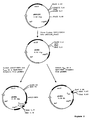
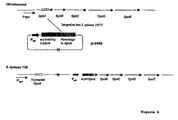
- the ery load fragment was cloned in-frame with, and upstream of, a region of spnA to allow homologous recombination with the native spn PKS.
- Upstream of the ery load was either the actI promoter (P actI ) or the promoter for resistance to pristinamycin (P ptr ), giving rise to the plasmids pLSB61 and pLSB62 respectively.
- actI actI
- P ptr the promoter for resistance to pristinamycin
- These plasmids are based on pKC1132 and are therefore apramycin-resistant. They also carry oriT for conjugal transfer of DNA into actinomycetes (Bierman et al. 1992, Matsushima et al. 1994). These constructs were transformed into S. spinosa NRRL 18537 by conjugation. Exconjugants were confirmed to contain the hybrid ery / spn PKS under the appropriate promoter
- S. spinosa NRRL 18537:pLSB62 was designated S. spinosa 13E, and was used for analysis of spinosyn production.
- S . spinosa 13E produced mainly spinosyn A and spinosyn E, in approximately equal amounts.
- the total yield of spinosyns was estimated to be approximately 10-25% of the wild-type spinosyn A levels, which represented an increase in yield of spinosyn E of approximately 10-fold.
- This altered ratio of products may be a reflection of looser specificity of the ery loading module relative to the spn loading module, or a reflection of the different substrate supply in S . spinosa compared with S . erythraea, or a combination of both. Incorporation of acetate by the ery load has been observed in S .
- novel analogues showed reasonable chromatographic retention times, characteristic UV chromophores and MS fragmentation patterns, and the predicted structures were supported by accurate mass measurements. Structural assignments of the isolated 21-cyclopropyl and 21-cyclobutyl compounds were confirmed by full NMR characterization. Compounds isolated were active in insect control assays.
- strain S . spinosa 13E is not limited to the production of these compounds. It is expected that a number of other spinosyn analogues can be identified by feeding other acids, such as those used to produce novel erythromycins (Pacey et al. 1998).
- Plasmid pCJR81 is a vector for expression of polyketide genes under the promoter for resistance to pristinamycin. It was constructed as follows:
- oligos Two overlapping oligos were designed to perform a PCR reaction in which they act both as primers and template. They were designed to introduce an Nde I restriction site incorporating the ATG start codon, such that genes can be cloned with optimal spacing from the ribosome binding site. A Spe I restriction site was incorporated to facilitate further cloning.
- the oligos are PRIS1 (SEQ ID NO: 1) and PRIS2(SEQ ID NO:2).
- Amplification to obtain the promoter fragment was performed with Pwo thermostable DNA polymerase using the manufacturer's conditions.
- the 112 bp fragment was phosphorylated with T4 polynucleotide kinase, and cloned into commercially-available pUC18 digested with Sma I and dephosphorylated. Plasmids containing inserts were sequenced. One plasmid containing the correct sequence was designated pRIS4.
- the 94 bp insert from pRIS4 was excised as a Spe I/ Nde I fragment (SEQ ID NO:3) and cloned into pCJR24 ( WO 98/01546 , WO 98/01571, Rowe et al. 1998 ) which had been previously digested with Spe I and NdeI.
- pCJR81 One correct plasmid was designated pCJR81.
- Plasmids pLSB2 and pLSB3 were constructed for expression of polyketide genes or accessory genes in S. spinosa. Plasmid pLSB2 contains the actI promoter (P actI ) and its cognate activator, actII -ORF4. Plasmid pLSB3 contains the promoter for resistance to pristinamycin (P ptr ). These plasmids were constructed as follows:
- Plasmid pKC 1132 (Bierman et al. 1992) contains an origin of transfer ( oriT ), and an apramycin resistance marker for selection in both E. coli and actinomycetes. It can therefore be used for DNA manipulations in E. coli, and permit the final plasmids to be introduced into S. spinosa by conjugation.
- the polylinker of pKC 1132 was replaced by a linker of two oligos CR311 (SEQ ID NO:4) and CR312 (SEQ ID NO:5) in order to provide appropriate Eco RV/ SpeI / Nde I/ Xba I restriction sites.
- Plasmid pKC1132 was digested with Pvu II and the ends dephosphorylated with shrimp alkaline phosphatase.
- the oligos CR311 and CR312 were phosphorylated with T4 polynucleotide kinase, annealed and cloned into pKC1132_ Pvu II to generate pLSB1.
- a Spe I/ Nde I fragment containing the actinorhodin pathway specific activator, actII -ORF4 and the act I promoter was isolated from pCJR24 ( WO 98/01546 , WO 98/01571, Rowe et al.
- Example 3 Construction of a vector to incorporate the loading module of the erythromycin polyketide synthase into the spinosyn polyketide synthase
- the vector to incorporate the loading module of the erythromycin polyketide synthase into the spinosyn polyketide synthase contains the erythromycin loading module (AT0ACP0), followed by a region of the first module of the spinosyn PKS to provide homology for integration.
- the vector is designated pLSB62 and was constructed as follows.
- the erythromycin loading module was amplified by PCR using pCJR26 (Rowe et al. 1998) as the template, and oligos SP28 (SEQ ID NO:6) and SP29 (SEQ ID NO:7).
- SP28 incorporates an NdeI site at the start codon of the ery sequence
- SP29 incorporates an NheI site at the beginning of the KS 1 domain.
- the PCR fragment was phosphorylated, gel-purified and cloned into pUC 18 which had been previously digested with Sma I and dephosphorylated. Clones were screened for the presence of inserts and sequenced. One clone containing the correct sequence was designated pLSB44. It contained the insert in the orientation with the Nhe I site close to the Eco RI site of the polylinker. The sequence of the erythromycin loading module fragment used, from the NdeI site to the NheI site is shown in SEQ ID NO 8.
- Plasmid pLSB8 (described in Example 11) contains a fragment of spnA starting with the NheI site at spn KS1.
- the fragment containing the erythromycin loading module was excised from pLSB44 as an Nde I/ Nhe I fragment and cloned into pLSB8 previously digested with Nde I and Nhe I, to give pLSB56.
- the fragment contained in pLSB56 contains the erythromycin loading module spliced in-frame to the spinosyn KS1, with a region of homology to spnA which is sufficient for integration to occur.
- This region was removed as an Nde I/ Xba I fragment and cloned into pLSB3 to give pLSB62. This places the new ery / spn hybrid fragment under P ptr , in a vector which can be transferred into S. spinosa by conjugation and selected using the apramycin resistance marker.
- Example 4 Generation of a S. spinosa strain harbouring a hybrid polyketide synthase comprising the erythromycin loading module fused to the KS1 of the spinosyn PKS.
- Saccharopolyspora spinosa NRRL 18537 was transformed by conjugation (Matsushima et al. 1994) from E. coli S17-1 (Simon et al., 1983) with pLSB62. Transformants were selected for apramycin resistance and screened by PCR. A single transformant was designated strain S. spinosa 13E.
- HPLC method is useful for analyzing fermentations for the production of natural spinosyns and novel non-natural engineered spinosyns.
- S. spinosa 13E was cultured from a frozen vegetative stock (1:1 CSM culture:cryopreservative, where the cryopreservative is 10% lactose, 20% glycerol w/v in water).
- a primary pre-culture was grown in CSM medium (tryptic soy broth 30 g/l, yeast extract 3 g/l, magnesium sulfate 2 g/l glucose 5 g/l, maltose 4 g/l; Hosted and Baltz 1996; US Pat. No.
- the secondary vegetative pre-culture was used to inoculate production medium (glucose 67 g/l, Proflo cottonseed flour 25 g/l, peptonized milk nutrient 22 g/l, corn steep liquor 12 g/l, methyl oleate 40 g/l, calcium carbonate 5 g/l, pH to 7.0 with sodium hydroxide; Strobel and Nakatsukasa 1993) at 5% v/v.
- Small scale production cultures were fermented under the same conditions as the pre-cultures, but for 7-10 days. For initial S . spinosa 13E production, small-scale cultures were grown in 30 mL of production medium in 250 mL Erlenmeyer flasks with springs for 7 days.
- Example 7 Precursor-directed production of novel spinosyns from S. spinosa 13E (Production of Compounds 1-6).
- the ery / spn hybrid PKS was used to generate novel spinosyn metabolites by feeding carboxylic acids to production cultures.
- the ery loading module incorporated the carboxylic acid within the starter of the molecule.
- Frozen vegetative stocks of S. spinosa 13E were inoculated into primary vegetative pre-cultures in CSM (50 mL incubated in a 250 mL Erlenmeyer flask with spring). Secondary pre-cultures in vegetative medium (250 mL incubated in a 2 L Erlenmeyer flask with spring) were prepared and incubated as described in Example 6, but at 300 rpm with a one-inch throw.
- Production medium Twelve to 14 L of production medium was prepared, as in Example 6, with the addition of 0.01% v/v Pluronic L-0101 (BASF) antifoam.
- Production medium was inoculated with the secondary vegetative pre-culture at 5% v/v, and allowed to ferment in a 20 L stirred bioreactor for 7-10 days at 30°C. Airflow was set at 0.75 vvm, over pressure was set at 0.5 barg or below, and impeller tip speed was controlled between 0.39 and 1.57 ms -1 in order to maintain dissolved oxygen tension at or above 30% of air saturation. Additional Pluronic L0101 (BASF) was added to control foaming, if needed.
- BASF Pluronic L0101
- Cyclobutyl carboxylic acid was fed to the bioreactor at 25 hours, to a final concentration of 5 mM.
- the fermentation broth was harvested after 7 days and clarified by centrifugation to provide supernatant and cells.
- the cells (1 L) were extracted by mixing thoroughly with an equal volume of methanol then allowed to stand for 30 min.
- the cell-methanol slurry was centrifuged, and the supernatant decanted off. The procedure was repeated.
- the fermentation supernatant (12 L) was adjusted to pH ⁇ 10 by addition of 5 N NaOH and stirred gently with 0.75 volumes of ethyl acetate for 8 hours.
- the upper phase was removed by aspiration and the extraction repeated.
- the ethyl acetate and methanol fractions were combined and the solvents removed in vacuo to yield a yellow-brown oil/aqueous mixture (1 L).
- Mobile-phase A 10% acetonitrile/90% water, containing 10 mM ammonium acetate and 0.15% formic acid.
- Mobile-phase B 90% acetonitrile/10% water, containing 10 mM ammonium acetate and 0.15% formic acid.
- Fractions were collected every 30 seconds. Fractions containing the 21-desethyl-21-cyclobutyl spinosyn A were combined, the acetonitrile removed in vacuo, and the sample concentrated using C 18 -BondElute cartridges (200 mg). The sample was applied under gravity, washed with water (10 mL) and eluted with methanol (2 x 10 mL), then the solvent removed in vacuo.
- Fractions were collected every 30 seconds. Fractions containing the 21-desethyl-21-cyclobutyl spinosyn D were combined, the acetonitrile removed in vacuo, and the sample concentrated using C 18 -BondElute cartridges (200 mg capacity). The sample was applied under gravity, washed with water (10 mL) and eluted with methanol (2 x 10 mL), and the solvent removed in vacuo.
- the chemical structures of the spinosyns were determined by spectroscopic methods, including nuclear magnetic resonance spectroscopy (NMR), mass spectrometry (MS), ultraviolet spectrometry (UV), coupled high performance liquid chromatography-mass spectrometry (HPLC-MS), and by comparison to the spectral data for the known compounds spinosyns A, D, E and F.
- NMR nuclear magnetic resonance spectroscopy
- MS mass spectrometry
- UV ultraviolet spectrometry
- HPLC-MS coupled high performance liquid chromatography-mass spectrometry
- Compound 3 21-desethyl-21-cyclobutyl spinosyn A (Compound 3) has the following characteristics:
- Frozen vegetative stocks of S . spinosa 13E were inoculated into primary vegetative pre-cultures in CSM (50 mL incubated in a 250 mL Erlenmeyer flask with spring). Secondary pre-cultures in vegetative medium (250 mL incubated in a 2 L Erlenmeyer flask with spring) were prepared and incubated as described in Example 8.
- Production medium Fourteen litres of production medium were prepared, as in Example 6, with the addition of 0.0 1 % v/v Pluronic L-0101 (BASF) antifoam. Production medium was inoculated with the secondary pre-culture at 5% v/v and allowed to ferment in a 20 L stirred bioreactor for 7-10 days under the conditions described in Example 8.
- BASF Pluronic L-0101
- Cyclopropyl carboxylic acid was fed to the bioreactor at 45 hours to a final concentration of 5 mM.
- the fermentation broth was harvested after 7 days and extracted as described in Example 8.
- the oily residue was dissolved in methanol (1.5 mL) and initially crudely chromatographed as described in Example 8. Fractions from the initial separation that contained 21-desethyl-21-cyclopropyl spinosyn A were combined and the solvent removed in vacuo.
- the residues were chromatographed over reversed-phase silica gel (Prodigy C 18 , 5 ⁇ M; 10 x 250 mm) eluting with a gradient as described below, at a flow rate of 5 mL/min.
- Fractions were collected every 30 seconds. Fractions containing the 21-desethyl-21-cyclopropyl spinosyn A were combined, the acetonitrile removed in vacuo, and the sample concentrated using a C 18 -BondElute cartridge (200 mg). The sample was applied under gravity, washed with water (10 mL) and eluted with methanol (2 x 10 mL), and then the solvent was removed in vacuo.
- Compound 1 21-desethyl-21-cyclopropyl spinosyn A (Compound 1) has the following characteristics:
- Compound 2 21-desethyl-21-cyclopropyl spinosyn D (Compound 2) has the following characteristics:
- the loading module of the avermectin biosynthetic cluster ( ave AT0ACP0) governs the introduction of C-2 branched starter units into the avermectin molecule, derived from iso-butyryl-CoA and 2-methylbutyryl-CoA. There is precedent for the swapping of this loading domain into the erythromycin PKS pathway to give novel polyketides with the starter unit specificity of the avermectin system ( WO 98/01546 , WO 98/01571, Marsden et al. 1998 ).
- the avermectin loading module has also been shown to incorporate CoA-esters of a broad range of free acids from the production medium, either in its native environment, or as part of the ave / ery hybrid pathway (Pacey et al. 1998).
- the avermectin loading module swap described in the literature is actually a replacement of the erythromycin AT0ACP0 by the avermectin AT0ACP0. This leads to a piece of erythromycin DNA sequence upstream of the avermectin ATO between the start codon and a Spe I site.
- the resulting hybrid was an ery / ave / spn hybrid, but since it transfers the specificity of the avermectin loading module to the spinosyn PKS, it has been designated an ave / spn hybrid through-out.
- the avermectin loading module (ATOACPO) was cloned from pIG1 ( WO 98/01546 , WO 98/01571 , Marsden et al. 1998) in-frame and upstream of the spn KS1, under the control of either P actI , or P ptr .
- a region of homology for integration was incorporated from pRHB3E11.
- S . spinosa NRRL 18538:pLSB29 was designated S . spinosa 21K2. It produced mainly spinosyns E, A and D by incorporation of acetate and propionate into the loading module. Additional small peaks were observed in LC-MS, with masses that were consistent with the novel natural products 21-desethyl-21-iso-propyl spinosyn A and 21-desethyl-21-sec-butyl spinosyn A and the equivalent D analogues. These minor products resulted from incorporation of iso-butyrate and 2-methyl butyrate respectively into the starter. In avermectin biosynthesis itself, the ave loading module recruits only these branched starters.
- 21-desethyl-21-iso-propyl spinosyn A was confirmed by NMR characterization.
- 21-desethyl-21- n -propyl spinosyn A was isolated as a minor component from the production culture of 21-desethyl-21-iso-propyl spinosyn A.
- the 21-n-propyl analogue presumably made by the loading module taking butyrate from the medium, was also fully characterized. Both were active in insect control assays.
- Free acids which can be used in this way include, but are not limited to, the following: Cyclic organic acids including cyclopropyl, cyclobutyl, cyclopentyl, cyclohexyl, cyclohexenyl and 2-methylcyclopropyl; heteroatom containing cyclic organic acids including 2-furoic acid, 3-furoic acid, thiophene carboxylic acid and methyl thiophene carboxylic acid; branched chain carboxylic acids; and some other acids which included methylthioacetic acid, chloroacetic acid, cyanoacetic acid and methoxyacetic acid.
- Preferred candidates for the C21 substituent are the groups of carboxylate units useable as substrates by the ery or ave loading modules.
- Preferred substrates include cyclobutane carboxylic acid and cyclopropane carboxylic acid. Other possibilities include n -butyric acid, iso-propyl carboxylic acid, 2-(S)-methylbutyric acid, 2-methylcyclopropane carboxylic acid, 3-furoic acid and methylthioacetic acid.
- Feeding the branched chain acids iso-propyl and 2-methyl butyl carboxylic acid did not alter the yield of novel natural products made due to the normal specificity of the ave load. These products were observed in all healthy cultures of S . spinosa 21K2 in low yield.
- Cyclobutyl carboxylic acid was accepted by the ave loading module to give the A and D analogues, and a substantial proportion of the C17-pseudoaglycone of the A analogue.
- the cyclobutyl products were observed at higher levels than in the fed hybrid ery / spn system, with 21-desethyl-21-cyclobutyl spinosyn A at ⁇ 5-10 mg/litre, 21-desethyl-21-cyclobutyl spinosyn D at lower but significant levels and 21-desethyl-21-cyclobutyl spinosyn A 17-pseudoaglycone at ⁇ 10-15 mg/litre.
- the cyclopropyl carboxylic acid feed was also successful, yielding 21-desethyl-21-cyclopropyl spinosyns A and D.
- the two cyclobutyl analogues and the cyclopropyl A analogue were shown to be identical to the purified compounds isolated from the ery load experiment.
- Methylthioacetic acid was incorporated to give the 21-desethyl-21-methylthiomethyl spinosyn A, at yields comparable to those of the cyclobutyl experiment above. This was a significant improvement in yield over production of the same compound from the ery load experiment. 2-furoic acid and methylcyclopropyl carboxylic acid were also incorporated to give the expected novel products.
- Example 11 Construction of a vector to incorporate the loading module of the avermectin polyketide synthase into the spinosyn polyketide synthase
- the vector to incorporate the loading module of the avermectin polyketide synthase into the spinosyn polyketide synthase contains the avermectin loading module (AT0ACP0) followed by a region of the first module of the spinosyn PKS to provide homology for integration.
- the vector is designated pLSB29 and was constructed as follows:
- the avermectin loading module has been previously spliced upstream of the erythromycin module 1 ( WO 98/01546 , WO 98/01571, Marsden et al. 1998 ).
- the loading module had the DNA coding for the ery amino acid sequence at the start, followed by the AT0ACP0 of the ave PKS.
- This hybrid fragment conferred the specificity of the avermectin loading domain, although it included a small amount of ery sequence. The same fragment was used in this experiment, and leads to an ery / ave / spn hybrid protein.
- the fragment begins with an Nde I site incorporating the start codon, and ends with a NheI site engineered at the beginning of the KS1. This introduces a conservative amino acid change (Ile - Leu) in the spinosyn KS1 sequence.
- the region of spnA from the beginning of the KS1 was amplified by PCR using pRHB3E11 ( US 6,274,350 B1, Waldron et al. 2001 ) as the template, and oligos SP14 (SEQ ID NO:9) and SP15 (SEQ ID NO:10).
- SP14 introduces an NheI site at bases 24107-24112 (numbers refer to SEQ ID NO:1 of US 6,274,350 ).
- SP15 binds approximately 1500 bp downstream, at a Bst EII site (25646 -25652). A Not I site was also incorporated into SP15 for the subsequent cloning step.
- the PCR was carried out using Pwo thermostable polymerase under standard conditions.
- the PCR product was phosphorylated, gel-purified and cloned into pUC19 which had been previously digested with Sma I and dephosphorylated.
- a number of insert-containing clones were sequenced.
- One clone containing the insert in the orientation which places the NheI site next to the Eco RI site in the vector was designated pLSB5.
- the avermectin loading module was then cloned from pIG1 ( WO 98/01546 , WO 98/01571, Marsden et al. 1998 ) as an Nde I/ Nhe I fragment and ligated into pLSB8 previously digested with Nde I and Nhe I.
- the DNA sequence of the avermectin loading module fragment used, from the Nde I site to the Nhe I site is shown in SEQ ID NO 11.
- the resulting plasmid was designated pLSB14.
- the fragment contained in pLSB14 contains the avermectin loading module spliced in-frame to the spinosyn KS1, with a region of homology to spnA which is sufficient for integration to occur.
- This fragment was then removed as an Nde I/ Xba I fragment and cloned into pLSB2 to give pLSB29. This places the new ave / spn hybrid fragment under P actI , in a vector which can be transferred into S. spinosa by conjugation and then selected using the apramycin resistance marker.
- Example 12 Generation of a S. spinosa strain harbouring a hybrid polyketide synthase comprising the avermectin loading module fused to the KS1 of the spinosyn PKS.
- Saccharopolyspora spinosa NRRL 18538 was transformed by conjugation (Matsushima et al. 1994) from E. coli S17-1 (Simon et al., 1983) with pLSB29. Transformants were selected by resistance to apramycin and screened by Southern blot analysis. A single transformant displaying the correct hybridization pattern to show that the plasmid had integrated into the chromosome by homologous recombination was designated strain S . spinosa 2 1 K2.
- S. spinosa 21K2 was cultured from a frozen vegetative stock used to inoculate CSM medium ( Hosted and Baltz 1996; US 5,362,634 ). This pre-culture was grown in flasks shaken at 300 rpm with a one-inch throw at a temperature of 30°C for 3 days. This was used to inoculate vegetative medium ( Strobel and Nakatsukasa 1993; US Pat. No. 5,362,634 ) at 5% v/v and was cultured under the same conditions for a further 2 days. The vegetative culture was used to inoculate production medium (Strobel and Nakatsukasa 1993) at 5% v/v.
- Small-scale production cultures were fermented under the same conditions as the pre-cultures, but for 7-10 days at 250 rpm with a two-inch throw and at 75% relative humidity. Initial small-scale production cultures were grown in 6 mL of production medium in 25 mL Erlenmeyer flasks with springs for 7 days.
- Example 14 Precursor-directed production of novel spinosyns from S. spinosa 21 K2 (Production of Compounds 1-6 and 13-20)
- the ave / spn hybrid PKS was used to generate novel spinosyn metabolites by feeding carboxylic acids to production cultures.
- the avermectin loading module incorporated the carboxylic acid within the starter of the molecule.
- the 21-cyclobutyl and cyclopropyl compounds were confirmed as the correct structures in comparison to the compounds isolated from feeding the ery load strain, S . spinosa 13E.
- Example 15 Isolation of novel metabolites from a large-scale fermentation of S. spinosa 21K2
- Frozen vegetative stocks of S. spinosa 21K2 were inoculated into primary vegetative pre-cultures of S . spinosa 21K2 in CSM (50 mL incubated in a 250 mL Erlenmeyer flask with spring). Secondary pre-cultures in vegetative medium (250 mL incubated in a 2 L Erlenmeyer flask with spring) were prepared and incubated as described in Example 6.
- Production medium Fourteen litres of production medium were prepared, as in Example 6, with the addition of 0.01% v/v Pluronic L-0101 (BASF) antifoam. Production medium was inoculated with the secondary pre-culture at 5% v/v and allowed to ferment in a 20 L stirred bioreactor for 7-10 days under the conditions described in Example 8.
- BASF Pluronic L-0101
- the fermentation broth was harvested after 7 days and extracted as described in Example 8.
- the oily residue was dissolved in methanol (1.5 mL) and initially chromatographed as described in Example 8.
- Fractions were collected every 30 seconds. Fractions containing the 21-desethyl-21-iso-propyl spinosyn A were combined, the acetonitrile removed in vacuo, and the sample concentrated using C 18 -BondElute cartridges (200 mg). The sample was applied under gravity, washed with water (10 mL) and eluted with methanol (2 x 10 mL), then the solvent was removed in vacuo.
- the dried sample was dissolved in methanol (0.5 mL) and chromatographed over reversed-phase base-deactivated silica gel (hypersil-C 18-BDS; 4.6 x 250 mm; 5 ⁇ m).
- the column was eluted isocratically at a flow rate of 1 mL/min with ammonium acetate (10 mM) - methanol - tetrahydrofuran (40:45:15), and the three major components were collected after UV detection (244 nm).
- the compounds claimed herein are useful for the control of insects and mites. Included are all isomers of the compounds.
- the compounds show activity against a number of insects and mites. More specifically, the compounds show activity against members of the insect order Lepidoptera such as the beet armyworm, tobacco budworm, codling moth and cabbage looper. They also show activity against members of the order Coleoptera (the beetles and weevils) and Diptera (the true flies). The compounds also show activity against members of the order Hempitera (true bugs), Homoptera (aphids and hoppers), Thysanoptera (thrips), Orthoptera (cockroaches), Siphonaptera (fleas), Isoptera (termites), and members of the Hymenoptera order Formicidae (ants). The compounds also show activity against the two-spotted spider mite, which is a member of the Arachnid order Acarina.
- the biologically-active compounds of the present invention can also be used in methods for inhibiting an insect or mite.
- a susceptible insect may be inhibited by applying an effective insect-inactivating amount of compound to a plant.
- the claimed compounds are applied in the form of compositions. These compositions comprise an insect- or mite-inactivating amount of compound in an inert carrier.
- the active component may be present as a single claimed compound, a mixture of two or more compounds or a mixture of any of the compounds together with the dried portion of the fermentation medium in which it is produced.
- Compositions are prepared according to the procedures and formulas which are conventional in the agricultural or pest control art.
- the compositions may be concentrated formulations, which are dispersed in water or may be in the form of a dust, bait or granular formulation used without further treatment.
- compositions can be broadened considerably by adding other, for example insecticidally, acaricidally, and/or nematocidally active, ingredients.
- insecticidally for example, one or more of the following compounds can suitably be combined with the compounds of the invention: organophosphorus compounds, carbamates, pyrethroids, acylureas, other types of insect growth regulators and insect hormone analogs, neonicotinoids and other nicotinics, macrolides and other insecticidal, acaricidal, mollscicial and nematocidal compounds or actives.
- WO 00/56156 on “Synergistic Insecticide Mixtures” discloses use of certain previously known spinosyn compounds in combination with agonists or antagonists of nicotinic acetylcholine receptors to control animal pests.
- WO 00/35282 on “Combination of Active Ingredients” discloses use of spinosad in combination with a fungicidally active compound.
- WO 00/35286 on “Combinations of Active Ingredients” discloses use of a combination of spinosad with other compounds to control animal pests and fungi.
- WO 99/60856 on "Use of Spinosyns as Soil Insecticides” discloses use of certain previously known spinosyns for treating seeds and for application to plants via the soil or by irrigation to control insects.
- WO 99/33343 on “Use of Macrolides in Pest Control” discloses use of spinosyns to control pests in transgenic crops, use of spinosyns to protect plant propagation material and plant organs formed at a later time from attack by pests, and use of spinosyns to control wood pests and molluscs.
- the compounds of Table 3 can also be used for these purposes.
- the compounds of the present invention are also useful for the treatment of animals to control arthropods, i.e., insects and arachnids including various flies and fly larvae, fleas, lice, mites, and ticks, which are pests on animals.
- arthropods i.e., insects and arachnids including various flies and fly larvae, fleas, lice, mites, and ticks, which are pests on animals.
- Techniques for delivering ectoparasiticides are well known to those skilled in the art.
- a present compound is applied to the exterior surface of an animal by sprays, dips or dusts.
- the compounds can also be delivered to animals using ear tags, a delivery method disclosed in US Pat. No. 4,265,876 .
- the compounds of the present invention can also be used to control insects and arachnids which are pests in the feces of cattle and other animals.
- the compounds are administered orally and the compounds travel through the intestinal tract and emerge in the feces. Control of pests in the feces indirectly protects the animals from the pests.
- the compounds of the invention are also useful as human pharmaceuticals to control parasites, for example, lice.
- the compounds can be used, for example, in the formulations for controlling lice that are disclosed in WO 00/01347 .
- Biological activity of the compounds of the invention was shown by a topical assay in which the compound was applied to laboratory-reared larvae (mean weight 22 mg) at the rate of 1 microg/larva. Each compound was applied, in an acetone solution (1 mg/mL), along the dorsum of six tobacco budworm ( Heliothis virescens ) larvae and six beet armyworm ( Spodoptera exigua ) larvae. Treated larvae were then held for two days at 21°C, 60% RH in six-well plastic culture plates. Larvae were each supplied with a 1 cm 3 of agar-based lepidoptera diet for sustenance during the two-day post-exposure interval.
- Table 11 Percent mortality was determined at the end of a two-day period (Table 11).
- Table 11 Compound Compound No. (See Table 3) Tobacco Budworm Beet Armyworm Rate (micro/ larva) Mortality (%) Rate (microg/ larva) Mortality (%) solvent only 0 0 0 0 21-cyclopropyl 1 1 100 1 33 21-cyclobutyl 3 1 83 1 83 21-cyclobutyl, 6-methyl 4 1 100 1 83 21-cyclobutyl, 5,6-dihydro 8 1 100 1 83 21-isopropyl 9 1 100 1 100
- the compounds of Table 3 can be used as intermediates in the processes disclosed in US 6,001,981 to produce semi-synthetic spinosyn analogues, which are also expected to have insecticidal activity.
Landscapes
- Chemical & Material Sciences (AREA)
- Organic Chemistry (AREA)
- Life Sciences & Earth Sciences (AREA)
- Engineering & Computer Science (AREA)
- Health & Medical Sciences (AREA)
- Genetics & Genomics (AREA)
- Biotechnology (AREA)
- Zoology (AREA)
- General Health & Medical Sciences (AREA)
- Wood Science & Technology (AREA)
- Biochemistry (AREA)
- Molecular Biology (AREA)
- Biomedical Technology (AREA)
- General Engineering & Computer Science (AREA)
- Bioinformatics & Cheminformatics (AREA)
- Microbiology (AREA)
- Plant Pathology (AREA)
- Chemical Kinetics & Catalysis (AREA)
- Physics & Mathematics (AREA)
- General Chemical & Material Sciences (AREA)
- Biophysics (AREA)
- Pest Control & Pesticides (AREA)
- Environmental Sciences (AREA)
- Dentistry (AREA)
- Agronomy & Crop Science (AREA)
- Micro-Organisms Or Cultivation Processes Thereof (AREA)
- Saccharide Compounds (AREA)
- Agricultural Chemicals And Associated Chemicals (AREA)
- Preparation Of Compounds By Using Micro-Organisms (AREA)
- Enzymes And Modification Thereof (AREA)
- Catching Or Destruction (AREA)
Claims (1)
- Verbindung ausgewählt aus
21-Desethyl-21-cyclopropyl spinosyn A;
21-Desethyl-21-cyclopropyl spinosyn D;
21-Desethyl-21-cyclobutyl spinosyn A;
21-Desethyl-21-cyclobutyl spinosyn D;
21-Desethyl-21-methylthiomethyl spinosyn A;
21-Desethyl-21-methylthiomethyl spinosyn D;
21-Desethyl-21-cyanomethyl spinosyn A;
5, 6-Dihydro-21-desethyl-21-cyclobutyl spinosyns A;
21-Desethyl-21-isopropyl spinosyn A;
21-Desethyl-21-isopropyl spinosyn D;
21-Desethyl-21-sec-butyl spinosyn A;
21-Desethyl-21-sec-butyl spinosyn D;
21-Desethyl-21-methylcyclopropyl spinosyn A;
21-Desethyl-21-methylcyclopropyl spinosyn D;
21-Desethyl-21- (3-furyl) spinosyn A;
21-Desethyl-21- (3-furyl) spinosyn D;
21-Desethyl-21-cyclopropyl spinosyn A 17-pseudoaglykon ;
21-Desethyl-21-cyclopropyl spinosyn D 17-pseudoaglykon ;
21-Desethyl-21-cyclobutyl spinosyn A 17-pseudoaglykon;
21-Desethyl-21-cyclobutyl spinosyn D 17-pseudoaglylkon.
Applications Claiming Priority (3)
| Application Number | Priority Date | Filing Date | Title |
|---|---|---|---|
| US35807502P | 2002-02-19 | 2002-02-19 | |
| US358075P | 2002-02-19 | ||
| PCT/US2003/004998 WO2003070908A2 (en) | 2002-02-19 | 2003-02-19 | Novel spinosyn-producing polyketide synthases |
Publications (3)
| Publication Number | Publication Date |
|---|---|
| EP1492404A2 EP1492404A2 (de) | 2005-01-05 |
| EP1492404A4 EP1492404A4 (de) | 2010-03-17 |
| EP1492404B1 true EP1492404B1 (de) | 2011-12-28 |
Family
ID=27757699
Family Applications (1)
| Application Number | Title | Priority Date | Filing Date |
|---|---|---|---|
| EP20030713546 Expired - Lifetime EP1492404B1 (de) | 2002-02-19 | 2003-02-19 | Neue spinosyn bildende polyketidsynthasen |
Country Status (11)
| Country | Link |
|---|---|
| US (5) | US20030225006A1 (de) |
| EP (1) | EP1492404B1 (de) |
| JP (1) | JP4765032B2 (de) |
| KR (1) | KR101016561B1 (de) |
| CN (1) | CN1633237B (de) |
| AU (2) | AU2003217591B2 (de) |
| DK (1) | DK1492404T3 (de) |
| ES (1) | ES2375714T3 (de) |
| IL (3) | IL163529A0 (de) |
| MX (1) | MXPA04008071A (de) |
| WO (1) | WO2003070908A2 (de) |
Families Citing this family (22)
| Publication number | Priority date | Publication date | Assignee | Title |
|---|---|---|---|---|
| IL163529A0 (en) | 2002-02-19 | 2005-12-18 | Dow Agrosciences Llc | Novel spinosyn-producing polyketidesynthases |
| GB0327720D0 (en) | 2003-11-28 | 2003-12-31 | Biotica Tech Ltd | Erythromycins and process for their preparation |
| GB0417852D0 (en) | 2004-08-11 | 2004-09-15 | Biotica Tech Ltd | Production of polyketides and other natural products |
| WO2007144786A2 (en) * | 2006-05-26 | 2007-12-21 | Entarco Sa | The vapor-phase application of spinosyn for the control of pests, and formulations and products utilizing the same |
| CN102202506B (zh) * | 2008-09-22 | 2015-07-29 | 克里斯廷·克里蒂考 | 刺糖多孢菌素防污组合物、其使用方法、以及受到保护而免于附着污损生物的制品 |
| AU2010213749B2 (en) * | 2009-02-11 | 2015-01-22 | Dow Agrosciences Llc | Pesticidal compositions |
| JP5619868B2 (ja) * | 2009-04-03 | 2014-11-05 | ダウ アグロサイエンシーズエルエルシー | 水性エマルションを解乳化および分離するための解乳化組成物、系および方法 |
| US8268975B2 (en) | 2009-04-03 | 2012-09-18 | Dow Agrosciences Llc | Demulsification compositions, systems and methods for demulsifying and separating aqueous emulsions |
| CA2764526A1 (en) | 2009-06-24 | 2010-12-29 | Christine Kritikou | The use of spinosyns and spinosyn compositions against diseases caused by protozoans, viral infections and cancer |
| EP2272963A1 (de) | 2009-07-09 | 2011-01-12 | LEK Pharmaceuticals d.d. | Verfahren zur Herstellung von Tacrolimus |
| RU2580015C2 (ru) | 2010-05-11 | 2016-04-10 | ДАУ АГРОСАЙЕНСИЗ ЭлЭлСи | Штаммы spnk |
| CN101942425B (zh) * | 2010-08-24 | 2012-06-20 | 北京农学院 | 与苯亚甲基丙酮合成相关的酶及其编码基因与应用 |
| EP2654757A1 (de) | 2010-12-22 | 2013-10-30 | Entarco SA | Verwendung von spinosynen und spinosynzusammensetzungen als lokalanästhetika und antiarrhythmika |
| US9404107B2 (en) | 2011-05-03 | 2016-08-02 | Dow Agrosciences Llc | Integration of genes into the chromosome of Saccharopolyspora spinosa |
| DK2520653T3 (en) | 2011-05-03 | 2017-07-03 | Dow Agrosciences Llc | INTEGRATION OF GENES IN THE CHROMOSOME OF SACCHAROPOLYSPORA SPINOSA |
| US9631195B2 (en) | 2011-12-28 | 2017-04-25 | Dow Agrosciences Llc | Identification and characterization of the spinactin biosysnthesis gene cluster from spinosyn producing saccharopolyspora spinosa |
| JP6641366B2 (ja) * | 2014-11-14 | 2020-02-05 | 浙江海正薬業股▲ふん▼有限公司Zhejiang Hisun Pharmaceutical CO.,LTD. | スピノサド異種発現株およびその構築方法ならびに使用 |
| JP2018532708A (ja) | 2015-09-03 | 2018-11-08 | アグリメティス,エルエルシー | 殺虫剤としてのスピノシン誘導体 |
| WO2018226893A2 (en) | 2017-06-06 | 2018-12-13 | Zymergen Inc. | A high-throughput (htp) genomic engineering platform for improving saccharopolyspora spinosa |
| AU2021256845A1 (en) * | 2020-04-14 | 2022-11-24 | Eidgenössische Technische Hochschule Zürich | Cell classifier circuits and methods of use thereof |
| CN116240191B (zh) * | 2023-03-23 | 2026-03-27 | 上海交通大学 | 一种泰乐菌素聚酮合酶酰基转移酶突变体及其应用 |
| CN116334021B (zh) * | 2023-03-30 | 2026-02-03 | 上海交通大学 | 一种多杀菌素酰基转移酶突变体及其应用 |
Family Cites Families (35)
| Publication number | Priority date | Publication date | Assignee | Title |
|---|---|---|---|---|
| CA1117005A (en) | 1978-03-07 | 1982-01-26 | Patrick G. Feakins | Animal ear-tags, their manufacture and their use |
| OA09249A (fr) | 1988-12-19 | 1992-06-30 | Lilly Co Eli | Composés de macrolides. |
| US5362634A (en) * | 1989-10-30 | 1994-11-08 | Dowelanco | Process for producing A83543 compounds |
| US5824513A (en) * | 1991-01-17 | 1998-10-20 | Abbott Laboratories | Recombinant DNA method for producing erythromycin analogs |
| WO1993013663A1 (en) | 1992-01-17 | 1993-07-22 | Abbott Laboratories | Method of directing biosynthesis of specific polyketides |
| CN1073483A (zh) * | 1991-11-08 | 1993-06-23 | 道伊兰科公司 | 一种发酵杀虫剂化合物及其制备方法 |
| US5539089A (en) * | 1991-11-08 | 1996-07-23 | Dowelanco | A83543 aglycones and pseudoglycones |
| US5591606A (en) * | 1992-11-06 | 1997-01-07 | Dowelanco | Process for the production of A83543 compounds with Saccharopolyspora spinosa |
| WO1994020518A1 (en) | 1993-03-12 | 1994-09-15 | Dowelanco | New a83543 compounds and process for production thereof |
| CA2197524A1 (en) * | 1996-02-22 | 1997-08-22 | Bradley Stuart Dehoff | Polyketide synthase genes |
| US6001981A (en) | 1996-06-13 | 1999-12-14 | Dow Agrosciences Llc | Synthetic modification of Spinosyn compounds |
| ES2244001T3 (es) * | 1996-07-05 | 2005-12-01 | Biotica Technology Limited | Eritromicinas y procedimiento para su preparacion. |
| JP3441899B2 (ja) | 1996-11-01 | 2003-09-02 | 理化学研究所 | 完全長cDNAライブラリーの作成方法 |
| CO5060464A1 (es) | 1997-12-23 | 2001-07-30 | Novartis Ag | Metodos para controlar plagas con una composicion plaguicida que comprende un compuesto macrolido |
| US6143526A (en) * | 1998-03-09 | 2000-11-07 | Baltz; Richard H. | Biosynthetic genes for spinosyn insecticide production |
| DE19823397B4 (de) | 1998-05-26 | 2011-07-28 | Bayer CropScience AG, 40789 | Verwendung von Spinosynen zum Einsatz als Bodeninsektizide |
| GB9814006D0 (en) * | 1998-06-29 | 1998-08-26 | Biotica Tech Ltd | Polyketides and their synthesis |
| ID29130A (id) | 1998-07-02 | 2001-08-02 | Lilly Co Eli | Formulasi pengendali kutu pada manusia |
| GB9814622D0 (en) * | 1998-07-06 | 1998-09-02 | Biotica Tech Ltd | Polyketides,their preparation,and materials for use therein |
| MXPA01003376A (es) * | 1998-10-02 | 2002-11-07 | Kosan Biosciences Inc | Enzimas policetido sintetasa y construcciones de acido desoxirribonucleico recombinante para las mismas. |
| DE19857966A1 (de) | 1998-12-16 | 2000-06-21 | Bayer Ag | Wirkstoffkombinationen |
| DE19857967A1 (de) | 1998-12-16 | 2000-06-21 | Bayer Ag | Wirkstoffkombinationen |
| CA2361040A1 (en) * | 1999-01-27 | 2000-08-03 | Kosan Biosciences, Inc. | Synthesis of oligoketides |
| JP2000245457A (ja) * | 1999-02-24 | 2000-09-12 | Kitasato Inst:The | エバーメクチンアグリコン合成酵素遺伝子 |
| DE19913174A1 (de) | 1999-03-24 | 2000-09-28 | Bayer Ag | Synergistische insektizide Mischungen |
| GB9912563D0 (en) * | 1999-05-28 | 1999-07-28 | Biotica Tech Ltd | Polyketides and their synthesis |
| US7285653B1 (en) * | 1999-08-27 | 2007-10-23 | Bayer Aktiengesellschaft | Nucleic acids which code for the enzyme activities of the spinosyn biosynthesis |
| ATE280176T1 (de) * | 1999-09-13 | 2004-11-15 | Dow Agrosciences Llc | Pestizide makrolide |
| WO2002007705A1 (en) * | 2000-07-20 | 2002-01-31 | Campina B.V. | Carrier material for dry powder inhalation |
| GB0019986D0 (en) * | 2000-08-14 | 2000-10-04 | Biotica Tech Ltd | Polyketides and their synthesis |
| TWI275592B (en) * | 2001-03-21 | 2007-03-11 | Dow Agrosciences Llc | Synthetic derivatives of 21-butenyl and related spinosyns |
| US6919464B1 (en) * | 2001-03-21 | 2005-07-19 | Dow Agrosciences Llc | Synthetic derivatives of 21-butenyl and related spinosyns |
| DE10135550A1 (de) * | 2001-07-20 | 2003-01-30 | Bayer Cropscience Ag | Verfahren zum Herstellen von neuen Spinosyn-Derivaten |
| IL163529A0 (en) * | 2002-02-19 | 2005-12-18 | Dow Agrosciences Llc | Novel spinosyn-producing polyketidesynthases |
| WO2005109887A1 (en) * | 2004-04-23 | 2005-11-17 | Smart Metric, Inc. | Smartcard with visual display |
-
2003
- 2003-02-19 IL IL16352903A patent/IL163529A0/xx unknown
- 2003-02-19 AU AU2003217591A patent/AU2003217591B2/en not_active Expired
- 2003-02-19 CN CN038041626A patent/CN1633237B/zh not_active Expired - Lifetime
- 2003-02-19 EP EP20030713546 patent/EP1492404B1/de not_active Expired - Lifetime
- 2003-02-19 MX MXPA04008071A patent/MXPA04008071A/es active IP Right Grant
- 2003-02-19 WO PCT/US2003/004998 patent/WO2003070908A2/en not_active Ceased
- 2003-02-19 US US10/368,770 patent/US20030225006A1/en not_active Abandoned
- 2003-02-19 DK DK03713546T patent/DK1492404T3/da active
- 2003-02-19 JP JP2003569801A patent/JP4765032B2/ja not_active Expired - Lifetime
- 2003-02-19 KR KR1020047012851A patent/KR101016561B1/ko not_active Expired - Lifetime
- 2003-02-19 ES ES03713546T patent/ES2375714T3/es not_active Expired - Lifetime
-
2004
- 2004-08-12 IL IL16352904A patent/IL163529A/en active IP Right Grant
-
2005
- 2005-10-20 US US11/254,686 patent/US7626010B2/en not_active Expired - Lifetime
-
2009
- 2009-02-20 AU AU2009200685A patent/AU2009200685B2/en not_active Expired
- 2009-08-18 IL IL200471A patent/IL200471A/en active IP Right Grant
- 2009-11-11 US US12/616,470 patent/US20100068785A1/en not_active Abandoned
-
2011
- 2011-03-28 US US13/073,226 patent/US8624009B2/en not_active Expired - Fee Related
-
2013
- 2013-11-18 US US14/082,494 patent/US9137992B2/en not_active Expired - Fee Related
Also Published As
| Publication number | Publication date |
|---|---|
| CN1633237B (zh) | 2010-05-26 |
| AU2003217591B2 (en) | 2009-02-26 |
| CN1633237A (zh) | 2005-06-29 |
| IL163529A0 (en) | 2005-12-18 |
| US7626010B2 (en) | 2009-12-01 |
| US20030225006A1 (en) | 2003-12-04 |
| JP2005520500A (ja) | 2005-07-14 |
| IL200471A (en) | 2015-09-24 |
| WO2003070908A3 (en) | 2004-10-28 |
| US8624009B2 (en) | 2014-01-07 |
| US20060040877A1 (en) | 2006-02-23 |
| ES2375714T3 (es) | 2012-03-05 |
| WO2003070908A2 (en) | 2003-08-28 |
| JP4765032B2 (ja) | 2011-09-07 |
| MXPA04008071A (es) | 2004-11-26 |
| US20100068785A1 (en) | 2010-03-18 |
| EP1492404A2 (de) | 2005-01-05 |
| KR20040085201A (ko) | 2004-10-07 |
| IL163529A (en) | 2011-11-30 |
| EP1492404A4 (de) | 2010-03-17 |
| US20110178036A1 (en) | 2011-07-21 |
| US9137992B2 (en) | 2015-09-22 |
| AU2003217591A1 (en) | 2003-09-09 |
| AU2009200685B2 (en) | 2012-01-12 |
| US20140080777A1 (en) | 2014-03-20 |
| IL200471A0 (en) | 2011-07-31 |
| KR101016561B1 (ko) | 2011-02-22 |
| AU2009200685A1 (en) | 2009-03-12 |
| DK1492404T3 (da) | 2012-04-23 |
Similar Documents
| Publication | Publication Date | Title |
|---|---|---|
| US9137992B2 (en) | Spinosyn-producing polyketide synthases | |
| EP0910633B1 (de) | Hybridpolyketidesynthase I Gen | |
| US6271255B1 (en) | Erythromycins and process for their preparation | |
| Huang et al. | Recent advances in the biochemistry of spinosyns | |
| Waldron et al. | A cluster of genes for the biosynthesis of spinosyns, novel macrolide insect control agents produced by Saccharopolyspora spinosa | |
| KR20010021933A (ko) | 신규한 폴리케타이드의 제조방법 | |
| Sheehan et al. | Engineering of the spinosyn PKS: directing starter unit incorporation | |
| US7807418B2 (en) | Method for producing hybrid polyketide synthases | |
| US20040087003A1 (en) | Methods and cells for improved production of polyketides | |
| JP2009219493A (ja) | ポリケチド類及びそれらの合成 | |
| EP1602727A2 (de) | Neue Erythromycine und deren Herstellungsprozesse | |
| CZ437598A3 (cs) | Erythromyciny, způsoby jejich výroby, farmaceutická kompozice na jejich bázi, způsob léčení a použití |
Legal Events
| Date | Code | Title | Description |
|---|---|---|---|
| PUAI | Public reference made under article 153(3) epc to a published international application that has entered the european phase |
Free format text: ORIGINAL CODE: 0009012 |
|
| 17P | Request for examination filed |
Effective date: 20040804 |
|
| AK | Designated contracting states |
Kind code of ref document: A2 Designated state(s): AT BE BG CH CY CZ DE DK EE ES FI FR GB GR HU IE IT LI LU MC NL PT SE SI SK TR |
|
| AX | Request for extension of the european patent |
Extension state: AL LT LV MK RO |
|
| RIN1 | Information on inventor provided before grant (corrected) |
Inventor name: BURNS, LESLEY S. Inventor name: WILKINSON, BARRIE Inventor name: GRAUPNER, PAUL, R. Inventor name: VOUSDEN, WILLIAM A. Inventor name: WALDRON, CLIVE Inventor name: MARTIN, CHRISTINE J. Inventor name: LEWER, PAUL |
|
| A4 | Supplementary search report drawn up and despatched |
Effective date: 20100215 |
|
| 17Q | First examination report despatched |
Effective date: 20100413 |
|
| GRAP | Despatch of communication of intention to grant a patent |
Free format text: ORIGINAL CODE: EPIDOSNIGR1 |
|
| RIC1 | Information provided on ipc code assigned before grant |
Ipc: A01N 43/04 20060101AFI20110711BHEP Ipc: C12N 5/02 20060101ALI20110711BHEP Ipc: C07H 21/04 20060101ALI20110711BHEP Ipc: C12P 19/62 20060101ALI20110711BHEP Ipc: C12N 5/00 20060101ALI20110711BHEP Ipc: C12P 1/04 20060101ALI20110711BHEP |
|
| RIN1 | Information on inventor provided before grant (corrected) |
Inventor name: WALDRON, CLIVE Inventor name: GRAUPNER, PAUL, R. Inventor name: LEWER, PAUL Inventor name: MARTIN, CHRISTINE J. Inventor name: WILKINSON, BARRIE Inventor name: SHEEHAN, LESLEY S. Inventor name: VOUSDEN, WILLIAM A. |
|
| GRAS | Grant fee paid |
Free format text: ORIGINAL CODE: EPIDOSNIGR3 |
|
| GRAA | (expected) grant |
Free format text: ORIGINAL CODE: 0009210 |
|
| AK | Designated contracting states |
Kind code of ref document: B1 Designated state(s): DE DK ES FR GB IT |
|
| REG | Reference to a national code |
Ref country code: GB Ref legal event code: FG4D |
|
| REG | Reference to a national code |
Ref country code: ES Ref legal event code: FG2A Ref document number: 2375714 Country of ref document: ES Kind code of ref document: T3 Effective date: 20120305 |
|
| REG | Reference to a national code |
Ref country code: DE Ref legal event code: R096 Ref document number: 60339539 Country of ref document: DE Effective date: 20120308 |
|
| REG | Reference to a national code |
Ref country code: DK Ref legal event code: T3 |
|
| PLBE | No opposition filed within time limit |
Free format text: ORIGINAL CODE: 0009261 |
|
| STAA | Information on the status of an ep patent application or granted ep patent |
Free format text: STATUS: NO OPPOSITION FILED WITHIN TIME LIMIT |
|
| 26N | No opposition filed |
Effective date: 20121001 |
|
| REG | Reference to a national code |
Ref country code: DE Ref legal event code: R097 Ref document number: 60339539 Country of ref document: DE Effective date: 20121001 |
|
| REG | Reference to a national code |
Ref country code: FR Ref legal event code: PLFP Year of fee payment: 14 |
|
| REG | Reference to a national code |
Ref country code: FR Ref legal event code: PLFP Year of fee payment: 15 |
|
| REG | Reference to a national code |
Ref country code: FR Ref legal event code: PLFP Year of fee payment: 16 |
|
| REG | Reference to a national code |
Ref country code: DE Ref legal event code: R081 Ref document number: 60339539 Country of ref document: DE Owner name: CORTEVA AGRISCIENCE LLC, INDIANAPOLIS, US Free format text: FORMER OWNER: DOW AGROSCIENCES LLC, INDIANAPOLIS, IND., US |
|
| PGFP | Annual fee paid to national office [announced via postgrant information from national office to epo] |
Ref country code: GB Payment date: 20211230 Year of fee payment: 20 |
|
| PGFP | Annual fee paid to national office [announced via postgrant information from national office to epo] |
Ref country code: DK Payment date: 20220209 Year of fee payment: 20 Ref country code: DE Payment date: 20211230 Year of fee payment: 20 |
|
| PGFP | Annual fee paid to national office [announced via postgrant information from national office to epo] |
Ref country code: IT Payment date: 20220111 Year of fee payment: 20 Ref country code: FR Payment date: 20220118 Year of fee payment: 20 Ref country code: ES Payment date: 20220304 Year of fee payment: 20 |
|
| REG | Reference to a national code |
Ref country code: ES Ref legal event code: PC2A Owner name: CORTEVA AGRISCIENCE LLC Effective date: 20221114 |
|
| REG | Reference to a national code |
Ref country code: DE Ref legal event code: R071 Ref document number: 60339539 Country of ref document: DE |
|
| REG | Reference to a national code |
Ref country code: DK Ref legal event code: EUP Expiry date: 20230219 |
|
| REG | Reference to a national code |
Ref country code: GB Ref legal event code: PE20 Expiry date: 20230218 |
|
| REG | Reference to a national code |
Ref country code: ES Ref legal event code: FD2A Effective date: 20230505 |
|
| PG25 | Lapsed in a contracting state [announced via postgrant information from national office to epo] |
Ref country code: GB Free format text: LAPSE BECAUSE OF EXPIRATION OF PROTECTION Effective date: 20230218 |
|
| PG25 | Lapsed in a contracting state [announced via postgrant information from national office to epo] |
Ref country code: ES Free format text: LAPSE BECAUSE OF EXPIRATION OF PROTECTION Effective date: 20230220 |