EP1526182A2 - Subtilisin Varianten - Google Patents
Subtilisin Varianten Download PDFInfo
- Publication number
- EP1526182A2 EP1526182A2 EP04024046A EP04024046A EP1526182A2 EP 1526182 A2 EP1526182 A2 EP 1526182A2 EP 04024046 A EP04024046 A EP 04024046A EP 04024046 A EP04024046 A EP 04024046A EP 1526182 A2 EP1526182 A2 EP 1526182A2
- Authority
- EP
- European Patent Office
- Prior art keywords
- subtilisin
- amino acid
- hydrolase
- precursor
- carbonyl
- Prior art date
- Legal status (The legal status is an assumption and is not a legal conclusion. Google has not performed a legal analysis and makes no representation as to the accuracy of the status listed.)
- Withdrawn
Links
- 108090000787 Subtilisin Proteins 0.000 title claims abstract description 150
- 108090000604 Hydrolases Proteins 0.000 claims abstract description 117
- 102000004157 Hydrolases Human genes 0.000 claims abstract description 110
- 125000002915 carbonyl group Chemical group [*:2]C([*:1])=O 0.000 claims abstract description 96
- 238000006467 substitution reaction Methods 0.000 claims abstract description 58
- 239000002243 precursor Substances 0.000 claims abstract description 51
- 241000193744 Bacillus amyloliquefaciens Species 0.000 claims abstract description 48
- 125000003275 alpha amino acid group Chemical group 0.000 claims abstract description 39
- 125000000539 amino acid group Chemical group 0.000 claims abstract description 36
- 102200025035 rs786203989 Human genes 0.000 claims description 292
- 102220528606 Ribonuclease P/MRP protein subunit POP5_S99D_mutation Human genes 0.000 claims description 52
- 241000193422 Bacillus lentus Species 0.000 claims description 47
- 150000001413 amino acids Chemical class 0.000 claims description 29
- 241000193830 Bacillus <bacterium> Species 0.000 claims description 7
- 239000013604 expression vector Substances 0.000 claims description 6
- 108091028043 Nucleic acid sequence Proteins 0.000 abstract description 27
- 238000012986 modification Methods 0.000 abstract description 19
- 230000004048 modification Effects 0.000 abstract description 19
- 230000002797 proteolythic effect Effects 0.000 abstract description 19
- 238000000338 in vitro Methods 0.000 abstract description 4
- 102000004190 Enzymes Human genes 0.000 description 51
- 108090000790 Enzymes Proteins 0.000 description 51
- 229940088598 enzyme Drugs 0.000 description 51
- 102220350531 c.80A>G Human genes 0.000 description 36
- 108090000623 proteins and genes Proteins 0.000 description 35
- 108020004414 DNA Proteins 0.000 description 31
- 235000001014 amino acid Nutrition 0.000 description 30
- 229940024606 amino acid Drugs 0.000 description 29
- 239000013612 plasmid Substances 0.000 description 28
- 108010056079 Subtilisins Proteins 0.000 description 27
- 102000005158 Subtilisins Human genes 0.000 description 27
- 239000003599 detergent Substances 0.000 description 25
- 238000000034 method Methods 0.000 description 24
- 239000000203 mixture Substances 0.000 description 20
- 238000010276 construction Methods 0.000 description 19
- 102000035195 Peptidases Human genes 0.000 description 17
- 108091005804 Peptidases Proteins 0.000 description 17
- 238000002703 mutagenesis Methods 0.000 description 16
- 231100000350 mutagenesis Toxicity 0.000 description 16
- 239000000758 substrate Substances 0.000 description 15
- 239000013598 vector Substances 0.000 description 15
- 210000004027 cell Anatomy 0.000 description 14
- 238000003780 insertion Methods 0.000 description 14
- 230000037431 insertion Effects 0.000 description 14
- 238000012217 deletion Methods 0.000 description 13
- 230000037430 deletion Effects 0.000 description 13
- 239000004365 Protease Substances 0.000 description 12
- 102000053602 DNA Human genes 0.000 description 11
- 108020004682 Single-Stranded DNA Proteins 0.000 description 11
- 229910052799 carbon Inorganic materials 0.000 description 11
- 239000012634 fragment Substances 0.000 description 11
- 229910052757 nitrogen Inorganic materials 0.000 description 11
- DHMQDGOQFOQNFH-UHFFFAOYSA-N Glycine Chemical compound NCC(O)=O DHMQDGOQFOQNFH-UHFFFAOYSA-N 0.000 description 10
- 108091034117 Oligonucleotide Proteins 0.000 description 10
- 108010022999 Serine Proteases Proteins 0.000 description 10
- 230000000694 effects Effects 0.000 description 10
- 238000009472 formulation Methods 0.000 description 10
- 108090000765 processed proteins & peptides Proteins 0.000 description 10
- 229910052717 sulfur Inorganic materials 0.000 description 10
- 102000012479 Serine Proteases Human genes 0.000 description 9
- 229910052700 potassium Inorganic materials 0.000 description 9
- 230000035772 mutation Effects 0.000 description 8
- 235000019419 proteases Nutrition 0.000 description 8
- 235000014469 Bacillus subtilis Nutrition 0.000 description 7
- 108010076504 Protein Sorting Signals Proteins 0.000 description 7
- MTCFGRXMJLQNBG-UHFFFAOYSA-N Serine Natural products OCC(N)C(O)=O MTCFGRXMJLQNBG-UHFFFAOYSA-N 0.000 description 7
- 229940009098 aspartate Drugs 0.000 description 7
- 239000001110 calcium chloride Substances 0.000 description 7
- 229910001628 calcium chloride Inorganic materials 0.000 description 7
- 238000006243 chemical reaction Methods 0.000 description 7
- 238000004140 cleaning Methods 0.000 description 7
- 230000006870 function Effects 0.000 description 7
- 230000014509 gene expression Effects 0.000 description 7
- UXVMQQNJUSDDNG-UHFFFAOYSA-L Calcium chloride Chemical compound [Cl-].[Cl-].[Ca+2] UXVMQQNJUSDDNG-UHFFFAOYSA-L 0.000 description 6
- 230000003197 catalytic effect Effects 0.000 description 6
- 229910052740 iodine Inorganic materials 0.000 description 6
- 239000007788 liquid Substances 0.000 description 6
- 102000004169 proteins and genes Human genes 0.000 description 6
- 108091008146 restriction endonucleases Proteins 0.000 description 6
- 229910052720 vanadium Inorganic materials 0.000 description 6
- 229910052727 yttrium Inorganic materials 0.000 description 6
- DCXYFEDJOCDNAF-UHFFFAOYSA-N Asparagine Natural products OC(=O)C(N)CC(N)=O DCXYFEDJOCDNAF-UHFFFAOYSA-N 0.000 description 5
- 244000063299 Bacillus subtilis Species 0.000 description 5
- 239000004471 Glycine Substances 0.000 description 5
- DCXYFEDJOCDNAF-REOHCLBHSA-N L-asparagine Chemical compound OC(=O)[C@@H](N)CC(N)=O DCXYFEDJOCDNAF-REOHCLBHSA-N 0.000 description 5
- CKLJMWTZIZZHCS-REOHCLBHSA-N L-aspartic acid Chemical compound OC(=O)[C@@H](N)CC(O)=O CKLJMWTZIZZHCS-REOHCLBHSA-N 0.000 description 5
- 238000007792 addition Methods 0.000 description 5
- 229960001230 asparagine Drugs 0.000 description 5
- 235000009582 asparagine Nutrition 0.000 description 5
- 230000008859 change Effects 0.000 description 5
- 229910052731 fluorine Inorganic materials 0.000 description 5
- 239000000047 product Substances 0.000 description 5
- 235000018102 proteins Nutrition 0.000 description 5
- 230000028327 secretion Effects 0.000 description 5
- QKNYBSVHEMOAJP-UHFFFAOYSA-N 2-amino-2-(hydroxymethyl)propane-1,3-diol;hydron;chloride Chemical compound Cl.OCC(N)(CO)CO QKNYBSVHEMOAJP-UHFFFAOYSA-N 0.000 description 4
- LKDMKWNDBAVNQZ-WJNSRDFLSA-N 4-[[(2s)-1-[[(2s)-1-[(2s)-2-[[(2s)-1-(4-nitroanilino)-1-oxo-3-phenylpropan-2-yl]carbamoyl]pyrrolidin-1-yl]-1-oxopropan-2-yl]amino]-1-oxopropan-2-yl]amino]-4-oxobutanoic acid Chemical compound OC(=O)CCC(=O)N[C@@H](C)C(=O)N[C@@H](C)C(=O)N1CCC[C@H]1C(=O)N[C@H](C(=O)NC=1C=CC(=CC=1)[N+]([O-])=O)CC1=CC=CC=C1 LKDMKWNDBAVNQZ-WJNSRDFLSA-N 0.000 description 4
- TYMLOMAKGOJONV-UHFFFAOYSA-N 4-nitroaniline Chemical compound NC1=CC=C([N+]([O-])=O)C=C1 TYMLOMAKGOJONV-UHFFFAOYSA-N 0.000 description 4
- 241000194108 Bacillus licheniformis Species 0.000 description 4
- 108090000317 Chymotrypsin Proteins 0.000 description 4
- 108020004705 Codon Proteins 0.000 description 4
- 238000002835 absorbance Methods 0.000 description 4
- 239000007795 chemical reaction product Substances 0.000 description 4
- 229960002376 chymotrypsin Drugs 0.000 description 4
- 230000007423 decrease Effects 0.000 description 4
- 230000002779 inactivation Effects 0.000 description 4
- 238000012544 monitoring process Methods 0.000 description 4
- 238000012360 testing method Methods 0.000 description 4
- 238000013518 transcription Methods 0.000 description 4
- 230000035897 transcription Effects 0.000 description 4
- HNDVDQJCIGZPNO-YFKPBYRVSA-N L-histidine Chemical compound OC(=O)[C@@H](N)CC1=CN=CN1 HNDVDQJCIGZPNO-YFKPBYRVSA-N 0.000 description 3
- OUYCCCASQSFEME-QMMMGPOBSA-N L-tyrosine Chemical compound OC(=O)[C@@H](N)CC1=CC=C(O)C=C1 OUYCCCASQSFEME-QMMMGPOBSA-N 0.000 description 3
- 108010006035 Metalloproteases Proteins 0.000 description 3
- 101710118538 Protease Proteins 0.000 description 3
- BGRWYDHXPHLNKA-UHFFFAOYSA-N Tetraacetylethylenediamine Chemical compound CC(=O)N(C(C)=O)CCN(C(C)=O)C(C)=O BGRWYDHXPHLNKA-UHFFFAOYSA-N 0.000 description 3
- JLCPHMBAVCMARE-UHFFFAOYSA-N [3-[[3-[[3-[[3-[[3-[[3-[[3-[[3-[[3-[[3-[[3-[[5-(2-amino-6-oxo-1H-purin-9-yl)-3-[[3-[[3-[[3-[[3-[[3-[[5-(2-amino-6-oxo-1H-purin-9-yl)-3-[[5-(2-amino-6-oxo-1H-purin-9-yl)-3-hydroxyoxolan-2-yl]methoxy-hydroxyphosphoryl]oxyoxolan-2-yl]methoxy-hydroxyphosphoryl]oxy-5-(5-methyl-2,4-dioxopyrimidin-1-yl)oxolan-2-yl]methoxy-hydroxyphosphoryl]oxy-5-(6-aminopurin-9-yl)oxolan-2-yl]methoxy-hydroxyphosphoryl]oxy-5-(6-aminopurin-9-yl)oxolan-2-yl]methoxy-hydroxyphosphoryl]oxy-5-(6-aminopurin-9-yl)oxolan-2-yl]methoxy-hydroxyphosphoryl]oxy-5-(6-aminopurin-9-yl)oxolan-2-yl]methoxy-hydroxyphosphoryl]oxyoxolan-2-yl]methoxy-hydroxyphosphoryl]oxy-5-(5-methyl-2,4-dioxopyrimidin-1-yl)oxolan-2-yl]methoxy-hydroxyphosphoryl]oxy-5-(4-amino-2-oxopyrimidin-1-yl)oxolan-2-yl]methoxy-hydroxyphosphoryl]oxy-5-(5-methyl-2,4-dioxopyrimidin-1-yl)oxolan-2-yl]methoxy-hydroxyphosphoryl]oxy-5-(5-methyl-2,4-dioxopyrimidin-1-yl)oxolan-2-yl]methoxy-hydroxyphosphoryl]oxy-5-(6-aminopurin-9-yl)oxolan-2-yl]methoxy-hydroxyphosphoryl]oxy-5-(6-aminopurin-9-yl)oxolan-2-yl]methoxy-hydroxyphosphoryl]oxy-5-(4-amino-2-oxopyrimidin-1-yl)oxolan-2-yl]methoxy-hydroxyphosphoryl]oxy-5-(4-amino-2-oxopyrimidin-1-yl)oxolan-2-yl]methoxy-hydroxyphosphoryl]oxy-5-(4-amino-2-oxopyrimidin-1-yl)oxolan-2-yl]methoxy-hydroxyphosphoryl]oxy-5-(6-aminopurin-9-yl)oxolan-2-yl]methoxy-hydroxyphosphoryl]oxy-5-(4-amino-2-oxopyrimidin-1-yl)oxolan-2-yl]methyl [5-(6-aminopurin-9-yl)-2-(hydroxymethyl)oxolan-3-yl] hydrogen phosphate Polymers Cc1cn(C2CC(OP(O)(=O)OCC3OC(CC3OP(O)(=O)OCC3OC(CC3O)n3cnc4c3nc(N)[nH]c4=O)n3cnc4c3nc(N)[nH]c4=O)C(COP(O)(=O)OC3CC(OC3COP(O)(=O)OC3CC(OC3COP(O)(=O)OC3CC(OC3COP(O)(=O)OC3CC(OC3COP(O)(=O)OC3CC(OC3COP(O)(=O)OC3CC(OC3COP(O)(=O)OC3CC(OC3COP(O)(=O)OC3CC(OC3COP(O)(=O)OC3CC(OC3COP(O)(=O)OC3CC(OC3COP(O)(=O)OC3CC(OC3COP(O)(=O)OC3CC(OC3COP(O)(=O)OC3CC(OC3COP(O)(=O)OC3CC(OC3COP(O)(=O)OC3CC(OC3COP(O)(=O)OC3CC(OC3COP(O)(=O)OC3CC(OC3CO)n3cnc4c(N)ncnc34)n3ccc(N)nc3=O)n3cnc4c(N)ncnc34)n3ccc(N)nc3=O)n3ccc(N)nc3=O)n3ccc(N)nc3=O)n3cnc4c(N)ncnc34)n3cnc4c(N)ncnc34)n3cc(C)c(=O)[nH]c3=O)n3cc(C)c(=O)[nH]c3=O)n3ccc(N)nc3=O)n3cc(C)c(=O)[nH]c3=O)n3cnc4c3nc(N)[nH]c4=O)n3cnc4c(N)ncnc34)n3cnc4c(N)ncnc34)n3cnc4c(N)ncnc34)n3cnc4c(N)ncnc34)O2)c(=O)[nH]c1=O JLCPHMBAVCMARE-UHFFFAOYSA-N 0.000 description 3
- 235000004279 alanine Nutrition 0.000 description 3
- 125000003295 alanine group Chemical group N[C@@H](C)C(=O)* 0.000 description 3
- CKLJMWTZIZZHCS-REOHCLBHSA-L aspartate group Chemical group N[C@@H](CC(=O)[O-])C(=O)[O-] CKLJMWTZIZZHCS-REOHCLBHSA-L 0.000 description 3
- 238000010367 cloning Methods 0.000 description 3
- 238000004453 electron probe microanalysis Methods 0.000 description 3
- UFZOPKFMKMAWLU-UHFFFAOYSA-N ethoxy(methyl)phosphinic acid Chemical compound CCOP(C)(O)=O UFZOPKFMKMAWLU-UHFFFAOYSA-N 0.000 description 3
- HNDVDQJCIGZPNO-UHFFFAOYSA-N histidine Natural products OC(=O)C(N)CC1=CN=CN1 HNDVDQJCIGZPNO-UHFFFAOYSA-N 0.000 description 3
- 229910052739 hydrogen Inorganic materials 0.000 description 3
- 230000007062 hydrolysis Effects 0.000 description 3
- 238000006460 hydrolysis reaction Methods 0.000 description 3
- 238000011534 incubation Methods 0.000 description 3
- 239000002773 nucleotide Substances 0.000 description 3
- 125000003729 nucleotide group Chemical group 0.000 description 3
- 235000010482 polyoxyethylene sorbitan monooleate Nutrition 0.000 description 3
- 229920000053 polysorbate 80 Polymers 0.000 description 3
- 238000002360 preparation method Methods 0.000 description 3
- 125000002924 primary amino group Chemical group [H]N([H])* 0.000 description 3
- 102000004196 processed proteins & peptides Human genes 0.000 description 3
- 238000002741 site-directed mutagenesis Methods 0.000 description 3
- 230000014616 translation Effects 0.000 description 3
- OUYCCCASQSFEME-UHFFFAOYSA-N tyrosine Natural products OC(=O)C(N)CC1=CC=C(O)C=C1 OUYCCCASQSFEME-UHFFFAOYSA-N 0.000 description 3
- XLYOFNOQVPJJNP-UHFFFAOYSA-N water Substances O XLYOFNOQVPJJNP-UHFFFAOYSA-N 0.000 description 3
- MTCFGRXMJLQNBG-REOHCLBHSA-N (2S)-2-Amino-3-hydroxypropansäure Chemical compound OC[C@H](N)C(O)=O MTCFGRXMJLQNBG-REOHCLBHSA-N 0.000 description 2
- YGUMVDWOQQJBGA-VAWYXSNFSA-N 5-[(4-anilino-6-morpholin-4-yl-1,3,5-triazin-2-yl)amino]-2-[(e)-2-[4-[(4-anilino-6-morpholin-4-yl-1,3,5-triazin-2-yl)amino]-2-sulfophenyl]ethenyl]benzenesulfonic acid Chemical compound C=1C=C(\C=C\C=2C(=CC(NC=3N=C(N=C(NC=4C=CC=CC=4)N=3)N3CCOCC3)=CC=2)S(O)(=O)=O)C(S(=O)(=O)O)=CC=1NC(N=C(N=1)N2CCOCC2)=NC=1NC1=CC=CC=C1 YGUMVDWOQQJBGA-VAWYXSNFSA-N 0.000 description 2
- XSVSPKKXQGNHMD-UHFFFAOYSA-N 5-bromo-3-methyl-1,2-thiazole Chemical compound CC=1C=C(Br)SN=1 XSVSPKKXQGNHMD-UHFFFAOYSA-N 0.000 description 2
- IJGRMHOSHXDMSA-UHFFFAOYSA-N Atomic nitrogen Chemical group N#N IJGRMHOSHXDMSA-UHFFFAOYSA-N 0.000 description 2
- 108091026890 Coding region Proteins 0.000 description 2
- 241000588724 Escherichia coli Species 0.000 description 2
- MHAJPDPJQMAIIY-UHFFFAOYSA-N Hydrogen peroxide Chemical compound OO MHAJPDPJQMAIIY-UHFFFAOYSA-N 0.000 description 2
- QNAYBMKLOCPYGJ-REOHCLBHSA-N L-alanine Chemical compound C[C@H](N)C(O)=O QNAYBMKLOCPYGJ-REOHCLBHSA-N 0.000 description 2
- FFEARJCKVFRZRR-BYPYZUCNSA-N L-methionine Chemical compound CSCC[C@H](N)C(O)=O FFEARJCKVFRZRR-BYPYZUCNSA-N 0.000 description 2
- 102000005741 Metalloproteases Human genes 0.000 description 2
- 108020004511 Recombinant DNA Proteins 0.000 description 2
- 240000004808 Saccharomyces cerevisiae Species 0.000 description 2
- 235000014680 Saccharomyces cerevisiae Nutrition 0.000 description 2
- VYPSYNLAJGMNEJ-UHFFFAOYSA-N Silicium dioxide Chemical compound O=[Si]=O VYPSYNLAJGMNEJ-UHFFFAOYSA-N 0.000 description 2
- 229920002125 Sokalan® Polymers 0.000 description 2
- 108700005078 Synthetic Genes Proteins 0.000 description 2
- AYFVYJQAPQTCCC-UHFFFAOYSA-N Threonine Natural products CC(O)C(N)C(O)=O AYFVYJQAPQTCCC-UHFFFAOYSA-N 0.000 description 2
- 239000004473 Threonine Substances 0.000 description 2
- 108090000631 Trypsin Proteins 0.000 description 2
- 102000004142 Trypsin Human genes 0.000 description 2
- 238000004458 analytical method Methods 0.000 description 2
- 125000000129 anionic group Chemical group 0.000 description 2
- 230000001580 bacterial effect Effects 0.000 description 2
- 230000003115 biocidal effect Effects 0.000 description 2
- 230000015572 biosynthetic process Effects 0.000 description 2
- 239000008280 blood Substances 0.000 description 2
- 210000004369 blood Anatomy 0.000 description 2
- 238000006555 catalytic reaction Methods 0.000 description 2
- 238000007385 chemical modification Methods 0.000 description 2
- 238000003776 cleavage reaction Methods 0.000 description 2
- 150000001875 compounds Chemical class 0.000 description 2
- 230000002950 deficient Effects 0.000 description 2
- 230000029087 digestion Effects 0.000 description 2
- -1 e.g. Proteins 0.000 description 2
- 230000008030 elimination Effects 0.000 description 2
- 238000003379 elimination reaction Methods 0.000 description 2
- 230000001747 exhibiting effect Effects 0.000 description 2
- 239000013613 expression plasmid Substances 0.000 description 2
- 239000013020 final formulation Substances 0.000 description 2
- 238000010438 heat treatment Methods 0.000 description 2
- 238000009396 hybridization Methods 0.000 description 2
- 229960000310 isoleucine Drugs 0.000 description 2
- AGPKZVBTJJNPAG-UHFFFAOYSA-N isoleucine Natural products CCC(C)C(N)C(O)=O AGPKZVBTJJNPAG-UHFFFAOYSA-N 0.000 description 2
- 238000004519 manufacturing process Methods 0.000 description 2
- 108020004999 messenger RNA Proteins 0.000 description 2
- 229930182817 methionine Natural products 0.000 description 2
- 244000005700 microbiome Species 0.000 description 2
- 229940066734 peptide hydrolases Drugs 0.000 description 2
- 229910052698 phosphorus Inorganic materials 0.000 description 2
- 230000008569 process Effects 0.000 description 2
- 235000019833 protease Nutrition 0.000 description 2
- 230000010076 replication Effects 0.000 description 2
- 239000000523 sample Substances 0.000 description 2
- 238000012216 screening Methods 0.000 description 2
- 150000003355 serines Chemical class 0.000 description 2
- 239000000344 soap Substances 0.000 description 2
- 241000894007 species Species 0.000 description 2
- 239000003381 stabilizer Substances 0.000 description 2
- 238000003786 synthesis reaction Methods 0.000 description 2
- 230000002194 synthesizing effect Effects 0.000 description 2
- 150000003573 thiols Chemical class 0.000 description 2
- 125000000341 threoninyl group Chemical group [H]OC([H])(C([H])([H])[H])C([H])(N([H])[H])C(*)=O 0.000 description 2
- 238000013519 translation Methods 0.000 description 2
- 239000012588 trypsin Substances 0.000 description 2
- 238000002424 x-ray crystallography Methods 0.000 description 2
- INMYHLJNCIBJSD-KOKHDOHPSA-N (2s)-2-aminobutanedioic acid;(2s)-2-amino-3-hydroxypropanoic acid;(2s)-2-amino-3-(1h-imidazol-5-yl)propanoic acid Chemical compound OC[C@H](N)C(O)=O.OC(=O)[C@@H](N)CC(O)=O.OC(=O)[C@@H](N)CC1=CNC=N1 INMYHLJNCIBJSD-KOKHDOHPSA-N 0.000 description 1
- 108091005508 Acid proteases Proteins 0.000 description 1
- 101710099461 Aminopeptidase N Proteins 0.000 description 1
- 102000013142 Amylases Human genes 0.000 description 1
- 108010065511 Amylases Proteins 0.000 description 1
- 241000228257 Aspergillus sp. Species 0.000 description 1
- 108090000145 Bacillolysin Proteins 0.000 description 1
- 241000894006 Bacteria Species 0.000 description 1
- 108091005658 Basic proteases Proteins 0.000 description 1
- 241000283690 Bos taurus Species 0.000 description 1
- JJPGXPCCZHGIKB-UHFFFAOYSA-N C#CCCOC1=CC2C1CCC2 Chemical compound C#CCCOC1=CC2C1CCC2 JJPGXPCCZHGIKB-UHFFFAOYSA-N 0.000 description 1
- 0 C*C1=CC(C2)=C*2=CC=C(CCC(C2)*=[U]=C=C)C=CC=C2C=C(C)C(*2CC3)=CC2=CC3C11CC1 Chemical compound C*C1=CC(C2)=C*2=CC=C(CCC(C2)*=[U]=C=C)C=CC=C2C=C(C)C(*2CC3)=CC2=CC3C11CC1 0.000 description 1
- 244000025254 Cannabis sativa Species 0.000 description 1
- OKTJSMMVPCPJKN-UHFFFAOYSA-N Carbon Chemical compound [C] OKTJSMMVPCPJKN-UHFFFAOYSA-N 0.000 description 1
- 102000005575 Cellulases Human genes 0.000 description 1
- 108010084185 Cellulases Proteins 0.000 description 1
- 108090000746 Chymosin Proteins 0.000 description 1
- 229920000742 Cotton Polymers 0.000 description 1
- 102000016928 DNA-directed DNA polymerase Human genes 0.000 description 1
- 108010014303 DNA-directed DNA polymerase Proteins 0.000 description 1
- 241000702224 Enterobacteria phage M13 Species 0.000 description 1
- 108010062466 Enzyme Precursors Proteins 0.000 description 1
- 102000010911 Enzyme Precursors Human genes 0.000 description 1
- LFQSCWFLJHTTHZ-UHFFFAOYSA-N Ethanol Chemical compound CCO LFQSCWFLJHTTHZ-UHFFFAOYSA-N 0.000 description 1
- 108010091443 Exopeptidases Proteins 0.000 description 1
- 102000018389 Exopeptidases Human genes 0.000 description 1
- 241000192125 Firmicutes Species 0.000 description 1
- 241000233866 Fungi Species 0.000 description 1
- 108700007698 Genetic Terminator Regions Proteins 0.000 description 1
- 102000005744 Glycoside Hydrolases Human genes 0.000 description 1
- 108010031186 Glycoside Hydrolases Proteins 0.000 description 1
- UFHFLCQGNIYNRP-UHFFFAOYSA-N Hydrogen Chemical compound [H][H] UFHFLCQGNIYNRP-UHFFFAOYSA-N 0.000 description 1
- DGAQECJNVWCQMB-PUAWFVPOSA-M Ilexoside XXIX Chemical compound C[C@@H]1CC[C@@]2(CC[C@@]3(C(=CC[C@H]4[C@]3(CC[C@@H]5[C@@]4(CC[C@@H](C5(C)C)OS(=O)(=O)[O-])C)C)[C@@H]2[C@]1(C)O)C)C(=O)O[C@H]6[C@@H]([C@H]([C@@H]([C@H](O6)CO)O)O)O.[Na+] DGAQECJNVWCQMB-PUAWFVPOSA-M 0.000 description 1
- 150000008575 L-amino acids Chemical class 0.000 description 1
- WHUUTDBJXJRKMK-VKHMYHEASA-N L-glutamic acid Chemical compound OC(=O)[C@@H](N)CCC(O)=O WHUUTDBJXJRKMK-VKHMYHEASA-N 0.000 description 1
- AGPKZVBTJJNPAG-WHFBIAKZSA-N L-isoleucine Chemical compound CC[C@H](C)[C@H](N)C(O)=O AGPKZVBTJJNPAG-WHFBIAKZSA-N 0.000 description 1
- ROHFNLRQFUQHCH-YFKPBYRVSA-N L-leucine Chemical compound CC(C)C[C@H](N)C(O)=O ROHFNLRQFUQHCH-YFKPBYRVSA-N 0.000 description 1
- QEFRNWWLZKMPFJ-ZXPFJRLXSA-N L-methionine (R)-S-oxide Chemical compound C[S@@](=O)CC[C@H]([NH3+])C([O-])=O QEFRNWWLZKMPFJ-ZXPFJRLXSA-N 0.000 description 1
- QEFRNWWLZKMPFJ-UHFFFAOYSA-N L-methionine sulphoxide Natural products CS(=O)CCC(N)C(O)=O QEFRNWWLZKMPFJ-UHFFFAOYSA-N 0.000 description 1
- COLNVLDHVKWLRT-QMMMGPOBSA-N L-phenylalanine Chemical compound OC(=O)[C@@H](N)CC1=CC=CC=C1 COLNVLDHVKWLRT-QMMMGPOBSA-N 0.000 description 1
- 102100026038 Lens fiber membrane intrinsic protein Human genes 0.000 description 1
- 101710115990 Lens fiber membrane intrinsic protein Proteins 0.000 description 1
- ROHFNLRQFUQHCH-UHFFFAOYSA-N Leucine Natural products CC(C)CC(N)C(O)=O ROHFNLRQFUQHCH-UHFFFAOYSA-N 0.000 description 1
- 102000004882 Lipase Human genes 0.000 description 1
- 108090001060 Lipase Proteins 0.000 description 1
- 239000004367 Lipase Substances 0.000 description 1
- 108030000089 Metallocarboxypeptidases Proteins 0.000 description 1
- 102000006166 Metallocarboxypeptidases Human genes 0.000 description 1
- 241000192041 Micrococcus Species 0.000 description 1
- KKCBUQHMOMHUOY-UHFFFAOYSA-N Na2O Inorganic materials [O-2].[Na+].[Na+] KKCBUQHMOMHUOY-UHFFFAOYSA-N 0.000 description 1
- 108091005507 Neutral proteases Proteins 0.000 description 1
- 102000035092 Neutral proteases Human genes 0.000 description 1
- 241000589516 Pseudomonas Species 0.000 description 1
- 229920005654 Sephadex Polymers 0.000 description 1
- 239000012507 Sephadex™ Substances 0.000 description 1
- 238000012300 Sequence Analysis Methods 0.000 description 1
- 239000004115 Sodium Silicate Substances 0.000 description 1
- PMZURENOXWZQFD-UHFFFAOYSA-L Sodium Sulfate Chemical compound [Na+].[Na+].[O-]S([O-])(=O)=O PMZURENOXWZQFD-UHFFFAOYSA-L 0.000 description 1
- 101710097834 Thiol protease Proteins 0.000 description 1
- 101000621261 Xanthomonas sp. (strain T-22) Xanthomonalisin Proteins 0.000 description 1
- 229910021536 Zeolite Inorganic materials 0.000 description 1
- 239000002253 acid Substances 0.000 description 1
- 125000004442 acylamino group Chemical group 0.000 description 1
- 230000004075 alteration Effects 0.000 description 1
- 235000019418 amylase Nutrition 0.000 description 1
- 229940025131 amylases Drugs 0.000 description 1
- 239000003242 anti bacterial agent Substances 0.000 description 1
- 230000003466 anti-cipated effect Effects 0.000 description 1
- 238000013459 approach Methods 0.000 description 1
- 235000003704 aspartic acid Nutrition 0.000 description 1
- 238000003556 assay Methods 0.000 description 1
- QVGXLLKOCUKJST-UHFFFAOYSA-N atomic oxygen Chemical group [O] QVGXLLKOCUKJST-UHFFFAOYSA-N 0.000 description 1
- 230000000468 autoproteolytic effect Effects 0.000 description 1
- OQFSQFPPLPISGP-UHFFFAOYSA-N beta-carboxyaspartic acid Natural products OC(=O)C(N)C(C(O)=O)C(O)=O OQFSQFPPLPISGP-UHFFFAOYSA-N 0.000 description 1
- 238000010364 biochemical engineering Methods 0.000 description 1
- 230000004071 biological effect Effects 0.000 description 1
- 230000008827 biological function Effects 0.000 description 1
- 210000004899 c-terminal region Anatomy 0.000 description 1
- 239000006229 carbon black Substances 0.000 description 1
- 238000012219 cassette mutagenesis Methods 0.000 description 1
- 101150055766 cat gene Proteins 0.000 description 1
- 125000002091 cationic group Chemical group 0.000 description 1
- 230000002759 chromosomal effect Effects 0.000 description 1
- 229910052681 coesite Inorganic materials 0.000 description 1
- 239000000882 contact lens solution Substances 0.000 description 1
- 238000007796 conventional method Methods 0.000 description 1
- 229920001577 copolymer Polymers 0.000 description 1
- 229910052906 cristobalite Inorganic materials 0.000 description 1
- 239000013078 crystal Substances 0.000 description 1
- 238000002447 crystallographic data Methods 0.000 description 1
- 235000018417 cysteine Nutrition 0.000 description 1
- XUJNEKJLAYXESH-UHFFFAOYSA-N cysteine Natural products SCC(N)C(O)=O XUJNEKJLAYXESH-UHFFFAOYSA-N 0.000 description 1
- 210000000805 cytoplasm Anatomy 0.000 description 1
- HNPSIPDUKPIQMN-UHFFFAOYSA-N dioxosilane;oxo(oxoalumanyloxy)alumane Chemical compound O=[Si]=O.O=[Al]O[Al]=O HNPSIPDUKPIQMN-UHFFFAOYSA-N 0.000 description 1
- 238000011156 evaluation Methods 0.000 description 1
- 239000004744 fabric Substances 0.000 description 1
- 238000011049 filling Methods 0.000 description 1
- 230000002538 fungal effect Effects 0.000 description 1
- 238000007429 general method Methods 0.000 description 1
- 230000002068 genetic effect Effects 0.000 description 1
- 229930195712 glutamate Natural products 0.000 description 1
- 238000002744 homologous recombination Methods 0.000 description 1
- 230000006801 homologous recombination Effects 0.000 description 1
- 239000001257 hydrogen Substances 0.000 description 1
- 230000003301 hydrolyzing effect Effects 0.000 description 1
- 238000011065 in-situ storage Methods 0.000 description 1
- 239000003112 inhibitor Substances 0.000 description 1
- 230000000977 initiatory effect Effects 0.000 description 1
- 125000000741 isoleucyl group Chemical group [H]N([H])C(C(C([H])([H])[H])C([H])([H])C([H])([H])[H])C(=O)O* 0.000 description 1
- 238000012417 linear regression Methods 0.000 description 1
- 235000019421 lipase Nutrition 0.000 description 1
- 238000012423 maintenance Methods 0.000 description 1
- 230000035800 maturation Effects 0.000 description 1
- 230000007246 mechanism Effects 0.000 description 1
- 230000000813 microbial effect Effects 0.000 description 1
- 108010020132 microbial serine proteinases Proteins 0.000 description 1
- 235000013336 milk Nutrition 0.000 description 1
- 239000008267 milk Substances 0.000 description 1
- 210000004080 milk Anatomy 0.000 description 1
- 238000002715 modification method Methods 0.000 description 1
- 229910052760 oxygen Inorganic materials 0.000 description 1
- 239000001301 oxygen Substances 0.000 description 1
- 239000002245 particle Substances 0.000 description 1
- 238000011056 performance test Methods 0.000 description 1
- COLNVLDHVKWLRT-UHFFFAOYSA-N phenylalanine Natural products OC(=O)C(N)CC1=CC=CC=C1 COLNVLDHVKWLRT-UHFFFAOYSA-N 0.000 description 1
- 230000008488 polyadenylation Effects 0.000 description 1
- 230000001323 posttranslational effect Effects 0.000 description 1
- 238000012545 processing Methods 0.000 description 1
- 229940024999 proteolytic enzymes for treatment of wounds and ulcers Drugs 0.000 description 1
- 238000011084 recovery Methods 0.000 description 1
- 230000003362 replicative effect Effects 0.000 description 1
- 230000007017 scission Effects 0.000 description 1
- 230000003248 secreting effect Effects 0.000 description 1
- 108010059841 serine carboxypeptidase Proteins 0.000 description 1
- 239000000377 silicon dioxide Substances 0.000 description 1
- 229910052708 sodium Inorganic materials 0.000 description 1
- 239000011734 sodium Substances 0.000 description 1
- NTHWMYGWWRZVTN-UHFFFAOYSA-N sodium silicate Chemical compound [Na+].[Na+].[O-][Si]([O-])=O NTHWMYGWWRZVTN-UHFFFAOYSA-N 0.000 description 1
- 229910052911 sodium silicate Inorganic materials 0.000 description 1
- 229910052938 sodium sulfate Inorganic materials 0.000 description 1
- 235000011152 sodium sulphate Nutrition 0.000 description 1
- 229910052682 stishovite Inorganic materials 0.000 description 1
- 239000011550 stock solution Substances 0.000 description 1
- 239000004094 surface-active agent Substances 0.000 description 1
- 239000004753 textile Substances 0.000 description 1
- 230000005030 transcription termination Effects 0.000 description 1
- 229910052905 tridymite Inorganic materials 0.000 description 1
- 239000002699 waste material Substances 0.000 description 1
- 239000010457 zeolite Substances 0.000 description 1
Images








Classifications
-
- C—CHEMISTRY; METALLURGY
- C11—ANIMAL OR VEGETABLE OILS, FATS, FATTY SUBSTANCES OR WAXES; FATTY ACIDS THEREFROM; DETERGENTS; CANDLES
- C11D—DETERGENT COMPOSITIONS; USE OF SINGLE SUBSTANCES AS DETERGENTS; SOAP OR SOAP-MAKING; RESIN SOAPS; RECOVERY OF GLYCEROL
- C11D3/00—Other compounding ingredients of detergent compositions covered in group C11D1/00
- C11D3/16—Organic compounds
- C11D3/38—Products with no well-defined composition, e.g. natural products
- C11D3/386—Preparations containing enzymes, e.g. protease or amylase
- C11D3/38609—Protease or amylase in solid compositions only
-
- C—CHEMISTRY; METALLURGY
- C12—BIOCHEMISTRY; BEER; SPIRITS; WINE; VINEGAR; MICROBIOLOGY; ENZYMOLOGY; MUTATION OR GENETIC ENGINEERING
- C12N—MICROORGANISMS OR ENZYMES; COMPOSITIONS THEREOF; PROPAGATING, PRESERVING, OR MAINTAINING MICROORGANISMS; MUTATION OR GENETIC ENGINEERING; CULTURE MEDIA
- C12N9/00—Enzymes; Proenzymes; Compositions thereof; Processes for preparing, activating, inhibiting, separating or purifying enzymes
- C12N9/14—Hydrolases (3)
- C12N9/48—Hydrolases (3) acting on peptide bonds (3.4)
- C12N9/50—Proteinases, e.g. Endopeptidases (3.4.21-3.4.25)
- C12N9/52—Proteinases, e.g. Endopeptidases (3.4.21-3.4.25) derived from bacteria or Archaea
- C12N9/54—Proteinases, e.g. Endopeptidases (3.4.21-3.4.25) derived from bacteria or Archaea bacteria being Bacillus
Definitions
- the present invention relates to novel carbonyl hydrolase variants having an amino acid sequence wherein a plurality of amino acid residues of a precursor carbonyl hydrolase, specifically those at positions corresponding or equivalent to residue +76 in combination with one or more of the residues selected from the group consisting of +99, +101, +103, +104, +107, +123, +27, +105, +109, +126, +128, +135, +156, +166, +195, +197, +204, +206, +210, +216, +217, +218, +222, +260, +265 and/or +274 in Bacillus amyloliquefaciens subtilisin, have been substituted with a different amino acid.
- mutant/variant carbonyl hydrolases in general, are obtained by in vitro modification of a precursor DNA sequence encoding a naturally-occurring or recombinant carbonyl hydrolase to encode the substitution of a plurality of these amino acid residues in a precursor amino acid sequence alone or in combination with other substitution, insertion or deletion in the precursor amino acid sequence.
- Serine proteases are a subgroup of carbonyl hydrolase. They comprise a diverse class of enzymes having a wide range of specificities and biological functions. Stroud, R. Sci. Amer., 131:74-88. Despite their functional diversity, the catalytic machinery of serine proteases has been approached by at least two genetically distinct families of enzymes: the subtilisins and the mammalian chymotrypsin related and homologous bacterial serine proteases (e.g., trypsin and S. gresius trypsin). These two families of serine proteases show remarkably similar mechanisms of catalysis. Kraut, J. (1977), Ann. Rev. Biochem., 46 :331-358. Furthermore, although the primary structure is unrelated, the tertiary structure of these two enzyme families bring together a conserved catalytic triad of amino acids consisting of serine, histidine and aspartate.
- Subtilisin is a serine endoprotease (MW 27,500) which is secreted in large amounts from a wide variety of Bacillus species and other microorganisms.
- the protein sequence of subtilisin has been determined from at least four different species of Bacillus. Markland, F.S., et al. (1983), Honne-Seyler's Z. Physiol. Chem. , 364 :1537-1540.
- the three-dimensional crystallographic structure of Bacillus amyloliquefaciens subtilisin to 2.5A resolution has also been reported. Wright, C.S., et al. (1969), Nature, 221 :235-242; Drenth, J., et al. (1972), Eur. J.
- subtilisin is genetically unrelated to the mammalian serine proteases, it has a similar active site structure.
- the x-ray crystal structures of subtilisin containing covalently bound peptide inhibitors Robottus, J.D., et al. (1972), Biochemistry , 11:2439-2449
- product complexes Robottus, J.D., et al. (1976), J. Biol. Chem. , 251:1097-1103
- subtilisin Philipp, M., et al. (1983), Mol. Cell. Biochem., 51 :5-32; Svendsen, B. (1976), Carlsberg Res. Comm. , 41 :237-291; Markland, F.S. Id.
- subtilisin Philipp, M., et al. (1983), Mol. Cell. Biochem., 51 :5-32; Svendsen, B. (1976), Carlsberg Res. Comm. , 41 :237-291; Markland, F.S. Id.
- US Patent 4,760,025 discloses the modification of subtilisin amino acid residues corresponding to positions in Bacillus amyloliquefaciens subtilisin tyrosine -1, aspartate +32, asparagine +155, tyrosine +104, methionine +222, glycine +166, histidine +64, glycine +169, phenylalanine +189, serine +33, serine +221, tyrosine +217, glutamate +156 and alanine +152.
- US Patent 5,182,204 discloses the modification of the amino acid +224 residue in Bacillus amyloliquefaciens subtilisin and equivalent positions in other subtilisins which may be modified by way of substitution, insertion or deletion and which may be combined with modifications to the residues identified in US Patent 4,760,025 (RE 34,606) to form useful subtilisin mutants or variants.
- US Patent 5,155,033 discloses similar mutant subtilisins having a modification at an equivalent position to +225 of B. amyloliquefaciens subtilisin.
- US Patents 5,185,258 and 5,204,015 disclose mutant subtilisins having a modification at positions +123 and/or +274.
- carbonyl hydrolase preferably subtilisin
- Such variants generally have at least one property which is different from the same property of the carbonyl hydrolase precursor from which the amino acid sequence of said variant is derived.
- Another object of the invention is to provide host cells transformed with such vectors, as well as host cells which are capable of expressing such DNA to produce carbonyl hydrolase variants either intracellularly or extracellularly.
- the invention includes non-naturally-occurring carbonyl hydrolase variants having a different proteolytic activity, stability, substrate specificity, pH profile and/or performance characteristic as compared to the precursor carbonyl hydrolase from which the amino acid sequence of the variant is derived.
- the precursor carbonyl hydrolase may be a naturally-occurring carbonyl hydrolase or recombinant hydrolase.
- such carbonyl hydrolase variants have an amino acid sequence not found in nature, which is derived by replacement of a plurality of amino acid residues of a precursor carbonyl hydrolase with different amino acids.
- the plurality of amino acid residues of the precursor enzyme correspond to position +76 in combination with one or more of the following residues +99, +101, +103, +104, +107, +123, +27, +105, +109, +126, +128, +135, +156, +166, +195, +197, +204, +206, +210, +216, +217, +218, +222, +260, +265 and/or +274, where the numbered position corresponds to naturally-occurring subtilisin from Bacillus amyloliquefaciens or to equivalent amino acid residues in other carbonyl hydrolases or subtilisins, such as Bacillus lentus subtilisin.
- the carbonyl hydrolase variants of the present invention comprise replacement of amino acid residue +76 in combination with one or more additional modifications.
- the variant enzymes of the present invention comprise the substitution, deletion or insertion of amino acid residues in the following combinations: 76/99; 76/101; 76/103; 76/104; 76/107; 76/123; 76/99/101; 76/99/103; 76/99/104; 76/101/103; 76/101/104; 76/103/104; 76/104/107; 76/104/123; 76/107/123; 76/99/101/103; 76/99/101/104; 76/99/103/104; 76/101/103/104; 76/103/104/123; 76/104/107/123; 76/99/101/103/104; 76/99/103/104; 76/101/103/104; 76/103/104/123; 76/104/107/123; 76/99/101/103/104; 76/99/10
- variant enzymes of the present invention comprise the substitution, deletion or insertion of an amino acid residue in the following combination of residues: 76/99; 76/104; 76/99/104; 76/103/104; 76/104/107; 76/101/103/104; 76/99/101/103/104 and 76/101/104 of B. amyloliquefaciens subtilisin.
- the invention also includes variant DNA sequences encoding such carbonyl hydrolase or subtilisin variants.
- variant DNA sequences are derived from a precursor DNA sequence which encodes a naturally-occurring or recombinant precursor enzyme.
- the variant DNA sequences are derived by modifying the precursor DNA sequence to encode the substitution of one or more specific amino acid residues encoded by the precursor DNA sequence corresponding to positions 76, 99, 101, 103, 104, 107, 123, 27, 105, 109, 126, 128, 135, 156, 166, 195, 197, 204, 206, 210, 216, 217, 218, 222, 260, 265 and/or 274 in Bacillus amyloliquefaciens or any combination thereof.
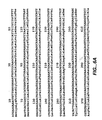
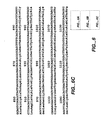
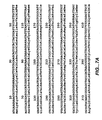
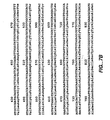
- the amino acid residues identified for modification herein are identified according to the numbering applicable to B. amyloliquefaciens (which has become the conventional method for identifying residue positions in all subtilisins), the preferred precursor DNA sequence useful in the present invention is the DNA sequence of Bacillus lentus as shown in Fig. 6 (Seq ID No.11).
- the variant DNA sequences of the present invention encode the insertion or substitution of the amino acid residue 76 in combination with one or more additional modification.
- the variant DNA sequences encode the substitution or insertion of amino acid residues in the following combinations: 76/99; 76/101; 76/103; 76/104; 76/107; 76/123; 76/99/101; 76/99/103; 76/99/104; 76/101/103; 76/101/104; 76/103/104; 76/104/107; 76/104/123; 76/107/123; 76/99/101/103; 76/99/101/104; 76/99/103/104; 76/101/103/104; 76/103/104/123; 76/104/107/123; 76/99/101/103/104; 76/99/103/104; 76/101/103/104; 76/103/104/123; 76/104/107/123; 76/99/101/103/104; 76/99/103/104/
- variant DNA sequences encode for the modification of the following combinations of residues: 76/99; 76/104; 76/99/104; 76/103/104; 76/104/107; 76/101/103/104; 76/99/101/103/104 and 76/101/104.
- These recombinant DNA sequences encode carbonyl hydrolase variants having a novel amino acid sequence and, in general, at least one property which is substantially different from the same property of the enzyme encoded by the precursor carbonyl hydrolase DNA sequence. Such properties include proteolytic activity, substrate specificity, stability, altered pH profile and/or enhanced performance characteristics.
- the present invention encompasses the substitution of any of the nineteen naturally occurring L-amino acids at the designated amino acid residue positions.
- substitutions can be made in any precursor subtilisin (procaryotic, eucaryotic, mammalian, etc.).
- the substitution to be made at each of the identified amino acid residue positions include but are not limited to: substitutions at position 76 including D, H, E, G, F, K, P and N; substitutions at position 99 including D, T, N, Q, G and S; substitutions at position 101 including G, D, K, L, A, E, S and R; substitutions at position 103 including Q, T, D, E, Y, K, G, R, S and A; substitutions at position 104 including all nineteen naturally-occurring amino acids; substitutions at position 107 including V, L, M, Y, G, E, F, T, S, A, N and I; substitutions at position 123 including N, T, I, G, A, C and S; substitutions at position 27 including
- the invention includes expression vectors containing such variant carbonyl hydrolase DNA sequences, as well as host cells transformed with such vectors which are capable of producing such variants.
- the invention also relates to detergent compositions comprising the carbonyl hydrolase variants of the invention.
- subtilisin variants exhibiting altered stability (e.g., modified autoproteolytic stability) over precursor subtilisins. (See Tables IV and VI.)
- subtilisin variants exhibiting altered proteolytic activity, altered thermal stability, altered pH profile, altered substrate specificity and/or altered performance characteristics.
- Carbonyl hydrolases are enzymes which hydrolyze compounds containing bonds in which X is oxygen or nitrogen. They include naturally-occurring carbonyl hydrolases and recombinant carbonyl hydrolases. Naturally-occurring carbonyl hydrolases principally include hydrolases, e.g., peptide hydrolases such as subtilisins or metalloproteases. Peptide hydrolases include ⁇ -aminoacylpeptide hydrolase, peptidylamino acid hydrolase, acylamino hydrolase, serine carboxypeptidase, metallocarboxypeptidase, thiol proteinase, carboxylproteinase and metalloproteinase. Serine, metallo, thiol and acid proteases are included, as well as endo and exo-proteases.
- Recombinant carbonyl hydrolase refers to a carbonyl hydrolase in which the DNA sequence encoding the naturally-occurring carbonyl hydrolase is modified to produce a mutant DNA sequence which encodes the substitution, insertion or deletion of one or more amino acids in the carbonyl hydrolase amino acid sequence. Suitable modification methods are disclosed herein, and in US Patent 4,760,025 (RE 34,606), US Patent 5,204,015 and US Patent 5,185,258, the disclosure of which are incorporated herein by reference.
- Subtilisins are bacterial or fungal carbonyl hydrolases which generally act to cleave peptide bonds of proteins or peptides.
- subtilisin means a naturally-occurring subtilisin or a recombinant subtilisin.
- a series of naturally-occurring subtilisins is known to be produced and often secreted by various microbial species. Amino acid sequences of the members of this series are not entirely homologous. However, the subtilisins in this series exhibit the same or similar type of proteolytic activity.
- This class of serine proteases shares a common amino acid sequence defining a catalytic triad which distinguishes them from the chymotrypsin related class of serine proteases.
- subtilisins and chymotrypsin related serine proteases both have a catalytic triad comprising aspartate, histidine and serine.
- subtilisin related proteases the relative order of these amino acids, reading from the amino to carboxy terminus, is aspartate-histidine-serine.
- chymotrypsin related proteases the relative order, however, is histidine-aspartate-serine.
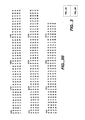
- subtilisin herein refers to a serine protease having the catalytic triad of subtilisin related proteases. Examples include but are not limited to the subtilisins identified in Fig. 3 herein.
- Recombinant subtilisin refers to a subtilisin in which the DNA sequence encoding the subtilisin is modified to produce a variant (or mutant) DNA sequence which encodes the substitution, deletion or insertion of one or more amino acids in the naturally-occurring subtilisin amino acid sequence.
- Suitable methods to produce such modification include those disclosed in US Patent 4,760,025 (RE 34,606), US Patent 5,204,015 and US Patent 5,185,258.
- Non-human carbonyl hydrolases and the DNA encoding them may be obtained from many procaryotic and eucaryotic organisms. Suitable examples of procaryotic organisms include gram negative organisms such as E. coli or Pseudomonas and gram positive bacteria such as Micrococcus or Bacillus . Examples of eucaryotic organisms from which carbonyl hydrolase and their genes may be obtained include yeast such as Saccharomyces cerevisiae, fungi such as Aspergillus sp. and non-human mammalian sources such as, for example, bovine sp. from which the gene encoding the carbonyl hydrolase chymosin can be obtained.
- yeast such as Saccharomyces cerevisiae
- fungi such as Aspergillus sp.
- non-human mammalian sources such as, for example, bovine sp. from which the gene encoding the carbonyl hydrolase chymosin can be obtained.
- non-human carbonyl hydrolase as used herein has a functional definition which refers to carbonyl hydrolases which are associated, directly or indirectly, with procaryotic and eucaryotic sources.
- a “carbonyl hydrolase variant” has an amino acid sequence which is derived from the amino acid sequence of a "precursor carbonyl hydrolase.”
- the precursor carbonyl hydrolases include naturally-occurring carbonyl hydrolases (subtilisin) and recombinant carbonyl hydrolases (subtilisin).
- the amino acid sequence of the carbonyl hydrolase variant is "derived” from the precursor hydrolase amino acid sequence by the substitution, deletion or insertion of one or more amino acids of the precursor amino acid sequence.
- Such modification is of the "precursor DNA sequence” which encodes the amino acid sequence of the precursor carbonyl hydrolase (subtilisin) rather than manipulation of the precursor carbonyl hydrolase (subtilisin) enzyme per se. Suitable methods for such manipulation of the precursor DNA sequence include methods disclosed herein, as well as methods known to those skilled in the art (see, for example, EP 0 328299, WO89/06279 and the US patents and applications already referenced herein).
- the modified residues are selected from the following combinations: 76/99; 76/101; 76/103; 76/104; 76/107; 76/123; 76/99/101; 76/99/103; 76/99/104; 76/101/103; 76/101/104; 76/103/104; 76/104/107; 76/104/123; 76/107/123; 76/99/101/103; 76/99/101/104; 76/99/103/104; 76/101/103/104; 76/103/104/123; 76/104/107/123; 76/99/101/103/104; 76/99/103/104/123; 76/99/101/103/104; 76/99/103/104/123; 76/99/101/103/104/123; 76/103/104/128; 76/103/104/260; 76/103/104/265; 76/103/104/197; 76/103/104/105; 76/103/104/135; 76/103/
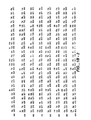
- amino acid position numbers refer to those assigned to the mature Bacillus amyloliquefaciens subtilisin sequence presented in Fig. 1.
- the invention is not limited to the mutation of this particular subtilisin but extends to precursor carbonyl hydrolases containing amino acid residues at positions which are "equivalent" to the particular identified residues in Bacillus amyloliquefaciens subtilisin.
- the precursor subtilisin is Bacillus lentus subtilisin and the substitutions, deletions or insertions are made at the equivalent amino acid residue in B. lentus corresponding to those listed above.
- a residue (amino acid) of a precursor carbonyl hydrolase is equivalent to a residue of Bacillus amyloliquefaciens subtilisin if it is either homologous (i.e., corresponding in position in either primary or tertiary structure) or analogous to a specific residue or portion of that residue in Bacillus amyloliquefaciens subtilisin (i.e., having the same or similar functional capacity to combine, react, or interact chemically).
- the amino acid sequence of a precursor carbonyl hydrolase is directly compared to the Bacillus amyloliquefaciens subtilisin primary sequence and particularly to a set of residues known to be invariant in subtilisins for which sequence is known.
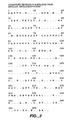
- Fig. 2 herein shows the conserved residues as between B. amyloliquefaciens subtilisin and B. lentus subtilisin. After aligning the conserved residues, allowing for necessary insertions and deletions in order to maintain alignment (i.e., avoiding the elimination of conserved residues through arbitrary deletion and insertion), the residues equivalent to particular amino acids in the primary sequence of Bacillus amyloliquefaciens subtilisin are defined.
- Alignment of conserved residues preferably should conserve 100% of such residues. However, alignment of greater than 75% or as little as 50% of conserved residues is also adequate to define equivalent residues. Conservation of the catalytic triad, Asp32/His64/Ser221 should be maintained.
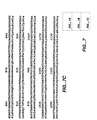
- Fig. 3 the amino acid sequence of subtilisin from Bacillus amyloliquefaciens, Bacillus subtilis, Bacillus licheniformis ( carlsbergensis ) and Bacillus lentus are aligned to provide the maximum amount of homology between amino acid sequences. A comparison of these sequences shows that there are a number of conserved residues contained in each sequence. These conserved residues (as between BPN' and B. lentus ) are identified in Fig. 2.
- subtilisin from Bacillus lentus PCT Publication No. W089/06279 published July 13, 1989
- the preferred subtilisin precursor enzyme herein or the subtilisin referred to as PB92 (EP 0 328 299), which is highly homologous to the preferred Bacillus lentus subtilisin.
- the amino acid sequences of certain of these subtilisins are aligned in Figs. 3A and 3B with the sequence of Bacillus amyloliquefaciens subtilisin to produce the maximum homology of conserved residues.
- the amino acid at position +76 is asparagine (N) in both B. amyloliquefaciens and B. lentus subtilisins.
- N the amino acid equivalent to +76 in Bacillus amyloliquefaciens subtilisin
- D aspartate
- Table II A comparison of certain of the amino acid residues identified herein for substitution versus the most preferred substitution for each such position is provided in Table II for illustrative purposes. +76 +99 +101 +103 +104 +107 +123 B. amyloliquefaciens (wild-type) N D S Q Y I N B. lentus (wild-type) N S S S V I N Most Preferred Substitution D D R A I/Y V S
- Equivalent residues may also be defined by determining homology at the level of tertiary structure for a precursor carbonyl hydrolase whose tertiary structure has been determined by x-ray crystallography. Equivalent residues are defined as those for which the atomic coordinates of two or more of the main chain atoms of a particular amino acid residue of the precursor carbonyl hydrolase and Bacillus amyloliquefaciens subtilisin (N on N, CA on CA, C on C and O on O) are within 0.13nm and preferably 0.1nm after alignment.
- Equivalent residues which are functionally analogous to a specific residue of Bacillus amyloliquefaciens subtilisin are defined as those amino acids of the precursor carbonyl hydrolases which may adopt a conformation such that they either alter, modify or contribute to protein structure, substrate binding or catalysis in a manner defined and attributed to a specific residue of the Bacillus amyloliquefaciens subtilisin.
- residues of the precursor carbonyl hydrolase for which a tertiary structure has been obtained by x-ray crystallography
- the atomic coordinates of at least two of the side chain atoms of the residue lie with 0.13nm of the corresponding side chain atoms of Bacillus amyloliquefaciens subtilisin.
- the coordinates of the three dimensional structure of Bacillus amyloliquefaciens subtilisin are set forth in EPO Publication No. 0 251 446 (equivalent to US Patent Application SN 08/212,291, the disclosure of which is incorporated herein by reference) and can be used as outlined above to determine equivalent residues on the level of tertiary structure.
- the carbonyl hydrolase variants of the present invention include the mature forms of carbonyl hydrolase variants, as well as the pro- and prepro-forms of such hydrolase variants.
- the prepro-forms are the preferred construction since this facilitates the expression, secretion and maturation of the carbonyl hydrolase variants.
- Prosequence refers to a sequence of amino acids bound to the N-terminal portion of the mature form of a carbonyl hydrolase which when removed results in the appearance of the "mature” form of the carbonyl hydrolase. Many proteolytic enzymes are found in nature as translational proenzyme products and, in the absence of post-translational processing, are expressed in this fashion.
- a preferred prosequence for producing carbonyl hydrolase variants, specifically subtilisin variants is the putative prosequence of Bacillus amyloliquefaciens subtilisin, although other subtilisin prosequences may be used. In Examples 1 and 2 the putative prosequence from the subtilisin from Bacillus lentus (ATCC 21536) was used.
- a “signal sequence” or “presequence” refers to any sequence of amino acids bound to the N-terminal portion of a carbonyl hydrolase or to the N-terminal portion of a prohydrolase which may participate in the secretion of the mature or pro forms of the hydrolase.
- This definition of signal sequence is a functional one, meant to include all those amino acid sequences encoded by the N-terminal portion of the subtilisin gene or other secretable carbonyl hydrolases which participate in the effectuation of the secretion of subtilisin or other carbonyl hydrolases under native conditions.
- the present invention utilizes such sequences to effect the secretion of the carbonyl hydrolase variants as defined herein.
- a preferred signal sequence used in the Examples comprises the first seven amino acid residues of the signal sequence from Bacillus subtilis subtilisin fused to the remainder of the signal sequence of the subtilisin from Bacillus lentus (ATCC 21536).
- a “prepro” form of a carbonyl hydrolase variant consists of the mature form of the hydrolase having a prosequence operably linked to the amino terminus of the hydrolase and a "pre” or “signal” sequence operably linked to the amino terminus of the prosequence.
- “Expression vector” refers to a DNA construct containing a DNA sequence which is operably linked to a suitable control sequence capable of effecting the expression of said DNA in a suitable host.
- control sequences include a promoter to effect transcription, an optional operator sequence to control such transcription, a sequence encoding suitable mRNA ribosome binding sites and sequences which control termination of transcription and translation.
- the vector may be a plasmid, a phage particle, or simply a potential genomic insert. Once transformed into a suitable host, the vector may replicate and function independently of the host genome, or may, in some instances, integrate into the genome itself.
- "plasmid” and “vector” are sometimes used interchangeably as the plasmid is the most commonly used form of vector at present. However, the invention is intended to include such other forms of expression vectors which serve equivalent functions and which are, or become, known in the art.
- the "host cells” used in the present invention generally are procaryotic or eucaryotic hosts which preferably have been manipulated by the methods disclosed in US Patent 4,760,025 (RE 34,606) to render them incapable of secreting enzymatically active endoprotease.
- a preferred host cell for expressing subtilisin is the Bacillus strain BG2036 which is deficient in enzymatically active neutral protease and alkaline protease (subtilisin). The construction of strain BG2036 is described in detail in US Patent 5,264,366.
- subtilisin Other host cells for expressing subtilisin include Bacillus subtilis I168 (also described in US Patent 4,760,025 (RE 34,606) and US Patent 5,264,366, the disclosure of which are incorporated herein by reference), as well as any suitable Bacillus strain such as B. licheniformis, B. lentus, etc.
- Host cells are transformed or transfected with vectors constructed using recombinant DNA techniques. Such transformed host cells are capable of either replicating vectors encoding the carbonyl hydrolase variants or expressing the desired carbonyl hydrolase variant. In the case of vectors which encode the pre- or prepro-form of the carbonyl hydrolase variant, such variants, when expressed, are typically secreted from the host cell into the host cell medium.
- operably linked when describing the relationship between two DNA regions, simply means that they are functionally related to each other.
- a presequence is operably linked to a peptide if it functions as a signal sequence, participating in the secretion of the mature form of the protein most probably involving cleavage of the signal sequence.
- a promoter is operably linked to a coding sequence if it controls the transcription of the sequence;
- a ribosome binding site is operably linked to a coding sequence if it is positioned so as to permit translation.
- the genes encoding the naturally-occurring precursor carbonyl hydrolase may be obtained in accord with the general methods known to those skilled in the art.
- the methods generally comprise synthesizing labeled probes having putative sequences encoding regions of the hydrolase of interest, preparing genomic libraries from organisms expressing the hydrolase, and screening the libraries for the gene of interest by hybridization to the probes. Positively hybridizing clones are then mapped and sequenced.
- the B. lentus gene used in the Examples was cloned as described in Example 1 of US Patent 5,185,258, the disclosure of which is incorporated herein.
- the BPN' gene used in Example 5 was cloned as described in Example 1 in RE 34,606, the disclosure of which is incorporated herein.
- the cloned carbonyl hydrolase is then used to transform a host cell in order to express the hydrolase.
- the hydrolase gene is then ligated into a high copy number plasmid.
- This plasmid replicates in hosts in the sense that it contains the well-known elements necessary for plasmid replication: a promoter operably linked to the gene in question (which may be supplied as the gene's own homologous promotor if it is recognized, i.e., transcribed, by the host), a transcription termination and polyadenylation region (necessary for stability of the mRNA transcribed by the host from the hydrolase gene in certain eucaryotic host cells) which is exogenous or is supplied by the endogenous terminator region of the hydrolase gene and, desirably, a selection gene such as an antibiotic resistance gene that enables continuous cultural maintenance of plasmid-infected host cells by growth in antibiotic-containing media.
- High copy number plasmids also contain an origin of replication for the host, thereby enabling large numbers of plasmids to be generated in the cytoplasm without chromosomal limitations.
- the genes used in the present examples are a natural B. lentus gene and a natural B. amyloliquefaciens gene.
- a synthetic gene encoding a naturally-occurring or mutant precursor carbonyl hydrolase (subtilisin) may be produced.
- the DNA and/or amino acid sequence of the precursor hydrolase (subtilisin) is determined.
- Multiple, overlapping synthetic single-stranded DNA fragments are thereafter synthesized, which upon hybridization and ligation produce a synthetic DNA encoding the precursor hydrolase.
- An example of synthetic gene construction is set forth in Example 3 of US Patent 5,204,015, the disclosure of which is incorporated herein by reference.
- cassette mutagenesis method may be used to facilitate the construction and identification of the carbonyl hydrolase variants of the present invention, although other methods including site-directed mutagenesis may be used.
- the naturally-occurring gene encoding the hydrolase is obtained and sequenced in whole or in part. Then the sequence is scanned for a point at which it is desired to make a mutation (deletion, insertion or substitution) of one or more amino acids in the encoded enzyme.
- the sequences flanking this point are evaluated for the presence of restriction sites for replacing a short segment of the gene with an oligonucleotide pool which when expressed will encode various mutants.
- restriction sites are preferably unique sites within the hydrolase gene so as to facilitate the replacement of the gene segment.
- any convenient restriction site which is not overly redundant in the hydrolase gene may be used, provided the gene fragments generated by restriction digestion can be reassembled in proper sequence. If restriction sites are not present at locations within a convenient distance from the selected point (from 10 to 15 nucleotides), such sites are generated by substituting nucleotides in the gene in such a fashion that neither the reading frame nor the amino acids encoded are changed in the final construction. Mutation of the gene in order to change its sequence to conform to the desired sequence is accomplished by M13 primer extension in accord with generally known methods. The task of locating suitable flanking regions and evaluating the needed changes to arrive at two convenient restriction site sequences is made routine by the redundancy of the genetic code, a restriction enzyme map of the gene and the large number of different restriction enzymes. Note that if a convenient flanking restriction site is available, the above method need be used only in connection with the flanking region which does not contain a site.
- the restriction sites flanking the positions to be mutated are digested with the cognate restriction enzymes and a plurality of end termini-complementary oligonucleotide cassettes are ligated into the gene.
- the mutagenesis is simplified by this method because all of the oligonucleotides can be synthesized so as to have the same restriction sites, and no synthetic linkers are necessary to create the restriction sites.
- proteolytic activity is defined as the rate of hydrolysis of peptide bonds per milligram of active enzyme.
- Many well known procedures exist for measuring proteolytic activity K. M. Kalisz, "Microbial Proteinases," Advances in Biochemical Engineering/Biotechnology , A. Fiechter ed., 1988).
- the variant enzymes of the present invention may have other modified properties such as K m , k cat' k cat /K m ratio and/or modified substrate specificity and/or modified pH activity profile. These enzymes can be tailored for the particular substrate which is anticipated to be present, for example, in the preparation of peptides or for hydrolytic processes such as laundry uses.
- the objective is to secure a variant carbonyl hydrolase having altered proteolytic activity as compared to the precursor carbonyl hydrolase, since increasing such activity (numerically larger) enables the use of the enzyme to more efficiently act on a target substrate.
- variant enzymes having altered thermal stability and/or altered substrate specificity as compared to the precursor.
- the carbonyl hydrolase to be mutated is a subtilisin.
- subtilisin-type carbonyl hydrolases at residues equivalent to +76, +99, +101, +103, +104, +107, +123 +27, +105, +109, +126, +128, +135, +156, +166, +195, +197, +204, +206, +210, +216, +217, +218, +222, +260, +265 and/or +274 or any combination thereof in Bacillus amyloliquefaciens subtilisin are presented in the Examples. In some instances, lower proteolytic activity may be desirable, for example a decrease in proteolytic activity would be useful where the synthetic activity of the carbonyl hydrolases is desired (as for synthesizing peptides).
- proteolytic activity which is capable of destroying the product of such synthesis.
- increases or decreases (alteration) of the stability of the variant may be desirable. Increases or decreases in k cat' K m or k cat /K m are specific to the substrate used to determine these kinetic parameters.
- residues equivalent to +76 in combination with a number of other modifications in subtilisin are important in modulating overall stability and/or proteolytic activity of the enzyme.
- the Asparagine (N) in Bacillus lentus subtilisin at equivalent position +76 can be substituted with Aspartate (D) in the preferred embodiment in combination with modification of one or more of the following amino acid residues +99, +101, +103, +104, +107, +123, +27, +105, +109, +126, +128, +135, +156, +166, +195, +197, +204, +206, +210, +216, +217, +218, +222, +260, +265 and/or +274, to produce enhanced stability and/or enhanced activity of the resulting mutant enzyme.
- the most preferred embodiments of the invention are set forth in the Examples. These include the following specific combinations of substituted residues: N76D/S99D; N76D/V104I; N76D/S99D/V104I; N76D/S103A/V104I; N76D/V104I/I107V; N76D/V104Y/I107V and N76D/S101R/S103A/V104I. Also described in the Examples are all mutant combinations claimed in the present invention. These substitutions are preferably made in Bacillus lentus (recombinant or native-type) subtilisin, although the substitutions may be made in any Bacillus subtilisin.
- residues in carbonyl hydrolases preferably subtilisin
- residues in carbonyl hydrolases equivalent to positions +76, +99, +101, +103, +104, +107, +123, +27, +105, +109, +126, +128, +135, +156, +166, +195, +197, +204, +206, +210, +216, +217, +218, +222, +260, +265 and/or +274 in Bacillus amyloliquefaciens are important to the proteolytic activity, performance and/or stability of these enzymes and the cleaning or wash performance of such variant enzymes.
- carbonyl hydrolase variants of the invention are useful in formulating various detergent compositions.
- a number of known compounds are suitable surfactants useful in compositions comprising the carbonyl hydrolase mutants of the invention. These include nonionic, anionic, cationic, anionic or zwitterionic detergents, as disclosed in US 4,404,128 to Barry J. Anderson and US 4,261,868 to Jiri Flora, et al.
- a suitable detergent formulation is that described in Example 7 of US Patent 5,204,015 (previously incorporated by reference). The art is familiar with the different formulations which can be used as cleaning compositions.
- subtilisin variants of the present invention may be used for any purpose that native or wild-type subtilisins are used.
- these variants can be used, for example, in bar or liquid soap applications, dishcare formulations, contact lens cleaning solutions or products, peptide hydrolysis, waste treatment, textile applications, as fusion-cleavage enzymes in protein production, etc.
- the variants of the present invention may comprise enhanced performance in a detergent composition (as compared to the precursor).
- enhanced performance in a detergent is defined as increasing cleaning of certain enzyme sensitive stains such as grass or blood, as determined by usual evaluation after a standard wash cycle.
- Subtilisins of the invention can be formulated into known powdered and liquid detergents having pH between 6.5 and 12.0 at levels of about .01 to about 5% (preferably .1% to .5%) by weight.
- These detergent cleaning compositions can also include other enzymes such as known proteases, amylases, cellulases, lipases or endoglycosidases, as well as builders and stabilizers.
- subtilisins of the invention does not create any special use limitation.
- any temperature and pH suitable for the detergent is also suitable for the present compositions as long as the pH is within the above range, and the temperature is below the described subtilisin's denaturing temperature.
- subtilisins of the invention can be used in a cleaning composition without detergents, again either alone or in combination with builders and stabilizers.
- the cloning and the construction for expression of the subtilisin gene from B. lentus was performed essentially the same as that described in US Patent 5,185,258.
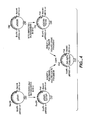
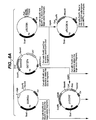
- the plasmid GGA274 (described in Fig. 4 herein) was further modified in the following manner, as shown in Fig. 5.
- the PstI site that was introduced during the construction of the GGA274 plasmid was removed by the oligonucleotide directed mutagenesis described below, with an oligonucleotide having the following sequence: 5' GAAGCTGCA A CTCGTTAAA 3' (Seq. ID No.1).
- the underlined "A" residue eliminated the recognition sequence of restriction enzyme PstI and changed the corresponding amino acid residue from alanine to threonine at position 274.
- Threonine at position 274 is the wild-type residue originally found in the cloned B. lentus subtilisin gene sequences.
- the DNA segment encoding subtilisin was excised from the plasmid GGA274 or its derivatives (GGT274 shown in Fig. 5) by EcoRI and BamHI digest. The DNA fragment was subcloned back into Bacteriophage M13-based vectors, such as MP19, for mutagenesis. After mutagenesis, the EcoRI and HindIII digest, followed by cloning, were performed to move the mutated subtilisin gene back into an expression plasmid like GGA274 for the expression and the recovery of mutated subtilisin proteins.
- Oligonucleotide-directed mutagenesis was performed as described in Zoller, M., et al. (1983), Methods Enzymol. , 100 :468-500.
- a synthetic oligonucleotide of the sequence 5' GCTGCT C TA G ACAATTCG 3' (Seq. ID No.2) was used to change the amino acid residue at position 76 from asparagine (N) to aspartic acid (D), or N76D.
- the underlined "G” and "C” residues denote changes from the wild-type gene sequence.
- the CA keeps the leucine at position +75 and changes the amino acid sequence to introduce an XbaI recognition site of the XbaI restriction enzyme (TCTAGA), while the change at G AC changes asparagine at +76 to aspartate.
- oligonucleotides For mutagenesis at positions 99, 101, 103 and 104, different oligonucleotides can be used depending on the combination of mutations desired. For example, an oligonucleotide of the sequence 5' GTATTAGGGGCG GA CGGT CG AGG CG C CA TCAGCTCGATT 3'(Seq. ID No.3) was used to simultaneously make the following changes: S99D; S101R; S103A and V104I in a single subtilisin molecule. Similarly, oligonucleotides of the sequence 5' TCAGGTTCGGTC TCGAG C G TTGCCCAAGGATTG 3' (Seq.
- subtilisin variant stock solution was added to a 1 cm cuvette containing substrate dissolved in 0.1M Tris-HCL buffer, pH 8.6, and thermostated at 25°C.
- the reaction progress was followed spectrophotometrically by monitoring the absorbance of the reaction product p-nitroaniline at 410 nm.
- Kinetic parameters were obtained by using a non-linear regression algorithm to fit the reaction velocity and product concentration for. each reaction to the Michaelis-Menten equation.
- variants (19 out of 26) are significantly more stable than Bacillus lentus subtilisin.
- variants N76D/S99D, N76D/V104I, N76D/S99D/V104I, N76D/S103A/V104I, N76D/V104I/I107V, N76D/V104Y/I107V and N76D/S101R/S103A/V104I are significantly more stable than the single substitution variant N76D in the test condition without 50mM CaCl 2 added.
- the mutagenesis protocol was essentially the same as described above in Example 2.
- the single-stranded DNA template was generated by phagemid method.
- To construct the phagemid vector for generating the single-stranded DNA template we first constructed the vector pBCDAICAT.
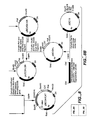
- the flow chart of vector construction is outlined in Figure 8. First, the ClaI to ClaI fragment encoding the CAT gene from pC194 plasmid (Horinouchi, S. and Weisblum, B., J. Bacteriol.
- the single EcoRI site of the plasmid pBC2SK5 was eliminated by EcoRI digestion, followed by filling in catalyzed-by-T4 DNA polymerase, and religation to generate the plasmid pBC2SK-5R which does not have the EcoRI site.
- the EcoRI-DraI fragment which was cloned into pBCSK-5R was isolated as a PstI-HindIII fragment and cloned into the PstI-HindIII site of the pUCCHL (part of the polylinker of pUC19) to generate plasmid pUCCHL5R.
- GG36DAI gene The encoding sequence of GG36DAI gene was excised as an EcoRI-BamHI fragment and cloned into the EcoRI-BamHI sites of pUCCHL5R to make pUCCAT.
- the large EcoRI-HindIII fragment of pUCCAT was then cloned into the EcoRI and HindIII sites of BS2KS+ to generate the plasmid pBCDAICAT.
- E. coli-containing pBCDAICAT were infected with phage R408 (obtained from Stratagene, San Diego, CA) following the protocol described in Russel, M., Kidd, S. and Kelley, M.R., GENE 45 :333-338, 1986.
- phage R408 obtained from Stratagene, San Diego, CA
- GG36 N76D/S103A/V104I/L217H For the construction of B. lentus (GG36) N76D/S103A/V104I/L217H, an EcoRI-BamHI DNA fragment encoding GG36 N76D/S103A/V104I was used in the construction of pUCCAT (see Fig. 8) to generate the plasmid pBCDAICAT.
- a mutagenesis primer with the following sequence was used to make the L217H.
- the underlined residues denote the nucleotide changes that were made and the x ClaI indicates that the existing ClaI site was eliminated after the mutagenesis.
- the mutagenesis protocol was as described in Example 2. After the mutagenesis, plasmid DNA was first screened for the elimination of the ClaI site and those clones missing the ClaI site were subjected to DNA sequence analysis to verify the DNA sequence which made the L to H change at the 217th amino acid residue.
- BPN' N76D/Q103A/Y104I/Y217L The construction of B. amyloliquefaciens (BPN') N76D/Q103A/Y104I/Y217L was done in a similar fashion except in two consecutive steps. N76D was first introduced into BPN' Y217L to make BPN' N76D/Y217L and a second mutagenesis was done to convert BPN' N76D/Y217L to BPN' N76D/Q103A/Y104I/Y217L.
- Single-stranded DNA was then prepared from the pBCFNACAT plasmid containing the BPN' N76D/Y217L (the pBCFNACAT plasmid after N76D mutagenesis) and mutagenized with another oligonucleotide with the sequence to obtain BPN' N76D/Q103A/Y104I/Y217L. All steps involved in the cloning, the single-stranded DNA preparation, the mutagenesis, and the screening for mutants were carried out as described above.
- BPN' gene and its variants were achieved by integrating plasmid DNA (pBCFNACAT containing the different variants' BPN' gene) directly into a protease-deficient strain of Bacillus subtilis as described in RE 34,606.
- Purified enzyme was buffer-exchanged into 0.1 M glycine pH 10.0, 0.01% Tween-80 by applying the enzyme to a column consisting of Sephadex G-25 equilibrated with this buffer and eluting the enzyme from the column using the same buffer.
- Half-life which is the length of time required for 50% enzyme inactivation, was determined from the first-order plot of reaction velocity as a function of the time of incubation at 60°C.
- BPN' amyloliquefaciens subtilisin 50 0.14 3.60E+05 BPN'-N76D/Y217L* 380 0.46 8.30E+05 Enzyme Thermal Stability (% half-life of native enzyme) B.
- wash performance of the variants described in the previous examples was evaluated by measuring the removal of stain from EMPA 116 (blood/milk/carbon black on cotton) cloth swatches (Testfabrics, Inc., Middlesex, NJ 07030).
- the detergent base was WFK1 detergent from wfk - Testgewebe GmbH, Adlerstrasse 42, Postfach 13 07 62, D-47759 Krefeld, Germany: Component % of Final Formulation Zeolite A 25% Sodium sulfate 25% Soda Ash 10% Linear alkylbenzenesulfonate 8.8% Alcohol ethoxylate (7-8 EO) 4.5% Sodium soap 3% Sodium silicate 3% (SiO 2 :Na 2 O::3.3:1)
- Sodium perborate monohydrate was obtained from Degussa Corporation, Ridgefield-Park, NJ 07660.
- Sokalan CP5 was obtained from BASF Corporation, Parsippany, NJ 07054.
- Mykon ATC Green (TAED, tetraacetylethylenediamine) was obtained from Warwick International, Limited, Mostyn, Holywell, Clwyd CH8 9HE, England.
- Tinopal AMS GX was obtained from Ciba-Geigy Corporation, Greensboro, NC 27419.
- lentus (GG36) protease by the amount of variant protease that was needed to provide the same stain removal performance X 100.
- the data are shown in Table VII.
- a comparison of protease stability toward inactivation in a liquid detergent formulation was made for Bacillus lentus subtilisin and it's variant enzyme N76D/S103A/V104I according to the procedure outlined herein.
- the detergent formulation used for the study was a commercially purchased bottle of Tide Ultra liquid lanudry detergent made in the USA by Procter & Gamble Company. Heat treatment of the detergent formulation was necessary to inactivate in-situ protease. This was accomplished by incubating the detergent at 96°C for a period of 4.5 hours. Concentrated preparations of the B.
- lentus subtilisin and N76D/S103A/V104I variant in the range of 20 grams/liter enzyme, were then added to the heat-treated Tide Ultra at room-temperature to a final concentratrion of 0.3 grams/liter enzyme in the detergent formulation.
- the heat-treated detergent with protease added was then incubated in a water bath thermostatted at 50°C. Aliquots were removed from the incubation tubes at 0, 24, 46, 76, and 112 hour time intervals and assayed for enzyme activity by addition to a 1 cm cuvette containing 1.2 mM of the synthetic peptide substrate suc-Ala-Ala-Pro-phe-p-nitroanilide dissolved in 0.1M tris-HCL buffer, pH 8.6, and thermostatted at 25°C.
- the initial linear reaction velocity was followed spectrophotometrically by monitoring the absorbance of the reaction product p-nitroaniline at 410nm as a function of time.
- the N76D/S103A/V104I variant was observed to have significantly greater stability towards inactivation than the native B. lentus enzyme.
- Estimated half-lives for inactivation in the Tide Ultra detergent formulation for the two enzymes, under the specified test conditions, are 45 hours for B. lentus subtilisin and 125 hours for the N76D/S103A/V104I variant.
Landscapes
- Chemical & Material Sciences (AREA)
- Life Sciences & Earth Sciences (AREA)
- Engineering & Computer Science (AREA)
- Wood Science & Technology (AREA)
- Organic Chemistry (AREA)
- Health & Medical Sciences (AREA)
- Bioinformatics & Cheminformatics (AREA)
- Zoology (AREA)
- Genetics & Genomics (AREA)
- Microbiology (AREA)
- General Health & Medical Sciences (AREA)
- Biomedical Technology (AREA)
- Biotechnology (AREA)
- Medicinal Chemistry (AREA)
- Oil, Petroleum & Natural Gas (AREA)
- Chemical Kinetics & Catalysis (AREA)
- Biochemistry (AREA)
- General Engineering & Computer Science (AREA)
- Molecular Biology (AREA)
- Enzymes And Modification Thereof (AREA)
- Micro-Organisms Or Cultivation Processes Thereof (AREA)
- Detergent Compositions (AREA)
- Saccharide Compounds (AREA)
- Fats And Perfumes (AREA)
- Peptides Or Proteins (AREA)
- Separation Of Suspended Particles By Flocculating Agents (AREA)
- Breeding Of Plants And Reproduction By Means Of Culturing (AREA)
- Medicines Containing Material From Animals Or Micro-Organisms (AREA)
Applications Claiming Priority (3)
| Application Number | Priority Date | Filing Date | Title |
|---|---|---|---|
| US13724093A | 1993-10-14 | 1993-10-14 | |
| US137240 | 1993-10-14 | ||
| EP94931345A EP0723590B1 (de) | 1993-10-14 | 1994-10-13 | Subtilisin varianten |
Related Parent Applications (1)
| Application Number | Title | Priority Date | Filing Date |
|---|---|---|---|
| EP94931345A Division EP0723590B1 (de) | 1993-10-14 | 1994-10-13 | Subtilisin varianten |
Publications (2)
| Publication Number | Publication Date |
|---|---|
| EP1526182A2 true EP1526182A2 (de) | 2005-04-27 |
| EP1526182A3 EP1526182A3 (de) | 2005-05-04 |
Family
ID=22476438
Family Applications (2)
| Application Number | Title | Priority Date | Filing Date |
|---|---|---|---|
| EP94931345A Expired - Lifetime EP0723590B1 (de) | 1993-10-14 | 1994-10-13 | Subtilisin varianten |
| EP04024046A Withdrawn EP1526182A3 (de) | 1993-10-14 | 1994-10-13 | Subtilisin Varianten |
Family Applications Before (1)
| Application Number | Title | Priority Date | Filing Date |
|---|---|---|---|
| EP94931345A Expired - Lifetime EP0723590B1 (de) | 1993-10-14 | 1994-10-13 | Subtilisin varianten |
Country Status (24)
| Country | Link |
|---|---|
| US (2) | US6586221B2 (de) |
| EP (2) | EP0723590B1 (de) |
| JP (1) | JP4086207B2 (de) |
| KR (1) | KR100344976B1 (de) |
| CN (1) | CN1056649C (de) |
| AT (1) | ATE284962T1 (de) |
| AU (1) | AU700373B2 (de) |
| BR (1) | BR9407825A (de) |
| CA (1) | CA2173973C (de) |
| CZ (1) | CZ289323B6 (de) |
| DE (1) | DE69434187T2 (de) |
| DK (1) | DK0723590T3 (de) |
| ES (1) | ES2235164T3 (de) |
| FI (1) | FI119697B (de) |
| HK (1) | HK1000649A1 (de) |
| MA (1) | MA23346A1 (de) |
| NO (1) | NO325568B1 (de) |
| NZ (1) | NZ274998A (de) |
| PL (1) | PL178478B1 (de) |
| PT (1) | PT723590E (de) |
| RU (1) | RU2136756C1 (de) |
| TW (1) | TW448230B (de) |
| WO (1) | WO1995010615A1 (de) |
| ZA (1) | ZA948086B (de) |
Cited By (1)
| Publication number | Priority date | Publication date | Assignee | Title |
|---|---|---|---|---|
| US7303907B2 (en) | 2001-01-08 | 2007-12-04 | Health Protection Agency | Degradation and detection of TSE infectivity |
Families Citing this family (88)
| Publication number | Priority date | Publication date | Assignee | Title |
|---|---|---|---|---|
| ES2287931T3 (es) * | 1993-10-14 | 2007-12-16 | THE PROCTER & GAMBLE COMPANY | Composiciones limpiadoras que contienen proteasa. |
| MA23346A1 (fr) * | 1993-10-14 | 1995-04-01 | Genencor Int | Variantes de la subtilisine |
| AU1253695A (en) * | 1993-10-14 | 1995-05-04 | Procter & Gamble Company, The | Bleaching compositions comprising protease enzymes |
| EP0687733A1 (de) * | 1994-06-16 | 1995-12-20 | The Procter & Gamble Company | Detergenzusammensetzung die Wolle-kompatible-hochalkalische Proteasen enthält |
| US6066611A (en) * | 1994-10-13 | 2000-05-23 | The Procter & Gamble Company | Bleaching compositions comprising protease enzymes |
| US5837517A (en) * | 1995-05-05 | 1998-11-17 | Novo Nordisk A/S | Protease variants and compositions |
| EP0827531A2 (de) * | 1995-05-05 | 1998-03-11 | Unilever N.V. | Subtilisin |
| DE19530816A1 (de) * | 1995-08-23 | 1997-02-27 | Cognis Bio Umwelt | Verwendung von mutierter Subtilisin-Protease in kosmetischen Produkten |
| DE19535082A1 (de) | 1995-09-21 | 1997-03-27 | Henkel Ecolab Gmbh & Co Ohg | Pastenförmiges Wasch- und Reinigungsmittel |
| US5858948A (en) * | 1996-05-03 | 1999-01-12 | Procter & Gamble Company | Liquid laundry detergent compositions comprising cotton soil release polymers and protease enzymes |
| DE19636035A1 (de) | 1996-09-05 | 1998-03-12 | Henkel Ecolab Gmbh & Co Ohg | Pastenförmiges Wasch- und Reinigungsmittel |
| BR9712878A (pt) * | 1996-11-04 | 2000-02-01 | Novo Nordisk As | Variante de enzima subtilase, processos para a identificação de uma variante de protease apresentando estabilidade autoproteolìtica e paraq a produção de uma enzima subtilase mutante e de uma variante de subtilase, sequência de dna, vetor, célula hospedeira microbiana, composição e uso de uma variante de subtilase. |
| DE19703364A1 (de) | 1997-01-30 | 1998-08-06 | Henkel Ecolab Gmbh & Co Ohg | Pastenförmiges Wasch- und Reinigungsmittel |
| ES2210751T3 (es) * | 1997-06-04 | 2004-07-01 | THE PROCTER & GAMBLE COMPANY | Particulas de enzimas detergentes que tienen una capa barrera de carboxilato soluble en agua y composiciones que incluyen las mismas. |
| CA2291646A1 (en) * | 1997-06-04 | 1998-12-10 | Saroj Rai | Mixed protease enzyme systems for cleaning protein based soils and compositions incorporating same |
| DK0985042T3 (da) * | 1997-06-04 | 2007-01-15 | Genencor Int | Proteaseenzymer til vanskelig rengöring og/eller plet- og filmreduktion samt præparater, der inkorporerer disse |
| US6284246B1 (en) | 1997-07-30 | 2001-09-04 | The Procter & Gamble Co. | Modified polypeptides with high activity and reduced allergenicity |
| AU2002325461B2 (en) * | 1997-10-23 | 2006-05-11 | Genencor International, Inc. | Multiply-substituted protease variants with altered net charge for use in detergents |
| AR015977A1 (es) | 1997-10-23 | 2001-05-30 | Genencor Int | Variantes de proteasa multiplemente substituida con carga neta alterada para su empleo en detergentes |
| ES2368718T3 (es) * | 1997-10-23 | 2011-11-21 | Danisco Us Inc. | Variantes de subtilisina con múltiples sustituciones. |
| AU2207099A (en) * | 1997-12-24 | 1999-07-19 | Genencor International, Inc. | An improved method of assaying for a preferred enzyme and/or preferred detergentcomposition |
| US6599731B1 (en) | 1997-12-30 | 2003-07-29 | Genencor International, Inc. | Proteases from gram positive organisms |
| US6465186B1 (en) | 1997-12-30 | 2002-10-15 | Genecor International, Inc. | Proteases from gram positive organisms |
| GB9727470D0 (en) | 1997-12-30 | 1998-02-25 | Genencor Int Bv | Proteases from gram positive organisms |
| US6528255B1 (en) | 1997-12-30 | 2003-03-04 | Genencor International, Inc. | Proteases from gram positive organisms |
| CN1301305A (zh) | 1998-03-26 | 2001-06-27 | 宝洁公司 | 具有氨基酸取代的丝氨酸蛋白酶变体 |
| US6908757B1 (en) | 1998-03-26 | 2005-06-21 | The Procter & Gamble Company | Serine protease variants having amino acid deletions and substitutions |
| US6495136B1 (en) | 1998-03-26 | 2002-12-17 | The Procter & Gamble Company | Proteases having modified amino acid sequences conjugated to addition moieties |
| DE19857687A1 (de) | 1998-12-15 | 2000-06-21 | Henkel Ecolab Gmbh & Co Ohg | Pastenförmiges Waschmittel |
| CA2355580C (en) * | 1998-12-18 | 2011-03-15 | Novozymes A/S | Subtilase enzymes of the i-s1 and i-s2 sub-groups having an additional amino acid residue in the active site loop region |
| EP1141335B1 (de) | 1998-12-21 | 2009-08-05 | Genencor International, Inc. | Chemisch modifizierte enzymen mit mehrfachgeladenen varianten |
| US6946128B1 (en) | 1999-07-22 | 2005-09-20 | The Procter & Gamble Company | Protease conjugates having sterically protected epitope regions |
| JP2003505067A (ja) | 1999-07-22 | 2003-02-12 | ザ、プロクター、エンド、ギャンブル、カンパニー | 特定のエピトープ領域にアミノ酸欠失及び置換を有するサブチリシンプロテアーゼの変異体 |
| MXPA02000840A (es) | 1999-07-22 | 2002-07-30 | Procter & Gamble | Variantes de proteasa de subtilisina que tienen substituciones de aminoacidos en regiones de epitopes definidas. |
| EP1196548A2 (de) | 1999-07-22 | 2002-04-17 | The Procter & Gamble Company | Proteasekonjugaten mit sterisch geschützten hydrolysierbaren stellen |
| AU5911599A (en) * | 1999-09-09 | 2001-04-10 | Procter & Gamble Company, The | A detergent composition containing a protease |
| AU782372B2 (en) * | 1999-12-15 | 2005-07-21 | Novozymes A/S | Subtilase variants having an improved wash performance on egg stains |
| JP2003516751A (ja) * | 1999-12-15 | 2003-05-20 | ノボザイムス アクティーゼルスカブ | 卵の染みに及ぼす洗浄性能改良を示すズブチラーゼ変異体 |
| US6777218B1 (en) * | 2000-03-14 | 2004-08-17 | Novozymes A/S | Subtilase enzymes having an improved wash performance on egg stains |
| WO2002077187A2 (en) * | 2001-03-23 | 2002-10-03 | Genencor International, Inc. | Proteins producing an altered immunogenic response and methods of making and using the same |
| DK200101090A (da) | 2001-07-12 | 2001-08-16 | Novozymes As | Subtilase variants |
| US7153820B2 (en) | 2001-08-13 | 2006-12-26 | Ecolab Inc. | Solid detergent composition and method for solidifying a detergent composition |
| US20030157645A1 (en) * | 2001-12-21 | 2003-08-21 | Direvo Bio Tech Ag. | Subtilisin variants with improved characteristics |
| JP2005535284A (ja) * | 2001-12-31 | 2005-11-24 | ジェネンコー・インターナショナル・インク | 免疫反応の変化を生じるプロテアーゼ、ならびにその製造および利用方法 |
| DK1523553T3 (da) * | 2002-01-16 | 2010-04-19 | Genencor Int | Multi-substituerede proteasevarianter |
| AU2003210551A1 (en) * | 2002-01-16 | 2003-09-02 | Genencor International, Inc. | Multiply-substituted protease variants |
| BRPI0409992A (pt) * | 2003-05-07 | 2006-05-09 | Novozymes As | enzima subtilase, polinucleotìdeo isolado, construção de ácido nucleico, vetor de expressão recombinante, célula hospedeira recombinante, método para produzir a subtilase, composição limpadora ou detergente, usos de uma subtilase e de uma composição limpadora ou detergente, e, métodos para limpar ou lavar louças, lavar uma superfìcie dura ou lavar roupas e para remover manchas de ovo de uma superfìcie dura ou de roupas para lavar |
| US20090060933A1 (en) * | 2004-06-14 | 2009-03-05 | Estell David A | Proteases producing an altered immunogenic response and methods of making and using the same |
| PL2586456T3 (pl) | 2004-10-29 | 2016-07-29 | Ratiopharm Gmbh | Remodeling i glikopegilacja czynnika wzrostu fibroblastów (FGF) |
| KR20150115023A (ko) * | 2006-07-18 | 2015-10-13 | 다니스코 유에스 인크. | 광범위한 온도에 걸쳐 활성인 프로테아제 변이형 |
| MX2009003637A (es) * | 2006-10-16 | 2009-04-22 | Danisco Us Inc Genencor Div | Detergentes sin fosfato para lavar platos. |
| US8093200B2 (en) | 2007-02-15 | 2012-01-10 | Ecolab Usa Inc. | Fast dissolving solid detergent |
| KR101575741B1 (ko) | 2007-10-18 | 2015-12-08 | 에코랍 인코퍼레이티드 | 압축된 왁시 고형 세정 조성물 및 이의 제조 방법 |
| EP2297314B1 (de) * | 2008-06-06 | 2015-04-15 | Danisco US Inc. | Zusammensetzungen und verfahren mit mikrobiellen proteasevarianten |
| EP3031894A1 (de) * | 2008-11-11 | 2016-06-15 | Danisco US Inc. | Proteasen mit einer oder mehreren kombinierbaren mutationen |
| BRPI0920925A2 (pt) | 2008-11-11 | 2015-08-18 | Danisco Us Inc | Composições e métodos compreendendo uma variante de subtilisina |
| CN102421893B (zh) * | 2009-04-30 | 2014-10-29 | 花王株式会社 | 碱性蛋白酶变体 |
| DE102009029513A1 (de) * | 2009-09-16 | 2011-03-24 | Henkel Ag & Co. Kgaa | Lagerstabiles flüssiges Wasch- oder Reinigungsmittel enthaltend Proteasen |
| BR112012028467B1 (pt) * | 2010-05-06 | 2021-02-17 | Danisco Us Inc. | variantes de subtilisina, seu método de produção, ácido nucleico, e método de limpeza |
| DE102010028951A1 (de) | 2010-05-12 | 2011-11-17 | Henkel Ag & Co. Kgaa | Lagerstabiles flüssiges Wasch- oder Reinigungsmittel enthaltend Protease und Lipase |
| DE102010063458A1 (de) * | 2010-12-17 | 2012-06-21 | Henkel Ag & Co. Kgaa | Lagerstabiles flüssiges Wasch- oder Reinigungsmittel enthaltend Protease und Amylase |
| DE102010063457A1 (de) * | 2010-12-17 | 2012-06-21 | Henkel Ag & Co. Kgaa | Lagerstabiles flüssiges Wasch- oder Reinigungsmittel enthaltend Protease und Cellulase |
| CN103764823B (zh) * | 2011-05-05 | 2018-05-11 | 丹尼斯科美国公司 | 包含丝氨酸蛋白酶变体的组合物和方法 |
| BR112013028007A2 (pt) | 2011-05-20 | 2017-01-10 | Ecolab Usa Inc | detergentes não-fosfato e ácidos não-fosfóricos em um sistema alternado alcalinidade/acidez para a lavagem de louça |
| CA2856820C (en) | 2011-05-20 | 2019-10-29 | Ecolab Usa Inc. | Acid formulations for use in a system for warewashing |
| CN103998590B (zh) | 2011-12-13 | 2019-02-01 | 艺康美国股份有限公司 | 浓的器皿洗涤组合物和方法 |
| DE102012201522A1 (de) * | 2012-02-02 | 2013-08-08 | Basf Se | Lagerstabiles flüssiges Geschirrspülmittel enthaltend Protease und Amylase |
| EP2628785B1 (de) * | 2012-02-17 | 2016-05-18 | Henkel AG & Co. KGaA | Reinigungsmittelzusammensetzungen mit Subtilasevarianten |
| DE102012215107A1 (de) | 2012-08-24 | 2014-02-27 | Basf Se | Festes Geschirrspülmittel mit verbesserter Proteaseleistung |
| US9745543B2 (en) | 2012-09-10 | 2017-08-29 | Ecolab Usa Inc. | Stable liquid manual dishwashing compositions containing enzymes |
| CN103013960A (zh) * | 2012-12-21 | 2013-04-03 | 青岛蔚蓝生物集团有限公司 | 一种碱性蛋白酶及其重组表达工程菌 |
| CN105518118B (zh) | 2013-09-09 | 2019-09-17 | 艺康美国股份有限公司 | 通过螯合剂组合来协同去污 |
| US9796950B2 (en) | 2013-09-09 | 2017-10-24 | Ecolab Usa Inc. | Synergistic stain removal through an alkali metal hydroxide-based detergent composition with novel chelator combination |
| JP6254693B2 (ja) | 2013-10-24 | 2017-12-27 | エコラボ ユーエスエー インコーポレイティド | 表面から汚れを除去する組成物及び方法 |
| WO2016001450A2 (en) | 2014-07-04 | 2016-01-07 | Novozymes A/S | Subtilase variants and polynucleotides encoding same |
| CN107075493B (zh) * | 2014-12-04 | 2020-09-01 | 诺维信公司 | 枯草杆菌酶变体以及编码它们的多核苷酸 |
| RU2733987C2 (ru) * | 2015-05-13 | 2020-10-09 | ДАНИСКО ЮЭс ИНК. | Варианты протеазы клады aprl и их применения |
| CN108291179B (zh) | 2015-11-25 | 2020-07-07 | 荷兰联合利华有限公司 | 液体洗涤剂组合物 |
| EP3464599A1 (de) * | 2016-05-31 | 2019-04-10 | Danisco US Inc. | Proteasevarianten und verwendungen davon |
| US20190185836A1 (en) * | 2016-09-02 | 2019-06-20 | The Regents Of The University Of California | Engineered subtiligase variants for versatile, site-specific labeling of proteins |
| EP3717643A1 (de) * | 2017-11-29 | 2020-10-07 | Danisco US Inc. | Subtilisin-varianten mit verbesserter stabilität |
| CN114207101B (zh) | 2019-07-31 | 2024-05-31 | 埃科莱布美国股份有限公司 | 免用个人防护设备的脱灰剂组合物 |
| US11492571B2 (en) * | 2019-10-24 | 2022-11-08 | The Procter & Gamble Company | Automatic dishwashing detergent composition comprising a protease |
| US20230263866A1 (en) * | 2020-05-15 | 2023-08-24 | Jnc Corporation | Antiviral agent |
| WO2023225459A2 (en) | 2022-05-14 | 2023-11-23 | Novozymes A/S | Compositions and methods for preventing, treating, supressing and/or eliminating phytopathogenic infestations and infections |
| CN114836408B (zh) * | 2022-05-28 | 2023-09-19 | 湖北大学 | 含有前肽突变体的碱性蛋白酶及应用 |
| EP4446411A1 (de) * | 2023-04-14 | 2024-10-16 | Peaccel | Subtilisin protease varianten |
| WO2026030345A1 (en) | 2024-07-29 | 2026-02-05 | Danisco Us Inc. | Signal and pro-region sequence variants for enhanced protease production in bacillus cells |
Family Cites Families (37)
| Publication number | Priority date | Publication date | Assignee | Title |
|---|---|---|---|---|
| US4760025A (en) * | 1984-05-29 | 1988-07-26 | Genencor, Inc. | Modified enzymes and methods for making same |
| US5763257A (en) * | 1984-05-29 | 1998-06-09 | Genencor International, Inc. | Modified subtilisins having amino acid alterations |
| US5182204A (en) | 1984-05-29 | 1993-01-26 | Genencor International, Inc. | Non-human carbonyl hydrolase mutants, vectors encoding same and hosts transformed with said vectors |
| US5204015A (en) | 1984-05-29 | 1993-04-20 | Genencor International, Inc. | Subtilisin mutants |
| US5972682A (en) * | 1984-05-29 | 1999-10-26 | Genencor International, Inc. | Enzymatically active modified subtilisins |
| US5155033A (en) | 1989-01-06 | 1992-10-13 | Genencor, Inc. | Subtilisins modified at position 225 resulting in a shift in catalytic activity |
| US5185258A (en) | 1984-05-29 | 1993-02-09 | Genencor International, Inc. | Subtilisin mutants |
| US4990452A (en) | 1986-02-12 | 1991-02-05 | Genex Corporation | Combining mutations for stabilization of subtilisin |
| US5013657A (en) | 1988-04-12 | 1991-05-07 | Bryan Philip N | Subtilisin mutations |
| SG30639G (en) * | 1986-04-30 | 1995-09-01 | Genencor Int | Non-human carbonyl hydrolase mutants DNA sequences and vectors encoding same and hosts transformed with said vectors |
| EP0353250B1 (de) | 1987-04-06 | 1999-09-08 | Novo Nordisk A/S | Regelung von elektrostatischen interaktionen an metallionen-bindungsstellen zur stabilisierung von proteinen |
| US4914031A (en) | 1987-04-10 | 1990-04-03 | Amgen, Inc. | Subtilisin analogs |
| DK6488D0 (da) | 1988-01-07 | 1988-01-07 | Novo Industri As | Enzymer |
| WO1989006276A2 (en) | 1988-01-08 | 1989-07-13 | Dpz Deutsches Primatenzentrum Gesellschaft Mbh | Hiv-2-type retroviruses of primates, vaccines, diagnostic and pharmaceutical compositions |
| PT89702B (pt) | 1988-02-11 | 1994-04-29 | Gist Brocades Nv | Processo para a preparacao de novos enzimas proteoliticos e de detergentes que os contem |
| US5324653A (en) | 1988-02-11 | 1994-06-28 | Gist-Brocades N.V. | Recombinant genetic means for the production of serine protease muteins |
| US5116741A (en) * | 1988-04-12 | 1992-05-26 | Genex Corporation | Biosynthetic uses of thermostable proteases |
| SE8801426D0 (sv) * | 1988-04-15 | 1988-04-15 | Ulf Rothman | Forfarande och medel for blodbehandling |
| WO1990014420A1 (en) * | 1989-05-17 | 1990-11-29 | Amgen Inc. | Multiply mutated subtilisins |
| BR9006827A (pt) * | 1989-06-26 | 1991-08-06 | Unilever Nv | Composicoes detergentes enzimaticas |
| DK316989D0 (da) | 1989-06-26 | 1989-06-26 | Novo Nordisk As | Enzymer |
| JPH04500384A (ja) * | 1989-06-26 | 1992-01-23 | ユニリーバー・ナームローゼ・ベンノートシヤープ | 酵素洗剤組成物 |
| US5665587A (en) * | 1989-06-26 | 1997-09-09 | Novo Nordisk A/S | Modified subtilisins and detergent compositions containing same |
| JP2567282B2 (ja) * | 1989-10-02 | 1996-12-25 | 日本ゼオン株式会社 | ポジ型レジスト組成物 |
| DK271490D0 (da) * | 1990-11-14 | 1990-11-14 | Novo Nordisk As | Detergentkomposition |
| FI932832A7 (fi) | 1990-12-21 | 1993-08-13 | Novozymes As | Entsyymimutantteja, joilla on alhainen molekyylivarauksen vaihteluaste pH-alueella |
| US5340735A (en) | 1991-05-29 | 1994-08-23 | Cognis, Inc. | Bacillus lentus alkaline protease variants with increased stability |
| US5316935A (en) * | 1992-04-06 | 1994-05-31 | California Institute Of Technology | Subtilisin variants suitable for hydrolysis and synthesis in organic media |
| JP4028592B2 (ja) | 1992-07-17 | 2007-12-26 | ジェネンコー インターナショナル インコーポレイテッド | 高アルカリ性セリンプロテアーゼ |
| DK39093D0 (da) | 1993-04-01 | 1993-04-01 | Novo Nordisk As | Enzym |
| ES2287931T3 (es) * | 1993-10-14 | 2007-12-16 | THE PROCTER & GAMBLE COMPANY | Composiciones limpiadoras que contienen proteasa. |
| MA23346A1 (fr) * | 1993-10-14 | 1995-04-01 | Genencor Int | Variantes de la subtilisine |
| AU1253695A (en) * | 1993-10-14 | 1995-05-04 | Procter & Gamble Company, The | Bleaching compositions comprising protease enzymes |
| AR015977A1 (es) * | 1997-10-23 | 2001-05-30 | Genencor Int | Variantes de proteasa multiplemente substituida con carga neta alterada para su empleo en detergentes |
| US6835550B1 (en) * | 1998-04-15 | 2004-12-28 | Genencor International, Inc. | Mutant proteins having lower allergenic response in humans and methods for constructing, identifying and producing such proteins |
| EP1141335B1 (de) * | 1998-12-21 | 2009-08-05 | Genencor International, Inc. | Chemisch modifizierte enzymen mit mehrfachgeladenen varianten |
| WO2002077187A2 (en) * | 2001-03-23 | 2002-10-03 | Genencor International, Inc. | Proteins producing an altered immunogenic response and methods of making and using the same |
-
1994
- 1994-10-11 MA MA23668A patent/MA23346A1/fr unknown
- 1994-10-13 US US08/322,678 patent/US6586221B2/en not_active Expired - Lifetime
- 1994-10-13 DK DK94931345T patent/DK0723590T3/da active
- 1994-10-13 CZ CZ19961065A patent/CZ289323B6/cs not_active IP Right Cessation
- 1994-10-13 BR BR9407825A patent/BR9407825A/pt not_active IP Right Cessation
- 1994-10-13 JP JP51201395A patent/JP4086207B2/ja not_active Expired - Lifetime
- 1994-10-13 EP EP94931345A patent/EP0723590B1/de not_active Expired - Lifetime
- 1994-10-13 KR KR1019960701923A patent/KR100344976B1/ko not_active Expired - Lifetime
- 1994-10-13 PL PL94313942A patent/PL178478B1/pl unknown
- 1994-10-13 ES ES94931345T patent/ES2235164T3/es not_active Expired - Lifetime
- 1994-10-13 HK HK97102150A patent/HK1000649A1/en not_active IP Right Cessation
- 1994-10-13 AU AU80157/94A patent/AU700373B2/en not_active Expired
- 1994-10-13 WO PCT/US1994/011562 patent/WO1995010615A1/en not_active Ceased
- 1994-10-13 CN CN94193785A patent/CN1056649C/zh not_active Expired - Lifetime
- 1994-10-13 PT PT94931345T patent/PT723590E/pt unknown
- 1994-10-13 RU RU96109372A patent/RU2136756C1/ru active
- 1994-10-13 NZ NZ274998A patent/NZ274998A/en not_active IP Right Cessation
- 1994-10-13 AT AT94931345T patent/ATE284962T1/de active
- 1994-10-13 EP EP04024046A patent/EP1526182A3/de not_active Withdrawn
- 1994-10-13 DE DE69434187T patent/DE69434187T2/de not_active Expired - Lifetime
- 1994-10-13 CA CA002173973A patent/CA2173973C/en not_active Expired - Lifetime
- 1994-10-14 ZA ZA948086A patent/ZA948086B/xx unknown
-
1995
- 1995-01-18 TW TW084100420A patent/TW448230B/zh not_active IP Right Cessation
-
1996
- 1996-04-12 FI FI961631A patent/FI119697B/fi not_active IP Right Cessation
- 1996-04-12 NO NO19961468A patent/NO325568B1/no not_active IP Right Cessation
-
2002
- 2002-12-18 US US10/323,324 patent/US7250281B2/en not_active Expired - Fee Related
Cited By (2)
| Publication number | Priority date | Publication date | Assignee | Title |
|---|---|---|---|---|
| US7303907B2 (en) | 2001-01-08 | 2007-12-04 | Health Protection Agency | Degradation and detection of TSE infectivity |
| US8110391B2 (en) | 2001-01-08 | 2012-02-07 | Health Protection Agency | Degradation and detection of TSE infectivity |
Also Published As
Similar Documents
| Publication | Publication Date | Title |
|---|---|---|
| EP0723590B1 (de) | Subtilisin varianten | |
| HK1000649B (en) | Subtilisin variants | |
| EP0775749B1 (de) | Subtilisinmutanten | |
| EP1025241B1 (de) | Mehrfach substituierte proteasevarianten | |
| US7306937B2 (en) | Multiply-substituted protease variants | |
| EP2287321B1 (de) | Mehrfach substituierte Proteasevarianten | |
| HK1071398A (en) | Subtilisin variants | |
| CA2829859A1 (en) | Multiply-substituted protease variants |
Legal Events
| Date | Code | Title | Description |
|---|---|---|---|
| PUAI | Public reference made under article 153(3) epc to a published international application that has entered the european phase |
Free format text: ORIGINAL CODE: 0009012 |
|
| PUAL | Search report despatched |
Free format text: ORIGINAL CODE: 0009013 |
|
| 17P | Request for examination filed |
Effective date: 20041027 |
|
| AC | Divisional application: reference to earlier application |
Ref document number: 0723590 Country of ref document: EP Kind code of ref document: P |
|
| AK | Designated contracting states |
Kind code of ref document: A2 Designated state(s): AT BE CH DE DK ES FR GB GR IE IT LI LU MC NL PT SE |
|
| AK | Designated contracting states |
Kind code of ref document: A3 Designated state(s): AT BE CH DE DK ES FR GB GR IE IT LI LU MC NL PT SE |
|
| REG | Reference to a national code |
Ref country code: HK Ref legal event code: DE Ref document number: 1071398 Country of ref document: HK |
|
| AKX | Designation fees paid |
Designated state(s): AT BE CH DE DK ES FR GB GR IE IT LI LU MC NL PT SE |
|
| 17Q | First examination report despatched |
Effective date: 20070907 |
|
| STAA | Information on the status of an ep patent application or granted ep patent |
Free format text: STATUS: THE APPLICATION IS DEEMED TO BE WITHDRAWN |
|
| 18D | Application deemed to be withdrawn |
Effective date: 20130612 |
|
| REG | Reference to a national code |
Ref country code: HK Ref legal event code: WD Ref document number: 1071398 Country of ref document: HK |