EP1546212B1 - Procede de production de polyolefines bimodales et films associes - Google Patents
Procede de production de polyolefines bimodales et films associes Download PDFInfo
- Publication number
- EP1546212B1 EP1546212B1 EP03794469A EP03794469A EP1546212B1 EP 1546212 B1 EP1546212 B1 EP 1546212B1 EP 03794469 A EP03794469 A EP 03794469A EP 03794469 A EP03794469 A EP 03794469A EP 1546212 B1 EP1546212 B1 EP 1546212B1
- Authority
- EP
- European Patent Office
- Prior art keywords
- group
- catalyst
- metallocene
- particular embodiment
- film
- Prior art date
- Legal status (The legal status is an assumption and is not a legal conclusion. Google has not performed a legal analysis and makes no representation as to the accuracy of the status listed.)
- Expired - Lifetime
Links
- 229920000098 polyolefin Polymers 0.000 title claims abstract description 62
- 230000002902 bimodal effect Effects 0.000 title claims abstract description 55
- 238000004519 manufacturing process Methods 0.000 title description 9
- 239000003054 catalyst Substances 0.000 claims abstract description 282
- 239000000203 mixture Substances 0.000 claims abstract description 112
- 238000000034 method Methods 0.000 claims abstract description 104
- 150000001875 compounds Chemical class 0.000 claims abstract description 93
- 230000008569 process Effects 0.000 claims abstract description 77
- VYPSYNLAJGMNEJ-UHFFFAOYSA-N Silicium dioxide Chemical compound O=[Si]=O VYPSYNLAJGMNEJ-UHFFFAOYSA-N 0.000 claims abstract description 67
- 239000012968 metallocene catalyst Substances 0.000 claims abstract description 63
- 229910052731 fluorine Inorganic materials 0.000 claims abstract description 39
- 239000011737 fluorine Substances 0.000 claims abstract description 36
- YCKRFDGAMUMZLT-UHFFFAOYSA-N Fluorine atom Chemical compound [F] YCKRFDGAMUMZLT-UHFFFAOYSA-N 0.000 claims abstract description 35
- 239000000178 monomer Substances 0.000 claims abstract description 34
- 239000000377 silicon dioxide Substances 0.000 claims abstract description 29
- KRHYYFGTRYWZRS-UHFFFAOYSA-M Fluoride anion Chemical compound [F-] KRHYYFGTRYWZRS-UHFFFAOYSA-M 0.000 claims abstract description 15
- -1 tetrahydroindenyl Chemical group 0.000 claims description 209
- 239000012190 activator Substances 0.000 claims description 71
- 229920000642 polymer Polymers 0.000 claims description 57
- 239000010936 titanium Substances 0.000 claims description 56
- 229910052719 titanium Inorganic materials 0.000 claims description 55
- 229910052726 zirconium Inorganic materials 0.000 claims description 44
- 239000003446 ligand Substances 0.000 claims description 40
- QCWXUUIWCKQGHC-UHFFFAOYSA-N Zirconium Chemical group [Zr] QCWXUUIWCKQGHC-UHFFFAOYSA-N 0.000 claims description 39
- 125000004429 atom Chemical group 0.000 claims description 39
- UFHFLCQGNIYNRP-UHFFFAOYSA-N Hydrogen Chemical compound [H][H] UFHFLCQGNIYNRP-UHFFFAOYSA-N 0.000 claims description 36
- VGGSQFUCUMXWEO-UHFFFAOYSA-N Ethene Chemical compound C=C VGGSQFUCUMXWEO-UHFFFAOYSA-N 0.000 claims description 35
- 239000005977 Ethylene Substances 0.000 claims description 35
- 229910052739 hydrogen Inorganic materials 0.000 claims description 35
- 239000001257 hydrogen Substances 0.000 claims description 35
- 229910052796 boron Inorganic materials 0.000 claims description 32
- 239000000463 material Substances 0.000 claims description 32
- 125000000058 cyclopentadienyl group Chemical group C1(=CC=CC1)* 0.000 claims description 30
- 239000003085 diluting agent Substances 0.000 claims description 30
- 229930195733 hydrocarbon Natural products 0.000 claims description 30
- 239000002002 slurry Substances 0.000 claims description 30
- ZOXJGFHDIHLPTG-UHFFFAOYSA-N Boron Chemical compound [B] ZOXJGFHDIHLPTG-UHFFFAOYSA-N 0.000 claims description 28
- ZSWFCLXCOIISFI-UHFFFAOYSA-N endo-cyclopentadiene Natural products C1C=CC=C1 ZSWFCLXCOIISFI-UHFFFAOYSA-N 0.000 claims description 28
- 150000002430 hydrocarbons Chemical class 0.000 claims description 25
- XLYOFNOQVPJJNP-UHFFFAOYSA-N water Substances O XLYOFNOQVPJJNP-UHFFFAOYSA-N 0.000 claims description 24
- 229910017053 inorganic salt Inorganic materials 0.000 claims description 23
- 239000004215 Carbon black (E152) Substances 0.000 claims description 22
- OKTJSMMVPCPJKN-UHFFFAOYSA-N Carbon Chemical compound [C] OKTJSMMVPCPJKN-UHFFFAOYSA-N 0.000 claims description 21
- 125000005842 heteroatom Chemical group 0.000 claims description 20
- 125000001424 substituent group Chemical group 0.000 claims description 20
- YBYIRNPNPLQARY-UHFFFAOYSA-N 1H-indene Natural products C1=CC=C2CC=CC2=C1 YBYIRNPNPLQARY-UHFFFAOYSA-N 0.000 claims description 16
- 150000001336 alkenes Chemical class 0.000 claims description 16
- 229910052736 halogen Inorganic materials 0.000 claims description 16
- 229910052760 oxygen Inorganic materials 0.000 claims description 14
- 229910052782 aluminium Inorganic materials 0.000 claims description 13
- 229910052799 carbon Inorganic materials 0.000 claims description 13
- 125000003454 indenyl group Chemical group C1(C=CC2=CC=CC=C12)* 0.000 claims description 13
- 229910052710 silicon Inorganic materials 0.000 claims description 13
- 229910052735 hafnium Chemical group 0.000 claims description 12
- 238000009826 distribution Methods 0.000 claims description 11
- 239000001301 oxygen Substances 0.000 claims description 11
- LIKMAJRDDDTEIG-UHFFFAOYSA-N 1-hexene Chemical compound CCCCC=C LIKMAJRDDDTEIG-UHFFFAOYSA-N 0.000 claims description 10
- 239000004698 Polyethylene Substances 0.000 claims description 10
- 239000011954 Ziegler–Natta catalyst Substances 0.000 claims description 10
- 229920000573 polyethylene Polymers 0.000 claims description 10
- XAGFODPZIPBFFR-UHFFFAOYSA-N aluminium Chemical compound [Al] XAGFODPZIPBFFR-UHFFFAOYSA-N 0.000 claims description 9
- QVGXLLKOCUKJST-UHFFFAOYSA-N atomic oxygen Chemical compound [O] QVGXLLKOCUKJST-UHFFFAOYSA-N 0.000 claims description 9
- 150000002367 halogens Chemical class 0.000 claims description 9
- 229910052809 inorganic oxide Inorganic materials 0.000 claims description 9
- 125000002496 methyl group Chemical group [H]C([H])([H])* 0.000 claims description 9
- XUIMIQQOPSSXEZ-UHFFFAOYSA-N Silicon Chemical compound [Si] XUIMIQQOPSSXEZ-UHFFFAOYSA-N 0.000 claims description 8
- 125000003983 fluorenyl group Chemical group C1(=CC=CC=2C3=CC=CC=C3CC12)* 0.000 claims description 8
- 239000010703 silicon Substances 0.000 claims description 8
- 125000000008 (C1-C10) alkyl group Chemical group 0.000 claims description 7
- 125000000129 anionic group Chemical group 0.000 claims description 7
- VBJZVLUMGGDVMO-UHFFFAOYSA-N hafnium atom Chemical group [Hf] VBJZVLUMGGDVMO-UHFFFAOYSA-N 0.000 claims description 7
- 238000010438 heat treatment Methods 0.000 claims description 7
- 125000001495 ethyl group Chemical group [H]C([H])([H])C([H])([H])* 0.000 claims description 6
- 150000004678 hydrides Chemical group 0.000 claims description 6
- 238000006467 substitution reaction Methods 0.000 claims description 6
- VXNZUUAINFGPBY-UHFFFAOYSA-N 1-Butene Chemical compound CCC=C VXNZUUAINFGPBY-UHFFFAOYSA-N 0.000 claims description 5
- VEXZGXHMUGYJMC-UHFFFAOYSA-M Chloride anion Chemical group [Cl-] VEXZGXHMUGYJMC-UHFFFAOYSA-M 0.000 claims description 5
- QQONPFPTGQHPMA-UHFFFAOYSA-N Propene Chemical compound CC=C QQONPFPTGQHPMA-UHFFFAOYSA-N 0.000 claims description 5
- 150000004703 alkoxides Chemical class 0.000 claims description 5
- KWKAKUADMBZCLK-UHFFFAOYSA-N 1-octene Chemical compound CCCCCCC=C KWKAKUADMBZCLK-UHFFFAOYSA-N 0.000 claims description 4
- 150000001768 cations Chemical class 0.000 claims description 4
- BHEPBYXIRTUNPN-UHFFFAOYSA-N hydridophosphorus(.) (triplet) Chemical compound [PH] BHEPBYXIRTUNPN-UHFFFAOYSA-N 0.000 claims description 4
- 125000001449 isopropyl group Chemical group [H]C([H])([H])C([H])(*)C([H])([H])[H] 0.000 claims description 4
- TVMXDCGIABBOFY-UHFFFAOYSA-N n-Octanol Natural products CCCCCCCC TVMXDCGIABBOFY-UHFFFAOYSA-N 0.000 claims description 4
- 239000004711 α-olefin Substances 0.000 claims description 4
- 229910017665 NH4HF2 Inorganic materials 0.000 claims description 3
- LDDQLRUQCUTJBB-UHFFFAOYSA-N ammonium fluoride Chemical compound [NH4+].[F-] LDDQLRUQCUTJBB-UHFFFAOYSA-N 0.000 claims description 3
- 125000002091 cationic group Chemical group 0.000 claims description 3
- 150000004820 halides Chemical class 0.000 claims description 3
- PAYRUJLWNCNPSJ-UHFFFAOYSA-O phenylazanium Chemical compound [NH3+]C1=CC=CC=C1 PAYRUJLWNCNPSJ-UHFFFAOYSA-O 0.000 claims description 3
- PUZPDOWCWNUUKD-UHFFFAOYSA-M sodium fluoride Inorganic materials [F-].[Na+] PUZPDOWCWNUUKD-UHFFFAOYSA-M 0.000 claims description 3
- 229910019975 (NH4)2SiF6 Inorganic materials 0.000 claims description 2
- 229910020027 (NH4)3AlF6 Inorganic materials 0.000 claims description 2
- 150000002431 hydrogen Chemical class 0.000 claims description 2
- 125000000959 isobutyl group Chemical group [H]C([H])([H])C([H])(C([H])([H])[H])C([H])([H])* 0.000 claims description 2
- 125000004108 n-butyl group Chemical group [H]C([H])([H])C([H])([H])C([H])([H])C([H])([H])* 0.000 claims 1
- 125000004123 n-propyl group Chemical group [H]C([H])([H])C([H])([H])C([H])([H])* 0.000 claims 1
- 125000000999 tert-butyl group Chemical group [H]C([H])([H])C(*)(C([H])([H])[H])C([H])([H])[H] 0.000 claims 1
- RTAQQCXQSZGOHL-UHFFFAOYSA-N Titanium Chemical compound [Ti] RTAQQCXQSZGOHL-UHFFFAOYSA-N 0.000 description 49
- 238000006116 polymerization reaction Methods 0.000 description 37
- 239000007789 gas Substances 0.000 description 32
- 125000000217 alkyl group Chemical group 0.000 description 25
- 229910052751 metal Inorganic materials 0.000 description 23
- IJGRMHOSHXDMSA-UHFFFAOYSA-N Atomic nitrogen Chemical compound N#N IJGRMHOSHXDMSA-UHFFFAOYSA-N 0.000 description 22
- 125000003118 aryl group Chemical group 0.000 description 21
- 239000012071 phase Substances 0.000 description 21
- 239000002184 metal Substances 0.000 description 20
- VLKZOEOYAKHREP-UHFFFAOYSA-N n-Hexane Chemical compound CCCCCC VLKZOEOYAKHREP-UHFFFAOYSA-N 0.000 description 20
- 239000000126 substance Substances 0.000 description 18
- 238000006243 chemical reaction Methods 0.000 description 17
- 239000002245 particle Substances 0.000 description 17
- 125000001997 phenyl group Chemical group [H]C1=C([H])C([H])=C(*)C([H])=C1[H] 0.000 description 17
- 125000004432 carbon atom Chemical group C* 0.000 description 16
- YXFVVABEGXRONW-UHFFFAOYSA-N Toluene Chemical compound CC1=CC=CC=C1 YXFVVABEGXRONW-UHFFFAOYSA-N 0.000 description 15
- 229910052757 nitrogen Inorganic materials 0.000 description 15
- 125000004122 cyclic group Chemical group 0.000 description 14
- 239000000047 product Substances 0.000 description 14
- 238000012685 gas phase polymerization Methods 0.000 description 13
- 125000001183 hydrocarbyl group Chemical group 0.000 description 13
- 230000007935 neutral effect Effects 0.000 description 13
- JRZJOMJEPLMPRA-UHFFFAOYSA-N olefin Natural products CCCCCCCC=C JRZJOMJEPLMPRA-UHFFFAOYSA-N 0.000 description 13
- 239000000243 solution Substances 0.000 description 13
- 239000003795 chemical substances by application Substances 0.000 description 12
- 150000002901 organomagnesium compounds Chemical class 0.000 description 12
- CPOFMOWDMVWCLF-UHFFFAOYSA-N methyl(oxo)alumane Chemical compound C[Al]=O CPOFMOWDMVWCLF-UHFFFAOYSA-N 0.000 description 11
- 150000003254 radicals Chemical class 0.000 description 11
- 229920005989 resin Polymers 0.000 description 11
- 239000011347 resin Substances 0.000 description 11
- 125000003545 alkoxy group Chemical group 0.000 description 10
- 125000002947 alkylene group Chemical group 0.000 description 9
- 229920001155 polypropylene Polymers 0.000 description 9
- 125000005234 alkyl aluminium group Chemical group 0.000 description 8
- 239000010439 graphite Substances 0.000 description 8
- 229910002804 graphite Inorganic materials 0.000 description 8
- 150000002391 heterocyclic compounds Chemical class 0.000 description 8
- 239000011148 porous material Substances 0.000 description 8
- WKBOTKDWSSQWDR-UHFFFAOYSA-N Bromine atom Chemical compound [Br] WKBOTKDWSSQWDR-UHFFFAOYSA-N 0.000 description 7
- 239000004743 Polypropylene Substances 0.000 description 7
- 125000003342 alkenyl group Chemical group 0.000 description 7
- 229910052794 bromium Inorganic materials 0.000 description 7
- 150000007942 carboxylates Chemical class 0.000 description 7
- 230000002950 deficient Effects 0.000 description 7
- 230000018044 dehydration Effects 0.000 description 7
- 238000006297 dehydration reaction Methods 0.000 description 7
- 150000002222 fluorine compounds Chemical group 0.000 description 7
- 125000004051 hexyl group Chemical group [H]C([H])([H])C([H])([H])C([H])([H])C([H])([H])C([H])([H])C([H])([H])* 0.000 description 7
- 239000000155 melt Substances 0.000 description 7
- JLTRXTDYQLMHGR-UHFFFAOYSA-N trimethylaluminium Chemical compound C[Al](C)C JLTRXTDYQLMHGR-UHFFFAOYSA-N 0.000 description 7
- UHOVQNZJYSORNB-UHFFFAOYSA-N Benzene Chemical compound C1=CC=CC=C1 UHOVQNZJYSORNB-UHFFFAOYSA-N 0.000 description 6
- ZAMOUSCENKQFHK-UHFFFAOYSA-N Chlorine atom Chemical compound [Cl] ZAMOUSCENKQFHK-UHFFFAOYSA-N 0.000 description 6
- LRHPLDYGYMQRHN-UHFFFAOYSA-N N-Butanol Chemical compound CCCCO LRHPLDYGYMQRHN-UHFFFAOYSA-N 0.000 description 6
- 230000008901 benefit Effects 0.000 description 6
- GDTBXPJZTBHREO-UHFFFAOYSA-N bromine Substances BrBr GDTBXPJZTBHREO-UHFFFAOYSA-N 0.000 description 6
- 239000000460 chlorine Substances 0.000 description 6
- 229910052801 chlorine Inorganic materials 0.000 description 6
- 229910052804 chromium Inorganic materials 0.000 description 6
- 239000011651 chromium Substances 0.000 description 6
- 229910052732 germanium Inorganic materials 0.000 description 6
- 125000004435 hydrogen atom Chemical group [H]* 0.000 description 6
- 238000002156 mixing Methods 0.000 description 6
- 125000001624 naphthyl group Chemical group 0.000 description 6
- 239000002904 solvent Substances 0.000 description 6
- 229910052717 sulfur Inorganic materials 0.000 description 6
- IMNFDUFMRHMDMM-UHFFFAOYSA-N N-Heptane Chemical compound CCCCCCC IMNFDUFMRHMDMM-UHFFFAOYSA-N 0.000 description 5
- 125000000484 butyl group Chemical group [H]C([*])([H])C([H])([H])C([H])([H])C([H])([H])[H] 0.000 description 5
- 239000000376 reactant Substances 0.000 description 5
- 229920006395 saturated elastomer Polymers 0.000 description 5
- XJDNKRIXUMDJCW-UHFFFAOYSA-J titanium tetrachloride Chemical compound Cl[Ti](Cl)(Cl)Cl XJDNKRIXUMDJCW-UHFFFAOYSA-J 0.000 description 5
- 150000003623 transition metal compounds Chemical class 0.000 description 5
- CPLXHLVBOLITMK-UHFFFAOYSA-N Magnesium oxide Chemical compound [Mg]=O CPLXHLVBOLITMK-UHFFFAOYSA-N 0.000 description 4
- YZCKVEUIGOORGS-IGMARMGPSA-N Protium Chemical compound [1H] YZCKVEUIGOORGS-IGMARMGPSA-N 0.000 description 4
- MCMNRKCIXSYSNV-UHFFFAOYSA-N Zirconium dioxide Chemical compound O=[Zr]=O MCMNRKCIXSYSNV-UHFFFAOYSA-N 0.000 description 4
- 125000002877 alkyl aryl group Chemical group 0.000 description 4
- PNEYBMLMFCGWSK-UHFFFAOYSA-N aluminium oxide Inorganic materials [O-2].[O-2].[O-2].[Al+3].[Al+3] PNEYBMLMFCGWSK-UHFFFAOYSA-N 0.000 description 4
- 150000001412 amines Chemical class 0.000 description 4
- 238000001354 calcination Methods 0.000 description 4
- 229920001577 copolymer Polymers 0.000 description 4
- 125000000113 cyclohexyl group Chemical group [H]C1([H])C([H])([H])C([H])([H])C([H])(*)C([H])([H])C1([H])[H] 0.000 description 4
- DIOQZVSQGTUSAI-UHFFFAOYSA-N decane Chemical compound CCCCCCCCCC DIOQZVSQGTUSAI-UHFFFAOYSA-N 0.000 description 4
- 150000001993 dienes Chemical class 0.000 description 4
- 239000008187 granular material Substances 0.000 description 4
- 125000005843 halogen group Chemical group 0.000 description 4
- 239000003701 inert diluent Substances 0.000 description 4
- 239000004615 ingredient Substances 0.000 description 4
- 150000003003 phosphines Chemical class 0.000 description 4
- 125000001436 propyl group Chemical group [H]C([*])([H])C([H])([H])C([H])([H])[H] 0.000 description 4
- 150000003839 salts Chemical class 0.000 description 4
- 239000007787 solid Substances 0.000 description 4
- 125000000547 substituted alkyl group Chemical group 0.000 description 4
- IMFACGCPASFAPR-UHFFFAOYSA-O tributylazanium Chemical compound CCCC[NH+](CCCC)CCCC IMFACGCPASFAPR-UHFFFAOYSA-O 0.000 description 4
- 229910052720 vanadium Inorganic materials 0.000 description 4
- 125000006539 C12 alkyl group Chemical group [H]C([H])([H])C([H])([H])C([H])([H])C([H])([H])C([H])([H])C([H])([H])C([H])([H])C([H])([H])C([H])([H])C([H])([H])C([H])([H])C([H])([H])* 0.000 description 3
- VYZAMTAEIAYCRO-UHFFFAOYSA-N Chromium Chemical compound [Cr] VYZAMTAEIAYCRO-UHFFFAOYSA-N 0.000 description 3
- YMWUJEATGCHHMB-UHFFFAOYSA-N Dichloromethane Chemical compound ClCCl YMWUJEATGCHHMB-UHFFFAOYSA-N 0.000 description 3
- LFQSCWFLJHTTHZ-UHFFFAOYSA-N Ethanol Chemical compound CCO LFQSCWFLJHTTHZ-UHFFFAOYSA-N 0.000 description 3
- VQTUBCCKSQIDNK-UHFFFAOYSA-N Isobutene Chemical compound CC(C)=C VQTUBCCKSQIDNK-UHFFFAOYSA-N 0.000 description 3
- PPBRXRYQALVLMV-UHFFFAOYSA-N Styrene Chemical compound C=CC1=CC=CC=C1 PPBRXRYQALVLMV-UHFFFAOYSA-N 0.000 description 3
- GWEVSGVZZGPLCZ-UHFFFAOYSA-N Titan oxide Chemical compound O=[Ti]=O GWEVSGVZZGPLCZ-UHFFFAOYSA-N 0.000 description 3
- 230000003213 activating effect Effects 0.000 description 3
- 239000000654 additive Substances 0.000 description 3
- 150000003973 alkyl amines Chemical class 0.000 description 3
- 125000005115 alkyl carbamoyl group Chemical group 0.000 description 3
- 125000005599 alkyl carboxylate group Chemical group 0.000 description 3
- 125000004104 aryloxy group Chemical group 0.000 description 3
- 230000015572 biosynthetic process Effects 0.000 description 3
- 150000004657 carbamic acid derivatives Chemical class 0.000 description 3
- 150000001805 chlorine compounds Chemical class 0.000 description 3
- 238000001816 cooling Methods 0.000 description 3
- 125000000753 cycloalkyl group Chemical group 0.000 description 3
- 125000001511 cyclopentyl group Chemical group [H]C1([H])C([H])([H])C([H])([H])C([H])(*)C1([H])[H] 0.000 description 3
- AFABGHUZZDYHJO-UHFFFAOYSA-N dimethyl butane Natural products CCCC(C)C AFABGHUZZDYHJO-UHFFFAOYSA-N 0.000 description 3
- 230000000694 effects Effects 0.000 description 3
- 150000002170 ethers Chemical class 0.000 description 3
- 238000001125 extrusion Methods 0.000 description 3
- 239000000835 fiber Substances 0.000 description 3
- 238000001914 filtration Methods 0.000 description 3
- 125000004216 fluoromethyl group Chemical group [H]C([H])(F)* 0.000 description 3
- 150000008282 halocarbons Chemical class 0.000 description 3
- 230000003993 interaction Effects 0.000 description 3
- XEEYBQQBJWHFJM-UHFFFAOYSA-N iron Substances [Fe] XEEYBQQBJWHFJM-UHFFFAOYSA-N 0.000 description 3
- 238000004806 packaging method and process Methods 0.000 description 3
- 229950010765 pivalate Drugs 0.000 description 3
- IUGYQRQAERSCNH-UHFFFAOYSA-N pivalic acid Chemical compound CC(C)(C)C(O)=O IUGYQRQAERSCNH-UHFFFAOYSA-N 0.000 description 3
- 125000004805 propylene group Chemical group [H]C([H])([H])C([H])([*:1])C([H])([H])[*:2] 0.000 description 3
- 230000035484 reaction time Effects 0.000 description 3
- 238000003756 stirring Methods 0.000 description 3
- 125000003944 tolyl group Chemical group 0.000 description 3
- 229910052723 transition metal Inorganic materials 0.000 description 3
- 150000003624 transition metals Chemical class 0.000 description 3
- IMFACGCPASFAPR-UHFFFAOYSA-N tributylamine Chemical compound CCCCN(CCCC)CCCC IMFACGCPASFAPR-UHFFFAOYSA-N 0.000 description 3
- VOITXYVAKOUIBA-UHFFFAOYSA-N triethylaluminium Chemical compound CC[Al](CC)CC VOITXYVAKOUIBA-UHFFFAOYSA-N 0.000 description 3
- ZGEGCLOFRBLKSE-UHFFFAOYSA-N 1-Heptene Chemical compound CCCCCC=C ZGEGCLOFRBLKSE-UHFFFAOYSA-N 0.000 description 2
- AFFLGGQVNFXPEV-UHFFFAOYSA-N 1-decene Chemical compound CCCCCCCCC=C AFFLGGQVNFXPEV-UHFFFAOYSA-N 0.000 description 2
- WSSSPWUEQFSQQG-UHFFFAOYSA-N 4-methyl-1-pentene Chemical compound CC(C)CC=C WSSSPWUEQFSQQG-UHFFFAOYSA-N 0.000 description 2
- CPELXLSAUQHCOX-UHFFFAOYSA-M Bromide Chemical compound [Br-] CPELXLSAUQHCOX-UHFFFAOYSA-M 0.000 description 2
- RVEYJJWOHLDJPA-UHFFFAOYSA-N CC1=C(C)C(C)=C(C)C1(C)[Zr]C1(C)C(C)=C(C)C(C)=C1C Chemical compound CC1=C(C)C(C)=C(C)C1(C)[Zr]C1(C)C(C)=C(C)C(C)=C1C RVEYJJWOHLDJPA-UHFFFAOYSA-N 0.000 description 2
- FQJDUPMEJJGIKK-UHFFFAOYSA-N C[SiH](C)[Zr](C1C(=CC=C1)C)C1(C(=C(C(=C1)C)C)C)C Chemical compound C[SiH](C)[Zr](C1C(=CC=C1)C)C1(C(=C(C(=C1)C)C)C)C FQJDUPMEJJGIKK-UHFFFAOYSA-N 0.000 description 2
- HEDRZPFGACZZDS-UHFFFAOYSA-N Chloroform Chemical compound ClC(Cl)Cl HEDRZPFGACZZDS-UHFFFAOYSA-N 0.000 description 2
- ROSDSFDQCJNGOL-UHFFFAOYSA-N Dimethylamine Chemical compound CNC ROSDSFDQCJNGOL-UHFFFAOYSA-N 0.000 description 2
- MYMOFIZGZYHOMD-UHFFFAOYSA-N Dioxygen Chemical compound O=O MYMOFIZGZYHOMD-UHFFFAOYSA-N 0.000 description 2
- YNQLUTRBYVCPMQ-UHFFFAOYSA-N Ethylbenzene Chemical compound CCC1=CC=CC=C1 YNQLUTRBYVCPMQ-UHFFFAOYSA-N 0.000 description 2
- HEZXIRLZHVMTKD-UHFFFAOYSA-K F[Zr](F)(F)C1C=CC=C1 Chemical compound F[Zr](F)(F)C1C=CC=C1 HEZXIRLZHVMTKD-UHFFFAOYSA-K 0.000 description 2
- RRHGJUQNOFWUDK-UHFFFAOYSA-N Isoprene Chemical group CC(=C)C=C RRHGJUQNOFWUDK-UHFFFAOYSA-N 0.000 description 2
- 239000002841 Lewis acid Substances 0.000 description 2
- TWRXJAOTZQYOKJ-UHFFFAOYSA-L Magnesium chloride Chemical compound [Mg+2].[Cl-].[Cl-] TWRXJAOTZQYOKJ-UHFFFAOYSA-L 0.000 description 2
- CSNNHWWHGAXBCP-UHFFFAOYSA-L Magnesium sulfate Chemical compound [Mg+2].[O-][S+2]([O-])([O-])[O-] CSNNHWWHGAXBCP-UHFFFAOYSA-L 0.000 description 2
- 229920000034 Plastomer Polymers 0.000 description 2
- NINIDFKCEFEMDL-UHFFFAOYSA-N Sulfur Chemical compound [S] NINIDFKCEFEMDL-UHFFFAOYSA-N 0.000 description 2
- 229910021552 Vanadium(IV) chloride Inorganic materials 0.000 description 2
- XLOMVQKBTHCTTD-UHFFFAOYSA-N Zinc monoxide Chemical compound [Zn]=O XLOMVQKBTHCTTD-UHFFFAOYSA-N 0.000 description 2
- JFWBIRAGFWPMTI-UHFFFAOYSA-N [Zr].[CH]1C=CC=C1 Chemical compound [Zr].[CH]1C=CC=C1 JFWBIRAGFWPMTI-UHFFFAOYSA-N 0.000 description 2
- 238000001994 activation Methods 0.000 description 2
- 150000001335 aliphatic alkanes Chemical class 0.000 description 2
- 150000001338 aliphatic hydrocarbons Chemical class 0.000 description 2
- AZDRQVAHHNSJOQ-UHFFFAOYSA-N alumane Chemical compound [AlH3] AZDRQVAHHNSJOQ-UHFFFAOYSA-N 0.000 description 2
- MWPLVEDNUUSJAV-UHFFFAOYSA-N anthracene Chemical compound C1=CC=CC2=CC3=CC=CC=C3C=C21 MWPLVEDNUUSJAV-UHFFFAOYSA-N 0.000 description 2
- 150000004945 aromatic hydrocarbons Chemical class 0.000 description 2
- 125000000732 arylene group Chemical group 0.000 description 2
- 239000012298 atmosphere Substances 0.000 description 2
- CUFNKYGDVFVPHO-UHFFFAOYSA-N azulene Chemical compound C1=CC=CC2=CC=CC2=C1 CUFNKYGDVFVPHO-UHFFFAOYSA-N 0.000 description 2
- QVQLCTNNEUAWMS-UHFFFAOYSA-N barium oxide Chemical compound [Ba]=O QVQLCTNNEUAWMS-UHFFFAOYSA-N 0.000 description 2
- 125000001797 benzyl group Chemical group [H]C1=C([H])C([H])=C(C([H])=C1[H])C([H])([H])* 0.000 description 2
- 125000000609 carbazolyl group Chemical group C1(=CC=CC=2C3=CC=CC=C3NC12)* 0.000 description 2
- 125000003178 carboxy group Chemical group [H]OC(*)=O 0.000 description 2
- 238000006555 catalytic reaction Methods 0.000 description 2
- 125000004803 chlorobenzyl group Chemical group 0.000 description 2
- 238000000576 coating method Methods 0.000 description 2
- 230000001351 cycling effect Effects 0.000 description 2
- 150000001924 cycloalkanes Chemical class 0.000 description 2
- LPIQUOYDBNQMRZ-UHFFFAOYSA-N cyclopentene Chemical class C1CC=CC1 LPIQUOYDBNQMRZ-UHFFFAOYSA-N 0.000 description 2
- DMBHHRLKUKUOEG-UHFFFAOYSA-N diphenylamine Chemical compound C=1C=CC=CC=1NC1=CC=CC=C1 DMBHHRLKUKUOEG-UHFFFAOYSA-N 0.000 description 2
- 229920001971 elastomer Polymers 0.000 description 2
- 239000000806 elastomer Substances 0.000 description 2
- 238000001704 evaporation Methods 0.000 description 2
- 230000008020 evaporation Effects 0.000 description 2
- 125000001153 fluoro group Chemical group F* 0.000 description 2
- 125000003709 fluoroalkyl group Chemical group 0.000 description 2
- 235000013305 food Nutrition 0.000 description 2
- GNPVGFCGXDBREM-UHFFFAOYSA-N germanium atom Chemical compound [Ge] GNPVGFCGXDBREM-UHFFFAOYSA-N 0.000 description 2
- 125000000623 heterocyclic group Chemical group 0.000 description 2
- 229920001903 high density polyethylene Polymers 0.000 description 2
- XLYOFNOQVPJJNP-UHFFFAOYSA-M hydroxide Chemical compound [OH-] XLYOFNOQVPJJNP-UHFFFAOYSA-M 0.000 description 2
- 229910001504 inorganic chloride Inorganic materials 0.000 description 2
- 229910052742 iron Inorganic materials 0.000 description 2
- QWTDNUCVQCZILF-UHFFFAOYSA-N isopentane Chemical compound CCC(C)C QWTDNUCVQCZILF-UHFFFAOYSA-N 0.000 description 2
- 150000002576 ketones Chemical class 0.000 description 2
- 150000007517 lewis acids Chemical class 0.000 description 2
- 229920000092 linear low density polyethylene Polymers 0.000 description 2
- 239000007788 liquid Substances 0.000 description 2
- 229920001684 low density polyethylene Polymers 0.000 description 2
- 239000011777 magnesium Substances 0.000 description 2
- 239000000395 magnesium oxide Substances 0.000 description 2
- KJJBSBKRXUVBMX-UHFFFAOYSA-N magnesium;butane Chemical compound [Mg+2].CCC[CH2-].CCC[CH2-] KJJBSBKRXUVBMX-UHFFFAOYSA-N 0.000 description 2
- 239000002480 mineral oil Substances 0.000 description 2
- 235000010446 mineral oil Nutrition 0.000 description 2
- 239000003921 oil Substances 0.000 description 2
- 238000006384 oligomerization reaction Methods 0.000 description 2
- 230000003647 oxidation Effects 0.000 description 2
- 238000007254 oxidation reaction Methods 0.000 description 2
- 125000000538 pentafluorophenyl group Chemical group FC1=C(F)C(F)=C(*)C(F)=C1F 0.000 description 2
- YWAKXRMUMFPDSH-UHFFFAOYSA-N pentene Chemical compound CCCC=C YWAKXRMUMFPDSH-UHFFFAOYSA-N 0.000 description 2
- 125000001147 pentyl group Chemical group C(CCCC)* 0.000 description 2
- 230000000737 periodic effect Effects 0.000 description 2
- YNPNZTXNASCQKK-UHFFFAOYSA-N phenanthrene Chemical compound C1=CC=C2C3=CC=CC=C3C=CC2=C1 YNPNZTXNASCQKK-UHFFFAOYSA-N 0.000 description 2
- 229910052698 phosphorus Inorganic materials 0.000 description 2
- IUGYQRQAERSCNH-UHFFFAOYSA-M pivalate Chemical compound CC(C)(C)C([O-])=O IUGYQRQAERSCNH-UHFFFAOYSA-M 0.000 description 2
- 230000000379 polymerizing effect Effects 0.000 description 2
- 239000002243 precursor Substances 0.000 description 2
- 239000012066 reaction slurry Substances 0.000 description 2
- 150000003440 styrenes Chemical group 0.000 description 2
- 125000003107 substituted aryl group Chemical group 0.000 description 2
- 239000011593 sulfur Substances 0.000 description 2
- 125000004434 sulfur atom Chemical group 0.000 description 2
- 238000003786 synthesis reaction Methods 0.000 description 2
- 229920001897 terpolymer Polymers 0.000 description 2
- 238000012546 transfer Methods 0.000 description 2
- 125000002023 trifluoromethyl group Chemical group FC(F)(F)* 0.000 description 2
- ORYGRKHDLWYTKX-UHFFFAOYSA-N trihexylalumane Chemical compound CCCCCC[Al](CCCCCC)CCCCCC ORYGRKHDLWYTKX-UHFFFAOYSA-N 0.000 description 2
- MCULRUJILOGHCJ-UHFFFAOYSA-N triisobutylaluminium Chemical compound CC(C)C[Al](CC(C)C)CC(C)C MCULRUJILOGHCJ-UHFFFAOYSA-N 0.000 description 2
- GETQZCLCWQTVFV-UHFFFAOYSA-N trimethylamine Chemical compound CN(C)C GETQZCLCWQTVFV-UHFFFAOYSA-N 0.000 description 2
- LFXVBWRMVZPLFK-UHFFFAOYSA-N trioctylalumane Chemical compound CCCCCCCC[Al](CCCCCCCC)CCCCCCCC LFXVBWRMVZPLFK-UHFFFAOYSA-N 0.000 description 2
- YFTHZRPMJXBUME-UHFFFAOYSA-N tripropylamine Chemical compound CCCN(CCC)CCC YFTHZRPMJXBUME-UHFFFAOYSA-N 0.000 description 2
- JBIQAPKSNFTACH-UHFFFAOYSA-K vanadium oxytrichloride Chemical compound Cl[V](Cl)(Cl)=O JBIQAPKSNFTACH-UHFFFAOYSA-K 0.000 description 2
- JTJFQBNJBPPZRI-UHFFFAOYSA-J vanadium tetrachloride Chemical compound Cl[V](Cl)(Cl)Cl JTJFQBNJBPPZRI-UHFFFAOYSA-J 0.000 description 2
- CHEANNSDVJOIBS-MHZLTWQESA-N (3s)-3-cyclopropyl-3-[3-[[3-(5,5-dimethylcyclopenten-1-yl)-4-(2-fluoro-5-methoxyphenyl)phenyl]methoxy]phenyl]propanoic acid Chemical compound COC1=CC=C(F)C(C=2C(=CC(COC=3C=C(C=CC=3)[C@@H](CC(O)=O)C3CC3)=CC=2)C=2C(CCC=2)(C)C)=C1 CHEANNSDVJOIBS-MHZLTWQESA-N 0.000 description 1
- OJOWICOBYCXEKR-KRXBUXKQSA-N (5e)-5-ethylidenebicyclo[2.2.1]hept-2-ene Chemical class C1C2C(=C/C)/CC1C=C2 OJOWICOBYCXEKR-KRXBUXKQSA-N 0.000 description 1
- 125000006832 (C1-C10) alkylene group Chemical group 0.000 description 1
- 125000004400 (C1-C12) alkyl group Chemical group 0.000 description 1
- 125000004209 (C1-C8) alkyl group Chemical group 0.000 description 1
- 229910019985 (NH4)2TiF6 Inorganic materials 0.000 description 1
- 229910019979 (NH4)2ZrF6 Inorganic materials 0.000 description 1
- POILWHVDKZOXJZ-ARJAWSKDSA-M (z)-4-oxopent-2-en-2-olate Chemical compound C\C([O-])=C\C(C)=O POILWHVDKZOXJZ-ARJAWSKDSA-M 0.000 description 1
- SCYULBFZEHDVBN-UHFFFAOYSA-N 1,1-Dichloroethane Chemical compound CC(Cl)Cl SCYULBFZEHDVBN-UHFFFAOYSA-N 0.000 description 1
- YBCVSZCMASDRCS-UHFFFAOYSA-N 1-[ethoxy-[ethoxy-(2-methoxyphenoxy)-propoxymethyl]sulfanyl-propoxymethoxy]-2-methoxybenzene Chemical compound C=1C=CC=C(OC)C=1OC(OCC)(OCCC)SC(OCC)(OCCC)OC1=CC=CC=C1OC YBCVSZCMASDRCS-UHFFFAOYSA-N 0.000 description 1
- ZQXCQTAELHSNAT-UHFFFAOYSA-N 1-chloro-3-nitro-5-(trifluoromethyl)benzene Chemical compound [O-][N+](=O)C1=CC(Cl)=CC(C(F)(F)F)=C1 ZQXCQTAELHSNAT-UHFFFAOYSA-N 0.000 description 1
- VFWCMGCRMGJXDK-UHFFFAOYSA-N 1-chlorobutane Chemical compound CCCCCl VFWCMGCRMGJXDK-UHFFFAOYSA-N 0.000 description 1
- HECLRDQVFMWTQS-RGOKHQFPSA-N 1755-01-7 Chemical class C1[C@H]2[C@@H]3CC=C[C@@H]3[C@@H]1C=C2 HECLRDQVFMWTQS-RGOKHQFPSA-N 0.000 description 1
- CORHDXNAYKUXRI-UHFFFAOYSA-N 1h-cyclopenta[12]annulene Chemical compound C1=CC=CC=CC=CC=CC2=C1CC=C2 CORHDXNAYKUXRI-UHFFFAOYSA-N 0.000 description 1
- WSNDAYQNZRJGMJ-UHFFFAOYSA-N 2,2,2-trifluoroethanone Chemical compound FC(F)(F)[C]=O WSNDAYQNZRJGMJ-UHFFFAOYSA-N 0.000 description 1
- KLLLJCACIRKBDT-UHFFFAOYSA-N 2-phenyl-1H-indole Chemical class N1C2=CC=CC=C2C=C1C1=CC=CC=C1 KLLLJCACIRKBDT-UHFFFAOYSA-N 0.000 description 1
- 125000003903 2-propenyl group Chemical group [H]C([*])([H])C([H])=C([H])[H] 0.000 description 1
- BMJOPWQYDZAFDZ-UHFFFAOYSA-N 3,4-difluoro-1h-pyrrole Chemical class FC1=CNC=C1F BMJOPWQYDZAFDZ-UHFFFAOYSA-N 0.000 description 1
- 125000004975 3-butenyl group Chemical group C(CC=C)* 0.000 description 1
- DTNBMVQXEVNTLO-UHFFFAOYSA-N 4,5,6,7-tetrafluoro-1h-indole Chemical compound FC1=C(F)C(F)=C2NC=CC2=C1F DTNBMVQXEVNTLO-UHFFFAOYSA-N 0.000 description 1
- 125000006043 5-hexenyl group Chemical group 0.000 description 1
- OOVQLEHBRDIXDZ-UHFFFAOYSA-N 7-ethenylbicyclo[4.2.0]octa-1,3,5-triene Chemical group C1=CC=C2C(C=C)CC2=C1 OOVQLEHBRDIXDZ-UHFFFAOYSA-N 0.000 description 1
- 229910014271 BrF5 Inorganic materials 0.000 description 1
- KRMHZSCNBPXDSN-UHFFFAOYSA-N C(C(C)C)C1(C=CC=C1)[Zr]C1(C=CC=C1)CC(C)C Chemical compound C(C(C)C)C1(C=CC=C1)[Zr]C1(C=CC=C1)CC(C)C KRMHZSCNBPXDSN-UHFFFAOYSA-N 0.000 description 1
- NJNGPXRQMNQRLL-UHFFFAOYSA-N C(C)(C)=[Zr](C1C=CC=C1)C1C=CC=C1 Chemical compound C(C)(C)=[Zr](C1C=CC=C1)C1C=CC=C1 NJNGPXRQMNQRLL-UHFFFAOYSA-N 0.000 description 1
- VCRCERYZVRNAEN-UHFFFAOYSA-N C(C)(C)C1(C=CC=C1)[Zr]C1(C=CC=C1)C(C)C Chemical compound C(C)(C)C1(C=CC=C1)[Zr]C1(C=CC=C1)C(C)C VCRCERYZVRNAEN-UHFFFAOYSA-N 0.000 description 1
- IIJHUYBZCHWWOZ-UHFFFAOYSA-N C(C)C1(C=CC=C1)[Zr]C1(C=CC=C1)CC Chemical compound C(C)C1(C=CC=C1)[Zr]C1(C=CC=C1)CC IIJHUYBZCHWWOZ-UHFFFAOYSA-N 0.000 description 1
- XHCVOYVNRMNVBQ-UHFFFAOYSA-N C(CC)C1(C=CC=C1)[Hf]C1(C=C(C=C1)CCCC)CCC Chemical compound C(CC)C1(C=CC=C1)[Hf]C1(C=C(C=C1)CCCC)CCC XHCVOYVNRMNVBQ-UHFFFAOYSA-N 0.000 description 1
- SVBLJDGZIHTZBY-UHFFFAOYSA-N C(CC)C1(C=CC=C1)[Hf]C1(C=CC=C1)CCC Chemical compound C(CC)C1(C=CC=C1)[Hf]C1(C=CC=C1)CCC SVBLJDGZIHTZBY-UHFFFAOYSA-N 0.000 description 1
- RQVLPQDLABCJOE-UHFFFAOYSA-N C(CC)C1(C=CC=C1)[Hf]C1(C=CC=C1)CCCC Chemical compound C(CC)C1(C=CC=C1)[Hf]C1(C=CC=C1)CCCC RQVLPQDLABCJOE-UHFFFAOYSA-N 0.000 description 1
- SHVPYXKAEZZGDZ-UHFFFAOYSA-N C(CC)C1(C=CC=C1)[Zr]C1(C=CC=C1)CCC Chemical compound C(CC)C1(C=CC=C1)[Zr]C1(C=CC=C1)CCC SHVPYXKAEZZGDZ-UHFFFAOYSA-N 0.000 description 1
- VXMDASHPMJSFJT-UHFFFAOYSA-N C(CCC)C1(C=CC=C1)[Zr]C1(C=CC=C1)CCCC Chemical compound C(CCC)C1(C=CC=C1)[Zr]C1(C=CC=C1)CCCC VXMDASHPMJSFJT-UHFFFAOYSA-N 0.000 description 1
- QLAKHLDSFWPUJU-UHFFFAOYSA-N C(CCCC)C1(C=CC=C1)[Hf]C1(C=CC=C1)CCCCC Chemical compound C(CCCC)C1(C=CC=C1)[Hf]C1(C=CC=C1)CCCCC QLAKHLDSFWPUJU-UHFFFAOYSA-N 0.000 description 1
- OHTFCJZLPZAOEL-UHFFFAOYSA-N C(CCCC)C1(C=CC=C1)[Zr]C1(C=CC=C1)CCCCC Chemical compound C(CCCC)C1(C=CC=C1)[Zr]C1(C=CC=C1)CCCCC OHTFCJZLPZAOEL-UHFFFAOYSA-N 0.000 description 1
- SEHNXJYYFATSKM-UHFFFAOYSA-N C1(=CC=CC=C1)C(C1=CC=CC=C1)=[Zr](C1C2=CC=CC=C2C=2C=CC=CC1=2)C1C=CC=C1 Chemical compound C1(=CC=CC=C1)C(C1=CC=CC=C1)=[Zr](C1C2=CC=CC=C2C=2C=CC=CC1=2)C1C=CC=C1 SEHNXJYYFATSKM-UHFFFAOYSA-N 0.000 description 1
- XUSXIRPYTWGUMA-UHFFFAOYSA-N C1(=CC=CC=C1)C(C1=CC=CC=C1)=[Zr](C1C=CC2=CC=CC=C12)C1C=CC=C1 Chemical compound C1(=CC=CC=C1)C(C1=CC=CC=C1)=[Zr](C1C=CC2=CC=CC=C12)C1C=CC=C1 XUSXIRPYTWGUMA-UHFFFAOYSA-N 0.000 description 1
- VJZOFTJUGPKSGT-UHFFFAOYSA-N C1(=CC=CC=C1)[SiH](C1=CC=CC=C1)[Zr](C1C=C(C=C1)CCC)C1(C(=C(C(=C1)C)C)C)C Chemical compound C1(=CC=CC=C1)[SiH](C1=CC=CC=C1)[Zr](C1C=C(C=C1)CCC)C1(C(=C(C(=C1)C)C)C)C VJZOFTJUGPKSGT-UHFFFAOYSA-N 0.000 description 1
- WJZMFTYEIIOPIC-UHFFFAOYSA-N C1(C=CC=C1)[Zr]C1C=CC2=CC=CC=C12 Chemical compound C1(C=CC=C1)[Zr]C1C=CC2=CC=CC=C12 WJZMFTYEIIOPIC-UHFFFAOYSA-N 0.000 description 1
- KVYVOZSYFGWUOJ-UHFFFAOYSA-N C12=CC=CC=C2C(CCC)C2=C1C=CC=C2[Hf]C1=C2C(CCC)C3=CC=CC=C3C2=CC=C1 Chemical compound C12=CC=CC=C2C(CCC)C2=C1C=CC=C2[Hf]C1=C2C(CCC)C3=CC=CC=C3C2=CC=C1 KVYVOZSYFGWUOJ-UHFFFAOYSA-N 0.000 description 1
- TTYJQSDXHJSQEA-UHFFFAOYSA-N C12=CC=CC=C2C(CCCC)C2=C1C=CC=C2[Hf]C1=C2C(CCCC)C3=CC=CC=C3C2=CC=C1 Chemical compound C12=CC=CC=C2C(CCCC)C2=C1C=CC=C2[Hf]C1=C2C(CCCC)C3=CC=CC=C3C2=CC=C1 TTYJQSDXHJSQEA-UHFFFAOYSA-N 0.000 description 1
- ABESHTPCAFNLIL-UHFFFAOYSA-N C12=CC=CC=C2C2=CC=CC=C2C1[Zr]([SiH](C)C)C1C2=CC=CC=C2C2=CC=CC=C21 Chemical compound C12=CC=CC=C2C2=CC=CC=C2C1[Zr]([SiH](C)C)C1C2=CC=CC=C2C2=CC=CC=C21 ABESHTPCAFNLIL-UHFFFAOYSA-N 0.000 description 1
- PFPCPMROWZEVNH-UHFFFAOYSA-N C1=CC(C(=CC=C2C)C)=C2C1[Zr]C1C(C(C)=CC=C2C)=C2C=C1 Chemical compound C1=CC(C(=CC=C2C)C)=C2C1[Zr]C1C(C(C)=CC=C2C)=C2C=C1 PFPCPMROWZEVNH-UHFFFAOYSA-N 0.000 description 1
- PJQXFWWAJLAYCD-UHFFFAOYSA-N C1=CC(C=C1)[Zr](C1c2ccccc2-c2ccccc12)[SiH](c1ccccc1)c1ccccc1 Chemical compound C1=CC(C=C1)[Zr](C1c2ccccc2-c2ccccc12)[SiH](c1ccccc1)c1ccccc1 PJQXFWWAJLAYCD-UHFFFAOYSA-N 0.000 description 1
- XUIAKXYIMMDVGY-UHFFFAOYSA-N C1=CC2=CC=CC=C2C1[Zr](C1C2=CC=CC=C2C=C1)[SiH](C=1C=CC=CC=1)C1=CC=CC=C1 Chemical compound C1=CC2=CC=CC=C2C1[Zr](C1C2=CC=CC=C2C=C1)[SiH](C=1C=CC=CC=1)C1=CC=CC=C1 XUIAKXYIMMDVGY-UHFFFAOYSA-N 0.000 description 1
- AIIMWBOOVDEVAR-UHFFFAOYSA-N C1=CC2=CC=CC=C2C1[Zr]([SiH](C)C)C1C2=CC=CC=C2C=C1 Chemical compound C1=CC2=CC=CC=C2C1[Zr]([SiH](C)C)C1C2=CC=CC=C2C=C1 AIIMWBOOVDEVAR-UHFFFAOYSA-N 0.000 description 1
- VHNNPTGLWYHNHE-UHFFFAOYSA-N C1=CC2=CC=CC=C2C1[Zr]C1C2=CC=CC=C2C=C1 Chemical compound C1=CC2=CC=CC=C2C1[Zr]C1C2=CC=CC=C2C=C1 VHNNPTGLWYHNHE-UHFFFAOYSA-N 0.000 description 1
- VLOOGSDCMKSQPK-UHFFFAOYSA-N C1=CC=C2C([Zr])C(C)=CC2=C1 Chemical compound C1=CC=C2C([Zr])C(C)=CC2=C1 VLOOGSDCMKSQPK-UHFFFAOYSA-N 0.000 description 1
- RCQBROWWBGPIHM-UHFFFAOYSA-N C1=CC=C2C([Zr])C(CCC)=CC2=C1 Chemical compound C1=CC=C2C([Zr])C(CCC)=CC2=C1 RCQBROWWBGPIHM-UHFFFAOYSA-N 0.000 description 1
- DFOXRVQVIPUPIJ-UHFFFAOYSA-N C1=CC=C2C([Zr])C(CCCC)=CC2=C1 Chemical compound C1=CC=C2C([Zr])C(CCCC)=CC2=C1 DFOXRVQVIPUPIJ-UHFFFAOYSA-N 0.000 description 1
- JAKYKQHNJUDFCT-UHFFFAOYSA-N C1=CC=C2C([Zr])C=CC2=C1 Chemical compound C1=CC=C2C([Zr])C=CC2=C1 JAKYKQHNJUDFCT-UHFFFAOYSA-N 0.000 description 1
- OLYFEVQPCGPWKL-UHFFFAOYSA-N C1=CC=CC1[Zr]([SiH](C)C)C1C=CC=C1 Chemical compound C1=CC=CC1[Zr]([SiH](C)C)C1C=CC=C1 OLYFEVQPCGPWKL-UHFFFAOYSA-N 0.000 description 1
- QFOICTIPVHCPDX-UHFFFAOYSA-N C1C=CC=C2C([Zr])CCC21 Chemical compound C1C=CC=C2C([Zr])CCC21 QFOICTIPVHCPDX-UHFFFAOYSA-N 0.000 description 1
- FPUMMLSEJRFVMI-UHFFFAOYSA-N C1CC2CC=CC=C2C1[Zr]([SiH](C)C)C1C2=CC=CCC2CC1 Chemical compound C1CC2CC=CC=C2C1[Zr]([SiH](C)C)C1C2=CC=CCC2CC1 FPUMMLSEJRFVMI-UHFFFAOYSA-N 0.000 description 1
- ZKVNQSMSDNDFEQ-UHFFFAOYSA-N C1CCCC2=C1C([Zr][SiH](C)C)C=C2 Chemical compound C1CCCC2=C1C([Zr][SiH](C)C)C=C2 ZKVNQSMSDNDFEQ-UHFFFAOYSA-N 0.000 description 1
- ADJIJYXHZGRXEE-UHFFFAOYSA-N C1CCCC2=C1C=CC2[Zr](C=1C=CC=CC=1)C1=CC=CC=C1 Chemical compound C1CCCC2=C1C=CC2[Zr](C=1C=CC=CC=1)C1=CC=CC=C1 ADJIJYXHZGRXEE-UHFFFAOYSA-N 0.000 description 1
- 125000000882 C2-C6 alkenyl group Chemical group 0.000 description 1
- SYJFIDBZVVLNQY-UHFFFAOYSA-N CC(C)=[Zr](C1C=CC(C)=C1)C1c2ccccc2-c2ccccc12 Chemical compound CC(C)=[Zr](C1C=CC(C)=C1)C1c2ccccc2-c2ccccc12 SYJFIDBZVVLNQY-UHFFFAOYSA-N 0.000 description 1
- CZVRJNPXQKIDCS-UHFFFAOYSA-N CC(C)=[Zr](C1C=CC=C1)C1C2=CC=CC=C2C2=C1C=CC=C2 Chemical compound CC(C)=[Zr](C1C=CC=C1)C1C2=CC=CC=C2C2=C1C=CC=C2 CZVRJNPXQKIDCS-UHFFFAOYSA-N 0.000 description 1
- DIFXASDUHAWGGQ-UHFFFAOYSA-N CC(C)CC1([Zr]C2(CC(C)C)C=CC(C)=C2)C=CC(C)=C1 Chemical compound CC(C)CC1([Zr]C2(CC(C)C)C=CC(C)=C2)C=CC(C)=C1 DIFXASDUHAWGGQ-UHFFFAOYSA-N 0.000 description 1
- TZYQADPFBSMPOR-UHFFFAOYSA-N CC1(C=CC=C1)[Zr] Chemical compound CC1(C=CC=C1)[Zr] TZYQADPFBSMPOR-UHFFFAOYSA-N 0.000 description 1
- MBVIIPUAENVLDG-UHFFFAOYSA-N CC1(C=CC=C1)[Zr]C1(C=CC=C1)C Chemical compound CC1(C=CC=C1)[Zr]C1(C=CC=C1)C MBVIIPUAENVLDG-UHFFFAOYSA-N 0.000 description 1
- JVDNWAFYNWBBCX-UHFFFAOYSA-K CC1=C(C)C(C)(C(C)=C1C)[Zr](F)(F)F Chemical compound CC1=C(C)C(C)(C(C)=C1C)[Zr](F)(F)F JVDNWAFYNWBBCX-UHFFFAOYSA-K 0.000 description 1
- DPSOUODMTOWXTB-UHFFFAOYSA-N CC1=C(C)C(C)([Ti])C(C)=C1C Chemical compound CC1=C(C)C(C)([Ti])C(C)=C1C DPSOUODMTOWXTB-UHFFFAOYSA-N 0.000 description 1
- WVEXUUVXOWAJID-UHFFFAOYSA-N CC1=C(C)C(C)([Zr])C(C)=C1C Chemical compound CC1=C(C)C(C)([Zr])C(C)=C1C WVEXUUVXOWAJID-UHFFFAOYSA-N 0.000 description 1
- RTZXYIZTIJWCCU-UHFFFAOYSA-N CC1=CC(C)([Zr])C(C)=C1 Chemical compound CC1=CC(C)([Zr])C(C)=C1 RTZXYIZTIJWCCU-UHFFFAOYSA-N 0.000 description 1
- HYEXFYMWBDOQSX-UHFFFAOYSA-N CC1=CC2=CC=CC=C2C1[Zr](C1C2=CC=CC=C2C=C1C)[SiH](C=1C=CC=CC=1)C1=CC=CC=C1 Chemical compound CC1=CC2=CC=CC=C2C1[Zr](C1C2=CC=CC=C2C=C1C)[SiH](C=1C=CC=CC=1)C1=CC=CC=C1 HYEXFYMWBDOQSX-UHFFFAOYSA-N 0.000 description 1
- VCIHUYZBPKTJDL-UHFFFAOYSA-N CC1=CC2=CC=CC=C2C1[Zr]([GeH](C)C)C1C2=CC=CC=C2C=C1C Chemical compound CC1=CC2=CC=CC=C2C1[Zr]([GeH](C)C)C1C2=CC=CC=C2C=C1C VCIHUYZBPKTJDL-UHFFFAOYSA-N 0.000 description 1
- WWIITDUPFGNCIZ-UHFFFAOYSA-N CC1=CC2=CC=CC=C2C1[Zr]([SiH](C)C)C1C2=CC=CC=C2C=C1C Chemical compound CC1=CC2=CC=CC=C2C1[Zr]([SiH](C)C)C1C2=CC=CC=C2C=C1C WWIITDUPFGNCIZ-UHFFFAOYSA-N 0.000 description 1
- WZXCHZRPKZCHQE-UHFFFAOYSA-N CC1=CC2=CC=CC=C2C1[Zr]C1C2=CC=CC=C2C=C1C Chemical compound CC1=CC2=CC=CC=C2C1[Zr]C1C2=CC=CC=C2C=C1C WZXCHZRPKZCHQE-UHFFFAOYSA-N 0.000 description 1
- SOMMTUSNMNFHEV-UHFFFAOYSA-L CC1=CC=CC1(C)[Zr](F)(F)C1(C)C=CC=C1C Chemical compound CC1=CC=CC1(C)[Zr](F)(F)C1(C)C=CC=C1C SOMMTUSNMNFHEV-UHFFFAOYSA-L 0.000 description 1
- YFHMEOSFSFOBHX-UHFFFAOYSA-N CC1C(C(CC1)([Ti])C)(C)C Chemical compound CC1C(C(CC1)([Ti])C)(C)C YFHMEOSFSFOBHX-UHFFFAOYSA-N 0.000 description 1
- HOZGGOHINMFWKT-UHFFFAOYSA-N CC1C([Zr])=Cc2ccccc12 Chemical compound CC1C([Zr])=Cc2ccccc12 HOZGGOHINMFWKT-UHFFFAOYSA-N 0.000 description 1
- JZQXMWDHCZEOPB-UHFFFAOYSA-N CCC1([Zr]C2(CC)C=CC=C2C)C=CC=C1C Chemical compound CCC1([Zr]C2(CC)C=CC=C2C)C=CC=C1C JZQXMWDHCZEOPB-UHFFFAOYSA-N 0.000 description 1
- YSCUEKXITMZXFU-UHFFFAOYSA-N CCC1=CC(C)([Zr]C2(C)C=CC(CC)=C2)C=C1 Chemical compound CCC1=CC(C)([Zr]C2(C)C=CC(CC)=C2)C=C1 YSCUEKXITMZXFU-UHFFFAOYSA-N 0.000 description 1
- MIJWKCIKTGLDEF-UHFFFAOYSA-N CCCC1([Hf]C2(CCC)C=CC=C2C)C=CC=C1C Chemical compound CCCC1([Hf]C2(CCC)C=CC=C2C)C=CC=C1C MIJWKCIKTGLDEF-UHFFFAOYSA-N 0.000 description 1
- XBOVCIASHFPKEK-UHFFFAOYSA-N CCCC1=CC(C)([Zr]C2(C)C=CC(CCC)=C2)C=C1 Chemical compound CCCC1=CC(C)([Zr]C2(C)C=CC(CCC)=C2)C=C1 XBOVCIASHFPKEK-UHFFFAOYSA-N 0.000 description 1
- ZWMDKLPPFXVYBS-UHFFFAOYSA-L CCCC1=CC(C=C1)[Hf](F)(F)(C1C=CC(CCC)=C1)[SiH](C)C Chemical compound CCCC1=CC(C=C1)[Hf](F)(F)(C1C=CC(CCC)=C1)[SiH](C)C ZWMDKLPPFXVYBS-UHFFFAOYSA-L 0.000 description 1
- RDGSTLQFFYMDSR-UHFFFAOYSA-L CCCC1=CC(C=C1)[Zr](F)(F)(C1C=CC(CCC)=C1)[SiH](C)C Chemical compound CCCC1=CC(C=C1)[Zr](F)(F)(C1C=CC(CCC)=C1)[SiH](C)C RDGSTLQFFYMDSR-UHFFFAOYSA-L 0.000 description 1
- VQKFRGCZHXKQFG-UHFFFAOYSA-N CCCC1=CC2=CC=CC=C2C1[Hf]C1=C2C(CCC)C3=CC=CC=C3C2=CC=C1 Chemical compound CCCC1=CC2=CC=CC=C2C1[Hf]C1=C2C(CCC)C3=CC=CC=C3C2=CC=C1 VQKFRGCZHXKQFG-UHFFFAOYSA-N 0.000 description 1
- DJOFVNURTOARHS-UHFFFAOYSA-N CCCC1=CC2=CC=CC=C2C1[Hf]C1C2=CC=CC=C2C=C1CCC Chemical compound CCCC1=CC2=CC=CC=C2C1[Hf]C1C2=CC=CC=C2C=C1CCC DJOFVNURTOARHS-UHFFFAOYSA-N 0.000 description 1
- KXRSJALNBFKDSC-UHFFFAOYSA-N CCCC1=CC2=CC=CC=C2C1[Zr](C1C2=CC=CC=C2C=C1CCC)[SiH](C=1C=CC=CC=1)C1=CC=CC=C1 Chemical compound CCCC1=CC2=CC=CC=C2C1[Zr](C1C2=CC=CC=C2C=C1CCC)[SiH](C=1C=CC=CC=1)C1=CC=CC=C1 KXRSJALNBFKDSC-UHFFFAOYSA-N 0.000 description 1
- HMUYRZAUVCQWMT-UHFFFAOYSA-N CCCC1=CC2=CC=CC=C2C1[Zr]([SiH](C)C)C1C2=CC=CC=C2C=C1CCC Chemical compound CCCC1=CC2=CC=CC=C2C1[Zr]([SiH](C)C)C1C2=CC=CC=C2C=C1CCC HMUYRZAUVCQWMT-UHFFFAOYSA-N 0.000 description 1
- UYRKBEPDJPXDBY-UHFFFAOYSA-N CCCC1=CC=CC1[Hf](C1C=CC=C1CCC)[SiH](C)C Chemical compound CCCC1=CC=CC1[Hf](C1C=CC=C1CCC)[SiH](C)C UYRKBEPDJPXDBY-UHFFFAOYSA-N 0.000 description 1
- YXEKOFJLLZHCTR-UHFFFAOYSA-N CCCC1C([Zr])=Cc2ccccc12 Chemical compound CCCC1C([Zr])=Cc2ccccc12 YXEKOFJLLZHCTR-UHFFFAOYSA-N 0.000 description 1
- RKLCUOCYNFGCBT-UHFFFAOYSA-N CCCCC1([Hf]C2(CCCC)C=CC=C2)C=CC=C1 Chemical compound CCCCC1([Hf]C2(CCCC)C=CC=C2)C=CC=C1 RKLCUOCYNFGCBT-UHFFFAOYSA-N 0.000 description 1
- RDYRIARHZLCVDL-UHFFFAOYSA-N CCCCC1([Zr]C2(CCCC)C=CC(C)=C2)C=CC(C)=C1 Chemical compound CCCCC1([Zr]C2(CCCC)C=CC(C)=C2)C=CC(C)=C1 RDYRIARHZLCVDL-UHFFFAOYSA-N 0.000 description 1
- JXJRSFWDVFGRAP-UHFFFAOYSA-N CCCCC1=CC(CCC)([Zr]C2(CCC)C=CC(CCCC)=C2)C=C1 Chemical compound CCCCC1=CC(CCC)([Zr]C2(CCC)C=CC(CCCC)=C2)C=C1 JXJRSFWDVFGRAP-UHFFFAOYSA-N 0.000 description 1
- GQOSVGYTKXMFNX-UHFFFAOYSA-N CCCCC1=CC2=CC=CC=C2C1[Hf]C1C2=CC=CC=C2C=C1CCCC Chemical compound CCCCC1=CC2=CC=CC=C2C1[Hf]C1C2=CC=CC=C2C=C1CCCC GQOSVGYTKXMFNX-UHFFFAOYSA-N 0.000 description 1
- VRIAVZKACUIPBI-UHFFFAOYSA-N CCCCC1=CC2=CC=CC=C2C1[Zr](C1C2=CC=CC=C2C=C1CCCC)[SiH](C=1C=CC=CC=1)C1=CC=CC=C1 Chemical compound CCCCC1=CC2=CC=CC=C2C1[Zr](C1C2=CC=CC=C2C=C1CCCC)[SiH](C=1C=CC=CC=1)C1=CC=CC=C1 VRIAVZKACUIPBI-UHFFFAOYSA-N 0.000 description 1
- XVPUXXAYQJMQBQ-UHFFFAOYSA-N CCCCC1=CC2=CC=CC=C2C1[Zr]([SiH](C)C)C1C2=CC=CC=C2C=C1CCCC Chemical compound CCCCC1=CC2=CC=CC=C2C1[Zr]([SiH](C)C)C1C2=CC=CC=C2C=C1CCCC XVPUXXAYQJMQBQ-UHFFFAOYSA-N 0.000 description 1
- SSRFNPROTPIMLF-UHFFFAOYSA-N CCCCC1C([Zr])=Cc2ccccc12 Chemical compound CCCCC1C([Zr])=Cc2ccccc12 SSRFNPROTPIMLF-UHFFFAOYSA-N 0.000 description 1
- NVUOPZONYBQFOM-UHFFFAOYSA-N C[GeH](C)[Zr](C1C=C(C=C1)C(C)C)C1(C(=CC=C1)C)C Chemical compound C[GeH](C)[Zr](C1C=C(C=C1)C(C)C)C1(C(=CC=C1)C)C NVUOPZONYBQFOM-UHFFFAOYSA-N 0.000 description 1
- NLNGSBVZCDKHDH-UHFFFAOYSA-N C[SiH](C)[Hf](C1(C=CC=C1)CCCC)C1(C=CC=C1)CCCC Chemical compound C[SiH](C)[Hf](C1(C=CC=C1)CCCC)C1(C=CC=C1)CCCC NLNGSBVZCDKHDH-UHFFFAOYSA-N 0.000 description 1
- SFWALIRBLJWJDO-UHFFFAOYSA-N C[SiH](C)[Zr](C1(C)C=CC(C)=C1C)C1(C)C=C(C)C(C)=C1C Chemical compound C[SiH](C)[Zr](C1(C)C=CC(C)=C1C)C1(C)C=C(C)C(C)=C1C SFWALIRBLJWJDO-UHFFFAOYSA-N 0.000 description 1
- NULBQUYVQQQJRW-UHFFFAOYSA-N C[SiH](C)[Zr](C1(C)C=CC=C1C)C1(C)C=C(C)C(C)=C1C Chemical compound C[SiH](C)[Zr](C1(C)C=CC=C1C)C1(C)C=C(C)C(C)=C1C NULBQUYVQQQJRW-UHFFFAOYSA-N 0.000 description 1
- UTWFODRYOJYRIY-UHFFFAOYSA-N C[SiH](C)[Zr](C1=CC=CC=2C3=CC=CC=C3CC12)C1C(=CC2=CC=CC=C12)C Chemical compound C[SiH](C)[Zr](C1=CC=CC=2C3=CC=CC=C3CC12)C1C(=CC2=CC=CC=C12)C UTWFODRYOJYRIY-UHFFFAOYSA-N 0.000 description 1
- UZCKAVZAROHTQV-UHFFFAOYSA-N C[SiH](C)[Zr](C1C(C)=C(C)C(C)=C1C)C1C(C)=C(C)C(C)=C1C Chemical compound C[SiH](C)[Zr](C1C(C)=C(C)C(C)=C1C)C1C(C)=C(C)C(C)=C1C UZCKAVZAROHTQV-UHFFFAOYSA-N 0.000 description 1
- QVEAMQSNWYWIIQ-UHFFFAOYSA-N C[SiH](C)[Zr](C1C=CC2=CC=CC=C12)C1C=CC=C1 Chemical compound C[SiH](C)[Zr](C1C=CC2=CC=CC=C12)C1C=CC=C1 QVEAMQSNWYWIIQ-UHFFFAOYSA-N 0.000 description 1
- AUCFLBLJELGUAX-UHFFFAOYSA-N C[SiH](C)[Zr](C1C=CC=C1)C1(C(=C(C(=C1)C)C)C)C Chemical compound C[SiH](C)[Zr](C1C=CC=C1)C1(C(=C(C(=C1)C)C)C)C AUCFLBLJELGUAX-UHFFFAOYSA-N 0.000 description 1
- MBNRZWNSGRHNOI-UHFFFAOYSA-N C[SiH](C)[Zr](C1C=CC=C1)C1C2=CC=CC=C2C2=C1C=CC=C2 Chemical compound C[SiH](C)[Zr](C1C=CC=C1)C1C2=CC=CC=C2C2=C1C=CC=C2 MBNRZWNSGRHNOI-UHFFFAOYSA-N 0.000 description 1
- ATAMPKQFBJCUPH-UHFFFAOYSA-L C[SiH](C)[Zr](F)(F)(C1C(C)=CC(C)=C1C)C1C(C)=CC(C)=C1C Chemical compound C[SiH](C)[Zr](F)(F)(C1C(C)=CC(C)=C1C)C1C(C)=CC(C)=C1C ATAMPKQFBJCUPH-UHFFFAOYSA-L 0.000 description 1
- QTSAUORMMPXEHA-UHFFFAOYSA-L C[SiH](C)[Zr](F)(F)(C1C=C(C)C=C1C)C1C=C(C)C=C1C Chemical compound C[SiH](C)[Zr](F)(F)(C1C=C(C)C=C1C)C1C=C(C)C=C1C QTSAUORMMPXEHA-UHFFFAOYSA-L 0.000 description 1
- KSANXOZGPBQXLK-UHFFFAOYSA-L C[SiH](C)[Zr](F)(F)(C1C=CC(C)=C1)C1C=CC(C)=C1 Chemical compound C[SiH](C)[Zr](F)(F)(C1C=CC(C)=C1)C1C=CC(C)=C1 KSANXOZGPBQXLK-UHFFFAOYSA-L 0.000 description 1
- NYOBADWSTSWEIW-UHFFFAOYSA-L C[SiH](C)[Zr](F)(F)(C1C=CC=C1)C1C=CC2=CC=CC=C12 Chemical compound C[SiH](C)[Zr](F)(F)(C1C=CC=C1)C1C=CC2=CC=CC=C12 NYOBADWSTSWEIW-UHFFFAOYSA-L 0.000 description 1
- RHSVJDJSVQIJNS-UHFFFAOYSA-N C[SiH]C.CC1=CC(C)([Zr]C2C=CC(=C2)C(C)(C)C)C(C)=C1C Chemical compound C[SiH]C.CC1=CC(C)([Zr]C2C=CC(=C2)C(C)(C)C)C(C)=C1C RHSVJDJSVQIJNS-UHFFFAOYSA-N 0.000 description 1
- HEDBCIJCSMXCQD-UHFFFAOYSA-N C[Si](C)(C)C1(C=CC=C1)[Hf]C1(C=CC=C1)[Si](C)(C)C Chemical compound C[Si](C)(C)C1(C=CC=C1)[Hf]C1(C=CC=C1)[Si](C)(C)C HEDBCIJCSMXCQD-UHFFFAOYSA-N 0.000 description 1
- NXNNTBTYTUJMHX-UHFFFAOYSA-N C[Si](C)(C)C1(C=CC=C1)[Zr]C1(C=CC=C1)[Si](C)(C)C Chemical compound C[Si](C)(C)C1(C=CC=C1)[Zr]C1(C=CC=C1)[Si](C)(C)C NXNNTBTYTUJMHX-UHFFFAOYSA-N 0.000 description 1
- QFCAQLCVAAUQMA-UHFFFAOYSA-N C[Si](C)(C)C1=CC([Zr]C2(C=CC(=C2)[Si](C)(C)C)[Si](C)(C)C)(C=C1)[Si](C)(C)C Chemical compound C[Si](C)(C)C1=CC([Zr]C2(C=CC(=C2)[Si](C)(C)C)[Si](C)(C)C)(C=C1)[Si](C)(C)C QFCAQLCVAAUQMA-UHFFFAOYSA-N 0.000 description 1
- JEMOTBOESUJOAE-UHFFFAOYSA-N C[Si](CCC1(C=CC=C1)[Hf]C1(C=CC=C1)CC[Si](C)(C)C)(C)C Chemical compound C[Si](CCC1(C=CC=C1)[Hf]C1(C=CC=C1)CC[Si](C)(C)C)(C)C JEMOTBOESUJOAE-UHFFFAOYSA-N 0.000 description 1
- 101100045312 Caenorhabditis elegans taf-4 gene Proteins 0.000 description 1
- 229910020323 ClF3 Inorganic materials 0.000 description 1
- XDTMQSROBMDMFD-UHFFFAOYSA-N Cyclohexane Chemical compound C1CCCCC1 XDTMQSROBMDMFD-UHFFFAOYSA-N 0.000 description 1
- PGRWASLTIKJXNF-UHFFFAOYSA-K F[Ti](F)F.C[C]1C(C)=C(C)C(C)=C1C Chemical compound F[Ti](F)F.C[C]1C(C)=C(C)C(C)=C1C PGRWASLTIKJXNF-UHFFFAOYSA-K 0.000 description 1
- PHYYTXUKSPWVRU-UHFFFAOYSA-L F[Zr](F)(C1C=CC=C1)C1C=CC2=CC=CC=C12 Chemical compound F[Zr](F)(C1C=CC=C1)C1C=CC2=CC=CC=C12 PHYYTXUKSPWVRU-UHFFFAOYSA-L 0.000 description 1
- KRHYYFGTRYWZRS-UHFFFAOYSA-N Fluorane Chemical group F KRHYYFGTRYWZRS-UHFFFAOYSA-N 0.000 description 1
- 229910005270 GaF3 Inorganic materials 0.000 description 1
- GYHNNYVSQQEPJS-UHFFFAOYSA-N Gallium Chemical compound [Ga] GYHNNYVSQQEPJS-UHFFFAOYSA-N 0.000 description 1
- WHXSMMKQMYFTQS-UHFFFAOYSA-N Lithium Chemical compound [Li] WHXSMMKQMYFTQS-UHFFFAOYSA-N 0.000 description 1
- FYYHWMGAXLPEAU-UHFFFAOYSA-N Magnesium Chemical compound [Mg] FYYHWMGAXLPEAU-UHFFFAOYSA-N 0.000 description 1
- 229910015255 MoF6 Inorganic materials 0.000 description 1
- 229910017971 NH4BF4 Inorganic materials 0.000 description 1
- 229910017673 NH4PF6 Inorganic materials 0.000 description 1
- CTQNGGLPUBDAKN-UHFFFAOYSA-N O-Xylene Chemical compound CC1=CC=CC=C1C CTQNGGLPUBDAKN-UHFFFAOYSA-N 0.000 description 1
- JKIJEFPNVSHHEI-UHFFFAOYSA-N Phenol, 2,4-bis(1,1-dimethylethyl)-, phosphite (3:1) Chemical compound CC(C)(C)C1=CC(C(C)(C)C)=CC=C1OP(OC=1C(=CC(=CC=1)C(C)(C)C)C(C)(C)C)OC1=CC=C(C(C)(C)C)C=C1C(C)(C)C JKIJEFPNVSHHEI-UHFFFAOYSA-N 0.000 description 1
- OAICVXFJPJFONN-UHFFFAOYSA-N Phosphorus Chemical compound [P] OAICVXFJPJFONN-UHFFFAOYSA-N 0.000 description 1
- 239000004793 Polystyrene Substances 0.000 description 1
- XBDQKXXYIPTUBI-UHFFFAOYSA-M Propionate Chemical compound CCC([O-])=O XBDQKXXYIPTUBI-UHFFFAOYSA-M 0.000 description 1
- 229910019593 ReF6 Inorganic materials 0.000 description 1
- 229910018503 SF6 Inorganic materials 0.000 description 1
- 229910004014 SiF4 Inorganic materials 0.000 description 1
- 229910004074 SiF6 Inorganic materials 0.000 description 1
- ATJFFYVFTNAWJD-UHFFFAOYSA-N Tin Chemical group [Sn] ATJFFYVFTNAWJD-UHFFFAOYSA-N 0.000 description 1
- 239000007983 Tris buffer Substances 0.000 description 1
- BGYHLZZASRKEJE-UHFFFAOYSA-N [3-[3-(3,5-ditert-butyl-4-hydroxyphenyl)propanoyloxy]-2,2-bis[3-(3,5-ditert-butyl-4-hydroxyphenyl)propanoyloxymethyl]propyl] 3-(3,5-ditert-butyl-4-hydroxyphenyl)propanoate Chemical compound CC(C)(C)C1=C(O)C(C(C)(C)C)=CC(CCC(=O)OCC(COC(=O)CCC=2C=C(C(O)=C(C=2)C(C)(C)C)C(C)(C)C)(COC(=O)CCC=2C=C(C(O)=C(C=2)C(C)(C)C)C(C)(C)C)COC(=O)CCC=2C=C(C(O)=C(C=2)C(C)(C)C)C(C)(C)C)=C1 BGYHLZZASRKEJE-UHFFFAOYSA-N 0.000 description 1
- JMYQTVXVDLDIFI-UHFFFAOYSA-L [Cl-].[Cl-].C(CCC)[Zr+2](C1C=CC=C1)CCCC Chemical compound [Cl-].[Cl-].C(CCC)[Zr+2](C1C=CC=C1)CCCC JMYQTVXVDLDIFI-UHFFFAOYSA-L 0.000 description 1
- ARGVHCBKNSLSGY-UHFFFAOYSA-L [F-].[F-].C(C(C)(C)C)C1(C=CC=C1)[Hf+2]C1(C=CC=C1)CC(C)(C)C Chemical compound [F-].[F-].C(C(C)(C)C)C1(C=CC=C1)[Hf+2]C1(C=CC=C1)CC(C)(C)C ARGVHCBKNSLSGY-UHFFFAOYSA-L 0.000 description 1
- GSBYEAWTBFTLCM-UHFFFAOYSA-L [F-].[F-].C(C(C)(C)C)C1(C=CC=C1)[Ti+2]C1(C=CC=C1)CC(C)(C)C Chemical compound [F-].[F-].C(C(C)(C)C)C1(C=CC=C1)[Ti+2]C1(C=CC=C1)CC(C)(C)C GSBYEAWTBFTLCM-UHFFFAOYSA-L 0.000 description 1
- NWIQEAKOKSESRS-UHFFFAOYSA-L [F-].[F-].C(C(C)(C)C)C1(C=CC=C1)[Zr+2]C1(C=CC=C1)CC(C)(C)C Chemical compound [F-].[F-].C(C(C)(C)C)C1(C=CC=C1)[Zr+2]C1(C=CC=C1)CC(C)(C)C NWIQEAKOKSESRS-UHFFFAOYSA-L 0.000 description 1
- ARNBCHSXKSCVCS-UHFFFAOYSA-L [F-].[F-].C(C(C)C)C1(C=CC=C1)[Hf+2]C1(C=CC=C1)CC(C)C Chemical compound [F-].[F-].C(C(C)C)C1(C=CC=C1)[Hf+2]C1(C=CC=C1)CC(C)C ARNBCHSXKSCVCS-UHFFFAOYSA-L 0.000 description 1
- BGKXHGCTLHFUJF-UHFFFAOYSA-L [F-].[F-].C(C(C)C)C1(C=CC=C1)[Ti+2]C1(C=CC=C1)CC(C)C Chemical compound [F-].[F-].C(C(C)C)C1(C=CC=C1)[Ti+2]C1(C=CC=C1)CC(C)C BGKXHGCTLHFUJF-UHFFFAOYSA-L 0.000 description 1
- WXNRRGVFULXGMO-UHFFFAOYSA-L [F-].[F-].C(C(C)C)C1(C=CC=C1)[Zr+2]C1(C=CC=C1)CC(C)C Chemical compound [F-].[F-].C(C(C)C)C1(C=CC=C1)[Zr+2]C1(C=CC=C1)CC(C)C WXNRRGVFULXGMO-UHFFFAOYSA-L 0.000 description 1
- MGSWEGSTYXUKAC-UHFFFAOYSA-L [F-].[F-].C(C)(C)(C)C1=C(C=2CC3=CC(=CC=C3C2C=C1)C(C)(C)C)[Zr+2]C1=C(C=CC=2C3=CC=C(C=C3CC12)C(C)(C)C)C(C)(C)C Chemical compound [F-].[F-].C(C)(C)(C)C1=C(C=2CC3=CC(=CC=C3C2C=C1)C(C)(C)C)[Zr+2]C1=C(C=CC=2C3=CC=C(C=C3CC12)C(C)(C)C)C(C)(C)C MGSWEGSTYXUKAC-UHFFFAOYSA-L 0.000 description 1
- ZGTMQNNOOYRYRO-UHFFFAOYSA-L [F-].[F-].C(C)(C)=[Zr+2](C1=CC=CC=2C3=CC=CC=C3CC1=2)C1C=CC=C1 Chemical compound [F-].[F-].C(C)(C)=[Zr+2](C1=CC=CC=2C3=CC=CC=C3CC1=2)C1C=CC=C1 ZGTMQNNOOYRYRO-UHFFFAOYSA-L 0.000 description 1
- QCHUVCXCWCQZFT-UHFFFAOYSA-L [F-].[F-].C(C)(C)C1(C=CC=C1)[Zr+2]C1(C=CC=C1)C(C)C Chemical compound [F-].[F-].C(C)(C)C1(C=CC=C1)[Zr+2]C1(C=CC=C1)C(C)C QCHUVCXCWCQZFT-UHFFFAOYSA-L 0.000 description 1
- DPQUJXBCXLQJTL-UHFFFAOYSA-L [F-].[F-].C(C)C1(C=CC=C1)[Hf+2]C1(C=CC=C1)CC Chemical compound [F-].[F-].C(C)C1(C=CC=C1)[Hf+2]C1(C=CC=C1)CC DPQUJXBCXLQJTL-UHFFFAOYSA-L 0.000 description 1
- GELJMIYEDMJIHY-UHFFFAOYSA-L [F-].[F-].C(C)C1(C=CC=C1)[Ti+2]C1(C=CC=C1)CC Chemical compound [F-].[F-].C(C)C1(C=CC=C1)[Ti+2]C1(C=CC=C1)CC GELJMIYEDMJIHY-UHFFFAOYSA-L 0.000 description 1
- FFZRPFUNWGNPIF-UHFFFAOYSA-L [F-].[F-].C(C)C1(C=CC=C1)[Zr+2]C1(C=CC=C1)CC Chemical compound [F-].[F-].C(C)C1(C=CC=C1)[Zr+2]C1(C=CC=C1)CC FFZRPFUNWGNPIF-UHFFFAOYSA-L 0.000 description 1
- FIDLQMISVXYPFI-UHFFFAOYSA-L [F-].[F-].C(C1=CC=CC=C1)C1(C=CC=C1)[Zr+2]C1(C=CC=C1)CC1=CC=CC=C1 Chemical compound [F-].[F-].C(C1=CC=CC=C1)C1(C=CC=C1)[Zr+2]C1(C=CC=C1)CC1=CC=CC=C1 FIDLQMISVXYPFI-UHFFFAOYSA-L 0.000 description 1
- VTQZITOREYIOSP-UHFFFAOYSA-L [F-].[F-].C(CC)C1(C=CC=C1)[Hf+2]C1(C=CC=C1)CCC Chemical compound [F-].[F-].C(CC)C1(C=CC=C1)[Hf+2]C1(C=CC=C1)CCC VTQZITOREYIOSP-UHFFFAOYSA-L 0.000 description 1
- GLAQNYXUCUNYCY-UHFFFAOYSA-L [F-].[F-].C(CC)C1(C=CC=C1)[Ti+2]C1(C=CC=C1)CCC Chemical compound [F-].[F-].C(CC)C1(C=CC=C1)[Ti+2]C1(C=CC=C1)CCC GLAQNYXUCUNYCY-UHFFFAOYSA-L 0.000 description 1
- HIAHJDDMZFLELY-UHFFFAOYSA-L [F-].[F-].C(CC)C1(C=CC=C1)[Zr+2]C1(C=CC=C1)CCC Chemical compound [F-].[F-].C(CC)C1(C=CC=C1)[Zr+2]C1(C=CC=C1)CCC HIAHJDDMZFLELY-UHFFFAOYSA-L 0.000 description 1
- AUUHAMNHKZHTKZ-UHFFFAOYSA-L [F-].[F-].C(CC1=CC=CC=C1)C1(C=CC=C1)[Zr+2]C1(C=CC=C1)CCC1=CC=CC=C1 Chemical compound [F-].[F-].C(CC1=CC=CC=C1)C1(C=CC=C1)[Zr+2]C1(C=CC=C1)CCC1=CC=CC=C1 AUUHAMNHKZHTKZ-UHFFFAOYSA-L 0.000 description 1
- FHGIDWXXFZXZEP-UHFFFAOYSA-L [F-].[F-].C(CC=C)C1(C=CC=C1)[Hf+2]C1(C=CC=C1)CCC=C Chemical compound [F-].[F-].C(CC=C)C1(C=CC=C1)[Hf+2]C1(C=CC=C1)CCC=C FHGIDWXXFZXZEP-UHFFFAOYSA-L 0.000 description 1
- GJEJYKRTHHYHSI-UHFFFAOYSA-L [F-].[F-].C(CC=C)C1(C=CC=C1)[Zr+2]C1(C=CC=C1)CCC=C Chemical compound [F-].[F-].C(CC=C)C1(C=CC=C1)[Zr+2]C1(C=CC=C1)CCC=C GJEJYKRTHHYHSI-UHFFFAOYSA-L 0.000 description 1
- GVEFPSZLHPQIHW-UHFFFAOYSA-L [F-].[F-].C(CCC)C1(C=CC=C1)[Ti+2]C1(C=CC=C1)CCCC Chemical compound [F-].[F-].C(CCC)C1(C=CC=C1)[Ti+2]C1(C=CC=C1)CCCC GVEFPSZLHPQIHW-UHFFFAOYSA-L 0.000 description 1
- JNSYSHONZZISIM-UHFFFAOYSA-L [F-].[F-].C(CCC)[Zr+2](C1C=CC=C1)CCCC Chemical compound [F-].[F-].C(CCC)[Zr+2](C1C=CC=C1)CCCC JNSYSHONZZISIM-UHFFFAOYSA-L 0.000 description 1
- AHXRNHHUFHYIGW-UHFFFAOYSA-L [F-].[F-].C1(=CC=CC=2C3=CC=CC=C3CC12)[Zr+2]C1=CC=CC=2C3=CC=CC=C3CC12 Chemical compound [F-].[F-].C1(=CC=CC=2C3=CC=CC=C3CC12)[Zr+2]C1=CC=CC=2C3=CC=CC=C3CC12 AHXRNHHUFHYIGW-UHFFFAOYSA-L 0.000 description 1
- HVYWBLSLWXUGFR-UHFFFAOYSA-L [F-].[F-].C1(=CC=CC=C1)C(C1=CC=CC=C1)=[Zr+2](C1=CC=CC=2C3=CC=CC=C3CC1=2)C1C=CC=C1 Chemical compound [F-].[F-].C1(=CC=CC=C1)C(C1=CC=CC=C1)=[Zr+2](C1=CC=CC=2C3=CC=CC=C3CC1=2)C1C=CC=C1 HVYWBLSLWXUGFR-UHFFFAOYSA-L 0.000 description 1
- KTUGWRZLKQVAQL-UHFFFAOYSA-L [F-].[F-].C1(=CC=CC=C1)C1(C=CC=C1)[Zr+2]C1(C=CC=C1)C1=CC=CC=C1 Chemical compound [F-].[F-].C1(=CC=CC=C1)C1(C=CC=C1)[Zr+2]C1(C=CC=C1)C1=CC=CC=C1 KTUGWRZLKQVAQL-UHFFFAOYSA-L 0.000 description 1
- CHRMOECCBGIPHG-UHFFFAOYSA-L [F-].[F-].C1(=CC=CC=C1)CCCC1(C=CC=C1)[Hf+2]C1(C=CC=C1)CCCC1=CC=CC=C1 Chemical compound [F-].[F-].C1(=CC=CC=C1)CCCC1(C=CC=C1)[Hf+2]C1(C=CC=C1)CCCC1=CC=CC=C1 CHRMOECCBGIPHG-UHFFFAOYSA-L 0.000 description 1
- ORKJRSOYMYYIIC-UHFFFAOYSA-L [F-].[F-].C1(=CC=CC=C1)CCCC1(C=CC=C1)[Zr+2]C1(C=CC=C1)CCCC1=CC=CC=C1 Chemical compound [F-].[F-].C1(=CC=CC=C1)CCCC1(C=CC=C1)[Zr+2]C1(C=CC=C1)CCCC1=CC=CC=C1 ORKJRSOYMYYIIC-UHFFFAOYSA-L 0.000 description 1
- WHGUCTBMZIZIAR-UHFFFAOYSA-L [F-].[F-].C1(=CC=CC=C1)[SiH](C1=CC=CC=C1)[Ti+2](C1=CC=CC=2C3=CC=CC=C3CC1=2)C1C=CC=C1 Chemical compound [F-].[F-].C1(=CC=CC=C1)[SiH](C1=CC=CC=C1)[Ti+2](C1=CC=CC=2C3=CC=CC=C3CC1=2)C1C=CC=C1 WHGUCTBMZIZIAR-UHFFFAOYSA-L 0.000 description 1
- HYXSERFKSZRUDK-UHFFFAOYSA-L [F-].[F-].C1(=CC=CC=C1)[SiH](C1=CC=CC=C1)[Zr+2](C1=CC=CC=2C3=CC=CC=C3CC1=2)C1C=CC=C1 Chemical compound [F-].[F-].C1(=CC=CC=C1)[SiH](C1=CC=CC=C1)[Zr+2](C1=CC=CC=2C3=CC=CC=C3CC1=2)C1C=CC=C1 HYXSERFKSZRUDK-UHFFFAOYSA-L 0.000 description 1
- DRLXGJZKDKDMLJ-UHFFFAOYSA-L [F-].[F-].C1(C=CC=C1)[Zr+2]C1(C(=C(C(=C1)C)C)C)C Chemical compound [F-].[F-].C1(C=CC=C1)[Zr+2]C1(C(=C(C(=C1)C)C)C)C DRLXGJZKDKDMLJ-UHFFFAOYSA-L 0.000 description 1
- MAFYYVOFIMJEEN-UHFFFAOYSA-L [F-].[F-].C1(C=CC=C1)[Zr+2]C1(C(=C(C(=C1C1CCCC1)C)C)C)C Chemical compound [F-].[F-].C1(C=CC=C1)[Zr+2]C1(C(=C(C(=C1C1CCCC1)C)C)C)C MAFYYVOFIMJEEN-UHFFFAOYSA-L 0.000 description 1
- NTPZAJQODVQXSD-UHFFFAOYSA-L [F-].[F-].C1(C=CC=C1)[Zr+2]C1(C(=C(C(=C1CCC)C)C)C)C Chemical compound [F-].[F-].C1(C=CC=C1)[Zr+2]C1(C(=C(C(=C1CCC)C)C)C)C NTPZAJQODVQXSD-UHFFFAOYSA-L 0.000 description 1
- SAPIAAVQIMWNAF-UHFFFAOYSA-L [F-].[F-].C1(C=CC=C1)[Zr+2]C1(C(=C(C(=C1CCCC)C)C)C)C Chemical compound [F-].[F-].C1(C=CC=C1)[Zr+2]C1(C(=C(C(=C1CCCC)C)C)C)C SAPIAAVQIMWNAF-UHFFFAOYSA-L 0.000 description 1
- KCAKKGQQMZBWCX-UHFFFAOYSA-L [F-].[F-].C1(C=CC=C1)[Zr+2]C1(C=CC=C1)C1CCCC1 Chemical compound [F-].[F-].C1(C=CC=C1)[Zr+2]C1(C=CC=C1)C1CCCC1 KCAKKGQQMZBWCX-UHFFFAOYSA-L 0.000 description 1
- IFMQIIZNIUJEKB-UHFFFAOYSA-L [F-].[F-].C1(C=CC=C1)[Zr+2]C1(C=CC=C1)CCC Chemical compound [F-].[F-].C1(C=CC=C1)[Zr+2]C1(C=CC=C1)CCC IFMQIIZNIUJEKB-UHFFFAOYSA-L 0.000 description 1
- WPDZXNZYGBKXLC-UHFFFAOYSA-L [F-].[F-].C1(C=CC=C1)[Zr+2]C1(C=CC=C1)CCCC Chemical compound [F-].[F-].C1(C=CC=C1)[Zr+2]C1(C=CC=C1)CCCC WPDZXNZYGBKXLC-UHFFFAOYSA-L 0.000 description 1
- GYUZDAKEJXQSIG-UHFFFAOYSA-L [F-].[F-].C1(C=CC=C1)[Zr+2]C1=CC=CC=2C3=CC=CC=C3CC1=2 Chemical compound [F-].[F-].C1(C=CC=C1)[Zr+2]C1=CC=CC=2C3=CC=CC=C3CC1=2 GYUZDAKEJXQSIG-UHFFFAOYSA-L 0.000 description 1
- VMEAIPKTLWNNRF-UHFFFAOYSA-L [F-].[F-].C1(C=CC=C1)[Zr+2]C1CCC2CC=CC=C12 Chemical compound [F-].[F-].C1(C=CC=C1)[Zr+2]C1CCC2CC=CC=C12 VMEAIPKTLWNNRF-UHFFFAOYSA-L 0.000 description 1
- MZFBDEUOFYCEAL-UHFFFAOYSA-L [F-].[F-].C1(C=CC=C1)[Zr+2]C1CCCC=2C3=CC=CC=C3CC1=2 Chemical compound [F-].[F-].C1(C=CC=C1)[Zr+2]C1CCCC=2C3=CC=CC=C3CC1=2 MZFBDEUOFYCEAL-UHFFFAOYSA-L 0.000 description 1
- WFOFOHUBZGMKPG-UHFFFAOYSA-L [F-].[F-].C1(C=CC=C1)[Zr+2]C=1C(C2=CC=CC=C2C=1)C Chemical compound [F-].[F-].C1(C=CC=C1)[Zr+2]C=1C(C2=CC=CC=C2C=1)C WFOFOHUBZGMKPG-UHFFFAOYSA-L 0.000 description 1
- BJYZLUHOHVJFEC-UHFFFAOYSA-L [F-].[F-].C1(CCC2CCC=CC=C12)[Zr+2]C1CCC2CCC=CC=C12 Chemical compound [F-].[F-].C1(CCC2CCC=CC=C12)[Zr+2]C1CCC2CCC=CC=C12 BJYZLUHOHVJFEC-UHFFFAOYSA-L 0.000 description 1
- LICBZLMODBBVEV-UHFFFAOYSA-L [F-].[F-].C1(CCCC1)C1(C=CC=C1)[Hf+2]C1(C=CC=C1)C1CCCC1 Chemical compound [F-].[F-].C1(CCCC1)C1(C=CC=C1)[Hf+2]C1(C=CC=C1)C1CCCC1 LICBZLMODBBVEV-UHFFFAOYSA-L 0.000 description 1
- YPDSFJBCLMCSMF-UHFFFAOYSA-L [F-].[F-].C1(CCCC1)C1(C=CC=C1)[Ti+2]C1(C=CC=C1)C1CCCC1 Chemical compound [F-].[F-].C1(CCCC1)C1(C=CC=C1)[Ti+2]C1(C=CC=C1)C1CCCC1 YPDSFJBCLMCSMF-UHFFFAOYSA-L 0.000 description 1
- VHBXJMRQLWGFNN-UHFFFAOYSA-L [F-].[F-].C1(CCCC1)C1(C=CC=C1)[Zr+2]C1(C=CC=C1)C1CCCC1 Chemical compound [F-].[F-].C1(CCCC1)C1(C=CC=C1)[Zr+2]C1(C=CC=C1)C1CCCC1 VHBXJMRQLWGFNN-UHFFFAOYSA-L 0.000 description 1
- UIHNXKXZNTUIBE-UHFFFAOYSA-L [F-].[F-].C1(CCCCC1)CC1(C=CC=C1)[Hf+2]C1(C=CC=C1)CC1CCCCC1 Chemical compound [F-].[F-].C1(CCCCC1)CC1(C=CC=C1)[Hf+2]C1(C=CC=C1)CC1CCCCC1 UIHNXKXZNTUIBE-UHFFFAOYSA-L 0.000 description 1
- JJHPRLWLTDVATG-UHFFFAOYSA-L [F-].[F-].C1(CCCCC1)CC1(C=CC=C1)[Zr+2]C1(C=CC=C1)CC1CCCCC1 Chemical compound [F-].[F-].C1(CCCCC1)CC1(C=CC=C1)[Zr+2]C1(C=CC=C1)CC1CCCCC1 JJHPRLWLTDVATG-UHFFFAOYSA-L 0.000 description 1
- HWHWFMXAEYMBDC-UHFFFAOYSA-L [F-].[F-].C12=CC=CCC2CCC1[Zr+2]C1C2=CC=CCC2CC1 Chemical compound [F-].[F-].C12=CC=CCC2CCC1[Zr+2]C1C2=CC=CCC2CC1 HWHWFMXAEYMBDC-UHFFFAOYSA-L 0.000 description 1
- OKPCFAOSFRGPDP-UHFFFAOYSA-L [F-].[F-].C1=CC(C(=CC=C2C)C)=C2C1[Zr+2]C1C(C(C)=CC=C2C)=C2C=C1 Chemical compound [F-].[F-].C1=CC(C(=CC=C2C)C)=C2C1[Zr+2]C1C(C(C)=CC=C2C)=C2C=C1 OKPCFAOSFRGPDP-UHFFFAOYSA-L 0.000 description 1
- GEVOKPABFUYBSD-UHFFFAOYSA-L [F-].[F-].C1=CC2=CC(C)=C(C)C=C2C1[Zr+2]C1C=CC2=C1C=C(C)C(C)=C2 Chemical compound [F-].[F-].C1=CC2=CC(C)=C(C)C=C2C1[Zr+2]C1C=CC2=C1C=C(C)C(C)=C2 GEVOKPABFUYBSD-UHFFFAOYSA-L 0.000 description 1
- NUZMYAWHMNOMSA-UHFFFAOYSA-L [F-].[F-].C1=CC2=CC=CC=C2C1[Hf+2](C1C2=CC=CC=C2C=C1)[SiH](C=1C=CC=CC=1)C1=CC=CC=C1 Chemical compound [F-].[F-].C1=CC2=CC=CC=C2C1[Hf+2](C1C2=CC=CC=C2C=C1)[SiH](C=1C=CC=CC=1)C1=CC=CC=C1 NUZMYAWHMNOMSA-UHFFFAOYSA-L 0.000 description 1
- CYAWKMFBFNPWPD-UHFFFAOYSA-L [F-].[F-].C1=CC2=CC=CC=C2C1[Hf+2]([SiH](C)C)C1C2=CC=CC=C2C=C1 Chemical compound [F-].[F-].C1=CC2=CC=CC=C2C1[Hf+2]([SiH](C)C)C1C2=CC=CC=C2C=C1 CYAWKMFBFNPWPD-UHFFFAOYSA-L 0.000 description 1
- DACPSJFVSFMHKM-UHFFFAOYSA-L [F-].[F-].C1=CC2=CC=CC=C2C1[Ti+2]([SiH](C)C)C1C2=CC=CC=C2C=C1 Chemical compound [F-].[F-].C1=CC2=CC=CC=C2C1[Ti+2]([SiH](C)C)C1C2=CC=CC=C2C=C1 DACPSJFVSFMHKM-UHFFFAOYSA-L 0.000 description 1
- HRRUFZLQDYVUAJ-UHFFFAOYSA-L [F-].[F-].C1=CC2=CC=CC=C2C1[Zr+2]([SiH](C)C)C1C2=CC=CC=C2C=C1 Chemical compound [F-].[F-].C1=CC2=CC=CC=C2C1[Zr+2]([SiH](C)C)C1C2=CC=CC=C2C=C1 HRRUFZLQDYVUAJ-UHFFFAOYSA-L 0.000 description 1
- ITZCYONDGVDTIW-UHFFFAOYSA-L [F-].[F-].C1=CC2=CC=CC=C2C1[Zr+2]C1C2=CC=CC=C2C=C1 Chemical compound [F-].[F-].C1=CC2=CC=CC=C2C1[Zr+2]C1C2=CC=CC=C2C=C1 ITZCYONDGVDTIW-UHFFFAOYSA-L 0.000 description 1
- IQZNROUGTHUBJN-UHFFFAOYSA-L [F-].[F-].C1=CC=C2C(C3=CC=CC4=C3C=C(C)C4[Zr+2](C3C4=C(C(=CC=C4)C=4C5=CC=CC=C5C=CC=4)C=C3C)[SiH](C)C)=CC=CC2=C1 Chemical compound [F-].[F-].C1=CC=C2C(C3=CC=CC4=C3C=C(C)C4[Zr+2](C3C4=C(C(=CC=C4)C=4C5=CC=CC=C5C=CC=4)C=C3C)[SiH](C)C)=CC=CC2=C1 IQZNROUGTHUBJN-UHFFFAOYSA-L 0.000 description 1
- SHKKHTSCQVOWDV-UHFFFAOYSA-L [F-].[F-].C1CC2C=CC=C2C1[Zr++]C1CCC2C=CC=C12 Chemical compound [F-].[F-].C1CC2C=CC=C2C1[Zr++]C1CCC2C=CC=C12 SHKKHTSCQVOWDV-UHFFFAOYSA-L 0.000 description 1
- NPUDANMCOSYHIE-UHFFFAOYSA-L [F-].[F-].C1CC2CC=CC=C2C1[Zr+2]([SiH](C)C)C1C2=CC=CCC2CC1 Chemical compound [F-].[F-].C1CC2CC=CC=C2C1[Zr+2]([SiH](C)C)C1C2=CC=CCC2CC1 NPUDANMCOSYHIE-UHFFFAOYSA-L 0.000 description 1
- IQISIKNRLMVZKG-UHFFFAOYSA-L [F-].[F-].C=1C=CC=CC=1C1=CC2=CC=CC=C2C1[Zr+2]C(C1=CC=CC=C1C=1)C=1C1=CC=CC=C1 Chemical compound [F-].[F-].C=1C=CC=CC=1C1=CC2=CC=CC=C2C1[Zr+2]C(C1=CC=CC=C1C=1)C=1C1=CC=CC=C1 IQISIKNRLMVZKG-UHFFFAOYSA-L 0.000 description 1
- DGZOPVTUXMDNND-UHFFFAOYSA-L [F-].[F-].CC1(C=CC=C1)[Hf+2]C1(C=CC=C1)C Chemical compound [F-].[F-].CC1(C=CC=C1)[Hf+2]C1(C=CC=C1)C DGZOPVTUXMDNND-UHFFFAOYSA-L 0.000 description 1
- CYKYHWYTVFRPIK-UHFFFAOYSA-L [F-].[F-].CC1(C=CC=C1)[Zr+2]C1(C=CC=C1)C Chemical compound [F-].[F-].CC1(C=CC=C1)[Zr+2]C1(C=CC=C1)C CYKYHWYTVFRPIK-UHFFFAOYSA-L 0.000 description 1
- UGZOFILDUKMDFM-UHFFFAOYSA-L [F-].[F-].CC1=C(C)C(C)([Zr++]C2(C)C=CC(C)=C2C)C=C1 Chemical compound [F-].[F-].CC1=C(C)C(C)([Zr++]C2(C)C=CC(C)=C2C)C=C1 UGZOFILDUKMDFM-UHFFFAOYSA-L 0.000 description 1
- ZAJMFGQXCQFLJD-UHFFFAOYSA-L [F-].[F-].CC1=C(C=CC=2C3=CC=CC=C3CC12)[Zr+2]C1=C(C=2CC3=CC=CC=C3C2C=C1)C Chemical compound [F-].[F-].CC1=C(C=CC=2C3=CC=CC=C3CC12)[Zr+2]C1=C(C=2CC3=CC=CC=C3C2C=C1)C ZAJMFGQXCQFLJD-UHFFFAOYSA-L 0.000 description 1
- AETKWEOJVLYANE-UHFFFAOYSA-L [F-].[F-].CC1=CC(C(=CC=C2)C=3C=CC=CC=3)=C2C1[Zr+2]([SiH](C)C)C1C(C)=CC2=C1C=CC=C2C1=CC=CC=C1 Chemical compound [F-].[F-].CC1=CC(C(=CC=C2)C=3C=CC=CC=3)=C2C1[Zr+2]([SiH](C)C)C1C(C)=CC2=C1C=CC=C2C1=CC=CC=C1 AETKWEOJVLYANE-UHFFFAOYSA-L 0.000 description 1
- JSIWXJTZIBXMLS-UHFFFAOYSA-L [F-].[F-].CC1=CC(C)([Zr++]C2(C)C=C(C)C=C2C)C(C)=C1 Chemical compound [F-].[F-].CC1=CC(C)([Zr++]C2(C)C=C(C)C=C2C)C(C)=C1 JSIWXJTZIBXMLS-UHFFFAOYSA-L 0.000 description 1
- YLLONNGWJRRHLW-UHFFFAOYSA-L [F-].[F-].CC1=CC(C)([Zr++]C2(C)C=CC(C)=C2)C=C1 Chemical compound [F-].[F-].CC1=CC(C)([Zr++]C2(C)C=CC(C)=C2)C=C1 YLLONNGWJRRHLW-UHFFFAOYSA-L 0.000 description 1
- GFLWKWSXSYXAPB-UHFFFAOYSA-L [F-].[F-].CC1=CC2=CC=CC=C2C1[Zr+2]([SiH](C)C)C1C2=CC=CC=C2C=C1C Chemical compound [F-].[F-].CC1=CC2=CC=CC=C2C1[Zr+2]([SiH](C)C)C1C2=CC=CC=C2C=C1C GFLWKWSXSYXAPB-UHFFFAOYSA-L 0.000 description 1
- YBTFLWCEVZVAQI-UHFFFAOYSA-L [F-].[F-].CC1=CC2=CC=CC=C2C1[Zr+2]C1C2=CC=CC=C2C=C1C Chemical compound [F-].[F-].CC1=CC2=CC=CC=C2C1[Zr+2]C1C2=CC=CC=C2C=C1C YBTFLWCEVZVAQI-UHFFFAOYSA-L 0.000 description 1
- FXJLZEAVBFQTJI-UHFFFAOYSA-L [F-].[F-].CC1C([Zr++]C2=Cc3ccccc3C2C)=Cc2ccccc12 Chemical compound [F-].[F-].CC1C([Zr++]C2=Cc3ccccc3C2C)=Cc2ccccc12 FXJLZEAVBFQTJI-UHFFFAOYSA-L 0.000 description 1
- UAXIZTZPZNUERW-UHFFFAOYSA-L [F-].[F-].CC=1C(=C(C(C=1)(C)[Zr+2]C1(C(=C(C(=C1)C)C)C)C)C)C Chemical compound [F-].[F-].CC=1C(=C(C(C=1)(C)[Zr+2]C1(C(=C(C(=C1)C)C)C)C)C)C UAXIZTZPZNUERW-UHFFFAOYSA-L 0.000 description 1
- QKHMISNEWBVDLP-UHFFFAOYSA-L [F-].[F-].CCCCC1([Hf++]C2(CCCC)C=CC=C2)C=CC=C1 Chemical compound [F-].[F-].CCCCC1([Hf++]C2(CCCC)C=CC=C2)C=CC=C1 QKHMISNEWBVDLP-UHFFFAOYSA-L 0.000 description 1
- GAKSKYCHCSTWFO-UHFFFAOYSA-L [F-].[F-].CCCCC1([Zr++]C2(CCCC)C=CC=C2)C=CC=C1 Chemical compound [F-].[F-].CCCCC1([Zr++]C2(CCCC)C=CC=C2)C=CC=C1 GAKSKYCHCSTWFO-UHFFFAOYSA-L 0.000 description 1
- KTVBKTKSUFBHLF-UHFFFAOYSA-L [F-].[F-].C[Ge](C)(C)C1(C=CC=C1)[Zr+2]C1(C=CC=C1)[Ge](C)(C)C Chemical compound [F-].[F-].C[Ge](C)(C)C1(C=CC=C1)[Zr+2]C1(C=CC=C1)[Ge](C)(C)C KTVBKTKSUFBHLF-UHFFFAOYSA-L 0.000 description 1
- VAFMXJDUAFRLQZ-UHFFFAOYSA-L [F-].[F-].C[SiH](C)[Hf+2](C1(C(=C(C(=C1)C)C)C)C)C1(C(=C(C(=C1)C)C)C)C Chemical compound [F-].[F-].C[SiH](C)[Hf+2](C1(C(=C(C(=C1)C)C)C)C)C1(C(=C(C(=C1)C)C)C)C VAFMXJDUAFRLQZ-UHFFFAOYSA-L 0.000 description 1
- UUTBLLXTGJVIFP-UHFFFAOYSA-L [F-].[F-].C[SiH](C)[Zr+2](C1(C(=C(C(=C1)C)C)C)C)C1(C(=C(C(=C1)C)C)C)C Chemical compound [F-].[F-].C[SiH](C)[Zr+2](C1(C(=C(C(=C1)C)C)C)C)C1(C(=C(C(=C1)C)C)C)C UUTBLLXTGJVIFP-UHFFFAOYSA-L 0.000 description 1
- ZMLOCWUEWZFDPY-UHFFFAOYSA-L [F-].[F-].C[SiH](C)[Zr+2](C1=CC=CC=2C3=CC=CC=C3CC12)C1=CC=CC=2C3=CC=CC=C3CC12 Chemical compound [F-].[F-].C[SiH](C)[Zr+2](C1=CC=CC=2C3=CC=CC=C3CC12)C1=CC=CC=2C3=CC=CC=C3CC12 ZMLOCWUEWZFDPY-UHFFFAOYSA-L 0.000 description 1
- SISBETSASLVTDW-UHFFFAOYSA-L [F-].[F-].C[SiH](C)[Zr+2](C1=CC=CC=2C3=CC=CC=C3CC1=2)C1C=CC=C1 Chemical compound [F-].[F-].C[SiH](C)[Zr+2](C1=CC=CC=2C3=CC=CC=C3CC1=2)C1C=CC=C1 SISBETSASLVTDW-UHFFFAOYSA-L 0.000 description 1
- CCKYLGQKGZVFBD-UHFFFAOYSA-L [F-].[F-].C[SiH](C)[Zr+2](C1C=CC2=CC=CC=C12)C1(C(=C(C(=C1)C)C)C)C Chemical compound [F-].[F-].C[SiH](C)[Zr+2](C1C=CC2=CC=CC=C12)C1(C(=C(C(=C1)C)C)C)C CCKYLGQKGZVFBD-UHFFFAOYSA-L 0.000 description 1
- KHHLPERTJRMJCR-UHFFFAOYSA-L [F-].[F-].C[Si](C)(C)C1(C=CC=C1)[Zr+2]C1(C=CC=C1)[Si](C)(C)C Chemical compound [F-].[F-].C[Si](C)(C)C1(C=CC=C1)[Zr+2]C1(C=CC=C1)[Si](C)(C)C KHHLPERTJRMJCR-UHFFFAOYSA-L 0.000 description 1
- CQXDKOGKHJBCDN-UHFFFAOYSA-L [F-].[F-].C[Si](C)(C)CC1(C=CC=C1)[Hf+2]C1(C=CC=C1)C[Si](C)(C)C Chemical compound [F-].[F-].C[Si](C)(C)CC1(C=CC=C1)[Hf+2]C1(C=CC=C1)C[Si](C)(C)C CQXDKOGKHJBCDN-UHFFFAOYSA-L 0.000 description 1
- UOJIVSBBXMSWGU-UHFFFAOYSA-L [F-].[F-].C[Si](C)(C)CC1(C=CC=C1)[Zr+2]C1(C=CC=C1)C[Si](C)(C)C Chemical compound [F-].[F-].C[Si](C)(C)CC1(C=CC=C1)[Zr+2]C1(C=CC=C1)C[Si](C)(C)C UOJIVSBBXMSWGU-UHFFFAOYSA-L 0.000 description 1
- GUNSKMOQOCCVKT-UHFFFAOYSA-K [F-].[F-].[F-].C1=CC=C2C([Zr+3])C(C)=CC2=C1 Chemical compound [F-].[F-].[F-].C1=CC=C2C([Zr+3])C(C)=CC2=C1 GUNSKMOQOCCVKT-UHFFFAOYSA-K 0.000 description 1
- XXGUOZNLOLUIJR-UHFFFAOYSA-K [F-].[F-].[F-].C1=CC=C2C([Zr+3])C(CCC)=CC2=C1 Chemical compound [F-].[F-].[F-].C1=CC=C2C([Zr+3])C(CCC)=CC2=C1 XXGUOZNLOLUIJR-UHFFFAOYSA-K 0.000 description 1
- KEWCZOKSWDNKPT-UHFFFAOYSA-K [F-].[F-].[F-].C1=CC=C2C([Zr+3])C(CCCC)=CC2=C1 Chemical compound [F-].[F-].[F-].C1=CC=C2C([Zr+3])C(CCCC)=CC2=C1 KEWCZOKSWDNKPT-UHFFFAOYSA-K 0.000 description 1
- JXCNDPKDEYRCAY-UHFFFAOYSA-K [F-].[F-].[F-].C1=CC=C2C([Zr+3])C=CC2=C1 Chemical compound [F-].[F-].[F-].C1=CC=C2C([Zr+3])C=CC2=C1 JXCNDPKDEYRCAY-UHFFFAOYSA-K 0.000 description 1
- CFWXHOQAIXUQOL-UHFFFAOYSA-K [F-].[F-].[F-].C1C=CC=C2C([Zr+3])CCC21 Chemical compound [F-].[F-].[F-].C1C=CC=C2C([Zr+3])CCC21 CFWXHOQAIXUQOL-UHFFFAOYSA-K 0.000 description 1
- YYOPAUYVWUDTKT-UHFFFAOYSA-K [F-].[F-].[F-].CC1(C=CC=C1)[Zr+3] Chemical compound [F-].[F-].[F-].CC1(C=CC=C1)[Zr+3] YYOPAUYVWUDTKT-UHFFFAOYSA-K 0.000 description 1
- GGFRLNJALGQYFN-UHFFFAOYSA-K [F-].[F-].[F-].CC1=CC(C)([Zr+3])C(C)=C1 Chemical compound [F-].[F-].[F-].CC1=CC(C)([Zr+3])C(C)=C1 GGFRLNJALGQYFN-UHFFFAOYSA-K 0.000 description 1
- ZVIZSNSKSYCKKO-UHFFFAOYSA-K [F-].[F-].[F-].CC1C([Zr+3])=Cc2ccccc12 Chemical compound [F-].[F-].[F-].CC1C([Zr+3])=Cc2ccccc12 ZVIZSNSKSYCKKO-UHFFFAOYSA-K 0.000 description 1
- WFMNHGDOXBHHPS-UHFFFAOYSA-K [F-].[F-].[F-].CCCC1C([Zr+3])=Cc2ccccc12 Chemical compound [F-].[F-].[F-].CCCC1C([Zr+3])=Cc2ccccc12 WFMNHGDOXBHHPS-UHFFFAOYSA-K 0.000 description 1
- OBHWIOCIBXJLIB-UHFFFAOYSA-K [F-].[F-].[F-].CCCCC1C([Zr+3])=Cc2ccccc12 Chemical compound [F-].[F-].[F-].CCCCC1C([Zr+3])=Cc2ccccc12 OBHWIOCIBXJLIB-UHFFFAOYSA-K 0.000 description 1
- XEIBSFYTIPXDFV-UHFFFAOYSA-L [F-].[F-].[Zr++](C1=Cc2ccccc2C1c1ccccc1)C1=Cc2ccccc2C1c1ccccc1 Chemical compound [F-].[F-].[Zr++](C1=Cc2ccccc2C1c1ccccc1)C1=Cc2ccccc2C1c1ccccc1 XEIBSFYTIPXDFV-UHFFFAOYSA-L 0.000 description 1
- 125000004054 acenaphthylenyl group Chemical group C1(=CC2=CC=CC3=CC=CC1=C23)* 0.000 description 1
- KXKVLQRXCPHEJC-UHFFFAOYSA-N acetic acid trimethyl ester Natural products COC(C)=O KXKVLQRXCPHEJC-UHFFFAOYSA-N 0.000 description 1
- CUJRVFIICFDLGR-UHFFFAOYSA-N acetylacetonate Chemical compound CC(=O)[CH-]C(C)=O CUJRVFIICFDLGR-UHFFFAOYSA-N 0.000 description 1
- 125000005595 acetylacetonate group Chemical group 0.000 description 1
- 230000004913 activation Effects 0.000 description 1
- 125000002252 acyl group Chemical group 0.000 description 1
- 125000004442 acylamino group Chemical group 0.000 description 1
- 125000004423 acyloxy group Chemical group 0.000 description 1
- 230000000996 additive effect Effects 0.000 description 1
- 238000013019 agitation Methods 0.000 description 1
- 150000001299 aldehydes Chemical class 0.000 description 1
- 125000001931 aliphatic group Chemical group 0.000 description 1
- 125000004450 alkenylene group Chemical group 0.000 description 1
- 125000004453 alkoxycarbonyl group Chemical group 0.000 description 1
- 150000001356 alkyl thiols Chemical group 0.000 description 1
- 125000000304 alkynyl group Chemical group 0.000 description 1
- HSFWRNGVRCDJHI-UHFFFAOYSA-N alpha-acetylene Natural products C#C HSFWRNGVRCDJHI-UHFFFAOYSA-N 0.000 description 1
- ILRRQNADMUWWFW-UHFFFAOYSA-K aluminium phosphate Chemical compound O1[Al]2OP1(=O)O2 ILRRQNADMUWWFW-UHFFFAOYSA-K 0.000 description 1
- CEGOLXSVJUTHNZ-UHFFFAOYSA-K aluminium tristearate Chemical compound [Al+3].CCCCCCCCCCCCCCCCCC([O-])=O.CCCCCCCCCCCCCCCCCC([O-])=O.CCCCCCCCCCCCCCCCCC([O-])=O CEGOLXSVJUTHNZ-UHFFFAOYSA-K 0.000 description 1
- 229940063655 aluminum stearate Drugs 0.000 description 1
- 125000003277 amino group Chemical group 0.000 description 1
- 150000003863 ammonium salts Chemical class 0.000 description 1
- 150000001450 anions Chemical class 0.000 description 1
- 239000003963 antioxidant agent Substances 0.000 description 1
- 238000013459 approach Methods 0.000 description 1
- 239000008346 aqueous phase Substances 0.000 description 1
- 239000007864 aqueous solution Substances 0.000 description 1
- 150000004982 aromatic amines Chemical class 0.000 description 1
- 125000003435 aroyl group Chemical group 0.000 description 1
- 125000005239 aroylamino group Chemical group 0.000 description 1
- 125000003710 aryl alkyl group Chemical group 0.000 description 1
- 150000001502 aryl halides Chemical class 0.000 description 1
- 125000005161 aryl oxy carbonyl group Chemical group 0.000 description 1
- 150000005840 aryl radicals Chemical class 0.000 description 1
- 239000011324 bead Substances 0.000 description 1
- 230000009286 beneficial effect Effects 0.000 description 1
- WPYMKLBDIGXBTP-UHFFFAOYSA-N benzoic acid Chemical compound OC(=O)C1=CC=CC=C1 WPYMKLBDIGXBTP-UHFFFAOYSA-N 0.000 description 1
- 238000000071 blow moulding Methods 0.000 description 1
- 238000009835 boiling Methods 0.000 description 1
- 150000001638 boron Chemical class 0.000 description 1
- 150000001639 boron compounds Chemical class 0.000 description 1
- XHVUVQAANZKEKF-UHFFFAOYSA-N bromine pentafluoride Chemical compound FBr(F)(F)(F)F XHVUVQAANZKEKF-UHFFFAOYSA-N 0.000 description 1
- IAQRGUVFOMOMEM-UHFFFAOYSA-N butene Natural products CC=CC IAQRGUVFOMOMEM-UHFFFAOYSA-N 0.000 description 1
- 239000006227 byproduct Substances 0.000 description 1
- BRPQOXSCLDDYGP-UHFFFAOYSA-N calcium oxide Chemical compound [O-2].[Ca+2] BRPQOXSCLDDYGP-UHFFFAOYSA-N 0.000 description 1
- 239000000292 calcium oxide Substances 0.000 description 1
- ODINCKMPIJJUCX-UHFFFAOYSA-N calcium oxide Inorganic materials [Ca]=O ODINCKMPIJJUCX-UHFFFAOYSA-N 0.000 description 1
- 150000001721 carbon Chemical group 0.000 description 1
- 125000002915 carbonyl group Chemical group [*:2]C([*:1])=O 0.000 description 1
- 239000000969 carrier Substances 0.000 description 1
- 239000012018 catalyst precursor Substances 0.000 description 1
- 230000008859 change Effects 0.000 description 1
- 238000012512 characterization method Methods 0.000 description 1
- 239000003153 chemical reaction reagent Substances 0.000 description 1
- 239000013626 chemical specie Substances 0.000 description 1
- TYYBBNOTQFVVKN-UHFFFAOYSA-N chromium(2+);cyclopenta-1,3-diene Chemical compound [Cr+2].C=1C=C[CH-]C=1.C=1C=C[CH-]C=1 TYYBBNOTQFVVKN-UHFFFAOYSA-N 0.000 description 1
- 239000004927 clay Substances 0.000 description 1
- 229910052570 clay Inorganic materials 0.000 description 1
- 239000011248 coating agent Substances 0.000 description 1
- 210000001072 colon Anatomy 0.000 description 1
- 238000013329 compounding Methods 0.000 description 1
- 238000010276 construction Methods 0.000 description 1
- 239000013256 coordination polymer Substances 0.000 description 1
- 150000003983 crown ethers Chemical class 0.000 description 1
- 239000013078 crystal Chemical group 0.000 description 1
- 125000001995 cyclobutyl group Chemical group [H]C1([H])C([H])([H])C([H])(*)C1([H])[H] 0.000 description 1
- WDGICGVEWQIMTQ-UHFFFAOYSA-L cyclopentane;difluorotitanium Chemical compound F[Ti]F.[CH]1[CH][CH][CH][CH]1.[CH]1[CH][CH][CH][CH]1 WDGICGVEWQIMTQ-UHFFFAOYSA-L 0.000 description 1
- 230000001419 dependent effect Effects 0.000 description 1
- 230000001627 detrimental effect Effects 0.000 description 1
- 125000005265 dialkylamine group Chemical group 0.000 description 1
- 125000005131 dialkylammonium group Chemical group 0.000 description 1
- 125000005117 dialkylcarbamoyl group Chemical group 0.000 description 1
- GUJOJGAPFQRJSV-UHFFFAOYSA-N dialuminum;dioxosilane;oxygen(2-);hydrate Chemical compound O.[O-2].[O-2].[O-2].[Al+3].[Al+3].O=[Si]=O.O=[Si]=O.O=[Si]=O.O=[Si]=O GUJOJGAPFQRJSV-UHFFFAOYSA-N 0.000 description 1
- NMGYKLMMQCTUGI-UHFFFAOYSA-J diazanium;titanium(4+);hexafluoride Chemical compound [NH4+].[NH4+].[F-].[F-].[F-].[F-].[F-].[F-].[Ti+4] NMGYKLMMQCTUGI-UHFFFAOYSA-J 0.000 description 1
- XBPCUCUWBYBCDP-UHFFFAOYSA-O dicyclohexylazanium Chemical compound C1CCCCC1[NH2+]C1CCCCC1 XBPCUCUWBYBCDP-UHFFFAOYSA-O 0.000 description 1
- LJSQFQKUNVCTIA-UHFFFAOYSA-N diethyl sulfide Chemical compound CCSCC LJSQFQKUNVCTIA-UHFFFAOYSA-N 0.000 description 1
- GGSUCNLOZRCGPQ-UHFFFAOYSA-O diethyl(phenyl)azanium Chemical compound CC[NH+](CC)C1=CC=CC=C1 GGSUCNLOZRCGPQ-UHFFFAOYSA-O 0.000 description 1
- 125000006001 difluoroethyl group Chemical group 0.000 description 1
- YOBCTIIWHLYFII-UHFFFAOYSA-L difluorotitanium Chemical compound F[Ti]F YOBCTIIWHLYFII-UHFFFAOYSA-L 0.000 description 1
- IXGRAULZMZRKSY-UHFFFAOYSA-L difluorotitanium;methylcyclopentane Chemical compound F[Ti]F.C[C]1[CH][CH][CH][CH]1.C[C]1[CH][CH][CH][CH]1 IXGRAULZMZRKSY-UHFFFAOYSA-L 0.000 description 1
- UAOMVDZJSHZZME-UHFFFAOYSA-N diisopropylamine Chemical compound CC(C)NC(C)C UAOMVDZJSHZZME-UHFFFAOYSA-N 0.000 description 1
- 239000000539 dimer Substances 0.000 description 1
- JLTDJTHDQAWBAV-UHFFFAOYSA-O dimethyl(phenyl)azanium Chemical compound C[NH+](C)C1=CC=CC=C1 JLTDJTHDQAWBAV-UHFFFAOYSA-O 0.000 description 1
- QKIUAMUSENSFQQ-UHFFFAOYSA-N dimethylazanide Chemical compound C[N-]C QKIUAMUSENSFQQ-UHFFFAOYSA-N 0.000 description 1
- ZTJBELXDHFJJEU-UHFFFAOYSA-N dimethylboron Chemical compound C[B]C ZTJBELXDHFJJEU-UHFFFAOYSA-N 0.000 description 1
- YOTZYFSGUCFUKA-UHFFFAOYSA-N dimethylphosphine Chemical compound CPC YOTZYFSGUCFUKA-UHFFFAOYSA-N 0.000 description 1
- 238000007580 dry-mixing Methods 0.000 description 1
- 238000001035 drying Methods 0.000 description 1
- 238000006056 electrooxidation reaction Methods 0.000 description 1
- 125000001301 ethoxy group Chemical group [H]C([H])([H])C([H])([H])O* 0.000 description 1
- 239000004744 fabric Substances 0.000 description 1
- 239000000194 fatty acid Substances 0.000 description 1
- 239000000945 filler Substances 0.000 description 1
- 239000000706 filtrate Substances 0.000 description 1
- 125000004991 fluoroalkenyl group Chemical group 0.000 description 1
- 125000003784 fluoroethyl group Chemical group [H]C([H])(F)C([H])([H])* 0.000 description 1
- 125000001207 fluorophenyl group Chemical group 0.000 description 1
- KGPPDNUWZNWPSI-UHFFFAOYSA-N flurotyl Chemical group FC(F)(F)COCC(F)(F)F KGPPDNUWZNWPSI-UHFFFAOYSA-N 0.000 description 1
- 229950000929 flurotyl Drugs 0.000 description 1
- 235000013611 frozen food Nutrition 0.000 description 1
- 229910052733 gallium Inorganic materials 0.000 description 1
- 239000004746 geotextile Substances 0.000 description 1
- VGRFVJMYCCLWPQ-UHFFFAOYSA-N germanium Chemical compound [Ge].[Ge] VGRFVJMYCCLWPQ-UHFFFAOYSA-N 0.000 description 1
- 239000011521 glass Substances 0.000 description 1
- 230000026030 halogenation Effects 0.000 description 1
- 238000005658 halogenation reaction Methods 0.000 description 1
- 230000020169 heat generation Effects 0.000 description 1
- 125000003187 heptyl group Chemical group [H]C([*])([H])C([H])([H])C([H])([H])C([H])([H])C([H])([H])C([H])([H])C([H])([H])[H] 0.000 description 1
- 229920001519 homopolymer Polymers 0.000 description 1
- 150000004677 hydrates Chemical class 0.000 description 1
- 125000000743 hydrocarbylene group Chemical group 0.000 description 1
- 125000002887 hydroxy group Chemical group [H]O* 0.000 description 1
- 150000002460 imidazoles Chemical class 0.000 description 1
- 150000002466 imines Chemical class 0.000 description 1
- QLNAVQRIWDRPHA-UHFFFAOYSA-N iminophosphane Chemical compound P=N QLNAVQRIWDRPHA-UHFFFAOYSA-N 0.000 description 1
- 230000003100 immobilizing effect Effects 0.000 description 1
- 238000011065 in-situ storage Methods 0.000 description 1
- 150000002472 indium compounds Chemical class 0.000 description 1
- 150000002475 indoles Chemical class 0.000 description 1
- 238000001746 injection moulding Methods 0.000 description 1
- ICIWUVCWSCSTAQ-UHFFFAOYSA-N iodic acid Chemical class OI(=O)=O ICIWUVCWSCSTAQ-UHFFFAOYSA-N 0.000 description 1
- 229910052741 iridium Inorganic materials 0.000 description 1
- UQSXHKLRYXJYBZ-UHFFFAOYSA-N iron oxide Inorganic materials [Fe]=O UQSXHKLRYXJYBZ-UHFFFAOYSA-N 0.000 description 1
- 235000013980 iron oxide Nutrition 0.000 description 1
- VBMVTYDPPZVILR-UHFFFAOYSA-N iron(2+);oxygen(2-) Chemical class [O-2].[Fe+2] VBMVTYDPPZVILR-UHFFFAOYSA-N 0.000 description 1
- 238000002955 isolation Methods 0.000 description 1
- 238000003475 lamination Methods 0.000 description 1
- 239000004707 linear low-density polyethylene Substances 0.000 description 1
- 229910052744 lithium Inorganic materials 0.000 description 1
- 239000004702 low-density polyethylene Substances 0.000 description 1
- 229920002521 macromolecule Polymers 0.000 description 1
- 229910052749 magnesium Inorganic materials 0.000 description 1
- 229910001629 magnesium chloride Inorganic materials 0.000 description 1
- 229910052943 magnesium sulfate Inorganic materials 0.000 description 1
- 235000019341 magnesium sulphate Nutrition 0.000 description 1
- 238000005259 measurement Methods 0.000 description 1
- 229920001179 medium density polyethylene Polymers 0.000 description 1
- 238000002074 melt spinning Methods 0.000 description 1
- 239000012528 membrane Substances 0.000 description 1
- 229910052752 metalloid Inorganic materials 0.000 description 1
- 150000002739 metals Chemical class 0.000 description 1
- MHERPFVRWOTBSF-UHFFFAOYSA-N methyl(phenyl)phosphane Chemical compound CPC1=CC=CC=C1 MHERPFVRWOTBSF-UHFFFAOYSA-N 0.000 description 1
- 125000001570 methylene group Chemical group [H]C([H])([*:1])[*:2] 0.000 description 1
- 230000004048 modification Effects 0.000 description 1
- 238000012986 modification Methods 0.000 description 1
- RLCOZMCCEKDUPY-UHFFFAOYSA-H molybdenum hexafluoride Chemical compound F[Mo](F)(F)(F)(F)F RLCOZMCCEKDUPY-UHFFFAOYSA-H 0.000 description 1
- 229910052901 montmorillonite Inorganic materials 0.000 description 1
- 238000000465 moulding Methods 0.000 description 1
- APRJFNLVTJWEPP-UHFFFAOYSA-M n,n-diethylcarbamate Chemical compound CCN(CC)C([O-])=O APRJFNLVTJWEPP-UHFFFAOYSA-M 0.000 description 1
- DWLVWMUCHSLGSU-UHFFFAOYSA-M n,n-dimethylcarbamate Chemical compound CN(C)C([O-])=O DWLVWMUCHSLGSU-UHFFFAOYSA-M 0.000 description 1
- 125000004957 naphthylene group Chemical group 0.000 description 1
- 229910052759 nickel Inorganic materials 0.000 description 1
- 229910052758 niobium Inorganic materials 0.000 description 1
- 125000004433 nitrogen atom Chemical group N* 0.000 description 1
- ZCYXXKJEDCHMGH-UHFFFAOYSA-N nonane Chemical compound CCCC[CH]CCCC ZCYXXKJEDCHMGH-UHFFFAOYSA-N 0.000 description 1
- JFNLZVQOOSMTJK-KNVOCYPGSA-N norbornene Chemical compound C1[C@@H]2CC[C@H]1C=C2 JFNLZVQOOSMTJK-KNVOCYPGSA-N 0.000 description 1
- BKIMMITUMNQMOS-UHFFFAOYSA-N normal nonane Natural products CCCCCCCCC BKIMMITUMNQMOS-UHFFFAOYSA-N 0.000 description 1
- 230000003287 optical effect Effects 0.000 description 1
- 125000002734 organomagnesium group Chemical group 0.000 description 1
- 229910052762 osmium Inorganic materials 0.000 description 1
- 150000002918 oxazolines Chemical class 0.000 description 1
- LPNBBFKOUUSUDB-UHFFFAOYSA-M p-toluate Chemical compound CC1=CC=C(C([O-])=O)C=C1 LPNBBFKOUUSUDB-UHFFFAOYSA-M 0.000 description 1
- NFHFRUOZVGFOOS-UHFFFAOYSA-N palladium;triphenylphosphane Chemical compound [Pd].C1=CC=CC=C1P(C=1C=CC=CC=1)C1=CC=CC=C1.C1=CC=CC=C1P(C=1C=CC=CC=1)C1=CC=CC=C1.C1=CC=CC=C1P(C=1C=CC=CC=1)C1=CC=CC=C1.C1=CC=CC=C1P(C=1C=CC=CC=1)C1=CC=CC=C1 NFHFRUOZVGFOOS-UHFFFAOYSA-N 0.000 description 1
- 239000012188 paraffin wax Substances 0.000 description 1
- GUVXZFRDPCKWEM-UHFFFAOYSA-N pentalene Chemical compound C1=CC2=CC=CC2=C1 GUVXZFRDPCKWEM-UHFFFAOYSA-N 0.000 description 1
- RGSFGYAAUTVSQA-UHFFFAOYSA-N pentamethylene Chemical class C1CCCC1 RGSFGYAAUTVSQA-UHFFFAOYSA-N 0.000 description 1
- VLTRZXGMWDSKGL-UHFFFAOYSA-N perchloric acid Chemical class OCl(=O)(=O)=O VLTRZXGMWDSKGL-UHFFFAOYSA-N 0.000 description 1
- KHIWWQKSHDUIBK-UHFFFAOYSA-N periodic acid Chemical class OI(=O)(=O)=O KHIWWQKSHDUIBK-UHFFFAOYSA-N 0.000 description 1
- 239000003444 phase transfer catalyst Substances 0.000 description 1
- 125000000951 phenoxy group Chemical group [H]C1=C([H])C([H])=C(O*)C([H])=C1[H] 0.000 description 1
- 125000000843 phenylene group Chemical group C1(=C(C=CC=C1)*)* 0.000 description 1
- XYFCBTPGUUZFHI-UHFFFAOYSA-N phosphine group Chemical group P XYFCBTPGUUZFHI-UHFFFAOYSA-N 0.000 description 1
- 150000004714 phosphonium salts Chemical class 0.000 description 1
- 239000011574 phosphorus Substances 0.000 description 1
- 229910052615 phyllosilicate Inorganic materials 0.000 description 1
- 230000000704 physical effect Effects 0.000 description 1
- 239000000049 pigment Substances 0.000 description 1
- 229920000058 polyacrylate Polymers 0.000 description 1
- 150000004291 polyenes Chemical class 0.000 description 1
- 230000037048 polymerization activity Effects 0.000 description 1
- 239000002685 polymerization catalyst Substances 0.000 description 1
- 229920005672 polyolefin resin Polymers 0.000 description 1
- 229920005606 polypropylene copolymer Polymers 0.000 description 1
- 229920002223 polystyrene Polymers 0.000 description 1
- 229920003053 polystyrene-divinylbenzene Polymers 0.000 description 1
- 229920000915 polyvinyl chloride Polymers 0.000 description 1
- 239000004800 polyvinyl chloride Substances 0.000 description 1
- 239000000843 powder Substances 0.000 description 1
- 238000002360 preparation method Methods 0.000 description 1
- 238000012545 processing Methods 0.000 description 1
- 150000003212 purines Chemical class 0.000 description 1
- 150000003217 pyrazoles Chemical class 0.000 description 1
- 125000004076 pyridyl group Chemical group 0.000 description 1
- 150000003233 pyrroles Chemical class 0.000 description 1
- 150000003235 pyrrolidines Chemical class 0.000 description 1
- 150000003236 pyrrolines Chemical class 0.000 description 1
- 125000000168 pyrrolyl group Chemical group 0.000 description 1
- 125000001453 quaternary ammonium group Chemical group 0.000 description 1
- 150000003242 quaternary ammonium salts Chemical class 0.000 description 1
- 230000005855 radiation Effects 0.000 description 1
- 238000004064 recycling Methods 0.000 description 1
- 238000009877 rendering Methods 0.000 description 1
- 229910052702 rhenium Inorganic materials 0.000 description 1
- YUCDNKHFHNORTO-UHFFFAOYSA-H rhenium hexafluoride Chemical compound F[Re](F)(F)(F)(F)F YUCDNKHFHNORTO-UHFFFAOYSA-H 0.000 description 1
- 229910052703 rhodium Inorganic materials 0.000 description 1
- 238000007363 ring formation reaction Methods 0.000 description 1
- 229910052707 ruthenium Inorganic materials 0.000 description 1
- 239000011833 salt mixture Substances 0.000 description 1
- 229910052706 scandium Inorganic materials 0.000 description 1
- 238000007789 sealing Methods 0.000 description 1
- 238000000926 separation method Methods 0.000 description 1
- 229920006300 shrink film Polymers 0.000 description 1
- 238000007086 side reaction Methods 0.000 description 1
- ABTOQLMXBSRXSM-UHFFFAOYSA-N silicon tetrafluoride Chemical compound F[Si](F)(F)F ABTOQLMXBSRXSM-UHFFFAOYSA-N 0.000 description 1
- SCABQASLNUQUKD-UHFFFAOYSA-N silylium Chemical class [SiH3+] SCABQASLNUQUKD-UHFFFAOYSA-N 0.000 description 1
- 235000011888 snacks Nutrition 0.000 description 1
- 239000011949 solid catalyst Substances 0.000 description 1
- 238000009987 spinning Methods 0.000 description 1
- 238000001694 spray drying Methods 0.000 description 1
- 239000003381 stabilizer Substances 0.000 description 1
- 229920006302 stretch film Polymers 0.000 description 1
- 238000005556 structure-activity relationship Methods 0.000 description 1
- 125000005415 substituted alkoxy group Chemical group 0.000 description 1
- SFZCNBIFKDRMGX-UHFFFAOYSA-N sulfur hexafluoride Chemical compound FS(F)(F)(F)(F)F SFZCNBIFKDRMGX-UHFFFAOYSA-N 0.000 description 1
- IXPAAHZTOUOJJM-UHFFFAOYSA-N sulfuryl chloride fluoride Chemical compound FS(Cl)(=O)=O IXPAAHZTOUOJJM-UHFFFAOYSA-N 0.000 description 1
- 230000002194 synthesizing effect Effects 0.000 description 1
- 229940066769 systemic antihistamines substituted alkylamines Drugs 0.000 description 1
- 239000000454 talc Substances 0.000 description 1
- 229910052623 talc Inorganic materials 0.000 description 1
- 229910052714 tellurium Inorganic materials 0.000 description 1
- PORWMNRCUJJQNO-UHFFFAOYSA-N tellurium atom Chemical compound [Te] PORWMNRCUJJQNO-UHFFFAOYSA-N 0.000 description 1
- 238000010998 test method Methods 0.000 description 1
- 150000003568 thioethers Chemical class 0.000 description 1
- ZCUFMDLYAMJYST-UHFFFAOYSA-N thorium dioxide Chemical compound O=[Th]=O ZCUFMDLYAMJYST-UHFFFAOYSA-N 0.000 description 1
- 229910052718 tin Inorganic materials 0.000 description 1
- 230000009466 transformation Effects 0.000 description 1
- 229910021381 transition metal chloride Inorganic materials 0.000 description 1
- 229910000314 transition metal oxide Inorganic materials 0.000 description 1
- ZMANZCXQSJIPKH-UHFFFAOYSA-O triethylammonium ion Chemical compound CC[NH+](CC)CC ZMANZCXQSJIPKH-UHFFFAOYSA-O 0.000 description 1
- JOHWNGGYGAVMGU-UHFFFAOYSA-N trifluorochlorine Chemical compound FCl(F)F JOHWNGGYGAVMGU-UHFFFAOYSA-N 0.000 description 1
- 125000000026 trimethylsilyl group Chemical group [H]C([H])([H])[Si]([*])(C([H])([H])[H])C([H])([H])[H] 0.000 description 1
- JQPMDTQDAXRDGS-UHFFFAOYSA-N triphenylalumane Chemical compound C1=CC=CC=C1[Al](C=1C=CC=CC=1)C1=CC=CC=C1 JQPMDTQDAXRDGS-UHFFFAOYSA-N 0.000 description 1
- RIOQSEWOXXDEQQ-UHFFFAOYSA-O triphenylphosphanium Chemical compound C1=CC=CC=C1[PH+](C=1C=CC=CC=1)C1=CC=CC=C1 RIOQSEWOXXDEQQ-UHFFFAOYSA-O 0.000 description 1
- GIIXTFIYICRGMZ-UHFFFAOYSA-N tris(2,3-dimethylphenyl)phosphane Chemical compound CC1=CC=CC(P(C=2C(=C(C)C=CC=2)C)C=2C(=C(C)C=CC=2)C)=C1C GIIXTFIYICRGMZ-UHFFFAOYSA-N 0.000 description 1
- COIOYMYWGDAQPM-UHFFFAOYSA-N tris(2-methylphenyl)phosphane Chemical compound CC1=CC=CC=C1P(C=1C(=CC=CC=1)C)C1=CC=CC=C1C COIOYMYWGDAQPM-UHFFFAOYSA-N 0.000 description 1
- RKPWAHQNLQXPPH-UHFFFAOYSA-N tris(6-methylheptyl)alumane Chemical compound CC(C)CCCCC[Al](CCCCCC(C)C)CCCCCC(C)C RKPWAHQNLQXPPH-UHFFFAOYSA-N 0.000 description 1
- BPKXQSLAVGBZEM-UHFFFAOYSA-N tris[3,5-bis(trifluoromethyl)phenyl]borane Chemical compound FC(F)(F)C1=CC(C(F)(F)F)=CC(B(C=2C=C(C=C(C=2)C(F)(F)F)C(F)(F)F)C=2C=C(C=C(C=2)C(F)(F)F)C(F)(F)F)=C1 BPKXQSLAVGBZEM-UHFFFAOYSA-N 0.000 description 1
- LEONUFNNVUYDNQ-UHFFFAOYSA-N vanadium atom Chemical compound [V] LEONUFNNVUYDNQ-UHFFFAOYSA-N 0.000 description 1
- 239000006200 vaporizer Substances 0.000 description 1
- 125000000391 vinyl group Chemical group [H]C([*])=C([H])[H] 0.000 description 1
- 229920002554 vinyl polymer Polymers 0.000 description 1
- 238000005406 washing Methods 0.000 description 1
- 239000008096 xylene Substances 0.000 description 1
- 239000011787 zinc oxide Substances 0.000 description 1
- XOOUIPVCVHRTMJ-UHFFFAOYSA-L zinc stearate Chemical compound [Zn+2].CCCCCCCCCCCCCCCCCC([O-])=O.CCCCCCCCCCCCCCCCCC([O-])=O XOOUIPVCVHRTMJ-UHFFFAOYSA-L 0.000 description 1
Classifications
-
- C—CHEMISTRY; METALLURGY
- C08—ORGANIC MACROMOLECULAR COMPOUNDS; THEIR PREPARATION OR CHEMICAL WORKING-UP; COMPOSITIONS BASED THEREON
- C08F—MACROMOLECULAR COMPOUNDS OBTAINED BY REACTIONS ONLY INVOLVING CARBON-TO-CARBON UNSATURATED BONDS
- C08F4/00—Polymerisation catalysts
- C08F4/02—Carriers therefor
-
- C—CHEMISTRY; METALLURGY
- C08—ORGANIC MACROMOLECULAR COMPOUNDS; THEIR PREPARATION OR CHEMICAL WORKING-UP; COMPOSITIONS BASED THEREON
- C08F—MACROMOLECULAR COMPOUNDS OBTAINED BY REACTIONS ONLY INVOLVING CARBON-TO-CARBON UNSATURATED BONDS
- C08F10/00—Homopolymers and copolymers of unsaturated aliphatic hydrocarbons having only one carbon-to-carbon double bond
-
- C—CHEMISTRY; METALLURGY
- C08—ORGANIC MACROMOLECULAR COMPOUNDS; THEIR PREPARATION OR CHEMICAL WORKING-UP; COMPOSITIONS BASED THEREON
- C08F—MACROMOLECULAR COMPOUNDS OBTAINED BY REACTIONS ONLY INVOLVING CARBON-TO-CARBON UNSATURATED BONDS
- C08F210/00—Copolymers of unsaturated aliphatic hydrocarbons having only one carbon-to-carbon double bond
- C08F210/16—Copolymers of ethene with alpha-alkenes, e.g. EP rubbers
-
- C—CHEMISTRY; METALLURGY
- C08—ORGANIC MACROMOLECULAR COMPOUNDS; THEIR PREPARATION OR CHEMICAL WORKING-UP; COMPOSITIONS BASED THEREON
- C08F—MACROMOLECULAR COMPOUNDS OBTAINED BY REACTIONS ONLY INVOLVING CARBON-TO-CARBON UNSATURATED BONDS
- C08F4/00—Polymerisation catalysts
- C08F4/42—Metals; Metal hydrides; Metallo-organic compounds; Use thereof as catalyst precursors
- C08F4/44—Metals; Metal hydrides; Metallo-organic compounds; Use thereof as catalyst precursors selected from light metals, zinc, cadmium, mercury, copper, silver, gold, boron, gallium, indium, thallium, rare earths or actinides
- C08F4/60—Metals; Metal hydrides; Metallo-organic compounds; Use thereof as catalyst precursors selected from light metals, zinc, cadmium, mercury, copper, silver, gold, boron, gallium, indium, thallium, rare earths or actinides together with refractory metals, iron group metals, platinum group metals, manganese, rhenium technetium or compounds thereof
- C08F4/62—Refractory metals or compounds thereof
- C08F4/64—Titanium, zirconium, hafnium or compounds thereof
-
- C—CHEMISTRY; METALLURGY
- C08—ORGANIC MACROMOLECULAR COMPOUNDS; THEIR PREPARATION OR CHEMICAL WORKING-UP; COMPOSITIONS BASED THEREON
- C08J—WORKING-UP; GENERAL PROCESSES OF COMPOUNDING; AFTER-TREATMENT NOT COVERED BY SUBCLASSES C08B, C08C, C08F, C08G or C08H
- C08J5/00—Manufacture of articles or shaped materials containing macromolecular substances
- C08J5/18—Manufacture of films or sheets
-
- C—CHEMISTRY; METALLURGY
- C08—ORGANIC MACROMOLECULAR COMPOUNDS; THEIR PREPARATION OR CHEMICAL WORKING-UP; COMPOSITIONS BASED THEREON
- C08F—MACROMOLECULAR COMPOUNDS OBTAINED BY REACTIONS ONLY INVOLVING CARBON-TO-CARBON UNSATURATED BONDS
- C08F4/00—Polymerisation catalysts
- C08F4/42—Metals; Metal hydrides; Metallo-organic compounds; Use thereof as catalyst precursors
- C08F4/44—Metals; Metal hydrides; Metallo-organic compounds; Use thereof as catalyst precursors selected from light metals, zinc, cadmium, mercury, copper, silver, gold, boron, gallium, indium, thallium, rare earths or actinides
- C08F4/60—Metals; Metal hydrides; Metallo-organic compounds; Use thereof as catalyst precursors selected from light metals, zinc, cadmium, mercury, copper, silver, gold, boron, gallium, indium, thallium, rare earths or actinides together with refractory metals, iron group metals, platinum group metals, manganese, rhenium technetium or compounds thereof
- C08F4/62—Refractory metals or compounds thereof
- C08F4/64—Titanium, zirconium, hafnium or compounds thereof
- C08F4/659—Component covered by group C08F4/64 containing a transition metal-carbon bond
- C08F4/65912—Component covered by group C08F4/64 containing a transition metal-carbon bond in combination with an organoaluminium compound
-
- C—CHEMISTRY; METALLURGY
- C08—ORGANIC MACROMOLECULAR COMPOUNDS; THEIR PREPARATION OR CHEMICAL WORKING-UP; COMPOSITIONS BASED THEREON
- C08F—MACROMOLECULAR COMPOUNDS OBTAINED BY REACTIONS ONLY INVOLVING CARBON-TO-CARBON UNSATURATED BONDS
- C08F4/00—Polymerisation catalysts
- C08F4/42—Metals; Metal hydrides; Metallo-organic compounds; Use thereof as catalyst precursors
- C08F4/44—Metals; Metal hydrides; Metallo-organic compounds; Use thereof as catalyst precursors selected from light metals, zinc, cadmium, mercury, copper, silver, gold, boron, gallium, indium, thallium, rare earths or actinides
- C08F4/60—Metals; Metal hydrides; Metallo-organic compounds; Use thereof as catalyst precursors selected from light metals, zinc, cadmium, mercury, copper, silver, gold, boron, gallium, indium, thallium, rare earths or actinides together with refractory metals, iron group metals, platinum group metals, manganese, rhenium technetium or compounds thereof
- C08F4/62—Refractory metals or compounds thereof
- C08F4/64—Titanium, zirconium, hafnium or compounds thereof
- C08F4/659—Component covered by group C08F4/64 containing a transition metal-carbon bond
- C08F4/65916—Component covered by group C08F4/64 containing a transition metal-carbon bond supported on a carrier, e.g. silica, MgCl2, polymer
-
- C—CHEMISTRY; METALLURGY
- C08—ORGANIC MACROMOLECULAR COMPOUNDS; THEIR PREPARATION OR CHEMICAL WORKING-UP; COMPOSITIONS BASED THEREON
- C08F—MACROMOLECULAR COMPOUNDS OBTAINED BY REACTIONS ONLY INVOLVING CARBON-TO-CARBON UNSATURATED BONDS
- C08F4/00—Polymerisation catalysts
- C08F4/42—Metals; Metal hydrides; Metallo-organic compounds; Use thereof as catalyst precursors
- C08F4/44—Metals; Metal hydrides; Metallo-organic compounds; Use thereof as catalyst precursors selected from light metals, zinc, cadmium, mercury, copper, silver, gold, boron, gallium, indium, thallium, rare earths or actinides
- C08F4/60—Metals; Metal hydrides; Metallo-organic compounds; Use thereof as catalyst precursors selected from light metals, zinc, cadmium, mercury, copper, silver, gold, boron, gallium, indium, thallium, rare earths or actinides together with refractory metals, iron group metals, platinum group metals, manganese, rhenium technetium or compounds thereof
- C08F4/62—Refractory metals or compounds thereof
- C08F4/64—Titanium, zirconium, hafnium or compounds thereof
- C08F4/659—Component covered by group C08F4/64 containing a transition metal-carbon bond
- C08F4/6592—Component covered by group C08F4/64 containing a transition metal-carbon bond containing at least one cyclopentadienyl ring, condensed or not, e.g. an indenyl or a fluorenyl ring
- C08F4/65922—Component covered by group C08F4/64 containing a transition metal-carbon bond containing at least one cyclopentadienyl ring, condensed or not, e.g. an indenyl or a fluorenyl ring containing at least two cyclopentadienyl rings, fused or not
- C08F4/65925—Component covered by group C08F4/64 containing a transition metal-carbon bond containing at least one cyclopentadienyl ring, condensed or not, e.g. an indenyl or a fluorenyl ring containing at least two cyclopentadienyl rings, fused or not two cyclopentadienyl rings being mutually non-bridged
-
- Y—GENERAL TAGGING OF NEW TECHNOLOGICAL DEVELOPMENTS; GENERAL TAGGING OF CROSS-SECTIONAL TECHNOLOGIES SPANNING OVER SEVERAL SECTIONS OF THE IPC; TECHNICAL SUBJECTS COVERED BY FORMER USPC CROSS-REFERENCE ART COLLECTIONS [XRACs] AND DIGESTS
- Y10—TECHNICAL SUBJECTS COVERED BY FORMER USPC
- Y10S—TECHNICAL SUBJECTS COVERED BY FORMER USPC CROSS-REFERENCE ART COLLECTIONS [XRACs] AND DIGESTS
- Y10S526/00—Synthetic resins or natural rubbers -- part of the class 520 series
- Y10S526/943—Polymerization with metallocene catalysts
Definitions
- the present invention relates to bimodal polyolefin production, and more particularly, to bimodal polyolefins in producing films, wherein the bimodal polyolefin is produced in a single reactor using a bimetallic catalyst in a desirable embodiment.
- One problem is catalyst activity, which should be as high as possible in order to economize the process, as catalysts costs are significant.
- a promising class of single-site catalysts for commercial use includes those wherein the metal center has at least one extractable fluorine (or fluorine "leaving group"). Disclosures of such catalysts include US 20020032287 ; WO 97/07141 ; DE 43 32 009 A1 ; EP-A2 0 200 351 ; EP-A1 0 705 849 ; E.F.
- the present invention provides a method for bimodal polyolefin production, preferably using bimetallic catalysts, and polyolefins films made from bimodal polyolefin compositions.
- At least one embodiment of the invention is directed to a process of producing a bimodal polyolefin composition that includes contacting monomers with a supported bimetallic catalyst composition for a time sufficient to form a bimodal polyolefin composition; wherein the supported bimetallic catalyst includes a first catalyst component and a second catalyst component that includes a metallocene catalyst compound having at least one fluoride or fluorine containing leaving group.
- Another specific embodiment of the invention is directed to a process of producing a bimodal polyolefin composition
- a process of producing a bimodal polyolefin composition comprising contacting monomers with a supported bimetallic catalyst composition for a time sufficient to form the bimodal polyolefin composition that includes a high molecular weight polyolefin component and a low molecular weight polyolefin component;
- the supported bimetallic catalyst includes a first catalyst component that includes a fluorinated metallocene represented by the formula Cp 2 MF 2 wherein Cp is a substituted or unsubstituted cyclopentadienyl ring or derivative thereof, M is a Group 4, 5, or 6 transition metal and a support material comprising silica dehydrated at a temperature of 800 °C or more.
- Yet another specific embodiment of the invention is directed to a process of producing a bimodal polyolefin composition, including providing a particulate support material comprising silica; heating the particulate support material to a temperature of 800 °C or more for a time sufficient to form a dehydrated support material including dehydrated silica; combining the dehydrated support material with a non-polar hydrocarbon to provide a support slurry; providing a first catalyst component that is a non-metallocene catalyst; providing a second catalyst component that includes a metallocene catalyst compound having at least one fluoride or fluorine containing leaving group; combining the support slurry with the first and second catalyst components to form a supported bimetallic catalyst composition; and contacting monomers with the bimetallic catalyst composition for a time sufficient to form a bimodal polyolefin composition having a density of from 0.86 g/cm 3 to 0.97 g/ cm 3 , a molecular weight distribution of from 5 to 80, a I 2 of from 0.01
- a film made from one or more of the bimodal polyolefin compositions disclosed herein has a Dart Drop Impact F50 Value of at least 100 [g] on 25.4 micron film and 75 [g] on 12.5 micron film.
- a film made from one or more of the bimodal polyolefin compositions disclosed herein has an MD Tear value of at least 0.4 g/micron on 25.4 micron film and at least 0.2 g/micron on 12.5 micron film.
- a film made from one or more of the bimodal polyolefin compositions disclosed herein has a TD Tear value of at least 1.5 g/micron on 24.5 micron film and 1.0 g/micron on 12.5 micron film.
- the support material useful in the process of the invention has been enhanced, in that it includes silica dehydrated at a temperature of 800°C or more. In a more particular embodiment, the support material includes silica dehydrated at a temperature of 830 °C or more. In yet a more particular embodiment, the support material includes silica dehydrated at a temperature of 875 °C or more.
- the phrase "catalyst system” includes at least one "catalyst component” and at least one "activator”, both of which are described further herein.
- the catalyst system may also include other components, such as supports, and is not limited to the catalyst component and/or activator alone or in combination.
- the catalyst system may include any number of catalyst components in any combination as described herein, as well as any activator in any combination as described herein.
- catalyst compound includes any compound that, once appropriately activated, is capable of catalyzing the polymerization or oligomerization of olefins, the catalyst compound comprising at least one Group 3 to Group 12 atom, and optionally at least one leaving group bound thereto.
- the phrase “leaving group” refers to one or more chemical moieties bound to the metal center of the catalyst component that can be abstracted from the catalyst component by an activator, thus producing the species active towards olefin polymerization or oligomerization.
- the activator is described further below.
- fluorinated catalyst component or "fluorided catalyst component” means a catalyst compound having at least one fluoride or fluorine containing leaving group, preferably a metallocene or metallocene-type catalyst compound having at least one fluoride or fluorine containing leaving group.
- hydrocarbyl includes aliphatic, cyclic, olefinic, acetylenic and aromatic radicals (i.e ., hydrocarbon radicals) comprising hydrogen and carbon that are deficient by one hydrogen.
- hydrocarbon radicals i.e ., hydrocarbon radicals
- a “hydrocarbylene” is deficient by two hydrogens.
- an "alkyl” includes linear, branched and cyclic paraffin radicals that are deficient by one hydrogen.
- a -CH 3 group (“methyl)
- a CH 3 CH 2 - group (“ethyl”) are examples of alkyls.
- alkenyl includes linear, branched and cyclic olefin radicals that are deficient by one hydrogen; alkynyl radicals include linear, branched and cyclic acetylene radicals deficient by one hydrogen radical.
- aryl groups includes phenyl, naphthyl, pyridyl and other radicals whose molecules have the ring structure characteristic of benzene, naphthylene, phenanthrene, anthracene.
- a C 6 H 5 - aromatic structure is an "phenyl”
- a C 6 H 4 2- aromatic structure is an "phenylene”.
- An "arylalkyl” group is an alkyl group having an aryl group pendant therefrom;
- an "alkylaryl” is an aryl group having one or more alkyl groups pendant therefrom.
- an "alkylene” includes linear, branched and cyclic hydrocarbon radicals deficient by two hydrogens.
- -CH 2 - methylene
- -CH 2 CH 2 - ethylene
- Other groups deficient by two hydrogen radicals include “arylene” and "alkenylene”.
- heteroatom includes any atom other than carbon and hydrogen that can be bound to carbon, and in one embodiment is selected from the group consisting of B, Al, Si, Ge, N, P, O, and S.
- a "heteroatom-containing group” is a hydrocarbon radical that contains a heteroatom and may contain one or more of the same or different heteroatoms, and from 1 to 3 heteroatoms in a particular embodiment. Examples of heteroatom-containing groups include radicals of imines, amines, oxides, phosphines, ethers, ketones, oxoazolines heterocyclics, oxazolines, and thioethers.
- alkylcarboxylate As used herein, an “alkylcarboxylate”, “arylcarboxylate”, and “alkylarylcarboxylate” is an alkyl, aryl, and alkylaryl, respectively, that possesses a carboxyl group in any position. Examples include C 6 H 5 CH 2 C(O)O - , CH3C(O)O - .
- substituted means that the group following that term possesses at least one moiety in place of one or more hydrogens in any position, the moieties selected from such groups as halogen radicals ( esp., Cl, F, Br), hydroxyl groups, carbonyl groups, carboxyl groups, amine groups, phosphine groups, alkoxy groups, phenyl groups, naphthyl groups, C 1 to C 10 alkyl groups, C 2 to C 10 alkenyl groups, and combinations thereof.
- halogen radicals esp., Cl, F, Br
- hydroxyl groups carbonyl groups, carboxyl groups, amine groups, phosphine groups, alkoxy groups, phenyl groups, naphthyl groups, C 1 to C 10 alkyl groups, C 2 to C 10 alkenyl groups, and combinations thereof.
- substituted alkyls and aryls includes, acyl radicals, alkylamino radicals, alkoxy radicals, aryloxy radicals, alkylthio radicals, dialkylamino radicals, alkoxycarbonyl radicals, aryloxycarbonyl radicals, carbomoyl radicals, alkyl- and dialkylcarbamoyl radicals, acyloxy radicals, acylamino radicals, arylamino radicals, and combinations thereof.
- lines used to represent associations between a metal atom ("M”, Group 3 to Group 12 atoms) and a ligand or ligand atom (e.g ., cyclopentadienyl, nitrogen, oxygen, halogen ions, alkyl), as well as the phrases "associated with”, “bonded to” and “bonding”, are not limited to representing a certain type of chemical bond, as these lines and phrases are meant to represent a "chemical bond”; a "chemical bond” defined as an attractive force between atoms that is strong enough to permit the combined aggregate to function as a unit, or "compound”.
- the term "bimodal,” when used to describe a polymer or polymer composition means "bimodal molecular weight distribution," which is understood as having the broadest definition persons in the pertinent art have given that term as reflected in printed publications and issued patents.
- a single composition that includes polyolefins with at least one identifiable high molecular weight distribution and polyolefins with at least one identifiable low molecular weight distribution is considered to be a "bimodal" polyolefin, as that term is used herein.
- the high molecular weight polyolefin and the low molecular weight polyolefin are essentially the same type of polymer, for example, polypropylene or polyethylene.
- the term "productivity" means the weight of polymer produced per weight of the catalyst used in the polymerization process (e.g ., grams polymer/gram catalyst).
- catalyst support materials for example, silica, as reflected in printed publications and issued patents, and includes any material, for example, a support particle, from which a majority of the contained/adsorbed water has been removed.
- the present invention provides a process for producing a bimodal polyolefin composition comprising: contacting olefin monomers with a bimetallic catalyst composition to form a bimodal polyolefin composition; wherein the bimetallic catalyst composition comprises: a first catalyst component; and metallocene catalyst compound having at least one fluoride or fluorine containing leaving group.
- the bimetallic catalyst is supported.
- the bimetallic catalyst, each of its components, and the method of polymerization are set out in greater detail below.
- the method of making bimodal polymers is characterized in that the monomers are contacted with the bimetallic catalyst in a single reactor vessel and form the bimodal polyolefin composition in the same reactor vessel.
- the present invention also provides a bimodal film composition
- a bimodal film composition comprising a polyolefin having a density of from 0.86 g/cm 3 to 0.97 g/cm 3 , a molecular weight distribution of from 5 to 80, a melt index of from 0.01 dg/min to 50 dg/min, and a melt index ratio of from 40 to 500.
- the film composition, or film is formed from the bimetallic catalyst of the invention, and has certain desirable features as set out further below.
- the term "bimetallic catalyst” or “bimetallic catalyst system” refers to two or more catalyst components used in combination with at least one activator, and optionally a support material, that is useful in polymerizing olefins.
- the "supported bimetallic catalyst” or “supported bimetallic catalyst composition” refers the bimetallic catalyst system as used in combination with a support material, wherein one or more of the components that make up the bimetallic catalyst system may be bound to the support.
- the bimetallic catalyst of the invention includes two catalyst components.
- the bimetallic catalyst component includes a "first catalyst component" and a "second catalyst component".
- the term "first catalyst component” refers to any catalyst component other than the second catalyst component.
- the first catalyst component is a non-metallocene catalyst component, examples of which include titanium or vanadium based Ziegler-Natta catalysts compounds as described further herein.
- non-metallocene compound refers any catalyst that is neither a metallocene nor one of the metallocene-type catalyst compounds identified below.
- the term "second catalyst component” refers to any catalyst that is different from a first catalyst component, a metallocene catalyst component in a particular embodiment.
- the second catalyst component includes a fluorided metallocene component which comprises at least one fluoride ion leaving group or fluorine containing group.
- each different catalyst compound that comprises the bimetallic catalyst resides, or is supported on a single type of support such that, on average, each particle of support material includes both the first and second catalyst components.
- the first catalyst component is supported separately from the second catalyst component such that on average any given particle of support material comprises only the first or the second catalyst component.
- each supported catalyst may be introduced into the polymerization reactor sequentially in any order, alternately in parts, or simultaneously.
- the first catalyst component includes a titanium non-metallocene catalyst component, from which a higher molecular weight resin (e.g ., > ca 100,000 amu) can be produced.
- the second catalyst component includes a metallocene component, from which a lower molecular weight resin (e.g ., ⁇ ca 100,000 amu) can be produced. Accordingly, polymerization in the presence of the first and second catalyst components provides a bimodal polyolefin composition that includes a low molecular weight component and a high molecular weight component.
- the two catalyst components reside on a single support particle in a particular embodiment, and they can be affixed to the support in a variety of ways.
- an "enhanced silica” is prepared as described herein and constitutes the support;
- the first catalyst component is a non-metallocene compound that is first combined with the enhanced silica, to provide a supported non-metallocene composition;
- the supported non-metallocene composition is combined with the second catalyst component, for example, a fluorided metallocene (a metallocene having at least one fluorine ion leaving group), resulting in a fluorinated bimetallic catalyst composition having enhanced productivity when used in production of a bimodal polyolefin composition.
- a fluorided metallocene a metallocene having at least one fluorine ion leaving group
- one procedure for preparing a supported bimetallic catalyst can include providing a supported first catalyst component, contacting a slurry that includes the first catalyst component in a non-polar hydrocarbon with a solution that includes the second catalyst component, which may also include an activator, and drying the resulting product that includes the first and second catalyst components and recovering a bimetallic catalyst composition.
- the bimetallic catalyst composition includes a first catalyst component, which is (or includes) a non-metallocene compound.
- the first catalyst component may alternatively be a metallocene compound, or even one of the metallocene-type catalyst compounds identified below that is different in structure from the second catalyst component as described herein.
- the first catalyst component is a Ziegler-Natta catalyst compound.
- Ziegler-Natta catalyst components are well known in the art and described by, for example, in ZIEGLER CATALYSTS 363-386 (G. Fink, R. Mulhaupt and H.H. Brintzinger, eds., Springer-Verlag 1995 ). Examples of such catalysts include those comprising TiCl 4 and other such transition metal oxides and chlorides.
- the first catalyst component is combined with a support material in one embodiment, either with or without the second catalyst component.
- the first catalyst component can be combined with, placed on or otherwise affixed to a support in a variety of ways. In one of those ways, a slurry of the support in a suitable non-polar hydrocarbon diluent is contacted with an organomagnesium compound, which then dissolves in the non-polar hydrocarbon diluent of the slurry to form a solution from which the organomagnesium compound is then deposited onto the carrier.
- the organomagnesium compound can be represented by the formula RMgR', where R' and R are the same or different C 2 -C 12 alkyl groups, or C 4 -C 10 alkyl groups, or C 4 -C 8 alkyl groups.
- the organomagnesium compound is dibutyl magnesium.
- the amount of organomagnesium compound included in the silica slurry is only that which will be deposited, physically or chemically, onto the support, for example, being bound to the hydoxyl groups on the support, and no more than that amount, since any excess organomagnesium compound may cause undesirable side reactions. Routine experimentation can be used to determine the optimum amount of organomagnesium compound.
- the organomagnesium compound can be added to the slurry while stirring the slurry, until the organomagnesium compound is detected in the support solvent.
- the organomagnesium compound can be added in excess of the amount that is deposited onto the support, in which case any undeposited excess amount can be removed by filtration and washing.
- the amount of organomagnesium compound (moles) based on the amount of dehydrated silica (grams) generally range from 0.2 mmol/g to 2 mmol/g in one embodiment.
- the organomagnesium compound-treated slurry is contacted with an electron donor, such as tetraethylorthosiloxane (TEOS) or an organic alcohol R"OH, where R" is a C 1 -C 12 alkyl group, or a C 1 to C 8 alkyl group, or a C 2 to C 4 alkyl group.
- R"OH is n-butanol.
- Suitable non-metallocene transition metal compounds are compounds of Group 4 and 5 metals that are soluble in the non-polar hydrocarbon used to form the silica slurry.
- Suitable non-metallocene transition metal compounds include, for example, titanium and vanadium halides, oxyhalides or alkoxyhalides, such as titanium tetrachloride (TiCl 4 ), vanadium tetrachloride (VCl 4 ) and vanadium oxytrichloride (VOCl 3 ), and titanium and vanadium alkoxides, wherein the alkoxide moiety has a branched or unbranched alkyl group of 1 to 20 carbon atoms, preferably 1 to 6 carbon atoms. Mixtures of such transition metal compounds may also be used.
- the amount of non-metallocene transition metal compound used is sufficient to give a transition metal to magnesium mol/mol ratio of from 0.3 to 1.5, or from 0.5 to 0.8.
- the diluent can then be removed in a conventional manner, such as by evaporation or filtering, to obtain the dry, supported first catalyst component.
- the first and second catalyst components may be contacted with the support in any order.
- the first catalyst component is reacted first with the support as described above, followed by contacting this supported first catalyst component with a second catalyst component.
- Embodiments of the invention include a process of producing a fluorinated catalyst compound, and in particular, a fluorided metallocene catalyst component.
- the fluorided metallocene itself is described in more detail below.
- the fluorided metallocene catalyst component can be (or include) any fluorided metallocene catalyst component, but is preferably a fluorided metallocene catalyst component.
- the fluorided metallocene catalyst component can be, for example, any one of the catalysts described in greater detail below, or the "second catalyst component" of the bimodal catalyst.
- the fluorided catalyst compound is preferably a metallocene type compound having the general formula (Cp(R) p ) m MX n F r (which can include, for example, a partially fluorinated metallocene), wherein Cp is a cyclopentadienyl ligand or ligand isolobal to cyclopentadienyl (as described further below) that can be substituted in any position by a group R as set out below, M is a Group 4, 5, or 6 transition metal in a particular embodiment, X is an anionic ligand such as a halogen, carboxylate, acetylacetonate, alkoxide, hydroxide, or oxide; p is an integer from 0 to 10, m is an integer from 1 to 3, n is an integer from 0 to 3, and r is an integer from 1 to 3.
- Cp(R) p ) m MX n F r which can include, for example, a partially fluorin
- the process includes contacting a metallocene catalyst compound with a fluoriding agent, and more particularly, a fluorinated inorganic salt, for a time sufficient to form the fluorided metallocene catalyst compound.
- the metallocene catalyst compound preferably has the same general formula as the desired fluorinated metallocene compound, with the exception that the one or more leaving groups X are an anionic ligand ( e.g ., chlorine or bromine) rather than fluorine.
- the metallocene compound that is contacted with the fluoriding agent may be commercially available, or may be prepared by methods known to one skilled in the art.
- the metallocene compound may include a cyclopentadienyl ligand or ligand isolobal to Cp, either substituted or unsubstituted.
- the amount of substitution on Cp may affect the yield of the fluorinated metallocene compound. Therefore, at least one Cp of the metallocene is substituted in one embodiment, and two Cps are substituted in another embodiment, wherein the metallocene is a sandwich metallocene as set out below.
- the substituent group (R) is not an aryl group such as phenyl, indenyl or fluorenyl.
- benzene substituent groups correspond to reduced product yields.
- the product yield may be as low as zero.
- the substituent groups include hydrocarbyl groups.
- alkyl substitution results in surprisingly high yields, for example, 95% or more.
- the fluoriding agent is a fluorinated inorganic salt or combination of salts described by the general formula (a): ⁇ a ⁇ ⁇ b , wherein ⁇ is a cationic species selected from the group consisting of Group 1 and 2 cations; anilinium and substituted versions thereof; and NH 4 + , NH 3 R, NH 2 R 2 , and NHR 3 + wherein R is selected from the group consisting of hydride, chloride, C 1 to C 10 alkyl and C 6 to C 12 aryls; ⁇ is an anionic species selected from the group consisting of fluorine ions and compounds comprising fluorine and one or more elements selected from the group consisting of hydrogen, silicon, carbon, phosphorous, oxygen, aluminum and boron; and a and b are integers from 1 to 10.
- the fluorinated inorganic salt is a compound characterized in that it is capable of generating fluoride ions when contacted with water or other protic diluent.
- the fluorinated inorganic salt include (NH 4 ) 3 AlF 6, NH 4 HF 2 , NaF, KF, NH 4 F, (NH 4 ) 2 SiF 6 and combinations thereof.
- the fluorinated inorganic salt compound may include a fluorinated inorganic salt mixture.
- the fluorinated inorganic salt compound is preferably soluble or partially soluble in a diluent. Therefore, the mixture may include the fluorinated inorganic salt and a diluent, that is, the fluorinated inorganic salt may be dissolved in a diluent prior to contacting the metallocene catalyst compound.
- the diluent may include an organic diluent.
- the diluent is water or water in combination with some other polar diluent that is miscible with water ( e.g ., ethers, ketones, aldehydes).
- the diluent is any desirable protic medium.
- the fluorinated inorganic salt is combined with a diluent that is at least 50 wt% water, and at least 60 wt% water in another embodiment, and at least 70 wt% water in yet another embodiment, and at least 80 wt% water in yet another embodiment, and at least 90 wt% in a particular embodiment, and at least 99 wt% water in a more particular embodiment.
- the metallocene compound that is contacted with the fluoriding agent may be initially charged in an inert or non-protic diluent.
- the inert diluent may include one of, or a mixture of, aliphatic and aromatic hydrocarbons or a halogenated solvent. Suitable hydrocarbons include substituted and unsubstituted aliphatic hydrocarbons and substituted and unsubstituted aromatic hydrocarbons.
- the inert diluent is selected from the group consisting of C 3 to C 30 hydrocarbons and C 1 to C 10 halogenated hydrocarbons and mixtures thereof in a particular embodiment.
- inert diluents examples include hexane, heptane, octane, decane, toluene, xylene, dichloromethane, dichloroethane, chloroform and 1-chlorobutane.
- the fluorinated inorganic salt combined with a protic diluent is reacted with the metallocene combined with an inert diluent.
- the fluorinated inorganic salt in at least 50% water is combined with the metallocene to be fluorided dissolved/suspended in a hydrocarbon or halogenated hydrocarbon diluent.
- the combined reactants may form two or more phases in contact with one another.
- the fluoriding reaction then takes place under desirable mixing and temperature conditions.
- reagents-phase-transfer catalysts are known in the art and are used in reactions wherein, for example, an aqueous or polar diluent phase is in contact with a non-polar or hydrocarbon diluent phase, and the reactants are separated as such.
- phase-transfer catalysts include quaternary ammonium salts (e.g ., quaternary ammonium bisulfate), crown ethers, and others common in the art.
- the ratio of fluorine (of the fluoriding agent) to metallocene combined to react is from 1 equivalent to 20 equivalents in one embodiment, and from 2 to 10 equivalents in another embodiment, and from 2 to 8 equivalents in yet another embodiment, and from 2 to 5 equivalents in yet another embodiment, wherein a desirable range comprises any combination of any upper limit with any lower limit.
- the molar ratio of the reactants is preferably determined by the number of anionic ligands to be substituted in the metallocene compound, that is, the number of anionic ligands to be replace by fluorine or fluoride atoms. In a particular embodiment, the number of anionic ligands to be substituted is 2.
- the desired amount of fluoriding agent, based on the equivalents of fluorine in the fluoriding agent, that is combined with the metallocene catalyst compound ranges from 1, or 2, or 3, or 4, or 5 to 6, or 7, or 8, or 10, or 12, or 14 or 15 or 18 or 20, wherein a desirable range comprises any combination of any upper limit with any lower limit described herein.
- the desired amount of fluoriding agent, based on the equivalents of fluoriding agent as a whole ranges from 1, or 2, or 3, or 4 to 5 or 6, or 7, or 8, or 9, or 10, wherein a desirable range comprises any combination of any upper limit with any lower limit described herein.
- the fluorinated inorganic salt may be reacted with the metallocene compound by vigorously stirring the compounds.
- the reaction may occur at any temperature that affords the desired mono-, di- or trifluorided metallocene, including temperatures of from -80 °C to 120 °C in one embodiment, and from 0 to 100 °C in a more particular embodiment, and from 10 to 60°C in yet a more particular embodiment, and from 15 to 40°C in yet a more particular embodiment. At those temperatures, reaction times of 0.05 hour to 8 hours are sufficient to form a fluorinated metallocene compound, but routine experimentation may be desirable to arrive at an optimum temperature. Generally, the reaction time is dependent upon the amount of reactants reacted. In one embodiment, the reaction time is from 0.1 hour to 3 hours.
- the diluent, along with reaction by-products, can be removed from the mixture in a conventional manner, such as by evaporation or filtering, to obtain the dry, fluorinated metallocene compound.
- the fluorided metallocene may be dried in the presence of magnesium sulfate.
- the filtrate, which contains the fluorinated metallocene compound in high purity and yield, can without further processing be directly used in the polymerization of olefins if the solvent is a hydrocarbon.
- aqueous fluorinated inorganic salt Contacting the metallocene compound with the fluorinated inorganic salt, an aqueous fluorinated inorganic salt, results in a product yield of 50% or more in a particular embodiment.
- the product yield is 80% or more in yet a more particular embodiment.
- the product yield is 90% or more in yet a more particular embodiment.
- contacting the metallocene compound with the aqueous solution of fluorinated inorganic salt results in a fluorided metallocene compound having high productivities.
- the bimetallic catalyst system useful in the present invention includes a second catalyst component that comprises at least one fluorided metallocene catalyst component as described herein.
- Metallocene catalyst compounds are generally described throughout in, for example, 1 & 2 METALLOCENE-BASED POLYOLEFINS (John Scheirs & W. Kaminsky eds., John Wiley & Sons, Ltd. 2000 ); G.G. Hlatky in 181 COORDINATION CHEM. REV. 243-296 (1999 ) and in particular, for use in the synthesis of polyethylene in 1 METALLOCENE-BASED POLYOLEFINS 261-377 (2000 ).
- the metallocene catalyst compounds as described herein include "half sandwich” and “full sandwich” compounds having one or more Cp ligands (cyclopentadienyl and ligands isolobal to cyclopentadienyl) bound to at least one Group 3 to Group 12 metal atom, and one or more leaving group(s) bound to the at least one metal atom.
- these compounds will be referred to as “metallocenes” or "metallocene catalyst components”.
- the fluorided metallocene components are those wherein at least one leaving group bound to M is a fluoride ion or a fluorine-containing group.
- the metallocene catalyst component is supported on a support material in a particular embodiment as described further below, and may be supported with or without the first catalyst component, with the first catalyst component in a particular embodiment.
- the Cp ligands are typically ⁇ -bonded and/or fused ring(s) or ring systems.
- the ring(s) or ring system(s) typically comprise atoms selected from the group consisting of Groups 13 to 16 atoms, and more particularly, the atoms that make up the Cp ligands are selected from the group consisting of carbon, nitrogen, oxygen, silicon, sulfur, phosphorous, germanium, boron and aluminum and combinations thereof, wherein carbon makes up at least 50% of the ring members.
- the Cp ligand(s) are selected from the group consisting of substituted and unsubstituted cyclopentadienyl ligands and ligands isolobal to cyclopentadienyl, examples of which include cyclopentadienyl, indenyl, fluorenyl and other structures.
- Such ligands include cyclopentadienyl, cyclopentaphenanthreneyl, indenyl, benzindenyl, fluorenyl, octahydrofluorenyl, cyclooctatetraenyl, cyclopentacyclododecene, phenanthrindenyl, 3,4-benzofluorenyl, 9-phenylfluorenyl, 8-H-cyclopent[a]acenaphthylenyl, 7H-dibenzofluorenyl, indeno[1,2-9]anthrene, thiophenoindenyl, thiophenofluorenyl, hydrogenated versions thereof (e.g ., 4,5,6,7-tetrahydroindenyl, or "H 4 Ind”), substituted versions thereof, and heterocyclic versions thereof.
- cyclopentadienyl cyclopentaphenanthreneyl, in
- the metallocenes useful in the present invention are selected from those including one or two, two in a more particular embodiment, of the same or different Cp rings selected from the group consisting of cyclopentadienyl, indenyl, fluorenyl, tetrahydroindenyl, and substituted versions thereof.
- the metal atom "M" of the metallocene catalyst compound may be selected from the group consisting of Groups 3 through 12 atoms and lanthanide Group atoms in one embodiment; and selected from the group consisting of Groups 3 through 10 atoms in a more particular embodiment, and selected from the group consisting of Sc, Ti, Zr, Hf, V, Nb, Ta, Mn, Re, Fe, Ru, Os, Co, Rh, Ir, and Ni in yet a more particular embodiment; and selected from the group consisting of Groups 4, 5 and 6 atoms in yet a more particular embodiment, and a Ti, Zr, Hf atoms in yet a more particular embodiment, and Zr in yet a more particular embodiment.
- the oxidation state of the metal atom "M” may range from 0 to +7 in one embodiment; and in a more particular embodiment, is +1, +2, +3, +4 or +5; and in yet a more particular embodiment is +2, +3 or +4.
- the groups bound the metal atom "M” are such that the compounds described below in the formulas and structures are electrically neutral, unless otherwise indicated.
- the Cp ligand(s) form at least one chemical bond with the metal atom M to form the "metallocene catalyst compound".
- the Cp ligands are distinct from the leaving groups bound to the catalyst compound in that they are not highly susceptible to substitution/abstraction reactions.
- the one or more metallocene catalyst components of the invention are represented by the formula (I): Cp A ⁇ Cp B ⁇ MX n wherein M is as described above; each X is chemically bonded to M; each Cp group is chemically bonded to M; and n is an integer from 0 to 4, and either 1 or 2 in a particular embodiment.
- the ligands represented by Cp A and Cp B in formula (I) may be the same or different cyclopentadienyl ligands or ligands isolobal to cyclopentadienyl, either or both of which may contain heteroatoms and either or both of which may be substituted by a group R.
- Cp A and Cp B are independently selected from the group consisting of the group consisting of cyclopentadienyl, indenyl, tetrahydroindenyl, fluorenyl, and substituted derivatives of each.
- each Cp A and Cp B of formula (I) may be unsubstituted or substituted with any one or combination of substituent groups R.
- substituent groups R as used in structure (I) as well as ring substituents in structures (Va-d) include groups selected from the group consisting of hydrogen radicals, alkyls, alkenyls, alkynyls, cycloalkyls, aryls, acyls, aroyls, alkoxys, aryloxys, alkylthiols, dialkylamines, alkylamidos, alkoxycarbonyls, aryloxycarbonyls, carbomoyls, alkyl- and dialkyl-carbamoyls, acyloxys, acylaminos, aroylaminos, and combinations thereof.
- alkyl substituents R associated with formula (I) through (V) include methyl, ethyl, propyl, butyl, pentyl, hexyl, cyclopentyl, cyclohexyl, benzyl, phenyl, methylphenyl, and tert-butylphenyl groups, including all their isomers, for example tertiary-butyl, and isopropyl.
- radicals include substituted alkyls and aryls such as, for example, fluoromethyl, fluroethyl, difluroethyl, iodopropyl, bromohexyl, chlorobenzyl and hydrocarbyl substituted organometalloid radicals including trimethylsilyl, trimethylgermyl and methyldiethylsilyl; and halocarbyl-substituted organometalloid radicals including tris(trifluoromethyl)silyl, methylbis(difluoromethyl)silyl and bromomethyldimethylgermyl and disubstituted boron radicals including dimethylboron for example; and /disubstituted Group 15 radicals including dimethylamine, dimethylphosphine, diphenylamine, methylphenylphosphine, Group 16 radicals including methoxy, ethoxy, propoxy, phenoxy, methylsulfide and ethyl
- substituents R include olefins such as olefinically unsaturated substituents including vinyl-terminated ligands, for example 3-butenyl, 2-propenyl and 5-hexenyl.
- olefins such as olefinically unsaturated substituents including vinyl-terminated ligands, for example 3-butenyl, 2-propenyl and 5-hexenyl.
- at least two R groups, two adjacent R groups in one embodiment, are joined to form a ring structure having from 3 to 30 atoms selected from the group consisting of carbon, nitrogen, oxygen, phosphorous, silicon, germanium, aluminum, boron and combinations thereof.
- a substituent group R group such as 1-butanyl may form a bonding association to the element M.
- At least one X in the formula (I) above and for the formulas/structures (II) through (V) below is independently selected from the group consisting of fluoride ions, fluorinated C 6 to C 24 aryls, C 7 to C 25 alkylaryls and fluorinated C 1 to C 12 alkyls, wherein "fluorinated” means at least one, and up to 100% of the hydrogen atoms of the group are replaced by fluorine atoms, and from 50 to 100% of the hydrogen atoms in a particular embodiment; selected independently from fluoride ions, methyl, ethyl, propyl, phenyl, methylphenyl, dimethylphenyl, trimethylphenyl, fluoromethyls (mono-, di- and trifluoromethyls) and fluorophenyls (mono-, di-, tri-, tetra- and pentafluorophenyls) in yet a more particular embodiment; and are fluoride ions in yet
- Examples of other X groups include alkyls, amines, phosphines, ethers, carboxylates, dienes, hydrocarbon radicals having from 1 to 20 carbon atoms; fluorinated hydrocarbon radicals (e.g ., -C 6 F 5 (pentafluorophenyl)), fluorinated alkylcarboxylates ( e.g ., CF 3 C(O)O - ), hydrides and halogen ions and combinations thereof.
- fluorinated hydrocarbon radicals e.g ., -C 6 F 5 (pentafluorophenyl)
- fluorinated alkylcarboxylates e.g ., CF 3 C(O)O -
- X ligands include alkyl groups such as cyclobutyl, cyclohexyl, methyl, heptyl, tolyl, trifluoromethyl, tetramethylene, pentamethylene, methylidene, methyoxy, ethyoxy, propoxy, phenoxy, bis(N-methylanilide), dimethylamide and dimethylphosphide radicals.
- two or more X's form a part of a fused ring or ring system.
- the metallocene catalyst component includes those of formula (I) where Cp A and Cp B are bridged to each other by at least one bridging group, (A), such that the structure is represented by formula (II): Cp A A ⁇ Cp B ⁇ MX n
- bridged metallocenes These bridged compounds represented by formula (II) are known as "bridged metallocenes".
- Cp A , C P B , M, X and n in structure (II) are as defined above for formula (I); and wherein each Cp ligand is chemically bonded to M, and (A) is chemically bonded to each Cp.
- Examples of bridging group (A) include divalent hydrocarbon groups containing at least one Group 13 to 16 atom, such as at least one of a carbon, oxygen, nitrogen, silicon, aluminum, boron, germanium and tin atom and combinations thereof; wherein the heteroatom may also be C 1 to C 12 alkyl or aryl substituted to satisfy neutral valency.
- bridging group (A) include methylene, ethylene, ethylidene, propylidene, isopropylidene, diphenylmethylene, 1,2-dimethylethylene, 1,2-diphenylethylene, 1,1,2,2-tetramethylethylene, dimethylsilyl, diethylsilyl, methyl-ethylsilyl, trifluoromethylbutylsilyl, bis(trifluoromethyl)silyl, di(n-butyl)silyl, di(n-propyl)silyl, di(i-propyl)silyl, di(n-hexyl)silyl, dicyclohexylsilyl, diphenylsilyl, cyclohexylphenylsilyl, t-butylcyclohexylsilyl, di(t-butylphenyl)silyl, di(p-tolyl)silyl and the corresponding moieties
- bridging group (A) may also be cyclic, comprising, for example 4 to 10, 5 to 7 ring members in a more particular embodiment.
- the ring members may be selected from the elements mentioned above, from one or more of B, C, Si, Ge, N and O in a particular embodiment.
- Examples of ring structures which may be present as or part of the bridging moiety are cyclobutylidene, cyclopentylidene, cyclohexylidene, cycloheptylidene, cyclooctylidene and the corresponding rings where one or two carbon atoms are replaced by at least one of Si, Ge, N and O, in particular, Si and Ge.
- the bonding arrangement between the ring and the Cp groups may be either cis-, trans-, or a combination.
- the cyclic bridging groups (A) may be saturated or unsaturated and/or carry one or more substituents and/or be fused to one or more other ring structures. If present, the one or more substituents are selected from the group consisting of hydrocarbyl (e.g ., alkyl such as methyl) and halogen (e.g ., F, Cl) in one embodiment.
- hydrocarbyl e.g ., alkyl such as methyl
- halogen e.g ., F, Cl
- the one or more Cp groups which the above cyclic bridging moieties may optionally be fused to may be saturated or unsaturated and are selected from the group consisting of those having 4 to 10, more particularly 5, 6 or 7 ring members (selected from the group consisting of C, N, O and S in a particular embodiment) such as, for example, cyclopentyl, cyclohexyl and phenyl.
- these ring structures may themselves be fused such as, for example, in the case of a naphthyl group.
- these (optionally fused) ring structures may carry one or more substituents.
- these substituents are hydrocarbyl (particularly alkyl) groups and halogen atoms.
- the ligands Cp A and Cp B of formulae (I) and (II) are different from each other in one embodiment, and the same in another embodiment.
- the metallocene catalyst components include bridged mono-ligand metallocene compounds (e.g ., mono cyclopentadienyl catalyst components).
- the at least one metallocene catalyst component is a bridged "half-sandwich" metallocene represented by the formula (III): Cp A A ⁇ QMX n wherein Cp A is defined above and is bound to M; (A) is a bridging group bonded to Q and Cp A ; and wherein an atom from the Q group is bonded to M; and n is an integer 0, 1 or 2.
- Cp A , (A) and Q may form a fused ring system.
- Cp A is selected from the group consisting of cyclopentadienyl, indenyl, tetrahydroindenyl, fluorenyl, substituted versions thereof, and combinations thereof.
- Q is a heteroatom-containing ligand in which the bonding atom (the atom that is bonded with the metal M) is selected from the group consisting of Group 15 atoms and Group 16 atoms in one embodiment, and selected from the group consisting of nitrogen, phosphorus, oxygen or sulfur atom in a more particular embodiment, and nitrogen and oxygen in yet a more particular embodiment.
- Q groups include alkylamines, arylamines, mercapto compounds, ethoxy compounds, carboxylates ( e.g ., pivalate), carbamates, azenyl, azulene, pentalene, phosphoyl, phosphinimine, pyrrolyl, pyrozolyl, carbazolyl, borabenzene other compounds comprising Group 15 and Group 16 atoms capable of bonding with M.
- the at least one metallocene catalyst component is an unbridged "half sandwich" metallocene represented by the formula (IVa): Cp A ⁇ MQ q ⁇ X n wherein Cp A is defined as for the Cp groups in (I) and is a ligand that is bonded to M; each Q is independently bonded to M; X is a leaving group as described above in (I); n ranges from 0 to 3, and is 0 or 3 in one embodiment; q ranges from 0 to 3, and is 0 or 3 in one embodiment.
- Cp A is selected from the group consisting of cyclopentadienyl, indenyl, tetrahydroindenyl, fluorenyl, substituted version thereof, and combinations thereof.
- Q is selected from the group consisting of ROO - , RO-, R(O)-, -NR-, -CR 2 -, -S-, -NR 2 , -CR 3 , -SR, -SiR 3 , -PR 2 , -H, and substituted and unsubstituted aryl groups, wherein R is selected from the group consisting of C 1 to C 6 alkyls, C 6 to C 12 aryls, C 1 to C 6 alkylamines, C 6 to C 12 alkylarylamines, C 1 to C 6 alkoxys and C 6 to C 12 aryloxys.
- Examples of Q include C 1 to C 12 carbamates, C 1 to C 12 carboxylates ( e.g ., pivalate), C 2 to C 20 allyls, and C 2 to C 20 heteroallyl moieties.
- the at least one fluorided metallocene catalyst component can be described more particularly in structures (Va), (Vb), (Vc) and (Vd): wherein in structures (Va) to (Vd) M is selected from the group consisting of Group 3 to Group 12 atoms, and selected from the group consisting of Group 3 to Group 10 atoms in a more particular embodiment, and selected from the group consisting of Group 3 to Group 6 atoms in yet a more particular embodiment, and selected from the group consisting of Group 4 atoms in yet a more particular embodiment, and selected from the group consisting of Zr and Hf in yet a more particular embodiment; and is Zr in yet a more particular embodiment; wherein Q in (Va-i) and (Va-ii) is selected from the group consisting of halogen ions, alkyls, alkylenes, aryls, arylenes, alkoxys, aryloxys, amines, alkylamines, phosphin
- the structure of the metallocene catalyst component represented by (Va) may take on many forms such as disclosed in, for example, US 5,026,798 , US 5,703,187 , and US 5,747,406 , including a dimer or oligomeric structure, such as disclosed in, for example, US 5,026,798 and US 6,069,213 .
- R 1 and R 2 form a conjugated 6-membered carbon ring system that may or may not be substituted.
- metallocene catalyst components consistent with the description herein include:
- n 1, 2 or 3
- at least one X is a fluoride ion.
- derivatives thereof it is meant any substitution or ring formation as described above for structures (Va-d) in one embodiment; and in particular, replacement of the metal "M” (Cr, Zr, Ti or Hf) with an atom selected from the group consisting of Cr, Zr, Hf and Ti; and replacement of the "X" group with any of C 1 to C 5 alkyls, C 6 aryls, C 6 to C 10 alkylaryls, fluorine, chlorine, or bromine.
- each of the above metallocenes is a fluorided metallocene wherein one or more of the X groups is a fluoride; and all X groups are fluorides in yet a more particular embodiment.
- fluorided catalyst components useful in the method of the invention are as follows:
- metallocene catalysts components described above include their structural or optical or enantiomeric isomers (racemic mixture), and may be a pure enantiomer in one embodiment.
- a single, bridged, asymmetrically substituted metallocene catalyst component having a racemic and/or meso isomer does not, itself, constitute at least two different bridged, metallocene catalyst components.
- the "metallocene catalyst component" useful in the present invention may comprise any combination of any "embodiment” described herein.
- the molar ratio of metal from the first catalyst component to the second catalyst component is a value of from 0.1 to 20 in one embodiment; and from 1 to 18 in another embodiment, and from 2 to 15 in yet another embodiment, and from 3 to 12 in yet another embodiment; and from 4 to 10 in yet another embodiment, and from 4 to 8 in yet another embodiment; wherein a desirable molar ratio of first catalyst component metal:second catalyst component metal is any combination of any upper limit with any lower limit described herein.
- the term "activator” is defined to be any compound or combination of compounds, supported or unsupported, which can activate a catalyst compound (e.g ., Ziegler-Natta, metallocenes, Group 15-containing catalysts), such as by creating a cationic species from the catalyst component. Typically, this involves the abstraction of at least one leaving group (X group in the formulas/structures above) from the metal center of the catalyst component.
- a catalyst compound e.g ., Ziegler-Natta, metallocenes, Group 15-containing catalysts
- X group in the formulas/structures above the metal center of the catalyst component.
- the catalyst components of the present invention are thus activated towards olefin polymerization using such activators.
- Embodiments of such activators include Lewis acids such as cyclic or oligomeric poly(hydrocarbylaluminum oxides), alkylaluminum compounds and so called non-coordinating ionic activators (“NCA”) (alternately, “ionizing activators” or “stoichiometric activators”), or any other compound that can convert a neutral metallocene catalyst component to a metallocene cation that is active with respect to olefin polymerization.
- NCA non-coordinating ionic activators
- Lewis acids such as alumoxane (e.g ., "MAO"), modified alumoxane (e.g., "TIBAO”), and alkylaluminum compounds as activators, and/or ionizing activators (neutral or ionic) such as tri (n-butyl)ammonium tetrakis(pentafluorophenyl)boron and/or a trisperfluorophenyl boron metalloid precursors to activate desirable metallocenes described herein.
- MAO and other aluminum-based activators are well known in the art.
- Ionizing activators are well known in the art and are described by, for example, Eugene You-Xian Chen & Tobin J. Marks, Cocatalysts for Metal-Catalyzed Olefin Polymerization: Activators, Activation Processes, and Structure-Activity Relationships 100(4) CHEMICAL REVIEWS 1391-1434 (2000 ).
- the activators may be associated with or bound to a support, either in association with the catalyst component (e.g ., metallocene) or separate from the catalyst component, such as described by Gregory G. Hlatky, Heterogeneous Single-Site Catalysts for Olefin Polymerization 100(4) CHEMICAL REVIEWS 1347-1374 (2000 ).
- aluminum alkyl compounds which may be utilized as activators for the catalyst precursor compounds for use in the methods of the present invention include trimethylaluminum, triethylaluminum, triisobutylaluminum, tri-n-hexylaluminum and tri-n-octylaluminum.
- neutral ionizing activators include Group 13 tri-substituted compounds, in particular, tri-substituted boron, tellurium, aluminum, gallium and indium compounds, and mixtures thereof.
- the three substituent groups are each independently selected from the group consisting of alkyls, alkenyls, halogen, substituted alkyls, aryls, arylhalides, alkoxy and halides. In one embodiment, the three groups are independently selected from the group consisting of halogen, mono or multicyclic (including halosubstituted) aryls, alkyls, and alkenyl compounds and mixtures thereof.
- the three groups are selected from the group consisting of alkenyl groups having 1 to 20 carbon atoms, alkyl groups having 1 to 20 carbon atoms, alkoxy groups having 1 to 20 carbon atoms and aryl groups having 3 to 20 carbon atoms (including substituted aryls), and combinations thereof. In yet another embodiment, the three groups are selected from the group consisting of alkyls having 1 to 4 carbon groups, phenyl, naphthyl and mixtures thereof.
- the three groups are selected from the group consisting of highly halogenated alkyls having 1 to 4 carbon groups, highly halogenated phenyls, and highly halogenated naphthyls and mixtures thereof
- highly halogenated it is meant that at least 50% of the hydrogens are replaced by a halogen group selected from the group consisting of fluorine, chlorine and bromine.
- the neutral stoichiometric activator is a tri-substituted Group 13 compound comprising highly fluorided aryl groups, the groups being highly fluorided phenyl and highly fluorided naphthyl groups.
- the neutral tri-substituted Group 13 compounds are boron compounds such as a trisperfluorophenyl boron, trisperfluoronaphthyl boron, tris(3,5-di(trifluoromethyl)phenyl)boron, tris(di-t-butylmethylsilyl)perfluorophenylboron, and other highly fluorinated trisarylboron compounds and combinations thereof, and their aluminum equivalents.
- boron compounds such as a trisperfluorophenyl boron, trisperfluoronaphthyl boron, tris(3,5-di(trifluoromethyl)phenyl)boron, tris(di-t-butylmethylsilyl)perfluorophenylboron, and other highly fluorinated trisarylboron compounds and combinations thereof, and their aluminum equivalents.
- Other suitable neutral ionizing activators are described in US 6,399,532 B1 ,
- ionic ionizing activators include trialkyl-substituted ammonium salts such as triethylammonium tetra(phenyl)boron, tripropylammonium tetra(phenyl)boron, tri(n-butyl)ammonium tetra(phenyl)boron, trimethylammonium tetra(p-tolyl)boron, trimethylammonium tetra(o-tolyl)boron, tributylammonium tetra(pentafluorophenyl)boron, tripropylammonium tetra(o,p-dimethylphenyl)boron, tributylammonium tetra(m,m-dimethylphenyl)boron, tributylammonium tetra(p-trifluoromethylphenyl)boron, tributylammonium tetra(penta)
- an alkylaluminum can be used in conjunction with a heterocyclic compound.
- the ring of the heterocyclic compound may includes at least one nitrogen, oxygen, and/or sulfur atom, and includes at least one nitrogen atom in one embodiment.
- the heterocyclic compound includes 4 or more ring members in one embodiment, and 5 or more ring members in another embodiment.
- the heterocyclic compound for use as an activator with an alkylaluminum may be unsubstituted or substituted with one or a combination of substituent groups.
- suitable substituents include halogen, alkyl, alkenyl or alkynyl radicals, cycloalkyl radicals, aryl radicals, aryl substituted alkyl radicals, acyl radicals, aroyl radicals, alkoxy radicals, aryloxy radicals, alkylthio radicals, dialkylamino radicals, alkoxycarbonyl radicals, aryloxycarbonyl radicals, carbomoyl radicals, alkyl- or dialkyl- carbamoyl radicals, acyloxy radicals, acylamino radicals, aroylamino radicals, straight, branched or cyclic, alkylene radicals, or any combination thereof.
- the substituents groups may also be substituted with halogens, particularly fluorine or bromine, or
- hydrocarbon substituents include methyl, ethyl, propyl, butyl, pentyl, hexyl, cyclopentyl, cyclohexyl, benzyl or phenyl groups, including all their isomers, for example tertiary butyl and isopropyl.
- substituents include fluoromethyl, fluoroethyl, difluoroethyl, iodopropyl, bromohexyl or chlorobenzyl.
- the heterocyclic compound is unsubstituted.
- one or more positions on the heterocyclic compound are substituted with a halogen atom or a halogen atom containing group, for example a halogenated aryl group.
- the halogen is selected from the group consisting of chlorine, bromine and fluorine, and selected from the group consisting of fluorine and bromine in another embodiment, and the halogen is fluorine in yet another embodiment.
- heterocyclic compounds utilized in the activator of the invention include substituted and unsubstituted pyrroles, imidazoles, pyrazoles, pyrrolines, pyrrolidines, purines, carbazoles, and indoles, phenyl indoles, 2,5,-dimethylpyrroles, 3-pentafluorophenylpyrrole, 4,5,6,7-tetrafluoroindole or 3,4-difluoropyrroles.
- the heterocyclic compound described above is combined with an alkyl aluminum or an alumoxane to yield an activator compound which, upon reaction with a catalyst component, for example a metallocene, produces an active polymerization catalyst.
- a catalyst component for example a metallocene
- alkylaluminums include trimethylaluminum, triethylaluminum, triisobutylaluminum, tri-n-hexylaluminum, tri-n-octylaluminum, tri-iso-octylaluminum, triphenylaluminum, and combinations thereof.
- activators include those described in WO 98/07515 such as tris (2, 2', 2"-nonafluorobiphenyl) fluoroaluminate. Combinations of activators are also contemplated by the invention, for example, alumoxanes and ionizing activators in combinations. Other activators include aluminum/boron complexes, perchlorates, periodates and iodates including their hydrates; lithium (2,2'-bisphenyl-ditrimethylsilicate).4THF; silylium salts in combination with a non-coordinating compatible anion.
- methods of activation such as using radiation, and electro-chemical oxidation, are also contemplated as activating methods for the purposes of rendering the neutral metallocene-type catalyst compound or precursor to a metallocene-type cation capable of polymerizing olefins.
- Other activators or methods for activating a metallocene-type catalyst compound are described in for example, US 5,849,852 , 5,859,653 and 5,869,723 and WO 98/32775 .
- the activator and catalyst component(s) are combined in mole ratios of activator to catalyst component from 1000:1 to 0.1:1 in one embodiment, and from 300:1 to 1:1 in a more particular embodiment, and from 150:1 to 1:1 in yet a more particular embodiment, and from 50:1 to 1:1 in yet a more particular embodiment, and from 10:1 to 0.5:1 in yet a more particular embodiment, and from 3:1 to 0.3:1 in yet a more particular embodiment, wherein a desirable range may include any combination of any upper mole ratio limit with any lower mole ratio limit described herein.
- the mole ratio of activator to catalyst component ranges from 2:1 to 100,000:1 in one embodiment, and from 10:1 to 10,000:1 in another embodiment, and from 50:1 to 2,000:1 in a more particular embodiment.
- the activator is a neutral or ionic ionizing activator such as a boron alkyl and the ionic salt of a boron alkyl
- the mole ratio of activator to catalyst component ranges from 0.5:1 1 to 10:1 in one embodiment, and from 1:1 to 5:1 in yet a more particular embodiment.
- the molar ratio of Al/metallocene-metal ranges from 40 to 500 in one embodiment; and ranges from 50 to 400 in another embodiment; and ranges from 60 to 300 in yet another embodiment, and ranges from 70 to 200 in yet another embodiment; and ranges from 80 to 175 in yet another embodiment; and ranges from 90 to 125 in yet another embodiment, wherein a desirable molar ratio of Al(MAO) to metallocene-metal "M" can be any combination of any upper limit with any lower limit described herein.
- a support may also be present as part of the bimetallic catalyst system of the invention.
- Supports, methods of supporting, modifying, and activating supports for single-site catalyst such as metallocenes is discussed in, for example, 1 METALLOCENE-BASED POLYOLEFINS 173-218 (J. Scheirs & W. Kaminsky eds., John Wiley & Sons, Ltd. 2000 ).
- the terms "support” or “carrier”, as used herein, are used interchangeably and refer to any support material, a porous support material in one embodiment, including inorganic or organic support materials.
- support materials include inorganic oxides and inorganic chlorides, and in particular such materials as talc, clay, silica, alumina, magnesia, zirconia, iron oxides, boria, calcium oxide, zinc oxide, barium oxide, thoria, aluminum phosphate gel, glass beads, and polymers such as polyvinylchloride and substituted polystyrene, functionalized or crosslinked organic supports such as polystyrene divinyl benzene polyolefins or polymeric compounds, and mixtures thereof, and graphite, in any of its various forms.
- inorganic oxides and inorganic chlorides and in particular such materials as talc, clay, silica, alumina, magnesia, zirconia, iron oxides, boria, calcium oxide, zinc oxide, barium oxide, thoria, aluminum phosphate gel, glass beads, and polymers such as polyvinylchloride and substituted polystyrene, functionalized or crosslinked organic
- the support may be contacted with the other components of the catalyst system in any number of ways.
- the support is contacted with the activator to form an association between the activator and support, or a "bound activator".
- the catalyst component may be contacted with the support to form a "bound catalyst component”.
- the support may be contacted with the activator and catalyst component together, or with each partially in any order.
- the components may be contacted by any suitable means as in a solution, slurry, or solid form, or some combination thereof, and may be heated to any desirable temperature to effectuate a desirable chemical/physical transformation.
- Desirable carriers are inorganic oxides that include Group 2, 3, 4, 5, 13 and 14 oxides and chlorides in one embodiment, and more particularly, inorganic oxides and chlorides of Group 13 and 14 atoms.
- support materials include silica, alumina, silica-alumina, magnesium chloride, graphite, and mixtures thereof.
- Other useful supports include magnesia, titania, zirconia, montmorillonite ( EP 0 511 665 B1 ) and phyllosilicate.
- combinations of these support materials may be used, for example, silica-chromium, silica-alumina and silica-titania.
- Additional support materials may include those porous acrylic polymers described in EP 0 767 184 B1 .
- the support possess a surface area in the range of from 10 to 700 m 2 /g, pore volume in the range of from 0.1 to 4.0 cm 3 /g and average particle size in the range of from 5 to 500 ⁇ m.
- the surface area of the carrier is in the range of from 50 to 500 m 2 /g, pore volume of from 0.5 to 3.5 cm 3 /g and average particle size of from 10 to 200 ⁇ m.
- the surface area of the carrier is in the range is from 100 to 400 m 2 /g, pore volume from 0.8 to 3.0 cm 3 /g and average particle size is from 5 to 100 ⁇ m.
- the average pore size of the carrier of the invention typically has pore size in the range of from 10 to 1000 ⁇ , from 50 to 500 ⁇ in another embodiment, and from 75 to 350 ⁇ in yet another embodiment.
- graphite is used as the support.
- the graphite is a powder in one embodiment.
- the graphite is flake graphite.
- the graphite and has a particle size of from 1 to 500 microns, from 1 to 400 microns in another embodiment, and from 1 to 200 in yet another embodiment, and from 1 to 100 microns in yet another embodiment.
- Dehydration or calcining of the support may or may also be carried out.
- the support is calcined prior to reaction with the fluorine or other support-modifying compound.
- the support is calcined and used without further modification, or calcined, followed by contacting with one or more activators and/or catalyst components.
- Suitable calcining temperatures range from 100°C to 1500°C in one embodiment, and from 200°C to 1200°C in another embodiment, and from 300°C to 1000°C in another embodiment, and from 350°C to 900°C in yet another embodiment, and from 400°C to 850°C in yet a more particular embodiment, and from 800°C to 900°C in yet a more particular embodiment, and from 810°C to 890°C in yet a more particular embodiment, wherein a desirable range comprises any combination of any upper temperature limit with any lower temperature limit. Calcining may take place in the absence of oxygen and moisture by using, for example, an atmosphere of dry nitrogen.
- the support especially an inorganic support or graphite support, may be pretreated such as by a halogenation process or other suitable process that, for example, associates a chemical species with the support either through chemical bonding, ionic interactions, or other physical or chemical interaction.
- the support is fluorided.
- the fluorine compounds suitable for providing fluorine for the support are desirably inorganic fluorine containing compounds.
- Such inorganic fluorine containing compounds may be any compound containing a fluorine atom as long as it does not contain a carbon atom.
- inorganic fluorine containing compounds selected from the group consisting of NH 4 BF 4 , (NH 4 ) 2 SiF 6 , NH 4 PF 6 , NH 4 F, (NH 4 ) 2 TaF 7 , NH 4 NbF 4 , (NH 4 ) 2 GeF 6 , (NH 4 ) 2 SmF 6 , (NH 4 ) 2 TiF 6 , (NH 4 ) 2 ZrF 6 , MoF 6 , ReF 6 , GaF 3 , SO 2 ClF, F 2 , SiF 4 , SF 6 , ClF 3 , ClF 5 , BrF 5 , IF 7 , NF 3 , HF, BF 3 , NHF 2 and NH 4 HF 2 .
- a desirable method of treating the support with the fluorine compound is to dry mix the two components by blending at a concentration of from 0.01 to 10.0 millimole F/g of support in one embodiment, and in the range of from 0.05 to 6.0 millimole F/g of support in another embodiment, and in the range of from 0.1 to 3.0 millimole F/g of support in yet another embodiment.
- the fluorine compound can be dry mixed with the support either before or after charging to the vessel for dehydration or calcining the support. Accordingly, the fluorine concentration present on the support is in the range of from 0.2 to 5 wt% in one embodiment, and from 0.6 to 3.5 wt% of support in another embodiment.
- Another method of treating the support with the fluorine compound is to dissolve the fluorine in a solvent, such as water, and then contact the support with the fluorine containing solution.
- a solvent such as water
- silica is the support
- the support and, for example, fluorine compounds are contacted by any suitable means such as by dry mixing or slurry mixing at a temperature of from 100°C to 1000°C in one embodiment, and from 200°C to 800°C in another embodiment, and from 300°C to 600°C in yet another embodiment, the contacting in any case taking place for between two to eight hours.
- co-contact or "co-immobilize" more than one catalyst component with a support.
- co-immobilization of catalyst components include two or more of the same or different metallocene catalyst components, one or more metallocene with a Ziegler-Natta type catalyst, one or more metallocene with a chromium or "Phillips" type catalyst, one or more metallocenes with a Group 15 containing catalyst, and any of these combinations with one or more activators.
- co-supported combinations include metallocene A/metallocene A; metallocene A/metallocene B; metallocene/Ziegler Natta; metallocene/Group 15 containing catalyst; metallocene/chromium catalyst; metallocene/Ziegler Natta/Group 15-containing catalyst; metallocene/chromium catalyst/Group 15 containing catalyst, any of the these with an activator, and combinations thereof.
- the catalyst system of the present invention can include any combination of activators and catalyst components, either supported or not supported, in any number of ways.
- the catalyst component may include any one or both of metallocenes and/or Group 15-containing catalysts components (e.g ., US 6,265,505 ; US 5,707,913 ; EP 0 893 454 ; and WO 99/01460 ), and may include any combination of activators, any of which may be supported by any number of supports as described herein.
- catalyst system combinations useful in the present invention include MN + NCA; MN:S + NCA; NCA:S + MN; MN:NCA:S; MN + AlA; MN:S + AlA; AlA:S + AlA; AlA:S + AlA; AlA:S + AlA; AlA:S + AlA; AlA:S + MN; MN:AlA:S; AlA:S + NCA + MN; NCA:S + MN + AlA; G15 + NCA; NCA:S + G15; G15:NCA:S; G15 + AlA; AlA:S + G15; G15:AlA:S; AlA:S + NCA + G15; NCA:S + G15 + AlA; MN + NCA + G15; MN:S + NCA + G15; NCA:S + MN + G15; MN:NCA:S + G15; MN + G15 + AlA; MN + MN + G15; MN +
- the catalyst system is selected from the group consisting of MN:ZN:NCA:S; MN:ZN:A1A:S; MN:A1A:S + ZN; ZN:A1A:S + MN; MN:NCA:S + ZN; and ZN:MN:A1A:NCA:S.
- the components may be combined in any order desirable to achieve the highest polymerization activity.
- the ZN catalyst is immobilized prior to immobilizing the metallocene; in another embodiment, the metallocene is first immobilized, and in yet another embodiment, an activator is first immobilized, followed by either the metallocene and/or the ZN catalyst.
- both the MN and ZN catalyst components are immobilized simultaneously on the support, the support being pretreated with activator in one embodiment, and treated after catalyst component treatment in yet another embodiment.
- One embodiment of the support useful in the present invention is a so called "enhanced support", prepared by heating support particles at a dehydration temperature of at least 800°C or more, and between 800°C and 1000°C in another embodiment, resulting in an enhanced support having a modified chemical structure.
- the heating of the support takes place in an inert (e.g ., N 2 or Ar) atmosphere, and in the absence of water.
- increased productivity is achieved when the enhanced support is combined with the other parts of the bimetallic catalyst discussed herein, to form a supported bimetallic catalyst, which is then contacted with monomers during polymerization to produce a bimodal polyolefin compositions.
- an enhanced support is first prepared, preferably in the manner described below; then that enhanced support is treated (e.g ., combined with ingredients that form the first catalyst) to provide a supported catalyst that includes the first catalyst component.
- that supported first catalyst is then treated in the presence of the second catalyst component to provide a supported bimetallic catalyst.
- the enhanced support is prepared by any suitable means, and more particularly, by any means wherein water is removed from the support, such as by heating, exposure to low pressure, chemical treatment, or combinations thereof.
- Heating the support at a dehydration temperature of at least 800°C, and between 800°C and 1000°C in a particular embodiment provides an enhanced support, for example, enhanced silica, which provides surprisingly improved results over support that is dehydrated at lower temperatures, that is, below 800°C, even slightly lower temperatures, for example, 760°C.
- the heat treatment results in an actual chemical and/or physical change in the support structure itself, which only reveals its beneficial structure when combined with a first and second catalyst components described herein, and placed in the context of an actual polymerization.
- that supported bimetallic catalyst composition, including the enhanced silica has been discovered as having desirably high productivity when used in a polymerization process for making bimodal polyolefin in a single reactor. For example, a productivity of at least 3000 grams polymer/gram catalyst can be achieved.
- the bimetallic catalyst that includes the enhanced support has a productivity of at least 3500 grams polymer/gram catalyst. Even more preferably yet, a bimetallic catalyst having the enhanced support has a productivity of at least 4000 grams polymer/gram catalyst.
- Other specific embodiments of the invention include bimetallic catalysts with productivities of 4500 grams polymer/gram catalyst and above, 5000 grams polymer/gram catalyst and above, or even 6000 grams polymer/gram catalyst and above.
- the support useful in the present invention is a Group 13 or 14 inorganic oxide support having a pore volume ranging from 0.8 to 3 cm 3 /g and a surface area of from 100 to 500 m 2 /g.
- This support is desirably dehydrated as described herein in one embodiment.
- a preferred support is an amorphous high surface area silica, such as Davison 952 or Sylopol® 955, sold by Davison Chemical Division of W.R. Grace and Company. Those silicas are in spherical form, prepared by the spray drying process, with a surface area of 300 m 2 /g and a pore volume of 1.65 cm 3 /g.
- a procedure for dehydrating the silica at 600°C is set forth in US5,525,678 .
- the enhanced support is then combined with a non-polar hydrocarbon diluent to form a support slurry, which can be stirred and optionally heated during mixing.
- non-polar hydrocarbon diluents can be used to form the support slurry, but any non-polar hydrocarbon selected should remain in liquid form at all relevant reaction temperatures, and the ingredients used to form the first catalyst component should be at least partially soluble in the non-polar hydrocarbon. Accordingly, the non-polar hydrocarbon diluent is considered to be a "solvent" herein, even though in certain embodiments the ingredients are only partially soluble in the hydrocarbon.
- non-polar hydrocarbons examples include C 4 -C 10 linear or branched alkanes, cycloalkanes and aromatics. More specifically, a non-polar alkane can be isopentane, hexane, isohexane, n-heptane, octane, nonane, or decane; a non-polar cycloalkane such as cyclohexane; or an aromatic such as benzene, toluene, or ethylbenzene. Mixtures of different non-polar hydrocarbons can also be used.
- the support slurry can be heated both during and after mixing of the support particles with the non-polar hydrocarbon solvent, but at the point when either or both of the catalysts are combined with the support slurry, the temperature of the slurry should be sufficiently low so that neither of the catalysts are inadvertently deactivated.
- the temperature of the support slurry e.g ., silica slurry
- the temperature of the support slurry is preferably maintained at a temperature below 90°C, for example, from 25 to 70°C, or from 40 to 60°C in another embodiment.
- the bimetallic catalysts, and more particularly, the supported bimetallic catalyst composition, described herein are preferably used to make bimodal polyolefin compositions, that is, compositions having a bimodal molecular weight distribution; in a particular embodiment, the bimetallic catalysts described herein are used in a single polymerization reactor to make the bimodal polyolefin composition.
- the supported bimetallic catalyst composition is prepared, as described above, a variety of processes can be carried out using that composition. Among the varying approaches that can be used include procedures set forth in US 5,525,678 in which those processes are modified in accordance with the inventions claimed herein, for example, involving the high fluidized bulk density as described herein.
- the process of the present invention is directed toward a gas phase polymerization process of one or more olefin monomers having from 2 to 30 carbon atoms, from 2 to 12 carbon atoms in a more particular embodiment, and from 2 to 8 carbon atoms in yet a more particular embodiment.
- the invention is particularly well suited to the polymerization of two or more olefin monomers of ethylene, propylene, 1-butene, 1-pentene, 1-hexene, 1-heptene, 1-octene, 1-nonene, 4-methyl-1-pentene, 1-isobutene, 1-isobutene and 1-decene.
- monomers useful in the process of the invention include ethylenically unsaturated monomers, diolefins having 4 to 18 carbon atoms, conjugated or nonconjugated dienes, polyenes, vinyl monomers and cyclic olefins.
- Monomers useful in the invention may include norbornene, norbomadiene, isobutylene, isoprene, vinylbenzocyclobutane, styrenes, alkyl substituted styrene, ethylidene norbornene, dicyclopentadiene and cyclopentene.
- a copolymer of ethylene is produced, where with ethylene, a comonomer having at least one ⁇ -olefin having from 4 to 15 carbon atoms, from 4 to 12 carbon atoms in yet a more particular embodiment, and from 4 to 8 carbon atoms in yet a more particular embodiment, is polymerized in a gas phase process.
- ethylene or propylene is polymerized with at least two different comonomers, optionally one of which may be a diene, to form a terpolymer.
- a continuous cycle is employed where in one part of the cycle of a reactor system, a cycling gas stream, otherwise known as a recycle stream or fluidizing medium, is heated in the reactor by the heat of polymerization. This heat is removed from the recycle composition in another part of the cycle by a cooling system external to the reactor.
- a gas fluidized bed process for producing polymers a gaseous stream containing one or more monomers is continuously cycled through a fluidized bed in the presence of a catalyst under reactive conditions. The gaseous stream is withdrawn from the fluidized bed and recycled back into the reactor. Simultaneously, polymer product is withdrawn from the reactor and fresh monomer is added to replace the polymerized monomer.
- the reactor pressure in a gas phase process may vary from 100 psig (690 kPa) to 500 psig (3448 kPa) in one embodiment, from 200 psig (1379 kPa) to 400 psig (2759 kPa) in a more particular embodiment, and from 250 psig (1724 kPa) to 350 psig (2414 kPa) in yet a more particular embodiment.
- the reactor temperature in a gas phase process may vary from 30°C to 120°C in one embodiment, from 60°C to 115°C in a more particular embodiment, from 70°C to 110°C in yet a more particular embodiment, and from 70°C to 95°C in yet a more particular embodiment, or as set out further below.
- the process is operated by introducing a carboxylate metal salt such as aluminum stearate or other metal-fatty acid compound into the reactor and/or contacting a carboxylate metal salt with the catalyst system of the invention prior to its introduction into the reactor.
- a carboxylate metal salt such as aluminum stearate or other metal-fatty acid compound
- the "catalyst system" useful in the gas phase polymerization process of the invention includes the first and second catalyst components, making up a bimetallic catalyst, and one or more activators.
- the bimetallic catalyst is activated by any suitable means known in the art, either before introduction into the polymerization reactor or in situ.
- the supported bimetallic catalyst is fed to the reactor in a dry (no diluent) state in a particular embodiment.
- the bimetallic catalyst is suspended in a diluent (e.g ., C 5 to C 15 hydrocarbon) comprising from 5 wt% to 100 wt% mineral oil or silicon oil and fed into the reactor.
- the gas-phase process of the present invention includes contacting the catalyst system (including catalyst components and activators, and optionally, a support) with monomers in a reactor vessel of desirable configuration to form a polyolefin.
- the contacting may take place in a first reactor vessel, followed by transfer of the formed polymer into another second, third etc. reactor vessel to allow further polymerization, optionally by adding the same or different monomers and optionally by adding the same or different catalyst components, activators.
- the bimetallic catalyst system is contacted with monomers in a single reactor vessel (or "reactor"), followed by isolation of a finished polyolefin resin.
- a gas phase polymerization process claimed herein may include use of a continuous cycle in which a cycling gas stream (i.e ., a recycle stream or fluidizing medium) is heated in the reactor by the heat of polymerization. This heat can be removed from the recycle stream in another part of the cycle by a cooling system that is external to the reactor.
- a gas fluidized bed process for producing polymers a gaseous stream containing one or more monomers can be continuously cycled through a fluidized bed in the presence of a catalyst under reactive conditions. The gaseous stream is preferably withdrawn from the fluidized bed and then recycled back into the reactor. Polymer product can be withdrawn from the reactor and fresh monomer added to replace the polymerized monomer.
- the reactor pressure in a gas phase process may vary from 100 psig (690 kPa) to 500 psig (3448 kPa) in one embodiment, from 200 psig (1379 kPa) to 400 psig (2759 kPa) in a particular embodiment, and from 250 psig (1724 kPa) to 350 psig (2414 kPa) in yet a more particular embodiment.
- the voidage of the gas phase reactor is desirably controlled.
- the polymerization process of the invention is characterized as a process of polymerization using a bimetallic catalyst wherein the voidage of the fluidized bed gas phase reactor is maintained at less than 40%. This can be accomplished by any suitable means such as by, for example, adjusting the hydrogen level in the reactor or reactors.
- Certain specific embodiments of the invention are advantageously directed to a process having fluidized bulk density (FBD) that is higher than other bimodal polyolefin polymerization processes.
- a high FBD (or low voidage) can have benefits in a gas phase polymerization process, since higher FBD generally means higher catalyst productivity due to the higher residence times allowable in such a reactor.
- a high FBD also provides for advantages for restarting a commercial-scale reactor when a gas phase polymerization cycle is interrupted by extraneous factors. For example, a low FBD corresponds to excessive bed expansion during the restarting process, and can sometimes even make the restart process unsuccessful.
- the term "fluidized bulk density” has the same meaning given that same term in US 5,436,304 , in which the term is defined as the ratio of the measured pressure drop upward across a centrally fixed portion of the reactor to the height of the fixed portion, for example, a “pressure tap vertical separation.”
- the FBD is a mean value, which may be greater or less than the localized bulk density at any point in the fixed reactor portion.
- All FBD values that are absolute values of fluidized bulk density are expressed in units of lbs/ft 3 .
- the values of FBD of the present invention range from 5 to 50 lbs/ft 3 in one embodiment, from 7 to 40 lbs/ft 3 in a more particular embodiment, and from 8 to 30 lbs/ft 3 in yet a more particular embodiment, and from 10 to 25 Ibs/ft 3 in yet another embodiment, wherein a desirable range for FBD may be any combination of any upper limit with any lower limit.
- All SBD values are expressed in units of lbs/ft 3 .
- the values of SBD of the present invention range from 10 to 60 lbs/ft 3 in one embodiment, and from 12 to 50 lbs/ft 3 in a more particular embodiment, and from 14 to 40 lbs/ft 3 in yet another embodiment, and from 15 to 35 lbs/ft 3 in yet another embodiment, wherein a desirable range for SBD may be any combination of any upper limit with any lower limit.
- the voidage of the reactor is less than 50% (expressing the values above as percentages), and less than 45% in a more particular embodiment, and less than 40% in yet a more particular embodiment, and less than 35% in a particular embodiment, and less than 30% in a more particular embodiment, and less than 20% in a more particular embodiment; and at least 5% in one embodiment, and at least 10% in a more particular embodiment, wherein a desirable range of voidage values may include any combination of any upper voidage limit with any lower voidage limit described herein.
- the FBD/SBD ratio may have a value of from greater than 0.40 (or 40% when multiplied by 100 as in the data tables) in one embodiment, and greater than 45% in a more particular embodiment, and greater than 50% in yet a more particular embodiment, and greater than 60% in yet a more particular embodiment, and greater than 65% in yet a more particular embodiment; and less than 95% in one embodiment, and less than 90% in yet another embodiment, and less than 85% in yet a more particular embodiment, wherein a desirable range of FBD/SBD values may include any combination of any upper FBD/SBD limit with any lower FBD/SBD limit described herein.
- the voidage can be adjusted to a desirable level when using bimetallic catalyst systems comprising at least one metallocene by adjusting the level of hydrogen in the polymerization reactor.
- the level of hydrogen in the reactor can be adjusted by adjusting the level of hydrogen in the gas stream that is introduced into the reactor, or stated alternately, adjusting the ratio of hydrogen and ethylene.
- the polymerization reactor temperature is maintained at a certain level to further optimize the voidage at a desirable level.
- reactor temperature can refer to an actual measured temperature (i.e ., at a point in time) of a fluidized bed in a reaction zone of a fluidized bed reactor used to carry out a gas phase polymerization; and can also refer to a calculated number that equals an average of a plurality of actual measured temperatures, measured intermittently over a period of time, for example, an average of ten measured temperatures over a four-hour period.
- the polymerization reactor temperature ranges from 100°C, or 99°C, or 98°C, or 97°C, or 96°C, or 95°C, or 94°C, or 93°C, or 92°C, or 91°C, or 90°C, to 40°C, 50°C, 60°C, 70°C, or 80°C, or 82°C, or 84°C, or 86°C, or 88°C, or 90°C, wherein the reactor temperature may be in a range from any combination of any upper temperature limit with any lower temperature limit described herein.
- a reactor temperature that averages 97°C for at least a one, two, three, four or more-hour period may be utilized during a continuous gas phase polymerization cycle of the invention in one embodiment.
- the voidage may be controlled in one embodiment by adjusting the hydrogen level in the polymerization process.
- the hydrogen levels also referred to as hydrogen amounts
- H 2 refers to molecular hydrogen
- C 2 refers to ethylene.
- the hydrogen levels discussed herein can refer to the ratio of moles H 2 to moles of monomers used in the polymerization reaction, for example, ethylene, propylene and/or butene.
- the hydrogen level referenced herein is the molar ratio of hydrogen gas to ethylene monomers.
- the hydrogen levels referenced herein and in the claims include actual instantaneous measured hydrogen levels, for example, a molar ratio of hydrogen gas to ethylene, or an average hydrogen level, based on measured hydrogen levels taken intermittently over a period of time.
- the ratio of hydrogen to ethylene has an upper limit of 0.015 in one embodiment, and an upper limit of 0.01 in another embodiment, 0.009 in yet another embodiment, and 0.008 in a more particular embodiment, and 0.007 in yet a more particular embodiment, and 0.006 in yet a more particular embodiment, and 0.005 in yet a more particular embodiment, and 0.004 in yet a more particular embodiment.
- the average ratio of a molecular hydrogen to ethylene over a four-hour period is 0.009 or below during a continuous gas phase polymerization cycle in one embodiment.
- the ratio of hydrogen to ethylene may have a lower limit of 0.0005 in another embodiment, and 0.001 in a more particular embodiment, and 0.002 in yet a more particular embodiment, and 0.003 in yet a more particular embodiment, and 0.004 in yet a more particular embodiment, and 0.005 in yet a more particular embodiment.
- the range of hydrogen levels may have comprise any combination of any upper ratio limit with any lower ratio limit described herein.
- the molar ratio of the hydrogen gas in the gaseous stream to ethylene in the gaseous stream is from 0.003 to 0.009.
- An alkylaluminum compound, or mixture of compounds, such as trimethylaluminum or triethylaluminum is feed into the reactor in one embodiment at a rate of from 10 wt. ppm to 500 wt. ppm (weight parts per million alkylaluminum feedrate compared to ethylene feed rate), and from 50 wt. ppm to 400 wt. ppm in a more particular embodiment, and from 60 wt. ppm to 300 wt. ppm in yet a more particular embodiment, and from 80 wt. ppm to 250 wt. ppm in yet a more particular embodiment, and from 75 wt. ppm to 150 wt.
- alkylaluminum can be represented by the general formula AlR 3 , wherein each R is the same or different and independently selected from C 1 to C 10 alkyls and alkoxys.
- water may also be fed into the reactor in another embodiment at a rate of from 0.01 wt. ppm to 200 wt. ppm (weight parts per million water feedrate compared to ethylene feed rate), and from 0.1 wt. ppm to 150 wt. ppm in another embodiment, and from 0.5 wt. ppm to 100 wt. ppm in yet another embodiment, and from 1 wt. ppm to 60 wt. ppm in yet another embodiment, and from 5 wt. ppm to 40 wt. ppm in yet a more particular embodiment, wherein a desirable range may comprise any combination of any upper limit with any lower limit described herein.
- the polymers produced by the processes described herein, utilizing the bimetallic catalysts described herein, which are preferably bimodal, can be used in a wide variety of products and end-use applications such as films, pipes and tubing, wire coating, and other applications.
- the polymers produced by the process of the invention include linear low density polyethylene, elastomers, plastomers, high density polyethylenes, medium density polyethylenes, low density polyethylenes, polypropylene and polypropylene copolymers.
- Polymers that can be made using the described processes can have a variety of compositions, characteristics and properties. At least one of the advantages of the bimetallic catalysts is that the process utilized can be tailored to form a polymer composition with a desired set of properties. For example, it is contemplated that the polymers having the same properties as the bimodal polymer compositions in US 5,525,678 can be formed. Accordingly, US 5,525,678 .
- bimetallic catalysts described herein can be used in polymerization processes to form polymers having the same properties as the polymers in the following patents: US 6,420,580 ; 6,388,115 ; 6,380,328 ; 6,359,072 ; 6,346,586 ; 6,340,730 ; 6,339,134 ; 6,300,436 ; 6,274,684 ; 6,271,323 ; 6,248,845 ; 6,245,868 ; 6,245,705 ; 6,242,545 ; 6,211,105 ; 6,207,606 ; 6,180,735 ; and 6,147,173 .
- the polymers typically ethylene based polymers, have a density in the range of from 0.860 g/cm 3 to 0.970 g/cm 3 in one embodiment, from 0.880 g/cm 3 to 0.965 g/cm 3 in a more particular embodiment, from 0.900 g/cm 3 to 0.960 g/cm 3 in yet a more particular embodiment, from 0.905 g/cm 3 to 0.955 g/cm 3 in yet a more particular embodiment, from 0.910 g/cm 3 to 0.955 g/cm 3 in yet a more particular embodiment, greater than 0.915 g/cm 3 in yet a more particular embodiment, greater than 0.920 g/cm 3 in yet a more particular embodiment, and greater than 0.925 g/cm 3 in yet a more particular embodiment.
- the polymers derived from the bimodal catalyst and process of the invention have a bulk density of from 0.400 to 0.900 g/cm 3 in one embodiment, and from 0.420 to 0.800 g/cm 3 in another embodiment, and from 0.430 to 0.500 g/cm 3 in yet another embodiment, and from 0.440 to 0.60 g/cm 3 in yet another embodiment, wherein a desirable range may comprise any upper bulk density limit with any lower bulk density limit described herein.
- the polymers have a molecular weight distribution, a weight average molecular weight to number average molecular weight (M w /M n ) of from 5 to 80 in one embodiment, of from 10 to 60 in a more particular embodiment, of from 15 to 55 in yet a more particular embodiment, and of from 20 to 50 in yet a more particular embodiment.
- M w /M n weight average molecular weight to number average molecular weight
- the polymers made by the described processes have a melt index (MI) (I 2 , as measured by ASTM D-1238, 190/2.16) in the range from 0.01 dg/min to 100 dg/min in one embodiment, from 0.01 dg/min to 50 dg/min in a more particular embodiment, from 0.02 dg/min to 20 dg/min in yet a more particular embodiment, and from 0.03 dg/min to 2 dg/min in yet a more particular embodiment, and from 0.002 dg/min to 1 dg/min in yet a more particular embodiment, wherein a desirable range may comprise any combination of any upper I 2 limit with any lower I 2 limit.
- MI melt index
- Polymers made by the method of the invention have an HLMI (I 21 , I 21 is measured by as measured by ASTM-D-1238, 190/21.6) value that ranges from 0.01 to 50 dg/min in one embodiment, and from 0.1 to 30 in another embodiment, and from 0.5 to 20 in yet a more particular embodiment, and from 1 to 10 in yet a more particular embodiment wherein a desirable range is any combination of any upper I 21 limit with any lower I 21 limit.
- HLMI I 21 , I 21 is measured by as measured by ASTM-D-1238, 190/21.6
- Polymers made by the described processes have a melt index ratio (MIR, or I 21 /I 2 ) of from 20 to 500 in one embodiment, from 30 to 300 in a more particular embodiment, and from 60 to 200 in yet a more particular embodiment.
- MIR melt index ratio
- polymers made by the described processes have a melt index ratio of from greater than 40 in one embodiment, greater than 50 in a more particular embodiment, greater that 60 in yet a more particular embodiment, greater than 65 in yet a more particular embodiment, and greater than 70 in yet a more particular embodiment.
- the bimodal polymers produced by the present invention may have a certain average particle size, or APS, ranging from greater than 150 microns in one embodiment, and from 150 to 2000 microns in a more particular embodiment, and from 150 to 1000 microns in yet another embodiment, and from 300 to 800 microns in yet a more particular embodiment. This was determined by using standard sieves. Fines (particles of less than 125 ⁇ m) are typically present to less than 5 wt%, or less than 4 wt%, or less than 3 wt%.
- propylene based polymers can be produced using the processes described herein. These polymers include atactic polypropylene, isotactic polypropylene, hemi-isotactic and syndiotactic polypropylene. Other propylene polymers include propylene block or impact copolymers. Propylene polymers of these types are well known in the art see for example US 4,794,096 , 3,248,455 , 4,376,851 , 5,036,034 and 5,459,117 .
- the polymers of the invention may be blended and/or coextruded with any other polymer.
- examples of other polymers include linear low density polyethylenes produced via conventional Ziegler-Natta and/or metallocene-type catalysis, elastomers, plastomers, high pressure low density polyethylene, high density polyethylenes, and polypropylenes.
- Polymers produced by the process of the invention and blends thereof are useful in such forming operations as film, sheet, pipe and fiber extrusion and co-extrusion as well as blow molding, injection molding and rotary molding.
- Films include blown or cast films formed by coextrusion or by lamination useful as shrink film, cling film, stretch film, sealing films, oriented films, snack packaging, heavy duty bags, grocery sacks, baked and frozen food packaging, cable and wire sheathing, medical packaging, industrial liners, membranes, etc. in food-contact and non-food contact applications.
- Fibers include melt spinning, solution spinning and melt blown fiber operations for use in woven or non-woven form to make filters, diaper fabrics, medical garments, geotextiles.
- Extruded articles include medical tubing, wire and cable coatings, geomembranes, and pond liners. Molded articles include single and multi-layered constructions in the form of bottles, tanks, large hollow articles, rigid food containers and toys.
- the polymers made by the method of the invention are useful in making films.
- the films may be of any desirable thickness or composition, in one embodiment from 1 to 100 microns, and from 2 to 50 microns in a more particular embodiment, and from 10 to 30 microns in yet a more particular embodiment; and comprise copolymers of ethylene with a C 3 to C 10 olefin in one embodiment, ethylene with C 3 to C 8 ⁇ -olefins in a particular embodiment, and ethylene with C 4 to C 6 ⁇ -olefins in yet a more particular embodiment.
- the resins used to make the films may be blended with other additives such as pigments, antioxidants, fillers, etc, as is known in the art, as long as they do not interfere with the desired film properties.
- a film made from one or more of the bimodal polyolefin compositions disclosed herein has a Dart Drop Impact F50 Value of at least 100 [g] on 25.4 micron film and 50 [g] on 12.5 micron film; and in a more particular embodiment, the bimodal compositions have a Dart Drop Impact of at least 100 [g] on 25.4 micron film and 75 [g] on 12.5 micron film; and in yet a more particular embodiment, the bimodal compositions have a Dart Drop Impact of at least 200 [g] on 25.4 micron film and 100 [g] on 12.5 micron film.
- a film made from one or more of the bimodal polyolefin compositions disclosed herein has an MD Tear value of at least 0.8 g/micron on a 25.4 micron film in one embodiment; of at least 0.6 g/micron on a 25.4 micron film in a more particular embodiment; and of at least 0.4 g/micron on a 25.4 micron film in yet a more particular embodiment; and less than 5 g/microgram on a 25.4 micron film in yet a more particular embodiment; and less than 5 g/micron on a 25.4 micron film in yet a more particular embodiment; and at least 0.2 g/micron on 12.5 micron film in one embodiment; at least 0.4 g/micron on 12.5 micron film in a more particular embodiment; and at least 0.8 g/micron on 12.5 micron film in yet a more particular embodiment; and less than 10 g/micron on 12.5 micron film in one embodiment; and less than 5 g/micron on 12.5 micron
- a film made from one or more of the bimodal polyolefin compositions disclosed herein has a TD Tear value of at least 1.5 g/micron on 24.5 micron film in one embodiment; at least 3 g/micron on 24.5 micron film in a more particular embodiment; and at least 5 g/micron on 24.5 micron film in yet a more particular embodiment; and at least 9 g/micron on 24.5 micron film in one embodiment; and less than 40 g/micron on a 24.5 micron film in yet a more particular embodiment, and less than 20 g/micron on a 24.5 micron film in yet a more particular embodiment; and 1.0 g/micron on 12.5 micron film in yet another embodiment; 2.0 g/micron on 12.5 micron film in yet a more particular embodiment,; 3.0 g/micron on 12.5 micron film in yet a more particular embodiment; and less than 20 g/micron on a 12.5 micron film in yet a more particular embodiment; and less than
- the method of producing a fluorided metallocene catalyst component can be described by the reaction scheme (VI): wherein M is a Group 4, 5 or 6 metal in one embodiment; and zirconium or hafnium in a particular embodiment; each X is independently selected from the group consisting of chloride, bromide, C 1 to C 20 carboxylates, C 2 to C 20 acetylacetonates, hydroxide and C 1 to C 10 alkoxides in one embodiment, and more particularly selected from the group consisting of chloride, bromide, C 1 to C 20 carboxylates, C 2 to C 20 acetylacetonates; R are groups that may replace hydrides on the Cp rings and are independently selected from groups as defined above; and in a particular embodiment, selected from the group consisting of C 1 to C 6 alkyls; p is an integer from 0 to 5 in one embodiment, and from 1 to 5 in a particular embodiment; where
- the present invention also includes a bimetallic catalyst composition
- a bimetallic catalyst composition comprising at least one fluorided metallocene catalyst component as described herein, a non-metallocene catalyst component, and an activator, the catalyst components and activator supported on an inorganic oxide dehydrated at a temperature of greater than 800°C.
- the non-metallocene component, or "first catalyst component” is desirably a Ziegler-Natta catalyst component.
- the composition is formed in one embodiment by first synthesizing the fluorided metallocene as described above, followed by combining with the non-metallocene catalyst component, activator and support in any order.
- the non-metallocene component is first combined with the support followed by an activator, followed then by combining with the fluorided metallocene catalyst produced by the method described herein.
- the present invention also includes a process for producing a bimodal polyolefin composition comprising the steps of: (a) contacting a metallocene catalyst compound with an fluorinated inorganic salt for a time sufficient to form a fluorinated metallocene catalyst compound; next, (b) isolating the fluorided metallocene catalyst compound; followed by (c) combining the fluorided metallocene catalyst compound with an activator and ethylene monomers and optionally a support at from 50°C to 120°C; and (d) isolating polyethylene.
- the catalyst may be combined with other monomer such as 1-butene, 1-hexene.
- the fluorided metallocene, activator and support are also combined with a Ziegler-Natta catalyst comprising titanium halide. This can be done in any desirable order to produce a bimetallic catalyst.
- the fluorided metallocene, activator and support are combined and isolated prior to combining with ethylene monomers.
- the combined fluorided metallocene, activator and support are suspended in a diluent comprising from 5 wt% to 100 wt% mineral oil or silicon oil.
- the fluorinated inorganic salt is characterized in that it generates fluoride ions when contacted with a diluent that is at least 50 wt% water.
- Samples 3 and 5 demonstrate that the fluorinated metallocene samples that included silica dehydrated at temperatures above 800°C provided surprisingly higher catalyst productivity than either chlorinated metallocene samples having silica dehydrated at similar temperatures (Sample 3) or fluorinated metallocene samples having silica dehydrated at lower temperatures. Specific properties of the samples are displayed in Table 1.
- the slurry was heated to a temperature of 54°C while under constant stirring, and 380 grams of a 15 wt.% solution of dibutyl magnesium was added to the slurry over a period of 20 minutes. The slurry was then allowed to stand for an additional 30 minutes.
- Butanol (27.4 grams) was diluted to volume with hexane in a 125 ml volumetric flask. The entire 125 ml of diluted butanol solution was added dropwise into the flask containing the slurry, and then the slurry was held at a temperature of 54°C for 30 minutes while under constant agitation.
- Titanium tetrachloride (41.0 grams) was diluted to volume with hexane in a 125 ml volumetric flask. The entire 125 ml of diluted titanium tetrachloride solution was then added dropwise into the flask containing the slurry. Following the addition of the solution, the slurry was allowed to stand for 30 minutes at a temperature of 54°C. The slurry was then allowed to cool to ambient temperature to form the "ZN" supported catalyst.
- the respective metallocene catalyst compound was then added to each sample from the above slurry.
- 673 grams of a 30 wt.% solution of methylaluminoxane (MAO) in toluene was added to a new flask in an N 2 glove box.
- MAO methylaluminoxane
- the metallocene bis-n-butyl-cyclopentadienyl zirconium dichloride 13.72 grams was added into the MAO solution and the mixture was stirred until all of the solids had been dissolved.
- each mixture was dried using a rotary vaporizer, followed by removing most of the hexanes using a vacuum pressure of 21 mmHg at a temperature of 52°C.
- the high boiling point toluene was subsequently removed using a vacuum pressure of 28 mmHg at a temperature of 70°C.
- the final dried bimetallic catalyst appeared brown in color as a free flowing solid.
- Each sample of "ZN/MN" supported catalyst was used in a separate polymerization run in a gas phase reactor, under the conditions identified in Table 1 to form a polyethylene polymer composition.
- the polymerizations were conducted in a continuous gas phase fluidized bed reactor.
- the fluidized bed is made up of polymer granules.
- the gaseous feed streams of ethylene and hydrogen together with liquid comonomer were mixed together in a mixing tee arrangement and introduced below the reactor bed into the recycle gas line.
- Monomers of 1-hexene were used as the comonomer.
- the individual flow rates of ethylene, hydrogen and comonomer were controlled to maintain fixed composition targets.
- the ethylene concentration was controlled to maintain a constant ethylene partial pressure.
- the hydrogen was controlled to maintain a constant hydrogen to ethylene mole ratio.
- the concentration of all the gases were measured by an on-line gas chromatograph to ensure relatively constant composition in the recycle gas stream.
- the solid catalyst was injected directly into the fluidized bed using purified nitrogen as a carrier. Trimethylaluminum (TMA) was added as a cocatalyst for the ZN catalyst. Its rate was adjusted to maintain a constant production rate.
- TMA Trimethylaluminum
- the reacting bed of growing polymer particles is maintained in a fluidized state by the continuous flow of the make up feed and recycle gas through the reaction zone. A superficial gas velocity of 1-3 ft/sec was used to achieve this.
- the reactor was operated at a total pressure of 300 psig. To maintain a constant reactor temperature, the temperature of the recycle gas is continuously adjusted up or down to accommodate any changes in the rate of heat generation due to the polymerization.
- the fluidized bed was maintained at a constant height by withdrawing a portion of the bed at a rate equal to the rate of formation of particulate product.
- the product is removed semi-continuously via a series of valves into a fixed volume chamber, which is simultaneously vented back to the reactor. This allows for highly efficient removal of the product, while at the same time recycling a large portion of the unreacted gases back to the reactor.
- This product is purged to remove entrained hydrocarbons and treated with a small steam of humidified nitrogen to deactivate any trace quantities of residual catalyst.
- Each run was operated over a period of 24 hours, as indicated in Tables 1 and 3. Each run was conducted using the same continuous gas phase fluidized bed reactor.
- the fluidized bed of that reactor was made up of polymer granules.
- the gaseous feed streams of ethylene and hydrogen were introduced below the reactor bed into a recycle gas line.
- Hexene comonomer was introduced below the reactor bed.
- the individual flows of ethylene, hydrogen and hexene comonomer were controlled to maintain fixed composition targets, identified in Tables 1 and 3. The concentrations of gases were measured by an on-line chromatograph.
- Resins produced from the catalysts in Example 1 were compounded on a ZSK-30 compounder with an additive package of 1500 ppm Irganox 1010, 1500 ppm Irgafos 168 and 1500 ppm zinc stearate. The compounding operation was conducted under a nitrogen blanket, and conditions were adjusted to maintain the melt temperature below 230°C. Films made from the polymers were formed for purposes of assessing polymer properties. The following example describes the fabricating conditions for the film fabrication process. Films were fabricated on an Alpine blown film line with a single 50 mm grooved extruder. The die was 100 mm in diameter and had a 1 mm die gap.
- Extrusion was conducted at a rate of 45.4 kg/hr, while maintaining a temperature profile of 201/204°C on the extruder and a flat temperature profile of 210°C on the die.
- the film was blown at a 4:1 blow up ratio (BUR), with an initial gauge of 25 microns and a frost line height of 90 cm using chilled air without using an internal bubble stabilizer bar or an internal bubble cooling.
- BUR blow up ratio
- the take-up speed was gradually increased until either the maximum take-up speed of the winder was reached or the onset of the bubble instability was noted.
- Physical properties, reported in Table 2 were measured on stable bubbles of gauges 25 and 12 microns using standard ASTM techniques.
- Elmendorf Tear Strength values were measured in the MD and TD direction in accordance with ASTM D1922-00.
- Dart Drop Impact F50 values were measured using the procedures in ASTM D 1709-00.
- the present invention offers many advantages over the prior art.
- One advantage is that the catalyst system offers improved catalyst productivity in polyethylene production.
- the silica supported titanium-based Ziegler Natta/fluorided metallocene catalyst has an activity of from greater than 4500 g/g in one embodiment, and greater than 5000 g/g in a more particular embodiment, and greater than 5400 g/g in yet a more particular embodiment at a polymerization temperature of from 90 to 100°C in one embodiment, and from 93 to 98°C in a more particular embodiment. This is a higher activity than for the corresponding chlorided metallocene (Samples 1-3) and even the chlorided metallocenes with the enhanced silica support (Samples 2-3).
- the catalyst and method of the present invention also offers the advantage of producing polyethylene polymers having bulk densities ranging from 0.420 to 0.500 g/ml in one embodiment, and ranging from 0.440 to 0.490 g/ml in another embodiment, and ranging from 0.450 to 0.480 g/ml in yet a more particular embodiment; and particularly when an silica support is used that has been dehydrated at from 830°C or more in particular embodiments.
- a molar ratio of hydrogen to ethylene as described herein, and more particularly of from 0.001 to 0.015 in one embodiment, and from 0.002 to 0.010 in another embodiment, and from 0.003 to 0.009 in yet another embodiment, and from 0.004 to 0.008 in yet another embodiment, wherein a desirable range may comprise any combination of any upper mole ratio limit with any lower mole ratio limit described herein.
Landscapes
- Chemical & Material Sciences (AREA)
- Health & Medical Sciences (AREA)
- Chemical Kinetics & Catalysis (AREA)
- Medicinal Chemistry (AREA)
- Polymers & Plastics (AREA)
- Organic Chemistry (AREA)
- Engineering & Computer Science (AREA)
- Materials Engineering (AREA)
- Manufacturing & Machinery (AREA)
- Transition And Organic Metals Composition Catalysts For Addition Polymerization (AREA)
- Addition Polymer Or Copolymer, Post-Treatments, Or Chemical Modifications (AREA)
- Manufacture Of Macromolecular Shaped Articles (AREA)
- Catalysts (AREA)
Abstract
Claims (44)
- Composition de catalyseur bimétallique comprenant un constituant de catalyseur du type métallocène fluoré, un constituant de catalyseur non du type métallocène, et un activateur, les constituants de catalyseur et l'activateur étant présents sur un support consistant en un oxyde inorganique déshydraté à une température supérieure à 800°C.
- Composition de catalyseur bimétallique suivant la revendication 1, dans laquelle le métallocène fluoré est décrit par la formule :

dans laquelle M représente un atome du Groupe 4, 5 ou 6 ;
CpA et CpB sont chacun liés à M et sont choisis indépendamment dans le groupe consistant en des ligands cyclopentadiényle, des ligands cyclopentadiényle substitués, des ligands isolobes des ligands cyclopentadiényle et des ligands substitués isolobes des ligands cyclopentadiényle ;
(A) représente un groupe de pontage divalent lié à la fois à CpA et CpB choisi dans le groupe consistant en des groupes hydrocarbyle en C1 à C20 divalents et des groupes hydrocarbonyle en C1 à C20 contenant des hétéroatomes ; lesdits groupes hydrocarbonyle contenant des hétéroatomes comprenant un à trois hétéroatomes ;
au moins un X représente un ion fluorure ; et
n représente un nombre entier de 1 à 3. - Composition de catalyseur bimétallique suivant la revendication 1, dans laquelle le métallocène est décrit par la formule :

dans laquelle M représente le zirconium ou l'hafnium ; CpA et CpB sont chacun liés à M et sont choisis indépendamment dans le groupe consistant en des ligands cyclopentadiényle substitués, des ligands indényle substitués, des ligands tétrahydroindényle substitués, des ligands fluorényle substitués et des dérivés hétéroatomiques de chacun de ces ligands ; dans lesquels les groupes servant de substituants sont choisis dans le groupe consistant en des groupes alkyle en C1 à C10 et halogéno ;
(A) représente un groupe de pontage divalent lié à la fois à CpA et CpB choisi dans le groupe consistant en des groupes hydrocarbyle en C1 à C20 divalents et des groupes hydrocarbonyle en C1 à C20 contenant des hétéroatomes ; lesdits groupes hydrocarbonyle contenant des hétéroatomes comprenant un à trois hétéroatomes ;
au moins un X représente un ion fluorure ; et
n représente un nombre entier de 1 à 3. - Composition de catalyseur bimétallique suivant la revendication 1, dans laquelle au moins un Cp est substitué.
- Composition de catalyseur bimétallique suivant la revendication 1, dans laquelle au moins un Cp est disubstitué.
- Composition de catalyseur bimétallique suivant la revendication 1, dans laquelle au moins un Cp possède 2 à 5 substituants.
- Composition de catalyseur bimétallique suivant la revendication 1, dans laquelle les groupes servant de substituants sont choisis dans le groupe consistant en des groupes méthyle, éthyle, n-propyle, isopropyle, n-butyle, isobutyle et tertiobutyle.
- Composition de catalyseur bimétallique suivant la revendication 1, dans laquelle le catalyseur bimétallique comprend également un constituant de catalyseur du type Ziegler-Natta.
- Composition de catalyseur bimétallique suivant la revendication 8, dans laquelle le constituant de catalyseur du type Ziegler-Natta comprend un composé choisi dans le groupe consistant en des halogénures, oxydes, oxyhalogénures et alcoolates du Groupe 4 et du Groupe 5 ainsi que leurs mélanges.
- Composition de catalyseur bimétallique suivant la revendication 1, dans laquelle l'oxyde inorganique est déshydraté à une température supérieure à 830°C.
- Procédé suivant la revendication 1, dans lequel la matière de support comprend de la silice déshydratée à une température égale ou supérieure à 870°C.
- Composition de catalyseur bimétallique suivant la revendication 1, dans laquelle l'oxyde inorganique est la silice.
- Procédé pour la production d'une composition de polyoléfine bimodale comprenant : la mise en contact de monomères hydrogène et éthylène avec la composition de catalyseur bimétallique sur support de la revendication 1 pour former une composition de polyoléfine bimodale.
- Procédé suivant la revendication 13, dans lequel le catalyseur bimétallique a une productivité d'au moins 3000 grammes de polymère/gramme de catalyseur.
- Procédé suivant la revendication 13, dans lequel le catalyseur bimétallique a une productivité d'au moins 3500 grammes de polymère/gramme de catalyseur.
- Procédé suivant la revendication 13, dans lequel une quantité de 0,01 ppm en poids à 200 ppm en poids d'eau est également mise en contact.
- Procédé suivant la revendication 13, dans lequel le premier constituant de catalyseur est un catalyseur de Ziegler-Natta.
- Procédé suivant la revendication 17, dans lequel le constituant de catalyseur du type Ziegler-Natta comprend un composé choisi dans le groupe consistant en des halogénures, oxydes, oxyhalogénures et alcoolates du Groupe 4 et du Groupe 5 ainsi que leurs mélanges.
- Procédé suivant la revendication 13, dans lequel la composition de catalyseur bimétallique sur support comprend une matière de support comprenant un oxyde inorganique du Groupe 13 ou 14 déshydraté à une température de 800°C à 1000°C.
- Procédé suivant la revendication 13, dans lequel CpA et CpB sont choisis dans le groupe consistant en des groupes cyclopentadiényle, indényle, tétrahydroindényle et leurs versions substituées.
- Procédé suivant la revendication 13, dans lequel CpA et CpB sont choisis dans le groupe consistant en des groupes cyclopentadiényle, indényle, tétrahydroindényle et leurs versions substituées ; caractérisé en ce qu'au moins un de CpA ou CpB possède au moins un groupe R choisi parmi des groupes alkyle en C1 à C10.
- Procédé suivant la revendication 13, comprenant en outre la combinaison d'un comonomère choisi parmi des oléfines en C3 à C12.
- Procédé suivant la revendication 13, comprenant en outre la combinaison d'un comonomère choisi dans le groupe consistant en le 1-propène, le 1-butène, le 1-hexène et le 1-octène.
- Procédé suivant la revendication 13, dans lequel les monomères sont mis en contact avec le catalyseur bimétallique sur support dans un récipient de réacteur unique et forment la composition de polyoléfine bimodale dans le même récipient de réacteur.
- Procédé suivant la revendication 13, dans lequel la composition de catalyseur bimétallique comprend en outre un alumoxane.
- Procédé suivant la revendication 13, dans lequel le rapport molaire de l'hydrogène à l'éthylène va de 0,001 à 0,015.
- Procédé suivant la revendication 13, comprenant en outre les étapes consistant à :(a) fournir une matière de support en particules comprenant de la silice ;(b) chauffer la matière de support en particules à une température égale ou supérieure à 800°C pendant un temps suffisant pour former une matière de support déshydratée comprenant de la silice déshydratée ;(c) combiner la matière de support déshydratée avec un hydrocarbure non polaire pour fournir une suspension de support ;(d) fournir un premier constituant de catalyseur qui comprend un catalyseur non du type métallocène ;(e) fournir un second constituant de catalyseur qui comprend un constituant de catalyseur du type métallocène comprenant au moins un groupe partant contenant un fluorure ou du fluor ;(f) combiner la suspension de support avec les premier et second constituants de catalyseur pour former une composition de catalyseur bimétallique sur support ;(g) mettre en contact des monomères avec la composition de catalyseur bimétallique pendant un temps suffisant pour former une composition de polyoléfine bimodale ;
ladite composition de polyoléfine bimodale ayant une masse volumique de 0,86 g/cm3 à 0,97 g/cm3, une distribution des poids moléculaires de 5 à 80, une valeur de I2 de 0,01 dg/min à 50 dg/min et un rapport I21/I2 de 40 à 500. - Composition de polyoléfine bimodale suivant la revendication 27, ladite composition de polyoléfine bimodale ayant une masse volumique de 0,86 g/cm3 à 0,97 g/cm3, une distribution des poids moléculaires de 5 à 80, une valeur de I2 de 0,01 dg/min à 50 dg/min et un rapport I21/I2 de 40 à 500.
- Film produit à partir de la composition de la revendication 28, ledit film ayant une valeur de résistance aux chocs de masse tombante F50 d'au moins 100 [g] sur un film de 25,4 micromètre et 75 [g] sur un film de 12,5 micromètres.
- Film suivant la revendication 29, ledit film ayant une valeur de déchirement dans la direction machine (DM) d'au moins 0,4 g/micromètre sur un film de 25,4 micromètres et d'au moins 0,2 g/micromètre sur un film de 12,5 micromètres.
- Film suivant la revendication 29, ledit film ayant une valeur de déchirement dans la direction transversale (DT) d'au moins 1,5 g/micromètre sur un film de 24,5 micromètres et 1,0 g/micromètre sur un film de 12,5 micromètres.
- Film suivant la revendication 29, dans lequel la polyoléfine comprend des motifs dérivés de l'éthylène.
- Film suivant la revendication 29, dans lequel la polyoléfine comprend des motifs dérivés de l'éthylène et des motifs dérivés du groupe consistant en des oléfines en C3 à C10.
- Film suivant la revendication 29, dans lequel la polyoléfine comprend des motifs dérivés de l'éthylène et des motifs dérivés du groupe consistant en des α-oléfines en C4 à C8.
- Film suivant la revendication 29, dans lequel la polyoléfine a une distribution des poids moléculaires de 10 à 60.
- Film suivant la revendication 29, dans lequel la polyoléfine a une valeur de I2 de 0,002 à 2 dg/min.
- Film suivant la revendication 29, dans lequel la polyoléfine a une valeur de I21 de 1 à 10 dg/min.
- Film suivant la revendication 29, dans lequel la polyoléfine a une masse volumique apparente de 0,420 à 0,600 g/cm3.
- Procédé pour la production de la composition de polyoléfine modale, comprenant les étapes consistant à :(a) mettre en contact la composition de catalyseur de la revendication 1, le constituant de catalyseur du type métallocène fluoré produit en mettant en contact un constituant de catalyseur du type métallocène avec un sel inorganique fluoré pendant un temps suffisant pour former un constituant de catalyseur du type métallocène fluoré ;(b) isoler le constituant de catalyseur du type métallocène fluoré ;(c) combiner le constituant de catalyseur du type métallocène fluoré avec un activateur et des monomères éthylène et facultativement un support à une température de 50°C à 120°C ; et(d) isoler du polyéthylène.
- Procédé suivant la revendication 39, dans lequel le métallocène fluoré, l'activateur et le support sont également combinés avec un catalyseur de Ziegler-Natta comprenant un halogénure de titane.
- Procédé suivant la revendication 39, dans lequel le métallocène fluoré, l'activateur et le support sont combinés et isolés avant combinaison avec des monomères éthylène.
- Procédé suivant la revendication 39, dans lequel le sel inorganique fluoré est caractérisé par la production d'ions fluorure lors de la mise en contact avec un diluant qui est constitué d'au moins 50 % en poids d'eau.
- Procédé suivant la revendication 39, dans lequel le sel inorganique fluoré est décrit par la formule générale :
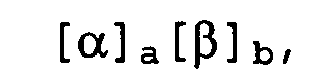
dans laquelle α représente une entité cationique choisie dans le groupe consistant en des cations des Groupes 1 et 2, l'anilinium et ses versions substituées, et NH4 +, NH3R, NH2R2 et NHR3 +, dans lesquels R est choisi dans le groupe consistant en des groupes hydrure, chlorure, alkyle en C1 à C10 et aryle en C6 à C12 ;
β représente une entité anionique choisie dans le groupe consistant en les ions fluor et des groupements comprenant du fluor et un ou plusieurs éléments choisis dans le groupe consistant en l'hydrogène, le silicium, le carbone, le phosphore, l'oxygène, l'aluminium et le bore ; et
a et b représentent des nombres entiers de 1 à 10. - Procédé suivant la revendication 39, dans lequel le sel inorganique est choisi dans le groupe consistant en (NH4)3AlF6, NH4HF2, NaF, KF, NH4F, (NH4)2SiF6 et leurs associations.
Applications Claiming Priority (5)
| Application Number | Priority Date | Filing Date | Title |
|---|---|---|---|
| US40843002P | 2002-09-04 | 2002-09-04 | |
| US408430P | 2002-09-04 | ||
| US368818 | 2003-02-18 | ||
| US10/368,818 US6875828B2 (en) | 2002-09-04 | 2003-02-18 | Bimodal polyolefin production process and films therefrom |
| PCT/US2003/025281 WO2004022607A1 (fr) | 2002-09-04 | 2003-08-12 | Procede de production de polyolefines bimodales et films associes |
Publications (3)
| Publication Number | Publication Date |
|---|---|
| EP1546212A1 EP1546212A1 (fr) | 2005-06-29 |
| EP1546212A4 EP1546212A4 (fr) | 2006-07-05 |
| EP1546212B1 true EP1546212B1 (fr) | 2011-02-16 |
Family
ID=31981174
Family Applications (1)
| Application Number | Title | Priority Date | Filing Date |
|---|---|---|---|
| EP03794469A Expired - Lifetime EP1546212B1 (fr) | 2002-09-04 | 2003-08-12 | Procede de production de polyolefines bimodales et films associes |
Country Status (17)
| Country | Link |
|---|---|
| US (3) | US6875828B2 (fr) |
| EP (1) | EP1546212B1 (fr) |
| JP (1) | JP2005538216A (fr) |
| KR (1) | KR100625162B1 (fr) |
| CN (1) | CN1305912C (fr) |
| AR (2) | AR041153A1 (fr) |
| AT (1) | ATE498636T1 (fr) |
| AU (1) | AU2003259802B2 (fr) |
| BR (1) | BR0314339A (fr) |
| CA (1) | CA2497676A1 (fr) |
| DE (1) | DE60336069D1 (fr) |
| EG (1) | EG23481A (fr) |
| MX (1) | MXPA05002474A (fr) |
| PL (1) | PL375267A1 (fr) |
| RU (1) | RU2315776C2 (fr) |
| TW (1) | TW200422301A (fr) |
| WO (1) | WO2004022607A1 (fr) |
Families Citing this family (48)
| Publication number | Priority date | Publication date | Assignee | Title |
|---|---|---|---|---|
| US7041617B2 (en) * | 2004-01-09 | 2006-05-09 | Chevron Phillips Chemical Company, L.P. | Catalyst compositions and polyolefins for extrusion coating applications |
| US7172987B2 (en) | 2002-12-31 | 2007-02-06 | Univation Technologies, Llc | Bimetallic catalyst, method of polymerization and bimodal polyolefins therefrom |
| ATE447575T1 (de) * | 2003-04-23 | 2009-11-15 | Merck & Co Inc | Selektive spirocyclische glucocorticoid-rezeptor- modulatoren |
| US7410926B2 (en) | 2003-12-30 | 2008-08-12 | Univation Technologies, Llc | Polymerization process using a supported, treated catalyst system |
| US7119153B2 (en) * | 2004-01-21 | 2006-10-10 | Jensen Michael D | Dual metallocene catalyst for producing film resins with good machine direction (MD) elmendorf tear strength |
| SG151301A1 (en) * | 2004-03-17 | 2009-04-30 | Dow Global Technologies Inc | Catalyst composition comprising shuttling agent for ethylene multi- block copolymer formation |
| NZ549262A (en) * | 2004-03-17 | 2010-08-27 | Dow Global Technologies Inc | Catalyst composition comprising shuttling agent for higher olefin multi-block copolymer formation |
| US7858706B2 (en) * | 2004-03-17 | 2010-12-28 | Dow Global Technologies Inc. | Catalyst composition comprising shuttling agent for ethylene multi-block copolymer formation |
| EP1731537A1 (fr) * | 2005-06-09 | 2006-12-13 | Innovene Manufacturing France SAS | Catalyseurs de polymérisation supportés |
| DE602005011421D1 (de) * | 2005-06-30 | 2009-01-15 | Borealis Tech Oy | Überzug-Schicht für Energie- oder Kommunikationskabel |
| DE102005035477A1 (de) * | 2005-07-26 | 2007-02-01 | Basell Polyolefine Gmbh | Verfahren zur Steuerung der relativen Aktivität der unterschiedlichen aktiven Zentren von Hybridkatalysatoren |
| US7393916B2 (en) * | 2005-11-01 | 2008-07-01 | Univation Technologies, Llc | Method of reducing gels in polyolefins |
| US7595364B2 (en) * | 2005-12-07 | 2009-09-29 | Univation Technologies, Llc | High density polyethylene |
| CN100432115C (zh) * | 2006-08-18 | 2008-11-12 | 中国科学院长春应用化学研究所 | 一种由催化剂共混体系制备双峰分子量分布聚乙烯的方法 |
| US8288078B2 (en) * | 2007-01-24 | 2012-10-16 | Tokyo Ohka Kogyo Co., Ltd. | Photosensitive resin composition, and pattern formation method using the same |
| EP1950241A1 (fr) | 2007-01-25 | 2008-07-30 | Borealis Technology Oy | Compositions de polyéthylène multimodal |
| DE102007014621A1 (de) | 2007-03-23 | 2008-09-25 | Innogel Ag | Verfahren zur Herstellung von Molekulargewichtsverteilungen mit kurzkettigem Anteil mittels Post-Reaktor Extrusion |
| CN101274968B (zh) * | 2007-03-28 | 2012-11-21 | 中国石油化工股份有限公司 | 一种用于生产宽分子量分布的聚乙烯的复合催化剂 |
| BRPI0705994A2 (pt) * | 2007-10-19 | 2009-10-06 | Braskem Sa | processo de preparação de suporte catalìtico e catalisadores bimetálicos suportados para a produção de homopolìmeros e copolìmeros de etileno com alfa-olefinas de alto e ultra alto peso molecular e com ampla distribuição de peso molecular em processos em lama, massa e fase gás e os produtos assim obtidos |
| TW200936619A (en) * | 2007-11-15 | 2009-09-01 | Univation Tech Llc | Polymerization catalysts, methods of making, methods of using, and polyolefin products made therefrom |
| US8318872B2 (en) * | 2007-12-18 | 2012-11-27 | Univation Technologies, Llc | Method for controlling bimodal catalyst activity during polymerization |
| EP2516485B1 (fr) * | 2009-12-22 | 2015-02-25 | Basell Polyolefine GmbH | Procédé de préparation d'un polymère multimodal de polyoléfine doté d'une capacité améliorée d'élimination de l'hydrogène |
| KR20130026531A (ko) | 2010-02-22 | 2013-03-13 | 유니베이션 테크놀로지즈, 엘엘씨 | 폴리올레핀 생산물을 생산하기 위한 촉매 시스템 및 이의 사용 방법 |
| US9284394B2 (en) | 2010-11-26 | 2016-03-15 | Basell Polyolefine Gmbh | Polyethylene polymerisation in gas phase reactor |
| EA027509B1 (ru) | 2011-07-08 | 2017-08-31 | Тотал Ресерч & Технолоджи Фелай | Металлоцен-катализированный полиэтилен |
| WO2013028283A1 (fr) | 2011-08-19 | 2013-02-28 | Univation Technologies, Llc | Systèmes de catalyseur et leurs procédés d'utilisation pour la production de produits de polyoléfine |
| CN102504058B (zh) * | 2011-11-10 | 2014-04-02 | 上海化工研究院 | 用于生产宽分子量分布聚乙烯的复合催化剂及制法和应用 |
| ES2588513T5 (es) * | 2012-06-26 | 2024-03-05 | Ineos Europe Ag | Composición de película |
| CN102887968B (zh) * | 2012-10-19 | 2014-03-19 | 河北工业大学 | 合成宽/双峰聚乙烯的非茂双金属催化体系及其应用 |
| WO2014078919A1 (fr) | 2012-11-26 | 2014-05-30 | Braskem S.A. | Catalyseur métallocène supporté sur support hybride, procédé d'obtention de celui-ci, procédé de polymérisation pour l 'obtention d'un homopolymère ou d'un copolymère d'éthylène à distribution de masse molaire large ou bimodale, utilisation du catalyseur de métallocène supporté et polymère d'éthylène à distribution de masse molaire large ou bimodale |
| WO2014106143A1 (fr) | 2012-12-28 | 2014-07-03 | Univation Technologies, Llc | Catalyseur supporté doté d'une aptitude à l'écoulement améliorée |
| WO2014123598A1 (fr) | 2013-02-07 | 2014-08-14 | Univation Technologies, Llc | Préparation de polyoléfine |
| JP6360549B2 (ja) | 2013-03-15 | 2018-07-18 | ユニベーション・テクノロジーズ・エルエルシー | オレフィン重合触媒用の三座窒素系配位子 |
| CN105143280B (zh) | 2013-03-15 | 2017-06-13 | 尤尼威蒂恩技术有限责任公司 | 催化剂的配体 |
| EP3287473B1 (fr) | 2013-06-05 | 2019-10-16 | Univation Technologies, LLC | Protection de groupes phénol |
| ES2568615T3 (es) * | 2013-10-11 | 2016-05-03 | Borealis Ag | Película para etiquetas orientada en la dirección de la máquina |
| CN105017626B (zh) * | 2014-04-15 | 2018-03-23 | 中国石化扬子石油化工有限公司 | 一种乙烯‑α‑烯烃共聚物、其制造方法及其应用 |
| WO2016198273A1 (fr) * | 2015-06-10 | 2016-12-15 | Borealis Ag | Copolymère multimodal comprenant de l'éthylène et au moins deux comonomères d'alpha-oléfine, et articles finaux fabriqués à partir du copolymère |
| CN115141300A (zh) | 2015-07-08 | 2022-10-04 | 切弗朗菲利浦化学公司 | 乙烯共聚物和包含其的制品 |
| US9845367B2 (en) | 2015-09-24 | 2017-12-19 | Chevron Phillips Chemical Company Lp | Heterogeneous Ziegler-Natta catalysts with fluorided silica-coated alumina |
| US9758599B2 (en) | 2015-09-24 | 2017-09-12 | Chevron Phillips Chemical Company Lp | Heterogeneous Ziegler-Natta catalysts with fluorided silica-coated alumina |
| US9540457B1 (en) | 2015-09-24 | 2017-01-10 | Chevron Phillips Chemical Company Lp | Ziegler-natta—metallocene dual catalyst systems with activator-supports |
| WO2017069854A1 (fr) * | 2015-10-22 | 2017-04-27 | Exxonmobil Chemical Patents Inc. | Catalyseurs pour la formation de polymères multimodaux |
| WO2018106388A1 (fr) | 2016-12-05 | 2018-06-14 | Exxonmobil Chemical Patents Inc. | Polyéthylènes métallocènes à large distribution orthogonale pour films |
| EP3692079B1 (fr) | 2017-10-06 | 2024-09-04 | ExxonMobil Chemical Patents Inc. | Extrudés de polyéthylène et leur procédé de fabrication |
| EP3749707A1 (fr) | 2018-02-05 | 2020-12-16 | ExxonMobil Chemical Patents Inc. | Aptitude au traitement améliorée de lldpe par addition de polyéthylène haute densité de masse moléculaire ultra-élevée |
| US20220289586A1 (en) * | 2019-08-05 | 2022-09-15 | Indian Institute Of Technology, Jodhpur | A hydrogen-annealed bimetallic oxide and implementations thereof |
| BR112022004186A2 (pt) * | 2019-09-26 | 2022-05-31 | Univation Tech Llc | Composição de homopolímero de polietileno bimodal, métodos para fazer a composição de homopolímero de polietileno bimodal, para fabricar um artigo fabricado, para fazer um filme extrudado e para proteger um material sensível à umidade e/ou sensível ao oxigênio, formulação, artigo fabricado, filme extrudado, e, embalagem vedada |
Family Cites Families (41)
| Publication number | Priority date | Publication date | Assignee | Title |
|---|---|---|---|---|
| US52453A (en) * | 1866-02-06 | Improvement in rulers | ||
| US4525678A (en) * | 1982-07-06 | 1985-06-25 | Texas Instruments Incorporated | Monolithic low noise common-gate amplifier |
| DE3678024D1 (de) | 1985-03-26 | 1991-04-18 | Mitsui Petrochemical Ind | Fluessiges statisches ethylencopolymer, verfahren zur herstellung und anwendung desselben. |
| US4808561A (en) * | 1985-06-21 | 1989-02-28 | Exxon Chemical Patents Inc. | Supported polymerization catalyst |
| US4740550A (en) * | 1986-06-18 | 1988-04-26 | Shell Oil Company | Multistage copolymerization process |
| US4874880A (en) | 1987-03-10 | 1989-10-17 | Chisso Corporation | Bis(di-, tri- or tetra-substituted-cyclopentadienyl)-zirconium dihalides |
| TW218884B (fr) | 1991-05-01 | 1994-01-11 | Mitsubishi Kakoki Kk | |
| US5693583A (en) | 1991-06-10 | 1997-12-02 | Mobil Oil Corporation | High activity polyethylene catalysts which produce bimodal or trimodal product molecular weight distributions |
| CA2071706C (fr) | 1991-06-20 | 1996-09-17 | Junichi Imuta | Catalyseur et methode pour la polymerisation d'olefines; produit a base d'un metal de transition, approprie pour le catalyseur |
| US5317036A (en) | 1992-10-16 | 1994-05-31 | Union Carbide Chemicals & Plastics Technology Corporation | Gas phase polymerization reactions utilizing soluble unsupported catalysts |
| US5602067A (en) | 1992-12-28 | 1997-02-11 | Mobil Oil Corporation | Process and a catalyst for preventing reactor fouling |
| ES2156153T3 (es) | 1993-06-15 | 2001-06-16 | Idemitsu Kosan Co | Procedimiento de produccion de polimero olefinico, y catalizador para la polimerizacion de una olefina. |
| DE4332009A1 (de) | 1993-09-21 | 1995-03-30 | Hoechst Ag | Verfahren zur Herstellung von Organometallfluoriden |
| US5614456A (en) | 1993-11-15 | 1997-03-25 | Mobil Oil Corporation | Catalyst for bimodal molecular weight distribution ethylene polymers and copolymers |
| DE4344689A1 (de) * | 1993-12-27 | 1995-06-29 | Hoechst Ag | Metallocenverbindung |
| EP0664301A1 (fr) | 1994-01-24 | 1995-07-26 | Dainichiseika Color & Chemicals Mfg. Co. Ltd. | Dérivés de la chitosane, procédé pour leur préparation et compositions cosmétiques à base de ces dérivés |
| EP0779837B1 (fr) | 1994-09-08 | 2001-08-01 | Mobil Oil Corporation | Modulation catalytique de la repartition du poids moleculaire d'une resine large/bimodale dans un simple reacteur |
| US5525678A (en) | 1994-09-22 | 1996-06-11 | Mobil Oil Corporation | Process for controlling the MWD of a broad/bimodal resin produced in a single reactor |
| US5529965A (en) * | 1994-10-28 | 1996-06-25 | Exxon Chemical Patents Inc. | Polymerization catalyst systems, their production and use |
| EP0857179A1 (fr) | 1995-08-18 | 1998-08-12 | Basell Polyolefine GmbH | Constituants de catalyseur et systeme catalyseur a haut degre d'activite de polymerisation utilises pour produire des polymeres |
| US6486089B1 (en) * | 1995-11-09 | 2002-11-26 | Exxonmobil Oil Corporation | Bimetallic catalyst for ethylene polymerization reactions with uniform component distribution |
| US6417130B1 (en) | 1996-03-25 | 2002-07-09 | Exxonmobil Oil Corporation | One pot preparation of bimetallic catalysts for ethylene 1-olefin copolymerization |
| US5693727A (en) | 1996-06-06 | 1997-12-02 | Union Carbide Chemicals & Plastics Technology Corporation | Method for feeding a liquid catalyst to a fluidized bed polymerization reactor |
| WO1998002247A1 (fr) | 1996-07-15 | 1998-01-22 | Mobil Oil Corporation | Catalyseur bimetallique pretraite par comonomere pour le moulage par soufflage et pour des applications en films |
| US6180736B1 (en) | 1996-12-20 | 2001-01-30 | Exxon Chemical Patents Inc | High activity metallocene polymerization process |
| EP0960144B1 (fr) | 1997-02-17 | 2002-05-29 | Bayer Aktiengesellschaft | Nouveau systeme catalyseur, son utilisation pour polymeriser des dienes en solution, en suspension ou en phase gazeuse et utilisation des caoutchoucs dieniques produits a l'aide dudit systeme catalyseur |
| FI111848B (fi) * | 1997-06-24 | 2003-09-30 | Borealis Tech Oy | Menetelmä ja laitteisto propeenin homo- ja kopolymeerien valmistamiseksi |
| US6051525A (en) | 1997-07-14 | 2000-04-18 | Mobil Corporation | Catalyst for the manufacture of polyethylene with a broad or bimodal molecular weight distribution |
| US6001766A (en) * | 1997-12-24 | 1999-12-14 | Mobil Oil Corporation | Bimetallic catalysts for ethylene polymerization reactions activated with paraffin-soluble alkylalumoxanes |
| US6136747A (en) | 1998-06-19 | 2000-10-24 | Union Carbide Chemicals & Plastics Technology Corporation | Mixed catalyst composition for the production of olefin polymers |
| US6632901B2 (en) | 1998-08-21 | 2003-10-14 | Univation Technologies, Llc | Polymerization process using an improved bulky ligand metallocene-type catalyst system |
| US6433203B1 (en) | 1998-11-20 | 2002-08-13 | Basell Technology Company Bv | Bridged metallocenes, preparation, use in catalytic systems |
| US6303718B1 (en) | 1999-09-17 | 2001-10-16 | Bayer Aktiengesellschaft | Composition based on fluorine-containing metal complexes |
| US6420298B1 (en) * | 1999-08-31 | 2002-07-16 | Exxonmobil Oil Corporation | Metallocene catalyst compositions, processes for making polyolefin resins using such catalyst compositions, and products produced thereby |
| ATE316984T1 (de) | 1999-09-27 | 2006-02-15 | Dow Global Technologies Inc | Expandierte anionen enthaltende geträgertes katalysatorsystem |
| WO2001030861A1 (fr) * | 1999-10-22 | 2001-05-03 | Univation Technologies, Llc | Compositions catalytiques, procedes de polymerisation et polymeres fabriques a partir de ces compositions |
| US6274684B1 (en) * | 1999-10-22 | 2001-08-14 | Univation Technologies, Llc | Catalyst composition, method of polymerization, and polymer therefrom |
| DE10006538C2 (de) | 2000-02-15 | 2002-11-28 | Forsch Pigmente Und Lacke E V | Verfahren zur Beschichtung von Partikeln mit LCST-Polymeren |
| US6306718B1 (en) * | 2000-04-26 | 2001-10-23 | Dallas Semiconductor Corporation | Method of making polysilicon resistor having adjustable temperature coefficients |
| US6605675B2 (en) * | 2000-12-04 | 2003-08-12 | Univation Technologies, Llc | Polymerization process |
| AU1790702A (en) * | 2000-12-04 | 2002-06-18 | Univaton Technologies Llc | Polimerization process |
-
2003
- 2003-02-18 US US10/368,818 patent/US6875828B2/en not_active Expired - Fee Related
- 2003-08-12 PL PL03375267A patent/PL375267A1/xx unknown
- 2003-08-12 CN CNB038209705A patent/CN1305912C/zh not_active Expired - Fee Related
- 2003-08-12 CA CA002497676A patent/CA2497676A1/fr not_active Abandoned
- 2003-08-12 AU AU2003259802A patent/AU2003259802B2/en not_active Ceased
- 2003-08-12 BR BR0314339-2A patent/BR0314339A/pt not_active IP Right Cessation
- 2003-08-12 EP EP03794469A patent/EP1546212B1/fr not_active Expired - Lifetime
- 2003-08-12 RU RU2005109916/04A patent/RU2315776C2/ru not_active IP Right Cessation
- 2003-08-12 JP JP2004534281A patent/JP2005538216A/ja not_active Ceased
- 2003-08-12 KR KR1020057003701A patent/KR100625162B1/ko not_active Expired - Fee Related
- 2003-08-12 MX MXPA05002474A patent/MXPA05002474A/es active IP Right Grant
- 2003-08-12 WO PCT/US2003/025281 patent/WO2004022607A1/fr not_active Ceased
- 2003-08-12 DE DE60336069T patent/DE60336069D1/de not_active Expired - Lifetime
- 2003-08-12 AT AT03794469T patent/ATE498636T1/de not_active IP Right Cessation
- 2003-09-03 EG EG2003090868A patent/EG23481A/xx active
- 2003-09-04 AR ARP030103214A patent/AR041153A1/es active IP Right Grant
- 2003-09-04 TW TW092124494A patent/TW200422301A/zh unknown
-
2004
- 2004-09-20 US US10/945,462 patent/US6943134B2/en not_active Expired - Fee Related
- 2004-09-20 US US10/945,502 patent/US20050054799A1/en not_active Abandoned
-
2007
- 2007-09-19 AR ARP070104151A patent/AR060201A2/es unknown
Also Published As
| Publication number | Publication date |
|---|---|
| AU2003259802B2 (en) | 2007-01-11 |
| JP2005538216A (ja) | 2005-12-15 |
| CA2497676A1 (fr) | 2004-03-18 |
| TW200422301A (en) | 2004-11-01 |
| US6943134B2 (en) | 2005-09-13 |
| PL375267A1 (en) | 2005-11-28 |
| AR041153A1 (es) | 2005-05-04 |
| EP1546212A4 (fr) | 2006-07-05 |
| US6875828B2 (en) | 2005-04-05 |
| AR060201A2 (es) | 2008-06-04 |
| CN1305912C (zh) | 2007-03-21 |
| RU2005109916A (ru) | 2006-01-20 |
| MXPA05002474A (es) | 2005-05-27 |
| DE60336069D1 (de) | 2011-03-31 |
| US20050054799A1 (en) | 2005-03-10 |
| BR0314339A (pt) | 2005-07-05 |
| EP1546212A1 (fr) | 2005-06-29 |
| RU2315776C2 (ru) | 2008-01-27 |
| AU2003259802A1 (en) | 2004-03-29 |
| WO2004022607A1 (fr) | 2004-03-18 |
| CN1678640A (zh) | 2005-10-05 |
| EG23481A (en) | 2005-11-26 |
| US20040044154A1 (en) | 2004-03-04 |
| ATE498636T1 (de) | 2011-03-15 |
| KR100625162B1 (ko) | 2006-09-18 |
| US20050038210A1 (en) | 2005-02-17 |
| KR20050057145A (ko) | 2005-06-16 |
Similar Documents
| Publication | Publication Date | Title |
|---|---|---|
| EP1546212B1 (fr) | Procede de production de polyolefines bimodales et films associes | |
| US6753390B2 (en) | Gas phase polymerization process | |
| AU2003259801B2 (en) | Process for producing fluorinated catalysts | |
| US7566677B2 (en) | De-foaming spray dried catalyst slurries | |
| EP1919966B1 (fr) | Compositions de catalyseurs contenant des matieres de support a distribution granulometrique amelioree | |
| US20070276106A1 (en) | Polymerization process using spray-dried catalyst | |
| ZA200502719B (en) | Synthesis of polymerization catalyst components. | |
| US6890876B2 (en) | Processes for producing fluorided catalysts from nitrogenous metallocenes | |
| US7582711B2 (en) | Ziegler-type catalysts having increased productivity |
Legal Events
| Date | Code | Title | Description |
|---|---|---|---|
| PUAI | Public reference made under article 153(3) epc to a published international application that has entered the european phase |
Free format text: ORIGINAL CODE: 0009012 |
|
| 17P | Request for examination filed |
Effective date: 20050211 |
|
| AK | Designated contracting states |
Kind code of ref document: A1 Designated state(s): AT BE BG CH CY CZ DE DK EE ES FI FR GB GR HU IE IT LI LU MC NL PT RO SE SI SK TR |
|
| AX | Request for extension of the european patent |
Extension state: AL LT LV MK |
|
| DAX | Request for extension of the european patent (deleted) | ||
| A4 | Supplementary search report drawn up and despatched |
Effective date: 20060601 |
|
| RIN1 | Information on inventor provided before grant (corrected) |
Inventor name: MCCULLOUGH, LAUGHLIN, G. Inventor name: KUO, CHI-I Inventor name: ACKERMAN, STEVEN, K. Inventor name: SHANNON, PORTER, C. Inventor name: SANTANA, ROBERT, L. Inventor name: EHRMAN, FRED, D. Inventor name: SHIRODKAR, PRADEEP, P. Inventor name: ONEIL, DANIEL, G. |
|
| GRAP | Despatch of communication of intention to grant a patent |
Free format text: ORIGINAL CODE: EPIDOSNIGR1 |
|
| GRAS | Grant fee paid |
Free format text: ORIGINAL CODE: EPIDOSNIGR3 |
|
| GRAA | (expected) grant |
Free format text: ORIGINAL CODE: 0009210 |
|
| AK | Designated contracting states |
Kind code of ref document: B1 Designated state(s): AT BE BG CH CY CZ DE DK EE ES FI FR GB GR HU IE IT LI LU MC NL PT RO SE SI SK TR |
|
| REG | Reference to a national code |
Ref country code: GB Ref legal event code: FG4D |
|
| REG | Reference to a national code |
Ref country code: CH Ref legal event code: EP |
|
| REG | Reference to a national code |
Ref country code: IE Ref legal event code: FG4D |
|
| REF | Corresponds to: |
Ref document number: 60336069 Country of ref document: DE Date of ref document: 20110331 Kind code of ref document: P |
|
| REG | Reference to a national code |
Ref country code: DE Ref legal event code: R096 Ref document number: 60336069 Country of ref document: DE Effective date: 20110331 |
|
| REG | Reference to a national code |
Ref country code: NL Ref legal event code: VDEP Effective date: 20110216 |
|
| PG25 | Lapsed in a contracting state [announced via postgrant information from national office to epo] |
Ref country code: ES Free format text: LAPSE BECAUSE OF FAILURE TO SUBMIT A TRANSLATION OF THE DESCRIPTION OR TO PAY THE FEE WITHIN THE PRESCRIBED TIME-LIMIT Effective date: 20110527 Ref country code: PT Free format text: LAPSE BECAUSE OF FAILURE TO SUBMIT A TRANSLATION OF THE DESCRIPTION OR TO PAY THE FEE WITHIN THE PRESCRIBED TIME-LIMIT Effective date: 20110616 Ref country code: GR Free format text: LAPSE BECAUSE OF FAILURE TO SUBMIT A TRANSLATION OF THE DESCRIPTION OR TO PAY THE FEE WITHIN THE PRESCRIBED TIME-LIMIT Effective date: 20110517 Ref country code: SE Free format text: LAPSE BECAUSE OF FAILURE TO SUBMIT A TRANSLATION OF THE DESCRIPTION OR TO PAY THE FEE WITHIN THE PRESCRIBED TIME-LIMIT Effective date: 20110216 |
|
| PG25 | Lapsed in a contracting state [announced via postgrant information from national office to epo] |
Ref country code: FI Free format text: LAPSE BECAUSE OF FAILURE TO SUBMIT A TRANSLATION OF THE DESCRIPTION OR TO PAY THE FEE WITHIN THE PRESCRIBED TIME-LIMIT Effective date: 20110216 Ref country code: NL Free format text: LAPSE BECAUSE OF FAILURE TO SUBMIT A TRANSLATION OF THE DESCRIPTION OR TO PAY THE FEE WITHIN THE PRESCRIBED TIME-LIMIT Effective date: 20110216 Ref country code: BE Free format text: LAPSE BECAUSE OF FAILURE TO SUBMIT A TRANSLATION OF THE DESCRIPTION OR TO PAY THE FEE WITHIN THE PRESCRIBED TIME-LIMIT Effective date: 20110216 Ref country code: AT Free format text: LAPSE BECAUSE OF FAILURE TO SUBMIT A TRANSLATION OF THE DESCRIPTION OR TO PAY THE FEE WITHIN THE PRESCRIBED TIME-LIMIT Effective date: 20110216 Ref country code: BG Free format text: LAPSE BECAUSE OF FAILURE TO SUBMIT A TRANSLATION OF THE DESCRIPTION OR TO PAY THE FEE WITHIN THE PRESCRIBED TIME-LIMIT Effective date: 20110516 Ref country code: CY Free format text: LAPSE BECAUSE OF FAILURE TO SUBMIT A TRANSLATION OF THE DESCRIPTION OR TO PAY THE FEE WITHIN THE PRESCRIBED TIME-LIMIT Effective date: 20110216 Ref country code: SI Free format text: LAPSE BECAUSE OF FAILURE TO SUBMIT A TRANSLATION OF THE DESCRIPTION OR TO PAY THE FEE WITHIN THE PRESCRIBED TIME-LIMIT Effective date: 20110216 |
|
| PG25 | Lapsed in a contracting state [announced via postgrant information from national office to epo] |
Ref country code: EE Free format text: LAPSE BECAUSE OF FAILURE TO SUBMIT A TRANSLATION OF THE DESCRIPTION OR TO PAY THE FEE WITHIN THE PRESCRIBED TIME-LIMIT Effective date: 20110216 Ref country code: DK Free format text: LAPSE BECAUSE OF FAILURE TO SUBMIT A TRANSLATION OF THE DESCRIPTION OR TO PAY THE FEE WITHIN THE PRESCRIBED TIME-LIMIT Effective date: 20110216 |
|
| PG25 | Lapsed in a contracting state [announced via postgrant information from national office to epo] |
Ref country code: RO Free format text: LAPSE BECAUSE OF FAILURE TO SUBMIT A TRANSLATION OF THE DESCRIPTION OR TO PAY THE FEE WITHIN THE PRESCRIBED TIME-LIMIT Effective date: 20110216 Ref country code: SK Free format text: LAPSE BECAUSE OF FAILURE TO SUBMIT A TRANSLATION OF THE DESCRIPTION OR TO PAY THE FEE WITHIN THE PRESCRIBED TIME-LIMIT Effective date: 20110216 Ref country code: CZ Free format text: LAPSE BECAUSE OF FAILURE TO SUBMIT A TRANSLATION OF THE DESCRIPTION OR TO PAY THE FEE WITHIN THE PRESCRIBED TIME-LIMIT Effective date: 20110216 |
|
| PLBE | No opposition filed within time limit |
Free format text: ORIGINAL CODE: 0009261 |
|
| STAA | Information on the status of an ep patent application or granted ep patent |
Free format text: STATUS: NO OPPOSITION FILED WITHIN TIME LIMIT |
|
| 26N | No opposition filed |
Effective date: 20111117 |
|
| REG | Reference to a national code |
Ref country code: DE Ref legal event code: R097 Ref document number: 60336069 Country of ref document: DE Effective date: 20111117 |
|
| PG25 | Lapsed in a contracting state [announced via postgrant information from national office to epo] |
Ref country code: MC Free format text: LAPSE BECAUSE OF NON-PAYMENT OF DUE FEES Effective date: 20110831 |
|
| REG | Reference to a national code |
Ref country code: CH Ref legal event code: PL |
|
| GBPC | Gb: european patent ceased through non-payment of renewal fee |
Effective date: 20110812 |
|
| PG25 | Lapsed in a contracting state [announced via postgrant information from national office to epo] |
Ref country code: LI Free format text: LAPSE BECAUSE OF NON-PAYMENT OF DUE FEES Effective date: 20110831 Ref country code: CH Free format text: LAPSE BECAUSE OF NON-PAYMENT OF DUE FEES Effective date: 20110831 |
|
| REG | Reference to a national code |
Ref country code: IE Ref legal event code: MM4A |
|
| PG25 | Lapsed in a contracting state [announced via postgrant information from national office to epo] |
Ref country code: IE Free format text: LAPSE BECAUSE OF NON-PAYMENT OF DUE FEES Effective date: 20110812 |
|
| PG25 | Lapsed in a contracting state [announced via postgrant information from national office to epo] |
Ref country code: GB Free format text: LAPSE BECAUSE OF NON-PAYMENT OF DUE FEES Effective date: 20110812 |
|
| PG25 | Lapsed in a contracting state [announced via postgrant information from national office to epo] |
Ref country code: LU Free format text: LAPSE BECAUSE OF NON-PAYMENT OF DUE FEES Effective date: 20110812 |
|
| PG25 | Lapsed in a contracting state [announced via postgrant information from national office to epo] |
Ref country code: TR Free format text: LAPSE BECAUSE OF FAILURE TO SUBMIT A TRANSLATION OF THE DESCRIPTION OR TO PAY THE FEE WITHIN THE PRESCRIBED TIME-LIMIT Effective date: 20110216 |
|
| PG25 | Lapsed in a contracting state [announced via postgrant information from national office to epo] |
Ref country code: HU Free format text: LAPSE BECAUSE OF FAILURE TO SUBMIT A TRANSLATION OF THE DESCRIPTION OR TO PAY THE FEE WITHIN THE PRESCRIBED TIME-LIMIT Effective date: 20110216 |
|
| PGFP | Annual fee paid to national office [announced via postgrant information from national office to epo] |
Ref country code: DE Payment date: 20130902 Year of fee payment: 11 |
|
| PGFP | Annual fee paid to national office [announced via postgrant information from national office to epo] |
Ref country code: FR Payment date: 20130725 Year of fee payment: 11 |
|
| PGFP | Annual fee paid to national office [announced via postgrant information from national office to epo] |
Ref country code: IT Payment date: 20130820 Year of fee payment: 11 |
|
| REG | Reference to a national code |
Ref country code: DE Ref legal event code: R119 Ref document number: 60336069 Country of ref document: DE |
|
| PG25 | Lapsed in a contracting state [announced via postgrant information from national office to epo] |
Ref country code: IT Free format text: LAPSE BECAUSE OF NON-PAYMENT OF DUE FEES Effective date: 20140812 |
|
| REG | Reference to a national code |
Ref country code: DE Ref legal event code: R119 Ref document number: 60336069 Country of ref document: DE Effective date: 20150303 |
|
| REG | Reference to a national code |
Ref country code: FR Ref legal event code: ST Effective date: 20150430 |
|
| PG25 | Lapsed in a contracting state [announced via postgrant information from national office to epo] |
Ref country code: DE Free format text: LAPSE BECAUSE OF NON-PAYMENT OF DUE FEES Effective date: 20150303 |
|
| PG25 | Lapsed in a contracting state [announced via postgrant information from national office to epo] |
Ref country code: FR Free format text: LAPSE BECAUSE OF NON-PAYMENT OF DUE FEES Effective date: 20140901 |