EP1548032B9 - Kdr-peptide und diese enthaltende impfstoffe - Google Patents
Kdr-peptide und diese enthaltende impfstoffe Download PDFInfo
- Publication number
- EP1548032B9 EP1548032B9 EP03795432A EP03795432A EP1548032B9 EP 1548032 B9 EP1548032 B9 EP 1548032B9 EP 03795432 A EP03795432 A EP 03795432A EP 03795432 A EP03795432 A EP 03795432A EP 1548032 B9 EP1548032 B9 EP 1548032B9
- Authority
- EP
- European Patent Office
- Prior art keywords
- peptides
- peptide
- hla
- cells
- seq
- Prior art date
- Legal status (The legal status is an assumption and is not a legal conclusion. Google has not performed a legal analysis and makes no representation as to the accuracy of the status listed.)
- Expired - Lifetime
Links
Images












Classifications
-
- A—HUMAN NECESSITIES
- A61—MEDICAL OR VETERINARY SCIENCE; HYGIENE
- A61K—PREPARATIONS FOR MEDICAL, DENTAL OR TOILETRY PURPOSES
- A61K39/00—Medicinal preparations containing antigens or antibodies
- A61K39/0005—Vertebrate antigens
- A61K39/0011—Cancer antigens
-
- A—HUMAN NECESSITIES
- A61—MEDICAL OR VETERINARY SCIENCE; HYGIENE
- A61K—PREPARATIONS FOR MEDICAL, DENTAL OR TOILETRY PURPOSES
- A61K40/00—Cellular immunotherapy
-
- A—HUMAN NECESSITIES
- A61—MEDICAL OR VETERINARY SCIENCE; HYGIENE
- A61K—PREPARATIONS FOR MEDICAL, DENTAL OR TOILETRY PURPOSES
- A61K40/00—Cellular immunotherapy
- A61K40/10—Cellular immunotherapy characterised by the cell type used
- A61K40/19—Dendritic cells
-
- A—HUMAN NECESSITIES
- A61—MEDICAL OR VETERINARY SCIENCE; HYGIENE
- A61K—PREPARATIONS FOR MEDICAL, DENTAL OR TOILETRY PURPOSES
- A61K40/00—Cellular immunotherapy
- A61K40/20—Cellular immunotherapy characterised by the effect or the function of the cells
- A61K40/24—Antigen-presenting cells [APC]
-
- A—HUMAN NECESSITIES
- A61—MEDICAL OR VETERINARY SCIENCE; HYGIENE
- A61K—PREPARATIONS FOR MEDICAL, DENTAL OR TOILETRY PURPOSES
- A61K40/00—Cellular immunotherapy
- A61K40/40—Cellular immunotherapy characterised by antigens that are targeted or presented by cells of the immune system
- A61K40/41—Vertebrate antigens
- A61K40/42—Cancer antigens
-
- A—HUMAN NECESSITIES
- A61—MEDICAL OR VETERINARY SCIENCE; HYGIENE
- A61K—PREPARATIONS FOR MEDICAL, DENTAL OR TOILETRY PURPOSES
- A61K40/00—Cellular immunotherapy
- A61K40/40—Cellular immunotherapy characterised by antigens that are targeted or presented by cells of the immune system
- A61K40/41—Vertebrate antigens
- A61K40/42—Cancer antigens
- A61K40/4202—Receptors, cell surface antigens or cell surface determinants
- A61K40/4203—Receptors for growth factors
- A61K40/4208—Vascular endothelial growth factor receptors [VEGFR]
-
- A—HUMAN NECESSITIES
- A61—MEDICAL OR VETERINARY SCIENCE; HYGIENE
- A61P—SPECIFIC THERAPEUTIC ACTIVITY OF CHEMICAL COMPOUNDS OR MEDICINAL PREPARATIONS
- A61P17/00—Drugs for dermatological disorders
-
- A—HUMAN NECESSITIES
- A61—MEDICAL OR VETERINARY SCIENCE; HYGIENE
- A61P—SPECIFIC THERAPEUTIC ACTIVITY OF CHEMICAL COMPOUNDS OR MEDICINAL PREPARATIONS
- A61P17/00—Drugs for dermatological disorders
- A61P17/06—Antipsoriatics
-
- A—HUMAN NECESSITIES
- A61—MEDICAL OR VETERINARY SCIENCE; HYGIENE
- A61P—SPECIFIC THERAPEUTIC ACTIVITY OF CHEMICAL COMPOUNDS OR MEDICINAL PREPARATIONS
- A61P19/00—Drugs for skeletal disorders
- A61P19/02—Drugs for skeletal disorders for joint disorders, e.g. arthritis, arthrosis
-
- A—HUMAN NECESSITIES
- A61—MEDICAL OR VETERINARY SCIENCE; HYGIENE
- A61P—SPECIFIC THERAPEUTIC ACTIVITY OF CHEMICAL COMPOUNDS OR MEDICINAL PREPARATIONS
- A61P27/00—Drugs for disorders of the senses
-
- A—HUMAN NECESSITIES
- A61—MEDICAL OR VETERINARY SCIENCE; HYGIENE
- A61P—SPECIFIC THERAPEUTIC ACTIVITY OF CHEMICAL COMPOUNDS OR MEDICINAL PREPARATIONS
- A61P27/00—Drugs for disorders of the senses
- A61P27/02—Ophthalmic agents
-
- A—HUMAN NECESSITIES
- A61—MEDICAL OR VETERINARY SCIENCE; HYGIENE
- A61P—SPECIFIC THERAPEUTIC ACTIVITY OF CHEMICAL COMPOUNDS OR MEDICINAL PREPARATIONS
- A61P29/00—Non-central analgesic, antipyretic or antiinflammatory agents, e.g. antirheumatic agents; Non-steroidal antiinflammatory drugs [NSAID]
-
- A—HUMAN NECESSITIES
- A61—MEDICAL OR VETERINARY SCIENCE; HYGIENE
- A61P—SPECIFIC THERAPEUTIC ACTIVITY OF CHEMICAL COMPOUNDS OR MEDICINAL PREPARATIONS
- A61P3/00—Drugs for disorders of the metabolism
-
- A—HUMAN NECESSITIES
- A61—MEDICAL OR VETERINARY SCIENCE; HYGIENE
- A61P—SPECIFIC THERAPEUTIC ACTIVITY OF CHEMICAL COMPOUNDS OR MEDICINAL PREPARATIONS
- A61P3/00—Drugs for disorders of the metabolism
- A61P3/08—Drugs for disorders of the metabolism for glucose homeostasis
- A61P3/10—Drugs for disorders of the metabolism for glucose homeostasis for hyperglycaemia, e.g. antidiabetics
-
- A—HUMAN NECESSITIES
- A61—MEDICAL OR VETERINARY SCIENCE; HYGIENE
- A61P—SPECIFIC THERAPEUTIC ACTIVITY OF CHEMICAL COMPOUNDS OR MEDICINAL PREPARATIONS
- A61P35/00—Antineoplastic agents
-
- A—HUMAN NECESSITIES
- A61—MEDICAL OR VETERINARY SCIENCE; HYGIENE
- A61P—SPECIFIC THERAPEUTIC ACTIVITY OF CHEMICAL COMPOUNDS OR MEDICINAL PREPARATIONS
- A61P35/00—Antineoplastic agents
- A61P35/04—Antineoplastic agents specific for metastasis
-
- A—HUMAN NECESSITIES
- A61—MEDICAL OR VETERINARY SCIENCE; HYGIENE
- A61P—SPECIFIC THERAPEUTIC ACTIVITY OF CHEMICAL COMPOUNDS OR MEDICINAL PREPARATIONS
- A61P9/00—Drugs for disorders of the cardiovascular system
-
- A—HUMAN NECESSITIES
- A61—MEDICAL OR VETERINARY SCIENCE; HYGIENE
- A61P—SPECIFIC THERAPEUTIC ACTIVITY OF CHEMICAL COMPOUNDS OR MEDICINAL PREPARATIONS
- A61P9/00—Drugs for disorders of the cardiovascular system
- A61P9/10—Drugs for disorders of the cardiovascular system for treating ischaemic or atherosclerotic diseases, e.g. antianginal drugs, coronary vasodilators, drugs for myocardial infarction, retinopathy, cerebrovascula insufficiency, renal arteriosclerosis
-
- C—CHEMISTRY; METALLURGY
- C07—ORGANIC CHEMISTRY
- C07K—PEPTIDES
- C07K14/00—Peptides having more than 20 amino acids; Gastrins; Somatostatins; Melanotropins; Derivatives thereof
- C07K14/435—Peptides having more than 20 amino acids; Gastrins; Somatostatins; Melanotropins; Derivatives thereof from animals; from humans
- C07K14/705—Receptors; Cell surface antigens; Cell surface determinants
- C07K14/71—Receptors; Cell surface antigens; Cell surface determinants for growth factors; for growth regulators
-
- C—CHEMISTRY; METALLURGY
- C07—ORGANIC CHEMISTRY
- C07K—PEPTIDES
- C07K7/00—Peptides having 5 to 20 amino acids in a fully defined sequence; Derivatives thereof
- C07K7/04—Linear peptides containing only normal peptide links
- C07K7/06—Linear peptides containing only normal peptide links having 5 to 11 amino acids
-
- A—HUMAN NECESSITIES
- A61—MEDICAL OR VETERINARY SCIENCE; HYGIENE
- A61K—PREPARATIONS FOR MEDICAL, DENTAL OR TOILETRY PURPOSES
- A61K2239/00—Indexing codes associated with cellular immunotherapy of group A61K40/00
- A61K2239/46—Indexing codes associated with cellular immunotherapy of group A61K40/00 characterised by the cancer treated
- A61K2239/50—Colon
-
- A—HUMAN NECESSITIES
- A61—MEDICAL OR VETERINARY SCIENCE; HYGIENE
- A61K—PREPARATIONS FOR MEDICAL, DENTAL OR TOILETRY PURPOSES
- A61K2239/00—Indexing codes associated with cellular immunotherapy of group A61K40/00
- A61K2239/46—Indexing codes associated with cellular immunotherapy of group A61K40/00 characterised by the cancer treated
- A61K2239/57—Skin; melanoma
-
- A—HUMAN NECESSITIES
- A61—MEDICAL OR VETERINARY SCIENCE; HYGIENE
- A61K—PREPARATIONS FOR MEDICAL, DENTAL OR TOILETRY PURPOSES
- A61K38/00—Medicinal preparations containing peptides
- A61K38/04—Peptides having up to 20 amino acids in a fully defined sequence; Derivatives thereof
- A61K38/08—Peptides having 5 to 11 amino acids
-
- A—HUMAN NECESSITIES
- A61—MEDICAL OR VETERINARY SCIENCE; HYGIENE
- A61K—PREPARATIONS FOR MEDICAL, DENTAL OR TOILETRY PURPOSES
- A61K39/00—Medicinal preparations containing antigens or antibodies
Definitions
- the present invention relates to novel peptides that are extremely useful as cancer vaccines, and pharmaceuticals that comprise these peptides, for treating and preventing tumors.
- Tumor-rejection antigen genes have mainly been identified for malignant melanomas, and accordingly, cancer immunotherapies utilizing these genes are developed.
- WO 02/056 907 describes a composition comprising an ordered and repetitive antigen or antigenic determinant array, and a process for producing an antigen or antigenic determinant in an ordered and repetitive array.
- the ordered and repetitive antigen or antigenic determinant is described an being useful in the production of vaccines for the treatment of infections diseases, the treatment of allergies and as a pharmacaine to prevent or cure cancer and to efficiently induce self-specific immune responses, in particular antibody responses.
- cancer vaccine therapy that induces tumor-specific CD8-positive T cells in vivo has received attention, and is being applied to various clinical applications.
- the mechanism by which peptides consisting of approximately ten amino acid residues activate T cells via the Class I pathway, by the assistance of various costimulatory molecules, to induce tumor-specific cytotoxic T cells (CTLs) was also elucidated.
- CTLs tumor-specific cytotoxic T cells
- WO 99/43 801 describes that short amino acid sequences which present epitopes of Tek protein can be used as cancer vaccines to direct an immune cell response to endothelial cells.
- the peptides and polypeptides bind to MHC molecules, and the presentation of Tek epitopes can stimulate helper and/or cytotoxic T cell responses.
- peptides restricted to individual HLA molecules are being actively identified.
- VEGFR immunotolerance to reasons may be immunotolerance to reasons may be immunotolerance to VEGFR, which is expressed in normal cells.
- VEGFRs were strongly expressed in the endothelial cells of tumoral tissues.
- the immune response to autoantigens such as CEA and HER/neu which are also expressed in normal cells, is not necessarily one of immunotolerance.
- the present inventors reasoned that VEGFRs may be used as targets for cancer vaccine therapy.
- the present inventors focused on possible cancer vaccine therapies that target VEGFR2 (KDR/flk-1; referred to below as KDR), where VEGFR2 is strongly expressed in tumoral tissue endothelial cells, and is thought be involved in the proliferation of endothelial cells on the VEGF signal. Furthermore, the present inventors screened for peptides that can be effectively used as vaccines, examining their specificity, and completing this invention.
- the present invention provides [1] to [18] as follgws.
- the present inventors first considered that various proteins are presented in vivo on antigen presenting cells after being degraded to 9-mer peptides (nonapeptides), and examined the binding affinity of 9-mer or 10-mer partial peptides of KDR proteins to HLA antigens, which are human major histocompatibility antigens (MHC antigens).
- HLA antigens which are human major histocompatibility antigens (MHC antigens).
- MHC antigens human major histocompatibility antigens
- the amino acid sequence of human KDR protein is well known, disclosed by US Patent No. 5,861,301 for example, and can be easily obtained by one skilled in the art.
- the 9-mer and 10-mer peptides can be obtained by synthesizing peptides initiated from any position, based on the full-length amino acid sequence of the obtained KDR protein.
- Peptides can be synthesized according to conventional methods used in peptide chemistry. Commonly used synthesis methods are described, for example, in literatures such as Peptide Synthesis, Interscience, New York, 1966 ; The Proteins, vol.
- Binding with HLA antigens can be measured by isolating cells that comprise HLA antigens on their cell surface, such as dendritic cells, and using conventional methods to measure the binding of peptides to cells.
- Binding affinity with HLA antigens can be measured as described, for example, in Parker, K. C., J. Immunol., 152, 1994 ; and Nukaya, I., Int. J. Cancer, 80, 1999 .
- A-24 type and A-02 type antigens are preferably used as the HLA antigens. More preferably, subtypes such as A-2402 and A-0201 are used.
- a peptide can be appropriately selected to have a high level of binding affinity to that antigen, or level of cytotoxic T cell (CTL) inducibility upon antigen presentation.
- CTL cytotoxic T cell
- substitution or addition of one, two, or several amino acids may be performed based on the amino acid sequence of the naturally occurring KDR partial peptide.
- the term "several” means five or less, or preferably three or less.
- sequence regularity of the peptides displayed by binding to HLA antigens is already known ( J. Immunol., 152, 3913, 1994 ; Immunogenetics. 41:178, 1995 ; J. Immunol. 155:4307, 1994 ). Thus, modifications based on this regularity can also be performed on the obtained peptides.
- peptides in which the second amino acid from the N terminus is substituted with phenylalanine, tyrosine, methionine, or tryptophan, and in which the C-terminal amino acid is substituted with phenylalanine, leucine, isoleucine, tryptophan, or methionine may also be preferably used as peptides with high HLA-24 binding affinity.
- peptides in which the second amino acid from the N terminus is substituted with leucine or methionine, and in which C-terminal amino acid is substituted with valine or leucine may be preferably used as peptides with high HLA-0201 binding affinity.
- one to two amino acids may also be added to the N and/or C terminus of the peptides.
- a peptide sequence is identical to a portion of an amino acid sequence of an endogenous or exogenous protein with a different function, it may cause side effects such as autoimmune diseases or allergic symptoms against specific substances. Therefore, it is preferable to use available databases to carry out homology searches, to avoid situations in which a sequence matches the amino acid sequence of another protein. Furthermore, if homology searches reveal that no peptides comprising even a one- or two- amino acid difference exist, there is no risk of such problems caused by modifications of the above-mentioned amino acid sequences for increasing the binding affinity with HLA antigens and/or the CTL inducibility.
- peptides with high binding affinity to the HLA antigens are expected to be highly effective as cancer vaccines.
- Confirmation of CTL inducibility is carried out by inducing antigen-presenting cells comprising human MHC antigens (such as B-lymphocytes, macrophages, and dendritic cells), more specifically dendritic cells derived from human peripheral blood mononuclear leukocytes; stimulating the cells with the peptides; mixing the cells with CD8-positive cells; and then measuring cytotoxicity against the target cells.
- human MHC antigens such as B-lymphocytes, macrophages, and dendritic cells
- transgenic animals generated to express a human HLA antigen may be used (for example, those described in Hum. Immunol. 2000 Aug.; 61(8):764-79 Related Articles, Books, Linkout Induction of CTL response by a minimal epitope vaccine in HLA A*0201/DR1 transgenic mice: dependence on HLA class II restricted T(H) response., BenMohamed L., Krishnan R., Longmate J., Auge C., Low L., Primus J., and Diamond DJ.).
- cytotoxicity can be calculated from the radioactivity released from the target cells.
- the activity can be examined by measuring the IFN- ⁇ produced and released by CTL in the presence of antigen-presenting cells that have immobilized peptides, and visualizing the inhibition zone on the media using anti-IFN- ⁇ monoclonal antibodies.
- the present invention further provides peptides with cytotoxic T cell inducibility, wherein one or two amino acids are substituted with or added to the amino acid sequence of SEQ ID NO: 8.
- One or two amino acids can be substituted or added to the amino acid sequences of SEQ ID NO: 8, consisting of nine amino acids, as long as there is CTL inducibility and the sequences do not match the amino acid sequence of another protein.
- the second amino acid from the N terminus is preferably substituted to phenylalanine, tyrosine, methionine, or tryptophan
- the C-terminal amino acid is preferably substituted to phenylalanine, leucine, isoleucine, tryptophan, or methionine; or one or two amino acids are added to the N terminus and/or C terminus.
- peptides with cytotoxic T cell inducibility wherein one, two, or several amino acids are substituted or added to the amino acid sequence of SEQ ID NOs: 29, 30, 33, 34, 40, or 46.
- One, two, or several amino acids can be substituted or added to the amino acid sequences of SEQ ID Nos: 29, 30, 33, 34, 40, and 46, consisting of nine or ten amino acids, as long as there is CTL inducibility and the sequences do not match the amino acid sequence of another protein.
- the second amino acid from the N terminus is preferably substituted to leucine or methionine, or the C-terminal amino acid is preferably substituted to valine or leucine; or one or two amino acids are added to the N terminus and/or C terminus.
- An example of such a modified peptide is the peptide of SEQ ID NO: 30, in which the second amino acid from the N terminus is substituted to leucine (SEQ ID NO: 54), but this example is not limiting. CTL clones obtained on stimulation with these modified peptides can recognize the original peptides, and cause damage.
- the peptides of this invention can be used alone or in combinations of two or more, as cancer vaccines capable of inducing CTL in vivo .
- the peptides are presented at a high density on the HLA antigens of antigen-presenting cells.
- CTLs that specifically react with the complexes formed between the displayed peptides and the HLA antigens are induced, increasing aggression against vascular endothelial cells in the tumor cells to be targeted.
- antigen-presenting cells on whose cell surface the peptides of this invention are immobilized can be obtained by deriving dendritic cells from a subject, and stimulating them with the peptides of this invention.
- the obtained antigen-presenting cells are re-administered to the subjects to induce CTL in the subjects.
- aggression towards the target cells can be increased.
- the present invention provides pharmaceuticals for treating tumors or preventing proliferation, metastasis, and such of tumors, where the pharmaceuticals comprise one or more peptides of this invention.
- Angiogenesis at pathologic sites is closely associated with not only tumors, but also with diseases such as diabetic retinopathy, chronic rheumatoid arthritis, psoriasis, and atherosclerosis, and the metastasis of solid tumors ( Folkman, J., Nature Med. 1:27-31 (1995 ); Bicknell, R., Harris, A.L., Curr. Opin. Oncol. 8:60-65 (1996 )). Therefore, the peptides of this invention can be used to treat tumors, diseases such as diabetic retinopathy, chronic rheumatoid arthritis, psoriasis, atherosclerosis, and metastasis of solid tumors.
- the peptides of this invention were confirmed to inhibit the formation of tortuous blood vessels, which are morphologically different from normal blood vessels, and which are formed in malignant tumoral tissues.
- the results of analyzing wound healing and fertility in vaccinated mice also confirmed that the peptides do not have an adverse effect on normal physiological angiogenesis.
- CTL clones that recognize the peptides of this invention cytotoxicity against non-proliferative or proliferative endothelial cells was tested in vitro. These clones showed stronger activity towards proliferative endothelial cells than non-proliferative endothelial cells. More specifically, they can function very specifically for disorders involving proliferative endothelial cells, and particularly cancer.
- the peptides of this invention In vivo and in vitro stimulation of dendritic cells by the peptides of this invention can be easily performed by exposing the cells to a high concentration of the peptides, which causes these peptides to replace the peptides originally immobilized on the cells. Therefore, the peptides used in this invention must have at least a certain level of binding affinity to HLA antigens.
- the pharmaceuticals of this invention may be directly administered as the peptides of this invention themselves, or may be administered as pharmaceutical compositions that have been formulated by conventional formulation methods.
- the pharmaceuticals of this invention can appropriately include, in addition to the peptides of this invention, carriers, excipients, and such that are ordinarily used for pharmaceuticals, without particular limitations.
- the pharmaceuticals of this invention can be used for treatment and prevention of various tumors, such as gastric cancer, duodenal cancer, colon cancer, lung cancer, breast cancer, prostate cancer, and brain tumors.
- the peptides of this invention do not target the tumor cells themselves, but target the endothelial cells of blood vessels that are newly formed in tumoral tissues. Therefore, a wide variety of tumors can be treatment targets, and the pharmaceuticals of this invention are not particularly limited in their use.
- compositions for treating and/or preventing tumors which comprise a peptide of this invention as an active ingredient, can be administered with adjuvants so that cellular immunity is induced effectively; can be administered with other active ingredients such as antitumor agents; and can be administered in granular forms.
- adjuvants described in the literature ( Clin. Microbiol. Rev., 7:277-289, 1994 ) or such are applicable.
- the pharmaceuticals of this invention can be administered as liposome formulations, as granular formulations bound to beads of a few micrometers in diameter, and as formulations to which lipids are bound. Administration methods may be carried out, for example, orally, intradermally, or subcutaneously, or through intravenous injection, or such.
- Systemic administration or local administration to the vicinity of the target tumor may be applicable.
- Doses of the peptides of this invention can be adjusted appropriately, depending on the disease to be treated, age and weight of the patients, administration methods, and such. Ordinarily, 0.001 mg to 1,000 mg, preferably 0.01 mg to 100 mg, more preferably 0.1 mg to 10 mg, of the peptides of this invention are preferably administered once in a few days to a few months. One skilled in the art can appropriately select suitable doses.
- the present invention provides intracellular vesicles which present complexes formed between the peptides of this invention and HLA antigens on their surface. These intracellular vesicles are called exosomes.
- Exosomes can be prepared, for example, according to the methods specifically described in Published Japanese Translation of International Publication Nos. Hei 11-510507 and 2000-512161 . Exosomes can preferably be prepared using antigen-presenting cells obtained from subjects who are to be the target of therapy or prophylaxis.
- the exosomes of this invention can be inoculated as cancer vaccines, as for the peptides of this invention.
- HLA antigens to be used must match that of the subject in need of therapy and/or prophylaxis.
- HLA-A24 or HLA-A02 particularly HLA-A2402 or HLA-0201, is often appropriate.
- the present invention also describes methods for inducing antigen-presenting cells using the peptides of this invention.
- the antigen-presenting cells can be induced by inducing dendritic cells from peripheral blood monocytes; and then contacting (stimulating) them with the peptides of this invention, in vitro or in vivo .
- Administering the peptides of this invention to subjects induces in the body of the subject antigen-presenting cells to which the peptides of this invention are immobilized.
- the peptides of this invention can be immobilized to the antigen-presenting cells to be administered to the subject as a vaccine.
- the present invention also provides methods for inducing antigen-presenting cells with a high level of cytotoxic T cell inducibility, wherein said methods comprise the in vitro introduction to an antigen-presenting cell of a gene that comprises a polynucleotide encoding a peptide of this invention.
- the genes to be introduced may be in the form of DNA or RNA.
- the introduction methods may be various methods commonly used in the art, such as lipofection, electroporation, and calcium phosphate methods, without particular limitations. More specifically, the methods may be performed as described in, for example. Cancer Res., 56:5672, 1996 ; J. Immunol., 161:5607, 1998 ; J. Exp.
- the present invention describes methods for inducing CTLs using the peptides of this invention.
- CTLs are induced in the body of the subject, enhancing immunity against the angiogenic endothelial cells in the tumoral tissues.
- the methods may be used for ex vivo therapeutic methods, in which subject-derived antigen-presenting cells, CD8-positive cells, or peripheral blood mononuclear leukocytes are contacted (stimulated) in vitro with the peptides of this invention to induce CTLs, and then the cells are returned to the subject.
- the present invention describes cytotoxic T cells, that are induced using the peptides of this invention and then isolated.
- the cytotoxic T cells which have been induced by stimulation with antigen-presenting cells that present the peptides of this invention, are preferably derived from subjects to be the target of therapy and/or prophylaxis.
- the cytotoxic T cells can be administered alone or, for the purpose of antitumor effect, in combination with other drugs, including the peptides, exosomes and so on of this invention.
- the obtained cytotoxic T cells act specifically against target cells presenting the peptides of this invention, or preferably, against target cells presenting the same peptides used for induction.
- the target cells may be cells that endogenously express KDR, or cells forced to express KDR.
- cells that present the peptides of this invention on their cell surface due to stimulation by these peptides can also be targeted.
- the present invention also provides antigen-presenting cells that present complexes formed between HLA antigens and the peptides of this invention.
- the antigen-presenting cells that are obtained by contact with the peptides of this invention, or with nucleotides encoding the peptides of this invention, are preferably derived from subjects to be targeted for therapy and/or prophylaxis.
- the antigen-presenting cells can be administered as vaccines alone, or in combination with other drugs such as the peptides of this invention, exosomes, and cytotoxic T cells.
- CE652 (SEQ ID NO: 25) refers to one of the epitopes of tumor antigen CEA (carcinoembryonic antigen) that has been reported by Nukaya, I. (Int. J. Cancer 80, 1999 ). HIV peptides (ILKEPVHGV (SEQ ID NO: 55) and RYLRDQQLL (SEQ ID NO: 56)) were used as the negative control peptides.
- the peptides were synthesized according to standard solid-phase synthesis methods using Cleaved PepSet (Mimotope, San Diego, CA), and purified by reverse phase HPLC. The purity (>95%) and the type of peptide were individually determined using HPLC and mass spectrometry.
- Epstein-Barr virus (EBV)-immortalized B cell lines TISI (HLA-A24/24) and EHM (HLA-A3/3), were provided by Takara Shuzo Biotechnology Research Laboratory.
- PBMCs peripheral blood mononuclear lymphocytes
- the obtained PBMCs were left to stand for ten hours in a culture flask (Corning, 43072). After removing the suspended cells, the cells that adhered to the flask were cultured in AIM-V medium (Invitrogen) supplemented with 2% autoserum by adding 1,000 U/mL of human GM-CSF (provided by Kirin Brewery), and 1,000 U/mL of human IL-4 (Genzyme). Five days later, the cells were cultured for another 48 hours in 10 ⁇ g/mL of OK-432 (provided by Chugai Pharmaceutical Co., Ltd.), and were used as antigen-presenting cells for CTL induction.
- AIM-V medium Invitrogen
- human GM-CSF provided by Kirin Brewery
- human IL-4 Human IL-4
- DCs Dendritic cells
- FITC-labeled anti-ClassII, CD80, and CD86 antibodies were confirmed to be DCs by reaction with FITC-labeled anti-ClassII, CD80, and CD86 antibodies, and with PE-labeled anti-ClassI, CD11c, CD40 (all from Beckton-Dickinson), and CD83 (Immunotech) antibodies; followed by analysis of surface antigens by FACS-Calibur (Beckton-Dickinson) using Cell Quest software.
- Pre-induced DCs were pulsed for four hours at 20°C with twelve kinds of 9-mer peptides (SEQ ID NOs: 1 to 12) (20 ⁇ g/mL), that were predicted in Example 1 to have high binding affinity, in the presence of 3 ⁇ g/mL of ⁇ 2-microglobulin.
- the resulting DCs were mixed with CD8-positive cells selected by magnetic beads (Dynabeads M-450 and Detachabeads) from PBMC, at a ratio of 1:20 or 1:2, and then cultured in a 48-well plate (Corning), in the presence of 10 ng/mL of human IL-7 (Genzyme).
- Cytotoxic activity was evaluated by a four-hour 51 Cr release assay.
- a concentration of 20 ⁇ g/mL of the target cells were pulsed with peptides overnight.
- the target cells were labeled with 100 ⁇ Ci of Na 2 51 CrO 4 at 37°C for one hour, and then washed three times with RPMI1640.
- the target cells (1x 10 4 /100 ⁇ L) and 100 ⁇ L of effector cells at various concentrations with a total volume of 200 ⁇ L were placed into a U-shaped 96-well microtiter plate (Corning), and cultured at 37°C in a CO 2 incubator for four hours. After culturing, 100 ⁇ L of supernatant was collected from each well, and measured using a ⁇ counter.
- CTL lines established in Example 2 were diluted to 0.3, 1, or 3 cells/well in a U-shaped 96-well plate. 7x 10 4 cells/well of allo-PBMC, 1x 10 4 cells/well of EHM, 30 ng/mL of anti-CD3 antibody, and 125 U/mL of IL-2 were added to each well, and AIM-V supplemented with 5% autoserum was added thereto, so that total concentration was 150 ⁇ L/well. Ten days later, 50 ⁇ L/well of IL-2-supplemented medium adjusted was added to a final IL-2 concentration of 125 U/mL. CTLs were functionally analyzed on the 14th day, and CTLs with activity were cultured on a large scale.
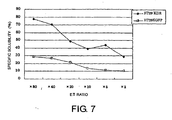
- Example 3 The degrees of cytotoxicity of the ten types of CTL clones established in Example 3 were examined by varying their ratio with the target cells (E:T ratio).
- C53-169 derived from the nonapeptide of SEQ ID NO: 8 (amino acid initiation position KDR169) showed the strongest cytotoxicity.
- HLA-tetramer was synthesized from HLA-A*2402 and the peptide of SEQ ID NO: 8 (amino acid initiation position KDR169). More specifically, plasmid vectors expressing the H chain (approximately 35 kDa) and L chain (approximately 11 kDa) were produced individually, and their recombinant protein was expressed using E . coli .
- the H-chain plasmid vector consists only of the extracellular domain, in which the carboxyl terminus was substituted with a biotinylation enzyme recognition sequence. The H chain and L chain form an HLA peptide complex by refolding with an antigenic peptide.
- HLA peptide complexes were biotinylated by a biotinylation enzyme, excess biotin was removed by gel filtration chromatography and ion exchange chromatography, and the biotinylated HLA peptide complexes were isolated and purified.
- HLA-tetramer was synthesized by reacting the obtained biotinylated HLA peptide complex with streptavidin (SA) at a mole ratio of 4:1 to form a tetramer.
- SA streptavidin
- SA-PE phycoerythrin
- CD8 molecule is known to bind to the 245th amino acid in the a3 domain, which is alanine, with the exception of portions of HLA-A, B, and C. Therefore, the present inventors mutagenized the alanine in the HLA-tetramers to valine, to produce a mutant HLA-tetramer capable of selectively detecting CTLs with high avidity towards HLA peptide complexes, independent of the binding between the CD8 molecule and the ⁇ 3 domain.
- Established CTL clones were detected by the synthesized HLA-A24 KDR169-tetramer mutant. As a result, as shown in Fig. 2 , the established CTL clones were found to be strongly stained by the tetramer-positive and CD8-positive fractions, and to specifically recognize complexes formed between the peptides of this invention and HLA antigens. The signals in the tetramer-negative and CD8-negative fractions are due to feeder cells.
- CEA588 (SEQ ID NO: 53) refers to one of the epitopes of tumor antigen CEA (carcinoembryonic antigen) reported by Tanaka, H. et al. (poster presentation, AACR #3669, vol. 42, p681-682, March 2001 ).
- CTLs were induced by a vaccination method, using the 16 types of 9-mer and 10-mer peptides (SEQ ID NO: 26 to 41) predicted in Example 6 on transgenic mice that express human HLA (A0201) ( Hum. Immunol. 2000 Aug.;61(8):764-79 Related Articles, Books, Linkout Induction of CTL response by a minimal epitope vaccine in HLAA*0201/DR1 transgenic mice: dependence on HLA class II restricted T(H) response., BenMohamed L., Krishnan R., Longmate J., Auge C., Low L., Primus J., and Diamond DJ.).
- mice Six- to eight-week old BALB/C(H-2 d ) mice were obtained from CLEA Japan.
- A2/Kb transgenic mice (TGM) were provided by F. Jim Primus, Ph. D. at Vanderbilt-Ingram Cancer Center.
- T2 cells (TAP-deficient and HLA-A*0201-positive cells) were provided by Prof. H. Shiku at Mie University's Third Department of Internal Medicine.
- Bone marrow was collected from mouse femur and tibia, and lymphocytes and granulocytes were removed using anti-CD4, CD8, Gr-1 antibodies (Beckton-Dickinson), anti-B220 antibody (Bioscience) and rabbit complement (PeL-Freez). The obtained cells were cultured in a 6-well plate. Suspended cells were collected the following day to culture in RPMI1640 (Invitrogen) medium supplemented with 10% FBS in another 6-well plate, to which 1,000 U/mL of mouse GM-CSF (provided by Kirin Brewery) and 1,000 U/mL of mouse IL-4 (PEPRO TECH) were added.
- RPMI1640 Invitrogen
- DCs were reacted with FITC-labeled anti-ClassII and CD40 antibodies, and PE-labeled anti-ClassI, CD11c, CD80, and CD86 antibodies (all from Beckton-Dickinson), and confirmed to be DCs by analysis of the surface antigens by FACS-Calibur (Beckton-Dickinson) using Cell Quest software.
- mice 100 ⁇ g of each peptide, 140 ⁇ g of HbcAg120-140 helper peptide, and 100 ⁇ L of IFA were mixed (200 ⁇ L in total). The mixture was administered subcutaneously to the right abdomen on day 0, and to the left abdomen on day 11.
- the spleens of the vaccinated mice were collected on day 21, erythrocytes were hemolytically removed using red lysis buffer (Sigma), and a portion of those cells were used as responder cells for IFN- ⁇ ELISPOT assay.
- the remaining cells were placed into a 24-well plate (Corning) at 6x 10 6 cells/well with feeder cells at a ratio of 3:1, and stimulated again. Their cytotoxicity was measured five days later.
- Erythrocyte-free splenocytes which were derived from syngeneic mice, were cultured for three days in the presence of 25 ⁇ g/mL of lipopolysaccharide (LPS) to use as feeder cells.
- LPS lipo
- the IFN- ⁇ ELISPOT method was used to evaluate CTL inducibility according to SPOTs produced by IFN- ⁇ producing cells.
- Flat-bottomed 96-well multiscreen plate MAHA S45 (Millipore) was treated at 4°C overnight with anti-mouse IFN- ⁇ monoclonal antibody (Pharmingen).
- the plate washed with PBS containing 0.05% Tween 20, and then reacted with a blocking buffer at room temperature for two hours. Thereafter, peptide-pulsed T2 cells and unpulsed T2 cells were added to each well at 10 5 cells/100 ⁇ L.
- Bone marrow was collected from six- to eight-week old male BALB/c mice (CLEA Japan, Inc.) with that same anchor motif as human HLA-A2402.
- GM-CSF Korean Brewery
- IL-4 Gene
- the dendritic cells were pulsed with the peptide of SEQ ID NO: 5 (amino acid initiation position KDR189) and then administered (1x 10 6 cells/mouse) twice to nine BALB/c mice at the right lower quadrant, with an interval of seven days. Seven days later, colon cancer cell line (5x 10 5 cells), Colon 26 (Taiho Pharmaceutical), was inoculated to the right abdomens of the mice, and mice survival and tumor growth were examined.
- KDR expression was analyzed by RT-PCR, as indicated in Fig. 3 , to confirm that KDR was not expressed in Colon 26 cells alone, but expressed in the tumoral tissues of mice inoculated with Colon 26. More specifically, tumor vessels were confirmed to appear in tumoral tissues, and to form the tumor.
- Fig. 3 shows the survival curve of Colon 26-inoculated mice. 35 days after tumor inoculation, two out of nine mice survived when HBSS (Hank's Balanced Salt Solution) was administered alone (100 ⁇ L) as a control; five out of nine mice survived when inoculated with dendritic cells that were not pulsed with peptides; and all of the nine mice survived when inoculated with dendritic cells pulsed with the peptide of SEQ ID NO: 5.
- HBSS Human's Balanced Salt Solution
- Fig. 4 shows the effect on the growth of Colon 26-derived tumors in mice. Compared to the control, suppressive effects on tumor growth were observed when inoculating dendritic cells, and remarkable suppression effects were observed when inoculating dendritic cells pulsed with the peptide of SEQ ID NO: 5.
- the 9-mer peptide (KDR169) of SEQ ID NO: 8 capable of inducing strong CTL activity in Example 4 had only one sequence containing two mismatches (77.8% homology), and two sequences containing three mismatches (66.7% homology).
- Bone marrow was collected from six- to eight-week old male A2/Kb transgenic mice (TGM) expressing human HLA-A0201.
- TGM GM-CSF
- IL-4 Gene
- the dendritic cells were pulsed with the peptide of SEQ ID NO: 30 (amino acid initiation position KDR773), and administered (1x 10 6 cells/mouse) twice to the left lower quadrant of twelve A2/Kb transgenic mice, with an interval of seven days.
- B16 melanoma cells ATCC were inoculated (1x 10 6 cells) to the right abdomen of the mice, and mice survival and tumor growth were examined.
- Fig. 5 shows the survival rate of B16-inoculated mice. 35 days after tumor inoculation, eight of twelve mice survived when HBSS was administered alone (100 ⁇ L) as a control; eleven of twelve mice survived when inoculated with dendritic cells that were not pulsed with peptides; and all twelve mice survived when inoculated with dendritic cells pulsed with the peptide of SEQ ID NO: 30.
- Fig. 6 shows the effect on the growth of B 16 mice-derived tumors in mice. Compared to the control, suppressive effects were observed against tumor growth when inoculating with dendritic cells, and remarkable suppressive effects were observed on inoculating dendritic cells pulsed with the peptide of SEQ ID NO: 30.
- KDR (see, J. Biol. Chem. 1994 Oct 28; 269(43):26988-95 ) was forcedly expressed in HLA-A24-positive human colon cancer HT29 strain (ATCC), according to the method described by Miyake, S. et al., Proc. Natl. Acad. Sci. USA. 93, 1320-1324 (1996 ). More specifically, based on the titer determined by plaque assay of human 293 cells, cells were infected at a specific multiplicity. HT29 cells were plated at a cell density of 10 5 cells in a 60-mm dish, and incubated for 24 hours.
- HLA-A24-positive HT29 strain forced by adenoviruses to express EGFP (see, Leukemia 1999 Apr; 13(4):605-13 ), was used as a control.
- Cytotoxic activity was measured by 51 Cr release assay for four hours.
- the target cells were cultured in a 6-well plate at a concentration of 1x 10 6 cells/well for 24 hours, infected with adenovirus to which KDR or EGFP has been inserted (Ad-KDR or Ad-EGFP) at MOI 50, and used after 48 hours.
- the target cells were labeled with 100 ⁇ Ci of Na 2 51 CrO 4 at 37°C for one hour, and washed three times with RPMI1640.
- the target cells (1x 10 4 cells/100 ⁇ L) and 100 ⁇ L of effector cells at various concentrations were added (200 ⁇ L in total) to a U-shaped 96-well microtiter plate (Corning), and cultured in a CO 2 incubator at 37°C for four hours. After culturing, 100 ⁇ L of supernatant was collected from each well and measured using a ⁇ counter to calculate cytotoxicity, in the same manner as in Example 2.
- CTL clone C29-169 showed remarkably high cytotoxic effect towards HLA-A24-positive HT29 forcedly expressing KDR, compared to that towards cells forcedly expressing EGFP.
- Cytotoxic activity was measured by a four hour 51 Cr release assay.
- the target cells were labeled with 100 ⁇ Ci of Na 2 51 CrO 4 at 37°C for one hour, then washed three times with RPMI1640.
- Target cells (1x 10 4 cells/100 ⁇ L) and 100 ⁇ L of effector cells at various concentrations were added (200 ⁇ L in total) to a U-shaped 96-well microtiter plate (corking), and cultured in a CO 2 incubator at 37°C for four hours. After culturing, 100 ⁇ L of supernatant was collected from each well and measured using a ⁇ counter to calculate the cytotoxicity in the same manner as in Example 2.
- CTL clone C29-169 showed cytotoxic effect against HLA-A24-positive HUVEC endogenously expressing KDR, and showed weak cytotoxic effect against HLA-A24-negative HUVEC.
- KDR773-2L peptide (SEQ ID NO: 54) in which the second amino acid from the N terminal in the peptide of SEQ ID NO: 30 (KDR773) has been converted to leucine, the peptide of SEQ ID NO: 29 (KDR775), the peptide of SEQ ID NO: 34 (KDR1328), and the peptide of SEQ ID NO: 33 (KDR772), which bind to HLA-A0201 and which were determined to be effective according to the ELISPOT analysis in Example 7, two types (KWC14-190 and KWC65-190), four types (KWC44-773-2L, KWC76-773-2L, KWC129-773-2L, and KWC134-773-2L), two types (KWC81-775 and KWC85-775), twelve types (KWC16, KWC21, KWC22, KWC47, KWC51, KWC108, KWC117, KWC
- the peptides of SEQ ID NOs: 29, 33, 34, and 40, as well as the peptide of SEQ ID NO: 54, in which the second amino acid from the N terminus in the peptide of SEQ ID NO: 30 is leucine can all induce CTLs having remarkable cytotoxicity, and were thus shown to be effective as epitope peptides.
- the peptide of SEQ ID NO: 29 (amino acid initiation position KDR775) was added to HLA-A0201-positive T2 strain to produce a target cell.
- the cytotoxic effect of the CTL clone (KDR C85-775 (KWC85-775)) obtained from the peptide of SEQ ID NO: 29 in Example 13 was examined by chromium release assay.
- CTL clone C85-775 (KWC85-775) clearly showed a cytotoxic effect against HLA-A0201-positive cells presenting the peptide of SEQ ID NO: 29. In contrast, absolutely no cytotoxic effect was observed against control cells not presenting the peptide of SEQ ID NO: 29.
- CTL clone KDR C85-775 (KWC85-775) showed remarkably high cytotoxic effect against HLA-A0201-positive cells presenting KDR peptides on the surface, compared to activity against cells presenting the EGFP peptide.
- the peptide of SEQ ID NO: 34 (amino acid initiation position KDR1328) was added to HLA-A0201-positive T2 strain to produce target cells. Using these cells, the cytotoxic effect of the CTL clone (KDR C51-1328 (KWC51)) obtained from the peptide of SEQ ID NO: 34 in Example 13 was examined by chromium release assay.
- CTL clone KDR C51-1328 (KWC51) clearly showed a cytotoxic effect against HLA-A0201-positive cells presenting the peptide of SEQ ID NO: 34.
- absolutely no cytotoxic effect was observed against control cells not presenting the peptide of SEQ ID NO: 34.
- CTL clone KDR C51-1328 showed remarkably high cytotoxicity against HLA-A0201-positive cells presenting KDR peptides on the surface, compared to activity against cells presenting the EGFP peptide.
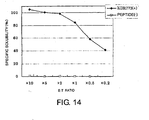
- the peptide of SEQ ID NO: 54 (KDR773-2L), in which the second peptide of SEQ ID NO: 30 is converted to leucine, was added to HLA-A0201-positive T2 strain to produce target cells. Using these cells, the cytotoxic effect of the CTL clone (KDR C44-773-2L (KWC44-773-2L)) obtained from the peptide of SEQ ID NO: 54 in Example 13 was examined by chromium release assay. Fig. 13 shows the results.
- CTL clone KDR C44-773-2L (KWC44-773-2L) clearly showed a cytotoxic effect against HLA-A0201-positive cells presenting KDR773-2L. In contrast, absolutely no cytotoxic effect was observed against control cells not presenting KDR773-2L.
- CTL clone KDR C44-773-2L (KWC44-773-2L) showed remarkably high cytotoxic effect against HLA-A0201-positive cells presenting KDR peptides on the surface, compared to activity against cells presenting the EGFP peptide.
- the present inventors determined whether various antibodies can block the cytotoxic effect of the CTL clone (KDR C51-1328 (KWC51)), obtained from the peptide of SEQ ID NO: 34, against hepatocellular carcinoma cell line HLA-A0201-positive HePG2, forced by adenoviruses to express KDR.
- KDR C51-1328 KWC51
- cytotoxic function was inhibited by anti-HLA Class I antibody against HLA antigens displayed by target cells, and anti-CD8 antibody against CD8 used as a marker for cytotoxic T cells.
- mice The actual angiogenesis-inhibiting activity of peptide epitopes was evaluated in mice using a DAS assay (see, Clinical Cancer Research, Vol. 5, 2185-2191, August 1999 ; Cancer Research 62, 6116-6123, November 1, 2002 ).
- a membrane filter was fixed to both sides of a chamber ring, and sterilized with ethylene oxide gas.
- B16 melanoma cells were prepared to 5x 10 5 cells/0.15 mL, and injected into the chamber.
- Mice A2/kb transgenic mice (derived from B16)) were immobilized face down, and an air sac was produced by injecting 5 to 10 mL of air in to the murine dorsal hypoderm using a syringe. An approximately 1-cm incision was made to the lower part of the sac.
- the chamber ring, filled with cell suspension solution, was implanted in the dorsal hypoderm, and the skin was closed using a skin stapler.
- the mouse skin was decorticated together with the chamber, fixed in an extended form, and marked with a black rubber ring to observe the newly formed blood vessels using a microscope.
- Blood vessels that are newly formed by angiogenic factors released from malignant tumor cells characteristically run in a zigzag manner, and are morphologically different from naturally occurring background blood vessels. Therefore, blood vessels of 3-mm or longer within the rubber ring and running in a zigzag manner were determined to be newly formed blood vessels, and were evaluated using an angiogenesis index (AI). AIs was evaluated into six levels, from 0 to 5 according to the number of tortuous blood vessels. All those with five or more tortuous blood vessels were determined to be 5.
- AI angiogenesis index
- Vaccination was performed 14 days prior to chamber implantation, and repeated after one week (a total of two times) by respectively injecting 5x 10 4 cells of HBSS, DC alone, or peptide-pulsed DC, to the tail vein.
- the results are shown in Fig. 17 and in Table 8, as shown below.
- Fig. 17 and Table 8 showed that the formation of tortuous blood vessels was clearly suppressed in the groups vaccinated with DCs pulsed with the peptides of SEQ ID NO: 40 (amino acid initiation position KDR190), SEQ ID NO: 33 (KDR772), SEQ ID NO: 30 (KDR773), SEQ ID NO: 54 (KDR773-2L), SEQ ID NO: 29 (KDR775), and SEQ ID NO: 46 (KDR1084), respectively, as compared to the group to which DC was administered alone. This indicated a statistically significant angiogenesis inhibitory effect.
- the peptide of SEQ ID NO: 40 (amino acid initiation position KDR190) was added to HLA-A0201-positive T2 strain to produce target cells. Using these cells, the cytotoxic effect of the CTL clone (KWC65-190) obtained from the peptide of SEQ ID NO: 40 in Example 13 was examined using chromium release assay.
- CTL clone KWC65-190 clearly showed a cytotoxic effect against HLA-A0201-positive cells presenting the peptide of SEQ ID NO: 40.
- absolutely no cytotoxic effect was observed against control cells not presenting the peptide of SEQ ID NO: 40.
- the peptide of SEQ ID NO: 33 (amino acid initiation position KDR772) was added to HLA-A0201-positive T2 strain to produce target cells. Using these cells, the cytotoxic effect of the CTL clone (KWC72-772) obtained from the peptide of SEQ ID NO: 33 in Example 13 was examined using a chromium release assay.
- CTL clone KWC72-772 clearly showed a cytotoxic effect against HLA-A0201-positive cells presenting the peptide of SEQ ID NO: 33. In contrast, absolutely no cytotoxic effect was observed against control cells that did not present the peptide of SEQ ID NO: 33.
- CTL clone KWC72-772 showed remarkably high cytotoxic effect against HLA-A0201-positive cells presenting KDR peptides on their surface, as compared to activity against cells presenting the EGFP peptide.
- the peptides of SEQ ID NO: 2 (amino acid initiation position KDR1318), SEQ ID NO: 3 (KDR220), SEQ ID NO: 5 (KDR189), and SEQ ID NO: 11 (KDR826) were added to HLA-A24-positive human B-lymphocyte strain A24-LCL (HLA-A24/24, Takara Shuzo) to produce target cells.
- HLA-A24-positive human B-lymphocyte strain A24-LCL HLA-A24/24, Takara Shuzo
- Example 11 the cytotoxic effects of the CTL clones, C7-1318, KWC46, C18-189, and C65-826, described in Example 3, against human colon cancer HT29 strain (ATCC), forced by adenoviruses to express KDR, were examined by chromium release assay. HLA-A24-positive HT29 strain forcedly expressing EGFP was used as a control.
- Example 22 the angiogenesis inhibitory activity of peptide epitopes against the angiogenic response induced by Colon 26 cells in BALB/c mice was evaluated by DAS assay.
- peptide-specific CTLs were detected in PBMC.
- PBMC collected from patients (1x 10 5 cells) were incubated with 10 ⁇ M of each peptide in a U-shaped bottom 96-well plate comprising 200 ⁇ L medium.
- the medium consisted of 45% RPMI1640 medium, 45% AIM-V medium, 10% FBS, 100 U/mL interleukin-2 (IL-2), and 0.1 ⁇ M MEM non-essential amino acid solution. Every three days, half of the medium was removed and replaced with fresh medium containing the corresponding peptide (20 ⁇ M).
- CTL precursor is produced in HLA-A2- and HLA-A24-type cancer patients, as in a healthy donor (Table 9).
- patients A, B, and C are HLA-A24-type patients; and patient D is an HLA-A02-type patient.
- Patients A and D are colon cancer patients; and patients B and C are melanoma patients.
- CMVs refer to the cytomegalovirus-derived peptides used as positive controls.
- the peptides with high A-24 binding affinity are described in Kuzushima, K. et al., Blood 2001, 98(6):p1872-1881 , and such; and the peptides with high A-2 binding affinity are described in Solache, A. et al., J.
- Example 14 As for Example 14 and the like, a standard 51 Cr release assay was performed for four hours to establish CTL lines from the CTL precursors ( Fig. 32 ).
- the present invention provides novel peptides, which induce cytotoxic T cells by targeting the endothelial cells formed in a wide range of tumoral tissues, and which are extremely effective as cancer vaccines.
- the present invention also provides pharmaceuticals for treating and preventing tumors, where the pharmaceuticals comprise these peptides.
Landscapes
- Health & Medical Sciences (AREA)
- Life Sciences & Earth Sciences (AREA)
- General Health & Medical Sciences (AREA)
- Veterinary Medicine (AREA)
- Public Health (AREA)
- Animal Behavior & Ethology (AREA)
- Chemical & Material Sciences (AREA)
- Organic Chemistry (AREA)
- Medicinal Chemistry (AREA)
- Epidemiology (AREA)
- Pharmacology & Pharmacy (AREA)
- Chemical Kinetics & Catalysis (AREA)
- Nuclear Medicine, Radiotherapy & Molecular Imaging (AREA)
- General Chemical & Material Sciences (AREA)
- Bioinformatics & Cheminformatics (AREA)
- Engineering & Computer Science (AREA)
- Immunology (AREA)
- Biochemistry (AREA)
- Proteomics, Peptides & Aminoacids (AREA)
- Molecular Biology (AREA)
- Genetics & Genomics (AREA)
- Biophysics (AREA)
- Diabetes (AREA)
- Oncology (AREA)
- Mycology (AREA)
- Microbiology (AREA)
- Dermatology (AREA)
- Rheumatology (AREA)
- Gastroenterology & Hepatology (AREA)
- Zoology (AREA)
- Cardiology (AREA)
- Toxicology (AREA)
- Heart & Thoracic Surgery (AREA)
- Hematology (AREA)
- Obesity (AREA)
- Cell Biology (AREA)
- Endocrinology (AREA)
- Ophthalmology & Optometry (AREA)
- Pain & Pain Management (AREA)
- Orthopedic Medicine & Surgery (AREA)
Claims (22)
- Nonapeptid, bestehend aus der Aminosäuresequenz der SEQ ID NO: 8.
- Peptid nach Anspruch 1, umfassend zytotoxische T-Zell-Induzierbarkeit, wobei eine oder zwei Aminosäuren in der Aminosäuresequenz der SEQ ID NO: 8 ersetzt oder hinzugefügt sind.
- Peptid nach Anspruch 2, wobei die zweite Aminosäure am N-Terminus Phenylalanin, Tyrosin, Methionin oder Tryptophan ist.
- Peptid nach Anspruch 2 oder 3, wobei die C-terminale Aminosäure Phenylalanin; Leucin, Isoleucin, Tryptophan oder Methionin ist.
- Arzneimittel, umfassend ein oder mehrere Peptide nach einem der Ansprüche 1 bis 4.
- Verwendung eines oder mehrerer Peptide nach einem der Ansprüche 1 bis 4 zur Herstellung eines Arzneimittels zur Behandlung und/oder Vorbeugung von Tumoren.
- Verwendung eines oder mehrerer Peptide nach einem der Ansprüche 1 bis 4 zur Herstellung eines Arzneimittels zur Behandlung von diabetischer Retinopathie, chronischer rheumatoider Arthritis, Psoriasis und Atheriosklerose.
- Exosom, das auf seiner Oberfläche einen Komplex, umfassend ein Peptid nach einem der Ansprüche 1 bis 4 und ein HLA-Antigen, präsentiert.
- Exosom nach Anspruch 8, wobei das HLA-Antigen HLA-A24 ist.
- Exosom nach Anspruch 8 oder 9, wobei das HLA-Antigen HLA-A2402 ist.
- In vitro-Verfahren zum Induzieren einer Antigen-präsentierenden Zelle mit hoher zytotoxischen T-Zell-Induzierbarkeit, unter Verwendung eines Peptids nach einem der Ansprüche 1 bis 4.
- Verwendung eines Peptids nach einem der Ansprüche 1 bis 4 zur Herstellung eines Arzneimittels für das(a) Induzieren einer Antigen-präsentierenden Zelle mit hoher zytotoxischen T-Zell-Induzierbarkeit, oder(b) Induzieren einer zytotoxischen T-Zelle.
- Verfahren nach Anspruch 11, ferner umfassend das Induzieren einer zytotoxischen T-Zelle.
- Verfahren nach Anspruch 11, wobei das Verfahren den Schritt des Einführens eines Polynukleotids, das ein Peptid nach einem der Ansprüche 1 bis 4 kodiert, in eine Antigen-präsentierte Zelle umfasst.
- Verwendung eines Polynukleotids, das ein Peptid nach einem der Ansprüche 1 bis 4 kodiert, zur Herstellung eines Arzneimittels für das Induzieren einer Antigen-präsentierenden Zelle mit hoher zytotoxischen T-Zell-Induzierbarkeit in der Gentherapie.
- Isolierte zytotoxische T-Zelle, welche durch die Verwendung eines Peptids nach einem der Ansprüche 1 bis 4 induziert ist.
- Antigen-präsentierende Zelle, welche einen Komplex aus einem HLA-Antigen und einem Peptid nach einem der Ansprüche 1 bis 4 präsentiert.
- Antigen-präsentierende Zelle nach Anspruch 17, welche durch das Verfahren nach Anspruch 11 oder 13 oder durch die Verwendung nach Anspruch 12 induziert ist.
- Impfstoff, umfassend als Wirkstoff ein Peptid nach einem der Ansprüche 1 bis 4.
- Verwendung eines Peptids nach einem der Ansprüche 1 bis 4 als Wirkstoff zur Herstellung eines Impfstoffes für das Inhibieren von Angiogenese an einer erkrankten Stelle.
- Verwendung eines Peptids nach einem der Ansprüche 1 bis 4 als Wirkstoff zur Herstellung eines Impfstoffs für die Hemmung des Wachstums und/oder die Metastasierung maligner Tumore.
- Verwendung nach Anspruch 20 oder 21, wobei der Impfstoff für die Verabreichung an einen Patienten, dessen HLA-Antigen HLA-A24 ist, verwendet wird.
Priority Applications (13)
| Application Number | Priority Date | Filing Date | Title |
|---|---|---|---|
| EP10010169.0A EP2267021B1 (de) | 2002-09-12 | 2003-09-12 | KDR-Peptide und diese enthaltende Impfstoffe |
| EP10010170.8A EP2270041B1 (de) | 2002-09-12 | 2003-09-12 | KDR-Peptide und diese enthaltende Impfstoffe |
| EP10010172.4A EP2261248B1 (de) | 2002-09-12 | 2003-09-12 | KDR-Peptide und diese enthaltende Impfstoffe |
| EP10010173.2A EP2261249B1 (de) | 2002-09-12 | 2003-09-12 | KDR-Peptide und Impfstoffe damit |
| EP10010176.5A EP2270042B1 (de) | 2002-09-12 | 2003-09-12 | KDR-Peptide und diese enthaltende Impfstoffe |
| EP08018875A EP2014678B1 (de) | 2002-09-12 | 2003-09-12 | KDR-Peptide und diese enthaltende Impfstoffe |
| SI200331649T SI1548032T1 (sl) | 2002-09-12 | 2003-09-12 | KDR peptidi in cepiva, ki obsegajo le-te |
| EP08018897A EP2014679B1 (de) | 2002-09-12 | 2003-09-12 | KDR-Peptide und diese enthaltende Impfstoffe |
| EP10010175.7A EP2267023B1 (de) | 2002-09-12 | 2003-09-12 | KDR-Peptide und diese enthaltende Impfstoffe |
| DK08018875.8T DK2014678T3 (da) | 2002-09-12 | 2003-09-12 | KDR-peptider og vacciner indeholdende disse |
| EP10010171A EP2261247A3 (de) | 2002-09-12 | 2003-09-12 | KDR-Peptide und Impfstoffe damit |
| EP10010174.0A EP2267022B1 (de) | 2002-09-12 | 2003-09-12 | KDR-Peptide und diese enthaltende Impfstoffe |
| CY20091100856T CY1109463T1 (el) | 2002-09-12 | 2009-08-12 | Πεπτιδια kdr και εμβολια που τα περιλαμβανουν |
Applications Claiming Priority (7)
| Application Number | Priority Date | Filing Date | Title |
|---|---|---|---|
| JP2002267285 | 2002-09-12 | ||
| JP2002267285 | 2002-09-12 | ||
| JP2003062003 | 2003-03-07 | ||
| JP2003062003 | 2003-03-07 | ||
| JP2003167042 | 2003-06-11 | ||
| JP2003167042 | 2003-06-11 | ||
| PCT/JP2003/011722 WO2004024766A1 (ja) | 2002-09-12 | 2003-09-12 | Kdrペプチド及びこれを含むワクチン |
Related Child Applications (9)
| Application Number | Title | Priority Date | Filing Date |
|---|---|---|---|
| EP10010172.4A Division EP2261248B1 (de) | 2002-09-12 | 2003-09-12 | KDR-Peptide und diese enthaltende Impfstoffe |
| EP10010169.0A Division EP2267021B1 (de) | 2002-09-12 | 2003-09-12 | KDR-Peptide und diese enthaltende Impfstoffe |
| EP10010175.7A Division EP2267023B1 (de) | 2002-09-12 | 2003-09-12 | KDR-Peptide und diese enthaltende Impfstoffe |
| EP08018897A Division EP2014679B1 (de) | 2002-09-12 | 2003-09-12 | KDR-Peptide und diese enthaltende Impfstoffe |
| EP10010174.0A Division EP2267022B1 (de) | 2002-09-12 | 2003-09-12 | KDR-Peptide und diese enthaltende Impfstoffe |
| EP10010173.2A Division EP2261249B1 (de) | 2002-09-12 | 2003-09-12 | KDR-Peptide und Impfstoffe damit |
| EP10010170.8A Division EP2270041B1 (de) | 2002-09-12 | 2003-09-12 | KDR-Peptide und diese enthaltende Impfstoffe |
| EP10010176.5A Division EP2270042B1 (de) | 2002-09-12 | 2003-09-12 | KDR-Peptide und diese enthaltende Impfstoffe |
| EP08018875A Division EP2014678B1 (de) | 2002-09-12 | 2003-09-12 | KDR-Peptide und diese enthaltende Impfstoffe |
Publications (4)
| Publication Number | Publication Date |
|---|---|
| EP1548032A1 EP1548032A1 (de) | 2005-06-29 |
| EP1548032A4 EP1548032A4 (de) | 2006-03-01 |
| EP1548032B1 EP1548032B1 (de) | 2009-05-27 |
| EP1548032B9 true EP1548032B9 (de) | 2009-10-28 |
Family
ID=31998762
Family Applications (11)
| Application Number | Title | Priority Date | Filing Date |
|---|---|---|---|
| EP10010176.5A Expired - Lifetime EP2270042B1 (de) | 2002-09-12 | 2003-09-12 | KDR-Peptide und diese enthaltende Impfstoffe |
| EP10010169.0A Expired - Lifetime EP2267021B1 (de) | 2002-09-12 | 2003-09-12 | KDR-Peptide und diese enthaltende Impfstoffe |
| EP08018897A Expired - Lifetime EP2014679B1 (de) | 2002-09-12 | 2003-09-12 | KDR-Peptide und diese enthaltende Impfstoffe |
| EP10010170.8A Expired - Lifetime EP2270041B1 (de) | 2002-09-12 | 2003-09-12 | KDR-Peptide und diese enthaltende Impfstoffe |
| EP10010175.7A Expired - Lifetime EP2267023B1 (de) | 2002-09-12 | 2003-09-12 | KDR-Peptide und diese enthaltende Impfstoffe |
| EP08018875A Expired - Lifetime EP2014678B1 (de) | 2002-09-12 | 2003-09-12 | KDR-Peptide und diese enthaltende Impfstoffe |
| EP10010171A Withdrawn EP2261247A3 (de) | 2002-09-12 | 2003-09-12 | KDR-Peptide und Impfstoffe damit |
| EP10010172.4A Expired - Lifetime EP2261248B1 (de) | 2002-09-12 | 2003-09-12 | KDR-Peptide und diese enthaltende Impfstoffe |
| EP03795432A Expired - Lifetime EP1548032B9 (de) | 2002-09-12 | 2003-09-12 | Kdr-peptide und diese enthaltende impfstoffe |
| EP10010173.2A Expired - Lifetime EP2261249B1 (de) | 2002-09-12 | 2003-09-12 | KDR-Peptide und Impfstoffe damit |
| EP10010174.0A Expired - Lifetime EP2267022B1 (de) | 2002-09-12 | 2003-09-12 | KDR-Peptide und diese enthaltende Impfstoffe |
Family Applications Before (8)
| Application Number | Title | Priority Date | Filing Date |
|---|---|---|---|
| EP10010176.5A Expired - Lifetime EP2270042B1 (de) | 2002-09-12 | 2003-09-12 | KDR-Peptide und diese enthaltende Impfstoffe |
| EP10010169.0A Expired - Lifetime EP2267021B1 (de) | 2002-09-12 | 2003-09-12 | KDR-Peptide und diese enthaltende Impfstoffe |
| EP08018897A Expired - Lifetime EP2014679B1 (de) | 2002-09-12 | 2003-09-12 | KDR-Peptide und diese enthaltende Impfstoffe |
| EP10010170.8A Expired - Lifetime EP2270041B1 (de) | 2002-09-12 | 2003-09-12 | KDR-Peptide und diese enthaltende Impfstoffe |
| EP10010175.7A Expired - Lifetime EP2267023B1 (de) | 2002-09-12 | 2003-09-12 | KDR-Peptide und diese enthaltende Impfstoffe |
| EP08018875A Expired - Lifetime EP2014678B1 (de) | 2002-09-12 | 2003-09-12 | KDR-Peptide und diese enthaltende Impfstoffe |
| EP10010171A Withdrawn EP2261247A3 (de) | 2002-09-12 | 2003-09-12 | KDR-Peptide und Impfstoffe damit |
| EP10010172.4A Expired - Lifetime EP2261248B1 (de) | 2002-09-12 | 2003-09-12 | KDR-Peptide und diese enthaltende Impfstoffe |
Family Applications After (2)
| Application Number | Title | Priority Date | Filing Date |
|---|---|---|---|
| EP10010173.2A Expired - Lifetime EP2261249B1 (de) | 2002-09-12 | 2003-09-12 | KDR-Peptide und Impfstoffe damit |
| EP10010174.0A Expired - Lifetime EP2267022B1 (de) | 2002-09-12 | 2003-09-12 | KDR-Peptide und diese enthaltende Impfstoffe |
Country Status (13)
| Country | Link |
|---|---|
| US (5) | US7514084B2 (de) |
| EP (11) | EP2270042B1 (de) |
| JP (3) | JP3971769B2 (de) |
| CN (5) | CN101139393B (de) |
| AT (2) | ATE531729T1 (de) |
| AU (1) | AU2003264419A1 (de) |
| CY (2) | CY1109463T1 (de) |
| DE (1) | DE60327786D1 (de) |
| DK (6) | DK2267023T3 (de) |
| ES (2) | ES2375299T3 (de) |
| PT (2) | PT1548032E (de) |
| SI (2) | SI1548032T1 (de) |
| WO (1) | WO2004024766A1 (de) |
Families Citing this family (74)
| Publication number | Priority date | Publication date | Assignee | Title |
|---|---|---|---|---|
| DE60327786D1 (de) * | 2002-09-12 | 2009-07-09 | Oncotherapy Science Inc | Kdr-peptide und diese enthaltende impfstoffe |
| US9090673B2 (en) | 2003-12-12 | 2015-07-28 | City Of Hope | Synthetic conjugate of CpG DNA and T-help/CTL peptide |
| JP4628208B2 (ja) * | 2004-08-10 | 2011-02-09 | オンコセラピー・サイエンス株式会社 | Cxadrl1またはgcud1タンパク質を発現する胃癌または結腸直腸癌の治療のためのペプチドワクチン |
| ES2364670T3 (es) * | 2005-02-25 | 2011-09-12 | Oncotherapy Science, Inc. | Vacunas de péptidos para cánceres de pulmón que expresan polipéptidos ttk. |
| DK2095822T3 (da) * | 2005-02-28 | 2014-01-13 | Oncotherapy Science Inc | Epitoppeptider afledt af karendothelvækstfaktorreceptor-1 samt vacciner indeholdende disse peptider |
| US20060234941A1 (en) * | 2005-04-15 | 2006-10-19 | The Gov. Of The Usa As Represented By The Secretary Of The Dept. Of Health & Human Services | Peptide epitopes of VEGFR-2/KDR that inhibit angiogenesis |
| EP1915622A2 (de) | 2005-07-29 | 2008-04-30 | Oncotherapy Science, Inc. | Screening- und therapieverfahren für nsclc mit dem cdca1-kntc2-komplex als ziel |
| WO2007070660A2 (en) | 2005-12-13 | 2007-06-21 | President And Fellows Of Harvard College | Scaffolds for cell transplantation |
| ES2709176T3 (es) | 2006-08-11 | 2019-04-15 | Life Sciences Res Partners Vzw | Péptidos inmunogénicos y su uso en trastornos inmunitarios |
| TWI441648B (zh) * | 2007-01-03 | 2014-06-21 | Oncotherapy Science Inc | Foxp3胜肽疫苗 |
| AU2008215432B2 (en) * | 2007-02-16 | 2013-03-21 | Oncotherapy Science, Inc. | Vaccine therapy for choroidal neovascularization |
| TW201425333A (zh) | 2007-04-11 | 2014-07-01 | Oncotherapy Science Inc | 腫瘤血管內皮標誌8胜肽及包含此胜肽之疫苗 |
| TW200908998A (en) * | 2007-06-27 | 2009-03-01 | Oncotherapy Science Inc | Compositions and methods of treating cancer |
| PT2186889E (pt) * | 2007-08-20 | 2015-06-17 | Oncotherapy Science Inc | Péptido cdca1 e agente farmacêutico que o compreende |
| US8569244B2 (en) | 2007-08-20 | 2013-10-29 | Oncotherapy Science, Inc. | FOXM1 peptide and medicinal agent comprising the same |
| TWI436775B (zh) * | 2007-08-24 | 2014-05-11 | Oncotherapy Science Inc | 以抗原胜肽合併化療藥劑治療胰臟癌 |
| TW200932260A (en) * | 2007-11-28 | 2009-08-01 | Oncotherapy Science Inc | STAT3 epitope peptides |
| CN102006891B (zh) | 2008-02-13 | 2017-04-26 | 哈佛学院董事会 | 连续的细胞程序化装置 |
| ES2637812T3 (es) | 2008-02-14 | 2017-10-17 | Life Sciences Research Partners Vzw | Inmunoterapia dirigida a patógenos intracelulares |
| EP2245059B1 (de) | 2008-02-14 | 2017-09-20 | Life Sciences Research Partners VZW | Cd4+-t-zellen mit zytolytischen eigenschaften |
| EP2626081B1 (de) | 2008-02-14 | 2017-03-22 | Life Sciences Research Partners VZW | Immunogene Beeinflussung von Tumoren und Tumorzellen |
| EP2252329B1 (de) | 2008-02-14 | 2015-06-17 | Life Sciences Research Partners VZW | Beseitigung von immunreaktionen gegen virale vektoren |
| TW201000119A (en) * | 2008-06-10 | 2010-01-01 | Oncotherapy Science Inc | MYBL2 epitope peptides and vaccines containing the same |
| TWI526219B (zh) | 2008-06-19 | 2016-03-21 | 腫瘤療法 科學股份有限公司 | Cdca1抗原決定位胜肽及含此胜肽的疫苗 |
| WO2010033240A2 (en) | 2008-09-19 | 2010-03-25 | Nektar Therapeutics | Carbohydrate-based drug delivery polymers and conjugates thereof |
| NZ592461A (en) | 2008-10-22 | 2012-12-21 | Oncotherapy Science Inc | Rab6kifl/kif20a epitope peptide and vaccines containing the same |
| TWI539160B (zh) | 2008-12-05 | 2016-06-21 | 腫瘤療法 科學股份有限公司 | Wdrpuh抗原決定位胜肽以及含此胜肽之疫苗 |
| TW201032820A (en) * | 2008-12-16 | 2010-09-16 | Oncotherapy Science Inc | ELOVL7 epitope peptides and vaccines containing the same |
| BRPI0923402A2 (pt) * | 2008-12-24 | 2015-08-04 | Oncotherapy Science Inc | Peptídeos c10rf59 e vacinas incluindo os mesmos. |
| ES2650337T3 (es) | 2009-01-08 | 2018-01-17 | International Institute Of Cancer Immunology, Inc. | Péptidos derivados de eEF2 para el tratamiento o prevención de cánceres |
| BRPI1012312A2 (pt) * | 2009-03-04 | 2017-03-21 | Oncotherapy Science Inc | peptídeos vangl1 e vacinas incluindo os mesmos |
| ES2617434T3 (es) * | 2009-03-18 | 2017-06-19 | Oncotherapy Science, Inc. | Péptidos NEIL3 y vacunas que incluyen los mismos |
| TW201100090A (en) * | 2009-04-01 | 2011-01-01 | Oncotherapy Science Inc | C6orf167 peptides and vaccines containing the same |
| TWI507204B (zh) * | 2009-05-26 | 2015-11-11 | Oncotherapy Science Inc | Cdc45l胜肽與含此胜肽之疫苗 |
| TW201109029A (en) | 2009-06-11 | 2011-03-16 | Oncotherapy Science Inc | Vaccine therapy for choroidal neovascularization |
| AU2010278702C1 (en) | 2009-07-31 | 2016-07-14 | Forsyth Dental Infirmary For Children | Programming of cells for tolerogenic therapies |
| TW201200525A (en) * | 2009-12-04 | 2012-01-01 | Oncotherapy Science Inc | MYBL2 peptides and vaccines containing the same |
| TW201136604A (en) * | 2009-12-14 | 2011-11-01 | Oncotherapy Science Inc | TMEM22 peptides and vaccines including the same |
| CN102115492B (zh) * | 2010-01-05 | 2013-03-06 | 中国农业科学院北京畜牧兽医研究所 | 血管内皮生长因子受体部分多肽及其应用 |
| CN105601727B (zh) | 2010-03-11 | 2020-01-10 | 肿瘤疗法科学股份有限公司 | Hjurp肽及包含它们的疫苗 |
| TW201134480A (en) * | 2010-04-08 | 2011-10-16 | Oncotherapy Science Inc | CLUAP1 peptides and vaccines including the same |
| SG10201502791YA (en) * | 2010-04-09 | 2015-05-28 | Oncotherapy Science Inc | Cdca5 Peptides And Vaccines Including The Same |
| TW201211250A (en) * | 2010-09-07 | 2012-03-16 | Oncotherapy Science Inc | VANGL1 peptides and vaccines including the same |
| CN107648668B (zh) | 2010-10-06 | 2021-06-18 | 哈佛学院董事会 | 用于基于材料的细胞疗法的可注射的成孔水凝胶 |
| DE11787873T1 (de) | 2010-11-25 | 2013-12-12 | Imnate Sarl | Immugene Peptide zur Verwendung bei der Vorbeugung und/oder Behandlung von Infektionskrankheiten, Autoimmunerkrankungen, Immunreaktionen auf Allofaktoren, allergischen Erkrankungen, Tumoren, Transplantatabstossungen und Immunreaktionen auf virale Vektoren |
| MY166516A (en) * | 2010-12-02 | 2018-07-05 | Oncotherapy Science Inc | Tomm34 peptides and vaccines including the same |
| US9675561B2 (en) | 2011-04-28 | 2017-06-13 | President And Fellows Of Harvard College | Injectable cryogel vaccine devices and methods of use thereof |
| GB201201511D0 (en) | 2012-01-30 | 2012-03-14 | Univ Leuven Kath | Modified epitopes for boosting CD4+ T-cell responses |
| US20150359864A1 (en) | 2012-03-09 | 2015-12-17 | Oncotherapy Science, Inc. | Pharmaceutical composition containing peptides |
| DK2838515T3 (da) | 2012-04-16 | 2020-02-24 | Harvard College | Mesoporøse siliciumdioxidsammensætninger til modulering af immunresponser |
| EP2848633B1 (de) | 2012-05-11 | 2019-02-06 | Microbial Chemistry Research Foundation | Anti-cxadr-antikörper |
| EP2872532A4 (de) | 2012-07-10 | 2016-04-13 | Oncotherapy Science Inc | Cdca1-epitoppeptide für th1-zellen und impfstoffe damit |
| BR112015012234A2 (pt) * | 2012-12-04 | 2017-08-15 | Oncotherapy Science Inc | Peptídios sema5b e vacinas contendo os mesmos |
| US9932396B2 (en) | 2013-02-08 | 2018-04-03 | Medical & Biological Laboratories Co., Ltd. | Antibody against human NRG1 protein |
| GB201309469D0 (en) | 2013-05-28 | 2013-07-10 | Imcyse Sa | Detection of CD4+ T lymphocytes |
| JP2017042047A (ja) * | 2013-12-06 | 2017-03-02 | オンコセラピー・サイエンス株式会社 | Vegfr2由来ペプチドおよびそれを含むワクチン |
| EP3137105A4 (de) | 2014-04-30 | 2017-12-27 | President and Fellows of Harvard College | Kombinationsimpfstoffvorrichtungen und -verfahren zur abtötung von krebszellen |
| GB201418433D0 (en) | 2014-10-17 | 2014-12-03 | Imcyse Sa | Novel immunogenic peptides |
| US11786457B2 (en) | 2015-01-30 | 2023-10-17 | President And Fellows Of Harvard College | Peritumoral and intratumoral materials for cancer therapy |
| WO2016129335A1 (ja) * | 2015-02-09 | 2016-08-18 | 株式会社ライフアートビレッジ | 免疫細胞療法のためのペプチドスクリーニング方法 |
| WO2016164705A1 (en) | 2015-04-10 | 2016-10-13 | Omar Abdel-Rahman Ali | Immune cell trapping devices and methods for making and using the same |
| US10729791B2 (en) | 2015-05-18 | 2020-08-04 | Imcyse Sa | Animal models for evaluating pharmaceutical compounds |
| CA2995771A1 (en) | 2015-09-25 | 2017-03-30 | Imcyse Sa | Improved methods and compounds for eliminating immune responses to therapeutic agents |
| CN105200010B (zh) * | 2015-10-15 | 2019-02-12 | 首都医科大学附属北京佑安医院 | 艾滋病感染者hla-a2特异性ctl细胞的体外培养方法及其专用培养基 |
| US11752238B2 (en) | 2016-02-06 | 2023-09-12 | President And Fellows Of Harvard College | Recapitulating the hematopoietic niche to reconstitute immunity |
| BR112018071466A2 (pt) | 2016-04-19 | 2019-03-19 | Imcyse Sa | novos peptídeos de ligação a cd1d imunogênicos |
| CN109789092A (zh) | 2016-07-13 | 2019-05-21 | 哈佛学院院长等 | 抗原呈递细胞模拟支架及其制备和使用方法 |
| IL264557B2 (en) | 2016-08-02 | 2024-01-01 | Harvard College | Biological agents for regulating immune responses |
| WO2018212358A1 (ja) | 2017-05-19 | 2018-11-22 | 学校法人慶應義塾 | 脳神経疾患に対するペプチドワクチン及びペプチドワクチン組成物 |
| TW202023581A (zh) | 2018-08-02 | 2020-07-01 | 日商腫瘤療法 科學股份有限公司 | 來自cdca1的胜肽及含有此的疫苗 |
| WO2020061129A1 (en) | 2018-09-19 | 2020-03-26 | President And Fellows Of Harvard College | Compositions and methods for labeling and modulation of cells in vitro and in vivo |
| WO2021061837A1 (en) | 2019-09-23 | 2021-04-01 | President And Fellows Of Harvard College | Biomaterial-based antigen free vaccine and the use thereof |
| CN111363026B (zh) * | 2020-03-31 | 2022-03-25 | 浙江省中医院、浙江中医药大学附属第一医院(浙江省东方医院) | 一种增强抗原多肽亲和力和稳定性的方法 |
| KR102711471B1 (ko) * | 2020-08-14 | 2024-09-30 | 서울대학교산학협력단 | B형 간염 바이러스 유래 폴리펩티드를 포함하는 암의 예방 또는 치료용 약학적 조성물 |
Family Cites Families (29)
| Publication number | Priority date | Publication date | Assignee | Title |
|---|---|---|---|---|
| US5861301A (en) | 1992-02-20 | 1999-01-19 | American Cayanamid Company | Recombinant kinase insert domain containing receptor and gene encoding same |
| US6222012B1 (en) | 1992-08-31 | 2001-04-24 | Ludwig Institute For Cancer Research | Isolated nonapeptides presented by HLA molecules, and uses thereof |
| CN1701814A (zh) * | 1992-11-13 | 2005-11-30 | 马克斯普朗克科学促进协会 | 作为血管内皮生长因子受体的f1k-1 |
| CA2158745C (en) * | 1993-03-25 | 2007-06-19 | Richard L. Kendall | Inhibitor of vascular endothelial cell growth factor |
| WO1997005900A1 (en) * | 1995-08-03 | 1997-02-20 | Rijksuniversiteit Te Leiden | Cell derived antigen presenting vesicles |
| US5853719A (en) | 1996-04-30 | 1998-12-29 | Duke University | Methods for treating cancers and pathogen infections using antigen-presenting cells loaded with RNA |
| US6100071A (en) * | 1996-05-07 | 2000-08-08 | Genentech, Inc. | Receptors as novel inhibitors of vascular endothelial growth factor activity and processes for their production |
| US6080728A (en) * | 1996-07-16 | 2000-06-27 | Mixson; A. James | Carrier: DNA complexes containing DNA encoding anti-angiogenic peptides and their use in gene therapy |
| US5942428A (en) * | 1996-08-21 | 1999-08-24 | Sugen, Inc. | Crystals of the tyrosine kinase domain of non-insulin receptor tyrosine kinases |
| DE19638745C2 (de) * | 1996-09-11 | 2001-05-10 | Schering Ag | Monoklonale Antikörper gegen die extrazelluläre Domäne des menschlichen VEGF - Rezeptorproteins (KDR) |
| WO1998031794A1 (fr) | 1997-01-17 | 1998-07-23 | Toa Gosei Co., Ltd. | Polypeptide liant le facteur vegf |
| WO1998058053A1 (en) * | 1997-06-18 | 1998-12-23 | Merck & Co., Inc. | Human receptor tyrosine kinase, kdr |
| FR2766205B1 (fr) | 1997-07-16 | 2002-08-30 | Inst Nat Sante Rech Med | Nouveau procede de sensibilisation de cellules presentatrices d'antigene et nouveaux moyens pour la mise en oeuvre du procede |
| US6555652B1 (en) * | 1997-12-05 | 2003-04-29 | Kyogo Itoh | Tumor antigen peptide derivatives |
| WO1999040118A1 (en) | 1998-02-04 | 1999-08-12 | Kyowa Hakko Kogyo Co., Ltd. | Antibodies against human vegf receptor kdr |
| GB9804121D0 (en) | 1998-02-26 | 1998-04-22 | Cancer Res Campaign Tech | Anti-angiogenic vaccines: materials and methods relating thereto |
| CA2328893A1 (en) * | 1998-05-20 | 1999-11-25 | Kyowa Hakko Kogyo Co., Ltd. | Vegf activity inhibitors |
| JP4413429B2 (ja) | 1998-06-25 | 2010-02-10 | 株式会社グリーンペプタイド | サイクロフィリンb由来の腫瘍抗原ペプチド |
| WO2001012809A2 (en) * | 1999-08-13 | 2001-02-22 | Crucell Holland B.V. | Heterodimeric vegf variants used for inhibiting angiogenesis |
| US7264810B2 (en) * | 2001-01-19 | 2007-09-04 | Cytos Biotechnology Ag | Molecular antigen array |
| JP2002267285A (ja) | 2001-03-12 | 2002-09-18 | Denso Corp | 冷房冷蔵装置 |
| JP4068371B2 (ja) | 2001-06-13 | 2008-03-26 | 株式会社トプコン | 手術用顕微鏡 |
| JP3640084B2 (ja) | 2001-11-30 | 2005-04-20 | 日本電気株式会社 | 測位機能を搭載した携帯電話端末 |
| CU23178A1 (es) * | 2002-04-15 | 2006-09-22 | Ct Ingenieria Genetica Biotech | INMUNOTERAPIA ACTIVA ANTIANGIOGéNICA |
| DE60327786D1 (de) * | 2002-09-12 | 2009-07-09 | Oncotherapy Science Inc | Kdr-peptide und diese enthaltende impfstoffe |
| DK1539157T3 (da) | 2002-09-18 | 2013-10-07 | Univ Pennsylvania | Fremgangsmåde til hæmning af choroidal neovaskularisering |
| DK2095822T3 (da) | 2005-02-28 | 2014-01-13 | Oncotherapy Science Inc | Epitoppeptider afledt af karendothelvækstfaktorreceptor-1 samt vacciner indeholdende disse peptider |
| AU2008215432B2 (en) | 2007-02-16 | 2013-03-21 | Oncotherapy Science, Inc. | Vaccine therapy for choroidal neovascularization |
| TWI436775B (zh) | 2007-08-24 | 2014-05-11 | Oncotherapy Science Inc | 以抗原胜肽合併化療藥劑治療胰臟癌 |
-
2003
- 2003-09-12 DE DE60327786T patent/DE60327786D1/de not_active Expired - Lifetime
- 2003-09-12 DK DK10010175.7T patent/DK2267023T3/en active
- 2003-09-12 ES ES08018875T patent/ES2375299T3/es not_active Expired - Lifetime
- 2003-09-12 EP EP10010176.5A patent/EP2270042B1/de not_active Expired - Lifetime
- 2003-09-12 EP EP10010169.0A patent/EP2267021B1/de not_active Expired - Lifetime
- 2003-09-12 DK DK10010174.0T patent/DK2267022T3/en active
- 2003-09-12 PT PT03795432T patent/PT1548032E/pt unknown
- 2003-09-12 SI SI200331649T patent/SI1548032T1/sl unknown
- 2003-09-12 CN CN2007101802067A patent/CN101139393B/zh not_active Expired - Fee Related
- 2003-09-12 SI SI200332101T patent/SI2014678T1/sl unknown
- 2003-09-12 JP JP2004571938A patent/JP3971769B2/ja not_active Expired - Lifetime
- 2003-09-12 CN CN201410214247.3A patent/CN103951745A/zh active Pending
- 2003-09-12 EP EP08018897A patent/EP2014679B1/de not_active Expired - Lifetime
- 2003-09-12 WO PCT/JP2003/011722 patent/WO2004024766A1/ja not_active Ceased
- 2003-09-12 EP EP10010170.8A patent/EP2270041B1/de not_active Expired - Lifetime
- 2003-09-12 EP EP10010175.7A patent/EP2267023B1/de not_active Expired - Lifetime
- 2003-09-12 AT AT08018875T patent/ATE531729T1/de active
- 2003-09-12 CN CN2007101802052A patent/CN101139392B/zh not_active Expired - Fee Related
- 2003-09-12 ES ES03795432T patent/ES2327040T3/es not_active Expired - Lifetime
- 2003-09-12 DK DK10010169.0T patent/DK2267021T3/en active
- 2003-09-12 DK DK03795432T patent/DK1548032T3/da active
- 2003-09-12 EP EP08018875A patent/EP2014678B1/de not_active Expired - Lifetime
- 2003-09-12 EP EP10010171A patent/EP2261247A3/de not_active Withdrawn
- 2003-09-12 EP EP10010172.4A patent/EP2261248B1/de not_active Expired - Lifetime
- 2003-09-12 DK DK08018875.8T patent/DK2014678T3/da active
- 2003-09-12 US US10/527,496 patent/US7514084B2/en not_active Expired - Fee Related
- 2003-09-12 EP EP03795432A patent/EP1548032B9/de not_active Expired - Lifetime
- 2003-09-12 PT PT08018875T patent/PT2014678E/pt unknown
- 2003-09-12 CN CN201210430723.6A patent/CN103073620B/zh not_active Expired - Fee Related
- 2003-09-12 DK DK10010173.2T patent/DK2261249T3/en active
- 2003-09-12 AU AU2003264419A patent/AU2003264419A1/en not_active Abandoned
- 2003-09-12 AT AT03795432T patent/ATE432291T1/de active
- 2003-09-12 EP EP10010173.2A patent/EP2261249B1/de not_active Expired - Lifetime
- 2003-09-12 CN CNB038250810A patent/CN100352843C/zh not_active Expired - Lifetime
- 2003-09-12 EP EP10010174.0A patent/EP2267022B1/de not_active Expired - Lifetime
-
2007
- 2007-03-08 JP JP2007058127A patent/JP4185143B2/ja not_active Expired - Fee Related
- 2007-05-08 JP JP2007123850A patent/JP4185147B2/ja not_active Expired - Fee Related
-
2009
- 2009-01-16 US US12/355,616 patent/US7695720B2/en not_active Expired - Lifetime
- 2009-08-12 CY CY20091100856T patent/CY1109463T1/el unknown
-
2010
- 2010-02-23 US US12/711,159 patent/US8206719B2/en not_active Expired - Fee Related
-
2012
- 2012-01-19 CY CY20121100072T patent/CY1113379T1/el unknown
- 2012-06-12 US US13/494,933 patent/US8574586B2/en not_active Expired - Fee Related
- 2012-06-12 US US13/494,930 patent/US8574585B2/en not_active Expired - Fee Related
Also Published As
Similar Documents
| Publication | Publication Date | Title |
|---|---|---|
| EP1548032B9 (de) | Kdr-peptide und diese enthaltende impfstoffe | |
| HK1124077B (en) | Kdr peptides and vaccines comprising the same | |
| HK1151036B (en) | Kdr peptides and vaccines comprising the same | |
| HK1151033A (en) | Kdr peptides and vaccines comprising the same | |
| HK1151034A (en) | Kdr peptides and vaccines comprising the same | |
| HK1151037B (en) | Kdr peptides and vaccines comprising the same | |
| HK1151038B (en) | Kdr peptides and vaccines comprising the same | |
| HK1151032B (en) | Kdr peptides and vaccines comprising the same | |
| HK1125659B (en) | Kdr peptides and vaccines comprising the same | |
| HK1151035A (en) | Kdr peptides and vaccines comprising the same | |
| HK1151039B (en) | Kdr peptides and vaccines comprising the same |
Legal Events
| Date | Code | Title | Description |
|---|---|---|---|
| PUAI | Public reference made under article 153(3) epc to a published international application that has entered the european phase |
Free format text: ORIGINAL CODE: 0009012 |
|
| 17P | Request for examination filed |
Effective date: 20050412 |
|
| AK | Designated contracting states |
Kind code of ref document: A1 Designated state(s): AT BE BG CH CY CZ DE DK EE ES FI FR GB GR HU IE IT LI LU MC NL PT RO SE SI SK TR |
|
| AX | Request for extension of the european patent |
Extension state: AL LT LV MK |
|
| RIC1 | Information provided on ipc code assigned before grant |
Ipc: 7A 61P 17/06 B Ipc: 7A 61K 38/17 B Ipc: 7C 12N 15/12 B Ipc: 7A 61K 39/00 B Ipc: 7A 61P 9/10 B Ipc: 7A 61P 27/02 B Ipc: 7A 61P 35/04 B Ipc: 7C 12N 5/00 B Ipc: 7A 61P 29/00 B Ipc: 7A 61P 3/10 B Ipc: 7C 07K 14/71 A Ipc: 7A 61P 35/00 B |
|
| DAX | Request for extension of the european patent (deleted) | ||
| A4 | Supplementary search report drawn up and despatched |
Effective date: 20060112 |
|
| 17Q | First examination report despatched |
Effective date: 20060913 |
|
| 17Q | First examination report despatched |
Effective date: 20060913 |
|
| GRAP | Despatch of communication of intention to grant a patent |
Free format text: ORIGINAL CODE: EPIDOSNIGR1 |
|
| GRAS | Grant fee paid |
Free format text: ORIGINAL CODE: EPIDOSNIGR3 |
|
| GRAA | (expected) grant |
Free format text: ORIGINAL CODE: 0009210 |
|
| AK | Designated contracting states |
Kind code of ref document: B1 Designated state(s): AT BE BG CH CY CZ DE DK EE ES FI FR GB GR HU IE IT LI LU MC NL PT RO SE SI SK TR |
|
| REG | Reference to a national code |
Ref country code: GB Ref legal event code: FG4D |
|
| REG | Reference to a national code |
Ref country code: CH Ref legal event code: EP |
|
| REG | Reference to a national code |
Ref country code: IE Ref legal event code: FG4D |
|
| REF | Corresponds to: |
Ref document number: 60327786 Country of ref document: DE Date of ref document: 20090709 Kind code of ref document: P |
|
| REG | Reference to a national code |
Ref country code: RO Ref legal event code: EPE Ref country code: PT Ref legal event code: SC4A Free format text: AVAILABILITY OF NATIONAL TRANSLATION Effective date: 20090806 |
|
| REG | Reference to a national code |
Ref country code: CH Ref legal event code: NV Representative=s name: VOSSIUS & PARTNER |
|
| REG | Reference to a national code |
Ref country code: DK Ref legal event code: T3 |
|
| REG | Reference to a national code |
Ref country code: SE Ref legal event code: TRGR |
|
| REG | Reference to a national code |
Ref country code: GR Ref legal event code: EP Ref document number: 20090401986 Country of ref document: GR |
|
| REG | Reference to a national code |
Ref country code: EE Ref legal event code: FG4A Ref document number: E003511 Country of ref document: EE Effective date: 20090811 |
|
| REG | Reference to a national code |
Ref country code: ES Ref legal event code: FG2A Ref document number: 2327040 Country of ref document: ES Kind code of ref document: T3 |
|
| PGFP | Annual fee paid to national office [announced via postgrant information from national office to epo] |
Ref country code: GB Payment date: 20090922 Year of fee payment: 7 |
|
| REG | Reference to a national code |
Ref country code: HU Ref legal event code: AG4A Ref document number: E006457 Country of ref document: HU |
|
| PLBE | No opposition filed within time limit |
Free format text: ORIGINAL CODE: 0009261 |
|
| STAA | Information on the status of an ep patent application or granted ep patent |
Free format text: STATUS: NO OPPOSITION FILED WITHIN TIME LIMIT |
|
| 26N | No opposition filed |
Effective date: 20100302 |
|
| REG | Reference to a national code |
Ref country code: GB Ref legal event code: S29 Free format text: OFFER FILED; APPLICATION FILED ON 20 NOVEMBER 2009 |
|
| GBPC | Gb: european patent ceased through non-payment of renewal fee |
Effective date: 20100912 |
|
| REG | Reference to a national code |
Ref country code: GB Ref legal event code: S29 Free format text: OFFER ACCEPTED; APPLICATION FILED ON 20 NOVEMBER 2009 |
|
| PG25 | Lapsed in a contracting state [announced via postgrant information from national office to epo] |
Ref country code: GB Free format text: LAPSE BECAUSE OF NON-PAYMENT OF DUE FEES Effective date: 20100912 |
|
| PGFP | Annual fee paid to national office [announced via postgrant information from national office to epo] |
Ref country code: TR Payment date: 20130823 Year of fee payment: 11 |
|
| PGFP | Annual fee paid to national office [announced via postgrant information from national office to epo] |
Ref country code: RO Payment date: 20140826 Year of fee payment: 12 Ref country code: CZ Payment date: 20140905 Year of fee payment: 12 Ref country code: MC Payment date: 20140912 Year of fee payment: 12 Ref country code: IE Payment date: 20140918 Year of fee payment: 12 Ref country code: GR Payment date: 20140919 Year of fee payment: 12 Ref country code: CH Payment date: 20140919 Year of fee payment: 12 Ref country code: EE Payment date: 20140911 Year of fee payment: 12 Ref country code: BG Payment date: 20140911 Year of fee payment: 12 Ref country code: FI Payment date: 20140911 Year of fee payment: 12 Ref country code: DK Payment date: 20140919 Year of fee payment: 12 |
|
| PGFP | Annual fee paid to national office [announced via postgrant information from national office to epo] |
Ref country code: AT Payment date: 20140630 Year of fee payment: 12 Ref country code: HU Payment date: 20140918 Year of fee payment: 12 Ref country code: LU Payment date: 20141001 Year of fee payment: 12 Ref country code: SI Payment date: 20140827 Year of fee payment: 12 Ref country code: SE Payment date: 20140918 Year of fee payment: 12 Ref country code: SK Payment date: 20140910 Year of fee payment: 12 |
|
| PGFP | Annual fee paid to national office [announced via postgrant information from national office to epo] |
Ref country code: PT Payment date: 20140312 Year of fee payment: 12 |
|
| PGFP | Annual fee paid to national office [announced via postgrant information from national office to epo] |
Ref country code: NL Payment date: 20140918 Year of fee payment: 12 Ref country code: CY Payment date: 20140903 Year of fee payment: 12 |
|
| PGFP | Annual fee paid to national office [announced via postgrant information from national office to epo] |
Ref country code: BE Payment date: 20140919 Year of fee payment: 12 |
|
| REG | Reference to a national code |
Ref country code: FR Ref legal event code: PLFP Year of fee payment: 13 |
|
| REG | Reference to a national code |
Ref country code: PT Ref legal event code: MM4A Free format text: LAPSE DUE TO NON-PAYMENT OF FEES Effective date: 20160314 |
|
| REG | Reference to a national code |
Ref country code: DK Ref legal event code: EBP Effective date: 20150930 |
|
| PG25 | Lapsed in a contracting state [announced via postgrant information from national office to epo] |
Ref country code: MC Free format text: LAPSE BECAUSE OF NON-PAYMENT OF DUE FEES Effective date: 20150930 Ref country code: CY Free format text: LAPSE BECAUSE OF NON-PAYMENT OF DUE FEES Effective date: 20150912 Ref country code: LU Free format text: LAPSE BECAUSE OF NON-PAYMENT OF DUE FEES Effective date: 20150912 Ref country code: CZ Free format text: LAPSE BECAUSE OF NON-PAYMENT OF DUE FEES Effective date: 20150912 |
|
| REG | Reference to a national code |
Ref country code: CH Ref legal event code: PL |
|
| REG | Reference to a national code |
Ref country code: SE Ref legal event code: EUG |
|
| REG | Reference to a national code |
Ref country code: AT Ref legal event code: MM01 Ref document number: 432291 Country of ref document: AT Kind code of ref document: T Effective date: 20150912 |
|
| REG | Reference to a national code |
Ref country code: EE Ref legal event code: MM4A Ref document number: E003511 Country of ref document: EE Effective date: 20150930 |
|
| PG25 | Lapsed in a contracting state [announced via postgrant information from national office to epo] |
Ref country code: RO Free format text: LAPSE BECAUSE OF NON-PAYMENT OF DUE FEES Effective date: 20150912 Ref country code: SE Free format text: LAPSE BECAUSE OF NON-PAYMENT OF DUE FEES Effective date: 20150913 Ref country code: FI Free format text: LAPSE BECAUSE OF NON-PAYMENT OF DUE FEES Effective date: 20150912 Ref country code: PT Free format text: LAPSE BECAUSE OF NON-PAYMENT OF DUE FEES Effective date: 20160314 |
|
| REG | Reference to a national code |
Ref country code: SK Ref legal event code: MM4A Ref document number: E 5886 Country of ref document: SK Effective date: 20150912 Ref country code: NL Ref legal event code: MM Effective date: 20151001 |
|
| REG | Reference to a national code |
Ref country code: GR Ref legal event code: ML Ref document number: 20090401986 Country of ref document: GR Effective date: 20160405 |
|
| REG | Reference to a national code |
Ref country code: IE Ref legal event code: MM4A |
|
| PG25 | Lapsed in a contracting state [announced via postgrant information from national office to epo] |
Ref country code: IE Free format text: LAPSE BECAUSE OF NON-PAYMENT OF DUE FEES Effective date: 20150912 Ref country code: LI Free format text: LAPSE BECAUSE OF NON-PAYMENT OF DUE FEES Effective date: 20150930 Ref country code: GR Free format text: LAPSE BECAUSE OF NON-PAYMENT OF DUE FEES Effective date: 20160405 Ref country code: CH Free format text: LAPSE BECAUSE OF NON-PAYMENT OF DUE FEES Effective date: 20150930 |
|
| REG | Reference to a national code |
Ref country code: SI Ref legal event code: KO00 Effective date: 20160603 |
|
| PG25 | Lapsed in a contracting state [announced via postgrant information from national office to epo] |
Ref country code: EE Free format text: LAPSE BECAUSE OF NON-PAYMENT OF DUE FEES Effective date: 20150930 Ref country code: AT Free format text: LAPSE BECAUSE OF NON-PAYMENT OF DUE FEES Effective date: 20150912 Ref country code: NL Free format text: LAPSE BECAUSE OF NON-PAYMENT OF DUE FEES Effective date: 20151001 Ref country code: SK Free format text: LAPSE BECAUSE OF NON-PAYMENT OF DUE FEES Effective date: 20150912 Ref country code: HU Free format text: LAPSE BECAUSE OF NON-PAYMENT OF DUE FEES Effective date: 20150913 Ref country code: SI Free format text: LAPSE BECAUSE OF NON-PAYMENT OF DUE FEES Effective date: 20150913 |
|
| REG | Reference to a national code |
Ref country code: FR Ref legal event code: PLFP Year of fee payment: 14 |
|
| PG25 | Lapsed in a contracting state [announced via postgrant information from national office to epo] |
Ref country code: DK Free format text: LAPSE BECAUSE OF NON-PAYMENT OF DUE FEES Effective date: 20150930 Ref country code: BG Free format text: LAPSE BECAUSE OF NON-PAYMENT OF DUE FEES Effective date: 20160630 |
|
| PG25 | Lapsed in a contracting state [announced via postgrant information from national office to epo] |
Ref country code: BE Free format text: LAPSE BECAUSE OF NON-PAYMENT OF DUE FEES Effective date: 20150930 |
|
| PG25 | Lapsed in a contracting state [announced via postgrant information from national office to epo] |
Ref country code: TR Free format text: LAPSE BECAUSE OF NON-PAYMENT OF DUE FEES Effective date: 20150912 |
|
| REG | Reference to a national code |
Ref country code: FR Ref legal event code: PLFP Year of fee payment: 15 |
|
| REG | Reference to a national code |
Ref country code: FR Ref legal event code: PLFP Year of fee payment: 16 |
|
| PGFP | Annual fee paid to national office [announced via postgrant information from national office to epo] |
Ref country code: DE Payment date: 20220920 Year of fee payment: 20 |
|
| PGFP | Annual fee paid to national office [announced via postgrant information from national office to epo] |
Ref country code: FR Payment date: 20220922 Year of fee payment: 20 |
|
| PGFP | Annual fee paid to national office [announced via postgrant information from national office to epo] |
Ref country code: IT Payment date: 20220926 Year of fee payment: 20 Ref country code: ES Payment date: 20221121 Year of fee payment: 20 |
|
| REG | Reference to a national code |
Ref country code: DE Ref legal event code: R071 Ref document number: 60327786 Country of ref document: DE |
|
| REG | Reference to a national code |
Ref country code: ES Ref legal event code: FD2A Effective date: 20230927 |
|
| PG25 | Lapsed in a contracting state [announced via postgrant information from national office to epo] |
Ref country code: ES Free format text: LAPSE BECAUSE OF EXPIRATION OF PROTECTION Effective date: 20230913 |