EP1595532A2 - Verzögerte Freisetzung von Peptiden aus pharmazeutischen Zusammensetzungen - Google Patents
Verzögerte Freisetzung von Peptiden aus pharmazeutischen Zusammensetzungen Download PDFInfo
- Publication number
- EP1595532A2 EP1595532A2 EP05016415A EP05016415A EP1595532A2 EP 1595532 A2 EP1595532 A2 EP 1595532A2 EP 05016415 A EP05016415 A EP 05016415A EP 05016415 A EP05016415 A EP 05016415A EP 1595532 A2 EP1595532 A2 EP 1595532A2
- Authority
- EP
- European Patent Office
- Prior art keywords
- peptide
- soluble
- semisolid
- analog
- composition
- Prior art date
- Legal status (The legal status is an assumption and is not a legal conclusion. Google has not performed a legal analysis and makes no representation as to the accuracy of the status listed.)
- Withdrawn
Links
Images




Classifications
-
- A—HUMAN NECESSITIES
- A61—MEDICAL OR VETERINARY SCIENCE; HYGIENE
- A61K—PREPARATIONS FOR MEDICAL, DENTAL OR TOILETRY PURPOSES
- A61K9/00—Medicinal preparations characterised by special physical form
- A61K9/14—Particulate form, e.g. powders, Processes for size reducing of pure drugs or the resulting products, Pure drug nanoparticles
- A61K9/16—Agglomerates; Granulates; Microbeadlets ; Microspheres; Pellets; Solid products obtained by spray drying, spray freeze drying, spray congealing,(multiple) emulsion solvent evaporation or extraction
- A61K9/1605—Excipients; Inactive ingredients
- A61K9/1629—Organic macromolecular compounds
-
- A—HUMAN NECESSITIES
- A61—MEDICAL OR VETERINARY SCIENCE; HYGIENE
- A61K—PREPARATIONS FOR MEDICAL, DENTAL OR TOILETRY PURPOSES
- A61K9/00—Medicinal preparations characterised by special physical form
-
- A—HUMAN NECESSITIES
- A61—MEDICAL OR VETERINARY SCIENCE; HYGIENE
- A61K—PREPARATIONS FOR MEDICAL, DENTAL OR TOILETRY PURPOSES
- A61K38/00—Medicinal preparations containing peptides
- A61K38/04—Peptides having up to 20 amino acids in a fully defined sequence; Derivatives thereof
- A61K38/08—Peptides having 5 to 11 amino acids
- A61K38/09—Luteinising hormone-releasing hormone [LHRH], i.e. Gonadotropin-releasing hormone [GnRH]; Related peptides
-
- A—HUMAN NECESSITIES
- A61—MEDICAL OR VETERINARY SCIENCE; HYGIENE
- A61K—PREPARATIONS FOR MEDICAL, DENTAL OR TOILETRY PURPOSES
- A61K38/00—Medicinal preparations containing peptides
- A61K38/16—Peptides having more than 20 amino acids; Gastrins; Somatostatins; Melanotropins; Derivatives thereof
- A61K38/17—Peptides having more than 20 amino acids; Gastrins; Somatostatins; Melanotropins; Derivatives thereof from animals; from humans
- A61K38/22—Hormones
- A61K38/23—Calcitonins
-
- A—HUMAN NECESSITIES
- A61—MEDICAL OR VETERINARY SCIENCE; HYGIENE
- A61K—PREPARATIONS FOR MEDICAL, DENTAL OR TOILETRY PURPOSES
- A61K38/00—Medicinal preparations containing peptides
- A61K38/16—Peptides having more than 20 amino acids; Gastrins; Somatostatins; Melanotropins; Derivatives thereof
- A61K38/17—Peptides having more than 20 amino acids; Gastrins; Somatostatins; Melanotropins; Derivatives thereof from animals; from humans
- A61K38/22—Hormones
- A61K38/25—Growth hormone-releasing factor [GH-RF], i.e. somatoliberin
-
- A—HUMAN NECESSITIES
- A61—MEDICAL OR VETERINARY SCIENCE; HYGIENE
- A61K—PREPARATIONS FOR MEDICAL, DENTAL OR TOILETRY PURPOSES
- A61K38/00—Medicinal preparations containing peptides
- A61K38/16—Peptides having more than 20 amino acids; Gastrins; Somatostatins; Melanotropins; Derivatives thereof
- A61K38/17—Peptides having more than 20 amino acids; Gastrins; Somatostatins; Melanotropins; Derivatives thereof from animals; from humans
- A61K38/22—Hormones
- A61K38/29—Parathyroid hormone, i.e. parathormone; Parathyroid hormone-related peptides
-
- A—HUMAN NECESSITIES
- A61—MEDICAL OR VETERINARY SCIENCE; HYGIENE
- A61K—PREPARATIONS FOR MEDICAL, DENTAL OR TOILETRY PURPOSES
- A61K38/00—Medicinal preparations containing peptides
- A61K38/16—Peptides having more than 20 amino acids; Gastrins; Somatostatins; Melanotropins; Derivatives thereof
- A61K38/17—Peptides having more than 20 amino acids; Gastrins; Somatostatins; Melanotropins; Derivatives thereof from animals; from humans
- A61K38/22—Hormones
- A61K38/31—Somatostatins
-
- A—HUMAN NECESSITIES
- A61—MEDICAL OR VETERINARY SCIENCE; HYGIENE
- A61K—PREPARATIONS FOR MEDICAL, DENTAL OR TOILETRY PURPOSES
- A61K9/00—Medicinal preparations characterised by special physical form
- A61K9/0012—Galenical forms characterised by the site of application
- A61K9/0019—Injectable compositions; Intramuscular, intravenous, arterial, subcutaneous administration; Compositions to be administered through the skin in an invasive manner
-
- A—HUMAN NECESSITIES
- A61—MEDICAL OR VETERINARY SCIENCE; HYGIENE
- A61K—PREPARATIONS FOR MEDICAL, DENTAL OR TOILETRY PURPOSES
- A61K9/00—Medicinal preparations characterised by special physical form
- A61K9/0012—Galenical forms characterised by the site of application
- A61K9/0019—Injectable compositions; Intramuscular, intravenous, arterial, subcutaneous administration; Compositions to be administered through the skin in an invasive manner
- A61K9/0024—Solid, semi-solid or solidifying implants, which are implanted or injected in body tissue
-
- A—HUMAN NECESSITIES
- A61—MEDICAL OR VETERINARY SCIENCE; HYGIENE
- A61K—PREPARATIONS FOR MEDICAL, DENTAL OR TOILETRY PURPOSES
- A61K9/00—Medicinal preparations characterised by special physical form
- A61K9/06—Ointments; Bases therefor; Other semi-solid forms, e.g. creams, sticks, gels
-
- A—HUMAN NECESSITIES
- A61—MEDICAL OR VETERINARY SCIENCE; HYGIENE
- A61K—PREPARATIONS FOR MEDICAL, DENTAL OR TOILETRY PURPOSES
- A61K9/00—Medicinal preparations characterised by special physical form
- A61K9/20—Pills, tablets, discs, rods
- A61K9/2004—Excipients; Inactive ingredients
- A61K9/2013—Organic compounds, e.g. phospholipids, fats
- A61K9/2018—Sugars, or sugar alcohols, e.g. lactose, mannitol; Derivatives thereof, e.g. polysorbates
-
- A—HUMAN NECESSITIES
- A61—MEDICAL OR VETERINARY SCIENCE; HYGIENE
- A61K—PREPARATIONS FOR MEDICAL, DENTAL OR TOILETRY PURPOSES
- A61K9/00—Medicinal preparations characterised by special physical form
- A61K9/70—Web, sheet or filament bases ; Films; Fibres of the matrix type containing drug
-
- A—HUMAN NECESSITIES
- A61—MEDICAL OR VETERINARY SCIENCE; HYGIENE
- A61M—DEVICES FOR INTRODUCING MEDIA INTO, OR ONTO, THE BODY; DEVICES FOR TRANSDUCING BODY MEDIA OR FOR TAKING MEDIA FROM THE BODY; DEVICES FOR PRODUCING OR ENDING SLEEP OR STUPOR
- A61M37/00—Other apparatus for introducing media into the body; Percutany, i.e. introducing medicines into the body by diffusion through the skin
- A61M37/0069—Devices for implanting pellets, e.g. markers or solid medicaments
-
- A—HUMAN NECESSITIES
- A61—MEDICAL OR VETERINARY SCIENCE; HYGIENE
- A61M—DEVICES FOR INTRODUCING MEDIA INTO, OR ONTO, THE BODY; DEVICES FOR TRANSDUCING BODY MEDIA OR FOR TAKING MEDIA FROM THE BODY; DEVICES FOR PRODUCING OR ENDING SLEEP OR STUPOR
- A61M5/00—Devices for bringing media into the body in a subcutaneous, intra-vascular or intramuscular way; Accessories therefor, e.g. filling or cleaning devices, arm-rests
- A61M5/14—Infusion devices, e.g. infusing by gravity; Blood infusion; Accessories therefor
- A61M5/142—Pressure infusion, e.g. using pumps
- A61M5/14244—Pressure infusion, e.g. using pumps adapted to be carried by the patient, e.g. portable on the body
-
- A—HUMAN NECESSITIES
- A61—MEDICAL OR VETERINARY SCIENCE; HYGIENE
- A61M—DEVICES FOR INTRODUCING MEDIA INTO, OR ONTO, THE BODY; DEVICES FOR TRANSDUCING BODY MEDIA OR FOR TAKING MEDIA FROM THE BODY; DEVICES FOR PRODUCING OR ENDING SLEEP OR STUPOR
- A61M5/00—Devices for bringing media into the body in a subcutaneous, intra-vascular or intramuscular way; Accessories therefor, e.g. filling or cleaning devices, arm-rests
- A61M5/178—Syringes
- A61M5/24—Ampoule syringes, i.e. syringes with needle for use in combination with replaceable ampoules or carpules, e.g. automatic
- A61M5/2448—Ampoule syringes, i.e. syringes with needle for use in combination with replaceable ampoules or carpules, e.g. automatic comprising means for injection of two or more media, e.g. by mixing
-
- A—HUMAN NECESSITIES
- A61—MEDICAL OR VETERINARY SCIENCE; HYGIENE
- A61M—DEVICES FOR INTRODUCING MEDIA INTO, OR ONTO, THE BODY; DEVICES FOR TRANSDUCING BODY MEDIA OR FOR TAKING MEDIA FROM THE BODY; DEVICES FOR PRODUCING OR ENDING SLEEP OR STUPOR
- A61M5/00—Devices for bringing media into the body in a subcutaneous, intra-vascular or intramuscular way; Accessories therefor, e.g. filling or cleaning devices, arm-rests
- A61M5/178—Syringes
- A61M5/28—Syringe ampoules or carpules, i.e. ampoules or carpules provided with a needle
- A61M5/284—Syringe ampoules or carpules, i.e. ampoules or carpules provided with a needle comprising means for injection of two or more media, e.g. by mixing
-
- A—HUMAN NECESSITIES
- A61—MEDICAL OR VETERINARY SCIENCE; HYGIENE
- A61J—CONTAINERS SPECIALLY ADAPTED FOR MEDICAL OR PHARMACEUTICAL PURPOSES; DEVICES OR METHODS SPECIALLY ADAPTED FOR BRINGING PHARMACEUTICAL PRODUCTS INTO PARTICULAR PHYSICAL OR ADMINISTERING FORMS; DEVICES FOR ADMINISTERING FOOD OR MEDICINES ORALLY; BABY COMFORTERS; DEVICES FOR RECEIVING SPITTLE
- A61J1/00—Containers specially adapted for medical or pharmaceutical purposes
- A61J1/14—Details; Accessories therefor
- A61J1/20—Arrangements for transferring or mixing fluids, e.g. from vial to syringe
- A61J1/2003—Accessories used in combination with means for transfer or mixing of fluids, e.g. for activating fluid flow, separating fluids, filtering fluid or venting
- A61J1/2006—Piercing means
- A61J1/201—Piercing means having one piercing end
-
- A—HUMAN NECESSITIES
- A61—MEDICAL OR VETERINARY SCIENCE; HYGIENE
- A61J—CONTAINERS SPECIALLY ADAPTED FOR MEDICAL OR PHARMACEUTICAL PURPOSES; DEVICES OR METHODS SPECIALLY ADAPTED FOR BRINGING PHARMACEUTICAL PRODUCTS INTO PARTICULAR PHYSICAL OR ADMINISTERING FORMS; DEVICES FOR ADMINISTERING FOOD OR MEDICINES ORALLY; BABY COMFORTERS; DEVICES FOR RECEIVING SPITTLE
- A61J1/00—Containers specially adapted for medical or pharmaceutical purposes
- A61J1/14—Details; Accessories therefor
- A61J1/20—Arrangements for transferring or mixing fluids, e.g. from vial to syringe
- A61J1/2003—Accessories used in combination with means for transfer or mixing of fluids, e.g. for activating fluid flow, separating fluids, filtering fluid or venting
- A61J1/2006—Piercing means
- A61J1/2013—Piercing means having two piercing ends
-
- A—HUMAN NECESSITIES
- A61—MEDICAL OR VETERINARY SCIENCE; HYGIENE
- A61J—CONTAINERS SPECIALLY ADAPTED FOR MEDICAL OR PHARMACEUTICAL PURPOSES; DEVICES OR METHODS SPECIALLY ADAPTED FOR BRINGING PHARMACEUTICAL PRODUCTS INTO PARTICULAR PHYSICAL OR ADMINISTERING FORMS; DEVICES FOR ADMINISTERING FOOD OR MEDICINES ORALLY; BABY COMFORTERS; DEVICES FOR RECEIVING SPITTLE
- A61J1/00—Containers specially adapted for medical or pharmaceutical purposes
- A61J1/14—Details; Accessories therefor
- A61J1/20—Arrangements for transferring or mixing fluids, e.g. from vial to syringe
- A61J1/2003—Accessories used in combination with means for transfer or mixing of fluids, e.g. for activating fluid flow, separating fluids, filtering fluid or venting
- A61J1/2079—Filtering means
- A61J1/2086—Filtering means for fluid filtration
-
- A—HUMAN NECESSITIES
- A61—MEDICAL OR VETERINARY SCIENCE; HYGIENE
- A61J—CONTAINERS SPECIALLY ADAPTED FOR MEDICAL OR PHARMACEUTICAL PURPOSES; DEVICES OR METHODS SPECIALLY ADAPTED FOR BRINGING PHARMACEUTICAL PRODUCTS INTO PARTICULAR PHYSICAL OR ADMINISTERING FORMS; DEVICES FOR ADMINISTERING FOOD OR MEDICINES ORALLY; BABY COMFORTERS; DEVICES FOR RECEIVING SPITTLE
- A61J1/00—Containers specially adapted for medical or pharmaceutical purposes
- A61J1/14—Details; Accessories therefor
- A61J1/20—Arrangements for transferring or mixing fluids, e.g. from vial to syringe
- A61J1/2089—Containers or vials which are to be joined to each other in order to mix their contents
-
- A—HUMAN NECESSITIES
- A61—MEDICAL OR VETERINARY SCIENCE; HYGIENE
- A61J—CONTAINERS SPECIALLY ADAPTED FOR MEDICAL OR PHARMACEUTICAL PURPOSES; DEVICES OR METHODS SPECIALLY ADAPTED FOR BRINGING PHARMACEUTICAL PRODUCTS INTO PARTICULAR PHYSICAL OR ADMINISTERING FORMS; DEVICES FOR ADMINISTERING FOOD OR MEDICINES ORALLY; BABY COMFORTERS; DEVICES FOR RECEIVING SPITTLE
- A61J1/00—Containers specially adapted for medical or pharmaceutical purposes
- A61J1/14—Details; Accessories therefor
- A61J1/20—Arrangements for transferring or mixing fluids, e.g. from vial to syringe
- A61J1/2096—Combination of a vial and a syringe for transferring or mixing their contents
-
- A—HUMAN NECESSITIES
- A61—MEDICAL OR VETERINARY SCIENCE; HYGIENE
- A61K—PREPARATIONS FOR MEDICAL, DENTAL OR TOILETRY PURPOSES
- A61K47/00—Medicinal preparations characterised by the non-active ingredients used, e.g. carriers or inert additives; Targeting or modifying agents chemically bound to the active ingredient
- A61K47/06—Organic compounds, e.g. natural or synthetic hydrocarbons, polyolefins, mineral oil, petrolatum or ozokerite
- A61K47/26—Carbohydrates, e.g. sugar alcohols, amino sugars, nucleic acids, mono-, di- or oligo-saccharides; Derivatives thereof, e.g. polysorbates, sorbitan fatty acid esters or glycyrrhizin
-
- A—HUMAN NECESSITIES
- A61—MEDICAL OR VETERINARY SCIENCE; HYGIENE
- A61K—PREPARATIONS FOR MEDICAL, DENTAL OR TOILETRY PURPOSES
- A61K9/00—Medicinal preparations characterised by special physical form
- A61K9/14—Particulate form, e.g. powders, Processes for size reducing of pure drugs or the resulting products, Pure drug nanoparticles
- A61K9/19—Particulate form, e.g. powders, Processes for size reducing of pure drugs or the resulting products, Pure drug nanoparticles lyophilised, i.e. freeze-dried, solutions or dispersions
-
- A—HUMAN NECESSITIES
- A61—MEDICAL OR VETERINARY SCIENCE; HYGIENE
- A61M—DEVICES FOR INTRODUCING MEDIA INTO, OR ONTO, THE BODY; DEVICES FOR TRANSDUCING BODY MEDIA OR FOR TAKING MEDIA FROM THE BODY; DEVICES FOR PRODUCING OR ENDING SLEEP OR STUPOR
- A61M31/00—Devices for introducing or retaining media, e.g. remedies, in cavities of the body
- A61M31/002—Devices for releasing a drug at a continuous and controlled rate for a prolonged period of time
-
- A—HUMAN NECESSITIES
- A61—MEDICAL OR VETERINARY SCIENCE; HYGIENE
- A61M—DEVICES FOR INTRODUCING MEDIA INTO, OR ONTO, THE BODY; DEVICES FOR TRANSDUCING BODY MEDIA OR FOR TAKING MEDIA FROM THE BODY; DEVICES FOR PRODUCING OR ENDING SLEEP OR STUPOR
- A61M5/00—Devices for bringing media into the body in a subcutaneous, intra-vascular or intramuscular way; Accessories therefor, e.g. filling or cleaning devices, arm-rests
- A61M5/14—Infusion devices, e.g. infusing by gravity; Blood infusion; Accessories therefor
- A61M5/142—Pressure infusion, e.g. using pumps
- A61M5/14244—Pressure infusion, e.g. using pumps adapted to be carried by the patient, e.g. portable on the body
- A61M5/14248—Pressure infusion, e.g. using pumps adapted to be carried by the patient, e.g. portable on the body of the skin patch type
-
- A—HUMAN NECESSITIES
- A61—MEDICAL OR VETERINARY SCIENCE; HYGIENE
- A61M—DEVICES FOR INTRODUCING MEDIA INTO, OR ONTO, THE BODY; DEVICES FOR TRANSDUCING BODY MEDIA OR FOR TAKING MEDIA FROM THE BODY; DEVICES FOR PRODUCING OR ENDING SLEEP OR STUPOR
- A61M5/00—Devices for bringing media into the body in a subcutaneous, intra-vascular or intramuscular way; Accessories therefor, e.g. filling or cleaning devices, arm-rests
- A61M5/178—Syringes
- A61M5/31—Details
- A61M5/315—Pistons; Piston-rods; Guiding, blocking or restricting the movement of the rod or piston; Appliances on the rod for facilitating dosing ; Dosing mechanisms
- A61M5/31501—Means for blocking or restricting the movement of the rod or piston
- A61M5/31505—Integral with the syringe barrel, i.e. connected to the barrel so as to make up a single complete piece or unit
-
- A—HUMAN NECESSITIES
- A61—MEDICAL OR VETERINARY SCIENCE; HYGIENE
- A61M—DEVICES FOR INTRODUCING MEDIA INTO, OR ONTO, THE BODY; DEVICES FOR TRANSDUCING BODY MEDIA OR FOR TAKING MEDIA FROM THE BODY; DEVICES FOR PRODUCING OR ENDING SLEEP OR STUPOR
- A61M5/00—Devices for bringing media into the body in a subcutaneous, intra-vascular or intramuscular way; Accessories therefor, e.g. filling or cleaning devices, arm-rests
- A61M5/178—Syringes
- A61M5/31—Details
- A61M5/315—Pistons; Piston-rods; Guiding, blocking or restricting the movement of the rod or piston; Appliances on the rod for facilitating dosing ; Dosing mechanisms
- A61M5/31525—Dosing
- A61M5/31531—Microsyringes, e.g. having piston bore diameter close or equal to needle shaft diameter
Definitions
- This invention relates to the parenteral administration of sustained-release peptide compositions.
- Peptides are generally administered parenterally, e.g., by subcutaneous injection, since they are often degraded in the gastrointestinal tract.
- peptide treatments e.g., insulin, LHRH, and somatostatin
- Many peptide treatments require either the continuous or repeated administration of the peptide in the patient over an extended period of time.
- continual injections cause both inconvenience and discomfort to the patient.
- Sustained-release formulations have been developed to deliver peptides over prolonged periods of time without the need for repeated injections.
- Solid polymeric microcapsules and matrixes for example, utilizing biodegradable polylactic polymers, have been developed. See e.g. , Hutchinson, U.S. Patent No. 4,767,628 and Kent, et al., U.S. Patent No. 4,675,189.
- Hydrogels have also been used as sustained-release formulations for peptides. These hydrogels comprise polymers such as poly-N-isopropyl acrylamide (NIPA), cellulose ether, hyaluronic acid, lecithin, and agarose to control the delivery. See , e.g., PCT Applications WO 94/08623.
- the present invention provides pharmaceutical compositions which are administered to a patient to automatically form a sustained-release gel within the patient without the need for any extemporaneous dissolution or incubation of the composition.
- the invention is based on the discovery that certain soluble peptide salts can be formulated as parenteral sustained-release gel formulations without the addition of a biodegradable polymer or other carrier matrix to control the peptide's release profile.
- the new peptide compositions automatically gel upon interaction with a patient's bodily fluids, and then release the peptide continuously over an extended period of time.
- the new peptide compositions thus reduce both the volume, cost, and manufacturing time of known sustained-release polymer-peptide formulations.
- the invention features a solid, non-particulate, sustained-release pharmaceutical composition for parenteral administration to a patient.
- This composition consists essentially of (1) a soluble, gelable peptide salt, and (2) up to 30 percent, by weight, of a pharmaceutically acceptable, monomeric, soluble carrier, compounded into a solid cylindrical form, wherein the solid composition automatically forms a gel after interaction with the patient's bodily fluids, and releases the peptide continuously within the patient over an extended period of at least three days.
- the invention also features a semisolid, sustained-release pharmaceutical suspension for parenteral administration to a patient.
- This suspension consists essentially of (1) a soluble, gelable peptide salt and up to 30 percent, by weight, of a pharmaceutically acceptable, soluble carrier; and (2) a solvent in an amount less than 50 percent, and preferably 20 or 10 percent, of the amount of solvent required to dissolve the peptide salt and to provide the semisolid consistency of the suspension, wherein the semisolid suspension automatically forms a gel after interaction with the patient's bodily fluids, and releases the peptide continuously within the patient over an extended period of at least three days.
- the invention also features the use of a soluble, gelable peptide salt of a selected peptide for the manufacture of a solid medicament that can deliver the peptide to a patient continuously over an extended period of time of at least three days.
- the medicament includes the soluble, gelable peptide salt of the peptide, and up to 30 percent, by weight, of a pharmaceutically acceptable, soluble, monomeric carrier.
- the inveniton features the use of a soluble, gelable peptide salt of a selected peptide for the manufacture of a medicament in the form of a semisolid suspension that can deliver the peptide to a patient continuously over an extended period of time of at least three days.
- the medicament includes (1) the soluble, gelable peptide salt of the peptide, and up to 30 percent, by weight, of a pharmaceutically acceptable, soluble carrier, and (2) a solvent in an amount less than 50 percent of the amount of solvent required to dissolve the peptide salt and to provide the semisolid consistency.
- the invention features a method of administering a peptide to a patient and delivering the peptide continuously over an extended period of time of at least three days by obtaining a solid pharmaceutical composition including a soluble, gelable salt of the peptide and up to 30 percent, by weight, of a pharmaceutically acceptable, soluble, monomeric carrier, e.g., mannitol, sorbitol, or lactose, and parenterally administering the solid composition to the patient in one injection, e.g., intramuscular, subcutaneous, intradermal, or intraperitoneal, wherein the solid composition automatically forms a gel after interaction with the patient's bodily fluids and releases the peptide continuously within the patient over an extended period of at least three days.
- a solid pharmaceutical composition including a soluble, gelable salt of the peptide and up to 30 percent, by weight, of a pharmaceutically acceptable, soluble, monomeric carrier, e.g., mannitol, sorbitol, or lactose,
- a “gelable peptide salt” is a peptide salt which will form a gel upon contact with bodily fluids. Whether a peptide salt is “gelable,” and will have the desired biological properties, can be determined by testing the peptide salt in the in vitro and in vivo assays described below.
- the term "peptide” means a natural or synthetic molecule comprising two or more amino acids linked by the carboxyl group of one amino acid and the amino group of another. Thus, the term includes both polypeptides and proteins.
- a "soluble" peptide salt is one having a solubility of 0.1 mg/ml, and preferably 1.0 mg/ml, in water at a pH of 7.0 and a temperature of 25°C.
- biologically active analog and “analog” are used interchangeably herein to cover naturally occurring, recombinant, and synthetic peptides, or derivatives or fragments of peptides, that exhibit substantially the same agonist or antagonist effect of unmodified, or naturally occurring peptides, e.g., those in which the N- or C- terminal group has been structurally modified.
- Suitable peptides that can be used in the invention include growth hormone (GH), growth hormone releasing peptide (GHRP), growth hormone releasing factor (GRF), epidermal growth factor, interferon, insulin, somatostatin, bombesin, calcitonin, calcitonin gene related peptide (CGRP), amylin, parathyroid hormone (PTH), parathyroid hormone related peptide (PTHrp), gastrin, gastrin releasing peptide (GRP), melanocyte stimulating hormone (MSH), adrenocorticotrophic hormone (ACTH), luteinizing hormone (LH), luteinizing hormone-releasing hormone (LHRH), cytokinases, sorbine, cholecystokinin (CCK), glucagon, glucagon-like peptide (GLP), gastrin, enkephalin, neuromedin, endothelin, substance P, neuropeptide Y (NPY), peptide YY (PYY
- Preferred soluble, gelable peptide salts according to the invention include salts of somatostatin and analogs such as SOMATULINETM (BIM 23014C) (Kinerton, Ltd., Dublin, Ireland; see , e.g., Johnson et al., Eur. J. Endocrinol. 130 :229-34, 1994), salts of calcitonin and its analogs, salts of LHRH analogs such as the antagonist GANIRELIXTM (GRX; see , e.g., Nestor et al., J. Med. Chem., 35(21) :3942-3948, 1992), and salts of GH, GRF, PTH, PTHrp, and biologically active analogs thereof.
- SOMATULINETM BIM 23014C
- GRX antagonist GANIRELIXTM
- Examples of preferred salts are those with therapeutically acceptable organic acids (e.g., acetic, lactic, maleic, citric, malic, ascorbic, succinic, benzoic, methanesulfonic, or toluenesulfonic, and salts with inorganic acids such as the hydrohalic acids (e.g., hydrochloric acid), sulfuric acid, or phosphoric acid.
- organic acids e.g., acetic, lactic, maleic, citric, malic, ascorbic, succinic, benzoic, methanesulfonic, or toluenesulfonic
- inorganic acids such as the hydrohalic acids (e.g., hydrochloric acid), sulfuric acid, or phosphoric acid.
- the gelable peptides of the invention can be compounded with a pharmaceutically acceptable, monomeric, soluble carrier for ease of manufacture and/or administration.
- carriers include polyalcohols such as mannitol and sorbitol, sugars such as glucose and lactose, surfactants, organic solvents, and polysaccharides.
- Solid compositions of the invention can be manufactured in the form of a cylinder with a diameter of less than 3 mm, and preferably less than 2 mm, for administration by standard trocar, and the gel preferably releases the peptide continuously over a period of at least 14 days, and preferably at least 30 days.
- a semisolid suspension is also within the invention.
- the terms "semisolid suspension” and “semisolid composition” are used interchangeably herein to refer to viscous, paste-like suspensions of peptide salts in a liquid solvent, such as sterilized water.
- a semisolid suspension according to the invention includes (1) a solid, soluble, gelable peptide salt and up to 30 percent, by weight, of a pharmaceutically acceptable, soluble carrier; and (2) a solvent, e.g., an aqueous solvent like sterilized water, in an amount less than 50 percent, and preferably 20 or 10 percent, of the amount of solvent required to dissolve the peptide salt and to provide the semisolid consistency.
- the suspension is also parenterally administered to the patient in one injection, and automatically forms a gel after interaction with the patient's bodily fluids.
- the amount of solvent, e.g., water, in the suspension must be less than what can dissolve all of the peptide salt, i.e., the ratio of peptide to solvent must be greater than the peptide's solubility, e.g., 26.0 mg/ml for the somatostatin analog SOMATULINETM in water, at a pH of 7.0 and a temperature of 25°C.
- the invention further features a sustained-release gel formed within a patient.
- the gel is made of a pharmaceutical composition including a soluble, gelable peptide salt and up to 30 percent, by weight, of a pharmaceutically acceptable, soluble carrier, and one or more bodily fluids of the patient, wherein the peptide salt automatically forms the gel after interaction with the bodily fluids, and the gel releases the peptide continuously within the patient over a period of at least three days after formation.
- the pharmaceutical composition that forms the gel can be a solid, or it can further include a solvent, e.g., sterilized water, in an amount less than 50 percent of the amount of solvent required to dissolve the peptide salt and to provide the pharmaceutical composition with a semisolid consistency.
- the invention features a method of making a solid pharmaceutical composition by a) mixing a soluble, gelable peptide salt and up to 30 percent, by weight, of a pharmaceutically acceptable, soluble carrier to form a mixture; b) compounding the mixture with a liquid vehicle to form a semisolid formulation; c) extruding the semisolid formulation to form an elongated filament; d) cutting the elongated filament into semisolid cylindrical rods; and e) drying the semisolid rods to form solid cylindrical rods.
- the solid rods have a diameter of less than 2 or 3 mm.
- the invention features an injection system for the administration of a semisolid, sustained-release pharmaceutical suspension.
- This system includes a) a first syringe having a hollow barrel with two ends and a nozzle at the first end, and a plunger slidably arranged within the barrel and extending out of the barrel through an opening in the second end of the barrel, wherein the barrel contains a soluble, gelable peptide salt between the nozzle and the plunger; b) a second syringe having a hollow barrel with two ends and an outlet nozzle at the first end, and a plunger slidably arranged within the barrel and extending out of the barrel through an opening in the second end of the barrel, wherein the barrel contains a pharmaceutically acceptable liquid carrier between the outlet nozzle and the plunger; c) a connector having a liquid conduit, the connector detachably connecting the nozzle of the first syringe with the outlet nozzle of the second syringe and permitting liquid communication from the outlet nozzle to the nozzle; and
- the invention relates to pharmaceutical compositions, e.g., solid cylinders or semisolid suspensions, that automatically form sustained-release gels once administered to a patient, and new syringe-like devices designed to administer the new compositions.
- the syringe-like devices are used to administer the semisolid suspensions.
- Standard trocars are used to administer the solid compositions.
- Each unit of the new compositions will contain at least the daily dose of the peptide multiplied by the desired number of days of activity.
- the peptide is delivered from the gel according to a blood level profile that is comparable to the blood level profile of the peptide when administered by continuous daily injection, by known sustained-release compositions, e.g., polymeric peptide formulations, or by an infusion pump operating under a steady mode of delivery.
- the salt form of the peptides that can be used in the compositions of the invention must gel in bodily fluids, e.g., lymph or blood serum, when administered to a patient, and, once gelled, are capable of controlling the delivery of the peptide at a rate suitable for a therapeutic use of the drug.
- bodily fluids e.g., lymph or blood serum
- gels of somatostatin analogs such as SOMATULINETM, at sufficient dosages, are able to maintain a sustained release of at least 1.0 ng/ml of the peptide in the blood for over one month. This amount is the therapeutic level of somatostatin required for treating, e.g., acromegaly.
- Peptides that are preferred for use in the new compositions include somatostatin, calcitonin, parathyroid hormone (PTH), parathyroid hormone related protein (PTHrP), soluble agonists or antagonists of LHRH, GRF, and other soluble analogs that have the agonist or antagonist effect of any of these peptides.
- the peptide comprises at least one hydrophobic residue, e.g., non-naturally occurring residues such as napthylalanine (Nal), norleucine (Nle), and halogen substituted phenylalanines, and naturally occurring residues such as Trp, Ile, Phe, Val, Leu, Met, Ala, Gly, or Cys, that allow the peptide to better form a gel.
- Hydrophobicities of amino acids can be determined as discussed in Eisenberg, Ann. Rev. Biochem. , 53 :595-623 (1984).
- the configuration of the peptide is also preferably altered, e.g., by a D- amino acid to decrease enzymatic degradation, by a disulfide bridge to create a cyclic peptide, or by an internal amide bond between the side chains of two amino acid residues.
- a simple in vitro assay can be used to determine the suitability of a given peptide salt for use in the present invention.
- the peptide salt e.g., in the form of a powder or a suspension, is mixed with a clear bodily fluid, e.g., lymph, plasma, or serum, in a container.
- a clear bodily fluid e.g., lymph, plasma, or serum
- This container is heated to 37°C, e.g., by a water or oil bath.
- a visual inspection is made to determine whether the peptide salt formed a gel.
- An in vitro light diffraction assay can also be used to determine whether a peptide salt will be suitable for use in the present invention.
- the peptide salt e.g., in the form of a powder, is mixed on a glass microscope slide with between 20 and 50 percent, by weight, of water. After the peptide is well mixed, e.g., after 5 minutes, the slide is analyzed on an inverted microscope, such as the ZEISS® AXIOVERT 100, using polarized light. If the polarized light is diffracted, as indicated by the presence of bright colors, the peptide salt has formed a gel, and is suitable for use in the present invention.
- the MICROETTETM transdermal diffusion cell (Hanson Research, Palo Alto, CA) was utilized in the assay as an autosampling system composed of six thermostatic cells, a mechanical stirring device, and a sample collector.
- the samples collected in the autosampler were analyzed by high pressure liquid chromatography (HPLC) and quantified in a Hewlett Packard Series 1090 Liquid Chromatograph (Teknokroma, Barcelona, Spain) with automatic injector.
- HPLC high pressure liquid chromatography
- a UV-VIS Diode Array detector was used for the analysis.
- the gradient system used for the HPLC are depicted in Table I.
- an in vivo assay can be used to determine the suitability of that peptide salt for therapeutic use in animals or humans.
- a blood level release profile for a particular peptide salt can be determined by injecting the peptide salt into an animal, e.g., a Sprague Dawley rat or dog, and testing blood samples taken at specific time intervals, e.g., hourly intervals over 1 to 5 days, or 12 or 24 hour intervals over 5 to 45 days, for the concentration of the peptide.
- the suitability of a particular peptide gel, or a peptide/carrier gel, for therapeutic delivery of the peptide can thus be determined.
- animals are anaesthetized with pentobarbital (60 mg/kg i.p. for rats), and a jugular vein is cannulated for blood sampling.
- a test peptide semisolid suspension or solid composition e.g., of SOMATULINETM
- SOMATULINETM a specific dosage, e.g., 1.0, 3.0, or 6.0 mg/kg of SOMATULINETM.
- heparinized blood samples are obtained through the cannula at set time intervals, and plasma is separated after centrifugation.
- the amount of peptide in the plasma samples is determined by a standard radioimmunoassay (RIA) technique that allows a direct measurement without extraction of the peptide from the rat plasma.
- RIA radioimmunoassay
- the resulting data is plotted (blood concentration (ng/ml) vs. time) to establish a blood level release profile.
- the presence of the peptide in the animal can be determined indirectly by assaying for any biological response of the animal to the peptide.
- the peptide is a somatostatin analog
- its effect, and thus presence can be determined by assaying the inhibition of growth hormone release in response to GRF using standard assays.
- Such indirect methods of determining the presence of a peptide can also be used in human patients.
- this in vivo assay can be used to determine whether a particular peptide will form a gel once administered in vivo that provides the desired sustained-release of the peptide.
- a peptide is suitable for the present invention if it provides a sustained-release of the peptide, e.g., at therapeutic levels, for at least 3 days.
- This assay can also be used to determine the effectiveness of a particular peptide salt or combination of salt and carrier, and the necessary dosages, for use in a specific therapy for a particular animal, by comparing the blood level release profile to known dosage requirements for a particular peptide and a particular disease. For example, it is known that a blood concentration of 1.0 ng/ml of a somatostatin analog must be continuously sustained to treat acromegaly. Likewise, this assay can be used to estimate the expected effectiveness of a particular type and dosage of a peptide salt for use in specific human therapies.
- compositions of the invention can be manufactured using carriers that are homogeneously compounded with the peptides.
- the carrier should be water-soluble, monomeric, and directly eliminated by the body.
- the carrier has a molecular weight of less than 1000 daltons.
- the carrier is chosen to give the composition its physical characteristics, but does not typically affect the sustained-release characteristics of the compositions.
- certain carriers can be used to decrease or increase both the release rate and the duration of delivery of the compositions.
- Suitable carriers include surfactants, e.g., TWEEN® 80, polyalcohols, e.g., mannitol and sorbitol, monosaccharides, e.g., lactose and glucose, organic solvents, and polysaccharides.
- the manufacturing process of the invention avoids solubility problems of many peptides since there is no need to dissolve the peptide prior to injection.
- Another advantage of the solid compositions of the invention is their stability.
- the anhydrous, solid compositions of the invention avoid the problems of degradation, crystallization, aggregation, and coagulation associated with hydrated sustained-release formulations such as hydrogels.
- One method for mixing a peptide and a carrier, and loading the resulting drug composition for injection via a trocar needle is as follows.
- the carrier e.g., mannitol
- a liquid manufacturing vehicle e.g., water or an organic solvent.
- the resulting solution is mixed with the desired peptide to form a homogeneous semisolid mixture. If the final solid composition does not include a carrier, then the peptide is mixed solely with water or another liquid vehicle to form a semisolid mixture.
- the semisolid mixture is then transferred to an extrusion chamber, e.g., a stainless syringe or a feeding extrusion area, with an plunger or a screw, and an extrusion nozzle with a 0.5 to 3.0 mm internal diameter.
- the mixture is extruded, cut into rods of a precise length, and collected.
- the resulting rods are thoroughly dried in a vacuum and preferably have a final diameter of 2 or 3 mm.
- Various known techniques can be used to move the non-solid mass of material through the orifice to produce the elongated rods with a desired cross-section once dried.
- the manufacturing vehicle can be removed by evaporation, freeze-drying, or vacuum drying.
- the rods are then tested to determine the precise mass percentage of peptide, i.e., dosage per unit length of cylinder.
- Five cylinders are taken from a batch, weighed, and then processed to remove the total amount of peptide, e.g., by solubilization in an appropriate solvent such as 0.1% acetic acid in water.
- the amount of extracted peptide is measured using standard HPLC methodology as used in the in vitro assay described above.
- the rods Prior to use, the rods are also tested for uniformity by calculating their weight/length ratio. The lengths and weights of five cylinders are measured and the ratio of length to weight is calculated. This control is positive only if the relative standard deviation (RSD) is less than 5%. This RSD equals [SD length/weight ratio / Mean length/weight ratio ] X 100, so it is a measure of the uniformity of the length/weight ratio.
- the dosage is determined by length and weight measurement. Having already calculated the peptide concentration, the rods are cut into precise lengths corresponding to desired dosage units. The rods are tested once more prior to administration by weighing them on a balance. The rods are then ready to be loaded into hollow needles, e.g., of a trocar.
- Trocar needles are loaded through the back end after the tip of the needle is sealed, e.g., with a cap.
- the back end of the needle preferably has a funnel shape, which makes it easy to insert the solid rods.
- a metallic plunger then pushes the rod out of the tip of the needle and into a patient.
- the back end of the trocar needle is attached to a sterile stainless steel, plastic, or glass cylinder into which a semisolid composition is extruded, cut, and dried.
- the cylinder is situated such that when dried, the rod falls into the needle by gravity.
- the pre-loaded trocar needle is then ready to be connected with its metallic plunger system and its activating system to a standard trocar.
- Semisolid suspensions can be made using the same peptides and carriers used to make the solid compositions. However, compared to the solid compositions, the semisolid peptide suspensions are hydrated with between 10 and 90%, by weight, of an aqueous solvent (e.g., sterilized water) to form highly viscous or paste-like compositions. Preferably the water is added just prior to administration of the composition to a patient.
- an aqueous solvent e.g., sterilized water
- the semisolid suspensions can be manufactured by the same process as described above for solid compositions, i.e., by extrusion, but without the final vehicle removal step.
- the semisolid extruded rods can be directly injected into a patient with a syringe-like device, e.g., as described below.
- the dried, solid rods can be rehydrated to form a semisolid suspension prior to injection.
- Semisolid compositions can also be manufactured by a freeze-drying process which simplifies the unit dosage control and allows simple sterilization before the composition is loaded into a needle.
- the peptide, with or without a carrier is first dissolved in water.
- the resulting solution is sterilized by passage through a 0.22 micron filter under pressure, e.g., using a syringe with a plunger. Once filtered, the solution must be handled under sterile conditions. Volume is precisely controlled, e.g., with a micropipette, and the sterile solution is filled into a sealed syringe cylinder. The liquid in the cylinder is then freeze-dried.
- the resulting lyophilized solid volume is compacted, e.g., using a plunger, in the syringe under vacuum.
- the syringe containing the compacted, sterile solid is then packaged under vacuum.
- the solid composition will remain stable in this condition for extended periods of time without need of refrigeration or other special storage conditions.
- the solid composition is hydrated with water just prior to administration, e.g., using the two-part device described below, which contains the requisite volume of sterile water in a separate syringe-like cylinder.
- the freeze-dried solid is rehydrated to form a viscous, semisolid suspension that can then be injected into a patient.
- a solution of the peptide composition is undesirable, because such a solution, once injected, will disperse and not form the sustained-release gel of the invention.
- the amount of water is carefully selected to be less than that required to dissolve a specific amount of the peptide composition. For example, at 25°C, pH 7.0, 1.0 ml or less of water is required when mixed with 26 mg of the acetate salt of SOMATULINETM to avoid the formation of a solution.
- an amount of water that is less than 50 percent, and preferably less than 20 or 10 percent, of the amount of water required to dissolve a peptide salt, a semisolid or paste-like suspension, rather than a solution, is ensured.
- a needle is attached to the syringe cylinder with a funnel shaped connector.
- the funnel shaped connector can be part of the needle or part of the syringe.
- the needle can be fixed on the syringe or attached to the syringe just prior to use.
- the needle is adapted, in length and outer diameter, to the injection route, e.g., intramuscularly, intradermally or subcutaneously.
- the inside surface of the needle is preferably smooth to aid the injection of the semisolid composition.
- the syringe preferably has a plunger of small diameter (1 to 5 mm) so that the small volume of semisolid composition (10 ⁇ l to 300 ⁇ l) will represent a significant length in the syringe barrel. This allows more accurate visualization and dosage measurement.
- the acetate salt of SOMATULINETM was used in the following examples listing SOMATULINE.
- the mixture was kneaded with a spatula in a 2 ml plastic syringe and subsequently added to a stainless steel syringe, having a chamber with an internal diameter of 5 mm and an extrusion head of 2.5 mm internal diameter.
- the mixture was extruded as thin filaments through the syringe using a syringe pump.
- the resulting extruded filaments were cut into 3 cm rods and collected on glass slides.
- the rods were then allowed to dry under vacuum for 24 hours.
- the resulting 1.4 mm diameter rods contained 10 mg of SOMATULINETM/cm.
- the rods were loaded into 3 cm long trocar needles with an internal diameter of 1.5 mm.
- EXAMPLE 2 80% SOMATULINETM, 20% MANNITOL SOLID COMPOSITION
- Example 1 The protocol of Example 1 was followed by first mixing 1 g of mannitol (Roquette, Lestrein, France) with 9 g of water to form a solution. 0.140 g of this solution was added to 0.060 g of SOMATULINETM. The extruded filaments were cut and collected on glass slides, and dried under vacuum for 24 hours. The resulting 2.9 cm rods contained 40 mg of SOMATULINETM (20%, by weight, mannitol and 80%, by weight, SOMATULINETM).
- EXAMPLE 4 80% SOMATULINETM, 20% MANNITOL SEMISOLID SUSPENSION
- 0.1125 mg of mannitol and 14.8875 g of water were mixed to form a carrier solution.
- 400 mg of SOMATULINETM was dissolved in 14.60 g of this carrier solution.
- 2.0 ml of the resulting solution was placed into individual plastic syringes and lyophilized.
- the resulting solid was compacted to a volume of 100 ⁇ l with a plunger.
- the solid composition was hydrated with 133.33 ⁇ l of water to form a semisolid suspension.
- Example 2 The protocol in Example 2 was followed by mixing 0.5 g of sorbitol (Roquette, Lestrein, France) and 9.5 g of water to form a solution. 0.140 g of this solution was added to 60 g of SOMATULINETM. The mixture was weighed, kneaded, and extruded. The extruded filaments were cut and collected on glass slides, and dried under vacuum for 24 hours. The resulting 2.5 cm rods contained 3.5 mg of SOMATULINETM (10%, by weight, of sorbitol and 90%, by weight, of SOMATULINETM).
- Example 2 The protocol of Example 2 was followed by mixing 0.8 g of TWEEN® 80 (Sigma, St. Louis MO) and 9.2 g of water to form an 8% carrier solution of TWEEN® in water. 140 mg of this carrier solution was added to 60 mg of SOMATULINETM. The mixture was weighed, kneaded, and extruded. The extruded filaments were cut and collected on glass slides, and dried under vacuum for 24 hours. The resulting 2.5 cm rods contained 3.5 mg of SOMATULINETM.
- Fig. 2 shows that compared to 100% SOMATULINETM, hyaluronic acid decreases the delivery rate, while TWEENTM 80 increases the delivery rate.
- Fig. 3 shows that compared to 100% SOMATULINETM, the monomeric soluble carriers mannitol and sorbitol provided only a slight increase in release rate.
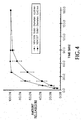
- the in vitro protocol described above was also used to determine the effect of rod diameter on the delivery profile and release rate of solid SOMATULINETM compositions.
- the solid composition comprised a mixture of SOMATULINETM and mannitol (80:20). Diameters of 0.26 mm and 0.43 mm were studied. The results on this assay are depicted in the graph of Fig. 4. The smaller diameter of 0.26 mm produced a faster in vivo release than the larger diameter of 0.43 mm. In addition, the smaller diameter rod provided complete release in less than half the time required for complete release by the larger diameter rod.
- EXAMPLE 10 IN VIVO COMPARISONS OF PEPTIDE SOLUTIONS VS. GELS FORMED FROM SOLID PEPTIDE COMPOSITIONS
- the in vivo assay described above was used to study the difference in blood level profiles resulting from injections of a standard solution of SOMATULINETM compared to a 100% SOMATULINETM solid composition according to the invention.
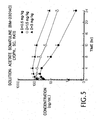
- the solution was made from the peptide dissolved in physiological serum, and was injected subcutaneously at a dosage of 1.0 ml/kg and 0.5 mg/kg of SOMATULINETM.
- the rats were anaesthetized with pentobarbital (60 mg/kg i.p.) and the right jugular vein was cannulated for blood sampling. Following surgery, the rats were allowed to recover for two days prior to experimentation. The animals were housed in cages where they could freely move. After administration of the drug solution, heparinized blood samples were obtained through the cannula, and plasma was separated after centrifugation.
- the amount of SOMATULINETM in the plasma samples was determined by a radioimmunoassay (RIA) technique that allowed the direct measurement without extraction of the peptide from the rat plasma.
- RIA radioimmunoassay
- the maximum concentration (C max ) of the peptide was 45 ng/ml for the 0.5 mg/kg solution, 78 ng/ml for the 1.5 mg/kg solution, and 126 ng/ml for the 3 mg/kg solution.
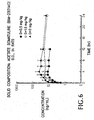
- the same dosages of 100% SOMATULINETM (0.5 mg/kg, 1.5 mg/kg, and 3 mg/kg) in solid form were administered to rats.
- the results (mean of data from four or five rats) are reproduced in Table III and shown in Fig. 6.
- the results show a sustained-release effect even at the smallest dose of 0.5 mg/kg.
- the initial burst effect of the solutions seen above is avoided by the solid compositions.
- the C max for the solid 3.0 mg/kg composition is 39 ng/ml, compared to 126 ng/ml for the 3.0 mg/kg solution.
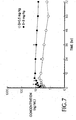
- the in vivo assay described above was also repeated on four rats using solid peptide compositions comprising 100% SOMATULINETM at dosages of 0.5 mg/kg and 3 mg/kg.
- the compounds were administered intramuscularly.
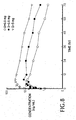
- the results are depicted in Fig. 7, and show a sustained release over 72 hours, with the expected dosage effect, but without the burst effect seen with solutions.
- the in vivo protocol described above was used to compare the pharmacokinetic parameters of peptide solutions and solid compositions in dogs.
- the delivery profile and release rate of a standard SOMATULINETM solution was studied in five dogs after subcutaneous administration of a dosage of 84.8 ⁇ g/kg.
- this same protocol was then followed with a solid composition comprising 100% SOMATULINETM on the same five dogs at an equivalent dose of 100 ⁇ g/kg by subcutaneous injection.
- the plot of plasma concentration versus time showed a classical release profile for the peptide solution (O), having a short release duration (10 hours) and a C max of 46.28 ng/ml (at 20 minutes).
- the solid composition ( ⁇ ) showed a dramatic difference in the pharmacokinetic results.
- the C max was reduced to 3.56 ng/ml (at 1 hour), and the duration of peptide release of at least 0.1 ng/ml was increased more than ten times to at least 120 hours.
- an intravenous dosage of 100 ⁇ g/kg of a standard SOMATULINETM solution (O) resulted in a rapid C max of about 807 ng/ml of plasma within just over 1 minute (Fig. 10).
- an intramuscular dosage of 100 ⁇ g/kg of a solid composition comprising 100% of the peptide ( ⁇ ) provided a dramatically different result.
- the solid composition provided a very low C max (1.69 ng/ml) at 2 hours, and a sustained release profile of over 96 hours (Fig. 10).
- Example 13 The in vivo protocol described above was repeated with the same solid composition (100% SOMATULINETM) on the same dogs, but at a dosage 5 times higher (500 ⁇ g/kg) than in example 13, by subcutaneous administration.
- the burst effect was still controlled with a plasma C max of 10.62 ng/ml (at 4 hours).
- the duration of release was increased and maintained for over 144 hours (Fig. 12).
- the in vivo protocol described above was also repeated on the same dogs with a solid composition comprising SOMATULINETM and the surfactant TWEEN® 80 (84% SOMATULINETM, 16% TWEEN® 80).
- the solid compositions were administered subcutaneously at a dosage of 100 ⁇ g/kg.
- the surfactant somewhat accelerated the delivery of SOMATULINETM, i.e., increased the release rate and initial peak, and somewhat decreased the duration of release.
- EXAMPLE 16 SUBCUTANEOUS INJECTION OF SEMISOLID SUSPENSIONS
- the in vivo protocol described above was repeated on the same animals with semisolid suspensions of 30% SOMATULINETM and 70% water, and 15% SOMATULINETM and 85% water, at the same dosage of 200 ⁇ g/kg of peptide, utilizing subcutaneous administration.
- the results were not significantly different from the results obtained with the solid compositions at the same dosages as reported in Example 13.
- the respective SOMATULINETM plasma level at 24 hours was 1.74 ng/ml and 1.61 ng/ml for the semisolid compositions, and 1.51 ng/ml for the solid composition (Fig. 14).
- the semisolid compositions also had a higher release rate after two days, respectively, (0.9 and 0.87 ng/ml) than the solid composition (0.34 ng/ml). In both solid and semisolid compositions the release of the peptide was sustained for at least 120 hours, and the standard deviation was very small.
- the present experiment demonstrated that the plasma C max of SOMATULINETM from the 6.0 mg/kg dosage was high, but within therapeutic bounds at about 52 ng/ml. Additionally, as shown in Fig. 16, rather than an escape phenomenon, the release of the peptide is controlled, i.e., sustained, but at a higher level, i.e., greater than about 10 ng/ml for days 1 to 7, about 1 to 10 ng/ml for days 8 to 33, and over 0.1 ng/ml for at least 56 days. As a comparison, a plasma level of greater than 7 ng/ml was maintained for only one day at a dosage of 3 mg/ml (Fig. 15), whereas this same level was maintained for 12 days at dosage of 6 mg/kg.
- the in vivo protocol described above was used in six dogs to compare the delivery profiles and release rates of a semisolid SOMATULINETM composition of the invention and a dosage of 30 mg of SOMATULINETM loaded onto PLGA microspheres (Ipsen Biotech, Paris, France). This microsphere dosage is comparable to the dosage used in the first semisolid composition of Example 17, i.e. about 3.0 mg/kg.
- the graph of Fig. 17 shows the blood level profile of the semisolid composition ( ⁇ ) and the profile of the SOMATULINETM loaded PLGA microspheres ( ⁇ ) over 15 days.
- the semisolid composition provides an improved time and dosage control of the burst effect compared to the loaded microspheres (156 ng/ml after 30 minutes with the microspheres, and 2.6 ng/ml after 4 hours with the semisolid composition). Additionally, the semisolid composition provides a somewhat enhanced duration of release, having a release rate of 2.48 ng/ml at day 15, while the microspheres had a release rate of 1.09 ng/ml at day 15.
- a syringe device for administering the semisolid suspensions is easily made using existing technologies.
- Such devices include a cylinder barrel, a needle, and a plunger assembly, all as found in standard syringes.
- the needle is a hollow needle with a maximum hollow aperture and a smooth internal surface, preferably with an internal surface of at least N6.
- the external diameter and length of the needle will be adapted to hypodermic or intramuscular use.
- the plunger stopper which pushes the semisolid out of the barrel, through the needle, and into the patient, can be rubber or plastic, as currently used in disposable syringes.
- the plunger rod, which pushes the stopper is an inexpensive and simple plastic accessory.
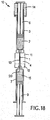
- Fig. 18 shows an injection device 10, which can be used to formulate and administer a semisolid composition.
- Injection device 10 includes hollow needle 1, which is attached to first syringe 3.
- Solid pharmaceutical composition 2 e.g., in the form of a lyophilized powder, is loaded into first syringe 3 and preferably stored under vacuum after insertion of a first plunger 6 into first syringe 3.
- Connector 4 comprises a first end 11, a second end 12, and a longitudinal bore 13 between first end 11 and second end 12. First end 11 is attached to first syringe 3 and second end 12 is attached to second syringe 7.
- Needle 1 is positioned within longitudinal bore 13.
- Connector 4 is preferably manufactured from plastic or metal. Sterile water 15 is loaded into second syringe 7.
- Barrier 20 positioned within second syringe 7, prevents the premature movement of water 15 from second syringe 7 into first syringe 3.
- Barrier 20 is preferably manufactured from an perforable material, e.g., a thin metal foil or a plastic film.
- Barrier 20 is broken by force caused by the depression of plunger 9. Upon breakage of barrier 20, plunger 9 is further depressed, which will force water 15 from second syringe 7, through needle 1, and into first syringe 3. It is important to avoid separation of the barrier from the wall of the syringe, so that it does not enter the first syringe. The interaction of water 15 and solid drug composition 2 will cause the formation of a semisolid composition in first syringe 3. Both needle 1 and first syringe 3 are then separated from connector 4 and used to inject the semisolid composition into a patient in standard fashion. Plunger lock 14 prevents the depression of first plunger 6, which prevents movement of the dry, solid composition 2 into second syringe 7.
- the syringes are standard syringes, and are joined with a connector having a central bore, which may be lined with a plastic tube. No needle is initially attached to the first syringe, but is attached to the first syringe containing the peptide after water or other carrier has been introduced from the second syringe via the bore in the connector.
- the barrier can be located within the bore or within the first syringe.
Landscapes
- Health & Medical Sciences (AREA)
- Life Sciences & Earth Sciences (AREA)
- Veterinary Medicine (AREA)
- Public Health (AREA)
- General Health & Medical Sciences (AREA)
- Animal Behavior & Ethology (AREA)
- Engineering & Computer Science (AREA)
- Chemical & Material Sciences (AREA)
- Epidemiology (AREA)
- Pharmacology & Pharmacy (AREA)
- Medicinal Chemistry (AREA)
- Bioinformatics & Cheminformatics (AREA)
- Endocrinology (AREA)
- Proteomics, Peptides & Aminoacids (AREA)
- Immunology (AREA)
- Biomedical Technology (AREA)
- Gastroenterology & Hepatology (AREA)
- Zoology (AREA)
- Anesthesiology (AREA)
- Heart & Thoracic Surgery (AREA)
- Hematology (AREA)
- Dermatology (AREA)
- Vascular Medicine (AREA)
- Neurosurgery (AREA)
- Biophysics (AREA)
- Molecular Biology (AREA)
- Medical Informatics (AREA)
- Reproductive Health (AREA)
- Medicines That Contain Protein Lipid Enzymes And Other Medicines (AREA)
- Medicinal Preparation (AREA)
- Peptides Or Proteins (AREA)
- Pharmaceuticals Containing Other Organic And Inorganic Compounds (AREA)
- Preparation Of Compounds By Using Micro-Organisms (AREA)
Applications Claiming Priority (8)
| Application Number | Priority Date | Filing Date | Title |
|---|---|---|---|
| US08/300,138 US5837276A (en) | 1994-09-02 | 1994-09-02 | Apparatus for the delivery of elongate solid drug compositions |
| US300138 | 1994-09-02 | ||
| US300713 | 1994-09-02 | ||
| US08/300,713 US5582591A (en) | 1994-09-02 | 1994-09-02 | Delivery of solid drug compositions |
| US400610 | 1995-03-08 | ||
| US08/400,610 US5595760A (en) | 1994-09-02 | 1995-03-08 | Sustained release of peptides from pharmaceutical compositions |
| EP01119077A EP1157703B1 (de) | 1994-09-02 | 1995-08-31 | Verzögerte Freisetzung von Peptiden aus pharmazeutischen Zusammensetzungen |
| EP95930689A EP0779805B1 (de) | 1994-09-02 | 1995-08-31 | Verzoegerte freisetzung von peptiden aus pharmazeutischen zusammensetzungen |
Related Parent Applications (3)
| Application Number | Title | Priority Date | Filing Date |
|---|---|---|---|
| EP01119077A Division EP1157703B1 (de) | 1994-09-02 | 1995-08-31 | Verzögerte Freisetzung von Peptiden aus pharmazeutischen Zusammensetzungen |
| EP95930689.5 Division | 1996-03-26 | ||
| EP01119077.4 Division | 2001-08-07 |
Publications (2)
| Publication Number | Publication Date |
|---|---|
| EP1595532A2 true EP1595532A2 (de) | 2005-11-16 |
| EP1595532A3 EP1595532A3 (de) | 2007-05-30 |
Family
ID=27404704
Family Applications (4)
| Application Number | Title | Priority Date | Filing Date |
|---|---|---|---|
| EP20050016415 Withdrawn EP1595532A3 (de) | 1994-09-02 | 1995-08-31 | Verzögerte Freisetzung von Peptiden aus pharmazeutischen Zusammensetzungen |
| EP95930689A Expired - Lifetime EP0779805B1 (de) | 1994-09-02 | 1995-08-31 | Verzoegerte freisetzung von peptiden aus pharmazeutischen zusammensetzungen |
| EP01119077A Expired - Lifetime EP1157703B1 (de) | 1994-09-02 | 1995-08-31 | Verzögerte Freisetzung von Peptiden aus pharmazeutischen Zusammensetzungen |
| EP20040015040 Expired - Lifetime EP1475114B1 (de) | 1994-09-02 | 1995-08-31 | Injektionssystem für die Applikation halbfester, depotförmiger pharmazeutischer Zusammensetzungen aus gelierbaren Peptidsalzen |
Family Applications After (3)
| Application Number | Title | Priority Date | Filing Date |
|---|---|---|---|
| EP95930689A Expired - Lifetime EP0779805B1 (de) | 1994-09-02 | 1995-08-31 | Verzoegerte freisetzung von peptiden aus pharmazeutischen zusammensetzungen |
| EP01119077A Expired - Lifetime EP1157703B1 (de) | 1994-09-02 | 1995-08-31 | Verzögerte Freisetzung von Peptiden aus pharmazeutischen Zusammensetzungen |
| EP20040015040 Expired - Lifetime EP1475114B1 (de) | 1994-09-02 | 1995-08-31 | Injektionssystem für die Applikation halbfester, depotförmiger pharmazeutischer Zusammensetzungen aus gelierbaren Peptidsalzen |
Country Status (17)
| Country | Link |
|---|---|
| US (1) | US5595760A (de) |
| EP (4) | EP1595532A3 (de) |
| JP (1) | JP4489186B2 (de) |
| KR (2) | KR100297168B1 (de) |
| CN (2) | CN1846669A (de) |
| AT (3) | ATE346628T1 (de) |
| AU (1) | AU713066B2 (de) |
| BR (1) | BR9508687B8 (de) |
| CA (1) | CA2198917C (de) |
| DE (3) | DE69524609T2 (de) |
| DK (2) | DK1157703T3 (de) |
| ES (3) | ES2274348T3 (de) |
| HK (1) | HK1040631B (de) |
| LU (1) | LU91037I2 (de) |
| PT (1) | PT779805E (de) |
| WO (1) | WO1996007398A2 (de) |
| ZA (1) | ZA961904B (de) |
Cited By (4)
| Publication number | Priority date | Publication date | Assignee | Title |
|---|---|---|---|---|
| US7384912B2 (en) | 2002-01-10 | 2008-06-10 | Osteotrophin, Llc | Treatment of bone disorders with skeletal anabolic drugs |
| WO2011085957A3 (en) * | 2010-01-13 | 2012-05-03 | Ipsen Pharma S.A.S. | Process for the preparation of pharmaceutical compositions for the sustained release of somatostatin analogs |
| US10543249B2 (en) | 2013-07-09 | 2020-01-28 | Ipsen Pharma S.A.S. | Pharmaceutical composition for a sustained release of lanreotide |
| GR1009814B (el) * | 2019-07-29 | 2020-09-11 | Φαρματεν Α.Β.Ε.Ε. | Φαρμακευτικο σκευασμα που περιλαμβανει ενα πεπτιδιο αναλογο σωματοστατινης |
Families Citing this family (110)
| Publication number | Priority date | Publication date | Assignee | Title |
|---|---|---|---|---|
| US6090925A (en) | 1993-03-09 | 2000-07-18 | Epic Therapeutics, Inc. | Macromolecular microparticles and methods of production and use |
| KR100517091B1 (ko) * | 1996-07-03 | 2005-11-25 | 앨자 코포레이션 | 펩티드의수성제제 |
| US5916582A (en) * | 1996-07-03 | 1999-06-29 | Alza Corporation | Aqueous formulations of peptides |
| US5968895A (en) * | 1996-12-11 | 1999-10-19 | Praecis Pharmaceuticals, Inc. | Pharmaceutical formulations for sustained drug delivery |
| US20070185032A1 (en) * | 1996-12-11 | 2007-08-09 | Praecis Pharmaceuticals, Inc. | Pharmaceutical formulations for sustained drug delivery |
| PT996426E (pt) | 1997-06-05 | 2007-06-18 | Bertex Pharma Gmbh | Sistema multifásico |
| FR2776520B1 (fr) * | 1998-03-25 | 2000-05-05 | Sod Conseils Rech Applic | Nouvelles compositions pharmaceutiques destinees a la liberation prolongee de peptides et leur procede de preparation |
| US6368625B1 (en) | 1998-08-12 | 2002-04-09 | Cima Labs Inc. | Orally disintegrable tablet forming a viscous slurry |
| FR2783433B1 (fr) | 1998-09-18 | 2001-02-16 | Delab | Seringues pour l'administration de formulations pateuses ou semi-solides |
| US6722054B2 (en) | 1998-11-12 | 2004-04-20 | Atrix Laboratories, Inc. | Process and delivery container for lyophilizing active agent |
| US6907679B2 (en) * | 1998-11-12 | 2005-06-21 | Qlt Usa, Inc. | Method for lyophilizing an active agent |
| PL205713B1 (pl) | 1998-12-07 | 2010-05-31 | Sod Conseils Rech Applic | Związki stanowiące analogi GLP-1, kompozycje farmaceutyczne zawierające takie związki oraz zastosowanie tych związków |
| WO2000034331A2 (en) | 1998-12-07 | 2000-06-15 | Societe De Conseils De Recherches Et D'applications Scientifiques Sas | Analogues of glp-1 |
| US6156349A (en) * | 1998-12-14 | 2000-12-05 | Steinbach, Pylant And Herman, L.L.C. | Method of treating HIV infection with suppository containing mammalian liver extract |
| US6350472B1 (en) | 1998-12-14 | 2002-02-26 | Steinbach, Pylant, And Hermann, L.L.C. | Method of treating HIV infection with transdermal gel containing mammalian liver extract |
| JP2002539172A (ja) | 1999-03-17 | 2002-11-19 | ノバルティス アクチエンゲゼルシャフト | Tgf−ベータを含む医薬組成物 |
| JP2002542183A (ja) | 1999-04-16 | 2002-12-10 | ノボ ノルディスク アクティーゼルスカブ | 成形可能な乾燥した医薬製剤 |
| WO2001008717A1 (en) * | 1999-08-03 | 2001-02-08 | Smith & Nephew, Inc. | Controlled release implantable devices |
| US6458387B1 (en) * | 1999-10-18 | 2002-10-01 | Epic Therapeutics, Inc. | Sustained release microspheres |
| AU2001237221A1 (en) * | 2000-01-11 | 2001-07-24 | Roland Bodmeier | Implants, particles |
| US6566144B1 (en) * | 2000-03-27 | 2003-05-20 | Atrix Laboratories | Cover plate for use in lyophilization |
| US7358330B2 (en) * | 2001-03-29 | 2008-04-15 | Biotempt B.V. | Immunoregulatory compositions |
| DE10024451A1 (de) | 2000-05-18 | 2001-11-29 | Asta Medica Ag | Pharmazeutische Darreichungsform für Peptide, Verfahren zu deren Herstellung und Verwendung |
| WO2002005744A1 (en) * | 2000-07-14 | 2002-01-24 | Novo Nordisk A/S | Method of moulding a pharmaceutical composition in a packaging material |
| WO2002043580A2 (en) | 2000-10-27 | 2002-06-06 | Epic Therapeutics, Inc. | Production of microspheres |
| KR20030068585A (ko) | 2001-01-12 | 2003-08-21 | 소시에떼 더 콘세이유 더 레세르세 에 다플리까띠옹 시엔띠피끄, 에스.아.에스. | 혈관 증식을 억제하는 약제학적 조성물 및 그의 이용 방법 |
| GB0117057D0 (en) * | 2001-07-12 | 2001-09-05 | Ferring Bv | Pharmaceutical composition |
| EP1418890B1 (de) * | 2001-08-16 | 2008-05-14 | Baxter International Inc. | Darreichungsformen welche mikropartikel und treibgas enthalten |
| US8454997B2 (en) | 2001-12-18 | 2013-06-04 | Novo Nordisk A/S | Solid dose micro implant |
| DE60327843D1 (de) * | 2002-03-04 | 2009-07-16 | Ipsen Pharma | Arzneimittelformulierungen mit verzögerter freisetzung mit einem trägerpeptid |
| SI2264172T1 (sl) | 2002-04-05 | 2017-12-29 | Roche Innovation Center Copenhagen A/S | Oligomerne spojine za modulacijo izražanja HIF-1alfa |
| JP3867009B2 (ja) * | 2002-04-24 | 2007-01-10 | 三菱電機株式会社 | 周波数特性同定方法および駆動制御装置 |
| WO2004013299A2 (en) * | 2002-08-02 | 2004-02-12 | The General Hospital Corporation | Methods for the production of cells and mammals with desired genetic modifications |
| RS52966B (sr) * | 2002-09-27 | 2014-02-28 | Zentaris Gmbh | Oblik za terapijsku primenu aktivnih peptida sa produženim oslobađanjem aktivnog sastojka i postupak za njihovo dobijanje |
| WO2004057959A2 (en) * | 2002-12-20 | 2004-07-15 | Generipharm, Inc. | Intracutaneous injection |
| WO2004074315A2 (en) | 2003-02-19 | 2004-09-02 | Societe De Conseils De Recherches Et D'applications Scientifiques (S.C.R.A.S.) | Analogues of glp-1 |
| US20050112087A1 (en) * | 2003-04-29 | 2005-05-26 | Musso Gary F. | Pharmaceutical formulations for sustained drug delivery |
| US20060193825A1 (en) * | 2003-04-29 | 2006-08-31 | Praecis Phamaceuticals, Inc. | Pharmaceutical formulations for sustained drug delivery |
| CA2550695A1 (en) * | 2003-12-16 | 2005-06-30 | Societe De Conseils De Recherches Et D'applications Scientifiques (S.C.R | Glp-1 pharmaceutical compositions |
| EP1711523B1 (de) | 2003-12-16 | 2012-10-10 | Ipsen Pharma | Glp-1-analoga |
| WO2005079888A2 (en) * | 2004-02-19 | 2005-09-01 | Aditech Pharma Ab | Delivery device for delivering pyy |
| ES2423060T3 (es) | 2004-03-12 | 2013-09-17 | Alnylam Pharmaceuticals, Inc. | Agentes iRNA que tienen como diana al VEGF |
| US20060063208A1 (en) | 2004-08-02 | 2006-03-23 | Woolf Clifford J | DRG11-responsive (DRAGON) gene and uses thereof |
| ATE424848T1 (de) * | 2004-08-12 | 2009-03-15 | Quest Pharmaceutical Services | Pharmazeutische zusammensetzungen für die kontrollierte freigabe von biologischen wirkstoffen |
| US20060039890A1 (en) * | 2004-08-20 | 2006-02-23 | Renshaw Perry F | Treatment of psychological and cognitive disorders using a cholesterol -lowering agent in combination with an antidepressant |
| MX2007005558A (es) | 2004-11-09 | 2008-01-31 | Santaris Pharma As | Oligonucleotidos de lna potentes para la inhibicion dela expresion de hif-1a. |
| US9447138B2 (en) | 2004-11-09 | 2016-09-20 | Roche Innovation Center Copenhagen A/S | Potent LNA oligonucleotides for the inhibition of HIF-1a expression |
| GB0428151D0 (en) * | 2004-12-22 | 2005-01-26 | Novartis Ag | Organic compounds |
| GB0511269D0 (en) * | 2005-06-02 | 2005-07-13 | Creative Peptides Sweden Ab | Sustained release preparation of pro-insulin C-peptide |
| EP1896084A4 (de) * | 2005-06-27 | 2010-10-20 | Alnylam Pharmaceuticals Inc | Rnai-modulation von hif-1 und therapeutische anwendungen davon |
| KR100997177B1 (ko) | 2005-07-08 | 2010-11-29 | 입센 파마 에스.에이.에스 | 멜라노코르틴 수용체 리간드 |
| CA2616537A1 (en) | 2005-07-27 | 2007-02-01 | University Of Florida Research Foundation, Inc. | Small compounds that correct protein misfolding and uses thereof |
| EP1919512B1 (de) * | 2005-08-10 | 2014-11-12 | Alnylam Pharmaceuticals Inc. | Chemisch modifizierte oligonukleotide zur verwendung bei der modulierung von mikro-rna und ihre verwendungen |
| US20070213292A1 (en) * | 2005-08-10 | 2007-09-13 | The Rockefeller University | Chemically modified oligonucleotides for use in modulating micro RNA and uses thereof |
| WO2007109097A2 (en) * | 2006-03-16 | 2007-09-27 | Alnylam Pharmaceuticals, Inc. | RNAi MODULATION OF TGF-BETA AND THERAPEUTIC USES THEREOF |
| US20070219811A1 (en) * | 2006-03-16 | 2007-09-20 | Kim John S | Method for using an internet-based CRM application to create an on-line leads marketplace |
| CA2647728C (en) * | 2006-03-31 | 2014-12-09 | Alnylam Pharmaceuticals, Inc. | Compositions and methods for inhibiting expression of eg5 gene |
| US8598333B2 (en) * | 2006-05-26 | 2013-12-03 | Alnylam Pharmaceuticals, Inc. | SiRNA silencing of genes expressed in cancer |
| EP1917971A1 (de) | 2006-10-27 | 2008-05-07 | Société de Conseils de Recherches et d'Applications Scientifiques ( S.C.R.A.S.) | Zusammensetzungen mit verlängerter Wirkstofffreigabe, enthaltend Polymere mit sehr niedrigem Molekulargewicht |
| US20100184659A1 (en) * | 2006-12-21 | 2010-07-22 | Warren Jaworowicz | Sustained-Release Formulations Comprising Crystals, Macromolecular Gels, and Particulate Suspensions of Biologic Agents |
| US8545834B2 (en) * | 2007-03-15 | 2013-10-01 | The Mclean Hospital Corporation | G-substrate for the treatment and prevention of parkinson's disease |
| EP2139447A2 (de) * | 2007-03-20 | 2010-01-06 | Harold Brem | Gm-csf-kosmezeutikazusammensetzungen und verfahren zu ihrer verwendung |
| US20080234194A1 (en) * | 2007-03-20 | 2008-09-25 | Harold Brem | Growth factor mediated cosmeceuticals and use thereof to enhance skin quality |
| DE102007025858A1 (de) * | 2007-06-01 | 2008-12-04 | Grünenthal GmbH | Verfahren zur Herstellung einer Arzneimitteldarreichungsform |
| JP2010538069A (ja) | 2007-09-07 | 2010-12-09 | イプセン ファルマ ソシエテ パール アクシオン サンプリフィエ | エキセンディン−4およびエキセンディン−3の類似体 |
| TR201815292T4 (tr) | 2007-11-05 | 2018-11-21 | Board Of Supervisors Of Louisiana State Univ And Agriculture And Mechanical College | İnsüli̇n duyarliliğinin tedavi̇si̇nde melanokorti̇nleri̇n kullanimi. |
| TWI442932B (zh) | 2008-02-11 | 2014-07-01 | Ferring Int Ct Sa | 以GnRH拮抗劑治療攝護腺癌的方法 |
| AU2009221775B2 (en) * | 2008-03-05 | 2015-05-07 | Alnylam Pharmaceuticals, Inc. | Compositions and methods for inhibiting expression of Eg5 and VEGF genes |
| US8222221B2 (en) | 2008-06-04 | 2012-07-17 | The Board Of Regents Of The University Of Texas System | Modulation of gene expression through endogenous small RNA targeting of gene promoters |
| EP2316970A2 (de) | 2008-07-04 | 2011-05-04 | Traslational Cancer Drugs Pharma, S.L. | Verfahren zur behandlung und diagnose von krebs |
| EA020018B1 (ru) | 2008-08-07 | 2014-08-29 | Ипсен Фарма С.А.С. | Процессированные аналоги глюкозозависимого инсулинотропного полипептида |
| MX2011001031A (es) | 2008-08-07 | 2011-04-26 | Ipsen Pharma Sas | Analogos de polipeptidos insulinotropicos dependientes de glucosa. |
| CA2733006A1 (en) | 2008-08-07 | 2010-02-11 | Ipsen Pharma S.A.S. | Analogues of glucose-dependent insulinotropic polypeptide (gip) modified at n-terminal |
| US8252228B1 (en) * | 2008-10-13 | 2012-08-28 | Abbott Cardiovascular Systems Inc. | Methods for sterilizing carriers for treatment of a kidney |
| WO2010092218A2 (es) | 2009-02-12 | 2010-08-19 | Proyecto De Biomedicina Cima, S.L. | Uso de la cardiotrofina-1 para el tratamiento de enfermedades metabólicas |
| US8815586B2 (en) | 2009-04-24 | 2014-08-26 | The Board Of Regents Of The University Of Texas System | Modulation of gene expression using oligomers that target gene regions downstream of 3′ untranslated regions |
| TWI508734B (zh) * | 2009-05-01 | 2015-11-21 | Ferring Int Ct Sa | 用於前列腺癌之治療的組成物 |
| TW201043221A (en) * | 2009-05-06 | 2010-12-16 | Ferring Int Ct Sa | Kit and method for preparation of a Degarelix solution |
| IN2012DN00352A (de) | 2009-06-16 | 2015-08-21 | Bikam Pharmaceuticals Inc | |
| US20110039787A1 (en) * | 2009-07-06 | 2011-02-17 | Ferring International Center S.A. | Compositions, kits and methods for treating benign prostate hyperplasia |
| US8759299B2 (en) | 2009-07-22 | 2014-06-24 | Ipsen Pharma S.A.S. | Analogues of insulin-like growth factor-1 (IGF-1) having amino acid substitution at position 59 |
| WO2011053994A1 (en) | 2009-11-02 | 2011-05-05 | Alnylam Pharmaceuticals, Inc. | Modulation of ldl receptor gene expression with double-stranded rnas targeting the ldl receptor gene promoter |
| WO2011133658A1 (en) | 2010-04-22 | 2011-10-27 | Boston Medical Center Corporation | Compositions and methods for targeting and delivering therapeutics into cells |
| US9782454B2 (en) | 2010-04-22 | 2017-10-10 | Longevity Biotech, Inc. | Highly active polypeptides and methods of making and using the same |
| EP3085387A1 (de) | 2010-04-26 | 2016-10-26 | Abraxis BioScience, LLC | Sparc-bindende antikörper und verwendungen davon |
| WO2012018628A1 (en) | 2010-07-26 | 2012-02-09 | Board Of Regents, The University Of Texas System | Methods for inducing an immune response via buccal and/or sublingual administration of a vaccine |
| DE102010046218A1 (de) * | 2010-09-21 | 2012-03-22 | Livlmplant Gmbh | Zell-basiertes Injektionssystem zur Behandlung von Verletzungen |
| ES2617336T3 (es) | 2010-10-27 | 2017-06-16 | Ferring B.V. | Procedimiento para la fabricación de degarelix y sus productos intermedios |
| EP2447276A1 (de) | 2010-10-27 | 2012-05-02 | Ferring B.V. | Verfahren zur Herstellung von Degarelix und seinen Zwischenprodukten |
| JO3755B1 (ar) | 2011-01-26 | 2021-01-31 | Ferring Bv | تركيبات تستوستيرون |
| DK2694095T3 (en) | 2011-04-05 | 2018-05-28 | Longevity Biotech Inc | COMPOSITIONS COMPREHENSIVE GLUCAGON ANALOGS AND METHODS FOR PREPARING AND USING THE SAME |
| US9133082B2 (en) | 2011-06-14 | 2015-09-15 | Bikam Pharmaceuticals, Inc. | Opsin-binding ligands, compositions and methods of use |
| WO2013082000A1 (en) | 2011-11-30 | 2013-06-06 | Bikam Pharmaceuticals, Inc. | Opsin-binding ligands, compositions and methods of use |
| WO2013081642A1 (en) | 2011-12-01 | 2013-06-06 | Bikam Pharmaceuticals, Inc. | Opsin-binding ligands, compositions and methods of use |
| JP6226966B2 (ja) | 2012-06-01 | 2017-11-08 | フェリング ベスローテン フェンノートシャップ | デガレリクスの製造 |
| US9974850B2 (en) | 2013-01-25 | 2018-05-22 | Board Of Regents, The University Of Texas System | Immunogenic compositions and uses thereof |
| WO2014145718A2 (en) | 2013-03-15 | 2014-09-18 | Longevity Biotech, Inc. | Peptides comprising non-natural amino acids and methods of making and using the same |
| TW201605488A (zh) | 2013-10-15 | 2016-02-16 | 大塚製藥股份有限公司 | 用以預防及/或治療多囊腎病之藥物 |
| AU2015300944B2 (en) * | 2014-08-06 | 2019-07-11 | Xeris Pharmaceuticals, Inc. | Syringes, kits, and methods for intracutaneous and/or subcutaneous injection of pastes |
| US20200405364A1 (en) * | 2014-11-14 | 2020-12-31 | Warsaw Orthopedic, Inc. | Hydratable bone material and methods of use |
| UY37112A (es) | 2016-02-05 | 2017-07-31 | Tolmar Therapeutics Inc | Placa de recubrimiento ventilada para un conjunto de jeringas |
| EP4454664A3 (de) * | 2016-11-02 | 2025-01-22 | Board of Regents, The University of Texas System | Lösliche filme und verfahren zu deren verwendung |
| US11524053B2 (en) | 2018-01-26 | 2022-12-13 | The Regents Of The University Of California | Methods and compositions for treatment of angiogenic disorders using anti-VEGF agents |
| FR3079421B1 (fr) | 2018-03-28 | 2024-11-15 | Edix Sa | Presentations injectables, seringues et compositions a liberation prolongee et/ou controlee de lanreotide |
| USD908916S1 (en) | 2018-06-19 | 2021-01-26 | Tolmar Therapeutics, Inc. | Syringe restrictor plate |
| AU2020393842A1 (en) | 2019-11-25 | 2022-06-16 | The Regents Of The University Of California | Long-acting VEGF inhibitors for intraocular neovascularization |
| AU2021225926A1 (en) | 2020-02-26 | 2022-10-20 | Case Western Reserve University | Compositions and methods for treating misfolded protein ocular disorders |
| GR1010059B (el) * | 2020-08-10 | 2021-08-13 | Φαρματεν Α.Β.Ε.Ε. | Διαδικασια και συσκευη για την παρασκευη παχυρευστων φαρμακοτεχνικων μορφων |
| LU101974B1 (en) | 2020-08-07 | 2022-02-07 | Pharmathen Sa | Process and apparatus for preparing viscous pharmaceutical formulations |
| DK4192427T3 (da) | 2020-08-07 | 2026-02-16 | Pharmathen Sa | Fremgangsmåde og apparat til fremstilling af viskøse farmaceutiske formuleringer |
Family Cites Families (14)
| Publication number | Priority date | Publication date | Assignee | Title |
|---|---|---|---|---|
| US3451393A (en) * | 1966-02-07 | 1969-06-24 | Stanley J Sarnoff | Automatic infusion device |
| US3773919A (en) * | 1969-10-23 | 1973-11-20 | Du Pont | Polylactide-drug mixtures |
| DE3484951D1 (de) * | 1983-10-14 | 1991-09-26 | Sumitomo Pharma | Verlaengerte praeparate mit verzoegerter abgabe. |
| ATE87469T1 (de) * | 1985-12-27 | 1993-04-15 | Sumitomo Pharma | Verfahren zur herstellung einer formulierung mit verzoegerter freisetzung. |
| US4863736A (en) * | 1987-03-16 | 1989-09-05 | Monsanto Company | Somatotropin prolonged release |
| AT388503B (de) * | 1987-05-21 | 1989-07-25 | Immuno Ag | Set zur bereitstellung und applikation eines gewebeklebstoffes |
| US5225205A (en) * | 1989-07-28 | 1993-07-06 | Debiopharm S.A. | Pharmaceutical composition in the form of microparticles |
| CH679207A5 (de) * | 1989-07-28 | 1992-01-15 | Debiopharm Sa | |
| KR930001079B1 (ko) * | 1990-07-18 | 1993-02-15 | 한국과학기술연구원 | 자가 방출 조절형 인슐린 제형 |
| GB9027422D0 (en) * | 1990-12-18 | 1991-02-06 | Scras | Osmotically driven infusion device |
| GB9108634D0 (en) * | 1991-04-23 | 1991-06-12 | Ciba Geigy | Pharmaceutical compositions |
| SI9300468A (en) * | 1992-10-14 | 1994-06-30 | Hoffmann La Roche | Injectable composition for the sustained release of biologically active compounds |
| DK42093D0 (da) * | 1993-04-07 | 1993-04-07 | Bukh Meditec | Administrationsmetode |
| NZ281797A (en) * | 1994-02-18 | 1997-04-24 | Innovac Co | Inoculation of animals by inserting dried pelleted biological materials into the animal's ear |
-
1995
- 1995-03-08 US US08/400,610 patent/US5595760A/en not_active Expired - Lifetime
- 1995-08-31 CA CA 2198917 patent/CA2198917C/en not_active Expired - Lifetime
- 1995-08-31 AT AT04015040T patent/ATE346628T1/de not_active IP Right Cessation
- 1995-08-31 KR KR1019970701393A patent/KR100297168B1/ko not_active Expired - Lifetime
- 1995-08-31 JP JP50935896A patent/JP4489186B2/ja not_active Expired - Lifetime
- 1995-08-31 AU AU33985/95A patent/AU713066B2/en not_active Expired
- 1995-08-31 DE DE69524609T patent/DE69524609T2/de not_active Expired - Lifetime
- 1995-08-31 EP EP20050016415 patent/EP1595532A3/de not_active Withdrawn
- 1995-08-31 DK DK01119077T patent/DK1157703T3/da active
- 1995-08-31 DE DE1995635322 patent/DE69535322T2/de not_active Expired - Lifetime
- 1995-08-31 DE DE1995634538 patent/DE69534538T2/de not_active Expired - Lifetime
- 1995-08-31 CN CNA2006100093904A patent/CN1846669A/zh active Pending
- 1995-08-31 CN CN95195473A patent/CN1165479A/zh active Pending
- 1995-08-31 AT AT01119077T patent/ATE306906T1/de active
- 1995-08-31 ES ES04015040T patent/ES2274348T3/es not_active Expired - Lifetime
- 1995-08-31 EP EP95930689A patent/EP0779805B1/de not_active Expired - Lifetime
- 1995-08-31 DK DK95930689T patent/DK0779805T3/da active
- 1995-08-31 WO PCT/IB1995/000793 patent/WO1996007398A2/en not_active Ceased
- 1995-08-31 KR KR10-2001-7002056A patent/KR100446924B1/ko not_active Expired - Lifetime
- 1995-08-31 AT AT95930689T patent/ATE210424T1/de active
- 1995-08-31 ES ES95930689T patent/ES2169762T3/es not_active Expired - Lifetime
- 1995-08-31 BR BR9508687A patent/BR9508687B8/pt not_active IP Right Cessation
- 1995-08-31 ES ES01119077T patent/ES2248206T3/es not_active Expired - Lifetime
- 1995-08-31 PT PT95930689T patent/PT779805E/pt unknown
- 1995-08-31 EP EP01119077A patent/EP1157703B1/de not_active Expired - Lifetime
- 1995-08-31 EP EP20040015040 patent/EP1475114B1/de not_active Expired - Lifetime
-
1996
- 1996-03-08 ZA ZA9601904A patent/ZA961904B/xx unknown
-
2002
- 2002-03-25 HK HK02102262.5A patent/HK1040631B/en not_active IP Right Cessation
-
2003
- 2003-08-22 LU LU91037C patent/LU91037I2/fr unknown
Cited By (11)
| Publication number | Priority date | Publication date | Assignee | Title |
|---|---|---|---|---|
| US7384912B2 (en) | 2002-01-10 | 2008-06-10 | Osteotrophin, Llc | Treatment of bone disorders with skeletal anabolic drugs |
| WO2011085957A3 (en) * | 2010-01-13 | 2012-05-03 | Ipsen Pharma S.A.S. | Process for the preparation of pharmaceutical compositions for the sustained release of somatostatin analogs |
| AU2011206728B2 (en) * | 2010-01-13 | 2016-02-04 | Ipsen Pharma S.A.S. | Process for the preparation of pharmaceutical compositions for the sustained release of somatostatin analogs |
| CN105456206A (zh) * | 2010-01-13 | 2016-04-06 | 益普生制药股份有限公司 | 用于延缓释放生长抑素类似物的药物组合物的制备方法 |
| EA023128B1 (ru) * | 2010-01-13 | 2016-04-29 | Ипсен Фарма С.А.С. | Способ получения инъекционной фармацевтической композиции с замедленным высвобождением ланреотида |
| US9352012B2 (en) | 2010-01-13 | 2016-05-31 | Ipsen Pharma S.A.S. | Process for the preparation of pharmaceutical compositions for the sustained release of somatostatin analogs |
| EP3378468A1 (de) * | 2010-01-13 | 2018-09-26 | Ipsen Pharma S.A.S. | Verfahren zur herstellung pharmazeutischer zusammensetzungen zur verzögerten freisetzung von somatostatinanalogen |
| CN105456206B (zh) * | 2010-01-13 | 2018-12-14 | 益普生制药股份有限公司 | 用于延缓释放生长抑素类似物的药物组合物的制备方法 |
| US10206968B2 (en) | 2010-01-13 | 2019-02-19 | Ipsen Pharma S.A.S. | Process for the preparation of pharmaceutical compositions for the sustained release of somatostatin analogs |
| US10543249B2 (en) | 2013-07-09 | 2020-01-28 | Ipsen Pharma S.A.S. | Pharmaceutical composition for a sustained release of lanreotide |
| GR1009814B (el) * | 2019-07-29 | 2020-09-11 | Φαρματεν Α.Β.Ε.Ε. | Φαρμακευτικο σκευασμα που περιλαμβανει ενα πεπτιδιο αναλογο σωματοστατινης |
Also Published As
Similar Documents
| Publication | Publication Date | Title |
|---|---|---|
| EP0779805B1 (de) | Verzoegerte freisetzung von peptiden aus pharmazeutischen zusammensetzungen | |
| US7943575B2 (en) | Sustained release drug formulations containing a carrier peptide | |
| EP1498150B1 (de) | Gerät zur Abgabe einer festen Medikamentenzusammensetzung | |
| TWI715520B (zh) | 用於持續釋放蘭瑞肽之醫藥組成物 | |
| HK1076058A (en) | Sustained release of peptides from pharmaceutical compositions | |
| HK1144067A (en) | Sustained release of peptides from pharmaceutical compositions | |
| HK1096870A (en) | Sustained release of peptides from pharmaceutical compositions | |
| CN101590011A (zh) | 肽从药物组合物中的持续释放 | |
| HK1067870B (en) | Device for delivery of solid drug compositions |
Legal Events
| Date | Code | Title | Description |
|---|---|---|---|
| PUAI | Public reference made under article 153(3) epc to a published international application that has entered the european phase |
Free format text: ORIGINAL CODE: 0009012 |
|
| 17P | Request for examination filed |
Effective date: 20050728 |
|
| AC | Divisional application: reference to earlier application |
Ref document number: 0779805 Country of ref document: EP Kind code of ref document: P Ref document number: 1157703 Country of ref document: EP Kind code of ref document: P |
|
| AK | Designated contracting states |
Kind code of ref document: A2 Designated state(s): AT BE CH DE DK ES FR GB GR IE IT LI LU MC NL PT SE |
|
| REG | Reference to a national code |
Ref country code: HK Ref legal event code: DE Ref document number: 1076058 Country of ref document: HK |
|
| RIN1 | Information on inventor provided before grant (corrected) |
Inventor name: CHERIF-CHEIKH, ROLAND |
|
| PUAL | Search report despatched |
Free format text: ORIGINAL CODE: 0009013 |
|
| AK | Designated contracting states |
Kind code of ref document: A3 Designated state(s): AT BE CH DE DK ES FR GB GR IE IT LI LU MC NL PT SE |
|
| RIC1 | Information provided on ipc code assigned before grant |
Ipc: A61K 9/20 20060101AFI20070423BHEP Ipc: A61K 9/06 20060101ALI20070423BHEP Ipc: A61K 38/31 20060101ALI20070423BHEP |
|
| AKX | Designation fees paid |
Designated state(s): AT BE CH DE DK ES FR GB GR IE IT LI LU MC NL PT SE |
|
| STAA | Information on the status of an ep patent application or granted ep patent |
Free format text: STATUS: THE APPLICATION IS DEEMED TO BE WITHDRAWN |
|
| 18D | Application deemed to be withdrawn |
Effective date: 20071211 |
|
| REG | Reference to a national code |
Ref country code: HK Ref legal event code: WD Ref document number: 1076058 Country of ref document: HK |