EP1623825A2 - Heisssiegelbare Polyethylenfolie und Verfahren zu ihrer Herstellung - Google Patents
Heisssiegelbare Polyethylenfolie und Verfahren zu ihrer Herstellung Download PDFInfo
- Publication number
- EP1623825A2 EP1623825A2 EP05024369A EP05024369A EP1623825A2 EP 1623825 A2 EP1623825 A2 EP 1623825A2 EP 05024369 A EP05024369 A EP 05024369A EP 05024369 A EP05024369 A EP 05024369A EP 1623825 A2 EP1623825 A2 EP 1623825A2
- Authority
- EP
- European Patent Office
- Prior art keywords
- ethylene copolymer
- molecular weight
- composition
- copolymer composition
- tref
- Prior art date
- Legal status (The legal status is an assumption and is not a legal conclusion. Google has not performed a legal analysis and makes no representation as to the accuracy of the status listed.)
- Withdrawn
Links
Images


Classifications
-
- B—PERFORMING OPERATIONS; TRANSPORTING
- B32—LAYERED PRODUCTS
- B32B—LAYERED PRODUCTS, i.e. PRODUCTS BUILT-UP OF STRATA OF FLAT OR NON-FLAT, e.g. CELLULAR OR HONEYCOMB, FORM
- B32B27/00—Layered products comprising a layer of synthetic resin
- B32B27/06—Layered products comprising a layer of synthetic resin as the main or only constituent of a layer, which is next to another layer of the same or of a different material
- B32B27/08—Layered products comprising a layer of synthetic resin as the main or only constituent of a layer, which is next to another layer of the same or of a different material of synthetic resin
-
- B—PERFORMING OPERATIONS; TRANSPORTING
- B32—LAYERED PRODUCTS
- B32B—LAYERED PRODUCTS, i.e. PRODUCTS BUILT-UP OF STRATA OF FLAT OR NON-FLAT, e.g. CELLULAR OR HONEYCOMB, FORM
- B32B27/00—Layered products comprising a layer of synthetic resin
- B32B27/32—Layered products comprising a layer of synthetic resin comprising polyolefins
-
- B—PERFORMING OPERATIONS; TRANSPORTING
- B32—LAYERED PRODUCTS
- B32B—LAYERED PRODUCTS, i.e. PRODUCTS BUILT-UP OF STRATA OF FLAT OR NON-FLAT, e.g. CELLULAR OR HONEYCOMB, FORM
- B32B27/00—Layered products comprising a layer of synthetic resin
- B32B27/32—Layered products comprising a layer of synthetic resin comprising polyolefins
- B32B27/327—Layered products comprising a layer of synthetic resin comprising polyolefins comprising polyolefins obtained by a metallocene or single-site catalyst
-
- C—CHEMISTRY; METALLURGY
- C08—ORGANIC MACROMOLECULAR COMPOUNDS; THEIR PREPARATION OR CHEMICAL WORKING-UP; COMPOSITIONS BASED THEREON
- C08F—MACROMOLECULAR COMPOUNDS OBTAINED BY REACTIONS ONLY INVOLVING CARBON-TO-CARBON UNSATURATED BONDS
- C08F210/00—Copolymers of unsaturated aliphatic hydrocarbons having only one carbon-to-carbon double bond
- C08F210/16—Copolymers of ethene with alpha-alkenes, e.g. EP rubbers
-
- C—CHEMISTRY; METALLURGY
- C08—ORGANIC MACROMOLECULAR COMPOUNDS; THEIR PREPARATION OR CHEMICAL WORKING-UP; COMPOSITIONS BASED THEREON
- C08L—COMPOSITIONS OF MACROMOLECULAR COMPOUNDS
- C08L23/00—Compositions of homopolymers or copolymers of unsaturated aliphatic hydrocarbons having only one carbon-to-carbon double bond; Compositions of derivatives of such polymers
- C08L23/02—Compositions of homopolymers or copolymers of unsaturated aliphatic hydrocarbons having only one carbon-to-carbon double bond; Compositions of derivatives of such polymers not modified by chemical after-treatment
- C08L23/04—Homopolymers or copolymers of ethene
- C08L23/06—Polyethylene
-
- C—CHEMISTRY; METALLURGY
- C08—ORGANIC MACROMOLECULAR COMPOUNDS; THEIR PREPARATION OR CHEMICAL WORKING-UP; COMPOSITIONS BASED THEREON
- C08L—COMPOSITIONS OF MACROMOLECULAR COMPOUNDS
- C08L23/00—Compositions of homopolymers or copolymers of unsaturated aliphatic hydrocarbons having only one carbon-to-carbon double bond; Compositions of derivatives of such polymers
- C08L23/02—Compositions of homopolymers or copolymers of unsaturated aliphatic hydrocarbons having only one carbon-to-carbon double bond; Compositions of derivatives of such polymers not modified by chemical after-treatment
- C08L23/04—Homopolymers or copolymers of ethene
- C08L23/08—Copolymers of ethene
- C08L23/0807—Copolymers of ethene with unsaturated hydrocarbons only containing four or more carbon atoms
- C08L23/0815—Copolymers of ethene with unsaturated hydrocarbons only containing four or more carbon atoms with aliphatic 1-olefins containing one carbon-to-carbon double bond
-
- B—PERFORMING OPERATIONS; TRANSPORTING
- B32—LAYERED PRODUCTS
- B32B—LAYERED PRODUCTS, i.e. PRODUCTS BUILT-UP OF STRATA OF FLAT OR NON-FLAT, e.g. CELLULAR OR HONEYCOMB, FORM
- B32B2250/00—Layers arrangement
- B32B2250/24—All layers being polymeric
- B32B2250/242—All polymers belonging to those covered by group B32B27/32
-
- B—PERFORMING OPERATIONS; TRANSPORTING
- B32—LAYERED PRODUCTS
- B32B—LAYERED PRODUCTS, i.e. PRODUCTS BUILT-UP OF STRATA OF FLAT OR NON-FLAT, e.g. CELLULAR OR HONEYCOMB, FORM
- B32B2307/00—Properties of the layers or laminate
- B32B2307/30—Properties of the layers or laminate having particular thermal properties
- B32B2307/31—Heat sealable
-
- B—PERFORMING OPERATIONS; TRANSPORTING
- B32—LAYERED PRODUCTS
- B32B—LAYERED PRODUCTS, i.e. PRODUCTS BUILT-UP OF STRATA OF FLAT OR NON-FLAT, e.g. CELLULAR OR HONEYCOMB, FORM
- B32B2307/00—Properties of the layers or laminate
- B32B2307/40—Properties of the layers or laminate having particular optical properties
- B32B2307/412—Transparent
-
- B—PERFORMING OPERATIONS; TRANSPORTING
- B32—LAYERED PRODUCTS
- B32B—LAYERED PRODUCTS, i.e. PRODUCTS BUILT-UP OF STRATA OF FLAT OR NON-FLAT, e.g. CELLULAR OR HONEYCOMB, FORM
- B32B2307/00—Properties of the layers or laminate
- B32B2307/50—Properties of the layers or laminate having particular mechanical properties
- B32B2307/558—Impact strength, toughness
-
- B—PERFORMING OPERATIONS; TRANSPORTING
- B32—LAYERED PRODUCTS
- B32B—LAYERED PRODUCTS, i.e. PRODUCTS BUILT-UP OF STRATA OF FLAT OR NON-FLAT, e.g. CELLULAR OR HONEYCOMB, FORM
- B32B2307/00—Properties of the layers or laminate
- B32B2307/70—Other properties
- B32B2307/72—Density
-
- B—PERFORMING OPERATIONS; TRANSPORTING
- B32—LAYERED PRODUCTS
- B32B—LAYERED PRODUCTS, i.e. PRODUCTS BUILT-UP OF STRATA OF FLAT OR NON-FLAT, e.g. CELLULAR OR HONEYCOMB, FORM
- B32B2439/00—Containers; Receptacles
- B32B2439/70—Food packaging
-
- B—PERFORMING OPERATIONS; TRANSPORTING
- B32—LAYERED PRODUCTS
- B32B—LAYERED PRODUCTS, i.e. PRODUCTS BUILT-UP OF STRATA OF FLAT OR NON-FLAT, e.g. CELLULAR OR HONEYCOMB, FORM
- B32B2439/00—Containers; Receptacles
- B32B2439/80—Medical packaging
-
- C—CHEMISTRY; METALLURGY
- C08—ORGANIC MACROMOLECULAR COMPOUNDS; THEIR PREPARATION OR CHEMICAL WORKING-UP; COMPOSITIONS BASED THEREON
- C08F—MACROMOLECULAR COMPOUNDS OBTAINED BY REACTIONS ONLY INVOLVING CARBON-TO-CARBON UNSATURATED BONDS
- C08F4/00—Polymerisation catalysts
- C08F4/42—Metals; Metal hydrides; Metallo-organic compounds; Use thereof as catalyst precursors
- C08F4/44—Metals; Metal hydrides; Metallo-organic compounds; Use thereof as catalyst precursors selected from light metals, zinc, cadmium, mercury, copper, silver, gold, boron, gallium, indium, thallium, rare earths or actinides
- C08F4/60—Metals; Metal hydrides; Metallo-organic compounds; Use thereof as catalyst precursors selected from light metals, zinc, cadmium, mercury, copper, silver, gold, boron, gallium, indium, thallium, rare earths or actinides together with refractory metals, iron group metals, platinum group metals, manganese, rhenium technetium or compounds thereof
- C08F4/62—Refractory metals or compounds thereof
- C08F4/64—Titanium, zirconium, hafnium or compounds thereof
- C08F4/659—Component covered by group C08F4/64 containing a transition metal-carbon bond
- C08F4/65912—Component covered by group C08F4/64 containing a transition metal-carbon bond in combination with an organoaluminium compound
-
- C—CHEMISTRY; METALLURGY
- C08—ORGANIC MACROMOLECULAR COMPOUNDS; THEIR PREPARATION OR CHEMICAL WORKING-UP; COMPOSITIONS BASED THEREON
- C08F—MACROMOLECULAR COMPOUNDS OBTAINED BY REACTIONS ONLY INVOLVING CARBON-TO-CARBON UNSATURATED BONDS
- C08F4/00—Polymerisation catalysts
- C08F4/42—Metals; Metal hydrides; Metallo-organic compounds; Use thereof as catalyst precursors
- C08F4/44—Metals; Metal hydrides; Metallo-organic compounds; Use thereof as catalyst precursors selected from light metals, zinc, cadmium, mercury, copper, silver, gold, boron, gallium, indium, thallium, rare earths or actinides
- C08F4/60—Metals; Metal hydrides; Metallo-organic compounds; Use thereof as catalyst precursors selected from light metals, zinc, cadmium, mercury, copper, silver, gold, boron, gallium, indium, thallium, rare earths or actinides together with refractory metals, iron group metals, platinum group metals, manganese, rhenium technetium or compounds thereof
- C08F4/62—Refractory metals or compounds thereof
- C08F4/64—Titanium, zirconium, hafnium or compounds thereof
- C08F4/659—Component covered by group C08F4/64 containing a transition metal-carbon bond
- C08F4/65916—Component covered by group C08F4/64 containing a transition metal-carbon bond supported on a carrier, e.g. silica, MgCl2, polymer
-
- C—CHEMISTRY; METALLURGY
- C08—ORGANIC MACROMOLECULAR COMPOUNDS; THEIR PREPARATION OR CHEMICAL WORKING-UP; COMPOSITIONS BASED THEREON
- C08L—COMPOSITIONS OF MACROMOLECULAR COMPOUNDS
- C08L2205/00—Polymer mixtures characterised by other features
- C08L2205/02—Polymer mixtures characterised by other features containing two or more polymers of the same C08L -group
-
- C—CHEMISTRY; METALLURGY
- C08—ORGANIC MACROMOLECULAR COMPOUNDS; THEIR PREPARATION OR CHEMICAL WORKING-UP; COMPOSITIONS BASED THEREON
- C08L—COMPOSITIONS OF MACROMOLECULAR COMPOUNDS
- C08L2205/00—Polymer mixtures characterised by other features
- C08L2205/02—Polymer mixtures characterised by other features containing two or more polymers of the same C08L -group
- C08L2205/025—Polymer mixtures characterised by other features containing two or more polymers of the same C08L -group containing two or more polymers of the same hierarchy C08L, and differing only in parameters such as density, comonomer content, molecular weight, structure
-
- C—CHEMISTRY; METALLURGY
- C08—ORGANIC MACROMOLECULAR COMPOUNDS; THEIR PREPARATION OR CHEMICAL WORKING-UP; COMPOSITIONS BASED THEREON
- C08L—COMPOSITIONS OF MACROMOLECULAR COMPOUNDS
- C08L2314/00—Polymer mixtures characterised by way of preparation
- C08L2314/06—Metallocene or single site catalysts
-
- Y—GENERAL TAGGING OF NEW TECHNOLOGICAL DEVELOPMENTS; GENERAL TAGGING OF CROSS-SECTIONAL TECHNOLOGIES SPANNING OVER SEVERAL SECTIONS OF THE IPC; TECHNICAL SUBJECTS COVERED BY FORMER USPC CROSS-REFERENCE ART COLLECTIONS [XRACs] AND DIGESTS
- Y10—TECHNICAL SUBJECTS COVERED BY FORMER USPC
- Y10T—TECHNICAL SUBJECTS COVERED BY FORMER US CLASSIFICATION
- Y10T428/00—Stock material or miscellaneous articles
- Y10T428/28—Web or sheet containing structurally defined element or component and having an adhesive outermost layer
- Y10T428/2813—Heat or solvent activated or sealable
- Y10T428/2817—Heat sealable
-
- Y—GENERAL TAGGING OF NEW TECHNOLOGICAL DEVELOPMENTS; GENERAL TAGGING OF CROSS-SECTIONAL TECHNOLOGIES SPANNING OVER SEVERAL SECTIONS OF THE IPC; TECHNICAL SUBJECTS COVERED BY FORMER USPC CROSS-REFERENCE ART COLLECTIONS [XRACs] AND DIGESTS
- Y10—TECHNICAL SUBJECTS COVERED BY FORMER USPC
- Y10T—TECHNICAL SUBJECTS COVERED BY FORMER US CLASSIFICATION
- Y10T428/00—Stock material or miscellaneous articles
- Y10T428/28—Web or sheet containing structurally defined element or component and having an adhesive outermost layer
- Y10T428/2852—Adhesive compositions
- Y10T428/2878—Adhesive compositions including addition polymer from unsaturated monomer
-
- Y—GENERAL TAGGING OF NEW TECHNOLOGICAL DEVELOPMENTS; GENERAL TAGGING OF CROSS-SECTIONAL TECHNOLOGIES SPANNING OVER SEVERAL SECTIONS OF THE IPC; TECHNICAL SUBJECTS COVERED BY FORMER USPC CROSS-REFERENCE ART COLLECTIONS [XRACs] AND DIGESTS
- Y10—TECHNICAL SUBJECTS COVERED BY FORMER USPC
- Y10T—TECHNICAL SUBJECTS COVERED BY FORMER US CLASSIFICATION
- Y10T428/00—Stock material or miscellaneous articles
- Y10T428/31504—Composite [nonstructural laminate]
- Y10T428/31855—Of addition polymer from unsaturated monomers
-
- Y—GENERAL TAGGING OF NEW TECHNOLOGICAL DEVELOPMENTS; GENERAL TAGGING OF CROSS-SECTIONAL TECHNOLOGIES SPANNING OVER SEVERAL SECTIONS OF THE IPC; TECHNICAL SUBJECTS COVERED BY FORMER USPC CROSS-REFERENCE ART COLLECTIONS [XRACs] AND DIGESTS
- Y10—TECHNICAL SUBJECTS COVERED BY FORMER USPC
- Y10T—TECHNICAL SUBJECTS COVERED BY FORMER US CLASSIFICATION
- Y10T428/00—Stock material or miscellaneous articles
- Y10T428/31504—Composite [nonstructural laminate]
- Y10T428/31855—Of addition polymer from unsaturated monomers
- Y10T428/31909—Next to second addition polymer from unsaturated monomers
- Y10T428/31913—Monoolefin polymer
-
- Y—GENERAL TAGGING OF NEW TECHNOLOGICAL DEVELOPMENTS; GENERAL TAGGING OF CROSS-SECTIONAL TECHNOLOGIES SPANNING OVER SEVERAL SECTIONS OF THE IPC; TECHNICAL SUBJECTS COVERED BY FORMER USPC CROSS-REFERENCE ART COLLECTIONS [XRACs] AND DIGESTS
- Y10—TECHNICAL SUBJECTS COVERED BY FORMER USPC
- Y10T—TECHNICAL SUBJECTS COVERED BY FORMER US CLASSIFICATION
- Y10T428/00—Stock material or miscellaneous articles
- Y10T428/31504—Composite [nonstructural laminate]
- Y10T428/31855—Of addition polymer from unsaturated monomers
- Y10T428/31938—Polymer of monoethylenically unsaturated hydrocarbon
Definitions
- the present invention relates to a process for the production of heat sealable film and to the heat sealable film per se.
- the invention relates to the use of a particular polyolefin composition in the manufacture of the sealing layer in such heat sealable films.
- Heat sealable films are used in industry for a wide variety of applications such as food and medical packaging.
- the use of a variety of polyolefins to produce films with good optical properties, high impact strength and good processability is well-known in the art.
- Polymers or blends of polymers used to make the films are selected for use because they provide excellent transparency, excellent processability and/or a strong seal between the film and article to be sealed. Such seals are preferably rapidly and readily formed by a single short application of heat and/or pressure.
- the entire heat sealed film may be constructed from the same polymer or a blend of polymers. More often, the films are constructed using layers of different materials and polymers. This type of construction is employed to ensure that multilayer films have desirable physical and mechanical properties such as clarity, strength, and resistance to puncture and tearing, in addition to heat sealing properties. Such multilayer films should be easily processed by high speed equipment.
- plastic materials are known to possess good physical and mechanical properties but often do not also possess good heat sealing properties.
- polypropylene has good strength and clarity and is resistant to tearing, but does not readily form good seals at the temperatures which are preferred in commercial sealing machinery.
- some polymers with good heat sealing properties do not have adequate strength or clarity.
- the packaging art has therefore developed multiple layer films incorporating one or more layers of the same or different types of polymers that provide good mechanical and physical properties and providing one or more additional layers formed from polymers that provide the film with good heat sealing properties.
- a film may be produced having a substrate layer of polypropylene provided for strength and clarity and a layer of polyethylene to provide good heat sealing properties.
- polyethylene polymers are known in the art as having acceptable heat sealing properties, e.g. low density polyethylene (LDPE), linear low density polyethylene (LLDPE), ultra linear low density polyethylene (ULLDPE), metallocene based LLDPE (mLLDPE), ethylene-vinyl acetate (EVA), ethylene butyl acrylate (EBA), ethylene methyl acrylate (EMA) and high density polyethylene (HDPE).
- LDPE low density polyethylene
- LLDPE linear low density polyethylene
- ULLDPE ultra linear low density polyethylene
- mLLDPE metallocene based LLDPE
- EVA ethylene-vinyl acetate
- EBA ethylene butyl acrylate
- EMA ethylene methyl acrylate
- HDPE high density polyethylene
- EP-A-605952 discloses a polymer composition comprising two different ethylene copolymers obtained using dualsite metallocene catalysts. These two polymers are combined by, for example, blending to form a composition suitable in the preparation of films.
- the examples indicate that ethylene copolymer components produced using a single site catalyst give rise to films with inferior optical and mechanical properties as well as poor processability.
- WO 93/03093 discloses films comprising two layers, one of which may be formed by a blend of ethylene interpolymers.
- the ethylene interpolymers of use in the films are ill-defined but these should in general have narrow molecular weight distributions or comonomer distributions.
- films with especially broad heat sealing windows may be prepared. These films have applications in many areas of industry, particularly in medical and food packaging.
- the invention provides a process for the preparation of a heat sealable film comprising a core layer and a sealing layer, said process comprising attaching said core layer to said sealing layer, said sealing layer comprising an ethylene copolymer composition in which
- the invention provides a heat sealable film obtainable by a process as hereinbefore described.
- the invention provides the use of a film obtainable by a process as hereinbefore described in packaging.
- the film of the invention may comprise additional layers over and above the sealing layer and core layer.
- the additional layers must be positioned on the opposite side of the core layer from the sealing layer thus ensuring that the sealing layer remains outermost on the film.
- the sealing layer comprises a mixture of two ethylene copolymers, one having a relatively low molecular weight and content of comonomer and one having a relatively high molecular weight and content of comonomer.
- the ethylene copolymer composition of use in the sealing layer is bimodal both in terms of density and molecular weight.
- the differences in comonomer distribution between the high and low molecular weight components must be such that two maxima are observed on the TREF fractogram of the ethylene copolymer composition.
- TREF fractograms are obtained by the method described in the Journal of Polymer Science: Polymer Physics edition, Vol 20, 441-455 (1982) Wild et al . The method is based on the different solubilities of the polymer fractions having different comonomer contents in a specific solvent at different temperatures.
- TREF fractograms are taken using xylene for crystallisation and 1,2,4-trichlorobenzene as the solvent. The presence of two maxima in the TREF fractogram indicates broad comonomer distribution.
- the ethylene copolymer composition of the sealing layer Whilst it is possible to blend the ethylene copolymer composition of the sealing layer with other polymers such as linear low density polyethylene, low density polyethylene or polar ethylene copolymers such as EVA this is not a preferred embodiment.
- other polymers such as linear low density polyethylene, low density polyethylene or polar ethylene copolymers such as EVA this is not a preferred embodiment.
- the ethylene copolymer composition of the sealing layer there should be no elution in the TREF fractogram above 100°C. This ensures that the ethylene copolymer composition is free from high density polymer fractions ensuring excellent homogeneity and optical properties.
- the low molecular weight component (B) preferably has a weight average molecular weight of 5,000 to 50,000 g/mol, preferably 10,000 to 30,000 g/mol.
- the MFR 2 of the low molecular weight component (B) is preferably 50 to 1,000 g/10 min, more preferably 50 to 300 g/10 min and especially 75 to 200 g/10 min.
- the density of this low molecular weight component is preferably 925 to 945 kg/m 3 , more preferably 925 to 940 kg/m 3 , and especially 927 to 937 kg/m 3 .
- the Mn/Mw of the low molecular weight component is typically between 2.0 and 4.0, preferably between 2.5 and 4.0.
- Component (B) is a copolymer of ethylene and at least one C 3-20 alpha olefin comonomer. Suitable comonomers include propene, 1-butene, 1-hexene or 1-octene. Preferably, there is only one comonomer present in the low molecular weight component.
- the content of comonomer in the component (B) is preferably 1.0 to 3.5 %/mol, preferably 1.5 to 3.5 %/mol. Whilst the overall comonomer distribution of the ethylene copolymer composition is broad, it is possible for the comonomer distributions of the low and high molecular weight components to be relatively narrow as long as these components have different average comonomer contents.
- the high molecular weight component (C) may have a weight average molecular weight of 50,000 to 500,000 g/mol, preferably 100,000 to 300,000 g/mol and a density of 860 to 910 kg/m 3 , preferably 890 to 910 kg/m 3 .
- the Mn/Mw of the high molecular weight component is typically between 2.5 and 5.0, preferably 3.0 to 4.5.
- Comonomers employed in the manufacture of component (C) are identical to those in the manufacture of component (B) although the content of comonomer in component (C) should be higher.
- the comonomer content in the component (C) is preferably 5 to 8%/mol, preferably 6 to 8%/mol. Whilst the comonomers employed in components (B) and (C) may be different, it is preferred if they are the same.
- the resulting ethylene copolymer composition (A) may have a weight average molecular weight of 50,000 to 200,000 g/mol, an MFR 2 of 0.3 to 5.0 g/10 min, preferably 0.5 to 3.0 g/10 min and a density of 905 to 930 kg/m 3 , preferably 905 to 920 kg/m 3 .
- the weight ratio of components (B) and (C) in the composition (A) is between 30/70 to 60/40, preferably 35/65 to 45/55 and in particular 38/62 to 43/57.
- the components (B) and (C) are prepared using a single site catalyst, i.e. a catalyst comprising a metallocene procatalyst species.
- a metallocene procatalyst species i.e. a catalyst comprising a metallocene procatalyst species.
- Suitable metallocenes are well-known to the skilled person and include optionally substituted cyclopentadienyl, indenyl or fluorenyl metallocenes with Group III to VI metals.
- the ⁇ -ligand may be substituted by an alkyl or siloxy group as is known in the art.
- metallocenes are disclosed in FI-A-9349167 and are based on a complex of formula X 2 HfCp 2 wherein each X is independently halogen, methyl, benzyl, amido or hydrogen; each Cp is independently a cyclopentadienyl substituted by a C 1-10 linear or branched hydrocarbyl group.
- the metallocene is a bis(n-butylcyclopentadienyl) hafnium dihalide.
- the metallocene may be as described in FI-A-960437, i.e. a siloxy-substituted bridged bisindenyl zirconium dihalide.
- Metallocene procatalysts are preferably used in combination with a cocatalyst.
- Suitable cocatalysts include aluminium alkyl compounds. While the aluminium alkyl compound may be an aluminium trialkyl (e.g. triethylaluminium (TEA)) or an aluminium dialkyl halide (e.g. diethyl aluminium chloride (DEAC)), it is preferably an alumoxane, particularly MAO, isobutylalumoxane, eg TIBAO (tetraisobutylalumoxane) or HIBAO (hexaisobutylalumoxane).
- TAA triethylaluminium
- DEAC aluminium dialkyl halide
- MAO isobutylalumoxane
- TIBAO tetraisobutylalumoxane
- HIBAO hexaisobutylalumox
- metallocene procatalysts may be used with other cocatalysts, eg boron compounds such as B(C 6 F 5 ) 3 , C 6 H 5 N(CH 3 ) 2 H:B(C 6 F 5 ) 4 , (C 6 H 5 ) 3 C:B(C 6 F 5 ) 4 or Ni (CN) 4 [B(C 6 F 5 ) 3 ] 4 2- .
- cocatalysts is known in the art.
- the metallocene procatalyst and cocatalyst may be introduced into the polymerization reactor separately or together or, more preferably they are pre-reacted and their reaction product is introduced into the polymerization reactor.
- the procatalyst, procatalyst/cocatalyst mixture or a procatalyst/cocatalyst reaction product may be used in unsupported form or it may be precipitated and used as such.
- the metallocene procatalyst or its reaction product with the cocatalyst is preferably introduced into the polymerization reactor in supported form, eg impregnated into a porous particulate support.
- the particulate support material used is preferably an inorganic material, especially preferably a metal or pseudo metal oxide such as silica, alumina or zirconia or a mixed oxide such as silica-alumina, in particular silica, alumina or silica-alumina.
- a metal or pseudo metal oxide such as silica, alumina or zirconia
- a mixed oxide such as silica-alumina, in particular silica, alumina or silica-alumina.
- Such supports are well known in the art.
- the support is a porous material so that the metallocene may be loaded into the pores of the support, e.g. using a process analogous to those described in WO94/14856 (Mobil), WO95/12622 (Borealis) and WO96/00243 (Exxon).
- the particle size is not critical but is preferably in the range 5 to 200 ⁇ m, more preferably 20 to 80 ⁇ m.
- the particulate support material is preferably calcined, ie heat treated, preferably under a non-reactive gas such as nitrogen.
- This treatment is preferably at a temperature in excess of 100°C, more preferably 200°C or higher, e.g. 200-800°C, particularly about 300°C.
- the calcination treatment is preferably effected for several hours, e.g. 2 to 30 hours, more preferably about 10 hours.
- the support may be treated with an alkylating agent before being loaded with the metallocene.
- Treatment with the alkylating agent may be effected using an alkylating agent in a gas or liquid phase, e.g. in an organic solvent for the alkylating agent.
- the alkylating agent may be any agent capable of introducing alkyl groups, preferably C 1-6 alkyl groups and most especially preferably methyl groups. Such agents are well known in the field of synthetic organic chemistry.
- the alkylating agent is an organometallic compound, especially an organoaluminium compound (such as trimethylaluminium (TMA), dimethyl aluminium chloride, triethylaluminium) or a compound such as methyl lithium, dimethyl magnesium, triethylboron, etc.
- an organoaluminium compound such as trimethylaluminium (TMA), dimethyl aluminium chloride, triethylaluminium
- TMA trimethylaluminium
- dimethyl aluminium chloride triethylaluminium
- a compound such as methyl lithium, dimethyl magnesium, triethylboron, etc.
- alkylating agent used will depend upon the number of active sites on the surface of the carrier. Thus for example, for a silica support, surface hydroxyls are capable of reacting with the alkylating agent. In general, an excess of alkylating agent is preferably used with any unreacted alkylating agent subsequently being washed away.
- the optionally alkylated support material is loaded with the procatalyst, preferably using a solution of the procatalyst in an organic solvent therefor, e.g. as described in the patent publications referred to above.
- the volume of procatalyst solution used is from 50 to 500% of the pore volume of the carrier, more especially preferably 80 to 120%.
- the concentration of procatalyst compound in the solution used can vary from dilute to saturated depending on the amount of metallocene active sites that it is desired be loaded into the carrier pores.
- the active metal ie. the metal of the procatalyst
- the active metal is preferably loaded onto the support material at from 0.1 to 4%, preferably 0.5 to 3.0%, especially 1.0 to 2.0%, by weight metal relative to the dry weight of the support material.
- the loaded support may be recovered for use in olefin polymerization, e.g. by separation of any excess procatalyst solution and if desired drying of the loaded support, optionally at elevated temperatures, e.g. 25 to 80°C.
- a cocatalyst e.g. an alumoxane or an ionic catalyst activator (such as a boron or aluminium compound, especially a fluoroborate) may also be mixed with or loaded onto the catalyst support material. This may be done subsequently or more preferably simultaneously to loading of the procatalyst, for example by including the cocatalyst in the solution of the procatalyst or, by contacting the procatalyst loaded support material with a solution of the cocatalyst or catalyst activator, e.g. a solution in an organic solvent. Alternatively however any such further material may be added to the procatalyst loaded support material in the polymerization reactor or shortly before dosing of the catalyst material into the reactor.
- an alumoxane or an ionic catalyst activator such as a boron or aluminium compound, especially a fluoroborate
- the support may be recovered and if desired dried before use in olefin polymerization.
- Components B and C may be prepared by conventional polymerisation processes, e.g. in slurry, gas or solution phase.
- the low molecular weight component (B) is preferably produced in a slurry phase process employing for example a light hydrocarbon diluent such as propane or isobutane.
- the reaction temperature will generally be in the range 60 to 110°C (e.g. 65-75°C)
- the reactor pressure will generally be in the range 5 to 80 bar (e.g. 35-85 bar)
- the residence time will generally be in the range 0.3 to 5 hours (e.g. 0.5 to 2 hours).
- the diluent used will generally be an aliphatic hydrocarbon having a boiling point in the range -70 to +100°C. In such reactors, polymerization may if desired be effected under supercritical conditions.
- the high molecular weight component (C) is preferably produced in a gas phase process.
- the reaction temperature used will generally be in the range 60 to 115°C (e.g. 65 to 85°C)
- the reactor pressure will generally be in the range 10 to 25 bar
- the residence time will generally be 1 to 8 hours.
- the gas used will commonly be a non-reactive gas such as nitrogen together with monomer (e.g. ethylene).
- Components (B) and (C) may be blended using standard procedures although it is preferred if components B and C are produced in a cascaded process of two or more reactors operating at different conditions. In this way a more homogeneous polymer powder may be produced.
- the reactors may be of the same type, e.g. two slurry phase reactors in series or two gas phase reactors.
- the reactors are of different types and especially preferably the components (B) and (C) are produced by a slurry phase (e.g. loop reactor) and gas phase reactor in series.
- a slurry phase e.g. loop reactor
- the low molecular weight component may be produced in the slurry reactor and the high molecular weight component produced in the gas phase reactor.
- Hydrogen may be introduced into a reactor to control the molecular weight of the polymer as is well-known and routine in the art.
- the concentration of hydrogen should be such that the low molecular weight component (B) has the desired specified MFR. Due to high conversion rates of hydrogen, the required concentration of hydrogen in the reactor which produces the low molecular weight component is low. Thus, when the ratio of hydrogen to ethylene is between 0.4 and 1 mol hydrogen per 1 kmol of ethylene, a polymer having the desired MFR for the low molecular weight component is obtained.
- the high molecular weight component it is also possible to use hydrogen in, for example, the gas phase reactor although it is preferred if no additional hydrogen is added over and above that used in the reactor which produces the low molecular weight component. If additional hydrogen is used, this should be at very low concentration e.g. the ratio of hydrogen to ethylene should be lower than 0.4 mol/kmol, preferably less than 0.3 mol/kmol and in particular less than 0.2 mol/kmol. Clearly, the concentration of hydrogen is such that components with the desired molecular weights are produced.
- Comonomer is introduced into the reactors to control the density of the components (B) and (C) and the amount of comonomer employed depends on the desired density of the components. Higher alpha olefins need to be present in greater concentrations than lower alpha olefins to ensure the same density.
- a suitable alpha olefin to ethylene ratio range for 1-butene comonomer is from about 100 mol to about 500 mol comonomer per 1 kmol of ethylene.
- the amount of comonomer used in the gas phase reactor if 1-butene is the comonomer may range from 50 to 150 mol, preferably 50 to 100 mol per kmol of ethylene. There is however no requirement that the comonomers used in high and low molecular weight components be the same.
- the core layer may comprise any film grade polymer resin having the desired properties and processability.
- it may be a low density polyethylene (LDPE) resin produced in a high pressure process.
- LDPE low density polyethylene
- LLDPE linear low density polymer
- Especially preferred materials in this respect are bimodal LLDPE resins, like those referred to in WO 99/64509 which have outstanding mechanical properties as well as excellent processability.
- the core may comprise a polar copolymer resin of ethylene, such as a copolymer of ethylene and a vinyl alcohol or a copolymer of ethylene and an acrylate monomer.
- the core may also comprise a medium density polyethylene resin.
- Especially preferred resins of this class are the bimodal MDPE resins, such as those described in WO 99/41310.
- the core layer may comprise a high density polyethylene resin of which preferred members are described in WO 99/51649 and are bimodal.
- the adhesive layer may be a polymer having a good adhesion to the polymers of the sealing and core layers.
- adhesive polymers have been widely discussed in the art and may be ionomers, copolymers of ethylene and ethyl acrylate etc. If the layers are to be laminated, then glues may also be employed to improve adhesion.
- the films of the invention may comprise additional layers over and above the sealing and core layers.
- the nature and number of these layers is determined by the use of the film although in normal applications additional layers would not be required.
- the film surface would comprise, for example, an LDPE resin from the core layer. If a film is to be used in an environment where a barrier against oxygen would be desirable, it is preferred if the outside of the core layer is covered by a layer comprising ethylene/vinyl alcohol copolymer resins.
- sealing layer, core layer and optional additional layers are coextruded to produce the suitable film structure.
- the coextruded film is then blown to a film.
- the layers are produced separately and are laminated together. It is of course possible to coextrude the sealing and core layer and then laminate on the optional additional layers or coextrude the core layer and optional additional layer and laminate with the sealing layer. All these various preparations are well-known to the skilled artisan.
- the heat sealable films of the invention comprising the sealing layer, core layer and optional further additional layers preferably have sealing windows of at least 20°C, more preferably at least 30°C. Moreover, heat sealing is preferably possible at temperature below 100°C.
- sealing window is meant the range of temperature at which successful sealing of the films of the invention to the article to be sealed may be achieved.
- the hot-tack force with the films of the invention is preferably at least 0.5 N/15mm, more preferably at least 1 N/15mm, especially 1.5 N/15mm.
- the thus obtained catalyst was dried under nitrogen for 6h at 75°C temperature. After nitrogen drying the catalyst was further dried under vacuum for 10h.
- This catalyst is referred to as catalyst B in the subsequent examples.
- metallocene complex bridged siloxy-substituted bis-indenyl zirconium dichloride, according to a patent application FI 960437) and 9.67 kg of a 30 % MAO solution supplied by Albemarle were combined and 3.18 kg dry, purified toluene was added.
- the thus obtained complex solution was added on 9 kg silica carrier SP9-243 by Grace having average particle size of 20 microns, pore volume of 1.5-1.7 mm 3 and specific surface area of 350-400 m 2 /g .
- the complex was fed very slowly with uniform spraying during 2 hours. Temperature was kept below 30°C. The mixture was allowed to react for 2 h after complex addition at 30°C.
- the thus obtained catalyst was dried under nitrogen for 6h at 75°C temperature. After nitrogen drying the catalyst was further dried under vacuum for 10 h.
- This catalyst is referred to as catalyst A in the subsequent examples.
- Example 3 The procedure of Example 3 was repeated, except that a catalyst prepared according to Example 2 was used and that the polymer properties were as indicated in Table 1.
- Table 1 Polymerization data Sample Ex 3 Ex 4 Ex 5 Ex 6 Ex 7 Catalyst B B A A A Density [kg/m 3 ], (1 st stage) 937 934 934 931 929 MFR 2 [g/10 min], (1 st stage) 93 86 82 260 150 Density [kg/m 3 ] 915 913 918 918 915 MFR 2 [g/10 min] 0.82 2.6 1.2 1.4 1.2 Split [loop-%/gpr-%] 42/58 42/58 52/48 48/52 48/52
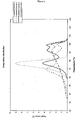
- LE6520 (CE1, unimodal Ziegler based PE), Elite 5400 (CE2, metallocene based PE), Elite 5110 (CE3, metallocene based PE), Luflexen 0322HX (CE4, metallocene based PE), m18Pfax (CE5, metallocene based PE) and mPactD144 (CE6, metallocene based PE) were analyzed by TREF. The data is shown in Table 2. Fractograms are shown in Figure 2.
- the polymers prepared in Examples 3-7 were blown into a film on a Windmöller & Hölscher blown film line.
- a 60 mm extruder with length to diameter (L/D) ratio of 30 was used.
- the die diameter was 200 mm and the die gap was 2.3 mm.
- Blow-up ratio (BUR) was 2.5 and the frost line height (FLH) was 450 mm.
- the output was 60 kg/h.
- a dual lip 'Unifow' cooling ring was used. Data is shown in Table 3.
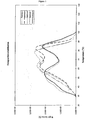
- Example 8 The films prepared in Example 8 were put to a hot tack test to measure the sealability. Two film samples were pressed together at elevated temperature. The sealing time was 0.5 seconds, the lag time was 0.1 seconds and the sealing pressure was 90 N for a specimen width 15 mm. The film thickness was 40 ⁇ m. The force required to break the seal was then measured. The data is shown in Figure 3.
- Example 3 and Example 5 were coextruded to a three-layer film on a Reifen Reifenberger blown film line.
- the core layer and the inner layer consisted of a bimodal linear low density ethylene polymer manufactured and sold by Borealis under a trade name of LE6592.
- the material of Example 3 was used for the sealing layer.
- the sealing, core and inner layer had a thickness of 14, 13 and 13 microns, respectively.
- Die diameter was 200 mm, die gap was 1.0 mm and BUR was 2.5.
Landscapes
- Chemical & Material Sciences (AREA)
- Chemical Kinetics & Catalysis (AREA)
- Health & Medical Sciences (AREA)
- Medicinal Chemistry (AREA)
- Polymers & Plastics (AREA)
- Organic Chemistry (AREA)
- Laminated Bodies (AREA)
- Manufacture Of Macromolecular Shaped Articles (AREA)
- Addition Polymer Or Copolymer, Post-Treatments, Or Chemical Modifications (AREA)
- Sealing Material Composition (AREA)
- Glass Compositions (AREA)
- Iron Core Of Rotating Electric Machines (AREA)
Applications Claiming Priority (2)
| Application Number | Priority Date | Filing Date | Title |
|---|---|---|---|
| GBGB0016153.9A GB0016153D0 (en) | 2000-06-30 | 2000-06-30 | Process |
| EP01943686A EP1294564B1 (de) | 2000-06-30 | 2001-06-29 | Heisssiegelbare polyethylenfolie und verfahren zu ihrer herstellung |
Related Parent Applications (1)
| Application Number | Title | Priority Date | Filing Date |
|---|---|---|---|
| EP01943686A Division EP1294564B1 (de) | 2000-06-30 | 2001-06-29 | Heisssiegelbare polyethylenfolie und verfahren zu ihrer herstellung |
Publications (2)
| Publication Number | Publication Date |
|---|---|
| EP1623825A2 true EP1623825A2 (de) | 2006-02-08 |
| EP1623825A3 EP1623825A3 (de) | 2008-12-03 |
Family
ID=9894814
Family Applications (2)
| Application Number | Title | Priority Date | Filing Date |
|---|---|---|---|
| EP05024369A Withdrawn EP1623825A3 (de) | 2000-06-30 | 2001-06-29 | Heisssiegelbare Polyethylenfolie und Verfahren zu ihrer Herstellung |
| EP01943686A Expired - Lifetime EP1294564B1 (de) | 2000-06-30 | 2001-06-29 | Heisssiegelbare polyethylenfolie und verfahren zu ihrer herstellung |
Family Applications After (1)
| Application Number | Title | Priority Date | Filing Date |
|---|---|---|---|
| EP01943686A Expired - Lifetime EP1294564B1 (de) | 2000-06-30 | 2001-06-29 | Heisssiegelbare polyethylenfolie und verfahren zu ihrer herstellung |
Country Status (11)
| Country | Link |
|---|---|
| US (1) | US7018710B2 (de) |
| EP (2) | EP1623825A3 (de) |
| KR (1) | KR100717654B1 (de) |
| CN (1) | CN1210148C (de) |
| AT (1) | ATE314931T1 (de) |
| AU (2) | AU6622001A (de) |
| DE (1) | DE60116490T2 (de) |
| ES (1) | ES2256259T3 (de) |
| GB (1) | GB0016153D0 (de) |
| WO (1) | WO2002002323A1 (de) |
| ZA (1) | ZA200300246B (de) |
Families Citing this family (29)
| Publication number | Priority date | Publication date | Assignee | Title |
|---|---|---|---|---|
| GB0217520D0 (en) | 2002-07-29 | 2002-09-04 | Borealis Tech Oy | Product |
| EP1566265A1 (de) * | 2004-02-20 | 2005-08-24 | Flexopack S.A. Plastics Industry | Styrolpolymer oder eine Mischung von Styrolpolymeren enthaltende mehrschichtige wärmeschrumpfbare Folie |
| EP1674490A1 (de) * | 2004-12-23 | 2006-06-28 | Borealis Technology Oy | Copolymer |
| CN101087824B (zh) * | 2005-01-12 | 2011-02-16 | 波利亚里斯技术有限公司 | 挤出涂覆聚乙烯 |
| EP1902837A1 (de) * | 2006-09-22 | 2008-03-26 | Borealis Technology OY | Mehrschichtfolie |
| DE602006009412D1 (de) * | 2006-12-21 | 2009-11-05 | Borealis Tech Oy | Film |
| EP1961558A1 (de) * | 2007-02-26 | 2008-08-27 | Borealis Technology OY | Mehrschichtige Verbundfolien |
| ES2624542T3 (es) * | 2007-02-26 | 2017-07-14 | Borealis Technology Oy | Estructura de película multicapa |
| ES2354383T5 (es) | 2007-08-10 | 2021-06-21 | Borealis Tech Oy | Artículo que comprende una composición de polipropileno |
| EP2067799A1 (de) | 2007-12-05 | 2009-06-10 | Borealis Technology OY | Polymer |
| US8114946B2 (en) | 2008-12-18 | 2012-02-14 | Chevron Phillips Chemical Company Lp | Process for producing broader molecular weight distribution polymers with a reverse comonomer distribution and low levels of long chain branches |
| EP2354183B1 (de) | 2010-01-29 | 2012-08-22 | Borealis AG | Formungszusammensetzung |
| PL2354184T3 (pl) | 2010-01-29 | 2013-01-31 | Borealis Ag | Tłoczywo polietylenowe o ulepszonym stosunku odporność na pękanie /sztywność i ulepszone udarności |
| ES2581568T3 (es) | 2010-09-29 | 2016-09-06 | Dow Global Technologies Llc | Un interpolímero de etileno/alfa-olefina apropiado para su uso en aplicaciones de película retráctil, y artículos formados a partir de la misma |
| US8907030B2 (en) | 2010-09-29 | 2014-12-09 | Dow Global Technologies Llc | Ethylene/alpha-olefin interpolymer suitable for use in fiber applications, and fibers made therefrom |
| EP2554375B1 (de) * | 2011-08-03 | 2014-04-09 | Borealis AG | Film |
| US9115233B2 (en) | 2012-06-21 | 2015-08-25 | Nova Chemicals (International) S.A. | Ethylene copolymer compositions, film and polymerization processes |
| CA2798855C (en) | 2012-06-21 | 2021-01-26 | Nova Chemicals Corporation | Ethylene copolymers having reverse comonomer incorporation |
| SG10201703271QA (en) | 2012-10-09 | 2017-07-28 | Dow Global Technologies Llc | Sealant Composition |
| CA2800056A1 (en) | 2012-12-24 | 2014-06-24 | Nova Chemicals Corporation | Polyethylene blend compositions |
| US9181369B2 (en) | 2013-03-11 | 2015-11-10 | Chevron Phillips Chemical Company Lp | Polymer films having improved heat sealing properties |
| CN104703994B (zh) * | 2013-09-26 | 2017-05-10 | Lg化学株式会社 | 过渡金属化合物、含有所述化合物的催化剂组合物及利用所述组合物的聚合物的制备方法 |
| CN103707595A (zh) * | 2013-12-17 | 2014-04-09 | 海宁市粤海彩印有限公司 | 超低温热封包装复合膜制造方法 |
| EP3286233B1 (de) | 2015-04-23 | 2022-09-14 | Univation Technologies, LLC | Polyethylencopolymere mit einer bestimmten co-monomer-verteilung |
| JP2019517938A (ja) | 2016-06-03 | 2019-06-27 | ボレアリス エージー | 多層構造体 |
| PL3630449T3 (pl) * | 2017-05-23 | 2025-04-28 | Jfe Innovation Center Srl | Metalizowane, orientowane i cienkie folie lldpe |
| CN111902467B (zh) | 2018-02-05 | 2022-11-11 | 埃克森美孚化学专利公司 | 通过添加超高分子量高密度聚乙烯增强的lldpe的加工性 |
| KR102831044B1 (ko) * | 2022-05-27 | 2025-07-04 | 롯데케미칼 주식회사 | 이축배향 필름용 폴리에틸렌 수지 조성물 |
| CN119613598A (zh) * | 2023-09-14 | 2025-03-14 | Dl化学株式会社 | 聚烯烃聚合物,聚烯烃的聚合系统和聚合方法 |
Family Cites Families (9)
| Publication number | Priority date | Publication date | Assignee | Title |
|---|---|---|---|---|
| CA2113627A1 (en) | 1991-07-18 | 1993-02-18 | Prasadarao Meka | Heat sealed article |
| US5464905A (en) | 1992-11-19 | 1995-11-07 | Mitsui Petrochemical Industries, Ltd. | Ethylene/α-olefin copolymer composition, graft modified ethylene/α-olefin copolymer composition, ethylene copolymer composition, and multi-stage olefin polymerization process |
| DE69317862T2 (de) * | 1992-12-03 | 1998-09-17 | Mitsubishi Chem Corp | Harzzusammensetzung für Laminate |
| US5792534A (en) | 1994-10-21 | 1998-08-11 | The Dow Chemical Company | Polyolefin film exhibiting heat resistivity, low hexane extractives and controlled modulus |
| US5770318A (en) | 1995-01-13 | 1998-06-23 | Norton Performance Plastics Corporation | Thermoplastic seal and wrapping film |
| EP1787806B1 (de) * | 1996-05-28 | 2013-07-03 | Kureha Corporation | Wärmeschrumpfbare Mehrschichtfolie |
| FI111166B (fi) * | 1997-01-10 | 2003-06-13 | Borealis Polymers Oy | Ekstruusiopäällystysrakenne |
| US6909028B1 (en) * | 1997-09-15 | 2005-06-21 | Kimberly-Clark Worldwide, Inc. | Stable breathable elastic garments |
| ES2212348T3 (es) * | 1997-09-19 | 2004-07-16 | The Dow Chemical Company | Composicion optimizada de interpolimero de etileno con distribucion estrecha del peso molecular, procedimiento para obtenerla y articulos hechos a partir de ella. |
-
2000
- 2000-06-30 GB GBGB0016153.9A patent/GB0016153D0/en not_active Ceased
-
2001
- 2001-06-29 AU AU6622001A patent/AU6622001A/xx active Pending
- 2001-06-29 AU AU2001266220A patent/AU2001266220B2/en not_active Ceased
- 2001-06-29 AT AT01943686T patent/ATE314931T1/de not_active IP Right Cessation
- 2001-06-29 EP EP05024369A patent/EP1623825A3/de not_active Withdrawn
- 2001-06-29 ES ES01943686T patent/ES2256259T3/es not_active Expired - Lifetime
- 2001-06-29 CN CNB01812156XA patent/CN1210148C/zh not_active Expired - Lifetime
- 2001-06-29 WO PCT/GB2001/002924 patent/WO2002002323A1/en not_active Ceased
- 2001-06-29 US US10/312,713 patent/US7018710B2/en not_active Expired - Lifetime
- 2001-06-29 EP EP01943686A patent/EP1294564B1/de not_active Expired - Lifetime
- 2001-06-29 KR KR1020027017935A patent/KR100717654B1/ko not_active Expired - Lifetime
- 2001-06-29 DE DE60116490T patent/DE60116490T2/de not_active Expired - Lifetime
-
2003
- 2003-01-09 ZA ZA200300246A patent/ZA200300246B/en unknown
Also Published As
| Publication number | Publication date |
|---|---|
| EP1623825A3 (de) | 2008-12-03 |
| AU2001266220B2 (en) | 2004-07-22 |
| DE60116490D1 (de) | 2006-03-30 |
| US7018710B2 (en) | 2006-03-28 |
| US20030171501A1 (en) | 2003-09-11 |
| CN1440330A (zh) | 2003-09-03 |
| DE60116490T2 (de) | 2006-08-31 |
| EP1294564A1 (de) | 2003-03-26 |
| GB0016153D0 (en) | 2000-08-23 |
| KR20030034114A (ko) | 2003-05-01 |
| WO2002002323A1 (en) | 2002-01-10 |
| ATE314931T1 (de) | 2006-02-15 |
| EP1294564B1 (de) | 2006-01-04 |
| ES2256259T3 (es) | 2006-07-16 |
| CN1210148C (zh) | 2005-07-13 |
| AU6622001A (en) | 2002-01-14 |
| ZA200300246B (en) | 2004-01-21 |
| KR100717654B1 (ko) | 2007-05-15 |
Similar Documents
| Publication | Publication Date | Title |
|---|---|---|
| EP1294564B1 (de) | Heisssiegelbare polyethylenfolie und verfahren zu ihrer herstellung | |
| AU2001266220A1 (en) | Heat sealable polyethylene film and method for its preparation | |
| FI114988B (fi) | Eteenisekapolymerointeja | |
| CN101600761B (zh) | 多峰中密度聚乙烯聚合物组合物 | |
| EP2895550B1 (de) | Ethylenbasierte polymere und daraus gefertigte artikel | |
| EP0945252B1 (de) | Verbundfolie | |
| JP7203047B2 (ja) | 可撓性包装材料において使用するためのポリエチレンラミネート | |
| CN102361925A (zh) | 高密度聚乙烯组合物、其制备方法、由其制备的封闭器件、和制备所述封闭器件的方法 | |
| EP1674490A1 (de) | Copolymer | |
| CN110770016A (zh) | 用于柔性包装材料的多层聚乙烯层压物和膜 | |
| KR20060052988A (ko) | 프로필렌계 랜덤 공중합체 및 그 용도 | |
| WO1999016799A1 (en) | Novel narrow molecular weight distribution copolymers containing long chain branches and process to form same | |
| WO2023280800A1 (en) | Multilayer film | |
| JP3634022B2 (ja) | フィルムおよびシーラント | |
| WO2007065644A1 (en) | Polymer | |
| JPH11333980A (ja) | 積層フィルム | |
| JP4219837B2 (ja) | バリア性包装袋またはバリア性包装容器およびその製造方法 | |
| JPH0912796A (ja) | フィルムおよび積層体 | |
| JP2003276134A (ja) | 易引裂性多層シーラントフィルム | |
| JPH0994933A (ja) | ストレッチフィルム |
Legal Events
| Date | Code | Title | Description |
|---|---|---|---|
| PUAI | Public reference made under article 153(3) epc to a published international application that has entered the european phase |
Free format text: ORIGINAL CODE: 0009012 |
|
| AC | Divisional application: reference to earlier application |
Ref document number: 1294564 Country of ref document: EP Kind code of ref document: P |
|
| AK | Designated contracting states |
Kind code of ref document: A2 Designated state(s): AT BE CH CY DE DK ES FI FR GB GR IE IT LI LU MC NL PT SE TR |
|
| AX | Request for extension of the european patent |
Extension state: AL |
|
| PUAL | Search report despatched |
Free format text: ORIGINAL CODE: 0009013 |
|
| AK | Designated contracting states |
Kind code of ref document: A3 Designated state(s): AT BE CH CY DE DK ES FI FR GB GR IE IT LI LU MC NL PT SE TR |
|
| AX | Request for extension of the european patent |
Extension state: AL |
|
| 17P | Request for examination filed |
Effective date: 20090520 |
|
| 17Q | First examination report despatched |
Effective date: 20090713 |
|
| AKX | Designation fees paid |
Designated state(s): AT BE CH CY DE DK ES FI FR GB GR IE IT LI LU MC NL PT SE TR |
|
| STAA | Information on the status of an ep patent application or granted ep patent |
Free format text: STATUS: THE APPLICATION IS DEEMED TO BE WITHDRAWN |
|
| 18D | Application deemed to be withdrawn |
Effective date: 20091124 |