EP1624725A2 - Kochgerät unf Kochsverfahren mittels eines Barcodes - Google Patents
Kochgerät unf Kochsverfahren mittels eines Barcodes Download PDFInfo
- Publication number
- EP1624725A2 EP1624725A2 EP20050253347 EP05253347A EP1624725A2 EP 1624725 A2 EP1624725 A2 EP 1624725A2 EP 20050253347 EP20050253347 EP 20050253347 EP 05253347 A EP05253347 A EP 05253347A EP 1624725 A2 EP1624725 A2 EP 1624725A2
- Authority
- EP
- European Patent Office
- Prior art keywords
- cooking
- food
- weight
- servings
- cooking chamber
- Prior art date
- Legal status (The legal status is an assumption and is not a legal conclusion. Google has not performed a legal analysis and makes no representation as to the accuracy of the status listed.)
- Withdrawn
Links
Images



Classifications
-
- H—ELECTRICITY
- H05—ELECTRIC TECHNIQUES NOT OTHERWISE PROVIDED FOR
- H05B—ELECTRIC HEATING; ELECTRIC LIGHT SOURCES NOT OTHERWISE PROVIDED FOR; CIRCUIT ARRANGEMENTS FOR ELECTRIC LIGHT SOURCES, IN GENERAL
- H05B6/00—Heating by electric, magnetic or electromagnetic fields
- H05B6/64—Heating using microwaves
- H05B6/6435—Aspects relating to the user interface of the microwave heating apparatus
- H05B6/6441—Aspects relating to the user interface of the microwave heating apparatus allowing the input of coded operation instructions, e.g. bar code reader
-
- H—ELECTRICITY
- H05—ELECTRIC TECHNIQUES NOT OTHERWISE PROVIDED FOR
- H05B—ELECTRIC HEATING; ELECTRIC LIGHT SOURCES NOT OTHERWISE PROVIDED FOR; CIRCUIT ARRANGEMENTS FOR ELECTRIC LIGHT SOURCES, IN GENERAL
- H05B6/00—Heating by electric, magnetic or electromagnetic fields
- H05B6/64—Heating using microwaves
- H05B6/6447—Method of operation or details of the microwave heating apparatus related to the use of detectors or sensors
- H05B6/6464—Method of operation or details of the microwave heating apparatus related to the use of detectors or sensors using weight sensors
-
- H—ELECTRICITY
- H05—ELECTRIC TECHNIQUES NOT OTHERWISE PROVIDED FOR
- H05B—ELECTRIC HEATING; ELECTRIC LIGHT SOURCES NOT OTHERWISE PROVIDED FOR; CIRCUIT ARRANGEMENTS FOR ELECTRIC LIGHT SOURCES, IN GENERAL
- H05B2206/00—Aspects relating to heating by electric, magnetic, or electromagnetic fields covered by group H05B6/00
- H05B2206/04—Heating using microwaves
Definitions
- the present invention relates to cooking apparatus and cooking methods thereof.
- cooking apparatuses are devices that cook foods using various heating sources.
- the cooking apparatuses are classified into several types of cooking apparatuses.
- a microwave oven is a cooking apparatus that cooks foods using microwaves.
- a user directly inputs cooking time, cooking mode, and kinds of food to be cooked through the use of a key input unit formed at the front panel of the microwave oven. That is, in the conventional microwave oven it is necessary that the user manually input cooking information. Consequently, appropriate cooking conditions are not easily and conveniently set.
- a microwave oven having a bar-code reader has been developed that is capable of cooking foods based upon the cooking information read by the bar-code reader.
- Such a microwave oven is disclosed in Korean Unexamined Patent Publication No. 2001-0010530 and Korean Unexamined Patent Publication No. 1999-0074607.
- the conventional microwave oven having the bar-code reader includes a cooking chamber disposed in an oven body, a built-in bar-code reader disposed at the front panel of the oven body or a charge-coupled display-type or pen-type bar-code reader that is connected to the oven body via a cable, a display unit which displays the operation of the microwave oven, an input unit including a plurality of input buttons, and a magnetron which generates microwaves to be supplied to the cooking chamber.
- a user brings a bar code attached to a food package to the bar-code reader to read the bar code, and the microwave oven performs the cooking process on based upon the cooking condition stored in the read bar code.
- the cooking process is performed only based upon the cooking condition read from the bar code without consideration of the amount of food to be cooked.
- a cooking apparatus and a cooking method thereof capable of performing a cooking process in accordance with a cooking condition corresponding to an amount of food introduced into a cooking chamber when the cooking process is performed using a bar code printed on a food package.
- a cooking method for performing a cooking process using a bar code comprising reading a bar code storing a reference weight of food to be cooked and a cooking condition based on the reference weight; measuring a weight of the food introduced into a cooking chamber; calculating a number of servings of the food introduced into the cooking chamber by using the weight of the food introduced into the cooking chamber and the reference weight of the food; and changing the cooking condition to correspond to the number of servings of the food introduced into the cooking chamber, when the number of servings of the food introduced into the cooking chamber varies from a number of servings corresponding to the reference weight of the food, thereby setting a final, changed cooking condition.
- a portion of a three-serving food package for example, can be cooked in the cooking chamber in accordance with cooking conditions stored in a bar code printed on the three-serving food package, which are set to cook the entire three-serving food package, without excessively cooking the portion.
- an entire three-serving food package can be sufficiently cooked in the cooking chamber based upon a cooking condition stored in the bar code printed on the three-serving food package, which are set to cook a one-serving portion of the three-serving food package.
- a microwave oven according to the present invention comprises a cooking chamber 11 disposed in an oven body 10 a door 12 to open/close an opening of the cooking chamber 11, and a front panel 13 disposed at the right side of the door 12.
- a tray 14 is disposed at a bottom of the cooking chamber 11, to be rotated with food placed thereon.
- a tray motor 25 (see FIG. 2) to rotate the tray 14.
- a ring-shaped roller supporting member 16 including a plurality of rollers 15.
- the rollers 15 are moved along a circular track 17.
- a weight sensor 18 At the lower surface of the track 17 is disposed a weight sensor 18 to sense the weight of the food to be cooked placed on the tray 14.
- the tray motor 25 is operated, the tray is rotated while the plurality of rollers 15 roll along the track 17.
- the rollers 15 pass over the weight sensor 18, the rollers 15 press against the weight sensor 18 so that the weight of the food to be cooked, which is placed on the tray 14, can be measured by the weight sensor 18.
- the front panel 13 comprises a display unit 19 disposed at the upper part thereof to display an operation of the microwave oven, a built-in bar-code reader 21 disposed below the display unit 19 to read a bar code, and an input unit 22 including a plurality of input buttons is disposed below the bar-code reader 21.
- the microwave oven further comprises a magnetron-driving unit 24 to drive a magnetron 23 that generates microwaves to be supplied to the cooking chamber 11, a tray motor 25 to rotate the tray 14, and a microcomputer 20 to interpret the bar code read by the bar-code reader 21 and control the respective components of the microwave oven.
- a bar code 26 stores cooking information containing number of servings, serving multipliers, the weight of one serving, and various cooking conditions.
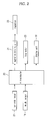
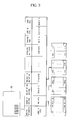
- the microcomputer 20 stores interpreting rules as is indicated in FIG. 3. Specifically, the interpreting rules stored in the microcomputer 20 prescribe what cooking information each line stores, and detailed contents of the cooking information corresponding to a value of the read bar code 26. Table 1 Number of bits Two bits Three bits Cooking information Number of servings N-serving multiplier Cooking contents 00 One serving 000 1.2 ... ... 11 Four servings 111 2.6
- the number of servings indicates the number of servings of food to be cooked.
- the number of servings stored in the bar code 26 is the total number of servings of the food package. Two bits are assigned to the bar code 26 set to store the number of servings. For example, when the read bar code 26 is "00,” the number of servings of the food to be cooked corresponds to one serving. When the read bar code 26 is "11,” the number of servings of the food to be cooked corresponds to four servings.
- the serving multiplier may be used to properly change the cooking time stored in the bar code 26, which is set to appropriately cook one serving of the food, when the number of servings is greater than one serving.
- the serving multiplier determines a value by which the cooking time for one serving is multiplied when multiple servings are to be cooked.
- the cooking time for multiple servings is calculated by the following equation.
- Cooking time for N servings cooking time for one serving * N - serving multiplier where N is a natural number greater than 1, and N servings is the number of servings of the food introduced into the cooking chamber.
- the cooking time for one serving is set to 200 seconds
- the two-serving multiplier is set to 1.2
- the three-serving multiplier is set to 1.4
- the cooking time for two servings is 240 seconds (200 * 1.2)
- the cooking time for three servings is 280 seconds (200 * 1.4). Consequently, the cooking time for N servings is the product of the cooking time for one serving and the N-serving multiplier.
- the bar code 26 stores serving multipliers corresponding to the respective servings (excluding one serving) less than or equal to the total servings of the food package to be cooked as shown in FIG. 3. For example, when a food package to be cooked is a three-serving food package, a two-serving multiplier corresponding to two servings and a three-serving multiplier corresponding to three servings are stored in sequence in the bar code 26. The value of the serving multiplier may be experimentally selected. When the number of servings of the food to be cooked is more than one, the cooking time for one serving (i.e., the cooking time read from the bar code 26) is multiplied by the serving multiplier corresponding to the number of servings by means of the microcomputer 20 (shown in FIG. 2). As a result, the cooking time for the number of servings is calculated.
- the weight of one serving is the weight of the food to be cooked corresponding to one serving.
- Three bits are assigned to the bar code 26 for storing the weight of one serving. For example, when the read bar code 26 is "000,” the weight of the food to be cooked is 200 grams. When the read bar code 26 is "111,” the weight of the food to be cooked is 340 grams.
- the cooking information stored in the bar code 26 further comprises various cooking conditions including cooking mode and cooking time, in addition to the number of servings, the serving multipliers, and the weight of one serving. Specifically, the cooking time is set to appropriately cook one serving of food.
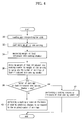
- the process moves to operation 32, where when the cooking information is interpreted, the microcomputer 20 confirms the weight of one serving of food contained in the cooking information.
- the process moves to operation 34, where the weight of the food introduced into the cooking chamber 11 by the user is confirmed based upon the weight measured by the weight sensor 18, which is obtained as the tray motor 25 is operated.
- the weight measured by the weight sensor 18 is a sum of the weight of the tray 14 and the weight of the food to be cooked.
- the microcomputer 20 calculates a net weight of the food introduced into the cooking chamber by subtracting the weight of the tray 14 from the weight measured by the weight sensor 18.
- the weight of the tray 14 is previously stored in the microcomputer 20.
- the process moves to operation 36, where when the weight of one serving and the weight of the food introduced into the cooking chamber 11 are obtained, the weight of the food introduced into the cooking chamber 11 is divided by the weight of one serving to calculate the number of servings of the food introduced into the cooking chamber 11. For example, when the weight of one serving is 200 grams and the weight of the food introduced into the cooking chamber 11 is 400 grams, the number of servings of the food introduced into the cooking chamber 11 is two servings (400 grams/ 200 grams).
- the process moves to operation 38, where the microcomputer 20 determines whether the number of servings of the food introduced into the cooking chamber 11 is equal to one serving.
- the process moves to operation 42, where the cooking process is performed using the cooking time stored in the bar code 26 .
- the process moves to operation 40, where the microcomputer 20 changes the cooking time (i.e., multiplies the cooking time by the serving multiplier corresponding to the number of servings of the food introduced into the cooking chamber 11), and performs the cooking process using the changed cooking time.
- the cooking time i.e., multiplies the cooking time by the serving multiplier corresponding to the number of servings of the food introduced into the cooking chamber 11
- the microcomputer 20 drives the magnetron 23 for the period of the changed cooking time to perform the cooking process.
- the food introduced into the cooking chamber is optimally cooked.
- the second embodiment is different from the first embodiment in that the cooking time stored in the bar code 26a is set to appropriately cook the entire food package.
- Table 2 Number of bits Two bits Three bits Cooking information Number of servings N-serving multiplier Cooking contents 00 One serving 000 0.2 ... ... 11 Four servings 111 0.9
- the cooking time for two servings is 200 seconds
- the one-serving multiplier corresponding to one serving is 0.7
- the food to be cooked corresponds to one servings
- the cooking time is changed to 140 seconds (200 * 0.7). Consequently, the cooking time for N servings is the product of the cooking time for the total number of servings and the N-serving multiplier.
- the bar code 26a stores serving multipliers corresponding to the number of servings less than the total number of servings of the food package to be cooked. For example, when a food package to be cooked is a three-serving food package, a one-serving multiplier corresponding to one serving and a two-serving multiplier corresponding to two servings are stored in sequence in the bar code 26a. The value of the serving multiplier may be experimentally selected.
- the cooking time for the total number of servings i.e., the cooking time read from the bar code 26a
- the serving multiplier corresponding to the number of servings by means of the microcomputer 20. As a result, a cooking time for the number of servings is calculated.
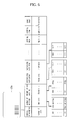
- the other cooking information shown in FIG. 5 is identical to that of FIG. 3, a description will not be given accordingly.
- the process moves to operation 58, where the microcomputer 20 determines whether the number of servings of the food introduced into the cooking chamber 11 is equal to the total number of servings.
- the process moves to operation 62, where the cooking process is performed for the cooking time stored in the bar code 26a.
- the process moves to operation 60, where the microcomputer 20 changes the cooking time (i.e., multiplies the cooking time by the serving multiplier corresponding to the number of servings of the food introduced into the cooking chamber 11), and performs the cooking process using the changed cooking time.
- the cooking time i.e., multiplies the cooking time by the serving multiplier corresponding to the number of servings of the food introduced into the cooking chamber 11
- the cooking time is 200 seconds
- the two-serving multiplier is 0.7
- the cooking time is changed to 140 seconds (200 * 0.7).
- the microcomputer 20 drives the magnetron 23 for the period of the changed cooking time to perform the cooking process. As a result, the food introduced into the cooking chamber is optimally cooked.
- a bar code 26b used in the third embodiment stores the total weight of the food instead of the weight of one serving of food, and the cooking time is set to appropriately cook one serving.
- the total weight of the food to be cooked is the total weight of the food package.
- the total weight of the food to be cooked is previously measured and stored in the bar code 26b. Three bits are assigned to the bar code for storing the weight of the total number of servings of the food to be cooked.
- the read bar code 26b is "000,” the total weight of the food to be cooked is 200 grams.
- the read bar code 26b is "111,” the total weight of the food to be cooked is 1600 grams.
- the additional cooking information of FIG. 7 is identical to that of FIG. 3, the description of which will not be given accordingly.
- FIG. 8 in operation 70, when a user brings a bar code 26b printed on a food package to be cooked to the bar-code reader 21, the bar-code reader 21 reads the bar code 26b.
- the bar code 26b is read by the bar-code reader 21, the read bar code 26b is transmitted to the microcomputer 20.
- the microcomputer 20 interprets the cooking information stored in the bar code 26b using the interpreting rules stored in the microcomputer 20.
- the process moves to operation 72, where, when the cooking information is interpreted, the microcomputer 20 confirms the number of servings of the food package to be cooked and the weight of the food package to be cooked based upon the total number of servings and the total weight of the food contained in the cooking information. From operation 72, the process moves to operation 74, where the total weight of the food to be cooked is divided by the total number of servings, to thereby calculate the weight of the food to be cooked corresponding to one serving.
- the process moves to operation 76, where the weight of the food introduced into the cooking chamber 11 by the user is confirmed based upon the weight measured by the weight sensor 18, which is obtained as the tray motor 25 is operated.
- the weight measured by the weight sensor 18 is the sum of the weight of the tray 14 and the weight of the food to be cooked.
- the microcomputer 20 calculates the net weight of the food introduced into the cooking chamber by subtracting the weight of the tray 14 from the weight measured by the weight sensor 18.
- the weight of the tray 14 is previously stored in the microcomputer 20.
- the process moves to operation 78, where when the weight of the food to be cooked corresponding to one serving and the weight of the food introduced into the cooking chamber 11 are obtained, the weight of the food introduced into the cooking chamber 11 is divided by the weight of the food to be cooked corresponding to one serving to calculate the number of servings of the food introduced into the cooking chamber 11.
- the weight of the food introduced into the cooking chamber 11 is divided by the weight of the food to be cooked corresponding to one serving to calculate the number of servings of the food introduced into the cooking chamber 11.
- the weight of the food introduced into the cooking chamber 11 is a three-serving food package (total number of servings) and the weight of the food package is 600 grams (i.e., total weight of the food to be cooked)
- the weight of the food to be cooked corresponding to one serving is 200 grams (600 grams / 3).
- the number of servings of the food introduced into the cooking chamber 11 is two servings (400 grams/ 200 grams).
- Operations 80 to 84 of FIG. 8 are identical to Operations 38 to 42 of FIG. 4, the description of which will not be given accordingly.
- a bar code 26c used in the fourth embodiment stores the total weight of the food same as the bar code 26b in FIG. 7, and the cooking time is set to appropriately cook the entirety of food to be cooked.
- the additional cooking information of FIG. 9 is identical to that of FIG. 3, the description of which will not be given accordingly.
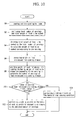
- Operations 90 to 98 of FIG. 10 are identical to Operations 70 to 78 of FIG. 8, the description of which will not be given accordingly.
- Operations 100 to 102 of FIG. 10 are identical to Operations 58 to 62 of FIG. 6, the description of which will not be given accordingly.
- preferred embodiments of the present invention provide a cooking apparatus and a cooking method capable of automatically recognizing the number of servings of food introduced into a cooking chamber. Consequently, preferred embodiments of the present invention have the effect of optimally cooking the food on the basis of the amount of the food to be cooked.
Landscapes
- Physics & Mathematics (AREA)
- Electromagnetism (AREA)
- Engineering & Computer Science (AREA)
- Human Computer Interaction (AREA)
- Electric Ovens (AREA)
Applications Claiming Priority (1)
| Application Number | Priority Date | Filing Date | Title |
|---|---|---|---|
| KR1020040061502A KR101132330B1 (ko) | 2004-08-04 | 2004-08-04 | 조리장치 및 조리방법 |
Publications (2)
| Publication Number | Publication Date |
|---|---|
| EP1624725A2 true EP1624725A2 (de) | 2006-02-08 |
| EP1624725A3 EP1624725A3 (de) | 2008-01-09 |
Family
ID=35004135
Family Applications (1)
| Application Number | Title | Priority Date | Filing Date |
|---|---|---|---|
| EP05253347A Withdrawn EP1624725A3 (de) | 2004-08-04 | 2005-06-01 | Kochgerät unf Kochsverfahren mittels eines Barcodes |
Country Status (5)
| Country | Link |
|---|---|
| US (1) | US7238923B2 (de) |
| EP (1) | EP1624725A3 (de) |
| JP (1) | JP3971431B2 (de) |
| KR (1) | KR101132330B1 (de) |
| CN (1) | CN100401310C (de) |
Cited By (2)
| Publication number | Priority date | Publication date | Assignee | Title |
|---|---|---|---|---|
| WO2017182075A1 (de) * | 2016-04-20 | 2017-10-26 | Vorwerk & Co. Interholding Gmbh | System und verfahren zum automatischen ermitteln des gewichts von nahrungsmitteln |
| WO2022201157A1 (en) * | 2021-03-25 | 2022-09-29 | Shai Jaffe | Meals preparation machine |
Families Citing this family (9)
| Publication number | Priority date | Publication date | Assignee | Title |
|---|---|---|---|---|
| US8214394B2 (en) * | 2006-03-01 | 2012-07-03 | Oracle International Corporation | Propagating user identities in a secure federated search system |
| CN102567694A (zh) * | 2010-12-15 | 2012-07-11 | 李文庆 | 一种调理家电或冲泡家电识别装置 |
| CN102648826A (zh) * | 2011-02-23 | 2012-08-29 | 李文庆 | 一种食品与厨房家电的结合 |
| CN103577913A (zh) * | 2012-07-31 | 2014-02-12 | 李文庆 | 一种智能调理厨具的管理系统 |
| CN103577914A (zh) * | 2012-07-31 | 2014-02-12 | 李文庆 | 一种智能调理厨具的管理系统 |
| KR101764910B1 (ko) | 2014-12-04 | 2017-08-04 | 주식회사 블루인더스 | 오염수 배출이 저감된 장갑지 가죽의 제조방법 |
| CN105852661A (zh) * | 2016-04-29 | 2016-08-17 | 广东美的厨房电器制造有限公司 | 烧烤器具及烧烤器具的控制方法 |
| CN109953657B (zh) * | 2017-12-26 | 2022-01-14 | 宁波方太厨具有限公司 | 一种烤箱的智能烹饪控制方法 |
| CN111374561B (zh) * | 2018-12-28 | 2023-06-16 | 浙江苏泊尔家电制造有限公司 | 一种烹饪方法及烹饪器具 |
Citations (4)
| Publication number | Priority date | Publication date | Assignee | Title |
|---|---|---|---|---|
| JPS60165426A (ja) | 1984-02-07 | 1985-08-28 | Matsushita Electric Ind Co Ltd | 高周波加熱装置 |
| US5938966A (en) | 1997-02-26 | 1999-08-17 | Lg Electronics Inc. | Apparatus for and method of controlling cooking operation of microwave ovens using code system |
| KR19990074607A (ko) | 1998-03-12 | 1999-10-05 | 윤종용 | 바코드 리드기를 구비한 전자렌지 및 그 제어방법 |
| KR20010010530A (ko) | 1999-07-21 | 2001-02-15 | 전주범 | 바코드를 이용한 전자렌지의 조리장치 및 방법 |
Family Cites Families (11)
| Publication number | Priority date | Publication date | Assignee | Title |
|---|---|---|---|---|
| JPS5620931A (en) * | 1979-07-27 | 1981-02-27 | Sanyo Electric Co Ltd | Electronically controlled cooker |
| US4323773A (en) * | 1980-01-17 | 1982-04-06 | Litton Systems, Inc. | Bar code controlled microwave oven |
| JPH0452564Y2 (de) * | 1987-09-14 | 1992-12-10 | ||
| JP2839765B2 (ja) * | 1991-09-13 | 1998-12-16 | 株式会社東芝 | 加熱調理器 |
| JPH08121779A (ja) * | 1994-10-26 | 1996-05-17 | Toshiba Corp | 加熱調理器 |
| DE69700344T2 (de) * | 1996-02-23 | 2000-01-27 | Samsung Electronics Co Ltd | Verfahren zum Steuern eines Mikrowellenofens zum Vermeiden des Übergarens kleiner Speiseportionen |
| JP2000012211A (ja) | 1998-06-23 | 2000-01-14 | Toshiba Corp | 電子レンジ |
| JP2001317741A (ja) * | 2000-02-28 | 2001-11-16 | Dainippon Printing Co Ltd | 食品の自動調理システムと電子レンジ |
| US6862494B2 (en) * | 2001-12-13 | 2005-03-01 | General Electric Company | Automated cooking system for food accompanied by machine readable indicia |
| JP2004212010A (ja) * | 2003-01-08 | 2004-07-29 | Matsushita Electric Ind Co Ltd | 高周波加熱調理器 |
| US20060036395A1 (en) * | 2004-07-30 | 2006-02-16 | Shaya Steven A | Method and apparatus for measuring and controlling food intake of an individual |
-
2004
- 2004-08-04 KR KR1020040061502A patent/KR101132330B1/ko not_active Expired - Fee Related
-
2005
- 2005-05-31 US US11/139,973 patent/US7238923B2/en not_active Expired - Lifetime
- 2005-06-01 EP EP05253347A patent/EP1624725A3/de not_active Withdrawn
- 2005-06-02 CN CNB2005100742695A patent/CN100401310C/zh not_active Expired - Fee Related
- 2005-06-20 JP JP2005179980A patent/JP3971431B2/ja not_active Expired - Fee Related
Patent Citations (4)
| Publication number | Priority date | Publication date | Assignee | Title |
|---|---|---|---|---|
| JPS60165426A (ja) | 1984-02-07 | 1985-08-28 | Matsushita Electric Ind Co Ltd | 高周波加熱装置 |
| US5938966A (en) | 1997-02-26 | 1999-08-17 | Lg Electronics Inc. | Apparatus for and method of controlling cooking operation of microwave ovens using code system |
| KR19990074607A (ko) | 1998-03-12 | 1999-10-05 | 윤종용 | 바코드 리드기를 구비한 전자렌지 및 그 제어방법 |
| KR20010010530A (ko) | 1999-07-21 | 2001-02-15 | 전주범 | 바코드를 이용한 전자렌지의 조리장치 및 방법 |
Cited By (3)
| Publication number | Priority date | Publication date | Assignee | Title |
|---|---|---|---|---|
| WO2017182075A1 (de) * | 2016-04-20 | 2017-10-26 | Vorwerk & Co. Interholding Gmbh | System und verfahren zum automatischen ermitteln des gewichts von nahrungsmitteln |
| WO2022201157A1 (en) * | 2021-03-25 | 2022-09-29 | Shai Jaffe | Meals preparation machine |
| US11589713B2 (en) | 2021-03-25 | 2023-02-28 | Shai Jaffe | Meals preparation machine |
Also Published As
| Publication number | Publication date |
|---|---|
| KR101132330B1 (ko) | 2012-04-05 |
| JP2006046893A (ja) | 2006-02-16 |
| CN1731412A (zh) | 2006-02-08 |
| KR20060012831A (ko) | 2006-02-09 |
| EP1624725A3 (de) | 2008-01-09 |
| CN100401310C (zh) | 2008-07-09 |
| US20060027568A1 (en) | 2006-02-09 |
| JP3971431B2 (ja) | 2007-09-05 |
| US7238923B2 (en) | 2007-07-03 |
Similar Documents
| Publication | Publication Date | Title |
|---|---|---|
| EP1501336B1 (de) | Kochvorrichtung mit Barcodeverwendung | |
| EP1624725A2 (de) | Kochgerät unf Kochsverfahren mittels eines Barcodes | |
| TW386332B (en) | Method of controlling the driving of a tray of a microwave oven | |
| EP1615470A1 (de) | Kochvorrichtung und Kochverfahren mit Barcodeverwendung | |
| US5767488A (en) | Oven preheat countdown timer | |
| KR20080037886A (ko) | 열량정보 표시기능을 구비한 조리기기 및 열량정보표시방법 | |
| EP1283660A2 (de) | Mikrowellenofen versehen mit einer Reis Kochfunktion | |
| GB2330920A (en) | Microwave oven adapted for simultaneous cooking | |
| JP2016166724A (ja) | 加熱調理器 | |
| JP5863452B2 (ja) | 誘導加熱調理器 | |
| EP1622426A2 (de) | Kochvorrichtung und Steuerverfahren dergleichen | |
| EP1765037B1 (de) | Kochvorrichtung mit Barcodeverwendung | |
| EP0792083B1 (de) | Verfahren zum Steuern eines Mikrowellenofens zum Vermeiden des Übergarens kleiner Speiseportionen | |
| JPH03221727A (ja) | オーブンレンジによる皮付き生ポテト類の調理方法ならびにその装置 | |
| KR20010000431A (ko) | 전자렌지 | |
| JP7098776B2 (ja) | 加熱調理器 | |
| KR20250164908A (ko) | 전기 조리 장치 | |
| JPS58219335A (ja) | 電子レンジ | |
| JP2024029511A (ja) | 高周波誘電加熱装置 | |
| JPH05149546A (ja) | 調理装置 | |
| JP2004316939A (ja) | 高周波加熱装置 | |
| JPS59137726A (ja) | 調理器 | |
| JPH03221725A (ja) | オーブンレンジによる皮付き生ポテト類の調理方法ならびにその装置 | |
| JPH03221726A (ja) | オーブンレンジによる皮付き生ポテト類の調理方法ならびにその装置 | |
| JPS60228823A (ja) | 加熱装置 |
Legal Events
| Date | Code | Title | Description |
|---|---|---|---|
| PUAI | Public reference made under article 153(3) epc to a published international application that has entered the european phase |
Free format text: ORIGINAL CODE: 0009012 |
|
| AK | Designated contracting states |
Kind code of ref document: A2 Designated state(s): AT BE BG CH CY CZ DE DK EE ES FI FR GB GR HU IE IS IT LI LT LU MC NL PL PT RO SE SI SK TR |
|
| AX | Request for extension of the european patent |
Extension state: AL BA HR LV MK YU |
|
| PUAL | Search report despatched |
Free format text: ORIGINAL CODE: 0009013 |
|
| AK | Designated contracting states |
Kind code of ref document: A3 Designated state(s): AT BE BG CH CY CZ DE DK EE ES FI FR GB GR HU IE IS IT LI LT LU MC NL PL PT RO SE SI SK TR |
|
| AX | Request for extension of the european patent |
Extension state: AL BA HR LV MK YU |
|
| 17P | Request for examination filed |
Effective date: 20080409 |
|
| AKX | Designation fees paid |
Designated state(s): DE FR GB |
|
| 17Q | First examination report despatched |
Effective date: 20090715 |
|
| RAP1 | Party data changed (applicant data changed or rights of an application transferred) |
Owner name: SAMSUNG ELECTRONICS CO., LTD. |
|
| GRAP | Despatch of communication of intention to grant a patent |
Free format text: ORIGINAL CODE: EPIDOSNIGR1 |
|
| INTG | Intention to grant announced |
Effective date: 20150429 |
|
| RIN1 | Information on inventor provided before grant (corrected) |
Inventor name: KIM, KWANG KEUN Inventor name: HONG, SEOK WEON Inventor name: HA, YU JEUB Inventor name: KIM, HYUN SUK |
|
| STAA | Information on the status of an ep patent application or granted ep patent |
Free format text: STATUS: THE APPLICATION IS DEEMED TO BE WITHDRAWN |
|
| 18D | Application deemed to be withdrawn |
Effective date: 20150910 |