EP1626114A2 - Verfahren zur kontinuierlichen Herstellung einer geflockten und gefärbten Unterlage - Google Patents
Verfahren zur kontinuierlichen Herstellung einer geflockten und gefärbten Unterlage Download PDFInfo
- Publication number
- EP1626114A2 EP1626114A2 EP05291582A EP05291582A EP1626114A2 EP 1626114 A2 EP1626114 A2 EP 1626114A2 EP 05291582 A EP05291582 A EP 05291582A EP 05291582 A EP05291582 A EP 05291582A EP 1626114 A2 EP1626114 A2 EP 1626114A2
- Authority
- EP
- European Patent Office
- Prior art keywords
- fibers
- process according
- polymerizable resin
- resin
- support
- Prior art date
- Legal status (The legal status is an assumption and is not a legal conclusion. Google has not performed a legal analysis and makes no representation as to the accuracy of the status listed.)
- Withdrawn
Links
Images


Classifications
-
- D—TEXTILES; PAPER
- D06—TREATMENT OF TEXTILES OR THE LIKE; LAUNDERING; FLEXIBLE MATERIALS NOT OTHERWISE PROVIDED FOR
- D06P—DYEING OR PRINTING TEXTILES; DYEING LEATHER, FURS OR SOLID MACROMOLECULAR SUBSTANCES IN ANY FORM
- D06P5/00—Other features in dyeing or printing textiles, or dyeing leather, furs, or solid macromolecular substances in any form
- D06P5/001—Special chemical aspects of printing textile materials
-
- D—TEXTILES; PAPER
- D04—BRAIDING; LACE-MAKING; KNITTING; TRIMMINGS; NON-WOVEN FABRICS
- D04H—MAKING TEXTILE FABRICS, e.g. FROM FIBRES OR FILAMENTARY MATERIAL; FABRICS MADE BY SUCH PROCESSES OR APPARATUS, e.g. FELTS, NON-WOVEN FABRICS; COTTON-WOOL; WADDING ; NON-WOVEN FABRICS FROM STAPLE FIBRES, FILAMENTS OR YARNS, BONDED WITH AT LEAST ONE WEB-LIKE MATERIAL DURING THEIR CONSOLIDATION
- D04H11/00—Non-woven pile fabrics
-
- D—TEXTILES; PAPER
- D06—TREATMENT OF TEXTILES OR THE LIKE; LAUNDERING; FLEXIBLE MATERIALS NOT OTHERWISE PROVIDED FOR
- D06P—DYEING OR PRINTING TEXTILES; DYEING LEATHER, FURS OR SOLID MACROMOLECULAR SUBSTANCES IN ANY FORM
- D06P1/00—General processes of dyeing or printing textiles, or general processes of dyeing leather, furs, or solid macromolecular substances in any form, classified according to the dyes, pigments, or auxiliary substances employed
- D06P1/0004—General aspects of dyeing
-
- D—TEXTILES; PAPER
- D06—TREATMENT OF TEXTILES OR THE LIKE; LAUNDERING; FLEXIBLE MATERIALS NOT OTHERWISE PROVIDED FOR
- D06P—DYEING OR PRINTING TEXTILES; DYEING LEATHER, FURS OR SOLID MACROMOLECULAR SUBSTANCES IN ANY FORM
- D06P5/00—Other features in dyeing or printing textiles, or dyeing leather, furs, or solid macromolecular substances in any form
- D06P5/003—Transfer printing
-
- D—TEXTILES; PAPER
- D06—TREATMENT OF TEXTILES OR THE LIKE; LAUNDERING; FLEXIBLE MATERIALS NOT OTHERWISE PROVIDED FOR
- D06P—DYEING OR PRINTING TEXTILES; DYEING LEATHER, FURS OR SOLID MACROMOLECULAR SUBSTANCES IN ANY FORM
- D06P5/00—Other features in dyeing or printing textiles, or dyeing leather, furs, or solid macromolecular substances in any form
- D06P5/003—Transfer printing
- D06P5/004—Transfer printing using subliming dyes
-
- D—TEXTILES; PAPER
- D06—TREATMENT OF TEXTILES OR THE LIKE; LAUNDERING; FLEXIBLE MATERIALS NOT OTHERWISE PROVIDED FOR
- D06Q—DECORATING TEXTILES
- D06Q1/00—Decorating textiles
-
- D—TEXTILES; PAPER
- D06—TREATMENT OF TEXTILES OR THE LIKE; LAUNDERING; FLEXIBLE MATERIALS NOT OTHERWISE PROVIDED FOR
- D06Q—DECORATING TEXTILES
- D06Q1/00—Decorating textiles
- D06Q1/12—Decorating textiles by transferring a chemical agent or a metallic or non-metallic material in particulate or other form, from a solid temporary carrier to the textile
- D06Q1/14—Decorating textiles by transferring a chemical agent or a metallic or non-metallic material in particulate or other form, from a solid temporary carrier to the textile by transferring fibres, or adhesives for fibres, to the textile
Definitions
- the present invention relates to a method of continuously manufacturing a flocked and colored sheet support.
- the sublimation printing which is applicable to certain synthetic fibers allows the manufacture in continuous (in rolls) flocked and colored products, either united or reproducing a single color or multicolored given.
- This operation is usually done in recovery. More precisely, after the flocked product has been manufactured, a provisional paper pre-printed with sublimable inks is brought into contact with the flocked product and the assembly is worn for several seconds at a temperature of about 200 ° C. which can trigger the sublimation of the pigments contained in the ink used.
- the impression carried by the temporary paper is thus faithfully "transferred” hot on the flocked support, giving the latter a colorful, plain or multicolored, depending on the graphic characteristics of the preprinted temporary paper.
- the polyamide fibers for example "nylon 6” or “nylon 6-6” (registered trademarks) are quite resistant to the crushing imposed by the sublimation printing operation, during which the "flock" fibers are subjected to the combined effect of heat - about 200 ° C to 210 ° C - and the pressure of support of the pre-printed paper on the flocked support.
- the resistance to washing and rubbing, dry and wet, of the colors thus obtained on the polyamide fibers, as well as the liveliness of these colors are low.
- polyester fibers lead to prints having very good fastness or resistance to washing, friction, light ... and they make it possible to obtain sustained and lively colors.
- polyester flock fibers have the disadvantage of lying down under the combined action of temperature and pressure during the sublimation printing operation.
- the "flock" fibers on the surface of the flocked and colored support have a crush and general orientation unpleasant.
- the touch of the flocked surface is rough, at least in one direction, that is to say in the direction corresponding to the passage of a finger in the direction to "fur-back", and the printed surface is flat and crushed.
- This crushing phenomenon could be limited by decreasing the intensity of the pressure exerted during the sublimation printing operation.
- a perfect and stable contact must be maintained between the flocked support and the preprinted temporary paper throughout the duration of the sublimation printing operation. If it were not so, any movement, even small, of one of the two elements relative to the other during this operation would give the impression obtained on the flocked medium a blurred or "drooled" appearance.
- the fact of having to maintain a close contact between the pre-printed paper and the flocked medium during the entire printing-sublimation operation obviously involves exerting a certain pressure on the assembly and to ensure that this pressure perfect consistency and a very good regularity.
- a compromise must therefore be found between, on the one hand, a sufficiently high pressure to maintain a close contact between the pre-printed paper and the flocked medium and, on the other hand, a sufficiently low pressure to prevent crushing of the fibers. flocked support during the sublimation printing operation. Such a compromise is difficult to find and, in any case, it does not allow to give complete satisfaction both in terms of the sharpness of the impression obtained and in terms of a soft touch of the flocked surface of the support .
- the negative effect of crushing caused by the sublimation printing operation could be limited by the use, as a flocking adhesive, of a polymer resin with a high softening point and melting point, or by the choice polyester fibers having improved temperature resistance, such as for example "PCT" type fibers.
- the improvement obtained with low temperature-sensitive polymer resins is significant, but it does not prevent the preferred orientation of the "flock" fibers. Fibers with improved thermal resistance exist, but they are only available in titers higher than 1.5 Dtex and the printed flocked product obtained with these fibers still retains a "rough" feel. The use of such fibers is therefore possible, but the result obtained is not satisfactory in terms of the "touch" of the flocked product.
- the present invention therefore aims to provide a method for obtaining a flocked and colored product, from white or unbleached fibers, requiring no printing operation in recovery, the flocked and colored product having an extremely soft feel, without orientation and insensitive to the action of the temperature (this method does not interfere with a possible orientation of the "flock" fibers conferred on the flocked layer before the sublimation operation).
- the subject of the invention is a process for continuously manufacturing a flocked and colored sheet support comprising steps for applying a layer of polymerizable resin to at least one face web support, projecting flocked fibers, white or unbleached, on said resin layer, polymerizing the resin to fix the "flock" fibers to the web support, depositing at least one sublimable dye for staining the fibers.
- flock fibers, and sublimation of the deposited dye characterized in that the step of depositing at least one sublimable dye is carried out before the step of projecting the flock fibers and the sublimation step is carried out after the step of polymerization of the resin by a simple application of heat without applying pressure to the web support.
- the sublimation step is performed without applying pressure to the flocked web support, there is no risk of crushing the flock fibers and, as a result, the surface of the flocked carrier retains a pleasant and soft feel.
- the deposition of the dye (s) on the support is carried out before the step of projecting the flock fibers (flocking) there is no risk that the flock fibers are crushed in the case where the operation deposition of the dye (s) is carried out by contacting under pressure of any dye-bearing element with the web support to be colored and flocked.
- the invention does not exclude, however, the cases where the depositing of the dye (s) is carried out by a non-contact process, for example by spraying or by ink jet.
- the first embodiment of the method according to the invention comprises a first step 1 of depositing at least one ink E containing at least one sublimable dye on a support S continuously scrolling in the direction indicated by the arrow F, a second step 2 of drying the ink E deposited on the support S, a third step 3 of applying a layer of an adhesive A (polymerizable resin RP) on the ink layer E, a fourth step 4 or flocking step of projecting flock fibers FF onto the polymerizable resin layer RP, a fifth step or fixing step of polymerizing the resin of the adhesive A in order to fix the foot of the fibers "flocks" FF in the resin, the free portion of said fibers "flocks” FF extending substantially perpendicularly to the surface of the resin layer, and a sixth step 6 or sublimation step of sublimating the sublimable dye (s) contained in the ink E to color flock fibers FF.
- a first step 1 of depositing at least one ink E containing at least
- the support S can be chosen from a wide range of flockable media, such as paper, cardboard, plastic film, fabric or nonwoven.
- the support can, in certain cases, before treatment by the method of the invention, be advantageously stabilized by thermal bonding of the plastic film on a temporary support in a similar manner to that described in EP-A-0 993 963 already mentioned above.
- the support S may be in the form of a roll which is placed on a supply reel (not shown in FIG. 1) from which the roll is unrolled continuously to carry out the operations of the steps 1 to 6 of the process according to the invention.
- the first step 1, step of depositing the ink E can be performed by any conventional continuous deposition means, such as by screen printing, heliography, flexography, offset, or by ink jet.
- the ink E may be deposited so as to cover the entire surface of the support S or only selected areas of the surface of the support S according to one or more predefined patterns. In both cases, it is possible to use a single ink or several inks so as to conventionally obtain a monochrome or polychrome printing according to the desires.
- the second step 2, drying step can be carried out conventionally for example by passing on a heating drum or in a tunnel oven.
- the polymer resin RP used as adhesive A may be deposited in thickened and / or thixotropic aqueous emulsion (acrylic resins or polyurethanes), in the form of plastisols, or, in a preferred version of the invention, in the form of liquid resins 100% solid or "high solid", polymerizable thermally or by irradiation (ultraviolet or electron beam).
- the latter resins, 100% solids or "high solid” have the advantage of being able to present a very high softening point, which may be useful when the support S, once flocked, is subsequently subjected to heat treatments at high temperature. relatively high temperatures.
- An example of a "high solid” resin that can be used for step 3 is the "IMPRANIL-IMPRAFIX" system from Bayer, Germany.
- the flock fibers FF must be fixed temporarily to the support S, for example when the flock fibers FF of the flocked and colored support obtained by the process of the invention must be able to be transferred in whole or in part to another support, for example a textile support, after having been completely covered or selectively depending on the case, by a coating operation or by a screen printing operation, a heat-activatable adhesive layer (hot-melt-based system in the course of a subsequent treatment of the flocked and colored support, a resin having a low adhesive capacity is used as the polymerizable resin R.
- a heat-activatable adhesive layer hot-melt-based system in the course of a subsequent treatment of the flocked and colored support, a resin having a low adhesive capacity is used as the polymerizable resin R.
- an acrylic resin which is deposited in modified aqueous dispersion in a limited amount, for example from 30 to 60 g / m 2 (weight of dry resin).
- the polymeric resin layer RP used as adhesive A may be uniformly coated or a given drawing, for example by screen printing to the frame, rotary.
- the resin layer has a final thickness of between 15 and 100 ⁇ m, depending on the nature of the FF flock fibers used for the fourth stage 4. In general, the more flock fibers used have a fine title and a short length, the thickness of the polymerizable resin layer may be small.
- the FF flock fibers are projected into the RP resin resin layer by any of the conventional flocking techniques, which are well known and need not be described in detail. detail.
- polyester fibers standard polyester of the PET or PCT type modified polyester type
- flock fibers white or unbleached, of various kinds may be used for the flocking step 4
- polyester fibers standard polyester of the PET or PCT type modified polyester type
- polyester fibers having a titer of less than 1.5 Dtex and, still more preferably, having a titer in the range of 0.3 to 1Dtex, and having a length of between 0.2 and 0, are used. , 5mm, so as to obtain a flocked medium having a soft or very soft feel.
- PET "super-micro-fibers” having a title close to 0. 3Dtex and cut to a length of between 0.2 and 0.5 mm are used. These fibers are marketed by VELUTEX-FLOCK SA in GRANOLLERS, Spain. These "super microfibers” give the flocked surface an exceptionally soft feel and have the advantage of being virtually insensitive to crushing when subjected to to the combined action of heat and pressure.
- the polymerizable resin RP is polymerized by irradiation (UV or electron beam) or by thermal means.
- the thermal polymerization can be carried out for example by passing the support S in a tunnel furnace or on the peripheral surface of a rotating heating drum, at a temperature between 100 ° C and 180 ° C.
- step 6 sublimation of the sublimable dye (s) contained in the ink E is obtained by bringing said dyes to a temperature in the region of 200 ° C., for example 210 ° C., for a period of time. 30 to 45 seconds. Again, this can be done by passing the support S in a tunnel oven or on the peripheral surface of a rotating heating drum (it can be the same tunnel oven or the same heating drum as that used for the step 5, said furnace or said drum then having sections at different temperatures).
- the time and temperature necessary to obtain sublimation can be reduced compared with the values indicated above, if working in a low pressure (partial vacuum) atmosphere.
- the aforementioned tunnel furnace or heating drum may be placed in a partial vacuum chamber.
- Sublimable dyes contained in the ink E are then activated. They pass into the vapor phase, pass through the polymer resin RP, which is in these conditions perfectly permeable to these gaseous dyes, and they are fixed permanently on the FF flock fibers. If, in step 1, the ink E had been uniformly deposited and monocolored, the product flocked with white or unbleached fibers then takes the uniform color corresponding to the chosen coloring formula. On the other hand, if in step 1, the ink E has been printed in a multicolored pattern, the surface of the flocked product will accurately and sharply reproduce the original pattern, the path of the gaseous dyes being unidirectional.
- the flock fiber layer is subjected at the same time to a pressure and a high temperature.
- the flock fibers FF are not crushed and the flocked and colored surface of the support S keeps a very soft touch.
- the assembly composed of the support S and the layer of colored "flock" fibers is cooled by natural cooling or, preferably by forced cooling, for example by passing on the peripheral surface of one or more rotary drums cooled by a circulation of water.
- the support S is a plastic film stabilized by a temporary support
- the latter is separated from the plastic film and wound on a reel for re-use as a temporary support.
- the support S flocked and colored, can be wound on a reel for later use or for possible subsequent processing, for example “decoration in mold ", thermo-forming, thermo-compression, thermo-bonding or other.
- the sublimable dye (s) (ink E) are first mixed with the adhesive A (polymer resin), their formulation to obtain a given color.
- This formulation can be advantageously prepared by a computer-controlled mixing device.
- the coloring formula of the hue to be reproduced can be obtained by mixing four dyes composing a four-color process (trichromatic + black), the precise quantities of the four dyes being determined by a computer system according to the desired hue to reproduce .
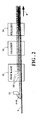
- the mixture A + E of the polymer resin and sublimable dyes is deposited on the support S (step 11 of Figure 2).
- the deposition of the mixture A + E may be carried out for example in a uniform layer by coating or according to a predefined pattern by rotating screen printing.
- the method illustrated in FIG. 2 further comprises a flocking step 12 by which white or unbleached FF flock fibers are projected and implanted in the colored polymer resin, followed by a step of fixation 13 (polymerization), whereby the flock fibers are fixed at their base by the colored polymer resin, and finally a sublimation step 14, whereby the dyes Sublimable are sublimated and permanently attached to fibers "flocks".
- the three steps 12, 13 and 14 can be performed in a manner and under conditions similar to those described above with respect to steps 4, 5 and 6 of the first embodiment of the method of the invention illustrated in FIG. Figure 1.
- the second embodiment of the method of the invention illustrated in FIG. 2 only makes it possible to obtain a support having a flocked surface having a uniform hue. But this result is obtained from white or unbleached fibers, without prior dyeing or posterior printing of flock fibers, which leads to extremely important production savings. In addition, since no pressure is applied to the flock fibers EF during steps 13 and 14, the flock fibers are therefore not overwritten and retain the orientation that was given to them during the step. 12 flocking. As a result, the flocked and colored surface of the support S thus obtained retains a soft or very soft feel according to the fineness of the flock fibers used.
- the flocked and colored support will keep a very soft touch even if it is later subjected to "in mold decoration", thermo-compression , thermoforming, thermo-bonding or other similar operations.
- the support S is first covered with a colorless or uniformly pigmented adhesive A in white (step 21).
- the adhesive A (polymer resin RP) can be applied in a uniform layer (single coating) or according to a predefined pattern by rotating screen printing. While the polymeric resin layer RP thus obtained is still liquid, this layer of polymer resin is then coated (step 22), in a uniform or selective manner, an ink E containing at least one sublimable dye by a coating or printing technique without contact, for example by spraying, projection or jet printing ink.
- Step 23 While the polymer resin layers RP and ink E are still liquid, white or unbleached FF fibers are projected and implanted into the resin layer RP through the ink layer E (flocking step 23), then they are then fixed to their base by polymerization of the polymer resin (step 24) and finally stained by sublimation of the sublimable dye (s) contained in the ink E (step 25) .
- Steps 23, 24 and 25 may proceed in a manner and under conditions similar to those of corresponding steps 4, 5 and 6 of the first embodiment of the method of the invention illustrated by FIG. coating or printing the ink E (step 22), the flocked and colored surface of the support S will have a uniform color or a multicolored appearance reproducing a predefined pattern or a random appearance.
Landscapes
- Engineering & Computer Science (AREA)
- Textile Engineering (AREA)
- Chemical & Material Sciences (AREA)
- Chemical Kinetics & Catalysis (AREA)
- General Chemical & Material Sciences (AREA)
- Coloring (AREA)
- Treatment Of Fiber Materials (AREA)
- Application Of Or Painting With Fluid Materials (AREA)
Applications Claiming Priority (1)
| Application Number | Priority Date | Filing Date | Title |
|---|---|---|---|
| FR0408626A FR2874030B1 (fr) | 2004-08-04 | 2004-08-04 | Procede de fabrication en continu d'un support en nappe flocke et colore |
Publications (2)
| Publication Number | Publication Date |
|---|---|
| EP1626114A2 true EP1626114A2 (de) | 2006-02-15 |
| EP1626114A3 EP1626114A3 (de) | 2010-05-05 |
Family
ID=34950072
Family Applications (1)
| Application Number | Title | Priority Date | Filing Date |
|---|---|---|---|
| EP05291582A Withdrawn EP1626114A3 (de) | 2004-08-04 | 2005-07-25 | Verfahren zur kontinuierlichen Herstellung einer geflockten und gefärbten Unterlage |
Country Status (3)
| Country | Link |
|---|---|
| US (1) | US20060026778A1 (de) |
| EP (1) | EP1626114A3 (de) |
| FR (1) | FR2874030B1 (de) |
Cited By (1)
| Publication number | Priority date | Publication date | Assignee | Title |
|---|---|---|---|---|
| US9460642B2 (en) | 2013-11-06 | 2016-10-04 | Avery Dennison Retail Information Services, Llc | Dye sublimation fabric separated elements |
Families Citing this family (31)
| Publication number | Priority date | Publication date | Assignee | Title |
|---|---|---|---|---|
| US8354050B2 (en) * | 2000-07-24 | 2013-01-15 | High Voltage Graphics, Inc. | Co-molded direct flock and flock transfer and methods of making same |
| US7344769B1 (en) * | 2000-07-24 | 2008-03-18 | High Voltage Graphics, Inc. | Flocked transfer and article of manufacture including the flocked transfer |
| US7364782B2 (en) | 2000-07-24 | 2008-04-29 | High Voltage Graphics, Inc. | Flocked transfer and article of manufacture including the application of the transfer by thermoplastic polymer film |
| US7338697B2 (en) * | 2000-07-24 | 2008-03-04 | High Voltage Graphics, Inc. | Co-molded direct flock and flock transfer and methods of making same |
| US20080006968A1 (en) * | 2000-07-24 | 2008-01-10 | High Voltage Graphics, Inc. | Heat moldable flock transfer with heat resistant, reusable release sheet and methods of making same |
| US20070289688A1 (en) * | 2000-07-24 | 2007-12-20 | High Voltage Graphics, Inc. | Processes for precutting laminated flocked articles |
| CN1678454A (zh) * | 2002-07-03 | 2005-10-05 | 高压制图公司 | 用于植绒制品的印花和模塑的方法 |
| AU2003247922A1 (en) * | 2002-07-03 | 2004-01-23 | High Voltage Graphics, Inc. | Flocked articles and methods of making same |
| CA2541821A1 (en) * | 2003-10-08 | 2005-04-21 | High Voltage Graphics, Inc. | Processes for precutting laminated flocked articles |
| US7465485B2 (en) * | 2003-12-23 | 2008-12-16 | High Voltage Graphics, Inc. | Process for dimensionalizing flocked articles or wear, wash and abrasion resistant flocked articles |
| US7393576B2 (en) * | 2004-01-16 | 2008-07-01 | High Voltage Graphics, Inc. | Process for printing and molding a flocked article |
| WO2005118948A2 (en) * | 2004-05-26 | 2005-12-15 | High Voltage Graphics, Inc. | Process for high and medium energy dye printing a flocked article |
| WO2006116706A2 (en) * | 2005-04-28 | 2006-11-02 | High Voltage Graphics, Inc. | Flocked multi-colored adhesive article with bright lustered flock and methods for making the same |
| JP2009502485A (ja) * | 2005-07-28 | 2009-01-29 | ハイ ボルテイジ グラフィックス インコーポレイテッド | 多孔質フィルムを有するフロック加工された物品 |
| US7749589B2 (en) * | 2005-09-20 | 2010-07-06 | High Voltage Graphics, Inc. | Flocked elastomeric articles |
| US20070110949A1 (en) * | 2005-11-17 | 2007-05-17 | High Voltage Graphics, Inc. | Flocked adhesive article |
| US20070148397A1 (en) * | 2005-12-07 | 2007-06-28 | High Voltage Graphics, Inc. | Flocked multi-colored adhesive article with bright lustered flock |
| US20080003399A1 (en) * | 2005-12-07 | 2008-01-03 | High Voltage Graphics, Inc. | Wet-on-wet method for forming flocked adhesive article |
| WO2008049030A1 (en) * | 2006-10-17 | 2008-04-24 | High Voltage Graphics, Inc. | Laser textured flocked substrate |
| US8206800B2 (en) * | 2006-11-02 | 2012-06-26 | Louis Brown Abrams | Flocked adhesive article having multi-component adhesive film |
| US20080111047A1 (en) * | 2006-11-14 | 2008-05-15 | High Voltage Graphics, Inc. | Rigid mouse pad |
| WO2008076934A2 (en) * | 2006-12-15 | 2008-06-26 | High Voltage Graphics, Inc. | Flocked slurried thermosetting adhesive article |
| WO2008101115A1 (en) * | 2007-02-14 | 2008-08-21 | High Voltage Graphics, Inc. | Sublimation dye printed textile |
| US20090239025A1 (en) * | 2008-03-04 | 2009-09-24 | High Voltage Graphics, Inc. | Flocked articles having a woven graphic design insert and methods of making the same |
| US20100143669A1 (en) * | 2008-12-04 | 2010-06-10 | High Voltage Graphics, Inc. | Sublimation dye printed textile design having metallic appearance and article of manufacture thereof |
| WO2010094044A1 (en) * | 2009-02-16 | 2010-08-19 | High Voltage Graphics, Inc. | Flocked stretchable design or transfer including thermoplastic film and method for making the same |
| WO2010118429A1 (en) * | 2009-04-10 | 2010-10-14 | High Voltage Graphics, Inc. | Flocked article having woven insert and method for making the same |
| WO2011112936A1 (en) * | 2010-03-12 | 2011-09-15 | High Voltage Graphics, Inc. | Flocked articles having a resistance to splitting and methods for making the same |
| WO2014059424A2 (en) | 2012-10-12 | 2014-04-17 | High Voltage Graphics, Inc. | Flexible heat sealable decorative articles and method for making the same |
| US9051693B1 (en) * | 2014-01-30 | 2015-06-09 | The Procter & Gamble Company | Process for manufacturing absorbent sanitary paper products |
| CN114833044B (zh) * | 2022-04-24 | 2023-01-13 | 浙江大学 | 一种高导热植绒垫的自动化生产装置 |
Family Cites Families (11)
| Publication number | Priority date | Publication date | Assignee | Title |
|---|---|---|---|---|
| US4094577A (en) * | 1971-04-13 | 1978-06-13 | Thomson-Csf | High-resolution, wide-field holographic lens |
| US4115056A (en) * | 1975-05-26 | 1978-09-19 | Ciba-Geigy Ag | Methods for dyeing or printing using amino-anthraquinone reactive disperse dyes |
| US4308296A (en) * | 1976-11-24 | 1981-12-29 | Chitouras Costa G | Method of curing particle-coated substrates |
| US4294577A (en) * | 1980-03-25 | 1981-10-13 | Pervel Industries, Inc. | Dyed flocked fabric and method of making the same |
| EP0320594B2 (de) * | 1987-12-14 | 1998-04-15 | Nippon Shokubai Co., Ltd. | Wässrige härtbare Harzdispersionen, Verfahren zu deren Herstellung und deren Verwendung |
| ES2060554T3 (es) * | 1992-07-31 | 2000-04-16 | Microfibres Inc | Transferencia de una impresion a un tejido de paño. |
| US5543195A (en) * | 1994-01-12 | 1996-08-06 | Squires; William J. | Flocked woven fabric with flattened flock fibers |
| FR2769541B1 (fr) * | 1997-10-15 | 1999-12-03 | Enduction Et De Flockage Soc D | Procede d'impression de motifs multicolores sur un film flocke thermocollant ou soudable par haute frequence, film obtenu par ce procede, procede d'application de ce film sur un support a decorer et support decore obtenu par ce procede |
| JP2000265367A (ja) * | 1999-03-19 | 2000-09-26 | Ajinomoto Co Inc | 静電フロック付け用微細合成繊維及びこれを用いた布帛 |
| EP1087054A1 (de) * | 1999-09-23 | 2001-03-28 | Vincenzo Sferruzza | Ein Prozess zur Herstelllung von dekorierten, geflockten Produkten |
| CN1678454A (zh) * | 2002-07-03 | 2005-10-05 | 高压制图公司 | 用于植绒制品的印花和模塑的方法 |
-
2004
- 2004-08-04 FR FR0408626A patent/FR2874030B1/fr not_active Expired - Fee Related
-
2005
- 2005-07-25 EP EP05291582A patent/EP1626114A3/de not_active Withdrawn
- 2005-08-04 US US11/196,728 patent/US20060026778A1/en not_active Abandoned
Cited By (2)
| Publication number | Priority date | Publication date | Assignee | Title |
|---|---|---|---|---|
| US9460642B2 (en) | 2013-11-06 | 2016-10-04 | Avery Dennison Retail Information Services, Llc | Dye sublimation fabric separated elements |
| US9773434B2 (en) | 2013-11-06 | 2017-09-26 | Avery Dennison Retail Information Services, Llc | Dye sublimation fabric separated elements |
Also Published As
| Publication number | Publication date |
|---|---|
| FR2874030B1 (fr) | 2006-09-22 |
| EP1626114A3 (de) | 2010-05-05 |
| US20060026778A1 (en) | 2006-02-09 |
| FR2874030A1 (fr) | 2006-02-10 |
Similar Documents
| Publication | Publication Date | Title |
|---|---|---|
| EP1625895B1 (de) | Verfahren zur kontinuierlichen Herstellung einer geflockten und gefärbten Unterlage | |
| FR2874030A1 (fr) | Procede de fabrication en continu d'un support en nappe flocke et colore | |
| BE480070A (de) | ||
| EP0792591B1 (de) | Einbügelbarer Einlagestoff und Verfahren zu dessen Herstellung | |
| EP0989227B1 (de) | Verfahren zur Behandlung des Flocks einer geflockten Unterlage und das so erhaltene Produkt | |
| FR2672313A1 (fr) | Procede de fabrication d'entoilages thermocollants, entoilage thermocollant. | |
| EP3283684B1 (de) | Verfahren zur wärmeübertragung auf textilien und expandierbarer mehrschichtiger komplex dafür | |
| EP3128982B1 (de) | Streifen oder ansatz mit schleifen in form eines laminats mit gedruckten mustern | |
| FR2874031A1 (fr) | Procede de fabrication en continu d'un support en nappe flocke colore | |
| EP1731660A2 (de) | Verfahren zur kontinuierlichen Herstellung einer geflockten und gefärbten Unterlage. | |
| EP1855894B1 (de) | Verfahren zum aufbringen einer zierfolie auf einen träger und verfahren zur herstellung von artikeln für diesen zweck | |
| FR2534945A1 (fr) | Procede de decoration polychrome des cuirs ou analogues | |
| FR2702416A1 (fr) | Matériau imprimé à base de PVC et procédé de fabrication. | |
| FR2764297A1 (fr) | Moyens de fixation par adhesifs et leurs contre-parties anti adhesives | |
| FR2543588A1 (fr) | Procede de formation de motifs a la surface de substrats textiles, et produit obtenu par sa mise en oeuvre | |
| WO1988005094A1 (fr) | Procede perfectionne d'impression offset sur feuilles en tissu de polyamide ou de polyester, feuilles imprimees ainsi obtenues et leurs applications | |
| FR2505260A1 (fr) | Motif decoratif ou marquage en relief applicable par transfert et son procede de realisation | |
| FR3070168A1 (fr) | Procede d’impression d’une image sur un support guide, pour la broderie | |
| CH169781A (fr) | Procédé pour reporter des couleurs sur une matière. | |
| EP1345779A1 (de) | Siebdruckverfahren und anlage, druckfarbe | |
| FR2681284A1 (fr) | Procede pour la realisation de decors, motifs a la surface de plaques ou feuilles a base de polychlorure de vinyle (pvc) et nouveau type de revetement de sol ou similaire ainsi realise. | |
| FR2561679A1 (fr) | Procede de flockage d'une etoffe notoirement deformable telle qu'un tricot jersey, et etoffe ainsi flockee | |
| FR2509227A1 (fr) | Motifs en relief transferables et procedes d'obtention de leurs elements | |
| EP0559583A1 (de) | Materialbahn zur Oberflächenverzierung von verschiedenen Gegenständen und Verfahren zu deren Verwendung | |
| BE875158A (fr) | Support pour impression en taille-douce et son procede de preparation |
Legal Events
| Date | Code | Title | Description |
|---|---|---|---|
| PUAI | Public reference made under article 153(3) epc to a published international application that has entered the european phase |
Free format text: ORIGINAL CODE: 0009012 |
|
| AK | Designated contracting states |
Kind code of ref document: A2 Designated state(s): AT BE BG CH CY CZ DE DK EE ES FI FR GB GR HU IE IS IT LI LT LU LV MC NL PL PT RO SE SI SK TR |
|
| AX | Request for extension of the european patent |
Extension state: AL BA HR MK YU |
|
| PUAL | Search report despatched |
Free format text: ORIGINAL CODE: 0009013 |
|
| AK | Designated contracting states |
Kind code of ref document: A3 Designated state(s): AT BE BG CH CY CZ DE DK EE ES FI FR GB GR HU IE IS IT LI LT LU LV MC NL PL PT RO SE SI SK TR |
|
| AX | Request for extension of the european patent |
Extension state: AL BA HR MK YU |
|
| AKX | Designation fees paid |
Designated state(s): AT BE BG CH CY CZ DE DK EE ES FI FR GB GR HU IE IS IT LI LT LU LV MC NL PL PT RO SE SI SK TR |
|
| STAA | Information on the status of an ep patent application or granted ep patent |
Free format text: STATUS: THE APPLICATION IS DEEMED TO BE WITHDRAWN |
|
| 18D | Application deemed to be withdrawn |
Effective date: 20101207 |