EP1895005B1 - Inhibiteurs peptidiques à perméabilité cellulaire du processus de transduction du signal de JNK - Google Patents
Inhibiteurs peptidiques à perméabilité cellulaire du processus de transduction du signal de JNK Download PDFInfo
- Publication number
- EP1895005B1 EP1895005B1 EP07021047.1A EP07021047A EP1895005B1 EP 1895005 B1 EP1895005 B1 EP 1895005B1 EP 07021047 A EP07021047 A EP 07021047A EP 1895005 B1 EP1895005 B1 EP 1895005B1
- Authority
- EP
- European Patent Office
- Prior art keywords
- peptide
- jnk
- tat
- peptides
- sequence
- Prior art date
- Legal status (The legal status is an assumption and is not a legal conclusion. Google has not performed a legal analysis and makes no representation as to the accuracy of the status listed.)
- Expired - Lifetime
Links
Images




Classifications
-
- C—CHEMISTRY; METALLURGY
- C07—ORGANIC CHEMISTRY
- C07K—PEPTIDES
- C07K14/00—Peptides having more than 20 amino acids; Gastrins; Somatostatins; Melanotropins; Derivatives thereof
- C07K14/435—Peptides having more than 20 amino acids; Gastrins; Somatostatins; Melanotropins; Derivatives thereof from animals; from humans
- C07K14/46—Peptides having more than 20 amino acids; Gastrins; Somatostatins; Melanotropins; Derivatives thereof from animals; from humans from vertebrates
- C07K14/47—Peptides having more than 20 amino acids; Gastrins; Somatostatins; Melanotropins; Derivatives thereof from animals; from humans from vertebrates from mammals
- C07K14/4701—Peptides having more than 20 amino acids; Gastrins; Somatostatins; Melanotropins; Derivatives thereof from animals; from humans from vertebrates from mammals not used
- C07K14/4702—Regulators; Modulating activity
- C07K14/4703—Inhibitors; Suppressors
-
- A—HUMAN NECESSITIES
- A61—MEDICAL OR VETERINARY SCIENCE; HYGIENE
- A61P—SPECIFIC THERAPEUTIC ACTIVITY OF CHEMICAL COMPOUNDS OR MEDICINAL PREPARATIONS
- A61P11/00—Drugs for disorders of the respiratory system
- A61P11/16—Central respiratory analeptics
-
- A—HUMAN NECESSITIES
- A61—MEDICAL OR VETERINARY SCIENCE; HYGIENE
- A61P—SPECIFIC THERAPEUTIC ACTIVITY OF CHEMICAL COMPOUNDS OR MEDICINAL PREPARATIONS
- A61P17/00—Drugs for dermatological disorders
-
- A—HUMAN NECESSITIES
- A61—MEDICAL OR VETERINARY SCIENCE; HYGIENE
- A61P—SPECIFIC THERAPEUTIC ACTIVITY OF CHEMICAL COMPOUNDS OR MEDICINAL PREPARATIONS
- A61P17/00—Drugs for dermatological disorders
- A61P17/06—Antipsoriatics
-
- A—HUMAN NECESSITIES
- A61—MEDICAL OR VETERINARY SCIENCE; HYGIENE
- A61P—SPECIFIC THERAPEUTIC ACTIVITY OF CHEMICAL COMPOUNDS OR MEDICINAL PREPARATIONS
- A61P17/00—Drugs for dermatological disorders
- A61P17/16—Emollients or protectives, e.g. against radiation
-
- A—HUMAN NECESSITIES
- A61—MEDICAL OR VETERINARY SCIENCE; HYGIENE
- A61P—SPECIFIC THERAPEUTIC ACTIVITY OF CHEMICAL COMPOUNDS OR MEDICINAL PREPARATIONS
- A61P19/00—Drugs for skeletal disorders
- A61P19/02—Drugs for skeletal disorders for joint disorders, e.g. arthritis, arthrosis
-
- A—HUMAN NECESSITIES
- A61—MEDICAL OR VETERINARY SCIENCE; HYGIENE
- A61P—SPECIFIC THERAPEUTIC ACTIVITY OF CHEMICAL COMPOUNDS OR MEDICINAL PREPARATIONS
- A61P25/00—Drugs for disorders of the nervous system
- A61P25/18—Antipsychotics, i.e. neuroleptics; Drugs for mania or schizophrenia
-
- A—HUMAN NECESSITIES
- A61—MEDICAL OR VETERINARY SCIENCE; HYGIENE
- A61P—SPECIFIC THERAPEUTIC ACTIVITY OF CHEMICAL COMPOUNDS OR MEDICINAL PREPARATIONS
- A61P29/00—Non-central analgesic, antipyretic or antiinflammatory agents, e.g. antirheumatic agents; Non-steroidal antiinflammatory drugs [NSAID]
-
- A—HUMAN NECESSITIES
- A61—MEDICAL OR VETERINARY SCIENCE; HYGIENE
- A61P—SPECIFIC THERAPEUTIC ACTIVITY OF CHEMICAL COMPOUNDS OR MEDICINAL PREPARATIONS
- A61P3/00—Drugs for disorders of the metabolism
-
- A—HUMAN NECESSITIES
- A61—MEDICAL OR VETERINARY SCIENCE; HYGIENE
- A61P—SPECIFIC THERAPEUTIC ACTIVITY OF CHEMICAL COMPOUNDS OR MEDICINAL PREPARATIONS
- A61P31/00—Antiinfectives, i.e. antibiotics, antiseptics, chemotherapeutics
- A61P31/12—Antivirals
- A61P31/14—Antivirals for RNA viruses
- A61P31/18—Antivirals for RNA viruses for HIV
-
- A—HUMAN NECESSITIES
- A61—MEDICAL OR VETERINARY SCIENCE; HYGIENE
- A61P—SPECIFIC THERAPEUTIC ACTIVITY OF CHEMICAL COMPOUNDS OR MEDICINAL PREPARATIONS
- A61P35/00—Antineoplastic agents
-
- A—HUMAN NECESSITIES
- A61—MEDICAL OR VETERINARY SCIENCE; HYGIENE
- A61P—SPECIFIC THERAPEUTIC ACTIVITY OF CHEMICAL COMPOUNDS OR MEDICINAL PREPARATIONS
- A61P35/00—Antineoplastic agents
- A61P35/02—Antineoplastic agents specific for leukemia
-
- A—HUMAN NECESSITIES
- A61—MEDICAL OR VETERINARY SCIENCE; HYGIENE
- A61P—SPECIFIC THERAPEUTIC ACTIVITY OF CHEMICAL COMPOUNDS OR MEDICINAL PREPARATIONS
- A61P37/00—Drugs for immunological or allergic disorders
-
- A—HUMAN NECESSITIES
- A61—MEDICAL OR VETERINARY SCIENCE; HYGIENE
- A61P—SPECIFIC THERAPEUTIC ACTIVITY OF CHEMICAL COMPOUNDS OR MEDICINAL PREPARATIONS
- A61P37/00—Drugs for immunological or allergic disorders
- A61P37/02—Immunomodulators
-
- A—HUMAN NECESSITIES
- A61—MEDICAL OR VETERINARY SCIENCE; HYGIENE
- A61P—SPECIFIC THERAPEUTIC ACTIVITY OF CHEMICAL COMPOUNDS OR MEDICINAL PREPARATIONS
- A61P37/00—Drugs for immunological or allergic disorders
- A61P37/02—Immunomodulators
- A61P37/04—Immunostimulants
-
- A—HUMAN NECESSITIES
- A61—MEDICAL OR VETERINARY SCIENCE; HYGIENE
- A61P—SPECIFIC THERAPEUTIC ACTIVITY OF CHEMICAL COMPOUNDS OR MEDICINAL PREPARATIONS
- A61P37/00—Drugs for immunological or allergic disorders
- A61P37/08—Antiallergic agents
-
- A—HUMAN NECESSITIES
- A61—MEDICAL OR VETERINARY SCIENCE; HYGIENE
- A61P—SPECIFIC THERAPEUTIC ACTIVITY OF CHEMICAL COMPOUNDS OR MEDICINAL PREPARATIONS
- A61P39/00—General protective or antinoxious agents
-
- A—HUMAN NECESSITIES
- A61—MEDICAL OR VETERINARY SCIENCE; HYGIENE
- A61P—SPECIFIC THERAPEUTIC ACTIVITY OF CHEMICAL COMPOUNDS OR MEDICINAL PREPARATIONS
- A61P39/00—General protective or antinoxious agents
- A61P39/06—Free radical scavengers or antioxidants
-
- A—HUMAN NECESSITIES
- A61—MEDICAL OR VETERINARY SCIENCE; HYGIENE
- A61P—SPECIFIC THERAPEUTIC ACTIVITY OF CHEMICAL COMPOUNDS OR MEDICINAL PREPARATIONS
- A61P43/00—Drugs for specific purposes, not provided for in groups A61P1/00-A61P41/00
-
- A—HUMAN NECESSITIES
- A61—MEDICAL OR VETERINARY SCIENCE; HYGIENE
- A61P—SPECIFIC THERAPEUTIC ACTIVITY OF CHEMICAL COMPOUNDS OR MEDICINAL PREPARATIONS
- A61P7/00—Drugs for disorders of the blood or the extracellular fluid
-
- A—HUMAN NECESSITIES
- A61—MEDICAL OR VETERINARY SCIENCE; HYGIENE
- A61P—SPECIFIC THERAPEUTIC ACTIVITY OF CHEMICAL COMPOUNDS OR MEDICINAL PREPARATIONS
- A61P9/00—Drugs for disorders of the cardiovascular system
-
- A—HUMAN NECESSITIES
- A61—MEDICAL OR VETERINARY SCIENCE; HYGIENE
- A61P—SPECIFIC THERAPEUTIC ACTIVITY OF CHEMICAL COMPOUNDS OR MEDICINAL PREPARATIONS
- A61P9/00—Drugs for disorders of the cardiovascular system
- A61P9/10—Drugs for disorders of the cardiovascular system for treating ischaemic or atherosclerotic diseases, e.g. antianginal drugs, coronary vasodilators, drugs for myocardial infarction, retinopathy, cerebrovascula insufficiency, renal arteriosclerosis
-
- A—HUMAN NECESSITIES
- A61—MEDICAL OR VETERINARY SCIENCE; HYGIENE
- A61K—PREPARATIONS FOR MEDICAL, DENTAL OR TOILETRY PURPOSES
- A61K38/00—Medicinal preparations containing peptides
-
- C—CHEMISTRY; METALLURGY
- C07—ORGANIC CHEMISTRY
- C07K—PEPTIDES
- C07K2319/00—Fusion polypeptide
-
- C—CHEMISTRY; METALLURGY
- C07—ORGANIC CHEMISTRY
- C07K—PEPTIDES
- C07K2319/00—Fusion polypeptide
- C07K2319/01—Fusion polypeptide containing a localisation/targetting motif
- C07K2319/10—Fusion polypeptide containing a localisation/targetting motif containing a tag for extracellular membrane crossing, e.g. TAT or VP22
Definitions
- This invention relates generally to protein kinase inhibitors and more specifically to inhibitors ofthe protein kinase c-Jun amino terminal kinase.
- JNK The c-Jun amino terminal kinase
- MAP mitogen-activated protein
- JNK signal transduction pathway is activated in response to environmental stress and by the engagement of several classes of cell surface receptors. These receptors can include cytokine receptors, serpentine receptors, and receptor tyrosine kinases.
- JNK hasbeen implicated in such biological processes as oncogenic transformation and in mediating adaptive responses to environmental stress. JNK has also been associated with modulating immune responses, including maturation and differentiation of immune cells, as well effecting programmed cell death in cells identified for destruction by the immune system.
- the present invention is based in part on the discovery of peptides that are effective inhibitors ofJNK proteins.
- the peptides referred to herein as JNK peptide inhibitors, decrease the downstream cell-proliferative effects of c-Jun amino terminal kinase (JNK).
- the invention includes novel chimeric peptides which include a JNK peptide inhibitor linked a trafficking peptide that can be used to direct a peptide on which it is present do a desired cellular location.
- the trafficking sequence can be used to direct transport ofthe peptide across the plasma membrane.
- the trafficking peptide can be used to direct the peptide to desired intracellular location, such as the nucleus.
- the JNK inhibitor peptides can be present as polymers of L-amino acids. Alternatively, the peptides can be present as polymers of D-amino acids.
- compositions that include the JNK-binding peptides, as well as antibodies that specifically recognize the JNK-binding peptides.
- the invention includes the use of the inventive peptides for the manufacture of a medicament for treating a pathophysiology associated with activation of JNK in a cell or cells.
- the target cells may be, e.g., cultured animal cells, human cells or micro-organisms. Delivery can be carried out in vivo by administering the chimeric peptide to an individual in whom it is to be used for diagnostic, preventative or therapeutic purposes.
- the target cells may be in vivo cells, i.e., cells composing the organs or tissues of living animals or humans, or microorganisms found in living animals or humans.
- the JNK inhibitor peptides are small, and can be produced readily in bulk quantities and in high purity.
- the inhibitor peptides are also resistant to intracellular degradation, and are weakly immunogenic. Accordingly, the peptides are well suited for in vitro and in vivo applications in which inhibition of JNK-expression isdesired.
- the present invention is based in part on the discovery of cell permeable peptides that inhibit the activated c-Jun amino terminal kinase (JNK) signaling pathway. These peptides are referred to herein as JNK inhibitor peptides. Additionally, the discovery provides methods and pharmaceutical compositions for treating pathophysiologies associated with JNK signaling.
- JNK activated c-Jun amino terminal kinase
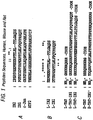
- FIGS. 1A-1C JNK inhibitor peptides were identified by inspecting sequence alignments between kJNK Binding Domains in various insulin binding (IB) proteins. The results of this alignment are shown in FIGS. 1A-1C.
- FIG. 1A depicts the region of highest homology between the JBDs of IB1, IB2, c-Jun and ATF2.
- Panel B depicts the amino acid sequence alignment of the JBDs of IB1 and IB2. Fully conserved residues are indicated by asterisks, while residues changed to Ala in the GFP-JBD 23Mut vector are indicated by open circles.
- FIG. 1 C shows the amino acid sequences of chimeric proteins that include a JNK inhibitor peptide domain and a trafficking domain.
- the trafficking domain is derived from the human immunodeficiency virus (HIV) TAT polypeptide
- the JNK inhibitor peptide is derived from an IB1 polypeptide.
- Human, mouse, and rat sequences are identical in Panels B and C.
- the JNK inhibitor peptides of the invention can be used in any situation in which inhibition of JNK activity is desired. This can include in vitro applications, ex vivo, and in vivo applications. As JNKs and all its isoforms participate in the development and establishment of pathological states or in pathways, the JNK peptides can be used to prevent or inhibit the occurrence of such pathological states. This includes prevention and treatment of diseases and prevention and treatment of conditions secondary to therapeutic actions.
- the peptides of the present invention can be used to treat or prevent, e . g ., diabetes, ionizing radiation, immune responses (including autoimmune diseases), ischemia/reperfusion injuries, heart and cardiovascular hypertrophies, and some cancers (e.g., Bcr-Abl transformation).
- the peptides can also be used to inhibit expression of genes whose expression increases in the presence of an active JNK polypeptide.
- genes and gene products includes, e . g. , proinflammatory cytokines.
- cytokines are found in all forms of inflammatory, auto-inflammatory, immune and autoimmune diseases, degenerative diseases, myopathies, cardiomyopathies, and graft rejection.
- the JNK inhibitor peptides described herein can also be used to treat or prevent effects associated with cellular shear stress, suchas in pathological states induced by arterial hypertension, including cardiac hypertrophy and arteriosclerotic lesions, and at bifurcations of blood vessels, and the like; ionizing radiation, as used in radiotherapy and UV lights; free radicals; DNA damaging agents, including chemotherapeutic drugs; oncogenic transformation; ischemia and reperfusion; hypoxia; andhypo-andhyperthermia
- the polynucleotides provided by the present invention can be used to express recombinant peptides for therapeutic use; 15.
- Other uses forthe nucleic acids include, e . g ., molecular weight markers in gel electrophoresis-based analysis of nucleic acids.
- the JNK inhibitor peptides disclosed herein are presented in Table 1.
- Table 1 presents the name ofthe JNK inhibitor peptide, as well as its sequence identifier number, length, and aminoacidsequence.
- PEPTIDE NAME SEQ ID A
- a Sequence L-IB1 1 23 DTYRPKRPTT LNLFPQVPRS QDT L-IB2 2 21 EEPHKHRPTT LRLTTLGAQD S D-IBI 3 23 TDQSRPVQPF LNLTTPRKPR YTD D-IB2 4 21 SDQAGLTTLR LTTPRHKHPE
- the invention provides aJNK inhibitor peptide.
- the JNK-inhibitor peptide may be less than 25 amino acids inlength.
- the JNK-binding inhibitor peptide includes the amino acid sequence of one of SEQ ID NOs: 1, 3, 5 or 6.
- the JNK inhibitor peptide peptides bind JNK.
- the peptide may inhibit the activation of at least one JNK activated transcription factor, e.g. c-Jun, ATF2 or Elk1.
- JN K inhibitor peptides include a peptide which includes (in whole or in part) the sequence NH 2 -DTYRPKRPTTLNLFPQVPRSQDT-cooH [SEQ ID NO:1].
- the JNK inhibitor peptides can be polymers of L-amino acids, D-amino acids, ora combination of both.
- the peptides are D retro-inverso peptides.
- the term "retro-inverso isomer” refers to an isomer of a linear peptide in which the direction ofthe sequence is reversed and the chirality of each amino acid residue is inverted. See, e.g., Jameson et al., Nature, 368, 744-746 (1994 ); Brady et al., Nature, 368,692-693 (1994 ).
- AD retro-inverso peptide may have the sequence NH 2 -TDQSRPVQPFLNLTTPRICPRYTD-cooH [SEQ ID NO:3]. It has been unexpectedly found that D-retro-inverso TAT-IB peptides have a variety of useful properties. For example, D-TAT and D-TAT-IB peptides enter cells as efficiently as L- TAT and L-TAT-IB peptides, and D-TAT and D-TAT-IB peptides are more stable than the corresponding L-peptides. Further, while D-TAT-IB1 are ⁇ 10-20 fold less efficient in inhibiting JNK than L-TAT-IB, they are ⁇ 50 fold more stable in vivo. Finally, as it is discussed further below, D-TAT-IB peptides protect interleukin-1 treated and ionizing irradiated cells from apoptosis.
- AJNK inhibitor peptide includes the amino acid sequence NH 2 -X n -RPTTLXLXXXXXXQD/T-X n -cooH [SEQ ID NO: 5, and residues 17-42 of L-TAT-IB, SEQ ID NO: 13,as shown in FIG.2 ].
- X n may be zero residues in length, ormaybe acontiguous stretch of peptide residues derived from SEQ ID NO: 1, preferably a stretch of between 1 and 7 amino acids in length, or may be 10, 20 or more amino acids in length.
- the single residue represented by S/T may be either Ser or Thr in the generic sequence.
- the generic IB peptide may be a D retro-inverso peptide having the sequence NH 2 -X n -S/TDQXXXXXXLXLTTPR-X n -cooH [SEQ ID NO: 6, and residues 17-42 of L-TAT-IB, SEQ ID NO:16, as shown in FIG.2 ].
- JNK-inhibitor peptides may be obtained orproduced by methods well-known in the art, e.g. chemical synthesis, genetic engineering methods as discussed below.
- apeptide corresponding to a portion of a JNK inhibitor peptide including a desired region or domain, or that mediates the desired activity in vitro may be synthesized by use of a peptide synthesizer.
- a candidate JNK inhibitor peptide may also be analyzed by hydrophilicity analysis (see, e.g., Hopp and Woods, 1981.Proc Natl Acad Sei USA 78: 3824-3828 ) that can be utilized to identify the hydrophobic and hydrophilic regions ofthe peptides, thus aiding in the design of substrates for experimental manipulation, such as in binding experiments, antibody synthesis. Secondary structural analysis may also be performed to identify regions of AJNK inhibitor peptide that assume specific structural motifs. See e.g., Chou and Fasman, 1974.Biochem 13: 222-223 .
- Manipulation, translation, secondary structure prediction, hydrophilicity and hydrophobicity profiles, open reading frame prediction and plotting, and determination of sequence homologies can be accomplished using computer software programs available in the art. Other methods of structural analysis including, e.g., X-ray crystallography (see, e . g. , Engstrom, 1974. Biochem Exp Biol 11:7-13 ); mass spectroscopy and gas chromatography ( see, e . g. , METHODS IN PROTEIN SCIENCE, 1997.]. Wiley and Sons,New York.NY ) and computer modeling (see, e.g ,, Fletterick and Zoller, eds., 1986. Computer Graphics and Molecular Modeling,In: CURRENT COMMUNICATIONS IN MOLECULAR BIOLOGY, Cold Spring Harbor Laboratory Press, Cold Spring Harbor, NY ) may also be employed.
- X-ray crystallography see, e . g. , Engstrom, 1974. Biochem Exp Bio
- the present invention additionally relates to nucleic acidsthat encode JNK-binding peptides having L-form amino acids, e . g. , those L-peptides indicated in Table 1, as well as the complements of these sequences.
- Suitable sources of nucleic acids encoding JNK inhibitor peptides include the human IB 1 nucleic acid (and the encoded protein sequences) available as GenBank Accession Nos. AF074091 and AAD20443, respectively.
- Other sources include rat IB1 nucleic acid and protein sequences are shown in GenBank Accession No. AF108959 and AAD22543, respectively, and are incorporated herein by reference in their entirety.
- Human m2 nucleic acid and protein sequences are shown in GenBank Accession No AF218778 and is also incorporated herein by reference in their entirety.
- Nucleic acids encoding the JNK inhibitor peptides may be obtained by any method known in the art (e.g., by PCR amplification using synthetic primers hybridizable to the 3'-and 5'-termini of the sequence and/or by cloning from acDNA or genomic library using an oligonucleotide sequence specific forthe given gene sequence).
- the nucleic acid containing all or aportion ofthe nucleotide sequence encoding the peptide may be inserted into an appropriate expression vector (i.e. , a vector that contains the necessary elements for the transcription and translation ofthe inserted peptide coding sequence).
- the regulatory elements are heterologous ( i.e., not the native gene promoter).
- the necessary transcriptional and translational signals may also be supplied by the native promoter for the genes and/or their flanking regions.
- a variety of host-vector systems may be utilized to express the peptide coding sequence(s). These include, but are not limited to: (i) mammalian cell systems that are infected with vaccinia virus, adenovirus, and the like; (ii) insect cell systems infected with baculovirus and the like; (iii)yeast containing yeast vectors or(iv) bacteria transformed with bacteriophage, DNA, plasmid DNA, or cosmid DNA. Depending upon the host-vector system utilized, any one of a number of suitable transcription and translation elements may be used.
- Promoter/enhancer sequences within expression vectors may utilize plant, animal, insect, or fungus regulatory sequences, as provided in the invention.
- promoter/enhancer elements can b used from yeast and other fungi (e.g., the GAL4 promoter, the alcohol dehydrogenase promoter, the phosphoglycerol kinase promoter, the alkaline phosphatase promoter).
- yeast and other fungi e.g., the GAL4 promoter, the alcohol dehydrogenase promoter, the phosphoglycerol kinase promoter, the alkaline phosphatase promoter.
- they may include animal transcriptional control regions, e.g., ( i ) the insulin gene control region active within pancreatic ⁇ -cells ( see, e.g., Hanahan, et al., 1985.
- Expression vectors or their derivatives include, e.g. human or animal viruses (e.g., vaccinia virus or adenovirus); insect viruses (e.g ., baculovirus); yeast vectors; bacteriophage vectors ( e.g., lambda phage); plasmid vectors and cosmid vectors.
- human or animal viruses e.g., vaccinia virus or adenovirus
- insect viruses e.g ., baculovirus
- yeast vectors e.g., bacteriophage vectors (e.g., lambda phage); plasmid vectors and cosmid vectors.
- a host cell strain may be selected that modulates the expression of inserted sequences of interest, or modifies or processes expressed peptides encoded by the sequences in the specific manner desired.
- expression from certain promoters may be enhanced in the presence of certain inducers in a selected host strain; thus facilitating control of the expression of a genetically-engineered peptides.
- different host cells possess characteristic and specific mechanisms for the translational and post-translational processing and modification (e.g., glycosylation, phosphorylation, and the like) of expressed peptides. Appropriate cell lines or host systems may thus be chosen to ensure the desired modification and processing of the foreign peptide is achieved. For example, peptide expression within a bacterial system can be used to produce an unglycosylated core peptide; whereas expression within mammalian cells ensures "native" glycosylation of a heterologous peptide.
- derivatives, fragments, homologs, analogs and variants ofJNK inhibitor peptides and nucleic acids encoding these peptides are also included in the invention.
- derivatives, .fragments, and analogs provided herein are defined as sequences of at least 6 (contiguous) nucleic acids, and which have a length sufficient to allow for specific hybridization.
- Foramino acids, derivatives, fragments, and analogs provided herein are defined as sequences of at least 4 (contiguous) amino acids, a length sufficient to allow for specific recognition of an epitope.
- the length of the fragments are less than the length of the corresponding full-length nucleic acid or polypeptide from which the JNK inhibitor peptide, or nucleic acid encoding same, is derived.
- Derivatives and analogs may be full length or other than ful length, if the derivative or analog contains amodified nucleic acid or amino acid.
- Derivatives or analogs of the JNK inhibitorpeptides include, e.g., molecules including regions that are substantially homologous to the peptides, by at least 80%, or 95%, 98%, or even 99%, identity over an amino acid sequence of identical size or when compared to an aligned sequence in which the alignment is done by acomputer homology program known in the art. For example sequence identity can be measured using sequence analysis software (Sequence Analysis Software Package of the Genetics Computer Group, University of Wisconsin Biotechnology Center, 1710 University Avenue, Madison, Wis. 53705), withthedefault parameters therein.
- non-identical positions are preferably, but not necessarily, conservative substitutions for the reference sequence.
- Conservative substitutions typically include substitutions within the following groups: glycine and alanine; valine, isoleucine, and leucine; aspartic acid and glutamic acid; asparagine and glutamine; serine and threonine; lysine and arginine; and phenylalanine and tyrosine.
- peptides having mutated sequences suchthatthey remain homologous, e . g . in sequence, in function, and in antigenic character or other function, with protein having the corresponding parent sequence.
- Such mutations can, for example, be mutations involving conservative amino acid changes, e . g ., changes between amino acids of broadly similar molecular properties.
- conservative amino acid changes e . g ., changes between amino acids of broadly similar molecular properties.
- interchanges within the aliphatic group alanine, valine, leucine and isoleucine can be considered as conservative.
- substitution of glycine for one of these can also be considered conservative.
- conservative interchanges includethose within the aliphatic group aspartate and glutamate; within the amide group asparagine and glutamine; within the hydroxyl group serine and threonine; within the aromatic group phenylalanine, tyrosine and tryptophan; within the basic group lysine, arginine and histidine; and within the sulfur-containing group methionine and cysteine.
- substitution within the group methionine and leucine can also be considered conservative.
- Preferred conservative substitution groups are aspartate-glutamate; asparagine-glutamine; valine-leucine-isoleucine; alanine-valine; phenylalanine- tyrosine; and lysine-arginine.
- a particular polypeptide is said to have a specific percent identity to a reference polypeptide of a defined length, the percent identity is relative to the reference peptide.
- a peptide that is 50% identical to a reference polypeptide that is 100 amino acids long can be a 50 amino acid polypeptide that is completely identical to a 50 amino acid long portion of the reference polypeptide. It might also be a 100 amino acid long polypeptide, which is 50% identical to the reference polypeptide over its entire length.
- other polypeptides will meet the same criteria.
- the invention also encompasses allelic variants of the disclosed polynucleotides or peptides; that is, naturally-occurring alternative forms of the isolated polynucleotide that also encode peptides that are identical, homologous or related to that encoded by the polynucleotides.
- allelic variants may be produced by mutagenesis techniques or by direct synthesis.
- variants refers to a polynucleotide or polypeptide differing from the polynucleotide or polypeptide of the present invention, but retaining essential properties thereof. Generally, variants are overall closely similar, and in many regions, identical to the polynucleotide or polypeptide of the present invention. The variants may contain alterations in the coding regions, non-coding regions, or both.
- altered sequences include insertions such that the overall amino acid sequence is lengthened while the protein retains trafficking properties. Additionally, altered sequences may include random or designed internal deletions that shorten the overall amino acid sequence while the protein retains transport properties.
- the altered sequences can additionally or alternatively be encoded by polynucleotides that hybridize under stringent conditions with the appropriate strand of the naturally-occurring polynucleotide encoding a polypeptide or peptide from which the JNK inhibitor peptide is derived.
- the variant peptide can be tested for JNK-binding and modulation of JNK-mediated activity using the herein described assays.
- Stringent conditions' are sequence dependent and will be different in different circumstances. Generally, stringent conditions can be selected to be about 5°C lower than the thermal melting point (T M ) for the specific sequence at a defined ionic strength and pH.
- the T M is the temperature (under defined ionic strength and pH) at which 50% of the target sequence hybridizes to a perfectly matched probe.
- stringent conditions will be those in which the salt concentration is at least about 0.02 molar at pH 7 and the temperature is at least about 60°C.
- the combination of parameters is more important than the absolute measure of any one.
- High stringency can include, e . g. , Step 1: Filters containing DNA are pretreated for 8 hours to overnight at 65°C in buffer composed of 6X SSC, 50 mM Tris-HCl (pH 7.5), 1 mM EDTA, 0.02% PVP, 0.02% Ficoll, 0.02% BSA, and 500 ⁇ g/ml denatured salmon sperm DNA. Step 2: Filters are hybridized for 48 hours at 65°C in the above prehybridization mixture to which is added 100 mg/ml denatured salmon sperm DNA and 5-20 x 10 6 cpm of 32 P-labeled probe.
- Step 3 Filters are washed for 1 hour at 37°C in a solution containing 2X SSC, 0.01% PVP, 0.01% Ficoll, and 0.01% BSA. This is followed by a wash in 0.1X SSC at 50°C for 45 minutes.
- Step 4 Filters are autoradiographed. Other conditions of high stringency that may be used are well known in the art. See, e.g., Ausubel et al., (eds.), 1993, CURRENT PROTOCOLS IN MOLECULAR BIOLOGY, John Wiley and Sons, NY ; and Kriegler, 1990, GENE TRANSFER AND EXPRESSION, A LABORATORY MANUAL, Stockton Press, NY .
- Moderate stringency conditions can include the following: Step 1: Filters containing DNA are pretreated for 6 hours at 55°C in a solution containing 6X SSC, 5X Denhardt's solution, 0.5% SDS and 100 mg/ml denatured salmon sperm DNA. Step 2: Filters are hybridized for 18-20 hours at 55°C in the same solution with 5-20 x 106 cpm 32 P-labeled probe added. Step 3: Filters are washed at 37°C for 1 hour in a solution containing 2X SSC, 0.1% SDS, then washed twice for 30 minutes at 60°C in a solution containing 1X SSC and 0.1% SDS. Step 4: Filters are blotted dry and exposed for autoradiography.
- Low stringency can include: Step 1: Filters containing DNA are pretreated for 6 hours at 40°C in a solution containing 35% formamide, 5X SSC, 50 mM Tris-HCl (pH 7.5), 5 mM EDTA, 0.1% PVP, 0.1% Ficoll, 1% BSA, and 500 ⁇ g/ml denatured salmon sperm DNA. Step 2: Filters are hybridized for 18-20 hours at 40°C in the same solution with the addition of 0.02% PVP, 0.02% Ficoll, 0.2% BSA, 100 ⁇ g/ml salmon sperm DNA, 10% (wt/vol) dextran sulfate, and 5-20 x 106 cpm 32 P-labeled probe.
- Step 3 Filters are washed for 1.5 hours at 55°C in a solution containing 2X SSC, 25 mM Tris-HCl (pH 7.4), 5 mM EDTA, and 0.1% SDS. The wash solution is replaced with fresh solution and incubated an additional 1.5 hours at 60°C.
- Step 4 Filters are blotted dry and exposed for autoradiography. If necessary, filters are washed for a third time at 65-68°C and reexposed to film. Other conditions of low stringency that may be used are well known in the art ( e.g., as employed for cross-species hybridizations).
- the invention provides a chimeric peptide that includes a first and second domain.
- the first domain includes a trafficking sequence
- the second domain includes a JNK inhibitor sequence linked by a covalent bond, e.g. peptide bond, to the first domain.
- the first and second domains can occur in any order in the peptide, and the peptide can include one or more of each domain.
- a trafficking sequence is any sequence of amino acids that directs a peptide in which it is present to a desired cellular destination.
- the trafficking sequence can direct the peptide across the plasma membrane, e . g ., from outside the cell, through the plasma membrane, and into the cytoplasm.
- the trafficking sequence can direct the peptide to a desired location within the cell, e . g ., the nucleus, the ribosome, the ER, a lysosome, or peroxisome.
- the trafficking peptide may be derived from a known membrane- translocating sequence.
- the trafficking peptide may include sequences from the human immunodeficiency virus (HIV)1 TAT protein. This protein is described in, e . g ., U.S. Patent Nos. 5,804,604 and 5,674,980 , each incorporated herein by reference.
- the JNK inhibitor peptide may be linked to some or all of the entire 86 amino acids that make up the TAT protein. For example, a functionally effective fragment or portion of a TAT protein that has fewer than 86 amino acids, which exhibits uptake into cells, and optionally uptake into the cell nucleus, can be used.
- the fragment may include a peptide containing TAT residues 48 -57, e.g. NH 2 -GRKKRRQRRR-cooH [SEQ ID NO: 7] or a generic TAT sequence NH2-X n -RKKRRQRRR-X n -cooH [SEQ ID NO: 9].
- a TAT peptide that includes the region that mediates entry and uptake into cells can be further defined using known techniques. See, e.g,, Franked et al, Proc. Natl. Acad. Sci, USA 86: 7397-7401 (1989 ).
- the TAT sequence may be linked either to the N-terminal or the C-terminal end of JNK inhibitor sequence.
- a hinge of two proline residues may be added between the TAT and JNK inhibitor peptide to create the full fusion peptide.
- L-amino acid fusion peptides maybe the L-TAT-IB1 peptide [SEQ ID NO:11],, or the generic L-TAT-IB peptide [SEQ ID NO:13].
- Dretro-inverso fusion peptides may be the D-TAT-IB1 peptide [SEQ ID NO:14], or the generic D-TAT-IB peptide [SEQ ID NO:16].
- the TAT peptide may be a D retro-inverso peptide having the sequence NH 2 -X n -RRRQRRKKR-X n -cooH [SEQ ID NO:10].
- SEQ ID NOs:5-6, 9-10, 13 and 16 the number of "X" residues is not limited to the one depicted, and may vary as described above.
- the trafficking sequence can be a single ( i.e., continuous) amino acid sequence present in the TAT sequence. Alternatively it can be two or more amino acid sequences, which are present in TAT protein, but in the naturally-occurring protein are separated by other amino acid sequences.
- TATprotein includes a naturally-occurring amino acid sequence that is the same as that of naturally-occurring TAT protein, or its functional equivalent protein or functionally equivalent fragments thereof (peptides). Such functional equivalent proteins or functionally equivalent fragments possess uptake activity into the cell and into the cell nucleus that is substantially similarto that of naturally-occurring TAT protein.
- TAT protein can be obtained from naturally-occurring sources or can be produced using genetic engineering techniques or chemical synthesis.
- modified TAT protein also referred to herein as TATprotein
- modified TAT protein also referred to herein as TATprotein
- Modified TAT protein or TAT peptide analogs with increased or decreased stability can be produced using known techniques.
- TAT proteins or peptides may include amino acid sequences that are substantially similar, although not identical, to that of naturally-occurring TATprotein orportions thereof.
- cholesterol or other lipid derivatives can be added to TAT protein to produce amodified TAT having increased membrane solubility.
- Variants ofthe TAT protein can be designed to modulate intracellular localization of TAT-JNKinhibitorpeptide.
- such variants When added exogenously, such variants are designed such that the ability of TAT to enter cells is retained (i.e., the uptake ofthe variant TAT protein orpeptide into the cell is substantially similarto that of naturally-occurring HIV TAT).
- alteration ofthe basic region thought to be important for nuclear localization see , e.g., Dang and Lee,J. Bio!. Chem. 264: 18019-18023 (1989 ); Hauber et al., J. virol. 63: 1181-1187 (1989 ); Oregonn et al., J. Virol.
- a sequence for binding a cytoplasmic or any other component or compartment e.g., endoplasmic reticule, mitochondria, gloom apparatus, lysosomal vesicles, can be introduced into TAT in order to retain TAT and the JNK inhibitor peptide in the cytoplasm or any other compartment to confer regulation upon uptake of TAT and the JNK inhibitor peptide.
- trafficking peptide examples include, e . g ., VP22 (described in,e.g., WO 97/05265 ; Elliott and O'Hare, Ce/188: 223-233 (1997 )), ornon-viral proteins ( Jackson et al, Proc. Natl. Acad. Sci. USA89: 10691-10695 (1992 )).
- the JNK inhibitor sequence and the trafficking sequence can be linked by chemical coupling in any suitable manner known in the art.
- Many known chemical cross-linking methods are non-specific, i.e.; they do not direct the point of coupling to any particular site on the transport polypeptide or cargo macromolecule.
- use of non-specific cross-linking agents may attack functional sitesorsterically block active sites, rendering the conjugated proteins biologically inactive.
- One way to increasing coupling specificity is to directly chemical coupling to a functional group found only once or a few times in one or both of the polypeptides to be crosslinked. For example, in many proteins, cysteine, which is the only protein amino acid containing a thiol group, occurs only a few times. Also, for example, if a polypeptide contains no lysine residues, a cross-linking reagent specific for primary amines will be selective for the amino terminus of that polypeptide. Successful utilization of this approach to increase coupling specificity requires that the polypeptide have the suitably rare and reactive residues in areas of the molecule that may be altered without loss of the molecule's biological activity.
- Cysteine residues may be replaced when they occur in parts of a polypeptide sequence where their participation in a cross-linking reaction would otherwise likely interfere with biological activity.
- a cysteine residue is replaced, it is typically desirable to minimize resulting changes in polypeptide folding. Changes in polypeptide folding are minimized when the replacement is chemically and sterically similar to cysteine. For these reasons, serine is preferred as a replacement for cysteine.
- a cysteine residue may be introduced into a polypeptide's amino acid sequence for cross-linking purposes. When a cysteine residue is introduced, introduction at or near the amino or carboxy terminus is preferred. Conventional methods are available for such amino acid sequence modifications, whether the polypeptide of interest is produced by chemical synthesis or expression of recombinant DNA.
- Coupling of the two constituents can be accomplished via a coupling or conjugating agent.
- a coupling or conjugating agent There are several intermolecular cross-linking reagents which can be utilized, See for example, Means and Feeney, CHEMICAL MODIFICATION OF PROTEINS, Holden-Day, 1974, pp. 39-43 .
- reagents for example, J-succinimidyl 3-(2-pyridyldithio) propionate (SPDP) or N, N- (1,3-phenylene) bismaleimide (both of which are highly specific for sulfhydryl groups and form irreversible linkages); N, N'-ethylene-bis- (iodoacetamide) or other such reagent having 6 to 11 carbon methylene bridges (which relatively specific for sulfhydryl groups); and 1,5-difluoro-2, 4-dinitrobenzene (which forms irreversible linkages with amino and tyrosine groups).
- SPDP J-succinimidyl 3-(2-pyridyldithio) propionate
- N, N- (1,3-phenylene) bismaleimide both of which are highly specific for sulfhydryl groups and form irreversible linkages
- cross-linking reagents useful for this purpose include: p,p'-difluoro-m,m'-dinitrodiphenylsulfone (which forms irreversible cross-linkages with amino and phenolic groups); dimethyl adipimidate (which is specific for amino groups); phenol-1,4-disulfonylchloride (which reacts principally with amino groups); hexamethylenediisocyanate or diisothiocyanate, or azophenyl-p-diisocyanate (which reacts principally with amino groups); glutaraldehyde (which reacts with several different side chains) and disdiazobenzidine (which reacts primarily with tyrosine and histidine).
- Cross-linking reagents may be homobifunctional, i.e., having two functional groups that undergo the same reaction.
- a preferred homobifunctional cross-linking reagent is bismaleimidohexane ("BMH").
- BMH contains two maleimide functional groups, which react specifically with sulfhydryl-containing compounds under mild conditions (pH 6.5-7.7). The two maleimide groups are connected by a hydrocarbon chain. Therefore, BMH is useful for irreversible cross-linking of polypeptides that contain cysteine residues.
- Cross-linking reagents may also be heterobifunctional.
- Heterobifunctional cross-linking agents have two different functional groups, for example an amine-reactive group and a thiol-reactive group, that will cross-link two proteins having free amines and thiols, respectively.
- heterobifunctional cross-linking agents are succinimidyl 4-(N-maleimidomethyl) cyclohexane-1-carboxylate (“SMCC”), m-maleimidobenzoyl-N-hydroxysuccinimide ester (“MBS”), and succinimide 4-(p-maleimidophenyl) butyrate (“SMPB”), an extended chain analog of MBS.
- SMCC succinimidyl 4-(N-maleimidomethyl) cyclohexane-1-carboxylate
- MBS m-maleimidobenzoyl-N-hydroxysuccinimide ester
- SMPB succinimide 4-(p-maleimi
- Cross-linking reagents often have low solubility in water.
- a hydrophilic moiety such as a sulfonate group, may be added to the cross-linking reagent to improve its water solubility.
- Sulfo-MBS and sulfo-SMCC are examples of cross-linking reagents modified for water solubility.
- cross-linking reagents yield a conjugate that is essentially non-cleavable under cellular conditions.
- some cross-linking reagents contain a covalent bond, such as a disulfide, that is cleavable under cellular conditions.
- a disulfide such as a disulfide
- DSP dithiobis (succinimidylpropionate)
- SPDP N-succinimidyl 3-(2-pyridyldithio) propionate
- the use of a cleavable cross-linking reagent permits the cargo moiety to separate from the transport polypeptide after delivery into the target cell. Direct disulfide linkage may also be useful.
- cross-linking reagents including the ones discussed above, are commercially available. Detailed instructions for their use are readily available from the commercial suppliers.
- a general reference on protein cross-linking and conjugate preparation is: Wong, CHEMISTRY OF PROTEIN CONJUGATION AND CROSS-LINKING, CRC Press (1991 ).
- Chemical cross-linking may include the use of spacer arms.
- Spacer arms provide intramolecular flexibility or adjust intramolecular distances between conjugated moieties and thereby may help preserve biological activity.
- a spacer arm may be in the form of a polypeptide moiety that includes spacer amino acids, e . g . proline.
- a spacer arm may be part of the cross-linking reagent, such as in "long-chain SPDP" (Pierce Chem. Co" Rockford, IL., cat. No. 21651 H).
- the chimeric peptide can be produced as a fusion peptide that includes the trafficking sequence and the JNK inhibitor sequence which can conveniently be expressed in known suitable host cells. Fusion peptides, as described herein, can be formed and used in ways analogous to orreadily adaptable from standard recombinant DNA techniques, as described above.
- Chimeric peptides including the JNK inhibitor peptides which are equal or less than 25 amino acids in length and comprises SEQ ID NO: 1, 3, 5 or 6 or homologues thereof having at least 80% identity to SEQ ID NO: 1, 3, 5 or 6maybe utilized as immunogensto generate antibodies that immunospecifically-bind these peptide components.
- Such antibodies include, e . g ., polyclonal,monoclonal, chimeric, single chain, Fab fragments and a Fab expression library.
- Antibodies to human peptides are disclosed. Fragments ofthe JNK inhibitor peptides may be used as immunogens for antibody production.
- Various procedures known within the art may be used for the production of polyclonal or monoclonal antibodies to AJNK inhibitor peptide, or derivative, fragment, analog or homolog thereof.
- various host animals may be immunized by injection with the native peptide, or a synthetic variant thereof, or a derivative of the foregoing.
- Various adjuvants may be used to increase the immunological response and include, but are not limited to, Freund's(complete and incomplete), mineral gels (e.g., aluminum hydroxide), surface active substances (e . g ., lysolecithin, pluronic polyols, polyanions, peptides, oil emulsions, dinitrophenol, etc.) and human adjuvants such as Bacille Calmette-Guerin and Corynebacterium
- any technique thatprovides forthe production of antibody molecules by continuous cell line culture may be utilized.
- Such techniques include, but are not limited to, the hybridoma technique (see, Kohler and Milstein, 1975.Nature 256: 495-497 ); the trioma technique; the human B-cell hybridoma technique ( see , Kozbor, et al., 1983.Immunol Today 4: 72 ) and the EBV hybridoma technique to produce human monoclonal antibodies ( see , Cole, et al,, 1985. In:Monoclonal Antibodies and Cancer Therapy, Alan R.
- Human monoclonal antibodies may be utilized in the practice ofthe present invention and may be produced by the use of human hybridomas (see, Cote, et al., 1983.Proc Natl Acad Sei USA 80: 2026-2030 ) or by transforming human B-cells with Epstein Barr Virus invitro (see, Cole, et al,, 1985. In: Monoclonal Antibodies and Cancer Therapy(Alan R. Liss, Inc.,pp. 77-96 ).
- techniques can be adapted for the production of single-chain antibodies specific to a JNK inhibitor peptide (see , e.g., U.S. Patent No. 4,946,778 ).
- methodologies can be adapted forthe construction of Fabexpression libraries (see , e.g., Huse, et al., 1989.Science 246: 1275-1281 ) to allow rapid and effective identification ofmonoclonal Fab fragments with the desired specificity for a JNK inhibitor peptide orderivatives, fragments, analogs orhomologs thereof.
- Non-human antibodies can be "humanized" by techniques well known in the art. See e.g,, U.S. Patent No. 5,225,539 .
- Antibody fragments that contain the idiotypes to a JNK inhibitor peptide may be produced by techniques known in the art including, e . g. , (i) an F(ab') 2 fragment produced by pepsin digestion of an antibody molecule; ( ii ) an Fab fragment generated by reducing the disulfide bridges of an F(ab') 2 fragment; (iii) an Fab fragment generated by the treatment of the antibody molecule with papain and a reducing agent and (iv) Fv fragments.
- Methodologies forthe screening of antibodies that possess the desired specificity include, but are not limited to, enzyme-linked immunosorbent assay (ELISA) and other immunologically-mediated techniques known within the art. Selection of antibodies that are specific to a particular domain ofa JNK inhibitor peptide is facilitated by generation of hybridomas that bind to the fragment of aJNK inhibitor peptide possessing such a domain. Antibodies that are specific for a domain within a JNK inhibitorpeptide, orderivative, fragments, analogs orhomologs thereof, are also provided herein.
- ELISA enzyme-linked immunosorbent assay
- the anti-JNK inhibitor peptide antibodies may be used in methods known within the art relating to the localization and/or quantitation of a JNK inhibitor peptide (e.g., forusein measuring levels of the peptide within appropriate physiological samples, for use in diagnostic methods, for use in imagingthepeptide,andthe like).
- Antibodies forthe JNKinhibitorpeptides, or derivatives, fragments, analogs orhomologs thereofthat contain the antibody derived binding domain may be utilized aspharmacologically active compounds [hereinafter "Therapeutics"].
- the claimed peptide in methods oftreating cell-proliferative disorders associated with JNK activation in a subject by administering to a subject a biologically-active therapeutic compound (hereinafter "Therapeutic").
- the subject can be e.g., any mammal, e.g., a human,a primate, mouse, rat, dog, cat, cow, horse, pig.
- the Therapeutics include anyone of the claimed JNK inhibitorpeptides and claimed homologs thereof
- the term "therapeutically effective” means that the amount of inhibitor peptide, for example, which is used, is of sufficient quantity to ameliorate the JNK associated disorder.
- the term "cell-proliferative disorder” denotes malignant aswell asnon-malignant cell populations that often appear to differ morphologically and functionally from the surrounding tissue.
- the method may be useful in treating malignancies ofthe various organ systems, in which activation of JNK has often been demonstrated, e . g.
- lung, breast, lymphoid, gastrointestinal, andgenito-urinarytractas well as adenocarcinomas which include malignancies such as most colon cancers, renal-cel) carcinoma, prostate cancer, non-small cell carcinoma of the lung, cancer ofthe small intestine and cancer of the esophagus.
- adenocarcinomas which include malignancies such as most colon cancers, renal-cel) carcinoma, prostate cancer, non-small cell carcinoma of the lung, cancer ofthe small intestine and cancer of the esophagus.
- Cancers with Bcr-Abl oncogenic transformations that clearly require activation of JNK are also included.
- Thepeptides are also useful in treating non-malignant or immunological-related cell-proliferative diseases such as psoriasis, pemphigus vulgaris, Behcet's syndrome, acute respiratory distresssyndrome(ARDS), ischemic heart disease, post-dialysis syndrome, leukemia, rheumatoid arthritis, acquired immune deficiency syndrome, vasculitis, septic shock and other types ofacute inflammation, and lipid histiocytosis.
- non-malignant or immunological-related cell-proliferative diseases such as psoriasis, pemphigus vulgaris, Behcet's syndrome, acute respiratory distresssyndrome(ARDS), ischemic heart disease, post-dialysis syndrome, leukemia, rheumatoid arthritis, acquired immune deficiency syndrome, vasculitis, septic shock and other types ofacute inflammation, and lipid histiocytosis.
- immunopathological disorders Essentially, any disorder
- Treatment includes administration of a reagent that modulates JNK kinase activity.
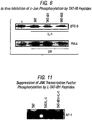
- modulate includes the suppression of expression ofJNKwhen it is over-expressed. It also includes suppression of phosphorylation of c-jun or ATF2, for example, by using a peptide of anyone of SEQ ID NOs: 1, 3, 5 or 6 and SEQ ID NOs: 11, 13, 14 or 16asa competitive inhibitor ofthe natural c-jun and ATF2 binding site in a cell. Thus also includes suppression of hetero- and homo-meric complexes oftranscription factors made up of c-jun, or ATF2.
- suppressive JNK inhibitor peptides can be introduced to a cell.
- “modulate” may include the increase ofJNK expression, for example by use of an IB peptide-specific antibody that blocks the binding of an IB-peptide to JNK, thus preventing JNK inhibition by the IB-related peptide.
- the claimed JNK inhibitor, peptides, or fusion peptides ofthe invention can be formulated in pharmaceutical compositions.
- These compositions may comprise, in addition to one of the above substances, a pharmaceutically acceptable excipient, carrier, buffer, stabiliser or other materials well known to those skilled in the art. Such materials should be non-toxic and should not interfere with the efficacy ofthe active ingredient.
- the precise nature ofthe carrier or other material may depend on the route of administration, e . g . oral, intravenous, cutaneous or subcutaneous, nasal, intramuscular, intraperitoneal orpatch routes.
- compositions for oral administration may be in tablet, capsule, powder or liquid form.
- a tablet may include a solid carrier such as gelatin or an adjuvant.
- Liquid pharmaceutical compositions generally include a liquid carrier such as water, petroleum, animal or vegetable oils, mineral oil or synthetic oil.
- Physiological saline solution, dextrose or other saccharide solution orglycols such as ethylene glycol, propylene glycol orpolyethylene glycol may be included.
- the active ingredient will be in the form of a parenterally acceptable aqueous solution which is pyrogen-free and has suitable pH, isotonicity and stability.
- a parenterally acceptable aqueous solution which is pyrogen-free and has suitable pH, isotonicity and stability.
- isotonic vehicles such as Sodium Chloride Injection, Ringer's Injection, Lactated Ringer's Injection.
- Preservatives, stabilisers, buffers, antioxidants and/or other additives may be included, as required.
- administration is preferably in a "prophylactically effective amount” or a "therapeutically effective amount” (as the case may be, although prophylaxis may be considered therapy), this being sufficient to show benefit to the individual.
- a "prophylactically effective amount” or a "therapeutically effective amount” as the case may be, although prophylaxis may be considered therapy
- the actual amount administered, and rate and time-course of administration will depend on the nature and severity ofwhat is being treated. Prescription of treatment, e.g. decisions on dosage etc, is within the responsibility of general practitioners and other medical doctors, and typically takes account ofthe disorder to be treated, the condition ofthe individual patient, the site of delivery, the method of administration and other factors known to practitioners. Examples ofthe techniques and protocols mentioned above can be found in REMINGTON'SPHARMACEUTICAL SCIENCES, 16th edition, Osol, A. (ed), 1980 .
- targeting therapies may be used to deliver the active agent more specifically to certain types of cell, by the use of targeting systems such as antibody or cell specific ligands. Targeting may be desirable for a variety of reasons; for example if the agent is unacceptably toxic, or ifit would otherwise require too high a dosage, or if it would not otherwise be able to enter the target cells.
- the peptides ofthe present invention may be utilized in assays (e . g ., immunoassays) to detect, prognose, diagnose, ormonitor various conditions, diseases, and disorders characterized by aberrant levels of JNK, or a JNK inhibitor peptide, or monitor the treatment thereof.
- An "aberrant level” means an increased or decreased level in a sample relative to that present in an analogous sample from an unaffected part ofthe body, or from a subject not having the disorder.
- the immunoassay may be performed by a method comprising contacting a sample derived from apatient with an antibody under conditions such that immunospecific-binding may occur, and subsequently detecting or measuring the amount of any immunospecific-binding by the antibody.
- An antibody specific for a JNK inhibitor peptide may be used to analyze a tissue or serum sample from apatient for the presence of JNK or a JNK inhibitor peptide; wherein an aberrant level of JNK or a JNK inhibitor peptide is indicative ofadiseased condition.
- the immunoassays thatmay be utilized include, but are not limited to, competitive and non-competitive assay systems using techniques such as Western Blots, radioimmunoassays (RIA), enzyme linked immunosorbent assay(ELISA), "sandwich” immunoassays, immunoprecipitation assays, precipitin reactions, gel diffusion precipitin reactions, immunodiffusion assays, agglutination assays, fluorescent immunoassays, complement-fixation assays, immunoradiometric assays, and protein-A immunoassays, etc.
- RIA radioimmunoassays
- ELISA enzyme linked immunosorbent assay
- the comparison between the JBDs of IB1 and IB2 defined two blocks of seven and three amino acids that are highly conserved between the two sequences. These two blocks are contained within a peptide sequence of 23 amino acids in IB1 [SEQ ID NO:1] and 21 amino acid IB2 [SEQ ID NO:2]. These sequences are shown in FIG. 1B , dashes in the IB2 sequence indicate a gap in the sequence in order to align the conserved residues.
- JNK inhibitor fusion proteins were synthesized by covalently linking the C-terminal end of JBD 23 or the 21 amino acid sequence derived from the JBD of IB2 (JBD 21 ) to a N-terminal 10 amino acid long carrier peptide derived from the HIV-TAT 48-57 ( Vives et al., J. Biol. Chem. 272: 16010 (1997 )) via a spacer consisting of two proline residues. This spacer was used to allow for maximal flexibility and prevent unwanted secondary structural changes. As shown in FIG. 1C , these preparations were designated L-TAT [SEQ ID NO:7], L-TAT-IB1 [SEQ ID NO:11 and L-TAT-IB2 [SEQ ID NO:12], respectively.
- TAT-fusion peptides were also synthesized and were designated D-TAT [SEQ ID NO:8] and D-TAT-IB1 [SEQ ID NO: 14], respectively. All D and L peptides were produced by classical F-mock synthesis and further analysed by Mass Spectrometry. They were finally purified by HPLC. To determine the effects of the proline spacer, two types of TAT peptide were produced one with and one without two prolines. The addition of the two prolines did not appear to modify the entry or the localization of the TAT peptide inside cells.
- FIG. 2 Generic peptides showing the conserved amino acid residues are given in FIG. 2 .
- An "X" indicates any amino acid.
- the number of Xs in a given peptide is not limited to the one depicted, and may vary. See above for a more detailed description of the generic sequences.
- Oligonucleotides corresponding to the 23 amino acid sequence (JBD 23 ; FIG 1B ) and a sequence mutated at the fully conserved regions (JBD 23mut ) were synthesized and directionally inserted into the EcoRI and SalI sites of the pEGFP-N1 vector encoding the Green Fluorescent Protein (GFP) (from Clontech).
- GFP Green Fluorescent Protein
- Insulin producing ⁇ TC-3 cells were cultured in RPMI 1640 medium supplemented with 10% Fetal Calf Serum, 100 ⁇ g/mL Streptomycin, 100 units/mL Penicillin and 2 mM Glutamine.
- Insulin producing ⁇ TC-3 cells were transfected with the indicated vectors and IL-1 ⁇ (10 ng/mL) was added to the cell culture medium.
- the number of apoptotic cells were counted at 48 hours after the addition of IL-1 ⁇ using an inverted fluorescence microscope. Apoptotic cells were discriminated from normal cells by the characteristic "blebbing out" of the cytoplasm were counted after two days.
- GFP Green Fluorescent protein expression vector used as a control
- JBD23 is the vector expressing a chimeric GFP linked to the 23 a.a. sequence from the JBD of IB1
- JBD23Mut is the same vector as GFP-JBD23, but with a JBD mutated at four conserved residues shown as FIG 1B
- JBD280 is the GFP vector linked to the entire JBD (a.a. 1-280).
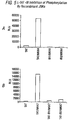
- the GFP-JBD 23 expressing construct prevented IL-1 ⁇ induced pancreatic ⁇ -cell apoptosis as efficiently as the entire JBD 1-280 ( FIG. 3 , JBD23/IL-1 compared to JBD280/IL-1).
- sequences mutated at fully conserved IB1 residues had greatly decreased ability to prevent apoptosis ( FIG. 3 , JBD23Mut/IL-1).
- TAT-IBand TAT-IB2 peptides were evaluated.
- L-TAT, D-TAT, L-TAT-IB1, L-TAT-IB2 and D-TAT-IB1 peptides [SEQ ID NOs:7, 8, 11, 12 and 14, respectively] were labeled by N-terminal addition of a glycine residue conjugated to fluorescein.
- Labeled peptides (1 ⁇ M) were added to ⁇ TC-3 cell cultures, which were maintained as described in Example 3. At predetermined times, cells were washed with PBS and fixed for five minutes in ice-cold methanol-acetone (1:1) before being examined under a fluorescence microscope. Fluorescein-labeled BSA (1 ⁇ M, 12 moles/mole BSA) was used as a control.
- JNKs-mediate phosphorylation of their target transcription factors were investigated in vitro.
- Recombinant and nonactivated JNK1, JNK2 and JNK3 were produced using a TRANSCRIPTION AND TRANSLATION rabbit reticulocyte lysate kit (Promega) and used in solid phase kinase assays with c-Jun, ATF2 and Elkl, either alone or fused to glutathione-S-transferase (GST), as substrates.
- GST glutathione-S-transferase
- L-TAT, L-TAT-IB1 or L-TAT-IB2 peptides (0-25 ⁇ M) were mixed with the recombinant JNK1, JNK2, or JNK3 kinases in reaction buffer (20 mM Tris-acetate, 1mM EGTA, 10mM p-nitrophenyl-phosphate (pNPP), 5 mM sodium pyrophosphate, 10 mM p-glycerophosphate, 1mM dithiothreitol) for 20 minutes.
- reaction buffer (20 mM Tris-acetate, 1mM EGTA, 10mM p-nitrophenyl-phosphate (pNPP), 5 mM sodium pyrophosphate, 10 mM p-glycerophosphate, 1mM dithiothreitol
- the kinase reactions were then initiated by the addition of 10 mM MgCl 2 and 5 ⁇ Ci 33 P- ⁇ -dATP and 1 ⁇ g of either GST-Jun (a.a. 1-89), GST-AFT2 (a.a. 1-96) or GST-ELK1 (a.a. 307-428).
- GST-fusion proteins were purchased from Stratagene (La Jolla, CA). Ten ⁇ L of glutathione-agarose beads were also added to the mixture. Reaction products were then separated by SDS-PAGE on a denaturing 10 % polyacrylamide gel. Gels were dried and subsequently exposed to X-ray films (Kodak).
- TAT-IBpeptide doses as low as 2.5 ⁇ M.
- a marked exception was the absence of TAT-IB inhibition of JNK3 phosphorylation of Elk1.
- the TAT-IB1 peptide appeared slightly superior to TAT-IB2 in inhibiting JNK family phosphorylation of their target transcription factors. (See, FIG. 4A ).
- D-TAT, D-TAT-IB1 and L-TAT-IB1 peptides (0-250 ⁇ M dosage study) to inhibit GST-Jun (a.a. 1-73) phosphorylation by recombinant JNK1, JNK2, and JNK3 by were analyzed as described above.
- D-TAT-IB1 1 peptide decreased JNK-mediated phosphorylation of c-Jun, but at levels approximately 10-20 fold less efficiently than L-TAT-IB1. ( See, FIG.4B ).
- L-TAT, L-TAT-IB1 or L-TAT-IB2 peptides were evaluated using GST-Jun to pull down JNKs from UV-light irradiated HeLa cells or IL-1 ⁇ treated ⁇ TC cells.
- ⁇ TC cells were cultured as described above. HeLa cells were cultured in DMEM medium supplemented with 10 % Fetal Calf Serum, 100 ⁇ g/mL Streptomycin, 100 units/ml Penicillin and 2 mM Glutamine.
- ⁇ TC cells were activated with IL-1 ⁇ as described above, whereas HeLa cells were activated by UV-light (20 J/m 2 ).
- Cell extracts were prepared from control, UV-light irradiated HeLa cells and IL-1 ⁇ treated ⁇ TC-3 cells by scraping the cell cultures in lysis buffer (20 mM Tris-acetate, 1mM EGTA, 1% Triton X-100, 10 mM p-nitrophenyl-phosphate, 5 mM sodium pyrophosphate, 10 mM ⁇ -glycerophosphate, 1 mM dithiothretiol). Debris was removed by centrifugation for five minutes at 15,000 rpm in an SS-34 Beckman rotor.
- HeLa cells cultured as described above, were co-transfected with the 5xGAL-LUC reporter vector together with the GAL-Jun expression construct (Stratagene) comprising the activation domain of c-Jun (amino acids 1-89) linked to the GAL4 DNA-binding domain.
- GAL-Jun expression construct (Stratagene) comprising the activation domain of c-Jun (amino acids 1-89) linked to the GAL4 DNA-binding domain.
- Activation of JNK was achieved by the co-transfection of vectors expressing the directly upstream kinases MKK4 and MKK7 (See, Whitmarsh et al., Science 285: 1573 (1999 )).
- 3x10 5 cells were trasfected with the plasmids in 3.5-cm dishes using DOTAP (Boehringer Mannheim) following instructions from the manufacture.
- 20 ng of the plasmid was transfected with 1 ⁇ g of the reporter plasmid pFR-Luc (Stratagene) and 0.5 ⁇ g of either MKK4 or MKK7 expressing plasmids.
- cell media were changed and TAT, TAT-IB 1, and TAT-IB2 peptides (1 ⁇ M) were added.
- the luciferase activities were measured 16 hours later using the "Dual Reporter System" from Promega after normalization to protein content. As shown in FIG.
- Example 8 Inhibition Of IL-1 ⁇ Induced Pancreatic ⁇ -Cell Death By TAT-IB Peptides
- TAT-IB1 peptide confers strong protection against apoptosis in these conditions.
- Peptides of the invention may be all-D amino acid peptides synthesized in reverse to prevent natural proteolysis (i.e., all-D-retro-inverso peptides).
- An all-D retro-inverso peptide of the invention would provide a peptide with functional properties similar to the native peptide, wherein the side groups of the component amino acids would correspond to the native peptide alignment, but would retain a protease resistant backbone.
- Retro-inverse peptides of the invention are analogs synthesized using D-amino acids by attaching the amino acids in a peptide chain such that the sequence of amino acids in the retro-inverso peptide analog is exactly opposite of that in the selected peptide which serves as the model.
- TAT protein formed of L-amino acids
- the retro-inverso peptide analog of this peptide formed of D-amino acids
- RRRQRRKKRG SEQ ID NO:8.
- the procedures for synthesizing a chain of D-amino acids to form the retro-inverso peptides are known in the art.
- heterobivalent or heteromultivalent compounds of this invention will be prepared to include the "retro-inverso isomer" of the desired peptide.
- Protecting the peptide from natural proteolysis should therefore increase the effectiveness of the specific heterobivalent or heteromultivalent compound, both by prolonging half-fife and decreasing the extent of the immune response aimed at actively destroying the peptides.
- JNK is also activated by ionizing radiation.
- "WiDr” cells were irradiated (30Gy) in presence or absence of D-TAT, L-TAT-IB1 or D-TAT-IB1 peptides (1 ⁇ M added 30 minutes before irradiation), as indicated in FIG. 10 .
- Control cells were not irradiated.
- L-TAT-IB1 and D-TAT-IB1 peptides were both able to prevent irradiation induced apoptosis in this human colon cancer cell line.
- mice C57 B1/6 mice (2 to 3 months old) were irradiated with a Phillips RT 250 R-ray at a dose rate of 0.74 Gy/min (17 mA, 0.5 mm Cu filter). Thirty minutes prior to irradiation, the animals were injected i.p. with either the TAT, L-TAT-IB1 and D-TAT-IB1 peptides (30 ⁇ l of a 1mM solution). Briefly, mice were irradiated as follows: mice were placed in small plastic boxes with the head lying outside the box.
- mice were placed on their back under the irradiator, and their neck fixed in a small plastic tunnel to maintain their head in a correct position. The body was protected with lead. Prior to irradiation mice were maintained on standard pellet mouse chow, however post irradiation mice were fed with a semi-liquid food that was renewed each day.
- the reaction of the lip mucosa was then scored by 2 independent observers according to the scoring system developed by Parkins et al. ( Parkins et al, Radiotherapy & Oncology, 1: 165-173, 1983 ), in which the erythema status as well as the presence of edema, desquamation and exudation was quoted. Additionally, animals were weighed before each recording of their erythema/edema status.
- FIG. 12A illustrated the weight of the mice following irradiation. Values are reported to the initial weight of the mice that was set to 100.
- FIG. 12B is illustrative of the erythema/edema scoring following irradiation.
- the edema and erythema status of the ventral lip of the same mice as in FIG. 12A was quantified.
- n 2 for each value reported.
- x values are days
Landscapes
- Health & Medical Sciences (AREA)
- Chemical & Material Sciences (AREA)
- Life Sciences & Earth Sciences (AREA)
- Organic Chemistry (AREA)
- Medicinal Chemistry (AREA)
- General Health & Medical Sciences (AREA)
- General Chemical & Material Sciences (AREA)
- Public Health (AREA)
- Veterinary Medicine (AREA)
- Pharmacology & Pharmacy (AREA)
- Chemical Kinetics & Catalysis (AREA)
- Animal Behavior & Ethology (AREA)
- Nuclear Medicine, Radiotherapy & Molecular Imaging (AREA)
- Bioinformatics & Cheminformatics (AREA)
- Engineering & Computer Science (AREA)
- Immunology (AREA)
- Toxicology (AREA)
- Hematology (AREA)
- Dermatology (AREA)
- Biochemistry (AREA)
- Molecular Biology (AREA)
- Virology (AREA)
- Diabetes (AREA)
- Proteomics, Peptides & Aminoacids (AREA)
- Genetics & Genomics (AREA)
- Biophysics (AREA)
- Gastroenterology & Hepatology (AREA)
- Heart & Thoracic Surgery (AREA)
- Zoology (AREA)
- Oncology (AREA)
- Cardiology (AREA)
- Pulmonology (AREA)
- Rheumatology (AREA)
- Orthopedic Medicine & Surgery (AREA)
- AIDS & HIV (AREA)
- Biomedical Technology (AREA)
- Neurology (AREA)
- Neurosurgery (AREA)
- Obesity (AREA)
- Physical Education & Sports Medicine (AREA)
Claims (17)
- Peptide chimérique comprenant un premier domaine et un second domaine liés par une liaison covalente, le premier domaine comprenant une séquence de trafic dirigeant le peptide chimérique à travers la membrane plasmique et/ou jusqu'à un emplacement cellulaire souhaité, et le second domaine comprenant une séquence d'inhibiteur de JNK, où le peptide inhibiteur de JNK a une longueur égale ou inférieure à 25 aminoacides et comprend SEQ ID NO: 1, 3, 5 ou 6 ou ses homologues ayant au moins 80 % d'identité avec SEQ ID NO: 1, 3, 5 ou 6.
- Peptide selon la revendication 1 où la séquence de trafic augmente l'absorption cellulaire du peptide.
- Peptide selon la revendication 1 où la séquence de trafic dirige la localisation nucléaire du peptide.
- Peptide selon la revendication 1 où la séquence de trafic comprend la séquence d'aminoacides d'un polypeptide TAT du virus d'immunodéficience humaine.
- Peptide selon la revendication 1 où la séquence d'inhibiteur de JNK lie JNK.
- Peptide selon la revendication 1 où la séquence d'inhibiteur de JNK inhibe l'activation d'au moins un facteur de transcription ciblé par JNK.
- Peptide selon la revendication 6 où le facteur de transcription ciblé par JNK est choisi dans le groupe consistant en C-Jun, ATF2 et Elk1.
- Peptide selon la revendication 1 où la séquence d'inhibiteur de JNK modifie les effets induits par JNK quand elle est introduite dans une cellule exprimant JNK.
- Peptide selon la revendication 8 où l'effet induit par JNK est choisi dans le groupe consistant en la resténose, la transformation oncogène, la maturation et la différenciation de cellules immunitaires, l'ischémie, la reperfusion, l'hypoxie, l'hypothermie, l'hyperthermie, l'apoptose et la réponse à des stimuli stressants.
- Peptide selon la revendication 1 où ledit peptide comprend la séquence d'aminoacides de SEQ ID NO : 11, 13, 14 ou 16.
- Composition pharmaceutique comprenant un peptide selon l'une quelconque des revendications 1-10 et un vecteur pharmaceutique.
- Utilisation d'un peptide selon l'une quelconque des revendications 1-10 dans la fabrication d'un médicament pour traiter ou prévenir une pathophysiologie associée avec l'activation de JNK chez un sujet, où la pathophysiologie est choisie parmi
les malignités incluant les malignités du poumon, du sein, des voies lymphoïdes, gastro-intestinales et génito-urinaires, la leucémie, les adénocarcinomes, incluant les cancers du côlon, le carcinome à cellules rénales, le cancer de la prostate, le cancer du poumon non à petites cellules, le cancer de l'intestin grêle, le cancer de l'oesophage, et les cancers avec transformation oncogène Bcr-Abl, et les maladies prolifératives cellulaires non malignes ou immunologiquement liées choisies parmi le psoriasis, la resténose, la vascularite, le pemphigus vulgaire, le syndrome de Behcet, la polyarthrite rhumatoïde, le syndrome de détresse respiratoire aiguë (ARDS), la cardiopathie ischémique, le syndrome de post-dialyse, le syndrome d'immunodéficience acquise, l'histiocytose lipoïdique essentielle, le choc septique, le diabète et les pathophysiologies induites par un rayonnement ionisant, des radicaux libres, des agents détériorant l'ADN ou la lumière UV. - Peptide selon l'une quelconque des revendications 1-10 destiné à être utilisé dans un procédé pour traiter ou prévenir une pathophysiologie associée avec l'activation de JNK chez un sujet, où la pathophysiologie est choisie parmi les malignités incluant les malignités du poumon, du sein, des voies lymphoïdes, gastro-intestinales et génito-urinaires, la leucémie, les adénocarcinomes, incluant les cancers du côlon, le carcinome à cellules rénales, le cancer de la prostate, le cancer du poumon non à petites cellules, le cancer de l'intestin grêle, le cancer de l'oesophage, et les cancers avec transformation oncogène Bcr-Abl, et les maladies prolifératives cellulaires non malignes ou immunologiquement liées choisies parmi le psoriasis, la resténose, la vascularite, le pemphigus vulgaire, le syndrome de Behcet, la polyarthrite rhumatoïde, le syndrome de détresse respiratoire aiguë (ARDS), la cardiopathie ischémique, le syndrome de post-dialyse, le syndrome d'immunodéficience acquise, l'histiocytose lipoïdique essentielle, le choc septique, le diabète et les pathophysiologies induites par un rayonnement ionisant, des radicaux libres, des agents détériorant l'ADN ou la lumière UV.
- Utilisation selon la revendication 12 ou peptide destiné à être utilisé selon la revendication 13 où le peptide bloque l'activation d'au moins un facteur de transcription ciblé par JNK.
- Utilisation ou peptide destiné à être utilisé selon la revendication 14 où le facteur de transcription ciblé par JNK est choisi dans le groupe consistant en C-Jun, ATF2 et Elk1.
- Utilisation ou peptide destiné à être utilisé selon la revendication 14 où le facteur de transcription ciblé par JNK est C-Jun.
- Utilisation ou peptide destiné à être utilisé selon l'une quelconque des revendications 12 à 16 où le médicament convient pour la délivrance par une voie d'administration quelconque choisie dans le groupe consistant en la délivrance intrapéritonéale, sous-cutanée, intramusculaire, nasale, intraveineuse, orale et par timbre.
Applications Claiming Priority (3)
| Application Number | Priority Date | Filing Date | Title |
|---|---|---|---|
| US15877499P | 1999-10-12 | 1999-10-12 | |
| US09/503,954 US6610820B1 (en) | 1999-10-12 | 2000-02-14 | Cell-permeable peptide inhibitors of the JNK signal transduction pathway |
| EP00969730A EP1303600B1 (fr) | 1999-10-12 | 2000-10-12 | Inhibiteurs peptidiques, a permeabilite cellulaire, du mecanisme de transduction du signal de jnk |
Related Parent Applications (1)
| Application Number | Title | Priority Date | Filing Date |
|---|---|---|---|
| EP00969730A Division EP1303600B1 (fr) | 1999-10-12 | 2000-10-12 | Inhibiteurs peptidiques, a permeabilite cellulaire, du mecanisme de transduction du signal de jnk |
Publications (2)
| Publication Number | Publication Date |
|---|---|
| EP1895005A1 EP1895005A1 (fr) | 2008-03-05 |
| EP1895005B1 true EP1895005B1 (fr) | 2017-07-26 |
Family
ID=26855384
Family Applications (5)
| Application Number | Title | Priority Date | Filing Date |
|---|---|---|---|
| EP07021046A Expired - Lifetime EP1905830B8 (fr) | 1999-10-12 | 2000-10-12 | Inhibiteurs peptidiques à perméabilité cellulaire du processus de transduction du signal de JNK |
| EP07021047.1A Expired - Lifetime EP1895005B1 (fr) | 1999-10-12 | 2000-10-12 | Inhibiteurs peptidiques à perméabilité cellulaire du processus de transduction du signal de JNK |
| EP07003426A Expired - Lifetime EP1811033B1 (fr) | 1999-10-12 | 2000-10-12 | Inhibiteurs peptidiques à perméabilité cellulaire du processus de transduction du signal de JNK |
| EP07021048A Withdrawn EP1914310A3 (fr) | 1999-10-12 | 2000-10-12 | Inhibiteurs peptidiques à perméabilité cellulaire du processus de transduction du signal de JNK |
| EP00969730A Expired - Lifetime EP1303600B1 (fr) | 1999-10-12 | 2000-10-12 | Inhibiteurs peptidiques, a permeabilite cellulaire, du mecanisme de transduction du signal de jnk |
Family Applications Before (1)
| Application Number | Title | Priority Date | Filing Date |
|---|---|---|---|
| EP07021046A Expired - Lifetime EP1905830B8 (fr) | 1999-10-12 | 2000-10-12 | Inhibiteurs peptidiques à perméabilité cellulaire du processus de transduction du signal de JNK |
Family Applications After (3)
| Application Number | Title | Priority Date | Filing Date |
|---|---|---|---|
| EP07003426A Expired - Lifetime EP1811033B1 (fr) | 1999-10-12 | 2000-10-12 | Inhibiteurs peptidiques à perméabilité cellulaire du processus de transduction du signal de JNK |
| EP07021048A Withdrawn EP1914310A3 (fr) | 1999-10-12 | 2000-10-12 | Inhibiteurs peptidiques à perméabilité cellulaire du processus de transduction du signal de JNK |
| EP00969730A Expired - Lifetime EP1303600B1 (fr) | 1999-10-12 | 2000-10-12 | Inhibiteurs peptidiques, a permeabilite cellulaire, du mecanisme de transduction du signal de jnk |
Country Status (12)
| Country | Link |
|---|---|
| US (5) | US6610820B1 (fr) |
| EP (5) | EP1905830B8 (fr) |
| JP (5) | JP5490343B2 (fr) |
| AT (3) | ATE541929T1 (fr) |
| AU (1) | AU784845B2 (fr) |
| CA (1) | CA2387184C (fr) |
| CY (2) | CY1110422T1 (fr) |
| DE (1) | DE60040564D1 (fr) |
| DK (3) | DK1811033T3 (fr) |
| ES (3) | ES2381206T3 (fr) |
| PT (2) | PT1303600E (fr) |
| WO (1) | WO2001027268A2 (fr) |
Families Citing this family (54)
| Publication number | Priority date | Publication date | Assignee | Title |
|---|---|---|---|---|
| US6043083A (en) * | 1997-04-28 | 2000-03-28 | Davis; Roger J. | Inhibitors of the JNK signal transduction pathway and methods of use |
| US20030108539A1 (en) * | 2000-02-14 | 2003-06-12 | Christophe Bonny | Cell-permeable peptide inhibitors of the JNK signal transduction pathway |
| US8183339B1 (en) | 1999-10-12 | 2012-05-22 | Xigen S.A. | Cell-permeable peptide inhibitors of the JNK signal transduction pathway |
| US20040082509A1 (en) * | 1999-10-12 | 2004-04-29 | Christophe Bonny | Cell-permeable peptide inhibitors of the JNK signal transduction pathway |
| JP5610659B2 (ja) * | 2000-07-21 | 2014-10-22 | ルバンス セラピュティックス インク.Revance Therapeutics,Inc. | 多成分生物学的輸送システム |
| US20040220100A1 (en) * | 2000-07-21 | 2004-11-04 | Essentia Biosystems, Inc. | Multi-component biological transport systems |
| WO2002092623A1 (fr) * | 2001-05-11 | 2002-11-21 | Research Development Foundation | Inhibiteurs de recepteur activateur de nf-$g(k)b et utilisations de ces inhibiteurs |
| WO2003057725A2 (fr) * | 2002-01-09 | 2003-07-17 | University Of Lausanne | Inhibiteurs peptidiques, a permeabilite cellulaire, du processus de transduction du signal jnk |
| EP3211084B1 (fr) * | 2003-05-16 | 2019-03-27 | Acorda Therapeutics, Inc. | Mutants de degradation du proteoglycane pour le traitement du systeme nerveux central |
| CA2553104A1 (fr) * | 2004-01-23 | 2005-08-11 | Avi Biopharma, Inc. | Oligomeres antisens et methodes destinees a induire la tolerance immunitaire et l'immunosuppression |
| US9211248B2 (en) | 2004-03-03 | 2015-12-15 | Revance Therapeutics, Inc. | Compositions and methods for topical application and transdermal delivery of botulinum toxins |
| BRPI0508410B8 (pt) * | 2004-03-03 | 2021-05-25 | Revance Therapeutics Inc | composições e métodos para a aplicação tópica e liberação transdérmica de toxinas botulínicas |
| JP2007527431A (ja) * | 2004-03-03 | 2007-09-27 | ルバンス セラピュティックス | 局所的診断及び治療用の輸送のための組成物及び方法 |
| JP4874798B2 (ja) * | 2004-06-29 | 2012-02-15 | 学校法人 聖マリアンナ医科大学 | NFκB作用抑制剤及び抗炎症剤並びにステロイド作用増強剤 |
| US20100256041A1 (en) * | 2004-11-12 | 2010-10-07 | Christophe Bonny | Conjugate Molecule Compounds With Enhanced Cell Uptake Activity |
| EP1656951A1 (fr) * | 2004-11-12 | 2006-05-17 | Xigen S.A. | Conjugué ayant une absorption cellulaire améliorée |
| MX2007010674A (es) * | 2005-03-03 | 2007-11-08 | Revance Therapeutics Inc | Composiciones y metodos para la aplicacion topica y el suministro transdermico de un oligopeptido. |
| ZA200707352B (en) | 2005-03-03 | 2009-04-29 | Revance Therapeutics Inc | Compositions and methods for topical application and transdermal delivery of botulinum toxins |
| US20060223807A1 (en) * | 2005-03-29 | 2006-10-05 | University Of Massachusetts Medical School, A Massachusetts Corporation | Therapeutic methods for type I diabetes |
| US8080517B2 (en) * | 2005-09-12 | 2011-12-20 | Xigen Sa | Cell-permeable peptide inhibitors of the JNK signal transduction pathway |
| WO2007031098A1 (fr) * | 2005-09-12 | 2007-03-22 | Xigen S.A. | Inhibiteurs peptidiques permeables aux cellules de la voie de transduction de signal jnk |
| AU2012203529B2 (en) * | 2005-09-12 | 2016-01-07 | Xigen Inflammation Ltd. | Cell-Permeable Peptide Inhibitors of the JNK Signal Transduction Pathway |
| US8114581B2 (en) * | 2005-09-15 | 2012-02-14 | The Regents Of The University Of California | Methods and compositions for detecting neoplastic cells |
| CN103126971A (zh) * | 2005-11-17 | 2013-06-05 | 雷文斯治疗公司 | 减少非毒素蛋白质的肉毒杆菌毒素组合物和其局部施用及透皮递送方法 |
| WO2008015841A1 (fr) * | 2006-08-02 | 2008-02-07 | Yoshio Umezawa | Protéine de fusion inhibitrice de kinase et préparation pharmaceutique |
| CA2663545A1 (fr) | 2006-09-19 | 2008-03-27 | Phylogica Limited | Inhibiteurs de signalisation ap-1 de peptide neuroprotecteur et utilisations correspondantes |
| US20100021502A1 (en) * | 2006-12-28 | 2010-01-28 | Waugh Jacob M | Compositions and Methods of Topical Application and Transdermal Delivery of Botulinum Toxins Stabililzed with Polypeptide Fragments Derived from HIV-TAT |
| BRPI0720729A2 (pt) * | 2006-12-29 | 2014-04-08 | Revance Therapeutics Inc | Moléculas de transporte que utilizam polipeptídeos hiv-tat de sequência inversa. |
| CN102988995A (zh) * | 2006-12-29 | 2013-03-27 | 雷文斯治疗公司 | 用源自hiv-tat的多肽片段稳定的肉毒杆菌毒素的组合物及其局部施用和透皮递送的方法 |
| US8822409B2 (en) | 2007-06-20 | 2014-09-02 | Phylogica Limited | Compositions and uses thereof for the treatment of acute respiratory distress syndrome (ARDS) and clinical disorders associated with therewith |
| WO2009143864A1 (fr) * | 2008-05-30 | 2009-12-03 | Xigen S.A. | Utilisation d'inhibiteurs peptidiques perméables aux cellules de la voie de transduction du signal jnk pour le traitement de maladies digestives inflammatoires chroniques ou non chroniques |
| WO2009143865A1 (fr) * | 2008-05-30 | 2009-12-03 | Xigen S.A. | Utilisation d'inhibiteurs peptidiques des voies de traduction du signal jnk perméables aux cellules pour le traitement de diverses maladies |
| WO2010072228A1 (fr) | 2008-12-22 | 2010-07-01 | Xigen S.A. | Nouvelles constructions transporteuses et molécules conjuguées cargo/transporteuses |
| WO2010113753A1 (fr) | 2009-03-30 | 2010-10-07 | 参天製薬株式会社 | Agent prophylactique ou thérapeutique des rétinopathies comprenant un peptide inhibiteur de jnk (c-jun n-terminal kinase), méthode de prévention ou de traitement des rétinopathies, et utilisation du peptide |
| US20120077753A1 (en) | 2009-06-25 | 2012-03-29 | Laxman Gangwani | Jnk inhibitors for use in treating spinal muscular atrophy |
| JP5457813B2 (ja) * | 2009-12-16 | 2014-04-02 | ルネサスエレクトロニクス株式会社 | Adpll回路、半導体装置及び携帯情報機器 |
| WO2011160653A1 (fr) | 2010-06-21 | 2011-12-29 | Xigen S.A. | Nouvelles molécules inhibant jnk |
| WO2012048721A1 (fr) | 2010-10-14 | 2012-04-19 | Xigen S.A. | Utilisation d'inhibiteurs peptidiques, aptes à pénétrer dans les cellules, de la voie de transduction du signal jnk pour le traitement de maladies oculaires inflammatoires chroniques ou non-chroniques |
| JP2015500213A (ja) * | 2011-11-30 | 2015-01-05 | ザイジェン インフラメーション リミテッド | 眼乾燥症候群を処置するためのjnkシグナル伝達経路の細胞透過性ペプチド阻害剤の使用 |
| WO2013091670A1 (fr) | 2011-12-21 | 2013-06-27 | Xigen S.A. | Nouvelles molécules inhibitrices de jnk pour le traitement de diverses maladies |
| WO2014206427A1 (fr) | 2013-06-26 | 2014-12-31 | Xigen Inflammation Ltd. | Nouvelle utilisation d'inhibiteurs de peptides à perméabilité cellulaire dans la voie de transduction du signal jnk pour le traitement de diverses maladies |
| KR20160023669A (ko) * | 2013-06-26 | 2016-03-03 | 자이겐 인플라메이션 리미티드 | 다양한 질병의 치료를 위한 jnk 신호 전달 경로의 세포 투과성 펩타이드 억제자의 새로운 용도 |
| WO2015197097A1 (fr) | 2014-06-26 | 2015-12-30 | Xigen Inflammation Ltd. | Nouvelle utilisation pour des molécules inhibitrices de la jnk, pour le traitement de diverses maladies |
| WO2016055160A2 (fr) | 2014-10-08 | 2016-04-14 | Xigen Inflammation Ltd. | Nouvelle utilisation d'inhibiteurs peptidiques perméables aux cellules de la voie de transduction du signal jnk pour le traitement de diverses maladies |
| WO2015197098A1 (fr) | 2014-06-26 | 2015-12-30 | Xigen Inflammation Ltd. | Nouvelle utilisation d'inhibiteurs peptidiques perméables aux cellules de la voie de transduction du signal jnk pour le traitement de diverses maladies |
| EP3234110B1 (fr) | 2014-12-18 | 2024-02-28 | President and Fellows of Harvard College | PROCÉDÉS DE GÉNÉRATION DE CELLULES ß DÉRIVÉES DE CELLULES SOUCHES ET LEURS UTILISATIONS |
| WO2018029336A1 (fr) | 2016-08-12 | 2018-02-15 | INSERM (Institut National de la Santé et de la Recherche Médicale) | Méthodes visant à déterminer si un patient a reçu un activateur de la voie de ppar bêta/delta |
| US11672801B2 (en) | 2016-10-19 | 2023-06-13 | United States Government As Represented By The Department Of Veterans Affairs | Compositions and methods for treating cancer |
| WO2018183762A1 (fr) | 2017-03-29 | 2018-10-04 | United States Government As Represented By The Department Of Veterans Affairs | Méthodes et compositions pour le traitement du cancer |
| CN113730548B (zh) * | 2020-05-14 | 2023-06-30 | 山东省科学院生物研究所 | 一种活性十肽在保护听觉毛细胞方面的应用 |
| WO2023248846A1 (fr) * | 2022-06-22 | 2023-12-28 | 東亞合成株式会社 | Fragment de peptide porteur et son utilisation |
| DE102023203471A1 (de) * | 2023-04-17 | 2024-10-17 | Brose Fahrzeugteile Se & Co. Kommanditgesellschaft, Bamberg | Mitnehmer für einen Seilfensterheber eines Kraftfahrzeugs |
| WO2025262307A2 (fr) | 2024-06-21 | 2025-12-26 | Institut Pasteur | Vhh approprié pour vectoriser des molécules de manière intracellulaire |
| WO2025262278A1 (fr) | 2024-06-21 | 2025-12-26 | Institut Pasteur | Peptide interférent court neurovita approprié pour la neuroprotection et la neurorégénérescence et ses utilisations |
Family Cites Families (11)
| Publication number | Priority date | Publication date | Assignee | Title |
|---|---|---|---|---|
| IT1195304B (it) * | 1981-12-22 | 1988-10-12 | Anic Spa | Metodo per la preparazione di gem-diammino derivati n-monoacilati |
| IT1190389B (it) * | 1985-09-19 | 1988-02-16 | Eniricerche Spa | Esapeptidi ad attivita' ipotensiva |
| US5169933A (en) * | 1988-08-15 | 1992-12-08 | Neorx Corporation | Covalently-linked complexes and methods for enhanced cytotoxicity and imaging |
| IT1227907B (it) * | 1988-12-23 | 1991-05-14 | Eniricerche S P A Milano Sclav | Procedimento per la sintesi di peptidi retro-inversi e nuovi intermediin tale procedimento |
| US5670617A (en) | 1989-12-21 | 1997-09-23 | Biogen Inc | Nucleic acid conjugates of tat-derived transport polypeptides |
| US5804604A (en) | 1989-12-21 | 1998-09-08 | Biogen, Inc. | Tat-derived transport polypeptides and fusion proteins |
| ES2123062T3 (es) * | 1992-08-21 | 1999-01-01 | Biogen Inc | Polipeptidos de transporte derivados de la proteina tat. |
| US5880261A (en) | 1997-04-03 | 1999-03-09 | Waeber; Gerard | Transcription factor Islet-Brain 1 (IB1) |
| US6043083A (en) | 1997-04-28 | 2000-03-28 | Davis; Roger J. | Inhibitors of the JNK signal transduction pathway and methods of use |
| EP0897002A3 (fr) | 1997-08-14 | 2001-10-04 | Smithkline Beecham Plc | U62317, une protéine avec un domaine se liant à JNK |
| CA2328457A1 (fr) * | 1998-06-20 | 1999-12-29 | Washington University | Complexes peptidiques de permeation membranaire destines a l'imagerie medicale, au diagnostic et a la therapie pharmaceutique |
-
2000
- 2000-02-14 US US09/503,954 patent/US6610820B1/en not_active Expired - Lifetime
- 2000-10-12 WO PCT/IB2000/001538 patent/WO2001027268A2/fr not_active Ceased
- 2000-10-12 PT PT00969730T patent/PT1303600E/pt unknown
- 2000-10-12 AU AU79382/00A patent/AU784845B2/en not_active Ceased
- 2000-10-12 AT AT07003426T patent/ATE541929T1/de active
- 2000-10-12 AT AT00969730T patent/ATE411388T1/de active
- 2000-10-12 EP EP07021046A patent/EP1905830B8/fr not_active Expired - Lifetime
- 2000-10-12 CA CA2387184A patent/CA2387184C/fr not_active Expired - Fee Related
- 2000-10-12 DE DE60040564T patent/DE60040564D1/de not_active Expired - Lifetime
- 2000-10-12 EP EP07021047.1A patent/EP1895005B1/fr not_active Expired - Lifetime
- 2000-10-12 ES ES07003426T patent/ES2381206T3/es not_active Expired - Lifetime
- 2000-10-12 AT AT07021046T patent/ATE548455T1/de active
- 2000-10-12 ES ES07021046T patent/ES2383824T3/es not_active Expired - Lifetime
- 2000-10-12 PT PT07003426T patent/PT1811033E/pt unknown
- 2000-10-12 EP EP07003426A patent/EP1811033B1/fr not_active Expired - Lifetime
- 2000-10-12 ES ES00969730T patent/ES2313906T3/es not_active Expired - Lifetime
- 2000-10-12 JP JP2001530472A patent/JP5490343B2/ja not_active Expired - Lifetime
- 2000-10-12 EP EP07021048A patent/EP1914310A3/fr not_active Withdrawn
- 2000-10-12 DK DK07003426.9T patent/DK1811033T3/da active
- 2000-10-12 DK DK07021046.3T patent/DK1905830T3/da active
- 2000-10-12 DK DK00969730T patent/DK1303600T3/da active
- 2000-10-12 EP EP00969730A patent/EP1303600B1/fr not_active Expired - Lifetime
-
2001
- 2001-10-03 US US09/970,515 patent/US6780970B2/en not_active Expired - Lifetime
-
2003
- 2003-01-15 US US10/342,683 patent/US20030220480A1/en not_active Abandoned
-
2004
- 2004-08-23 US US10/924,028 patent/US20050043241A1/en not_active Abandoned
-
2007
- 2007-08-31 JP JP2007227135A patent/JP2008024710A/ja active Pending
-
2008
- 2008-12-16 CY CY20081101452T patent/CY1110422T1/el unknown
-
2010
- 2010-02-16 US US12/706,436 patent/US20100216716A1/en not_active Abandoned
-
2011
- 2011-05-24 JP JP2011116398A patent/JP2011155990A/ja not_active Withdrawn
-
2012
- 2012-03-28 CY CY20121100321T patent/CY1112587T1/el unknown
-
2013
- 2013-01-30 JP JP2013015111A patent/JP2013081479A/ja not_active Withdrawn
-
2015
- 2015-08-28 JP JP2015168555A patent/JP2015221833A/ja not_active Withdrawn
Non-Patent Citations (1)
| Title |
|---|
| None * |
Also Published As
Similar Documents
| Publication | Publication Date | Title |
|---|---|---|
| EP1895005B1 (fr) | Inhibiteurs peptidiques à perméabilité cellulaire du processus de transduction du signal de JNK | |
| US8278413B2 (en) | Cell-permeable peptide inhibitors of the JNK signal transduction pathway | |
| US20170320917A1 (en) | Cell-Permeable Peptide Inhibitors of the JNK Signal Transduction Pathway | |
| EP1776958B9 (fr) | Inhibiteurs peptidiques à permeabilité cellulaire, du mecanisme de transduction du signal de JNK | |
| HK1111732B (en) | Cell-permeable peptide inhibitors of the jnk signal transduction pathway | |
| HK1114123A (en) | Cell-permeable peptide inhibitors of the jnk signal transduction pathway | |
| HK1111730A (en) | Cell-permeable peptide inhibitors of the jnk signal transduction pathway | |
| HK1100958B (en) | Cell-permeable peptide inhibitors of the jnk signal transduction pathway | |
| HK1098961C (en) | Cell-permeable peptide inhibitors of the jnk signal transduction pathway | |
| HK1098961B (en) | Cell-permeable peptide inhibitors of the jnk signal transduction pathway | |
| HK1180209A (en) | Cell-permeable peptide inhibitors of the jnk signal transduction pathway |
Legal Events
| Date | Code | Title | Description |
|---|---|---|---|
| PUAI | Public reference made under article 153(3) epc to a published international application that has entered the european phase |
Free format text: ORIGINAL CODE: 0009012 |
|
| 17P | Request for examination filed |
Effective date: 20071026 |
|
| AC | Divisional application: reference to earlier application |
Ref document number: 1303600 Country of ref document: EP Kind code of ref document: P |
|
| AK | Designated contracting states |
Kind code of ref document: A1 Designated state(s): AT BE CH CY DE DK ES FI FR GB GR IE IT LI LU MC NL PT SE |
|
| 17Q | First examination report despatched |
Effective date: 20080710 |
|
| REG | Reference to a national code |
Ref country code: HK Ref legal event code: DE Ref document number: 1114123 Country of ref document: HK |
|
| AKX | Designation fees paid |
Designated state(s): AT BE CH CY DE DK ES FI FR GB GR IE IT LI LU MC NL PT SE |
|
| RAP1 | Party data changed (applicant data changed or rights of an application transferred) |
Owner name: XIGEN S.A. |
|
| RAP1 | Party data changed (applicant data changed or rights of an application transferred) |
Owner name: XIGEN INFLAMMATION LTD. |
|
| REG | Reference to a national code |
Ref country code: DE Ref legal event code: R079 Ref document number: 60049676 Country of ref document: DE Free format text: PREVIOUS MAIN CLASS: C12N0015120000 Ipc: C07K0014470000 |
|
| RIC1 | Information provided on ipc code assigned before grant |
Ipc: C07K 14/47 20060101AFI20151217BHEP Ipc: A61K 38/00 20060101ALI20151217BHEP |
|
| GRAP | Despatch of communication of intention to grant a patent |
Free format text: ORIGINAL CODE: EPIDOSNIGR1 |
|
| INTG | Intention to grant announced |
Effective date: 20160209 |
|
| INTC | Intention to grant announced (deleted) | ||
| GRAP | Despatch of communication of intention to grant a patent |
Free format text: ORIGINAL CODE: EPIDOSNIGR1 |
|
| STAA | Information on the status of an ep patent application or granted ep patent |
Free format text: STATUS: GRANT OF PATENT IS INTENDED |
|
| INTG | Intention to grant announced |
Effective date: 20161122 |
|
| GRAS | Grant fee paid |
Free format text: ORIGINAL CODE: EPIDOSNIGR3 |
|
| GRAJ | Information related to disapproval of communication of intention to grant by the applicant or resumption of examination proceedings by the epo deleted |
Free format text: ORIGINAL CODE: EPIDOSDIGR1 |
|
| GRAL | Information related to payment of fee for publishing/printing deleted |
Free format text: ORIGINAL CODE: EPIDOSDIGR3 |
|
| STAA | Information on the status of an ep patent application or granted ep patent |
Free format text: STATUS: EXAMINATION IS IN PROGRESS |
|
| GRAJ | Information related to disapproval of communication of intention to grant by the applicant or resumption of examination proceedings by the epo deleted |
Free format text: ORIGINAL CODE: EPIDOSDIGR1 |
|
| STAA | Information on the status of an ep patent application or granted ep patent |
Free format text: STATUS: GRANT OF PATENT IS INTENDED |
|
| GRAP | Despatch of communication of intention to grant a patent |
Free format text: ORIGINAL CODE: EPIDOSNIGR1 |
|
| INTG | Intention to grant announced |
Effective date: 20170331 |
|
| GRAA | (expected) grant |
Free format text: ORIGINAL CODE: 0009210 |
|
| STAA | Information on the status of an ep patent application or granted ep patent |
Free format text: STATUS: THE PATENT HAS BEEN GRANTED |
|
| AC | Divisional application: reference to earlier application |
Ref document number: 1303600 Country of ref document: EP Kind code of ref document: P |
|
| AK | Designated contracting states |
Kind code of ref document: B1 Designated state(s): AT BE CH CY DE DK ES FI FR GB GR IE IT LI LU MC NL PT SE |
|
| REG | Reference to a national code |
Ref country code: GB Ref legal event code: FG4D |
|
| REG | Reference to a national code |
Ref country code: CH Ref legal event code: EP |
|
| REG | Reference to a national code |
Ref country code: AT Ref legal event code: REF Ref document number: 912286 Country of ref document: AT Kind code of ref document: T Effective date: 20170815 |
|
| REG | Reference to a national code |
Ref country code: IE Ref legal event code: FG4D |
|
| REG | Reference to a national code |
Ref country code: DE Ref legal event code: R096 Ref document number: 60049676 Country of ref document: DE |
|
| REG | Reference to a national code |
Ref country code: FR Ref legal event code: PLFP Year of fee payment: 18 |
|
| REG | Reference to a national code |
Ref country code: NL Ref legal event code: MP Effective date: 20170726 |
|
| REG | Reference to a national code |
Ref country code: AT Ref legal event code: MK05 Ref document number: 912286 Country of ref document: AT Kind code of ref document: T Effective date: 20170726 |
|
| PG25 | Lapsed in a contracting state [announced via postgrant information from national office to epo] |
Ref country code: AT Free format text: LAPSE BECAUSE OF FAILURE TO SUBMIT A TRANSLATION OF THE DESCRIPTION OR TO PAY THE FEE WITHIN THE PRESCRIBED TIME-LIMIT Effective date: 20170726 Ref country code: NL Free format text: LAPSE BECAUSE OF FAILURE TO SUBMIT A TRANSLATION OF THE DESCRIPTION OR TO PAY THE FEE WITHIN THE PRESCRIBED TIME-LIMIT Effective date: 20170726 Ref country code: SE Free format text: LAPSE BECAUSE OF FAILURE TO SUBMIT A TRANSLATION OF THE DESCRIPTION OR TO PAY THE FEE WITHIN THE PRESCRIBED TIME-LIMIT Effective date: 20170726 Ref country code: FI Free format text: LAPSE BECAUSE OF FAILURE TO SUBMIT A TRANSLATION OF THE DESCRIPTION OR TO PAY THE FEE WITHIN THE PRESCRIBED TIME-LIMIT Effective date: 20170726 |
|
| PG25 | Lapsed in a contracting state [announced via postgrant information from national office to epo] |
Ref country code: GR Free format text: LAPSE BECAUSE OF FAILURE TO SUBMIT A TRANSLATION OF THE DESCRIPTION OR TO PAY THE FEE WITHIN THE PRESCRIBED TIME-LIMIT Effective date: 20171027 |
|
| PG25 | Lapsed in a contracting state [announced via postgrant information from national office to epo] |
Ref country code: DK Free format text: LAPSE BECAUSE OF FAILURE TO SUBMIT A TRANSLATION OF THE DESCRIPTION OR TO PAY THE FEE WITHIN THE PRESCRIBED TIME-LIMIT Effective date: 20170726 |
|
| REG | Reference to a national code |
Ref country code: DE Ref legal event code: R097 Ref document number: 60049676 Country of ref document: DE |
|
| PG25 | Lapsed in a contracting state [announced via postgrant information from national office to epo] |
Ref country code: MC Free format text: LAPSE BECAUSE OF FAILURE TO SUBMIT A TRANSLATION OF THE DESCRIPTION OR TO PAY THE FEE WITHIN THE PRESCRIBED TIME-LIMIT Effective date: 20170726 Ref country code: IT Free format text: LAPSE BECAUSE OF FAILURE TO SUBMIT A TRANSLATION OF THE DESCRIPTION OR TO PAY THE FEE WITHIN THE PRESCRIBED TIME-LIMIT Effective date: 20170726 |
|
| REG | Reference to a national code |
Ref country code: CH Ref legal event code: PL |
|
| PLBE | No opposition filed within time limit |
Free format text: ORIGINAL CODE: 0009261 |
|
| STAA | Information on the status of an ep patent application or granted ep patent |
Free format text: STATUS: NO OPPOSITION FILED WITHIN TIME LIMIT |
|
| 26N | No opposition filed |
Effective date: 20180430 |
|
| REG | Reference to a national code |
Ref country code: IE Ref legal event code: MM4A |
|
| PG25 | Lapsed in a contracting state [announced via postgrant information from national office to epo] |
Ref country code: LU Free format text: LAPSE BECAUSE OF NON-PAYMENT OF DUE FEES Effective date: 20171012 Ref country code: CH Free format text: LAPSE BECAUSE OF NON-PAYMENT OF DUE FEES Effective date: 20171031 Ref country code: LI Free format text: LAPSE BECAUSE OF NON-PAYMENT OF DUE FEES Effective date: 20171031 |
|
| REG | Reference to a national code |
Ref country code: BE Ref legal event code: MM Effective date: 20171031 |
|
| PG25 | Lapsed in a contracting state [announced via postgrant information from national office to epo] |
Ref country code: BE Free format text: LAPSE BECAUSE OF NON-PAYMENT OF DUE FEES Effective date: 20171031 |
|
| PG25 | Lapsed in a contracting state [announced via postgrant information from national office to epo] |
Ref country code: IE Free format text: LAPSE BECAUSE OF NON-PAYMENT OF DUE FEES Effective date: 20171012 |
|
| PGFP | Annual fee paid to national office [announced via postgrant information from national office to epo] |
Ref country code: DE Payment date: 20190311 Year of fee payment: 19 Ref country code: FR Payment date: 20190326 Year of fee payment: 19 Ref country code: GB Payment date: 20190325 Year of fee payment: 19 |
|
| PG25 | Lapsed in a contracting state [announced via postgrant information from national office to epo] |
Ref country code: ES Free format text: LAPSE BECAUSE OF NON-PAYMENT OF DUE FEES Effective date: 20170726 |
|
| PG25 | Lapsed in a contracting state [announced via postgrant information from national office to epo] |
Ref country code: CY Free format text: LAPSE BECAUSE OF NON-PAYMENT OF DUE FEES Effective date: 20170726 |
|
| REG | Reference to a national code |
Ref country code: DE Ref legal event code: R119 Ref document number: 60049676 Country of ref document: DE |
|
| PG25 | Lapsed in a contracting state [announced via postgrant information from national office to epo] |
Ref country code: PT Free format text: LAPSE BECAUSE OF FAILURE TO SUBMIT A TRANSLATION OF THE DESCRIPTION OR TO PAY THE FEE WITHIN THE PRESCRIBED TIME-LIMIT Effective date: 20170726 |
|
| REG | Reference to a national code |
Ref country code: DE Ref legal event code: R082 Ref document number: 60049676 Country of ref document: DE Representative=s name: WEICKMANN & WEICKMANN PATENT- UND RECHTSANWAEL, DE |
|
| PG25 | Lapsed in a contracting state [announced via postgrant information from national office to epo] |
Ref country code: DE Free format text: LAPSE BECAUSE OF NON-PAYMENT OF DUE FEES Effective date: 20200501 |
|
| GBPC | Gb: european patent ceased through non-payment of renewal fee |
Effective date: 20191012 |
|
| PG25 | Lapsed in a contracting state [announced via postgrant information from national office to epo] |
Ref country code: GB Free format text: LAPSE BECAUSE OF NON-PAYMENT OF DUE FEES Effective date: 20191012 Ref country code: FR Free format text: LAPSE BECAUSE OF NON-PAYMENT OF DUE FEES Effective date: 20191031 |