EP1965261A2 - Toner zur Entwicklung eines elektrostatischen Bildes, Verfahren zur Herstellung des Toners, Bilderzeugungsverfahren, Bilderzeugungsvorrichtung und Prozesskartusche mit dem Toner - Google Patents
Toner zur Entwicklung eines elektrostatischen Bildes, Verfahren zur Herstellung des Toners, Bilderzeugungsverfahren, Bilderzeugungsvorrichtung und Prozesskartusche mit dem Toner Download PDFInfo
- Publication number
- EP1965261A2 EP1965261A2 EP08102159A EP08102159A EP1965261A2 EP 1965261 A2 EP1965261 A2 EP 1965261A2 EP 08102159 A EP08102159 A EP 08102159A EP 08102159 A EP08102159 A EP 08102159A EP 1965261 A2 EP1965261 A2 EP 1965261A2
- Authority
- EP
- European Patent Office
- Prior art keywords
- toner
- organic
- electrostatic image
- developing electrostatic
- parts
- Prior art date
- Legal status (The legal status is an assumption and is not a legal conclusion. Google has not performed a legal analysis and makes no representation as to the accuracy of the status listed.)
- Granted
Links
- 238000000034 method Methods 0.000 title claims description 141
- 230000008569 process Effects 0.000 title claims description 69
- 238000004519 manufacturing process Methods 0.000 title claims description 58
- 239000002245 particle Substances 0.000 claims abstract description 286
- 229910052500 inorganic mineral Inorganic materials 0.000 claims abstract description 118
- 239000000203 mixture Substances 0.000 claims abstract description 111
- 239000012736 aqueous medium Substances 0.000 claims abstract description 42
- 238000012986 modification Methods 0.000 claims abstract description 22
- 239000002243 precursor Substances 0.000 claims abstract description 16
- 229920005989 resin Polymers 0.000 claims description 173
- 239000011347 resin Substances 0.000 claims description 173
- 239000006185 dispersion Substances 0.000 claims description 129
- 239000010419 fine particle Substances 0.000 claims description 108
- 239000002253 acid Substances 0.000 claims description 101
- 239000011230 binding agent Substances 0.000 claims description 82
- 238000004140 cleaning Methods 0.000 claims description 70
- 229920001225 polyester resin Polymers 0.000 claims description 68
- 239000004645 polyester resin Substances 0.000 claims description 68
- 238000012546 transfer Methods 0.000 claims description 68
- 239000003795 chemical substances by application Substances 0.000 claims description 66
- 150000002500 ions Chemical class 0.000 claims description 58
- 239000003086 colorant Substances 0.000 claims description 46
- 239000003960 organic solvent Substances 0.000 claims description 38
- 150000001875 compounds Chemical class 0.000 claims description 37
- 229920000642 polymer Polymers 0.000 claims description 37
- 230000009477 glass transition Effects 0.000 claims description 33
- 239000003921 oil Substances 0.000 claims description 32
- 125000004435 hydrogen atom Chemical group [H]* 0.000 claims description 26
- 230000003578 releasing effect Effects 0.000 claims description 26
- 239000000463 material Substances 0.000 claims description 23
- 238000001035 drying Methods 0.000 claims description 10
- 125000001453 quaternary ammonium group Chemical group 0.000 claims description 3
- 229920000728 polyester Polymers 0.000 description 206
- -1 metal cations Chemical class 0.000 description 116
- XEKOWRVHYACXOJ-UHFFFAOYSA-N Ethyl acetate Chemical compound CCOC(C)=O XEKOWRVHYACXOJ-UHFFFAOYSA-N 0.000 description 105
- 239000004615 ingredient Substances 0.000 description 97
- 239000000243 solution Substances 0.000 description 82
- YXFVVABEGXRONW-UHFFFAOYSA-N Toluene Chemical compound CC1=CC=CC=C1 YXFVVABEGXRONW-UHFFFAOYSA-N 0.000 description 69
- 239000011248 coating agent Substances 0.000 description 62
- 238000000576 coating method Methods 0.000 description 62
- XLYOFNOQVPJJNP-UHFFFAOYSA-N water Substances O XLYOFNOQVPJJNP-UHFFFAOYSA-N 0.000 description 55
- 239000000523 sample Substances 0.000 description 52
- KWYUFKZDYYNOTN-UHFFFAOYSA-M Potassium hydroxide Chemical compound [OH-].[K+] KWYUFKZDYYNOTN-UHFFFAOYSA-M 0.000 description 51
- 239000011247 coating layer Substances 0.000 description 48
- 238000006243 chemical reaction Methods 0.000 description 46
- 229920001577 copolymer Polymers 0.000 description 46
- 239000002904 solvent Substances 0.000 description 46
- 239000004594 Masterbatch (MB) Substances 0.000 description 43
- 239000011162 core material Substances 0.000 description 41
- WYURNTSHIVDZCO-UHFFFAOYSA-N Tetrahydrofuran Chemical compound C1CCOC1 WYURNTSHIVDZCO-UHFFFAOYSA-N 0.000 description 40
- 238000009826 distribution Methods 0.000 description 38
- 239000007788 liquid Substances 0.000 description 38
- LFQSCWFLJHTTHZ-UHFFFAOYSA-N Ethanol Chemical compound CCO LFQSCWFLJHTTHZ-UHFFFAOYSA-N 0.000 description 36
- 150000001412 amines Chemical class 0.000 description 36
- 239000005056 polyisocyanate Substances 0.000 description 36
- 229920001228 polyisocyanate Polymers 0.000 description 36
- 229920005862 polyol Polymers 0.000 description 34
- 150000003077 polyols Chemical class 0.000 description 34
- 239000007787 solid Substances 0.000 description 34
- 238000011156 evaluation Methods 0.000 description 32
- IQPQWNKOIGAROB-UHFFFAOYSA-N isocyanate group Chemical group [N-]=C=O IQPQWNKOIGAROB-UHFFFAOYSA-N 0.000 description 31
- 238000003756 stirring Methods 0.000 description 31
- ZWEHNKRNPOVVGH-UHFFFAOYSA-N 2-Butanone Chemical compound CCC(C)=O ZWEHNKRNPOVVGH-UHFFFAOYSA-N 0.000 description 30
- 229920002050 silicone resin Polymers 0.000 description 30
- 239000001993 wax Substances 0.000 description 30
- 239000006229 carbon black Substances 0.000 description 29
- 239000002270 dispersing agent Substances 0.000 description 29
- 230000000694 effects Effects 0.000 description 29
- VYPSYNLAJGMNEJ-UHFFFAOYSA-N Silicium dioxide Chemical compound O=[Si]=O VYPSYNLAJGMNEJ-UHFFFAOYSA-N 0.000 description 27
- 125000002887 hydroxy group Chemical group [H]O* 0.000 description 26
- 239000010410 layer Substances 0.000 description 26
- 239000000843 powder Substances 0.000 description 26
- GWEVSGVZZGPLCZ-UHFFFAOYSA-N Titan oxide Chemical compound O=[Ti]=O GWEVSGVZZGPLCZ-UHFFFAOYSA-N 0.000 description 23
- 235000019441 ethanol Nutrition 0.000 description 22
- 239000000049 pigment Substances 0.000 description 22
- 238000002360 preparation method Methods 0.000 description 22
- 238000003860 storage Methods 0.000 description 22
- OGIDPMRJRNCKJF-UHFFFAOYSA-N titanium oxide Inorganic materials [Ti]=O OGIDPMRJRNCKJF-UHFFFAOYSA-N 0.000 description 22
- 230000001788 irregular Effects 0.000 description 21
- 239000000126 substance Substances 0.000 description 21
- 239000011324 bead Substances 0.000 description 20
- 239000000969 carrier Substances 0.000 description 20
- 230000005484 gravity Effects 0.000 description 20
- 239000004925 Acrylic resin Substances 0.000 description 19
- 229920000178 Acrylic resin Polymers 0.000 description 19
- GUJOJGAPFQRJSV-UHFFFAOYSA-N dialuminum;dioxosilane;oxygen(2-);hydrate Chemical compound O.[O-2].[O-2].[O-2].[Al+3].[Al+3].O=[Si]=O.O=[Si]=O.O=[Si]=O.O=[Si]=O GUJOJGAPFQRJSV-UHFFFAOYSA-N 0.000 description 19
- 229910052751 metal Inorganic materials 0.000 description 19
- 239000002184 metal Substances 0.000 description 19
- 239000004094 surface-active agent Substances 0.000 description 19
- CSCPPACGZOOCGX-UHFFFAOYSA-N Acetone Chemical compound CC(C)=O CSCPPACGZOOCGX-UHFFFAOYSA-N 0.000 description 18
- YMWUJEATGCHHMB-UHFFFAOYSA-N Dichloromethane Chemical compound ClCCl YMWUJEATGCHHMB-UHFFFAOYSA-N 0.000 description 18
- PPBRXRYQALVLMV-UHFFFAOYSA-N Styrene Chemical compound C=CC1=CC=CC=C1 PPBRXRYQALVLMV-UHFFFAOYSA-N 0.000 description 18
- 230000008859 change Effects 0.000 description 18
- 238000004132 cross linking Methods 0.000 description 18
- 230000007423 decrease Effects 0.000 description 18
- 229910052901 montmorillonite Inorganic materials 0.000 description 18
- 150000003242 quaternary ammonium salts Chemical class 0.000 description 17
- 230000000630 rising effect Effects 0.000 description 17
- OKKJLVBELUTLKV-UHFFFAOYSA-N Methanol Chemical compound OC OKKJLVBELUTLKV-UHFFFAOYSA-N 0.000 description 16
- 150000004985 diamines Chemical class 0.000 description 16
- 150000001991 dicarboxylic acids Chemical class 0.000 description 16
- 229920001296 polysiloxane Polymers 0.000 description 16
- 229910052799 carbon Inorganic materials 0.000 description 15
- LYCAIKOWRPUZTN-UHFFFAOYSA-N Ethylene glycol Chemical compound OCCO LYCAIKOWRPUZTN-UHFFFAOYSA-N 0.000 description 14
- XLOMVQKBTHCTTD-UHFFFAOYSA-N Zinc monoxide Chemical compound [Zn]=O XLOMVQKBTHCTTD-UHFFFAOYSA-N 0.000 description 14
- 150000002148 esters Chemical class 0.000 description 14
- 150000003839 salts Chemical class 0.000 description 14
- 229910000859 α-Fe Inorganic materials 0.000 description 14
- 150000007513 acids Chemical class 0.000 description 13
- 239000004203 carnauba wax Substances 0.000 description 13
- 235000013869 carnauba wax Nutrition 0.000 description 13
- 238000002156 mixing Methods 0.000 description 13
- 230000002829 reductive effect Effects 0.000 description 13
- RNLHGQLZWXBQNY-UHFFFAOYSA-N 3-(aminomethyl)-3,5,5-trimethylcyclohexan-1-amine Chemical compound CC1(C)CC(N)CC(C)(CN)C1 RNLHGQLZWXBQNY-UHFFFAOYSA-N 0.000 description 12
- UHOVQNZJYSORNB-UHFFFAOYSA-N Benzene Chemical compound C1=CC=CC=C1 UHOVQNZJYSORNB-UHFFFAOYSA-N 0.000 description 12
- OKTJSMMVPCPJKN-UHFFFAOYSA-N Carbon Chemical compound [C] OKTJSMMVPCPJKN-UHFFFAOYSA-N 0.000 description 12
- HEDRZPFGACZZDS-UHFFFAOYSA-N Chloroform Chemical compound ClC(Cl)Cl HEDRZPFGACZZDS-UHFFFAOYSA-N 0.000 description 12
- ZMXDDKWLCZADIW-UHFFFAOYSA-N N,N-Dimethylformamide Chemical compound CN(C)C=O ZMXDDKWLCZADIW-UHFFFAOYSA-N 0.000 description 12
- KKEYFWRCBNTPAC-UHFFFAOYSA-N Terephthalic acid Chemical compound OC(=O)C1=CC=C(C(O)=O)C=C1 KKEYFWRCBNTPAC-UHFFFAOYSA-N 0.000 description 12
- XSQUKJJJFZCRTK-UHFFFAOYSA-N Urea Chemical compound NC(N)=O XSQUKJJJFZCRTK-UHFFFAOYSA-N 0.000 description 12
- 239000000654 additive Substances 0.000 description 12
- 230000002411 adverse Effects 0.000 description 12
- 125000003178 carboxy group Chemical group [H]OC(*)=O 0.000 description 12
- 230000000052 comparative effect Effects 0.000 description 12
- 239000000839 emulsion Substances 0.000 description 12
- 238000005259 measurement Methods 0.000 description 12
- 239000000178 monomer Substances 0.000 description 12
- ISWSIDIOOBJBQZ-UHFFFAOYSA-N phenol group Chemical group C1(=CC=CC=C1)O ISWSIDIOOBJBQZ-UHFFFAOYSA-N 0.000 description 12
- 238000006116 polymerization reaction Methods 0.000 description 12
- 238000007639 printing Methods 0.000 description 12
- 239000000047 product Substances 0.000 description 12
- VZGDMQKNWNREIO-UHFFFAOYSA-N tetrachloromethane Chemical compound ClC(Cl)(Cl)Cl VZGDMQKNWNREIO-UHFFFAOYSA-N 0.000 description 12
- 125000002947 alkylene group Chemical group 0.000 description 11
- 239000003054 catalyst Substances 0.000 description 11
- 150000002009 diols Chemical class 0.000 description 11
- 239000001257 hydrogen Substances 0.000 description 11
- 229910052739 hydrogen Inorganic materials 0.000 description 11
- 230000002209 hydrophobic effect Effects 0.000 description 11
- 229910052809 inorganic oxide Inorganic materials 0.000 description 11
- 230000005415 magnetization Effects 0.000 description 11
- 238000007790 scraping Methods 0.000 description 11
- 238000010008 shearing Methods 0.000 description 11
- VPWNQTHUCYMVMZ-UHFFFAOYSA-N 4,4'-sulfonyldiphenol Chemical class C1=CC(O)=CC=C1S(=O)(=O)C1=CC=C(O)C=C1 VPWNQTHUCYMVMZ-UHFFFAOYSA-N 0.000 description 10
- UFHFLCQGNIYNRP-UHFFFAOYSA-N Hydrogen Chemical compound [H][H] UFHFLCQGNIYNRP-UHFFFAOYSA-N 0.000 description 10
- 125000003277 amino group Chemical group 0.000 description 10
- 239000004202 carbamide Substances 0.000 description 10
- 239000000975 dye Substances 0.000 description 10
- 150000002576 ketones Chemical class 0.000 description 10
- 125000005010 perfluoroalkyl group Chemical group 0.000 description 10
- 239000002994 raw material Substances 0.000 description 10
- 239000000377 silicon dioxide Substances 0.000 description 10
- UBOXGVDOUJQMTN-UHFFFAOYSA-N 1,1,2-trichloroethane Chemical compound ClCC(Cl)Cl UBOXGVDOUJQMTN-UHFFFAOYSA-N 0.000 description 9
- IJGRMHOSHXDMSA-UHFFFAOYSA-N Atomic nitrogen Chemical compound N#N IJGRMHOSHXDMSA-UHFFFAOYSA-N 0.000 description 9
- 239000003431 cross linking reagent Substances 0.000 description 9
- 238000011161 development Methods 0.000 description 9
- 229910001873 dinitrogen Inorganic materials 0.000 description 9
- 125000003709 fluoroalkyl group Chemical group 0.000 description 9
- 230000004048 modification Effects 0.000 description 9
- 229930185605 Bisphenol Natural products 0.000 description 8
- VTYYLEPIZMXCLO-UHFFFAOYSA-L Calcium carbonate Chemical compound [Ca+2].[O-]C([O-])=O VTYYLEPIZMXCLO-UHFFFAOYSA-L 0.000 description 8
- VZCYOOQTPOCHFL-OWOJBTEDSA-N Fumaric acid Chemical compound OC(=O)\C=C\C(O)=O VZCYOOQTPOCHFL-OWOJBTEDSA-N 0.000 description 8
- OFOBLEOULBTSOW-UHFFFAOYSA-N Malonic acid Chemical compound OC(=O)CC(O)=O OFOBLEOULBTSOW-UHFFFAOYSA-N 0.000 description 8
- CTQNGGLPUBDAKN-UHFFFAOYSA-N O-Xylene Chemical compound CC1=CC=CC=C1C CTQNGGLPUBDAKN-UHFFFAOYSA-N 0.000 description 8
- 229920003171 Poly (ethylene oxide) Chemical class 0.000 description 8
- 239000004793 Polystyrene Substances 0.000 description 8
- 238000007792 addition Methods 0.000 description 8
- WNLRTRBMVRJNCN-UHFFFAOYSA-N adipic acid Chemical compound OC(=O)CCCCC(O)=O WNLRTRBMVRJNCN-UHFFFAOYSA-N 0.000 description 8
- 230000001476 alcoholic effect Effects 0.000 description 8
- 150000001408 amides Chemical class 0.000 description 8
- ROOXNKNUYICQNP-UHFFFAOYSA-N ammonium persulfate Chemical compound [NH4+].[NH4+].[O-]S(=O)(=O)OOS([O-])(=O)=O ROOXNKNUYICQNP-UHFFFAOYSA-N 0.000 description 8
- 238000004364 calculation method Methods 0.000 description 8
- 238000003490 calendering Methods 0.000 description 8
- 230000001771 impaired effect Effects 0.000 description 8
- 229920000768 polyamine Polymers 0.000 description 8
- 229920002223 polystyrene Polymers 0.000 description 8
- FZHAPNGMFPVSLP-UHFFFAOYSA-N silanamine Chemical compound [SiH3]N FZHAPNGMFPVSLP-UHFFFAOYSA-N 0.000 description 8
- VZCYOOQTPOCHFL-UHFFFAOYSA-N trans-butenedioic acid Natural products OC(=O)C=CC(O)=O VZCYOOQTPOCHFL-UHFFFAOYSA-N 0.000 description 8
- 239000008096 xylene Substances 0.000 description 8
- 239000011787 zinc oxide Substances 0.000 description 8
- 235000014692 zinc oxide Nutrition 0.000 description 8
- 230000002378 acidificating effect Effects 0.000 description 7
- 239000003945 anionic surfactant Substances 0.000 description 7
- 239000002585 base Substances 0.000 description 7
- 150000001735 carboxylic acids Chemical class 0.000 description 7
- 230000003247 decreasing effect Effects 0.000 description 7
- 229910003437 indium oxide Inorganic materials 0.000 description 7
- PJXISJQVUVHSOJ-UHFFFAOYSA-N indium(iii) oxide Chemical compound [O-2].[O-2].[O-2].[In+3].[In+3] PJXISJQVUVHSOJ-UHFFFAOYSA-N 0.000 description 7
- 239000000376 reactant Substances 0.000 description 7
- YGSDEFSMJLZEOE-UHFFFAOYSA-N salicylic acid Chemical class OC(=O)C1=CC=CC=C1O YGSDEFSMJLZEOE-UHFFFAOYSA-N 0.000 description 7
- XOLBLPGZBRYERU-UHFFFAOYSA-N tin dioxide Chemical compound O=[Sn]=O XOLBLPGZBRYERU-UHFFFAOYSA-N 0.000 description 7
- WSLDOOZREJYCGB-UHFFFAOYSA-N 1,2-Dichloroethane Chemical compound ClCCCl WSLDOOZREJYCGB-UHFFFAOYSA-N 0.000 description 6
- VZXTWGWHSMCWGA-UHFFFAOYSA-N 1,3,5-triazine-2,4-diamine Chemical compound NC1=NC=NC(N)=N1 VZXTWGWHSMCWGA-UHFFFAOYSA-N 0.000 description 6
- NIXOWILDQLNWCW-UHFFFAOYSA-N 2-Propenoic acid Natural products OC(=O)C=C NIXOWILDQLNWCW-UHFFFAOYSA-N 0.000 description 6
- WFDIJRYMOXRFFG-UHFFFAOYSA-N Acetic anhydride Chemical compound CC(=O)OC(C)=O WFDIJRYMOXRFFG-UHFFFAOYSA-N 0.000 description 6
- IAYPIBMASNFSPL-UHFFFAOYSA-N Ethylene oxide Chemical compound C1CO1 IAYPIBMASNFSPL-UHFFFAOYSA-N 0.000 description 6
- 239000004698 Polyethylene Substances 0.000 description 6
- FAPWRFPIFSIZLT-UHFFFAOYSA-M Sodium chloride Chemical compound [Na+].[Cl-] FAPWRFPIFSIZLT-UHFFFAOYSA-M 0.000 description 6
- 230000001070 adhesive effect Effects 0.000 description 6
- 125000005210 alkyl ammonium group Chemical group 0.000 description 6
- 150000001413 amino acids Chemical class 0.000 description 6
- 150000001414 amino alcohols Chemical class 0.000 description 6
- 239000007864 aqueous solution Substances 0.000 description 6
- 150000007514 bases Chemical class 0.000 description 6
- IISBACLAFKSPIT-UHFFFAOYSA-N bisphenol A Chemical class C=1C=C(O)C=CC=1C(C)(C)C1=CC=C(O)C=C1 IISBACLAFKSPIT-UHFFFAOYSA-N 0.000 description 6
- 239000001506 calcium phosphate Substances 0.000 description 6
- 239000004927 clay Substances 0.000 description 6
- 238000010276 construction Methods 0.000 description 6
- JGFBRKRYDCGYKD-UHFFFAOYSA-N dibutyl(oxo)tin Chemical compound CCCC[Sn](=O)CCCC JGFBRKRYDCGYKD-UHFFFAOYSA-N 0.000 description 6
- MTHSVFCYNBDYFN-UHFFFAOYSA-N diethylene glycol Chemical compound OCCOCCO MTHSVFCYNBDYFN-UHFFFAOYSA-N 0.000 description 6
- 239000008151 electrolyte solution Substances 0.000 description 6
- 230000001804 emulsifying effect Effects 0.000 description 6
- 150000002170 ethers Chemical class 0.000 description 6
- 230000002349 favourable effect Effects 0.000 description 6
- 239000000945 filler Substances 0.000 description 6
- 238000010438 heat treatment Methods 0.000 description 6
- 150000002484 inorganic compounds Chemical class 0.000 description 6
- 229910010272 inorganic material Inorganic materials 0.000 description 6
- 238000011835 investigation Methods 0.000 description 6
- QQVIHTHCMHWDBS-UHFFFAOYSA-N isophthalic acid Chemical compound OC(=O)C1=CC=CC(C(O)=O)=C1 QQVIHTHCMHWDBS-UHFFFAOYSA-N 0.000 description 6
- 238000003801 milling Methods 0.000 description 6
- 239000012188 paraffin wax Substances 0.000 description 6
- 238000006068 polycondensation reaction Methods 0.000 description 6
- 229920000573 polyethylene Polymers 0.000 description 6
- 235000013824 polyphenols Nutrition 0.000 description 6
- 239000012488 sample solution Substances 0.000 description 6
- RSPCKAHMRANGJZ-UHFFFAOYSA-N thiohydroxylamine Chemical class SN RSPCKAHMRANGJZ-UHFFFAOYSA-N 0.000 description 6
- QORWJWZARLRLPR-UHFFFAOYSA-H tricalcium bis(phosphate) Chemical compound [Ca+2].[Ca+2].[Ca+2].[O-]P([O-])([O-])=O.[O-]P([O-])([O-])=O QORWJWZARLRLPR-UHFFFAOYSA-H 0.000 description 6
- 239000004593 Epoxy Substances 0.000 description 5
- NTIZESTWPVYFNL-UHFFFAOYSA-N Methyl isobutyl ketone Chemical compound CC(C)CC(C)=O NTIZESTWPVYFNL-UHFFFAOYSA-N 0.000 description 5
- UIHCLUNTQKBZGK-UHFFFAOYSA-N Methyl isobutyl ketone Natural products CCC(C)C(C)=O UIHCLUNTQKBZGK-UHFFFAOYSA-N 0.000 description 5
- GOOHAUXETOMSMM-UHFFFAOYSA-N Propylene oxide Chemical compound CC1CO1 GOOHAUXETOMSMM-UHFFFAOYSA-N 0.000 description 5
- DPXJVFZANSGRMM-UHFFFAOYSA-N acetic acid;2,3,4,5,6-pentahydroxyhexanal;sodium Chemical compound [Na].CC(O)=O.OCC(O)C(O)C(O)C(O)C=O DPXJVFZANSGRMM-UHFFFAOYSA-N 0.000 description 5
- 230000009471 action Effects 0.000 description 5
- 230000006399 behavior Effects 0.000 description 5
- SVPXDRXYRYOSEX-UHFFFAOYSA-N bentoquatam Chemical compound O.O=[Si]=O.O=[Al]O[Al]=O SVPXDRXYRYOSEX-UHFFFAOYSA-N 0.000 description 5
- 239000008367 deionised water Substances 0.000 description 5
- 229910021641 deionized water Inorganic materials 0.000 description 5
- 239000012948 isocyanate Substances 0.000 description 5
- 150000002513 isocyanates Chemical class 0.000 description 5
- NLYAJNPCOHFWQQ-UHFFFAOYSA-N kaolin Chemical group O.O.O=[Al]O[Si](=O)O[Si](=O)O[Al]=O NLYAJNPCOHFWQQ-UHFFFAOYSA-N 0.000 description 5
- 229910021645 metal ion Inorganic materials 0.000 description 5
- 150000002892 organic cations Chemical class 0.000 description 5
- FJKROLUGYXJWQN-UHFFFAOYSA-N papa-hydroxy-benzoic acid Natural products OC(=O)C1=CC=C(O)C=C1 FJKROLUGYXJWQN-UHFFFAOYSA-N 0.000 description 5
- 229960004889 salicylic acid Drugs 0.000 description 5
- SFVFIFLLYFPGHH-UHFFFAOYSA-M stearalkonium chloride Chemical compound [Cl-].CCCCCCCCCCCCCCCCCC[N+](C)(C)CC1=CC=CC=C1 SFVFIFLLYFPGHH-UHFFFAOYSA-M 0.000 description 5
- HZAXFHJVJLSVMW-UHFFFAOYSA-N 2-Aminoethan-1-ol Chemical compound NCCO HZAXFHJVJLSVMW-UHFFFAOYSA-N 0.000 description 4
- VHSHLMUCYSAUQU-UHFFFAOYSA-N 2-hydroxypropyl methacrylate Chemical compound CC(O)COC(=O)C(C)=C VHSHLMUCYSAUQU-UHFFFAOYSA-N 0.000 description 4
- UPMLOUAZCHDJJD-UHFFFAOYSA-N 4,4'-Diphenylmethane Diisocyanate Chemical compound C1=CC(N=C=O)=CC=C1CC1=CC=C(N=C=O)C=C1 UPMLOUAZCHDJJD-UHFFFAOYSA-N 0.000 description 4
- WPSWDCBWMRJJED-UHFFFAOYSA-N 4-[2-(4-hydroxyphenyl)propan-2-yl]phenol;oxirane Chemical compound C1CO1.C=1C=C(O)C=CC=1C(C)(C)C1=CC=C(O)C=C1 WPSWDCBWMRJJED-UHFFFAOYSA-N 0.000 description 4
- RSWGJHLUYNHPMX-UHFFFAOYSA-N Abietic-Saeure Natural products C12CCC(C(C)C)=CC2=CCC2C1(C)CCCC2(C)C(O)=O RSWGJHLUYNHPMX-UHFFFAOYSA-N 0.000 description 4
- HRPVXLWXLXDGHG-UHFFFAOYSA-N Acrylamide Chemical class NC(=O)C=C HRPVXLWXLXDGHG-UHFFFAOYSA-N 0.000 description 4
- IMROMDMJAWUWLK-UHFFFAOYSA-N Ethenol Chemical compound OC=C IMROMDMJAWUWLK-UHFFFAOYSA-N 0.000 description 4
- PEDCQBHIVMGVHV-UHFFFAOYSA-N Glycerine Chemical compound OCC(O)CO PEDCQBHIVMGVHV-UHFFFAOYSA-N 0.000 description 4
- VEXZGXHMUGYJMC-UHFFFAOYSA-N Hydrochloric acid Chemical compound Cl VEXZGXHMUGYJMC-UHFFFAOYSA-N 0.000 description 4
- XEEYBQQBJWHFJM-UHFFFAOYSA-N Iron Chemical compound [Fe] XEEYBQQBJWHFJM-UHFFFAOYSA-N 0.000 description 4
- UQSXHKLRYXJYBZ-UHFFFAOYSA-N Iron oxide Chemical compound [Fe]=O UQSXHKLRYXJYBZ-UHFFFAOYSA-N 0.000 description 4
- 239000005058 Isophorone diisocyanate Substances 0.000 description 4
- KFZMGEQAYNKOFK-UHFFFAOYSA-N Isopropanol Chemical compound CC(C)O KFZMGEQAYNKOFK-UHFFFAOYSA-N 0.000 description 4
- CERQOIWHTDAKMF-UHFFFAOYSA-N Methacrylic acid Chemical compound CC(=C)C(O)=O CERQOIWHTDAKMF-UHFFFAOYSA-N 0.000 description 4
- DNIAPMSPPWPWGF-UHFFFAOYSA-N Propylene glycol Chemical compound CC(O)CO DNIAPMSPPWPWGF-UHFFFAOYSA-N 0.000 description 4
- JUJWROOIHBZHMG-UHFFFAOYSA-N Pyridine Chemical class C1=CC=NC=C1 JUJWROOIHBZHMG-UHFFFAOYSA-N 0.000 description 4
- NRCMAYZCPIVABH-UHFFFAOYSA-N Quinacridone Chemical compound N1C2=CC=CC=C2C(=O)C2=C1C=C1C(=O)C3=CC=CC=C3NC1=C2 NRCMAYZCPIVABH-UHFFFAOYSA-N 0.000 description 4
- KHPCPRHQVVSZAH-HUOMCSJISA-N Rosin Natural products O(C/C=C/c1ccccc1)[C@H]1[C@H](O)[C@@H](O)[C@@H](O)[C@@H](CO)O1 KHPCPRHQVVSZAH-HUOMCSJISA-N 0.000 description 4
- VBIIFPGSPJYLRR-UHFFFAOYSA-M Stearyltrimethylammonium chloride Chemical compound [Cl-].CCCCCCCCCCCCCCCCCC[N+](C)(C)C VBIIFPGSPJYLRR-UHFFFAOYSA-M 0.000 description 4
- RTAQQCXQSZGOHL-UHFFFAOYSA-N Titanium Chemical compound [Ti] RTAQQCXQSZGOHL-UHFFFAOYSA-N 0.000 description 4
- WGLPBDUCMAPZCE-UHFFFAOYSA-N Trioxochromium Chemical compound O=[Cr](=O)=O WGLPBDUCMAPZCE-UHFFFAOYSA-N 0.000 description 4
- 238000005299 abrasion Methods 0.000 description 4
- 239000001361 adipic acid Substances 0.000 description 4
- 235000011037 adipic acid Nutrition 0.000 description 4
- 150000001298 alcohols Chemical class 0.000 description 4
- 125000001931 aliphatic group Chemical group 0.000 description 4
- 235000001014 amino acid Nutrition 0.000 description 4
- 229910001870 ammonium persulfate Inorganic materials 0.000 description 4
- MWPLVEDNUUSJAV-UHFFFAOYSA-N anthracene Chemical compound C1=CC=CC2=CC3=CC=CC=C3C=C21 MWPLVEDNUUSJAV-UHFFFAOYSA-N 0.000 description 4
- 229940053200 antiepileptics fatty acid derivative Drugs 0.000 description 4
- ADCOVFLJGNWWNZ-UHFFFAOYSA-N antimony trioxide Chemical compound O=[Sb]O[Sb]=O ADCOVFLJGNWWNZ-UHFFFAOYSA-N 0.000 description 4
- 239000003849 aromatic solvent Substances 0.000 description 4
- 125000003118 aryl group Chemical group 0.000 description 4
- TZCXTZWJZNENPQ-UHFFFAOYSA-L barium sulfate Chemical compound [Ba+2].[O-]S([O-])(=O)=O TZCXTZWJZNENPQ-UHFFFAOYSA-L 0.000 description 4
- 239000000440 bentonite Substances 0.000 description 4
- 229910000278 bentonite Inorganic materials 0.000 description 4
- UREZNYTWGJKWBI-UHFFFAOYSA-M benzethonium chloride Chemical compound [Cl-].C1=CC(C(C)(C)CC(C)(C)C)=CC=C1OCCOCC[N+](C)(C)CC1=CC=CC=C1 UREZNYTWGJKWBI-UHFFFAOYSA-M 0.000 description 4
- PXKLMJQFEQBVLD-UHFFFAOYSA-N bisphenol F Chemical compound C1=CC(O)=CC=C1CC1=CC=C(O)C=C1 PXKLMJQFEQBVLD-UHFFFAOYSA-N 0.000 description 4
- HQABUPZFAYXKJW-UHFFFAOYSA-N butan-1-amine Chemical compound CCCCN HQABUPZFAYXKJW-UHFFFAOYSA-N 0.000 description 4
- 229910000019 calcium carbonate Inorganic materials 0.000 description 4
- 229910000389 calcium phosphate Inorganic materials 0.000 description 4
- 235000011010 calcium phosphates Nutrition 0.000 description 4
- 238000011088 calibration curve Methods 0.000 description 4
- 150000001732 carboxylic acid derivatives Chemical class 0.000 description 4
- 239000003093 cationic surfactant Substances 0.000 description 4
- 239000000084 colloidal system Substances 0.000 description 4
- XCJYREBRNVKWGJ-UHFFFAOYSA-N copper(II) phthalocyanine Chemical compound [Cu+2].C12=CC=CC=C2C(N=C2[N-]C(C3=CC=CC=C32)=N2)=NC1=NC([C]1C=CC=CC1=1)=NC=1N=C1[C]3C=CC=CC3=C2[N-]1 XCJYREBRNVKWGJ-UHFFFAOYSA-N 0.000 description 4
- 238000012937 correction Methods 0.000 description 4
- JQVDAXLFBXTEQA-UHFFFAOYSA-N dibutylamine Chemical compound CCCCNCCCC JQVDAXLFBXTEQA-UHFFFAOYSA-N 0.000 description 4
- QDOXWKRWXJOMAK-UHFFFAOYSA-N dichromium trioxide Chemical compound O=[Cr]O[Cr]=O QDOXWKRWXJOMAK-UHFFFAOYSA-N 0.000 description 4
- 235000014113 dietary fatty acids Nutrition 0.000 description 4
- 230000007613 environmental effect Effects 0.000 description 4
- 239000003822 epoxy resin Substances 0.000 description 4
- JBKVHLHDHHXQEQ-UHFFFAOYSA-N epsilon-caprolactam Chemical compound O=C1CCCCCN1 JBKVHLHDHHXQEQ-UHFFFAOYSA-N 0.000 description 4
- FJKIXWOMBXYWOQ-UHFFFAOYSA-N ethenoxyethane Chemical compound CCOC=C FJKIXWOMBXYWOQ-UHFFFAOYSA-N 0.000 description 4
- 239000000194 fatty acid Substances 0.000 description 4
- 229930195729 fatty acid Natural products 0.000 description 4
- 150000004665 fatty acids Chemical class 0.000 description 4
- 239000001530 fumaric acid Substances 0.000 description 4
- 125000000524 functional group Chemical group 0.000 description 4
- 238000005227 gel permeation chromatography Methods 0.000 description 4
- KWIUHFFTVRNATP-UHFFFAOYSA-N glycine betaine Chemical compound C[N+](C)(C)CC([O-])=O KWIUHFFTVRNATP-UHFFFAOYSA-N 0.000 description 4
- LNEPOXFFQSENCJ-UHFFFAOYSA-N haloperidol Chemical compound C1CC(O)(C=2C=CC(Cl)=CC=2)CCN1CCCC(=O)C1=CC=C(F)C=C1 LNEPOXFFQSENCJ-UHFFFAOYSA-N 0.000 description 4
- NAQMVNRVTILPCV-UHFFFAOYSA-N hexane-1,6-diamine Chemical compound NCCCCCCN NAQMVNRVTILPCV-UHFFFAOYSA-N 0.000 description 4
- MTNDZQHUAFNZQY-UHFFFAOYSA-N imidazoline Chemical compound C1CN=CN1 MTNDZQHUAFNZQY-UHFFFAOYSA-N 0.000 description 4
- UHOKSCJSTAHBSO-UHFFFAOYSA-N indanthrone blue Chemical compound C1=CC=C2C(=O)C3=CC=C4NC5=C6C(=O)C7=CC=CC=C7C(=O)C6=CC=C5NC4=C3C(=O)C2=C1 UHOKSCJSTAHBSO-UHFFFAOYSA-N 0.000 description 4
- NIMLQBUJDJZYEJ-UHFFFAOYSA-N isophorone diisocyanate Chemical compound CC1(C)CC(N=C=O)CC(C)(CN=C=O)C1 NIMLQBUJDJZYEJ-UHFFFAOYSA-N 0.000 description 4
- 238000004898 kneading Methods 0.000 description 4
- 235000010187 litholrubine BK Nutrition 0.000 description 4
- 239000011777 magnesium Substances 0.000 description 4
- VZCYOOQTPOCHFL-UPHRSURJSA-N maleic acid Chemical compound OC(=O)\C=C/C(O)=O VZCYOOQTPOCHFL-UPHRSURJSA-N 0.000 description 4
- 239000011976 maleic acid Substances 0.000 description 4
- 238000002844 melting Methods 0.000 description 4
- 230000008018 melting Effects 0.000 description 4
- 125000000896 monocarboxylic acid group Chemical group 0.000 description 4
- 229910052757 nitrogen Inorganic materials 0.000 description 4
- 125000004433 nitrogen atom Chemical group N* 0.000 description 4
- 229920003986 novolac Polymers 0.000 description 4
- 235000019271 petrolatum Nutrition 0.000 description 4
- 150000002989 phenols Chemical class 0.000 description 4
- XNGIFLGASWRNHJ-UHFFFAOYSA-N phthalic acid Chemical compound OC(=O)C1=CC=CC=C1C(O)=O XNGIFLGASWRNHJ-UHFFFAOYSA-N 0.000 description 4
- 229920003023 plastic Polymers 0.000 description 4
- 229920000647 polyepoxide Polymers 0.000 description 4
- 229920001451 polypropylene glycol Polymers 0.000 description 4
- 230000002035 prolonged effect Effects 0.000 description 4
- YPFDHNVEDLHUCE-UHFFFAOYSA-N propane-1,3-diol Chemical compound OCCCO YPFDHNVEDLHUCE-UHFFFAOYSA-N 0.000 description 4
- 230000001681 protective effect Effects 0.000 description 4
- KIDHWZJUCRJVML-UHFFFAOYSA-N putrescine Chemical compound NCCCCN KIDHWZJUCRJVML-UHFFFAOYSA-N 0.000 description 4
- CYIDZMCFTVVTJO-UHFFFAOYSA-N pyromellitic acid Chemical compound OC(=O)C1=CC(C(O)=O)=C(C(O)=O)C=C1C(O)=O CYIDZMCFTVVTJO-UHFFFAOYSA-N 0.000 description 4
- PYWVYCXTNDRMGF-UHFFFAOYSA-N rhodamine B Chemical compound [Cl-].C=12C=CC(=[N+](CC)CC)C=C2OC2=CC(N(CC)CC)=CC=C2C=1C1=CC=CC=C1C(O)=O PYWVYCXTNDRMGF-UHFFFAOYSA-N 0.000 description 4
- CXMXRPHRNRROMY-UHFFFAOYSA-N sebacic acid Chemical compound OC(=O)CCCCCCCCC(O)=O CXMXRPHRNRROMY-UHFFFAOYSA-N 0.000 description 4
- 239000002002 slurry Substances 0.000 description 4
- YLQBMQCUIZJEEH-UHFFFAOYSA-N tetrahydrofuran Natural products C=1C=COC=1 YLQBMQCUIZJEEH-UHFFFAOYSA-N 0.000 description 4
- JOUDBUYBGJYFFP-FOCLMDBBSA-N thioindigo Chemical compound S\1C2=CC=CC=C2C(=O)C/1=C1/C(=O)C2=CC=CC=C2S1 JOUDBUYBGJYFFP-FOCLMDBBSA-N 0.000 description 4
- 125000003396 thiol group Chemical group [H]S* 0.000 description 4
- KHPCPRHQVVSZAH-UHFFFAOYSA-N trans-cinnamyl beta-D-glucopyranoside Natural products OC1C(O)C(O)C(CO)OC1OCC=CC1=CC=CC=C1 KHPCPRHQVVSZAH-UHFFFAOYSA-N 0.000 description 4
- ARCGXLSVLAOJQL-UHFFFAOYSA-N trimellitic acid Chemical compound OC(=O)C1=CC=C(C(O)=O)C(C(O)=O)=C1 ARCGXLSVLAOJQL-UHFFFAOYSA-N 0.000 description 4
- RYHBNJHYFVUHQT-UHFFFAOYSA-N 1,4-Dioxane Chemical compound C1COCCO1 RYHBNJHYFVUHQT-UHFFFAOYSA-N 0.000 description 3
- YMDRKQVJDIXFSZ-UHFFFAOYSA-N 2-methylprop-2-enoic acid;oxirane Chemical compound C1CO1.CC(=C)C(O)=O YMDRKQVJDIXFSZ-UHFFFAOYSA-N 0.000 description 3
- TZUBWGMDFVLGGT-UHFFFAOYSA-N 3,3-dichloroprop-1-enyl acetate Chemical compound CC(=O)OC=CC(Cl)Cl TZUBWGMDFVLGGT-UHFFFAOYSA-N 0.000 description 3
- VNGLVZLEUDIDQH-UHFFFAOYSA-N 4-[2-(4-hydroxyphenyl)propan-2-yl]phenol;2-methyloxirane Chemical compound CC1CO1.C=1C=C(O)C=CC=1C(C)(C)C1=CC=C(O)C=C1 VNGLVZLEUDIDQH-UHFFFAOYSA-N 0.000 description 3
- 229920000877 Melamine resin Polymers 0.000 description 3
- GSBKRFGXEJLVMI-UHFFFAOYSA-N Nervonyl carnitine Chemical class CCC[N+](C)(C)C GSBKRFGXEJLVMI-UHFFFAOYSA-N 0.000 description 3
- XSTXAVWGXDQKEL-UHFFFAOYSA-N Trichloroethylene Chemical group ClC=C(Cl)Cl XSTXAVWGXDQKEL-UHFFFAOYSA-N 0.000 description 3
- 238000009825 accumulation Methods 0.000 description 3
- 229920000180 alkyd Polymers 0.000 description 3
- 125000000217 alkyl group Chemical group 0.000 description 3
- 229910052782 aluminium Inorganic materials 0.000 description 3
- XAGFODPZIPBFFR-UHFFFAOYSA-N aluminium Chemical compound [Al] XAGFODPZIPBFFR-UHFFFAOYSA-N 0.000 description 3
- 229920003180 amino resin Polymers 0.000 description 3
- 238000004458 analytical method Methods 0.000 description 3
- 150000001450 anions Chemical class 0.000 description 3
- 239000012298 atmosphere Substances 0.000 description 3
- CYDRXTMLKJDRQH-UHFFFAOYSA-N benzododecinium Chemical class CCCCCCCCCCCC[N+](C)(C)CC1=CC=CC=C1 CYDRXTMLKJDRQH-UHFFFAOYSA-N 0.000 description 3
- 238000009835 boiling Methods 0.000 description 3
- 230000015556 catabolic process Effects 0.000 description 3
- 239000007795 chemical reaction product Substances 0.000 description 3
- MVPPADPHJFYWMZ-UHFFFAOYSA-N chlorobenzene Chemical compound ClC1=CC=CC=C1 MVPPADPHJFYWMZ-UHFFFAOYSA-N 0.000 description 3
- 239000004020 conductor Substances 0.000 description 3
- 238000004945 emulsification Methods 0.000 description 3
- 238000005516 engineering process Methods 0.000 description 3
- 238000011010 flushing procedure Methods 0.000 description 3
- 239000011521 glass Substances 0.000 description 3
- 230000003993 interaction Effects 0.000 description 3
- 238000011068 loading method Methods 0.000 description 3
- 239000002075 main ingredient Substances 0.000 description 3
- 239000011572 manganese Substances 0.000 description 3
- 230000007246 mechanism Effects 0.000 description 3
- 235000010755 mineral Nutrition 0.000 description 3
- 239000011707 mineral Substances 0.000 description 3
- 150000002891 organic anions Chemical class 0.000 description 3
- 229920003229 poly(methyl methacrylate) Polymers 0.000 description 3
- 229920002037 poly(vinyl butyral) polymer Polymers 0.000 description 3
- 239000004926 polymethyl methacrylate Substances 0.000 description 3
- 239000011118 polyvinyl acetate Substances 0.000 description 3
- 229920002689 polyvinyl acetate Polymers 0.000 description 3
- 239000004800 polyvinyl chloride Substances 0.000 description 3
- 229920000915 polyvinyl chloride Polymers 0.000 description 3
- 239000011164 primary particle Substances 0.000 description 3
- 230000001603 reducing effect Effects 0.000 description 3
- 238000010079 rubber tapping Methods 0.000 description 3
- 239000011734 sodium Substances 0.000 description 3
- 239000011780 sodium chloride Substances 0.000 description 3
- 238000006467 substitution reaction Methods 0.000 description 3
- 229910001887 tin oxide Inorganic materials 0.000 description 3
- SRPWOOOHEPICQU-UHFFFAOYSA-N trimellitic anhydride Chemical compound OC(=O)C1=CC=C2C(=O)OC(=O)C2=C1 SRPWOOOHEPICQU-UHFFFAOYSA-N 0.000 description 3
- 239000011800 void material Substances 0.000 description 3
- DSEKYWAQQVUQTP-XEWMWGOFSA-N (2r,4r,4as,6as,6as,6br,8ar,12ar,14as,14bs)-2-hydroxy-4,4a,6a,6b,8a,11,11,14a-octamethyl-2,4,5,6,6a,7,8,9,10,12,12a,13,14,14b-tetradecahydro-1h-picen-3-one Chemical compound C([C@H]1[C@]2(C)CC[C@@]34C)C(C)(C)CC[C@]1(C)CC[C@]2(C)[C@H]4CC[C@@]1(C)[C@H]3C[C@@H](O)C(=O)[C@@H]1C DSEKYWAQQVUQTP-XEWMWGOFSA-N 0.000 description 2
- DDKMFQGAZVMXQV-UHFFFAOYSA-N (3-chloro-2-hydroxypropyl) 2-methylprop-2-enoate Chemical compound CC(=C)C(=O)OCC(O)CCl DDKMFQGAZVMXQV-UHFFFAOYSA-N 0.000 description 2
- POTYORUTRLSAGZ-UHFFFAOYSA-N (3-chloro-2-hydroxypropyl) prop-2-enoate Chemical compound ClCC(O)COC(=O)C=C POTYORUTRLSAGZ-UHFFFAOYSA-N 0.000 description 2
- QBZIEGUIYWGBMY-FUZXWUMZSA-N (5Z)-5-hydroxyimino-6-oxonaphthalene-2-sulfonic acid iron Chemical compound [Fe].O\N=C1/C(=O)C=Cc2cc(ccc12)S(O)(=O)=O.O\N=C1/C(=O)C=Cc2cc(ccc12)S(O)(=O)=O.O\N=C1/C(=O)C=Cc2cc(ccc12)S(O)(=O)=O QBZIEGUIYWGBMY-FUZXWUMZSA-N 0.000 description 2
- SSTHBHCRNGPPAI-UHFFFAOYSA-N 1,1,2,2,3,3,4,4,5,5,6,6,7,7,8,8,8-heptadecafluoro-n,n-bis(2-hydroxyethyl)octane-1-sulfonamide Chemical compound OCCN(CCO)S(=O)(=O)C(F)(F)C(F)(F)C(F)(F)C(F)(F)C(F)(F)C(F)(F)C(F)(F)C(F)(F)F SSTHBHCRNGPPAI-UHFFFAOYSA-N 0.000 description 2
- OVBFMUAFNIIQAL-UHFFFAOYSA-N 1,4-diisocyanatobutane Chemical compound O=C=NCCCCN=C=O OVBFMUAFNIIQAL-UHFFFAOYSA-N 0.000 description 2
- OSNILPMOSNGHLC-UHFFFAOYSA-N 1-[4-methoxy-3-(piperidin-1-ylmethyl)phenyl]ethanone Chemical compound COC1=CC=C(C(C)=O)C=C1CN1CCCCC1 OSNILPMOSNGHLC-UHFFFAOYSA-N 0.000 description 2
- KTZVZZJJVJQZHV-UHFFFAOYSA-N 1-chloro-4-ethenylbenzene Chemical compound ClC1=CC=C(C=C)C=C1 KTZVZZJJVJQZHV-UHFFFAOYSA-N 0.000 description 2
- OVGRCEFMXPHEBL-UHFFFAOYSA-N 1-ethenoxypropane Chemical compound CCCOC=C OVGRCEFMXPHEBL-UHFFFAOYSA-N 0.000 description 2
- OSSNTDFYBPYIEC-UHFFFAOYSA-N 1-ethenylimidazole Chemical class C=CN1C=CN=C1 OSSNTDFYBPYIEC-UHFFFAOYSA-N 0.000 description 2
- ALDZNWBBPCZXGH-UHFFFAOYSA-N 12-hydroxyoctadecanamide Chemical compound CCCCCCC(O)CCCCCCCCCCC(N)=O ALDZNWBBPCZXGH-UHFFFAOYSA-N 0.000 description 2
- VILCJCGEZXAXTO-UHFFFAOYSA-N 2,2,2-tetramine Chemical compound NCCNCCNCCN VILCJCGEZXAXTO-UHFFFAOYSA-N 0.000 description 2
- PISLZQACAJMAIO-UHFFFAOYSA-N 2,4-diethyl-6-methylbenzene-1,3-diamine Chemical compound CCC1=CC(C)=C(N)C(CC)=C1N PISLZQACAJMAIO-UHFFFAOYSA-N 0.000 description 2
- SMZOUWXMTYCWNB-UHFFFAOYSA-N 2-(2-methoxy-5-methylphenyl)ethanamine Chemical compound COC1=CC=C(C)C=C1CCN SMZOUWXMTYCWNB-UHFFFAOYSA-N 0.000 description 2
- JAHNSTQSQJOJLO-UHFFFAOYSA-N 2-(3-fluorophenyl)-1h-imidazole Chemical compound FC1=CC=CC(C=2NC=CN=2)=C1 JAHNSTQSQJOJLO-UHFFFAOYSA-N 0.000 description 2
- XNWFRZJHXBZDAG-UHFFFAOYSA-N 2-METHOXYETHANOL Chemical compound COCCO XNWFRZJHXBZDAG-UHFFFAOYSA-N 0.000 description 2
- PTFSLTXIXFNFSI-UHFFFAOYSA-N 2-[bis(2-aminoethyl)amino]tetradecanoic acid Chemical compound CCCCCCCCCCCCC(C(O)=O)N(CCN)CCN PTFSLTXIXFNFSI-UHFFFAOYSA-N 0.000 description 2
- RTHZICFVEFQDCR-UHFFFAOYSA-N 2-[bis[2-(octylamino)ethyl]amino]acetic acid Chemical compound CCCCCCCCNCCN(CC(O)=O)CCNCCCCCCCC RTHZICFVEFQDCR-UHFFFAOYSA-N 0.000 description 2
- MWGATWIBSKHFMR-UHFFFAOYSA-N 2-anilinoethanol Chemical compound OCCNC1=CC=CC=C1 MWGATWIBSKHFMR-UHFFFAOYSA-N 0.000 description 2
- OMIGHNLMNHATMP-UHFFFAOYSA-N 2-hydroxyethyl prop-2-enoate Chemical compound OCCOC(=O)C=C OMIGHNLMNHATMP-UHFFFAOYSA-N 0.000 description 2
- GWZMWHWAWHPNHN-UHFFFAOYSA-N 2-hydroxypropyl prop-2-enoate Chemical compound CC(O)COC(=O)C=C GWZMWHWAWHPNHN-UHFFFAOYSA-N 0.000 description 2
- QTWJRLJHJPIABL-UHFFFAOYSA-N 2-methylphenol;3-methylphenol;4-methylphenol Chemical compound CC1=CC=C(O)C=C1.CC1=CC=CC(O)=C1.CC1=CC=CC=C1O QTWJRLJHJPIABL-UHFFFAOYSA-N 0.000 description 2
- KGIGUEBEKRSTEW-UHFFFAOYSA-N 2-vinylpyridine Chemical class C=CC1=CC=CC=N1 KGIGUEBEKRSTEW-UHFFFAOYSA-N 0.000 description 2
- IYGAMTQMILRCCI-UHFFFAOYSA-N 3-aminopropane-1-thiol Chemical compound NCCCS IYGAMTQMILRCCI-UHFFFAOYSA-N 0.000 description 2
- YBRVSVVVWCFQMG-UHFFFAOYSA-N 4,4'-diaminodiphenylmethane Chemical compound C1=CC(N)=CC=C1CC1=CC=C(N)C=C1 YBRVSVVVWCFQMG-UHFFFAOYSA-N 0.000 description 2
- WZSFTHVIIGGDOI-UHFFFAOYSA-N 4,5,6,7-tetrachloro-3-[2-methyl-3-[(4,5,6,7-tetrachloro-3-oxoisoindol-1-yl)amino]anilino]isoindol-1-one Chemical compound ClC1=C(Cl)C(Cl)=C(Cl)C2=C1C(NC1=CC=CC(NC=3C4=C(C(=C(Cl)C(Cl)=C4Cl)Cl)C(=O)N=3)=C1C)=NC2=O WZSFTHVIIGGDOI-UHFFFAOYSA-N 0.000 description 2
- IGSBHTZEJMPDSZ-UHFFFAOYSA-N 4-[(4-amino-3-methylcyclohexyl)methyl]-2-methylcyclohexan-1-amine Chemical compound C1CC(N)C(C)CC1CC1CC(C)C(N)CC1 IGSBHTZEJMPDSZ-UHFFFAOYSA-N 0.000 description 2
- DWDURZSYQTXVIN-UHFFFAOYSA-N 4-[(4-aminophenyl)-(4-methyliminocyclohexa-2,5-dien-1-ylidene)methyl]aniline Chemical compound C1=CC(=NC)C=CC1=C(C=1C=CC(N)=CC=1)C1=CC=C(N)C=C1 DWDURZSYQTXVIN-UHFFFAOYSA-N 0.000 description 2
- LVOJOIBIVGEQBP-UHFFFAOYSA-N 4-[[2-chloro-4-[3-chloro-4-[(5-hydroxy-3-methyl-1-phenylpyrazol-4-yl)diazenyl]phenyl]phenyl]diazenyl]-5-methyl-2-phenylpyrazol-3-ol Chemical compound CC1=NN(C(O)=C1N=NC1=CC=C(C=C1Cl)C1=CC(Cl)=C(C=C1)N=NC1=C(O)N(N=C1C)C1=CC=CC=C1)C1=CC=CC=C1 LVOJOIBIVGEQBP-UHFFFAOYSA-N 0.000 description 2
- DSBIJCMXAIKKKI-UHFFFAOYSA-N 5-nitro-o-toluidine Chemical compound CC1=CC=C([N+]([O-])=O)C=C1N DSBIJCMXAIKKKI-UHFFFAOYSA-N 0.000 description 2
- SLXKOJJOQWFEFD-UHFFFAOYSA-N 6-aminohexanoic acid Chemical compound NCCCCCC(O)=O SLXKOJJOQWFEFD-UHFFFAOYSA-N 0.000 description 2
- CGLVZFOCZLHKOH-UHFFFAOYSA-N 8,18-dichloro-5,15-diethyl-5,15-dihydrodiindolo(3,2-b:3',2'-m)triphenodioxazine Chemical compound CCN1C2=CC=CC=C2C2=C1C=C1OC3=C(Cl)C4=NC(C=C5C6=CC=CC=C6N(C5=C5)CC)=C5OC4=C(Cl)C3=NC1=C2 CGLVZFOCZLHKOH-UHFFFAOYSA-N 0.000 description 2
- NOWKCMXCCJGMRR-UHFFFAOYSA-N Aziridine Chemical class C1CN1 NOWKCMXCCJGMRR-UHFFFAOYSA-N 0.000 description 2
- 238000004438 BET method Methods 0.000 description 2
- VVAVKBBTPWYADW-UHFFFAOYSA-L Biebrich scarlet Chemical compound [Na+].[Na+].OC1=CC=C2C=CC=CC2=C1N=NC(C(=C1)S([O-])(=O)=O)=CC=C1N=NC1=CC=C(S([O-])(=O)=O)C=C1 VVAVKBBTPWYADW-UHFFFAOYSA-L 0.000 description 2
- LSNNMFCWUKXFEE-UHFFFAOYSA-M Bisulfite Chemical class OS([O-])=O LSNNMFCWUKXFEE-UHFFFAOYSA-M 0.000 description 2
- 239000004215 Carbon black (E152) Substances 0.000 description 2
- 108091005944 Cerulean Proteins 0.000 description 2
- VYZAMTAEIAYCRO-UHFFFAOYSA-N Chromium Chemical compound [Cr] VYZAMTAEIAYCRO-UHFFFAOYSA-N 0.000 description 2
- 229920000742 Cotton Polymers 0.000 description 2
- XDTMQSROBMDMFD-UHFFFAOYSA-N Cyclohexane Chemical compound C1CCCCC1 XDTMQSROBMDMFD-UHFFFAOYSA-N 0.000 description 2
- FBPFZTCFMRRESA-FSIIMWSLSA-N D-Glucitol Natural products OC[C@H](O)[C@H](O)[C@@H](O)[C@H](O)CO FBPFZTCFMRRESA-FSIIMWSLSA-N 0.000 description 2
- FBPFZTCFMRRESA-JGWLITMVSA-N D-glucitol Chemical compound OC[C@H](O)[C@@H](O)[C@H](O)[C@H](O)CO FBPFZTCFMRRESA-JGWLITMVSA-N 0.000 description 2
- RPNUMPOLZDHAAY-UHFFFAOYSA-N Diethylenetriamine Chemical compound NCCNCCN RPNUMPOLZDHAAY-UHFFFAOYSA-N 0.000 description 2
- QXNVGIXVLWOKEQ-UHFFFAOYSA-N Disodium Chemical compound [Na][Na] QXNVGIXVLWOKEQ-UHFFFAOYSA-N 0.000 description 2
- JOYRKODLDBILNP-UHFFFAOYSA-N Ethyl urethane Chemical compound CCOC(N)=O JOYRKODLDBILNP-UHFFFAOYSA-N 0.000 description 2
- PIICEJLVQHRZGT-UHFFFAOYSA-N Ethylenediamine Chemical compound NCCN PIICEJLVQHRZGT-UHFFFAOYSA-N 0.000 description 2
- KRHYYFGTRYWZRS-UHFFFAOYSA-M Fluoride anion Chemical compound [F-] KRHYYFGTRYWZRS-UHFFFAOYSA-M 0.000 description 2
- 239000005057 Hexamethylene diisocyanate Substances 0.000 description 2
- 239000013032 Hydrocarbon resin Substances 0.000 description 2
- 239000004354 Hydroxyethyl cellulose Substances 0.000 description 2
- 229920001479 Hydroxyethyl methyl cellulose Polymers 0.000 description 2
- AVXURJPOCDRRFD-UHFFFAOYSA-N Hydroxylamine Chemical compound ON AVXURJPOCDRRFD-UHFFFAOYSA-N 0.000 description 2
- 229920002153 Hydroxypropyl cellulose Polymers 0.000 description 2
- DGAQECJNVWCQMB-PUAWFVPOSA-M Ilexoside XXIX Chemical compound C[C@@H]1CC[C@@]2(CC[C@@]3(C(=CC[C@H]4[C@]3(CC[C@@H]5[C@@]4(CC[C@@H](C5(C)C)OS(=O)(=O)[O-])C)C)[C@@H]2[C@]1(C)O)C)C(=O)O[C@H]6[C@@H]([C@H]([C@@H]([C@H](O6)CO)O)O)O.[Na+] DGAQECJNVWCQMB-PUAWFVPOSA-M 0.000 description 2
- 235000000177 Indigofera tinctoria Nutrition 0.000 description 2
- 239000005909 Kieselgur Substances 0.000 description 2
- QNAYBMKLOCPYGJ-REOHCLBHSA-N L-alanine Chemical compound C[C@H](N)C(O)=O QNAYBMKLOCPYGJ-REOHCLBHSA-N 0.000 description 2
- 239000004166 Lanolin Substances 0.000 description 2
- VPWFPZBFBFHIIL-UHFFFAOYSA-L Lithol Rubine Chemical compound OC=1C(=CC2=CC=CC=C2C1N=NC1=C(C=C(C=C1)C)S(=O)(=O)[O-])C(=O)[O-].[Na+].[Na+] VPWFPZBFBFHIIL-UHFFFAOYSA-L 0.000 description 2
- FYYHWMGAXLPEAU-UHFFFAOYSA-N Magnesium Chemical compound [Mg] FYYHWMGAXLPEAU-UHFFFAOYSA-N 0.000 description 2
- VVQNEPGJFQJSBK-UHFFFAOYSA-N Methyl methacrylate Chemical compound COC(=O)C(C)=C VVQNEPGJFQJSBK-UHFFFAOYSA-N 0.000 description 2
- BAVYZALUXZFZLV-UHFFFAOYSA-O Methylammonium ion Chemical compound [NH3+]C BAVYZALUXZFZLV-UHFFFAOYSA-O 0.000 description 2
- ZOKXTWBITQBERF-UHFFFAOYSA-N Molybdenum Chemical compound [Mo] ZOKXTWBITQBERF-UHFFFAOYSA-N 0.000 description 2
- CNCOEDDPFOAUMB-UHFFFAOYSA-N N-Methylolacrylamide Chemical compound OCNC(=O)C=C CNCOEDDPFOAUMB-UHFFFAOYSA-N 0.000 description 2
- WHNWPMSKXPGLAX-UHFFFAOYSA-N N-Vinyl-2-pyrrolidone Chemical class C=CN1CCCC1=O WHNWPMSKXPGLAX-UHFFFAOYSA-N 0.000 description 2
- PXHVJJICTQNCMI-UHFFFAOYSA-N Nickel Chemical compound [Ni] PXHVJJICTQNCMI-UHFFFAOYSA-N 0.000 description 2
- XXFWMRPPXWMJFR-HVDRVSQOSA-N OC(=O)CC[C@@H](C(O)=O)N=S(=O)=O.FC(F)(F)C(F)(F)C(F)(F)C(F)(F)C(F)(F)C(F)(F)C(F)(F)C(F)(F)F Chemical compound OC(=O)CC[C@@H](C(O)=O)N=S(=O)=O.FC(F)(F)C(F)(F)C(F)(F)C(F)(F)C(F)(F)C(F)(F)C(F)(F)C(F)(F)F XXFWMRPPXWMJFR-HVDRVSQOSA-N 0.000 description 2
- 240000007594 Oryza sativa Species 0.000 description 2
- 235000007164 Oryza sativa Nutrition 0.000 description 2
- 239000004264 Petrolatum Substances 0.000 description 2
- OAICVXFJPJFONN-UHFFFAOYSA-N Phosphorus Chemical compound [P] OAICVXFJPJFONN-UHFFFAOYSA-N 0.000 description 2
- LGRFSURHDFAFJT-UHFFFAOYSA-N Phthalic anhydride Natural products C1=CC=C2C(=O)OC(=O)C2=C1 LGRFSURHDFAFJT-UHFFFAOYSA-N 0.000 description 2
- 239000004952 Polyamide Substances 0.000 description 2
- 239000002202 Polyethylene glycol Substances 0.000 description 2
- 239000004743 Polypropylene Substances 0.000 description 2
- 239000004372 Polyvinyl alcohol Substances 0.000 description 2
- 239000006004 Quartz sand Substances 0.000 description 2
- 229910052581 Si3N4 Inorganic materials 0.000 description 2
- 229920002125 Sokalan® Polymers 0.000 description 2
- KDYFGRWQOYBRFD-UHFFFAOYSA-N Succinic acid Natural products OC(=O)CCC(O)=O KDYFGRWQOYBRFD-UHFFFAOYSA-N 0.000 description 2
- ZJCCRDAZUWHFQH-UHFFFAOYSA-N Trimethylolpropane Chemical compound CCC(CO)(CO)CO ZJCCRDAZUWHFQH-UHFFFAOYSA-N 0.000 description 2
- 229920001807 Urea-formaldehyde Polymers 0.000 description 2
- 238000005411 Van der Waals force Methods 0.000 description 2
- XTXRWKRVRITETP-UHFFFAOYSA-N Vinyl acetate Chemical compound CC(=O)OC=C XTXRWKRVRITETP-UHFFFAOYSA-N 0.000 description 2
- HCHKCACWOHOZIP-UHFFFAOYSA-N Zinc Chemical compound [Zn] HCHKCACWOHOZIP-UHFFFAOYSA-N 0.000 description 2
- MCMNRKCIXSYSNV-UHFFFAOYSA-N Zirconium dioxide Chemical compound O=[Zr]=O MCMNRKCIXSYSNV-UHFFFAOYSA-N 0.000 description 2
- YIMQCDZDWXUDCA-UHFFFAOYSA-N [4-(hydroxymethyl)cyclohexyl]methanol Chemical compound OCC1CCC(CO)CC1 YIMQCDZDWXUDCA-UHFFFAOYSA-N 0.000 description 2
- AUNAPVYQLLNFOI-UHFFFAOYSA-L [Pb++].[Pb++].[Pb++].[O-]S([O-])(=O)=O.[O-][Cr]([O-])(=O)=O.[O-][Mo]([O-])(=O)=O Chemical compound [Pb++].[Pb++].[Pb++].[O-]S([O-])(=O)=O.[O-][Cr]([O-])(=O)=O.[O-][Mo]([O-])(=O)=O AUNAPVYQLLNFOI-UHFFFAOYSA-L 0.000 description 2
- UKLDJPRMSDWDSL-UHFFFAOYSA-L [dibutyl(dodecanoyloxy)stannyl] dodecanoate Chemical compound CCCCCCCCCCCC(=O)O[Sn](CCCC)(CCCC)OC(=O)CCCCCCCCCCC UKLDJPRMSDWDSL-UHFFFAOYSA-L 0.000 description 2
- XQBCVRSTVUHIGH-UHFFFAOYSA-L [dodecanoyloxy(dioctyl)stannyl] dodecanoate Chemical compound CCCCCCCCCCCC(=O)O[Sn](CCCCCCCC)(CCCCCCCC)OC(=O)CCCCCCCCCCC XQBCVRSTVUHIGH-UHFFFAOYSA-L 0.000 description 2
- 230000000397 acetylating effect Effects 0.000 description 2
- 150000008065 acid anhydrides Chemical class 0.000 description 2
- DGOBMKYRQHEFGQ-UHFFFAOYSA-L acid green 5 Chemical compound [Na+].[Na+].C=1C=C(C(=C2C=CC(C=C2)=[N+](CC)CC=2C=C(C=CC=2)S([O-])(=O)=O)C=2C=CC(=CC=2)S([O-])(=O)=O)C=CC=1N(CC)CC1=CC=CC(S([O-])(=O)=O)=C1 DGOBMKYRQHEFGQ-UHFFFAOYSA-L 0.000 description 2
- HFBMWMNUJJDEQZ-UHFFFAOYSA-N acryloyl chloride Chemical compound ClC(=O)C=C HFBMWMNUJJDEQZ-UHFFFAOYSA-N 0.000 description 2
- 239000012190 activator Substances 0.000 description 2
- 230000000996 additive effect Effects 0.000 description 2
- 235000004279 alanine Nutrition 0.000 description 2
- 125000002723 alicyclic group Chemical group 0.000 description 2
- 125000005262 alkoxyamine group Chemical group 0.000 description 2
- 125000005907 alkyl ester group Chemical group 0.000 description 2
- 125000005211 alkyl trimethyl ammonium group Chemical group 0.000 description 2
- PNEYBMLMFCGWSK-UHFFFAOYSA-N aluminium oxide Inorganic materials [O-2].[O-2].[O-2].[Al+3].[Al+3] PNEYBMLMFCGWSK-UHFFFAOYSA-N 0.000 description 2
- 229960002684 aminocaproic acid Drugs 0.000 description 2
- 150000003863 ammonium salts Chemical class 0.000 description 2
- 239000012164 animal wax Substances 0.000 description 2
- PYKYMHQGRFAEBM-UHFFFAOYSA-N anthraquinone Natural products CCC(=O)c1c(O)c2C(=O)C3C(C=CC=C3O)C(=O)c2cc1CC(=O)OC PYKYMHQGRFAEBM-UHFFFAOYSA-N 0.000 description 2
- 150000004056 anthraquinones Chemical class 0.000 description 2
- PPKVREKQVQREQD-UHFFFAOYSA-N antimony pentasulfide Chemical compound S=[Sb](=S)S[Sb](=S)=S PPKVREKQVQREQD-UHFFFAOYSA-N 0.000 description 2
- 229960001283 antimony pentasulfide Drugs 0.000 description 2
- 150000004984 aromatic diamines Chemical class 0.000 description 2
- YOALFLHFSFEMLP-UHFFFAOYSA-N azane;2,2,3,3,4,4,5,5,6,6,7,7,8,8,8-pentadecafluorooctanoic acid Chemical compound [NH4+].[O-]C(=O)C(F)(F)C(F)(F)C(F)(F)C(F)(F)C(F)(F)C(F)(F)C(F)(F)F YOALFLHFSFEMLP-UHFFFAOYSA-N 0.000 description 2
- UHHXUPJJDHEMGX-UHFFFAOYSA-K azanium;manganese(3+);phosphonato phosphate Chemical compound [NH4+].[Mn+3].[O-]P([O-])(=O)OP([O-])([O-])=O UHHXUPJJDHEMGX-UHFFFAOYSA-K 0.000 description 2
- 239000000987 azo dye Substances 0.000 description 2
- 125000000751 azo group Chemical group [*]N=N[*] 0.000 description 2
- IRERQBUNZFJFGC-UHFFFAOYSA-L azure blue Chemical compound [Na+].[Na+].[Na+].[Na+].[Na+].[Na+].[Na+].[Na+].[Al+3].[Al+3].[Al+3].[Al+3].[Al+3].[Al+3].[S-]S[S-].[O-][Si]([O-])([O-])[O-].[O-][Si]([O-])([O-])[O-].[O-][Si]([O-])([O-])[O-].[O-][Si]([O-])([O-])[O-].[O-][Si]([O-])([O-])[O-].[O-][Si]([O-])([O-])[O-] IRERQBUNZFJFGC-UHFFFAOYSA-L 0.000 description 2
- QFFVPLLCYGOFPU-UHFFFAOYSA-N barium chromate Chemical compound [Ba+2].[O-][Cr]([O-])(=O)=O QFFVPLLCYGOFPU-UHFFFAOYSA-N 0.000 description 2
- JRPBQTZRNDNNOP-UHFFFAOYSA-N barium titanate Chemical compound [Ba+2].[Ba+2].[O-][Ti]([O-])([O-])[O-] JRPBQTZRNDNNOP-UHFFFAOYSA-N 0.000 description 2
- 229910002113 barium titanate Inorganic materials 0.000 description 2
- AYJRCSIUFZENHW-DEQYMQKBSA-L barium(2+);oxomethanediolate Chemical compound [Ba+2].[O-][14C]([O-])=O AYJRCSIUFZENHW-DEQYMQKBSA-L 0.000 description 2
- 235000013871 bee wax Nutrition 0.000 description 2
- 229940092738 beeswax Drugs 0.000 description 2
- 239000012166 beeswax Substances 0.000 description 2
- 229960003872 benzethonium Drugs 0.000 description 2
- 229960001950 benzethonium chloride Drugs 0.000 description 2
- FWLORMQUOWCQPO-UHFFFAOYSA-N benzyl-dimethyl-octadecylazanium Chemical compound CCCCCCCCCCCCCCCCCC[N+](C)(C)CC1=CC=CC=C1 FWLORMQUOWCQPO-UHFFFAOYSA-N 0.000 description 2
- WGQKYBSKWIADBV-UHFFFAOYSA-N benzylamine Chemical class NCC1=CC=CC=C1 WGQKYBSKWIADBV-UHFFFAOYSA-N 0.000 description 2
- UCMIRNVEIXFBKS-UHFFFAOYSA-N beta-alanine Chemical compound NCCC(O)=O UCMIRNVEIXFBKS-UHFFFAOYSA-N 0.000 description 2
- 229960003237 betaine Drugs 0.000 description 2
- 230000005540 biological transmission Effects 0.000 description 2
- 230000000903 blocking effect Effects 0.000 description 2
- 229910052796 boron Inorganic materials 0.000 description 2
- NNBFNNNWANBMTI-UHFFFAOYSA-M brilliant green Chemical compound OS([O-])(=O)=O.C1=CC(N(CC)CC)=CC=C1C(C=1C=CC=CC=1)=C1C=CC(=[N+](CC)CC)C=C1 NNBFNNNWANBMTI-UHFFFAOYSA-M 0.000 description 2
- KDYFGRWQOYBRFD-NUQCWPJISA-N butanedioic acid Chemical compound O[14C](=O)CC[14C](O)=O KDYFGRWQOYBRFD-NUQCWPJISA-N 0.000 description 2
- CQEYYJKEWSMYFG-UHFFFAOYSA-N butyl acrylate Chemical compound CCCCOC(=O)C=C CQEYYJKEWSMYFG-UHFFFAOYSA-N 0.000 description 2
- 229910052793 cadmium Inorganic materials 0.000 description 2
- BDOSMKKIYDKNTQ-UHFFFAOYSA-N cadmium atom Chemical compound [Cd] BDOSMKKIYDKNTQ-UHFFFAOYSA-N 0.000 description 2
- CJOBVZJTOIVNNF-UHFFFAOYSA-N cadmium sulfide Chemical compound [Cd]=S CJOBVZJTOIVNNF-UHFFFAOYSA-N 0.000 description 2
- ZYCAIJWJKAGBLN-UHFFFAOYSA-N cadmium(2+);mercury(2+);disulfide Chemical compound [S-2].[S-2].[Cd+2].[Hg+2] ZYCAIJWJKAGBLN-UHFFFAOYSA-N 0.000 description 2
- AOWKSNWVBZGMTJ-UHFFFAOYSA-N calcium titanate Chemical compound [Ca+2].[O-][Ti]([O-])=O AOWKSNWVBZGMTJ-UHFFFAOYSA-N 0.000 description 2
- 125000004432 carbon atom Chemical group C* 0.000 description 2
- 239000012876 carrier material Substances 0.000 description 2
- 150000001768 cations Chemical class 0.000 description 2
- 229920002678 cellulose Polymers 0.000 description 2
- 239000001913 cellulose Substances 0.000 description 2
- 229910000420 cerium oxide Inorganic materials 0.000 description 2
- 239000013522 chelant Substances 0.000 description 2
- PZTQVMXMKVTIRC-UHFFFAOYSA-L chembl2028348 Chemical compound [Ca+2].[O-]S(=O)(=O)C1=CC(C)=CC=C1N=NC1=C(O)C(C([O-])=O)=CC2=CC=CC=C12 PZTQVMXMKVTIRC-UHFFFAOYSA-L 0.000 description 2
- ZLFVRXUOSPRRKQ-UHFFFAOYSA-N chembl2138372 Chemical compound [O-][N+](=O)C1=CC(C)=CC=C1N=NC1=C(O)C=CC2=CC=CC=C12 ZLFVRXUOSPRRKQ-UHFFFAOYSA-N 0.000 description 2
- 239000003153 chemical reaction reagent Substances 0.000 description 2
- 150000008280 chlorinated hydrocarbons Chemical class 0.000 description 2
- 150000001805 chlorine compounds Chemical class 0.000 description 2
- 229910052804 chromium Inorganic materials 0.000 description 2
- 239000011651 chromium Substances 0.000 description 2
- 229910000423 chromium oxide Inorganic materials 0.000 description 2
- 239000010941 cobalt Substances 0.000 description 2
- 229910017052 cobalt Inorganic materials 0.000 description 2
- GUTLYIVDDKVIGB-UHFFFAOYSA-N cobalt atom Chemical compound [Co] GUTLYIVDDKVIGB-UHFFFAOYSA-N 0.000 description 2
- 229910000152 cobalt phosphate Inorganic materials 0.000 description 2
- 239000008119 colloidal silica Substances 0.000 description 2
- 238000004040 coloring Methods 0.000 description 2
- 230000001143 conditioned effect Effects 0.000 description 2
- 238000001816 cooling Methods 0.000 description 2
- 150000004696 coordination complex Chemical class 0.000 description 2
- 239000013256 coordination polymer Substances 0.000 description 2
- 229930003836 cresol Natural products 0.000 description 2
- LDHQCZJRKDOVOX-NSCUHMNNSA-N crotonic acid Chemical compound C\C=C\C(O)=O LDHQCZJRKDOVOX-NSCUHMNNSA-N 0.000 description 2
- UFULAYFCSOUIOV-UHFFFAOYSA-N cysteamine Chemical compound NCCS UFULAYFCSOUIOV-UHFFFAOYSA-N 0.000 description 2
- 238000000354 decomposition reaction Methods 0.000 description 2
- 238000006731 degradation reaction Methods 0.000 description 2
- 238000000151 deposition Methods 0.000 description 2
- 238000013461 design Methods 0.000 description 2
- 238000001514 detection method Methods 0.000 description 2
- HPNMFZURTQLUMO-UHFFFAOYSA-N diethylamine Chemical compound CCNCC HPNMFZURTQLUMO-UHFFFAOYSA-N 0.000 description 2
- 125000005442 diisocyanate group Chemical group 0.000 description 2
- GKGXKPRVOZNVPQ-UHFFFAOYSA-N diisocyanatomethylcyclohexane Chemical compound O=C=NC(N=C=O)C1CCCCC1 GKGXKPRVOZNVPQ-UHFFFAOYSA-N 0.000 description 2
- NAPSCFZYZVSQHF-UHFFFAOYSA-N dimantine Chemical compound CCCCCCCCCCCCCCCCCCN(C)C NAPSCFZYZVSQHF-UHFFFAOYSA-N 0.000 description 2
- SZXQTJUDPRGNJN-UHFFFAOYSA-N dipropylene glycol Chemical compound OCCCOCCCO SZXQTJUDPRGNJN-UHFFFAOYSA-N 0.000 description 2
- FBNCDTLHQPLASV-UHFFFAOYSA-L disodium;5-methyl-2-[[5-(4-methyl-2-sulfonatoanilino)-9,10-dioxoanthracen-1-yl]amino]benzenesulfonate Chemical compound [Na+].[Na+].[O-]S(=O)(=O)C1=CC(C)=CC=C1NC1=CC=CC2=C1C(=O)C1=CC=CC(NC=3C(=CC(C)=CC=3)S([O-])(=O)=O)=C1C2=O FBNCDTLHQPLASV-UHFFFAOYSA-L 0.000 description 2
- 239000002612 dispersion medium Substances 0.000 description 2
- GMSCBRSQMRDRCD-UHFFFAOYSA-N dodecyl 2-methylprop-2-enoate Chemical compound CCCCCCCCCCCCOC(=O)C(C)=C GMSCBRSQMRDRCD-UHFFFAOYSA-N 0.000 description 2
- JRBPAEWTRLWTQC-UHFFFAOYSA-N dodecylamine Chemical compound CCCCCCCCCCCCN JRBPAEWTRLWTQC-UHFFFAOYSA-N 0.000 description 2
- SEACYXSIPDVVMV-UHFFFAOYSA-L eosin Y Chemical compound [Na+].[Na+].[O-]C(=O)C1=CC=CC=C1C1=C2C=C(Br)C(=O)C(Br)=C2OC2=C(Br)C([O-])=C(Br)C=C21 SEACYXSIPDVVMV-UHFFFAOYSA-L 0.000 description 2
- 230000032050 esterification Effects 0.000 description 2
- 238000005886 esterification reaction Methods 0.000 description 2
- 229940031098 ethanolamine Drugs 0.000 description 2
- MEGHWIAOTJPCHQ-UHFFFAOYSA-N ethenyl butanoate Chemical compound CCCC(=O)OC=C MEGHWIAOTJPCHQ-UHFFFAOYSA-N 0.000 description 2
- UIWXSTHGICQLQT-UHFFFAOYSA-N ethenyl propanoate Chemical compound CCC(=O)OC=C UIWXSTHGICQLQT-UHFFFAOYSA-N 0.000 description 2
- RTZKZFJDLAIYFH-UHFFFAOYSA-N ether Substances CCOCC RTZKZFJDLAIYFH-UHFFFAOYSA-N 0.000 description 2
- PLYDMIIYRWUYBP-UHFFFAOYSA-N ethyl 4-[[2-chloro-4-[3-chloro-4-[(3-ethoxycarbonyl-5-oxo-1-phenyl-4h-pyrazol-4-yl)diazenyl]phenyl]phenyl]diazenyl]-5-oxo-1-phenyl-4h-pyrazole-3-carboxylate Chemical compound CCOC(=O)C1=NN(C=2C=CC=CC=2)C(=O)C1N=NC(C(=C1)Cl)=CC=C1C(C=C1Cl)=CC=C1N=NC(C(=N1)C(=O)OCC)C(=O)N1C1=CC=CC=C1 PLYDMIIYRWUYBP-UHFFFAOYSA-N 0.000 description 2
- 125000004494 ethyl ester group Chemical group 0.000 description 2
- 238000000445 field-emission scanning electron microscopy Methods 0.000 description 2
- 238000001914 filtration Methods 0.000 description 2
- 229910052731 fluorine Inorganic materials 0.000 description 2
- 230000004927 fusion Effects 0.000 description 2
- 235000011187 glycerol Nutrition 0.000 description 2
- 150000008282 halocarbons Chemical class 0.000 description 2
- KWLMIXQRALPRBC-UHFFFAOYSA-L hectorite Chemical compound [Li+].[OH-].[OH-].[Na+].[Mg+2].O1[Si]2([O-])O[Si]1([O-])O[Si]([O-])(O1)O[Si]1([O-])O2 KWLMIXQRALPRBC-UHFFFAOYSA-L 0.000 description 2
- 229910000271 hectorite Inorganic materials 0.000 description 2
- RBTKNAXYKSUFRK-UHFFFAOYSA-N heliogen blue Chemical compound [Cu].[N-]1C2=C(C=CC=C3)C3=C1N=C([N-]1)C3=CC=CC=C3C1=NC([N-]1)=C(C=CC=C3)C3=C1N=C([N-]1)C3=CC=CC=C3C1=N2 RBTKNAXYKSUFRK-UHFFFAOYSA-N 0.000 description 2
- 125000000623 heterocyclic group Chemical group 0.000 description 2
- RRAMGCGOFNQTLD-UHFFFAOYSA-N hexamethylene diisocyanate Chemical compound O=C=NCCCCCCN=C=O RRAMGCGOFNQTLD-UHFFFAOYSA-N 0.000 description 2
- XXMIOPMDWAUFGU-UHFFFAOYSA-N hexane-1,6-diol Chemical compound OCCCCCCO XXMIOPMDWAUFGU-UHFFFAOYSA-N 0.000 description 2
- 229920001519 homopolymer Polymers 0.000 description 2
- 229930195733 hydrocarbon Natural products 0.000 description 2
- 229920006270 hydrocarbon resin Polymers 0.000 description 2
- 150000002430 hydrocarbons Chemical class 0.000 description 2
- UCNNJGDEJXIUCC-UHFFFAOYSA-L hydroxy(oxo)iron;iron Chemical compound [Fe].O[Fe]=O.O[Fe]=O UCNNJGDEJXIUCC-UHFFFAOYSA-L 0.000 description 2
- WGCNASOHLSPBMP-UHFFFAOYSA-N hydroxyacetaldehyde Natural products OCC=O WGCNASOHLSPBMP-UHFFFAOYSA-N 0.000 description 2
- 235000019447 hydroxyethyl cellulose Nutrition 0.000 description 2
- 229910052588 hydroxylapatite Inorganic materials 0.000 description 2
- 239000001863 hydroxypropyl cellulose Substances 0.000 description 2
- 235000010977 hydroxypropyl cellulose Nutrition 0.000 description 2
- KQSBZNJFKWOQQK-UHFFFAOYSA-N hystazarin Natural products O=C1C2=CC=CC=C2C(=O)C2=C1C=C(O)C(O)=C2 KQSBZNJFKWOQQK-UHFFFAOYSA-N 0.000 description 2
- 150000004693 imidazolium salts Chemical group 0.000 description 2
- 230000006872 improvement Effects 0.000 description 2
- 229940097275 indigo Drugs 0.000 description 2
- COHYTHOBJLSHDF-UHFFFAOYSA-N indigo powder Natural products N1C2=CC=CC=C2C(=O)C1=C1C(=O)C2=CC=CC=C2N1 COHYTHOBJLSHDF-UHFFFAOYSA-N 0.000 description 2
- 230000002401 inhibitory effect Effects 0.000 description 2
- 239000002563 ionic surfactant Substances 0.000 description 2
- 229910052742 iron Inorganic materials 0.000 description 2
- DCYOBGZUOMKFPA-UHFFFAOYSA-N iron(2+);iron(3+);octadecacyanide Chemical compound [Fe+2].[Fe+2].[Fe+2].[Fe+3].[Fe+3].[Fe+3].[Fe+3].N#[C-].N#[C-].N#[C-].N#[C-].N#[C-].N#[C-].N#[C-].N#[C-].N#[C-].N#[C-].N#[C-].N#[C-].N#[C-].N#[C-].N#[C-].N#[C-].N#[C-].N#[C-] DCYOBGZUOMKFPA-UHFFFAOYSA-N 0.000 description 2
- LDHBWEYLDHLIBQ-UHFFFAOYSA-M iron(3+);oxygen(2-);hydroxide;hydrate Chemical compound O.[OH-].[O-2].[Fe+3] LDHBWEYLDHLIBQ-UHFFFAOYSA-M 0.000 description 2
- JEIPFZHSYJVQDO-UHFFFAOYSA-N iron(III) oxide Inorganic materials O=[Fe]O[Fe]=O JEIPFZHSYJVQDO-UHFFFAOYSA-N 0.000 description 2
- 235000019388 lanolin Nutrition 0.000 description 2
- 229940039717 lanolin Drugs 0.000 description 2
- MOUPNEIJQCETIW-UHFFFAOYSA-N lead chromate Chemical compound [Pb+2].[O-][Cr]([O-])(=O)=O MOUPNEIJQCETIW-UHFFFAOYSA-N 0.000 description 2
- XMFOQHDPRMAJNU-UHFFFAOYSA-N lead(ii,iv) oxide Chemical compound O1[Pb]O[Pb]11O[Pb]O1 XMFOQHDPRMAJNU-UHFFFAOYSA-N 0.000 description 2
- 229910052749 magnesium Inorganic materials 0.000 description 2
- 239000000395 magnesium oxide Substances 0.000 description 2
- CPLXHLVBOLITMK-UHFFFAOYSA-N magnesium oxide Inorganic materials [Mg]=O CPLXHLVBOLITMK-UHFFFAOYSA-N 0.000 description 2
- AXZKOIWUVFPNLO-UHFFFAOYSA-N magnesium;oxygen(2-) Chemical compound [O-2].[Mg+2] AXZKOIWUVFPNLO-UHFFFAOYSA-N 0.000 description 2
- 229940107698 malachite green Drugs 0.000 description 2
- FDZZZRQASAIRJF-UHFFFAOYSA-M malachite green Chemical compound [Cl-].C1=CC(N(C)C)=CC=C1C(C=1C=CC=CC=1)=C1C=CC(=[N+](C)C)C=C1 FDZZZRQASAIRJF-UHFFFAOYSA-M 0.000 description 2
- FPYJFEHAWHCUMM-UHFFFAOYSA-N maleic anhydride Chemical compound O=C1OC(=O)C=C1 FPYJFEHAWHCUMM-UHFFFAOYSA-N 0.000 description 2
- 239000002609 medium Substances 0.000 description 2
- 239000000434 metal complex dye Substances 0.000 description 2
- FQPSGWSUVKBHSU-UHFFFAOYSA-N methacrylamide Chemical compound CC(=C)C(N)=O FQPSGWSUVKBHSU-UHFFFAOYSA-N 0.000 description 2
- VHRYZQNGTZXDNX-UHFFFAOYSA-N methacryloyl chloride Chemical compound CC(=C)C(Cl)=O VHRYZQNGTZXDNX-UHFFFAOYSA-N 0.000 description 2
- 229920000609 methyl cellulose Polymers 0.000 description 2
- 150000004702 methyl esters Chemical class 0.000 description 2
- 125000002496 methyl group Chemical group [H]C([H])([H])* 0.000 description 2
- XJRBAMWJDBPFIM-UHFFFAOYSA-N methyl vinyl ether Chemical compound COC=C XJRBAMWJDBPFIM-UHFFFAOYSA-N 0.000 description 2
- 239000001923 methylcellulose Substances 0.000 description 2
- 235000010981 methylcellulose Nutrition 0.000 description 2
- LVHBHZANLOWSRM-UHFFFAOYSA-N methylenebutanedioic acid Natural products OC(=O)CC(=C)C(O)=O LVHBHZANLOWSRM-UHFFFAOYSA-N 0.000 description 2
- 239000010445 mica Substances 0.000 description 2
- 229910052618 mica group Inorganic materials 0.000 description 2
- 239000012184 mineral wax Substances 0.000 description 2
- VLAPMBHFAWRUQP-UHFFFAOYSA-L molybdic acid Chemical compound O[Mo](O)(=O)=O VLAPMBHFAWRUQP-UHFFFAOYSA-L 0.000 description 2
- OMNKZBIFPJNNIO-UHFFFAOYSA-N n-(2-methyl-4-oxopentan-2-yl)prop-2-enamide Chemical compound CC(=O)CC(C)(C)NC(=O)C=C OMNKZBIFPJNNIO-UHFFFAOYSA-N 0.000 description 2
- VENDXQNWODZJGB-UHFFFAOYSA-N n-(4-amino-5-methoxy-2-methylphenyl)benzamide Chemical compound C1=C(N)C(OC)=CC(NC(=O)C=2C=CC=CC=2)=C1C VENDXQNWODZJGB-UHFFFAOYSA-N 0.000 description 2
- DNTMQTKDNSEIFO-UHFFFAOYSA-N n-(hydroxymethyl)-2-methylprop-2-enamide Chemical compound CC(=C)C(=O)NCO DNTMQTKDNSEIFO-UHFFFAOYSA-N 0.000 description 2
- KYTZHLUVELPASH-UHFFFAOYSA-N naphthalene-1,2-dicarboxylic acid Chemical compound C1=CC=CC2=C(C(O)=O)C(C(=O)O)=CC=C21 KYTZHLUVELPASH-UHFFFAOYSA-N 0.000 description 2
- CTIQLGJVGNGFEW-UHFFFAOYSA-L naphthol yellow S Chemical compound [Na+].[Na+].C1=C(S([O-])(=O)=O)C=C2C([O-])=C([N+]([O-])=O)C=C([N+]([O-])=O)C2=C1 CTIQLGJVGNGFEW-UHFFFAOYSA-L 0.000 description 2
- LYRFLYHAGKPMFH-UHFFFAOYSA-N octadecanamide Chemical compound CCCCCCCCCCCCCCCCCC(N)=O LYRFLYHAGKPMFH-UHFFFAOYSA-N 0.000 description 2
- 150000002917 oxazolidines Chemical class 0.000 description 2
- 150000002923 oximes Chemical class 0.000 description 2
- BMMGVYCKOGBVEV-UHFFFAOYSA-N oxo(oxoceriooxy)cerium Chemical compound [Ce]=O.O=[Ce]=O BMMGVYCKOGBVEV-UHFFFAOYSA-N 0.000 description 2
- RVTZCBVAJQQJTK-UHFFFAOYSA-N oxygen(2-);zirconium(4+) Chemical compound [O-2].[O-2].[Zr+4] RVTZCBVAJQQJTK-UHFFFAOYSA-N 0.000 description 2
- WOTPFVNWMLFMFW-ISLYRVAYSA-N para red Chemical compound OC1=CC=C2C=CC=CC2=C1\N=N\C1=CC=C(N(=O)=O)C=C1 WOTPFVNWMLFMFW-ISLYRVAYSA-N 0.000 description 2
- XYJRXVWERLGGKC-UHFFFAOYSA-D pentacalcium;hydroxide;triphosphate Chemical compound [OH-].[Ca+2].[Ca+2].[Ca+2].[Ca+2].[Ca+2].[O-]P([O-])([O-])=O.[O-]P([O-])([O-])=O.[O-]P([O-])([O-])=O XYJRXVWERLGGKC-UHFFFAOYSA-D 0.000 description 2
- WXZMFSXDPGVJKK-UHFFFAOYSA-N pentaerythritol Chemical compound OCC(CO)(CO)CO WXZMFSXDPGVJKK-UHFFFAOYSA-N 0.000 description 2
- 125000002080 perylenyl group Chemical group C1(=CC=C2C=CC=C3C4=CC=CC5=CC=CC(C1=C23)=C45)* 0.000 description 2
- CSHWQDPOILHKBI-UHFFFAOYSA-N peryrene Natural products C1=CC(C2=CC=CC=3C2=C2C=CC=3)=C3C2=CC=CC3=C1 CSHWQDPOILHKBI-UHFFFAOYSA-N 0.000 description 2
- 229940066842 petrolatum Drugs 0.000 description 2
- 239000003208 petroleum Substances 0.000 description 2
- 239000012169 petroleum derived wax Substances 0.000 description 2
- 235000019381 petroleum wax Nutrition 0.000 description 2
- 150000004986 phenylenediamines Chemical class 0.000 description 2
- 150000004714 phosphonium salts Chemical group 0.000 description 2
- 150000003014 phosphoric acid esters Chemical class 0.000 description 2
- 229910052698 phosphorus Inorganic materials 0.000 description 2
- 239000011574 phosphorus Substances 0.000 description 2
- IEQIEDJGQAUEQZ-UHFFFAOYSA-N phthalocyanine Chemical compound N1C(N=C2C3=CC=CC=C3C(N=C3C4=CC=CC=C4C(=N4)N3)=N2)=C(C=CC=C2)C2=C1N=C1C2=CC=CC=C2C4=N1 IEQIEDJGQAUEQZ-UHFFFAOYSA-N 0.000 description 2
- 229920001490 poly(butyl methacrylate) polymer Polymers 0.000 description 2
- 229920002285 poly(styrene-co-acrylonitrile) Polymers 0.000 description 2
- 229920000058 polyacrylate Polymers 0.000 description 2
- 239000004584 polyacrylic acid Substances 0.000 description 2
- 229920002647 polyamide Polymers 0.000 description 2
- 229920001223 polyethylene glycol Polymers 0.000 description 2
- 239000002952 polymeric resin Substances 0.000 description 2
- 150000008442 polyphenolic compounds Chemical class 0.000 description 2
- 229920001155 polypropylene Polymers 0.000 description 2
- 229920000909 polytetrahydrofuran Polymers 0.000 description 2
- 239000004814 polyurethane Substances 0.000 description 2
- 229920002635 polyurethane Polymers 0.000 description 2
- 229920002451 polyvinyl alcohol Polymers 0.000 description 2
- 229920002102 polyvinyl toluene Polymers 0.000 description 2
- OSIVISXRDMXJQR-UHFFFAOYSA-M potassium;2-[ethyl(1,1,2,2,3,3,4,4,5,5,6,6,7,7,8,8,8-heptadecafluorooctylsulfonyl)amino]acetate Chemical compound [K+].[O-]C(=O)CN(CC)S(=O)(=O)C(F)(F)C(F)(F)C(F)(F)C(F)(F)C(F)(F)C(F)(F)C(F)(F)C(F)(F)F OSIVISXRDMXJQR-UHFFFAOYSA-M 0.000 description 2
- 238000003918 potentiometric titration Methods 0.000 description 2
- 150000003139 primary aliphatic amines Chemical class 0.000 description 2
- SCUZVMOVTVSBLE-UHFFFAOYSA-N prop-2-enenitrile;styrene Chemical compound C=CC#N.C=CC1=CC=CC=C1 SCUZVMOVTVSBLE-UHFFFAOYSA-N 0.000 description 2
- 229960003351 prussian blue Drugs 0.000 description 2
- 239000013225 prussian blue Substances 0.000 description 2
- 239000011026 pyroclastic rock Substances 0.000 description 2
- 229940032044 quaternium-18 Drugs 0.000 description 2
- 235000012752 quinoline yellow Nutrition 0.000 description 2
- IZMJMCDDWKSTTK-UHFFFAOYSA-N quinoline yellow Chemical compound C1=CC=CC2=NC(C3C(C4=CC=CC=C4C3=O)=O)=CC=C21 IZMJMCDDWKSTTK-UHFFFAOYSA-N 0.000 description 2
- 229940051201 quinoline yellow Drugs 0.000 description 2
- 239000004172 quinoline yellow Substances 0.000 description 2
- 230000009257 reactivity Effects 0.000 description 2
- 239000001022 rhodamine dye Substances 0.000 description 2
- 235000009566 rice Nutrition 0.000 description 2
- 229940058287 salicylic acid derivative anticestodals Drugs 0.000 description 2
- 150000003872 salicylic acid derivatives Chemical class 0.000 description 2
- 229910000275 saponite Inorganic materials 0.000 description 2
- 150000005619 secondary aliphatic amines Chemical class 0.000 description 2
- HBMJWWWQQXIZIP-UHFFFAOYSA-N silicon carbide Chemical compound [Si+]#[C-] HBMJWWWQQXIZIP-UHFFFAOYSA-N 0.000 description 2
- 229910010271 silicon carbide Inorganic materials 0.000 description 2
- HQVNEWCFYHHQES-UHFFFAOYSA-N silicon nitride Chemical compound N12[Si]34N5[Si]62N3[Si]51N64 HQVNEWCFYHHQES-UHFFFAOYSA-N 0.000 description 2
- 229910021647 smectite Inorganic materials 0.000 description 2
- 229910052708 sodium Inorganic materials 0.000 description 2
- 159000000000 sodium salts Chemical class 0.000 description 2
- 239000000600 sorbitol Substances 0.000 description 2
- 241000894007 species Species 0.000 description 2
- VEALVRVVWBQVSL-UHFFFAOYSA-N strontium titanate Chemical compound [Sr+2].[O-][Ti]([O-])=O VEALVRVVWBQVSL-UHFFFAOYSA-N 0.000 description 2
- 229920000638 styrene acrylonitrile Polymers 0.000 description 2
- 229920003048 styrene butadiene rubber Polymers 0.000 description 2
- 150000005846 sugar alcohols Polymers 0.000 description 2
- BDHFUVZGWQCTTF-UHFFFAOYSA-M sulfonate Chemical compound [O-]S(=O)=O BDHFUVZGWQCTTF-UHFFFAOYSA-M 0.000 description 2
- 125000000542 sulfonic acid group Chemical group 0.000 description 2
- 150000003460 sulfonic acids Chemical class 0.000 description 2
- 239000000725 suspension Substances 0.000 description 2
- 238000010557 suspension polymerization reaction Methods 0.000 description 2
- 229920003002 synthetic resin Polymers 0.000 description 2
- 150000003505 terpenes Chemical class 0.000 description 2
- 235000007586 terpenes Nutrition 0.000 description 2
- 150000003510 tertiary aliphatic amines Chemical class 0.000 description 2
- DVKJHBMWWAPEIU-UHFFFAOYSA-N toluene 2,4-diisocyanate Chemical compound CC1=CC=C(N=C=O)C=C1N=C=O DVKJHBMWWAPEIU-UHFFFAOYSA-N 0.000 description 2
- 150000004992 toluidines Chemical class 0.000 description 2
- LDHQCZJRKDOVOX-UHFFFAOYSA-N trans-crotonic acid Natural products CC=CC(O)=O LDHQCZJRKDOVOX-UHFFFAOYSA-N 0.000 description 2
- 229940078499 tricalcium phosphate Drugs 0.000 description 2
- 229910000391 tricalcium phosphate Inorganic materials 0.000 description 2
- 235000019731 tricalcium phosphate Nutrition 0.000 description 2
- 229960001124 trientine Drugs 0.000 description 2
- ZIBGPFATKBEMQZ-UHFFFAOYSA-N triethylene glycol Chemical compound OCCOCCOCCO ZIBGPFATKBEMQZ-UHFFFAOYSA-N 0.000 description 2
- PDSVZUAJOIQXRK-UHFFFAOYSA-N trimethyl(octadecyl)azanium Chemical compound CCCCCCCCCCCCCCCCCC[N+](C)(C)C PDSVZUAJOIQXRK-UHFFFAOYSA-N 0.000 description 2
- QXJQHYBHAIHNGG-UHFFFAOYSA-N trimethylolethane Chemical compound OCC(C)(CO)CO QXJQHYBHAIHNGG-UHFFFAOYSA-N 0.000 description 2
- AAAQKTZKLRYKHR-UHFFFAOYSA-N triphenylmethane Chemical compound C1=CC=CC=C1C(C=1C=CC=CC=1)C1=CC=CC=C1 AAAQKTZKLRYKHR-UHFFFAOYSA-N 0.000 description 2
- 150000004961 triphenylmethanes Chemical class 0.000 description 2
- UJMBCXLDXJUMFB-UHFFFAOYSA-K trisodium;5-oxo-1-(4-sulfonatophenyl)-4-[(4-sulfonatophenyl)diazenyl]-4h-pyrazole-3-carboxylate Chemical compound [Na+].[Na+].[Na+].[O-]C(=O)C1=NN(C=2C=CC(=CC=2)S([O-])(=O)=O)C(=O)C1N=NC1=CC=C(S([O-])(=O)=O)C=C1 UJMBCXLDXJUMFB-UHFFFAOYSA-K 0.000 description 2
- WFKWXMTUELFFGS-UHFFFAOYSA-N tungsten Chemical compound [W] WFKWXMTUELFFGS-UHFFFAOYSA-N 0.000 description 2
- 229910052721 tungsten Inorganic materials 0.000 description 2
- 239000010937 tungsten Substances 0.000 description 2
- 239000012178 vegetable wax Substances 0.000 description 2
- 125000000391 vinyl group Chemical group [H]C([*])=C([H])[H] 0.000 description 2
- 229920002554 vinyl polymer Polymers 0.000 description 2
- 239000002023 wood Substances 0.000 description 2
- 239000011701 zinc Substances 0.000 description 2
- 229910052725 zinc Inorganic materials 0.000 description 2
- 229910001928 zirconium oxide Inorganic materials 0.000 description 2
- 239000004711 α-olefin Substances 0.000 description 2
- BQCIDUSAKPWEOX-UHFFFAOYSA-N 1,1-Difluoroethene Chemical compound FC(F)=C BQCIDUSAKPWEOX-UHFFFAOYSA-N 0.000 description 1
- IJVRPNIWWODHHA-UHFFFAOYSA-N 2-cyanoprop-2-enoic acid Chemical compound OC(=O)C(=C)C#N IJVRPNIWWODHHA-UHFFFAOYSA-N 0.000 description 1
- CKRJGDYKYQUNIM-UHFFFAOYSA-N 3-fluoro-2,2-dimethylpropanoic acid Chemical compound FCC(C)(C)C(O)=O CKRJGDYKYQUNIM-UHFFFAOYSA-N 0.000 description 1
- GNSFRPWPOGYVLO-UHFFFAOYSA-N 3-hydroxypropyl 2-methylprop-2-enoate Chemical compound CC(=C)C(=O)OCCCO GNSFRPWPOGYVLO-UHFFFAOYSA-N 0.000 description 1
- QZPSOSOOLFHYRR-UHFFFAOYSA-N 3-hydroxypropyl prop-2-enoate Chemical compound OCCCOC(=O)C=C QZPSOSOOLFHYRR-UHFFFAOYSA-N 0.000 description 1
- GZVHEAJQGPRDLQ-UHFFFAOYSA-N 6-phenyl-1,3,5-triazine-2,4-diamine Chemical compound NC1=NC(N)=NC(C=2C=CC=CC=2)=N1 GZVHEAJQGPRDLQ-UHFFFAOYSA-N 0.000 description 1
- 101100172879 Caenorhabditis elegans sec-5 gene Proteins 0.000 description 1
- 235000008733 Citrus aurantifolia Nutrition 0.000 description 1
- 229910017518 Cu Zn Inorganic materials 0.000 description 1
- 229910017752 Cu-Zn Inorganic materials 0.000 description 1
- 229910017943 Cu—Zn Inorganic materials 0.000 description 1
- 102000004190 Enzymes Human genes 0.000 description 1
- 108090000790 Enzymes Proteins 0.000 description 1
- YCKRFDGAMUMZLT-UHFFFAOYSA-N Fluorine atom Chemical compound [F] YCKRFDGAMUMZLT-UHFFFAOYSA-N 0.000 description 1
- 239000004640 Melamine resin Substances 0.000 description 1
- 239000002033 PVDF binder Substances 0.000 description 1
- 239000004113 Sepiolite Substances 0.000 description 1
- 241000872198 Serjania polyphylla Species 0.000 description 1
- XUIMIQQOPSSXEZ-UHFFFAOYSA-N Silicon Chemical compound [Si] XUIMIQQOPSSXEZ-UHFFFAOYSA-N 0.000 description 1
- 229920006362 Teflon® Polymers 0.000 description 1
- 240000006909 Tilia x europaea Species 0.000 description 1
- 235000011941 Tilia x europaea Nutrition 0.000 description 1
- LELQZCNRZHLYFG-ZDVGBALWSA-N [(4e,7e)-trideca-4,7-dienyl] acetate Chemical compound CCCCC\C=C\C\C=C\CCCOC(C)=O LELQZCNRZHLYFG-ZDVGBALWSA-N 0.000 description 1
- MFRPXUOYDOJGGZ-UHFFFAOYSA-M [Na+].C(CCC)OC(C=C)=O.C(=CC1=CC=CC=C1)CC(C(=O)[O-])=C Chemical compound [Na+].C(CCC)OC(C=C)=O.C(=CC1=CC=CC=C1)CC(C(=O)[O-])=C MFRPXUOYDOJGGZ-UHFFFAOYSA-M 0.000 description 1
- AZWHFTKIBIQKCA-UHFFFAOYSA-N [Sn+2]=O.[O-2].[In+3] Chemical compound [Sn+2]=O.[O-2].[In+3] AZWHFTKIBIQKCA-UHFFFAOYSA-N 0.000 description 1
- 238000002679 ablation Methods 0.000 description 1
- 230000002159 abnormal effect Effects 0.000 description 1
- 238000010521 absorption reaction Methods 0.000 description 1
- 125000003342 alkenyl group Chemical group 0.000 description 1
- 125000003545 alkoxy group Chemical group 0.000 description 1
- 229960000892 attapulgite Drugs 0.000 description 1
- 230000003796 beauty Effects 0.000 description 1
- 229960001716 benzalkonium Drugs 0.000 description 1
- 125000001797 benzyl group Chemical group [H]C1=C([H])C([H])=C(C([H])=C1[H])C([H])([H])* 0.000 description 1
- VNSBYDPZHCQWNB-UHFFFAOYSA-N calcium;aluminum;dioxido(oxo)silane;sodium;hydrate Chemical compound O.[Na].[Al].[Ca+2].[O-][Si]([O-])=O VNSBYDPZHCQWNB-UHFFFAOYSA-N 0.000 description 1
- 239000001768 carboxy methyl cellulose Substances 0.000 description 1
- 230000003197 catalytic effect Effects 0.000 description 1
- 230000001112 coagulating effect Effects 0.000 description 1
- 238000006482 condensation reaction Methods 0.000 description 1
- TVZPLCNGKSPOJA-UHFFFAOYSA-N copper zinc Chemical compound [Cu].[Zn] TVZPLCNGKSPOJA-UHFFFAOYSA-N 0.000 description 1
- 239000007771 core particle Substances 0.000 description 1
- 239000013078 crystal Substances 0.000 description 1
- 230000001934 delay Effects 0.000 description 1
- 230000003111 delayed effect Effects 0.000 description 1
- 230000008021 deposition Effects 0.000 description 1
- GVGUFUZHNYFZLC-UHFFFAOYSA-N dodecyl benzenesulfonate;sodium Chemical compound [Na].CCCCCCCCCCCCOS(=O)(=O)C1=CC=CC=C1 GVGUFUZHNYFZLC-UHFFFAOYSA-N 0.000 description 1
- 239000003995 emulsifying agent Substances 0.000 description 1
- 238000007720 emulsion polymerization reaction Methods 0.000 description 1
- 125000002573 ethenylidene group Chemical group [*]=C=C([H])[H] 0.000 description 1
- 230000001747 exhibiting effect Effects 0.000 description 1
- 238000011049 filling Methods 0.000 description 1
- 239000011737 fluorine Substances 0.000 description 1
- 125000001153 fluoro group Chemical group F* 0.000 description 1
- WSFSSNUMVMOOMR-UHFFFAOYSA-N formaldehyde Substances O=C WSFSSNUMVMOOMR-UHFFFAOYSA-N 0.000 description 1
- 150000002431 hydrogen Chemical class 0.000 description 1
- 125000002768 hydroxyalkyl group Chemical group 0.000 description 1
- 238000010191 image analysis Methods 0.000 description 1
- 125000001841 imino group Chemical group [H]N=* 0.000 description 1
- 239000001023 inorganic pigment Substances 0.000 description 1
- 238000009830 intercalation Methods 0.000 description 1
- 230000002687 intercalation Effects 0.000 description 1
- 238000005342 ion exchange Methods 0.000 description 1
- SZVJSHCCFOBDDC-UHFFFAOYSA-N iron(II,III) oxide Inorganic materials O=[Fe]O[Fe]O[Fe]=O SZVJSHCCFOBDDC-UHFFFAOYSA-N 0.000 description 1
- 229910052622 kaolinite Inorganic materials 0.000 description 1
- 150000002605 large molecules Chemical class 0.000 description 1
- 239000004571 lime Substances 0.000 description 1
- 229910052759 nickel Inorganic materials 0.000 description 1
- 229910000273 nontronite Inorganic materials 0.000 description 1
- 230000003287 optical effect Effects 0.000 description 1
- 239000012766 organic filler Substances 0.000 description 1
- 230000003647 oxidation Effects 0.000 description 1
- 238000007254 oxidation reaction Methods 0.000 description 1
- WMHSAFDEIXKKMV-UHFFFAOYSA-N oxoantimony;oxotin Chemical compound [Sn]=O.[Sb]=O WMHSAFDEIXKKMV-UHFFFAOYSA-N 0.000 description 1
- 238000012856 packing Methods 0.000 description 1
- 229910052625 palygorskite Inorganic materials 0.000 description 1
- 230000035699 permeability Effects 0.000 description 1
- 150000003013 phosphoric acid derivatives Chemical class 0.000 description 1
- 238000005498 polishing Methods 0.000 description 1
- 229920006122 polyamide resin Polymers 0.000 description 1
- 229920001707 polybutylene terephthalate Polymers 0.000 description 1
- 229920005668 polycarbonate resin Polymers 0.000 description 1
- 239000004431 polycarbonate resin Substances 0.000 description 1
- 229920013716 polyethylene resin Polymers 0.000 description 1
- 229920000139 polyethylene terephthalate Polymers 0.000 description 1
- 239000005020 polyethylene terephthalate Substances 0.000 description 1
- 239000003505 polymerization initiator Substances 0.000 description 1
- 229920005672 polyolefin resin Polymers 0.000 description 1
- 229920005990 polystyrene resin Polymers 0.000 description 1
- 229920002620 polyvinyl fluoride Polymers 0.000 description 1
- 229920002981 polyvinylidene fluoride Polymers 0.000 description 1
- 238000010526 radical polymerization reaction Methods 0.000 description 1
- 239000000700 radioactive tracer Substances 0.000 description 1
- 238000001507 sample dispersion Methods 0.000 description 1
- 238000005070 sampling Methods 0.000 description 1
- 238000007127 saponification reaction Methods 0.000 description 1
- 238000001878 scanning electron micrograph Methods 0.000 description 1
- 230000035945 sensitivity Effects 0.000 description 1
- 229910052624 sepiolite Inorganic materials 0.000 description 1
- 235000019355 sepiolite Nutrition 0.000 description 1
- 239000010703 silicon Substances 0.000 description 1
- 229910052710 silicon Inorganic materials 0.000 description 1
- 229910000269 smectite group Inorganic materials 0.000 description 1
- ZIWRUEGECALFST-UHFFFAOYSA-M sodium 4-(4-dodecoxysulfonylphenoxy)benzenesulfonate Chemical compound [Na+].CCCCCCCCCCCCOS(=O)(=O)c1ccc(Oc2ccc(cc2)S([O-])(=O)=O)cc1 ZIWRUEGECALFST-UHFFFAOYSA-M 0.000 description 1
- 235000019812 sodium carboxymethyl cellulose Nutrition 0.000 description 1
- 229920001027 sodium carboxymethylcellulose Polymers 0.000 description 1
- 229940080264 sodium dodecylbenzenesulfonate Drugs 0.000 description 1
- 239000003381 stabilizer Substances 0.000 description 1
- 229940070720 stearalkonium Drugs 0.000 description 1
- 125000005502 stearalkonium group Chemical group 0.000 description 1
- 229920001909 styrene-acrylic polymer Polymers 0.000 description 1
- 150000008054 sulfonate salts Chemical class 0.000 description 1
- 150000003467 sulfuric acid derivatives Chemical class 0.000 description 1
- 230000001629 suppression Effects 0.000 description 1
- 239000002344 surface layer Substances 0.000 description 1
- 230000002459 sustained effect Effects 0.000 description 1
- 229920001897 terpolymer Polymers 0.000 description 1
- 238000012360 testing method Methods 0.000 description 1
- BFKJFAAPBSQJPD-UHFFFAOYSA-N tetrafluoroethene Chemical group FC(F)=C(F)F BFKJFAAPBSQJPD-UHFFFAOYSA-N 0.000 description 1
- 229920005992 thermoplastic resin Polymers 0.000 description 1
- GETQZCLCWQTVFV-UHFFFAOYSA-N trimethylamine Chemical class CN(C)C GETQZCLCWQTVFV-UHFFFAOYSA-N 0.000 description 1
- 238000005303 weighing Methods 0.000 description 1
Images
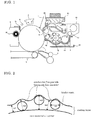
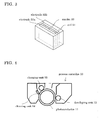

Classifications
-
- G—PHYSICS
- G03—PHOTOGRAPHY; CINEMATOGRAPHY; ANALOGOUS TECHNIQUES USING WAVES OTHER THAN OPTICAL WAVES; ELECTROGRAPHY; HOLOGRAPHY
- G03G—ELECTROGRAPHY; ELECTROPHOTOGRAPHY; MAGNETOGRAPHY
- G03G9/00—Developers
- G03G9/08—Developers with toner particles
- G03G9/0802—Preparation methods
- G03G9/0804—Preparation methods whereby the components are brought together in a liquid dispersing medium
-
- G—PHYSICS
- G03—PHOTOGRAPHY; CINEMATOGRAPHY; ANALOGOUS TECHNIQUES USING WAVES OTHER THAN OPTICAL WAVES; ELECTROGRAPHY; HOLOGRAPHY
- G03G—ELECTROGRAPHY; ELECTROPHOTOGRAPHY; MAGNETOGRAPHY
- G03G9/00—Developers
- G03G9/08—Developers with toner particles
- G03G9/0802—Preparation methods
- G03G9/0804—Preparation methods whereby the components are brought together in a liquid dispersing medium
- G03G9/0806—Preparation methods whereby the components are brought together in a liquid dispersing medium whereby chemical synthesis of at least one of the toner components takes place
-
- G—PHYSICS
- G03—PHOTOGRAPHY; CINEMATOGRAPHY; ANALOGOUS TECHNIQUES USING WAVES OTHER THAN OPTICAL WAVES; ELECTROGRAPHY; HOLOGRAPHY
- G03G—ELECTROGRAPHY; ELECTROPHOTOGRAPHY; MAGNETOGRAPHY
- G03G9/00—Developers
- G03G9/08—Developers with toner particles
- G03G9/0819—Developers with toner particles characterised by the dimensions of the particles
-
- G—PHYSICS
- G03—PHOTOGRAPHY; CINEMATOGRAPHY; ANALOGOUS TECHNIQUES USING WAVES OTHER THAN OPTICAL WAVES; ELECTROGRAPHY; HOLOGRAPHY
- G03G—ELECTROGRAPHY; ELECTROPHOTOGRAPHY; MAGNETOGRAPHY
- G03G9/00—Developers
- G03G9/08—Developers with toner particles
- G03G9/0827—Developers with toner particles characterised by their shape, e.g. degree of sphericity
-
- G—PHYSICS
- G03—PHOTOGRAPHY; CINEMATOGRAPHY; ANALOGOUS TECHNIQUES USING WAVES OTHER THAN OPTICAL WAVES; ELECTROGRAPHY; HOLOGRAPHY
- G03G—ELECTROGRAPHY; ELECTROPHOTOGRAPHY; MAGNETOGRAPHY
- G03G9/00—Developers
- G03G9/08—Developers with toner particles
- G03G9/087—Binders for toner particles
- G03G9/08742—Binders for toner particles comprising macromolecular compounds obtained otherwise than by reactions only involving carbon-to-carbon unsaturated bonds
- G03G9/08755—Polyesters
-
- G—PHYSICS
- G03—PHOTOGRAPHY; CINEMATOGRAPHY; ANALOGOUS TECHNIQUES USING WAVES OTHER THAN OPTICAL WAVES; ELECTROGRAPHY; HOLOGRAPHY
- G03G—ELECTROGRAPHY; ELECTROPHOTOGRAPHY; MAGNETOGRAPHY
- G03G9/00—Developers
- G03G9/08—Developers with toner particles
- G03G9/097—Plasticisers; Charge controlling agents
- G03G9/09708—Inorganic compounds
- G03G9/09716—Inorganic compounds treated with organic compounds
-
- G—PHYSICS
- G03—PHOTOGRAPHY; CINEMATOGRAPHY; ANALOGOUS TECHNIQUES USING WAVES OTHER THAN OPTICAL WAVES; ELECTROGRAPHY; HOLOGRAPHY
- G03G—ELECTROGRAPHY; ELECTROPHOTOGRAPHY; MAGNETOGRAPHY
- G03G9/00—Developers
- G03G9/08—Developers with toner particles
- G03G9/097—Plasticisers; Charge controlling agents
- G03G9/09708—Inorganic compounds
- G03G9/09725—Silicon-oxides; Silicates
Definitions
- a first invention relates to a toner that is used for developers for developing electrostatic images in electrophotography, electrostatic recording, electrostatic printing, etc., and electrophotographic developing apparatuses that use the toner, more particularly to a toner for developing electrostatic image that is used for copiers, laser printers, and facsimiles on the basis of direct or indirect electrophotographic development systems, a method for producing the toner, and an image forming method, an image forming apparatus, and a process cartridge that use the toner.
- a second invention relates to a color carrier and a developer used for developing electrostatic images in electrophotography, electrostatic recording, electrostatic printing, etc., and an image forming method, an image forming apparatus, and a process cartridge that use the toner.
- latent electrostatic images are formed on latent electrostatic image bearing members through charging and exposing and then developed by developers containing toners to form toner images.
- the toner images are transferred onto recording media and fixed.
- the toners, which are out of transferring and thus remaining on the latent electrostatic image bearing members, are cleaned by cleaning members such as blades that are placed to press and contact with surfaces of the latent electrostatic image bearing members.
- Milling processes have been employed heretofore for producing toners in the art.
- the milled toners are advantageous compared to toners on the basis of polymerization processes described later in terms of cleaning ability since the shape of toners on the basis of milling process is typically irregular, i.e. far from a certain orderly shape and non-round.
- milling processes typically exhibit a limited milling efficiency at finer particle sizes of toners, thus suffer from difficulty in forming high quality images since narrower distribution of particle sizes is unobtainable.
- Toner production methods have hence been proposed on the basis of polymerization processes capable of producing toner particles with lower particle diameters and narrower particle size distribution.
- the toners on the basis of the polymerization processes tend to be more spherical, by action of surface tension of droplets at dispersing processes, than the milled toners. Therefore, there arises a problem in blade cleaning systems that the spherical toners roll between cleaning blades and photoconductors to enter into their spaces and are hardly cleanable.
- Reliability as for cleaning ability may be improved by way of making the toner shape irregular as described above; on the other hand, however, there arises a problem in terms of fixability.
- the fixability degrades at lower temperatures from the fact that the packing density of toner decreases at the toner layer on transfer material before fixing due to irregular shape of the toner and thermal conductance delays at the toner layer during the fixing.
- fixing pressure is lower than those of previous systems in particular, the thermal conductance is lower still more thus to disturb fixability at lower temperatures.
- JP-A Japanese Patent Application Laid-Open
- JP-A Nos. 2003-202708 and 2003-515795 disclose that a charge control agent is created by way of modifying ions such as metal cations, existing between layers of layered inorganic compounds, into ions such as organic cations, and the charge control agent is used for electrophotographic toners.
- JP-B Japanese Patent (JP-B) No. 3502993 discloses that quaternary ammonium ion is intercalated between layers of layered inorganic compounds, thereby the layered inorganic compounds are improved as for affinity with organic solvents and can exhibit stable dispersibility with certain organic solvents for a long period.
- these patent literatures disclose no more than a charge control agent that is effective to uniformly disperse organic-modified layered inorganic mineral substances in milled toners.
- JP-A No. 2005-49858 describes that an organic filler, containing a layered mineral substance, is advantageously used as a filler; specifically, particles are made irregular by use of organosilica sol thereby to prepare toner resin particles that exhibit a shape with excellent blade cleaning ability and a broad range of fixable temperature.
- latent electrostatic images are formed on latent electrostatic image bearing members through charging and exposing and then developed by developers containing toners to form toner images.
- the toner images are further transferred onto recording media and fixed.
- the toners which are out of transferring and thus remaining on the latent electrostatic image bearing members, are cleaned by cleaning members such as blades that are placed to press and contact with surfaces of the latent electrostatic image bearing members.
- milling processes have been employed heretofore for producing toners in the art.
- colorants and optional additives are added to thermoplastic resins as binder resin, and the mixture is melted and kneaded and then milled and classified to prepare a toner.
- the resulting toners have larger particle diameters, which making difficult to form high quality images.
- Toner production methods have been hence employed using polymerization processes or emulsion dispersion processes.
- the polymerization processes are exemplified by suspension polymerization processes in which a monomer, polymerization initiator, colorant, charge control agent, etc. are added to an aqueous medium with a dispersant while stirring them to form oil droplets which are then polymerized.
- Association processes have also been employed in which particles, produced by emulsion polymerization or suspension polymerization, are agglomerated and fused.
- toners may bring about lower particle diameters of toners; however, main ingredients of binder resins are limited to polymers obtainable through radical polymerization, thus toners cannot be produced using binder resins mainly containing polyester resins or epoxy resins that are adapted to color toners.
- a method for producing toner on the basis of an emulsion dispersion process is hence proposed in which a mixture such as of a binder resin and a colorant is mixed with an aqueous medium to be emulsified (see e.g., JP-A Nos. 05-66600 and 08-211655 ), which may respond to the requirement for deceasing particle diameter of toner and also allow to select binder resins from a wider range.
- this method generates fine particles and thus yields an emulsion loss.
- a method for producing toner is hence proposed in which a polyester resin is emulsified and dispersed, then the resulting particles are agglomerated and fused to produce a toner (see e.g., JP-A Nos. 10-020552 and 11-007156 ), which may mitigate the emulsion loss because of suppressing fine particles.
- toners on the basis of the polymerization processes and the emulsion dispersion processes tend to become spherical by action of surface tension of droplets at dispersing processes. Therefore, there arises a problem in blade cleaning systems that the spherical toners roll between cleaning blades and photoconductors to enter into their spaces and are hardly cleanable.
- a method is hence proposed in which particles are made into irregular by way of applying mechanical force to the particles through stirring at a high velocity before completing polymerization (see e.g., JP-A No. 62-266550 ).
- a method is also proposed in which coagulated particles having particle diameters of 5 to 25 ⁇ m are produced by way of coagulating particles using a polyvinyl alcohol with a certain saponification degree as a dispersant.
- the resulting coagulated particles possibly suffer from larger particle diameters.
- a method is also proposed in which particles are made irregular by way of adding toner ingredients as well as a filler in organic solvents (see e.g., JP-A No. 2005-49858 ).
- Charge control agents have also been created by way of modifying ions such as metal cations, existing between layers of layered inorganic compounds, into ions such as organic cations, and the charge control agents are proposed to use for electrophotographic toners (see e.g., JP-A Nos. 2003-515795 , 2006-500605 , 2006-503313 , and 2003-202708 ).
- carriers are typically treated to provide a hard coating layer with higher strength by way of applying a coating etc. with an appropriate resin material in order to prevent filming of toner ingredients of carrier surface, form uniform carrier surface, prevent oxidation of surface, prevent decrease of moisture sensitivity, prolong operating life of developers, prevent carrier adhesion on photoconductor surface, protect photoconductors from flaws or ablation due to carriers, control charge polarity, adjust charge amount, or the like.
- conductive particles larger than the thickness of the coating layer (see e.g., JP-A No. 09-160304 ), or the like.
- carrier-coating material that contains a benzoguanamine-n-butyl alcohol-formaldehyde copolymer as a main component (see e.g., JP-A No. 08-6307 ), a carrier-coating material of cross-linked substance of a melamine resin and an acrylic resin (see e.g., JP-B No. 2683624 ), and the like.
- a carrier is proposed in which a conductive material (carbon black) exists at surface of core material and no conductive material exists within coating layer of resins (see e.g., JP-A No. 07-140723 ).
- a carrier is also proposed in which a coating layer of resin represents a gradient of carbon black concentration in the thickness direction, the concentration of carbon black decreases toward the surface of the coating layer, and no carbon black exists at the surface of the coating layer (see e.g., JP-A No. 08-179570 ).
- a carrier having two coating layers is also proposed in which an inner coating layer containing conductive carbon is provided at surface of core particles and a surface-coating resin layer containing a white-type conductive material is disposed thereon (see e.g., JP-A No. 08-286429 ).
- the carrier should be improved since there arises a problem of color smear due to higher stress in recent years.
- the resulting images are provided sharply with a so-called edge effect such that image density is very thin at central portion and dense only at edge portions in copy images of larger area.
- the edge effect may result in clear images, but there arises such a drawback that reproducibility of images is very poor in cases of grey level images.
- Titanium oxide and zinc oxide are publicly known as resistance control agent other than carbon black, however, the resistance reducing effect is insufficient for replacing the carbon black, thus the problems are still remaining.
- a power production method in which an upper layer of indium oxide layer containing tin dioxide and a lower layer of tin dioxide are applied on surface of white inorganic pigment particles (see e.g., JP-B No. 2959927 ) and also a composition containing the powder and a resin is proposed (see e.g., JP-B No. 2959928 ).
- a toner, an image forming method, and an image forming apparatus are provided in accordance with the present invention as follows:
- the toner of the first invention is characterized in that it comprises an organic-modified layered inorganic mineral prepared by modifying at least partially an ion of a layered inorganic mineral into an organic ion and the organic ion-modification ratio X satisfies the relation of 100 ⁇ X (%) ⁇ 150 in the organic-modified layered inorganic mineral, thereby, a deformed toner for developing electrostatic image is provided that can exhibit excellent low temperature fixability, form high quality images, and represent stably cleaning ability for a long period, and also a method for producing the toner, a process cartridge, an image forming method, and an image forming apparatus that utilize the toner are provided.
- the second invention has been made in view of the prior art described above and provides a carrier for electrophotographic developer (hereinafter sometimes referred to as "carrier") that contains the carrier and a negative charge toner that has an average circularity of 0.925 to 0.970 and is formed into particles by way of dispersing and/or emulsifying an oil phase and/or monomer phase (containing at least a toner composition and/or toner composition precursor) into an aqueous medium and also provides an electrophotographic carrier.
- carrier for electrophotographic developer
- carrier contains the carrier and a negative charge toner that has an average circularity of 0.925 to 0.970 and is formed into particles by way of dispersing and/or emulsifying an oil phase and/or monomer phase (containing at least a toner composition and/or toner composition precursor) into an aqueous medium and also provides an electrophotographic carrier.
- an image forming method that uses the inventive electrophotographic developer, a process cartridge that contains the electrophotographic developer, and an image forming apparatus that mounts the process cartridge.
- the objects are as follows.
- the carrier for electrophotographic developer which is used for an electrophotographic developer containing a negative charge toner and the carrier, in which the negative charge toner comprises a binder resin, a colorant, and a layered inorganic mineral of which at least a part of ions between layers being modified by an organic ion, and is formed into particles by way of dispersing and/or emulsifying an oil phase and/or monomer phase containing at least a toner composition and/or toner composition precursor into an aqueous medium, and has an average circularity of 0.925 to 0.970; and the carrier has a coating layer that contains a binder resin and conductive fine particles on core material of the carrier.
- the range of the coating ratio can prevent toner spent to carrier, suppress change of charge amount with time, and allow to charge stably.
- the range of the volume resistivity of the carrier can lead to non-adhesion of the carrier at non-image portions and avoid edge effect.
- the range of the volume average particle diameter of the carrier can lead to significant improvement in carrier adhesion and image quality.
- the silicon resin in the binder resin of the carrier can suppress effectively spent of toner ingredients.
- the mixture of an acrylic resin and a silicone resin can improve effectively adhesive property etc. of the coating layer to suppress degradation such as scraping of the coating layer or peeling of the film.
- the magnetic moment in the range can appropriately maintain retaining force between carrier particles, thus dispersing or mixing of the toner into the carrier or developer is rapid and proper and ear or spike of the developer is properly maintained at developing stage.
- the inorganic fine particles, surface-treated with indium oxide, as the conductive fine particles can avoid the problem of color smear by virtue of its approximately while color.
- an image forming method that comprises a step of forming a latent electrostatic image on an image bearing member, a step of forming a visible image by developing the latent electrostatic image using a developer comprising a carrier and a toner, and a step of transferring and fixing the visible image onto a recording member and uses the electrophotographic developer according to (b-9) as the developer.
- toner spent can be avoided and also charge rise can be suppressed, and images having excellently resistance, far from edge effects, and fine texture can be formed without color smear for a long period.
- the electrophotographic developer formed of the carrier and the negative charge toner can be favorably used as an oilless dry developer.
- the electrophotographic developer of the second invention can be favorably used as an oilless dry developer that satisfies both of charge stability and low temperature fixability, and images with fine texture and excellent resistance can be formed for a long period while avoiding occurrences of edge effect and color smear.
- high quality images can be formed for a long period because of high reliability in cleaning and excellent low temperature fixability and reproducibility of fine dots by virtue of the electrophotographic developer.
- the electrophotographic developer is employed, thus high quality images can be formed with superior reproducibility of fine dots, excellent low temperature fixability, and highly reliable cleaning by virtue of the toner supplied by the carrier of the electrophotographic developer.
- the process cartridge is mounted, thus high quality images can be formed without edge effects or color smear with fine texture for a long period.
- the organic ion-modification ratio X satisfies the relation of 100 ⁇ X (%) ⁇ 150 in the organic-modified layered inorganic mineral.
- X is no more than 100% or above 150%, the effects on toner shape and toner charging ability may be poor.
- the oil phase contains the kneaded mixture of the organic-modified layered inorganic mineral and the binder resin in view of uniform dispersibility.
- the kneaded mixture of the organic-modified layered inorganic mineral and the binder resin i.e. masterbatch thereof, may be produced by mixing and kneading the binder resin and the organic-modified layered inorganic mineral after modifying with an organic cation under high shear force.
- an organic solvent may be used in order to enhance interaction between the organic-modified layered inorganic mineral and the binder resin.
- a so-called flushing process may also be preferably employed in which an aqueous paste of the organic-modified layered inorganic mineral and water, a resin, and an organic solvent are mixed and kneaded to migrate the organic-modified layered inorganic mineral into the resin and then moisture and the organic solvent are removed, which allows to use the wet cake without drying.
- the mixing and kneading is favorably carried out using high-shear dispersing devices such as three-roll mills.
- the production method or raw materials of the inventive toner may be properly selected from conventional ones depending on the application as long as the limitations describes above are satisfied; for the purposes of wide selectability of resins, adequate low temperature fixability, excellent granulating ability, and easy control of particle diameter, distribution, and shape, it is preferred that the toner is produced by way of dissolving or dispersing at least a polymer having a site capable of reacting with a compound having an active hydrogen group, a binder resin, a colorant, a releasing agent, and the kneaded mixture of the organic-modified layered inorganic mineral, prepared by modifying at least partially the ion of a layered inorganic mineral into an organic ion, and the binder resin in an organic solvent, dispersing the solution or dispersion in an aqueous medium containing resin fine particles, removing the organic solvent while or after reacting the polymer having a site capable of reacting with a compound having an active hydrogen group, then rinsing and drying.
- Toners having smaller particle diameters and uniform particle diameters, are problematic in terms of cleaning ability as described above, therefore, the toner has preferably a shape factor SF-1 in a range of 110 to 200 and a shape factor SF-2 in a range of 110 to 300.
- shape factor SF-1 in a range of 110 to 200
- shape factor SF-2 in a range of 110 to 300.
- the toner has the shape factor of 110 to 200 in view of the balance between blade cleaning and transfer efficiency, preferably 120 to 180 for satisfying both of blade cleaning and transfer efficiency.
- the cleaning and transferability greatly depend also on materials or contacting conditions of blades and the transfer also depends on process conditions, thus these may be designed depending on processes within the range of SF-1 described above. However, it is difficult to clean blades when SF-1 is less than 110 and the transferability tends to degrade when SF-1 is more than 200.
- the milled toners have an irregular shape (far from a certain orderly shape, and non-round) and a shape factor SF-1 of above 140, but the particle diameter distribution is typically broad, thus processes to produce toners having Dv/Dn of no more than 1.30 are ineffective.
- polymerization processes to produce toners it is difficult to use polyester resins in suspension or emulsion processes, which suggesting no possibility to address requirements for further lower temperature fixability. JP-A Nos.
- 11-149180 and 2000-292981 propose a dry toner that consists of a toner binder prepared through elongation reaction and/or cross-linking reaction of an isocyanate group-containing prepolymer, and a colorant, in which the dry toner is of particles prepared from the prepolymer (A) through the elongation reaction and/or cross-linking reaction with amines (B); however, the toner shape is different from that defined in the present invention, the transferability and the cleaning ability are hence unsatisfactory at the same time.
- the present invention employs the toner production method by way of dissolving or dispersing at least a polymer having a site capable of reacting with a compound having an active hydrogen group, a binder resin, a colorant, a releasing agent, and the kneaded mixture of the organic-modified layered inorganic mineral, prepared by modifying at least partially the ion of a layered inorganic mineral into an organic ion, and the binder resin in an organic solvent, dispersing the solution or dispersion in an aqueous medium containing resin fine particles, removing the organic solvent while or after reacting the polymer having a site capable of reacting with a compound having an active hydrogen group, then rinsing and drying, in which the organic-modified layered inorganic mineral and the binder resin are kneaded and mixed in a kneading-mixing step in order to arrange the organic-modified layered inorganic mineral, prepared by modifying at least partially the ion of a
- the shape factors SF-1 and SF-2 which expressing circularity in the present invention, may be determined, for example and not limited thereto, by way of taking SEM images of a toner by FE-SEM (S-4200, by Hitachi Ltd.), sampling randomly 300 images, inputting the image data into an image analysis apparatus (Luzex AP, by Nireco Co.) through an interface, and calculating from the equations below.
- SF - 1 L 2 / A ⁇ ⁇ / 4 ⁇ 100
- SF - 2 P 2 / A ⁇ 1 / 4 ⁇ ⁇ 100 in which, L: absolute maximum length of toner, A: projected area of toner, P: maximum boundary length.
- both of SF-1 and SF-2 are 100; the higher is the value apart from 100, the shape becomes more irregular.
- SF-1 typically represents overall shape such as ellipse or sphere, and SF-2 represents irregularity or roughness of toner surface.
- the content of the organic-modified layered inorganic mineral modified by an organic cation is 0.1% to 5% by mass in the toner.
- the content is below 0.1% by mass, the effects on toner shape and toner charging ability may be poor, and when the content is above 5% by mass, the fixability is possibly impaired.
- the organic-modified layered inorganic mineral, used for the inventive toner is desirably prepared by modifying an inorganic mineral having a basic crystal structure of smectite type by an organic ion.
- examples of layered inorganic mineral, modified by an organic ion include montmorillonite or bentonite, beidellite, nontronite, saponite, hectorite, etc.
- the compounds for modifying by an organic ion to prepare the organic-modified layered inorganic mineral are exemplified by quaternary alkyl ammonium salts, phosphonium salts, and imidazolium salts; and quaternary alkyl ammonium salts are preferable.
- Specific examples of the quaternary alkyl ammonium salts are trimethyl stearyl ammonium, dimethyl stearyl benzylammonium, dimethyl octadecyl ammonium, oleylbis(2-hydroxyethyl)methylammonium.
- the inventive toner has a volume average particle diameter Dv of 3.0 to 7.0 ⁇ m. It is generally said that the smaller is the particle diameter of toners the more advantageous is for forming images with high resolution and high quality, however, the smaller particle diameter is disadvantageous for transferability and cleaning ability. Furthermore, when the volume average particle diameter Dv is smaller than the range described above, toners tend to fuse to surface of carriers under prolonged stirring in developing devices to decrease charging ability of carriers in cases of two-component developers, and toners tend to generate on developing rollers or to fuse on thin-layering members such as blades in cases of one-component developers.
- the ratio Dv/Dn of volume average particle diameter Dv and number average particle diameter Dn is 1.00 to 1.30.
- the condition is preferable to form images with high resolution and high quality, and also in two-component developers, fluctuation of particle diameter of toners in developers may be low even under inflow and outflow of toners for a long period, and proper and stable development may be carried out even under prolonged stirring at developing devices.
- Dv/Dn is above 1.30, the particle diameters of toner particles tend to fluctuate considerably, toner behavior may vary at development etc., fine dots may impair reproducibility, and high quality images are difficult to obtain.
- Dv/Dn is in a range of 1.00 to 1.20 to form more excellent images.
- Average particle diameter and particle size distribution are measured in accordance with Coulter Counter processes.
- the average particle diameter and the particle diameter distribution of toners can be measured using Coulter Counter TA-II or Coulter Multisizer II (by Beckman Coulter, Inc.).
- Coulter Counter TA-II model was used with connecting an interface (by The Institute JUSE) and a personal computer (PC9801, by NEC Co.) which outputs number distributions and volume distributions.
- a surfactant preferably alkylbenzene sulfonate
- a dispersant preferably alkylbenzene sulfonate
- the aqueous electrolyte solution is an about 0.1% NaCl aqueous solution, which is prepared from ISOTON-II (by Beckman Coulter, Inc.).
- a sample of 2 to 20 mg is added to the electrolyte solution, which is then ultrasonically dispersed for 1 to 3 minutes using a ultrasonic dispersing device, thereafter volume and number of the toner particles are measured by the Coulter counter TA-II using an aperture of 100 ⁇ m to calculate the volume distribution and the number distribution, from which the volume average particle diameter and the number average particle diameter are determined.
- thirteen channels are used such as 2.00 ⁇ m ⁇ Pd ⁇ 2.52 ⁇ m, 2.52 ⁇ m ⁇ Pd ⁇ 3.17 ⁇ m, 3.17 ⁇ m ⁇ Pd ⁇ 4.00 ⁇ m, 4.00 ⁇ m ⁇ Pd ⁇ 5.04 ⁇ m, 5.04 ⁇ m ⁇ Pd ⁇ 6.35 ⁇ m, 6.35 ⁇ m ⁇ Pd ⁇ 8.00 ⁇ m, 8.00 ⁇ m ⁇ Pd ⁇ 10.08 ⁇ m, 10.08 ⁇ m ⁇ Pd ⁇ 12.70 ⁇ m, 12.70 ⁇ m ⁇ Pd ⁇ 16.00 ⁇ m, 16.00 ⁇ m ⁇ Pd ⁇ 20.20 ⁇ m, 20.20 ⁇ m ⁇ Pd ⁇ 25.40 ⁇ m, 25.40 ⁇ m ⁇ Pd ⁇ 32.00 ⁇ m and 32.00 ⁇ m ⁇ Pd ⁇ 40
- the rate of particles having a particle diameter of no more than 2 ⁇ m and circularity of the inventive toner may be measured using a flow-type particle image analyzer FPIA-2000 (by Sysmex Co.). Specifically, 0.1 to 0.5 mL of a surfactant, preferably alkylbenzene sulfonate, is added as a dispersant into 100 to 150 mL of pure water, to which about 0.1 to 0.5 g of a sample is added. The dispersion containing the sample is ultrasonically dispersed for about 1 to 3 minutes using an ultrasonic dispersing device, the dispersion concentration is adjusted to 3,000 to 10,000/ ⁇ L, and then the shape and the distribution of the toner are measured.
- a surfactant preferably alkylbenzene sulfonate
- polyester resin is used as the binder resin and the mass average molecular mass of the THF soluble matter of the polyester resin is 1,000 to 30,000.
- the reason is that the mass average molecular mass of less than 1,000 possibly deteriorates high-temperature storage stability due to higher content of oligomer components, and the mass average molecular mass of more than 30,000 possibly deteriorates offset resistance since modification by the prepolymer may be insufficient due to steric hindrance.
- the molecular mass of the binder resin may be measured in the present inventive based on GPC (gel permeation chromatography) as follows. A column is conditioned stably within a heat chamber at 40°C, THF as a solvent is flowed into the column at 1 mL/min under the temperature, and a THF sample solution, adjusted at a concentration of 0.05% to 0.6% by mass, is injected and measured in an amount of 50 to 200 ⁇ L. The molecular mass distribution of samples is calculated and determined on the basis of a relation between logarithmic values of a calibration curve formed from a number of mono-dispersion polystyrene standards and a counted number.
- GPC gel permeation chromatography
- the polystyrene standards for the calibration curve are those having a molecular mass of 6x10 2 , 2.1x10 3 , 4x10 3 , 1.75x10 4 , 5.1x10 4 , 1.1x10 5 , 3.9x10 5 , 8.6x10 5 , 2x10 6 , and 4.48x10 6 (by Pressure Chemical Co. or Tosoh Co.), preferably at least about 10 samples of standard polystyrenes are utilized.
- the detector is a RI (refractive index) detector.
- particle diameter may be possible by addition of basic compounds, and also toner properties such as particle low temperature fixability, hot offset resistance, high temperature storage stability, and charge stability may be enhanced still more. That is, when the acid value is above 50.0 mgKOH/g, elongation reaction or cross-linking reaction of modified polyester is insufficient, and the hot offset resistance may be adversely affected, and when the acid value is below 1.0 mgKOH/g, the effect to stabilize dispersion may be unobtainable from basic compounds and the elongation reaction or cross-linking reaction of modified polyester tends to excessively rapid, which being problematic for production stability.
- the acid value of the polyester resin may be measured in accordance with JIS K0070 in the present invention, in which dioxane or THF is used as the solvent when the sample is insoluble.
- the acid value may be determined by the following procedures.
- Measuring device Potentiometric Automatic Titrator DL-53 (by Mettler-Toledo K.K.)
- Analysis software LabX Light Version 1.00.000 Correction: use of mixture solvent of toluene 120 mL and ethanol 30 mL Measuring temperature: 23°C
- the acid value is measured in accordance with the procedures described in JIS K0070-1992 as follows.
- sample preparation a polyester sample of 0.5 g (component soluble in ethyl acetate: 0.3 g) is added to 120 mL of toluene and the sample is dissolved by stirring at room temperature (23°C) for 10 hours, to which 30 mL of ethanol is added to prepare a sample solution.
- the acid value may be calculated in the measuring device described above, specifically, the calculation is as follows.
- the solution is titrated with pre-determined N/10 potassium hydroxide alcohol solution and the acid value is obtained from the consumed amount of the potassium hydroxide alcohol solution in accordance with the calculation as follows.
- acid value HOH mL ⁇ N ⁇ 56.1 / sample mass in which, N is a factor of N/10 KOH.
- high temperature storage stability of the modified polyester resin i.e. the main ingredient of the binder resin
- the glass transition temperature of the polyester resin depends on the glass transition temperature of the unmodified polyester resin, therefore, it is preferred to design the glass transition temperature of the polyester resin in a range of 35°C to 65°C.
- the glass transition temperature of below 35°C may lead to insufficient high temperature storage stability, and the glass transition temperature of above 65°C may adversely affect low temperature fixability.
- the glass transition temperature Tg may be measured in the present invention under a temperature rising rate of 10°C/min using Rigaku THRMOFLEX TG8110 (by Rigaku Co.).
- the procedures to measure Tg will be generally explained.
- the system to measure Tg is TG-DSC system TAS-100 (by Rigaku Co.).
- a sample of about 10 mg is filled in a sample container made of aluminum, and the sample container is placed on a holder unit and set in an electric furnace.
- the sample container is then heated from room temperature to 150°C under a temperature rising rate of 10°C/min, maintained at 150°C for 10 minutes, then is cooled to room temperature and allowed to stand for 10 minutes, then heated again in nitrogen gas atmosphere to 150°C under a temperature rising rate of 10°C/min to measure DSC.
- Tg is calculated from a tangent line of an endothermic curve in the vicinity of Tg and a contact point of the base line using an analysis system in TAS-100 system.
- the polymer having a site capable of reacting with a compound having an active hydrogen group is an important component of the binder resin in order to achieve low temperature fixability and high temperature offset resistance, and the mass average molecular mass is preferably 3,000 to 20,000. That is, when the mass average molecular mass is below 3,000, it is difficult to control reaction velocity, which may be problematic in production stability. When the mass average molecular mass is above 20,000, satisfactory modified polyester may be unobtainable and offset resistance may be adversely affected.
- acid value of toner is a factor more important than acid value of the binder resin with respect to low temperature fixability and high temperature offset resistance.
- the acid value of the inventive toner depends on terminal carboxyl group of the unmodified polyester. It is preferred that the acid value of the unmodified polyester is adjusted to 0.5 to 40.0 mgKOH/g in order to control low temperature fixability such as lower-limit fixing temperature and hot offset generating temperature.
- the acid value of the inventive toner may be measured in accordance with JIS K0070, in which dioxane or THF is used as the solvent when the sample is insoluble.
- the glass transition temperature of the inventive toner is preferably 40°C to 70°C in order to achieve low temperature fixability, high temperature storage stability, and high durability. That is, when the glass transition temperature is below 40°C, blocking in developing devices or filming on photoconductors tends to generate, and when the glass transition temperature is above 70°C, low temperature fixability may be impaired.
- the polymer having a site capable of reacting with a compound having an active hydrogen group, is exemplified by reactive modified polyester resins (RMPE) capable of reacting with active hydrogen, for example, polyester prepolymers (A) having an isocyanate group.
- the prepolymers (A) are exemplified by polycondensation products of polyesters, of polyols (PO) and polycarboxylic acids (PC), having active hydrogen that are further reacted with polyisocyanates (PIC).
- the groups having active hydrogen in the polyesters are exemplified by a hydroxyl group (alcoholic hydrogen group and phenolic hydroxyl group), amino group, carboxyl group, and mercapto group; among these, preferable is alcoholic hydroxyl group.
- Amines are used for a cross-linking agent of the reactive modified polyester resins, and diisocyanate compounds such as diphenylmethane diisocyanate are used for an elongating agent.
- the amines described later in detail, may act as a cross-linking agent or an elongating agent for modified polyesters capable of reacting with active hydrogen.
- Modified polyesters such as urea-modified polyesters, prepared by reacting polyester prepolymers (A) having an isocyanate group with amines (B), may be easily adjusted for molecular mass of the polymer ingredient and thus favorable for assuring the flow temperature fixability of dry toner, in particular oilless low temperature fixability, e.g. releasing property and fixability for fixing heating media without demolding oil-coating mechanism.
- Polyester prepolymers, of which terminal being urea-modified may suppress adhesion property to the fixing heating media while maintaining high flowability and transparency of the unmodified polyester resins themselves at the fixing temperature.
- the polyester prepolymer favorable in the present invention is the polyesters, which have an active hydrogen group such as acid and hydroxyl groups at terminal, to which a functional group such as isocyanate group reactive with the active hydrogen is introduced.
- Modified polyesters (MPE) such as urea-modified polyesters may be derived from the prepolymers; modified polyesters preferable in the present invention are urea-modified polyesters that are prepared by reacting a polyester prepolymer (A) having an isocyanate group with an amine (B) as a cross-linking agent and/or an elongating agent.
- the polyester prepolymers (A) having an isocyanate group may be prepared by reacting a polyester, which being a polycondensation product of polyol (PO) and polycarboxylic acid (PC) and having active hydrogen group, with a polyisocyanate (PIC).
- the active hydrogen group of the polyester is exemplified by a hydroxyl group (alcoholic hydrogen group and phenolic hydroxyl group), amino group, carboxyl group, and mercapto group; among these, preferable is alcoholic hydroxyl group.
- polyols examples include diols (DIO) and trivalent or more polyols (TO), and preferable are diols themselves and mixtures of diols with a small amount of TO.
- DIO examples include alkylene glycols such as ethylene glycol, 1,2-propylene glycol, 1,3-propylene glycol, 1,4-bytandiol, and 1,6-hexanediol; alkylene ether glycols such as diethylene glycol, triethylene glycol, dipropylene glycol, polyethylene glycol, polypropylene glycol, and polytetramethylene ether glycol; alicyclic diols such as 1,4-cyclohexane dimethanol, and hydrogenated bisphenol A; bisphenols such as bisphenol A, bisphenol F, and bisphenol S; alkylene oxide adducts of the above-noted alicyclic diols such as ethylene oxide, propylene oxide, and butylene oxide; and alkylene oxide
- alkylene glycols having a carbon number of 2 to 12 and alkylene oxide adducts of bisphenols are preferable; and alkylene oxide adducts of bisphenols and combinations of these adducts with an alkylene glycol having a carbon number of 2 to 12 are particularly preferable.
- trivalent or more polyols examples include polyaliphatic alcohols of trivalent to octavalent or more such as glycerin, trimethylol ethane, trimethylol propane, pentaerythritol, and sorbitol; and trivalent or more phenols such as trisphenol PA, phenol novolac, and cresol novolac; and alkylene oxide adduct of the trivalent or more polyphenols.
- Examples of the polycarboxylic acid (PC) include dicarboxylic acids (DIC) and trivalent or more polycarboxylic acids (TC), and dicarboxylic acids themselves and mixtures of dicarboxylic acid (DIC) with a small amount of a polyvalent carboxylic acid (TC) are preferable.
- Examples of the dicarboxylic acid (DIC) include alkylene dicarboxylic acids such as succinic acid, adipic acid, and sebacic acid; alkenylen dicarboxylic acids such as maleic acid and fumaric acid; aromatic dicarboxylic acids such as phthalic acid, isophthalic acid, terephthalic acid, and naphthalene dicarboxylic acid.
- alkenylen dicarboxylic acids having a carbon number of 4 to 20 and aromatic dicarboxylic acids having a carbon number of 8 to 20 are preferable.
- examples of the trivalent or more polyvalent carboxylic acid (TC) include aromatic polyvalent carboxylic acids having a carbon number of 9 to 20 such as trimellitic acid and pyromellitic acid.
- the polycarboxylic acid (PC) may be prepared by reacting an acid anhydride of the polycarboxylic acids described above or lower alkyl esters such as methyl ester, ethyl ester, and isopropyl ester with polyols (PO).
- the ratio of polyols (PO) to polycarboxylic acids (PC), defined as an equivalent ratio [OH]/[COOH] of a hydroxyl group [OH] to a carboxyl group [COOH], is typically 2/1 to 1/1, preferably 1.5/1 to 1/1, and more preferably 1.3/1 to 1.02/1.
- polyisocyanate compound examples include aliphatic polyisocyanates such as tetramethylene diisocyanate, hexamethylene diisocyanate, and 2,6-dilsocyanate; alicyclic polyisocyanates such as isophorone diisocyanate and cyclohexyl methane diisocyanate; aromatic diisocyanates such as tolylene diisocyanate and diphenylmethane diisocyanate; aromatic aliphatic diisocyanates such as ⁇ , ⁇ , ⁇ ' ⁇ '-tetramethyl xylylene diisocyanate; isocyanates; these polyisocyanates blocked with a phenol derivative, an oxime, caprolactam, or the like; and combinations of two or more thereof.
- aliphatic polyisocyanates such as tetramethylene diisocyanate, hexamethylene diisocyanate, and 2,6-dilsocyanate
- alicyclic polyisocyanates such
- the ratio of the polyisocyanate compound (PIC), defined as an equivalent ratio [NCO]/[OH] of an isocyanate group [NCO] to a hydroxyl group [OH] of a polyester having a hydroxyl group, is typically 5/1 to 1/1, preferably 4/1 to 1.2/1, and more preferably 2.5/1 to 1.5/1.
- [NCO]/[OH] is more than 5
- low temperature fixability may be impaired.
- urea-modified polyesters are used in the molar ratio of [NCO] is less than 1, the urea content of ester becomes lower, which making hot offset resistance insufficient.
- the content of polyisocyanate (PIC) in the prepolymer (A) having an isocyanate group at the terminal is typically 0.5% to 40% by mass, preferably 1% to 30% by mass, and more preferably 2% to 20% by mass.
- PIC polyisocyanate
- the content is typically 0.5% to 40% by mass, preferably 1% to 30% by mass, and more preferably 2% to 20% by mass.
- hot offset resistance may be impaired and it may be undesirable to satisfy both of high temperature storage stability and low temperature fixability.
- low temperature fixability may be poor.
- the number of isocyanate groups per one molecule of the prepolymer (A) having an isocyanate group is typically 1 or more, preferably 1.5 to 3 on average, and more preferably 1.8 to 2.5 on average. When the number of isocyanate groups is less than 1 per one molecule, the molecular mass of the urea-modified polyester may be lower, which making hot offset resistance poor.
- the amines (B) are exemplified by diamines (B1), trivalent or more polyamines (B2), amino alcohols (B3), amino mercaptans (B4), amino acids (B5), and these compounds (B1 to B5) of which amino group being blocked (B6).
- Examples of the diamines (B1) include aromatic diamines such as phenylene diamine, diethyl toluene diamine, and 4,4'-diamino diphenyl methane; alicyclic diamines such as 4,4'-diamino-3,3'-dimethyl dicyclohexyl methane, diamine cyclohexane, and isophorone diamine; and aliphatic diamines such as ethylene diamine, tetramethylene diamine, and hexamethylene diamine.
- Examples of the trivalent or more polyamines (B2) include diethylene triamine and triethylene tetramine.
- Examples of the amino alcohols (B3) include ethanol amine and hydroxyethyl aniline.
- Examples of the amino mercaptans (B4) include aminoethyl mercaptan and aminopropyl mercaptan.
- Examples of the amino acids (B5) include aminopropionic acid, aminocaproic acid, and the like.
- Examples of the compounds of which amino group being blocked (B6) include ketimine compounds between the amines B1 to B5 and ketones such as acetone, methyl ethyl ketone, and methyl isobuthyl ketone and oxazolidine compounds.
- the molecular mass of the polyester may be controlled using an elongation terminator.
- the elongation terminators include monoamines such as diethylamine, dibutylamine, butylamine, and laurylamine; and block polymers thereof (e.g., ketimine compounds).
- the ratio of amines (B), defined as an equivalent ratio [NCO]/[NHx] of isocyanate group [NCO] in a prepolymer having an isocyanate group (A) to amine group [NHx] in amines (B), is typically 1/2 to 2/1, preferably 1.5/1 to 1/1.5, more preferably 1.2/1 to 1/1.2.
- [NCO]/[NHx] is more than 2 or less than 1/2, the molecular mass of urea-modified polyester becomes lower, which possibly making hot offset resistance poor.
- polyester resins are preferably urea-modified polyester resins (UMPE), and the urea-modified polyester resins may include a urethane bond as well as a urea bond.
- the molar ratio of the urea bond content to the urethane bond content is typically 100/0 to 10/90, preferably 80/20 to 20/80, and more preferably 60/40 to 30/70. When a molar ratio of the urea bond is less than 10%, hot offset resistance may be poor.
- the modified polyesters such as urea-modified polyester resins may be produced by one-shot methods etc.
- the mass average molecular mass of the modified polyesters such as urea-modified polyester resins (UMPE) is typically 10,000 or more, preferably 20,000 to 10,000,000, and more preferably 30,000 to 1,000,000.
- the mass average molecular mass of below 10,000 may deteriorate hot offset resistance.
- the average molecular mass of the modified polyesters such as urea-modified polyester resins is not defined specifically when unmodified polyesters (PE) described later are used, and may be number average molecular mass in which the mass average molecular mass is obtainable.
- the number average molecular mass is typically 2,000 to 15,000, preferably 2,000 to 10,000, and more preferably 2,000 to 8,000.
- the number average molecular mass of larger than 20,000 may impair low temperature fixability and glossiness in cases of full color apparatuses.
- the modified polyesters such as urea-modified polyester resins (UMPE) may be used alone and also contain unmodified polyesters (PE) as a component of the binder resin.
- PE unmodified polyester
- the unmodified polyesters (PE) are exemplified by the polycondensation products of polyols (PO) and polycarboxylic acids of the polyester components similar as those of the UMPE, and preferable unmodified polyesters (PE) are similar as those of the UMPE.
- the mass average molecular mass Mw of PE is 10,000 to 300,000, preferably 14,000 to 200,000.
- the number average molecular mass Mn is 1,000 to 10,000, preferably 1,500 to 6,000.
- the UMPE may be combined with chemically modified ones other than by urea bond such as urethane bond in addition to unmodified polyesters. It is preferred that the UMPE and the unmodified polyester are partially compatible in view of low temperature fixability and hot offset resistance. It is hence preferred that the polyester component of the UMPE is similar to that of the unmodified polyester (PE).
- the mass ratio of the UMPE to the unmodified polyester (PE), when the unmodified polyester (PE) being included, is typically 5/95 to 80/20, preferably 5/95 to 30/70, more preferably 5/95 to 25/75, and still more preferably 7/93 to 20/80. When the mass ratio of the UMPE is less than 5%, the hot offset resistance may be poor and also the high temperature storage stability and low temperature fixability may be deteriorated.
- OH value (mgKOH/g) of the unmodified polyester (PE) is no less than 5; the acid value (mgKOH/g) of the unmodified polyester (PE) is typically 1 to 30, preferably 5 to 20.
- the range of the acid value allows negative charge and improves compatibility between paper and the toner at fixing steps, which enhances low temperature fixability.
- acid values higher than 30 may impair charge stability and be problematic under environmental fluctuation in particular. The fluctuation of the acid value may lead to fluctuation in granulating steps in polymerization reaction, which makes difficult to control emulsification.
- the OH value and the acid value of unmodified polyesters may be determined by the following procedures.
- Measuring device Potentiometric Automatic Titrator DL-53 (by Mettler-Toledo K.K.)
- Analysis software LabX Light Version 1.00.000 Correction: use of mixture solvent of toluene 120 mL and ethanol 30 mL Measuring temperature: 23°C
- the acid value of unmodified polyesters is measured in accordance with the procedures described in JIS K0070-1992 as follows. As regards sample preparation, a polyester sample of 0.5 g (component soluble in ethyl acetate: 0.3 g) is added to 120 mL of toluene and the sample is dissolved by stirring at room temperature (23°C) for 10 hours, to which 30 mL of ethanol is added to prepare a sample solution.
- the acid value may be calculated in the measuring device described above, specifically, the calculation is as follows.
- the solution is titrated with pre-determined N/10 potassium hydroxide alcohol solution and the acid value is obtained from the consumed amount of the potassium hydroxide alcohol solution in accordance with the calculation as follows.
- acid value KOH mL ⁇ N ⁇ 56.1 / sample mass in which, N is a factor of N/10 KOH.
- the OH value of unmodified polyesters (PE) is measured in accordance with the procedures described in JIS K0070-1992 as follows.
- a sample of 0.5 g is precisely weighed into a measuring flask of 100 mL, to which 5 mL of an acetylating reagent is correctly added, then the measuring flask is immersed into a bath at 100°C ⁇ 5°C to heat the flask.
- the flask is taken out from the bath after 1 to 2 hours to allow to cool, then water is added and shaken to decompose acetic anhydride.
- the flask is heated again in the bath for no shorter than 10 hours, then the wall of the flask is rinsed well with an organic solvent.
- the liquid is subjected to potentiometric titration by N/2 potassium hydroxide ethyl alcohol solution using the electrode described above to determine OH value (in accordance with JIS K0070-1966).
- the glass transition temperature (Tg) of the binder resin is typically 40°C to 70°C, and preferably 40°C to 60°C.
- Tg is below 40°C, heat resistance of the toner may be poor, and when above 70°C, low temperature fixability may be insufficient.
- the dry toner of the present invention tends to represent proper high temperature storage stability even having lower glass transition temperatures, compared to conventional toners based on polyester resins, when the modified polyester such as the urea-modified polyester resins etc. exists in combination.
- waxes used for the inventive toner waxes having a lower melting point of 50°C to 120°C may perform effectively between fixing rollers and toner interface as a releasing agent through dispersing with binder resins and effect on hot offset resistance with no use of releasing agents such oils on fixing rollers.
- the melting point of waxes in the present invention indicates a maximum endothermic peak by use of a differential scanning calorimeter (DSC).
- the ingredient of waxes useful in the present invention may be the substances as follows; specific examples of the waxes include vegetable waxes such as carnauba wax, cotton wax, wood wax, and rice wax; animal waxes such as bees wax and lanolin; mineral waxes such as ozokerite and selsyn; and petroleum wax such as paraffin, microcrystalline, and petrolatum.
- vegetable waxes such as carnauba wax, cotton wax, wood wax, and rice wax
- animal waxes such as bees wax and lanolin
- mineral waxes such as ozokerite and selsyn
- petroleum wax such as paraffin, microcrystalline, and petrolatum.
- synthetic hydrocarbon waxes such as Fischer-Tropsch wax and polyethylene wax
- synthetic waxes such as of esters, ketones, and ethers are exemplified.
- fatty acid amides such as 12-hydroxystearic acid amide, stearic acid amide, phthalic anhydride imide, and chlorinated hydrocarbon
- crystalline polymer resins of low molecular mass such as homopolymes or copolymers of polyacrylates of poly-n-stearyl methacrylate or poly-n-lauryl methacrylate (e.g. copolymer of n-stearyl acrylate-ethyl methacrylate); and crystalline polymers having a long alkyl group in a side chain.
- the colorant in the present invention may be properly selected from conventional dyes and pigments; examples thereof include carbon black, nigrosine dyes, iron black, Naphthol Yellow S, Hansa Yellow (10G, 5G, G), cadmium yellow, yellow iron oxide, yellow ocher, chrome yellow, Titan Yellow, Polyazo Yellow, Oil Yellow, Hansa Yellow (GR, A, RN, R), Pigment Yellow L, Benzidine Yellow (G, GR), Permanent Yellow (NCG), Vulcan Fast Yellow (5G, R), Tartrazine Lake, Quinoline Yellow Lake, anthracene yellow BGL, isoindolinone yellow, colcothar, red lead oxide, lead red, cadmium red, cadmium mercury red, antimony red, Permanent Red 4R, Para Red, Fire Red, parachlororthonitroaniline red, Lithol Fast Scarlet G, Brilliant Fast Scarlet, Brilliant Carmine BS, Permanent Red (F2R, F4R, FRL, FRLL, F4RH), Fast Scarlet VD, Vul
- the colorant useful in the present invention may be mixed with a resin to use as a masterbatch.
- the binder resin, used for producing the masterbatch or mixed with the colorant may be, in addition to modified or unmodified polyester resins described above, polymers of styrene or its derivative substitutions such as polystyrene, poly-p-chlorostyrene, and polyvinyltoluene; styrene copolymers such as styrene/p-chlorostyrene copolymer, styrene-propylene copolymer, styrene-vinyltoluene copolymer, styrene-vinylnaphthalene copolymer, styrene-methylacrylate copolymer, styrene-ethylacrylate copolymer, styrene-butylacrylate copolymer, styrene-octy
- solvents capable of dissolving polyesters such as urea-modified polyester and prepolymer (A) can be used for decreasing viscosity of dispersing media containing toner ingredients.
- the solvent may be favorably used in order to narrow the particle diameter distribution.
- the solvent is volatile such that its boiling point is lower than 100°C so as to be easily removed.
- the solvent may be exemplified by toluene, xylene, benzene, carbon tetrachloride, methylene chloride, 1,2-dichloroethane, 1,1,2-trichloroethane, trichloroethylene, chloroform, monochlorobenzene, dichloroethylidene, methyl acetate, ethyl acetate, methyl ethyl ketone and methyl isobutyl ketone. These may be used alone or in combination of two or more.
- aromatic solvents such as toluene and xylene and halogenated hydrocarbons such as methylene chloride, 1,2-dichloroethane, chloroform, and carbon tetrachloride.
- the amount of the solvent is typically 0 to 300 parts based on 100 parts of the prepolymer (A), preferably 0 to 100 parts, more preferably 25 to 70 parts.
- the process to produce the masterbatch may be properly selected; for example, a resin and a colorant for the masterbatch are mixed and kneaded under a high shear force.
- An organic solvent may be used in the method in order to enhance the interaction between the colorant and the resin.
- flushing process may also be available, in which an aqueous paste containing the colorant and water is mixed and kneaded with a resin and an organic solvent, the colorant is transferred toward the resin, and the water and the organic solvent are removed.
- the process is an appropriate process for producing the masterbatch since the wet cake of the colorant can be directly used without drying.
- the mixing and kneading is preferably carried out using high-shear dispersing devices such as three-roll mills.
- particles containing a colorant and a resin and particles of a charge control agent are mixed using rotating devices in vessels in order to deposit and fix the charge control agent on surface of toner particles; in the present invention, desirable toner particles may be obtained through a step of mixing at a circumferential velocity of 40 to 150 m/sec within vessels with no projections from inner wall in accordance with the production processes.
- the inventive toner may contain a charge control agent as required.
- the charge control agent may be properly selected from conventional ones; examples thereof include nigrosine dyes, triphenylmethane dyes, chromium-containing metal complex dyes, molybdic acid chelate pigments, rhodamine dyes, alkoxy amines, quaternary ammonium salts such as fluoride-modified quaternary ammonium salts, alkylamides, elemental phosphorus or compounds thereof, elemental tungsten or compounds thereof, fluoride activators, metallic salts of salicylic acid, and metallic salts of salicylic acid derivatives.
- the charge control agent may be commercially available ones; examples thereof include Bontron 03 of nigrosine dye, Bontron P-51 of quaternary ammonium salt, Bontron S-34 of metal-containing azo dye, Bontron E-82 of oxynaphthoic acid metal complex, Bontron E-84 of salicylic acid metal complex, and Bontron E-89 of phenol condensate (by Orient Chemical Industries, Ltd.); TP-302 and TP-415 of quaternary ammonium salt molybdenum metal complex (by Hodogaya Chemical Co.); Copy Charge PSY VP2038 of quaternary ammonium salt, Copy Blue PR of triphenylmethane derivative, and Copy Charge NEG VP2036 and Copy Charge NX VP434 of quaternary ammonium salt (by Hoechst Ltd.); LRA-901, and LR-147 of boron metal complex (by Japan Carlit Co., Ltd.), copper phthalocyanine, perylene, quinacridone,
- the amount of the charge control agent in the toner is unnecessary to define specifically and depends on species of the resins, existence or nonexistence of optional additives, dispersing processes, etc.; preferably, the amount is 0.1 to 10 parts by mass based on the binder resin, more preferably 0.2 to 5 parts by mass. When the amount is above 10 parts by mass, the charging ability of the toner is excessively large, which possibly decreasing the effect of the charge control agent, and lowering flowability of developers or reducing image density due to higher electrostatic attraction with developing rollers.
- the charge control agent and the releasing agent may be incorporated into the masterbatch or melted and kneaded mixed with resins or added to organic solvents to dissolve or disperse.
- External additives may be optionally added in order to improve flowability, developing ability, or charging ability of the colored particles obtained in the present invention.
- the external additives may be favorably selected from inorganic fine particles.
- the primary particle diameter of the inorganic fine particles is preferably 5 nm to 2 ⁇ m, more preferably 5 to 500 nm.
- the specific surface area of the inorganic fine particles is preferably 20 to 500 m 2 /g measured in accordance with BET method.
- the amount of the inorganic fine particles is preferably 0.01% to 5.0% by mass in the toner, more preferably 0.01% to 2.0% by mass.
- the inorganic fine particles include silica, alumina, titanium oxide, barium titanate, magnesium titanate, calcium titanate, strontium titanate, zinc oxide, tin oxide, quartz sand, clay, mica, silicic pyroclastic rock, diatomaceous earth, chromic oxide, cerium oxide, iron oxide red, antimony trioxide, magnesium oxide, zirconium oxide, barium sulfate, barium carbonate, calcium carbonate, silicon carbide, silicon nitride, and the like.
- the combination of hydrophobic silica fine particles and hydrophobic titanium oxide fine particles is preferable as the flowability improver.
- the titanium oxide particles adversely affect on charge rising property when the amount on the titanium oxide particles is larger than the amount of the silica fine particles since the titanium oxide particles is likely to be poor in charge rising property in contrast to excellent environmental stability and image density stability. It has been found, however, that the amount of hydrophobic silica fine particles and hydrophobic titanium oxide fine particles in a range of 0.3% to 1.5% by mass may not impair significantly the charge rising property and bring about desirable charge rising property, that is, stable image quality is obtainable and toner blowout may be suppressed even under repeated copies.
- the resin for toner binder may be produced by the processes as follows.
- a polyol (PO) and a polycarboxylic acid (PC) are heated to 150°C to 280°C in the presence of conventional esterification catalysts such as tetrabutoxy titanate and dibutyltinoxide, and the generating water is distilled away under reduced pressure as required thereby to prepare a polyester having a hydroxyl group.
- esterification catalysts such as tetrabutoxy titanate and dibutyltinoxide
- PIC polyisocyanate
- the prepolymer (A) is reacted with an amine (B) at 0°C to 140°C, to prepare a urea-modified polyester (UMPE).
- the number average molecular mass of the modified polyester is 1,000 to 10,000, preferably 1,500 to 6,000.
- a solvent may be used as required.
- the useful solvents are those inactive with isocyanates (PIC), and specific examples thereof include aromatic solvents such as toluene and xylene; ketones such as acetone, methyl ethyl ketone and methyl isobutyl ketone; esters such as ethyl acetate; amides such as dimethylformamide and dimethylacetoaminde; and ethers such as tetrahydrofuran.
- PIC isocyanates
- aromatic solvents such as toluene and xylene
- ketones such as acetone, methyl ethyl ketone and methyl isobutyl ketone
- esters such as ethyl acetate
- amides such as dimethylformamide and dimethylacetoaminde
- ethers such as tetrahydrofuran.
- the inventive toner may be produced by the methods as follows, but is not limited thereto.
- the organic solvent may be properly selected depending on the application as long as capable of dissolving or dispersing toner ingredients, the solvent is preferably volatile to have a boiling point of below 150°C in view of easy removal thereof; specific examples of the solvent include toluene, xylene, benzene, carbon tetrachloride, methylene chloride, 1,2-dichloroethane, 1,1,2-trichloroethane, trichloroethylene, chloroform, monochlorobenzene, dichloroethylidene, methyl acetate, ethyl acetate, methyl ethyl ketone, and methyl isobutyl ketone.
- toluene, xylene, benzene, methylene chloride, 1,2-dichloroethane, chloroform, and carbon tetrachloride are preferably, and ethyl acetate are particularly preferable. These may be used alone or in combination of two or more.
- the amount of the solvent may be properly selected depending on the application; preferably, the amount is 40 to 300 parts by mass based on 100 parts by mass of the toner ingredients, more preferably 60 to 140 parts by mass, and still more preferably 80 to 120 parts by mass.
- Suitable aqueous media for use in the production method of the inventive toner may be water itself or water and solvents soluble therewith.
- the soluble solvent include alcohols such as methanol, isopropanol, and ethylene glycol; dimethylformamide, tetrahydrofuran; cellosolves such as methyl cellosolve; and lower ketones such as acetone and methyl ethyl ketone.
- reactive modified polyesters such as polyester prepolymers (A) having an isocyanate group are reacted with amines (B) in aqueous media thereby to prepare urea-modified polyesters (UMPE).
- amines (B) urea-modified polyesters
- UMPE urea-modified polyesters
- toner ingredients including modified polyesters such as urea-modified polyesters or reactive modified polyesters such as polyester prepolymers (A) are added to the aqueous media and dispersed by action of shear force.
- the reactive modified polyesters such as polyester prepolymers (A) and other toner ingredients (hereinafter referred to as "toner raw materials") such as a colorant, colorant masterbatch, releasing agent, charge control agent, and unmodified polyester resin may be mixed while the dispersion is formed; preferably, the toner raw materials are preliminarily mixed, then the mixture is added to the aqueous medium to disperse them.
- the toner raw materials such as colorants, release agents, and charge controlling agents are not necessarily added to the aqueous media when particles are formed, and may be added after particles are prepared in the aqueous medium. For example, particles are previously formed with no colorant, then a colorant may be added by conventional coloring processes.
- the dispersing process is not limited specifically, and conventional devices for low speed shearing, high-speed shearing, friction, high-pressure jet, and ultrasonic processes are available.
- the high-speed shearing processes are preferable in order to prepare dispersion having a particle diameter of 2 to 20 ⁇ m.
- the rotating number is typically 1,000 to 30,000 rpm, preferably 5,000 to 20,000 rpm, but is not limited thereto.
- the dispersing period is typically 0.1 to 5 minutes in batch systems, but is not limited thereto.
- the temperature at dispersing steps is typically 0°C to 150°C (under pressure), and preferably 40°C to 98°C. The higher is the temperature the lower is the viscosity of dispersion of the urea-modified polyesters or prepolymers (A), and which is more favorable since dispersing process is easier.
- the amount of the aqueous media is typically 50 to 2,000 parts by mass based on 100 parts by mass of the toner composition containing urea-modified polyesters and/or polyesters such as prepolymers (A), preferably 100 to 1,000 parts by mass.
- the amount of below 50 parts by mass possibly leads to inferior dispersing condition of toner ingredients and toner particles are far from intended particle diameters.
- the amount of above 20,000 parts by mass is undesirable in view of cost.
- a dispersant may be added as required and favorably used to narrow the particle diameter distribution and to make the dispersion stable.
- the dispersant may be selected from various ones to emulsify or disperse the liquid that contains water and an oil phase into which the toner composition being dispersed.
- the dispersant may be surfactants, dispersants for inorganic fine particles, or dispersants for polymer fine particles.
- surfactants examples include anionic surfactants such as alkylbenzene sulfonic acid salts, ⁇ -olefin sulfonic acid salts, phosphoric acid esters; cationic surfactants like amine salt surfactants such as alkyl amine salts, aminoalcohol fatty acid derivatives, polyamine fatty acid derivatives, and imidazoline, and also like quaternary ammonium salt surfactants such as alkyltrimethyl ammonium salts, dialkyldimethyl ammonium salts, alkyldimethyl benzyl ammonium salts, pyridinium salts, alkyl isoquinolinium salts, and benzethonium chloride; non-anionic surfactants such as fatty acid amide derivatives and polyhydric alcohol derivatives; and ampholytic surfactants such as alanine, dodecyldi(aminoethyl)glycin, di(octylaminoethyl)
- Surfactants having a fluoroalkyl group may exhibit the effect even in a very small amount.
- anionic surfactants having a fluoroalkyl group are fluoroalkyl carboxylic acids of C 2 to C 10 or metal salts thereof, disodium perfluorooctane sulfonylglutamate, 3-[ ⁇ -fluoroalkyl(C 6 to C 11 ) oxy]-1-alkyl(C 3 to C 4 ) sodium sulfonate, 3-[ ⁇ -fluoroalkanoyl(C 6 to C 8 )-N-ethylamino]-1-sodium propanesulfonate, fluoroalkyl(C 11 to C 20 ) carboxylic acids or metal salts thereof, perfluoroalkyl(C 7 to C 13 ) carboxylic acids or metal salts thereof, perfluoroalkyl(C 4 to C 12 ) sulfonic acid or metal salts thereof, perfluoro
- Examples of commercially available surfactants having a fluoroalkyl group are Surflon S-111, S-112 and S-113 (by Asahi Glass Co.); Frorard FC-93, FC-95, FC-98 and FC-129 (by Sumitomo 3M Ltd.); Unidyne DS-101 and DS-102 (by Daikin Industries, Ltd.); Megafac F-110, F-120, F-113, F-191, F-812 and F-833 (by Dainippon Ink and Chemicals, Inc.); ECTOP EF-102, 103, 104, 105, 112, 123A, 123B, 306A, 501, 201 and 204 (by Tohchem Products Co.); Futargent F-100 and F150 (by Neos Co.).
- cationic surfactants are primary, secondary and tertiary aliphatic amines having a fluoroalkyl group, aliphatic quaternary ammonium salts such as of perfluoroalkyl(C 6 to C 10 ) sulfoneamide propyltrimethylammonium salts, benzalkonium salts, benzetonium chloride, pyridinium salts, imidazolinium salts, etc.
- SURFLON S-121 by Asahi Glass Co.
- FRORARD FC-135 by Sumitomo 3M Co.
- UNIDYNE DS-202 by Daikin Industries, Ltd.
- MEGAFACE F-150 and F-824 by Dainippon Ink and Chemicals, Inc.
- ECTOP EF-132 by Tohchem Products Co.
- FUTARGENT F-300 by Neos Co.
- dispersants of inorganic compounds hardly soluble in water are available, such as tricalcium phosphate, calcium carbonate, titanium oxide, colloidal silica, and hydroxyapatite.
- certain resin fine particles may exhibit similar effects as the inorganic dispersants; examples thereof include MMA polymer fine particles of 1 ⁇ m and 3 ⁇ m, styrene fine particles of 0.5 ⁇ m and 2 ⁇ m, and styrene-acrylonitrile polymer fine particles of 1 ⁇ m (PB-200H (by Kao Co.), SGP (JRI Solutions, Ltd.), Techno Polymer SB (Sekisui Plastics Co.), SGP-3G (JRI Solutions, Ltd.), and Micropal (Sekisui Fine Chemical Co.).
- the dispersed liquid droplets may be stabilized by use of polymer protective colloid; specific examples of such protective colloids include acids such as acrylic acid, methacrylic acid, a-cyanoacrylic acid, a-cyanomethacrylic acid, itaconic acid, crotonic acid, fumaric acid, maleic acid, and maleic anhydride; (meth)acrylic monomers having a hydroxyl group such as ß-hydroxyethyl acrylate, ß-hydroxypropyl methacrylate, ß-hydroxypropyl acrylate, ß-hydroxypropyl methacrylate, Y-hydroxypropyl acrylate, Y-hydroxypropyl methacrylate, 3-chloro-2-hydroxypropyl acrylate, 3-chloro-2-hydroxypropyl methacrylate, diethyleneglycolmonoacrylic acid esters, diethyleneglycolmonomethacrylic acid esters,
- the period for elongation and/or cross-linking reaction may be properly selected based on reactivity that depends on the combination between structure of an isocyanate group that the prepolymer (A) has and an amine (B), typically the period is 10 minutes to 40 hours, preferably 2 to 24 hours.
- the reaction temperature is typically 0°C to 150°C, preferably 40°C to 98°C.
- Conventional catalysts may be employed as required; examples thereof include dibutyltin laurate and dioctyltin laurate.
- the amines (B) are used as an elongating agent and/or cross-linking agent.
- the inventive toner may be used for two-component developers.
- the toner is mixed with a magnetic carrier, and the amount ratio of the toner and the carrier in developers is preferably 1 to 10 parts by mass of the toner based on 100 parts of the carrier.
- the magnetic carrier may be selected from conventional ones, having a particle diameter of about 20 to 200 ⁇ m, such as iron powders, ferrite powders, magnetite powders, and magnetic resin carriers.
- the surface of the carriers may be coated by a resin.
- the resin to be coated on the carriers include amino resins such as urea-formaldehyde resins, melamine resins, benzoguanamine resins, urea resins, and polyamide resins; epoxy resins; vinyl or vinylidene resins such as acrylic resins, polymethylmethacrylate resins, polyacrylonitirile resins, polyvinyl acetate resins, polyvinyl alcohol resins, polyvinyl butyral resins; polystyrene resins, styrene-acrylic copolymers; halogenated olefin resins such as polyvinyl chloride resins; polyester resins such as polyethylene terephthalate resins and polybutylene terephthalate resins; polycarbonate resins, polyethylene resins, polyvinyl fluoride resins, polyvinylidene fluoride resins, polytrifluoroethylene resins, polyhexafluoropropylene resins, vinylidenefluoride-
- Electroconductive powder may be included in the toner.
- Specific examples of the electroconductive powder include metal powders, carbon black, titanium oxide, tin oxide, and zinc oxide.
- the average particle diameter of the electroconductive powder is preferably no larger than 1 ⁇ m. When the average particle diameter is above 1 ⁇ m, control of resistance is difficult.
- the inventive toner may also be used as a magnetic toner or a non-magnetic toner of one-component magnetic developers with no carrier.
- the inventive toner is used for conventional image forming methods that use a toner.
- the inventive toner is used for conventional image forming apparatuses that use a toner.
- FIG. 1 is an exemplary view that schematically shows a cross section of an image forming apparatus.
- an electrophotographic copier is illustrated as an image forming apparatus.
- FIG. 1 shows a photoconductor drum 1 of latent image bearing member that rotates in the arrow direction as shown, a charging device 2 is disposed outside the photoconductor drum 1, and laser light 3 is irradiated from an exposing unit correspondingly with images read from originals. Additionally, a developing device 4, a paper feeding unit 7, a transfer device 5, a cleaning device 6, and a charge eliminating device 9 are disposed around the photoconductor 1.
- the developing device 41 is further equipped with developing rollers 41, 42, puddle-like stirring member 43, a stirring member 44, a doctor 45, a toner supplying portion 46, and a supplying roller 47.
- the cleaning device 6 is equipped with a cleaning brush 62 and a cleaning blade 61.
- the members 81 and 82, disposed upper and lower of the developing device 4, are guide rails for attaching/detaching or supporting the developing device 4.
- the cleaning blade 61 of the cleaning device may also be detected for its life time.
- the cleaning blade 61 always contacts with photoconductors in operating period and is worn away along with the rotation of the photoconductors. When cleaning blades are worn away, the function to remove residual toners on photoconductors is impaired, and image quality of copies is degraded.
- toners are nearly spherical and enhanced for flowability compared to milled toners, the nearly spherical toners easily pass through blades to cause inferior cleaning even when the blades are not worn away yet although transfer ability is improved, which is a problem for polymerization toners.
- the problem may be solved and the cleaning can be adequately carried out by use of the inventive irregular toner.
- the inventive carrier for electrophotographic developer comprises a resin, a colorant, and a layered inorganic mineral of which at least a part of ions between layers being modified by an organic ion, and is used for an electrophotographic carrier that is comprised of the carrier and a negative charge toner that has an average circularity of 0.925 to 0.970 and is formed into particles by way of dispersing and/or emulsifying an oil phase and/or monomer phase containing at least a toner composition and/or toner composition precursor into an aqueous medium; and the carrier has a coating layer that contains a binder resin and conductive fine particles on core material of the carrier.
- toner the negative charge toner
- carrier the carrier for electrophotographic developer
- developer the electrophotographic developer
- the toner used for the inventive developer, will be explained in detail later; initially, the layered inorganic mineral of which at least a part of ions between layers being modified by an organic ion (modified layered inorganic mineral) will be explained.
- the "modified layered inorganic mineral” indicates an inorganic mineral that is formed of laminated layers having a thickness of several nanometers; the “modified” indicates that an organic ion is introduced as the ion existing between the layers.
- Specific examples thereof are the layered inorganic substances described in JP-A Nos. 2006-500605 , 2006-503313 , and 2003-202708 .
- the structure of these substances is encompassed into intercalation in a broad sense.
- the layered inorganic mineral is publicly exemplified by smectite group (montmorillonite, saponite), kaolin group (kaolinite), magadiite, and kanemite.
- the hydrophilicity of the modified layered inorganic mineral depends on the modified layered structure.
- the layered inorganic mineral without modification is applied to the toner to form particles by dispersing in an aqueous medium, the layered inorganic mineral migrates into the aqueous medium, thus the toner cannot be deformed (so-called non-spherical shape); meanwhile the modification enhances hydrophobicity, thus the toner can be easily deformed at forming particles and finely dispersed, exhibiting sufficiently charge adjusting function.
- the modified layered inorganic mineral can make particles fine at producing the toner and deform the particle shape, and also performs charge adjusting function and contribute to low temperature fixability by way of existing mainly at surface of the toner particles in particular.
- the content of the modified layered inorganic mineral is preferably 0.05% to 5% by mass in the toner ingredients.
- the modified layered inorganic mineral in the present invention is desirably obtained by modifying one having a basic crystalline structure of smectite type.
- a metal anion may be introduced by way of substituting partially a divalent metal of the layered inorganic mineral into a trivalent metal, it is desirable that a part of a metal anion of the layered inorganic mineral is modified by an organic anion since introduction of metal anion enhances hydrophilicity.
- the agent to form the modified layered inorganic mineral by way of modifying at least a part of ions that the layered inorganic mineral has (a part of ions between layers) is exemplified by quaternary alkyl ammonium salts, phosphonium salts, and imidazolium salts; preferable are quaternary alkyl ammonium salts.
- Examples of the quaternary alkyl ammonium salts include trimethyl stearyl ammonium, dimethyl stearyl benzylammonium, dimethyl octadecyl ammonium, oleylbis(2-hydroxyethyl)methyl ammonium.
- the agent to modify by an organic ion is exemplified by sulfate salts, sulfonate salts, carboxylate salt, or phosphate salts of branched and non-blanched or cyclic alkyls (C 1 to C 44 ), alkenyls (C 1 to C 22 ), alkoxys (C 8 to C 32 ), hydroxylalkyl (C 2 to C 22 ), ethylene oxide, propylene oxide, etc.
- preferable are carboxylic acids having a skeleton of ethylene oxide.
- the layered inorganic mineral can has an adequate hydrophobicity, and thus when the modified layered inorganic mineral is incorporated into an oil phase containing a toner composition and/or toner composition precursor, the oil phase can exhibit non-Newtonian viscosity to deform the toner.
- the content of the modified layered inorganic mineral is preferably 0.05% to 5% by mass in the toner ingredients as described above.
- the modified layered inorganic mineral may be properly selected and exemplified by montmorillonite, bentnite, hectorite, attapulgite, sepiolite, and mixtures thereof.
- organic modified montmorillonite and bentnite are preferable in view of non-influence on toner properties, easy viscosity adjustability, and lower additive amount.
- Examples of commercially available layered inorganic mineral, of which at least a part of ions between layers being modified by an organic cation, include quaternium 18 bentonite such as Bentone 3, Bentone 38, and Bentone 38V (by Leox Co.), Thixogel VP (United Catalyst Co.), Clayton 34, Clayton 40, and Clayton XL (Southern Clay Products, Inc.); stearalkonium bentonite such as Bentone 27 (by Leox Co.), Thixogel LG (United Catalyst Co.), and Clayton AF and Clayton APA (Southern Clay Products, Inc.); and quaternium 18/benzalkonium bentonite such as Clayton HT and Clayton PS (Southern Clay Products, Inc.). Particularly preferable are Clayton AF and Clayton APA.
- layered inorganic mineral of which at least a part of ions between layers being modified by an organic anion, are those of DHT-4A (by Kyowa Chemical Industry Co.) modified by organic anions expressed by General Formula (1) below.
- An exemplary compound expressed by General Formula (1) is Hightenol 330T (by Dai-ichi Kogyo Seiyaku Co.).
- R 1 (OR 2 ) n OSO 3 M General Formula (1) in which, R 1 represents an alkyl group of 13 carbon atoms, R 2 represents an alkylene group of 2 to 6 carbon atoms, "n" is an integer of 2 to 10, and M is a monovalent metal element.
- the oil phase containing a toner composition and/or toner composition precursor can exhibit non-Newtonian viscosity to deform the toner in the processes to produce the toner containing the modified layered inorganic mineral.
- the inventive toner containing the modified layered inorganic mineral may undergo a change of charging property as carrier with time; that is, the charge amount (electric charge) tends to increase with the amount of consumed toner.
- the charge amount electrical charge
- toner ingredients accumulate at carrier surface (spent), but the detail mechanism to increase the charge amount is unclear still.
- the charge amount typically decreases in usual spent of toner ingredients, but the charge amount increases in the inventive toner.
- the charge amount does not change significantly in cases of charts with lower image area such as writings, but the charge amount increases in cases of charts with higher image area such as photographs and poster images. Charts with larger image area lead to larger amount of consumed toners, and the charge amount increases along with the amount of consumed toners.
- the inventive carrier has a coating layer containing a binder resin and conductive fine particles on the core material of the carrier, and the fine particles in the carrier coating layer lead to irregularity of the carrier surface thereby the spent materials are removed by action of self-polishing between carriers.
- the fine particles included into the coating layer are conductive fine particles. The inclusion of the conductive fine particles may effect a charge leak to suppress the increase of charge amount.
- the conductive fine particles may be of carbon black, titanium oxide, zinc oxide, indium oxide, tin oxide-antimony oxide, tin oxide-indium oxide, and surface-treated conductive fine particles thereof.
- carbon black and indium oxide may electively reduce the carrier resistance even in a small amount but are unable to employ due to the problem of color smear.
- Zinc oxide and titanium oxide are white but impossible to effectively reduce the charge or electric resistance (hereinafter simply referred to as "resistance") in a small amount like carbon black, thus a large amount thereof is required to add into the coating layer.
- resistance charge or electric resistance
- the conductive fine particles are added in a large amount, there arises a problem of uneven distribution of the conductive fine particles in the coating layer of the carrier.
- the sites where the conductive fine particles unevenly exist are exposed through scraping of the coating layer, the sites act as an electric leak point to decrease resistance locally, which causing carrier adhesion on image portions and resulting in abnormal images like white voids.
- the conductive fine particles may be various fine particles surface-treated with indium oxide.
- the fine particles surface-treated with indium oxide may be EC-500 and EC-700 (by Titankogyo. Co.) that are commercially available conductive inorganic oxide. These materials can reduce the resistivity in a small amount and are produced by surface-treating inorganic oxide thus are almost white and free from the problem of color smear.
- the carrier for electrophotographic developer used for the inventive electrophotographic developer, comprises a coating layer containing a binder resin and conductive fine particles on the core material of carrier.
- core material of carrier may be properly selected depending on the purpose from conventional electrophotographic two-component carriers such as ferrites, Cu-Zn ferrites, Mn ferrites, Mn-Mg ferrites, Mn-Mg-Sr ferrites, magnetites, iron, and nickel, but not limited thereto.
- the coating ratio of the conductive fine particles, contained in the coating layer of the carrier is 50% or more based on the carrier core material. That is, as regards the amount ratio of the conductive fine particles to the carrier core material, the value of coating ratio obtained from Equation (1) satisfies 50% or more.
- coating ratio D s ⁇ ⁇ s ⁇ W / 4 ⁇ Df ⁇ ⁇ f ⁇ 100 in which Ds: particle diameter of carrier core material, ⁇ s: absolute specific gravity of carrier core material, W: amount ratio of conductive fine particles to carrier core material, Df: particle diameter of conductive fine particle, ⁇ f: absolute specific gravity of conductive fine particles.
- irregularity may be formed on the carrier surface, thereby contact with the binder resin along with strong impact may be mitigated through friction between the toner and the carrier or between carriers when the developer is stirred for frictionally charging, hence toner spent onto the carrier can be prevented.
- the coating ratio is calculated as follows.
- the pf of absolute specific gravity of conductive fine particles (inorganic fine particles) and ps of absolute specific gravity of carrier core material are measured using a dry type automatic density meter Acupic 1330 (by Shimadzu Co.).
- the Ds of particle diameter (volume average particle diameter) of carrier core material is measured using a Microtrack particle size analyzer of SRA type (by Nikkiso Co.); the range setting is 0.7 ⁇ m to 125 ⁇ m.
- Methanol is used for the dispersion liquid and the refractive index is set to 1.33, and refractive indices of carrier and core material are set to 2.42.
- the Df particle diameter of conductive fine particle is measured by an automatic particle size analyzer CAPA-700 (by Horiba, Ltd.) as a volume average particle diameter. Pretreatment of the measurement is carried out in a way that 30 mL of aminosilane (SH6020, by Dow Corning Toray Silicone Co.) and 300 mL of toluene are poured into a juicer mixer; 6.0 g of a sample is added, rotation speed of the mixer is set to low to disperse three minutes; the dispersion liquid is added and diluted to 500 mL of toluene in a beaker of 1000 mL, and the diluted liquid is always stirred using a homogenizer. The diluted liquid is measured by the super-centrifugal automatic particle size analyzer CAPA-700 (by Horiba, Ltd.) Measuring Conditions:
- the coating ratio of below 50% is likely to expose the surface of carrier core material through film scraping with time to decrease resistance in spots, and the carrier under such a condition acts to develop solid images possibly to generate white voids in resulting images in particular in cases of the coating ratio of below 40%.
- Df is a particle diameter of conductive fine particles (inorganic fine particles e.g. conductive inorganic oxide) in the coating layer of carrier and "h" is a thickness of the coating layer.
- the ratio Df/h between the particle diameter Df and the thickness "h" of the coating layer satisfies the relation of 0.5 ⁇ Df/h ⁇ 1.5, the particles project in the coating film, thereby contact with the binder resin along with strong impact may be mitigated through friction between the toner and the carrier or between carriers when the developer is stirred for frictionally charging.
- condition of Df/h below 0.5 is unfavorable since the inorganic fine particles tend to be buried within the binder resin, in particular the condition of Df/h below 0.4 is disadvantageous because of significantly poor effect.
- FIG. 2 is a conceptual view that schematically shows the relation between a particle diameter Df of conductive fine particles and a thickness "h" of coating layer in an inventive carrier for electrophotographic developer.
- the thickness "h” of the coating layer of the carrier can be determined by way of observing the cross section of the carrier using a transmission electron microscope (TEM), measuring the thickness of resin portions of the coating layer on the carrier, and calculating the average. Specifically, the thicknesses of resin portions themselves are measured between the surface of carrier core material and the particles; thickness of resin portions between the particles or thickness of resin portions on the inorganic fine particles is excluded from the measurement. The thicknesses are measured for randomly selected 50 sites of the cross section of carrier to calculate the average to determine the thickness "h” ( ⁇ m).
- the particle diameter Df of the inorganic fine particles is measured using the super-centrifugal automatic particle size analyzer CAPA-700 (by Horiba, Ltd.) in the same manner as the method to measure the particle diameter of the inorganic fine particles described above.
- Resistance (volume resistivity value) of the inventive carrier for electrophotographic developer can be measured by the device for measuring carrier resistance schematically shown in FIG. 3 ; preferably, the resistance is no less than 10 [log ( ⁇ cm)] and no more than 16 [log ( ⁇ cm)].
- the resistance is not defined specifically as long as in this range and may be appropriately adjusted depending on the application.
- the arrangement of the resistance is essential for carriers used for systems that require high quality images such as color images.
- volume resistivity value When the volume resistivity value is below 10 [log ( ⁇ cm)], carrier adhesion unfavorably generates at non-image portions. On the other hand, when the volume resistivity value is above 16 [log ( ⁇ cm)], edge effect unfavorably degrades to an unallowable level. When the volume resistivity value is below the measurable lower limit, the volume resistivity value is substantially unobtainable and regarded as breakdown.
- the volume resistivity value in this specification is measured in a way that a carrier 33 is filled in a cell 31 of a fluorine resin container that houses electrodes 32a, 32b of surface area 2 cm x 4 cm with distance 2 mm between the electrodes; tapping operation is carried out at a tapping speed of 30 times/min for one minutes using a tapping machine PTM-1 (by Sankyo Pio-Tech.
- the volume average particle diameter of the inventive carrier is preferably 20 to 65 ⁇ m.
- the effects to improve carrier adhesion and image quality are significant.
- the volume average particle diameter is less than 20 ⁇ m, problems such as carrier adhesion unfavorably generate since uniformity of particles is decreased and technology to handle such finer particles is insufficient still.
- the volume average particle diameter of above 65 ⁇ m is unfavorable since reproducibility of fine images is poor and fine precise images are unobtainable.
- the volume average particle diameter of carrier can be measured using a Microtrack particle size analyzer of SRA type (by Nikkiso Co.); the range setting is 0.7 ⁇ m or more to 125 ⁇ m or less. Methanol is used for the dispersion liquid and the refractive index is set to 1.33, and refractive indices of carrier and core material are set to 2.42.
- the binder resin of the carrier contains at least a silicone resin. Improving effects may be significant when the binder resin of the carrier contains at least a silicone resin. The reason is that silicone resins have a lower surface energy, therefore, spent of toner ingredients hardly occurs and film scraping is likely to occur thus accumulation of spent ingredients is effectively delayed.
- the silicone resin in this specification may be any conventional silicone resins, but not limited to, such as straight silicone resins having exclusively organosiloxane bond, and silicone resins which are modified with alkyd, polyester, epoxy, acrylic, and urethane, etc.
- examples of the straight silicone resins include KR271, KR255, and KR152 (by Shin-Etsu Chemical Co.), and SR2400, SR2406, and SR2410 (by Dow Corning Toray Silicone Co.). These silicone resins may be used themselves or in combination with other ingredients for cross-linking reaction or controlling charge amount.
- examples of the modified silicone resins include KR206 (alkyd modified), KR5208 (acryl modified), ES1001N (epoxy modified), KR305 (urethane modified) (by Shin-Etsu Chemical Co.), SR2115 (epoxy modified), and SR2110 (alkyd modified) (by Toray Dow Corning Co.).
- the binder resin of the carrier may also be a mixture of an acrylic resin and a silicone resin.
- the silicone resin in addition to the acrylic resin may significantly improve adhesive property etc. of the coating layer. That is, acrylic resins exhibit strong adhesive property and low brittleness thus have very excellent abrasion resistance, therefore, degradation such as scraping or peeling of coating layer is unlikely to occur, the coating layer can be maintained stably, and particles like conductive fine particles contained in the coating layer can be firmly sustained by virtue of the strong adhesive property; in particular, powerful effect may be derived to support fine particles having a particle diameter larger than the thickness of coating layer.
- the acrylic resin in this specification indicates any resins having an acrylic component without particular limitations.
- the acrylic resin may be used itself or in combination with other ingredients for cross-linking reaction with the acrylic resin.
- the other ingredients for cross-linking reaction are exemplified by, but not limited to, amino resins, acidic catalysts, etc.
- the amino resins are exemplified by, but not limited to, guanamine resins, melamine resins, etc.
- the acidic catalysts may be any ones having a catalytic effect; examples thereof are those having a reactive group of which type being alkylated, methylol group, imino group, methylol/imino group, etc.
- the acrylic resins exhibit strong adhesive property and low brittleness thus have very excellent abrasion resistance, on the other hand, have a higher surface energy, therefore, there may arise such a problem as low charge amount due to spent (accumulation) of toner ingredients.
- Such a problem can be solved by using together with a silicone resin capable of effecting that spent of toner ingredients hardly occurs due to lower surface energy and accumulation of spent ingredients to cause film scraping is unlikely to progress.
- the silicone resins exhibit lower adhesive property and higher brittleness and thus are inferior in poor abrasion resistance, it is important to well-balance the properties of these two type resins, thereby the coating film may be unlikely to occur the spent and have abrasion resistance.
- magnetic moment of the inventive carrier is 40 to 90 Am 2 /kg in an applied magnetic field of 1000 (10 3 /4 ⁇ A/m).
- the intensity of applied magnetic field is sometimes expressed by Oe (Oersted).
- Oe Oersted
- 1000 (10 3 /4 ⁇ A/m) corresponds to 1 kOe (1,000 Oersted).
- the magnetic moment of the range described above may appropriately maintain retaining force between carrier particles, thus dispersing or mixing of the toner into the carrier or developer is rapid and proper; however, when the magnetic moment is less than 40 Am 2 /kg at 1 kOe, shortage of the magnetic moment unfavorably brings about carrier adhesion. On the other hand, the magnetic moment of more than 90 Am 2 /kg at 1 kOe is undesirable, since the ear or spike of developer is excessively hard at developing step and thus reproducibility of fine images is poor and fine precise images are unobtainable.
- the magnetic moment may be measured as follows.
- a B-H tracer BHU-60 (by Riken Denshi Co.) is used as a measuring device, and particles of carrier core material of 1.0 g is filled into a cylindrical cell (inner diameter: 7 mm, height: 10 mm) and set to the device.
- the magnetic field is gradually increased up to 3,000 Oersted, then is gradually decreased to zero, and magnetic field of the opposing direction is gradually increased up to 3,000 Oersted. Then the magnetic field is gradually decreased to zero, thereafter magnetic field is applied in the first direction.
- a B-H curve is figured in this way and the magnetic moment at 1,000 Oersted is determined from the figure.
- the toner used for the inventive developer comprises a binder resin, a colorant, and a layered inorganic mineral of which at least a part of ions between layers being modified by an organic ion, and is formed into particles by way of dispersing and/or emulsifying an oil phase and/or monomer phase containing at least a toner composition and/or toner composition precursor into an aqueous medium; the toner has an average circularity of 0.925 to 0.970 and is a negative charge toner.
- the toner may represent high reliability in cleaning, excellent low temperature fixability, and superior reproducibility of fine dots, thus provide stably high quality images.
- the average circularity of the inventive toner is preferably 0.925 to 0.970 as described above, and more preferably 0.945 to 0.965.
- the average circularity means a value of circle circumference, having the same project area of toner particles to be measured, divided by the actual circumference of toner particles to be measured.
- the content of particles having a circularity of less than 0.925 is preferably no more than 15% in the toner.
- the average circularity is less than 0.925, it may be difficult to take high quality images with satisfactory transfer ability and without dusts; meanwhile, when the average circularity is above 0.970, inferior cleaning on photoconductors or transfer belts may generate in image forming systems equipped with cleaning blades and to contaminate images.
- toners of untransferable images due to paper-feed failure may remain on photoconductors to pollute background or to contaminate charge rollers thus inhibiting the charging capacity.
- the average circularity may be measured by an optical detection zone method in which a toner-containing suspension is passed through an image-detection zone disposed on a plate, the particle images of the toner are optically detected by CCD camera, and the resulting particle images are analyzed.
- An available analyzing apparatus is a flow-type particle image analyzer FPIA-2100 (by Sysmex Corp.).
- the ratio Dv/Dn of volume average particle diameter Dv and number average particle diameter Dn is 1.00 to 1.30; the condition within this range may allow to form images with high resolution and high quality, and also in two-component developers, fluctuation of particle diameter of toners in developers may be low even under inflow and outflow of toners for a long period, and proper and stable development may be carried out even under prolonged stirring at developing devices.
- Dv/Dn is above 1.30, the particle diameters of toner particles tend to fluctuate considerably, toner behavior may vary at development etc., fine dots may impair reproducibility, and high quality images are difficult to obtain. More preferably, Dv/Dn is in a range of 1.00 to 1.20 to form more excellent images.
- the inventive toner has a volume average particle diameter Dv of 3.0 to 7.0 ⁇ m. It is generally said that the smaller is the particle diameter of toners the more advantageous is for forming images with high resolution and high quality, however, the smaller particle diameter is disadvantageous for transferability and cleaning ability. Furthermore, when the volume average particle diameter Dv is smaller than the range described above, toners tend to fuse to surface of carriers under prolonged stirring in developing devices to decrease charging ability of carriers in cases of two-component developers, and toners tend to generate on developing rollers to form filming of toners or to fuse on thin-layering members such as blades in cases of one-component developers.
- volume average particle diameter Dv is larger than the range described above, it is difficult to form images with high resolution and high quality, and also the particle diameter of toner often fluctuates along with inflow and outflow of toners in developers; which being similar when the Dv/Dn is larger than 1.30.
- toner shape and transferability will be discussed in the following. In cases where full color copiers are used that transfer on the basis of multi-color development, it is difficult to enhance transfer efficiency merely by virtue of using conventional irregular toners since toner amount on photoconductors increases compared to monochrome black toner in monochrome copiers.
- Toners having smaller particle diameters and uniform particle diameter distribution, are problematic in terms of cleaning ability as described above, it is therefore preferred that the content of the particles having a circularity of no more than 0.950 is 20% to 80% based on entire toner particles. That is, the content of the particles having a circularity of no more than 0.950 is 20% to 80% in view of satisfying both of blade cleaning and transfer efficiency.
- the cleaning and transferability greatly depend also on materials or contacting conditions of the blades and the transfer also depends on process conditions, thus these may be designed depending on processes within the range described above.
- the rate of particles having a particle diameter of no more than 2 ⁇ m, circularity and average circularity of the inventive toner may be measured using a flow-type particle image analyzer FPIA-2000 (by Sysmex Co.).
- a surfactant preferably alkylbenzene sulfonate
- 100 to 150 mL of pure water to which about 0.1 to 0.5 g of a sample is added.
- the dispersion containing the sample is ultrasonically dispersed for about 1 to 3 minutes using an ultrasonic dispersing device, the dispersion concentration is adjusted to 3,000 to 10,000/ ⁇ L, and then the shape and the distribution of the toner are measured.
- Average particle diameter and particle size distribution of toners are in accordance with Coulter Counter processes.
- the average particle diameter and the particle diameter distribution of toners can be measured using Coulter Counter TA-II or Coulter Multisizer II (by Beckman Coulter, Inc.).
- Coulter Counter TA-II model was used with connecting an interface (by The Institute JUSE) and a personal computer (PC9801, by NEC Co.) which outputs number distribution and volume distribution.
- a surfactant preferably alkylbenzene sulfonate
- a dispersant preferably alkylbenzene sulfonate
- the aqueous electrolyte solution is an about 0.1% NaCl aqueous solution, which is prepared from 1st grade sodium chloride and ISOTON-II (by Beckman Coulter, Inc.) is available for example.
- a sample of 2 to 20 mg is added to the electrolyte solution, which is then ultrasonically dispersed for 1 to 3 minutes using a ultrasonic dispersing device, thereafter volume and number of the toner particles are measured by the Coulter counter TA-II using an aperture of 100 ⁇ m to calculate the volume distribution and the number distribution, from which the volume average particle diameter and the number average particle diameter are determined.
- thirteen channels are used such as 2.00 ⁇ m ⁇ Pd ⁇ 2.52 ⁇ m, 2.52 ⁇ m ⁇ Pd ⁇ 3.17 ⁇ m, 3.17 ⁇ m ⁇ Pd ⁇ 4.00 ⁇ m, 4.00 ⁇ m ⁇ Pd ⁇ 5.04 ⁇ m, 5.04 ⁇ m ⁇ Pd ⁇ 6.35 ⁇ m, 6.35 ⁇ m ⁇ Pd ⁇ 8.00 ⁇ m, 8.00 ⁇ m ⁇ Pd ⁇ 10.08 ⁇ m, 10.08 ⁇ m ⁇ Pd ⁇ 12.70 ⁇ m, 12.70 ⁇ m ⁇ Pd ⁇ 16.00 ⁇ m, 16.00 ⁇ m ⁇ Pd ⁇ 20.20 ⁇ m, 20.20 ⁇ m ⁇ Pd ⁇ 25.40 ⁇ m, 25.40 ⁇ m ⁇ Pd ⁇ 32.00 ⁇ m and 32.00 ⁇ m ⁇ Pd ⁇ 40
- the inventive toner is preferably those formed into particles by way of dispersing and/or emulsifying an oil phase and/or monomer phase containing at least a toner composition and/or toner composition precursor into an aqueous medium;
- the resin of the toner binder is preferably a polyester resin described later.
- polyester resin is used as the binder resin and the mass average molecular mass of the THF soluble matter of the polyester resin is 1,000 to 30,000.
- the reason is that the mass average molecular mass of less than 1,000 possibly deteriorates high-temperature storage stability due to higher content of oligomer components, and the mass average molecular mass of more than 30,000 possibly deteriorates offset resistance since modification by the prepolymer may be insufficient due to steric hindrance.
- the molecular mass of the binder resin may be measured in the present inventive based on GPC (gel permeation chromatography) as follows.
- a column is conditioned stably within a heat chamber at 40°C, THF as a solvent is flowed into the column at 1 mL/min under the temperature, and a THF sample solution, adjusted at a concentration of 0.05% to 0.6% by mass, is injected and measured in an amount of 50 to 200 ⁇ L.
- the molecular mass distribution of samples is calculated and determined on the basis of a relation between logarithmic values of a calibration curve formed from a number of mono-dispersion polystyrene standards and a counted number.
- the polystyrene standards for the calibration curve are those having a molecular mass of 6x10 2 , 2.1x10 3 , 4 ⁇ 10 3 , 1.75x10 4 , 5.1 ⁇ 10 4 , 1.1x10 5 , 3.9 ⁇ 10 5 , 8.6 ⁇ 10 5 , 2 ⁇ 10 6 , and 4.48x10 6 (by Pressure Chemical Co. or Tosoh Co.), preferably at least about 10 samples of standard polystyrenes are utilized.
- the detector is a RI (refractive index) detector.
- particle diameter may be possible by addition of basic compounds, and also toner properties such as particle low temperature fixability, hot offset resistance, high temperature storage stability, and charge stability may be enhanced still more. That is, when the acid value is above 50.0 mgKOH/g, elongation reaction or cross-linking reaction of modified polyester is insufficient, and the hot offset resistance may be adversely affected, and when the acid value is below 1.0 mgKOH/g, the effect to stabilize dispersion may be unobtainable from basic compounds and the elongation reaction or cross-linking reaction of modified polyester tends to excessively rapid, which being problematic for production stability.
- the acid value is measured in accordance with the procedures described in JIS K0070-1992 as follows. As regards sample preparation, a polyester sample of 0.5 g is added to 120 mL of THF and the sample is dissolved by stirring at room temperature (23°C) for 10 hours, to which 30 mL of ethanol is added to prepare a sample solution.
- the acid value may be calculated in the measuring device described above, specifically, the calculation is as follows.
- the solution is titrated with pre-determined N/10 potassium hydroxide alcohol solution and the acid value is obtained from the consumed amount of the potassium hydroxide alcohol solution in accordance with the calculation as follows.
- acid value KOH mL ⁇ N ⁇ 56.1 / sample mass in which, N is a factor of N/10 KOH.
- the acid value is determined specifically by the following procedures.
- Measuring device Potentiometric Automatic Titrator DL-53 (by Mettler-Toledo K.K.)
- Analysis software LabX Light Version 1.00.000 Correction: use of mixture solvent of toluene 120 mL and ethanol 30 mL Measuring temperature: 23°C
- high temperature storage stability of the modified polyester resin i.e. the main ingredient of the binder resin
- the glass transition temperature of the polyester resin depends on the glass transition temperature of the unmodified polyester resin, therefore, it is preferred to design the glass transition temperature of the polyester resin in a range of 35°C to 65°C.
- the glass transition temperature of below 35°C may lead to insufficient high temperature storage stability, and the glass transition temperature of above 65°C adversely affects low temperature fixability.
- the glass transition temperature Tg may be measured in the present invention under a temperature rising rate of 10°C/min using Rigaku THRMOFLEX TG8110 (by Rigaku Co.).
- the procedures to measure Tg will be generally explained.
- the system to measure Tg is TG-DSC system TAS-100 (by Rigaku Co.).
- a sample of about 10 mg is filled in a sample container made of aluminum, and the sample container is placed on a holder unit and set in an electric furnace.
- the sample container is then heated from room temperature to 150°C under a temperature rising rate of 10°C/min, maintained at 150°C for 10 minutes, then is cooled to room temperature and allowed to stand for 10 minutes, then heated again in nitrogen gas atmosphere to 150°C under a temperature rising rate of 10°C/min to measure DSC.
- Tg is calculated from a tangent line of an endothermic curve in the vicinity of Tg and a contact point of the base line using an analysis system in TAS-100 system.
- the prepolymer to modify the polyester resin is an important component of the binder resin in order to achieve low temperature fixability and high temperature offset resistance, and the mass average molecular mass is preferably 3,000 to 20,000. That is, when the mass average molecular mass is below 3,000, it is difficult to control reaction velocity, which may be problematic in production stability. When the mass average molecular mass is above 20,000, satisfactory modified polyester may be unobtainable and offset resistance may be adversely affected.
- acid value of toner is a factor more important than acid value of the binder resin with respect to low temperature fixability and high temperature offset resistance.
- the acid value of the inventive toner depends on terminal carboxyl group of the unmodified polyester. It is preferred that the acid value of the unmodified polyester is adjusted to 0.5 to 40.0 mgKOH/g in order to control low temperature fixability such as lower-limit fixing temperature and hot offset generating temperature.
- the acid value is specifically determined in accordance with the measuring method of the polyester resin described above.
- the acid value of toner indicates the value measured by use of THF as the solvent.
- the acid value is measured in accordance with the procedures described in JIS K0070-1992 as follows. As regards sample preparation, a toner of 0.5 g (component soluble in ethyl acetate: 0.3 g) is used in place of the polyester.
- the glass transition temperature of the toner used in the inventive developer is preferably 40°C to 70°C in order to achieve low temperature fixability, high temperature storage stability, and high durability. That is, when the glass transition temperature is below 40°C, blocking in developing devices or filming on photoconductors tends to generate, and when the glass transition temperature is above 70°C, low temperature fixability may be impaired.
- the toner used in the inventive developer may be prepared by way of dissolving or dispersing at least a binder ingredient of modified polyester resin capable of reacting with active hydrogen and a toner ingredient of a colorant in an organic solvent to form a solution or dispersion, then the solution or dispersion is reacted with a cross-linking agent and/or an elongating agent in an aqueous medium containing a dispersant, and the solvent is removed from the resulting dispersion.
- the reactive modified polyester resins (RMPE), useful in the present invention, capable of reacting with active hydrogen are exemplified by polyester prepolymers (A) having an isocyanate group.
- the prepolymers (A) are exemplified by polycondensation products of polyesters, of polyols (PO) and polycarboxylic acids (PC), having active hydrogen that are further reacted with polyisocyanates (PIC).
- the groups having active hydrogen in the polyesters are exemplified by hydroxyl group (alcoholic hydrogen group and phenolic hydroxyl group), amino group, carboxyl group, and mercapto group; among these, preferable is alcoholic hydroxyl group.
- Amines are used for a cross-linking agent of the reactive modified polyester resins, and diisocyanate compounds such as diphenylmethane diisocyanate are used for an elongating agent.
- the amines described later in detail, may act as a cross-linking agent or an elongating agent for modified polyesters capable of reacting with active hydrogen.
- Modified polyesters such as urea-modified polyesters, prepared by reacting polyester prepolymers (A) having an isocyanate group with amines (B), may be easily adjusted for molecular mass of the polymer ingredient and thus favorable for assuring dry toner, in particular oil-less low temperature fixability, e.g. releasing property and fixability for fixing heating media without demolding oil-coating mechanism.
- Polyester prepolymers, of which terminal being urea-modified may suppress adhesion property to the fixing heating media while maintaining high flowability and transparency of the unmodified polyester resins themselves at the fixing temperature.
- the polyester prepolymer favorable in the present invention is the polyesters, which have an active hydrogen group such as acid groups and a hydroxyl group at terminal, to which a functional group such as isocyanate group reactive with the active hydrogen is introduced.
- Modified polyesters (MPE) such as urea-modified polyesters may be derived from the prepolymers; modified polyesters preferable for the binder resin in the present invention are urea-modified polyesters that are prepared by reacting a polyester prepolymer (A) having an isocyanate group with an amine (B) as a cross-linking agent and/or an elongating agent.
- the polyester prepolymers (A) having an isocyanate group may be prepared by reacting a polyester, which being a polycondensation product of polyol (PO) and polycarboxylic acid (PC) and having active hydrogen group, with a polyisocyanate (PIC).
- a polyester which being a polycondensation product of polyol (PO) and polycarboxylic acid (PC) and having active hydrogen group, with a polyisocyanate (PIC).
- the active hydrogen group of the polyester is exemplified by hydroxyl group (alcoholic hydrogen group and phenolic hydroxyl group), amino group, carboxyl group, and mercapto group as described above; among these, preferable is alcoholic hydroxyl group.
- polyols examples include diols (DIO) and trivalent or more polyols (TO), and preferable are diols themselves and mixtures of diols with a small amount of TO.
- diols examples include alkylene glycols such as ethylene glycol, 1,2-propylene glycol, 1,3-propylene glycol, 1,4-bytandiol, and 1,6-hexanediol; alkylene ether glycols such as diethylene glycol, triethylene glycol, dipropylene glycol, polyethylene glycol, polypropylene glycol, and polytetramethylene ether glycol; alicyclic diols such as 1,4-cyclohexane dimethanol, and hydrogenated bisphenol A; bisphenols such as bisphenol A, bisphenol F, and bisphenol S; alkylene oxide adducts of the above-noted alicyclic diols such as ethylene oxide, propylene oxide, and butylene oxide; and alkylene oxide adducts of the above-noted bisphenols such as ethylene oxide, propylene oxide, and butylene oxide.
- alkylene glycols such as ethylene glycol, 1,2-propylene glyco
- alkylene glycols having a carbon number of 2 to 12 and alkylene oxide adducts of bisphenols are preferable; and alkylene oxide adducts of bisphenols and combinations of these adducts with an alkylene glycol having a carbon number of 2 to 12 are particularly preferable.
- trivalent or more polyols examples include polyaliphatic alcohols of trivalent to octavalent or more such as glycerin, trimethylol ethane, trimethylol propane, pentaerythritol, and sorbitol; and trivalent or more phenols such as trisphenol PA, phenol novolac, and cresol novolac; and alkylene oxide adduct of the trivalent or more polyphenols.
- Examples of the polycarboxylic acid (PC) include dicarboxylic acids (DIC) and trivalent or more polycarboxylic acids (TC), and preferable are dicarboxylic acids themselves and mixtures of dicarboxylic acid (DIC) with a small amount of a polyvalent carboxylic acid (TC).
- Examples of the dicarboxylic acid (DIC) include alkylene dicarboxylic acids such as succinic acid, adipic acid, and sebacic acid; alkenylen dicarboxylic acids such as maleic acid and fumaric acid; aromatic dicarboxylic acids such as phthalic acid, isophthalic acid, terephthalic acid, and naphthalene dicarboxylic acid.
- alkenylen dicarboxylic acids having a carbon number of 4 to 20 and aromatic dicarboxylic acids having a carbon number of 8 to 20 are preferable.
- Examples of the trivalent or more polyvalent carboxylic acid (TC) include aromatic polyvalent carboxylic acids having a carbon number of 9 to 20 such as trimellitic acid and pyromellitic acid.
- the polycarboxylic acid (PC) may be prepared by reacting an acid anhydride of the polycarboxylic acids described above or lower alkyl esters such as methyl ester, ethyl ester, and isopropyl ester with polyols (PO).
- the ratio of polyols (PO) to polycarboxylic acids (PC), defined as an equivalent ratio [OH]/[COOH] of a hydroxyl group [OH] to a carboxyl group [COOH] is typically 2/1 to 1/1, preferably 1.5/1 to 1/1, and more preferably 1.3/1 to 1.02/1.
- polyisocyanate compound examples include aliphatic polyisocyanates such as tetramethylene diisocyanate, hexamethylene diisocyanate, and 2,6-diisocyanate; alicyclic polyisocyanates such as isophorone diisocyanate and cyclohexyl methane diisocyanate; aromatic diisocyanates such as tolylene diisocyanate and diphenylmethane diisocyanate; aromatic aliphatic diisocyanates such as ⁇ , ⁇ , ⁇ ' ⁇ '-tetramethyl xylylene diisocyanate; isocyanates; these polyisocyanates blocked with a phenol derivative, an oxime, caprolactam, or the like; and combinations of two or more thereof.
- aliphatic polyisocyanates such as tetramethylene diisocyanate, hexamethylene diisocyanate, and 2,6-diisocyanate
- the ratio of the polyisocyanate compound (PIC), defined as an equivalent ratio [NCO]/[OH] of an isocyanate group [NCO] to a hydroxyl group [OH] of a polyester having a hydroxyl group, is typically 5/1 to 1/1, preferably 4/1 to 1.2/1, and more preferably 2.5/1 to 1.5/1.
- the content of polyisocyanate (PIC) in the prepolymer (A) having an isocyanate group at the terminal is typically 0.5% to 40% by mass, preferably 1% to 30% by mass, and more preferably 2% to 20% by mass.
- PIC polyisocyanate
- the content is typically 0.5% to 40% by mass, preferably 1% to 30% by mass, and more preferably 2% to 20% by mass.
- hot offset resistance may be impaired and it may be difficult to satisfy both of high temperature storage stability and low temperature fixability.
- low temperature fixability may be poor.
- the number of isocyanate groups per one molecule of the prepolymer (A) having isocyanate group is typically 1 or more, preferably 1.5 to 3 on average, and more preferably 1.8 to 2.5 on average. When the number of isocyanate groups is less than 1 per one molecule, the molecular mass of the urea-modified polyester may be lower, which making hot offset resistance poor.
- the amines (B) are exemplified by diamines (B1), trivalent or more polyamines (B2), amino alcohols (B3), amino mercaptans (B4), amino acids (B5), and these compounds (B1 to B5) of which amino group being blocked (B6).
- Examples of the diamines (B1) include aromatic diamines such as phenylene diamine, diethyl toluene diamine, and 4,4'-diamino diphenyl methane; alicyclic diamines such as 4,4'-diamino-3,3'-dimethyl dicyclohexyl methane, diamine cyclohexane, and isophorone diamine; and aliphatic diamines such as ethylene diamine, tetramethylene diamine, and hexamethylene diamine.
- Examples of the trivalent or more polyamines (B2) include diethylene triamine and triethylene tetramine.
- Examples of the amino alcohols (B3) include ethanol amine and hydroxyethyl aniline.
- Examples of the amino mercaptans (B4) include aminoethyl mercaptan and aminopropyl mercaptan.
- Examples of the amino acids (B5) include aminopropionic acid, aminocaproic acid, and the like.
- Examples of the compounds of which amino group being blocked (B6) include ketimine compounds between the amines B1 to B5 and ketones such as acetone, methyl ethyl ketone, and methyl isobuthyl ketone and oxazolidine compounds.
- the molecular mass of the polyester may be controlled using an elongation terminator.
- the elongation terminators include monoamines such as diethylamine, dibutylamine, butylamine, and laurylamine; and block polymers thereof (e.g., ketimine compounds).
- the ratio of amines (B), defined as an equivalent ratio [NCO]/[NHx] of isocyanate group [NCO] in a prepolymer having isocyanate group (A) to amine group [NHx] in amines (B), is typically 1/2 to 2/1, preferably 1.5/1 to 1/1.5, more preferably 1.2/1 to 1/1.2.
- [NCO]/[NHx] is more than 2 or less than 1/2, the molecular mass of urea-modified polyester becomes lower, which possibly making hot offset resistance poor.
- polyester resins are preferably urea-modified polyester resins (UMPE), and the urea-modified polyester resins may include a urethane bond as well as a urea bond.
- the molar ratio of the urea bond content to the urethane bond content is typically 100/0 to 10/90, preferably 80/20 to 20/80, and more preferably 60/40 to 30/70. When the molar ratio of the urea bond is less than 10%, hot offset resistance may be poor.
- the modified polyesters such as urea-modified polyester resins may be produced by one-shot methods etc.
- the mass average molecular mass of the modified polyesters such as urea-modified polyester resins (UMPE) is typically 10,000 or more, preferably 20,000 to 10,000,000, and more preferably 30,000 to 1,000,000.
- the mass average molecular mass of below 10,000 may deteriorate hot offset resistance.
- the average molecular mass of the modified polyesters such as urea-modified polyester resins is not defined specifically when unmodified polyesters (PE) described later are used, and may be number average molecular mass in which the mass average molecular mass is obtainable.
- the number average molecular mass is typically 2,000 to 15,000, preferably 2,000 to 10,000, and more preferably 2,000 to 8,000.
- the number average molecular mass of larger than 20,000 tends to impair low temperature fixability and glossiness in cases of full color apparatuses.
- the modified polyesters such as urea-modified polyester resins (UMPE) may be used alone and also contain unmodified polyesters (PE) as a component of the binder resin.
- PE unmodified polyesters
- the PE is exemplified by the polycondensation products of polyols (PO) and polycarboxylic acids of the polyester components similar as those of the UMPE, and preferable PE is similar as those of the UMPE.
- the mass average molecular mass Mw of PE is 10,000 to 300,000, preferably 14,000 to 200,000.
- the number average molecular mass Mn is 1,000 to 10,000, preferably 1,500 to 6,000.
- the UMPE may be combined with chemically modified ones other than by urea bond such as urethane bond in addition to unmodified polyesters. It is preferred that the UMPE and the unmodified polyester are partially compatible in view of low temperature fixability and hot offset resistance. It is hence preferred that the polyester component of the UMPE is similar to that of the unmodified polyester (PE).
- the mass ratio of the UMPE to the PE when the PE being included, is typically 5/95 to 80/20, preferably 5/95 to 30/70, more preferably 5/95 to 25/75, and still more preferably 7/93 to 20/80.
- the mass ratio of the UMPE is less than 5%, the hot offset resistance may be poor and also the high temperature storage stability and low temperature fixability may be deteriorated.
- OH value (mgKOH/g) of the PE is no less than 5; the acid value (mgKOH/g) of the PE is typically 1 to 30, preferably 5 to 20.
- the range of the acid value allows negative charge and improves compatibility between paper and the toner at fixing steps, which enhances low temperature fixability.
- acid values higher than 30 may impair charge stability and be problematic under environmental fluctuation in particular. The fluctuation of the acid value may lead to fluctuation in granulating steps in polymerization reaction, which makes difficult to control emulsification.
- the conditions of measuring devices are substantially same as those of the acid value described above.
- a sample of 0.5 g is precisely weighed into a measuring flask of 100 mL, to which 5 mL of an acetylating reagent is correctly added, then the measuring flask is immersed into a bath at 100°C ⁇ 5°C to heat the flask.
- the flask is taken out from the bath after 1 to 2 hours to allow to cool, then water is added and shaken to decompose acetic anhydride.
- the flask is heated again in the bath for no shorter than 10 minutes, then the wall of the flask is rinsed well with an organic solvent.
- the liquid is subjected to potentiometric titration by N/2 potassium hydroxide ethyl alcohol solution using the electrode described above to determine OH value (in accordance with JIS K0070-1966).
- the glass transition temperature (Tg) of the binder resin is typically 40°C to 70°C, and preferably 40°C to 60°C.
- Tg is below 40°C, heat resistance of the toner is poor, and when above 70°C, low temperature fixability is insufficient.
- the dry toner of the present invention tends to represent proper high temperature storage stability even having lower glass transition temperatures, compared to conventional toners based on polyester resins, when the modified polyester such as the urea-modified polyester resins etc. exists in combination.
- waxes used for the toner of the inventive developer may perform effectively between fixing rollers and toner interface as a releasing agent through dispersing with binder resins and effect on hot offset resistance with no use of releasing agents such oils on fixing rollers.
- the melting point of waxes in the present invention indicates a maximum endothermic peak by use of a differential scanning calorimeter (DSC).
- DSC differential scanning calorimeter
- the ingredient of waxes useful in the present invention may be the substances as follows; specific examples of the waxes include vegetable waxes such as carnauba wax, cotton wax, wood wax, and rice wax; animal waxes such as bees wax and lanolin; mineral waxes such as ozokerite and selsyn; and petroleum wax such as paraffin, microcrystalline, and petrolatum.
- vegetable waxes such as carnauba wax, cotton wax, wood wax, and rice wax
- animal waxes such as bees wax and lanolin
- mineral waxes such as ozokerite and selsyn
- petroleum wax such as paraffin, microcrystalline, and petrolatum.
- synthetic hydrocarbon waxes such as Fischer-Tropsch wax and polyethylene wax
- synthetic waxes such as of esters, ketones, and ethers are exemplified.
- fatty acid amides such as 12-hydroxystearic acid amide, stearic acid amide, phthalic anhydride imide, and chlorinated hydrocarbon
- crystalline polymer resins of low molecular mass such as homopolymes or copolymers of polyacrylates of poly-n-stearyl methacrylate or poly-n-lauryl methacrylate (e.g. copolymer of n-stearyl acrylate-ethyl methacrylate); and crystalline polymers having a long alkyl group in a side chain.
- the colorant useful for the toner in the inventive developer may be properly selected from conventional dyes and pigments; examples thereof include carbon black, nigrosine dyes, iron black, Naphthol Yellow S, Hansa Yellow (10G, 5G, G), cadmium yellow, yellow iron oxide, yellow ocher, chrome yellow, Titan Yellow, Polyazo Yellow, Oil Yellow, Hansa Yellow (GR, A, RN, R), Pigment Yellow L, Benzidine Yellow (G, GR), Permanent Yellow (NCG), Vulcan Fast Yellow (5G, R), Tartrazine Lake, Quinoline Yellow Lake, anthracene yellow BGL, isoindolinone yellow, colcothar, red lead oxide, lead red, cadmium red, cadmium mercury red, antimony red, Permanent Red 4R, Para Red, Fire Red, parachlororthonitroaniline red, Lithol Fast Scarlet G, Brilliant Fast Scarlet, Brilliant Carmine BS, Permanent Red (F2R, F4R, FRL, FRLL, F4RH), Fast Scarlet
- the colorant useful in the present invention may be mixed with a resin to use as a masterbatch.
- the binder resin used for producing the masterbatch or mixed with the colorant, may be, in addition to modified or unmodified polyester resins described above, polymers of styrene or its derivative substitutions such as polystyrene, poly-p-chlorostyrene, and polyvinyltoluene; styrene copolymers such as styrene/p-chlorostyrene copolymer, styrene-propylene copolymer, styrene-vinyltoluene copolymer, styrene-vinylnaphthalene copolymer, styrene-methylacrylate copolymer, styrene-ethylacrylate copolymer, styrene-butylacrylate copolymer, styrene-octylacrylate copolymer, methylmethacrylate copolymer, styrene-
- the process to produce the masterbatch may be properly selected; for example, a resin and a colorant for the masterbatch are mixed and kneaded under a high shear force.
- An organic solvent may be used in the method in order to enhance the interaction between the colorant and the resin.
- flushing process may also be available, in which an aqueous paste containing the colorant and water is mixed and kneaded with a resin and an organic solvent, the colorant is transferred toward the resin, and the water and the organic solvent are removed.
- the process is an appropriate process for producing the masterbatch since the wet cake of the colorant can be directly used without drying.
- the mixing and kneading is preferably carried out using high-shear dispersing devices such as three-roll mills.
- particles containing a colorant and a resin and particles of a charge control agent are mixed using rotating devices in vessels in order to deposit and fix the charge control agent on surface of toner particles; in the present invention, desirable toner particles may be obtained through a step of mixing at a circumferential velocity of 40 to 150 m/sec within vessels with no projections from inner wall in accordance with the production processes.
- the inventive toner may contain a charge control agent as required.
- the charge control agent may be properly selected from conventional ones; examples thereof include nigrosine dyes, triphenylmethane dyes, chromium-containing metal complex dyes, molybdic acid chelate pigments, rhodamine dyes, alkoxy amines, quaternary ammonium salts such as fluoride-modified quaternary ammonium salts, alkylamides, elemental phosphorus or compounds thereof, elemental tungsten or compounds thereof, fluoride activators, metallic salts of salicylic acid, and metallic salts of salicylic acid derivatives.
- the charge control agent may be commercially available ones; examples thereof include Bontron 03 of nigrosine dye, Bontron P-51 of quaternary ammonium salt, Bontron S-34 of metal-containing azo dye, Bontron E-82 of oxynaphthoic acid metal complex, Bontron E-84 of salicylic acid metal complex, and Bontron E-89 of phenol condensate (by Orient Chemical Industries, Ltd.); TP-302 and TP-415 of quaternary ammonium salt molybdenum metal complex (by Hodogaya Chemical Co.); Copy Charge PSY VP2038 of quaternary ammonium salt, Copy Blue PR of triphenylmethane derivative, and Copy Charge NEG VP2036 and Copy Charge NX VP434 of quaternary ammonium salt (by Hoechst Ltd.); LRA-901, and LR-147 of boron metal complex (by Japan Carlit Co., Ltd.), copper phthalocyanine, perylene, quinacridone,
- the amount of the charge control agent in the toner is unnecessary to define specifically and depends on species of the resins, existence or nonexistence of optional additives, dispersing processes, etc.; preferably, the amount is 0.1 to 10 parts by mass based on the binder resin, more preferably 0.2 to 5 parts by mass. When the amount is above 10 parts by mass, the charging ability of the toner is excessively large, which possibly decreasing the effect of the charge control agent, and lowering flowability of developers or reducing image density due to higher electrostatic attraction with developing rollers.
- the charge control agent and the releasing agent may be incorporated into the masterbatch or melted and kneaded mixed with resins or added to organic solvents to dissolve or disperse.
- external additives may be optionally added in order to improve flowability, developing ability, or charging ability of colored particles.
- the external additives may be favorably selected from inorganic fine particles.
- the primary particle diameter of the inorganic fine particles is preferably 5 nm to 2 ⁇ m, more preferably 5 to 500 nm.
- the specific surface area of the inorganic fine particles is preferably 20 to 500 m 2 /g measured in accordance with BET method.
- the amount of the inorganic fine particles is preferably 0.01% to 5.0% by mass in the toner, more preferably 0.01% to 2.0% by mass.
- the inorganic fine particles useful for the external additive include silica, alumina, titanium oxide, barium titanate, magnesium titanate, calcium titanate, strontium titanate, zinc oxide, tin oxide, quartz sand, clay, mica, silicic pyroclastic rock, diatomaceous earth, chromic oxide, cerium oxide, iron oxide red, antimony trioxide, magnesium oxide, zirconium oxide, barium sulfate, barium carbonate, calcium carbonate, silicon carbide, silicon nitride, and the like.
- hydrophobic silica fine particles and hydrophobic titanium oxide fine particles is preferable as the flowability improver. It has become apparent in particular that when these particles, of which average particle diameter being no more than 50 nm, are used in combination and mixed and stirred, high quality images may be obtained while far from separating the flowability improver from toners without voids even under stirring and mixing inside developing devices to attain a desirable charge level since electrostatic force and Van der Waals force with toners are considerably enhanced and also residual toners after transfer may be reduced.
- the titanium oxide particles adversely affect on charge rising property when the amount on the titanium oxide particles is larger than the amount of the silica fine particles since the titanium oxide particles is likely to be poor in charge rising property in contrast to excellent environmental stability and image density stability. It has been found, however, that the amount of hydrophobic silica fine particles and hydrophobic titanium oxide fine particles in a range of 0.3% to 1.5% by mass may not impair significantly the charge rising property and bring about desirable charge rising property, that is, stable image quality is obtainable and toner blowout may be suppressed even under repeated copies.
- the resin for toner binder may be produced by the processes as follows.
- a polyol (PO) and a polycarboxylic acid (PC) are heated to 150°C to 280°C in the presence of conventional esterification catalyst such as tetrabutoxy titanate and dibutyltinoxide, and the generating water is distilled away under reduced pressure as required thereby to prepare a polyester having a hydroxyl group. Then the polyester is reacted with polyisocyanate (PIC) at 40°C to 140°C to prepare a polyester prepolymer (A) having an isocyanate group. Further, the prepolymer (A) is reacted with an amine (B) at 0°C to 140°C, to prepare a urea-modified polyester (UMPE).
- PIC polyisocyanate
- B amine
- UMPE urea-modified polyester
- the number average molecular mass of the modified polyester is 1,000 to 10,000, preferably 1,500 to 6,000.
- a solvent may be used as required.
- the useful solvents are those inactive with isocyanates (PIC), and specific examples thereof include aromatic solvents such as toluene and xylene; ketones such as acetone, methyl ethyl ketone and methyl isobutyl ketone; esters such as ethyl acetate; amides such as dimethylformamide and dimethylacetoaminde; and ethers such as tetrahydrofuran.
- PIC isocyanates
- aromatic solvents such as toluene and xylene
- ketones such as acetone, methyl ethyl ketone and methyl isobutyl ketone
- esters such as ethyl acetate
- amides such as dimethylformamide and dimethylacetoaminde
- ethers such as tetrahydrofuran.
- the inventive toner may be produced by the methods as follows, but is not limited thereto.
- Suitable aqueous media for use in the production method of the inventive toner may be water itself or water and solvents soluble therewith.
- the soluble solvent include alcohols such as methanol, isopropanol, and ethylene glycol; dimethylformamide, tetrahydrofuran; cellosolves such as methyl cellosolve; and lower ketones such as acetone and methyl ethyl ketone.
- reactive modified polyesters such as polyester prepolymers (A) having an isocyanate group are reacted with amines (B) in aqueous media thereby to prepare urea-modified polyesters (UMPE).
- amines (B) urea-modified polyesters
- UMPE urea-modified polyesters
- toner ingredients including modified polyesters such as urea-modified polyesters or reactive modified polyesters such as polyester prepolymers (A) are added to the aqueous media and dispersed by action of shear force.
- the reactive modified polyesters such as polyester prepolymers (A) and other toner ingredients (hereinafter referred to as "toner raw materials") such as a colorant, colorant masterbatch, releasing agent, charge control agent, and unmodified polyester resin may be mixed while the dispersion is formed; preferably, the toner raw materials are preliminarily mixed, then the mixture is added to the aqueous medium to disperse them.
- the toner raw materials such as colorants, release agents, and charge controlling agents are not necessarily added to the aqueous media when particles are formed, and may be added after particles are prepared in the aqueous medium. For example, particles are previously formed with no colorant, then a colorant may be added by conventional coloring processes.
- the dispersing process is not limited specifically, and conventional devices for low speed shearing, high-speed shearing, friction, high-pressure jet, and ultrasonic processes are available.
- the high-speed shearing processes are preferable in order to prepare dispersion having a particle diameter of 2 to 20 ⁇ m.
- the rotating number is typically 1,000 to 30,000 rpm, preferably 5,000 to 20,000 rpm, but is not limited thereto.
- the dispersion is typically 0.1 to 5 minutes in batch systems, but is not limited thereto.
- the temperature at dispersing steps is typically 0°C to 150°C (under pressure), and preferably 40°C to 98°C. The higher is the temperature the lower is the viscosity of dispersion of the urea-modified polyesters or prepolymers (A), and which is more favorable since dispersing process is easier.
- the amount of the aqueous media is typically 50 to 2,000 parts by mass based on 100 parts by mass of the toner ingredients containing urea-modified polyesters and/or polyesters such as prepolymers (A), preferably 100 to 1,000 parts by mass.
- the amount of below 50 parts by mass possibly leads to inferior dispersing condition of toner ingredients and toner particles are far from intended particle diameters.
- the amount of above 20,000 parts by mass is undesirable in view of cost.
- a dispersant may be added as required and favorably used to narrow the particle diameter distribution and make the dispersion stable.
- a dispersant may be selected from various ones to emulsify or disperse the liquid that contains water and an oily phase into which the toner ingredients being dispersed.
- the dispersant may be surfactants, dispersants for inorganic fine particles, or dispersants for polymer fine particles.
- surfactants examples include anionic surfactants such as alkylbenzene sulfonic acid salts, ⁇ -olefin sulfonic acid salts, phosphoric acid esters; cationic surfactants like amine salt surfactants such as alkyl amine salts, aminoalcohol fatty acid derivatives, polyamine fatty acid derivatives, and imidazoline and like quaternary ammonium salt surfactants such as alkyltrimethyl ammonium salts, dialkyldimethyl ammonium salts, alkyldimethyl benzyl ammonium salts, pyridinium salts, alkyl isoquinolinium salts, and benzethonium chloride; non-anionic surfactants such as fatty acid amide derivatives and polyhydric alcohol derivatives; and ampholytic surfactants such as alanine, dodecyldi(aminoethyl)glycin, di(octylaminoethyl)g
- Surfactants having a fluoroalkyl group may exhibit the effect even in a very small amount.
- anionic surfactants having a fluoroalkyl group are fluoroalkyl carboxylic acids of C 2 to C 10 or metal salts thereof, disodium perfluorooctane sulfonylglutamate, 3-[ ⁇ -fluoroalkyl(C 6 to C 11 ) oxy]-1-alkyl(C 3 to C 4 ) sodium sulfonate, 3-[ ⁇ -fluoroalkanoyl(C 6 to C 8 )-N-ethylamino]-1-sodium propanesulfonate, fluoroalkyl(C 11 to C 20 ) carboxylic acids or metal salts thereof, perfluoroalkyl(C 7 to C 13 ) carboxylic acids or metal salts thereof, perfluoroalkyl(C 4 to C 12 ) sulfonic acid or metal salts thereof, perfluoro
- anionic surfactants are Surflon S-111, S-112 and S-113 (by Asahi Glass Co.); Frorard FC-93, FC-95, FC-98 and FC-129 (by Sumitomo 3M Ltd.); Unidyne DS-101 and DS-102 (by Daikin Industries, Ltd.); Megafac F-110, F-120, F-113, F-191, F-812 and F-833 (by Dainippon Ink and Chemicals, Inc.); ECTOP EF-102, 103, 104, 105, 112, 123A, 123B, 306A, 501, 201 and 204 (by Tohchem Products Co.); Futargent F-100 and F150 (by Neos Co.).
- cationic surfactants are primary, secondary and tertiary aliphatic amines having a fluoroalkyl group, aliphatic quaternary ammonium salts such as of perfluoroalkyl(C 6 to C 10 ) sulfoneamide propyltrimethyl ammonium salts, benzalkonium salts, benzetonium chloride, pyridinium salts, imidazolinium salts, etc.
- dispersants of inorganic compounds hardly soluble in water are available, such as tricalcium phosphate, calcium carbonate, titanium oxide, colloidal silica, and hydroxyapatite.
- certain polymers of fine particles may exhibit similar effects as the inorganic dispersants; examples thereof include MMA polymer fine particles of 1 ⁇ m and 3 ⁇ m, styrene fine particles of 0.5 ⁇ m and 2 ⁇ m, and styrene-acrylonitrile polymer fine particles of 1 ⁇ m (PB-200H (by Kao Co.), SGP (JRI Solutions, Ltd.), Techno Polymer SB (Sekisui Plastics Co.), SGP-3G (JRI Solutions, Ltd.), and Micropal (Sekisui Fine Chemical Co.).
- the dispersed liquid droplets may be stabilized by use of polymer protective colloid; specific examples of such protective colloids include acids such as acrylic acid, methacrylic acid, ⁇ -cyanoacrylic acid, ⁇ -cyanomethacrylic acid, itaconic acid, crotonic acid, fumaric acid, maleic acid, and maleic anhydride; (meth)acrylic monomers having a hydroxyl group such as ⁇ -hydroxyethyl acrylate, ⁇ -hydroxypropyl methacrylate, ⁇ -hydroxypropyl acrylate, ⁇ -hydroxypropyl methacrylate, ⁇ -hydroxypropyl acrylate, ⁇ -hydroxypropyl methacrylate, 3-chloro-2-hydroxypropyl acrylate, 3-chloro-2-hydroxypropyl methacrylate, diethyleneglycolmonoacrylic acid esters, diethyleneglycolmonomethacrylic acid esters, diethyleneglycolmonomethacrylic acid esters, diethyleneglycolmonomethacrylic
- the resulting emulsified dispersion (reaction product) is stirred and converged at a certain temperature range below the glass transition temperature of the resin at a certain concentration range in the organic solvent to prepare coagulated particles and the entire reactant is heated gradually while stirring under a laminar flow to remove the solvent thereby deformed toner particles may be prepared.
- alkali- and acid-soluble substances such as calcium phosphate are used as a dispersion stabilizer
- the calcium phosphate is removed by way that the calcium phosphate is dissolved using acids such as hydrochloric acid and rinsed by water, for example.
- the calcium phosphate may also be removed by decomposing using enzymes.
- the toner may be used in the condition that the dispersants remain on surface of toner particles.
- solvents capable of dissolving polyesters such as urea-modified polyester and prepolymer (A) can be used for decreasing viscosity of dispersing media containing toner ingredients.
- the solvent may be favorably used in order to narrow the particle diameter distribution.
- the solvent is volatile such that its boiling point is lower than 100°C so as to be easily removed.
- the solvent may be exemplified by toluene, xylene, benzene, carbon tetrachloride, methylene chloride, 1,2-dichloroethane, 1,1,2-trichloroethane, trichloroethylene, chloroform, monochlorobenzene, dichloroethylidene, methyl acetate, ethyl acetate, methyl ethyl ketone and methyl isobutyl ketone.
- aromatic solvents such as toluene and xylene and halogenated hydrocarbons such as methylene chloride, 1,2-dichloroethane, chloroform, and carbon tetrachloride.
- the amount of the solvent is typically 0 to 300 parts based on 100 parts of the prepolymer (A), preferably 0 to 100 parts, more preferably 25 to 70 parts.
- the period for elongation and/or cross-linking reaction may be properly selected based on reactivity that depends on the combination between structure of an isocyanate group that the prepolymer (A) has and an amine (B), typically the period is 10 minutes to 40 hours, preferably 2 to 24 hours.
- the reaction temperature is typically 0°C to 150°C, preferably 40°C to 98°C.
- Conventional catalysts may be employed as required; examples thereof include dibutyltin laurate and dioctyltin laurate.
- the amines (B) are used as an elongating agent and/or cross-linking agent.
- the dispersion liquid is stirred and converged at a certain temperature range below the glass transition temperature of the resin at a certain concentration range in the organic solvent to prepare coagulated particles and the shape is confirmed before removing the solvent from the dispersion liquid (reactant liquid) after the elongation and/or cross-linking reaction, then the solvent is removed at 10°C to 50°C.
- the stirring of the liquid before removing the solvent may lead to deformation of the toner. The deformation can be assured in the present invention since the layered inorganic mineral of which at least a part of ions between layers being modified by an organic ion is contained in particular.
- the conditions to form particles are not defined absolutely, thus the conditions should be selected properly.
- the concentration of organic solvents when the concentration of organic solvents is higher in the stage of forming particles, the viscosity of the emulsion liquid is lower and the particle shape of coagulated droplets tends to be spherical, thus the viscosity should be appropriately adjusted.
- the particle shape can also be adjusted in the present invention by the content of the layered inorganic mineral of which at least a part of ions between layers being modified by an organic ion (organic-modified layered inorganic mineral).
- the content of the organic-modified layered inorganic mineral is preferably 0.05% to 10% in the solid content of the solution or dispersion liquid.
- the intended viscosity of the oil phase is unobtainable and the intended shape is also unobtainable. Since the viscosity of liquid droplets is lower, the shape comes to spherical rather than intended coagulated particles even when liquid droplets coagulate while stirring and conversing.
- the productivity is deteriorated, excessively high viscosity prevents particles to coagulate each other and also fixability degrades.
- the ratio Dv/Dn of the volume average particle diameter Dv and the number average particle diameter Dn of the toner may be controlled by adjusting the viscosity of water phase, viscosity of oil phase, properties or amount of resin fine particles, etc.
- Dv and Dn may be controlled by adjusting properties or amount of resin fine particles, etc.
- FIG. 4 exemplarily shows a construction of an inventive process cartridge that contains an inventive electrophotographic developer.
- the inventive process cartridge 10 supports integratedly a photoconductor 11 and at least one developing device selected from a charging unit 12, a developing unit 13, and a cleaning unit 14, and is constructed detachably with a main body of an image forming apparatus.
- FIG. 5 exemplarily shows a construction of an inventive image forming apparatus that mounts an inventive process cartridge.
- the inventive image forming apparatus is equipped with at least a photoconductor, a developing unit to form images on the photoconductor, a transfer unit to transfer the images on the photoconductor onto a transfer material, and a fixing unit to fix the images on the transfer material.
- the photoconductor, the developing unit to use the inventive developer, and one or more of other units of the elemental units including the charging unit and the cleaning unit are integratedly constructed as the process cartridge, and the process cartridge is detachably attached to main bodies of image forming apparatuses such as copiers and printers.
- FIG. 5 there appear a photoconductor 1 (photoconductor drum), developing unit 2, residual developer 3-3, toner 3a, magnetic carrier 3b, developing sleeve 4, magnetic roller 5, doctor blade 6, developer-containing case 7, pre-doctor 7a, toner hopper 8, toner supply inlet 8a, toner-conveying stirring puddle 9, charging roller 50, cleaning device 58, magnetic field-forming unit 80, developing region D, and developer containing portion S.
- photoconductor 1 photoconductor drum
- developing unit 2 residual developer 3-3
- toner 3a magnetic carrier 3b
- developing sleeve 4 magnetic roller 5
- doctor blade 6 developer-containing case 7, pre-doctor 7a
- toner hopper 8a toner supply inlet 8a
- toner-conveying stirring puddle 9 charging roller 50
- cleaning device 58 magnetic field-forming unit 80
- developing region D developing region D
- developer containing portion S developer containing portion S.
- a photoconductor is driven to rotate under a predetermined circumferential velocity.
- the photoconductor is uniformly charged to a certain positive or negative voltage at the circumferential surface by a charging device, then exposed by image light from image exposing devices such as of slit exposure and laser beam scanning exposure.
- image exposing devices such as of slit exposure and laser beam scanning exposure.
- electrostatic latent images are formed sequentially on the circumferential surface of the photoconductor, the resulting electrostatic latent images are developed using toners by developing devices, and the developed toner images are sequentially transferred by transferring devices onto transfer materials fed from paper feed portions between the photoconductor and the transferring devices in synchronization with the photoconductor.
- the transfer materials, onto which images being transferred, are separated from the surface of photoconductors and printed out from the apparatuses as copies.
- the surface of photoconductors after image transfer is cleaned for the remaining toners by cleaning devices and charge-eliminated, then the photoconductors are repeatedly used for forming images.
- the inventive image forming method which uses the inventive image forming apparatus, comprises a step to form a latent electrostatic image on the photoconductor, a step to form a visible image by developing the latent electrostatic image using a developer containing at least a carrier and a toner, and a step to transfer and fix the resulting visible image onto a recording material;
- the developer is the electrophotographic developer described above.
- Resin Fine Particle Dispersion A-1 of a vinyl resin (copolymer of styrene-methacrylic acid-butyl acrylate-sodium salt of methacrylic acid-ethylene oxide adduct sulfate ester).
- the Resin Fine Particle Dispersion A-1 was measured by Laser Diffraction, Scattering, Particle Size Distribution Analyzer LA-920 (by Horiba, Ltd.), consequently the volume average particle diameter was 105 nm.
- a part of the Resin Fine Particle Dispersion A-1 was dried and the resin component was separated. Glass transition temperature Tg of the resin component was 59°C and the mass average molecular mass was 150,000.
- the resulting Low Molecular-Mass Polyester A-1 had a mass-average-molecular mass Mw of 5,200 for THF-soluble content, a glass transition temperature Tg of 45°C, and an acid value of 20 mgKOH/g.
- a total of 1200 parts of water, 174 parts of Organic-Modified Layered Inorganic Mineral A-1, and 1570 parts of Low Molecular-Mass Polyester A-1 were mixed by use of Henschel mixer (by Mitsui Mining Co.). The resulting mixture was kneaded at 150°C for 30 minutes by use of twin rolls, then calendered and cooled, and milled by use of a pulverizer (by Hosokawa Micron Co.), thereby to prepare Masterbatch A-1.
- One hundred parts of the resulting particles of the toner base material and 0.25 part of a charge control agent Bontron E-84 (by Orient Chemical Industries, Ltd.) were introduced into a Q-type mixer (by Mitsui Mining Co.) and mixed at circumferential velocity 50 m/sec of turbine blades.
- the operation was 2 minutes of running and 1 minute of pausing per cycle, and this cycle was repeated 5 times totally for 15 minutes; thereafter, 0.5 part of hydrophobic silica H2000 (by Clariant (Japan) K.K.) was further added and mixed.
- the operation was 30 seconds of running at circumferential velocity 15 m/sec and 1 minute of pausing per cycle, and this cycle was repeated 5 times to prepare Toner A-1.
- the resulting Toner A-1 was evaluated in terms of volume average particle diameter, particle diameter distribution, low temperature fixability, hot offset resistance, and image quality.
- a total of 1200 parts of water, 174 parts of Organic-Modified Layered Inorganic Mineral A-2, and 1570 parts of Low Molecular-Mass Polyester A-1 were mixed by use of Henschel mixer (by Mitsui Mining Co.). The resulting mixture was kneaded at 150°C for 30 minutes by use of twin rolls, then calendered and cooled, and milled by use of a pulverizer (by Hosokawa Micron Co.), thereby to prepare Masterbatch A-2.
- Toner A-2 was produced in the same manner as Toner A-1 except that 405.1 parts of Toner Ingredient Oily Dispersion A-1 was changed into 405.1 parts of Toner Ingredient Oily Dispersion A-2. Production Example A-3
- a total of 1200 parts of water, 174 parts of Organic-Modified Layered Inorganic Mineral A-3, and 1570 parts of Low Molecular-Mass Polyester A-1 were mixed by use of Henschel mixer (by Mitsui Mining Co.). The resulting mixture was kneaded at 150°C for 30 minutes by use of twin rolls, then calendered and cooled, and milled by use of a pulverizer (by Hosokawa Micron Co.), thereby to prepare Masterbatch A-3.
- the resulting dispersion was added with 2.9 parts of isophorone diamine and stirred at 12,000 rpm for 5 minutes by use of TK homomixer thereby to prepare Toner Ingredient Oily Dispersion A-3.
- Toner A-3 was produced in the same manner as Toner A-1 except that 405.1 parts of Toner Ingredient Oily Dispersion A-1 was changed into 405.1 parts of Toner Ingredient Oily Dispersion A-3. Production Example A-4
- a total of 1200 parts of water, 174 parts of Organic-Modified Layered Inorganic Mineral A-4, and 1570 parts of Low Molecular-Mass Polyester A-1 were mixed by use of Henschel mixer (by Mitsui Mining Co.). The resulting mixture was kneaded at 150°C for 30 minutes by use of twin rolls, then calendered and cooled, and milled by use of a pulverizer (by Hosokawa Micron Co.), thereby to prepare Masterbatch A-4.
- Toner A-4 was produced in the same manner as Toner A-1 except that 405.1 parts of Toner Ingredient Oily Dispersion A-1 was changed into 405.1 parts of Toner Ingredient Oily Dispersion A-4. Production Example A-5
- Toner A-5 was produced in the same manner as Toner A-1 except that 405.1 parts of Toner Ingredient Oily Dispersion A-1 was changed into 405.1 parts of Toner Ingredient Oily Dispersion A-5. Production Example A-6
- a total of 1200 parts of water, 174 parts of Organic-Modified Layered Inorganic Mineral A-5, and 1570 parts of Low Molecular-Mass Polyester A-1 were mixed by use of Henschel mixer (by Mitsui Mining Co.). The resulting mixture was kneaded at 150°C for 30 minutes by use of twin rolls, then calendered and cooled, and milled by use of a pulverizer (by Hosokawa Micron Co.), thereby to prepare Masterbatch A-5.
- Toner A-6 was produced in the same manner as Toner A-1 except that 405.1 parts of Toner Ingredient Oily Dispersion A-1 was changed into 405.1 parts of Toner Ingredient Oily Dispersion A-6. Production Example A-7
- a total of 1200 parts of water, 174 parts of Organic-Modified Layered Inorganic Mineral A-6, and 1570 parts of Low Molecular-Mass Polyester A-1 were mixed by use of Henschel mixer (by Mitsui Mining Co.). The resulting mixture was kneaded at 150°C for 30 minutes by use of twin rolls, then calendered and cooled, and milled by use of a pulverizer (by Hosokawa Micron Co.), thereby to prepare Masterbatch A-6.
- Toner A-7 was produced in the same manner as Toner A-1 except that 405.1 parts of Toner Ingredient Oily Dispersion A-1 was changed into 405.1 parts of Toner Ingredient Oily Dispersion A-7.
- a total of 1200 parts of water, 174 parts of Organic-Modified Layered Inorganic Mineral A-7, and 1570 parts of Low Molecular-Mass Polyester A-1 were mixed by use of Henschel mixer (by Mitsui Mining Co.). The resulting mixture was kneaded at 150°C for 30 minutes by use of twin rolls, then calendered and cooled, and milled by use of a pulverizer (by Hosokawa Micron Co.), thereby to prepare Masterbatch A-7.
- Toner A-8 was produced in the same manner as Toner A-1 except that 405.1 parts of Toner Ingredient Oily Dispersion A-1 was changed into 405.1 parts of Toner Ingredient Oily Dispersion A-8. Production Example A-9
- Toner A-9 was produced in the same manner as Toner A-1 except that 405.1 parts of Toner Ingredient Oily Dispersion A-1 was changed into 405.1 parts of Toner Ingredient Oily Dispersion A-9.
- Montmorillonite is generally expressed by the compositional formula below and ion-exchange is very likely to occur at R.
- R Na + , K + , Mg 2+ , or Ca 2+ in natural montmorillonite, and R is distributed between layers in the configuration.
- Water coordinate at R can be dewatered by heating at no higher than 200°C, for example.
- compositional formula of montmorillonite used in Examples: Si 8 (Al 3.34 Mg 0.66 )O 20 ⁇ (OH) 4 Na 0.66 number of moles of metal ions montmorillonite ( g ) / 734 g / mole ⁇ 0.66
- modification rate of organic ion was calculated from Formula (A-1).
- Toners prepared in Examples A-1 to A-4 and Comparative Examples A-1 to A-5 were evaluated as follows. The evaluation results are shown in Table A-3.
- the acid value is measured in accordance with JIS K0070, in which dioxane or THF is used as the solvent when the sample is insoluble.
- the acid value may be determined by the following procedures.
- Measuring device Potentiometric Automatic Titrator DL-53 (by Mettler-Toledo K.K.)
- Analysis software LabX Light Version 1.00.000 Correction: use of mixture solvent of toluene 120 mL and ethanol 30 mL Measuring temperature: 23°C
- the acid value was measured in accordance with the procedures described in JIS K0070-1992 as follows. As regards sample preparation, a toner of 0.5 g (component soluble in ethyl acetate: 0.3 g) was added to 120 mL of toluene and the toner was dissolved by stirring at room temperature (23°C) for 10 hours, to which 30 mL of ethanol was added to prepare a sample solution.
- the acid value may be calculated in the measuring device described above, specifically, the calculation was as follows.
- the solution was titrated with pre-determined N/10 potassium hydroxide alcohol solution and the acid value was obtained from the consumed amount of the potassium hydroxide alcohol solution in accordance with the calculation as follows.
- acid value KOH mL ⁇ N ⁇ 56.1 / sample mass in which, N: a factor of N/10 KOH.
- the glass transition temperature Tg was measured under a temperature rising rate of 10°C/min using Rigaku THRMOFLEX TG8110 (by Rigaku Co.).
- Tg The procedures to measure Tg will be generally explained.
- the system to measure Tg was TG-DSC system TAS-100 (by Rigaku Co.).
- a sample of about 10 mg was filled in a sample container made of aluminum, and the sample container was placed on a holder unit and set in an electric furnace.
- the sample container was heated from room temperature to 150°C under a temperature rising rate of 10°C/min, maintained at 150°C for 10 minutes, then was cooled to room temperature and allowed to stand for 10 minutes, then heated again in nitrogen gas atmosphere to 150°C under a temperature rising rate of 10°C/min to measure DSC.
- Tg was calculated from a tangent line of an endothermic curve in the vicinity of Tg and a contact point of the base line using an analysis system in TAS-100 system.
- Transfer-residual toner on a photoconductor after a cleaning step was transferred onto a white paper by use of a scotch tape (by Sumitomo 3M Ltd.), and the white paper was measured by use of MacBeth reflective densitometer model RD514.
- the cleaning property was evaluated as A (good) when the difference from that of blank was no more than 0.01 and as B (inferior) when the difference was more than 0.01.
- Charge amount of toners was measured by a blow-off method.
- the charge amount was measured in the blow-off method (i) and (ii) as follows. Ten grams of each toner and 100 g of a ferrite carrier were filled into a stainless pot up to its 30 % by volume in a laboratory of temperature 20°C and RH 50%, and the developer of the mixture was stirred for 10 minutes at a stirring velocity of 100 rpm then to measure the charge amount ( ⁇ C/g) of the developer by use of TB-200 (by Kyocera Chemical Co.).
- Copy test was carried out by use of a copier MF2200 (by Ricoh Co.), of which fixing device was modified and equipped with a fixing roller of Teflon® roller, to which type 6200 paper (by Ricoh Co.) was set.
- Cold offset temperature minimum fixing temperature
- hot offset temperature hot offset resistant temperature
- Minimum fixing temperature of conventional low-temperature fixing toners is about 140°C to 150°C.
- the conditions to evaluate low temperature fixability were such as linear velocity of paper feed: 120 to 150 mm/sec, surface pressure: 1.2 kgf/cm 2 , and nip width: 3 mm; and the conditions to evaluate hot offset were such as linear velocity of paper feed: 50 mm/sec, surface pressure: 2.0 kgf/cm 2 , and nip width: 4.5 mm.
- Each of the toners was kept at 50°C for 8 hours then sieved through a screen of 42 mesh for 2 minutes; and high-temperature storage stability was evaluated on the basis of the rate of toners remaining on the screen. The more excellent is the high-temperature storage stability, the less is the rate of residual toner. Evaluation was in accordance with 4 steps as follows.
- the inventive toner has attained an adequate deformation in shape, thus can exhibit excellent low temperature stability and form high quality images, and also represent stably cleaning property for a long period, thus is favorably used for forming high quality images in electrophotographic systems.
- the inventive toner for developing electrostatic images that uses the inventive toner, the process cartridge that use the toner, the inventive toner producing method, the inventive image forming method, and the inventive image forming apparatus may be favorably used for forming high quality images.
- silicone resin solution (solid content: 23%) *1) 432.2 parts aminosilane (solid content: 100%) *2) 1.50 parts conductive inorganic oxide EC-700 *3) 110 parts toluene 900 parts *1) SR2410, by Dow Corning Toray Silicone Co. *2) SH6020, by Dow Corning Toray Silicone Co. *3) particle diameter: 0.40 ⁇ m, specific gravity: 4.2, powder resistivity: 5 ⁇ cm, by Titankogyo Co.
- Calcined ferrite powder (specific gravity: 5.5) having an average particle diameter of 35 ⁇ m was used as a carrier core material in an amount of 5,000 parts, the solution for forming carrier coating film was coated on the surface of the core material using Spira coater (by Okada Seiko Co.) and dried at 40°C within the coater to form a film thickness of 0.30 ⁇ m. The resulting dry particles were calcinated at 200°C for 1 hour in an electric furnace.
- the resistivity of the powder of the conductive fine particles was measured by use of the powder resistivity meter of FIG. 6 that schematically shows its construction.
- Average particle diameter of the carrier core material was measured using Microtrack particle size analyzer of SRA type (by Nikkiso Co.); the range setting was 0.7 ⁇ m to 125 ⁇ m.
- the average particle diameter is expressed as D50.
- Film thickness of the binder resin was obtained by way of observing cross section of the carrier using a transmission electron microscope, inspecting coating film on the carrier surface, and determining an average value of the film thicknesses.
- Magnetization was measured using VSM-P7-15 (Toei Industry Co.) in such procedures as weighing about 0.15 g of a sample, filling the sample within a cell of inner diameter 2.4 mm ⁇ and height 8.5 mm, and applying a magnetic field of 1000 Oersted (Oe); 1000 Oersted (Oe) corresponds to 1000 (10 3 /4 ⁇ A/m).
- the resulting unmodified polyester resin had a number average molecular mass of 2,500, mass average molecular mass of 6,700, glass transition temperature of 43°C, and acid value of 25 mgKOH/g.
- Viscosity of the resulting dispersion of toner ingredients was measured as follows. Using a rheometer AR 2000 (by TA Instruments Japan Co.) of parallel plate type with parallel plates of diameter 20 mm, viscosity was measured in a condition that the gap was set to 30 ⁇ m and a shear force is applied to the dispersion of toner ingredients of 25°C at shearing speed of 30,000 sec -1 for 30 seconds and then the shearing speed was changed from 0 sec -1 to 70 sec -1 over 20 seconds (viscosity A).
- viscosity was measured in a condition that a shear force is applied to the dispersion of toner ingredients of 25°C at shearing speed of 30,000 sec -1 for 30 seconds using the rheometer AR 2000 of parallel plate type (viscosity B). The results are shown in Table B-1.
- the resulting intermediate polyester resin had a number average molecular mass of 2,100, mass average molecular mass of 9,500, glass transition temperature of 55°C, acid value of 0.5 mgKOH/g, and OH value of 51 mgKOH/g.
- a reaction vessel equipped with a stirring rod and a thermometer 170 parts of isophorone diamine and 75 parts of methyl ethyl ketone were introduced to react at 50°C for 5 hours to prepare a ketimine compound.
- the ketimine compound had an amine value of 418 mgKOH/g.
- the particle diameter of dispersion particles and the particle diameter distribution in the dispersion of toner ingredients were measured by use of Microtrack UPA-150 (by Nikkiso Co.) and analyzed by use of an analysis software of Microtrack particle size analyzer Ver.10.1.2-016EE (by Nikkiso Co.). Specifically, the dispersion of toner ingredient was added into a 30 mL glass tube and also the solvent of the dispersion was added to prepare a dispersion liquid of 10%. The dispersion liquid was dispersed for 2 minutes using an ultrasonic dispersing device (W-113MK-II, by Nissan Electric Co.).
- the dispersion liquid is dropped, and the diameter of dispersion particles was measured in a condition that the value of sample loading of the meter was in the range of 1 to 10. It is important in this method that measurement is carried out in a condition that the value of sample loading of the meter is in the range of 1 to 10 from the viewpoint of repeatability to measure the diameter of dispersion particles. In order to assure the value of sample loading, the dropping rate of the dispersion liquid is necessary to be adjusted.
- the measuring and analyzing conditions were defined as distribution type: volume, selection of particle diameter section: standard, channel number: 44, measuring period: 60 seconds, measuring times: one, particle permeability: transparent, refractive index of particles: 1.5, particle shape: non-spherical, density: 1 g/cm 3 , refractive index of solvent: the value of the solvent for the dispersion of toner ingredients noted in "guide line for input conditions at measuring” edited by Nikkiso Co.
- the emulsion slurry was poured into a reaction vessel equipped with a stirrer and a thermometer and aged at 45°C for 4 hours after removing the solvent at 30°C for 8 hours thereby to prepare a dispersion slurry.
- volume average particle diameter (Dv) and number average particle diameter (Dn) of the toners used in the present invention were measured by use of a particle size analyzer (Multisizer III, by Beckman Coulter Co.) at aperture diameter 100 ⁇ m, and analyzed using an analysis software of Beckman Coulter Multisizer 3 Version 3.51.
- a 10% surfactant alkylbenzene sulfonate Neogen SC-A, by Daiichi Kogyo Seiyaku Co.
- a 10% surfactant alkylbenzene sulfonate Neogen SC-A, by Daiichi Kogyo Seiyaku Co.
- 0.5 g of each toner was added thereto and stirred with Microspartel, and 80 mL of deionized water was poured into the beaker.
- the resulting dispersion was dispersed in an ultrasonic dispersing apparatus (W-113MK-II, by Hyundai Electronics Co.) for 10 minutes.
- the dispersion was measured using the Multisizer III and Isoton III (by Beckman Coulter Co.) as a solution for measurement.
- the toner sample dispersion was titrated and measured in a condition that the concentration, indicated by the apparatus, was 8% ⁇ 2%. It is important for the measurement that the concentration of the toner sample is 8% ⁇ 2% from the viewpoint of measurement repeatability; the concentration range may result in less error in the measurement.
- Toner B-1 As external additives, 1.0 parts of hydrophobic silica and 0.5 parts of hydrophobic titanium oxide were added to 100 parts of the toner base particle, and the mixture was mixed using a Henschel mixer (by Mitsui Mining Co.) to prepare a toner, which being referred to Toner B-1.
- Toner B-1 and 93 parts of Carrier B-1 were mixed and stirred to prepare a developer having a toner concentration of 7%, which was evaluated with respect to color smear, carrier adhesion, image density, and durability (amount of charge decrease, amount of resistance change).
- Main properties of developer such as circularity of toner, volume resistivity of carrier, coating rate, D/h, and magnetic moment are shown in Table B-1 and evaluation results are shown in Table B-2. Procedures and conditions in Examples are shown below.
- the cleaning property was evaluated as A (good) when the difference from that of blank was no more than 0.01 and as B (inferior) when the difference was more than 0.01.
- a developer was set in a commercially available digital full-color printer imagio Neo C455 (modified type, by Ricoh Co.), which was adjusted a charge voltage of DC 740V and developing bias of 600 V (background potential: constant 140 V), and carrier adhesion on edge was determined as the number of adhering carriers per 100 cm 2 on average by way that the number of carriers (NC) adhering on surface of a photoconductor, upon developing dots formed in half tone, was counted for 5 viewing fields by observing with a loupe. Evaluation was in accordance with the following criteria of A: NC ⁇ 20; B: 21 ⁇ NC ⁇ 60; C: 61 ⁇ NC ⁇ 80; D: 81 ⁇ NC; in which A, B, and C: pass, and D: rejection.
- White void (image portion) was determined in a way of adjusting a charge voltage of DC 740V and a developing bias of 600 V (background potential: constant 140 V), outputting an entire solid image (A3 size), and counting the number of white voids (NWC) on the image. Evaluation was in accordance with the following criteria of A: NWC ⁇ 5; B: 6 ⁇ NWC ⁇ 10; C: 11 ⁇ NWC ⁇ 20; D: 21 ⁇ NWC; in which A, B, and C: pass, and D: rejection.
- a developer was set in a commercially available digital full-color printer imagio Neo C455 (modified type, by Ricoh Co.), and running printing was carried out on 300,000 sheets for an image chart with 50% image area in monochrome mode. Evaluation was on the basis of amount of charge decrease of carrier upon the running. Amount of resistance change was evaluated by running 300,000 sheets for an image chart with 0.5% image area in monochrome mode. Evaluation was on the basis of amount of resistance change of carrier upon the running.
- the amount of charge decrease in this specification is measured in a way that a virgin carrier and a toner are humidity-conditioned in a normal temperature normal humidity chamber (temperature: 23.5°C, humidity: 60% RH) under unsealed condition for 30 minutes or longer, and 6.000 g of the carrier and 0.452 g of the are filled into a stainless container and sealed; then the stainless container is shaken about 1,100 times for 5 minutes using YS-LD shaker (by Yayoi Co.) at graduation 150 to frictionally charge the sample, then the sample is measured by a typical blow-off method using TB-200 (by Kyocera Chemical Co.) thereby to obtain a charge amount (Q1); separately, the toner in the developer sample after running is removed by the blow-off device to take the carrier, which is measured by the same method described above to obtain a charge amount (Q2); and the difference is defined as the amount of charge decrease, of which the target is less than 10.0 ⁇ C/g.
- the amount of resistance change in this specification is measured in a way that the virgin carrier is measured by the method to measure resistance described above to obtain a resistance (R1); separately, the toner in the developer sample after running is removed by the blow-off device to take the carrier, which is measured by the same method described to obtain a the charge amount (R2); and the difference is defined as the amount of resistance change, of which the target is less than 3.0 [log ( ⁇ cm)].
- the resistance change is caused by film scraping of the binder resin of carrier, spent of toner ingredients, detachment of particles in carrier-coating film, etc., therefore, the resistance change can be reduced by suppressing these factors.
- Example B-1 Using the Carrier B-2 and Toner B-1, images were formed and evaluated in the same manner as Example B-1. Main properties of developer such as circularity of toner, volume resistivity of carrier, coating rate, D/h, and magnetic moment are shown in Table B-1 and evaluation results are shown in Table B-2.
- Example B-1 Using the Carrier B-3 and Toner B-1, images were formed and evaluated in the same manner as Example B-1. Main properties of developer such as circularity of toner, volume resistivity of carrier, coating rate, D/h, and magnetic moment are shown in Table B-1 and evaluation results are shown in Table B-2.
- Carrier B-4 of D/h: 0.4, volume resistivity: 9.5 [log ( ⁇ cm)], and magnetization: 68 Am 2 /kg was obtained in the same manner as Example B-2 except that the ingredients of solution for forming carrier coating film were changed into a mixture resin containing an acrylic resin and a silicone resin shown below. The coating rate of fine particles in the resin coating layer was 83% over the core material.
- Example B-1 Using the Carrier B-4 and Toner B-1, images were formed and evaluated in the same manner as Example B-1. Main properties of developer such as circularity of toner, volume resistivity of carrier, coating rate, D/h, and magnetic moment are shown in Table B-1 and evaluation results are shown in Table B-2.
- Carrier B-5 of D/h: 0.9 and volume resistivity: 16.5 [log ( ⁇ cm)] was obtained in the same manner as Example B-2 except that conductive inorganic oxide EC-700 of the ingredient of solution for forming carrier coating film was changed into 110 parts of titanium oxide C (anatase) (powder resistivity: 32 ⁇ cm, particle diameter: 0.35 ⁇ m, specific gravity: 5.0). The coating rate of fine particles in the resin coating layer was 73% over the core material.
- Example B-1 Using the Carrier B-5 and Toner B-1, images were formed and evaluated in the same manner as Example B-1. Main properties of developer such as circularity of toner, volume resistivity of carrier, coating rate, D/h, and magnetic moment are shown in Table B-1 and evaluation results are shown in Table B-2.
- Carrier B-6 of D/h: 0.9, volume resistivity: 12.7 [log ( ⁇ cm)], and magnetization: 66 Am 2 /kg was obtained in the same manner as Example B-1 except the carrier core material was changed into one having a volume average particle diameter of 18 ⁇ m (specific gravity: 5.7) and the ingredients of solution for forming carrier coating film were changed into those shown below.
- the coating rate of fine particles in the resin coating layer was 61% over the core material.
- Example B-1 Using the Carrier B-6 and Toner B-1, images were formed and evaluated in the same manner as Example B-1. Main properties of developer such as circularity of toner, volume resistivity of carrier, coating rate, D/h, and magnetic moment are shown in Table B-1 and evaluation results are shown in Table B-2.
- Carrier B-7 of D/h: 0.6, volume resistivity: 14.5 [log ( ⁇ cm)], and magnetization: 69 Am 2 /kg was obtained in the same manner as Example B-1 except the carrier core material was changed into one having a volume average particle diameter of 71 ⁇ m (specific gravity: 5.3) and the ingredients of solution for forming carrier coating film were changed into those shown below. The coating rate of fine particles in the resin coating layer was 95% over the core material.
- Example B-1 Using the Carrier B-7 and Toner B-1, images were formed and evaluated in the same manner as Example B-1. Main properties of developer such as circularity of toner, volume resistivity of carrier, coating rate, D/h, and magnetic moment are shown in Table B-1 and evaluation results are shown in Table B-2.
- Carrier B-8 of D/h: 0.9 and volume resistivity: 13.9 [log ( ⁇ cm)] was obtained in the same manner as Example B-2 except that a low-magnetized calcined ferrite of 35 ⁇ m (specific gravity: 5.4) was used and the magnetization came to 35 Am 2 /kg.
- the coating rate of fine particles in the resin coating layer was 82% over the core material.
- Example B-1 Using the Carrier B-8 and Toner B-1, images were formed and evaluated in the same manner as Example B-1. Main properties of developer such as circularity of toner, volume resistivity of carrier, coating rate, D/h, and magnetic moment are shown in Table B-1 and evaluation results are shown in Table B-2.
- Carrier B-9 of D/h: 0.9 and volume resistivity: 14.1 [log ( ⁇ cm)] was obtained in the same manner as Example B-2 except that a high-magnetized calcined ferrite of 35 ⁇ m (specific gravity: 5.5) was used and the magnetization came to 93 Am 2 /kg.
- the coating rate of fine particles in the resin coating layer was 83% over the core material.
- Example B-1 Using the Carrier B-9 and Toner B-1, images were formed and evaluated in the same manner as Example B-1. Main properties of developer such as circularity of toner, volume resistivity of carrier, coating rate, D/h, and magnetic moment are shown in Table B-1 and evaluation results are shown in Table B-2.
- Carrier B-10 of D/h: 1.1, volume resistivity: 13.5 [log ( ⁇ cm)], and magnetization: 69 Am 2 /kg was obtained in the same manner as Example B-1 except that the amount of the inorganic fine particles was reduced from 110 parts to 75 parts.
- the coating rate of fine particles in the resin coating layer was 43% over the core material.
- Example B-1 Using the Carrier B-10 and Toner B-1, images were formed and evaluated in the same manner as Example B-1. Main properties of developer such as circularity of toner, volume resistivity of carrier, coating rate, D/h, and magnetic moment are shown in Table B-1 and evaluation results are shown in Table B-2.
- Calcined ferrite powder (specific gravity: 5.5) having an average particle diameter of 35 ⁇ m was used as a carrier core material in an amount of 5,000 parts, the solution for forming carrier coating film was coated on the surface of the core material using Spira coater (by Okada Seiko Co.) and dried at 40°C within the coater to form a film thickness of 0.35 ⁇ m. The resulting dry particles were calcinated at 200°C for 1 hour in an electric furnace. After cooling, the bulk of the ferrite powder was loosed by passing through a screen of opening size 63 ⁇ m, thereby to prepare Carrier B-11 of volume resistivity: 12.9 [log ( ⁇ cm)] and magnetization: 68 Am 2 /kg.
- Example B-1 Using the Carrier B-11 and Toner B-1, images were formed and evaluated in the same manner as Example B-1. Main properties of developer such as circularity of toner, volume resistivity of carrier, coating rate, D/h, and magnetic moment are shown in Table B-1 and evaluation results are shown in Table B-2.
- Toner B-2 was prepared in the same manner as Example B-1 to produce the toner B-1 except that Clayton APA (by Southern Clay Products, Inc.) was changed into 45 parts of MEK-ST-UP (Nissan Chemical Industries Ltd.).
- Example B-2 Using the Carrier B-1 and Toner B-2, images were formed and evaluated in the same manner as Example B-1. Main properties of developer such as circularity of toner, volume resistivity of carrier, coating rate, D/h, and magnetic moment are shown in Table B-1 and evaluation results are shown in Table B-2.
- the resulting toners were measured in terms of volume average particle diameter (Dv), number average particle diameter (Dn), particle diameter distribution Dv/Dn, average circularity, shape factor SF-1, and cleaning property as follows.
- Dv and Dn were measured by use of a particle size analyzer Multisizer III (by Beckman Coulter Co.) at aperture diameter 100 ⁇ m. Dv/Dn was calculated from the result.
- toners of super-fine particles were measured by use of a flow-type particle image analyzer FPIA-2100 (by Sysmex Co.) and analyzed by use of an analysis software FPIA-2100 Data Processing program for FPIA version 00-10. Specifically, into a 100 mL glass beaker, 0.1 to 0.5 mL of a 10% surfactant (alkylbenzene sulfonate Neogen SC-A, by Daiichi Kogyo Seiyaku Co.) was added, then 0.1 to 0.5 g of each toner was added thereto and stirred with Microspartel, and 80 mL of deionized water was poured into the beaker.
- a 10% surfactant alkylbenzene sulfonate Neogen SC-A, by Daiichi Kogyo Seiyaku Co.
- the resulting dispersion was dispersed in an ultrasonic dispersing device (by Honda Electronics Co.) for 3 minutes.
- the dispersion was measured with respect to toner shape and distribution in a concentration of 5,000 to 15,000/ ⁇ L using the FPIA-2100. It is important for the measurement that the concentration of the toner sample is 5,000 to 15,000/ ⁇ L from the viewpoint of repeatability to measure the average circularity.
- the conditions of the dispersion such as amount of the surfactants and amount of the toners are required to adjust.
- the adequate amount of the surfactants depends on the hydrophobicity of toners similarly as the measurement of particle diameter of toners, excessively large amount leads to noise due to bubbles, and excessively small amount leads to insufficient dispersibility because of insufficient wettability with toners.
- the amount of toners also depends on particle diameters, i.e. it is necessary that the amount is smaller for smaller particle diameters and larger for larger particle diameters.
- the concentration of dispersion can be adjusted to 5,000 to 15,000/ ⁇ L by adding toners in an amount of 0.1 to 0.5 g.
- SF-1 was measured as follows. After vapor-depositing a toner, 100 or more of toner particles were observed by use of super-high resolution FE-SEM S-5200 (by Hitachi Co.) at an accelerating voltage of 2.5 keV. Then SF-1 was calculated by use of Luzex AP image analyzer and an image processing software (by Nireco Co.). Table B-1 carrier toner toner circularity carrier volume resistiviy (log ohmcm) coating rate on surface of core material (%) D/h magnetic moment (Am 2 /kg) Ex. 1 1 1 0.955 13.9 63 1.3 68 Ex. 2 2 1 0.955 13.1 83 1.3 68 Ex. 3 3 1 0.955 13.1 83 1.9 68 Ex.
- Table B-2 demonstrate that Examples B-1 to B-10 of the present invention are far from color smear due to carriers and bring about excellent results in terms of every evaluation items such as image density, carrier adhesion, amount of charge decrease, and amount of resistance change.
- the toners in Examples represent superior cleaning property for a long period from initial stage.
- the technologies for forming images using the developers shown in Examples can result in high quality images stably for a long period.
Landscapes
- Physics & Mathematics (AREA)
- General Physics & Mathematics (AREA)
- Chemical & Material Sciences (AREA)
- Inorganic Chemistry (AREA)
- Chemical Kinetics & Catalysis (AREA)
- Spectroscopy & Molecular Physics (AREA)
- Developing Agents For Electrophotography (AREA)
Applications Claiming Priority (2)
| Application Number | Priority Date | Filing Date | Title |
|---|---|---|---|
| JP2007052811A JP2008216561A (ja) | 2007-03-02 | 2007-03-02 | 電子写真現像剤用キャリアと電子写真現像剤、及び画像形成方法、プロセスカートリッジ、画像形成装置 |
| JP2007071297A JP2008233406A (ja) | 2007-03-19 | 2007-03-19 | 静電荷像現像用トナー、該トナーの製造方法、該トナーを用いた画像形成方法、画像形成装置およびプロセスカートリッジ |
Publications (3)
| Publication Number | Publication Date |
|---|---|
| EP1965261A2 true EP1965261A2 (de) | 2008-09-03 |
| EP1965261A3 EP1965261A3 (de) | 2008-09-24 |
| EP1965261B1 EP1965261B1 (de) | 2016-11-09 |
Family
ID=39399020
Family Applications (1)
| Application Number | Title | Priority Date | Filing Date |
|---|---|---|---|
| EP08102159.4A Ceased EP1965261B1 (de) | 2007-03-02 | 2008-02-29 | Toner zur Entwicklung eines elektrostatischen Bildes, Verfahren zur Herstellung des Toners, Bilderzeugungsverfahren, Bilderzeugungsvorrichtung und Prozesskartusche mit dem Toner |
Country Status (2)
| Country | Link |
|---|---|
| US (1) | US20080213682A1 (de) |
| EP (1) | EP1965261B1 (de) |
Cited By (1)
| Publication number | Priority date | Publication date | Assignee | Title |
|---|---|---|---|---|
| CN101907838A (zh) * | 2009-06-08 | 2010-12-08 | 株式会社理光 | 调色剂、显影剂、调色剂收纳容器、处理卡盒及图像形成方法 |
Families Citing this family (31)
| Publication number | Priority date | Publication date | Assignee | Title |
|---|---|---|---|---|
| US20090142680A1 (en) * | 2007-11-29 | 2009-06-04 | Naohito Shimota | Full-color image forming method |
| JP5152646B2 (ja) * | 2008-02-27 | 2013-02-27 | 株式会社リコー | 静電荷像現像用トナー及び製造方法、該トナーを用いた画像形成方法 |
| US8178276B2 (en) * | 2008-03-07 | 2012-05-15 | Ricoh Company Limited | Method of manufacturing toner |
| JP2009265311A (ja) * | 2008-04-24 | 2009-11-12 | Ricoh Co Ltd | トナーの製造方法 |
| JP5146661B2 (ja) * | 2008-05-08 | 2013-02-20 | 株式会社リコー | トナーの製造方法及びトナー |
| JP2010061068A (ja) | 2008-09-08 | 2010-03-18 | Ricoh Co Ltd | トナー及びその製造方法 |
| JP2010102117A (ja) * | 2008-10-23 | 2010-05-06 | Ricoh Co Ltd | 静電荷像現像用トナー及び二成分系現像剤 |
| JP2010191229A (ja) * | 2009-02-19 | 2010-09-02 | Ricoh Co Ltd | トナー、現像剤、画像形成装置およびプロセスカートリッジ |
| JP2010262170A (ja) * | 2009-05-08 | 2010-11-18 | Ricoh Co Ltd | 静電荷像現像用トナー及び静電荷像現像用トナーの製造方法 |
| JP2011013441A (ja) * | 2009-07-01 | 2011-01-20 | Ricoh Co Ltd | トナー及びその製造方法 |
| JP2012032774A (ja) | 2010-07-07 | 2012-02-16 | Ricoh Co Ltd | 電子写真画像形成方法及びプロセスカートリッジ |
| JP5754215B2 (ja) | 2011-04-01 | 2015-07-29 | 株式会社リコー | 画像形成方法、画像形成装置、及びプロセスカートリッジ |
| US9176406B2 (en) | 2012-08-17 | 2015-11-03 | Ricoh Company, Ltd. | Toner, development agent, image forming apparatus, and process cartridge |
| JP5979593B2 (ja) | 2012-09-12 | 2016-08-24 | 株式会社リコー | 現像装置、及び画像形成装置 |
| JP6458515B2 (ja) | 2014-03-03 | 2019-01-30 | 株式会社リコー | 静電像現像用トナー、現像剤、画像形成装置 |
| JP6535988B2 (ja) | 2014-03-18 | 2019-07-03 | 株式会社リコー | トナー、画像形成装置、画像形成方法、及びプロセスカートリッジ |
| JP2015232696A (ja) | 2014-05-12 | 2015-12-24 | 株式会社リコー | トナー、現像剤、及び画像形成装置 |
| JP6520501B2 (ja) | 2014-07-24 | 2019-05-29 | 株式会社リコー | トナー、画像形成装置、画像形成方法、及びプロセスカートリッジ |
| RU2664773C1 (ru) | 2014-09-17 | 2018-08-22 | Рикох Компани, Лтд. | Проявляющее устройство и устройство формирования изображения |
| JP6414442B2 (ja) | 2014-10-30 | 2018-10-31 | 株式会社リコー | 静電潜像現像用白色現像剤、画像形成方法、画像形成装置およびプロセスカートリッジ |
| JP6590204B2 (ja) | 2014-12-19 | 2019-10-16 | 株式会社リコー | トナー、現像剤、画像形成装置、画像形成方法及びトナー収容ユニット |
| US9989869B2 (en) | 2015-01-05 | 2018-06-05 | Ricoh Company, Ltd. | Toner, toner stored unit, and image forming apparatus |
| JP2017107138A (ja) | 2015-01-05 | 2017-06-15 | 株式会社リコー | トナー、トナー収容ユニット及び画像形成装置 |
| US10025214B2 (en) | 2015-12-28 | 2018-07-17 | Ricoh Company, Ltd. | Carrier, developing agent, image forming apparatus, image forming method, replenishment toner, and process cartridge |
| JP6743392B2 (ja) | 2016-01-18 | 2020-08-19 | 株式会社リコー | キャリア、現像剤、画像形成装置、プロセスカートリッジおよび画像形成方法 |
| EP3432075B1 (de) | 2016-03-17 | 2021-05-05 | Ricoh Company, Ltd. | Träger für einen elektrostatischen latentbildentwickler, zweikomponentenentwickler, nachfüllentwickler, bilderzeugungsvorrichtung und tonergehäuseeinheit |
| JP6848566B2 (ja) | 2017-03-17 | 2021-03-24 | 株式会社リコー | キャリア、現像剤、補給用現像剤、画像形成装置、画像形成方法並びにプロセスカートリッジ |
| US12306580B2 (en) | 2020-08-14 | 2025-05-20 | Ricoh Company, Ltd. | Toner and production method thereof, and toner stored unit, image forming apparatus, and image forming method |
| JP2023010382A (ja) | 2021-07-09 | 2023-01-20 | 株式会社リコー | トナー、現像剤、トナー収容ユニット、画像形成装置、及び、画像形成方法 |
| JP2024046535A (ja) * | 2022-09-22 | 2024-04-03 | 富士フイルムビジネスイノベーション株式会社 | 静電荷像現像剤、プロセスカートリッジ、画像形成装置及び画像形成方法 |
| JP2024046532A (ja) * | 2022-09-22 | 2024-04-03 | 富士フイルムビジネスイノベーション株式会社 | 静電荷像現像剤、プロセスカートリッジ、画像形成装置及び画像形成方法 |
Citations (30)
| Publication number | Priority date | Publication date | Assignee | Title |
|---|---|---|---|---|
| JPS54155048A (en) | 1978-05-29 | 1979-12-06 | Ricoh Co Ltd | Carrier material for electrophotographic development |
| JPS5740267A (en) | 1980-08-22 | 1982-03-05 | Canon Inc | Coated carrier for electrophotographic developing |
| JPS58108549A (ja) | 1981-12-22 | 1983-06-28 | Canon Inc | 電子写真用キヤリア− |
| JPS58108548A (ja) | 1981-12-22 | 1983-06-28 | Canon Inc | 電子写真用キヤリア− |
| JPS59166968A (ja) | 1983-03-11 | 1984-09-20 | Canon Inc | 被覆キヤリヤ− |
| JPS62266550A (ja) | 1986-05-14 | 1987-11-19 | Konika Corp | 感光体 |
| JPH0119584B2 (de) | 1981-04-10 | 1989-04-12 | Canon Kk | |
| JPH03628B2 (de) | 1982-01-04 | 1991-01-08 | Kanto Denka Kogyo Kk | |
| JPH0566600A (ja) | 1991-09-04 | 1993-03-19 | Dainippon Ink & Chem Inc | カプセル型トナーおよびその製造方法 |
| JPH05273789A (ja) | 1991-03-28 | 1993-10-22 | Fuji Xerox Co Ltd | 電子写真用現像剤 |
| JPH06202381A (ja) | 1993-01-05 | 1994-07-22 | Minolta Camera Co Ltd | 静電潜像用現像剤 |
| JPH07140723A (ja) | 1993-06-22 | 1995-06-02 | Ricoh Co Ltd | 静電潜像現像剤用キャリア及びそれを用いた2成分系乾式カラー現像剤 |
| JPH086307A (ja) | 1994-06-16 | 1996-01-12 | Fuji Xerox Co Ltd | 電子写真用キャリア及びその製造方法、並びに電子写真用帯電付与部材 |
| JPH08179570A (ja) | 1994-12-22 | 1996-07-12 | Ricoh Co Ltd | フルカラー用キャリア及びその製造方法 |
| JPH08211655A (ja) | 1994-12-09 | 1996-08-20 | Dainippon Ink & Chem Inc | 静電荷像現像用トナー及びその製造方法 |
| JPH08286429A (ja) | 1995-04-17 | 1996-11-01 | Ricoh Co Ltd | 乾式2成分系現像剤用キャリア |
| JPH09160304A (ja) | 1995-12-13 | 1997-06-20 | Fuji Xerox Co Ltd | 静電潜像現像剤用キャリア及びそれを用いた静電潜像現像剤並びに画像形成方法 |
| JP2683624B2 (ja) | 1988-09-16 | 1997-12-03 | 三田工業株式会社 | プロセスユニット |
| JPH1020552A (ja) | 1996-07-03 | 1998-01-23 | Minolta Co Ltd | 静電潜像現像用トナーおよびその製造方法 |
| JPH11149180A (ja) | 1997-11-17 | 1999-06-02 | Sanyo Chem Ind Ltd | 乾式トナーおよびその製法 |
| JP2959928B2 (ja) | 1993-06-23 | 1999-10-06 | チタン工業株式会社 | 白色導電性樹脂組成物 |
| JP2959927B2 (ja) | 1993-05-27 | 1999-10-06 | チタン工業株式会社 | 白色導電性粉末およびその製造方法 |
| JP2000292981A (ja) | 1999-04-07 | 2000-10-20 | Sanyo Chem Ind Ltd | 乾式トナー |
| JP2003515795A (ja) | 1999-11-27 | 2003-05-07 | クラリアント・ゲーエムベーハー | 塩様構造化シリケートの電荷調節剤としての使用 |
| JP2003202708A (ja) | 2002-01-08 | 2003-07-18 | Kao Corp | 電子写真トナー用電荷調整剤 |
| JP2003345070A (ja) | 2002-05-27 | 2003-12-03 | Ricoh Co Ltd | 電子写真用キャリア、現像剤、画像形成方法 |
| JP3502993B2 (ja) | 1992-12-07 | 2004-03-02 | コープケミカル株式会社 | 有機粘土複合体 |
| JP2005049858A (ja) | 2003-07-14 | 2005-02-24 | Sanyo Chem Ind Ltd | トナー用樹脂粒子及びその製造法 |
| JP2006500605A (ja) | 2002-08-03 | 2006-01-05 | クラリアント・ゲーエムベーハー | 帯電制御剤としての層状複水酸化物の塩の使用 |
| JP2006503313A (ja) | 2002-08-03 | 2006-01-26 | クラリアント・ゲーエムベーハー | 層状化複水酸化物の塩の使用 |
Family Cites Families (94)
| Publication number | Priority date | Publication date | Assignee | Title |
|---|---|---|---|---|
| JP3421751B2 (ja) * | 1991-12-06 | 2003-06-30 | 株式会社リコー | 静電荷像現像用トナー |
| US5403690A (en) * | 1993-03-31 | 1995-04-04 | Ricoh Company, Ltd. | Developer for developing latent electrostatic images |
| JP3313895B2 (ja) * | 1993-07-12 | 2002-08-12 | 株式会社リコー | 乾式電子写真用トナー |
| JPH07175315A (ja) * | 1993-11-08 | 1995-07-14 | Ricoh Co Ltd | 二成分系現像剤のトナー濃度測定方法及び装置 |
| US5882832A (en) * | 1996-04-30 | 1999-03-16 | Ricoh Company, Ltd. | One component developer developing method and dry toner therefor |
| JPH1020544A (ja) * | 1996-07-01 | 1998-01-23 | Ricoh Co Ltd | 現像装置 |
| JPH1184719A (ja) * | 1997-07-10 | 1999-03-30 | Ricoh Co Ltd | 乾式電子写真用トナー |
| US6183926B1 (en) * | 1998-10-26 | 2001-02-06 | Ricoh Company, Ltd. | Toner and two-component developer for electrophotographic process and image formation method and image formation apparatus using the toner |
| JP4315263B2 (ja) * | 1999-05-28 | 2009-08-19 | 株式会社リコー | 二成分現像剤 |
| US6432589B1 (en) * | 1999-08-10 | 2002-08-13 | Ricoh Company, Ltd. | Image formation method, electrophotographic toners, and printed matter |
| US6737210B2 (en) * | 1999-08-10 | 2004-05-18 | Ricoh Company, Ltd. | Image formation method, electrophotographic toners, and printed matter |
| US6416914B1 (en) * | 1999-08-24 | 2002-07-09 | Fujitsu Limited | Image formation process and developer used therein |
| US6403275B1 (en) * | 1999-08-31 | 2002-06-11 | Ricoh Company, Ltd. | Electrophotographic toner, and image forming method and apparatus using the toner |
| JP3942139B2 (ja) * | 1999-10-20 | 2007-07-11 | 株式会社リコー | 電子写真用現像剤 |
| JP2001142248A (ja) * | 1999-11-12 | 2001-05-25 | Ricoh Co Ltd | 中間転写方式画像形成用トナーおよび該トナーを用いた中間転写方式画像形成方法 |
| JP2001147570A (ja) * | 1999-11-19 | 2001-05-29 | Fujitsu Ltd | カラー画像形成方法 |
| US6360068B1 (en) * | 1999-11-19 | 2002-03-19 | Fujitsu Limited | Electrophotographic image formation process and apparatus |
| EP1150175B1 (de) * | 2000-04-28 | 2006-06-14 | Ricoh Company, Ltd. | Toner, externes Additiv, und Bilderzeugungsverfahren |
| JP3874330B2 (ja) * | 2000-05-02 | 2007-01-31 | 株式会社リコー | 多色画像形成方法及びそれに用いられるトナー |
| US20020039698A1 (en) * | 2000-07-17 | 2002-04-04 | Ricoh Company, Ltd. | Electrophotographic image formation method |
| DE60118486T2 (de) * | 2000-09-28 | 2006-11-23 | Ricoh Company, Ltd. | Toner, Entwickler und Behälter für den Entwickler und Verfahren sowie Apparat für Bildformung |
| JP2002278269A (ja) * | 2000-12-20 | 2002-09-27 | Ricoh Co Ltd | 画像形成装置 |
| EP1229395B1 (de) * | 2001-01-31 | 2006-01-11 | Ricoh Company, Ltd. | Trockentoner zur Entwicklung elektrostatischer Bilder |
| EP1237048A1 (de) * | 2001-03-02 | 2002-09-04 | Ricoh Company, Ltd. | Oberflächenadditive für elektrophotographische Toner, Herstellungsmethode, elektrophotographischer Toner und Bildherstellungsverfahren |
| JP2002296843A (ja) * | 2001-03-29 | 2002-10-09 | Ricoh Co Ltd | 負帯電性トナー |
| DE60211995T2 (de) * | 2001-04-03 | 2007-01-25 | Ricoh Co., Ltd. | Toner, Zweikomponenten-Entwickler, Bilderzeugungsverfahren und Vorrichtung |
| JP3966543B2 (ja) * | 2001-06-25 | 2007-08-29 | 株式会社リコー | 電子写真画像形成方法及び電子写真装置 |
| US20030152857A1 (en) * | 2001-08-07 | 2003-08-14 | Hideki Sugiura | Toner, developer, image-forming method and image-forming device |
| US6787280B2 (en) * | 2001-11-02 | 2004-09-07 | Ricoh Company, Ltd. | Electrophotographic toner and method of producing same |
| EP1890194B1 (de) * | 2001-11-02 | 2013-01-23 | Ricoh Company, Ltd. | Toner |
| DE60223778T3 (de) * | 2001-11-02 | 2015-08-06 | Ricoh Co., Ltd. | Toner für die Entwicklung elektrostatischer Bilder, Entwickler, und Entwicklungsverfahren |
| JP3946518B2 (ja) * | 2001-12-28 | 2007-07-18 | 株式会社リコー | 画像形成用カラートナー、画像形成装置及びトナー容器 |
| US7169522B2 (en) * | 2002-03-12 | 2007-01-30 | Ricoh Company, Ltd. | Toner for developing a latent electrostatic image, developer using the same, full-color toner kit using the same, image-forming apparatus using the same, image-forming process cartridge using the same and image-forming process using the same |
| JP4047734B2 (ja) * | 2002-03-20 | 2008-02-13 | 株式会社リコー | 静電荷像現像用トナー |
| JP3571703B2 (ja) * | 2002-03-22 | 2004-09-29 | 株式会社リコー | 静電荷像現像用トナー及び現像剤並びに画像形成方法と画像形成装置 |
| JP3600219B2 (ja) * | 2002-03-22 | 2004-12-15 | 株式会社リコー | 静電荷像現像用現像剤及び画像形成装置 |
| US7052815B2 (en) * | 2002-05-24 | 2006-05-30 | Ricoh Company, Limited | Color toner for developing electrostatic images, toner container containing the color toner, and image forming method and apparatus using the color toner |
| ES2258184T5 (es) * | 2002-06-28 | 2014-10-29 | Ricoh Company, Ltd. | Tóner para revelar una imagen electrostática latente, depósito que contiene el mismo, revelador que usa el mismo, procedimiento para revelar que usa el mismo, procedimiento de formación de imágenes que usa el mismo, aparato de formación de imágenes que usa el mismo y cartucho para procedimiento de formación de imágenes que usa el mismo |
| JP4300036B2 (ja) * | 2002-08-26 | 2009-07-22 | 株式会社リコー | トナー及び画像形成装置 |
| US6947692B2 (en) * | 2002-09-20 | 2005-09-20 | Ricoh Company Limited | Image forming method and apparatus |
| US7541128B2 (en) * | 2002-09-26 | 2009-06-02 | Ricoh Company Limited | Toner, developer including the toner, and method for fixing toner image |
| US7060407B2 (en) * | 2002-10-04 | 2006-06-13 | Ricoh Company, Limited | Image removing method, image removing device, and image forming apparatus |
| JP4358574B2 (ja) * | 2002-11-19 | 2009-11-04 | 株式会社リコー | 乾式トナー、画像形成方法、及び画像形成装置 |
| JP3984152B2 (ja) * | 2002-11-29 | 2007-10-03 | 株式会社リコー | 静電荷像現像用トナー及び現像剤 |
| JP2004191890A (ja) * | 2002-12-13 | 2004-07-08 | Ricoh Co Ltd | 負帯電性トナー及び現像剤並びに画像形成方法と画像形成装置 |
| US7024140B2 (en) * | 2003-01-09 | 2006-04-04 | Ricoh Company, Ltd. | Toner feeder, toner, and electrophotographic image forming apparatus using the toner feeder and toner |
| US7083890B2 (en) * | 2003-01-20 | 2006-08-01 | Ricoh Company, Ltd. | Toner and image forming apparatus using the toner |
| JP3992233B2 (ja) * | 2003-01-31 | 2007-10-17 | 株式会社リコー | 電子写真用キャリア、現像剤及び画像形成装置 |
| JP3953964B2 (ja) * | 2003-02-10 | 2007-08-08 | 株式会社リコー | 画像形成用トナー及び定着方法 |
| JP4091538B2 (ja) * | 2003-03-13 | 2008-05-28 | 株式会社リコー | 静電潜像現像用キャリア、現像剤、現像剤容器、画像形成方法及びプロセスカートリッジ |
| JP3905048B2 (ja) * | 2003-03-17 | 2007-04-18 | 株式会社リコー | 静電荷像現像用トナー、プロセスカートリッジ、定着方法、画像形成方法、及び画像形成装置 |
| ES2580040T3 (es) * | 2003-03-26 | 2016-08-18 | Ricoh Company, Ltd. | Tóner para electrofotografía y aparato de formación de imágenes |
| JP2004341252A (ja) * | 2003-05-15 | 2004-12-02 | Ricoh Co Ltd | 電子写真現像剤用キャリア、現像剤、現像装置及びプロセスカートリッジ |
| JP2005024775A (ja) * | 2003-06-30 | 2005-01-27 | Ricoh Co Ltd | 静電荷像現像用トナー、画像形成方法及び画像形成装置用プロセスカートリッジ |
| US7348117B2 (en) * | 2003-08-07 | 2008-03-25 | Ricoh Company Limited | Toner, method for manufacturing the toner, developer including the toner, toner container containing the toner, and image forming method, image forming apparatus and process cartridge using the toner |
| CN102314104B (zh) * | 2003-09-18 | 2013-05-01 | 株式会社理光 | 调色剂、显影剂、容器、处理盒、图像形成装置及方法 |
| US20050112488A1 (en) * | 2003-10-08 | 2005-05-26 | Hiroshi Yamada | Toner and developer, and image forming method and apparatus using the developer |
| JP4087324B2 (ja) * | 2003-10-10 | 2008-05-21 | 株式会社リコー | 静電潜像現像剤用キャリア、現像剤、現像装置、現像剤容器、画像形成装置、現像方法及びプロセスカートリッジ |
| DE602004019373D1 (de) * | 2003-10-22 | 2009-03-26 | Ricoh Kk | Bilderzeugungsverfahren |
| US7642032B2 (en) * | 2003-10-22 | 2010-01-05 | Ricoh Company, Limited | Toner, developer, image forming apparatus and image forming method |
| US7763410B2 (en) * | 2003-11-18 | 2010-07-27 | Ricoh Company, Ltd. | Electrophotographic developing carrier, associated apparatus and methodology of classification and application |
| US20050164112A1 (en) * | 2003-12-22 | 2005-07-28 | Masahiro Ohki | Toner for forming image, developer including the toner, method for preparing the toner, and image forming method and apparatus and process cartridge using the toner |
| CN1938649B (zh) * | 2004-02-03 | 2012-10-24 | 株式会社理光 | 调色剂、显影剂、调色剂盛放容器、处理盒、图像形成装置及图像形成方法 |
| EP1564604B1 (de) * | 2004-02-16 | 2013-06-19 | Ricoh Company, Ltd. | Fixiergerät mit Reinigungselement und Bilderzeugungsgerät |
| JP2005234274A (ja) * | 2004-02-20 | 2005-09-02 | Ricoh Co Ltd | トナー、二成分現像剤及び画像形成装置 |
| JP4105650B2 (ja) * | 2004-03-16 | 2008-06-25 | 株式会社リコー | トナー、現像剤、現像装置、画像形成装置 |
| US7368213B2 (en) * | 2004-03-19 | 2008-05-06 | Ricoh Company, Limited | Toner and fixing device and image forming device using the same |
| DE102004028493A1 (de) * | 2004-06-11 | 2005-12-29 | Clariant Gmbh | Hydrophobierte Salze schichtartiger Metallhydroxide |
| JP2006039424A (ja) * | 2004-07-29 | 2006-02-09 | Ricoh Co Ltd | 画像形成装置及びこれに用いるトナー並びに該トナーを収納したトナー容器 |
| JP4246121B2 (ja) * | 2004-07-29 | 2009-04-02 | 株式会社リコー | 静電潜像現像用カラーキャリア及び現像剤 |
| JP2006047358A (ja) * | 2004-07-30 | 2006-02-16 | Ricoh Co Ltd | トナー、現像剤、画像形成装置、プロセスカートリッジ、及び画像形成方法 |
| EP1624349A3 (de) * | 2004-08-02 | 2006-04-05 | Ricoh Company, Ltd. | Toner, Fixiergerät und Bildformungsapparat |
| JP4557639B2 (ja) * | 2004-08-27 | 2010-10-06 | 株式会社リコー | 画像形成用トナー及びその製造方法 |
| JP4608393B2 (ja) * | 2004-09-10 | 2011-01-12 | 株式会社リコー | 電子写真用現像剤及び電子写真現像方法、プロセスカートリッジ |
| JP4347174B2 (ja) * | 2004-09-15 | 2009-10-21 | 株式会社リコー | トナー及びそれを用いた画像形成方法 |
| US7455942B2 (en) * | 2004-09-17 | 2008-11-25 | Ricoh Company, Ltd. | Toner, developer, toner container, process cartridge, image forming apparatus, and image forming method using the same |
| JP4829489B2 (ja) * | 2004-09-17 | 2011-12-07 | 株式会社リコー | トナー、並びに、現像剤、トナー入り容器、プロセスカートリッジ、画像形成装置及び画像形成方法 |
| JP4541814B2 (ja) * | 2004-09-17 | 2010-09-08 | 株式会社リコー | トナー及びその製造方法、並びに、画像形成方法 |
| US7932007B2 (en) * | 2004-09-21 | 2011-04-26 | Ricoh Company, Ltd. | Toner and method for producing the same, and image-forming method using the same |
| US7592116B2 (en) * | 2004-11-12 | 2009-09-22 | Ricoh Company, Ltd. | Indium-containing carrier for electrophotography, developer using the same, and developer container |
| US7550245B2 (en) * | 2004-12-28 | 2009-06-23 | Ricoh Company, Ltd. | Toner and production method of the same, and image forming method |
| JP2006293266A (ja) * | 2005-03-16 | 2006-10-26 | Ricoh Co Ltd | 静電潜像現像用キャリア、これを用いた静電潜像現像剤、画像形成方法、及びプロセスカートリッジ |
| US20060210903A1 (en) * | 2005-03-16 | 2006-09-21 | Masahiro Ohki | Toner, developer, toner container, process cartridge, image forming apparatus and image forming method |
| EP1703334B1 (de) * | 2005-03-18 | 2009-05-27 | Ricoh Company, Ltd. | Elektrofotografischer Träger, Entwickler, Entwicklerbehälter, Prozesskartusche, Bilderzeugungsvorrichtung und Bilderzeugungsverfahren |
| US7759039B2 (en) * | 2005-07-01 | 2010-07-20 | Xerox Corporation | Toner containing silicate clay particles for improved relative humidity sensitivity |
| JP4728903B2 (ja) * | 2005-08-25 | 2011-07-20 | 株式会社リコー | キャリア及び現像剤、並びに画像形成方法、画像形成装置及びプロセスカートリッジ |
| JP4628269B2 (ja) * | 2005-09-05 | 2011-02-09 | 株式会社リコー | 画像形成用イエロートナー及びそれを用いた静電潜像現像用現像剤 |
| JP4711406B2 (ja) * | 2005-09-15 | 2011-06-29 | 株式会社リコー | 静電荷像現像用トナー、及びそれを用いた画像形成方法 |
| JP4647465B2 (ja) * | 2005-11-11 | 2011-03-09 | 株式会社リコー | トナー母体粒子の製造方法、トナー粒子及びトナーの製造方法、トナー |
| JP2007156334A (ja) * | 2005-12-08 | 2007-06-21 | Ricoh Co Ltd | 現像装置 |
| BRPI0708594A2 (pt) * | 2006-03-06 | 2011-06-07 | Ricoh Co Ltd | toner, recipiente com o toner, revelador, aparelho de formação de imagem e cartucho de processo e método de formação de imagem |
| EP1835351B1 (de) * | 2006-03-17 | 2011-09-07 | Ricoh Company, Ltd. | Toner, Verfahren zu seiner Herstellung, Bilderzeugungsgerät, Prozesskartusche und Bilderzeugungsverfahren |
| CN101038452B (zh) * | 2006-03-17 | 2011-12-21 | 株式会社理光 | 色调剂 |
| US20080227018A1 (en) * | 2007-03-16 | 2008-09-18 | Junichi Awamura | Toner for developing a latent electrostatic image, and image forming method and apparatus using the toner |
-
2008
- 2008-02-29 EP EP08102159.4A patent/EP1965261B1/de not_active Ceased
- 2008-02-29 US US12/040,451 patent/US20080213682A1/en not_active Abandoned
Patent Citations (30)
| Publication number | Priority date | Publication date | Assignee | Title |
|---|---|---|---|---|
| JPS54155048A (en) | 1978-05-29 | 1979-12-06 | Ricoh Co Ltd | Carrier material for electrophotographic development |
| JPS5740267A (en) | 1980-08-22 | 1982-03-05 | Canon Inc | Coated carrier for electrophotographic developing |
| JPH0119584B2 (de) | 1981-04-10 | 1989-04-12 | Canon Kk | |
| JPS58108548A (ja) | 1981-12-22 | 1983-06-28 | Canon Inc | 電子写真用キヤリア− |
| JPS58108549A (ja) | 1981-12-22 | 1983-06-28 | Canon Inc | 電子写真用キヤリア− |
| JPH03628B2 (de) | 1982-01-04 | 1991-01-08 | Kanto Denka Kogyo Kk | |
| JPS59166968A (ja) | 1983-03-11 | 1984-09-20 | Canon Inc | 被覆キヤリヤ− |
| JPS62266550A (ja) | 1986-05-14 | 1987-11-19 | Konika Corp | 感光体 |
| JP2683624B2 (ja) | 1988-09-16 | 1997-12-03 | 三田工業株式会社 | プロセスユニット |
| JPH05273789A (ja) | 1991-03-28 | 1993-10-22 | Fuji Xerox Co Ltd | 電子写真用現像剤 |
| JPH0566600A (ja) | 1991-09-04 | 1993-03-19 | Dainippon Ink & Chem Inc | カプセル型トナーおよびその製造方法 |
| JP3502993B2 (ja) | 1992-12-07 | 2004-03-02 | コープケミカル株式会社 | 有機粘土複合体 |
| JPH06202381A (ja) | 1993-01-05 | 1994-07-22 | Minolta Camera Co Ltd | 静電潜像用現像剤 |
| JP2959927B2 (ja) | 1993-05-27 | 1999-10-06 | チタン工業株式会社 | 白色導電性粉末およびその製造方法 |
| JPH07140723A (ja) | 1993-06-22 | 1995-06-02 | Ricoh Co Ltd | 静電潜像現像剤用キャリア及びそれを用いた2成分系乾式カラー現像剤 |
| JP2959928B2 (ja) | 1993-06-23 | 1999-10-06 | チタン工業株式会社 | 白色導電性樹脂組成物 |
| JPH086307A (ja) | 1994-06-16 | 1996-01-12 | Fuji Xerox Co Ltd | 電子写真用キャリア及びその製造方法、並びに電子写真用帯電付与部材 |
| JPH08211655A (ja) | 1994-12-09 | 1996-08-20 | Dainippon Ink & Chem Inc | 静電荷像現像用トナー及びその製造方法 |
| JPH08179570A (ja) | 1994-12-22 | 1996-07-12 | Ricoh Co Ltd | フルカラー用キャリア及びその製造方法 |
| JPH08286429A (ja) | 1995-04-17 | 1996-11-01 | Ricoh Co Ltd | 乾式2成分系現像剤用キャリア |
| JPH09160304A (ja) | 1995-12-13 | 1997-06-20 | Fuji Xerox Co Ltd | 静電潜像現像剤用キャリア及びそれを用いた静電潜像現像剤並びに画像形成方法 |
| JPH1020552A (ja) | 1996-07-03 | 1998-01-23 | Minolta Co Ltd | 静電潜像現像用トナーおよびその製造方法 |
| JPH11149180A (ja) | 1997-11-17 | 1999-06-02 | Sanyo Chem Ind Ltd | 乾式トナーおよびその製法 |
| JP2000292981A (ja) | 1999-04-07 | 2000-10-20 | Sanyo Chem Ind Ltd | 乾式トナー |
| JP2003515795A (ja) | 1999-11-27 | 2003-05-07 | クラリアント・ゲーエムベーハー | 塩様構造化シリケートの電荷調節剤としての使用 |
| JP2003202708A (ja) | 2002-01-08 | 2003-07-18 | Kao Corp | 電子写真トナー用電荷調整剤 |
| JP2003345070A (ja) | 2002-05-27 | 2003-12-03 | Ricoh Co Ltd | 電子写真用キャリア、現像剤、画像形成方法 |
| JP2006500605A (ja) | 2002-08-03 | 2006-01-05 | クラリアント・ゲーエムベーハー | 帯電制御剤としての層状複水酸化物の塩の使用 |
| JP2006503313A (ja) | 2002-08-03 | 2006-01-26 | クラリアント・ゲーエムベーハー | 層状化複水酸化物の塩の使用 |
| JP2005049858A (ja) | 2003-07-14 | 2005-02-24 | Sanyo Chem Ind Ltd | トナー用樹脂粒子及びその製造法 |
Cited By (3)
| Publication number | Priority date | Publication date | Assignee | Title |
|---|---|---|---|---|
| CN101907838A (zh) * | 2009-06-08 | 2010-12-08 | 株式会社理光 | 调色剂、显影剂、调色剂收纳容器、处理卡盒及图像形成方法 |
| EP2296044A1 (de) * | 2009-06-08 | 2011-03-16 | Ricoh Company, Ltd. | Toner und Entwickler, Entwicklerbehälter, Prozesskartusche, Bilderzeugungsvorrichtung und den Toner verwendendes Bilderzeugungsverfahren |
| US8227164B2 (en) | 2009-06-08 | 2012-07-24 | Ricoh Company, Limited | Toner, and developer, developer container, process cartridge, image forming apparatus and image forming method using the toner |
Also Published As
| Publication number | Publication date |
|---|---|
| US20080213682A1 (en) | 2008-09-04 |
| EP1965261A3 (de) | 2008-09-24 |
| EP1965261B1 (de) | 2016-11-09 |
Similar Documents
| Publication | Publication Date | Title |
|---|---|---|
| EP1965261B1 (de) | Toner zur Entwicklung eines elektrostatischen Bildes, Verfahren zur Herstellung des Toners, Bilderzeugungsverfahren, Bilderzeugungsvorrichtung und Prozesskartusche mit dem Toner | |
| EP1970765B1 (de) | Toner zur Entwicklung eines latenten elektrostatischen Bildes, Herstellungsverfahren desselben sowie Bilderzeugungsverfahren | |
| EP2507670B1 (de) | Toner zur entwicklung elektrostatischer bilder | |
| EP1553458B1 (de) | Elektrostatischer ladungsbildentwicklungstoner | |
| US7749674B2 (en) | Toner, developer, image developer and image forming apparatus | |
| US8785093B2 (en) | Image forming toner, and developer and process cartridge using the toner | |
| JP4866278B2 (ja) | トナー、並びに現像剤、トナー入り容器、プロセスカートリッジ、画像形成方法及び画像形成装置 | |
| US20080227015A1 (en) | Toner for developing electrostatic latent image, toner container, developer, image forming apparatus, process cartridge and method of preparing the toner | |
| JP5196120B2 (ja) | 静電荷像現像用トナー及び該トナーを用いた画像形成方法と装置 | |
| EP1836536B1 (de) | Toner und entwickler, entwicklungsvorrichtung, prozesskassette, bilderzeugugsvorrichtung und bilderzeugungsverfahren | |
| JP4879145B2 (ja) | 電子写真現像剤用キャリアと電子写真現像剤、及び画像形成方法、プロセスカートリッジ、画像形成装置 | |
| JP2009133959A (ja) | 静電荷像現像用トナー及び該トナーを用いた画像形成方法と装置 | |
| JP2009116313A (ja) | トナー、並びに現像剤、画像形成方法、画像形成装置、及びプロセスカートリッジ | |
| US20110255899A1 (en) | Toner, developer, toner container, process cartridge and image forming apparatus | |
| JP4719089B2 (ja) | 静電荷像現像用トナー及び現像剤、該トナーを用いた画像形成方法及び画像形成装置 | |
| JP4850098B2 (ja) | 静電荷像現像用トナー | |
| JP4700496B2 (ja) | トナー、現像剤、現像装置及び画像形成装置 | |
| JP2012194430A (ja) | 画像形成装置 | |
| JP2008216561A (ja) | 電子写真現像剤用キャリアと電子写真現像剤、及び画像形成方法、プロセスカートリッジ、画像形成装置 | |
| JP5417796B2 (ja) | トナーの製造方法 | |
| JP2008233406A (ja) | 静電荷像現像用トナー、該トナーの製造方法、該トナーを用いた画像形成方法、画像形成装置およびプロセスカートリッジ | |
| JP2012118362A (ja) | 静電荷像現像用トナー | |
| JP4825721B2 (ja) | 電子写真現像剤、画像形成方法、プロセスカートリッジ、及び画像形成装置 | |
| JP2005003751A (ja) | 静電荷像現像用トナー、現像剤、現像装置、画像形成装置及び画像形成方法 | |
| JP5100485B2 (ja) | トナー及びその製造方法、並びに画像形成装置、画像形成方法、及びプロセスカートリッジ |
Legal Events
| Date | Code | Title | Description |
|---|---|---|---|
| PUAI | Public reference made under article 153(3) epc to a published international application that has entered the european phase |
Free format text: ORIGINAL CODE: 0009012 |
|
| PUAL | Search report despatched |
Free format text: ORIGINAL CODE: 0009013 |
|
| AK | Designated contracting states |
Kind code of ref document: A2 Designated state(s): AT BE BG CH CY CZ DE DK EE ES FI FR GB GR HR HU IE IS IT LI LT LU LV MC MT NL NO PL PT RO SE SI SK TR |
|
| AX | Request for extension of the european patent |
Extension state: AL BA MK RS |
|
| AK | Designated contracting states |
Kind code of ref document: A3 Designated state(s): AT BE BG CH CY CZ DE DK EE ES FI FR GB GR HR HU IE IS IT LI LT LU LV MC MT NL NO PL PT RO SE SI SK TR |
|
| AX | Request for extension of the european patent |
Extension state: AL BA MK RS |
|
| 17P | Request for examination filed |
Effective date: 20090320 |
|
| AKX | Designation fees paid |
Designated state(s): DE FR GB |
|
| 17Q | First examination report despatched |
Effective date: 20100427 |
|
| GRAP | Despatch of communication of intention to grant a patent |
Free format text: ORIGINAL CODE: EPIDOSNIGR1 |
|
| INTG | Intention to grant announced |
Effective date: 20160603 |
|
| GRAS | Grant fee paid |
Free format text: ORIGINAL CODE: EPIDOSNIGR3 |
|
| GRAA | (expected) grant |
Free format text: ORIGINAL CODE: 0009210 |
|
| AK | Designated contracting states |
Kind code of ref document: B1 Designated state(s): DE FR GB |
|
| REG | Reference to a national code |
Ref country code: GB Ref legal event code: FG4D |
|
| REG | Reference to a national code |
Ref country code: DE Ref legal event code: R096 Ref document number: 602008047244 Country of ref document: DE |
|
| REG | Reference to a national code |
Ref country code: FR Ref legal event code: PLFP Year of fee payment: 10 |
|
| REG | Reference to a national code |
Ref country code: DE Ref legal event code: R097 Ref document number: 602008047244 Country of ref document: DE |
|
| PLBE | No opposition filed within time limit |
Free format text: ORIGINAL CODE: 0009261 |
|
| STAA | Information on the status of an ep patent application or granted ep patent |
Free format text: STATUS: NO OPPOSITION FILED WITHIN TIME LIMIT |
|
| 26N | No opposition filed |
Effective date: 20170810 |
|
| REG | Reference to a national code |
Ref country code: FR Ref legal event code: PLFP Year of fee payment: 11 |
|
| PGFP | Annual fee paid to national office [announced via postgrant information from national office to epo] |
Ref country code: GB Payment date: 20180216 Year of fee payment: 11 Ref country code: DE Payment date: 20180219 Year of fee payment: 11 |
|
| PGFP | Annual fee paid to national office [announced via postgrant information from national office to epo] |
Ref country code: FR Payment date: 20180223 Year of fee payment: 11 |
|
| REG | Reference to a national code |
Ref country code: DE Ref legal event code: R119 Ref document number: 602008047244 Country of ref document: DE |
|
| GBPC | Gb: european patent ceased through non-payment of renewal fee |
Effective date: 20190228 |
|
| PG25 | Lapsed in a contracting state [announced via postgrant information from national office to epo] |
Ref country code: GB Free format text: LAPSE BECAUSE OF NON-PAYMENT OF DUE FEES Effective date: 20190228 Ref country code: DE Free format text: LAPSE BECAUSE OF NON-PAYMENT OF DUE FEES Effective date: 20190903 |
|
| PG25 | Lapsed in a contracting state [announced via postgrant information from national office to epo] |
Ref country code: FR Free format text: LAPSE BECAUSE OF NON-PAYMENT OF DUE FEES Effective date: 20190228 |