EP1988076A1 - Dérivé d'amine ou sel de celui-ci - Google Patents
Dérivé d'amine ou sel de celui-ci Download PDFInfo
- Publication number
- EP1988076A1 EP1988076A1 EP07708148A EP07708148A EP1988076A1 EP 1988076 A1 EP1988076 A1 EP 1988076A1 EP 07708148 A EP07708148 A EP 07708148A EP 07708148 A EP07708148 A EP 07708148A EP 1988076 A1 EP1988076 A1 EP 1988076A1
- Authority
- EP
- European Patent Office
- Prior art keywords
- lower alkyl
- aryl
- heterocyclic group
- substituted
- lower alkylene
- Prior art date
- Legal status (The legal status is an assumption and is not a legal conclusion. Google has not performed a legal analysis and makes no representation as to the accuracy of the status listed.)
- Withdrawn
Links
- 0 CC1=C(C)C(*)(*)C(*)(*)*1* Chemical compound CC1=C(C)C(*)(*)C(*)(*)*1* 0.000 description 9
- WVXXPJQBDKTCCA-UHFFFAOYSA-N CC1c(cc(cc2)C(O)=O)c2N(Cc2ccccc2)C1C Chemical compound CC1c(cc(cc2)C(O)=O)c2N(Cc2ccccc2)C1C WVXXPJQBDKTCCA-UHFFFAOYSA-N 0.000 description 1
- NEDAUERTDZGLOW-UHFFFAOYSA-N CCC1N(C)CCCC1 Chemical compound CCC1N(C)CCCC1 NEDAUERTDZGLOW-UHFFFAOYSA-N 0.000 description 1
- IDQXZLKEWHBPCA-SSDOTTSWSA-N CC[C@H]1N(C)CCC1 Chemical compound CC[C@H]1N(C)CCC1 IDQXZLKEWHBPCA-SSDOTTSWSA-N 0.000 description 1
- SPBAVQRXIPHAMH-UHFFFAOYSA-N CCc([s]1)ccc1Cl Chemical compound CCc([s]1)ccc1Cl SPBAVQRXIPHAMH-UHFFFAOYSA-N 0.000 description 1
- SGLADJJYQDGSEJ-UHFFFAOYSA-N CCc(cccc1)c1N(C)C Chemical compound CCc(cccc1)c1N(C)C SGLADJJYQDGSEJ-UHFFFAOYSA-N 0.000 description 1
- ULVNWAWZNVCNRB-UHFFFAOYSA-N CCc1ccc(C(F)(F)F)[o]1 Chemical compound CCc1ccc(C(F)(F)F)[o]1 ULVNWAWZNVCNRB-UHFFFAOYSA-N 0.000 description 1
- CVULGJIRGZVJHQ-UHFFFAOYSA-N CCc1nc2ccccc2[s]1 Chemical compound CCc1nc2ccccc2[s]1 CVULGJIRGZVJHQ-UHFFFAOYSA-N 0.000 description 1
- YQWYNMOCRRYVCE-UHFFFAOYSA-N CN1CCN(C)CCC1 Chemical compound CN1CCN(C)CCC1 YQWYNMOCRRYVCE-UHFFFAOYSA-N 0.000 description 1
- KDWSDPQEQRHMRI-UHFFFAOYSA-N NC(N)=NC(c(cc1N2Cc(cc3)ccc3F)ccc1NC2=O)=O Chemical compound NC(N)=NC(c(cc1N2Cc(cc3)ccc3F)ccc1NC2=O)=O KDWSDPQEQRHMRI-UHFFFAOYSA-N 0.000 description 1
Images


Classifications
-
- C—CHEMISTRY; METALLURGY
- C07—ORGANIC CHEMISTRY
- C07D—HETEROCYCLIC COMPOUNDS
- C07D209/00—Heterocyclic compounds containing five-membered rings, condensed with other rings, with one nitrogen atom as the only ring hetero atom
- C07D209/02—Heterocyclic compounds containing five-membered rings, condensed with other rings, with one nitrogen atom as the only ring hetero atom condensed with one carbocyclic ring
- C07D209/04—Indoles; Hydrogenated indoles
- C07D209/08—Indoles; Hydrogenated indoles with only hydrogen atoms or radicals containing only hydrogen and carbon atoms, directly attached to carbon atoms of the hetero ring
-
- A—HUMAN NECESSITIES
- A61—MEDICAL OR VETERINARY SCIENCE; HYGIENE
- A61K—PREPARATIONS FOR MEDICAL, DENTAL OR TOILETRY PURPOSES
- A61K31/00—Medicinal preparations containing organic active ingredients
- A61K31/33—Heterocyclic compounds
- A61K31/395—Heterocyclic compounds having nitrogen as a ring hetero atom, e.g. guanethidine or rifamycins
- A61K31/40—Heterocyclic compounds having nitrogen as a ring hetero atom, e.g. guanethidine or rifamycins having five-membered rings with one nitrogen as the only ring hetero atom, e.g. sulpiride, succinimide, tolmetin, buflomedil
- A61K31/403—Heterocyclic compounds having nitrogen as a ring hetero atom, e.g. guanethidine or rifamycins having five-membered rings with one nitrogen as the only ring hetero atom, e.g. sulpiride, succinimide, tolmetin, buflomedil condensed with carbocyclic rings, e.g. carbazole
- A61K31/404—Indoles, e.g. pindolol
-
- A—HUMAN NECESSITIES
- A61—MEDICAL OR VETERINARY SCIENCE; HYGIENE
- A61P—SPECIFIC THERAPEUTIC ACTIVITY OF CHEMICAL COMPOUNDS OR MEDICINAL PREPARATIONS
- A61P1/00—Drugs for disorders of the alimentary tract or the digestive system
-
- A—HUMAN NECESSITIES
- A61—MEDICAL OR VETERINARY SCIENCE; HYGIENE
- A61P—SPECIFIC THERAPEUTIC ACTIVITY OF CHEMICAL COMPOUNDS OR MEDICINAL PREPARATIONS
- A61P1/00—Drugs for disorders of the alimentary tract or the digestive system
- A61P1/04—Drugs for disorders of the alimentary tract or the digestive system for ulcers, gastritis or reflux esophagitis, e.g. antacids, inhibitors of acid secretion, mucosal protectants
-
- A—HUMAN NECESSITIES
- A61—MEDICAL OR VETERINARY SCIENCE; HYGIENE
- A61P—SPECIFIC THERAPEUTIC ACTIVITY OF CHEMICAL COMPOUNDS OR MEDICINAL PREPARATIONS
- A61P1/00—Drugs for disorders of the alimentary tract or the digestive system
- A61P1/06—Anti-spasmodics, e.g. drugs for colics, esophagic dyskinesia
-
- A—HUMAN NECESSITIES
- A61—MEDICAL OR VETERINARY SCIENCE; HYGIENE
- A61P—SPECIFIC THERAPEUTIC ACTIVITY OF CHEMICAL COMPOUNDS OR MEDICINAL PREPARATIONS
- A61P1/00—Drugs for disorders of the alimentary tract or the digestive system
- A61P1/12—Antidiarrhoeals
-
- A—HUMAN NECESSITIES
- A61—MEDICAL OR VETERINARY SCIENCE; HYGIENE
- A61P—SPECIFIC THERAPEUTIC ACTIVITY OF CHEMICAL COMPOUNDS OR MEDICINAL PREPARATIONS
- A61P43/00—Drugs for specific purposes, not provided for in groups A61P1/00-A61P41/00
-
- C—CHEMISTRY; METALLURGY
- C07—ORGANIC CHEMISTRY
- C07D—HETEROCYCLIC COMPOUNDS
- C07D209/00—Heterocyclic compounds containing five-membered rings, condensed with other rings, with one nitrogen atom as the only ring hetero atom
- C07D209/02—Heterocyclic compounds containing five-membered rings, condensed with other rings, with one nitrogen atom as the only ring hetero atom condensed with one carbocyclic ring
- C07D209/04—Indoles; Hydrogenated indoles
- C07D209/10—Indoles; Hydrogenated indoles with substituted hydrocarbon radicals attached to carbon atoms of the hetero ring
- C07D209/12—Radicals substituted by oxygen atoms
-
- C—CHEMISTRY; METALLURGY
- C07—ORGANIC CHEMISTRY
- C07D—HETEROCYCLIC COMPOUNDS
- C07D209/00—Heterocyclic compounds containing five-membered rings, condensed with other rings, with one nitrogen atom as the only ring hetero atom
- C07D209/02—Heterocyclic compounds containing five-membered rings, condensed with other rings, with one nitrogen atom as the only ring hetero atom condensed with one carbocyclic ring
- C07D209/04—Indoles; Hydrogenated indoles
- C07D209/10—Indoles; Hydrogenated indoles with substituted hydrocarbon radicals attached to carbon atoms of the hetero ring
- C07D209/14—Radicals substituted by nitrogen atoms, not forming part of a nitro radical
-
- C—CHEMISTRY; METALLURGY
- C07—ORGANIC CHEMISTRY
- C07D—HETEROCYCLIC COMPOUNDS
- C07D209/00—Heterocyclic compounds containing five-membered rings, condensed with other rings, with one nitrogen atom as the only ring hetero atom
- C07D209/02—Heterocyclic compounds containing five-membered rings, condensed with other rings, with one nitrogen atom as the only ring hetero atom condensed with one carbocyclic ring
- C07D209/04—Indoles; Hydrogenated indoles
- C07D209/10—Indoles; Hydrogenated indoles with substituted hydrocarbon radicals attached to carbon atoms of the hetero ring
- C07D209/18—Radicals substituted by carbon atoms having three bonds to hetero atoms with at the most one bond to halogen, e.g. ester or nitrile radicals
- C07D209/20—Radicals substituted by carbon atoms having three bonds to hetero atoms with at the most one bond to halogen, e.g. ester or nitrile radicals substituted additionally by nitrogen atoms, e.g. tryptophane
-
- C—CHEMISTRY; METALLURGY
- C07—ORGANIC CHEMISTRY
- C07D—HETEROCYCLIC COMPOUNDS
- C07D215/00—Heterocyclic compounds containing quinoline or hydrogenated quinoline ring systems
- C07D215/02—Heterocyclic compounds containing quinoline or hydrogenated quinoline ring systems having no bond between the ring nitrogen atom and a non-ring member or having only hydrogen atoms or carbon atoms directly attached to the ring nitrogen atom
- C07D215/16—Heterocyclic compounds containing quinoline or hydrogenated quinoline ring systems having no bond between the ring nitrogen atom and a non-ring member or having only hydrogen atoms or carbon atoms directly attached to the ring nitrogen atom with hetero atoms or with carbon atoms having three bonds to hetero atoms with at the most one bond to halogen, e.g. ester or nitrile radicals, directly attached to ring carbon atoms
- C07D215/48—Carbon atoms having three bonds to hetero atoms with at the most one bond to halogen
-
- C—CHEMISTRY; METALLURGY
- C07—ORGANIC CHEMISTRY
- C07D—HETEROCYCLIC COMPOUNDS
- C07D235/00—Heterocyclic compounds containing 1,3-diazole or hydrogenated 1,3-diazole rings, condensed with other rings
- C07D235/02—Heterocyclic compounds containing 1,3-diazole or hydrogenated 1,3-diazole rings, condensed with other rings condensed with carbocyclic rings or ring systems
- C07D235/04—Benzimidazoles; Hydrogenated benzimidazoles
- C07D235/06—Benzimidazoles; Hydrogenated benzimidazoles with only hydrogen atoms, hydrocarbon or substituted hydrocarbon radicals, directly attached in position 2
-
- C—CHEMISTRY; METALLURGY
- C07—ORGANIC CHEMISTRY
- C07D—HETEROCYCLIC COMPOUNDS
- C07D235/00—Heterocyclic compounds containing 1,3-diazole or hydrogenated 1,3-diazole rings, condensed with other rings
- C07D235/02—Heterocyclic compounds containing 1,3-diazole or hydrogenated 1,3-diazole rings, condensed with other rings condensed with carbocyclic rings or ring systems
- C07D235/04—Benzimidazoles; Hydrogenated benzimidazoles
- C07D235/06—Benzimidazoles; Hydrogenated benzimidazoles with only hydrogen atoms, hydrocarbon or substituted hydrocarbon radicals, directly attached in position 2
- C07D235/08—Radicals containing only hydrogen and carbon atoms
-
- C—CHEMISTRY; METALLURGY
- C07—ORGANIC CHEMISTRY
- C07D—HETEROCYCLIC COMPOUNDS
- C07D235/00—Heterocyclic compounds containing 1,3-diazole or hydrogenated 1,3-diazole rings, condensed with other rings
- C07D235/02—Heterocyclic compounds containing 1,3-diazole or hydrogenated 1,3-diazole rings, condensed with other rings condensed with carbocyclic rings or ring systems
- C07D235/04—Benzimidazoles; Hydrogenated benzimidazoles
- C07D235/06—Benzimidazoles; Hydrogenated benzimidazoles with only hydrogen atoms, hydrocarbon or substituted hydrocarbon radicals, directly attached in position 2
- C07D235/10—Radicals substituted by halogen atoms or nitro radicals
-
- C—CHEMISTRY; METALLURGY
- C07—ORGANIC CHEMISTRY
- C07D—HETEROCYCLIC COMPOUNDS
- C07D235/00—Heterocyclic compounds containing 1,3-diazole or hydrogenated 1,3-diazole rings, condensed with other rings
- C07D235/02—Heterocyclic compounds containing 1,3-diazole or hydrogenated 1,3-diazole rings, condensed with other rings condensed with carbocyclic rings or ring systems
- C07D235/04—Benzimidazoles; Hydrogenated benzimidazoles
- C07D235/24—Benzimidazoles; Hydrogenated benzimidazoles with hetero atoms or with carbon atoms having three bonds to hetero atoms with at the most one bond to halogen, e.g. ester or nitrile radicals, directly attached in position 2
- C07D235/26—Oxygen atoms
-
- C—CHEMISTRY; METALLURGY
- C07—ORGANIC CHEMISTRY
- C07D—HETEROCYCLIC COMPOUNDS
- C07D265/00—Heterocyclic compounds containing six-membered rings having one nitrogen atom and one oxygen atom as the only ring hetero atoms
- C07D265/28—1,4-Oxazines; Hydrogenated 1,4-oxazines
- C07D265/34—1,4-Oxazines; Hydrogenated 1,4-oxazines condensed with carbocyclic rings
- C07D265/36—1,4-Oxazines; Hydrogenated 1,4-oxazines condensed with carbocyclic rings condensed with one six-membered ring
-
- C—CHEMISTRY; METALLURGY
- C07—ORGANIC CHEMISTRY
- C07D—HETEROCYCLIC COMPOUNDS
- C07D401/00—Heterocyclic compounds containing two or more hetero rings, having nitrogen atoms as the only ring hetero atoms, at least one ring being a six-membered ring with only one nitrogen atom
- C07D401/02—Heterocyclic compounds containing two or more hetero rings, having nitrogen atoms as the only ring hetero atoms, at least one ring being a six-membered ring with only one nitrogen atom containing two hetero rings
- C07D401/06—Heterocyclic compounds containing two or more hetero rings, having nitrogen atoms as the only ring hetero atoms, at least one ring being a six-membered ring with only one nitrogen atom containing two hetero rings linked by a carbon chain containing only aliphatic carbon atoms
-
- C—CHEMISTRY; METALLURGY
- C07—ORGANIC CHEMISTRY
- C07D—HETEROCYCLIC COMPOUNDS
- C07D401/00—Heterocyclic compounds containing two or more hetero rings, having nitrogen atoms as the only ring hetero atoms, at least one ring being a six-membered ring with only one nitrogen atom
- C07D401/02—Heterocyclic compounds containing two or more hetero rings, having nitrogen atoms as the only ring hetero atoms, at least one ring being a six-membered ring with only one nitrogen atom containing two hetero rings
- C07D401/12—Heterocyclic compounds containing two or more hetero rings, having nitrogen atoms as the only ring hetero atoms, at least one ring being a six-membered ring with only one nitrogen atom containing two hetero rings linked by a chain containing hetero atoms as chain links
-
- C—CHEMISTRY; METALLURGY
- C07—ORGANIC CHEMISTRY
- C07D—HETEROCYCLIC COMPOUNDS
- C07D403/00—Heterocyclic compounds containing two or more hetero rings, having nitrogen atoms as the only ring hetero atoms, not provided for by group C07D401/00
- C07D403/02—Heterocyclic compounds containing two or more hetero rings, having nitrogen atoms as the only ring hetero atoms, not provided for by group C07D401/00 containing two hetero rings
- C07D403/06—Heterocyclic compounds containing two or more hetero rings, having nitrogen atoms as the only ring hetero atoms, not provided for by group C07D401/00 containing two hetero rings linked by a carbon chain containing only aliphatic carbon atoms
-
- C—CHEMISTRY; METALLURGY
- C07—ORGANIC CHEMISTRY
- C07D—HETEROCYCLIC COMPOUNDS
- C07D403/00—Heterocyclic compounds containing two or more hetero rings, having nitrogen atoms as the only ring hetero atoms, not provided for by group C07D401/00
- C07D403/02—Heterocyclic compounds containing two or more hetero rings, having nitrogen atoms as the only ring hetero atoms, not provided for by group C07D401/00 containing two hetero rings
- C07D403/12—Heterocyclic compounds containing two or more hetero rings, having nitrogen atoms as the only ring hetero atoms, not provided for by group C07D401/00 containing two hetero rings linked by a chain containing hetero atoms as chain links
-
- C—CHEMISTRY; METALLURGY
- C07—ORGANIC CHEMISTRY
- C07D—HETEROCYCLIC COMPOUNDS
- C07D405/00—Heterocyclic compounds containing both one or more hetero rings having oxygen atoms as the only ring hetero atoms, and one or more rings having nitrogen as the only ring hetero atom
- C07D405/02—Heterocyclic compounds containing both one or more hetero rings having oxygen atoms as the only ring hetero atoms, and one or more rings having nitrogen as the only ring hetero atom containing two hetero rings
- C07D405/06—Heterocyclic compounds containing both one or more hetero rings having oxygen atoms as the only ring hetero atoms, and one or more rings having nitrogen as the only ring hetero atom containing two hetero rings linked by a carbon chain containing only aliphatic carbon atoms
-
- C—CHEMISTRY; METALLURGY
- C07—ORGANIC CHEMISTRY
- C07D—HETEROCYCLIC COMPOUNDS
- C07D405/00—Heterocyclic compounds containing both one or more hetero rings having oxygen atoms as the only ring hetero atoms, and one or more rings having nitrogen as the only ring hetero atom
- C07D405/02—Heterocyclic compounds containing both one or more hetero rings having oxygen atoms as the only ring hetero atoms, and one or more rings having nitrogen as the only ring hetero atom containing two hetero rings
- C07D405/12—Heterocyclic compounds containing both one or more hetero rings having oxygen atoms as the only ring hetero atoms, and one or more rings having nitrogen as the only ring hetero atom containing two hetero rings linked by a chain containing hetero atoms as chain links
-
- C—CHEMISTRY; METALLURGY
- C07—ORGANIC CHEMISTRY
- C07D—HETEROCYCLIC COMPOUNDS
- C07D409/00—Heterocyclic compounds containing two or more hetero rings, at least one ring having sulfur atoms as the only ring hetero atoms
- C07D409/02—Heterocyclic compounds containing two or more hetero rings, at least one ring having sulfur atoms as the only ring hetero atoms containing two hetero rings
- C07D409/06—Heterocyclic compounds containing two or more hetero rings, at least one ring having sulfur atoms as the only ring hetero atoms containing two hetero rings linked by a carbon chain containing only aliphatic carbon atoms
-
- C—CHEMISTRY; METALLURGY
- C07—ORGANIC CHEMISTRY
- C07D—HETEROCYCLIC COMPOUNDS
- C07D409/00—Heterocyclic compounds containing two or more hetero rings, at least one ring having sulfur atoms as the only ring hetero atoms
- C07D409/02—Heterocyclic compounds containing two or more hetero rings, at least one ring having sulfur atoms as the only ring hetero atoms containing two hetero rings
- C07D409/12—Heterocyclic compounds containing two or more hetero rings, at least one ring having sulfur atoms as the only ring hetero atoms containing two hetero rings linked by a chain containing hetero atoms as chain links
-
- C—CHEMISTRY; METALLURGY
- C07—ORGANIC CHEMISTRY
- C07D—HETEROCYCLIC COMPOUNDS
- C07D413/00—Heterocyclic compounds containing two or more hetero rings, at least one ring having nitrogen and oxygen atoms as the only ring hetero atoms
- C07D413/02—Heterocyclic compounds containing two or more hetero rings, at least one ring having nitrogen and oxygen atoms as the only ring hetero atoms containing two hetero rings
- C07D413/06—Heterocyclic compounds containing two or more hetero rings, at least one ring having nitrogen and oxygen atoms as the only ring hetero atoms containing two hetero rings linked by a carbon chain containing only aliphatic carbon atoms
-
- C—CHEMISTRY; METALLURGY
- C07—ORGANIC CHEMISTRY
- C07D—HETEROCYCLIC COMPOUNDS
- C07D413/00—Heterocyclic compounds containing two or more hetero rings, at least one ring having nitrogen and oxygen atoms as the only ring hetero atoms
- C07D413/02—Heterocyclic compounds containing two or more hetero rings, at least one ring having nitrogen and oxygen atoms as the only ring hetero atoms containing two hetero rings
- C07D413/12—Heterocyclic compounds containing two or more hetero rings, at least one ring having nitrogen and oxygen atoms as the only ring hetero atoms containing two hetero rings linked by a chain containing hetero atoms as chain links
-
- C—CHEMISTRY; METALLURGY
- C07—ORGANIC CHEMISTRY
- C07D—HETEROCYCLIC COMPOUNDS
- C07D417/00—Heterocyclic compounds containing two or more hetero rings, at least one ring having nitrogen and sulfur atoms as the only ring hetero atoms, not provided for by group C07D415/00
- C07D417/02—Heterocyclic compounds containing two or more hetero rings, at least one ring having nitrogen and sulfur atoms as the only ring hetero atoms, not provided for by group C07D415/00 containing two hetero rings
- C07D417/06—Heterocyclic compounds containing two or more hetero rings, at least one ring having nitrogen and sulfur atoms as the only ring hetero atoms, not provided for by group C07D415/00 containing two hetero rings linked by a carbon chain containing only aliphatic carbon atoms
-
- C—CHEMISTRY; METALLURGY
- C07—ORGANIC CHEMISTRY
- C07D—HETEROCYCLIC COMPOUNDS
- C07D453/00—Heterocyclic compounds containing quinuclidine or iso-quinuclidine ring systems, e.g. quinine alkaloids
- C07D453/02—Heterocyclic compounds containing quinuclidine or iso-quinuclidine ring systems, e.g. quinine alkaloids containing not further condensed quinuclidine ring systems
-
- C—CHEMISTRY; METALLURGY
- C07—ORGANIC CHEMISTRY
- C07D—HETEROCYCLIC COMPOUNDS
- C07D471/00—Heterocyclic compounds containing nitrogen atoms as the only ring hetero atoms in the condensed system, at least one ring being a six-membered ring with one nitrogen atom, not provided for by groups C07D451/00 - C07D463/00
- C07D471/02—Heterocyclic compounds containing nitrogen atoms as the only ring hetero atoms in the condensed system, at least one ring being a six-membered ring with one nitrogen atom, not provided for by groups C07D451/00 - C07D463/00 in which the condensed system contains two hetero rings
- C07D471/04—Ortho-condensed systems
-
- C—CHEMISTRY; METALLURGY
- C07—ORGANIC CHEMISTRY
- C07D—HETEROCYCLIC COMPOUNDS
- C07D487/00—Heterocyclic compounds containing nitrogen atoms as the only ring hetero atoms in the condensed system, not provided for by groups C07D451/00 - C07D477/00
- C07D487/02—Heterocyclic compounds containing nitrogen atoms as the only ring hetero atoms in the condensed system, not provided for by groups C07D451/00 - C07D477/00 in which the condensed system contains two hetero rings
- C07D487/04—Ortho-condensed systems
-
- C—CHEMISTRY; METALLURGY
- C07—ORGANIC CHEMISTRY
- C07D—HETEROCYCLIC COMPOUNDS
- C07D487/00—Heterocyclic compounds containing nitrogen atoms as the only ring hetero atoms in the condensed system, not provided for by groups C07D451/00 - C07D477/00
- C07D487/02—Heterocyclic compounds containing nitrogen atoms as the only ring hetero atoms in the condensed system, not provided for by groups C07D451/00 - C07D477/00 in which the condensed system contains two hetero rings
- C07D487/08—Bridged systems
Definitions
- the present invention relates to a pharmaceutical, particularly an amide derivative which is useful as an agent for treating irritable bowel syndrome.
- Serotonin (5-HT) is a monoamine neurotransmitter and exerts various physiological actions via the 5-HT receptor.
- the 5-HT receptor is classified into seven families of from 5-HT 1 to 5-HT 7 .
- the 5-HT 2 receptor is known to have three subtypes, 5-HT 2A , 5-HT 2B and 5-HT 2C (Non-patent Reference 1).
- the irritable bowel syndrome is a disease in which an abdominal pain or an abdominal unpleasantness continues for a prolonged period of time. Based on its symptoms, IBS is classified into a diarrhea type, a constipation type and a mixed type of diarrhea and constipation. In each case, it has been pointed out that there is a causal relation between the morbid state and the amount of 5-HT in blood. For example, there is a reference which points out that increase of blood 5-HT concentration after meal occurs in diarrhea type IBS patients and this is deeply concerned in the morbid state (Non-patent Reference 2). Currently, though it is at the clinical trial in Japan, a 5-HT receptor antagonist or a 5-HT receptor agonist is used in Europe and America as an agent for treating IBS.
- alosetron As an agent for treating diarrhea type, alosetron (5-HT 3 receptor antagonist) is used in the clinical field, but side effects such as ischemic colitis, constipation and the like have been reported.
- tegaserod As an agent for treating constipation type, tegaserod (5-HT 4 receptor agonist) is used in the clinical field in Europe and America, but side effects have also been reported (Non-patent References 3 and 4).
- pharmacological studies on other 5-HT receptor subtypes have also been carried out (Non-patent Reference 5).
- the 5-HT 2B receptor and 5-HT 7 receptor there are reports which pointed out roles of said receptors in digestive tracts.
- Patent References 1 to 4 As the compound having the antagonistic activity for 5-HT 2B and 5-HT 7 receptors, there are reports of the following Patent References 1 to 4. It has been reported that a fluorene derivative represented by the following formula (A) has the antagonistic activity for 5-HT 2B and 5-HT 7 receptors and is useful in preventing migraine (Patent References 2 and 3) and in treating IBS (Patent Reference 1). (See said official gazettes for symbols in the formula.)
- Non-patent Reference 11 a solid phase synthesis method of a benzimidazole derivative represented by the following formula (F) is reported.
- a solid phase synthesis method of a benzimidazole derivative represented by the following formula (F) is reported.
- 5-HT 2B and 5-HT 7 receptor antagonistic activities and its efficacy for IBS See said official gazette for symbols in the formula.
- 1-benzyl-N-[2-(dimethylamino)ethyl]-2,3-dimethyl-1H-indole-5-carboxamide (CAS Registry No. 312604-61-8), 1-benzyl-5-[(4-ethylpiperazin-1-yl)carbonyl]-2,3-dimethyl-1H-indole (CAS Registry No. 515828-64-5), 1-benzyl-5-[(4-benzylpiperazin-1-yl)carbonyl]-2,3-dimethyl-1H-indole (CAS Registry No.
- the existing agents for treating IBS are not satisfactory from the viewpoints of the efficacy, safety and the like, so that great concern has been directed toward the provision of an IBS-treating agent having superior efficacy and safety.
- a compound having the antagonistic activity for 5-HT 2B and 5-HT 7 receptors becomes an IBS-treating agent having less side effects and excellent efficacy. Accordingly, with the aim of providing a compound useful as an IBS-treating agent, the present inventors have conducted intensive studies on a compound having the antagonistic activity for 5-HT 2B and 5-HT 7 receptors. As a result, it was found that amide derivatives having a nitrogen-containing bicyclic hetero ring (e.g., indole or the like), represented by the following general formula (I), has excellent antagonism for both of the 5-HT 2B and 5-HT 7 receptors. In addition, by finding that these amide derivatives have superior IBS treating effect in comparison with the conventional compounds which have the antagonistic activity for only one of the 5-HT 2B and 5-HT 7 receptors, the present invention has been accomplished.
- amide derivatives having a nitrogen-containing bicyclic hetero ring e.g., indole or the like
- the present invention relates to a pharmaceutical composition
- a pharmaceutical composition comprising an amide derivative represented by a general formula (I) or a pharmaceutically acceptable salt thereof and a pharmaceutically acceptable carrier, and a pharmaceutical comprising an amide derivative represented by the general formula (I) or a salt thereof as the active ingredient, particularly a 5-HT 2B receptor and 5-HT 7 receptor dual antagonist.
- the present invention relates to a novel compound, an amide derivative represented by a formula (I-a), or a pharmaceutically acceptable salt thereof:
- the compound of the present invention showed excellent antagonistic activity for both of the 5-HT 2B and 5-HT 7 receptors.
- the compound of the present invention showed superior IBS-treating effect in comparison with the conventional compounds which have the antagonistic activity for only one of the 5-HT 2B and 5-HT 7 receptors. Accordingly, the compound of the present invention is useful as an agent for treating IBS.
- each of the terms “lower alkyl” and “lower alkylene” as used herein means a hydrocarbon chain having from 1 to 6 carbon atoms (to be referred sometimes to as C 1-6 hereinafter) which may be in a straight or branched form.
- the "lower alkyl” means a C 1-6 alkyl, which is illustratively, for example, methyl, ethyl, propyl, butyl, pentyl or hexyl, or structural isomer thereof (e.g., isopropyl, isobutyl, tert-butyl or the like), preferably a C 1-4 alkyl, more preferably methyl, ethyl, propyl or isopropyl.
- alkylene means a divalent group in which one hydrogen at an optional position of alkyl is removed.
- the "lower alkylene” means a C 1-6 alkylene. Illustratively, it is methylene, ethylene, methylmethylene, dimethylmethylene, propylene, butylene, pentylene, hexylene and the like. Preferred is a C 1-3 alkylene, and more preferred is methylene, ethylene, methylmethylene, dimethylmethylene or propylene.
- cycloalkyl means a C 3-10 non-aromatic hydrocarbon ring, and it may form a bridged ring or spiro ring. In addition, it may partially have an unsaturated bond, and benzene ring may be condensed therewith. However, when benzene ring is condensed, the linkage is present on the non-aromatic ring.
- cyclopropyl, cyclobutyl, cyclopentyl, cyclohexyl, cyclooctyl, cyclohexenyl, cyclooctanedienyl, adamantyl, norbornyl, indanyl having linkages at the 1- to 3-positions and the like may be cited, and preferred is cyclopropyl, cyclobutyl, cyclopentyl or cyclohexyl.
- halogen means a halogen atom, and for example, fluoro, chloro, bromo, iodo and the like may be illustratively cited, of which fluoro or chloro is preferable.
- halogeno-lower alkyl means a group in which one or more of optional hydrogen atoms of the aforementioned “lower alkyl” are substituted with the aforementioned "halogen” that are the same or different from each other.
- halogen atoms of the aforementioned "lower alkyl”
- trifluoromethyl, pentafluoroethyl and the like may be exemplified. Preferred is trifluoromethyl.
- aryl means a monocyclic to tricyclic C 6-14 aromatic hydrocarbon ring, and for example, phenyl, naphthyl and the like may be illustratively cited, of which phenyl is preferable.
- a C 5-8 cycloalkyl ring may be condensed therewith.
- the linkag is present on the aromatic ring. For example, indanyl having linkages at the 4- to 7-positions or tetrahydronaphthyl having linkages at the 5- to 8-positions may be formed.
- hetero ring means a monocyclic 3- to 12-membered saturated, partially unsaturated or aromatic monocyclic hetero ring, a bicyclic hetero ring in which said monocyclic hetero rings are mutually condensed or said monocyclic hetero ring is condensed with cycloalkyl ring or benzene ring, or tricyclic hetero ring in which said bicyclic hetero ring is condensed with a monocyclic hetero ring, cycloalkyl ring or benzene ring, which contains 1 to 4 hetero atoms selected from O, S and N.
- the S or N as a ring atom may be oxidized to form an oxide or dioxide, or may form a bridged ring or spiro ring.
- bicyclic hetero ring for example, indolyl, benzofuranyl, benzothienyl, benzoxazolyl, benzoisoxazolyl, benzoimidazolyl, benzothiazolyl, quinolyl, isoquinolyl, quinazolinyl, quinoxalinyl, cinnolinyl, indolinyl, tetrahydroquinolinyl, tetrahydroisoquinolinyl, octahydropyrolo[1,2-a]pyrazinyl, octahydro-2H-pyrido[1,2-a]pyrazinyl and the like may be cited.
- tricyclic hetero ring for example, carbazolyl, phenoxazinyl, fluorenyl and the like may be cited.
- bridged ring quinuclidinyl, 3,8-diazabicyclo[3.2.1]octanyl and the like may be cited.
- furyl thienyl, pyridyl, azetidinyl, pyrrolidinyl, piperidinyl, piperazinyl, morpholinyl, tetrahydrofuranyl, tetrahydropyranyl or quinuclidinyl.
- the "nitrogen-containing saturated hetero ring” means a saturated hetero ring among the aforementioned “hetero ring", which contains one or more nitrogen atoms.
- azetidinyl, pyrrolidinyl, piperidinyl, piperazinyl, morpholinyl, homopiperidinyl, homomorpholinyl, quinuclidinyl, 3,8-diazabicyclo[3.2.1]octanyl, octahydropyrolo-1,2-a]pyrazinyl, octahydro-2H-pyrido[1,2-a]pyrazinyl and the like may be cited.
- the "may be substituted” means "not substituted” or “substituted with 1 to 5 substituent groups which may be the same or different from one another.
- the acceptable substituent group of the term "may be substituted” as used herein may be any substituent group which is generally used in said technical field as the substituent group of respective groups.
- the respective groups may be the same or different from each other.
- a group selected from the following group G 1 may be exemplified as a preferred acceptable substituent group of the "aryl” which may be substituted in R 11 , "aryl” which may be substituted in R 14 and "nitrogen-containing saturated heterocyclic group” which may be substituted in the group G.
- Group G 1 halogen, lower alkyl, -OR 0 , -O-halogeno-lower alkyl and oxo.
- a group selected from halogen and aryl may be preferably cited.
- a group selected from the following group G 2 may be preferably cited. More preferred is halogen, lower alkyl, - OR 0 or -O-halogeno-lower alkyl, and further preferred is lower alkyl.
- Group G 2 halogen, lower alkyl, -OR 0 , -O-halogeno-lower alkyl, lower alkylene-OR 0 , lower alkylene-N(R 0 ) 2 , lower alkylene-cycloalkyl, lower alkylene-aryl, -CH(aryl) 2 , lower alkylene-O-aryl, lower alkylene-hetero ring, cycloalkyl, aryl and hetero ring, wherein the aryl and heterocyclic group in the group G 2 may be substituted with a group selected from the aforementioned group G 1 .
- groups selected from the group G and the aforementioned group G 2 may be preferably exemplified. More preferred is halogen, lower alkyl, -OR 0 or -O-halogeno-lower alkyl, and further preferred is lower alkyl.
- groups selected from the following group G 3 may be preferably exemplified. More preferred is halogen, lower alkyl, -OR 0 or -O-halogeno-lower alkyl, and further preferred is halogen.
- Group G 3 halogen, nitro, cyano, lower alkyl, halogeno-lower alkyl, -OR 0 , -O-halogeno-lower alkyl, -N(R 0 ) 2 , -S(O) 2 -lower alkyl, oxo, cycloalkyl, aryl and hetero ring, wherein the aryl and heterocyclic group in the group G 3 may be substituted with a group selected from the aforementioned group G 1 .
- binding affinity means the ability of a compound to be tested to bind to a part of a receptor, and evaluation of this is carried out by, as described in the test method, comparing the Ki value calculated by the in vitro receptor binding test or the IC 50 value of a receptor binding test carried out under the same conditions as occasion demands.
- the IC 50 value of the compound is regarded in some cases as said concentration or more.
- binding affinity of the compound of the present invention for the 5-HT 2B and 5-H-7 receptors is “selective" in comparison with other receptors, it means that the binding affinity for said receptors is high in comparison with the binding affinity for "other receptors".
- the “selective” means a case in which the Ki value or IC 50 value showing the binding affinity for said receptors is 1/10 or less in comparison with the value for "other receptors", and this value is more preferably 1/50 or less, further preferably 1/100 or less, more further preferably 1/500 or less, and particularly preferably 1/1000 or less.
- the "other receptors" are receptors other than the 5-HT 2B and 5-HT 7 receptors, which have been reported in relation to the existing nonselective 5-HT receptor antagonists, and are receptors which are particularly concerned in undesirable actions.
- preferred as the compounds of the present invention are compounds whose binding affinity for 5-HT 2B and 5-HT 7 receptors is selective in comparison with ⁇ 1 , M 1 and D 2 receptors, and more preferred are compounds whose binding affinity for 5-HT 2B and 5-HT 7 receptors is selective in comparison with ⁇ 1 , M 1 , D 2 , 5-HT 1A , 5-HT 1B , 5-HT 2A , 5-HT 2C , 5-HT 3 , 5-HT 4 and 5-HT 6 receptors.
- prodrugs which are converted into compounds (I) or salts thereof in the living body by undergoing metabolism are also included in the compound (I) of the present invention.
- groups which form such prodrugs the groups described in " Progress in Medicine", Lifescience Medica, 1985, vol. 5, p. 2157 - 2161 , and the groups described in “ Iyakuhin no Kaihatsu (Development of Medicines)", vol. 7 , Bunshi Sekkei (Molecular Design), 163 - 198, published in 1990 by Hirokawa Shoten , may be exemplified.
- acid addition salts with inorganic acids e.g., hydrochloric acid, hydrobromic acid, hydriodic acid, sulfuric acid; nitric acid, phosphoric acid and the like
- organic acids e.g., formic acid, acetic acid, propionic acid, oxalic acid, malonic acid, succinic acid, fumaric acid, maleic acid, lactic acid, malic acid, tartaric acid, citric acid, methanesulfonic acid, ethanesulfonic acid, aspartic acid, glutamic acid and the like
- inorganic acids e.g., hydrochloric acid, hydrobromic acid, hydriodic acid, sulfuric acid; nitric acid, phosphoric acid and the like
- organic acids e.g., formic acid, acetic acid, propionic acid, oxalic acid, malonic acid, succinic acid, fumaric acid, maleic acid, lactic acid, malic acid, tartaric
- salts with a base depending on the kind of substituent groups and for example, salts with inorganic bases including metals (e.g., sodium, potassium, magnesium, calcium, aluminum and the like) or with organic bases (e.g., methylamine, ethylamine, ethanolamine, lysine, ornithine and the like), ammonium salts, and the like may be exemplified.
- the present invention also includes various hydrates and solvates and polymorphism of the compound (I) of the present invention or a salt thereof.
- the compound (I) of the present invention and a pharmaceutically acceptable salt thereof may be produced by employing various known synthesis methods making use of the characteristics based on its basic skeleton or kind of the substituent groups.
- various known synthesis methods making use of the characteristics based on its basic skeleton or kind of the substituent groups.
- Examples of such a functional group include amino group, hydroxyl group, carboxyl group and the like, and as their protecting groups, the protecting groups described for example in " Protective Groups in Organic Synthesis" edited by T.W. Greene and P.G.M.
- a desired compound may be obtained by introducing said protecting group and carrying out the reaction, and then removing the protecting group as occasion demands or converting it into a desired group.
- L 1 represents -OH or a leaving group such as -O-lower alkyl, halogen, -O-methanesulfonyl, -O-p-toluenesulfonyl or the like.
- the compound (I) of the present invention may be produced by subjecting the compound represented by (1) which is a carboxylic acid or a reactive derivative thereof and an amine derivative (2) to amidation reaction.
- the starting compound (1) is used as a free carboxylic acid wherein L 1 is OH
- a method in which the compound (1) and amine derivative (2) are dehydration-condensed in the presence of a condensing agent is used.
- N,N'-dicyclohexylcarbodiimide DCC
- 1-[3-(dimethylamino)propyl]-3-ethylcarbodiimide WSC
- 1,1'-carbonyldiimidazole CDI
- 2-(1H-benzotriazol-1-yl)-1,1,3,3-tetramethyluronium hexafluorophosphate HBTU
- diphenylphosphoryl azide DPPA
- phosphorus oxychloride e.g., N-hydroxysuccinimide (HONSu), 1-hydroxybenzotriazole (HOBt) or the like.
- the reaction is carried out using the compound (1) and amine derivative (2) in equivalent amount or one of them in excess amount, and using a condensing agent in equivalent amount or excess amount based on the carboxylic acid. It may be carried out under cooling to heating, preferably at from -20°C to 60°C , in a reaction inert solvent such as aromatic hydrocarbons (e.g., benzene, toluene, xylene or the like), halogenated hydrocarbons (e.g., dichloromethane, 1,2-dichloroethane, chloroform or the like), ethers (e.g., diethyl ether, tetrahydrofuran (THF), dioxane, dimethoxyethane (DME) or the like), N,N-dimethylformamide (DMF), dimethyl sulfoxide (DMSO), ethyl acetate, acetonitrile, water or the like, or a mixture thereof.
- aromatic hydrocarbons
- L 1 is a leaving group, namely a reactive derivative of the carboxylic acid, an acid halide (acid chloride, acid bromide or the like), an acid anhydride (a mixed acid anhydride with phenyl carbonate, p-toluenesulfonic acid, isovaleric acid or the like or symmetric acid anhydride), an active ester (an ester which may be prepared using phenol which may be substituted with an electron attractive group such as nitro group, fluorine atom or the like, HOBt, HONSu or the like), a lower alkyl ester or the like may be used as the reactive derivative of carboxylic acid.
- an acid halide acid chloride, acid bromide or the like
- an acid anhydride a mixed acid anhydride with phenyl carbonate, p-toluenesulfonic acid, isovaleric acid or the like or symmetric acid anhydride
- an active ester an ester which may be prepared using phenol which may be
- Each of these reactive derivatives may be produced from the carboxylic acid using a reaction obvious to those skilled in the art.
- the reaction may be carried out using the compound (1) and amine derivative (2) in equivalent amount or one of them in excess amount under cooling to heating, preferably at from -20°C to 60°C , in a reaction inert solvent such as aromatic hydrocarbons, halogenated hydrocarbons, ethers, N,N-dimethylformamide (DMF), dimethyl sulfoxide (DMSO), ethyl acetate, acetonitrile, water or the like, or a mixed liquid thereof.
- a reaction inert solvent such as aromatic hydrocarbons, halogenated hydrocarbons, ethers, N,N-dimethylformamide (DMF), dimethyl sulfoxide (DMSO), ethyl acetate, acetonitrile, water or the like, or a mixed liquid thereof.
- a reaction inert solvent such as aromatic hydrocarbons, halogenated hydrocarbon
- a base organic bases such as triethylamine, diisopropylethylamine, N-methylmorpholine, pyridine, 4-(N,N-dimethylamino)pyridine or the like or inorganic bases such as sodium bicarbonate or the like.
- Pyridine can also serve as the solvent.
- a compound represented by the general formula (I-e) may be produced by subjecting a compound of the present invention represented by the general formula (I-d) to a reduction reaction. The reaction is carried out by treating the compound (I-d) with an equivalent amount or excess amount of a reducing agent.
- a reducing agent such as sodium borohydride, diisobutylaluminum hydride or the like or the reducing agents described in " Comprehensive Organic Transformations" edited by Richard C. Larock (1989, VCH Publishers, Inc. ) may be used.
- the reaction may be carried out under cooling to heating, preferably at from -20°C to room temperature, in a reaction inert solvent such as aromatic hydrocarbons, ethers, DMF, DMSO, alcohols (methanol, ethanol and the like), water or the like, or in a mixed liquid thereof.
- a reaction inert solvent such as aromatic hydrocarbons, ethers, DMF, DMSO, alcohols (methanol, ethanol and the like), water or the like, or in a mixed liquid thereof.
- a compound represented by the general formula (I-g) may be produced by subjecting a compound of the present invention represented by the general formula (I-f) to a reduction reaction.
- the reaction may be carried out in the same manner as in the second production method A.
- a compound represented by the general formula (I-i) may be produced by allowing a compound of the present invention represented by the general formula (I-h) to react with various alkylating agents represented by the general formula (3) (e.g., an alkyl halide, an alkyl sulfonic acid ester or the like) in the presence of a base (e.g., potassium carbonate, potassium t-butoxide, sodium hydride, silver oxide or the like).
- a base e.g., potassium carbonate, potassium t-butoxide, sodium hydride, silver oxide or the like
- a compound represented by the general formula (I-k) may be produced by allowing a compound of the present invention represented by the general formula (I-j) to react with a compound represented by the general formula (4) in the presence of an acid (e.g., hydrochloric acid, sulfuric acid, trifluoroacetic acid, trifluoroborane, Lewis acid such as aluminum trichloride or the like).
- an acid e.g., hydrochloric acid, sulfuric acid, trifluoroacetic acid, trifluoroborane, Lewis acid such as aluminum trichloride or the like.
- the reaction is carried out using the compound (I-j) and compound (4) in equivalent amount or one of them in excess amount, and using a catalytically effective amount to excess amount of the acid.
- reaction inert solvent such as aromatic hydrocarbons, halogenated hydrocarbons, ethers, DMF, DMSO, ethyl acetate, acetonitrile or the like, or in a mixed liquid thereof.
- X represents bond or lower alkylene
- R b1 and R b2 represent -H, aryl, or lower alkyl which may be substituted with -OR 0 , -N(R 0 ) 2 , cycloalkyl, aryl, -O-aryl or heterocyclic group, and represents nitrogen-containing hetero ring.
- a compound represented by the general formula (I-m) may be produced by subjecting a compound of the present invention represented by the general formula (I-1) and a compound represented by the general formula (5) to a reductive amination reaction.
- dehydration condensation is firstly carried out by using the compound (I-1) and compound (5) in equivalent amount or one of them in excess amount, and stirring them under cooling to heating in a reaction inert solvent such as aromatic hydrocarbons, halogenated hydrocarbons, ethers, ethyl acetate, acetonitrile or the like, or in a mixed liquid thereof.
- a reduction reaction is carried out by adding a reducing agent (e.g., sodium cyano borohydride, sodium triacetoxy borohydride, sodium borohydride, formic acid or the like) to the reaction system and stirring under cooling to heating.
- a reducing agent e.g., sodium cyano borohydride, sodium triacetoxy borohydride, sodium borohydride, formic acid or the like
- an acid e.g., a Lewis acid such as titanium tetraisopropoxide or the like, acetic acid, p-toluenesulfonic acid or the like.
- an acid e.g., a Lewis acid such as titanium tetraisopropoxide or the like, acetic acid, p-toluenesulfonic acid or the like.
- catalytic hydrogen reduction in the aforementioned reaction inert solvent under an atmosphere of hydrogen or in the presence of a hydrogen donor (e.g., ammonium formate or the like), using a metal catalyst such as palladium (Pd), platinum (Pt) or the like.
- Pd palladium
- platinum platinum
- a compound represented by the general formula (I-o) may be produced by subjecting a compound represented by the general formula (I-n) and a compound represented by the general formula (5) to a reductive amination reaction.
- the reaction may be carried out in the same manner as in the fourth production method A.
- the compounds of the present invention having various functional groups such as amino group, carboxyl group, amido group, hydroxyl group, alkylamino group, alkoxy and the like may be easily synthesized making use of the methods which are obvious to those skilled in the art or modified methods thereof, using the compounds of the present invention having corresponding nitro group, ester group, carboxyl group, amino group, hydroxyl group and the like as the starting materials. For example, these may be produced by the following reactions.
- a compound having amino group may be produced by reducing a compound having nitro group.
- the reaction may be carried out using a hydrogenation reaction which uses palladium-carbon, Raney nickel or the like as the catalyst.
- a compound having a hydroxyalkyl group may be produced by reducing a compound having an ester group.
- the reaction may be carried out using lithium aluminum hydride, sodium borohydride or the like as the reducing agent.
- a compound having carboxyl group may be produced by hydrolyzing a compound having an ester group. For example, it may be carried out in accordance with the deprotection reaction described in the aforementioned "Protective Groups in Organic Synthesis".
- a compound having amido group may be produced by the amidation of a compound having carboxyl group or amino group. It may be carried out in accordance with the aforementioned first production method.
- a compound having an alkylamino group may be produced by the alkylation of a compound having amino group.
- the reaction may be effected in the usual way using various alkylating agents (e.g., an alkyl halide, an alkyl sulfonate ester and the like).
- a compound having an alkylamino group may be produced by the reductive amination of a compound having amino group with a carbonyl compound.
- the alkylation of amino group for example, the method described in " Jikken Kagaku Koza (volume 20) Yuki Gosei 2 (Organic Synthesis 2)" edited by The Chemical Society of Japan (4th edition, Maruzen, 1992, p. 300 ) or the like may be employed.
- a compound having an alkoxy group may be produced by alkylating a compound having hydroxyl group.
- the reaction may be effected in the usual way using various alkylating agents (e.g., an alkyl halide, an alkyl sulfonate ester and the like).
- alkylating agents e.g., an alkyl halide, an alkyl sulfonate ester and the like.
- it may be carried out by the methods described in the aforementioned third production method A and third production method B, and the method described in " Jikken Kagaku Koza (Maruzen)" edited by The Chemical Society of Japan (4th edition, vol. 20, 1992, p. 187 ) or the like.
- the starting compounds to be used in the production of the compound (I) of the present invention may be produced for example using the following methods, known methods or modified methods thereof.
- L 3 represents -OH or a leaving group such as halogen, -O-methanesulfonyl, -O-p-toluenesulfonyl or the like
- Y represents a group which may be converted into -CO 2 H (e.g., -CO 2 R p , ⁇ CN or the like)
- R p represents a protecting group such as lower alkyl, benzyl or the like.
- the indole ring forming reaction of step A may be carried out, for example, by the method described in Chem. Rev., 63, 373 - 401 (1963 ) or the like.
- the indole ring forming reaction and esterification reaction can also be carried out simultaneously, by using alcohols as the solvent and, as the starting material, a compound in which Y of the compound (7) is -CO 2 H.
- the N-alkylation reaction or N-arylation reaction of step B may be carried out, for example, by the method described in " Jikken Kagaku Koza (Maruzen)" edited by The Chemical Society of Japan (4th edition, vol. 20, 1992, p. 284 ) or the like.
- L 3 when L 3 is -OH in the N-alkylation reaction, it may be carried out using (cyanomethylene)tributylphospholan or (cyanomethylene)trimethylphospholan under cooling to heating in a reaction inert solvent such as aromatic hydrocarbons, ethers or the like or in a mixed liquid thereof.
- a reaction inert solvent such as aromatic hydrocarbons, ethers or the like or in a mixed liquid thereof.
- step C The indol ring reducing reaction of step C may be carried out, for example, by the method described in " Jikken Kagaku Koza (Maruzen)” edited by The Chemical Society of Japan (4th edition, vol. 26, 1992, p. 197 ) or the like.
- the formylation reaction of step D may be carried out, for example, by the method described in " Jikken Kagaku Koza (Maruzen)” edited by The Chemical Society of Japan (4th edition, vol. 21, 1991, p. 106 ) or the like.
- the N-alkylation or N-arylation reaction of step E may be carried out in accordance with the method of the starting material synthesis first step B.
- step F The reduction of indole ring and aldehyde of step F may be carried out in accordance with the starting material synthesis 2.
- the oxidation reaction of step G may be carried out, for example, by the method described in " Jikken Kagaku Koza (Maruzen)” edited by The Chemical Society of Japan (4th edition, vol. 23, 1991, p. 346 ) or the like.
- step H The reductive amination reaction of step H may be carried out in accordance with the fourth production method A.
- the aldehyde reducing reaction of step I may be carried out, for example, by the method described in " Jikken Kagaku Koza (Maruzen)” edited by The Chemical Society of Japan (4th edition, vol. 20, 1992, p. 1 ) or the like.
- the O-alkylation reaction of step J may be carried out, for example, by the method described in " Jikken Kagaku Koza (Maruzen)” edited by The Chemical Society of Japan (4th edition, vol. 20, 1992, p. 187 ) or the like.
- step K The de-sulfenyl reaction of step K may be carried out by the method described in J. Am. Chem. Soc., 95, 590 - 592 (1973 ), J. Org. Chem., 59 (21), 6372 - 6377 (1994 ) or the like.
- n 1 or 2.
- the sulfide oxidation reaction of step L may be carried out, for example, by the method described in " Jikken Kagaku Koza (Maruzen)” edited by The Chemical Society of Japan (4th edition, vol. 23,1991, p. 276 ), “ Jikken Kagaku Koza (Maruzen)” edited by The Chemical Society of Japan (4th edition, vol. 24, 1992, p. 350 ) or the like.
- step M may be carried out, for example, in accordance with the aforementioned method described in "Protective Groups in Organic Synthesis".
- the cyano group hydrolyzing reaction of step N may be carried out using a cyano group hydrolyzing reaction generally used by those skilled in the art. For example, it may be hydrolyzed using sodium hydroxide, potassium hydroxide or the like, in a solvent such as an alcohol, water or the like.
- the compound (I) produced in this manner may be isolated and purified as a free compound, a salt thereof or various solvates (e.g., hydrates or the like). Salts may be producing by subjecting to a general salt formation treatment. The isolation and purification are carried out by employing general chemical operations such as extraction, concentration, evaporation, crystallization, filtration, recrystallization, various types of chromatography, and the like. Various types of isomers may be isolated in the usual way making use of the difference in the physicochemical properties between isomers.
- optical isomers may be respectively separated and purified by technique such as the method in which racemic compounds are introduced into diastereomer salts with an optically active organic acid (e.g., tartaric acid or the like) and then subjected to fractional recrystallization, or by a chiral filler-aided column chromatography or the like.
- an optically active compound can also be produced using an appropriate optically active compound as the starting material.
- a diastereomer mixture can also be separated by a fractional crystallization, chromatography or the like.
- the pharmaceutical preparation which comprises one or two or more species of the compound of the present invention or a salt thereof as the active ingredient is prepared using carriers, fillers and other additive agents, which are generally used in preparing medicines.
- the administration may be either oral administration by tablets, pills, capsules, granules, powders, solutions and the like, or parenteral administration by injectios (e.g., intravenous, intramuscular and the like), suppositories, percutaneous preparations, transnasal preparations, inhalations and the like.
- the dose is optionally decided in response to each case by taking symptoms and age, sex and the like of the object to be administered into consideration, but is generally approximately from 0.001 mg/kg to 100 mg/kg per day per adult in the case of oral administration, and this is administered once or by dividing into 2 to 4 doses.
- intravenous administration it is administered generally once to 2 or more times a day within a range of from 0.0001 mg/kg to 10 mg/kg per once per adult.
- transnasal administration it is administered generally once to 2 or more times a day within a range of from 0.0001 mg/kg to 10 mg/kg per once per adult.
- inhalation it is administered generally once to 2 or more times a day within a range of from 0.0001 mg/kg to 1 mg/kg per once per adult.
- the solid composition for oral administration by the present invention tablets, powders, granules and the like are used.
- one or two more active substances are mixed with at least one inert filler such as lactose, mannitol, glucose, hydroxypropylcellulose, microcrystalline cellulose, starch, polyvinyl pyrrolidone, aluminum magnesium silicate or the like.
- the composition may contain inert additive agents lubricants (e.g., magnesium stearate and the like), disintegrators (e.g., carboxymethylstarch sodium and the like), and solubilizing agents.
- the tablets or pills may be coated with a sugar coating or a gastric or enteric coating.
- liquid composition for oral administration pharmaceutically acceptable emulsions, solutions, suspensions, syrups, elixirs and the like are included, which contain a generally used inert solvent such as purified water or ethanol.
- this composition may contain auxiliary agents (e.g., solubilizing agents, moistening agents, suspending agents and the like), sweeteners, correctives, aromatics and antiseptics.
- auxiliary agents e.g., solubilizing agents, moistening agents, suspending agents and the like
- sweeteners e.g., solubilizing agents, moistening agents, suspending agents and the like
- sweeteners e.g., solubilizing agents, moistening agents, suspending agents and the like
- sweeteners e.g., solubilizing agents, moistening agents, suspending agents and the like
- sweeteners e.g., solubilizing agents, moistening agents, suspending agents and the like
- sweeteners e.g., solub
- non-aqueous solvent examples include propylene glycol, polyethylene glycol, plant oils (e.g., olive oil or the like), alcohols (e.g., ethanol or the like), polysorbate 80 (name in Pharmacopeia) and the like.
- a composition may further contain tonicity agents, antiseptics, moistening agents, emulsifying agents, dispersing agents, stabilizing agents and solubilizing agents. These are sterilized by, for example, filtration through a bacteria retaining filter, formulation of bactericides or irradiation. In addition, these can also be used by producing a sterile solid composition and dissolving or suspending it in sterile water or a sterile solvent for injection prior to use.
- Transmucosal preparations such as inhalations, transnasal preparations and the like are used in a solid, liquid or semisolid form and may be produced in accordance with known methods.
- excipients e.g., lactose, starch or the like
- a pH adjusting agent e.g., an antiseptic, a surfactant, a lubricant, a stabilizer, a thickener and the like
- An appropriate device for inhalation or blowing may be used for the administration.
- a compound may be administered alone or as a powder of a formulated mixture, or as a solution or suspension by a combination with a medicinally acceptable carrier.
- the dry powder inhaler or the like may be for single or multiple administration use, and a dry powder or a powder-containing capsule may be used.
- it may be in a form such as pressurized aerosol spray or the like which uses a suitable gas such as chlorofluproalkane, hydrofluoroalkane or carbon dioxide or the like.
- Test method (1) 5-HT 2B receptor binding test
- DMSO dimethyl sulfoxide
- Binding quantity in the presence of 1 ⁇ M ritanserin was regarded as the nonspecific binding, and a result of subtracting the nonspecific binding quantity from the total binding quantity was regarded as the specific binding quantity.
- the filter was washed (4 ml x 3) with the same buffer.
- a liquid scintillator (trade name: Aquasol-2), the radioactivity quantity was measured using a liquid scintillation counter.
- a total volume of 500 ⁇ l containing 50 mM Tris-HCl, a 4 mM CaCl 2 (pH 7.4) buffer, a human 5-HT 7 receptor expressing CHO cell membrane preparation and a radio-ligand [ 3 H] 5-HT (3.40 TBq/mmol) was incubated at 25°C for 1 hour.
- the compound was dissolved in 100% DMSO and diluted to respective concentrations. Binding quantity in the presence of 10 ⁇ M metergoline was regarded as the nonspecific binding, and a result of subtracting the nonspecific binding quantity from the total binding quantity was regarded as the specific binding quantity.
- Ki IC 50 /(1 + [L]/[Kd]) ([L]: ligand concentration, [Kd]: dissociation constant). The results are shown in the following Table 2.
- Affinities for 5-HT 1A , 5-HT 1B , 5-HT 2A , 5-HT 2C , 5-HT 3 '5-HT4, 5-HT 6 , ⁇ 1 , M 1 and D 2 receptors can be verified using a known method ( "Journal of Neurochemistry” (England), 1986, vol. 47, p. 529 - 540 ; "Molecular Pharmacology", (USA), 1982, vol. 21, p. 301 - 314 ; “European Journal of Pharmacology”, (Holland), 1985, vol. 106, p. 539 - 546 ; "The Journal of Pharmacology Experimental Therapeutics", (USA), 1992, vol. 263, p.
- affinities of the RS-127445 (2-amino-4-(4-fluoronaphth-1-yl)-6-isopropylpyrimidine; see WO 97/44326 for its production method) and SB-269970 ((R)-3-(2-(2-(4-methylpiperidin-1-yl)ethyl)pyrrolidine-1-sulfonyl)phenol; see International Publication No. 97/48681 for its production method) described in the following test method (4) for respective receptors are known, and regarding the RS-127445, it has been reported for example in "British Journal of Pharmacology", (England), 1999, vol. 127, p.
- said compound has a pKi value of 8.9 for 5-HT 2B receptor and is 5-HT 7 receptor-selective by a factor of 250 times or more for the receptors such as 5-HT 1A , 5-HT 1B , 5-HT 2A , 5-HT 2B , 5-HT 2C , 5-HT 4 , 5-HT 6 , ⁇ 1 , D 2 and the like.
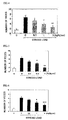
- the IBS-treating effect of the compound (I) of the present invention was evaluated using a test method in which the amount of excreted feces is measured by loading a restraint stress on rats (see "The Journal of Pharmacology Experimental Therapeutics", (USA), 1992, vol. 261, p. 297 - 303 ).
- This test is an animal model in which it is known that a 5-HT 3 receptor antagonist as a diarrhea type IBS-treating agent shows its efficacy.
- the agent to be tested was administered to male Wistar rats (body weight 250 to 320 g, 10 animals for each group), and a restraint stress was loaded 30 minutes to 3 hours thereafter.
- a restraint cage (trade name: KN-468, 265 mm in width x 95 mm in length x 200 mm in height, Natsume Seisakusho, Tokyo) was used for the restraint stress loading, and the number of feces excreted during 1 hour after the stress loading was counted. As shown in Fig.
- the RS-127445 as a 5-HT 2B -selective antagonistic compound did not show defecation-suppressing action even when a dose of 10 mg/kg was orally administered (p.o.) (the restraint stress was loaded 30 minutes after the administration).
- the SB-269970 as a 5-HT 7 -selective antagonistic compound also did not show the defecation-suppressing action even at a dose of 10 mg/kg (p.o.) (the restraint stress was loaded 30 minutes after the administration).
- Fig. 1 the RS-127445 as a 5-HT 2B -selective antagonistic compound did not show defecation-suppressing action even when a dose of 10 mg/kg was orally administered (p.o.) (the restraint stress was loaded 30 minutes after the administration).
- Example compound 103 when the Example compound 103 was administered, it showed a significant suppressing action starting from a dose of 1 mg/kg (p.o.) (the restraint stress was loaded 1 hour after the administration).
- Fig. 7 when the Example compound 244 was administered, it showed a significant suppressing action starting from a dose of 3 mg/kg (p.o.) (the restraint stress was loaded 1 hour after the administration).
- a 1.28 ml portion of phosphoryl chloride was added dropwise to 8 ml ofN,N-dimethylformamide under ice-cooling, followed by stirring at room temperature for 15 minutes.
- An 8 ml portion of an N,N-dimethylformamide solution of 2.00 g of methyl 1H-indole-5-carboxylate was added dropwise to this solution under ice-cooling, followed by stirring at room temperature for 1.5 hours.
- a 350 mg portion of methyl 3-formyl-1H-indole-5-carboxylate was suspended in 10 ml of methanol, and 90 mg of sodium borohydride was added at 0°C, followed by stirring at room temperature for 30 minutes. After evaporation of the solvent, ethyl acetate and water were added thereto, and the ethyl acetate layer was washed with water and saturated brine and then dried over anhydrous sodium sulfate. By evaporating the solvent under a reduced pressure, 337 mg of methyl 3-(hydroxymethyl)-1H-indole-5-carboxylate was obtained as a colorless solid.
- a 327 mg portion of methyl 3-(hydroxymethyl)-1H-indole-5-carboxylate was dissolved in 9 ml of acetonitrile, mixed with 385 mg of silver oxide and 3.6 ml of methyl iodide and stirred at 80°C for 5 hours. A 385 mg portion of silver oxide was further added thereto and stirred overnight at 80°C. A 385 mg portion of silver oxide and 3.6 ml of methyl iodide were further added thereto and stirred at 80°C for 9 hours.
- a 500 mg portion of methyl 1-benzyl-3-formyl-1H-indole-5-carboxylate was dissolved in 17 ml of trifluoroacetic acid, and 2.70 ml of triethylsilane was added at 0°C, followed by stirring at room temperature for 3 hours. After evaporation of the solvent, ethyl acetate was added thereto, followed by washing with water, a saturated sodium bicarbonate aqueous solution and saturated brine and subsequent drying over anhydrous sodium sulfate.
- a 400 mg portion of methyl 3-formyl-1H-indole-5-carboxylate was dissolved in 14 ml of dichloromethane, and 167 mg of dimethylamine hydrochloride, 0.29 ml of triethylamine and 0.16 ml of acetic acid were added in that order, followed by stirring at room temperature for 1 hour.
- a 1.45 g portion of sodium triacetoxy borohydride was added to this solution at 0°C, followed by overnight stirring at room temperature.
- Example compounds 11 to 252 shown in the following Tables 15 to 41 were produced using respectively corresponding starting materials. Structures and physical data of the Example compounds are shown in the following Tables 15 to 41.
- the compound of the present invention Since the compound of the present invention has excellent antagonistic activity for both of the 5-HT 2B and 5-HT 7 receptors, it is useful as a pharmaceutical, particularly as an agent for treating IBS.
Landscapes
- Chemical & Material Sciences (AREA)
- Organic Chemistry (AREA)
- Health & Medical Sciences (AREA)
- Life Sciences & Earth Sciences (AREA)
- Veterinary Medicine (AREA)
- Public Health (AREA)
- General Health & Medical Sciences (AREA)
- Medicinal Chemistry (AREA)
- Animal Behavior & Ethology (AREA)
- Pharmacology & Pharmacy (AREA)
- General Chemical & Material Sciences (AREA)
- Nuclear Medicine, Radiotherapy & Molecular Imaging (AREA)
- Engineering & Computer Science (AREA)
- Chemical Kinetics & Catalysis (AREA)
- Bioinformatics & Cheminformatics (AREA)
- Epidemiology (AREA)
- Pharmaceuticals Containing Other Organic And Inorganic Compounds (AREA)
- Plural Heterocyclic Compounds (AREA)
- Nitrogen Condensed Heterocyclic Rings (AREA)
- Indole Compounds (AREA)
- Quinoline Compounds (AREA)
- Heterocyclic Carbon Compounds Containing A Hetero Ring Having Nitrogen And Oxygen As The Only Ring Hetero Atoms (AREA)
Applications Claiming Priority (2)
| Application Number | Priority Date | Filing Date | Title |
|---|---|---|---|
| JP2006041827 | 2006-02-20 | ||
| PCT/JP2007/052109 WO2007097197A1 (fr) | 2006-02-20 | 2007-02-07 | Dérivé d'amine ou sel de celui-ci |
Publications (2)
| Publication Number | Publication Date |
|---|---|
| EP1988076A1 true EP1988076A1 (fr) | 2008-11-05 |
| EP1988076A4 EP1988076A4 (fr) | 2013-09-04 |
Family
ID=38437237
Family Applications (1)
| Application Number | Title | Priority Date | Filing Date |
|---|---|---|---|
| EP07708148.7A Withdrawn EP1988076A4 (fr) | 2006-02-20 | 2007-02-07 | Dérivé d'amine ou sel de celui-ci |
Country Status (15)
| Country | Link |
|---|---|
| US (1) | US7985764B2 (fr) |
| EP (1) | EP1988076A4 (fr) |
| JP (1) | JP5157892B2 (fr) |
| KR (1) | KR20080094962A (fr) |
| CN (1) | CN101384550B (fr) |
| AU (1) | AU2007218781A1 (fr) |
| BR (1) | BRPI0707979A2 (fr) |
| CA (1) | CA2642610A1 (fr) |
| IL (1) | IL193422A0 (fr) |
| MX (1) | MX2008010645A (fr) |
| NO (1) | NO20084009L (fr) |
| RU (1) | RU2008137612A (fr) |
| TW (1) | TW200808310A (fr) |
| WO (1) | WO2007097197A1 (fr) |
| ZA (1) | ZA200806983B (fr) |
Cited By (8)
| Publication number | Priority date | Publication date | Assignee | Title |
|---|---|---|---|---|
| WO2012170561A1 (fr) * | 2011-06-06 | 2012-12-13 | The Scripps Research Institute (T.S.R.I.) | Modulateurs n-benzylindole du pparg |
| EP2573558A1 (fr) * | 2011-09-23 | 2013-03-27 | Philip Morris Products S.A. | Modulation des voies de transduction de signal activées par protéine G |
| EP2610255A4 (fr) * | 2010-08-25 | 2014-02-12 | Neopharm Co Ltd | Nouveau composé hétérocyclique, et composition pour traiter des maladies inflammatoires utilisant le même |
| US8853242B2 (en) | 2009-08-06 | 2014-10-07 | Astellas Pharma Inc. | Nitrogenous-ring acylguanidine derivative |
| US8957093B2 (en) | 2011-06-06 | 2015-02-17 | The Scripps Research Institute | N-biphenylmethylindole modulators of PPARG |
| US9309227B2 (en) | 2011-11-22 | 2016-04-12 | The Scripps Research Institute | N-biphenylmethylbenzimidazole modulators of PPARG |
| US10016394B2 (en) | 2014-04-16 | 2018-07-10 | The Scripps Research Institute | PPARG modulators for treatment of osteoporosis |
| WO2022117882A3 (fr) * | 2020-12-03 | 2022-07-07 | Domain Therapeutics | Nouveaux inhibiteurs de par-2 |
Families Citing this family (11)
| Publication number | Priority date | Publication date | Assignee | Title |
|---|---|---|---|---|
| US6738561B1 (en) | 1997-11-21 | 2004-05-18 | Victor Company Of Japan, Ltd. | Recording medium and signal processing apparatus |
| TW200638926A (en) * | 2005-02-08 | 2006-11-16 | Astellas Pharma Inc | A therapeutic agent for irritable bowel disease |
| CN101243046A (zh) * | 2005-08-08 | 2008-08-13 | 安斯泰来制药有限公司 | 酰基胍衍生物或其盐 |
| KR20080105092A (ko) * | 2006-02-20 | 2008-12-03 | 아스텔라스세이야쿠 가부시키가이샤 | 피롤 유도체 또는 그의 염 |
| EP2669270B1 (fr) * | 2011-01-28 | 2018-01-03 | Sato Pharmaceutical Co., Ltd. | Composés apparentés à l'indole en tant qu'inhibiteurs d'urat1 |
| CN103772278A (zh) * | 2014-01-02 | 2014-05-07 | 湖南华腾制药有限公司 | 一种重要四氢异喹啉衍生物中间体及其合成方法 |
| KR101585605B1 (ko) * | 2014-03-20 | 2016-01-21 | 현대약품 주식회사 | Pparg에 결합하되 증진제로 작용하지 않는 화합물 및 이를 유효성분으로 함유하는 pparg 관련 질병의 치료용 약학적 조성물 |
| EP3109237A1 (fr) * | 2015-06-22 | 2016-12-28 | AnaMar AB | Nouveaux antagonistes de 5-ht2 |
| CN105175309A (zh) * | 2015-10-29 | 2015-12-23 | 中国科学院上海药物研究所 | N-苄基-5/6-甲酰氨基吲哚-2-羧酸衍生物及其用途 |
| AU2020245614B2 (en) * | 2019-03-28 | 2023-01-19 | Zoetis Services Llc | Serotonin 5-HT2B inhibitory compounds |
| EP3753924A1 (fr) | 2019-06-18 | 2020-12-23 | AnaMar AB | Nouveaux antagonistes tricycliques 5-ht2 |
Family Cites Families (23)
| Publication number | Priority date | Publication date | Assignee | Title |
|---|---|---|---|---|
| GB8524157D0 (en) * | 1984-10-19 | 1985-11-06 | Ici America Inc | Heterocyclic amides |
| CA2121391A1 (fr) | 1993-04-28 | 1994-10-29 | Atsuyuki Kojima | Derives d'indoloylguanidine |
| JP3162572B2 (ja) * | 1993-04-28 | 2001-05-08 | 住友製薬株式会社 | インドロイルグアニジン誘導体 |
| US5852046A (en) * | 1993-08-03 | 1998-12-22 | Hoechst Aktiengesellschaft | Benzo-fused heterocyclic compounds having a 5-membered ring processes for their preparation their use as medicaments their use as diagnostic agents and medicaments containing them |
| EP0639573A1 (fr) * | 1993-08-03 | 1995-02-22 | Hoechst Aktiengesellschaft | Hétérocycles à cinq chaînons benzocondensés, procédé pour leur préparation, leur utilisation comme médicament et comme diagnostique aussi bien que les produits pharmaceutiques le contenant |
| JP3295277B2 (ja) * | 1994-06-01 | 2002-06-24 | 呉羽化学工業株式会社 | 抗腎疾患剤及びベンズイミダゾール誘導体 |
| KR100430059B1 (ko) | 1995-04-10 | 2004-09-24 | 후지사와 야꾸힝 고교 가부시키가이샤 | cGMP-PDE억제제로서의인돌유도체 |
| AUPO118896A0 (en) | 1996-07-23 | 1996-08-15 | Fujisawa Pharmaceutical Co., Ltd. | New use |
| JPH10114654A (ja) | 1996-10-09 | 1998-05-06 | Fujisawa Pharmaceut Co Ltd | 新規用途 |
| ID21698A (id) * | 1996-11-15 | 1999-07-15 | Darwin Discovery Ltd | Karboksamida-karboksamida aril bisiklik dan penggunaan terapinya |
| GB9721139D0 (en) * | 1997-10-07 | 1997-12-03 | Glaxo Group Ltd | Medicaments |
| JP2001520215A (ja) | 1997-10-21 | 2001-10-30 | ケンブリッジ・ニューロサイエンス・インコーポレイティッド | 薬学的に活性な化合物ならびに利用法 |
| US6358992B1 (en) * | 1998-11-25 | 2002-03-19 | Cell Pathways, Inc. | Method of inhibiting neoplastic cells with indole derivatives |
| WO2000069437A1 (fr) * | 1999-05-18 | 2000-11-23 | Synaptic Pharmaceutical Corporation | Utilisation d'agonistes ou d'antagonistes vis-a-vis du recepteur 5-ht7 pour traiter les troubles de la vessie |
| US6534535B1 (en) * | 1999-08-12 | 2003-03-18 | Millennium Pharmaceuticals, Inc. | Inhibitors of factor Xa |
| DE19939463A1 (de) * | 1999-08-20 | 2001-02-22 | Boehringer Ingelheim Pharma | Aminocarbonyl-substituierte Benzimidazolderivate, Verfahren zu ihrer Herstellung und ihre Verwendung als Arzneimittel |
| MY125942A (en) * | 1999-09-07 | 2006-09-29 | Upjohn Co | Aminoalkoxy carbazoles for the treatment of cns diseases |
| SE0301699D0 (sv) | 2003-06-10 | 2003-06-10 | Astrazeneca Ab | Benzimidazole derivatives, compositions containing them, preparation thereof and uses thereof |
| JP2005162657A (ja) * | 2003-12-02 | 2005-06-23 | Takeda Chem Ind Ltd | カンナビノイド受容体調節剤 |
| MXPA06002391A (es) | 2004-02-20 | 2006-06-20 | Astellas Pharma Inc | Derivados de fluoreno. |
| US20080161419A1 (en) | 2004-02-20 | 2008-07-03 | Shinobu Akuzawa | Prophylactic Antimigraine Agents |
| TW200638926A (en) * | 2005-02-08 | 2006-11-16 | Astellas Pharma Inc | A therapeutic agent for irritable bowel disease |
| CN101243046A (zh) | 2005-08-08 | 2008-08-13 | 安斯泰来制药有限公司 | 酰基胍衍生物或其盐 |
-
2007
- 2007-02-07 JP JP2008501670A patent/JP5157892B2/ja not_active Expired - Fee Related
- 2007-02-07 EP EP07708148.7A patent/EP1988076A4/fr not_active Withdrawn
- 2007-02-07 CA CA002642610A patent/CA2642610A1/fr not_active Abandoned
- 2007-02-07 WO PCT/JP2007/052109 patent/WO2007097197A1/fr not_active Ceased
- 2007-02-07 RU RU2008137612/04A patent/RU2008137612A/ru not_active Application Discontinuation
- 2007-02-07 US US12/279,221 patent/US7985764B2/en not_active Expired - Fee Related
- 2007-02-07 CN CN2007800059681A patent/CN101384550B/zh not_active Expired - Fee Related
- 2007-02-07 ZA ZA200806983A patent/ZA200806983B/xx unknown
- 2007-02-07 KR KR1020087022899A patent/KR20080094962A/ko not_active Ceased
- 2007-02-07 AU AU2007218781A patent/AU2007218781A1/en not_active Abandoned
- 2007-02-07 MX MX2008010645A patent/MX2008010645A/es active IP Right Grant
- 2007-02-07 BR BRPI0707979-6A patent/BRPI0707979A2/pt not_active IP Right Cessation
- 2007-02-14 TW TW096105567A patent/TW200808310A/zh unknown
-
2008
- 2008-08-13 IL IL193422A patent/IL193422A0/en unknown
- 2008-09-19 NO NO20084009A patent/NO20084009L/no not_active Application Discontinuation
Cited By (10)
| Publication number | Priority date | Publication date | Assignee | Title |
|---|---|---|---|---|
| US8853242B2 (en) | 2009-08-06 | 2014-10-07 | Astellas Pharma Inc. | Nitrogenous-ring acylguanidine derivative |
| EP2610255A4 (fr) * | 2010-08-25 | 2014-02-12 | Neopharm Co Ltd | Nouveau composé hétérocyclique, et composition pour traiter des maladies inflammatoires utilisant le même |
| US8809541B2 (en) | 2010-08-25 | 2014-08-19 | Neopharm Co., Ltd. | Heterocyclic compound, and composition for treating inflammatory diseases using same |
| WO2012170561A1 (fr) * | 2011-06-06 | 2012-12-13 | The Scripps Research Institute (T.S.R.I.) | Modulateurs n-benzylindole du pparg |
| US8957093B2 (en) | 2011-06-06 | 2015-02-17 | The Scripps Research Institute | N-biphenylmethylindole modulators of PPARG |
| US9051265B2 (en) | 2011-06-06 | 2015-06-09 | The Scripps Research Institute | N-benzylindole modulators of PPARG |
| EP2573558A1 (fr) * | 2011-09-23 | 2013-03-27 | Philip Morris Products S.A. | Modulation des voies de transduction de signal activées par protéine G |
| US9309227B2 (en) | 2011-11-22 | 2016-04-12 | The Scripps Research Institute | N-biphenylmethylbenzimidazole modulators of PPARG |
| US10016394B2 (en) | 2014-04-16 | 2018-07-10 | The Scripps Research Institute | PPARG modulators for treatment of osteoporosis |
| WO2022117882A3 (fr) * | 2020-12-03 | 2022-07-07 | Domain Therapeutics | Nouveaux inhibiteurs de par-2 |
Also Published As
| Publication number | Publication date |
|---|---|
| RU2008137612A (ru) | 2010-03-27 |
| CN101384550A (zh) | 2009-03-11 |
| ZA200806983B (en) | 2009-11-25 |
| CA2642610A1 (fr) | 2007-08-30 |
| NO20084009L (no) | 2008-10-30 |
| US20090062363A1 (en) | 2009-03-05 |
| WO2007097197A1 (fr) | 2007-08-30 |
| JP5157892B2 (ja) | 2013-03-06 |
| CN101384550B (zh) | 2011-08-31 |
| IL193422A0 (en) | 2009-05-04 |
| JPWO2007097197A1 (ja) | 2009-07-09 |
| BRPI0707979A2 (pt) | 2011-05-17 |
| EP1988076A4 (fr) | 2013-09-04 |
| TW200808310A (en) | 2008-02-16 |
| KR20080094962A (ko) | 2008-10-27 |
| AU2007218781A1 (en) | 2007-08-30 |
| MX2008010645A (es) | 2008-10-14 |
| US7985764B2 (en) | 2011-07-26 |
Similar Documents
| Publication | Publication Date | Title |
|---|---|---|
| US7985764B2 (en) | Amide derivative or salt thereof | |
| WO1999048492A1 (fr) | Derives d'amide et antagonistes de nociceptine | |
| JPH064587B2 (ja) | 新規なインドール誘導体およびその酸付加塩ならびにそれらを含有する精神病治療剤 | |
| JPH08508738A (ja) | 5−ht1a及び/又は5−ht2リガンドとしてのインドール誘導体 | |
| EA006604B1 (ru) | Сочетание агониста (5-ht2) и антагониста (5-ht6) серотонина в качестве фармацевтической композиции | |
| HUP0501016A2 (en) | (s)-4-amino-5-chloro-2-methoxy-n-{1-[1-(2-tetrahydrofurylcarbonyl)-4-piperidinylmethyl]-4-piperidinyl}benzamide, process for the preparation thereof pharmaceutical composition containing the same and intermediate therefor | |
| JP3332232B2 (ja) | ピペリジル―置換されたインドール | |
| CN1989128A (zh) | 新的4-苯亚甲基-哌啶衍生物 | |
| JP5157893B2 (ja) | ピロール誘導体またはその塩 | |
| KR20070038503A (ko) | 신규 헤테로시클릭 카르복시산 아미드 유도체 | |
| JP5092746B2 (ja) | アシルグアニジン誘導体またはその塩 | |
| JP5323059B2 (ja) | ((フェニル)イミダゾリル)メチルヘテロアリール化合物 | |
| RU2204558C2 (ru) | Производное бензоксазола, лекарственное средство на его основе и способ лечения состояния синдрома раздраженного кишечника или функционального расстройства пищеварительного тракта | |
| JPS6257606B2 (fr) | ||
| KR20070043965A (ko) | Nr2b 수용체 길항물질인 키뉴렌산 아미드 유도체 | |
| JP2021514372A (ja) | デュアルの5−ht2aおよび5−ht6受容体アンタゴニストとしての新しいインドールおよびベンゾイミダゾール誘導体 | |
| KR20070039033A (ko) | 신규 벤조일 우레아 유도체 | |
| JPH10203987A (ja) | (r)−1−エチル−4−メチルヘキサヒドロ−1h−1,4−ジアゼピン誘導体を有効成分とするモルヒネ様薬剤誘発嘔吐抑制剤 | |
| JPH09100276A (ja) | (r)−1−エチル−4−メチルヘキサヒドロ−1h−1,4−ジアゼピン誘導体及びそれを含有する医薬 | |
| AU7469900A (en) | Piperidine derivatives as reuptake inhibitors |
Legal Events
| Date | Code | Title | Description |
|---|---|---|---|
| PUAI | Public reference made under article 153(3) epc to a published international application that has entered the european phase |
Free format text: ORIGINAL CODE: 0009012 |
|
| 17P | Request for examination filed |
Effective date: 20080819 |
|
| AK | Designated contracting states |
Kind code of ref document: A1 Designated state(s): AT BE BG CH CY CZ DE DK EE ES FI FR GB GR HU IE IS IT LI LT LU LV MC NL PL PT RO SE SI SK TR |
|
| DAX | Request for extension of the european patent (deleted) | ||
| A4 | Supplementary search report drawn up and despatched |
Effective date: 20130801 |
|
| RIC1 | Information provided on ipc code assigned before grant |
Ipc: A61K 31/4174 20060101ALI20130726BHEP Ipc: C07D 403/12 20060101ALI20130726BHEP Ipc: A61K 31/404 20060101ALI20130726BHEP Ipc: C07D 235/08 20060101ALI20130726BHEP Ipc: C07D 235/26 20060101ALI20130726BHEP Ipc: C07D 209/08 20060101AFI20130726BHEP Ipc: A61P 1/12 20060101ALI20130726BHEP Ipc: C07D 215/48 20060101ALI20130726BHEP Ipc: C07D 235/10 20060101ALI20130726BHEP Ipc: C07D 405/06 20060101ALI20130726BHEP Ipc: C07D 401/06 20060101ALI20130726BHEP Ipc: C07D 405/12 20060101ALI20130726BHEP Ipc: A61P 1/06 20060101ALI20130726BHEP Ipc: C07D 403/06 20060101ALI20130726BHEP Ipc: C07D 401/12 20060101ALI20130726BHEP |
|
| STAA | Information on the status of an ep patent application or granted ep patent |
Free format text: STATUS: THE APPLICATION HAS BEEN WITHDRAWN |
|
| 18W | Application withdrawn |
Effective date: 20140228 |