EP2018421B1 - Skalierbares herstellungsverfahren für aav - Google Patents
Skalierbares herstellungsverfahren für aav Download PDFInfo
- Publication number
- EP2018421B1 EP2018421B1 EP07756027A EP07756027A EP2018421B1 EP 2018421 B1 EP2018421 B1 EP 2018421B1 EP 07756027 A EP07756027 A EP 07756027A EP 07756027 A EP07756027 A EP 07756027A EP 2018421 B1 EP2018421 B1 EP 2018421B1
- Authority
- EP
- European Patent Office
- Prior art keywords
- aav
- cell
- seq
- amino acid
- heparin binding
- Prior art date
- Legal status (The legal status is an assumption and is not a legal conclusion. Google has not performed a legal analysis and makes no representation as to the accuracy of the status listed.)
- Active
Links
Images



Classifications
-
- C—CHEMISTRY; METALLURGY
- C12—BIOCHEMISTRY; BEER; SPIRITS; WINE; VINEGAR; MICROBIOLOGY; ENZYMOLOGY; MUTATION OR GENETIC ENGINEERING
- C12N—MICROORGANISMS OR ENZYMES; COMPOSITIONS THEREOF; PROPAGATING, PRESERVING, OR MAINTAINING MICROORGANISMS; MUTATION OR GENETIC ENGINEERING; CULTURE MEDIA
- C12N7/00—Viruses; Bacteriophages; Compositions thereof; Preparation or purification thereof
-
- A—HUMAN NECESSITIES
- A61—MEDICAL OR VETERINARY SCIENCE; HYGIENE
- A61K—PREPARATIONS FOR MEDICAL, DENTAL OR TOILETRY PURPOSES
- A61K48/00—Medicinal preparations containing genetic material which is inserted into cells of the living body to treat genetic diseases; Gene therapy
- A61K48/0091—Purification or manufacturing processes for gene therapy compositions
-
- C—CHEMISTRY; METALLURGY
- C07—ORGANIC CHEMISTRY
- C07K—PEPTIDES
- C07K14/00—Peptides having more than 20 amino acids; Gastrins; Somatostatins; Melanotropins; Derivatives thereof
- C07K14/005—Peptides having more than 20 amino acids; Gastrins; Somatostatins; Melanotropins; Derivatives thereof from viruses
-
- C—CHEMISTRY; METALLURGY
- C12—BIOCHEMISTRY; BEER; SPIRITS; WINE; VINEGAR; MICROBIOLOGY; ENZYMOLOGY; MUTATION OR GENETIC ENGINEERING
- C12N—MICROORGANISMS OR ENZYMES; COMPOSITIONS THEREOF; PROPAGATING, PRESERVING, OR MAINTAINING MICROORGANISMS; MUTATION OR GENETIC ENGINEERING; CULTURE MEDIA
- C12N2750/00—MICROORGANISMS OR ENZYMES; COMPOSITIONS THEREOF; PROPAGATING, PRESERVING, OR MAINTAINING MICROORGANISMS; MUTATION OR GENETIC ENGINEERING; CULTURE MEDIA ssDNA viruses
- C12N2750/00011—Details
- C12N2750/14011—Parvoviridae
- C12N2750/14111—Dependovirus, e.g. adenoassociated viruses
- C12N2750/14151—Methods of production or purification of viral material
Definitions
- This invention describes a novel way to harvest and produce AAV.
- Adeno-associated virus a member of the Parvovirus family, is a small nonenveloped, icosahedral virus with a single-stranded linear DNA genome of 4.7 kilobases (kb) to 6 kb.
- AAV is assigned to the genus, Dependovirus, because the virus was discovered as a contaminant in purified adenovirus stocks.
- AAV's life cycle includes a latent phase at which AAV genomes, after infection, are integrated into host genomes and an infectious phase in which, following either adenovirus or herpes simplex virus infection, the integrated AAV genomes are subsequently rescued, replicated, and packaged into infectious viruses.
- the properties of non-pathogenicity, broad host range of infectivity, including non-dividing cells, and integration make AAV an attractive delivery vehicle.
- AAV 1-6, AAV7, AAV9 and AAV9 amongst other AAV sequences obtained from simian or human tissue sources have been described. See, e.g., International Patent Publication Nos. WO 02/33269 , WO 02/386122 (AAV8), and International Patent Publication No. WO 2005/033321 . With this, a move away from defining AAV strictly by serologic cross-reactivity (serotypes) has occurred. Recent literature defines the relationship between these AAV in terms of phylogenetic relatedness, proposing groups termed "clades". See , e.g., Gao et al, J Virol, 78(12):6381-6388 (June 2004 ); International Patent Publication No. WO 2005/033321 .
- the present invention permits the production of AAV, without requiring the termination of the virus-producing cell culture.
- the method involves harvesting AAV released into the supernatant without requiring collection of a cell pellet or cell disruption.
- the invitation provides a method for production of AAV, said method comprising the steps of (a) culturing an AAV lacking a heparin binding site in a cell culture; and (b) isolating the AAV from the supernatant of the cell culture without requiring collection of a cell pellet or cell disruption.
- the method involves modifying the AAV capsids, the cells, and/or the culture conditions to substantially reduce or eliminate binding between the AAV heparin binding site and the producer cells, thereby allowing the AAV to pass into the supernatant, i.e. , media.
- the method of the invention provides supernatant containing high yields of AAV which have a higher degree of purity from cell membranes and intracellular materials, as compared to AAV produced using methods using a cell collection and/or cell lysis step.
- This technology can be applied for efficient and scalable AAV production with significant improvements in financial and time cost.
- This technology allows small scale AAV production and its commercial application for an all-inclusive kit for research purposes. Since AAV can be harvested multiple times from the supernatant, a continuous system or bioreactor allows production of particle amounts necessary for clinical use or wide pharmaceutical application without cellular substrate being the limitation for production.
- a growth medium that is absent or low in serum or proteins, purification is significantly simplified.
- This technology can be applied in combination with more efficient methods of purification and concentration than could be used with the prior art production methods and/or in the presence of significant amounts of intracellular material.
- the present invention provides a method for producing AAV, without requiring cell disruption.
- the method involves harvesting AAV from the supernatant of a viral production culture.
- This invention allows a scalable technology for production of AAV for use in a variety of gene transfer and/or vaccine applications. It also dramatically reduces the stringency of purification when used in combination with low- or non-protein contaminating media for harvest.
- This production method can be applied in combination with suitable methods for purification and concentration including, e.g. , chromatography, filtration or precipitation for purification and concentration.
- the present invention provides a method in which the supernatant is the major source for many AAVs. This allows repetitive or continuous harvesting of the same producer cells for production of larger amounts of AAV for clinical or pre-clinical research or therapy. In the current cell pellet harvest and subsequent purification methods, large amounts of particles are needed to efficiently provide a usable viral titer. Therefore there is a threshold below which recovery of a usable amount of particles is technically not feasible.
- an AAV vector secretes at least about 10% Dnase-resistant vector particles or genomes (drp vg) from the cells in which it is produced. Such drp vg represent genomic sequences (e.g.
- an AAV vector secretes at least about 20% drp vg. In still other embodiments, an AAV vector secretes at least about 40% drp vg.
- AAV8 vectors have been found to secrete, on average, more than 40% of their viral particles into the supernatant in a 293 cell-based triple transfection production method.
- Other vectors based on AAV7 and rh8R have been found to secrete in this same range.
- Still other vectors have been found to secrete, on average, more than 30% of the viral particles in the supernatant in this system, e.g.
- AAV vectors have been found to secrete on average more than 20% of their viral particles into the supernatant during production following triple transfection in this system. Still other AAV vectors, e.g. , those based on AAV9 [capsid protein provided in SEQ ID NO: 8], have been found to release more than 10% of their viral particles into the supernatant in this system. Yet other examples include AAVs which secrete more than 10% of their viral particles into the supernatant are used in the methods of the invention. In one embodiment, these vectors produced in this matter are from AAVs which naturally secrete out of the cell in which they are produced.
- the AAVs are modified to permit their secretion.
- the inventors have found that an AAV having a heparin binding domain and which is characterized by having transduction (infectious) ability blocked by heparin, do not secrete in detectable amounts.
- AAV AAV2 [capsid protein provided in SEQ ID NO: 9], which is mostly cell associated during production, and AAV3 [capsid protein provided in SEQ ID NO: 10].
- the method involves modifying the AAV capsids, the cells, and/or the culture conditions to substantially reduce or eliminate binding between the AAV heparin binding site and the producer cells, thereby allowing the AAV to pass into the supernatant, i.e. , media.
- the method of the invention provides supernatant containing high yields of AAV which have a higher degree of purity from cell membranes, proteins, and intracellular materials, as compared to AAV recovered following cell lysis.
- this invention in contrast starts from supernatant without lysis and thereby simplifies any subsequent purification. Limited amount of cell debris is found in the supernatant in normal culture and amounts to a dramatic reduction of protein contamination.
- serum-free medium is utilized to avoid the contaminating effect of the serum or other proteins introduced by the growth medium.
- the present invention provides a method of producing an AAV in a viral production culture.
- AAV 1 US Patent No. 6,759,237
- AAV from human and non-human sources see, e.g., International Patent Publication Nos. WO 02/33269 , WO 02/386122 (AAV8), and GenBank, and such sequences as have been altered to correct singleton errors, e.g.
- AAV6.2, AAV6.1, AAV6.1.2, rh64R1 and rh8R see, e.g., WO 2006/110689, published October 19, 2006 ].
- AAV sequences including those identified by one of skill in the art using known techniques [ See, e.g., International Patent Publication No. WO 2005/033321 and GenBank] or by other means may be modified as described herein.
- Certain AAV sequences are natively devoid of such a heparin binding site.
- AAV lacking a heparin binding site e.g. , AAV8 [capsid protein provided in SEQ ID NO: 11]
- no modification of the AAV sequence, cell or media is required.
- the ability of an AAV capsid to bind heparin can be readily identified using a variety of assay formats and heparin or portions thereof for binding an AAV.
- the ability of heparin to block the infectious/transduction ability of an AAV can readily be determined by one of skill in the art.
- a suitable assay for determining the ability of heparin to block any infection/transduction of transduction of an AAV has been described, e.g. , in C.
- AAV6 AAV6
- AAV6 vp1 capsid sequence has been described as having a single amino acid residue that mediates heparin binding, the native lysine reside at position 531 [SEQ ID NO: 3].
- sequence of AAV6 is provided in International Patent Appln No. PCT/US06/13375 and the residue number is based on the numbering scheme provided in that international application ( see, e.g., Table)]. In such a case, no modification of this AAV sequence is required since it has been found to be only loosely cell associated.
- the invention provides for modification of the AAV to reduce or eliminate heparin-binding in order to increase the amount of viral particles secreted into the supernatant.
- a heparin binding domain is an Arg-Xaa-Xaa-Arg (RxxR) [SEQ ID NO: 12] motif as has been described in AAV2 ( i.e ., about amino acids 585 to 588 of the AAV2 vp1 capsid protein, SEQ ID NO: 9, Kern, et al., J Virol 77:11072-81 ; Opie, et al., J Virol 77:6995-7006 (based upon the numbering illustrated in WO 02/33269 )].
- Xaa represents any amino acid.
- the inventors have identified other AAV capsids having RxxR motifs, several of which are Clade B AAVs.
- AAV capsids having RxxR motifs include, hu.51 [SEQ ID NO: 13], hu.34 [SEQ ID NO: 14], hu.35 [SEQ ID NO: 15], hu.45 [SEQ ID NO: 16], and hu.47 [SEQ ID NO: 17].
- Other AAV having an RxxR domain can be readily identified by one of skill in the art from among those AAV sequences which have been described.
- other heparin binding sites can be readily identified in AAV using techniques known to those of skill in the art.
- AAV3 binds heparin; however, it does not contain the RxxR domain.
- the invention provides a method for producing an AAV in a viral culture, wherein the AAV is modified to ablate the heparin binding domain.
- the nucleic acid sequence encoding the AAV capsid heparin binding site is modified using site-specific mutagenesis techniques, in which the codon for the amino acid residue(s) responsible for mediating heparin binding is altered to make a non-conservative change in the encoded amino acid.
- non-conservative amino acid changes include those, e.g. , substitution of one amino acid with another amino acid of different chemical structure (properties), which affect protein function.
- the following table illustrates the most common amino acids and their properties. Amino acid Abbrev.
- Aromatic or Aliphatic Codon Alanine Ala, A X - - - GCU, GCC, GCA, GCG Cysteine Cys, C X - - - UGU, UGC Aspartate Asp, D - X negative - GAU, GAC Glutamate Glu, E - X negative - GAA, GAG Phenylalanine Phe, F X - - Aromatic UUU, UUC Glycin Gly, G X - - - GGU, GGC, GGA, GGG Histidine His, H - X positive Aromatic CAU, CAC Isoleucine Ile, I X - - Aliphatic AUU, AUC, AUA Lysine Lys, K - X positive - AAA, AAG Leucine Leu, L X - - Aliphatic UUA, UUG, CUU, CUC, CUA, CUG Methionine Met, M X -
- the nucleic acid sequence encoding the heparin binding site is modified using site-specific mutagenesis techniques, For example in an RxxR motif [SEQ ID NO: 3], the codon for the initial arginine and/or the last arginine of the motif is altered to change one (or both) of the amino acids to a non-conservative amino acid. It has been found that altering either one of the arginines in this motif prevents heparin binding. As illustrated herein, where the heparin binding motif is RxxR, the first amino acid of the modified heparin sulfate glycoprotein binding site can be changed from Arg to Ser or Glu.
- the last amino acid of the modified heparin sulfate glycoprotein binding site is changed from Arg to Thr.
- the lysine at position 531 of the AAV6 vp1 capsid protein [SEQ ID NO: 3] is changed to a non-conservative amino acid.
- Non-conservative amino acid changes other than those illustrated herein may be selected by one of skill in the art.
- heparin binding domains may be identified using techniques known to those of skill in the art and modified using site-specific mutagenesis or another suitable technique for altering the coding sequence for the arginine. See, e.g. , Sambrook et al, Molecular Cloning: A Laboratory Manual, Cold Spring Harbor Press (Cold Spring Harbor, NY ).
- binding of heparin to an AAV containing a heparin binding site is ablated by methods other than altering the sequence of the heparin binding site.
- one may provide the AAV capsid with a molecule which effectively masks the heparin binding site in the producer cell.
- a producer cell line naturally defective in heparin biogenesis might be used.
- a viral cell culture utilizes cells containing, either stably or transiently, at least the minimum components required to generate an AAV particle, where production of an AAV DNase resistant genome containing particles involves packaging an expression cassette into an AAV capsid.
- the minimum required components include, an expression cassette to be packaged into the AAV capsid, an AAV cap, and an AAV rep or a functional fragment thereof, and helper functions.
- the cell itself may be selected from any biological organism, including prokaryotic (e.g. , bacterial) cells, and eukaryotic cells, including, insect cells, yeast cells and mammalian cells.
- prokaryotic e.g. , bacterial
- eukaryotic cells including, insect cells, yeast cells and mammalian cells.
- Particularly desirable host cells are selected from among any mammalian species, including, without limitation, cells such as A549, WEHI, 3T3, 10T1/2, BHK, MDCK, COS 1, COS 7, BSC 1, BSC 40, BMT 10, VERO, WI38, HeLa, a HEK 293 cell (which express functional adenoviral E1), Saos, C2C12, L cells, HT1080, HepG2 and primary fibroblast, hepatocyte and myoblast cells derived from mammals including human, monkey, mouse, rat, rabbit, and hamster.
- the selection of the mammalian species providing the cells is not a limitation of this invention; nor is the type of mammalian cell, i.e. , fibroblast, hepatocyte, tumor cell, etc.
- AAV sequences may be obtained from a variety of sources.
- a suitable AAV sequence may be obtained as described in WO 2005/033321 or from known sources, e.g. , the American Type Culture Collection, or a variety of academic vector core facilities.
- suitable sequences are synthetically generated using known techniques with reference to published sequences. Examples of suitable AAV sequences are provided herein. ,
- the expression cassette is composed of, at a minimum, a 5' AAV inverted terminal repeat (ITR), a nucleic acid sequence encoding a desirable therapeutic, immunogen, or antigen operably linked to regulatory sequences which direct expression thereof, and a 3' AAV ITR.
- ITR inverted terminal repeat
- the 5' and/or 3' ITRs of AAV serotype 2 are used. However, 5' and 3' ITRs from other suitable sources may be selected. It is this expression cassette that is packaged into a capsid protein to form an AAV virion (particle).
- the cell contains the sequences which drive expression of an AAV capsid in the cell ( cap sequences) and rep sequences of the same source as the source of the AAV ITRs found in the expression cassette, or a cross-complementing source.
- the AAV cap and rep sequences may be independently selected from different AAV parental sequences and be introduced into the host cell in a suitable manner known to one in the art. While the full-length rep gene may be utilized, it has been found that smaller fragments thereof, i.e. , the rep 78/68 and the rep 52/40 are sufficient to permit replication and packaging of the AAV.
- helper functions in order to package the AAV of the invention.
- these helper functions may be supplied by a herpesvirus.
- the necessary helper functions are each provided from a human or non-human primate adenovirus source, such as are available from a variety of sources, including the American Type Culture Collection (ATCC), Manassas, VA (US).
- ATCC American Type Culture Collection
- VA Manassas
- the sequences of a variety of suitable adenoviruses have been described. See, e.g., chimpanzee adenovirus C1 and C68 [ US Patent No. 6,083,716 ]; Pan 5, Pan6 and Pan7, [ WO 02/33645 ], hybrid adenoviruses such as those described [ e.g. , WO 05/001103 ], and GenBank.
- the host cell contains at least the minimum adenovirus DNA sequences necessary to express an E1a gene product, an E1b gene product, an E2a gene product, and/or an E4 ORF6 gene product.
- the host cell may contain other adenoviral genes such as VAI RNA, but these genes are not required.
- the cell used does not carry any adenovirus gene other than E1, E2a and/or E4 ORF6; does not contain any other virus gene which could result in homologous recombination of a contaminating virus during the production of rAAV; and it is capable of infection or transfection by DNA and expresses the transfected gene (s).
- One cell useful in the present invention is a host cell stably transformed with the sequences encoding rep and cap, and which is transfected with the adenovirus E1, E2a, and E40RF6 DNA and a construct carrying the expression cassette as described above.
- Stable rep and/or cap expressing cell lines such as B-50 (International Patent Application Publication No. WO 99/15685 ), or those described in US Patent No. 5,658,785 , may also be similarly employed.
- Another desirable host cell contains the minimum adenoviral DNA which is sufficient to express E4 ORF6.
- Yet other cell lines can be constructed using the novel modified cap sequences of the invention.
- the preparation of a host cell according to this invention involves techniques such as assembly of selected DNA sequences. This assembly may be accomplished utilizing conventional techniques. Such techniques include cDNA and genomic cloning, which are well known and are described in Sambrook et al., Molecular Cloning: A Laboratory Manual, Cold Spring Harbor Press, Cold Spring Harbor, NY ., including polymerase chain reaction, synthetic methods, and any other suitable methods which provide the desired nucleotide sequence.
- the required components for AAV production may be delivered to the packaging host cell separately, or in combination, in the form of any genetic element which transfer the sequences carried thereon.
- a genetic element includes, e.g. , naked DNA, a plasmid, phage, transposon, cosmid, episome, a protein in a non-viral delivery vehicle (e.g. , a lipid-based carrier), virus, etc., which transfers the sequences carried thereon.
- the selected vector may be delivered by any suitable method, including transfection, electroporation, liposome delivery, membrane fusion techniques, high velocity DNA-coated pellets, viral infection and protoplast fusion.
- the methods used to construct any embodiment of this invention are known to those with skill in nucleic acid manipulation and include genetic engineering, recombinant engineering, and synthetic techniques. See, e.g.
- one or more of the adenoviral genes are stably integrated into the genome of the host cell or stably expressed as episomes.
- the promoters for each of the adenoviral genes may be selected independently from a constitutive promoter, an inducible promoter or a native adenoviral promoter.
- the promoters for example, may be regulated by a specific physiological state of the organism or cell ( i.e., by the differentiation state or in replicating or quiescent cells) or by exogenously added factors.
- a stable host cell will contain the required component(s) under the control of a regulatable promoter.
- the required component(s) may be under the control of a constitutive promoter.
- Regulatable promoters allow control of gene expression by exogenously supplied compounds, environmental factors such as temperature, or the presence of a specific physiological state, e.g. , acute phase, a particular differentiation state of the cell, or in replicating cells only.
- Regulatable promoters and systems are available from a variety of commercial sources, including, without limitation, Invitrogen, Clontech and Ariad. Many other systems have been described and can be readily selected by one of skill in the art.
- promoters regulated by exogenously supplied promoters include the zinc-inducible sheep metallothionine (MT) promoter, the dexamethasone (Dex)-inducible mouse mammary tumor virus (MMTV) promoter, the T7 polymerase promoter system [ WO 98/10088 ]; the ecdysone insect promoter [ No et al, Proc. Natl. Acad. Sci. USA, 93:3346-3351 (1996 )], the tetracycline-repressible system [ Gossen et al, Proc. Natl. Acad. Sci.
- inducible promoters which may be useful in this context are those which are regulated by a specific physiological state, e.g. , temperature, acute phase, a particular differentiation state of the cell, or in replicating cells only.
- the native promoter is used.
- the native promoter may be used when it is desired that expression of the gene product should mimic the native expression.
- the native promoter may be used when expression of the transgene must be regulated temporally or developmentally, or in a tissue-specific manner, or in response to specific transcriptional stimuli.
- other native expression control elements such as enhancer elements, polyadenylation sites or Kozak consensus sequences may also be used to mimic the native expression.
- transgene includes a transgene operably linked to a tissue-specific promoter.
- a tissue-specific promoter For instance, if expression in skeletal muscle is desired, a promoter active in muscle should be used. These include the promoters from genes encoding skeletal ⁇ -actin, myosin light chain 2A, dystrophin, muscle creatine kinase, as well as synthetic muscle promoters with activities higher than naturally-occurring promoters (see Li et al., Nat. Biotech., 17:241-245 (1999 )). Examples of promoters that are tissue-specific are known for liver (albumin, Miyatake et al., J.
- NSE neuron-specific enolase
- a selected stable host cell may contain selected component(s) under the control of a constitutive promoter and other selected component(s) under the control of one or more inducible promoters.
- a stable host cell may be generated which is derived from 293 cells (which contain E1 helper functions under the control of a constitutive promoter), but which contains the rep and/or cap proteins under the control of inducible promoters. Still other stable host cells may be generated by one of skill in the art.
- one or more of the components required to be cultured in the host cell to package an expression cassette in an AAV capsid may be provided to the host cell in trans using a suitable genetic element.
- the cells are cultured in a suitable media under conditions which permit packaging of the AAV, the supernatant is collected from the culture, and the AAV isolated therefrom.
- the invention provides a system which is scalable, allowing a cell culture to be maintained throughout a continuous production process, i.e. , not requiring cell disruption and/or cell lysis for collection.
- such a system maintains a viable cell culture.
- the cell culture contains a mixed population of viable and non-viable cells.
- media can be added during the culturing process and/or in conjunction with collection of the supernatant to provide a continuous production process. This addition of media, fresh cells, and/or required nutritional or other elements such as a regulating agent may be repeated at least two times, from two to 100 times, or more than 100 times, depending upon the life of the cell culture.
- the method of the invention permits continuous production of the virus, upon completion of the production run, it may be desirable to extract any AAV remaining from the production cells prior to destruction thereof.
- This extraction can be performed using methods commonly used therefor. Such methods typically include removing the supernatant, lysing the cells by freeze/thaw or sonication techniques, following by detergent treatment ( e.g. , benzonase). Purification is traditionally performed by three rounds of CsCl gradient centrifugation, dialysis and concentration.
- the invention provides a cell culture containing cells grown in suitable culture media.
- any components necessary to activate or induce expression of a desired gene product or required for virion production are supplied prior to, or at appropriate times during, production.
- Such components may be added with the media or supplied separately.
- one or more suitable genetic element e.g. , a plasmid
- carrying a required component(s) may be transfected into the desired cell line.
- the medium is a serum-free media such as Dulbecco's Modified Eagle Medium (DMEM), which contains such inorganic salts as CaCl 2 (anhyd.), Fe(NO 3 ) 9H 2 O, KCl, MgSO 4 (anhyd.), NaCl, and NaH 2 PO 4 H 2 O, amino acids such as L-arginine HCl, L-cystine 2HCl, glutamine, glycine, histidine HCl H 2 O, isoleucine, lysine HCl, methionine, phenylalanine, serine, threonine, tryptophan, tyrosine 2Na 2H 2 O, and valine, vitamins such as D-Ca pantothenate, choline chloride, folic acid, i-inositol, niacinamide, riboflavin, and thiamine HCl, and other components such as D-glucose,
- a cell produced in the absence of serum i.e. , in serum-free medium
- the invention preferably has the additional advantage that it can be cultured in the absence of serum or serum components.
- isolation is easy and cost effective, safety is enhanced, and the system has good reliability (synthetic media are the best for reproducibility).
- the cells of the invention and, in particular, those based on primary cells, are capable of normal (for humans) post- and peri-translational modifications and assembly. This means that they are very suitable for preparing viral proteins and viruses for use in therapeutic and vaccine compositions.
- media containing serum may be selected. Additionally or alternatively, media may be mixed before or during the culturing process with desired nutrients, activating (inducing) agents, or serum (e.g. , DMEM + 10% fetal bovine serum). In still another embodiment, protein free media may be utilized.
- Fresh media and any necessary inducing or activating agents are supplied (e.g. , by a peristaltic pump or other suitable means) and spent media is removed from the culture vessel at the same flow rate.
- the culture volume is maintained and the dilution rate can be altered by changing the pump running speed.
- the culture is maintained at a suitable temperature range for the selected cell culture (e.g. , about room temperature to 37°C) with stirring.
- the culture may be aerobic or anaerobic, depending upon the selected cell type.
- a culture can be periodically sampled to determine the concentrations of host cells and AAV in the supernatant, to assess more precisely the timing of supernatant collection and media addition.
- the invention provides a continuous system for AAV viral production.
- a batch culture is used.
- batch culture may utilize suspension and/or adherent cells, a fed-batch culture, fill and draw.
- a variety of batch culture systems are known to those of skill in the art and utilize, e.g. , bioreactors, fermenters, micro-carrier systems, static flasks, cell factories, roller bottles, disposable bags ( e.g. , the WaveTM system), stainless steel and glass vessels.
- Other systems e.g. , perfusion systems such as hollow fibre bioreactors, Micro-carrier systems, cell cube system (Corning), spin filters, packed bed bioreactors (e.g. , Fibre cell), an cell encapsulation, can be used for AAV viral production.
- the AAV in the supernatant can be harvested using suitable techniques which are known to those of skill in the art.
- monolith columns e.g. , in ion exchange, affinity or IMAC mode
- chromatography e.g. , capture chromatography, fixed method chromatography, and expanded bed chromatography
- filtration and precipitation can be used for purification and concentration. These methods may be used alone or in combination.
- capture chromatography methods including column-based or membrane-based systems, are utilized in combination with filtration and precipitation.
- Suitable precipitation methods e.g. , utilizing polyethylene glycol (PEG) 8000 and NH 3 SO 4 , can be readily selected by one of skill in the art. Thereafter, the precipitate can be treated with benzonase and purified using suitable techniques.
- the cell culture supernatant when produced using the method of the invention, contains significantly higher levels of AAV as compared to AAV which remains within in the cells.
- the supernatant comprises AAV in a yield of at least 60%.
- AAV production efficiency has been increased by harvest of supernatant versus cell pellet for more that 30 recombinant AAV species.
- the invention also provides a virus for use in a therapeutic or vaccine composition obtainable by a method or by a use according to the invention, the virus or the viral protein being free of any non-human mammalian proteinaceous material and a pharmaceutical formulation comprising such a virus and/or viral protein.
- viruses include those described in the co-owned patent application, entitled “Modified AAV Vectors Having Reduced Capsid Immunogenicity And Use Thereof", filed on the same date herewith, and which claims the benefit of US Provisional Patent Application No. 60/795,965, filed April 28, 2006 .
- the invention provides a kit for producing AAV as described herein.
- a kit may contain one or more of the following components.
- a suitable production cell capable of directing the packaging of an AAV viral particle may be supplied.
- Such a production cell may have been engineered to contain all of the elements required for production of the AAV.
- such a production cell may have been altered such that it lacks the ability to express heparin capable of binding to a heparin binding site.
- Suitable components may include, a transfection reagent, a plasmid component for construction of a vector, a component necessary for collection, purification, concentration or harvesting of the assembled AAV particle, a reagent for negative or positive selection of viral particle in order to purify, a reagent for concentration of viral preparation, and/or a reagent for enzymatic digestion of contaminants in viral preparation.
- 293 cells were transfected with CaPO 4 with plasmids required for production of AAV, i.e. , AAV2 rep, a adenoviral helper construct and a ITR flanked transgene cassette.
- the AAV2 rep plasmid also contains the cap sequence of the particular virus being studied. The cap sequence is the only variable in all experiments. These experiments have been repeated for several transgene cassettes. Twenty-four hours after transfection, which occurred in serum containing DMEM, the medium was replaced with fresh medium with or without serum. Three (3) days after transfection, a sample (I) was taken from the culture medium of the 293 adherent cells. Subsequently cells were scraped and transferred into a receptacle.
- the presence of the RxxR [SEQ ID NO: 12] motif (domain) not only largely restricts the localization of the AAV particles to the cellular pellet but also limits its production from the cellular substrate possibly by saturation. This limitation is not observed for non-heparin binding AAV2 homologues or AAV8 ( Figs. 1 and 2 ).
- the presence (S) or absence (SF) of serum ( Fig. 2 ) does not seem to dramatically impact on the production of AAV particles for the non-heparin binding AAV.
- the saturation effect of heparin binding AAV2 on the other hand seems to be alleviated some in the presence of serum.
- AAV2/1 and AAV2/8 produced using the supernatant collection method of the invention were compared to AAV2/1 and AAV2/8 produced using previously described methods and purified via CsCl gradient. For both viruses, significantly higher infectivity was observed for the AAV2/1 and AAV2/8 particles obtained according to the supernatant collection method of the invention over a range of concentrations.
- DNase resistant particles from a single 15cm dish transfection was produced with adeno-helper plasmid deltaF6, AAV rep-cap expressing trans plasmid for packaging and AAV2.CMV.eGFP cis plasmid for the vector genome.
- Titers for these small scale purifications for non-heparin binding isolates added up to 10 12 to 10 13 genome copy containing particles per plate ( Fig. 3 ). These quantities are sufficient for most lab applications for in vitro or in vivo experimentation.
- Vector release into the supernatant was investigated for serotypes 1, 2, 3, 5, 6, 7, 8 and 9 as well as novel vectors rh32.33, rh.10, hu.11, AAV6.2, AAV6.1, AAV6.1.2, rh64R1 and rh8R.
- AAV2, AAV2/3 and AAV,2/5 were found to secrete minimal (less than 10% of total Dnase-resistant vector genomes or particles (drp vg)).
- AAV2/9 is released moderately into the supernatant during viral vector production (more than 10%, less than 20% of total drp vg). All other vectors tested secrete more than 20% of their viral particles into the supernatant during production onto 293 cells following triple transfection.
- the infectivity of vectors harvested from the supernatant was compared to that of purified (CsCl pure with the exception of AAV2 which was heparin purified) preparations as well as vector harvested from cellular pellet lysates.
- AAV harvested from the supernatant was found to be of equal or higher infectivity when compared to the two latter fractions in a 293 transduction assay for AAV vector based on isolate 1,2,6,8 or 9 as well as AAV2HSPG- .
- Vector release into the supernatant seems to be correlated with its heparin affinity. Ablation of this affinity by genetically mutating the native AAV2 (SEQ ID NO: 9) RGNR [SEQ ID NO: 18] heparin binding motif (into SGNT, SEQ ID NO: 19) increases the fraction of vector that is released into the supernatant by more than 40%.
- the introduction of the heparin binding arginines at the homologous position on the AAV8 capsid produces the AAV8RQNR vector that is almost entirely associated with the cellular pellet during the harvest of viral vector production. This is in contrast with its parental vector AAV8 which on average releases more than 40% of its retrievable vector genome particles into the supernatant.
- An immunization study was performed to assess the effect of a variety of AAV vectors having differing capsids on T-cell activation.
- the study compared a native AAV6 capsid, known to have a heparin binding domain at the lysine residue at position 531 to three modified AAV having capsids with site-specific modifications introduced.
- AAV2/6.2 modified at a position other than K531
- AAV2/6.1 having an AAV6 capsid [SEQ ID NO: 3] modified at position 531 to contain a glutamic acid (i.e., a non-conservative amino acid change)
- AAV2/6.1.2 having an AAV6 capsid with both the modifications of the AAV6.2 and AAV6.1 capsid were utilized.
- the sequences and generation of these vectors is described in International Patent Appln No. PCT/US06/13375 .
- AAV1 served as a negative control
- AAV2 served as a positive control.
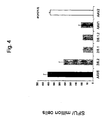
- Balb/c mice male were immunized intramuscularly with 1 x 10 11 GC AAV2/6, AAV2/6.1, AAV2/6.2, AAV2/6.1.2, AAV2/1 or AAV2 vector. Thirteen (13) days later splenocytes were harvested from 3 mice per group and pooled. Equal amounts of splenocytes were stimulated in vitro with the Balb/c AAV epitope IPQYGYLTL [SEQ ID NO: 1] in a ELISPOT assay. See, Fig. 4 .
- serotype AAVs were assessed for their ability to bind to an anion exchange membrane (Mustang Q, Pall Scientific) in buffers with pHs ranging from 6.0 to 9.0 and elution was monitored using a 0 to 500mM salt gradient. High pH buffers were most suitable for the binding and elution of each of the serotypes tested (Table 1). Elution of three serotypes (AAV8, AAV7 and Rh8Rc) occurred in the 100 to 150 mM range of the gradient while two (AAV9 and Rh64R1) eluted directly following the application of the gradient. Recoveries of loaded material ranged from 50% (AAV7) to 100% (Rh64R1).
- anion exchange membrane technology is applicable for the purification of a number of AAV serotypes. Due to the high flow rates and binding capacities afforded by the membranes macroporous structure, this technology is particularly suited for purification of AAV from cell culture supernatants.
- the data indicate that supernatant dilution or buffer exchange will be necessary to obtain appropriate salt concentrations for AAV binding to anion-exchange membranes.
Landscapes
- Health & Medical Sciences (AREA)
- Life Sciences & Earth Sciences (AREA)
- Chemical & Material Sciences (AREA)
- Genetics & Genomics (AREA)
- Engineering & Computer Science (AREA)
- Organic Chemistry (AREA)
- General Health & Medical Sciences (AREA)
- Medicinal Chemistry (AREA)
- Zoology (AREA)
- Wood Science & Technology (AREA)
- Bioinformatics & Cheminformatics (AREA)
- Biochemistry (AREA)
- Biotechnology (AREA)
- Virology (AREA)
- Molecular Biology (AREA)
- Microbiology (AREA)
- General Engineering & Computer Science (AREA)
- Immunology (AREA)
- Biomedical Technology (AREA)
- Veterinary Medicine (AREA)
- Pharmacology & Pharmacy (AREA)
- Public Health (AREA)
- Animal Behavior & Ethology (AREA)
- Epidemiology (AREA)
- Manufacturing & Machinery (AREA)
- Gastroenterology & Hepatology (AREA)
- Biophysics (AREA)
- Proteomics, Peptides & Aminoacids (AREA)
- Micro-Organisms Or Cultivation Processes Thereof (AREA)
Claims (12)
- Verfahren zur Herstellung von AAV, wobei das Verfahren folgende Schritte umfasst:(a) Kultivieren eines keine Heparinbindungsstelle aufweisenden AAV in einer Zellkultur
und(b) Isolieren des AAV aus dem Überstand der Zellkultur, ohne dass Sammlung eines Zellpellets oder Zellzerstörung erforderlich ist. - Verfahren nach Anspruch 1, wobei das Verfahren weiterhin einen oder beide der folgenden Schritte umfasst:(c) Aufrechterhalten einer lebensfähigen Zellkultur und/oder(d) Zugeben von Medium während oder nach der Sammlung des Überstands, um einen fortlaufenden Herstellungsprozess bereitzustellen und optional Wiederholen der Verfahrensschritte mindestens zwei Mal und optional bis zu 100 Mal.
- Verfahren nach Anspruch 1, wobei das AAV AAV8 ist.
- Verfahren nach Anspruch 1, wobei das AAV modifiziert wurde, um eine native Heparinbindungsstelle abzutragen.
- Verfahren nach Anspruch 4, wobei die Heparinbindungsstelle durch die Aminosäuresequenz RxxR (SEQ ID NR. 12) gekennzeichnet ist, wobei X eine beliebige Aminosäure ist.
- Verfahren nach Anspruch 5, wobei das AAV aus der aus AAV2, hu.51, hu.34, hu.35, hu.45 und hu.47 bestehenden Gruppe ausgewählt ist.
- Verfahren nach Anspruch 5, wobei die Heparinbindungsstelle auf eine oder mehrere der folgenden Weisen modifiziert wird:(a) die erste Aminosäure der Sequenz RxxR (SEQ ID NR. 12) wird modifiziert,(b) die erste Aminosäure der Sequenz RxxR (SEQ ID NR. 12) wird von Arg in Ser oder Glu geändert,(c) die Heparinbindungsstelle wird an der letzten Aminosäure der Sequenz RxxR (SEQ ID NR. 12) modifiziert und/oder(d) die letzte Aminosäure der Sequenz RxxR (SEQ ID NR. 12) wird von Arg in Thr geändert.
- Verfahren nach Anspruch 1, wobei der Kultivierungsschritt in serumfreiem Medium durchgeführt wird.
- Verfahren nach Anspruch 1, wobei das AAV in einer HEK-293-Zelle kultiviert wird.
- Verfahren nach Anspruch 1, wobei der Isolierungsschritt weiter das Konzentrieren des AAV durch ein Verfahren umfasst, aus der aus Chromatographie, Säulenchromatographie, Membranchromatographie, Filtration und Fällung bestehenden Gruppe das ausgewählt ist.
- Verfahren zur Herstellung von AAV nach einem der Ansprüche 1 bis 10, wobei Zellen der Zellkultur (a) umfassen:zum Verpacken notwendige Adenovirus-Helferfunktionen, ein zum Verpacken ausreichendes AAV-rep-Protein, ein zum Verpacken ausreichendes AAV-cap-Protein und das zu verpackende AAV-Genom.
- Verfahren nach Anspruch 11, wobei die Zellen mit einem oder mehreren der folgenden in stabiler Weise transformiert werden:(a) den für die Adenovirus-Helferfunktionen kodierenden Sequenzen (wobei die Adenovirus-Helferfunktionen optional unter einem aktivierbaren oder induzierbaren Promoter exprimiert werden),(b) den für das AAV-rep- und/oder AAV-cap-Protein kodierenden Sequenzen (wobei das AAV-rep-Protein und/oder das AAV-cap-Protein optional unter der Leitung eines aktivierbaren oder induzierbaren Promoters exprimiert werden) und/oder(c) dem zu verpackenden AAV-Genom.
Applications Claiming Priority (2)
| Application Number | Priority Date | Filing Date | Title |
|---|---|---|---|
| US79622906P | 2006-04-28 | 2006-04-28 | |
| PCT/US2007/010055 WO2007127264A2 (en) | 2006-04-28 | 2007-04-27 | Scalable production method for aav |
Publications (2)
| Publication Number | Publication Date |
|---|---|
| EP2018421A2 EP2018421A2 (de) | 2009-01-28 |
| EP2018421B1 true EP2018421B1 (de) | 2012-12-19 |
Family
ID=38543764
Family Applications (1)
| Application Number | Title | Priority Date | Filing Date |
|---|---|---|---|
| EP07756027A Active EP2018421B1 (de) | 2006-04-28 | 2007-04-27 | Skalierbares herstellungsverfahren für aav |
Country Status (6)
| Country | Link |
|---|---|
| US (6) | US9198984B2 (de) |
| EP (1) | EP2018421B1 (de) |
| JP (1) | JP5268890B2 (de) |
| CN (1) | CN101528916B (de) |
| ES (1) | ES2400235T3 (de) |
| WO (1) | WO2007127264A2 (de) |
Cited By (5)
| Publication number | Priority date | Publication date | Assignee | Title |
|---|---|---|---|---|
| US10155931B2 (en) | 2006-04-28 | 2018-12-18 | The Trustees Of The University Of Pennsylvania | Scalable production method for AAV |
| US11015174B2 (en) | 2015-12-11 | 2021-05-25 | The Trustees Of The University Of Pennsylvania | Scalable purification method for AAV8 |
| US11015173B2 (en) | 2015-12-11 | 2021-05-25 | The Trustees Of The University Of Pennsylvania | Scalable purification method for AAV1 |
| US11028372B2 (en) | 2015-12-11 | 2021-06-08 | The Trustees Of The University Of Pennsylvania | Scalable purification method for AAVRH10 |
| US11098286B2 (en) | 2015-12-11 | 2021-08-24 | The Trustees Of The University Of Pennsylvania | Scalable purification method for AAV9 |
Families Citing this family (141)
| Publication number | Priority date | Publication date | Assignee | Title |
|---|---|---|---|---|
| MX359371B (es) | 2001-11-13 | 2018-09-25 | Univ Pennsylvania | Un metodo para detectar y/o identificar secuencias del virus adeno-asociado y aislamiento de secuencias novedosas identificadas de ese modo. |
| ES2525067T3 (es) | 2005-04-07 | 2014-12-17 | The Trustees Of The University Of Pennsylvania | Método de incremento de la función de un vector de AAV |
| US9217155B2 (en) | 2008-05-28 | 2015-12-22 | University Of Massachusetts | Isolation of novel AAV'S and uses thereof |
| US8734809B2 (en) | 2009-05-28 | 2014-05-27 | University Of Massachusetts | AAV's and uses thereof |
| WO2011094198A1 (en) * | 2010-01-28 | 2011-08-04 | The Children's Hospital Of Philadelphia Research Institute, Abramson Research Center | A scalable manufacturing platform for viral vector purification and viral vectors so purified for use in gene therapy |
| US9315825B2 (en) | 2010-03-29 | 2016-04-19 | The Trustees Of The University Of Pennsylvania | Pharmacologically induced transgene ablation system |
| WO2011126808A2 (en) | 2010-03-29 | 2011-10-13 | The Trustees Of The University Of Pennsylvania | Pharmacologically induced transgene ablation system |
| BR112012026095A2 (pt) * | 2010-04-14 | 2015-09-15 | Emd Millipore Corp | métodos de produção de estoques de vírus de alta pureza e altos títulos e métodos de uso dos mesmos. |
| US9546369B2 (en) | 2010-04-23 | 2017-01-17 | University Of Massachusetts | Multicistronic expression constructs |
| EP2561073B1 (de) | 2010-04-23 | 2016-08-24 | University of Massachusetts | Auf das zentralnervensystem abzielende vektoren und verfahren zu ihrer verwendung |
| EP2605798A1 (de) | 2010-07-12 | 2013-06-26 | Universidad Autònoma de Barcelona | Gentherapiezusammensetzung für die behandlung von diabetes |
| EP3318635A1 (de) | 2011-04-21 | 2018-05-09 | University of Massachusetts | Raav-basierte zusammensetzungen und verfahren zur behandlung von alpha-1-anti-trypsin-mangel |
| CA2853482C (en) | 2011-10-28 | 2020-05-19 | Joshua Grieger | Cell line for production of adeno-associated virus |
| US9434928B2 (en) | 2011-11-23 | 2016-09-06 | Nationwide Children's Hospital, Inc. | Recombinant adeno-associated virus delivery of alpha-sarcoglycan polynucleotides |
| NZ701693A (en) | 2012-04-18 | 2017-02-24 | The Children’S Hospital Of Philadelphia | Composition and methods for highly efficient gene transfer using aav capsid variants |
| EP2682168A1 (de) | 2012-07-02 | 2014-01-08 | Millipore Corporation | Reinigung biologischer Moleküle |
| EP2692868A1 (de) | 2012-08-02 | 2014-02-05 | Universitat Autònoma De Barcelona | Adenoassoziierte virale (AAV) Vektoren für die Transduktion von Fettgewebe |
| CN105339495A (zh) * | 2013-07-11 | 2016-02-17 | 宝生物工程株式会社 | 制备无包膜病毒的方法 |
| GB201403684D0 (en) | 2014-03-03 | 2014-04-16 | King S College London | Vector |
| ES2833230T3 (es) | 2014-05-13 | 2021-06-14 | Univ Pennsylvania | Composiciones que comprenden AVV que expresan construcciones y usos de doble anticuerpo del mismo |
| EP3151866B1 (de) | 2014-06-09 | 2023-03-08 | Voyager Therapeutics, Inc. | Chimäre kapside |
| US10023846B2 (en) | 2014-07-10 | 2018-07-17 | Takara Bio Inc. | Production method for non-enveloped virus particles |
| EP3194430A1 (de) | 2014-09-16 | 2017-07-26 | Universitat Autònoma De Barcelona | Adeno-assoziierte virusvektoren zur gentheraüie von stoffwechselkrankheiten |
| US10370432B2 (en) | 2014-10-03 | 2019-08-06 | University Of Massachusetts | Heterologous targeting peptide grafted AAVS |
| EP3200830B1 (de) | 2014-10-03 | 2020-09-09 | University of Massachusetts | Hocheffiziente bibliotheksidentifizierte aav-vektoren |
| CN107073051B (zh) | 2014-10-21 | 2021-08-24 | 马萨诸塞大学 | 重组aav变体及其用途 |
| RU2716991C2 (ru) | 2014-11-05 | 2020-03-17 | Вояджер Терапьютикс, Инк. | Полинуклеотиды aadc для лечения болезни паркинсона |
| KR20230145206A (ko) | 2014-11-14 | 2023-10-17 | 보이저 테라퓨틱스, 인크. | 조절성 폴리뉴클레오티드 |
| WO2016077687A1 (en) | 2014-11-14 | 2016-05-19 | Voyager Therapeutics, Inc. | Compositions and methods of treating amyotrophic lateral sclerosis (als) |
| US11697825B2 (en) | 2014-12-12 | 2023-07-11 | Voyager Therapeutics, Inc. | Compositions and methods for the production of scAAV |
| KR102493350B1 (ko) | 2015-01-09 | 2023-01-27 | 다카라 바이오 가부시키가이샤 | 비엔벨로프 바이러스 입자의 제조방법 |
| US9862936B2 (en) | 2015-01-13 | 2018-01-09 | Alfa Wassermann, Inc. | Methods of purifying adeno-associated virus (AAV) and/or recombinant adeno-associated virus (rAAV) and gradients and flow-through buffers therefore |
| EP3256170B1 (de) | 2015-02-13 | 2020-09-23 | University of Massachusetts | Zusammensetzungen und verfahren zur transitorischen freisetzung von polypeptiden |
| CN107615065B (zh) | 2015-03-23 | 2020-07-24 | 以埃森生物科学股份有限公司的名义经营的埃森仪器股份有限公司 | 对生物材料评估腺病毒或腺相关病毒的病毒类型的非缔合的病毒尺寸颗粒 |
| US11046955B2 (en) | 2015-04-24 | 2021-06-29 | University Of Massachusetts | Modified AAV constructs and uses thereof |
| JP6805174B2 (ja) * | 2015-05-12 | 2020-12-23 | アメリカ合衆国 | 神経成長因子シグナルペプチド及び副甲状腺ホルモンを含むaav分離株及び融合タンパク質 |
| EA201792500A1 (ru) | 2015-05-13 | 2018-04-30 | Дзе Трастиз Оф Дзе Юниверсити Оф Пенсильвания | Aav-опосредованная экспрессия антител против гриппа и способы их использования |
| ES2865487T3 (es) | 2015-09-28 | 2021-10-15 | Univ North Carolina Chapel Hill | Métodos y composiciones para vectores virales que evaden los anticuerpos |
| WO2017075335A1 (en) | 2015-10-28 | 2017-05-04 | Voyager Therapeutics, Inc. | Regulatable expression using adeno-associated virus (aav) |
| KR102877920B1 (ko) | 2015-11-16 | 2025-10-30 | 더 리서치 인스티튜트 앳 네이션와이드 칠드런스 하스피탈 | 티틴-기반 근증 및 다른 티틴성병증의 치료를 위한 물질 및 방법 |
| WO2017112948A1 (en) * | 2015-12-24 | 2017-06-29 | University Of Florida Research Foundation, Inc. | Improved aav production using suspension adapted cells |
| CA3012344A1 (en) | 2016-02-12 | 2017-08-17 | University Of Massachusetts | Anti-angiogenic mirna therapeutics for inhibiting corneal neovascularization |
| US11299751B2 (en) | 2016-04-29 | 2022-04-12 | Voyager Therapeutics, Inc. | Compositions for the treatment of disease |
| EP3448874A4 (de) | 2016-04-29 | 2020-04-22 | Voyager Therapeutics, Inc. | Zusammensetzungen zur behandlung einer erkrankung |
| KR102427379B1 (ko) | 2016-05-18 | 2022-08-02 | 보이저 테라퓨틱스, 인크. | 헌팅톤 질환을 치료하기 위한 조성물 및 방법 |
| KR20240056729A (ko) | 2016-05-18 | 2024-04-30 | 보이저 테라퓨틱스, 인크. | 조절성 폴리뉴클레오티드 |
| GB201614050D0 (en) * | 2016-08-17 | 2016-09-28 | Glaxosmithkline Ip Dev Ltd | Method for purifying viral vectors |
| IL315358A (en) | 2016-08-18 | 2024-11-01 | Univ California | CRISPR-CAS genome engineering using a modular AAV delivery system |
| EP3510161A4 (de) | 2016-08-23 | 2020-04-22 | Akouos, Inc. | Zusammensetzungen und verfahren zur behandlung von nicht altersbedingten hörschäden bei einer person |
| WO2018044933A1 (en) | 2016-08-30 | 2018-03-08 | The Regents Of The University Of California | Methods for biomedical targeting and delivery and devices and systems for practicing the same |
| EP3518985A4 (de) | 2016-09-29 | 2020-08-05 | University of Florida Research Foundation, Incorporated | Aavrh.10-varianten mit austrittsmöglichkeiten für wirtsantikörper und veränderten gewebe-targeting-eigenschaften |
| AU2017341849B2 (en) | 2016-10-13 | 2024-03-21 | University Of Massachusetts | AAV capsid designs |
| CA3040179A1 (en) | 2016-10-19 | 2018-04-26 | Adverum Biotechnologies, Inc. | Modified aav capsids and uses thereof |
| UY37620A (es) | 2017-02-28 | 2018-08-31 | Univ Pennsylvania | Vacunas contra la gripe mediadas por aav novedosas |
| JOP20190200A1 (ar) | 2017-02-28 | 2019-08-27 | Univ Pennsylvania | تركيبات نافعة في معالجة ضمور العضل النخاعي |
| PT3589730T (pt) * | 2017-02-28 | 2024-02-28 | Univ Pennsylvania | Vetor de vírus adenoassociado (aav) de clado f e suas utilizações |
| JP2020518258A (ja) | 2017-05-05 | 2020-06-25 | ボイジャー セラピューティクス インコーポレイテッドVoyager Therapeutics,Inc. | 筋萎縮性側索硬化症(als)治療組成物および方法 |
| JP2020518259A (ja) | 2017-05-05 | 2020-06-25 | ボイジャー セラピューティクス インコーポレイテッドVoyager Therapeutics,Inc. | ハンチントン病治療組成物および方法 |
| IL270882B2 (en) | 2017-05-24 | 2024-02-01 | Univ Barcelona Autonoma | Viral expression vectors containing the coding sequence for FIBROBLAST GROWTH FACTOR 21 (FGF21 |
| JOP20190269A1 (ar) | 2017-06-15 | 2019-11-20 | Voyager Therapeutics Inc | بولي نوكليوتيدات aadc لعلاج مرض باركنسون |
| CA3070087A1 (en) | 2017-07-17 | 2019-01-24 | Voyager Therapeutics, Inc. | Trajectory array guide system |
| AU2018338728B2 (en) | 2017-09-29 | 2025-01-02 | Centre National De La Recherche Scientifique (Cnrs) | Rescue of central and peripheral neurological phenotype of Friedreich's Ataxia by intravenous delivery |
| EP3697908A1 (de) | 2017-10-16 | 2020-08-26 | Voyager Therapeutics, Inc. | Behandlung von amyotropher lateralsklerose (als) |
| TW202413649A (zh) | 2017-10-16 | 2024-04-01 | 美商航海家醫療公司 | 肌萎縮性脊髓側索硬化症(als)之治療 |
| GB201800903D0 (en) | 2018-01-19 | 2018-03-07 | Oxford Genetics Ltd | Vectors |
| AR114350A1 (es) | 2018-01-31 | 2020-08-26 | Res Institute At Nationwide ChildrenS Hospital | Terapia genética para la distrofia muscular de cinturas del tipo 2c |
| MX2020010465A (es) | 2018-04-03 | 2021-01-08 | Vectores de virus para direccionamiento a tejidos oftalmicos. | |
| EP3774852A1 (de) | 2018-04-03 | 2021-02-17 | Stridebio, Inc. | Antikörpermeidende virale vektoren |
| AU2019247748A1 (en) | 2018-04-03 | 2020-10-08 | Ginkgo Bioworks, Inc. | Antibody-evading virus vectors |
| KR20210019996A (ko) | 2018-05-15 | 2021-02-23 | 보이저 테라퓨틱스, 인크. | 파킨슨병의 치료를 위한 조성물 및 방법 |
| WO2019241486A1 (en) | 2018-06-13 | 2019-12-19 | Voyager Therapeutics, Inc. | Engineered 5' untranslated regions (5' utr) for aav production |
| KR20210028162A (ko) | 2018-06-29 | 2021-03-11 | 더 리서치 인스티튜트 앳 네이션와이드 칠드런스 하스피탈 | 지대근 이영양증 2a형을 치료하기 위한 재조합 아데노 연관 바이러스 생성물 및 방법 |
| US20210254103A1 (en) | 2018-07-02 | 2021-08-19 | Voyager Therapeutics, Inc. | Treatment of amyotrophic lateral sclerosis and disorders associated with the spinal cord |
| EP3823981A4 (de) | 2018-07-17 | 2022-04-06 | Neuromyon Inc. | Behandlung von neuropathie mit dna-konstrukten, die igf-1-isoformen exprimieren |
| CN112770812A (zh) | 2018-07-24 | 2021-05-07 | 沃雅戈治疗公司 | 产生基因治疗制剂的系统和方法 |
| EP3833745A1 (de) | 2018-08-10 | 2021-06-16 | REGENXBIO Inc. | Skalierbares verfahren zur herstellung von rekombinantem aav |
| CA3109804A1 (en) | 2018-08-16 | 2020-02-20 | The Regents Of The University Of California | Chemically and photochemically initiated cell membrane blebbing to induce cell vesicle production, modifications thereof, and uses thereof |
| US12269847B2 (en) | 2018-08-16 | 2025-04-08 | Donaldson Company, Inc. | Genetically encoded polypeptide for affinity capture and purification of biologics |
| EP3856762A1 (de) | 2018-09-28 | 2021-08-04 | Voyager Therapeutics, Inc. | Frataxin-expressionskonstrukte mit gentechnisch veränderten promotoren und verfahren zu deren verwendung |
| WO2020072849A1 (en) | 2018-10-04 | 2020-04-09 | Voyager Therapeutics, Inc. | Methods for measuring the titer and potency of viral vector particles |
| WO2020072844A1 (en) | 2018-10-05 | 2020-04-09 | Voyager Therapeutics, Inc. | Engineered nucleic acid constructs encoding aav production proteins |
| CN113166781A (zh) | 2018-10-15 | 2021-07-23 | 沃雅戈治疗公司 | 在杆状病毒/Sf9系统中大规模生产rAAV的表达载体 |
| SG11202107645RA (en) | 2019-01-18 | 2021-08-30 | Voyager Therapeutics Inc | Methods and systems for producing aav particles |
| WO2020160508A1 (en) | 2019-01-31 | 2020-08-06 | Oregon Health & Science University | Methods for using transcription-dependent directed evolution of aav capsids |
| GB201901571D0 (en) | 2019-02-05 | 2019-03-27 | Oxford Genetics Ltd | Inducible AAV sysyem |
| AU2020229340A1 (en) | 2019-02-26 | 2021-09-16 | Research Institute At Nationwide Children's Hospital | Adeno-associated virus vector delivery of B-sarcoglycan and the treatment of muscular dystrophy |
| CN113631706A (zh) | 2019-02-28 | 2021-11-09 | 贝尼泰克知识产权控股股份有限公司 | 用于治疗眼咽肌营养不良(opmd)的组合物和方法 |
| AR118465A1 (es) | 2019-03-21 | 2021-10-06 | Stridebio Inc | Vectores de virus adenoasociados recombinantes |
| EP3962536A1 (de) | 2019-04-29 | 2022-03-09 | Voyager Therapeutics, Inc. | Systeme und verfahren zur herstellung von baculovirusinfizierten insektenzellen (biics) in bioreaktoren |
| EP3994257A4 (de) * | 2019-07-03 | 2023-11-15 | Asklepios Biopharmaceutical, Inc. | Wirtssysteme mit inhibitoren eines geneditierenden proteins zur herstellung von viralen vektoren |
| ES2948620T3 (es) | 2019-07-10 | 2023-09-14 | Masonic Medical Res Laboratory | Vgll4 con elemento regulador CIS de UCP-1 y método de uso del mismo |
| EP4010465A1 (de) | 2019-08-09 | 2022-06-15 | Voyager Therapeutics, Inc. | Zellkulturmedium zur verwendung bei der herstellung von gentherapieprodukten in bioreaktoren |
| RS65421B1 (sr) | 2019-08-21 | 2024-05-31 | Res Inst Nationwide Childrens Hospital | Isporuka adeno-asociranog virusnog vektora alfa-sarkoglikana i lečenje mišićne distrofije |
| EP4022070A1 (de) | 2019-08-26 | 2022-07-06 | Voyager Therapeutics, Inc. | Kontrollierte expression viraler proteine |
| US20220307013A1 (en) | 2019-08-30 | 2022-09-29 | The Regents Of The University Of California | Gene fragment overexpression screening methodologies, and uses thereof |
| JP2022551739A (ja) | 2019-10-17 | 2022-12-13 | ストライドバイオ,インコーポレイテッド | ニーマン・ピック病c型の治療のためのアデノ随伴ウイルスベクター |
| US12611436B2 (en) | 2019-10-17 | 2026-04-28 | Sarepta Therapeutics, Inc. | AAV transfer cassette |
| KR20220157944A (ko) | 2020-02-21 | 2022-11-29 | 아카우오스, 인크. | 인간 대상체에서 비-연령-연관 청각 장애를 치료하기 위한 조성물 및 방법 |
| BR112022016965A2 (pt) * | 2020-02-25 | 2022-12-06 | Childrens Medical Res Institute | Polipeptídeos e vetores de capsídeo do vírus adenoassociado |
| AU2021239973A1 (en) * | 2020-03-16 | 2022-10-06 | Ultragenyx Pharmaceutical Inc. | Methods for enhancing recombinant adeno-associated virus yield |
| US20230242940A1 (en) * | 2020-04-13 | 2023-08-03 | Massachusetts Eye And Ear Infirmary | Methods of making and using a vaccine against coronavirus |
| CA3177869A1 (en) * | 2020-05-05 | 2021-11-11 | Duke University | Cross-species compatible adeno-associated virus compositions and methods of use thereof |
| WO2022032153A1 (en) | 2020-08-06 | 2022-02-10 | Voyager Therapeutics, Inc. | Cell culture medium for use in producing gene therapy products in bioreactors |
| JP7526360B2 (ja) | 2020-08-18 | 2024-07-31 | ザルトリウス ビーアイエー セパレーションズ ディー.オー.オー. | マルチモーダル金属アフィニティー処理aavカプシド |
| US20230302381A1 (en) | 2020-08-18 | 2023-09-28 | Sartorius Bia Separations D.O.O. | Metal-affinity extraction of host cell dna |
| SI3957378T1 (sl) | 2020-08-18 | 2023-07-31 | Sartorius BIA Separations D.O.O | Večmodalna obdelava kapsid aav s kovinsko afiniteto |
| AU2021328475A1 (en) | 2020-08-19 | 2023-03-16 | Sarepta Therapeutics, Inc. | Adeno-associated virus vectors for treatment of Rett syndrome |
| CA3195177A1 (en) | 2020-10-07 | 2022-04-14 | Asklepios Biopharmaceutical, Inc. | Therapeutic adeno-associated virus delivery of fukutin related protein (fkrp) for treating dystroglycanopathy disorders including limb girdle 2i (lgmd2i) |
| US12071633B2 (en) | 2020-10-13 | 2024-08-27 | Kriya Therapeutics, Inc. | Viral vector constructs for delivery of nucleic acids encoding cytokines and uses thereof for treating cancer |
| CA3206107A1 (en) | 2021-01-26 | 2022-08-04 | Brian Furmanski | Vector constructs for delivery of nucleic acids encoding therapeutic anti-tnf antibodies and methods of using the same |
| WO2022165313A1 (en) | 2021-02-01 | 2022-08-04 | Regenxbio Inc. | Gene therapy for neuronal ceroid lipofuscinoses |
| WO2022187473A2 (en) | 2021-03-03 | 2022-09-09 | Voyager Therapeutics, Inc. | Controlled expression of viral proteins |
| WO2022187548A1 (en) | 2021-03-03 | 2022-09-09 | Voyager Therapeutics, Inc. | Controlled expression of viral proteins |
| WO2022187679A1 (en) | 2021-03-04 | 2022-09-09 | Kriya Therapeutics, Inc. | Viral vector constructs incorporating dna for inhibiting toll like receptors and methods of using the same |
| EP4219726A1 (de) | 2021-10-15 | 2023-08-02 | Research Institute at Nationwide Children's Hospital | Selbstkomplementärer adeno-assoziierter virusvektor und dessen verwendung bei der behandlung von muskeldystrophie |
| JP2025503637A (ja) | 2022-01-09 | 2025-02-04 | クリヤ セラピューティクス, インコーポレイテッド | 治療用抗igf-1r抗体をコードする核酸の送達のためのベクター構築物およびそれを使用する方法 |
| US20260085328A1 (en) | 2022-09-08 | 2026-03-26 | Voyager Therapeutics, Inc. | Controlled expression of viral proteins |
| WO2024054993A1 (en) | 2022-09-09 | 2024-03-14 | Kriya Therapeutics, Inc. | Vector constructs for delivery of nucleic acids encoding therapeutic anti-ctla4 antibodies and methods of using the same |
| WO2024130007A2 (en) | 2022-12-16 | 2024-06-20 | Kriya Therapeutics, Inc. | Synthetic htert promoters and uses thereof |
| EP4688807A1 (de) * | 2023-03-31 | 2026-02-11 | Exegenesis Bio Singapore Pte. Ltd. | Variante aav9-capsid-proteine und verwendungen davon |
| EP4701634A1 (de) | 2023-04-28 | 2026-03-04 | Kriya Therapeutics, Inc. | Riboswitches zur regulierung der genexpression und therapeutische verfahren zur verwendung davon |
| US20240390521A1 (en) | 2023-04-28 | 2024-11-28 | Kriya Therapeutics, Inc. | Chimeric modified ion channels and uses thereof for treatment of trigeminal nerve disorders |
| KR20260019635A (ko) | 2023-06-09 | 2026-02-10 | 사르토리우스 비아이에이 세퍼레이션스 디.오.오. | 완전 충전 아데노 관련 바이러스 (aav) 캡시드의 향상된 분리 방법 |
| KR20260051103A (ko) | 2023-07-07 | 2026-04-15 | 크리야 테라퓨틱스, 인크. | 안과 병리상태를 치료하기 위한 aav 벡터의 안구주위 전달 |
| CN121752726A (zh) | 2023-07-11 | 2026-03-27 | 克里雅疗法股份有限公司 | 用于递送编码尿酸酶的核酸的载体构建体及其使用方法 |
| KR20260039752A (ko) | 2023-07-13 | 2026-03-20 | 크리야 테라퓨틱스, 인크. | 보체 경로 억제제 융합체 및 그의 사용 방법 |
| CN118480100B (zh) * | 2023-09-20 | 2025-04-04 | 广州派真生物技术有限公司 | 腺相关病毒突变体及其应用 |
| WO2025068468A1 (en) | 2023-09-28 | 2025-04-03 | Sartorius Xell GmbH | Methods, systems, compositions and uses for improved production of viral vectors |
| EP4530353A1 (de) | 2023-09-28 | 2025-04-02 | Sartorius Xell GmbH | Verfahren, systeme, zusammensetzungen und verwendungen zur verbesserten herstellung von viralen vektoren |
| WO2025104341A1 (en) | 2023-11-16 | 2025-05-22 | Sartorius Bia Separations D.O.O. | Enhanced chromatographic separation of components in a mixture by employing decreasing gradient of complexing agent |
| US20250276095A1 (en) | 2024-03-04 | 2025-09-04 | Kate Therapeutics, Inc. | Adeno-associated virus compositions for the treatment of duchenne muscular dystrophy |
| WO2025210223A1 (en) | 2024-04-04 | 2025-10-09 | Sartorius Xell GmbH | Methods for viral vector production with reduced host cell aggregation and methods for dissolving host cell aggregates |
| WO2025226841A1 (en) | 2024-04-24 | 2025-10-30 | Kate Therapeutics, Inc. | Gene therapy approach for treating disorders associated with tnnt2 |
| WO2025226842A1 (en) | 2024-04-24 | 2025-10-30 | Kate Therapeutics, Inc. | Expression control by drg-expressed mirnas |
| WO2026011009A1 (en) | 2024-07-02 | 2026-01-08 | Kate Therapeutics, Inc. | Compositions and methods for muscle disorders |
| WO2026011008A1 (en) | 2024-07-02 | 2026-01-08 | Kate Therapeutics, Inc. | Expression control by skeletal muscle-expressed mirnas |
| WO2026020116A1 (en) | 2024-07-18 | 2026-01-22 | Massachusetts Institute Of Technology | Methods and compositions for enriching the production of dna cargo loaded recombinant adeno-associated virus capsids |
| WO2026030242A1 (en) | 2024-07-29 | 2026-02-05 | Kate Therapeutics, Inc. | Adeno-associated virus compositions for the treatment of facioscapulohumeral muscular dystrophy |
| WO2026030244A1 (en) | 2024-07-30 | 2026-02-05 | Kate Therapeutics, Inc. | Adeno-associated virus compositions for the treatment of limb girdle muscular dystrophy 2a |
| WO2026028137A1 (en) | 2024-07-31 | 2026-02-05 | Universitat Autònoma De Barcelona | Fibroblast growth factor 21 (fgf21) gene therapy |
| WO2026050402A1 (en) | 2024-08-29 | 2026-03-05 | Kate Therapeutics, Inc. | Liver de-targeted muscle tropic capsids |
Family Cites Families (40)
| Publication number | Priority date | Publication date | Assignee | Title |
|---|---|---|---|---|
| EP0282177A3 (de) | 1987-03-09 | 1989-01-18 | Dionex Corporation | Anionenaustauscherharz mit einer Aussenschicht aus acrylischem Harz |
| US5658785A (en) | 1994-06-06 | 1997-08-19 | Children's Hospital, Inc. | Adeno-associated virus materials and methods |
| US7732129B1 (en) | 1998-12-01 | 2010-06-08 | Crucell Holland B.V. | Method for the production and purification of adenoviral vectors |
| US6989264B2 (en) * | 1997-09-05 | 2006-01-24 | Targeted Genetics Corporation | Methods for generating high titer helper-free preparations of released recombinant AAV vectors |
| US6566118B1 (en) | 1997-09-05 | 2003-05-20 | Targeted Genetics Corporation | Methods for generating high titer helper-free preparations of released recombinant AAV vectors |
| DK1009808T3 (da) | 1997-09-05 | 2013-01-21 | Genzyme Corp | Fremgangsmåder til generering af hjælper-frie præparater af rekombinante aav-vektorer med høj titer |
| EP1015619A1 (de) | 1997-09-19 | 2000-07-05 | The Trustees Of The University Of Pennsylvania | Methoden und zelllinien für die produktion von rekombinanten adeno-assoziierten viren |
| ATE362542T1 (de) | 1998-11-05 | 2007-06-15 | Univ Pennsylvania | Nukleinsäuresequenzen des adeno-assoziierten virus des serotyps i, und vektoren und wirtszellen, die diese enthalten |
| US6759237B1 (en) | 1998-11-05 | 2004-07-06 | The Trustees Of The University Of Pennsylvania | Adeno-associated virus serotype 1 nucleic acid sequences, vectors and host cells containing same |
| AUPP702198A0 (en) | 1998-11-09 | 1998-12-03 | Silverbrook Research Pty Ltd | Image creation method and apparatus (ART79) |
| US6893865B1 (en) | 1999-04-28 | 2005-05-17 | Targeted Genetics Corporation | Methods, compositions, and cells for encapsidating recombinant vectors in AAV particles |
| US6593123B1 (en) | 2000-08-07 | 2003-07-15 | Avigen, Inc. | Large-scale recombinant adeno-associated virus (rAAV) production and purification |
| US6723551B2 (en) | 2001-11-09 | 2004-04-20 | The United States Of America As Represented By The Department Of Health And Human Services | Production of adeno-associated virus in insect cells |
| MX359371B (es) | 2001-11-13 | 2018-09-25 | Univ Pennsylvania | Un metodo para detectar y/o identificar secuencias del virus adeno-asociado y aislamiento de secuencias novedosas identificadas de ese modo. |
| PT1453547T (pt) | 2001-12-17 | 2016-12-28 | Univ Pennsylvania | Sequências do vírus adeno-associado (aav) do serotipo 8, vetores contendo as mesmas, e utilizações destas |
| DK2573170T3 (en) | 2001-12-17 | 2018-04-09 | Univ Pennsylvania | Sequences of adeno-associated virus (AAV) serotype 9, vectors containing them, and their use |
| US7419817B2 (en) | 2002-05-17 | 2008-09-02 | The United States Of America As Represented By The Secretary Department Of Health And Human Services, Nih. | Scalable purification of AAV2, AAV4 or AAV5 using ion-exchange chromatography |
| US7261544B2 (en) | 2003-05-21 | 2007-08-28 | Genzyme Corporation | Methods for producing preparations of recombinant AAV virions substantially free of empty capsids |
| EP1486567A1 (de) * | 2003-06-11 | 2004-12-15 | Deutsches Krebsforschungszentrum Stiftung des öffentlichen Rechts | Verbesserter Adeno-assoziierter Virus (AAV)-Vektor für Gentherapie |
| US9441244B2 (en) * | 2003-06-30 | 2016-09-13 | The Regents Of The University Of California | Mutant adeno-associated virus virions and methods of use thereof |
| EP2345731B1 (de) | 2003-09-30 | 2015-10-21 | The Trustees of the University of Pennsylvania | Adenoassoziierte Virus-Claden, Sequenzen, diese enthaltende Vektoren und ihre Verwendungen |
| ES2525067T3 (es) | 2005-04-07 | 2014-12-17 | The Trustees Of The University Of Pennsylvania | Método de incremento de la función de un vector de AAV |
| KR100743617B1 (ko) | 2005-08-25 | 2007-07-27 | 주식회사 알에스텍 | 고광학순도를 갖는 키랄 3-히드록시 피롤리딘 및 그유도체를 제조하는 방법 |
| US7588772B2 (en) | 2006-03-30 | 2009-09-15 | Board Of Trustees Of The Leland Stamford Junior University | AAV capsid library and AAV capsid proteins |
| EP2018421B1 (de) | 2006-04-28 | 2012-12-19 | The Trustees of the University of Pennsylvania | Skalierbares herstellungsverfahren für aav |
| WO2008027084A2 (en) | 2006-04-28 | 2008-03-06 | The Trustees Of The University Of Pennsylvania | Modified aav vectors having reduced capsid immunogenicity and use thereof |
| KR101010352B1 (ko) | 2008-05-30 | 2011-01-25 | 삼성중공업 주식회사 | 전력 제어 장치 및 방법 |
| KR20180000341A (ko) | 2009-06-16 | 2018-01-02 | 젠자임 코포레이션 | 재조합 aav 벡터에 대한 개선된 정제 방법 |
| EP2561073B1 (de) | 2010-04-23 | 2016-08-24 | University of Massachusetts | Auf das zentralnervensystem abzielende vektoren und verfahren zu ihrer verwendung |
| US8927514B2 (en) | 2010-04-30 | 2015-01-06 | City Of Hope | Recombinant adeno-associated vectors for targeted treatment |
| ES2857773T5 (es) | 2011-08-24 | 2024-06-04 | Univ Leland Stanford Junior | Nuevas proteínas de la cápside de AAV para la transferencia de ácidos nucleicos |
| US9567376B2 (en) | 2013-02-08 | 2017-02-14 | The Trustees Of The University Of Pennsylvania | Enhanced AAV-mediated gene transfer for retinal therapies |
| WO2014125647A1 (ja) | 2013-02-18 | 2014-08-21 | 富士通オプティカルコンポーネンツ株式会社 | 光受信装置 |
| AU2015320694B2 (en) | 2014-09-24 | 2021-11-11 | City Of Hope | Adeno-associated virus vector variants for high efficiency genome editing and methods thereof |
| EP3054007A1 (de) | 2015-02-09 | 2016-08-10 | Institut National De La Sante Et De La Recherche Medicale (Inserm) | Reinigung von rekombinanten, adeno-assoziierten viren mit einem immunaffinen reinigungsschritt |
| EA201792500A1 (ru) | 2015-05-13 | 2018-04-30 | Дзе Трастиз Оф Дзе Юниверсити Оф Пенсильвания | Aav-опосредованная экспрессия антител против гриппа и способы их использования |
| EP3387138B1 (de) | 2015-12-11 | 2022-01-26 | The Trustees Of The University Of Pennsylvania | Skalierbares reinigungsverfahren für aav9 |
| WO2017100674A1 (en) | 2015-12-11 | 2017-06-15 | The Trustees Of The University Of Pennsylvania | Scalable purification method for aav1 |
| US11028372B2 (en) | 2015-12-11 | 2021-06-08 | The Trustees Of The University Of Pennsylvania | Scalable purification method for AAVRH10 |
| ES2934848T3 (es) | 2015-12-11 | 2023-02-27 | Univ Pennsylvania | Método de purificación escalable para AAV8 |
-
2007
- 2007-04-27 EP EP07756027A patent/EP2018421B1/de active Active
- 2007-04-27 JP JP2009507783A patent/JP5268890B2/ja active Active
- 2007-04-27 ES ES07756027T patent/ES2400235T3/es active Active
- 2007-04-27 CN CN2007800149758A patent/CN101528916B/zh active Active
- 2007-04-27 US US12/226,588 patent/US9198984B2/en active Active
- 2007-04-27 WO PCT/US2007/010055 patent/WO2007127264A2/en not_active Ceased
-
2015
- 2015-10-22 US US14/919,801 patent/US10155931B2/en active Active
-
2018
- 2018-11-02 US US16/179,322 patent/US20190055523A1/en not_active Abandoned
-
2020
- 2020-08-20 US US16/998,548 patent/US11377641B2/en active Active
-
2022
- 2022-06-08 US US17/806,005 patent/US20230116968A1/en not_active Abandoned
-
2023
- 2023-09-27 US US18/475,942 patent/US20240247237A1/en not_active Abandoned
Cited By (11)
| Publication number | Priority date | Publication date | Assignee | Title |
|---|---|---|---|---|
| US10155931B2 (en) | 2006-04-28 | 2018-12-18 | The Trustees Of The University Of Pennsylvania | Scalable production method for AAV |
| US11377641B2 (en) | 2006-04-28 | 2022-07-05 | The Trustees Of The University Of Pennsylvania | Scalable production method for AAV |
| US11015174B2 (en) | 2015-12-11 | 2021-05-25 | The Trustees Of The University Of Pennsylvania | Scalable purification method for AAV8 |
| US11015173B2 (en) | 2015-12-11 | 2021-05-25 | The Trustees Of The University Of Pennsylvania | Scalable purification method for AAV1 |
| US11028372B2 (en) | 2015-12-11 | 2021-06-08 | The Trustees Of The University Of Pennsylvania | Scalable purification method for AAVRH10 |
| US11098286B2 (en) | 2015-12-11 | 2021-08-24 | The Trustees Of The University Of Pennsylvania | Scalable purification method for AAV9 |
| US11713450B2 (en) | 2015-12-11 | 2023-08-01 | Ths Trustees of the University of Pennsylvania | Scalable purification method for AAV1 |
| US11718835B2 (en) | 2015-12-11 | 2023-08-08 | Ths Trustees of the University of Pennsylvania | Scalable purification method for AAV8 |
| US11732245B2 (en) | 2015-12-11 | 2023-08-22 | The Trustees Of The University Of Pennsylvania | Scalable purification method for AAV9 |
| US12163160B2 (en) | 2015-12-11 | 2024-12-10 | The Trustees Of The University Of Pennsylvania | Scalable purification method for AAV1 |
| US12492385B2 (en) | 2015-12-11 | 2025-12-09 | The Trustees Of The University Of Pennsylvania | Scalable purification method for AAV9 |
Also Published As
| Publication number | Publication date |
|---|---|
| JP2009535030A (ja) | 2009-10-01 |
| US20230116968A1 (en) | 2023-04-20 |
| WO2007127264A3 (en) | 2008-04-17 |
| JP5268890B2 (ja) | 2013-08-21 |
| US20160040137A1 (en) | 2016-02-11 |
| US9198984B2 (en) | 2015-12-01 |
| CN101528916B (zh) | 2013-09-04 |
| US20090275107A1 (en) | 2009-11-05 |
| CN101528916A (zh) | 2009-09-09 |
| WO2007127264A2 (en) | 2007-11-08 |
| US20240247237A1 (en) | 2024-07-25 |
| US11377641B2 (en) | 2022-07-05 |
| ES2400235T3 (es) | 2013-04-08 |
| EP2018421A2 (de) | 2009-01-28 |
| US20190055523A1 (en) | 2019-02-21 |
| US10155931B2 (en) | 2018-12-18 |
| US20200385689A1 (en) | 2020-12-10 |
Similar Documents
| Publication | Publication Date | Title |
|---|---|---|
| US20230116968A1 (en) | Scalable production method for aav | |
| EP3635108B1 (de) | Verstärkungsmittel für verbesserte zelltransfektion und/oder raav-vektor-produktion | |
| US6566118B1 (en) | Methods for generating high titer helper-free preparations of released recombinant AAV vectors | |
| US6989264B2 (en) | Methods for generating high titer helper-free preparations of released recombinant AAV vectors | |
| CA2830694C (en) | Methods for generating high titer helper-free preparations of recombinant aav vectors | |
| JP4472182B2 (ja) | 放出された組換えaavベクターの高力価のヘルパーを含まない調製物を生成するための方法 | |
| EP1930418A1 (de) | Verfahren zur Erzeugung helferfreier Präparate mit hohem Titer aus freigesetzten rekombinanten AAV-Vektoren | |
| HK40027614A (en) | Enhancing agents for improved cell transfection and/or raav vector production | |
| HK40027614B (en) | Enhancing agents for improved cell transfection and/or raav vector production | |
| AU6029299A (en) | Methods for generating high titer helper-free preparations of released recombinant aav vectors | |
| AU2004203863A1 (en) | Methods for generating high titer helper-free preparations of released recombinant AAV vectors |
Legal Events
| Date | Code | Title | Description |
|---|---|---|---|
| PUAI | Public reference made under article 153(3) epc to a published international application that has entered the european phase |
Free format text: ORIGINAL CODE: 0009012 |
|
| 17P | Request for examination filed |
Effective date: 20081111 |
|
| AK | Designated contracting states |
Kind code of ref document: A2 Designated state(s): AT BE BG CH CY CZ DE DK EE ES FI FR GB GR HU IE IS IT LI LT LU LV MC MT NL PL PT RO SE SI SK TR |
|
| AX | Request for extension of the european patent |
Extension state: AL BA HR MK RS |
|
| RIN1 | Information on inventor provided before grant (corrected) |
Inventor name: VANDENBERGHE, LUC, H. Inventor name: WILSON, JAMES, M. Inventor name: LOCK, MARTIN |
|
| 17Q | First examination report despatched |
Effective date: 20090424 |
|
| RIN1 | Information on inventor provided before grant (corrected) |
Inventor name: WILSON, JAMES, M. Inventor name: LOCK, MARTIN Inventor name: VANDENBERGHE, LUC, H. |
|
| GRAP | Despatch of communication of intention to grant a patent |
Free format text: ORIGINAL CODE: EPIDOSNIGR1 |
|
| GRAS | Grant fee paid |
Free format text: ORIGINAL CODE: EPIDOSNIGR3 |
|
| GRAA | (expected) grant |
Free format text: ORIGINAL CODE: 0009210 |
|
| AK | Designated contracting states |
Kind code of ref document: B1 Designated state(s): AT BE BG CH CY CZ DE DK EE ES FI FR GB GR HU IE IS IT LI LT LU LV MC MT NL PL PT RO SE SI SK TR |
|
| AX | Request for extension of the european patent |
Extension state: AL BA HR MK RS |
|
| REG | Reference to a national code |
Ref country code: GB Ref legal event code: FG4D |
|
| REG | Reference to a national code |
Ref country code: CH Ref legal event code: EP |
|
| REG | Reference to a national code |
Ref country code: AT Ref legal event code: REF Ref document number: 589447 Country of ref document: AT Kind code of ref document: T Effective date: 20130115 |
|
| REG | Reference to a national code |
Ref country code: CH Ref legal event code: NV Representative=s name: STUMP UND PARTNER PATENTANWAELTE AG, CH |
|
| REG | Reference to a national code |
Ref country code: SE Ref legal event code: TRGR |
|
| REG | Reference to a national code |
Ref country code: DE Ref legal event code: R096 Ref document number: 602007027489 Country of ref document: DE Effective date: 20130214 |
|
| REG | Reference to a national code |
Ref country code: CH Ref legal event code: NV Representative=s name: STUMP UND PARTNER PATENTANWAELTE AG, CH |
|
| REG | Reference to a national code |
Ref country code: ES Ref legal event code: FG2A Ref document number: 2400235 Country of ref document: ES Kind code of ref document: T3 Effective date: 20130408 |
|
| REG | Reference to a national code |
Ref country code: NL Ref legal event code: T3 |
|
| PG25 | Lapsed in a contracting state [announced via postgrant information from national office to epo] |
Ref country code: LT Free format text: LAPSE BECAUSE OF FAILURE TO SUBMIT A TRANSLATION OF THE DESCRIPTION OR TO PAY THE FEE WITHIN THE PRESCRIBED TIME-LIMIT Effective date: 20121219 Ref country code: FI Free format text: LAPSE BECAUSE OF FAILURE TO SUBMIT A TRANSLATION OF THE DESCRIPTION OR TO PAY THE FEE WITHIN THE PRESCRIBED TIME-LIMIT Effective date: 20121219 |
|
| REG | Reference to a national code |
Ref country code: AT Ref legal event code: MK05 Ref document number: 589447 Country of ref document: AT Kind code of ref document: T Effective date: 20121219 |
|
| REG | Reference to a national code |
Ref country code: LT Ref legal event code: MG4D |
|
| PG25 | Lapsed in a contracting state [announced via postgrant information from national office to epo] |
Ref country code: SI Free format text: LAPSE BECAUSE OF FAILURE TO SUBMIT A TRANSLATION OF THE DESCRIPTION OR TO PAY THE FEE WITHIN THE PRESCRIBED TIME-LIMIT Effective date: 20121219 Ref country code: GR Free format text: LAPSE BECAUSE OF FAILURE TO SUBMIT A TRANSLATION OF THE DESCRIPTION OR TO PAY THE FEE WITHIN THE PRESCRIBED TIME-LIMIT Effective date: 20130320 Ref country code: LV Free format text: LAPSE BECAUSE OF FAILURE TO SUBMIT A TRANSLATION OF THE DESCRIPTION OR TO PAY THE FEE WITHIN THE PRESCRIBED TIME-LIMIT Effective date: 20121219 |
|
| PG25 | Lapsed in a contracting state [announced via postgrant information from national office to epo] |
Ref country code: CZ Free format text: LAPSE BECAUSE OF FAILURE TO SUBMIT A TRANSLATION OF THE DESCRIPTION OR TO PAY THE FEE WITHIN THE PRESCRIBED TIME-LIMIT Effective date: 20121219 Ref country code: AT Free format text: LAPSE BECAUSE OF FAILURE TO SUBMIT A TRANSLATION OF THE DESCRIPTION OR TO PAY THE FEE WITHIN THE PRESCRIBED TIME-LIMIT Effective date: 20121219 Ref country code: BE Free format text: LAPSE BECAUSE OF FAILURE TO SUBMIT A TRANSLATION OF THE DESCRIPTION OR TO PAY THE FEE WITHIN THE PRESCRIBED TIME-LIMIT Effective date: 20121219 Ref country code: BG Free format text: LAPSE BECAUSE OF FAILURE TO SUBMIT A TRANSLATION OF THE DESCRIPTION OR TO PAY THE FEE WITHIN THE PRESCRIBED TIME-LIMIT Effective date: 20130319 Ref country code: SK Free format text: LAPSE BECAUSE OF FAILURE TO SUBMIT A TRANSLATION OF THE DESCRIPTION OR TO PAY THE FEE WITHIN THE PRESCRIBED TIME-LIMIT Effective date: 20121219 Ref country code: IS Free format text: LAPSE BECAUSE OF FAILURE TO SUBMIT A TRANSLATION OF THE DESCRIPTION OR TO PAY THE FEE WITHIN THE PRESCRIBED TIME-LIMIT Effective date: 20130419 Ref country code: EE Free format text: LAPSE BECAUSE OF FAILURE TO SUBMIT A TRANSLATION OF THE DESCRIPTION OR TO PAY THE FEE WITHIN THE PRESCRIBED TIME-LIMIT Effective date: 20121219 |
|
| PG25 | Lapsed in a contracting state [announced via postgrant information from national office to epo] |
Ref country code: PT Free format text: LAPSE BECAUSE OF FAILURE TO SUBMIT A TRANSLATION OF THE DESCRIPTION OR TO PAY THE FEE WITHIN THE PRESCRIBED TIME-LIMIT Effective date: 20130419 Ref country code: PL Free format text: LAPSE BECAUSE OF FAILURE TO SUBMIT A TRANSLATION OF THE DESCRIPTION OR TO PAY THE FEE WITHIN THE PRESCRIBED TIME-LIMIT Effective date: 20121219 Ref country code: RO Free format text: LAPSE BECAUSE OF FAILURE TO SUBMIT A TRANSLATION OF THE DESCRIPTION OR TO PAY THE FEE WITHIN THE PRESCRIBED TIME-LIMIT Effective date: 20121219 |
|
| PLBE | No opposition filed within time limit |
Free format text: ORIGINAL CODE: 0009261 |
|
| PG25 | Lapsed in a contracting state [announced via postgrant information from national office to epo] |
Ref country code: DK Free format text: LAPSE BECAUSE OF FAILURE TO SUBMIT A TRANSLATION OF THE DESCRIPTION OR TO PAY THE FEE WITHIN THE PRESCRIBED TIME-LIMIT Effective date: 20121219 |
|
| 26N | No opposition filed |
Effective date: 20130920 |
|
| PG25 | Lapsed in a contracting state [announced via postgrant information from national office to epo] |
Ref country code: CY Free format text: LAPSE BECAUSE OF FAILURE TO SUBMIT A TRANSLATION OF THE DESCRIPTION OR TO PAY THE FEE WITHIN THE PRESCRIBED TIME-LIMIT Effective date: 20121219 Ref country code: MC Free format text: LAPSE BECAUSE OF FAILURE TO SUBMIT A TRANSLATION OF THE DESCRIPTION OR TO PAY THE FEE WITHIN THE PRESCRIBED TIME-LIMIT Effective date: 20121219 |
|
| REG | Reference to a national code |
Ref country code: CH Ref legal event code: PCAR Free format text: NEW ADDRESS: ZIMMERGASSE 16, 8008 ZUERICH (CH) |
|
| PG25 | Lapsed in a contracting state [announced via postgrant information from national office to epo] |
Ref country code: IT Free format text: LAPSE BECAUSE OF FAILURE TO SUBMIT A TRANSLATION OF THE DESCRIPTION OR TO PAY THE FEE WITHIN THE PRESCRIBED TIME-LIMIT Effective date: 20121219 |
|
| REG | Reference to a national code |
Ref country code: DE Ref legal event code: R097 Ref document number: 602007027489 Country of ref document: DE Effective date: 20130920 |
|
| PG25 | Lapsed in a contracting state [announced via postgrant information from national office to epo] |
Ref country code: MT Free format text: LAPSE BECAUSE OF FAILURE TO SUBMIT A TRANSLATION OF THE DESCRIPTION OR TO PAY THE FEE WITHIN THE PRESCRIBED TIME-LIMIT Effective date: 20121219 |
|
| REG | Reference to a national code |
Ref country code: FR Ref legal event code: PLFP Year of fee payment: 9 |
|
| PG25 | Lapsed in a contracting state [announced via postgrant information from national office to epo] |
Ref country code: TR Free format text: LAPSE BECAUSE OF FAILURE TO SUBMIT A TRANSLATION OF THE DESCRIPTION OR TO PAY THE FEE WITHIN THE PRESCRIBED TIME-LIMIT Effective date: 20121219 |
|
| PG25 | Lapsed in a contracting state [announced via postgrant information from national office to epo] |
Ref country code: HU Free format text: LAPSE BECAUSE OF FAILURE TO SUBMIT A TRANSLATION OF THE DESCRIPTION OR TO PAY THE FEE WITHIN THE PRESCRIBED TIME-LIMIT; INVALID AB INITIO Effective date: 20070427 Ref country code: LU Free format text: LAPSE BECAUSE OF NON-PAYMENT OF DUE FEES Effective date: 20130427 |
|
| REG | Reference to a national code |
Ref country code: FR Ref legal event code: PLFP Year of fee payment: 10 |
|
| PLAA | Information modified related to event that no opposition was filed |
Free format text: ORIGINAL CODE: 0009299DELT |
|
| PLBE | No opposition filed within time limit |
Free format text: ORIGINAL CODE: 0009261 |
|
| STAA | Information on the status of an ep patent application or granted ep patent |
Free format text: STATUS: NO OPPOSITION FILED WITHIN TIME LIMIT |
|
| R26N | No opposition filed (corrected) |
Effective date: 20130920 |
|
| RIN2 | Information on inventor provided after grant (corrected) |
Inventor name: LOCK, MARTIN Inventor name: WILSON, JAMES, M. Inventor name: VANDENBERGHE, LUC, H. |
|
| REG | Reference to a national code |
Ref country code: FR Ref legal event code: PLFP Year of fee payment: 11 |
|
| REG | Reference to a national code |
Ref country code: FR Ref legal event code: PLFP Year of fee payment: 12 |
|
| REG | Reference to a national code |
Ref country code: FR Ref legal event code: PLFP Year of fee payment: 17 |
|
| P01 | Opt-out of the competence of the unified patent court (upc) registered |
Effective date: 20230513 |
|
| PGFP | Annual fee paid to national office [announced via postgrant information from national office to epo] |
Ref country code: DE Payment date: 20250319 Year of fee payment: 19 |
|
| PGFP | Annual fee paid to national office [announced via postgrant information from national office to epo] |
Ref country code: ES Payment date: 20250507 Year of fee payment: 19 |
|
| PGFP | Annual fee paid to national office [announced via postgrant information from national office to epo] |
Ref country code: CH Payment date: 20250501 Year of fee payment: 19 |
|
| PGFP | Annual fee paid to national office [announced via postgrant information from national office to epo] |
Ref country code: SE Payment date: 20260327 Year of fee payment: 20 |
|
| PGFP | Annual fee paid to national office [announced via postgrant information from national office to epo] |
Ref country code: GB Payment date: 20260325 Year of fee payment: 20 |
|
| PGFP | Annual fee paid to national office [announced via postgrant information from national office to epo] |
Ref country code: IE Payment date: 20260324 Year of fee payment: 20 |
|
| PGFP | Annual fee paid to national office [announced via postgrant information from national office to epo] |
Ref country code: NL Payment date: 20260327 Year of fee payment: 20 |
|
| PGFP | Annual fee paid to national office [announced via postgrant information from national office to epo] |
Ref country code: FR Payment date: 20260323 Year of fee payment: 20 |