EP2157172A2 - Installations dotées de caractéristiques de croissance améliorées et procédés de fabrication de celles-ci - Google Patents
Installations dotées de caractéristiques de croissance améliorées et procédés de fabrication de celles-ci Download PDFInfo
- Publication number
- EP2157172A2 EP2157172A2 EP09178887A EP09178887A EP2157172A2 EP 2157172 A2 EP2157172 A2 EP 2157172A2 EP 09178887 A EP09178887 A EP 09178887A EP 09178887 A EP09178887 A EP 09178887A EP 2157172 A2 EP2157172 A2 EP 2157172A2
- Authority
- EP
- European Patent Office
- Prior art keywords
- plant
- nucleic acid
- gap
- plants
- protein
- Prior art date
- Legal status (The legal status is an assumption and is not a legal conclusion. Google has not performed a legal analysis and makes no representation as to the accuracy of the status listed.)
- Withdrawn
Links
Images



















































Classifications
-
- C—CHEMISTRY; METALLURGY
- C12—BIOCHEMISTRY; BEER; SPIRITS; WINE; VINEGAR; MICROBIOLOGY; ENZYMOLOGY; MUTATION OR GENETIC ENGINEERING
- C12N—MICROORGANISMS OR ENZYMES; COMPOSITIONS THEREOF; PROPAGATING, PRESERVING, OR MAINTAINING MICROORGANISMS; MUTATION OR GENETIC ENGINEERING; CULTURE MEDIA
- C12N15/00—Mutation or genetic engineering; DNA or RNA concerning genetic engineering, vectors, e.g. plasmids, or their isolation, preparation or purification; Use of hosts therefor
- C12N15/09—Recombinant DNA-technology
- C12N15/63—Introduction of foreign genetic material using vectors; Vectors; Use of hosts therefor; Regulation of expression
- C12N15/79—Vectors or expression systems specially adapted for eukaryotic hosts
- C12N15/82—Vectors or expression systems specially adapted for eukaryotic hosts for plant cells, e.g. plant artificial chromosomes (PACs)
- C12N15/8241—Phenotypically and genetically modified plants via recombinant DNA technology
- C12N15/8242—Phenotypically and genetically modified plants via recombinant DNA technology with non-agronomic quality (output) traits, e.g. for industrial processing; Value added, non-agronomic traits
- C12N15/8243—Phenotypically and genetically modified plants via recombinant DNA technology with non-agronomic quality (output) traits, e.g. for industrial processing; Value added, non-agronomic traits involving biosynthetic or metabolic pathways, i.e. metabolic engineering, e.g. nicotine, caffeine
-
- C—CHEMISTRY; METALLURGY
- C07—ORGANIC CHEMISTRY
- C07K—PEPTIDES
- C07K14/00—Peptides having more than 20 amino acids; Gastrins; Somatostatins; Melanotropins; Derivatives thereof
- C07K14/415—Peptides having more than 20 amino acids; Gastrins; Somatostatins; Melanotropins; Derivatives thereof from plants
-
- C—CHEMISTRY; METALLURGY
- C12—BIOCHEMISTRY; BEER; SPIRITS; WINE; VINEGAR; MICROBIOLOGY; ENZYMOLOGY; MUTATION OR GENETIC ENGINEERING
- C12N—MICROORGANISMS OR ENZYMES; COMPOSITIONS THEREOF; PROPAGATING, PRESERVING, OR MAINTAINING MICROORGANISMS; MUTATION OR GENETIC ENGINEERING; CULTURE MEDIA
- C12N15/00—Mutation or genetic engineering; DNA or RNA concerning genetic engineering, vectors, e.g. plasmids, or their isolation, preparation or purification; Use of hosts therefor
- C12N15/09—Recombinant DNA-technology
- C12N15/63—Introduction of foreign genetic material using vectors; Vectors; Use of hosts therefor; Regulation of expression
- C12N15/79—Vectors or expression systems specially adapted for eukaryotic hosts
- C12N15/82—Vectors or expression systems specially adapted for eukaryotic hosts for plant cells, e.g. plant artificial chromosomes (PACs)
- C12N15/8241—Phenotypically and genetically modified plants via recombinant DNA technology
- C12N15/8261—Phenotypically and genetically modified plants via recombinant DNA technology with agronomic (input) traits, e.g. crop yield
-
- Y—GENERAL TAGGING OF NEW TECHNOLOGICAL DEVELOPMENTS; GENERAL TAGGING OF CROSS-SECTIONAL TECHNOLOGIES SPANNING OVER SEVERAL SECTIONS OF THE IPC; TECHNICAL SUBJECTS COVERED BY FORMER USPC CROSS-REFERENCE ART COLLECTIONS [XRACs] AND DIGESTS
- Y02—TECHNOLOGIES OR APPLICATIONS FOR MITIGATION OR ADAPTATION AGAINST CLIMATE CHANGE
- Y02A—TECHNOLOGIES FOR ADAPTATION TO CLIMATE CHANGE
- Y02A40/00—Adaptation technologies in agriculture, forestry, livestock or agroalimentary production
- Y02A40/10—Adaptation technologies in agriculture, forestry, livestock or agroalimentary production in agriculture
- Y02A40/146—Genetically Modified [GMO] plants, e.g. transgenic plants
Definitions
- the present invention relates generally to the field of molecular biology and concerns a method for improving various plant growth characteristics by modulating expression in a plant of a nucleic acid encoding a GRP (Growth-Related Protein).
- the present invention also concerns plants having modulated expression of a nucleic acid encoding a GRP, which plants have improved growth characteristics relative to corresponding wild type plants or other control plants.
- the invention also provides constructs useful in the methods of the invention.
- Yield is normally defined as the measurable produce of economic value from a crop. This may be defined in terms of quantity and/or quality. Yield is directly dependent on several factors, for example, the number and size of the organs, plant architecture (for example, the number of branches), seed production and more. Root development, nutrient uptake and stress tolerance may also be important factors in determining yield.
- Seed yield is a particularly important trait, since the seeds of many plants are important for human and animal nutrition.
- Crops such as, corn, rice, wheat, canola and soybean account for over half the total human caloric intake, whether through direct consumption of the seeds themselves or through consumption of meat products raised on processed seeds. They are also a source of sugars, oils and many kinds of metabolites used in industrial processes. Seeds contain an embryo (the source of new shoots and roots) and an endosperm (the source of nutrients for embryo growth during germination and during early growth of seedlings).
- the development of a seed involves many genes, and requires the transfer of metabolites from the roots, leaves and stems into the growing seed.
- the endosperm in particular, assimilates the metabolic precursors of carbohydrates, oils and proteins and synthesizes them into storage macromolecules to fill out the grain.
- early vigour Another important trait for many crops is early vigour. Improving early vigour is an important objective of modern rice breeding programs in both temperate and tropical rice cultivars. Long roots are important for proper soil anchorage in water-seeded rice. Where rice is sown directly into flooded fields, and where plants must emerge rapidly through water, longer shoots are associated with vigour. Where drill-seeding is practiced, longer mesocotyls and coleoptiles are important for good seedling emergence. Early vigour may also result from increased plant fitness due to, for example, the plants being better adapted to their environment (i.e. being more able to cope with various abiotic or biotic stress factors). Plants having early vigour also show better establishment of the crop (with the crop growing in a more uniform manner, i.e. with the majority of plants reaching the various stages of development at substantially the same time), and show better growth and often better yield.
- a further important trait is that of improved abiotic stress tolerance.
- Abiotic stress is a primary cause of crop loss worldwide, reducing average yields for most major crop plants by more than 50% ( Wang et al., Planta (2003) 218: 1-14 ).
- Abiotic stresses may be caused by drought, salinity, extremes of temperature, chemical toxicity and oxidative stress.
- the ability to improve plant tolerance to abiotic stress would be of great economic advantage to farmers worldwide and would allow for the cultivation of crops during adverse conditions and in territories where cultivation of crops may not otherwise be possible.
- Crop yield may therefore be increased by optimising one of the above-mentioned factors.
- the modification of certain yield traits may be favoured over others.
- an increase in the leafy parts of a plant may be desirable, and for applications such as flour, starch or oil production, an increase in seed parameters may be particularly desirable. Even amongst the seed parameters, some may be favoured over others, depending on the application.
- Various mechanisms may contribute to increasing seed yield, whether that is in the form of increased seed size or increased seed number.
- One approach to increasing (seed) yield in plants may be through modification of the inherent growth mechanisms of a plant.
- One such mechanism is the cell cycle.
- GRP Greene-Related Protein
- the GRP may be one of the following: Seed Yield Regulator (SYR), FG-GAP, CYP90B, CDC27, AT-hook transcription factors, DOF transcription factors and Cyclin Dependent Kinase Inhibitors (CKIs).
- SYR Seed Yield Regulator
- FG-GAP FG-GAP
- CYP90B CYP90B
- CDC27 AT-hook transcription factors
- DOF transcription factors DOF transcription factors
- CKIs Cyclin Dependent Kinase Inhibitors
- FG-GAP proteins are putative transmembrane proteins. They are characterised by the presence of one or more FG-GAP domains (Pfam accession number PF01839) and by the presence of an N-terminal signal peptide and a transmembrane domain in the C-terminal half of the protein.
- DEX1 One such protein, DEX1, was isolated from Arabidopsis and was reported to play a role during pollen development ( Paxson-Sowders et al. Plant Physiol. 127, 1739-1749, 2001 ). Dex1 mutant plants were shown to be defective in pollen wall pattern formation.
- the DEX1 gene encodes an 896-amino acid protein that is predicted to localize to the plasma membrane, with residues 1 through to 860 being located outside of the cell, residues 880 through to 895 on the cytoplasmic side of the membrane, and amino acids 861 through to 879 representing a potential membrane-spanning domain. Twelve potential N-glycosylation sites are present in DEX1. Therefore, the protein has the potential to be heavily modified and interact with various components of the cell wall.
- DEX1 shows the greatest sequence similarity to a hemolysin-like protein from V. cholerae, whereas an approximately 200-amino acid segment of DEX1 (amino acids 439-643) also shows limited similarity to the calcium-binding domain of alpha-integrins. In this region are at least two sets of putative calcium-binding ligands that are also present in a predicted Arabidopsis calmodulin protein (AC009853). Therefore, it appears that DEX1 may be a calcium-binding protein. DEX1 appears to be a unique plant protein; homologs are not present in bacteria, fungi, or animals.
- a method for improving growth characteristics of a plant comprising modulating activity of an FG-GAP polypeptide or a homologue thereof and/or modulating expression of a nucleic acid encoding an FG-GAP polypeptide or a homologue thereof in a plant and optionally selecting for plants having improved growth characteristics.
- performance of the methods according to the present invention insofar as they concern an FG-GAP polypeptide or a homologue thereof, result in plants having a variety of improved growth characteristics, such as improved growth, improved yield, improved biomass, improved architecture or improved cell division, each relative to corresponding wild type plants.
- the improved growth characteristics comprise at least increased yield relative to corresponding wild type plants.
- increased yield is taken to mean an increase in biomass (weight) of one or more parts of a plant (particularly harvestable parts) relative to corresponding wild type or other control plants, which increase in biomass may be aboveground or underground.
- An increase in biomass underground may be due to an increase in the biomass of plant parts, such as tubers, rhizomes, bulbs etc.
- Particularly preferred is an increase in any one or more of the following: increased root biomass, increased root volume, increased root number, increased root diameter and increased root length.
- increased yield also encompasses an increase in seed yield.
- increased seed yield is taken to mean an increase in any one or more of the following, each relative to corresponding wild type plants: (i) increased total seed yield, which includes an increase in seed biomass (seed weight) and which may be an increase in the seed weight per plant or on an individual seed basis; (ii) increased number of flowers ("florets") per panicle (iii) increased number of filled seeds; (iv) increased seed size; (v) increased seed volume; (vi) increased individual seed area; (vii) increased individual seed length and/or width; (viii) increased harvest index, which is expressed as a ratio of the yield of harvestable parts, such as seeds, over the total biomass; (ix) increased fill rate, (which is the number of filled seeds divided by the total number of seeds and multiplied by 100); and (x) increased thousand kernel weight (TKW), which is extrapolated from the number of filled seeds counted and their total weight.
- An increased TKW may result from an increased seed size and/or seed weight.
- a yield increase may be manifested as one or more of the following: an increase in the number of ears per plant, an increase in the number of rows, number of kernels per row, kernel weight, TKW, ear length/diameter, among others.
- a yield increase may be manifested by an increase in one or more of the following: number of panicles per plant, number of spikelets per panicle, number of flowers per panicle, increase in the seed filling rate, increase in TKW, among others.
- An increase in yield may also result in modified architecture, or may occur as a result of modified architecture.
- An increased seed number encompasses an increase in the total number of seeds and/or the number of filled seeds and/or an increase in the seed filling rate (which is the number of filled seeds divided by the total number of seeds and multiplied by 100), each relative to suitable control plants, which increase may be per plant and/or per hectare or acre.
- an increase in the number of seeds is typically manifested by an increase in the number of ears per plant, an increase in the number of rows, number of kernels per row, increase in the seed filling rate, among others.
- an increase in the number of seeds is typically manifested by an increase in number of panicles per plant, number of spikelets per panicle, number of flowers (florets) per panicle (which is expressed as a ratio of the number of filled seeds over the number of primary panicles), increase in the seed filling rate.
- the invention therefore provides a method for increasing the seed number of plants relative to that of suitable control plants, comprising preferentially increasing expression in plant shoot apical meristem tissue of a nucleic acid encoding a CDC27 polypeptide having at least one inactive TPR domain in the NH 2 terminal region of the polypeptide.
- the methods of the invention concern FG-GAP
- performance of the methods result in plants having increased yield and, more particularly, increased biomass and/or increased seed yield.
- the increased seed yield comprises an increase in one or more of number of (filled) seeds, total seed weight, seed size, thousand kernel weight and harvest index, each relative to control plants. Therefore, according to the present invention, there is provided a method for increasing plant yield, particularly, increased biomass and/or increased seed yield, which method comprises modulating activity of an FG-GAP polypeptide and/or expression in a plant of a nucleic acid encoding an FG-GAP polypeptide or a homologue thereof.
- the improved plants according to the present invention have increased yield (seed yield), it is likely that these plants exhibit an increased growth rate (during at least part of their life cycle), relative to the growth rate of corresponding wild type plants at a corresponding stage in their life cycle.
- the increased growth rate may be specific to one or more parts or cell types of a plant (including seeds), or may be throughout substantially the whole plant. Plants having an increased growth rate may have a shorter life cycle.
- the life cycle of a plant is taken to mean the time needed to grow from a dry mature seed up to the stage where the plant has produced dry mature seeds, similar to the starting material. This life cycle may be influenced by factors such as early vigour, growth rate, flowering time and speed of seed maturation.
- An increase in growth rate may take place at one or more stages in the life cycle of a plant or during substantially the whole plant life cycle. Increased growth rate during the early stages in the life cycle of a plant may reflect enhanced vigour. The increase in growth rate may alter the harvest cycle of a plant allowing plants to be sown later and/or harvested sooner than would otherwise be possible. If the growth rate is sufficiently increased, it may allow for the sowing of further seeds of the same plant species (for example sowing and harvesting of rice plants followed by sowing and harvesting of further rice plants all within one conventional growing period).
- the growth rate may allow for the further sowing of seeds of different plants species (for example the sowing and harvesting of rice plants followed by, for example, the sowing and optional harvesting of soy bean, potatoes or any other suitable plant).
- Harvesting additional times from the same rootstock in the case of some plants may also be possible.
- Altering the harvest cycle of a plant may lead to an increase in annual biomass production per acre (due to an increase in the number of times (say in a year) that any particular plant may be grown and harvested).
- An increase in growth rate may also allow for the cultivation of transgenic plants in a wider geographical area than their wild-type counterparts, since the territorial limitations for growing a crop are often determined by adverse environmental conditions either at the time of planting (early season) or at the time of harvesting (late season). Such adverse conditions may be avoided if the harvest cycle is shortened.
- the growth rate may be determined by deriving various parameters from growth curves plotting growth experiments, such parameters may be: T-Mid (the time taken for plants to reach 50% of their maximal size) and T-90 (time taken for plants to reach 90% of their maximal size), amongst others.
- the term "flowering time” as used herein shall mean the time period between the start of seed germination and the start of flowering.
- Performance of the methods of the invention gives plants having an increased growth rate.
- a method for increasing the growth rate of plants comprises modulating (preferably increasing) activity in a plant of an FG-GAP polypeptide or a homologue thereof and/or modulating (preferably increasing) expression of a nucleic acid encoding such protein.
- Mild stress in the sense of the invention leads to a reduction in the growth of the stressed plants of less than 40%, 35% or 30%, preferably less than 25%, 20% or 15%, more preferably less than 14%, 13%, 12%, 11 % or 10% or less in comparison to the control plant under non-stress conditions.
- Mild stresses are the typical stresses to which a plant may be exposed. These stresses may be the everyday biotic and/or abiotic (environmental) stresses to which a plant is exposed. Typical abiotic or environmental stresses include temperature stresses caused by atypical hot or cold/freezing temperatures; salt stress; water stress (drought or excess water), anaerobic stress, chemical toxicity and oxidative stress.
- the abiotic stress may be an osmotic stress caused by a water stress (particularly due to drought), salt stress, oxidative stress or an ionic stress.
- Chemicals may also cause abiotic stresses (for example too high or too low concentrations of minerals or nutrients).
- Biotic stresses are typically those stresses caused by pathogens, such as bacteria, viruses, fungi and insects.
- the term "non-stress conditions" as used herein are those environmental conditions that do not significantly go beyond the everyday climatic and other abiotic conditions that plants may encounter, and which allow optimal growth of the plant. Persons skilled in the art are aware of normal soil conditions and climatic conditions for a given geographic location.
- Oxidative stress which frequently accompanies high or low temperature, salinity or drought stress may cause denaturation of functional and structural proteins. As a consequence, these diverse environmental stresses often activate similar cell signaling pathways and cellular responses, such as the production of stress proteins, up-regulation of anti-oxidants, accumulation of compatible solutes and growth arrest.
- the exemplification of the present invention with drought stress should not be seen as a limitation to drought stress, but more as a screen to indicate the involvement of SYR polypeptides or homologues thereof in abiotic stresses in general.
- the methods of the present invention may be performed under non-stress conditions or under conditions of mild drought to give plants having improved growth characteristics (particularly increased yield) relative to corresponding wild type or other control plants.
- abiotic stress as defined herein is taken to mean any one or more of: water stress (due to drought or excess water), anaerobic stress, salt stress, temperature stress (due to hot, cold or freezing temperatures), chemical toxicity stress and oxidative stress.
- the abiotic stress is an osmotic stress, selected from water stress, salt stress, oxidative stress and ionic stress.
- the water stress is drought stress.
- salt stress is not restricted to common salt (NaCl), but may be any one or more of: NaCl, KCI, LiCl, MgCl 2 , CaCl 2 , amongst others.
- Increased tolerance to abiotic stress is manifested by increased plant yield in abiotic stress conditions.
- increased yield may include one or more of the following: increased number of filled seeds, increased total seed yield, increased number of flowers per panicle, increased seed fill rate, increased Harvest Index, increased Thousand Kernel Weight, increased root length or increased root diameter, each relative to corresponding wild type plants.
- Performance of the methods of the invention gives plants having increased tolerance to abiotic stress. Performance of the methods of the invention gives plants grown under non-stress conditions or under mild drought conditions improved growth characteristics (particularly increased yield and/or increased emergence vigour (or early vigour)) relative to corresponding wild type plants or other control plants grown under comparable conditions.
- a method for increasing abiotic stress tolerance in plants which method comprises modulating expression in a plant of a nucleic acid encoding a SYR polypeptide or a homologue thereof.
- the abiotic stress is osmotic stress, selected from one or more of the following: water stress, salt stress, oxidative stress and ionic stress.
- the water stress is drought stress.
- the present invention also provides a method for improving abiotic stress tolerance in plants, comprising increasing activity in a plant of a SYR protein or a homologue thereof.
- the methods of the invention concern DOF transcription factors
- the methods may be performed under conditions of mild drought to give plants having increased yield relative to suitable control plants.
- Wang et al. Planta (2003) 218: 1-14
- Drought, salinity, extreme temperatures and oxidative stress are known to be interconnected and may induce growth and cellular damage through similar mechanisms.
- Rabbani et al. Plant Physiol (2003) 133: 1755-1767
- drought and/or salinisation are manifested primarily as osmotic stress, resulting in the disruption of homeostasis and ion distribution in the cell.
- Oxidative stress which frequently accompanies high or low temperature, salinity or drought stress, may cause denaturing of functional and structural proteins.
- these diverse environmental stresses often activate similar cell signaling pathways and cellular responses, such as the production of stress proteins, up-regulation of anti-oxidants, accumulation of compatible solutes and growth arrest.
- Performance of the methods of the invention gives plants grown under mild drought conditions increased yield relative to suitable control plants grown under comparable conditions. Therefore, according to the present invention, there is provided a method for increasing yield in plants grown under mild drought conditions, which method comprises increasing expression in a plant of a nucleic acid encoding a DOF transcription factor polypeptide.
- the abovementioned improved growth characteristics may advantageously be improved in any plant.
- the methods of the invention concern the use of AT-hook transcription factors, the methods are applicable to monocotyledonous plants.
- plant as used herein encompasses whole plants, ancestors and progeny of the plants and plant parts, including seeds, shoots, stems, leaves, roots (including tubers), flowers, and tissues and organs, wherein each of the aforementioned comprise the gene/nucleic acid of interest or the genetic modification in the gene/nucleic acid of interest.
- plant also encompasses plant cells, suspension cultures, callus tissue, embryos, meristematic regions, gametophytes, sporophytes, pollen and microspores, again wherein each of the aforementioned comprise the gene/nucleic acid of interest.
- Plants that are particularly useful in the methods of the invention include all plants which belong to the superfamily Viridiplantae, in particular monocotyledonous and dicotyledonous plants including fodder or forage legumes, ornamental plants, food crops, trees or shrubs selected from the list comprising Acer spp., Actinidia spp., Abelmoschus spp., Agropyron spp., Allium spp., Amaranthus spp., Ananas comosus, Annona spp., Apium graveolens, Arachis spp, Artocarpus spp., Asparagus officinalis, Avena spp. (e.g.
- Avena sativa Avena fatua, Avena byzantina, Avena fatua var. sativa, Avena hybrida ) , Averrhoa carambola, Benincasa hispida, Bertholletia excelsea, Beta vulgaris, Brassica spp. (e.g. Brassica napus, Brassica rapa ssp.
- Hordeum vulgare Ipomoea batatas, Juglans spp., Lactuca sativa, Lathyrus spp., Lens culinaris, Linum usitatissimum, Litchi chinensis, Lotus spp., Luffa acutangula, Lupinus spp., Luzula sylvatica, Lycopersicon spp. (e.g.
- the plant is a crop plant such as soybean, sunflower, canola, alfalfa, rapeseed, cotton, tomato, potato or tobacco.
- the plant is a monocotyledonous plant, such as sugarcane.
- the plant is a cereal, such as rice, maize, wheat, barley, millet, rye, sorghum or oats.
- the monocotyledonous plant is a cereal, such as rice, maize, sugarcane, wheat, barley, millet, rye, sorghum, grasses or oats.
- polypeptide and protein are used interchangeably herein and refer to amino acids in a polymeric form of any length.
- polynucleotide(s) refers to nucleotides, either ribonucleotides or deoxyribonucleotides or a combination of both, in a polymeric form of any length.
- control plants are routine part of an experimental setup and may include corresponding wild type plants or corresponding plants without the gene of interest.
- the control plant is typically of the same plant species or even of the same variety as the plant to be assessed.
- the control plant may also be a nullizygote of the plant to be assessed.
- a "control plant” as used herein refers not only to whole plants, but also to plant parts, including seeds and seed parts.
- hybridisation is a process wherein substantially homologous complementary nucleotide sequences anneal to each other.
- the hybridisation process may occur entirely in solution, i.e. both complementary nucleic acids are in solution.
- the hybridisation process may also occur with one of the complementary nucleic acids immobilised to a matrix such as magnetic beads, Sepharose beads or any other resin.
- the hybridisation process may furthermore occur with one of the complementary nucleic acids immobilised to a solid support such as a nitro-cellulose or nylon membrane or immobilised by e.g. photolithography to, for example, a siliceous glass support (the latter known as nucleic acid arrays or microarrays or as nucleic acid chips).
- the nucleic acid molecules are generally thermally or chemically denatured to melt a double strand into two single strands and/or to remove hairpins or other secondary structures from single stranded nucleic acids.
- the stringency of hybridisation is influenced by conditions such as temperature, salt concentration, ionic strength and hybridisation buffer composition.
- “Stringent hybridisation conditions” and “stringent hybridisation wash conditions” in the context of nucleic acid hybridisation experiments such as Southern and Northern hybridisations are sequence dependent and are different under different environmental parameters. The skilled artisan is aware of various parameters which may be altered during hybridisation and washing and which will either maintain or change the stringency conditions.
- the T m is the temperature under defined ionic strength and pH, at which 50% of the target sequence hybridises to a perfectly matched probe.
- the T m is dependent upon the solution conditions and the base composition and length of the probe. For example, longer sequences hybridise specifically at higher temperatures.
- the maximum rate of hybridisation is obtained from about 16°C up to 32°C below T m .
- the presence of monovalent cations in the hybridisation solution reduce the electrostatic repulsion between the two nucleic acid strands thereby promoting hybrid formation; this effect is visible for sodium concentrations of up to 0.4M.
- Formamide reduces the melting temperature of DNA-DNA and DNA-RNA duplexes with 0.6 to 0.7°C for each percent formamide, and addition of 50% formamide allows hybridisation to be performed at 30 to 45°C, though the rate of hybridisation will be lowered.
- Base pair mismatches reduce the hybridisation rate and the thermal stability of the duplexes.
- the T m decreases about 1 °C per % base mismatch. The T m may be calculated using the following equations, depending on the types of hybrids:
- Specificity of hybridisation is typically the function of post-hybridisation washes. To remove background resulting from non-specific hybridisation, samples are washed with dilute salt solutions. Critical factors of such washes include the ionic strength and temperature of the final wash solution: the lower the salt concentration and the higher the wash temperature, the higher the stringency of the wash. Wash conditions are typically performed at or below hybridisation stringency. Generally, suitable stringent conditions for nucleic acid hybridisation assays or gene amplification detection procedures are as set forth above. More or less stringent conditions may also be selected. Generally, low stringency conditions are selected to be about 50°C lower than the thermal melting point (T m ) for the specific sequence at a defined ionic strength and pH.
- T m thermal melting point
- Medium stringency conditions are when the temperature is 20°C below T m
- high stringency conditions are when the temperature is 10°C below T m
- stringent conditions are those that are at least as stringent as, for example, conditions A-L
- reduced stringency conditions are at least as stringent as, for example, conditions M-R.
- Non-specific binding may be controlled using any one of a number of known techniques such as, for example, blocking the membrane with protein containing solutions, additions of heterologous RNA, DNA, and SDS to the hybridisation buffer, and treatment with Rnase.
- Table 1 Stringency Condition Polynucleotide Hybrid ⁇ Hybrid Length (bp) ⁇ Hybridization Temperature and Buffer ⁇ Wash Temperature and Buffer ⁇
- the hybrid length may be determined by aligning the sequences and identifying the conserved regions described herein.
- ⁇ SSPE (1 ⁇ SSPE is 0.15M NaCl, 10mM NaH 2 PO 4 , and 1.25mM EDTA, pH7.4) may be substituted for SSC (1 ⁇ SSC is 0.15M NaCl and 15mM sodium citrate) in the hybridisation and wash buffers; washes are performed for 15 minutes after hybridisation is complete.
- the hybridisations and washes may additionally include 5 ⁇ Denhardt's reagent, 0.5-1.0% SDS, 100 ⁇ g/ml denatured, fragmented salmon sperm DNA, 0.5% sodium pyrophosphate, and up to 50% formamide.
- the hybridisation temperature for hybrids anticipated to be less than 50 base pairs in length should be 5-10°C less than the melting temperature T m of the hybrids; the T m is determined according to the above-mentioned equations.
- the present invention also encompasses the substitution of any one, or more DNA or RNA hybrid partners with either a PNA, or a modified nucleic acid.
- T-DNA activation tagging involves insertion of T-DNA, usually containing a promoter (may also be a translation enhancer or an intron), in the genomic region of the gene of interest or 10 kb up- or down stream of the coding region of a gene in a configuration such that the promoter directs expression of the targeted gene.
- a promoter may also be a translation enhancer or an intron
- regulation of expression of the targeted gene by its natural promoter is disrupted and the gene falls under the control of the newly introduced promoter.
- the promoter is typically embedded in a T-DNA. This T-DNA is randomly inserted into the plant genome, for example, through Agrobacterium infection and leads to overexpression of genes near the inserted T-DNA.
- the resulting transgenic plants show dominant phenotypes due to overexpression of genes close to the introduced promoter.
- the promoter to be introduced may be any promoter capable of directing expression of a gene in the desired organism, in this case a plant.
- constitutive, tissue-preferred, cell type-preferred and inducible promoters are all suitable for use in T-DNA activation.
- TILLING (Targeted Induced Local Lesions In Genomes) is a mutagenesis technology useful to generate and/or identify and/or to eventually isolate mutagenised variant nucleic acids. TILLING also allows selection of plants carrying such mutant variants. These mutant variants may even exhibit higher activity than that exhibited by the gene in its natural form. TILLING combines high-density mutagenesis with high-throughput screening methods. The steps typically followed in TILLING are: (a) EMS mutagenesis ( Redei GP and Koncz C (1992) In Methods in Arabidopsis Research, Koncz C, Chua NH, Schell J, eds. Singapore, World Scientific Publishing Co, pp.
- Site-directed mutagenesis may be used to generate variants of SYR nucleic acids.
- Several methods are available to achieve site-directed mutagenesis; the most common being PCR based methods ( Current Protocols in Molecular Biology. Wiley Eds. http://www.4ulr.com/products/currentprotocols/index.html ).
- Transposon mutagenesis is a mutagenesis technique based on the insertion of transposons in genes, which frequently results in gene-knockout.
- the technique has been used for several plant species, including rice ( Greco et al., Plant Physiol, 125, 1175-1177, 2001 ), corn ( McCarty et al., Plant J. 44, 52-61, 2005 ) and Arabidopsis ( Parinov and Sundaresan, Curr. Opin. Biotechnol. 11, 157-161, 2000 ).
- Directed evolution or gene shuffling consists of iterations of DNA shuffling followed by appropriate screening and/or selection to generate variant nucleic acids or portions thereof, or polypeptides or homologues thereof having a modified biological activity ( Castle et al., (2004) Science 304(5674): 1151-4 ; US patents 5,811,238 and 6,395,547 ).
- Homologous recombination allows introduction in a genome of a selected nucleic acid at a defined selected position.
- Homologous recombination is a standard technology used routinely in biological sciences for lower organisms such as yeast or the moss Physcomitrella. Methods for performing homologous recombination in plants have been described not only for model plants ( Offringa et al. (1990) EMBO J 9(10): 3077-84 ) but also for crop plants, for example rice ( Terada et al. (2002) Nat Biotech 20(10): 1030-4 ; lida and Terada (2004) Curr Opin Biotech 15(2):132-8 ).
- the nucleic acid to be targeted (which may be any of the nucleic acids or variant defined herein) needs to be targeted to the particular gene locus.
- the nucleic acid to be targeted may be an improved allele used to replace the endogenous gene or may be introduced in addition to the endogenous gene.
- “Homologues” of a protein encompass peptides, oligopeptides, polypeptides, proteins and enzymes having amino acid substitutions, deletions and/or insertions relative to the unmodified protein in question and having similar biological and functional activity as the unmodified protein from which they are derived.
- amino acids of the protein may be replaced by other amino acids having similar properties (such as similar hydrophobicity, hydrophilicity, antigenicity, propensity to form or break ⁇ -helical structures or ⁇ -sheet structures).
- Conservative substitution tables are well known in the art (see for example Creighton (1984) Proteins. W.H. Freeman and Company and Table 2 below).
- homologues are orthologous sequences and paralogous sequences, two special forms of homology which encompass evolutionary concepts used to describe ancestral relationships of genes.
- paralogous relates to gene-duplications within the genome of a species leading to paralogous genes. Paralogues may easily be identified by performing a BLAST analysis against a set of sequences from the same species as the query sequence.
- orthologues in, for example, dicot plant species may easily be found by performing a so-called reciprocal blast search. This may be done by a first blast involving blasting a query sequence (for example, SEQ ID NO: 1 or SEQ ID NO: 2) against any sequence database, such as the publicly available NCBI database which may be found at: http://www.ncbi.nlm.nih.gov.
- BLASTN or TBLASTX (using standard default values) may be used when starting from a nucleotide sequence and BLASTP or TBLASTN (using standard default values) may be used when starting from a protein sequence.
- the BLAST results may optionally be filtered.
- the full-length sequences of either the filtered results or non-filtered results are then BLASTed back (second BLAST) against sequences from the organism from which the query sequence is derived (where the query sequence is SEQ ID NO: 1 or SEQ ID NO: 2 the second blast would therefore be against Oryza sativa sequences).
- the results of the first and second BLASTs are then compared.
- a paralogue is identified if a high-ranking hit from the second blast is from the same species as from which the query sequence is derived; an orthologue is identified if a high-ranking hit is not from the same species as from which the query sequence is derived.
- High-ranking hits are those having a low E-value.
- a homologue may be in the form of a "substitutional variant" of a protein, i.e. where at least one residue in an amino acid sequence has been removed and a different residue inserted in its place.
- Amino acid substitutions are typically of single residues, but may be clustered depending upon functional constraints placed upon the polypeptide; insertions will usually be of the order of about 1 to 10 amino acid residues.
- amino acid substitutions comprise conservative amino acid substitutions. Less conserved substitutions may be made in case the above-mentioned amino acid properties are not so critical. Conservative substitution tables are readily available in the art. The table below gives examples of conserved amino acid substitutions.
- a homologue may also be in the form of an "insertional variant" of a protein, i.e. where one or more amino acid residues are introduced into a predetermined site in a protein. Insertions may comprise N-terminal and/or C-terminal fusions as well as intra-sequence insertions of single or multiple amino acids. Generally, insertions within the amino acid sequence will be smaller than N- or C-terminal fusions, of the order of about 1 to 10 residues.
- N- or C-terminal fusion proteins or peptides include the binding domain or activation domain of a transcriptional activator as used in the yeast two-hybrid system, phage coat proteins, (histidine)-6-tag, glutathione S-transferase-tag, protein A, maltose-binding protein, dihydrofolate reductase, Tag ⁇ 100 epitope, c-myc epitope, FLAG®-epitope, lacZ, CMP (calmodulin-binding peptide), HA epitope, protein C epitope and VSV epitope.
- a transcriptional activator as used in the yeast two-hybrid system
- phage coat proteins phage coat proteins
- glutathione S-transferase-tag glutathione S-transferase-tag
- protein A maltose-binding protein
- dihydrofolate reductase Tag ⁇ 100 epitope
- c-myc epitope
- Homologues in the form of "deletion variants" of a protein are characterised by the removal of one or more amino acids from a protein.
- Amino acid variants of a protein may readily be made using peptide synthetic techniques well known in the art, such as solid phase peptide synthesis and the like, or by recombinant DNA manipulations. Methods for the manipulation of DNA sequences to produce substitution, insertion or deletion variants of a protein are well known in the art. For example, techniques for making substitution mutations at predetermined sites in DNA are well known to those skilled in the art and include M13 mutagenesis, T7-Gen in vitro mutagenesis (USB, Cleveland, OH), QuickChange Site Directed mutagenesis (Stratagene, San Diego, CA), PCR-mediated site-directed mutagenesis or other site-directed mutagenesis protocols.
- “Derivatives” are polypeptides or proteins which may comprise naturally modified and/or non-naturally modified amino acid residues compared to the amino acid sequence of a naturally-occurring form (that is not having undergone post-translational modifications) of the protein, for example, as presented in SEQ ID NO: 2.
- “Derivatives” of a protein encompass polypeptides or proteins which may comprise naturally occurring altered, glycosylated, acylated, prenylated or non-naturally occurring amino acid residues compared to the amino acid sequence of a naturally-occurring form of the polypeptide.
- a derivative may also comprise one or more non-amino acid substituents compared to the amino acid sequence from which it is derived, for example a reporter molecule or other ligand, covalently or non-covalently bound to the amino acid sequence, such as a reporter molecule which is bound to facilitate its detection, and non-naturally occurring amino acid residues relative to the amino acid sequence of a naturally-occurring protein.
- a reporter molecule or other ligand covalently or non-covalently bound to the amino acid sequence, such as a reporter molecule which is bound to facilitate its detection, and non-naturally occurring amino acid residues relative to the amino acid sequence of a naturally-occurring protein.
- alternative splice variant encompasses variants of a nucleic acid sequence in which selected introns and/or exons have been excised, replaced or added, or in which introns have been shortened or lengthened. Such variants will be ones in which the biological activity of the protein is retained, which may be achieved by selectively retaining functional segments of the protein. Such splice variants may be found in nature or may be manmade. Methods for making such splice variants are known in the art.
- Allelic variants exist in nature, and encompassed within the methods of the present invention is the use of these natural alleles. Allelic variants encompass Single Nucleotide Polymorphisms (SNPs), as well as Small Insertion/Deletion Polymorphisms (INDELs). The size of INDELs is usually less than 100 bp. SNPs and INDELs form the largest set of sequence variants in naturally occurring polymorphic strains of most organisms.
- regulatory element control sequence
- promoter promoter
- control sequence control sequence
- promoter promoter
- transcriptional regulatory sequences derived from a classical eukaryotic genomic gene (including the TATA box which is required for accurate transcription initiation, with or without a CCAAT box sequence) and additional regulatory elements (i.e. upstream activating sequences, enhancers and silencers) which alter gene expression in response to developmental and/or external stimuli, or in a tissue-specific manner.
- transcriptional regulatory sequence of a classical prokaryotic gene in which case it may include a -35 box sequence and/or -10 box transcriptional regulatory sequences.
- regulatory element also encompasses a synthetic fusion molecule or derivative that confers, activates or enhances expression of a nucleic acid molecule in a cell, tissue or organ.
- operably linked refers to a functional linkage between the promoter sequence and the gene of interest, such that the promoter sequence is able to initiate transcription of the gene of interest.
- the promoter may be an inducible promoter, i.e. having induced or increased transcription initiation in response to a developmental, chemical, environmental or physical stimulus.
- tissue-preferred or tissue-specific promoter is one that is capable of preferentially initiating transcription in certain tissues, such as the leaves, roots, seed tissue etc, or even in specific cells.
- constitutive refers to a promoter that is expressed predominantly in at least one tissue or organ and predominantly at any life stage of the plant. Preferably the promoter is expressed predominantly throughout the plant.
- Table 3 Examples of other constitutive promoters are shown in Table 3 below.
- Table 3 Examples of constitutive promoters Gene Source Reference Actin McElroy et al, Plant Cell, 2: 163-171, 1990 CAMV 35S Odell et al, Nature, 313: 810-812, 1985 CaMV 19S Nilsson et al., Physiol. Plant. 100:456-462, 1997 GOS2 de Pater et al, Plant J Nov;2(6):837-44, 1992 , WO 2004/065596 Ubiquitin Christensen et al, Plant Mol. Biol. 18: 675-689, 1992 Rice cyclophilin Buchholz et al, Plant Mol Biol.
- Table 7 Examples of seed-specific promoters for use in the present invention Gene source Expression pattern Reference seed-specific genes seed Simon, et al., Plant Mol. Biol. 5: 191, 1985 ; Scofield, et al., J. Biol. Chem. 262: 12202, 1987 ; Baszczynski, et al., Plant Mol. Biol. 14: 633, 1990 . Brazil Nut albumin seed Pearson, et al., Plant Mol. Biol. 18: 235-245, 1992 . licel> legumin seed Ellis, et al., Plant Mol. Biol. 10: 203- 214, 1988 . glutelin (rice) seed Takaiwa, et al., Mol. Gen. Genet.
- terminal encompasses a control sequence which is a DNA sequence at the end of a transcriptional unit which signals 3' processing and polyadenylation of a primary transcript and termination of transcription. Additional regulatory elements may include transcriptional as well as translational enhancers. Those skilled in the art will be aware of terminator and enhancer sequences that may be suitable for use in performing the invention. Such sequences would be known or may readily be obtained by a person skilled in the art.
- selectable marker gene includes any gene that confers a phenotype on a cell in which it is expressed to facilitate the identification and/or selection of cells that are transfected or transformed with a nucleic acid construct of the invention. Suitable markers may be selected from markers that confer antibiotic or herbicide resistance, that introduce a new metabolic trait or that allow visual selection.
- selectable marker genes include genes conferring resistance to antibiotics (such as nptII that phosphorylates neomycin and kanamycin, or hpt, phosphorylating hygromycin), to herbicides (for example bar which provides resistance to BastaTM; aroA or gox providing resistance against glyphosate), or genes that provide a metabolic trait (such as manA that allows plants to use mannose as sole carbon source).
- Visual marker genes result in the formation of colour (for example ⁇ -glucuronidase, GUS), luminescence (such as luciferase) or fluorescence (Green Fluorescent Protein, GFP, and derivatives thereof).
- transformation encompasses the transfer of an exogenous polynucleotide into a host cell, irrespective of the method used for transfer.
- Plant tissue capable of subsequent clonal propagation may be transformed with a genetic construct of the present invention and a whole plant regenerated from there.
- the particular tissue chosen will vary depending on the clonal propagation systems available for, and best suited to, the particular species being transformed.
- tissue targets include leaf disks, pollen, embryos, cotyledons, hypocotyls, megagametophytes, callus tissue, existing meristematic tissue (e.g., apical meristem, axillary buds, and root meristems), and induced meristem tissue (e.g., cotyledon meristem and hypocotyl meristem).
- the polynucleotide may be transiently or stably introduced into a host cell and may be maintained non-integrated, for example, as a plasmid. Alternatively, it may be integrated into the host genome.
- the resulting transformed plant cell may then be used to regenerate a transformed plant in a manner known to persons skilled in the art.
- Transformation of plant species is now a fairly routine technique.
- any of several transformation methods may be used to introduce the gene of interest into a suitable ancestor cell. Transformation methods include the use of liposomes, electroporation, chemicals that increase free DNA uptake, injection of the DNA directly into the plant, particle gun bombardment, transformation using viruses or pollen and microprojection. Methods may be selected from the calcium/polyethylene glycol method for protoplasts ( Krens, F.A. et al., (1982) Nature 296, 72-74 ; Negrutiu I et al. (1987) Plant Mol Biol 8: 363-373 ); electroporation of protoplasts ( Shillito R.D. et al.
- Transgenic rice plants are preferably produced via Agrobacterium -mediated transformation using any of the well known methods for rice transformation, such as described in any of the following: published European patent application EP 1198985 A1, Aldemita and Hodges ( Planta 199: 612-617, 1996 ); Chan et al.
- plant cells or cell groupings are selected for the presence of one or more markers which are encoded by plant-expressible genes co-transferred with the gene of interest, following which the transformed material is regenerated into a whole plant.
- putatively transformed plants may be evaluated, for instance using Southern analysis, for the presence of the gene of interest, copy number and/or genomic organisation.
- expression levels of the newly introduced DNA may be monitored using Northern and/or Western analysis, both techniques being well known to persons having ordinary skill in the art.
- the generated transformed plants may be propagated by a variety of means, such as by clonal propagation or classical breeding techniques.
- a first generation (or T1) transformed plant may be selfed and homozygous second-generation (or T2) transformants selected, and the T2 plants may then further be propagated through classical breeding techniques.
- the generated transformed organisms may take a variety of forms. For example, they may be chimeras of transformed cells and non-transformed cells; clonal transformants (e.g., all cells transformed to contain the expression cassette); grafts of transformed and untransformed tissues (e.g., in plants, a transformed rootstock grafted to an untransformed scion).
- clonal transformants e.g., all cells transformed to contain the expression cassette
- grafts of transformed and untransformed tissues e.g., in plants, a transformed rootstock grafted to an untransformed scion.
- the activity of an FG-GAP protein may be modulated by modulating levels of the FG-GAP polypeptide.
- activity may also be modulated when there is no change in levels of an FG-GAP. This may occur when the intrinsic properties of the polypeptide are altered, for example, by making a mutant or selecting a variant that is more active or less active than the wild type.
- FG-GAP protein or homologue thereof refers to a polypeptide comprising (i) an N-terminal secretion signal peptide, (ii) one or more FG-GAP domains followed by (iii) a transmembrane domain in the C-terminal half of the protein.
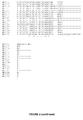
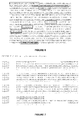
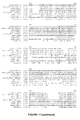
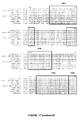
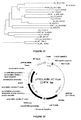
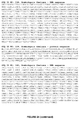
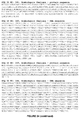
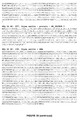
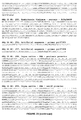
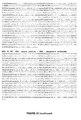
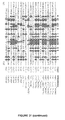
- an example is given in Figure 6 .
- Signal peptides are typical for proteins that are directed to the secretory pathway.
- the presence of a secretion signal may be easily predicted using computer algorithms (for example SignalP 3.0, Bendtsen et al., J. Mol. Biol., 340:783-795, 2004 ).
- a typical secretion signal consists of a positively charged n-region, followed by a hydrophobic n-region and a neutral, polar c-region. Furthermore, the amino acid residues at position -3 and -1 relative to the cleavage site are usually small and neutral.
- Transmembrane domains are about 15 to 30 amino acids long and are usually composed of hydrophobic residues that form an alpha helix. They are usually predicted on the basis of hydrophobicity (for example Klein et al., Biochim. Biophys. Acta 815, 468, 1985 ; or Sonnhammer et al., In J. Glasgow, T. Littlejohn, F. Major, R. Lathrop, D. Sankoff, and C. Sensen, editors, Proceedings of the Sixth International Conference on Intelligent Systems for Molecular Biology, pages 175-182, Menlo Park, CA, 1998. AAAI Press .).
- the FG-GAP domain (Pfam accession number PF01839, INTERPRO entry IPR000413) is typically found in integrins where it is present as a repeat (up to 7 copies) in the extracellular part of the protein. So far, only integrins from animal origin have been well characterised.
- the consensus sequence for the FG-GAP domain is given in SEQ ID NO: 53:
- the FG-GAP domain may also comprise a Ca 2+ binding site.
- the FG-GAP protein also comprises a FDGYLYLI(D/E)G motif 1 (SEQ ID NO: 50). More preferably, the conserved motif 1 is FDGYLYLIDG.
- the FG-GAP protein may comprise one or more DGXX(D/E) motifs (conserved motif 2, SEQ ID NO: 51), wherein X may be any amino acid.
- This conserved motif may be part of a larger motif DXDXDGXX(D/E) (conserved motif 3, SEQ ID NO: 52), wherein X may be any amino acid.
- the FG-GAP protein preferably comprises one or more copies of the conserved motif 3.
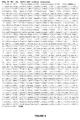
- the homologue of an FG-GAP protein has in increasing order of preference 50%, 55%, 56%, 57%, 58%, 59%, 60%, 61%, 62%, 63%, 64%, 65%, 66%, 67%, 68%, 69%, 70%, 71%, 72%, 73%, 74%, 75%, 76%, 77%, 78%, 79%, 80%, 81%, 82%, 83%, 84%, 85%, 86%, 87%, 88%, 89%, 90%, 91%, 92%, 93%, 94%, 95%, 96%, 97%, 98%, or 99% overall sequence identity to the amino acid represented by SEQ ID NO: 46, provided that the homologous protein comprises a signal peptide sequence, one or more FG-GAP domains, and a transmembrane domain in the C-terminal half of the protein, and preferably also one or more of the conserved motifs 1, 2 or 3.
- the overall sequence identity is determined using a global alignment algorithm, such as the Needleman Wunsch algorithm
- FG-GAP protein may be identified using specialised databases e.g. SMART ( Schultz et al. (1998) Proc. Natl. Acad. Sci. USA 95, 5857-5864 ; Letunic et al. (2002) Nucleic Acids Res 30, 242-244 ;), InterPro ( Mulder et al., (2003) Nucl. Acids. Res. 31, 315-318 ;), Prosite (Bucher and Bairoch (1994), A generalized profile syntax for biomolecular sequences motifs and its function in automatic sequence interpretation. (In) ISMB-94; Proceedings 2nd International Conference on Intelligent Systems for Molecular Biology.
- Such methods comprise comparison of the sequences represented by SEQ ID NO: 45 or 46, in a computer readable format, with sequences that are available in public databases such as MIPS, GenBank or EMBL Nucleotide Sequence Database, using algorithms well known in the art for the alignment or comparison of sequences, such as GAP ( Needleman and Wunsch, J. Mol. Biol.
- FG-GAP polypeptide or a homologue thereof examples include an Arabidopsis protein (SEQ ID NO: 55) and two rice proteins (SEQ ID NO: 57 and 59).
- SEQ ID NO: 55 an Arabidopsis protein
- SEQ ID NO: 57 and 59 two rice proteins
- the presence of FG-GAP proteins has also been demonstrated in other plant species of the Magnoliophyta, including Triticum aestivum, Zea mays, Solanum tuberosum, Aquilegia sp., Brassica napus, Citrus sinensis, Asparagus officinalis, Populus sp., Euphorbia esula and also in other plant taxa such as ferns ( Ceratopteris richardii ) or in Welwitschia mirabilis.
- Triticum aestivum Zea mays, Solanum tuberosum, Aquilegia sp., Brassica napus, Citrus sinensis, Asparagus
- Table 8 A nonlimiting list of examples of EST's encoding FG-GAP proteins is given in Table 8: Table 8: Species GenBank accession SEQ ID NO: Triticum aestivum CK207217 16 Zea mays AY111316 17 Solanum tuberosum BG598275 18 Aquilegia sp. DT735817 19 Brassica napus CX192752 20 Citrus sinensis CX674859 21 Asparagus officinalis CV288972 22 Populus sp. CN520999 23 Populus sp. CX176799 24 Euphorbia esula DV130386 25 Ceratopteris richardii CV736049 26 Welwitschia mirabilis DT601669 27
- proteins encoded by the genes from which these EST's are derived are also useful for practising the methods of the present invention and fall within the scope of this invention. A person skilled in the art would be able to isolate the full length coding sequence of these genes using standard methods.
- the invention furthermore provides an isolated FG-GAP protein selected from the group consisting of:
- FG-GAP polypeptide or a homologue thereof is not to be limited to the sequence represented by SEQ ID NO: 46 or to the homologues listed as SEQ ID NO: 55, 57 and 59, but that any polypeptide meeting the criteria of comprising a signal peptide, one or more FG-GAP domains and a transmembrane domain located in the C-terminal half of the protein, and preferably also one or more of the conserved motifs of SEQ ID NO: 50 to 52; or having at least 50% sequence identity to the sequence of SEQ ID NO: 46, may be suitable for use in the methods of the invention.
- Plant FG-GAP proteins play a role during pollen development (Paxson-Sowders et al. 2001). In dex1 mutant plants, primexine deposition is delayed and significantly reduced. The normal rippling of the plasma membrane and production of spacers observed in wild-type plants is also absent in the mutant. FG-GAP proteins are able to complement this mutation and to restore the normal phenotype.
- an FG-GAP protein or homologue thereof may be assayed by expressing the FG-GAP protein or homologue thereof under control of a constitutive promoter in Oryza sativa, which results in plants with increased aboveground biomass and/or increased seed yield compared to corresponding wild type plants.
- This increase in seed yield may be measured in several ways, for example as an increase of total seed weight, number of filled seeds or total number of seeds.
- FG-GAP nucleic acid/gene is any nucleic acid/gene encoding an FG-GAP protein or a homologue thereof as defined above.
- Examples of FG-GAP nucleic acids include but are not limited to those represented by any one of SEQ ID NO: 45, SEQ ID NO: 54, SEQ ID NO: 56 or SEQ ID NO: 58. Examples of partial FG- GAP nucleic acids are listed in Table 8.
- the invention also provides an isolated nucleic acid encoding an FG-GAP protein, selected from the group consisting of:
- FG-GAP nucleic acids/genes and variants thereof may be suitable in practising the methods of the invention.
- Variant FG-GAP nucleic acid/genes include portions of an FG-GAP nucleic acid/gene, allelic variants, splice variants and/or nucleic acids capable of hybridising with an FG-GAP nucleic acid/gene.
- portion refers to a piece of DNA encoding a polypeptide comprising a signal peptide, one or more FG-GAP domains and a transmembrane domain located in the C-terminal half of the protein, and preferably also one or more of the conserved motifs of SEQ ID NO: 50 to 52.
- the portion comprises one or more of the conserved motifs defined above.
- a portion may be prepared, for example, by making one or more deletions to an FG-GAP nucleic acid.
- the portions may be used in isolated form or they may be fused to other coding (or non coding) sequences in order to, for example, produce a protein that combines several activities.
- the portion is a portion of a nucleic acid as represented by any one of SEQ ID NO: 45, SEQ ID NO: 54, SEQ ID NO: 56, SEQ ID NO: 58 or SEQ ID NO: 72.
- the portion may also be a portion of the coding sequences from which the sequences of Table 8 are derived. Most preferably the portion of a nucleic acid is as represented by SEQ ID NO: 45.
- an FG-GAP nucleic acid/gene is a nucleic acid capable of hybridising under reduced stringency conditions, preferably under stringent conditions, with an FG-GAP nucleic acid/gene as hereinbefore defined, which hybridising sequence encodes a polypeptide comprising a signal peptide, one or more FG-GAP domains and a transmembrane domain located in the C-terminal half of the protein, and preferably also one or more of the conserved motifs of SEQ ID NO: 50 to 52.
- the hybridising sequence is one that is capable of hybridising to a nucleic acid as represented by SEQ ID NO: 45, SEQ ID NO: 54, SEQ ID NO: 56, SEQ ID NO: 58 or SEQ ID NO: 72, or to a portion of any of the aforementioned sequences, including the EST's listed in Table 8.
- the hybridising sequence is capable of hybridising to SEQ ID NO: 45.
- hybridisation is as defined in the section headed "Definitions".
- the FG-GAP nucleic acid or variant thereof may be derived from any natural or artificial source.
- the nucleic acid/gene or variant thereof may be isolated from a microbial source, such as yeast or fungi, or from a plant, algal or animal (including human) source. This nucleic acid may be modified from its native form in composition and/or genomic environment through deliberate human manipulation.
- the nucleic acid is preferably of plant origin, whether from the same plant species (for example to the one in which it is to be introduced) or whether from a different plant species.
- the nucleic acid may be isolated from a dicotyledonous species, preferably from the family Brassicaceae, further preferably from Arabidopsis thaliana. More preferably, the FG-GAP nucleic acid is isolated from Arabidopsis thaliana and is represented by SEQ ID NO: 45, and the FG-GAP amino acid sequence is as represented by SEQ ID NO: 46.
- nucleic acid encoding an FG-GAP polypeptide or a homologue thereof may be modulated by introducing a genetic modification (preferably in the locus of an FG-GAP gene).
- a genetic modification preferably in the locus of an FG-GAP gene.
- the locus of a gene as defined herein is taken to mean a genomic region, which includes the gene of interest and 10 kb up- or down stream of the coding region.
- the genetic modification may be introduced, for example, by any one (or more) of the following methods: T-DNA activation, TILLING, site-directed mutagenesis, transposon mutagenesis, directed evolution and homologous recombination or by introducing and expressing in a plant a nucleic acid encoding an FG-GAP polypeptide or a homologue thereof. These methods are defined in the section headed "Definitions”. Following introduction of the genetic modification, there follows a step of selecting for modified expression of a nucleic acid encoding an FG-GAP polypeptide or a homologue thereof, which modification in expression gives plants having increased yield.
- T-DNA activation TILLING, site-directed mutagenesis, transposon mutagenesis and directed evolution are examples of technologies that enable the generation of novel alleles and FG-GAP variants.
- a preferred method for introducing a genetic modification is to introduce and express in a plant a nucleic acid encoding an FG-GAP polypeptide or a homologue thereof, as defined above.
- the nucleic acid to be introduced into a plant may be a full-length nucleic acid or may be a portion or a hybridising sequence as hereinbefore defined.
- the plant in which the genetic modification is introduced is not a dex1 mutant plant, in which the DEX1 gene is not functional (Paxson-Sowders et al. 2001).
- FG-GAP polypeptide or homologue thereof may be a derivative, as defined in the "Definitions” section.
- the FG-GAP polypeptide or homologue thereof may be encoded by an alternative splice variant of an FG-GAP nucleic acid/gene.
- alternative splice variant is as defined herein.
- Preferred are splice variants of the nucleic acid encoding a polypeptide comprising a signal peptide, one or more FG-GAP domains and a transmembrane domain located in the C-terminal half of the protein, and preferably also one or more of the conserved motifs of SEQ ID NO: 50 to 52.
- the homologue may also be encoded by an allelic variant of a nucleic acid encoding an FG-GAP polypeptide or a homologue thereof, preferably an allelic variant of a nucleic acid encoding a polypeptide comprising a signal peptide, one or more FG-GAP domains and a transmembrane domain located in the C-terminal half of the protein, and preferably also one or more of the conserved motifs of SEQ ID NO: 50 to 52.
- the allelic variant encoding the FG-GAP polypeptide is represented by any one of SEQ ID NO: 45, SEQ ID NO: 54, SEQ ID NO: 56 or SEQ ID NO: 58.
- the allelic variant encoding the FG-GAP polypeptide is as represented by SEQ ID NO: 45. Allelic variants are defined in the "Defintions" section.
- modulated expression of the FG-GAP nucleic acid or variant thereof is envisaged.
- the modulated expression is overexpression.
- Methods for overexpression of genes or gene products are well documented in the art and include, for example, overexpression driven by appropriate promoters, the use of transcription enhancers or translation enhancers.
- Isolated nucleic acids which serve as promoter or enhancer elements may be introduced in an appropriate position (typically upstream) of a non-heterologous form of a polynucleotide so as to upregulate expression of an FG-GAP nucleic acid or variant thereof.
- endogenous promoters may be altered in vivo by mutation, deletion, and/or substitution (see, Kmiec, U.S. Pat. No. 5,565,350 ; Zarling et al., PCT/US93/03868 ), or isolated promoters may be introduced into a plant cell in the proper orientation and distance from a gene of the present invention so as to control the expression of the gene. Methods for reducing the expression of genes or gene products are also well documented in the art.
- polypeptide expression it is generally desirable to include a polyadenylation region at the 3'-end of a polynucleotide-coding region.
- the polyadenylation region may be derived from the natural gene, from a variety of other plant genes, or from T-DNA.
- the 3' end sequence to be added may be derived from, for example, the nopaline synthase or octopine synthase genes, or alternatively from another plant gene, or less preferably from any other eukaryotic gene.
- An intron sequence may also be added to the 5' untranslated region or the coding sequence of the partial coding sequence to increase the amount of the mature message that accumulates in the cytosol.
- Inclusion of a spliceable intron in the transcription unit in both plant and animal expression constructs has been shown to increase gene expression at both the mRNA and protein levels up to 1000-fold, Buchman and Berg, Mol. Cell biol. 8:4395-4405 (1988 ); Callis et al., Genes Dev. 1:1183-1200 (1987 ).
- Such intron enhancement of gene expression is typically greatest when placed near the 5' end of the transcription unit.
- Use of the maize introns Adh1-S intron 1, 2, and 6, the Bronze-1 intron are known in the art. See generally, The Maize Handbook, Chapter 116, Freeling and Walbot, Eds., Springer, N.Y. (1994 ).
- the invention also provides genetic constructs and vectors to facilitate introduction and/or expression of the nucleotide sequences useful in the methods according to the invention.
- Constructs useful in the methods according to the present invention may be constructed using recombinant DNA technology well known to persons skilled in the art.
- the gene constructs may be inserted into vectors, which may be commercially available, suitable for transforming into plants and suitable for expression of the gene of interest in the transformed cells.
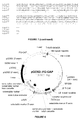
- Plants are transformed with a vector comprising the sequence of interest (i.e., a nucleic acid encoding an FG-GAP polypeptide or homologue thereof).
- the sequence of interest is operably linked to one or more control sequences (at least to a promoter).
- control sequence at least to a promoter.
- promoter at least to a promoter.
- any type of promoter may be used to drive expression of the nucleic acid sequence.
- the FG-GAP nucleic acid or functional variant thereof is operably linked to a constitutive promoter.
- the term "constitutive" is as defined herein.
- the constitutive promoter capable of preferentially expressing the nucleic acid throughout the plant has a comparable expression profile to a GOS2 promoter. More preferably, the constitutive promoter has the same expression profile as the rice GOS2 promoter, most preferably, the promoter capable of preferentially expressing the nucleic acid throughout the plant is the GOS2 promoter from rice (nucleotides 1 to 2193 of the sequence represented in SEQ ID NO: 49).
- one or more terminator sequences may also be used in the construct introduced into a plant.
- the term “terminator” being defined in the “Definitions” section.
- the genetic constructs of the invention may further include an origin of replication sequence that is required for maintenance and/or replication in a specific cell type.
- an origin of replication sequence that is required for maintenance and/or replication in a specific cell type.
- Preferred origins of replication include, but are not limited to, the f1-ori and colE1.
- the genetic construct may optionally comprise a selectable marker gene as defined in the "Definitions" section herein.
- the present invention also encompasses plants obtainable by the methods according to the present invention.
- the present invention therefore provides plants obtainable by the method according to the present invention, which plants have introduced therein an FG-GAP nucleic acid or variant thereof, as defined above.
- the invention also provides a method for the production of transgenic plants having increased yield, comprising introduction and expression in a plant of an FG-GAP nucleic acid or a variant thereof as defined above.
- the present invention provides a method for the production of transgenic plants having increased yield, which method comprises:
- the nucleic acid may be introduced directly into a plant cell or into the plant itself (including introduction into a tissue, organ or any other part of a plant). According to a preferred feature of the present invention, the nucleic acid is preferably introduced into a plant by transformation.
- the present invention clearly extends to any plant cell or plant produced by any of the methods described herein, and to all plant parts and propagules thereof.
- the present invention extends further to encompass the progeny of a primary transformed or transfected cell, tissue, organ or whole plant that has been produced by any of the aforementioned methods, the only requirement being that progeny exhibit the same genotypic and/or phenotypic characteristic(s) as those produced by the parent in the methods according to the invention.
- the invention also includes host cells containing an isolated FG-GAP nucleic acid or variant thereof. Preferred host cells according to the invention are plant cells.
- the invention also extends to harvestable parts of a plant such as, but not limited to seeds, leaves, fruits, flowers, stem cultures, rhizomes, tubers and bulbs.
- the invention furthermore relates to products derived, preferably directly derived, from a harvestable part of such a plant, such as dry pellets or powders, oil, fat and fatty acids, starch and proteins.
- the present invention also encompasses use of FG-GAP nucleic acids or variants thereof and use of FG-GAP polypeptides or homologues thereof.
- the seed yield may include one or more of the following: increased total weight of seeds, increased number of filled seeds and increased total number of seeds.
- FG-GAP nucleic acids or variants thereof, or FG-GAP polypeptides or homologues thereof may find use in breeding programmes in which a DNA marker is identified which may be genetically linked to an FG-GAP gene or variant thereof.
- the FG-GAP nucleic acids/ genes or variants thereof, or FG-GAP polypeptides or homologues thereof may be used to define a molecular marker. This DNA or protein marker may then be used in breeding programmes to select plants having increased yield.
- the FG-GAP gene or variant thereof may, for example, be a nucleic acid as represented by any one of SEQ ID NO: 45, SEQ ID NO: 54, SEQ ID NO: 56, SEQ ID NO: 58, and SEQ ID NO: 72, or genes from which the sequences listed in Table 8 were derived.
- Allelic variants of an FG-GAP nucleic acid/gene may also find use in marker-assisted breeding programmes. Such breeding programmes sometimes require introduction of allelic variation by mutagenic treatment of the plants, using for example EMS mutagenesis; alternatively, the programme may start with a collection of allelic variants of so called "natural" origin caused unintentionally. Identification of allelic variants then takes place, for example, by PCR. This is followed by a step for selection of superior allelic variants of the sequence in question and which give increased yield.
- Selection is typically carried out by monitoring growth performance of plants containing different allelic variants of the sequence in question, for example, different allelic variants of any one of SEQ ID NO: 45, SEQ ID NO: 54, SEQ ID NO: 56, SEQ ID NO: 58, and SEQ ID NO: 72, or of one of the coding sequences from which the sequences listed in Table 8 were derived.
- Growth performance may be monitored in a greenhouse or in the field. Further optional steps include crossing plants, in which the superior allelic variant was identified, with another plant. This could be used, for example, to make a combination of interesting phenotypic features.
- An FG-GAP nucleic acid or variant thereof may also be used as probes for genetically and physically mapping the genes that they are a part of, and as markers for traits linked to those genes. Such information may be useful in plant breeding in order to develop lines with desired phenotypes. Such use of FG-GAP nucleic acids or variants thereof requires only a nucleic acid sequence of at least 15 nucleotides in length. The FG-GAP nucleic acids or variants thereof may be used as restriction fragment length polymorphism (RFLP) markers.
- RFLP restriction fragment length polymorphism
- Southern blots (Sambrook J, Fritsch EF and Maniatis T (1989) Molecular Cloning, A Laboratory Manual) of restriction-digested plant genomic DNA may be probed with the FG-GAP nucleic acids or variants thereof. The resulting banding patterns may then be subjected to genetic analyses using computer programs such as MapMaker ( Lander et al. (1987) Genomics 1: 174-181 ) in order to construct a genetic map.
- the nucleic acids may be used to probe Southern blots containing restriction endonuclease-treated genomic DNAs of a set of individuals representing parent and progeny of a defined genetic cross.
- Segregation of the DNA polymorphisms is noted and used to calculate the position of the FG-GAP nucleic acid or variant thereof in the genetic map previously obtained using this population ( Botstein et al. (1980) Am. J. Hum. Genet. 32: 314-331 ).
- the nucleic acid probes may also be used for physical mapping (i.e., placement of sequences on physical maps; see Hoheisel et al. In: Non-mammalian Genomic Analysis: A Practical Guide, Academic press 1996, pp. 319-346 , and references cited therein).
- the nucleic acid probes may be used in direct fluorescence in situ hybridization (FISH) mapping ( Trask (1991) Trends Genet. 7:149-154 ).
- FISH direct fluorescence in situ hybridization
- nucleic acid amplification-based methods for genetic and physical mapping may be carried out using the nucleic acids.
- examples include allele-specific amplification ( Kazazian (1989) J. Lab. Clin. Med 11:95-96 ), polymorphism of PCR-amplified fragments (CAPS; Sheffield et al. (1993) Genomics 16:325-332 ), allele-specific ligation ( Landegren et al. (1988) Science 241:1077-1080 ), nucleotide extension reactions ( Sokolov (1990) Nucleic Acid Res. 18:3671 ), Radiation Hybrid Mapping ( Walter et al. (1997) Nat. Genet.
- the methods according to the present invention result in plants having increased yield, as described hereinbefore. These advantageous growth characteristics may also be combined with other economically advantageous traits, such as further yield-enhancing traits, tolerance to various stresses, traits modifying various architectural features and/or biochemical and/or physiological features.
- OsCKI4 (SEQ ID NO: 267 and 268) Name NCBI SEQ ID nucleic acid sequence SEQ ID polypeptide sequence Source Zeama_CKI4 like AY986792 269 270 Zea mays Triae_CKI4 like Contig of BG908519.1 and CA640135.1 271 272 Triticum aestivum Orysa_CKI3 AK064723.1 273 274 Oryza sativa Zeama_CKI3 like DV174570.1 275 276 Zea mays Sorbi_CKI3 like contig of CN152732.1 and CD224882.1 277 278 Sorghum bicolor Sacof_CKI4 like C0373621.1 279 280 Saccharum officinarum
- the source of the substantially contiguous nucleotides of a CKI gene/nucleic acid may be any plant source or artificial source.
- the gene silencing techniques used for the reduction or substantial elimination of endogenous CKI gene expression requires the use of CKI sequences from monocotyledonous plants for transformation into monocotyledonous plants.
- CKI sequences from the family Poaceae are transformed into plants of the family Poaceae.
- a CKI nucleic acid from rice (be it a full length CKI sequence or a fragment) is transformed into a rice plant.
- the CKI nucleic acid need not be introduced into the same plant variety.
- the CKI nucleic acid from rice is a sufficient length of substantially contiguous nucleotides of SEQ ID NO: 267 (OsCKI4) or a sufficient length of substantially contiguous nucleotides of a nucleic acid sequence encoding an orthologue or paralogue of OsCKI4 (SEQ ID NO: 267).
- OsCKI4 substantially contiguous nucleotides of SEQ ID NO: 267
- SEQ ID NO: 267 a sufficient length of substantially contiguous nucleotides of a nucleic acid sequence encoding an orthologue or paralogue of OsCKI4
- the invention also provides genetic constructs and vectors to facilitate introduction and/or expression of the nucleotide sequences useful in the methods according to the invention.
- a gene construct comprising one or more control sequences capable of preferentially driving expression of a sense and/or antisense CKI nucleic acid sequence in plant endosperm tissue so as to silence an endogenous CKI gene in endosperm tissue of a plant; and optionally a transcription termination sequence.
- a preferred construct for gene silencing is one comprising an inverted repeat of a CKI gene or fragment thereof, preferably capable of forming a hairpin structure, which inverted repeat is under the control of an endosperm-specific promoter.
- Constructs useful in the methods according to the present invention may be constructed using recombinant DNA technology well known to persons skilled in the art.
- the gene constructs may be inserted into vectors, which may be commercially available, suitable for transforming into plants and suitable for expression of the gene of interest in the transformed cells.
- the invention therefore provides use of a gene construct as defined hereinabove in the methods of the invention.
- control sequences are operably linked to one or more control sequences (at least to a promoter) capable of preferentially increasing expression in endosperm tissue of a plant.
- control sequence at least to a promoter
- promoter capable of preferentially increasing expression in endosperm tissue of a plant.
- An endosperm-specific promoter refers to any promoter able to preferentially drive expression of the gene of interest in endosperm tissue.
- Reference herein to "preferentially" driving expression in endosperm tissue is taken to mean driving expression of any sequence operably linked thereto in endosperm tissue substantially to the exclusion of driving expression elsewhere in the plant, apart from any residual expression due to leaky promoter expression.
- the prolamin promoter shows strong expression in the endosperm, with leakiness in meristem, more specifically the shoot meristem and/or discrimination centre in the meristem.
- the endosperm-specific promoter is a promoter isolated from a prolamin gene, such as a rice prolamin RP6 ( Wen et al., (1993) Plant Physiol 101(3): 1115-6 ) promoter as represented by SEQ ID NO: 281 or a promoter of similar strength and/or a promoter with a similar expression pattern as the rice prolamin promoter. Similar strength and/or similar expression pattern may be analysed, for example, by coupling the promoters to a reporter gene and checking the function of the reporter gene in tissues of the plant.
- a reporter gene is beta-glucuronidase and the colorimetric GUS stain used to visualize beta-glucuronidase activity in plant tissue. Examples of other endosperm-specific promoters which may also be used perform the methods of the invention are shown in Table 6 in the "Definitions" section herein.
- terminator sequences may also be used in the construct introduced into a plant.
- the term “terminator” is as defined herein in the “Definitions” section.
- the genetic constructs of the invention may further include an origin of replication sequence that is required for maintenance and/or replication in a specific cell type.
- an origin of replication sequence that is required for maintenance and/or replication in a specific cell type.
- Preferred origins of replication include, but are not limited to, the f1-ori and colE1.
- the genetic construct may optionally comprise a selectable marker gene as defined herein in the "Definitions" section.
- the present invention also encompasses plants including plant parts obtainable by the methods according to the present invention having increased seed yield relative to suitable control plants and which have reduced or substantially eliminated expression of an endogenous CKI gene in plant endosperm tissue.
- the invention also provides a method for the production of transgenic plants having increased seed yield relative to suitable control plants, which transgenic plants have reduced or substantially eliminated expression of an endogenous CKI gene in plant endosperm tissue.
- the present invention provides a method for the production of transgenic plants having increased seed yield which method comprises:
- the construct introduced into a plant is one comprising an inverted repeat (in part or complete) of a CKI gene or fragment thereof, preferably capable of forming a hairpin structure.
- the construct is introduced into a plant by transformation.
- the present invention clearly extends to any plant cell or plant produced by any of the methods described herein, and to all plant parts and propagules thereof.
- the present invention extends further to encompass the progeny of a primary transformed or transfected cell, tissue, organ or whole plant that has been produced by any of the aforementioned methods, the only requirement being that progeny exhibit the same genotypic and/or phenotypic characteristic(s) as those produced by the parent in the methods according to the invention.
- the invention also extends to harvestable parts of a plant such as seeds and products derived, preferably directly derived, from a harvestable part of such a plant, such as dry pellets or powders, oil, fat and fatty acids, starch or proteins.
- the present invention also encompasses use of CKI nucleic acids for the reduction or substantial elimination of endogenous CKI gene expression in plant endosperm tissue for increasing plant seed yield as defined hereinabove.
- a two factor ANOVA (analysis of variance) corrected for the unbalanced design was used as statistical model for the overall evaluation of plant phenotypic characteristics.
- An F-test was carried out on all the parameters measured of all the plants of all the events transformed with that gene. The F-test was carried out to check for an effect of the gene over all the transformation events and to verify for an overall effect of the gene, also named herein "global gene effect”. If the value of the F test shows that the data are significant, than it is concluded that there is a "gene" effect, meaning that not only presence or the position of the gene is causing the effect.
- the threshold for significance for a true global gene effect is set at 5% probability level for the F test.
- a t-test was performed within each event using data sets from the transgenic plants and the corresponding null plants.
- "Null plants” or “null segregants” or “nullizygotes” are the plants treated in the same way as the transgenic plant, but from which the transgene has segregated. Null plants can also be described as the homozygous negative transformed plants.
- the threshold for significance for the t-test is set at 10% probability level. The results for some events can be above or below this threshold. This is based on the hypothesis that a gene might only have an effect in certain positions in the genome, and that the occurrence of this position-dependent effect is not uncommon.
- This kind of gene effect is also named herein a "line effect of the gene”.
- the p-value is obtained by comparing the t-value to the t-distribution or alternatively, by comparing the F-value to the F-distribution. The p-value then gives the probability that the null hypothesis (i.e., that there is no effect of the transgene) is correct.
- Example 12 Identification of sequences related to SEQ ID NO: 45 and SEQ ID NO: 46
- Sequences (full length cDNA, ESTs or genomic) related to SEQ ID NO: 45 and/or protein sequences related to SEQ ID NO: 46 were identified amongst those maintained in the Entrez Nucleotides database at the National Center for Biotechnology Information (NCBI) using database sequence search tools, such as the Basic Local Alignment Tool (BLAST) ( Altschul et al. (1990) J. Mol. Biol. 215:403-410 ; and Altschul et al. (1997) Nucleic Acids Res. 25:3389-3402 ). The program was used to find regions of local similarity between sequences by comparing nucleic acid or polypeptide sequences to sequence databases and by calculating the statistical significance of matches.
- BLAST Basic Local Alignment Tool
- the polypeptide encoded by SEQ ID NO: 45 was used for the TBLASTN algorithm, with default settings and the filter to ignore low complexity sequences set off.
- the output of the analysis was viewed by pairwise comparison, and ranked according to the probability score (E-value), where the score reflects the probability that a particular alignment occurs by chance (the lower the E-value, the more significant the hit).
- E-value probability score
- comparisons were also scored by percentage identity. Percentage identity refers to the number of identical nucleotides (or amino acids) between the two compared nucleic acid (or polypeptide) sequences over a particular length. In some instances, the default parameters may be adjusted to modify the stringency of the search.
- Table G provides a list of nucleic acid and protein sequences related to the nucleic acid sequence as represented by SEQ ID NO: 45 and the protein sequence represented by SEQ ID NO: 46.
- Table G Nucleic acid sequences related to the nucleic acid sequence (SEQ ID NO: 45) useful in the methods of the present invention, and the correspondinq deduced polypeptides.
- AlignX from the Vector NTI is based on the popular Clustal algorithm of progressive alignment ( Thompson et al. (1997) Nucleic Acids Res 25:4876-4882 ; Chenna et al. (2003). Nucleic Acids Res 31:3497-3500 ).
- a phylogenetic tree may be constructed using a neighbour-joining clustering algorithm. Default values are for the gap open penalty of 10, for the gap extension penalty of 0,1 and the selected weight matrix is Blosum 62 (if polypeptides are aligned).
- Example 14 Calculation of global percentage identity between polypeptide sequences useful in performing the methods of the invention
- MatGAT Microx Global Alignment Tool
- MatGAT an application that generates similarity/identity matrices using protein or DNA sequences. Campanella JJ, Bitincka L, Smalley J; software hosted by Ledion Bitincka). MatGAT software generates similarity/identity matrices for DNA or protein sequences without needing pre-alignment of the data.
- the program performs a series of pair-wise alignments using the Myers and Miller global alignment algorithm (with a gap opening penalty of 12, and a gap extension penalty of 2), calculates similarity and identity using for example Blosum 62 (for polypeptides), and then places the results in a distance matrix. Sequence similarity is shown in the bottom half of the dividing line and sequence identity is shown in the top half of the diagonal dividing line.
- the percentage identity between the polypeptide sequences useful in performing the methods of the invention can be as low as 17 % amino acid identity compared to SEQ ID NO: 46.
- Table H MatGAT results for global similarity and identity over the full length of the polypeptide seauences. 1 2 3 4 1. AtFGAP1 18.1 65.5 17.4 2. AtFGGAP2 31.4 17.9 67.7 3. OsFGGAP1 76.7 33.5 16.9 4. OsFGGAP2 32.8 83.6 33
- Example 15 Identification of domains comprised in polypeptide sequences useful in performing the methods of the invention
- the Integrated Resource of Protein Families, Domains and Sites (InterPro) database is an integrated interface for the commonly used signature databases for text- and sequence-based searches.
- the InterPro database combines these databases, which use different methodologies and varying degrees of biological information about well-characterized proteins to derive protein signatures.
- Collaborating databases include SWISS-PROT, PROSITE, TrEMBL, PRINTS, ProDom and Pfam, Smart and TIGRFAMs.
- Interpro is hosted at the European Bioinformatics Institute in the United Kingdom.
- Example 16 Topology prediction of the polypeptide sequences useful in performing the methods of the invention
- TargetP 1.1 predicts the subcellular location of eukaryotic proteins. The location assignment is based on the predicted presence of any of the N-terminal pre-sequences: chloroplast transit peptide (cTP), mitochondrial targeting peptide (mTP) or secretory pathway signal peptide (SP). Scores on which the final prediction is based are not really probabilities, and they do not necessarily add to one. However, the location with the highest score is the most likely according to TargetP, and the relationship between the scores (the reliability class) may be an indication of how certain the prediction is. The reliability class (RC) ranges from 1 to 5, where 1 indicates the strongest prediction. TargetP is maintained at the server of the Technical University of Denmark.
- a potential cleavage site can also be predicted.
- a number of parameters were selected, such as organism group (non-plant or plant), cutoff sets (none, predefined set of cutoffs, or user-specified set of cutoffs), and the calculation of prediction of cleavage sites (yes or no).
- TargetP 1.1 analysis of the polypeptide sequence as represented by SEQ ID NO: 46 are presented in Table J.
- the "plant" organism group has been selected, no cutoffs defined, and the predicted length of the transit peptide requested.
- the subcellular localization of the polypeptide sequence as represented by SEQ ID NO: 46 is probably not intracellular, there is a slight preference for the secretory pathway (though with a reliability score of 5) and the predicted length of the putative transit peptide is 24 amino acids starting from the N-terminus (not as reliable as the prediction of the subcellular localization itself, may vary in length of a few amino acids).
- TargetP 1.1 analysis of the polypeptide sequence as represented by SEQ ID NO: 46 Length (AA) 896 Chloroplastic transit peptide 0.010 Mitochondrial transit peptide 0.546 Secretory pathway signal peptide 0.643 Other subcellular targeting 0.038 Predicted Location secreted Reliability class 5 Predicted transit peptide length 24
- the Arabidopsis thaliana FG-GAP gene was amplified by PCR using as template an Arabidopsis thaliana seedling cDNA library (Invitrogen, Paisley, UK). After reverse transcription of RNA extracted from seedlings, the cDNAs were cloned into pCMV Sport 6.0. Average insert size of the bank was 1.5 kb and the original number of clones was of the order of 1.59 x 10 7 cfu. Original titer was determined to be 9.6 x 10 5 cfu/ml after first amplification of 6 x 10 11 cfu/ml. After plasmid extraction, 200 ng of template was used in a 50 ⁇ l PCR mix.
- Primers prm06643 (SEQ ID NO: 47; sense, start codon in bold, AttB1 site in italic: 5'-ggggacaagtttgtacaaaaagcaggcttaaacaatgaaatctcgagcgagg-3') and prm06644 (SEQ ID NO: 48; reverse, complementary, AttB2 site in italic: 5'-ggggaccactttgtacaagaaagctgggtcctg ttacagatggtacctagt-3'), which include the AttB sites for Gateway recombination, were used for PCR amplification.
- PCR was performed using Hifi Taq DNA polymerase in standard conditions. A PCR fragment of 3.2 kb (including attB sites) was amplified and purified also using standard methods. The first step of the Gateway procedure, the BP reaction, was then performed, during which the PCR fragment recombines in vivo with the pDONR201 plasmid to produce, according to the Gateway terminology, an "entry clone", pFG-GAP. Plasmid pDONR201 was purchased from Invitrogen, as part of the Gateway® technology.
- the entry clone pFG-GAP was subsequently used in an LR reaction with pGOS2, a destination vector used for Oryza sativa transformation.
- This vector contains as functional elements within the T-DNA borders: a plant selectable marker; a screenable marker expression cassette; and a Gateway cassette intended for LR in vivo recombination with the sequence of interest already cloned in the entry clone.
- a rice GOS2 promoter (nucleotides 1 to 2193 of SEQ ID NO: 49, the promoter-gene combination) for constitutive expression was located upstream of this Gateway cassette.
- Example 19 Evaluation methods for plants transformed with FG-GAP under the control of the rice GOS2 promoter
- T1 seedlings containing the transgene were transferred to a greenhouse. Each plant received a unique barcode label to unambiguously link the phenotyping data to the corresponding plant.
- Transgenic plants and the corresponding nullizygotes were grown side-by-side at random positions. From the stage of sowing until the stage of maturity the plants were passed several times through a digital imaging cabinet. At each time point digital images (2048x1536 pixels, 16 million colours) were taken of each plant from at least 6 different angles.
- the plant aboveground area (or leafy biomass) was determined by counting the total number of pixels on the digital images from aboveground plant parts discriminated from the background. This value was averaged for the pictures taken on the same time point from the different angles and was converted to a physical surface value expressed in square mm by calibration. Experiments show that the aboveground plant area measured this way correlates with the biomass of plant parts above ground.
- the Areamax is the above ground area at the time point at which the plant had reached its maximal leafy biomass.
- the mature primary panicles were harvested, bagged, barcode-labelled and then dried for three days in the oven at 37°C.
- the panicles were then threshed and all the seeds collected.
- the filled husks were separated from the empty ones using an air-blowing device. After separation, both seed lots were then counted using a commercially available counting machine. The empty husks were discarded.
- the filled husks were weighed on an analytical balance and the cross-sectional area of the seeds was measured using digital imaging. This procedure resulted in the set of the following seed-related parameters:
- the flowers-per-panicle is a parameter estimating the average number of florets per panicle on a plant, derived from the number of total seeds divided by the number of first panicles.
- the number of filled seeds was determined by counting the number of filled husks that remained after the separation step.
- the total seed yield (total seed weight) was measured by weighing all filled husks harvested from a plant.
- Total seed number per plant was measured by counting the number of husks harvested from a plant and corresponds to the number of florets per plant.
- Thousand Kernel Weight is extrapolated from the number of filled seeds counted and their total weight.
- Harvest index is defined as the ratio between the total seed weight and the aboveground area (mm 2 ), multiplied by a factor 10 6 .
- a two factor ANOVA (analysis of variance) corrected for the unbalanced design was used as statistical model for the overall evaluation of plant phenotypic characteristics.
- An F-test was carried out on all the parameters measured of all the plants of all the events transformed with that gene. The F-test was carried out to check for an effect of the gene over all the transformation events and to verify for an overall effect of the gene, also referred to herein as a "global gene effect". If the value of the F test showed that the data were significant, than it was concluded that there was a "gene" effect, meaning that it was not only presence or the position of the gene that was causing the effect.
- the threshold for significance for a true global gene effect was set at a 5% probability level for the F test.
- a t-test was performed within each event using data sets from the transgenic plants and the corresponding null plants.
- Null plants or “null segregants” or “nullizygotes” refer to plants treated in the same way as the transgenic plant, but from which the transgene has segregated. Null plants can also be described as the homozygous negative transformed plants.
- the threshold for significance for the t-test was set at a 10% probability level. The results for some events can be above or below this threshold. This is based on the hypothesis that a gene might only have an effect in certain positions in the genome, and that the occurrence of this position-dependent effect is not uncommon.
- This kind of gene effect is also referred to herein as a "line effect of the gene”.
- the p-value was obtained by comparing the t-value to the t-distribution or alternatively, by comparing the F-value to the F-distribution. The p-value then gives the probability that the null hypothesis (i.e., that there is no effect of the transgene) is correct.
- a total number of 120 FG-GAP transformed plants were evaluated in the T2 generation, that is 30 plants per event of which 15 were positive for the transgene, and 15 negative.
- Example 20 Evaluation of FG-GAP transformants: measurement of yield-related parameters
Landscapes
- Health & Medical Sciences (AREA)
- Genetics & Genomics (AREA)
- Life Sciences & Earth Sciences (AREA)
- Chemical & Material Sciences (AREA)
- Engineering & Computer Science (AREA)
- Organic Chemistry (AREA)
- Molecular Biology (AREA)
- Biotechnology (AREA)
- Biomedical Technology (AREA)
- Wood Science & Technology (AREA)
- Bioinformatics & Cheminformatics (AREA)
- General Engineering & Computer Science (AREA)
- Zoology (AREA)
- Biochemistry (AREA)
- Biophysics (AREA)
- General Health & Medical Sciences (AREA)
- Physics & Mathematics (AREA)
- Cell Biology (AREA)
- Plant Pathology (AREA)
- Microbiology (AREA)
- Proteomics, Peptides & Aminoacids (AREA)
- Medicinal Chemistry (AREA)
- Gastroenterology & Hepatology (AREA)
- Botany (AREA)
- Nutrition Science (AREA)
- Breeding Of Plants And Reproduction By Means Of Culturing (AREA)
- Micro-Organisms Or Cultivation Processes Thereof (AREA)
- Peptides Or Proteins (AREA)
Priority Applications (1)
| Application Number | Priority Date | Filing Date | Title |
|---|---|---|---|
| EP09178887A EP2157172A3 (fr) | 2005-12-01 | 2006-11-29 | Installations dotées de caractéristiques de croissance améliorées et procédés de fabrication de celles-ci |
Applications Claiming Priority (16)
| Application Number | Priority Date | Filing Date | Title |
|---|---|---|---|
| EP05111597 | 2005-12-01 | ||
| US74235205P | 2005-12-05 | 2005-12-05 | |
| EP05111691 | 2005-12-05 | ||
| EP05111786 | 2005-12-07 | ||
| US74890305P | 2005-12-08 | 2005-12-08 | |
| US74921905P | 2005-12-09 | 2005-12-09 | |
| EP05111996 | 2005-12-12 | ||
| US75014305P | 2005-12-14 | 2005-12-14 | |
| EP05112562 | 2005-12-21 | ||
| US75365005P | 2005-12-23 | 2005-12-23 | |
| EP05113111 | 2005-12-30 | ||
| EP05113110 | 2005-12-30 | ||
| US75604206P | 2006-01-04 | 2006-01-04 | |
| US75608606P | 2006-01-04 | 2006-01-04 | |
| EP06838599.6A EP1954805B1 (fr) | 2005-12-01 | 2006-11-29 | Plantes ayant des caractéristiques de croissance améliorées et procédés de fabrication de celles-ci |
| EP09178887A EP2157172A3 (fr) | 2005-12-01 | 2006-11-29 | Installations dotées de caractéristiques de croissance améliorées et procédés de fabrication de celles-ci |
Related Parent Applications (2)
| Application Number | Title | Priority Date | Filing Date |
|---|---|---|---|
| EP06838599.6 Division | 2006-11-29 | ||
| EP06838599.6A Division-Into EP1954805B1 (fr) | 2005-12-01 | 2006-11-29 | Plantes ayant des caractéristiques de croissance améliorées et procédés de fabrication de celles-ci |
Publications (2)
| Publication Number | Publication Date |
|---|---|
| EP2157172A2 true EP2157172A2 (fr) | 2010-02-24 |
| EP2157172A3 EP2157172A3 (fr) | 2010-03-24 |
Family
ID=37904028
Family Applications (5)
| Application Number | Title | Priority Date | Filing Date |
|---|---|---|---|
| EP06838599.6A Not-in-force EP1954805B1 (fr) | 2005-12-01 | 2006-11-29 | Plantes ayant des caractéristiques de croissance améliorées et procédés de fabrication de celles-ci |
| EP09178889.3A Not-in-force EP2166106B1 (fr) | 2005-12-01 | 2006-11-29 | Plantes présentant des caractéristiques de croissance améliorée et procédé de fabrication associé |
| EP09178892A Withdrawn EP2166086A3 (fr) | 2005-12-01 | 2006-11-29 | Installations dotées de caractéristiques de croissance améliorées et procédés de fabrication de celles-ci |
| EP09178887A Withdrawn EP2157172A3 (fr) | 2005-12-01 | 2006-11-29 | Installations dotées de caractéristiques de croissance améliorées et procédés de fabrication de celles-ci |
| EP09178925A Withdrawn EP2177618A3 (fr) | 2005-12-01 | 2006-11-29 | Installations dotées de caractéristiques de croissance améliorées et procédés de fabrication de celles-ci |
Family Applications Before (3)
| Application Number | Title | Priority Date | Filing Date |
|---|---|---|---|
| EP06838599.6A Not-in-force EP1954805B1 (fr) | 2005-12-01 | 2006-11-29 | Plantes ayant des caractéristiques de croissance améliorées et procédés de fabrication de celles-ci |
| EP09178889.3A Not-in-force EP2166106B1 (fr) | 2005-12-01 | 2006-11-29 | Plantes présentant des caractéristiques de croissance améliorée et procédé de fabrication associé |
| EP09178892A Withdrawn EP2166086A3 (fr) | 2005-12-01 | 2006-11-29 | Installations dotées de caractéristiques de croissance améliorées et procédés de fabrication de celles-ci |
Family Applications After (1)
| Application Number | Title | Priority Date | Filing Date |
|---|---|---|---|
| EP09178925A Withdrawn EP2177618A3 (fr) | 2005-12-01 | 2006-11-29 | Installations dotées de caractéristiques de croissance améliorées et procédés de fabrication de celles-ci |
Country Status (6)
| Country | Link |
|---|---|
| US (2) | US8487160B2 (fr) |
| EP (5) | EP1954805B1 (fr) |
| AR (1) | AR058268A1 (fr) |
| AU (1) | AU2006320596B2 (fr) |
| CA (1) | CA2631779C (fr) |
| WO (1) | WO2007064724A2 (fr) |
Families Citing this family (25)
| Publication number | Priority date | Publication date | Assignee | Title |
|---|---|---|---|---|
| BRPI0510152A (pt) | 2004-04-23 | 2007-10-02 | Ceres Inc | métodos para modificar caracterìsticas de planta |
| KR20080052570A (ko) | 2005-07-29 | 2008-06-11 | 타게티드 그로스 인코퍼레이티드 | 야생형 krp에 의한 활성 사이클린-cdk 복합체 억제의우성 음성 돌연변이 krp 단백질 보호 |
| CN103103199A (zh) * | 2006-05-30 | 2013-05-15 | 克罗普迪塞恩股份有限公司 | 具有增强的产量相关性状的伸展蛋白受体样激酶受调节表达的植物和用于产生该植物的方法 |
| US20100199380A1 (en) * | 2007-06-29 | 2010-08-05 | Basf Plant Science Gmbh | Plants having enhanced yield-related traits and a method for making the same |
| US8697947B2 (en) | 2007-07-20 | 2014-04-15 | Basf Plant Science Gmbh | Plants having increased yield-related traits and a method for making the same |
| EP2205748A1 (fr) | 2007-09-14 | 2010-07-14 | BASF Plant Science GmbH | Plantes présentant une augmentation des caractères liés au rendement et procédé pour les fabriquer |
| BRPI0818482A2 (pt) * | 2007-10-29 | 2014-10-07 | Basf Plant Science Gmbh | Método para intensificar as características relacionadas ao redimento, constructo, uso de um constructo, planta , parte de planta ou célula de planta, método para a produção de uma planta transgênica, planta transgênica, partes colhíves de uma planta, produtos, e, uso de um ácido nucleico |
| EP2669379A3 (fr) * | 2008-07-31 | 2014-03-19 | BASF Plant Science GmbH | Installations dotées de caractéristiques d croissance modifiées et procédé de fabrication de celles-ci |
| AU2009284172A1 (en) * | 2008-08-19 | 2010-02-25 | Basf Plant Science Gmbh | Plants with increased yield by increasing or generating one or more activities in a plant or a part thereof |
| ES2365962B1 (es) * | 2010-03-11 | 2012-09-13 | Instituto Nacional De Investigación Y Tecnología Agraria Y Alimentaria (Inia) | Plantas transgénicas que presentan mayor tolerancia a estrés abiótico. |
| US9062323B2 (en) | 2011-04-11 | 2015-06-23 | The Regents Of The University Of California | Identification and use of KRP mutants in wheat |
| CA2867139A1 (fr) * | 2011-04-11 | 2012-10-18 | Targeted Growth, Inc. | Identification et utilisation de mutants de krp dans des plantes |
| WO2013028952A2 (fr) * | 2011-08-25 | 2013-02-28 | Rutgers, The State University Of New Jersey | Compositions et procédés pour l'amélioration de la production de lipides dans des microalgues par l'intermédiaire de l'induction d'un arrêt du cycle cellulaire |
| KR101855135B1 (ko) * | 2012-02-20 | 2018-05-09 | 제노마인(주) | 식물의 생산성 증대 기능, 노화 지연 기능 및 스트레스 내성 기능을 갖는 atpg3 단백질과 그 유전자 및 이들의 용도 |
| AU2013245339A1 (en) * | 2012-04-02 | 2014-09-25 | Basf Plant Science Company Gmbh | Plants having one or more enhanced yield-related traits and method for making same |
| US9101100B1 (en) | 2014-04-30 | 2015-08-11 | Ceres, Inc. | Methods and materials for high throughput testing of transgene combinations |
| WO2015200831A2 (fr) * | 2014-06-28 | 2015-12-30 | Donald Danforth Plant Science Center | Constructions et procédés pour la biosynthèse de cyclopamine |
| US10156721B2 (en) * | 2015-03-09 | 2018-12-18 | Microsoft Technology Licensing, Llc | User-based context sensitive hologram reaction |
| US10290152B2 (en) * | 2017-04-03 | 2019-05-14 | Microsoft Technology Licensing, Llc | Virtual object user interface display |
| CN109112143A (zh) * | 2018-08-12 | 2019-01-01 | 华中农业大学 | 控制水稻株高和穗型的多效性基因sp3及应用 |
| PH12022500001A1 (en) | 2019-06-21 | 2023-09-11 | International Rice Res Institute | Methods of enhancing grain yield, plants and products generated thereby |
| CN110894502B (zh) * | 2019-11-13 | 2021-05-25 | 浙江大学 | 番茄SlCYP90B3基因及其应用 |
| WO2021108336A1 (fr) * | 2019-11-26 | 2021-06-03 | Syngenta Crop Protection Ag | Procédés de transformation in planta à l'aide d'un méristème axillaire |
| CN115605082A (zh) * | 2019-11-26 | 2023-01-13 | 先正达农作物保护股份公司(Ch) | 转化方法 |
| CN118441086A (zh) * | 2024-05-15 | 2024-08-06 | 湖南省蔬菜研究所 | 一种与丝瓜果实耐褐变连锁的分子标记及应用 |
Family Cites Families (55)
| Publication number | Priority date | Publication date | Assignee | Title |
|---|---|---|---|---|
| US3208628A (en) * | 1961-02-10 | 1965-09-28 | Continental Can Co | Pull tab secured to tear strip by concentric rivet formation |
| US3915334A (en) * | 1975-02-10 | 1975-10-28 | Continental Can Co | Rivet panel (bellow) for easy-o end unit rivet structure |
| US4987071A (en) | 1986-12-03 | 1991-01-22 | University Patents, Inc. | RNA ribozyme polymerases, dephosphorylases, restriction endoribonucleases and methods |
| US5116742A (en) | 1986-12-03 | 1992-05-26 | University Patents, Inc. | RNA ribozyme restriction endoribonucleases and methods |
| AU3756889A (en) | 1988-06-01 | 1990-01-05 | The Texas A & M University System | Method for transforming plants via the shoot apex |
| AU4115693A (en) | 1992-04-24 | 1993-11-29 | Sri International | In vivo homologous sequence targeting in eukaryotic cells |
| RU94046396A (ru) | 1992-06-29 | 1996-11-10 | Джин Ширс Пти.Лтд. (AU) | Нуклеиновая кислота, днк, вектор, способ получения растения или животного, способ получения клеток, способ создания животного, животное, трансгенное животное, трансгенное растение, плоды, черенки и семена, растительные клетки, способ вмешательства в репликацию вируса |
| AU694093B2 (en) | 1993-07-22 | 1998-07-16 | Gene Shears Pty. Limited | DNA virus ribozymes |
| DE733059T1 (de) | 1993-12-09 | 1997-08-28 | Univ Jefferson | Verbindungen und verfahren zur ortsspezifischen mutation in eukaryotischen zellen |
| US5605793A (en) | 1994-02-17 | 1997-02-25 | Affymax Technologies N.V. | Methods for in vitro recombination |
| US6395547B1 (en) | 1994-02-17 | 2002-05-28 | Maxygen, Inc. | Methods for generating polynucleotides having desired characteristics by iterative selection and recombination |
| JPH11513256A (ja) | 1995-10-06 | 1999-11-16 | プラント ジエネテイツク システムズ エヌ.ブイ | 種子粉砕 |
| US5952545A (en) | 1996-03-27 | 1999-09-14 | Max-Planck-Gesellschaft Zur Forderung Der Wissenschaften E.V. | Nucleic acid molecules encoding cytochrome P450-type proteins involved in the brassinosteroid synthesis in plants |
| GB9607517D0 (en) | 1996-04-11 | 1996-06-12 | Gene Shears Pty Ltd | The use of DNA Sequences |
| GB9703146D0 (en) | 1997-02-14 | 1997-04-02 | Innes John Centre Innov Ltd | Methods and means for gene silencing in transgenic plants |
| GB9710475D0 (en) | 1997-05-21 | 1997-07-16 | Zeneca Ltd | Gene silencing |
| US6245969B1 (en) | 1997-06-24 | 2001-06-12 | Joanne Chory | Receptor kinase, Bin1 |
| WO1999014331A2 (fr) * | 1997-09-16 | 1999-03-25 | Cropdesign Nv | Inhibiteurs de la kinase cycline-dependante et utilisations de ceux-ci |
| GB9720148D0 (en) | 1997-09-22 | 1997-11-26 | Innes John Centre Innov Ltd | Gene silencing materials and methods |
| CN1202246C (zh) | 1998-04-08 | 2005-05-18 | 联邦科学和工业研究组织 | 获得修饰表型的方法和措施 |
| MXPA01000174A (es) | 1998-06-26 | 2003-09-10 | Univ Iowa State Res Found Inc | Materiales y metodos para la alteracion de los niveles de enzimas y de acetil-coa en plantas. |
| US6156954A (en) | 1998-07-21 | 2000-12-05 | The Salk Institute For Biological Studies | Receptor-like protein kinase, RKN, and method of use for increasing growth and yield in plants |
| US6555732B1 (en) | 1998-09-14 | 2003-04-29 | Pioneer Hi-Bred International, Inc. | Rac-like genes and methods of use |
| US6717034B2 (en) * | 2001-03-30 | 2004-04-06 | Mendel Biotechnology, Inc. | Method for modifying plant biomass |
| US7897843B2 (en) * | 1999-03-23 | 2011-03-01 | Mendel Biotechnology, Inc. | Transcriptional regulation of plant biomass and abiotic stress tolerance |
| US6545200B1 (en) * | 1998-12-16 | 2003-04-08 | E. I. Du Pont De Nemours And Company | Sterol biosynthetic enzymes |
| AU4001000A (en) * | 1999-02-11 | 2000-08-29 | Arizona Board Of Regents On Behalf Of The University Of Arizona, The | Dwf4 polynucleotides, polypeptides and uses thereof |
| EP1033405A3 (fr) * | 1999-02-25 | 2001-08-01 | Ceres Incorporated | Fragments d'ADN avec des séquences déterminées et polypeptides encodées par lesdits fragments |
| US20100293669A2 (en) * | 1999-05-06 | 2010-11-18 | Jingdong Liu | Nucleic Acid Molecules and Other Molecules Associated with Plants and Uses Thereof for Plant Improvement |
| US20040031072A1 (en) * | 1999-05-06 | 2004-02-12 | La Rosa Thomas J. | Soy nucleic acid molecules and other molecules associated with transcription plants and uses thereof for plant improvement |
| DE60042404D1 (de) * | 1999-05-14 | 2009-07-30 | Hutchinson Fred Cancer Res | Methoden zur steigerung der proliferation von pflanzenzellen durch hemmung eines gens, das das pflanzliche zyklin inhibiert |
| DE60041257D1 (de) | 1999-07-05 | 2009-02-12 | Cropdesign Nv | Cdc27-homologe aus arabidopsis thaliana |
| CN1279172C (zh) | 1999-07-22 | 2006-10-11 | 独立行政法人农业生物资源研究所 | 转化水稻植物的方法 |
| WO2001049852A1 (fr) * | 2000-01-05 | 2001-07-12 | The Regents Of The University Of California | Mais transgenique contenant des genes de pbf recombines |
| WO2001070987A2 (fr) * | 2000-03-17 | 2001-09-27 | Cold Spring Harbor Laboratory | Nouveau gene de developpement de meristeme d'inflorescence, promoteur, et procede d'utilisation |
| US20110131679A2 (en) * | 2000-04-19 | 2011-06-02 | Thomas La Rosa | Rice Nucleic Acid Molecules and Other Molecules Associated with Plants and Uses Thereof for Plant Improvement |
| US20040123340A1 (en) * | 2000-12-14 | 2004-06-24 | Jill Deikman | Nucleic acid molecules and other molecules associated with plants |
| ATE497507T1 (de) * | 2000-07-14 | 2011-02-15 | Cropdesign Nv | Inhibitoren für cyclin-dependent-kinase von pflanzen |
| WO2002081623A2 (fr) * | 2000-11-07 | 2002-10-17 | Pioneer Hi-Bred International, Inc. | Acides nucleiques a cycle cellulaire, polypeptides et utilisations correspondantes |
| EP1334121B1 (fr) | 2000-11-13 | 2013-03-13 | Universiteit Utrecht | Gene regulant le developpement des vegetaux et ses utilisations |
| AU2002341541A1 (en) * | 2001-06-22 | 2003-03-03 | Syngenta Participations Ag | Abiotic stress responsive polynucleotides and polypeptides |
| AU2002313749A1 (en) | 2001-08-09 | 2003-02-24 | Mendel Biotechnology, Inc. | Biochemistry-related polynucleotides and polypeptides in plants |
| KR100510959B1 (ko) * | 2001-08-22 | 2005-08-30 | 제노마인(주) | 식물의 개화시기를 조절하는 유전자 및 이를 이용한식물의 개화시기 조절방법 |
| AU2003224789B2 (en) * | 2002-03-27 | 2007-03-15 | Agrinomics, Llc | Generation of plants with improved drought tolerance |
| JP2005185101A (ja) | 2002-05-30 | 2005-07-14 | National Institute Of Agrobiological Sciences | 植物の全長cDNAおよびその利用 |
| JP4015911B2 (ja) * | 2002-09-20 | 2007-11-28 | 独立行政法人農業生物資源研究所 | ブラシノステロイドの生合成に関与しているシトクロムp450モノオキシゲナーゼ遺伝子の改変および/または過剰発現による単子葉植物の形質の制御方法およびこの遺伝子を用いて改変された単子葉植物 |
| EP1447410A1 (fr) * | 2003-02-06 | 2004-08-18 | Universiteit Leiden | Contrôle de la croissance et des processus de developpement des plantes |
| EP1644502A4 (fr) | 2003-07-14 | 2006-08-30 | Monsanto Technology Llc | Matieres et procedes de modulation de polypeptides de type inhibiteur kinase dependant de la cycline dans du mais |
| JP2005130770A (ja) * | 2003-10-30 | 2005-05-26 | Ajinomoto Co Inc | 植物体あたり得られるデンプン量が増加したバレイショおよびその作出法 |
| US7151206B2 (en) * | 2003-11-18 | 2006-12-19 | Temasek Life Sciences Laboratory | Arabidopsis argos, a novel gene involved in organ development |
| CN1946284B (zh) * | 2004-04-02 | 2011-04-13 | 克罗普迪塞恩股份有限公司 | 具有改良的生长特性的植物及其制备方法 |
| BRPI0510152A (pt) * | 2004-04-23 | 2007-10-02 | Ceres Inc | métodos para modificar caracterìsticas de planta |
| BRPI0513291A (pt) * | 2004-07-14 | 2008-05-06 | Mendel Biotechnology Inc | polinucleotìdeos de planta para rendimento e qualidade melhorados |
| CN101356279A (zh) * | 2005-11-10 | 2009-01-28 | 先锋高级育种国际公司 | Dof(具有一指的dna结合)序列和使用方法 |
| CN103103199A (zh) | 2006-05-30 | 2013-05-15 | 克罗普迪塞恩股份有限公司 | 具有增强的产量相关性状的伸展蛋白受体样激酶受调节表达的植物和用于产生该植物的方法 |
-
2006
- 2006-11-29 EP EP06838599.6A patent/EP1954805B1/fr not_active Not-in-force
- 2006-11-29 WO PCT/US2006/045721 patent/WO2007064724A2/fr not_active Ceased
- 2006-11-29 EP EP09178889.3A patent/EP2166106B1/fr not_active Not-in-force
- 2006-11-29 EP EP09178892A patent/EP2166086A3/fr not_active Withdrawn
- 2006-11-29 AU AU2006320596A patent/AU2006320596B2/en not_active Ceased
- 2006-11-29 US US12/095,512 patent/US8487160B2/en not_active Expired - Fee Related
- 2006-11-29 EP EP09178887A patent/EP2157172A3/fr not_active Withdrawn
- 2006-11-29 CA CA2631779A patent/CA2631779C/fr not_active Expired - Fee Related
- 2006-11-29 EP EP09178925A patent/EP2177618A3/fr not_active Withdrawn
- 2006-12-01 AR ARP060105334A patent/AR058268A1/es unknown
-
2013
- 2013-06-12 US US13/916,099 patent/US20140033366A1/en not_active Abandoned
Also Published As
| Publication number | Publication date |
|---|---|
| WO2007064724A3 (fr) | 2007-09-13 |
| EP2177618A2 (fr) | 2010-04-21 |
| CA2631779A1 (fr) | 2007-06-07 |
| US8487160B2 (en) | 2013-07-16 |
| EP2166106B1 (fr) | 2015-02-25 |
| US20090070894A1 (en) | 2009-03-12 |
| EP2157172A3 (fr) | 2010-03-24 |
| EP2166106A3 (fr) | 2010-09-01 |
| AR058268A1 (es) | 2008-01-30 |
| EP1954805A2 (fr) | 2008-08-13 |
| EP2166106A2 (fr) | 2010-03-24 |
| CA2631779C (fr) | 2015-10-27 |
| EP2177618A3 (fr) | 2010-06-23 |
| WO2007064724A2 (fr) | 2007-06-07 |
| EP2166086A3 (fr) | 2010-10-20 |
| AU2006320596A1 (en) | 2007-06-07 |
| AU2006320596B2 (en) | 2013-02-07 |
| EP1954805B1 (fr) | 2015-07-22 |
| US20140033366A1 (en) | 2014-01-30 |
| EP2166086A2 (fr) | 2010-03-24 |
Similar Documents
| Publication | Publication Date | Title |
|---|---|---|
| EP2439277B1 (fr) | Plantes surexprimant polypeptide-SYR ayant des traits liés au rendement améliorés et procédé pour les obtenir | |
| US8697947B2 (en) | Plants having increased yield-related traits and a method for making the same | |
| US8350119B2 (en) | Transgenic plants comprising as transgene A class I TCP or Clavata 1 (CLV1) or CAH3 polypeptide having increased seed yield and a method for making the same | |
| EP1954805B1 (fr) | Plantes ayant des caractéristiques de croissance améliorées et procédés de fabrication de celles-ci | |
| EP3029143A1 (fr) | Installations dotées de caractéristiques de rendement améliorées et procédé de fabrication de celles-ci | |
| EP2543732A1 (fr) | Installations dotées de caractéristiques améliorées et procédé de fabrication de celles-ci | |
| CA2642964A1 (fr) | Plantes comportant une expression accrue de myb tf presentant un rendement en graines accru et procede de production de celles-ci | |
| US20130305414A1 (en) | Plants Having Enhanced Yield-Related Traits and a Method for Making the Same | |
| EP1807521B1 (fr) | Plantes à caractéristiques de croissance améliorées et procédé de production desdites plantes | |
| AU2014200810A1 (en) | Plants having increased yield-related traits and a method for making the same | |
| AU2006311005B2 (en) | Plants having improved growth characteristics and a method for making the same | |
| US8569576B2 (en) | Plants having enhanced yield-related traits and a method for making the same | |
| MX2008006975A (en) | Plants having improved growth characteristics and methods for making the same |
Legal Events
| Date | Code | Title | Description |
|---|---|---|---|
| PUAI | Public reference made under article 153(3) epc to a published international application that has entered the european phase |
Free format text: ORIGINAL CODE: 0009012 |
|
| PUAL | Search report despatched |
Free format text: ORIGINAL CODE: 0009013 |
|
| 17P | Request for examination filed |
Effective date: 20091211 |
|
| AC | Divisional application: reference to earlier application |
Ref document number: 1954805 Country of ref document: EP Kind code of ref document: P |
|
| AK | Designated contracting states |
Kind code of ref document: A2 Designated state(s): AT BE BG CH CY CZ DE DK EE ES FI FR GB GR HU IE IS IT LI LT LU LV MC NL PL PT RO SE SI SK TR |
|
| AK | Designated contracting states |
Kind code of ref document: A3 Designated state(s): AT BE BG CH CY CZ DE DK EE ES FI FR GB GR HU IE IS IT LI LT LU LV MC NL PL PT RO SE SI SK TR |
|
| 17Q | First examination report despatched |
Effective date: 20100609 |
|
| STAA | Information on the status of an ep patent application or granted ep patent |
Free format text: STATUS: THE APPLICATION IS DEEMED TO BE WITHDRAWN |
|
| 18D | Application deemed to be withdrawn |
Effective date: 20150616 |