EP2192187A2 - Zusammensetzungen und Verfahren zur si-RNA-Hemmung von Angiogenese - Google Patents
Zusammensetzungen und Verfahren zur si-RNA-Hemmung von Angiogenese Download PDFInfo
- Publication number
- EP2192187A2 EP2192187A2 EP20100151221 EP10151221A EP2192187A2 EP 2192187 A2 EP2192187 A2 EP 2192187A2 EP 20100151221 EP20100151221 EP 20100151221 EP 10151221 A EP10151221 A EP 10151221A EP 2192187 A2 EP2192187 A2 EP 2192187A2
- Authority
- EP
- European Patent Office
- Prior art keywords
- seq
- sirna
- short interfering
- ribonucleic acid
- vegf
- Prior art date
- Legal status (The legal status is an assumption and is not a legal conclusion. Google has not performed a legal analysis and makes no representation as to the accuracy of the status listed.)
- Granted
Links
Images



Classifications
-
- C—CHEMISTRY; METALLURGY
- C12—BIOCHEMISTRY; BEER; SPIRITS; WINE; VINEGAR; MICROBIOLOGY; ENZYMOLOGY; MUTATION OR GENETIC ENGINEERING
- C12N—MICROORGANISMS OR ENZYMES; COMPOSITIONS THEREOF; PROPAGATING, PRESERVING, OR MAINTAINING MICROORGANISMS; MUTATION OR GENETIC ENGINEERING; CULTURE MEDIA
- C12N15/00—Mutation or genetic engineering; DNA or RNA concerning genetic engineering, vectors, e.g. plasmids, or their isolation, preparation or purification; Use of hosts therefor
- C12N15/09—Recombinant DNA-technology
- C12N15/11—DNA or RNA fragments; Modified forms thereof; Non-coding nucleic acids having a biological activity
- C12N15/113—Non-coding nucleic acids modulating the expression of genes, e.g. antisense oligonucleotides; Antisense DNA or RNA; Triplex- forming oligonucleotides; Catalytic nucleic acids, e.g. ribozymes; Nucleic acids used in co-suppression or gene silencing
- C12N15/1136—Non-coding nucleic acids modulating the expression of genes, e.g. antisense oligonucleotides; Antisense DNA or RNA; Triplex- forming oligonucleotides; Catalytic nucleic acids, e.g. ribozymes; Nucleic acids used in co-suppression or gene silencing against growth factors, growth regulators, cytokines, lymphokines or hormones
-
- A—HUMAN NECESSITIES
- A61—MEDICAL OR VETERINARY SCIENCE; HYGIENE
- A61K—PREPARATIONS FOR MEDICAL, DENTAL OR TOILETRY PURPOSES
- A61K45/00—Medicinal preparations containing active ingredients not provided for in groups A61K31/00 - A61K41/00
- A61K45/06—Mixtures of active ingredients without chemical characterisation, e.g. antiphlogistics and cardiaca
-
- A—HUMAN NECESSITIES
- A61—MEDICAL OR VETERINARY SCIENCE; HYGIENE
- A61P—SPECIFIC THERAPEUTIC ACTIVITY OF CHEMICAL COMPOUNDS OR MEDICINAL PREPARATIONS
- A61P15/00—Drugs for genital or sexual disorders; Contraceptives
-
- A—HUMAN NECESSITIES
- A61—MEDICAL OR VETERINARY SCIENCE; HYGIENE
- A61P—SPECIFIC THERAPEUTIC ACTIVITY OF CHEMICAL COMPOUNDS OR MEDICINAL PREPARATIONS
- A61P17/00—Drugs for dermatological disorders
-
- A—HUMAN NECESSITIES
- A61—MEDICAL OR VETERINARY SCIENCE; HYGIENE
- A61P—SPECIFIC THERAPEUTIC ACTIVITY OF CHEMICAL COMPOUNDS OR MEDICINAL PREPARATIONS
- A61P17/00—Drugs for dermatological disorders
- A61P17/06—Antipsoriatics
-
- A—HUMAN NECESSITIES
- A61—MEDICAL OR VETERINARY SCIENCE; HYGIENE
- A61P—SPECIFIC THERAPEUTIC ACTIVITY OF CHEMICAL COMPOUNDS OR MEDICINAL PREPARATIONS
- A61P19/00—Drugs for skeletal disorders
- A61P19/02—Drugs for skeletal disorders for joint disorders, e.g. arthritis, arthrosis
-
- A—HUMAN NECESSITIES
- A61—MEDICAL OR VETERINARY SCIENCE; HYGIENE
- A61P—SPECIFIC THERAPEUTIC ACTIVITY OF CHEMICAL COMPOUNDS OR MEDICINAL PREPARATIONS
- A61P27/00—Drugs for disorders of the senses
- A61P27/02—Ophthalmic agents
-
- A—HUMAN NECESSITIES
- A61—MEDICAL OR VETERINARY SCIENCE; HYGIENE
- A61P—SPECIFIC THERAPEUTIC ACTIVITY OF CHEMICAL COMPOUNDS OR MEDICINAL PREPARATIONS
- A61P29/00—Non-central analgesic, antipyretic or antiinflammatory agents, e.g. antirheumatic agents; Non-steroidal antiinflammatory drugs [NSAID]
-
- A—HUMAN NECESSITIES
- A61—MEDICAL OR VETERINARY SCIENCE; HYGIENE
- A61P—SPECIFIC THERAPEUTIC ACTIVITY OF CHEMICAL COMPOUNDS OR MEDICINAL PREPARATIONS
- A61P35/00—Antineoplastic agents
-
- A—HUMAN NECESSITIES
- A61—MEDICAL OR VETERINARY SCIENCE; HYGIENE
- A61P—SPECIFIC THERAPEUTIC ACTIVITY OF CHEMICAL COMPOUNDS OR MEDICINAL PREPARATIONS
- A61P43/00—Drugs for specific purposes, not provided for in groups A61P1/00-A61P41/00
-
- A—HUMAN NECESSITIES
- A61—MEDICAL OR VETERINARY SCIENCE; HYGIENE
- A61P—SPECIFIC THERAPEUTIC ACTIVITY OF CHEMICAL COMPOUNDS OR MEDICINAL PREPARATIONS
- A61P9/00—Drugs for disorders of the cardiovascular system
-
- C—CHEMISTRY; METALLURGY
- C12—BIOCHEMISTRY; BEER; SPIRITS; WINE; VINEGAR; MICROBIOLOGY; ENZYMOLOGY; MUTATION OR GENETIC ENGINEERING
- C12N—MICROORGANISMS OR ENZYMES; COMPOSITIONS THEREOF; PROPAGATING, PRESERVING, OR MAINTAINING MICROORGANISMS; MUTATION OR GENETIC ENGINEERING; CULTURE MEDIA
- C12N15/00—Mutation or genetic engineering; DNA or RNA concerning genetic engineering, vectors, e.g. plasmids, or their isolation, preparation or purification; Use of hosts therefor
- C12N15/09—Recombinant DNA-technology
- C12N15/11—DNA or RNA fragments; Modified forms thereof; Non-coding nucleic acids having a biological activity
-
- C—CHEMISTRY; METALLURGY
- C12—BIOCHEMISTRY; BEER; SPIRITS; WINE; VINEGAR; MICROBIOLOGY; ENZYMOLOGY; MUTATION OR GENETIC ENGINEERING
- C12N—MICROORGANISMS OR ENZYMES; COMPOSITIONS THEREOF; PROPAGATING, PRESERVING, OR MAINTAINING MICROORGANISMS; MUTATION OR GENETIC ENGINEERING; CULTURE MEDIA
- C12N15/00—Mutation or genetic engineering; DNA or RNA concerning genetic engineering, vectors, e.g. plasmids, or their isolation, preparation or purification; Use of hosts therefor
- C12N15/09—Recombinant DNA-technology
- C12N15/11—DNA or RNA fragments; Modified forms thereof; Non-coding nucleic acids having a biological activity
- C12N15/113—Non-coding nucleic acids modulating the expression of genes, e.g. antisense oligonucleotides; Antisense DNA or RNA; Triplex- forming oligonucleotides; Catalytic nucleic acids, e.g. ribozymes; Nucleic acids used in co-suppression or gene silencing
- C12N15/1138—Non-coding nucleic acids modulating the expression of genes, e.g. antisense oligonucleotides; Antisense DNA or RNA; Triplex- forming oligonucleotides; Catalytic nucleic acids, e.g. ribozymes; Nucleic acids used in co-suppression or gene silencing against receptors or cell surface proteins
-
- C—CHEMISTRY; METALLURGY
- C12—BIOCHEMISTRY; BEER; SPIRITS; WINE; VINEGAR; MICROBIOLOGY; ENZYMOLOGY; MUTATION OR GENETIC ENGINEERING
- C12N—MICROORGANISMS OR ENZYMES; COMPOSITIONS THEREOF; PROPAGATING, PRESERVING, OR MAINTAINING MICROORGANISMS; MUTATION OR GENETIC ENGINEERING; CULTURE MEDIA
- C12N15/00—Mutation or genetic engineering; DNA or RNA concerning genetic engineering, vectors, e.g. plasmids, or their isolation, preparation or purification; Use of hosts therefor
- C12N15/09—Recombinant DNA-technology
- C12N15/63—Introduction of foreign genetic material using vectors; Vectors; Use of hosts therefor; Regulation of expression
- C12N15/79—Vectors or expression systems specially adapted for eukaryotic hosts
- C12N15/85—Vectors or expression systems specially adapted for eukaryotic hosts for animal cells
- C12N15/86—Viral vectors
-
- C—CHEMISTRY; METALLURGY
- C12—BIOCHEMISTRY; BEER; SPIRITS; WINE; VINEGAR; MICROBIOLOGY; ENZYMOLOGY; MUTATION OR GENETIC ENGINEERING
- C12N—MICROORGANISMS OR ENZYMES; COMPOSITIONS THEREOF; PROPAGATING, PRESERVING, OR MAINTAINING MICROORGANISMS; MUTATION OR GENETIC ENGINEERING; CULTURE MEDIA
- C12N15/00—Mutation or genetic engineering; DNA or RNA concerning genetic engineering, vectors, e.g. plasmids, or their isolation, preparation or purification; Use of hosts therefor
- C12N15/09—Recombinant DNA-technology
- C12N15/87—Introduction of foreign genetic material using processes not otherwise provided for, e.g. co-transformation
- C12N15/88—Introduction of foreign genetic material using processes not otherwise provided for, e.g. co-transformation using microencapsulation, e.g. using amphiphile liposome vesicle
-
- A—HUMAN NECESSITIES
- A61—MEDICAL OR VETERINARY SCIENCE; HYGIENE
- A61K—PREPARATIONS FOR MEDICAL, DENTAL OR TOILETRY PURPOSES
- A61K38/00—Medicinal preparations containing peptides
-
- C—CHEMISTRY; METALLURGY
- C12—BIOCHEMISTRY; BEER; SPIRITS; WINE; VINEGAR; MICROBIOLOGY; ENZYMOLOGY; MUTATION OR GENETIC ENGINEERING
- C12N—MICROORGANISMS OR ENZYMES; COMPOSITIONS THEREOF; PROPAGATING, PRESERVING, OR MAINTAINING MICROORGANISMS; MUTATION OR GENETIC ENGINEERING; CULTURE MEDIA
- C12N2310/00—Structure or type of the nucleic acid
- C12N2310/10—Type of nucleic acid
- C12N2310/11—Antisense
- C12N2310/111—Antisense spanning the whole gene, or a large part of it
-
- C—CHEMISTRY; METALLURGY
- C12—BIOCHEMISTRY; BEER; SPIRITS; WINE; VINEGAR; MICROBIOLOGY; ENZYMOLOGY; MUTATION OR GENETIC ENGINEERING
- C12N—MICROORGANISMS OR ENZYMES; COMPOSITIONS THEREOF; PROPAGATING, PRESERVING, OR MAINTAINING MICROORGANISMS; MUTATION OR GENETIC ENGINEERING; CULTURE MEDIA
- C12N2310/00—Structure or type of the nucleic acid
- C12N2310/10—Type of nucleic acid
- C12N2310/14—Type of nucleic acid interfering nucleic acids [NA]
-
- C—CHEMISTRY; METALLURGY
- C12—BIOCHEMISTRY; BEER; SPIRITS; WINE; VINEGAR; MICROBIOLOGY; ENZYMOLOGY; MUTATION OR GENETIC ENGINEERING
- C12N—MICROORGANISMS OR ENZYMES; COMPOSITIONS THEREOF; PROPAGATING, PRESERVING, OR MAINTAINING MICROORGANISMS; MUTATION OR GENETIC ENGINEERING; CULTURE MEDIA
- C12N2310/00—Structure or type of the nucleic acid
- C12N2310/50—Physical structure
- C12N2310/53—Physical structure partially self-complementary or closed
-
- C—CHEMISTRY; METALLURGY
- C12—BIOCHEMISTRY; BEER; SPIRITS; WINE; VINEGAR; MICROBIOLOGY; ENZYMOLOGY; MUTATION OR GENETIC ENGINEERING
- C12N—MICROORGANISMS OR ENZYMES; COMPOSITIONS THEREOF; PROPAGATING, PRESERVING, OR MAINTAINING MICROORGANISMS; MUTATION OR GENETIC ENGINEERING; CULTURE MEDIA
- C12N2310/00—Structure or type of the nucleic acid
- C12N2310/50—Physical structure
- C12N2310/53—Physical structure partially self-complementary or closed
- C12N2310/531—Stem-loop; Hairpin
-
- C—CHEMISTRY; METALLURGY
- C12—BIOCHEMISTRY; BEER; SPIRITS; WINE; VINEGAR; MICROBIOLOGY; ENZYMOLOGY; MUTATION OR GENETIC ENGINEERING
- C12N—MICROORGANISMS OR ENZYMES; COMPOSITIONS THEREOF; PROPAGATING, PRESERVING, OR MAINTAINING MICROORGANISMS; MUTATION OR GENETIC ENGINEERING; CULTURE MEDIA
- C12N2320/00—Applications; Uses
- C12N2320/50—Methods for regulating/modulating their activity
- C12N2320/51—Methods for regulating/modulating their activity modulating the chemical stability, e.g. nuclease-resistance
Definitions
- This invention relates to the regulation of gene expression by small interfering RNA, in particular for treating diseases or conditions involving angiogenesis.
- Angiogenesis defined as the growth of new capillary blood vessels or “neovascularization,” plays a fundamental role in growth and development. In mature humans, the ability to initiate angiogenesis is present in all tissues, but is held under strict control.
- a key regulator of angiogenesis is vascular endothelial growth factor ("VEGF”), also called vascular permeability factor (“VPF”).
- VEGF exists in at least four different alternative splice forms in humans (VEGF 121 , VEGF 165 , VEGF 189 and VEGF 206 ), all of which exert similar biological activities.
- Flt-1 and Flk-1/KDR receptors also called VEGF receptor 1 and VEGF receptor 2
- Flt-1 and Flk-1/KDR are transmembrane protein tyrosine kinases, and binding of VEGF initiates a cell signal cascade resulting in the ultimate neovascularization in the surrounding tissue.
- Aberrant angiogenesis is implicated in a number of conditions. Among these conditions are diabetic retinopathy, psoriasis, exudative or "wet" age-related macular degeneration ("ARMD”), rheumatoid arthritis and other inflammatory diseases, and most cancers.
- the diseased tissues or tumors associated with these conditions express abnormally high levels of VEGF, and show a high degree of vascularization or vascular permeability.
- ARMD in particular is a clinically important angiogenic disease. This condition is characterized by choroidal neovascularization in one or both eyes in aging individuals, and is the major cause of blindness in industrialized countries.
- VEGF vascular endothelial growth factor
- anti-VEGF or anti-VEGF receptor antibodies Kim ES et al. (2002), PNAS USA 99: 11399-11404
- soluble VEGF "traps” which compete with endothelial cell receptors for VEGF binding
- Classical VEGF "antisense” or aptamer therapies directed against VEGF gene expression have also been proposed ( U.S. published application 2001/0021772 of Uhlmann et al. ).
- the anti-angiogenic agents used in these therapies can produce only a stoichiometric reduction in VEGF or VEGF receptor, and the agents are typically overwhelmed by the abnormally high production of VEGF by the diseased tissue.
- the results achieved with available anti-angiogenic therapies have therefore been unsatisfactory.
- RNA interference is a method of post-transcriptional gene regulation that is conserved throughout many eukaryotic organisms. RNAi is induced by short (i . e ., ⁇ 30 nucleotide) double stranded RNA (“dsRNA”) molecules which are present in the cell ( Fire A et al. (1998), Nature 391: 806-811 ). These short dsRNA molecules, called “short interfering RNA” or “siRNA,” cause the destruction of messenger RNAs ("mRNAs”) which share sequence homology with the siRNA to within one nucleotide resolution ( Elbashir SM et al. (2001), Genes Dev, 15: 188-200 ).
- mRNAs messenger RNAs
- siRNA and the targeted mRNA bind to an "RNA-induced silencing complex" or "RISC", which cleaves the targeted mRNA.
- RISC RNA-induced silencing complex
- the siRNA is apparently recycled much like a multiple-turnover enzyme, with 1 siRNA molecule capable of inducing cleavage of approximately 1000 mRNA molecules. siRNA-mediated RNAi degradation of an mRNA is therefore more effective than currently available technologies for inhibiting expression of a target gene.
- siRNA-induced RNAi degradation has been demonstrated in several recent in vitro studies, including the siRNA-directed inhibition of HIV-1 infection ( Novina CD et al. (2002), Nat. Med. 8: 681-686 ) and reduction of neurotoxic polyglutamine disease protein expression (Xia H et al. (2002), supra ).
- the present invention is directed to siRNAs which specifically target and cause RNAi-induced degradation of mRNA from VEGF, Flt-1 and Flk-1/KDR genes.
- the siRNA compounds and compositions of the invention are used to inhibit angiogenesis, in particular for the treatment of cancerous tumors, age-related macular degeneration, and other angiogenic diseases.
- the invention provides an isolated siRNA which targets human VEGF mRNA, human Flt-1 mRNA, human Flk-1/KDR mRNA, or an alternative splice form, mutant or cognate thereof.
- the siRNA comprises a sense RNA strand and an antisense RNA strand which form an RNA duplex.
- the sense RNA strand comprises a nucleotide sequence identical to a target sequence of about 19 to about 25 contiguous nucleotides in the target mRNA.
- the invention also provides recombinant plasmids and viral vectors which express the siRNA of the invention, as well as pharmaceutical compositions comprising the siRNA of the invention and a pharmaceutically acceptable carrier.
- the invention further provides a method of inhibiting expression of human VEGF mRNA, human Flt-1 mRNA, human Flk-1/KDR mRNA, or an alternative splice form, mutant or cognate thereof, comprising administering to a subject an effective amount of the siRNA of the invention such that the target mRNA is degraded.
- the invention further provides a method of inhibiting angiogenesis in a subject, comprising administering to a subject an effective amount of an siRNA targeted to human VEGF mRNA, human Flt-1 mRNA, human Flk-1/KDR mRNA, or an alternative splice form, mutant or cognate thereof.
- the invention further provides a method of treating an angiogenic disease, comprising administering to a subject in need of such treatment an effective amount of an siRNA targeted to human VEGF mRNA, human Flt-1 mRNA, human Flk-1/KDR mRNA, or an alternative splice form, mutant or cognate thereof, such that angiogenesis associated with the angiogenic disease is inhibited.
- nucleic acid sequences herein are given in the 5' to 3' direction. Also, all deoxyribonucleotides in a nucleic acid sequence are represented by capital letters (e.g ., deoxythymidine is "T"), and ribonucleotides in a nucleic acid sequence are represented by lower case letters (e.g ., uridine is "u").
- compositions and methods comprising siRNA targeted to VEGF, Flt-1 or Flk-1/KDR mRNA are advantageously used to inhibit angiogenesis, in particular for the treatment of angiogenic disease.
- the siRNA of the invention are believed to cause the RNAi-mediated degradation of these mRNAs, so that the protein product of the VEGF, Flt-1 or Flk-1/KDR genes is not produced or is produced in reduced amounts. Because VEGF binding to the Flt-1 or Flk-1/KDR receptors is required for initiating and maintaining angiogenesis, the siRNA-mediated degradation of VEGF, Flt-1 or Flk-1/KDR mRNA inhibits the angiogenic process.
- the invention therefore provides isolated siRNA comprising short doublestranded RNA from about 17 nucleotides to about 29 nucleotides in length, preferably from about 19 to about 25 nucleotides in length, that are targeted to the target mRNA.
- the siRNA comprise a sense RNA strand and a complementary antisense RNA strand annealed together by standard Watson-Crick base-pairing interactions (hereinafter "base-paired").
- base-paired complementary antisense RNA strand annealed together by standard Watson-Crick base-pairing interactions
- the sense strand comprises a nucleic acid sequence which is identical to a target sequence contained within the target mRNA.
- the sense and antisense strands of the present siRNA can comprise two complementary, single-stranded RNA molecules or can comprise a single molecule in which two complementary portions are base-paired and are covalently linked by a single-stranded "hairpin” area.
- hairpin area of the latter type of siRNA molecule is cleaved intracellularly by the "Dicer” protein (or its equivalent) to form an siRNA of two individual base-paired RNA molecules (see Tuschl, T. (2002), supra ).
- isolated means altered or removed from the natural state through human intervention.
- an siRNA naturally present in a living animal is not “isolated,” but a synthetic siRNA, or an siRNA partially or completely separated from the coexisting materials of its natural state is “isolated.”
- An isolated siRNA can exist in substantially purified form, or can exist in a non-native environment such as, for example, a cell into which the siRNA has been delivered.
- target mRNA means human VEGF, Flt-1 or Flk-1/KDR mRNA, mutant or alternative splice forms of human VEGF, Flt-1 or Flk-1/KDR mRNA, or mRNA from cognate VEGF, Flt-1 or Flk-1/KDR genes.
- a gene or mRNA which is "cognate" to human VEGF, Flt-1 or Flk-1/KDR is a gene or mRNA from another mammalian species which is homologous to human VEGF, Flt-1 or Flk-1/KDR.
- the cognate VEGF mRNA from the mouse is given in SEQ ID NO: 1.
- VEGF 121 SEQ ID NO: 2
- VEGF 165 SEQ ID NO: 3
- VEGF 189 SEQ ID NO: 4
- VEGF 206 SEQ ID NO: 5
- the mRNA transcribed from the human VEGF, Flt-1 (SEQ ID NO: 6) or Flk-1/KDR (SEQ ID NO: 7) genes can be analyzed for further alternative splice forms using techniques well-known in the art. Such techniques include reverse transcription-polymerase chain reaction (RT-PCR), northern blotting and in-situ hybridization. Techniques for analyzing mRNA sequences are described, for example, in Busting SA (2000), J. Mol. Endocrinol. 25: 169-193 , the entire disclosure of which is herein incorporated by reference. Representative techniques for identifying alternatively spliced mRNAs are also described below.
- databases that contain nucleotide sequences related to a given disease gene can be used to identify alternatively spliced mRNA.
- databases include GenBank, Embase, and the Cancer Genome Anatomy Project (CGAP) database.
- the CGAP database for example, contains expressed sequence tags (ESTs) from various types of human cancers.
- ESTs expressed sequence tags
- An mRNA or gene sequence from the VEGF, Flt-1 or Flk-1/KDR genes can be used to query such a database to determine whether ESTs representing alternatively spliced mRNAs have been found for a these genes.
- RNAse protection can also be used to identify alternatively spliced VEGF, Flt-1 or Flk-1/KDR mRNAs.
- RNAse protection involves translation of a gene sequence into synthetic RNA, which is hybridized to RNA derived from other cells; for example, cells from tissue at or near the site of neovascularization. The hybridized RNA is then incubated with enzymes that recognize RNA:RNA hybrid mismatches. Smaller than expected fragments indicate the presence of alternatively spliced mRNAs.
- the putative alternatively spliced mRNAs can be cloned and sequenced by methods well known to those skilled in the art.
- RT-PCR can also be used to identify alternatively spliced VEGF, Flt-1 or Flk-1/KDR mRNAs.
- mRNA from the diseased tissue is converted into cDNA by the enzyme reverse transcriptase, using methods well-known to those of ordinary skill in the art.
- the entire coding sequence of the cDNA is then amplified via PCR using a forward primer located in the 3' untranslated region, and a reverse primer located in the 5' untranslated region.
- the amplified products can be analyzed for alternative splice forms, for example by comparing the size of the amplified products with the size of the expected product from normally spliced mRNA, e.g ., by agarose gel electrophoresis. Any change in the size of the amplified product can indicate alternative splicing.
- mutant VEGF, Flt-1 or Flk-1/KDR genes can also be readily identified through the techniques described above for identifying alternative splice forms.
- mutant VEGF, Flt-1 or Flk-1/KDR genes or mRNA include human VEGF, Flt-1 or Flk-1/KDR genes or mRNA which differ in sequence from the VEGF, Flt-1 or Flk-1/KDR sequences set forth herein.
- allelic forms of these genes, and the mRNA produced from them are considered “mutants” for purposes of this invention.
- human VEGF, Flt-1 or Flk-1/KDR mRNA may contain target sequences in common with their respective alternative splice forms, cognates or mutants.
- a single siRNA comprising such a common targeting sequence can therefore induce RNAi-mediated degradation of different RNA types which contain the common targeting sequence.
- the siRNA of the invention can comprise partially purified RNA, substantially pure RNA, synthetic RNA, or recombinantly produced RNA, as well as altered RNA that differs from naturally-occurring RNA by the addition, deletion, substitution and/or alteration of one or more nucleotides.
- Such alterations can include addition of non-nucleotide material, such as to the end(s) of the siRNA or to one or more internal nucleotides of the siRNA, including modifications that make the siRNA resistant to nuclease digestion.
- One or both strands of the siRNA of the invention can also comprise a 3' overhang.
- a "3' overhang” refers to at least one unpaired nucleotide extending from the 3'-end of a duplexed RNA strand.
- the siRNA of the invention comprises at least one 3' overhang of from 1 to about 6 nucleotides (which includes ribonucleotides or deoxynucleotides) in length, preferably from 1 to about 5 nucleotides in length, more preferably from 1 to about 4 nucleotides in length, and particularly preferably from about 2 to about 4 nucleotides in length.
- each strand of the siRNA of the invention can comprise 3' overhangs of dithymidylic acid ("TT") or diuridylic acid ("uu").
- TT dithymidylic acid
- uu diuridylic acid
- the 3' overhangs can be also stabilized against degradation.
- the overhangs are stabilized by including purine nucleotides, such as adenosine or guanosine nucleotides.
- substitution of pyrimidine nucleotides by modified analogues e.g ., substitution of uridine nucleotides in the 3' overhangs with 2'-deoxythymidine, is tolerated and does not affect the efficiency of RNAi degradation.
- the absence of a 2' hydroxyl in the 2'-deoxythymidine significantly enhances the nuclease resistance of the 3'overhang in tissue culture medium.
- the siRNA of the invention comprises the sequence AA(N19)TT or NA(N21), where N is any nucleotide. These siRNA comprise approximately 30-70% GC, and preferably comprise approximately 50% G/C.
- the sequence of the sense siRNA strand corresponds to (N19)TT or N21 ( i . e ., positions 3 to 23), respectively. In the latter case, the 3' end of the sense siRNA is converted to TT.
- the rationale for this sequence conversion is to generate a symmetric duplex with respect to the sequence composition of the sense and antisense strand 3' overhangs.
- the antisense RNA strand is then synthesized as the complement to positions 1 to 21 of the sense strand.
- the 3'-most nucleotide residue of the antisense strand can be chosen deliberately.
- the penultimate nucleotide of the antisense strand (complementary to position 2 of the 23-nt sense strand in either embodiment) is generally complementary to the targeted sequence.
- the siRNA of the invention comprises the sequence NAR(N17)YNN, where R is a purine (e.g ., A or G) and Y is a pyrimidine ( e.g ., C or U/T).
- R is a purine
- Y is a pyrimidine
- the respective 21-nt sense and antisense RNA strands of this embodiment therefore generally begin with a purine nucleotide.
- Such siRNA can be expressed from pol III expression vectors without a change in targeting site, as expression of RNAs from pol III promoters is only believed to be efficient when the first transcribed nucleotide is a purine.
- the siRNA of the invention can be targeted to any stretch of approximately 19-25 contiguous nucleotides in any of the target mRNA sequences (the "target sequence”).
- target sequence any of the target mRNA sequences.
- Techniques for selecting target sequences for siRNA are given, for example, in Tusch1 T et al., "The siRNA User Guide,” revised Oct. 11, 2002 , the entire disclosure of which is herein incorporated by reference. "The siRNA User Guide” is available on the world wide web at a website maintained by Dr.
- the sense strand of the present siRNA comprises a nucleotide sequence identical to any contiguous stretch of about 19 to about 25 nucleotides in the target mRNA.
- a target sequence on the target mRNA can be selected from a given cDNA sequence corresponding to the target mRNA, preferably beginning 50 to 100 nt downstream ( i . e ., in the 3' direction) from the start codon.
- the target sequence can, however, be located in the 5' or 3' untranslated regions, or in the region nearby the start codon (see, e.g ., the target sequences of SEQ ID NOS: 73 and 74 in Table 1 below, which are within 100 nt of the 5'-end of the VEGF 121 cDNA
- a suitable target sequence in the VEGF 121 cDNA sequence is: TCATCACGAAGTGGTGAAG (SEQ ID NO: 8)
- an siRNA of the invention targeting this sequence is: 5'-ucaucacgaaguggugaag uu -3' (SEQ ID NO: 9) 3'- uu aguagugcuucaccacuuc-5' (SEQ ID NO: 10)
- siRNA of the invention targeting this same sequence, but having 3' TT overhangs on each strand is: 5'-ucaucacgaaguggugaag TT -3' (SEQ ID NO: 11) 3'-TTaguagugcuucaccacuuc-5' (SEQ ID NO: 12)
- VEGF 121 target sequences from which siRNA of the invention can be derived are given in Table 1. It is understood that all VEGF 121 target sequences listed in Table 1 are within that portion of the VEGF 121 alternative splice form which is common to all human VEGF alternative splice forms. Thus, the VEGF 121 target sequences in Table 1 can also target VEGF 165 , VEGF 189 and VEGF 206 mRNA. Target sequences which target a specific VEGF isoform can also be readily identified. For example, a target sequence which targets VEGF 165 mRNA but not VEGF 121 mRNA is AACGTACTTGCAGATGTGACA (SEQ ID NO: 13).
- target sequences for human Flt-1 are given in SEQ ID NOS: 91 - 504, and exemplary target sequences for human Flk-1/KDR are given in SEQ ID NOS: 505 - 864.
- the siRNA of the invention can be obtained using a number of techniques known to those of skill in the art.
- the siRNA can be chemically synthesized or recombinantly produced using methods known in the art, such as the Drosophila in vitro system described in U.S. published application 2002/0086356 of Tuschl et al. , the entire disclosure of which is herein incorporated by reference.
- the siRNA of the invention are chemically synthesized using appropriately protected ribonucleoside phosphoramidites and a conventional DNA/RNA synthesizer.
- the siRNA can be synthesized as two separate, complementary RNA molecules, or as a single RNA molecule with two complementary regions.
- Commercial suppliers of synthetic RNA molecules or synthesis reagents include Proligo (Hamburg, Germany), Dharmacon Research (Lafayette, CO, USA), Pierce Chemical (part of Perbio Science, Rockford, IL, USA), Glen Research (Sterling, VA, USA), ChemGenes (Ashland, MA, USA) and Cruachem (Glasgow, UK).
- siRNA can also be expressed from recombinant circular or linear DNA plasmids using any suitable promoter.
- suitable promoters for expressing siRNA of the invention from a plasmid include, for example, the U6 or H1 RNA pol III promoter sequences and the cytomegalovirus promoter. Selection of other suitable promoters is within the skill in the art.
- the recombinant plasmids of the invention can also comprise inducible or regulatable promoters for expression of the siRNA in a particular tissue or in a particular intracellular environment.
- siRNA expressed from recombinant plasmids can either be isolated from cultured cell expression systems by standard techniques, or can be expressed intracellularly at or near the area of neovascularization in vivo.
- the use of recombinant plasmids to deliver siRNA of the invention to cells in vivo is discussed in more detail below.
- siRNA of the invention can be expressed from a recombinant plasmid either as two separate, complementary RNA molecules, or as a single RNA molecule with two complementary regions.
- plasmids suitable for expressing siRNA of the invention are within the skill in the art. See, for example Tuschl, T. (2002), Nat. Biotechnol, 20: 446-448 ; Brummelkamp TR et al. (2002), Science 296: 550-553 ; Miyagishi M et al. (2002), Nat. Biotechnol. 20: 497-500 ; Paddison PJ et al. (2002), Genes Dev. 16: 948-958 ; Lee NS et al. (2002), Nat. Biotechnol. 20: 500-505 ; and Paul CP et al. (2002), Nat. Biotechnol. 20: 505-508 , the entire disclosures of which are herein incorporated by reference.
- a plasmid comprising nucleic acid sequences for expressing an siRNA of the invention is described in Example 7 below.
- That plasmid called pAAVsiRNA, comprises a sense RNA strand coding sequence in operable connection with a polyT termination sequence under the control of a human U6 RNA promoter, and an antisense RNA strand coding sequence in operable connection with a polyT termination sequence under the control of a human U6 RNA promoter.
- the plasmid pAAVsiRNA is ultimately intended for use in producing an recombinant adeno-associated viral vector comprising the same nucleic acid sequences for expressing an siRNA of the invention.
- in operable connection with a polyT termination sequence means that the nucleic acid sequences encoding the sense or antisense strands are immediately adjacent to the polyT termination signal in the 5' direction. During transcription of the sense or antisense sequences from the plasmid, the polyT termination signals act to terminate transcription.
- promoter under the control of a promoter means that the nucleic acid sequences encoding the sense or antisense strands are located 3' of the promoter, so that the promoter can initiate transcription of the sense or antisense coding sequences.
- the siRNA of the invention can also be expressed from recombinant viral vectors intracellularly at or near the area of neovascularization in vivo.
- the recombinant viral vectors of the invention comprise sequences encoding the siRNA of the invention and any suitable promoter for expressing the siRNA sequences. Suitable promoters include, for example, the U6 or H1 RNA pol III promoter sequences and the cytomegalovirus promoter. Selection of other suitable promoters is within the skill in the art.
- the recombinant viral vectors of the invention can also comprise inducible or regulatable promoters for expression of the siRNA in a particular tissue or in a particular intracellular environment. The use of recombinant viral vectors to deliver siRNA of the invention to cells in vivo is discussed in more detail below.
- siRNA of the invention can be expressed from a recombinant viral vector either as two separate, complementary RNA molecules, or as a single RNA molecule with two complementary regions.
- Any viral vector capable of accepting the coding sequences for the siRNA molecule(s) to be expressed can be used, for example vectors derived from adenovirus (AV); adeno-associated virus (AAV); retroviruses (e.g , lentiviruses (LV), Rhabdoviruses, murine leukemia virus); herpes virus, and the like.
- the tropism of the viral vectors can also be modified by pseudotyping the vectors with envelope proteins or other surface antigens from other viruses.
- an AAV vector of the invention can be pseudotyped with surface proteins from vesicular stomatitis virus (VSV), rabies, Ebola, Mokola, and the like.
- Preferred viral vectors are those derived from AV and AAV.
- the siRNA of the invention is expressed as two separate, complementary single-stranded RNA molecules from a recombinant AAV vector comprising, for example, either the U6 or H1 RNA promoters, or the cytomegalovirus (CMV) promoter.
- a recombinant AAV vector comprising, for example, either the U6 or H1 RNA promoters, or the cytomegalovirus (CMV) promoter.
- a suitable AV vector for expressing the siRNA of the invention is described in Xia H et al. (2002), Nat. Biotech. 20: 1006-1010 .
- Suitable AAV vectors for expressing the siRNA of the invention are described in Samulski R et al. (1987), J. Virol. 61: 3096-3101 ; Fisher KJ et al. (1996), J. Virol., 70: 520-532 ; Samulski R et al. (1989), J. Virol. 63: 3822-3826 ; U.S. Pat. No. 5,252,479 ; U.S. Pat. No. 5,139,941 ; International Patent Application No. WO 94/13788 ; and International Patent Application No. WO 93/24641 , the entire disclosures of which are herein incorporated by reference.
- An exemplary method for generating a recombinant AAV vector of the invention is described in Example 7 below.
- siRNA of the invention can be delivered to cultured cells, and the levels of target mRNA can be measured by Northern blot or dot blotting techniques, or by quantitative RT-PCR.
- the levels of VEGF, Flt-1 or Flk-1/KDR receptor protein in the cultured cells can be measured by ELISA or Western blot.
- a suitable cell culture system for measuring the effect of the present siRNA on target mRNA or protein levels is described in Example 1 below.
- RNAi-mediated degradation of target mRNA by an siRNA containing a given target sequence can also be evaluated with animal models of neovascularization, such as the ROP or CNV mouse models.
- animal models of neovascularization such as the ROP or CNV mouse models.
- areas of neovascularization in an ROP or CNV mouse can be measured before and after administration of an siRNA. A reduction in the areas of neovascularization in these models upon administration of the siRNA indicates the down-regulation of the target mRNA (see Example 6 below).
- the siRNA of the invention target and cause the RNAi-mediated degradation of VEGF, Flt-1 or Flk-1/KDR mRNA, or alternative splice forms, mutants or cognates thereof. Degradation of the target mRNA by the present siRNA reduces the production of a functional gene product from the VEGF, Flt-1 or Flk-1/KDR genes.
- the invention provides a method of inhibiting expression of VEGF, Flt-1 or Flk-1/KDR in a subject, comprising administering an effective amount of an siRNA of the invention to the subject, such that the target mRNA is degraded.
- the invention also provides a method of inhibiting angiogenesis in a subject by the RNAi-mediated degradation of the target mRNA by the present siRNA.
- a "subject” includes a human being or non-human animal.
- the subject is a human being.
- an "effective amount" of the siRNA is an amount sufficient to cause RNAi-mediated degradation of the target mRNA, or an amount sufficient to inhibit the progression of angiogenesis in a subject.
- RNAi-mediated degradation of the target mRNA can be detected by measuring levels of the target mRNA or protein in the cells of a subject, using standard techniques for isolating and quantifying mRNA or protein as described above.
- Inhibition of angiogenesis can be evaluated by directly measuring the progress of pathogenic or nonpathogenic angiogenesis in a subject; for example, by observing the size of a neovascularized area before and after treatment with the siRNA of the invention. An inhibition of angiogenesis is indicated if the size of the neovascularized area stays the same or is reduced.
- Techniques for observing and measuring the size of neovascularized areas in a subject are within the skill in the art; for example, areas of choroid neovascularization can be observed by ophthalmoscopy.
- Inhibition of angiogenesis can also be inferred through observing a change or reversal in a pathogenic condition associated with the angiogenesis.
- a slowing, halting or reversal of vision loss indicates an inhibition of angiogenesis in the choroid.
- a slowing, halting or reversal of tumor growth, or a slowing or halting of tumor metastasis indicates an inhibition of angiogenesis at or near the tumor site.
- Inhibition of non-pathogenic angiogenesis can also be inferred from, for example, fat loss or a reduction in cholesterol levels upon administration of the siRNA of the invention.
- siRNA of the invention can degrade the target mRNA (and thus inhibit angiogenesis) in substoichiometric amounts. Without wishing to be bound by any theory, it is believed that the siRNA of the invention causes degradation of the target mRNA in a catalytic manner. Thus, compared to standard anti-angiogenic therapies, significantly less siRNA needs to be delivered at or near the site of neovascularization to have a therapeutic effect.
- an effective amount of the siRNA of the invention can readily determine an effective amount of the siRNA of the invention to be administered to a given subject, by taking into account factors such as the size and weight of the subject; the extent of the neovascularization or disease penetration; the age, health and sex of the subject; the route of administration; and whether the administration is regional or systemic.
- an effective amount of the siRNA of the invention comprises an intercellular concentration at or near the neovascularization site of from about 1 nanomolar (nM) to about 100 nM, preferably from about 2 nM to about 50 nM, more preferably from about 2.5 nM to about 10 nM. It is contemplated that greater or lesser amounts of siRNA can be administered.
- the present methods can be used to inhibit angiogenesis which is non-pathogenic; i.e ., angiogenesis which results from normal processes in the subject.
- non-pathogenic angiogenesis include endometrial neovascularization, and processes involved in the production of fatty tissues or cholesterol.
- the invention provides a method for inhibiting non-pathogenic angiogenesis, e.g ., for controlling weight or promoting fat loss, for reducing cholesterol levels, or as an abortifacient.
- the present methods can also inhibit angiogenesis which is associated with an angiogenic disease; i . e ., a disease in which pathogenicity is associated with inappropriate or uncontrolled angiogenesis.
- angiogenesis which is associated with an angiogenic disease
- i . e . a disease in which pathogenicity is associated with inappropriate or uncontrolled angiogenesis.
- most cancerous solid tumors generate an adequate blood supply for themselves by inducing angiogenesis in and around the tumor site. This tumor-induced angiogenesis is often required for tumor growth, and also allows metastatic cells to enter the bloodstream.
- angiogenic diseases include diabetic retinopathy, age-related macular degeneration (ARMD), psoriasis, rheumatoid arthritis and other inflammatory diseases. These diseases are characterized by the destruction of normal tissue by newly formed blood vessels in the area of neovascularization. For example, in ARMD, the choroid is invaded and destroyed by capillaries. The angiogenesis-driven destruction of the choroid in ARMD eventually leads to partial or full blindness.
- age-related macular degeneration psoriasis
- rheumatoid arthritis other inflammatory diseases.
- an siRNA of the invention is used to inhibit the growth or metastasis of solid tumors associated with cancers; for example breast cancer, lung cancer, head and neck cancer, brain cancer, abdominal cancer, colon cancer, colorectal cancer, esophagus cancer, gastrointestinal cancer, glioma, liver cancer, tongue cancer, neuroblastoma, osteosarcoma, ovarian cancer, pancreatic cancer, prostate cancer, retinoblastoma, Wilm's tumor, multiple myeloma; skin cancer ( e.g ., melanoma), lymphomas and blood cancer.
- cancers for example breast cancer, lung cancer, head and neck cancer, brain cancer, abdominal cancer, colon cancer, colorectal cancer, esophagus cancer, gastrointestinal cancer, glioma, liver cancer, tongue cancer, neuroblastoma, osteosarcoma, ovarian cancer, pancreatic cancer, prostate cancer, retinoblastoma, Wilm's tumor, multiple myeloma; skin
- an siRNA of the invention is used to inhibit choroidal neovascularization in age-related macular degeneration.
- the siRNA of the invention can administered to a subject in combination with a pharmaceutical agent which is different from the present siRNA.
- the siRNA of the invention can be administered to a subject in combination with another therapeutic method designed to treat the angiogenic disease.
- the siRNA of the invention can be administered in combination with therapeutic methods currently employed for treating cancer or preventing tumor metastasis (e.g ., radiation therapy, chemotherapy, and surgery).
- the siRNA of the invention is preferably administered to a subject in combination with radiation therapy, or in combination with chemotherapeutic agents such as cisplatin, carboplatin, cyclophosphamide, 5-fluorouracil, adriamycin, daunorubicin or tamoxifen.
- chemotherapeutic agents such as cisplatin, carboplatin, cyclophosphamide, 5-fluorouracil, adriamycin, daunorubicin or tamoxifen.
- the present siRNA can be administered to the subject either as naked siRNA, in conjunction with a delivery reagent, or as a recombinant plasmid or viral vector which expresses the siRNA.
- Suitable delivery reagents for administration in conjunction with the present siRNA include the Mirus Transit TKO lipophilic reagent; lipofectin; lipofectamine; cellfectin; or polycations ( e.g ., polylysine), or liposomes.
- a preferred delivery reagent is a liposome.
- Liposomes can aid in the delivery of the siRNA to a particular tissue, such as retinal or tumor tissue, and can also increase the blood half-life of the siRNA.
- Liposomes suitable for use in the invention are formed from standard vesicle-forming lipids, which generally include neutral or negatively charged phospholipids and a sterol, such as cholesterol. The selection of lipids is generally guided by consideration of factors such as the desired liposome size and half-life of the liposomes in the blood stream. A variety of methods are known for preparing liposomes, for example as described in Szoka et al. (1980), Ann. Rev. Biophys. Bioeng. 9: 467 ; and U.S. Pat. Nos. 4,235,871 , 4,501,728 , 4,837,028 , and 5,019,369 , the entire disclosures of which are herein incorporated by reference.
- the liposomes encapsulating the present siRNA comprises a ligand molecule that can target the liposome to a particular cell or tissue at or near the site of angiogenesis.
- Ligands which bind to receptors prevalent in tumor or vascular endothelial cells such as monoclonal antibodies that bind to tumor antigens or endothelial cell surface antigens, are preferred.
- the liposomes encapsulating the present siRNA are modified so as to avoid clearance by the mononuclear macrophage and reticuloendothelial systems, for example by having opsonization-inhibition moieties bound to the surface of the structure.
- a liposome of the invention can comprise both opsonization-inhibition moieties and a ligand.
- Opsonization-inhibiting moieties for use in preparing the liposomes of the invention are typically large hydrophilic polymers that are bound to the liposome membrane.
- an opsonization inhibiting moiety is "bound" to a liposome membrane when it is chemically or physically attached to the membrane, e.g ., by the intercalation of a lipid-soluble anchor into the membrane itself, or by binding directly to active groups of membrane lipids.
- These opsonization-inhibiting hydrophilic polymers form a protective surface layer which significantly decreases the uptake of the liposomes by the macrophage-monocyte system ("MMS") and reticuloendothelial system ("RES"); e.g ., as described in U.S.
- Liposomes modified with opsonization-inhibition moieties thus remain in the circulation much longer than unmodified liposomes. For this reason, such liposomes are sometimes called "stealth" liposomes.
- Stealth liposomes are known to accumulate in tissues fed by porous or "leaky" microvasculature.
- target tissue characterized by such microvasculature defects for example solid tumors, will efficiently accumulate these liposomes; see Gabizon, et al. (1988), P.N.A.S., USA, 18: 6949-53 .
- the reduced uptake by the RES lowers the toxicity of stealth liposomes by preventing significant accumulation in the liver and spleen.
- liposomes of the invention that are modified with opsonization-inhibition moieties can deliver the present siRNA to tumor cells.
- Opsonization inhibiting moieties suitable for modifying liposomes are preferably water-soluble polymers with a number-average molecular weight from about 500 to about 40,000 daltons, and more preferably from about 2,000 to about 20,000 daltons.
- Such polymers include polyethylene glycol (PEG) or polypropylene glycol (PPG) derivatives; e .
- methoxy PEG or PPG and PEG or PPG stearate; synthetic polymers such as polyacrylamide or poly N-vinyl pyrrolidone; linear, branched, or dendrimeric polyamidoamines; polyacrylic acids; polyalcohols, e.g., polyvinylalcohol and polyxylitol to which carboxylic or amino groups are chemically linked, as well as gangliosides, such as ganglioside GM 1 .
- Copolymers of PEG, methoxy PEG, or methoxy PPG, or derivatives thereof, are also suitable.
- the opsonization inhibiting polymer can be a block copolymer of PEG and either a polyamino acid, polysaccharide, polyamidoamine, polyethyleneamine, or polynucleotide.
- the opsonization inhibiting polymers can also be natural polysaccharides containing amino acids or carboxylic acids, e.g., galacturonic acid, glucuronic acid, mannuronic acid, hyaluronic acid, pectic acid, neuraminic acid, alginic acid, carrageenan; aminated polysaccharides or oligosaccharides (linear or branched); or carboxylated polysaccharides or oligosaccharides, e.g., reacted with derivatives of carbonic acids with resultant linking of carboxylic groups.
- the opsonization-inhibiting moiety is a PEG, PPG, or derivatives thereof.
- Liposomes modified with PEG or PEG-derivatives are sometimes called "PEGylated liposomes.”
- the opsonization inhibiting moiety can be bound to the liposome membrane by any one of numerous well-known techniques.
- an N-hydroxysuccinimide ester of PEG can be bound to a phosphatidyl-ethanolamine lipid-soluble anchor, and then bound to a membrane.
- a dextran polymer can be derivatized with a stearylamine lipid-soluble anchor via reductive amination using Na(CN)BH 3 and a solvent mixture such as tetrahydrofuran and water in a 30:12 ratio at 60 °C.
- Recombinant plasmids which express siRNA of the invention are discussed above. Such recombinant plasmids can also be administered directly or in conjunction with a suitable delivery reagent, including the Mirus Transit LT1 lipophilic reagent; lipofectin; lipofectamine; cellfectin; polycations ( e . g ., polylysine) or liposomes.
- a suitable delivery reagent including the Mirus Transit LT1 lipophilic reagent; lipofectin; lipofectamine; cellfectin; polycations ( e . g ., polylysine) or liposomes.
- Recombinant viral vectors which express siRNA of the invention are also discussed above, and methods for delivering such vectors to an area of neovascularization in a patient are within the skill in the art.
- the siRNA of the invention can be administered to the subject by any means suitable for delivering the siRNA to the cells of the tissue at or near the area of neovascularization.
- the siRNA can be administered by gene gun, electroporation, or by other suitable parenteral or enteral administration routes.
- Suitable enteral administration routes include oral, rectal, or intranasal delivery.
- Suitable parenteral administration routes include intravascular administration (e.g. intravenous bolus injection, intravenous infusion, intra-arterial bolus injection, intra-arterial infusion and catheter instillation into the vasculature); peri- and intra-tissue administration ( e . g ., peri-tumoral and intra-tumoral injection, intra-retinal injection or subretinal injection); subcutaneous injection or deposition including subcutaneous infusion (such as by osmotic pumps); direct ( e.g ., topical) application to the area at or near the site of neovascularization, for example by a catheter or other placement device ( e .
- intravascular administration e.g. intravenous bolus injection, intravenous infusion, intra-arterial bolus injection, intra-arterial infusion and catheter instillation into the vasculature
- peri- and intra-tissue administration e. g ., peri-tumoral and intra-t
- Suitable placement devices include the ocular implants described in U.S. Pat. Nos. 5,902,598 and 6,375,972 , and the biodegradable ocular implants described in U.S. Pat. No 6,331,313 , the entire disclosures of which are herein incorporated by reference. Such ocular implants are available from Control Delivery Systems, Inc. (Watertown, MA) and Oculex Pharmaceuticals, Inc. (Sunnyvale, CA).
- injections or infusions of the siRNA are given at or near the site of neovascularization. More preferably, the siRNA is administered topically to the eye, e . g . in liquid or gel form to the lower eye lid or conjunctival cul-de-sac, as is within the skill in the art (see, e . g ., Acheampong AA et al, 2002, Drug Metabol. and Disposition 30: 421-429 , the entire disclosure of which is herein incorporated by reference).
- the siRNA of the invention is administered topically to the eye in amounts of from about 5 microliters to about 75 microliters, for example from about 7 microliters to about 50 microliters, preferably from about 10 microliters to about 30 microliters. It is understood that topical instillation in the eye of siRNA in volumes greater than 75 microliters can result in loss of siRNA from the eye through spillage and drainage. Thus, it is preferable to administer a high concentration of siRNA (e.g ., 100-1000 nM) in as small a volume as possible.
- a high concentration of siRNA e.g ., 100-1000 nM
- a particularly preferred parenteral administration route is intraocular administration. It is understood that intraocular administration of the present siRNA can be accomplished by injection or direct ( e.g ., topical) administration to the eye, as long as the administration route allows the siRNA to enter the eye.
- suitable intraocular routes of administration include intravitreal, intraretinal, subretinal, subtenon, peri- and retro-orbital, trans-corneal and trans-scleral administration.
- intraocular administration routes are within the skill in the art; see, e.g., and Acheampong AA et al, 2002, supra ; and Bennett et al. (1996), Hum. Gene Ther. 7: 1763-1769 and Ambati J et al., 2002, Progress in Retinal and Eye Res. 21: 145-151 , the entire disclosures of which are herein incorporated by reference.
- the siRNA of the invention can be administered in a single dose or in multiple doses. Where the administration of the siRNA of the invention is by infusion, the infusion can be a single sustained dose or can be delivered by multiple infusions. Injection of the agent directly into the tissue is at or near the site of neovascularization preferred. Multiple injections of the agent into the tissue at or near the site of neovascularization are particularly preferred.
- the siRNA can be administered to the subject once, such as by a single injection or deposition at or near the neovascularization site.
- the siRNA can be administered to a subject multiple times daily or weekly.
- the siRNA can be administered to a subject once weekly for a period of from about three to about twenty-eight weeks, more preferably from about seven to about ten weeks.
- the siRNA is injected at or near the site of neovascularization (e.g ., intravitreally) once a week for seven weeks. It is understood that periodic administrations of the siRNA of the invention for an indefinite length of time may be necessary for subjects suffering from a chronic neovascularization disease, such as wet ARMD or diabetic retinopathy.
- a dosage regimen comprises multiple administrations
- the effective amount of siRNA administered to the subject can comprise the total amount of siRNA administered over the entire dosage regimen.
- the siRNA of the invention are preferably formulated as pharmaceutical compositions prior to administering to a subject, according to techniques known in the art.
- Pharmaceutical compositions of the present invention are characterized as being at least sterile and pyrogen-free.
- pharmaceutical formulations include formulations for human and veterinary use. Methods for preparing pharmaceutical compositions of the invention are within the skill in the art, for example as described in Remington's Pharmaceutical Science, 17th ed., Mack Publishing Company, Easton, Pa. (1985 ), the entire disclosure of which is herein incorporated by reference.
- the present pharmaceutical formulations comprise an siRNA of the invention (e.g ., 0.1 to 90% by weight), or a physiologically acceptable salt thereof, mixed with a physiologically acceptable carrier medium.
- Preferred physiologically acceptable carrier media are water, buffered water, saline solutions (e . g ., normal saline or balanced saline solutions such as Hank's or Earle's balanced salt solutions), 0.4% saline, 0.3% glycine, hyaluronic acid and the like.
- compositions of the invention can also comprise conventional pharmaceutical excipients and/or additives.
- Suitable pharmaceutical excipients include stabilizers, antioxidants, osmolality adjusting agents, buffers, and pH adjusting agents.
- Suitable additives include physiologically biocompatible buffers (e.g ., tromethamine hydrochloride), additions of chelants (such as, for example, DTPA or DTPA-bisamide) or calcium chelate complexes (as for example calcium DTPA, CaNaDTPA-bisamide), or, optionally, additions of calcium or sodium salts (for example, calcium chloride, calcium ascorbate, calcium gluconate or calcium lactate).
- Pharmaceutical compositions of the invention can be packaged for use in liquid form, or can be lyophilized.
- compositions of the invention for topical intraocular delivery can comprise saline solutions as described above, corneal penetration enhancers, insoluble particles, petrolatum or other gel-based ointments, polymers which undergo a viscosity increase upon instillation in the eye, or mucoadhesive polymers.
- the intraocular delivery reagent increases corneal penetration, or prolongs preocular retention of the siRNA through viscosity effects or by establishing physicochemical interactions with the mucin layer covering the corneal epithelium.
- Suitable insoluble particles for topical intraocular delivery include the calcium phosphate particles described in U.S. Pat. No. 6,355,271 of Bell et al. , the entire disclosure of which is herein incorporated by reference.
- Suitable polymers which undergo a viscosity increase upon instillation in the eye include polyethylenepolyoxypropylene block copolymers such as poloxamer 407 ( e . g , at a concentration of 25%), cellulose acetophthalate ( e.g ., at a concentration of 30%), or a low-acetyl gellan gum such as Gelrite® (available from CP Kelco, Wilmington, DE).
- Suitable mucoadhesive polymers include hydrocolloids with multiple hydrophilic functional groups such as carboxyl, hydroxyl, amide and/or sulfate groups; for example, hydroxypropylcellulose, polyacrylic acid, high-molecular weight polyethylene glycols ( e.g ., >200,000 number average molecular weight), dextrans, hyaluronic acid, polygalacturonic acid, and xylocan.
- Suitable corneal penetration enhancers include cyclodextrins, benzalkonium chloride, polyoxyethylene glycol lauryl ether ( e . g ., Brij® 35), polyoxyethylene glycol stearyl ether ( e .
- conventional nontoxic solid carriers can be used; for example, pharmaceutical grades of mannitol, lactose, starch, magnesium stearate, sodium saccharin, talcum, cellulose, glucose, sucrose, magnesium carbonate, and the like.
- a solid pharmaceutical composition for oral administration can comprise any of the carriers and excipients listed above and 10-95%, preferably 25%-75%, of one or more siRAtA of the invention.
- a pharmaceutical composition for aerosol (inhalational) administration can comprise 0.01-20% by weight, preferably 1%-10% by weight, of one or more siRNA of the invention encapsulated in a liposome as described above, and propellant.
- a carrier can also be included as desired; e . g ., lecithin for intranasal delivery.
- the invention will now be illustrated with the following non-limiting examples.
- the animal experiments described in Examples 4-6 and 8-9 were performed using the University of Pennsylvania institutional guidelines for the care and use of animals in research.
- the animal experiment described in Example 10 will be performed in accordance with the Standard Operating Procedures of Sierra Biomedical, 587 Dunn Circle, Sparks, NV, 89431.
- siRNA Design A 19 nt sequence located 329 nt from the 5' end of human VEGF mRNA was chosen as a target sequence: AAACCTCACCAAGGCCAGCAC (SEQ ID NO: 51). To ensure that it was not contained in the mRNA from any other genes, this target sequence was entered into the BLAST search engine provided by NCBI. The use of the BLAST algorithm is described in Altschul et al. (1990), J. Mol. Biol. 215: 403-410 and Altschul et al. (1997), Nucleic Acids Res. 25: 3389-3402 , the disclosures of which are herein incorporated by reference in their entirety. As no other mRNA was found which contained the target sequence, an siRNA duplex was synthesized to target this sequence (Dharmacon Research, Inc., Lafayette, CO).
- siRNA duplex had the following sense and antisense strands. sense: 5'-accucaccaaggccagcac TT -3' (SEQ ID NO: 77). antisense: 5'-gugcuggccuuggugaggu TT -3' (SEQ ID NO: 78).
- siRNA sense and antisense strands formed a 19 nt doublestranded siRNA with TT 3' overhangs (shown in bold) on each strand.
- This siRNA was termed "Candidate 5" or "Cand5.”
- Other siRNA which target human VEGF mRNA were designed and tested as described for Cand5.
- GFP green fluorescent protein
- siRNA Transfection and Hypoxia Induction In Vitro - Human cell lines (293; Hela and ARPE19) were separately seeded into 24-well plates in 250 microliters of complete DMEM medium one day prior to transfection, so that the cells were ⁇ 50% confluent at the time of transfection. Cells were transfected with 2.5 nM Cand5 siRNA, and with either no siRNA or 2.5 nM non-specific siRNA (targeting GFP) as controls. Transfections were performed in all cell lines with the "Transit TKO Transfection" reagent, as recommended by the manufacturer (Mirus).
- hypoxia was induced in the cells by the addition of desferoxamide mesylate to a final concentration of 130 micromolar in each well.
- the cell culture medium was removed from all wells, and a human VEGF ELISA (R&D systems, Minneapolis, MN) was performed on the culture medium as described in the Quantikine human VEGF ELISA protocol available from the manufacturer, the entire disclosure of which is herein incorporated by reference.
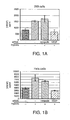
- RNAi degradation induced by Cand5 siRNA significantly reduces the concentration of VEGF produced by the hypoxic 293 and HeLa cells. There was essentially no difference in the amount of VEGF produced by hypoxic cells treated with either no siRNA or the non-specific siRNA control. Similar results were also seen with human ARPE19 cells treated under the same conditions. Thus, RNA interference with VEGF-targeted siRNA disrupts the pathogenic up-regulation of VEGF in human cultured cells in vitro.
- mice NIH 3T3 cells using a mouse-specific VEGF siRNA see Example 6 below
- VEGF production was quantified with a mouse VEGF ELISA (R&D systems, Minneapolis, MN) as described in the Quantikine mouse VEGF ELISA protocol available from the manufacturer, the entire disclosure of which is herein incorporated by reference. Results similar to those reported in Fig. 1 for the human cell lines were obtained.
- Example 1 The experiment outlined in Example 1 was repeated with human 293, HeLa and ARPE19 cells using a range of siRNA concentrations from 10 nM to 50 nM.
- the ability of the Cand5 siRNA to down-regulate VEGF production increased moderately up to approximately 13 nM siRNA, but a plateau effect was seen above this concentration.
- These results highlight the catalytic nature of siRNA-mediated RNAi degradation of mRNA, as the plateau effect appears to reflect VEGF production from the few cells not transfected with the siRNA.
- the increased VEGF mRNA production induced by the hypoxia is outstripped by the siRNA-induced degradation of the target mRNA at siRNA concentrations greater than about 13 nM.
- NIH 3T3 mouse fibroblasts were grown in 24-well plates under standard conditions, so that the cells were ⁇ 50% confluent one day prior to transfection.
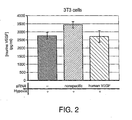
- the human VEGF siRNA Cand5 was transfected into a NIH 3T3 mouse fibroblasts as in Example 1. Hypoxia was then induced in the transfected cells, and murine VEGF concentrations were measured by ELISA as in Example 1.
- the sequence targeted by the human VEGF siRNA Cand5 differs from the murine VEGF mRNA by one nucleotide. As can be seen in Fig. 2 , the human VEGF siRNA has no affect on the ability of the mouse cells to up-regulate mouse VEGF after hypoxia. These results show that siRNA induced RNAi degradation is sequence-specific to within a one nucleotide resolution.
- VEGF is upregulated in the retinal pigment epithelial (RPE) cells of human patients with age-related macular degeneration (ARMD).
- RPE retinal pigment epithelial
- ARMD age-related macular degeneration
- the contralateral eyes were injected with a mixture containing ⁇ 1x10 8 particles of adenovirus containing eGFP driven by the CMV promoter and 20 picomoles of siRNA targeting human VEGF conjugated with transit TKO reagent (Mirus).
- GFP was detected by fundus ophthalmoscopy 48 hours and 60 hours after injection. Animals were sacrificed at either 48 hours or 60 hours post-injection. The eyes were enucleated and fixed in 4% paraformaldehyde, and were prepared either as flat mounts or were processed into 10 micron cryosections for fluorescent microscopy.
- GFP fluorescence was detectable by ophthalmoscopy in the eyes which received the siRNA targeted to GFP mRNA in 4 out of 5 mice, whereas GFP fluorescence was detectable in the contralateral eye which received the non-specific control siRNA.
- a representative flat mount analyzed by fluorescence microscopy showed a lack of GFP fluorescence in the eye which received GFP siRNA, as compared to an eye that received the non-specific control siRNA.
- Cryosections of another retina showed that the recombinant adenovirus efficiently targets the RPE cells, and when the adenovirus is accompanied by siRNA targeted to GFP mRNA, expression of the GFP transgene is halted.
- an exogenous human VEGF expression cassette was delivered to mouse RPE cells via an adenovirus by subretinal injection, as in Example 4.
- One eye received Cand5 siRNA, and the contralateral eye received siRNA targeted to GFP mRNA.
- the animals were sacrificed 60 hours post-injection, and the injected eyes were removed and snap frozen in liquid N 2 following enucleation.
- the eyes were then homogenized in lysis buffer, and total protein was measured using a standard Bradford protein assay (Roche, Germany). The samples were normalized for total protein prior to assaying for human VEGF by ELISA as described in Example 1.
- VEGF vascular endothelial growth factor
- choroidal neovascularization in ARMD is due to the upregulation of VEGF in the RPE cells.
- This human pathologic condition can be modeled in the mouse by using a laser to burn a spot on the retina ("laser photo-coagulation” or “laser induction”).
- laser photo-coagulation or "laser induction”
- VEGF is believed to be up-regulated in the RPE cells of the burned region, leading to re-vascularization of the choroid.
- This model is called the mouse choroidal neovascularization ("CNV”) model.
- mice siRNA For rescue of the mouse CNV model, a mouse siRNA was designed that incorporated a one nucleotide change from the human "Cand5" siRNA from Example 1.
- the mouse siRNA specifically targeted mouse VEGF mRNA at the sequence AAACCUCACCAAAGCCAGCAC (SEQ ID NO: 80).
- Other siRNA that target mouse VEGF were also designed and tested.
- the GFP siRNA used as a nonspecific control in Example 1 was also used as a non-specific control here.
- mice Fourteen days after the laser treatment, the mice were perfused with fluorescein and the area of neovascularization was measured around the burn spots. Areas of the burn spots in the contra-lateral eye were used as a control. The site of neovascularization around the burn spots in animals that received siRNA targeting mouse VEGF was, on average, 1/4 the area of the control areas.
- siRNA targeting mouse VEGF was, on average, 1/4 the area of the control areas.
- a "cis-acting" plasmid for generating a recombinant AAV vector for delivering an siRNA of the invention was generated by PCR based subcloning, essentially as described in Samulski R et al. (1987), supra.
- the cis-acting plasmid was called "pAAVsiRNA.”
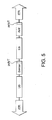
- rep and cap genes of psub201 were replaced with the following sequences in this order: a 19 nt sense RNA strand coding sequence in operable connection with a polyT termination sequence under the control of a human U6 RNA promoter, and a 19 nt antisense RNA strand coding sequence in operable connection with a polyT termination sequence under the control of a human U6 RNA promoter.
- a schematic representation of pAAVsiRNA is given if Fig. 5 .
- a recombinant AAV siRNA vector was obtained by transfecting pAAVsiRNA into human 293 cells previously infected with E1-deleted adenovirus, as described in Fisher KJ et al. (1996), supra.
- the AAV rep and cap functions were provided by a trans-acting plasmid pAAV/Ad as described in Samulski R et al. (1989), supra .
- Production lots of the recombinant AAV siRNA vector were titered according to the number of genome copies/ml, as described in Fisher KJ et al. (1996), supra.
- Example 8 VEGF-Directed siRNA Inhibits Experimental Choroidal Neovascularization
- VEGF-directed siRNA to inhibit experimental laser-induced choroidal neovascularization (CNV) in mice was tested as follows.
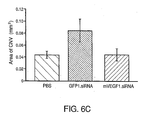
- mice The retinas of adult female C57BL/6 mice were laser photocoagulated using an 810 nm diode laser (75 um, 140 mw, 0.10 seconds) (OcuLight Six; IRIS Medical, Mountain View, CA). Three laser spots were applied to both eyes of each mouse. Thirty-six hours following laser photocoagulation, an siRNA targeted to mouse VEGF ("mVEGF1.siRNA”) was delivered subretinally or intravitreally to one eye of each mouse. For subretinal injection, the siRNA was conjugated with Transit TKO transfection reagent (Mirus) and mixed with recombinant adenovirus (rAdenovirus). For intravitreal injection, the siRNA was delivered in the absence of transfection reagent and rAdenovirus. As a control, the contralateral eyes of each mouse received subretinal or intravitreal injections of identical formulations with an siRNA targeted to GFP (“GFP1.siRNA”), which has no homology to mouse VEGF.
- GFP GFP
- mVEGF1.siRNA was delivered by intravitreal injection into one eye of each mouse in the test group. Contralateral eyes were injected with GFP1.siRNA as a control. The test group animals were perfused with high molecular weight dextran-fluorescein 21 days after laser treatment. Choroidal flat mounts were then prepared and the areas of CNV in each flat mount were measured, as above.
- the anti-VEGF siRNA was administered during CNV growth, as opposed to before CNV growth, and thus is more representative of the condition of human patients presenting with wet AMD.
- Fig. 6 the mean areas of CNV in mVEGF1.siRNA-treated eyes were significantly smaller than those areas measured in GFP1.siRNA-treated eyes ( Fig. 6C ; P ⁇ 0.05).
- AAV.CMV.VEGF which expresses human VEGF from an adeno-associated viral vector, was generously provided by Dr. A. Auricchio.
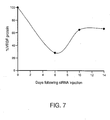
- AAV.CMV.VEGF was injected subretinally and bilaterally in eyes of five C57B1/6 mice. Twenty-eight days after injection of AAV.CMV.VEGF, Cand5 siRNA was delivered by intravitreal injection into one eye and control GFP1.siRNA was delivered by intravitreal injection in the contralateral eye of each animal.
- %VEGF Percent of VEGF
- CNV choroidal neovascularization
- both eyes of all 10 monkeys will be laser photocoagulated to induce choroidal neovascularization.
- the animals will receive twice-daily cageside observations and a once-daily qualitative assessment of food consumption throughout the experiment.
- the monkeys will receive intravitreally one 50 microliter dose of a Treatment or Control formulation (see below) in each eye, in a randomized, double-blind fashion.
- a Treatment or Control formulation see below
- a given animal could receive a Treatment 1 dose in the right eye, and a Control dose in the left eye.
- Another animal could receive a Treatment 1 dose in the right eye, and a Treatment 3 dose in the left eye. It is expected that four eyes will receive each formulation, for a total of 1 control and four treatment groups of four eyes each.
- the formulations will be: Control - balanced saline solution ("BSS") alone; Treatment 1 - 1 mg/ml Cand5 in BSS; Treatment 2 - 2.5 mg/ml Cand5 in BSS; Treatment 3 - 5 mg/ml Cand5 in BSS; and Treatment 4 - 10 mg/ml Cand5 in BSS.
- BSS Control - balanced saline solution
- a fluorescein angiography will be performed on both eyes of each monkey weekly up through the seventh week after laser induction.
- the monkeys will then be sacrificed, and a complete necropsy will be performed with a full tissue collection ( ⁇ 45 tissues including a vitreous sample) and histopathologic evaluation of the collected tissues.
- An ERG will be taken pre-necropsy.
Landscapes
- Health & Medical Sciences (AREA)
- Life Sciences & Earth Sciences (AREA)
- Engineering & Computer Science (AREA)
- Genetics & Genomics (AREA)
- Chemical & Material Sciences (AREA)
- Organic Chemistry (AREA)
- Bioinformatics & Cheminformatics (AREA)
- Biomedical Technology (AREA)
- General Health & Medical Sciences (AREA)
- General Engineering & Computer Science (AREA)
- Biotechnology (AREA)
- Wood Science & Technology (AREA)
- Zoology (AREA)
- Molecular Biology (AREA)
- Animal Behavior & Ethology (AREA)
- Veterinary Medicine (AREA)
- Medicinal Chemistry (AREA)
- Pharmacology & Pharmacy (AREA)
- Public Health (AREA)
- Chemical Kinetics & Catalysis (AREA)
- Nuclear Medicine, Radiotherapy & Molecular Imaging (AREA)
- General Chemical & Material Sciences (AREA)
- Biochemistry (AREA)
- Physics & Mathematics (AREA)
- Biophysics (AREA)
- Plant Pathology (AREA)
- Microbiology (AREA)
- Endocrinology (AREA)
- Dermatology (AREA)
- Rheumatology (AREA)
- Virology (AREA)
- Epidemiology (AREA)
- Heart & Thoracic Surgery (AREA)
- Reproductive Health (AREA)
- Ophthalmology & Optometry (AREA)
- Cardiology (AREA)
- Pain & Pain Management (AREA)
- Immunology (AREA)
- Orthopedic Medicine & Surgery (AREA)
- Physical Education & Sports Medicine (AREA)
Priority Applications (1)
| Application Number | Priority Date | Filing Date | Title |
|---|---|---|---|
| EP20100185621 EP2345718A3 (de) | 2002-07-24 | 2003-07-18 | Zusammensetzungen und Verfahren zur siRNA-Hemmung von Angiogenese |
Applications Claiming Priority (3)
| Application Number | Priority Date | Filing Date | Title |
|---|---|---|---|
| US39841702P | 2002-07-24 | 2002-07-24 | |
| US10/294,228 US7148342B2 (en) | 2002-07-24 | 2002-11-14 | Compositions and methods for sirna inhibition of angiogenesis |
| EP20030765708 EP1578933B9 (de) | 2002-07-24 | 2003-07-18 | ZUSAMMENSETZUNGEN UND VERFAHREN ZUR siRNA-INHIBITION DER ANGIOGENESE |
Related Parent Applications (1)
| Application Number | Title | Priority Date | Filing Date |
|---|---|---|---|
| EP03765708.7 Division | 2003-07-18 |
Related Child Applications (1)
| Application Number | Title | Priority Date | Filing Date |
|---|---|---|---|
| EP10185621.9 Division-Into | 2010-10-01 |
Publications (3)
| Publication Number | Publication Date |
|---|---|
| EP2192187A2 true EP2192187A2 (de) | 2010-06-02 |
| EP2192187A3 EP2192187A3 (de) | 2010-08-25 |
| EP2192187B1 EP2192187B1 (de) | 2013-04-17 |
Family
ID=30772633
Family Applications (3)
| Application Number | Title | Priority Date | Filing Date |
|---|---|---|---|
| EP20100151221 Expired - Lifetime EP2192187B1 (de) | 2002-07-24 | 2003-07-18 | Zusammensetzungen und Verfahren zur siRNA-Hemmung von Angiogenese |
| EP20100185621 Withdrawn EP2345718A3 (de) | 2002-07-24 | 2003-07-18 | Zusammensetzungen und Verfahren zur siRNA-Hemmung von Angiogenese |
| EP20030765708 Expired - Lifetime EP1578933B9 (de) | 2002-07-24 | 2003-07-18 | ZUSAMMENSETZUNGEN UND VERFAHREN ZUR siRNA-INHIBITION DER ANGIOGENESE |
Family Applications After (2)
| Application Number | Title | Priority Date | Filing Date |
|---|---|---|---|
| EP20100185621 Withdrawn EP2345718A3 (de) | 2002-07-24 | 2003-07-18 | Zusammensetzungen und Verfahren zur siRNA-Hemmung von Angiogenese |
| EP20030765708 Expired - Lifetime EP1578933B9 (de) | 2002-07-24 | 2003-07-18 | ZUSAMMENSETZUNGEN UND VERFAHREN ZUR siRNA-INHIBITION DER ANGIOGENESE |
Country Status (16)
| Country | Link |
|---|---|
| US (13) | US7148342B2 (de) |
| EP (3) | EP2192187B1 (de) |
| JP (1) | JP5337337B2 (de) |
| KR (2) | KR101280269B1 (de) |
| AT (1) | ATE460500T1 (de) |
| AU (1) | AU2003253995B2 (de) |
| CA (1) | CA2493499C (de) |
| CY (1) | CY1110141T1 (de) |
| DE (1) | DE60331683D1 (de) |
| DK (1) | DK1578933T3 (de) |
| ES (1) | ES2340843T3 (de) |
| IL (3) | IL166274A0 (de) |
| MX (1) | MXPA05001000A (de) |
| NZ (1) | NZ537833A (de) |
| PT (1) | PT1578933E (de) |
| WO (1) | WO2004009769A2 (de) |
Families Citing this family (288)
| Publication number | Priority date | Publication date | Assignee | Title |
|---|---|---|---|---|
| US20030216335A1 (en) * | 2001-11-30 | 2003-11-20 | Jennifer Lockridge | Method and reagent for the modulation of female reproductive diseases and conditions |
| US6346398B1 (en) * | 1995-10-26 | 2002-02-12 | Ribozyme Pharmaceuticals, Inc. | Method and reagent for the treatment of diseases or conditions related to levels of vascular endothelial growth factor receptor |
| US20040052840A1 (en) * | 2000-06-20 | 2004-03-18 | Shunichiro Kubota | Preparations for oligonucleotide transfer |
| US20050148530A1 (en) | 2002-02-20 | 2005-07-07 | Sirna Therapeutics, Inc. | RNA interference mediated inhibition of vascular endothelial growth factor and vascular endothelial growth factor receptor gene expression using short interfering nucleic acid (siNA) |
| US20050054596A1 (en) * | 2001-11-30 | 2005-03-10 | Mcswiggen James | RNA interference mediated inhibition of vascular endothelial growth factor and vascular endothelial growth factor receptor gene expression using short interfering nucleic acid (siNA) |
| US7517864B2 (en) * | 2001-05-18 | 2009-04-14 | Sirna Therapeutics, Inc. | RNA interference mediated inhibition of vascular endothelial growth factor and vascular endothelial growth factor receptor gene expression using short interfering nucleic acid (siNA) |
| US9994853B2 (en) | 2001-05-18 | 2018-06-12 | Sirna Therapeutics, Inc. | Chemically modified multifunctional short interfering nucleic acid molecules that mediate RNA interference |
| US20050222066A1 (en) * | 2001-05-18 | 2005-10-06 | Sirna Therapeutics, Inc. | RNA interference mediated inhibition of vascular endothelial growth factor and vascular endothelial growth factor receptor gene expression using short interfering nucleic acid (siNA) |
| ATE429930T1 (de) * | 2001-06-20 | 2009-05-15 | Dainippon Sumitomo Pharma Co | Verfahren zur förderung des nukleinsäuretransfers |
| FR2832154B1 (fr) * | 2001-11-09 | 2007-03-16 | Centre Nat Rech Scient | Oligonucleotides inhibiteurs et leur utilisation pour reprimer specifiquement un gene |
| US20040138163A1 (en) * | 2002-05-29 | 2004-07-15 | Mcswiggen James | RNA interference mediated inhibition of vascular edothelial growth factor and vascular edothelial growth factor receptor gene expression using short interfering nucleic acid (siNA) |
| US20050075304A1 (en) * | 2001-11-30 | 2005-04-07 | Mcswiggen James | RNA interference mediated inhibition of vascular endothelial growth factor and vascular endothelial growth factor receptor gene expression using short interfering nucleic acid (siNA) |
| US20070203333A1 (en) * | 2001-11-30 | 2007-08-30 | Mcswiggen James | RNA interference mediated inhibition of vascular endothelial growth factor and vascular endothelial growth factor receptor gene expression using short interfering nucleic acid (siNA) |
| US9657294B2 (en) | 2002-02-20 | 2017-05-23 | Sirna Therapeutics, Inc. | RNA interference mediated inhibition of gene expression using chemically modified short interfering nucleic acid (siNA) |
| US9181551B2 (en) | 2002-02-20 | 2015-11-10 | Sirna Therapeutics, Inc. | RNA interference mediated inhibition of gene expression using chemically modified short interfering nucleic acid (siNA) |
| US20050222061A1 (en) * | 2002-04-18 | 2005-10-06 | Schulte Ralf W | Means and methods for the specific inhibition of genes in cells and tissue of the cns and/or eye |
| US7148342B2 (en) * | 2002-07-24 | 2006-12-12 | The Trustees Of The University Of Pennyslvania | Compositions and methods for sirna inhibition of angiogenesis |
| EP1857547B2 (de) | 2002-08-05 | 2020-12-02 | Silence Therapeutics GmbH | Weitere neue Formen von interferierenden RNA-Molekülen |
| SG166672A1 (en) * | 2002-08-06 | 2010-12-29 | Intradigm Corp | Methods of down regulating target gene expression in vivo by introduction of interfering rna |
| EP2305813A3 (de) * | 2002-11-14 | 2012-03-28 | Dharmacon, Inc. | Funktionale und hyperfunktionale siRNA |
| WO2006006948A2 (en) | 2002-11-14 | 2006-01-19 | Dharmacon, Inc. | METHODS AND COMPOSITIONS FOR SELECTING siRNA OF IMPROVED FUNCTIONALITY |
| US7605249B2 (en) * | 2002-11-26 | 2009-10-20 | Medtronic, Inc. | Treatment of neurodegenerative disease through intracranial delivery of siRNA |
| WO2004076664A2 (en) * | 2003-02-21 | 2004-09-10 | University Of South Florida | Vectors for regulating gene expression |
| US8969543B2 (en) | 2003-04-03 | 2015-03-03 | Bioneer Corporation | SiRNA-hydrophilic polymer conjugates for intracellular delivery of siRNA and method thereof |
| AU2003219576A1 (en) | 2003-04-03 | 2004-10-25 | Korea Advanced Institute Of Science And Technology | Conjugate for gene transfer comprising oligonucleotide and hydrophilic polymer, polyelectrolyte complex micelles formed from the conjugate, and methods for preparation thereof |
| ES2905724T3 (es) * | 2003-06-13 | 2022-04-11 | Alnylam Europe Ag | Acido ribonucleico bicatenario con elevada eficacia en un organismo |
| US20050019927A1 (en) * | 2003-07-13 | 2005-01-27 | Markus Hildinger | DECREASING GENE EXPRESSION IN A MAMMALIAN SUBJECT IN VIVO VIA AAV-MEDIATED RNAi EXPRESSION CASSETTE TRANSFER |
| SG145713A1 (en) * | 2003-08-13 | 2008-09-29 | Univ Illinois | SILENCING OF TGFss TYPE II RECEPTOR EXPRESSION BY SIRNA |
| US7480382B2 (en) * | 2003-09-30 | 2009-01-20 | Microsoft Corporation | Image file container |
| US20070238676A1 (en) * | 2003-12-04 | 2007-10-11 | Mohapatra Shyam S | Polynucleotides for Reducing Respiratory Syncytial Virus Gene Expression |
| WO2005063984A1 (ja) * | 2003-12-30 | 2005-07-14 | Masabumi Shibuya | 遺伝子発現を抑制する二本鎖rna |
| WO2005071080A2 (en) * | 2004-01-20 | 2005-08-04 | Isis Pharmaceuticals, Inc. | Modulation of glucocorticoid receptor expression |
| WO2005072057A2 (en) | 2004-01-30 | 2005-08-11 | Quark Biotech, Inc. | Oligoribonucleotides and methods of use thereof for treatment of fibrotic conditions and other diseases |
| CA2555335A1 (en) * | 2004-02-05 | 2005-08-25 | Intradigm Corporation | Rnai therapeutics for treatment of eye neovascularization diseases |
| EP1713938A2 (de) | 2004-02-09 | 2006-10-25 | Thomas Jefferson University | Diagnose und behandlung von krebserkrankungen mit oder nahe mit krebs in zusammenhang stehenden chromosomalen merkmalen lokalisierter microrna |
| US7309487B2 (en) * | 2004-02-09 | 2007-12-18 | George Inana | Methods and compositions for detecting and treating retinal diseases |
| ES2423060T3 (es) * | 2004-03-12 | 2013-09-17 | Alnylam Pharmaceuticals, Inc. | Agentes iRNA que tienen como diana al VEGF |
| US20050202075A1 (en) * | 2004-03-12 | 2005-09-15 | Pardridge William M. | Delivery of genes encoding short hairpin RNA using receptor-specific nanocontainers |
| CA2559955C (en) * | 2004-03-15 | 2016-02-16 | City Of Hope | Methods and compositions for the specific inhibition of gene expression by double-stranded rna |
| US20070265220A1 (en) * | 2004-03-15 | 2007-11-15 | City Of Hope | Methods and compositions for the specific inhibition of gene expression by double-stranded RNA |
| US20050272682A1 (en) * | 2004-03-22 | 2005-12-08 | Evers Bernard M | SiRNA targeting PI3K signal transduction pathway and siRNA-based therapy |
| US20050244869A1 (en) * | 2004-04-05 | 2005-11-03 | Brown-Driver Vickie L | Modulation of transthyretin expression |
| US20050244472A1 (en) * | 2004-04-30 | 2005-11-03 | Allergan, Inc. | Intraocular drug delivery systems containing excipients with reduced toxicity and related methods |
| US8101350B1 (en) * | 2004-05-24 | 2012-01-24 | Isis Pharmaceuticals, Inc. | Modulation of exportin 5 expression |
| US10508277B2 (en) | 2004-05-24 | 2019-12-17 | Sirna Therapeutics, Inc. | Chemically modified multifunctional short interfering nucleic acid molecules that mediate RNA interference |
| EP1765847A4 (de) * | 2004-05-27 | 2010-10-20 | Alnylam Pharmaceuticals Inc | Nukleaseresistente doppelsträngige ribonukleinsäure |
| CA2569664C (en) * | 2004-06-07 | 2013-07-16 | Protiva Biotherapeutics, Inc. | Lipid encapsulated interfering rna |
| WO2006007712A1 (en) * | 2004-07-19 | 2006-01-26 | Protiva Biotherapeutics, Inc. | Methods comprising polyethylene glycol-lipid conjugates for delivery of therapeutic agents |
| GB0418172D0 (en) * | 2004-08-13 | 2004-09-15 | Ic Vec Ltd | Vector |
| JP2008509205A (ja) * | 2004-08-13 | 2008-03-27 | アイシー・ベック・リミテッド | ポリマー修飾siRNAリポソームを含むベクター |
| WO2006023491A2 (en) | 2004-08-16 | 2006-03-02 | The Cbr Institute For Biomedical Research, Inc. | Method of delivering rna interference and uses thereof |
| US8765704B1 (en) | 2008-02-28 | 2014-07-01 | Novartis Ag | Modified small interfering RNA molecules and methods of use |
| EP1796732B1 (de) * | 2004-10-01 | 2013-10-30 | Novartis Vaccines and Diagnostics, Inc. | Modifizierte, kleine, interferierende rna-moleküle und verwendungsverfahren dafür |
| US7901711B1 (en) * | 2006-04-17 | 2011-03-08 | Gp Medical, Inc. | Nanoparticles for protein/peptide delivery and delivery means thereof |
| EP1807514A1 (de) * | 2004-10-22 | 2007-07-18 | Benitec, Inc. | Therapeutische rnai für behandlung von psoriasis |
| WO2006053090A2 (en) * | 2004-11-08 | 2006-05-18 | Idera Pharmaceuticals | Synergistic inhibition of vegf and modulation of the immune response |
| US8138327B2 (en) * | 2004-11-23 | 2012-03-20 | City Of Hope | Inducible systems and methods for controlling siRNA expression |
| TWI401316B (zh) * | 2004-12-23 | 2013-07-11 | Alcon Inc | 用於治療青光眼之血清澱粉樣蛋白A的RNAi抑制作用 |
| WO2006086681A2 (en) * | 2005-02-09 | 2006-08-17 | Beth Israel Deaconess Medical Center, Inc. | Methods of inhibiting smooth muscle cell migration and proliferation |
| WO2006094014A2 (en) | 2005-02-28 | 2006-09-08 | The Regents Of The University Of California | Methods for diagnosis and treatment of endometrial cancer |
| KR100627377B1 (ko) | 2005-03-04 | 2006-09-25 | 한국생명공학연구원 | 뇌하수체 종양-형질전환 유전자 1 단백질의 합성을 차단할수 있는 작은 간섭 rna 및 이를 발현하는 벡터를 이용한 암의 유전자 치료 |
| EP1874930B1 (de) * | 2005-04-12 | 2011-09-07 | Université Libre de Bruxelles | Verwendung eines ansatzes auf rnai-basis mit galectin-1 als ziel zur krebsbehandlung |
| US7893244B2 (en) * | 2005-04-12 | 2011-02-22 | Intradigm Corporation | Composition and methods of RNAi therapeutics for treatment of cancer and other neovascularization diseases |
| JP2008537752A (ja) * | 2005-04-12 | 2008-09-25 | イントラディグム コーポレイション | がんおよび他の新血管形成疾患を処置するためのRNAi治療用の組成物および方法 |
| US8648052B2 (en) * | 2005-04-15 | 2014-02-11 | The Regents Of The University Of California | Prevention of chlamydia infection using SIRNA |
| WO2006113526A2 (en) | 2005-04-15 | 2006-10-26 | The Regents Of The University Of California | Prevention of chlamydia infection using a protective antibody |
| US8318906B2 (en) | 2005-04-15 | 2012-11-27 | The Regents Of The University Of California | EMP2 antibodies and their therapeutic uses |
| US20060246143A1 (en) * | 2005-04-28 | 2006-11-02 | Hilmi Ege | Targeted therapy via targeted delivery of energy susceptible nanoscale magnetic particles |
| WO2007011819A2 (en) * | 2005-07-15 | 2007-01-25 | The Penn State Research Foundation | Ferritin as a therapeutic target in abnormal cells |
| CN101287835A (zh) * | 2005-08-17 | 2008-10-15 | 株式会社百奥尼 | 用于siRNA细胞内输送的siRNA-亲水性聚合物结合物及其方法 |
| US20090221673A1 (en) * | 2005-09-13 | 2009-09-03 | Rigby William F C | Compositions and Methods for Regulating RNA Translation via CD154 CA-Dinucleotide Repeat |
| TWI268357B (en) * | 2005-09-13 | 2006-12-11 | Sunplus Technology Co Ltd | Synchronous method and system of data bits for global positioning system with a data buffer used to receive and store data bits of the satellite signal |
| US8278107B2 (en) * | 2005-09-13 | 2012-10-02 | Trustees Of Dartmouth College | Compositions and methods for regulating RNA translation via CD154 CA-dinucleotide repeat |
| US8168584B2 (en) | 2005-10-08 | 2012-05-01 | Potentia Pharmaceuticals, Inc. | Methods of treating age-related macular degeneration by compstatin and analogs thereof |
| KR100749859B1 (ko) * | 2005-10-18 | 2007-08-16 | 연세대학교 산학협력단 | VEGF―A 특이적 siRNA를 발현하는 개선된 종양살상 효과를 나타내는 재조합 아데노바이러스 |
| ATE546537T1 (de) * | 2005-12-15 | 2012-03-15 | Targeted Growth Inc | Erhöhte samengrösse und samenzahl durch transgene überexpression eines wachstums- und/oder entwicklungsgens während der embyro- frühentwicklung |
| AU2006337093B2 (en) * | 2005-12-22 | 2013-03-14 | Opko Pharmaceuticals, Llc. | Compositions and methods for regulating complement system |
| CN103301475B (zh) * | 2005-12-28 | 2016-08-03 | 斯克里普斯研究所 | 药物组合物和表达载体以及调节基因表达的方法和核酸分子的应用 |
| WO2007081680A2 (en) | 2006-01-05 | 2007-07-19 | The Ohio State University Research Foundation | Microrna expression abnormalities in pancreatic endocrine and acinar tumors |
| EP2484782B1 (de) | 2006-01-05 | 2015-11-18 | The Ohio State University Research Foundation | Verfahren und Zusammensetzungen auf Mikro-RNA-Basis zur Diagnose und Behandlung von soliden Krebs |
| AU2007205234B2 (en) | 2006-01-05 | 2012-07-12 | The Ohio State University Research Foundation | MicroRNA-based methods and compositions for the diagnosis, prognosis and treatment of lung cancer |
| US20090175930A1 (en) * | 2006-01-11 | 2009-07-09 | Nobuhiro Yagi | Composition Suppressing The Expression of Target Gene in Eyeball and Medicament For Treating of Disease in Eyeball |
| JO2660B1 (en) | 2006-01-20 | 2012-06-17 | نوفارتيس ايه جي | Pi-3 inhibitors and methods of use |
| ES2385924T3 (es) * | 2006-02-02 | 2012-08-03 | Allergan, Inc. | Inhibidores de la actividad de CXCR4 para su uso en el tratamiento de trastornos oculares |
| EP2522748A1 (de) | 2006-03-02 | 2012-11-14 | The Ohio State University | Mikro-RNA-Expressionsprofil im Zusammenhang mit Bauchspeicheldrüsenkrebs |
| ES2446362T3 (es) | 2006-03-20 | 2014-03-07 | The Ohio State University Research Foundation | Huellas de microARN durante megacariocipoyesis humana |
| JP5704741B2 (ja) | 2006-03-31 | 2015-04-22 | アルナイラム ファーマシューティカルズ, インコーポレイテッドAlnylam Pharmaceuticals, Inc. | Eg5遺伝子発現の抑制のための組成物および方法 |
| TW200808739A (en) | 2006-04-06 | 2008-02-16 | Novartis Vaccines & Diagnostic | Quinazolines for PDK1 inhibition |
| US20070281900A1 (en) * | 2006-05-05 | 2007-12-06 | Nastech Pharmaceutical Company Inc. | COMPOSITIONS AND METHODS FOR LIPID AND POLYPEPTIDE BASED siRNA INTRACELLULAR DELIVERY |
| AU2007249698A1 (en) * | 2006-05-15 | 2007-11-22 | University Of Kentucky | Toll-like receptor (TLR) stimulation for ocular angiogenesis and macular degeneration |
| US20090130212A1 (en) * | 2006-05-15 | 2009-05-21 | Physical Pharmaceutica, Llc | Composition and improved method for preparation of small particles |
| US8598333B2 (en) * | 2006-05-26 | 2013-12-03 | Alnylam Pharmaceuticals, Inc. | SiRNA silencing of genes expressed in cancer |
| JP2009540011A (ja) * | 2006-06-12 | 2009-11-19 | エクセジェニックス、インク.ディー/ビー/エー オプコ ヘルス、インク. | 血管新生のsiRNA阻害のための組成物及び方法 |
| KR100794705B1 (ko) * | 2006-06-13 | 2008-01-14 | (주)바이오니아 | 선택적 스플라이싱을 고려한 siRNA를 이용하여 표적mRNA의 발현을 억제하는 방법 |
| US7572618B2 (en) | 2006-06-30 | 2009-08-11 | Bristol-Myers Squibb Company | Polynucleotides encoding novel PCSK9 variants |
| ES2425387T3 (es) | 2006-07-13 | 2013-10-15 | The Ohio State University Research Foundation | Mir-106a para diagnosticar adenocarcinoma de colon de pronóstico de supervivencia pobre |
| US8138160B2 (en) * | 2006-08-03 | 2012-03-20 | Warsaw Orthopedic, Inc. | Reagents, methods and systems to suppress pro-inflammatory cytokines |
| US7872118B2 (en) * | 2006-09-08 | 2011-01-18 | Opko Ophthalmics, Llc | siRNA and methods of manufacture |
| WO2008045576A2 (en) * | 2006-10-12 | 2008-04-17 | Yijia Liu | Compositions and methods of rnai therapeutics for treatment of cancer and other neovascularization diseases |
| WO2008109773A2 (en) * | 2007-03-06 | 2008-09-12 | Cornell Research Foundation, Inc. | Chronic obstructive pulmonary disease susceptibility and related compositions and methods |
| US8841436B2 (en) * | 2007-03-15 | 2014-09-23 | University Hospitals Cleveland Medical Center | Screening, diagnosing, treating and prognosis of pathophysiologic status by RNA regulation |
| PE20090064A1 (es) * | 2007-03-26 | 2009-03-02 | Novartis Ag | Acido ribonucleico de doble cadena para inhibir la expresion del gen e6ap humano y composicion farmaceutica que lo comprende |
| US20090226525A1 (en) * | 2007-04-09 | 2009-09-10 | Chimeros Inc. | Self-assembling nanoparticle drug delivery system |
| US8465917B2 (en) | 2007-06-08 | 2013-06-18 | The Ohio State University Research Foundation | Methods for determining heptocellular carcinoma subtype and detecting hepatic cancer stem cells |
| ES2685636T3 (es) * | 2007-06-29 | 2018-10-10 | Stelic Institute Of Regenerative Medicine, Stelic Institute & Co. | Método de fijación y expresión de sustancia fisiológicamente activa |
| WO2009012263A2 (en) * | 2007-07-18 | 2009-01-22 | The Trustees Of Columbia University In The City Of New York | Tissue-specific micrornas and compositions and uses thereof |
| EP2173911B1 (de) | 2007-07-31 | 2014-06-18 | The Ohio State University Research Foundation | Verfahren zur methylierungsreversion mittels abzielen auf dnmt3a und dnmt3b |
| US7960336B2 (en) * | 2007-08-03 | 2011-06-14 | Pharmain Corporation | Composition for long-acting peptide analogs |
| EP2653561B1 (de) | 2007-08-03 | 2016-03-02 | The Ohio State University Research Foundation | Ultrakonservierte Bereiche zur Codierung von ncRNA |
| US8563527B2 (en) | 2007-08-20 | 2013-10-22 | Pharmain Corporation | Oligonucleotide core carrier compositions for delivery of nucleic acid-containing therapeutic agents, methods of making and using the same |
| EP3028708A1 (de) | 2007-08-22 | 2016-06-08 | The Ohio State University Research Foundation | Verfahren und zusammensetzungen zur induzierung von epha7-deregulierung und erk-phosphorlylierung bei humaner akuter leukämie |
| KR100810034B1 (ko) * | 2007-08-23 | 2008-03-05 | 주식회사 바이오폴리메드 | 세포 증식 및 이동 억제를 위한 NF-KB p105의siRNA 및 이를 함유하는 조성물 |
| WO2009033027A2 (en) * | 2007-09-05 | 2009-03-12 | Medtronic, Inc. | Suppression of scn9a gene expression and/or function for the treatment of pain |
| EP3138926A3 (de) | 2007-09-06 | 2017-04-05 | The Ohio State University Research Foundation | Mirna-signaturen in menschlichem ovarialkarzinom |
| TW200918099A (en) | 2007-09-14 | 2009-05-01 | Nitto Denko Corp | Drug carriers |
| US8129356B2 (en) * | 2007-10-01 | 2012-03-06 | Vanderbilt University | Bmx mediated signal transduction in irradiated vascular endothelium |
| US7973019B1 (en) | 2007-10-03 | 2011-07-05 | Alcon Research, Ltd. | Transferrin/transferrin receptor-mediated siRNA delivery |
| EP2212440A4 (de) | 2007-10-11 | 2011-04-06 | Univ Ohio State Res Found | Verfahren und zusammensetzungen zur diagnose und behandlung von adenokarzinomen der speiseröhre |
| US20090156459A1 (en) * | 2007-11-16 | 2009-06-18 | Pharmain Corporation | Cationic-Core Carrier Compositions for Delivery of Therapeutic Agents, Methods of Making and Using the Same |
| US20100204305A1 (en) * | 2007-12-11 | 2010-08-12 | Lorus Therapeutics Inc. | Small interfering rna molecules against ribonucleotide reductase and uses thereof |
| JP2011506560A (ja) | 2007-12-20 | 2011-03-03 | ノバルティス アーゲー | Pi3キナーゼ阻害剤として用いられるチアゾール誘導体 |
| US20090186835A1 (en) * | 2008-01-15 | 2009-07-23 | Gross Richard A | Treatment and prophylaxis of cancer |
| CN105267233B (zh) * | 2008-03-05 | 2019-07-26 | 阿尔尼拉姆医药品有限公司 | 用于抑制Eg5和VEGF基因表达的组合物和方法 |
| US20090226531A1 (en) * | 2008-03-07 | 2009-09-10 | Allergan, Inc. | Methods and composition for intraocular delivery of therapeutic sirna |
| US7956044B1 (en) | 2008-04-03 | 2011-06-07 | The Board Of Regents Of The University Of Oklahoma | Compositions comprising inhibitors of RNA binding proteins and methods of producing and using same |
| US8198255B2 (en) * | 2008-05-16 | 2012-06-12 | The Board Of Regents Of The University Of Oklahoma | SiRNA-mediated inhibition of doublecortin and Ca2+/calmodulin-dependent kinase-like-1 |
| US7902166B2 (en) * | 2008-04-03 | 2011-03-08 | The Board Of Regents Of The University Of Oklahoma | Compositions comprising inhibitors of RNA binding proteins and methods of producing and using same |
| US8936941B2 (en) | 2008-04-03 | 2015-01-20 | The Board Of Regents Of The University Of Oklahoma | Compositions useful for cancer detection and treatment, a cancer stem cell model, and methods of production and use thereof |
| GB0807018D0 (en) * | 2008-04-17 | 2008-05-21 | Fusion Antibodies Ltd | Antibodies and treatment |
| US9663585B2 (en) | 2008-05-16 | 2017-05-30 | The Board Of Regents Of The University Of Oklahoma | Anti-DCLK1 monoclonal antibodies and methods of production and use thereof |
| WO2010008562A2 (en) * | 2008-07-16 | 2010-01-21 | Recombinetics | Methods and materials for producing transgenic animals |
| WO2010014784A2 (en) | 2008-08-01 | 2010-02-04 | Bristol-Myers Squibb Company | Combination of anti-ctla4 antibody with diverse therapeutic regimens for the synergistic treatment of proliferative diseases |
| EP2323667A4 (de) * | 2008-08-07 | 2012-07-25 | Isis Pharmaceuticals Inc | Modulierung der transthyretin-expression durch behandlung von zns-erkrankungen |
| EP2342340A1 (de) | 2008-09-22 | 2011-07-13 | Rxi Pharmaceuticals Corporation | Rna-interferenz bei hautindikationen |
| WO2010039543A2 (en) | 2008-09-23 | 2010-04-08 | Traversa Therapeutics, Inc. | Self delivering bio-labile phosphate protected pro-oligos for oligonucleotide based therapeutics and mediating rna interference |
| MY188457A (en) * | 2008-10-03 | 2021-12-10 | Opko Curna Llc | Treatment of apolipoprotein-a1 related diseases by inhibition of natural antisense transcript to apolipoprotein-a1 |
| CA2745329C (en) | 2008-12-04 | 2022-07-12 | Opko Curna, Llc | Treatment of erythropoietin (epo) related diseases by inhibition of natural antisense transcript to epo |
| JP5832293B2 (ja) * | 2008-12-04 | 2015-12-16 | オプコ ファーマシューティカルズ、エルエルシー | 血管新生促進vegfイソ型を選択的に抑制する組成物および方法 |
| WO2010065671A2 (en) | 2008-12-04 | 2010-06-10 | Curna, Inc. | Treatment of vascular endothelial growth factor (vegf) related diseases by inhibition of natural antisense transcript to vegf |
| KR20110091796A (ko) | 2008-12-04 | 2011-08-12 | 오피케이오 큐알엔에이, 엘엘씨 | 종양 억제 유전자에 대한 천연 안티센스 전사체의 억제에 의해 종양 억제 유전자 관련된 질환의 치료 |
| US20100233172A1 (en) | 2008-12-16 | 2010-09-16 | Bristol-Myers Squibb Company | Methods of inhibiting quiescent tumor proliferation |
| WO2010090762A1 (en) | 2009-02-04 | 2010-08-12 | Rxi Pharmaceuticals Corporation | Rna duplexes with single stranded phosphorothioate nucleotide regions for additional functionality |
| HUE026280T2 (en) | 2009-02-12 | 2016-06-28 | Curna Inc | Treatment of brain-derived neurotrophic factor (BDNF) -related diseases by inhibition of natural antisense transcripts associated with BDNF \ t |
| MX2011009751A (es) | 2009-03-16 | 2011-09-29 | Opko Curna Llc | Tratamiento de enfermedades relacionadas con factor nuclear (eritroide derivado 2) tipo 2 (nrf2) por inhibicion del transcrito antisentido natural a nrf2. |
| US9708604B2 (en) | 2009-03-17 | 2017-07-18 | Curna, Inc. | Treatment of delta-like 1 homolog (DLK1) related diseases by inhibition of natural antisense transcript to DLK1 |
| EP2756845B1 (de) * | 2009-04-03 | 2017-03-15 | Dicerna Pharmaceuticals, Inc. | Verfahren und Zusammensetzungen für spezifische KRAS-Hemmung mit asymmetrischer Doppelstrang-RNA |
| WO2010120874A2 (en) | 2009-04-14 | 2010-10-21 | Chimeros, Inc. | Chimeric therapeutics, compositions, and methods for using same |
| CN102459596B (zh) | 2009-05-06 | 2016-09-07 | 库尔纳公司 | 通过针对脂质转运和代谢基因的天然反义转录物的抑制治疗脂质转运和代谢基因相关疾病 |
| ES2609655T3 (es) | 2009-05-06 | 2017-04-21 | Curna, Inc. | Tratamiento de enfermedades relacionadas con tristetraprolina (TTP) mediante inhibición de transcrito antisentido natural para TTP |
| EP2427554B1 (de) | 2009-05-08 | 2016-11-16 | CuRNA, Inc. | Behandlung von dystrophin-bedingten erkrankungen mittels hemmung des natürlichen antisense-transkripts gegen die dmd-familie |
| DK2432881T3 (en) | 2009-05-18 | 2018-02-26 | Curna Inc | TREATMENT OF REPROGRAMMING FACTOR-RELATED DISEASES BY INHIBITING NATURAL ANTISENSE TRANSCRIPTS TO A REPROGRAMMING FACTOR |
| KR101703695B1 (ko) | 2009-05-22 | 2017-02-08 | 큐알엔에이, 인크. | 전사 인자 e3(tfe3)에 대한 천연 안티센스 전사체의 억제에 의해 tfe3 및 인슐린 수용체 기질 2(irs2)의 치료 |
| KR101704988B1 (ko) | 2009-05-28 | 2017-02-08 | 큐알엔에이, 인크. | 항바이러스 유전자에 대한 천연 안티센스 전사체의 억제에 의한 항바이러스 유전자 관련된 질환의 치료 |
| WO2010148050A2 (en) | 2009-06-16 | 2010-12-23 | Curna, Inc. | Treatment of collagen gene related diseases by inhibition of natural antisense transcript to a collagen gene |
| ES2629339T3 (es) | 2009-06-16 | 2017-08-08 | Curna, Inc. | Tratamiento de enfermedades relacionadas con la paraoxonasa 1 (pon1) por inhibición de transcrito antisentido natural a pon1 |
| ES2618894T3 (es) | 2009-06-24 | 2017-06-22 | Curna, Inc. | Tratamiento de enfermedades relacionadas con el receptor del factor de necrosis tumoral 2 (tnfr2) por inhibición del transcrito natural antisentido para tnfr2 |
| CN102482672B (zh) | 2009-06-26 | 2016-11-09 | 库尔纳公司 | 通过抑制唐氏综合征基因的天然反义转录物治疗唐氏综合征基因相关疾病 |
| US8569256B2 (en) | 2009-07-01 | 2013-10-29 | Protiva Biotherapeutics, Inc. | Cationic lipids and methods for the delivery of therapeutic agents |
| US9018187B2 (en) | 2009-07-01 | 2015-04-28 | Protiva Biotherapeutics, Inc. | Cationic lipids and methods for the delivery of therapeutic agents |
| US8293753B2 (en) | 2009-07-02 | 2012-10-23 | Novartis Ag | Substituted 2-carboxamide cycloamino ureas |
| PT2769737T (pt) | 2009-07-20 | 2017-06-29 | Bristol Myers Squibb Co | Combinação de um anticorpo anti-ctla4 com etopósido para o tratamento sinérgico de doenças proliferativas |
| KR101801407B1 (ko) | 2009-07-24 | 2017-11-24 | 큐알엔에이, 인크. | 시르투인 (sirt)에 대한 천연 안티센스 전사체의 억제에 의한 시르투인 관련된 질환의 치료 |
| CA2769665A1 (en) | 2009-08-05 | 2011-02-10 | Opko Curna, Llc | Treatment of insulin gene (ins) related diseases by inhibition of natural antisense transcript to an insulin gene (ins) |
| US9044493B2 (en) | 2009-08-11 | 2015-06-02 | Curna, Inc. | Treatment of Adiponectin related diseases by inhibition of natural antisense transcript to an Adiponectin |
| CN102482670B (zh) | 2009-08-21 | 2018-06-15 | 库尔纳公司 | 通过抑制‘hsp70-相互作用蛋白的c末端’(chip)的天然反义转录物而治疗chip相关疾病 |
| CN102482671B (zh) | 2009-08-25 | 2017-12-01 | 库尔纳公司 | 通过抑制‘含有iq模体的gtp酶激活蛋白’(iqgap)的天然反义转录物而治疗iqgap相关疾病 |
| AU2010288810A1 (en) | 2009-08-31 | 2012-03-01 | University Of Bremen | MicroRNA-based methods and compositions for the diagnosis, prognosis and treatment of tumor involving chromosomal rearrangements |
| NO2480669T3 (de) | 2009-09-25 | 2018-04-07 | ||
| US20110104154A1 (en) * | 2009-10-30 | 2011-05-05 | Alcon Research, Ltd. | Single nucleotide polymorphisms and genes associated with age-related macular degeneration |
| EP2501409A4 (de) | 2009-11-20 | 2015-02-18 | Univ California | Epithelialmembranenprotein-2 (emp2) und proliferative vitreoretinopathie (pvr) |
| US8227444B2 (en) * | 2009-12-04 | 2012-07-24 | Opko Ophthalmics, Llc | Compositions and methods for inhibition of VEGF |
| CA2782366A1 (en) | 2009-12-16 | 2011-07-14 | Opko Curna, Llc | Treatment of membrane bound transcription factor peptidase, site 1 (mbtps1) related diseases by inhibition of natural antisense transcript to mbtps1 |
| EP2515947B1 (de) | 2009-12-23 | 2021-10-06 | CuRNA, Inc. | Behandlung von durch das uncoupling protein 2 (ucp2) bedingten erkrankungen mittels hemmung des natürlichen antisense-transkripts für ucp2 |
| US8940708B2 (en) | 2009-12-23 | 2015-01-27 | Curna, Inc. | Treatment of hepatocyte growth factor (HGF) related diseases by inhibition of natural antisense transcript to HGF |
| ES2585829T3 (es) | 2009-12-29 | 2016-10-10 | Curna, Inc. | Tratamiento de las enfermedades relacionadas con la proteína tumoral 63 (p63) por inhibición de transcripción antisentido natural a p63 |
| US8921334B2 (en) | 2009-12-29 | 2014-12-30 | Curna, Inc. | Treatment of nuclear respiratory factor 1 (NRF1) related diseases by inhibition of natural antisense transcript to NRF1 |
| CA2785727C (en) | 2009-12-31 | 2020-01-07 | Curna, Inc. | Treatment of insulin receptor substrate 2 (irs2) related diseases by inhibition of natural antisense transcript to irs2 and transcription factor e3 (tfe3) |
| US8946181B2 (en) | 2010-01-04 | 2015-02-03 | Curna, Inc. | Treatment of interferon regulatory factor 8 (IRF8) related diseases by inhibition of natural antisense transcript to IRF8 |
| RU2612161C2 (ru) | 2010-01-06 | 2017-03-02 | Курна, Инк. | Лечение заболеваний, связанных с геном развития поджелудочной железы, путем ингибирования природного антисмыслового транскрипта к гену развития поджелудочной железы |
| NO2524039T3 (de) | 2010-01-11 | 2018-04-28 | ||
| ES2468827T3 (es) * | 2010-01-14 | 2014-06-17 | Sanwa Kagaku Kenkyusho Co., Ltd | Producto farmacéutico para prevenir o tratar trastornos acompañados de angiog�nesis ocular y/o permeabilidad vascular ocular elevada |
| ES2671877T3 (es) | 2010-01-25 | 2018-06-11 | Curna, Inc. | Tratamiento de enfermedades relacionadas con la RNASA (H1) mediante inhibición del transcrito antisentido natural a RNASA H1 |
| WO2011103528A2 (en) | 2010-02-22 | 2011-08-25 | Opko Curna Llc | Treatment of pyrroline-5-carboxylate reductase 1 (pycr1) related diseases by inhibition of natural antisense transcript to pycr1 |
| WO2011109427A2 (en) | 2010-03-01 | 2011-09-09 | Alnylam Pharmaceuticals, Inc. | Improving the biological activity of sirna through modulation of its thermodynamic profile |
| CN101942441A (zh) * | 2010-03-08 | 2011-01-12 | 江其生 | 一种抑制人肺癌细胞增殖转移的siRNA的结构及用途 |
| US9095504B2 (en) | 2010-03-24 | 2015-08-04 | Rxi Pharmaceuticals Corporation | RNA interference in ocular indications |
| WO2011119852A1 (en) | 2010-03-24 | 2011-09-29 | Rxi Pharmaceuticals Corporation | Reduced size self-delivering rnai compounds |
| CN102869777B (zh) | 2010-04-02 | 2018-11-02 | 库尔纳公司 | 通过抑制集落刺激因子3(csf3)的天然反义转录物而治疗csf3相关疾病 |
| WO2011127337A2 (en) | 2010-04-09 | 2011-10-13 | Opko Curna Llc | Treatment of fibroblast growth factor 21 (fgf21) related diseases by inhibition of natural antisense transcript to fgf21 |
| EP2563923A4 (de) * | 2010-04-28 | 2014-12-17 | Sandeep Kathju | Zusammensetzungen und verfahren für reduzierte narbenbildung und zur fibrosebehandlung |
| ES2625689T3 (es) | 2010-04-29 | 2017-07-20 | Ionis Pharmaceuticals, Inc. | Modulación de la expresión de transtiretina |
| RU2693462C2 (ru) | 2010-05-03 | 2019-07-03 | Курна, Инк. | Лечение заболеваний, связанных с сиртуином (sirt), путем ингибирования природного антисмыслового транскрипта к сиртуину (sirt) |
| TWI586356B (zh) | 2010-05-14 | 2017-06-11 | 可娜公司 | 藉由抑制par4天然反股轉錄本治療par4相關疾病 |
| WO2011150005A2 (en) | 2010-05-26 | 2011-12-01 | Opko Curna Llc | Treatment of atonal homolog 1 (atoh1) related diseases by inhibition of natural antisense transcript to atoh1 |
| DK2576784T3 (en) | 2010-05-26 | 2018-02-26 | Curna Inc | TREATMENT OF METHIONIN SULPHOXIDE REDUCTASE A (MSRA) RELATED DISEASES BY INHIBITION OF NATURAL ANTISENCE TRANSCRIPTION TO MSRA |
| CN109112126B (zh) | 2010-06-23 | 2024-06-14 | 库尔纳公司 | 通过抑制电压门控钠通道α亚基(SCNA)的天然反义转录物而治疗SCNA相关疾病 |
| CN103068982B (zh) | 2010-07-14 | 2017-06-09 | 库尔纳公司 | 通过抑制盘状大同系物(dlg)的天然反义转录物而治疗dlg相关疾病 |
| EP2598639A4 (de) * | 2010-07-28 | 2014-08-13 | Alcon Res Ltd | Auf sirna zielende vegfa und in-vivo-behandlungsverfahren damit |
| AR082418A1 (es) | 2010-08-02 | 2012-12-05 | Novartis Ag | Formas cristalinas de 1-(4-metil-5-[2-(2,2,2-trifluoro-1,1-dimetil-etil)-piridin-4-il]-tiazol-2-il)-amida de 2-amida del acido (s)-pirrolidin-1,2-dicarboxilico |
| US8993533B2 (en) | 2010-10-06 | 2015-03-31 | Curna, Inc. | Treatment of sialidase 4 (NEU4) related diseases by inhibition of natural antisense transcript to NEU4 |
| CN103391784A (zh) | 2010-10-15 | 2013-11-13 | 纽约市哥伦比亚大学理事会 | 肥胖症-相关的基因和它们的蛋白和其用途 |
| CN103180445B (zh) | 2010-10-22 | 2018-02-16 | 库尔纳公司 | 通过抑制α‑L‑艾杜糖醛酸酶(IDUA)的天然反义转录物而治疗IDUA相关疾病 |
| WO2012058210A1 (en) | 2010-10-29 | 2012-05-03 | Merck Sharp & Dohme Corp. | RNA INTERFERENCE MEDIATED INHIBITION OF GENE EXPRESSION USING SHORT INTERFERING NUCLEIC ACIDS (siNA) |
| PT2635299T (pt) | 2010-11-02 | 2019-10-14 | Univ Columbia | Métodos de tratamento de distúrbios de perda de cabelo |
| US9198911B2 (en) | 2010-11-02 | 2015-12-01 | The Trustees Of Columbia University In The City Of New York | Methods for treating hair loss disorders |
| WO2012068340A2 (en) | 2010-11-18 | 2012-05-24 | Opko Curna Llc | Antagonat compositions and methods of use |
| US8987225B2 (en) | 2010-11-23 | 2015-03-24 | Curna, Inc. | Treatment of NANOG related diseases by inhibition of natural antisense transcript to NANOG |
| US20120310140A1 (en) | 2010-12-01 | 2012-12-06 | Spinal Modulation, Inc. | Directed delivery of agents to neural anatomy |
| US9150926B2 (en) | 2010-12-06 | 2015-10-06 | The United States Of America, As Represented By The Secretary, Department Of Health And Human Services | Diagnosis and treatment of adrenocortical tumors using human microRNA-483 |
| WO2012104776A1 (en) | 2011-01-31 | 2012-08-09 | Novartis Ag | Novel heterocyclic derivatives |
| DK3693025T3 (da) | 2011-04-22 | 2022-01-10 | Univ California | Adenoassocierede virus-virioner med variant capsid og fremgangsmåder til anvendelse heraf |
| AU2012250924B2 (en) | 2011-05-02 | 2017-05-25 | Immunomedics, Inc. | Ultrafiltration concentration of allotype selected antibodies for small-volume administration |
| EP2714906A1 (de) | 2011-06-01 | 2014-04-09 | INSERM (Institut National de la Santé et de la Recherche Médicale) | Verfahren zur einstellung der expression von mitochondrialem genom durch microrna |
| WO2012170771A1 (en) | 2011-06-09 | 2012-12-13 | Curna, Inc. | Treatment of frataxin (fxn) related diseases by inhibition of natural antisense transcript to fxn |
| JP2014531425A (ja) | 2011-09-02 | 2014-11-27 | ザ トラスティーズ オブ コロンビア ユニヴァーシティ イン ザ シティ オブ ニューヨーク | 肥満の代謝異常を治療するためのCaMKII、IP3R、カルシニューリン、p38、およびMK2/3阻害剤 |
| KR101991980B1 (ko) | 2011-09-06 | 2019-06-21 | 큐알엔에이, 인크. | 소형 분자로 전압-개폐된 나트륨 채널 (SCNxA)의 알파 아단위에 관련된 질환의 치료 |
| CA2847888A1 (en) | 2011-09-09 | 2013-03-14 | Biomed Realty, L.P. | Methods and compositions for controlling assembly of viral proteins |
| US20130072854A1 (en) | 2011-09-19 | 2013-03-21 | General Electric Company | Microbubble complexes and methods of use |
| CA2852066A1 (en) | 2011-10-14 | 2013-04-18 | The Ohio State University | Methods and materials related to ovarian cancer |
| AU2012328680A1 (en) | 2011-10-25 | 2014-05-01 | Ionis Pharmaceuticals, Inc. | Antisense modulation of GCCR expression |
| EP2771482A1 (de) | 2011-10-27 | 2014-09-03 | Institut National de la Sante et de la Recherche Medicale (INSERM) | Verfahren zur behandlung und diagnose von arteriosklerose |
| SG11201401716XA (en) | 2011-10-28 | 2014-05-29 | Novartis Ag | Novel purine derivatives and their use in the treatment of disease |
| TWI496583B (zh) * | 2012-02-15 | 2015-08-21 | Univ Nat Chiao Tung | 製備抑制血管新生之醫藥載體及醫藥組成物之用途 |
| ES2694592T3 (es) | 2012-03-15 | 2018-12-21 | Curna, Inc. | Tratamiento de enfermedades relacionadas con el factor neurotrófico derivado del cerebro (BDNF) por inhibición del transcrito antisentido natural de BDNF |
| DK2830662T3 (da) | 2012-03-29 | 2019-01-02 | Univ Columbia | Fremgangsmåder til behandlng af hårtabsforstyrrelser |
| US9193971B2 (en) | 2012-04-10 | 2015-11-24 | Institut National De La Sante Et De La Recherche Medicale (Inserm) | Methods for the treatment of nonalcoholic steatohepatitis |
| WO2013153139A1 (en) | 2012-04-11 | 2013-10-17 | INSERM (Institut National de la Santé et de la Recherche Médicale) | Methods for the treatment and diagnosis of acute leukemia |
| CN104349779A (zh) | 2012-05-16 | 2015-02-11 | 诺华股份有限公司 | Pi-3激酶抑制剂的剂量方案 |
| AU2013302696B9 (en) | 2012-08-14 | 2018-08-09 | Ibc Pharmaceuticals, Inc. | T-cell redirecting bispecific antibodies for treatment of disease |
| US9096853B2 (en) * | 2012-09-24 | 2015-08-04 | U.S. Department Of Veterans Affairs | Modified siRNA molecules incorporating 5-fluoro-2′-deoxyuridine residues to enhance cytotoxicity |
| US20150259690A1 (en) | 2012-10-05 | 2015-09-17 | Bioneer Corporation | Amphiregulin-specific double-helical oligo-rna, double-helical oligo-rna structure comprising double-helical oligo-rna, and composition for preventing or treating respiratory diseases containing same |
| US10035822B2 (en) | 2012-11-15 | 2018-07-31 | Apellis Pharmaceuticals, Inc. | Cell-reactive, long-acting, or targeted compstatin analogs and related compositions and methods |
| US10036015B2 (en) * | 2013-01-04 | 2018-07-31 | Sandeep Kathju | Composition and methods for reduced scarring and treatment of fibrosis |
| WO2014107763A1 (en) * | 2013-01-08 | 2014-07-17 | Benitec Biopharma Limited | Age-related macular degeneration treatment |
| WO2014152391A1 (en) | 2013-03-15 | 2014-09-25 | Apellis Pharmaceuticals, Inc. | Cell-penetrating compstatin analogs and uses thereof |
| WO2014151734A1 (en) | 2013-03-15 | 2014-09-25 | The Trustees Of Columbia University In The City Of New York | Fusion proteins and methods thereof |
| WO2015006543A1 (en) | 2013-07-10 | 2015-01-15 | The United States Of America, As Represented By The Secretary, Department Of Health And Human Services | Method for predicting and detecting tumor metastasis in kidney cancer |
| US20160166532A1 (en) * | 2013-08-05 | 2016-06-16 | Life Sciences Research Partners Vzw | Carnitine palmitoyltransferase 1 inhibitors for inhibition of pathological angiogenesis |
| JP6562906B2 (ja) * | 2013-10-02 | 2019-08-21 | アルバート アインシュタイン カレッジ オブ メディシン,インコーポレイティド | 転移を阻害し、線維症を処置し、かつ創傷の治癒を向上させる方法および組成物 |
| EP3055426B1 (de) | 2013-10-09 | 2019-06-19 | The United States of America as represented by The Secretary Department of Health and Human Services | Nachweis von hepatitis delta virus (hdv) zur diagnose und behandlung von sjögren-syndrom und lymphom |
| US9724365B2 (en) | 2013-11-18 | 2017-08-08 | University of Pittsburgh—of the Commonwealth System of Higher Education | Microsphere-based delivery and ex vivo manipulation of dendritic cells for autoimmune therapies |
| JP6772062B2 (ja) | 2013-12-02 | 2020-10-21 | フィオ ファーマシューティカルズ コーポレーションPhio Pharmaceuticals Corp. | 癌の免疫療法 |
| DK3076969T3 (da) | 2013-12-06 | 2021-11-22 | Novartis Ag | Doseringsregime for en alfa-isoform-selektiv phosphatidylinositol-3-kinase-hæmmer |
| US9682123B2 (en) | 2013-12-20 | 2017-06-20 | The Trustees Of Columbia University In The City Of New York | Methods of treating metabolic disease |
| GB201403684D0 (en) | 2014-03-03 | 2014-04-16 | King S College London | Vector |
| ES2978993T3 (es) | 2014-02-21 | 2024-09-23 | Ibc Pharmaceuticals Inc | Terapia de enfermedades mediante la inducción de la respuesta inmunitaria a las células que expresan Trop-2 |
| CA2935748A1 (en) | 2014-02-25 | 2015-09-03 | Immunomedics, Inc. | Humanized rfb4 anti-cd22 antibody |
| WO2015152693A2 (ko) | 2014-04-04 | 2015-10-08 | (주)바이오니아 | 신규 이중 나선 올리고 rna 및 이를 포함하는 섬유증 또는 호흡기 질환의 예방 또는 치료용 약학조성물 |
| CA2947270A1 (en) | 2014-04-28 | 2015-11-05 | Rxi Pharmaceuticals Corporation | Methods for treating cancer using nucleic acids targeting mdm2 or mycn |
| WO2015200905A2 (en) | 2014-06-28 | 2015-12-30 | Oligasis, Llc | Dual pdgf/vegf antagonists |
| EP3188799B1 (de) | 2014-09-05 | 2022-07-06 | Phio Pharmaceuticals Corp. | Verfahren zur behandlung von alterung und hauterkrankungen mit auf tyr oder mmp1 gerichteten nukleinsäuren |
| CN104393185B (zh) * | 2014-11-25 | 2017-05-24 | 京东方科技集团股份有限公司 | 一种叠层有机电致发光器件及其制作方法 |
| EP3925979A3 (de) | 2014-12-23 | 2022-03-23 | The Trustees of Columbia University in the City of New York | Fgfr-tacc fusionsproteine und verfahren dafür |
| KR101880790B1 (ko) * | 2015-04-07 | 2018-08-16 | 서강대학교산학협력단 | 망막질병 치료를 위한 효과 지속성(Long-term) siRNA 기반 나노메디슨 및 이의 제조방법 |
| EP3347486A4 (de) | 2015-09-09 | 2019-06-19 | The Trustees of Columbia University in the City of New York | Reduktion von er-mam-lokalisierten app-c99 und verfahren zur behandlung der alzheimer-krankheit |
| KR20180090785A (ko) | 2015-10-07 | 2018-08-13 | 아펠리스 파마슈티컬스 인코포레이티드 | 투여 요법 |
| CN108472289A (zh) | 2015-11-02 | 2018-08-31 | 诺华股份有限公司 | 磷脂酰肌醇3-激酶抑制剂的给药方案 |
| GB2544330B (en) * | 2015-11-13 | 2018-07-04 | Cat International Ltd | Apparatus for filtering molten metal and method of manufacturing the same |
| IL290457B2 (en) | 2015-12-30 | 2025-02-01 | Kodiak Sciences Inc | Antibodies and their conjugates |
| EP3423581A4 (de) | 2016-03-04 | 2020-03-04 | Rhode Island Hospital | Targeting von mikrorna zur krebsbehandlung |
| ES2908467T3 (es) | 2016-04-29 | 2022-04-29 | Adverum Biotechnologies Inc | Evasión de anticuerpos neutralizantes por un virus adenoasociado recombinante |
| CN109640949B (zh) | 2016-07-29 | 2022-11-25 | 加利福尼亚大学董事会 | 具有变异衣壳的腺相关病毒病毒体和其使用方法 |
| EP3491129A4 (de) * | 2016-07-29 | 2020-01-22 | Roger L. Kaspar | Verfahren zur behandlung von osmidrose |
| WO2018060833A1 (en) | 2016-09-27 | 2018-04-05 | Novartis Ag | Dosage regimen for alpha-isoform selective phosphatidylinositol 3-kinase inhibitor alpelisib |
| AU2017345470B2 (en) | 2016-10-19 | 2023-08-03 | Adverum Biotechnologies, Inc. | Modified AAV capsids and uses thereof |
| BR112019020955A2 (pt) | 2017-04-07 | 2020-05-05 | Apellis Pharmaceuticals, Inc. | regimes de dosagem e composições e métodos relacionados |
| JP7167059B2 (ja) | 2017-04-19 | 2022-11-08 | フィオ ファーマシューティカルズ コーポレーション | 核酸化合物の局所送達 |
| US20210187023A1 (en) | 2017-06-27 | 2021-06-24 | The Trustees Of Princeton University | Compositions And Methods For Enhancing Immunotherapy |
| KR20250023600A (ko) | 2017-06-30 | 2025-02-18 | 더 리젠츠 오브 더 유니버시티 오브 캘리포니아 | 변이체 캡시드를 보유한 아데노-부속 바이러스 비리온 및 이의 사용 방법 |
| JP2021507884A (ja) | 2017-12-15 | 2021-02-25 | アペリス・ファーマシューティカルズ・インコーポレイテッドApellis Pharmaceuticals,Inc. | 投与レジメンならびに関連組成物および方法 |
| KR102262260B1 (ko) * | 2018-02-08 | 2021-06-09 | 주식회사 시선테라퓨틱스 | 엔도좀 탈출능을 갖는 펩티드 핵산 복합체 및 이의 용도 |
| CA3092588A1 (en) | 2018-03-02 | 2019-09-06 | Kodiak Sciences Inc. | Il-6 antibodies and fusion constructs and conjugates thereof |
| WO2019204302A2 (en) * | 2018-04-16 | 2019-10-24 | Baylor College Of Medicine | Chimeric rna-driven genomic rearrangement in mammalian cells |
| WO2020146415A1 (en) * | 2019-01-07 | 2020-07-16 | Foghorn Therapeutics Inc. | Methods of treating cancer |
| JP2022529917A (ja) | 2019-04-18 | 2022-06-27 | アンスティチュ ナショナル ドゥ ラ サンテ エ ドゥ ラ ルシェルシュ メディカル | ガンの処置及び予後のための方法 |
| CA3157509A1 (en) | 2019-10-10 | 2021-04-15 | Kodiak Sciences Inc. | Methods of treating an eye disorder |
| AU2021244786A1 (en) | 2020-03-25 | 2022-11-03 | Risen (Suzhou) Pharma Tech Co., Ltd. | Stable heavy isotopes in amide functional groups and uses thereof |
| EP4138929A1 (de) | 2020-04-24 | 2023-03-01 | Institut National de la Santé et de la Recherche Médicale (INSERM) | Verfahren zur verhinderung der induktion von immunreaktionen auf transduzierte zellen, die ein transgenprodukt nach einer augengentherapie exprimieren |
| JP2023524679A (ja) | 2020-04-30 | 2023-06-13 | フィジーン、エルエルシー | 癌線維芽細胞を標的化するための免疫療法の方法および組成物 |
| US11459567B2 (en) * | 2020-06-24 | 2022-10-04 | Patricia Virginia Elizalde | Specific siRNA molecules, composition and use thereof for the treatment of triple negative breast cancer |
| CA3195019A1 (en) | 2020-10-06 | 2022-04-14 | Maria Fardis | Treatment of nsclc patients with tumor infiltrating lymphocyte therapies |
| MX2023008826A (es) | 2021-02-01 | 2023-09-15 | Regenxbio Inc | Terapia génica para lipofuscinosis neuronal ceroidea. |
| EP4349852A4 (de) | 2021-05-28 | 2025-09-03 | Shanghai Regenelead Therapies Co Ltd | Rekombinantes adeno-assoziiertes virus mit veränderlichem kapsid und anwendung davon |
| CN118541392A (zh) | 2021-09-28 | 2024-08-23 | 准星生物医药有限公司 | 多种形式的分子复合物 |
| WO2024189064A1 (en) | 2023-03-14 | 2024-09-19 | Institut National de la Santé et de la Recherche Médicale | The circular rna circltbp2 as a biomarker and biotarget in intrahepatic cholangiocarcinomas |
| JP2026526782A (ja) | 2023-07-21 | 2026-08-10 | アンスティチュ ナショナル ドゥ ラ サンテ エ ドゥ ラ ルシェルシュ メディカル | 炎症性腸疾患の処置のためのlet-7b又はmiR-21阻害剤の使用 |
| EP4780958A1 (de) | 2023-09-20 | 2026-07-29 | Institut National de la Santé et de la Recherche Médicale | Verwendung eines mirna-inhibitors zur behandlung von osteogenese imperfecta |
| EP4603578A1 (de) | 2024-02-16 | 2025-08-20 | DRK-Blutspendedienst Nord-Ost gGmbH | Gentechnisch hergestellte rote blutzellen und herstellungsverfahren dafür |
Citations (13)
| Publication number | Priority date | Publication date | Assignee | Title |
|---|---|---|---|---|
| US4235871A (en) | 1978-02-24 | 1980-11-25 | Papahadjopoulos Demetrios P | Method of encapsulating biologically active materials in lipid vesicles |
| US4501728A (en) | 1983-01-06 | 1985-02-26 | Technology Unlimited, Inc. | Masking of liposomes from RES recognition |
| US4837028A (en) | 1986-12-24 | 1989-06-06 | Liposome Technology, Inc. | Liposomes with enhanced circulation time |
| US5019369A (en) | 1984-10-22 | 1991-05-28 | Vestar, Inc. | Method of targeting tumors in humans |
| US5139941A (en) | 1985-10-31 | 1992-08-18 | University Of Florida Research Foundation, Inc. | AAV transduction vectors |
| US5252479A (en) | 1991-11-08 | 1993-10-12 | Research Corporation Technologies, Inc. | Safe vector for gene therapy |
| WO1993024641A2 (en) | 1992-06-02 | 1993-12-09 | The United States Of America, As Represented By The Secretary, Department Of Health & Human Services | Adeno-associated virus with inverted terminal repeat sequences as promoter |
| WO1994013788A1 (en) | 1992-12-04 | 1994-06-23 | University Of Pittsburgh | Recombinant viral vector system |
| US5902598A (en) | 1997-08-28 | 1999-05-11 | Control Delivery Systems, Inc. | Sustained release drug delivery devices |
| US6331313B1 (en) | 1999-10-22 | 2001-12-18 | Oculex Pharmaceticals, Inc. | Controlled-release biocompatible ocular drug delivery implant devices and methods |
| US6355271B1 (en) | 1999-02-03 | 2002-03-12 | Biosante Pharmaceuticals, Inc. | Therapeutic calcium phosphate particles and methods of manufacture and use |
| US6375972B1 (en) | 2000-04-26 | 2002-04-23 | Control Delivery Systems, Inc. | Sustained release drug delivery devices, methods of use, and methods of manufacturing thereof |
| US20020086356A1 (en) | 2000-03-30 | 2002-07-04 | Whitehead Institute For Biomedical Research | RNA sequence-specific mediators of RNA interference |
Family Cites Families (106)
| Publication number | Priority date | Publication date | Assignee | Title |
|---|---|---|---|---|
| US4394448A (en) | 1978-02-24 | 1983-07-19 | Szoka Jr Francis C | Method of inserting DNA into living cells |
| US4670388A (en) | 1982-12-30 | 1987-06-02 | Carnegie Institution Of Washington | Method of incorporating DNA into genome of drosophila |
| US5550289A (en) | 1985-01-07 | 1996-08-27 | Syntex (U.S.A.) Inc. | N-(1,(1-1)-dialkyloxy)-and N-(1,(1-1)-dialkenyloxy alk-1-yl-N-N,N-tetrasubstituted ammonium lipids and uses therefor |
| US4920016A (en) | 1986-12-24 | 1990-04-24 | Linear Technology, Inc. | Liposomes with enhanced circulation time |
| US5683986A (en) | 1987-08-12 | 1997-11-04 | Hemispherx Biopharma Inc. | Elaboration of host defense mediators into biological fluids by systemic dsRNA treatment |
| IE72103B1 (en) | 1987-08-12 | 1997-03-12 | Hem Res Inc | Promotion of host defense by systemic dsRNA treatment |
| US5712257A (en) | 1987-08-12 | 1998-01-27 | Hem Research, Inc. | Topically active compositions of mismatched dsRNAs |
| US5703055A (en) | 1989-03-21 | 1997-12-30 | Wisconsin Alumni Research Foundation | Generation of antibodies through lipid mediated DNA delivery |
| US5498521A (en) | 1990-01-24 | 1996-03-12 | President And Fellows Of Harvard College | Diagnosis of hereditary retinal degenerative diseases |
| US5843738A (en) | 1990-08-14 | 1998-12-01 | Isis Pharmaceuticals, Inc. | Oligonucleotide modulation of cell adhesion |
| US5322933A (en) | 1992-05-07 | 1994-06-21 | The United States Of America As Represented By The Secretary Of The Department Of Health And Human Services | Crystal structure of TGF-β-2 |
| DE69334238D1 (de) | 1992-09-25 | 2008-09-25 | Aventis Pharma Sa | Adenovirus vektoren für die übertragung fremder gene in zellen des zentralen nervensystems, insbesondere im gehirn |
| US6177401B1 (en) | 1992-11-13 | 2001-01-23 | Max-Planck-Gesellschaft Zur Forderung Der Wissenschaften | Use of organic compounds for the inhibition of Flk-1 mediated vasculogenesis and angiogenesis |
| GB9308271D0 (en) | 1993-04-21 | 1993-06-02 | Univ Edinburgh | Method of isolating and/or enriching and/or selectively propagating pluripotential animal cells and animals for use in said method |
| JP3626187B2 (ja) | 1993-06-07 | 2005-03-02 | バイカル インコーポレイテッド | 遺伝子治療に適するプラスミド |
| US6410322B1 (en) * | 1993-07-27 | 2002-06-25 | Hybridon Inc | Antisense oligonucleotide inhibition of vascular endothelial growth factor expression |
| US5731294A (en) | 1993-07-27 | 1998-03-24 | Hybridon, Inc. | Inhibition of neovasularization using VEGF-specific oligonucleotides |
| US5639872A (en) * | 1993-07-27 | 1997-06-17 | Hybridon, Inc. | Human VEGF-specific oligonucleotides |
| US5624803A (en) | 1993-10-14 | 1997-04-29 | The Regents Of The University Of California | In vivo oligonucleotide generator, and methods of testing the binding affinity of triplex forming oligonucleotides derived therefrom |
| US6037329A (en) | 1994-03-15 | 2000-03-14 | Selective Genetics, Inc. | Compositions containing nucleic acids and ligands for therapeutic treatment |
| US5728068A (en) | 1994-06-14 | 1998-03-17 | Cordis Corporation | Multi-purpose balloon catheter |
| US5505700A (en) | 1994-06-14 | 1996-04-09 | Cordis Corporation | Electro-osmotic infusion catheter |
| US5856116A (en) | 1994-06-17 | 1999-01-05 | Vertex Pharmaceuticals, Incorporated | Crystal structure and mutants of interleukin-1 beta converting enzyme |
| EP0769552A4 (de) * | 1994-06-27 | 1997-06-18 | Toagosei Co Ltd | 'antisense'nukleinsäure-zusammensetzung |
| US5882914A (en) | 1995-06-06 | 1999-03-16 | The Johns Hopkins University School Of Medicine | Nucleic acids encoding the hypoxia inducible factor-1 |
| CA2225460A1 (en) | 1995-06-23 | 1997-01-09 | Winston Campbell Patterson | Transcriptional regulation of genes encoding vascular endothelial growth factor receptors |
| US20030216335A1 (en) | 2001-11-30 | 2003-11-20 | Jennifer Lockridge | Method and reagent for the modulation of female reproductive diseases and conditions |
| WO1997018855A1 (en) | 1995-11-21 | 1997-05-29 | Eduard Naumovich Lerner | Device for enhanced delivery of biologically active substances and compounds in an organism |
| GB9524807D0 (en) | 1995-12-05 | 1996-02-07 | Smithkline Beecham Plc | Novel compounds |
| WO1998019847A1 (de) | 1996-11-01 | 1998-05-14 | Stern Christian Rene | Spritzgussdüse |
| US5843016A (en) | 1996-03-18 | 1998-12-01 | Physion S.R.L. | Electromotive drug administration for treatment of acute urinary outflow obstruction |
| US6444650B1 (en) * | 1996-10-01 | 2002-09-03 | Geron Corporation | Antisense compositions for detecting and inhibiting telomerase reverse transcriptase |
| US7033598B2 (en) | 1996-11-19 | 2006-04-25 | Intrabrain International N.V. | Methods and apparatus for enhanced and controlled delivery of a biologically active agent into the central nervous system of a mammal |
| US6165709A (en) | 1997-02-28 | 2000-12-26 | Fred Hutchinson Cancer Research Center | Methods for drug target screening |
| NZ500427A (en) | 1997-04-21 | 2002-12-20 | Univ Florida | The use of ribozyme treatment for retinal diseases |
| US20050096282A1 (en) | 1997-04-21 | 2005-05-05 | Lewin Alfred S. | Adeno-associated virus-delivered ribozyme compositions and methods for the treatment of retinal diseases |
| ATE261721T1 (de) | 1997-06-13 | 2004-04-15 | Nanopharm Ag | System zur gezielten wirkstoffzufuhr, verfahren zu seiner herstellung und verwendung |
| US6440933B1 (en) | 1997-09-10 | 2002-08-27 | University Of Florida | Compounds and method for the prevention and treatment of diabetic retinopathy |
| US6506559B1 (en) | 1997-12-23 | 2003-01-14 | Carnegie Institute Of Washington | Genetic inhibition by double-stranded RNA |
| US20030096775A1 (en) | 2001-10-23 | 2003-05-22 | Isis Pharmaceuticals Inc. | Antisense modulation of complement component C3 expression |
| US6433145B1 (en) | 1998-07-21 | 2002-08-13 | Human Genome Sciences, Inc. | Keratinocyte derived interferon |
| EP0979869A1 (de) * | 1998-08-07 | 2000-02-16 | Hoechst Marion Roussel Deutschland GmbH | Kurze Oligonukleotide zur Hemmung von VEGF-Expression |
| US6219557B1 (en) | 1998-12-11 | 2001-04-17 | Ericsson Inc. | System and method for providing location services in parallel to existing services in general packet radio services architecture |
| AU776150B2 (en) | 1999-01-28 | 2004-08-26 | Medical College Of Georgia Research Institute, Inc. | Composition and method for (in vivo) and (in vitro) attenuation of gene expression using double stranded RNA |
| DE19956568A1 (de) | 1999-01-30 | 2000-08-17 | Roland Kreutzer | Verfahren und Medikament zur Hemmung der Expression eines vorgegebenen Gens |
| US6121000A (en) | 1999-02-11 | 2000-09-19 | Genesense Technologies, Inc. | Antitumor antisense sequences directed against R1 and R2 components of ribonucleotide reductase |
| JP3455709B2 (ja) * | 1999-04-06 | 2003-10-14 | 株式会社大和化成研究所 | めっき方法とそれに用いるめっき液前駆体 |
| IL145778A0 (en) | 1999-04-21 | 2002-07-25 | American Home Prod | Methods and compositions for inhibiting the function of polynucleotide sequences |
| GB9927444D0 (en) | 1999-11-19 | 2000-01-19 | Cancer Res Campaign Tech | Inhibiting gene expression |
| DE10160151A1 (de) | 2001-01-09 | 2003-06-26 | Ribopharma Ag | Verfahren zur Hemmung der Expression eines vorgegebenen Zielgens |
| DE10100586C1 (de) | 2001-01-09 | 2002-04-11 | Ribopharma Ag | Verfahren zur Hemmung der Expression eines Ziegens |
| AU2925401A (en) * | 2000-01-19 | 2001-07-31 | Parkash S Gill | Methods and compositions for antisense vegf oligonucleotides |
| WO2001057206A2 (en) | 2000-02-03 | 2001-08-09 | Ribozyme Pharmaceuticals, Inc. | Method and reagent for the inhibition of checkpoint kinase-1 (chk 1) enzyme |
| JP2003526367A (ja) * | 2000-03-16 | 2003-09-09 | ジェネティカ インコーポレイテッド | Rna干渉の方法とrna干渉組成物 |
| AU2001253255A1 (en) | 2000-04-07 | 2001-10-23 | Large Scale Biology Corporation | Compositions and methods for inhibiting gene expression |
| EP1146441A1 (de) * | 2000-04-11 | 2001-10-17 | BRITISH TELECOMMUNICATIONS public limited company | Ändern von Hypermedia-Inhalten einer Website |
| US6372250B1 (en) | 2000-04-25 | 2002-04-16 | The Regents Of The University Of California | Non-invasive gene targeting to the brain |
| AU2001295193A1 (en) | 2000-05-01 | 2001-11-12 | Novartis Ag | Vectors for ocular transduction and use thereof for genetic therapy |
| JP2004520261A (ja) | 2000-06-23 | 2004-07-08 | イシウム リサーチ デベロップメント カンパニー オブ ザ ヘブリュー ユニバーシティー オブ イエルサレム | 改善された性質を有する正電荷を有するペプチド核酸類縁体 |
| US6852510B2 (en) | 2000-07-03 | 2005-02-08 | Gala Design Inc | Host cells containing multiple integrating vectors |
| WO2002008242A1 (en) | 2000-07-21 | 2002-01-31 | The Trustees Of Columbia University In The City Of New York | Nucleic acids comprising regions of the rat peg-3 promoter and uses thereof |
| IL137672A0 (en) | 2000-08-03 | 2001-10-31 | Dpharm Ltd | Derivatives of branched-chain lipophilic molecules and uses thereof |
| US6443145B1 (en) * | 2000-08-25 | 2002-09-03 | Learning Legacy | Solar seeker |
| US20020132788A1 (en) | 2000-11-06 | 2002-09-19 | David Lewis | Inhibition of gene expression by delivery of small interfering RNA to post-embryonic animal cells in vivo |
| US20020173478A1 (en) | 2000-11-14 | 2002-11-21 | The Trustees Of The University Of Pennsylvania | Post-transcriptional gene silencing by RNAi in mammalian cells |
| CN100523215C (zh) * | 2000-12-01 | 2009-08-05 | 马普科技促进协会 | 介导rna干涉的小rna分子 |
| US20020132257A1 (en) | 2001-01-31 | 2002-09-19 | Tony Giordano | Use of post-transcriptional gene silencing for identifying nucleic acid sequences that modulate the function of a cell |
| US20020165158A1 (en) | 2001-03-27 | 2002-11-07 | King George L. | Methods of modulating angiogenesis |
| JP2002305193A (ja) | 2001-04-05 | 2002-10-18 | Sony Corp | 半導体装置とその製造方法 |
| US20030045830A1 (en) | 2001-04-17 | 2003-03-06 | De Bizemont Therese | Gene therapy with chimeric oligonucleotides delivered by a method comprising a step of iontophoresis |
| US20050048529A1 (en) | 2002-02-20 | 2005-03-03 | Sirna Therapeutics, Inc. | RNA interference mediated inhibition of intercellular adhesion molecule (ICAM) gene expression using short interfering nucleic acid (siNA) |
| US7517864B2 (en) | 2001-05-18 | 2009-04-14 | Sirna Therapeutics, Inc. | RNA interference mediated inhibition of vascular endothelial growth factor and vascular endothelial growth factor receptor gene expression using short interfering nucleic acid (siNA) |
| US20050187174A1 (en) | 2001-05-18 | 2005-08-25 | Sirna Therapeutics, Inc. | RNA interference mediated inhibition of intercellular adhesion molecule (ICAM) gene expression using short interfering nucleic acid (siNA) |
| US20050148530A1 (en) | 2002-02-20 | 2005-07-07 | Sirna Therapeutics, Inc. | RNA interference mediated inhibition of vascular endothelial growth factor and vascular endothelial growth factor receptor gene expression using short interfering nucleic acid (siNA) |
| US20050159380A1 (en) | 2001-05-18 | 2005-07-21 | Sirna Therapeutics, Inc. | RNA interference mediated inhibition of angiopoietin gene expression using short interfering nucleic acid (siNA) |
| WO2003070910A2 (en) | 2002-02-20 | 2003-08-28 | Ribozyme Pharmaceuticals, Incorporated | INHIBITION OF VASCULAR ENDOTHELIAL GROWTH FACTOR (VEGF) AND VEGF RECEPTOR GENE EXPRESSION USING SHORT INTERFERING NUCLEIC ACID (siNA) |
| CN100564400C (zh) | 2001-05-29 | 2009-12-02 | 联合碳化化学及塑料技术有限责任公司 | 烯烃聚合催化剂组合物和制备方法 |
| JP2005500025A (ja) | 2001-05-29 | 2005-01-06 | サーナ・セラピューティクス・インコーポレイテッド | 女性生殖疾病及び状態の核酸に基づく調節 |
| US20040028613A1 (en) | 2001-06-25 | 2004-02-12 | Nastech Pharmaceutical Company Inc | Dopamine agonist formulations for enhanced central nervous system delivery |
| WO2003010180A1 (en) | 2001-07-23 | 2003-02-06 | The Board Of Trustees Of The Leland Stanford Junior University | Methods and compositions for rnai mediated inhibition of gene expression in mammals |
| AU2002317333C1 (en) | 2001-08-01 | 2009-06-25 | University Of Bristol | VEGF isoform |
| AU2002348163A1 (en) | 2001-11-02 | 2003-05-19 | Intradigm Corporation | Therapeutic methods for nucleic acid delivery vehicles |
| EP1450863A4 (de) * | 2001-11-07 | 2009-01-07 | Imcor Pharmaceutical Company | Verfahren für die bilddarstellung von gefässen mit nanoteilchenförmigen kontrastmitteln |
| AU2002343792A1 (en) | 2001-11-28 | 2003-06-10 | Center For Advanced Science And Technology Incubation, Ltd. | siRNA EXPRESSION SYSTEM AND PROCESS FOR PRODUCING FUNCTIONAL GENE-KNOCKDOWN CELLS AND THE LIKE USING THE SAME |
| US7176303B2 (en) | 2003-11-06 | 2007-02-13 | Isis Pharmaceuticals, Inc. | Modulation of STAT5 expression |
| ES2649817T3 (es) | 2002-04-05 | 2018-01-15 | Roche Innovation Center Copenhagen A/S | Compuestos oligom¿¿ricos para la modulaci¿®n de la expresi¿®n de HIF-1¿Á |
| US20050222061A1 (en) | 2002-04-18 | 2005-10-06 | Schulte Ralf W | Means and methods for the specific inhibition of genes in cells and tissue of the cns and/or eye |
| US7199107B2 (en) | 2002-05-23 | 2007-04-03 | Isis Pharmaceuticals, Inc. | Antisense modulation of kinesin-like 1 expression |
| WO2003099298A1 (en) | 2002-05-24 | 2003-12-04 | Max-Planck Gesellschaft zur Förderung der Wissenschaften e.V. | Rna interference mediating small rna molecules |
| US20040115640A1 (en) | 2002-12-11 | 2004-06-17 | Isis Pharmaceuticals Inc. | Modulation of angiopoietin-2 expression |
| US7148342B2 (en) | 2002-07-24 | 2006-12-12 | The Trustees Of The University Of Pennyslvania | Compositions and methods for sirna inhibition of angiogenesis |
| SG166672A1 (en) | 2002-08-06 | 2010-12-29 | Intradigm Corp | Methods of down regulating target gene expression in vivo by introduction of interfering rna |
| WO2004042024A2 (en) | 2002-11-01 | 2004-05-21 | The Trustees Of The University Of Pennsylvania | COMPOSITIONS AND METHODS FOR siRNA INHIBITION OF HIF-1 ALPHA |
| EP2305813A3 (de) | 2002-11-14 | 2012-03-28 | Dharmacon, Inc. | Funktionale und hyperfunktionale siRNA |
| JP2007524349A (ja) | 2003-01-16 | 2007-08-30 | ザ・トラスティーズ・オブ・ザ・ユニバーシティ・オブ・ペンシルバニア | ICAM−1のsiRNA阻害のための組成物及び方法 |
| AU2004233043A1 (en) | 2003-04-18 | 2004-11-04 | The Trustees Of The University Of Pennsylvania | Compositions and methods for siRNA inhibition of angiopoietin 1 and 2 and their receptor Tie2 |
| US20050019927A1 (en) | 2003-07-13 | 2005-01-27 | Markus Hildinger | DECREASING GENE EXPRESSION IN A MAMMALIAN SUBJECT IN VIVO VIA AAV-MEDIATED RNAi EXPRESSION CASSETTE TRANSFER |
| US7468431B2 (en) | 2004-01-22 | 2008-12-23 | Isis Pharmaceuticals, Inc. | Modulation of eIF4E-BP2 expression |
| ES2423060T3 (es) | 2004-03-12 | 2013-09-17 | Alnylam Pharmaceuticals, Inc. | Agentes iRNA que tienen como diana al VEGF |
| US20060182783A1 (en) | 2004-04-30 | 2006-08-17 | Allergan, Inc. | Sustained release intraocular drug delivery systems |
| JP2008537752A (ja) | 2005-04-12 | 2008-09-25 | イントラディグム コーポレイション | がんおよび他の新血管形成疾患を処置するためのRNAi治療用の組成物および方法 |
| AU2006337093B2 (en) | 2005-12-22 | 2013-03-14 | Opko Pharmaceuticals, Llc. | Compositions and methods for regulating complement system |
| WO2007085266A1 (en) * | 2006-01-30 | 2007-08-02 | Dako Denmark A/S | High-speed quantification of antigen specific t-cells in whole blood by flow cytometry |
| JP2009540011A (ja) | 2006-06-12 | 2009-11-19 | エクセジェニックス、インク.ディー/ビー/エー オプコ ヘルス、インク. | 血管新生のsiRNA阻害のための組成物及び方法 |
| US7872118B2 (en) | 2006-09-08 | 2011-01-18 | Opko Ophthalmics, Llc | siRNA and methods of manufacture |
| GB0704678D0 (en) | 2007-03-09 | 2007-04-18 | Univ Bristol | Pro- and anti-angiogenic treatments |
-
2002
- 2002-11-14 US US10/294,228 patent/US7148342B2/en not_active Expired - Lifetime
-
2003
- 2003-07-18 KR KR20057001330A patent/KR101280269B1/ko not_active Expired - Fee Related
- 2003-07-18 WO PCT/US2003/022444 patent/WO2004009769A2/en not_active Ceased
- 2003-07-18 DE DE60331683T patent/DE60331683D1/de not_active Expired - Lifetime
- 2003-07-18 ES ES03765708T patent/ES2340843T3/es not_active Expired - Lifetime
- 2003-07-18 CA CA2493499A patent/CA2493499C/en not_active Expired - Fee Related
- 2003-07-18 EP EP20100151221 patent/EP2192187B1/de not_active Expired - Lifetime
- 2003-07-18 JP JP2004523550A patent/JP5337337B2/ja not_active Expired - Fee Related
- 2003-07-18 PT PT03765708T patent/PT1578933E/pt unknown
- 2003-07-18 IL IL16627403A patent/IL166274A0/xx unknown
- 2003-07-18 EP EP20100185621 patent/EP2345718A3/de not_active Withdrawn
- 2003-07-18 KR KR1020117012601A patent/KR20110063597A/ko not_active Ceased
- 2003-07-18 AT AT03765708T patent/ATE460500T1/de active
- 2003-07-18 AU AU2003253995A patent/AU2003253995B2/en not_active Ceased
- 2003-07-18 NZ NZ537833A patent/NZ537833A/en unknown
- 2003-07-18 DK DK03765708T patent/DK1578933T3/da active
- 2003-07-18 EP EP20030765708 patent/EP1578933B9/de not_active Expired - Lifetime
- 2003-07-18 MX MXPA05001000A patent/MXPA05001000A/es active IP Right Grant
-
2005
- 2005-01-13 IL IL166274A patent/IL166274A/en not_active IP Right Cessation
-
2006
- 2006-06-08 US US11/422,932 patent/US7345027B2/en not_active Expired - Fee Related
- 2006-06-08 US US11/422,947 patent/US20060292120A1/en not_active Abandoned
- 2006-06-08 US US11/422,982 patent/US8546345B2/en not_active Expired - Fee Related
- 2006-06-08 US US11/422,921 patent/US20070037760A1/en not_active Abandoned
- 2006-06-08 US US11/423,025 patent/US8541384B2/en not_active Expired - Fee Related
- 2006-06-08 US US11/423,006 patent/US7750143B2/en not_active Expired - Fee Related
- 2006-09-08 US US11/518,524 patent/US7674895B2/en not_active Expired - Fee Related
-
2008
- 2008-03-06 US US12/043,229 patent/US20080188437A1/en not_active Abandoned
- 2008-12-04 US US12/328,247 patent/US20090104259A1/en not_active Abandoned
-
2009
- 2009-01-29 IL IL196798A patent/IL196798A/en not_active IP Right Cessation
- 2009-12-11 US US12/636,075 patent/US20100168207A1/en not_active Abandoned
-
2010
- 2010-06-04 CY CY20101100495T patent/CY1110141T1/el unknown
-
2013
- 2013-09-30 US US14/042,040 patent/US8946403B2/en not_active Expired - Fee Related
-
2014
- 2014-12-19 US US14/577,156 patent/US9150863B2/en not_active Expired - Fee Related
Patent Citations (13)
| Publication number | Priority date | Publication date | Assignee | Title |
|---|---|---|---|---|
| US4235871A (en) | 1978-02-24 | 1980-11-25 | Papahadjopoulos Demetrios P | Method of encapsulating biologically active materials in lipid vesicles |
| US4501728A (en) | 1983-01-06 | 1985-02-26 | Technology Unlimited, Inc. | Masking of liposomes from RES recognition |
| US5019369A (en) | 1984-10-22 | 1991-05-28 | Vestar, Inc. | Method of targeting tumors in humans |
| US5139941A (en) | 1985-10-31 | 1992-08-18 | University Of Florida Research Foundation, Inc. | AAV transduction vectors |
| US4837028A (en) | 1986-12-24 | 1989-06-06 | Liposome Technology, Inc. | Liposomes with enhanced circulation time |
| US5252479A (en) | 1991-11-08 | 1993-10-12 | Research Corporation Technologies, Inc. | Safe vector for gene therapy |
| WO1993024641A2 (en) | 1992-06-02 | 1993-12-09 | The United States Of America, As Represented By The Secretary, Department Of Health & Human Services | Adeno-associated virus with inverted terminal repeat sequences as promoter |
| WO1994013788A1 (en) | 1992-12-04 | 1994-06-23 | University Of Pittsburgh | Recombinant viral vector system |
| US5902598A (en) | 1997-08-28 | 1999-05-11 | Control Delivery Systems, Inc. | Sustained release drug delivery devices |
| US6355271B1 (en) | 1999-02-03 | 2002-03-12 | Biosante Pharmaceuticals, Inc. | Therapeutic calcium phosphate particles and methods of manufacture and use |
| US6331313B1 (en) | 1999-10-22 | 2001-12-18 | Oculex Pharmaceticals, Inc. | Controlled-release biocompatible ocular drug delivery implant devices and methods |
| US20020086356A1 (en) | 2000-03-30 | 2002-07-04 | Whitehead Institute For Biomedical Research | RNA sequence-specific mediators of RNA interference |
| US6375972B1 (en) | 2000-04-26 | 2002-04-23 | Control Delivery Systems, Inc. | Sustained release drug delivery devices, methods of use, and methods of manufacturing thereof |
Non-Patent Citations (14)
| Title |
|---|
| ANDERSON WF, NATURE, vol. 392, 1998, pages 25 - 30 |
| BRUMMELKAMP TR ET AL., SCIENCE, vol. 296, 2002, pages 550 - 553 |
| DORNBURG R, GENE THERAP., vol. 2, 1995, pages 301 - 310 |
| EGLITIS MA, BIOTECHNIQUES, vol. 6, 1988, pages 608 - 614 |
| FISHER KJ ET AL., J. VIROL., vol. 70, 1996, pages 520 - 532 |
| LEE NS ET AL., NAT. BIOTECHNOL., vol. 20, 2002, pages 500 - 505 |
| MILLER AD, HUM GENE THERAP., vol. 1, 1990, pages 5 - 14 |
| MIYAGISHI M ET AL., NAT. BIOTEEHNOL, vol. 20, 2002, pages 497 - 500 |
| PADDISON PJ ET AL., GENES DEV., vol. 16, 2002, pages 948 - 958 |
| PAUL CP ET AL., NAT. BIOTECHNOL., vol. 20, 2002, pages 505 - 508 |
| SAMULSKI R ET AL., J. VIROL., vol. 63, 1989, pages 3822 - 3826 |
| SAMULSKI R ET AL., J: VIROL., vol. 61, 1987, pages 3096 - 3101 |
| TUSCHL, T., NAT. BIOTECHNOL, vol. 20, 2002, pages 446 - 448 |
| XIA H ET AL., NAT. BIOTECH., vol. 20, 2002, pages 1006 - 1010 |
Also Published As
Similar Documents
| Publication | Publication Date | Title |
|---|---|---|
| AU2003253995B2 (en) | Compositions and methods for siRNA inhibition of angiogenesis | |
| US7645744B2 (en) | Compositions and methods for siRNA inhibition of HIF-1 alpha | |
| US8470792B2 (en) | Compositions and methods for selective inhibition of VEGF | |
| US8227444B2 (en) | Compositions and methods for inhibition of VEGF | |
| HK1160168A (en) | Compositions and methods for sirna inhibition of angiogenesis |
Legal Events
| Date | Code | Title | Description |
|---|---|---|---|
| PUAI | Public reference made under article 153(3) epc to a published international application that has entered the european phase |
Free format text: ORIGINAL CODE: 0009012 |
|
| 17P | Request for examination filed |
Effective date: 20100120 |
|
| AC | Divisional application: reference to earlier application |
Ref document number: 1578933 Country of ref document: EP Kind code of ref document: P |
|
| AK | Designated contracting states |
Kind code of ref document: A2 Designated state(s): AT BE BG CH CY CZ DE DK EE ES FI FR GB GR HU IE IT LI LU MC NL PT RO SE SI SK TR |
|
| PUAL | Search report despatched |
Free format text: ORIGINAL CODE: 0009013 |
|
| AK | Designated contracting states |
Kind code of ref document: A3 Designated state(s): AT BE BG CH CY CZ DE DK EE ES FI FR GB GR HU IE IT LI LU MC NL PT RO SE SI SK TR |
|
| 17Q | First examination report despatched |
Effective date: 20110826 |
|
| RIC1 | Information provided on ipc code assigned before grant |
Ipc: C12N 15/86 20060101AFI20120917BHEP Ipc: C12N 15/85 20060101ALN20120917BHEP |
|
| GRAP | Despatch of communication of intention to grant a patent |
Free format text: ORIGINAL CODE: EPIDOSNIGR1 |
|
| GRAS | Grant fee paid |
Free format text: ORIGINAL CODE: EPIDOSNIGR3 |
|
| GRAA | (expected) grant |
Free format text: ORIGINAL CODE: 0009210 |
|
| AC | Divisional application: reference to earlier application |
Ref document number: 1578933 Country of ref document: EP Kind code of ref document: P |
|
| AK | Designated contracting states |
Kind code of ref document: B1 Designated state(s): AT BE BG CH CY CZ DE DK EE ES FI FR GB GR HU IE IT LI LU MC NL PT RO SE SI SK TR |
|
| REG | Reference to a national code |
Ref country code: GB Ref legal event code: FG4D |
|
| REG | Reference to a national code |
Ref country code: CH Ref legal event code: EP |
|
| REG | Reference to a national code |
Ref country code: IE Ref legal event code: FG4D |
|
| REG | Reference to a national code |
Ref country code: AT Ref legal event code: REF Ref document number: 607350 Country of ref document: AT Kind code of ref document: T Effective date: 20130515 |
|
| REG | Reference to a national code |
Ref country code: DE Ref legal event code: R096 Ref document number: 60343840 Country of ref document: DE Effective date: 20130613 |
|
| REG | Reference to a national code |
Ref country code: AT Ref legal event code: MK05 Ref document number: 607350 Country of ref document: AT Kind code of ref document: T Effective date: 20130417 |
|
| REG | Reference to a national code |
Ref country code: NL Ref legal event code: VDEP Effective date: 20130417 |
|
| PG25 | Lapsed in a contracting state [announced via postgrant information from national office to epo] |
Ref country code: ES Free format text: LAPSE BECAUSE OF FAILURE TO SUBMIT A TRANSLATION OF THE DESCRIPTION OR TO PAY THE FEE WITHIN THE PRESCRIBED TIME-LIMIT Effective date: 20130728 Ref country code: FI Free format text: LAPSE BECAUSE OF FAILURE TO SUBMIT A TRANSLATION OF THE DESCRIPTION OR TO PAY THE FEE WITHIN THE PRESCRIBED TIME-LIMIT Effective date: 20130417 Ref country code: BE Free format text: LAPSE BECAUSE OF FAILURE TO SUBMIT A TRANSLATION OF THE DESCRIPTION OR TO PAY THE FEE WITHIN THE PRESCRIBED TIME-LIMIT Effective date: 20130417 Ref country code: SE Free format text: LAPSE BECAUSE OF FAILURE TO SUBMIT A TRANSLATION OF THE DESCRIPTION OR TO PAY THE FEE WITHIN THE PRESCRIBED TIME-LIMIT Effective date: 20130417 Ref country code: SI Free format text: LAPSE BECAUSE OF FAILURE TO SUBMIT A TRANSLATION OF THE DESCRIPTION OR TO PAY THE FEE WITHIN THE PRESCRIBED TIME-LIMIT Effective date: 20130417 Ref country code: AT Free format text: LAPSE BECAUSE OF FAILURE TO SUBMIT A TRANSLATION OF THE DESCRIPTION OR TO PAY THE FEE WITHIN THE PRESCRIBED TIME-LIMIT Effective date: 20130417 Ref country code: PT Free format text: LAPSE BECAUSE OF FAILURE TO SUBMIT A TRANSLATION OF THE DESCRIPTION OR TO PAY THE FEE WITHIN THE PRESCRIBED TIME-LIMIT Effective date: 20130819 Ref country code: GR Free format text: LAPSE BECAUSE OF FAILURE TO SUBMIT A TRANSLATION OF THE DESCRIPTION OR TO PAY THE FEE WITHIN THE PRESCRIBED TIME-LIMIT Effective date: 20130718 |
|
| PG25 | Lapsed in a contracting state [announced via postgrant information from national office to epo] |
Ref country code: BG Free format text: LAPSE BECAUSE OF FAILURE TO SUBMIT A TRANSLATION OF THE DESCRIPTION OR TO PAY THE FEE WITHIN THE PRESCRIBED TIME-LIMIT Effective date: 20130717 Ref country code: CY Free format text: LAPSE BECAUSE OF FAILURE TO SUBMIT A TRANSLATION OF THE DESCRIPTION OR TO PAY THE FEE WITHIN THE PRESCRIBED TIME-LIMIT Effective date: 20130417 |
|
| PG25 | Lapsed in a contracting state [announced via postgrant information from national office to epo] |
Ref country code: CZ Free format text: LAPSE BECAUSE OF FAILURE TO SUBMIT A TRANSLATION OF THE DESCRIPTION OR TO PAY THE FEE WITHIN THE PRESCRIBED TIME-LIMIT Effective date: 20130417 Ref country code: EE Free format text: LAPSE BECAUSE OF FAILURE TO SUBMIT A TRANSLATION OF THE DESCRIPTION OR TO PAY THE FEE WITHIN THE PRESCRIBED TIME-LIMIT Effective date: 20130417 Ref country code: DK Free format text: LAPSE BECAUSE OF FAILURE TO SUBMIT A TRANSLATION OF THE DESCRIPTION OR TO PAY THE FEE WITHIN THE PRESCRIBED TIME-LIMIT Effective date: 20130417 Ref country code: SK Free format text: LAPSE BECAUSE OF FAILURE TO SUBMIT A TRANSLATION OF THE DESCRIPTION OR TO PAY THE FEE WITHIN THE PRESCRIBED TIME-LIMIT Effective date: 20130417 |
|
| PLBE | No opposition filed within time limit |
Free format text: ORIGINAL CODE: 0009261 |
|
| STAA | Information on the status of an ep patent application or granted ep patent |
Free format text: STATUS: NO OPPOSITION FILED WITHIN TIME LIMIT |
|
| PG25 | Lapsed in a contracting state [announced via postgrant information from national office to epo] |
Ref country code: NL Free format text: LAPSE BECAUSE OF FAILURE TO SUBMIT A TRANSLATION OF THE DESCRIPTION OR TO PAY THE FEE WITHIN THE PRESCRIBED TIME-LIMIT Effective date: 20130417 Ref country code: RO Free format text: LAPSE BECAUSE OF FAILURE TO SUBMIT A TRANSLATION OF THE DESCRIPTION OR TO PAY THE FEE WITHIN THE PRESCRIBED TIME-LIMIT Effective date: 20130417 Ref country code: MC Free format text: LAPSE BECAUSE OF FAILURE TO SUBMIT A TRANSLATION OF THE DESCRIPTION OR TO PAY THE FEE WITHIN THE PRESCRIBED TIME-LIMIT Effective date: 20130417 Ref country code: IT Free format text: LAPSE BECAUSE OF FAILURE TO SUBMIT A TRANSLATION OF THE DESCRIPTION OR TO PAY THE FEE WITHIN THE PRESCRIBED TIME-LIMIT Effective date: 20130417 |
|
| REG | Reference to a national code |
Ref country code: CH Ref legal event code: PL |
|
| 26N | No opposition filed |
Effective date: 20140120 |
|
| REG | Reference to a national code |
Ref country code: IE Ref legal event code: MM4A |
|
| PG25 | Lapsed in a contracting state [announced via postgrant information from national office to epo] |
Ref country code: LI Free format text: LAPSE BECAUSE OF NON-PAYMENT OF DUE FEES Effective date: 20130731 Ref country code: CH Free format text: LAPSE BECAUSE OF NON-PAYMENT OF DUE FEES Effective date: 20130731 |
|
| REG | Reference to a national code |
Ref country code: DE Ref legal event code: R097 Ref document number: 60343840 Country of ref document: DE Effective date: 20140120 |
|
| PG25 | Lapsed in a contracting state [announced via postgrant information from national office to epo] |
Ref country code: IE Free format text: LAPSE BECAUSE OF NON-PAYMENT OF DUE FEES Effective date: 20130718 |
|
| PG25 | Lapsed in a contracting state [announced via postgrant information from national office to epo] |
Ref country code: TR Free format text: LAPSE BECAUSE OF FAILURE TO SUBMIT A TRANSLATION OF THE DESCRIPTION OR TO PAY THE FEE WITHIN THE PRESCRIBED TIME-LIMIT Effective date: 20130417 |
|
| PG25 | Lapsed in a contracting state [announced via postgrant information from national office to epo] |
Ref country code: LU Free format text: LAPSE BECAUSE OF NON-PAYMENT OF DUE FEES Effective date: 20130718 Ref country code: HU Free format text: LAPSE BECAUSE OF FAILURE TO SUBMIT A TRANSLATION OF THE DESCRIPTION OR TO PAY THE FEE WITHIN THE PRESCRIBED TIME-LIMIT; INVALID AB INITIO Effective date: 20030718 |
|
| REG | Reference to a national code |
Ref country code: FR Ref legal event code: PLFP Year of fee payment: 14 |
|
| REG | Reference to a national code |
Ref country code: FR Ref legal event code: PLFP Year of fee payment: 15 |
|
| REG | Reference to a national code |
Ref country code: FR Ref legal event code: PLFP Year of fee payment: 16 |
|
| PGFP | Annual fee paid to national office [announced via postgrant information from national office to epo] |
Ref country code: DE Payment date: 20190729 Year of fee payment: 17 Ref country code: FR Payment date: 20190725 Year of fee payment: 17 |
|
| PGFP | Annual fee paid to national office [announced via postgrant information from national office to epo] |
Ref country code: GB Payment date: 20190729 Year of fee payment: 17 |
|
| REG | Reference to a national code |
Ref country code: DE Ref legal event code: R119 Ref document number: 60343840 Country of ref document: DE |
|
| GBPC | Gb: european patent ceased through non-payment of renewal fee |
Effective date: 20200718 |
|
| PG25 | Lapsed in a contracting state [announced via postgrant information from national office to epo] |
Ref country code: FR Free format text: LAPSE BECAUSE OF NON-PAYMENT OF DUE FEES Effective date: 20200731 Ref country code: GB Free format text: LAPSE BECAUSE OF NON-PAYMENT OF DUE FEES Effective date: 20200718 |
|
| PG25 | Lapsed in a contracting state [announced via postgrant information from national office to epo] |
Ref country code: DE Free format text: LAPSE BECAUSE OF NON-PAYMENT OF DUE FEES Effective date: 20210202 |