EP2240167B1 - Dispositifs extrudés en forme de baguette pour la libération controlée de substances biologiques chez l'homme et l'animal - Google Patents
Dispositifs extrudés en forme de baguette pour la libération controlée de substances biologiques chez l'homme et l'animal Download PDFInfo
- Publication number
- EP2240167B1 EP2240167B1 EP08864457.0A EP08864457A EP2240167B1 EP 2240167 B1 EP2240167 B1 EP 2240167B1 EP 08864457 A EP08864457 A EP 08864457A EP 2240167 B1 EP2240167 B1 EP 2240167B1
- Authority
- EP
- European Patent Office
- Prior art keywords
- lipid
- lipoid
- melting point
- lipoid component
- component
- Prior art date
- Legal status (The legal status is an assumption and is not a legal conclusion. Google has not performed a legal analysis and makes no representation as to the accuracy of the status listed.)
- Active
Links
Images







Classifications
-
- A—HUMAN NECESSITIES
- A61—MEDICAL OR VETERINARY SCIENCE; HYGIENE
- A61K—PREPARATIONS FOR MEDICAL, DENTAL OR TOILETRY PURPOSES
- A61K31/00—Medicinal preparations containing organic active ingredients
-
- A—HUMAN NECESSITIES
- A61—MEDICAL OR VETERINARY SCIENCE; HYGIENE
- A61K—PREPARATIONS FOR MEDICAL, DENTAL OR TOILETRY PURPOSES
- A61K9/00—Medicinal preparations characterised by special physical form
- A61K9/0012—Galenical forms characterised by the site of application
- A61K9/0019—Injectable compositions; Intramuscular, intravenous, arterial, subcutaneous administration; Compositions to be administered through the skin in an invasive manner
- A61K9/0024—Solid, semi-solid or solidifying implants, which are implanted or injected in body tissue
-
- A—HUMAN NECESSITIES
- A61—MEDICAL OR VETERINARY SCIENCE; HYGIENE
- A61K—PREPARATIONS FOR MEDICAL, DENTAL OR TOILETRY PURPOSES
- A61K9/00—Medicinal preparations characterised by special physical form
- A61K9/14—Particulate form, e.g. powders, Processes for size reducing of pure drugs or the resulting products, Pure drug nanoparticles
- A61K9/141—Intimate drug-carrier mixtures characterised by the carrier, e.g. ordered mixtures, adsorbates, solid solutions, eutectica, co-dried, co-solubilised, co-kneaded, co-milled, co-ground products, co-precipitates, co-evaporates, co-extrudates, co-melts; Drug nanoparticles with adsorbed surface modifiers
- A61K9/146—Intimate drug-carrier mixtures characterised by the carrier, e.g. ordered mixtures, adsorbates, solid solutions, eutectica, co-dried, co-solubilised, co-kneaded, co-milled, co-ground products, co-precipitates, co-evaporates, co-extrudates, co-melts; Drug nanoparticles with adsorbed surface modifiers with organic macromolecular compounds
-
- B—PERFORMING OPERATIONS; TRANSPORTING
- B29—WORKING OF PLASTICS; WORKING OF SUBSTANCES IN A PLASTIC STATE IN GENERAL
- B29C—SHAPING OR JOINING OF PLASTICS; SHAPING OF MATERIAL IN A PLASTIC STATE, NOT OTHERWISE PROVIDED FOR; AFTER-TREATMENT OF THE SHAPED PRODUCTS, e.g. REPAIRING
- B29C48/00—Extrusion moulding, i.e. expressing the moulding material through a die or nozzle which imparts the desired form; Apparatus therefor
- B29C48/25—Component parts, details or accessories; Auxiliary operations
- B29C48/36—Means for plasticising or homogenising the moulding material or forcing it through the nozzle or die
- B29C48/395—Means for plasticising or homogenising the moulding material or forcing it through the nozzle or die using screws surrounded by a cooperating barrel, e.g. single screw extruders
- B29C48/40—Means for plasticising or homogenising the moulding material or forcing it through the nozzle or die using screws surrounded by a cooperating barrel, e.g. single screw extruders using two or more parallel screws or at least two parallel non-intermeshing screws, e.g. twin screw extruders
-
- B—PERFORMING OPERATIONS; TRANSPORTING
- B29—WORKING OF PLASTICS; WORKING OF SUBSTANCES IN A PLASTIC STATE IN GENERAL
- B29C—SHAPING OR JOINING OF PLASTICS; SHAPING OF MATERIAL IN A PLASTIC STATE, NOT OTHERWISE PROVIDED FOR; AFTER-TREATMENT OF THE SHAPED PRODUCTS, e.g. REPAIRING
- B29C48/00—Extrusion moulding, i.e. expressing the moulding material through a die or nozzle which imparts the desired form; Apparatus therefor
- B29C48/25—Component parts, details or accessories; Auxiliary operations
- B29C48/36—Means for plasticising or homogenising the moulding material or forcing it through the nozzle or die
- B29C48/395—Means for plasticising or homogenising the moulding material or forcing it through the nozzle or die using screws surrounded by a cooperating barrel, e.g. single screw extruders
- B29C48/40—Means for plasticising or homogenising the moulding material or forcing it through the nozzle or die using screws surrounded by a cooperating barrel, e.g. single screw extruders using two or more parallel screws or at least two parallel non-intermeshing screws, e.g. twin screw extruders
- B29C48/405—Intermeshing co-rotating screws
Definitions
- the present invention relates to an extruded rod-shaped device which comprises at least one biological substance and a lipoid composition that comprises a high melting lipid or lipoid component and a low melting lipid or lipoid component.
- the extruded rod-shaped device according to the present invention is obtainable by extrusion of a preparation comprising the lipoid composition and the at least one biological substance, the preparation being extruded at a temperature which is at or above the melting point of the low melting lipid or lipoid component but below the melting point of the high melting lipid or lipoid component.
- Such an extruded rod-shaped device is capable of continuously and homogenously releasing the biological substance into the body of an animal or a human while maintaining the biological activity the biological substance and may for example be used as an implant.
- parenteral depots may be delivered into the body at various sites with the aim to release the biological substances over an extended period of time.
- Many application sites for delivery and manifold release time programmes were considered, depending on the indication to be treated, the pharmacokinetics of the drug, its dose and many other factors. So, a variety of parenteral depot systems were investigated and described in the prior art.
- biodegradable poly( ⁇ -hydroxy esters) and in particular poly(lactic acid), PLA, and poly(lactic-co-glycolic acid), PLGA found most widespread use.
- Such polymer systems were developed, due to the fact, that the variety of imaginable polymers allows theoretically infinite variations in solubility and hydrophobicity, mechanical properties, diffusivity and other factors.
- the only PLGA-protein drug product was withdrawn from the market few years after launch, due to apparent loss of success, i.e. acceptance by the patients, doctors and due to high manufacturing costs [ Genentech press release, Jun 1 2004. web 4-6-0004. Ref Type: Electronic Citation ].
- parenteral depot systems The parameters defining the acceptance and safety of parenteral depot systems are excellent applicability and tolerability (painlessness during and after application), lack of toxicity, biodegradability, stability of drug and product, sufficiently long retardation or in other words release kinetics that fit well to the desired dosing schedule, and release of pure, non degraded biological substance.
- the parenteral depot systems developed so far did not meet the criteria set out by the regulatory bodies and/or the market expectations.
- a further set of criteria that is important for the manufacturer of such systems is the manufacturing costs, the upscalability of the production processes to commercial size and the versatility of the technology platform to be applicable for a wide variety of uses.
- lipid systems are excellently biocompatible, what has been shown in animal studies. Due to their natural origin, they are non-toxic and degradable into fatty acids, glycerol, alcohols etc. and finally metabolized by the physiological metabolic cycles of mammals. Furthermore, lipids are by definition rather hydrophobic and the diffusion of water into lipid systems is generally low. In contrast to polymer systems (like PLGA) lipid systems therefore show different swelling, degradation and release behaviour, which is advantageous for protein drugs and their release. In general, lipid systems are non swellable or swellable only to a small amount due to their inherent lipophilicity.
- lipids are available in a rather broad range of physicochemical properties and thereby allow the adjustment of formulation properties, once a system platform has been established. Lipids can be molten and formed under moderate temperature conditions, what may allow the production of protein loaded systems without much negative temperature effects on such drugs. In a specific setup of such production processes lipids can be processed without organic solvents when producing pharmaceutical carrier forms, which is of importance considering the sensitivity of certain biological substances to organic solvents.
- parenteral depot systems for biological substances which are based on lipids can be divided into solid carrier forms such as microparticles, solid implants, oily systems and lipid bilayer based systems such as liposomes and cubic phase gels.
- Microparticles provide the chance to apply lipid based depots systems via an aqueous suspension that may be reconstituted immediately before application by suspending the preformed dry lipid particles in an aqueous reconstitution fluid.
- Such suspensions may have the virtual advantage that they provide convenience by the application through a thin, large Gauge needle. This implies the need to control and limit the size and size distribution of the microparticles in suspension very closely in the range of micrometers.
- microparticles basically for geometric reasons provide an overall less sustained release pattern compared to solid carrier forms due to the fact that surface to volume ratio and diffusion pathway are of course much more unfavourable in microparticles than in solid carrier forms sized in the mm range instead of the micrometer range.
- the versatility of shape and sizes of solid carrier forms permits the adjustment of drug release rates and they, when implanted, inhere the possibility of a surgical removal, if adverse events necessitate an interruption of the therapy.
- Solid carrier form typically described as solid implants
- Solid carrier forms can be imagined in any size and shape and have the advantage of generally high storage stability, especially compared to liquid carrier forms, i.e. suspensions of biological substances in lipids.
- lipid based depot systems Solid lipidic implant systems are mostly prepared by compression of lipid blends. The high compressibility of lipids allows the formation of solid matrices by traditional compression at mild conditions. Thus, several authors used this technique to demonstrate the suitability of lipids as carriers for pharmaceutical substances. However, all these methods were based on a manufacturing method in lab-scale with the help of self-made equipment. So far, no attempts have been made to prepare lipid-based delivery systems for biological substances with up-scalable techniques, such as extrusion.
- WO 03/049719 A2 describes carrier systems for stabilizing and controlled release of active substances, the carrier system being produced by completely melting lipids, dispersing active substances into such melts and extruding the composition.
- the required temperatures necessary for the production of such carrier systems are highly undesirable with respect to both stability of biological substances and re-crystallisation of the lipid matrix after cooling. The latter may occur in an uncontrollable manner leading to undesirable modifications of the lipids and thereby insufficiently controlled release.
- EP 0 523 330 A1 relates to an implantable device for the parenteral administration of an essentially uniform and continuous amount of biologically active protein, peptide or polypeptide over an extended period of time.
- an indentation acts as the passageway for the release of the drug.
- Such a special geometric form is difficult and expensive to produce and small deviations from the desired form would lead to large deviations from the necessary release kinetics.
- US 5,750,100 relates to parenteral pharmaceutical preparations for proteins comprising a polyglycerol diester of a saturated fatty acid having about 16 to 30 carbon atoms.
- lipid derivatives are undesirable for their compromised lipophilicity, i.e. a higher degree of swelling and water uptake during the release within aqueous systems.
- WO 2005/123138 A1 relates to a pharmaceutical composition in form of a pellet comprising pharmaceutically active substances, one or more lipids, one or more hydrophilic excipients and one or more water-insoluble binding agents, the pellet being prepared without melting the lipids.
- a pharmaceutical composition in form of a pellet comprising pharmaceutically active substances, one or more lipids, one or more hydrophilic excipients and one or more water-insoluble binding agents
- WO 00/01416 A1 relates to pharmaceutical compositions for oral administration comprising at least one active ingredient and a low-melting wax.
- compositions for oral administration comprising at least one active ingredient and a low-melting wax.
- an enhanced drug absorption is achieved by such means, i.e. the intention of this reference is not retardation but the opposite, fast, favourable release aiming at high oral bioavailability.
- Parenteral application is not considered.
- WO 93/10758 A1 describes a composition for the sustained release of a biologically active therapeutic agent wherein the matrix of the sustained release composition is composed of an amorphous carbohydrate glass matrix comprising a suitable carbohydrate and an agent which retards the crystallization of the carbohydrate, and a biologically active therapeutic agent, such as biologically active polypeptides, antibiotics and vitamins, and a water-insoluble solid wax dispersed throughout the matrix.
- a biologically active therapeutic agent such as biologically active polypeptides, antibiotics and vitamins
- a water-insoluble solid wax dispersed throughout the matrix a biologically active therapeutic agent
- the required temperatures are highly undesirable with respect to substance stability after cooling.
- a different matrix composition is described that is no longer dominated by the properties of the lipids used.
- US 5,380,535 relates to a non-aqueous, chewable composition for oral delivery of unpalatable drugs, the composition containing the drug intimately dispersed or dissolved in a lipid that is solid at room temperature.
- parenteral application is not considered.
- US 4,483,847 is concerned with a process for the production of pharmaceutical compositions with a retarded liberation of active material.
- a powdered mixture is prepared of the active material, of the lipid components, as well as of conventional filling materials and disintegrating materials or swelling agents as liberation controlling components.
- the resulting mass is granulated and the granulates can be pressed to give tablets. Extruded rod-shaped devices for sustained delivery of biological substances are not considered.
- WO2005102284 discloses an implant for sustained delivery, obtainable by coating a protein drug with a hydrophilic polymer, mixing the coated solid protein with a lipid and compressing or extruding the mixture.
- the lipid is solid at room temperature and is selected from fatty acids, monoglycerides, diglycerides, triglycerides, sorbitan fatty acid esters, phospholipids, sphingolipids, cholesterol, waxes.
- WO2004011054 relates to a depot composition comprising a polymer matrix comprising a plurality of lipoid polymers and a beneficial agent such as protein.
- the plurality of polymers comprises a first polymer of a low molecular weight (LMW), a second polymer of a high molecular weight (HMW) polymer and a third polymer of a medium molecular weight (MMW) polymer.
- LMW low molecular weight
- HMW high molecular weight
- MMW medium molecular weight
- WO0200137 describes a biodegradable vehicle or delivery system comprising a biodegradable lipoid polymer, a lipoid plasticizer such as glyceryl di and tri stearate, glyceryl palmitostearate and a biologically active substance such as protein.
- the present invention introduces a new type of carrier system characterized as rod-shaped extruded devices comprising at least 50% per weight of a lipoid composition and at least one biological substance, the lipoid composition comprising a high melting lipid or lipoid component and a low melting lipid or lipoid component, which are extruded at a temperature, which is at or above the melting point of the low melting lipid or lipoid component but below the melting point of the high melting lipid or lipoid component in a screw type extruder.
- These carriers provide the possibility for the controlled delivery of biological substances such as protein drugs or other biological materials primarily by the parenteral route of administration.
- extruded rod-shaped devices can avoid the employment of any toxicologically active additives such as organic solvents or toxic monomers, and can be accomplished by easy-to-handle techniques, such as extrusion.
- the present invention relates to an extruded rod-shaped device for sustained delivery of biological substances, obtainable by a process comprising
- the lipoid composition is selected in a way that it is solid at room temperature.
- the weight ratio between the high melting lipid or lipoid component and the low melting lipid or lipoid component in the lipoid composition is between 10:1 1 to 1:10, more preferably between 10:1 to 1:1, even more preferably between 8:1 to 2:1, and most preferably between 5:1 to 2:1.
- the lipids or lipoid components are selected in a way that the melting point of the high melting lipid or lipoid component is at least 20°C, preferably at least 25°C, more preferably at least 30°C, and most preferably at least 35°C higher than the melting point of the low melting lipid or lipoid component.
- the melting point of the high melting lipid or lipoid component is above 50°C, more preferably above 60°C, even more preferably above 65°C and most preferably above 70°C.
- the melting point of the low melting lipid or lipoid component is below 50°C, more preferably below 45°C, even more preferably below 40°C and most preferably below 37°C. It is also preferred that the melting point of the low melting lipid or lipoid component is above 20°C.
- Both the high melting lipid or lipoid component and the low melting lipid or lipoid component may e.g. be selected from the class of fatty acid mono-, di- and/or triglycerides, and salts and derivatives thereof.
- the at least one biological substance is preferably selected from the group consisting of proteins, polypeptides, peptides and nucleic acids, and salts and derivatives thereof.
- the at least one biological substance may also be a virus-like particle, a virus, a protein aggregate or another kind of multimer.
- the device according to the invention comprises at least one excipient which modifies the release of the at least one biologically active substance from the implantable device and/or modifies the biodegradation of the lipids or lipoid components of the implantable device and/or stabilises the biological substance during manufacturing, storage and release.
- the excipient might modify the solubility of the biological substance or can itself feature slow dissolution behavior.
- the excipient can e.g. be a hydrophilic polymer, a sugar, a polyol, a surfactant and/or a water-soluble salt or any other excipient known in the art which has the above mentioned functions.
- the excipient modifying the release of the at least one biologically active substance from the implantable device and/or modifying the biodegradation of the lipids or lipoid components of the implantable device can be selected from the group consisting of carboxymethylcellulose, gelantine and starch.
- the hydrophilic polymer is selected from the group consisting of polyethylene glycol, polyvinylpyrrolidone, polyvinylalcohol, dextran, dextran sulfate, chondroitin sulfate, dermatan sulfate, heparan sulfate, keratan sulfate, hyaluronic acid, chitosan, albumin, fibrin, cyclodextrin and mixtures thereof.
- the excipient can modify the release of the at least one biologically active substance from the extruded rod-shaped device by leaching out of the implantable device, thereby facilitating the formation of pores.
- the excipient may have a lipase activity, thereby modifying the biodegradation of the lipids or lipoid components comprised by the implantable device.
- a lipid excipient can be added that facilitates the biodegradation of the lipids or lipoid components comprised by the implantable device (i) by the formation of a mixed-lipid phase, (ii) by the formation of an eutectic phase, (iii) by its amphiphilic character, or by (iv) its high susceptibility to lipase cleavage.
- Such an excipient may be selected from the group consisting of mixed and mono-acid triglycerides, diglycerides, monoglycerides, fatty acids, and phospholipids.
- the device according to the invention comprises a high melting lipid or lipoid component and a low melting lipid or lipoid component, both having a stable lipid modification after extrusion, the stable lipid modification more preferably being a beta modification.
- the device according to the invention has a diameter size of at least 0.1 mm and/or a length of at least 5 mm. Also preferably, the device according to the invention has a diameter size of at least 0.1 mm and a length to diameter ratio of at least more than. 1 to 1.5. Such a device may have a good mechanical stability, which allows handling, transport as well as administration, e.g. administration through a springe.
- the at least one biological substance is delivered over a period of at least one week. More preferably the at least one biological substance is delivered over a period of at least two weeks, and even more preferably over a period of at least three weeks.
- the present invention further relates to a method of producing a rod-shaped device for sustained delivery of a biological substance, comprising
- said preparation further comprises at least one excipient which modifies the release of the at least one biologically active substance from the implantable device and/or modifies the biodegradation of the lipids or lipoid components of the implantable device and/or stabilises the biological substance during manufacturing, storage and release.
- the excipient might modify the solubility of the biological substance or can itself feature slow dissolution behavior.
- the excipient is selected from the group consisting of a hydrophilic polymer, a sugar, a polyol, a surfactant and/or a water-soluble salt.
- the hydrophilic polymer is selected from the group consisting of polyethylene glycol, polyvinylpyrrolidone, polyvinylalcohol, polyethyleneimine, dextran, dextran sulfate, chondroitin sulfate, dermatan sulfate, heparan sulfate, keratan sulfate, hyaluronic acid, chitosan, albumin, collagen, fibrin, cyclodextrin and mixtures thereof.
- the excipient modifies the release of the at least one biologically active substance from the extruded rod-shaped device by leaching out of the implantable device, thereby facilitating the formation of pores.
- the excipient may have a lipase activity, thereby modifying the biodegradation of the lipids or lipoid components comprised by the implantable device.
- a lipid excipient can be added that facilitates the biodegradation of the lipids or lipoid components comprised by the implantable device (i) by the formation of a mixed-lipid phase, (ii) by the formation of an eutectic phase, (iii) by its amphiphilic character, or by (iv) its high susceptibility to lipase cleavage.
- an excipient may be selected from the group consisting of mixed and mono-acid triglycerides, diglycerides, monoglycerides, fatty acids, and phospholipids.
- extrusion is carried out at a temperature which is at or 1°C to 25°C above the melting point of the low melting lipid or lipoid component, preferably between 1 °C and 20°C above the melting point of the low melting lipid or lipoid component, and more preferably between 1°C and 10°C above the melting point of the low melting lipid or lipoid component.
- extrusion is carried out at a temperature which is between 40°C and 60°C.
- extrusion is carried out at a temperature as low as possible.
- Extrusion may be carried out in a continuous mode.
- the extruder according to the invention is equipped with at least one pair of fully intermeshing, co-rotating, extruder elements.
- Such an extruder may be a twin screw extruder.
- the extruded device may then be obtained from the extrudate by cutting or breaking-off the extrudate into small sections.
- the production process of the extruded rod-shaped device is a single-step process.
- the present invention further relates to an extruded rod-shaped device according to the invention, or which is produced by a method according to the invention, for use as a parenteral delivery system with sustained delivery of biological substances.
- a device is for subcutaneous, nasal, pulmonary, rectal, dermal, buccal and/or vaginal administration.
- the extruded rod-shaped device preferably has an injectable size and may be inserted by injection or needle-free injection, but, if desired, may be placed at or within an administration site, or may be inserted at an administration site by surgical operation or by any other means.
- the present invention relates to an extruded rod-shaped device for sustained delivery of biological substances, obtainable by a process comprising:
- extruded rod-shaped device refers to a device that is used as a matrix for the delivery of a biological substance.
- the extruded rod-shaped device preferably has an injectable size, but, if desired, may e.g. be inserted at an administration site by surgical operation.
- the device according to the invention has a diameter size of at least 0.1 mm and/or a length of at least 5 mm. More preferably, the device according to the invention has a diameter size of between 0.2 mm and 2 mm, and most preferably of between 0.4 mm and 1.4 mm.
- the device according to the invention has a length to diameter ratio of at least more than 1, more preferably more than 1.5, and even more preferably more than 2.
- a device has a good mechanical stability and a breaking strength of at least 10 N, more preferably of at least 15 N, even more preferably of at least 20 N and most preferably of at least 25 N (for a diameter of 1.9 mm).
- the devices according to the present invention shall in no way be limited to a certain, probably convenient size.
- the biological substance-containing device for sustained delivery according to the present invention is in a rod form, or the like.
- a "rod” in the context of the invention is a 3-dimensional, solid (filled) cylinder with a defined length and a defined diameter.
- the term “cylinder” has a number of related meanings.
- the word “cylinder” refers to a solid bounded by a closed generalized cylinder and two planes.
- a cylinder of this sort having two polygonal planes is a prism. It is however to be understood that the planes of such a cylinder are not restricted with regard to shape or form.
- the term "diameter" of a subset of a metric space means the least upper bound of the distances between pairs of points in the subset. For instance, for a convex shape in the plane, the diameter is defined to be the largest distance that can be formed between two opposite parallel lines tangent to its boundary.
- rod-shaped in the context of the invention means that the length is higher than the diameter, preferably at least two times higher, more preferably at least four times higher, even more preferably at least six times higher and most preferably at least eight times higher.
- the composition is composed of at least two lipids, one of them being a high melting, solid lipid or lipoid component and the other a low melting lipid or lipoid component.
- the lipoid composition may thus comprise low melting lipids in the form of solid, semisolid or liquid lipids at room temperature.
- the lipoid composition is preferably selected in a way that the overall mixture is solid at room temperature.
- Lipids have been referred to as "chemically heterogeneous group of substances, having in common the property of insolubility in water, but solubility in non-polar solvents". More precisely the principal categories of lipids are: fatty acids, fatty acid salts, phospholipids, glycerides, waxes, glycolipids and sterols [ Swarbick, J. and Boylan J. C., Lipids in pharmaceutical dosage forms. In Enzyclopedia of pharmaceutical technology, Marcel Dekker, Inc., New york, 1992, pp. 395-441 .].
- the "lipid” or “lipoid component”, used in the devices according to the present invention is a water-insoluble substance that is absorbed by the body, does not have side effects and is preferably solid at room temperature.
- lipids include fatty acids, monoglycerides, diglycerides, triglycerides, sorbitan fatty acid esters, phospholipids, sphingolipids, cholesterol, waxes, and salts and derivatives thereof.
- Available fatty acids include e.g. lauric acid, myristic acid, palmitic acid and stearic acid.
- Available monoglycerides include e.g. glyceryl laurate, glyceryl myristrate, glyceryl palmitate and glyceryl stearate.
- Available sorbitan fatty acid esters include e.g. sorbitan myristrate, sorbitan palmitate and sorbitan stearate.
- Available triglycerides include e.g. trilaurin, trimyristin, tripalmitin, tristearin and triarachin.
- Available phospholipids include e.g.
- sphingolipids include e.g. sphingosine, ceramide and sphinganine.
- both the high melting lipid or lipoid component and the low melting lipid or lipoid component are selected from the class of fatty acid mono-, di- and/or triglycerides, and salts and derivatives thereof.
- the "high melting lipid or lipoid component” has a melting point which is higher than the melting point of the "low melting lipid or lipoid component”.
- the term “melting point” may also refer to the average of a "melting area" of a lipid or lipoid component.
- the melting point (hereafter called m.p.) of the high melting lipid or lipoid component is above 50°C, more preferably above 60°C, even more preferably above 65°C and most preferably above 70°C.
- m.p. melting point of the high melting lipid or lipoid component
- the melting point of the low melting lipid or lipoid component is below 50°C, more preferably below 45°C, even more preferably below 40°C and most preferably below 37°C. However, it is also preferred that the melting point of the low melting lipid or lipoid component is above 20°C. Examples for particularly preferred low melting lipids or lipoid components according to the invention are:
- the amount of low melting lipid to be admixed to the high melting lipid can be selected in a wide range allowing fine adjustment of properties like release of the biological substances, mechanical stability, manufacturability etc.
- the lipids or lipoid components are selected in a way that the weight ratio between the high melting lipid or lipoid component and the low melting lipid or lipoid component in the lipoid composition is between 10:1 1 to 1:10, more preferably between 10:1 1 to 1:1, even more preferably between 8:1 to 2:1, and most preferably between 5:1 to 2:1.
- weight ratio refers to the ratio of mass in a mixture and relates to concentration. Examples for lipoid compositions are shown in Tables 1 and 2.
- Table 1 Dynasan D118 H12 Weight ratio 60% (w/w) 40% (w/w) 1,5:1 70% (w/w) 30% (w/w) 2,3:1 80% (w/w) 20% (w/w) 4:1 90% (w/w) 10% (w/w) 9:1
- Table 2 Dynasan D118 Miglyol 812 Weight ratio 75% (w/w) 25% (w/w) 3:1 80% (w/w) 20% (w/w) 4:1 83% (w/w) 17% (w/w) 4,9:1
- the lipids or lipoid components are selected in a way that the melting point of the high melting lipid or lipoid component is at least 20°C, preferably at least 25°C, more preferably at least 30°C, and most preferably at least 35°C higher than the melting point of the low melting lipid or lipoid component.
- Examples for such lipoid compositions are shown in Table 3.
- Table 3 Low melting lipid High melting lipid ⁇ m.p. (°C) H12 Dynasan D116 26 Dynasan D112 Dynasan D118 28 E85 Dynasan D118 30 H12 Dynasan D120 31 H12 Dynasan D118 35 Miglyol 812 Dynasan D118 > 45°C
- the device according to the invention comprises a high melting lipid or lipoid component and a low melting lipid or lipoid component, both having a stable lipid modification after extrusion, the stable lipid modification more preferably being a beta modification.
- lipid modification refers to different crystallographic types of lipids. Almost all fats and fatty acids possess the ability to form different polymorphs. Dependent on the unit cell structures mono-acid saturated triglycerides are classified into three main crystallographic types. The least stable ⁇ -modification is characterised by a loose packing of the hydrocarbon chains in a hexagonal unit cell structure. The intermediate ⁇ '-modification reveals an orthorhombic unit cell structure and the most dense packing is achieved with the stable ⁇ -form by a triclinic packing [ Garti, N., Sato, K., and Editors., Surfactant Science Series, Vol. 31: Crystallization and Polymorphism of Fats and Fatty Acids, 450 Marcel Dekker, New York (1988 ).].
- a polymorphic transformation might occur during the preparation of devices according to the invention.
- the manufacturing process comprises a melting or dissolution step
- polymorphism needs to be considered since the crystallisation of lipids follows the so-called Ostwald step rule. Accordingly, the least stable ⁇ -form nucleates first, followed by a transition to the intermediate ⁇ '-modification, and, finally, the optimal packing is accomplished by a rearrangement to the ⁇ -form [ Sato, K., Crystallization behaviour of fats and lipids - a review, Chemical Engineering Science. 56: 2255-2265 (2001 ).].
- lipids or lipoid components with different meting points allows extrusion of matrices that are crystalline after processing and possess a neglible amount of unfavourable, instable alpha modification. This leads to storage stable matrices without the risk that re-crystallisation occurs, which would change the physical properties of the extruded device over time. Processes which comprise only one lipid or lipoid component that would be melted during extrusion or the selection of a lipid mixture that would completely be melted under extrusion conditions would both not be leading to a device according to the invention and to a product with the desired features.
- the preparation according to the invention comprises at least 50% per weight of a lipoid composition and at least one biological substance.
- biological substance denotes all macromolecular biological substances.
- macromolecular biological substance in the context of the invention thus denotes a biological substance which has a molecular weight of preferably more than 1,000 daltons, more preferably more than 2,000 daltons.
- biological substances include vaccines, serums, biological drugs, adjuvants to enhance or modulate a resulting immune response, vitamin antagonists, medications, and all substances derived from and/or related to the foregoing substances.
- biological substances denotes a macromolecular biological substance which comprises a protein, polypeptide, peptide or nucleic acid molecule, or a salt or derivative thereof.
- derivative of a compound as used herein means a chemically modified compound wherein the chemical modification takes place at one or more functional groups of the compound. The derivative however is expected to retain the pharmacological activity of the compound from which it is derived.
- biological substance also includes inter alia virus-like particles and viruses, microorganisms and their spores, and any other kind of multimers.
- the term “biological substance” does not refer to a low molecular weight chemical compound.
- low molecular weight chemical compound denotes a molecule, preferably an organic molecule, comprising at least two carbon atoms, but preferably not more than seven carbon bonds, and preferably having a molecular weight in the range between 100 and 2,000 daltons, more preferably between 100 and 1,000 daltons, and optionally including one or two metal atoms. Examples of such molecules include inter alia imidazoles, indoles, isoxazoles, oxazoles, pyridines, pyrimidines, and thiazoles.
- biological substance also comprises biological substances as described above which have been incorporated into nanoparticles or microparticles.
- a “nanoparticle” (or nanopowder or nanocluster or nanocrystal) is a small particle with at least one dimension less than 100 nm. At the small end of the size range, nanoparticles are often referred to as clusters. Nanospheres, nanorods, and nanocups are just a few of the shapes that have been grown. Such nanoscale particles are used in biomedical applications as drug carriers or imaging agents and are generally known in the art.
- a prototype nanoparticle of semi-solid nature includes e.g. the liposome. Various types of liposome nanoparticles are currently used clinically as delivery systems for anticancer drugs and vaccines. "Microparticles" are such particles between 0.1 and 100 ⁇ m in size.
- amino acid refers to a list of abbreviations, letters, characters or words representing amino acid residues.
- Amino acids may be referred to herein by either their commonly known three letter symbols or by the one-letter symbols recommended by the IUPAC-IUB Biochemical Nomenclature Commission. Nucleotides, likewise, may be referred to by their commonly accepted single-letter codes.
- polypeptide polypeptide
- oligopeptide polypeptide
- polypeptide polypeptide
- gene product e product
- expression product and protein
- nucleic acid refers to deoxyribonucleotides or ribonucleotides and polymers or hybrids thereof in either single-or double-stranded, sense or antisense form. Unless otherwise indicated, a particular nucleic acid sequence also implicitly encompasses conservatively modified variants thereof (e. g., degenerate codon substitutions) and complementary sequences, as well as the sequence explicitly indicated.
- nucleic acid is used inter-changeably herein with “gene”, “cDNA, “mRNA”, “oligonucleotide,” and “polynucleotide”.
- a “protein” capable of being contained in the extruded rod-shaped device of the present invention includes a biologically active protein or peptide, or derivatives and mutants thereof, and may be naturally occurring, recombinantly manipulated or synthesized. Also, the protein may possess a variety of modifications, such as an addition, substitution, or deletion of an amino acid or domain, or glycosylation, and is not specifically limited. Hence, as used herein, the term “proteins” also comprises lipoproteins and glycoproteins. The term “proteins” shall also include e.g. protein aggregates.
- proteins include human growth hormone, growth hormone releasing hormone, growth hormone releasing peptide, interferons, colony stimulating factors, interleukins, macrophage activating factor, macrophage peptide, B cell factor, T cell factor, protein A, allergy inhibitor, cell necrosis glycoproteins, immunotoxin, lymphotoxin, tumor necrosis factor, tumor suppressors, metastasis growth factor, alpha-1 antitrypsin, albumin and fragment polypeptides thereof, apolipoprotein-E, erythropoietin, factor VII, factor VIII, factor IX, plasminogen activating factor, urokinase, streptokinase, protein C, C-reactive protein, renin inhibitor, collagenase inhibitor, superoxide dismutase, platelet-derived growth factor, epidermal growth factor, osteogenic growth factor, bone stimulating protein, calcitonin, insulin, atriopeptin, cartilage inducing factor, connective tissue activ
- the extruded device according to the invention also comprises at least one excipient which modifies the release of the at least one biologically active substance from the implantable device and/or modifies the biodegradation of the lipids or lipoid components of the implantable device and/or stabilises the biological substance during manufacturing, storage and release.
- the excipient might modify the solubility of the biological substance and/or can itself feature slow dissolution behavior, i.e. the excipient can e.g. itself be sustained dissolved.
- the excipient can e.g. be a hydrophilic polymer, a sugar, a polyol, a surfactant and/or a water-soluble salt or any other excipient known to achieve the above mentioned purposes.
- the "hydrophilic polymer” used in the device of the present invention is a polymeric substance that is admixed with the lipoid components.
- the hydrophilic polymer is stably present between hydrophobic lipid molecules.
- This hydrophilic polymer may inter alia protect and stabilize biological substances, prevent denaturation of proteins and/or nucleic acids, and induce the stable release of biological substances.
- the biological substances are released when the lipid is exposed to body fluids, dissolved, and degraded or absorbed.
- the excipient modifies the release of the at least one biologically active substance from the extruded rod-shaped device by leaching out of the implantable device, thereby facilitating the formation of pores.
- the hydrophilic polymer can prevent a protein and/or a nucleic acid from being denatured during the preparation of the device as well as during release after the device is administered to or into the body. Also, the hydrophilic polymer can protect a biological substance against degradation and aggregation as well as against denaturation, can enhance the in vivo activity of the biological substance, and/or can maintain the sustained release of the biological substance.
- the present invention employs, as the hydrophilic polymer, a substance preferably having a molecular weight of more than about 1,000 daltons, more preferably of more than 2,000 daltons, which is selected from the group consisting of polyethylene glycol, polyvinylpyrrolidone, polyvinylalcohol, dextran, dextran sulfate, chondroitin sulfate, dermatan sulfate, heparan sulfate, keratan sulfate, hyaluronic acid, chitosan, albumin, fibrin, cyclodextrin and mixtures thereof. Most preferred are polyethylene glycol or cyclodextrin.
- the excipient modifying the release of the at least one biologically active substance from the implantable device and/or modifying the biodegradation of the lipids or lipoid components of the implantable device can be selected from the group consisting of carboxymethylcellulose, gelantine and starch.
- polyethylene glycol (PEG) and polyethylene oxide (PEO) are polymers composed of repeating subunits of identical structure, called monomers.
- Poly (ethylene glycol) or poly (ethylene oxide) refers to an oligomer or polymer of ethylene oxide.
- the two names are chemically synonymous, but historically PEG has tended to refer to shorter polymers, PEO to longer.
- PEG and PEO are liquids or low-melting solids, depending on their molecular weights. Both are prepared by polymerization of ethylene oxide. While PEG and PEO with different molecular weights find use in different applications and have different physical properties (e.g. viscosity) due to chain length effects, their chemical properties are nearly identical.
- PEG and PEO are in common use, the most common derivative being the methyl ether (methoxypoly (ethylene glycol)), abbreviated mPEG.
- mPEG methyl ether
- Most PEGs and PEOs include molecules with a distribution of molecular weights, i.e. they are polydisperse.
- the size distribution can be characterized statistically by its weight average molecular weight (Mw) and its number average molecular weight (Mn), the ratio of which is called the polydispersity index (Mw/Mn).
- Mw weight average molecular weight
- Mn number average molecular weight
- PEG is soluble in water, methanol, benzene, dichloromethane and is insoluble in diethyl ether and hexane.
- Cyclodextrins (sometimes called cycloamyloses) make up a family of cyclic oligosaccharides, composed of 5 or more ⁇ -D-glucopyranoside units linked 1->4, as in amylose (a fragment of starch).
- Typical cyclodextrins contain a number of glucose monomers ranging from six to eight units in a ring, creating a cone shape, thus denoting: ⁇ -cyclodextrin (six sugar ring molecule), ⁇ -cyclodextrin (seven sugar ring molecule) and ⁇ -cyclodextrin (eight sugar ring molecule). Cyclodextrins are produced from starch by means of enzymatic conversion.
- Typical cyclodextrins are constituted by 6-8 glucopyranoside units and can be topologically represented as toroids with the larger and the smaller openings of the toroid exposing to the solvent secondary and primary hydroxyl groups, respectively. Because of this arrangement, the interior of the toroids is not hydrophobic, but considerably less hydrophilic than the aqueous environment and thus able to host other hydrophobic molecules. On the contrary the exterior is sufficiently hydrophilic to impart cyclodextrins (or their complexes) water solubility.
- additives may be added to the polymers in order to optimise their chemical, physical and mechanical properties in order to adapt them for the intended use.
- additives include inter alia sodium benzoate, fatty acid esters or salts, trisodium phosphate, liquid paraffin, zinc oxide, calcium stearate, zinc stearate.
- the excipient may have a lipase activity, thereby modifying the biodegradation of the lipids or lipoid components comprised by the implantable device.
- a lipase is a water-soluble enzyme that catalyzes the hydrolysis of ester bonds in water-insoluble, lipid substrates. Lipases thus comprise a subclass of the esterases.
- lipase includes inter alia pancreatic lipase, lysosomal lipase, hepatic lipase, lipoprotein lipase, hormone-sensitive lipase, gastric lipase, endothelial lipase, pancreatic lipase related protein 2, pancreatic lipase related protein 1 and lingual lipase.
- lipase also comprises phospholipases, i.e. an enzyme that converts phospholipids into fatty acids and other lipophilic substances.
- a lipid excipient can be added that facilitates the biodegradation of the lipids or lipoid components comprised by the implantable device (i) by the formation of a mixed-lipid phase, (ii) by the formation of an eutectic phase, (iii) by its amphiphilic character, or by (iv) its high susceptibility to lipase cleavage.
- an excipient may be selected from the group consisting of mixed and mono-acid triglycerides, diglycerides, monoglycerides, fatty acids, and phospholipids.
- a “salt” in the context of the invention is generally defined as the product formed from the neutralisation reaction of acids and bases.
- Salts are ionic compounds composed of cations (positively charged ions) and anions (negative ions) so that the product is electrically neutral (without a net charge).
- These component ions can be inorganic such as chloride, as well as organic such as acetate and monoatomic ions such as fluoride, as well as polyatomic ions such as sulfate.
- Salts that produce hydroxide ions when dissolved in water are basic salts and salts that produce hydronium ions in water acid salts.
- Neutral salts are those that are neither acid nor basic salts.
- Zwitterions contain an anionic center and a cationic center in the same molecule but are not considered to be salts.
- Common salt-forming cations include ammonium, calcium, iron, magnesium, potassium, pyridinium, quaternary ammonium and sodium.
- Common salt-forming anions include: acetate (acetic acid), carbonate (carbonic acid), chloride (hydrochloric acid), citrate (citric acid), hydroxide (water), nitrate (nitric acid), oxide (water), phosphate (phosphoric acid), succinate (succinic acid), maleate (maleinic acid), trishydroxymethylaminomethane (tris) and sulfate (sulfuric acid).
- sugar as used herein means a carbohydrate.
- Carbohydrates include compounds such as monosaccharides, oligosaccharides, polysaccharides, glycoproteins, glycolipids and the like.
- Carbohydrates of the present invention also include carbohydrate-nucleoside hybrid molecules, such as carbohydrate-oligonucleotide hybrid molecules.
- the term "monosaccharide” includes a compound that is the basic unit of a carbohydrate, consisting of a single sugar. Monosaccharides include glucose, glyceraldehydes, ribose, mannose, galactose and the like.
- oligosaccharide refers without limitation to several (e.g., two to ten) covalently linked monosaccharide units. Oligosaccharides include disaccharides (i.e., two monosaccharide units) such as sucrose, lactose, maltose, isomaltose, cellobiose and the like. Oligosaccharides are often associated with proteins (i.e., glycoproteins) and lipids (i.e., glycolipids).
- Oligosaccharides form two types of attachments to proteins: N-glycosidic and O-glycosidic.
- polysaccharide refers without limitation to many (e.g., eleven or more) covalently linked monosaccharide units. Polysaccharides can have molecular masses ranging well into millions of daltons. Polysaccharides include cellulose, chitin, starch, glycogen, glycosaminoglycans (e.g., hyaluronic acid, chondroitin-4-sulfate, chondroitin-6-sulfate, dermatan sulfate, keratin sulfate, heparin and the like) and the like.
- polyol is intended to include any linear, cyclic, or aromatic compound containing at least four free esterifiable hydroxyl groups.
- suitable polyols can be selected from the following classes: saturated and unsaturated straight and branched chain linear aliphatics; saturated and unsaturated cyclic aliphatics, including heterocyclic aliphatic; or mononuclear or polynuclear aromatics, including heterocyclic aromatics. Carbohydrates and nontoxic glycols are preferred polyols.
- Monosaccharides suitable for use herein include, for example, mannose, galactose, arabinose, xylose, ribose, apiose, rhamnose, psicose, fructose, sorbose, tagitose, ribulose, xylulose, and erythrulose.
- Oligosaccharides suitable for use herein include, for example, maltose, kojibiose, nigerose, cellobiose, lactose, melibiose, gentiobiose, turanose, rutinose, trehalose, sucrose and raffinose.
- Polysaccharides suitable for use herein include, for example, amylose, glycogen, cellulose, chitin, insulin, agarose, zylans, mannan and galactans.
- sugar alcohols are not carbohydrates in a strict sense, the naturally occurring sugar alcohols are so closely related to the carbohydrates that they are also preferred for use herein.
- the sugar alcohols most widely distributed in nature and suitable for use herein are sorbitol, mannitol and galactitol.
- Preferred carbohydrates and sugar alcohols include trehalose, saccharose and mannitol.
- Surfactants also known as tensides, are wetting agents that lower the surface tension of a liquid, allowing easier spreading, and lower the interfacial tension between two liquids.
- Surfactants are usually organic compounds that are amphipathic, meaning they contain both hydrophobic groups (their “tails”) and hydrophilic groups (their “heads”). Therefore, they are soluble in both organic solvents and water.
- a surfactant can be classified by the presence of formally charged groups in its head.
- a nonionic surfactant has no charge groups in its head. The head of an ionic surfactant carries a net charge. If the charge is negative, the surfactant is more specifically called anionic; if the charge is positive, it is called cationic. If a surfactant contains a head with two oppositely charged groups, it is termed zwitterionic.
- Ionic surfactants include anionic surfactants (based on sulfate, sulfonate or carboxylate anions), such as sodium dodecyl sulfate (SDS), ammonium lauryl sulfate, and other alkyl sulfate salts, sodium laureth sulfate (also known as sodium lauryl ether sulfate (SLES)), alkyl benzene sulfonate, soaps and fatty acid salts; cationic surfactants (based on quaternary ammonium cations), such as cetyl trimethylammonium bromide (CTAB) and other alkyltrimethylammonium salts, cetylpyridinium chloride (CPC), polyethoxylated tallow amine (POEA), benzalkonium chloride (BAC), benzethonium chloride (BZT); and zwitterionic (amphoteric) surfactants, such as dodecyl betaine
- Nonionic surfactants include alkyl poly(ethylene oxide), copolymers of poly(ethylene oxide) and poly(propylene oxide) (commercially called Poloxamers or Poloxamines), alkyl polyglucosides, fatty alcohols, cocamide MEA, cocamide DEA and cocamide TEA.
- Preferred surfactants include polysorbates (such as Tween) and Poloxamers (such as Pluronics).
- the present invention thus further relates to a method of producing a rod-shaped device for sustained delivery of a biological substance, comprising
- the preparation according to the invention comprises the lipoid composition and the at least one biological substance and, in a preferred embodiment, further comprises at least one excipient. It is possible to provide the excipients and the biological substances in a mixture and add the pre-mixture to the lipoid composition or to provide the components separately and mix it all together.
- the excipients as defined above can provide different stabilising, release controlling, redissolution and other properties to the device according to the invention.
- the preparation is then formed into an extrudate by extrusion at a temperature, wherein the low meting lipid or lipoid component is at least softened in a way that the extruder can mix the entire preparation homogeneously, and extrusion through a nozzle occurs.
- the presence of non-molten lipid compounds during the process is typical for the process according to the invention.
- rod-shaped devices obtained from such extrudates have excellent mechanical properties and low initial release burst rates and sustained drug release over long periods of time. Also surprisingly, such extruded rod-shaped devices have even longer release and less initial burst rates compared to devices produced from such mixtures by compression into geometrically larger disk-shaped implants (tablets).
- the extrusion process may be carried out at a temperature below the melting point of the higher melting lipid, keeping much temperature stress off the biological substances. Surprisingly, due to the high mixing efficiency of the extrusion process, a complete pre-mixture of the excipients, the biological substances and the lipids by processes like a rather complicated co-lyophilisation process etc. can be avoided.
- extrusion is carried out at a temperature which is at or 1°C to 25°C above the melting point of the low melting lipid or lipoid component, preferably between 1 °C and 20°C above the melting point of the low melting lipid or lipoid component, and more preferably between 1°C and 10°C above the melting point of the low melting lipid or lipoid component.
- extrusion is carried out at a temperature which is between 40°C and 60°C.
- Extrusion is a manufacturing process used to create long objects of a fixed cross-sectional profile, called extrudates.
- a material often in the form of a billet, is pushed and/or drawn through a die of the desired profile shape.
- a transport system that may impart a mixing function
- a die system which forms the material.
- the pressure required for extrusion depends on the design of the die, on the extrusion rate, and in particular on the rheological characteristics of the preparation.
- Extrusion may be continuous (producing indefinitely long material) or semi-continuous (producing many short pieces).
- extrusion can be classified into molten systems (hot-melt extrusion) and semisolid systems.
- Semisolid systems are generated by dispersing a high portion of solid material in a liquid phase [ Swarbick, J. and Boylan J.C. Extrusion and Extruder. In Enzyclopedia of pharmaceutical technology, Marcel Dekker, Inc., New york, 1992, pp. 395-441 .].
- a "ram extruder” consists of a barrel that is pre-filled with the powder mixture. By means of a piston (or ram) the material is forced through the die at the bottom of the barrel. Compared to screw extrusion, ram extrusion is a non-continuous procedure. Since only small amounts of substance are necessary, ram extrusion is mostly used in laboratory scale.
- the "screw type extruder” consists of at least one rotating screw inside a stationary cylindrical barrel. At the end of the barrel a die is connected to shape the device.
- the extrusion channel can be divided into three distinct sections. Within the first zone, the feed zone, the extruder is loaded. After the feeding zone the transition zone follows. Within this zone the pressure increases due to the reduction of the thread pitch while maintaining a constant flight depth or due to the reduction flight depth while maintaining the thread pitch. Thus, a compression of the material takes place. Finally, the material arrives at the metering zone as a homogeneous plastic melt suitable for extrusion. In this last section the pulsating flow is reduced and a uniform delivery rate through the die is achieved.
- Typical screw type extruders are single- or twin-screw extruders.
- the extruder is equipped with at least one pair of fully intermeshing, co-rotating, extruder elements.
- extruders include inter alia twin screw extruders.
- the extruded device may then be obtained from the extrudate by cutting or breaking-off the extrudate into small sections.
- any apparatus which is capable of cutting or breaking-off the extrudate into sections of substantially identical size and shape can be used.
- the industry has experienced the use of cutting knives which slice the extrudate from the extruder die plate as it emerges.
- An alternative method of cutting extrudates comprises extending material into a rapidly spinning disc. The rotary motion of the disc, when it is hit by the extrudate, causes breakage of the extrudate at the point where it emerges from the die.
- the present invention further relates to an extruded rod-shaped device according to the invention, or which is produced by a method according to the invention, for use as a parenteral delivery system with sustained delivery of biological substances.
- the present invention also relates to the use of the extruded rod-shaped device according to the invention, or which is produced by a method according to the invention, as a parenteral delivery system for sustained delivery of biological substances.
- parenteral delivery systems are for subcutaneous, nasal, pulmonary, rectal, vaginal, dermal, buccal administration.
- the extruded rod-shaped device preferably has an injectable size and may be inserted by injection, but, if desired, may be inserted at an administration site by surgical operation or by other means.
- Particularly preferred is the subcutaneous administration, wherein the extruded device is inserted into a syringe needle, and subcutaneously inserted using a syringe having a piston fitted into the needle.
- the term “administration” generally refers to a method of placing or introducing the delivery system to or into a desired site.
- the placing of an extruded device can be by any pharmaceutically accepted means such as placing it within the buccal cavity, inserting, implanting, attaching, etc. These and other methods of administration are known in the art.
- the term “administration” shall include injection, insertion, placement, attachment, surgery, needle-free injection and any other pharmaceutically accepted means.
- the at least one biological substance is delivered over a period of at least one week. More preferably the at least one biological substance is delivered over a period of at least two weeks, and even more preferably over a period of at least three weeks.
- implants can provide release rates for up and above 60 days.
- delivery shall mean the in vitro and/or in vivo release behaviour of the extruded rod-shaped device. The in vitro release behaviour may be measured as exemplified below.
- the extruded rod-shaped devices according to the invention can be used as a parenteral delivery system with sustained biodistribution for biological substances; as a delivery system for nasal, pulmonary, rectal, vaginal, dermal and/or buccal administration in humans and animals; as a delivery system for subcutanous administration in humans and animals; and/or as a delivery system for use in agricultural applications or other in vitro release situations where biological substances shall be sustained released over time.
- the extruded rod-shaped devices of the invention can be used as a delivery system that allows the temperature-dependent modulate release of the biological substance at the site of action (temperature variations can be adjusted by a separate heat treatment or in combination with certain diseases (such as inflammatory reactions) or treatments (such as laser therapy)).
- the release of the biological substance could be switched on by increasing the temperature of the implanted rod-shaped device.
- This could e.g. be achieved by placing or applying a heating element in close vicinity to the implanted inventive device (e.g., heating the skin section of a patient where the device has been implanted).
- Suitable heating elements are known to the skilled person and may, inter alia, include a infrared lamp, a laser or a hot-water bottle.
- the extruded rod-shaped devices of the invention may further be used as a delivery system that allows the temperature-dependent modulate release of the biological substance depending on the body temperature, i.e. the device may be manufactured in that the release is switched on or increased if there is a temporary elevation in the body's thermoregulatory set-point and is switch off or decreased if the internal body temperature decreases to normal levels.
- the extruded rod-shaped devices according to the invention have the advantage that the release rate can be controlled by modulating the temperature of the device or their surroundings.
- Suitable pharmaceutical dosage forms as well as methods for their preparation are well established in the art (see, for example, A.R. (2000) Remington: The Science and Practice of Pharmacy, 20th Ed., Lippincott Williams & Wilkins, Philadelphia, PA ; Niazi, S.K. (2004) Handbook of Pharmaceutical Manufacturing Formulations, CRC Press, Boca Raton, FL ).
- the process according to the invention can be easily up-scaled towards practically unlimited dimensions as extrudes of the kind used are well comparable to large and very large scale machinery.
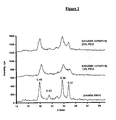
- Wide-Angle X-Ray Scattering was performed in order to investigate the lipid modification of the produced extruded rod-shaped devices (according to example 1A and 1B). Lipidic controlled release systems, the pure lipids as well as lipidic blend before manufacturing were ground. Wide-angle X-ray scattering (WAXS) was performed by an X-ray Diffractometer XRD 3000 TT (Seifert, Ahrensberg, Germany), equipped with a copper anode (40 kV, 30 mA wavelength 0,154178 nm). Experiments were conducted at 0.05° (2 theta) within a 5° - 40° range.
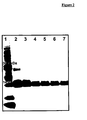
- the protein was extracted with an aqueous extraction method [ Mohl, S., The Development of a Sustained and Controlled Release Device for Pharmaceutical Proteins based on Lipid Implants, No (2003 ).]. Briefly, the protein-loaded matrix was ground in an agate mortar. Subsequently, 50 mg of the sample were suspended in 1 mL pH 7.4 isotonic 0.01 M sodium phosphate buffer containing 0.05 % (wt/vol) sodium azide and 1 % (wt/vol) polysorbate 20 (PBST). After gentle agitation for 2 hours the samples were centrifuged at 5000 rpm for 5 minutes (4K15 laboratory centrifuge; Sigma, Osterode, Germany). The samples were analysed by SDS-PAGE with subsequent silver staining.
- SDS-PAGE was conducted under non-reducing conditions using an XCell II Mini cell system (Novex, San Diego, CA).
- the protein solutions were diluted in a pH 6.8 tris- buffer, containing 2 % SDS and 2 % glycerine.
- Samples were denatured at 90°C for 30 min and subsequently 20 ⁇ L were loaded into the gel wells (NUPAGE Novex 10 % Bis Pre-Cast Gel 1.0 mm; Invitrogen, Groningen, The Netherlands).
- Electrophoresis was performed in a constant current mode of 30 mA in a tris-glycine/SDS running buffer (MES running buffer; Invitrogen, Groningen, The Netherlands).
- Gel staining and drying was accomplished with a silver staining kit (SilverXpress) and a drying system (DryEase), both provided from Invitrogen, Groningen, Netherlands.
- FTIR-spectroscopy has been suggested to analyse the secondary structure of proteins embedded within controlled release devices [ Fu, K., Griebenow, K., Hsieh, L., Klibanov, A. M., and Langer, R., FTIR characterization of the secondary structure of proteins encapsulated within PLGA microspheres, Journal of Controlled Release. 58: 357-366 (1999 ); van de Weert, M., van't Hof, R., van der Weerd, J., Heeren, R. M. A., Posthuma, G., Hennink, W. E., and Crommelin, D. J.
- TopPac vials cycloolefin copolymer vials; Schott GmbH, Mainz, Germany.
- the vials were filled with isotonic 0.01 M phosphate buffer pH 7.4 containing 0.05 % (wt/vol) sodium azide (PBS).
- PBS 0.05 % sodium azide
- 1.0 mL of buffer was added, for extrudates with a diameter of 1.9 mm the volume of buffer was increased to 2.0 mL.
- the vials were placed in a horizontal shaker (40 rpm, 37 °C, Certomat ® IS; B. Braun Biotech International, Göttingen, Germany).
- the release medium was completely exchanged and the released amount of IFN- ⁇ was determined as described below.
- the frequent buffer exchange as well as the absence of acidic/basic degradation or release products ensured a constant pH in the release media throughout the experiments.
- Protein concentration was measured by size-exclusion chromatography (SE-HPLC) using a TSKgel (G3000SWXL, 7.8 mm x 30.0 mm column; Tosoh Biosep, Stuttgart, Germany).
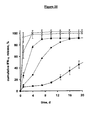
- extrudates comprising 10 % PEG liberated IFN- ⁇ in a sustained manner over 13 days, when the implant diameter was 0.5 mm.
- the use of extrudates with a diameter of 1.0 or 1.9 mm extended the release period up to 30 or up to 60 days, respectively. Coexistent to this prolongation of the release period, the total amount of IFN- ⁇ released differed in dependence on the implant diameter.
- a similar influence of the extrudate diameter was observed with implants loaded with 20 % PEG. Almost complete protein recovery was observed with extrudates of a diameter of 0.5 and 1 mm during the observation period.
- extrudates with a diameter of 1.9 mm revealed a sustained IFN-a release over 2 months.
- the stepwise decrease of the totally liberated IFN- ⁇ by increasing the implant diameter indicates that the incomplete protein recovery from larger extrudates can be ascribed to the implant geometry rather than to protein aggregation within the extrudates.
- lysozyme was extracted from the lipidic extrudates and analysed by SDS-PAGE ( Figures 6 ). As shown in Figure 6 , no protein degradation products were detected by Coomassie Blue staining, indicating that the developed extrusion procedure did not compromise the stability of lysozyme.
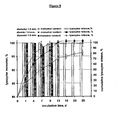
- Lysozyme release from implants prepared by twin screw extrusion was studied in accordance to Example 5.
- SE-HPLC analysis was carried out.
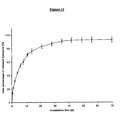
- FIG. 7 the in vitro release kinetics of lysozyme from extrudates containing 20 % PEG are illustrated.
- the reduction of the implant diameter resulted in a less retarded lysozyme release.
- lysozyme was delivered almost entirely in its monomeric form (>98 %) from extrudates prepared by twin screw extrusion. Size exclusion chromatograms of lysozyme revealed a main protein peak with a retention time of 24.5 minutes.
- a lipid/protein mixture comprising 10 % IFN- ⁇ /HP- ⁇ -CD lyophilisate, 0 to 15 % PEG, and tristearin as matrix material was extruded by means of a ram extruder.
- lipid powder was blended with lyophilised IFN- a and optionally PEG in an agate mortar. This mixture was filled into the barrel of a purpose made extruder device ( Figure 9 ). After inserting the extruder piston a force of 3.92 kN was applied for 30 s with a hydraulic press (Maassen, Eningen, Germany). Then, the extruder was lifted on a rack and the lipidic formulation was extruded with the hydraulic press. As the extruder die was 1.2 mm, extrudates revealed a diameter of 1.2 mm. The average length of the extrudates was 15 mm.
- the influence of different manufacturing strategies - ram extrusion, twin screw extrusion and compression - on the release of IFN- ⁇ was investigated.
- the lipid/protein mixture comprising 10 % IFN- ⁇ /HP- ⁇ -CD lyophilisate, 20 % PEG, and a lipidic powder blend of H12 and tristearin in a mass ratio of 1 to 4 was compressed at 19.6 kN for 30 s, extruded by means of the ram extruder or by means of twin screw extrusion as described above.
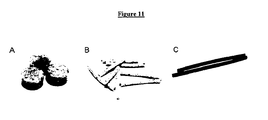
- the lipidic powder comprising H12 and tristearin in a ratio of 1 ⁇ 4 was admixed with 1 % methylene blue in mortar.
- the obtained powder blend was (A) compressed at 19.8 kN for 30 seconds (B) extruded with a ram extruder or (C) extruded with a twin-screw extruder as described above.
- extruded rods prepared by twin screw extrusion revealed an uniform staining.
- implants of the same formulation processed by compression or ram extrusion revealed darker and brighter zones, indicating that the biological drug is more finely distributed with the lipid matrix when the manufacturing is performed by twin screw extrusion.
- a lipid powder comprising: H12 24% D118 56% PEG 6000 17.5% Lysozyme 2.5% was prepared by grinding in a mortar. Extrusion was performed using a twin screw extruder (MiniLab Micro Rheology Compounder, Thermo Haake GmbH Düsseldorf, Germany). The extruder was heated to 40 °C prior filling. The rotation speed of the screws was fixed at 40 rpm. Then the extruder was manually filled with the lipid blend. Extrusion was performed with closed bypass channel to allow a direct extrusion without circulating.
- the delivered amount of lysozyme was determined by SE-HPLC using Superose 12 column (GE Healthcare) with a mobile phase consisting of 200 mM disodium hydrogen phosphate dihydrate (adjusted to pH 6.8 with hydrochloric acid), the flow rate was 0.62 mL/min, and lysozyme was detected spectrophotometrically.
- the extruded rod-shaped devices of the invention can be used as a delivery system that allows the temperature-dependent modulate release of the biological substance at the site of action (temperature variations can be adjusted by a separate heat treatment or in combination with certain diseases (such as inflammatory reactions) or treatments (such as laser therapy)).
- temperature variations can be adjusted by a separate heat treatment or in combination with certain diseases (such as inflammatory reactions) or treatments (such as laser therapy)).
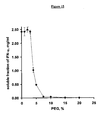
- excipient protein combinations can be used in the developed implant system to reduce the solubility of the protein within the implant pores. Due to in-situ protein precipitation during release the protein concentration within the small-sized pore volume is reduced which in turn accounts for reduced burst effects and more sustained protein delivery ( S. Herrmann, S. Mohl, F. Siepmann, J. Siepmann, G. Winter, New insight into the role of polyethylene glycol acting as protein release modifier in lipidic implants, Pharm. Res., 24 (2007) 1527-1537 ).
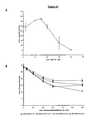
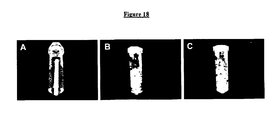
- Extrudates containing various amounts 2% of carboxymethylcellulose were prepared by twin-screw extrusion (40°C, 40 rpm). The extrudates further compromised: 24% H12, 64 % D118 and 18 % PEG. As shown in picture A to C of Figure 18 these extrudates collapsed within 24 hours.
Landscapes
- Health & Medical Sciences (AREA)
- Engineering & Computer Science (AREA)
- Animal Behavior & Ethology (AREA)
- General Health & Medical Sciences (AREA)
- Medicinal Chemistry (AREA)
- Pharmacology & Pharmacy (AREA)
- Epidemiology (AREA)
- Life Sciences & Earth Sciences (AREA)
- Veterinary Medicine (AREA)
- Chemical & Material Sciences (AREA)
- Public Health (AREA)
- Bioinformatics & Cheminformatics (AREA)
- Mechanical Engineering (AREA)
- Biomedical Technology (AREA)
- Neurosurgery (AREA)
- Dermatology (AREA)
- Medicinal Preparation (AREA)
- Medicines That Contain Protein Lipid Enzymes And Other Medicines (AREA)
Claims (15)
- Dispositif extrudé en forme de baguette pour l'administration prolongée de substances biologiques, pouvant être obtenu par un procédé comprenant(a) la fourniture d'une préparation qui comprend au moins 50% en poids d'une composition lipoïde et au moins une substance biologique, la composition lipoïde comprenant un constituant lipide ou lipoïde de point de fusion élevé et un constituant lipide ou lipoïde de faible point de fusion, dans lequel le point de fusion du constituant lipide ou lipoïde de faible point de fusion est inférieur au point de fusion du constituant lipide ou lipoïde de point de fusion élevé ;(b) l'extrusion de la préparation de (a) à une température qui est égale ou supérieure au point de fusion du constituant lipide ou lipoïde de faible point de fusion mais inférieure au point de fusion du constituant lipide ou lipoïde de point de fusion élevé, dans un extrudeuse à vis; et(c) l'obtention du dispositif extrudé en forme de baguette à partir de l'extrudat de (b).
- Le dispositif selon la revendication 1, dans lequel le point de fusion du constituant lipide ou lipoïde de point de fusion élevé est d'au moins 10°C supérieur au point de fusion du constituant lipide ou lipoïde de faible point de fusion.
- Le dispositif selon la revendication 1 ou 2, dans lequel le point de fusion du constituant lipide ou lipoïde de point de fusion élevé est supérieur à 50°C et/ou le point de fusion du constituant lipide ou lipoïde de faible point de fusion est inférieur à 50°C.
- Le dispositif selon l'une quelconque des revendications 1 à 3, dans lequel à la fois le constituant lipide ou lipoïde de point de fusion élevé et le constituant lipide ou lipoïde de faible point de fusion sont sélectionnés dans la classe des mono, di et/ou triglycérides d'acide gras, et leurs sels et dérivés.
- Le dispositif selon l'une quelconque des revendications 1 à 4, dans lequel l'au moins une substance biologique est sélectionnée dans le groupe constitué par les protéines, les polypeptides, les peptides et les acides nucléiques, et leurs sels et dérivés, ou est une particule de type viral.
- Le dispositif selon l'une quelconque des revendications 1 à 5, dans lequel à la fois le constituant lipide ou lipoïde de point de fusion élevé et le constituant lipide ou lipoïde de faible point de fusion présentent une modification lipidique stable après extrusion.
- Le dispositif selon l'une quelconque des revendications 1 à 6, dans lequel l'au moins une substance biologique est administrée durant une période d'au moins une semaine.
- Procédé de production d'un dispositif en forme de baguette pour l'administration prolongée d'une substance biologique, comprenant(a) la fourniture d'une préparation qui comprend au moins 50% en poids d'une composition lipoïde et au moins une substance biologique, la composition lipoïde comprenant un constituant lipide ou lipoïde de point de fusion élevé et un constituant lipide ou lipoïde de faible point de fusion, dans lequel le point de fusion du constituant lipide ou lipoïde de faible point de fusion est inférieur au point de fusion du constituant lipide ou lipoïde de point de fusion élevé ;(b) l'extrusion de la composition de (a) à une température qui est égale ou supérieure au point de fusion du constituant lipide ou lipoïde de faible point de fusion mais inférieure au point de fusion du constituant lipide ou lipoïde de point de fusion élevé, dans un extrudeuse à vis ; et(c) l'obtention du dispositif extrudé en forme de baguette à partir de l'extrudat de (b).
- Le procédé selon la revendication 8, dans lequel la préparation comprend en outre au moins un excipient qui (i) modifie la libération de l'au moins une substance biologiquement active à partir du dispositif implantable et/ou (ii) modifie la biodégradation des lipides ou constituants lipoïdes du dispositif implantable et/ou (iii) stabilise la substance biologique et/ou (iv) modifie la solubilité de la substance biologique et/ou (v) présente un comportement de dissolution lente, dans lequel l'au moins un excipient est de préférence sélectionné dans le groupe constitué par un polymère hydrophile, un sucre, un polyol, un surfactant et un sel hydrosoluble.
- Le procédé selon la revendication 9, dans lequel le polymère hydrophile est sélectionné dans le groupe constitué par le glycol polyéthylénique, la polyvinylpyrrolidone, le polyvinylalcool, le dextrane, le sulfate de dextrane, le sulfate de chondroïtine, le sulfate de dermatane, le sulfate d'héparane, le sulfate de kératane, l'acide hyaluronique, la chitosane, l'albumine, la fibrine, la cyclodextrine et leurs mélanges.
- Le procédé selon l'une quelconque des revendications 8 à 10, dans lequel l'extrusion est effectuée à une température qui est entre 1°C et 25°C supérieure au point de fusion du constituant lipide ou lipoïde de faible point de fusion, de préférence entre 1 °C et 20°C supérieure au point de fusion du constituant lipide ou lipoïde de faible point de fusion, et plus préférentiellement entre 1 °C et 10°C supérieure au point de fusion du constituant lipide ou lipoïde de faible point de fusion.
- Le procédé selon l'une quelconque des revendications 8 à 11, dans lequel l'extrusion est effectuée à une température qui est comprise entre 40°C et 60°C.
- Le procédé selon l'une quelconque des revendications 8 à 12, dans lequel l'extrudeuse est équipée d'au moins une paire d'éléments d'extrudeuse en co-rotation entièrement engrenants, et est de préférence une extrudeuse à double vis.
- Le procédé selon l'une quelconque des revendications 8 à 13, dans lequel le procédé de production du dispositif extrudé en forme de baguette est un procédé en une étape.
- Utilisation du dispositif extrudé en forme de baguette selon l'une quelconque des revendications 1 à 7, ou produit par le procédé selon l'une quelconque des revendications 8 à 14, comme système d'administration parentérale pour l'administration prolongée de substances biologiques.
Priority Applications (1)
| Application Number | Priority Date | Filing Date | Title |
|---|---|---|---|
| EP08864457.0A EP2240167B1 (fr) | 2007-12-21 | 2008-12-18 | Dispositifs extrudés en forme de baguette pour la libération controlée de substances biologiques chez l'homme et l'animal |
Applications Claiming Priority (3)
| Application Number | Priority Date | Filing Date | Title |
|---|---|---|---|
| EP07123958 | 2007-12-21 | ||
| EP08864457.0A EP2240167B1 (fr) | 2007-12-21 | 2008-12-18 | Dispositifs extrudés en forme de baguette pour la libération controlée de substances biologiques chez l'homme et l'animal |
| PCT/EP2008/010796 WO2009080275A1 (fr) | 2007-12-21 | 2008-12-18 | Dispositifs extrudés en forme de baguette pour la libération controlée de substances biologiques dans des êtres humains et des animaux |
Publications (2)
| Publication Number | Publication Date |
|---|---|
| EP2240167A1 EP2240167A1 (fr) | 2010-10-20 |
| EP2240167B1 true EP2240167B1 (fr) | 2013-11-13 |
Family
ID=40551477
Family Applications (1)
| Application Number | Title | Priority Date | Filing Date |
|---|---|---|---|
| EP08864457.0A Active EP2240167B1 (fr) | 2007-12-21 | 2008-12-18 | Dispositifs extrudés en forme de baguette pour la libération controlée de substances biologiques chez l'homme et l'animal |
Country Status (4)
| Country | Link |
|---|---|
| US (1) | US20110059140A1 (fr) |
| EP (1) | EP2240167B1 (fr) |
| ES (1) | ES2441550T3 (fr) |
| WO (1) | WO2009080275A1 (fr) |
Families Citing this family (8)
| Publication number | Priority date | Publication date | Assignee | Title |
|---|---|---|---|---|
| PL386099A1 (pl) * | 2008-09-16 | 2010-03-29 | Zakłady Farmaceutyczne POLPHARMA Spółka Akcyjna | Sposób otrzymywania wielokompartmentowego implantu lipidowego |
| JP6149183B2 (ja) * | 2011-10-24 | 2017-06-21 | ブレイバーン ファーマシューティカルズ,インコーポレイティド | 移植可能チザニジン組成物及びその治療方法 |
| DE102013018193A1 (de) | 2013-10-30 | 2015-05-13 | Martin-Luther-Universität Halle-Wittenberg, Körperschaft des öffentlichen Rechts | Injizierbare Depotformulierungen zur kontrollierten Wirkstofffreisetzung |
| DE102014005782A1 (de) | 2014-04-23 | 2015-10-29 | Martin-Luther-Universität Halle-Wittenberg | lnjizierbare und implantierbare Trägersysteme auf Basis von modifizierten Poly(dikarbonsäure-multiol estern) zur kontrollierten Wirkstofffreisetzung |
| FR3037789A1 (fr) * | 2015-06-23 | 2016-12-30 | Rondol Ind | Ligne de production pour la production de medicaments, et installation de production comprenant une telle ligne de production |
| DE102017106216A1 (de) * | 2017-03-22 | 2018-09-27 | Amw Gmbh | Extrudierte Depotform zur anhaltenden Wirkstofffreisetzung |
| MX2020014160A (es) * | 2018-06-25 | 2021-03-09 | Titan Pharmaceuticals Inc | Implantes para liberacion de sustancias farmaceuticas lipofilicas o anfifilicas. |
| JP7821486B2 (ja) * | 2019-09-19 | 2026-02-27 | アーエムヴェー ゲゼルシャフト ミット ベシュレンクテル ハフツング | 制御された活性物質放出のための押出型デポ剤 |
Family Cites Families (12)
| Publication number | Priority date | Publication date | Assignee | Title |
|---|---|---|---|---|
| US4450150A (en) * | 1973-05-17 | 1984-05-22 | Arthur D. Little, Inc. | Biodegradable, implantable drug delivery depots, and method for preparing and using the same |
| DE3024416C2 (de) * | 1980-06-28 | 1982-04-15 | Gödecke AG, 1000 Berlin | Verfahren zur Herstellung von Arzneimitteln mit retardierter Wirkstoff-Freisetzung |
| US5380535A (en) * | 1991-05-28 | 1995-01-10 | Geyer; Robert P. | Chewable drug-delivery compositions and methods for preparing the same |
| ES2086229T3 (es) * | 1992-05-22 | 1996-06-16 | Goedecke Ag | Procedimiento para la obtencion de preparados medicinales de accion retardada. |
| JPH07112940A (ja) * | 1993-08-26 | 1995-05-02 | Takeda Chem Ind Ltd | 徐放性非経口投与製剤およびその製造方法 |
| NZ523385A (en) * | 2000-06-28 | 2005-09-30 | Atul J | Biodegradable vehicles and BAS-loaded delivery systems for use as biodegradable fillers and/or spacers, e.g. artificial skin |
| DE10161078A1 (de) * | 2001-12-12 | 2003-08-28 | Achim Goepferich | Matrizes zur Stabilisierung und kontrollierten Freisetzung von Problemarzneistoffen |
| CN1684663A (zh) * | 2002-07-31 | 2005-10-19 | 阿尔萨公司 | 可注射的多模式聚合物储库组合物以及其用途 |
| US8329203B2 (en) * | 2004-01-12 | 2012-12-11 | The Trustees Of The University Of Pennsylvania | Drug-containing implants and methods of use thereof |
| WO2005087221A1 (fr) * | 2004-03-15 | 2005-09-22 | Christine Allen | Implant biocompatible et biodegradable et procede de fabrication de cet implant |
| KR100486028B1 (ko) * | 2004-04-20 | 2005-05-03 | 주식회사 펩트론 | 단백질 함유 서방성 리피드 임플란트 및 이의 제조방법 |
| CA2598204C (fr) * | 2004-11-09 | 2015-01-13 | Board Of Regents, The University Of Texas System | Composition de petites particules medicamenteuses chauffee et stabilisee |
-
2008
- 2008-12-18 EP EP08864457.0A patent/EP2240167B1/fr active Active
- 2008-12-18 WO PCT/EP2008/010796 patent/WO2009080275A1/fr not_active Ceased
- 2008-12-18 US US12/810,016 patent/US20110059140A1/en not_active Abandoned
- 2008-12-18 ES ES08864457.0T patent/ES2441550T3/es active Active
Also Published As
| Publication number | Publication date |
|---|---|
| ES2441550T3 (es) | 2014-02-05 |
| WO2009080275A1 (fr) | 2009-07-02 |
| US20110059140A1 (en) | 2011-03-10 |
| EP2240167A1 (fr) | 2010-10-20 |
Similar Documents
| Publication | Publication Date | Title |
|---|---|---|
| EP2240167B1 (fr) | Dispositifs extrudés en forme de baguette pour la libération controlée de substances biologiques chez l'homme et l'animal | |
| Shi et al. | Current advances in sustained-release systems for parenteral drug delivery | |
| US9205046B2 (en) | Enhanced stability of inverse thermal gelling composite hydrogels | |
| EP2785324B1 (fr) | Matériau d'administration médicamenteuse hydrophobe, procédé de fabrication correspondant et procédés permettant d'administrer la composition d'administration médicamenteuse | |
| KR101760953B1 (ko) | 비-수성 담체를 이용한 서방성 제형물 | |
| CA2703807C (fr) | Composites hydrogels a gelification thermique inversee presentant une stabilite accrue | |
| Schulze et al. | Lipid extrudates as novel sustained release systems for pharmaceutical proteins | |
| JP4887542B2 (ja) | Pegt/pbtブロックコポリマーを基にしたインターフェロンのための制御放出組成物 | |
| BG64642B1 (bg) | Фармацевтичен състав с продължително освобождаване на лекарствени средства, капсулирани в микрочастици на хиалуронова киселина | |
| CN1972665A (zh) | 导管可注射的的长效组合物和其使用 | |
| KR20050038008A (ko) | 주사용 저장형 조성물 및 이의 용도 | |
| JP2005519873A (ja) | カテーテル注入可能なデポー組成物およびそれらの使用 | |
| JP2004510730A (ja) | 非経口的投与可能な制御放出微粒子調製物 | |
| Lee et al. | Protein complexed with chondroitin sulfate in poly (lactide-co-glycolide) microspheres | |
| EP2785330B1 (fr) | Matériau d'administration médicamenteuse, procédé de fabrication correspondant et procédé permettant d'administrer la composition d'administration médicamenteuse | |
| Lee et al. | Stabilization of protein encapsulated in poly (lactide-co-glycolide) microspheres by novel viscous S/W/O/W method | |
| EP3600243A1 (fr) | Forme dépôt extrudée pour la libération prolongée de substance active | |
| EP1891941A1 (fr) | Formulations des gel aqueuses comprenant des microsphères | |
| Sax et al. | In-vivo biodegradation of extruded lipid implants in rabbits | |
| KR100486028B1 (ko) | 단백질 함유 서방성 리피드 임플란트 및 이의 제조방법 | |
| Rhodes et al. | Formulation of depot delivery systems | |
| Herrmann | Lipidic implants for pharmaceutical proteins: mechanisms of release and development of extruded devices | |
| KR101388785B1 (ko) | 단백질 또는 펩티드 약물과 황산기 함유 다당류로 이루어진 안정적이고 지속적인 약물전달을 위한 약물복합체 | |
| Sax | Twin-screw extruded lipid implants for controlled protein drug delivery | |
| Mohl | The development of a sustained and controlled release device for pharmaceutical proteins based on lipid implants |
Legal Events
| Date | Code | Title | Description |
|---|---|---|---|
| PUAI | Public reference made under article 153(3) epc to a published international application that has entered the european phase |
Free format text: ORIGINAL CODE: 0009012 |
|
| 17P | Request for examination filed |
Effective date: 20100719 |
|
| AK | Designated contracting states |
Kind code of ref document: A1 Designated state(s): AT BE BG CH CY CZ DE DK EE ES FI FR GB GR HR HU IE IS IT LI LT LU LV MC MT NL NO PL PT RO SE SI SK TR |
|
| AX | Request for extension of the european patent |
Extension state: AL BA MK RS |
|
| DAX | Request for extension of the european patent (deleted) | ||
| 17Q | First examination report despatched |
Effective date: 20110701 |
|
| GRAP | Despatch of communication of intention to grant a patent |
Free format text: ORIGINAL CODE: EPIDOSNIGR1 |
|
| INTG | Intention to grant announced |
Effective date: 20130604 |
|
| GRAS | Grant fee paid |
Free format text: ORIGINAL CODE: EPIDOSNIGR3 |
|
| GRAA | (expected) grant |
Free format text: ORIGINAL CODE: 0009210 |
|
| AK | Designated contracting states |
Kind code of ref document: B1 Designated state(s): AT BE BG CH CY CZ DE DK EE ES FI FR GB GR HR HU IE IS IT LI LT LU LV MC MT NL NO PL PT RO SE SI SK TR |
|
| REG | Reference to a national code |
Ref country code: GB Ref legal event code: FG4D |
|
| REG | Reference to a national code |
Ref country code: CH Ref legal event code: EP |
|
| REG | Reference to a national code |
Ref country code: AT Ref legal event code: REF Ref document number: 640255 Country of ref document: AT Kind code of ref document: T Effective date: 20131215 |
|
| REG | Reference to a national code |
Ref country code: IE Ref legal event code: FG4D |
|
| REG | Reference to a national code |
Ref country code: NL Ref legal event code: T3 |
|
| REG | Reference to a national code |
Ref country code: DE Ref legal event code: R096 Ref document number: 602008028750 Country of ref document: DE Effective date: 20140109 |
|
| REG | Reference to a national code |
Ref country code: ES Ref legal event code: FG2A Ref document number: 2441550 Country of ref document: ES Kind code of ref document: T3 Effective date: 20140205 |
|
| REG | Reference to a national code |
Ref country code: AT Ref legal event code: MK05 Ref document number: 640255 Country of ref document: AT Kind code of ref document: T Effective date: 20131113 |
|
| REG | Reference to a national code |
Ref country code: LT Ref legal event code: MG4D |
|
| PG25 | Lapsed in a contracting state [announced via postgrant information from national office to epo] |
Ref country code: LT Free format text: LAPSE BECAUSE OF FAILURE TO SUBMIT A TRANSLATION OF THE DESCRIPTION OR TO PAY THE FEE WITHIN THE PRESCRIBED TIME-LIMIT Effective date: 20131113 Ref country code: HR Free format text: LAPSE BECAUSE OF FAILURE TO SUBMIT A TRANSLATION OF THE DESCRIPTION OR TO PAY THE FEE WITHIN THE PRESCRIBED TIME-LIMIT Effective date: 20131113 Ref country code: FI Free format text: LAPSE BECAUSE OF FAILURE TO SUBMIT A TRANSLATION OF THE DESCRIPTION OR TO PAY THE FEE WITHIN THE PRESCRIBED TIME-LIMIT Effective date: 20131113 Ref country code: IS Free format text: LAPSE BECAUSE OF FAILURE TO SUBMIT A TRANSLATION OF THE DESCRIPTION OR TO PAY THE FEE WITHIN THE PRESCRIBED TIME-LIMIT Effective date: 20140313 Ref country code: NO Free format text: LAPSE BECAUSE OF FAILURE TO SUBMIT A TRANSLATION OF THE DESCRIPTION OR TO PAY THE FEE WITHIN THE PRESCRIBED TIME-LIMIT Effective date: 20140213 Ref country code: SE Free format text: LAPSE BECAUSE OF FAILURE TO SUBMIT A TRANSLATION OF THE DESCRIPTION OR TO PAY THE FEE WITHIN THE PRESCRIBED TIME-LIMIT Effective date: 20131113 |
|
| PG25 | Lapsed in a contracting state [announced via postgrant information from national office to epo] |
Ref country code: CY Free format text: LAPSE BECAUSE OF FAILURE TO SUBMIT A TRANSLATION OF THE DESCRIPTION OR TO PAY THE FEE WITHIN THE PRESCRIBED TIME-LIMIT Effective date: 20131113 Ref country code: BE Free format text: LAPSE BECAUSE OF FAILURE TO SUBMIT A TRANSLATION OF THE DESCRIPTION OR TO PAY THE FEE WITHIN THE PRESCRIBED TIME-LIMIT Effective date: 20131113 Ref country code: LV Free format text: LAPSE BECAUSE OF FAILURE TO SUBMIT A TRANSLATION OF THE DESCRIPTION OR TO PAY THE FEE WITHIN THE PRESCRIBED TIME-LIMIT Effective date: 20131113 Ref country code: AT Free format text: LAPSE BECAUSE OF FAILURE TO SUBMIT A TRANSLATION OF THE DESCRIPTION OR TO PAY THE FEE WITHIN THE PRESCRIBED TIME-LIMIT Effective date: 20131113 |
|
| PG25 | Lapsed in a contracting state [announced via postgrant information from national office to epo] |
Ref country code: PT Free format text: LAPSE BECAUSE OF FAILURE TO SUBMIT A TRANSLATION OF THE DESCRIPTION OR TO PAY THE FEE WITHIN THE PRESCRIBED TIME-LIMIT Effective date: 20140313 |
|
| PG25 | Lapsed in a contracting state [announced via postgrant information from national office to epo] |
Ref country code: EE Free format text: LAPSE BECAUSE OF FAILURE TO SUBMIT A TRANSLATION OF THE DESCRIPTION OR TO PAY THE FEE WITHIN THE PRESCRIBED TIME-LIMIT Effective date: 20131113 |
|
| REG | Reference to a national code |
Ref country code: DE Ref legal event code: R097 Ref document number: 602008028750 Country of ref document: DE |
|
| PG25 | Lapsed in a contracting state [announced via postgrant information from national office to epo] |
Ref country code: SK Free format text: LAPSE BECAUSE OF FAILURE TO SUBMIT A TRANSLATION OF THE DESCRIPTION OR TO PAY THE FEE WITHIN THE PRESCRIBED TIME-LIMIT Effective date: 20131113 Ref country code: PL Free format text: LAPSE BECAUSE OF FAILURE TO SUBMIT A TRANSLATION OF THE DESCRIPTION OR TO PAY THE FEE WITHIN THE PRESCRIBED TIME-LIMIT Effective date: 20131113 Ref country code: MC Free format text: LAPSE BECAUSE OF FAILURE TO SUBMIT A TRANSLATION OF THE DESCRIPTION OR TO PAY THE FEE WITHIN THE PRESCRIBED TIME-LIMIT Effective date: 20131113 Ref country code: CZ Free format text: LAPSE BECAUSE OF FAILURE TO SUBMIT A TRANSLATION OF THE DESCRIPTION OR TO PAY THE FEE WITHIN THE PRESCRIBED TIME-LIMIT Effective date: 20131113 Ref country code: RO Free format text: LAPSE BECAUSE OF FAILURE TO SUBMIT A TRANSLATION OF THE DESCRIPTION OR TO PAY THE FEE WITHIN THE PRESCRIBED TIME-LIMIT Effective date: 20131113 |
|
| PLBE | No opposition filed within time limit |
Free format text: ORIGINAL CODE: 0009261 |
|
| STAA | Information on the status of an ep patent application or granted ep patent |
Free format text: STATUS: NO OPPOSITION FILED WITHIN TIME LIMIT |
|
| REG | Reference to a national code |
Ref country code: IE Ref legal event code: MM4A |
|
| PG25 | Lapsed in a contracting state [announced via postgrant information from national office to epo] |
Ref country code: DK Free format text: LAPSE BECAUSE OF FAILURE TO SUBMIT A TRANSLATION OF THE DESCRIPTION OR TO PAY THE FEE WITHIN THE PRESCRIBED TIME-LIMIT Effective date: 20131113 |
|
| 26N | No opposition filed |
Effective date: 20140814 |
|
| PG25 | Lapsed in a contracting state [announced via postgrant information from national office to epo] |
Ref country code: IE Free format text: LAPSE BECAUSE OF NON-PAYMENT OF DUE FEES Effective date: 20131218 |
|
| REG | Reference to a national code |
Ref country code: DE Ref legal event code: R097 Ref document number: 602008028750 Country of ref document: DE Effective date: 20140814 |
|
| PG25 | Lapsed in a contracting state [announced via postgrant information from national office to epo] |
Ref country code: SI Free format text: LAPSE BECAUSE OF FAILURE TO SUBMIT A TRANSLATION OF THE DESCRIPTION OR TO PAY THE FEE WITHIN THE PRESCRIBED TIME-LIMIT Effective date: 20131113 |
|
| PG25 | Lapsed in a contracting state [announced via postgrant information from national office to epo] |
Ref country code: TR Free format text: LAPSE BECAUSE OF FAILURE TO SUBMIT A TRANSLATION OF THE DESCRIPTION OR TO PAY THE FEE WITHIN THE PRESCRIBED TIME-LIMIT Effective date: 20131113 |
|
| PG25 | Lapsed in a contracting state [announced via postgrant information from national office to epo] |
Ref country code: HU Free format text: LAPSE BECAUSE OF FAILURE TO SUBMIT A TRANSLATION OF THE DESCRIPTION OR TO PAY THE FEE WITHIN THE PRESCRIBED TIME-LIMIT; INVALID AB INITIO Effective date: 20081218 Ref country code: BG Free format text: LAPSE BECAUSE OF FAILURE TO SUBMIT A TRANSLATION OF THE DESCRIPTION OR TO PAY THE FEE WITHIN THE PRESCRIBED TIME-LIMIT Effective date: 20131113 Ref country code: LU Free format text: LAPSE BECAUSE OF NON-PAYMENT OF DUE FEES Effective date: 20131218 |
|
| PG25 | Lapsed in a contracting state [announced via postgrant information from national office to epo] |
Ref country code: MT Free format text: LAPSE BECAUSE OF FAILURE TO SUBMIT A TRANSLATION OF THE DESCRIPTION OR TO PAY THE FEE WITHIN THE PRESCRIBED TIME-LIMIT Effective date: 20131113 Ref country code: GR Free format text: LAPSE BECAUSE OF NON-PAYMENT OF DUE FEES Effective date: 20131113 |
|
| REG | Reference to a national code |
Ref country code: FR Ref legal event code: PLFP Year of fee payment: 8 |
|
| PG25 | Lapsed in a contracting state [announced via postgrant information from national office to epo] |
Ref country code: GR Free format text: LAPSE BECAUSE OF FAILURE TO SUBMIT A TRANSLATION OF THE DESCRIPTION OR TO PAY THE FEE WITHIN THE PRESCRIBED TIME-LIMIT Effective date: 20140214 |
|
| REG | Reference to a national code |
Ref country code: FR Ref legal event code: PLFP Year of fee payment: 9 |
|
| REG | Reference to a national code |
Ref country code: CH Ref legal event code: NV Representative=s name: GEVERS SA, CH Ref country code: CH Ref legal event code: PUE Owner name: AMW GMBH, DE Free format text: FORMER OWNER: LUDWIG-MAXIMILIANS-UNIVERSITAET, DE |
|
| REG | Reference to a national code |
Ref country code: DE Ref legal event code: R082 Ref document number: 602008028750 Country of ref document: DE Representative=s name: BECKORD & NIEDLICH PATENTANWALTSKANZLEI, DE Ref country code: DE Ref legal event code: R081 Ref document number: 602008028750 Country of ref document: DE Owner name: AMW GMBH, DE Free format text: FORMER OWNER: LUDWIG MAXIMILIANS UNIVERSITAET, 80539 MUENCHEN, DE Ref country code: DE Ref legal event code: R082 Ref document number: 602008028750 Country of ref document: DE Representative=s name: BECKORD & NIEDLICH PATENTANWAELTE PARTG MBB, DE |
|
| REG | Reference to a national code |
Ref country code: ES Ref legal event code: PC2A Owner name: AMW GMBH Effective date: 20171124 |
|
| REG | Reference to a national code |
Ref country code: FR Ref legal event code: PLFP Year of fee payment: 10 |
|
| REG | Reference to a national code |
Ref country code: GB Ref legal event code: 732E Free format text: REGISTERED BETWEEN 20171207 AND 20171213 |
|
| REG | Reference to a national code |
Ref country code: NL Ref legal event code: PD Owner name: AMW GMBH; DE Free format text: DETAILS ASSIGNMENT: CHANGE OF OWNER(S), ASSIGNMENT; FORMER OWNER NAME: PROFESSOR DR. GERHARD WINTER Effective date: 20171121 |
|
| REG | Reference to a national code |
Ref country code: FR Ref legal event code: TP Owner name: AMW GMBH, DE Effective date: 20180220 |
|
| REG | Reference to a national code |
Ref country code: CH Ref legal event code: NV Representative=s name: BOVARD SA NEUCHATEL CONSEILS EN PROPRIETE INTE, CH |
|
| P01 | Opt-out of the competence of the unified patent court (upc) registered |
Effective date: 20230517 |
|
| PGFP | Annual fee paid to national office [announced via postgrant information from national office to epo] |
Ref country code: DE Payment date: 20241231 Year of fee payment: 17 |
|
| PGFP | Annual fee paid to national office [announced via postgrant information from national office to epo] |
Ref country code: NL Payment date: 20241210 Year of fee payment: 17 |
|
| PGFP | Annual fee paid to national office [announced via postgrant information from national office to epo] |
Ref country code: GB Payment date: 20241205 Year of fee payment: 17 |
|
| PGFP | Annual fee paid to national office [announced via postgrant information from national office to epo] |
Ref country code: FR Payment date: 20241206 Year of fee payment: 17 |
|
| PGFP | Annual fee paid to national office [announced via postgrant information from national office to epo] |
Ref country code: IT Payment date: 20241210 Year of fee payment: 17 |
|
| PGFP | Annual fee paid to national office [announced via postgrant information from national office to epo] |
Ref country code: ES Payment date: 20250109 Year of fee payment: 17 |
|
| PGFP | Annual fee paid to national office [announced via postgrant information from national office to epo] |
Ref country code: CH Payment date: 20250101 Year of fee payment: 17 |
|
| REG | Reference to a national code |
Ref country code: CH Ref legal event code: R18 Free format text: ST27 STATUS EVENT CODE: U-0-0-R10-R18 (AS PROVIDED BY THE NATIONAL OFFICE) Effective date: 20260209 |
|
| REG | Reference to a national code |
Ref country code: CH Ref legal event code: R18 Free format text: ST27 STATUS EVENT CODE: U-0-0-R10-R18 (AS PROVIDED BY THE NATIONAL OFFICE) Effective date: 20260320 |