EP2241644B1 - Alliages d'aluminium L12 traitables thermiquement - Google Patents
Alliages d'aluminium L12 traitables thermiquement Download PDFInfo
- Publication number
- EP2241644B1 EP2241644B1 EP10250673.0A EP10250673A EP2241644B1 EP 2241644 B1 EP2241644 B1 EP 2241644B1 EP 10250673 A EP10250673 A EP 10250673A EP 2241644 B1 EP2241644 B1 EP 2241644B1
- Authority
- EP
- European Patent Office
- Prior art keywords
- weight percent
- aluminum
- alloy
- alloys
- element selected
- Prior art date
- Legal status (The legal status is an assumption and is not a legal conclusion. Google has not performed a legal analysis and makes no representation as to the accuracy of the status listed.)
- Not-in-force
Links
Images




Classifications
-
- C—CHEMISTRY; METALLURGY
- C22—METALLURGY; FERROUS OR NON-FERROUS ALLOYS; TREATMENT OF ALLOYS OR NON-FERROUS METALS
- C22C—ALLOYS
- C22C21/00—Alloys based on aluminium
- C22C21/06—Alloys based on aluminium with magnesium as the next major constituent
-
- C—CHEMISTRY; METALLURGY
- C22—METALLURGY; FERROUS OR NON-FERROUS ALLOYS; TREATMENT OF ALLOYS OR NON-FERROUS METALS
- C22C—ALLOYS
- C22C21/00—Alloys based on aluminium
- C22C21/06—Alloys based on aluminium with magnesium as the next major constituent
- C22C21/08—Alloys based on aluminium with magnesium as the next major constituent with silicon
-
- C—CHEMISTRY; METALLURGY
- C22—METALLURGY; FERROUS OR NON-FERROUS ALLOYS; TREATMENT OF ALLOYS OR NON-FERROUS METALS
- C22F—CHANGING THE PHYSICAL STRUCTURE OF NON-FERROUS METALS AND NON-FERROUS ALLOYS
- C22F1/00—Changing the physical structure of non-ferrous metals or alloys by heat treatment or by hot or cold working
- C22F1/04—Changing the physical structure of non-ferrous metals or alloys by heat treatment or by hot or cold working of aluminium or alloys based thereon
- C22F1/043—Changing the physical structure of non-ferrous metals or alloys by heat treatment or by hot or cold working of aluminium or alloys based thereon of alloys with silicon as the next major constituent
-
- C—CHEMISTRY; METALLURGY
- C22—METALLURGY; FERROUS OR NON-FERROUS ALLOYS; TREATMENT OF ALLOYS OR NON-FERROUS METALS
- C22F—CHANGING THE PHYSICAL STRUCTURE OF NON-FERROUS METALS AND NON-FERROUS ALLOYS
- C22F1/00—Changing the physical structure of non-ferrous metals or alloys by heat treatment or by hot or cold working
- C22F1/04—Changing the physical structure of non-ferrous metals or alloys by heat treatment or by hot or cold working of aluminium or alloys based thereon
- C22F1/047—Changing the physical structure of non-ferrous metals or alloys by heat treatment or by hot or cold working of aluminium or alloys based thereon of alloys with magnesium as the next major constituent
-
- C—CHEMISTRY; METALLURGY
- C22—METALLURGY; FERROUS OR NON-FERROUS ALLOYS; TREATMENT OF ALLOYS OR NON-FERROUS METALS
- C22F—CHANGING THE PHYSICAL STRUCTURE OF NON-FERROUS METALS AND NON-FERROUS ALLOYS
- C22F1/00—Changing the physical structure of non-ferrous metals or alloys by heat treatment or by hot or cold working
- C22F1/04—Changing the physical structure of non-ferrous metals or alloys by heat treatment or by hot or cold working of aluminium or alloys based thereon
- C22F1/05—Changing the physical structure of non-ferrous metals or alloys by heat treatment or by hot or cold working of aluminium or alloys based thereon of alloys of the Al-Si-Mg type, i.e. containing silicon and magnesium in approximately equal proportions
-
- C—CHEMISTRY; METALLURGY
- C22—METALLURGY; FERROUS OR NON-FERROUS ALLOYS; TREATMENT OF ALLOYS OR NON-FERROUS METALS
- C22F—CHANGING THE PHYSICAL STRUCTURE OF NON-FERROUS METALS AND NON-FERROUS ALLOYS
- C22F1/00—Changing the physical structure of non-ferrous metals or alloys by heat treatment or by hot or cold working
- C22F1/04—Changing the physical structure of non-ferrous metals or alloys by heat treatment or by hot or cold working of aluminium or alloys based thereon
- C22F1/057—Changing the physical structure of non-ferrous metals or alloys by heat treatment or by hot or cold working of aluminium or alloys based thereon of alloys with copper as the next major constituent
Definitions
- the present invention relates generally to aluminum alloys and more specifically to heat treatable aluminum alloys produced by melt processing and strengthened by L1 2 phase dispersions.
- aluminum alloys with improved elevated temperature mechanical properties is a continuing process.
- Some attempts have included aluminum-iron and aluminum-chromium based alloys such as Al-Fe-Ce, Al-Fe-V-Si, Al-Fe-Ce-W, and Al-Cr-Zr-Mn that contain incoherent dispersoids. These alloys, however, also lose strength at elevated temperatures due to particle coarsening. In addition, these alloys exhibit ductility and fracture toughness values lower than other commercially available aluminum alloys.
- U.S. Patent No. 6,248,453 discloses aluminum alloys strengthened by dispersed Al 3 X L1 2 intermetallic phases where X is selected from the group consisting of Sc, Er, Lu, Yb, Tm, and U.
- the Al 3 X particles are coherent with the aluminum alloy matrix and are resistant to coarsening at elevated temperatures.
- the improved mechanical properties of the disclosed dispersion strengthened L1 2 aluminum alloys are stable up to 572°F (300°C).
- the alloys need to be manufactured by expensive rapid solidification processes with cooling rates in excess of 1.8x10 3 °F/sec (10 3 °C/sec).
- U.S. Patent Application Publication No. 2006/0269437 discloses an aluminum alloy that contains scandium and other elements. While the alloy is effective at high temperatures, it is not capable of being heat treated using a conventional age hardening mechanism.
- JP 09104940 discloses an Al-Cu base alloy with various additions including scandium and zirconium.
- the present invention is heat treatable aluminum alloys that can be cast, wrought, or formed by rapid solidification, and thereafter heat treated.
- the alloys can achieve high temperature performance and can be used at temperatures up to about 650°F (343°C).
- These alloys comprise silicon, magnesium, and an Al 3 X L1 2 dispersoid where X is at least one first element selected from erbium, thulium, ytterbium, and lutetium, and at least one second element selected from gadolinium, yttrium, titanium, hafnium, and niobium.
- the balance is substantially aluminum.
- the alloys may also have less than 1.0 weight percent total impurities.
- the present invention provides a heat treatable aluminum alloy consisting of: 0.2 to 3.0 weight percent magnesium; at least one element selected from the group consisting of 0.1 to 2.0 weight percent silicon, and 0.1 to 2.0 weight percent manganese; at least one first element selected from the group consisting of 0.1 to 6.0 weight percent erbium, 0.1 to 10 weight percent thulium, 0.1 to 15.0 weight percent ytterbium, and 0.1 to 12 weight percent lutetium; at least one second element selected from the group consisting of 0.1 to 4.0 weight percent gadolinium, 0.1 to 4.0 weight percent yttrium, 0.05 to 2.0 weight percent titanium, 0.05 to 2.0 weight percent hafnium, and 0.05 to 1.0 weight percent niobium; optionally consisting of at least one of 0.001 to 0.1 weight percent sodium, 0.001 to 0.1 weight percent calcium, 0.001 to 0.1 weight percent strontium, 0.001 to 0.1 weight percent antimony, 0.001 to 0.1 weight percent barium, and 0.001 to
- the present invention provides a method of forming a heat treatable aluminum alloy, the method comprising: (a) forming a melt consisting of: 0.2 to 3.0 weight percent magnesium; at least one element selected from the group consisting of 0.1 to 2.0 weight percent silicon, and 0.1 to 2.0 weight percent manganese; at least one first element selected from the group consisting of 0.1 to 6.0 weight percent erbium, 0.1 to 10 weight percent thulium, 0.1 to 15.0 weight percent ytterbium, and 0.1 to 12 weight percent lutetium; at least one second element selected from the group consisting of 0.1 to 4.0 weight percent gadolinium, 0.1 to 4.0 weight percent yttrium, 0.05 to 2.0 weight percent titanium, 0.05 to 2.0 weight percent hafnium, and 0.05 to 1.0 weight percent niobium; optionally consisting of at least one of 0.001 to 0.1 weight percent sodium, 0.001 to 0.1 weight percent calcium, 0.001 to 0.1 weight percent strontium, 0.001 to 0.1 to
- the alloys are formed by a process selected from casting, deformation processing and rapid solidification.
- the alloys are then heat treated at a temperature of from about 800°F (426°C) to about 1100°F (593°C) for between about 30 minutes and four hours, followed by quenching in water, and thereafter aged at a temperature from about 200°F (93°C) to about 600°F (315°C) for about two to forty eight hours.
- the alloys of this invention are based on the aluminum-magnesium-silicon system.
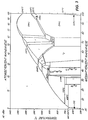
- the aluminum silicon phase diagram is shown in FIG. 1 .
- the binary system is a simple eutectic alloy system with a eutectic reaction at 12.5 weight percent silicon and 1077°F (577°C). There is little solubility of silicon in aluminum at temperatures up to 930°F (500°C) and none of aluminum in silicon.
- Hypereutectic alloys with silicon contents greater than the eutectic composition solidify with a microstructure of primary silicon grains in a finely divided aluminum/silicon eutectic matrix phase. Alloys of this invention include alloys with the addition of about 0.1 to about 2.0 weight percent silicon, more preferably about 0.2 to about 1.6 weight percent silicon, and even more preferably about 0.3 to about 1.4 weight percent silicon.
- the alloys are formed by a process selected from casting, casting plus deformation processing and rapid solidification. Following formation the alloys are heat treated at a temperature from about 800°F (425°C) to about 1100°F (593°C) for between about 30 minutes and four hours, followed by quenching in a liquid, and thereafter aged at a temperature from about 200°F (93°C) to about 600°F (315°C) for about two to about forty-eight hours.
- the alloys of this invention are based on the aluminum magnesium system.
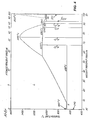
- the aluminum magnesium phase diagram is shown in FIG. 2 .
- the binary system is a eutectic alloy system with a eutectic reaction at 36 weight percent magnesium and 842°F (450°C).
- Magnesium has maximum solid solubility of 16 weight percent in aluminum at 842°F (450°C).
- the amount of magnesium in these alloys ranges from about 0.2 to about 3.0 weight percent, more preferably about 0.4 to about 2.0 weight percent, and even more preferably about 0.5 to about 1.6 weight percent.
- the ratio of magnesium to silicon is about 2.5:1, more preferably about 2:1, and even more preferably about 1.75:1.
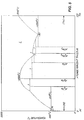
- the aluminum manganese phase diagram is shown in FIG. 3 .
- the aluminum manganese binary system is a eutectic alloy system with a eutectic reaction at 2.0 weight percent manganese and 1216.4°F (658°C).
- Manganese has maximum solid solubility of about 2 weight percent in aluminum at 1216.4°F (658°C) which can be extended further by rapid solidification processing.
- Manganese provides a considerable amount of precipitation strengthening in aluminum by precipitation of fine Al 6 Mn second phases.
- the present invention is focused on hypoeutectic alloy composition ranges.
- the amount of manganese in these alloys ranges from about 0.1 to about 2.0 weight percent, more preferably about 0.2 to about 1.5 weight percent, and even more preferably about 0.3 to about 1.0 weight percent.
- Aluminum-magnesium-silicon alloys can include manganese.
- Mg 2 Si and Si crystals precipitate in aluminum-magnesium-silicon alloys following a solution heat treatment, quench, and age process.
- Mg 2 Al 3 ( ⁇ ) phase precipitates as large intermetallic particles in high magnesium containing aluminum alloys which is not desired from a strengthening point of view.
- the presence of L1 2 phase prevents formation of ⁇ phase in this material which improves ductility and toughness of material.
- Exemplary aluminum alloys of this invention include, but are not limited to (in weight percent):
- Examples of other alloys similar to the above are those alloys with the addition of about 0.1 to about 2.0 weight percent Mn, more preferably alloys with the addition of about 0.2 to about 1.5 weight percent Mn, and even more preferably alloys with the addition of about 0.3 to about 1.0 weight percent Mn.
- erbium, thulium, ytterbium, and lutetium are potent strengtheners that have low diffusivity and low solubility in aluminum. All these elements form equilibrium Al 3 X intermetallic dispersoids where X is at least one of erbium, ytterbium, lutetium, that have an L1 2 structure that is an ordered face centered cubic structure with the X atoms located at the corners and aluminum atoms located on the cube faces of the unit cell.
- Erbium forms Al 3 Er dispersoids in the aluminum matrix that are fine and coherent with the aluminum matrix.
- the lattice parameters of aluminum and Al 3 Er are close (0.405 nm and 0.417 nm respectively), indicating there is minimal driving force for causing growth of the Al 3 Er dispersoids.
- This low interfacial energy makes the Al 3 Er dispersoids thermally stable and resistant to coarsening up to temperatures as high as about 842°F (450°C).
- Addition of magnesium in solid solution in aluminum increases the lattice parameter of the aluminum matrix, and decreases the lattice parameter mismatch further increasing the resistance of the Al 3 Er to coarsening.
- these Al 3 Er dispersoids are made stronger and more resistant to coarsening at elevated temperatures by adding suitable alloying elements such as gadolinium, yttrium, titanium, hafnium, niobium, or combinations thereof that enter Al 3 Er in solution.
- suitable alloying elements such as gadolinium, yttrium, titanium, hafnium, niobium, or combinations thereof that enter Al 3 Er in solution.
- Thulium forms metastable Al 3 Tm dispersoids in the aluminum matrix that are fine and coherent with the aluminum matrix.
- the lattice parameters of aluminum and Al 3 Tm are close (0.405 nm and 0.420 nm respectively), indicating there is minimal driving force for causing growth of the Al 3 Tm dispersoids.
- This low interfacial energy makes the Al 3 Tm dispersoids thermally stable and resistant to coarsening up to temperatures as high as about 842°F (450°C).
- Addition of magnesium in solid solution in aluminum increases the lattice parameter of the aluminum matrix and decreases the lattice parameter mismatch further increasing the resistance to coarsening of the dispersoid.
- these Al 3 Tm dispersoids are made stronger and more resistant to coarsening at elevated temperatures by adding suitable alloying elements such as gadolinium, yttrium, titanium, hafnium, niobium, or combinations thereof that enter Al 3 Tm in solution.
- suitable alloying elements such as gadolinium, yttrium, titanium, hafnium, niobium, or combinations thereof that enter Al 3 Tm in solution.
- Ytterbium forms Al 3 Yb dispersoids in the aluminum matrix that are fine and coherent with the aluminum matrix.
- the lattice parameters of Al and Al 3 Yb are close (0.405 nm and 0.420 nm respectively), indicating there is minimal driving force for causing growth of the Al 3 Yb dispersoids.
- This low interfacial energy makes the Al 3 Yb dispersoids thermally stable and resistant to coarsening up to temperatures as high as about 842°F (450°C).
- Addition of magnesium in solid solution in aluminum increases the lattice parameter of the aluminum matrix and decreases the lattice parameter mismatch further increasing the resistance to coarsening of the Al 3 Yb.
- these Al 3 Yb dispersoids are made stronger and more resistant to coarsening at elevated temperatures by adding suitable alloying elements such as gadolinium, yttrium, titanium, hafnium, niobium, or combinations thereof that enter Al 3 Yb in solution.
- Al 3 Lu dispersoids forms Al 3 Lu dispersoids in the aluminum matrix that are fine and coherent with the aluminum matrix.
- the lattice parameters of Al and Al 3 Lu are close (0.405 nm and 0.419 nm respectively), indicating there is minimal driving force for causing growth of the Al 3 Lu dispersoids.
- This low interfacial energy makes the Al 3 Lu dispersoids thermally stable and resistant to coarsening up to temperatures as high as about 842°F (450°C).
- Addition of magnesium in solid solution in aluminum increases the lattice parameter of the aluminum matrix and decreases the lattice parameter mismatch further increasing the resistance to coarsening of Al 3 Lu.
- these Al 3 Lu dispersoids are made stronger and more resistant to coarsening at elevated temperatures by adding suitable alloying elements such as gadolinium, yttrium, titanium, hafnium, niobium, or mixtures thereof that enter Al 3 Lu in solution.
- suitable alloying elements such as gadolinium, yttrium, titanium, hafnium, niobium, or mixtures thereof that enter Al 3 Lu in solution.
- Gadolinium forms metastable Al 3 Gd dispersoids in the aluminum matrix that have an L1 2 structure in the metastable condition.
- the Al 3 Gd dispersoids are stable up to temperatures as high as about 842°F (450°C) due to their low diffusivity in aluminum.
- the Al 3 Gd dispersoids have a D0 19 structure in the equilibrium condition.
- gadolinium has fairly high solubility in the Al 3 X intermetallic dispersoids (where X is erbium, thulium, ytterbium or lutetium).
- Gadolinium can substitute for the X atoms in Al 3 X intermetallic, thereby forming an ordered L1 2 phase which results in improved thermal and structural stability.
- Yttrium forms metastable Al 3 Y dispersoids in the aluminum matrix that have an L1 2 structure in the metastable condition and a D0 19 structure in the equilibrium condition.
- the metastable Al 3 Y dispersoids have a low diffusion coefficient which makes them thermally stable and highly resistant to coarsening.
- Yttrium has a high solubility in the Al 3 X intermetallic dispersoids allowing large amounts of yttrium to substitute for X in the Al 3 X L1 2 dispersoids which results in improved thermal and structural stability.
- Titanium forms Al 3 Ti dispersoids in the aluminum matrix that have an L1 2 structure in the metastable condition and D0 22 structure in the equilibrium condition.
- the metastable Al 3 Ti dispersoids have a low diffusion coefficient which makes them thermally stable and highly resistant to coarsening.
- Titanium has a high solubility in the Al 3 X dispersoids allowing large amounts of titanium to substitute for X in the Al 3 X dispersoids, which results in improved thermal and structural stability.
- Hafnium forms metastable Al 3 Hf dispersoids in the aluminum matrix that have an L1 2 structure in the metastable condition and a D0 23 structure in the equilibrium condition.
- the Al 3 Hf dispersoids have a low diffusion coefficient, which makes them thermally stable and highly resistant to coarsening.
- Hafnium has a high solubility in the Al 3 X dispersoids allowing large amounts of hafnium to substitute for erbium, thulium, ytterbium, and lutetium in the above mentioned Al 3 X dispersoids, which results in stronger and more thermally stable dispersoids.
- Niobium forms metastable Al 3 Nb dispersoids in the aluminum matrix that have an L1 2 structure in the metastable condition and a D0 22 structure in the equilibrium condition.
- Niobium has a lower solubility in the Al 3 X dispersoids than hafnium or yttrium, allowing relatively lower amounts of niobium than hafnium or yttrium to substitute for X in the Al 3 X dispersoids. Nonetheless, niobium can be very effective in slowing down the coarsening kinetics of the Al 3 X dispersoids because the Al 3 Nb dispersoids are thermally stable. The substitution of niobium for X in the above mentioned Al 3 X dispersoids results in stronger and more thermally stable dispersoids.
- Al 3 X L1 2 precipitates improve elevated temperature mechanical properties in aluminum alloys for two reasons.
- the precipitates are ordered intermetallic compounds. As a result, when the particles are sheared by glide dislocations during deformation, the dislocations separate into two partial dislocations separated by an anti-phase boundary on the glide plane. The energy to create the anti-phase boundary is the origin of the strengthening.
- the cubic L1 2 crystal structure and lattice parameter of the precipitates are closely matched to the aluminum solid solution matrix. This results in a lattice coherency at the precipitate/matrix boundary that resists coarsening. The lack of an interphase boundary results in a low driving force for particle growth and resulting elevated temperature stability. Alloying elements in solid solution in the dispersed strengthening particles and in the aluminum matrix that tend to decrease the lattice mismatch between the matrix and particles will tend to increase the strengthening and elevated temperature stability of the alloy.
- the amount of erbium present in the alloys of this invention may vary from about 0.1 to about 6.0 weight percent, more preferably from about 0.1 to about 4 weight percent, and even more preferably from about 0.2 to 2 weight percent.
- the Al-Er phase diagram shown in FIG. 4 indicates a eutectic reaction at about 6 weight percent erbium at about 1211°F (655°C).
- Aluminum alloys with less than about 6 weight percent erbium can be quenched from the melt to retain erbium in solid solutions that may precipitate as dispersed L1 2 intermetallic Al 3 Er following an aging treatment.
- Alloys with erbium in excess of the eutectic composition can only retain erbium in solid solution by rapid solidification processing (RSP) where cooling rates are in excess of about 10 3 °C/second. Alloys with erbium in excess of the eutectic composition (hypereutectic alloys) cooled normally will have a microstructure consisting of relatively large Al 3 Er dispersoid in a finely divided aluminum-Al 3 Er eutectic phase matrix.
- the amount of thulium present in the alloys of this invention may vary from about 0.1 to about 10 weight percent, more preferably from about 0.2 to about 6 weight percent, and even more preferably from about 0.2 to about 4 weight percent.
- the Al-Tm phase diagram shown in FIG. 5 indicates a eutectic reaction at about 10 weight percent thulium at about 1193°F (645°C).
- Thulium forms metastable Al 3 Tm dispersoids in the aluminum matrix that have an L1 2 structure in the equilibrium condition.
- the Al 3 Tm dispersoids have a low diffusion coefficient which makes them thermally stable and highly resistant to coarsening.
- Aluminum alloys with less than 10 weight percent thulium can be quenched from the melt to retain thulium in solid solution that may precipitate as dispersed metastable L1 2 intermetallic Al 3 Tm following an aging treatment. Alloys with thulium in excess of the eutectic composition can only retain Tm in solid solution by rapid solidification processing (RSP) where cooling rates are in excess of about 10 3 °C/second.
- RSP rapid solidification processing
- the amount of ytterbium present in the alloys of this invention may vary from about 0.1 to about 15 weight percent more preferably from about 0.2 to about 8 weight percent, and even more preferably from about 0.2 to about 4 weight percent.
- the Al-Yb phase diagram shown in FIG. 6 indicates a eutectic reaction at about 21 weight percent ytterbium at about 1157°F (625°C).
- Aluminum alloys with less than about 21 weight percent ytterbium can be quenched from the melt to retain ytterbium in solid solution that may precipitate as dispersed L1 2 intermetallic Al 3 Yb following an aging treatment. Alloys with ytterbium in excess of the eutectic composition can only retain ytterbium in solid solution by rapid solidification processing (RSP) where cooling rates are in excess of about 10 3 °C/second.
- RSP rapid solidification processing
- the amount of lutetium present in the alloys of this invention may vary from about 0.1 to about 12 weight percent, more preferably from 0.2 to about 8 weight percent, and even more preferably from about 0.2 to about 4 weight percent.
- the Al-Lu phase diagram shown in FIG. 7 indicates a eutectic reaction at about 11.7 weight percent Lu at about 1202°F (650°C).
- Aluminum alloys with less than about 11.7 weight percent lutetium can be quenched from the melt to retain Lu in solid solution that may precipitate as dispersed L1 2 intermetallic Al 3 Lu following an aging treatment. Alloys with Lu in excess of the eutectic composition can only retain Lu in solid solution by rapid solidification processing (RSP) where cooling rates are in excess of about 10 3 °C/second.
- RSP rapid solidification processing
- the amount of gadolinium present in the alloys of this invention may vary from about 0.1 to about 4 weight percent, more preferably from 0.2 to about 2 weight percent, and even more preferably from about 0.5 to about 2 weight percent.
- the amount of yttrium present in the alloys of this invention may vary from about 0.1 to about 4 weight percent, more preferably from 0.2 to about 2 weight percent, and even more preferably from about 0.5 to about 2 weight percent.
- the amount of titanium present in the alloys of this invention may vary from about 0.05 to 2 about weight percent, more preferably from 0.1 to about 1 weight percent, and even more preferably from about 0.1 to about 0.5 weight percent.
- the amount of hafnium present in the alloys of this invention may vary from about 0.05 to about 2 weight percent, more preferably from 0.1 to about 1 weight percent, and even more preferably from about 0.1 to about 0.5 weight percent.
- the amount of niobium present in the alloys of this invention may vary from about 0.05 to about 1 weight percent, more preferably from 0.1 to about 0.75 weight percent, and even more preferably from about 0.1 to about 0.5 weight percent.
- inventive alloys include at least one of about 0.001 weight percent to about 0.10 weight percent sodium, about 0.001 weight percent to about 0.10 weight percent calcium, about 0.001 to about 0.10 weight percent strontium, about 0.001 to about 0.10 weight percent antimony, 0.001 to 0.10 weight percent barium and about 0.001 to about 0.10 weight percent phosphorus. These are added to refine the microstructure of the eutectic phase and the primary silicon particle morphology and size.
- These aluminum alloys may be made by any and all consolidation and fabrication processes known to those in the art such as casting (without further deformation), deformation processing (wrought processing), rapid solidification processing, forging, extrusion, rolling, die forging, powder metallurgy and others.
- the rapid solidification process should have a cooling rate greater than about 10 3 °C/second including but not limited to powder processing, atomization, melt spinning, splat quenching, spray deposition, cold spray, plasma spray, laser melting and deposition, ball milling and cryomilling.
- Preferred exemplary aluminum alloys of this invention include, but are not limited to (in weight percent):
- alloys with the addition of about 0.1 to about 2.0 weight percent Mn more preferably alloys with the addition of about 0.2 to about 1.5 weight percent Mn, and even more preferably alloys with the addition of about 0.3 to about 1.0 weight percent Mn.
- alloys similar to these are alloys with the addition of about 0.1 to about 2.0 weight percent Mn, more preferably alloys with the addition of about 0.2 to about 1.5 weight percent Mn, and even more preferably alloys with the addition of about 0.3 to about 1.0 weight percent Mn.
- One aspect of at least the preferred embodiment of the present invention is a heat treatable aluminum alloy comprising about 0.2 to about 3.0 weight percent magnesium, at least one element selected from the group consisting of about 0.1 to about 2.0 weight percent silicon, and about 0.1 to about 2.0 weight percent manganese; an aluminum solid solution matrix containing a plurality of dispersed Al 3 X second phases having L1 2 structures where X comprises at least one of erbium, thulium, ytterbium, lutetium, and at least one of gadolinium, yttrium, titanium, hafnium, niobium.
- the alloy comprises an aluminum solid solution matrix, precipitates including but not limited to Mg 2 Si, Al 6 Mn, and a plurality of dispersed Al 3 X second phases having L1 2 structures where X comprises at least one of erbium, thulium, ytterbium, lutetium, and at least one of gadolinium, yttrium, titanium, hafnium, niobium.
- the alloy comprises at least one of about 0.1 to about 6.0 weight percent erbium, about 0.1 to about 10 weight percent thulium, about 0.1 to about 15.0 weight percent ytterbium, about 0.1 to about 12 weight percent lutetium, and about 0.1 to about 4.0 weight percent gadolinium, about 0.1 to about 4.0 weight percent yttrium, about 0.05 to about 1.0 weight percent zirconium, about 0.05 to about 2.0 weight percent titanium, about 0.05 to about 2.0 weight percent hafnium, and about 0.05 to about 1.0 weight percent niobium.
Landscapes
- Chemical & Material Sciences (AREA)
- Engineering & Computer Science (AREA)
- Materials Engineering (AREA)
- Mechanical Engineering (AREA)
- Metallurgy (AREA)
- Organic Chemistry (AREA)
- Physics & Mathematics (AREA)
- Thermal Sciences (AREA)
- Crystallography & Structural Chemistry (AREA)
- Powder Metallurgy (AREA)
- Manufacture Of Metal Powder And Suspensions Thereof (AREA)
Claims (11)
- Alliage d'aluminium à traitement thermique composé de :0,2 à 3,0 pourcent en poids de magnésium ;au moins un élément choisi dans un groupe composé de 0,1 à 2,0 pourcent en poids de silicium, et 0,1 à 2,0 pourcent en poids de manganèse ;au moins un premier élément choisi dans un groupe composé de 0,1 à 6,0 pourcent en poids d'erbium, 0,1 à 10 pourcent en poids de thulium, 0,1 à 15,0 pourcent en poids d'ytterbium, et 0,1 à 12 pourcent en poids de lutétium ;au moins un second élément choisi dans un groupe composé de 0,1 à 4,0 pourcent en poids de gadolinium, 0,1 à 4,0 pourcent en poids d'yttrium, 0,05 à 2,0 pourcent en poids de titane, 0,05 à 2,0 pourcent en poids d'hafnium, et 0,05 à 1,0 pourcent en poids de niobium ;éventuellement composé d'au moins un de 0,001 à 0,1 pourcent en poids de sodium, 0,001 à 0,1 pourcent en poids de calcium, 0,001 à 0,1 pourcent en poids de strontium, 0,001 à 0,1 pourcent en poids d'antimoine, 0,001 à 0,1 pourcent en poids de baryum, et 0,001 à 0,1 pourcent en poids de phosphore, composé de pas plus de 1,0 pourcent en poids total d'autres éléments incluant des impuretés, et ;éventuellement composé de pas plus de 0,1 pourcent en poids de fer, 0,1 pourcent en poids de chrome, 0,1 pourcent en poids de vanadium, 0,1 pourcent en poids de cobalt, et 0,1 pourcent en poids de nickel ; etle reste étant de l'aluminium avec des impuretés inévitables.
- Alliage selon la revendication 1, dans lequel l'alliage comprend une matrice de solution solide d'aluminium contenant une pluralité de secondes phases d'Al3X dispersées ayant des structures L12, dans lequel X inclut au moins un premier élément et au moins un second élément.
- Alliage selon la revendication 1, dans lequel l'alliage comprend une matrice de solution solide d'aluminium et des précipités incluant mais sans limitation du Mg2Si, et de l'Al6Mn ;
une pluralité de secondes phases d'Al3X dispersées ayant des structures L12, dans lequel X inclut au moins un premier élément choisi dans un groupe composé de 0,1 à 6,0 pourcent en poids d'erbium, 0,1 à 10 pourcent en poids de thulium, 0,1 à 15,0 pourcent en poids d'ytterbium, et 0,1 à 12 pourcent en poids de lutétium ; et
au moins un second élément choisi dans un groupe composé de 0,1 à 4,0 pourcent en poids de gadolinium, 0,1 à 4,0 pourcent en poids d'yttrium, 0,05 à 2,0 pourcent en poids de titane, 0,05 à 2,0 pourcent en poids d'hafnium, et 0,05 à 1,0 pourcent en poids de niobium ; et
le reste étant de l'aluminium avec des impuretés inévitables. - Alliage selon la revendication 1, 2 ou 3, dans lequel l'au moins un élément choisi dans un groupe composé de 0,1 à 2,0 pourcent en poids de silicium, 0,2 à 6,5 pourcent en poids de cuivre, 0,1 à 2,0 pourcent en poids de manganèse est 0,1 à 2,0 pourcent en poids de silicium.
- Alliage selon une quelconque revendication précédente, dans lequel la quantité de silicium s'inscrit dans la plage de 0,2 à 1,6 pourcent en poids.
- Alliage selon la revendication 1, 2 ou 3, dans lequel l'au moins un élément choisi dans un groupe composé de 0,1 à 2,0 pourcent en poids de silicium, et 0,1 à 2,0 pourcent en poids de manganèse est 0,1 à 2,0 pourcent en poids de manganèse.
- Procédé de formation d'un alliage d'aluminium à traitement thermique, le procédé comprenant :(a) la formation d'une fonte composée de :0,2 à 3,0 pourcent en poids de magnésium ;au moins un élément choisi dans un groupe composé de 0,1 à 2,0 pourcent en poids de silicium, et 0,1 à 2,0 pourcent en poids de manganèse ;au moins un premier élément choisi dans un groupe composé de 0,1 à 6,0 pourcent en poids d'erbium, 0,1 à 10 pourcent en poids de thulium, 0,1 à 15,0 pourcent en poids d'ytterbium, et 0,1 à 12 pourcent en poids de lutétium ;au moins un second élément choisi dans un groupe composé de 0,1 à 4,0 pourcent en poids de gadolinium, 0,1 à 4,0 pourcent en poids d'yttrium, 0,05 à 2,0 pourcent en poids de titane, 0,05 à 2,0 pourcent en poids d'hafnium, et 0,05 à 1,0 pourcent en poids de niobium ;éventuellement composé d'au moins 0,001 à 0,1 pourcent en poids de sodium, 0,001 à 0,1 pourcent en poids de calcium, 0,001 à 0,1 pourcent en poids de strontium, 0,001 à 0,1 pourcent en poids d'antimoine, 0,001 à 0,1 pourcent en poids de baryum, et 0,001 à 0,1 pourcent en poids de phosphore, composé de pas plus de 1,0 pourcent en poids total d'autres éléments incluant des impuretés, et ;éventuellement composé de pas plus de 0,1 pourcent en poids de fer, 0,1 pourcent en poids de chrome, 0,1 pourcent en poids de vanadium, 0,1 pourcent en poids de cobalt, et 0,1 pourcent en poids de nickel ; etle reste étant de l'aluminium avec des impuretés inévitables ;(b) la solidification de la fonte pour former un corps solide ; et(c) le traitement thermique du corps solide.
- Procédé selon la revendication 7 comprenant en outre :
l'affinement de la structure du corps solide par un processus de déformation incluant mais sans limitation ces procédés : une extrusion, un forgeage et un laminage. - Procédé selon la revendication 7 ou 8, dans lequel la solidification comprend un procédé de solidification rapide dans lequel la vitesse de refroidissement est supérieure à 103 °C/seconde incluant au moins un de : un processus de poudre, une atomisation, un filage par fusion, une hypertrempe, un dépôt par pulvérisation, une projection à froid, une projection au plasma, une fusion et un dépôt par laser, un broyage à boulets, et un cryobroyage.
- Procédé selon la revendication 7, 8 ou 9, dans lequel le traitement thermique comprend :un traitement thermique de mise en solution à 800 °F (426 °C) à 1 100 °F (593 °C) pendant trente minutes à quatre heures ; etune trempe ; etun vieillissement à une température de 200 °F (93 °C) à 600 °F (315 °C) pendant deux à quarante-huit heures.
- Procédé selon la revendication 7 comprenant la formation de l'alliage par un procédé choisi parmi un moulage, et un processus de déformation ultérieur, et un processus de solidification rapide.
Applications Claiming Priority (1)
| Application Number | Priority Date | Filing Date | Title |
|---|---|---|---|
| US12/419,787 US20100252148A1 (en) | 2009-04-07 | 2009-04-07 | Heat treatable l12 aluminum alloys |
Publications (2)
| Publication Number | Publication Date |
|---|---|
| EP2241644A1 EP2241644A1 (fr) | 2010-10-20 |
| EP2241644B1 true EP2241644B1 (fr) | 2018-08-08 |
Family
ID=42342736
Family Applications (1)
| Application Number | Title | Priority Date | Filing Date |
|---|---|---|---|
| EP10250673.0A Not-in-force EP2241644B1 (fr) | 2009-04-07 | 2010-03-31 | Alliages d'aluminium L12 traitables thermiquement |
Country Status (2)
| Country | Link |
|---|---|
| US (1) | US20100252148A1 (fr) |
| EP (1) | EP2241644B1 (fr) |
Families Citing this family (31)
| Publication number | Priority date | Publication date | Assignee | Title |
|---|---|---|---|---|
| CN102828081A (zh) * | 2011-06-14 | 2012-12-19 | 湖南晟通科技集团有限公司 | 一种含Zr高强度耐热铝合金材料 |
| CN102965550B (zh) * | 2012-12-06 | 2014-08-06 | 中南大学 | 一种高强高导耐热铝导体材料及其制备方法 |
| CN103290278B (zh) * | 2013-06-07 | 2015-09-16 | 湖南大学 | 一种汽车车身用高吸能性铝合金 |
| CN103484728B (zh) * | 2013-08-26 | 2015-09-16 | 天津金轮自行车集团有限公司 | 一种自行车车架管用铝合金及其制备方法 |
| CN103572104A (zh) * | 2013-11-05 | 2014-02-12 | 吴高峰 | 具有微晶复合相的铝合金 |
| WO2015138748A1 (fr) * | 2014-03-12 | 2015-09-17 | NanoAL LLC | Superalliages d'aluminium destinés à être utilisés dans des applications à haute température |
| CN104674087A (zh) * | 2015-03-20 | 2015-06-03 | 苏州科胜仓储物流设备有限公司 | 一种高强度耐腐蚀的铝合金材料及其制作工艺 |
| CN106282696A (zh) * | 2015-05-19 | 2017-01-04 | 沈阳万龙源冶金新材料科技有限公司 | 一种高强高韧铝合金 |
| CA2997017C (fr) | 2015-10-14 | 2024-01-02 | General Cable Technologies Corporation | Cables et fils a elements conducteurs formes a partir d'alliages ameliores d'aluminium-zirconium |
| US11603583B2 (en) | 2016-07-05 | 2023-03-14 | NanoAL LLC | Ribbons and powders from high strength corrosion resistant aluminum alloys |
| US10697046B2 (en) | 2016-07-07 | 2020-06-30 | NanoAL LLC | High-performance 5000-series aluminum alloys and methods for making and using them |
| CN106480384B (zh) * | 2016-11-08 | 2018-01-23 | 广西科技大学 | 一种超高强度铝合金板材的轧制方法 |
| CN106978555A (zh) * | 2016-11-28 | 2017-07-25 | 佛山市尚好门窗有限责任公司 | 一种抗冲击铝合金材料 |
| CN106498224A (zh) * | 2016-11-28 | 2017-03-15 | 宁波瑞铭机械有限公司 | 一种压布脚 |
| CN106399727B (zh) * | 2016-11-28 | 2019-04-05 | 宁波瑞铭机械有限公司 | 一种针棒连动杆 |
| CN106834824B (zh) * | 2017-02-17 | 2018-06-19 | 昆明冶金研究院 | 一种含钪、钇的高强高导电率铝基材料及其制备方法 |
| EP3592876B1 (fr) | 2017-03-08 | 2023-01-04 | Nanoal LLC | Alliages d'aluminium de la série 5000 à haute performance |
| CN110520547B (zh) | 2017-03-08 | 2021-12-28 | 纳诺尔有限责任公司 | 高性能3000系列铝合金 |
| WO2018183721A1 (fr) | 2017-03-30 | 2018-10-04 | NanoAL LLC | Structures en alliage d'aluminium de série 6000 à haute performance |
| FR3075827B1 (fr) * | 2017-12-26 | 2022-04-01 | Thales Sa | Poudre d'alliage d'aluminium pour fabrication additive, et procede de fabrication d'une piece par fabrication a partir de cette poudre |
| CN108486429A (zh) * | 2018-05-04 | 2018-09-04 | 上海康速金属材料有限公司 | 稀土铒元素增强SLM专用AlSi7Mg铝合金粉末及其应用 |
| CN108396203A (zh) * | 2018-05-04 | 2018-08-14 | 上海康速金属材料有限公司 | 稀土铒元素增强SLM专用AlSi10Mg铝合金粉末及其应用 |
| EP3810819A2 (fr) | 2018-06-20 | 2021-04-28 | Nanoal LLC | Alliages d'aluminium hautes performances à base d'al-zn-mg-zr pour la soudure et la fabrication additive |
| CN109136670B (zh) * | 2018-08-21 | 2019-11-26 | 中南大学 | 一种6xxx系铝合金及其制备方法 |
| CN110218918B (zh) * | 2019-07-30 | 2021-02-12 | 国网河南省电力公司电力科学研究院 | 高导电率、耐热铝合金及其制备方法 |
| CN110724863B (zh) * | 2019-11-18 | 2022-03-29 | 东北轻合金有限责任公司 | 一种高镁稀土铝合金大规格铸锭及其制备方法 |
| CN111455241B (zh) * | 2020-04-23 | 2021-11-19 | 西安交通大学 | 一种高强耐热的低钪复合微合金化Al-Cu合金及其热处理工艺 |
| CN112575215B (zh) * | 2020-11-24 | 2021-09-21 | 南通众福新材料科技有限公司 | 一种新能源汽车用高韧性铝合金材料及方法 |
| CN114045418B (zh) * | 2021-11-10 | 2023-03-17 | 湖南稀土金属材料研究院有限责任公司 | 铝合金材料及其制备方法和应用 |
| CN117463990B (zh) * | 2023-11-13 | 2026-04-21 | 江西宝航新材料有限公司 | 铝合金粉末及其制备方法以及应用方法 |
| CN117802365B (zh) * | 2023-12-15 | 2025-08-05 | 聚塔时代(江苏)材料科技有限公司 | 一种增材制造用铝铒合金粉末及其制备方法 |
Family Cites Families (96)
| Publication number | Priority date | Publication date | Assignee | Title |
|---|---|---|---|---|
| US3619181A (en) * | 1968-10-29 | 1971-11-09 | Aluminum Co Of America | Aluminum scandium alloy |
| US4041123A (en) * | 1971-04-20 | 1977-08-09 | Westinghouse Electric Corporation | Method of compacting shaped powdered objects |
| US3816080A (en) * | 1971-07-06 | 1974-06-11 | Int Nickel Co | Mechanically-alloyed aluminum-aluminum oxide |
| US4259112A (en) * | 1979-04-05 | 1981-03-31 | Dwa Composite Specialties, Inc. | Process for manufacture of reinforced composites |
| US4647321A (en) * | 1980-11-24 | 1987-03-03 | United Technologies Corporation | Dispersion strengthened aluminum alloys |
| US4463058A (en) * | 1981-06-16 | 1984-07-31 | Atlantic Richfield Company | Silicon carbide whisker composites |
| FR2529909B1 (fr) * | 1982-07-06 | 1986-12-12 | Centre Nat Rech Scient | Alliages amorphes ou microcristallins a base d'aluminium |
| US4499048A (en) * | 1983-02-23 | 1985-02-12 | Metal Alloys, Inc. | Method of consolidating a metallic body |
| US4469537A (en) * | 1983-06-27 | 1984-09-04 | Reynolds Metals Company | Aluminum armor plate system |
| US4661172A (en) * | 1984-02-29 | 1987-04-28 | Allied Corporation | Low density aluminum alloys and method |
| US4713216A (en) * | 1985-04-27 | 1987-12-15 | Showa Aluminum Kabushiki Kaisha | Aluminum alloys having high strength and resistance to stress and corrosion |
| US4626294A (en) * | 1985-05-28 | 1986-12-02 | Aluminum Company Of America | Lightweight armor plate and method |
| US4597792A (en) * | 1985-06-10 | 1986-07-01 | Kaiser Aluminum & Chemical Corporation | Aluminum-based composite product of high strength and toughness |
| US5226983A (en) * | 1985-07-08 | 1993-07-13 | Allied-Signal Inc. | High strength, ductile, low density aluminum alloys and process for making same |
| US4667497A (en) * | 1985-10-08 | 1987-05-26 | Metals, Ltd. | Forming of workpiece using flowable particulate |
| US4689090A (en) * | 1986-03-20 | 1987-08-25 | Aluminum Company Of America | Superplastic aluminum alloys containing scandium |
| US5055257A (en) * | 1986-03-20 | 1991-10-08 | Aluminum Company Of America | Superplastic aluminum products and alloys |
| US4874440A (en) * | 1986-03-20 | 1989-10-17 | Aluminum Company Of America | Superplastic aluminum products and alloys |
| US4755221A (en) * | 1986-03-24 | 1988-07-05 | Gte Products Corporation | Aluminum based composite powders and process for producing same |
| US4865806A (en) * | 1986-05-01 | 1989-09-12 | Dural Aluminum Composites Corp. | Process for preparation of composite materials containing nonmetallic particles in a metallic matrix |
| CH673240A5 (fr) * | 1986-08-12 | 1990-02-28 | Bbc Brown Boveri & Cie | |
| JPS6447831A (en) * | 1987-08-12 | 1989-02-22 | Takeshi Masumoto | High strength and heat resistant aluminum-based alloy and its production |
| US5066342A (en) * | 1988-01-28 | 1991-11-19 | Aluminum Company Of America | Aluminum-lithium alloys and method of making the same |
| US4834942A (en) * | 1988-01-29 | 1989-05-30 | The United States Of America As Represented By The Secretary Of The Navy | Elevated temperature aluminum-titanium alloy by powder metallurgy process |
| US4834810A (en) * | 1988-05-06 | 1989-05-30 | Inco Alloys International, Inc. | High modulus A1 alloys |
| US5462712A (en) * | 1988-08-18 | 1995-10-31 | Martin Marietta Corporation | High strength Al-Cu-Li-Zn-Mg alloys |
| US4923532A (en) * | 1988-09-12 | 1990-05-08 | Allied-Signal Inc. | Heat treatment for aluminum-lithium based metal matrix composites |
| US4927470A (en) * | 1988-10-12 | 1990-05-22 | Aluminum Company Of America | Thin gauge aluminum plate product by isothermal treatment and ramp anneal |
| US4946517A (en) * | 1988-10-12 | 1990-08-07 | Aluminum Company Of America | Unrecrystallized aluminum plate product by ramp annealing |
| AU620155B2 (en) * | 1988-10-15 | 1992-02-13 | Koji Hashimoto | Amorphous aluminum alloys |
| US4853178A (en) * | 1988-11-17 | 1989-08-01 | Ceracon, Inc. | Electrical heating of graphite grain employed in consolidation of objects |
| US4933140A (en) * | 1988-11-17 | 1990-06-12 | Ceracon, Inc. | Electrical heating of graphite grain employed in consolidation of objects |
| US5059390A (en) * | 1989-06-14 | 1991-10-22 | Aluminum Company Of America | Dual-phase, magnesium-based alloy having improved properties |
| US4964927A (en) * | 1989-03-31 | 1990-10-23 | University Of Virginia Alumini Patents | Aluminum-based metallic glass alloys |
| US4915605A (en) * | 1989-05-11 | 1990-04-10 | Ceracon, Inc. | Method of consolidation of powder aluminum and aluminum alloys |
| US4988464A (en) * | 1989-06-01 | 1991-01-29 | Union Carbide Corporation | Method for producing powder by gas atomization |
| US5076340A (en) * | 1989-08-07 | 1991-12-31 | Dural Aluminum Composites Corp. | Cast composite material having a matrix containing a stable oxide-forming element |
| US5130209A (en) * | 1989-11-09 | 1992-07-14 | Allied-Signal Inc. | Arc sprayed continuously reinforced aluminum base composites and method |
| JP2724762B2 (ja) * | 1989-12-29 | 1998-03-09 | 本田技研工業株式会社 | 高強度アルミニウム基非晶質合金 |
| US5211910A (en) * | 1990-01-26 | 1993-05-18 | Martin Marietta Corporation | Ultra high strength aluminum-base alloys |
| US5133931A (en) * | 1990-08-28 | 1992-07-28 | Reynolds Metals Company | Lithium aluminum alloy system |
| US5032352A (en) * | 1990-09-21 | 1991-07-16 | Ceracon, Inc. | Composite body formation of consolidated powder metal part |
| JP2864287B2 (ja) * | 1990-10-16 | 1999-03-03 | 本田技研工業株式会社 | 高強度高靭性アルミニウム合金の製造方法および合金素材 |
| JPH04218637A (ja) * | 1990-12-18 | 1992-08-10 | Honda Motor Co Ltd | 高強度高靱性アルミニウム合金の製造方法 |
| US5198045A (en) * | 1991-05-14 | 1993-03-30 | Reynolds Metals Company | Low density high strength al-li alloy |
| JP2911673B2 (ja) * | 1992-03-18 | 1999-06-23 | 健 増本 | 高強度アルミニウム合金 |
| JPH0673479A (ja) * | 1992-05-06 | 1994-03-15 | Honda Motor Co Ltd | 高強度高靱性Al合金 |
| CA2107421A1 (fr) * | 1992-10-16 | 1994-04-17 | Steven Alfred Miller | Methode de pulverisation a faible pression de gaz |
| JPH07179974A (ja) * | 1993-12-24 | 1995-07-18 | Takeshi Masumoto | アルミニウム合金およびその製造方法 |
| US5597529A (en) * | 1994-05-25 | 1997-01-28 | Ashurst Technology Corporation (Ireland Limited) | Aluminum-scandium alloys |
| US5858131A (en) * | 1994-11-02 | 1999-01-12 | Tsuyoshi Masumoto | High strength and high rigidity aluminum-based alloy and production method therefor |
| US5624632A (en) * | 1995-01-31 | 1997-04-29 | Aluminum Company Of America | Aluminum magnesium alloy product containing dispersoids |
| US6702982B1 (en) * | 1995-02-28 | 2004-03-09 | The United States Of America As Represented By The Secretary Of The Army | Aluminum-lithium alloy |
| JPH09104940A (ja) | 1995-10-09 | 1997-04-22 | Furukawa Electric Co Ltd:The | 溶接性に優れた高力AlーCu系合金 |
| JP4080013B2 (ja) * | 1996-09-09 | 2008-04-23 | 住友電気工業株式会社 | 高強度高靱性アルミニウム合金およびその製造方法 |
| US5882449A (en) * | 1997-07-11 | 1999-03-16 | Mcdonnell Douglas Corporation | Process for preparing aluminum/lithium/scandium rolled sheet products |
| US6312643B1 (en) * | 1997-10-24 | 2001-11-06 | The United States Of America As Represented By The Secretary Of The Air Force | Synthesis of nanoscale aluminum alloy powders and devices therefrom |
| US6071324A (en) * | 1998-05-28 | 2000-06-06 | Sulzer Metco (Us) Inc. | Powder of chromium carbide and nickel chromium |
| AT407532B (de) * | 1998-07-29 | 2001-04-25 | Miba Gleitlager Ag | Verbundwerkstoff aus zumindest zwei schichten |
| AT407404B (de) * | 1998-07-29 | 2001-03-26 | Miba Gleitlager Ag | Zwischenschicht, insbesondere bindungsschicht, aus einer legierung auf aluminiumbasis |
| DE19838015C2 (de) * | 1998-08-21 | 2002-10-17 | Eads Deutschland Gmbh | Gewalztes, stranggepreßtes, geschweißtes oder geschmiedetes Bauteil aus einer schweißbaren, korrosionsbeständigen hochmagnesiumhaltigen Aluminium-Magnesium-Legierung |
| DE19838017C2 (de) * | 1998-08-21 | 2003-06-18 | Eads Deutschland Gmbh | Schweißbare, korrosionsbeständige AIMg-Legierungen, insbesondere für die Verkehrstechnik |
| US6531004B1 (en) * | 1998-08-21 | 2003-03-11 | Eads Deutschland Gmbh | Weldable anti-corrosive aluminium-magnesium alloy containing a high amount of magnesium, especially for use in aviation |
| US6309594B1 (en) * | 1999-06-24 | 2001-10-30 | Ceracon, Inc. | Metal consolidation process employing microwave heated pressure transmitting particulate |
| WO2001012868A1 (fr) * | 1999-08-12 | 2001-02-22 | Kaiser Aluminum And Chemical Corporation | Alliages aluminium-magnesium-scandium avec hafnium |
| US6139653A (en) * | 1999-08-12 | 2000-10-31 | Kaiser Aluminum & Chemical Corporation | Aluminum-magnesium-scandium alloys with zinc and copper |
| US6368427B1 (en) * | 1999-09-10 | 2002-04-09 | Geoffrey K. Sigworth | Method for grain refinement of high strength aluminum casting alloys |
| US6355209B1 (en) * | 1999-11-16 | 2002-03-12 | Ceracon, Inc. | Metal consolidation process applicable to functionally gradient material (FGM) compositons of tungsten, nickel, iron, and cobalt |
| US6248453B1 (en) * | 1999-12-22 | 2001-06-19 | United Technologies Corporation | High strength aluminum alloy |
| WO2001088457A2 (fr) * | 2000-05-18 | 2001-11-22 | Smith & Wesson Corp. | Arme a feu en alliage d'aluminium contenant du scandium |
| US6562154B1 (en) * | 2000-06-12 | 2003-05-13 | Aloca Inc. | Aluminum sheet products having improved fatigue crack growth resistance and methods of making same |
| US6630008B1 (en) * | 2000-09-18 | 2003-10-07 | Ceracon, Inc. | Nanocrystalline aluminum metal matrix composites, and production methods |
| US6524410B1 (en) * | 2001-08-10 | 2003-02-25 | Tri-Kor Alloys, Llc | Method for producing high strength aluminum alloy welded structures |
| WO2003052154A1 (fr) * | 2001-12-14 | 2003-06-26 | Eads Deutschland Gmbh | Procede pour produire un materiau en tole d'aluminium allie a du scandium (sc) et/ou a du zircon (zr) presentant une grande resistance a la rupture |
| US6918970B2 (en) * | 2002-04-10 | 2005-07-19 | The United States Of America As Represented By The Administrator Of The National Aeronautics And Space Administration | High strength aluminum alloy for high temperature applications |
| JP2005528530A (ja) * | 2002-04-24 | 2005-09-22 | ケステック イノベーションズ エルエルシー | 非晶質状態を経て処理されたナノ相析出強化Al合金 |
| US20080138239A1 (en) * | 2002-04-24 | 2008-06-12 | Questek Innovatioans Llc | High-temperature high-strength aluminum alloys processed through the amorphous state |
| US7604704B2 (en) * | 2002-08-20 | 2009-10-20 | Aleris Aluminum Koblenz Gmbh | Balanced Al-Cu-Mg-Si alloy product |
| US6880871B2 (en) * | 2002-09-05 | 2005-04-19 | Newfrey Llc | Drive-in latch with rotational adjustment |
| US6902699B2 (en) * | 2002-10-02 | 2005-06-07 | The Boeing Company | Method for preparing cryomilled aluminum alloys and components extruded and forged therefrom |
| US7048815B2 (en) * | 2002-11-08 | 2006-05-23 | Ues, Inc. | Method of making a high strength aluminum alloy composition |
| US7648593B2 (en) * | 2003-01-15 | 2010-01-19 | United Technologies Corporation | Aluminum based alloy |
| JP3929978B2 (ja) * | 2003-01-15 | 2007-06-13 | ユナイテッド テクノロジーズ コーポレイション | アルミニウム基合金 |
| US6974510B2 (en) * | 2003-02-28 | 2005-12-13 | United Technologies Corporation | Aluminum base alloys |
| US7344675B2 (en) * | 2003-03-12 | 2008-03-18 | The Boeing Company | Method for preparing nanostructured metal alloys having increased nitride content |
| US20040191111A1 (en) * | 2003-03-14 | 2004-09-30 | Beijing University Of Technology | Er strengthening aluminum alloy |
| US6866817B2 (en) * | 2003-07-14 | 2005-03-15 | Chung-Chih Hsiao | Aluminum based material having high conductivity |
| US7241328B2 (en) * | 2003-11-25 | 2007-07-10 | The Boeing Company | Method for preparing ultra-fine, submicron grain titanium and titanium-alloy articles and articles prepared thereby |
| US20050147520A1 (en) * | 2003-12-31 | 2005-07-07 | Guido Canzona | Method for improving the ductility of high-strength nanophase alloys |
| US7547366B2 (en) * | 2004-07-15 | 2009-06-16 | Alcoa Inc. | 2000 Series alloys with enhanced damage tolerance performance for aerospace applications |
| US7393559B2 (en) * | 2005-02-01 | 2008-07-01 | The Regents Of The University Of California | Methods for production of FGM net shaped body for various applications |
| US7875132B2 (en) * | 2005-05-31 | 2011-01-25 | United Technologies Corporation | High temperature aluminum alloys |
| JP5079225B2 (ja) * | 2005-08-25 | 2012-11-21 | 富士重工業株式会社 | マグネシウムシリサイド粒を分散した状態で含むマグネシウム系金属粒子からなる金属粉末を製造する方法 |
| US7584778B2 (en) * | 2005-09-21 | 2009-09-08 | United Technologies Corporation | Method of producing a castable high temperature aluminum alloy by controlled solidification |
| US20080066833A1 (en) * | 2006-09-19 | 2008-03-20 | Lin Jen C | HIGH STRENGTH, HIGH STRESS CORROSION CRACKING RESISTANT AND CASTABLE Al-Zn-Mg-Cu-Zr ALLOY FOR SHAPE CAST PRODUCTS |
| US7811395B2 (en) * | 2008-04-18 | 2010-10-12 | United Technologies Corporation | High strength L12 aluminum alloys |
-
2009
- 2009-04-07 US US12/419,787 patent/US20100252148A1/en not_active Abandoned
-
2010
- 2010-03-31 EP EP10250673.0A patent/EP2241644B1/fr not_active Not-in-force
Non-Patent Citations (1)
| Title |
|---|
| None * |
Also Published As
| Publication number | Publication date |
|---|---|
| US20100252148A1 (en) | 2010-10-07 |
| EP2241644A1 (fr) | 2010-10-20 |
Similar Documents
| Publication | Publication Date | Title |
|---|---|---|
| EP2241644B1 (fr) | Alliages d'aluminium L12 traitables thermiquement | |
| US7909947B2 (en) | High strength L12 aluminum alloys | |
| EP2112242A1 (fr) | Alliages d'aluminium L12 durcissables par traitement thermique | |
| EP2112243B1 (fr) | Alliages d'aluminium du type L12 à haute résistance | |
| EP2112239B1 (fr) | Procédé de fabrication d'alliages d'aluminium â haute résistance comprenant des precipités l12 | |
| EP2112244B1 (fr) | Procédé de fabrication d'alliages d'aluminium l12 à haute résistance | |
| EP2112240B1 (fr) | Procédé de fabrication d'alliages d'aluminium l12 renforcés par dispersion | |
| US7883590B1 (en) | Heat treatable L12 aluminum alloys | |
| EP2112241B1 (fr) | Alliages d'aluminium amorphes renforcés par L12 | |
| EP2110450B1 (fr) | Procédé de fabrication d'alliages d'aluminium l12 à haute résistance | |
| EP2110451B1 (fr) | Alliages d'aluminium L12 à répartition bimodale et trimodale | |
| Froes et al. | Rapid Solidification of Al, Mg and Ti | |
| US20070204936A1 (en) | Magnesium Alloy | |
| Froes et al. | Lightweight metals using rapid solidification | |
| KR20260045344A (ko) | 우수한 열안정성을 가지는 니켈 함유 알루미늄 합금 가공재 및 이의 제조방법 및 이를 이용한 배터리 케이스 부품 |
Legal Events
| Date | Code | Title | Description |
|---|---|---|---|
| PUAI | Public reference made under article 153(3) epc to a published international application that has entered the european phase |
Free format text: ORIGINAL CODE: 0009012 |
|
| AK | Designated contracting states |
Kind code of ref document: A1 Designated state(s): AT BE BG CH CY CZ DE DK EE ES FI FR GB GR HR HU IE IS IT LI LT LU LV MC MK MT NL NO PL PT RO SE SI SK SM TR |
|
| AX | Request for extension of the european patent |
Extension state: AL BA ME RS |
|
| 17P | Request for examination filed |
Effective date: 20110420 |
|
| 17Q | First examination report despatched |
Effective date: 20160331 |
|
| RAP1 | Party data changed (applicant data changed or rights of an application transferred) |
Owner name: UNITED TECHNOLOGIES CORPORATION |
|
| APBK | Appeal reference recorded |
Free format text: ORIGINAL CODE: EPIDOSNREFNE |
|
| APBN | Date of receipt of notice of appeal recorded |
Free format text: ORIGINAL CODE: EPIDOSNNOA2E |
|
| APBR | Date of receipt of statement of grounds of appeal recorded |
Free format text: ORIGINAL CODE: EPIDOSNNOA3E |
|
| APBV | Interlocutory revision of appeal recorded |
Free format text: ORIGINAL CODE: EPIDOSNIRAPE |
|
| GRAP | Despatch of communication of intention to grant a patent |
Free format text: ORIGINAL CODE: EPIDOSNIGR1 |
|
| STAA | Information on the status of an ep patent application or granted ep patent |
Free format text: STATUS: GRANT OF PATENT IS INTENDED |
|
| INTG | Intention to grant announced |
Effective date: 20180227 |
|
| GRAS | Grant fee paid |
Free format text: ORIGINAL CODE: EPIDOSNIGR3 |
|
| GRAA | (expected) grant |
Free format text: ORIGINAL CODE: 0009210 |
|
| STAA | Information on the status of an ep patent application or granted ep patent |
Free format text: STATUS: THE PATENT HAS BEEN GRANTED |
|
| AK | Designated contracting states |
Kind code of ref document: B1 Designated state(s): AT BE BG CH CY CZ DE DK EE ES FI FR GB GR HR HU IE IS IT LI LT LU LV MC MK MT NL NO PL PT RO SE SI SK SM TR |
|
| REG | Reference to a national code |
Ref country code: GB Ref legal event code: FG4D |
|
| REG | Reference to a national code |
Ref country code: CH Ref legal event code: EP Ref country code: AT Ref legal event code: REF Ref document number: 1027096 Country of ref document: AT Kind code of ref document: T Effective date: 20180815 |
|
| REG | Reference to a national code |
Ref country code: IE Ref legal event code: FG4D |
|
| REG | Reference to a national code |
Ref country code: DE Ref legal event code: R096 Ref document number: 602010052492 Country of ref document: DE |
|
| REG | Reference to a national code |
Ref country code: NL Ref legal event code: MP Effective date: 20180808 |
|
| REG | Reference to a national code |
Ref country code: LT Ref legal event code: MG4D |
|
| REG | Reference to a national code |
Ref country code: AT Ref legal event code: MK05 Ref document number: 1027096 Country of ref document: AT Kind code of ref document: T Effective date: 20180808 |
|
| PG25 | Lapsed in a contracting state [announced via postgrant information from national office to epo] |
Ref country code: NO Free format text: LAPSE BECAUSE OF FAILURE TO SUBMIT A TRANSLATION OF THE DESCRIPTION OR TO PAY THE FEE WITHIN THE PRESCRIBED TIME-LIMIT Effective date: 20181108 Ref country code: SE Free format text: LAPSE BECAUSE OF FAILURE TO SUBMIT A TRANSLATION OF THE DESCRIPTION OR TO PAY THE FEE WITHIN THE PRESCRIBED TIME-LIMIT Effective date: 20180808 Ref country code: AT Free format text: LAPSE BECAUSE OF FAILURE TO SUBMIT A TRANSLATION OF THE DESCRIPTION OR TO PAY THE FEE WITHIN THE PRESCRIBED TIME-LIMIT Effective date: 20180808 Ref country code: IS Free format text: LAPSE BECAUSE OF FAILURE TO SUBMIT A TRANSLATION OF THE DESCRIPTION OR TO PAY THE FEE WITHIN THE PRESCRIBED TIME-LIMIT Effective date: 20181208 Ref country code: GR Free format text: LAPSE BECAUSE OF FAILURE TO SUBMIT A TRANSLATION OF THE DESCRIPTION OR TO PAY THE FEE WITHIN THE PRESCRIBED TIME-LIMIT Effective date: 20181109 Ref country code: FI Free format text: LAPSE BECAUSE OF FAILURE TO SUBMIT A TRANSLATION OF THE DESCRIPTION OR TO PAY THE FEE WITHIN THE PRESCRIBED TIME-LIMIT Effective date: 20180808 Ref country code: NL Free format text: LAPSE BECAUSE OF FAILURE TO SUBMIT A TRANSLATION OF THE DESCRIPTION OR TO PAY THE FEE WITHIN THE PRESCRIBED TIME-LIMIT Effective date: 20180808 Ref country code: PL Free format text: LAPSE BECAUSE OF FAILURE TO SUBMIT A TRANSLATION OF THE DESCRIPTION OR TO PAY THE FEE WITHIN THE PRESCRIBED TIME-LIMIT Effective date: 20180808 Ref country code: BG Free format text: LAPSE BECAUSE OF FAILURE TO SUBMIT A TRANSLATION OF THE DESCRIPTION OR TO PAY THE FEE WITHIN THE PRESCRIBED TIME-LIMIT Effective date: 20181108 Ref country code: LT Free format text: LAPSE BECAUSE OF FAILURE TO SUBMIT A TRANSLATION OF THE DESCRIPTION OR TO PAY THE FEE WITHIN THE PRESCRIBED TIME-LIMIT Effective date: 20180808 |
|
| PG25 | Lapsed in a contracting state [announced via postgrant information from national office to epo] |
Ref country code: ES Free format text: LAPSE BECAUSE OF FAILURE TO SUBMIT A TRANSLATION OF THE DESCRIPTION OR TO PAY THE FEE WITHIN THE PRESCRIBED TIME-LIMIT Effective date: 20180808 Ref country code: HR Free format text: LAPSE BECAUSE OF FAILURE TO SUBMIT A TRANSLATION OF THE DESCRIPTION OR TO PAY THE FEE WITHIN THE PRESCRIBED TIME-LIMIT Effective date: 20180808 Ref country code: LV Free format text: LAPSE BECAUSE OF FAILURE TO SUBMIT A TRANSLATION OF THE DESCRIPTION OR TO PAY THE FEE WITHIN THE PRESCRIBED TIME-LIMIT Effective date: 20180808 |
|
| PG25 | Lapsed in a contracting state [announced via postgrant information from national office to epo] |
Ref country code: EE Free format text: LAPSE BECAUSE OF FAILURE TO SUBMIT A TRANSLATION OF THE DESCRIPTION OR TO PAY THE FEE WITHIN THE PRESCRIBED TIME-LIMIT Effective date: 20180808 Ref country code: RO Free format text: LAPSE BECAUSE OF FAILURE TO SUBMIT A TRANSLATION OF THE DESCRIPTION OR TO PAY THE FEE WITHIN THE PRESCRIBED TIME-LIMIT Effective date: 20180808 Ref country code: CZ Free format text: LAPSE BECAUSE OF FAILURE TO SUBMIT A TRANSLATION OF THE DESCRIPTION OR TO PAY THE FEE WITHIN THE PRESCRIBED TIME-LIMIT Effective date: 20180808 Ref country code: IT Free format text: LAPSE BECAUSE OF FAILURE TO SUBMIT A TRANSLATION OF THE DESCRIPTION OR TO PAY THE FEE WITHIN THE PRESCRIBED TIME-LIMIT Effective date: 20180808 |
|
| REG | Reference to a national code |
Ref country code: DE Ref legal event code: R097 Ref document number: 602010052492 Country of ref document: DE |
|
| PG25 | Lapsed in a contracting state [announced via postgrant information from national office to epo] |
Ref country code: SK Free format text: LAPSE BECAUSE OF FAILURE TO SUBMIT A TRANSLATION OF THE DESCRIPTION OR TO PAY THE FEE WITHIN THE PRESCRIBED TIME-LIMIT Effective date: 20180808 Ref country code: SM Free format text: LAPSE BECAUSE OF FAILURE TO SUBMIT A TRANSLATION OF THE DESCRIPTION OR TO PAY THE FEE WITHIN THE PRESCRIBED TIME-LIMIT Effective date: 20180808 Ref country code: DK Free format text: LAPSE BECAUSE OF FAILURE TO SUBMIT A TRANSLATION OF THE DESCRIPTION OR TO PAY THE FEE WITHIN THE PRESCRIBED TIME-LIMIT Effective date: 20180808 |
|
| PLBE | No opposition filed within time limit |
Free format text: ORIGINAL CODE: 0009261 |
|
| STAA | Information on the status of an ep patent application or granted ep patent |
Free format text: STATUS: NO OPPOSITION FILED WITHIN TIME LIMIT |
|
| 26N | No opposition filed |
Effective date: 20190509 |
|
| PG25 | Lapsed in a contracting state [announced via postgrant information from national office to epo] |
Ref country code: SI Free format text: LAPSE BECAUSE OF FAILURE TO SUBMIT A TRANSLATION OF THE DESCRIPTION OR TO PAY THE FEE WITHIN THE PRESCRIBED TIME-LIMIT Effective date: 20180808 |
|
| PG25 | Lapsed in a contracting state [announced via postgrant information from national office to epo] |
Ref country code: MC Free format text: LAPSE BECAUSE OF FAILURE TO SUBMIT A TRANSLATION OF THE DESCRIPTION OR TO PAY THE FEE WITHIN THE PRESCRIBED TIME-LIMIT Effective date: 20180808 |
|
| REG | Reference to a national code |
Ref country code: CH Ref legal event code: PL |
|
| PG25 | Lapsed in a contracting state [announced via postgrant information from national office to epo] |
Ref country code: LU Free format text: LAPSE BECAUSE OF NON-PAYMENT OF DUE FEES Effective date: 20190331 |
|
| REG | Reference to a national code |
Ref country code: BE Ref legal event code: MM Effective date: 20190331 |
|
| PG25 | Lapsed in a contracting state [announced via postgrant information from national office to epo] |
Ref country code: IE Free format text: LAPSE BECAUSE OF NON-PAYMENT OF DUE FEES Effective date: 20190331 Ref country code: CH Free format text: LAPSE BECAUSE OF NON-PAYMENT OF DUE FEES Effective date: 20190331 Ref country code: LI Free format text: LAPSE BECAUSE OF NON-PAYMENT OF DUE FEES Effective date: 20190331 |
|
| PG25 | Lapsed in a contracting state [announced via postgrant information from national office to epo] |
Ref country code: BE Free format text: LAPSE BECAUSE OF NON-PAYMENT OF DUE FEES Effective date: 20190331 |
|
| PG25 | Lapsed in a contracting state [announced via postgrant information from national office to epo] |
Ref country code: TR Free format text: LAPSE BECAUSE OF FAILURE TO SUBMIT A TRANSLATION OF THE DESCRIPTION OR TO PAY THE FEE WITHIN THE PRESCRIBED TIME-LIMIT Effective date: 20180808 |
|
| PG25 | Lapsed in a contracting state [announced via postgrant information from national office to epo] |
Ref country code: MT Free format text: LAPSE BECAUSE OF NON-PAYMENT OF DUE FEES Effective date: 20190331 Ref country code: PT Free format text: LAPSE BECAUSE OF FAILURE TO SUBMIT A TRANSLATION OF THE DESCRIPTION OR TO PAY THE FEE WITHIN THE PRESCRIBED TIME-LIMIT Effective date: 20181208 |
|
| PG25 | Lapsed in a contracting state [announced via postgrant information from national office to epo] |
Ref country code: CY Free format text: LAPSE BECAUSE OF FAILURE TO SUBMIT A TRANSLATION OF THE DESCRIPTION OR TO PAY THE FEE WITHIN THE PRESCRIBED TIME-LIMIT Effective date: 20180808 |
|
| PG25 | Lapsed in a contracting state [announced via postgrant information from national office to epo] |
Ref country code: HU Free format text: LAPSE BECAUSE OF FAILURE TO SUBMIT A TRANSLATION OF THE DESCRIPTION OR TO PAY THE FEE WITHIN THE PRESCRIBED TIME-LIMIT; INVALID AB INITIO Effective date: 20100331 |
|
| PG25 | Lapsed in a contracting state [announced via postgrant information from national office to epo] |
Ref country code: MK Free format text: LAPSE BECAUSE OF FAILURE TO SUBMIT A TRANSLATION OF THE DESCRIPTION OR TO PAY THE FEE WITHIN THE PRESCRIBED TIME-LIMIT Effective date: 20180808 |
|
| REG | Reference to a national code |
Ref country code: DE Ref legal event code: R081 Ref document number: 602010052492 Country of ref document: DE Owner name: RAYTHEON TECHNOLOGIES CORPORATION (N.D.GES.D.S, US Free format text: FORMER OWNER: UNITED TECHNOLOGIES CORPORATION, FARMINGTON, CONN., US |
|
| P01 | Opt-out of the competence of the unified patent court (upc) registered |
Effective date: 20230519 |
|
| PGFP | Annual fee paid to national office [announced via postgrant information from national office to epo] |
Ref country code: DE Payment date: 20240220 Year of fee payment: 15 Ref country code: GB Payment date: 20240220 Year of fee payment: 15 |
|
| PGFP | Annual fee paid to national office [announced via postgrant information from national office to epo] |
Ref country code: FR Payment date: 20240220 Year of fee payment: 15 |
|
| REG | Reference to a national code |
Ref country code: DE Ref legal event code: R119 Ref document number: 602010052492 Country of ref document: DE |
|
| GBPC | Gb: european patent ceased through non-payment of renewal fee |
Effective date: 20250331 |
|
| PG25 | Lapsed in a contracting state [announced via postgrant information from national office to epo] |
Ref country code: DE Free format text: LAPSE BECAUSE OF NON-PAYMENT OF DUE FEES Effective date: 20251001 |
|
| PG25 | Lapsed in a contracting state [announced via postgrant information from national office to epo] |
Ref country code: GB Free format text: LAPSE BECAUSE OF NON-PAYMENT OF DUE FEES Effective date: 20250331 |
|
| PG25 | Lapsed in a contracting state [announced via postgrant information from national office to epo] |
Ref country code: FR Free format text: LAPSE BECAUSE OF NON-PAYMENT OF DUE FEES Effective date: 20250331 |