EP2245686B1 - Couvercles pour piles électrochimiques et procédés associés - Google Patents
Couvercles pour piles électrochimiques et procédés associés Download PDFInfo
- Publication number
- EP2245686B1 EP2245686B1 EP09702708.0A EP09702708A EP2245686B1 EP 2245686 B1 EP2245686 B1 EP 2245686B1 EP 09702708 A EP09702708 A EP 09702708A EP 2245686 B1 EP2245686 B1 EP 2245686B1
- Authority
- EP
- European Patent Office
- Prior art keywords
- regions
- electrochemical cell
- active regions
- cover
- cell system
- Prior art date
- Legal status (The legal status is an assumption and is not a legal conclusion. Google has not performed a legal analysis and makes no representation as to the accuracy of the status listed.)
- Not-in-force
Links
- 238000000034 method Methods 0.000 title claims description 9
- 230000004888 barrier function Effects 0.000 claims description 45
- 239000000376 reactant Substances 0.000 claims description 31
- 239000012530 fluid Substances 0.000 claims description 22
- 239000000463 material Substances 0.000 claims description 16
- XLYOFNOQVPJJNP-UHFFFAOYSA-N water Substances O XLYOFNOQVPJJNP-UHFFFAOYSA-N 0.000 claims description 16
- 238000003487 electrochemical reaction Methods 0.000 claims description 9
- 239000011148 porous material Substances 0.000 claims description 8
- 230000002401 inhibitory effect Effects 0.000 claims description 7
- 239000003014 ion exchange membrane Substances 0.000 claims description 6
- 230000004044 response Effects 0.000 claims description 5
- 239000003054 catalyst Substances 0.000 claims description 3
- 230000000887 hydrating effect Effects 0.000 claims description 2
- 239000000446 fuel Substances 0.000 description 68
- QVGXLLKOCUKJST-UHFFFAOYSA-N atomic oxygen Chemical compound [O] QVGXLLKOCUKJST-UHFFFAOYSA-N 0.000 description 14
- 239000001301 oxygen Substances 0.000 description 14
- 229910052760 oxygen Inorganic materials 0.000 description 14
- 239000012528 membrane Substances 0.000 description 11
- OKKJLVBELUTLKV-UHFFFAOYSA-N Methanol Chemical compound OC OKKJLVBELUTLKV-UHFFFAOYSA-N 0.000 description 9
- 239000007800 oxidant agent Substances 0.000 description 8
- 230000001590 oxidative effect Effects 0.000 description 8
- 238000009792 diffusion process Methods 0.000 description 7
- 239000000047 product Substances 0.000 description 7
- 230000003044 adaptive effect Effects 0.000 description 6
- 230000007613 environmental effect Effects 0.000 description 6
- 238000006243 chemical reaction Methods 0.000 description 5
- 239000000356 contaminant Substances 0.000 description 5
- HCHKCACWOHOZIP-UHFFFAOYSA-N Zinc Chemical compound [Zn] HCHKCACWOHOZIP-UHFFFAOYSA-N 0.000 description 4
- 239000003344 environmental pollutant Substances 0.000 description 4
- 238000001704 evaporation Methods 0.000 description 4
- 230000008020 evaporation Effects 0.000 description 4
- 239000007789 gas Substances 0.000 description 4
- 230000007246 mechanism Effects 0.000 description 4
- BDAGIHXWWSANSR-UHFFFAOYSA-N methanoic acid Natural products OC=O BDAGIHXWWSANSR-UHFFFAOYSA-N 0.000 description 4
- 231100000719 pollutant Toxicity 0.000 description 4
- 239000011701 zinc Substances 0.000 description 4
- 229910052725 zinc Inorganic materials 0.000 description 4
- LFQSCWFLJHTTHZ-UHFFFAOYSA-N Ethanol Chemical compound CCO LFQSCWFLJHTTHZ-UHFFFAOYSA-N 0.000 description 3
- 239000002737 fuel gas Substances 0.000 description 3
- 230000037361 pathway Effects 0.000 description 3
- OSWFIVFLDKOXQC-UHFFFAOYSA-N 4-(3-methoxyphenyl)aniline Chemical compound COC1=CC=CC(C=2C=CC(N)=CC=2)=C1 OSWFIVFLDKOXQC-UHFFFAOYSA-N 0.000 description 2
- OAKJQQAXSVQMHS-UHFFFAOYSA-N Hydrazine Chemical compound NN OAKJQQAXSVQMHS-UHFFFAOYSA-N 0.000 description 2
- NBIIXXVUZAFLBC-UHFFFAOYSA-N Phosphoric acid Chemical compound OP(O)(O)=O NBIIXXVUZAFLBC-UHFFFAOYSA-N 0.000 description 2
- 238000003491 array Methods 0.000 description 2
- 230000009286 beneficial effect Effects 0.000 description 2
- 230000008901 benefit Effects 0.000 description 2
- 239000001273 butane Substances 0.000 description 2
- 239000007795 chemical reaction product Substances 0.000 description 2
- 239000004020 conductor Substances 0.000 description 2
- 230000018044 dehydration Effects 0.000 description 2
- 238000006297 dehydration reaction Methods 0.000 description 2
- 238000010586 diagram Methods 0.000 description 2
- 239000003792 electrolyte Substances 0.000 description 2
- 230000002349 favourable effect Effects 0.000 description 2
- 235000019253 formic acid Nutrition 0.000 description 2
- 230000036571 hydration Effects 0.000 description 2
- 238000006703 hydration reaction Methods 0.000 description 2
- 239000001257 hydrogen Substances 0.000 description 2
- 229910052739 hydrogen Inorganic materials 0.000 description 2
- 125000004435 hydrogen atom Chemical class [H]* 0.000 description 2
- IJDNQMDRQITEOD-UHFFFAOYSA-N n-butane Chemical compound CCCC IJDNQMDRQITEOD-UHFFFAOYSA-N 0.000 description 2
- OFBQJSOFQDEBGM-UHFFFAOYSA-N n-pentane Natural products CCCCC OFBQJSOFQDEBGM-UHFFFAOYSA-N 0.000 description 2
- 239000012811 non-conductive material Substances 0.000 description 2
- 230000036284 oxygen consumption Effects 0.000 description 2
- 230000029058 respiratory gaseous exchange Effects 0.000 description 2
- 239000007787 solid Substances 0.000 description 2
- 229920000208 temperature-responsive polymer Polymers 0.000 description 2
- 230000007723 transport mechanism Effects 0.000 description 2
- BVKZGUZCCUSVTD-UHFFFAOYSA-L Carbonate Chemical compound [O-]C([O-])=O BVKZGUZCCUSVTD-UHFFFAOYSA-L 0.000 description 1
- 229910000147 aluminium phosphate Inorganic materials 0.000 description 1
- JBANFLSTOJPTFW-UHFFFAOYSA-N azane;boron Chemical compound [B].N JBANFLSTOJPTFW-UHFFFAOYSA-N 0.000 description 1
- 230000000903 blocking effect Effects 0.000 description 1
- 230000001413 cellular effect Effects 0.000 description 1
- 239000002131 composite material Substances 0.000 description 1
- 150000001875 compounds Chemical class 0.000 description 1
- 230000006835 compression Effects 0.000 description 1
- 238000007906 compression Methods 0.000 description 1
- 238000001816 cooling Methods 0.000 description 1
- 230000001419 dependent effect Effects 0.000 description 1
- 238000001035 drying Methods 0.000 description 1
- 238000010292 electrical insulation Methods 0.000 description 1
- 230000005611 electricity Effects 0.000 description 1
- 238000005516 engineering process Methods 0.000 description 1
- 238000010438 heat treatment Methods 0.000 description 1
- 230000004941 influx Effects 0.000 description 1
- 239000000203 mixture Substances 0.000 description 1
- 229910000069 nitrogen hydride Inorganic materials 0.000 description 1
- 230000003071 parasitic effect Effects 0.000 description 1
- 229920000642 polymer Polymers 0.000 description 1
- 230000008569 process Effects 0.000 description 1
- 150000003839 salts Chemical class 0.000 description 1
- 239000012855 volatile organic compound Substances 0.000 description 1
Images



Classifications
-
- H—ELECTRICITY
- H01—ELECTRIC ELEMENTS
- H01M—PROCESSES OR MEANS, e.g. BATTERIES, FOR THE DIRECT CONVERSION OF CHEMICAL ENERGY INTO ELECTRICAL ENERGY
- H01M8/00—Fuel cells; Manufacture thereof
- H01M8/24—Grouping of fuel cells, e.g. stacking of fuel cells
- H01M8/2465—Details of groupings of fuel cells
- H01M8/2483—Details of groupings of fuel cells characterised by internal manifolds
-
- H—ELECTRICITY
- H01—ELECTRIC ELEMENTS
- H01M—PROCESSES OR MEANS, e.g. BATTERIES, FOR THE DIRECT CONVERSION OF CHEMICAL ENERGY INTO ELECTRICAL ENERGY
- H01M12/00—Hybrid cells; Manufacture thereof
- H01M12/04—Hybrid cells; Manufacture thereof composed of a half-cell of the fuel-cell type and of a half-cell of the primary-cell type
- H01M12/06—Hybrid cells; Manufacture thereof composed of a half-cell of the fuel-cell type and of a half-cell of the primary-cell type with one metallic and one gaseous electrode
-
- H—ELECTRICITY
- H01—ELECTRIC ELEMENTS
- H01M—PROCESSES OR MEANS, e.g. BATTERIES, FOR THE DIRECT CONVERSION OF CHEMICAL ENERGY INTO ELECTRICAL ENERGY
- H01M8/00—Fuel cells; Manufacture thereof
- H01M8/02—Details
- H01M8/0202—Collectors; Separators, e.g. bipolar separators; Interconnectors
-
- H—ELECTRICITY
- H01—ELECTRIC ELEMENTS
- H01M—PROCESSES OR MEANS, e.g. BATTERIES, FOR THE DIRECT CONVERSION OF CHEMICAL ENERGY INTO ELECTRICAL ENERGY
- H01M8/00—Fuel cells; Manufacture thereof
- H01M8/02—Details
- H01M8/0202—Collectors; Separators, e.g. bipolar separators; Interconnectors
- H01M8/023—Porous and characterised by the material
-
- H—ELECTRICITY
- H01—ELECTRIC ELEMENTS
- H01M—PROCESSES OR MEANS, e.g. BATTERIES, FOR THE DIRECT CONVERSION OF CHEMICAL ENERGY INTO ELECTRICAL ENERGY
- H01M8/00—Fuel cells; Manufacture thereof
- H01M8/04—Auxiliary arrangements, e.g. for control of pressure or for circulation of fluids
- H01M8/04082—Arrangements for control of reactant parameters, e.g. pressure or concentration
- H01M8/04089—Arrangements for control of reactant parameters, e.g. pressure or concentration of gaseous reactants
-
- H—ELECTRICITY
- H01—ELECTRIC ELEMENTS
- H01M—PROCESSES OR MEANS, e.g. BATTERIES, FOR THE DIRECT CONVERSION OF CHEMICAL ENERGY INTO ELECTRICAL ENERGY
- H01M8/00—Fuel cells; Manufacture thereof
- H01M8/04—Auxiliary arrangements, e.g. for control of pressure or for circulation of fluids
- H01M8/04082—Arrangements for control of reactant parameters, e.g. pressure or concentration
- H01M8/04089—Arrangements for control of reactant parameters, e.g. pressure or concentration of gaseous reactants
- H01M8/04119—Arrangements for control of reactant parameters, e.g. pressure or concentration of gaseous reactants with simultaneous supply or evacuation of electrolyte; Humidifying or dehumidifying
- H01M8/04126—Humidifying
- H01M8/04141—Humidifying by water containing exhaust gases
-
- H—ELECTRICITY
- H01—ELECTRIC ELEMENTS
- H01M—PROCESSES OR MEANS, e.g. BATTERIES, FOR THE DIRECT CONVERSION OF CHEMICAL ENERGY INTO ELECTRICAL ENERGY
- H01M8/00—Fuel cells; Manufacture thereof
- H01M8/04—Auxiliary arrangements, e.g. for control of pressure or for circulation of fluids
- H01M8/04082—Arrangements for control of reactant parameters, e.g. pressure or concentration
- H01M8/04089—Arrangements for control of reactant parameters, e.g. pressure or concentration of gaseous reactants
- H01M8/04119—Arrangements for control of reactant parameters, e.g. pressure or concentration of gaseous reactants with simultaneous supply or evacuation of electrolyte; Humidifying or dehumidifying
- H01M8/04126—Humidifying
- H01M8/04149—Humidifying by diffusion, e.g. making use of membranes
-
- H—ELECTRICITY
- H01—ELECTRIC ELEMENTS
- H01M—PROCESSES OR MEANS, e.g. BATTERIES, FOR THE DIRECT CONVERSION OF CHEMICAL ENERGY INTO ELECTRICAL ENERGY
- H01M8/00—Fuel cells; Manufacture thereof
- H01M8/24—Grouping of fuel cells, e.g. stacking of fuel cells
- H01M8/241—Grouping of fuel cells, e.g. stacking of fuel cells with solid or matrix-supported electrolytes
- H01M8/2425—High-temperature cells with solid electrolytes
-
- H—ELECTRICITY
- H01—ELECTRIC ELEMENTS
- H01M—PROCESSES OR MEANS, e.g. BATTERIES, FOR THE DIRECT CONVERSION OF CHEMICAL ENERGY INTO ELECTRICAL ENERGY
- H01M8/00—Fuel cells; Manufacture thereof
- H01M8/24—Grouping of fuel cells, e.g. stacking of fuel cells
- H01M8/2465—Details of groupings of fuel cells
- H01M8/247—Arrangements for tightening a stack, for accommodation of a stack in a tank or for assembling different tanks
- H01M8/2475—Enclosures, casings or containers of fuel cell stacks
-
- H—ELECTRICITY
- H01—ELECTRIC ELEMENTS
- H01M—PROCESSES OR MEANS, e.g. BATTERIES, FOR THE DIRECT CONVERSION OF CHEMICAL ENERGY INTO ELECTRICAL ENERGY
- H01M2250/00—Fuel cells for particular applications; Specific features of fuel cell system
- H01M2250/30—Fuel cells in portable systems, e.g. mobile phone, laptop
-
- H—ELECTRICITY
- H01—ELECTRIC ELEMENTS
- H01M—PROCESSES OR MEANS, e.g. BATTERIES, FOR THE DIRECT CONVERSION OF CHEMICAL ENERGY INTO ELECTRICAL ENERGY
- H01M8/00—Fuel cells; Manufacture thereof
- H01M8/02—Details
- H01M8/0202—Collectors; Separators, e.g. bipolar separators; Interconnectors
- H01M8/0247—Collectors; Separators, e.g. bipolar separators; Interconnectors characterised by the form
-
- H—ELECTRICITY
- H01—ELECTRIC ELEMENTS
- H01M—PROCESSES OR MEANS, e.g. BATTERIES, FOR THE DIRECT CONVERSION OF CHEMICAL ENERGY INTO ELECTRICAL ENERGY
- H01M8/00—Fuel cells; Manufacture thereof
- H01M8/04—Auxiliary arrangements, e.g. for control of pressure or for circulation of fluids
- H01M8/04298—Processes for controlling fuel cells or fuel cell systems
- H01M8/04313—Processes for controlling fuel cells or fuel cell systems characterised by the detection or assessment of variables; characterised by the detection or assessment of failure or abnormal function
- H01M8/0432—Temperature; Ambient temperature
-
- H—ELECTRICITY
- H01—ELECTRIC ELEMENTS
- H01M—PROCESSES OR MEANS, e.g. BATTERIES, FOR THE DIRECT CONVERSION OF CHEMICAL ENERGY INTO ELECTRICAL ENERGY
- H01M8/00—Fuel cells; Manufacture thereof
- H01M8/04—Auxiliary arrangements, e.g. for control of pressure or for circulation of fluids
- H01M8/04298—Processes for controlling fuel cells or fuel cell systems
- H01M8/04313—Processes for controlling fuel cells or fuel cell systems characterised by the detection or assessment of variables; characterised by the detection or assessment of failure or abnormal function
- H01M8/04492—Humidity; Ambient humidity; Water content
-
- H—ELECTRICITY
- H01—ELECTRIC ELEMENTS
- H01M—PROCESSES OR MEANS, e.g. BATTERIES, FOR THE DIRECT CONVERSION OF CHEMICAL ENERGY INTO ELECTRICAL ENERGY
- H01M8/00—Fuel cells; Manufacture thereof
- H01M8/04—Auxiliary arrangements, e.g. for control of pressure or for circulation of fluids
- H01M8/04298—Processes for controlling fuel cells or fuel cell systems
- H01M8/04313—Processes for controlling fuel cells or fuel cell systems characterised by the detection or assessment of variables; characterised by the detection or assessment of failure or abnormal function
- H01M8/04537—Electric variables
- H01M8/04574—Current
-
- H—ELECTRICITY
- H01—ELECTRIC ELEMENTS
- H01M—PROCESSES OR MEANS, e.g. BATTERIES, FOR THE DIRECT CONVERSION OF CHEMICAL ENERGY INTO ELECTRICAL ENERGY
- H01M8/00—Fuel cells; Manufacture thereof
- H01M8/04—Auxiliary arrangements, e.g. for control of pressure or for circulation of fluids
- H01M8/04298—Processes for controlling fuel cells or fuel cell systems
- H01M8/04694—Processes for controlling fuel cells or fuel cell systems characterised by variables to be controlled
- H01M8/04746—Pressure; Flow
- H01M8/04753—Pressure; Flow of fuel cell reactants
-
- H—ELECTRICITY
- H01—ELECTRIC ELEMENTS
- H01M—PROCESSES OR MEANS, e.g. BATTERIES, FOR THE DIRECT CONVERSION OF CHEMICAL ENERGY INTO ELECTRICAL ENERGY
- H01M8/00—Fuel cells; Manufacture thereof
- H01M8/04—Auxiliary arrangements, e.g. for control of pressure or for circulation of fluids
- H01M8/04298—Processes for controlling fuel cells or fuel cell systems
- H01M8/04694—Processes for controlling fuel cells or fuel cell systems characterised by variables to be controlled
- H01M8/04746—Pressure; Flow
- H01M8/04761—Pressure; Flow of fuel cell exhausts
-
- H—ELECTRICITY
- H01—ELECTRIC ELEMENTS
- H01M—PROCESSES OR MEANS, e.g. BATTERIES, FOR THE DIRECT CONVERSION OF CHEMICAL ENERGY INTO ELECTRICAL ENERGY
- H01M8/00—Fuel cells; Manufacture thereof
- H01M8/24—Grouping of fuel cells, e.g. stacking of fuel cells
- H01M8/249—Grouping of fuel cells, e.g. stacking of fuel cells comprising two or more groupings of fuel cells, e.g. modular assemblies
-
- Y—GENERAL TAGGING OF NEW TECHNOLOGICAL DEVELOPMENTS; GENERAL TAGGING OF CROSS-SECTIONAL TECHNOLOGIES SPANNING OVER SEVERAL SECTIONS OF THE IPC; TECHNICAL SUBJECTS COVERED BY FORMER USPC CROSS-REFERENCE ART COLLECTIONS [XRACs] AND DIGESTS
- Y02—TECHNOLOGIES OR APPLICATIONS FOR MITIGATION OR ADAPTATION AGAINST CLIMATE CHANGE
- Y02B—CLIMATE CHANGE MITIGATION TECHNOLOGIES RELATED TO BUILDINGS, e.g. HOUSING, HOUSE APPLIANCES OR RELATED END-USER APPLICATIONS
- Y02B90/00—Enabling technologies or technologies with a potential or indirect contribution to GHG emissions mitigation
- Y02B90/10—Applications of fuel cells in buildings
-
- Y—GENERAL TAGGING OF NEW TECHNOLOGICAL DEVELOPMENTS; GENERAL TAGGING OF CROSS-SECTIONAL TECHNOLOGIES SPANNING OVER SEVERAL SECTIONS OF THE IPC; TECHNICAL SUBJECTS COVERED BY FORMER USPC CROSS-REFERENCE ART COLLECTIONS [XRACs] AND DIGESTS
- Y02—TECHNOLOGIES OR APPLICATIONS FOR MITIGATION OR ADAPTATION AGAINST CLIMATE CHANGE
- Y02E—REDUCTION OF GREENHOUSE GAS [GHG] EMISSIONS, RELATED TO ENERGY GENERATION, TRANSMISSION OR DISTRIBUTION
- Y02E60/00—Enabling technologies; Technologies with a potential or indirect contribution to GHG emissions mitigation
- Y02E60/30—Hydrogen technology
- Y02E60/50—Fuel cells
Definitions
- Electrochemical cell systems such as fuel cell systems have been identified as attractive power supplies for a wide range of applications.
- Environmental conditions both surrounding the system and proximal to the system can influence the operation and performance of electrochemical cells.
- Favorable environments in proximity to the electrochemical cells can improve cell performance.
- humidity, temperature, mass-transport of reactants, and pollutant or contaminant levels present in the electrochemical cell can affect performance of the cell.
- sub-systems can be integrated into an electrochemical cell system to control operating parameters of the electrochemical cell and provide desired conditions within the electrochemical cell.
- external humidification systems, heaters and cooling loops, and reactant delivery pumps and flow fields exist for adjusting internal conditions of the fuel cell.
- fuel cell systems have been designed that minimize use of ancillary components by integrating features for passive control of internal conditions.
- fuel cells having planar architectures for fuel cells have been developed that provide a passive breathing surface for receiving reactant.
- Water retention barriers can be used to manage water evaporation from the fuel cells.
- water retention barriers include porous materials disposed over the active areas and impermeable frames sealed around the perimeter of the fuel cells.
- Japanese Patent Publication number JP 2003-297395 discloses a fuel cell which has a fuel gas passage and a passage for a gas containing oxygen on both sides of an MEA.
- the fuel gas passage and the passage for a gas containing oxygen are alternately arranged in an electrolyte membrane.
- a group of the fuel gas passages and the passage for a gas containing oxygen are mutually offset.
- Active control systems can result in substantial parasitic power losses and a larger overall footprint. Further, existing technologies which attempt to passively control internal conditions still exhibit membrane dehydration and significant performance losses. For fuel cells using flow fields, overall performance can be low as a result of uneven water content and localized hot spots across the fuel cell even though a net self-humidifying environment may be possible. For planar fuel cell architectures, evaporation of water from passive breathing surfaces can still cause membrane dehydration, and performance remains limited by insufficient water content in the membrane.
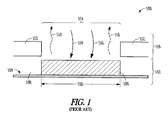
- FIG. 1 illustrates a cross-sectional view of a prior art electrochemical cell system.
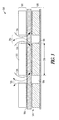
- FIG. 2 illustrates a cross-sectional view of an electrochemical cell system, including an off-set cover, according to some embodiments.
- FIG. 3 illustrates a cross-sectional view of an electrochemical cell system, including an off-set cover with optional porous layer, according to some embodiments.
- FIG. 4 illustrates a cross-sectional view of an electrochemical cell system, including an off-set cover with an optional porous layer, according to some embodiments.
- FIG. 5 illustrates a perspective view of an electronic device powered by an electrochemical cell utilizing an off-set cover, according to some embodiments.
- FIG. 6 illustrates a perspective view of an electronic device utilizing an off-set cover, according to some embodiments.
- FIG. 7 illustrates a block flow diagram of a method of delivering a reactant to an electrochemical cell array, according to some embodiments.
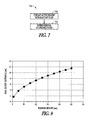
- FIG. 8 illustrates a graphical view of modeling results of calculated diffusion length versus gap height, according to some embodiments.
- Embodiments of the present invention relate to an electrochemical cell system.
- the system includes an array of electrochemical cells, including a reactive surface, the surface having one or more active regions and one or more less-active regions in contact with the one or more active regions.
- the system also includes a cover, including a transport layer having one or more transport barrier regions and one or more opened regions. The transport barrier regions are in proximity to the active regions and the opened regions are in proximity to the less- active regions and the opend regions are aligned with the less active regions.
- Embodiments also relate to an electrochemical cell array cover including a transport layer, including one or more transport barrier regions and one or more opened regions.
- the transport barrier regions overlay one or more active regions of one or more electrochemical cells of an electrochemical array.
- Embodiments also relate to a method for operating an electrochemical cell array, including contacting active regions of an electrochemical cell array with a reactant fluid via opened regions in a cover and inhibiting a product fluid from being removed from the local environment through use of the cover.
- Embodiments of the invention relate to a cover for an electrochemical cell array and related system.
- the present invention relates to a novel structural relationship between active regions of an electrochemical cell array and transport barrier regions integrated in a cover that unexpectedly improves performance.
- transport barrier regions of the cover are arranged in proximity to the active regions of the electrochemical cells to provide a transport shield between the active regions and the external environment.
- the transport barrier regions may shield all or a portion of the active regions.
- the electrochemical cell may be a fuel cell.
- electrochemical cells such as fuel cells
- higher current densities typically favors increasing mass-transport to the active areas by opening or expanding regions in proximity to active areas.
- embodiments of the present invention allow for sufficient reactant delivery to the active areas when using materials with transport barriers between the active areas and the external environment by instead providing an indirect flow pathway to the active areas via less-active areas surrounding the active areas.
- This indirect flow pathway can facilitate a microclimate or local environment that provides more favorable conditions across the active area to improve performance of the fuel cells.
- This indirect flow path may effectively reduce transport to the active regions orthogonal to the reactive surface and increase transport to the active regions in-plane to the reactive surface and may further include tortuous flow through a porous layer.
- the indirect flow contacts all or only a portion of the perimeter of the active regions of the electrochemical cells.
- the cover can be integrated in a housing of a portable device, for example as described in commonly-owned U.S. Patent Application Publication No. 2007/0090786 , entitled “Devices powered by conformable fuel cells” and commonly-owned U.S. Patent Application Publication No. 2006/0127734 , entitled “Flexible fuel cells having external support”.
- the cover can be disposed on a passive reactant delivery surface of the fuel cells.
- Architectures of fuel cells may be planar, although the covers can conform to any suitable architecture. Examples of such fuel cells can be found in commonly owned U.S. Patent Application Publication No.
- reactive surface refers to a surface of an electrochemical cell array in which all or a portion of an electrochemical reaction is supported or carried out.
- active region refers to reactive areas in contact with or integrated into a reactive surface of an electrochemical cell or cell array.
- the active regions support all or a portion of an electrochemical reaction.
- the active regions may include one or more catalysts, conductive or non-conductive materials or gas-diffusion layers, as examples.
- less-active region refers to an area in contact with or integrated into a surface of an electrochemical cell or cell array in which no electrochemical reactions occur or are supported or only a negligible amount occurs or is supported. Less-active regions may include current collectors, structural support members or insulating gaps.
- transport layer refers to a region in an electrochemical cell cover providing a flow path for a reactant flow.
- the reactant flow may be actively or passively moved through the flow path.
- the transport layer may include transport barrier regions and opened regions, for example.
- transport barrier region refers to materials or components that impede, affect, or block transport mechanisms.
- the transport barrier regions may be a mechanical cover and may be substantially or fully impermeable to air or water, or a fuel cell reactant (e.g. fuel) for example.
- a fuel cell reactant e.g. fuel
- the mechanism impeded, affected, or blocked may be any combination of transport mechanisms including water evaporation from the active areas (e.g.
- the transport barrier regions may be conductive or non-conductive or may be composite, comprising conductive and non-conductive regions. Conductivity may refer to electrical conductivity or thermal conductivity.
- the transport barrier regions may be electrically isolated from the active regions.
- a portion of the one or more transport barrier regions may be electrically conductive, thermally conductive, or a combination thereof, for example.
- the transport barrier regions may be electrically insulating, thermally insulating, or combinations thereof.
- opened region refers to a pathway through which reactant may flow. Opened regions may be holes, vents, slots, panels, pores or a porous material or layer.
- electrochemical array refers to an orderly grouping of electrochemical cells.
- the array may be planar or cylindrical, for example.
- the electrochemical cells may include fuel cells, such as edge-collected fuel cells.
- the electrochemical cells may include batteries.
- the electrochemical cells may be galvanic cells, electrolyzers, electrolytic cells or combinations thereof. Examples of fuel cells include proton exchange membrane fuel cells, direct methanol fuel cells, alkaline fuel cells, phosphoric acid fuel cells, molten carbonate fuel cells, solid oxide fuel cells, or combinations thereof.
- the electrochemical cells may include metal-air cells, such as zinc air fuel cells, zinc air batteries, or a combination thereof.
- two-dimensional (2-D) fuel cell array refers to a sheet which is thin in one dimension and which supports a number of fuel cells.
- a two-dimensional fuel cell array may be a flexible fuel cell layer.
- a flexible fuel cell layer may be flexible in whole or in part, so-as-to embrace, for example, an electrochemical layer having one or more rigid components integrated with one or more flexible components,
- the fuel cells have active areas or active regions of one type (e.g. cathodes) that are accessible from one face of the sheet and active areas or active regions of another type (e.g. anodes) that are accessible from an opposed face of the sheet.
- the active areas may be disposed to lie within areas on their respective faces of the sheet (e.g. it is not mandatory that the entire sheet be covered with active areas, however, the performance of a fuel cell may be increased by increasing its active area.
- external environment or “external conditions” or “environmental conditions” refer to the atmosphere in proximity to the cover, whether that environment resides inside or outside a device or housing. External conditions include temperature, humidity, pollutant or contaminant level, for example.
- local environment or “microclimate” or “local conditions” refer to the atmosphere in the proximity of the active region(s) of the electrochemical cell array.
- microclimate may be the environment in which reactant fluids interact with active regions of an electrochemical cell.
- the local environment may refer to the atmosphere in the volume between the active region and the transport barrier region of the cover. Local conditions may include temperature, humidity, pollutant or contaminant level, for example.
- metal-air cells refer to an electrochemical cell including zinc air fuel cells, zinc air batteries or a combination thereof.
- the electrochemical cell system may include a combination of active regions 106 interspersed with less-active regions 108, disposed on a reactive surface 104.
- the anodes and cathodes may be disposed on opposing sides of the layer.
- a fuel e.g. hydrogen, methanol, butane, formic acid
- an oxidant 116 e.g. air
- the active region 106 e.g. a cathode
- the fuel and oxidant react to form electricity and reaction products 118 (e.g. water vapor, CO 2 , etc, depending on fuel composition).
- Fuel cells often need some form of external structure to provide support, compression, etc, to ensure proper operation. Since the electrochemical reaction is dependent on reactant access to the active regions, conventional logic would dictate locating non-porous areas of any such support system or cover away from the active areas of the fuel cells. As illustrated in FIG. 1 , non-porous regions or transport barriers 112 are located proximal to less-active regions 108 of the fuel cell array, while opened regions 114 are located proximal to active regions 106 of the array. In such a fashion, maximum air access 116 is provided to the active regions 106 of the array. Further, reactant products 118 can easily be removed from the reaction sites.
- a further consideration for operation of electrochemical cell arrays such as fuel cell arrays using proton exchange membranes (PEM) is water balance.
- Proton exchange membranes require a certain amount of hydration in order to facilitate proton transport, as the proton conductivity is influenced by the water content of the membrane.
- a balance is therefore needed, between sufficient humidification of the membrane and sufficient evaporation of water from the cathodes. This balance can be difficult to achieve, particularly in passive fuel cells.
- An electrochemical cell array 202 may include one or more active regions 206 and one or more less-active regions 208, disposed on a reactive surface 204.
- the less- active regions 208 may be in contact with or surround the active regions 206, or may be interposed with the active regions 206, and may optionally separate adjacent active regions 206.
- the active regions 206 may alternate with the less-active regions 208, for example, such that each active region 206 is adjacent a less-active region 208 on each side of the active region 206.
- the active regions 206 may have a width (w) 220.
- a transport layer 210 which may also be referred to as a 'cover', may include opened regions 214 and transport barrier regions 212.
- the transport barrier regions 212 may be substantially aligned with the active regions 206 of the electrochemical cell array, while the opened regions 214 are aligned with the less-active regions 208 of the array.
- the reactant flow 216 may instead be indirectly provided to the active region 206 (as illustrated in FIG. 2 ).
- the reactant flow may be directed to the reaction sites of the active region 206 along the plane of the active region 206 from the perimeter of the active region 206, rather than directly contacted with the active region.
- the air access to the active areas may be proportional to the length (into the page) of the active region and the dimension of the air gap ⁇ 222 and inversely proportional to the width w (220) of the active region.
- the air access to the active area of the array illustrated in FIG. 1 may be proportional to the length (into the page) of the active region 106 and the width 120 of the active region 106.
- air access to the active regions shown in FIG. 2 may be reduced (e.g. relative to the array shown in Figure 1 ).
- transport of oxidant to reaction sites of the active region 206 may occur by diffusion, rather than convective transport of oxidant.
- at least a stoichiometric quantity of oxidant needs access to reaction sites of the active region; however, it may be advantageous to limit oxidant access beyond stoichiometric quantities to prevent drying of the membrane.
- D O2 oxygen diffusivity
- h p is ⁇ 222
- F Faraday's constant (96485 C)
- I oxygen consumption rate (current density). Current density and oxygen consumption rate also affect the oxygen availability; at higher consumption rates more oxygen access may be required to support device operation.
- FIG. 8 illustrates the maximum distance oxygen can diffuse laterally under a solid cover versus the height of the plenum ( ⁇ - 222 in Fig. 2 ), assuming the oxygen is diffusing through a space filled with air (as opposed to through a porous layer) and that the current density, I, is 125 mA/cm 2 and oxygen concentration at the edge of the transport barrier region, c O ⁇ 2 o , is 0.1.
- an optional porous intermediate layer 350 may be disposed between the transport layer 310 and the array 302.
- the array 302 may include a reactive surface 304 in which the active regions 306 and less-active regions 308 are supported by or integrated into.
- the porous intermediate layer 350 may be positioned between the reactive surface 304 and transport layer 310.
- the porous layer may be its own discrete entity, disposed on the reactive surface 304 of the array 302, may be integrated into all or part of the reactive surface 304, or may be integrated into the transport layer 310. If a porous layer is disposed between the array and the cover, then the modeling results would be affected by a different (e.g. lower) diffusivity of fluid through the porous layer relative to an open space.
- the addition of a porous layer may impact the maximum allowable width w (322) of the active region. For instance, if the diffusivity of fluid in the porous media is lower than the diffusivity of fluid in an open space, then the maximum diffusive length (and therefore maximum width of the active region) would be lower than in an embodiment with no porous media between the cover and the cell.
- the cover may further affect removal of reaction product fluids from the local environment proximal to the array.
- the cover may affect access of oxygen to the cathodes of the array, but may also impede removal of product water vapor from the local environment.
- a porous layer may provide benefit by affecting diffusivity in the local environment, such that sufficient oxygen is provided to the cathodes to support the electrochemical reaction, but that diffusion of product water is inhibited sufficient to provide adequate proton conductivity in the ion exchange membrane to also support the reaction, but not inhibited to the point that the cathodes of the fuel cell array become flooded with too much water.
- the cover may be disposed proximal to the anodes of a fuel cell array, and may affect rate and quantity of fuel provided to the anodes.
- the porous layer may be manufactured of an adaptable material.
- the porous layer may be manufactured of a thermo-responsive polymer.
- the polymer may include a plurality of pores.
- Adaptive materials included in the cover can respond to conditions external to the cover, conditions at or near the fuel cells, active control mechanisms, other stimuli, or any combination thereof. Some examples of conditions include temperature, humidity, an electrical flow, etc.
- a thermo-responsive adaptable material is described in U.S. Pat. No. 6,699,611, filed May 29, 2001 , entitled "FUEL CELL HAVING A THERMO- RESPONSIVE POLYMER INCORPORATED THEREIN".
- the cover may include multiple components or layers.
- the cover may include a porous layer disposed between a transport layer (having the transport barrier regions and opened regions) and the electrochemical cells.
- the cover, the exterior layer, the porous layer, other suitable layers, or any combination thereof may be removable and/or may include an adaptive material responsive to stimuli. Examples of covers having removable features and adaptive materials are described in commonly-owned co-pending U.S. Pat. Appl. No. 12/238,040, filed September 25, 2008 , entitled "FUEL CELL COVER".
- the cover or transport layer includes transport barrier regions 212, 312 in proximity to active regions 206, 306 and opened regions 214, 314 in proximity to less-active regions 208, 308 of the electrochemical cells.
- the transport barrier regions 212, 312 may be disposed such that they are substantially aligned with the active regions 206, 306, or may be disposed such that they are of slightly smaller width than the active region width (w) 220, 320 or slightly larger than the active region width 220, 320. In such embodiments, it is possible that the transport barrier regions 212, 312 may overlap the less-active regions 208, 308.
- the portion of the transport barrier region 212, 312 disposed above the active regions 206, 306 may be greater than the portion over the less-reactive regions 208, 308.
- the opened regions 214, 314 allow reactants to contact the electrochemical cell array - the size of the opened regions may be varied to allow more or less reactant access to the array, hi some embodiments, the cover can be used to affect transport of an oxidant to the cathode regions of one or more fuel cells.
- the transport barrier region 212, 312 may align fully with the active regions 206, 306 or overlap the active regions 206, 306.
- the opened regions 214, 314 align with the less-active regions 208, 308, or may be smaller or larger in width than the less-active regions 208, 308.
- transport barrier regions 212, 312 are electrically conductive, they may be partially or fully electrically isolated from the active regions 206, 306. This may be accomplished by substantially insulating the transport barrier regions 212, 312 from the active regions 206, 306, insulating the transport barrier regions 212, 312 from the less-active regions 208, or insulating the transport barrier regions 212, 312 from at least a portion of either, for example. Transport barrier regions 212, 312 may be insulated from selected active regions and less-active regions so as to avoid a short- circuit between neighboring cells in an array. It will be understood by those skilled in the art that there are many variations in electrical configurations possible (e.g. parallel, serial, combinations thereof), and electrical insulation may be determined accordingly.
- FIG. 4 a cross-sectional schematic of an embodiment wherein the porous intermediate layer 452 does not extend across the entirety of the electrochemical cell array 402. It should be understood that the schematic is solely for illustrative purposes, and that the porous intermediate layer 452 may be larger or smaller than illustrated, or, alternatively, the porous layer may extend across the width 422 of the active regions 406, but have a discontinuity across the less-active regions 408. While the discussions above reference contacting an oxidant to the cathodes of an electrochemical cell array, the same principles may be applied to the contacting a reactant (e.g. fuel) with the anodes of an electrochemical cell array.
- a reactant e.g. fuel
- FIG. 5 a perspective view 500 of an electronic device powered by an electrochemical cell utilizing an off-set cover is shown, according to some embodiments.
- An off-set cover 504 may be attached or in contact with an electronic device 502 .
- the cover 504 may include openings 506, 508, such as vents, slots or panels.
- the cover 504 may include a plurality or pores or holes 602 (see FIG. 6 ).
- Panels may be configured into the cover to vary the dimensions of opened regions or openings 506, 508.
- the cover 504 may also include a porous material, for example.
- Panels may be provided that modify the aperture of the opened regions or openings 506, 508 (e.g. by sliding across the opened regions) to vary reactant flow between the active regions and the external environment.
- the position of the panels can be varied to adapt to various electrochemical cells having exposed active regions.
- the panels may be positioned to selectively expose portions of active areas of electrochemical cells or selectively expose portions of the electrochemical cell array.
- the position of the panels can be user actuated via manual or electronic mechanisms or can be actuated based on detected conditions.
- Some examples of conditions for varying the position of the panels include external environmental conditions, performance of the system, and modes, such as standby or power delivery modes, of the portable application device.
- the electronic device 502 may be a fuel cell powered device.
- the device 502 may be a cellular phone, satellite phone, PDA, smartphone, laptop computer, computer accessory, ultra mobile personal computer (UMPC), display, personal audio or video player, medical device, television, transmitter, receiver, lighting device, flashlight or electronic toys.
- the device 502 may be a refueler, such as an electrolyser, for fuel cell powered electronic devices, for example.
- a fuel for a fuel cell may be hydrogen, for example, although any suitable fuel such as methanol, ammonia borane, hydrazine, ethanol, formic acid, butane, borohydride compounds etc. may be utilized.
- the cover 504 may be removable or may be integrated into the housing of the device 502.
- One or more transport barrier regions of the cover 504 may be integrated into the housing of the device 502, for example.
- An electrochemical cell array may include a reactive surface, having one or more active regions and one or more less-active regions in contact with the one or more active regions.
- the active regions may include a catalyst and an ion-exchange membrane.
- a cover may include opened regions through which fluids may pass and transport barrier regions which are partially or substantially impermeable to fluids.
- the transport barrier regions of the cover may be in proximity to the active regions of the array and the opened regions of the cover may be in proximity to the less- active regions of the array.
- the cover and the reactive surface of the electrochemical cell array may define a local environment in proximity to the active regions of the array.
- Active regions of an electrochemical cell array may be contacted with a reactant fluid via opened regions in a cover. Further, a product fluid may be inhibited from being removed from the local environment proximal to the electrochemical cell through use of the cover.
- inhibiting removal of a product fluid may further result in hydrating or humidifying the ion-exchange membrane, which may be beneficial for operation of the array.
- Contacting 702 and inhibiting 704 may be passive, such as by diffusion.
- the reactant may follow an indirect path to the active regions (via the opened regions in the cover), which may lower the velocity of the reactant.
- Such a reactant flow may be more diffusive than convective, for example.
- Contacting 702 the reactant flow with the active regions and inhibiting 704 removal of product fluid may be affected, restricted or obstructed. Affecting may include varying the dimension of the opened regions or directing the flow of reactant through a porous layer, for example. If the porous layer includes an adaptable material, affecting may include varying a property of the adaptable material. The property of an adaptable material may be its porosity, for example. Contacting 702 and inhibiting 704 may be varied in response to an environmental condition in proximity to the electrochemical cells of the array. The environmental conditions may include one or more of a temperature, humidity, or environmental contaminants level.
- Contacting 702 and inhibiting 704 may also be varied in response to a signal, for example.
- the adaptive material may be heated in response to a signal. By heating the adaptive material, one or more of the adaptive material properties may be varied. In another example, the aperture of the opened regions may be enlarged or reduced in response to a signal.
- the performance of the electrochemical cell array may be determined periodically or continuously monitored.
Landscapes
- Chemical Kinetics & Catalysis (AREA)
- Engineering & Computer Science (AREA)
- Manufacturing & Machinery (AREA)
- General Chemical & Material Sciences (AREA)
- Electrochemistry (AREA)
- Chemical & Material Sciences (AREA)
- Sustainable Development (AREA)
- Sustainable Energy (AREA)
- Life Sciences & Earth Sciences (AREA)
- Fuel Cell (AREA)
- Hybrid Cells (AREA)
- Electrolytic Production Of Non-Metals, Compounds, Apparatuses Therefor (AREA)
- Sealing Battery Cases Or Jackets (AREA)
- Secondary Cells (AREA)
Claims (16)
- Système de cellule électrochimique (200 ; 300 ; 400) comprenant :un réseau de cellules électrochimiques (202 ; 302 ; 402) comprenant une surface réactive (204 ; 304 ; 404), la surface présentant une ou plusieurs régions actives (206 ; 306 ; 406), dans lequel les régions actives sont des régions qui prennent en charge la totalité ou une partie d'une réaction électrochimique, et une ou plusieurs régions moins actives (208 ; 308 ; 408), dans lequel les régions moins actives sont des régions dans lesquelles aucune réaction électrochimique ne se produit ou n'est prise en charge, ou dans lesquelles seulement très peu de réactions électrochimiques se produisent ou sont prises en charge, dans lequel les une ou plusieurs régions moins actives (208 ; 308 ; 408) sont en contact avec les une ou plusieurs régions actives (206 ; 306 ; 406), le système étant caractérisé par le fait qu'il comprend en outre un capot (210 ; 310 ; 410), dans lequel :le capot comprend une couche transport présentant une ou plusieurs régions barrières de transport (212 ; 312 ; 412) et une ou plusieurs régions ouvertes (214 ; 314 ; 414), dans lequel :les régions barrières de transport (212 ; 312 ; 412) se situent à proximité des régions actives (206 ; 306 ; 406) ;les régions ouvertes (214 ; 314 ; 414) se situent à proximité des régions moins actives (208 ; 308 ; 408) ; etles régions ouvertes (214 ; 314 ; 414) sont alignées avec les régions moins actives (208 ; 308 ; 408).
- Système de cellule électrochimique (200 ; 300 ; 400) selon la revendication 1, dans lequel les une ou plusieurs régions moins actives (208 ; 308 ; 408) séparent des régions actives adjacentes (206 ; 306 ; 406).
- Système de cellule électrochimique (200 ; 300 ; 400) selon l'une quelconque des revendications précédentes, dans lequel le capot (210 ; 310 ; 410) est amovible.
- Système de cellule électrochimique (200 ; 300 ; 400) selon la revendication 1, dans lequel le capot (504) est intégré dans un logement pour un dispositif portatif (502).
- Système de cellule électrochimique (200 ; 300 ; 400) selon l'une quelconque des revendications précédentes, dans lequel les une ou plusieurs régions barrières de transport (212 ; 312 ; 412) sont imperméables à l'eau.
- Système de cellule électrochimique (200 ; 300 ; 400) selon l'une quelconque des revendications précédentes, dans lequel les une ou plusieurs régions barrières de transport (212 ; 312 ; 412) sont imperméables à l'air.
- Système de cellule électrochimique (200 ; 300 ; 400) selon l'une quelconque des revendications précédentes, dans lequel une partie au moins des une ou plusieurs régions barrières de transport (212 ; 312 ; 412) sont électriquement conductrices, thermiquement conductrices, ou les deux.
- Système de cellule électrochimique (200 ; 300 ; 400) selon la revendication 7, dans lequel les parties conductrices des régions barrières de transport (212 ; 312 ; 412) sont électriquement isolées à partir d'une partie au moins de la surface réactive.
- Système de cellule électrochimique (200 ; 300 ; 400) selon l'une quelconque des revendications 1 à 6, dans lequel les une ou plusieurs régions barrières de transport (212 ; 312 ; 412) sont électriquement isolantes, thermiquement isolantes, ou les deux.
- Système de cellule électrochimique (300 ; 400) selon la revendication 1, comprenant en outre une couche poreuse (350 ; 452).
- Système de cellule électrochimique (300 ; 400) selon la revendication 10, dans lequel la couche poreuse (350 ; 452) est disposée entre le capot (310 ; 410) et le réseau de cellules électrochimiques (302 ; 402).
- Système de cellule électrochimique (300 ; 400) selon la revendication 10, dans lequel la couche poreuse (350 ; 452) est disposée sur la surface réactive du réseau.
- Système de cellule électrochimique (300 ; 400) selon l'une quelconque des revendications 10 à 12, dans lequel la couche poreuse (350 ; 452) comprend un matériau adaptable, dans lequel le matériau adaptable peut modifier ses propriétés de transport en réponse à des changements de température, d'humidité, de flux électrique ou des combinaisons de ceux-ci.
- Système de cellule électrochimique (200 ; 300 ; 400) selon l'une quelconque des revendications précédentes, dans lequel les régions ouvertes (214 ; 314 ; 414) comprennent des fentes, des évents, des trous, un matériau poreux, ou une combinaison de ceux-ci.
- Procédé (700) destiné à actionner le système de cellule électrochimique (200 ; 300 ; 400) selon la revendication 1, comprenant :la mise en contact (702) des régions actives du réseau de cellules électrochimiques avec un fluide réactant via des régions ouvertes dans le capot, dans lequel le capot et la surface réactive du réseau de cellules électrochimiques définissent un environnement local à proximité des régions actives du réseau ;l'empêchement du retrait (704) d'un fluide de produit de l'environnement local suite à l'utilisation du capot ;la variation de la vitesse à laquelle le fluide réactant entre en contact avec les régions actives en dirigeant le fluide réactant à travers une couche poreuse ; etla variation de la vitesse à laquelle le fluide de produit est retiré de l'environnement local en dirigeant le fluide de produit à travers la couche poreuse.
- Procédé selon la revendication 15, dans lequel les régions actives comprennent un catalyseur et une membrane échangeuse d'ions, le procédé comprenant en outre l'hydratation de la membrane échangeuse d'ions avec le fluide de produit.
Applications Claiming Priority (2)
| Application Number | Priority Date | Filing Date | Title |
|---|---|---|---|
| US2182208P | 2008-01-17 | 2008-01-17 | |
| PCT/CA2009/000068 WO2009089634A1 (fr) | 2008-01-17 | 2009-01-16 | Couvercles pour piles électrochimiques et procédés associés |
Publications (3)
| Publication Number | Publication Date |
|---|---|
| EP2245686A1 EP2245686A1 (fr) | 2010-11-03 |
| EP2245686A4 EP2245686A4 (fr) | 2011-12-28 |
| EP2245686B1 true EP2245686B1 (fr) | 2013-04-10 |
Family
ID=40885030
Family Applications (1)
| Application Number | Title | Priority Date | Filing Date |
|---|---|---|---|
| EP09702708.0A Not-in-force EP2245686B1 (fr) | 2008-01-17 | 2009-01-16 | Couvercles pour piles électrochimiques et procédés associés |
Country Status (8)
| Country | Link |
|---|---|
| US (2) | US8080325B2 (fr) |
| EP (1) | EP2245686B1 (fr) |
| JP (1) | JP5490019B2 (fr) |
| KR (1) | KR101413050B1 (fr) |
| CN (1) | CN101919094B (fr) |
| CA (1) | CA2709946C (fr) |
| ES (1) | ES2404562T3 (fr) |
| WO (1) | WO2009089634A1 (fr) |
Cited By (2)
| Publication number | Priority date | Publication date | Assignee | Title |
|---|---|---|---|---|
| US9017892B2 (en) | 2004-05-04 | 2015-04-28 | Societe Bic | Electrochemical cells having current-carrying structures underlying electrochemical reaction layers |
| US9673476B2 (en) | 2007-09-25 | 2017-06-06 | Intelligent Energy Limited | Fuel cell systems including space-saving fluid plenum and related methods |
Families Citing this family (8)
| Publication number | Priority date | Publication date | Assignee | Title |
|---|---|---|---|---|
| KR101540041B1 (ko) * | 2007-09-25 | 2015-07-28 | 소시에떼 비아이씨 | 연료전지용 커버 |
| CN101919094B (zh) | 2008-01-17 | 2013-07-24 | 法商Bic公司 | 用于电化学池的盖及相关方法 |
| JP2013131290A (ja) * | 2010-04-12 | 2013-07-04 | Sharp Corp | 膜電極複合体およびこれを用いた燃料電池 |
| WO2012049616A1 (fr) * | 2010-10-14 | 2012-04-19 | Ramot At Tel-Aviv University Ltd. | Pile à combustible liquide direct contenant du borane d'ammoniaque, de l'hydrazine, leurs dérivés et/ou leurs mélanges comme combustible |
| US10283796B2 (en) | 2011-02-11 | 2019-05-07 | Intelligen Energy Limited | Fuel cell system |
| WO2013145776A1 (fr) | 2012-03-30 | 2013-10-03 | Sanyo Electric Co., Ltd. | Système de pile à combustible qui comprend une cartouche de combustible détachable comprenant un alliage de stockage d'hydrogène |
| US11380923B2 (en) | 2015-09-17 | 2022-07-05 | Intelligent Energy Limited | Oxygen regulated fuel cell |
| CN110021727B (zh) * | 2018-01-10 | 2021-09-14 | 宁德时代新能源科技股份有限公司 | 单向透气阀、二次电池的顶盖组件及二次电池 |
Family Cites Families (67)
| Publication number | Priority date | Publication date | Assignee | Title |
|---|---|---|---|---|
| JPS6058220A (ja) | 1983-09-08 | 1985-04-04 | Daido Steel Co Ltd | フイルタ |
| US4708812A (en) * | 1985-06-26 | 1987-11-24 | Union Carbide Corporation | Encapsulation of phase change materials |
| US4756958A (en) * | 1987-08-31 | 1988-07-12 | Triangle Research And Development Corporation | Fiber with reversible enhanced thermal storage properties and fabrics made therefrom |
| GB9023091D0 (en) * | 1990-10-24 | 1990-12-05 | Ici Plc | Composite membranes and electrochemical cells containing them |
| JPH04249867A (ja) | 1990-12-28 | 1992-09-04 | Aisin Aw Co Ltd | 液体燃料電池のハウジング開閉機構 |
| US5310765A (en) * | 1993-03-03 | 1994-05-10 | E. I. Du Pont De Nemours And Company | Process for hydrolysis of ion exchange membranes |
| US5587253A (en) * | 1993-03-05 | 1996-12-24 | Bell Communications Research, Inc. | Low resistance rechargeable lithium-ion battery |
| WO1995004382A1 (fr) * | 1993-07-28 | 1995-02-09 | Fraunhofer-Gesellschaft zur Förderung der angewandten Forschung e.V. | Batterie en forme de membrane allongee contenant plusieurs cellules |
| EP0766720B1 (fr) * | 1994-06-14 | 2004-04-14 | Outlast Technologies, Inc. | Revetement pour tissus ayant la capacite d'absorber l'energie et procede de fabrication de ce revetement |
| US6054228A (en) | 1996-06-06 | 2000-04-25 | Lynntech, Inc. | Fuel cell system for low pressure operation |
| US5989741A (en) * | 1997-06-10 | 1999-11-23 | E.I. Du Pont De Nemours And Company | Electrochemical cell system with side-by-side arrangement of cells |
| US6131851A (en) | 1998-06-02 | 2000-10-17 | Lockheed Martin Corporation | Apparatus having an energy generating skin as an outer covering |
| EP1095174A1 (fr) | 1998-06-22 | 2001-05-02 | Proton Energy Systems | Ensemble de treillis pour cellule electrochimique |
| US6127058A (en) * | 1998-10-30 | 2000-10-03 | Motorola, Inc. | Planar fuel cell |
| WO2001003212A2 (fr) * | 1999-07-05 | 2001-01-11 | Siemens Aktiengesellschaft | Pile a combustible a membrane electrolytique polymere haute temperature (htm), centrale a piles a combustible htm, et procede pour faire fonctionner une pile a combustible htm et/ou une centrale a piles a combustible htm |
| US6544400B2 (en) | 2000-03-30 | 2003-04-08 | Manhattan Scientifics, Inc. | Portable chemical hydrogen hydride system |
| US7008718B2 (en) * | 2000-05-08 | 2006-03-07 | Honda Giken Kogyo Kabushiki Kaisha | Fuel cell assembly |
| JP4630484B2 (ja) | 2000-05-08 | 2011-02-09 | 本田技研工業株式会社 | 燃料電池 |
| US6818338B2 (en) | 2000-05-08 | 2004-11-16 | Honda Giken Kogyo Kabushiki Kaisha | Fuel cell assembly |
| US6680139B2 (en) * | 2000-06-13 | 2004-01-20 | California Institute Of Technology | Reduced size fuel cell for portable applications |
| US6783882B2 (en) * | 2001-02-14 | 2004-08-31 | Ball Aerospace & Technologies Corp. | Method and apparatus for maintenance of fuel cell cathode air quality with breathable hydrophobic membrane air filter |
| KR100406690B1 (ko) * | 2001-03-05 | 2003-11-21 | 주식회사 엘지화학 | 다성분계 복합 필름을 이용한 전기화학소자 |
| US20020164521A1 (en) * | 2001-04-05 | 2002-11-07 | Ballard Power System Inc. | Novel applications of exfoliated transition metal dichalcogenides to electrochemical fuel cells |
| US6699611B2 (en) * | 2001-05-29 | 2004-03-02 | Motorola, Inc. | Fuel cell having a thermo-responsive polymer incorporated therein |
| US6869717B2 (en) * | 2001-07-09 | 2005-03-22 | Hydrogenics Corporation | Manifold for a fuel cell system |
| US6627673B2 (en) * | 2001-07-24 | 2003-09-30 | Kimberly-Clark Worldwide, Inc. | Methods of making humidity activated materials having shape-memory |
| JP2003272666A (ja) * | 2001-08-21 | 2003-09-26 | Equos Research Co Ltd | 燃料電池 |
| US6869711B2 (en) | 2001-09-10 | 2005-03-22 | Industrial Technology Research Institute | Highly efficient electrochemical reaction device |
| US6743543B2 (en) | 2001-10-31 | 2004-06-01 | Motorola, Inc. | Fuel cell using variable porosity gas diffusion material |
| US6890674B2 (en) * | 2002-02-19 | 2005-05-10 | Mti Microfuel Cells, Inc. | Methods and apparatuses for managing fluids in a fuel cell system |
| KR100493153B1 (ko) | 2002-03-20 | 2005-06-03 | 삼성에스디아이 주식회사 | 공기 호흡형 직접 메탄올 연료전지 셀팩 |
| JP2003297395A (ja) | 2002-04-01 | 2003-10-17 | Toyota Motor Corp | 燃料電池 |
| JP2003346850A (ja) * | 2002-05-23 | 2003-12-05 | Sony Corp | 燃料電池装置及びその運転方法 |
| JP2004039483A (ja) * | 2002-07-04 | 2004-02-05 | Mitsubishi Electric Corp | 燃料電池 |
| US20040023096A1 (en) * | 2002-07-31 | 2004-02-05 | Pratt Steven Duane | Fuel cell system having a filter element for purifying ambient environmental air |
| US20040053100A1 (en) | 2002-09-12 | 2004-03-18 | Stanley Kevin G. | Method of fabricating fuel cells and membrane electrode assemblies |
| US7153601B2 (en) | 2002-10-29 | 2006-12-26 | Hewlett-Packard Development Company, L.P. | Fuel cell with embedded current collector |
| US7291417B2 (en) | 2003-01-16 | 2007-11-06 | Hewlett-Packard Development Company, L.P. | Compositional and structural gradients for fuel cell electrode materials |
| FR2852736B1 (fr) * | 2003-03-18 | 2005-04-22 | Pile a combustible planaire et procede de fabrication d'une telle pile. | |
| US7407721B2 (en) * | 2003-04-15 | 2008-08-05 | Mti Microfuel Cells, Inc. | Direct oxidation fuel cell operating with direct feed of concentrated fuel under passive water management |
| US7740965B2 (en) | 2003-08-01 | 2010-06-22 | The Gillette Company | Battery |
| JP4848612B2 (ja) | 2003-10-02 | 2011-12-28 | 日本電気株式会社 | 燃料電池および燃料電池の運転方法 |
| WO2005045972A1 (fr) | 2003-11-06 | 2005-05-19 | Nec Corporation | Pile a combustible et methode pour faire fonctionner cette pile a combustible |
| US7117732B2 (en) | 2003-12-01 | 2006-10-10 | Societe Bic | Fuel gauge for fuel cartridges |
| US7306869B2 (en) * | 2003-12-02 | 2007-12-11 | Mti Microfuel Cells Inc. | Electrostatically actuated shutter and array for use in a direct oxidation fuel cell |
| US7059664B2 (en) * | 2003-12-04 | 2006-06-13 | General Motors Corporation | Airflow control devices based on active materials |
| US8153285B2 (en) * | 2003-12-29 | 2012-04-10 | Honeywell International Inc. | Micro fuel cell |
| US20050202291A1 (en) * | 2004-03-09 | 2005-09-15 | Schweizer Patrick M. | Shutter mechanism for fuel cell |
| US7632587B2 (en) | 2004-05-04 | 2009-12-15 | Angstrom Power Incorporated | Electrochemical cells having current-carrying structures underlying electrochemical reaction layers |
| US7474075B2 (en) * | 2004-07-21 | 2009-01-06 | Angstrom Power Incorporated | Devices powered by conformable fuel cells |
| US8410747B2 (en) * | 2004-07-21 | 2013-04-02 | Societe Bic | Flexible fuel cell structures having external support |
| JP4290615B2 (ja) | 2004-07-21 | 2009-07-08 | 三洋電機株式会社 | 膜電極接合体、燃料電池スタック、燃料電池システムおよび膜電極接合体の製造方法 |
| DE102004048526A1 (de) * | 2004-08-12 | 2006-02-23 | Bayerische Motoren Werke Ag | Brennstoffzellen-System |
| TWI241048B (en) | 2004-09-01 | 2005-10-01 | Nan Ya Printed Circuit Board C | Method for manufacturing bipolar plate and direct methanol fuel cell |
| JP2006252785A (ja) | 2005-03-08 | 2006-09-21 | Ricoh Co Ltd | 電源装置及びそれを使用した電子・電気機器 |
| US20060228606A1 (en) * | 2005-03-23 | 2006-10-12 | Fiebig Brad N | Water management in monopolar fuel cells |
| JP2006331927A (ja) | 2005-05-27 | 2006-12-07 | Toshiba Corp | 燃料電池 |
| KR100682865B1 (ko) * | 2005-10-19 | 2007-02-15 | 삼성에스디아이 주식회사 | 물 회수 시스템 및 이를 구비한 직접액체 연료전지 |
| JP4791822B2 (ja) * | 2005-12-28 | 2011-10-12 | 株式会社東芝 | 電解質膜、その製造方法、膜電極複合体及びそれを用いた燃料電池 |
| DE602007008256D1 (de) | 2006-08-23 | 2010-09-16 | Daimler Ag | Bipolare separatoren mit verbesserter flüssigkeitsverteilung |
| JP2008060044A (ja) | 2006-09-04 | 2008-03-13 | Canon Inc | 燃料電池システム |
| JP2008091291A (ja) | 2006-10-05 | 2008-04-17 | Toshiba Corp | パッシブ型燃料電池 |
| US8679694B2 (en) | 2007-03-21 | 2014-03-25 | Societe Bic | Fluidic control system and method of manufacture |
| US8034502B2 (en) * | 2007-04-02 | 2011-10-11 | GM Global Technology Operations LLC | Water removal system for non-reactive regions in PEFMC stacks |
| KR101540041B1 (ko) | 2007-09-25 | 2015-07-28 | 소시에떼 비아이씨 | 연료전지용 커버 |
| EP2210303B1 (fr) * | 2007-09-25 | 2017-04-05 | Intelligent Energy Limited | Systèmes de pile à combustible comprenant une chambre de fluide économisant l'espace et procédés associés |
| CN101919094B (zh) | 2008-01-17 | 2013-07-24 | 法商Bic公司 | 用于电化学池的盖及相关方法 |
-
2009
- 2009-01-16 CN CN2009801025198A patent/CN101919094B/zh not_active Expired - Fee Related
- 2009-01-16 WO PCT/CA2009/000068 patent/WO2009089634A1/fr not_active Ceased
- 2009-01-16 CA CA2709946A patent/CA2709946C/fr not_active Expired - Fee Related
- 2009-01-16 KR KR1020107018269A patent/KR101413050B1/ko not_active Expired - Fee Related
- 2009-01-16 EP EP09702708.0A patent/EP2245686B1/fr not_active Not-in-force
- 2009-01-16 ES ES09702708T patent/ES2404562T3/es active Active
- 2009-01-16 US US12/355,564 patent/US8080325B2/en not_active Expired - Fee Related
- 2009-01-16 JP JP2010542489A patent/JP5490019B2/ja not_active Expired - Fee Related
-
2011
- 2011-11-10 US US13/293,666 patent/US8889317B2/en active Active
Cited By (2)
| Publication number | Priority date | Publication date | Assignee | Title |
|---|---|---|---|---|
| US9017892B2 (en) | 2004-05-04 | 2015-04-28 | Societe Bic | Electrochemical cells having current-carrying structures underlying electrochemical reaction layers |
| US9673476B2 (en) | 2007-09-25 | 2017-06-06 | Intelligent Energy Limited | Fuel cell systems including space-saving fluid plenum and related methods |
Also Published As
| Publication number | Publication date |
|---|---|
| US20120058408A1 (en) | 2012-03-08 |
| CN101919094B (zh) | 2013-07-24 |
| EP2245686A4 (fr) | 2011-12-28 |
| US20090191435A1 (en) | 2009-07-30 |
| CN101919094A (zh) | 2010-12-15 |
| WO2009089634A8 (fr) | 2009-12-10 |
| US8889317B2 (en) | 2014-11-18 |
| KR20100110872A (ko) | 2010-10-13 |
| JP2011510437A (ja) | 2011-03-31 |
| KR101413050B1 (ko) | 2014-06-30 |
| CA2709946A1 (fr) | 2009-07-23 |
| CA2709946C (fr) | 2015-03-24 |
| EP2245686A1 (fr) | 2010-11-03 |
| WO2009089634A1 (fr) | 2009-07-23 |
| JP5490019B2 (ja) | 2014-05-14 |
| US8080325B2 (en) | 2011-12-20 |
| ES2404562T3 (es) | 2013-05-28 |
Similar Documents
| Publication | Publication Date | Title |
|---|---|---|
| US8889317B2 (en) | Fuel cell systems with a cover and related methods | |
| Heinzel et al. | Fuel cells for low power applications | |
| Yu et al. | Development of direct methanol alkaline fuel cells using anion exchange membranes | |
| Mosdale et al. | Analysis of performance and of water and thermal management in proton exchange membrane fuel cells | |
| US7851105B2 (en) | Electrochemical fuel cell stack having staggered fuel and oxidant plenums | |
| EP2362470B1 (fr) | Pile à combustible | |
| JP4086894B2 (ja) | 燃料電池 | |
| EP1639668A2 (fr) | Pile a combustible electrochimique possedant une couche de distribution de fluide a permeabilite non uniforme | |
| WO2003003494A2 (fr) | Procede et appareil de reglage de la temperature d'une pile a combustible par facilitation de la transition et de la combustion du methanol | |
| KR20070072872A (ko) | 전기 화학 디바이스 | |
| Merida et al. | Non-planar architecture for proton exchange membrane fuel cells | |
| US9190678B2 (en) | Alkaline fuel cell and alkaline fuel cell system | |
| EP1494306A1 (fr) | Pile à combustible et batterie de piles à combustible | |
| EP1981111A1 (fr) | Pile à combustible | |
| KR20090063213A (ko) | 연료 전지 어셈블리 | |
| KR100877273B1 (ko) | 연료 전지 | |
| JP5259146B2 (ja) | 燃料電池及び燃料電池システム | |
| Pan | Direct methanol fuel cell with concentrated solutions | |
| US20100098985A1 (en) | Fuel cell and electronic device including the same | |
| KR100728787B1 (ko) | 직접 메탄올형 연료 전지 | |
| KR102686068B1 (ko) | 연료전지 장치 | |
| Calili Cankir | Efficient Polymer Electrolyte Fuel Cells for Portable Applications | |
| JP2009043720A (ja) | 燃料電池 | |
| Sun | Two-Dimensional Agglomerate Model for the Cathode of a PEM Fuel Cell | |
| Fiçicilar et al. | A Five Layer One-Dimensional PEMFC Model with Detailed Electrode Kinetics |
Legal Events
| Date | Code | Title | Description |
|---|---|---|---|
| PUAI | Public reference made under article 153(3) epc to a published international application that has entered the european phase |
Free format text: ORIGINAL CODE: 0009012 |
|
| 17P | Request for examination filed |
Effective date: 20100817 |
|
| AK | Designated contracting states |
Kind code of ref document: A1 Designated state(s): AT BE BG CH CY CZ DE DK EE ES FI FR GB GR HR HU IE IS IT LI LT LU LV MC MK MT NL NO PL PT RO SE SI SK TR |
|
| AX | Request for extension of the european patent |
Extension state: AL BA RS |
|
| DAX | Request for extension of the european patent (deleted) | ||
| A4 | Supplementary search report drawn up and despatched |
Effective date: 20111125 |
|
| RIC1 | Information provided on ipc code assigned before grant |
Ipc: H01M 2/04 20060101ALI20111121BHEP Ipc: H01M 8/04 20060101ALI20111121BHEP Ipc: H01M 8/02 20060101AFI20111121BHEP Ipc: H01M 12/06 20060101ALI20111121BHEP |
|
| RAP1 | Party data changed (applicant data changed or rights of an application transferred) |
Owner name: SOCIETE BIC |
|
| RIC1 | Information provided on ipc code assigned before grant |
Ipc: H01M 8/02 20060101AFI20120904BHEP Ipc: H01M 2/04 20060101ALI20120904BHEP Ipc: H01M 8/04 20060101ALI20120904BHEP Ipc: H01M 12/06 20060101ALI20120904BHEP Ipc: H01M 8/24 20060101ALI20120904BHEP |
|
| GRAP | Despatch of communication of intention to grant a patent |
Free format text: ORIGINAL CODE: EPIDOSNIGR1 |
|
| GRAS | Grant fee paid |
Free format text: ORIGINAL CODE: EPIDOSNIGR3 |
|
| GRAA | (expected) grant |
Free format text: ORIGINAL CODE: 0009210 |
|
| AK | Designated contracting states |
Kind code of ref document: B1 Designated state(s): AT BE BG CH CY CZ DE DK EE ES FI FR GB GR HR HU IE IS IT LI LT LU LV MC MK MT NL NO PL PT RO SE SI SK TR |
|
| REG | Reference to a national code |
Ref country code: GB Ref legal event code: FG4D |
|
| REG | Reference to a national code |
Ref country code: AT Ref legal event code: REF Ref document number: 606440 Country of ref document: AT Kind code of ref document: T Effective date: 20130415 Ref country code: CH Ref legal event code: EP |
|
| REG | Reference to a national code |
Ref country code: IE Ref legal event code: FG4D |
|
| REG | Reference to a national code |
Ref country code: ES Ref legal event code: FG2A Ref document number: 2404562 Country of ref document: ES Kind code of ref document: T3 Effective date: 20130528 |
|
| REG | Reference to a national code |
Ref country code: DE Ref legal event code: R096 Ref document number: 602009014816 Country of ref document: DE Effective date: 20130606 |
|
| PG25 | Lapsed in a contracting state [announced via postgrant information from national office to epo] |
Ref country code: SI Free format text: LAPSE BECAUSE OF FAILURE TO SUBMIT A TRANSLATION OF THE DESCRIPTION OR TO PAY THE FEE WITHIN THE PRESCRIBED TIME-LIMIT Effective date: 20130410 |
|
| REG | Reference to a national code |
Ref country code: AT Ref legal event code: MK05 Ref document number: 606440 Country of ref document: AT Kind code of ref document: T Effective date: 20130410 |
|
| REG | Reference to a national code |
Ref country code: NL Ref legal event code: VDEP Effective date: 20130410 Ref country code: LT Ref legal event code: MG4D |
|
| PG25 | Lapsed in a contracting state [announced via postgrant information from national office to epo] |
Ref country code: IS Free format text: LAPSE BECAUSE OF FAILURE TO SUBMIT A TRANSLATION OF THE DESCRIPTION OR TO PAY THE FEE WITHIN THE PRESCRIBED TIME-LIMIT Effective date: 20130810 Ref country code: PT Free format text: LAPSE BECAUSE OF FAILURE TO SUBMIT A TRANSLATION OF THE DESCRIPTION OR TO PAY THE FEE WITHIN THE PRESCRIBED TIME-LIMIT Effective date: 20130812 Ref country code: NO Free format text: LAPSE BECAUSE OF FAILURE TO SUBMIT A TRANSLATION OF THE DESCRIPTION OR TO PAY THE FEE WITHIN THE PRESCRIBED TIME-LIMIT Effective date: 20130710 Ref country code: LT Free format text: LAPSE BECAUSE OF FAILURE TO SUBMIT A TRANSLATION OF THE DESCRIPTION OR TO PAY THE FEE WITHIN THE PRESCRIBED TIME-LIMIT Effective date: 20130410 Ref country code: AT Free format text: LAPSE BECAUSE OF FAILURE TO SUBMIT A TRANSLATION OF THE DESCRIPTION OR TO PAY THE FEE WITHIN THE PRESCRIBED TIME-LIMIT Effective date: 20130410 Ref country code: NL Free format text: LAPSE BECAUSE OF FAILURE TO SUBMIT A TRANSLATION OF THE DESCRIPTION OR TO PAY THE FEE WITHIN THE PRESCRIBED TIME-LIMIT Effective date: 20130410 Ref country code: GR Free format text: LAPSE BECAUSE OF FAILURE TO SUBMIT A TRANSLATION OF THE DESCRIPTION OR TO PAY THE FEE WITHIN THE PRESCRIBED TIME-LIMIT Effective date: 20130711 Ref country code: FI Free format text: LAPSE BECAUSE OF FAILURE TO SUBMIT A TRANSLATION OF THE DESCRIPTION OR TO PAY THE FEE WITHIN THE PRESCRIBED TIME-LIMIT Effective date: 20130410 Ref country code: BE Free format text: LAPSE BECAUSE OF FAILURE TO SUBMIT A TRANSLATION OF THE DESCRIPTION OR TO PAY THE FEE WITHIN THE PRESCRIBED TIME-LIMIT Effective date: 20130410 Ref country code: SE Free format text: LAPSE BECAUSE OF FAILURE TO SUBMIT A TRANSLATION OF THE DESCRIPTION OR TO PAY THE FEE WITHIN THE PRESCRIBED TIME-LIMIT Effective date: 20130410 |
|
| PG25 | Lapsed in a contracting state [announced via postgrant information from national office to epo] |
Ref country code: HR Free format text: LAPSE BECAUSE OF FAILURE TO SUBMIT A TRANSLATION OF THE DESCRIPTION OR TO PAY THE FEE WITHIN THE PRESCRIBED TIME-LIMIT Effective date: 20130410 Ref country code: PL Free format text: LAPSE BECAUSE OF FAILURE TO SUBMIT A TRANSLATION OF THE DESCRIPTION OR TO PAY THE FEE WITHIN THE PRESCRIBED TIME-LIMIT Effective date: 20130410 Ref country code: CY Free format text: LAPSE BECAUSE OF FAILURE TO SUBMIT A TRANSLATION OF THE DESCRIPTION OR TO PAY THE FEE WITHIN THE PRESCRIBED TIME-LIMIT Effective date: 20130410 Ref country code: BG Free format text: LAPSE BECAUSE OF FAILURE TO SUBMIT A TRANSLATION OF THE DESCRIPTION OR TO PAY THE FEE WITHIN THE PRESCRIBED TIME-LIMIT Effective date: 20130710 Ref country code: LV Free format text: LAPSE BECAUSE OF FAILURE TO SUBMIT A TRANSLATION OF THE DESCRIPTION OR TO PAY THE FEE WITHIN THE PRESCRIBED TIME-LIMIT Effective date: 20130410 |
|
| PG25 | Lapsed in a contracting state [announced via postgrant information from national office to epo] |
Ref country code: CZ Free format text: LAPSE BECAUSE OF FAILURE TO SUBMIT A TRANSLATION OF THE DESCRIPTION OR TO PAY THE FEE WITHIN THE PRESCRIBED TIME-LIMIT Effective date: 20130410 Ref country code: SK Free format text: LAPSE BECAUSE OF FAILURE TO SUBMIT A TRANSLATION OF THE DESCRIPTION OR TO PAY THE FEE WITHIN THE PRESCRIBED TIME-LIMIT Effective date: 20130410 Ref country code: DK Free format text: LAPSE BECAUSE OF FAILURE TO SUBMIT A TRANSLATION OF THE DESCRIPTION OR TO PAY THE FEE WITHIN THE PRESCRIBED TIME-LIMIT Effective date: 20130410 Ref country code: EE Free format text: LAPSE BECAUSE OF FAILURE TO SUBMIT A TRANSLATION OF THE DESCRIPTION OR TO PAY THE FEE WITHIN THE PRESCRIBED TIME-LIMIT Effective date: 20130410 |
|
| PLBE | No opposition filed within time limit |
Free format text: ORIGINAL CODE: 0009261 |
|
| STAA | Information on the status of an ep patent application or granted ep patent |
Free format text: STATUS: NO OPPOSITION FILED WITHIN TIME LIMIT |
|
| PG25 | Lapsed in a contracting state [announced via postgrant information from national office to epo] |
Ref country code: RO Free format text: LAPSE BECAUSE OF FAILURE TO SUBMIT A TRANSLATION OF THE DESCRIPTION OR TO PAY THE FEE WITHIN THE PRESCRIBED TIME-LIMIT Effective date: 20130410 Ref country code: IT Free format text: LAPSE BECAUSE OF FAILURE TO SUBMIT A TRANSLATION OF THE DESCRIPTION OR TO PAY THE FEE WITHIN THE PRESCRIBED TIME-LIMIT Effective date: 20130410 |
|
| 26N | No opposition filed |
Effective date: 20140113 |
|
| REG | Reference to a national code |
Ref country code: DE Ref legal event code: R097 Ref document number: 602009014816 Country of ref document: DE Effective date: 20140113 |
|
| PG25 | Lapsed in a contracting state [announced via postgrant information from national office to epo] |
Ref country code: LU Free format text: LAPSE BECAUSE OF FAILURE TO SUBMIT A TRANSLATION OF THE DESCRIPTION OR TO PAY THE FEE WITHIN THE PRESCRIBED TIME-LIMIT Effective date: 20140116 Ref country code: MC Free format text: LAPSE BECAUSE OF FAILURE TO SUBMIT A TRANSLATION OF THE DESCRIPTION OR TO PAY THE FEE WITHIN THE PRESCRIBED TIME-LIMIT Effective date: 20130410 |
|
| REG | Reference to a national code |
Ref country code: CH Ref legal event code: PL |
|
| PG25 | Lapsed in a contracting state [announced via postgrant information from national office to epo] |
Ref country code: LI Free format text: LAPSE BECAUSE OF NON-PAYMENT OF DUE FEES Effective date: 20140131 Ref country code: CH Free format text: LAPSE BECAUSE OF NON-PAYMENT OF DUE FEES Effective date: 20140131 |
|
| REG | Reference to a national code |
Ref country code: IE Ref legal event code: MM4A |
|
| PG25 | Lapsed in a contracting state [announced via postgrant information from national office to epo] |
Ref country code: IE Free format text: LAPSE BECAUSE OF NON-PAYMENT OF DUE FEES Effective date: 20140116 |
|
| REG | Reference to a national code |
Ref country code: GB Ref legal event code: 732E Free format text: REGISTERED BETWEEN 20150521 AND 20150527 |
|
| REG | Reference to a national code |
Ref country code: FR Ref legal event code: PLFP Year of fee payment: 8 |
|
| REG | Reference to a national code |
Ref country code: DE Ref legal event code: R082 Ref document number: 602009014816 Country of ref document: DE Representative=s name: K & H BONAPAT PATENTANWAELTE KOCH VON BEHREN &, DE Ref country code: DE Ref legal event code: R082 Ref document number: 602009014816 Country of ref document: DE Representative=s name: K & H BONAPAT, DE Ref country code: DE Ref legal event code: R081 Ref document number: 602009014816 Country of ref document: DE Owner name: INTELLIGENT ENERGY LIMITED, LOUGHBOROUGH, GB Free format text: FORMER OWNER: SOCIETE BIC, CLICHY, FR Ref country code: DE Ref legal event code: R082 Ref document number: 602009014816 Country of ref document: DE Representative=s name: K & H BONAPAT PATENTANWAELTE KOCH - VON BEHREN, DE |
|
| PG25 | Lapsed in a contracting state [announced via postgrant information from national office to epo] |
Ref country code: MT Free format text: LAPSE BECAUSE OF FAILURE TO SUBMIT A TRANSLATION OF THE DESCRIPTION OR TO PAY THE FEE WITHIN THE PRESCRIBED TIME-LIMIT Effective date: 20130410 |
|
| PGFP | Annual fee paid to national office [announced via postgrant information from national office to epo] |
Ref country code: ES Payment date: 20160128 Year of fee payment: 8 Ref country code: DE Payment date: 20160125 Year of fee payment: 8 |
|
| PGFP | Annual fee paid to national office [announced via postgrant information from national office to epo] |
Ref country code: GB Payment date: 20160125 Year of fee payment: 8 |
|
| PG25 | Lapsed in a contracting state [announced via postgrant information from national office to epo] |
Ref country code: TR Free format text: LAPSE BECAUSE OF FAILURE TO SUBMIT A TRANSLATION OF THE DESCRIPTION OR TO PAY THE FEE WITHIN THE PRESCRIBED TIME-LIMIT Effective date: 20130410 Ref country code: HU Free format text: LAPSE BECAUSE OF FAILURE TO SUBMIT A TRANSLATION OF THE DESCRIPTION OR TO PAY THE FEE WITHIN THE PRESCRIBED TIME-LIMIT; INVALID AB INITIO Effective date: 20090116 |
|
| REG | Reference to a national code |
Ref country code: FR Ref legal event code: PLFP Year of fee payment: 9 |
|
| REG | Reference to a national code |
Ref country code: DE Ref legal event code: R119 Ref document number: 602009014816 Country of ref document: DE |
|
| GBPC | Gb: european patent ceased through non-payment of renewal fee |
Effective date: 20170116 |
|
| PG25 | Lapsed in a contracting state [announced via postgrant information from national office to epo] |
Ref country code: DE Free format text: LAPSE BECAUSE OF NON-PAYMENT OF DUE FEES Effective date: 20170801 Ref country code: GB Free format text: LAPSE BECAUSE OF NON-PAYMENT OF DUE FEES Effective date: 20170116 |
|
| REG | Reference to a national code |
Ref country code: FR Ref legal event code: PLFP Year of fee payment: 10 |
|
| PG25 | Lapsed in a contracting state [announced via postgrant information from national office to epo] |
Ref country code: ES Free format text: LAPSE BECAUSE OF NON-PAYMENT OF DUE FEES Effective date: 20170117 |
|
| REG | Reference to a national code |
Ref country code: ES Ref legal event code: FD2A Effective date: 20180627 |
|
| PG25 | Lapsed in a contracting state [announced via postgrant information from national office to epo] |
Ref country code: MK Free format text: LAPSE BECAUSE OF FAILURE TO SUBMIT A TRANSLATION OF THE DESCRIPTION OR TO PAY THE FEE WITHIN THE PRESCRIBED TIME-LIMIT Effective date: 20130410 |
|
| PGFP | Annual fee paid to national office [announced via postgrant information from national office to epo] |
Ref country code: FR Payment date: 20200127 Year of fee payment: 12 |
|
| PG25 | Lapsed in a contracting state [announced via postgrant information from national office to epo] |
Ref country code: FR Free format text: LAPSE BECAUSE OF NON-PAYMENT OF DUE FEES Effective date: 20210131 |