EP2247565B1 - Metalllactat-pulver und herstellungsverfahren dafür - Google Patents
Metalllactat-pulver und herstellungsverfahren dafür Download PDFInfo
- Publication number
- EP2247565B1 EP2247565B1 EP09707390.2A EP09707390A EP2247565B1 EP 2247565 B1 EP2247565 B1 EP 2247565B1 EP 09707390 A EP09707390 A EP 09707390A EP 2247565 B1 EP2247565 B1 EP 2247565B1
- Authority
- EP
- European Patent Office
- Prior art keywords
- lactate
- spray
- metal
- powder
- zinc
- Prior art date
- Legal status (The legal status is an assumption and is not a legal conclusion. Google has not performed a legal analysis and makes no representation as to the accuracy of the status listed.)
- Active
Links
Images


Classifications
-
- C—CHEMISTRY; METALLURGY
- C07—ORGANIC CHEMISTRY
- C07C—ACYCLIC OR CARBOCYCLIC COMPOUNDS
- C07C51/00—Preparation of carboxylic acids or their salts, halides or anhydrides
- C07C51/41—Preparation of salts of carboxylic acids
- C07C51/412—Preparation of salts of carboxylic acids by conversion of the acids, their salts, esters or anhydrides with the same carboxylic acid part
-
- C—CHEMISTRY; METALLURGY
- C07—ORGANIC CHEMISTRY
- C07C—ACYCLIC OR CARBOCYCLIC COMPOUNDS
- C07C51/00—Preparation of carboxylic acids or their salts, halides or anhydrides
- C07C51/42—Separation; Purification; Stabilisation; Use of additives
- C07C51/43—Separation; Purification; Stabilisation; Use of additives by change of the physical state, e.g. crystallisation
Definitions
- the present invention relates to a new method for the preparation of a metal lactate powdery product and to the product itself. Further, the invention is directed to product applications in which said metal lactate product may be applied.
- Crystallization processes require several liquid/solid- separation steps for separation of the crystals. The crystals further are treated in several wash- and drying steps. Additional processing steps are needed for treating the mother liquid and the various purge streams that are a result hereof. In all these steps the risk of potential product losses and yield losses is very high making the crystallization process complex and costly.
- the crystallization process itself is known to be very difficult to control. This leads to a crystalline product that does not always have very favorable properties for the applications in which it is to be used.
- crystalline zinc lactate and magnesium lactate are relatively sticky and dusty. These unfavorable properties lead to practical and safety problems in handling and transporting of the crystalline product. Further, significant amounts of products are lost in these operations as much product stays behind. It further requires additional expensive and time-consuming processing steps for cleaning the equipment and transport/packaging systems used.
- the present invention provides a new method for the preparation of metal lactate comprising a spray-drying process.
- the new spray-drying method has various advantages in comparison to above-mentioned production method of crystallization.
- the new production method is very efficient, has a high product yield, has minimal product losses and low production costs and does not generate waste by-products in contrast to precipitation/crystallization processes.
- no auxiliary materials are needed such as catalysts or washing agents as e.g. ether and no separation, washing, drying or other processing steps are needed that are commonly present in crystallization processes.
- the new production method is not complex and easy to (automatically) control and as a consequence a product of constant quality is achieved.
- US 20030068424 (Urbano et al. ), for example, refers to a Dutch patent application NL7106959 wherein a spray-drying process for sodium lactate is described.
- this spray-drying process of sodium lactate results in a glassy product that is formed on the wall of the spray-tower. It takes special measurements, such as e.g. cooking a salt solution first after which the sodium lactate solution may be spray-dried, to prevent this product from adhering to the wall of the spray-tower. Further, the resulting product is not very stable.
- These problems are also known to occur when potassium lactate is spray-dried.
- a component such as iron lactate can also not be made via spray-drying due to the various side reactions that occur as iron is reacting with the material of which the spray-tower is made.
- the product properties of the spray-dried product according to the present invention can be controlled, the product can be steered to have the properties that are of interest for a certain specific application. This broadens the field of possible applications in which up to now it was not possible or not very advantageous to use zinc or magnesium lactate. Further, the dustiness or stickiness of the spray-dried metal lactate powder can be controlled or steered.
- spray-dried metal lactate according to the present invention was found to be much more suited for tabletting in contrast to commercially available metal lactate such as zinc lactate and magnesium lactate made via crystallization as the compressibility of the metal lactate of the present invention is much lower indicating that a significant lower pressure is needed to obtain firm tablets.
- the spray-drying method according to the present invention for the preparation of spray-dried metal lactate comprises a spray-drying process wherein a feed solution or slurry comprising metal lactate is atomized and the atomized droplets are contacted with heated gas having a temperature of between 100 and 300 degrees Celsius resulting in the formation of solid spray-dried metal lactate particles followed by the separation of the solid particles from the gas, wherein the metal is selected from zinc and magnesium.
- the feed solution or slurry comprises between 10 to 70 wt.% of metal lactate. When referring to solutions, a concentration range of about 10 to 45 wt.% is applicable.
- the spray-drying process can take place in the various well-known commercially available spray-drying equipment and apparatus in which the heated gas and the atomized metal lactate solution or slurry flow co-currently, counter-currently, as a mixed flow in the dryer, etcetera.
- the heated gas e.g. air
- the heated gas has a temperature ranging from 100 degrees Celsius to 300 degrees Celsius and, optionally, a reduced pressure of between 0.1 to 10 mbar below atmospheric pressure and more preferably 0.5 to 5 mbar below atmospheric pressure [i.e. 0.995-0.9995 bar].
- the heated gas is used for the evaporation or the drying of the sprayed droplets.
- the drying process may be performed in one stage, meaning in one pass through the dryer, or in multiple stages.
- the nozzles through which the solution or slurry is pumped and atomized, may be located at the top, at the bottom or sideways in the dryer. Different types of nozzles are possible. In a preferred embodiment of the present invention, the nozzles are located at the top and the heated air is introduced mainly from above to flow co-currently with the spray of droplets.
- the atomization may be performed by using rotary atomizers, high-pressure nozzles or two-fluid nozzles, or combinations thereof, all types of nozzles well-known to the skilled person. It was found that magnesium lactate solutions and slurries are best atomized with two-fluid nozzles and the use of compressed steam, wheres zinc lactate is preferably atomized with high-pressure nozzles at pressures of about 80 to 250, more preferably 100 to 200 bar.
- the spray-dried metal lactate solution or slurry that is used as feed for the spray-drying process may be obtained by various means such as for example by means of reaction or crystallization/precipitation.
- the spray-dried metal lactate feed solution or slurry may be for example obtained via reaction of an aqueous lactic acid solution with metal hydroxide or metal oxide powder or suspension in the presence of water.
- a slurry is obtained comprising crystals which undergo a milling step before the slurry is fed to the spray tower. This way a slurry may be obtained having a certain desired particle size distribution and comprising somewhat more nicely shaped particles compared to the earlier-made crystals.
- An other preferred embodiment of the present invention comprises a preparation of the feed stream solution or slurry to the spray-tower wherein said preparation comprises the mixing of water, lactic acid and the relevant metal hydroxide or oxide under turbulent conditions with respect to the flow profile in which the neutralization reaction takes place very fast and nucleation takes place at supersaturation conditions.
- the result is a highly supersaturated meta-stable solution that is directly fed to a crystallizer wherein further crystal growth takes place. The stable crystal slurry coming out of this crystallizer is then fed to the spray-tower.
- the supersaturated solution may also be fed directly to the spray-tower instead of a crystallizer.
- the turbulent flow profile conditions and mixing means may be achieved by using a vortex mixer or similar piece of equipment wherein the mixing means are achieved by manipulation of the direction and sizes of the flows introduced in the equipment and by the geometry of said equipment.
- This process or method for obtaining a supersaturated solution of metal lactate is described in detail in EP 2 252 391 A1 (Purac Biochem B.V.) entitled "Vortex mixer and method of obtaining a supersaturated solution or slurry".
- the pressure in the vortex mixer is at least 0,3 bar (above atmospheric pressure), preferably at least 0,5 bar.
- the time required for the crystals to reach a desired particle size distribution is reduced significantly.
- the pressure is limited by the mechanical strength of the mixer used, e.g. to 5 or 10 bar.
- the result of the spray-drying process according to the present invention is a powder that is very stable and has very advantageous properties with respect to for example particle size distribution (sizes in the range of about 5 to 100 ⁇ m), flowability, dissolution, dustiness and stickiness. Further, this preparation makes it possible to spray-dry highly concentrated slurries of between 10 to 70 wt% of metal lactate, more preferably between 10-45 wt%. The high throughput achieved in this way and the saving of an additonal milling step yield a significant reduction in costs of the spray-drying process.
- the sprayed droplets are falling down while being dried by the heated air.
- the particles may be taken through a second drying stage that may be integrated in the bottom section of the spray tower. Said bottom section then comprises an integrated bed through which heated air flows for further drying of the particles. This drying step may also be performed externally in separate drying equipment.
- the particles are after the first and/or second drying step subsequently further transported via a shaking or vibrating bed.
- This shaking or vibrating bed serves for further conditioning as e.g. cooling down of the particles.
- the particles then may be taken through a classification system comprising sieves and mills if more fine-tuning of the particle size is required. The fines after milling may be recycled back to the spray section of the spray tower.
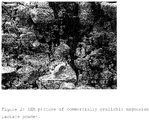
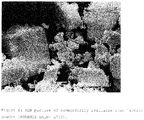
- the method of the present invention yields a metal lactate product, such as zinc lactate and magnesium lactate, that is free-flowing, (controllably) less dusty and less sticky and which comprises nicely almost round shaped or spherical particles in contrast to the commercially available spray- dried metal lactate products.
- a metal lactate product such as zinc lactate and magnesium lactate
- These latter products comprise particles with many edges looking more like cubical and pyramid shaped blocks or of a form in between.
- These rod- or cubical-shaped particles are an indication that said particles are made via crystallization processes.
- the nicely spherical- shaped spray-dried metal lactate particles of the present invention have a much narrower particle size distribution compared to commercially available metal lactate. Particles sizes may be steered and may be between 5 and a 1000 micrometer. Dependent on the application in which the metal lactate is to be used, the particles may be given the appropriate particle size distribution.
- the new metal lactate product of the present invention has new structural characteristics which result in a very high flowability and an already visibly observable less dusty metal lactate product than commercially available metal lactate powder.
- the metal lactate powdery product of the present invention has a Hausner ratio (a well-known parameter to express or indicate the degree of flowability with) of maximally 1.18. This means that it is easier to transport and to handle and the caking tendency is less than with commercially available metal lactate.
- Zinc lactate made via the spray-drying method according to the present invention demonstrated a Hausner ratio of about 1.18.
- a Hausner ratio of higher than 1.4 means, as known to the person skilled in the art of powders, that the powder is cohesive and thus more difficult or even not suited for proper handling and transport.
- Zinc lactate made via spray-drying using two-fluid nozzles demonstrated a Hausner ratio of 1.14 and zinc lactate made via spray-drying using high pressure nozzles even showed to have a Hausner ratio of 1.09.
- Magnesium lactate made via the spray-drying method according to the present invention has a Hausner ratio of 1.13 which indicates a good flowability in contrast to commercially available magnesium lactate made via crystallization which was measured to have a very poor flowability represented by a Hausner ratio of 1.62.
- the metal lactate powders obtained via the spray-drying method according to the present invention further have a compressibility of 12% and lower to even about 8% (both for zinc lactate and magnesium lactate powder).
- This low compressibility factor demonstrates the suitability of the metal lactate powders of the present invention for amongst others tabletting.
- Commercially available zinc lactate has a compressibility of about 50%.
- Commercially available magnesium lactate also demonstrated a very poor compressibility of about three times higher (38 %) than magnesium lactate made via the spray-drying method according to the present invention.
- the spray-dried metal lactate powders (both magnesium lactate and zinc lactate) of the present invention have an angle of repose and an angle of spatula of respectively 37 degrees and lower and 40 to even 34 degrees and lower. Both angles are a means to express the flowability of the powder with. As the person skilled in the art of powders is well aware of, the smaller or steeper these angles are, the better the flowability of the powder is. An angle of repose of below 40 degrees and below 45 degrees for the angle of spatula indicates a good flowability. An angle of spatula of 34 degrees or lower even indicates a fairly good to very good flowability.
- Commercially available magnesium lactate has an angle of repose of 48 degrees and an angle of spatula of 82 degrees.
- Commercially available zinc lactate shows an angle of repose of about 60 and an angle of spatula of 88.
- the new product of the present invention shows a dynamic flow rate of about 112 mL/s (and higher dependent on amongst others the particle size as the skilled person is well aware of) while commercially available metal lactate powder, such as e.g. Puramex Zn®, did not show to have any consistent and measurable dynamic flow rate as it continuously caused problems due to plugging up of the measuring device.
- commercially available metal lactate powder such as e.g. Puramex Zn®
- the spray-drying method according to the present invention has shown to produce zinc lactate powders having a dissolution time (at ambient room temperature), dependent on the size and size distribution of the zinc lactate particles, from about 50 to 100 and even from 5 to 50 seconds for about 1 wt% of spray-dried zinc lactate particles or granules in water.
- a dissolution time at ambient room temperature
- zinc lactate particles or granules made via crystallization it takes about 225 to 485 seconds for 1 wt% to dissolve in water at room temperature. This significant difference creates many new applications in which commercially available zinc lactate could not or was not advantageous to be used as it did not dissolve sufficiently fast enough.
- magnesium lactate showed a two times slower dissolution rate compares with magnesium lactates made via the method according to the present invention.
- the spray-dried metal lactate powder obtained via the present invention was found to be very suitable for various product applications such as cosmetic and personal care applications, dental or oral care applications and technical applications.
- spray-dried metal lactate powder according to the present invention may further be used in various products in the field of food in general, especially in vitamin and mineral supplements and in beverages.
- the spray-dried metal lactate powder according to the present invention was further found to be very suited to make tablets of. This creates further new applications in which before no metal lactate powder could be used as the commercially available metal lactate powder was not suited.
- a slurry feed comprising zinc lactate is made via reaction of lactic acid with zinc oxide in an aqueous environment.
- the feed stream is passed through a milling step.
- a slurry feed comprising about 35 wt% zinc lactate with crystals of about an average 40 ⁇ m (d (0.5) ) was fed to a commercially available STORK® wide-body spray dryer with co-current flow.
- the solution was fed at a varying temperature of 100 to 120° C through two-fluid type nozzles (located at the top of the tower) and atomized by means of application of steam under a pressure that was varied during the test from about 10 to 6 bar.
- the spray of droplets was brought in contact with heated air (mainly introduced from above in the spray dry tower) with an inlet temperature of about 165 to 200° C.
- the outlet temperature was about 90 to 110° C.
- the spray-dried particles were collected at the bottom of the tower and transported via a shaking bed for cooling down.
- ZnL slurry SC10-CL-NoFR-100 and ZnL slurry SC06-CL-NoFR-100 had an average moisture content of about 9.3 wt%.
- Zinc oxide was suspended in demineralised water of about 80 °C. A 92 wt% lactic acid solution was added under continuously stirring until the pH of the solution was about 5.34.
- the resulting about 16 wt% zinc lactate comprising solution was fed to a spray-dry tower.
- the slurry was fed through high-pressure type nozzles (located at the top of the tower) and atomized (applied pressure ⁇ 100 bar).
- the spray of droplets was brought in contact with heated air (mainly introduced from above in the spray dry tower) with an inlet temperature of about 220-245° C.
- the outlet temperature was about 80-120° C.
- the spray-dried particles were fed to a back-filter in which the particles and air were separated.
- the particles were then taken through a classification system comprising sieves and a mill.
- the result was a free-flowing, visually noticeably non-dusty and non-sticky zinc lactate powder with about 3 to 4 wt% moisture content.
- a slurry feed comprising magnesium lactate is made via reaction of lactic acid with magnesium oxide in an aqueous environment.
- a slurry feed comprising about 35 wt% magnesium lactate with crystals of about an average size of 42 ⁇ m (d 0.5 ) was fed to a commercially available STORK® wide-body spray dryer with co-current flow.
- the solution was fed with an ingoing temperature of about 100° C through two-fluid type nozzles (located at the top of the tower) and atomized by means of application of steam under a pressure of about 10 bar (in a later test lowered to about 6 bar).
- the spray of droplets was brought in contact with heated air (mainly introduced from above in the spray dry tower) with an inlet temperature of about 165 to 200° C.
- the outlet temperature was about 90 to 110° C.
- the spray-dried particles were collected at the bottom of the tower and transported via a shaking bed for cooling down.
- the resulting spray-dried magnesium lactate powder had an average moisture content of about 14 wt% and an average particle size of 52 micrometer.
- the particle size distribution was as follows:
- the powder obtained demonstrated a moisture content of about 14.7% and an average particle size of about 190 to 200 micrometer.
- the particle size distribution was as follows:
- a slurry comprising about 30 wt% magnesium lactate with particles of an average size of about 24 ⁇ m (d 50 ( ⁇ m)) was fed to a spray-dry tower.
- the slurry was fed through two-fluid type nozzles (located at the top of the tower) and atomized by means of application of steam under a pressure of about 8 to 10 bar.
- the spray of droplets was brought in contact with heated air (mainly introduced from above in the spray dry tower) with an inlet temperature of about 230-245° C.
- the outlet temperature was about 100 to 120° C.
- the spray-dried particles were further introduced in a static bed integrated in the lower section of the tower for further drying and were subsequently transported via a shaking bed for cooling down.
- the particles were then taken through a classification system comprising sieves and a mill.
- the result was a free-flowing, visually noticeably non-dusty and non-sticky magnesium lactate powder with an about 15 wt% moisture content.
- 198.0 gram of demineralised water is weighed into a 250 ml glass beaker to which a magnetic stirring bar (4 cm) is added. The beaker is placed on a magnetic stirrer and the solution is stirred at 500 rpm. The conductivity meter and thermometer are inserted. 2.00 ⁇ 0.02 gram (1% (w/w)) metal lactate sample is added and the conductivity is automatically measured once every 5 seconds and registered by computer. After 20 minutes the measurement of conductivity is stopped.
- Dt Ct / Cend • 100
- Dt is the dissolution rate (%) at given time (t)
- Ct is the conductivity (mS/cm) at given time (t)
- Cend is the conductivity (mS/cm) at the end of the measurement (t).
- the dissolution rate is calculated with the data from the conductivity measurements using the value for the conductivity at 1200 seconds.
- the dissolution time is determined at 98% dissolution rate. The measured values are displayed in the following table.
- Table 1 dissolution times in seconds (sec) Compound Remarks Dissolution time (sec) Commercially available crystalline zinc lactate (fines) PURAMEX ZnL FINE® 225-395 Spray-dried Zinc lactate particles (1) 0% crystallinity 5-50 Spray-dried zinc lactate (ZnL slurry HP100-CL-NoFR-120) 30% crystallinity 75-85 Commercially available magnesium lactate PURAMEX MgL ® 342.5 Spray-dried magnesium lactate(2) 172.5
- the dissolution time depends on the particle size and particle size distribution. The dissolution times measured varied therefore between powders with a dissolution time of 5 seconds to powders with a dissolution time of about 50 seconds.
- the Hausner ratio is determined by measurement of the tapped and untapped (or aerated) bulk density. Compressibility is also determined by measurement of the tapped or packed and untapped density.
- the angle of repose is determined by measurement of the angle of a cone of powder that is formed by pouring the powder through a glass funnel.
- the angle of spatula is determined by measurement the difference in the angle of powder -that stays behind on a spatula when a container with said spatula on the bottom of it and filled with said powder is lowered and the spatula stays on the same height- and the angle of the powder on said spatula after the spatula was tapped by a weight.
- Table 2 Measured properties of zinc lactate (ZnL) powders obtained via spray-drying and of commercially available zinc lactate Sample Aerated Bulk Density (kg m -3 ) Tapped Bulk Density (kg m -3 ) Hausner Ratio Carr class Compressibility (%) [index] Angle of repose (°) [index] Angle of spatula (°) [index] Uniformity [index] Flowability index ZnL Slurry SC06-CL-NoFR-100 911 1065 1.17 Good 14.46 21 36 19.5 55 16 5.32 22.5 79 Good ZnL Slurry SC10-CL-FR-120 556 633 1.14 Good 12.16 22 37 18 34 21 1.99 23 84 Fairly good ZnL Slurry SC10-NoFR-100 916 1084 1.18 Good 15.50 20 38 18 56 16 4.94 22.5 76.
- Table 3 shows the measured values for the various parameters of magnesium lactate made via crystallization (commercially available magnesium lactate PURAMEX MgL®) and spray-dried magnesium lactate made via the method according to the present invention.
- Table 3 Measured properties of magnesium lactate (MgL) powders Sample Aerated Bulk Density (kg m -3 ) Tapped Bulk Density (kg m -3 ) Hausner Ratio Carr class Compressibility (%) [index] Angle of repose (°) [index] Angle of spatula (°) [index] Uniformity [index] Flowability index Commerc. Available MgL 600 971 1.62 very, very poor 38.21 4.5 48 12 82 7 14.5 20 43. 5 Not good Spray-dried MgL 574 648 1.13 Good 11.42 22 39 18 38 20 12.2 20 80 good
- the " Carr class” is a known index or scale (R.I. Carr, 1965, Evaluation of flow properties of solids ) based on compaction and used to compare the flow properties of various powders with each other.
- the expressions "good” and “fairly good” on this scale indicate that the magnesium and zinc lactate powders of the present invention are very well free-flowing in contrast to the commercially available magnesium and zinc lactate powders. It further indicates that in handling and transporting the powders, e.g. packaged in big bags, the powders are not significantly compressed. As a consequence, the big bags are not suddenly "half empty" when they reach the customer.
- the flowability can also be expressed by measurement of the dynamic flow rate, which is also a well-known standardized method.
- the dynamic flow rate is measured by measuring the time for 600 ml of powder product to flow through a 2 cm orifice of a tube.
- a dynamic flow rate of or above 50 and preferably of or above 70 or 80 ml/s is acceptable in terms of the powder being suited for the normal handling and transporting activities.
- the higher the dynamic flow rate the easier and more efficient, in terms of time and losses of powder that remains behind, the handling and transport of the powder will be.
- the dynamic flow rate was measured to be 111.5 ml/s for ZnL Slurry SC10-CL-FR-120.
- the dynamic flow rate of commercially available zinc lactate (Puramex ZN Fines®) could not be measured as the zinc lactate plugged up the opening of the tube.
- Tablets were made of above-mentioned powders and in order to obtain different strength tablets, the powders were compressed with different compression forces, namely 3 kN, 4 kN and 5 kN.
- compression forces namely 3 kN, 4 kN and 5 kN.
- Instron® machine and cylindrical mould with a diameter of 10 mm were used for the tabletting process.
- the strength of these tablets was measured by measuring the dynamic fracture strength (DFS).It is measured with a Texture Analyser® using a 5 kg loading cell. Compression pressure was loaded on a cylindrical tablet, positioned at its side. The force at which the first fracture appears is measured. The results are expressed as the force at failure and are tabulated in Table 4.
- DFS Dynamic fractures strengths as function of compression force of commercially available magnesium lactate (MgL) and of spray-dried magnesium lactate (MgL) obtainable via the method according to the present invention.
- the strength of the commercially available powder and of the powder obtainable via the mehod according to the present invention was measured via the well-known Kawakita test (ref. M. Celik, Overview of compaction data analysis techniques, Drug development and industrial pharmacy 18 (1992) 767 ).
- Kawakita test (ref. M. Celik, Overview of compaction data analysis techniques, Drug development and industrial pharmacy 18 (1992) 767 ).
- the strength of the powders is measured by application of a compression force on the powders with different powder bed heights of respectively 100, 200 and 300 mg. This was measured using an Instron® machine and the same mould as for the above-described tabletting tests, where the maximum compaction force was set up on 5 kN.
- the compression force as function of the displacement of the bed is obtained. From this curve the yield stress of the powder and of a single layer of powder are calculated.
- Table 5 Yield stress values (tau) for the different powder bed heights (h) of commercially available magnesium lactate (MgL) and of spray-dried magnesium lactate (MgL) obtainable via the method according to the present invention.
- MgL magnesium lactate
- MgL spray-dried magnesium lactate
- the lower yield stress value of spray-dried magnesium lactate powder of the present invention indicates better compaction properties of this material in comparison to commercially available magnesium lactate Puramex Mg® from Purac Biochem B.V.
Landscapes
- Chemical & Material Sciences (AREA)
- Organic Chemistry (AREA)
- Engineering & Computer Science (AREA)
- Oil, Petroleum & Natural Gas (AREA)
- Crystallography & Structural Chemistry (AREA)
- Organic Low-Molecular-Weight Compounds And Preparation Thereof (AREA)
- Cosmetics (AREA)
- Dental Preparations (AREA)
- General Preparation And Processing Of Foods (AREA)
- Coloring Foods And Improving Nutritive Qualities (AREA)
- Non-Alcoholic Beverages (AREA)
- Medicinal Preparation (AREA)
Claims (15)
- Ein Verfahren zur Herstellung eines Metall-Laktat-Produktes, wobei das Metall-Laktat Zink-Laktat oder Magnesium-Laktat ist, umfassend ein Sprühtrocknungsverfahren, wobei eine Lösung oder eine Aufschlämmung, die 10-70 Gewichts-% des Metall-Laktats umfassen, zu Tröpfchen atomisiert ist und die Tröpfchen mit erwärmtem Gas mit einer Temperatur zwischen 100 und 300 Grad Celsius in Kontakt gebracht werden, um in der Bildung fester sprühgetrockneter Metall-Laktat Partikel zu resultieren, gefolgt von der Trennung der festen Partikel von dem Gas.
- Das Verfahren gemäß Anspruch 1, wobei das erwärmte Gas Luft bei reduziertem Druck ist.
- Das Verfahren gemäß Anspruch 1 oder 2, wobei das erwärmte Gas einen Druck von zwischen 0.990 und 1 bar hat.
- Das Verfahren gemäß Anspruch 1, 2 oder 3, wobei die Lösung oder die Aufschlämmung durch Anwendung von Druckluft oder -dampf und Gebrauch einer Zweistoffdüse oder durch Anwendung eines Drucks zwischen 80 bis 250 bar in Kombination mit dem Gebrauch einer Hochdruckdüse atomisiert ist.
- Das Verfahren gemäß Anspruch 4, wobei die Lösung oder die Aufschlämmung Zink-Laktat umfasst und durch Anwendung einer Hochdruckdüse bei einem Druck zwischen 80 bis 250 bar atomisiert ist.
- Das Verfahren gemäß Anspruch 1, 2, 3 oder 4, wobei die Metall-Laktat-Lösung 10 bis 45 Gewichts-% Metall-Laktat umfasst.
- Das Verfahren gemäß einem der vorhergehenden Ansprüche, wobei die Metall-Laktatumfassende Lösung oder Aufschlämmung vorbehandelt ist, wobei die Vorbehandlung das Reagieren von Milchsäure mit einem Metalloxid oder Metallhydroxid in einem wässrigen Medium umfasst, um eine übersättigte Metall-Laktat-Lösung zu erhalten.
- Ein sprühgetrocknetes Zink- oder Magnesium-Laktat-Pulver erhältlich durch das Verfahren wie in einem der Ansprüche 1 bis 7 definiert.
- Das sprühgetrocknete Zink- oder Magnesium-Laktat-Pulver nach Anspruch 8 mit einem Hausner Verhältnis von weniger als 1,15.
- Das sprühgetrocknete Zink- oder Magnesium-Laktat-Pulver nach Anspruch 8 oder Anspruch 9 mit einer dynamischen Flussrate von mindestens 50 mL/s.
- Das sprühgetrocknete Zink- oder Magnesium-Laktat-Pulver nach einem der Ansprüche 8 bis 10 mit einer Lösezeit von weniger als 100 Sekunden für 1 Gewichts-% des Metall-Laktates in Wasser bei umgebender Raumtemperatur.
- Tabletten enthaltend sprühgetrocknetes Zink- oder Magnesium-Laktat-Pulver nach einem der Ansprüche 8 bis 11.
- Verwendung eines sprühgetrocknetes Zink- oder Magnesium-Laktat-Pulvers nach einem der Ansprüche 8 bis 11 in Körperpflege-, Kosmetik-, Dental-, oder technischen Produktanwendungen.
- Ein Körperpflege-, Kosmetik-, Dental-, oder technisches Produkt umfassend das sprühgetrocknete Zink- oder Magnesium-Laktat-Pulver nach einem der Ansprüche 8 bis 11.
- Verwendung des sprühgetrockneten Zink- oder Magnesium-Laktat-Pulvers nach einem der Ansprüche 8 bis 11 in Lebensmittel- oder Getränkeprodukten.
Priority Applications (1)
| Application Number | Priority Date | Filing Date | Title |
|---|---|---|---|
| EP09707390.2A EP2247565B1 (de) | 2008-02-08 | 2009-02-06 | Metalllactat-pulver und herstellungsverfahren dafür |
Applications Claiming Priority (3)
| Application Number | Priority Date | Filing Date | Title |
|---|---|---|---|
| EP08101414 | 2008-02-08 | ||
| EP09707390.2A EP2247565B1 (de) | 2008-02-08 | 2009-02-06 | Metalllactat-pulver und herstellungsverfahren dafür |
| PCT/EP2009/051372 WO2009098286A1 (en) | 2008-02-08 | 2009-02-06 | Metal lactate powder and method for preparation |
Publications (2)
| Publication Number | Publication Date |
|---|---|
| EP2247565A1 EP2247565A1 (de) | 2010-11-10 |
| EP2247565B1 true EP2247565B1 (de) | 2017-08-02 |
Family
ID=39707949
Family Applications (1)
| Application Number | Title | Priority Date | Filing Date |
|---|---|---|---|
| EP09707390.2A Active EP2247565B1 (de) | 2008-02-08 | 2009-02-06 | Metalllactat-pulver und herstellungsverfahren dafür |
Country Status (6)
| Country | Link |
|---|---|
| EP (1) | EP2247565B1 (de) |
| JP (2) | JP5890097B2 (de) |
| CN (1) | CN101939282B (de) |
| BR (1) | BRPI0908766A2 (de) |
| ES (1) | ES2644424T3 (de) |
| WO (1) | WO2009098286A1 (de) |
Families Citing this family (5)
| Publication number | Priority date | Publication date | Assignee | Title |
|---|---|---|---|---|
| EP2247565B1 (de) * | 2008-02-08 | 2017-08-02 | PURAC Biochem BV | Metalllactat-pulver und herstellungsverfahren dafür |
| PH12014500080B1 (en) * | 2011-07-08 | 2023-06-30 | Purac Biochem Bv | Active formulation for use in feed products |
| EP3206992A4 (de) * | 2014-10-16 | 2018-11-14 | Imerys USA, Inc. | Erdalkalimetallsalze |
| CN105621460A (zh) * | 2015-12-31 | 2016-06-01 | 王丰登 | 一种无水镁盐的生产方法 |
| CN117800833A (zh) * | 2023-12-28 | 2024-04-02 | 武汉三江航天固德生物科技有限公司 | 乳酸锌的节能生产方法及装置 |
Family Cites Families (16)
| Publication number | Priority date | Publication date | Assignee | Title |
|---|---|---|---|---|
| NL7106959A (en) * | 1971-05-21 | 1972-11-23 | Dry,powdered sodium lactate - spray drying an optically-pure soln,used in aroma mixts | |
| JPS5365806A (en) * | 1976-11-19 | 1978-06-12 | Nippon Shiryo Kogyo Kk | Method of making granular powder of crystalline sugar alcohol |
| DE2820942A1 (de) * | 1978-05-12 | 1979-11-22 | Sueddeutsche Kalkstickstoff | Uebersaure feste metallactate, verfahren zu deren herstellung und verwendung |
| JPS6245510A (ja) * | 1985-08-22 | 1987-02-27 | Kanebo Ltd | 美白化粧料 |
| JPS62281847A (ja) * | 1986-03-17 | 1987-12-07 | ダブリュー・アール・グレイス・アンド・カンパニー―コネチカット | アミノ酸組成物 |
| CA2085008C (en) * | 1990-06-14 | 1998-08-18 | Mary M. Fox | Calcium citrate malate composition |
| DE4446387A1 (de) * | 1994-12-23 | 1996-06-27 | Basf Ag | Verfahren zur Herstellung fester, freifließender wasserlöslicher Salze von Aryloxi-C¶1¶-C¶4¶-alkancarbonsäuren |
| JPH08198803A (ja) * | 1995-01-27 | 1996-08-06 | Fuji Chem Ind Co Ltd | 非晶質クエン酸・有機酸・カルシウム・マグネシウム組成物及びその製造法 |
| JPH09301851A (ja) * | 1996-05-17 | 1997-11-25 | Fuji Chem Ind Co Ltd | 圧縮成形性に優れた結晶性薬物粒子及び該化合物の製造方法 |
| JP2001340063A (ja) * | 2000-05-31 | 2001-12-11 | Fuso Chemical Co Ltd | マグネシウム補給用飲食品 |
| EP1285660A4 (de) * | 2000-05-31 | 2003-07-09 | Hamari Chemicals Ltd | Zinksupplement-zusammensetzungen zur oralen verabreichung |
| JP5084075B2 (ja) * | 2001-02-28 | 2012-11-28 | サンスター株式会社 | 口腔内洗浄用組成物 |
| JP2002275123A (ja) * | 2001-03-21 | 2002-09-25 | Kawai Kk | 乳酸カルシウムの製造方法 |
| JP2004075646A (ja) * | 2002-08-22 | 2004-03-11 | Kanebo Ltd | 化粧料 |
| JP2006081971A (ja) * | 2004-09-14 | 2006-03-30 | Erubu:Kk | 機能性材料、フィルタ、化粧品原材料用組成物及び食品添加物並びにその機能性材料の製造方法 |
| EP2247565B1 (de) * | 2008-02-08 | 2017-08-02 | PURAC Biochem BV | Metalllactat-pulver und herstellungsverfahren dafür |
-
2009
- 2009-02-06 EP EP09707390.2A patent/EP2247565B1/de active Active
- 2009-02-06 ES ES09707390.2T patent/ES2644424T3/es active Active
- 2009-02-06 WO PCT/EP2009/051372 patent/WO2009098286A1/en not_active Ceased
- 2009-02-06 JP JP2010545478A patent/JP5890097B2/ja active Active
- 2009-02-06 CN CN200980104416.5A patent/CN101939282B/zh active Active
- 2009-02-06 BR BRPI0908766-4A patent/BRPI0908766A2/pt active IP Right Grant
-
2014
- 2014-12-25 JP JP2014263250A patent/JP6367112B2/ja active Active
Non-Patent Citations (2)
| Title |
|---|
| CAIRA: "Crystalline Polymorphism of Organic Compounds", TOPICS IN CURRENT CHEMISTRY, SPRINGER, BERLIN, DE, vol. 198, 1 January 1998 (1998-01-01), pages 163 - 208, XP008166276, ISSN: 0340-1022 * |
| XUEJUN CAO ET AL: "Solubilities of calcium and zinc lactate in water and water-ethanol mixture", KOREAN JOURNAL OF CHEMICAL ENGINEERING, vol. 18, no. 1, 1 January 2001 (2001-01-01), pages 133 - 135, XP055171152, ISSN: 0256-1115, DOI: 10.1007/BF02707210 * |
Also Published As
| Publication number | Publication date |
|---|---|
| BRPI0908766A2 (pt) | 2015-07-28 |
| JP2011514316A (ja) | 2011-05-06 |
| EP2247565A1 (de) | 2010-11-10 |
| JP6367112B2 (ja) | 2018-08-01 |
| ES2644424T3 (es) | 2017-11-28 |
| JP2015120699A (ja) | 2015-07-02 |
| CN101939282A (zh) | 2011-01-05 |
| CN101939282B (zh) | 2016-06-01 |
| WO2009098286A1 (en) | 2009-08-13 |
| JP5890097B2 (ja) | 2016-03-22 |
Similar Documents
| Publication | Publication Date | Title |
|---|---|---|
| JP6367112B2 (ja) | 金属ラクテート粉及び製造方法 | |
| US8337867B2 (en) | Metal lactate powder and method for preparation | |
| CA2661062C (en) | Compositions comprising calcium citrate malate and methods for making the same | |
| CA2788740C (en) | Directly compressible magnesium hydroxide carbonate | |
| US7351853B2 (en) | Method of manufacturing a granular mineral composition | |
| EP2330094B1 (de) | Alkalimetallcinnamatpulver und Herstellungsverfahren dafür | |
| US20110300220A1 (en) | Solid calcium lactate in substantially spherical form | |
| CN103998378B (zh) | 低孔隙率的无水碳酸钠 | |
| EP1787993A1 (de) | Kristallines maltitolpulver mit geringer konsolidierungsanfälligkeit und herstellungsverfahren dafür | |
| AU2007285386B2 (en) | Compositions comprising calcium citrate malate and methods for making the same | |
| US7459575B2 (en) | Aluminum trilactate powder and method for preparation | |
| WO2008071659A1 (en) | Aluminium trilactate powder and method for preparation | |
| BRPI0908766B1 (pt) | Metal lactate in powder and process for preparation | |
| WO2002102413A2 (en) | Alkali or alkaline earth metal benzoate particles |
Legal Events
| Date | Code | Title | Description |
|---|---|---|---|
| PUAI | Public reference made under article 153(3) epc to a published international application that has entered the european phase |
Free format text: ORIGINAL CODE: 0009012 |
|
| 17P | Request for examination filed |
Effective date: 20100830 |
|
| AK | Designated contracting states |
Kind code of ref document: A1 Designated state(s): AT BE BG CH CY CZ DE DK EE ES FI FR GB GR HR HU IE IS IT LI LT LU LV MC MK MT NL NO PL PT RO SE SI SK TR |
|
| AX | Request for extension of the european patent |
Extension state: AL BA RS |
|
| DAX | Request for extension of the european patent (deleted) | ||
| 17Q | First examination report despatched |
Effective date: 20150305 |
|
| GRAP | Despatch of communication of intention to grant a patent |
Free format text: ORIGINAL CODE: EPIDOSNIGR1 |
|
| RIC1 | Information provided on ipc code assigned before grant |
Ipc: C07C 51/43 20060101ALI20170215BHEP Ipc: C07C 59/08 20060101ALI20170215BHEP Ipc: A61Q 19/00 20060101ALI20170215BHEP Ipc: C07C 51/41 20060101AFI20170215BHEP Ipc: A61Q 11/00 20060101ALI20170215BHEP |
|
| INTG | Intention to grant announced |
Effective date: 20170315 |
|
| GRAS | Grant fee paid |
Free format text: ORIGINAL CODE: EPIDOSNIGR3 |
|
| GRAA | (expected) grant |
Free format text: ORIGINAL CODE: 0009210 |
|
| AK | Designated contracting states |
Kind code of ref document: B1 Designated state(s): AT BE BG CH CY CZ DE DK EE ES FI FR GB GR HR HU IE IS IT LI LT LU LV MC MK MT NL NO PL PT RO SE SI SK TR |
|
| REG | Reference to a national code |
Ref country code: GB Ref legal event code: FG4D |
|
| REG | Reference to a national code |
Ref country code: CH Ref legal event code: EP Ref country code: AT Ref legal event code: REF Ref document number: 914270 Country of ref document: AT Kind code of ref document: T Effective date: 20170815 |
|
| REG | Reference to a national code |
Ref country code: IE Ref legal event code: FG4D |
|
| REG | Reference to a national code |
Ref country code: DE Ref legal event code: R096 Ref document number: 602009047479 Country of ref document: DE |
|
| REG | Reference to a national code |
Ref country code: NL Ref legal event code: FP |
|
| REG | Reference to a national code |
Ref country code: ES Ref legal event code: FG2A Ref document number: 2644424 Country of ref document: ES Kind code of ref document: T3 Effective date: 20171128 |
|
| REG | Reference to a national code |
Ref country code: AT Ref legal event code: MK05 Ref document number: 914270 Country of ref document: AT Kind code of ref document: T Effective date: 20170802 |
|
| REG | Reference to a national code |
Ref country code: LT Ref legal event code: MG4D |
|
| PG25 | Lapsed in a contracting state [announced via postgrant information from national office to epo] |
Ref country code: HR Free format text: LAPSE BECAUSE OF FAILURE TO SUBMIT A TRANSLATION OF THE DESCRIPTION OR TO PAY THE FEE WITHIN THE PRESCRIBED TIME-LIMIT Effective date: 20170802 Ref country code: FI Free format text: LAPSE BECAUSE OF FAILURE TO SUBMIT A TRANSLATION OF THE DESCRIPTION OR TO PAY THE FEE WITHIN THE PRESCRIBED TIME-LIMIT Effective date: 20170802 Ref country code: LT Free format text: LAPSE BECAUSE OF FAILURE TO SUBMIT A TRANSLATION OF THE DESCRIPTION OR TO PAY THE FEE WITHIN THE PRESCRIBED TIME-LIMIT Effective date: 20170802 Ref country code: SE Free format text: LAPSE BECAUSE OF FAILURE TO SUBMIT A TRANSLATION OF THE DESCRIPTION OR TO PAY THE FEE WITHIN THE PRESCRIBED TIME-LIMIT Effective date: 20170802 Ref country code: NO Free format text: LAPSE BECAUSE OF FAILURE TO SUBMIT A TRANSLATION OF THE DESCRIPTION OR TO PAY THE FEE WITHIN THE PRESCRIBED TIME-LIMIT Effective date: 20171102 Ref country code: AT Free format text: LAPSE BECAUSE OF FAILURE TO SUBMIT A TRANSLATION OF THE DESCRIPTION OR TO PAY THE FEE WITHIN THE PRESCRIBED TIME-LIMIT Effective date: 20170802 |
|
| REG | Reference to a national code |
Ref country code: FR Ref legal event code: PLFP Year of fee payment: 10 |
|
| PG25 | Lapsed in a contracting state [announced via postgrant information from national office to epo] |
Ref country code: BG Free format text: LAPSE BECAUSE OF FAILURE TO SUBMIT A TRANSLATION OF THE DESCRIPTION OR TO PAY THE FEE WITHIN THE PRESCRIBED TIME-LIMIT Effective date: 20171102 Ref country code: IS Free format text: LAPSE BECAUSE OF FAILURE TO SUBMIT A TRANSLATION OF THE DESCRIPTION OR TO PAY THE FEE WITHIN THE PRESCRIBED TIME-LIMIT Effective date: 20171202 Ref country code: GR Free format text: LAPSE BECAUSE OF FAILURE TO SUBMIT A TRANSLATION OF THE DESCRIPTION OR TO PAY THE FEE WITHIN THE PRESCRIBED TIME-LIMIT Effective date: 20171103 Ref country code: LV Free format text: LAPSE BECAUSE OF FAILURE TO SUBMIT A TRANSLATION OF THE DESCRIPTION OR TO PAY THE FEE WITHIN THE PRESCRIBED TIME-LIMIT Effective date: 20170802 Ref country code: PL Free format text: LAPSE BECAUSE OF FAILURE TO SUBMIT A TRANSLATION OF THE DESCRIPTION OR TO PAY THE FEE WITHIN THE PRESCRIBED TIME-LIMIT Effective date: 20170802 |
|
| PG25 | Lapsed in a contracting state [announced via postgrant information from national office to epo] |
Ref country code: RO Free format text: LAPSE BECAUSE OF FAILURE TO SUBMIT A TRANSLATION OF THE DESCRIPTION OR TO PAY THE FEE WITHIN THE PRESCRIBED TIME-LIMIT Effective date: 20170802 Ref country code: DK Free format text: LAPSE BECAUSE OF FAILURE TO SUBMIT A TRANSLATION OF THE DESCRIPTION OR TO PAY THE FEE WITHIN THE PRESCRIBED TIME-LIMIT Effective date: 20170802 Ref country code: CZ Free format text: LAPSE BECAUSE OF FAILURE TO SUBMIT A TRANSLATION OF THE DESCRIPTION OR TO PAY THE FEE WITHIN THE PRESCRIBED TIME-LIMIT Effective date: 20170802 |
|
| REG | Reference to a national code |
Ref country code: DE Ref legal event code: R097 Ref document number: 602009047479 Country of ref document: DE |
|
| PG25 | Lapsed in a contracting state [announced via postgrant information from national office to epo] |
Ref country code: SK Free format text: LAPSE BECAUSE OF FAILURE TO SUBMIT A TRANSLATION OF THE DESCRIPTION OR TO PAY THE FEE WITHIN THE PRESCRIBED TIME-LIMIT Effective date: 20170802 Ref country code: EE Free format text: LAPSE BECAUSE OF FAILURE TO SUBMIT A TRANSLATION OF THE DESCRIPTION OR TO PAY THE FEE WITHIN THE PRESCRIBED TIME-LIMIT Effective date: 20170802 Ref country code: IT Free format text: LAPSE BECAUSE OF FAILURE TO SUBMIT A TRANSLATION OF THE DESCRIPTION OR TO PAY THE FEE WITHIN THE PRESCRIBED TIME-LIMIT Effective date: 20170802 |
|
| PLBE | No opposition filed within time limit |
Free format text: ORIGINAL CODE: 0009261 |
|
| STAA | Information on the status of an ep patent application or granted ep patent |
Free format text: STATUS: NO OPPOSITION FILED WITHIN TIME LIMIT |
|
| 26N | No opposition filed |
Effective date: 20180503 |
|
| PG25 | Lapsed in a contracting state [announced via postgrant information from national office to epo] |
Ref country code: SI Free format text: LAPSE BECAUSE OF FAILURE TO SUBMIT A TRANSLATION OF THE DESCRIPTION OR TO PAY THE FEE WITHIN THE PRESCRIBED TIME-LIMIT Effective date: 20170802 |
|
| REG | Reference to a national code |
Ref country code: CH Ref legal event code: PL |
|
| PG25 | Lapsed in a contracting state [announced via postgrant information from national office to epo] |
Ref country code: MC Free format text: LAPSE BECAUSE OF FAILURE TO SUBMIT A TRANSLATION OF THE DESCRIPTION OR TO PAY THE FEE WITHIN THE PRESCRIBED TIME-LIMIT Effective date: 20170802 |
|
| REG | Reference to a national code |
Ref country code: IE Ref legal event code: MM4A |
|
| PG25 | Lapsed in a contracting state [announced via postgrant information from national office to epo] |
Ref country code: CH Free format text: LAPSE BECAUSE OF NON-PAYMENT OF DUE FEES Effective date: 20180228 Ref country code: LU Free format text: LAPSE BECAUSE OF NON-PAYMENT OF DUE FEES Effective date: 20180206 Ref country code: LI Free format text: LAPSE BECAUSE OF NON-PAYMENT OF DUE FEES Effective date: 20180228 |
|
| PG25 | Lapsed in a contracting state [announced via postgrant information from national office to epo] |
Ref country code: IE Free format text: LAPSE BECAUSE OF NON-PAYMENT OF DUE FEES Effective date: 20180206 |
|
| PG25 | Lapsed in a contracting state [announced via postgrant information from national office to epo] |
Ref country code: MT Free format text: LAPSE BECAUSE OF NON-PAYMENT OF DUE FEES Effective date: 20180206 |
|
| PG25 | Lapsed in a contracting state [announced via postgrant information from national office to epo] |
Ref country code: TR Free format text: LAPSE BECAUSE OF FAILURE TO SUBMIT A TRANSLATION OF THE DESCRIPTION OR TO PAY THE FEE WITHIN THE PRESCRIBED TIME-LIMIT Effective date: 20170802 |
|
| PG25 | Lapsed in a contracting state [announced via postgrant information from national office to epo] |
Ref country code: HU Free format text: LAPSE BECAUSE OF FAILURE TO SUBMIT A TRANSLATION OF THE DESCRIPTION OR TO PAY THE FEE WITHIN THE PRESCRIBED TIME-LIMIT; INVALID AB INITIO Effective date: 20090206 Ref country code: PT Free format text: LAPSE BECAUSE OF FAILURE TO SUBMIT A TRANSLATION OF THE DESCRIPTION OR TO PAY THE FEE WITHIN THE PRESCRIBED TIME-LIMIT Effective date: 20170802 |
|
| PG25 | Lapsed in a contracting state [announced via postgrant information from national office to epo] |
Ref country code: CY Free format text: LAPSE BECAUSE OF FAILURE TO SUBMIT A TRANSLATION OF THE DESCRIPTION OR TO PAY THE FEE WITHIN THE PRESCRIBED TIME-LIMIT Effective date: 20170802 Ref country code: MK Free format text: LAPSE BECAUSE OF NON-PAYMENT OF DUE FEES Effective date: 20170802 |
|
| P01 | Opt-out of the competence of the unified patent court (upc) registered |
Effective date: 20230517 |
|
| PGFP | Annual fee paid to national office [announced via postgrant information from national office to epo] |
Ref country code: NL Payment date: 20260226 Year of fee payment: 18 |
|
| PGFP | Annual fee paid to national office [announced via postgrant information from national office to epo] |
Ref country code: GB Payment date: 20260227 Year of fee payment: 18 |
|
| PGFP | Annual fee paid to national office [announced via postgrant information from national office to epo] |
Ref country code: ES Payment date: 20260302 Year of fee payment: 18 |
|
| PGFP | Annual fee paid to national office [announced via postgrant information from national office to epo] |
Ref country code: DE Payment date: 20260227 Year of fee payment: 18 |
|
| PGFP | Annual fee paid to national office [announced via postgrant information from national office to epo] |
Ref country code: BE Payment date: 20260227 Year of fee payment: 18 |
|
| PGFP | Annual fee paid to national office [announced via postgrant information from national office to epo] |
Ref country code: FR Payment date: 20260225 Year of fee payment: 18 |