EP2260862A1 - Zusammensetzungen und Verfahren zur Behandlung von Tumoren, die Survivin-Antigene aufweisen - Google Patents
Zusammensetzungen und Verfahren zur Behandlung von Tumoren, die Survivin-Antigene aufweisen Download PDFInfo
- Publication number
- EP2260862A1 EP2260862A1 EP10008550A EP10008550A EP2260862A1 EP 2260862 A1 EP2260862 A1 EP 2260862A1 EP 10008550 A EP10008550 A EP 10008550A EP 10008550 A EP10008550 A EP 10008550A EP 2260862 A1 EP2260862 A1 EP 2260862A1
- Authority
- EP
- European Patent Office
- Prior art keywords
- survivin
- vaccine
- seq
- cells
- peptide
- Prior art date
- Legal status (The legal status is an assumption and is not a legal conclusion. Google has not performed a legal analysis and makes no representation as to the accuracy of the status listed.)
- Granted
Links
Images








Classifications
-
- A—HUMAN NECESSITIES
- A61—MEDICAL OR VETERINARY SCIENCE; HYGIENE
- A61K—PREPARATIONS FOR MEDICAL, DENTAL OR TOILETRY PURPOSES
- A61K39/00—Medicinal preparations containing antigens or antibodies
- A61K39/0005—Vertebrate antigens
- A61K39/0011—Cancer antigens
- A61K39/001148—Regulators of development
- A61K39/00115—Apoptosis related proteins, e.g. survivin or livin
-
- A—HUMAN NECESSITIES
- A61—MEDICAL OR VETERINARY SCIENCE; HYGIENE
- A61P—SPECIFIC THERAPEUTIC ACTIVITY OF CHEMICAL COMPOUNDS OR MEDICINAL PREPARATIONS
- A61P11/00—Drugs for disorders of the respiratory system
-
- A—HUMAN NECESSITIES
- A61—MEDICAL OR VETERINARY SCIENCE; HYGIENE
- A61K—PREPARATIONS FOR MEDICAL, DENTAL OR TOILETRY PURPOSES
- A61K39/00—Medicinal preparations containing antigens or antibodies
-
- A—HUMAN NECESSITIES
- A61—MEDICAL OR VETERINARY SCIENCE; HYGIENE
- A61K—PREPARATIONS FOR MEDICAL, DENTAL OR TOILETRY PURPOSES
- A61K40/00—Cellular immunotherapy
- A61K40/10—Cellular immunotherapy characterised by the cell type used
- A61K40/11—T-cells, e.g. tumour infiltrating lymphocytes [TIL] or regulatory T [Treg] cells; Lymphokine-activated killer [LAK] cells
-
- A—HUMAN NECESSITIES
- A61—MEDICAL OR VETERINARY SCIENCE; HYGIENE
- A61K—PREPARATIONS FOR MEDICAL, DENTAL OR TOILETRY PURPOSES
- A61K40/00—Cellular immunotherapy
- A61K40/40—Cellular immunotherapy characterised by antigens that are targeted or presented by cells of the immune system
- A61K40/41—Vertebrate antigens
- A61K40/42—Cancer antigens
- A61K40/4238—Regulators of development
- A61K40/424—Apoptosis related proteins, e.g. survivin or livin
-
- A—HUMAN NECESSITIES
- A61—MEDICAL OR VETERINARY SCIENCE; HYGIENE
- A61K—PREPARATIONS FOR MEDICAL, DENTAL OR TOILETRY PURPOSES
- A61K48/00—Medicinal preparations containing genetic material which is inserted into cells of the living body to treat genetic diseases; Gene therapy
-
- A—HUMAN NECESSITIES
- A61—MEDICAL OR VETERINARY SCIENCE; HYGIENE
- A61P—SPECIFIC THERAPEUTIC ACTIVITY OF CHEMICAL COMPOUNDS OR MEDICINAL PREPARATIONS
- A61P35/00—Antineoplastic agents
-
- A—HUMAN NECESSITIES
- A61—MEDICAL OR VETERINARY SCIENCE; HYGIENE
- A61P—SPECIFIC THERAPEUTIC ACTIVITY OF CHEMICAL COMPOUNDS OR MEDICINAL PREPARATIONS
- A61P35/00—Antineoplastic agents
- A61P35/04—Antineoplastic agents specific for metastasis
-
- A—HUMAN NECESSITIES
- A61—MEDICAL OR VETERINARY SCIENCE; HYGIENE
- A61K—PREPARATIONS FOR MEDICAL, DENTAL OR TOILETRY PURPOSES
- A61K39/00—Medicinal preparations containing antigens or antibodies
- A61K2039/51—Medicinal preparations containing antigens or antibodies comprising whole cells, viruses or DNA/RNA
- A61K2039/52—Bacterial cells; Fungal cells; Protozoal cells
- A61K2039/523—Bacterial cells; Fungal cells; Protozoal cells expressing foreign proteins
-
- A—HUMAN NECESSITIES
- A61—MEDICAL OR VETERINARY SCIENCE; HYGIENE
- A61K—PREPARATIONS FOR MEDICAL, DENTAL OR TOILETRY PURPOSES
- A61K39/00—Medicinal preparations containing antigens or antibodies
- A61K2039/51—Medicinal preparations containing antigens or antibodies comprising whole cells, viruses or DNA/RNA
- A61K2039/525—Virus
- A61K2039/5256—Virus expressing foreign proteins
-
- A—HUMAN NECESSITIES
- A61—MEDICAL OR VETERINARY SCIENCE; HYGIENE
- A61K—PREPARATIONS FOR MEDICAL, DENTAL OR TOILETRY PURPOSES
- A61K39/00—Medicinal preparations containing antigens or antibodies
- A61K2039/51—Medicinal preparations containing antigens or antibodies comprising whole cells, viruses or DNA/RNA
- A61K2039/525—Virus
- A61K2039/5258—Virus-like particles
-
- A—HUMAN NECESSITIES
- A61—MEDICAL OR VETERINARY SCIENCE; HYGIENE
- A61K—PREPARATIONS FOR MEDICAL, DENTAL OR TOILETRY PURPOSES
- A61K39/00—Medicinal preparations containing antigens or antibodies
- A61K2039/51—Medicinal preparations containing antigens or antibodies comprising whole cells, viruses or DNA/RNA
- A61K2039/53—DNA (RNA) vaccination
-
- A—HUMAN NECESSITIES
- A61—MEDICAL OR VETERINARY SCIENCE; HYGIENE
- A61K—PREPARATIONS FOR MEDICAL, DENTAL OR TOILETRY PURPOSES
- A61K39/00—Medicinal preparations containing antigens or antibodies
- A61K2039/555—Medicinal preparations containing antigens or antibodies characterised by a specific combination antigen/adjuvant
- A61K2039/55511—Organic adjuvants
- A61K2039/55522—Cytokines; Lymphokines; Interferons
-
- A—HUMAN NECESSITIES
- A61—MEDICAL OR VETERINARY SCIENCE; HYGIENE
- A61K—PREPARATIONS FOR MEDICAL, DENTAL OR TOILETRY PURPOSES
- A61K39/00—Medicinal preparations containing antigens or antibodies
- A61K2039/555—Medicinal preparations containing antigens or antibodies characterised by a specific combination antigen/adjuvant
- A61K2039/55511—Organic adjuvants
- A61K2039/55522—Cytokines; Lymphokines; Interferons
- A61K2039/55527—Interleukins
-
- A—HUMAN NECESSITIES
- A61—MEDICAL OR VETERINARY SCIENCE; HYGIENE
- A61K—PREPARATIONS FOR MEDICAL, DENTAL OR TOILETRY PURPOSES
- A61K2239/00—Indexing codes associated with cellular immunotherapy of group A61K40/00
- A61K2239/46—Indexing codes associated with cellular immunotherapy of group A61K40/00 characterised by the cancer treated
- A61K2239/55—Lung
-
- C—CHEMISTRY; METALLURGY
- C12—BIOCHEMISTRY; BEER; SPIRITS; WINE; VINEGAR; MICROBIOLOGY; ENZYMOLOGY; MUTATION OR GENETIC ENGINEERING
- C12N—MICROORGANISMS OR ENZYMES; COMPOSITIONS THEREOF; PROPAGATING, PRESERVING, OR MAINTAINING MICROORGANISMS; MUTATION OR GENETIC ENGINEERING; CULTURE MEDIA
- C12N2799/00—Uses of viruses
- C12N2799/02—Uses of viruses as vector
- C12N2799/021—Uses of viruses as vector for the expression of a heterologous nucleic acid
- C12N2799/022—Uses of viruses as vector for the expression of a heterologous nucleic acid where the vector is derived from an adenovirus
Definitions
- This invention relates to vaccination strategies for tumor treatment. Specifically, this invention relates to vaccine compositions stimulating in a human an immune response to human survivin, thus attacking tumor diseased cells overexpressing survivin.
- the present invention relates to vaccine compositions comprising peptides derived from non-mammalian survivin as well as from modified mammalian, especially human, survivin.
- the immune system carries out its surveillance function in part by monitoring the protein compositions of cells.
- T cell antigen presentation proteins inside a cell are processed into peptides.
- a subset of the processed peptides, the antigens, are exported to the cell surface, in a specific association with a member of a class of receptors known as the major histocompatibility complex (MHC) receptors.
- MHC-peptide complexes are sampled by specialized immune cells, T cells, via an interaction with T cell surface proteins known as T Cell Receptors (TCRs).
- TCRs T Cell Receptors
- an immune response is activated which leads to the elimination of the cell presenting that particular MHC-peptide complex.
- the interaction is non-productive if the presented antigens are derived from the host, so-called "self' antigens.
- immune responses are activated by the interaction with an antigen derived from a foreign protein, for example, with an antigen derived from a constituent protein of an infecting virus.
- the aim of treating tumors by active immunization is to induce the immune system to recognize and to eliminate tumor cells.
- peptide antigens on tumor cells are derived from the repertoire of expressed proteins.
- Tumor-enriched antigens derived from differentially expressed proteins in tumors are in principle a target of immune surveillance just as viral antigens are in infected cells. Accordingly, it would be useful to harness branches of the immune system that have evolved to counter an intracellular infection for the purpose of eliminating a tumor.
- tumor-enriched protein is survivin.
- Tumor cells often overexpress the survivin protein, which is believed to block apoptosis and thus interfere with mechanisms that prevent the abnormal growth of tumor cells.
- Normal cells on the other hand, express very little survivin. (see, e . g ., Ambrosini et al., (1997) Nat. Med., 3:917-921 ). Therefore, survivin is an ideal tumor-specific or tumor-enriched antigen. It would be useful to deliver an antigenic form of the survivin protein to antigen-presenting cells, so that an immune response to survivin may be stimulated.
- survivin like many other differentially expressed proteins in tumors, are host proteins and do not activate the immune system. Therefore, there remains a need in the art to develop effective compositions and methods that elicit an effective immune response to tumor cells, particularly those characterized with the overexpression of survivin.
- the present invention provides effective compositions and methods that elicit an effective immune response to tumor cells. Specifically, the present invention provides vaccination strategies using antigenic forms of tumor-enriched proteins as T cell antigens. In particular, the present invention provides an antigenic form of a tumor-enriched protein, survivin.
- the present invention in one aspect, relates to a vaccine including a nucleic acid encoding at least a peptide derived from a non-mammalian survivin.
- the present invention relates to a vaccine including at least a peptide derived from a non-mammalian survivin.
- the "non-mammalian survivin,” as used herein, encompasses at least any survivin protein having a BIR domain (or an IAP domain) with more than 50% amino acid identity but less than 90% amino acid identity with a human survivin BIR domain, for example at least 55 %, 60%, 65%, 70%, 75%, 80% or 85% identity with a human survivin BIR domain.
- non-mammalian survivin also includes any survivin protein identified in non-mammalian species known to one of ordinary skill in the art.
- the "peptide,” as used herein, encompasses peptides with any number of amino acids, including full length survivin protein. In particular, a peptide may contain at least 8, 9, 10, 15, 20, 25, 30 or more amino acids.
- the vaccine of the present invention includes a nucleic acid encoding a peptide derived from a non-mammalian survivin.
- the nucleic acid may include a mammalian promoter.
- the nucleic acid is a naked DNA.
- the nucleic acid is formulated with a reagent that enhances transfection of mammalian cells.
- the vaccine of the present invention may also include an adjuvant.
- the nucleic acid is part of a viral particle, for example, an adenoviral particle.
- Adenoviral particles suitable for the invention include those derived from adenoviruses capable of replication, or those derived from conditionally replicating adenoviruses ("CRADs") that replicate in only certain cells or only under certain conditions, or those derived from adenoviruses that are replication-incompetent.
- Other suitable viral particles include, but are not limited to, viral particles derived from lentiviruses or other RNA viruses, adeno-associated viruses, rotaviruses, or vaccinia viruses, to name but a few.
- the vaccine includes a bacterium containing the nucleic acid.
- the bacterium is an enteric bacterium, such as a Salmonella, Escherichia, or Klebsiella. Other bacteria, such as Listeria species, may also be used to host such nucleic acids.
- the bacterium may be a wild-type bacterium or may contain mutations that, for example, attenuate its pathogenicity. Generally, it is preferred to use a mutant form of a bacterium, such as an auxotroph.
- the vaccine of the present invention encodes or includes a peptide derived from a non-mammalian survivin.
- the peptide derived from a non-mammalian survivin includes a BIR domain.
- the BIR domain derived from a non-mammalian survivin has more than 50% amino acid identity but less than 80% amino acid identity with a human survivin BIR domain.
- the non-mammalian survivin is derived from a bird, fish, reptile, amphibian, or other vertebrate. In a preferred embodiment, the non-mammalian survivin is derived from chicken.
- the vaccine of the present invention encodes or comprises a peptide derived from a non-mammalian survivin with a mutation that promotes T cell antigen presentation.
- the non-mammalian survivin mutation peptide may contain an amino acid substitution at a position corresponding to Asn97, Thr99, Val100, or Gln101 of human survivin.
- a non-mammalian survivin derived from chicken or other species may contain one of the following amino acid substitutions: N97E, T99M, V100L, or Q101G.
- a peptide derived from the frog SIX survivin contains substitutions at equivalent positions Thr110 and/or Ser112.
- a peptide derived from frog SIX survivin contains substitutions Thr110Met and/or Ser112Gly.
- the vaccine of the present invention encodes or comprises a peptide derived from a non-mammalian survivin with a mutation that potentially abolishes the biological activity of the BIR domain.
- the peptide derived from a non-mammalian survivin may contain at least one amino acid substitution at a position corresponding to Arg18, Cys57, Cys60, His77, or Cys84 of human survivin.
- non-mammalian survivin may optionally contain amino acid deletions.
- the non-mammalian survivin moiety contains a C-terminal deletion.
- the non-mammalian survivin contains an N-terminal deletion.
- the vaccine of the present invention is capable of activating T cells recognizing a human survivin peptide sequence when complexed with an MHC molecule on a cancer cell.
- a human survivin peptide sequence may be, for example, LTLGEFLKL (SEQ ID NO:1), CPTENEPDL (SEQ ID NO:2), or EPDLAQCFF (SEQ ID NO:3).
- the peptide derived from a non-mammalian survivin is fused or conjugated to an Fc moiety.
- a preferred Fc moiety is derived from a mammalian Fc region, more preferably from a human Fc region.
- the Fc moiety may contain mutations that improve assembly, for example, substitution of the cysteine in the sequence EPKSCDK (SEQ ID NO:4) of the IgG1 hinge with a serine.
- the Fc moiety may contain a modified sequence EPKSSDK (SEQ ID NO:5).
- the Fc moiety may also contain mutations that reduce the immunogenicity of regions for which an immune response is not desired, for example, the junction between the fusion protein moieties.
- the peptide derived from a non-mammalian survivin functions in concert with an effector molecule that contributes to the immune response.
- an effector molecule can be a cytokine moiety including, but not limited to, IL-2, IL-7, IL-12, IL-18, IL-21, IL-23, GM-CSF, or any other cytokine, particularly one capable of activating a Th1 immune response.
- Such an effector molecule can also be an inhibitor of a cytokine that represses the immune system, for example, a STAT3 inhibitor (e.g., a dominant negative STAT3 protein such as STAT3 ⁇ ).
- Cytokines or other effector molecules may also contain mutations.
- a cytokine may contain a Ser substitution at a position corresponding to Cys125 of IL-2.
- the vaccine of the invention includes a nucleic acid encoding a peptide derived from a non-mammalian survivin and a second peptide including an effector molecule described above that contributes to the immune response.
- the regions encoding the non-mammalian survivin peptide and the effector molecule peptide can be in a single transcription unit, or in two separate transcription units.
- the vaccine of the invention includes a nucleic acid encoding a peptide derived from a non-mammalian survivin and a separate nucleic acid encoding a second peptide including an effector molecule described above that contributes to the immune response.
- the vaccine of the invention includes a peptide derived from a non-mammalian survivin and a second peptide including an effector molecule described above that contributes to the immune response.
- the peptide derived from a non-mammalian survivin is fused or conjugated to the peptide including an effector molecule.
- the non-mammalian survivin and effector molecule fusion protein may be further fused or conjugated to an Fc moiety as described above.
- the present invention relates to a vaccine including a nucleic acid encoding a modified mammalian survivin peptide.
- the present invention relates to a vaccine including a modified mammalian survivin peptide.
- the modified mammalian survivin peptide is biologically inert but immunologically substantially similar to mammalian survivin.
- biologically inert is meant a survivin peptide that is not capable of substantially exerting or affecting an activity usually associated with normal survivin.
- a "biologically inert" survivin peptide does not have a substantial anti-apoptotic activity, nor is it capable of substantially interfering with an anti-apoptotic activity usually associated with an endogenous survivin protein.
- a biologically inert survivin would not typically have a substantial dominant-negative effect.
- immunologically substantially similar to mammalian survivin is meant a modified survivin peptide capable of eliciting at least one immune response to the same target sequence as is the corresponding non-modified mammalian survivin peptide.
- An immune response may be measured, for example, by the CD8+ T cell population or the IFN ⁇ release by the CD8+ T cells in response to a target sequence.
- the vaccine of the invention includes a nucleic acid encoding a modified mammalian survivin peptide.
- the nucleic acid may include a mammalian promoter.
- the nucleic acid is a naked DNA.
- the nucleic acid is formulated with a reagent that enhances transfection of mammalian cells.
- the vaccine of the present invention may also include an adjuvant.
- the nucleic acid encoding a modified mammalian survivin peptide is part of a viral particle, for example, an adenoviral particle.
- Adenoviral particles suitable for the invention include those derived from adenoviruses capable of replication, or those derived from conditionally replicating adenoviruses ("CRADs") that replicate in only certain cells or only under certain conditions, or those derived from adenoviruses that are replication-incompetent.
- Other suitable viral particles include, but are not limited to, viral particles derived from lentiviruses or other RNA viruses, adeno-associated viruses, rotaviruses, or vaccinia viruses, to name but a few.
- the vaccine includes a bacterium containing the nucleic acid encoding a modified mammalian survivin peptide.
- the bacterium is an enteric bacterium, such as a Salmonella, Escherichia, or Klebsiella. Other bacteria, such as Listeria species, may also be used to host such nucleic acids.
- the bacterium may be a wild-type bacterium or may contain mutations that, for example, attenuate its pathogenicity. Generally, it is preferred to use a mutant form of a bacterium, such as an auxotroph.
- the vaccine of the invention includes a modified mammalian survivin peptide.
- the modified mammalian survivin peptide includes a modified BIR domain.
- the modified BIR domain may include at least one amino acid substitution at a position corresponding to Arg18, Cys57, Cys60, His77 and Cys84 of human survivin.
- the modified mammalian survivin peptide includes a modified helical domain.
- the modified helical domain may include at least one amino acid substitution at a position corresponding to Lys 122, Alga128, and Ile135 of human survivin.
- the modified helical domain may contain a Pro at a position corresponding to Ala128 of human survivin.
- the modified helical domain may also include a Pro at a position corresponding to Ile135.
- the modified mammalian survivin peptide preferably contains one or more MHC Class I T cell epitopes.
- the modified mammalian survivin peptide may include the amino acid sequence LTLGEFLKL (SEQ ID NO:1) or LMLGEFLKL (SEQ ID NO:6).
- the modified mammalian survivin peptide is fused to an Fc moiety.
- a preferred Fc moiety is derived from a mammalian Fc region, more preferably from a human Fc region.
- the Fc moiety may contain mutations that improve assembly, for example, substitution of the cysteine in the sequence EPKSCDK (SEQ ID NO:4) of the IgG1 hinge with a serine.
- the Fc moiety may contain a modified sequence EPKSSDK (SEQ ID NO:5).
- the Fc moiety may also contain mutations that reduce immunogenicity of regions for which an immune response is not desired, for example, the junction between the fusion protein moieties.
- the modified mammalian survivin peptide functions in concert with an effector molecule that contributes to the immune response.
- an effector molecule can be a cytokine moiety including, but not limited to, IL-2, IL-7, IL-12, IL-18, IL-21, IL-23, GM-CSF, or any other cytokine, particularly one capable of activating a Th1 immune response.
- Such an effector molecule can also be an inhibitor of a cytokine that represses the immune system, for example, a STAT3 inhibitor (e.g., a dominant negative STAT3 protein such as STAT3 ⁇ ).
- Cytokines or other effector molecules may also contain mutations.
- a cytokine may contain a Ser substitution at a position corresponding to Cys125 of IL-2.
- the vaccine of the invention includes a nucleic acid encoding a modified mammalian survivin peptide and a second peptide including an effector molecule described above that contributes to the immune response.
- the regions encoding the modified mammalian survivin peptide and the effector molecule peptide can be in a single transcription unit, or in two separate transcription units.
- the vaccine of the invention includes a nucleic acid encoding a modified mammalian survivin peptide and a separate nucleic acid encoding a second peptide including an effector molecule described above that contributes to the immune response.
- the vaccine of the invention includes a modified mammalian survivin peptide and a second peptide including an effector molecule described above that contributes to the immune response.
- the modified mammalian survivin peptide is fused or conjugated to the peptide including an effector molecule.
- the modified mammalian survivin peptide and effector molecule fusion protein may be further fused or conjugated to an Fc moiety as described above.
- the present invention relates to a nucleic acid capable of eliciting an immune response against cells expressing human survivin.
- the nucleic acid encodes a peptide including an amino acid sequence with more than 50% identity but less than 80% identity with the human survivin BIR domain and the nucleic acid contains a promoter capable of expressing the peptide in a mammalian cell.
- the present invention also relates to a method of treatment comprising administering a vaccine or a nucleic acid as described above.
- the invention provides methods of treatment for cancer and other diseases involving unwanted cell proliferation.
- the methods of treatment of the invention may optionally include other steps, for example, a step first testing a patient's tumor for expression of high levels of survivin.
- Another optional step is pre-treatment of the patient with a mildly immunosuppressive agent, such as a low-dose of cyclophosphamide, before administering a vaccine or a nucleic acid of the invention.
- a mildly immunosuppressive agent such as a low-dose of cyclophosphamide
- the present invention can be applied to a wide variety of proteins that can be used as antigens, such as tumor specific antigens, viral antigens, and other antigens.
- antigens such as tumor specific antigens, viral antigens, and other antigens.
- tumor-specific antigens in addition to survivin, the invention may be applied to epithelial cell adhesion molecules, oncogenes such as Ras, carcinoembryonic antigen, and other tumor specific or tumor-enriched proteins.
- the invention may be applied to p24 of HIV, influenza hemmagglutinin, and other viral proteins.
- Figure 1 is an alignment of protein sequences of survivin homologs. Alignments were performed by the ClustalW method (see Thompson et al. (1994) Nucl. Acid Res. 22:4673-4680 ). Sequences were obtained from the NCBI database, using the following Accession numbers: human survivin (Accession #: NM_001168, SEQ ID NO:8), dog survivin (NP_001003019, SEQ ID NO:9), pig survivin (NP_999306, SEQ ID NO:39), cow survivin (NP_001001855, SEQ ID NO:40), cat survivin (NP_001009280, SEQ ID NO:41), mouse survivin (NP_033819, SEQ ID NO:10), rat survivin (AAF82586, SEQ ID NO:42), orangutan survivin (CAH91231, SEQ ID NO:43), chicken survivin (NP_001012318, SEQ ID NO:11), Xenopus laevis
- the BIR domain is underlined; asterisks indicate signature residues involved in Zn coordination; and dashes indicate gaps in the alignment.
- residues that are identical to the human residues are represented by periods; other residues are represented in single-letter amino acid code.
- Figure 2 is a table of amino acid percentage identities for comparisons of BIR domains from various survivin homologs.
- Sequence 1 is the human sequence; sequence 2 is from dog; sequence 3 is from pig; sequence 4 is from cow; sequence 5 is from cat; sequence 6 is from mouse; sequence 7 is from rat; sequence 8 is from orangutan; sequence 9 is from chicken; sequence 10 is from the frog Xenopus laevis SIX protein; sequence 11 is from a frog Xenopus laevis homolog; sequence 12 is from frog Xenopus laevis homolog 2; sequence 13 is from a catfish homolog; sequence 14 is from a zebrafish homolog; sequence 15 is from zebrafish homolog 2; sequence 16 is from pufferfish survivin-like protein 1; and sequence 17 is from pufferfish survivin-like protein 2.
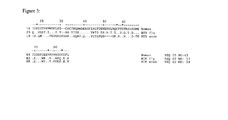
- Figure 3 is an alignment of BIR domain sequences from invertebrates with human survivin.
- the human survivin BIR domain sequence is shown in SEQ ID NO:63. Alignments were performed by the ClustalW method (see Thompson et al. (1994) Nucl. Acid Res. 22:4673-4680 ). Sequences were obtained from the NCBI database, using the following accession numbers: human survivin (NM_001168, BIR domain sequence shown in SEQ ID NO:63), D. melanogaster (AAF55399, BIR domain homolog shown in SEQ ID NO:53) and C. elegans (NP_505949, BIR domain homolog shown in SEQ ID NO:54).
- the BIR domain is underlined; asterisks indicate signature residues involved in Zn coordination; and dashes indicate gaps in the alignment.
- residues that are identical to the human residues are represented by periods; other residues are represented in single-letter amino acid code.
- FIG 4 is a schematic depiction of modes of DNA vaccination by Salmonella bearing plasmids encoding a survivin polypeptide.
- Salmonella in the gut lumen invade the gut epithelium through M cells of Peyer's patches. Once across the epithelium, Salmonella invade cells such as macrophages and dendritic cells. Bacterial death and plasmid transfer permit expression of the plasmid by the macrophages, leading to presentation of peptides from the encoded survivin polypeptide in MHC class I molecules. In addition, uptake by dendritic cells of apoptotic macrophages expressing the survivin polypeptide leads to cross-priming resulting from presentation of the peptides in MHC class I and MHC class II molecules.
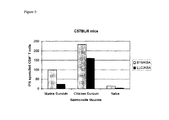
- Figure 5 is a bar graph depicting IFN ⁇ release from T-cells isolated from survivin-vaccinated mice upon exposure to cancer cells. IFN ⁇ release was measured in an ELISpot assay. C57Bl/6 mice were vaccinated with Salmonella carrying either a murine or chicken survivin expression plasmid, or were not vaccinated (x-axis), and the number of IFN ⁇ spots per 5 x 10 5 plated T-cells was measured (y-axis) after T cells were exposed to either B 16/KSA (striped bars) or LLC/KSA (black bars) cancer cell lines.
- B 16/KSA striped bars
- LLC/KSA black bars
- Figure 6 is a bar graph depicting IFN ⁇ release from T-cells isolated from survivin-vaccinated mice upon exposure to cancer cells. IFN ⁇ release was measured in an ELISpot assay. Balb/c mice were vaccinated with Salmonella carrying either a murine or chicken survivin expression plasmid, or were not vaccinated (x-axis), and the number of IFN ⁇ spots per 5 x 10 5 plated T-cells was measured (y-axis) after T cells were exposed to either 4T1/KSA (striped bars) or A20 (black bars) cancer cell lines.
- 4T1/KSA striped bars
- A20 black bars
- Figure 7 is a survival plot of mice vaccinated with Salmonella SL7207 chicken survivin or murine survivin.
- the percentage of surviving Balb/c mice is plotted against number of days post CT26/KSA challenge (x-axis) for mice vaccinated with either Salmonella carrying an expression plasmid for murine survivin (filled triangles) or a chicken survivin (filled squares), or PBS (filled diamonds).
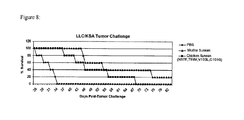
- Figure 8 is a survival plot of mice vaccinated with Salmonella SL7207 chicken survivin or murine survivin. % of surviving C57Bl/6 mice (y-axis) is plotted against number of days post LLC/KSA challenge (x-axis) for mice vaccinated with either Salmonella carrying an expression plasmid for murine survivin (filled triangles) or a chicken survivin mutant, ChickenSurvivin(N97E, T99M, V100L, Q101G) (filled squares), or PBS (filled diamonds).
- Figure 9 is a schematic depiction a dosing schedule to evaluate the effect of vaccination timing relative to a tumor challenge on day 10.
- “D” is an abbreviation for "day.”
- some mice received oral vaccination on day 1, a tumor challenge on day 10, and oral vaccination on day 13; other mice received a tumor challenge and an oral vaccination on day 10, and a second oral vaccination on day 18. Lung tumor burdens were evaluated on day 29.
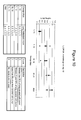
- Figure 10 is a chart depicting lung weights for mice receiving vaccinations on days 1 and 13; 7 and 13; 10 and 18; or 13 and 21; or receiving PBS. All mice received tumor challenges of LLC/KSA cells intravenously on day 10. Lung metastasis scores for each of the mice are also provided.
- Figure 11 is a schematic depiction of a dosing schedule, including Salmonella-mediated vaccinations with chicken survivin on days 1 and 15; intravenous tumor challenge with LLC/KSA cells on day 4; and intraperitoneal cyclophosphamide (CTX) on day 11 and indomethacin treatment on days 12-15. Lungs were scored for tumor burden on day 28.
- Salmonella-mediated vaccinations with chicken survivin on days 1 and 15
- intravenous tumor challenge with LLC/KSA cells on day 4
- CTX intraperitoneal cyclophosphamide
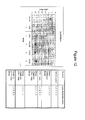
- Figure 12 is a chart depicting lung weights for mice receiving tumor challenge only (vehicle); vaccination with chicken survivin on days 1 (prime) and 15 (boost) and tumor challenge on day 4 (PCB); CTX and indomethacin and tumor challenge C(CI); prime, challenge, CTX, indomethacin, and boost (PC(CI)B); prime, challenge, CTX, and indomethacin (PC(CI)), or challenge, CTX, indomethacin and boost C(CI)B.
- Lung metastasis scores for each of the mice are also provided.
- Figure 13 provides depictions of flow cytometry data from peripheral blood cells demonstrating the appearance of a novel population of CD44 bright , CD3 low cells in mice after vaccination with Salmonella carrying a plasmid encoding non-mammalian survivin.
- the x-axis represents the CD3 cells and the y-axis represents the CD44 cells.
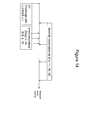
- Figure 14 is a schematic depiction of a dosing schedule, including subcutaneous tumor challenge on day 1; Salmonella-mediated vaccinations with non-mammalian survivin on days 4, 11, 18, and 25; and intravenous immunocytokine treatment on days 8, 9 and 10.
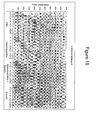
- Figure 15 is a chart depicting tumor volumes over time for mice treated with PBS; immunocytokine; non-mammalian survivin; or immunocytokine and non-mammalian survivin.
- the present invention improves treatment of cancer or other diseases by providing compositions and methods that effectively elicit immune response against diseased cells.
- Cancer is the primary target disease, although the invention applies to other diseases and conditions such as unwanted proliferation of normal cells, such as fibroid tissue.
- the invention also contemplates compositions and methods for treatment of viral infection, such as HIV infections, influenza virus infections, and other viral infections.
- the present invention provides compositions and methods for the presentation of a peptide related to a tumor-specific or tumor-enriched protein on antigen presenting cells to elicit an adaptive immune response in a mammal against cancer or tumor cells.
- a tumor-specific or tumor-enriched antigen for this invention is survivin.
- Antigen presentation is a cellular process in which proteins in cells are processed into peptides and then trafficked along the secretory pathway to the cell surface.
- the processed peptides are trafficked as a stable complex with specialized peptide-presenting membrane proteins, known as MHCs.
- MHCs peptide-presenting membrane proteins
- This process allows components of the immune system, e.g., the helper T-cells (CD4 + T-cells) and cytotoxic T-cells (CTLs or CD8 + T-cells), to survey the compositions of cells by sampling an MHC-peptide complex.
- Helper T-cells interact with MHC II-peptide complexes
- cytotoxic T-cells interact with MHC I-peptide complexes.
- TCR T-cell receptor
- Each T-cell expresses a unique TCR.
- TCR diversity is generated through rearrangement at the chromosomal TCR loci.
- a self-antigen i . e ., an antigen peptide generated from an endogenous protein present in the cell
- T-cell differentiation leads to the negative selection of that particular T-cell.
- Those T cells that are not eliminated during negative selection further develop into mature T cells.
- interaction with a foreign antigen complexed with MHCs leads to T-cell activation, especially in the presence of a secondary stimulation.
- Survivin protein is characterized by a conserved, approximately 70 amino acid domain, known as a BIR domain (or IAP domain).
- BIR domain or IAP domain
- the BIR domain corresponds to the region spanning from Asp16 to Leu87. Cancer or tumor cells often overexpress the survivin protein, which is believed to block apoptosis of these cells and thus interfere with mechanisms that prevent the abnormal growth of cancer or tumor cells. Normal cells, on the other hand, express very little survivin. Therefore, survivin is an ideal tumor-specific or tumor-enriched antigen. It is therefore an object of the present invention to deliver an antigenic form of the survivin protein to antigen-presenting cells, so that an immune response to survivin-expressing tumor cells may be stimulated.
- Human and mammalian survivin proteins and genes are described in detail in U.S. Patent No. 6,245,523 or WO 2004/067023 .
- One aspect of the invention revolves around the surprising discovery that non-mammalian survivin genes and/or proteins can be used in vaccines for cancer and other diseases. For example, immunization of a mouse or a human with a nucleic acid encoding chicken survivin can generate CD8 + T cells that will attack cells expressing mouse or human survivin, respectively. This discovery indicates that chicken survivin protein is immunologically substantially similar to human survivin, suggesting that chicken survivin can be used as an antigenic form of the survivin protein to elicit immune response in a mammal.
- Survivin proteins from mammalian and non-mammalian species are aligned in Figure 1 .
- the survivin proteins included in the alignment are human survivin (Genbank Accession Number NM_001168 or 015392, SEQ ID NO:8), dog survivin (Genbank Accession Number NP_001003019, SEQ ID NO:9), pig survivin (Genbank Accession Number NP_999306, SEQ ID NO:39), cow survivin (Genbank Accession Number NP_C01001855, SEQ ID NO:40), cat survivin (Genbank Accession Number NP_001009280, SEQ ID NO:41), mouse survivin (Genbank Accession Number NP_033819, SEQ ID NO:10), rat survivin (Genbank Accession Number AAF82586, SEQ ID NO:42), orangutan survivin (Genbank Accession Number CAH91231, SEQ ID NO:43), chicken survivin (Genbank Accession Number NP_001012318
- variant 1 (Genbank Accession Number NM_001012319,SEQ ED NO:44) which differs beginning at amino acid residue 116 from the wild-type chicken survivin sequence shown in SEQ ID NO:11 to give a different C terminus
- variant 2 (Genbank Accession Number NP_001012317, SEQ ID NO:45) which differs beginning at amino acid residue 38 from the wild-type chicken survivin sequence shown in SEQ ID NO:11.
- human survivin Genbank Accession number NM_001168.2, SEQ ID NO:64
- Homo sapiens survivin Genebank Accession number 015392, SEQ ID NO:65
- Canis familiaris survivin Genebank Accession number NM_001003019.1, SEQ ID NO:66
- Sus scrofa survivin Genebank accession number NP_999306.1, SEQ ID NO:67
- Bos taurus survivin Genbank accession number NP_001001855.2, SEQ ID NO:68
- Felis catus survivin Genbank accession number NP_001009280.1, SEQ ID NO:69
- Mus musculus survivin Genebank accession number NP_033819.1, SEQ ID NO:70
- Rattus norvegicus survivin Genebank accession number AAF82586.1, SEQ ID NO:71
- Pongo pygmaeus survivin Genebank accession number CAH
- the invention contemplates using not only survivin sequences that are found in nature, such as survivin sequences disclosed in FIG. 1 , but also other amino acid sequences that have, for example, at least 70% , at least 75%, at least 80%, at least 85%, at least 90%, or at least 95% amino acid identity with at least one of the sequences disclosed in FIG. 1 .
- the percent identity between chicken survivin BIR domain and the mammalian survivin BIR domains shown in Figure 2 varies between approximately 72 % and approximately 78 %. Furthermore, about 75 % of chicken survivin-derived 9-mer peptides from the BIR domain contain two or fewer sequence changes compared to the corresponding mammalian 9-mer peptides. For example, chicken survivin is 75 % percent identical to mouse survivin across the BIR domain, which is consistent with the result that chicken survivin is immunologically substantially similar to mouse survivin, as described in Example 6 below.
- a non-mammalian survivin composition such as a chicken survivin composition
- a non-mammalian survivin composition to induce an immune response in a mouse against a tumor expressing mouse survivin
- a principle of the invention namely, that vaccination of a mammal with a non-mammalian survivin molecule is useful for inducing an immune response against mammalian survivin or against cells over-expressing mammalian survivin.
- chicken survivin is also useful for the generation of an effective immune response in humans against cells that over-express human survivin, such as many tumor cells, since the immunological response is sufficiently conserved between mammals.
- BIR domains from invertebrates to the human survivin BIR domain show that the D. melanogaster (AAF55399, SEQ ID NO:53) and C. elegans (NP_505949, SEQ ID NO:54) BIR domains are 50 % or less identical to the human survivin BIR domain sequence ( Figure 3 ), although residues critical for Zn chelation are conserved (see asterisks in the alignment in Figure 3 ).
- the fly survivin BIR domain is about 50 % identical to the human survivin BIR domain.
- the fly BIR domain contains only three (3 of 64) 9-mer peptides that have two or fewer amino acid substitutions compared to the corresponding human peptides.
- non-mammalian survivin encompasses at least any survivin protein having a BIR domain (or an IAP domain) with at least more than 50% amino acid identity but less than 90% amino acid identity with a human survivin BIR domain, for example at least 55 %, 60%, 65%, 70%, 75%, 80% or 85% identity with a human survivin BIR domain.
- the aligned amino acids of each sequence are compared sequentially. If the amino acids are non-identical, the pair-wise identity score is zero; otherwise the pair-wise identity score is 1.0.
- the raw identity score is the sum of the identical aligned amino acids. The raw score is then normalized by dividing it by the number of amino acids in the smaller of the candidate or reference sequences and multiplying the result by 100. The normalized raw score is the percent identity. Insertions and deletions are ignored for the purposes of calculating percent identity. Accordingly, gap penalties are not used in this calculation.
- non-mammalian survivin may also contain more peptides with the potential of generating a T helper cell response than a mammalian survivin.
- an enhanced immunizing effect can be achieved by engagement of both cytotoxic T cells, through MHC I, and of T helper cells, through MHC II, in the immune response. Sequence differences between the endogenous human survivin and the non-mammalian survivin are likely to yield some peptides being presented to which the human immune system has not been tolerized.
- MHC II epitopes can be analyzed using publically available predictive algorithms, such as ProPred Analysis (www.imtech.res.in/raghava/propred; Singh et al., (2001) Bioinformatics 17:1236-1237 , the contents of which are hereby incorporated by reference).
- ProPred Analysis www.imtech.res.in/raghava/propred; Singh et al., (2001) Bioinformatics 17:1236-1237 , the contents of which are hereby incorporated by reference.
- non-mammalian survivin proteins such as chicken survivin or frog SIX survivin are predicted to contain more peptides that bind and/or peptides with higher binding affinity to MHC II molecules (see Table 1).
- Table 1 Table 1
- Table 1 shows the start position (#) and sequence (Peptide) of each 9-mer peptide that binds to at least one HLA-DR allele.
- #bind refers to the number of alleles that the peptides binds to (out of 50), above an arbitrary binding threshold, in this case 20 %.
- the 20 % threshold refers to 20 % of a theoretical maximum binding score, as calculated by an algorithm as implemented in Propred.
- Score refers to a cumulative score across all HLA alleles to which that peptide binds.
- the human myelin basic protein (MBP) peptide VVHFFKIVIV (SEQ ID NO:14), derived from a portion of the protein known to give rise to anti-MBP antibodies in humans (MBP(85-99)) binds to 29 HLA alleles, with a cumulative score of 1087.6.
- a vaccine including or encoding a peptide derived from a non-mammalian survivin that is capable of activating T cells recognizing a human survivin peptide sequence when complexed with an MHC molecule.
- human survivin peptides or peptides derived therefrom include, but are not limited to, EPDLAQCFF (SEQ ID NO:3), EPDLAQCFY (SEQ ID NO:15), CPTENEPDL (SEQ ID NO:2), and CPTENEPDY (SEQ ID NO:16). Additional human peptides and modification useful for activating T cells or enhancing the activation of T cells are described in U.S. Application Publication No. 2004-0210035 , the contents of which are hereby incorporated by reference.
- a non-mammalian survivin sequence mutations that correspond to known human survivin epitopes, or that may enhance binding of those peptide sequences to MHCs.
- a substitution at position Thr99 in chicken survivin may enhance the binding of a derived peptide to MHC molecules.
- a peptide derived from chicken survivin may contain at least one of the following amino acid substitutions: Asn97Glu, Thr99Met, Val100Leu, and Gln101Gly.
- a substitution at position Thr110 may enhance binding of a derived peptide to an MHC molecule.
- a peptide derived from a frog survivin may contain at least one of the following substitutions: Thr110Met, Ser112Gly.
- a non-mammalian survivin peptide suitable for the invention may also contain amino acid deletions.
- the non-mammalian survivin peptide may contain a C-terminal truncation or an N-terminal truncation.
- non-mammalian survivin protein could be shared with other non-survivin human proteins, which may not have the same expression profile as human survivin and thus may not be as tumor-specific.
- This may be evaluated in an initial manner by performing a BLAST search with the sequence from divergent region of the non-mammalian survivin against the non-redundant human protein database, with settings that identify short, near-exact matches. For example, searching with the C-terminal domain of the chicken survivin sequence (aa90-aa142) identifies only a few human proteins with near exact matches (fewer than five hits). Those human proteins can then be further analyzed with respect to their expression pattern and with respect to their potential to generate an antigenic peptide, initially by in silico methods described below.
- the invention provides antigenic forms of the survivin protein by introducing modifications into mammalian survivin proteins.
- the invention contemplates modified mammalian survivin peptides that are biologically inert but immunologically substantially similar to mammalian survivin.
- This aspect of the invention also addresses two particular problems with a na ⁇ ve approach of simply expressing a survivin protein in the cytoplasm of an antigen-presenting cell.
- the first problem is that biologically active survivin protein may disrupt the physiology of the antigen-presenting cell.
- the second problem is that when survivin or essentially any other protein is expressed in a cell, only a small fraction of the protein is degraded in such a way that antigenic peptides are presented through MHC Class I on the cell surface.
- the invention contemplates modified mammalian survivin proteins, including mutant versions of human survivin or mutant versions of non-human mammalian survivin.
- the invention also contemplates using not only survivin sequences that are found in nature, such as survivin sequences disclosed in FIG. 1 , but also other amino acid sequences that have, for example, at least 70% , at least 75%, at least 80%, at least 85%, at least 90%, or at least 95% amino acid identity with at least one of the sequences disclosed in FIG. 1 .
- human survivin contains at least two domains: an N-terminal globular domain that includes a zinc-binding site, referred to as the BIR or IAP domain, and an extended C-terminal alpha-helix, referred to herein as the helical domain.
- the invention provides forms of survivin with a mutation in the N-terminal BIR domain and/or in the C-terminal helical domain. It is an insight of the invention that an optimal effect can be achieved by mutating both domains.
- the N-terminal BIR domain and the C-terminal helical domain each have a biological activity.
- the BIR domain has some level of anti-apoptotic activity, even in the absence of the helical domain.
- the helical domain has a cytoskeletal-binding activity, and may have a distinct biological activity.
- preferred mutations include, but are not limited to, amino acid substitutions at positions corresponding to Cys57, Cys60, His77, or Cys84 of human survivin.
- a modified BIR domain can contain at least one of the following substitutions: Cys57Ser, Cys60Ser, His77Phe, and Cys84Ser. Substitutions of any of these amino acids to alanine or proline are also preferred. These mutations are believed to disrupt the zinc binding site in the BIR domain. Other mutations that have the effect of disrupting the zinc binding site may also be used.
- mutations at the position corresponding to human survivin Arg18, preferably to aspartic acid or glutamic acid, may be used to generate an inactive BIR domain.
- Modified BIR domains in which the zinc-binding amino acids are mutated at two, three, or four positions are particularly preferred.
- proline residues anywhere in the helical domain in order to disrupt its function.
- proline substitutions can be introduced at positions corresponding to human survivin Ala128 or Ile135.
- Other amino acid substitutions that can disrupt the helical domain are also preferred.
- a preferred modified mammalian survivin may contain a mutation at Arg18, Cys57, Cys60, His77, and/or Cys84 and a proline in the helical domain.
- Each of the aforementioned amino acids at positions Arg18, Cys57, Cys60, His77, Cys84, Ala128, and Ile135 are conserved between human and chicken survivin, and thus identical mutations may be introduced to generate a biologically inert chicken survivin. Similar mutations can also be introduced into the corresponding positions in other non-mammalian survivin proteins.
- any of the above mutations may be combined with a mutation at position corresponding to Leu98 of human survivin, such as, for example, Leu98Arg, Leu98Lys, and Leu98Ala.
- the position corresponding to human Leu98 is Val100.
- a mutation is introduced into a survivin protein and tested, for example, for lack of biological activity, and/or enhanced degradation, and/or ability to induce an immune response against tumor cells. Exemplary assays for these tests are described in the examples below and are known in the art.
- a preferred modified survivin peptide contains three, four, five or more mutations.
- one utility of the modified survivin contemplated by the invention is to present survivin-derived T cell epitope peptides through MHC Class I molecules. Accordingly, it is generally preferred to mutate fewer than fifty (or fewer than thirty or fewer than twenty) amino acids to maintain immunologically substantial similarity with mammalian survivin.
- the invention provides guidelines for optimally introducing mutations into survivin or other protein sequences so that processing of MHC Class I epitopes is relatively unhindered.
- certain survivin mutations may lie within a peptide segment that is presented by an MHC Class I molecule and recognized by a particular T cell receptor. It is also possible that a mutation may alter the proteolytic processing of survivin into peptide epitopes such that an epitope is cleaved, or that an epitope is not cleaved but a novel epitope is preferentially created.
- a mutation may alter the proteolytic processing of survivin into peptide epitopes such that an epitope is cleaved, or that an epitope is not cleaved but a novel epitope is preferentially created.
- the SYFPEITHI algorithm can be used (www.unituebingen.de.uni.kxi; also see, Rammensee et al., (1999) Immunogenetics 50:213-219 , the teachings of which are hereby incorporated by reference).
- the BIMAS algorithm can be used (bimas.dcrt.nih.gov/molbio/hla_bind/; also see, Parker et al., (1994) J. Immunol.
- HLA genes encoding the human MHC Class I proteins are highly polymorphic, with different MHC Class I proteins binding to different peptide motifs, a table of potential epitopes is created, having on one axis various MHC Class I molecules and on the other axis a survivin sequence. The entries in the table identify positions of an epitope for a given MHC Class I molecule. The effect of a candidate mutation is judged based on the effect on various epitopes.
- a mutation or mutations are chosen based on the needs of a vaccine, taking into account, for example, the allelic frequency of different HLA alleles, or the group-specific frequency of HLA alleles.
- the publically available database NetChop can be used (www.cbs.dtu.dk/services/NetChop/). It is generally preferable to avoid altering cleavage sites.
- Example 12 provides exemplary analysis in determining useful substitutions in survivin protein.
- the proteasome In antigen-presenting cells, the proteasome has a somewhat different composition of proteins and its proteolytic specificity is dominated by an enzyme that cleaves C-terminal to hydrophobic residues. As a result, the proteasome generates peptides that can bind to MHC Class I with a C-terminal hydrophobic anchor residue. If it is desirable to maintain the specificity of the immunoproteasome cleavage pattern, it is preferable to avoid mutation of such hydrophobic residues, particularly leucine, isoleucine, methionine, tyrosine, tryptophan, and phenylalanine.
- mutations at Arg18, Cys57, Cys60, His77, and Cys84 have the advantage of both destabilizing the structure of survivin and not eliminating immunoproteasome cleavage sites.
- mutations in the 7 to 9 amino acids immediately N-terminal to leucine, isoleucine, methionine, tyrosine, tryptophan, and phenylalanine in the protein sequence are preferable to avoid introducing mutations in the 7 to 9 amino acids immediately N-terminal to leucine, isoleucine, methionine, tyrosine, tryptophan, and phenylalanine in the protein sequence.
- the invention provides a general method of identifying preferred mutation sites in a protein sequence to generate a protein with enhanced immunogenicity. Based on this method, a preferred mutation site in a protein sequence has the following properties. First, one or more mutations of the site destabilize the protein structure. Second, the destabilizing mutation does not introduce a leucine, isoleucine, methionine, tyrosine, tryptophan, or phenylalanine. Third, the normal amino acid at that position is not leucine, isoleucine, methionine, tyrosine, tryptophan, or phenylalanine.
- This method can be applied to a wide variety of proteins that can be used as antigens, such as, for example, tumor specific antigens, viral antigens, and other antigens.
- tumor-specific antigens in addition to survivin, the method may be applied to epithelial cell adhesion molecule, oncogenes such as Ras, carcinoembryonic antigen, and others.
- viral antigens the method may be applied to p24 of HIV, influenza hemagglutinin, and other viral proteins.
- Fusion proteins comprising non-mammalian and / or modified survivin
- ubiquitin is a particularly preferred fusion partner for this purpose.
- a ubiquitin-survivin fusion protein can be constructed in one of the following configurations: N terminus-ubiquitin-survivin-C terminus or N terminus-survivin-ubiquitin-C terminus. N terminus-ubiquitin-survivin-C terminus is the preferred orientation.
- survivin N-terminal methionine preferably to arginine, aspartic acid, or glutamic acid. It is also desirable to introduce a lysine at a position corresponding to human survivin Ile19 or Val21 in a ubiquitin-survivin fusion protein.
- a preferred Fc moiety contains antibody CH2 and CH3 domains, and optionally contains a hinge region.
- the Fc moiety can be fused to either the N-terminus or C-terminus of survivin.
- the protein sequence for mature human Fc-ChickenSurvivin is shown in SEQ ID NO:25.
- the protein sequence for mature murine Fc-ChickenSurvivin is shown in SEQ ID NO:27.
- a fusion protein containing the survivin and Fc moieties may further contain other moieties, such as cytokines that stimulate the immune system as described in PCT Publication WO 01/07081 .
- the presence of the Fc moiety may enhance uptake of survivin-containing fusion proteins into antigen-presenting cells. It is generally preferable that the Fc moiety is derived from the organism being treated. For example, for treatment of a human, it is preferable to use a human Fc moiety.
- the Fc-survivin fusion proteins or nucleic acids encoding the fusion proteins may preferably contain a signal sequence for secretion. Presence of the signal sequence facilitates expression of the fusion proteins in mammalian cell lines, such as NS/0 cells, and can permit secretion of the fusion-protein in vivo if a corresponding nucleic acid is administered to a patient.
- the Fc-survivin fusion protein-encoding sequences preferably start in a 5' to 3' direction with a "leader sequence" derived, for example, from an antibody light (L) chain, fused in frame with at least a portion of an immunoglobulin heavy chain or mutant form thereof, preferably from the Fc ⁇ 1 region of the human immunoglobulin ⁇ 1 gene.
- the Fc ⁇ 1 region of the immunoglobulin Fc ⁇ 1 gene preferably includes at least a portion of the hinge domain and a CH3 domain, and more preferably includes at least a hinge domain, a CH2 domain and a CH3 domain
- the portion of the DNA encoding the signal sequence preferably encodes a peptide segment which directs the secretion of the Fc fusion protein and thereafter is cleaved away from the remainder of the Fc fusion protein.
- the signal sequence of the invention is a polynucleotide which encodes an amino acid sequence which initiates transport of a protein across the membrane of the endoplasmic reticulum.
- Signal sequences which are useful in the invention include antibody light chain signal sequences, e.g., antibody 14.18 ( Gillies et al. (1989) J. Immunol. Meth., 125:191 ), antibody heavy chain signal sequences, e.g., the MOPC141 antibody heavy chain signal sequence ( Sakano et al. (1980) Nature, 286:5774 ), and any other signal sequences which are known in the art (see, for example, Watson (1984) Nucleic Acids Research, 12:5145 ).
- a typical signal peptide consists of three regions: a basic N-terminal region, a central hydrophobic region, and a more polar C-terminal region.
- the central hydrophobic region contains 4 to 12 hydrophobic residues that anchor the signal peptide across the membrane lipid bilayer during transport of the nascent polypeptide.
- the signal peptide usually is cleaved within the lumen of the endoplasmic reticulum by cellular enzymes known as signal peptidases.
- Signal peptide sequences useful in the practice of the invention are well known in the art. See, for example, von Heijne (1986) Nucleic Acids Res., 14:4683 .
- signal sequence means amino acid sequence
- leader sequence means leader peptides
- the secreted fusion protein may generally have a correctly folded Fc domain, but with an incorrectly folded survivin moiety.
- survivin when survivin is forced into the secretory pathway by the Fc moiety of an Fc-survivin fusion protein, survivin folding is compromised, particularly since survivin contains numerous cysteines that could engage in disulfide bonding. Correct folding of the survivin moiety is not necessary for the activity of the vaccines of the invention.
- the invention also provides nucleic acids encoding the non-mammalian and/or modified survivin and fusion proteins including the survivin as described above.
- the nucleotide sequence for human survivin is shown in SEQ ID NO:57
- the nucleotide sequence for Xenopus SIX survivin is shown in SEQ ID NO:58
- the nucleotide sequence for the Xenopus survivin homolog is shown in SEQ ID NO:59
- the nucleotide sequence for zebrafish survivin homolog is shown in SEQ ID NO:60
- the nucleotide sequence for catfish survivin homolog is shown in SEQ ID NO:61.
- the nucleic acids are preferably linked to and interdigitated with elements that allow expression in eukaryotic cells, particularly, in mammalian cells, to form expression cassettes.
- an expression cassette encoding survivin includes at least one of the following regulatory elements such as promoters, enhancers, introns, terminators, a polyadenylation signals and others.
- a mammalian promoter is included.
- mammalian promoter is meant a gene promoter that is derived from a promoter found in a mammal or in a virus that normally grows on a mammal.
- preferred promoters include those that are present in viruses that grow in mammalian cells, such as in cytomegalovirus (CMV), Simian virus 40 (SV40), Epstein Barr virus (EBV), Rous Sarcoma virus (RSV), Moloney Monkey virus, Human Immunodeficiency virus (HIV), Mouse Mammary Tumor virus (MMTV), or those derived from mammalian genes, such as from mammalian actin, beta-globin, myosin, or optionally derived from mammalian genes preferentially expressed in antigen presenting cells, such as Fascin or other APC-specific genes known in the art.
- An example of a useful polyadenylation signal is a signal derived from an SV40 polyadenylation signal.
- the expression elements may direct expression of the survivin proteins in all eukaryotic cells, or may have cell type-specific enhancers to direct expression, for example, in antigen-presenting cells.
- the coding portions of the expression cassettes are also preferably designed to have codons that are most commonly used in eukaryotic cells, especially in mammalian or human cells.
- the expression cassettes of the invention can be used to produce proteins of the invention in cultured cells. Therefore, the expression cassettes can be linked to appropriate drug resistance genes, origins of DNA replication, and other elements to facilitate selection and replication of the expression cassettes.
- the nucleic acid sequences of the expression cassette are incorporated in a plasmid capable of being replicated in a bacterium. Plasmids suitable for the invention may have markers for selection in bacterial cells, such as antibiotic resistance genes. Alternatively, suitable plasmids may lack antibiotic resistance markers but may optionally include a gene encoding a metabolic enzyme, a suppressor tRNA, or another such gene that would be normally found in the genome of a non-drug resistance bacterium.
- an exemplary embodiment of the invention is a plasmid containing a nucleic acid encoding a survivin peptide of the invention operatively associated with a mammalian promoter without an antibiotic resistance marker.
- a plasmid may be transformed into a bacterium, and the bacterium may then be used to vaccinate a patient without introducing an antibiotic resistance gene into the patient.
- a plasmid may be introduced into a patient without a living carrier.
- such a plasmid may be introduced as naked DNA or as DNA encapsulated within beads or coated on the surface of beads.
- the expression cassettes of the invention can be incorporated into viral genomes, plasmids appropriate for naked DNA administration, or bacterial genomes.
- viral genomes it is desirable to use double-stranded DNA viruses such as adenovirus and adeno-associated virus, and RNA viruses such as retroviruses.
- the expression cassettes are inserted into the genomes of such viruses by standard techniques.
- the invention provides both DNA and RNA forms of nucleic acids.
- the present invention also provides embodiments that permit the non-mammalian peptide or the modified mammalian survivin peptide to function in concert with an effector molecule that contributes to the immune response.
- an effector molecule can be a cytokine moiety including, but not limited to, IL-2, IL-7, IL-12, IL-18, IL-21, IL-23, GM-CSF, or any other cytokine, particularly one capable of activating a Th1 immune response.
- Such an effector molecule can also be an inhibitor of a cytokine that represses the immune system, for example, a STAT3 inhibitor (e.g., a dominant negative STAT3 protein such as STAT3 ⁇ ).
- Cytokines or other effector molecules may also contain mutations.
- a cytokine may contain a Ser substitution at a position corresponding to Cys125 of IL-2.
- the vaccine of the invention includes a nucleic acid encoding a non-mammalian or modified mammalian survivin peptide and a second peptide including an effector molecule described above that contributes to the immune response.
- the regions encoding the non-mammalian or modified mammalian survivin peptide and the effector molecule peptide can be in a single transcription unit, or in two separate transcription units.
- the vaccine of the invention includes a nucleic acid encoding a non-mammalian or modified mammalian survivin peptide and a separate nucleic acid encoding a second peptide including an effector molecule described above that contributes to the immune response.
- the vaccine of the invention includes a non-mammalian or modified mammalian survivin peptide and a second peptide including an effector molecule described above that contributes to the immune response.
- the non-mammalian or modified mammalian survivin peptide is fused or conjugated to the peptide including an effector molecule.
- the survivin peptide and effector molecule fusion protein may be further fused or conjugated to an Fc moiety as described above.
- the vaccines of the invention are used to treat humans or mammals that display or are at risk of diseases associated with survivin overexpression.
- diseases include cancers or other tumors characterized by cells over-expressing survivin.
- the vaccines produced according to the present invention can be administered to a mammalian host by any route.
- the injection of protein antigens commonly is used to elicit immune responses in mammals.
- the vaccines of the invention can also be delivered to APCs by nucleic acid, e.g., DNA, injection.
- a commonly used technique is to inject DNA expression vectors encoding an antigenic protein into muscle. It is believed that specialized APCs, for example, macrophages and dendritic cells, migrate to the site of injection or administration, pick up and present the antigen through a process known as the antigen presentation process.
- administration can be oral or parenteral, including intravenous and intraperitoneal routes of administration.
- administration can be by periodic injections of a bolus of the vaccine or can be made more continuous by intravenous or intraperitoneal administration from a reservoir which is external (e.g., an i.v. bag).
- the vaccines of the instant invention can be pharmaceutical-grade. That is, certain embodiments comply with standards of purity and quality control required for administration to humans.
- Veterinary applications are also within the intended meaning as used herein.
- the formulations, both for veterinary and for human medical use, of the vaccines according to the present invention typically include such vaccines in association with a pharmaceutically acceptable adjuvant, a carrier, and optionally other ingredient(s).
- the carrier(s) can be "acceptable” in the sense of being compatible with the other ingredients of the formulations and not deleterious to the recipient thereof.
- Pharmaceutically acceptable carriers are intended to include any and all solvents, dispersion media, coatings, antifungal agents, isotonic and absorption delaying agents, and the like, compatible with pharmaceutical administration. The use of such media and agents for pharmaceutically active substances is known in the art. Except insofar as any conventional medium or agent is incompatible with the active compound or its vector of administration, use thereof in the compositions is contemplated.
- Supplementary active compounds (identified according to the invention and/or known in the art) also can be incorporated into the compositions.
- the formulations can conveniently be presented in dosage unit form and can be prepared by any of the methods well known in the art of pharmacy/microbiology. In general, some formulations are prepared by bringing the vaccine into association with a liquid carrier or a finely divided solid carrier or both, and then, if necessary, shaping the product into the desired formulation.
- a vaccine composition of the invention is formulated to be compatible with its intended route of administration.
- routes of administration include oral or parenteral, e.g., intravenous, intradermal, inhalation, transdermal (topical), transmucosal, and rectal administration.
- Solutions or suspensions used for parenteral, intradermal, or subcutaneous application can include the following components: a sterile diluent such as water for injection, saline solution, fixed oils, polyethylene glycols, glycerine, propylene glycol or other synthetic solvents; antioxidants such as ascorbic acid or sodium bisulfite; chelating agents such as ethylenediaminetetraacetic acid; buffers such as acetates, citrates or phosphates and agents for the adjustment of tonicity such as sodium chloride or dextrose. pH can be adjusted with acids or bases, such as hydrochloric acid or sodium hydroxide.
- a sterile diluent such as water for injection, saline solution, fixed oils, polyethylene glycols, glycerine, propylene glycol or other synthetic solvents
- antioxidants such as ascorbic acid or sodium bisulfite
- chelating agents such as ethylenediaminetetraacetic acid
- buffers such as
- Useful solutions for oral or parenteral administration can be prepared by any of the methods well known in the pharmaceutical art, described, for example, in Remington's Pharmaceutical Sciences, (Gennaro, A., ed.), Mack Pub., 1990 .
- Formulations for parenteral administration also can include glycocholate for buccal administration, methoxysalicylate for rectal administration, or citric acid for vaginal administration.
- the parenteral preparation can be enclosed in ampoules, disposable syringes or multiple dose vials made of glass or plastic.
- Suppositories for rectal administration also can be prepared by mixing the drug with a non-irritating excipient such as cocoa butter, other glycerides, or other compositions that are solid at room temperature and liquid at body temperatures.
- Formulations also can include, for example, polyalkylene glycols such as polyethylene glycol, oils of vegetable origin, hydrogenated naphthalenes, and the like.
- Formulations for direct administration can include glycerol and other compositions of high viscosity.
- Other potentially useful parenteral carriers for these vaccines include ethylene-vinyl acetate copolymer particles, osmotic pumps, implantable infusion systems, and liposomes.
- Formulations for inhalation administration can contain as excipients, for example, lactose, or can be aqueous solutions containing, for example, polyoxyethylene-9-lauryl ether, glycocholate and deoxycholate, or oily solutions for administration in the form of nasal drops, or as a gel to be applied intranasally.
- Retention enemas also can be used for rectal delivery.
- Formulations of the present invention suitable for oral administration can be in the form of discrete units such as capsules, gelatin capsules, sachets, tablets, troches, or lozenges, each containing a predetermined amount of the drug; in the form of a powder or granules; in the form of a solution or a suspension in an aqueous liquid or non-aqueous liquid; or in the form of an oil-in-water emulsion or a water-in-oil emulsion.
- the vaccine can also be administered in the form of a bolus, electuary or paste.
- a tablet can be made by compressing or molding the drug optionally with one or more accessory ingredients.
- Compressed tablets can be prepared by compressing, in a suitable machine, the drug in a free-flowing form such as a powder or granules, optionally mixed by a binder, lubricant, inert diluent, surface active or dispersing agent. Molded tablets can be made by molding, in a suitable machine, a mixture of the powdered drug and suitable carrier moistened with an inert liquid diluent.
- Oral compositions generally include an inert diluent or an edible carrier.
- the active compound can be incorporated with excipients.
- Oral compositions prepared using a fluid carrier for use as a mouthwash include the compound in the fluid carrier and are applied orally and swished and expectorated or swallowed.
- Pharmaceutically compatible binding agents, and/or adjuvant materials can be included as part of the composition.
- the tablets, pills, capsules, troches and the like can contain any of the following ingredients, or compounds of a similar nature: a binder such as microcrystalline cellulose, gum tragacanth or gelatin; an excipient such as starch or lactose; a disintegrating agent such as alginic acid, Primogel, or corn starch; a lubricant such as magnesium stearate or Sterotes; a glidant such as colloidal silicon dioxide; a sweetening agent such as sucrose or saccharin; or a flavoring agent such as peppermint, methyl salicylate, or orange flavoring.
- a binder such as microcrystalline cellulose, gum tragacanth or gelatin
- an excipient such as starch or lactose
- a disintegrating agent such as alginic acid, Primogel, or corn starch
- a lubricant such as magnesium stearate or Sterotes
- a glidant such as colloidal silicon dioxide
- Vaccine compositions suitable for injectable use include sterile aqueous solutions (where water soluble) or dispersions and sterile powders for the extemporaneous preparation of sterile injectable solutions or dispersion.
- suitable carriers include physiological saline, bacteriostatic water, Cremophor ELTM (BASF, Parsippany, NJ) or phosphate buffered saline (PBS).
- the composition can be sterile and can be fluid to the extent that easy syringability exists. It can be stable under the conditions of manufacture and storage and can be preserved against the action of contaminating microorganisms such as fungi.
- the carrier can be a solvent or dispersion medium containing, for example, water, ethanol, polyol (for example, glycerol, propylene glycol, and liquid polyetheylene glycol, and the like), and suitable mixtures thereof.
- the proper fluidity can be maintained, for example, by the use of a coating such as lecithin, by the maintenance of the required particle size in the case of dispersion and by the use of surfactants.
- isotonic agents for example, sugars, polyalcohols such as manitol, sorbitol, and sodium chloride in the composition.
- Prolonged absorption of the injectable compositions can be brought about by including in the composition an agent which delays absorption, for example, aluminum monostearate and gelatin.
- Sterile injectable solutions can be prepared by incorporating the active compound in the required amount in an appropriate solvent with one or a combination of ingredients enumerated above, as required, followed by filtered sterilization.
- dispersions are prepared by incorporating the active compound into a sterile vehicle which contains a basic dispersion medium and the required other ingredients from those enumerated above.
- methods of preparation include vacuum drying and freeze-drying which yields a powder of the active ingredient plus any additional desired ingredient from a previously sterile-filtered solution thereof.
- Formulations suitable for intra-articular administration can be in the form of a sterile aqueous preparation of the vaccine which can be in microcrystalline form, for example, in the form of an aqueous microcrystalline suspension.
- Liposomal formulations or biodegradable polymer systems can also be used to present the vaccine for both intra-articular and ophthalmic administration.
- Formulations suitable for topical administration include liquid or semi-liquid preparations such as liniments, lotions, gels, applicants, oil-in-water or water-in-oil emulsions such as creams, ointments or pasts; or solutions or suspensions such as drops.
- Formulations for topical administration to the skin surface can be prepared by dispersing the vaccine with a dermatologically acceptable carrier such as a lotion, cream, ointment or soap.
- useful are carriers capable of forming a film or layer over the skin to localize application and inhibit removal.
- the composition can include the vaccine dispersed in a fibrinogen-thrombin composition or other bioadhesive.
- the vaccine then can be painted, sprayed or otherwise applied to the desired tissue surface.
- the agent can be dispersed in a liquid tissue adhesive or other substance known to enhance adsorption to a tissue surface.
- tissue adhesive such as hydroxypropylcellulose or fibrinogen/thrombin solutions
- tissue-coating solutions such as pectin-containing formulations can be used.
- inhalation of powder (self-propelling or spray formulations) dispensed with a spray can a nebulizer, or an atomizer can be used.
- Such formulations can be in the form of a finely comminuted powder for pulmonary administration from a powder inhalation device or self-propelling powder-dispensing formulations.
- self-propelling solution and spray formulations the effect can be achieved either by choice of a valve having the desired spray characteristics ( i . e ., being capable of producing a spray having the desired particle size) or by incorporating the active ingredient as a suspended powder in controlled particle size.
- the vaccines also can be delivered in the form of an aerosol spray from a pressured container or dispenser which contains a suitable propellant, e.g., a gas such as carbon dioxide, or a nebulizer. Nasal drops also can be used.
- a suitable propellant e.g., a gas such as carbon dioxide, or a nebulizer.
- Nasal drops also can be used.
- Systemic administration also can be by transmucosal or transdermal means.
- penetrants appropriate to the barrier to be permeated are used in the formulation.
- penetrants generally are known in the art, and include, for example, for transmucosal administration, detergents, bile salts, and filsidic acid derivatives.
- Transmucosal administration can be accomplished through the use of nasal sprays or suppositories.
- the vaccines typically are formulated into ointments, salves, gels, or creams as generally known in the art.
- the vaccines are prepared with carriers that will protect against rapid elimination from the body, such as a controlled release formulation, including implants and microencapsulated delivery systems.
- a controlled release formulation including implants and microencapsulated delivery systems.
- Biodegradable, biocompatible polymers can be used, such as ethylene vinyl acetate, polyanhydrides, polyglycolic acid, collagen, polyorthoesters, and polylactic acid. Methods for preparation of such formulations will be apparent to those skilled in the art.
- the materials also can be obtained commercially from Alza Corporation and Nova Pharmaceuticals, Inc.
- Liposomal suspensions can also be used as pharmaceutically acceptable carriers. These can be prepared according to methods known to those skilled in the art, for example, as described in U.S. Pat. No. 4,522,811 . Microsomes and microparticles also can be used.
- Oral or parenteral compositions can be formulated in dosage unit form for ease of administration and uniformity of dosage.
- Dosage unit form refers to physically discrete units suited as unitary dosages for the subject to be treated; each unit containing a predetermined quantity of active compound calculated to produce the desired vaccine effect in association with the required pharmaceutical carrier.
- the specification for the dosage unit forms of the invention are dictated by and directly dependent on the unique characteristics of the active compound and the particular vaccine effect to be achieved, and the limitations inherent in the art of compounding such an active compound for the treatment of individuals.
- the vaccines identified according to the invention can be formulated for parenteral or oral administration to humans or other mammals, for example, in therapeutically effective amounts, e.g., amounts which provide appropriate concentrations of the drug to target tissue for a time sufficient to induce the desired effect.
- the vaccines of the present invention can be administered alone or in combination with other molecules known to have a beneficial effect on the particular disease or indication of interest.
- useful cofactors include symptom-alleviating cofactors, including antiseptics, antibiotics, antiviral and antifungal agents and analgesics and anesthetics.
- the effective concentration of the vaccines identified according to the invention that is to be delivered in a vaccine composition will vary depending upon a number of factors, including the final desired dosage of the drug to be administered and the route of administration.
- the preferred dosage to be administered also is likely to depend on such variables as the type and extent of disease or indication to be treated, the overall health status of the particular patient, the relative biological efficacy of the vaccine delivered, the formulation of the vaccine, the presence and types of excipients in the formulation, and the route of administration.
- the vaccines of this invention can be provided to an individual using typical dose units deduced from the earlier-described mammalian studies using non-human primates and rodents.
- a dosage unit refers to a unitary, i .
- a single dose which is capable of being administered to a patient, and which can be readily handled and packed, remaining as a physically and biologically stable unit dose comprising either the vaccine as such or a mixture of it with solid or liquid pharmaceutical diluents or carriers.
- nucleic acids of the invention may be configured with a delivery vehicle such as a bead.
- a nucleic acid of the invention may be coated onto cellulose beads according to the method as described in U.S. Application Publication No. 2003-0166594 , the teachings of which are hereby incorporated by reference.
- a nucleic acid of the invention may be incorporated within polymeric beads according to the method described in U.S. Patent No. 5,783,567 , the teachings of which are hereby incorporated by reference.
- organisms e.g., bacteria, mammalian calls, and viral particles
- organisms are engineered to produce the survivin of the invention. These organisms can release the survivin for harvesting or can be introduced as vaccines directly to a patient.
- Nucleic acids of the invention may be configured with a viral delivery vehicle.
- the viral delivery vehicle may optionally have an adjuvant effect.
- suitable viruses include, but are not limited to adenovirus, adeno-associated virus, retrovirus, or vaccinia virus. It is often preferable to use a mutant or crippled form of a virus, such as a replication-incompetent virus.
- Nucleic acids of the invention are inserted into the viral genomes and are further incorporated into virus particles. The nucleic acids are packaged using helper virus systems that are well known in the art of gene therapy.
- Nucleic acids of the invention may be configured for delivery within a microbial host, as, for example, described by Gentschev et al. (2000) J. Biotechnol., 83:19-26 ; or by Stocker BAD (2000) J. Biotechnol., 83:45-50 , the teachings of each of which are hereby incorporated by reference.
- Suitable bacteria for nucleic acid (e.g., DNA) delivery include, but are not limited to, Salmonella, Shigella, Listeria, or E. coli. It is often preferable to use a mutant, attenuated form of a bacterium, such as an auxotroph.
- suitable Salmonella strains include, but are not limited to, Salmonella typhimurium aroA auxotroph SL7202 (see, e.g., Darji et al., (1997) Cell, 91:765-775 ), Salmonella typhimurium aroA, dam - auxotroph RE88 (see, e.g., Heithoff et al., (1999) Science, 284:967-70 ), Salmonella typhimurium msb - , purI auxotroph VNP20009 (see, e.g., Clairmont et al., (2000) J. Infect. Dis., 181(6):1996-2002 ; Low, et al., (2004) Methods Mol. Med., 90:47-60 ), or Salmonella typhimurium prototroph LT2 (ATCC #700720).
- An exemplary mode of DNA vaccination by Salmonella is illustrated in Figure 4 .
- the vaccine of the invention may be combined with other treatment modalities used in the care of the patient.
- the vaccine is used in concert with surgical resection of the tumor.
- the vaccine is used in combination with chemotherapy or radiation therapy which reduces tumor size, potentially damages the tumor vasculature, or renders the tumor susceptible to immune responses.
- Chemotherapy or radiation therapy agents particularly useful for combination therapy with the vaccine of the invention include, but are not limited to, DNA damaging agents such as cyclophosphamide; anti-metabolites such as gemcitibine; and agents disrupting cytoskeletal functions such as taxols. Such agents reduce tumor growth and may damage the tumor vasculature, which, without wishing to be bound by theory, is believed to make the tumor more susceptible to immune responses.
- chemotherapy or irradiation is typically followed by administration of the vaccine in such a way that the formation of an effective anti-tumor immune response is not compromised by potential residual effects of the prior treatment.
- the vaccine treatment can be combined with immunocytokine treatments.
- a vaccine generates a more effective immune response, when a cytokine promoting the immune response is present in the tumor microenvironment.
- particular useful immunocytokines are those that elicit Th1 response, such as IL-2 or IL-12.
- a patient can first receive a vaccine of the invention to generate an immune response towards the tumor, then an immunocytokine that can target the tumor and support the immune response in the tumor.
- Preferred immunocytokines typically have, for example, an antibody moiety that recognizes a surface antigen characteristic of the tumor, such as EpCAM, or that recognizes a feature of the necrotic core of a tumor, such as DNA. Immunocytokines typically also have a cytokine moiety such as IL-2, IL-12, or others that preferentially direct a Th1 response. Immunocytokines suitable for the invention are described in U.S. Patent No. 5,650,150 , the contents of which are hereby incorporated by reference.
- Example 1 Cloning of chicken survivin, generation of chicken survivin variants, construction of plasmids that replicate in Salmonella and express chicken survivin in mammalian cells.
- RT-PCR reverse transcription and polymerase chain reaction
- RT-PCR was performed on polyA + mRNA isolated from chicken liver (BD Biosciences cat # 636307), employing the Superscript One-Step RT-PCR for Long Templates Kit (Invitrogen, Carlsbad, CA) and a set of outside primers in a first round of reverse transcription and amplification, and the Supermix High Fidelity Kit (Invitrogen) and a set of inside primers for the second round of amplification.
- the outside primers were the sense primer 5'-GAAAAATGGCGGCCTATGC- 3' (SEQ ID NO:17) and antisense primer 5' -CACCGTAGACCCAGAGGAACC- 3' (SEQ ID NO:18), and the inside primers were the sense primer 5'-C TCTAGA ATGGCGGCCTATGCTG- 3' (SEQ ID NO:19), incorporating an Xba I restriction site (underlined), and antisense primer 5' -C CTCGAG ACCTAAGGGCCCATGTTCTC- 3' (SEQ ID NO:20), incorporating a Xho I restriction site (underlined), respectively.
- the amplified PCR product was separated by gel electrophoresis, isolated, cloned into a pCR2.1 vector (Invitrogen), and its sequence verified.
- the nucleotide and amino acid sequences of wild-type chicken survivin are shown in the sequence listing as SEQ ID NO:21 and SEQ ID NO:11, respectively.
- the nucleic acid fragment encoding full-length wild-type chicken survivin was transferred to expression vectors appropriate for its expression in mammalian cells.
- the Xba I /Xho I digested fragment of the wild-type chicken survivin coding sequence was inserted into the likewise digested plasmid pdCs (see Lo et al., (1998) Protein Engineering 11:495 ), placing the wild-type chicken survivin gene under the control of a CMV promoter.
- a fragment encoding wild-type chicken survivin was inserted into the expression vector pdCs-huFc (see Lo et al., (1998) Protein Engineering 11:495 ), placing a full-length wild-type chicken survivin fragment lacking the start methionine downstream of the sequence encoding human Fc, generating a plasmid encoding a huFc-ChickenSurvivin fusion protein.
- a triple ligation was performed with a PflMI / XhoI wild-type chicken survivin fragment (the PflMI site is at nucleotide 26 of wild-type chicken survivin), a SmaI / XhoI pdCs-huFc plasmid fragment (see Lo et al., (1998) Protein Engineering 11:495 ), and an adapter oligonucleotide duplex molecule that restores the 5' end of the wild-type chicken survivin sequence, omitting the start ATG codon.
- the duplex adapter molecule was formed by hybridization of complementary oligonucleotides, the sense 5' -GGGTGCAGCGGCCTATGCTGAAATGCTGCCCAAGGA- 3' (SEQ ID NO:22) and the antisense 5' -TTGGGCAGCATTTCAGCATAGGCCGCTGCACCC- 3' (SEQ ID NO:23) oligonucleotides.
- the generation of the correctly encoded fusion protein was verified by sequencing.
- the nucleotide sequence of mature human Fc ⁇ 1-ChickenSurvivin(ChickenSurvivin minus start Met) is shown in the sequence listing as SEQ ID NO:24.
- the Sma I/XhoI digested wild-type chicken survivin fragment from pdCs-huFc-ChickenSurvivin was transferred into a likewise-treated pdCs-muFc derived expression vector, resulting in a chimeric sequence between muFc and wild-type chicken survivin, with chicken survivin placed in-frame, directly downstream of the sequence encoding a CH3 moiety of muFc.
- the muFc moiety encoded by this expression vector was of the IgG2a isotype.
- the nucleotide sequence of mature muFc ⁇ 2-Chicken Survivin(ChickenSurvivin minus start Met) is shown in SEQ ID NO:26.
- the amino acid sequence for mature mu-Fc chicken survivin is shown in SEQ ID NO:27.
- the chicken survivin sequence encoding ChickenSurvivin(N97E, T99M, V100L, Q101G) was generated by a PCR approach incorporating mutagenic primers. Codon substitutions in the mutagenic sense primer (Mut1s) 5' - CCTCT GAA CTG ATGTTGGGG GA G TTCTTGAAGCTGGAT- 3' (SEQ ID NO:28) and antisense primer (Mut1a) 5' - AA C TC CCCCAACAT CAG TTC AGAGGGATCTTTCTG-3' (SEQ ID NO:29) are shown underlined, and an A to G substitution that eliminated an EcoRI site is indicated in bold.
- flanking primer Pr1s 5' -CCGCGGCCGCCCCCTTCACCATGGCGGCCTATGCTGAAATG-3') (SEQ ID NO:30) and Mut1a
- flanking primer Pr1a 5 ' - AGATCTGGATCCCTAAGGGCCCATGTTCTCTATC- 3') (SEQ ID NO:31) and Mut1s, respectively, for the amplifications.
- a PCR reaction was performed on the resulting PCR fragments, combined together with primers Pr1s and Pr1a, generating the full-length product, which was cloned into a pCR2.1 vector (Invitrogen), and its sequence was verified.
- the fragment encoding ChickenSurvivin(N97E, T99M, V100L, Q101G) was excised with Not I / Bam HI and ligated into a likewise digested pdCs expression vector.
- the protein sequence for ChickenSurvivin(N97E, T99M, V100L, Q101G) is shown as SEQ ID NO:12 and the amino acid sequence is shown as SEQ ID NO:62.
- survivin genes and proteins from other vertebrate non-mammals are used in vaccine compositions.
- a survivin gene from a fish such as a pufferfish, shark, catfish or zebrafish, or from an amphibian such as the toad Xenopus, or from a reptile such as an alligator, crocodile, turtle, lizard or salamander, or from other birds in addition to chicken, are obtained by methods analogous to those described in Example 1 or by other methods known to those skilled in the art of molecular biology.
- survivin homologues of Xenopus, zebrafish, catfish and pufferfish have been described and are available through public databases such as PubMed.
- the gene sequence of a survivin homologue is known, the corresponding DNA can be obtained from a commercial DNA synthesis company, such as Blue Heron Biotechnology (Bothell, WA).
- the survivin homologues from such fish, amphibians, reptiles, and birds are configured into vaccines compositions by methods analogous to those of Examples 3, 4 and 5.
- survivin genes from Xenopus, zebrafish, catfish and pufferfish are placed into the plasmid pdCs after the addition of a 5' Xba I site and a 3' Xho I site at the ends of the coding sequence. This is done, for example, using PCR methods analogous to those of Example 1, or by total gene synthesis of the relevant coding sequence flanked by linkers.
- the pdCs-survivin plasmid is then placed into a Salmonella strain by the methods described in Example 3.
- survivin genes are configured into plasmids expressing Fc-survivin fusion proteins as in Example 1, and the Fc-survivin fusion proteins are used as vaccines.
- survivin genes from Xenopus, zebrafish, catfish or pufferfish are placed into the plasmid pdCs after the addition of a 5' Xma I site and a 3' Xho I site at the ends of the coding sequence. This is done, for example, using PCR methods analogous to those of Example 4, or by total gene synthesis of the relevant coding sequence flanked by linkers.
- the Fc-survivin plasmid is then placed into a mammalian cell line suitable for high-level expression, such as NS/0 cells, and the resulting secreted protein is collected and purified as in Example 4 and formulated with an adjuvant and used to vaccinate humans or animals as in Example 5.
- Example 3 Construction of Salmonella strains containing plasmids of the invention.
- Salmonella strains carrying plasmids of the invention for use in vaccination were generated by a standard electroporation protocol outlined below, familiar to those skilled in the art.
- the plasmid pdCs-ChickenSurvivin was transformed into a plasmid-free Salmonella strain such as the attenuated Salmonella typhimurium aroA strain SL7207.
- Other attenuated Salmonella strains also may be used, such as RE88, with the genotype aroA,dam-, VNP20009, with the genotype msb - , purI, or alternatively the prototrophic LT2 strain.
- Salmonella typhii strains, preferably attenuated, may also be used.
- a 50 ml log phase culture of Salmonella was harvested at an OD600 of at least 0.5, chilled on ice, and cells were sequentially washed in an equal volume and then in a half volume of ice-cold 1 mM HEPES, and repelleted. Cells were then resuspended in 1 ml cold 10% glycerol, 1 mM HEPES, pelleted and finally resuspended 0.5 ml cold 10% glycerol, 1 mM HEPES by gentle pipetting. Cells were kept on ice until further use, or aliquots were stored at - 80 °C.
- plasmids expressing, for example, muFc-ChickenSurvivin or muFc-muSurvivin are commonly introduced into a cell line such as human embryonic kidney HEK 293 cells (ATCC# CRL-1573) by transient transfection using lipofectamine (Invitrogen).
- the appropriate plasmid DNA was introduced into the mouse myeloma NS/0 cells by electroporation.
- NS/0 cells were grown in Dulbecco's modified Eagle's medium supplemented with 10% heat-inactivated fetal bovine serum, 2 mM glutamine and penicillin/streptomycin.
- About 5x10⁶ cells were washed once with PBS and resuspended in 0.5 ml PBS.
- 10 ⁇ g of linearized plasmid DNA were then incubated with the cells in a Gene Pulser Cuvette (0.4 cm electrode gap, BioRad, Hercules, CA) on ice for 10 min.
- Electroporation was performed using a Gene Pulser (BioRad) with settings at 0.25 V and 500 mF. Cells were allowed to recover for 10 min on ice, after which they were resuspended in growth medium and plated onto two 96 well plates. Stably transfected clones were selected by their growth in the presence of 100 nM methotrexate (MTX), which was added to the growth medium two days post-transfection. The cells were fed every 3 days for two to three more times, and MTX-resistant clones appeared in 2 to 3 weeks. Supernatants from clones were assayed by anti-Fc ELISA to identify high producers. High producing clones were isolated and propagated in growth medium containing 100 nM MTX. Typically, H-SFM or CD medium (Invitrogen) growth medium was used.
- MTX methotrexate
- clones stably expressing Fc-survivin fusion proteins are obtained in human embryonic kidney HEK 293 cells by methotrexate selection, by a method similar to the one described above.
- HEK 293 clones are maintained in DMEM supplemented with 10% FBS.
- Fc-containing fusion proteins were prepared based on the affinity of the Fc protein moiety for Protein A. Briefly, cells transfected with a plasmid encoding an Fc-survivin fusion protein were typically grown in roller bottles in H-SFM supplemented with 0.1 ⁇ M MTX, and the cell supernatant containing the fusion protein was loaded onto a pre-equilibrated (50 mM sodium phosphate, 150 mM NaCi, 0.01 % Tween 80 at neutral pH) Protein A Sepharose Fast Flow column. The column was washed extensively in this buffer, and bound protein was eluted at a low pH (pH 2.5) in same buffer as above and fractions were brought to pH 6.7 with 1M Tris base, pH 11.
- a pre-equilibrated 50 mM sodium phosphate, 150 mM NaCi, 0.01 % Tween 80 at neutral pH
- the Protein A Sepharose - purified Fc-Survivin fusion proteins were analyzed by analytical size exclusion chromatography (SEC), and it was found that typically the majority of the material was in an aggregated state. This result was not unexpected since survivin is normally a cytoplasmic protein. Without wishing to be bound by theory, it is thought that when survivin is forced into the secretory pathway by the Fc moiety of an Fc -survivin fusion protein, survivin folding is compromised, particularly since survivin contains numerous cysteines that could engage in disulfide bonding. While this aggregation may interfere with biological activity, aggregation is not undesirable when the protein is to be used as a vaccine.
- SEC analytical size exclusion chromatography
- the integrity and purity of the fusion proteins were verified by reducing SDS-PAGE electrophoresis. The strongest band was seen at approximately 45 kDa, the expected size of the fusion protein. A multitude of secondary bands were present as well: further evidence that the protein had indeed aggregated.
- the concentration of Fc-containing protein products in the supernatants of MTX-resistant clones and other test samples were determined by anti-Fc ELISA. Standard procedures as described in detail below were essentially followed.
- ELISA plates were coated with AffiniPure Goat anti-murine IgG (H+L) (Jackson Immuno Research Laboratories, West Grove, PA) at 5 ⁇ g/mL in PBS, and 100 ⁇ L/well in 96-well plates (Nunc-Immuno plate Maxisorp). Coated plates were covered and incubated at 4°C overnight. Plates then were washed 4 times with 0.05% Tween (Tween 20) in PBS, and blocked with 1% BSA/1% goat serum in PBS, 200 ⁇ 1/well. After incubation with the blocking buffer at 37°C for 2 hrs, the plates were washed 4 times with 0.05% Tween in PBS and tapped dry on paper towels.
- Test samples were diluted as appropriate in sample buffer (1% BSA/1% goat serum/0.05% Tween in PBS).
- a standard curve was prepared using a chimeric antibody (with a human Fc), the concentration of which was known.
- serial dilutions were made in the sample buffer to give a standard curve ranging from 125 ng/mL to 3.9 ng/mL.
- the diluted samples and standards were added to the plate, 100 ⁇ l/well and the plate incubated at 37°C for 2 hr. After incubation, the plate was washed 8 times with 0.05% Tween in PBS.
- the substrate solution was added to the plate at 100 ⁇ L/well.
- the substrate solution was prepared by dissolving 30 mg of OPD (o-phenylenediamine dihydrochloride (OPD), (1 tablet) into 15 mL of 0.025 M Citric acid/0.05 M Na2HPO4 buffer, pH 5, which contained 0.03% of freshly added hydrogen peroxide.
- OPD o-phenylenediamine dihydrochloride
- the color was allowed to develop for approximately 30 minutes at room temperature in the dark. The developing time is subject to change, depending on lot to lot variability of the coated plates, the secondary antibody, etc.
- the reaction was stopped by adding 4N sulfuric acid at 100 ⁇ L/well.
- the plate was read by a plate reader, which was set at both 490 and 650 nm and programmed to subtract the background OD at 650 nm from the OD at 490 nm.
- Example 5 Methods for vaccine delivery and tumor challenge.
- mice C57Bl/6 and Balb/c mice (7-8 weeks old) were purchased from Jackson Laboratories (Bar Harbour, ME). The mice were maintained at EMD Lexigen Research Center Corp., Billerica, MA, and all animal experiments were performed in accordance with approved Animal Facilities Operating Procedures.
- a 5 ml culture of LB/AMP was inoculated with a single transformed bacterial colony, grown overnight at 37°C, centrifuged at 2000xg for 10 minutes, washed once in PBS and then resuspended in 2 ml PBS.
- the OD600 of a 1:10 dilution of the culture in PBS was measured, and the concentration of culture was adjusted to 10 9 cells/ml with PBS, assuming that 1 OD600 unit corresponded to approximately 10 9 bacteria/ml (as determined from plating a serial dilution of the culture onto LB/Ampicillin plates).
- Vaccination by oral gavage was performed with a 1 ml syringe fitted with a 20G x 1.5" disposable feeding needle that was threaded into the stomach. Mice were pretreated with a gavage of 0.1 ml of 10% sodium bicarbonate to neutralize the stomach acids, and five minutes later the mice were administered a 0.1 ml vaccine sample (108 bacteria).
- the effect of the vaccine was measured on tumor cell lines that express mammalian survivin and present survivin-derived antigens on MHCs.
- the tumor cell lines used in the examples below were the murine lung carcinoma cell line D121, the murine lymphoma cell line A20, the murine breast tumor line 4T1, the murine Lewis Lung Carcinoma cell line LLC, the murine colon cancer cell line CT26, and the murine melanoma cell line B 16, but other cell lines expressing mammalian survivin and presenting-survivin derived antigens could be used.
- tumor cell lines were used that had been engineered to express human epithelial cell adhesion molecule (EpCAM), designated by "KSA" (for example LLC/KSA).
- EpCAM human epithelial cell adhesion molecule
- Survivin expression is conveniently assessed by a Western blot, by standard methods.
- the rabbit polyclonal antibody to human and murine survivin was used at a 1:500 dilution
- Tumor cell lines used in the Examples below were maintained in the following media.
- D121 was grown in DMEM with 10% fetal bovine serum (FBS), supplemented with 1% pencillin/streptomycin (P/S), 1% L-glutamine, 1% Na pyruvate, and 1 % non-essential amino acids.
- A20 and 4T1 were grown in RPMI with 10% FBS, 1% P/S, 1% L-glutamine. LLC was grown in DMEM with 10% FBS, 1% P/S, 1% L-glutamine.
- CT26 was grown in DMEM with 10% FBS, 1 % P/S, 1% L-glutamine, and 1% vitamin B 16 medium.
- CT26/KSA media also included 1% Na pyruvate and 1 % non-essential amino acids.
- the medium for cell lines additionally expressing EpCAM also contained 1 ⁇ g/ml G418.
- the tumor cells were administered intravenously.
- the tumor cell lines were washed with PBS, trypsinized for 3 minutes, and the trypsin was neutralized with conditioned medium.
- the cells were pelleted and washed twice with PBS, or in the case of D121 cells, with PBS, 1% bovine serum albumin, 50 ⁇ M EDTA.
- a single cell suspension was obtained by applying the resuspended cells over multiple disposable 100 ⁇ M nylon mesh sieves (BD Falcon). Mice were injected intravenously into the tail vein with the cell suspension in a volume of 200 ⁇ l per mouse using a 27 gauge needle. Lungs were removed, weighed and scored by assessing percent area of lung covered by tumor to compare metastatic tumor burden.
- Example 6 Immunization with DNA encoding chicken survivin generates antibodies that cross-react with mammalian survivin.
- mice were injected in the tibialis anterior muscle with 100 ⁇ l of a 10 ⁇ M solution of cardiotoxin, followed five days later by injection with 100 ⁇ g of plasmid DNA. On day 62, mice were bled and the serum was assayed for antibodies against murine survivin. Serially diluted serum was applied to an ELISA plate coated with muFc-muSurvivin fusion protein, the plate was washed, the samples were incubated with a peroxidase conjugated anti-mouse IgG2a antibody. The ELISA detected the presence of anti-survivin antibodies by a colorimetric assay compared to negative control na ⁇ ve mice.
- Table 2 The results shown in Table 2 indicate that the survivin DNA vaccines were effective in eliciting antibodies reactive to murine survivin while the control DNA vaccine was not.
- mouse anti-survivin antibodies are further tested for cross-reactivity towards human survivin in either a Western blot or an ELISA. It is expected that mouse survivin antibodies, obtained by vaccination of mice with a chicken survivin vaccine composition, also bind to human survivin protein.
- Example 7 Vaccination of a mammal with DNA encoding survivin elicits a T cell immune response to cancer cells.
- splenocytes from each group were extracted and pooled.
- CD8 + T cells were purified and used as responders in a murine IFN ⁇ ELISpot assay, essentially as described below.
- A20 and 4T1 tumor cell lines were used as the effector cells ( Figure 6 ).
- the 4T1 cells had been engineered to express human epithelial cell adhesion molecule (EpCAM), but this was not considered to be relevant to the experiment.
- EpCAM human epithelial cell adhesion molecule
- Vaccination with Salmonella containing a murine or chicken survivin expression plasmid correlated with an elevated number of IFN ⁇ secreting precursor T cells in response to the different tumor cell lines.
- the Salmonella typhimurium strain SL7207 was used, but other strains of Salmonella could be used, such as Salmonella typhi.
- auxotrophs that optionally carry additional attenuating mutations.
- CD8 + T cells were isolated from splenocytes using a Miltenyi CD8 + T cell isolation kit (Miltenyi Biotech, Auburn, CA) and sorted on an Automacs magnetic bead sorter, per the manufacturer's instructions.
- the CD8 + T cells were maintained in RPMI supplemented with 0.7 ng/ml IL-2 (R&D Systems). Within 24 hours, viable cells were purified on a Lympholyte® gradient and resuspended to a final concentration of 10 6 cells/ml.
- the CD8 + T cells were plated in serial dilutions starting at 10 5 cells/well in a murine IFN ⁇ ELISpot plate (BD Biosciences, San Jose, CA), precoated with 5 ⁇ g/ml of anti-murine IFN ⁇ antibody. All tumor cell lines were added at a concentration of 5 x 10 4 cells/well.
- the cells were removed, the anti-IFN ⁇ coated membranes were washed with 0.05% Tween in PBS, incubated with a secondary biotinylated antibody to IFN ⁇ in PBS with 2% fetal bovine serum, and bound secondary antibody was visualized by exposure to streptavidin-conjugated HRP and AEC (3-amino-9-ethylcarbazole) acetate solution.
- HRP and AEC 3-amino-9-ethylcarbazole
- Example 8 In vitro immunization of human-derived immune cells with chicken survivin.
- an in vitro immunization assay is performed using patient peripheral blood cells (hu PBMCs).
- hu PBMCs patient peripheral blood cells
- DCs dendritic cells
- T-cells are purified from hu PBMCs, the DCs are loaded with an antigen of choice and incubated with T-cells, and the response of T-cells to exposure to survivin peptides, for example in the form of target cells expressing human survivin, is assayed, employing standard methods familiar to those skilled in the art.
- DCs from huPBMCs of HLA-A2+ patients and derived using IL-4 and GM-CSF
- a control survivin peptide sequence known to be an epitope for HLA-A2+ alleles such as LMLGEFLKL (SEQ ID NO:6)
- experimental peptides such as (i) a 30-mer chicken survivin-derived peptide GCAFAALQKDPSELMLGEFLKLDRERAKNV (SEQ ID NO:32); (ii) a wild-type chicken survivin peptide; or (iii) a mutated chicken survivin peptide such as ChickenSurvivin(N97E,T99M,V100L,Q101G) (SEQ ID NO:12).
- DNA constructs expressing these sequences are introduced into DCs. After the incubation with the peptides or protein, or expression of the introduced DNA, DCs are irradiated and washed to remove excess exogenously added peptide, and are then mixed with syngeneic T-cells in the presence of IL-7 and IL-2. The T-cells are re-stimulated on a weekly basis by mixing the cultured T-cells with freshly treated and irradiated DCs.
- the presence of survivin-reactive T-cells is detected by an IFN ⁇ ELISpot assay, essentially as described in Example 7.
- IFN ⁇ ELISpot assay essentially as described in Example 7.
- a conventional [ 51 Cr] release assay is used to assess the functional activity of these cells, in which target tumor cells, presenting survivin peptides in the context of MHC class I molecules, are loaded with [ 51 Cr] and incubated with these T-cells, and tumor cell lysis is quantitated by [ 51 Cr] release.
- a control target cell line that does not express survivin is used as a negative control.
- the experimental preparations are at least as effective as the control preparation in generating T-cells that are responsive to survivin, indicating that chicken survivin-derived sequences can serve as epitopes that direct a specific immune response to cells expressing human survivin.
- mice were orally pre-dosed with 100 ⁇ l of 10% sodium bicarbonate, and the SL7207 Salmonella were administered in PBS (prepared as described above). Ten days after the priming vaccination, the mice were injected intravenously with a single cell suspension of 1x10 6 LCC/KSA cells in 200 ⁇ l of PBS, and boosted with a second oral vaccination, using the same concentration of Salmonella. The mice were sacrificed on Day 32.
- mice with lung cancer treated with a survivin vaccine Mean ⁇ standard deviation (g) Tumor Score* PBS 1.12 ⁇ 0.25 3,3,3,3,3 ChickenSurvivin(N97E,T99M,V100L,Q101G) 0.23 ⁇ 0.05 1,1,1,1,1 ChickenSurvivin(N97E,T99M,V100L,Q101G) + muFc-muIL2 0.21 ⁇ 0.13 1,1,2,1,1 muFc-ChickenSurvivin 0.24 ⁇ 0.03 1,1,1,1,1
- Example 10 Vaccination with SL7207 chicken survivin or murine survivin significantly delays mortality
- Example 11 Prolonged survival of mammals with cancer metastases as a result of vaccination with Salmonella carrying survivin expression vectors.
- mice were injected intravenously with 200 ⁇ l of a PBS suspension of 1 x10 6 LLC/KSA cells (which also expressed the human EpCAM protein, which was not considered to be relevant to the experiment). All mice were boosted with a second oral vaccination administered 4 hours after tumor injection using the same concentration of Salmonella administered to prime the immune response.
- Example 12 Use of predictive algorithms to assess substitutions in survivin sequences.
- Predictive algorithms can be used to evaluate whether survivin variants of the invention compromise potential antigenic epitopes, or conversely, whether subdominant antigenic epitopes potentially may be improved.
- the huSurvivin variant huSur(R18E, H77A, C84A, A128P) (SEQ ID NO:84) is analyzed using a publically available database for proteasomal cleavage site prediction, for example NetChop (www.cbs.dtu.dk/NetChop), as well as one for epitope prediction for the major MHC I HLA supertypes, for example SYFPEITHI (www.syfpheithi.de).
- a previously identified antigenic epitope binding to the HLA-A0201 subtype is shown in bold and underlined, and NetChop does predict a C-terminal cleavage site for this epitope.
- the huSur(R18E, H77A, C84A, A128P) (SEQ ID NO:84) sequence is analyzed for epitopes that bind HLA supertypes A2, A3, and B7, which together cover about at least 85 % of the human population (see Sette et al., (1999) Immunogen. 50:201-212 ).
- the top ranked epitopes are identical for HLA-A 0201 and HLA-A 03, but for HLA-B 0702, the variant survivin sequence yields a top-ranked epitope, due to a more favorable C-terminal anchoring residue achieved by the substitution H77A.
- the peptide EPDDDPIEEA (SEQ ID NO:33) may be a better antigenic peptide than the peptide EPDDDPIEEH (SEQ ID NO:34).
- substitution Q56L creates the peptide ALCFFCFKEL (SEQ ID NO:36) with a preferred anchor residue at position 2 compared to AQCFFCFKEL (SEQ ID NO:37), which is predicted to be a rather poor binder to HLA-A 0201.
- the Q56L variant survivin sequence yields a peptide that is predicted to be as strong an antigen as the validated huSurvivin antigenic peptide ELTLGEFLKL (SEQ ID NO:38) ( Andersen et al., (2001) Cancer Res. 61:869-872 ).
- such an analysis can yield survivin sequences containing highly antigenic peptides to which CTLs are less likely to be tolerized, for instance, by promoting responses to sub-dominant epitopes.
- Example 13 Treatment of a human cancer patient with a vaccine containing a vector for expressing non-mammalian survivin.
- a human with cancer is treated with a vaccine of the invention as follows.
- candidates for treatment are optionally categorized with a diagnostic agent that tests whether their cancer cells overexpress survivin.
- a tumor sample may be analyzed by immunofluorescence with anti-survivin antibodies.
- a tumor sample from a candidate patient may be analyzed by hybridization to a gene chip that detects survivin mRNA levels, by reverse-transcriptase PCR, or by any other method that detects survivin mRNA or protein levels.
- Patients may also be categorized as likely to respond based on other diagnostic tests, such as tests for levels of MHC expression, levels of signal transduction molecules known to be involved in T cell-mediated killing, or based on levels of molecules that whose function is not understood but which are empirically known to correlate with responsiveness to immunotherapy.
- Patients that are chosen for treatment have melanoma, colon carcinoma, breast cancer, prostate cancer, lung cancer, kidney cancer, glioblastoma, head and neck cancer, and other cancers.
- a patient is treated with a Salmonella strain bearing a non-mammalian survivin expression vector (a vector for expressing non-mammalian survivin in a mammalian cell).
- a patient may receive about 10 9 to 10 13 live Salmonella LT2 carrying a plasmid with chicken survivin expression driven from a mammalian promoter.
- about 10 10 -10 12 bacteria are used, and more preferably about 2x10 11 Salmonella are administered.
- the Salmonella strain is preferably auxotrophic, and any of the strains mentioned in the Examples may be used.
- Two alternative methods are used to address the issue of survival of the Salmonella bacteria in the acidic environment of the stomach.
- a patient first ingests a safe and effective amount of sodium bicarbonate to neutralize the stomach acid.
- Salmonella bacteria are formulated as a pill with an enteric coating that allows passage through the stomach and dissolution in the small intestine.
- Side effects may include mild diarrhea when Salmonella typhimurium bacterial strains are used; Salmonella typhimurium is naturally a mouse pathogen and is not normally pathogenic to humans. It is preferable to treat such mild diarrhea symptomatically, but not to treat with antibiotics, as the latter treatment may destroy the vaccine effect.
- Example 14 Timing of vaccination relative to tumor challenge.
- mice were dosed with Salmonella containing a plasmid encoding ChickenSurvivin(N97E, T99M, V100L, Q101G) by oral gavage.
- the dosing schedule is shown in Figure 9 .
- oral gavage was performed on days 1 and 13; days 7 and 13; days 10 and 18; or days 13 and 21, relative to an intravenous challenge by LLC/KSA cells on day 10 and an evaluation of tumor lung burden on day 29.
- oral gavage with salmonella containing a plasmid encoding ChickenSurvivin(N97E, T99M, V100L, Q101G) was effective to reduce lung tumor burden regardless of the dosing schedule used.
- the vaccine effect was more pronounced when the priming vaccine dose was administered more than three days prior to tumor challenge.
- Lung metastases were scored as follows: a mouse with greater than 50% coverage of its lung surface with tumor was given a score of 3; a mouse with 5-50% of its lung surface covered with tumor was given a score of 2; a mouse with less than 5% lung surface covered with tumor was given a score of 1; and a mouse with no visible lung tumor colonies was given a score of zero.
- dosing schedules that included a first dose prior to tumor challenge tended to reduce the lung metastasis score compared with later dosing schedules or with mice that were not orally immunized with ChickenSurvivin(N97E, T99M, V100L, Q101G).
- Example 15 Combination therapy with survivin vaccine and chemotherapy.
- mice receiving the complete treatment were primed with Salmonella bearing a plasmid encoding wild-type chicken survivin on day 1. LLC/KSA cells were introduced intravenously (challenge) on day 4. Cyclophosphamide (CTX) was administered intraperitoneally on day 11 and indomethacin was administered on days 12-15. On day 15, the mice were given a second oral gavage (boost) with Salmonella carrying the wild-type chicken survivin plasmid and lung tumor burden was evaluated on day 28.
- CTX Cyclophosphamide
- mice received only portions of the treatment, receiving for example: only the prime, the challenge, and the boost (PCB); the challenge, the CTX and the indomethacin, but not the prime or the boost (C(CI)); the prime, the challenge, the CTX, and the indomethacin, but not the boost (PC(CI)); or the challenge, the CTX, the indomethacin, and the boost, but not the prime (C(CI)B).
- PCB prime, the challenge, and the boost
- C(CI) the prime, the challenge, the CTX, and the indomethacin, but not the boost
- PC(CI)B boost
- mice receiving only the prime, challenge and boost showed a reduced tumor burden and reduced lung metastasis score compared to the negative control.
- CTX and indomethacin had similar effects on the lung metastasis score and greater overall reduction of tumor burden.
- the lowest tumor burdens and the lowest lung metastasis scores were observed in mice receiving at least the prime and the CTX and indomethacin, demonstrating that the vaccination treatment and the chemotherapy can cooperate to reduce tumor burdens and lung metastases.
- Salmonella-based vaccination with DNA encoding non-mammalian survivin correlates with appearance of T cells with an activated-memory phenotype.
- Peripheral blood lymphocytes were isolated from mice subjected to the PCB, CI, PC(CI), C(CI)B, or complete (PC(CI)B) treatments described in the previous example. The cells were analyzed by flow cytometry to determine whether the treatments had led to the appearance of activated memory T cells. The presence or absence of memory T cells was determined by monitoring for cells with high expression of CD44 and low expression of CD3 (CD44 bright CD3 low ). As shown in Figure 13 , mice treated with the prime-challenge-boost (PCB) protocol demonstrated T cells with a CD44 bright expression profile indicative of the appearance of activated memory T cells. Similar profiles were observed in each of the protocols that included immunization with Salmonella carrying a plasmid encoding chicken survivin, but not in the mice treated only with chemotherapy (and not in the negative controls).
- PCB prime-challenge-boost
- Example 17 Combination therapy with an immunocytokine and a vaccination with DNA encoding non-mammalian survivin.
- mice were challenged on day 1 with LLC/KSA cells subcutaneously and treated according to the schedule shown in Figure 14 .
- Mice receiving oral gavage with salmonella harboring a plasmid encoding ChickenSurvivin(N97E, T99M, V100L, Q101G) were dosed on days 4, 11, 18, and 25.
- the immunocytokine selected for use in this experiment was a fusion of IL-2 with a deimmunized anti-EpCAM antibody, as described in US patent application publication 2003-0157054 .
- Mice receiving the immunocytokine received 20 ⁇ g of the immunocytokine intravenously on days 8, 9 and 10.
- survivin variants of the invention are designed to be biologically inert.
- the proteins themselves do not exhibit anti-apoptotic activity when expressed in cells under conditions that normally induce apoptosis preventable by a wild-type survivin protein.
- the proteins do not interfere with the activity of endogenous wild-type survivin to protect cells from the effect of apoptosis-inducing agents.
- BaF3 lymphocyte precursor cells The biological inertness of a survivin protein can be tested using BaF3 lymphocyte precursor cells.
- BaF3 cells are dependent on IL-3 for growth and undergo apoptosis upon growth-factor withdrawal, which can be counteracted by the activity of survivin (see, for example, Ambrosini et al., (1997) Nat. Med. 3:917-921 ).
- BaF3 cells are transfected with plasmids encoding a survivin construct of the invention, a wild-type survivin protein or an empty insert, and additionally a marker protein such as GFP, so that cells expressing the exogenously introduced DNA can be monitored.
- IL-3 is withdrawn from the medium and the BaF3 cells are monitored for apoptosis by, for example, assessing % viability on days 1, 2, 3, and 4, or by an assay indicative of apoptosis familiar to those skilled in the art, such as by nuclear morphology (DNA condensation and fragmentation). It is found that whereas BaF3 cells transfected with wild-type survivin remain largely viable over the 4 day period, BaF3 cells transfected with an empty plasmid or a survivin variant of the invention do not remain viable and largely display a nuclear morphology indicative of apoptosis.
- HeLa cells express endogenous survivin at significant levels, and it is known that particular mutations, such as huSurvivin(C84A), act as a dominant negative form of survivin (DN Survivin) and induce apoptosis in these cells (see for example Li et al., (1999) Nat. Cell Biology 1:461-466 ).
- HeLa cells are transfected with plasmids encoding a DN Survivin or a survivin construct of the invention, in addition to a marker protein such as GFP, so that cells expressing the exogenously introduced DNA can be monitored.
- HeLa cells After recovery from transfection, the HeLa cells are grown for 48 hours, fixed, the nuclei are stained with DAPI, and the nuclear morphology of the cells is analyzed by immunofluorescence microscopy. It is found that whereas HeLa cells transfected with DN Survivin typically have hallmarks of undergoing apoptosis, such as condensed and fragmented nuclei, HeLa cells transfected with survivin constructs of the invention grow normally.
- Example 19 Evaluation of the stability of survivin constructs of the invention.
- a survivin construct it can be expressed from a vector that additionally expresses a marker protein such as GFP so that the amount of survivin protein expressed can be measured relative to a standard.
- Tissue culture cells such as BHK cells, are transiently transfected and the expression level of the survivin construct is assayed in a Western blot, normalized to marker expression. If available anti-survivin antibodies do not recognize the protein, C-terminally tagged versions of these variants can be used. It is found that compared to wild-type survivin, certain preferred modified survivin constructs of the invention, such as those with multiple destabilizing mutations, are detected at much reduced levels.
- the rate of degradation can be evaluated in a time course experiment.
- Translation inhibitor cycloheximide is added to the cells at time 0 and cells are incubated for 4 hours. At 0, 2, 5, 10, 20, 60 and 240 minutes, samples are removed for Western blot analysis. To compare rates between modified survivin constructs and wild-type survivin, the amounts are normalized to the 0 time point. It is found that certain preferred modified survivin constructs of the invention are degraded more rapidly than wild-type survivin.
- the cells are optionally incubated in the presence or absence of a proteasome inhibitor such as lactacystin (2 hrs, 100 ⁇ M), and again survivin levels are assayed by a Western blot.
- a proteasome inhibitor such as lactacystin (2 hrs, 100 ⁇ M)
- survivin levels are assayed by a Western blot.
- lactacystin it is found that survivin variants of the invention and wild-type huSurvivin are detected at similar levels.
Landscapes
- Health & Medical Sciences (AREA)
- Life Sciences & Earth Sciences (AREA)
- Veterinary Medicine (AREA)
- Public Health (AREA)
- General Health & Medical Sciences (AREA)
- Animal Behavior & Ethology (AREA)
- Epidemiology (AREA)
- Pharmacology & Pharmacy (AREA)
- Medicinal Chemistry (AREA)
- Chemical & Material Sciences (AREA)
- Immunology (AREA)
- Microbiology (AREA)
- Mycology (AREA)
- Oncology (AREA)
- Organic Chemistry (AREA)
- Nuclear Medicine, Radiotherapy & Molecular Imaging (AREA)
- General Chemical & Material Sciences (AREA)
- Chemical Kinetics & Catalysis (AREA)
- Engineering & Computer Science (AREA)
- Biotechnology (AREA)
- Genetics & Genomics (AREA)
- Molecular Biology (AREA)
- Bioinformatics & Cheminformatics (AREA)
- Pulmonology (AREA)
- Medicines Containing Antibodies Or Antigens For Use As Internal Diagnostic Agents (AREA)
- Peptides Or Proteins (AREA)
- Medicines That Contain Protein Lipid Enzymes And Other Medicines (AREA)
- Micro-Organisms Or Cultivation Processes Thereof (AREA)
- Medicines Containing Material From Animals Or Micro-Organisms (AREA)
Priority Applications (1)
| Application Number | Priority Date | Filing Date | Title |
|---|---|---|---|
| PL10008550T PL2260862T3 (pl) | 2005-09-27 | 2006-09-27 | Kompozycje i sposoby leczenia nowotworów prezentujących antygeny surwiwinowe |
Applications Claiming Priority (2)
| Application Number | Priority Date | Filing Date | Title |
|---|---|---|---|
| US72119905P | 2005-09-27 | 2005-09-27 | |
| EP06805883A EP1931376A2 (de) | 2005-09-27 | 2006-09-27 | Zusammensetzungen und verfahren zur behandlung von tumoren mit survivin-antigenen |
Related Parent Applications (1)
| Application Number | Title | Priority Date | Filing Date |
|---|---|---|---|
| EP06805883.3 Division | 2006-09-27 |
Publications (2)
| Publication Number | Publication Date |
|---|---|
| EP2260862A1 true EP2260862A1 (de) | 2010-12-15 |
| EP2260862B1 EP2260862B1 (de) | 2012-06-27 |
Family
ID=37508289
Family Applications (2)
| Application Number | Title | Priority Date | Filing Date |
|---|---|---|---|
| EP06805883A Withdrawn EP1931376A2 (de) | 2005-09-27 | 2006-09-27 | Zusammensetzungen und verfahren zur behandlung von tumoren mit survivin-antigenen |
| EP10008550A Active EP2260862B1 (de) | 2005-09-27 | 2006-09-27 | Zusammensetzungen und Verfahren zur Behandlung von Tumoren, die Survivin-Antigene aufweisen |
Family Applications Before (1)
| Application Number | Title | Priority Date | Filing Date |
|---|---|---|---|
| EP06805883A Withdrawn EP1931376A2 (de) | 2005-09-27 | 2006-09-27 | Zusammensetzungen und verfahren zur behandlung von tumoren mit survivin-antigenen |
Country Status (15)
| Country | Link |
|---|---|
| US (1) | US20070104689A1 (de) |
| EP (2) | EP1931376A2 (de) |
| JP (1) | JP2009509991A (de) |
| KR (1) | KR20080054415A (de) |
| CN (2) | CN101267833A (de) |
| AU (1) | AU2006299106B2 (de) |
| BR (1) | BRPI0616362A2 (de) |
| CA (1) | CA2623497A1 (de) |
| DK (1) | DK2260862T3 (de) |
| ES (1) | ES2386411T3 (de) |
| PL (1) | PL2260862T3 (de) |
| PT (1) | PT2260862E (de) |
| RU (1) | RU2411040C2 (de) |
| WO (1) | WO2007039192A2 (de) |
| ZA (1) | ZA200803672B (de) |
Families Citing this family (43)
| Publication number | Priority date | Publication date | Assignee | Title |
|---|---|---|---|---|
| US20030105294A1 (en) * | 1998-02-25 | 2003-06-05 | Stephen Gillies | Enhancing the circulating half life of antibody-based fusion proteins |
| US20050202538A1 (en) * | 1999-11-12 | 2005-09-15 | Merck Patent Gmbh | Fc-erythropoietin fusion protein with improved pharmacokinetics |
| HUP0204475A2 (en) | 2000-02-11 | 2003-04-28 | Merck Patent Gmbh | Enhancing the circulating half-life of antibody-based fusion proteins |
| AU2002248571B2 (en) * | 2001-03-07 | 2007-01-18 | Merck Patent Gmbh | Expression technology for proteins containing a hybrid isotype antibody moiety |
| WO2002079415A2 (en) | 2001-03-30 | 2002-10-10 | Lexigen Pharmaceuticals Corp. | Reducing the immunogenicity of fusion proteins |
| PT1383785E (pt) * | 2001-05-03 | 2011-06-28 | Merck Patent Gmbh | Anticorpo recombinante específico de tumores e utilização deste |
| PT1454138E (pt) | 2001-12-04 | 2012-03-28 | Merck Patent Gmbh | Imunocitoquinas com seletividade modulada |
| CA2551915C (en) * | 2003-12-30 | 2015-06-23 | Merck Patent Gesellschaft Mit Beschraenkter Haftung | Il-7 fusion proteins |
| JP2008504008A (ja) * | 2003-12-31 | 2008-02-14 | メルク パテント ゲゼルシャフト ミット ベシュレンクテル ハフトング | 改良された薬物動態を有するFc−エリスロポエチン融合タンパク質 |
| US8221739B2 (en) | 2004-04-29 | 2012-07-17 | Botanic Oil Innovations, Inc. | Method of cancer treatment |
| US7670595B2 (en) * | 2004-06-28 | 2010-03-02 | Merck Patent Gmbh | Fc-interferon-beta fusion proteins |
| FR2891462B1 (fr) * | 2005-09-30 | 2009-10-16 | Commissariat Energie Atomique | Epitopes t cd4+ de la survivine et leurs applications |
| CA2694011C (en) | 2007-07-19 | 2016-01-12 | Health Research, Inc. | Survivin peptides as cancer vaccines |
| US8580269B2 (en) | 2007-07-19 | 2013-11-12 | Health Research, Inc. | Survivin peptides for autoimmune therapies |
| CN101981187A (zh) * | 2008-03-31 | 2011-02-23 | 株式会社生物免疫平衡 | MHC Ⅱ类分子提呈的存活蛋白(Survivin)的部分肽及其利用方法 |
| SI2119726T2 (en) * | 2008-05-14 | 2018-03-30 | Immatics Biotechnologies Gmbh | New and powerful Class II MHC peptides derived from survivin and neurocane |
| DE102008033175A1 (de) | 2008-07-15 | 2010-01-21 | Merck Patent Gmbh | Siliciumdioxid-Nanopartikel und deren Verwendung zur Vakzinierung |
| EP2421896A1 (de) * | 2009-04-22 | 2012-02-29 | Merck Patent GmbH | Antikörperfusionsproteine mit modifizierten fcrn-bindungsstellen |
| FR2955113B1 (fr) * | 2010-01-14 | 2013-03-29 | Isp Investments Inc | Nouveaux peptides modulateurs de la survivine et compositions les comprenant |
| FR2955112B1 (fr) * | 2010-01-14 | 2012-01-20 | Isp Investments Inc | Nouveaux peptides anti-age modulateurs de la survivine et compositions les comprenant |
| US9228003B2 (en) * | 2011-05-05 | 2016-01-05 | Wellstat Immuno Therapeutics, Llc | Complement factor B analogs and their uses |
| EP2723380B1 (de) | 2011-06-24 | 2019-08-21 | Stephen D. Gillies | Leichtkettige immunglobulin- fusionsproteine und verfahren zu ihrer anwendung |
| DK3536334T3 (da) * | 2012-05-16 | 2021-09-13 | Stemline Therapeutics Inc | Cancer stamcelle målrettede cancer vacciner |
| US9637532B2 (en) | 2013-07-12 | 2017-05-02 | Vlp Therapeutics, Llc | Virus like particle comprising PD-1 antigen or PD-1 ligand antigen |
| US10385101B2 (en) | 2014-08-08 | 2019-08-20 | Vlp Therapeutics, Llc | Virus like particle comprising modified envelope protein E3 |
| US9616114B1 (en) | 2014-09-18 | 2017-04-11 | David Gordon Bermudes | Modified bacteria having improved pharmacokinetics and tumor colonization enhancing antitumor activity |
| CN105543279A (zh) * | 2014-10-30 | 2016-05-04 | 常州卡斯比生物科技有限公司 | 一种防治辐射线损伤、肿瘤治疗的IL-12/Fc融合蛋白的制备方法及其药剂 |
| US10676723B2 (en) | 2015-05-11 | 2020-06-09 | David Gordon Bermudes | Chimeric protein toxins for expression by therapeutic bacteria |
| KR20180088458A (ko) * | 2015-12-04 | 2018-08-03 | 다나-파버 캔서 인스티튜트 인크. | 암의 치료를 위한 mica/b 알파 3 도메인의 백신접종 |
| GB201604755D0 (en) * | 2016-03-21 | 2016-05-04 | Vaxeal Res Sas | Immunogenic compositions |
| US11180535B1 (en) | 2016-12-07 | 2021-11-23 | David Gordon Bermudes | Saccharide binding, tumor penetration, and cytotoxic antitumor chimeric peptides from therapeutic bacteria |
| JP7249279B2 (ja) | 2016-12-07 | 2023-03-30 | サルスペラ,リミティド ライアビリティ カンパニー | がんの相乗的治療方法 |
| US11129906B1 (en) | 2016-12-07 | 2021-09-28 | David Gordon Bermudes | Chimeric protein toxins for expression by therapeutic bacteria |
| KR102797824B1 (ko) | 2017-06-23 | 2025-04-17 | 버이뮨 아이엔씨. | 키메라 바이러스-유사 입자 및 면역 반응의 항원-특이적 재지향자로서의 이의 용도 |
| JP6993677B2 (ja) * | 2017-11-08 | 2022-01-13 | 学校法人日本医科大学 | 犬におけるがんの予防、がんの治療またはがんの転移の予防のためのがんペプチドワクチン |
| CN112789057A (zh) * | 2018-07-24 | 2021-05-11 | 詹纽瑞治疗公司 | 纳米颗粒组合物 |
| FR3087448B1 (fr) | 2018-10-23 | 2023-10-13 | Pdc Line Pharma | Lignee pdc modifiee pour secreter une cytokine |
| SG11202106931PA (en) * | 2018-12-27 | 2021-07-29 | Verimmune Llc | Conjugated virus-like particles and uses thereof as anti-tumor immune redirectors |
| US11471497B1 (en) | 2019-03-13 | 2022-10-18 | David Gordon Bermudes | Copper chelation therapeutics |
| US10973908B1 (en) | 2020-05-14 | 2021-04-13 | David Gordon Bermudes | Expression of SARS-CoV-2 spike protein receptor binding domain in attenuated salmonella as a vaccine |
| US12537071B1 (en) | 2020-07-22 | 2026-01-27 | David Gordon Bermudes | Bacteria having boolean control pathways expressing therapeutic proteins including immunotherapeutic cytotoxins |
| IL302190A (en) | 2020-10-19 | 2023-06-01 | Verimmune Inc | Virus-induced preparations and methods for redirecting immune responses in the use of said preparations for cancer treatment |
| US20240366760A1 (en) * | 2023-01-17 | 2024-11-07 | Regen BioPharma, Inc. | Activation of survivin-specific immune responses using dendritic cell derived exosomes |
Citations (10)
| Publication number | Priority date | Publication date | Assignee | Title |
|---|---|---|---|---|
| US4522811A (en) | 1982-07-08 | 1985-06-11 | Syntex (U.S.A.) Inc. | Serial injection of muramyldipeptides and liposomes enhances the anti-infective activity of muramyldipeptides |
| US5650150A (en) | 1990-11-09 | 1997-07-22 | Gillies; Stephen D. | Recombinant antibody cytokine fusion proteins |
| WO1998022589A2 (en) * | 1996-11-20 | 1998-05-28 | Yale University | Survivin, a protein that inhibits cellular apoptosis, and its modulation |
| US5783567A (en) | 1997-01-22 | 1998-07-21 | Pangaea Pharmaceuticals, Inc. | Microparticles for delivery of nucleic acid |
| WO2000003693A1 (en) * | 1998-07-14 | 2000-01-27 | Jenner Biotherapies, Inc. | Survivin, and peptides thereof, as an anti-cancer vaccine |
| WO2001007081A1 (en) | 1999-07-21 | 2001-02-01 | Lexigen Pharmaceuticals Corp. | Fc fusion proteins for enhancing the immunogenicity of protein and peptide antigens |
| WO2002002622A2 (en) * | 2000-06-29 | 2002-01-10 | The Salk Institute For Biological Studies | Crystal structure of survivin |
| US20030157054A1 (en) | 2001-05-03 | 2003-08-21 | Lexigen Pharmaceuticals Corp. | Recombinant tumor specific antibody and use thereof |
| WO2004067023A2 (en) | 2003-01-30 | 2004-08-12 | Survac Aps | Survivin-derived peptides and use thereof |
| US20040210035A1 (en) | 2002-01-30 | 2004-10-21 | Straten Eivind Per Thor | Survivin-derived peptides and use thereof |
Family Cites Families (78)
| Publication number | Priority date | Publication date | Assignee | Title |
|---|---|---|---|---|
| US4196265A (en) * | 1977-06-15 | 1980-04-01 | The Wistar Institute | Method of producing antibodies |
| US4469797A (en) * | 1982-09-23 | 1984-09-04 | Miles Laboratories, Inc. | Digoxigenin immunogens, antibodies, labeled conjugates, and related derivatives |
| US4816567A (en) * | 1983-04-08 | 1989-03-28 | Genentech, Inc. | Recombinant immunoglobin preparations |
| US5082658A (en) * | 1984-01-16 | 1992-01-21 | Genentech, Inc. | Gamma interferon-interleukin-2 synergism |
| US5807715A (en) * | 1984-08-27 | 1998-09-15 | The Board Of Trustees Of The Leland Stanford Junior University | Methods and transformed mammalian lymphocyte cells for producing functional antigen-binding protein including chimeric immunoglobulin |
| US4676980A (en) * | 1985-09-23 | 1987-06-30 | The United States Of America As Represented By The Secretary Of The Department Of Health And Human Services | Target specific cross-linked heteroantibodies |
| US4935233A (en) * | 1985-12-02 | 1990-06-19 | G. D. Searle And Company | Covalently linked polypeptide cell modulators |
| US5225539A (en) * | 1986-03-27 | 1993-07-06 | Medical Research Council | Recombinant altered antibodies and methods of making altered antibodies |
| US4946778A (en) * | 1987-09-21 | 1990-08-07 | Genex Corporation | Single polypeptide chain binding molecules |
| US5019368A (en) * | 1989-02-23 | 1991-05-28 | Cancer Biologics, Inc. | Detection of necrotic malignant tissue and associated therapy |
| WO1988007089A1 (en) * | 1987-03-18 | 1988-09-22 | Medical Research Council | Altered antibodies |
| US5091513A (en) * | 1987-05-21 | 1992-02-25 | Creative Biomolecules, Inc. | Biosynthetic antibody binding sites |
| WO1989006692A1 (en) * | 1988-01-12 | 1989-07-27 | Genentech, Inc. | Method of treating tumor cells by inhibiting growth factor receptor function |
| US5120525A (en) * | 1988-03-29 | 1992-06-09 | Immunomedics, Inc. | Radiolabeled antibody cytotoxic therapy of cancer |
| US5601819A (en) * | 1988-08-11 | 1997-02-11 | The General Hospital Corporation | Bispecific antibodies for selective immune regulation and for selective immune cell binding |
| US5116964A (en) * | 1989-02-23 | 1992-05-26 | Genentech, Inc. | Hybrid immunoglobulins |
| US5225538A (en) * | 1989-02-23 | 1993-07-06 | Genentech, Inc. | Lymphocyte homing receptor/immunoglobulin fusion proteins |
| US6750329B1 (en) * | 1989-05-05 | 2004-06-15 | Research Development Foundation | Antibody delivery system for biological response modifiers |
| US6291158B1 (en) * | 1989-05-16 | 2001-09-18 | Scripps Research Institute | Method for tapping the immunological repertoire |
| US5399346A (en) * | 1989-06-14 | 1995-03-21 | The United States Of America As Represented By The Department Of Health And Human Services | Gene therapy |
| DE69019609T2 (de) * | 1989-07-07 | 1995-11-30 | Takeda Chemical Industries Ltd | Proteine und deren Herstellung. |
| US5314995A (en) * | 1990-01-22 | 1994-05-24 | Oncogen | Therapeutic interleukin-2-antibody based fusion proteins |
| US5349053A (en) * | 1990-06-01 | 1994-09-20 | Protein Design Labs, Inc. | Chimeric ligand/immunoglobulin molecules and their uses |
| US5709859A (en) * | 1991-01-24 | 1998-01-20 | Bristol-Myers Squibb Company | Mixed specificity fusion proteins |
| US20020037558A1 (en) * | 1991-10-23 | 2002-03-28 | Kin-Ming Lo | E.coli produced immunoglobulin constructs |
| DE69334070T2 (de) * | 1992-05-26 | 2007-01-04 | Immunex Corp., Thousand Oaks | Neue zytokine die cd30 binden |
| US5614184A (en) * | 1992-07-28 | 1997-03-25 | New England Deaconess Hospital | Recombinant human erythropoietin mutants and therapeutic methods employing them |
| ES2276390T3 (es) * | 1992-11-05 | 2007-06-16 | Sloan-Kettering Institute For Cancer Research | Antigeno de membrana especifico de la prostata. |
| EP0609739A1 (de) * | 1993-02-02 | 1994-08-10 | American Cyanamid Company | Methode der Umkehrung der Immunsuppression in Vakzinen |
| AU6816194A (en) * | 1993-04-20 | 1994-11-08 | Robinson, William S. | Methods and materials for treatment of individuals infected with intracellular infectious agents |
| US5759551A (en) * | 1993-04-27 | 1998-06-02 | United Biomedical, Inc. | Immunogenic LHRH peptide constructs and synthetic universal immune stimulators for vaccines |
| RU2193065C2 (ru) * | 1994-03-14 | 2002-11-20 | Мерк энд Ко. Инк. | Конструкция днк (варианты), днк-вектор, иммуногенная композиция против вируса гриппа, способ индукции иммунного ответа, вакцина и способ вакцинации |
| CU22615A1 (es) * | 1994-06-30 | 2000-02-10 | Centro Inmunologia Molecular | Procedimiento de obtención de anticuerpos monoclonales murinos menos inmunogénicos. anticuerpos monoclonales obtenidos |
| US6429199B1 (en) * | 1994-07-15 | 2002-08-06 | University Of Iowa Research Foundation | Immunostimulatory nucleic acid molecules for activating dendritic cells |
| US5888773A (en) * | 1994-08-17 | 1999-03-30 | The United States Of America As Represented By The Department Of Health And Human Services | Method of producing single-chain Fv molecules |
| US5541087A (en) * | 1994-09-14 | 1996-07-30 | Fuji Immunopharmaceuticals Corporation | Expression and export technology of proteins as immunofusins |
| US6485726B1 (en) * | 1995-01-17 | 2002-11-26 | The Brigham And Women's Hospital, Inc. | Receptor specific transepithelial transport of therapeutics |
| US6086875A (en) * | 1995-01-17 | 2000-07-11 | The Brigham And Women's Hospital, Inc. | Receptor specific transepithelial transport of immunogens |
| JP3342873B2 (ja) * | 1995-03-10 | 2002-11-11 | ジェネンテク・インコーポレイテッド | gas6による受容体活性化 |
| US6281010B1 (en) * | 1995-06-05 | 2001-08-28 | The Trustees Of The University Of Pennsylvania | Adenovirus gene therapy vehicle and cell line |
| US6620413B1 (en) * | 1995-12-27 | 2003-09-16 | Genentech, Inc. | OB protein-polymer chimeras |
| US5723125A (en) * | 1995-12-28 | 1998-03-03 | Tanox Biosystems, Inc. | Hybrid with interferon-alpha and an immunoglobulin Fc linked through a non-immunogenic peptide |
| US6080409A (en) * | 1995-12-28 | 2000-06-27 | Dendreon Corporation | Immunostimulatory method |
| US6750334B1 (en) * | 1996-02-02 | 2004-06-15 | Repligen Corporation | CTLA4-immunoglobulin fusion proteins having modified effector functions and uses therefor |
| ATE218143T1 (de) * | 1996-09-03 | 2002-06-15 | Gsf Forschungszentrum Umwelt | Verwendung bi-und trispezifischer antikörper zur induktion einer tumorimmunität |
| US6100387A (en) * | 1997-02-28 | 2000-08-08 | Genetics Institute, Inc. | Chimeric polypeptides containing chemokine domains |
| US6277375B1 (en) * | 1997-03-03 | 2001-08-21 | Board Of Regents, The University Of Texas System | Immunoglobulin-like domains with increased half-lives |
| EP1489100B1 (de) * | 1997-12-08 | 2016-06-15 | Merck Patent GmbH | Heterodimäre Fusionsproteine zur Verwendung für gezielte Immuntherapie und allgemeine Immunerregung |
| US20030105294A1 (en) * | 1998-02-25 | 2003-06-05 | Stephen Gillies | Enhancing the circulating half life of antibody-based fusion proteins |
| HUP0101343A3 (en) * | 1998-04-17 | 2003-10-28 | Lexigen Pharmaceuticals Corp L | Enhancement of antibody-cytokine fusion protein mediated immune responses by co-administration with prostaglandin inhibitor |
| WO1999054484A1 (en) * | 1998-04-20 | 1999-10-28 | The Regents Of The University Of California | Modified immunoglobulin molecules and methods for use thereof |
| EP1107989B1 (de) * | 1998-08-25 | 2010-03-31 | Merck Patent GmbH | Expression und export von angiostatin und endostatin als immunofusins |
| US6335176B1 (en) * | 1998-10-16 | 2002-01-01 | Pharmacopeia, Inc. | Incorporation of phosphorylation sites |
| CZ20012406A3 (cs) * | 1999-01-07 | 2002-03-13 | Lexigen Pharmaceuticals, Corp. | Exprese a export proteinů působících proti obezitě jako Fc fúzních proteinů |
| ATE369384T1 (de) * | 1999-05-19 | 2007-08-15 | Emd Lexigen Res Ct Corp | Expression und export von interferon-alpha proteinen als fc fusionsproteine |
| US7067110B1 (en) * | 1999-07-21 | 2006-06-27 | Emd Lexigen Research Center Corp. | Fc fusion proteins for enhancing the immunogenicity of protein and peptide antigens |
| JP4793971B2 (ja) * | 1999-08-09 | 2011-10-12 | メルク パテント ゲーエムベーハー | 複合サイトカイン−抗体複合体 |
| EP1228214A2 (de) * | 1999-11-12 | 2002-08-07 | MERCK PATENT GmbH | Erythropoietinformen mit verbesserten eigenschaften |
| SE9904475D0 (sv) * | 1999-12-08 | 1999-12-08 | Artursson | Nucleic acid delivery system |
| HUP0204475A2 (en) * | 2000-02-11 | 2003-04-28 | Merck Patent Gmbh | Enhancing the circulating half-life of antibody-based fusion proteins |
| ATE333900T1 (de) * | 2000-02-24 | 2006-08-15 | Philogen Spa | Zusamensetzungen und verfahren zur behandlung von angiogenese in pathologischen schädigungen |
| AU2001263149A1 (en) * | 2000-05-12 | 2001-11-26 | Neose Technologies, Inc. | In vitro fucosylation recombinant glycopeptides |
| DE60129695T2 (de) * | 2000-06-29 | 2008-06-05 | Merck Patent Gmbh | Steigerung von durch antikörper-zytokin-fusionsproteine mediierten immunantworten durch eine kombinierte behandlung mit mitteln zur erhöhung der immunzytokinaufnahme |
| KR20030067755A (ko) * | 2001-01-18 | 2003-08-14 | 메르크 파텐트 게엠베하 | 글루코세레브로시다제 활성을 갖는 이관능성 융합 단백질 |
| US7189830B2 (en) * | 2001-02-19 | 2007-03-13 | Merck Patent Gmbh | Anti-KSA/IL-2 fusion proteins with reduced immunogenicity |
| AU2002248571B2 (en) * | 2001-03-07 | 2007-01-18 | Merck Patent Gmbh | Expression technology for proteins containing a hybrid isotype antibody moiety |
| WO2002079415A2 (en) * | 2001-03-30 | 2002-10-10 | Lexigen Pharmaceuticals Corp. | Reducing the immunogenicity of fusion proteins |
| PT1454138E (pt) * | 2001-12-04 | 2012-03-28 | Merck Patent Gmbh | Imunocitoquinas com seletividade modulada |
| CN100432105C (zh) * | 2002-12-17 | 2008-11-12 | 默克专利有限公司 | 与gd2结合的小鼠14.18抗体的人源化抗体(h14.18)以及其与il-2的融合 |
| DE602004027902D1 (de) * | 2003-03-24 | 2010-08-12 | Scripps Research Inst | Dna-vakzine gegen tumorwachstum und anwendungsverfahren dafür |
| US20050069521A1 (en) * | 2003-08-28 | 2005-03-31 | Emd Lexigen Research Center Corp. | Enhancing the circulating half-life of interleukin-2 proteins |
| CA2551915C (en) * | 2003-12-30 | 2015-06-23 | Merck Patent Gesellschaft Mit Beschraenkter Haftung | Il-7 fusion proteins |
| CN101072793B (zh) * | 2004-12-09 | 2012-06-20 | 默克专利有限公司 | 具有降低的免疫原性的il-7变体 |
| WO2006073921A2 (en) * | 2004-12-30 | 2006-07-13 | The Rockefeller University | Compositions and methods for enhanced dendritic cell maturation and function |
| AU2006332155B2 (en) * | 2005-12-30 | 2013-01-10 | Cancer Research Technology Limited | Anti-CD19 antibodies with reduced immunogenicity |
| BRPI0620648B1 (pt) * | 2005-12-30 | 2022-12-20 | Merck Patent Gesellschaft Mit Beschrãnkter Haftung | Variante de il-12 p40, proteínas il-12, il-23 e de fusão, composição farmacêutica e uso da mesma |
| WO2007076927A1 (en) * | 2005-12-30 | 2007-07-12 | Merck Patent Gmbh | Anti-il-6 antibodies preventing the binding of il-6 complexed with il-6ralpha to gp130 |
| CA2656700A1 (en) * | 2006-07-06 | 2008-01-10 | Merck Patent Gesellschaft Mit Beschraenkter Haftung | Compositions and methods for enhancing the efficacy of il-2 mediated immune responses |
-
2006
- 2006-09-26 US US11/527,195 patent/US20070104689A1/en not_active Abandoned
- 2006-09-27 JP JP2008532655A patent/JP2009509991A/ja active Pending
- 2006-09-27 EP EP06805883A patent/EP1931376A2/de not_active Withdrawn
- 2006-09-27 CN CNA200680034598XA patent/CN101267833A/zh active Pending
- 2006-09-27 PT PT10008550T patent/PT2260862E/pt unknown
- 2006-09-27 PL PL10008550T patent/PL2260862T3/pl unknown
- 2006-09-27 CN CN2013100571484A patent/CN103169959A/zh active Pending
- 2006-09-27 CA CA002623497A patent/CA2623497A1/en not_active Abandoned
- 2006-09-27 RU RU2008114624/10A patent/RU2411040C2/ru not_active IP Right Cessation
- 2006-09-27 BR BRPI0616362-9A patent/BRPI0616362A2/pt not_active IP Right Cessation
- 2006-09-27 WO PCT/EP2006/009359 patent/WO2007039192A2/en not_active Ceased
- 2006-09-27 AU AU2006299106A patent/AU2006299106B2/en not_active Ceased
- 2006-09-27 KR KR1020087010005A patent/KR20080054415A/ko not_active Ceased
- 2006-09-27 DK DK10008550.5T patent/DK2260862T3/da active
- 2006-09-27 ES ES10008550T patent/ES2386411T3/es active Active
- 2006-09-27 EP EP10008550A patent/EP2260862B1/de active Active
-
2008
- 2008-04-25 ZA ZA200803672A patent/ZA200803672B/xx unknown
Patent Citations (11)
| Publication number | Priority date | Publication date | Assignee | Title |
|---|---|---|---|---|
| US4522811A (en) | 1982-07-08 | 1985-06-11 | Syntex (U.S.A.) Inc. | Serial injection of muramyldipeptides and liposomes enhances the anti-infective activity of muramyldipeptides |
| US5650150A (en) | 1990-11-09 | 1997-07-22 | Gillies; Stephen D. | Recombinant antibody cytokine fusion proteins |
| WO1998022589A2 (en) * | 1996-11-20 | 1998-05-28 | Yale University | Survivin, a protein that inhibits cellular apoptosis, and its modulation |
| US6245523B1 (en) | 1996-11-20 | 2001-06-12 | Yale University | Survivin, a protein that inhibits cellular apoptosis, and its modulation |
| US5783567A (en) | 1997-01-22 | 1998-07-21 | Pangaea Pharmaceuticals, Inc. | Microparticles for delivery of nucleic acid |
| WO2000003693A1 (en) * | 1998-07-14 | 2000-01-27 | Jenner Biotherapies, Inc. | Survivin, and peptides thereof, as an anti-cancer vaccine |
| WO2001007081A1 (en) | 1999-07-21 | 2001-02-01 | Lexigen Pharmaceuticals Corp. | Fc fusion proteins for enhancing the immunogenicity of protein and peptide antigens |
| WO2002002622A2 (en) * | 2000-06-29 | 2002-01-10 | The Salk Institute For Biological Studies | Crystal structure of survivin |
| US20030157054A1 (en) | 2001-05-03 | 2003-08-21 | Lexigen Pharmaceuticals Corp. | Recombinant tumor specific antibody and use thereof |
| US20040210035A1 (en) | 2002-01-30 | 2004-10-21 | Straten Eivind Per Thor | Survivin-derived peptides and use thereof |
| WO2004067023A2 (en) | 2003-01-30 | 2004-08-12 | Survac Aps | Survivin-derived peptides and use thereof |
Non-Patent Citations (30)
| Title |
|---|
| AMBROSINI ET AL., NAT. MED., vol. 3, 1997, pages 917 - 921 |
| ANDERSEN ET AL., CANCER RES., vol. 61, 2001, pages 869 - 872 |
| CHANTALAT ET AL., MOL. CELL, vol. 6, 2000, pages 183 - 189 |
| CLAIRMONT ET AL., J. INFECT. DIS., vol. 181, no. 6, 2000, pages 1996 - 2002 |
| DARJI ET AL., CELL, vol. 91, 1997, pages 765 - 775 |
| DAVIS, ADV. DRUG DELIVERY REVIEWS, vol. 21, 1996, pages 33 |
| GENNARO, A.,: "Remington's Pharmaceutical Sciences", 1990, MACK PUB. |
| GENTSCHEV ET AL., J. BIOTECHNOL., vol. 83, 2000, pages 19 - 26 |
| GENTSCHEV IVAYLO ET AL: "Use of a recombinant Salmonella enterica serovar Typhimurium strain expressing C-Raf for protection against C-Raf induced lung adenoma in mice", BMC CANCER, BIOMED CENTRAL, LONDON, GB, vol. 5, no. 1, 9 February 2005 (2005-02-09), pages 15, XP021004758, ISSN: 1471-2407 * |
| GILLIES ET AL., J. IMMUNOL. METH., vol. 125, 1989, pages 191 |
| HEIJNE, NUCLEIC ACIDS RES., vol. 14, 1986, pages 4683 |
| HEITHOFF ET AL., SCIENCE, vol. 284, 1999, pages 967 - 70 |
| HIGGINS; SHARP, COMPUT APPL BIOSCI., vol. 5, 1989, pages 151 - 3 |
| JOHNSON A L ET AL: "Survivin as a cell cycle-related and antiapoptotic protein in granulosa cells", ENDOCRINOLOGY, vol. 143, no. 9, September 2002 (2002-09-01), pages 3405 - 3413, XP002429333, ISSN: 0013-7227 * |
| LI ET AL., NAT. CELL BIOLOGY, vol. 1, 1999, pages 461 - 466 |
| LO ET AL., PROTEIN ENGINEERING, vol. 11, 1998, pages 495 |
| LOW ET AL., METHODS MOL. MED., vol. 90, 2004, pages 47 - 60 |
| MEDINA ET AL., INFECTION AND IMMUNITY, 1999, pages 1093 - 1099 |
| PARKER ET AL., J. IMMUNOL., vol. 152, 1994, pages 163 - 175 |
| POWER ET AL., J. IMMUNOL. METH., vol. 227, 1999, pages 99 - 107 |
| RAMMENSEE ET AL., IMMUNOGENETICS, vol. 50, 1999, pages 213 - 219 |
| SAKANO ET AL., NATURE, vol. 286, 1980, pages 5774 |
| SCHMITZ M ET AL: "Generation of survivin-specific CD8+ T effector cells by dendritic cells pulsed with protein or selected peptides", CANCER RESEARCH, AMERICAN ASSOCIATION FOR CANCER RESEARCH, BALTIMORE, MD, US, vol. 60, no. 17, 1 September 2000 (2000-09-01), pages 4845 - 4849, XP002283855, ISSN: 0008-5472 * |
| SETTE ET AL., IMMUNOGEN, vol. 50, 1999, pages 201 - 212 |
| SINGH ET AL., BIOINFORMATICS, vol. 17, 2001, pages 1236 - 1237 |
| STOCKER BAD, J. BIOTECHNOL., vol. 83, 2000, pages 45 - 50 |
| THOMPSON ET AL., NUCL. ACID RES., vol. 22, 1994, pages 4673 - 4680 |
| THOMPSON ET AL., NUCLEIC ACIDS RES., vol. 22, 1994, pages 4673 - 80 |
| VERDECIA ET AL., NAT. STRUCT. BIO., vol. 7, 2000, pages 602 - 608 |
| WATSON, NUCLEIC ACIDS RESEARCH, vol. 12, 1984, pages 5145 |
Also Published As
| Publication number | Publication date |
|---|---|
| CN101267833A (zh) | 2008-09-17 |
| AU2006299106A1 (en) | 2007-04-12 |
| EP2260862B1 (de) | 2012-06-27 |
| PL2260862T3 (pl) | 2012-10-31 |
| ES2386411T3 (es) | 2012-08-20 |
| WO2007039192A2 (en) | 2007-04-12 |
| ZA200803672B (en) | 2009-01-28 |
| AU2006299106B2 (en) | 2012-05-24 |
| WO2007039192A3 (en) | 2008-02-28 |
| KR20080054415A (ko) | 2008-06-17 |
| EP1931376A2 (de) | 2008-06-18 |
| BRPI0616362A2 (pt) | 2011-06-14 |
| CN103169959A (zh) | 2013-06-26 |
| US20070104689A1 (en) | 2007-05-10 |
| JP2009509991A (ja) | 2009-03-12 |
| DK2260862T3 (da) | 2012-07-16 |
| PT2260862E (pt) | 2012-08-31 |
| RU2411040C2 (ru) | 2011-02-10 |
| CA2623497A1 (en) | 2007-04-12 |
| RU2008114624A (ru) | 2009-11-10 |
Similar Documents
| Publication | Publication Date | Title |
|---|---|---|
| EP2260862B1 (de) | Zusammensetzungen und Verfahren zur Behandlung von Tumoren, die Survivin-Antigene aufweisen | |
| JP6916231B2 (ja) | 新生物ワクチン用製剤 | |
| EP2155243B1 (de) | Zusammensetzungen und verfahren mit klk3; psca oder folh1-antigen | |
| JP2019112418A (ja) | ガンワクチン及びそれを用いた治療方法 | |
| TW202241500A (zh) | 用於贅瘤疫苗之調配物及其製備方法 | |
| KR20040089696A (ko) | Cea 및 cd40 리간드를 암호화하는 dna 백신 및이의 사용 방법 | |
| CN106061509B (zh) | 编码端粒酶的dna疫苗 | |
| KR102747530B1 (ko) | 백신 t 세포 인핸서 | |
| WO2008037080A1 (en) | Methods and compositions for immune response modulation and uses thereof | |
| Kang et al. | Enhancement of dendritic cell-based vaccine potency by targeting antigen to endosomal/lysosomal compartments | |
| JP2009545330A (ja) | Ige依存性疾患を治療するための方法および組成物 | |
| Lode et al. | Tyrosine hydroxylase‐based DNA‐vaccination is effective against murine neuroblastoma | |
| JP2005526520A (ja) | Vntr反復ユニットの数が減少したmuc−1抗原 | |
| US20250161421A1 (en) | Co-vaccination with cd4 and cd8 antigens | |
| WO2004087886A2 (en) | Modified adenoviral e1a constructs and methods of use thereof | |
| EP1962891B1 (de) | Dna-vakzine für die krebstherapie | |
| CN1921883A (zh) | 包含血管动蛋白或编码血管动蛋白的多核苷酸的疫苗及其在治疗血管生成相关紊乱中的用途 | |
| JP2007505601A (ja) | ワクチン | |
| JP2021180677A (ja) | 免疫療法における使用のためのポリエピトープ構築物 | |
| Paterson | Rational approaches to immune regulation | |
| US20250127884A1 (en) | Novel Epstein Barr Virus Immunotherapies | |
| Yu | a Dna vaccine encoding mutated hPV58 me6e7-Fc-gPi fusion antigen and gM-csF and B7. |
Legal Events
| Date | Code | Title | Description |
|---|---|---|---|
| PUAI | Public reference made under article 153(3) epc to a published international application that has entered the european phase |
Free format text: ORIGINAL CODE: 0009012 |
|
| 17P | Request for examination filed |
Effective date: 20100816 |
|
| AC | Divisional application: reference to earlier application |
Ref document number: 1931376 Country of ref document: EP Kind code of ref document: P |
|
| AK | Designated contracting states |
Kind code of ref document: A1 Designated state(s): AT BE BG CH CY CZ DE DK EE ES FI FR GB GR HU IE IS IT LI LT LU LV MC NL PL PT RO SE SI SK TR |
|
| AX | Request for extension of the european patent |
Extension state: AL BA HR MK RS |
|
| 17Q | First examination report despatched |
Effective date: 20111024 |
|
| GRAP | Despatch of communication of intention to grant a patent |
Free format text: ORIGINAL CODE: EPIDOSNIGR1 |
|
| GRAS | Grant fee paid |
Free format text: ORIGINAL CODE: EPIDOSNIGR3 |
|
| GRAA | (expected) grant |
Free format text: ORIGINAL CODE: 0009210 |
|
| AC | Divisional application: reference to earlier application |
Ref document number: 1931376 Country of ref document: EP Kind code of ref document: P |
|
| AK | Designated contracting states |
Kind code of ref document: B1 Designated state(s): AT BE BG CH CY CZ DE DK EE ES FI FR GB GR HU IE IS IT LI LT LU LV MC NL PL PT RO SE SI SK TR |
|
| REG | Reference to a national code |
Ref country code: GB Ref legal event code: FG4D |
|
| REG | Reference to a national code |
Ref country code: CH Ref legal event code: EP |
|
| REG | Reference to a national code |
Ref country code: AT Ref legal event code: REF Ref document number: 563776 Country of ref document: AT Kind code of ref document: T Effective date: 20120715 |
|
| REG | Reference to a national code |
Ref country code: DK Ref legal event code: T3 |
|
| REG | Reference to a national code |
Ref country code: IE Ref legal event code: FG4D |
|
| REG | Reference to a national code |
Ref country code: ES Ref legal event code: FG2A Ref document number: 2386411 Country of ref document: ES Kind code of ref document: T3 Effective date: 20120820 |
|
| REG | Reference to a national code |
Ref country code: DE Ref legal event code: R096 Ref document number: 602006030511 Country of ref document: DE Effective date: 20120823 |
|
| REG | Reference to a national code |
Ref country code: PT Ref legal event code: SC4A Free format text: AVAILABILITY OF NATIONAL TRANSLATION Effective date: 20120827 |
|
| REG | Reference to a national code |
Ref country code: SE Ref legal event code: TRGR |
|
| REG | Reference to a national code |
Ref country code: GR Ref legal event code: EP Ref document number: 20120401897 Country of ref document: GR Effective date: 20120920 |
|
| PG25 | Lapsed in a contracting state [announced via postgrant information from national office to epo] |
Ref country code: LT Free format text: LAPSE BECAUSE OF FAILURE TO SUBMIT A TRANSLATION OF THE DESCRIPTION OR TO PAY THE FEE WITHIN THE PRESCRIBED TIME-LIMIT Effective date: 20120627 |
|
| REG | Reference to a national code |
Ref country code: PL Ref legal event code: T3 Ref country code: NL Ref legal event code: T3 |
|
| REG | Reference to a national code |
Ref country code: LT Ref legal event code: MG4D Effective date: 20120606 |
|
| PG25 | Lapsed in a contracting state [announced via postgrant information from national office to epo] |
Ref country code: LV Free format text: LAPSE BECAUSE OF FAILURE TO SUBMIT A TRANSLATION OF THE DESCRIPTION OR TO PAY THE FEE WITHIN THE PRESCRIBED TIME-LIMIT Effective date: 20120627 Ref country code: SI Free format text: LAPSE BECAUSE OF FAILURE TO SUBMIT A TRANSLATION OF THE DESCRIPTION OR TO PAY THE FEE WITHIN THE PRESCRIBED TIME-LIMIT Effective date: 20120627 |
|
| REG | Reference to a national code |
Ref country code: SK Ref legal event code: T3 Ref document number: E 12606 Country of ref document: SK |
|
| PG25 | Lapsed in a contracting state [announced via postgrant information from national office to epo] |
Ref country code: CY Free format text: LAPSE BECAUSE OF FAILURE TO SUBMIT A TRANSLATION OF THE DESCRIPTION OR TO PAY THE FEE WITHIN THE PRESCRIBED TIME-LIMIT Effective date: 20120627 Ref country code: IS Free format text: LAPSE BECAUSE OF FAILURE TO SUBMIT A TRANSLATION OF THE DESCRIPTION OR TO PAY THE FEE WITHIN THE PRESCRIBED TIME-LIMIT Effective date: 20121027 Ref country code: RO Free format text: LAPSE BECAUSE OF FAILURE TO SUBMIT A TRANSLATION OF THE DESCRIPTION OR TO PAY THE FEE WITHIN THE PRESCRIBED TIME-LIMIT Effective date: 20120627 Ref country code: EE Free format text: LAPSE BECAUSE OF FAILURE TO SUBMIT A TRANSLATION OF THE DESCRIPTION OR TO PAY THE FEE WITHIN THE PRESCRIBED TIME-LIMIT Effective date: 20120627 |
|
| PG25 | Lapsed in a contracting state [announced via postgrant information from national office to epo] |
Ref country code: MC Free format text: LAPSE BECAUSE OF NON-PAYMENT OF DUE FEES Effective date: 20120930 |
|
| PLBE | No opposition filed within time limit |
Free format text: ORIGINAL CODE: 0009261 |
|
| STAA | Information on the status of an ep patent application or granted ep patent |
Free format text: STATUS: NO OPPOSITION FILED WITHIN TIME LIMIT |
|
| 26N | No opposition filed |
Effective date: 20130328 |
|
| REG | Reference to a national code |
Ref country code: HU Ref legal event code: AG4A Ref document number: E015558 Country of ref document: HU |
|
| REG | Reference to a national code |
Ref country code: DE Ref legal event code: R097 Ref document number: 602006030511 Country of ref document: DE Effective date: 20130328 |
|
| PG25 | Lapsed in a contracting state [announced via postgrant information from national office to epo] |
Ref country code: BG Free format text: LAPSE BECAUSE OF FAILURE TO SUBMIT A TRANSLATION OF THE DESCRIPTION OR TO PAY THE FEE WITHIN THE PRESCRIBED TIME-LIMIT Effective date: 20120927 |
|
| PG25 | Lapsed in a contracting state [announced via postgrant information from national office to epo] |
Ref country code: TR Free format text: LAPSE BECAUSE OF FAILURE TO SUBMIT A TRANSLATION OF THE DESCRIPTION OR TO PAY THE FEE WITHIN THE PRESCRIBED TIME-LIMIT Effective date: 20120627 |
|
| REG | Reference to a national code |
Ref country code: FR Ref legal event code: PLFP Year of fee payment: 11 |
|
| REG | Reference to a national code |
Ref country code: FR Ref legal event code: PLFP Year of fee payment: 12 |
|
| REG | Reference to a national code |
Ref country code: FR Ref legal event code: PLFP Year of fee payment: 13 |
|
| P01 | Opt-out of the competence of the unified patent court (upc) registered |
Effective date: 20230518 |
|
| PGFP | Annual fee paid to national office [announced via postgrant information from national office to epo] |
Ref country code: NL Payment date: 20250820 Year of fee payment: 20 Ref country code: LU Payment date: 20250820 Year of fee payment: 20 |
|
| REG | Reference to a national code |
Ref country code: CH Ref legal event code: U11 Free format text: ST27 STATUS EVENT CODE: U-0-0-U10-U11 (AS PROVIDED BY THE NATIONAL OFFICE) Effective date: 20251001 |
|
| PGFP | Annual fee paid to national office [announced via postgrant information from national office to epo] |
Ref country code: FI Payment date: 20250820 Year of fee payment: 20 Ref country code: PT Payment date: 20250826 Year of fee payment: 20 |
|
| PGFP | Annual fee paid to national office [announced via postgrant information from national office to epo] |
Ref country code: DK Payment date: 20250820 Year of fee payment: 20 Ref country code: DE Payment date: 20250820 Year of fee payment: 20 |
|
| PGFP | Annual fee paid to national office [announced via postgrant information from national office to epo] |
Ref country code: GR Payment date: 20250822 Year of fee payment: 20 |
|
| PGFP | Annual fee paid to national office [announced via postgrant information from national office to epo] |
Ref country code: PL Payment date: 20250821 Year of fee payment: 20 Ref country code: IT Payment date: 20250820 Year of fee payment: 20 |
|
| PGFP | Annual fee paid to national office [announced via postgrant information from national office to epo] |
Ref country code: BE Payment date: 20250820 Year of fee payment: 20 Ref country code: HU Payment date: 20250917 Year of fee payment: 20 Ref country code: GB Payment date: 20250822 Year of fee payment: 20 |
|
| PGFP | Annual fee paid to national office [announced via postgrant information from national office to epo] |
Ref country code: FR Payment date: 20250820 Year of fee payment: 20 Ref country code: AT Payment date: 20250822 Year of fee payment: 20 |
|
| PGFP | Annual fee paid to national office [announced via postgrant information from national office to epo] |
Ref country code: SE Payment date: 20250820 Year of fee payment: 20 |
|
| PGFP | Annual fee paid to national office [announced via postgrant information from national office to epo] |
Ref country code: CZ Payment date: 20250828 Year of fee payment: 20 Ref country code: IE Payment date: 20250822 Year of fee payment: 20 |
|
| PGFP | Annual fee paid to national office [announced via postgrant information from national office to epo] |
Ref country code: SK Payment date: 20250827 Year of fee payment: 20 |
|
| PGFP | Annual fee paid to national office [announced via postgrant information from national office to epo] |
Ref country code: CH Payment date: 20251001 Year of fee payment: 20 |
|
| PGFP | Annual fee paid to national office [announced via postgrant information from national office to epo] |
Ref country code: ES Payment date: 20251001 Year of fee payment: 20 |