EP2295580A1 - Nouveaux procédés de construction de bibliothèques de paquets génétiques qui affichent collectivement une famille diverse de peptides, polypeptides ou protéines - Google Patents
Nouveaux procédés de construction de bibliothèques de paquets génétiques qui affichent collectivement une famille diverse de peptides, polypeptides ou protéines Download PDFInfo
- Publication number
- EP2295580A1 EP2295580A1 EP10179777A EP10179777A EP2295580A1 EP 2295580 A1 EP2295580 A1 EP 2295580A1 EP 10179777 A EP10179777 A EP 10179777A EP 10179777 A EP10179777 A EP 10179777A EP 2295580 A1 EP2295580 A1 EP 2295580A1
- Authority
- EP
- European Patent Office
- Prior art keywords
- dna
- stranded
- cleavage
- oligonucleotide
- nucleic acid
- Prior art date
- Legal status (The legal status is an assumption and is not a legal conclusion. Google has not performed a legal analysis and makes no representation as to the accuracy of the status listed.)
- Withdrawn
Links
- 238000000034 method Methods 0.000 title claims abstract description 125
- 108090000765 processed proteins & peptides Proteins 0.000 title claims abstract description 112
- 102000004196 processed proteins & peptides Human genes 0.000 title claims abstract description 105
- 230000002068 genetic effect Effects 0.000 title claims description 31
- 108090000623 proteins and genes Proteins 0.000 claims abstract description 142
- 102000004169 proteins and genes Human genes 0.000 claims abstract description 65
- 229920001184 polypeptide Polymers 0.000 claims abstract description 56
- 108020004414 DNA Proteins 0.000 claims description 175
- 150000007523 nucleic acids Chemical class 0.000 claims description 145
- 108091034117 Oligonucleotide Proteins 0.000 claims description 143
- 238000003776 cleavage reaction Methods 0.000 claims description 131
- 230000007017 scission Effects 0.000 claims description 130
- 102000039446 nucleic acids Human genes 0.000 claims description 119
- 108020004707 nucleic acids Proteins 0.000 claims description 119
- 230000000295 complement effect Effects 0.000 claims description 96
- 108091008146 restriction endonucleases Proteins 0.000 claims description 84
- 102000053602 DNA Human genes 0.000 claims description 41
- 108020004682 Single-Stranded DNA Proteins 0.000 claims description 38
- 108091028043 Nucleic acid sequence Proteins 0.000 claims description 31
- 239000013598 vector Substances 0.000 claims description 26
- 108010042407 Endonucleases Proteins 0.000 claims description 13
- 238000009877 rendering Methods 0.000 claims description 8
- 239000002773 nucleotide Substances 0.000 claims description 7
- 125000003729 nucleotide group Chemical group 0.000 claims description 7
- 108060003951 Immunoglobulin Proteins 0.000 claims description 6
- 102000018358 immunoglobulin Human genes 0.000 claims description 6
- 208000023275 Autoimmune disease Diseases 0.000 claims description 5
- 102000004533 Endonucleases Human genes 0.000 claims description 4
- 206010028980 Neoplasm Diseases 0.000 claims description 3
- 201000011510 cancer Diseases 0.000 claims description 3
- 125000003275 alpha amino acid group Chemical group 0.000 claims 2
- 241001524679 Escherichia virus M13 Species 0.000 claims 1
- 238000012216 screening Methods 0.000 abstract description 3
- 239000013615 primer Substances 0.000 description 73
- 235000018102 proteins Nutrition 0.000 description 47
- XSQUKJJJFZCRTK-UHFFFAOYSA-N Urea Chemical compound NC(N)=O XSQUKJJJFZCRTK-UHFFFAOYSA-N 0.000 description 30
- 210000004602 germ cell Anatomy 0.000 description 27
- JLCPHMBAVCMARE-UHFFFAOYSA-N [3-[[3-[[3-[[3-[[3-[[3-[[3-[[3-[[3-[[3-[[3-[[5-(2-amino-6-oxo-1H-purin-9-yl)-3-[[3-[[3-[[3-[[3-[[3-[[5-(2-amino-6-oxo-1H-purin-9-yl)-3-[[5-(2-amino-6-oxo-1H-purin-9-yl)-3-hydroxyoxolan-2-yl]methoxy-hydroxyphosphoryl]oxyoxolan-2-yl]methoxy-hydroxyphosphoryl]oxy-5-(5-methyl-2,4-dioxopyrimidin-1-yl)oxolan-2-yl]methoxy-hydroxyphosphoryl]oxy-5-(6-aminopurin-9-yl)oxolan-2-yl]methoxy-hydroxyphosphoryl]oxy-5-(6-aminopurin-9-yl)oxolan-2-yl]methoxy-hydroxyphosphoryl]oxy-5-(6-aminopurin-9-yl)oxolan-2-yl]methoxy-hydroxyphosphoryl]oxy-5-(6-aminopurin-9-yl)oxolan-2-yl]methoxy-hydroxyphosphoryl]oxyoxolan-2-yl]methoxy-hydroxyphosphoryl]oxy-5-(5-methyl-2,4-dioxopyrimidin-1-yl)oxolan-2-yl]methoxy-hydroxyphosphoryl]oxy-5-(4-amino-2-oxopyrimidin-1-yl)oxolan-2-yl]methoxy-hydroxyphosphoryl]oxy-5-(5-methyl-2,4-dioxopyrimidin-1-yl)oxolan-2-yl]methoxy-hydroxyphosphoryl]oxy-5-(5-methyl-2,4-dioxopyrimidin-1-yl)oxolan-2-yl]methoxy-hydroxyphosphoryl]oxy-5-(6-aminopurin-9-yl)oxolan-2-yl]methoxy-hydroxyphosphoryl]oxy-5-(6-aminopurin-9-yl)oxolan-2-yl]methoxy-hydroxyphosphoryl]oxy-5-(4-amino-2-oxopyrimidin-1-yl)oxolan-2-yl]methoxy-hydroxyphosphoryl]oxy-5-(4-amino-2-oxopyrimidin-1-yl)oxolan-2-yl]methoxy-hydroxyphosphoryl]oxy-5-(4-amino-2-oxopyrimidin-1-yl)oxolan-2-yl]methoxy-hydroxyphosphoryl]oxy-5-(6-aminopurin-9-yl)oxolan-2-yl]methoxy-hydroxyphosphoryl]oxy-5-(4-amino-2-oxopyrimidin-1-yl)oxolan-2-yl]methyl [5-(6-aminopurin-9-yl)-2-(hydroxymethyl)oxolan-3-yl] hydrogen phosphate Polymers Cc1cn(C2CC(OP(O)(=O)OCC3OC(CC3OP(O)(=O)OCC3OC(CC3O)n3cnc4c3nc(N)[nH]c4=O)n3cnc4c3nc(N)[nH]c4=O)C(COP(O)(=O)OC3CC(OC3COP(O)(=O)OC3CC(OC3COP(O)(=O)OC3CC(OC3COP(O)(=O)OC3CC(OC3COP(O)(=O)OC3CC(OC3COP(O)(=O)OC3CC(OC3COP(O)(=O)OC3CC(OC3COP(O)(=O)OC3CC(OC3COP(O)(=O)OC3CC(OC3COP(O)(=O)OC3CC(OC3COP(O)(=O)OC3CC(OC3COP(O)(=O)OC3CC(OC3COP(O)(=O)OC3CC(OC3COP(O)(=O)OC3CC(OC3COP(O)(=O)OC3CC(OC3COP(O)(=O)OC3CC(OC3COP(O)(=O)OC3CC(OC3CO)n3cnc4c(N)ncnc34)n3ccc(N)nc3=O)n3cnc4c(N)ncnc34)n3ccc(N)nc3=O)n3ccc(N)nc3=O)n3ccc(N)nc3=O)n3cnc4c(N)ncnc34)n3cnc4c(N)ncnc34)n3cc(C)c(=O)[nH]c3=O)n3cc(C)c(=O)[nH]c3=O)n3ccc(N)nc3=O)n3cc(C)c(=O)[nH]c3=O)n3cnc4c3nc(N)[nH]c4=O)n3cnc4c(N)ncnc34)n3cnc4c(N)ncnc34)n3cnc4c(N)ncnc34)n3cnc4c(N)ncnc34)O2)c(=O)[nH]c1=O JLCPHMBAVCMARE-UHFFFAOYSA-N 0.000 description 23
- 238000003752 polymerase chain reaction Methods 0.000 description 21
- 102000004190 Enzymes Human genes 0.000 description 18
- 108090000790 Enzymes Proteins 0.000 description 18
- 108020004999 messenger RNA Proteins 0.000 description 17
- 108020004705 Codon Proteins 0.000 description 14
- 238000010367 cloning Methods 0.000 description 13
- 102100031780 Endonuclease Human genes 0.000 description 12
- 230000003321 amplification Effects 0.000 description 12
- 238000003199 nucleic acid amplification method Methods 0.000 description 12
- 108091081021 Sense strand Proteins 0.000 description 11
- 238000010839 reverse transcription Methods 0.000 description 11
- 101000800023 Homo sapiens 4F2 cell-surface antigen heavy chain Proteins 0.000 description 10
- 101100112922 Candida albicans CDR3 gene Proteins 0.000 description 9
- 150000001413 amino acids Chemical class 0.000 description 9
- 238000004458 analytical method Methods 0.000 description 9
- 239000000203 mixture Substances 0.000 description 9
- TWRXJAOTZQYOKJ-UHFFFAOYSA-L Magnesium chloride Chemical compound [Mg+2].[Cl-].[Cl-] TWRXJAOTZQYOKJ-UHFFFAOYSA-L 0.000 description 8
- 230000000692 anti-sense effect Effects 0.000 description 8
- 238000006243 chemical reaction Methods 0.000 description 8
- 235000001014 amino acid Nutrition 0.000 description 7
- 239000002299 complementary DNA Substances 0.000 description 7
- 230000037452 priming Effects 0.000 description 7
- 102100033400 4F2 cell-surface antigen heavy chain Human genes 0.000 description 6
- 102100035361 Cerebellar degeneration-related protein 2 Human genes 0.000 description 6
- 101000737796 Homo sapiens Cerebellar degeneration-related protein 2 Proteins 0.000 description 6
- FAPWRFPIFSIZLT-UHFFFAOYSA-M Sodium chloride Chemical compound [Na+].[Cl-] FAPWRFPIFSIZLT-UHFFFAOYSA-M 0.000 description 6
- 238000000137 annealing Methods 0.000 description 6
- 239000011324 bead Substances 0.000 description 6
- 239000012634 fragment Substances 0.000 description 6
- 108091032973 (ribonucleotides)n+m Proteins 0.000 description 5
- 230000027455 binding Effects 0.000 description 5
- 230000015572 biosynthetic process Effects 0.000 description 5
- 239000000872 buffer Substances 0.000 description 5
- 210000004027 cell Anatomy 0.000 description 5
- 239000000523 sample Substances 0.000 description 5
- CSNNHWWHGAXBCP-UHFFFAOYSA-L Magnesium sulfate Chemical compound [Mg+2].[O-][S+2]([O-])([O-])[O-] CSNNHWWHGAXBCP-UHFFFAOYSA-L 0.000 description 4
- 108010076504 Protein Sorting Signals Proteins 0.000 description 4
- 230000008901 benefit Effects 0.000 description 4
- 238000010276 construction Methods 0.000 description 4
- 238000005516 engineering process Methods 0.000 description 4
- 229910001629 magnesium chloride Inorganic materials 0.000 description 4
- 238000003786 synthesis reaction Methods 0.000 description 4
- 206010069754 Acquired gene mutation Diseases 0.000 description 3
- 108020004635 Complementary DNA Proteins 0.000 description 3
- 241000724791 Filamentous phage Species 0.000 description 3
- 108091026898 Leader sequence (mRNA) Proteins 0.000 description 3
- 108010092799 RNA-directed DNA polymerase Proteins 0.000 description 3
- HEMHJVSKTPXQMS-UHFFFAOYSA-M Sodium hydroxide Chemical compound [OH-].[Na+] HEMHJVSKTPXQMS-UHFFFAOYSA-M 0.000 description 3
- 108010090804 Streptavidin Proteins 0.000 description 3
- 101150117115 V gene Proteins 0.000 description 3
- 239000012190 activator Substances 0.000 description 3
- 230000002939 deleterious effect Effects 0.000 description 3
- 201000010099 disease Diseases 0.000 description 3
- 208000037265 diseases, disorders, signs and symptoms Diseases 0.000 description 3
- 230000035772 mutation Effects 0.000 description 3
- 230000008569 process Effects 0.000 description 3
- 239000011780 sodium chloride Substances 0.000 description 3
- 230000037439 somatic mutation Effects 0.000 description 3
- 238000002560 therapeutic procedure Methods 0.000 description 3
- YBJHBAHKTGYVGT-ZKWXMUAHSA-N (+)-Biotin Chemical compound N1C(=O)N[C@@H]2[C@H](CCCCC(=O)O)SC[C@@H]21 YBJHBAHKTGYVGT-ZKWXMUAHSA-N 0.000 description 2
- QKNYBSVHEMOAJP-UHFFFAOYSA-N 2-amino-2-(hydroxymethyl)propane-1,3-diol;hydron;chloride Chemical compound Cl.OCC(N)(CO)CO QKNYBSVHEMOAJP-UHFFFAOYSA-N 0.000 description 2
- 108020005345 3' Untranslated Regions Proteins 0.000 description 2
- 101710132601 Capsid protein Proteins 0.000 description 2
- 101710094648 Coat protein Proteins 0.000 description 2
- 108010014303 DNA-directed DNA polymerase Proteins 0.000 description 2
- 102000016928 DNA-directed DNA polymerase Human genes 0.000 description 2
- ZHNUHDYFZUAESO-UHFFFAOYSA-N Formamide Chemical compound NC=O ZHNUHDYFZUAESO-UHFFFAOYSA-N 0.000 description 2
- 102100021181 Golgi phosphoprotein 3 Human genes 0.000 description 2
- 101710125418 Major capsid protein Proteins 0.000 description 2
- 101710141454 Nucleoprotein Proteins 0.000 description 2
- 238000012408 PCR amplification Methods 0.000 description 2
- 101710083689 Probable capsid protein Proteins 0.000 description 2
- 108010019653 Pwo polymerase Proteins 0.000 description 2
- 101100467813 Saccharomyces cerevisiae (strain ATCC 204508 / S288c) RBS1 gene Proteins 0.000 description 2
- 201000009594 Systemic Scleroderma Diseases 0.000 description 2
- 206010042953 Systemic sclerosis Diseases 0.000 description 2
- 108010006785 Taq Polymerase Proteins 0.000 description 2
- 206010047115 Vasculitis Diseases 0.000 description 2
- 150000001412 amines Chemical class 0.000 description 2
- 125000003277 amino group Chemical group 0.000 description 2
- AVKUERGKIZMTKX-NJBDSQKTSA-N ampicillin Chemical compound C1([C@@H](N)C(=O)N[C@H]2[C@H]3SC([C@@H](N3C2=O)C(O)=O)(C)C)=CC=CC=C1 AVKUERGKIZMTKX-NJBDSQKTSA-N 0.000 description 2
- 229960000723 ampicillin Drugs 0.000 description 2
- 210000002798 bone marrow cell Anatomy 0.000 description 2
- 150000001732 carboxylic acid derivatives Chemical class 0.000 description 2
- 235000018417 cysteine Nutrition 0.000 description 2
- XUJNEKJLAYXESH-UHFFFAOYSA-N cysteine Natural products SCC(N)C(O)=O XUJNEKJLAYXESH-UHFFFAOYSA-N 0.000 description 2
- VHJLVAABSRFDPM-QWWZWVQMSA-N dithiothreitol Chemical compound SC[C@@H](O)[C@H](O)CS VHJLVAABSRFDPM-QWWZWVQMSA-N 0.000 description 2
- 230000000694 effects Effects 0.000 description 2
- 230000004927 fusion Effects 0.000 description 2
- 230000006801 homologous recombination Effects 0.000 description 2
- 238000002744 homologous recombination Methods 0.000 description 2
- 230000006872 improvement Effects 0.000 description 2
- 210000001165 lymph node Anatomy 0.000 description 2
- 229910052943 magnesium sulfate Inorganic materials 0.000 description 2
- 239000000463 material Substances 0.000 description 2
- 238000002515 oligonucleotide synthesis Methods 0.000 description 2
- 239000002245 particle Substances 0.000 description 2
- 210000004976 peripheral blood cell Anatomy 0.000 description 2
- 238000000746 purification Methods 0.000 description 2
- 206010039073 rheumatoid arthritis Diseases 0.000 description 2
- 210000004989 spleen cell Anatomy 0.000 description 2
- 150000003573 thiols Chemical class 0.000 description 2
- 108700026220 vif Genes Proteins 0.000 description 2
- 238000005406 washing Methods 0.000 description 2
- 208000003343 Antiphospholipid Syndrome Diseases 0.000 description 1
- 241001244729 Apalis Species 0.000 description 1
- 102000012410 DNA Ligases Human genes 0.000 description 1
- 108010061982 DNA Ligases Proteins 0.000 description 1
- 108020001019 DNA Primers Proteins 0.000 description 1
- 239000003155 DNA primer Substances 0.000 description 1
- 101100532034 Drosophila melanogaster RTase gene Proteins 0.000 description 1
- 102100027285 Fanconi anemia group B protein Human genes 0.000 description 1
- 108010008177 Fd immunoglobulins Proteins 0.000 description 1
- 239000004606 Fillers/Extenders Substances 0.000 description 1
- 101000690301 Homo sapiens Aldo-keto reductase family 1 member C4 Proteins 0.000 description 1
- 101000914679 Homo sapiens Fanconi anemia group B protein Proteins 0.000 description 1
- 101001116548 Homo sapiens Protein CBFA2T1 Proteins 0.000 description 1
- 108091029795 Intergenic region Proteins 0.000 description 1
- OUYCCCASQSFEME-QMMMGPOBSA-N L-tyrosine Chemical compound OC(=O)[C@@H](N)CC1=CC=C(O)C=C1 OUYCCCASQSFEME-QMMMGPOBSA-N 0.000 description 1
- 241000208125 Nicotiana Species 0.000 description 1
- 235000002637 Nicotiana tabacum Nutrition 0.000 description 1
- 229910019142 PO4 Inorganic materials 0.000 description 1
- 241001290723 Pachystachys lutea Species 0.000 description 1
- 102000004160 Phosphoric Monoester Hydrolases Human genes 0.000 description 1
- 108090000608 Phosphoric Monoester Hydrolases Proteins 0.000 description 1
- 102000009609 Pyrophosphatases Human genes 0.000 description 1
- 108010009413 Pyrophosphatases Proteins 0.000 description 1
- 102000001218 Rec A Recombinases Human genes 0.000 description 1
- 108010055016 Rec A Recombinases Proteins 0.000 description 1
- 101100194363 Schizosaccharomyces pombe (strain 972 / ATCC 24843) res2 gene Proteins 0.000 description 1
- 108091036066 Three prime untranslated region Proteins 0.000 description 1
- 239000007983 Tris buffer Substances 0.000 description 1
- 239000002253 acid Substances 0.000 description 1
- 230000002411 adverse Effects 0.000 description 1
- 230000004075 alteration Effects 0.000 description 1
- 239000003242 anti bacterial agent Substances 0.000 description 1
- 239000000427 antigen Substances 0.000 description 1
- 102000036639 antigens Human genes 0.000 description 1
- 108091007433 antigens Proteins 0.000 description 1
- 230000001363 autoimmune Effects 0.000 description 1
- 210000003719 b-lymphocyte Anatomy 0.000 description 1
- 230000003115 biocidal effect Effects 0.000 description 1
- 229960002685 biotin Drugs 0.000 description 1
- 235000020958 biotin Nutrition 0.000 description 1
- 239000011616 biotin Substances 0.000 description 1
- 244000309466 calf Species 0.000 description 1
- 239000004202 carbamide Substances 0.000 description 1
- 125000002843 carboxylic acid group Chemical group 0.000 description 1
- 210000004978 chinese hamster ovary cell Anatomy 0.000 description 1
- 239000002131 composite material Substances 0.000 description 1
- 238000007796 conventional method Methods 0.000 description 1
- 238000012217 deletion Methods 0.000 description 1
- 230000037430 deletion Effects 0.000 description 1
- 238000013461 design Methods 0.000 description 1
- 230000029087 digestion Effects 0.000 description 1
- 238000010790 dilution Methods 0.000 description 1
- 239000012895 dilution Substances 0.000 description 1
- 238000006471 dimerization reaction Methods 0.000 description 1
- 238000004520 electroporation Methods 0.000 description 1
- 108010030074 endodeoxyribonuclease MluI Proteins 0.000 description 1
- 238000010265 fast atom bombardment Methods 0.000 description 1
- 102000054751 human RUNX1T1 Human genes 0.000 description 1
- 230000003993 interaction Effects 0.000 description 1
- 230000000968 intestinal effect Effects 0.000 description 1
- 238000002955 isolation Methods 0.000 description 1
- 235000011475 lollipops Nutrition 0.000 description 1
- 206010025135 lupus erythematosus Diseases 0.000 description 1
- 229910021645 metal ion Inorganic materials 0.000 description 1
- 238000012986 modification Methods 0.000 description 1
- 230000004048 modification Effects 0.000 description 1
- 239000000178 monomer Substances 0.000 description 1
- 238000002823 phage display Methods 0.000 description 1
- 239000008194 pharmaceutical composition Substances 0.000 description 1
- 239000010452 phosphate Substances 0.000 description 1
- 210000004180 plasmocyte Anatomy 0.000 description 1
- 229920000642 polymer Polymers 0.000 description 1
- 238000006116 polymerization reaction Methods 0.000 description 1
- 150000003141 primary amines Chemical class 0.000 description 1
- 230000001681 protective effect Effects 0.000 description 1
- 230000008707 rearrangement Effects 0.000 description 1
- 230000006798 recombination Effects 0.000 description 1
- 238000011084 recovery Methods 0.000 description 1
- 108020004418 ribosomal RNA Proteins 0.000 description 1
- 230000028327 secretion Effects 0.000 description 1
- 238000002864 sequence alignment Methods 0.000 description 1
- 230000009870 specific binding Effects 0.000 description 1
- 238000010561 standard procedure Methods 0.000 description 1
- 239000000126 substance Substances 0.000 description 1
- 239000000758 substrate Substances 0.000 description 1
- 230000001629 suppression Effects 0.000 description 1
- 208000011580 syndromic disease Diseases 0.000 description 1
- 201000000596 systemic lupus erythematosus Diseases 0.000 description 1
- 238000013518 transcription Methods 0.000 description 1
- 230000035897 transcription Effects 0.000 description 1
- LENZDBCJOHFCAS-UHFFFAOYSA-N tris Chemical compound OCC(N)(CO)CO LENZDBCJOHFCAS-UHFFFAOYSA-N 0.000 description 1
- OUYCCCASQSFEME-UHFFFAOYSA-N tyrosine Natural products OC(=O)C(N)CC1=CC=C(O)C=C1 OUYCCCASQSFEME-UHFFFAOYSA-N 0.000 description 1
- 238000011144 upstream manufacturing Methods 0.000 description 1
- 230000035899 viability Effects 0.000 description 1
Images























































Classifications
-
- C—CHEMISTRY; METALLURGY
- C12—BIOCHEMISTRY; BEER; SPIRITS; WINE; VINEGAR; MICROBIOLOGY; ENZYMOLOGY; MUTATION OR GENETIC ENGINEERING
- C12N—MICROORGANISMS OR ENZYMES; COMPOSITIONS THEREOF; PROPAGATING, PRESERVING, OR MAINTAINING MICROORGANISMS; MUTATION OR GENETIC ENGINEERING; CULTURE MEDIA
- C12N15/00—Mutation or genetic engineering; DNA or RNA concerning genetic engineering, vectors, e.g. plasmids, or their isolation, preparation or purification; Use of hosts therefor
- C12N15/09—Recombinant DNA-technology
- C12N15/10—Processes for the isolation, preparation or purification of DNA or RNA
- C12N15/1034—Isolating an individual clone by screening libraries
- C12N15/1093—General methods of preparing gene libraries, not provided for in other subgroups
-
- C—CHEMISTRY; METALLURGY
- C12—BIOCHEMISTRY; BEER; SPIRITS; WINE; VINEGAR; MICROBIOLOGY; ENZYMOLOGY; MUTATION OR GENETIC ENGINEERING
- C12N—MICROORGANISMS OR ENZYMES; COMPOSITIONS THEREOF; PROPAGATING, PRESERVING, OR MAINTAINING MICROORGANISMS; MUTATION OR GENETIC ENGINEERING; CULTURE MEDIA
- C12N15/00—Mutation or genetic engineering; DNA or RNA concerning genetic engineering, vectors, e.g. plasmids, or their isolation, preparation or purification; Use of hosts therefor
- C12N15/09—Recombinant DNA-technology
- C12N15/10—Processes for the isolation, preparation or purification of DNA or RNA
-
- C—CHEMISTRY; METALLURGY
- C12—BIOCHEMISTRY; BEER; SPIRITS; WINE; VINEGAR; MICROBIOLOGY; ENZYMOLOGY; MUTATION OR GENETIC ENGINEERING
- C12N—MICROORGANISMS OR ENZYMES; COMPOSITIONS THEREOF; PROPAGATING, PRESERVING, OR MAINTAINING MICROORGANISMS; MUTATION OR GENETIC ENGINEERING; CULTURE MEDIA
- C12N15/00—Mutation or genetic engineering; DNA or RNA concerning genetic engineering, vectors, e.g. plasmids, or their isolation, preparation or purification; Use of hosts therefor
- C12N15/09—Recombinant DNA-technology
- C12N15/10—Processes for the isolation, preparation or purification of DNA or RNA
- C12N15/1034—Isolating an individual clone by screening libraries
- C12N15/1037—Screening libraries presented on the surface of microorganisms, e.g. phage display, E. coli display
-
- C—CHEMISTRY; METALLURGY
- C12—BIOCHEMISTRY; BEER; SPIRITS; WINE; VINEGAR; MICROBIOLOGY; ENZYMOLOGY; MUTATION OR GENETIC ENGINEERING
- C12N—MICROORGANISMS OR ENZYMES; COMPOSITIONS THEREOF; PROPAGATING, PRESERVING, OR MAINTAINING MICROORGANISMS; MUTATION OR GENETIC ENGINEERING; CULTURE MEDIA
- C12N15/00—Mutation or genetic engineering; DNA or RNA concerning genetic engineering, vectors, e.g. plasmids, or their isolation, preparation or purification; Use of hosts therefor
- C12N15/09—Recombinant DNA-technology
- C12N15/63—Introduction of foreign genetic material using vectors; Vectors; Use of hosts therefor; Regulation of expression
- C12N15/66—General methods for inserting a gene into a vector to form a recombinant vector using cleavage and ligation; Use of non-functional linkers or adaptors, e.g. linkers containing the sequence for a restriction endonuclease
-
- C—CHEMISTRY; METALLURGY
- C40—COMBINATORIAL TECHNOLOGY
- C40B—COMBINATORIAL CHEMISTRY; LIBRARIES, e.g. CHEMICAL LIBRARIES
- C40B40/00—Libraries per se, e.g. arrays, mixtures
- C40B40/02—Libraries contained in or displayed by microorganisms, e.g. bacteria or animal cells; Libraries contained in or displayed by vectors, e.g. plasmids; Libraries containing only microorganisms or vectors
Definitions
- the present invention relates to constructing libraries of genetic packages that display a member of a diverse family of peptides, polypeptides or proteins and collectively display at least a portion of the diversity of the family.
- the displayed polypeptides are human Fabs.
- the invention is directed to the methods of cleaving single-stranded nucleic acids at chosen locations, the cleaved nucleic acids encoding, at least in part, the peptides, polypeptides or proteins displayed on the genetic packages of the libraries of the invention.
- the genetic packages are filamentous phage or phagemids.
- the present invention further relates to methods of screening the libraries of genetic packages that display useful peptides, polypeptides and proteins and to the peptides, polypeptide and proteins identified by such screening.
- DNAs that encode members of the families to be displayed must be amplified before they are cloned and used to display the desired member on the surface of a genetic package.
- Such amplification typically makes use of forward and backward primers,
- Such primers can be complementary to sequences native to the DNA to be amplified or complementary to oligonucleotides attached at the 5' or 3' ends of that DNA.
- Primers that are complementary to sequences native to the DNA to be amplified are disadvantaged in that they bias the members of the families to be displayed. Only those members that contain a sequence in the native DNA that is substantially complementary to the primer will be amplified. Those that do not will be absent from the family. For those members that are amplified, any diversity within the primer region will be suppressed.
- the primer that is used is at the 5' end of the V H region of an antibody gene. It anneals to a sequence region in the native DNA that is said to be "sufficiently well conserved” within a single species. Such primer will bias the member amplified to those having this "conserved” region. Any diversity within this region is extinguished.
- CDRs Complementary Determining Regions
- FRs Framework Regions
- the DNAs must be cleaved to produce appropriate ends for ligation to a vector. Such cleavage is generally effected using restriction endonuclease recognition sites carried on the primers.
- restriction endonuclease recognition sites carried on the primers.
- the contacting and the cleaving steps being performed at a temperature sufficient to maintain the nucleic acid in substantially single-stranded form, the oligonucleotide being functionally complementary to the nucleic acid over a large enough region to allow the two strand to associate such that cleavage may occur at the chosen temperature and at the desired location, and the cleavage being carried out using a restriction endonuclease that is active at the chosen temperature.
- the contacting and the cleaving steps being performed at a temperature sufficient to maintain the nucleic acid in substantially single-stranded form, the oligonucleotide being functionally complementary to the nucleic acid over a large enough region to allow the two strands to associate such that cleavage may occur at the chosen temperature and at the desired location, and the cleavage being carried out using a restriction endonuclease that is active at the chosen temperature.
- This method involves ligating the individual single-stranded DNA members of the family to a partially duplex DNA complex. The method comprises the steps of:
- nucleic acid sequences that are useful in the methods of this invention may be naturally occurring, synthetic or a combination thereof. They may be mRNA, DNA or cDNA.
- the nucleic acids encode antibodies. Most preferably, they encode Fabs.
- nucleic acids useful in this invention may be naturally diverse, synthetic diversity may be introduced into those naturally diverse members, or the diversity may be entirely synthetic.
- synthetic diversity can be introduced into one or more CDRs of antibody genes.
- Synthetic diversity may be created, for example, through the use of TRIM technology ( U. S . 5,869,644 ).
- TRIM technology allows control over exactly which amino-acid types are allowed at variegated positions and in what proportions.
- codons to be diversified are synthesized using mixtures of trinucleotides. This allows any set of amino acid types to be included in any proportion.
- Another alternative that may be used to generate diversified DNA is mixed oligonucleotide synthesis.
- TRIM technology one could allow Ala and Trp.
- mixed oligonucleotide synthesis a mixture that included Ala and Trp would also necessarily include Ser and Gly.
- the amino-acid types allowed at the variegated positions are picked with reference to the structure of antibodies, or other peptides, polypeptides or proteins of the family, the observed diversity in germline genes, the observed somatic mutations frequently observed, and the desired areas and types of variegation.
- the nucleic acid sequences for at least one CDR or other region of the peptides, polypeptides or proteins of the family are cDNAs produced by reverse transcription from mRNA.
- the mRNAs are obtained from peripheral blood cells, bone marrow cells, spleen cells or lymph node cells (such as B-lymphocytes or plasma cells) that express members of naturally diverse sets of related genes. More preferable, the mRNAs encode a diverse family of antibodies.
- the mRNAs are obtained from patients suffering from at least one autoimmune disorder or cancer.
- mRNAs containing a high diversity of autoimmune diseases such as systemic lupus erythematosus, systemic sclerosis, rheumatoid arthritis, antiphospholipid syndrome and vasculitis are used.
- the cDNAs are produced from the mRNAs using reverse transcription.
- the mRNAs are separated from the cell and degraded using standard methods, such that only the full length (i.e., capped) mRNRs remain. The cap is then removed and reverse transcription used to produce the cDNAs.
- the reverse transcription of the first (antisense) strand can be done in any manner with any suitable primer. See, e.g ., HJ de Haard et al., Journal of Biological Chemistry, 274(26):18218-30 (1999 ).
- primers that are complementary to the constant regions of antibody genes may be used. Those primers are useful because they do not generate bias toward subclasses of antibodies.
- poly-dT primers may be used (and may be preferred for the heavy-chain genes) .
- sequences complementary to the primer may be attached to the termini of the antisense strand.
- the reverse transcriptase primer may be biotinylated, thus allowing the cDNA product to be immobilized on streptavidin (Sv) beads. Immobilization can also be effected using a primer labeled at the 5' end with one of a) free amine group, b) thiol, c) carboxylic acid, or d) another group not found in DNA that can react to form a strong bond to a known partner on an insoluble medium. If, for example, a free amine (preferably primary amine) is provided at the 5' end of a DNA primer, this amine can be reacted with carboxylic acid groups on a polymer bead using standard amide-forming chemistry. If such preferred immobilization is used during reverse transcription, the top strand RNA is degraded using well-known enzymes, such as a combination of RNAseH and RNAseA, either before or after immobilization.
- Sv streptavidin
- nucleic acid sequences useful in the methods of this invention are generally amplified before being used to display the peptides, polypeptides or proteins that they encode.
- the single-stranded DNAs Prior to amplification, the single-stranded DNAs may be cleaved using, either of the methods described before. Alternatively, the single-stranded DNAs may be amplified and then cleaved using one of those methods.
- the present invention preferably utilizes primers in the constant regions of the heavy and light chain genes and primers to a synthetic sequence that are attached at the 5' end of the sense strand. Priming at such synthetic sequence avoids the use of sequences within the variable regions of the antibody genes. Those variable region priming sites generate bias against V genes that are either of rare subclasses or that have been mutated at the priming sites. This bias is partly due to suppression of diversity within the primer region and partly due to lack of priming when many mutations are present in the region complementary to the primer.
- the methods disclosed in this invention have the advantage of not biasing the population of amplified antibody genes for particular V gene types.
- the synthetic sequences may be attached to the 5' end of the DNA strand by various methods well known for ligating DNA sequences together. RT CapExtention is one preferred method.
- RT CapExtention (derived from Smart PGR (TM) )
- TM Smart PGR
- a short overlap (5'-... GGG- 3' in the upper-strand primer (USP-GGG) complements 3'-CCC....5' in the lower strand) and reverse transcriptases are used so that the reverse complement of the upper-strand primer is attached to the lower strand.
- the upper strand or lower strand primer may be also biotinylated or labeled at the 5' end with one of a) free amino group, b) thiol, c) carboxylic acid and d) another group not found in DNA that can react to form a strong bond to a known partner as an insoluble medium. These can then be used to immobilize the labeled strand after amplification.
- the immobilized DNA can be either single or double-stranded.
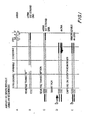
- FIG. 1 shows a schematic of the amplification of VH genes.
- Panel A shows a primer specific to the poly-dT region of the 3' UTR priming synthesis of the first, lower strand. Primers that bind in the constant region are also suitable.
- Panel B shows the lower strand extended at its 3' end by three Cs that are not complementary to the mRNA.
- Panel C shows the result of annealing a synthetic top-strand primer ending in three GGGs that hybridize to the 3' terminal CCCs and extending the reverse transcription extending the lower strand by the reverse complement of the synthetic primer sequence.
- Panel D shows the result of PCR amplification using a 5' biotinylated synthetic top-strand primer that replicates the 5' end of the synthetic primer of panel C and a bottom-strand primer complementary to part of the constant domain.
- Panel E shows immobilized double-stranded (ds) cDNA obtained by using a 5'-biotinylated top-strand primer.
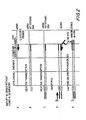
- FIG. 2 shows a similar schematic for amplification of VL genes.
- Panel A shows a primer specific to the constant region at or near the 3' end priming synthesis of the first, lower strand. Primers that bind in the poly-dT region are also suitable.
- Panel B shows the lower strand extended at its 3' end by three Cs that are not complementary to the mRNA.
- Panel C shows the results of annealing a synthetic top-strand primer ending in three GGGs that hybridize to the 3' terminal CCCs and extending the reverse transcription extending the lower strand by the reverse complement of the synthetic primer sequence.
- Panel D shows the result of PCR amplification using a 5' biotinylated synthetic top-strand primer that replicates the 5' end of the synthetic primer of panel C and a bottom-strand primer complementary to part of the constant domain.
- the bottom-strand primer also contains a useful restriction endonuclease site, such as Asc I .
- Panel E shows immobilized ds cDNA obtained by using a 5'-biotinylated top-strand primer.
- each V gene consists of a 5' untranslated region (UTR.) and a secretion signal, followed by the variable region, followed by a constant region, fallowed by a 3' untranslated region (which typically ends in poly-A).
- An initial primer for reverse transcription may be complementary to the constant region or to the poly A segment of the 3'-UTR.
- a primer of 15 T is preferred.
- Reverse transcriptases attach several C residues to the 3' end of the newly synthesized DNA. RT CapExtention exploits this feature.
- the reverse transcription reaction is first run with only a lower-strand primer. After about 1 hour, a primer ending in GGG (USP-GGG) and more RTase are added.
- the DNAs of this invention are rendered single-stranded.
- the strands can be separated by using a biotinylated primer, capturing the biotinylated product on streptavidin beads, denaturing the DNA, and washing away the complementary strand.
- a biotinylated primer capturing the biotinylated product on streptavidin beads
- denaturing the DNA denaturing the DNA
- washing away the complementary strand Depending on which end of the captured DNA is wanted, one will choose to immobilize either the upper (sense) strand or the lower (antisense) strand.
- polypeptides or proteins encoded, at least in part, by those DNAs they must be manipulated to provide ends suitable for cloning and expression.
- any 5' untranslated regions and mammalian signal sequences must be removed and replaced, in frame, by a suitable signal sequence that functions in the display host.
- parts of the variable domains (in antibody genes) may be removed and replaced by synthetic segments containing synthetic diversity. The diversity of other gene families may likewise be expanded with synthetic diversity.
- the first method comprises the steps of:
- the contacting and the cleaving steps being performed at a temperature sufficient to maintain the nucleic acid in substantially single-stranded form, the oligonucleotide being functionally complementary to the nucleic acid over a large enough region to allow the two strands to associate such that cleavage may occur at the chosen temperature and at the desired location, and the cleavage being carried out using a restriction endonucleases that is active at the chosen temperature.
- short oligonucleotides are annealed to the single-stranded DNA so that restriction endonuclease recognition sites formed within the now locally double-stranded regions of the DNA can be cleaved.
- a recognition site that occurs at the same position in a substantial -fraction of the single-stranded DNAs is identical.
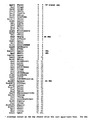
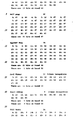
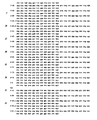
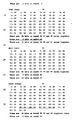
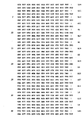
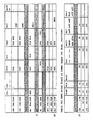
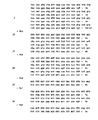
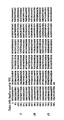
- Table 195 depicts the DNA sequences of the FR3 regions of the 51 known human VH germline genes.
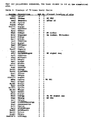
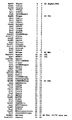
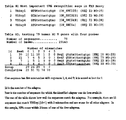
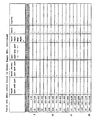
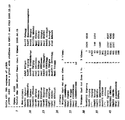
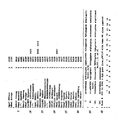
- the genes contain restriction endonuclease recognition sites shown in Table 200. Restriction endonucleases that cleave a large fraction of germline genes at the same site are preferred over endonucleases that cut at a variety of sites.
- An enzyme that cleaves downstream in FR3 is also more preferable because it captures fewer mutations in the framework. This may be advantageous is some cases. However, it is well known that framework mutations exist and confer and enhance antibody binding.
- the present invention by choice of appropriate Restriction site, allows all or part of FR3 diversity to be captured. Hence, the method also allows extensive diversity to be captured.
- restriction endonucleases that are active between about 45° and about 75°C are used.
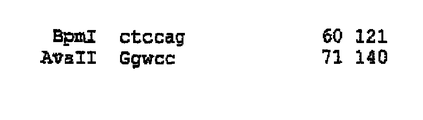
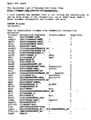
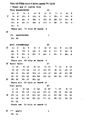
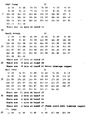
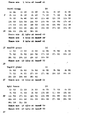
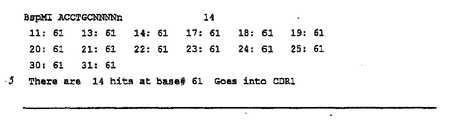
- FR3 germline genes at a single position include: Mae III(24@4), Tsp 45I (21@4), Hph I(44@5), Bsa JI(23@65), Alu I(23@47), Blp I(21@48), Dde I(29@58), Bgl II(10@51), MSl I(44@72), Bsi EI(23@74), Eae I(23@74), Eag I(23@74), Hae III(25@75), Bst 4CI(51@86), Hpy CH4III(51@86), Hin fI(38@2), Mly I(18@2), Ple I(18@2), Mnl I(31@67), Hpy CH4V(21@44), Bsm AI(16@11) , B pm I(19@12), Xmn I(12@30), and Sac I(11@51).
- the notation used means,
- the preferred restriction endonucleases are: Bst 4CI (or Taa I or Hpy CH4III), Blp I, Hpy CH4V, and Msl I. Because ACNGT (the restriction endonuclease recognition site for Bst 4CI, Taa I, and Hpy CH4III) is found at a consistent site in all the human FR3 germline genes, one of those enzymes is the most preferred for capture of heavy chain CDR3 diversity.
- Blp I and Hpy CH4V are complementary. Blp Icuts most members of the VH1 and VH4 families while HpyCH4V cuts most members of the VH3, VH5, VH6, and VH7 families. Neither enzyme cuts VH2s, but this is a very small family, containing only three members. Thus, these enzymes may also be used in preferred embodiments of the methods of this invention.
- restriction endonuclease HpyCH4III, Bst4CI, and TaaI all recognize 5'-ACnGT-3' and cut upper strand DNA after n and lower strand DNA before the base complementary to n. This is the most preferred restriction endonuclease recognition site for this method on human heavy chains because it is found in all germline genes. Furthermore, the restriction endonuclease recognition region (ACnGT) matches the second and third bases of a tyrosine codon (t ay ) and the following cysteine codon (t gy ) as shown in Table 206. These codons are highly conserved, especially the cysteine in mature antibody genes.
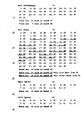
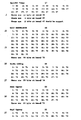
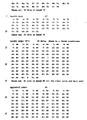
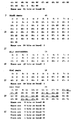
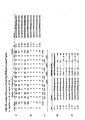
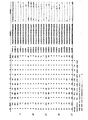
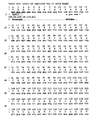
- Table 250 E shows the distinct oligonucleotides of length 22 (except the last one which is of length 20) bases.
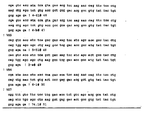
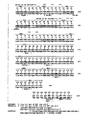
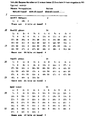
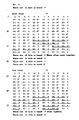
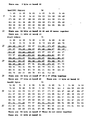
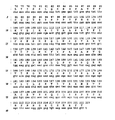
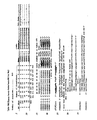
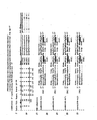
- Table 255 C shows the analysis of 1617 actual heavy chain antibody genes. Of these, 1511 have the site and match one of the candidate oligonucleotides to within 4 mismatches. Eight oligonucleotides account for most of the matches and are given in Table 250 F.1. The 8 oligonucleotides are very similar so that it is likely that satisfactory cleavage will be achieved with only one oligonucleotide (such as H43.77.97.1-02#1) by adjusting temperature, pH, salinity, and the like.
- One or two oligonucleotides may likewise suffice whenever the germline gene sequences differ very little and especially if they differ very little close to the restriction endonuclease recognition region to be cleaved.
- Table 255 D shows a repeat analysis of 1617 actual heavy chain antibody genes using only the 8 chosen oligonucleotides. This shows that 1463 of the sequences match at least one of the oligonucleotides to within 4 mismatches and have the site as expected.
- Another illustration of choosing an appropriate restriction endonuclease recognition site involves cleavage in FR1 of human heavy chains. Cleavage in FR1 allows capture of the entire CDR diversity of the heavy chain.
- the germline genes for human heavy chain FR1 are shown in Table 217.
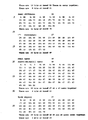
- Table 220 shows the restriction endonuclease recognition sites found in human germline genes FRls.
- the preferred sites are Bsg I(GTGCAG;39@4), Bso FI(GCngc;43@6,11@9,2@3,1@12), Tse I(Gcwgc;43@6,11@9,2@3,1@12), Msp AlI(CMGckg;46@7,2@1), PvuII(CAGctg;46@7,2@1), Alu I (AGct;48@82@2).
- MspAI and PvuII The more preferred sites are MspAI and PvuII.
- Msp AI and Pvu II have 46 sites at 7-12 and 2 at 1-6.
- oligonucleotides are used that do not fully cover the site at 1-6.
- the DNA will not be cleaved at that site, We have shown that DNA that extends 3, 4, or 5 bases beyond a Pvu II-site can be cleaved efficiently.
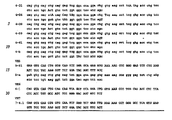
- Table 300 shows the human kappa FR1 germline genes and Table 302 shows restriction endonuclease recognition sites that are found in a substantial number of human kappa FR1 germline genes at consistent locations .
- Bsm AI and Pfl FI are the most preferred enzymes.
- Bsm AI sites are found at base 18 in 35 of 40 germline genes.
- Pfl FI sites are found in 35 of 40 germline genes at base 12.
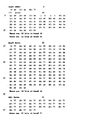
- Table 400 shows the 31 known human lambda FR1 germline gene sequences.
- Table 405 shows restriction endonuclease recognition sites found in human lambda FR1 germline genes. Hin fI and Dde I are the most preferred restriction endonucleases for cutting human lambda chains in FR1.
- oligonucleotides are prepared so as to functionally complement, alone or in combination, the chosen recognition site.
- the oligonucleotides also include sequences that flank the recognition site in the majority of the amplified genes. This flanking region allows the sequence to anneal to the single-stranded DNA sufficiently to allow cleavage by the restriction endonuclease specific for the site chosen.
- the actual length and sequence of the oligonucleotide depends on the recognition site and the conditions to be used for contacting and cleavage. The length must be sufficient so that the oligonucleotide is functionally complementary to the single-stranded DNA over a large enough region to allow the two strands to associate such that cleavage may occur at the chosen temperature and solely at the desired location.
- the oligonucleotides of this preferred method of the invention are about 17 to about 30 nucleotides in length. Below about 17 bases, annealing is too weak and above 30 bases there can be a loss of specificity. A preferred length is 18 to 24 bases.
- Oligonucleotides of this length need not be identical complements of the germline genes. Rather, a few mismatches taken may be tolerated. Preferably, however, no more than 1-3 mismatches are allowed. Such mismatches do not adversely affect annealing of the oligonucleotide to the single-stranded DNA. Hence, the two DNAs are said to be functionally complementary.
- the second method to manipulate the amplified single-stranded DNAs of this invention for cloning comprises the steps of:
- the contacting and the cleaving steps being performed at a temperature sufficient to maintain the nucleic acid in substantially single-stranded form, the oligonucleotide being functionally complementary to the nucleic acid over a large enough region to allow the two strands to associate such that cleavage may occur at the chosen temperature and at the desired location, and the cleavage being carried out using a restriction endonuclease that is active at the chosen temperature.
- UREs are partially double-stranded oligonucleotides.
- the single-stranded portion or overlap of the URE consists of a DNA adapter that is functionally complementary to the sequence to be cleaved in the single-stranded DNA.
- the double-stranded portion consists of a type II-S restriction endonuclease recognition site.
- the URE method of this invention is specific and precise and can tolerate some (e.g ., 1-3) mismatches in the complementary regions, i.e., it is functionally complementary to that region. Further, conditions under which the URE is used can be adjusted so that most of the genes that are amplified can be cut, reducing bias in the library produced from those genes.
- the sequence of the single-stranded DNA adapter or overlap portion of the URE typically consists of about 14-22 bases. However, longer or shorter adapters may be used. The size depends on the ability of the adapter to associate with its functional complement in the single-stranded DNA and the temperature used for contacting the URE and the single-stranded DNA at the temperature used for cleaving the DNA with the type II-S enzyme.
- the adapter must be functionally complementary to the single-stranded DNA over a large enough region to allow the two strands to associate such that the cleavage may occur at the chosen temperature and at the desired location. We prefer singe-stranded or overlap portions of 14-17 bases in length, and more preferably 18-20 bases in length.
- the site chosen for cleavage using the URE is preferably one that is substantially conserved in the family of amplified DNAs. As compared to the first cleavage method of this invention, these sites do not need to be endonuclease recognition sites. However, like the first method, the sites chosen can be synthetic rather than existing in the native DNA. Such sites may be chosen by references to the sequences of known antibodies or other families of genes. For example, the sequences of many germline genes are reported at http://www.mrc-cpe.cam.ac.uk/imt-doc/restricted/ok.html. For example, one preferred site occurs near the end of FR3 -- codon 89 through the second base of codon 93. CDR3 begins at codon 95.
- sequences of 79 human heavy-chain genes are also available at http://www.ncbi.nlm.nih.gov/entre2/nucleotide.html. This site can be used to identify appropriate sequences for URE cleavage according to the methods of this invention. See , e.g., Table 8B.
- sequences are identified using these sites or other available sequence information. These sequences together are present in a substantial fraction of the amplified DNAs. For example, multiple sequences could be used to allow for known diversity in germline genes or for frequent somatic mutations. Synthetic degenerate sequences could also be used. Preferably, a sequence ( s ) that occurs in at least 65% of genes examined with no more than 2-3 mismatches is chosen
- URE single-stranded adapters or overlaps are then made to be complementary to the chosen regions.
- Conditions for using the UREs are determined empirically. These conditions should allow cleavage of DNA that contains the functionally complementary sequences with no more than 2 or 3 mismatches but that do not allow cleavage of DNA lacking such sequences.
- the double-stranded portion of the URE includes a Type II-S endonuclease recognition site.
- Any Type II-S enzyme that is active at a temperature necessary to maintain the single-stranded DNA substantially in that form and to allow the single-stranded DNA adapter portion of the URE to anneal long enough to the single-stranded DNA to permit cleavage at the desired site may be used.
- Type II-S enzymes for use in the URE methods of this invention provide asymmetrical cleavage of the single-stranded DNA. Among these are the enzymes listed in Table 800. The most preferred Type II-S enzyme is FokI.
- the UREs used in the prior art contained a 14-base single-stranded segment, a 10-base stem (containing a FokI site), followed by the palindrome of the 10-base stem. While such UREs may be used in the methods of this invention, the preferred UREs of this invention also include a segment of three to eight bases (a loop) between the FokI restriction endonuclease recognition site containing segments .
- the stem (containing the Fo kI site) and its palindrome are also longer than 10 bases. Preferably, they are 10-14 bases in length. Examples of these "lollipop" URE adapters are shown in Table 5.
- a URE to cleave an single-stranded DNA involves the FR3 region of human heavy chain.
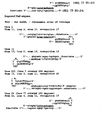
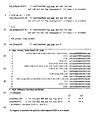
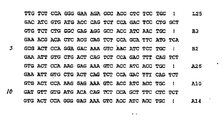
- Each has a 20-base adaptor sequence to complement the germline gene, a ten-base stem segment containing a Fo kI site, a five base loop, and the reverse complement of the first stem segment.
- FIG. 512 shows an analysis of 182 full-length human kappa chains for matching by the four 19-base probe sequences shown. Ninety-six percent of the sequences match one of the probes with 2 or fewer mismatches.
- the URE adapters shown in Table 512 are for cleavage of the sense strand of kappa chains.
- the adaptor sequences are the reverse complement of the germline gene sequences.
- the URE consists of a ten-base stem, a five base loop, the reverse complement of the stem and the complementation sequence.
- the loop shown here is TTGTT, but other sequences could be used. Its function is to interrupt the palindrome of the stems so that formation of a lollypop monomer is favored over dimerization.
- Table 512 also shows where the sense strand is cleaved.
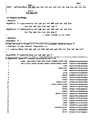
- Table 515 shows analysis of 128 human lambda light chains for matching the four 19-base probes shown. With three or fewer mismatches, 88 of 128 (69%) of the chains match one of the probes. Table 515 also shows URE adapters corresponding to these probes. Annealing these adapters to upper-strand ssDNA of lambda chains and treatment with Fo kI in the presence of FOKIact at a temperature at or above 45°C will lead to specific and precise cleavage of the chains.
- the conditions under which the short oligonucleotide sequences of the first method and the UREs of the second method are contacted with the single-stranded DNAs may be empirically determined.
- the conditions must be such that the single-stranded DNA remains in substantially single-stranded form. More particularly, the conditions must be such that the single-stranded DNA does not form loops that may interfere with its association with the oligonucleotide sequence or the URE or that may themselves provide sites for cleavage by the chosen restriction endonuclease.
- first method and UREs can be adjusted by controlling the concentrations of the URE adapters/oligonucleotides and substrate DNA, the temperature, the pH, the concentration of metal ions, the ionic strength, the concentration of chaotropes (such as urea and formamide), the concentration of the restriction endonuclease(e.g., Fok I), and the time of the digestion.
- concentrations of the URE adapters/oligonucleotides and substrate DNA the temperature, the pH, the concentration of metal ions, the ionic strength, the concentration of chaotropes (such as urea and formamide), the concentration of the restriction endonuclease(e.g., Fok I), and the time of the digestion.
- synthetic oligonucleotides having: 1) target germline gene sequences, 2) mutated target gene sequences, or 3) somewhat related non-target sequences. The goal is to cleave most of the target sequences and minimal amounts of non-targets.
- the single-stranded DNA is maintained in substantially that form using a temperature between 45°C to 75°C. More preferably, a temperature between 50°C and 60°C, most preferably between 55°C and 60°C, is used. These temperatures are employed both when contacting the DNA with the oligonucleotide or URE and when cleaving the DNA using the methods of this invention.
- the two cleavage methods of this invention have several advantages.
- the first method allows the individual members of the family of single-stranded DNAs to be cleaved solely at one substantially conserved endonuclease recognition site.
- the method also does not require an endonuclease recognition site to be built in to the reverse transcription or amplification primers. Any native or synthetic site in the family can be used.
- the second method has both of these advantages.
- the URE method allows the single-stranded DNAs to be cleaved at positions where no endonuclease recognition site naturally occurs or has been synthetically constructed.
- both cleavage methods permit the use of 5' and 3' primers so as to maximize diversity and then cleavage to remove unwanted or deleterious sequences before cloning and display.
- the DNA is prepared for cloning. This is done by using a partially duplexed synthetic DNA adapter, whose terminal sequence is based on the specific cleavage site at which the amplified DNA has been cleaved.
- the synthetic DNA is designed such that when it is ligated to the cleaved single-stranded DNA, it allows that DNA to be expressed in the correct reading frame so as to display the desired peptide, polypeptide or protein on the surface of the genetic package.
- the double-stranded portion of the adapter comprises the sequence of several codons that encode the amino acid sequence characteristic of the family of peptides, polypeptides or proteins up to the cleavage site.
- the amino acids of the 3-23 framework are preferably used to provide the sequences required for expression of the cleaved DNA.
- the double-stranded portion of the adapter is about 12 to 100 bases in length. More preferably, about 20 to 100 bases are used.
- the double-standard region of the adapter also preferably contains at least one endonuclease recognition site useful for cloning the DNA into a suitable display vector (or a recipient vector used to archive the diversity).
- This endonuclease restriction site may be native to the germline gene sequences used to extend the DNA sequence. It may be also constructed using degenerate sequences to the native germline gene sequences. Or, it may be wholly synthetic.
- the single-stranded portion of the adapter is complementary to the region of the cleavage in the single-stranded DNA.
- the overlap can be from about 2 bases up to about 15 bases. The longer the overlap, the more efficient the ligation is likely to be. A preferred length for the overlap is 7 to 10. This allows some mismatches in the region so that diversity in this region may be captured.
- the single-stranded region or overlap of the partially duplexed adapter is advantageous because it allows DNA cleaved at the chosen site, but not other fragments to be captured. Such fragments would contaminate the library with genes encoding sequences that will not fold into proper antibodies and are likely to be non-specifically sticky.
- One illustration of the use of a partially duplexed adaptor in the methods of this invention involves ligating such adaptor to a human FR3 region that has been cleaved, as described above, at 5'-ACnGT-3' using HpyCH4III, Bst4CI or TaaI.
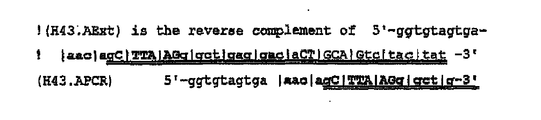
- Table 250 F.2 shows the bottom strand of the double-stranded portion of the adaptor for ligation to the cleaved bottom-strand DNA. Since the HpyCH4III-site is so far to the right (as shown in Table 206), a sequence that includes the Afl II-site as well as the Xba I site can be added. This bottom strand portion of the partially-duplexed adaptor, H43.XAExt, incorporates both Xba I and Afl II-sites.
- the top strand of the double-stranded portion of the adaptor has neither site (due to planned mismatches in the segments opposite the Xba I and Afl II-Sites of H43.XAExt), but will anneal very tightly to H43.XAExt.
- H43AExt contains only the Afl II-site and is to be used with the top strands H43.ABr1 and H43.ABr2 (which have intentional alterations to destroy the Afl II-site).
- the desired, captured DNA can be PCR amplified again, if desired, using in the preferred embodiment a primer to the downstream constant region of the antibody gene and a primer to part of the double-standard region of the adapter.
- the primers may also carry restriction endonuclease sites for use in cloning the amplified DNA.
- the composite DNA is cleaved at chosen 5' and 3' endonuclease recognition sites.
- the cleavage sites useful for cloning depend on the phage or phagemid into which the cassette will be inserted and the available sites in the antibody genes.
- Table 1 provides restriction endonuclease data for 75 human light chains.
- Table 2 shows corresponding data for 79 human heavy chains.
- the endonucleases are ordered by increasing frequency of cutting.
- Nch is the number of chains cut by the enzyme and Ns is the number of sites (some chains have more than one site).
- Sfl I, Not I, Afl II, Apa LI, and Asc I are very suitable.
- Sfi I and Not I are preferably used in pCESI to insert the heavy-chain display segment.
- Apa LI and Asc I are preferably used in pCES1 to insert the light-chain display segment.
- Bst EII-sites occur in 97% of germ-line JH genes. In rearranged V genes, only 54/79 (68%) of heavy-chain genes contain a Bst EII-Site and 7/61 of these contain two sites. Thus, 47/79 (59%) contain a single Bst EII-Site.
- An alternative to using Bst EII is to cleave via UREs at the end of JH and ligate to a synthetic oligonucleotide that encodes part of CH1.
- One example of preparing a family of DNA sequences using the methods of this invention involves capturing human CDR 3 diversity.
- mRNAs from various autoimmune patients is reverse transcribed into lower strand cDNA.
- the lower strand is immobilized and a short oligonucleotide used to cleave the cDNA upstream of CDR3.
- a partially duplexed synthetic DNA adapter is then annealed to the DNA and the DNA is amplified using a primer to the adapter and a primer to the constant region (after FR4).
- the DNA is then cleaved using BstEII (in FR4) and a restriction endonuclease appropriate to the partially double-stranded adapter (e.g., Xba I and Afl II (in FR3)).
- the DNA is then ligated into a synthetic VH skeleton such as 3-23.
- One example of preparing a single-stranded DNA that was cleaved using the URE method involves the human Kappa Chain.
- the cleavage site in the sense strand of this chain is depicted in Table 512.
- the oligonucleotide kapextURE is annealed to the oligonucleotides (kaBR01UR, kaBR02UR, kaBR03UR, and kaBR04UR) to form a partially duplex DNA.
- This DNA is then ligated to the cleaved soluble kappa chains.
- the ligation product is then amplified using primers kapextUREPCR and CKForeAsc (which inserts a AscI site after the end of C kappa). This product is then cleaved with Apa LI and Asc I and ligated to similarly cut recipient vector.
- Another example involves the cleavage illustrated in Table 515.
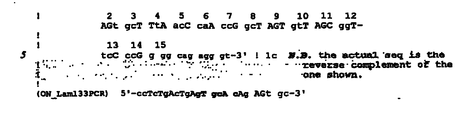
- an extender ON_LamEx133
- four bridge oligonucleotides ON_LamB1-133, ON_LamB2-133, ON_LamB3-133, and ON_LamB4-133 are annealed to form a partially duplex DNA. That DNA is ligated to the cleaved lambda-chain sense strands. After ligation, the DNA is amplified with ON_Lam133PCR and a forward primer specific to the lambda constant domain, such as CL2ForeAsc or CL7ForeAsc (Table 130).
- the preferred process of this invention is to provide recipient vectors having sites that allow cloning of either light or heavy chains. Such vectors are well known and widely used in the art.
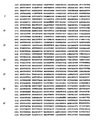
- a preferred phage display vector in accordance with this invention is phage MALIA3. This displays in gene III. The sequence of the phage MALIA3 is shown in Table 120A (annotated) and Table 120B (condensed).
- the DNA encoding the selected regions of the light or heavy chains can be transferred to the vectors using endonucleases that cut either light or heavy chains only very rarely.
- light chains may be captured with Apa LI and Asc I.
- Heavy-chain genes are preferably cloned into a recipient vector having Sfi I, Nco I, Xba I Afl II, Bst EII, Apa I, and Not I sites.
- the light chains are preferably moved into the library as Apa LI- Asc I fragments.
- the heavy chains are preferably moved into the library as Sfi I- Not I fragments.
- the display is had on the surface of a derivative of MI3 phage.
- the most preferred vector contains all the genes of M13, an antibiotic resistance gene, and the display cassette.
- the preferred vector is provided with restriction sites that allow introduction and excision of members of the diverse family of genes, as cassettes.
- the preferred vector is stable against rearrangement under the growth conditions used to amplify phage.
- the diversity captured by the methods of the present invention may be displayed in a phagemid vector (e.g., pCES1) that displays the peptide, polypeptide or protein on the III protein.
- a phagemid vector e.g., pCES1
- Such vectors may also be used to store the diversity for subsequent display using other vectors or phage.
- the mode of display may be through a short linker to three possible anchor domains.
- One anchor domain being the final portion of M13 III ("IIIstump")
- a second anchor being the full length III mature protein
- the third being the M13 VIII mature protein.
- the IIIstump fragment contains enough- of M13 III to assemble into phage but not the domains involved in mediating infectivity. Because the w.t. III and VIII proteins are present, the phage is unlikely to delete the antibody genes and phage that do delete these segments receive only a very small growth advantage.
- the DNA encodes the w.t. AA sequence, but differs from the w.t. DNA sequence to a very high extent. This will greatly reduce the potential for homologous recombination between the display anchor and the w.t. gene that is also present.
- the present invention uses a complete phage carrying an antibiotic-resistance gene (such as an ampicillin-resistance gaze) and the display cassette. Because the w.t. iii and viii genes are present, the w.t. proteins are also present.
- the display cassette is transcribed from a regulatable promoter (e.g., P Lac2 ).
- a regulatable promoter allows control of the ratio of the fusion display gene to the corresponding w.t. coat protein. This ratio determines the average number of copies of the display fusion per phage (or phagemid) particle.
- Another aspect of the invention is a method of displaying peptides, polypeptides or proteins (and particularly Fabs) on filamentous phage.
- this method displays FABs and comprises:
- the DNA encoding the anchor protein in the above preferred cassette should be designed to encode the same (or a closely related) amino acid sequence as is found in one of the coat proteins of the phage, but with a distinct DNA sequence. This is to prevent unwanted homologous recombination with the w.t. gene.
- the cassette should be placed in the intergenic region. The positioning and orientation of the display cassette can influence the behavior of the phage.
- a transcription terminator may be placed after the second stop of the display cassette above (e.g., Trp). This will reduce interaction between the display cassette and other genes in the phage antibody display vector (PADV).
- the phage or phagemid can display proteins other than Fab, by replacing the Fab portions indicated above, with other protein genes.
- Various hosts can be used for growth of the display phage or phagemids of this invention. Such hosts are well known in the art. In the preferred embodiment, where Fabs are being displayed, the preferred host should grow at 30°C and be RecA - (to reduce unwanted genetic recombination) and EndA - (to make recovery of RF DNA easier). It is also preferred that the host strain be easily transformed by electroporation.
- XL1-Blue MRF' satisfies most of these preferences, but does not grow well at 30°C. XL1-Blue MRF' does grow slowly at 38°c and thus is an acceptable host. TG-1 is also an acceptable host although it is RecA + and EndA + . XL1-Blue MRF' is more preferred for the intermediate host used to accumulate diversity prior to final construction of the library.
- the libraries of this invention may be screened using well known and conventionally used techniques.
- the selected peptides, polypeptides or proteins may then be used to treat disease.
- the peptides, polypeptides or proteins for use in therapy or in pharmaceutical compositions are produced by isolating the DNA encoding the desired peptide, polypeptide or protein from the member of the library selected. That DNA is then used in conventional methods to produce the peptide, polypeptides or protein it encodes in appropriate host cells, preferably mammalian host cells, e.g., CHO cells. After isolation, the peptide, polypeptide or protein is used alone or with pharmaceutically acceptable compositions in therapy to treat disease.
- a repertoire of human-kappa chain mRNAs was prepared by treating total or poly(A+) RNA isolated from a collection of patients having various autoimmune diseases with calf intestinal phosphatase to remove the 5'-phosphate from all molecules that have them, such as ribosomal RNA, fragmented mRNA, tRNA and genomic DNA. Full length mRNA (containing a protective 7-methyl cap structure) is unaffected. The RNA is then treated with tobacco acid pyrophosphatase to remove the cap structure from full length mRNAs leaving a 5' - monophosphate group.
- mRNA's Full length mRNA's were modified with an adaptor at the 5' end and then reversed transcribed and amplified using the GeneRACETM method and kit (Invitrogen).
- a 5' biotinylated primer complementary to the adaptor and a 3' primer complementary to a portion of the construct region were used.
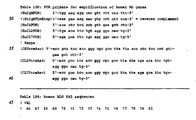
- the short oligonucleotides shown in Table 525 were added in 40 fold molar excess in 100 ⁇ L of NEB buffer 2 (50 mM NaCl, 10 mM Tris-HCl, 10 mM MgCl 2 , 1 mM dithiothreitol pH 7.9) to the dry beads. The mixture was incubated at 95°C for 5 minutes then cooled down to 55°C over 30 minutes. Excess oligonucleotide was washed away with 2 washes of NEB buffer 3 (100 mM NaCl, 50 mM Tris-HCl, 10 mM MgCl 2 , 1 mM dithiothreitol pH 7.9).
- NEB BsmAI
- a partially double-stranded adaptor was prepared using the oligonucleotide shown in Table 525.
- the adaptor was added to the single-stranded DNA in 100 fold molar excess along with 1000 units of T4 DNA ligase (NEB) and incubated overnight at 16°C.
- the excess oligonucleotide was removed with a Qiagen PCR purification column.
- the ligated material was amplified by PCR using the primers kapPCRtl and kapfor shown in Table 525 for 10 cycles with the program shown in Table 530.
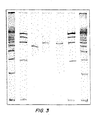
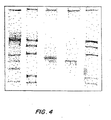
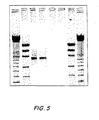
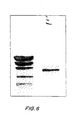
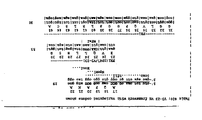
- the soluble PCR product was run on a gel and showed a band of approximately 700 n, as expected ( FIGs. 5 and 6 ).
- the DNA was cleaved with enzymes ApaLI and AscI, gel purified, and ligated to similarly cleaved vector pCES1.
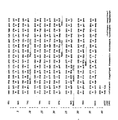
- the presence of the correct size insert was checked by PCR in several clones as shown in FIG. 15.
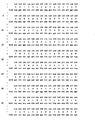
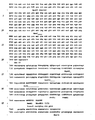
- Table 500 shows the DNA sequence of a kappa light chain captured by this procedure.
- Table 501 shows a second sequence captured by this procedure. The closest bridge sequence was complementary to the sequence 5'-agccacc-3', but the sequence captured reads 5'-Tgccacc-3 , showing that some mismatch in the overlapped region is tolerated.
- CDR 1 and 2 diversity were constructed in the 3-23 VH framework in a two step process: first, a vector containing the 3-23 VH framework was constructed, and then, a synthetic CDR 1 and 2 was assembled and cloned into this vector.
- oligos and two PCR primers (long oligonucleotides: TOPFR1A, BOTFR1B, BOTFR2, BOTFR3, F06, BOTFR4, ON-vgCl, and ON-vgC2 and primers: SFPRMET and BOTPCRPRIM, shown in Table 600) that overlap were designed based on the Genebank sequence of V323 VH.
- the design incorporated at least one useful restriction site in each framework regions, as shown in Table 600.
- the segments, that were synthesized are shown as bold, the overlapping regions are underscored, and the PCR priming regions at each end are underscored.
- PCR Polymerase Chain Reaction
- the PCR mixture contained 200uM dNTPs, 2.5mM MgCl 2 , 0.02U Pfu TurboTM DNA Polymerase, IU Qiagen HotStart Taq DNA Polymerase, and 1X Qiagen PCR buffer.
- the PCR program consisted of 10 cycles of 94°C for 30s, 55°C for 30s, and 72°C for 30s.
- the assembled V3-23 DNA sequence was then amplified, using 2.5ul of a 10-fold dilution from the initial PCR in 100ul PCR reaction.
- the PCR reaction contained 200uM dNTPs, 2.5mM MgCl 2 , 0.02U Pfu TurboTM DNA Polymerase, 1U Qiagen HotStart Taq DNA Polymerase, 1X Qiagen PCR Buffer and 2 outside primers (SFPRMET and BOTPCRPRIM) at a concentration of 1uM.
- the PCR program consisted of 23 cycles at 94°C for 30s, 55°C for 30s, and 72°C for 60s.
- V3-23 VH DNA sequence was digested and cloned into pCESl (phagemid vector) using the Sfi I and Bst EII restriction endonuclease sites (All restriction enzymes mentioned herein were supplied by New England BioLabs, Beverly, MA and used as per manufacturer's instruction).
- Stuffer sequences (shown in Table 610 and Table 620) were introduced into pCES1 to replace CDR1/CDR2 sequences (900 bases between Bsp EI and Xba I RE sites) and CDR3 sequences (358 bases between Afl II and Bst EII), prior to cloning the CDR1/CDR2 diversity.
- the new vector is pCES5 and its sequence is given in Table 620. Having stuffers in place of the CDRs avoids the risk that a parental sequence would be over-represented in the library.
- the CDR1-2 stuffer contains restriction sites for Bgl II, Bsu 36I, Bcl I, Xcm I, Mlu I) Pvu II, HpaI , and Hinc II, the underscored sites being unique within the vector pCES5.
- the stuffer that replaces CDR3 contains the unique restriction endonuclease site Rsr II.
- the stuffer sequences are fragments from the penicillase gene of E. colt,
- oligonucleotides ON-vgCl, ON_Br12, ON_CD2Xba, and ON-vgC2, shown in Table 600 and Table 630
- a mix of these 4 oligos was combined at a final concentration of 2.5uM in a 40ul PCR reaction.
- Two of the 4 oligos contained variegated sequences positioned at the CDR1 and the CDR2.
- the PCR mixture contained 200uM dNTPs, 2.5U Pwo DNA Polymerase (Roche), and 1X Pwo PCR buffer with 2mM MgSO 4 .
- the PCR program consisted of 10 cycles at 94°C for 30s, 60°C for 30s, and 72°C for 60s.
- This assembled CDR1/2 DNA sequence was amplified, using 2.5ul of the mixture in 100ul PCR reaction.
- the PCR reaction contained 200uM dNTPs, 2.5U Pwo DNA Polymerase, 1X two PCR Buffer with 2mM MgSO 4 and 2 outside primers at a concentration of 1uM.
- the PCR program consisted of 10 cycles at 94°C for 30s, 60°C for 30s, and 72°C for 60s. These variegated sequences were digested and cloned into the V3-23 framework in place of the CDR1/2 stuffer.
- the present invention relates to the following items:
Landscapes
- Life Sciences & Earth Sciences (AREA)
- Health & Medical Sciences (AREA)
- Genetics & Genomics (AREA)
- Chemical & Material Sciences (AREA)
- Engineering & Computer Science (AREA)
- Organic Chemistry (AREA)
- Zoology (AREA)
- Wood Science & Technology (AREA)
- Biotechnology (AREA)
- Bioinformatics & Cheminformatics (AREA)
- Biomedical Technology (AREA)
- General Engineering & Computer Science (AREA)
- Molecular Biology (AREA)
- Biochemistry (AREA)
- Microbiology (AREA)
- General Health & Medical Sciences (AREA)
- Plant Pathology (AREA)
- Physics & Mathematics (AREA)
- Biophysics (AREA)
- Crystallography & Structural Chemistry (AREA)
- Medicinal Chemistry (AREA)
- Chemical Kinetics & Catalysis (AREA)
- General Chemical & Material Sciences (AREA)
- Virology (AREA)
- Bioinformatics & Computational Biology (AREA)
- Measuring Or Testing Involving Enzymes Or Micro-Organisms (AREA)
- Peptides Or Proteins (AREA)
- Preparation Of Compounds By Using Micro-Organisms (AREA)
- Investigating Or Analysing Biological Materials (AREA)
- Enzymes And Modification Thereof (AREA)
Applications Claiming Priority (2)
| Application Number | Priority Date | Filing Date | Title |
|---|---|---|---|
| US19806900P | 2000-04-17 | 2000-04-17 | |
| EP01927108A EP1276855B1 (fr) | 2000-04-17 | 2001-04-17 | Nouvelles methodes de construction de bibliotheques de materiels genetiques representant les membres d'une famille diversifiee de peptides, de polypeptides ou de proteines |
Related Parent Applications (2)
| Application Number | Title | Priority Date | Filing Date |
|---|---|---|---|
| EP01927108.9 Division | 2001-04-17 | ||
| EP01927108A Division-Into EP1276855B1 (fr) | 2000-04-17 | 2001-04-17 | Nouvelles methodes de construction de bibliotheques de materiels genetiques representant les membres d'une famille diversifiee de peptides, de polypeptides ou de proteines |
Publications (1)
| Publication Number | Publication Date |
|---|---|
| EP2295580A1 true EP2295580A1 (fr) | 2011-03-16 |
Family
ID=22731873
Family Applications (4)
| Application Number | Title | Priority Date | Filing Date |
|---|---|---|---|
| EP10179777A Withdrawn EP2295580A1 (fr) | 2000-04-17 | 2001-04-17 | Nouveaux procédés de construction de bibliothèques de paquets génétiques qui affichent collectivement une famille diverse de peptides, polypeptides ou protéines |
| EP01927108A Expired - Lifetime EP1276855B1 (fr) | 2000-04-17 | 2001-04-17 | Nouvelles methodes de construction de bibliotheques de materiels genetiques representant les membres d'une famille diversifiee de peptides, de polypeptides ou de proteines |
| EP10156326A Expired - Lifetime EP2199393B1 (fr) | 2000-04-17 | 2001-04-17 | Nouveaux procédés de construction de bibliothèques de paquets génétiques qui affichent collectivement une famille diverse de peptides, polypeptides ou protéines |
| EP10179786.8A Expired - Lifetime EP2308982B1 (fr) | 2000-04-17 | 2001-04-17 | Nouveaux procédés de construction de bibliothèques de paquets génétiques qui affichent collectivement une famille diverse de peptides, polypeptides ou protéines |
Family Applications After (3)
| Application Number | Title | Priority Date | Filing Date |
|---|---|---|---|
| EP01927108A Expired - Lifetime EP1276855B1 (fr) | 2000-04-17 | 2001-04-17 | Nouvelles methodes de construction de bibliotheques de materiels genetiques representant les membres d'une famille diversifiee de peptides, de polypeptides ou de proteines |
| EP10156326A Expired - Lifetime EP2199393B1 (fr) | 2000-04-17 | 2001-04-17 | Nouveaux procédés de construction de bibliothèques de paquets génétiques qui affichent collectivement une famille diverse de peptides, polypeptides ou protéines |
| EP10179786.8A Expired - Lifetime EP2308982B1 (fr) | 2000-04-17 | 2001-04-17 | Nouveaux procédés de construction de bibliothèques de paquets génétiques qui affichent collectivement une famille diverse de peptides, polypeptides ou protéines |
Country Status (9)
| Country | Link |
|---|---|
| US (2) | US20040029113A1 (fr) |
| EP (4) | EP2295580A1 (fr) |
| JP (3) | JP5149476B2 (fr) |
| AU (3) | AU2001253589B2 (fr) |
| CA (2) | CA2798625C (fr) |
| DK (3) | DK2199393T3 (fr) |
| ES (3) | ES2400302T3 (fr) |
| PT (1) | PT2308982E (fr) |
| WO (1) | WO2001079481A2 (fr) |
Families Citing this family (22)
| Publication number | Priority date | Publication date | Assignee | Title |
|---|---|---|---|---|
| US6696251B1 (en) | 1996-05-31 | 2004-02-24 | Board Of Trustees Of The University Of Illinois | Yeast cell surface display of proteins and uses thereof |
| US6759243B2 (en) | 1998-01-20 | 2004-07-06 | Board Of Trustees Of The University Of Illinois | High affinity TCR proteins and methods |
| US8288322B2 (en) | 2000-04-17 | 2012-10-16 | Dyax Corp. | Methods of constructing libraries comprising displayed and/or expressed members of a diverse family of peptides, polypeptides or proteins and the novel libraries |
| EP2295580A1 (fr) * | 2000-04-17 | 2011-03-16 | Dyax Corp. | Nouveaux procédés de construction de bibliothèques de paquets génétiques qui affichent collectivement une famille diverse de peptides, polypeptides ou protéines |
| US6906176B2 (en) | 2000-06-19 | 2005-06-14 | Dyax Corp. | Enterokinase cleavage sequences |
| DE60144063D1 (de) | 2000-12-18 | 2011-03-31 | Dyax Corp | Gerichtete bibliotheken die genetisch verpackt sind |
| AU2013205033B2 (en) * | 2001-04-17 | 2016-06-09 | Takeda Pharmaceutical Company Limited | Novel Methods of Constructing Libraries Comprising Displayed and/or Expressed Members of a Diverse Family of Peptides, Polypeptides or Proteins and the Novel Libraries |
| AU2016225923B2 (en) * | 2001-04-17 | 2018-07-05 | Takeda Pharmaceutical Company Limited | Novel Methods of Constructing Libraries Comprising Displayed and/or Expressed Members of a Diverse Family of Peptides, Polypeptides or Proteins and the Novel Libraries |
| WO2003035842A2 (fr) * | 2001-10-24 | 2003-05-01 | Dyax Corporation | Controle d'hybridation sur variation de sequence |
| US7135310B2 (en) | 2002-04-24 | 2006-11-14 | The Regents Of The University Of California | Method to amplify variable sequences without imposing primer sequences |
| US20040067532A1 (en) | 2002-08-12 | 2004-04-08 | Genetastix Corporation | High throughput generation and affinity maturation of humanized antibody |
| EP1726657A4 (fr) * | 2004-02-10 | 2008-08-20 | Japan Science & Tech Agency | Procede de conversion d 'une base dans une sequence d'adn |
| US8877688B2 (en) | 2007-09-14 | 2014-11-04 | Adimab, Llc | Rationally designed, synthetic antibody libraries and uses therefor |
| EP2193146B1 (fr) | 2007-09-14 | 2016-05-25 | Adimab, LLC | Bibliothèques d'anticorps synthétiques rationnelles et leurs utilisations |
| US12529164B2 (en) | 2007-09-14 | 2026-01-20 | Adimab, Llc | Rationally designed, synthetic antibody libraries and uses therefor |
| FR2924440B1 (fr) * | 2007-12-04 | 2015-01-09 | Pf Medicament | Nouveau procede de generation et de criblage d'une banque d'anticorps |
| US9873957B2 (en) | 2008-03-13 | 2018-01-23 | Dyax Corp. | Libraries of genetic packages comprising novel HC CDR3 designs |
| US9388510B2 (en) | 2008-04-24 | 2016-07-12 | Dyax Corp. | Libraries of genetic packages comprising novel HC CDR1, CDR2, and CDR3 and novel LC CDR1, CDR2, and CDR3 designs |
| EP2310524A4 (fr) * | 2008-07-10 | 2013-07-24 | Versitech Ltd | Procédés de cartographie d'acides nucléiques et d'identification de variations structurelles fines dans les acides nucléiques |
| WO2011032181A2 (fr) * | 2009-09-14 | 2011-03-17 | Dyax Corp. | Bibliothèques d'ensembles génétiques comprenant de nouvelles conceptions de hc cdr3 |
| EP3741883B1 (fr) | 2010-07-16 | 2022-12-14 | Adimab, LLC | Bibliothèques d'anticorps |
| WO2015172080A1 (fr) | 2014-05-08 | 2015-11-12 | Fluidigm Corporation | Séquençage intégré de cellules uniques |
Citations (4)
| Publication number | Priority date | Publication date | Assignee | Title |
|---|---|---|---|---|
| WO1997020923A1 (fr) | 1995-12-04 | 1997-06-12 | Pasteur Merieux Serums & Vaccins | Preparation de banque multicombinatoire de vecteurs d'expression de genes d'anticorps |
| WO1997049809A1 (fr) | 1996-06-24 | 1997-12-31 | Rotkreuzstiftung Zentrallaboratorium Blutspendedienst Srk | Olypeptides capables de former des structures de liaison a l'ant igene avec une specificite pour les antigenes de rhesus d, adn les codant et procede pour leur preparation et leur utilisation |
| WO1999055367A1 (fr) | 1998-04-24 | 1999-11-04 | The Regents Of The University Of California | Anticorps erbb2 d'internalisation |
| WO2000018905A1 (fr) * | 1998-09-25 | 2000-04-06 | G.D. Searle & Co. | Procede de production de permuteines par permutagenese d'exploration |
Family Cites Families (66)
| Publication number | Priority date | Publication date | Assignee | Title |
|---|---|---|---|---|
| US596271A (en) * | 1897-12-28 | l-anohestee | ||
| US5118605A (en) * | 1984-10-16 | 1992-06-02 | Chiron Corporation | Polynucleotide determination with selectable cleavage sites |
| US6492107B1 (en) * | 1986-11-20 | 2002-12-10 | Stuart Kauffman | Process for obtaining DNA, RNA, peptides, polypeptides, or protein, by recombinant DNA technique |
| DE3590766T (fr) * | 1985-03-30 | 1987-04-23 | ||
| US5618920A (en) * | 1985-11-01 | 1997-04-08 | Xoma Corporation | Modular assembly of antibody genes, antibodies prepared thereby and use |
| US5223409A (en) * | 1988-09-02 | 1993-06-29 | Protein Engineering Corp. | Directed evolution of novel binding proteins |
| US5688666A (en) * | 1988-10-28 | 1997-11-18 | Genentech, Inc. | Growth hormone variants with altered binding properties |
| US5750373A (en) * | 1990-12-03 | 1998-05-12 | Genentech, Inc. | Enrichment method for variant proteins having altered binding properties, M13 phagemids, and growth hormone variants |
| AU634186B2 (en) * | 1988-11-11 | 1993-02-18 | Medical Research Council | Single domain ligands, receptors comprising said ligands, methods for their production, and use of said ligands and receptors |
| US6291158B1 (en) * | 1989-05-16 | 2001-09-18 | Scripps Research Institute | Method for tapping the immunological repertoire |
| US6969586B1 (en) * | 1989-05-16 | 2005-11-29 | Scripps Research Institute | Method for tapping the immunological repertoire |
| US6291159B1 (en) * | 1989-05-16 | 2001-09-18 | Scripps Research Institute | Method for producing polymers having a preselected activity |
| US6680192B1 (en) * | 1989-05-16 | 2004-01-20 | Scripps Research Institute | Method for producing polymers having a preselected activity |
| US6291160B1 (en) * | 1989-05-16 | 2001-09-18 | Scripps Research Institute | Method for producing polymers having a preselected activity |
| US6291161B1 (en) * | 1989-05-16 | 2001-09-18 | Scripps Research Institute | Method for tapping the immunological repertiore |
| ATE449853T1 (de) * | 1990-02-01 | 2009-12-15 | Siemens Healthcare Diagnostics | HERSTELLUNG UND VERWENDUNG VON GENBANKEN MENSCHLICHER ANTIKÖRPER(ßHUMAN-ANTIKÖRPER- BIBLIOTHEKENß) |
| DE4002897A1 (de) * | 1990-02-01 | 1991-08-08 | Behringwerke Ag | Herstellung und verwendung von genbanken synthetischer menschlicher antikoerper ("synthetische human-antikoerper-bibliotheken") |
| ES2078518T3 (es) * | 1990-04-05 | 1995-12-16 | Roberto Crea | Mutagenesis por desplazamiento completo. |
| WO1991016435A1 (fr) * | 1990-04-18 | 1991-10-31 | Gist-Brocades N.V. | Genes d'acylase beta-lactame a mutation |
| GB9206318D0 (en) * | 1992-03-24 | 1992-05-06 | Cambridge Antibody Tech | Binding substances |
| US6916605B1 (en) * | 1990-07-10 | 2005-07-12 | Medical Research Council | Methods for producing members of specific binding pairs |
| US6172197B1 (en) * | 1991-07-10 | 2001-01-09 | Medical Research Council | Methods for producing members of specific binding pairs |
| US7063943B1 (en) * | 1990-07-10 | 2006-06-20 | Cambridge Antibody Technology | Methods for producing members of specific binding pairs |
| GB9015198D0 (en) * | 1990-07-10 | 1990-08-29 | Brien Caroline J O | Binding substance |
| US5780279A (en) * | 1990-12-03 | 1998-07-14 | Genentech, Inc. | Method of selection of proteolytic cleavage sites by directed evolution and phagemid display |
| WO1992018619A1 (fr) * | 1991-04-10 | 1992-10-29 | The Scripps Research Institute | Banques de recepteurs heterodimeres utilisant des phagemides |
| US6492160B1 (en) * | 1991-05-15 | 2002-12-10 | Cambridge Antibody Technology Limited | Methods for producing members of specific binding pairs |
| US5871907A (en) * | 1991-05-15 | 1999-02-16 | Medical Research Council | Methods for producing members of specific binding pairs |
| US5962255A (en) * | 1992-03-24 | 1999-10-05 | Cambridge Antibody Technology Limited | Methods for producing recombinant vectors |
| US5858657A (en) * | 1992-05-15 | 1999-01-12 | Medical Research Council | Methods for producing members of specific binding pairs |
| US6225447B1 (en) * | 1991-05-15 | 2001-05-01 | Cambridge Antibody Technology Ltd. | Methods for producing members of specific binding pairs |
| JPH06509473A (ja) * | 1991-08-10 | 1994-10-27 | メディカル・リサーチ・カウンシル | 細胞個体群の処理 |
| US5565332A (en) * | 1991-09-23 | 1996-10-15 | Medical Research Council | Production of chimeric antibodies - a combinatorial approach |
| US5872215A (en) * | 1991-12-02 | 1999-02-16 | Medical Research Council | Specific binding members, materials and methods |
| ES2341666T3 (es) * | 1991-12-02 | 2010-06-24 | Medimmune Limited | Produccion de autoanticuerpos de repertorios de segmentos de anticue rpos expresados en la superficie de fagos. |
| US5733743A (en) * | 1992-03-24 | 1998-03-31 | Cambridge Antibody Technology Limited | Methods for producing members of specific binding pairs |
| US5869644A (en) | 1992-04-15 | 1999-02-09 | The Johns Hopkins University | Synthesis of diverse and useful collections of oligonucleotidies |
| DE69332744T2 (de) | 1992-09-30 | 2004-01-15 | Scripps Research Inst | Humaner neutralisierender monoklonaler antikörper gegen den die immunschwäche beim menschen hervorringenden virus |
| JP3720353B2 (ja) * | 1992-12-04 | 2005-11-24 | メディカル リサーチ カウンシル | 多価および多重特異性の結合タンパク質、それらの製造および使用 |
| GB9225453D0 (en) * | 1992-12-04 | 1993-01-27 | Medical Res Council | Binding proteins |
| US5422253A (en) * | 1992-12-07 | 1995-06-06 | Wisconsin Alumni Research Foundation | Method of site specific nucleic acid cleavage |
| DE69432744T2 (de) * | 1993-02-04 | 2004-03-25 | Borean Pharma A/S | Verbessertes verfahren zur rückfaltung der proteine |
| US5714320A (en) * | 1993-04-15 | 1998-02-03 | University Of Rochester | Rolling circle synthesis of oligonucleotides and amplification of select randomized circular oligonucleotides |
| GB9313509D0 (en) * | 1993-06-30 | 1993-08-11 | Medical Res Council | Chemisynthetic libraries |
| DE69414870T2 (de) * | 1993-09-22 | 1999-05-12 | Medical Research Council, London | Antikoerper mit geaenderter zielrichtung |
| US5702892A (en) | 1995-05-09 | 1997-12-30 | The United States Of America As Represented By The Department Of Health And Human Services | Phage-display of immunoglobulin heavy chain libraries |
| DK1143006T3 (da) * | 1995-08-18 | 2008-07-14 | Morphosys Ip Gmbh | Vektorer/DNA-sekvenser fra humane kombinatoriske antistofbiblioteker |
| US6696248B1 (en) * | 1995-08-18 | 2004-02-24 | Morphosys Ag | Protein/(poly)peptide libraries |
| US5972693A (en) | 1995-10-24 | 1999-10-26 | Curagen Corporation | Apparatus for identifying, classifying, or quantifying DNA sequences in a sample without sequencing |
| US5854033A (en) * | 1995-11-21 | 1998-12-29 | Yale University | Rolling circle replication reporter systems |
| US5962271A (en) * | 1996-01-03 | 1999-10-05 | Cloutech Laboratories, Inc. | Methods and compositions for generating full-length cDNA having arbitrary nucleotide sequence at the 3'-end |
| DE19624562A1 (de) | 1996-06-20 | 1998-01-02 | Thomas Dr Koehler | Verfahren zur Bestimmung von Konzentrationsverhältnissen zweier sich um mindestens ein Nucleotid unterscheidender Nucleinsäuren und Testkit zur Durchführung des Verfahrens |
| GB9712818D0 (en) * | 1996-07-08 | 1997-08-20 | Cambridge Antibody Tech | Labelling and selection of specific binding molecules |
| US5858671A (en) * | 1996-11-01 | 1999-01-12 | The University Of Iowa Research Foundation | Iterative and regenerative DNA sequencing method |
| JP2002514919A (ja) * | 1997-04-04 | 2002-05-21 | バイオサイト ダイアグノスティックス,インコーポレイテッド | 多価ライブラリーおよびポリクローナルライブラリー |
| US6057098A (en) * | 1997-04-04 | 2000-05-02 | Biosite Diagnostics, Inc. | Polyvalent display libraries |
| AU8691398A (en) | 1997-08-04 | 1999-02-22 | Ixsys, Incorporated | Methods for identifying ligand specific binding molecules |
| GB9722131D0 (en) * | 1997-10-20 | 1997-12-17 | Medical Res Council | Method |
| US6531580B1 (en) * | 1999-06-24 | 2003-03-11 | Ixsys, Inc. | Anti-αvβ3 recombinant human antibodies and nucleic acids encoding same |
| IL142025A0 (en) * | 1999-07-20 | 2002-03-10 | Morphosys Ag | Novel methods for displaying (poly) peptides/proteins on bacteriophage particles via disulfide bonds |
| US6238904B1 (en) * | 1999-09-23 | 2001-05-29 | New England Biolabs, Inc. | Type II restriction endonuclease, HpyCH4III, obtainable from Helicobacter pylori CH4 and a process for producing the same |
| EP2295580A1 (fr) | 2000-04-17 | 2011-03-16 | Dyax Corp. | Nouveaux procédés de construction de bibliothèques de paquets génétiques qui affichent collectivement une famille diverse de peptides, polypeptides ou protéines |
| US8288322B2 (en) * | 2000-04-17 | 2012-10-16 | Dyax Corp. | Methods of constructing libraries comprising displayed and/or expressed members of a diverse family of peptides, polypeptides or proteins and the novel libraries |
| US20050158838A1 (en) * | 2000-06-19 | 2005-07-21 | Dyax Corp., A Delaware Corporation | Novel enterokinase cleavage sequences |
| DE60144063D1 (de) * | 2000-12-18 | 2011-03-31 | Dyax Corp | Gerichtete bibliotheken die genetisch verpackt sind |
| DE10230997A1 (de) * | 2001-10-26 | 2003-07-17 | Ribopharma Ag | Medikament zur Erhöhung der Wirksamkeit eines Rezeptor-vermittelt Apoptose in Tumorzellen auslösenden Arzneimittels |
-
2001
- 2001-04-17 EP EP10179777A patent/EP2295580A1/fr not_active Withdrawn
- 2001-04-17 CA CA2798625A patent/CA2798625C/fr not_active Expired - Lifetime
- 2001-04-17 EP EP01927108A patent/EP1276855B1/fr not_active Expired - Lifetime
- 2001-04-17 WO PCT/US2001/012454 patent/WO2001079481A2/fr not_active Ceased
- 2001-04-17 ES ES01927108T patent/ES2400302T3/es not_active Expired - Lifetime
- 2001-04-17 EP EP10156326A patent/EP2199393B1/fr not_active Expired - Lifetime
- 2001-04-17 DK DK10156326.0T patent/DK2199393T3/da active
- 2001-04-17 DK DK10179786T patent/DK2308982T3/da active
- 2001-04-17 DK DK01927108.9T patent/DK1276855T3/da active
- 2001-04-17 ES ES10179786.8T patent/ES2531551T3/es not_active Expired - Lifetime
- 2001-04-17 ES ES10156326T patent/ES2393535T3/es not_active Expired - Lifetime
- 2001-04-17 CA CA2406236A patent/CA2406236C/fr not_active Expired - Lifetime
- 2001-04-17 AU AU2001253589A patent/AU2001253589B2/en not_active Expired
- 2001-04-17 AU AU5358901A patent/AU5358901A/xx active Pending
- 2001-04-17 PT PT101797868T patent/PT2308982E/pt unknown
- 2001-04-17 US US09/837,306 patent/US20040029113A1/en not_active Abandoned
- 2001-04-17 EP EP10179786.8A patent/EP2308982B1/fr not_active Expired - Lifetime
- 2001-04-17 JP JP2001577464A patent/JP5149476B2/ja not_active Expired - Lifetime
-
2006
- 2006-02-28 US US11/365,556 patent/US9382535B2/en not_active Expired - Fee Related
-
2007
- 2007-08-21 AU AU2007211861A patent/AU2007211861B2/en not_active Expired
-
2011
- 2011-03-01 JP JP2011044525A patent/JP5599745B2/ja not_active Expired - Lifetime
-
2013
- 2013-12-11 JP JP2013255876A patent/JP5956413B2/ja not_active Expired - Lifetime
Patent Citations (4)
| Publication number | Priority date | Publication date | Assignee | Title |
|---|---|---|---|---|
| WO1997020923A1 (fr) | 1995-12-04 | 1997-06-12 | Pasteur Merieux Serums & Vaccins | Preparation de banque multicombinatoire de vecteurs d'expression de genes d'anticorps |
| WO1997049809A1 (fr) | 1996-06-24 | 1997-12-31 | Rotkreuzstiftung Zentrallaboratorium Blutspendedienst Srk | Olypeptides capables de former des structures de liaison a l'ant igene avec une specificite pour les antigenes de rhesus d, adn les codant et procede pour leur preparation et leur utilisation |
| WO1999055367A1 (fr) | 1998-04-24 | 1999-11-04 | The Regents Of The University Of California | Anticorps erbb2 d'internalisation |
| WO2000018905A1 (fr) * | 1998-09-25 | 2000-04-06 | G.D. Searle & Co. | Procede de production de permuteines par permutagenese d'exploration |
Non-Patent Citations (17)
| Title |
|---|
| ALVES JUERGEN ET AL: "Accuracy of the EcoRV restriction endonuclease: Binding and cleavage studies with oligodeoxynucleotide substrates containing degenerate recognition sequences.", BIOCHEMISTRY, vol. 34, no. 35, 1995, pages 11191 - 11197, XP001024697, ISSN: 0006-2960 * |
| AZHU D: "OLIGODEOXYNUCLEOTIDE-DIRECTED CLEAVAGE AND REPAIR OF A SINGLE-STRANDED VECTOR A METHOD OF SITE-SPECIFIC MUTAGENESIS", ANALYTICAL BIOCHEMISTRY, vol. 177, no. 1, 1989, pages 120 - 124, XP001031826, ISSN: 0003-2697 * |
| BARBAS C F ET AL: "ASSEMBLY OF COMBINATORIAL ANTIBODY LIBRARIES ON PHAGE SURFACES: THE GENE III SITE", PROCEEDINGS OF THE NATIONAL ACADEMY OF SCIENCES OF THE UNITED STATES (PNAS), NATIONAL ACADEMY OF SCIENCE, US LNKD- DOI:10.1073/PNAS.88.18.7978, vol. 88, 1 September 1991 (1991-09-01), pages 7978 - 7982, XP000652426, ISSN: 0027-8424 * |
| BARBAS C F ET AL: "SEMISYNTHETIC COMBINATORIAL ANTIBODY LIBRARIES: A CHEMICAL SOLUTION TO THE DIVERSITY PROBLEM", PROCEEDINGS OF THE NATIONAL ACADEMY OF SCIENCES OF THE UNITED STATES (PNAS), NATIONAL ACADEMY OF SCIENCE, US LNKD- DOI:10.1073/PNAS.89.10.4457, vol. 89, 1 May 1992 (1992-05-01), pages 4457 - 4461, XP002024223, ISSN: 0027-8424 * |
| CLACKSON ET AL., TRENDS IN BIOTECHNOLOGY, vol. 12, 1 May 1994 (1994-05-01), pages 173 - 184 |
| CLACKSON T ET AL: "IN VITRO SELECTION FROM PROTEIN AND PEPTIDE LIBRARIES", TRENDS IN BIOTECHNOLOGY, ELSEVIER PUBLICATIONS, CAMBRIDGE, GB LNKD- DOI:10.1016/0167-7799(94)90079-5, vol. 12, 1 May 1994 (1994-05-01), pages 173 - 184, XP000619299, ISSN: 0167-7799 * |
| COURTNEY B C ET AL: "A phage display vector with improved stability, applicability and ease of manipulation", GENE, ELSEVIER, AMSTERDAM, NL LNKD- DOI:10.1016/0378-1119(95)00526-C, vol. 165, no. 1, 7 November 1995 (1995-11-07), pages 139 - 140, XP004043198, ISSN: 0378-1119 * |
| FAN Z-C ET AL: "Three-dimensional structure of an Fv from a human IgM immunoglobulin", JOURNAL OF MOLECULAR BIOLOGY, LONDON, GB LNKD- DOI:10.1016/0022-2836(92)90500-J, vol. 228, no. 1, 5 November 1992 (1992-11-05), pages 188 - 207, XP024020018, ISSN: 0022-2836, [retrieved on 19921105] * |
| HOET RENÉ MICHAEL ET AL: "Generation of high-affinity human antibodies by combining donor-derived and synthetic complementarity-determining-region diversity.", NATURE BIOTECHNOLOGY MAR 2005 LNKD- PUBMED:15723048, vol. 23, no. 3, March 2005 (2005-03-01), pages 344 - 348, XP002581478, ISSN: 1087-0156 * |
| HOOGENBOOM ET AL., NUCLEIC ACIDS RESEARCH, vol. 19, no. 15, 1 January 1991 (1991-01-01), pages 4133 - 4137 |
| HOOGENBOOM H R ET AL: "MULTI-SUBUNIT PROTEINS ON THE SURFACE OF FILAMENTOUS PHAGE: METHODOLOGIES FOR DISPLAYING ANTIBODY (FAB) HEAVY AND LIGHT CHAINS", NUCLEIC ACIDS RESEARCH, OXFORD UNIVERSITY PRESS, SURREY, GB, vol. 19, no. 15, 1 January 1991 (1991-01-01), pages 4133 - 4137, XP001019229, ISSN: 0305-1048 * |
| KIM S C ET AL: "CLEAVING DNA AT ANY PREDETERMINED SITE WITH ADAPTER-PRIMERS AND CLASS-IIS RESTRICTION ENZYMES", SCIENCE (WASHINGTON D C), vol. 240, no. 4851, 1988, pages 504 - 506, XP001030474, ISSN: 0036-8075 * |
| PODHAJSKA A J SZYBALSKI W.: "CONVERSION OF THE FOK-I ENDONUCLEASE TO A UNIVERSAL RESTRICTION ENZYME CLEAVAGE OF PHAGE M-13-MP-7 DNA AT PREDETERMINED SITES", GENE (AMSTERDAM), vol. 40, no. 2-3, 1985, pages 175 - 182, XP001024698, ISSN: 0378-1119 * |
| SCHOONBROODT SONIA ET AL: "Oligonucleotide-assisted cleavage and ligation: a novel directional DNA cloning technology to capture cDNAs. Application in the construction of a human immune antibody phage-display library.", NUCLEIC ACIDS RESEARCH 2005 LNKD- PUBMED:15905471, vol. 33, no. 9, 2005, pages E81, XP002581479, ISSN: 1362-4962 * |
| SMITH ET AL., CHEMICAL REVIEWS, vol. 97, no. 2, 1 March 1997 (1997-03-01), pages 391 - 410 |
| SMITH G P ET AL: "PHAGE DISPLAY", CHEMICAL REVIEWS, ACS,WASHINGTON, DC, US LNKD- DOI:10.1021/CR960065D, vol. 97, no. 2, 1 March 1997 (1997-03-01), pages 391 - 410, XP000683275, ISSN: 0009-2665 * |
| THIELKING V ET AL: "ACCURACY OF THE ECO-RI RESTRICTION ENDONUCLEASE BINDING AND CLEAVAGE STUDIES WITH OLIGODEOXYNUCLEOTIDE SUBSTRATES CONTAINING DEGENERATE RECOGNITION SEQUENCES", BIOCHEMISTRY, vol. 29, no. 19, 1990, pages 4682 - 4691, XP001024699, ISSN: 0006-2960 * |
Also Published As
Similar Documents
| Publication | Publication Date | Title |
|---|---|---|
| AU2007211861B2 (en) | Methods of Constructing Display Libraries of Genetic Packages for Members of a Diverse Family of Peptides | |
| EP1578903B2 (fr) | Nouveaux procedes de construction de bibliotheques comprenant des membres visualises et/ou exprimes de diverses familles de peptides, polypeptides et proteines et nouvelles bibliotheques obtenues | |
| AU2001253589A1 (en) | Methods of constructing display libraries of genetic packages for members of a diverse family of peptides | |
| AU2002307422A1 (en) | Novel methods of constructing libraries comprising displayed and/or expressed members of a diverse family of peptides, polypeptides or proteins and the novel libraries | |
| HK1154630A (en) | Methods of constructing display libraries of genetic packages for members of a diverse family of peptides | |
| HK1145515B (en) | Methods of constructing display libraries of genetic packages for members of a diverse family of peptides | |
| HK1156656B (en) | Methods of constructing display libraries of genetic packages for members of a diverse family of peptides | |
| AU2018241075B2 (en) | Novel Methods of Constructing Libraries Comprising Displayed and/or Expressed Members of a Diverse Family of Peptides, Polypeptides or Proteins and the Novel Libraries | |
| AU2013205033B2 (en) | Novel Methods of Constructing Libraries Comprising Displayed and/or Expressed Members of a Diverse Family of Peptides, Polypeptides or Proteins and the Novel Libraries | |
| AU2011253898A1 (en) | Novel methods of constructing libraries comprising displayed and/or expressed members of a diverse family of peptides, polypeptides or proteins and the novel libraries | |
| CA2747868A1 (fr) | Nouvelles methodes de construction de bibliotheques comprenant des membres exprimes et/ou affiches d'une famille diversifiee de peptides, de polypeptides ou de proteines et ces nouvelles bibliotheques |
Legal Events
| Date | Code | Title | Description |
|---|---|---|---|
| PUAI | Public reference made under article 153(3) epc to a published international application that has entered the european phase |
Free format text: ORIGINAL CODE: 0009012 |
|
| AC | Divisional application: reference to earlier application |
Ref document number: 1276855 Country of ref document: EP Kind code of ref document: P |
|
| AK | Designated contracting states |
Kind code of ref document: A1 Designated state(s): AT BE CH CY DE DK ES FI FR GB GR IE IT LI LU MC NL PT SE TR |
|
| 17P | Request for examination filed |
Effective date: 20110914 |
|
| REG | Reference to a national code |
Ref country code: HK Ref legal event code: DE Ref document number: 1154630 Country of ref document: HK |
|
| 17Q | First examination report despatched |
Effective date: 20120329 |
|
| RAP1 | Party data changed (applicant data changed or rights of an application transferred) |
Owner name: DYAX CORP. |
|
| STAA | Information on the status of an ep patent application or granted ep patent |
Free format text: STATUS: THE APPLICATION HAS BEEN WITHDRAWN |
|
| 18W | Application withdrawn |
Effective date: 20141031 |
|
| REG | Reference to a national code |
Ref country code: HK Ref legal event code: WD Ref document number: 1154630 Country of ref document: HK |