EP2395012A2 - Molécules d'ARNsi modifiées et leurs utilisations - Google Patents
Molécules d'ARNsi modifiées et leurs utilisations Download PDFInfo
- Publication number
- EP2395012A2 EP2395012A2 EP20110169865 EP11169865A EP2395012A2 EP 2395012 A2 EP2395012 A2 EP 2395012A2 EP 20110169865 EP20110169865 EP 20110169865 EP 11169865 A EP11169865 A EP 11169865A EP 2395012 A2 EP2395012 A2 EP 2395012A2
- Authority
- EP
- European Patent Office
- Prior art keywords
- sirna
- modified
- lipid
- nucleotides
- nucleic acid
- Prior art date
- Legal status (The legal status is an assumption and is not a legal conclusion. Google has not performed a legal analysis and makes no representation as to the accuracy of the status listed.)
- Granted
Links
Images








Classifications
-
- C—CHEMISTRY; METALLURGY
- C12—BIOCHEMISTRY; BEER; SPIRITS; WINE; VINEGAR; MICROBIOLOGY; ENZYMOLOGY; MUTATION OR GENETIC ENGINEERING
- C12N—MICROORGANISMS OR ENZYMES; COMPOSITIONS THEREOF; PROPAGATING, PRESERVING, OR MAINTAINING MICROORGANISMS; MUTATION OR GENETIC ENGINEERING; CULTURE MEDIA
- C12N15/00—Mutation or genetic engineering; DNA or RNA concerning genetic engineering, vectors, e.g. plasmids, or their isolation, preparation or purification; Use of hosts therefor
- C12N15/09—Recombinant DNA-technology
- C12N15/11—DNA or RNA fragments; Modified forms thereof; Non-coding nucleic acids having a biological activity
- C12N15/113—Non-coding nucleic acids modulating the expression of genes, e.g. antisense oligonucleotides; Antisense DNA or RNA; Triplex- forming oligonucleotides; Catalytic nucleic acids, e.g. ribozymes; Nucleic acids used in co-suppression or gene silencing
-
- A—HUMAN NECESSITIES
- A61—MEDICAL OR VETERINARY SCIENCE; HYGIENE
- A61K—PREPARATIONS FOR MEDICAL, DENTAL OR TOILETRY PURPOSES
- A61K31/00—Medicinal preparations containing organic active ingredients
- A61K31/70—Carbohydrates; Sugars; Derivatives thereof
- A61K31/7088—Compounds having three or more nucleosides or nucleotides
- A61K31/713—Double-stranded nucleic acids or oligonucleotides
-
- A—HUMAN NECESSITIES
- A61—MEDICAL OR VETERINARY SCIENCE; HYGIENE
- A61K—PREPARATIONS FOR MEDICAL, DENTAL OR TOILETRY PURPOSES
- A61K48/00—Medicinal preparations containing genetic material which is inserted into cells of the living body to treat genetic diseases; Gene therapy
-
- A—HUMAN NECESSITIES
- A61—MEDICAL OR VETERINARY SCIENCE; HYGIENE
- A61K—PREPARATIONS FOR MEDICAL, DENTAL OR TOILETRY PURPOSES
- A61K9/00—Medicinal preparations characterised by special physical form
- A61K9/10—Dispersions; Emulsions
- A61K9/127—Synthetic bilayered vehicles, e.g. liposomes or liposomes with cholesterol as the only non-phosphatidyl surfactant
- A61K9/1271—Non-conventional liposomes, e.g. PEGylated liposomes or liposomes coated or grafted with polymers
- A61K9/1272—Non-conventional liposomes, e.g. PEGylated liposomes or liposomes coated or grafted with polymers comprising non-phosphatidyl surfactants as bilayer-forming substances, e.g. cationic lipids or non-phosphatidyl liposomes coated or grafted with polymers
-
- C—CHEMISTRY; METALLURGY
- C12—BIOCHEMISTRY; BEER; SPIRITS; WINE; VINEGAR; MICROBIOLOGY; ENZYMOLOGY; MUTATION OR GENETIC ENGINEERING
- C12N—MICROORGANISMS OR ENZYMES; COMPOSITIONS THEREOF; PROPAGATING, PRESERVING, OR MAINTAINING MICROORGANISMS; MUTATION OR GENETIC ENGINEERING; CULTURE MEDIA
- C12N15/00—Mutation or genetic engineering; DNA or RNA concerning genetic engineering, vectors, e.g. plasmids, or their isolation, preparation or purification; Use of hosts therefor
- C12N15/09—Recombinant DNA-technology
- C12N15/11—DNA or RNA fragments; Modified forms thereof; Non-coding nucleic acids having a biological activity
- C12N15/111—General methods applicable to biologically active non-coding nucleic acids
-
- C—CHEMISTRY; METALLURGY
- C12—BIOCHEMISTRY; BEER; SPIRITS; WINE; VINEGAR; MICROBIOLOGY; ENZYMOLOGY; MUTATION OR GENETIC ENGINEERING
- C12N—MICROORGANISMS OR ENZYMES; COMPOSITIONS THEREOF; PROPAGATING, PRESERVING, OR MAINTAINING MICROORGANISMS; MUTATION OR GENETIC ENGINEERING; CULTURE MEDIA
- C12N2310/00—Structure or type of the nucleic acid
- C12N2310/10—Type of nucleic acid
- C12N2310/14—Type of nucleic acid interfering nucleic acids [NA]
-
- C—CHEMISTRY; METALLURGY
- C12—BIOCHEMISTRY; BEER; SPIRITS; WINE; VINEGAR; MICROBIOLOGY; ENZYMOLOGY; MUTATION OR GENETIC ENGINEERING
- C12N—MICROORGANISMS OR ENZYMES; COMPOSITIONS THEREOF; PROPAGATING, PRESERVING, OR MAINTAINING MICROORGANISMS; MUTATION OR GENETIC ENGINEERING; CULTURE MEDIA
- C12N2310/00—Structure or type of the nucleic acid
- C12N2310/30—Chemical structure
- C12N2310/35—Nature of the modification
- C12N2310/351—Conjugate
-
- C—CHEMISTRY; METALLURGY
- C12—BIOCHEMISTRY; BEER; SPIRITS; WINE; VINEGAR; MICROBIOLOGY; ENZYMOLOGY; MUTATION OR GENETIC ENGINEERING
- C12N—MICROORGANISMS OR ENZYMES; COMPOSITIONS THEREOF; PROPAGATING, PRESERVING, OR MAINTAINING MICROORGANISMS; MUTATION OR GENETIC ENGINEERING; CULTURE MEDIA
- C12N2320/00—Applications; Uses
- C12N2320/30—Special therapeutic applications
-
- C—CHEMISTRY; METALLURGY
- C12—BIOCHEMISTRY; BEER; SPIRITS; WINE; VINEGAR; MICROBIOLOGY; ENZYMOLOGY; MUTATION OR GENETIC ENGINEERING
- C12N—MICROORGANISMS OR ENZYMES; COMPOSITIONS THEREOF; PROPAGATING, PRESERVING, OR MAINTAINING MICROORGANISMS; MUTATION OR GENETIC ENGINEERING; CULTURE MEDIA
- C12N2320/00—Applications; Uses
- C12N2320/50—Methods for regulating/modulating their activity
- C12N2320/51—Methods for regulating/modulating their activity modulating the chemical stability, e.g. nuclease-resistance
Definitions
- RNA interference is an evolutionarily conserved, sequence-specific mechanism triggered by double-stranded RNA (dsRNA) that induces degradation of complementary target single stranded mRNA and "silencing" of the corresponding translated sequences ( McManus et al., Nature Rev. Genet., 3:737 (2002 )). RNAi functions by enzymatic cleavage of longer dsRNA strands into biologically active "short-interfering RNA” (siRNA) sequences of about 21-23 nucleotides in length ( Elbashir et al., Genes Dev., 15:188 (2001 )). siRNA can be used to downregulate or silence the transcription and translation of a gene product of interest, i.e ., a target sequence.
- siRNA can be used to downregulate or silence the transcription and translation of a gene product of interest, i.e ., a target sequence.
- the mammalian immune system is activated by a number of exogenous RNA ( Alexopoulou et al., Nature, 413:732-738 (2001 ); Heil et al., Science, 303:1526-1529 (2004 ); Diebold et al., Science, 303:1529-1531 (2004 )) and DNA species ( Krieg, Ann. Rev. Immunol., 20:709-760 (2002 )), resulting in the release of interferons and inflammatory cytokines.
- exogenous RNA Alexopoulou et al., Nature, 413:732-738 (2001 ); Heil et al., Science, 303:1526-1529 (2004 ); Diebold et al., Science, 303:1529-1531 (2004 )
- DNA species Krieg, Ann. Rev. Immunol., 20:709-760 (2002 )
- TLR7 Toll-like receptor-7 pathway, causing potent induction of interferon-alpha (IFN- ⁇ ) and inflammatory cytokines.
- IFN- ⁇ interferon-alpha
- Toxicities associated with the administration of siRNA in vivo have been attributed to such a response ( Morrissey et al., Nat. Biotechnol., 23:1002-1007 (2005 ); Judge et al ., supra ).
- Stabilization of synthetic siRNA against rapid nuclease degradation is generally regarded as a prerequisite for in vivo and therapeutic applications. This can be achieved using a variety of stabilization chemistries previously developed for other nucleic acid drugs, such as ribozymes and antisense molecules ( Manoharan, Curr. Opin. Chem. Biol., 8:570-579 (2004 )). These include chemical modifications to the native 2'-OH group in the ribose sugar backbone, such as 2'-O-methyl (2'OMe) and 2'-Fluoro (2'F) substitutions that can be readily introduced into siRNA as 2'-modified nucleotides during RNA synthesis.
- 2'-O-methyl (2'OMe) and 2'-Fluoro (2'F) substitutions that can be readily introduced into siRNA as 2'-modified nucleotides during RNA synthesis.
- siRNA can be encapsulated within liposomes termed stable nucleic acid-lipid particles (SNALP), which enhance intracellular uptake of nucleic acids and are suitable for systemic administration.
- SNALP stable nucleic acid-lipid particles
- These systems are effective at mediating RNAi in vitro (Judge et al ., supra ) and have been shown to inhibit viral replication at therapeutically viable siRNA doses in a murine model of hepatitis B (Morrissey et al ., supra ).
- these studies were performed with synthetic siRNA that included greater than 90% modified nucleotides, which may compromise the potency of RNAi-mediated gene silencing.
- the present invention provides chemically modified siRNA molecules and methods of using such siRNA molecules to silence target gene expression.
- the present invention is based, in part, upon the surprising discovery that minimal chemical modifications, such as 2'-O-methyl (2'OMe) modifications, at selective positions within one or both strands of the siRNA duplex are sufficient to reduce or completely abrogate the immunostimulatory activity of siRNA.
- minimal chemical modifications such as 2'-O-methyl (2'OMe) modifications
- the immunostimulatory activity of siRNA can be abolished while retaining full RNAi activity.
- minimal chemical modifications, such as 2'OMe modifications at selective positions within the sense and antisense strands of the siRNA duplex are sufficient to decrease the immunostimulatory properties of siRNA while retaining RNAi activity.
- Apolipoprotein B Apolipoprotein B
- mitotic kinesin Eg5 mitotic kinesin Eg5
- potent gene silencing can be achieved in vivo using the modified siRNA molecules of the present invention without cytokine induction, immunotoxicity, or off-target effects associated with immune activation triggered by a corresponding unmodified siRNA sequence.
- cytokine induction cytokine induction
- immunotoxicity or off-target effects associated with immune activation triggered by a corresponding unmodified siRNA sequence.
- patients will experience the full benefits of siRNA therapy without suffering any of the immunostimulatory side-effects associated with such therapy.
- the present invention provides a modified siRNA comprising a double-stranded region of about 15 to about 60 nucleotides in length (e.g ., about 15-60, 15-50, 15-40, 15-30, 15-25, or 19-25 nucleotides in length), wherein the modified siRNA is less immunostimulatory than a corresponding unmodified siRNA sequence and is capable of silencing expression of a target sequence.
- the modified siRNA comprises from about 1% to about 100% (e.g ., about 1%, 5%, 10%, 15%, 20%, 25%, 30%, 35%, 40%, 45%, 50%, 55% , 60%, 65%, 70%, 75%, 80%, 85%, 90%, 95%, or 100%) modified nucleotides in the double-stranded region of the siRNA duplex.
- less than about 20% (e.g ., less than about 20%, 15%, 10%, or 5%) or from about 1% to about 20% ( e.g. , from about 1%-20%, 5%-20%, 10%-20%, or 15%-20%) of the nucleotides in the double-stranded region comprise modified nucleotides.
- the modified siRNA can contain as few as two 2'OMe-modified nucleotides, representing about 5% of the native 2'-OH positions in the double-stranded region of the siRNA duplex.
- This minimal degree of chemical modification when incorporated into highly immunostimulatory siRNA sequences, can reduce or completely abrogate siRNA-mediated interferon and inflammatory cytokine induction in vitro and in vivo (see, Example 1).
- the modified siRNA comprises modified nucleotides including, but not limited to, 2'OMe nucleotides, 2'-deoxy-2'-fluoro (2'F) nucleotides, 2'-deoxy nucleotides, 2'-O-(2-methoxyethyl) (MOE) nucleotides, locked nucleic acid (LNA) nucleotides, and mixtures thereof.
- the modified siRNA comprises 2'OMe nucleotides (e.g.
- 2'OMe purine and/or pyrimidine nucleotides such as, for example, 2'OMe-guanosine nucleotides, 2'OMe-uridine nucleotides, 2'OMe-adenosine nucleotides, 2'OMe-cytosine nucleotides, and mixtures thereof.
- the modified siRNA does not comprise 2'OMe-cytosine nucleotides.
- the modified siRNA comprises a hairpin loop structure.
- the modified siRNA can comprise modified nucleotides in one strand ( i.e ., sense or antisense) or both strands of the double-stranded region of the siRNA.
- uridine and/or guanosine nucleotides are modified at selective positions in the double-stranded region of the siRNA duplex.
- at least one, two, three, four, five, six, or more of the uridine nucleotides in the sense and/or antisense strand can be a modified uridine nucleotide such as a 2'OMe-uridine nucleotide.
- every uridine nucleotide in the sense and/or antisense strand is a 2'OMe-uridine nucleotide.
- at least one, two, three, four, five, six, or more of the guanosine nucleotides in the sense and/or antisense strand can be a modified guanosine nucleotide such as a 2'OMe-guanosine nucleotide.
- every guanosine nucleotide in the sense and/or antisense strand is a 2'OMe-guanosine nucleotide.
- the modified siRNA is at least about 5%, 10%, 15%, 20%, 25%, 30%, 35%, 40%, 45%, 50%, 55%, 60%, 65%, 70%, 75%, 80%, 85%, 90%, 91%, 92%, 93%, 94%, 95%, 96%, 97%, 98%, or 99% less immunostimulatory than the corresponding unmodified siRNA sequence.
- the modified siRNA is at least about 80% ( e.g ., 80%, 85%, 90%, 91%, 92%, 93%, 94%, 95%, 96%, 97%, 98%, 99%, or 100%) less immunostimulatory than the corresponding unmodified siRNA sequence.
- the immunostimulatory properties of the modified siRNA molecule and the corresponding unmodified siRNA molecule can be determined by, for example, measuring INF- ⁇ and/or IL-6 levels two to twevlve hours after systemic administration in a mammal using an appropriate lipid-based delivery system (such as the SNALP delivery system or other lipoplex systems disclosed herein).
- an appropriate lipid-based delivery system such as the SNALP delivery system or other lipoplex systems disclosed herein.
- the modified siRNA has an IC 50 less than or equal to ten-fold that of the corresponding unmodified siRNA (i.e ., the modified siRNA has an IC 50 that is less than or equal to ten-times the IC 50 of the corresponding unmodified siRNA). In other embodiments, the modified siRNA has an IC 50 less than or equal to three-fold that of the corresponding unmodified siRNA. In yet other embodiments, the modified siRNA preferably has an IC 50 less than or equal to two-fold that of the corresponding unmodified siRNA. It will be readily apparent to those of skill in the art that a dose response curve can be generated and the IC 50 values for the modified siRNA and the corresponding unmodified siRNA can be readily determined using methods known to those of skill in the art.
- the modified siRNA is at least about 80% ( e.g ., 80%, 85%, 90%, 91%, 92%, 93%, 94%, 95%, 96%, 97%, 98%, 99%, or 100%) less immunostimulatory than the corresponding unmodified siRNA sequence, and the modified siRNA has an IC 50 less than or equal to ten-fold (preferably three-fold and, more preferably, two-fold) that of the corresponding unmodified siRNA.
- the modified siRNA is capable of silencing at least about 5%, 10%, 15%, 20%, 25%, 30%, 35%, 40%, 45%, 50%, 55%, 60%, 65%, 70%, 75%, 80%, 85%, 90%, 95%, 100%, 105%, 110%, 115%, 120%, 125%, or more of the expression of the target sequence relative to the corresponding unmodified siRNA sequence.
- the modified siRNA does not comprise phosphate backbone modifications, e.g ., in the sense and/or antisense strand of the double-stranded region. In other embodiments, the modified siRNA does not comprise 2'-deoxy nucleotides, e.g ., in the sense and/or antisense strand of the double-stranded region. In certain instances, the nucleotide at the 3'-end of the double-stranded region in the sense and/or antisense strand is not a modified nucleotide. In certain other instances, the nucleotides near the 3'-end ( e.g. , within one, two, three, or four nucleotides of the 3'-end) of the double-stranded region in the sense and/or antisense strand are not modified nucleotides.
- the modified siRNA of the present invention may have 3' overhangs of one, two, three, four, or more nucleotides on one or both sides of the double-stranded region, or may lack overhangs ( i.e. , have blunt ends).
- the modified siRNA has 3' overhangs of two nucleotides on each side of the double-stranded region.
- the 3' overhang on the antisense strand has complementarity to the target sequence and the 3' overhang on the sense strand has complementarity to the complementary strand of the target sequence ( see, e.g., the ApoB siRNA duplexes in Table 3).
- the 3' overhangs do not have complementarity to the target sequence or the complementary strand thereof.
- the 3' overhangs comprise one, two, three, four, or more nucleotides such as 2'-deoxy (2'H) nucleotides.
- the 3' overhangs comprise deoxythymidine (dT) nucleotides.
- the corresponding unmodified siRNA sequence comprises at least one, two, three, four, five, six, seven, or more 5'-GU-3' motifs.
- the 5'-GU-3' motif can be in the sense strand, the antisense strand, or both strands of the unmodified siRNA sequence.
- the modified siRNA further comprises a carrier system, e.g ., to deliver the modified siRNA into a cell of a mammal.
- carrier systems suitable for use in the present invention include nucleic acid-lipid particles, liposomes, micelles, virosomes, nucleic acid complexes, and mixtures thereof.
- the modified siRNA molecule is complexed with a lipid such as a cationic lipid to form a lipoplex.
- the modified siRNA molecule is complexed with a polymer such as a cationic polymer (e.g. , polyethylenimine (PEI)) to form a polyplex.
- PEI polyethylenimine
- the modified siRNA molecule may also be complexed with cyclodextrin or a polymer thereof.
- the modified siRNA molecule is encapsulated in a nucleic acid-lipid particle.
- the present invention also provides a pharmaceutical composition comprising a modified siRNA described herein and a pharmaceutically acceptable carrier.
- the present invention provides a modified siRNA comprising a double-stranded region of about 15 to about 60 nucleotides in length (e.g., about 15-60, 15-50, 15-40, 15-30, 15-25, or 19-25 nucleotides in length), wherein at least one, two, three, four, five, six, seven, eight, nine, ten, or more of the nucleotides in the sense strand of the siRNA comprise modified nucleotides and no nucleotides in the antisense strand of the siRNA are modified nucleotides.
- the present invention provides a modified siRNA comprising a double-stranded region of about 15 to about 60 nucleotides in length (e.g ., about 15-60, 15-50, 15-40, 15-30, 15-25, or 19-25 nucleotides in length), wherein at least two of the nucleotides in the double-stranded region comprise modified nucleotides selected from the group consisting of modified guanosine nucleotides, modified uridine nucleotides, and mixtures thereof.
- the modified siRNA is notably less immunostimulatory than a corresponding unmodified siRNA sequence and is capable of silencing expression of a target sequence.
- the modified siRNA comprises from about 1% to about 100% (e.g ., about 1%, 5%, 10%, 15%, 20%, 25%, 30%, 35%, 40%, 45%, 50%, 55%, 60%, 65%, 70%, 75%, 80%, 85%, 90%, 95%, or 100%) modified nucleotides in the double-stranded region of the siRNA duplex.
- less than about 30% (e.g ., less than about 30%, 25%, 20%, 15%, 10%, or 5%) or from about 1% to about 30% ( e.g ., from about 1%-30%, 5%-30%, 10%-30%, 15%-30%, 20%-30%, or 25%-30%) of the nucleotides in the double-stranded region comprise modified nucleotides.
- the modified siRNA can contain ten 2'OMe-guanosine and/or 2'OMe-uridine nucleotides, representing less than about 30% of the native 2'-OH positions in the double-stranded region of the siRNA duplex. This minimal degree of chemical modification, when incorporated into highly immunostimulatory siRNA sequences, can reduce or completely abrogate siRNA-mediated interferon and inflammatory cytokine induction in, vitro and in vivo ( see, Examples 2-4).
- the modified siRNA comprises modified guanosine and/or uridine nucleotides including, but not limited to, 2'OMe-guanosine nucleotides, 2'OMe-uridine nucleotides, 2'F-guanosine nucleotides, 2'F-uridine nucleotides, 2'-deoxy guanosine nucleotides, 2'-deoxy uridine nucleotides, 2'OMOE-guanosine nucleotides, 2'OMOE-uridine nucleotides, LNA guanosine nucleotides, LNA uridine nucleotides, and mixtures thereof.
- the modified siRNA comprises 2'OMe-guanosine nucleotides, 2'OMe-uridine nucleotides, and mixtures thereof
- the modified siRNA comprises a hairpin loop structure.
- the modified siRNA can comprise modified nucleotides in one strand (i.e., sense or antisense) or both strands of the double-stranded region of the siRNA.
- modified nucleotides in one strand (i.e., sense or antisense) or both strands of the double-stranded region of the siRNA.
- at least two, three, four, five, six, seven, eight, nine, ten, or more of the uridine and/or guanosine nucleotides are modified at selective positions in the double-stranded region of the siRNA duplex.
- the modified siRNA is at least about 5%, 10%, 15%, 20%, 25%, 30%, 35%, 40%, 45%, 50%, 55%, 60%, 65%, 70%, 75%, 80%, 85%, 90%, 91%, 92%, 93%, 94%, 95%, 96%, 97%, 98%, or 99% less immunostimulatory than the corresponding unmodified siRNA sequence.
- the modified siRNA is at least about 80% ( e.g.
- the modified siRNA has an IC 50 less than or equal to ten-fold that of the corresponding unmodified siRNA.
- the modified siRNA has an IC 50 less than or equal to three-fold that of the corresponding unmodified siRNA.
- the modified siRNA preferably has an IC 50 less than or equal to two-fold that of the corresponding unmodified siRNA.
- the modified siRNA is capable of silencing at least about 5%, 10%, 15%, 20%, 25%, 30%, 35%, 40%, 45%, 50%, 55%, 60%, 65%, 70%, 75%, 80%, 85%, 90%, 95%, 100%, 105%, 110%, 115%, 120%, 125%, or more of the expression of the target sequence relative to the corresponding unmodified siRNA sequence.
- the modified siRNA does not comprise phosphate backbone modifications, e.g ., in the sense and/or antisense strand of the double-stranded region. In other embodiments, the modified siRNA does not comprise 2'-deoxy nucleotides, e.g. , in the sense and/or antisense strand of the double-stranded region. In certain instances, the nucleotide at the 3'-end of the double-stranded region in the sense and/or antisense strand is not a modified nucleotide.
- the nucleotides near the 3'-end e.g ., within one, two, three, or four nucleotides of the 3'-end of the double-stranded region in the sense and/or antisense strand are not modified nucleotides.
- the modified siRNA of the present invention may have 3' overhangs of one, two, three, four, or more nucleotides on one or both sides of the double-stranded region, or may lack overhangs ( i.e ., have blunt ends).
- the modified siRNA has 3' overhangs of two nucleotides on each side of the double-stranded region.
- the 3' overhangs comprise one, two, three, four, or more nucleotides such as 2'-deoxy (2'H) nucleotides.
- the 3' overhangs comprise deoxythymidine (dT) nucleotides.
- the corresponding unmodified siRNA sequence comprises at least one, two, three, four, five, six, seven, or more 5'-GU-3' motifs.
- the 5'-GU-3' motif can be in the sense strand, the antisense strand, or both strands of the unmodified siRNA sequence.
- the modified siRNA further comprises a carrier system, e.g ., to deliver the modified siRNA into a cell of a mammal.
- carrier systems include nucleic acid-lipid particles, liposomes, micelles, virosomes, nucleic acid complexes, and mixtures thereof.
- the modified siRNA molecule is complexed with a lipid such as a cationic lipid to form a lipoplex.
- the modified siRNA molecule is complexed with a polymer such as a cationic polymer (e.g ., PEI) to form a polyplex.
- PEI cationic polymer
- the modified siRNA molecule may also be complexed with cyclodextrin or a polymer thereof.
- the modified siRNA molecule is encapsulated in a nucleic acid-lipid particle.
- the present invention also provides a pharmaceutical composition comprising a modified siRNA described herein and a pharmaceutically acceptable carrier.
- the present invention provides a nucleic acid-lipid particle comprising a modified siRNA described herein, a cationic lipid, and a non-cationic lipid.
- the nucleic acid-lipid particle further comprises a conjugated lipid that inhibits aggregation of particles.
- the nucleic acid-lipid particle comprises a modified siRNA described herein, a cationic lipid, a non-cationic lipid, and a conjugated lipid that inhibits aggregation of particles.
- the cationic lipid may be, e.g ., N,N-dioleyl-N,N-dimethylammonium chloride (DODAC), N,N-distearyl-N,N-dimethylammonium bromide (DDAB), N-(1-(2,3-dioleoyloxy)propyl)-N,N,N-trimethylammonium chloride (DOTAP), N-(1-(2,3-dioleyloxy)propyl)-N,N,N-trimethylammonium chloride (DOTMA), N,N-dimethyl-2,3-dioleyloxypropylamine (DODMA), 1,2-DiLinoleyloxy-N,N-dimethylaminopropane (DLinDMA), 1,2-Dilinolenyloxy-N,N-dimethylaminopropane (DLendMA), or mixtures thereof.
- DODAC N,N-dioleyl-N,
- the non-cationic lipid may be an anionic lipid or a neutral lipid including, but not limited to, distearoylphosphatidylcholine (DSPC), dioleoylphosphatidylethanolamine (DOPE), palmitoyloleoyl-phosphatidylcholine (POPC), palmitoyloleoyl-phosphatidylethanolamine (POPE), palmitoyloleyol-phosphatidylglycerol (POPG), dipalmitoyl-phosphatidylcholine (DPPC), dipalmitoyl-phosphatidylethanolamine (DPPE), dimyristoyl-phosphatidylethanolamine (DMPE), distearoyl-phosphatidylethanolamine (DSPE), monomethyl-phosphatidylethanolamine, dimethyl-phosphatidylethanolamine, dielaidoyl-phosphatidylethanolamine (DEPE), stearoyloleoyl-phosphatidylethanol
- the conjugated lipid that inhibits aggregation of particles may be a polyethyleneglycol (PEG)-lipid conjugate, a polyamide (ATTA)-lipid conjugate, a cationic-polymer-lipid conjugates (CPLs), or mixtures thereof
- the nucleic acid-lipid particles comprise either a PEG-lipid conjugate or an ATTA-lipid conjugate. In certain emobimdents, the PEG-lipid conjugate or ATTA-lipid conjugate is used together with a CPL.
- the conjugated lipid that inhibits aggregation of particles may comprise a PEG-lipid including, e.g ., a PEG-diacylglycerol (DAG), a PEG dialkyloxypropyl (DAA), a PEG-phospholipid, a PEG-ceramide (Cer), or mixtures thereof.
- the PEG-DAA conjugate may be a PEG-dilauryloxypropyl (C12), a PEG-dimyristyloxypropyl (C14), a PEG-dipalmityloxypropyl (C16), or a PEG-distearyloxypropyl (C18).
- the conjugated lipid that inhibits aggregation of particles is a CPL that has the formula: A-W-Y, wherein A is a lipid moiety, W is a hydrophilic polymer, and Y is a polycationic moiety.
- W may be a polymer selected from the group consisting of PEG, polyamide, polylactic acid, polyglycolic acid, polylactic acid/polyglycolic acid copolymers, or combinations thereof, the polymer having a molecular weight of from about 250 to about 7000 daltons.
- Y has at least 4 positive charges at a selected pH.
- Y may be lysine, arginine, asparagine, glutamine, derivatives thereof, or combinations thereof.
- the conjugated lipid that prevents aggregation of particles may be from 0 mol % to about 20 mol % or about 2 mol % of the total lipid present in the particle.
- the nucleic acid-lipid particle further comprises cholesterol at, e.g ., about 10 mol % to about 60 mol %, about 30 mol % to about 50 mol %, or about 48 mol % of the total lipid present in the particle.
- the modified siRNA in the nucleic acid-lipid particle is not substantially degraded after exposure of the particle to a nuclease at 37°C for at least 20, 30, . 45, or 60 minutes; or after incubation of the particle in serum at 37°C for at least 30, 45, or 60 minutes.
- the modified siRNA is fully encapsulated in the nucleic acid-lipid particle. In other embodiments, the modified siRNA is complexed with the lipid portion of the particle.
- the present invention further provides pharmaceutical compositions comprising the nucleic acid-lipid particles described herein and a pharmaceutically acceptable carrier.
- the modified siRNA described herein is used in methods for silencing expression of a target sequence.
- the present invention provides a method for introducing an siRNA that silences expression (e.g ., mRNA and/or protein levels) of a target sequence into a cell by contacting the cell with a modified siRNA described herein.
- the present invention provides a method for in vivo delivery of an siRNA that silences expression of a target sequence by administering to a mammal a modified siRNA described herein.
- Administration of the modified siRNA can be by any route known in the art, such as, e.g., oral, intranasal, intravenous, intraperitoneal, intramuscular, intra-articular, intralesional, intratracheal, subcutaneous, or intradermal.
- the modified siRNA is typically formulated with a carrier system, and the carrier system comprising the modified siRNA is administered to a mammal requiring such treatment.
- carrier systems suitable for use in the present invention include, but are not limited to, nucleic acid-lipid particles, liposomes, micelles, virosomes, nucleic acid complexes ( e.g ., lipoplexes, polyplexes, etc.), and mixtures thereof.
- the carrier system may comprise at least one, two, three, four, five, six, seven, eight, nine, ten, or more of the modified siRNA molecules described herein.
- cells are removed from a mammal such as a human, the modified siRNA is delivered in vitro, and the cells are then administered to the mammal, such as by injection.
- the modified siRNA is in a nucleic acid-lipid particle comprising the modified siRNA, a cationic lipid, and a non-cationic lipid.
- the modified siRNA is in a nucleic acid-lipid particle comprising the modified siRNA, a cationic lipid, a non-cationic lipid, and a conjugated lipid that inhibits aggregation of particles.
- a therapeutically effective amount of the nucleic acid-lipid particle can be administered to the mammalian subject (e.g ., a rodent such as a mouse or a primate such as a human, chimpanzee, or monkey).
- At least about 1 %, 2%, 4%, 6%, 8%, or 10% of the total administered dose of the nucleic acid-lipid particles is present in plasma at about 1, 2, 4, 6, 8, 12, 16, 18, or 24 hours after administration. In a further embodiment, more than about 20%, 30%, or 40% or as much as about 60%, 70%, or 80% of the total administered dose of the nucleic acid-lipid particles is present in plasma at about 1, 4, 6, 8,10,12, 20, or 24 hours after administration.
- the effect of a modified siRNA e.g ., downregulation of a target sequence
- a modified siRNA e.g ., downregulation of a target sequence
- the effect of a modified siRNA is detectable at about 12, 24, 48, 72, or 96 hours, or at about 6, 8, 10, 12, 14, 16, 18, 19, 20, 22, 24, 26, or 28 days after administration of the nucleic acid-lipid particles.
- downregulation of expression of the target sequence is detectable at about 12, 24, 48, 72, or 96 hours, or at about 6, 8, 10, 12, 14, 16, 18, 19, 20, 22, 24, 26, or 28 days after administration.
- downregulation of expression of a gene sequence is detected by measuring mRNA or protein levels in a biological sample from the mammal.
- the nucleic acid-lipid particles are suitable for use in intravenous nucleic acid delivery as they are stable in circulation, of a size required for pharmacodynamic behavior resulting in access to extravascular sites, and target cell populations.
- the present invention also provides pharmaceutically acceptable compositions comprising nucleic acid-lipid particles.
- the present invention provides a method for modifying an siRNA having immunostimulatory properties comprising: (a) providing an unmodified siRNA sequence capable of silencing expression of a target sequence and comprising a double-stranded sequence of about 15 to about 60 nucleotides in length ( e.g. , about 15-60, 15-50, 15-40, 15-30, 15-25, or 19-25 nucleotides in length); and (b) modifying the siRNA by substituting at least one nucleotide in the sense or antisense strand with a modified nucleotide, thereby generating a modified siRNA that is less immunostimulatory than the unmodified siRNA sequence and is capable of silencing expression of the target sequence.
- the modified nucleotide includes, but is not limited to, 2'OMe nucleotides, 2'F nucleotides, 2'-deoxy nucleotides, 2'OMOE nucleotides, LNA nucleotides, and mixtures thereof.
- the modified nucleotide comprises a 2'OMe nucleotide (e.g ., 2'OMe purine and/or pyrimidine nucleotide) such as, for example, a 2'OMe-guanosine nucleotide, 2'OMe-uridine nucleotide, 2'OMe-adenosine nucleotide, 2'OMe-cytosine nucleotide, and mixtures thereof.
- the modified nucleotide is not a 2'OMe-cytosine nucleotide.
- the unmodified siRNA sequence comprises at least one, two, three, four, five, six, seven, or more 5'-GU-3' motifs.
- the 5'-GU-3' motif can be in the sense strand, the antisense strand, or both strands of the unmodified siRNA sequence.
- at least one nucleotide in the 5'-GU-3' motif is substituted with a modified nucleotide.
- both nucleotides in the 5'-GU-3' motif can be substituted with modified nucleotides.
- the method further comprises: (c) confirming that the modified siRNA is less immunostimulatory by contacting the modified siRNA with a mammalian responder cell under conditions suitable for the responder cell to produce a detectable immune response.
- the mammalian responder cell may be from a na ⁇ ve mammal (i.e., a mammal that has not previously been in contact with the gene product of the siRNA sequence).
- the mammalian responder cell may be, e.g ., a peripheral blood mononuclear cell (PBMC), a macrophage, and the like.
- the detectable immune response may comprise production of a cytokine or growth factor such as, e.g ., TNF- ⁇ , IFN- ⁇ , IFN- ⁇ , IFN- ⁇ , IL-6, IL-12, or a combination thereof.
- the present invention provides a method for identifying and modifying an siRNA having immunostimulatory properties.
- the method comprises: (a) contacting an unmodified siRNA sequence with a mammalian responder cell under conditions suitable for the responder cell to produce a detectable immune response; (b) identifying the unmodified siRNA sequence as an immunostimulatory siRNA by the presence of a detectable immune response in the responder cell; and (c) modifying the immunostimulatory siRNA by substituting at least one nucleotide with a modified nucleotide, thereby generating a modified siRNA sequence that is less immunostimulatory than the unmodified siRNA sequence.
- the modified nucleotide includes, but is not limited to, 2'OMe nucleotides, 2'F nucleotides, 2'-deoxy nucleotides, 2'OMOE nucleotides, LNA nucleotides, and mixtures thereof.
- the modified nucleotide comprises a 2'OMe nucleotide (e.g ., 2'OMe purine and/or pyrimidine nucleotide) such as, for example, a 2'OMe-guanosine nucleotide, 2'OMe-uridine nucleotide, 2'OMe-adenosine nucleotide, 2'OMe-cytosine nucleotide, and mixtures thereof.
- the modified nucleotide is not a 2'OMe-cytosine nucleotide.
- the unmodified siRNA sequence comprises at least one, two, three, four, five, six, seven, or more 5'-GU-3' motifs.
- the 5'-GU-3' motif can be in the sense strand, the antisense strand, or both strands of the unmodified siRNA sequence.
- at least one nucleotide in the 5'-GU-3' motif is substituted with a modified nucleotide.
- both nucleotides in the 5'-GU-3' motif can be substituted with modified nucleotides.
- the mammalian responder cell is a peripheral blood mononuclear cell (PBMC), a macrophage, and the like.
- the detectable immune response comprises production of a cytokine or growth factor such as, for example, TNF- ⁇ , IFN- ⁇ , IFN- ⁇ , IFN- ⁇ , IL-6, IL-12, or a combination thereof.
- the present invention provides isolated nucleic acid molecules comprising a modified sequence set forth in Tables 1 and 2.
- the modified sequence can further include its complementary strand, thereby generating a modified siRNA duplex.
- the present invention provides isolated nucleic acid molecules comprising a modified siRNA duplex set forth in Tables 3, 5, and 6.
- Figure 1 illustrates data demonstrating that 2'OMe modification abrogates immunostimulatory ssRNA-mediated interferon induction in human PBMC.
- Liposome encapsulated, unmodified (native) and 2'OMe U-, G-, or GU-modified ssRNA representing the sense (S) or antisense (AS) strands of (A) ⁇ -gal and (B) ApoB siRNA were cultured with PBMC at increasing concentrations (5-135 nM). Sequences are shown in Table 1. IFN- ⁇ was assayed in culture supernatants at 24 hours. Values are mean + SD of triplicate cultures.
- FIG. 2 illustrates data demonstrating that immune stimulation by ssRNA and siRNA complexed with polyethylenimine (PEI) is abrogated by 2'OMe modification.
- Interferon- ⁇ responses from human PBMC cultures treated with PEI complexed A) native ⁇ -gal sense (S), antisense (AS), and 2'OMe-modified sense ssRNAs and (B) native, 2'OMe GU(S), and AC(AS) modified ⁇ -gal control siRNA duplexes.
- RNA were added at a final concentration of 225 nM and IFN- ⁇ assayed in culture supernatants after 16 hours.
- RNA sequences are shown in Table 1.
- Figure 3 illustrates data demonstrating that selective 2'OMe modification to siRNA duplexes abrogates cytokine induction in human PBMC.
- A, B IFN- ⁇ and
- C TNF- ⁇ induction from human PBMC cultured with increasing concentrations (25-675 nM) of encapsulated (A) ⁇ -gal or (B, C) ApoB or ApoB mismatch siRNA.
- Cytokine responses to unmodified (native) siRNAs were compared to duplexes containing 2'OMe U, G, C, or A residues in either the sense (S) or antisense (AS) strands as indicated ( see , Table 1 for siRNA sequences).
- Secreted cytokines were assayed after a 24 hour culture. Values are mean + SD. of triplicate cultures.
- Figure 4 illustrates data demonstrating that selective 2'OMe modification to siRNA duplexes abrogates cytokine induction in vivo.
- A, C ,E ,F Serum IFN- ⁇ and
- B, D TNF- ⁇ and IL-6 levels 6 hours after intravenous administration of encapsulated
- A, B ⁇ -gal
- C, D ApoB
- E ApoB mismatch
- F vFLIP siRNA.
- Responses to unmodified (native) siRNAs were compared to duplexes containing 2'OMe U, G, or C residues in either the sense (S) or antisense (AS) strands as indicated ( see , Table 1 for siRNA sequences).
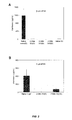
- Figure 5 illustrates data demonstrating that the cytokine response to siRNA in vivo is abrogated by selective incorporation of 2'OMe-uridines into the siRNA sense strand.
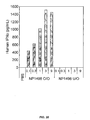
- Serum interferon- ⁇ levels in mice were determined 6 hours after intravenous administration of SNALPs containing siRNA targeting (A) influenza nucleoprotein (NP 1496) and polymerase (PA2087) or (B) cyclophilin B (Cyp B). Responses to native, unmodified siRNA were compared to 2'OMe U(S) modified duplexes. Sequences are provided in Table 2.
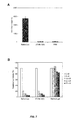
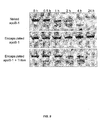
- FIG. 6 illustrates data demonstrating the generation of non-inflammatory ⁇ -gal siRNAs that retain full RNAi activity.
- Immunostimulatory ⁇ -gal 728 siRNA was chemically modified by the incorporation of either 2'OMe-uridine (U), guanosine (G), cytidine (C), or adenosine (A) into the sense strand (S) of the siRNA duplex.
- U 2'OMe-uridine
- G guanosine
- C cytidine
- A adenosine
- S sense strand
- A Interferon- ⁇ induction in mice 6 hours after administration of 20 ⁇ g siRNA encapsulated in SNALPs.
- B In vitro RNA interference activity of the same ⁇ -gal 728 SNALP formulations. RNAi assays were performed in Neuro2A cells stably transfected with the E. coli LacZ gene.
- RNA sequences are provided in Table 2.
- Figure 7 illustrates data demonstrating the generation of non-inflammatory luciferase siRNA that retain full RNAi activity.
- Immunostimulatory luciferase (Luc) siRNA was chemically modified by the incorporation of 2'OMe-uridine (U) into the sense strand (S) of the siRNA duplex.
- U 2'OMe-uridine
- S sense strand
- A Interferon- ⁇ induction in mice 6 hours after administration of 20 ⁇ g siRNA encapsulated in SNALPs.
- B In vitro RNA interference activity of Luc SNALP formulations. RNAi assays were performed in Neuro2A cells stably transfected with firefly luciferase. Luciferase activity was assessed 48 hours after exposure to SNALPs and mean values expressed relative to PBS-treated cells.
- the SNALPs used in these studies comprised the lipids cholesterol:DSPC:DLinDMA:PEG-C-DMA in the molar ratio 48:10:40:2 and had particle sizes ranging from 75-85 nm in diameter.
- RNA sequences are provided in Table 2.
- Figure 8 illustrates data demonstrating in vitro silencing of ApoB expression by 2'OMe-modified siRNA.
- HepG2 cells were treated with encapsulated ApoB or mismatch siRNA at the indicated concentrations (0-45 nM).
- Unmodified (native) ApoB siRNA was compared to ApoB duplexes containing 2'OMe U, G, or C residues in the sense (S) or GU motif, U, or G residues in the antisense (AS) strands as indicated (see, Table 1 for modified siRNA sequences).
- Unmodified and 2'OMe U(S) ApoB mismatch siRNA served as control duplexes.
- ApoB protein in culture supernatants was measured by ELISA after 48 hours. ApoB levels are expressed as % of PBS-treated control cultures. Each value was derived from means of duplicate cultures and is representative of 3 separate experiments.
- Figure 9 illustrates data demonstrating that encapsulation of siRNA in lipid particles protects against serum nuclease degradation.
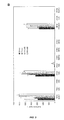
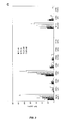
- Unmodified naked (top) or SNALP-encapsulated (middle) ApoB siRNA was incubated in 50% mouse serum at 37°C. Duplex integrity was assessed at indicated timepoints by non-denaturing PAGE analysis. Addition of Triton-X to disrupt lipid particle integrity (bottom) restored siRNA nuclease sensitivity.
- Figure 10 illustrates data demonstrating silencing of ApoB expression in vivo without activation of the innate immune response.
- A -(E) In vivo effects following intravenous administration of encapsulated ApoB or mismatch siRNA in mice. Mice were treated on d 0, 1, and 2 with encapsulated unmodified, 2'OMe U(S), or GU(AS) modified ApoB, and unmodified or 2'OMe U(S) modified mismatch siRNA at 5 mg/kg per day.
- A Daily changes in body weight (% of day 0 weight) of ApoB (solid symbols) and mismatch (open symbols) siRNA treated mice over the 4-day study period.
- B Serum IFN- ⁇ from test bleeds 6 hours after initial treatment.
- C ApoB mRNA levels in liver.
- D ApoB protein in serum.
- E Serum cholesterol (mM) 2 days after final siRNA treatment. ApoB levels are expressed as % of ApoB mRNA or ApoB protein compared to PBS-treated animals. All values are mean + SD of 5 animals. All data are representative of 2 separate experiments.
- Figure 11 illustrates data demonstrating the silencing activity of various unmodified and chemically modified ApoB siRNA.
- SNALP-formulated siRNA silencing potency was measured 7 days after the end of an IV treatment at a daily siRNA dosage of 2 mg/kg for three consecutive days.
- Figure 12 illustrates data demonstrating the immunostimulatory properties of various unmodified and chemically modified ApoB siRNA.
- SD standard deviation
- Figure 13 illustrates data demonstrating that selective 2'OMe modifications to Eg5 2263 siRNA retains RNAi activity in human HeLa cells.
- Figure 14 illustrates data demonstrating that selective 2'OMe modifications to Eg5 2263 siRNA retains RNAi activity in mouse Neuro2A cells.
- Figure 15 illustrates data demonstrating the selective 2'OMe modifications to Eg5 2263 siRNA abrogates the interferon induction associated with systemic administration of the native duplex.
- Figure 16 illustrates data demonstrating that selective 2'OMe modifications to both strands of Eg5 2263 siRNA is required to fully abrogate the antibody response against the PEG component of the SNALP delivery vehicle.
- Figure 17 illustrates data demonstrating that NP 411, NP 929, NP 1116, and NP 1496 siRNA comprising selective 2'OMe modifications to the sense strand maintain influenza knockdown activity in vitro in MDCK cells.
- Figure 17A shows influenza virus infection of MDCK cells at 48 hours after 5 hours of pretreatment with modified or unmodified siRNA.
- Figure 17B shows the percentage of HA relative to a virus only control at 48 hours in MDCK cells infected with a 1:800 dilution of influenza virus and transfected with 2 ⁇ g/ml modified or unmodified siRNA.
- Figure 18 illustrates data demonstrating that selective 2'OMe modifications to the sense strand of NP 1496 siRNA do not negatively affect influenza knockdown activity when compared to unmodified counterpart sequences or control sequences.
- Figure 19 illustrates data demonstrating that combinations of 2'OMe-modified siRNA provide enhanced influenza knockdown in vitro in MDCK cells.
- Figure 19A shows influenza virus infection of MDCK cells at 48 hours after 5 hours of pretreatment with various combinations of modified siRNA.
- Figure 17B shows the percentage of HA relative to a virus only control at 48 hours in MDCK cells infected with a 1:800 dilution of influenza virus and transfected with 2 ⁇ g/ml modified siRNA.
- Figure 20 illustrates data demonstrating that selective 2'OMe modifications to NP 1496 siRNA abrogates interferon induction in an in vitro cell culture system.
- Figure 21 illustrates data demonstrating that selective 2'OMe modifications to NP 1496 siRNA abrogates the interferon induction associated with systemic administration of the native duplex complexed with the cationic polymer polyethylenimine (PEI).
- PEI cationic polymer polyethylenimine
- siRNA Targeted silencing of disease-associated genes by synthetic siRNA holds considerable promise as a novel therapeutic strategy.
- unmodified siRNA can be immunostimulatory, e.g., stimulate potent inflammatory responses from innate immune cells, particularly when associated with delivery vehicles that facilitate intracellular uptake. This represents a significant barrier to the therapeutic development of siRNA due to toxicity and off-target gene effects associated with the inflammatory response.
- the present invention overcomes these limitations by reducing or completely abrogating the immune response to synthetic siRNA using the selective incorporation of modified nucleotides such as 2'-O-methyl (2'OMe) undine and/or guanosine nucleotides into either or both strands of the siRNA duplex.
- modified nucleotides such as 2'-O-methyl (2'OMe) undine and/or guanosine nucleotides
- non-immunostimulatory siRNA can be readily generated that retain full gene silencing activity.
- 2'OMe-modified siRNA targeting Apolipoprotein B can mediate potent silencing of its target mRNA when encapsulated within an effective systemic delivery vehicle such as a nucleic acid-lipid particle, causing significant decreases in serum ApoB and cholesterol.
- an effective systemic delivery vehicle such as a nucleic acid-lipid particle
- the present invention provides chemically modified siRNA molecules and methods of using such siRNA molecules to silence target gene expression.
- the present invention also provides nucleic acid-lipid particles comprising a modified siRNA molecule described herein, a cationic lipid, and a non-cationic lipid, which can further comprise a conjugated lipid that inhibits aggregation of particles.
- the present invention further provides methods of silencing gene expression by administering a modified siRNA molecule described herein to a mammalian subject. Methods for identifying and/or modifying an siRNA having immunostimulatory properties are also provided.
- interfering RNA refers to double-stranded RNA (i.e ., duplex RNA) that is capable of reducing or inhibiting expression of a target gene ( i.e ., by mediating the degradation of mRNAs which are complementary to the sequence of the interfering RNA) when the interfering RNA is in the same cell as the target gene.
- Interfering RNA thus refers to the double-stranded RNA formed by two complementary strands or by a single, self-complementary strand.
- Interfering RNA may have substantial or complete identity to the target gene or may comprise a region of mismatch ( i.e., a mismatch motif).
- the sequence of the interfering RNA can correspond to the full length target gene, or a subsequence thereof.
- Interfering RNA includes "small-interfering RNA” or “siRNA,” e.g ., interfering RNA of about 15-60, 15-50, or 15-40 (duplex) nucleotides in length, more typically about 15-30,15-25, or 19-25 (duplex) nucleotides in length, and is preferably about 20-24, 21-22, or 21-23 (duplex) nucleotides in length ( e.g ., each complementary sequence of the double-stranded siRNA is 15-60, 15-50, 15-40, 15-30, 15-25, or 19-25 nucleotides in length, preferably about 20-24, 21-22, or 21-23 nucleotides in length, and the double-stranded siRNA is about 15-60, 15-50, 15-40, 15-30, 15-25, or 19-25 base pairs in length, preferably about 20-24, 21-22, or 21-23 base pairs in length).
- siRNA small-interfering RNA
- siRNA small-interfering RNA
- siRNA duplexes may comprise 3' overhangs of about 1 to about 4 nucleotides or about 2 to about 3 nucleotides and 5' phosphate termini.
- siRNA include, without limitation, a double-stranded polynucleotide molecule assembled from two separate standed molecules, wherein one strand is the sense strand and the other is the complementary antisense strand; a double-stranded polynucleotide molecule assembled from a single stranded molecule, where the sense and antisense regions are linked by a nucleic acid-based or non-nucleic acid-based linker; a double-stranded polynucleotide molecule with a hairpin secondary structure having self-complementary sense and antisense regions; and a circular single-stranded polynucleotide molecule with two or more loop structures and a stem having self-complementary sense and antisense regions, where the circular polynucleotide can be processed in vivo
- siRNA are chemically synthesized.
- siRNA can also be generated by cleavage of longer dsRNA (e.g. , dsRNA greater than about 25 nucleotides in length) with the E. coli RNase III or Dicer. These enzymes process the dsRNA into biologically active siRNA (see, e.g ., Yang et al., Proc. Natl. Acad. Sci. USA, 99:9942-9947 (2002 ); Calegari et al., Proc. Natl. Acad. Sci.
- dsRNA are at least 50 nucleotides to about 100, 200, 300, 400, or 500 nucleotides in length.
- a dsRNA may be as long as 1000, 1500, 2000, 5000 nucleotides in length, or longer.
- the dsRNA can encode for an entire gene transcript or a partial gene transcript.
- siRNA may be encoded by a plasmid ( e.g ., transcribed as sequences that automatically fold into duplexes with hairpin loops).
- mismatch motif or “mismatch region” refers to a portion of an siRNA sequence that does not have 100 % complementarity to its target sequence.
- An siRNA may have at least one, two, three, four, five, six, or more mismatch regions.
- the mismatch regions may be contiguous or may be separated by 1, 2, 3, 4, 5, 6, 7, 8, 9, 10, 11, 12, or more nucleotides.
- the mismatch motifs or regions may comprise a single nucleotide or may comprise two, three, four, five, or more nucleotides.
- an “effective amount” or “therapeutically effective amount” of an siRNA is an amount sufficient to produce the desired effect, e.g ., an inhibition of expression of a target sequence in comparison to the normal expression level detected in the absence of the siRNA. Inhibition of expression of a target gene or target sequence is achieved when the value obtained with the siRNA relative to the control is about 90%, 85%, 80%, 75%, 70%, 65%, 60%, 55%, 50%, 45%, 40%, 35%, 30%, 25%, 20%, 15%, 10%, 5%, or 0%.
- Suitable assays for measuring expression of a target gene or target sequence include, e.g ., examination of protein or mRNA levels using techniques known to those of skill in the art such as dot blots, northern blots, in situ hybridization, ELISA, immunoprecipitation, enzyme function, as well as phenotypic assays known to those of skill in the art.
- siRNA e.g ., a modified siRNA
- the amount of decrease of an immune response by a modified siRNA may be determined relative to the level of an immune response in the presence of an unmodified siRNA.
- a detectable decrease can be about 5%, 10%, 15%, 20%, 25%, 30%, 35%, 40%, 45%, 50%, 55%, 60%, 65%, 70%, 75%, 80%, 85%, 90%, 95%, 100%, or more lower than the immune response detected in the presence of the unmodified siRNA.
- a decrease in the immune response to siRNA is typically measured by a decrease in cytokine production (e.g ., IFN ⁇ , IFN ⁇ , TNF ⁇ , IL-6, or IL-12) by a responder cell in vitro or a decrease in cytokine production in the sera of a mammalian subject after administration of the siRNA.
- cytokine production e.g ., IFN ⁇ , IFN ⁇ , TNF ⁇ , IL-6, or IL-12
- responder cell refers to a cell, preferable a mammalian cell, that produces a detectable immune response when contacted with an immunostimulatory siRNA.
- exemplary responder cells include, e.g ., dendritic cells, macrophages, peripheral blood mononuclear cells (PBMCs), splenocytes, and the like.
- Detectable immune responses include, e.g ., production of cytokines or growth factors such as TNF- ⁇ , IFN- ⁇ , IFN- ⁇ , IFN- ⁇ , IL-1, IL-2, IL-3, IL-4, IL-5, IL-6, IL-10, IL-12, IL-13, TGF, and combinations thereof.
- Substantial identity refers to a sequence that hybridizes to a reference sequence under stringent conditions, or to a sequence that has a specified percent identity over a specified region of a reference sequence.
- substantially identical or “substantial identity,” in the context of two or more nucleic acids, refer to two or more sequences or subsequences that are the same or have a specified percentage of nucleotides that are the same (i.e ., at least about 60%, preferably at least about 65%, 70%, 75%, 80%, 85%, 90%, or 95% identity over a specified region), when compared and aligned for maximum correspondence over a comparison window, or designated region as measured using one of the following sequence comparison algorithms or by manual alignment and visual inspection.
- This definition when the context indicates, also refers analogously to the complement of a sequence.
- the substantial identity exists over a region that is at least about 5, 10, 15, 20, 25, 30, 35, 40, 45, 50, 55, or 60 nucleotides in length.
- sequence comparison typically one sequence acts as a reference sequence, to which test sequences are compared.
- test and reference sequences are entered into a computer, subsequence coordinates are designated, if necessary, and sequence algorithm program parameters are designated. Default program parameters can be used, or alternative parameters can be designated.
- sequence comparison algorithm then calculates the percent sequence identities for the test sequences relative to the reference sequence, based on the program parameters.
- a “comparison window,” as used herein, includes reference to a segment of any one of a number of contiguous positions selected from the group consisting of from about 5 to about 60, usually about 10 to about 45, more usually about 15 to about 30, in which a sequence may be compared to a reference sequence of the same number of contiguous positions after the two sequences are optimally aligned.
- Methods of alignment of sequences for comparison are well known in the art.
- Optimal alignment of sequences for comparison can be conducted, e.g., by the local homology algorithm of Smith and Waterman, Adv. Appl. Math., 2:482 (1981 ), by the homology alignment algorithm of Needleman and Wunsch, J. Mol.
- BLAST and BLAST 2.0 are used, with the parameters described herein, to determine percent sequence identity for the nucleic acids of the invention.
- Software for performing BLAST analyses is publicly available through the National Center for Biotechnology Information (http://www.ncbi.nlm.nih.gov/).
- the BLAST algorithm also performs a statistical analysis of the similarity between two sequences (see, e.g., Karlin and Altschul, Proc. Natl. Acad. Sci. USA, 90:5873-5787 (1993 )).
- One measure of similarity provided by the BLAST algorithm is the smallest sum probability (P(N)), which provides an indication of the probability by which a match between two nucleotide sequences would occur by chance.
- P(N) the smallest sum probability
- a nucleic acid is considered similar to a reference sequence if the smallest sum probability in a comparison of the test nucleic acid to the reference nucleic acid is less than about 0.2, more preferably less than about 0.01, and most preferably less than about 0.001.
- nucleic acid refers to a polymer containing at least two deoxyribonucleotides or ribonucleotides in either single- or double-stranded form and includes DNA and RNA.
- DNA may be in the form of, e.g ., antisense molecules, plasmid DNA, pre-condensed DNA, a PCR product, vectors (P1, PAC, BAC, YAC, artificial chromosomes), expression cassettes, chimeric sequences, chromosomal DNA, or derivatives and combinations of these groups.
- RNA may be in the form of siRNA, mRNA, tRNA, rRNA, tRNA, vRNA, and combinations thereof.
- Nucleic acids include nucleic acids containing known nucleotide analogs or modified backbone residues or linkages, which are synthetic, naturally occurring, and non-naturally occurring, and which have similar binding properties as the reference nucleic acid.
- Examples of such analogs include, without limitation, phosphorothioates, phosphoramidates, methyl phosphonates, chiral-methyl phosphonates, 2'-O-methyl ribonucleotides, and peptide-nucleic acids (PNAs).
- PNAs peptide-nucleic acids
- the term encompasses nucleic acids containing known analogues of natural nucleotides that have similar binding properties as the reference nucleic acid.
- nucleic acid sequence also implicitly encompasses conservatively modified variants thereof (e.g. , degenerate codon substitutions), alleles, orthologs, SNPs, and complementary sequences as well as the sequence explicitly indicated.
- degenerate codon substitutions may be achieved by generating sequences in which the third position of one or more selected (or all) codons is substituted with mixed-base and/or deoxyinosine residues ( Batzer et al., Nucleic Acid Res., 19:5081 (1991 ); Ohtsuka et al., J. Biol. Chem., 260:2605-2608 (1985 ); Rossolini et al., Mol. Cell.
- Nucleotides contain a sugar deoxyribose (DNA) or ribose (RNA), a base, and a phosphate group. Nucleotides are linked together through the phosphate groups.
- Bases include purines and pyrimidines, which further include natural compounds adenine, thymine, guanine, cytosine, uracil, inosine, and natural analogs, and synthetic derivatives of purines and pyrimidines, which include, but are not limited to, modifications which place new reactive groups such as, but not limited to, amines, alcohols, thiols, carboxylates, and alkylhalides.
- gene refers to a nucleic acid (e.g ., DNA or RNA) sequence that comprises partial length or entire length coding sequences necessary for the production of a polypeptide or precursor polypeptide.
- Gene product refers to a product of a gene such as an RNA transcript or a polypeptide.
- lipid refers to a group of organic compounds that include, but are not limited to, esters of fatty acids and are characterized by being insoluble in water, but soluble in many organic solvents. They are usually divided into at least three classes: (1) “simple lipids,” which include fats and oils as well as waxes; (2) “compound lipids,” which include phospholipids and glycolipids; and (3) “derived lipids” such as steroids.
- Lipid vesicle refers to any lipid composition that can be used to deliver a compound such as an siRNA including, but not limited to, liposomes, wherein an aqueous volume is encapsulated by an amphipathic lipid bilayer; or wherein the lipids coat an interior comprising a large molecular component, such as a plasmid comprising an interfering RNA sequence, with a reduced aqueous interior; or lipid aggregates or micelles, wherein the encapsulated component is contained within a relatively disordered lipid mixture.
- a compound such as an siRNA including, but not limited to, liposomes, wherein an aqueous volume is encapsulated by an amphipathic lipid bilayer; or wherein the lipids coat an interior comprising a large molecular component, such as a plasmid comprising an interfering RNA sequence, with a reduced aqueous interior; or lipid aggregates or micelles, wherein the encapsulated component is
- lipid vesicle encompasses any of a variety of lipid-based carrier systems including, without limitation, SPLPs, pSPLPs, SNALPs, liposomes, micelles, virosomes, lipid-nucleic acid complexes, and mixtures thereof.
- lipid encapsulated can refer to a lipid formulation that provides a compound such as an siRNA with full encapsulation, partial encapsulation, or both.
- the nucleic acid is fully encapsulated in the lipid formulation ( e.g ., to form an SPLP, pSPLP, SNALP, or other nucleic acid-lipid particle).
- SNALP refers to a stable nucleic acid-lipid particle, including SPLP.
- a SNALP represents a vesicle of lipids coating a reduced aqueous interior comprising a nucleic acid (e.g ., siRNA, ssDNA, dsDNA, ssRNA, micro RNA (miRNA), short hairpin RNA (shRNA), dsRNA, or a plasmid, including plasmids from which an interfering RNA is transcribed).
- a nucleic acid e.g ., siRNA, ssDNA, dsDNA, ssRNA, micro RNA (miRNA), short hairpin RNA (shRNA), dsRNA, or a plasmid, including plasmids from which an interfering RNA is transcribed.
- SPLP refers to a nucleic acid-lipid particle comprising a nucleic acid (e.g ., a plasmid) encapsulated within a lipid vesicle.
- SNALPs and SPLPs typically contain a cationic lipid, a non-cationic lipid, and a lipid that prevents aggregation of the particle (e.g ., a PEG-lipid conjugate).
- SNALPs and SPLPs are extremely useful for systemic applications, as they exhibit extended circulation lifetimes following intravenous (i.v.) injection, accumulate at distal sites (e.g.
- SPLPs include "pSPLP," which comprise an encapsulated condensing agent-nucleic acid complex as set forth in PCT Publication No. WO 00/03683 .
- the nucleic acid-lipid particles of the present invention typically have a mean diameter of about 50 nm to about 150 nm, more typically about 60 nm to about 130 nm, more typically about 70 nm to about 110 nm, most typically about 70 to about 90 nm, and are substantially nontoxic.
- the nucleic acids when present in the nucleic acid-lipid particles of the present invention, are resistant in aqueous solution to degradation with a nuclease. Nucleic acid-lipid particles and their method of preparation are disclosed in, e.g ., U.S. Patent Nos. 5,976,567 ; 5,981,501 ; 6,534,484 ; 6,586,410 ; and 6,815,432 ; and PCT Publication No. WO 96/40964 .
- vesicle-forming lipid is intended to include any amphipathic lipid having a hydrophobic moiety and a polar head group, and which by itself can form spontaneously into bilayer vesicles in water, as exemplified by most phospholipids.
- Vesicle-adopting lipid is intended to include any amphipathic lipid that is stably incorporated into lipid bilayers in combination with other amphipathic lipids, with its hydrophobic moiety in contact with the interior, hydrophobic region of the bilayer membrane, and its polar head group moiety oriented toward the exterior, polar surface of the membrane.
- Vesicle-adopting lipids include lipids that on their own tend to adopt a nonlamellar phase, yet which are capable of assuming a bilayer structure in the presence of a bilayer-stabilizing component.
- DOPE dioleoylphosphatidylethanolamine
- Bilayer stabilizing components include, but are not limited to, conjugated lipids that inhibit aggregation of nucleic acid-lipid particles, polyamide oligomers (e.g. , ATTA-lipid derivatives), peptides, proteins, detergents, lipid-derivatives, PEG-lipid derivatives such as PEG coupled to dialkyloxypropyls, PEG coupled to diacylglycerols, PEG coupled to phosphatidyl-ethanolamines, PEG conjugated to ceramides ( see, e.g., U.S. Patent No.
- cationic PEG lipids and mixtures thereof PEG can be conjugated directly to the lipid or may be linked to the lipid via a linker moiety.
- Any linker moiety suitable for coupling the PEG to a lipid can be used including, e.g., non-ester containing linker moieties and ester-containing linker moieties.
- amphipathic lipid refers, in part, to any suitable material wherein the hydrophobic portion of the lipid material orients into a hydrophobic phase, while the hydrophilic portion orients toward the aqueous phase.
- Amphipathic lipids are usually the major component of a lipid vesicle. Hydrophilic characteristics derive from the presence of polar or charged groups such as carbohydrates, phosphate, carboxylic, sulfato, amino, sulfhydryl, nitro, hydroxyl, and other like groups.
- Hydrophobicity can be conferred by the inclusion of apolar groups that include, but are not limited to, long chain saturated and unsaturated aliphatic hydrocarbon groups and such groups substituted by one or more aromatic, cycloaliphatic or heterocyclic group(s).
- apolar groups that include, but are not limited to, long chain saturated and unsaturated aliphatic hydrocarbon groups and such groups substituted by one or more aromatic, cycloaliphatic or heterocyclic group(s).
- amphipathic compounds include, but are not limited to, phospholipids, aminolipids and sphingolipids.
- phospholipids include, but are not limited to, phosphatidylcholine, phosphatidylethanolamine, phosphatidylserine, phosphatidylinositol, phosphatidic acid, palmitoyloleoyl phosphatidylcholine, lysophosphatidylcholine, lysophosphatidylethanolamine, dipalmitoylphosphatidylcholine, dioleoylphosphatidylcholine, distearoylphosphatidylcholine, and dilinoleoylphosphatidylcholine.
- amphipathic lipids Other compounds lacking in phosphorus, such as sphingolipid, glycosphingolipid families, diacylglycerols, and ⁇ -acyloxyacids, are also within the group designated as amphipathic lipids. Additionally, the amphipathic lipid described above can be mixed with other lipids including triglycerides and sterols.
- neutral lipid refers to any of a number of lipid species that exist either in an uncharged or neutral zwitterionic form at a selected pH.
- lipids include, for example, diacylphosphatidylcholine, diacylphosphatidylethanolamine, ceramide, sphingomyelin, cephalin, cholesterol, cerebrosides, and diacylglycerols.
- non-cationic lipid refers to any neutral lipid as described above as well as anionic lipids.
- anionic lipid refers to any lipid that is negatively charged at physiological pH. These lipids include, but are not limited to, phosphatidylglycerols, cardiolipins, diacylphosphatidylserines, diacylphosphatidic acids, N-dodecanoyl phosphatidylethanolamines, N-succinyl phosphatidylethanolamines, N-glutarylphosphatidylethanolamines, lysylphosphatidylglycerols, palmitoyloleyolphosphatidylglycerol (POPG), and other anionic modifying groups joined to neutral lipids.
- phosphatidylglycerols cardiolipins
- diacylphosphatidylserines diacylphosphatidic acids
- N-dodecanoyl phosphatidylethanolamines N-succinyl phosphatidylethanolamines
- cationic lipid refers to any of a number of lipid species that carry a net positive charge at a selected pH, such as physiological pH (e.g., pH of about 7.0). It has been surprisingly found that cationic lipids comprising alkyl chains with multiple sites of unsaturation, e.g., at least two or three sites of unsaturation, are particularly useful for forming nucleic acid-lipid particles with increased membrane fluidity. A number of cationic lipids and related analogs, which are also useful in the present invention, have been described in U.S. Patent Publication No. 20060083780 ; U.S. Patent Nos.
- cationic lipids include, but are not limited to, N,N-dioleyl-N,N-dimethylammonium chloride (DODAC), dioctadecyldimethylammonium (DODMA), distearyldimethylammonium (DSDMA), N-(1-(2,3-dioleyloxy)propyl)-N,N,N-trimethylammonium chloride (DOTMA), N,N-distearyl-N,N-dimethylammonium bromide (DDAB), N-(1-(2,3-dioleoyloxy)propyl)-N,N,N-trimethylammonium chloride (DOTAP), 3 - (N-(N',N'-d
- DODAC N,N-dioleyl-N,N-dimethylammonium chloride
- DODMA dioctadecyldimethylammonium
- DMDMA distearyldimethylammoni
- the cationic lipids comprise a protonatable tertiary amine head group, C18 alkyl chains, ether linkages between the head group and alkyl chains, and 0 to 3 double bonds.
- Such lipids include, e . g ., DSDMA, DLinDMA, DLenDMA, and DODMA.
- the cationic lipids may also comprise ether linkages and pH titratable head groups.
- Such lipids include, e.g., DODMA.
- hydrophobic lipid refers to compounds having apolar groups that include, but are not limited to, long chain saturated and unsaturated aliphatic hydrocarbon groups and such groups optionally substituted by one or more aromatic, cycloaliphatic, or heterocyclic group(s). Suitable examples include, but are not limited to, diacylglycerol, dialkylglycerol, N-N-dialkylamino,1,2-diacyloxy-3-aminopropane, and 1,2-dialkyl-3-aminopropane.
- the term "fusogenic” refers to the ability of a liposome, a SNALP, or other drug delivery system to fuse with membranes of a cell.
- the membranes can be either the plasma membrane or membranes surrounding organelles, e.g., endosome, nucleus, etc.
- aqueous solution refers to a composition comprising in whole, or in part, water.
- organic lipid solution refers to a composition comprising in whole, or in part, an organic solvent having a lipid.
- Distal site refers to a physically separated site, which is not limited to an adjacent capillary bed, but includes sites broadly distributed throughout an organism.
- “Serum-stable” in relation to nucleic acid-lipid particles means that the particle is not significantly degraded after exposure to a serum or nuclease assay that would significantly degrade free DNA or RNA.
- Suitable assays include, for example, a standard serum assay, a DNAse assay, or an RNAse assay.
- Systemic delivery refers to delivery that leads to a broad biodistribution of a compound such as an siRNA within an organism. Some techniques of administration can lead to the systemic delivery of certain compounds, but not others. Systemic delivery means that a useful, preferably therapeutic, amount of a compound is exposed to most parts of the body. To obtain broad biodistribution generally requires a blood lifetime such that the compound is not rapidly degraded or cleared (such as by first pass organs (liver, lung, etc. ) or by rapid, nonspecific cell binding) before reaching a disease site distal to the site of administration.
- Systemic delivery of nucleic acid-lipid particles can be by any means known in the art including, for example, intravenous, subcutaneous, and intraperitoneal. In a preferred embodiment, systemic delivery of nucleic acid-lipid particles is by intravenous delivery.
- “Local delivery,” as used herein, refers to delivery of a compound such as an siRNA directly to a target site within an organism.
- a compound can be locally delivered by direct injection into a disease site such as a tumor or other target site such as a site of inflammation or a target organ such as the liver, heart, pancreas, kidney, and the like.
- mammal refers to any mammalian species such as a human, mouse, rat, dog, cat, hamster, guinea pig, rabbit, livestock, and the like.
- the modified siRNA molecules of the present invention are capable of silencing expression of a target sequence, are about 15 to 60 nucleotides in length, are less immunostimulatory than a corresponding unmodified siRNA sequence, and retain RNAi activity against the target sequence.
- the modified siRNA contains at least one 2'OMe purine or pyrimidine nucleotide such as a 2'OMe-guanosine, 2'OMe-uridine, 2'OMe-adenosine, and/or 2'OMe-cytosine nucleotide.
- one or more of the uridine and/or guanosine nucleotides are modified.
- the modified nucleotides can be present in one strand ( i.e., sense or antisense) or both strands of the siRNA.
- the siRNA sequences may have overhangs ( e.g., 3' or 5' overhangs as described in Elbashir et al., Genes Dev., 15:188 (2001 ) or Nyhimnen et al., Cell, 107:309 (2001 )), or may lack overhangs ( i.e., have blunt ends).
- the modified siRNA generally comprises from about 1% to about 100% (e.g., about 1%, 5%, 10%, 15%, 20%, 25%, 30%, 35%, 40%, 45%, 50%, 55%, 60%, 65%, 70%, 75%, 80%, 85%, 90%, 95%, or 100%) modified nucleotides in the double-stranded region of the siRNA duplex.
- less than about 20% e.g., less than about 20%, 19%, 18%, 17%, 16%, 15%, 14%, 13%, 12%, 11%, 10%, 9%, 8%, 7%, 6%, 5%, 4%, 3%, 2%, or 1%) or from about 1% to about 20% ( e.g., from about 1%-20%, 2%-20%, 3%-20%, 4%-20%, 5%-20%, 6%-20%, 7%-20%, 8%-20%, 9%-20%, 10%-20%, 11%-20%, 12%-20%, 13%-20%, 14%-20%, 15%-20%, 16%-20%, 17%-20%, 18%-20%, or 19%-20%) of the nucleotides in the double-stranded region comprise modified nucleotides.
- the resulting modified siRNA can comprise less than about 30% modified nucleotides ( e.g., less than about 30%, 29%, 28%, 27%, 26%, 25%, 24%, 23%, 22%, 21%, 20%, 19%, 18%, 17%, 16%, 15%, 14%, 13%, 12%, 11%, 10%, 9%, 8%, 7%, 6%, 5%, 4%, 3%, 2%, or 1% modified nucleotides) or from about 1% to about 30% modified nucleotides ( e.g., from about 1%-30%, 2%-30%, 3%-30%, 4%-30%, 5%-30%, 6%-30%, 7%-30%, 8%-30%, 9%-30%, 10%-30%, 11%-30%, 12%-30%, 13%-30%, 14%-30%
- Suitable siRNA sequences can be identified using any means known in the art. Typically, the methods described in Elbashir et al., Nature, 411:494-498 (2001 ) and Elbashir et al., EMBO J., 20:6877-6888 (2001 ) are combined with rational design rules set forth in Reynolds et al., Nature Biotech., 22(3):326-330 (2004 ).
- the nucleotides immediately 3' to the dinucleotide sequences are identified as potential siRNA target sequences.
- the 19, 21, 23, 25, 27, 29, 31, 33, 35, or more nucleotides immediately 3' to the dinucleotide sequences are identified as potential siRNA target sites.
- the dinucleotide sequence is an AA or NA sequence and the 19 nucleotides immediately 3' to the AA or NA dinucleotide are identified as a potential siRNA target site.
- siRNA target sites are usually spaced at different positions along the length of the target gene.
- potential siRNA target sites may be analyzed to identify sites that do not contain regions of homology to other coding sequences, e.g., in the target cell or organism. For example, a suitable siRNA target site of about 21 base pairs typically will not have more than 16-17 contiguous base pairs of homology to coding sequences in the target cell or organism. If the siRNA sequences are to be expressed from an RNA Pol III promoter, siRNA target sequences lacking more than 4 contiguous A's or T's are selected.
- the sequence can be analyzed using a variety of criteria known in the art.
- the siRNA sequences may be analyzed by a rational design algorithm to identify sequences that have one or more of the following features: (1) G/C content of about 25% to about 60% G/C; (2) at least 3 A/Us at positions 15-19 of the sense strand; (3) no internal repeats; (4) an A at position 19 of the sense strand; (5) an A at position 3 of the sense strand; (6) a U at position 10 of the sense strand; (7) no G/C at position 19 of the sense strand; and (8) no G at position 13 of the sense strand.
- siRNA design tools that incorporate algorithms that assign suitable values of each of these features and are useful for selection of siRNA can be found at, e.g., http://boz094.ust.hk/RNAi/siRNA.
- sequences with one or more of the foregoing characteristics may be selected for further analysis and testing as potential siRNA sequences.
- siRNA target sequences with one or more of the following criteria can often be eliminated as siRNA: (1) sequences comprising a stretch of 4 or more of the same base in a row; (2) sequences comprising homopolymers of Gs ( i.e., to reduce possible non-specific effects due to structural characteristics of these polymers; (3) sequences comprising triple base motifs (e.g., GGG, CCC, AAA, or TTT); (4) sequences comprising stretches of 7 or more G/Cs in a row; and (5) sequences comprising direct repeats of 4 or more bases within the candidates resulting in internal fold-back structures.
- sequences with one or more of the foregoing characteristics may still be selected for further analysis and testing as potential siRNA sequences.
- potential siRNA target sequences may be further analyzed based on siRNA duplex asymmetry as described in, e.g., Khvorova et al., Cell, 115:209-216 (2003 ); and Schwarz et al., Cell, 115:199-208 (2003 ).
- potential siRNA target sequences may be further analyzed based on secondary structure at the mRNA target site as described in, e.g., Luo et al., Biophys. Res. Commun., 318:303-310 (2004 ).
- mRNA secondary structure can be modeled using the Mfold algorithm (available at http://www.bioinfo.rpi.edu/applications/mfold/rna/form1.cgi) to select siRNA sequences which favor accessibility at the mRNA target site where less secondary structure in the form of base-pairing and stem-loops is present.
- Mfold algorithm available at http://www.bioinfo.rpi.edu/applications/mfold/rna/form1.cgi
- the sequence can be analyzed for the presence of any immunostimulatory properties, e.g., using an in vitro cytokine assay or an in vivo animal model. Motifs in the sense and/or antisense strand of the siRNA sequence such as GU-rich motifs ( e.g., 5'-GU-3', 5'-UGU-3', 5'-GUGU-3', 5'-UGUGU-3', etc.) can also provide an indication of whether the sequence may be immunostimulatory. Once an siRNA molecule is found to be immunostimulatory, it can then be modified to decrease its immunostimulatory properties as described herein.
- GU-rich motifs e.g., 5'-GU-3', 5'-UGU-3', 5'-GUGU-3', 5'-UGUGU-3', etc.
- an siRNA sequence can be contacted with a mammalian responder cell under conditions such that the cell produces a detectable immune response to determine whether the siRNA is an immunostimulatory or a non-immunostimulatory siRNA.
- the mammalian responder cell may be from a na ⁇ ve mammal ( i.e., a mammal that has not previously been in contact with the gene product of the siRNA sequence).
- the mammalian responder cell may be, e.g., a peripheral blood mononuclear cell (PBMC), a macrophage, and the like.
- PBMC peripheral blood mononuclear cell
- the detectable immune response may comprise production of a cytokine or growth factor such as, e.g., TNF- ⁇ , IFN- ⁇ , IFN- ⁇ , IFN- ⁇ , IL-6, IL-12, or a combination thereof.
- An siRNA molecule identified as being immunostimulatory can then be modified to decrease its immunostimulatory properties by replacing at least one of the nucleotides on the sense and/or antisense strand with modified nucleotides. For example, less than about 30% ( e.g., less than about 30%, 25%, 20%, 15%, 10%, or 5%) of the nucleotides in the double-stranded region of the siRNA duplex can be replaced with modified nucleotides such as 2'OMe nucleotides.
- the modified siRNA can then be contacted with a mammalian responder cell as described above to confirm that its immunostimulatory properties have been reduced or abrogated.
- Suitable in vitro assays for detecting an immune response include, but are not limited to, the double monoclonal antibody sandwich immunoassay technique of David et al. ( U.S. Patent No. 4,376,110 ); monoclonal-polyclonal antibody sandwich assays (Wide et al., in Kirkham and Hunter, eds., Radioimmunoassay Methods, E. and S. Livingstone, Edinburgh (1970)); the "Western blot" method of Gordon et al. ( U.S. Patent No. 4,452,901 ); immunoprecipitation of labeled ligand ( Brown et al., J. Biol.
- a non-limiting example of an in vivo model for detecting an immune response includes an in vivo mouse cytokine induction assay that can be performed as follows: (1) siRNA can be administered by standard intravenous injection in the lateral tail vein; (2) blood can be collected by cardiac puncture about 6 hours after administration and processed as plasma for cytokine analysis; and (3) cytokines can be quantified using sandwich ELISA kits according to the manufacturer's instructions (e.g., mouse and human IFN- ⁇ (PBL Biomedical; Piscataway, NJ); human IL-6 and TNF- ⁇ (eBioscience; San Diego, CA); and mouse IL-6, TNF- ⁇ , and IFN- ⁇ (BD Biosciences; San Diego, CA)).
- sandwich ELISA kits e.g., mouse and human IFN- ⁇ (PBL Biomedical; Piscataway, NJ); human IL-6 and TNF- ⁇ (eBioscience; San Diego, CA); and mouse IL-6, TNF- ⁇ , and IFN- ⁇ (BD Bioscience
- Monoclonal antibodies that specifically bind cytokines and growth factors are commercially available from multiple sources and can be generated using methods known in the art (see, e.g., Kohler and Milstein, Nature, 256: 495-497 (1975 ); and Harlow and Lane, ANTIBODIES, A LABORATORY MANUAL, Cold Spring Harbor Publication, New York (1999 )).
- Generation of monoclonal antibodies has been previously described and can be accomplished by any means known in the art (see, e.g., Buhring et al. in Hybridoma, Vol. 10, No. 1, pp. 77-78 (1991 )).
- the monoclonal antibody is labeled ( e.g., with any composition detectable by spectroscopic, photochemical, biochemical, electrical, optical, chemical means, and the like) to facilitate detection.
- siRNA molecules can be provided in several forms including, e.g., as one or more isolated small-interfering RNA (siRNA) duplexes.
- the siRNA sequences may have overhangs (e.g., 3' or 5' overhangs as described in Elbashir et al., Genes Dev., 15:188 (2001 ) or Nyhimnen et al., Cell, 107:309 (2001 ), or may lack overhangs ( i.e., have blunt ends).
- siRNA molecules are chemically synthesized.
- the single stranded molecules that comprise the siRNA molecule can be synthesized using any of a variety of techniques known in the art, such as those described in Usman et al., J. Am. Chem. Soc., 109:7845 (1987 ); Scaringe et al., Nucl. Acids Res., 18:5433 (1990 ); Wincott et al., Nucl. Acids Res., 23:2677-2684 (1995 ); and Wincott et al., Methods Mol. Bio., 74:59 (1997 ).
- small scale syntheses can be conducted on an Applied Biosystems synthesizer using a 0.2 ⁇ mol scale protocol with a 2.5 min coupling step for 2'-O-methylated nucleotides.
- syntheses at the 0.2 ⁇ mol scale can be performed on a 96-well plate synthesizer from Protogene (Palo Alto, CA).
- Protogene Protogene (Palo Alto, CA).
- a larger or smaller scale of synthesis is also within the scope of the present invention.
- Suitable reagents for synthesis of the siRNA single stranded molecules, methods for RNA deprotection, and methods for RNA purification are known to those of skill in the art.
- the siRNA molecules can also be synthesized via a tandem synthesis technique, wherein both strands are synthesized as a single continuous fragment or strand separated by a cleavable linker that is subsequently cleaved to provide separate fragments or strands that hybridize to form the siRNA duplex.
- the linker can be a polynucleotide linker or a non-nucleotide linker.
- the siRNA molecules can be assembled from two distinct single stranded molecules, wherein one strand comprises the sense strand and the other comprises the antisense strand of the siRNA.
- each strand can be synthesized separately and joined together by hybridization or ligation following synthesis and/or deprotection.
- the siRNA molecules can be synthesized as a single continuous fragment, where the self-complementary sense and antisense regions hybridize to form an siRNA duplex having hairpin secondary structure.
- the siRNA molecules of the present invention comprise a duplex having two strands and at least one modified nucleotide in the double-stranded region, wherein each strand is about 15 to about 60 nucleotides in length.
- the modified siRNA is less immunostimulatory than a corresponding unmodified siRNA sequence, but retains the capability of silencing the expression of a target sequence.
- modified nucleotides suitable for use in the present invention include, but are not limited to, ribonucleotides having a 2'-O-methyl (2'OMe), 2'-deoxy-2'-fluoro (2'F), 2'-deoxy, 5-C-methyl, 2'-O-(2-methoxyethyl) (MOE), 4'-thio, 2'-amino, or 2'-C-allyl group.
- Modified nucleotides having a Northern conformation such as those described in, e.g., Saenger, Principles of Nucleic Acid Structure, Springer-Verlag Ed. (1984 ), are also suitable for use in the siRNA molecules of the present invention.
- Such modified nucleotides include, without limitation, locked nucleic acid (LNA) nucleotides (e.g., 2'-O, 4'-C-methylene-(D-ribofuranosyl) nucleotides), 2'-O-(2-methoxyethyl) (MOE) nucleotides, 2'-methyl-thio-ethyl nucleotides, 2'-deoxy-2'-fluoro (2'F) nucleotides, 2'-deoxy-2'-chloro (2'Cl) nucleotides, and 2'-azido nucleotides.
- LNA locked nucleic acid
- MOE 2-methoxyethyl
- MOE 2-methoxyethyl
- 2'-methyl-thio-ethyl nucleotides 2'-methyl-thio-ethyl nucleotides
- 2'F deoxy-2'-fluoro
- 2'Cl 2'-chlor
- a G-clamp nucleotide refers to a modified cytosine analog wherein the modifications confer the ability to hydrogen bond both Watson-Crick and Hoogsteen faces of a complementary guanine nucleotide within a duplex ( see, e.g., Lin et al., J. Am. Chem. Soc., 120:8531-8532 (1998 )).
- nucleotides having a nucleotide base analog such as, for example, C-phenyl, C-naphthyl, other aromatic derivatives, inosine, azole carboxamides, and nitroazole derivatives such as 3-nitropyrrole, 4-nitroindole, 5-nitroindole, and 6-nitroindole (see, e.g., Loakes, Nucl. Acids Res., 29:2437-2447 (2001 )) can be incorporated into the siRNA molecules of the present invention.
- a nucleotide base analog such as, for example, C-phenyl, C-naphthyl, other aromatic derivatives, inosine, azole carboxamides, and nitroazole derivatives such as 3-nitropyrrole, 4-nitroindole, 5-nitroindole, and 6-nitroindole (see, e.g., Loakes, Nucl. Acids Res., 29:2437-2447 (
- the siRNA molecules of the present invention further comprise one or more chemical modifications such as terminal cap moieties, phosphate backbone modifications, and the like.
- terminal cap moieties include, without limitation, inverted deoxy abasic residues, glyceryl modifications, 4',5'-methylene nucleotides, 1-( ⁇ -D-erythrofuranosyl) nucleotides, 4'-thio nucleotides, carbocyclic nucleotides, 1,5-anhydrohexitol nucleotides, L-nucleotides, ⁇ -nucleotides, modified base nucleotides, threo -pentofuranosyl nucleotides, acyclic 3',4'-seco nucleotides, acyclic 3,4-dihydroxybutyl nucleotides, acyclic 3,5-dihydroxypentyl nucleotides, 3'-3'-inverted nucleotide moi
- Non-limiting examples of phosphate backbone modifications include phosphorothioate, phosphorodithioate, methylphosphonate, phosphotriester, morpholino, amidate, carbamate, carboxymethyl, acetamidate, polyamide, sulfonate, sulfonamide, sulfamate, formacetal, thioformacetal, and alkylsilyl substitutions (see, e.g., Hunziker et al., Nucleic Acid Analogues: Synthesis and Properties, in Modern Synthetic Methods, VCH, 331-417 (1995 ); Mesmaeker et al., Novel Backbone Replacements for Oligonucleotides, in Carbohydrate Modifications in Antisense Research, ACS, 24-39 (1994 )).
- phosphate backbone modifications include phosphorothioate, phosphorodithioate, methylphosphonate, phosphotriester, morpholino, amidate, carbamate, carboxymethyl
- the sense and/or antisense strand can further comprise a 3'-terminal overhang having about 1 to about 4 ( e.g., 1, 2, 3, or 4) 2'-deoxy ribonucleotides and/or any combination of modified and unmodified nucleotides. Additional examples of modified nucleotides and types of chemical modifications that can be introduced into the modified siRNA molecules of the present invention are described, e.g., in UK Patent No. GB 2,397,818 B and U.S. Patent Publication Nos. 20040192626 and 20050282188 .
- the modified siRNA molecules of the present invention can optionally comprise one or more non-nucleotides in one or both strands of the siRNA.
- non-nucleotide refers to any group or compound that can be incorporated into a nucleic acid chain in the place of one or more nucleotide units, including sugar and/or phosphate substitutions, and allows the remaining bases to exhibit their activity.
- the group or compound is abasic in that it does not contain a commonly recognized nucleotide base such as adenosine, guanine, cytosine, uracil, or thymine and therefore lacks a base at the 1'-position.
- chemical modification of the siRNA comprises attaching a conjugate to the chemically-modified siRNA molecule.
- the conjugate can be attached at the 5' and/or 3'-end of the sense and/or antisense strand of the chemically-modified siRNA via a covalent attachment such as, e.g., a biodegradable linker.
- the conjugate can also be attached to the chemically-modified siRNA, e.g., through a carbamate group or other linking group (see, e.g., U.S. Patent Publication Nos. 20050074771 , 20050043219 , and 20050158727 ).
- the conjugate is a molecule that facilitates the delivery of the chemically-modified siRNA into a cell.
- conjugate molecules suitable for attachment to the chemically-modified siRNA of the present invention include, without limitation, steroids such as cholesterol, glycols such as polyethylene glycol (PEG), human serum albumin (HSA), fatty acids, carotenoids, terpenes, bile acids, folates ( e.g., folic acid, folate analogs and derivatives thereof), sugars ( e.g., galactose, galactosamine, N-acetyl galactosamine, glucose, mannose, fructose, fucose, etc .), phospholipids, peptides, ligands for cellular receptors capable of mediating cellular uptake, and combinations thereof (see, e.g., U.S.
- Other examples include the lipophilic moiety, vitamin, polymer, peptide, protein, nucleic acid, small molecule, oligosaccharide, carbohydrate cluster, intercalator, minor groove binder, cleaving agent, and cross-linking agent conjugate molecules described in U.S. Patent Publication Nos. 20050119470 and 20050107325 .
- Yet other examples include the 2'-O-alkyl amine, 2'-O-alkoxyalkyl amine, polyamine, C5-cationic modified pyrimidine, cationic peptide, guanidinium group, amidininium group, cationic amino acid conjugate molecules described in U.S. Patent Publication No. 20050153337 . Additional examples include the hydrophobic group, membrane active compound, cell penetrating compound, cell targeting signal, interaction modifier, and steric stabilizer conjugate molecules described in U.S. Patent Publication No. 20040167090 . Further examples include the conjugate molecules described in U.S. Patent Publication No. 20050239739 .
- the type of conjugate used and the extent of conjugation to the chemically-modified siRNA molecule can be evaluated for improved pharmacokinetic profiles, bioavailability, and/or stability of the siRNA while retaining full RNAi activity.
- one skilled in the art can screen chemically-modified siRNA molecules having various conjugates attached thereto to identify ones having improved properties and full RNAi activity using any of a variety of well-known in vitro cell culture or in vivo animal models.
- the modified siRNA molecules described herein can be used to downregulate or silence the translation (i.e., expression) of a gene of interest.
- Genes of interest include, but are not limited to, genes associated with viral infection and survival, genes associated with metabolic diseases and disorders (e.g., liver diseases and disorders), genes associated with tumorigenesis and cell transformation, angiogenic genes, immunomodulator genes such as those associated with inflammatory and autoimmune responses, ligand receptor genes, and genes associated with neurodegenerative disorders.
- Genes associated with viral infection and survival include those expressed by a virus in order to bind, enter, and replicate in a cell.
- viral sequences associated with chronic viral diseases include sequences of Filoviruses such as Ebola virus and Marburg virus (see, e.g., U.S. Patent Application No. 11/584,341 ; and Geisbert et al., J. Infect.
- Arenaviruses such as Lassa virus, Junin virus, Machupo virus, Guanarito virus, and Sabia virus ( Buchmeier et al., Arenaviridae: the viruses and their replication, In: FIELDS VIROLOGY, Knipe et al. (eds.), 4th ed., Lippincott-Raven, Philadelphia, (2001 )); Influenza viruses such as Influenza A, B, and C viruses, (see, e.g., U.S. Provisional Patent Application No.
- HPV Human Papilloma Viruses
- Exemplary Filovirus nucleic acid sequences that can be silenced include, but are not limited to, nucleic acid sequences encoding structural proteins (e.g., VP30, VP35, nucleoprotein (NP), polymerase protein (L-pol)) and membrane-associated proteins (e.g., VP40, glycoprotein (GP), VP24).
- structural proteins e.g., VP30, VP35, nucleoprotein (NP), polymerase protein (L-pol)
- membrane-associated proteins e.g., VP40, glycoprotein (GP), VP24.
- Complete genome sequences for Ebola virus are set forth in, e.g., Genbank Accession Nos. NC_002549; AY769362; NC_006432; NC_004161; AY729654; AY354458; AY142960; AB050936; AF522874; AF499101; AF272001; and AF086833.
- Ebola virus VP24 sequences are set forth in, e.g., Genbank Accession Nos. U77385 and AY058897.
- Ebola virus L-pol sequences are set forth in, e.g., Genbank Accession No. X67110.
- Ebola virus VP40 sequences are set forth in, e.g., Genbank Accession No. AY058896.
- Ebola virus NP sequences are set forth in, e.g., Genbank Accession No. AY058895.
- Ebola virus GP sequences are set forth in, e.g., Genbank Accession No.
- Marburg virus GP sequences are set forth in, e.g., Genbank Accession Nos. AF005734; AF005733; and AF005732.
- Marburg virus VP35 sequences are set forth in, e.g., Genbank Accession Nos. AF005731 and AF005730.
- Additional Marburg virus sequences are set forth in, e.g., Genbank Accession Nos. X64406; Z29337; AF005735; and Z12132.
- Influenza virus nucleic acid sequences that can be silenced include, but are not limited to, nucleic acid sequences encoding nucleoprotein (NP), matrix proteins (M1 and M2), nonstructural proteins (NS1 and NS2), RNA polymerase (PA, PB1, PB2), neuraminidase (NA), and haemagglutinin (HA).
- NP nucleoprotein
- M1 and M2 matrix proteins
- NS1 and NS2 nonstructural proteins
- NA neuraminidase
- HA haemagglutinin
- Influenza A NP sequences are set forth in, e.g., Genbank Accession Nos.
- Influenza A PA sequences are set forth in, e.g., Genbank Accession Nos. AY818132; AY790280; AY646171; AY818132;AY818133; AY646179; AY818134; AY551934; AY651613; AY651610; AY651620; AY651617; AY651600; AY651611; AY651606; AY651618; AY651608; AY651607; AY651605; AY651609; AY651615; AY651616; AY651640; AY651614; AY651612; AY651621; AY651619; AY770995; and AY724786.
- Exemplary hepatitis virus nucleic acid sequences that can be silenced include, but are not limited to, nucleic acid sequences involved in transcription and translation (e.g., En1, En2, X, P) and nucleic acid sequences encoding structural proteins (e.g., core proteins including C and C-related proteins, capsid and envelope proteins including S, M, and/or L proteins, or fragments thereof) (see, e.g., FIELDS VIROLOGY, supra).
- Exemplary Hepatits C nucleic acid sequences that can be silenced include, but are not limited to, serine proteases (e.g., NS3/NS4), helicases (e.g.
- Hepatitis A nucleic acid sequences are set forth in, e.g., Genbank Accession No. NC_001489; Hepatitis B nucleic acid sequences are set forth in, e.g., Genbank Accession No. NC_003977; Hepatitis C nucleic acid sequences are set forth in, e.g., Genbank Accession No. NC_004102; Hepatitis D nucleic acid sequence are set forth in, e.g., Genbank Accession No.
- NC_001653 Hepatitis E nucleic acid sequences are set forth in, e.g., Genbank Accession No. NC_001434; and Hepatitis G nucleic acid sequences are set forth in, e.g., Genbank Accession No. NC_001710. Silencing of sequences that encode genes associated with viral infection and survival can conveniently be used in combination with the administration of conventional agents used to treat the viral condition.
- Genes associated with metabolic diseases and disorders include, for example, genes expressed in dyslipidemia (e.g., liver X receptors such as LXR ⁇ and LXR ⁇ (Genback Accession No. NM_007121), farnesoid X receptors (FXR) (Genbank Accession No.
- NM_005123 sterol-regulatory element binding protein (SREBP), Site-1 protease (S1P), 3-hydroxy-3-methylglutaryl coenzyme-A reductase (HMG coenzyme-A reductase), Apolipoprotein (ApoB), and Apolipoprotein (ApoE)); and diabetes ( e.g., Glucose 6-phosphatase) ( see, e.g., Forman et al., Cell, 81:687 (1995 ); Seol et al., Mol. Endocrinol., 9:72 (1995 ), Zavacki et al., Proc. Natl. Acad. Sci.
- SREBP Site-1 protease
- S1P Site-1 protease
- HMG coenzyme-A reductase HMG coenzyme-A reductase
- Apolipoprotein Apolipoprotein
- ApoE Apoli
- genes associated with metabolic diseases and disorders include genes that are expressed in the liver itself as well as and genes expressed in other organs and tissues. Silencing of sequences that encode genes associated with metabolic diseases and disorders can conveniently be used in combination with the administration of conventional agents used to treat the disease or disorder.
- Examples of gene sequences associated with tumorigenesis and cell transformation include mitotic kinesins such as Eg5; translocation sequences such as MLL fusion genes, BCR-ABL ( Wilda et al., Oncogene, 21:5716 (2002 ); Scherr et al., Blood, 101:1566 (2003 )), TEL-AML1, EWS-FLI1, TLS-FUS, PAX3-FKHR, BCL-2, AML1-ETO, and AML1-MTG8 ( Heidenreich et al., Blood, 101:3157 (2003 )); overexpressed sequences such as multidrug resistance genes ( Nieth et al., FEBS Lett., 545:144 (2003 ); Wu et al, Cancer Res.
- mitotic kinesins such as Eg5
- translocation sequences such as MLL fusion genes
- BCR-ABL Wilda et al., Oncogene, 21:5716 (2002 ); Sch
- Angiogenic genes are able to promote the formation of new vessels.
- VEGF Vascular Endothelial Growth Factor
- siRNA sequences that target VEGFr are set forth in, e.g., GB 2396864 ; U.S. Patent Publication No. 20040142895 ; and CA2456444 .
- Anti-angiogenic genes are able to inhibit neovascularization. These genes are particularly useful for treating those cancers in which angiogenesis plays a role in the pathological development of the disease.
- anti-angiogenic genes include, but are not limited to, endostatin (see, e.g., U.S. Patent No. 6,174,861 ), angiostatin (see, e.g., U.S. Patent No. 5,639,725 ), and VEGF-R2 (see, e.g., Decaussin et al., J. Pathol., 188: 369-377 (1999 )).
- Immunomodulator genes are genes that modulate one or more immune responses.
- immunomodulator genes include, without limitation, cytokines such as growth factors (e.g., TGF- ⁇ , TGF- ⁇ , EGF, FGF, IGF, NGF, PDGF, CGF, GM-CSF, SCF, etc.), interleukins (e.g., IL-2, IL-4, IL-12 ( Hill et al., J. Immunol., 171:691 (2003 )), IL-15, IL-18, IL-20, etc.), interferons ( e.g., IFN- ⁇ , IFN- ⁇ , IFN- ⁇ , etc. ) and TNF.
- cytokines such as growth factors (e.g., TGF- ⁇ , TGF- ⁇ , EGF, FGF, IGF, NGF, PDGF, CGF, GM-CSF, SCF, etc.), interleukins (e.g., IL-2, IL-4, IL
- Fas and Fas Ligand genes are also immunomodulator target sequences of interest ( Song et al., Nat. Med., 9:347 (2003 )).
- Genes encoding secondary signaling molecules in hematopoietic and lymphoid cells are also included in the present invention, for example, Tec family kinases such as Bruton's tyrosine kinase (Btk) ( Heinonen et al., FEBS Lett., 527:274 (2002 )).
- Cell receptor ligands include ligands that are able to bind to cell surface receptors (e.g., insulin receptor, EPO receptor, G-protein coupled receptors, receptors with tyrosine kinase activity, cytokine receptors, growth factor receptors, etc.), to modulate (e.g., inhibit, activate, etc.) the physiological pathway that the receptor is involved in (e.g., glucose level modulation, blood cell development, mitogenesis, etc.).
- cell receptor ligands include, but are not limited to, cytokines, growth factors, interleukins, interferons, erythropoietin (EPO), insulin, glucagon, G-protein coupled receptor ligands, etc.
- Templates coding for an expansion of trinucleotide repeats find use in silencing pathogenic sequences in neurodegenerative disorders caused by the expansion of trinucleotide repeats, such as spinobulbular muscular atrophy and Huntington's Disease ( Caplen et al., Hum. Mol. Genet., 11:175 (2002 )).
- the siRNA described herein are also useful in research and development applications as well as diagnostic, prophylactic, prognostic, clinical, and other healthcare applications.
- the modified siRNA molecules of the present invention can be used in target validation studies directed at testing whether a gene of interest has the potential to be a therapeutic target.
- the modified siRNA molecules of the present invention can also be used in target identification studies aimed at discovering genes as potential therapeutic targets.
- the present invention provides carrier systems containing the modified siRNA molecules described herein.
- the carrier system is a lipid-based carrier system such as a stabilized nucleic acid-lipid particle (e.g., SNALP or SPLP), cationic lipid or liposome nucleic acid complexes (i.e., lipoplexes), a liposome, a micelle, a virosome, or a mixture thereof.
- the carrier system is a polymer-based carrier system such as a cationic polymer-nucleic acid complex ( i.e., polyplex).
- the carrier system is a cyclodextrin-based carrier system such as a cyclodextrin polymer-nucleic acid complex.
- the carrier system is a protein-based carrier system such as a cationic peptide-nucleic acid complex.
- the carrier system is a stabilized nucleic acid-lipid particle such as a SNALP or SPLP.
- the stabilized nucleic acid-lipid particles (SNALPs) of the present invention typically comprise a modified siRNA molecule as described herein, a cationic lipid (e.g., a cationic lipid of Formula I or II), and a non-cationic lipid.
- the SNALPs can further comprise a bilayer stabilizing component (i. e., a conjugated lipid that inhibits aggregation of the particles).
- the SNALPs may comprise at least 1, 2, 3, 4, 5, 6, 7, 8, 9, 10, or more of the modified siRNA molecules described herein, alone or in combination with at least 1, 2, 3, 4, 5, 6, 7, 8, 9, 10, or more unmodified siRNA molecules.
- the SNALPs of the present invention typically have a mean diameter of about 50 nm to about 150 nm, more typically about 60 nm to about 130 nm, more typically about 70 nm to about 110 nm, most typically about 70 to about 90 nm, and are substantially nontoxic.
- the nucleic acids are resistant in aqueous solution to degradation with a nuclease when present in the nucleic acid-lipid particles. Nucleic acid-lipid particles and their method of preparation are disclosed in, e.g., U.S. Patent Nos.
- cationic lipids may be used in the stabilized nucleic acid-lipid particles of the present invention, either alone or in combination with one or more other cationic lipid species or non-cationic lipid species.
- Cationic lipids which are useful in the present invention can be any of a number of lipid species which carry a net positive charge at physiological pH.
- Such lipids include, but are not limited to, DODAC, DODMA, DSDMA, DOTMA, DDAB, DOTAP, DOSPA, DOGS, DC-Chol, DMRIE, and mixtures thereof.
- DODAC DODMA
- DSDMA DSDMA
- DOTMA DOTMA
- DDAB DOTAP
- DOSPA DOGS
- DC-Chol DC-Chol
- DMRIE dimethyl methoxyribonine
- PCT Publication No. WO 96/10390 PCT Publication No. WO 96/10390 .
- cationic lipids are available and can be used in the present invention. These include, for example, LIPOFECTIN ® (commercially available cationic liposomes comprising DOTMA and DOPE, from GIBCO/BRL, Grand Island, New York, USA); LIPOFECTAMINE ® (commercially available cationic liposomes comprising DOSPA and DOPE, from GIBCO/BRL); and TRANSFECTAM ® (commercially available cationic liposomes comprising DOGS from Promega Corp., Madison, Wisconsin, USA).
- LIPOFECTIN ® commercially available cationic liposomes comprising DOTMA and DOPE, from GIBCO/BRL, Grand Island, New York, USA
- LIPOFECTAMINE ® commercially available cationic liposomes comprising DOSPA and DOPE, from GIBCO/BRL
- TRANSFECTAM ® commercially available cationic liposomes comprising DOGS from Promega Corp., Madison, Wisconsin, USA.
- cationic lipids of Formula I having the following structures are useful in the present invention.
- R 1 and R 2 are independently selected and are H or C 1 -C 3 alkyls
- R 3 and R 4 are independently selected and are alkyl groups having from about 10 to about 20 carbon atoms
- at least one of R 3 and R 4 comprises at least two sites of unsaturation.
- R 3 and R 4 are both the same, i.e., R 3 and R 4 are both linoleyl (C18), etc.
- R 3 and R 4 are different, i.e., R 3 is tetradectrienyl (C14) and R 4 is linoleyl (C18).
- the cationic lipid of Formula I is symmetrical, i.e., R 3 and R 4 are both the same. In another preferred embodiment, both R 3 and R 4 comprise at least two sites of unsaturation. In some embodiments, R 3 and R 4 are independently selected from dodecadienyl, tetradecadienyl, hexadecadienyl, linoleyl, and icosadienyl. In a preferred embodiment, R 3 and R 4 are both linoleyl.
- R 3 and R 4 comprise at least three sites ofunsaturation and are independently selected from, e.g., dodecatrienyl, tetradectrienyl, hexadecatrienyl, linolenyl, and icosatrienyl.
- the cationic lipid of Formula I is DLinDMA or DLenDMA.
- cationic lipids of Formula II having the following structures are useful in the present invention.
- R 1 and R 2 are independently selected and are H or C 1 -C 3 alkyls
- R 3 and R 4 are independently selected and are alkyl groups having from about 10 to about 20 carbon atoms
- at least one of R 3 and R 4 comprises at least two sites of unsaturation.
- R 3 and R 4 are both the same, i.e., R 3 and R 4 are both linoleyl (C18), etc.
- R 3 and R 4 are different, i.e., R 3 is tetradectrienyl (C14) and R 4 is linoleyl (C18).
- the cationic lipids of the present invention are symmetrical, i.e., R 3 and R 4 are both the same.
- both R 3 and R 4 comprise at least two sites of unsaturation.
- R 3 and R 4 are independently selected from dodecadienyl, tetradecadienyl, hexadecadienyl, linoleyl, and icosadienyl.
- R 3 and R 4 are both linoleyl.
- R 3 and R 4 comprise at least three sites of unsaturation and are independently selected from, e.g., dodecatrienyl, tetradectrienyl, hexadecatrienyl, linolenyl, and icosatrienyl.
- the cationic lipid typically comprises from about 2 mol % to about 60 mol %, from about 5 mol % to about 50 mol %, from about 10 mol % to about 50 mol %, from about 20 mol % to about 50 mol %, from about 20 mol % to about 40 mol %, from about 30 mol % to about 40 mol %, or about 40 mol % of the total lipid present in the particle.
- the proportions of the components can be varied and the delivery efficiency of a particular formulation can be measured using, e.g., an endosomal release parameter (ERP) assay.
- ERP endosomal release parameter
- the cationic lipid may comprise from about 5 mol % to about 15 mol % of the total lipid present in the particle, and for local or regional delivery, the cationic lipid may comprise from about 30 mol % to about 50 mol %, or about 40 mol % of the total lipid present in the particle.
- the non-cationic lipids used in the stabilized nucleic acid-lipid particles of the present invention can be any of a variety of neutral uncharged, zwitterionic, or anionic lipids capable of producing a stable complex. They are preferably neutral, although they can alternatively be positively or negatively charged.
- non-cationic lipids include, without limitation, phospholipid-related materials such as lecithin, phosphatidylethanolamine, lysolecithin, lysophosphatidylethanolamine, phosphatidylserine, phosphatidylinositol, sphingomyelin, egg sphingomyelin (ESM), cephalin, cardiolipin, phosphatidic acid, cerebrosides, dicetylphosphate, distearoylphosphatidylcholine (DSPC), dioleoylphosphatidylcholine (DOPC), dipalmitoylphosphatidylcholine (DPPC), dioleoylphosphatidylglycerol (DOPG), dipalmitoylphosphatidylglycerol (DPPG), dioleoylphosphatidylethanolamine (DOPE), palmitoyloleoyl-phosphatidylcholine (POPC), palmitoto
- Non-cationic lipids or sterols such as cholesterol may also be present.
- Additional nonphosphorous containing lipids include, e.g., stearylamine, dodecylamine, hexadecylamine, acetyl palmitate, glycerolricinoleate, hexadecyl stereate, isopropyl myristate, amphoteric acrylic polymers, triethanolamine-lauryl sulfate, alkyl-aryl sulfate polyethyloxylated fatty acid amides, dioctadecyldimethyl ammonium bromide, ceramide, diacylphosphatidylcholine, diacylphosphatidylethanolamine, and the like.
- Non-cationic lipids also include polyethylene glycol-based polymers such as PEG 2000, PEG 5000, and polyethylene glycol conjugated to phospholipids or to ceramides (referred to as PEG-Cer), as described in U.S. Patent Application No. 08/316,429 .
- the non-cationic lipids are diacylphosphatidylcholine (e.g., distearoylphosphatidylcholine, dioleoylphosphatidylcholine, dipalmitoylphosphatidylcholine, and dilinoleoylphosphatidylcholine), diacylphosphatidylethanolamine (e.g., dioleoylphosphatidylethanolamine and palmitoyloleoyl-phosphatidylethanolamine), ceramide, or sphingomyelin.
- the acyl groups in these lipids are preferably acyl groups derived from fatty acids having C 10 -C 24 carbon chains.
- the acyl groups are lauroyl, myristoyl, palmitoyl, stearoyl, or oleoyl.
- the non-cationic lipid includes one or more of cholesterol, DOPE, or ESM.
- the non-cationic lipid typically comprises from about 5 mol % to about 90 mol %, from about 10 mol % to about 85 mol %, from about 20 mol % to about 80 mol %, or about 20 mol % of the total lipid present in the particle.
- the particles may further comprise cholesterol.
- the cholesterol typically comprises from about 0 mol % to about 10 mol %, from about 2 mol % to about 10 mol %, from about 10 mol % to about 60 mol %, from about 12 mol % to about 58 mol %, from about 20 mol % to about 55 mol %, from about 30 mol % to about 50 mol %, or about 48 mol % of the total lipid present in the particle.
- the stabilized nucleic acid-lipid particles of the present invention can comprise a bilayer stabilizing component (BSC) such as an ATTA-lipid or a PEG-lipid such as PEG coupled to dialkyloxypropyls (PEG-DAA) as described in, e.g., PCT Publication No. WO 05/026372 , PEG coupled to diacylglycerol (PEG-DAG) as described in, e.g., U.S. Patent Publication Nos.
- BSC bilayer stabilizing component
- PEG-DAA dialkyloxypropyls
- PEG-DAG PEG coupled to diacylglycerol
- the BSC is a conjugated lipid that prevents the aggregation of particles.
- Suitable conjugated lipids include, but are not limited to, PEG-lipid conjugates, ATTA-lipid conjugates, cationic-polymer-lipid conjugates (CPLs), and mixtures thereof.
- the particles comprise either a PEG-lipid conjugate or an ATTA-lipid conjugate together with a CPL.
- PEG is a linear, water-soluble polymer of ethylene PEG repeating units with two terminal hydroxyl groups. PEGs are classified by their molecular weights; for example, PEG 2000 has an average molecular weight of about 2,000 daltons, and PEG 5000 has an average molecular weight of about 5,000 daltons. PEGs are commercially available from Sigma Chemical Co.
- monomethoxypolyethylene glycol (MePEG-OH), monomethoxypolyethylene glycolsuccinate (MePEG-S), monomethoxypolyethylene glycol-succinimidyl succinate (MePEG-S-NHS), monomethoxypolyethylene glycol-amine (MePEG-NH 2 ), monomethoxypolyethylene glycol-tresylate (MePEG-TRES), and monomethoxypolyethylene glycol-imidazolyl-carbonyl (MePEG-IM).
- monomethoxypolyethyleneglycol-acetic acid (MePEG-CH 2 COOH) is particularly useful for preparing the PEG-lipid conjugates including, e.g., PEG-DAA conjugates.
- the PEG has an average molecular weight of from about 550 daltons to about 10,000 daltons, more preferably from about 750 daltons to about 5,000 daltons, more preferably from about 1,000 daltons to about 5,000 daltons, more preferably from about 1,500 daltons to about 3,000 daltons, and even more preferably about 2,000 daltons or about 750 daltons.
- the PEG can be optionally substituted by an alkyl, alkoxy, acyl, or aryl group.
- the PEG can be conjugated directly to the lipid or may be linked to the lipid via a linker moiety.
- linker moiety suitable for coupling the PEG to a lipid can be used including, e.g., non-ester containing linker moieties and ester-containing linker moieties.
- the linker moiety is a non-ester containing linker moiety.
- non-ester containing linker moiety refers to a linker moiety that does not contain a carboxylic ester bond (-OC(O)-).
- Suitable non-ester containing linker moieties include, but are not limited to, amido (-C(O)NH-), amino (-NR-), carbonyl (-C(O)-), carbamate (-NHC(O)O-), urea (-NHC(O)NH-), disulphide (-S-S-), ether (-O-), succinyl (-(O)CCH 2 CH 2 C(O)-), succinamidyl (-NHC(O)CH 2 CH 2 C(O)NH-), ether, disulphide, as well as combinations thereof (such as a linker containing both a carbamate linker moiety and an amido linker moiety).
- a carbamate linker is used to couple the PEG to the lipid.
- an ester containing linker moiety is used to couple the PEG to the lipid.
- Suitable ester containing linker moieties include, e.g., carbonate (-OC(O)O-), succinoyl, phosphate esters (-O-(O)POH-O-), sulfonate esters, and combinations thereof.
- Phosphatidylethanolamines having a variety of acyl chain groups of varying chain lengths and degrees of saturation can be conjugated to PEG to form the bilayer stabilizing component.
- Such phosphatidylethanolamines are commercially available, or can be isolated or synthesized using conventional techniques known to those of skilled in the art.
- Phosphatidylethanolamines containing saturated or unsaturated fatty acids with carbon chain lengths in the range of C 10 to C 20 are preferred.
- Phosphatidylethanolamines with mono- or diunsaturated fatty acids and mixtures of saturated and unsaturated fatty acids can also be used.
- Suitable phosphatidylethanolamines include, but are not limited to, dimyristoyl-phosphatidylethanolamine (DMPE), dipalmitoyl-phosphatidylethanolamine (DPPE), dioleoylphosphatidylethanolamine (DOPE), and distearoyl-phosphatidylethanolamine (DSPE).
- DMPE dimyristoyl-phosphatidylethanolamine
- DPPE dipalmitoyl-phosphatidylethanolamine
- DOPE dioleoylphosphatidylethanolamine
- DSPE distearoyl-phosphatidylethanolamine
- AZA or "polyamide” refers to, without limitation, compounds disclosed in U.S. Patent Nos. 6,320,017 and 6,586,559 . These compounds include a compound having the formula: wherein R is a member selected from the group consisting of hydrogen, alkyl and acyl; R 1 is a member selected from the group consisting of hydrogen and alkyl; or optionally, R and R 1 and the nitrogen to which they are bound form an azido moiety; R 2 is a member of the group selected from hydrogen, optionally substituted alkyl, optionally substituted aryl and a side chain of an amino acid; R 3 is a member selected from the group consisting of hydrogen, halogen, hydroxy, alkoxy, mercapto, hydrazino, amino and NR 4 R 5 , wherein R 4 and R 5 are independently hydrogen or alkyl; n is 4 to 80; m is 2 to 6; p is 1 to 4; and q is 0 or 1. It will be apparent to those of
- diacylglycerol refers to a compound having 2 fatty acyl chains, R 1 and R 2 , both of which have independently between 2 and 30 carbons bonded to the 1- and 2-position of glycerol by ester linkages.
- the acyl groups can be saturated or have varying degrees of unsaturation. Suitable acyl groups include, but are not limited to, lauryl (C12), myristyl (C14), palmityl (C16), stearyl (C18), and icosyl (C20).
- R 1 and R 2 are the same, i.e., R 1 and R 2 are both myristyl ( i.e., dimyristyl), R 1 and R 2 are both stearyl (i.e., distearyl), etc.
- Diacylglycerols have the following general formula:
- dialkyloxypropyl refers to a compound having 2 alkyl chains, R 1 and R 2 , both of which have independently between 2 and 30 carbons.
- the alkyl groups can be saturated or have varying degrees of unsaturation.
- Dialkyloxypropyls have the following general formula:
- the PEG-lipid is a PEG-DAA conjugate having the following formula: wherein R 1 and R 2 are independently selected and are long-chain alkyl groups having from about 10 to about 22 carbon atoms; PEG is a polyethyleneglycol; and L is a non-ester containing linker moiety or an ester containing linker moiety as described above.
- the long-chain alkyl groups can be saturated or unsaturated. Suitable alkyl groups include, but are not limited to, lauryl (C12), myristyl (C14), palmityl (C16), stearyl (C18), and icosyl (C20).
- R 1 and R 2 are the same, i.e ., R 1 and R 2 are both myristyl ( i.e ., dimyristyl), R 1 and R 2 are both stearyl ( i.e ., distearyl), etc .
- the PEG has an average molecular weight ranging from about 550 daltons to about 10,000 daltons, more preferably from about 750 daltons to about 5,000 daltons, more preferably from about 1,000 daltons to about 5,000 daltons, more preferably from about 1,500 daltons to about 3,000 daltons, and even more preferably about 2,000 daltons or about 750 daltons.
- the PEG can be optionally substituted with alkyl, alkoxy, acyl, or aryl.
- the terminal hydroxyl group is substituted with a methoxy or methyl group.
- L is a non-ester containing linker moiety.
- Suitable non-ester containing linkers include, but are not limited to, an amido linker moiety, an amino linker moiety, a carbonyl linker moiety, a carbamate linker moiety, a urea linker moiety, an ether linker moiety, a disulphide linker moiety, a succinamidyl linker moiety, and combinations thereof.
- the non-ester containing linker moiety is a carbamate linker moiety ( i.e., a PEG-C-DAA conjugate).
- the non-ester containing linker moiety is an amido linker moiety (i.e., a PEG-A-DAA conjugate). In yet another preferred embodiment, the non-ester containing linker moiety is a succinamidyl linker moiety ( i.e., a PEG-S-DAA conjugate).
- the PEG-DAA conjugates are synthesized using standard techniques and reagents known to those of skill in the art. It will be recognized that the PEG-DAA conjugates will contain various amide, amine, ether, thio, carbamate, and urea linkages. Those of skill in the art will recognize that methods and reagents for forming these bonds are well known and readily available. See, e.g., March, ADVANCED ORGANIC CHEMISTRY (Wiley 1992 ), Larock, COMPREHENSIVE ORGANIC TRANSFORMATIONS (VCH 1989 ); and Furniss, VOGEL'S TEXTBOOK OF PRACTICAL ORGANIC CHEMISTRY 5th ed. (Longman 1989 ).
- the PEG-DAA conjugate is a dilauryloxypropyl (C12)-PEG conjugate, dimyristyloxypropyl (C14)-PEG conjugate, a dipalmityloxypropyl (C16)-PEG conjugate, or a distearyloxypropyl (C18)-PEG conjugate.
- C12 dilauryloxypropyl
- C14 dimyristyloxypropyl
- C16 dipalmityloxypropyl
- C18 distearyloxypropyl
- hydrophilic polymers can be used in place of PEG.
- suitable polymers include, but are not limited to, polyvinylpyrrolidone, polymethyloxazoline, polyethyloxazoline, polyhydroxypropyl methacrylamide, polymethacrylamide and polydimethylacrylamide, polylactic acid, polyglycolic acid, and derivatized celluloses such as hydroxymethylcellulose or hydroxyethylcellulose.
- the particles (e.g., SNALPs or SPLPs) of the present invention can further comprise cationic poly(ethylene glycol) (PEG) lipids or CPLs that have been designed for insertion into lipid bilayers to impart a positive charge( see, e.g., Chen et al., Bioconj. Chem., 11:433-437 (2000 )).
- PEG poly(ethylene glycol)
- CPLs cationic poly(ethylene glycol) lipids or CPLs that have been designed for insertion into lipid bilayers to impart a positive charge( see, e.g., Chen et al., Bioconj. Chem., 11:433-437 (2000 )).
- Suitable SPLPs and SPLP-CPLs for use in the present invention, and methods of making and using SPLPs and SPLP-CPLs, are disclosed, e.g., in U.S. Patent No. 6,852,334 and PCT Publication No. WO 00
- Cationic polymer lipids useful in the present invention have the following architectural features: (1) a lipid anchor, such as a hydrophobic lipid, for incorporating the CPLs into the lipid bilayer; (2) a hydrophilic spacer, such as a polyethylene glycol, for linking the lipid anchor to a cationic head group; and (3) a polycationic moiety, such as a naturally occurring amino acid, to produce a protonizable cationic head group.
- Suitable CPLs include compounds of Formula VII: A-W-Y (VII), wherein A, W, and Y are as described below.
- A is a lipid moiety such as an amphipathic lipid, a neutral lipid, or a hydrophobic lipid that acts as a lipid anchor.
- Suitable lipid examples include vesicle-forming lipids or vesicle adopting lipids and include, but are not limited to, diacylglycerolyls, dialkylglycerolyls, N-N-dialkylaminos, 1,2-diacyloxy-3-aminopropanes, and 1,2-dialkyl-3-aminopropanes.
- W is a polymer or an oligomer such as a hydrophilic polymer or oligomer.
- the hydrophilic polymer is a biocompatable polymer that is nonimmunogenic or possesses low inherent immunogenicity.
- the hydrophilic polymer can be weakly antigenic if used with appropriate adjuvants.
- Suitable nonimmunogenic polymers include, but are not limited to, PEG, polyamides, polylactic acid, polyglycolic acid, polylactic acid/polyglycolic acid copolymers, and combinations thereof.
- the polymer has a molecular weight of from about 250 to about 7,000 daltons.
- Y is a polycationic moiety.
- polycationic moiety refers to a compound, derivative, or functional group having a positive charge, preferably at least 2 positive charges at a selected pH, preferably physiological pH.
- Suitable polycationic moieties include basic amino acids and their derivatives such as arginine, asparagine, glutamine, lysine, and histidine; spermine; spermidine; cationic dendrimers; polyamines; polyamine sugars; and amino polysaccharides.
- the polycationic moieties can be linear, such as linear tetralysine, branched or dendrimeric in structure.
- Polycationic moieties have between about 2 to about 15 positive charges, preferably between about 2 to about 12 positive charges, and more preferably between about 2 to about 8 positive charges at selected pH values.
- the selection of which polycationic moiety to employ may be determined by the type of particle application which is desired.
- the charges on the polycationic moieties can be either distributed around the entire particle moiety, or alternatively, they can be a discrete concentration of charge density in one particular area of the particle moiety e.g., a charge spike. If the charge density is distributed on the particle, the charge density can be equally distributed or unequally distributed. All variations of charge distribution of the polycationic moiety are encompassed by the present invention.
- the lipid "A” and the nonimmunogenic polymer “W” can be attached by various methods and preferably by covalent attachment. Methods known to those of skill in the art can be used for the covalent attachment of "A” and “W.” Suitable linkages include, but are not limited to, amide, amine, carboxyl, carbonate, carbamate, ester, and hydrazone linkages. It will be apparent to those skilled in the art that "A” and “W” must have complementary functional groups to effectuate the linkage. The reaction of these two groups, one on the lipid and the other on the polymer, will provide the desired linkage.
- the lipid is a diacylglycerol and the terminal hydroxyl is activated, for instance with NHS and DCC, to form an active ester, and is then reacted with a polymer which contains an amino group, such as with a polyamide ( see, e.g., U.S. Patent Nos. 6,320,017 and 6,586,559 ), an amide bond will form between the two groups.
- a polymer which contains an amino group such as with a polyamide ( see, e.g., U.S. Patent Nos. 6,320,017 and 6,586,559 )
- the polycationic moiety can have a ligand attached, such as a targeting ligand or a chelating moiety for complexing calcium.
- a ligand attached such as a targeting ligand or a chelating moiety for complexing calcium.
- the cationic moiety maintains a positive charge.
- the ligand that is attached has a positive charge.
- Suitable ligands include, but are not limited to, a compound or device with a reactive functional group and include lipids, amphipathic lipids, carrier compounds, bioaffinity compounds, biomaterials, biopolymers, biomedical devices, analytically detectable compounds, therapeutically active compounds, enzymes, peptides, proteins, antibodies, immune stimulators, radiolabels, fluorogens, biotin, drugs, haptens, DNA, RNA, polysaccharides, liposomes, virosomes, micelles, immunoglobulins, functional groups, other targeting moieties, or toxins.
- the bilayer stabilizing component typically comprises from about 0 mol % to about 20 mol %, from about 0.5 mol % to about 20 mol %, from about 1.5 mol % to about 18 mol %, from about 4 mol % to about 15 mol %, from about 5 mol % to about 12 mol %, or about 2 mol % of the total lipid present in the particle.
- concentration of the bilayer stabilizing component can be varied depending on the bilayer stabilizing component employed and the rate at which the nucleic acid-lipid particle is to become fusogenic.
- the rate at which the bilayer stabilizing component exchanges out of the nucleic acid-lipid particle can be controlled, for example, by varying the concentration of the bilayer stabilizing component, by varying the molecular weight of the polyethyleneglycol, or by varying the chain length and degree of saturation of the acyl chain groups on the phosphatidylethanolamine or the ceramide.
- Non-limiting examples of additional lipid-based carrier systems suitable for use in the present invention include lipoplexes ( see, e.g., U.S. Patent Publication No. 20030203865 ; and Zhang et al., J. Control Release, 100:165-180 (2004 )), pH-sensitive lipoplexes ( see, e.g., U.S. Patent Publication No. 20020192275 ), reversibly masked lipoplexes ( see, e.g., U.S. Patent Publication Nos. 20030180950 ), cationic lipid-based compositions ( see, e.g., U.S. Patent No. 6,756,054 ; and U.S. Patent Publication No.
- lipoplexes see, e.g., U.S. Patent Publication No. 20030203865 ; and Zhang et al., J. Control Release, 100:165-180 (2004 )
- pH-sensitive lipoplexes see, e.g.
- WO 00/50008 cell-type specific liposomes ( see, e.g., U.S. Patent Publication No. 20030198664 ), liposomes containing nucleic acid and peptides (see, e.g., U.S. Patent No. 6,207,456 ), liposomes containing lipids derivatized with releasable hydrophilic polymers ( see, e.g., U.S. Patent Publication No. 20030031704 ), lipid-entrapped nucleic acid ( see, e.g., PCT Publication Nos.
- lipid-encapsulated nucleic acid see, e.g., U.S. Patent Publication No. 20030129221 ; and U.S. Patent No. 5,756,122
- other liposomal compositions see, e.g., U.S. Patent Publication Nos. 20030035829 and 20030072794 ; and U.S. Patent No. 6,200,599
- stabilized mixtures of liposomes and emulsions see, e.g., EP1304160
- emulsion compositions see, e.g., U.S. Patent No. 6,747,014
- nucleic acid micro-emulsions see, e.g., U.S. Patent Publication No. 20050037086 ).
- a nucleic acid e.g., siRNA
- a cationic polymer having a linear, branched, star, or dendritic polymeric structure that condenses the nucleic acid into positively charged particles capable of interacting with anionic proteoglycans at the cell surface and entering cells by endocytosis.
- the polyplex comprises nucleic acid (e.g., siRNA) complexed with a cationic polymer such as polyethylenimine (PEI) (see, e.g., U.S. Patent No. 6,013,240 ; commercially available from Qbiogene, Inc. (Carlsbad, CA) as In vivo jetPEITM, a linear form of PEI), polypropylenimine (PPI), polyvinylpyrrolidone (PVP), poly-L-lysine (PLL), diethylaminoethyl (DEAE)-dextran, poly( ⁇ -amino ester) (PAE) polymers ( see, e.g., Lynn et al., J.
- PEI polyethylenimine
- PVP polyvinylpyrrolidone
- PLAE diethylaminoethyl
- PAE poly( ⁇ -amino ester)
- the polyplex comprises cationic polymer-nucleic acid complexes as described in U.S. Patent Publication Nos.
- the modified siRNA molecule may be complexed with cyclodextrin or a polymer thereof.
- cyclodextrin-based carrier systems include the cyclodextrin-modified polymer-nucleic acid complexes described in U.S. Patent Publication No. 20040087024 ; the linear cyclodextrin copolymer-nucleic acid complexes described in U.S. Patent Nos. 6,509,323 , 6,884,789 , and 7,091,192 ; and the cyclodextrin polymer-complexing agent-nucleic acid complexes described in U.S. Patent No. 7,018,609 .
- the modified siRNA molecule may be complexed with a peptide or polypeptide.
- a protein-based carrier system includes, but is not limited to, the cationic oligopeptide-nucleic acid complex described in PCT Publication No. WO95/21931 .
- the serum-stable nucleic acid-lipid particles of the present invention in which the modified siRNA described herein is encapsulated in a lipid bilayer and is protected from degradation, can be formed by any method known in the art including, but not limited to, a continuous mixing method, a direct dilution process, a detergent dialysis method, or a modification of a reverse-phase method which utilizes organic solvents to provide a single phase during mixing of the components.
- the cationic lipids are lipids of Formula I and II or combinations thereof.
- the non-cationic lipids are egg sphingomyelin (ESM), distearoylphosphatidylcholine (DSPC), dioleoylphosphatidylcholine (DOPC), 1-palmitoyl-2-oleoyl-phosphatidylcholine (POPC), dipalmitoyl-phosphatidylcholine (DPPC), monomethyl-phosphatidylethanolamine, dimethyl-phosphatidylethanolamine, 14:0 PE (1,2-dimyristoyl-phosphatidylethanolamine (DMPE)), 16:0 PE (1,2-dipalmitoyl-phosphatidylethanolamine (DPPE)), 18:0 PE (I,2-distearoyl-phosphatidylethanolamine (DSPE)), 18:1 PE (1,2-dioleoyl-phosphatidylethanolamine (DOPE)
- ESM egg s
- the present invention provides for nucleic acid-lipid particles produced via a continuous mixing method, e.g., process that includes providing an aqueous solution comprising a nucleic acid such as an siRNA in a first reservoir, providing an organic lipid solution in a second reservoir, and mixing the aqueous solution with the organic lipid solution such that the organic lipid solution mixes with the aqueous solution so as to substantially instantaneously produce a liposome encapsulating the nucleic acid (e.g., siRNA).
- a continuous mixing method e.g., process that includes providing an aqueous solution comprising a nucleic acid such as an siRNA in a first reservoir, providing an organic lipid solution in a second reservoir, and mixing the aqueous solution with the organic lipid solution such that the organic lipid solution mixes with the aqueous solution so as to substantially instantaneously produce a liposome encapsulating the nucleic acid (e.g., siRNA).
- the action of continuously introducing lipid and buffer solutions into a mixing environment, such as in a mixing chamber, causes a continuous dilution of the lipid solution with the buffer solution, thereby producing a liposome substantially instantaneously upon mixing.
- the phrase "continuously diluting a lipid solution with a buffer solution” generally means that the lipid solution is diluted sufficiently rapidly in a hydration process with sufficient force to effectuate vesicle generation.
- the organic lipid solution undergoes a continuous stepwise dilution in the presence of the buffer solution (i.e., aqueous solution) to produce a nucleic acid-lipid particle.
- the serum-stable nucleic acid-lipid particles formed using the continuous mixing method typically have a size of from about 50 nm to about 150 nm, from about 60 nm to about 130 nm, from about 70 nm to about 110 nm, or from about 70 nm to about 90 nm.
- the particles thus formed do not aggregate and are optionally sized to achieve a uniform particle size.
- the present invention provides for nucleic acid-lipid particles produced via a direct dilution process that includes forming a liposome solution and immediately and directly introducing the liposome solution into a collection vessel containing a controlled amount of dilution buffer.
- the collection vessel includes one or more elements configured to stir the contents of the collection vessel to facilitate dilution.
- the amount of dilution buffer present in the collection vessel is substantially equal to the volume of liposome solution introduced thereto.
- a liposome solution in 45% ethanol when introduced into the collection vessel containing an equal volume of ethanol will advantageously yield smaller particles in about 22.5%, about 20%, or about 15% ethanol.
- the present invention provides for nucleic acid-lipid particles produced via a direct dilution process in which a third reservoir containing dilution buffer is fluidly coupled to a second mixing region.
- the liposome solution formed in a first mixing region is immediately and directly mixed with dilution buffer in the second mixing region.
- the second mixing region includes a T-cannector arranged so that the liposome solution and the dilution buffer flows meet as opposing 180° flows; however, connectors providing shallower angles can be used, e.g., from about 27° to about 180°.
- a pump mechanism delivers a controllable flow of buffer to the second mixing region.
- the flow rate of dilution buffer provided to the second mixing region is controlled to be substantially equal to the flow rate of liposome solution introduced thereto from the first mixing region.
- This embodiment advantageously allows for more control of the flow of dilution buffer mixing with the liposome solution in the second mixing region, and therefore also the concentration of liposome solution in buffer throughout the second mixing process.
- Such control of the dilution buffer flow rate advantageously allows for small particle size formation at reduced concentrations.
- the serum-stable nucleic acid-lipid particles formed using the direct dilution process typically have a size of from about 50 nm to about 150 nm, from about 60 nm to about 130 nm, from about 70 nm to about 110 nm, or from about 70 nm to about 90 nm.
- the particles thus formed do not aggregate and are optionally sized to achieve a uniform particle size.
- the particles are formed using detergent dialysis.
- a nucleic acid such as an siRNA is contacted with a detergent solution of cationic lipids to form a coated nucleic acid complex.
- These coated nucleic acids can aggregate and precipitate.
- the presence of a detergent reduces this aggregation and allows the coated nucleic acids to react with excess lipids (typically, non-cationic lipids) to form particles in which the nucleic acid is encapsulated in a lipid bilayer.
- the serum-stable nucleic acid-lipid particles can be prepared as follows:
- an initial solution of coated nucleic acid-lipid complexes is formed by combining the nucleic acid with the cationic lipids in a detergent solution.
- the detergent solution is preferably an aqueous solution of a neutral detergent having a critical micelle concentration of 15-300 mM, more preferably 20-50 mM.
- detergents include, for example, N,N'-((octanoylimino)-bis-(trimethylene))-bis-(D-gluconamide) (BIGCHAP); BRIJ 35; Deoxy-BIGCHAP; dodecylpoly(ethylene glycol) ether; Tween 20; Tween 40; Tween 60; Tween 80; Tween 85; Mega 8; Mega 9; Zwittergent ® 3-08; Zwittergent ® 3-10; Triton X-405; hexyl-, heptyl-, octyl- and nonyl- ⁇ -D-glucopyranoside; and heptylthioglucopyranoside; with octyl ⁇ -D-glucopyranoside and Tween-20 being the most preferred.
- concentration of detergent in the detergent solution is typically about 100 mM to about 2 M, preferably from about 200 mM to about 1.5 M.
- the cationic lipids and nucleic acids will typically be combined to produce a charge ratio (+/-) of about 1:1 to about 20:1, in a ratio of about 1:1 to about 12:1, or in a ratio of about 2:1 to about 6:1. Additionally, the overall concentration of nucleic acid in solution will typically be from about 25 ug/ml to about 1 mg/ml, from about 25 ug/ml to about 200 ⁇ g/ml, or from about 50 ⁇ g/ml to about 100 ⁇ g/ml.
- the combination of nucleic acids and cationic lipids in detergent solution is kept, typically at room temperature, for a period of time which is sufficient for the coated complexes to form.
- the nucleic acids and cationic lipids can be combined in the detergent solution and warmed to temperatures of up to about 37°C, about 50°C, about 60°C, or about 70°C.
- the coated complexes can be formed at lower temperatures, typically down to about 4°C.
- the nucleic acid to lipid ratios (mass/mass ratios) in a formed nucleic acid-lipid particle will range from about 0.01 to about 0.2, from about 0.02 to about 0.1, from about 0.03 to about 0.1, or from about 0.01 to about 0.08. The ratio of the starting materials also falls within this range.
- the nucleic acid-lipid particle preparation uses about 400 ⁇ g nucleic acid per 10 mg total lipid or a nucleic acid to lipid mass ratio of about 0.01 to about 0.08 and , more preferably, about 0.04, which corresponds to 1.25 mg of total lipid per 50 ⁇ g of nucleic acid.
- the particle has a nucleic acid:lipid mass ratio of about 0.08.
- the detergent solution of the coated nucleic acid-lipid complexes is then contacted with non-cationic lipids to provide a detergent solution of nucleic acid-lipid complexes and non-cationic lipids.
- the non-cationic lipids which are useful in this step include, diacylphosphatidylcholine, diacylphosphatidylethanolamine, ceramide, sphingomyelin, cephalin, cardiolipin, and cerebrosides.
- the non-cationic lipids are diacylphosphatidylcholine, diacylphosphatidylethanolamine, ceramide, or sphingomyelin.
- the acyl groups in these lipids are preferably acyl groups derived from fatty acids having C 10 -C 24 carbon chains. More preferably, the acyl groups are lauroyl, myristoyl, palmitoyl, stearoyl, or oleoyl.
- the non-cationic lipids are DSPC, DOPE, POPC, egg phosphatidylcholine (EPC), cholesterol, or a mixture thereof.
- the nucleic acid-lipid particles are fusogenic particles with enhanced properties in vivo and the non-cationic lipid is DSPC or DOPE.
- the nucleic acid-lipid particles of the present invention may further comprise cholesterol.
- the non-cationic lipids can further comprise polyethylene glycol-based polymers such as PEG 2,000, PEG 5,000, and PEG conjugated to a diacylglycerol, a ceramide, or a phospholipid, as described in, e.g., U.S. Patent No. 5,820,873 and U.S. Patent Publication No. 20030077829 .
- the non-cationic lipids can further comprise polyethylene glycol-based polymers such as PEG 2,000, PEG 5,000, and PEG conjugated to a dialkyloxypropyl.
- the amount of non-cationic lipid which is used in the present methods is typically from about 2 to about 20 mg of total lipids to 50 ⁇ g of nucleic acid.
- the amount of total lipid is from about 5 to about 10 mg per 50 ⁇ g of nucleic acid.
- the detergent is removed, preferably by dialysis.
- the removal of the detergent results in the formation of a lipid-bilayer which surrounds the nucleic acid providing serum-stable nucleic acid-lipid particles which have a size of from about 50 nm to about 150 nm, from about 60 nm to about 130 nm, from about 70 nm to about 110 nm, or from about 70 nm to about 90 nm.
- the particles thus formed do not aggregate and are optionally sized to achieve a uniform particle size.
- the serum-stable nucleic acid-lipid particles can be sized by any of the methods available for sizing liposomes.
- the sizing may be conducted in order to achieve a desired size range and relatively narrow distribution of particle sizes.
- Extrusion of the particles through a small-pore polycarbonate membrane or an asymmetric ceramic membrane is also an effective method for reducing particle sizes to a relatively well-defined size distribution.
- the suspension is cycled through the membrane one or more times until the desired particle size distribution is achieved.
- the particles may be extruded through successively smaller-pore membranes, to achieve a gradual reduction in size.
- the serum-stable nucleic acid-lipid particles can be prepared as follows:
- nucleic acids e.g., siRNA
- cationic lipids e.g., cationic lipids
- non-cationic lipids which are useful in this group of embodiments are as described for the detergent dialysis methods above.
- organic solvent which is also used as a solubilizing agent, is in an amount sufficient to provide a clear single phase mixture of nucleic acid and lipids.
- Suitable solvents include, but are not limited to, chloroform, dichloromethane, diethylether, cyclohexane, cyclopentane, benzene, toluene, methanol, or other aliphatic alcohols such as propanol, isopropanol, butanol, tert-butanol, iso-butanol, pentanol and hexanol. Combinations of two or more solvents may also be used in the present invention.
- a first solution of nucleic acid which is typically an aqueous solution
- a second organic solution of the lipids can take place by any number of methods, for example, by mechanical means such as by using vortex mixers.
- the organic solvent is removed, thus forming an aqueous suspension of serum-stable nucleic acid-lipid particles.
- the methods used to remove the organic solvent will typically involve evaporation at reduced pressures or blowing a stream of inert gas (e.g., nitrogen or argon) across the mixture.
- the serum-stable nucleic acid-lipid particles thus formed will typically be sized from about 50 nm to about 150 nm, from about 60 nm to about 130 nm, from about 70 nm to about 110 nm, or from about 70 nm to about 90 nm. To achieve further size reduction or homogeneity of size in the particles, sizing can be conducted as described above.
- the methods will further comprise adding non-lipid polycations which are useful to effect the delivery to cells using the present compositions.
- suitable non-lipid polycations include, but are limited to, hexadimethrine bromide (sold under the brand name POLYBRENE ® , from Aldrich Chemical Co., Milwaukee, Wisconsin, USA) or other salts of heaxadimethrine.
- Other suitable polycations include, for example, salts af poly-L-ornithine, poly-L-arginine, poly-L-lysine, poly-D-lysine, polyallylamine, and polyethyleneimine.
- the formation of the nucleic acid-lipid particles can be carried out either in a mono-phase system (e.g., a Bligh and Dyer monophase or similar mixture of aqueous and organic solvents) or in a two-phase system with suitable mixing.
- a mono-phase system e.g., a Bligh and Dyer monophase or similar mixture of aqueous and organic solvents
- a two-phase system with suitable mixing.
- the cationic lipids and nucleic acids are each dissolved in a volume of the mono-phase mixture. Combination of the two solutions provides a single mixture in which the complexes form.
- the complexes can form in two-phase mixtures in which the cationic lipids bind to the nucleic acid (which is present in the aqueous phase), and "pull" it into the organic phase.
- serum-stable nucleic acid-lipid particles can be prepared as follows:
- the solution of non-cationic lipids and detergent is an aqueous solution.
- Contacting the nucleic acids with the solution of non-cationic lipids and detergent is typically accomplished by mixing together a first solution of nucleic acids and a second solution of the lipids and detergent.
- this mixing can take place by any number of methods, for example, by mechanical means such as by using vortex mixers.
- the nucleic acid solution is also a detergent solution.
- the amount of non-cationic lipid which is used in the present method is typically determined based on the amount of cationic lipid used, and is typically of from about 0.2 to about 5 times the amount of cationic lipid, preferably from about 0.5 to about 2 times the amount of cationic lipid used.
- the nucleic acids are precondensed as described in, e.g., U.S. Patent Application No. 09/744,103 .
- the nucleic acid-lipid mixture thus formed is contacted with cationic lipids to neutralize a portion of the negative charge which is associated with the nucleic acids (or other polyanionic materials) present.
- the amount of cationic lipids used will typically be sufficient to neutralize at least 50% of the negative charge of the nucleic acid.
- the negative charge will be at least 70% neutralized, more preferably at least 90% neutralized.
- Cationic lipids which are useful in the present invention include, for example, DLinDMA and DLenDMA. These lipids and related analogs are described in U.S. Patent Publication No. 20060083780 .
- Contacting the cationic lipids with the nucleic acid-lipid mixture can be accomplished by any of a number of techniques, preferably by mixing together a solution of the cationic lipid and a solution containing the nucleic acid-lipid mixture. Upon mixing the two solutions (or contacting in any other manner), a portion of the negative charge associated with the nucleic acid is neutralized. Nevertheless, the nucleic acid remains in an uncondensed state and acquires hydrophilic characteristics.
- the detergent (or combination of detergent and organic solvent) is removed, thus forming the nucleic acid-lipid particles.
- the methods used to remove the detergent will typically involve dialysis.
- organic solvents are present, removal is typically accomplished by evaporation at reduced pressures or by blowing a stream of inert gas (e.g., nitrogen or argon) across the mixture.
- inert gas e.g., nitrogen or argon
- the particles thus formed will typically be sized from about 50 nm to several microns, about 50 nm to about 150 nm, from about 60 nm to about 130 nm, from about 70 nm to about 110 nm, or from about 70 nm to about 90 nm.
- the nucleic acid-lipid particles can be sonicated, filtered, or subjected to other sizing techniques which are used in liposomal formulations and are known to those of skill in the art.
- the methods will further comprise adding non-lipid polycations which are useful to effect the lipofection of cells using the present compositions.
- suitable non-lipid polycations include, hexadimethrine bromide (sold under the brandname POLYBRENE ® , from Aldrich Chemical Co., Milwaukee, Wisconsin, USA) or other salts of hexadimethrine.
- suitable polycations include, for example, salts of poly-L-ornithine, poly-L-arginine, poly-L-lysine, poly-D-lysine, polyallylamine, and polyethyleneimine. Addition of these salts is preferably after the particles have been formed.
- serum-stable nucleic acid-lipid particles can be prepared as follows:
- nucleic acids e.g., siRNA
- non-cationic lipids e.g., cationic lipids
- organic solvents which are useful in this aspect of the invention are the same as those described for the methods above which used detergents.
- the solution of step (a) is a mono-phase. In another group of embodiments, the solution of step (a) is two-phase.
- the non-cationic lipids are ESM, DSPC, DOPC, POPC, DPPC, monomethyl-phosphatidylethanolamine, dimethyl-phosphatidylethanolamine, DMPE, DPPE, DSPE, DOPE, DEPE, SOPE, POPE, PEG-based polymers (e.g., PEG 2000, PEG 5000, PEG-modified diacylglycerols, or PEG-modified dialkyloxypropyls), cholesterol, or combinations thereof.
- the organic solvents are methanol, chloroform, methylene chloride, ethanol, diethyl ether or combinations thereof.
- the nucleic acid is an siRNA as described herein;
- the cationic lipid is DLindMA, DLenDMA, DODAC, DDAB, DOTMA, DOSPA, DMRIE, DOGS, or combinations thereof;
- the non-cationic lipid is ESM, DOPE, PEG-DAG, DSPC, DPPC, DPPE, DMPE, monomethyl-phosphatidylethanolamine, dimethyl-phosphatidylethanolamine, DSPE, DEPE, SOPE, POPE, cholesterol, or combinations thereof ( e.g., DSPC and PEG-DAA);
- the organic solvent is methanol, chloroform, methylene chloride, ethanol, diethyl ether or combinations thereof.
- contacting the nucleic acids with the cationic lipids is typically accomplished by mixing together a first solution of nucleic acids and a second solution of the lipids, preferably by mechanical means such as by using vortex mixers.
- the resulting mixture contains complexes as described above.
- These complexes are then converted to particles by the addition of non-cationic lipids and the removal of the organic solvent.
- the addition of the non-cationic lipids is typically accomplished by simply adding a solution of the non-cationic lipids to the mixture containing the complexes. A reverse addition can also be used. Subsequent removal of organic solvents can be accomplished by methods known to those of skill in the art and also described above.
- the amount of non-cationic lipids which is used in this aspect of the invention is typically an amount of from about 0.2 to about 15 times the amount (on a mole basis) of cationic lipids which was used to provide the charge-neutralized nucleic acid-lipid complex.
- the amount is from about 0.5 to about 9 times the amount of cationic lipids used.
- the nucleic acid-lipid particles preparing according to the above-described methods are either net charge neutral or carry an overall charge which provides the particles with greater gene lipofection activity.
- the nucleic acid component of the particles is a nucleic acid which interferes with the production of an undesired protein.
- the non-cationic lipid may further comprise cholesterol.
- CPL-containing SNALPs A variety of general methods for making SNALP-CPLs (CPL-containing SNALPs) are discussed herein.
- Two general techniques include "post-insertion” technique, that is, insertion of a CPL into for example, a pre-formed SNALP, and the "standard” technique, wherein the CPL is included in the lipid mixture during for example, the SNALP formation steps.
- the post-insertion technique results in SNALPs having CPLs mainly in the external face of the SNALP bilayer membrane, whereas standard techniques provide SNALPs having CPLs on both internal and external faces.
- the method is especially useful for vesicles made from phospholipids (which can contain cholesterol) and also for vesicles containing PEG-lipids (such as PEG-DAAs and PEG-DAGs).
- PEG-lipids such as PEG-DAAs and PEG-DAGs.
- the present invention also provides nucleic acid-lipid particles in kit form.
- the kit may comprise a container which is compartmentalized for holding the various elements of the nucleic acid-lipid particles (e.g., the nucleic acids and the individual lipid components of the particles).
- the kit may further comprise an endosomal membrane destabilizer (e.g., calcium ions).
- the kit typically contains the nucleic acid-lipid particle compositions of the present invention, preferably in dehydrated form, with instructions for their rehydration and administration.
- the particles and/or compositions comprising the particles may have a targeting moiety attached to the surface of the particle. Methods of attaching targeting moieties (e.g., antibodies, proteins) to lipids (such as those used in the present particles) are known to those of skill in the art.
- the serum-stable nucleic acid-lipid particles of the present invention are useful for the introduction of nucleic acids (e.g., siRNA) into cells. Accordingly, the present invention also provides methods for introducing a nucleic acid (e.g ., siRNA) into a cell. The methods are carried out in vitro or in vivo by first forming the particles as described above and then contacting the particles with the cells for a period of time sufficient for delivery of the nucleic acid to the cells to occur.
- nucleic acids e.g., siRNA
- the methods are carried out in vitro or in vivo by first forming the particles as described above and then contacting the particles with the cells for a period of time sufficient for delivery of the nucleic acid to the cells to occur.
- the nucleic acid-lipid particles of the present invention can be adsorbed to almost any cell type with which they are mixed or contacted. Once adsorbed, the particles can either be endocytosed by a portion of the cells, exchange lipids with cell membranes, or fuse with the cells. Transfer or incorporation of the nucleic acid portion of the particle can take place via any one of these pathways. In particular, when fusion takes place, the particle membrane is integrated into the cell membrane and the contents of the particle combine with the intracellular fluid.
- the nucleic acid-lipid particles of the present invention can be administered either alone or in a mixture with a pharmaceutically-acceptable carrier (e.g., physiological saline or phosphate buffer) selected in accordance with the route of administration and standard pharmaceutical practice.
- a pharmaceutically-acceptable carrier e.g., physiological saline or phosphate buffer
- normal buffered saline e.g., 135-150 mM NaCl
- suitable carriers include, e.g., water, buffered water, 0.4% saline, 0.3% glycine, and the like, including glycoproteins for enhanced stability, such as albumin, lipoprotein, globulin, etc.
- carrier includes any and all solvents, dispersion media, vehicles, coatings, diluents, antibacterial and antifungal agents, isotonic and absorption delaying agents, buffers, carrier solutions, suspensions, colloids, and the like.
- pharmaceutically-acceptable refers to molecular entities and compositions that do not produce an allergic or similar untoward reaction when administered to a human.
- the pharmaceutically-acceptable carrier is generally added following particle formation.
- the particle can be diluted into pharmaceutically-acceptable carriers such as normal buffered saline.
- the concentration of particles in the pharmaceutical formulations can vary widely, i.e., from less than about 0.05%, usually at or at least about 2 to 5%, to as much as about 10 to 90% by weight, and will be selected primarily by fluid volumes, viscosities, etc., in accordance with the particular mode of administration selected.
- the concentration may be increased to lower the fluid load associated with treatment. This may be particularly desirable in patients having atherosclerosis-associated congestive heart failure or severe hypertension.
- particles composed of irritating lipids may be diluted to low concentrations to lessen inflammation at the site of administration.
- compositions of the present invention may be sterilized by conventional, well-known sterilization techniques.
- Aqueous solutions can be packaged for use or filtered under aseptic conditions and lyophilized, the lyophilized preparation being combined with a sterile aqueous solution prior to administration.
- the compositions can contain pharmaceutically-acceptable auxiliary substances as required to approximate physiological conditions, such as pH adjusting and buffering agents, tonicity adjusting agents and the like, for example, sodium acetate, sodium lactate, sodium chloride, potassium chloride, and calcium chloride.
- the particle suspension may include lipid-protective agents which protect lipids against free-radical and lipid-peroxidative damages on storage. Lipophilic free-radical quenchers, such as alphatocopherol and water-soluble iron-specific chelators, such as ferrioxamine, are suitable.
- nucleic acid-lipid particles such as those disclosed in PCT Publication No. WO 96/40964 and U.S. Patent Nos. 5,705,385 ; 5,976,567 ; 5,981,501 ; and 6,410,328 .
- This latter format provides a fully encapsulated nucleic acid-lipid particle that protects the nucleic acid from nuclease degradation in serum, is nonimmunogenic, is small in size, and is suitable for repeat dosing.
- administration can be in any manner known in the art, e.g., by injection, oral administration, inhalation (e.g., intransal or intratracheal), transdermal application, or rectal administration.
- Administration can be accomplished via single or divided doses.
- the pharmaceutical compositions can be administered parenterally, i.e., intraarticularly, intravenously, intraperitoneally, subcutaneously, or intramuscularly.
- the pharmaceutical compositions are administered intravenously or intraperitoneally by a bolus injection ( see, e.g., U.S. Patent No. 5,286,634 ).
- Intracellular nucleic acid delivery has also been discussed in Straubringer et al., Methods Enzymol., 101:512 (1983 ); Mannino et al., Biotechniques, 6:682 (1988 ); Nicolau et al., Crit. Rev. Ther. Drug Carrier Syst., 6:239 (1989 ); and Behr, Acc. Chem. Res., 26:274 (1993 ). Still other methods of administering lipid-based therapeutics are described in, for example, U.S. Patent Nos. 3,993,754 ; 4,145,410 ; 4,235,871 ; 4,224,179 ; 4,522,803 ; and 4,588,578 .
- the lipid-nucleic acid particles can be administered by direct injection at the site of disease or by injection at a site distal from the site of disease (see, e.g., Culver, HUMAN GENE THERAPY, MaryAnn Liebert, Inc., Publishers, New York. pp.70-71(1994 )).
- compositions of the present invention can be made into aerosol formulations (i.e., they can be "nebulized") to be administered via inhalation (e.g., intranasally or intratracheally) (see, Brigham et al., Am. J. Sci., 298:278 (1989 )). Aerosol formulations can be placed into pressurized acceptable propellants, such as dichlorodifluoromethane, propane, nitrogen, and the like.
- the pharmaceutical compositions may be delivered by intranasal sprays, inhalation, and/or other aerosol delivery vehicles.
- Methods for delivering nucleic acid compositions directly to the lungs via nasal aerosol sprays have been described, e.g., in U.S. Patent Nos. 5,756,353 and 5,804,212 .
- the delivery of drugs using intranasal microparticle resins and lysophosphatidyl-glycerol compounds ( U.S. Patent 5,725,871 ) are also well-known in the pharmaceutical arts.
- transmucosal drug delivery in the form of a polytetrafluoroetheylene support matrix is described in U.S. Patent No. 5,780,045 .
- Formulations suitable for parenteral administration include aqueous and non-aqueous, isotonic sterile injection solutions, which can contain antioxidants, buffers, bacteriostats, and solutes that render the formulation isotonic with the blood of the intended recipient, and aqueous and non-aqueous sterile suspensions that can include suspending agents, solubilizers, thickening agents, stabilizers, and preservatives.
- compositions are preferably administered, for example, by intravenous infusion, orally, topically, intraperitoneally, intravesically, or intrathecally.
- the nucleic acid-lipid formulations are formulated with a suitable pharmaceutical carrier.
- a suitable pharmaceutical carrier may be employed in the compositions and methods of the present invention. Suitable formulations for use in the present invention are found, for example, in REMINGTON'S PHARMACEUTICAL SCIENCES, Mack Publishing Company, Philadelphia, PA, 17th ed. (1985 ).
- a variety of aqueous carriers may be used, for example, water, buffered water, 0.4% saline, 0.3% glycine, and the like, and may include glycoproteins for enhanced stability, such as albumin, lipoprotein, globulin, etc.
- compositions can be sterilized by conventional liposomal sterilization techniques, such as filtration.
- the compositions may contain pharmaceutically acceptable auxiliary substances as required to approximate physiological conditions, such as pH adjusting and buffering agents, tonicity adjusting agents, wetting agents and the like, for example, sodium acetate, sodium lactate, sodium chloride, potassium chloride, calcium chloride, sorbitan monolaurate, triethanolamine oleate, etc.
- These compositions can be sterilized using the techniques referred to above or, alternatively, they can be produced under sterile conditions.
- the resulting aqueous solutions may be packaged for use or filtered under aseptic conditions and lyophilized, the lyophilized preparation being combined with a sterile aqueous solution prior to administration.
- the nucleic acid-lipid particles disclosed herein may be delivered via oral administration to the individual.
- the particles may be incorporated with excipients and used in the form of ingestible tablets, buccal tablets, troches, capsules, pills, lozenges, elixirs, mouthwash, suspensions, oral sprays, syrups, wafers, and the like ( see, e.g., U.S. Patent Nos. 5,641,515 , 5,580,579 , and 5,792,451 ).
- These oral dosage forms may also contain the following: binders, gelatin; excipients, lubricants, and/or flavoring agents.
- the unit dosage form When the unit dosage form is a capsule, it may contain, in addition to the materials described above, a liquid carrier. Various other materials may be present as coatings or to otherwise modify the physical form of the dosage unit.
- any material used in preparing any unit dosage form should be pharmaceutically pure and substantially non-toxic in the amounts employed.
- these oral formulations may contain at least about 0.1 % of the nucleic acid-lipid particles or more, although the percentage of the particles may, of course, be varied and may conveniently be between about 1 % or 2% and about 60% or 70% or more of the weight or volume of the total formulation.
- the amount of particles in each therapeutically useful composition may be prepared is such a way that a suitable dosage will be obtained in any given unit dose of the compound. Factors such as solubility, bioavailability, biological half-life, route of administration, product shelf life, as well as other pharmacological considerations will be contemplated by one skilled in the art of preparing such pharmaceutical formulations, and as such, a variety of dosages and treatment regimens may be desirable.
- Formulations suitable for oral administration can consist of (a) liquid solutions, such as an effective amount of the packaged nucleic acid (e.g., siRNA) suspended in diluents such as water, saline, or PEG 400; (b) capsules, sachets, or tablets, each containing a predetermined amount of the nucleic acid (e.g., siRNA), as liquids, solids, granules, or gelatin; (c) suspensions in an appropriate liquid; and (d) suitable emulsions.
- liquid solutions such as an effective amount of the packaged nucleic acid (e.g., siRNA) suspended in diluents such as water, saline, or PEG 400
- diluents such as water, saline, or PEG 400
- capsules, sachets, or tablets each containing a predetermined amount of the nucleic acid (e.g., siRNA), as liquids, solids, granules, or gelatin
- Tablet forms can include one or more of lactose, sucrose, mannitol, sorbitol, calcium phosphates, corn starch, potato starch, microcrystalline cellulose, gelatin, colloidal silicon dioxide, talc, magnesium stearate, stearic acid, and other excipients, colorants, fillers, binders, diluents, buffering agents, moistening agents, preservatives, flavoring agents, dyes, disintegrating agents, and pharmaceutically compatible carriers.
- Lozenge forms can comprise the nucleic acid (e.g., siRNA) in a flavor, e.g., sucrose, as well as pastilles comprising the nucleic acid (e.g., siRNA) in an inert base, such as gelatin and glycerin or sucrose and acacia emulsions, gels, and the like containing, in addition to the nucleic acid (e.g., siRNA), carriers known in the art.
- a flavor e.g., sucrose
- pastilles comprising the nucleic acid (e.g., siRNA) in an inert base, such as gelatin and glycerin or sucrose and acacia emulsions, gels, and the like containing, in addition to the nucleic acid (e.g., siRNA), carriers known in the art.
- nucleic acid-lipid particles can be incorporated into a broad range of topical dosage forms.
- the suspension containing the nucleic acid-lipid particles can be formulated and administered as gels, oils, emulsions, topical creams, pastes, ointments, lotions, foams, mousses, and the like.
- nucleic acid-lipid particles of the invention When preparing pharmaceutical preparations of the nucleic acid-lipid particles of the invention, it is preferable to use quantities of the particles which have been purified to reduce or eliminate empty particles or particles with nucleic acid associated with the external surface.
- hosts include mammalian species, such as avian (e.g., ducks), primates (e.g., humans and chimpanzees as well as other nonhuman primates), canines, felines, equines, bovines, ovines, caprines, rodents ( e.g., rats and mice), lagomorphs, and swine.
- avian e.g., ducks
- primates e.g., humans and chimpanzees as well as other nonhuman primates
- canines felines, equines, bovines, ovines, caprines
- rodents e.g., rats and mice
- lagomorphs e.g., and swine.
- the amount of particles administered will depend upon the ratio of nucleic acid to lipid, the particular nucleic acid used, the disease state being diagnosed, the age, weight, and condition of the patient, and the judgment of the clinician, but will generally be between about 0.01 and about 50 mg per kilogram of body weight, preferably between about 0.1 and about 5 mg/kg of body weight, or about 10 8 -10 10 particles per administration ( e.g., injection).
- nucleic acids e.g., siRNA
- the delivery of nucleic acids can be to any cell grown in culture, whether of plant or animal origin, vertebrate or invertebrate, and of any tissue or type.
- the cells are animal cells, more preferably mammalian cells, and most preferably human cells.
- the concentration of particles varies widely depending on the particular application, but is generally between about 1 ⁇ mol and about 10 mmol.
- Treatment of the cells with the nucleic acid-lipid particles is generally carried out at physiological temperatures (about 37°C) for periods of time of from about 1 to 48 hours, preferably of from about 2 to 4 hours.
- a nucleic acid-lipid particle suspension is added to 60-80% confluent plated cells having a cell density of from about 10 3 to about 10 5 cells/ml, more preferably about 2x10 4 cells/ml.
- the concentration of the suspension added to the cells is preferably of from about 0.01 to 0.2 ⁇ g/ml, more preferably about 0.1 ⁇ g/ml.
- an ERP assay is described in detail in U.S. Patent Publication No. 20030077829 . More particularly, the purpose of an ERP assay is to distinguish the effect of various cationic lipids and helper lipid components of SNALPs based on their relative effect on binding/uptake or fusion with/destabilization of the endosomal membrane. This assay allows one to determine quantitatively how each component of the SNALP or other lipid-based carrier system affects delivery efficiency, thereby optimizing the SNALPs or other lipid-based carrier systems.
- ERP Endosomal Release Parameter
- an ERP assay measures expression of a reporter protein (e.g., luciferase, ⁇ -galactosidase, green fluorescent protein (GFP), etc. ), and in some instances, a SNALP formulation optimized for an expression plasmid will also be appropriate for encapsulating an interfering RNA. In other instances, an ERP assay can be adapted to measure downregulation of transcription or translation of a target sequence in the presence or absence of an interfering RNA (e.g., siRNA). By comparing the ERPs for each of the various SNALPs or other lipid-based formulations, one can readily determine the optimized system, e.g., the SNALP or other lipid-based formulation that has the greatest uptake in the cell.
- a reporter protein e.g., luciferase, ⁇ -galactosidase, green fluorescent protein (GFP), etc.
- GFP green fluorescent protein
- an ERP assay can be adapted to measure downregulation of transcription or translation of a target
- compositions and methods of the present invention are used to treat a wide variety of cell types, in vivo and in vitro.
- Suitable cells include, e.g., hematopoietic precursor (stem) cells, fibroblasts, keratinocytes, hepatocytes, endothelial cells, skeletal and smooth muscle cells, osteoblasts, neurons, quiescent lymphocytes, terminally differentiated cells, slow or noncycling primary cells, parenchymal cells, lymphoid cells, epithelial cells, bone cells, and the like.
- nucleic acid-lipid particles encapsulating an interfering RNA e.g ., siRNA
- the methods and compositions can be employed with cells of a wide variety of vertebrates, including mammals, such as, e.g, canines, felines, equines, bovines, ovines, caprines, rodents ( e.g., mice, rats, and guinea pigs), lagomorphs, swine, and primates (e.g. monkeys, chimpanzees, and humans).
- mammals such as, e.g, canines, felines, equines, bovines, ovines, caprines, rodents ( e.g., mice, rats, and guinea pigs), lagomorphs, swine, and primates (e.g. monkeys, chimpanzees, and humans).
- tissue culture of cells may be required, it is well-known in the art.
- Freshney Culture of Animal Cells, a Manual of Basic Technique, 3rd Ed., Wiley-Liss, New York (1994 ), Kuchler et al., Biochemical Methods in Cell Culture and Virology, Dowden, Hutchinson and Ross, Inc. (1977 ), and the references cited therein provide a general guide to the culture of cells.
- Cultured cell systems often will be in the form of monolayers of cells, although cell suspensions are also used.
- the nucleic acid-lipid particles are detectable in the subject at about 8, 12, 24, 48, 60, 72, or 96 hours, or 6, 8, 10, 12, 14, 16, 18, 19, 22, 24, 25, or 28 days after administration of the particles.
- the presence of the particles can be detected in the cells, tissues, or other biological samples from the subject.
- the particles may be detected, e.g., by direct detection of the particles, detection of the interfering RNA (e.g., siRNA) sequence, detection of the target sequence of interest ( i.e., by detecting expression or reduced expression of the sequence of interest), or a combination thereof.
- Nucleic acid-lipid particles can be detected using any methods known in the art.
- a label can be coupled directly or indirectly to a component of the SNALP or other carrier system using methods well-known in the art.
- a wide variety of labels can be used, with the choice of label depending on sensitivity required, ease of conjugation with the SNALP component, stability requirements, and available instrumentation and disposal provisions.
- Suitable labels include, but are not limited to, spectral labels such as fluorescent dyes (e.g., fluorescein and derivatives, such as fluorescein isothiocyanate (FITC) and Oregon GreenTM; rhodamine and derivatives such Texas red, tetrarhodimine isothiocynate (TRITC), etc., digoxigenin, biotin, phycoerythrin, AMCA, CyDyesTM , and the like; radiolabels such as 3 H, 125 I, 35 S, 14 C, 32 P, 33 P, etc .; enzymes such as horse radish peroxidase, alkaline phosphatase, etc.; spectral colorimetric labels such as colloidal gold or colored glass or plastic beads such as polystyrene, polypropylene, latex, etc.
- the label can be detected using any means known in the art.
- Nucleic acids are detected and quantified herein by any of a number of means well-known to those of skill in the art.
- the detection of nucleic acids proceeds by well-known methods such as Southern analysis, Northern analysis, gel electrophoresis, PCR, radiolabeling, scintillation counting, and affinity chromatography. Additional analytic biochemical methods such as spectrophotometry, radiography, electrophoresis, capillary electrophoresis, high performance liquid chromatography (HPLC), thin layer chromatography (TLC), and hyperdiffusion chromatography may also be employed.
- HPLC high performance liquid chromatography
- TLC thin layer chromatography
- nucleic acid hybridization format is not critical.
- a variety of nucleic acid hybridization formats are known to those skilled in the art.
- common formats include sandwich assays and competition or displacement assays.
- Hybridization techniques are generally described in, e.g., " Nucleic Acid Hybridization, A Practical Approach,” Eds. Hames and Higgins, IRL Press (1985 ).
- the sensitivity of the hybridization assays may be enhanced through use of a nucleic acid amplification system which multiplies the target nucleic acid being detected.
- a nucleic acid amplification system which multiplies the target nucleic acid being detected.
- In vitro amplification techniques suitable for amplifying sequences for use as molecular probes or for generating nucleic acid fragments for subsequent subcloning are known.
- RNA polymerase mediated techniques e.g., NASBATM
- PCR polymerase chain reaction
- LCR ligase chain reaction
- NASBATM RNA polymerase mediated techniques
- the select sequences can be generally amplified using, for example, nonspecific PCR primers and the amplified target region later probed for a specific sequence indicative of a mutation.
- Nucleic acids for use as probes e.g., in in vitro amplification methods, for use as gene probes, or as inhibitor components are typically synthesized chemically according to the solid phase phosphoramidite triester method described by Beaucage et al., Tetrahedron Letts., 22:1859 1862 (1981 ), e.g., using an automated synthesizer, as described in Needham VanDevanter et al., Nucleic Acids Res.,12:6159 (1984 ). Purification of ploynucleotides, where necessary, is typically performed by either native acrylamide gel electrophoresis or by anion exchange HPLC as described in Pearson et al., J.
- In situ hybridization assays are well-known and are generally described in Angerer et al., Methods Enzymol., 152:649 (1987 ).
- in situ hybridization assay cells are fixed to a solid support, typically a glass slide. If DNA is to be probed, the cells are denatured with heat or alkali. The cells are then contacted with a hybridization solution at a moderate temperature to permit annealing of specific probes that are labeled.
- the probes are preferably labeled with radioisotopes or fluorescent reporters.
- RNA polynucleotide derived from a ⁇ -galactosidase ( ⁇ -gal) siRNA
- ssRNA single-stranded RNA polynucleotide
- ⁇ -gal ⁇ -galactosidase
- modified ApoB siRNA containing 2'OMe G or U modified sense strands annealed to the unmodified, immunostimulatory AS strand were also rendered non-immunostimulatory ( Figure 3B ).
- Abrogation of cytokine induction by 2'OMe G or U modifications to the sense strands of modified ApoB siRNA appeared absolute, as even high concentrations (675 nM, ⁇ 9 ⁇ g/ml) of modified siRNA failed to induce IFN- ⁇ or inflammatory cytokines such as TNF in PBMC cultures ( Figures 3B and 3C ).
- siRNA sequences have been identified which can tolerate extensive 2'OMe modifications to the AS strand ( Morrissey et al., Hepatology, 41:3149-1356 (2005 ); Czauderna et al., Nucl. Acids Res., 31:2705-2716 (2003 )).
- 2'OMe modifications restricted to the sense strand of siRNA, offers a robust approach to overcoming the problem of immune activation by siRNA while reducing the chance of negatively impacting RNAi activity.
- RNAi activity without immune stimulation in vivo 2'OMe-modified ApoB siRNA were assessed for their ability to silence gene expression and immune stimulation in vivo. 2'OMe U(S) and GU(AS) modified ApoB were selected as non-inflammatory duplexes ( see, Figures 3 and 4 ). This also afforded the opportunity to assess the impact of chemical modifications that reduced in vitro RNAi activity of the AS modified siRNA ( see, Figure 8 ). Native or 2'OMe-modified ApoB and mismatch siRNA were formulated in stable nucleic acid-lipid particles (SNALPs) previously shown to deliver siRNA to the liver ( Morrissey et al., Nat.
- SNALPs stable nucleic acid-lipid particles
- nucleic acid based drugs require stabilization or protection from nuclease degradation. Encapsulation inside the lipid bilayer protected unmodified and otherwise labile siRNA from serum nuclease degradation for greater than 24 hours at 37°C in vitro, implying that encapsulation offers adequate nuclease protection without the need for extensive chemical modification to the siRNA. By comparison, naked siRNA was fully degraded within 4 hours under similar conditions ( Figure 9 ).
- Encapsulated ApoB siRNA were administered intravenously to BALB/c mice at 5 mg/kg/day for 3 days. This regimen represents a 10-fold reduction in ApoB siRNA dose originally reported to be efficacious in experiments utilizing cholesterol-conjugated, chemically modified ApoB siRNA (Soutschek et al., supra ) .
- Animals receiving native, immunostimulatory ApoB or mismatch siRNA displayed overt symptoms of toxicity as evidenced by a loss of 10.5% and 9% of initial body weight respectively by day 3 ( Figure 10A ) and mild deterioration in general body condition during the course of treatment. In contrast, treatment with the 2'OMe-modified siRNA was well tolerated with minimal (less than 1%) or no body weight loss ( Figure 10A ).
- RNAi-mediated knockdown As a direct measure of RNAi-mediated knockdown, ApoB mRNA was determined in the liver two days after final siRNA treatment ( Figure 10C ). In both the native and 2'OMe U(S) modified ApoB-treated groups, ApoB mRNA levels were significantly reduced compared to PBS-treated animals (18 ⁇ 2% and 18 ⁇ 5% of PBS controls, respectively). By comparison, mice treated with 2'OMe GU(AS) modified ApoB siRNA displayed less pronounced silencing of ApoB mRNA (44 ⁇ 4% of controls), correlating with reduced in vitro RNAi activity of this modified siRNA ( see, Figure 8 ).
- ApoB mRNA levels in the modified mismatch group were equivalent to those in PBS controls ( Figure 10C ), while the native mismatch siRNA caused a modest reduction in ApoB mRNA levels (79 ⁇ 12% of PBS controls).
- the modest reduction in liver ApoB mRNA observed with the native mismatch siRNA was apparent in three separate experiments and correlated with interferon release and symptoms of toxicity associated with systemic administration and delivery of the unmodified siRNA.
- mice treated with native, 2'OMe U(S), or GU(AS) modified ApoB siRNA displayed serum cholesterol levels that were 48%, 51 %, and 69% of cholesterol levels in the PBS control group ( Figure 10E ). Neither mismatch siRNA had any effect on serum cholesterol ( Figure 10E ).
- the non-inflammatory 2'OMe G(S) modified ApoB siRNA mediated similar reductions in ApoB mRNA, protein, and serum cholesterol, in the absence of IFN induction.
- results from these studies demonstrate that lipid encapsulation of siRNA provides adequate serum stability for systemic applications and negates the need for extensive chemical modifications to the RNA.
- This coupled with the effective delivery of the siRNA payload to the target organ, in this case the liver, facilitates the silencing of endogenous genes, exemplified in these studies by ApoB, a protein that represents a potential therapeutic target for hypercholesterolemia.
- ApoB a protein that represents a potential therapeutic target for hypercholesterolemia.
- the 2'OMe-modified siRNA designed to be non-inflammatory, displayed potency in vivo that is equivalent to the unmodified siRNA but without the immunotoxicity and other off-target effects associated with systemic administration of the unmodified siRNA.
- the approach described herein can be generally applicable to a wide range of gene targets and is suitable for use in a variety of therapeutic methods.
- potent silencing of an endogenous gene target can be achieved in vivo at therapeutically viable doses without the deleterious side-effects associated with systemic activation of the innate immune response.
- 2'OMe is considered to be a relatively bulky chemical group at the 2' position that sits within the minor groove of an RNA duplex without significantly distorting its A-form helical structure ( Chiu et al., RNA, 9:1034-1048 (2003 ); Cummins et al., Nucl. Acids Res., 23:2019-2024 (1995 )). This may be sufficient to disrupt interactions between the double-stranded RNA duplex and its putative immune receptor or accessory molecules.
- LNA Locked nucleic acids
- siRNA containing inverted deoxy abasic end caps have been found to retain immunostimulatory activity ( Morrissey et al., Nat. Biotechnol., 23:1002-1007 (2005 )).
- No evidence of a trans-inhibitory effect was observed with LNA modified duplexes.
- siRNA used in these studies were chemically synthesized by Dharmacon (Lafayette, CO) and received as desalted, deprotected polynucleotides. Duplexes were annealed by standard procedures. Complementary strands at equimolar concentrations were heated to 90°C for 2 min and then cooled slowly at 37°C for 60 min. Formation of annealed duplexes was confirmed by non-denaturing PAGE analysis. All native and 2'OMe-modified sequences used in this study are listed in Tables 1 and 2.
- RNA Lipid encapsaslution of RNA: siRNA or ssRNA were encapsulated into liposomes by a process of spontaneous vesicle formation followed by stepwise ethanol dilution as described for pDNA by Jeffs et al., Pharm. Res., 22:362-372 (2005 ).
- Liposomes were composed of the following lipids: synthetic cholesterol (Sigma; St.
- the phospholipid DSPC (1,2-distearoyl-sn-glycero-3-phosphocholine; Avanti Polar Lipids; Alabaster, AL)
- the PEG-lipid PEG-cDMA (3-N-[(methoxy poly(ethylene glycol)2000)carbamoyl]-1,2-dimyrestyloxypropylamine)
- the cationic lipid DLinDMA (1,2-dilinoleyloxy-3-(N,N-dimethyl)aminopropane) in the molar ratio 48:20:2:30.
- the lipids PEG-cDMA and DLinDMA Heyes et al., J.
- Control Release, 107:276-287 (2005 )) were synthesized at Protiva Biotherapeutics.
- the resulting stabilized lipid particles were dialyzed in PBS and filter sterilized through a 0.2 ⁇ m filter prior to use.
- Particle sizes of each liposome preparation ranged from 100-130 nm and typically contained 90-95% of siRNA encapsulated within the liposome.
- Concentration and percent encapsulation of formulated siRNA were determined using the membrane-impermeable fluorescent dye, RiboGreen ® (Molecular Probes; Eugene, OR) before and after the addition of detergent to disrupt the lipid bilayers (Jeffs et al., supra).
- Serum nuclease protection assay Unmodified naked or lipid-encapsulated siRNA (0.25 mg/ml) were incubated in 50% mouse serum at 37°C. At the times indicated, aliquots were taken directly into gel loading buffer containing 0.1 % SDS and frozen in liquid nitrogen. After the final timepoint, siRNA samples were run on a non-denaturing 20% polyacrylamide TBE gel and visualized by ethidium bromide staining. To confirm that nuclease protection of siRNA was conferred by lipid encapsulation, 0.1 % Triton-X100 was added to disrupt lipid bilayer integrity immediately prior to incubation with serum.
- Human PBMC were isolated from whole blood from healthy donors by a standard Ficoll-Hypaque density centrifugation technique.
- 3x10 5 freshly isolated PBMC were seeded in triplicate in 96-well plates and cultured in RPMI 1640 medium with 10% FBS, 2 mM glutamine, 100 U/ml penicillin, and 100 ⁇ g/ml streptomycin.
- Liposome-encapsulated siRNA were added to cells at the indicated final nucleic acid concentration and culture supernatants were collected after 16-20 hours and assayed for IFN- ⁇ , IL-6, and TNF- ⁇ by sandwich ELISA.
- RNA interference assay HepG2 cells were seeded into 24-well plates at 20,000 cells/well. To determine in vitro RNAi activity of 2'OMe-modified ApoB siRNA, HepG2 cultures were treated, in triplicate, with encapsulated siRNA at nucleic acid concentrations between 0.6 nM and 45 nM. Media was changed 24 hours after addition of siRNA and then incubated for an additional 48 hours.
- Human ApoB protein levels were determined in culture supernatants by sandwich ELISA, as detailed in Soutschek et al., Nature, 432:173 (2004 ), using polyclonal goat anti-human ApoB capture antibody (Chemicon International) and horseradish peroxidase-conjugated goat anti-human ApoB-100 antibody (Academy Bio-medical) to detect bound ApoB.
- ELISA plates were developed using TMB substrate, stopped with 2N sulfuric acid, and absorbance read at 450nm to 570 nm. A 450 values were normalized against a standard curve generated from untreated HepG2 conditioned media to define the linear range of the ELISA. Mean, residual ApoB protein levels in siRNA-treated culture supernatants were calculated as a percentage of PBS-treated controls.
- Cytokine ELISA All cytokines were quantified using sandwich ELISA kits according to the manufacturer's instructions. These included mouse and human IFN- ⁇ (PBL Biomedical; Piscataway, NJ), human IL-6 and TNF- ⁇ (eBioscience; San Diego, CA), and mouse IL-6, TNF- ⁇ , and IFN- ⁇ (BD Biosciences; San Diego, CA).
- RNA interference Groups of 5 Balb/C mice were treated once a day for 3 consecutive days with lipid-encapsulated siRNA (native, 2'OMe U(S), 2'OMe, or GU(AS) ApoB and native or 2'OMe U(S) mismatch) at 5 mg/kg by standard intravenous injection via the lateral tail vein. Body weights and general observations were recorded throughout the duration of the studies. 48 hours after the final siRNA treatment, mice were sacrificed. Blood was collected by cardiac puncture for serum analysis of ApoB protein and cholesterol. Livers were weighed and collected into 6 ml RNALater (Sigma) for ApoB mRNA analysis by QuantiGene assay (Genospectra; Fremont, CA).
- Serum cholesterol was measured using a commercial cholesterol detection kit according to the manufacturer's instructions (Thermo electron Corp; Melbourne, Australia). ApoB-100 was detected in serum from individual animals by sandwich ELISA using monoclonal mouse ApoB-100 capture antibody LF3 ( Zlot et al., J. Lipid Res., 40:76-84 (1999 )). Bound ApoB-100 was detected with polyclonal rabbit anti-mouse ApoB (Biodesign International; Saco, Maine) and horseradish peroxidase-conjugated goat anti-rabbit Ig's (Jackson Immunoresearch; West Grove, PA). Serum ApoB levels were determined from A 450 values using a standard curve generated with normal mouse serum to define the linear range of the ELISA and expressed as a percentage of the PBS-treated control group.
- the QuantiGene assay was used to quantify the reduction of mouse ApoB mRNA in liver tissue after siRNA treatment. Small uniform tissue samples were taken from livers that had been collected 48 hours after final injection and stored in RNAlater (Sigma). Lysates were directly used for ApoB and GAPDH mRNA quantification, and the ratio of ApoB and GAPDH mRNA was calculated and expressed as a group average relative to the PBS control group. Specific probe sets used for detection of mRNA were designed by Genospectra to target the following regions: for the ApoB mRNA, positions 5183-5811 of accession XM_137955; for GAPDH mRNA, positions 9-319 of accession NM_008084.
- a female BALB/c mouse model was used to determine the efficacy and toxicity profiles of SNALP formulations comprising ApoB siRNA with selective chemical modifications in the sense and antisense strands.
- the ApoB siRNA duplexes used in this study are provided in Table 3.
- Column 2 The numbers refer to the distribution of2'OMe chemical modifications in each strand. For example, "U2/4" indicates 2 uridine 2'OMe modifications in the sense strand and 4 uridine 2'OMe modifications in the antisense strand.
- Column 3 2'OMe-modified nucleotides are indicated in bold and underlined.
- Column 4 The number and percentage of 2'OMe-modified nucleotides in the siRNA duplex are provided.
- Column 5 The number and percentage of modified nucleotides in the double-stranded (DS) region of the siRNA duplex are provided. .
- SNALP-formulated ApoB-targeting siRNA comprising minimal 2'OMe modifications at selective positions within the sense and antisense strands are capable of silencing up to 77% plasma ApoB protein levels relative to a PBS control at an extended time-point of seven days post IV treatment.
- selective 2'OMe-uridine and/or 2'OMe-guanosine modifications at less than about 30% ( e.g ., 16.7%, 19%, or 23.8%) of the nucleotide positions of both strands of the siRNA duplex typically produced similar silencing activity as the unmodified siRNA sequence.
- 2'OMe modifications improved the toxicity profile of in vivo treatment by decreasing the immunostimulatory properties of ApaB siRNA.
- siRNA duplexes were prepared by annealing two deprotected and desalted RNA polynucleotides. Each polynucleotide was designed to be 21 bases in length and each duplex was designed to contain a 19-base double-stranded region with two 3' overhangs on each side of the double-stranded region. All duplexes were designed to be cross-reactive against mouse and human ApoB.
- the ApoB 10048 siRNA sense strand corresponds to nucleotides 20164-10184 of human ApoB mRNA sequence NM_000384.
- the ApoB 10886 siRNA sense strand corresponds to nucleotides 11002-11022 of human ApoB mRNA sequence NM_000384.
- the ApoB 10346 siRNA sense strand corresponds to nucleotides 10462-10482 of human ApoB mRNA sequence NM_000384.
- RNA Lipid encapsulation of RNA: A "2:40:10" DSPC:cholesterol:PEG-C-DMA:DLinDMA (10:48:2:40 molar ratio) SNALP formulation was prepared using a direct dilution process at a targeted nucleic acid to lipid ratio of 0.04.
- mice Female, 4 weeks old were obtained from Harlan Labs. After an acclimation period of at least 7 days, animals were administered the SNALP formulations shown in Table 4 by intravenous (IV) injection in the lateral tail vein once daily on Study Days 0,1, and 2 (3 doses total per animal). Dosage was 2 mg siRNA per kg body weight, corresponding to 10 ml/kg (rounded to the nearest 10 ⁇ l). As a negative control, one group of animals was given an IV injection of PBS vehicle. Body weights and cage-side observations of animal behavior and/or appearance were recorded on Study Days 0-3, 9, and 16. Tails nicks were performed to collect small amounts (50 ⁇ l) of whole blood which was processed for plasma.
- IV intravenous
- ApoB protein levels in plasma were measured using an ELISA method essentially as described in Zlot et al., J. Lipid Res., 40:76-84 (1999 ).
- Interferon- ⁇ levels in plasma were measured using a sandwich ELISA method according to the manufacturer's instructions (PBL Biomedical; Piscataway, NJ).
- This example illustrates that minimal 2'OMe modifications at selective positions in the sense and/or antisense strands of the Eg5 siRNA duplex are sufficient to decrease the immunostimulatory properties of Eg5 siRNA while retaining RNAi activity.
- selective 2'OMe-uridine and/or 2'OMe-guanosine modifications at less than about 20% of the nucleotide positions in one or both strands provide Eg5 siRNA with a desirable combination of silencing and non-immunostimulatory properties.
- Eg5 siRNA retain anti-proliferative activity.
- a panel of 2'OMe-modified Eg5 siRNA molecules was prepared and their RNAi activity evaluated in human HeLa cells and mouse Neuro2A cells.
- the Eg5 siRNA duplexes used in this study are provided in Table 5.
- the modifications involved introducing 2'OMe-uridine and/or 2'OMe-guanosine at selected positions in the sense and/or antisense strand of the Eg5 2263 siRNA sequence, in which the siRNA duplex contained less than about 20% 2'OMe-modified nucleotides.
- Anti-proliferative activity was evaluated in a cell viability bioassay.
- cell viability of cell cultures was measured 48 hours after treatment with SNALP formulations comprising Eg5 2263 siRNA and was expressed as mean fluorescence units.
- Figure 13 shows that selective chemical modifications to the Eg5 2263 siRNA duplex retained RNAi activity in human HeLa cells.
- Figure 14 shows that selective chemical modifications to the Eg5 2263 siRNA duplex retained RNAi activity in mouse Neuro2A cells.
- Table 5 siRNA duplexes comprising sense and antisense Eg5 RNA polynucleotides.
- Eg5 siRNA abrogate in vivo cytokine induction.
- Unmodified Eg5 2263 siRNA i.e. , 0/0
- certain 2'OMe-modified variants thereof i.e., U/0, G/0, U/U, and G/G
- SNALPs having 2 mol % PEG-cDMA, 40 mol % DLinDMA, 10 mol % DSPC, and 48 mol % cholesterol.
- SNALP-formulated Eg5-targeting siRNA were tested in vivo to look for the induction of an immune response, e.g. , cytokine induction.
- Eg5 siRNA abrogate the antibody response against the delivery vehicle.
- Unmodified Eg5 2263 siRNA i.e ., 0/0
- certain 2'OMe-modified variants thereof i.e. , U/0 and U/U
- SNALP-formulated Eg5-targeting siRNA were tested in vivo in mice to look for the induction of an immune response against components of the delivery vehicle such as PEG.
- mice were treated 3 x 2 mg/kg daily with the SNALP formulation comprising Eg5 2263 siRNA and serum levels of anti-PEG IgM and IgG antibodies were assayed on day 10.
- Figure 16 shows that selective 2'OMe modifications to both strands of the Eg5 2263 siRNA duplex (i.e., U/U) was required to fully abrogate the antibody response against the PEG component of the SNALP delivery vehicle associated with systemic administration of the native ( i.e ., unmodified) duplex.
- siRNA All siRNA used in these studies were chemically synthesized by Protiva Biotherapeutics. (Burnaby, BC), University of Calgary (Calgary, AB), or Dharmacon Inc. (Lafayette, CO). siRNA were desalted and annealed using standard procedures.
- the Eg5 2263 siRNA sense strand corresponds to nucleotides 2263-2281 of human Eg5 mRNA sequence NM_004523.
- siRNAs were encapsulated into liposomes composed of the following lipids; synthetic cholesterol (Sigma; St. Louis, MO), the phospholipid DSPC (1,2-distearoyl-sn-glycero-3-phosphocholine; Avanti Polar Lipids; Alabaster, AL), the PEG-lipid PEG-cDMA (3-N-[(-Methoxy poly(ethylene glycol)2000)carbamoyl]- 1,2-dimyrestyloxy-propylamine), and the cationic lipid DLinDMA (1,2-Dilinoleyloxy-3-(N,N-dimethyl)aminopropane) in the molar ratio 48:10:2:40.
- siRNAs were encapsulated into liposomes of the following SNALP formulation: 2 mol % PEG-cDMA, 40 mol % DLinDMA, 10 mol % DSPC, and 48 mol % cholesterol.
- SNALP formulation 2 mol % PEG-cDMA, 40 mol % DLinDMA, 10 mol % DSPC, and 48 mol % cholesterol.
- empty liposomes with identical lipid composition were formed in the absence of siRNA.
- Cell viability assay Cell viability of in vitro cell cultures was assessed using the commercial reagent CellTiter-BlueTM (Promega Corp.; Madison, WI), a resazurin dye that is reduced by metabolically active cells to the flourogenic product resorufin.
- Various cancer cell lines were cultured in vitro using standard tissue culture techniques. 48-72 hours after treatment with siRNA formulations or small molecule drugs, CellTiter-BlueTM reagent was added to the culture to quantify the metabolic activity of the cells, a measure of cell viability.
- Antibody assay An ELISA was developed to detect IgM and IgG antibodies against the PEG-lipid and other lipid components of SNALP. Briefly, 10 ⁇ g of PEG-cDSA was added in 20 ⁇ l 100% ethanol to 96 well plates containing PVDF membranes (Millipore Corp.; Bedford, MA). PEG-cDSA-coated membranes were allowed to completely air dry for 2 hours before blocking for 1 hour with 10% FBS in PBS. 100 ⁇ l of serially diluted serum samples in blocking buffer was then applied in duplicate wells for 1 hour and washed 4 times with 1% FBS in PBS. Plate-bound antibodies were detected with HRP-conjugated goat anti-IgM Fc ⁇ or IgG Fc ⁇ . Bound enzyme was developed with TMB substrate, stopped with 2 N sulfuric acid, and then read in a spectrophotometer at 450 nm to 570 nm.
- NP siRNA duplex This example illustrates that minimal 2'OMe modifications at selective positions in the sense strand of the influenza nucleocapsid protein (NP) siRNA duplex are sufficient to decrease the immunostimulatory properties of NP siRNA while retaining RNAi activity.
- selective 2'OMe-uridine modifications at less than about 20% of the nucleotide positions in the sense strand provide NP siRNA with a desirable combination of silencing and non-immunostimulatory properties.
- NP siRNA retain viral knockdown activity.
- a panel of 2'OMe-modified NP siRNA was prepared and their RNAi activity evaluated in Madin-Darby Canine Kidney (MDCK) cells.
- the NP siRNA duplexes used in this study are provided in Table 6.
- the modifications involved introducing 2'OMe-uridine at selected positions in the sense strand of the NP siRNA sequence, in which the siRNA duplex contained less than about 20% 2'OMe-modified nucleotides.
- the NP siRNA molecules were formulated as lipoplexes and tested for their ability to significantly reduce the cytopathic effect (CPE) produced by influenza virus at about 48 hours after infection.
- CPE cytopathic effect
- the NP siRNA molecules were also tested for the amount of HA produced (i.e.
- Column 2 The numbers refer to the distribution of 2'OMe chemical modifications in each strand. For example, “U5/0” indicates 5 uridine 2'OMe modifications in the sense strand and no uridine 2'OMe modifications in the antisense strand.
- Column 4 The number and percentage of 2'OMe-modified nucleotides in the siRNA duplex are provided.
- Column 5 The number and percentage of modified nucleotides in the double-stranded (DS) region of the siRNA duplex are provided.
- Figures 17 and 18 show that selective 2'OMe modifications to the sense strand of the NP siRNA duplex did not negatively affect influenza knockdown activity when compared to unmodified counterpart sequences or control sequences.
- Figure 19 shows that various combinations of these 2'OMe-modified NP siRNA molecules provided enhanced knockdown of influenza virus in MDCK cells relative to controls.
- NP siRNA abrogate in vitro and in vivo cytokine induction .
- Unmodified NP 1496 siRNA i.e., 0/0
- a 2'OMe-modified variant thereof i.e. , U8/0
- SNALPs having 2 mol % PEG-cDMA, 40 mol % DLinDMA, 10 mol % DSPC, and 48 mol % cholesterol or complexed with polyethylenimine (PEI) to form polyplexes.
- PEI polyethylenimine
- PBMCs Human peripheral blood mononuclear cells
- SNALP formulation comprising NP 1496 siRNA
- supernatants collected for cytokine analysis at 16 hours.
- the polyplex formulations were tested in vivo to look for the induction of an immune response, e.g. , cytokine induction.
- Mice were intravenously injected with the polyplexes at 120 ⁇ g siRNA/mouse and plasma samples were collected 6 hours post-treatment and tested for interferon- ⁇ levels by an ELISA assay.
- Figure 20 shows that selective 2'OMe modifications to NP 1496 siRNA abrogated interferon induction in an in vitro cell culture system.
- Figure 21 shows that selective 2'OMe modifications to NP 1496 siRNA abrogated the interferon induction associated with systemic administration of the native ( i.e. , unmodified) duplex.
- siRNA All siRNA used in these studies were chemically synthesized by Protiva Biotherapeutics (Burnaby, BC), University of Calgary (Calgary, AB), or Dharmacon Inc. (Lafayette, CO). siRNA were desalted and annealed using standard procedures.
- siRNAs were encapsulated into liposomes composed of the following lipids; synthetic cholesterol (Sigma; St. Louis, MO), the phospholipid DSPC (1,2-distearoyl-sn-glycero-3-phosphocholine; Avanti Polar Lipids; Alabaster, AL), the PEG-lipid PEG-cDMA (3-N-[(-Methoxy poly(ethylene glycol)2000)carbamoyl]-1,2-dimyrestyloxy-propylamine), and the cationic lipid DLinDMA (1,2-Dilinoleyloxy-3-(N,N-dimethyl)aminopropane) in the molar ratio 48:10:2:40.
- siRNAs were encapsulated into liposomes of the following SNALP formulation: 2 mol % PEG-cDMA, 40 mol % DLinDMA, 10 mol % DSPC, and 48 mol % cholesterol.
- Lipoplex treatment and in vitro Influenza infection The influenza virus (e.g., Influenza A/PR/8/34 H1N1) produces a cytopathic effect in MDCK cells upon infection in the presence of trypsin.
- the lipoplex treatment and in vitro influenza infection of MDCK cells was performed according to the following protocol:
- PBMCs were transfected with 40 ⁇ g of SNALP-formulated siRNA and interferon- ⁇ levels were assayed in cell culture supernatants after 16 hours using a sandwich ELISA method according to the manufacturer's instructions (PBL Biomedical; Piscataway, NJ).
Landscapes
- Health & Medical Sciences (AREA)
- Life Sciences & Earth Sciences (AREA)
- Engineering & Computer Science (AREA)
- Genetics & Genomics (AREA)
- Chemical & Material Sciences (AREA)
- Biomedical Technology (AREA)
- Molecular Biology (AREA)
- Biotechnology (AREA)
- General Health & Medical Sciences (AREA)
- Organic Chemistry (AREA)
- General Engineering & Computer Science (AREA)
- Bioinformatics & Cheminformatics (AREA)
- Zoology (AREA)
- Wood Science & Technology (AREA)
- Biophysics (AREA)
- Biochemistry (AREA)
- Public Health (AREA)
- Animal Behavior & Ethology (AREA)
- Veterinary Medicine (AREA)
- Medicinal Chemistry (AREA)
- Pharmacology & Pharmacy (AREA)
- Epidemiology (AREA)
- Microbiology (AREA)
- Plant Pathology (AREA)
- Physics & Mathematics (AREA)
- Dispersion Chemistry (AREA)
- Pharmaceuticals Containing Other Organic And Inorganic Compounds (AREA)
- Medicines That Contain Protein Lipid Enzymes And Other Medicines (AREA)
- Medicinal Preparation (AREA)
- Measuring Or Testing Involving Enzymes Or Micro-Organisms (AREA)
- Saccharide Compounds (AREA)
Applications Claiming Priority (3)
| Application Number | Priority Date | Filing Date | Title |
|---|---|---|---|
| US73296405P | 2005-11-02 | 2005-11-02 | |
| US81793306P | 2006-06-30 | 2006-06-30 | |
| EP06804676A EP1948674A4 (fr) | 2005-11-02 | 2006-11-02 | Molecules d'arnsi modifiees et utilisations de celles-ci |
Related Parent Applications (2)
| Application Number | Title | Priority Date | Filing Date |
|---|---|---|---|
| EP06804676.2 Division | 2006-11-02 | ||
| EP06804676A Division EP1948674A4 (fr) | 2005-11-02 | 2006-11-02 | Molecules d'arnsi modifiees et utilisations de celles-ci |
Publications (4)
| Publication Number | Publication Date |
|---|---|
| EP2395012A2 true EP2395012A2 (fr) | 2011-12-14 |
| EP2395012A3 EP2395012A3 (fr) | 2012-03-14 |
| EP2395012B1 EP2395012B1 (fr) | 2018-04-18 |
| EP2395012B8 EP2395012B8 (fr) | 2018-06-06 |
Family
ID=38005393
Family Applications (2)
| Application Number | Title | Priority Date | Filing Date |
|---|---|---|---|
| EP06804676A Ceased EP1948674A4 (fr) | 2005-11-02 | 2006-11-02 | Molecules d'arnsi modifiees et utilisations de celles-ci |
| EP11169865.0A Not-in-force EP2395012B8 (fr) | 2005-11-02 | 2006-11-02 | Molécules d'ARNsi modifiées et leurs utilisations |
Family Applications Before (1)
| Application Number | Title | Priority Date | Filing Date |
|---|---|---|---|
| EP06804676A Ceased EP1948674A4 (fr) | 2005-11-02 | 2006-11-02 | Molecules d'arnsi modifiees et utilisations de celles-ci |
Country Status (8)
| Country | Link |
|---|---|
| US (4) | US8101741B2 (fr) |
| EP (2) | EP1948674A4 (fr) |
| JP (1) | JP5336853B2 (fr) |
| CN (1) | CN101346393B (fr) |
| AU (1) | AU2006308765B2 (fr) |
| CA (1) | CA2628300C (fr) |
| IL (1) | IL191192A (fr) |
| WO (1) | WO2007051303A1 (fr) |
Cited By (5)
| Publication number | Priority date | Publication date | Assignee | Title |
|---|---|---|---|---|
| WO2023001894A1 (fr) | 2021-07-20 | 2023-01-26 | Ags Therapeutics Sas | Vésicules extracellulaires provenant de microalgues, leur préparation et leurs utilisations |
| WO2023144127A1 (fr) | 2022-01-31 | 2023-08-03 | Ags Therapeutics Sas | Vésicules extracellulaires provenant de microalgues, leur biodistribution suite à leur administration, et leurs utilisations |
| WO2023232976A1 (fr) | 2022-06-03 | 2023-12-07 | Ags Therapeutics Sas | Vésicules extracellulaires provenant de microalgues génétiquement modifiées contenant une cargaison chargée de manière endogène, leur préparation et utilisations |
| WO2024088808A1 (fr) | 2022-10-24 | 2024-05-02 | Ags Therapeutics Sas | Vésicules extracellulaires provenant de microalgues, leur biodistribution lors d'une administration intranasale, et leurs utilisations |
| WO2025176843A1 (fr) | 2024-02-21 | 2025-08-28 | Ags Therapeutics Sas | Vecteurs de thérapie génique à base de vésicules extracellulaires de microalgues (mev-gtvs), leur préparation et leurs utilisations |
Families Citing this family (334)
| Publication number | Priority date | Publication date | Assignee | Title |
|---|---|---|---|---|
| ES2280826T5 (es) | 2002-08-05 | 2017-08-03 | Silence Therapeutics Gmbh | Nuevas formas adicionales de moléculas de ARN de interferencia |
| US9228186B2 (en) | 2002-11-14 | 2016-01-05 | Thermo Fisher Scientific Inc. | Methods and compositions for selecting siRNA of improved functionality |
| ES2423060T3 (es) | 2004-03-12 | 2013-09-17 | Alnylam Pharmaceuticals, Inc. | Agentes iRNA que tienen como diana al VEGF |
| US20060134189A1 (en) * | 2004-11-17 | 2006-06-22 | Protiva Biotherapeutics, Inc | siRNA silencing of apolipoprotein B |
| US20070054873A1 (en) * | 2005-08-26 | 2007-03-08 | Protiva Biotherapeutics, Inc. | Glucocorticoid modulation of nucleic acid-mediated immune stimulation |
| US20120164730A1 (en) * | 2005-10-11 | 2012-06-28 | Ben-Gurion University Of The Negev Research And Development Authority Ltd. | Compositions for silencing the expression of vdac1 and uses thereof |
| WO2007048046A2 (fr) * | 2005-10-20 | 2007-04-26 | Protiva Biotherapeutics, Inc. | Extinction par arnsi de l'expression du gene de filovirus |
| WO2007051303A1 (fr) * | 2005-11-02 | 2007-05-10 | Protiva Biotherapeutics, Inc. | Molecules d'arnsi modifiees et utilisations de celles-ci |
| WO2007056861A1 (fr) * | 2005-11-18 | 2007-05-24 | Protiva Biotherapeutics, Inc. | Attenuation de l'expression du gene du virus de la grippe par arnsi |
| CN101484588B (zh) | 2006-05-11 | 2013-11-06 | 阿尔尼拉姆医药品有限公司 | 抑制pcsk9基因表达的组合物和方法 |
| US8598333B2 (en) * | 2006-05-26 | 2013-12-03 | Alnylam Pharmaceuticals, Inc. | SiRNA silencing of genes expressed in cancer |
| US7915399B2 (en) * | 2006-06-09 | 2011-03-29 | Protiva Biotherapeutics, Inc. | Modified siRNA molecules and uses thereof |
| JP2010507361A (ja) | 2006-07-31 | 2010-03-11 | キュアバック ゲーエムベーハー | 具体的には免疫刺激剤/アジュバントとしての、一般式(I):GlXmGn、または一般式(II):ClXmCnで表される核酸 |
| SI2056845T1 (en) | 2006-08-08 | 2018-02-28 | Rheinische Friedrich-Wilhelms-Universitaet Bonn | STRUCTURE AND USE 5 'PHOSPHATE OF OLIGONUCLEOTES |
| US20080171716A1 (en) * | 2006-08-16 | 2008-07-17 | Protiva Biotherapeutics, Inc. | Nucleic acid modulation of toll-like receptor-mediated immune stimulation |
| US9371348B2 (en) * | 2006-11-27 | 2016-06-21 | The Trustees Of The University Of Pennsylvania | Photocleavable oligonucleotide and uses thereof |
| BRPI0811170B8 (pt) | 2007-05-22 | 2021-05-25 | Arcturus Therapeutics Inc | oligonucleotídeos de rna e complexos de rna substituídos por hidroximetila |
| AR066984A1 (es) * | 2007-06-15 | 2009-09-23 | Novartis Ag | Inhibicion de la expresion de la subunidad alfa del canal epitelial de sodio (enac) por medio de arni (arn de interferencia) |
| WO2009002944A1 (fr) * | 2007-06-22 | 2008-12-31 | Isis Pharmaceuticals, Inc. | Compositions double brin comprenant des brins modifiés de manière différentielle pour utilisation dans la modulation de gène |
| WO2009030254A1 (fr) | 2007-09-04 | 2009-03-12 | Curevac Gmbh | Complexes d'arn et de peptides cationiques pour transfection et immunostimulation |
| CN101849008A (zh) | 2007-09-19 | 2010-09-29 | 应用生物系统有限公司 | 用于减少RNAi中的脱靶表型效应的siRNA的不依赖于序列的修饰形式和其稳定形式 |
| EP2848688A1 (fr) | 2007-12-10 | 2015-03-18 | Alnylam Pharmaceuticals, Inc. | Compositions et procédés d'inhibition d'expression du gène codant pour le facteur VII |
| JP5658568B2 (ja) * | 2007-12-12 | 2015-01-28 | ユニバーシティ・ヘルス・ネットワーク | 高密度リポタンパク質様ペプチド−リン脂質足場(「hpps」)ナノ粒子 |
| CA2710983A1 (fr) * | 2007-12-27 | 2009-10-01 | The Ohio State University Research Foundation | Compositions de nanoparticules de lipides et procedes de preparation et d'utilisation de celles-ci |
| JP5697988B2 (ja) * | 2007-12-27 | 2015-04-08 | プロチバ バイオセラピューティクス インコーポレイティッド | 干渉rnaを使用したポロ様キナーゼ発現のサイレンシング方法 |
| GB0801321D0 (en) * | 2008-01-24 | 2008-03-05 | Lab901 Ltd | Gel composition |
| CN101932707B (zh) * | 2008-01-31 | 2013-08-21 | 库瑞瓦格有限责任公司 | 作为免疫刺激剂/佐剂的式(I)(NuGlXmGnNv)a的核酸及其衍生物 |
| BRPI0907008A2 (pt) * | 2008-01-31 | 2015-07-07 | Alnylam Pharmaceuticals Inc | Métodos otimizados para liberação de dsrna alvejando o gene pcsk9 |
| AU2009221775B2 (en) * | 2008-03-05 | 2015-05-07 | Alnylam Pharmaceuticals, Inc. | Compositions and methods for inhibiting expression of Eg5 and VEGF genes |
| RU2501859C2 (ru) * | 2008-03-31 | 2013-12-20 | Нэшнл Инститьют Оф Эдванст Индастриал Сайенс Энд Текнолоджи | Модифицированная липидами двухцепочечная рнк, обладающая мощным эффектом рнк-интерференции |
| NZ588583A (en) | 2008-04-15 | 2012-08-31 | Protiva Biotherapeutics Inc | Novel lipid formulations for nucleic acid delivery |
| AU2009236219B8 (en) | 2008-04-15 | 2015-06-25 | Arbutus Biopharma Corporation | Silencing of CSN5 gene expression using interfering RNA |
| FR2931152B1 (fr) * | 2008-05-16 | 2010-07-30 | Centre Nat Rech Scient | Nouveau systeme de transfert d'acide nucleique |
| EP2297323A1 (fr) * | 2008-05-21 | 2011-03-23 | Hartmann, Gunther | Oligonucléotide à 5 -triphosphate présentant une extrémité franche et ses utilisations |
| WO2010013815A1 (fr) * | 2008-08-01 | 2010-02-04 | 協和発酵キリン株式会社 | Composition destinée à inhiber l'expression d'un gène cible |
| US9089610B2 (en) * | 2008-08-19 | 2015-07-28 | Nektar Therapeutics | Complexes of small-interfering nucleic acids |
| EP3208337A1 (fr) | 2008-09-02 | 2017-08-23 | Alnylam Pharmaceuticals, Inc. | Compositions d'inhibition combiné d'expression du mutant egfr et il-6 |
| WO2010036962A1 (fr) | 2008-09-25 | 2010-04-01 | Alnylam Pharmaceuticals, Inc. | Compositions a base de preparation lipidique et methodes destinees a inhiber l'expression d'un gene de serum amyloïde a |
| WO2010037408A1 (fr) | 2008-09-30 | 2010-04-08 | Curevac Gmbh | Composition comprenant un arnm complexé et un arnm nu pour déclencher ou augmenter une réponse immunostimulante chez un mammifère et utilisations de ladite composition |
| JP5777519B2 (ja) | 2008-10-09 | 2015-09-09 | テクミラ ファーマシューティカルズ コーポレイション | 改良されたアミノ脂質および核酸の送達方法 |
| AU2009307677C1 (en) | 2008-10-20 | 2022-09-22 | Alnylam Pharmaceuticals, Inc. | Compositions and methods for inhibiting expression of transthyretin |
| EP4241767B1 (fr) | 2008-11-10 | 2024-10-23 | Arbutus Biopharma Corporation | Nouveaux lipides et compositions d'administration d'agents thérapeutiques |
| JP5816556B2 (ja) | 2008-12-03 | 2015-11-18 | アークトゥラス・セラピューティクス・インコーポレイテッドArcturus Therapeutics,Inc. | 治療剤のためのunaオリゴマー構造 |
| CA2746514C (fr) | 2008-12-10 | 2018-11-27 | Alnylam Pharmaceuticals, Inc. | Compositions d'arndb cible sur gnaq et procedes pour inhiber l'expression |
| WO2010083615A1 (fr) * | 2009-01-26 | 2010-07-29 | Protiva Biotherapeutics, Inc. | Compositions et procédés d'inactivation de l'expression de l'apolipoprotéine c-iii |
| WO2010099341A1 (fr) | 2009-02-26 | 2010-09-02 | Alnylam Pharmaceuticals, Inc. | Composition et procédés d'inhibition de l'expression du gène mig-12 |
| EP3424939A1 (fr) | 2009-03-02 | 2019-01-09 | Alnylam Pharmaceuticals Inc. | Modifications chimiques d'acide nucléique |
| CN102428179A (zh) * | 2009-03-06 | 2012-04-25 | 国立大学法人三重大学 | 用于增强t细胞功能的方法 |
| AU2010223967B2 (en) * | 2009-03-12 | 2015-07-30 | Alnylam Pharmaceuticals, Inc. | Lipid formulated compositions and methods for inhibiting expression of Eg5 and VEGF genes |
| WO2010105372A1 (fr) * | 2009-03-20 | 2010-09-23 | Protiva Biotherapeutics, Inc. | Compositions et procedes d'inactivation de l'expression du virus de l'hepatite c |
| CA2760706C (fr) | 2009-05-05 | 2019-08-06 | Alnylam Pharmaceuticals, Inc. | Procedes d'administration d'oligonucleotides en direction de cellules immunitaires |
| KR101224828B1 (ko) | 2009-05-14 | 2013-01-22 | (주)바이오니아 | siRNA 접합체 및 그 제조방법 |
| AU2010260148A1 (en) * | 2009-06-15 | 2012-02-02 | Alnylam Pharmaceuticals, Inc. | Lipid formulated dsRNA targeting the PCSK9 gene |
| US9051567B2 (en) | 2009-06-15 | 2015-06-09 | Tekmira Pharmaceuticals Corporation | Methods for increasing efficacy of lipid formulated siRNA |
| US20100324124A1 (en) * | 2009-06-17 | 2010-12-23 | Massachusetts Institute Of Technology | Compositions and methods relating to DNA-based particles |
| US20100323018A1 (en) * | 2009-06-17 | 2010-12-23 | Massachusetts Institute Of Technology | Branched DNA/RNA monomers and uses thereof |
| GB0910723D0 (en) | 2009-06-22 | 2009-08-05 | Sylentis Sau | Novel drugs for inhibition of gene expression |
| US8236943B2 (en) * | 2009-07-01 | 2012-08-07 | Protiva Biotherapeutics, Inc. | Compositions and methods for silencing apolipoprotein B |
| US8283333B2 (en) | 2009-07-01 | 2012-10-09 | Protiva Biotherapeutics, Inc. | Lipid formulations for nucleic acid delivery |
| JP5872898B2 (ja) * | 2009-07-14 | 2016-03-01 | 協和発酵キリン株式会社 | 標的遺伝子の発現を抑制する組成物 |
| WO2011011447A1 (fr) | 2009-07-20 | 2011-01-27 | Protiva Biotherapeutics, Inc. | Compositions et méthodes pour rendre silencieuse lexpression du gène du virus ebola |
| EP2464336A4 (fr) | 2009-08-14 | 2013-11-20 | Alnylam Pharmaceuticals Inc | Compositions formulées dans des lipides et procédés pour inhiber l' expression d'un gène du virus ebola |
| US20110053829A1 (en) | 2009-09-03 | 2011-03-03 | Curevac Gmbh | Disulfide-linked polyethyleneglycol/peptide conjugates for the transfection of nucleic acids |
| CN102639115A (zh) | 2009-09-15 | 2012-08-15 | 阿尔尼拉姆医药品有限公司 | 脂质配制的组合物及抑制eg5和vegf基因的表达的方法 |
| US9187746B2 (en) | 2009-09-22 | 2015-11-17 | Alnylam Pharmaceuticals, Inc. | Dual targeting siRNA agents |
| CA2775092A1 (fr) * | 2009-09-23 | 2011-03-31 | Protiva Biotherapeutics, Inc. | Compositions et procedes pour reduire au silence des genes exprimes dans le cancer |
| US9101643B2 (en) | 2009-11-03 | 2015-08-11 | Alnylam Pharmaceuticals, Inc. | Lipid formulated compositions and methods for inhibiting expression of transthyretin (TTR) |
| PL3338765T3 (pl) | 2009-12-01 | 2019-06-28 | Translate Bio, Inc. | Pochodna steroidowa dla dostarczania mrna w ludzkich chorobach genetycznych |
| KR101605932B1 (ko) | 2009-12-18 | 2016-03-24 | 노파르티스 아게 | Hsf1-관련 질환을 치료하기 위한 유기 조성물 |
| JP2011155914A (ja) * | 2010-02-01 | 2011-08-18 | Osaka Univ | 脂質異常症治療薬剤としての化学修飾siRNA |
| WO2011109294A1 (fr) * | 2010-03-01 | 2011-09-09 | Dicerna Pharmaceuticals, Inc. | Formulations d'administration de lipide |
| US20130323165A1 (en) * | 2010-03-08 | 2013-12-05 | Northeastern University | Magnetic Nanoplatforms for Theranostic and Multi-Modal Imaging Applications |
| CA2792291A1 (fr) | 2010-03-29 | 2011-10-06 | Kumamoto University | Therapie siarn pour amylose oculaire liee a la transthyretine (ttr) |
| US8455455B1 (en) | 2010-03-31 | 2013-06-04 | Protiva Biotherapeutics, Inc. | Compositions and methods for silencing genes involved in hemorrhagic fever |
| AU2011237630B2 (en) | 2010-04-06 | 2016-01-21 | Alnylam Pharmaceuticals, Inc. | Compositions and methods for inhibiting expression of CD274/PD-L1 gene |
| CN107929306B (zh) | 2010-04-23 | 2022-11-15 | 箭头制药公司 | 治疗β-ENaC-相关疾病的有机组合物 |
| DK2561078T3 (en) | 2010-04-23 | 2019-01-14 | Cold Spring Harbor Laboratory | NEW STRUCTURALLY DESIGNED SHRNAs |
| US10077232B2 (en) | 2010-05-12 | 2018-09-18 | Arbutus Biopharma Corporation | Cyclic cationic lipids and methods of use |
| US20130123338A1 (en) | 2010-05-12 | 2013-05-16 | Protiva Biotherapeutics, Inc. | Novel cationic lipids and methods of use thereof |
| WO2011141703A1 (fr) * | 2010-05-12 | 2011-11-17 | Protiva Biotherapeutics Inc. | Compositions et procédés pour réduire au silence l'apolipoprotéine b |
| US9944671B2 (en) | 2010-06-02 | 2018-04-17 | Alnylam Pharmaceuticals, Inc. | Compositions and methods directed to treating liver fibrosis |
| DE102010022937A1 (de) * | 2010-06-04 | 2011-12-08 | Universitätsklinikum Jena | Zellspezifisch aktivierbare biologisch wirksame Moleküle auf Grundlage von siRNA, Verfahren zu deren Aktivierung sowie Applikationskit zur Verabreichung |
| WO2012000104A1 (fr) | 2010-06-30 | 2012-01-05 | Protiva Biotherapeutics, Inc. | Systèmes non liposomaux pour une administration d'acide nucléique |
| US8968746B2 (en) | 2010-07-30 | 2015-03-03 | Curevac Gmbh | Complexation of nucleic acids with disulfide-crosslinked cationic components for transfection and immunostimulation |
| US9186371B2 (en) * | 2010-09-17 | 2015-11-17 | Japan Science And Technology Agency | Inhibitor of HMGB protein-mediated immune response activation, and screening method |
| GEP20156313B (en) | 2010-09-22 | 2015-07-10 | Alios Biopharma Inc | Substituted nucleotide analogs |
| US20130274317A1 (en) | 2010-11-04 | 2013-10-17 | Sandra Milena Ocampo | Derivatives of small interfering rnas and use thereof |
| US9416360B2 (en) | 2010-11-05 | 2016-08-16 | MiRagen Therapeutics, Inc. | Base modified oligonucleotides |
| US8853377B2 (en) | 2010-11-30 | 2014-10-07 | Shire Human Genetic Therapies, Inc. | mRNA for use in treatment of human genetic diseases |
| EP2648763A4 (fr) | 2010-12-10 | 2014-05-14 | Alnylam Pharmaceuticals Inc | Compositions et procédés d'inhibition de l'expression des gènes klf-1 et bcl11a |
| US9193973B2 (en) | 2010-12-10 | 2015-11-24 | Alynylam Pharmaceuticals, Inc. | Compositions and methods for increasing erythropoietin (EPO) production |
| JP5952197B2 (ja) * | 2011-01-19 | 2016-07-13 | 協和発酵キリン株式会社 | 標的遺伝子の発現を抑制する組成物 |
| EP2508530A1 (fr) | 2011-03-28 | 2012-10-10 | Rheinische Friedrich-Wilhelms-Universität Bonn | Purification d'oligonucléotides triphosphorylés au moyen d'étiquettes de capture |
| MX360349B (es) | 2011-03-29 | 2018-10-30 | Alnylam Pharmaceuticals Inc | Composiciones y metodos para inhibir la expresion del gen de proteasa transmembrana, serina 6 (tmprss6). |
| PT2717893T (pt) | 2011-06-08 | 2019-08-20 | Translate Bio Inc | Composições de nanopartículas lipídicas e métodos para transferência de arnm |
| DK3336082T3 (da) | 2011-06-08 | 2020-04-27 | Translate Bio Inc | Spaltelige lipider |
| EP3150702B1 (fr) | 2011-06-19 | 2021-05-19 | DNA Genotek, Inc. | Dispositifs, solutions et procédés de collecte d'échantillons |
| EP3444348A1 (fr) | 2011-06-21 | 2019-02-20 | Alnylam Pharmaceuticals, Inc. | Compositions d'arni faisant intervenir la protéine 3 de type angiopoïétine (angptl3) et leurs procédés d'utilisation |
| KR20230084331A (ko) | 2011-06-21 | 2023-06-12 | 알닐람 파마슈티칼스 인코포레이티드 | 아포리포단백질 c-iii(apoc3) 유전자의 발현 억제를 위한 조성물 및 방법 |
| EP3388068A1 (fr) | 2011-06-21 | 2018-10-17 | Alnylam Pharmaceuticals, Inc. | Composition et procédés d'inhibition de l'expression des gènes de la protéine c (proc) |
| EP2723865B1 (fr) | 2011-06-21 | 2019-03-27 | Alnylam Pharmaceuticals, Inc. | PROCÉDÉS DE DÉTERMINATION DE L'ACTIVITÉ DU RNAi CHEZ UN SUJET |
| WO2012178033A2 (fr) | 2011-06-23 | 2012-12-27 | Alnylam Pharmaceuticals, Inc. | Arnsi de serpina1 : compositions et méthodes de traitement |
| WO2013019857A2 (fr) | 2011-08-01 | 2013-02-07 | Alnylam Pharmaceuticals, Inc. | Procédé permettant d'améliorer le taux de succès des greffes de cellules souches hématopoïétiques |
| CN103930547A (zh) | 2011-09-02 | 2014-07-16 | 诺华股份有限公司 | 用于治疗hsf1相关疾病的有机组合物 |
| JP2014530602A (ja) * | 2011-10-05 | 2014-11-20 | プロティバ バイオセラピューティクス インコーポレイテッド | アルデヒドデヒドロゲナーゼをサイレンシングするための組成物および方法 |
| ES2745373T3 (es) | 2011-10-18 | 2020-03-02 | Dicerna Pharmaceuticals Inc | Lípidos catiónicos de amina y uso de los mismos |
| ES2721325T3 (es) * | 2011-11-04 | 2019-07-31 | Nitto Denko Corp | Método para producir de manera estéril partículas de lípido-ácido nucleico |
| US9579338B2 (en) | 2011-11-04 | 2017-02-28 | Nitto Denko Corporation | Method of producing lipid nanoparticles for drug delivery |
| IL303831A (en) | 2011-11-18 | 2023-08-01 | Alnylam Pharmaceuticals Inc | Adapted RNAI factors |
| MY167390A (en) | 2011-11-18 | 2018-08-16 | Alnylam Pharmaceuticals Inc | Rnai agents, compositions and methods of use thereof for treating transthyretin (ttr) associated diseases |
| US9035039B2 (en) | 2011-12-22 | 2015-05-19 | Protiva Biotherapeutics, Inc. | Compositions and methods for silencing SMAD4 |
| US8980865B2 (en) | 2011-12-22 | 2015-03-17 | Alios Biopharma, Inc. | Substituted nucleotide analogs |
| EP2802658A2 (fr) | 2012-01-09 | 2014-11-19 | Novartis AG | Compositions organiques pour traiter des maladies associées à la bêta-caténine |
| JP5906327B2 (ja) * | 2012-01-18 | 2016-04-20 | バイオニア コーポレーションBioneer Corporation | 磁性ナノ粒子−SAMiRNA複合体およびその製造方法 |
| WO2013113326A1 (fr) | 2012-01-31 | 2013-08-08 | Curevac Gmbh | Composition pharmaceutique comprenant un complexe support polymère - charge et au moins un antigène de protéine ou de peptide |
| DK2817287T3 (da) | 2012-02-24 | 2019-01-02 | Arbutus Biopharma Corp | Trialkyl kationisk lipid og metoder til anvendelse deraf |
| US8916538B2 (en) | 2012-03-21 | 2014-12-23 | Vertex Pharmaceuticals Incorporated | Solid forms of a thiophosphoramidate nucleotide prodrug |
| EP2827876A4 (fr) | 2012-03-22 | 2015-10-28 | Alios Biopharma Inc | Combinaisons pharmaceutiques comprenant un analogue thionucléotidique |
| ES2762873T3 (es) | 2012-03-29 | 2020-05-26 | Translate Bio Inc | Lípidos catiónicos ionizables |
| EP3865123A1 (fr) | 2012-03-29 | 2021-08-18 | Translate Bio, Inc. | Nanoparticules neutres dérivées de lipides |
| US9133461B2 (en) | 2012-04-10 | 2015-09-15 | Alnylam Pharmaceuticals, Inc. | Compositions and methods for inhibiting expression of the ALAS1 gene |
| US9127274B2 (en) | 2012-04-26 | 2015-09-08 | Alnylam Pharmaceuticals, Inc. | Serpinc1 iRNA compositions and methods of use thereof |
| EP3736333A1 (fr) | 2012-05-02 | 2020-11-11 | Arrowhead Pharmaceuticals, Inc. | Compositions organiques pour traiter des maladies associées à kras |
| AU2013266238B2 (en) * | 2012-05-23 | 2017-07-27 | The Ohio State University | Lipid-coated albumin nanoparticle compositions and methods of making and method of using the same |
| WO2013185067A1 (fr) | 2012-06-08 | 2013-12-12 | Shire Human Genetic Therapies, Inc. | Polynucléotides résistant à la nucléase et leurs utilisations |
| WO2013185069A1 (fr) | 2012-06-08 | 2013-12-12 | Shire Human Genetic Therapies, Inc. | Administration pulmonaire d'arnm à des cellules cibles autres que pulmonaires |
| EP2712870A1 (fr) | 2012-09-27 | 2014-04-02 | Rheinische Friedrich-Wilhelms-Universität Bonn | Nouveaux ligands de RIG-I et procédés pour les produire |
| KR102096014B1 (ko) | 2012-12-05 | 2020-04-03 | 알닐람 파마슈티칼스 인코포레이티드 | PCSK9 iRNA 조성물 및 그 사용 방법 |
| IL239317B (en) | 2012-12-12 | 2022-07-01 | Broad Inst Inc | Providing, engineering and optimizing systems, methods and compositions for sequence manipulation and therapeutic applications |
| EP2953647B1 (fr) * | 2013-02-05 | 2024-07-17 | B.G. Negev Technologies and Applications Ltd. | Polysaccharides chargés positivement pour la transfection d'arn |
| US20150366890A1 (en) | 2013-02-25 | 2015-12-24 | Trustees Of Boston University | Compositions and methods for treating fungal infections |
| SG10201706960TA (en) | 2013-02-28 | 2017-10-30 | Arrowhead Res Corp | Organic compositions to treat epas1-related diseases |
| ES2882110T3 (es) | 2013-03-14 | 2021-12-01 | Translate Bio Inc | Métodos y composiciones para administrar anticuerpos codificados con ARNm |
| EP2968149B1 (fr) | 2013-03-14 | 2024-05-08 | Dicerna Pharmaceuticals, Inc. | Procédé de formulation d'un agent anionique |
| EP2968586B1 (fr) | 2013-03-14 | 2018-07-25 | Translate Bio, Inc. | Composition à base d'arnm du gène cftr et procédés et utilisations associés |
| ES2981185T3 (es) | 2013-03-14 | 2024-10-07 | Translate Bio Inc | Métodos para la purificación de ARN mensajero |
| US9909123B2 (en) * | 2013-03-15 | 2018-03-06 | Techulon Inc. | Antisense molecules for treatment of Staphylococcus aureus infection |
| WO2014140856A2 (fr) | 2013-03-15 | 2014-09-18 | Graham Lord | Mir-142 et antagonistes associés destinés au traitement de maladies |
| EP4614148A3 (fr) | 2013-03-15 | 2025-12-17 | Translate Bio, Inc. | Amélioration synergique de l'administration d'acides nucléiques par l'intermédiaire de formulations mélangées |
| US9784730B2 (en) | 2013-03-21 | 2017-10-10 | University Of Washington Through Its Center For Commercialization | Nanoparticle for targeting brain tumors and delivery of O6-benzylguanine |
| TW201515650A (zh) | 2013-05-06 | 2015-05-01 | 艾爾妮蘭製藥公司 | 遞送經脂質調配之核酸分子之劑量及方法 |
| CN105793425B (zh) | 2013-06-17 | 2021-10-26 | 布罗德研究所有限公司 | 使用病毒组分靶向障碍和疾病的crispr-cas系统和组合物的递送、用途和治疗应用 |
| MX2015017312A (es) | 2013-06-17 | 2017-04-10 | Broad Inst Inc | Suministro y uso de composiciones, vectores y sistemas crispr-cas para la modificación dirigida y terapia hepáticas. |
| JP6738729B2 (ja) | 2013-06-17 | 2020-08-12 | ザ・ブロード・インスティテュート・インコーポレイテッド | 分裂終了細胞の疾患および障害をターゲティングおよびモデリングするための系、方法および組成物の送達、エンジニアリングおよび最適化 |
| US9889200B2 (en) * | 2013-07-31 | 2018-02-13 | Qbi Enterprises Ltd. | Sphingolipid-polyalkylamine-oligonucleotide compounds |
| CA2915728A1 (fr) | 2013-08-21 | 2015-02-26 | Thomas Kramps | Vaccin contre le virus respiratoire syncytial |
| CA2925107A1 (fr) | 2013-10-02 | 2015-04-09 | Alnylam Pharmaceuticals, Inc. | Compositions et methodes d'inhibition de l'expression du gene lect2 |
| WO2015051135A2 (fr) | 2013-10-04 | 2015-04-09 | Novartis Ag | Compositions organiques destinées au traitement de maladies associées à l'hepcidine |
| SG11201602631XA (en) | 2013-10-04 | 2016-05-30 | Alnylam Pharmaceuticals Inc | Compositions and methods for inhibiting expression of the alas1 gene |
| US11224642B2 (en) | 2013-10-22 | 2022-01-18 | Translate Bio, Inc. | MRNA therapy for argininosuccinate synthetase deficiency |
| MX2016005239A (es) | 2013-10-22 | 2016-08-12 | Shire Human Genetic Therapies | Tratamiento con acido ribonucleico mensajero para la fenilcetonuria. |
| WO2015061467A1 (fr) | 2013-10-22 | 2015-04-30 | Shire Human Genetic Therapies, Inc. | Formulations de lipide pour l'administration d'arn messager |
| CA2928040A1 (fr) | 2013-10-22 | 2015-04-30 | Shire Human Genetic Therapies, Inc. | Administration d'arnm au snc et utilisations associees |
| CN111206032B (zh) | 2013-12-12 | 2024-07-19 | 布罗德研究所有限公司 | 用于基因组编辑的crispr-cas系统和组合物的递送、用途和治疗应用 |
| WO2015089473A1 (fr) | 2013-12-12 | 2015-06-18 | The Broad Institute Inc. | Ingénierie de systèmes, procédés et compositions guides optimisées avec de nouvelles architectures pour la manipulation de séquences |
| BR112016013213A2 (pt) | 2013-12-12 | 2017-12-05 | Massachusetts Inst Technology | administração, uso e aplicações terapêuticas dos sistemas crispr-cas e composições para visar distúrbios e doenças usando componentes de administração de partículas |
| RU2016128077A (ru) | 2013-12-12 | 2018-12-06 | Те Брод Инститьют Инк. | Доставка, применение и применения в терапии систем и композиций crispr-cas для лечения обусловленных hbv и вирусных заболеваний и нарушений |
| WO2015089486A2 (fr) | 2013-12-12 | 2015-06-18 | The Broad Institute Inc. | Systèmes, procédés et compositions pour manipulation de séquences avec systèmes crispr-cas fonctionnels optimisés |
| BR112016013547A2 (pt) | 2013-12-12 | 2017-10-03 | Broad Inst Inc | Composições e métodos de uso de sistemas crispr-cas em distúrbios de repetições de nucleotídeos |
| AU2015236215B2 (en) | 2014-03-25 | 2020-03-19 | Arcturus Therapeutics, Inc. | UNA oligomers having reduced off-target effects in gene silencing |
| JP6771387B2 (ja) | 2014-03-25 | 2020-10-21 | アークトゥラス・セラピューティクス・インコーポレイテッドArcturus Therapeutics,Inc. | 遺伝子サイレンシング用トランスサイレチン対立遺伝子選択的unaオリゴマー |
| US9856475B2 (en) | 2014-03-25 | 2018-01-02 | Arcturus Therapeutics, Inc. | Formulations for treating amyloidosis |
| CA2936286A1 (fr) | 2014-04-01 | 2015-10-08 | Curevac Ag | Complexe cargo de support polymere a utiliser comme agent immunostimulant ou comme adjuvant |
| DK3134131T3 (en) * | 2014-04-23 | 2022-02-07 | Modernatx Inc | Nucleic acid vaccines |
| JP6571679B2 (ja) | 2014-04-25 | 2019-09-04 | トランスレイト バイオ, インコーポレイテッド | メッセンジャーrnaの精製方法 |
| US10022455B2 (en) | 2014-05-30 | 2018-07-17 | Translate Bio, Inc. | Biodegradable lipids for delivery of nucleic acids |
| EP3154694B1 (fr) | 2014-06-13 | 2025-01-29 | Children's Medical Center Corporation | Produits et procédés pour isoler des mitochondries |
| CA2952824C (fr) | 2014-06-24 | 2023-02-21 | Shire Human Genetic Therapies, Inc. | Compositions enrichies stereochimiquement pour l'administration d'acides nucleiques |
| CA2953265C (fr) | 2014-07-02 | 2023-09-26 | Shire Human Genetic Therapies, Inc. | Encapsulation d'arn messager |
| EP3736334A1 (fr) | 2014-07-16 | 2020-11-11 | Arrowhead Pharmaceuticals, Inc. | Compositions d'arni pour le traitement de pathologies liées à l'apoc3 |
| DK3180426T3 (da) | 2014-08-17 | 2020-03-30 | Broad Inst Inc | Genomredigering ved anvendelse af cas9-nickaser |
| IL316808A (en) | 2014-08-20 | 2025-01-01 | Alnylam Pharmaceuticals Inc | Modified double-stranded RNA materials and their uses |
| US9765333B2 (en) | 2014-08-21 | 2017-09-19 | Protiva Biotherapeutics, Inc. | Compositions and methods for silencing marburg virus gene expression |
| EP4137138A1 (fr) | 2014-08-29 | 2023-02-22 | Alnylam Pharmaceuticals, Inc. | Procédés de traitement de l'amyloïdose à médiation transthyrétine (ttr) |
| WO2016038550A1 (fr) | 2014-09-11 | 2016-03-17 | Novartis Ag | Inhibition de prmt5 dans le traitement de maladies liées à une déficience en mtap |
| WO2016049163A2 (fr) | 2014-09-24 | 2016-03-31 | The Broad Institute Inc. | Utilisation et production d'animaux transgéniques chd8 +/- possédant des phénotypes de comportement caractéristiques d'un trouble du spectre autistique |
| WO2016049258A2 (fr) | 2014-09-25 | 2016-03-31 | The Broad Institute Inc. | Criblage fonctionnel avec systèmes crisp-cas fonctionnels optimisés |
| WO2016089883A1 (fr) | 2014-12-01 | 2016-06-09 | Novartis Ag | Compositions et méthodes pour le diagnostic et le traitement du cancer de la prostate |
| MA56412A (fr) | 2014-12-05 | 2022-05-04 | Translate Bio Inc | Thérapie par l'arn messager pour le traitement des maladies articulaires |
| WO2016094874A1 (fr) | 2014-12-12 | 2016-06-16 | The Broad Institute Inc. | Guides escortés et fonctionnalisés pour systèmes crispr-cas |
| WO2016094880A1 (fr) | 2014-12-12 | 2016-06-16 | The Broad Institute Inc. | Administration, utilisation et applications thérapeutiques de systèmes crispr et compositions pour l'édition de génome de cellules souches hématopoïétiques (hsc) |
| EP3230451B1 (fr) | 2014-12-12 | 2021-04-07 | The Broad Institute, Inc. | Arn guides protégés (pgrnas) |
| WO2016094872A1 (fr) | 2014-12-12 | 2016-06-16 | The Broad Institute Inc. | Guides désactivés pour facteurs de transcription crispr |
| EP3234141A4 (fr) | 2014-12-18 | 2018-06-20 | Alnylam Pharmaceuticals, Inc. | Composés reversir tm |
| WO2016100974A1 (fr) | 2014-12-19 | 2016-06-23 | The Broad Institute Inc. | Identification non biaisée de cassures bicaténaires et réarrangement génomique par séquençage de capture d'insert à l'échelle du génome |
| WO2016106236A1 (fr) | 2014-12-23 | 2016-06-30 | The Broad Institute Inc. | Système de ciblage d'arn |
| CA2970370A1 (fr) | 2014-12-24 | 2016-06-30 | Massachusetts Institute Of Technology | Crispr presentant ou associe avec un domaine de destabilisation |
| US20180002702A1 (en) | 2014-12-26 | 2018-01-04 | Nitto Denko Corporation | Methods and compositions for treating malignant tumors associated with kras mutation |
| US11045488B2 (en) | 2014-12-26 | 2021-06-29 | Nitto Denko Corporation | RNA interference agents for GST-π gene modulation |
| US10792299B2 (en) | 2014-12-26 | 2020-10-06 | Nitto Denko Corporation | Methods and compositions for treating malignant tumors associated with kras mutation |
| PT3236974T (pt) * | 2014-12-26 | 2020-06-01 | Nitto Denko Corp | Agentes de interferência de rna para modulação génica de gst-pi |
| US10264976B2 (en) | 2014-12-26 | 2019-04-23 | The University Of Akron | Biocompatible flavonoid compounds for organelle and cell imaging |
| WO2016149508A1 (fr) | 2015-03-19 | 2016-09-22 | Shire Human Genetic Therapies, Inc. | Thérapie d'arnm pour maladie de pompe |
| EP3277289A4 (fr) | 2015-04-01 | 2018-12-05 | Arcturus Therapeutics, Inc. | Oligomères una thérapeutiques et leurs utilisations |
| WO2016161388A1 (fr) | 2015-04-03 | 2016-10-06 | University Of Massachusetts | Petit arn interférent asymétrique entièrement stabilisé |
| EP3277815B1 (fr) | 2015-04-03 | 2021-09-22 | University of Massachusetts | Composés d'oligonucléotides pour traiter la pré-éclampsie et d'autres troubles angiogéniques |
| EP3302525A2 (fr) | 2015-06-05 | 2018-04-11 | Novartis AG | Méthodes et compositions permettant de diagnostiquer, traiter et surveiller le traitement de troubles associés à une déficience en shank3 |
| IL293323B2 (en) | 2015-06-18 | 2024-01-01 | Massachusetts Inst Technology | Crispr enzyme mutations reducing off-target effects |
| WO2016205745A2 (fr) | 2015-06-18 | 2016-12-22 | The Broad Institute Inc. | Tri cellulaire |
| EP3436575A1 (fr) | 2015-06-18 | 2019-02-06 | The Broad Institute Inc. | Nouvelles enzymes crispr et systèmes associés |
| US9790490B2 (en) | 2015-06-18 | 2017-10-17 | The Broad Institute Inc. | CRISPR enzymes and systems |
| AU2016279077A1 (en) | 2015-06-18 | 2019-03-28 | Omar O. Abudayyeh | Novel CRISPR enzymes and systems |
| WO2017015671A1 (fr) | 2015-07-23 | 2017-01-26 | Arcturus Therapeutics, Inc. | Compositions permettant de traiter l'amylose |
| JP6896703B2 (ja) | 2015-07-31 | 2021-06-30 | アルナイラム ファーマシューティカルズ, インコーポレイテッドAlnylam Pharmaceuticals, Inc. | TTR関連疾患を治療または予防するためのトランスサイレチン(TTR)iRNA組成物およびその使用方法 |
| WO2017030973A1 (fr) | 2015-08-14 | 2017-02-23 | University Of Massachusetts | Conjugués bioactifs pour l'administration d'oligonucléotides |
| US11214800B2 (en) | 2015-08-18 | 2022-01-04 | The Broad Institute, Inc. | Methods and compositions for altering function and structure of chromatin loops and/or domains |
| US12241053B2 (en) | 2015-10-09 | 2025-03-04 | The Brigham And Women's Hospital, Inc. | Modulation of novel immune checkpoint targets |
| CN108473969B9 (zh) | 2015-10-14 | 2024-08-23 | 川斯勒佰尔公司 | 用于增强生产的rna相关酶的修饰 |
| CN109153980B (zh) | 2015-10-22 | 2023-04-14 | 布罗德研究所有限公司 | Vi-b型crispr酶和系统 |
| EP3364981A4 (fr) * | 2015-10-22 | 2019-08-07 | ModernaTX, Inc. | Vaccin contre le cytomégalovirus humain |
| EP3368687B1 (fr) | 2015-10-27 | 2021-09-29 | The Broad Institute, Inc. | Compositions et procédés de ciblage de variations de séquences spécifiques du cancer |
| EP3368689B1 (fr) | 2015-10-28 | 2020-06-17 | The Broad Institute, Inc. | Compositions d'évaluation et de modulation des réponses immunitaires à l'aide de signatures génétiques de cellules immunitaires |
| WO2017075465A1 (fr) | 2015-10-28 | 2017-05-04 | The Broad Institute Inc. | Compositions et procédés d'évaluation et de modulation des réponses immunitaires par détection et ciblage de gata3 |
| WO2017075451A1 (fr) | 2015-10-28 | 2017-05-04 | The Broad Institute Inc. | Compositions et procédés d'évaluation et de modulation des réponses immunitaires par détection et ciblage de pou2af1 |
| EP3373939A4 (fr) | 2015-11-10 | 2019-06-26 | B.G. Negev Technologies and Applications Ltd., at Ben-Gurion University | Moyens et méthodes de diminution de la tumorigénicité de cellules souches cancéreuses |
| EP3383411B1 (fr) | 2015-11-30 | 2025-07-09 | Sana Biotechnology, Inc. | Particules sub-mitochondriales pour utilisation dans le traitement des maladies métaboliques |
| KR20180088455A (ko) * | 2015-12-04 | 2018-08-03 | 커먼웰쓰 사이언티픽 앤드 인더스트리얼 리서치 오가니제이션 | 사이토카인 생산의 조절 |
| EP3181698A1 (fr) | 2015-12-16 | 2017-06-21 | European Molecular Biology Laboratory (EMBL) | Micro-arn mir-142 comme marqueur de cellules souches |
| JP2019505498A (ja) | 2015-12-16 | 2019-02-28 | ザ・ウォルター・アンド・エリザ・ホール・インスティテュート・オブ・メディカル・リサーチ | Nk細胞におけるサイトカイン誘導性sh2タンパク質の阻害 |
| US12110490B2 (en) | 2015-12-18 | 2024-10-08 | The Broad Institute, Inc. | CRISPR enzymes and systems |
| ES3057779T3 (en) | 2016-01-15 | 2026-03-04 | Childrens Medical Ct Corp | Therapeutic use of mitochondria and combined mitochondrial agents |
| US10478503B2 (en) | 2016-01-31 | 2019-11-19 | University Of Massachusetts | Branched oligonucleotides |
| US20200330606A1 (en) * | 2016-03-29 | 2020-10-22 | Valkyrie Therapeutics Inc. | Modulation of structural maintenance of chromosome-1 expression |
| KR102369898B1 (ko) | 2016-04-08 | 2022-03-03 | 트랜슬레이트 바이오 인코포레이티드 | 다량체 코딩 핵산 및 그 용도 |
| US20200263190A1 (en) | 2016-04-19 | 2020-08-20 | The Broad Institute, Inc. | Novel crispr enzymes and systems |
| AU2017253107B2 (en) | 2016-04-19 | 2023-07-20 | Massachusetts Institute Of Technology | CPF1 complexes with reduced indel activity |
| SG11201810179RA (en) | 2016-04-19 | 2018-12-28 | Broad Inst Inc | Novel crispr enzymes and systems |
| AU2017274602A1 (en) | 2016-05-31 | 2018-12-20 | Dna Genotek Inc. | A composition, system and method for removal of detergents from aqueous solutions |
| CN109312313A (zh) | 2016-06-13 | 2019-02-05 | 川斯勒佰尔公司 | 用于治疗鸟氨酸转氨甲酰酶缺乏症的信使rna疗法 |
| US11788083B2 (en) | 2016-06-17 | 2023-10-17 | The Broad Institute, Inc. | Type VI CRISPR orthologs and systems |
| US12595478B2 (en) | 2016-06-29 | 2026-04-07 | The Broad Institute, Inc. | Crispr-Cas systems having destabilization domain |
| US11753638B2 (en) | 2016-08-12 | 2023-09-12 | University Of Massachusetts | Conjugated oligonucleotides |
| WO2018035388A1 (fr) | 2016-08-17 | 2018-02-22 | The Broad Institute, Inc. | Systèmes et nouvelles enzymes crispr et systèmes |
| WO2018035387A1 (fr) | 2016-08-17 | 2018-02-22 | The Broad Institute, Inc. | Nouveaux systèmes et enzymes crispr |
| US20190262399A1 (en) | 2016-09-07 | 2019-08-29 | The Broad Institute, Inc. | Compositions and methods for evaluating and modulating immune responses |
| WO2018047148A1 (fr) | 2016-09-12 | 2018-03-15 | Novartis Ag | Composés pour inhibition du miarn |
| WO2018064208A1 (fr) | 2016-09-28 | 2018-04-05 | The Broad Institute, Inc. | Criblage systématique et cartographie d'éléments régulateurs dans des régions non codantes du génome, ainsi que procédés, compositions et applications associés |
| WO2018067991A1 (fr) | 2016-10-07 | 2018-04-12 | The Brigham And Women's Hospital, Inc. | Modulation de nouvelles cibles de points de contrôle immunitaires |
| CN107951862B (zh) * | 2016-10-17 | 2021-03-12 | 南京绿叶制药有限公司 | 一种抑制bcl-2的反义寡聚核酸的脂质纳米粒及其制备方法 |
| AU2017345766A1 (en) | 2016-10-21 | 2019-05-16 | Modernatx, Inc. | Human cytomegalovirus vaccine |
| US20180245065A1 (en) | 2016-11-01 | 2018-08-30 | Novartis Ag | Methods and compositions for enhancing gene editing |
| WO2018085752A2 (fr) * | 2016-11-07 | 2018-05-11 | nanoSUR LLC | Arn double brin modifiés chimiquement post-transcriptionnellement |
| CN110167587A (zh) | 2016-11-11 | 2019-08-23 | 摩登纳特斯有限公司 | 流感疫苗 |
| JP2019508379A (ja) * | 2017-02-16 | 2019-03-28 | 日東電工株式会社 | 悪性腫瘍に対する治療方法及び治療用組成物 |
| AU2018224326B2 (en) | 2017-02-27 | 2024-01-04 | Translate Bio, Inc. | Novel codon-optimized CFTR mRNA |
| EP3596207B1 (fr) | 2017-03-15 | 2023-12-20 | The Broad Institute, Inc. | Nouvelles enzymes crispr orthologues cas13b et systèmes |
| EP3610009A1 (fr) | 2017-04-12 | 2020-02-19 | The Broad Institute, Inc. | Nouveaux orthologues de crispr de type vi et systèmes associés |
| US12350368B2 (en) | 2017-04-14 | 2025-07-08 | The Broad Institute, Inc. | Delivery of large payloads |
| WO2018204777A2 (fr) | 2017-05-05 | 2018-11-08 | The Broad Institute, Inc. | Procédés d'identification et de modification d'arninc associés à des génotypes et des phénotypes cibles |
| ES3052812T3 (en) | 2017-05-08 | 2026-01-14 | Flagship Pioneering Innovations V Inc | Compositions for facilitating membrane fusion and uses thereof |
| MX2019013752A (es) | 2017-05-16 | 2020-07-20 | Translate Bio Inc | Tratamiento de la fibrosis quística mediante el suministro de arnm que codifica cftr optimizado en codones. |
| US12297436B2 (en) | 2017-05-18 | 2025-05-13 | The Broad Institute, Inc. | Systems, methods, and compositions for targeted nucleic acid editing |
| IL271275B1 (en) | 2017-06-13 | 2026-04-01 | Flagship Pioneering Innovations V Inc | Preparations containing croons and their uses |
| CA3064590A1 (fr) | 2017-06-23 | 2018-12-27 | University Of Massachusetts | Arnsi a auto-administration a deux queues et procedes associes |
| KR20200024793A (ko) | 2017-07-06 | 2020-03-09 | 애로우헤드 파마슈티컬스 인코포레이티드 | 알파-ENaC의 발현을 억제하기 위한 RNAi 작용제 및 사용 방법 |
| WO2019016772A2 (fr) | 2017-07-21 | 2019-01-24 | Novartis Ag | Compositions et procédés permettant de traiter un cancer |
| CN117866959A (zh) | 2017-09-07 | 2024-04-12 | 北京泰德制药股份有限公司 | 靶向ckip-1的双链rna分子及其用途 |
| TN2020000039A1 (en) | 2017-09-11 | 2021-10-04 | Arrowhead Pharmaceuticals Inc | Rnai agents and compositions for inhibiting expression of apolipoprotein c-iii (apoc3) |
| KR20200089656A (ko) | 2017-09-19 | 2020-07-27 | 알닐람 파마슈티칼스 인코포레이티드 | 트랜스타이레틴(ttr) 매개 아밀로이드증을 치료하기 위한 조성물 및 방법 |
| AU2018338318B2 (en) | 2017-09-21 | 2022-12-22 | Massachusetts Institute Of Technology | Systems, methods, and compositions for targeted nucleic acid editing |
| WO2019071054A1 (fr) | 2017-10-04 | 2019-04-11 | The Broad Institute, Inc. | Procédés et compositions permettant de modifier la fonction et la structure de boucles et/ou de domaines de chromatine |
| WO2019135816A2 (fr) | 2017-10-23 | 2019-07-11 | The Broad Institute, Inc. | Nouveaux modificateurs d'acide nucléique |
| WO2019089803A1 (fr) | 2017-10-31 | 2019-05-09 | The Broad Institute, Inc. | Procédés et compositions pour l'étude de l'évolution cellulaire |
| US20200339987A1 (en) | 2017-11-09 | 2020-10-29 | Alnylam Pharmaceuticals, Inc. | Assays and methods for determining expression of the lect2 gene |
| EP3710039A4 (fr) | 2017-11-13 | 2021-08-04 | The Broad Institute, Inc. | Méthodes et compositions de traitement du cancer par ciblage de la voie clec2d-klrb1 |
| US11167043B2 (en) | 2017-12-20 | 2021-11-09 | Translate Bio, Inc. | Composition and methods for treatment of ornithine transcarbamylase deficiency |
| WO2019126709A1 (fr) | 2017-12-22 | 2019-06-27 | The Broad Institute, Inc. | Systèmes cas12b, procédés et compositions pour l'édition de base d'adn ciblée |
| WO2019150309A1 (fr) | 2018-02-02 | 2019-08-08 | Hammack Scott | Modulateurs de gpr68 et leurs utilisations pour le traitement et la prévention de maladies |
| WO2019213276A1 (fr) | 2018-05-02 | 2019-11-07 | Novartis Ag | Régulateurs de cellules souches pluripotentes humaines et leurs utilisations |
| JP2021529758A (ja) * | 2018-06-29 | 2021-11-04 | マンセル、ジョン | 麻酔誘発性神経毒性の処置のための組成物及び方法 |
| WO2020033601A1 (fr) | 2018-08-07 | 2020-02-13 | The Broad Institute, Inc. | Nouveaux systèmes et enzymes cas12b |
| WO2020033899A1 (fr) | 2018-08-10 | 2020-02-13 | University Of Massachusetts | Oligonucléotides modifiés ciblant des snp |
| US11987792B2 (en) | 2018-08-16 | 2024-05-21 | Alnylam Pharmaceuticals, Inc. | Compositions and methods for inhibiting expression of the LECT2 gene |
| US12421507B2 (en) | 2018-08-20 | 2025-09-23 | The Broad Institute, Inc. | Methods and compositions for optochemical control of CRISPR-CAS9 |
| JP7627042B2 (ja) | 2018-08-23 | 2025-02-05 | ユニバーシティー オブ マサチューセッツ | O-メチルリッチ完全安定化オリゴヌクレオチド |
| CN118421617A (zh) | 2018-08-24 | 2024-08-02 | 川斯勒佰尔公司 | 用于纯化信使rna的方法 |
| EP3833398A4 (fr) | 2018-09-21 | 2021-12-22 | University of Connecticut | Compositions et procédés pour restaurer l'expression du gène ube3a paternel dans le syndrome d'angelman humain |
| CN113166783B (zh) * | 2018-10-09 | 2024-10-11 | 不列颠哥伦比亚大学 | 包含无有机溶剂和去污剂的转染活性囊泡的组合物和系统以及与之相关的方法 |
| WO2020097493A1 (fr) | 2018-11-09 | 2020-05-14 | Arbutus Biopharma Corporation | Conjugués peg-lipides chargés négativement |
| CN113286882A (zh) | 2018-11-09 | 2021-08-20 | 阿布特斯生物制药公司 | 脂质纳米颗粒制剂 |
| EP3883592A1 (fr) | 2018-11-21 | 2021-09-29 | Translate Bio, Inc. | Traitement de la fibrose kystique par administration d'arnm nébulisé codant pour la cftr |
| US11166996B2 (en) | 2018-12-12 | 2021-11-09 | Flagship Pioneering Innovations V, Inc. | Anellovirus compositions and methods of use |
| LT4285929T (lt) | 2018-12-20 | 2026-01-12 | Humabs Biomed Sa | Kompleksinė hbv terapija |
| EP3908288A4 (fr) | 2019-01-09 | 2023-12-20 | Arrowhead Pharmaceuticals, Inc. | Agents d'arni pour inhiber l'expression de hif-2 alpha (epas1), leurs compositions et méthodes d'utilisation |
| WO2020144295A1 (fr) | 2019-01-10 | 2020-07-16 | Biontech Rna Pharmaceuticals Gmbh | Administration localisée de molécules d'arn pour la thérapie |
| WO2020150636A1 (fr) | 2019-01-18 | 2020-07-23 | University Of Massachusetts | Ancres de modification pharmacocinétique dynamique |
| WO2020191102A1 (fr) | 2019-03-18 | 2020-09-24 | The Broad Institute, Inc. | Systèmes et protéines crispr de type vii |
| WO2020236972A2 (fr) | 2019-05-20 | 2020-11-26 | The Broad Institute, Inc. | Systèmes de ciblage d'acides nucléiques à constituants multiples autres que de classe i |
| CA3149835A1 (fr) | 2019-08-09 | 2021-02-18 | University Of Massachusetts | Oligonucleotides modifies chimiquement ciblant des snp |
| US20220290152A1 (en) | 2019-09-03 | 2022-09-15 | Alnylam Pharmaceuticals, Inc. | Compositions and methods for inhibiting expression of the lect2 gene |
| US12365894B2 (en) | 2019-09-16 | 2025-07-22 | University Of Massachusetts | Branched lipid conjugates of siRNA for specific tissue delivery |
| WO2021055609A1 (fr) | 2019-09-20 | 2021-03-25 | Translate Bio, Inc. | Arnm codant pour cftr modifiée |
| WO2021067747A1 (fr) | 2019-10-04 | 2021-04-08 | Alnylam Pharmaceuticals, Inc. | Compositions et méthodes pour le silençage de l'expression génique de l'ugt1a1 |
| WO2021087325A1 (fr) | 2019-11-01 | 2021-05-06 | Alnylam Pharmaceuticals, Inc. | Compositions et méthodes pour rendre silencieuse l'expression du gène de fusion dnajb1-prkaca |
| MX2022009763A (es) | 2020-02-10 | 2022-09-09 | Alnylam Pharmaceuticals Inc | Composiciones y metodos para silenciar la expresion del factor de crecimiento endotelial vascular a (vegf-a). |
| EP4121018A4 (fr) | 2020-03-17 | 2024-07-03 | Genevant Sciences Gmbh | Lipides cationiques pour l'administration de nanoparticules lipidiques d'agents thérapeutiques à des cellules stellaires hépatiques |
| EP4127171A2 (fr) | 2020-03-30 | 2023-02-08 | Alnylam Pharmaceuticals, Inc. | Compositions et procédés de silençage de l'expression du gène dnajc15 |
| MX2022012293A (es) * | 2020-03-30 | 2022-10-27 | Alnylam Pharmaceuticals Inc | Composiciones de agentes de acido ribonucleico de interferencia (arni) de la proteina tau asociada a microtubulos (mapt) y sus metodos de uso. |
| CA3179411A1 (fr) | 2020-04-06 | 2021-10-14 | Alnylam Pharmaceuticals, Inc. | Compositions et methodes pour le silencage de l'expression de myoc |
| IL297130A (en) | 2020-04-07 | 2022-12-01 | Alnylam Pharmaceuticals Inc | Compositions and methods for silencing scn9a expression |
| EP4153746A1 (fr) | 2020-05-21 | 2023-03-29 | Alnylam Pharmaceuticals, Inc. | Compositions et procédés d'inhibition de l'expression du gène marc1 |
| EP4157289A4 (fr) | 2020-05-26 | 2024-06-26 | University Of Massachusetts | Oligonucléotides synthétiques ayant des régions de séquences et de modifications de groupe |
| AR122722A1 (es) | 2020-06-24 | 2022-09-28 | Vir Biotechnology Inc | Anticuerpos que neutralizan el virus de la hepatitis b y sus usos |
| US11406703B2 (en) | 2020-08-25 | 2022-08-09 | Modernatx, Inc. | Human cytomegalovirus vaccine |
| CA3200234A1 (fr) | 2020-11-25 | 2022-06-02 | Daryl C. Drummond | Nanoparticules lipidiques utilisees pour l'administration d'acides nucleiques, et methodes d'utilisation associees |
| CN117479963A (zh) | 2020-12-18 | 2024-01-30 | 盖纳万科学有限公司 | Peg脂质和脂质纳米粒子 |
| CN112707943B (zh) * | 2020-12-31 | 2022-09-09 | 北京大学 | 结合5′-末端缀合物和中性/阳离子混合脂材包载的小干扰rna及其修饰方法 |
| MX2023012086A (es) | 2021-04-19 | 2023-10-25 | Novo Nordisk As | Composiciones y metodos para inhibir la expresion del miembro 3 del grupo h de la subfamilia 1 de receptores nucleares (nr1h3). |
| AU2022290278A1 (en) | 2021-06-11 | 2024-01-04 | LifeEDIT Therapeutics, Inc. | Rna polymerase iii promoters and methods of use |
| AR126207A1 (es) | 2021-06-23 | 2023-09-27 | Univ Massachusetts | Compuestos de oligonucleotidos anti-flt1 optimizados para el tratamiento de la preeclampsia y otros desordenes angiogénicos |
| TW202328445A (zh) | 2021-08-03 | 2023-07-16 | 美商艾拉倫製藥股份有限公司 | 甲狀腺素運載蛋白(TTR)iRNA組成物及其使用方法 |
| MX2024002440A (es) | 2021-08-31 | 2024-03-08 | Alnylam Pharmaceuticals Inc | Composiciones de acido ribonucleico de interferencia (arni) del efector b similar al factor de fragmentacion de adn subunidad alfa (dffa) que induce la muerte celular (cideb) y metodos de uso de estas. |
| CN118900701A (zh) | 2022-01-31 | 2024-11-05 | 盖纳万科学有限公司 | 聚(烷基噁唑啉)-脂质缀合物及含有聚(烷基噁唑啉)-脂质缀合物的脂质颗粒 |
| CN118922401A (zh) | 2022-01-31 | 2024-11-08 | 盖纳万科学有限公司 | 用于脂质纳米颗粒的可电离阳离子脂质 |
| CA3255225A1 (fr) | 2022-04-04 | 2023-10-12 | The Regents Of The University Of California | Compositions et procédés de complémentation génétique |
| EP4531819A2 (fr) | 2022-05-25 | 2025-04-09 | Akagera Medicines, Inc. | Nanoparticules lipidiques pour l'administration d'acides nucléiques et leurs procédés d'utilisation |
| WO2023229535A1 (fr) | 2022-05-27 | 2023-11-30 | Engine Biosciences Pte. Ltd. | Agents thérapeutiques ciblant un polypeptide bet pour générer une létalité synthétique dans des tumeurs |
| MA71732A (fr) | 2022-08-12 | 2025-05-30 | Life Edit Therapeutics, Inc. | Nucléases guidées par arn et fragments actifs, variants associés et procédés d'utilisation |
| WO2024158825A2 (fr) | 2023-01-23 | 2024-08-02 | Engine Biosciences Pte. Ltd. | Procédés de modulation de tau pour le traitement de tauopathies |
| AU2024217843A1 (en) | 2023-02-09 | 2025-07-31 | Alnylam Pharmaceuticals, Inc. | Reversir molecules and methods of use thereof |
| WO2025022367A2 (fr) | 2023-07-27 | 2025-01-30 | Life Edit Therapeutics, Inc. | Nucléases guidées par arn et fragments actifs, variants associés et méthodes d'utilisation |
| WO2025052278A1 (fr) | 2023-09-05 | 2025-03-13 | Genevant Sciences Gmbh | Lipides cationiques à base de pyrrolidine pour administration de nanoparticules lipidiques d'agents thérapeutiques à des cellules stellaires hépatiques |
| WO2025072383A1 (fr) | 2023-09-25 | 2025-04-03 | The Broad Institute, Inc. | Cadres de lecture ouverts de virus, leurs utilisations et leurs procédés de détection |
| WO2025083619A1 (fr) | 2023-10-18 | 2025-04-24 | Life Edit Therapeutics, Inc. | Nucléases guidées par arn et fragments actifs, variants associés et méthodes d'utilisation |
| WO2025097055A2 (fr) | 2023-11-02 | 2025-05-08 | The Broad Institute, Inc. | Compositions et méthodes d'utilisation de lymphocytes t en immunothérapie |
| WO2025129158A1 (fr) | 2023-12-15 | 2025-06-19 | The Broad Institute, Inc. | Vésicules d'administration contenant des polypeptides arc modifiés et leurs utilisations |
| WO2025133951A1 (fr) | 2023-12-21 | 2025-06-26 | Genevant Sciences Gmbh | Lipides ionisables appropriés pour des nanoparticules lipidiques |
| WO2025171411A1 (fr) | 2024-02-09 | 2025-08-14 | Herophilus, Inc. | Compositions et procédés associés à la modulation de la signalisation du facteur inhibiteur de la migration des macrophages (mif)-cd74 et traitements associés pour des états neuroinflammatoires |
| TW202546224A (zh) | 2024-02-12 | 2025-12-01 | 美商生命編輯治療學公司 | 新穎的rna引導之核酸酶及用於聚合酶編輯之蛋白質 |
| WO2025250808A1 (fr) | 2024-05-29 | 2025-12-04 | The Brigham And Women’S Hospital, Inc. | Compositions et méthodes d'administration anti-crispr |
| WO2026003754A1 (fr) | 2024-06-25 | 2026-01-02 | Life Edit Therapeutics, Inc. | Nouvelles transcriptases inverses et leurs utilisations |
| WO2026022656A2 (fr) | 2024-07-22 | 2026-01-29 | Genevant Sciences Gmbh | Formulations de particules lipidiques contenant des lipides cationiques chargés en permanence |
| WO2026022677A1 (fr) | 2024-07-22 | 2026-01-29 | Genevant Sciences Gmbh | Lipides cationiques chargés en permanence |
| WO2026083241A1 (fr) | 2024-10-15 | 2026-04-23 | Genevant Sciences Gmbh | Lipides ionisables comprenant des esters d'hydroxylamine n,n-substitués |
Citations (117)
| Publication number | Priority date | Publication date | Assignee | Title |
|---|---|---|---|---|
| US3817827A (en) | 1972-03-30 | 1974-06-18 | Scott Paper Co | Soft absorbent fibrous webs containing elastomeric bonding material and formed by creping and embossing |
| US3850752A (en) | 1970-11-10 | 1974-11-26 | Akzona Inc | Process for the demonstration and determination of low molecular compounds and of proteins capable of binding these compounds specifically |
| US3901654A (en) | 1971-06-21 | 1975-08-26 | Biological Developments | Receptor assays of biologically active compounds employing biologically specific receptors |
| US3935074A (en) | 1973-12-17 | 1976-01-27 | Syva Company | Antibody steric hindrance immunoassay with two antibodies |
| US3984533A (en) | 1975-11-13 | 1976-10-05 | General Electric Company | Electrophoretic method of detecting antigen-antibody reaction |
| US3993754A (en) | 1974-10-09 | 1976-11-23 | The United States Of America As Represented By The United States Energy Research And Development Administration | Liposome-encapsulated actinomycin for cancer chemotherapy |
| US3996345A (en) | 1974-08-12 | 1976-12-07 | Syva Company | Fluorescence quenching with immunological pairs in immunoassays |
| US4034074A (en) | 1974-09-19 | 1977-07-05 | The Board Of Trustees Of Leland Stanford Junior University | Universal reagent 2-site immunoradiometric assay using labelled anti (IgG) |
| US4098876A (en) | 1976-10-26 | 1978-07-04 | Corning Glass Works | Reverse sandwich immunoassay |
| US4145410A (en) | 1976-10-12 | 1979-03-20 | Sears Barry D | Method of preparing a controlled-release pharmaceutical preparation, and resulting composition |
| US4224179A (en) | 1977-08-05 | 1980-09-23 | Battelle Memorial Institute | Process for the preparation of liposomes in aqueous solution |
| US4235871A (en) | 1978-02-24 | 1980-11-25 | Papahadjopoulos Demetrios P | Method of encapsulating biologically active materials in lipid vesicles |
| US4376110A (en) | 1980-08-04 | 1983-03-08 | Hybritech, Incorporated | Immunometric assays using monoclonal antibodies |
| US4452901A (en) | 1980-03-20 | 1984-06-05 | Ciba-Geigy Corporation | Electrophoretically transferring electropherograms to nitrocellulose sheets for immuno-assays |
| US4522803A (en) | 1983-02-04 | 1985-06-11 | The Liposome Company, Inc. | Stable plurilamellar vesicles, their preparation and use |
| US4588578A (en) | 1983-08-08 | 1986-05-13 | The Liposome Company, Inc. | Lipid vesicles prepared in a monophase |
| US4683202A (en) | 1985-03-28 | 1987-07-28 | Cetus Corporation | Process for amplifying nucleic acid sequences |
| US4737323A (en) | 1986-02-13 | 1988-04-12 | Liposome Technology, Inc. | Liposome extrusion method |
| US5208036A (en) | 1985-01-07 | 1993-05-04 | Syntex (U.S.A.) Inc. | N-(ω, (ω-1)-dialkyloxy)- and N-(ω, (ω-1)-dialkenyloxy)-alk-1-yl-N,N,N-tetrasubstituted ammonium lipids and uses therefor |
| US5264618A (en) | 1990-04-19 | 1993-11-23 | Vical, Inc. | Cationic lipids for intracellular delivery of biologically active molecules |
| US5279833A (en) | 1990-04-04 | 1994-01-18 | Yale University | Liposomal transfection of nucleic acids into animal cells |
| US5283185A (en) | 1991-08-28 | 1994-02-01 | University Of Tennessee Research Corporation | Method for delivering nucleic acids into cells |
| US5286634A (en) | 1989-09-28 | 1994-02-15 | Stadler Joan K | Synergistic method for host cell transformation |
| US5426039A (en) | 1993-09-08 | 1995-06-20 | Bio-Rad Laboratories, Inc. | Direct molecular cloning of primer extended DNA containing an alkane diol |
| WO1995021931A1 (fr) | 1994-02-08 | 1995-08-17 | Rhone-Poulenc Rorer S.A. | Composition contenant des acides nucleiques, preparation et utilisations |
| WO1996002655A1 (fr) | 1994-07-13 | 1996-02-01 | Rhone-Poulenc Rorer S.A. | Composition contenant des acides nucleiques, preparation et utilisations |
| WO1996010390A1 (fr) | 1994-09-30 | 1996-04-11 | Inex Pharmaceuticals Corp. | Nouvelles compositions d'introduction de substances polyanioniques dans des cellules |
| US5580579A (en) | 1995-02-15 | 1996-12-03 | Nano Systems L.L.C. | Site-specific adhesion within the GI tract using nanoparticles stabilized by high molecular weight, linear poly (ethylene oxide) polymers |
| WO1996040964A2 (fr) | 1995-06-07 | 1996-12-19 | Inex Pharmaceuticals Corporation | Particules d'acides nucleiques et de lipides preparees au moyen d'un intermediaire de complexe hydrophobe d'acides nucleiques et de lipides et utilisation pour transferer des genes |
| US5639725A (en) | 1994-04-26 | 1997-06-17 | Children's Hospital Medical Center Corp. | Angiostatin protein |
| US5641515A (en) | 1995-04-04 | 1997-06-24 | Elan Corporation, Plc | Controlled release biodegradable nanoparticles containing insulin |
| US5705385A (en) | 1995-06-07 | 1998-01-06 | Inex Pharmaceuticals Corporation | Lipid-nucleic acid particles prepared via a hydrophobic lipid-nucleic acid complex intermediate and use for gene transfer |
| US5725871A (en) | 1989-08-18 | 1998-03-10 | Danbiosyst Uk Limited | Drug delivery compositions comprising lysophosphoglycerolipid |
| US5756353A (en) | 1991-12-17 | 1998-05-26 | The Regents Of The University Of California | Expression of cloned genes in the lung by aerosol-and liposome-based delivery |
| US5756122A (en) | 1995-06-07 | 1998-05-26 | Georgetown University | Liposomally encapsulated nucleic acids having high entrapment efficiencies, method of manufacturer and use thereof for transfection of targeted cells |
| US5780045A (en) | 1992-05-18 | 1998-07-14 | Minnesota Mining And Manufacturing Company | Transmucosal drug delivery device |
| US5785992A (en) | 1994-09-30 | 1998-07-28 | Inex Pharmaceuticals Corp. | Compositions for the introduction of polyanionic materials into cells |
| US5792451A (en) | 1994-03-02 | 1998-08-11 | Emisphere Technologies, Inc. | Oral drug delivery compositions and methods |
| US5804212A (en) | 1989-11-04 | 1998-09-08 | Danbiosyst Uk Limited | Small particle compositions for intranasal drug delivery |
| US5820873A (en) | 1994-09-30 | 1998-10-13 | The University Of British Columbia | Polyethylene glycol modified ceramide lipids and liposome uses thereof |
| US5885613A (en) | 1994-09-30 | 1999-03-23 | The University Of British Columbia | Bilayer stabilizing components and their use in forming programmable fusogenic liposomes |
| US5908635A (en) | 1994-08-05 | 1999-06-01 | The United States Of America As Represented By The Department Of Health And Human Services | Method for the liposomal delivery of nucleic acids |
| US5981501A (en) | 1995-06-07 | 1999-11-09 | Inex Pharmaceuticals Corp. | Methods for encapsulating plasmids in lipid bilayers |
| US5998203A (en) | 1996-04-16 | 1999-12-07 | Ribozyme Pharmaceuticals, Inc. | Enzymatic nucleic acids containing 5'-and/or 3'-cap structures |
| WO2000003683A2 (fr) | 1998-07-20 | 2000-01-27 | Inex Pharmaceuticals Corporation | Complexes d'acides nucleiques encapsules dans des liposomes |
| US6110745A (en) | 1997-07-24 | 2000-08-29 | Inex Pharmaceuticals Corp. | Preparation of lipid-nucleic acid particles using a solvent extraction and direct hydration method |
| WO2000050008A2 (fr) | 1999-02-22 | 2000-08-31 | Georgetown University | Immunoliposomes cibles sur un fragment d'anticorps utiles pour l'administration systemique d'un gene |
| WO2000062813A2 (fr) | 1999-04-20 | 2000-10-26 | The University Of British Columbia | Lipides peg cationiques et méthodes d'utilisation |
| US6174861B1 (en) | 1996-10-22 | 2001-01-16 | The Children's Medical Center Corporation | Methods of inhibiting angiogenesis via increasing in vivo concentrations of endostatin protein |
| US6200599B1 (en) | 1999-10-07 | 2001-03-13 | The Regents Of The University Of California | Ortho ester lipids |
| US6207456B1 (en) | 1995-09-07 | 2001-03-27 | Opperbas Holding B.V. | Nucleic acid delivery vehicle |
| WO2001072283A1 (fr) | 2000-03-29 | 2001-10-04 | Aradigm Corporation | Liposomes cationiques |
| US6320017B1 (en) | 1997-12-23 | 2001-11-20 | Inex Pharmaceuticals Corp. | Polyamide oligomers |
| US20020072121A1 (en) | 2000-04-20 | 2002-06-13 | Lam Angela M.I. | Methods of enhancing SPLP-mediated transfection using endosomal membrane destabilizers |
| US6410328B1 (en) | 1998-02-03 | 2002-06-25 | Protiva Biotherapeutics Inc. | Sensitizing cells to compounds using lipid-mediated gene and compound delivery |
| US20020160038A1 (en) | 1997-03-21 | 2002-10-31 | Georgetown University School Of Medicine | Liposomes containing oligonucleotides |
| WO2002096551A1 (fr) | 2001-05-31 | 2002-12-05 | Novosom Ag | Microcapsules et nanocapsules solubles, procede de production associe et utilisation |
| US20020192274A1 (en) | 2001-03-26 | 2002-12-19 | Ponnappa Biddanda C. | pH sensitive liposomal drug delivery |
| US20020192275A1 (en) | 2001-03-26 | 2002-12-19 | Samuel Zalipsky | Liposome composition for improved intracellular delivery of a therapeutic agent |
| US6509323B1 (en) | 1998-07-01 | 2003-01-21 | California Institute Of Technology | Linear cyclodextrin copolymers |
| US20030026831A1 (en) | 2001-04-20 | 2003-02-06 | Aparna Lakkaraju | Anionic liposomes for delivery of bioactive agents |
| US20030031704A1 (en) | 1999-04-23 | 2003-02-13 | Alza Corporation | Liposome composition for delivery of nucleic acid |
| US20030035829A1 (en) | 1997-07-24 | 2003-02-20 | Townsend And Townsend And Crew | Liposomal compositions for the delivery of nucleic acid catalysts |
| US20030072794A1 (en) | 2000-06-09 | 2003-04-17 | Teni Boulikas | Encapsulation of plasmid DNA (lipogenes™) and therapeutic agents with nuclear localization signal/fusogenic peptide conjugates into targeted liposome complexes |
| EP1304160A1 (fr) | 2001-10-19 | 2003-04-23 | Novosom AG | Mélanges stabilisés de liposomes et émulsions |
| US20030077829A1 (en) | 2001-04-30 | 2003-04-24 | Protiva Biotherapeutics Inc.. | Lipid-based formulations |
| AU2002358514A1 (en) | 2001-11-18 | 2003-06-10 | Novosom Ag | Nanocapsules and microcapsules comprising reactive polymers and method for the production thereof |
| US20030108597A1 (en) | 2001-08-13 | 2003-06-12 | Chancellor Michael B. | Application of lipid vehicles and use for drug delivery |
| US6586410B1 (en) | 1995-06-07 | 2003-07-01 | Inex Pharmaceuticals Corporation | Lipid-nucleic acid particles prepared via a hydrophobic lipid-nucleic acid complex intermediate and use for gene transfer |
| US20030125281A1 (en) | 2001-08-27 | 2003-07-03 | David Lewis | Compositions and processes using siRNA, amphipathic compounds and polycations |
| US20030130186A1 (en) | 2001-07-20 | 2003-07-10 | Chandra Vargeese | Conjugates and compositions for cellular delivery |
| US20030129221A1 (en) | 1997-05-14 | 2003-07-10 | Semple Sean C. | High efficiency encapsulation of charged therapeutic agents in lipid vesicles |
| WO2003057190A1 (fr) | 2001-12-31 | 2003-07-17 | Elan Pharmaceuticals, Inc. | Encapsulation efficace d'acides nucleiques dans des liposomes de taille moyenne |
| WO2003059322A1 (fr) | 2002-01-09 | 2003-07-24 | Elan Pharmaceuticals, Inc. | Encapsulation efficace d'acides nucleiques dans des liposomes de taille moyenne |
| WO2003066069A1 (fr) | 2002-02-01 | 2003-08-14 | Intradigm Corporation | Polymeres permettant d'administrer des peptides et de petites molecules in vivo |
| US20030157030A1 (en) | 2001-11-02 | 2003-08-21 | Insert Therapeutics, Inc. | Methods and compositions for therapeutic use of rna interference |
| CA2456444A1 (fr) | 2002-02-20 | 2003-08-28 | Sirna Therapeutics, Inc. | Inhibition induite par interference d'arn du facteur de croissance endothelial vasculaire et expression genetique du recepteur de facteur de croissance endothelial vasculaire au moyen d'acides nucleiques interferents courts (sina) |
| AU2003210303A1 (en) | 2002-02-19 | 2003-09-09 | Novosom Ag | Ph-sensitive cationic lipids, and liposomes and nanocapsules containing the same |
| US6620805B1 (en) | 1996-03-14 | 2003-09-16 | Yale University | Delivery of nucleic acids by porphyrins |
| US20030180950A1 (en) | 2002-03-22 | 2003-09-25 | Baylor College Of Medicine | Reversible masking of liposomal complexes for targeted delivery |
| US20030185890A1 (en) | 1996-08-13 | 2003-10-02 | Zuckermann Ronald N. | Compositions and methods for polynucleotide delivery |
| US20030198664A1 (en) | 2002-03-29 | 2003-10-23 | Sullivan Sean Michael | Lipid mediated screening of drug candidates for identification of active compounds |
| US20030203865A1 (en) | 2001-04-30 | 2003-10-30 | Pierrot Harvie | Lipid-comprising drug delivery complexes and methods for their production |
| US20030220289A1 (en) | 2002-05-24 | 2003-11-27 | Monahan Sean D. | Compositions for delivering nucleic acids to cells |
| US20030229040A1 (en) | 1997-03-21 | 2003-12-11 | Georgetown University | Cationic liposomal delivery system and therapeutic use thereof |
| US6713069B1 (en) | 1996-04-16 | 2004-03-30 | Board Of Supervisors Of Louisiana State University And Agricultural And Mechanical College | Compositions and methods for detecting, preventing, and treating African Hemorrhagic Fever |
| US20040071654A1 (en) | 2000-10-10 | 2004-04-15 | Anderson Daniel G. | Biodegradable poly(beta-amino esters) and uses thereof |
| US20040087024A1 (en) | 2002-02-22 | 2004-05-06 | Insert Therapeutics, Inc. | Carbohydrate-modified polymers, compositions and uses related thereto |
| US6747014B2 (en) | 1997-07-01 | 2004-06-08 | Isis Pharmaceuticals, Inc. | Compositions and methods for non-parenteral delivery of oligonucleotides |
| US20040110296A1 (en) | 2001-05-18 | 2004-06-10 | Ribozyme Pharmaceuticals, Inc. | Conjugates and compositions for cellular delivery |
| US6753423B1 (en) | 1990-01-11 | 2004-06-22 | Isis Pharmaceuticals, Inc. | Compositions and methods for enhanced biostability and altered biodistribution of oligonucleotides in mammals |
| US6756054B1 (en) | 1996-05-24 | 2004-06-29 | Ic-Vec Limited | Polycationic sterol derivatives as transfection agents |
| US20040142025A1 (en) | 2002-06-28 | 2004-07-22 | Protiva Biotherapeutics Ltd. | Liposomal apparatus and manufacturing methods |
| US20040142475A1 (en) | 2000-06-02 | 2004-07-22 | Barman Shikha P. | Delivery systems for bioactive agents |
| US20040142895A1 (en) | 1995-10-26 | 2004-07-22 | Sirna Therapeutics, Inc. | Nucleic acid-based modulation of gene expression in the vascular endothelial growth factor pathway |
| US20040156909A1 (en) | 2003-02-07 | 2004-08-12 | Rozema David B. | Polyvinylethers for delivery of polynucleotides to mammalian cells |
| US20040167090A1 (en) | 2003-02-21 | 2004-08-26 | Monahan Sean D. | Covalent modification of RNA for in vitro and in vivo delivery |
| US20040192626A1 (en) | 2002-02-20 | 2004-09-30 | Mcswiggen James | RNA interference mediated inhibition of gene expression using chemically modified short interfering nucleic acid (siNA) |
| US20040249178A1 (en) | 2001-05-18 | 2004-12-09 | Sirna Therapeutics, Inc. | Conjugates and compositions for cellular delivery |
| US6852334B1 (en) | 1999-04-20 | 2005-02-08 | The University Of British Columbia | Cationic peg-lipids and methods of use |
| US20050037086A1 (en) | 1999-11-19 | 2005-02-17 | Zycos Inc., A Delaware Corporation | Continuous-flow method for preparing microparticles |
| US20050043219A1 (en) | 1991-10-24 | 2005-02-24 | Isis Pharmaceuticals, Inc. | Derivatized oligonucleotides having improved uptake and other properties |
| GB2397818B (en) | 2002-02-20 | 2005-03-09 | Sirna Therapeutics Inc | Rna interference mediated inhibition of gene expression using chemically modified short interfering nucleic acid (siNA) |
| WO2005026372A1 (fr) | 2003-09-15 | 2005-03-24 | Protiva Biotherapeutics, Inc. | Composes conjugues lipidiques polyethyleneglycol-dialkyloxypropyle et utilisations de ces composes |
| US20050074771A1 (en) | 1996-09-13 | 2005-04-07 | Isis Pharmaceuticals, Inc. | Carbamate-derivatized nucleosides and oligonucleosides |
| US6884789B2 (en) | 1998-07-01 | 2005-04-26 | California Institute Of Technology | Linear cyclodextrin copolymers |
| US20050107325A1 (en) | 2003-04-17 | 2005-05-19 | Muthiah Manoharan | Modified iRNA agents |
| US20050119470A1 (en) | 1996-06-06 | 2005-06-02 | Muthiah Manoharan | Conjugated oligomeric compounds and their use in gene modulation |
| US20050123600A1 (en) | 2001-01-02 | 2005-06-09 | Trubetskoy Vladimir S. | Compositions and methods for drug delivery using pH sensitive molecules |
| US20050153337A1 (en) | 2003-04-03 | 2005-07-14 | Muthiah Manoharan | iRNA conjugates |
| US20050222064A1 (en) | 2002-02-20 | 2005-10-06 | Sirna Therapeutics, Inc. | Polycationic compositions for cellular delivery of polynucleotides |
| US20050234232A1 (en) | 1997-07-23 | 2005-10-20 | Sirna Therapeutics, Inc. | Novel compositions for the delivery of negatively charged molecules |
| US20050239739A1 (en) | 2001-05-18 | 2005-10-27 | Sirna Therapeutics, Inc. | Conjugates and compositions for cellular delivery |
| US20050282188A1 (en) | 2001-05-18 | 2005-12-22 | Sirna Therapeutics, Inc. | RNA interference mediated inhibition of gene expression using short interfering nucleic acid (siNA) |
| US7018609B2 (en) | 2000-12-19 | 2006-03-28 | California Institute Of Technology | Compositions containing inclusion complexes |
| US20060083780A1 (en) | 2004-06-07 | 2006-04-20 | Protiva Biotherapeutics, Inc. | Cationic lipids and methods of use |
| US20060211643A1 (en) | 2005-02-03 | 2006-09-21 | Agency For Science, Technology And Research | Polycations capable of forming complexes with nucleic acids |
Family Cites Families (112)
| Publication number | Priority date | Publication date | Assignee | Title |
|---|---|---|---|---|
| US4394448A (en) * | 1978-02-24 | 1983-07-19 | Szoka Jr Francis C | Method of inserting DNA into living cells |
| EP0032578B1 (fr) * | 1980-01-16 | 1984-07-25 | Hans Georg Prof. Dr. Weder | Procédé et installation de dialyse pour la préparation de vésicules à deux couches et leur utilisation |
| US4598051A (en) * | 1980-03-12 | 1986-07-01 | The Regents Of The University Of California | Liposome conjugates and diagnostic methods therewith |
| US4515736A (en) * | 1983-05-12 | 1985-05-07 | The Regents Of The University Of California | Method for encapsulating materials into liposomes |
| US4897355A (en) * | 1985-01-07 | 1990-01-30 | Syntex (U.S.A.) Inc. | N[ω,(ω-1)-dialkyloxy]- and N-[ω,(ω-1)-dialkenyloxy]-alk-1-yl-N,N,N-tetrasubstituted ammonium lipids and uses therefor |
| US5545412A (en) * | 1985-01-07 | 1996-08-13 | Syntex (U.S.A.) Inc. | N-[1, (1-1)-dialkyloxy]-and N-[1, (1-1)-dialkenyloxy]-alk-1-yl-n,n,n-tetrasubstituted ammonium lipids and uses therefor |
| US5320906A (en) * | 1986-12-15 | 1994-06-14 | Vestar, Inc. | Delivery vehicles with amphiphile-associated active ingredient |
| US5703055A (en) * | 1989-03-21 | 1997-12-30 | Wisconsin Alumni Research Foundation | Generation of antibodies through lipid mediated DNA delivery |
| FR2645866B1 (fr) * | 1989-04-17 | 1991-07-05 | Centre Nat Rech Scient | Nouvelles lipopolyamines, leur preparation et leur emploi |
| US5225212A (en) * | 1989-10-20 | 1993-07-06 | Liposome Technology, Inc. | Microreservoir liposome composition and method |
| US5013556A (en) * | 1989-10-20 | 1991-05-07 | Liposome Technology, Inc. | Liposomes with enhanced circulation time |
| US6465188B1 (en) | 1990-06-11 | 2002-10-15 | Gilead Sciences, Inc. | Nucleic acid ligand complexes |
| US5858784A (en) * | 1991-12-17 | 1999-01-12 | The Regents Of The University Of California | Expression of cloned genes in the lung by aerosol- and liposome-based delivery |
| WO1993012240A1 (fr) | 1991-12-17 | 1993-06-24 | The Regents Of The University Of California | Therapie des genes pour activite regulatrice de la conductance transmembranaire de la fibrose cystique |
| WO1993017125A1 (fr) * | 1992-02-19 | 1993-09-02 | Baylor College Of Medicine | Modulation de la croissance cellulaire au moyen d'oligonucleotides |
| WO1993024640A2 (fr) | 1992-06-04 | 1993-12-09 | The Regents Of The University Of California | PROCEDES ET COMPOSITIONS UTILISES DANS UNE THERAPIE GENIQUE $i(IN VIVO) |
| US5334761A (en) | 1992-08-28 | 1994-08-02 | Life Technologies, Inc. | Cationic lipids |
| US5578475A (en) * | 1993-07-12 | 1996-11-26 | Life Technologies, Inc. | Composition and methods for transfecting eukaryotic cells |
| US5674908A (en) | 1993-12-20 | 1997-10-07 | Life Technologies, Inc. | Highly packed polycationic ammonium, sulfonium and phosphonium lipids |
| FR2714830B1 (fr) | 1994-01-10 | 1996-03-22 | Rhone Poulenc Rorer Sa | Composition contenant des acides nucléiques, préparation et utilisations. |
| US6989434B1 (en) | 1994-02-11 | 2006-01-24 | Invitrogen Corporation | Reagents for intracellular delivery of macromolecules |
| US6075012A (en) | 1994-02-11 | 2000-06-13 | Life Technologies, Inc. | Reagents for intracellular delivery of macromolecules |
| JPH10506093A (ja) | 1994-06-22 | 1998-06-16 | メガバイオス・コーポレイション | カチオン性両親媒性化合物 |
| US5627159A (en) | 1994-10-27 | 1997-05-06 | Life Technologies, Inc. | Enhancement of lipid cationic transfections in the presence of serum |
| EP0874910A4 (fr) | 1995-06-07 | 1999-04-21 | Life Technologies Inc | Transfection par lipides cationiques amelioree par des peptides |
| US20030069173A1 (en) | 1998-03-16 | 2003-04-10 | Life Technologies, Inc. | Peptide-enhanced transfections |
| US5811406A (en) | 1995-06-07 | 1998-09-22 | Regents Of The University Of California | Dry powder formulations of polynucleotide complexes |
| CA2223179A1 (fr) | 1995-06-07 | 1996-12-19 | Bob Dale Brown | Nouveaux lipides cationiques a base d'acide phosphonique |
| JPH11507352A (ja) | 1995-06-07 | 1999-06-29 | ジンタ・インコーポレイテッド | 新規カルバメート基本カチオン性脂質 |
| US6051429A (en) | 1995-06-07 | 2000-04-18 | Life Technologies, Inc. | Peptide-enhanced cationic lipid transfections |
| US6339173B1 (en) | 1996-07-22 | 2002-01-15 | Promega Biosciences, Inc. | Amide-based cationic lipids |
| CA2227373A1 (fr) | 1995-07-21 | 1997-02-06 | Promega Biosciences, Inc. | Nouveaux lipides cationiques a base d'amides |
| US6330349B1 (en) | 1995-11-30 | 2001-12-11 | Chromavision Medical Systems, Inc. | Automated method for image analysis of residual protein |
| ATE273320T1 (de) | 1996-04-11 | 2004-08-15 | Univ British Columbia | Fusogene liposomen |
| US5898031A (en) * | 1996-06-06 | 1999-04-27 | Isis Pharmaceuticals, Inc. | Oligoribonucleotides for cleaving RNA |
| US5877220A (en) | 1997-03-06 | 1999-03-02 | Genta, Incorporated | Amide-based oligomeric cationic lipids |
| US6034135A (en) | 1997-03-06 | 2000-03-07 | Promega Biosciences, Inc. | Dimeric cationic lipids |
| US20030104044A1 (en) * | 1997-05-14 | 2003-06-05 | Semple Sean C. | Compositions for stimulating cytokine secretion and inducing an immune response |
| US20030036516A1 (en) * | 1997-09-10 | 2003-02-20 | Sudhir Agrawal | Method for using oligonucleotides having modified cpg dinucleotides |
| EP1829856A3 (fr) | 1998-11-12 | 2009-02-25 | Invitrogen Corporation | Réactifs de transfection |
| DE19956568A1 (de) | 1999-01-30 | 2000-08-17 | Roland Kreutzer | Verfahren und Medikament zur Hemmung der Expression eines vorgegebenen Gens |
| ES2235916T3 (es) | 1999-07-15 | 2005-07-16 | Inex Pharmaceuticals Corp. | Preparacion de agentes terapeuticos de encapsulacion lipidica. |
| US20010044416A1 (en) * | 2000-01-20 | 2001-11-22 | Mccluskie Michael J. | Immunostimulatory nucleic acids for inducing a Th2 immune response |
| WO2003070918A2 (fr) | 2002-02-20 | 2003-08-28 | Ribozyme Pharmaceuticals, Incorporated | Inhibition mediee par interference arn d'une expression genique faisant appel a des acides nucleiques interferants courts chimiquement modifies (sina) |
| US20050020525A1 (en) * | 2002-02-20 | 2005-01-27 | Sirna Therapeutics, Inc. | RNA interference mediated inhibition of gene expression using chemically modified short interfering nucleic acid (siNA) |
| US8273866B2 (en) * | 2002-02-20 | 2012-09-25 | Merck Sharp & Dohme Corp. | RNA interference mediated inhibition of gene expression using chemically modified short interfering nucleic acid (SINA) |
| US20070026394A1 (en) * | 2000-02-11 | 2007-02-01 | Lawrence Blatt | Modulation of gene expression associated with inflammation proliferation and neurite outgrowth using nucleic acid based technologies |
| US6680068B2 (en) * | 2000-07-06 | 2004-01-20 | The General Hospital Corporation | Drug delivery formulations and targeting |
| AU7848501A (en) | 2000-07-21 | 2002-02-05 | Nestle Sa | Egg-based powder and food containing the same |
| JP2005500806A (ja) | 2000-09-15 | 2005-01-13 | コーリー ファーマシューティカル ゲーエムベーハー | CpGに基づく免疫アゴニスト/免疫アンタゴニストの高スループットスクリーニングのためのプロセス |
| JP2004511572A (ja) | 2000-10-25 | 2004-04-15 | ザ ユニバーシティ オブ ブリティッシュ コロンビア | 標的化送達のための脂質製剤 |
| WO2002034879A2 (fr) | 2000-10-27 | 2002-05-02 | Invitrogen Corporation | Procede d'introduction d'oligonucleotides antisens dans des cellules eucaryotes |
| KR100872437B1 (ko) * | 2000-12-01 | 2008-12-05 | 막스-플랑크-게젤샤프트 츄어 푀르더룽 데어 비쎈샤프텐 에.파우. | Rna 간섭을 매개하는 작은 rna 분자 |
| GB0106041D0 (en) | 2001-03-12 | 2001-05-02 | Cancer Res Ventures Ltd | Lipids and liposomes |
| US20040142892A1 (en) * | 2001-04-30 | 2004-07-22 | The University Of British Columbia | Autogene nucleic acids encoding a secretable RNA polymerase |
| US20060211642A1 (en) * | 2001-05-18 | 2006-09-21 | Sirna Therapeutics, Inc. | RNA inteference mediated inhibition of hepatitis C virus (HVC) gene expression using short interfering nucleic acid (siNA) |
| US20070042983A1 (en) * | 2001-05-18 | 2007-02-22 | Sirna Therapeutics, Inc. | RNA interference mediated inhibition of gene expression using short interfering nucleic acid (siNA) |
| US20030175950A1 (en) * | 2001-05-29 | 2003-09-18 | Mcswiggen James A. | RNA interference mediated inhibition of HIV gene expression using short interfering RNA |
| CA2526831C (fr) | 2001-05-18 | 2012-07-31 | Sirna Therapeutics, Inc. | Interference arn a mediation assuree par l'inhibition de genes au moyen de petit acide nucleique interferent (ansi) modifie chimiquement |
| US20040019001A1 (en) | 2002-02-20 | 2004-01-29 | Mcswiggen James A. | RNA interference mediated inhibition of protein typrosine phosphatase-1B (PTP-1B) gene expression using short interfering RNA |
| GB0123401D0 (en) | 2001-09-28 | 2001-11-21 | Novartis Forschungsstiftung | Methods of inducing gene expression |
| EP1451581A4 (fr) * | 2001-10-05 | 2006-01-11 | Coley Pharm Gmbh | Agonistes et antagonistes de signalisation du recepteur 3 de type toll |
| GB0125265D0 (en) * | 2001-10-20 | 2001-12-12 | Qinetiq Ltd | Optical filter |
| US20060009409A1 (en) * | 2002-02-01 | 2006-01-12 | Woolf Tod M | Double-stranded oligonucleotides |
| CA2480775C (fr) | 2002-04-04 | 2016-05-31 | Coley Pharmaceutical Gmbh | Oligoribonucleotides immunostimulants contenant de la guanine et de l'uracile |
| EP1509203B1 (fr) | 2002-05-15 | 2016-04-13 | California Pacific Medical Center | Distribution de composes du type acides nucleiques |
| US20040009949A1 (en) * | 2002-06-05 | 2004-01-15 | Coley Pharmaceutical Group, Inc. | Method for treating autoimmune or inflammatory diseases with combinations of inhibitory oligonucleotides and small molecule antagonists of immunostimulatory CpG nucleic acids |
| EP1556402B1 (fr) * | 2002-09-25 | 2011-06-22 | University of Massachusetts | Silencage genique in vivo effectue par un siarn stable et chimiquement modifie |
| JP2006507841A (ja) * | 2002-11-14 | 2006-03-09 | ダーマコン, インコーポレイテッド | 機能的siRNAおよび超機能的siRNA |
| WO2004046324A2 (fr) * | 2002-11-15 | 2004-06-03 | University Of Massachusetts | Interference d'arn cible allele |
| ATE477337T1 (de) | 2003-01-16 | 2010-08-15 | Univ Pennsylvania | Zusammensetzungen und verfahren zur sirna-hemmung von icam-1 |
| EP1594471B1 (fr) | 2003-02-20 | 2009-03-25 | Constant Research & Development Limited | Procédé de fabrication d'une formulation contenant de la dexaméthasone pour administration orale |
| US7803781B2 (en) * | 2003-02-28 | 2010-09-28 | Isis Pharmaceuticals, Inc. | Modulation of growth hormone receptor expression and insulin-like growth factor expression |
| WO2004090105A2 (fr) * | 2003-04-02 | 2004-10-21 | Dharmacon, Inc. | Polynucleotides modifies utilisables pour l'interference arn |
| US20040198640A1 (en) * | 2003-04-02 | 2004-10-07 | Dharmacon, Inc. | Stabilized polynucleotides for use in RNA interference |
| CA2521464C (fr) | 2003-04-09 | 2013-02-05 | Alnylam Pharmaceuticals, Inc. | Conjugues arni |
| AU2004246904B2 (en) | 2003-06-18 | 2010-02-04 | Biolab Ltd. | Sphingolipids polyalkylamine conjugates for use in transfection |
| JP2007524615A (ja) * | 2003-06-20 | 2007-08-30 | コーリー ファーマシューティカル ゲーエムベーハー | 低分子トール様レセプター(tlr)アンタゴニスト |
| SG190613A1 (en) * | 2003-07-16 | 2013-06-28 | Protiva Biotherapeutics Inc | Lipid encapsulated interfering rna |
| US20050136437A1 (en) * | 2003-08-25 | 2005-06-23 | Nastech Pharmaceutical Company Inc. | Nanoparticles for delivery of nucleic acids and stable double-stranded RNA |
| AU2004275876B2 (en) * | 2003-09-25 | 2011-03-31 | Coley Pharmaceutical Gmbh | Nucleic acid-lipophilic conjugates |
| WO2005044981A2 (fr) | 2003-10-23 | 2005-05-19 | Sirna Therapeutics, Inc. | Inhibition a mediation d'interference d'arn de l'expression genetique a l'aide d'acide nucleique d'interference court (sina) |
| US20050239733A1 (en) * | 2003-10-31 | 2005-10-27 | Coley Pharmaceutical Gmbh | Sequence requirements for inhibitory oligonucleotides |
| US20050100983A1 (en) * | 2003-11-06 | 2005-05-12 | Coley Pharmaceutical Gmbh | Cell-free methods for identifying compounds that affect toll-like receptor 9 (TLR9) signaling |
| EP2123759B1 (fr) | 2004-02-06 | 2014-01-15 | Thermo Fisher Scientific Biosciences Inc. | ARN stabilisés en tant que contrôles de la transfection et réactifs silencieux |
| EP1720568A2 (fr) | 2004-02-19 | 2006-11-15 | Coley Pharmaceutical Group, Inc. | Oligonucleotides d'arn viral immunostimulateurs |
| AU2005243250A1 (en) * | 2004-04-02 | 2005-11-24 | Coley Pharmaceutical Gmbh | Immunostimulatory nucleic acids for inducing IL-10 responses |
| US7755603B2 (en) * | 2004-05-24 | 2010-07-13 | Alps Electric Co., Ltd. | Coordinate input device |
| ATE536418T1 (de) * | 2004-06-07 | 2011-12-15 | Protiva Biotherapeutics Inc | Lipidverkapselte interferenz-rna |
| EP1773857A4 (fr) | 2004-07-02 | 2009-05-13 | Protiva Biotherapeutics Inc | Molecules sirna immunostimulatrices et utilisations de celles-ci |
| WO2006007712A1 (fr) * | 2004-07-19 | 2006-01-26 | Protiva Biotherapeutics, Inc. | Methodes permettant de distribuer des agents therapeutiques comprenant des conjugues de lipide-polyethylene glycol |
| NZ572403A (en) * | 2004-09-24 | 2010-03-26 | Alnylam Pharmaceuticals Inc | Rnai modulation of apob and uses thereof |
| US20060134189A1 (en) | 2004-11-17 | 2006-06-22 | Protiva Biotherapeutics, Inc | siRNA silencing of apolipoprotein B |
| JP4981681B2 (ja) * | 2004-12-09 | 2012-07-25 | アルナイラム ファーマシューティカルズ, インコーポレイテッド | 哺乳類における免疫応答誘導組成物および方法、ならびに短鎖干渉rnaなどのオリゴヌクレオチド剤に対する免疫応答の回避方法 |
| WO2006074546A1 (fr) | 2005-01-13 | 2006-07-20 | Protiva Biotherapeutics, Inc. | Arn interferant encapsule dans des lipides |
| WO2006113679A2 (fr) * | 2005-04-15 | 2006-10-26 | Board Of Regents, The University Of Texas System | Administration d'arnsi par compositions lipidiques neutres |
| WO2007086883A2 (fr) * | 2005-02-14 | 2007-08-02 | Sirna Therapeutics, Inc. | Compositions à base de nanoparticules lipidiques et méthodes pour l'administration de molécules biologiquement actives |
| US20060228406A1 (en) | 2005-03-17 | 2006-10-12 | Invitrogen Corporation | Transfection reagent for non-adherent suspension cells |
| HUE043492T2 (hu) * | 2005-08-23 | 2019-08-28 | Univ Pennsylvania | Módosított nukleozidokat tartalmazó RNS és eljárások az alkalmazására |
| EP1764108A1 (fr) | 2005-09-14 | 2007-03-21 | Gunther Hartmann | Compositions comportant les oligonucléotides d'ARN immunostimulatoire et les méthodes pour produire lesdits oligonucléotides d'ARN |
| WO2007048046A2 (fr) | 2005-10-20 | 2007-04-26 | Protiva Biotherapeutics, Inc. | Extinction par arnsi de l'expression du gene de filovirus |
| WO2007051303A1 (fr) | 2005-11-02 | 2007-05-10 | Protiva Biotherapeutics, Inc. | Molecules d'arnsi modifiees et utilisations de celles-ci |
| WO2007056861A1 (fr) * | 2005-11-18 | 2007-05-24 | Protiva Biotherapeutics, Inc. | Attenuation de l'expression du gene du virus de la grippe par arnsi |
| US8957035B2 (en) | 2006-05-15 | 2015-02-17 | University Of Kentucky Research Foundation | Toll like receptor (TLR) stimulation for ocular angiogenesis and macular degeneration |
| US7915399B2 (en) * | 2006-06-09 | 2011-03-29 | Protiva Biotherapeutics, Inc. | Modified siRNA molecules and uses thereof |
| US20080171716A1 (en) * | 2006-08-16 | 2008-07-17 | Protiva Biotherapeutics, Inc. | Nucleic acid modulation of toll-like receptor-mediated immune stimulation |
| NZ588583A (en) | 2008-04-15 | 2012-08-31 | Protiva Biotherapeutics Inc | Novel lipid formulations for nucleic acid delivery |
| DE102008028754A1 (de) * | 2008-06-17 | 2009-12-24 | Bernd Hansen | Vorrichtung zum Herstellen und Befüllen von Behältern |
| US20110071208A1 (en) | 2009-06-05 | 2011-03-24 | Protiva Biotherapeutics, Inc. | Lipid encapsulated dicer-substrate interfering rna |
| US8283333B2 (en) | 2009-07-01 | 2012-10-09 | Protiva Biotherapeutics, Inc. | Lipid formulations for nucleic acid delivery |
| US8236943B2 (en) | 2009-07-01 | 2012-08-07 | Protiva Biotherapeutics, Inc. | Compositions and methods for silencing apolipoprotein B |
| JP2014508102A (ja) | 2010-11-15 | 2014-04-03 | ライフ テクノロジーズ コーポレーション | アミン含有トランスフェクション試薬ならびにそれを生成および使用するための方法 |
-
2006
- 2006-11-02 WO PCT/CA2006/001801 patent/WO2007051303A1/fr not_active Ceased
- 2006-11-02 AU AU2006308765A patent/AU2006308765B2/en not_active Ceased
- 2006-11-02 EP EP06804676A patent/EP1948674A4/fr not_active Ceased
- 2006-11-02 EP EP11169865.0A patent/EP2395012B8/fr not_active Not-in-force
- 2006-11-02 CA CA2628300A patent/CA2628300C/fr not_active Expired - Fee Related
- 2006-11-02 CN CN200680049146.9A patent/CN101346393B/zh not_active Expired - Fee Related
- 2006-11-02 US US11/592,756 patent/US8101741B2/en not_active Expired - Fee Related
- 2006-11-02 JP JP2008538235A patent/JP5336853B2/ja not_active Expired - Fee Related
-
2008
- 2008-05-01 IL IL191192A patent/IL191192A/en not_active IP Right Cessation
-
2009
- 2009-01-23 US US12/359,119 patent/US8188263B2/en active Active
-
2012
- 2012-04-26 US US13/457,394 patent/US8513403B2/en not_active Expired - Fee Related
-
2013
- 2013-07-26 US US13/952,529 patent/US9074208B2/en active Active
Patent Citations (129)
| Publication number | Priority date | Publication date | Assignee | Title |
|---|---|---|---|---|
| US3850752A (en) | 1970-11-10 | 1974-11-26 | Akzona Inc | Process for the demonstration and determination of low molecular compounds and of proteins capable of binding these compounds specifically |
| US3901654A (en) | 1971-06-21 | 1975-08-26 | Biological Developments | Receptor assays of biologically active compounds employing biologically specific receptors |
| US3817827A (en) | 1972-03-30 | 1974-06-18 | Scott Paper Co | Soft absorbent fibrous webs containing elastomeric bonding material and formed by creping and embossing |
| US3935074A (en) | 1973-12-17 | 1976-01-27 | Syva Company | Antibody steric hindrance immunoassay with two antibodies |
| US3996345A (en) | 1974-08-12 | 1976-12-07 | Syva Company | Fluorescence quenching with immunological pairs in immunoassays |
| US4034074A (en) | 1974-09-19 | 1977-07-05 | The Board Of Trustees Of Leland Stanford Junior University | Universal reagent 2-site immunoradiometric assay using labelled anti (IgG) |
| US3993754A (en) | 1974-10-09 | 1976-11-23 | The United States Of America As Represented By The United States Energy Research And Development Administration | Liposome-encapsulated actinomycin for cancer chemotherapy |
| US3984533A (en) | 1975-11-13 | 1976-10-05 | General Electric Company | Electrophoretic method of detecting antigen-antibody reaction |
| US4145410A (en) | 1976-10-12 | 1979-03-20 | Sears Barry D | Method of preparing a controlled-release pharmaceutical preparation, and resulting composition |
| US4098876A (en) | 1976-10-26 | 1978-07-04 | Corning Glass Works | Reverse sandwich immunoassay |
| US4224179A (en) | 1977-08-05 | 1980-09-23 | Battelle Memorial Institute | Process for the preparation of liposomes in aqueous solution |
| US4235871A (en) | 1978-02-24 | 1980-11-25 | Papahadjopoulos Demetrios P | Method of encapsulating biologically active materials in lipid vesicles |
| US4452901A (en) | 1980-03-20 | 1984-06-05 | Ciba-Geigy Corporation | Electrophoretically transferring electropherograms to nitrocellulose sheets for immuno-assays |
| US4376110A (en) | 1980-08-04 | 1983-03-08 | Hybritech, Incorporated | Immunometric assays using monoclonal antibodies |
| US4522803A (en) | 1983-02-04 | 1985-06-11 | The Liposome Company, Inc. | Stable plurilamellar vesicles, their preparation and use |
| US4588578A (en) | 1983-08-08 | 1986-05-13 | The Liposome Company, Inc. | Lipid vesicles prepared in a monophase |
| US5208036A (en) | 1985-01-07 | 1993-05-04 | Syntex (U.S.A.) Inc. | N-(ω, (ω-1)-dialkyloxy)- and N-(ω, (ω-1)-dialkenyloxy)-alk-1-yl-N,N,N-tetrasubstituted ammonium lipids and uses therefor |
| US4683202A (en) | 1985-03-28 | 1987-07-28 | Cetus Corporation | Process for amplifying nucleic acid sequences |
| US4683202B1 (fr) | 1985-03-28 | 1990-11-27 | Cetus Corp | |
| US4737323A (en) | 1986-02-13 | 1988-04-12 | Liposome Technology, Inc. | Liposome extrusion method |
| US5725871A (en) | 1989-08-18 | 1998-03-10 | Danbiosyst Uk Limited | Drug delivery compositions comprising lysophosphoglycerolipid |
| US5286634A (en) | 1989-09-28 | 1994-02-15 | Stadler Joan K | Synergistic method for host cell transformation |
| US5804212A (en) | 1989-11-04 | 1998-09-08 | Danbiosyst Uk Limited | Small particle compositions for intranasal drug delivery |
| US6753423B1 (en) | 1990-01-11 | 2004-06-22 | Isis Pharmaceuticals, Inc. | Compositions and methods for enhanced biostability and altered biodistribution of oligonucleotides in mammals |
| US5279833A (en) | 1990-04-04 | 1994-01-18 | Yale University | Liposomal transfection of nucleic acids into animal cells |
| US5264618A (en) | 1990-04-19 | 1993-11-23 | Vical, Inc. | Cationic lipids for intracellular delivery of biologically active molecules |
| US5283185A (en) | 1991-08-28 | 1994-02-01 | University Of Tennessee Research Corporation | Method for delivering nucleic acids into cells |
| US20050043219A1 (en) | 1991-10-24 | 2005-02-24 | Isis Pharmaceuticals, Inc. | Derivatized oligonucleotides having improved uptake and other properties |
| US5756353A (en) | 1991-12-17 | 1998-05-26 | The Regents Of The University Of California | Expression of cloned genes in the lung by aerosol-and liposome-based delivery |
| US5780045A (en) | 1992-05-18 | 1998-07-14 | Minnesota Mining And Manufacturing Company | Transmucosal drug delivery device |
| US20050158727A1 (en) | 1992-10-23 | 2005-07-21 | Isis Pharmaceuticals, Inc. | Derivatized oligonucleotides having improved uptake and other properties |
| US5426039A (en) | 1993-09-08 | 1995-06-20 | Bio-Rad Laboratories, Inc. | Direct molecular cloning of primer extended DNA containing an alkane diol |
| WO1995021931A1 (fr) | 1994-02-08 | 1995-08-17 | Rhone-Poulenc Rorer S.A. | Composition contenant des acides nucleiques, preparation et utilisations |
| US5792451A (en) | 1994-03-02 | 1998-08-11 | Emisphere Technologies, Inc. | Oral drug delivery compositions and methods |
| US5639725A (en) | 1994-04-26 | 1997-06-17 | Children's Hospital Medical Center Corp. | Angiostatin protein |
| US6013240A (en) | 1994-07-13 | 2000-01-11 | Rhone-Poulenc Rorer Sa | Nucleic acid containing composition, preparation and uses of same |
| WO1996002655A1 (fr) | 1994-07-13 | 1996-02-01 | Rhone-Poulenc Rorer S.A. | Composition contenant des acides nucleiques, preparation et utilisations |
| US5908635A (en) | 1994-08-05 | 1999-06-01 | The United States Of America As Represented By The Department Of Health And Human Services | Method for the liposomal delivery of nucleic acids |
| US5753613A (en) | 1994-09-30 | 1998-05-19 | Inex Pharmaceuticals Corporation | Compositions for the introduction of polyanionic materials into cells |
| US5785992A (en) | 1994-09-30 | 1998-07-28 | Inex Pharmaceuticals Corp. | Compositions for the introduction of polyanionic materials into cells |
| WO1996010390A1 (fr) | 1994-09-30 | 1996-04-11 | Inex Pharmaceuticals Corp. | Nouvelles compositions d'introduction de substances polyanioniques dans des cellules |
| US5820873A (en) | 1994-09-30 | 1998-10-13 | The University Of British Columbia | Polyethylene glycol modified ceramide lipids and liposome uses thereof |
| US5885613A (en) | 1994-09-30 | 1999-03-23 | The University Of British Columbia | Bilayer stabilizing components and their use in forming programmable fusogenic liposomes |
| US5580579A (en) | 1995-02-15 | 1996-12-03 | Nano Systems L.L.C. | Site-specific adhesion within the GI tract using nanoparticles stabilized by high molecular weight, linear poly (ethylene oxide) polymers |
| US5641515A (en) | 1995-04-04 | 1997-06-24 | Elan Corporation, Plc | Controlled release biodegradable nanoparticles containing insulin |
| US5705385A (en) | 1995-06-07 | 1998-01-06 | Inex Pharmaceuticals Corporation | Lipid-nucleic acid particles prepared via a hydrophobic lipid-nucleic acid complex intermediate and use for gene transfer |
| US6534484B1 (en) | 1995-06-07 | 2003-03-18 | Inex Pharmaceuticals Corp. | Methods for encapsulating plasmids in lipid bilayers |
| WO1996040964A2 (fr) | 1995-06-07 | 1996-12-19 | Inex Pharmaceuticals Corporation | Particules d'acides nucleiques et de lipides preparees au moyen d'un intermediaire de complexe hydrophobe d'acides nucleiques et de lipides et utilisation pour transferer des genes |
| US6586410B1 (en) | 1995-06-07 | 2003-07-01 | Inex Pharmaceuticals Corporation | Lipid-nucleic acid particles prepared via a hydrophobic lipid-nucleic acid complex intermediate and use for gene transfer |
| US5981501A (en) | 1995-06-07 | 1999-11-09 | Inex Pharmaceuticals Corp. | Methods for encapsulating plasmids in lipid bilayers |
| US5976567A (en) | 1995-06-07 | 1999-11-02 | Inex Pharmaceuticals Corp. | Lipid-nucleic acid particles prepared via a hydrophobic lipid-nucleic acid complex intermediate and use for gene transfer |
| US6815432B2 (en) | 1995-06-07 | 2004-11-09 | Inex Pharmaceuticals Corp. | Methods for encapsulating plasmids in lipid bilayers |
| US5756122A (en) | 1995-06-07 | 1998-05-26 | Georgetown University | Liposomally encapsulated nucleic acids having high entrapment efficiencies, method of manufacturer and use thereof for transfection of targeted cells |
| US6207456B1 (en) | 1995-09-07 | 2001-03-27 | Opperbas Holding B.V. | Nucleic acid delivery vehicle |
| US20040142895A1 (en) | 1995-10-26 | 2004-07-22 | Sirna Therapeutics, Inc. | Nucleic acid-based modulation of gene expression in the vascular endothelial growth factor pathway |
| US6620805B1 (en) | 1996-03-14 | 2003-09-16 | Yale University | Delivery of nucleic acids by porphyrins |
| US5998203A (en) | 1996-04-16 | 1999-12-07 | Ribozyme Pharmaceuticals, Inc. | Enzymatic nucleic acids containing 5'-and/or 3'-cap structures |
| US6713069B1 (en) | 1996-04-16 | 2004-03-30 | Board Of Supervisors Of Louisiana State University And Agricultural And Mechanical College | Compositions and methods for detecting, preventing, and treating African Hemorrhagic Fever |
| US6756054B1 (en) | 1996-05-24 | 2004-06-29 | Ic-Vec Limited | Polycationic sterol derivatives as transfection agents |
| US20050119470A1 (en) | 1996-06-06 | 2005-06-02 | Muthiah Manoharan | Conjugated oligomeric compounds and their use in gene modulation |
| US20030185890A1 (en) | 1996-08-13 | 2003-10-02 | Zuckermann Ronald N. | Compositions and methods for polynucleotide delivery |
| US20050074771A1 (en) | 1996-09-13 | 2005-04-07 | Isis Pharmaceuticals, Inc. | Carbamate-derivatized nucleosides and oligonucleosides |
| US6174861B1 (en) | 1996-10-22 | 2001-01-16 | The Children's Medical Center Corporation | Methods of inhibiting angiogenesis via increasing in vivo concentrations of endostatin protein |
| US20020160038A1 (en) | 1997-03-21 | 2002-10-31 | Georgetown University School Of Medicine | Liposomes containing oligonucleotides |
| US20030229040A1 (en) | 1997-03-21 | 2003-12-11 | Georgetown University | Cationic liposomal delivery system and therapeutic use thereof |
| US20050008689A1 (en) | 1997-05-14 | 2005-01-13 | Inex Pharmaceuticals Corporation | High efficiency encapsulation of charged therapeutic agents in lipid vesicles |
| US20030129221A1 (en) | 1997-05-14 | 2003-07-10 | Semple Sean C. | High efficiency encapsulation of charged therapeutic agents in lipid vesicles |
| US6747014B2 (en) | 1997-07-01 | 2004-06-08 | Isis Pharmaceuticals, Inc. | Compositions and methods for non-parenteral delivery of oligonucleotides |
| US20050234232A1 (en) | 1997-07-23 | 2005-10-20 | Sirna Therapeutics, Inc. | Novel compositions for the delivery of negatively charged molecules |
| US6110745A (en) | 1997-07-24 | 2000-08-29 | Inex Pharmaceuticals Corp. | Preparation of lipid-nucleic acid particles using a solvent extraction and direct hydration method |
| US20030035829A1 (en) | 1997-07-24 | 2003-02-20 | Townsend And Townsend And Crew | Liposomal compositions for the delivery of nucleic acid catalysts |
| US6320017B1 (en) | 1997-12-23 | 2001-11-20 | Inex Pharmaceuticals Corp. | Polyamide oligomers |
| US6586559B2 (en) | 1997-12-23 | 2003-07-01 | Inex Pharmaceuticals Corporation | Polyamide oligomers |
| US6410328B1 (en) | 1998-02-03 | 2002-06-25 | Protiva Biotherapeutics Inc. | Sensitizing cells to compounds using lipid-mediated gene and compound delivery |
| US7091192B1 (en) | 1998-07-01 | 2006-08-15 | California Institute Of Technology | Linear cyclodextrin copolymers |
| US6884789B2 (en) | 1998-07-01 | 2005-04-26 | California Institute Of Technology | Linear cyclodextrin copolymers |
| US6509323B1 (en) | 1998-07-01 | 2003-01-21 | California Institute Of Technology | Linear cyclodextrin copolymers |
| WO2000003683A2 (fr) | 1998-07-20 | 2000-01-27 | Inex Pharmaceuticals Corporation | Complexes d'acides nucleiques encapsules dans des liposomes |
| WO2000050008A2 (fr) | 1999-02-22 | 2000-08-31 | Georgetown University | Immunoliposomes cibles sur un fragment d'anticorps utiles pour l'administration systemique d'un gene |
| WO2000062813A2 (fr) | 1999-04-20 | 2000-10-26 | The University Of British Columbia | Lipides peg cationiques et méthodes d'utilisation |
| US6852334B1 (en) | 1999-04-20 | 2005-02-08 | The University Of British Columbia | Cationic peg-lipids and methods of use |
| US20030031704A1 (en) | 1999-04-23 | 2003-02-13 | Alza Corporation | Liposome composition for delivery of nucleic acid |
| US6200599B1 (en) | 1999-10-07 | 2001-03-13 | The Regents Of The University Of California | Ortho ester lipids |
| US20050037086A1 (en) | 1999-11-19 | 2005-02-17 | Zycos Inc., A Delaware Corporation | Continuous-flow method for preparing microparticles |
| WO2001072283A1 (fr) | 2000-03-29 | 2001-10-04 | Aradigm Corporation | Liposomes cationiques |
| US20020012998A1 (en) | 2000-03-29 | 2002-01-31 | Igor Gonda | Cationic liposomes |
| US20020072121A1 (en) | 2000-04-20 | 2002-06-13 | Lam Angela M.I. | Methods of enhancing SPLP-mediated transfection using endosomal membrane destabilizers |
| US20040142475A1 (en) | 2000-06-02 | 2004-07-22 | Barman Shikha P. | Delivery systems for bioactive agents |
| US20030072794A1 (en) | 2000-06-09 | 2003-04-17 | Teni Boulikas | Encapsulation of plasmid DNA (lipogenes™) and therapeutic agents with nuclear localization signal/fusogenic peptide conjugates into targeted liposome complexes |
| US20040071654A1 (en) | 2000-10-10 | 2004-04-15 | Anderson Daniel G. | Biodegradable poly(beta-amino esters) and uses thereof |
| US7018609B2 (en) | 2000-12-19 | 2006-03-28 | California Institute Of Technology | Compositions containing inclusion complexes |
| US20050123600A1 (en) | 2001-01-02 | 2005-06-09 | Trubetskoy Vladimir S. | Compositions and methods for drug delivery using pH sensitive molecules |
| US20020192274A1 (en) | 2001-03-26 | 2002-12-19 | Ponnappa Biddanda C. | pH sensitive liposomal drug delivery |
| US20020192275A1 (en) | 2001-03-26 | 2002-12-19 | Samuel Zalipsky | Liposome composition for improved intracellular delivery of a therapeutic agent |
| US20030026831A1 (en) | 2001-04-20 | 2003-02-06 | Aparna Lakkaraju | Anionic liposomes for delivery of bioactive agents |
| US20030203865A1 (en) | 2001-04-30 | 2003-10-30 | Pierrot Harvie | Lipid-comprising drug delivery complexes and methods for their production |
| US20030077829A1 (en) | 2001-04-30 | 2003-04-24 | Protiva Biotherapeutics Inc.. | Lipid-based formulations |
| US20040249178A1 (en) | 2001-05-18 | 2004-12-09 | Sirna Therapeutics, Inc. | Conjugates and compositions for cellular delivery |
| US20050239739A1 (en) | 2001-05-18 | 2005-10-27 | Sirna Therapeutics, Inc. | Conjugates and compositions for cellular delivery |
| US20050282188A1 (en) | 2001-05-18 | 2005-12-22 | Sirna Therapeutics, Inc. | RNA interference mediated inhibition of gene expression using short interfering nucleic acid (siNA) |
| US20040110296A1 (en) | 2001-05-18 | 2004-06-10 | Ribozyme Pharmaceuticals, Inc. | Conjugates and compositions for cellular delivery |
| WO2002096551A1 (fr) | 2001-05-31 | 2002-12-05 | Novosom Ag | Microcapsules et nanocapsules solubles, procede de production associe et utilisation |
| US20030130186A1 (en) | 2001-07-20 | 2003-07-10 | Chandra Vargeese | Conjugates and compositions for cellular delivery |
| US20030108597A1 (en) | 2001-08-13 | 2003-06-12 | Chancellor Michael B. | Application of lipid vehicles and use for drug delivery |
| US20030125281A1 (en) | 2001-08-27 | 2003-07-03 | David Lewis | Compositions and processes using siRNA, amphipathic compounds and polycations |
| EP1304160A1 (fr) | 2001-10-19 | 2003-04-23 | Novosom AG | Mélanges stabilisés de liposomes et émulsions |
| US20030157030A1 (en) | 2001-11-02 | 2003-08-21 | Insert Therapeutics, Inc. | Methods and compositions for therapeutic use of rna interference |
| AU2002358514A1 (en) | 2001-11-18 | 2003-06-10 | Novosom Ag | Nanocapsules and microcapsules comprising reactive polymers and method for the production thereof |
| WO2003057190A1 (fr) | 2001-12-31 | 2003-07-17 | Elan Pharmaceuticals, Inc. | Encapsulation efficace d'acides nucleiques dans des liposomes de taille moyenne |
| WO2003059322A1 (fr) | 2002-01-09 | 2003-07-24 | Elan Pharmaceuticals, Inc. | Encapsulation efficace d'acides nucleiques dans des liposomes de taille moyenne |
| WO2003066069A1 (fr) | 2002-02-01 | 2003-08-14 | Intradigm Corporation | Polymeres permettant d'administrer des peptides et de petites molecules in vivo |
| AU2003210303A1 (en) | 2002-02-19 | 2003-09-09 | Novosom Ag | Ph-sensitive cationic lipids, and liposomes and nanocapsules containing the same |
| GB2396864A (en) | 2002-02-20 | 2004-07-07 | Sirna Therapeutics Inc | RNA interference mediated inhibition of vascular endothelial growth factor and vascular endothelial growth factor receptor gene expression |
| CA2456444A1 (fr) | 2002-02-20 | 2003-08-28 | Sirna Therapeutics, Inc. | Inhibition induite par interference d'arn du facteur de croissance endothelial vasculaire et expression genetique du recepteur de facteur de croissance endothelial vasculaire au moyen d'acides nucleiques interferents courts (sina) |
| US20040192626A1 (en) | 2002-02-20 | 2004-09-30 | Mcswiggen James | RNA interference mediated inhibition of gene expression using chemically modified short interfering nucleic acid (siNA) |
| GB2397818B (en) | 2002-02-20 | 2005-03-09 | Sirna Therapeutics Inc | Rna interference mediated inhibition of gene expression using chemically modified short interfering nucleic acid (siNA) |
| US20050222064A1 (en) | 2002-02-20 | 2005-10-06 | Sirna Therapeutics, Inc. | Polycationic compositions for cellular delivery of polynucleotides |
| US20040087024A1 (en) | 2002-02-22 | 2004-05-06 | Insert Therapeutics, Inc. | Carbohydrate-modified polymers, compositions and uses related thereto |
| US20030180950A1 (en) | 2002-03-22 | 2003-09-25 | Baylor College Of Medicine | Reversible masking of liposomal complexes for targeted delivery |
| US20030198664A1 (en) | 2002-03-29 | 2003-10-23 | Sullivan Sean Michael | Lipid mediated screening of drug candidates for identification of active compounds |
| US20030220289A1 (en) | 2002-05-24 | 2003-11-27 | Monahan Sean D. | Compositions for delivering nucleic acids to cells |
| US20040142025A1 (en) | 2002-06-28 | 2004-07-22 | Protiva Biotherapeutics Ltd. | Liposomal apparatus and manufacturing methods |
| US20040156909A1 (en) | 2003-02-07 | 2004-08-12 | Rozema David B. | Polyvinylethers for delivery of polynucleotides to mammalian cells |
| US20040167090A1 (en) | 2003-02-21 | 2004-08-26 | Monahan Sean D. | Covalent modification of RNA for in vitro and in vivo delivery |
| US20050153337A1 (en) | 2003-04-03 | 2005-07-14 | Muthiah Manoharan | iRNA conjugates |
| US20050107325A1 (en) | 2003-04-17 | 2005-05-19 | Muthiah Manoharan | Modified iRNA agents |
| WO2005026372A1 (fr) | 2003-09-15 | 2005-03-24 | Protiva Biotherapeutics, Inc. | Composes conjugues lipidiques polyethyleneglycol-dialkyloxypropyle et utilisations de ces composes |
| US20060083780A1 (en) | 2004-06-07 | 2006-04-20 | Protiva Biotherapeutics, Inc. | Cationic lipids and methods of use |
| US20060211643A1 (en) | 2005-02-03 | 2006-09-21 | Agency For Science, Technology And Research | Polycations capable of forming complexes with nucleic acids |
Non-Patent Citations (156)
| Title |
|---|
| "Current Protocols in Molecular Biology", 1994 |
| "Current Protocols in Molecular Biology", 1995 |
| "FIELDS VIROLOGY", 2001, LIPPINCOTT-RAVEN |
| "Nucleic Acid Hybridization, A Practical Approach", 1985, IRL PRESS |
| "PCR Protocols, A Guide to Methods and Applications", 1990, ACADEMIC PRESS INC. |
| "REMINGTON'S PHARMACEUTICAL SCIENCES", 1985, MACK PUBLISHING COMPANY |
| ALEXOPOULOU ET AL., NATURE, vol. 413, 2001, pages 732 - 738 |
| ALLERSON ET AL., J. MED. CHEM., vol. 48, 2005, pages 901 - 904 |
| ALTSCHUL ET AL., J. MOL. BIOL., vol. 215, 1990, pages 403 - 410 |
| ALTSCHUL ET AL., NUC. ACIDS RES., vol. 25, 1977, pages 3389 - 3402 |
| ANGERER ET AL., METHODS ENZYMOL., vol. 152, 1987, pages 649 |
| ARNHEIM, LEVINSON, C&EN, 1 October 1990 (1990-10-01), pages 36 |
| AUSUBEL ET AL.: "SHORT PROTOCOLS IN MOLECULAR BIOLOGY", 2002, CURRENT PROTOCOLS |
| BANERJEA ET AL., MOL. THER., vol. 8, 2003, pages 62 |
| BARRINGER ET AL., GENE, vol. 89, 1990, pages 117 |
| BATZER ET AL., NUCLEIC ACID RES., vol. 19, 1991, pages 5081 |
| BEAUCAGE ET AL., TETRAHEDRON LETTS., vol. 22, 1981, pages 1859 - 1862 |
| BEAUCAGE ET AL., TETRAHEDRON, vol. 49, 1993, pages 1925 |
| BEHR, ACC. CHEM. RES., vol. 26, 1993, pages 274 |
| BOWEN-POPE ET AL., PROC. NATL. ACAD. SCI. USA, vol. 81, 1984, pages 2396 - 2400 |
| BROOKS ET AL., CLIN. EXP. IMMUNOL., vol. 39, 1980, pages 477 |
| BROWN ET AL., J. BIOL. CHEM., vol. 255, 1980, pages 4980 - 4983 |
| BUHRING ET AL., HYBRIDOMA, vol. 10, no. 1, 1991, pages 77 - 78 |
| BYROM ET AL., AMBION TECHNOTES, vol. 10, no. 1, 2003, pages 4 - 6 |
| CALEGARI, PROC. NATL. ACAD. SCI. USA, vol. 99, 2002, pages 14236 |
| CAPLEN ET AL., HUM. MOL. GENET., vol. 11, 2002, pages 175 |
| CHEN ET AL., BIOCONJ. CHEM., vol. 11, 2000, pages 433 - 437 |
| CHIU ET AL., RNA, vol. 9, 2003, pages 1034 - 1048 |
| COLLIS ET AL., CANCER RES., vol. 6, no. 3, 2003, pages 1550 |
| CULVER: "HUMAN GENE THERAPY", 1994, MARYANN LIEBERT, INC., pages: 70 - 71 |
| CUMMINS ET AL., LVUCL. ACIDS RES., vol. 23, 1995, pages 2019 - 2024 |
| CZAUDERNA ET AL., NUCL. ACIDS RES., vol. 31, 2003, pages 2705 - 2716 |
| DECAUSSIN ET AL., J. PATHOL., vol. 188, 1999, pages 369 - 377 |
| DIEBOLD ET AL., SCIENCE, vol. 303, 2004, pages 1529 - 1531 |
| DUNCAN ET AL., J. BIOL. CHEM., vol. 272, 1997, pages 12778 - 12785 |
| ELBASHIR ET AL., EMBO J., vol. 20, 2001, pages 6877 - 6888 |
| ELBASHIR ET AL., GENES DEV., vol. 15, 2001, pages 188 |
| ELBASHIR ET AL., NATURE, vol. 411, 2001, pages 494 - 498 |
| ELBASHIR, EMBO J., vol. 20, 2001, pages 6877 - 6888 |
| ELMEN ET AL., NUCL. ACIDS RES., vol. 33, 2005, pages 439 - 447 |
| FORMAN ET AL., CELL, vol. 81, 1995, pages 687 |
| FRESHNEY: "Culture of Animal Cells, a Manual of Basic Technique", 1994, WILEY-LISS |
| FURNISS: "VOGEL'S TEXTBOOK OF PRACTICAL ORGANIC CHEMISTRY", 1989, LONGMAN |
| GEISBERT ET AL., J. INFECT. DIS., vol. 193, 2006, pages 1650 - 1657 |
| GREEN, WUTS: "PROTECTIVE GROUPS IN ORGANIC SYNTHESIS", 1991, WILEY |
| GUASPARRI ET AL., J. EXP. MED., vol. 199, 2004, pages 993 - 1003 |
| GUATELLI ET AL., PROC. NATL. ACAD. SCI. USA, vol. 87, 1990, pages 1874 |
| HALL ET AL., J. VIROL., vol. 77, 2003, pages 6066 |
| HAMASAKI ET AL., FEBS LETT., vol. 543, 2003, pages 51 |
| HARLOW, LANE: "ANTIBODIES, A LABORATORY MANUAL", 1999, COLD SPRING HARBOR PUBLICATION |
| HEIDENREICH ET AL., BLOOD, vol. 101, 2003, pages 3157 |
| HEIL ET AL., SCIENCE, vol. 303, 2004, pages 1526 - 1529 |
| HEINONEN ET AL., FEBS LETT., vol. 527, 2002, pages 274 |
| HEYES ET AL., J. CONTROL RELEASE, vol. 107, 2005, pages 276 - 287 |
| HILL ET AL., J. IMMUNOL., vol. 171, 2003, pages 691 |
| HORNUNG ET AL., NAT. MED., vol. 11, 2005, pages 263 - 270 |
| HUNZIKER ET AL.: "Modern Synthetic Methods", vol. VCH, 1995, article "Nucleic Acid Analogues: Synthesis and Properties", pages: 331 - 417 |
| JANOWSKI ET AL., NATURE, vol. 383, 1996, pages 728 - 731 |
| JEFFS ET AL., PHARM. RES., vol. 22, 2005, pages 362 - 372 |
| JIA ET AL., J. VIROL., vol. 77, 2003, pages 3301 |
| JIANG ET AL., ONCOGENE, vol. 21, 2002, pages 6041 |
| JUDGE ET AL., NAT. BIOTECHNOL., vol. 23, 2005, pages 457 - 462 |
| KAPADIA ET AL., PROC. NATL. ACAD. SCI. USA, vol. 100, 2003, pages 2014 |
| KARLIN, ALTSCHUL, PROC. NATL. ACAD. SCI. USA, vol. 90, 1993, pages 5873 - 5787 |
| KAWASAKI ET AL., NUCLEIC ACIDS RES., vol. 31, 2003, pages 98I - 987 |
| KHVOROVA ET AL., CELL, vol. 115, 2003, pages 209 - 216 |
| KNIGHT ET AL., SCIENCE, vol. 293, 2001, pages 2269 - 2271 |
| KOHLER, MILSTEIN: "Nature", vol. 256, 1975, pages: 495 - 497 |
| KOSCIOLEK ET AL., MOL CANCER THER., vol. 2, 2003, pages 209 |
| KRIEG, ANN. REV. IMMUNOL., vol. 20, 2002, pages 709 - 760 |
| KRIEGLER: "Gene Transfer and Expression: A Laboratory Manual", 1990 |
| KROWN ET AL., SEMIN. ONCOL., vol. 13, 1986, pages 207 - 217 |
| KUCHLER: "Biochemical Methods in Cell Culture and Virology", 1977, DOWDEN, HUTCHINSON AND ROSS, INC. |
| KUKOWSKA-LATALLO ET AL., PROC. NATL. ACAD. SCI. USA, vol. 93, 1996, pages 4897 - 4902 |
| KWOH ET AL., PROC. NATL. ACAD SCI. USA, vol. 86, 1989, pages 1173 |
| LANDEGREN ET AL., SCIENCE, vol. 241, 1988, pages 1077 |
| LAROCK: "COMPREHENSIVE ORGANIC TRANSFORMATIONS", 1989, VCH |
| LAYZER ET AL., RNA, vol. 10, 2004, pages 766 - 771 |
| LEHMANN ET AL., J. BIOL. CHEM., vol. 272, 1997, pages 3137 - 3140 |
| LI ET AL., CANCER RES., vol. 63, 2003, pages 3593 |
| LIN, J. AM. CHEM. SOC., vol. 120, 1998, pages 8531 - 8532 |
| LOAKES, NUCL. ACIDS RES., vol. 29, 2001, pages 2437 - 2447 |
| LOMELL, CLIN. CHEM., vol. 35, 1989, pages 1826 |
| LUO ET AL., BIOPHYS. RES. CAMMUN., vol. 318, 2004, pages 303 - 310 |
| LYNN ET AL., J. AM. CHEM. SOC., vol. 123, 2001, pages 8155 - 8156 |
| MANNINO ET AL., BIOTECHNIQUES, vol. 6, 1988, pages 682 |
| MANOHARAN, CURR. OPIN. CHEM. BIOL., vol. 8, 2004, pages 570 - 579 |
| MARCH: "ADVANCED ORGANIC CHEMISTRY", 1992, WILEY |
| MAXAM, GILBERT: "Methods in Enzymology", vol. 65, 1980, ACADEMIC PRESS, pages: 499 |
| MCMANUS ET AL., NATURE REV. GENET., vol. 3, 2002, pages 737 |
| MESMAEKER ET AL.: "Carbohydrate Modifications in Antisense Research", 1994, ACS, article "Novel Backbone Replacementsfor Oligonucleotides", pages: 24 - 39 |
| MICHIE ET AL., N. ENGL. J. MED., vol. 318, 1988, pages 1481 - 1486 |
| MORRISSEY ET AL., HEPATOLOGY, vol. 41, 2005, pages 3149 - 1356 |
| MORRISSEY ET AL., NAT. BIOTECHNOI., vol. 23, 2005, pages 1002 - 1007 |
| MORRISSEY ET AL., NAT. BIOTECHNOL., vol. 23, 2005, pages 1002 - 1007 |
| NAGY ET AL., EXP. CELL RES., vol. 285, 2003, pages 39 |
| NEEDHAM VANDEVANTER ET AL., NUCLEIC ACIDS RES., vol. 12, 1984, pages 6159 |
| NEEDLEMAN, WUNSCH, J. MOL. BIOL., vol. 48, 1970, pages 443 |
| NEUMANN ET AL., J GEN VIROL., vol. 83, 2002, pages 2635 - 2662 |
| NICOLAU ET AL., CRIT. REV. THER. DRUG CARRIER SYST., vol. 6, 1989, pages 239 |
| NIETH ET AL., FEBS LETT., vol. 545, 2003, pages 144 |
| NYKÄNEN ET AL., CELL, vol. 107, 2001, pages 309 |
| OHTSUKA ET AL., J. BIOL. CHEM., vol. 260, 1985, pages 2605 - 2608 |
| PEARSON ET AL., J. CHROM., vol. 255, 1983, pages 137 - 149 |
| PEARSON, LIPMAN, PROC. NATL. ACAD. SCI. USA, vol. 85, 1988, pages 2444 |
| PEET ET AL., CELL, vol. 93, 1998, pages 693 - 704 |
| PRAKASH ET AL., J. MED. CHEM., vol. 48, 2005, pages 4247 - 4253 |
| QIN ET AL., PROC. NATL. ACAD. SCI. USA, vol. 100, 2003, pages 183 |
| RAINES ET AL., J. BIOL. CHEM., vol. 257, 1982, pages 5154 - 5160 |
| REICH ET AL., MOL. VIS., vol. 9, 2003, pages 210 |
| REYNOLDS ET AL., NATURE BIOTECH., vol. 22, no. 3, 2004, pages 326 - 330 |
| ROBERTSON ET AL., J. BIOL. CHEM., vol. 243, 1968, pages 82 |
| ROSSOLINI ET AL., MOL. CELL. PROBES, vol. 8, 1994, pages 91 - 98 |
| SAENGER: "Principles of Nucleic Acid Structure", 1984, SPRINGER-VERLAG |
| SAKAI ET AL., CELL, vol. 85, 1996, pages 1037 - 1046 |
| SAMBROOK ET AL.: "Molecular Cloning, A Laboratory Manual", 1989 |
| SAMBROOK ET AL.: "Molecular Cloning: A Laboratory Manual", 2000, COLD SPRING HARBOR LABORATORY PRESS |
| SANCHEZ ET AL., VIRUS RES., vol. 29, 1993, pages 215 - 240 |
| SCARINGE ET AL., NUCL. ACIDS RES., vol. 18, 1990, pages 5433 |
| SCHERR ET AL., BLOOD, vol. 101, 2003, pages 1566 |
| SCHLOMAI ET AL., HEPATOLOGY, vol. 37, 2003, pages 764 |
| SCHWARZ ET AL., CELL, vol. 115, 2003, pages 199 - 208 |
| SEOL, MOL. ENDOCRINOL., vol. 9, 1995, pages 72 |
| SIOUD, J. MOL. BIOL., vol. 348, 2005, pages 1079 - 1090 |
| SMITH, WATERMAN, ADV. 4PPL MATH., vol. 2, 1981, pages 482 |
| SONG ET AL., J. VIRAL., vol. 77, 2003, pages 7174 |
| SONG ET AL., NAT MED., vol. 9, 2003, pages 347 |
| SOOKNANAN, MALEK, BIOTECHNOLOGY, vol. 13, 1995, pages 563 |
| SOUTSCHEK ET AL., NATURE, vol. 432, 2004, pages 173 |
| SOUTSCHEK ET AL., NATURE, vol. 432, 2004, pages 173 - 178 |
| STEINHAUER ET AL., ANNU REV GENET., vol. 36, 2002, pages 305 - 332 |
| STEPHENSON, JAMA, vol. 289, 2003, pages 1494 |
| STRAUBRINGER ET AL., METHODS ENZYMOI., vol. 101, 1983, pages 512 |
| THE JOURNAL OF NIH RESEARCH, vol. 3, 1991, pages 81 |
| TIERA ET AL., CURR. GENE THER., vol. 6, 2006, pages 59 - 71 |
| TUSCHL, BORKHARDT, MOL. INTERVENTIONS, vol. 2, 2002, pages 158 |
| USMAN ET AL., J. AM. CHEM. SOC., vol. 109, 1987, pages 7845 |
| VAN BRUNT, BIOTECHNOLOGY, vol. 8, 1990, pages 291 |
| VERMA ET AL., CLIN CANCER RES., vol. 9, 2003, pages 1291 |
| VOLCHKOV ET AL., FEBSLETT., vol. 305, 1992, pages 181 - 184 |
| WIDE ET AL.: "Radioimmunoassay Methods", 1970 |
| WILDA ET AL., ONCOGENE, vol. 21, 2002, pages 5716 |
| WILL ET AL., J. VIROL., vol. 67, 1993, pages 1203 - 1210 |
| WILLY ET AL., GENES DEV., vol. 9, 1995, pages 1033 - 1045 |
| WILSON ET AL., PROC. NATL. ACAD. SCI. USA, vol. 100, 2003, pages 2783 |
| WINCOTT ET AL., METHODS MOL. BIO., vol. 74, 1997, pages 59 |
| WINCOTT ET AL., NUCL. ACIDS RES., vol. 23, 1995, pages 2677 - 2684 |
| WU ET AL., CANCER RES., vol. 63, 2003, pages 1515 |
| WU, WALLACE, GENE, vol. 4, 1989, pages 560 |
| YANG ET AL., PROC. NATL. ACAD. SCI. USA, vol. 99, 2002, pages 9942 - 9947 |
| YOKOTA ET AL., EMBO REP., vol. 4, 2003, pages 602 |
| ZAVACKI ET AL., PROC. NATL. ACAD. SCI. USA, vol. 94, 1997, pages 7909 |
| ZHANG ET AL., J. CONTROL RELEASE, vol. 100, 2004, pages 165 - 180 |
| ZHANG, J. CONTROL RELEASE, vol. 100, 2004, pages 165 - 180 |
| ZLOT ET AL., J. LIPID RES., vol. 40, 1999, pages 76 - 84 |
| ZOU ET AL., GENES DEV., vol. 16, 2002, pages 2923 |
Cited By (6)
| Publication number | Priority date | Publication date | Assignee | Title |
|---|---|---|---|---|
| WO2023001894A1 (fr) | 2021-07-20 | 2023-01-26 | Ags Therapeutics Sas | Vésicules extracellulaires provenant de microalgues, leur préparation et leurs utilisations |
| WO2023144127A1 (fr) | 2022-01-31 | 2023-08-03 | Ags Therapeutics Sas | Vésicules extracellulaires provenant de microalgues, leur biodistribution suite à leur administration, et leurs utilisations |
| WO2023232976A1 (fr) | 2022-06-03 | 2023-12-07 | Ags Therapeutics Sas | Vésicules extracellulaires provenant de microalgues génétiquement modifiées contenant une cargaison chargée de manière endogène, leur préparation et utilisations |
| WO2024088808A1 (fr) | 2022-10-24 | 2024-05-02 | Ags Therapeutics Sas | Vésicules extracellulaires provenant de microalgues, leur biodistribution lors d'une administration intranasale, et leurs utilisations |
| WO2025176843A1 (fr) | 2024-02-21 | 2025-08-28 | Ags Therapeutics Sas | Vecteurs de thérapie génique à base de vésicules extracellulaires de microalgues (mev-gtvs), leur préparation et leurs utilisations |
| WO2025176847A1 (fr) | 2024-02-21 | 2025-08-28 | Ags Therapeutics Sas | Administration oculaire d'agents actifs par l'intermédiaire de vésicules extracellulaires de microalgues |
Also Published As
| Publication number | Publication date |
|---|---|
| EP1948674A1 (fr) | 2008-07-30 |
| HK1126785A1 (en) | 2009-09-11 |
| US8101741B2 (en) | 2012-01-24 |
| JP2009513151A (ja) | 2009-04-02 |
| EP2395012B8 (fr) | 2018-06-06 |
| AU2006308765B2 (en) | 2013-09-05 |
| CA2628300C (fr) | 2018-04-17 |
| US20070135372A1 (en) | 2007-06-14 |
| US20090270481A1 (en) | 2009-10-29 |
| US8513403B2 (en) | 2013-08-20 |
| EP1948674A4 (fr) | 2009-02-04 |
| IL191192A (en) | 2012-06-28 |
| US8188263B2 (en) | 2012-05-29 |
| US20120328668A1 (en) | 2012-12-27 |
| EP2395012A3 (fr) | 2012-03-14 |
| AU2006308765A1 (en) | 2007-05-10 |
| CA2628300A1 (fr) | 2007-05-10 |
| JP5336853B2 (ja) | 2013-11-06 |
| US9074208B2 (en) | 2015-07-07 |
| AU2006308765A8 (en) | 2008-06-05 |
| CN101346393A (zh) | 2009-01-14 |
| EP2395012B1 (fr) | 2018-04-18 |
| WO2007051303A1 (fr) | 2007-05-10 |
| CN101346393B (zh) | 2015-07-22 |
| US20140179756A1 (en) | 2014-06-26 |
Similar Documents
| Publication | Publication Date | Title |
|---|---|---|
| EP2395012B1 (fr) | Molécules d'ARNsi modifiées et leurs utilisations | |
| US7915399B2 (en) | Modified siRNA molecules and uses thereof | |
| US7838658B2 (en) | siRNA silencing of filovirus gene expression | |
| AU2005306533B2 (en) | siRNA silencing of apolipoprotein B | |
| CA2721333C (fr) | Nouvelles formulations lipidiques pour l'administration d'acides nucleiques | |
| US20070218122A1 (en) | siRNA silencing of influenza virus gene expression | |
| AU2007284036A1 (en) | Nucleic acid modulation of Toll-like receptor-mediated immune stimulation | |
| WO2009082817A1 (fr) | Silençage de l'expression de la polo-like kinase à l'aide d'un arn interférent | |
| JP2008504827A (ja) | 免疫賦活性siRNA分子およびその使用方法 | |
| CA2569664A1 (fr) | Arn interferant encapsule dans des lipides | |
| AU2013203219B2 (en) | MODIFIED siRNA MOLECULES AND USES THEREOF | |
| HK1126785B (en) | Modified sirna molecules and uses thereof |
Legal Events
| Date | Code | Title | Description |
|---|---|---|---|
| AC | Divisional application: reference to earlier application |
Ref document number: 1948674 Country of ref document: EP Kind code of ref document: P |
|
| AK | Designated contracting states |
Kind code of ref document: A2 Designated state(s): AT BE BG CH CY CZ DE DK EE ES FI FR GB GR HU IE IS IT LI LT LU LV MC NL PL PT RO SE SI SK TR |
|
| AX | Request for extension of the european patent |
Extension state: AL BA HR MK RS |
|
| PUAI | Public reference made under article 153(3) epc to a published international application that has entered the european phase |
Free format text: ORIGINAL CODE: 0009012 |
|
| PUAL | Search report despatched |
Free format text: ORIGINAL CODE: 0009013 |
|
| AK | Designated contracting states |
Kind code of ref document: A3 Designated state(s): AT BE BG CH CY CZ DE DK EE ES FI FR GB GR HU IE IS IT LI LT LU LV MC NL PL PT RO SE SI SK TR |
|
| AX | Request for extension of the european patent |
Extension state: AL BA HR MK RS |
|
| RIC1 | Information provided on ipc code assigned before grant |
Ipc: C12N 15/113 20100101ALI20120206BHEP Ipc: C12N 15/11 20060101ALI20120206BHEP Ipc: C12Q 1/68 20060101ALI20120206BHEP Ipc: A61K 9/127 20060101ALI20120206BHEP Ipc: A61K 47/44 20060101ALI20120206BHEP Ipc: A61K 31/713 20060101ALI20120206BHEP Ipc: C07H 21/02 20060101AFI20120206BHEP |
|
| 17P | Request for examination filed |
Effective date: 20120912 |
|
| 17Q | First examination report despatched |
Effective date: 20130926 |
|
| STAA | Information on the status of an ep patent application or granted ep patent |
Free format text: STATUS: EXAMINATION IS IN PROGRESS |
|
| REG | Reference to a national code |
Ref country code: DE Ref legal event code: R079 Ref document number: 602006055204 Country of ref document: DE Free format text: PREVIOUS MAIN CLASS: C07H0021020000 Ipc: A61K0048000000 |
|
| RIC1 | Information provided on ipc code assigned before grant |
Ipc: A61K 31/713 20060101ALI20170412BHEP Ipc: C12N 15/11 20060101ALI20170412BHEP Ipc: A61K 9/127 20060101ALI20170412BHEP Ipc: A61K 48/00 20060101AFI20170412BHEP Ipc: C12N 15/113 20100101ALI20170412BHEP |
|
| GRAP | Despatch of communication of intention to grant a patent |
Free format text: ORIGINAL CODE: EPIDOSNIGR1 |
|
| STAA | Information on the status of an ep patent application or granted ep patent |
Free format text: STATUS: GRANT OF PATENT IS INTENDED |
|
| INTG | Intention to grant announced |
Effective date: 20170612 |
|
| GRAJ | Information related to disapproval of communication of intention to grant by the applicant or resumption of examination proceedings by the epo deleted |
Free format text: ORIGINAL CODE: EPIDOSDIGR1 |
|
| STAA | Information on the status of an ep patent application or granted ep patent |
Free format text: STATUS: EXAMINATION IS IN PROGRESS |
|
| INTC | Intention to grant announced (deleted) | ||
| GRAP | Despatch of communication of intention to grant a patent |
Free format text: ORIGINAL CODE: EPIDOSNIGR1 |
|
| STAA | Information on the status of an ep patent application or granted ep patent |
Free format text: STATUS: GRANT OF PATENT IS INTENDED |
|
| INTG | Intention to grant announced |
Effective date: 20171114 |
|
| GRAS | Grant fee paid |
Free format text: ORIGINAL CODE: EPIDOSNIGR3 |
|
| GRAA | (expected) grant |
Free format text: ORIGINAL CODE: 0009210 |
|
| STAA | Information on the status of an ep patent application or granted ep patent |
Free format text: STATUS: THE PATENT HAS BEEN GRANTED |
|
| AC | Divisional application: reference to earlier application |
Ref document number: 1948674 Country of ref document: EP Kind code of ref document: P |
|
| AK | Designated contracting states |
Kind code of ref document: B1 Designated state(s): AT BE BG CH CY CZ DE DK EE ES FI FR GB GR HU IE IS IT LI LT LU LV MC NL PL PT RO SE SI SK TR |
|
| REG | Reference to a national code |
Ref country code: GB Ref legal event code: FG4D |
|
| REG | Reference to a national code |
Ref country code: CH Ref legal event code: EP |
|
| RAP2 | Party data changed (patent owner data changed or rights of a patent transferred) |
Owner name: ARBUTUS BIOPHARMA CORPORATION |
|
| REG | Reference to a national code |
Ref country code: AT Ref legal event code: REF Ref document number: 989746 Country of ref document: AT Kind code of ref document: T Effective date: 20180515 |
|
| REG | Reference to a national code |
Ref country code: IE Ref legal event code: FG4D |
|
| REG | Reference to a national code |
Ref country code: DE Ref legal event code: R096 Ref document number: 602006055204 Country of ref document: DE |
|
| REG | Reference to a national code |
Ref country code: NL Ref legal event code: MP Effective date: 20180418 |
|
| REG | Reference to a national code |
Ref country code: LT Ref legal event code: MG4D |
|
| PG25 | Lapsed in a contracting state [announced via postgrant information from national office to epo] |
Ref country code: NL Free format text: LAPSE BECAUSE OF FAILURE TO SUBMIT A TRANSLATION OF THE DESCRIPTION OR TO PAY THE FEE WITHIN THE PRESCRIBED TIME-LIMIT Effective date: 20180418 |
|
| REG | Reference to a national code |
Ref country code: FR Ref legal event code: PLFP Year of fee payment: 13 |
|
| PG25 | Lapsed in a contracting state [announced via postgrant information from national office to epo] |
Ref country code: ES Free format text: LAPSE BECAUSE OF FAILURE TO SUBMIT A TRANSLATION OF THE DESCRIPTION OR TO PAY THE FEE WITHIN THE PRESCRIBED TIME-LIMIT Effective date: 20180418 Ref country code: PL Free format text: LAPSE BECAUSE OF FAILURE TO SUBMIT A TRANSLATION OF THE DESCRIPTION OR TO PAY THE FEE WITHIN THE PRESCRIBED TIME-LIMIT Effective date: 20180418 Ref country code: LT Free format text: LAPSE BECAUSE OF FAILURE TO SUBMIT A TRANSLATION OF THE DESCRIPTION OR TO PAY THE FEE WITHIN THE PRESCRIBED TIME-LIMIT Effective date: 20180418 Ref country code: FI Free format text: LAPSE BECAUSE OF FAILURE TO SUBMIT A TRANSLATION OF THE DESCRIPTION OR TO PAY THE FEE WITHIN THE PRESCRIBED TIME-LIMIT Effective date: 20180418 Ref country code: SE Free format text: LAPSE BECAUSE OF FAILURE TO SUBMIT A TRANSLATION OF THE DESCRIPTION OR TO PAY THE FEE WITHIN THE PRESCRIBED TIME-LIMIT Effective date: 20180418 Ref country code: BG Free format text: LAPSE BECAUSE OF FAILURE TO SUBMIT A TRANSLATION OF THE DESCRIPTION OR TO PAY THE FEE WITHIN THE PRESCRIBED TIME-LIMIT Effective date: 20180718 |
|
| PGFP | Annual fee paid to national office [announced via postgrant information from national office to epo] |
Ref country code: FR Payment date: 20180928 Year of fee payment: 13 |
|
| PG25 | Lapsed in a contracting state [announced via postgrant information from national office to epo] |
Ref country code: LV Free format text: LAPSE BECAUSE OF FAILURE TO SUBMIT A TRANSLATION OF THE DESCRIPTION OR TO PAY THE FEE WITHIN THE PRESCRIBED TIME-LIMIT Effective date: 20180418 Ref country code: GR Free format text: LAPSE BECAUSE OF FAILURE TO SUBMIT A TRANSLATION OF THE DESCRIPTION OR TO PAY THE FEE WITHIN THE PRESCRIBED TIME-LIMIT Effective date: 20180719 |
|
| REG | Reference to a national code |
Ref country code: AT Ref legal event code: MK05 Ref document number: 989746 Country of ref document: AT Kind code of ref document: T Effective date: 20180418 |
|
| PG25 | Lapsed in a contracting state [announced via postgrant information from national office to epo] |
Ref country code: PT Free format text: LAPSE BECAUSE OF FAILURE TO SUBMIT A TRANSLATION OF THE DESCRIPTION OR TO PAY THE FEE WITHIN THE PRESCRIBED TIME-LIMIT Effective date: 20180820 |
|
| REG | Reference to a national code |
Ref country code: DE Ref legal event code: R097 Ref document number: 602006055204 Country of ref document: DE |
|
| PG25 | Lapsed in a contracting state [announced via postgrant information from national office to epo] |
Ref country code: DK Free format text: LAPSE BECAUSE OF FAILURE TO SUBMIT A TRANSLATION OF THE DESCRIPTION OR TO PAY THE FEE WITHIN THE PRESCRIBED TIME-LIMIT Effective date: 20180418 Ref country code: AT Free format text: LAPSE BECAUSE OF FAILURE TO SUBMIT A TRANSLATION OF THE DESCRIPTION OR TO PAY THE FEE WITHIN THE PRESCRIBED TIME-LIMIT Effective date: 20180418 Ref country code: EE Free format text: LAPSE BECAUSE OF FAILURE TO SUBMIT A TRANSLATION OF THE DESCRIPTION OR TO PAY THE FEE WITHIN THE PRESCRIBED TIME-LIMIT Effective date: 20180418 Ref country code: CZ Free format text: LAPSE BECAUSE OF FAILURE TO SUBMIT A TRANSLATION OF THE DESCRIPTION OR TO PAY THE FEE WITHIN THE PRESCRIBED TIME-LIMIT Effective date: 20180418 Ref country code: SK Free format text: LAPSE BECAUSE OF FAILURE TO SUBMIT A TRANSLATION OF THE DESCRIPTION OR TO PAY THE FEE WITHIN THE PRESCRIBED TIME-LIMIT Effective date: 20180418 Ref country code: RO Free format text: LAPSE BECAUSE OF FAILURE TO SUBMIT A TRANSLATION OF THE DESCRIPTION OR TO PAY THE FEE WITHIN THE PRESCRIBED TIME-LIMIT Effective date: 20180418 |
|
| PGFP | Annual fee paid to national office [announced via postgrant information from national office to epo] |
Ref country code: DE Payment date: 20181023 Year of fee payment: 13 |
|
| PLBE | No opposition filed within time limit |
Free format text: ORIGINAL CODE: 0009261 |
|
| STAA | Information on the status of an ep patent application or granted ep patent |
Free format text: STATUS: NO OPPOSITION FILED WITHIN TIME LIMIT |
|
| PG25 | Lapsed in a contracting state [announced via postgrant information from national office to epo] |
Ref country code: IT Free format text: LAPSE BECAUSE OF FAILURE TO SUBMIT A TRANSLATION OF THE DESCRIPTION OR TO PAY THE FEE WITHIN THE PRESCRIBED TIME-LIMIT Effective date: 20180418 |
|
| PGFP | Annual fee paid to national office [announced via postgrant information from national office to epo] |
Ref country code: GB Payment date: 20181031 Year of fee payment: 13 |
|
| 26N | No opposition filed |
Effective date: 20190121 |
|
| PG25 | Lapsed in a contracting state [announced via postgrant information from national office to epo] |
Ref country code: SI Free format text: LAPSE BECAUSE OF FAILURE TO SUBMIT A TRANSLATION OF THE DESCRIPTION OR TO PAY THE FEE WITHIN THE PRESCRIBED TIME-LIMIT Effective date: 20180418 |
|
| REG | Reference to a national code |
Ref country code: CH Ref legal event code: PL |
|
| PG25 | Lapsed in a contracting state [announced via postgrant information from national office to epo] |
Ref country code: LU Free format text: LAPSE BECAUSE OF NON-PAYMENT OF DUE FEES Effective date: 20181102 Ref country code: MC Free format text: LAPSE BECAUSE OF FAILURE TO SUBMIT A TRANSLATION OF THE DESCRIPTION OR TO PAY THE FEE WITHIN THE PRESCRIBED TIME-LIMIT Effective date: 20180418 |
|
| REG | Reference to a national code |
Ref country code: BE Ref legal event code: MM Effective date: 20181130 |
|
| REG | Reference to a national code |
Ref country code: IE Ref legal event code: MM4A |
|
| PG25 | Lapsed in a contracting state [announced via postgrant information from national office to epo] |
Ref country code: CH Free format text: LAPSE BECAUSE OF NON-PAYMENT OF DUE FEES Effective date: 20181130 Ref country code: LI Free format text: LAPSE BECAUSE OF NON-PAYMENT OF DUE FEES Effective date: 20181130 |
|
| PG25 | Lapsed in a contracting state [announced via postgrant information from national office to epo] |
Ref country code: IE Free format text: LAPSE BECAUSE OF NON-PAYMENT OF DUE FEES Effective date: 20181102 |
|
| PG25 | Lapsed in a contracting state [announced via postgrant information from national office to epo] |
Ref country code: BE Free format text: LAPSE BECAUSE OF NON-PAYMENT OF DUE FEES Effective date: 20181130 |
|
| PG25 | Lapsed in a contracting state [announced via postgrant information from national office to epo] |
Ref country code: TR Free format text: LAPSE BECAUSE OF FAILURE TO SUBMIT A TRANSLATION OF THE DESCRIPTION OR TO PAY THE FEE WITHIN THE PRESCRIBED TIME-LIMIT Effective date: 20180418 |
|
| REG | Reference to a national code |
Ref country code: DE Ref legal event code: R119 Ref document number: 602006055204 Country of ref document: DE |
|
| PG25 | Lapsed in a contracting state [announced via postgrant information from national office to epo] |
Ref country code: CY Free format text: LAPSE BECAUSE OF FAILURE TO SUBMIT A TRANSLATION OF THE DESCRIPTION OR TO PAY THE FEE WITHIN THE PRESCRIBED TIME-LIMIT Effective date: 20180418 Ref country code: HU Free format text: LAPSE BECAUSE OF FAILURE TO SUBMIT A TRANSLATION OF THE DESCRIPTION OR TO PAY THE FEE WITHIN THE PRESCRIBED TIME-LIMIT; INVALID AB INITIO Effective date: 20061102 |
|
| PG25 | Lapsed in a contracting state [announced via postgrant information from national office to epo] |
Ref country code: IS Free format text: LAPSE BECAUSE OF FAILURE TO SUBMIT A TRANSLATION OF THE DESCRIPTION OR TO PAY THE FEE WITHIN THE PRESCRIBED TIME-LIMIT Effective date: 20180818 |
|
| GBPC | Gb: european patent ceased through non-payment of renewal fee |
Effective date: 20191102 |
|
| PG25 | Lapsed in a contracting state [announced via postgrant information from national office to epo] |
Ref country code: DE Free format text: LAPSE BECAUSE OF NON-PAYMENT OF DUE FEES Effective date: 20200603 Ref country code: GB Free format text: LAPSE BECAUSE OF NON-PAYMENT OF DUE FEES Effective date: 20191102 Ref country code: FR Free format text: LAPSE BECAUSE OF NON-PAYMENT OF DUE FEES Effective date: 20191130 |