EP2396343B1 - Vecteurs viraux modifiés et procédés de fabrication et d'utilisation de ceux-ci - Google Patents
Vecteurs viraux modifiés et procédés de fabrication et d'utilisation de ceux-ci Download PDFInfo
- Publication number
- EP2396343B1 EP2396343B1 EP10741720.6A EP10741720A EP2396343B1 EP 2396343 B1 EP2396343 B1 EP 2396343B1 EP 10741720 A EP10741720 A EP 10741720A EP 2396343 B1 EP2396343 B1 EP 2396343B1
- Authority
- EP
- European Patent Office
- Prior art keywords
- virus
- aav
- capsid
- vector
- disease
- Prior art date
- Legal status (The legal status is an assumption and is not a legal conclusion. Google has not performed a legal analysis and makes no representation as to the accuracy of the status listed.)
- Active
Links
Images






Classifications
-
- C—CHEMISTRY; METALLURGY
- C07—ORGANIC CHEMISTRY
- C07K—PEPTIDES
- C07K14/00—Peptides having more than 20 amino acids; Gastrins; Somatostatins; Melanotropins; Derivatives thereof
- C07K14/005—Peptides having more than 20 amino acids; Gastrins; Somatostatins; Melanotropins; Derivatives thereof from viruses
-
- A—HUMAN NECESSITIES
- A61—MEDICAL OR VETERINARY SCIENCE; HYGIENE
- A61P—SPECIFIC THERAPEUTIC ACTIVITY OF CHEMICAL COMPOUNDS OR MEDICINAL PREPARATIONS
- A61P19/00—Drugs for skeletal disorders
- A61P19/02—Drugs for skeletal disorders for joint disorders, e.g. arthritis, arthrosis
-
- A—HUMAN NECESSITIES
- A61—MEDICAL OR VETERINARY SCIENCE; HYGIENE
- A61P—SPECIFIC THERAPEUTIC ACTIVITY OF CHEMICAL COMPOUNDS OR MEDICINAL PREPARATIONS
- A61P21/00—Drugs for disorders of the muscular or neuromuscular system
-
- A—HUMAN NECESSITIES
- A61—MEDICAL OR VETERINARY SCIENCE; HYGIENE
- A61P—SPECIFIC THERAPEUTIC ACTIVITY OF CHEMICAL COMPOUNDS OR MEDICINAL PREPARATIONS
- A61P25/00—Drugs for disorders of the nervous system
-
- A—HUMAN NECESSITIES
- A61—MEDICAL OR VETERINARY SCIENCE; HYGIENE
- A61P—SPECIFIC THERAPEUTIC ACTIVITY OF CHEMICAL COMPOUNDS OR MEDICINAL PREPARATIONS
- A61P25/00—Drugs for disorders of the nervous system
- A61P25/08—Antiepileptics; Anticonvulsants
-
- A—HUMAN NECESSITIES
- A61—MEDICAL OR VETERINARY SCIENCE; HYGIENE
- A61P—SPECIFIC THERAPEUTIC ACTIVITY OF CHEMICAL COMPOUNDS OR MEDICINAL PREPARATIONS
- A61P25/00—Drugs for disorders of the nervous system
- A61P25/14—Drugs for disorders of the nervous system for treating abnormal movements, e.g. chorea, dyskinesia
- A61P25/16—Anti-Parkinson drugs
-
- A—HUMAN NECESSITIES
- A61—MEDICAL OR VETERINARY SCIENCE; HYGIENE
- A61P—SPECIFIC THERAPEUTIC ACTIVITY OF CHEMICAL COMPOUNDS OR MEDICINAL PREPARATIONS
- A61P25/00—Drugs for disorders of the nervous system
- A61P25/28—Drugs for disorders of the nervous system for treating neurodegenerative disorders of the central nervous system, e.g. nootropic agents, cognition enhancers, drugs for treating Alzheimer's disease or other forms of dementia
-
- A—HUMAN NECESSITIES
- A61—MEDICAL OR VETERINARY SCIENCE; HYGIENE
- A61P—SPECIFIC THERAPEUTIC ACTIVITY OF CHEMICAL COMPOUNDS OR MEDICINAL PREPARATIONS
- A61P27/00—Drugs for disorders of the senses
- A61P27/02—Ophthalmic agents
-
- A—HUMAN NECESSITIES
- A61—MEDICAL OR VETERINARY SCIENCE; HYGIENE
- A61P—SPECIFIC THERAPEUTIC ACTIVITY OF CHEMICAL COMPOUNDS OR MEDICINAL PREPARATIONS
- A61P3/00—Drugs for disorders of the metabolism
-
- A—HUMAN NECESSITIES
- A61—MEDICAL OR VETERINARY SCIENCE; HYGIENE
- A61P—SPECIFIC THERAPEUTIC ACTIVITY OF CHEMICAL COMPOUNDS OR MEDICINAL PREPARATIONS
- A61P3/00—Drugs for disorders of the metabolism
- A61P3/08—Drugs for disorders of the metabolism for glucose homeostasis
- A61P3/10—Drugs for disorders of the metabolism for glucose homeostasis for hyperglycaemia, e.g. antidiabetics
-
- A—HUMAN NECESSITIES
- A61—MEDICAL OR VETERINARY SCIENCE; HYGIENE
- A61P—SPECIFIC THERAPEUTIC ACTIVITY OF CHEMICAL COMPOUNDS OR MEDICINAL PREPARATIONS
- A61P35/00—Antineoplastic agents
-
- A—HUMAN NECESSITIES
- A61—MEDICAL OR VETERINARY SCIENCE; HYGIENE
- A61P—SPECIFIC THERAPEUTIC ACTIVITY OF CHEMICAL COMPOUNDS OR MEDICINAL PREPARATIONS
- A61P7/00—Drugs for disorders of the blood or the extracellular fluid
- A61P7/04—Antihaemorrhagics; Procoagulants; Haemostatic agents; Antifibrinolytic agents
-
- A—HUMAN NECESSITIES
- A61—MEDICAL OR VETERINARY SCIENCE; HYGIENE
- A61P—SPECIFIC THERAPEUTIC ACTIVITY OF CHEMICAL COMPOUNDS OR MEDICINAL PREPARATIONS
- A61P7/00—Drugs for disorders of the blood or the extracellular fluid
- A61P7/06—Antianaemics
-
- A—HUMAN NECESSITIES
- A61—MEDICAL OR VETERINARY SCIENCE; HYGIENE
- A61P—SPECIFIC THERAPEUTIC ACTIVITY OF CHEMICAL COMPOUNDS OR MEDICINAL PREPARATIONS
- A61P9/00—Drugs for disorders of the cardiovascular system
-
- A—HUMAN NECESSITIES
- A61—MEDICAL OR VETERINARY SCIENCE; HYGIENE
- A61P—SPECIFIC THERAPEUTIC ACTIVITY OF CHEMICAL COMPOUNDS OR MEDICINAL PREPARATIONS
- A61P9/00—Drugs for disorders of the cardiovascular system
- A61P9/04—Inotropic agents, i.e. stimulants of cardiac contraction; Drugs for heart failure
-
- C—CHEMISTRY; METALLURGY
- C12—BIOCHEMISTRY; BEER; SPIRITS; WINE; VINEGAR; MICROBIOLOGY; ENZYMOLOGY; MUTATION OR GENETIC ENGINEERING
- C12N—MICROORGANISMS OR ENZYMES; COMPOSITIONS THEREOF; PROPAGATING, PRESERVING, OR MAINTAINING MICROORGANISMS; MUTATION OR GENETIC ENGINEERING; CULTURE MEDIA
- C12N15/00—Mutation or genetic engineering; DNA or RNA concerning genetic engineering, vectors, e.g. plasmids, or their isolation, preparation or purification; Use of hosts therefor
- C12N15/09—Recombinant DNA-technology
- C12N15/63—Introduction of foreign genetic material using vectors; Vectors; Use of hosts therefor; Regulation of expression
- C12N15/79—Vectors or expression systems specially adapted for eukaryotic hosts
- C12N15/85—Vectors or expression systems specially adapted for eukaryotic hosts for animal cells
- C12N15/86—Viral vectors
-
- C—CHEMISTRY; METALLURGY
- C12—BIOCHEMISTRY; BEER; SPIRITS; WINE; VINEGAR; MICROBIOLOGY; ENZYMOLOGY; MUTATION OR GENETIC ENGINEERING
- C12N—MICROORGANISMS OR ENZYMES; COMPOSITIONS THEREOF; PROPAGATING, PRESERVING, OR MAINTAINING MICROORGANISMS; MUTATION OR GENETIC ENGINEERING; CULTURE MEDIA
- C12N2750/00—MICROORGANISMS OR ENZYMES; COMPOSITIONS THEREOF; PROPAGATING, PRESERVING, OR MAINTAINING MICROORGANISMS; MUTATION OR GENETIC ENGINEERING; CULTURE MEDIA ssDNA viruses
- C12N2750/00011—Details
- C12N2750/14011—Parvoviridae
- C12N2750/14111—Dependovirus, e.g. adenoassociated viruses
- C12N2750/14122—New viral proteins or individual genes, new structural or functional aspects of known viral proteins or genes
-
- C—CHEMISTRY; METALLURGY
- C12—BIOCHEMISTRY; BEER; SPIRITS; WINE; VINEGAR; MICROBIOLOGY; ENZYMOLOGY; MUTATION OR GENETIC ENGINEERING
- C12N—MICROORGANISMS OR ENZYMES; COMPOSITIONS THEREOF; PROPAGATING, PRESERVING, OR MAINTAINING MICROORGANISMS; MUTATION OR GENETIC ENGINEERING; CULTURE MEDIA
- C12N2750/00—MICROORGANISMS OR ENZYMES; COMPOSITIONS THEREOF; PROPAGATING, PRESERVING, OR MAINTAINING MICROORGANISMS; MUTATION OR GENETIC ENGINEERING; CULTURE MEDIA ssDNA viruses
- C12N2750/00011—Details
- C12N2750/14011—Parvoviridae
- C12N2750/14111—Dependovirus, e.g. adenoassociated viruses
- C12N2750/14141—Use of virus, viral particle or viral elements as a vector
- C12N2750/14143—Use of virus, viral particle or viral elements as a vector viral genome or elements thereof as genetic vector
-
- C—CHEMISTRY; METALLURGY
- C12—BIOCHEMISTRY; BEER; SPIRITS; WINE; VINEGAR; MICROBIOLOGY; ENZYMOLOGY; MUTATION OR GENETIC ENGINEERING
- C12N—MICROORGANISMS OR ENZYMES; COMPOSITIONS THEREOF; PROPAGATING, PRESERVING, OR MAINTAINING MICROORGANISMS; MUTATION OR GENETIC ENGINEERING; CULTURE MEDIA
- C12N2750/00—MICROORGANISMS OR ENZYMES; COMPOSITIONS THEREOF; PROPAGATING, PRESERVING, OR MAINTAINING MICROORGANISMS; MUTATION OR GENETIC ENGINEERING; CULTURE MEDIA ssDNA viruses
- C12N2750/00011—Details
- C12N2750/14011—Parvoviridae
- C12N2750/14111—Dependovirus, e.g. adenoassociated viruses
- C12N2750/14141—Use of virus, viral particle or viral elements as a vector
- C12N2750/14145—Special targeting system for viral vectors
-
- C—CHEMISTRY; METALLURGY
- C12—BIOCHEMISTRY; BEER; SPIRITS; WINE; VINEGAR; MICROBIOLOGY; ENZYMOLOGY; MUTATION OR GENETIC ENGINEERING
- C12N—MICROORGANISMS OR ENZYMES; COMPOSITIONS THEREOF; PROPAGATING, PRESERVING, OR MAINTAINING MICROORGANISMS; MUTATION OR GENETIC ENGINEERING; CULTURE MEDIA
- C12N2810/00—Vectors comprising a targeting moiety
- C12N2810/50—Vectors comprising as targeting moiety peptide derived from defined protein
- C12N2810/60—Vectors comprising as targeting moiety peptide derived from defined protein from viruses
- C12N2810/6027—Vectors comprising as targeting moiety peptide derived from defined protein from viruses ssDNA viruses
Definitions
- the present invention relates to modified capsid proteins from adeno-associated virus (AAV) and virus capsids and virus vectors comprising the same.
- AAV adeno-associated virus
- the invention relates to modified AAV capsid proteins and capsids comprising the same that can be incorporated into virus vectors to confer a desirable transduction profile with respect to a target tissue(s) of interest.
- AAV adeno-associated virus
- tissue-specific promoters and miRNA-based gene regulation strategies to sharply segregate gene expression patterns among different tissue types is noteworthy in this regard.
- regulatory components do not preclude sequestration of AAV vector genomes in off-target organs following systemic administration.
- a particularly striking aspect of tissue tropisms displayed by AAV serotypes and variants is their propensity to ubiquitously accumulate within and transduce the liver, albeit with varying efficiency.
- the molecular basis of this preferential liver tropism has been mapped, in the case of AAV2 and AAV6, to a continuous basic footprint that appears to be involved in the interaction of either serotype with heparin.
- a single lysine residue on AAV6 (K531) dictates heparin binding ability and consequently, liver tropism.
- substitutional mutagenesis of the corresponding glutamate/aspartate residue on other serotypes with a lysine residue confers heparin binding, possibly by forming a minimum continuous basic footprint on the capsid surface.
- the present inventor addresses a need in the art for nucleic acid delivery vectors with desirable features.
- a comprehensive mutagenesis approach yielded three groups of modified AAV capsid proteins conferring overlapping phenotypes: (a) AAV capsid protein mutants that confer systemic spread; (b) AAV capsid protein mutants that confer detargeting from the liver; (c) AAV capsid protein mutants that confer low efficiency transduction in one or more tissues (e.g ., brain).
- AAV capsid protein mutants that confer systemic spread
- AAV capsid protein mutants that confer detargeting from the liver confer low efficiency transduction in one or more tissues (e.g ., brain).
- the invention provides a selectively modified adeno-associated virus 2 (AAV2) capsid protein as set out in claim 1, an AAV capsid as set out in claim 2, a virus vector as set out in claims 3 to 5, a pharmaceutical formulation as set out in claim 6, a method of administering a nucleic acid to a cell as set out in claim 7, and a virus vector or pharmaceutical formulation for use in treatment as set out in claims 8 to 10.
- AAV2 adeno-associated virus 2
- VP1 capsid subunit numbering Native AAV2 VP1 capsid protein: GenBank Accession No. AAC03780 or YP680426. It will be understood by those skilled in the art that the modifications described herein if inserted into the AAV cap gene may result in modifications in the VP1, VP2 and/or VP3 capsid subunits. Alternatively, the capsid subunits can be expressed independently to achieve modification in only one or two of the capsid subunits (VP1, VP2, VP3, VP1 + VP2, VP1 +VP3, or VP2 +VP3).
- the term "about,” as used herein when referring to a measurable value such as an amount of the length of a polynucleotide or polypeptide sequence, dose, time, temperature, and the like, is meant to encompass variations of ⁇ 20%, ⁇ 10%, ⁇ 5%, ⁇ 1%, ⁇ 0.5%, or even ⁇ 0.1% of the specified amount.
- amino acid can be selected from any subset of these amino acid(s) for example A, G, I or L; A, G, I or V; A or G; only L; etc. as if each such subcombination is expressly set forth herein.
- amino acid can be disclaimed.
- the amino acid is not A, G or I; is not A; is not G or V; etc. as if each such possible disclaimer is expressly set forth herein.
- the terms “reduce,” “reduces,” “reduction” and similar terms mean a decrease of at least about 25%, 35%, 50%, 75%, 80%, 85%, 90%, 95%, 97% or more.
- the terms “enhance,” “enhances,” “enhancement” and similar terms indicate an increase of at least about 25%, 50%, 75%, 100%, 150%, 200%, 300%, 400%, 500% or more.
- parvovirus encompasses the family Parvoviridae, including autonomously replicating parvoviruses and dependoviruses.
- the autonomous parvoviruses include members of the genera Parvovirus, Erythrovirus, Densovirus, Iteravirus, and Contravirus.
- Exemplary autonomous parvoviruses include, but are not limited to, minute virus of mouse, bovine parvovirus, canine parvovirus, chicken parvovirus, feline panleukopenia virus, feline parvovirus, goose parvovirus, H1 parvovirus, muscovy duck parvovirus, B19 virus, and any other autonomous parvovirus now known or later discovered.
- Other autonomous parvoviruses are known to those skilled in the art. See, e.g., BERNARD N. FIELDS et al., VIROLOGY, volume 2, chapter 69 (4th ed., Lippincott-Raven Publishers ).
- AAV adeno-associated virus
- AAV type 1 AAV type 2, AAV type 3 (including types 3A and 3B), AAV type 4, AAV type 5, AAV type 6, AAV type 7, AAV type 8, AAV type 9, AAV type 10, AAV type 11, avian AAV, bovine AAV, canine AAV, equine AAV, ovine AAV, and any other AAV now known or later discovered. See, e.g., BERNARD N. FIELDS et al., VIROLOGY, volume 2, chapter 69 (4th ed., Lippincott-Raven Publishers ).
- a number of relatively new AAV serotypes and clades have been identified (see, e.g., Gao et al., (2004) J. Virology 78:6381-6388 ; Moris et al., (2004) Virology 33-:375-383 ; and Table 1 ).
- the genomic sequences of various serotypes of AAV and the autonomous parvoviruses, as well as the sequences of the native terminal repeats (TRs), Rep proteins, and capsid subunits are known in the art. Such sequences may be found in the literature or in public databases such as GenBank.
- tropism refers to preferential entry of the virus into certain cells or tissues, optionally followed by expression (e.g ., transcription and, optionally, translation) of a sequence(s) carried by the viral genome in the cell, e.g ., for a recombinant virus, expression of a heterologous nucleic acid(s) of interest.
- transcription of a heterologous nucleic acid sequence from the viral genome may not be initiated in the absence of transacting factors, e.g ., for an inducible promoter or otherwise regulated nucleic acid sequence.
- gene expression from the viral genome may be from a stably integrated provirus, from a non-integrated episome, as well as any other form in which the virus may take within the cell.
- systemic tropism and “systemic transduction” (and equivalent terms) indicate that the virus capsid or virus vector of the invention exhibits tropism for or transduces, respectively, tissues throughout the body (e.g ., brain, lung, skeletal muscle, heart, liver, kidney and/or pancreas).
- systemic transduction of muscle tissues e.g ., skeletal muscle, diaphragm and cardiac muscle
- systemic transduction of skeletal muscle tissues achieved. For example, in particular embodiments, essentially all skeletal muscles throughout the body are transduced (although the efficiency of transduction may vary by muscle type).
- systemic transduction of limb muscles, cardiac muscle and diaphragm muscle is achieved.
- the virus capsid or virus vector is administered via a systemic route (e.g ., systemic route such as intravenously, intra-articularly or intra-lymphatically).
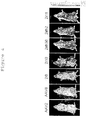
- the capsid or virus vector is delivered locally (e.g ., to the footpad, intramuscularly, intradermally, subcutaneously, topically). Examples of modified virus vectors according to the present invention are provided in Table 5 (see also, Figure 4 ).
- efficient transduction or “efficient tropism,” or similar terms, can be determined by reference to a suitable control (e.g. , at least about 50%, 60%, 70%, 80%, 85%, 90%, 95% or more of the transduction or tropism, respectively, of the control).
- the virus vector efficiently transduces or has efficient tropism for skeletal muscle, cardiac muscle, diaphragm muscle, pancreas (including ⁇ -islet cells), spleen, the gastrointestinal tract (e.g ., epithelium and/or smooth muscle), cells of the central nervous system, lung, joint cells, and/or kidney.
- Suitable controls will depend on a variety of factors including the desired tropism profile.
- AAV8 and AAV9 are highly efficient in transducing skeletal muscle, cardiac muscle and diaphragm muscle, but have the disadvantage of also transducing liver with high efficiency.
- the invention can be practiced to identify viral vectors of the invention that demonstrate the efficient transduction of skeletal, cardiac and/or diaphragm muscle of AAV8 or AAV9, but with a much lower transduction efficiency for liver.
- the tropism profile of interest may reflect tropism toward multiple target tissues, it will be appreciated that a suitable vector may represent some tradeoffs.
- a virus vector of the invention may be less efficient than AAV8 or AAV9 in transducing skeletal muscle, cardiac muscle and/or diaphragm muscle, but because of low level transduction of liver, may nonetheless be very desirable.
- a virus "does not efficiently transduce” or "does not have efficient tropism” for a target tissue, or similar terms by reference to a suitable control.
- the virus vector does not efficiently transduce (i.e., has does not have efficient tropism) for liver, kidney, gonads and/or germ cells.
- undesirable transduction of tissue(s) e.g ., liver
- is 20% or less, 10% or less, 5% or less, 1% or less, 0.1 % or less of the level of transduction of the desired target tissue(s) e.g ., skeletal muscle, diaphragm muscle, cardiac muscle and/or cells of the central nervous system.
- polypeptide encompasses both peptides and proteins, unless indicated otherwise.
- a "polynucleotide” is a sequence of nucleotide bases, and may be RNA, DNA or DNA-RNA hybrid sequences (including both naturally occurring and non-naturally occurring nucleotide), but in representative embodiments are either single or double stranded DNA sequences.
- an "isolated" polynucleotide e.g., an "isolated DNA” or an “isolated RNA" means a polynucleotide at least partially separated from at least some of the other components of the naturally occurring organism or virus, for example, the cell or viral structural components or other polypeptides or nucleic acids commonly found associated with the polynucleotide.
- an "isolated" nucleotide is enriched by at least about 10-fold, 100-fold, 1000-fold, 10,000-fold or more as compared with the starting material.
- an "isolated" polypeptide means a polypeptide that is at least partially separated from at least some of the other components of the naturally occurring organism or virus, for example, the cell or viral structural components or other polypeptides or nucleic acids commonly found associated with the polypeptide.
- an "isolated" polypeptide is enriched by at least about 10-fold, 100-fold, 1000-fold, 10,000-fold or more as compared with the starting material.
- virus vector As used herein, by “isolate” or “purify” (or grammatical equivalents) a virus vector, it is meant that the virus vector is at least partially separated from at least some of the other components in the starting material. In representative embodiments an “isolated” or “purified” virus vector is enriched by at least about 10-fold, 100-fold, 1000-fold, 10,000-fold or more as compared with the starting material.
- a “therapeutic polypeptide” is a polypeptide that can alleviate, reduce, prevent, delay and/or stabilize symptoms that result from an absence or defect in a protein in a cell or subject and/or is a polypeptide that otherwise confers a benefit to a subject, e.g ., anti-cancer effects or improvement in transplant survivability.
- treat By the terms “treat,” “treating” or “treatment of” (and grammatical variations thereof) it is meant that the severity of the subject's condition is reduced, at least partially improved or stabilized and/or that some alleviation, mitigation, decrease or stabilization in at least one clinical symptom is achieved and/or there is a delay in the progression of the disease or disorder.
- prevent refers to prevention and/or delay of the onset of a disease, disorder and/or a clinical symptom(s) in a subject and/or a reduction in the severity of the onset of the disease, disorder and/or clinical symptom(s) relative to what would occur in the absence of the methods of the invention.
- the prevention can be complete, e.g ., the total absence of the disease, disorder and/or clinical symptom(s).
- the prevention can also be partial, such that the occurrence of the disease, disorder and/or clinical symptom(s) in the subject and/or the severity of onset is less than what would occur in the absence of the present invention.
- a “treatment effective” amount as used herein is an amount that is sufficient to provide some improvement or benefit to the subject.
- a “treatment effective” amount is an amount that will provide some alleviation, mitigation, decrease or stabilization in at least one clinical symptom in the subject.
- prevention effective amount is an amount that is sufficient to prevent and/or delay the onset of a disease, disorder and/or clinical symptoms in a subject and/or to reduce and/or delay the severity of the onset of a disease, disorder and/or clinical symptoms in a subject relative to what would occur in the absence of the methods of the invention.
- level of prevention need not be complete, as long as some benefit is provided to the subject.
- heterologous nucleotide sequence and “heterologous nucleic acid” are used interchangeably herein and refer to a sequence that is not naturally occurring in the virus.
- the heterologous nucleic acid comprises an open reading frame that encodes a polypeptide or nontranslated RNA of interest (e.g ., for delivery to a cell or subject).
- virus vector refers to a virus (e.g ., AAV) particle that functions as a nucleic acid delivery vehicle, and which comprises the vector genome (e.g. , viral DNA [vDNA]) packaged within a virion.
- vector may be used to refer to the vector genome/vDNA alone.
- rAAV vector genome or "rAAV genome” is an AAV genome (i.e., vDNA) that comprises one or more heterologous nucleic acid sequences.
- rAAV vectors generally require only the terminal repeat(s) (TR(s)) in cis to generate virus. All other viral sequences are dispensable and may be supplied in trans ( Muzyczka, (1992) Curr. Topics Microbiol. Immunol. 158:97 ).
- the rAAV vector genome will only retain the one or more TR sequence so as to maximize the size of the transgene that can be efficiently packaged by the vector.
- the structural and non-structural protein coding sequences may be provided in trans ( e.g., from a vector, such as a plasmid, or by stably integrating the sequences into a packaging cell).
- the rAAV vector genome comprises at least one TR sequence (e.g., AAV TR sequence), optionally two TRs ( e.g ., two AAV TRs), which typically will be at the 5' and 3' ends of the vector genome and flank the heterologous nucleic acid, but need not be contiguous thereto.
- the TRs can be the same or different from each other.
- terminal repeat or "TR” includes any viral terminal repeat or synthetic sequence that forms a hairpin structure and functions as an inverted terminal repeat (i.e., mediates the desired functions such as replication, virus packaging, integration and/or provirus rescue, and the like).
- the TR can be an AAV TR or a non-AAV TR.
- a non-AAV TR sequence such as those of other parvoviruses (e.g ., canine parvovirus (CPV), mouse parvovirus (MVM), human parvovirus B-19) or any other suitable virus sequence (e.g ., the SV40 hairpin that serves as the origin of SV40 replication) can be used as a TR, which can further be modified by truncation, substitution, deletion, insertion and/or addition.
- the TR can be partially or completely synthetic, such as the "double-D sequence" as described in United States Patent No. 5,478,745 to Samulski et al.
- An "AAV terminal repeat” or “AAV TR” may be from any AAV, including but not limited to serotypes 1, 2, 3, 4, 5, 6, 7, 8, 9, 10 or 11 or any other AAV now known or later discovered (see, e.g., Table 1).
- An AAV terminal repeat need not have the native terminal repeat sequence (e.g ., a native AAV TR sequence may be altered by insertion, deletion, truncation and/or missense mutations), as long as the terminal repeat mediates the desired functions, e.g ., replication, virus packaging, integration, and/or provirus rescue, and the like.
- the virus vectors of the invention can further be "targeted" virus vectors (e.g ., having a directed tropism) and/or a "hybrid” parvovirus (i.e., in which the viral TRs and viral capsid are from different parvoviruses) as described in international patent publication WO 00/28004 and Chao et al., (2000) Molecular Therapy 2:619 .
- targeted virus vectors e.g ., having a directed tropism
- a “hybrid” parvovirus i.e., in which the viral TRs and viral capsid are from different parvoviruses
- the virus vectors of the invention can further be duplexed parvovirus particles as described in international patent publication WO 01/92551 .
- double stranded (duplex) genomes can be packaged into the virus capsids of the invention.
- viral capsid or genomic elements can contain other modifications, including insertions, deletions and/or substitutions.
- amino acid encompasses any naturally occurring amino acid, modified forms thereof, and synthetic amino acids.
- the amino acid can be a modified amino acid residue (nonlimiting examples are shown in Table 3 ) and/or can be an amino acid that is modified by post-translation modification (e.g ., acetylation, amidation, formylation, hydroxylation, methylation, phosphorylation or sulfatation).
- post-translation modification e.g ., acetylation, amidation, formylation, hydroxylation, methylation, phosphorylation or sulfatation.
- non-naturally occurring amino acid can be an "unnatural" amino acid as described by Wang et al., Annu Rev Biophys Biomol Struct. 35:225-49 (2006 )). These unnatural amino acids can advantageously be used to chemically link molecules of interest to the AAV capsid protein.
- the present invention provides AAV capsid proteins (VP1, VP2 and/or VP3) comprising a modification in the amino acid sequence in the three-fold axis loop 4 ( Opie et al., J. Virol. 77: 6995-7006 (2003 )) and virus capsids and virus vectors comprising the modified AAV capsid protein.
- AAV capsid proteins VP1, VP2 and/or VP3
- virus capsids and virus vectors comprising the modified AAV capsid protein.
- modifications in this loop can confer one or more desirable properties to virus vectors comprising the modified AAV capsid protein including without limitation (i) reduced transduction of liver, (ii) enhanced movement across endothelial cells, (iii) systemic transduction; (iv) enhanced transduction of muscle tissue (e.g ., skeletal muscle, cardiac muscle and/or diaphragm muscle), and/or (v) reduced transduction of brain tissues (e.g ., neurons).
- the present invention addresses some of the limitations associated with conventional AAV vectors.
- vectors based on AAV8 and rAAV9 vectors are attractive for systemic nucleic acid delivery because they readily cross the endothelial cell barrier; however, systemic administration of rAAV8 or rAAV9 results in most of the vector being delivered to the liver, thereby reducing transduction of other important target tissues such as skeletal muscle.
- transduction of cardiac muscle and/or skeletal muscle is at least about five-fold, ten-fold, 50-fold, 100-fold, 1000-fold or higher than transduction levels in liver.
- the modified AAV capsid protein of the invention comprises one or more modifications in the amino acid sequence of the three-fold axis loop 4 (e.g ., amino acid positions 575 to 600 [inclusive] of the native AAV2 VP1 capsid protein.
- a "modification" in an amino acid sequence includes substitutions, insertions and/or deletions.
- nucleic acid and amino acid sequences of the capsid proteins from a number of AAV are known in the art.
- amino acids "corresponding" to amino acid positions 575 to 600 (inclusive) or amino acid positions 585 to 590 (inclusive) of the native AAV2 capsid protein can be readily determined for any other AAV ( e.g ., by using sequence alignments).
- the invention is not limited to modifications of naturally occurring AAV capsid proteins.
- the capsid protein to be modified may already have alterations as compared with naturally occurring AAV (e.g ., is derived from a naturally occurring AAV capsid protein, e.g ., AAV2).
- AAV capsid proteins are also within the scope of the present invention.
- the AAV capsid protein to be modified can comprise an amino acid insertion directly following amino acid 264 of the native AAV2 capsid protein sequence (see, e.g., WO 2006/066066 ) and/or can be an AAV with an altered HI loop as described in WO 2009/108274 and/or can be an AAV that is modified to contain a poly-His sequence to facilitate purification.
- the AAV capsid protein can have a peptide targeting sequence incorporated therein as an insertion or substitution.
- the AAV capsid protein to be modified can be derived from a naturally occurring AAV but further comprise one or more foreign sequences (e.g ., that are exogenous to the native virus) that are inserted and/or substituted into the capsid protein and/or has been altered by deletion of one or more amino acids.
- one or more foreign sequences e.g ., that are exogenous to the native virus
- AAV2 capsid protein includes AAV capsid proteins having the native AAV2 capsid protein sequence (see GenBank Accession No. AAC03780) as well as those comprising substitutions, insertions and/or deletions (as described in the preceding paragraph) in the native AAV2 capsid protein sequence.
- the AAV capsid protein has the native AAV capsid protein sequence or has an amino acid sequence that is at least about 90%, 95%, 97%, 98% or 99% similar or identical to a native AAV capsid protein sequence.
- an "AAV2" capsid protein encompasses the native AAV2 capsid protein sequence as well as sequences that are at least about 90%, 95%, 97%, 98% or 99% similar or identical to the native AAV2 capsid protein sequence.
- Sequence similarity or identity may be determined using standard techniques known in the art, including, but not limited to, the local sequence identity algorithm of Smith & Waterman, Adv. Appl. Math. 2, 482 (1981 ), by the sequence identity alignment algorithm of Needleman & Wunsch, J. Mol. Biol. 48,443 (1970 ), by the search for similarity method of Pearson & Lipman, Proc. Natl. Acad. Sci.
- BLAST BLAST algorithm
- WU-BLAST-2 WU-BLAST-2 uses several search parameters, which are optionally set to the default values. The parameters are dynamic values and are established by the program itself depending upon the composition of the particular sequence and composition of the particular database against which the sequence of interest is being searched; however, the values may be adjusted to increase sensitivity.
- a modification is made in the region of amino acid positions 585 to 590 (inclusive) of the native AAV2 capsid protein (using VP1 numbering) (native AAV2 VP1 capsid protein: GenBank Accession No. AAC03780 or YP680426), i.e., at the amino acids corresponding to amino acid positions 585 to 590 (VP1 numbering) of the native AAV2 capsid protein.
- amino acid positions in modified AAV capsids that "correspond to" positions 585 to 590 of the native AAV2 capsid protein will be apparent to those skilled in the art and can be readily determined using sequence alignment techniques (see, e.g., Figure 7 of WO 2006/066066 ) and/or crystal structure analysis ( Padron et al., (2005) J. Virol. 79:5047-58 ).
- the modification can be introduced into an AAV capsid protein that already contains insertions and/or deletions such that the position of all downstream sequences is shifted.
- the amino acid positions corresponding to amino acid positions 585 to 590 in the AAV2 capsid protein would still be readily identifiable to those skilled in the art.
- the capsid protein can be an AAV2 capsid protein that contains an insertion following amino acid position 264 (see, e.g., WO 2006/066066 ).
- the amino acids found at positions 585 through 590 e.g., RGNRQA in the native AAV2 capsid protein
- the invention also provides an AAV virus capsid comprising, consisting essentially of, or consisting of the modified AAV capsid protein of the invention.
- the virus capsid is a parvovirus capsid, which may further be an autonomous parvovirus capsid or a dependovirus capsid.
- the AAV capsid is an AAV1, AAV2, AAV3a, AAV3b, AAV4, AAV5, AAV6, AAV7, AAV8, AAV9, AAV10, AAV11 or any other AAV shown in Table 1 or is derived from any of the foregoing by one or more insertions, substitutions and/or deletions.
- modified virus capsids can be used as "capsid vehicles," as has been described, for example, in U.S. Patent No. 5,863,541 .
- Molecules that can be packaged by the modified virus capsid and transferred into a cell include heterologous DNA, RNA, polypeptides, small organic molecules, metals, or combinations of the same.
- Heterologous molecules are defined as those that are not naturally found in an AAV infection, e.g., those not encoded by a wild-type AAV genome.
- therapeutically useful molecules can be associated with the outside of the chimeric virus capsid for transfer of the molecules into host target cells.
- Such associated molecules can include DNA, RNA, small organic molecules, metals, carbohydrates, lipids and/or polypeptides.
- the therapeutically useful molecule is covalently linked (i.e., conjugated or chemically coupled) to the capsid proteins. Methods of covalently linking molecules are known by those skilled in the art.
- modified virus capsids of the invention also find use in raising antibodies against the novel capsid structures.
- an exogenous amino acid sequence may be inserted into the modified virus capsid for antigen presentation to a cell, e.g., for administration to a subject to produce an immune response to the exogenous amino acid sequence.
- the virus capsids can be administered to block certain cellular sites prior to and/or concurrently with ( e.g. , within minutes or hours of each other) administration of a virus vector delivering a nucleic acid encoding a polypeptide or functional RNA of interest.
- a virus vector delivering a nucleic acid encoding a polypeptide or functional RNA of interest.
- the inventive capsids can be delivered to block cellular receptors on liver cells and a delivery vector can be administered subsequently or concurrently, which may reduce transduction of liver cells, and enhance transduction of other targets (e.g ., skeletal, cardiac and/or diaphragm muscle).
- modified virus capsids can be administered to a subject prior to and/or concurrently with a modified virus vector according to the present invention.
- the invention provides compositions and pharmaceutical formulations comprising the inventive modified virus capsids; optionally, the composition also comprises a modified virus vector of the invention.
- nucleic acids (optionally, isolated nucleic acids) encoding the modified virus capsids and capsid proteins of the invention.
- vectors comprising the nucleic acids, and cells ( in vivo or in culture) comprising the nucleic acids and/or vectors.
- Suitable vectors include without limitation viral vectors (e.g ., adenovirus, AAV, herpesvirus, vaccinia, poxviruses, baculoviruses, and the like), plasmids, phage, YACs, BACs, and the like.
- Such nucleic acids, vectors and cells can be used, for example, as reagents (e.g., helper packaging constructs or packaging cells) for the production of modified virus capsids or virus vectors as described herein.
- Virus capsids according to the invention can be produced using any method known in the art, e.g ., by expression from a baculovirus ( Brown et al., (1994) Virology 198:477-488 ).
- the modifications to the AAV capsid protein according to the present invention are "selective" modifications. This approach is in contrast to previous work with whole subunit or large domain swaps between AAV serotypes (see, e.g., international patent publication WO 00/28004 and Hauck et al., (2003) J. Virology 77:2768-2774 ).
- the "selective" modification results in the insertion and/or substitution and/or deletion of less than 20, 18, 15, 12, 10, 9, 8, 7, 6, 5, 4 or 3 contiguous amino acids.
- the virus capsid can be a targeted virus capsid comprising a targeting sequence (e.g ., substituted or inserted in the viral capsid) that directs the virus capsid to interact with cell-surface molecules present on a desired target tissue(s)
- a targeting sequence e.g ., substituted or inserted in the viral capsid
- the virus capsid can be a targeted virus capsid comprising a targeting sequence (e.g ., substituted or inserted in the viral capsid) that directs the virus capsid to interact with cell-surface molecules present on a desired target tissue(s)
- a targeting sequence e.g ., substituted or inserted in the viral capsid
- a desired target tissue(s) see, e.g., international patent publication WO 00/28004 and Hauck et al., (2003) J. Virology 77:2768-2774 ); Shi et al., Human Gene Therapy 17:353-361 (2006 ) [describing
- virus capsids of the invention have relatively inefficient tropism toward most target tissues of interest (e.g ., liver, skeletal muscle, heart, diaphragm muscle, kidney, brain, stomach, intestines, skin, endothelial cells, and/or lungs).
- a targeting sequence can advantageously be incorporated into these low-transduction vectors to thereby confer to the virus capsid a desired tropism and, optionally, selective tropism for particular tissue(s).
- AAV capsid proteins, capsids and vectors comprising targeting sequences are described, for example in international patent publication WO 00/28004 .
- one or more non-naturally occurring amino acids as described by Wang et al., Annu Rev Biophys Biomol Struct. 35:225-49 (2006 )) can be incorporated into the AAV capsid subunit at an orthogonal site as a means of redirecting a low-transduction vector to a desired target tissue(s).
- These unnatural amino acids can advantageously be used to chemically link molecules of interest to the AAV capsid protein including without limitation: glycans (mannose - dendritic cell targeting); RGD, bombesin or a neuropeptide for targeted delivery to specific cancer cell types; RNA aptamers or peptides selected from phage display targeted to specific cell surface receptors such as growth factor receptors, integrins, and the like.
- Methods of chemically modifying amino acids are known in the art ( see, e.g., Greg T. Hermanson, Bioconjugate Techniques, 1st edition, Academic Press, 1996 ).
- the targeting sequence may be a virus capsid sequence (e.g ., an autonomous parvovirus capsid sequence, AAV capsid sequence, or any other viral capsid sequence) that directs infection to a particular cell type(s).
- virus capsid sequence e.g ., an autonomous parvovirus capsid sequence, AAV capsid sequence, or any other viral capsid sequence
- a heparin binding domain e.g ., the respiratory syncytial virus heparin binding domain
- a capsid subunit that does not typically bind HS receptors (e.g ., AAV 4, AAV5) to confer heparin binding to the resulting mutant.
- B19 infects primary erythroid progenitor cells using globoside as its receptor ( Brown et al., (1993) Science 262:114 ).
- the structure of B19 has been determined to 8 ⁇ resolution ( Agbandje-McKenna et al., (1994) Virology 203:106 ).
- the region of the B19 capsid that binds to globoside has been mapped between amino acids 399-406 ( Chapman et al., (1993) Virology 194:419 ), a looped out region between ⁇ -barrel structures E and F ( Chipman et al., (1996) Proc. Nat. Acad. Sci. USA 93:7502 ).
- the globoside receptor binding domain of the B19 capsid may be substituted into the AAV capsid protein to target a virus capsid or virus vector comprising the same to erythroid cells.
- the exogenous targeting sequence may be any amino acid sequence encoding a peptide that alters the tropism of a virus capsid or virus vector comprising the modified AAV capsid protein.
- the targeting peptide or protein may be naturally occurring or, alternately, completely or partially synthetic.
- Exemplary targeting sequences include ligands and other peptides that bind to cell surface receptors and glycoproteins, such as RGD peptide sequences, bradykinin, hormones, peptide growth factors ( e.g ., epidermal growth factor, nerve growth factor, fibroblast growth factor, platelet-derived growth factor, insulin-like growth factors I and II, etc.
- cytokines melanocyte stimulating hormone (e.g ., ⁇ , ⁇ or ⁇ ), neuropeptides and endorphins, and the like, and fragments thereof that retain the ability to target cells to their cognate receptors.
- Other illustrative peptides and proteins include substance P, keratinocyte growth factor, neuropeptide Y, gastrin releasing peptide, interleukin 2, hen egg white lysozyme, erythropoietin, gonadoliberin, corticostatin, ⁇ -endorphin, leu-enkephalin, rimorphin, ⁇ -neo-enkephalin, angiotensin, pneumadin, vasoactive intestinal peptide, neurotensin, motilin, and fragments thereof as described above.
- the binding domain from a toxin can be substituted into the capsid protein as a targeting sequence.
- the AAV capsid protein can be modified by substitution of a "nonclassical" import/export signal peptide (e.g ., fibroblast growth factor-1 and -2, interleukin 1, HIV-1 Tat protein, herpes virus VP22 protein, and the like) as described by Cleves (Current Biology 7:R318 (1997 )) into the AAV capsid protein.
- a nonclassical import/export signal peptide e.g ., fibroblast growth factor-1 and -2, interleukin 1, HIV-1 Tat protein, herpes virus VP22 protein, and the like
- Cleves Current Biology 7:R318 (1997 )
- peptide motifs that direct uptake by specific cells, e.g ., a FVFLP peptide motif triggers uptake by liver cells.
- Phage display techniques may be used to identify peptides that recognize any cell type of interest.
- the targeting sequence may encode any peptide that targets to a cell surface binding site, including receptors (e.g ., protein, carbohydrate, glycoprotein or proteoglycan).
- receptors e.g ., protein, carbohydrate, glycoprotein or proteoglycan.
- cell surface binding sites include, but are not limited to, heparan sulfate, chondroitin sulfate, and other glycosaminoglycans, sialic acid moieties found on mucins, glycoproteins, and gangliosides, MHC I glycoproteins, carbohydrate components found on membrane glycoproteins, including, mannose, N-acetyl-galactosamine, N-acetyl-glucosamine, fucose, galactose, and the like.
- a heparan sulfate (HS) or heparin binding domain is substituted into the virus capsid (for example, in an AAV that otherwise does not bind to HS or heparin).
- HS/heparin binding is mediated by a "basic patch” that is rich in arginines and/or lysines.
- BXXB is RGNR.
- BXXB is substituted for amino acid positions 262 through 265 in the native AAV2 capsid protein or the corresponding position in the capsid protein of another AAV.
- Suitable targeting sequences include the peptides targeting coronary artery endothelial cells identified by M ller et al., Nature Biotechnology 21:1040-1046 (2003) (consensus sequences NSVRDLG/S, PRSVTVP, NSVSSXS/A; see also Table 2); tumor-targeting peptides as described by Grifman et al., Molecular Therapy 3:964-975 (2001 ) ( e.g ., NGR, NGRAHA); lung or brain targeting sequences as described by Work et al., Molecular Therapy 13:683-693 (2006 ) (QPEHSST, VNTANST, HGPMQKS, PHKPPLA, IKNNEMW, RNLDTPM, VDSHRQS, YDSKTKT, SQLPHQK, STMQQNT, TERYMTQ, QPEHSST, DASLSTS, DLPNKKT, DLTAARL, EPHQFNY, EPQSNHT, MSSWPSQ,
- the targeting sequence may be a peptide that can be used for chemical coupling (e.g ., can comprise arginine and/or lysine residues that can be chemically coupled through their R groups) to another molecule that targets entry into a cell.
- a peptide that can be used for chemical coupling e.g ., can comprise arginine and/or lysine residues that can be chemically coupled through their R groups
- the AAV capsid protein or virus capsid of the invention can comprise a mutation as described in WO 2006/066066 .
- the capsid protein can comprise a selective amino acid substitution at amino acid position 263, 705, 708 and/or 716 of the native AAV2 capsid protein.
- the capsid protein, virus capsid or vector comprises a selective amino acid insertion directly following amino acid position 264 of the AAV2 capsid protein.
- the modified vector can be used to treat a lysosomal storage disorder such as a mucopolysaccharidosis disorder (e.g ., Sly syndrome [ ⁇ -glucuronidase], Hurler Syndrome [ ⁇ -L-iduronidase], Scheie Syndrome [ ⁇ -L-iduronidase], Hurler-Scheie Syndrome [ ⁇ -L-iduronidase], Hunter's Syndrome [iduronate sulfatase], Sanfilippo Syndrome A [heparan sulfamidase], B [N-acetylglucosaminidase], C [acetyl-CoA: ⁇ -glucosaminide acetyltransferase], D [N-acetylglucosamine 6-sulfatase], Morquio Syndrome A [galactose-6-sulfate sulfatase], B [ ⁇ -galactosidase], Maroteaux-Lamy Syndrome [N-acetylgalactosamine
- Fabry disease ⁇ -galactosidase
- Gaucher's disease glucocerebrosidase
- a glycogen storage disorder e.g., Pompe disease; lysosomal acid ⁇ -glucosidase
- the corresponding modification will be an insertion and/or a substitution, depending on whether the corresponding amino acid positions are partially or completely present in the virus or, alternatively, are completely absent.
- the insertion and/or substitution and/or deletion in the capsid protein(s) results in the insertion, substitution and/or repositioning of an amino acid that (i) maintains the hydrophilic loop structure in that region; (ii) an amino acid that alters the configuration of the loop structure; (iii) a charged amino acid; and/or (iv) an amino acid that can be phosphorylated or sulfated or otherwise acquire a charge by post-translational modification (e.g., glycosylation) following 264 in an AAV2 capsid protein.
- post-translational modification e.g., glycosylation
- Suitable amino acids for insertion/substitution include aspartic acid, glutamic acid, valine, leucine, lysine, arginine, threonine, serine, tyrosine, glycine, alanine, proline, asparagine, phenylalanine, tyrosine or glutamine.
- a threonine is inserted or substituted into the capsid subunit.
- the amino acid insertion or substitution is a threonine, aspartic acid, glutamic acid or phenylalanine (excepting AAV that have a threonine, glutamic acid or phenylalanine, respectively, at this position).
- the AAV capsid protein comprises an amino acid insertion following amino acid position 264 in an AAV2, AAV3a or AAV3b capsid protein(s) or in the corresponding position in an AAV2, AAV3a or AAV3b capsid protein that has been modified to comprise non-AAV2, AAV3a or AAV3b sequences, respectively, and/or has been modified by deletion of one or more amino acids ( i.e., is derived from AAV2, AAV3a or AAV3b).
- the amino acid corresponding to position 264 in an AAV2 (or AAV3a or AAV3b) capsid subunit(s) will be readily identifiable in the starting virus that has been derived from AAV2, which can then be further modified.
- Suitable amino acids for insertion include aspartic acid, glutamic acid, valine, leucine, lysine, arginine, threonine, serine, tyrosine, glycine, alanine, proline, asparagine, phenylalanine, tyrosine or glutamine.
- the capsid protein comprises a threonine, aspartic acid, glutamic acid, or phenylalanine following amino acid position 264 of the AAV2 capsid protein ( i.e., an insertion).
- the modified capsid proteins or virus capsids of the invention further comprise one or more mutations as described in WO 2007/089632 (e.g ., an E ⁇ K mutation at amino acid position 531 of the AAV2 capsid protein).
- the modified capsid protein or capsid can comprise a mutation as described in WO 2009/108274 .
- the AAV capsid protein can comprise a mutation as described by Zhong et al. (Virology 381: 194-202 (2008 ); Proc. Nat. Acad. Sci. 105: 7827-32 (2008 )).
- the AAV capsid protein can comprise a Y ⁇ F mutation at amino acid position 730.
- the invention also encompasses virus vectors comprising the modified capsid proteins and capsids of the invention.
- the virus vector is a parvovirus vector (e.g ., comprising a parvovirus capsid and/or vector genome), for example, an AAV vector ( e.g ., comprising an AAV capsid and/or vector genome).
- the virus vector comprises a modified AAV capsid comprising a modified capsid subunit of the invention and a vector genome.
- the virus vector comprises: (a) a modified virus capsid (e.g ., a modified AAV capsid) comprising a modified capsid protein of the invention; and (b) a nucleic acid comprising a terminal repeat sequence (e.g ., an AAV TR), wherein the nucleic acid comprising the terminal repeat sequence is encapsidated by the modified virus capsid.
- the nucleic acid can optionally comprise two terminal repeats (e.g ., two AAV TRs).
- the virus vector is a recombinant virus vector comprising a heterologous nucleic acid encoding a polypeptide or functional RNA of interest. Recombinant virus vectors are described in more detail below.
- the virus vectors of the invention (i) have reduced transduction of liver as compared with the level of transduction by a virus vector without the modified capsid protein; (ii) exhibit enhanced systemic transduction by the virus vector in an animal subject as compared with the level observed by a virus vector without the modified capsid protein; (iii) demonstrate enhanced movement across endothelial cells as compared with the level of movement by a virus vector without the modified capsid protein, and/or (iv) exhibit a selective enhancement in transduction of muscle tissue (e.g ., skeletal muscle, cardiac muscle and/or diaphragm muscle), and/or (v) reduced transduction of brain tissues ( e.g ., neurons) as compared with the level of transduction by a virus vector without the modified capsid protein.
- the virus vector has systemic transduction toward muscle, e.g ., transduces multiple skeletal muscle groups throughout the body and optionally transduces cardiac muscle and/or diaphragm muscle.
- modified virus vectors demonstrate efficient transduction of target tissues.
- X 1 -X 2 -X 3 -X 4 -X 5 -X 6 SEQ ID NO:1
- the order of transduction efficiency e.g ., for muscle tissue including skeletal muscle, cardiac muscle and/or diaphragm muscle
- efficient muscle transduction (skeletal, cardiac and/or diaphragm) is achieved ( e.g ., by an AAV vector comprising a modified AAV capsid comprising the modified AAV capsid protein of the invention) when X 1 -X 2 -X 3 -X 4 -X 5 -X 6 (SEQ ID NO:1) is QXXTXP or NXXTXP.
- X is not selected from P, C and/or W.
- modified capsid proteins, virus capsids and virus vectors of the invention exclude those capsid proteins, capsids and virus vectors that have the indicated amino acids at the specified positions in their native state (i.e., are not mutants).
- the method comprising providing to a cell: (a) a nucleic acid template comprising at least one TR sequence (e.g ., AAV TR sequence), and (b) AAV sequences sufficient for replication of the nucleic acid template and encapsidation into AAV capsids (e.g ., AAV rep sequences and AAV cap sequences encoding the AAV capsids of the invention).
- the nucleic acid template further comprises at least one heterologous nucleic acid sequence.
- the nucleic acid template comprises two AAV ITR sequences, which are located 5' and 3' to the heterologous nucleic acid sequence (if present), although they need not be directly contiguous thereto.
- the nucleic acid template and AAV rep and cap sequences are provided under conditions such that virus vector comprising the nucleic acid template packaged within the AAV capsid is produced in the cell.
- the method can further comprise the step of collecting the virus vector from the cell.
- the virus vector can be collected from the medium and/or by lysing the cells.
- the cell can be a cell that is permissive for AAV viral replication. Any suitable cell known in the art may be employed. In particular examples, the cell is a mammalian cell. As another option, the cell can be a trans-complementing packaging cell line that provides functions deleted from a replication-defective helper virus, e.g., 293 cells or other E1a trans-complementing cells.
- the AAV replication and capsid sequences may be provided by any method known in the art. Current protocols typically express the AAV rep / cap genes on a single plasmid. The AAV replication and packaging sequences need not be provided together, although it may be convenient to do so.
- the AAV rep and/or cap sequences may be provided by any viral or non-viral vector.
- the rep / cap sequences may be provided by a hybrid adenovirus or herpesvirus vector ( e.g ., inserted into the E1a or E3 regions of a deleted adenovirus vector). EBV vectors may also be employed to express the AAV cap and rep genes.
- EBV vectors are episomal, yet will maintain a high copy number throughout successive cell divisions ( i.e., are stably integrated into the cell as extra-chromosomal elements, designated as an " EBV based nuclear episome," see Margolski, (1992) Curr. Top. Microbiol. Immun. 158:67 ).
- the rep / cap sequences may be stably incorporated into a cell.
- the AAV rep / cap sequences will not be flanked by the TRs, to prevent rescue and/or packaging of these sequences.
- the nucleic acid template can be provided to the cell using any method known in the art.
- the template can be supplied by a non-viral (e.g. , plasmid) or viral vector.
- the nucleic acid template is supplied by a herpesvirus or adenovirus vector (e.g ., inserted into the E1a or E3 regions of a deleted adenovirus).
- Palombo et al., (1998) J. Virology 72:5025 describes a baculovirus vector carrying a reporter gene flanked by the AAV TRs.
- EBV vectors may also be employed to deliver the template, as described above with respect to the rep / cap genes.
- the nucleic acid template is provided by a replicating rAAV virus.
- an AAV provirus comprising the nucleic acid template is stably integrated into the chromosome of the cell.
- helper virus functions e.g ., adenovirus or herpesvirus
- helper virus sequences necessary for AAV replication are known in the art. Typically, these sequences will be provided by a helper adenovirus or herpesvirus vector.
- the adenovirus or herpesvirus sequences can be provided by another non-viral or viral vector, e.g ., as a non-infectious adenovirus miniplasmid that carries all of the helper genes that promote efficient AAV production as described by Ferrari et al., (1997) Nature Med. 3:1295 , and U.S. Patent Nos. 6,040,183 and 6,093,570 .
- helper virus functions may be provided by a packaging cell with the helper sequences embedded in the chromosome or maintained as a stable extrachromosomal element.
- the helper virus sequences cannot be packaged into AAV virions, e.g ., are not flanked by TRs.
- helper construct may be a non-viral or viral construct.
- the helper construct can be a hybrid adenovirus or hybrid herpesvirus comprising the AAV rep / cap genes.
- the AAV rep / cap sequences and the adenovirus helper sequences are supplied by a single adenovirus helper vector.
- This vector further can further comprise the nucleic acid template.
- the AAV rep / cap sequences and/or the rAAV template can be inserted into a deleted region ( e.g ., the E1 a or E3 regions) of the adenovirus.
- the AAV rep / cap sequences and the adenovirus helper sequences are supplied by a single adenovirus helper vector.
- the rAAV template can be provided as a plasmid template.
- the AAV rep / cap sequences and adenovirus helper sequences are provided by a single adenovirus helper vector, and the rAAV template is integrated into the cell as a provirus.
- the rAAV template is provided by an EBV vector that is maintained within the cell as an extrachromosomal element ( e.g. , as an EBV based nuclear episome).
- the AAV rep / cap sequences and adenovirus helper sequences are provided by a single adenovirus helper.
- the rAAV template can be provided as a separate replicating viral vector.
- the rAAV template can be provided by a rAAV particle or a second recombinant adenovirus particle.
- the hybrid adenovirus vector typically comprises the adenovirus 5' and 3' cis sequences sufficient for adenovirus replication and packaging (i.e., the adenovirus terminal repeats and PAC sequence).
- the AAV rep / cap sequences and, if present, the rAAV template are embedded in the adenovirus backbone and are flanked by the 5' and 3' cis sequences, so that these sequences may be packaged into adenovirus capsids.
- the adenovirus helper sequences and the AAV rep / cap sequences are generally not flanked by TRs so that these sequences are not packaged into the AAV virions.
- Herpesvirus may also be used as a helper virus in AAV packaging methods.
- Hybrid herpesviruses encoding the AAV Rep protein(s) may advantageously facilitate scalable AAV vector production schemes.
- a hybrid herpes simplex virus type I (HSV-1) vector expressing the AAV-2 rep and cap genes has been described ( Conway et al., (1999) Gene Therapy 6:986 and WO 00/17377 .
- virus vectors of the invention can be produced in insect cells using baculovirus vectors to deliver the rep / cap genes and rAAV template as described, for example, by Urabe et al., (2002) Human Gene Therapy 13:1935-43 .
- AAV vector stocks free of contaminating helper virus may be obtained by any method known in the art.
- AAV and helper virus may be readily differentiated based on size.
- AAV may also be separated away from helper virus based on affinity for a heparin substrate ( Zolotukhin et al. (1999) Gene Therapy 6:973 ).
- Deleted replication-defective helper viruses can be used so that any contaminating helper virus is not replication competent.
- an adenovirus helper lacking late gene expression may be employed, as only adenovirus early gene expression is required to mediate packaging of AAV virus.
- Adenovirus mutants defective for late gene expression are known in the art (e.g ., ts100K and ts149 adenovirus mutants).
- virus vectors of the present invention are useful for the delivery of nucleic acids to cells in vitro, ex vivo, and in vivo.
- the virus vectors can be advantageously employed to deliver or transfer nucleic acids to animal, including mammalian, cells.
- Nucleic acids of interest include nucleic acids encoding polypeptides, including therapeutic ( e.g ., for medical or veterinary uses) or immunogenic ( e.g ., for vaccines) polypeptides.
- Therapeutic polypeptides include, but are not limited to, cystic fibrosis transmembrane regulator protein (CFTR), dystrophin (including mini- and micro-dystrophins, see, e.g, Vincent et al., (1993) Nature Genetics 5:130 ; U.S. Patent Publication No. 2003/017131 ; International publication WO/2008/088895 , Wang et al., Proc. Natl. Acad. Sci. USA 97:13714-13719 (2000 ); and Gregorevic et al., Mol. Ther.
- CTR cystic fibrosis transmembrane regulator protein
- dystrophin including mini- and micro-dystrophins, see, e.g, Vincent et al., (1993) Nature Genetics 5:130 ; U.S. Patent Publication No. 2003/017131 ; International publication WO/2008/088895 , Wang et al., Proc. Natl. Acad. Sci
- myostatin propeptide myostatin propeptide, follistatin, activin type II soluble receptor, IGF-1, anti-inflammatory polypeptides such as the Ikappa B dominant mutant, sarcospan, utrophin ( Tinsley et al., (1996) Nature 384:349 ), mini-utrophin, clotting factors ( e.g ., Factor VIII, Factor IX, Factor X, etc.), erythropoietin, angiostatin, endostatin, catalase, tyrosine hydroxylase, superoxide dismutase, leptin, the LDL receptor, lipoprotein lipase, ornithine transcarbamylase, ⁇ -globin, ⁇ -globin, spectrin, ⁇ 1 -antitrypsin, adenosine deaminase, hypoxanthine guanine phosphoribosyl transferase, ⁇
- ⁇ -interferon ⁇ -interferon, interferon- ⁇ , interleukin-2, interleukin-4, granulocyte-macrophage colony stimulating factor, lymphotoxin, and the like
- peptide growth factors e.g ., somatotropin, insulin, insulin-like growth factors 1 and 2, platelet derived growth factor, epidermal growth factor, fibroblast growth factor, nerve growth factor, neurotrophic factor -3 and -4, brain-derived neurotrophic factor, bone morphogenic proteins [including RANKL and VEGF], glial derived growth factor, transforming growth factor - ⁇ and - ⁇ , and the like), lysosomal acid ⁇ -glucosidase, ⁇ -galactosidase A, receptors (e.g.
- the tumor necrosis growth factor ⁇ soluble receptor the tumor necrosis growth factor ⁇ soluble receptor
- S100A1 parvalbumin
- adenylyl cyclase type 6 a molecule that modulates calcium handling (e.g ., SERCA 2A , Inhibitor 1 of PP1 and fragments thereof [ e.g., WO 2006/029319 and WO 2007/100465 ]), a molecule that effects G-protein coupled receptor kinase type 2 knockdown such as a truncated constitutively active bARKct, anti-inflammatory factors such as IRAP, anti-myostatin proteins, aspartoacylase, monoclonal antibodies (including single chain monoclonal antibodies; an exemplary Mab is the Herceptin ® Mab), neuropeptides and fragments thereof (e.g ., galanin, Neuropeptide Y (see, U.S.
- angiogenesis inhibitors such as Vasohibins and other VEGF inhibitors (e.g ., Vasohibin 2 [see, WO JP2006/073052 ]).
- Other illustrative heterologous nucleic acid sequences encode suicide gene products (e.g ., thymidine kinase, cytosine deaminase, diphtheria toxin, and tumor necrosis factor), proteins conferring resistance to a drug used in cancer therapy, tumor suppressor gene products (e.g ., p53, Rb, Wt-1), TRAIL, FAS-ligand, and any other polypeptide that has a therapeutic effect in a subject in need thereof.
- suicide gene products e.g ., thymidine kinase, cytosine deaminase, diphtheria toxin, and tumor necrosis factor
- proteins conferring resistance to a drug used in cancer therapy e.g ., p53, Rb, W
- AAV vectors can also be used to deliver monoclonal antibodies and antibody fragments, for example, an antibody or antibody fragment directed against myostatin (see, e.g., Fang et al., Nature Biotechnology 23:584-590 (2005 )).
- Heterologous nucleic acid sequences encoding polypeptides include those encoding reporter polypeptides (e.g ., an enzyme). Reporter polypeptides are known in the art and include, but are not limited to, Green Fluorescent Protein, ⁇ -galactosidase, alkaline phosphatase, luciferase, and chloramphenicol acetyltransferase gene.
- the heterologous nucleic acid encodes a secreted polypeptide (e.g ., a polypeptide that is a secreted polypeptide in its native state or that has been engineered to be secreted, for example, by operable association with a secretory signal sequence as is known in the art).
- a secreted polypeptide e.g ., a polypeptide that is a secreted polypeptide in its native state or that has been engineered to be secreted, for example, by operable association with a secretory signal sequence as is known in the art.
- the heterologous nucleic acid may encode an antisense nucleic acid, a ribozyme (e.g ., as described in U.S. Patent No. 5,877,022 ), RNAs that effect spliceosome-mediated trans -splicing ( see , Puttaraju et al., (1999) Nature Biotech. 17:246 ; U.S. Patent No. 6,013,487 ; U.S. Patent No.
- RNAi interfering RNAs
- siRNA siRNA
- shRNA miRNA that mediate gene silencing
- miRNA miRNA that mediate gene silencing
- other non-translated RNAs such as "guide” RNAs ( Gorman et al., (1998) Proc. Nat. Acad. Sci. USA 95:4929 ; U.S. Patent No. 5,869,248 to Yuan et al. ) , and the like.
- RNAi against a multiple drug resistance (MDR) gene product e.g ., to treat and/or prevent tumors and/or for administration to the heart to prevent damage by chemotherapy
- MDR multiple drug resistance
- myostatin e.g ., for Duchenne muscular dystrophy
- VEGF e.g ., to treat and/or prevent tumors
- RNAi against phospholamban e.g ., to treat cardiovascular disease, see, e.g ., Andino et al., J. Gene Med. 10:132-142 (2008 ) and Li et al., Acta Pharmacol Sin.
- phospholamban inhibitory or dominant-negative molecules such as phospholamban S16E (e.g ., to treat cardiovascular disease, see, e.g., Hoshijima et al. Nat. Med. 8:864-871 (2002 )), RNAi to adenosine kinase (e.g ., for epilepsy), and RNAi directed against pathogenic organisms and viruses (e.g ., hepatitis B and/or C virus, human immunodeficiency virus, CMV, herpes simplex virus, human papilloma virus, etc.).
- pathogenic organisms and viruses e.g ., hepatitis B and/or C virus, human immunodeficiency virus, CMV, herpes simplex virus, human papilloma virus, etc.
- a nucleic acid sequence that directs alternative splicing can be delivered.
- an antisense sequence (or other inhibitory sequence) complementary to the 5' and/or 3' splice site of dystrophin exon 51 can be delivered in conjunction with a U1 or U7 small nuclear (sn) RNA promoter to induce skipping of this exon.
- a DNA sequence comprising a U1 or U7 snRNA promoter located 5' to the antisense/inhibitory sequence(s) can be packaged and delivered in a modified capsid of the invention.
- the virus vector may also comprise a heterologous nucleic acid that shares homology with and recombines with a locus on a host chromosome. This approach can be utilized, for example, to correct a genetic defect in the host cell.
- the present invention also provides virus vectors that express an immunogenic polypeptide, e.g., for vaccination.
- the nucleic acid may encode any immunogen of interest known in the art including, but not limited to, immunogens from human immunodeficiency virus (HIV), simian immunodeficiency virus (SIV), influenza virus, HIV or SIV gag proteins, tumor antigens, cancer antigens, bacterial antigens, viral antigens, and the like.
- parvoviruses as vaccine vectors is known in the art (see, e.g., Miyamura et al., (1994) Proc. Nat. Acad. Sci USA 91:8507 ; U.S. Patent No. 5,916,563 to Young et al. , U.S. Patent No. 5,905,040 to Mazzara et al. , U.S. Patent No. 5,882,652 , U.S. Patent No. 5,863,541 to Samulski et al. ) .
- the antigen may be presented in the parvovirus capsid. Alternatively, the antigen may be expressed from a heterologous nucleic acid introduced into a recombinant vector genome. Any immunogen of interest as described herein and/or as is known in the art can be provided by the virus vector of the present invention.
- An immunogenic polypeptide can be any polypeptide suitable for eliciting an immune response and/or protecting the subject against an infection and/or disease, including, but not limited to, microbial, bacterial, protozoal, parasitic, fungal and/or viral infections and diseases.
- the immunogenic polypeptide can be an orthomyxovirus immunogen (e.g ., an influenza virus immunogen, such as the influenza virus hemagglutinin (HA) surface protein or the influenza virus nucleoprotein, or an equine influenza virus immunogen) or a lentivirus immunogen (e.g ., an equine infectious anemia virus immunogen, a Simian Immunodeficiency Virus (SIV) immunogen, or a Human Immunodeficiency Virus (HIV) immunogen, such as the HIV or SIV envelope GP160 protein, the HIV or SIV matrix/capsid proteins, and the HIV or SIV gag, pol and env genes products).
- an influenza virus immunogen such as the influenza virus hemagglutinin (HA) surface protein or the influenza virus nucleoprotein, or an equine influenza virus immunogen
- a lentivirus immunogen e.g ., an equine infectious anemia virus immunogen, a Simian Immun
- the immunogenic polypeptide can also be an arenavirus immunogen (e.g ., Lassa fever virus immunogen, such as the Lassa fever virus nucleocapsid protein and the Lassa fever envelope glycoprotein), a poxvirus immunogen (e.g ., a vaccinia virus immunogen, such as the vaccinia L1 or L8 gene products), a flavivirus immunogen ( e.g ., a yellow fever virus immunogen or a Japanese encephalitis virus immunogen), a filovirus immunogen ( e.g ., an Ebola virus immunogen, or a Marburg virus immunogen, such as NP and GP gene products), a bunyavirus immunogen ( e.g ., RVFV, CCHF, and/or SFS virus immunogens), or a coronavirus immunogen (e.g ., an infectious human coronavirus immunogen, such as the human coronavirus envelope glycoprotein, or a porcine transmissible gastroente
- the immunogenic polypeptide can further be a polio immunogen, a herpes immunogen (e.g ., CMV, EBV, HSV immunogens) a mumps immunogen, a measles immunogen, a rubella immunogen, a diphtheria toxin or other diphtheria immunogen, a pertussis antigen, a hepatitis ( e.g. , hepatitis A, hepatitis B, hepatitis C, etc.) immunogen, and/or any other vaccine immunogen now known in the art or later identified as an immunogen.
- a herpes immunogen e.g ., CMV, EBV, HSV immunogens
- a mumps immunogen e.g., a mumps immunogen
- measles immunogen e.g., a measles immunogen
- a rubella immunogen e.g., a diphtheria toxin or other dip
- the immunogenic polypeptide can be any tumor or cancer cell antigen.
- the tumor or cancer antigen is expressed on the surface of the cancer cell. Exemplary cancer and tumor cell antigens are described in S.A. Rosenberg (Immunity 10:281 (1991 )).
- cancer and tumor antigens include, but are not limited to: BRCA1 gene product, BRCA2 gene product, gp100, tyrosinase, GAGE-1/2, BAGE, RAGE, LAGE, NY-ESO-1, CDK-4, ⁇ -catenin, MUM-1, Caspase-8, KIAA0205, HPVE, SART-1, PRAME, p15, melanoma tumor antigens ( Kawakami et al., (1994) Proc. Natl. Acad. Sci. USA 91:3515 ; Kawakami et al., (1994) J. Exp. Med., 180:347 ; Kawakami et al., (1994) Cancer Res.
- telomerases e.g., telomeres
- nuclear matrix proteins e.g., telomeres
- prostatic acid phosphatase e.g., papilloma virus antigens
- antigens now known or later discovered to be associated with the following cancers: melanoma, adenocarcinoma, thymoma, lymphoma (e.g ., non-Hodgkin's lymphoma, Hodgkin's lymphoma), sarcoma, lung cancer, liver cancer, colon cancer, leukemia, uterine cancer, breast cancer, prostate cancer, ovarian cancer, cervical cancer, bladder cancer, kidney cancer, pancreatic cancer, brain cancer and any other cancer or malignant condition now known or later identified ( see, e.g., Rosenberg, (1996) Ann. Rev. Med. 47:481-91 ).
- heterologous nucleic acid can encode any polypeptide that is desirably produced in a cell in vitro, ex vivo, or in vivo.
- virus vectors may be introduced into cultured cells and the expressed gene product isolated therefrom.
- heterologous nucleic acid(s) of interest can be operably associated with appropriate control sequences.
- the heterologous nucleic acid can be operably associated with expression control elements, such as transcription/translation control signals, origins of replication, polyadenylation signals, internal ribosome entry sites (IRES), promoters, and/or enhancers, and the like.
- expression control elements such as transcription/translation control signals, origins of replication, polyadenylation signals, internal ribosome entry sites (IRES), promoters, and/or enhancers, and the like.
- heterologous nucleic acid(s) of interest can be achieved at the post-transcriptional level, e.g ., by regulating selective splicing of different introns by the presence or absence of an oligonucleotide, small molecule and/or other compound that selectively blocks splicing activity at specific sites ( e.g ., as described in WO 2006/119137 ).
- promoter/enhancer elements can be used depending on the level and tissue-specific expression desired.
- the promoter/enhancer can be constitutive or inducible, depending on the pattern of expression desired.
- the promoter/enhancer can be native or foreign and can be a natural or a synthetic sequence. By foreign, it is intended that the transcriptional initiation region is not found in the wild-type host into which the transcriptional initiation region is introduced.
- the promoter/enhancer elements can be native to the target cell or subject to be treated.
- the promoters/enhancer element can be native to the heterologous nucleic acid sequence.
- the promoter/enhancer element is generally chosen so that it functions in the target cell(s) of interest. Further, in particular embodiments the promoter/enhancer element is a mammalian promoter/enhancer element.
- the promoter/enhancer element may be constitutive or inducible.
- Inducible expression control elements are typically advantageous in those applications in which it is desirable to provide regulation over expression of the heterologous nucleic acid sequence(s).
- Inducible promoters/enhancer elements for gene delivery can be tissue-specific or-preferred promoter/enhancer elements, and include muscle specific or preferred (including cardiac, skeletal and/or smooth muscle specific or preferred), neural tissue specific or preferred (including brain-specific or preferred), eye specific or preferred (including retina-specific and cornea-specific), liver specific or preferred, bone marrow specific or preferred, pancreatic specific or preferred, spleen specific or preferred, and lung specific or preferred promoter/enhancer elements.
- Other inducible promoter/enhancer elements include hormone-inducible and metal-inducible elements.
- Exemplary inducible promoters/enhancer elements include, but are not limited to, a Tet on/off element, a RU486-inducible promoter, an ecdysone-inducible promoter, a rapamycin-inducible promoter, and a metallothionein promoter.
- heterologous nucleic acid sequence(s) is transcribed and then translated in the target cells
- specific initiation signals are generally included for efficient translation of inserted protein coding sequences.
- exogenous translational control sequences which may include the ATG initiation codon and adjacent sequences, can be of a variety of origins, both natural and synthetic.
- the virus vectors according to the present invention provide a means for delivering heterologous nucleic acids into a broad range of cells, including dividing and non-dividing cells.
- the virus vectors can be employed to deliver a nucleic acid of interest to a cell in vitro, e.g., to produce a polypeptide in vitro or for ex vivo gene therapy.
- the virus vectors are additionally useful in a method of delivering a nucleic acid to a subject in need thereof, e.g., to express an immunogenic or therapeutic polypeptide or a functional RNA.
- the polypeptide or functional RNA can be produced in vivo in the subject.
- the subject can be in need of the polypeptide because the subject has a deficiency of the polypeptide.
- the method can be practiced because the production of the polypeptide or functional RNA in the subject may impart some beneficial effect.
- the virus vectors can also be used to produce a polypeptide of interest or functional RNA in cultured cells or in a subject ( e.g ., using the subject as a bioreactor to produce the polypeptide or to observe the effects of the functional RNA on the subject, for example, in connection with screening methods).
- the virus vectors of the present invention can be employed to deliver a heterologous nucleic acid encoding a polypeptide or functional RNA to treat and/or prevent any disease state for which it is beneficial to deliver a therapeutic polypeptide or functional RNA.
- Illustrative disease states include, but are not limited to: cystic fibrosis (cystic fibrosis transmembrane regulator protein) and other diseases of the lung, hemophilia A (Factor VIII), hemophilia B (Factor IX), thalassemia (ß-globin), anemia (erythropoietin) and other blood disorders, Alzheimer's disease (GDF; neprilysin), multiple sclerosis (ß-interferon), Parkinson's disease (glial-cell line derived neurotrophic factor [GDNF]), Huntington's disease (RNAi to remove repeats), amyotrophic lateral sclerosis, epilepsy (galanin, neurotrophic factors), and other neurological disorders, cancer (endostatin, angiostatin, TRAIL, FAS-ligand, cytokines including interferons; RNAi including RNAi against VEGF or the multiple drug resistance gene product, mir-26a [ e.g ., for hepatocellular
- protein phosphatase inhibitor I I-1 and fragments thereof (e.g ., 11C), serca2a, zinc finger proteins that regulate the phospholamban gene, Barkct, ⁇ 2-adrenergic receptor, ⁇ 2-adrenergic receptor kinase (BARK), phosphoinositide-3 kinase (PI3 kinase), S100A1, parvalbumin, adenylyl cyclase type 6, a molecule that effects G-protein coupled receptor kinase type 2 knockdown such as a truncated constitutively active bARKct; calsarcin, RNAi against phospholamban; phospholamban inhibitory or dominant-negative molecules such as phospholamban S16E, etc.
- protein phosphatase inhibitor I I-1
- fragments thereof e.g ., 11C
- serca2a zinc finger proteins that regulate the phospholamban gene
- Barkct ⁇ 2-adren
- arthritis e.g ., by delivering enos, inos), improve survival of heart transplants (superoxide dismutase), AIDS (soluble CD4), muscle wasting (insulin-like growth factor I), kidney deficiency (erythropoietin), anemia (erythropoietin), arthritis (anti-inflammatory factors such as IRAP and TNF ⁇ soluble receptor), hepatitis ( ⁇ -interferon), LDL receptor deficiency (LDL receptor), hyperammonemia (ornithine transcarbamylase), Krabbe's disease (galactocerebrosidase), Batten's disease, spinal cerebral ataxias including SCA1, SCA2 and SCA3, phenylketonuria (phenylalanine hydroxylase), autoimmune diseases, and the like.
- intimal hyperplasia e.g ., by delivering enos, inos
- improve survival of heart transplants superoxide dismutase
- AIDS
- the invention can further be used following organ transplantation to increase the success of the transplant and/or to reduce the negative side effects of organ transplantation or adjunct therapies (e.g ., by administering immunosuppressant agents or inhibitory nucleic acids to block cytokine production).
- organ transplantation or adjunct therapies e.g ., by administering immunosuppressant agents or inhibitory nucleic acids to block cytokine production.
- bone morphogenic proteins including BNP 2, 7, etc., RANKL and/or VEGF
- the invention can also be used to produce induced pluripotent stem cells (iPS).
- a virus vector of the invention can be used to deliver stem cell associated nucleic acid(s) into a non-pluripotent cell, such as adult fibroblasts, skin cells, liver cells, renal cells, adipose cells, cardiac cells, neural cells, epithelial cells, endothelial cells, and the like.
- Nucleic acids encoding factors associated with stem cells are known in the art.
- Nonlimiting examples of such factors associated with stem cells and pluripotency include Oct-3/4, the SOX family (e.g ., SOX1, SOX2, SOX3 and/or SOX15), the Klf family ( e.g ., Klt1, Klf2, Klf4 and/or Klf5), the Myc family ( e.g ., C-myc, L-myc and/or N-myc), NANOG and/or LlN28.
- SOX family e.g ., SOX1, SOX2, SOX3 and/or SOX15
- the Klf family e.g ., Klt1, Klf2, Klf4 and/or Klf5
- the Myc family e.g ., C-myc, L-myc and/or N-myc
- NANOG e.g ., NANOG and/or LlN28.
- the invention can also be used to treat and/or prevent a metabolic disorder such as diabetes (e.g ., insulin), hemophilia (e.g. , Factor IX or Factor VIII), a lysosomal storage disorder such as a mucopolysaccharidosis disorder (e.g ., Sly syndrome [ ⁇ -glucuronidase], Hurler Syndrome [ ⁇ -L-iduronidase], Scheie Syndrome [ ⁇ -L-iduronidase], Hurler-Scheie Syndrome [ ⁇ -L-iduronidase], Hunter's Syndrome [iduronate sulfatase], Sanfilippo Syndrome A [heparan sulfamidase], B [N-acetylglucosaminidase], C [acetyl-CoA: ⁇ -glucosaminide acetyltransferase], D [N-acetylglucosamine 6-sulfatase], Morquio Syndrome A [galactose-6-sulfate
- Fabry disease ⁇ -galactosidase
- Gaucher's disease glucocerebrosidase
- a glycogen storage disorder e.g ., Pompe disease; lysosomal acid ⁇ -glucosidase
- deficiency states usually of enzymes, which are generally inherited in a recessive manner
- unbalanced states which may involve regulatory or structural proteins, and which are typically inherited in a dominant manner.
- gene transfer can be used to bring a normal gene into affected tissues for replacement therapy, as well as to create animal models for the disease using antisense mutations.
- gene transfer can be used to create a disease state in a model system, which can then be used in efforts to counteract the disease state.
- virus vectors according to the present invention permit the treatment and/or prevention of genetic diseases.
- the virus vectors according to the present invention may also be employed to provide a functional RNA to a cell in vitro or in vivo.
- Expression of the functional RNA in the cell can diminish expression of a particular target protein by the cell.
- functional RNA can be administered to decrease expression of a particular protein in a subject in need thereof.
- Functional RNA can also be administered to cells in vitro to regulate gene expression and/or cell physiology, e.g., to optimize cell or tissue culture systems or in screening methods.
- virus vectors according to the instant invention find use in diagnostic and screening methods, whereby a nucleic acid of interest is transiently or stably expressed in a cell culture system, or alternatively, a transgenic animal model.
- the virus vectors of the present invention can also be used for various non-therapeutic purposes, including but not limited to use in protocols to assess gene targeting, clearance, transcription, translation, etc., as would be apparent to one skilled in the art.
- the virus vectors can also be used for the purpose of evaluating safety (spread, toxicity, immunogenicity, etc.). Such data, for example, are considered by the United States Food and Drug Administration as part of the regulatory approval process prior to evaluation of clinical efficacy.
- virus vectors of the present invention may be used to produce an immune response in a subject.
- a virus vector comprising a heterologous nucleic acid sequence encoding an immunogenic polypeptide can be administered to a subject, and an active immune response is mounted by the subject against the immunogenic polypeptide.
- Immunogenic polypeptides are as described hereinabove. In some examples a protective immune response is elicited.
- the virus vector may be administered to a cell ex vivo and the altered cell is administered to the subject.
- the virus vector comprising the heterologous nucleic acid is introduced into the cell, and the cell is administered to the subject, where the heterologous nucleic acid encoding the immunogen can be expressed and induce an immune response in the subject against the immunogen.
- the cell is an antigen-presenting cell (e.g ., a dendritic cell).
- an “active immune response” or “active immunity” is characterized by “participation of host tissues and cells after an encounter with the immunogen. It involves differentiation and proliferation of immunocompetent cells in lymphoreticular tissues, which lead to synthesis of antibody or the development of cell-mediated reactivity, or both.” Herbert B. Herscowitz, Immunophysiology: Cell Function and Cellular Interactions in Antibody Formation, in IMMUNOLOGY: BASIC PROCESSES 117 (Joseph A. Bellanti ed., 1985 ). Alternatively stated, an active immune response is mounted by the host after exposure to an immunogen by infection or by vaccination.
- Active immunity can be contrasted with passive immunity, which is acquired through the "transfer of preformed substances (antibody, transfer factor, thymic graft, interleukin-2) from an actively immunized host to a non-immune host.” Id.
- a "protective" immune response or “protective” immunity as used herein indicates that the immune response confers some benefit to the subject in that it prevents or reduces the incidence of disease.
- a protective immune response or protective immunity may be useful in the treatment and/or prevention of disease, in particular cancer or tumors ( e.g ., by preventing cancer or tumor formation, by causing regression of a cancer or tumor and/or by preventing metastasis and/or by preventing growth of metastatic nodules).
- the protective effects may be complete or partial, as long as the benefits of the treatment outweigh any disadvantages thereof.
- the virus vector or cell comprising the heterologous nucleic acid can be administered in an immunogenically effective amount, as described below.
- the virus vectors of the present invention can also be used for cancer immunotherapy by administration of a virus vector expressing one or more cancer cell antigens (or an immunologically similar molecule) or any other immunogen that produces an immune response against a cancer cell.
- an immune response can be produced against a cancer cell antigen in a subject by administering a virus vector comprising a heterologous nucleic acid encoding the cancer cell antigen, for example to treat a patient with cancer and/or to prevent cancer from developing in the subject.
- the virus vector may be administered to a subject in vivo or by using ex vivo methods, as described herein.
- the cancer antigen can be expressed as part of the virus capsid or be otherwise associated with the virus capsid ( e.g ., as described above).
- any other therapeutic nucleic acid e.g ., RNAi
- polypeptide e.g ., cytokine
- cancer encompasses tumor-forming cancers.
- cancer tissue encompasses tumors.
- cancer cell antigen encompasses tumor antigens.
- cancer has its understood meaning in the art, for example, an uncontrolled growth of tissue that has the potential to spread to distant sites of the body (i.e., metastasize).
- exemplary cancers include, but are not limited to melanoma, adenocarcinoma, thymoma, lymphoma (e.g ., non-Hodgkin's lymphoma, Hodgkin's lymphoma), sarcoma, lung cancer, liver cancer, colon cancer, leukemia, uterine cancer, breast cancer, prostate cancer, ovarian cancer, cervical cancer, bladder cancer, kidney cancer, pancreatic cancer, brain cancer and any other cancer or malignant condition now known or later identified.
- the disclosure provides a method of treating and/or preventing tumor-forming cancers.
- Tumor is also understood in the art, for example, as an abnormal mass of undifferentiated cells within a multicellular organism. Tumors can be malignant or benign. In representative examples the methods disclosed herein are used to prevent and treat malignant tumors.
- treating cancer By the terms “treating cancer,” “treatment of cancer” and equivalent terms it is intended that the severity of the cancer is reduced or at least partially eliminated and/or the progression of the disease is slowed and/or controlled and/or the disease is stabilized. In particular embodiments, these terms indicate that metastasis of the cancer is prevented or reduced or at least partially eliminated and/or that growth of metastatic nodules is prevented or reduced or at least partially eliminated.
- prevention of cancer or “preventing cancer” and equivalent terms it is intended that the methods at least partially eliminate or reduce and/or delay the incidence and/or severity of the onset of cancer.
- the onset of cancer in the subject may be reduced in likelihood or probability and/or delayed.
- Cells may be removed from a subject with cancer and contacted with a virus vector expressing a cancer cell antigen according to the instant invention. The modified cell is then administered to the subject, whereby an immune response against the cancer cell antigen is elicited.
- This method can be advantageously employed with immunocompromised subjects that cannot mount a sufficient immune response in vivo ( i.e., cannot produce enhancing antibodies in sufficient quantities).
- immunomodulatory cytokines e.g ., ⁇ -interferon, ⁇ -interferon, ⁇ -interferon, ⁇ -interferon, ⁇ -interferon, ⁇ -interferon, interleukin-1 ⁇ , interleukin-1 ⁇ , interleukin-2, interleukin-3, interleukin-4, interleukin 5, interleukin-6, interleukin-7, interleukin-8, interleukin-9, interleukin-10, interleukin-11, interleukin 12, interleukin-13, interleukin-14, interleukin-18, B cell Growth factor, CD40 Ligand, tumor necrosis factor- ⁇ , tumor necrosis factor- ⁇ , monocyte chemoattractant protein-1, granulocyte-macrophage colony stimulating factor, and lymphotoxin).
- immunomodulatory cytokines preferably, CTL inductive cytokines
- Cytokines may be administered by any method known in the art. Exogenous cytokines may be administered to the subject, or alternatively, a nucleic acid encoding a cytokine may be delivered to the subject using a suitable vector, and the cytokine produced in vivo.
- Virus vectors and capsids find use in both veterinary and medical applications. Suitable subjects include both avians and mammals.
- avian as used herein includes, but is not limited to, chickens, ducks, geese, quail, turkeys, pheasant, parrots, parakeets, and the like.
- mammal as used herein includes, but is not limited to, humans, non-human primates, bovines, ovines, caprines, equines, felines, canines, lagomorphs, etc. Human subjects include neonates, infants, juveniles, adults and geriatric subjects.
- the subject is "in need of” the methods described herein.
- the present invention provides a pharmaceutical composition
- a pharmaceutical composition comprising a virus vector and/or capsid of the invention in a pharmaceutically acceptable carrier and, optionally, other medicinal agents, pharmaceutical agents, stabilizing agents, buffers, carriers, adjuvants, diluents, etc.
- the carrier will typically be a liquid.
- the carrier may be either solid or liquid.
- the carrier will be respirable, and optionally can be in solid or liquid particulate form.
- pharmaceutically acceptable it is meant a material that is not toxic or otherwise undesirable, i.e., the material may be administered to a subject without causing any undesirable biological effects.
- the virus vector may be introduced into the cells at the appropriate multiplicity of infection according to standard transduction methods suitable for the particular target cells.
- Titers of virus vector to administer can vary, depending upon the target cell type and number, and the particular virus vector, and can be determined by those of skill in the art without undue experimentation. In representative examples at least about 10 3 infectious units, optionally at least about 10 5 infectious units are introduced to the cell.
- the cell(s) into which the virus vector is introduced can be of any type, including but not limited to neural cells (including cells of the peripheral and central nervous systems, in particular, brain cells such as neurons and oligodendricytes), lung cells, cells of the eye (including retinal cells, retinal pigment epithelium, and corneal cells), epithelial cells (e.g ., gut and respiratory epithelial cells), muscle cells ( e.g ., skeletal muscle cells, cardiac muscle cells, smooth muscle cells and/or diaphragm muscle cells), dendritic cells, pancreatic cells (including islet cells), hepatic cells, myocardial cells, bone cells ( e.g ., bone marrow stem cells), hematopoietic stem cells, spleen cells, keratinocytes, fibroblasts, endothelial cells, prostate cells, germ cells, and the like.
- neural cells including cells of the peripheral and central nervous systems, in particular, brain cells such as neurons and oligodendricy
- the cell can be any progenitor cell.
- the cell can be a stem cell (e.g ., neural stem cell, liver stem cell).
- the cell can be a cancer or tumor cell.
- the cell can be from any species of origin, as indicated above.
- the virus vector can be introduced into cells in vitro for the purpose of administering the modified cell to a subject.
- the cells have been removed from a subject, the virus vector is introduced therein, and the cells are then administered back into the subject.
- Methods of removing cells from subject for manipulation ex vivo, followed by introduction back into the subject are known in the art (see, e.g., U.S. patent No. 5,399,346 ).
- the recombinant virus vector can be introduced into cells from a donor subject, into cultured cells, or into cells from any other suitable source, and the cells are administered to a subject in need thereof ( i.e., a "recipient" subject).
- Suitable cells for ex vivo nucleic acid delivery are as described above. Dosages of the cells to administer to a subject will vary upon the age, condition and species of the subject, the type of cell, the nucleic acid being expressed by the cell, the mode of administration, and the like. Typically, at least about 10 2 to about 10 8 cells or at least about 10 3 to about 10 6 cells will be administered per dose in a pharmaceutically acceptable carrier. In particular embodiments, the cells transduced with the virus vector are administered to the subject in a treatment effective or prevention effective amount in combination with a pharmaceutical carrier.
- the virus vector is introduced into a cell and the cell can be administered to a subject to elicit an immunogenic response against the delivered polypeptide (e.g ., expressed as a transgene or in the capsid).
- an immunogenic response against the delivered polypeptide e.g ., expressed as a transgene or in the capsid.
- a quantity of cells expressing an immunogenically effective amount of the polypeptide in combination with a pharmaceutically acceptable carrier is administered.
- An "immunogenically effective amount” is an amount of the expressed polypeptide that is sufficient to evoke an active immune response against the polypeptide in the subject to which the pharmaceutical formulation is administered.
- the dosage is sufficient to produce a protective immune response (as defined above). The degree of protection conferred need not be complete or permanent, as long as the benefits of administering the immunogenic polypeptide outweigh any disadvantages thereof.
- a further aspect is a method of administering the virus vector and/or virus capsid to subjects.
- Administration of the virus vectors and/or capsids to a human subject or an animal in need thereof can be by any means known in the art.
- the virus vector and/or capsid is delivered in a treatment effective or prevention effective dose in a pharmaceutically acceptable carrier.
- the virus vectors and/or capsids of the invention can further be administered to elicit an immunogenic response (e.g ., as a vaccine).
- immunogenic compositions of the present invention comprise an immunogenically effective amount of virus vector and/or capsid in combination with a pharmaceutically acceptable carrier.
- the dosage is sufficient to produce a protective immune response (as defined above).
- the degree of protection conferred need not be complete or permanent, as long as the benefits of administering the immunogenic polypeptide outweigh any disadvantages thereof.
- Subjects and immunogens are as described above.
- Dosages of the virus vector and/or capsid to be administered to a subject depend upon the mode of administration, the disease or condition to be treated and/or prevented, the individual subject's condition, the particular virus vector or capsid, and the nucleic acid to be delivered, and the like, and can be determined in a routine manner.
- Exemplary doses for achieving therapeutic effects are titers of at least about 10 5 , 10 6 , 10 7 , 10 8 , 10 9 , 10 10 , 10 11 , 10 12 , 10 3 , 10 14 , 10 15 transducing units, optionally about 10 8 - 10 13 transducing units.
- More than one administration may be employed to achieve the desired level of gene expression over a period of various intervals, e.g ., daily, weekly, monthly, yearly, etc.
- Exemplary modes of administration include oral, rectal, transmucosal, intranasal, inhalation (e.g ., via an aerosol), buccal (e.g ., sublingual), vaginal, intrathecal, intraocular, transdermal, in utero (or in ovo), parenteral (e.g ., intravenous, subcutaneous, intradermal, intramuscular [including administration to skeletal, diaphragm and/or cardiac muscle], intradermal, intrapleural, intracerebral, and intraarticular), topical (e.g.
- intralymphatic e.g ., to liver, skeletal muscle, cardiac muscle, diaphragm muscle or brain.
- Administration can also be to a tumor (e.g ., in or near a tumor or a lymph node).
- a tumor e.g ., in or near a tumor or a lymph node.
- Administration to skeletal muscle includes but is not limited to administration to skeletal muscle in the limbs (e.g ., upper arm, lower arm, upper leg, and/or lower leg), back, neck, head ( e.g ., tongue), thorax, abdomen, pelvis/perineum, and/or digits.
- limbs e.g ., upper arm, lower arm, upper leg, and/or lower leg
- head e.g ., tongue
- thorax e.g ., abdomen, pelvis/perineum, and/or digits.
- Suitable skeletal muscles include but are not limited to abductor digiti minimi (in the hand), abductor digiti minimi (in the foot), abductor hallucis, abductor ossis metatarsi quinti, abductor pollicis brevis, abductor pollicis longus, adductor brevis, adductor hallucis, adductor longus, adductor magnus, adductor pollicis, anconeus, anterior scalene, articularis genus, biceps brachii, biceps femoris, brachialis, brachioradialis, buccinator, coracobrachialis, corrugator supercilii, deltoid, depressor anguli oris, depressor labii inferioris, digastric, dorsal interossei (in the hand), dorsal interossei (in the foot), extensor carpi radialis brevis, exten
- the virus vector and/or capsid can be delivered to skeletal muscle by intravenous administration, intra-arterial administration, intraperitoneal administration, limb perfusion, (optionally, isolated limb perfusion of a leg and/or arm; see, e.g. Arruda et al., (2005) Blood 105: 3458-3464 ), and/or direct intramuscular injection.
- the virus vector and/or capsid is administered to a limb (arm and/or leg) of a subject (e.g ., a subject with muscular dystrophy such as DMD) by limb perfusion, optionally isolated limb perfusion ( e.g ., by intravenous or intraarticular administration).
- the virus vectors and/or capsids of the invention can advantageously be administered without employing "hydrodynamic" techniques.
- Tissue delivery (e.g ., to muscle) of prior art vectors is often enhanced by hydrodynamic techniques (e.g ., intravenous/intravenous administration in a large volume), which increase pressure in the vasculature and facilitate the ability of the vector to cross the endothelial cell barrier.
- the viral vectors and/or capsids of the invention can be administered in the absence of hydrodynamic techniques such as high volume infusions and/or elevated intravascular pressure (e.g ., greater than normal systolic pressure, for example, less than or equal to a 5%, 10%, 15%, 20%, 25% increase in intravascular pressure over normal systolic pressure).
- hydrodynamic techniques such as high volume infusions and/or elevated intravascular pressure (e.g ., greater than normal systolic pressure, for example, less than or equal to a 5%, 10%, 15%, 20%, 25% increase in intravascular pressure over normal systolic pressure).
- Administration to cardiac muscle includes administration to the left atrium, right atrium, left ventricle, right ventricle and/or septum.
- the virus vector and/or capsid can be delivered to cardiac muscle by intravenous administration, intra-arterial administration such as intra-aortic administration, direct cardiac injection ( e.g ., into left atrium, right atrium, left ventricle, right ventricle), and/or coronary artery perfusion.
- Administration to diaphragm muscle can be by any suitable method including intravenous administration, intra-arterial administration, and/or intra-peritoneal administration.
- Delivery to a target tissue can also be achieved by delivering a depot comprising the virus vector and/or capsid.
- a depot comprising the virus vector and/or capsid is implanted into skeletal, cardiac and/or diaphragm muscle tissue or the tissue can be contacted with a film or other matrix comprising the virus vector and/or capsid.
- implantable matrices or substrates are described in U.S. Patent No. 7,201,898 .
- a virus vector and/or virus capsid according to the present invention is administered to skeletal muscle, diaphragm muscle and/or cardiac muscle (e.g ., to treat and/or prevent muscular dystrophy, heart disease [for example, PAD or congestive heart failure]).
- the invention is used to treat and/or prevent disorders of skeletal, cardiac and/or diaphragm muscle.
- the disclosure provides a method of treating and/or preventing muscular dystrophy in a subject in need thereof, the method comprising: administering a treatment or prevention effective amount of a virus vector of the invention to a mammalian subject, wherein the virus vector comprises a heterologous nucleic acid encoding dystrophin, a mini-dystrophin, a micro-dystrophin, myostatin propeptide, follistatin, activin type II soluble receptor, IGF-1, anti-inflammatory polypeptides such as the Ikappa B dominant mutant, sarcospan, utrophin, a micro-dystrophin, laminin- ⁇ 2, ⁇ -sarcoglycan, ⁇ -sarcoglycan, ⁇ -sarcoglycan, ⁇ -sarcoglycan, IGF-1, an antibody or antibody fragment against myostatin or my
- the disclosure can be practiced to deliver a nucleic acid to skeletal, cardiac or diaphragm muscle, which is used as a platform for production of a polypeptide (e.g ., an enzyme) or functional RNA (e.g ., RNAi, microRNA, antisense RNA) that normally circulates in the blood or for systemic delivery to other tissues to treat and/or prevent a disorder (e.g.
- a polypeptide e.g ., an enzyme
- functional RNA e.g ., RNAi, microRNA, antisense RNA
- a metabolic disorder such as diabetes [ e.g ., insulin], hemophilia [ e.g ., Factor IX or Factor VIII], a mucopolysaccharide disorder [ e.g ., Sly syndrome, Hurler Syndrome, Scheie Syndrome, Hurler-Scheie Syndrome, Hunter's Syndrome, Sanfilippo Syndrome A, B, C, D, Morquio Syndrome, Maroteaux-Lamy Syndrome, etc. ] or a lysosomal storage disorder such as Gaucher's disease [glucocerebrosidase] or Fabry disease [ ⁇ -galactosidase A] or a glycogen storage disorder such as Pompe disease [lysosomal acid ⁇ glucosidase]).
- Other suitable proteins for treating and/or preventing metabolic disorders are described herein.
- the use of muscle as a platform to express a nucleic acid of interest is described in U.S. Patent publication US 2002/0192189 .
- the disclosure further encompasses a method of treating and/or preventing a metabolic disorder in a subject in need thereof, the method comprising: administering a treatment or prevention effective amount of a virus vector of the invention to skeletal muscle of a subject, wherein the virus vector comprises a heterologous nucleic acid encoding a polypeptide, wherein the metabolic disorder is a result of a deficiency and/or defect in the polypeptide.
- a method of treating and/or preventing a metabolic disorder in a subject in need thereof comprising: administering a treatment or prevention effective amount of a virus vector of the invention to skeletal muscle of a subject, wherein the virus vector comprises a heterologous nucleic acid encoding a polypeptide, wherein the metabolic disorder is a result of a deficiency and/or defect in the polypeptide.
- Illustrative metabolic disorders and heterologous nucleic acids encoding polypeptides are described herein.
- the polypeptide is secreted (e.g ., a polypeptide that is a secreted polypeptide in its native state or that has been engineered to be secreted, for example, by operable association with a secretory signal sequence as is known in the art).
- administration to the skeletal muscle can result in secretion of the polypeptide into the systemic circulation and delivery to target tissue(s). Methods of delivering virus vectors to skeletal muscle is described in more detail herein.
- RNAi RNAi
- ribozyme RNAi
- RNAi RNAi
- ribozyme RNAi or other functional RNA
- the disclosure also provides a method of treating and/or preventing congenital heart failure or PAD in a subject in need thereof, the method comprising administering a treatment or prevention effective amount of a virus vector of the invention to a mammalian subject, wherein the virus vector comprises a heterologous nucleic acid encoding, for example, a sarcoplasmic endoreticulum Ca 2+ -ATPase (SERCA2a), an angiogenic factor, phosphatase inhibitor I (I-1) and fragments thereof (e.g., I1C), RNAi against phospholamban; a phospholamban inhibitory or dominant-negative molecule such as phospholamban S16E, a zinc finger protein that regulates the phospholamban gene, ⁇ 2-adrenergic receptor, ⁇ 2-adrenergic receptor kinase (BARK), PI3 kinase, calsarcan, a ⁇ -adrenergic receptor kinase inhibitor
- Injectables can be prepared in conventional forms, either as liquid solutions or suspensions, solid forms suitable for solution or suspension in liquid prior to injection, or as emulsions.
- one may administer the virus vector and/or virus capsids of the invention in a local rather than systemic manner, for example, in a depot or sustained-release formulation.
- the virus vector and/or virus capsid can be delivered adhered to a surgically implantable matrix (e.g. , as described in U.S. Patent Publication No. US-2004-0013645-A1 ).
- the virus vectors and/or virus capsids disclosed herein can be administered to the lungs of a subject by any suitable means, optionally by administering an aerosol suspension of respirable particles comprised of the virus vectors and/or virus capsids, which the subject inhales.
- the respirable particles can be liquid or solid. Aerosols of liquid particles comprising the virus vectors and/or virus capsids may be produced by any suitable means, such as with a pressure-driven aerosol nebulizer or an ultrasonic nebulizer, as is known to those of skill in the art. See, e.g., U.S. Patent No. 4,501,729 . Aerosols of solid particles comprising the virus vectors and/or capsids may likewise be produced with any solid particulate medicament aerosol generator, by techniques known in the pharmaceutical art.
- the virus vectors and virus capsids can be administered to tissues of the CNS (e.g., brain, eye) and may advantageously result in broader distribution of the virus vector or capsid than would be observed in the absence of the present invention.
- the delivery vectors of the invention may be administered to treat diseases of the CNS, including genetic disorders, neurodegenerative disorders, psychiatric disorders and tumors.
- Illustrative diseases of the CNS include, but are not limited to Alzheimer's disease, Parkinson's disease, Huntington's disease, Canavan disease, Leigh's disease, Refsum disease, Tourette syndrome, primary lateral sclerosis, amyotrophic lateral sclerosis, progressive muscular atrophy, Pick's disease, muscular dystrophy, multiple sclerosis, myasthenia gravis, Binswanger's disease, trauma due to spinal cord or head injury, Tay Sachs disease, Lesch-Nyan disease, epilepsy, cerebral infarcts, psychiatric disorders including mood disorders (e.g ., depression, bipolar affective disorder, persistent affective disorder, secondary mood disorder), schizophrenia, drug dependency ( e.g ., alcoholism and other substance dependencies), neuroses ( e.g ., anxiety, obsessional disorder, somatoform disorder, dissociative disorder, grief, post-partum depression), psychosis (e.g ., hallucinations and delusions), dementia, paranoia
- disorders of the CNS include ophthalmic disorders involving the retina, posterior tract, and optic nerve (e.g ., retinitis pigmentosa, diabetic retinopathy and other retinal degenerative diseases, uveitis, age-related macular degeneration, glaucoma).
- optic nerve e.g ., retinitis pigmentosa, diabetic retinopathy and other retinal degenerative diseases, uveitis, age-related macular degeneration, glaucoma.
- ophthalmic diseases and disorders are associated with one or more of three types of indications: (1) angiogenesis, (2) inflammation, and (3) degeneration.
- the delivery vectors of the present invention can be employed to deliver anti-angiogenic factors; anti-inflammatory factors; factors that retard cell degeneration, promote cell sparing, or promote cell growth and combinations of the foregoing.
- Diabetic retinopathy for example, is characterized by angiogenesis. Diabetic retinopathy can be treated by delivering one or more anti-angiogenic factors either intraocularly ( e.g ., in the vitreous) or periocularly( e.g ., in the sub-Tenon's region). One or more neurotrophic factors may also be co-delivered, either intraocularly ( e.g ., intravitreally) or periocularly.
- Uveitis involves inflammation.
- One or more anti-inflammatory factors can be administered by intraocular (e.g ., vitreous or anterior chamber) administration of a delivery vector of the invention.
- Retinitis pigmentosa by comparison, is characterized by retinal degeneration. Retinitis pigmentosa can be treated by intraocular (e.g., vitreal administration) of a delivery vector encoding one or more neurotrophic factors.
- intraocular e.g., vitreal administration
- Age-related macular degeneration involves both angiogenesis and retinal degeneration.
- This disorder can be treated by administering the inventive deliver vectors encoding one or more neurotrophic factors intraocularly (e.g ., vitreous) and/or one or more anti-angiogenic factors intraocularly or periocularly ( e.g ., in the sub-Tenon's region).
- Glaucoma is characterized by increased ocular pressure and loss of retinal ganglion cells.
- Treatments for glaucoma include administration of one or more neuroprotective agents that protect cells from excitotoxic damage using the inventive delivery vectors.
- Such agents include N-methyl-D-aspartate (NMDA) antagonists, cytokines, and neurotrophic factors, delivered intraocularly, optionally intravitreally.
- NMDA N-methyl-D-aspartate
- the present invention may be used to treat seizures, e.g., to reduce the onset, incidence or severity of seizures.
- the efficacy of a therapeutic treatment for seizures can be assessed by behavioral (e.g ., shaking, ticks of the eye or mouth) and/or electrographic means (most seizures have signature electrographic abnormalities).
- the invention can also be used to treat epilepsy, which is marked by multiple seizures over time.
- somatostatin (or an active fragment thereof) is administered to the brain using a delivery vector of the invention to treat a pituitary tumor.
- the delivery vector encoding somatostatin (or an active fragment thereof) is administered by microinfusion into the pituitary.
- such treatment can be used to treat acromegaly (abnormal growth hormone secretion from the pituitary).
- the nucleic acid e.g ., GenBank Accession No. J00306) and amino acid (e.g ., GenBank Accession No. P01166; contains processed active peptides somatostatin-28 and somatostatin-14) sequences of somatostatins are known in the art.
- the vector can comprise a secretory signal as described in U.S. Patent No. 7,071,172 .
- virus vector and/or virus capsid is administered to the CNS ( e.g ., to the brain or to the eye).
- the virus vector and/or capsid may be introduced into the spinal cord, brainstem (medulla oblongata, pons), midbrain (hypothalamus, thalamus, epithalamus, pituitary gland, substantia nigra, pineal gland), cerebellum, telencephalon (corpus striatum, cerebrum including the occipital, temporal, parietal and frontal lobes.
- virus vector and/or capsid may also be administered to different regions of the eye such as the retina, cornea and/or optic nerve.
- the virus vector and/or capsid may be delivered into the cerebrospinal fluid (e.g ., by lumbar puncture) for more disperse administration of the delivery vector.
- the virus vector and/or capsid may further be administered intravascularly to the CNS in situations in which the blood-brain barrier has been perturbed (e.g ., brain tumor or cerebral infarct).
- the virus vector and/or capsid can be administered to the desired region(s) of the CNS by any route known in the art, including but not limited to, intrathecal, intra-ocular, intracerebral, intraventricular, intravenous (e.g ., in the presence of a sugar such as mannitol), intranasal, intra-aural, intra-ocular (e.g ., intra-vitreous, sub-retinal, anterior chamber) and peri-ocular (e.g ., sub-Tenon's region) delivery as well as intramuscular delivery with retrograde delivery to motor neurons.
- intrathecal intra-ocular, intracerebral, intraventricular, intravenous (e.g ., in the presence of a sugar such as mannitol), intranasal, intra-aural, intra-ocular (e.g ., intra-vitreous, sub-retinal, anterior chamber) and peri-ocular (e.g ., sub-Tenon
- the virus vector and/or capsid is administered in a liquid formulation by direct injection (e.g ., stereotactic injection) to the desired region or compartment in the CNS.
- the virus vector and/or capsid may be provided by topical application to the desired region or by intra-nasal administration of an aerosol formulation. Administration to the eye, may be by topical application of liquid droplets.
- the virus vector and/or capsid may be administered as a solid, slow-release formulation ( see, e.g., U.S. Patent No. 7,201,898 ).
- the virus vector can be used for retrograde transport to treat and/or prevent diseases and disorders involving motor neurons (e.g., amyotrophic lateral sclerosis (ALS); spinal muscular atrophy (SMA), etc.).
- the virus vector can be delivered to muscle tissue from which it can migrate into neurons.
- the inventors have exploited the plasticity of the heparin binding domain on AAV2 to generate synthetic AAV strains with unique systemic tissue tropisms. Using a domain swapping approach, the inventors substituted a linear heparin sulfate-binding motif on the AAV serotype 2 capsid with corresponding amino acid residues from various other AAV serotypes and variants as well as synthetic strains (see Table 5 ).
- Attenuation of heparin sulfate binding through this comprehensive mutagenesis approach yielded three groups of chimeric AAV capsids with overlapping phenotypes: (a) AAV mutants capable of systemic spread; (b) AAV mutants detargeted from the liver and (c) AAV mutants with low level transduction.
- the inventors generated a panel of chimeric AAV2-derived capsids, deficient in heparin binding, by swapping the 585-RGNRQA-590 heparin binding domain with amino acid residues derived from the corresponding capsid domain on various AAV isolates.
- In vivo screening of the AAV vector panel following intravenous administration in mice was carried out through live animal bioluminescent imaging. This approach resulted in the discovery of several chimeric AAV capsids displaying distinct systemic transduction profiles as well as mutants with only low-level transduction for any tissue type.
- AAV2i8 One chimeric vector, AAV2i8, selectively transduces cardiac as well as skeletal muscle tissue with high efficiency.
- the AAV2i8 capsid which is detargeted from the liver, appears to traverse the blood vasculature to efficiently transduce a wide variety of muscle groups. Comparative analysis of capsid surface topologies reveals a chimeric footprint at the three-fold axis of symmetry on the AAV2i8 capsid (data not shown) that may contribute to the observed atypical transduction profile.
- the chimeric nature of AAV2i8 is corroborated by the observation that AAV2i8 capsids are only modestly neutralized when exposed to anti-AAV2 serum or human serum (see Tables 6 and 7 ).
- AAV2i8 demonstrates an ability to traverse the blood vasculature and transduce cardiac and skeletal muscle with high efficiency comparable to AAV8 vectors.
- AAV strain(s) Tropism** Transduction Efficiency Transduction Efficiency (Muscle) (Liver) RGNRQA AAV2 Liver - ++ SSSTDP 2i1 2i6 N/A - - SSNTAP 2i3a/3b N/A - - SNSNLP 2i4 N/A - - SSTTAP 2i5 N/A - - SAQAQA 2i9 N/A - - QQNTAP 2i8 2irh43 2irh49-53 2irh57 2irh58 2irh64 Systemic Muscle ++++ + QANTGP 2i10 2irh40 Systemic Muscle ++ - QTNTGP 2irh38 Systemic Muscle ++
- the heparin binding motif 585-RGNRQA-590, is located within loop IV at the three-fold axis of symmetry on the AAV2 capsid surface.
- the hexapeptide motif was substituted with corresponding amino acids (located adjacent to a conserved glutamine residue) from different AAV serotypes and non-human primate isolates to generate a series of AAV2i mutants (see Table 5 ). Titers of all AAV2i mutants were comparable to that of parental AAV2 vectors.
- AAV2i mutants containing amino acid residues Q, A, S or N in position 585 and T, N, A or G in position 588 were unable to bind heparin as demonstrated by affinity column binding assays.
- Representative elution profiles of parental AAV2 capsids and one such mutant, AAV2i8, are shown in Figure 1a . While the AAV2 peak fraction elutes at ⁇ 300mM NaCl, the AAV2i8 capsid is unable to bind heparin under physiological conditions (pH 7.4, 150mM NaCl).
- AAV2i mutants were deficient by several orders of magnitude at transducing HEK293 cells in comparison with the parental AAV2 vector.
- Figure 1 b This observation can be attributed to the inability of AAV2i mutants to bind cell surface heparin sulfate proteoglycans.
- AAV serotypes (1,4,5 and 6) utilize N- or O-linked sialic acid as a primary receptor, we also determined whether modest transduction efficiencies displayed by AAV2i mutants can be explained by sialic acid binding.
- AAV2i8 Displays a Distinct Phenotype in vivo
- AAV2i mutants 1, 3, 4, 5, 7, 8 and parental AAV2 vectors packaging the firefly luciferase transgene driven by the cytomegalovirus (CMV) promoter were injected at a dose of 1x10 10 vector genomes per mouse, through intramuscular route into the right hind limb or through intravenous route through the tail vein.
- CMV cytomegalovirus
- AAV2i8 Unlike AAV2, which displays preferential tropism for the murine liver, AAV2i8 demonstrates a systemic transduction profile. AAV2i8 transduces murine hind limb skeletal muscle with moderate efficiency following intramuscular administration ( Figure 2a ). Following intravenous administration, AAV2i8 displayed a systemic transduction profile ( Figure 2b ) regardless of the duration of gene expression or whether the vector was administered via the tail vein or the portal vein ( Figure 3 ).
- AAV2i8 vectors Following preliminary observations with AAV2i8 vectors in vivo, we administered several AAV2i mutants with 585-QXXTXP-590 or 585-NXXTXP-590 motifs as well as parental AAV2 and AAV8 vectors as controls in mice. All vectors packaging the luciferase transgene driven by the chicken beta-actin (CBA) promoter were administered at a dose of 5x10 10 vector genomes per mouse and live animal images obtained 10 days post-administration. As shown in Figure 4 , AAV2i mutants with residues Q/N585, T588 and P590 appear to display systemic transduction profiles similar to AAV8 vectors.
- CBA chicken beta-actin
- AAV2i8 The significantly higher transduction efficiency exhibited by AAV2i8 in comparison to AAV2i10, AAV2i11, AAV2irh.2 and AAV2irh.38 vectors highlights the subtle synergy between residues located within the hexapeptide motif in conferring systemic tissue tropism. In contrast, AAV2 vectors display a preferential tropism for liver as established earlier.
- AAV2i8 is Detargeted from the Liver and Displays Selective Muscle Tropism
- the lab-derived AAV2i8 strain was chosen as a lead candidate for further characterization.
- AAV8 vectors ubiquitously transduced muscle and liver tissue with high efficiency corroborating the systemic transduction profile observed earlier in Figure 4 .
- AAV2 vectors preferentially transduced liver and only displayed modest transduction levels in muscle tissue.
- AAV2i8 appears to preferentially transduce muscle tissue with high efficiency similar to AAV8 and is simultaneously detargeted from the liver.
- AAV2i mutants containing the 585-Q/NXXTXP-590 motif include AAV2i7 (585-AANTAA-590) and AAV2irh.36 (585-SSTAGP-590) that also displayed a systemic transduction profile.
- AAV2i7 transduces muscle tissue with significantly lower efficiency in comparison to AAV2i8 and AAV8 vectors (data not shown).
- mutation of 585-AANTAA-590 to 585-QQNTAA-590 restores liver tropism and decreases overall transduction efficiency.
- AAV2irh.36 displays moderate systemic transduction efficiency, this vector appears to have retained significant liver tropism (data not shown). Mutation of 585-SSTAGP-590 to 585-PSTAGP-590 in AAV2irh.36 resulted in very poor transduction in vivo. The latter observations suggest that in general, attenuation of heparin binding can result in liver detargeting and systemic dissemination of AAV2-derived vectors. However, specific domains such as the 585-Q/NXXTXP-590 motif might confer highly efficient systemic transduction.
- AAV2i8 Transduces a Wide Range of Muscle Groups
- AAV2i8 transduces a wide range of muscle groups in the murine forearms and hind legs as well as intercostal, facial and abdominal muscles.
- cardiac and diaphragm muscle are transduced by AAV2i8 with high efficiency, whereas other major organs, such as the brain, lung and spleen, are transduced with low efficiency.
- AAV2i8 transduced hind limb skeletal muscle as efficiently as AAV8 at low volume of injection, at moderate and high vector dosage ( Figures 9a ).
- AAV8 displayed three- to tenfold increases in transduction efficiency at higher volumes of injection.
- AAV2i8 traversed blood vessels and transduced underlying skeletal muscle with high efficiency regardless of the volume of injection.
- AAV2i8 The atypical tropism of AAV2i8 distinguishes it from natural AAV serotypes 8 and 9 and suggests that engineered AAV vectors can be tailored for specific clinical applications.
- AAV2i8 showed markedly reduced blood clearance and appears to persist well over 48 hours in blood ( Figure 9b ).
- muscle-specific luciferase transgene expression levels increased gradually over the course of several weeks ( Figure 10 ).
- AAV8 vector genome copy number rapidly decreased, approaching background levels within the same time period.
- New vectors were generated in which an aspartic acid or glutamic acid was inserted following amino acid position 264 (numbering with respect to the AAV2 VP1 capsid subunit) of the AAV2i8 vector (2i8D and 2i8E, respectively).
- Female ( Figure 11 ; top) and male ( Figure 11 ; bottom) BALB/c mice were injected intravenously via the tail vein with AAV2, AAV8, AAV9, 2i8D or 2i8E vectors (dose 1 x 10 11 vg in 200 ⁇ l PBS) packaging the CBA-Luc cassette. Live animal bioluminescent imaging was used to evaluate vector tropism and luciferase expression 4 days after injection.
- liver transduction efficiency was, in general, similar between the 2i8D and 2i8E vectors as compared with the AAV8 and AAV9 vectors ( Figure 11 ).
- substitution of the QQNTAP motif at positions 585 through 590 (inclusive) of the AAV2 capsid protein results in detargeting from the liver as compared with AAV2 or AAV8 vectors
- the additional insertion of a aspartic acid (D) or glutamic acid (E) following amino acid 264 was able to restore liver tropism to levels similar to those seen with AAV8 or AAV9.
- the 2i8D and 2i8E vectors were also able to maintain wide-spread muscle tropism as seen with vector AAV2i8.
- amino acids are inserted following position 264 in the AAV2i8 vector (e.g ., valine, leucine, lysine, arginine, threonine, serine, tyrosine, glycine, alanine, proline, asparagine, phenylalanine, tyrosine or glutamine), and transduction patterns and gene expression are evaluated as described above.
- valine leucine, lysine, arginine, threonine, serine, tyrosine, glycine, alanine, proline, asparagine, phenylalanine, tyrosine or glutamine
- the QQNTAP motif is substituted at the positions corresponding to amino acids 585 through 590 (inclusive) of the AAV capsid subunit from other AAV with and without the addition of an amino acid insertion/substitution at position 265 (e.g ., aspartic acid, glutamic acid, alanine, leucine, lysine, arginine, threonine, serine, tyrosine, glycine, alanine, proline, asparagine, phenylalanine, tyrosine or glutamine), and transduction patterns and gene expression are evaluated as described above.
- amino acid insertion/substitution at position 265 e.g ., aspartic acid, glutamic acid, alanine, leucine, lysine, arginine, threonine, serine, tyrosine, glycine, alanine, proline, asparagine, phenylalanine, tyrosine or glutamine
- an AAV2 vector having an aspartic acid inserted following position 264 of the capsid protein was generated (AAV2-265D).
- Rats received AAV2, 2i8, AAV2-265D or 2i8D vector (described in Example 8) expressing a GFP transgene by stereotactic injection into the brain.
- AAV2-265D demonstrated higher levels of GFP expression as compared with AAV2; however, neither vector exhibited much spread beyond the site of injection (data not shown).
- injection of the 2i8 vector into brain resulted in only low levels of transduction as assessed by GFP expression.
- amino acids are inserted following position 264 in the AAV2i8 vector (e.g ., glutamic acid, valine, leucine, lysine, arginine, threonine, serine, tyrosine, glycine, alanine, proline, asparagine, phenylalanine, tyrosine or glutamine), and transduction patterns, vector spread, and gene expression in the brain are evaluated as described above.
- glutamic acid valine, leucine, lysine, arginine, threonine, serine, tyrosine, glycine, alanine, proline, asparagine, phenylalanine, tyrosine or glutamine
- transduction patterns, vector spread, and gene expression in the brain are evaluated as described above.
- the QQNTAP motif is substituted at the positions corresponding to amino acids 585 through 590 (inclusive) of the AAV capsid subunit from other AAV with and without the addition of an amino acid insertion/substitution at position 265 (e.g ., aspartic acid, glutamic acid, alanine, leucine, lysine, arginine, threonine, serine, tyrosine, glycine, alanine, proline, asparagine, phenylalanine, tyrosine or glutamine), and transduction patterns, vector spread, and gene expression in the brain are evaluated as described above.
- amino acid insertion/substitution at position 265 e.g ., aspartic acid, glutamic acid, alanine, leucine, lysine, arginine, threonine, serine, tyrosine, glycine, alanine, proline, asparagine, phenylalanine, ty
- AAV2i mutants from this study were unable to bind heparin ( Figure 1a ).
- the inability to bind heparin results in significant decrease in transduction efficiency in vitro as well as in vivo following intramuscular as well as intravenous administration in mice ( Figure 2a and 2b ).
- a striking exception in this regard is the AAV2i8 mutant, wherein a systemic transduction profile following intravenous administration is observed ( Figure 2b ).
- AAV2i mutants with a Q/NXXTXP motif demonstrate systemic tropism and superior transduction levels in contrast to parental AAV2 vectors and other AAV2i mutants in mice (Summarized in Table 5 ).
- AAV2i8 and related mutants display an atypical transduction profile characterized by a switch in tropism from liver to muscle ( Figures 6a , 6b , 8 ).
- the latter transduction profile is also distinct from AAV8 and AAV9, which transduce multiple organs following systemic administration.
- a comparative analysis of the surface map of AAV2i8 with AAV2 and AAV8 capsids indicates that a unique footprint is generated upon incorporation of 585-QQNTAP-590 domain in the context of the AAV2 capsid template (data not shown).
- the resulting chimeric capsid surface can facilitate specific interactions with endogenous and/or alternative secondary receptors distinct from those mediated through AAV2-heparin interactions.
- the ability to significantly alter capsid surface topology by swapping a linear motif supports this approach for generating capsids with antigenic profiles distinct from parental serotypes ( see Tables 6 and 7 ).
Landscapes
- Health & Medical Sciences (AREA)
- Life Sciences & Earth Sciences (AREA)
- Chemical & Material Sciences (AREA)
- Organic Chemistry (AREA)
- Engineering & Computer Science (AREA)
- Bioinformatics & Cheminformatics (AREA)
- General Health & Medical Sciences (AREA)
- Medicinal Chemistry (AREA)
- General Chemical & Material Sciences (AREA)
- Nuclear Medicine, Radiotherapy & Molecular Imaging (AREA)
- Chemical Kinetics & Catalysis (AREA)
- Pharmacology & Pharmacy (AREA)
- Animal Behavior & Ethology (AREA)
- Public Health (AREA)
- Veterinary Medicine (AREA)
- Genetics & Genomics (AREA)
- Biomedical Technology (AREA)
- Neurology (AREA)
- Diabetes (AREA)
- Neurosurgery (AREA)
- Virology (AREA)
- Biochemistry (AREA)
- Molecular Biology (AREA)
- Biophysics (AREA)
- Zoology (AREA)
- Wood Science & Technology (AREA)
- General Engineering & Computer Science (AREA)
- Biotechnology (AREA)
- Hematology (AREA)
- Cardiology (AREA)
- Proteomics, Peptides & Aminoacids (AREA)
- Gastroenterology & Hepatology (AREA)
- Physics & Mathematics (AREA)
- Microbiology (AREA)
- Plant Pathology (AREA)
- Obesity (AREA)
- Orthopedic Medicine & Surgery (AREA)
- Physical Education & Sports Medicine (AREA)
- Hospice & Palliative Care (AREA)
- Heart & Thoracic Surgery (AREA)
Claims (10)
- Protéine de capside de virus adéno-associé 2 (AAV2) sélectivement modifiée, la modification sélective entraînant l'insertion, la suppression et/ou la substitution de moins de 20 acides aminés contigus et la modification sélective comprenant une substitution de 6 acides aminés contigus au niveau des acides aminés correspondant aux positions d'acide aminé 585 à 590 (numérotation VP1) de la protéine de capside AAV2 native, et entraînant une séquence d'acides aminés choisie dans le groupe constitué par : QQNTAP ; AANTAA ; SSSTDP ; SNSNLP ; SSTTAP ; SAQAQA ; QANTGP ; NATTAP ; SSNTAP ; QTNTGP et QTNGAP.
- Capside AAV comprenant la protéine de capside AAV2 modifiée selon la revendication 1.
- Vecteur viral, comprenant :(a) la capside AAV selon la revendication 2 ; et(b) un acide nucléique comprenant au moins une séquence répétée terminale,l'acide nucléique étant encapsidé par la capside AAV.
- Vecteur viral selon la revendication 3, le vecteur viral présentant un tropisme systémique pour le muscle squelettique, cardiaque et diaphragme.
- Vecteur viral selon la revendication 3 ou 4, le vecteur viral ayant un tropisme réduit pour le foie.
- Formulation pharmaceutique comprenant le vecteur viral selon l'une quelconque des revendications 3 à 5 dans un véhicule pharmaceutiquement acceptable.
- Procédé d'administration d'un acide nucléique à une cellule in vitro ou ex vivo, le procédé comprenant l'étape consistant à mettre en contact le vecteur viral selon l'une quelconque des revendications 3 à 5 ou la formulation pharmaceutique selon la revendication 6.
- Vecteur viral selon l'une quelconque des revendications 3 à 5 ou formulation pharmaceutique selon la revendication 6 destiné à être utilisé dans le traitement d'un sujet qui a, ou risque d'avoir, un trouble choisi dans le groupe constitué par dystrophie musculaire de Duchenne ou de Becker, hémophilie A, hémophilie B, sclérose en plaques, diabète sucré, maladie de Gaucher, maladie de Fabry, maladie de Pompe, cancer, arthrite, atrophie musculaire, maladie cardiaque notamment insuffisance cardiaque congénitale ou maladie artérielle périphérique, hyperplasie de l'intima, trouble neurologique notamment épilepsie, maladie de Huntington, maladie de Parkinson ou maladie d'Alzheimer, maladie auto-immune, mucoviscidose, thalassémie, syndrome de Hurler, syndrome de Sly, syndrome de Scheie, syndrome de Hurler-Scheie, syndrome de Hunter, syndrome de Sanfilippo A, B, C, D, syndrome de Morquio, syndrome de Maroteaux-Lamy, maladie de Krabbe, phénylcétonurie, maladie de Batten, ataxie cérébelleuse spinale, carence du récepteur LDL, hyperammoniémie, anémie, arthrite, maladie dégénérative rétinienne notamment dégénérescence maculaire, carence en adénosine désaminase et cancer notamment cancers formant des tumeurs.
- Vecteur viral selon l'une quelconque des revendications 3 à 5 ou formulation pharmaceutique selon la revendication 6 destiné à être utilisé dans le traitement d'un sujet selon la revendication 8, le vecteur viral ou la formulation pharmaceutique étant administré au muscle squelettique, muscle cardiaque et/ou muscle diaphragme, éventuellement le vecteur viral ou la formulation pharmaceutique étant administré par voie intraveineuse.
- Vecteur viral selon l'une quelconque des revendications 3 à 5 ou formulation pharmaceutique selon la revendication 6 destiné à être utilisé dans le traitement d'un sujet selon la revendication 8, le sujet ayant ou risquant d'avoir une dystrophie musculaire ou un trouble métabolique ou une maladie cardiaque, éventuellement les maladies cardiaques étant une insuffisance cardiaque congénitale ou une maladie artérielle périphérique.
Applications Claiming Priority (2)
| Application Number | Priority Date | Filing Date | Title |
|---|---|---|---|
| US15173609P | 2009-02-11 | 2009-02-11 | |
| PCT/US2010/023885 WO2010093784A2 (fr) | 2009-02-11 | 2010-02-11 | Vecteurs viraux modifiés et procédés de fabrication et d'utilisation de ceux-ci |
Publications (3)
| Publication Number | Publication Date |
|---|---|
| EP2396343A2 EP2396343A2 (fr) | 2011-12-21 |
| EP2396343A4 EP2396343A4 (fr) | 2013-06-19 |
| EP2396343B1 true EP2396343B1 (fr) | 2017-05-17 |
Family
ID=42562272
Family Applications (1)
| Application Number | Title | Priority Date | Filing Date |
|---|---|---|---|
| EP10741720.6A Active EP2396343B1 (fr) | 2009-02-11 | 2010-02-11 | Vecteurs viraux modifiés et procédés de fabrication et d'utilisation de ceux-ci |
Country Status (4)
| Country | Link |
|---|---|
| US (2) | US8889641B2 (fr) |
| EP (1) | EP2396343B1 (fr) |
| ES (1) | ES2634118T3 (fr) |
| WO (1) | WO2010093784A2 (fr) |
Cited By (1)
| Publication number | Priority date | Publication date | Assignee | Title |
|---|---|---|---|---|
| US12370268B2 (en) | 2015-05-11 | 2025-07-29 | Ucl Business Ltd | Fabry disease gene therapy |
Families Citing this family (163)
| Publication number | Priority date | Publication date | Assignee | Title |
|---|---|---|---|---|
| US9441244B2 (en) | 2003-06-30 | 2016-09-13 | The Regents Of The University Of California | Mutant adeno-associated virus virions and methods of use thereof |
| US9233131B2 (en) | 2003-06-30 | 2016-01-12 | The Regents Of The University Of California | Mutant adeno-associated virus virions and methods of use thereof |
| EP2404609A1 (fr) * | 2010-07-07 | 2012-01-11 | Deutsches Krebsforschungszentrum | Utilisation d'un parvovirus pour éliminer des cellules souche cancéreuses (CSC) |
| US8663624B2 (en) | 2010-10-06 | 2014-03-04 | The Regents Of The University Of California | Adeno-associated virus virions with variant capsid and methods of use thereof |
| WO2012109570A1 (fr) * | 2011-02-10 | 2012-08-16 | The University Of North Carolina At Chapel Hill | Vecteurs viraux à profil de transduction modifiée et procédés pour les préparer et les utiliser |
| CN105755044A (zh) * | 2011-04-22 | 2016-07-13 | 加利福尼亚大学董事会 | 具有变异衣壳的腺相关病毒病毒体及其使用方法 |
| JP6188728B2 (ja) | 2012-02-07 | 2017-08-30 | グローバル・バイオ・セラピューティクス・インコーポレイテッドGlobal Bio Therapeutics,Inc. | 核酸送達の区画化方法ならびにその組成物および使用 |
| US10047128B2 (en) * | 2012-04-27 | 2018-08-14 | William Marsh Rice University | Encryption of adeno-associated viruses with enzymatically decoded peptide locks |
| EP2900686B1 (fr) * | 2012-09-28 | 2020-06-10 | The University of North Carolina At Chapel Hill | Vecteurs vaa ciblés sur des oligodendrocytes |
| US9938541B2 (en) * | 2012-12-25 | 2018-04-10 | Takara Bio Inc. | AAV variant |
| ES2926774T3 (es) * | 2013-03-15 | 2022-10-28 | Univ North Carolina Chapel Hill | Métodos y composiciones para vectores AAV de doble unión de glicano |
| CN115120746A (zh) * | 2013-05-15 | 2022-09-30 | 明尼苏达大学董事会 | 腺相关病毒介导的基因向中枢神经系统转移 |
| EP3003391B1 (fr) | 2013-05-31 | 2021-09-22 | The Regents of The University of California | Variants de virus adéno-associés et leurs méthodes d'utilisation |
| HK1225258B (en) | 2013-08-08 | 2017-09-08 | Global Bio Therapeutics, Inc. | Clamping device for minimally invasive surgery |
| WO2015077717A1 (fr) | 2013-11-25 | 2015-05-28 | The Broad Institute Inc. | Compositions et méthodes pour diagnostiquer, évaluer et traiter un cancer au moyen d'un état de méthylation d'adn |
| WO2015085147A1 (fr) | 2013-12-05 | 2015-06-11 | The Broad Institute Inc. | Typage de gènes polymorphes et détection de changements somatiques à l'aide de données de séquençage |
| KR20230076867A (ko) | 2013-12-20 | 2023-05-31 | 더 브로드 인스티튜트, 인코퍼레이티드 | 신생항원 백신과의 병용 요법 |
| GB201403684D0 (en) | 2014-03-03 | 2014-04-16 | King S College London | Vector |
| EP3113787B1 (fr) * | 2014-03-04 | 2019-12-04 | University of Florida Research Foundation, Inc. | Vecteurs raav améliorés et procédés pour la transduction de photorécepteurs et cellules epr |
| EP3800191B1 (fr) | 2014-03-17 | 2025-08-20 | Adverum Biotechnologies, Inc. | Compositions et procédés pour améliorer l'expression des gènes dans les cônes rétiniens |
| LT3137497T (lt) | 2014-05-02 | 2021-07-26 | Genzyme Corporation | Aav vektoriai, skirti tinklainės ir cns genų terapijai |
| EP3151866B1 (fr) | 2014-06-09 | 2023-03-08 | Voyager Therapeutics, Inc. | Capsides chimériques |
| RU2716991C2 (ru) | 2014-11-05 | 2020-03-17 | Вояджер Терапьютикс, Инк. | Полинуклеотиды aadc для лечения болезни паркинсона |
| WO2016077687A1 (fr) | 2014-11-14 | 2016-05-19 | Voyager Therapeutics, Inc. | Compositions et méthodes de traitement de la sclérose latérale amyotrophique (sla) |
| KR20230145206A (ko) | 2014-11-14 | 2023-10-17 | 보이저 테라퓨틱스, 인크. | 조절성 폴리뉴클레오티드 |
| CA2969145A1 (fr) * | 2014-11-26 | 2016-06-02 | The Regents Of The University Of California | Compositions therapeutiques comprenant des facteurs de transcription et leurs procedes de preparation et d'utilisation |
| US11697825B2 (en) | 2014-12-12 | 2023-07-11 | Voyager Therapeutics, Inc. | Compositions and methods for the production of scAAV |
| US10975442B2 (en) | 2014-12-19 | 2021-04-13 | Massachusetts Institute Of Technology | Molecular biomarkers for cancer immunotherapy |
| EP3234130B1 (fr) | 2014-12-19 | 2020-11-25 | The Broad Institute, Inc. | Procédé pour profiler le répertoire de récepteurs de cellulles t. |
| WO2016133917A1 (fr) | 2015-02-16 | 2016-08-25 | University Of Florida Research Foundation | Compositions à base de vecteurs raav, procédés de ciblage des cellules endothéliales vasculaires et utilisation dans le traitement du diabète de type i |
| US11021519B2 (en) | 2015-03-02 | 2021-06-01 | Adverum Biotechnologies, Inc. | Compositions and methods for intravitreal delivery of polynucleotides to retinal cones |
| JP6836999B2 (ja) | 2015-03-24 | 2021-03-03 | ザ リージェンツ オブ ザ ユニバーシティ オブ カリフォルニアThe Regents Of The University Of California | アデノ随伴ウイルス変異体及びその使用方法 |
| US10081659B2 (en) | 2015-04-06 | 2018-09-25 | The United States Of America, As Represented By The Secretary, Dept. Of Health And Human Services | Adeno-associated vectors for enhanced transduction and reduced immunogenicity |
| GB201508026D0 (en) | 2015-05-11 | 2015-06-24 | Ucl Business Plc | Capsid |
| HK1256341A1 (zh) * | 2015-05-15 | 2019-09-20 | 明尼苏达大学董事会 | 用於治疗性递送到中枢神经系统的腺相关物 |
| GB2592821B (en) | 2015-07-31 | 2022-01-12 | Univ Minnesota | Modified cells and methods of therapy |
| CN105169404B (zh) * | 2015-09-02 | 2018-06-26 | 上海市普陀区中心医院 | 一种用于治疗去势抵抗性前列腺癌的靶向前药及其纳米制剂和制备方法 |
| ES2865487T3 (es) | 2015-09-28 | 2021-10-15 | Univ North Carolina Chapel Hill | Métodos y composiciones para vectores virales que evaden los anticuerpos |
| SG11201802408RA (en) | 2015-11-05 | 2018-05-30 | Bamboo Therapeutics Inc | Modified friedreich ataxia genes and vectors for gene therapy |
| JP7406783B2 (ja) * | 2015-12-14 | 2023-12-28 | ザ ユニバーシティ オブ ノース カロライナ アット チャペル ヒル | パルボウイルスベクターの高められた送達のための改変キャプシドタンパク質 |
| US20230279434A1 (en) * | 2016-03-31 | 2023-09-07 | University Of Cincinnati | Methods and compositions for the treatment of als |
| EP3443002A4 (fr) | 2016-04-14 | 2019-12-04 | Bluebird Bio, Inc. | Systèmes de récepteur d'antigène chimère de récupération |
| SG10201912761UA (en) | 2016-04-15 | 2020-02-27 | The Trustees Of The Univ Of Pennsyvania | Gene therapy for treating mucopolysaccharidosis type ii |
| US11299751B2 (en) | 2016-04-29 | 2022-04-12 | Voyager Therapeutics, Inc. | Compositions for the treatment of disease |
| EP3448874A4 (fr) | 2016-04-29 | 2020-04-22 | Voyager Therapeutics, Inc. | Compositions pour le traitement de maladies |
| US11364308B2 (en) | 2016-05-13 | 2022-06-21 | 4D Molecular Therapeutics Inc. | Adeno-associated virus variant capsids and methods of use thereof |
| KR20240056729A (ko) | 2016-05-18 | 2024-04-30 | 보이저 테라퓨틱스, 인크. | 조절성 폴리뉴클레오티드 |
| KR102427379B1 (ko) | 2016-05-18 | 2022-08-02 | 보이저 테라퓨틱스, 인크. | 헌팅톤 질환을 치료하기 위한 조성물 및 방법 |
| MA44546B1 (fr) | 2016-06-15 | 2021-03-31 | Univ California | Virus adéno-associés variants et procédés d'utilisation |
| AU2017302013B2 (en) | 2016-07-29 | 2022-05-26 | The Regents Of The University Of California | Adeno-associated virus virions with variant capsid and methods of use thereof |
| CA3033856A1 (fr) | 2016-08-15 | 2018-02-22 | Genzyme Corporation | Methodes de detection d'aav |
| MA45996A (fr) | 2016-08-16 | 2021-06-02 | Bluebird Bio Inc | Variants d'endonucléase de homing du récepteur alpha de l'il-10, compositions et méthodes d'utilisation associées |
| IL315358A (en) | 2016-08-18 | 2024-11-01 | Univ California | CRISPR-CAS genome engineering using a modular AAV delivery system |
| WO2018039333A1 (fr) | 2016-08-23 | 2018-03-01 | Bluebird Bio, Inc. | Variants de l'endonucléase homing tim3, compositions et procédés d'utilisation |
| WO2018044933A1 (fr) | 2016-08-30 | 2018-03-08 | The Regents Of The University Of California | Procédés de ciblage et d'administration biomédicaux, et dispositifs et systèmes pour la mise en œuvre de ceux-ci |
| KR102451510B1 (ko) | 2016-09-08 | 2022-10-07 | 2세븐티 바이오, 인코포레이티드 | Pd-1 호밍 엔도뉴클레아제 변이체, 조성물 및 사용 방법 |
| MA46543A (fr) | 2016-10-17 | 2019-08-21 | Bluebird Bio Inc | Variants de l'endonucléase tgfbéta r2, compositions et procédés d'utilisation |
| CN110520530A (zh) | 2016-10-18 | 2019-11-29 | 明尼苏达大学董事会 | 肿瘤浸润性淋巴细胞和治疗方法 |
| CA3040179A1 (fr) | 2016-10-19 | 2018-04-26 | Adverum Biotechnologies, Inc. | Capsides d'aav modifiees et leurs utilisations |
| MA46862A (fr) | 2016-11-17 | 2019-09-25 | Bluebird Bio Inc | Convertisseur de signaux tgf béta |
| US11236360B2 (en) | 2016-12-09 | 2022-02-01 | Regents Of The University Of Minnesota | Adeno-associated viruses engineered for selectable tropism |
| EP3583203B1 (fr) | 2017-02-15 | 2023-11-01 | 2seventy bio, Inc. | Modèles de réparation de donneur pour l'édition de génome multiplex |
| US11905312B2 (en) * | 2017-02-15 | 2024-02-20 | The University Of North Carolina At Chapel Hill | Methods and compositions for gene transfer across the vasculature |
| EP3585883A4 (fr) | 2017-02-21 | 2021-04-14 | University of Florida Research Foundation, Incorporated | Protéines des capsides aav modifiées et leurs utilisations |
| JP2020518259A (ja) | 2017-05-05 | 2020-06-25 | ボイジャー セラピューティクス インコーポレイテッドVoyager Therapeutics,Inc. | ハンチントン病治療組成物および方法 |
| JP2020518258A (ja) | 2017-05-05 | 2020-06-25 | ボイジャー セラピューティクス インコーポレイテッドVoyager Therapeutics,Inc. | 筋萎縮性側索硬化症(als)治療組成物および方法 |
| MA48797A (fr) | 2017-05-25 | 2020-04-08 | Bluebird Bio Inc | Variants de l'endonucléase cblb , compositions et procédés d'utilisation |
| JOP20190269A1 (ar) | 2017-06-15 | 2019-11-20 | Voyager Therapeutics Inc | بولي نوكليوتيدات aadc لعلاج مرض باركنسون |
| CA3053154A1 (fr) | 2017-06-30 | 2019-01-03 | The Regents Of The University Of California | Virions de virus adeno-associe a variants de capsides et methodes d'utilisation associees |
| EP3645021A4 (fr) | 2017-06-30 | 2021-04-21 | Intima Bioscience, Inc. | Vecteurs viraux adéno-associés destinés à la thérapie génique |
| CA3070087A1 (fr) | 2017-07-17 | 2019-01-24 | Voyager Therapeutics, Inc. | Systeme de guide de trajectoire d'appareillage en reseau |
| EP3808849A1 (fr) | 2017-08-03 | 2021-04-21 | Voyager Therapeutics, Inc. | Compositions et procédés pour l'administration d'aav |
| JP2020534788A (ja) | 2017-08-28 | 2020-12-03 | ザ リージェンツ オブ ザ ユニバーシティ オブ カリフォルニア | アデノ随伴ウイルスカプシド変異体及びその使用方法 |
| RU2770922C2 (ru) | 2017-09-20 | 2022-04-25 | 4Д Молекьюлар Терапьютикс Инк. | Капсиды вариантов аденоассоциированных вирусов и методы их применения |
| KR102883778B1 (ko) | 2017-09-22 | 2025-11-12 | 더 트러스티스 오브 더 유니버시티 오브 펜실베니아 | Ii형 점액다당류증의 치료를 위한 유전자 요법 |
| AU2018338728B2 (en) | 2017-09-29 | 2025-01-02 | Centre National De La Recherche Scientifique (Cnrs) | Rescue of central and peripheral neurological phenotype of Friedreich's Ataxia by intravenous delivery |
| US11779654B2 (en) | 2017-10-04 | 2023-10-10 | 2Seventy Bio, Inc. | PCSK9 endonuclease variants, compositions, and methods of use |
| US12043848B2 (en) | 2017-10-16 | 2024-07-23 | Vigeneron Gmbh | AAV vectors |
| TW202413649A (zh) | 2017-10-16 | 2024-04-01 | 美商航海家醫療公司 | 肌萎縮性脊髓側索硬化症(als)之治療 |
| EP3697908A1 (fr) | 2017-10-16 | 2020-08-26 | Voyager Therapeutics, Inc. | Traitement de la sclérose latérale amyotrophique (sla) |
| WO2019084015A1 (fr) | 2017-10-23 | 2019-05-02 | Daniel Schmidt | Ensemble programmable de composites de virus destiné à l'administration de gènes à ciblage d'un récepteur |
| CN111770999A (zh) | 2017-11-27 | 2020-10-13 | 4D分子治疗有限公司 | 腺相关病毒变体衣壳和用于抑制血管生成的应用 |
| EP3759218A4 (fr) | 2018-02-28 | 2021-12-08 | The University of North Carolina at Chapel Hill | Méthodes et compositions pour vecteurs viraux évitant les anticorps |
| AU2019247748A1 (en) | 2018-04-03 | 2020-10-08 | Ginkgo Bioworks, Inc. | Antibody-evading virus vectors |
| EP3774852A1 (fr) | 2018-04-03 | 2021-02-17 | Stridebio, Inc. | Vecteurs viraux évitant les anticorps |
| MX2020010465A (es) | 2018-04-03 | 2021-01-08 | Vectores de virus para direccionamiento a tejidos oftalmicos. | |
| CA3100006A1 (fr) | 2018-05-11 | 2019-11-14 | Massachusetts Eye And Ear Infirmary | Tropisme hepato-specifique de virus adeno-associes |
| WO2019222329A1 (fr) | 2018-05-15 | 2019-11-21 | Voyager Therapeutics, Inc. | Compositions et procédés pour l'administration de vaa |
| KR20210019996A (ko) | 2018-05-15 | 2021-02-23 | 보이저 테라퓨틱스, 인크. | 파킨슨병의 치료를 위한 조성물 및 방법 |
| US11821009B2 (en) | 2018-05-15 | 2023-11-21 | Cornell University | Genetic modification of the AAV capsid resulting in altered tropism and enhanced vector delivery |
| WO2019241486A1 (fr) | 2018-06-13 | 2019-12-19 | Voyager Therapeutics, Inc. | Régions 5' non traduites (5'utr) modifiées pour la production d'aav |
| DK3806903T5 (da) | 2018-06-14 | 2024-08-19 | 2Seventy Bio Inc | Cd79a kimæriske antigenreceptorer |
| EP3856762A1 (fr) | 2018-09-28 | 2021-08-04 | Voyager Therapeutics, Inc. | Constructions d'expression de frataxine comprenant des promoteurs modifiés et leurs méthodes d'utilisation |
| WO2020072059A1 (fr) | 2018-10-04 | 2020-04-09 | Bluebird Bio, Inc. | Variants de l'endonucléase cblb, compositions et méthodes d'utilisation |
| WO2020072849A1 (fr) | 2018-10-04 | 2020-04-09 | Voyager Therapeutics, Inc. | Procédés de mesure du titre et de la puissance de particules de vecteur viral |
| WO2020072844A1 (fr) | 2018-10-05 | 2020-04-09 | Voyager Therapeutics, Inc. | Constructions d'acides nucléiques modifiés codant pour des protéines de production d'aav |
| US20210371470A1 (en) | 2018-10-12 | 2021-12-02 | Voyager Therapeutics, Inc. | Compositions and methods for delivery of aav |
| CN113166781A (zh) | 2018-10-15 | 2021-07-23 | 沃雅戈治疗公司 | 在杆状病毒/Sf9系统中大规模生产rAAV的表达载体 |
| JP2022513750A (ja) | 2018-12-10 | 2022-02-09 | 2セブンティ バイオ インコーポレイテッド | ホーミングエンドヌクレアーゼバリアント |
| IL283724B1 (en) | 2018-12-10 | 2026-02-01 | Genetix Biotherapeutics Inc | pdcd-1 homing endonuclease variants |
| KR20210104772A (ko) | 2018-12-14 | 2021-08-25 | 블루버드 바이오, 인코포레이티드. | 이량체화제로 조절된 면역수용체 복합체 |
| SG11202107645RA (en) | 2019-01-18 | 2021-08-30 | Voyager Therapeutics Inc | Methods and systems for producing aav particles |
| SG11202108044YA (en) | 2019-02-25 | 2021-09-29 | Novartis Ag | Compositions and methods to treat bietti crystalline dystrophy |
| US20220154211A1 (en) | 2019-02-25 | 2022-05-19 | Novartis Ag | Compositions and methods to treat bietti crystalline dystrophy |
| AR118465A1 (es) | 2019-03-21 | 2021-10-06 | Stridebio Inc | Vectores de virus adenoasociados recombinantes |
| US20240124889A1 (en) | 2019-05-07 | 2024-04-18 | Voyager Therapeutics, Inc. | Compositions and methods for the vectored augmentation of protein destruction, expression and/or regulation |
| EP4010465A1 (fr) | 2019-08-09 | 2022-06-15 | Voyager Therapeutics, Inc. | Milieu de culture cellulaire destiné à être utilisé dans la production de produits de thérapie génique dans des bioréacteurs |
| EP4022070A1 (fr) | 2019-08-26 | 2022-07-06 | Voyager Therapeutics, Inc. | Expression contrôlée de protéines virales |
| WO2021046155A1 (fr) | 2019-09-03 | 2021-03-11 | Voyager Therapeutics, Inc. | Édition vectorisée d'acides nucléiques pour corriger des mutations manifestes |
| CA3153972A1 (fr) | 2019-09-09 | 2021-03-18 | Massachusetts Eye And Ear Infirmary | Methodes et compositions de modulation de l'interaction entre un virus adeno-associe (aav) et le recepteur d'aav (aavr) a des fins de bio-distribution modifiee d'aav |
| US12611436B2 (en) | 2019-10-17 | 2026-04-28 | Sarepta Therapeutics, Inc. | AAV transfer cassette |
| JP2022551739A (ja) | 2019-10-17 | 2022-12-13 | ストライドバイオ,インコーポレイテッド | ニーマン・ピック病c型の治療のためのアデノ随伴ウイルスベクター |
| CN111398579A (zh) * | 2020-01-18 | 2020-07-10 | 新疆大学 | 一种构建古尔图病毒抗体的间接elisa检测方法及应用 |
| EP4103214B1 (fr) | 2020-02-13 | 2026-04-29 | Tenaya Therapeutics, Inc. | Vecteurs de thérapie génique de traitement de maladie cardiaque |
| WO2021163357A2 (fr) | 2020-02-13 | 2021-08-19 | Tenaya Therapeutics, Inc. | Vecteurs de thérapie génique de traitement de maladie cardiaque |
| KR20220167324A (ko) | 2020-04-10 | 2022-12-20 | 솔라 바이오사이언시즈 엘엘씨 | 단백질 응집 장애의 치료를 위한 조성물 및 방법 |
| WO2021222168A2 (fr) | 2020-04-28 | 2021-11-04 | Sola Biosciences Llc | Compositions et méthodes pour le traitement de protéinopathies tdp-43 |
| KR20230005941A (ko) * | 2020-05-01 | 2023-01-10 | 트러스티스 오브 보스톤 칼리지 | 향상된 유전자 요법을 위한 아데노-관련 바이러스(aav)의 제어된 변형 |
| TWI900553B (zh) | 2020-05-13 | 2025-10-11 | 美商航海家醫療公司 | Aav蛋白殼之趨性重定向 |
| WO2021247995A2 (fr) | 2020-06-04 | 2021-12-09 | Voyager Therapeutics, Inc. | Compositions et méthodes de traitement de la douleur neuropathique |
| CA3183251A1 (fr) | 2020-06-05 | 2021-12-09 | Sola Biosciences Llc | Compositions et procedes pour le traitement de synucleinopathies |
| BR112023001456A2 (pt) | 2020-07-27 | 2023-04-11 | Voyager Therapeutics Inc | Composições e métodos para o tratamento de distúrbios neurológicos relacionados à deficiência de beta glicosilceramidase |
| WO2022026410A2 (fr) | 2020-07-27 | 2022-02-03 | Voyager Therapeutics, Inc | Compositions et méthodes pour le traitement de la maladie de niemann-pick de type c1 |
| WO2022032153A1 (fr) | 2020-08-06 | 2022-02-10 | Voyager Therapeutics, Inc. | Milieu de culture cellulaire destiné à être utilisé dans la production de produits de thérapie génique dans des bioréacteurs |
| AU2021328475A1 (en) | 2020-08-19 | 2023-03-16 | Sarepta Therapeutics, Inc. | Adeno-associated virus vectors for treatment of Rett syndrome |
| JP2023548632A (ja) | 2020-10-26 | 2023-11-17 | ソラ・バイオサイエンシズ・エルエルシー | アルツハイマー病の処置のための組成物および方法 |
| AU2021375404A1 (en) | 2020-11-03 | 2023-06-08 | Pfizer Inc. | Methods for purification of aav vectors by anion exchange chromatography |
| US20240052322A1 (en) | 2020-12-15 | 2024-02-15 | Pfizer Inc. | HILIC UPLC-MS Method For Separating and Analyzing Intact Adeno-Associated Virus Capsid Proteins |
| IL303959A (en) | 2020-12-23 | 2023-08-01 | Pfizer | Methods for purification of aav vectors by affinity chromatography |
| TW202242124A (zh) | 2021-01-14 | 2022-11-01 | 美商史崔德生物公司 | 靶向t細胞之aav載體 |
| WO2022187473A2 (fr) | 2021-03-03 | 2022-09-09 | Voyager Therapeutics, Inc. | Expression contrôlée de protéines virales |
| WO2022187548A1 (fr) | 2021-03-03 | 2022-09-09 | Voyager Therapeutics, Inc. | Expression régulée de protéines virales |
| US20240307553A1 (en) | 2021-04-01 | 2024-09-19 | Pfizer Inc. | Pharmaceutical compositions containing adeno-associated viral vector |
| WO2022269466A1 (fr) | 2021-06-22 | 2022-12-29 | Pfizer Inc. | Production de vecteur de virus adéno-associé dans des cellules d'insectes |
| KR20240032971A (ko) | 2021-07-08 | 2024-03-12 | 테나야 테라퓨틱스, 인코포레이티드 | 유전자 요법을 위한 최적화된 발현 카세트 |
| JP2024525727A (ja) | 2021-07-14 | 2024-07-12 | 2セブンティ バイオ インコーポレイテッド | 抗体由来の結合ドメインに融合した操作されたt細胞受容体 |
| KR20240095539A (ko) | 2021-10-08 | 2024-06-25 | 디노 테라퓨틱스, 인코포레이티드 | 캡시드 변이체 및 이의 사용 방법 |
| CA3234720A1 (fr) | 2021-10-08 | 2023-04-13 | Sola Biosciences Llc | Compositions et methodes de traitement de cancers a mediation par p53 |
| WO2023060221A2 (fr) | 2021-10-08 | 2023-04-13 | Sola Biosciences Llc | Compositions et méthodes de traitement de protéopathies |
| TW202325850A (zh) | 2021-11-29 | 2023-07-01 | 大陸商上海瑞宏迪醫藥有限公司 | Aadc、gdnf多核苷酸及其用於治療帕金森病 |
| EP4441232A2 (fr) * | 2021-12-01 | 2024-10-09 | Shape Therapeutics Inc. | Capsides aav fonctionnelles pour administration intravitréenne |
| WO2023114816A1 (fr) | 2021-12-14 | 2023-06-22 | Neurogene, Inc. | Constructions du galc optimisées recombinantes et méthodes de traitement de troubles associés au galc |
| GB202201242D0 (en) | 2022-01-31 | 2022-03-16 | Univ Edinburgh | Recombinant optimized mecp2 cassettes and methods for treating rett syndrome and related disorders |
| TW202342759A (zh) | 2022-02-04 | 2023-11-01 | 美商史崔德生物公司 | 重組腺相關病毒載體及其使用方法 |
| AU2023220237A1 (en) | 2022-02-21 | 2024-08-15 | Shanghai Regenelead Therapies Co., Ltd | Vegf-binding molecule and pharmaceutical use thereof |
| CA3255500A1 (fr) | 2022-04-08 | 2023-10-12 | Regeneron Pharmaceuticals, Inc. | Récepteur multipartite et complexes de signalisation |
| GB202206336D0 (en) | 2022-04-29 | 2022-06-15 | Univ Edinburgh | Recombinant therapeutic FMR1 constructs and methods of treating fragile X syndrome and related disorders |
| JP2025520227A (ja) | 2022-05-26 | 2025-07-02 | リジェネロン・ファーマシューティカルズ・インコーポレイテッド | レンチウイルスベクターを維持するための組成物及びその使用 |
| WO2024054864A1 (fr) | 2022-09-06 | 2024-03-14 | Tenaya Therapeutics, Inc. | Thérapies cardioprotectrices contre les maladies cardiaques |
| US20260085328A1 (en) | 2022-09-08 | 2026-03-26 | Voyager Therapeutics, Inc. | Controlled expression of viral proteins |
| WO2024124019A2 (fr) | 2022-12-07 | 2024-06-13 | Ginkgo Bioworks, Inc. | Vecteurs aav ciblant des cellules souches hématopoïétiques |
| WO2024191778A1 (fr) | 2023-03-10 | 2024-09-19 | Dyno Therapeutics, Inc. | Polypeptides de capside et leurs procédés d'utilisation |
| EP4688851A1 (fr) | 2023-03-27 | 2026-02-11 | LAVA Therapeutics N.V. | Agents de liaison à la nectine-4 et méthodes d'utilisation |
| WO2024215655A1 (fr) | 2023-04-10 | 2024-10-17 | Tenaya Therapeutics, Inc. | Thérapies cardioprotectrices par bag3 |
| WO2024215653A1 (fr) | 2023-04-10 | 2024-10-17 | Tenaya Therapeutics, Inc. | Arn guides, vecteurs et virions pour cibler des mutations dans le gène pln |
| WO2025012118A2 (fr) | 2023-07-07 | 2025-01-16 | LAVA Therapeutics N.V. | Agents de liaison à 5t4 et méthodes d'utilisation |
| TW202508610A (zh) | 2023-08-23 | 2025-03-01 | 大陸商上海瑞宏迪醫藥有限公司 | 醫藥組成物及其用途 |
| AU2024332181A1 (en) | 2023-08-31 | 2026-02-12 | Dyno Therapeutics, Inc. | Capsid polypeptides and methods of use thereof |
| WO2025153530A1 (fr) | 2024-01-16 | 2025-07-24 | Novo Nordisk A/S | Endonucléases ciblées sur l'albumine, compositions et procédés d'utilisation |
| TW202545971A (zh) | 2024-02-08 | 2025-12-01 | 美商戴諾治療公司 | 殼體多肽及其使用方法 |
| WO2026012095A1 (fr) * | 2024-06-21 | 2026-01-15 | Westlake Genetech. Ltd. | Capsides de variants de virus adéno-associés |
| WO2026017965A1 (fr) | 2024-07-19 | 2026-01-22 | The University Court Of The University Of Edinburgh | Constructions thérapeutiques fxn recombinantes et méthodes de traitement de l'ataxie de friedreich et d'états associés |
| WO2026064442A2 (fr) | 2024-09-18 | 2026-03-26 | Dyno Therapeutics, Inc. | Polypeptides de capside et leurs procédés d'utilisation |
Family Cites Families (92)
| Publication number | Priority date | Publication date | Assignee | Title |
|---|---|---|---|---|
| US4501729A (en) | 1982-12-13 | 1985-02-26 | Research Corporation | Aerosolized amiloride treatment of retained pulmonary secretions |
| US5139941A (en) | 1985-10-31 | 1992-08-18 | University Of Florida Research Foundation, Inc. | AAV transduction vectors |
| AU7966987A (en) | 1986-09-08 | 1988-04-07 | Applied Biotechnology, Inc. | Empty viral capsid vaccines |
| US4968603A (en) | 1986-12-31 | 1990-11-06 | The Regents Of The University Of California | Determination of status in neoplastic disease |
| EP0442926A1 (fr) | 1988-11-10 | 1991-08-28 | Imperial Cancer Research Technology Limited | Polypeptides |
| US5916563A (en) | 1988-11-14 | 1999-06-29 | United States Of America | Parvovirus protein presenting capsids |
| US6001371A (en) | 1988-11-14 | 1999-12-14 | The United States Of America As Represented By The Department Of Health And Human Services | Parvovirus capsids |
| US5399346A (en) | 1989-06-14 | 1995-03-21 | The United States Of America As Represented By The Department Of Health And Human Services | Gene therapy |
| US5436146A (en) | 1989-09-07 | 1995-07-25 | The Trustees Of Princeton University | Helper-free stocks of recombinant adeno-associated virus vectors |
| US5173414A (en) | 1990-10-30 | 1992-12-22 | Applied Immune Sciences, Inc. | Production of recombinant adeno-associated virus vectors |
| ES2026826A6 (es) | 1991-03-26 | 1992-05-01 | Ercros Sa | Procedimiento para la produccion de una vacuna subunidad contra el parvovirus canino y otros virus relacionados. |
| US5587308A (en) | 1992-06-02 | 1996-12-24 | The United States Of America As Represented By The Department Of Health & Human Services | Modified adeno-associated virus vector capable of expression from a novel promoter |
| US6268213B1 (en) * | 1992-06-03 | 2001-07-31 | Richard Jude Samulski | Adeno-associated virus vector and cis-acting regulatory and promoter elements capable of expressing at least one gene and method of using same for gene therapy |
| US5478745A (en) | 1992-12-04 | 1995-12-26 | University Of Pittsburgh | Recombinant viral vector system |
| US5869305A (en) | 1992-12-04 | 1999-02-09 | The University Of Pittsburgh | Recombinant viral vector system |
| EP0693940B1 (fr) | 1993-04-06 | 2002-11-13 | Targeted Genetics Corporation | Genes hybrides destines a etre utilises dans la production de cellules t cytotoxiques independantes de cellules t auxiliaires |
| US5834441A (en) | 1993-09-13 | 1998-11-10 | Rhone-Poulenc Rorer Pharmaceuticals Inc. | Adeno-associated viral (AAV) liposomes and methods related thereto |
| US5869248A (en) | 1994-03-07 | 1999-02-09 | Yale University | Targeted cleavage of RNA using ribonuclease P targeting and cleavage sequences |
| ATE386131T1 (de) | 1994-04-13 | 2008-03-15 | Univ Rockefeller | Aav-vermittelte überbringung von dna in zellen des nervensystems |
| US5658785A (en) | 1994-06-06 | 1997-08-19 | Children's Hospital, Inc. | Adeno-associated virus materials and methods |
| US6204059B1 (en) | 1994-06-30 | 2001-03-20 | University Of Pittsburgh | AAV capsid vehicles for molecular transfer |
| US5599706A (en) | 1994-09-23 | 1997-02-04 | Stinchcomb; Dan T. | Ribozymes targeted to apo(a) mRNA |
| US5856152A (en) | 1994-10-28 | 1999-01-05 | The Trustees Of The University Of Pennsylvania | Hybrid adenovirus-AAV vector and methods of use therefor |
| US5872005A (en) | 1994-11-03 | 1999-02-16 | Cell Genesys Inc. | Packaging cell lines for adeno-associated viral vectors |
| US5843742A (en) | 1994-12-16 | 1998-12-01 | Avigen Incorporated | Adeno-associated derived vector systems for gene delivery and integration into target cells |
| US5756283A (en) | 1995-06-05 | 1998-05-26 | The Trustees Of The University Of Pennsylvania | Method for improved production of recombinant adeno-associated viruses for gene therapy |
| US5773289A (en) | 1995-06-06 | 1998-06-30 | University Of Pittsburgh | AAV directed targeted integration |
| ATE452981T1 (de) | 1995-06-07 | 2010-01-15 | Univ North Carolina | Die transduktion von myoblasten mittels vektoren aus adenoassoziierten viren |
| US6093570A (en) | 1995-06-07 | 2000-07-25 | The University Of North Carolina At Chapel Hill | Helper virus-free AAV production |
| US6040183A (en) | 1995-06-07 | 2000-03-21 | University Of North Carloina At Chapel Hill | Helper virus-free AAV production |
| CA2224907A1 (fr) | 1995-07-25 | 1997-02-13 | Introgene B.V. | Procedes et moyens d'apport cible de genes |
| US5622856A (en) | 1995-08-03 | 1997-04-22 | Avigen | High efficiency helper system for AAV vector production |
| US5945335A (en) | 1995-11-09 | 1999-08-31 | Avigen, Inc. | Adenovirus helper-free system for producing recombinant AAV virions lacking oncogenic sequences |
| US6083702A (en) | 1995-12-15 | 2000-07-04 | Intronn Holdings Llc | Methods and compositions for use in spliceosome mediated RNA trans-splicing |
| ATE354957T1 (de) | 1995-12-15 | 2006-03-15 | Intronn Inc | Durch trans-spaltung erhaltene therapeutische molekule |
| US5858351A (en) | 1996-01-18 | 1999-01-12 | Avigen, Inc. | Methods for delivering DNA to muscle cells using recombinant adeno-associated virus vectors |
| US5846528A (en) | 1996-01-18 | 1998-12-08 | Avigen, Inc. | Treating anemia using recombinant adeno-associated virus virions comprising an EPO DNA sequence |
| US5874304A (en) | 1996-01-18 | 1999-02-23 | University Of Florida Research Foundation, Inc. | Humanized green fluorescent protein genes and methods |
| US5962313A (en) | 1996-01-18 | 1999-10-05 | Avigen, Inc. | Adeno-associated virus vectors comprising a gene encoding a lyosomal enzyme |
| US5741492A (en) | 1996-01-23 | 1998-04-21 | St. Jude Children's Research Hospital | Preparation and use of viral vectors for mixed envelope protein vaccines against human immunodeficiency viruses |
| US5952221A (en) | 1996-03-06 | 1999-09-14 | Avigen, Inc. | Adeno-associated virus vectors comprising a first and second nucleic acid sequence |
| EP0927044A4 (fr) | 1996-04-16 | 1999-09-08 | Immusol Inc | Vecteurs viraux a cibles definies |
| US5780447A (en) | 1996-06-14 | 1998-07-14 | St. Jude Children's Research Hospital | Recombinant adeno-associated viral vectors |
| US5866552A (en) | 1996-09-06 | 1999-02-02 | The Trustees Of The University Of Pennsylvania | Method for expressing a gene in the absence of an immune response |
| WO1998009524A1 (fr) | 1996-09-06 | 1998-03-12 | Chiron Corporation | Procedes et compositions destines a une administration specifique dans le foie de molecules therapeutiques en utilisant des vecteurs recombinants aav |
| WO1998011244A2 (fr) | 1996-09-11 | 1998-03-19 | The Government Of The United States Of America, Represented By The Secretary, Department Of Health And Human Services | Vecteur de vaa4 et ses utilisations |
| US5922315A (en) | 1997-01-24 | 1999-07-13 | Genetic Therapy, Inc. | Adenoviruses having altered hexon proteins |
| EP1005376B1 (fr) | 1997-03-14 | 2010-11-03 | The Children's Hospital of Philadelphia | Compositions utilisees en therapie genique dans le traitement de l'hemophilie |
| US6156303A (en) | 1997-06-11 | 2000-12-05 | University Of Washington | Adeno-associated virus (AAV) isolates and AAV vectors derived therefrom |
| NZ505325A (en) | 1997-12-23 | 2003-07-25 | Crucell Holland B | Adeno-associated virus and adenovirus chimeric recombinant viruses useful for the integration of foreign genetic information into the chromosomal dna of target cells |
| US6410300B1 (en) | 1998-01-12 | 2002-06-25 | The University Of North Carolina At Chapel Hill | Methods and formulations for mediating adeno-associated virus (AAV) attachment and infection and methods for purifying AAV |
| US5962274A (en) | 1998-03-13 | 1999-10-05 | Wake Forest University | Viral vector directed to predetermined target cells |
| WO1999061601A2 (fr) | 1998-05-28 | 1999-12-02 | The Government Of The United States Of America, As Represented By The Secretary, Department Of Health And Human Services | Vecteurs d'aav5 et leurs utilisation |
| US6984517B1 (en) | 1998-05-28 | 2006-01-10 | The United States Of America As Represented By The Department Of Health And Human Services | AAV5 vector and uses thereof |
| DE19827457C1 (de) | 1998-06-19 | 2000-03-02 | Medigene Ag | Strukturprotein von AAV, seine Herstellung und Verwendung |
| AU774706B2 (en) | 1998-09-22 | 2004-07-08 | Johns Hopkins University, The | Methods for large-scale production of recombinant AAV vectors |
| US6759237B1 (en) | 1998-11-05 | 2004-07-06 | The Trustees Of The University Of Pennsylvania | Adeno-associated virus serotype 1 nucleic acid sequences, vectors and host cells containing same |
| ATE362542T1 (de) | 1998-11-05 | 2007-06-15 | Univ Pennsylvania | Nukleinsäuresequenzen des adeno-assoziierten virus des serotyps i, und vektoren und wirtszellen, die diese enthalten |
| AU780231B2 (en) | 1998-11-10 | 2005-03-10 | University Of North Carolina At Chapel Hill, The | Virus vectors and methods of making and administering the same |
| US7314912B1 (en) | 1999-06-21 | 2008-01-01 | Medigene Aktiengesellschaft | AAv scleroprotein, production and use thereof |
| DE19933288A1 (de) | 1999-07-15 | 2001-01-18 | Medigene Ag | Strukturprotein von Adeno-assoziiertem Virus mit veränderter Antigenität, seine Herstellung und Verwendung |
| DE19933719A1 (de) | 1999-07-19 | 2001-01-25 | Medigene Ag | Strukturprotein in Adeno-assoziiertem Virus mit veränderten chromatographischen Eigenschaften, seine Herstellung und Verwendung |
| CA2373110A1 (fr) | 2000-03-14 | 2001-09-20 | Neurologix, Inc. | Production de vecteurs de capsides chimeres |
| US6468524B1 (en) | 2000-03-22 | 2002-10-22 | The United States Of America, As Represented By The Secretary Of The Department Of Health And Human Services | AAV4 vector and uses thereof |
| US7056502B2 (en) | 2000-04-28 | 2006-06-06 | The Trustees Of The University Of Pennsylvania | Recombinant aav vectors with AAV5 capsids and AAV5 vectors pseudotyped in heterologous capsids |
| US7201898B2 (en) | 2000-06-01 | 2007-04-10 | The University Of North Carolina At Chapel Hill | Methods and compounds for controlled release of recombinant parvovirus vectors |
| ATE318923T1 (de) | 2000-06-01 | 2006-03-15 | Univ North Carolina | Doppelsträngige parvovirus-vektoren |
| WO2002053703A2 (fr) | 2001-01-05 | 2002-07-11 | Children's Hospital, Inc. | Vecteurs aav2 et procedes |
| US7749492B2 (en) | 2001-01-05 | 2010-07-06 | Nationwide Children's Hospital, Inc. | AAV vectors and methods |
| US6623729B2 (en) | 2001-07-09 | 2003-09-23 | Korea Advanced Institute Of Science And Technology | Process for preparing sustained release micelle employing conjugate of anticancer drug and biodegradable polymer |
| EP1456383B1 (fr) | 2001-12-21 | 2014-03-12 | Medigene AG | Bibliotheque de genes structuraux modifies ou de particules modifiees par des capsides utiles pour l'identification de clones viraux par tropisme cellulaire desire |
| AU2003223766A1 (en) | 2002-04-30 | 2003-11-17 | University Of North Carolina At Chapel Hill | Secretion signal vectors |
| SI1496944T1 (sl) | 2002-05-01 | 2009-02-28 | Univ Florida | Izboljšani sistemi ekspresije RAAV za genetsko modifikacijo specifičnih kapsidnih proteinov |
| ITRM20020253A1 (it) | 2002-05-08 | 2003-11-10 | Univ Roma | Molecole chimeriche di snrna con sequenze antisenso per le giunzioni di splicing del gene della distrofina e applicazioni terapeutiche. |
| EP1486567A1 (fr) * | 2003-06-11 | 2004-12-15 | Deutsches Krebsforschungszentrum Stiftung des öffentlichen Rechts | Vecteur derivé d'un virus associé aux adenovirus pour la thérapie génique |
| SI1633772T1 (sl) | 2003-06-19 | 2016-06-30 | Genzyme Corporation | AAV virioni z zmanjšano imunoreaktivnostjo in uporaba za ta namen |
| US9441244B2 (en) * | 2003-06-30 | 2016-09-13 | The Regents Of The University Of California | Mutant adeno-associated virus virions and methods of use thereof |
| EP2345731B1 (fr) | 2003-09-30 | 2015-10-21 | The Trustees of the University of Pennsylvania | Variantes des virus associés aux adénovirus (AAV), séquences, vecteurs les contenant et leur utilisation |
| WO2005106046A1 (fr) | 2004-05-03 | 2005-11-10 | Stefan Kochanek | Particules de vecteur viral modifie |
| FR2874384B1 (fr) | 2004-08-17 | 2010-07-30 | Genethon | Vecteur viral adeno-associe pour realiser du saut d'exons dans un gene codant une proteine a domaines dispensables |
| JP4346526B2 (ja) | 2004-08-31 | 2009-10-21 | 株式会社東芝 | 半導体集積回路装置 |
| CN101056539B (zh) | 2004-09-09 | 2012-12-12 | 综合医院公司 | 调节心脏细胞中的磷酸酶活性 |
| EP2149583B1 (fr) | 2004-09-24 | 2015-10-28 | Novartis AG | Protéine de capside VP1 modifiée du parvovirus B19 |
| JP5136766B2 (ja) | 2004-12-15 | 2013-02-06 | ユニバーシティ オブ ノース カロライナ アット チャペル ヒル | キメラベクター |
| JP2008539698A (ja) | 2005-04-29 | 2008-11-20 | ザ・ユニヴァーシティ・オヴ・ノース・キャロライナ・アト・チャペル・ヒル | 転写後レベルでの核酸発現調節のための方法および組成物 |
| US7867484B2 (en) | 2006-01-27 | 2011-01-11 | University Of North Carolina At Chapel Hill | Heparin and heparan sulfate binding chimeric vectors |
| CA2638913A1 (fr) | 2006-02-10 | 2007-09-07 | The University Of Cincinnati | Proteine-a inhibiteur de phosphatase en tant que regulateur de la fonction cardiaque |
| CN101711164B (zh) | 2007-01-18 | 2014-06-04 | 密苏里-哥伦比亚大学 | 可修复肌纤维膜中的神经元型一氧化氮合酶的合成小/微-抗肌萎缩蛋白基因 |
| EP2012122A1 (fr) * | 2007-07-06 | 2009-01-07 | Medigene AG | Protéines structurelles de parvovirus muté |
| ES2602610T3 (es) * | 2007-05-31 | 2017-02-21 | Medigene Ag | Proteína estructural mutada de un parvovirus |
| WO2009108274A2 (fr) | 2008-02-26 | 2009-09-03 | The University Of North Carolina At Chapel Hill | Procédés et compositions pour virus adéno-associés (aav) présentant des mutations de la boucle hi |
| WO2009137006A2 (fr) | 2008-04-30 | 2009-11-12 | The University Of North Carolina At Chapel Hill | Évolution dirigée et méthode d'adhérence sur plastique in vivo de vecteurs viraux |
-
2010
- 2010-02-11 WO PCT/US2010/023885 patent/WO2010093784A2/fr not_active Ceased
- 2010-02-11 EP EP10741720.6A patent/EP2396343B1/fr active Active
- 2010-02-11 US US13/201,154 patent/US8889641B2/en active Active
- 2010-02-11 ES ES10741720.6T patent/ES2634118T3/es active Active
-
2014
- 2014-11-17 US US14/543,459 patent/US9475845B2/en active Active
Cited By (1)
| Publication number | Priority date | Publication date | Assignee | Title |
|---|---|---|---|---|
| US12370268B2 (en) | 2015-05-11 | 2025-07-29 | Ucl Business Ltd | Fabry disease gene therapy |
Also Published As
| Publication number | Publication date |
|---|---|
| ES2634118T3 (es) | 2017-09-26 |
| EP2396343A4 (fr) | 2013-06-19 |
| US20120009268A1 (en) | 2012-01-12 |
| US9475845B2 (en) | 2016-10-25 |
| EP2396343A2 (fr) | 2011-12-21 |
| WO2010093784A2 (fr) | 2010-08-19 |
| US20150152142A1 (en) | 2015-06-04 |
| US8889641B2 (en) | 2014-11-18 |
| WO2010093784A3 (fr) | 2010-12-16 |
Similar Documents
| Publication | Publication Date | Title |
|---|---|---|
| EP2396343B1 (fr) | Vecteurs viraux modifiés et procédés de fabrication et d'utilisation de ceux-ci | |
| US11981914B2 (en) | Recombinant adeno-associated virus vectors | |
| US12060390B2 (en) | Antibody-evading virus vectors | |
| US11976096B2 (en) | Antibody-evading virus vectors | |
| EP2673289B1 (fr) | Vecteurs viraux à profil de transduction modifiée et procédés pour les préparer et les utiliser | |
| US12116384B2 (en) | Virus vectors for targeting ophthalmic tissues | |
| EP3356390B1 (fr) | Procédés et compositions pour vecteurs viraux évitant les anticorps | |
| HK40098902A (en) | Viral vectors with modified transduction profiles and methods of making and using the same | |
| HK40053197A (en) | Methods and compositions for antibody-evading virus vectors | |
| HK1192565B (en) | Viral vectors with modified transduction profiles and methods of making and using the same | |
| HK1192565A (en) | Viral vectors with modified transduction profiles and methods of making and using the same | |
| HK1257410B (en) | Methods and compositions for antibody-evading virus vectors |
Legal Events
| Date | Code | Title | Description |
|---|---|---|---|
| PUAI | Public reference made under article 153(3) epc to a published international application that has entered the european phase |
Free format text: ORIGINAL CODE: 0009012 |
|
| 17P | Request for examination filed |
Effective date: 20110902 |
|
| AK | Designated contracting states |
Kind code of ref document: A2 Designated state(s): AT BE BG CH CY CZ DE DK EE ES FI FR GB GR HR HU IE IS IT LI LT LU LV MC MK MT NL NO PL PT RO SE SI SK SM TR |
|
| DAX | Request for extension of the european patent (deleted) | ||
| A4 | Supplementary search report drawn up and despatched |
Effective date: 20130517 |
|
| RIC1 | Information provided on ipc code assigned before grant |
Ipc: A61P 9/00 20060101ALI20130513BHEP Ipc: C07K 14/075 20060101AFI20130513BHEP Ipc: C12N 15/861 20060101ALI20130513BHEP Ipc: A61P 21/00 20060101ALI20130513BHEP Ipc: A61P 3/00 20060101ALI20130513BHEP |
|
| 17Q | First examination report despatched |
Effective date: 20140508 |
|
| GRAP | Despatch of communication of intention to grant a patent |
Free format text: ORIGINAL CODE: EPIDOSNIGR1 |
|
| RIN1 | Information on inventor provided before grant (corrected) |
Inventor name: ASOKAN, ARAVIND Inventor name: SAMULSKI, RICHARD, JUDE |
|
| INTG | Intention to grant announced |
Effective date: 20161213 |
|
| GRAS | Grant fee paid |
Free format text: ORIGINAL CODE: EPIDOSNIGR3 |
|
| GRAA | (expected) grant |
Free format text: ORIGINAL CODE: 0009210 |
|
| AK | Designated contracting states |
Kind code of ref document: B1 Designated state(s): AT BE BG CH CY CZ DE DK EE ES FI FR GB GR HR HU IE IS IT LI LT LU LV MC MK MT NL NO PL PT RO SE SI SK SM TR |
|
| REG | Reference to a national code |
Ref country code: GB Ref legal event code: FG4D |
|
| REG | Reference to a national code |
Ref country code: CH Ref legal event code: EP |
|
| REG | Reference to a national code |
Ref country code: IE Ref legal event code: FG4D |
|
| REG | Reference to a national code |
Ref country code: AT Ref legal event code: REF Ref document number: 894375 Country of ref document: AT Kind code of ref document: T Effective date: 20170615 |
|
| REG | Reference to a national code |
Ref country code: DE Ref legal event code: R096 Ref document number: 602010042421 Country of ref document: DE |
|
| REG | Reference to a national code |
Ref country code: CH Ref legal event code: NV Representative=s name: MICHELI AND CIE SA, CH |
|
| REG | Reference to a national code |
Ref country code: NL Ref legal event code: FP |
|
| REG | Reference to a national code |
Ref country code: ES Ref legal event code: FG2A Ref document number: 2634118 Country of ref document: ES Kind code of ref document: T3 Effective date: 20170926 |
|
| REG | Reference to a national code |
Ref country code: LT Ref legal event code: MG4D |
|
| PG25 | Lapsed in a contracting state [announced via postgrant information from national office to epo] |
Ref country code: NO Free format text: LAPSE BECAUSE OF FAILURE TO SUBMIT A TRANSLATION OF THE DESCRIPTION OR TO PAY THE FEE WITHIN THE PRESCRIBED TIME-LIMIT Effective date: 20170817 Ref country code: LT Free format text: LAPSE BECAUSE OF FAILURE TO SUBMIT A TRANSLATION OF THE DESCRIPTION OR TO PAY THE FEE WITHIN THE PRESCRIBED TIME-LIMIT Effective date: 20170517 Ref country code: GR Free format text: LAPSE BECAUSE OF FAILURE TO SUBMIT A TRANSLATION OF THE DESCRIPTION OR TO PAY THE FEE WITHIN THE PRESCRIBED TIME-LIMIT Effective date: 20170818 Ref country code: HR Free format text: LAPSE BECAUSE OF FAILURE TO SUBMIT A TRANSLATION OF THE DESCRIPTION OR TO PAY THE FEE WITHIN THE PRESCRIBED TIME-LIMIT Effective date: 20170517 |
|
| PG25 | Lapsed in a contracting state [announced via postgrant information from national office to epo] |
Ref country code: PL Free format text: LAPSE BECAUSE OF FAILURE TO SUBMIT A TRANSLATION OF THE DESCRIPTION OR TO PAY THE FEE WITHIN THE PRESCRIBED TIME-LIMIT Effective date: 20170517 Ref country code: BG Free format text: LAPSE BECAUSE OF FAILURE TO SUBMIT A TRANSLATION OF THE DESCRIPTION OR TO PAY THE FEE WITHIN THE PRESCRIBED TIME-LIMIT Effective date: 20170817 Ref country code: SE Free format text: LAPSE BECAUSE OF FAILURE TO SUBMIT A TRANSLATION OF THE DESCRIPTION OR TO PAY THE FEE WITHIN THE PRESCRIBED TIME-LIMIT Effective date: 20170517 Ref country code: LV Free format text: LAPSE BECAUSE OF FAILURE TO SUBMIT A TRANSLATION OF THE DESCRIPTION OR TO PAY THE FEE WITHIN THE PRESCRIBED TIME-LIMIT Effective date: 20170517 Ref country code: IS Free format text: LAPSE BECAUSE OF FAILURE TO SUBMIT A TRANSLATION OF THE DESCRIPTION OR TO PAY THE FEE WITHIN THE PRESCRIBED TIME-LIMIT Effective date: 20170917 |
|
| PG25 | Lapsed in a contracting state [announced via postgrant information from national office to epo] |
Ref country code: EE Free format text: LAPSE BECAUSE OF FAILURE TO SUBMIT A TRANSLATION OF THE DESCRIPTION OR TO PAY THE FEE WITHIN THE PRESCRIBED TIME-LIMIT Effective date: 20170517 Ref country code: DK Free format text: LAPSE BECAUSE OF FAILURE TO SUBMIT A TRANSLATION OF THE DESCRIPTION OR TO PAY THE FEE WITHIN THE PRESCRIBED TIME-LIMIT Effective date: 20170517 Ref country code: SK Free format text: LAPSE BECAUSE OF FAILURE TO SUBMIT A TRANSLATION OF THE DESCRIPTION OR TO PAY THE FEE WITHIN THE PRESCRIBED TIME-LIMIT Effective date: 20170517 Ref country code: RO Free format text: LAPSE BECAUSE OF FAILURE TO SUBMIT A TRANSLATION OF THE DESCRIPTION OR TO PAY THE FEE WITHIN THE PRESCRIBED TIME-LIMIT Effective date: 20170517 Ref country code: CZ Free format text: LAPSE BECAUSE OF FAILURE TO SUBMIT A TRANSLATION OF THE DESCRIPTION OR TO PAY THE FEE WITHIN THE PRESCRIBED TIME-LIMIT Effective date: 20170517 |
|
| REG | Reference to a national code |
Ref country code: DE Ref legal event code: R097 Ref document number: 602010042421 Country of ref document: DE |
|
| REG | Reference to a national code |
Ref country code: FR Ref legal event code: PLFP Year of fee payment: 9 |
|
| PG25 | Lapsed in a contracting state [announced via postgrant information from national office to epo] |
Ref country code: SM Free format text: LAPSE BECAUSE OF FAILURE TO SUBMIT A TRANSLATION OF THE DESCRIPTION OR TO PAY THE FEE WITHIN THE PRESCRIBED TIME-LIMIT Effective date: 20170517 |
|
| PLBE | No opposition filed within time limit |
Free format text: ORIGINAL CODE: 0009261 |
|
| STAA | Information on the status of an ep patent application or granted ep patent |
Free format text: STATUS: NO OPPOSITION FILED WITHIN TIME LIMIT |
|
| 26N | No opposition filed |
Effective date: 20180220 |
|
| PG25 | Lapsed in a contracting state [announced via postgrant information from national office to epo] |
Ref country code: SI Free format text: LAPSE BECAUSE OF FAILURE TO SUBMIT A TRANSLATION OF THE DESCRIPTION OR TO PAY THE FEE WITHIN THE PRESCRIBED TIME-LIMIT Effective date: 20170517 |
|
| PG25 | Lapsed in a contracting state [announced via postgrant information from national office to epo] |
Ref country code: MC Free format text: LAPSE BECAUSE OF FAILURE TO SUBMIT A TRANSLATION OF THE DESCRIPTION OR TO PAY THE FEE WITHIN THE PRESCRIBED TIME-LIMIT Effective date: 20170517 |
|
| REG | Reference to a national code |
Ref country code: IE Ref legal event code: MM4A |
|
| PG25 | Lapsed in a contracting state [announced via postgrant information from national office to epo] |
Ref country code: LU Free format text: LAPSE BECAUSE OF NON-PAYMENT OF DUE FEES Effective date: 20180211 |
|
| PG25 | Lapsed in a contracting state [announced via postgrant information from national office to epo] |
Ref country code: IE Free format text: LAPSE BECAUSE OF NON-PAYMENT OF DUE FEES Effective date: 20180211 |
|
| PG25 | Lapsed in a contracting state [announced via postgrant information from national office to epo] |
Ref country code: MT Free format text: LAPSE BECAUSE OF NON-PAYMENT OF DUE FEES Effective date: 20180211 |
|
| PG25 | Lapsed in a contracting state [announced via postgrant information from national office to epo] |
Ref country code: TR Free format text: LAPSE BECAUSE OF FAILURE TO SUBMIT A TRANSLATION OF THE DESCRIPTION OR TO PAY THE FEE WITHIN THE PRESCRIBED TIME-LIMIT Effective date: 20170517 |
|
| REG | Reference to a national code |
Ref country code: AT Ref legal event code: UEP Ref document number: 894375 Country of ref document: AT Kind code of ref document: T Effective date: 20170517 |
|
| PG25 | Lapsed in a contracting state [announced via postgrant information from national office to epo] |
Ref country code: PT Free format text: LAPSE BECAUSE OF FAILURE TO SUBMIT A TRANSLATION OF THE DESCRIPTION OR TO PAY THE FEE WITHIN THE PRESCRIBED TIME-LIMIT Effective date: 20170517 Ref country code: HU Free format text: LAPSE BECAUSE OF FAILURE TO SUBMIT A TRANSLATION OF THE DESCRIPTION OR TO PAY THE FEE WITHIN THE PRESCRIBED TIME-LIMIT; INVALID AB INITIO Effective date: 20100211 |
|
| PG25 | Lapsed in a contracting state [announced via postgrant information from national office to epo] |
Ref country code: MK Free format text: LAPSE BECAUSE OF NON-PAYMENT OF DUE FEES Effective date: 20170517 Ref country code: CY Free format text: LAPSE BECAUSE OF FAILURE TO SUBMIT A TRANSLATION OF THE DESCRIPTION OR TO PAY THE FEE WITHIN THE PRESCRIBED TIME-LIMIT Effective date: 20170517 |
|
| P01 | Opt-out of the competence of the unified patent court (upc) registered |
Effective date: 20230525 |
|
| PGFP | Annual fee paid to national office [announced via postgrant information from national office to epo] |
Ref country code: NL Payment date: 20260116 Year of fee payment: 17 |
|
| REG | Reference to a national code |
Ref country code: CH Ref legal event code: U11 Free format text: ST27 STATUS EVENT CODE: U-0-0-U10-U11 (AS PROVIDED BY THE NATIONAL OFFICE) Effective date: 20260301 |
|
| PGFP | Annual fee paid to national office [announced via postgrant information from national office to epo] |
Ref country code: GB Payment date: 20260119 Year of fee payment: 17 |
|
| PGFP | Annual fee paid to national office [announced via postgrant information from national office to epo] |
Ref country code: ES Payment date: 20260305 Year of fee payment: 17 |
|
| PGFP | Annual fee paid to national office [announced via postgrant information from national office to epo] |
Ref country code: DE Payment date: 20260114 Year of fee payment: 17 |
|
| PGFP | Annual fee paid to national office [announced via postgrant information from national office to epo] |
Ref country code: AT Payment date: 20260127 Year of fee payment: 17 |
|
| PGFP | Annual fee paid to national office [announced via postgrant information from national office to epo] |
Ref country code: BE Payment date: 20260113 Year of fee payment: 17 Ref country code: FI Payment date: 20260213 Year of fee payment: 17 Ref country code: IT Payment date: 20260128 Year of fee payment: 17 |
|
| PGFP | Annual fee paid to national office [announced via postgrant information from national office to epo] |
Ref country code: FR Payment date: 20260121 Year of fee payment: 17 |
|
| PGFP | Annual fee paid to national office [announced via postgrant information from national office to epo] |
Ref country code: CH Payment date: 20260301 Year of fee payment: 17 |