EP2453236A2 - Indicateur de charge biologique et procédé de mesure de charge biologique - Google Patents
Indicateur de charge biologique et procédé de mesure de charge biologique Download PDFInfo
- Publication number
- EP2453236A2 EP2453236A2 EP12154982A EP12154982A EP2453236A2 EP 2453236 A2 EP2453236 A2 EP 2453236A2 EP 12154982 A EP12154982 A EP 12154982A EP 12154982 A EP12154982 A EP 12154982A EP 2453236 A2 EP2453236 A2 EP 2453236A2
- Authority
- EP
- European Patent Office
- Prior art keywords
- mental
- csf
- disorder
- depression
- mood
- Prior art date
- Legal status (The legal status is an assumption and is not a legal conclusion. Google has not performed a legal analysis and makes no representation as to the accuracy of the status listed.)
- Withdrawn
Links
Images








Classifications
-
- G—PHYSICS
- G01—MEASURING; TESTING
- G01N—INVESTIGATING OR ANALYSING MATERIALS BY DETERMINING THEIR CHEMICAL OR PHYSICAL PROPERTIES
- G01N33/00—Investigating or analysing materials by specific methods not covered by groups G01N1/00 - G01N31/00
- G01N33/48—Biological material, e.g. blood, urine; Haemocytometers
- G01N33/50—Chemical analysis of biological material, e.g. blood, urine; Testing involving biospecific ligand binding methods; Immunological testing
- G01N33/68—Chemical analysis of biological material, e.g. blood, urine; Testing involving biospecific ligand binding methods; Immunological testing involving proteins, peptides or amino acids
- G01N33/6893—Chemical analysis of biological material, e.g. blood, urine; Testing involving biospecific ligand binding methods; Immunological testing involving proteins, peptides or amino acids related to diseases not provided for elsewhere
-
- G—PHYSICS
- G01—MEASURING; TESTING
- G01N—INVESTIGATING OR ANALYSING MATERIALS BY DETERMINING THEIR CHEMICAL OR PHYSICAL PROPERTIES
- G01N2800/00—Detection or diagnosis of diseases
- G01N2800/30—Psychoses; Psychiatry
- G01N2800/301—Anxiety or phobic disorders
-
- G—PHYSICS
- G01—MEASURING; TESTING
- G01N—INVESTIGATING OR ANALYSING MATERIALS BY DETERMINING THEIR CHEMICAL OR PHYSICAL PROPERTIES
- G01N2800/00—Detection or diagnosis of diseases
- G01N2800/30—Psychoses; Psychiatry
- G01N2800/302—Schizophrenia
-
- G—PHYSICS
- G01—MEASURING; TESTING
- G01N—INVESTIGATING OR ANALYSING MATERIALS BY DETERMINING THEIR CHEMICAL OR PHYSICAL PROPERTIES
- G01N2800/00—Detection or diagnosis of diseases
- G01N2800/30—Psychoses; Psychiatry
- G01N2800/304—Mood disorders, e.g. bipolar, depression
-
- G—PHYSICS
- G01—MEASURING; TESTING
- G01N—INVESTIGATING OR ANALYSING MATERIALS BY DETERMINING THEIR CHEMICAL OR PHYSICAL PROPERTIES
- G01N2800/00—Detection or diagnosis of diseases
- G01N2800/30—Psychoses; Psychiatry
- G01N2800/306—Chronic fatigue syndrome
-
- Y—GENERAL TAGGING OF NEW TECHNOLOGICAL DEVELOPMENTS; GENERAL TAGGING OF CROSS-SECTIONAL TECHNOLOGIES SPANNING OVER SEVERAL SECTIONS OF THE IPC; TECHNICAL SUBJECTS COVERED BY FORMER USPC CROSS-REFERENCE ART COLLECTIONS [XRACs] AND DIGESTS
- Y02—TECHNOLOGIES OR APPLICATIONS FOR MITIGATION OR ADAPTATION AGAINST CLIMATE CHANGE
- Y02A—TECHNOLOGIES FOR ADAPTATION TO CLIMATE CHANGE
- Y02A90/00—Technologies having an indirect contribution to adaptation to climate change
- Y02A90/10—Information and communication technologies [ICT] supporting adaptation to climate change, e.g. for weather forecasting or climate simulation
Definitions
- the present invention relates to biological load indicators and methods for measuring biological loads. Specifically, the present invention relates to the technical field for objectively evaluating biological loads such as stress and fatigue by molecular-biological approaches.
- Interleukin-18 is a cytokine that was discovered as an interferon- ⁇ (IFN- ⁇ )-inducing factor (see non-patent reference 5, patent reference 1).
- IFN- ⁇ interferon- ⁇
- IL-18 has various biological activities such as Fas ligand induction, elevation of the cytolytic activity of T cells (see non-patent reference 6), and production of IL-4 and IL-13 (see non-patent reference 7).
- IL-18 activates Toll-like receptor 2 (see non-patent reference 9) and myeloid differentiation protein (Myd)-88 (see non-patent reference 10). These activations are necessary for IL-6 induction (see non-patent reference 11). Therefore, IL-18 is involved in the production of both Th1 and Th2 cytokines (see non-patent reference 12).
- IL-18 is produced as a 24 kD precursor protein that is processed to a 18 kD mature active form by an IL-1 ⁇ converting enzyme (ICE, also called caspase-1) (see non-patent reference 13).
- ICE IL-1 ⁇ converting enzyme
- Caspase-1 is induced as an inactive precursor protein procaspase-1 that is activated by caspase-11 (see non-patent reference 14). It is reported that caspase-11 mRNA expression involves trans-activation of NF- ⁇ B (see non-patent reference 15), which is mediated by P38MAP kinase (see non-patent reference 16).
- non-patent reference 2 Kiecolt-Glaser, J. K. et al. Proc. Natl. Acad. Sci. USA 93, 3043-3047 (1996 )
- non-patent reference 3 Endocrinology 133, 2523-2530 (1993 )
- non-patent reference 4 Schubert, C. et al. Psychosom. Med. 61, 876-882 (1999 )
- non-patent reference 5 Zhou, D. et al. Nature 378, 88-91 (1995 )
- non-patent reference 6 Nakanishi, K. et al. Annu. Rev. Immunol.
- non-patent reference 7 Hoshino, T. et al. J. Immunol. 162, 5070-5077 (1999 )
- non-patent reference 8 Dinarello, C.A. et al. J. Leukoc. Biol. 63, 658-664 (1998 )
- non-patent reference 9 Blease, K. et al. Inflamm. Res. 50, 552-560 (2001 )
- non-patent reference 10 Adachi, O. et al. Immunity 9, 143-150 (1998 )
- non-patent reference 11 Takeuchi, O. et al. J. Immunol.
- non-patent reference 12 Hoshino, T. et al. J. Immunol. 166, 7014-7018 (2001 )
- non-patent reference 13 Gu, Y. et al. Science 275, 206-209 (1997 )
- non-patent reference 14 Wang, S. et al. Cell 92, 501-509 (1998 )
- non-patent reference 15 Schauvliege, R. et al. J. Biol. Chem. 277, 41624-41630 (2002 ) non-patent reference 16: Vanden Berghe, W. et al. J. Biol. Chem.
- non-patent reference 17 Hur, J. et al. FEBS Lett. 507, 157-162 (2001 )
- non-patent reference 18 Conti, B. et al. J. Biol. Chem. 272, 2035-2037 (1997 )
- non-patent reference 19 Sugama, S. et al. J. Immunol. 165, 6287-6292 (2000 )
- non-patent reference 20 Kokai, M. et al. J. Immunother. 25, 68-71 (2002 )
- non-patent reference 21 Sekiyama, A. et al. Immunity 22(6), 669-677 (2005 )
- non-patent reference 22 Sekiyama, A. et al. J Neuroimmunol. 171(1-2), 38-44 (2006 )
- non-patent reference 23 Sekiyama, A. et al. J Med Invest. 52, 236-239 (2005 )
- a living organism has a mechanism to keep its biological functions constant in response to loads and stimuli. Such a mechanism is called homeostasis or host-defense mechanism. It is known that mental, physiological, physical, or chemical stress and/or fatigue acts as a load on homeostasis or host-defense mechanism and that various diseases are caused by breakdown of homeostasis or host-defense mechanism. A load on homeostasis or host-defense mechanism, such as stress, fatigue and blues can further cause mental disorders, physical disorders, and even suicide, and is a serious challenge to health. However, evaluation of such conditions basically accompanied by subjective symptoms has been possible only by self-assessment.
- An object of the present invention is to provide techniques capable of objectively and specifically evaluating various loads on living organisms, of which evaluation was conventionally possible only by subjective symptom-dependent methods, such as fatigue. Since living organisms feel discomfort when they recognize loads on biological homeostasis and host-defense mechanism, the object of the present invention necessarily encompasses to provide techniques capable of objectively and specifically evaluating a feeling of discomfort or comfort in living organisms.
- the present invention provides the following.
- the stress or fatigue indicating agent of the present invention including a group of factors having various in vivo effects, such as cytokines, allows objective and molecular-biological evaluation of the degree of stress or fatigue in a mammal such as human.
- the stress or fatigue test agent of the present invention including molecules capable of recognizing factors having various in vivo effects, such as cytokines, allows an objective and quantitative test of the degree of stress or fatigue in a mammal such as human.
- the stress or fatigue measurement method of the invention including measuring the concentration of factors in a biological sample with the test agent of the invention allows objective and quantitative measurement of the degree of stress or fatigue in a mammal such as human.
- the indicating agent of the present invention including the factors each of which is weighted allows objective, exhaustive and molecular-biological evaluation of the intensity of various mental conditions or disorders in a mammal such as human.
- the agent of the present invention for testing the intensity of mental conditions or disorders which includes molecules capable of recognizing factors having various in vivo effects, such as cytokines, wherein each of the molecules is weighted, allows objective and quantitative test of the intensity of various mental conditions or disorders in a mammal such as human.
- the method of the present invention for measuring the intensity of mental conditions or disorders which includes using the agent of the present invention for testing mental conditions or disorders and using the mental condition or disorder indicating agent of the present invention, allows objective and quantitative evaluation of the intensity of various mental conditions or disorders in a mammal such as human.
- the kit of the present invention for testing the intensity of mental conditions or disorders which includes test agents of the present invention placed in different compartments, may be appropriately used for a single or exhaustive test of the intensity of the mental conditions or disorders.
- the present invention is useful for reconstruction of the basis of preventive medicine and public health administration, evaluation and control of life activity level and mental health of patients under medial treatment, evaluation and control of life activity level and mental health of convalescent patients, determination of the range of industrial or occupational health or work-related injuries and illness, evaluation of working environments, evaluation of working intensity, assessment of living or working environments, evaluation of school sanitation or learning environments or intensity, environmental assessment, evaluation of diseases or disorders mainly characterized by stress or fatigue (psychosomatic disorder, depression, psychoneurosis, chronic fatigue syndrome, personality disorder, character disorder, maladjustment syndrome, social withdrawal, burnout syndrome, apathy, psychogenic reactions, PTSD, and almost all other diseases), international unification of stress evaluation criteria, and establishment of international criteria for evaluation of each of the above.
- stress or fatigue psychosomatic disorder, depression, psychoneurosis, chronic fatigue syndrome, personality disorder, character disorder, maladjustment syndrome, social withdrawal, burnout syndrome, apathy, psychogenic reactions, PTSD, and almost all other diseases
- the characteristics to be evaluated may be classified into the state of loads in a living organism and the pathological condition of a living organism.
- the evaluation or determination level is, in the case of a state, the state itself and the degree of manifestation of the state, and in the case of a pathological condition, the type and degree of the manifested pathological condition.
- the indicating agent of stress or fatigue of the present invention contains at least two kinds of factors selected from the group consisting of IL-1 ⁇ , IL-1ra, IL-2, IL-3, IL-4, IL-5, IL-6, IL-7, IL-8, IL-9, IL-10, IL-11, IL-12, IL-13, IL-15, IL-17, IL-18, Eotaxin, FGF basic, G-CSF, GM-CSF, IFN- ⁇ , IFN- ⁇ , IP-10, MCP-1, MIP-1 ⁇ , MIP-1 ⁇ , PDGF-BB, RANTES, TNF- ⁇ , VEGF, CSF-2, TGF- ⁇ , neurotrophin 5, MCP-3, ⁇ -2-microglobulin, angiotensin II, CSF-3, CXC chemokine ligand 1, CXC chemokine ligand 5 and HGF.
- factors selected from the group consisting of IL-1 ⁇ , IL-1ra, IL-2, IL-3
- the term "indicating agent” refers to any in vivo marker that serves to objectively indicate various mental conditions, for which only self-assessment evaluation approaches have conventionally been established.
- the "indicating agent” may also be an in vivo marker that serves to objectively indicate the intensity of mental disorders.
- biological load means a chemical, physical, mental, verbal, or laborious load on the mental or physical condition of a living organism.
- the "biological load” is intended to include any endogenous constant load caused by pathological conditions or the like in a living organism.
- the biological load also includes the breakdown of biological homeostasis, loading of the breakdown of biological homeostasis, the precursor state of the breakdown of biological homeostasis, the breakdown of host-defense mechanism, loading of the breakdown of host-defense mechanism, a precursor state of the breakdown of host-defense mechanism and the like.
- stress means various biological responses caused by the application of a chemical, physical, mental, verbal, or laborious temporary load to the mental or physical condition of a living organism.
- stress also means various biological responses caused by the application of any endogenous constant load in a living organism.
- fatigue means any type of fatigue including physical fatigue and mental fatigue.
- the factors contained in the indicating agent of the present invention are at least two kinds selected from the above-mentioned group. To provide a more specific index of fatigue, they are 3 to 41 kinds, preferably 3 to 28 kinds, more preferably 5 to 20 kinds, and still more preferably 8 to 12 kinds.
- IL-1 ⁇ is a material of which the human amino acid sequence and base sequence are published under the Genbank Accession No. NM_000576 or the like and which may be isolated or produced by publicly known methods.
- the "IL-1 ⁇ ” also includes any congeners (such as homologues and splice variants), any variants, any derivatives, any mature forms, any analogues with amino acid modifications and the like. Examples of its homologues include proteins of other species such as mice and rats corresponding to the human protein. Such homologues may be deductively identified with the base sequence of the gene identified according to HomoloGene (http://www.ncbi.nlm.nih.gov/HomoloGene/).
- variants include natural allelic variants, non-natural variants, and variants with amino acid sequence modifications produced by artificial deletion, substitution, addition, or insertion.
- the variants may have a homology of at least 70%, preferably of 80%, more preferably of 95%, even more preferably of 97%, with the original (non-variant) protein or (poly)peptide.
- Amino acid modifications include natural amino-acid modifications and non-natural amino-acid modifications and specifically include phosphorylations of amino acids.
- IL-1 ra is a material of which the human amino acid sequence and base sequence are published under the Genbank Accession No. NM_173841, NM_173842, NM_173843, NM_000577 or the like and which may be isolated or produced by publicly known methods.
- the "IL-1 ra” also includes any congeners (such as homologues and splice variants), any variants, any derivatives, any mature forms, any analogues with amino acid modifications and the like. Examples of its homologues include proteins of other species such as mice and rats corresponding to the human protein.
- homologues may be deductively identified with the base sequence of the gene identified according to HomoloGene (http://www.ncbi.nlm.nih.gov/HomoloGene/).
- Its variants include natural allelic variants, non-natural variants, and variants with amino acid sequence modifications produced by artificial deletion, substitution, addition, or insertion.
- the variants may have a homology of at least 70%, preferably of 80%, more preferably of 95%, even more preferably of 97%, with the original (non-variant) protein or (poly)peptide.
- Amino acid modifications include natural amino-acid modifications and non-natural amino-acid modifications and specifically include phosphorylations of amino acids.
- IL-2 is a material of which the human amino acid sequence and base sequence are published under the Genbank Accession No. NM_000586 or the like and which may be isolated or produced by publicly known methods.
- the "IL-2” also includes any congeners (such as homologues and splice variants), any variants, any derivatives, any mature forms, any analogues with amino acid modifications and the like. Examples of its homologues include proteins of other species such as mice and rats corresponding to the human protein. Such homologues may be deductively identified with the base sequence of the gene identified according to HomoloGene (http://www.ncbi.nlm.nih.gov/HomoloGene/).
- variants include natural allelic variants, non-natural variants, and variants with amino acid sequence modifications produced by artificial deletion, substitution, addition, or insertion.
- the variants may have a homology of at least 70%, preferably of 80%, more preferably of 95%, even more preferably of 97%, with the original (non-variant) protein or (poly)peptide.
- Amino acid modifications include natural amino-acid modifications and non-natural amino-acid modifications and specifically include phosphorylations of amino acids.
- IL-4" is a material of which the human amino acid sequence and base sequence are published under the Genbank Accession No. NM_000589, NM_172348 or the like and which may be isolated or produced by publicly known methods.
- the "IL-4" also includes any congeners (such as homologues and splice variants), any variants, any derivatives, any mature forms, any analogues with amino acid modifications and the like. Examples of its homologues include proteins of other species such as mice and rats corresponding to the human protein. Such homologues may be deductively identified with the base sequence of the gene identified according to HomoloGene (http://www.ncbi.nlm.nih.gov/HomoloGene/).
- variants include natural allelic variants, non-natural variants, and variants with amino acid sequence modifications produced by artificial deletion, substitution, addition, or insertion.
- the variants may have a homology of at least 70%, preferably of 80%, more preferably of 95%, even more preferably of 97%, with the original (non-variant) protein or (poly)peptide.
- Amino acid modifications include natural amino-acid modifications and non-natural amino-acid modifications and specifically include phosphorylations of amino acids.
- IL-5" is a material of which the human amino acid sequence and base sequence are published under the Genbank Accession No. NM_000879 or the like and which may be isolated or produced by publicly known methods.
- the "IL-5" also includes any congeners (such as homologues and splice variants), any variants, any derivatives, any mature forms, any analogues with amino acid modifications and the like. Examples of its homologues include proteins of other species such as mice and rats corresponding to the human protein. Such homologues may be deductively identified with the base sequence of the gene identified according to HomoloGene (http://www.ncbi.nlm.nih.gov/HomoloGene/).
- variants include natural allelic variants, non-natural variants, and variants with amino acid sequence modifications produced by artificial deletion, substitution, addition, or insertion.
- the variants may have a homology of at least 70%, preferably of 80%, more preferably of 95%, even more preferably of 97%, with the original (non-variant) protein or (poly)peptide.
- Amino acid modifications include natural amino-acid modifications and non-natural amino-acid modifications and specifically include phosphorylations of amino acids.
- IL-6 is a material of which the human amino acid sequence and base sequence are published under the Genbank Accession No. NM_000600 or the like and which may be isolated or produced by publicly known methods.
- the "IL-6” also includes any congeners (such as homologues and splice variants), any variants, any derivatives, any mature forms, any analogues with amino acid modifications and the like. Examples of its homologues include proteins of other species such as mice and rats corresponding to the human protein. Such homologues may be deductively identified with the base sequence of the gene identified according to HomoloGene (http://www.ncbi.nlm.nih.gov/HomoloGene/).
- variants include natural allelic variants, non-natural variants, and variants with amino acid sequence modifications produced by artificial deletion, substitution, addition, or insertion.
- the variants may have a homology of at least 70%, preferably of 80%, more preferably of 95%, even more preferably of 97%, with the original (non-variant) protein or (poly)peptide.
- Amino acid modifications include natural amino-acid modifications and non-natural amino-acid modifications and specifically include phosphorylations of amino acids.
- IL-7 is a material of which the human amino acid sequence and base sequence are published under the Genbank Accession No. NM_000880 or the like and which may be isolated or produced by publicly known methods.
- the "IL-7” also includes any congeners (such as homologues and splice variants), any variants, any derivatives, any mature forms, any analogues with amino acid modifications and the like. Examples of its homologues include proteins of other species such as mice and rats corresponding to the human protein. Such homologues may be deductively identified with the base sequence of the gene identified according to HomoloGene (http://www.ncbi.nlm.nih.gov/HomoloGene/).
- variants include natural allelic variants, non-natural variants, and variants with amino acid sequence modifications produced by artificial deletion, substitution, addition, or insertion.
- the variants may have a homology of at least 70%, preferably of 80%, more preferably of 95%, even more preferably of 97%, with the original (non-variant) protein or (poly)peptide.
- Amino acid modifications include natural amino-acid modifications and non-natural amino-acid modifications and specifically include phosphorylations of amino acids.
- IL-8 is a material of which the human amino acid sequence and base sequence are published under the Genbank Accession No. NM_000584 or the like and which may be isolated or produced by publicly known methods.
- the "IL-8” also includes any congeners (such as homologues and splice variants), any variants, any derivatives, any mature forms, any analogues with amino acid modifications and the like. Examples of its homologues include proteins of other species such as mice and rats corresponding to the human protein. Such homologues may be deductively identified with the base sequence of the gene identified according to HomoloGene (http://www.ncbi.nlm.nih.gov/HomoloGene/).
- variants include natural allelic variants, non-natural variants, and variants with amino acid sequence modifications produced by artificial deletion, substitution, addition, or insertion.
- the variants may have a homology of at least 70%, preferably of 80%, more preferably of 95%, even more preferably of 97%, with the original (non-variant) protein or (poly)peptide.
- Amino acid modifications include natural amino-acid modifications and non-natural amino-acid modifications and specifically include phosphorylations of amino acids.
- IL-9 is a material of which the human amino acid sequence and base sequence are published under the Genbank Accession No. NM_000590 or the like and which may be isolated or produced by publicly known methods.
- the "IL-9” also includes any congeners (such as homologues and splice variants), any variants, any derivatives, any mature forms, any analogues with amino acid modifications and the like. Examples of its homologues include proteins of other species such as mice and rats corresponding to the human protein. Such homologues may be deductively identified with the base sequence of the gene identified according to HomoloGene (http://www.ncbi.nlm.nih.gov/HomoloGene/).
- variants include natural allelic variants, non-natural variants, and variants with amino acid sequence modifications produced by artificial deletion, substitution, addition, or insertion.
- the variants may have a homology of at least 70%, preferably of 80%, more preferably of 95%, even more preferably of 97%, with the original (non-variant) protein or (poly)peptide.
- Amino acid modifications include natural amino-acid modifications and non-natural amino-acid modifications and specifically include phosphorylations of amino acids.
- IL-10 is a material of which the human amino acid sequence and base sequence are published under the Genbank Accession No. NM_000572 or the like and which may be isolated or produced by publicly known methods.
- the "IL-10” also includes any congeners (such as homologues and splice variants), any variants, any derivatives, any mature forms, any analogues with amino acid modifications and the like. Examples of its homologues include proteins of other species such as mice and rats corresponding to the human protein. Such homologues may be deductively identified with the base sequence of the gene identified according to HomoloGene (http://www.ncbi.nlm.nih.gov/HomoloGene/).
- variants include natural allelic variants, non-natural variants, and variants with amino acid sequence modifications produced by artificial deletion, substitution, addition, or insertion.
- the variants may have a homology of at least 70%, preferably of 80%, more preferably of 95%, even more preferably of 97%, with the original (non-variant) protein or (poly)peptide.
- Amino acid modifications include natural amino-acid modifications and non-natural amino-acid modifications and specifically include phosphorylations of amino acids.
- IL-12 is a material of which the human amino acid sequence and base sequence are published under the Genbank Accession No. NM_002187, NM_000882 or the like and which may be isolated or produced by publicly known methods.
- the "IL-12” also includes any congeners (such as homologues and splice variants), any variants, any derivatives, any mature forms, any analogues with amino acid modifications and the like. Examples of its homologues include proteins of other species such as mice and rats corresponding to the human protein. Such homologues may be deductively identified with the base sequence of the gene identified according to HomoloGene (http://www.ncbi.nlm.nih.gov/HomoloGene/).
- variants include natural allelic variants, non-natural variants, and variants with amino acid sequence modifications produced by artificial deletion, substitution, addition, or insertion.
- the variants may have a homology of at least 70%, preferably of 80%, more preferably of 95%, even more preferably of 97%, with the original (non-variant) protein or (poly)peptide.
- Amino acid modifications include natural amino-acid modifications and non-natural amino-acid modifications and specifically include phosphorylations of amino acids.
- IL-13 is a material of which the human amino acid sequence and base sequence are published under the Genbank Accession No. NM_002188 or the like and which may be isolated or produced by publicly known methods.
- the "IL-13” also includes any congeners (such as homologues and splice variants), any variants, any derivatives, any mature forms, any analogues with amino acid modifications and the like. Examples of its homologues include proteins of other species such as mice and rats corresponding to the human protein. Such homologues may be deductively identified with the base sequence of the gene identified according to HomoloGene (http://www.ncbi.nlm.nih.gov/HomoloGene/).
- variants include natural allelic variants, non-natural variants, and variants with amino acid sequence modifications produced by artificial deletion, substitution, addition, or insertion.
- the variants may have a homology of at least 70%, preferably of 80%, more preferably of 95%, even more preferably of 97%, with the original (non-variant) protein or (poly)peptide.
- Amino acid modifications include natural amino-acid modifications and non-natural amino-acid modifications and specifically include phosphorylations of amino acids.
- IL-15 is a material of which the human amino acid sequence and base sequence are published under the Genbank Accession No. NM_000585, NM_172174, NM_172175 or the like and which may be isolated or produced by publicly known methods.
- the "IL-15” also includes any congeners (such as homologues and splice variants), any variants, any derivatives, any mature forms, any analogues with amino acid modifications and the like. Examples of its homologues include proteins of other species such as mice and rats corresponding to the human protein. Such homologues may be deductively identified with the base sequence of the gene identified according to HomoloGene (http://www.ncbi.nlm.nih.gov/HomoloGene/).
- variants include natural allelic variants, non-natural variants, and variants with amino acid sequence modifications produced by artificial deletion, substitution, addition, or insertion.
- the variants may have a homology of at least 70%, preferably of 80%, more preferably of 95%, even more preferably of 97%, with the original (non-variant) protein or (poly)peptide.
- Amino acid modifications include natural amino-acid modifications and non-natural amino-acid modifications and specifically include phosphorylations of amino acids.
- IL-17 is a material of which the human amino acid sequence and base sequence are published under the Genbank Accession No. NM_002190 or the like and which may be isolated or produced by publicly known methods.
- the "IL-17” also includes any congeners (such as homologues and splice variants), any variants, any derivatives, any mature forms, any analogues with amino acid modifications and the like. Examples of its homologues include proteins of other species such as mice and rats corresponding to the human protein. Such homologues may be deductively identified with the base sequence of the gene identified according to HomoloGene (http://www.ncbi.nlm.nih.gov/HomoloGene/).
- variants include natural allelic variants, non-natural variants, and variants with amino acid sequence modifications produced by artificial deletion, substitution, addition, or insertion.
- the variants may have a homology of at least 70%, preferably of 80%, more preferably of 95%, even more preferably of 97%, with the original (non-variant) protein or (poly)peptide.
- Amino acid modifications include natural amino-acid modifications and non-natural amino-acid modifications and specifically include phosphorylations of amino acids.
- IL-18 is a material of which the human amino acid sequence and base sequence are published under the Genbank Accession No. NM_001562 or the like and which may be isolated or produced by publicly known methods.
- the "IL-18” also includes any congeners (such as homologues and splice variants), any variants, any derivatives, any mature forms, any analogues with amino acid modifications and the like. Examples of its homologues include proteins of other species such as mice and rats corresponding to the human protein. Such homologues may be deductively identified with the base sequence of the gene identified according to HomoloGene (http://www.ncbi.nlm.nih.gov/HomoloGene/).
- variants include natural allelic variants, non-natural variants, and variants with amino acid sequence modifications produced by artificial deletion, substitution, addition, or insertion.
- the variants may have a homology of at least 70%, preferably of 80%, more preferably of 95%, even more preferably of 97%, with the original (non-variant) protein or (poly)peptide.
- Amino acid modifications include natural amino-acid modifications and non-natural amino-acid modifications and specifically include phosphorylations of amino acids.
- IL-18 is preferably a mature form.
- Eotaxin is a material of which the human amino acid sequence and base sequence are published under the Genbank Accession No. D49372 or the like and which may be isolated or produced by publicly known methods.
- the "Eotaxin” also includes any congeners (such as homologues and splice variants), any variants, any derivatives, any mature forms, any analogues with amino acid modifications and the like. Examples of its homologues include proteins of other species such as mice and rats corresponding to the human protein. Such homologues may be deductively identified with the base sequence of the gene identified according to HomoloGene (http://www.ncbi.nlm.nih.gov/HomoloGene/).
- variants include natural allelic variants, non-natural variants, and variants with amino acid sequence modifications produced by artificial deletion, substitution, addition, or insertion.
- the variants may have a homology of at least 70%, preferably of 80%, more preferably of 95%, even more preferably of 97%, with the original (non-variant) protein or (poly)peptide.
- Amino acid modifications include natural amino-acid modifications and non-natural amino-acid modifications and specifically include phosphorylations of amino acids.
- FGF basic is a material of which the human amino acid sequence and base sequence are published under the Genbank Accession No. NM_002006 or the like and which may be isolated or produced by publicly known methods.
- the "FGF basic” also includes any congeners (such as homologues and splice variants), any variants, any derivatives, any mature forms, any analogues with amino acid modifications and the like. Examples of its homologues include proteins of other species such as mice and rats corresponding to the human protein. Such homologues may be deductively identified with the base sequence of the gene identified according to HomoloGene (http://www.ncbi.nlm.nih.gov/HomoloGene/).
- variants include natural allelic variants, non-natural variants, and variants with amino acid sequence modifications produced by artificial deletion, substitution, addition, or insertion.
- the variants may have a homology of at least 70%, preferably of 80%, more preferably of 95%, even more preferably of 97%, with the original (non-variant) protein or (poly)peptide.
- Amino acid modifications include natural amino-acid modifications and non-natural amino-acid modifications and specifically include phosphorylations of amino acids.
- the "FGF basic” is also referred to as "FGF-2".
- G-CSF is a material of which the human amino acid sequence and base sequence are published under the Genbank or the like and which may be isolated or produced by publicly known methods.
- the "G-CSF” also includes any congeners (such as homologues and splice variants), any variants, any derivatives, any mature forms, any analogues with amino acid modifications and the like.
- Examples of its homologues include proteins of other species such as mice and rats corresponding to the human protein. Such homologues may be deductively identified with the base sequence of the gene identified according to HomoloGene (http://www.ncbi.nlm.nih.gov/HomoloGene/).
- variants include natural allelic variants, non-natural variants, and variants with amino acid sequence modifications produced by artificial deletion, substitution, addition, or insertion.
- the variants may have a homology of at least 70%, preferably of 80%, more preferably of 95%, even more preferably of 97%, with the original (non-variant) protein or (poly)peptide.
- Amino acid modifications include natural amino-acid modifications and non-natural amino-acid modifications and specifically include phosphorylations of amino acids.
- GM-CSF is a material of which the human amino acid sequence and base sequence are published under the Genbank Accession No. X03021, M10633 or the like and which may be isolated or produced by publicly known methods.
- the "GM-CSF” also includes any congeners (such as homologues and splice variants), any variants, any derivatives, any mature forms, any analogues with amino acid modifications and the like. Examples of its homologues include proteins of other species such as mice and rats corresponding to the human protein. Such homologues may be deductively identified with the base sequence of the gene identified according to HomoloGene (http://www.ncbi.nlm.nih.gov/HomoloGene/).
- variants include natural allelic variants, non-natural variants, and variants with amino acid sequence modifications produced by artificial deletion, substitution, addition, or insertion.
- the variants may have a homology of at least 70%, preferably of 80%, more preferably of 95%, even more preferably of 97%, with the original (non-variant) protein or (poly)peptide.
- Amino acid modifications include natural amino-acid modifications and non-natural amino-acid modifications and specifically include phosphorylations of amino acids.
- IFN- ⁇ is a material of which the human amino acid sequence and base sequence are published under the Genbank Accession No. NM_000619 or the like and which may be isolated or produced by publicly known methods.
- the "IFN- ⁇ ” also includes any congeners (such as homologues and splice variants), any variants, any derivatives, any mature forms, any analogues with amino acid modifications and the like. Examples of its homologues include proteins of other species such as mice and rats corresponding to the human protein. Such homologues may be deductively identified with the base sequence of the gene identified according to HomoloGene (http://www.ncbi.nlm.nih.gov/HomoloGene/).
- variants include natural allelic variants, non-natural variants, and variants with amino acid sequence modifications produced by artificial deletion, substitution, addition, or insertion.
- the variants may have a homology of at least 70%, preferably of 80%, more preferably of 95%, even more preferably of 97%, with the original (non-variant) protein or (poly)peptide.
- Amino acid modifications include natural amino-acid modifications and non-natural amino-acid modifications and specifically include phosphorylations of amino acids.
- IP-10 is a material of which the human amino acid sequence and base sequence are published by the Genbank and the like and which may be isolated or produced by publicly known methods.
- the "IP-10” also includes any congeners (such as homologues and splice variants), any variants, any derivatives, any mature forms, any analogues with amino acid modifications and the like.
- Examples of its homologues include proteins of other species such as mice and rats corresponding to the human protein. Such homologues may be deductively identified with the base sequence of the gene identified according to HomoloGene (http://www.ncbi.nlm.nih.gov/HomoloGene/).
- variants include natural allelic variants, non-natural variants, and variants with amino acid sequence modifications produced by artificial deletion, substitution, addition, or insertion.
- the variants may have a homology of at least 70%, preferably of 80%, more preferably of 95%, even more preferably of 97%, with the original (non-variant) protein or (poly)peptide.
- Amino acid modifications include natural amino-acid modifications and non-natural amino-acid modifications and specifically include phosphorylations of amino acids.
- MCP-1 is a material of which the human amino acid sequence and base sequence are published by the Genbank and the like and which may be isolated or produced by publicly known methods.
- the “MCP-1” also includes any congeners (such as homologues and splice variants), any variants, any derivatives, any mature forms, any analogues with amino acid modifications and the like.
- Examples of its homologues include proteins of other species such as mice and rats corresponding to the human protein. Such homologues may be deductively identified with the base sequence of the gene identified according to HomoloGene (http://www.ncbi.nlm.nih.gov/HomoloGene/).
- variants include natural allelic variants, non-natural variants, and variants with amino acid sequence modifications produced by artificial deletion, substitution, addition, or insertion.
- the variants may have a homology of at least 70%, preferably of 80%, more preferably of 95%, even more preferably of 97%, with the original (non-variant) protein or (poly)peptide.
- Amino acid modifications include natural amino-acid modifications and non-natural amino-acid modifications and specifically include phosphorylations of amino acids.
- MIP-1 ⁇ is a material of which the human amino acid sequence and base sequence are published by the Genbank and the like and which may be isolated or produced by publicly known methods.
- the "MIP-1 ⁇ ” also includes any congeners (such as homologues and splice variants), any variants, any derivatives, any mature forms, any analogues with amino acid modifications and the like.
- Examples of its homologues include proteins of other species such as mice and rats corresponding to the human protein. Such homologues may be deductively identified with the base sequence of the gene identified according to HomoloGene (http://www.ncbi.nlm.nih.gov/HomoloGene/).
- variants include natural allelic variants, non-natural variants, and variants with amino acid sequence modifications produced by artificial deletion, substitution, addition, or insertion.
- the variants may have a homology of at least 70%, preferably of 80%, more preferably of 95%, even more preferably of 97%, with the original (non-variant) protein or (poly)peptide.
- Amino acid modifications include natural amino-acid modifications and non-natural amino-acid modifications and specifically include phosphorylations of amino acids.
- MIP-1 ⁇ is a material of which the human amino acid sequence and base sequence are published by the Genbank and the like and which may be isolated or produced by publicly known methods.
- the "MIP-1 ⁇ ” also includes any congeners (such as homologues and splice variants), any variants, any derivatives, any mature forms, any analogues with amino acid modifications and the like.
- Examples of its homologues include proteins of other species such as mice and rats corresponding to the human protein. Such homologues may be deductively identified with the base sequence of the gene identified according to HomoloGene (http://www.ncbi.nlm.nih.gov/HomoloGene/).
- variants include natural allelic variants, non-natural variants, and variants with amino acid sequence modifications produced by artificial deletion, substitution, addition, or insertion.
- the variants may have a homology of at least 70%, preferably of 80%, more preferably of 95%, even more preferably of 97%, with the original (non-variant) protein or (poly)peptide.
- Amino acid modifications include natural amino-acid modifications and non-natural amino-acid modifications and specifically include phosphorylations of amino acids.
- PDGF-BB is a material of which the human amino acid sequence and base sequence are published by the Genbank and the like and which may be isolated or produced by publicly known methods.
- the "PDGF-BB” also includes any congeners (such as homologues and splice variants), any variants, any derivatives, any mature forms, any analogues with amino acid modifications and the like.
- Examples of its homologues include proteins of other species such as mice and rats corresponding to the human protein. Such homologues may be deductively identified with the base sequence of the gene identified according to HomoloGene (http://www.ncbi.nlm.nih.gov/HomoloGene/).
- variants include natural allelic variants, non-natural variants, and variants with amino acid sequence modifications produced by artificial deletion, substitution, addition, or insertion.
- the variants may have a homology of at least 70%, preferably of 80%, more preferably of 95%, even more preferably of 97%, with the original (non-variant) protein or (poly)peptide.
- Amino acid modifications include natural amino-acid modifications and non-natural amino-acid modifications and specifically include phosphorylations of amino acids.
- RANTES is a material of which the human amino acid sequence and base sequence are published by the Genbank and the like and which may be isolated or produced by publicly known methods.
- the "RANTES” also includes any congeners (such as homologues and splice variants), any variants, any derivatives, any mature forms, any analogues with amino acid modifications and the like.
- Examples of its homologues include proteins of other species such as mice and rats corresponding to the human protein. Such homologues may be deductively identified with the base sequence of the gene identified according to HomoloGene (http://www.ncbi.nlm.nih.gov/HomoloGene/).
- variants include natural allelic variants, non-natural variants, and variants with amino acid sequence modifications produced by artificial deletion, substitution, addition, or insertion.
- the variants may have a homology of at least 70%, preferably of 80%, more preferably of 95%, even more preferably of 97%, with the original (non-variant) protein or (poly)peptide.
- Amino acid modifications include natural amino-acid modifications and non-natural amino-acid modifications and specifically include phosphorylations of amino acids.
- TNF- ⁇ is a material of which the human amino acid sequence and base sequence are published by the Genbank and the like and which may be isolated or produced by publicly known methods.
- the "TNF- ⁇ ” also includes any congeners (such as homologues and splice variants), any variants, any derivatives, any mature forms, any analogues with amino acid modifications and the like.
- Examples of its homologues include proteins of other species such as mice and rats corresponding to the human protein. Such homologues may be deductively identified with the base sequence of the gene identified according to HomoloGene (http://www.ncbi.nlm.nih.gov/HomoloGene/).
- variants include natural allelic variants, non-natural variants, and variants with amino acid sequence modifications produced by artificial deletion, substitution, addition, or insertion.
- the variants may have a homology of at least 70%, preferably of 80%, more preferably of 95%, even more preferably of 97%, with the original (non-variant) protein or (poly)peptide.
- Amino acid modifications include natural amino-acid modifications and non-natural amino-acid modifications and specifically include phosphorylations of amino acids.
- VEGF is a material of which the human amino acid sequence and base sequence are published by the Genbank and the like and which may be isolated or produced by publicly known methods.
- the "VEGF” also includes any congeners (such as homologues and splice variants), any variants, any derivatives, any mature forms, any analogues with amino acid modifications and the like.
- Examples of its homologues include proteins of other species such as mice and rats corresponding to the human protein. Such homologues may be deductively identified with the base sequence of the gene identified according to HomoloGene (http://www.ncbi.nlm.nih.gov/HomoloGene/).
- variants include natural allelic variants, non-natural variants, and variants with amino acid sequence modifications produced by artificial deletion, substitution, addition, or insertion.
- the variants may have a homology of at least 70%, preferably of 80%, more preferably of 95%, even more preferably of 97%, with the original (non-variant) protein or (poly)peptide.
- Amino acid modifications include natural amino-acid modifications and non-natural amino-acid modifications and specifically include phosphorylations of amino acids.
- IL-3 is a material of which the human amino acid sequence and base sequence are published by the NCBI Accession No.: Hs.694 and the like and which may be isolated or produced by publicly known methods.
- the "IL-3” also includes any congeners (such as homologues and splice variants), any variants, any derivatives, any mature forms, any analogues with amino acid modifications and the like. Examples of its homologues include proteins of other species such as mice and rats corresponding to the human protein. Such homologues may be deductively identified with the base sequence of the gene identified according to HomoloGene (http://www.ncbi.nlm.nih.gov/HomoloGene/).
- variants include natural allelic variants, non-natural variants, and variants with amino acid sequence modifications produced by artificial deletion, substitution, addition, or insertion.
- the variants may have a homology of at least 70%, preferably of 80%, more preferably of 95%, even more preferably of 97%, with the original (non-variant) protein or (poly)peptide.
- Amino acid modifications include natural amino-acid modifications and non-natural amino-acid modifications and specifically include phosphorylations of amino acids.
- IL-11 is a material of which the human amino acid sequence and base sequence are published by the Genbank Accession No.: NM_000641 and the like and which may be isolated or produced by publicly known methods.
- the "IL-11” also includes any congeners (such as homologues and splice variants), any variants, any derivatives, any mature forms, any analogues with amino acid modifications and the like. Examples of its homologues include proteins of other species such as mice and rats corresponding to the human protein. Such homologues may be deductively identified with the base sequence of the gene identified according to HomoloGene (http://www.ncbi.nlm.nih.gov/HomoloGene/).
- variants include natural allelic variants, non-natural variants, and variants with amino acid sequence modifications produced by artificial deletion, substitution, addition, or insertion.
- the variants may have a homology of at least 70%, preferably of 80%, more preferably of 95%, even more preferably of 97%, with the original (non-variant) protein or (poly)peptide.
- Amino acid modifications include natural amino-acid modifications and non-natural amino-acid modifications and specifically include phosphorylations of amino acids.
- IFN- ⁇ is a material of which the human amino acid sequence and base sequence are published by the Genbank and the like and which may be isolated or produced by publicly known methods.
- the "IFN- ⁇ ,” also includes any congeners (such as homologues and splice variants), any variants, any derivatives, any mature forms, any analogues with amino acid modifications and the like.
- Examples of its homologues include proteins of other species such as mice and rats corresponding to the human protein. Such homologues may be deductively identified with the base sequence of the gene identified according to HomoloGene (http://www.ncbi.nlm.nih.gov/HomoloGene/).
- variants include natural allelic variants, non-natural variants, and variants with amino acid sequence modifications produced by artificial deletion, substitution, addition, or insertion.
- the variants may have a homology of at least 70%, preferably of 80%, more preferably of 95%, even more preferably of 97%, with the original (non-variant) protein or (poly)peptide.
- Amino acid modifications include natural amino-acid modifications and non-natural amino-acid modifications and specifically include phosphorylations of amino acids.
- CSF-2 is a material of which the human amino acid sequence and base sequence are published by the Genbank and the like and which may be isolated or produced by publicly known methods.
- the "CSF-2” also includes any congeners (such as homologues and splice variants), any variants, any derivatives, any mature forms, any analogues with amino acid modifications and the like.
- Examples of its homologues include proteins of other species such as mice and rats corresponding to the human protein. Such homologues may be deductively identified with the base sequence of the gene identified according to HomoloGene (http://www.ncbi.nlm.nih.gov/HomoloGene/).
- variants include natural allelic variants, non-natural variants, and variants with amino acid sequence modifications produced by artificial deletion, substitution, addition, or insertion.
- the variants may have a homology of at least 70%, preferably of 80%, more preferably of 95%, even more preferably of 97%, with the original (non-variant) protein or (poly)peptide.
- Amino acid modifications include natural amino-acid modifications and non-natural amino-acid modifications and specifically include phosphorylations of amino acids.
- TGF- ⁇ is a material of which the human amino acid sequence and base sequence are published by the NCBI Accession No.: Hs.645227 and the like and which may be isolated or produced by publicly known methods.
- the "FGF- ⁇ ” also includes any congeners (such as homologues and splice variants), any variants, any derivatives, any mature forms, any analogues with amino acid modifications and the like. Examples of its homologues include proteins of other species such as mice and rats corresponding to the human protein. Such homologues may be deductively identified with the base sequence of the gene identified according to HomoloGene (http://www.ncbi.nlm.nih.gov/HomoloGene/).
- variants include natural allelic variants, non-natural variants, and variants with amino acid sequence modifications produced by artificial deletion, substitution, addition, or insertion.
- the variants may have a homology of at least 70%, preferably of 80%, more preferably of 95%, even more preferably of 97%, with the original (non-variant) protein or (poly)peptide.
- Amino acid modifications include natural amino-acid modifications and non-natural amino-acid modifications and specifically include phosphorylations of amino acids.
- neurotrophin 5" is a material of which the human amino acid sequence and base sequence are published by the NCBI Accession No.: Hs.534255 and the like and which may be isolated or produced by publicly known methods.
- the "neurotrophin 5" also includes any congeners (such as homologues and splice variants), any variants, any derivatives, any mature forms, any analogues with amino acid modifications and the like. Examples of its homologues include proteins of other species such as mice and rats corresponding to the human protein. Such homologues may be deductively identified with the base sequence of the gene identified according to HomoloGene (http://www.ncbi.nlm.nih.gov/HomoloGene/).
- variants include natural allelic variants, non-natural variants, and variants with amino acid sequence modifications produced by artificial deletion, substitution, addition, or insertion.
- the variants may have a homology of at least 70%, preferably of 80%, more preferably of 95%, even more preferably of 97%, with the original (non-variant) protein or (poly)peptide.
- Amino acid modifications include natural amino-acid modifications and non-natural amino-acid modifications and specifically include phosphorylations of amino acids.
- MCP-3 is a material of which the human amino acid sequence and base sequence are published by the Genbank Accession No.: X72309 and the like and which may be isolated or produced by publicly known methods.
- the "MCP-3” also includes any congeners (such as homologues and splice variants), any variants, any derivatives, any mature forms, any analogues with amino acid modifications and the like. Examples of its homologues include proteins of other species such as mice and rats corresponding to the human protein. Such homologues may be deductively identified with the base sequence of the gene identified according to HomoloGene (http://www.ncbi.nlm.nih.gov/HomoloGene/).
- variants include natural allelic variants, non-natural variants, and variants with amino acid sequence modifications produced by artificial deletion, substitution, addition, or insertion.
- the variants may have a homology of at least 70%, preferably of 80%, more preferably of 95%, even more preferably of 97%, with the original (non-variant) protein or (poly)peptide.
- Amino acid modifications include natural amino-acid modifications and non-natural amino-acid modifications and specifically include phosphorylations of amino acids.
- ⁇ -2-microglobulin is a material of which the human amino acid sequence and base sequence are published by the NCBI Accession No.: Hs.534255 and the like and which may be isolated or produced by publicly known methods.
- the " ⁇ -2-microglobulin” also includes any congeners (such as homologues and splice variants), any variants, any derivatives, any mature forms, any analogues with amino acid modifications and the like. Examples of its homologues include proteins of other species such as mice and rats corresponding to the human protein. Such homologues may be deductively identified with the base sequence of the gene identified according to HomoloGene (http://www.ncbi.nlm.nih.gov/HomoloGene/).
- variants include natural allelic variants, non-natural variants, and variants with amino acid sequence modifications produced by artificial deletion, substitution, addition, or insertion.
- the variants may have a homology of at least 70%, preferably of 80%, more preferably of 95%, even more preferably of 97%, with the original (non-variant) protein or (poly)peptide.
- Amino acid modifications include natural amino-acid modifications and non-natural amino-acid modifications and specifically include phosphorylations of amino acids.
- angiotensin II is a material of which the human amino acid sequence and base sequence are publicly known and which may be isolated or produced by publicly known methods.
- the “angiotensin II” also includes any congeners (such as homologues and splice variants), any variants, any derivatives, any mature forms, any analogues with amino acid modifications and the like.
- Examples of its homologues include proteins of other species such as mice and rats corresponding to the human protein. Such homologues may be deductively identified with the base sequence of the gene identified according to HomoloGene (http://www.ncbi.nlm.nih.gov/HomoloGene/).
- variants include natural allelic variants, non-natural variants, and variants with amino acid sequence modifications produced by artificial deletion, substitution, addition, or insertion.
- the variants may have a homology of at least 70%, preferably of 80%, more preferably of 95%, even more preferably of 97%, with the original (non-variant) protein or (poly)peptide.
- Amino acid modifications include natural amino-acid modifications and non-natural amino-acid modifications and specifically include phosphorylations of amino acids.
- CSF-3 is a material of which the human amino acid sequence and base sequence are published by the NCBI Accession No.: Hs.2333 and the like and which may be isolated or produced by publicly known methods.
- the "CSF-3” also includes any congeners (such as homologues and splice variants), any variants, any derivatives, any mature forms, any analogues with amino acid modifications and the like. Examples of its homologues include proteins of other species such as mice and rats corresponding to the human protein. Such homologues may be deductively identified with the base sequence of the gene identified according to HomoloGene (http://www.ncbi.nlm.nih.gov/HomoloGene/).
- variants include natural allelic variants, non-natural variants, and variants with amino acid sequence modifications produced by artificial deletion, substitution, addition, or insertion.
- the variants may have a homology of at least 70%, preferably of 80%, more preferably of 95%, even more preferably of 97%, with the original (non-variant) protein or (poly)peptide.
- Amino acid modifications include natural amino-acid modifications and non-natural amino-acid modifications and specifically include phosphorylations of amino acids.
- CXC chemokine ligand 1 is a material of which the human amino acid sequence and base sequence are published by Genbank and the like and which may be isolated or produced by publicly known methods.
- the "CXC chemokine ligand 1" also includes any congeners (such as homologues and splice variants), any variants, any derivatives, any mature forms, any analogues with amino acid modifications and the like. Examples of its homologues include proteins of other species such as mice and rats corresponding to the human protein. Such homologues may be deductively identified with the base sequence of the gene identified according to HomoloGene (http://www.ncbi.nlm.nih.gov/HomoloGene/).
- variants include natural allelic variants, non-natural variants, and variants with amino acid sequence modifications produced by artificial deletion, substitution, addition, or insertion.
- the variants may have a homology of at least 70%, preferably of 80%, more preferably of 95%, even more preferably of 97%, with the original (non-variant) protein or (poly)peptide.
- Amino acid modifications include natural amino-acid modifications and non-natural amino-acid modifications and specifically include phosphorylations of amino acids.
- CXC chemokine ligand 5" is a material of which the human amino acid sequence and base sequence are published by Genbank and the like and which may be isolated or produced by publicly known methods.
- the "CXC chemokine ligand 5" also includes any congeners (such as homologues and splice variants), any variants, any derivatives, any mature forms, any analogues with amino acid modifications and the like. Examples of its homologues include proteins of other species such as mice and rats corresponding to the human protein. Such homologues may be deductively identified with the base sequence of the gene identified according to HomoloGene (http://www.ncbi.nlm.nih.gov/HomoloGene/).
- variants include natural allelic variants, non-natural variants, and variants with amino acid sequence modifications produced by artificial deletion, substitution, addition, or insertion.
- the variants may have a homology of at least 70%, preferably of 80%, more preferably of 95%, even more preferably of 97%, with the original (non-variant) protein or (poly)peptide.
- Amino acid modifications include natural amino-acid modifications and non-natural amino-acid modifications and specifically include phosphorylations of amino acids.
- HGF is a material of which the human amino acid sequence and base sequence are published by the NCBI Accession No.: Hs.396530 and the like and which may be isolated or produced by publicly known methods.
- the "HGF” also includes any congeners (such as homologues and splice variants), any variants, any derivatives, any mature forms, any analogues with amino acid modifications and the like.
- Examples of its homologues include proteins of other species such as mice and rats corresponding to the human protein. Such homologues may be deductively identified with the base sequence of the gene identified according to HomoloGene (http://www.ncbi.nlm.nih.gov/HomoloGene/).
- variants include natural allelic variants, non-natural variants, and variants with amino acid sequence modifications produced by artificial deletion, substitution, addition, or insertion.
- the variants may have a homology of at least 70%, preferably of 80%, more preferably of 95%, even more preferably of 97%, with the original (non-variant) protein or (poly)peptide.
- Amino acid modifications include natural amino-acid modifications and non-natural amino-acid modifications and specifically include phosphorylations of amino acids.
- factors constituting the indicating agent are preferably placed in different containers.
- the indicating agent may contain any other component, as long as it is mainly composed of the factors such as cytokines and chemokines.
- other components include, but are not limited to, a solvent such as a buffer and a saline, a stabilizing agent, a bacteriostatic agent, and a preservative.
- the indicating agent serves to indicate that the physiological state of an animal is accompanied by stress or fatigue, preferably fatigue caused by mental stress.
- the degree of fatigue can be readily and quantitatively determined using the above-described factors, for the indicator, in a biological sample from an animal, preferably in blood plasma, serum, saliva, or urine.
- the content of IL-18 in serum is 100 pg/ml or less before the application of mental stress, and it becomes 120 to 200 pg/ml 5 hours after the application of 1 hour stress and exceeds 1000 pg/ml after the application of 6 hour stress.
- the content of IL-18 increases as the stress load increases.
- the IL-18-containing indicating agent is preferably used as a fatigue indicator.
- an increase in the amount of various factors as describe above in a living organism can indicate fatigue.
- at least two factors constituting the indicating agent of the present invention are preferably provided in amounts for indicating a normal level to a weak fatigue level or a strong fatigue level such that a comparison with samples can be made.
- the agent for testing stress or fatigue of the present invention characteristically contains at least two kinds of molecules selected from the group consisting of molecules specifically recognizing IL-1 ⁇ , IL-1ra, IL-2, IL-3, IL-4, IL-5, IL-6, IL-7, IL-8, IL-9, IL-10, IL-11, IL-12, IL-13, IL-15, IL-17, IL-18, Eotaxin, FGF basic, G-CSF, GM-CSF, IFN- ⁇ , IFN- ⁇ , IP-10, MCP-1, MIP-1 ⁇ , MIP-1 ⁇ , PDGF-BB, RANTES, TNF- ⁇ , VEGF, CSF-2, TGF- ⁇ , neurotrophin 5, MCP-3, ⁇ -2-microglobulin, angiotensin II, CSF-3, CXC chemokine ligand 1, CXC chemokine ligand 5 and HGF, respectively.
- Examples of the molecules include antibodies, peptides (other than antibodies), nucleic acids, and low-molecular-weight compounds. Antibodies are preferred, because they are relatively easy to obtain or produce.
- antibodies include polyclonal antibodies, monoclonal antibodies, chimeric antibodies, single-stranded antibodies, and antigen-binding part of the above antibodies, such as F(ab') 2 or Fab' fragments or fragments produced with Fab expression libraries.
- the "peptides (other than antibodies)” include protein components capable of specifically binding to the factors (specific proteins), and examples include cytokine-binding proteins, cytokine receptors, cytokine soluble receptors, or binding sites thereof.
- nucleic acids include any nucleic acids having any specific base sequence capable of binding to the factors (specific proteins), and examples include DNAs, RNAs or nucleic acid analogues.
- low-molecular-weight compounds include organic or inorganic low-molecular-weight compounds designed based on the three-dimensional structure and electrostatic properties of the peptide.
- the antibodies may be produced by conventional methods ( Current Protocol in Molecular Biology, Chapter 11.12 - 11.13(2000 )).
- polyclonal antibodies may be produced by a process including the steps of immunizing non-human animals such as rabbits with any of the factors, which is expressed with E. coli or the like and purified by conventional techniques, or with a synthetic oligopeptide, having part of the amino acid sequence of any of the factors, by conventional techniques, and obtaining polyclonal antibodies from the serum of the immunized animals by conventional techniques.
- monoclonal antibodies may be produced by a process including the steps of immunizing non-human animals such as mice with any of the factors, which is expressed with E.
- coli or the like and purified by conventional techniques, or with an oligopeptide having part of the amino acid sequence of any of the factors, preparing hybridoma cells by cell fusion between the resulting spleen cells and myeloma cells, and culturing the hybridoma cells ( Current protocols in Molecular Biology edit. Ausubel et al. (1987) Publish. John Wiley and Sons. Section 11.4 - 11.11 ).
- Chimeric antibodies may also be produced based on, for example, the techniques described in Jikken Igaku (Experimental Medicine), Extra Edition, Vol. 6, No. 10, 1988 or Japanese Patent Publication (JP-B) No. 03-73280 .
- F(ab') 2 or Fab' may be produced by treating immunoglobulins with a proteolytic enzyme such as pepsin or papain.
- the test agent may contain the antibody in a free form, a labeled form or an immobilized form.
- the test agent of the present invention may also contain a carrier, which is generally contained in diagnostic agents. Examples of such a carrier include, but are not limited to, a preservative, a stabilizing agent, a buffer, a solvent such as water or a saline and the like.
- the present invention provides a method for measuring stress or fatigue, including the step of measuring the amounts of factors in a biological sample with the test agent.
- the amounts of the factors in a biological sample may be quantitatively measured with the molecules in the test agent, preferably with the antibodies in the test agent, by publicly known methods.
- Systems that allow simple and simultaneous measurement of a number of proteins preferably include liquid-phase protein array systems (such as Bio-Plex (trade name) Suspension Array System (manufactured by Bio-Rad Laboratories)) in which protein recognition sensor-carrying microbeads are used to perform a binding reaction in a liquid suspension of the microbeads.
- liquid-phase protein array systems such as Bio-Plex (trade name) Suspension Array System (manufactured by Bio-Rad Laboratories)
- protein recognition sensor-carrying microbeads are used to perform a binding reaction in a liquid suspension of the microbeads.
- the measured amount of each factor in the biological sample may be compared with the level of the stress or fatigue indicating agent so that the degree of stress or fatigue in the animal can be objectively and qualitatively or quantitatively evaluated.
- the animal is preferably a vertebrate including human and particularly preferably a domestic or companion animal such as cattle, horse, pig, sheep, goat, chicken, dog, cat and the like.
- the stress or fatigue measurement method of the invention may be applied to a domestic or companion animal.
- the state of stress or fatigue in an animal can be objectively monitored, which is advantageous for grasping and well controlling the health of the animal.
- the molecules are preferably placed in different containers.
- the molecules placed in different containers may form a test kit for determining the intensity of mental conditions or disorders as described later.
- the test kit may include any other reagent such as a buffer for dilution of the reagent or the biological sample, a fluorescent dye, a reaction vessel, a positive control, a negative control, and test protocol instructions.
- the intensity of mental conditions or disorders can be easily measured using the kit of the invention.
- the present invention can provide at least two kinds of weighted factors selected from the group consisting of IL-1 ⁇ , IL-1ra, IL-2, IL-3, IL-4, IL-5, IL-6, IL-7, IL-8, IL-9, IL-10, IL-11, IL-12, IL-13, IL-15, IL-17, IL-18, Eotaxin, FGF basic, G-CSF, GM-CSF, IFN- ⁇ , IFN- ⁇ , IP-10, MCP-1, MIP-1 ⁇ , MIP-1 ⁇ , PDGF-BB, RANTS, TNF- ⁇ , VEGF, CSF-2, TGF- ⁇ , neurotrophin 5, MCP-3, ⁇ -2-microglobulin, angiotensin II, CSF-3, CXC chemokine ligand 1, CXC chemokine ligand 5 and HGF, as an indicating agent for evaluating mental conditions selected from the group consisting of mental fatigue, physical fatigue, stress, blue mood, comfortable mood, uncomfortable mood
- depression-like mental conditions or schizophrenia-like mental conditions refer to mental conditions that may appear to be depression or schizophrenia but are not actually associated with the presence or development of such mental disorders.
- Depression- or schizophrenia-like conditions also include mental disorder-like mental conditions such as mood disorders, obsessive-compulsive disorder, panic disorder, anxiety disorder, phobia, anthropophobia, social phobia, excessive tension, maladjustment to job or learning, suicide feeling, personality disorder, alcoholic psychoses, insomnia, diurnal rhythm disorder, psychoneurosis, and suicide attempt.
- the present invention can provide at least two kinds of weighted factors selected from the group consisting of IL-1 ⁇ , IL-1ra, IL-2, IL-3, IL-4, IL-5, IL-6, IL-7, IL-8, IL-9, IL-10, IL-11, IL-12, IL-13, IL-15, IL-17, IL-18, Eotaxin, FGF basic, G-CSF, GM-CSF, IFN- ⁇ , IFN- ⁇ , IP-10, MCP-1, MIP-1 ⁇ , MIP-1 ⁇ PDGF-BB, RANTS, TNF- ⁇ , VEGF, CSF-2, TGF- ⁇ , neurotrophin 5, MCP-3, ⁇ -2-microglobulin, angiotensin II, CSF-3, CXC chemokine ligand 1, CXC chemokine ligand 5 and HGF, as an indicating agent for evaluating intensity of mental disorders selected from the group consisting of mental fatigue, stress, depression, depressive state, mood disorders, schizophrenia
- All the indicating agents make it possible to evaluate not only conditions, disorders or development of diseases but also premorbid conditions (where physical examinations cannot reveal explicit diseases, but some pathological condition or any pathological sign exists so that the risk of development can be significantly predicted).
- stress means various biological responses caused by the application of a chemical, physical, mental, verbal, or laborious temporary load to the mental or physical condition of a living organism.
- An index of specific stress caused by a specific load may be provided depending on how to weight the factors. Specifically, each factor may be multiplied by a weighting coefficient obtained by distribution calculation so that an index of stress for a mental condition or disorder can be provided.
- fatigue includes physical fatigue and mental fatigue. Any of a physical fatigue-weighted index and a mental fatigue-weighted index may be provided depending on how to weight the factors. Specifically, each factor may be multiplied by a weighting coefficient obtained by distribution calculation so that an index of a mental disorder based on mental fatigue or an index of a mental condition caused by physical fatigue and mental fatigue can be provided.
- the "blue mood” is as defined in DSM-IV.
- depression refers to the contents defined in DSM-IV and a group of diseases called “major depression” in the field of psychiatry.
- disthymia refers to ups and downs of mood.
- the "mood disorders" are as defined in DSM-IV.
- the "schizophrenia" is as defined in DSM-IV.
- the "compulsive" is as defined in DSM-IV.
- the "obsessive-compulsive disorder" is as defined in DSM-IV.
- the "panic" is as defined in DSM-IV.
- the "panic disorder” is as defined in DSM-IV.
- the "anxiety" is as defined in DSM-IV.
- the "anxiety disorder” is as defined in DSM-IV.
- the "phobia” is as defined in DSM-IV.
- the "anthropophobia” is as defined in DSM-IV.
- the "social phobia” is as defined in DSM-IV.
- tension refers to responses to a chemical, physical, mental, verbal, or laborious load that are mainly characterized by psychentonia or sthenia (response) of parasympathetic nervous system.
- the "excessive tension" is as defined in DSM-IV.
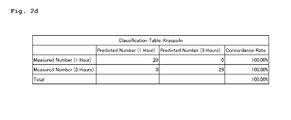
- labor intensity refers to the degree of fatigue that may be determined by Kraepelin test, fatigue investigation, or the like after labor.
- the "maladjustment to job” is as defined in DSM-IV.
- the "learning intensity” refers to the degree of fatigue that may be determined by Kraepelin test, fatigue investigation, or the like after learning.
- the "maladjustment to learning” is as defined in DSM-IV.
- the "suicide risk” is as defined in DSM-IV.
- the "suicide feeling" is as defined in DSM-IV.
- the "suicide attempt" is as defined in DSM-IV.
- the "personality disorder” is as defined in DSM-IV.
- the "alcoholic psychoses” is as defined in DSM-IV.
- the "insomnia” is as defined in DSM-IV.
- the "diurnal rhythm disorder” is as defined in DSM-IV.
- the "psychoneurosis” is as defined in DSM-IV.
- the "comfortable mood” is as defined in DSM-IV.
- the "uncomfortable mood” is as defined in DSM-IV.
- the "depressive state” is as defined in DSM-IV.
- the "dementia” is as defined in DSM-IV.
- the "Alzheimer type senile dementia” is as defined in DSM-IV.
- the "Alzheimer disease” is as defined in DSM-IV.
- the "Pick disease” is as defined in DSM-IV.
- the "central neurodegenerative disease” is as defined in DSM-IV.
- OPCA olivopontocerebellar atrophy
- the "Parkinson disease” is as defined in DSM-IV.
- the "diffuse Lewy body disease” is as defined in DSM-IV.
- the indicating agent of the intensity of mental conditions or disorders includes at least two kinds of factors that are selected from the group described above and are each weighted.
- 3 to 41 kinds of factors preferably 3 to 28 kinds, more preferably 5 to 20 kinds, even more preferably 8 to 12 kinds should be selected.
- factors constituting the indicating agent of the intensity of mental conditions or disorders are preferably placed in different containers.
- the indicating agent of mental conditions may contain any other component, as long as it is mainly composed of the factors such as cytokines and chemokines.
- other components include, but are not limited to, a solvent such as a buffer and a saline, a stabilizing agent, a bacteriostatic agent, a preservative and the like.
- the indicating agent of the intensity of a mental condition or disorder according to the present invention may serve as an objective indicator in the field of animal mental health.
- factors in an animal biological sample preferably in blood plasma, serum, saliva, or urine, may be each weighted to constitute the indicating agent so that various mental conditions can be readily and quantitatively determined.
- the indicating agent of fatigue or the indicating agent of the intensity of a mental condition or disorder may comprise a combination of numerical values of weighted factors, namely a database.
- the indicating agent is a database
- various mental conditions can be readily and quantitatively determined for each item from the values measured with the test agent of the invention.
- the agent for testing intensity of mental conditions or mental disorders of the present invention characteristically contains at least two kinds of molecule selected from the group consisting of molecules specifically recognizing the aforementioned factors (IL-1 ⁇ , IL-1ra, IL-2, IL-3, IL-4, IL-5, IL-6, IL-7, IL-8, IL-9, IL-10, IL-11, IL-12, IL-13, IL-15, IL-17, IL-18, Eotaxin, FGF basic, G-CSF, GM-CSF, IFN- ⁇ , IFN- ⁇ , IP-10, MCP-1, MIP-1 ⁇ , MIP-1 ⁇ , PDGF-BB, RANTES, TNF- ⁇ , VEGF, CSF-2, FGF- ⁇ , neurotrophin 5, MCP-3, ⁇ -2-microglobulin, angiotensin II, CSF-3, CXC chemokine ligand 1, CXC chemokine ligand 5 and HGF, respectively).
- factors IL-1 ⁇ , IL-1
- the molecules and other components contained in the agent for testing mental conditions or disorders of the present invention may be the same as those contained in the agent for testing stress or fatigue.
- the present invention also provides a method for measuring the intensity of a mental condition or disorder, including the steps of: measuring the amounts of factors in a biological sample with the agent for testing the intensity of a mental condition or disorder; and proportionally weighting each of the amounts obtained in the measuring step and comparing the weighted amounts with the indicating agent of the intensity of the mental condition or disorder.
- the concentrations of the factors in a biological sample may be measured with the molecules, preferably antibodies, in the agent for testing the intensity of the mental condition or disorder, by publicly known methods.
- the system that allows simple and simultaneous measurement of a number of proteins is preferably Bio-Plex Suspension Array System (manufactured by Bio-Rad Laboratories).
- the value obtained by multiplying the measured amount of each factor in the biological sample by a coefficient is compared with the indicating agent of the mental condition so that the mental condition of an animal can be objectively and quantitatively evaluated.
- the animal is preferably a vertebrate including human and particularly preferably a domestic or companion animal such as cattle, horse, pig, sheep, goat, chicken, dog, cat and the like.
- the method for measuring the intensity of a mental condition or disorder of the present invention may be applied to a domestic or companion animal.
- the intensity of the mental condition or disorder of an animal can be objectively monitored, which is advantageous for grasping the mental health of the animal.
- the kit for testing the intensity of a mental condition or disorder of the present invention includes the molecules, preferably at least two kinds of antibodies, placed in different compartments.
- the test kit may include any other reagent such as a buffer for dilution of the reagent or the biological sample, a fluorescent dye, a reaction vessel, a positive control, a negative control, test protocol instructions and the like. Mental conditions can be easily measured using the test kit of the present invention.
- the levels of the factors in various mental conditions or disorders can be analyzed with high throughput. Individual differences can also be easily found based on the findings obtained by the present invention. Therefore, the present invention may be applied to discover new genes based on individual differences in the response of cytokine level to stress or may be applied to screening for stress resistance. The present invention may also be used to determine the anti-stress effect of anti-stress drugs.
- the present invention can provide the following advantages:
- the blood plasma was frozen and stored or stored on ice, and then the cytokines shown separately were simultaneously measured with a microbead protein array system (Bio-Plex Suspension Array System manufactured by Bio-Rad Laboratories and modified by us).
- the cytokines were also measured by a conventional ELISA method, and the concentration of each cytokine in the blood was determined.
- Fig. 1a An example of the result is shown in Fig. 1a .
- the result was obtained by a process including determining the concentration of each cytokine in the blood, then calculating a correlation coefficient for each cytokine concentration in blood, and coloring high correlation values (with correlation coefficients of 0.50 to 0.6499 in light gray, 0.65 to 0.7999 in dark gray, 0.8 to 0.9999 in black; concerning the relative risk of correlation, p ⁇ 0.001 when the correlation coefficient was 0.50).
- the result shows that some cytokines have high correlation in the healthy subjects.
- 142 subjects who were healthy but frequently work night shifts were examined as to whether the cytokine correlation could reflect the presence or absence of a night shift and was useful to discriminate between before and after a night shift.
- the blood plasma was frozen and stored or stored on ice, and then the cytokines shown separately were simultaneously measured with a microbead protein array system (Bio-Plex Suspension Array System manufactured by Bio-Rad Laboratories and modified by us).
- the cytokines were also measured by a conventional ELISA method, and the concentration of each cytokine in the blood was determined.
- all the volunteers each had a psychiatrically structured interview so that their psychological tendency and conditions were grasped. Each cytokine value was multiplied by a certain coefficient to produce scores.
- Fig. 3 shows cytokine correlation coefficients for patients with depression
- Fig. 4 shows cytokine correlation coefficients for patients with schizophrenia.
- the results were obtained by calculating a correlation coefficient for each cytokine concentration in blood and coloring high correlation values. It is apparent that the results each differ from the correlation coefficient table of the healthy subjects shown in Fig. 1 .
- a logistic regression analysis was performed to determine whether it was possible to correctly diagnose depression according to the present invention. As a result, the accuracy was 91%.
- a logistic regression analysis was also performed to determine whether it was possible to correctly diagnose schizophrenia according to the present invention. As a result, the accuracy was 96%.
- the results show that different mental disorders (such as depression, schizophrenia, excitement, tension, anxiety and the like) can be grasped and evaluated by the cytokine measurement method according to the present invention.
- the results also show that psychiatric diagnosis or therapy validation, which would conventionally significantly depend on empirical determination and tend to be ambiguous, can be definitely made using the cytokine measurement and that the cytokine measurement would be useful for evaluation of therapeutic regimen efficacy.
- Mental conditions are often not externalized even though they are in a pathological state, and this adds to the problem in the current society. It has been found, however, that based on the above correlation found according to the present invention, diagnosis or assessment of depression and schizophrenia, two major diseases in the field of psychiatry, can be satisfactorily performed according to the present invention.
- OPCA central neurodegenerative diseases
- Parkinson disease if possible, should greatly contribute to the QOL of patients.
- discrimination between depression, mild dementia and central neurodegenerative disease is possible at a stage where dementia or central neurodegenerative disease is not manifested. Therefore, it is expected that grouping of mild dementia or mild degenerative disease as proposed in the field of psychiatry can be achieved.
- the use of the correlation found between mental condition, fatigue or stress level and levels of the factors in blood, urine or saliva allows simple, inexpensive and objective evaluation of the risk or degree of stress, fatigue or dysthymia (particularly blues).
- the allocation of the score to each of the selected cytokines may be modified so that stress, fatigue and dysthymia (particularly blues) can each be rated on an optimum scale in a single measurement procedure, and this is widely applicable. Therefore, stress, fatigue or dysthymia, (blues) can be objectively evaluated and their degree can be grasped. Since cytokines are causative agents or exacerbation factors in various diseases, care and preventive measures can be provided from the standpoint of the integration of mind and body.
- the intensity of external loads or the effect of the loads can be evaluated or predicted, when temporary biological reactions occur. Specifically, external load-induced fatigue and relief from the fatigue can be evaluated, so that the individual's tendency to become fatigued or the individual's resilience can be evaluated. In addition, the degree of the effect of a certain factor on the individual's tendency to become fatigued or the individual's resilience can also be evaluated. Therefore, the application of the present invention to the field of occupational health may lead to prevention of occupational accidents. In addition, the present invention can contribute to the development of stress-relieving pharmaceuticals, food products, daily necessities, designs, images, sounds, buildings, residential environments, and so on.
- the present invention allows early detection and early treatment of pathological conditions, evaluation of treatment effects, determination of whether therapies are effective or ineffective, and unified detection and management of many pathological conditions (such as skin disorders caused by ultraviolet rays and so on, atopic dermatitis, psoriasis, acne vulgaris, pemphigus, ichthyosis, optic hyperesthesia, burns including inflammatory skin changes as pathological conditions, radiation dermatosis, Alzheimer disease, senile dementia of Alzheimer type, diffuse Lewy body disease, Pick disease, Binswanger disease, Parkinson disease, Parkinson syndrome, cerebral ischemia, cerebral ischemia/reperfusion injury, carbon monoxide poisoning,
- pathological conditions such as skin disorders caused by ultraviolet rays and so on, atopic dermatitis, psoriasis, acne vulgaris, pemphigus, ichthyosis, optic hyperesthesia, burns including inflammatory skin changes as pathological conditions, radiation dermatosis, Alzheimer disease, senile dementia of Alzheimer
Landscapes
- Life Sciences & Earth Sciences (AREA)
- Health & Medical Sciences (AREA)
- Engineering & Computer Science (AREA)
- Molecular Biology (AREA)
- Chemical & Material Sciences (AREA)
- Biomedical Technology (AREA)
- Urology & Nephrology (AREA)
- Hematology (AREA)
- Immunology (AREA)
- Cell Biology (AREA)
- General Health & Medical Sciences (AREA)
- Biotechnology (AREA)
- Proteomics, Peptides & Aminoacids (AREA)
- Food Science & Technology (AREA)
- Medicinal Chemistry (AREA)
- Physics & Mathematics (AREA)
- Analytical Chemistry (AREA)
- Biochemistry (AREA)
- Microbiology (AREA)
- General Physics & Mathematics (AREA)
- Pathology (AREA)
- Investigating Or Analysing Biological Materials (AREA)
- Medicines That Contain Protein Lipid Enzymes And Other Medicines (AREA)
- Measuring Or Testing Involving Enzymes Or Micro-Organisms (AREA)
- Measuring And Recording Apparatus For Diagnosis (AREA)
- Measuring Pulse, Heart Rate, Blood Pressure Or Blood Flow (AREA)
Applications Claiming Priority (2)
| Application Number | Priority Date | Filing Date | Title |
|---|---|---|---|
| JP2006041633 | 2006-02-17 | ||
| EP07714417.8A EP2006680B1 (fr) | 2006-02-17 | 2007-02-16 | Indicateur d'une charge biologique et procede permettant de mesurer la charge biologique |
Related Parent Applications (2)
| Application Number | Title | Priority Date | Filing Date |
|---|---|---|---|
| EP07714417.8A Division-Into EP2006680B1 (fr) | 2006-02-17 | 2007-02-16 | Indicateur d'une charge biologique et procede permettant de mesurer la charge biologique |
| EP07714417.8 Division | 2007-02-16 |
Publications (2)
| Publication Number | Publication Date |
|---|---|
| EP2453236A2 true EP2453236A2 (fr) | 2012-05-16 |
| EP2453236A3 EP2453236A3 (fr) | 2012-08-22 |
Family
ID=38371648
Family Applications (2)
| Application Number | Title | Priority Date | Filing Date |
|---|---|---|---|
| EP07714417.8A Active EP2006680B1 (fr) | 2006-02-17 | 2007-02-16 | Indicateur d'une charge biologique et procede permettant de mesurer la charge biologique |
| EP12154982A Withdrawn EP2453236A3 (fr) | 2006-02-17 | 2007-02-16 | Indicateur de charge biologique et procédé de mesure de charge biologique |
Family Applications Before (1)
| Application Number | Title | Priority Date | Filing Date |
|---|---|---|---|
| EP07714417.8A Active EP2006680B1 (fr) | 2006-02-17 | 2007-02-16 | Indicateur d'une charge biologique et procede permettant de mesurer la charge biologique |
Country Status (20)
| Country | Link |
|---|---|
| US (1) | US20100233818A1 (fr) |
| EP (2) | EP2006680B1 (fr) |
| JP (1) | JP5069213B2 (fr) |
| KR (1) | KR101473495B1 (fr) |
| CN (1) | CN101454669B (fr) |
| AU (1) | AU2007215739B2 (fr) |
| BR (1) | BRPI0707958B8 (fr) |
| CA (1) | CA2642706C (fr) |
| CY (1) | CY1115418T1 (fr) |
| DK (1) | DK2006680T3 (fr) |
| ES (1) | ES2474690T3 (fr) |
| HR (1) | HRP20140673T1 (fr) |
| IL (1) | IL193496A (fr) |
| MY (1) | MY151424A (fr) |
| NZ (1) | NZ571018A (fr) |
| PL (1) | PL2006680T3 (fr) |
| PT (1) | PT2006680E (fr) |
| RU (1) | RU2519324C2 (fr) |
| SI (1) | SI2006680T1 (fr) |
| WO (1) | WO2007094472A1 (fr) |
Families Citing this family (30)
| Publication number | Priority date | Publication date | Assignee | Title |
|---|---|---|---|---|
| US8158374B1 (en) | 2006-09-05 | 2012-04-17 | Ridge Diagnostics, Inc. | Quantitative diagnostic methods using multiple parameters |
| CN102037355A (zh) * | 2008-03-04 | 2011-04-27 | 里奇诊断学股份有限公司 | 基于多重生物标记物板块诊断和监测抑郁症 |
| EP2272044A4 (fr) * | 2008-03-12 | 2011-07-06 | Ridge Diagnostics Inc | Biomarqueurs d'inflammation pour la surveillance de troubles de dépression |
| JP5219048B2 (ja) * | 2008-09-17 | 2013-06-26 | 独立行政法人農業・食品産業技術総合研究機構 | 抗豚インターロイキン−18抗体を用いた動物のストレス評価方法 |
| EP2337866B1 (fr) * | 2008-10-15 | 2014-07-30 | Ridge Diagnostics, Inc. | Mappage sur hyperespace multidimensionnel de biomarqueur humain pour des troubles dépressifs |
| WO2010059709A2 (fr) * | 2008-11-18 | 2010-05-27 | Ridge Diagnostics, Inc. | Biomarqueurs de syndrome métabolique et d'axe hpa pour un trouble dépressif majeur |
| CA2757518A1 (fr) * | 2009-04-01 | 2010-10-07 | Ridge Diagnostics, Inc. | Biomarqueurs pour controler le traitement de maladies neuropsychiatriques |
| CN102460153A (zh) * | 2009-04-06 | 2012-05-16 | 里奇诊断学股份有限公司 | 监控神经精神疾病治疗的生物标记 |
| WO2010119769A1 (fr) * | 2009-04-14 | 2010-10-21 | 片倉工業株式会社 | Procédé d'évaluation du stress chronique |
| JP5553525B2 (ja) * | 2009-04-17 | 2014-07-16 | 敦生 関山 | 生体負荷の指標剤および生体負荷の測定方法 |
| WO2011094308A2 (fr) * | 2010-01-26 | 2011-08-04 | Ridge Diagnostics, Inc. | Panels de marqueurs biologiques multiples pour stratifier la sévérité d'une maladie et pour surveiller le traitement d'une dépression |
| JP5821447B2 (ja) * | 2011-09-13 | 2015-11-24 | 大正製薬株式会社 | カルジオリピンを用いた疲労の判定方法 |
| CN104937414A (zh) * | 2012-10-24 | 2015-09-23 | 夏洛特-梅克伦堡医院(商业用名:卡罗来纳保健系统) | 用于鉴定肝损伤的生物标记 |
| JP5710666B2 (ja) * | 2013-02-25 | 2015-04-30 | 敦生 関山 | 生体負荷の指標剤および生体負荷の測定方法 |
| JP6205175B2 (ja) | 2013-05-16 | 2017-10-04 | 株式会社Resvo | 精神・神経疾患バイオマーカー |
| CA3112130A1 (fr) * | 2013-07-11 | 2015-01-15 | University Of North Texas Health Science Center At Fort Worth | Depistage base sur le sang pour la detection d'une maladie neurologique dans des installations de soins primaires |
| AU2014354808A1 (en) | 2013-11-26 | 2016-06-02 | University Of North Texas Health Science Center At Fort Worth | Personalized medicine approach for treating cognitive loss |
| JPWO2015174544A1 (ja) * | 2014-05-16 | 2017-04-20 | 国立研究開発法人国立精神・神経医療研究センター | 精神疾患判定マーカー |
| CA2998533A1 (fr) * | 2015-10-08 | 2017-04-13 | The Henry M. Jackson Foundation For The Advancement Of Military Medicine, Inc. | Biomarqueurs pour le diagnostic du trouble de stress post-traumatique |
| CN106814145B (zh) * | 2016-12-20 | 2019-08-30 | 河北工程大学 | 一种人体疲劳测定方法 |
| RU2630605C1 (ru) * | 2017-01-09 | 2017-09-11 | Федеральное бюджетное учреждение науки "Федеральный научный центр медико-профилактических технологий управления рисками здоровью населения" Федеральной службы по надзору в сфере защиты прав потребителей и благополучия человека (ФБУН "ФНЦ медико-профилактических технологий управления рисками здоровью | Способ оценки риска нарушения здоровья работников титано-магниевого производства, режим труда которых включает ночные смены |
| CN106706929B (zh) * | 2017-01-22 | 2019-01-18 | 河北工程大学 | 一种利用唾液检测人体疲劳的方法 |
| CN108333362B (zh) * | 2017-12-21 | 2021-04-02 | 河北工程大学 | 一种人体疲劳测定方法 |
| WO2019143562A1 (fr) | 2018-01-18 | 2019-07-25 | University Of North Texas Health Science Center At Fort Worth | Diagnostic compagnon pour ains et donépézil pour le traitement de sous-populations spécifiques de patients souffrant de la maladie d'alzheimer |
| WO2020241809A1 (fr) * | 2019-05-31 | 2020-12-03 | 日本たばこ産業株式会社 | Procédé d'évaluation de sensation de bonheur et procédé d'acquisition de données pour évaluer la sensation de bonheur |
| CN112716505A (zh) * | 2020-12-08 | 2021-04-30 | 河北工程大学 | 一种快速的疲劳检测方法 |
| CN113180595A (zh) * | 2021-03-25 | 2021-07-30 | 河北工程大学 | 基于人体唾液蛋白测定重点行业职业疲劳程度的检测系统 |
| CN113151443B (zh) * | 2021-04-16 | 2022-07-01 | 中央民族大学 | 细胞因子联合分析作为精神分裂症标志物及其应用 |
| JP7767055B2 (ja) * | 2021-08-16 | 2025-11-11 | 株式会社Lsiメディエンス | 精神ストレスの定量法 |
| KR102530616B1 (ko) * | 2022-09-22 | 2023-05-10 | 주식회사 메디푸드플랫폼 | 의과학 및 성분학 기반의 정신 상태 분석 장치, 방법 및 프로그램 |
Citations (3)
| Publication number | Priority date | Publication date | Assignee | Title |
|---|---|---|---|---|
| JPH0373280B2 (fr) | 1984-08-15 | 1991-11-21 | Shingijutsu Kaihatsu Jigyodan | |
| JPH08193098A (ja) | 1994-11-15 | 1996-07-30 | Hayashibara Biochem Lab Inc | インターフェロン−γの産生を誘導するポリペプチド |
| WO2006003927A1 (fr) | 2004-06-30 | 2006-01-12 | Atsuo Sekiyama | Agent indicateur d'une réponse non inflammatoire à un stress et utilisation de celui-ci |
Family Cites Families (12)
| Publication number | Priority date | Publication date | Assignee | Title |
|---|---|---|---|---|
| US7135458B1 (en) * | 1995-11-15 | 2006-11-14 | Kabushiki Kaisha Hayashibara Seibutsu Kagaku Kenkyujo | Interferon-γ inducing polypeptide, pharmaceutical composition thereof, monoclonal antibody thereto, and methods of use |
| JP4004088B2 (ja) * | 1995-09-26 | 2007-11-07 | 株式会社林原生物化学研究所 | 免疫担当細胞においてインターフェロン−γの産生を誘導する蛋白質 |
| JP2952750B2 (ja) * | 1995-02-23 | 1999-09-27 | 株式会社林原生物化学研究所 | モノクローナル抗体 |
| US6207641B1 (en) * | 1995-03-10 | 2001-03-27 | Kabushiki Kaisha Hayashibara Seibutsu Kagaku Kenkyujo | Pharmaceutical composition containing IFN-γ inducing polypeptide or factor for treating and/or preventing IFN-γ susceptive diseases |
| JP4490576B2 (ja) * | 1999-10-26 | 2010-06-30 | 富山化学工業株式会社 | 中枢神経系作用薬のスクリーニング方法及びストレス状態の評価方法 |
| MXPA04001725A (es) * | 2001-08-24 | 2005-04-11 | Advanced Cell Tech Inc | ANáLISIS DE SELECCION PARA IDENTIFICAR AGENTES INDUCTORES DE DIFERENCIACION Y PRODUCCION DE CELULAS DIFERENCIADAS PARA TERAPIA CELULAR. |
| DK2314629T4 (da) * | 2002-07-18 | 2023-02-06 | Merus Nv | Rekombinant produktion af blandinger af antistoffer |
| US20050084880A1 (en) * | 2003-07-11 | 2005-04-21 | Ronald Duman | Systems and methods for diagnosing & treating psychological and behavioral conditions |
| JP2005124565A (ja) * | 2003-09-29 | 2005-05-19 | Sogo Ikagaku Kenkyusho:Kk | 新規神経ペプチド及びその利用 |
| US20050245557A1 (en) * | 2003-10-15 | 2005-11-03 | Pain Therapeutics, Inc. | Methods and materials useful for the treatment of arthritic conditions, inflammation associated with a chronic condition or chronic pain |
| US20050208519A1 (en) * | 2004-03-12 | 2005-09-22 | Genenews Inc. | Biomarkers for diagnosing schizophrenia and bipolar disorder |
| JP4645939B2 (ja) | 2004-07-22 | 2011-03-09 | 日本電気株式会社 | 移動基地局位置決定システム、端末位置決定システム、移動基地局、無線端末及び基地局位置決定プログラム |
-
2007
- 2007-02-16 WO PCT/JP2007/052887 patent/WO2007094472A1/fr not_active Ceased
- 2007-02-16 HR HRP20140673TT patent/HRP20140673T1/hr unknown
- 2007-02-16 JP JP2008500573A patent/JP5069213B2/ja active Active
- 2007-02-16 PT PT77144178T patent/PT2006680E/pt unknown
- 2007-02-16 DK DK07714417.8T patent/DK2006680T3/da active
- 2007-02-16 BR BRPI0707958A patent/BRPI0707958B8/pt not_active IP Right Cessation
- 2007-02-16 PL PL07714417T patent/PL2006680T3/pl unknown
- 2007-02-16 NZ NZ571018A patent/NZ571018A/en not_active IP Right Cessation
- 2007-02-16 MY MYPI20083117 patent/MY151424A/en unknown
- 2007-02-16 SI SI200731482T patent/SI2006680T1/sl unknown
- 2007-02-16 CA CA2642706A patent/CA2642706C/fr active Active
- 2007-02-16 AU AU2007215739A patent/AU2007215739B2/en not_active Ceased
- 2007-02-16 RU RU2008137234/15A patent/RU2519324C2/ru active
- 2007-02-16 US US12/224,045 patent/US20100233818A1/en not_active Abandoned
- 2007-02-16 ES ES07714417.8T patent/ES2474690T3/es active Active
- 2007-02-16 CN CN2007800136014A patent/CN101454669B/zh not_active Expired - Fee Related
- 2007-02-16 EP EP07714417.8A patent/EP2006680B1/fr active Active
- 2007-02-16 EP EP12154982A patent/EP2453236A3/fr not_active Withdrawn
-
2008
- 2008-08-17 IL IL193496A patent/IL193496A/en active IP Right Grant
- 2008-09-16 KR KR1020087022617A patent/KR101473495B1/ko not_active Expired - Fee Related
-
2014
- 2014-07-11 CY CY20141100525T patent/CY1115418T1/el unknown
Patent Citations (3)
| Publication number | Priority date | Publication date | Assignee | Title |
|---|---|---|---|---|
| JPH0373280B2 (fr) | 1984-08-15 | 1991-11-21 | Shingijutsu Kaihatsu Jigyodan | |
| JPH08193098A (ja) | 1994-11-15 | 1996-07-30 | Hayashibara Biochem Lab Inc | インターフェロン−γの産生を誘導するポリペプチド |
| WO2006003927A1 (fr) | 2004-06-30 | 2006-01-12 | Atsuo Sekiyama | Agent indicateur d'une réponse non inflammatoire à un stress et utilisation de celui-ci |
Non-Patent Citations (26)
| Title |
|---|
| "Current Protocol in Molecular Biology", 2000 |
| "Current protocols in Molecular Biology", 1987, PUBLISH. JOHN WILEY AND SONS |
| "Jikken Igaku", vol. 6, 1988 |
| ADACHI, 0. ET AL., IMMUNITY, vol. 9, 1998, pages 143 - 150 |
| BLEASE, K. ET AL., INFLAMM. RES., vol. 50, 2001, pages 552 - 560 |
| CONTI, B. ET AL., J. BIOL. CHEM., vol. 272, 1997, pages 2035 - 2037 |
| DINARELLO, C.A. ET AL., J. LEUKOC. BIOL., vol. 63, 1998, pages 658 - 664 |
| DUGUE, B. ET AL., SCAND. J. CLIN. INVEST., vol. 53, 1993, pages 555 - 561 |
| ENDOCRINOLOGY, vol. 133, 1993, pages 2523 - 2530 |
| GU, Y. ET AL., SCIENCE, vol. 275, 1997, pages 206 - 209 |
| HOSHINO, T. ET AL., J. IMMUNOL., vol. 162, 1999, pages 5070 - 5077 |
| HOSHINO, T. ET AL., J. IMMUNOL., vol. 166, 2001, pages 7014 - 7018 |
| HUR, J. ET AL., FEBS LETT., vol. 507, 2001, pages 157 - 162 |
| KIECOLT-GLASER, J. K. ET AL., PROC. NATL. ACAD. SCI. USA, vol. 93, 1996, pages 3043 - 3047 |
| KOKAI, M. ET AL., J. IMMUNOTHER., vol. 25, 2002, pages 68 - 71 |
| NAKANISHI, K. ET AL., ANNU. REV. IMMUNOL., vol. 19, 2001, pages 423 - 474 |
| SCHAUVLIEGE, R. ET AL., J. BIOL. CHEM., vol. 277, 2002, pages 41624 - 41630 |
| SCHUBERT, C. ET AL., PSYCHOSOM. MED., vol. 61, 1999, pages 876 - 882 |
| SEKIYAMA, A. ET AL., IMMUNITY, vol. 22, no. 6, 2005, pages 669 - 677 |
| SEKIYAMA, A. ET AL., J MED INVEST., vol. 52, 2005, pages 236 - 239 |
| SEKIYAMA, A. ET AL., J NEUROIMMUNOL., vol. 171, no. 1-2, 2006, pages 38 - 44 |
| SUGAMA, S. ET AL., J. IMMUNOL., vol. 165, 2000, pages 6287 - 6292 |
| TAKEUCHI, 0. ET AL., J. IMMUNOL., vol. 165, 2000, pages 5392 - 5396 |
| VANDEN BERGHE, W. ET AL., J. BIOL. CHEM., vol. 273, 1998, pages 3285 - 3290 |
| WANG, S. ET AL., CELL, vol. 92, 1998, pages 501 - 509 |
| ZHOU, D. ET AL., NATURE, vol. 378, 1995, pages 88 - 91 |
Also Published As
| Publication number | Publication date |
|---|---|
| RU2519324C2 (ru) | 2014-06-10 |
| CN101454669B (zh) | 2013-11-20 |
| CY1115418T1 (el) | 2017-01-04 |
| CN101454669A (zh) | 2009-06-10 |
| SI2006680T1 (sl) | 2014-08-29 |
| PT2006680E (pt) | 2014-07-14 |
| PL2006680T3 (pl) | 2014-09-30 |
| MY151424A (en) | 2014-05-30 |
| EP2453236A3 (fr) | 2012-08-22 |
| EP2006680A1 (fr) | 2008-12-24 |
| HRP20140673T1 (hr) | 2014-10-10 |
| BRPI0707958A2 (pt) | 2011-05-17 |
| RU2008137234A (ru) | 2010-03-27 |
| NZ571018A (en) | 2012-03-30 |
| BRPI0707958B1 (pt) | 2018-10-16 |
| DK2006680T3 (da) | 2014-06-23 |
| EP2006680A4 (fr) | 2009-09-09 |
| IL193496A0 (en) | 2009-05-04 |
| JPWO2007094472A1 (ja) | 2009-07-09 |
| AU2007215739B2 (en) | 2014-01-16 |
| US20100233818A1 (en) | 2010-09-16 |
| JP5069213B2 (ja) | 2012-11-07 |
| IL193496A (en) | 2015-07-30 |
| CA2642706A1 (fr) | 2007-08-23 |
| WO2007094472A1 (fr) | 2007-08-23 |
| EP2006680B1 (fr) | 2014-04-16 |
| CA2642706C (fr) | 2017-08-01 |
| HK1133461A1 (en) | 2010-03-26 |
| KR101473495B1 (ko) | 2014-12-17 |
| KR20090007289A (ko) | 2009-01-16 |
| AU2007215739A1 (en) | 2007-08-23 |
| BRPI0707958B8 (pt) | 2021-07-27 |
| ES2474690T3 (es) | 2014-07-09 |
Similar Documents
| Publication | Publication Date | Title |
|---|---|---|
| EP2006680B1 (fr) | Indicateur d'une charge biologique et procede permettant de mesurer la charge biologique | |
| Chang et al. | Cortisol and inflammatory biomarker levels in youths with attention deficit hyperactivity disorder (ADHD): evidence from a systematic review with meta-analysis | |
| Santos et al. | A novel human mast cell activation test for peanut allergy | |
| Nylen et al. | Increased serum-GFAP in patients with severe traumatic brain injury is related to outcome | |
| Sin et al. | Affective reactivity to daily stressors is associated with elevated inflammation. | |
| Newton et al. | Interleukin-6 and soluble interleukin-6 receptor levels in posttraumatic stress disorder: associations with lifetime diagnostic status and psychological context | |
| Heffner et al. | Stress and anxiety effects on positive skin test responses in young adults with allergic rhinitis | |
| Christiansen et al. | Does the cortisol response to stress mediate the link between expressed emotion and oppositional behavior in Attention-Deficit/Hyperactivity-Disorder (ADHD)? | |
| Lucertini et al. | High cardiorespiratory fitness is negatively associated with daily cortisol output in healthy aging men | |
| US20190094240A1 (en) | Biomarkers | |
| Shields et al. | Determining the biological associates of acute cold pressor post-encoding stress effects on human memory: The role of salivary interleukin-1β | |
| Wang et al. | Salivary dehydroepiandrosterone, but not cortisol, is associated with attention deficit hyperactivity disorder | |
| Ramezani et al. | Increased levels of neurofilament light chain in suicide attempters’ serum | |
| Bertin et al. | Beyond the human touch: A critical review of the promise and challenges of animal-and robot-assisted therapy in loneliness and mental healthcare | |
| JP5710666B2 (ja) | 生体負荷の指標剤および生体負荷の測定方法 | |
| JP5553525B2 (ja) | 生体負荷の指標剤および生体負荷の測定方法 | |
| HK1170810A (en) | Biological load indicator and method of measuring biological load | |
| HK1128046A (en) | Biological load indicator and method of measuring biological load | |
| Zheng et al. | Inflammatory chemokines in adolescents’ suicide state with depressive disorders | |
| Druzhkova et al. | Effects of childhood trauma on the biological correlates of stress in men and women with borderline mental disorders | |
| HK1133461B (en) | Biological load indicator and method of measuring biological load | |
| Hon et al. | Seromarkers in childhood atopic dermatitis | |
| Kubo et al. | Differences between Hair Cortisol Concentrations in Day Shift Workers and Rotating Night Shift Workers in Japan | |
| Sansone | The FMR1 gene and differential susceptibility to HPA-axis and immune dysfunction: Examination of a gene-environment interaction with stress | |
| FitzGerald | Blunted Affect is Associated With Hypothalamic—Pituitary—Adrenal Axis (HPA) Hypoactivity and Elevated CSF-Interleukin-1 Beta (IL-1β) in Response to Lumbar Puncture |
Legal Events
| Date | Code | Title | Description |
|---|---|---|---|
| PUAI | Public reference made under article 153(3) epc to a published international application that has entered the european phase |
Free format text: ORIGINAL CODE: 0009012 |
|
| AC | Divisional application: reference to earlier application |
Ref document number: 2006680 Country of ref document: EP Kind code of ref document: P |
|
| AK | Designated contracting states |
Kind code of ref document: A2 Designated state(s): AT BE BG CH CY CZ DE DK EE ES FI FR GB GR HU IE IS IT LI LT LU LV MC NL PL PT RO SE SI SK TR |
|
| AX | Request for extension of the european patent |
Extension state: HR |
|
| PUAL | Search report despatched |
Free format text: ORIGINAL CODE: 0009013 |
|
| AK | Designated contracting states |
Kind code of ref document: A3 Designated state(s): AT BE BG CH CY CZ DE DK EE ES FI FR GB GR HU IE IS IT LI LT LU LV MC NL PL PT RO SE SI SK TR |
|
| AX | Request for extension of the european patent |
Extension state: HR |
|
| RIC1 | Information provided on ipc code assigned before grant |
Ipc: G01N 33/53 20060101AFI20120713BHEP Ipc: G01N 33/68 20060101ALI20120713BHEP |
|
| REG | Reference to a national code |
Ref country code: HK Ref legal event code: DE Ref document number: 1170810 Country of ref document: HK |
|
| 17P | Request for examination filed |
Effective date: 20130219 |
|
| 17Q | First examination report despatched |
Effective date: 20130403 |
|
| STAA | Information on the status of an ep patent application or granted ep patent |
Free format text: STATUS: THE APPLICATION IS DEEMED TO BE WITHDRAWN |
|
| 18D | Application deemed to be withdrawn |
Effective date: 20131015 |
|
| REG | Reference to a national code |
Ref country code: HK Ref legal event code: WD Ref document number: 1170810 Country of ref document: HK |