EP2592130B1 - Matériau photochromique - Google Patents
Matériau photochromique Download PDFInfo
- Publication number
- EP2592130B1 EP2592130B1 EP11803688.8A EP11803688A EP2592130B1 EP 2592130 B1 EP2592130 B1 EP 2592130B1 EP 11803688 A EP11803688 A EP 11803688A EP 2592130 B1 EP2592130 B1 EP 2592130B1
- Authority
- EP
- European Patent Office
- Prior art keywords
- group
- general formula
- light
- compound
- independently represent
- Prior art date
- Legal status (The legal status is an assumption and is not a legal conclusion. Google has not performed a legal analysis and makes no representation as to the accuracy of the status listed.)
- Not-in-force
Links
- 239000000463 material Substances 0.000 title claims description 111
- 150000001875 compounds Chemical class 0.000 claims description 143
- 125000003118 aryl group Chemical group 0.000 claims description 54
- 125000000217 alkyl group Chemical group 0.000 claims description 33
- 125000005843 halogen group Chemical group 0.000 claims description 23
- 125000001424 substituent group Chemical group 0.000 claims description 23
- 125000003545 alkoxy group Chemical group 0.000 claims description 16
- 125000003282 alkyl amino group Chemical group 0.000 claims description 16
- 125000003277 amino group Chemical group 0.000 claims description 16
- 125000002887 hydroxy group Chemical group [H]O* 0.000 claims description 16
- 125000004448 alkyl carbonyl group Chemical group 0.000 claims description 15
- 125000002915 carbonyl group Chemical group [*:2]C([*:1])=O 0.000 claims description 15
- 125000004093 cyano group Chemical group *C#N 0.000 claims description 15
- 125000003709 fluoroalkyl group Chemical group 0.000 claims description 15
- 125000004435 hydrogen atom Chemical group [H]* 0.000 claims description 15
- 125000000449 nitro group Chemical group [O-][N+](*)=O 0.000 claims description 15
- 125000002496 methyl group Chemical group [H]C([H])([H])* 0.000 claims description 10
- 125000001997 phenyl group Chemical group [H]C1=C([H])C([H])=C(*)C([H])=C1[H] 0.000 claims description 6
- UHOVQNZJYSORNB-UHFFFAOYSA-N Benzene Chemical compound C1=CC=CC=C1 UHOVQNZJYSORNB-UHFFFAOYSA-N 0.000 description 176
- -1 2-ethoxybenzyl Chemical group 0.000 description 90
- 230000015572 biosynthetic process Effects 0.000 description 65
- QTBSBXVTEAMEQO-UHFFFAOYSA-N Acetic acid Chemical compound CC(O)=O QTBSBXVTEAMEQO-UHFFFAOYSA-N 0.000 description 48
- 238000005481 NMR spectroscopy Methods 0.000 description 48
- KWYUFKZDYYNOTN-UHFFFAOYSA-M Potassium hydroxide Chemical compound [OH-].[K+] KWYUFKZDYYNOTN-UHFFFAOYSA-M 0.000 description 48
- 239000007787 solid Substances 0.000 description 47
- 238000002834 transmittance Methods 0.000 description 46
- 230000005284 excitation Effects 0.000 description 43
- HEDRZPFGACZZDS-MICDWDOJSA-N Trichloro(2H)methane Chemical compound [2H]C(Cl)(Cl)Cl HEDRZPFGACZZDS-MICDWDOJSA-N 0.000 description 40
- 239000002904 solvent Substances 0.000 description 39
- 238000000862 absorption spectrum Methods 0.000 description 38
- 238000003786 synthesis reaction Methods 0.000 description 36
- IJGRMHOSHXDMSA-UHFFFAOYSA-N Atomic nitrogen Chemical compound N#N IJGRMHOSHXDMSA-UHFFFAOYSA-N 0.000 description 30
- 125000001797 benzyl group Chemical group [H]C1=C([H])C([H])=C(C([H])=C1[H])C([H])([H])* 0.000 description 26
- VYPSYNLAJGMNEJ-UHFFFAOYSA-N Silicium dioxide Chemical compound O=[Si]=O VYPSYNLAJGMNEJ-UHFFFAOYSA-N 0.000 description 25
- 238000003756 stirring Methods 0.000 description 24
- XLYOFNOQVPJJNP-UHFFFAOYSA-N water Substances O XLYOFNOQVPJJNP-UHFFFAOYSA-N 0.000 description 24
- 238000004847 absorption spectroscopy Methods 0.000 description 21
- HJFGULDHUDIPDA-UHFFFAOYSA-N 2-(2-formylphenyl)benzaldehyde Chemical group O=CC1=CC=CC=C1C1=CC=CC=C1C=O HJFGULDHUDIPDA-UHFFFAOYSA-N 0.000 description 20
- 239000000203 mixture Substances 0.000 description 19
- USFZMSVCRYTOJT-UHFFFAOYSA-N Ammonium acetate Chemical compound N.CC(O)=O USFZMSVCRYTOJT-UHFFFAOYSA-N 0.000 description 15
- 238000006243 chemical reaction Methods 0.000 description 15
- 229910052757 nitrogen Inorganic materials 0.000 description 15
- 238000005160 1H NMR spectroscopy Methods 0.000 description 14
- QGZKDVFQNNGYKY-UHFFFAOYSA-N Ammonia Chemical compound N QGZKDVFQNNGYKY-UHFFFAOYSA-N 0.000 description 14
- 239000005695 Ammonium acetate Substances 0.000 description 14
- 229940043376 ammonium acetate Drugs 0.000 description 14
- 235000019257 ammonium acetate Nutrition 0.000 description 14
- 238000002835 absorbance Methods 0.000 description 13
- 238000010438 heat treatment Methods 0.000 description 13
- 230000031700 light absorption Effects 0.000 description 13
- 239000007800 oxidant agent Substances 0.000 description 13
- 239000010453 quartz Substances 0.000 description 13
- 230000002441 reversible effect Effects 0.000 description 13
- LLHYEUXBUWGNGH-UHFFFAOYSA-N 1-(2-formylnaphthalen-1-yl)naphthalene-2-carbaldehyde Chemical class C1=CC=C2C(C3=C4C=CC=CC4=CC=C3C=O)=C(C=O)C=CC2=C1 LLHYEUXBUWGNGH-UHFFFAOYSA-N 0.000 description 12
- VHUUQVKOLVNVRT-UHFFFAOYSA-N Ammonium hydroxide Chemical compound [NH4+].[OH-] VHUUQVKOLVNVRT-UHFFFAOYSA-N 0.000 description 12
- 238000001035 drying Methods 0.000 description 12
- 238000001914 filtration Methods 0.000 description 12
- 230000001376 precipitating effect Effects 0.000 description 12
- 239000000741 silica gel Substances 0.000 description 12
- 229910002027 silica gel Inorganic materials 0.000 description 12
- 238000007254 oxidation reaction Methods 0.000 description 11
- LFQSCWFLJHTTHZ-UHFFFAOYSA-N Ethanol Chemical compound CCO LFQSCWFLJHTTHZ-UHFFFAOYSA-N 0.000 description 10
- 239000003054 catalyst Substances 0.000 description 10
- VZSRBBMJRBPUNF-UHFFFAOYSA-N 2-(2,3-dihydro-1H-inden-2-ylamino)-N-[3-oxo-3-(2,4,6,7-tetrahydrotriazolo[4,5-c]pyridin-5-yl)propyl]pyrimidine-5-carboxamide Chemical compound C1C(CC2=CC=CC=C12)NC1=NC=C(C=N1)C(=O)NCCC(N1CC2=C(CC1)NN=N2)=O VZSRBBMJRBPUNF-UHFFFAOYSA-N 0.000 description 9
- 239000011261 inert gas Substances 0.000 description 9
- 238000001953 recrystallisation Methods 0.000 description 9
- HMUNWXXNJPVALC-UHFFFAOYSA-N 1-[4-[2-(2,3-dihydro-1H-inden-2-ylamino)pyrimidin-5-yl]piperazin-1-yl]-2-(2,4,6,7-tetrahydrotriazolo[4,5-c]pyridin-5-yl)ethanone Chemical compound C1C(CC2=CC=CC=C12)NC1=NC=C(C=N1)N1CCN(CC1)C(CN1CC2=C(CC1)NN=N2)=O HMUNWXXNJPVALC-UHFFFAOYSA-N 0.000 description 8
- LDXJRKWFNNFDSA-UHFFFAOYSA-N 2-(2,4,6,7-tetrahydrotriazolo[4,5-c]pyridin-5-yl)-1-[4-[2-[[3-(trifluoromethoxy)phenyl]methylamino]pyrimidin-5-yl]piperazin-1-yl]ethanone Chemical compound C1CN(CC2=NNN=C21)CC(=O)N3CCN(CC3)C4=CN=C(N=C4)NCC5=CC(=CC=C5)OC(F)(F)F LDXJRKWFNNFDSA-UHFFFAOYSA-N 0.000 description 8
- 238000005259 measurement Methods 0.000 description 8
- 0 C*(*=C(*)N(C([C@@]1*(IC(C(C)=C(*)C(*)=C(*)[I+]2)=C2I=C2*)=C(C)C(*)=C(*)C1*)=N*)N=C2[Al])=C Chemical compound C*(*=C(*)N(C([C@@]1*(IC(C(C)=C(*)C(*)=C(*)[I+]2)=C2I=C2*)=C(C)C(*)=C(*)C1*)=N*)N=C2[Al])=C 0.000 description 7
- 230000000052 comparative effect Effects 0.000 description 7
- 230000001678 irradiating effect Effects 0.000 description 7
- 239000002994 raw material Substances 0.000 description 7
- 230000003247 decreasing effect Effects 0.000 description 6
- 229910017464 nitrogen compound Inorganic materials 0.000 description 6
- 150000002830 nitrogen compounds Chemical class 0.000 description 6
- 230000003287 optical effect Effects 0.000 description 6
- 230000001590 oxidative effect Effects 0.000 description 6
- MKYBYDHXWVHEJW-UHFFFAOYSA-N N-[1-oxo-1-(2,4,6,7-tetrahydrotriazolo[4,5-c]pyridin-5-yl)propan-2-yl]-2-[[3-(trifluoromethoxy)phenyl]methylamino]pyrimidine-5-carboxamide Chemical compound O=C(C(C)NC(=O)C=1C=NC(=NC=1)NCC1=CC(=CC=C1)OC(F)(F)F)N1CC2=C(CC1)NN=N2 MKYBYDHXWVHEJW-UHFFFAOYSA-N 0.000 description 5
- NIPNSKYNPDTRPC-UHFFFAOYSA-N N-[2-oxo-2-(2,4,6,7-tetrahydrotriazolo[4,5-c]pyridin-5-yl)ethyl]-2-[[3-(trifluoromethoxy)phenyl]methylamino]pyrimidine-5-carboxamide Chemical compound O=C(CNC(=O)C=1C=NC(=NC=1)NCC1=CC(=CC=C1)OC(F)(F)F)N1CC2=C(CC1)NN=N2 NIPNSKYNPDTRPC-UHFFFAOYSA-N 0.000 description 5
- AFCARXCZXQIEQB-UHFFFAOYSA-N N-[3-oxo-3-(2,4,6,7-tetrahydrotriazolo[4,5-c]pyridin-5-yl)propyl]-2-[[3-(trifluoromethoxy)phenyl]methylamino]pyrimidine-5-carboxamide Chemical compound O=C(CCNC(=O)C=1C=NC(=NC=1)NCC1=CC(=CC=C1)OC(F)(F)F)N1CC2=C(CC1)NN=N2 AFCARXCZXQIEQB-UHFFFAOYSA-N 0.000 description 5
- 238000006317 isomerization reaction Methods 0.000 description 5
- 238000002211 ultraviolet spectrum Methods 0.000 description 5
- HZQNRJZKRBMUOZ-UHFFFAOYSA-N 2-(2-formyl-6-methylphenyl)-3-methylbenzaldehyde Chemical group CC1=CC=CC(C=O)=C1C1=C(C)C=CC=C1C=O HZQNRJZKRBMUOZ-UHFFFAOYSA-N 0.000 description 4
- 238000010521 absorption reaction Methods 0.000 description 4
- 125000000956 methoxy group Chemical group [H]C([H])([H])O* 0.000 description 4
- 230000035484 reaction time Effects 0.000 description 4
- WEVYAHXRMPXWCK-UHFFFAOYSA-N Acetonitrile Chemical compound CC#N WEVYAHXRMPXWCK-UHFFFAOYSA-N 0.000 description 3
- YMWUJEATGCHHMB-UHFFFAOYSA-N Dichloromethane Chemical compound ClCCl YMWUJEATGCHHMB-UHFFFAOYSA-N 0.000 description 3
- 238000004458 analytical method Methods 0.000 description 3
- QVGXLLKOCUKJST-UHFFFAOYSA-N atomic oxygen Chemical compound [O] QVGXLLKOCUKJST-UHFFFAOYSA-N 0.000 description 3
- 125000002485 formyl group Chemical group [H]C(*)=O 0.000 description 3
- 230000006870 function Effects 0.000 description 3
- 125000002883 imidazolyl group Chemical group 0.000 description 3
- 229910000464 lead oxide Inorganic materials 0.000 description 3
- 238000004519 manufacturing process Methods 0.000 description 3
- YEXPOXQUZXUXJW-UHFFFAOYSA-N oxolead Chemical compound [Pb]=O YEXPOXQUZXUXJW-UHFFFAOYSA-N 0.000 description 3
- 239000001301 oxygen Substances 0.000 description 3
- 229910052760 oxygen Inorganic materials 0.000 description 3
- 230000009257 reactivity Effects 0.000 description 3
- UFCRSCDZYYLAKS-UHFFFAOYSA-N 1-(2-formyl-7-hydroxy-6-methylnaphthalen-1-yl)-7-hydroxy-6-methylnaphthalene-2-carbaldehyde Chemical compound CC1=C(O)C=C2C(C=3C(C=O)=CC=C4C=C(C(=CC4=3)O)C)=C(C=O)C=CC2=C1 UFCRSCDZYYLAKS-UHFFFAOYSA-N 0.000 description 2
- 238000001644 13C nuclear magnetic resonance spectroscopy Methods 0.000 description 2
- NJNYHZNXGSSKAA-UHFFFAOYSA-N 2-(2-formyl-6-iodophenyl)-3-iodobenzaldehyde Chemical group IC1=CC=CC(C=O)=C1C1=C(I)C=CC=C1C=O NJNYHZNXGSSKAA-UHFFFAOYSA-N 0.000 description 2
- XXSJTSVNVPFECF-UHFFFAOYSA-N 3,5-dibromo-2-(2,4-dibromo-6-formylphenyl)benzaldehyde Chemical group O=CC1=CC(Br)=CC(Br)=C1C1=C(Br)C=C(Br)C=C1C=O XXSJTSVNVPFECF-UHFFFAOYSA-N 0.000 description 2
- BDODQXTZVQTMPQ-UHFFFAOYSA-N 3,5-dichloro-2-(2,4-dichloro-6-formylphenyl)benzaldehyde Chemical group O=CC1=CC(Cl)=CC(Cl)=C1C1=C(Cl)C=C(Cl)C=C1C=O BDODQXTZVQTMPQ-UHFFFAOYSA-N 0.000 description 2
- MVQBUNUUTHZIHR-UHFFFAOYSA-N 3-bromo-2-(2-bromo-3,4,5-trifluoro-6-formylphenyl)-4,5,6-trifluorobenzaldehyde Chemical group O=CC1=C(F)C(F)=C(F)C(Br)=C1C1=C(Br)C(F)=C(F)C(F)=C1C=O MVQBUNUUTHZIHR-UHFFFAOYSA-N 0.000 description 2
- VMLMHSPVSNOXGN-UHFFFAOYSA-N 3-bromo-2-(2-bromo-4-fluoro-6-formylphenyl)-5-fluorobenzaldehyde Chemical group O=CC1=CC(F)=CC(Br)=C1C1=C(Br)C=C(F)C=C1C=O VMLMHSPVSNOXGN-UHFFFAOYSA-N 0.000 description 2
- BJNUFANSKSRWRS-UHFFFAOYSA-N 3-bromo-2-(2-bromo-6-formylphenyl)benzaldehyde Chemical group BrC1=CC=CC(C=O)=C1C1=C(Br)C=CC=C1C=O BJNUFANSKSRWRS-UHFFFAOYSA-N 0.000 description 2
- URNBLKPVNTURBB-UHFFFAOYSA-N 3-chloro-2-(2-chloro-4-fluoro-6-formylphenyl)-5-fluorobenzaldehyde Chemical group O=CC1=CC(F)=CC(Cl)=C1C1=C(Cl)C=C(F)C=C1C=O URNBLKPVNTURBB-UHFFFAOYSA-N 0.000 description 2
- UCPMLRNMGIUAKB-UHFFFAOYSA-N 3-chloro-2-(2-chloro-6-formylphenyl)benzaldehyde Chemical group ClC1=CC=CC(C=O)=C1C1=C(Cl)C=CC=C1C=O UCPMLRNMGIUAKB-UHFFFAOYSA-N 0.000 description 2
- VPYBFQRPCAYBCG-UHFFFAOYSA-N 5-fluoro-2-(4-fluoro-2-formyl-6-iodophenyl)-3-iodobenzaldehyde Chemical group O=CC1=CC(F)=CC(I)=C1C1=C(I)C=C(F)C=C1C=O VPYBFQRPCAYBCG-UHFFFAOYSA-N 0.000 description 2
- ZCYVEMRRCGMTRW-UHFFFAOYSA-N 7553-56-2 Chemical compound [I] ZCYVEMRRCGMTRW-UHFFFAOYSA-N 0.000 description 2
- 229910007932 ZrCl4 Inorganic materials 0.000 description 2
- 239000013078 crystal Substances 0.000 description 2
- 150000001988 diarylethenes Chemical class 0.000 description 2
- 230000000694 effects Effects 0.000 description 2
- 229910052740 iodine Inorganic materials 0.000 description 2
- 239000011630 iodine Substances 0.000 description 2
- 239000000126 substance Substances 0.000 description 2
- DUNKXUFBGCUVQW-UHFFFAOYSA-J zirconium tetrachloride Chemical compound Cl[Zr](Cl)(Cl)Cl DUNKXUFBGCUVQW-UHFFFAOYSA-J 0.000 description 2
- PKUACVZSCIVJOZ-UHFFFAOYSA-N (2-amino-2-oxoethyl) 4-(2-oxo-2-phenylacetyl)benzoate Chemical compound C1=CC(C(=O)OCC(=O)N)=CC=C1C(=O)C(=O)C1=CC=CC=C1 PKUACVZSCIVJOZ-UHFFFAOYSA-N 0.000 description 1
- QETQBXFRSQCNOC-UHFFFAOYSA-N 1,1-dimethyl-2h-pyrene Chemical class C1=C2C(C)(C)CC=C(C=C3)C2=C2C3=CC=CC2=C1 QETQBXFRSQCNOC-UHFFFAOYSA-N 0.000 description 1
- BBWHFKLQXLXHNI-UHFFFAOYSA-N 1,2-dinaphthalen-1-ylethane-1,2-dione Chemical compound C1=CC=C2C(C(C(=O)C=3C4=CC=CC=C4C=CC=3)=O)=CC=CC2=C1 BBWHFKLQXLXHNI-UHFFFAOYSA-N 0.000 description 1
- CUUMQBIJNWGQLU-UHFFFAOYSA-N 1,2-dinaphthalen-2-ylethane-1,2-dione Chemical compound C1=CC=CC2=CC(C(C(=O)C=3C=C4C=CC=CC4=CC=3)=O)=CC=C21 CUUMQBIJNWGQLU-UHFFFAOYSA-N 0.000 description 1
- PZLHOYJDVINUSL-UHFFFAOYSA-N 1-(1,2-dihydroacenaphthylen-5-yl)-2-phenylethane-1,2-dione Chemical compound C=1C=C(C=23)CCC3=CC=CC=2C=1C(=O)C(=O)C1=CC=CC=C1 PZLHOYJDVINUSL-UHFFFAOYSA-N 0.000 description 1
- CEIHNCUHPZXDDP-UHFFFAOYSA-N 1-(2-formyl-3,4-dihydroxynaphthalen-1-yl)-3,4-dihydroxynaphthalene-2-carbaldehyde Chemical compound C1=CC=C2C(C=3C4=CC=CC=C4C(O)=C(C=3C=O)O)=C(C=O)C(O)=C(O)C2=C1 CEIHNCUHPZXDDP-UHFFFAOYSA-N 0.000 description 1
- CXSAGKSJFYXYQR-UHFFFAOYSA-N 1-(2-formyl-3,6-diphenylnaphthalen-1-yl)-3,6-diphenylnaphthalene-2-carbaldehyde Chemical compound O=CC1=C(C=2C=CC=CC=2)C=C2C=C(C=3C=CC=CC=3)C=CC2=C1C(C1=CC=2)=C(C=O)C(C=3C=CC=CC=3)=CC1=CC=2C1=CC=CC=C1 CXSAGKSJFYXYQR-UHFFFAOYSA-N 0.000 description 1
- GEWDXQBYSHSWMJ-UHFFFAOYSA-N 1-(2-formyl-3-iodonaphthalen-1-yl)-3-iodonaphthalene-2-carbaldehyde Chemical compound C1=CC=C2C(C=3C4=CC=CC=C4C=C(C=3C=O)I)=C(C=O)C(I)=CC2=C1 GEWDXQBYSHSWMJ-UHFFFAOYSA-N 0.000 description 1
- ZMCQCZCQPFJRPU-UHFFFAOYSA-N 1-(2-formyl-3-phenylnaphthalen-1-yl)-3-phenylnaphthalene-2-carbaldehyde Chemical compound O=CC1=C(C=2C=CC=CC=2)C=C2C=CC=CC2=C1C(C1=CC=CC=C1C=1)=C(C=O)C=1C1=CC=CC=C1 ZMCQCZCQPFJRPU-UHFFFAOYSA-N 0.000 description 1
- ZTNMHINALLNJGR-UHFFFAOYSA-N 1-(2-formyl-7-hydroxynaphthalen-1-yl)-7-hydroxynaphthalene-2-carbaldehyde Chemical compound C1=C(O)C=C2C(C3=C(C=O)C=CC4=CC=C(C=C43)O)=C(C=O)C=CC2=C1 ZTNMHINALLNJGR-UHFFFAOYSA-N 0.000 description 1
- WWIGMWVALOKXQY-UHFFFAOYSA-N 1-(2-formyl-7-methoxynaphthalen-1-yl)-7-methoxynaphthalene-2-carbaldehyde Chemical compound C1=C(OC)C=C2C(C3=C(C=O)C=CC4=CC=C(C=C43)OC)=C(C=O)C=CC2=C1 WWIGMWVALOKXQY-UHFFFAOYSA-N 0.000 description 1
- RIDBEQSUFYJUFS-UHFFFAOYSA-N 1-(4-nitrophenyl)-3-[4-(2-oxo-2-phenylacetyl)phenyl]urea Chemical compound C1=CC([N+](=O)[O-])=CC=C1NC(=O)NC1=CC=C(C(=O)C(=O)C=2C=CC=CC=2)C=C1 RIDBEQSUFYJUFS-UHFFFAOYSA-N 0.000 description 1
- SLEGSQQOUSUHDY-UHFFFAOYSA-N 1-(9-oxofluoren-2-yl)-2-phenylethane-1,2-dione Chemical compound C=1C=C2C3=CC=CC=C3C(=O)C2=CC=1C(=O)C(=O)C1=CC=CC=C1 SLEGSQQOUSUHDY-UHFFFAOYSA-N 0.000 description 1
- LWCQOFDTFINHGH-UHFFFAOYSA-N 1-[2-formyl-3-(methoxymethyl)naphthalen-1-yl]-3-(methoxymethyl)naphthalene-2-carbaldehyde Chemical compound C1=CC=C2C(C=3C4=CC=CC=C4C=C(C=3C=O)COC)=C(C=O)C(COC)=CC2=C1 LWCQOFDTFINHGH-UHFFFAOYSA-N 0.000 description 1
- WNRSXVBUMAVXMU-UHFFFAOYSA-N 1-[4-(4-nitrophenoxy)phenyl]-2-phenylethane-1,2-dione Chemical compound C1=CC([N+](=O)[O-])=CC=C1OC1=CC=C(C(=O)C(=O)C=2C=CC=CC=2)C=C1 WNRSXVBUMAVXMU-UHFFFAOYSA-N 0.000 description 1
- WGCBJVFUOOPKET-UHFFFAOYSA-N 1-butyl-2-(2-butyl-6-methylphenyl)-3-methylbenzene Chemical group CCCCC1=CC=CC(C)=C1C1=C(C)C=CC=C1CCCC WGCBJVFUOOPKET-UHFFFAOYSA-N 0.000 description 1
- NTJDIXIHRWKEPS-UHFFFAOYSA-N 1-methyl-2-(2-methyl-6-propan-2-ylphenyl)-3-propan-2-ylbenzene Chemical group CC(C)C1=CC=CC(C)=C1C1=C(C)C=CC=C1C(C)C NTJDIXIHRWKEPS-UHFFFAOYSA-N 0.000 description 1
- URVXYYCVDVTARZ-UHFFFAOYSA-N 1-methyl-2-(2-methyl-6-propylphenyl)-3-propylbenzene Chemical group CCCC1=CC=CC(C)=C1C1=C(C)C=CC=C1CCC URVXYYCVDVTARZ-UHFFFAOYSA-N 0.000 description 1
- DNVQLAUOPCMIOA-UHFFFAOYSA-N 1-methyl-2-[2-methyl-6-(2-methylpropyl)phenyl]-3-(2-methylpropyl)benzene Chemical group CC(C)CC1=CC=CC(C)=C1C1=C(C)C=CC=C1CC(C)C DNVQLAUOPCMIOA-UHFFFAOYSA-N 0.000 description 1
- TWEUELVHXATZHE-UHFFFAOYSA-N 1-naphthalen-1-yl-2-phenylethane-1,2-dione Chemical compound C=1C=CC2=CC=CC=C2C=1C(=O)C(=O)C1=CC=CC=C1 TWEUELVHXATZHE-UHFFFAOYSA-N 0.000 description 1
- YXZDRLNFDQJPAO-UHFFFAOYSA-N 1-naphthalen-1-yl-3h-naphthalene-2,2-dicarbaldehyde Chemical class C1=CC=C2C(C3=C4C=CC=CC4=CCC3(C=O)C=O)=CC=CC2=C1 YXZDRLNFDQJPAO-UHFFFAOYSA-N 0.000 description 1
- QPNUYUBATRFUSC-UHFFFAOYSA-N 1-naphthalen-2-yl-2-phenylethane-1,2-dione Chemical compound C=1C=C2C=CC=CC2=CC=1C(=O)C(=O)C1=CC=CC=C1 QPNUYUBATRFUSC-UHFFFAOYSA-N 0.000 description 1
- MMOVPJAWUOXVOT-UHFFFAOYSA-N 1-tert-butyl-2-(2-tert-butyl-6-methylphenyl)-3-methylbenzene Chemical group CC1=CC=CC(C(C)(C)C)=C1C1=C(C)C=CC=C1C(C)(C)C MMOVPJAWUOXVOT-UHFFFAOYSA-N 0.000 description 1
- 125000006183 2,4-dimethyl benzyl group Chemical group [H]C1=C(C([H])=C(C(=C1[H])C([H])([H])*)C([H])([H])[H])C([H])([H])[H] 0.000 description 1
- PXCWFJOPZGFNKD-UHFFFAOYSA-N 2-(2-formyl-3,6-dimethylphenyl)-3,6-dimethylbenzaldehyde Chemical group CC1=CC=C(C)C(C=2C(=C(C)C=CC=2C)C=O)=C1C=O PXCWFJOPZGFNKD-UHFFFAOYSA-N 0.000 description 1
- VQYBVIYEGJSWFR-UHFFFAOYSA-N 2-(2-formyl-4,6-dimethylphenyl)-3,5-dimethylbenzaldehyde Chemical group O=CC1=CC(C)=CC(C)=C1C1=C(C)C=C(C)C=C1C=O VQYBVIYEGJSWFR-UHFFFAOYSA-N 0.000 description 1
- OZGWHUSPOMESAB-UHFFFAOYSA-N 2-(2-formyl-4-hydroxy-6-methylphenyl)-5-hydroxy-3-methylbenzaldehyde Chemical group CC1=CC(O)=CC(C=O)=C1C1=C(C)C=C(O)C=C1C=O OZGWHUSPOMESAB-UHFFFAOYSA-N 0.000 description 1
- JGNMMRGXGQWFOL-UHFFFAOYSA-N 2-(2-formyl-4-iodo-6-methylphenyl)-5-iodo-3-methylbenzaldehyde Chemical group CC1=CC(I)=CC(C=O)=C1C1=C(C)C=C(I)C=C1C=O JGNMMRGXGQWFOL-UHFFFAOYSA-N 0.000 description 1
- CEDFDNFQINMANE-UHFFFAOYSA-N 2-(2-formyl-4-methoxy-6-methylphenyl)-5-methoxy-3-methylbenzaldehyde Chemical group O=CC1=CC(OC)=CC(C)=C1C1=C(C)C=C(OC)C=C1C=O CEDFDNFQINMANE-UHFFFAOYSA-N 0.000 description 1
- MPXTWQSJIIGKGS-UHFFFAOYSA-N 2-(2-formyl-6-methyl-4-nitrophenyl)-3-methyl-5-nitrobenzaldehyde Chemical group CC1=CC([N+]([O-])=O)=CC(C=O)=C1C1=C(C)C=C([N+]([O-])=O)C=C1C=O MPXTWQSJIIGKGS-UHFFFAOYSA-N 0.000 description 1
- FOEJETVWOFOEDE-UHFFFAOYSA-N 2-(2-methoxyphenyl)-2-oxoacetaldehyde Chemical compound COC1=CC=CC=C1C(=O)C=O FOEJETVWOFOEDE-UHFFFAOYSA-N 0.000 description 1
- YCWRFIYBUQBHJI-UHFFFAOYSA-N 2-(4-aminophenyl)acetonitrile Chemical group NC1=CC=C(CC#N)C=C1 YCWRFIYBUQBHJI-UHFFFAOYSA-N 0.000 description 1
- WXADTAKNWCPDHN-UHFFFAOYSA-N 2-(6-formyl-2,3-dimethylphenyl)-3,4-dimethylbenzaldehyde Chemical group CC1=CC=C(C=O)C(C=2C(=CC=C(C)C=2C)C=O)=C1C WXADTAKNWCPDHN-UHFFFAOYSA-N 0.000 description 1
- XZGBUTNGSHBRSZ-UHFFFAOYSA-N 2-(6-formyl-3-methoxy-2,4-dimethylphenyl)-4-methoxy-3,5-dimethylbenzaldehyde Chemical group COC1=C(C)C=C(C=O)C(C=2C(=CC(C)=C(OC)C=2C)C=O)=C1C XZGBUTNGSHBRSZ-UHFFFAOYSA-N 0.000 description 1
- KQAKSGVAPQOFDB-UHFFFAOYSA-N 2-[2-formyl-6-(trifluoromethyl)phenyl]-3-(trifluoromethyl)benzaldehyde Chemical group FC(F)(F)C1=CC=CC(C=O)=C1C1=C(C=O)C=CC=C1C(F)(F)F KQAKSGVAPQOFDB-UHFFFAOYSA-N 0.000 description 1
- 125000006280 2-bromobenzyl group Chemical group [H]C1=C([H])C(Br)=C(C([H])=C1[H])C([H])([H])* 0.000 description 1
- 125000006282 2-chlorobenzyl group Chemical group [H]C1=C([H])C(Cl)=C(C([H])=C1[H])C([H])([H])* 0.000 description 1
- 125000004847 2-fluorobenzyl group Chemical group [H]C1=C([H])C(F)=C(C([H])=C1[H])C([H])([H])* 0.000 description 1
- 125000006290 2-hydroxybenzyl group Chemical group [H]OC1=C(C([H])=C([H])C([H])=C1[H])C([H])([H])* 0.000 description 1
- 125000006481 2-iodobenzyl group Chemical group [H]C1=C([H])C(I)=C(C([H])=C1[H])C([H])([H])* 0.000 description 1
- 125000002927 2-methoxybenzyl group Chemical group [H]C1=C([H])C([H])=C(C(OC([H])([H])[H])=C1[H])C([H])([H])* 0.000 description 1
- 125000006179 2-methyl benzyl group Chemical group [H]C1=C([H])C(=C(C([H])=C1[H])C([H])([H])*)C([H])([H])[H] 0.000 description 1
- 125000006494 2-trifluoromethyl benzyl group Chemical group [H]C1=C([H])C([H])=C(C(=C1[H])C([H])([H])*)C(F)(F)F 0.000 description 1
- 125000005806 3,4,5-trimethoxybenzyl group Chemical group [H]C1=C(OC([H])([H])[H])C(OC([H])([H])[H])=C(OC([H])([H])[H])C([H])=C1C([H])([H])* 0.000 description 1
- 125000006512 3,4-dichlorobenzyl group Chemical group [H]C1=C(Cl)C(Cl)=C([H])C(=C1[H])C([H])([H])* 0.000 description 1
- 125000002774 3,4-dimethoxybenzyl group Chemical group [H]C1=C([H])C(=C([H])C(OC([H])([H])[H])=C1OC([H])([H])[H])C([H])([H])* 0.000 description 1
- 125000006185 3,4-dimethyl benzyl group Chemical group [H]C1=C(C([H])=C(C(=C1[H])C([H])([H])[H])C([H])([H])[H])C([H])([H])* 0.000 description 1
- 125000006288 3,5-difluorobenzyl group Chemical group [H]C1=C(F)C([H])=C(C([H])=C1F)C([H])([H])* 0.000 description 1
- YPJKPIBLLVXFAU-UHFFFAOYSA-N 3-bromo-1-(3-bromo-2-formylnaphthalen-1-yl)naphthalene-2-carbaldehyde Chemical compound C1=CC=C2C(C=3C4=CC=CC=C4C=C(C=3C=O)Br)=C(C=O)C(Br)=CC2=C1 YPJKPIBLLVXFAU-UHFFFAOYSA-N 0.000 description 1
- 125000006279 3-bromobenzyl group Chemical group [H]C1=C([H])C(=C([H])C(Br)=C1[H])C([H])([H])* 0.000 description 1
- OOVCKJDEFLCFBT-UHFFFAOYSA-N 3-chloro-1-(3-chloro-2-formylnaphthalen-1-yl)naphthalene-2-carbaldehyde Chemical compound C1=CC=C2C(C=3C4=CC=CC=C4C=C(C=3C=O)Cl)=C(C=O)C(Cl)=CC2=C1 OOVCKJDEFLCFBT-UHFFFAOYSA-N 0.000 description 1
- 125000003852 3-chlorobenzyl group Chemical group [H]C1=C([H])C(=C([H])C(Cl)=C1[H])C([H])([H])* 0.000 description 1
- XWEUMYSBLRHSPL-UHFFFAOYSA-N 3-ethyl-2-(2-ethyl-6-formylphenyl)benzaldehyde Chemical group CCC1=CC=CC(C=O)=C1C1=C(CC)C=CC=C1C=O XWEUMYSBLRHSPL-UHFFFAOYSA-N 0.000 description 1
- 125000006284 3-fluorobenzyl group Chemical group [H]C1=C([H])C(=C([H])C(F)=C1[H])C([H])([H])* 0.000 description 1
- 125000006291 3-hydroxybenzyl group Chemical group [H]OC1=C([H])C([H])=C([H])C(=C1[H])C([H])([H])* 0.000 description 1
- 125000006482 3-iodobenzyl group Chemical group [H]C1=C([H])C(=C([H])C(I)=C1[H])C([H])([H])* 0.000 description 1
- 125000006497 3-methoxybenzyl group Chemical group [H]C1=C([H])C(=C([H])C(OC([H])([H])[H])=C1[H])C([H])([H])* 0.000 description 1
- 125000006180 3-methyl benzyl group Chemical group [H]C1=C([H])C(=C([H])C(=C1[H])C([H])([H])[H])C([H])([H])* 0.000 description 1
- 125000006495 3-trifluoromethyl benzyl group Chemical group [H]C1=C([H])C(=C([H])C(=C1[H])C([H])([H])*)C(F)(F)F 0.000 description 1
- VCMLCMCXCRBSQO-UHFFFAOYSA-N 3h-benzo[f]chromene Chemical compound C1=CC=CC2=C(C=CCO3)C3=CC=C21 VCMLCMCXCRBSQO-UHFFFAOYSA-N 0.000 description 1
- NOWHUDRJDZZNEZ-UHFFFAOYSA-N 4-(4-cyano-2-formyl-6-methylphenyl)-3-formyl-5-methylbenzonitrile Chemical group CC1=CC(C#N)=CC(C=O)=C1C1=C(C)C=C(C#N)C=C1C=O NOWHUDRJDZZNEZ-UHFFFAOYSA-N 0.000 description 1
- FKBTURIALUOADG-UHFFFAOYSA-N 4-(4-cyano-2-formylnaphthalen-1-yl)-3-formylnaphthalene-1-carbonitrile Chemical compound C1=CC=C2C(C3=C4C=CC=CC4=C(C#N)C=C3C=O)=C(C=O)C=C(C#N)C2=C1 FKBTURIALUOADG-UHFFFAOYSA-N 0.000 description 1
- XBEPYNNCUYBTQB-UHFFFAOYSA-N 4-amino-1-(4-amino-2-formyl-3-methoxynaphthalen-1-yl)-3-methoxynaphthalene-2-carbaldehyde Chemical compound C1=CC=C2C(C=3C4=CC=CC=C4C(N)=C(C=3C=O)OC)=C(C=O)C(OC)=C(N)C2=C1 XBEPYNNCUYBTQB-UHFFFAOYSA-N 0.000 description 1
- AHFFOJXBBMMXKF-UHFFFAOYSA-N 4-bromo-1-(4-bromo-2-formylnaphthalen-1-yl)naphthalene-2-carbaldehyde Chemical compound C12=CC=CC=C2C(Br)=CC(C=O)=C1C1=C(C=O)C=C(Br)C2=CC=CC=C12 AHFFOJXBBMMXKF-UHFFFAOYSA-N 0.000 description 1
- 125000006281 4-bromobenzyl group Chemical group [H]C1=C([H])C(=C([H])C([H])=C1Br)C([H])([H])* 0.000 description 1
- 125000006283 4-chlorobenzyl group Chemical group [H]C1=C([H])C(=C([H])C([H])=C1Cl)C([H])([H])* 0.000 description 1
- 125000004176 4-fluorobenzyl group Chemical group [H]C1=C([H])C(=C([H])C([H])=C1F)C([H])([H])* 0.000 description 1
- 125000003143 4-hydroxybenzyl group Chemical group [H]C([*])([H])C1=C([H])C([H])=C(O[H])C([H])=C1[H] 0.000 description 1
- 125000006483 4-iodobenzyl group Chemical group [H]C1=C([H])C(=C([H])C([H])=C1I)C([H])([H])* 0.000 description 1
- 125000004217 4-methoxybenzyl group Chemical group [H]C1=C([H])C(=C([H])C([H])=C1OC([H])([H])[H])C([H])([H])* 0.000 description 1
- 125000006181 4-methyl benzyl group Chemical group [H]C1=C([H])C(=C([H])C([H])=C1C([H])([H])[H])C([H])([H])* 0.000 description 1
- 125000001318 4-trifluoromethylbenzyl group Chemical group [H]C1=C([H])C(=C([H])C([H])=C1C([H])([H])*)C(F)(F)F 0.000 description 1
- VTYSFHUTAPCNQW-UHFFFAOYSA-N 5-(dimethylamino)-2-[4-(dimethylamino)-2-formyl-6-methylphenyl]-3-methylbenzaldehyde Chemical group O=CC1=CC(N(C)C)=CC(C)=C1C1=C(C)C=C(N(C)C)C=C1C=O VTYSFHUTAPCNQW-UHFFFAOYSA-N 0.000 description 1
- NDVYKQWICLHHRT-UHFFFAOYSA-N 5-amino-2-(4-amino-2-formyl-6-methylphenyl)-3-methylbenzaldehyde Chemical group CC1=CC(N)=CC(C=O)=C1C1=C(C)C=C(N)C=C1C=O NDVYKQWICLHHRT-UHFFFAOYSA-N 0.000 description 1
- WHJGANJFSHPHEL-UHFFFAOYSA-N 5-bromo-2-(4-bromo-2-formyl-6-methylphenyl)-3-methylbenzaldehyde Chemical group CC1=CC(Br)=CC(C=O)=C1C1=C(C)C=C(Br)C=C1C=O WHJGANJFSHPHEL-UHFFFAOYSA-N 0.000 description 1
- CFDXPLYGPZEEML-UHFFFAOYSA-N 5-chloro-2-(4-chloro-2-formyl-6-methylphenyl)-3-methylbenzaldehyde Chemical group CC1=CC(Cl)=CC(C=O)=C1C1=C(C)C=C(Cl)C=C1C=O CFDXPLYGPZEEML-UHFFFAOYSA-N 0.000 description 1
- YILLPVDZCDNHNM-UHFFFAOYSA-N 5-fluoro-2-(4-fluoro-2-formyl-6-methylphenyl)-3-methylbenzaldehyde Chemical group CC1=CC(F)=CC(C=O)=C1C1=C(C)C=C(F)C=C1C=O YILLPVDZCDNHNM-UHFFFAOYSA-N 0.000 description 1
- HCDCQZWPFRUIPN-UHFFFAOYSA-N 6-bromo-1-(6-bromo-2-formyl-3-methoxynaphthalen-1-yl)-3-methoxynaphthalene-2-carbaldehyde Chemical compound BrC1=CC=C2C(C=3C4=CC=C(Br)C=C4C=C(C=3C=O)OC)=C(C=O)C(OC)=CC2=C1 HCDCQZWPFRUIPN-UHFFFAOYSA-N 0.000 description 1
- NPAGAUBRRWUOJZ-UHFFFAOYSA-N 6-bromo-1-(6-bromo-2-formylnaphthalen-1-yl)naphthalene-2-carbaldehyde Chemical compound BrC1=CC=C2C(C=3C4=CC=C(C=C4C=CC=3C=O)Br)=C(C=O)C=CC2=C1 NPAGAUBRRWUOJZ-UHFFFAOYSA-N 0.000 description 1
- UJGOFXSNZODLLQ-UHFFFAOYSA-N 7-[(3-chlorophenyl)methoxy]-1-[7-[(3-chlorophenyl)methoxy]-2-formyl-6-methylnaphthalen-1-yl]-6-methylnaphthalene-2-carbaldehyde Chemical compound C=12C=C(OCC=3C=C(Cl)C=CC=3)C(C)=CC2=CC=C(C=O)C=1C(C1=C2)=C(C=O)C=CC1=CC(C)=C2OCC1=CC=CC(Cl)=C1 UJGOFXSNZODLLQ-UHFFFAOYSA-N 0.000 description 1
- QKVQFIVBQMAQGK-UHFFFAOYSA-N 7-[(3-chlorophenyl)methoxy]-1-[7-[(3-chlorophenyl)methoxy]-2-formylnaphthalen-1-yl]naphthalene-2-carbaldehyde Chemical compound ClC1=CC=CC(COC=2C=C3C(C=4C5=CC(OCC=6C=C(Cl)C=CC=6)=CC=C5C=CC=4C=O)=C(C=O)C=CC3=CC=2)=C1 QKVQFIVBQMAQGK-UHFFFAOYSA-N 0.000 description 1
- VRYGJPMMWVPYKU-UHFFFAOYSA-N CC(C=CC=C1)=C1C(CC(C=C1)(C(C(C2=CC=CC=C2)=O)=O)Cl)=C1C(O)=O Chemical compound CC(C=CC=C1)=C1C(CC(C=C1)(C(C(C2=CC=CC=C2)=O)=O)Cl)=C1C(O)=O VRYGJPMMWVPYKU-UHFFFAOYSA-N 0.000 description 1
- HTHLELRDKXLROH-UHFFFAOYSA-N [4-(2-oxo-2-phenylacetyl)phenyl] N-(2-methoxy-5-methylphenyl)carbamate Chemical compound COC1=CC=C(C)C=C1NC(=O)OC1=CC=C(C(=O)C(=O)C=2C=CC=CC=2)C=C1 HTHLELRDKXLROH-UHFFFAOYSA-N 0.000 description 1
- UOMGOVHRGJQCEH-UHFFFAOYSA-N [4-(2-oxo-2-phenylacetyl)phenyl] N-(2-methoxyethyl)carbamate Chemical compound C1=CC(OC(=O)NCCOC)=CC=C1C(=O)C(=O)C1=CC=CC=C1 UOMGOVHRGJQCEH-UHFFFAOYSA-N 0.000 description 1
- XOWIGORDJMTNBD-UHFFFAOYSA-N [4-(4-acetyloxy-2-formyl-6-methylphenyl)-3-formyl-5-methylphenyl] acetate Chemical group O=CC1=CC(OC(=O)C)=CC(C)=C1C1=C(C)C=C(OC(C)=O)C=C1C=O XOWIGORDJMTNBD-UHFFFAOYSA-N 0.000 description 1
- 150000008065 acid anhydrides Chemical class 0.000 description 1
- 229910021529 ammonia Inorganic materials 0.000 description 1
- 150000001555 benzenes Chemical class 0.000 description 1
- 239000003153 chemical reaction reagent Substances 0.000 description 1
- 238000001816 cooling Methods 0.000 description 1
- 230000006866 deterioration Effects 0.000 description 1
- 239000012769 display material Substances 0.000 description 1
- KMNWPTXGQVVUFY-UHFFFAOYSA-N ethyl 4-methyl-2-[[4-(2-oxo-2-phenylacetyl)benzoyl]amino]-1,3-thiazole-5-carboxylate Chemical compound CC1=C(C(=O)OCC)SC(NC(=O)C=2C=CC(=CC=2)C(=O)C(=O)C=2C=CC=CC=2)=N1 KMNWPTXGQVVUFY-UHFFFAOYSA-N 0.000 description 1
- 230000002349 favourable effect Effects 0.000 description 1
- 238000000434 field desorption mass spectrometry Methods 0.000 description 1
- 230000004313 glare Effects 0.000 description 1
- 125000003564 m-cyanobenzyl group Chemical group [H]C1=C([H])C(=C([H])C(C#N)=C1[H])C([H])([H])* 0.000 description 1
- 238000004949 mass spectrometry Methods 0.000 description 1
- 238000002844 melting Methods 0.000 description 1
- 230000008018 melting Effects 0.000 description 1
- QVYVSJBCQLBRAS-UHFFFAOYSA-N methyl 3-[6-formyl-5-(2-formylnaphthalen-1-yl)naphthalen-2-yl]propanoate Chemical compound C1=CC=C2C(C=3C4=CC=C(C=C4C=CC=3C=O)CCC(=O)OC)=C(C=O)C=CC2=C1 QVYVSJBCQLBRAS-UHFFFAOYSA-N 0.000 description 1
- NMGFFZLCIXALLV-UHFFFAOYSA-N methyl 3-formyl-4-(2-formyl-4-hydroxy-3-methoxycarbonylnaphthalen-1-yl)-1-hydroxynaphthalene-2-carboxylate Chemical compound C1=CC=C2C(C=3C4=CC=CC=C4C(O)=C(C=3C=O)C(=O)OC)=C(C=O)C(C(=O)OC)=C(O)C2=C1 NMGFFZLCIXALLV-UHFFFAOYSA-N 0.000 description 1
- YKVDVBXBRMBGDG-UHFFFAOYSA-N methyl 3-formyl-4-(2-formyl-4-methoxycarbonyl-6-methylphenyl)-5-methylbenzoate Chemical group O=CC1=CC(C(=O)OC)=CC(C)=C1C1=C(C)C=C(C(=O)OC)C=C1C=O YKVDVBXBRMBGDG-UHFFFAOYSA-N 0.000 description 1
- KNNGKCSDTZQFGC-UHFFFAOYSA-N methyl 6-formyl-5-(2-formyl-6-methoxycarbonylnaphthalen-1-yl)naphthalene-2-carboxylate Chemical compound COC(=O)C1=CC=C2C(C=3C4=CC=C(C=C4C=CC=3C=O)C(=O)OC)=C(C=O)C=CC2=C1 KNNGKCSDTZQFGC-UHFFFAOYSA-N 0.000 description 1
- 125000006504 o-cyanobenzyl group Chemical group [H]C1=C([H])C(C#N)=C(C([H])=C1[H])C([H])([H])* 0.000 description 1
- 125000006505 p-cyanobenzyl group Chemical group [H]C1=C([H])C(=C([H])C([H])=C1C#N)C([H])([H])* 0.000 description 1
- 125000006503 p-nitrobenzyl group Chemical group [H]C1=C([H])C(=C([H])C([H])=C1[N+]([O-])=O)C([H])([H])* 0.000 description 1
- 239000002798 polar solvent Substances 0.000 description 1
- 238000010183 spectrum analysis Methods 0.000 description 1
- OWNOBVAQAFOSCT-UHFFFAOYSA-N st50983713 Chemical compound C1CCC2=CC(C(C(=O)C=3C=C4CCCN5CCCC(=C45)C=3)=O)=CC3=C2N1CCC3 OWNOBVAQAFOSCT-UHFFFAOYSA-N 0.000 description 1
- 230000002194 synthesizing effect Effects 0.000 description 1
Images




Classifications
-
- C—CHEMISTRY; METALLURGY
- C07—ORGANIC CHEMISTRY
- C07D—HETEROCYCLIC COMPOUNDS
- C07D487/00—Heterocyclic compounds containing nitrogen atoms as the only ring hetero atoms in the condensed system, not provided for by groups C07D451/00 - C07D477/00
- C07D487/02—Heterocyclic compounds containing nitrogen atoms as the only ring hetero atoms in the condensed system, not provided for by groups C07D451/00 - C07D477/00 in which the condensed system contains two hetero rings
- C07D487/04—Ortho-condensed systems
-
- C—CHEMISTRY; METALLURGY
- C07—ORGANIC CHEMISTRY
- C07D—HETEROCYCLIC COMPOUNDS
- C07D487/00—Heterocyclic compounds containing nitrogen atoms as the only ring hetero atoms in the condensed system, not provided for by groups C07D451/00 - C07D477/00
- C07D487/02—Heterocyclic compounds containing nitrogen atoms as the only ring hetero atoms in the condensed system, not provided for by groups C07D451/00 - C07D477/00 in which the condensed system contains two hetero rings
- C07D487/10—Spiro-condensed systems
-
- C—CHEMISTRY; METALLURGY
- C07—ORGANIC CHEMISTRY
- C07D—HETEROCYCLIC COMPOUNDS
- C07D487/00—Heterocyclic compounds containing nitrogen atoms as the only ring hetero atoms in the condensed system, not provided for by groups C07D451/00 - C07D477/00
- C07D487/12—Heterocyclic compounds containing nitrogen atoms as the only ring hetero atoms in the condensed system, not provided for by groups C07D451/00 - C07D477/00 in which the condensed system contains three hetero rings
- C07D487/20—Spiro-condensed systems
-
- C—CHEMISTRY; METALLURGY
- C09—DYES; PAINTS; POLISHES; NATURAL RESINS; ADHESIVES; COMPOSITIONS NOT OTHERWISE PROVIDED FOR; APPLICATIONS OF MATERIALS NOT OTHERWISE PROVIDED FOR
- C09K—MATERIALS FOR MISCELLANEOUS APPLICATIONS, NOT PROVIDED FOR ELSEWHERE
- C09K9/00—Tenebrescent materials, i.e. materials for which the range of wavelengths for energy absorption is changed as a result of excitation by some form of energy
- C09K9/02—Organic tenebrescent materials
-
- C—CHEMISTRY; METALLURGY
- C09—DYES; PAINTS; POLISHES; NATURAL RESINS; ADHESIVES; COMPOSITIONS NOT OTHERWISE PROVIDED FOR; APPLICATIONS OF MATERIALS NOT OTHERWISE PROVIDED FOR
- C09K—MATERIALS FOR MISCELLANEOUS APPLICATIONS, NOT PROVIDED FOR ELSEWHERE
- C09K2211/00—Chemical nature of organic luminescent or tenebrescent compounds
- C09K2211/10—Non-macromolecular compounds
- C09K2211/1003—Carbocyclic compounds
- C09K2211/1007—Non-condensed systems
-
- C—CHEMISTRY; METALLURGY
- C09—DYES; PAINTS; POLISHES; NATURAL RESINS; ADHESIVES; COMPOSITIONS NOT OTHERWISE PROVIDED FOR; APPLICATIONS OF MATERIALS NOT OTHERWISE PROVIDED FOR
- C09K—MATERIALS FOR MISCELLANEOUS APPLICATIONS, NOT PROVIDED FOR ELSEWHERE
- C09K2211/00—Chemical nature of organic luminescent or tenebrescent compounds
- C09K2211/10—Non-macromolecular compounds
- C09K2211/1003—Carbocyclic compounds
- C09K2211/1011—Condensed systems
-
- C—CHEMISTRY; METALLURGY
- C09—DYES; PAINTS; POLISHES; NATURAL RESINS; ADHESIVES; COMPOSITIONS NOT OTHERWISE PROVIDED FOR; APPLICATIONS OF MATERIALS NOT OTHERWISE PROVIDED FOR
- C09K—MATERIALS FOR MISCELLANEOUS APPLICATIONS, NOT PROVIDED FOR ELSEWHERE
- C09K2211/00—Chemical nature of organic luminescent or tenebrescent compounds
- C09K2211/10—Non-macromolecular compounds
- C09K2211/1018—Heterocyclic compounds
- C09K2211/1025—Heterocyclic compounds characterised by ligands
- C09K2211/1044—Heterocyclic compounds characterised by ligands containing two nitrogen atoms as heteroatoms
Definitions
- the present invention relates to a photochromic material, and more particularly, to a photochromic material formed of a novel biimidazole compound.
- Photochromic materials are typically materials that have a function (light modulation function) that enables them to reversibly change color (visible light transmittance) as a result of undergoing an isomerization reaction when irradiated with light, and not only materials prior to being irradiated with light, but also materials formed after being irradiated with light, are referred to as photochromic materials. Consequently, photochromic materials are used as eyeglasses for preventing glare, optical switches as well as display materials such as ink having the ability to switch between display and non-display status. In addition, research is also proceeding on their application to optical discs and other recording materials as well as holograms.
- Photochromic materials Changes in color demonstrated by photochromic materials are typically expressed as a reversible chemical reaction of a material that is induced when the material is irradiated with light.
- Typical known examples of photochromic materials include spiropyran-based compounds, spirooxadine-based compounds, naphthopyran-based compounds, fulgide-based compounds, and diarylethene-based compounds (see, for example, Non-Patent Document 1).
- compounds having a novel structure that demonstrate rapid photoreactivity have also been recently reported (see, for example, Non-Patent Document 2).
- Photochromic materials are broadly divided into those that exhibit a phenomenon referred to as positive photochromism, which causes these materials to change from an uncolored form to a colored form (colored state) accompanying a structural change when irradiated with light, and those that exhibit a phenomenon referred to as negative photochromism (reverse photochromic materials), which causes these materials to conversely change from a colored form (colored state) to an uncolored form when irradiated with light.
- positive photochromism which causes these materials to change from an uncolored form to a colored form (colored state) accompanying a structural change when irradiated with light
- negative photochromism reverse photochromic materials
- Patent Document 1 spirobenzopyran derivatives
- Patent Document 2 dimethyldihydropyrene derivatives
- Patent Document 3 diarylethene derivatives
- a photochromic function is required to have properties such as color, color optical density or color development rate that are suitable for the particular application thereof. Consequently, it is necessary to develop various types of derivatives and compounds having novel molecular frameworks.
- photochromic materials are being sought that have a novel structure.
- An object of the present invention is to provide a photochromic material having a novel structure that demonstrates a reversible structural change (color change) as a result of being irradiated with light or allowing to stand while protected from light after having been irradiated with light.
- the inventors of the present invention discovered a novel compound that demonstrates negative photochromism by using biimidazole for the basic framework and introducing a bulky substituent in R 4 and R 5 of general formula (1-1).
- This molecule was in a colored form when in a stable state or initial state, and demonstrated photochromic properties that cause it to isomerize to an uncolored form when irradiated with visible light (reverse photochromic properties).
- R 4 and R 5 respectively and independently represent a halogen atom or alkyl group
- R 1 to R 3 and R 6 to R 8 respectively and independently represent a hydrogen atom, halogen atom, alkyl group, fluoroalkyl group, hydroxyl group, alkoxyl group, amino group, alkylamino group, carbonyl group, alkylcarbonyl group, nitro group, cyano group or aryl group
- Ar 1 to Ar 4 respectively and independently represent a substituted or unsubstituted aryl group
- R 4 may form a condensed, substituted or unsubstituted aryl ring with R 3
- R 5 may form a condensed, substituted or unsubstituted aryl ring with R 6 .
- the present invention is a photochromic material formed of a biimidazole compound represented by the above-mentioned general formula (1-1).
- the photochromic material of the present invention represented by general formula (1-1) is able to change to an isomer represented by general formula (3-1) as a result of being irradiated with light.
- the photochromic material represented by general formula (1-1) is a colored form and has low transmittance.
- the isomer represented by general formula (3-1) is an uncolored form.
- the color tone of the photochromic material can be adjusted by irradiating with light.
- the photochromic material of the present invention represented by general formula (1-1) changes from a colored form to an uncolored form as a result of being irradiated with light.
- the photochromic material of the present invention represented by general formula (1-1) is a reverse photochromic material. Furthermore, in FIG. 1 , ⁇ indicates thermal energy.
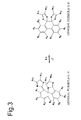
- those photochromic materials of the present invention represented by general formula (1-1) those photochromic materials in which R 4 forms a condensed, substituted or unsubstituted aryl ring with R 3 and R 5 forms a condensed, substituted or unsubstituted aryl ring with R 6 in general formula (1-1) can normally become an isomer represented by general formula (3-1) as a result of being irradiated with light as shown in FIG. 3 .
- such photochromic materials do not become an isomer (II) shown in FIG. 1 even if allowed to stand in a state protected from light (see FIG. 3 ).
- the inventors of the present invention discovered a novel compound that demonstrates photochromism by using a biimidazole for the basic framework and introducing a bulky substituent into R 24 and R 25 of the following general formula (2-1).
- This molecule is a pale yellow form in a stable state, and demonstrates photochromic properties that cause it to isomerize to a colorless structure as a result of irradiating with light, and further isomerize to its original pale yellow color after having isomerized to a red colored form when allowed to stand while protected from light.
- R 24 and R 25 respectively and independently represent an alkyl group or an alkyl group having a substituent
- R 1 to R 3 and R 6 to R 8 respectively and independently represent a hydrogen atom, halogen atom, alkyl group, fluoroalkyl group, hydroxyl group, alkoxyl group, amino group, alkylamino group, carbonyl group, alkylcarbonyl group, nitro group, cyano group or aryl group
- Ar 1 to Ar 4 respectively and independently represent a substituted or unsubstituted aryl group.
- the present invention is a photochromic material formed of a biimidazole compound represented by the above-mentioned general formula (2-1).
- the photochromic material of the present invention represented by general formula (2-1) is able to change to an isomer (II-2) as a result of being irradiated with light.
- the isomer (II-2) changes to an isomer (I-2) and the photochromic material represented by general formula (2-1) due to thermal energy.
- the isomer (I-2) is normally a colored form that has low transmittance.
- the isomer (II-2) is an uncolored form, its transmittance differs from that of the photochromic material represented by general formula (2-1).
- the color tone of the photochromic material can be adjusted in two stages.
- ⁇ indicates thermal energy.
- FIG. 2 shows a drawing in which R 4 in FIG. 1 has been replaced with R 24 and R 5 has been replaced with R 25 .
- R 4 and R 5 respectively and independently represent a halogen atom or alkyl group
- R 1 to R 3 and R 6 to R 8 respectively and independently represent a hydrogen atom, halogen atom, alkyl group, fluoroalkyl group, hydroxyl group, alkoxyl group, amino group, alkylamino group, carbonyl group, alkylcarbonyl group, nitro group, cyano group or aryl group
- Ar 1 to Ar 4 respectively and independently represent a substituted or unsubstituted aryl group
- R 4 may form a condensed, substituted or unsubstituted aryl ring with R 3
- R 5 may form a condensed, substituted or unsubstituted aryl
- the present invention is a photochromic material formed of a biimidazole compound represented by the above-mentioned general formula (3-1).
- the photochromic material of the present invention represented by general formula (3-1) is able to maintain the structure represented by general formula (3-1) as a result of continuing to be irradiated with light.
- the photochromic material of the present invention can be changed to the isomer represented by general formula (1-1) by thermal energy as a result of allowing to stand in a state protected from light, thereby lowering transmittance and becoming a colored form.
- the isomer represented by general formula (1-1) is able to change to the isomer (II) due to thermal energy when allowed to stand in a state protected from light.
- photochromic materials of the present invention represented by general formula (3-1) although a photochromic material in which R 4 forms a condensed, substituted or unsubstituted aryl ring with R 3 and R 5 forms a condensed, substituted or unsubstituted aryl ring with R 6 in general formula (3-1) can normally become the isomer represented by general formula (1-1) as a result of protecting from light, the isomer represented by general formula (1-1) does not become the isomer (II) shown in FIG. 1 even if the isomer represented by general formula (1-1) is further allowed to stand in state protected from light (see FIG. 3 ).
- the photochromic material of the present invention has a completely different structure from that of conventional molecules demonstrating photochromism, it is also able to provide a new choice when developing devices that utilize photochromism.
- the first embodiment of the photochromic material of the present invention allows the obtaining of a structure having a spiro-cyclic structure by introducing sterically bulky substituents into both sites R 4 and R 5 of a biimidazole compound represented by general formula (1-1).
- Examples of bulky substituents of both sites R 4 and R 5 include a halogen atom and an alkyl group.
- the above-mentioned substituents may be methyl groups, which constitute the smallest alkyl groups.
- the photochromic material may be represented by the following general formula (1-2).
- R 4 may form a condensed, substituted or unsubstituted aryl ring with R 3
- R 5 may form a condensed, substituted or unsubstituted aryl ring with R 6 .
- the aryl ring is preferably a benzene ring.
- the photochromic material in this case is represented by the following general formula (1-3): (In the formula, R 1 and R 2 as well as R 7 to R 14 respectively and independently represent a hydrogen atom, halogen atom, alkyl group, fluoroalkyl group, hydroxyl group, alkoxyl group, amino group, alkylamino group, carbonyl group, alkylcarbonyl group, nitro group, cyano group or aryl group, and Ar 1 to Ar 4 respectively and independently represent a substituted or unsubstituted aryl group).
- the photochromic material of the present invention is obtained by, for example, reacting a 2,2'-diformylbiphenyl derivative represented by the following general formula (1-4) with diarylethanedione derivatives represented by the following general formulas (1-5) and (1-6) in the presence of a nitrogen compound to obtain an intermediate containing an imidazole ring, followed by oxidizing that intermediate.
- a 2,2-diformyl-1,1'-binaphthalene derivative can be used instead of the 2,2'-diformylbiphenyl derivative represented by general formula (1-4).
- 2,2'-diformylbiphenyl is not included in the 2,2'-diformylbiphenyl derivative.
- the photochromic material of the present invention can no longer be obtained if 2,2'-diformylbiphenyl is included. Furthermore, the photochromic material of the present invention is also obtained by reacting different diarylethanedione derivatives with the two formyl groups.
- the production method of the photochromic material of the present invention may employ any synthesis route provided the structural molecule of the present invention is obtained, and is not limited by the synthesis route.
- R 4 and R 5 respectively and independently represent a halogen atom or alkyl group
- R 1 to R 3 and R 6 to R 8 respectively and independently represent a hydrogen atom, halogen atom, alkyl group, fluoroalkyl group, hydroxyl group, alkoxyl group, amino group, alkylamino group, carbonyl group, alkylcarbonyl group, nitro group, cyano group or aryl group
- Ar 1 to Ar 4 respectively and independently represent a substituted or unsubstituted aryl group
- R 4 may form a condensed, substituted or unsubstituted aryl ring with R 3
- R 5 may form a condensed, substituted or unsubstituted aryl ring with R 6 .
- Ar 1 and Ar 2 respectively and independently represent a substituted or unsubstituted aryl group.
- Ar 1 and Ar 2 respectively and independently represent a substituted or unsubstituted aryl group.
- the 2,2'-diformylbiphenyl derivative used as a raw material for synthesizing the photochromic molecule of the present invention represented by the above-mentioned general formula (1-1) preferably has sterically large substituents at positions 6 and 6'.
- 2,2'-diformylbiphenyl derivatives include, but are not limited to, 6,6'-dimethyl-2,2'-diformylbiphenyl, 6,6'-diethyl-2,2'-diformylbiphenyl, 6,6'-dimethyl-2,2'-di-n-propylbiphenyl, 6,6'-dimethyl-2,2'-diisopropylbiphenyl, 6,6'-dimethyl-2,2'-di-n-butylbiphenyl, 6,6'-dimethyl-2,2'-diisobutylbiphenyl, 6,6'-dimethyl-2,2'-di-tert-butylbiphenyl, 6,6'-ditrifluoromethyl-2,2'-diformylbiphenyl, 4,4'-dihydroxy-6,6'-dimethyl-2,2'-diformylbi
- examples of 2,2'-diformyl-1,1'-binaphthalene derivatives include, but are not limited to, 2,2'-diformyl-1,1'-binaphthalene, 3,3'-dibromo-2,2'-diformyl-1,1'-binaphthalene, 4,4'-dibromo-2,2'-diformyl-1,1'-binaphthalene, 6,6'-dibromo-2,2'-diformyl-1,1'-binaphthalene, 3,3'-dichloro-2,2'-diformyl-1,1'-binaphthalene, 3,3'-diiodo-2,2'-diformyl-1,1'-binaphthalene, 3,3'-dimethoxymethyl-2,2'-diformyl-1,1'-binaphthalene, 3,3'-diphenyl-2,2'-diformyl-1,1
- diarylethanedione derivatives represented by general formulas (1-5) and (1-6) used as raw materials of the photochromic material of the present invention include, but are not limited to, 2-fluorobenzyl, 3-fluorobenzyl, 4-fluorobenzyl, 2-chlorobenzyl, 3-chlorobenzyl, 4-chlorobenzyl, 2-bromobenzyl, 3-bromobenzyl, 4-bromobenzyl, 2-iodobenzyl, 3-iodobenzyl, 4-iodobenzyl, 2-hydroxybenzyl, 3-hydroxybenzyl, 4-hydroxybenzyl, 2-methoxybenzyl, 3-methoxybenzyl, 4-methoxybenzyl, 2-ethoxybenzyl, 3-ethoxybenzyl, 4-ethoxybenzyl, 2-phenoxybenzyl, 3-phenoxybenzyl, 4-phenoxybenzyl, 2-acetoxybenzyl, 3-acetoxybenzyl, 4-acetoxybenzyl, 4-
- the temperature for reacting the 2,2'-diformylbiphenyl derivative represented by general formula (1-4) and the diarylethanedione derivatives represented by general formulas (1-5) and (1-6) cannot be uniformly defined since it varies according to the presence or absence of catalyst and the type of catalyst used, in the case of, for example, using acetic acid for the solvent without using a catalyst, the reaction temperature is normally 80°C to 120°C and preferably 100°C to 120°C. In addition, in the case of using, for example, ZrCl 4 or iodine as catalyst, the reaction temperature can be 20°C to 75°C in the presence of the catalyst.
- reaction time can also not be uniformly defined since it varies according to the presence or absence of catalyst and the type of catalyst used, in the case of using, for example, acetic acid for the solvent and not using a catalyst, the reaction temperature is 4 hours to 32 hours and preferably 12 hours to 24 hours. In addition, in the case of using, for example, ZrCl 4 or iodine as catalyst, the reaction time can be 1 hour to 10 hours in the presence of the catalyst.
- ammonia acetate is particularly preferable since it less likely to volatilize during heating.
- the solvent of the above-mentioned reaction there are no particular limitations on the solvent of the above-mentioned reaction and any solvent can be used provided it is able to dissolve the raw material.
- the solvent include polar solvents such as acetic acid or acetonitrile.
- the intermediate oxidation reaction can be carried out by preparing a solution by dissolving the intermediate in a solvent, for example, followed by adding an oxidizing agent to this solution.
- solvent any solvent can be used provided it is able to dissolve the intermediate.
- solvents include benzene and methylene chloride.
- oxidizing agent there are no particular limitations on the oxidizing agent and any oxidizing agent can be used provided it allows the obtaining of a photochromic material represented by general formula (1-1) by oxidizing the intermediate.
- examples of such oxidizing agents include potassium ferricyanide and lead oxide, potassium ferricyanide is particularly preferable. This is because potassium ferricyanide has higher reactivity.
- a base can be further added to the above-mentioned solution in addition to the oxidizing agent.
- examples of such bases include potassium hydroxide.
- the oxidation reaction is preferably carried out in an inert gas atmosphere and under protection from light.
- the reaction is carried out in an inert gas atmosphere in order to inhibit reaction with oxygen. Nitrogen, for example, can be used for the inert gas.
- the oxidation reaction is preferably carried out under protection from light in order to prevent the resulting photochromic material from being changed from a colored form to an uncolored form by light.
- a second embodiment of the photochromic material of the present invention allows the obtaining of a structure having a spiro-cyclic structure by introducing sterically bulky substituents into both sites R 24 and R 25 of a biimidazole compound represented by general formula (2-1).
- Examples of bulky substituents introduced at both sites R24 and R25 include alkyl groups and alkyl groups having a substituent.
- Examples of substituents include a halogen atom, hydroxyl group, alkoxyl group, amino group and alkylamino group.
- the bulky substituents at both sites R 4 and R 5 may be methyl groups, which constitute the smallest alkyl groups.
- the photochromic material may be represented by the following general formula (2-2).
- the photochromic material of the present invention is obtained by producing an isomer (II-2) shown in FIG. 2 by reacting a 2,2'-diformylbiphenyl derivative represented by the following general formula (2-3) with the diarylethanedione derivatives represented by the above-mentioned general formulas (1-5) and (1-6) in the presence of a nitrogen compound to obtain an intermediate containing an imidazole ring, followed by oxidizing the intermediate, and then allowing the isomer (II-2) to stand while protected from light.
- 2,2'-diformylphenyl is not included in the 2,2'-diformylphenyl derivative.
- the photochromic material of the present invention can no longer be obtained if 2,2'-diformylbiphenyl is included. Furthermore, the photochromic material of the present invention is also obtained by reacting different diarylethanedione derivatives with the two formyl groups.
- the production method of the photochromic material of the present invention may employ any synthesis route provided the structural molecule of the present invention is obtained, and is not limited by the synthesis route.
- R 24 and R 25 respectively and independently represent an alkyl group or an alkyl group having a substituent
- R 1 to R 3 and R 6 to R 8 respectively and independently represent a hydrogen atom, halogen atom, alkyl group, fluoroalkyl group, hydroxyl group, alkoxyl group, amino group, alkylamino group, carbonyl group, alkylcarbonyl group, nitro group, cyano group or aryl group
- Ar 1 to Ar 4 respectively and independently represent a substituted or unsubstituted aryl group.
- the 2,2'-diformylphenyl derivative used for the synthesis raw material of the photochromic material of the present invention represented by the above-mentioned general formula (2-1) preferably has sterically large substituents at positions 6 and 6'.
- the same compounds as those of the first embodiment can be used for such 2, 2 '-diformylbiphenyl derivatives with the exception of 6,6'-dichloro-2,2'-diformylbiphenyl, 6,6'-dibromo-2,2'-diformylbiphenyl, 6,6'-diiodo-2,2'-diformylbiphenyl, 4,4',6,6'-tetrachloro-2,2'-diformylbiphenyl, 4,4',6,6'-tetrabromo-2,2'-diformylbiphenyl, 4,4'-difluoro-6,6'-dichloro-2,
- diarylethanedione derivatives represented by general formulas (1-5) and (1-6) used as raw materials of the photochromic material of the present invention include those listed as examples in the first embodiment, as well as 1,2-bis(2-naphthyl)ethanedione, 1,2-bis(1-naphthyl)ethanedione and 1,2-bis(2-(6-methoxyphenyl)ethanedione.
- the temperature for reacting the 2,2'-diformylbiphenyl derivative represented by general formula (2-3) and the diarylethanedione derivatives represented by general formulas (1-5) and (1-6) is the same as in the first embodiment.
- reaction time, nitrogen compound, solvent of the above-mentioned reaction, oxidation reaction of the above-mentioned intermediate and solvent used in the oxidation reaction of the above-mentioned intermediate are the same as in the first embodiment.
- oxidizing agent there are no particular limitations on the oxidizing agent and any oxidizing agent can be used provided it allows the obtaining of the isomer (II-2) by oxidizing the intermediate.
- examples of such oxidizing agents include potassium ferricyanide and lead oxide, potassium ferricyanide is particularly preferable. This is because potassium ferricyanide has higher reactivity.
- a base is further added to the above-mentioned solution in addition to the oxidizing agent.
- bases include potassium hydroxide.
- the oxidation reaction is preferably carried out in an inert gas atmosphere and under protection from light.
- the reaction is carried out in an inert gas atmosphere in order to inhibit reaction with oxygen. Nitrogen, for example, can be used for the inert gas.
- the oxidation reaction is preferably carried out under protection from light in order to prevent an isomerization reaction.
- the isomer (II-2) changes to the photochromic material of the present invention represented by general formula (2-1) when allowed to stand under protection from light. Consequently, this isomer (II-2) is allowed to stand under protection from light in order to obtain the photochromic material of the present invention. Furthermore, since the three types of compounds shown in FIG. 2 cause thermal isomerization reactions, the photochromic material represented by general formula (2-1) does not necessarily only yield the isomer (II-2) as a result of being irradiated with light, but rather can also be in the form of a mixture with isomer (1-2) and the photochromic material represented by general formula (2-1).
- the temperature while the above-mentioned isomer (II-2) is protected from light is normally 10°C to 50°C and preferably 25°C to 40°C.
- the time during which the above-mentioned isomer (II-2) is allowed to stand under protection from light is normally 50 hours to 100 hours and preferably 70 hours to 80 hours.
- a third embodiment of the photochromic material of the present invent i on represented by general formula (3-1) allows the obtaining of a structure having a spiro-cyclic structure by introducing sterically bulky substituents into both sites R 4 and R 5 of a biimidazole compound represented by general formula (3-1).
- Examples of bulky substituents at both sites R 4 and R 5 include halogen atoms and an alkyl groups.
- the photochromic material represented by general formula (3-1) can maintain a structure represented by general formula (3-1) by continuous irradiationd with light, and as shown in FIG. 1 , can change to the isomer represented by general formula (1-1) and the isomer (II) by being protected from light.
- the isomer represented by general formula (1-1) is in a colored form and has low transmittance.
- the isomer (II) is also in a colored form, its transmittance differs from that of the isomer represented by general formula (1-1).
- the photochromic material represented by general formula (3-1) is an uncolored form, and has transmittance that differs from the isomer represented by general formula (1-1) and the isomer (II). Thus, color tone of the photochromic material can be adjusted in two stages.
- the photochromic material may be represented with the following general formula (3-2).
- R 4 may form a condensed, substituted or unsubstituted aryl ring with R 3
- R 5 may form a condensed, substituted or unsubstituted aryl ring with R 6 .
- the aryl ring is preferably a benzene ring.
- the photochromic material in this case is represented by the following general formula (3-3).
- the photochromic material represented by general formula (3-3) normally yields the isomer represented by general formula (1-1) when in a state protected from light, it does not yield the isomer (II) shown in FIG. 1 even if further protected from light.
- R 1 and R 2 as well as R 7 to R 14 respectively and independently represent a hydrogen atom, halogen atom, alkyl group, fluoroalkyl group, hydroxyl group, alkoxyl group, amino group, alkylamino group, carbonyl group, alkylcarbonyl group, nitro group, cyano group or aryl group, and Ar 1 to Ar 4 respectively and independently represent a substituted or unsubstituted aryl group.
- the photochromic material of the present invention is obtained by reacting the 2,2'-diformylbiphenyl derivative represented by the above-mentioned general formula (1-4) with the diarylethanedione derivatives represented by the above-mentioned general formulas (1-5) and (1-6) in the presence of a nitrogen compound to obtain an intermediate containing an imidazole ring, followed by oxidizing that intermediate to obtain the isomer represented by general formula (1-1) shown in FIG. 3 and irradiating this isomer represented by general formula (1-1) with visible light.
- a 2,2'-diformyl-1,1'-binaphthalene derivative can be used instead of the 2,2'-diformylbiphenyl derivative represented by general formula (1-4).
- 2,2'-diformylbiphenyl is not included in the 2,2'-diformylbiphenyl derivative. This is because the isomer represented by general formula (1-1) is not obtained if 2,2'-diformylbiphenyl is included, and as a result thereof, the photochromic material of the present invention can no longer be obtained.
- the photochromic material of the present invention is also obtained by reacting different diarylethanedione derivatives with the two formyl groups.
- the production method of the photochromic material of the present invention may employ any synthesis route provided the structural molecule of the present invention is obtained, and is not limited by the synthesis route.
- the 2,2'-diformylphenyl derivative used for the synthesis raw material of the photochromic material of the present invention represented by the above-mentioned general formula (3-1) preferably has sterically large substituents at positions 6 and 6' in the same manner as the first embodiment, and the same compounds as those of the first embodiment can be used for such 2,2'-diformylbiphenyl derivatives.
- diarylethanedione derivatives represented by general formulas (1-5) and (1-6) used as raw materials of the photochromic material of the present invention include those listed as examples in the first embodiment.
- the temperature for reacting the 2,2'-diformylbiphenyl derivative represented by general formula (1-4) and the diarylethanedione derivatives represented by general formulas (1-5) and (1-6) is the same as in the first embodiment.
- reaction time the above-mentioned nitrogen compound, solvent of the above-mentioned reaction, oxidation reaction of the intermediate and solvent used in the oxidation reaction of the intermediate are the same as in the first embodiment.
- oxidizing agent there are no particular limitations on the oxidizing agent and any oxidizing agent can be used provided it allows the obtaining of the isomer represented by general formula (1-1) by oxidizing the intermediate.
- examples of such oxidizing agents include potassium ferricyanide and lead oxide, potassium ferricyanide is particularly preferable. This is because potassium ferricyanide has higher reactivity.
- a base is further added to the above-mentioned solution in addition to the oxidizing agent.
- bases include potassium hydroxide.
- the oxidation reaction is preferably carried out in an inert gas atmosphere and under protection from light.
- the reaction is carried out in an inert gas atmosphere in order to inhibit reaction with oxygen. Nitrogen, for example, can be used for the inert gas.
- the oxidation reaction is preferably carried out under protection from light in order to prevent the isomer represented by general formula (1-1) from being changed from a colored form to an uncolored form by visible light.
- Light irradiated onto the isomer represented by general formula (1-1) is light of a wavelength region that includes the wavelength of maximum absorbance in the wavelength region of visible light for the isomer represented by general formula (1-1).
- the duration of irradiation with light is normally 10 seconds to 600 seconds and preferably 30 seconds to 300 seconds.
- the temperature during irradiation with light is preferably 30°C or lower and more preferably to 0°C or lower. If the temperature during irradiation with light is 30°C or lower, in comparison with the case in which this temperature exceeds 30°C, the efficiency at which the photochromic material of the present invention is produced from the isomer represented by general formula (1-1) is further improved.
- the temperature during irradiation with light is preferably higher than the melting point of the above-mentioned solvent. Namely, irradiation with light is preferably carried out in a state in which the above-mentioned solvent is not a solid.
- the photochromic material represented by general formula (3-1) is not necessarily present alone, but rather can also be in the form of a mixture with the isomer represented by general formula (1-1). More specifically, although the photochromic material represented by general formula (3-1) is formed when the isomer represented by general formula (1-1) is irradiated with light, since a reaction that returns this photochromic material to the structure when irradiated with light, or in other words, to the isomer represented by general formula (1-1), proceeds in the form of a thermal reaction, the isomer represented by general formula (1-1) and the photochromic material represented by general formula (3-1) can be present in the form of a mixture.
- the photochromic material represented by general formula (3-1) is not necessarily present alone, but rather can be in the form of a mixture with the isomer represented by general formula (1-1) and the isomer (II). Examples
- a 1.0 ⁇ 10 -3 M benzene solution was prepared using the mixture containing Compound [1-1] synthesized in Synthesis Example 1-1. This solution was placed in a rectangular quartz cell and irradiated with excitation light from a UV Spot Light Source L8333 (manufactured by Hamamatsu Photonics K.K.) followed by measurement of a colored form and uncolored form by ultraviolet-visible absorption spectroscopy in which the transmittance at the wavelength having the largest change in transmittance in the visible light region was observed. The results are shown in Table 1 and FIG. 4 . Furthermore, in FIG.
- the solid line indicates the state when irradiated with excitation light, while the broken line indicates the normal state (state when not irradiated with excitation light).
- transmittance of the colored form at the wavelength of maximum absorbance of 496 nm increased from 60% to 93% as a result of being irradiated with excitation light.
- a 2.0 ⁇ 10 -4 M benzene solution was prepared using the Compound [1-2] synthesized in Synthesis Example 1-2. This solution was placed in a rectangular quartz cell and irradiated with excitation light from a UV Spot Light Source L8333 (manufactured by Hamamatsu Photonics K.K.) followed by measurement of a colored form and uncolored form by ultraviolet-visible absorption spectroscopy in which the transmittance at the wavelength having the largest change in transmittance in the visible light region was observed. The results are shown in Table 1 and FIG. 5 . Furthermore, in FIG. 5 , the solid line indicates the state when irradiated with excitation light, while the broken line indicates the normal state when not irradiated with excitation light. As shown in Table 1 and FIG. 5 , transmittance of the colored form at the wavelength of maximum absorbance of 493 nm increased from 17% to 88% as a result of being irradiated with excitation light.
- a 2.0 ⁇ 10 -4 M benzene solution was prepared using the Compound [1-3] synthesized in Synthesis Example 1-3. This solution was placed in a rectangular quartz cell and irradiated with excitation light from a UV Spot Light Source L8333 (manufactured by Hamamatsu Photonics K.K.) followed by measurement of a colored form and uncolored form by ultraviolet-visible absorption spectroscopy in which the transmittance at the wavelength having the largest change in transmittance in the visible light region was observed. The results are shown in Table 1 and FIG. 6 . Furthermore, in FIG. 6 , the solid line indicates the state when irradiated with excitation light, while the broken line indicates the normal state (state when not irradiated with excitation light). As shown in Table 1 and FIG. 6 , transmittance of the colored form at the wavelength of maximum absorbance of 475 nm increased from 16% to 73% as a result of being irradiated with excitation light.
- a 2.0 ⁇ 10 -4 M benzene solution was prepared using the Compound [1-4] synthesized in Synthesis Example 1-4. This solution was placed in a rectangular quartz cell and irradiated with excitation light from a UV Spot Light Source L8333 (manufactured by Hamamatsu Photonics K.K.) followed by measurement of a colored form and uncolored form by ultraviolet-visible absorption spectroscopy in which the transmittance at the wavelength having the largest change in transmittance in the visible light region was observed. The results are shown in Table 1 and FIG. 7 . Furthermore, in FIG. 7 , the solid line indicates the state when irradiated with excitation light, while the broken line indicates the normal state (state when not irradiated with excitation light). As shown in Table 1 and FIG. 7 , transmittance of the colored form at the wavelength of maximum absorbance of 544 nm increased from 23% to 74% as a result of being irradiated with excitation light.
- a 2.0 ⁇ 10 -4 M benzene solution was prepared using the Compound [1-5] synthesized in Synthesis Example 1-5. This solution was placed in a rectangular quartz cell and irradiated with excitation light from a UV Spot Light Source L8333 (manufactured by Hamamatsu Photonics K.K.) followed by measurement of a colored form and uncolored form by ultraviolet-visible absorption spectroscopy in which the transmittance at the wavelength having the largest change in transmittance in the visible light region was observed. The results are shown in Table 1 and FIG. 8 . Furthermore, in FIG. 8 , the solid line indicates the state when irradiated with excitation light, while the broken line indicates the normal state (state when not irradiated with excitation light). As shown in Table 1 and FIG. 8 , transmittance of the colored form at the wavelength of maximum absorbance of 486 nm increased from 39% to 74% as a result of being irradiated with excitation light.
- a 2.0 ⁇ 10 -4 M benzene solution was prepared using the Compound [1-6] synthesized in Synthesis Example 1-6. This solution was placed in a rectangular quartz cell and irradiated with excitation light from a UV Spot Light Source L8333 (manufactured by Hamamatsu Photonics K.K.) followed by measurement of transmittance in a state when not irradiated with excitation light and transmittance in a state when irradiated with excitation light by ultraviolet-visible absorption spectroscopy. The results are shown in Table 1 and FIG. 9 . Furthermore, in FIG.
- Compound [2-1] a mixture of Compound [2-1] and the following Compound [1-1] and Compound [2-3] was obtained by dissolving 30 mg of Compound [2-1] in 5 ml of deuterated chloroform and allowing to stand for 1 day at 25°C under protection from light. These compounds were present in the mixture at a ratio of Compound [2-1] to Compound [1-1] to Compound [2-3] of 10:15:75.
- Compound [1-1] was determined to exhibit the characteristic peaks of a methoxy group and methyl group based on NMR analysis of the mixture, and since Compound [1-1] exhibited a characteristic absorption band at 496 nm based on UV spectral analysis, it was thought to clearly have the structure represented by the structural formula indicated below.
- a 1.0 ⁇ 10 -3 M benzene solution was prepared using Compound [2-3] synthesized in Synthesis Example 2-1.
- the transmittance of this benzene solution was measured by ultraviolet-visible absorption spectroscopy.
- the results are shown in FIG. 10 .
- the above-mentioned benzene solution was placed in a rectangular quartz cell and irradiated with excitation light in the form of ultraviolet-visible light from a UV Spot Light Source L8333 (manufactured by Hamamatsu Photonics K.K.) followed by measurement of transmittance of the benzene solution while in this state by ultraviolet-visible absorption spectroscopy.
- the results are shown in FIG. 10 .
- the broken line indicates the normal state (state when not irradiated with excitation light), the solid line indicates the state when irradiated with excitation light, and the single-dot broken line indicates the state when allowed to stand for 1 day at 25°C under protection from light after being irradiated with excitation light.
- transmittance of Compound [2-3] at the wavelength of maximum absorption of the mixture containing the colored form in the form of Compound [1-1] of 496 nm decreased from 87% to 60% as a result of allowing to stand under protection from light after being irradiated with excitation light.
- Compound [2-3] was determined to have changed to the mixture containing Compound [1-1] as a result of being allowed to stand under protection from light after being irradiated with excitation light. Similarly, transmittance of Compound [2-3] at 496 nm increased from 87% to 91% as a result of being irradiated with excitation light. On the basis thereof, Compound [2-3] was determined to have changed to Compound [2-1] as a result of being irradiated with excitation light.
- Example 2-1 According to the results indicated in Example 2-1 and Comparative Example 1-1, a molecule demonstrating photochromic properties was confirmed to be obtained by introducing sterically bulky substituents into R 4 and R 5 of a biimidazole compound represented by general formula (1).
- Compound [1-1] was dissolved in deuterated chloroform and irradiated with visible light for 300 seconds at 25°C. Subsequently, the formation of Compound [2-1] was confirmed by NMR analysis.
- a 1.0 ⁇ 10 -3 M benzene solution was prepared using the mixture containing Compound [1-1] synthesized in Synthesis Example 3-1. This solution was placed in a rectangular quartz cell and irradiated with visible light for 30 seconds at 25°C.
- a benzene solution containing the above-mentioned Compound [2-1] was allowed to stand for 1 day at 25°C under protection from light by discontinuing irradiation with visible light.
- the absorption spectrum of the benzene solution while in this state was then measured by ultraviolet-visible absorption spectroscopy.
- the results are shown in Table 2 and FIG. 11 . Furthermore, these results are indicated with the broken line in FIG. 11 .
- the above-mentioned benzene solution demonstrated the characteristic peaks of a methoxy group and methyl group and demonstrated the characteristic absorption band at 496 nm based on analysis of the UV spectrum thereof.
- the above-mentioned benzene solution was thought to clearly contain Compound [1-1].
- transmittance of the uncolored form at the wavelength of maximum absorbance of the colored form of 496 nm was determined to have decreased from 93% to 60% as a result of allowing to stand under protection from light.
- a 2.0 ⁇ 10 -4 M benzene solution was prepared using Compound [1-2] synthesized in Synthesis Example 3-2. This solution was placed in a rectangular quartz cell and irradiated with visible light for 30 seconds at 25°C.
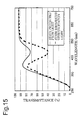
- a 2.0 ⁇ 10 -4 M benzene solution was prepared using Compound [1-3] synthesized in Synthesis Example 3-3. This solution was placed in a rectangular quartz cell and irradiated with visible light for 30 seconds at 25°C. At this time, formation of the following Compound [3-2] was confirmed since a change in the UV spectrum similar to that in Example 3-2 was observed.
- transmittance of Compound [3-2] (uncolored form) at the wavelength of maximum absorbance of the colored form of 475 nm was determined to have decreased from 73% to 16% as a result of allowing to stand under protection from light.
- the absorption spectrum indicated with the broken line in FIG. 13 was similar to the absorption spectrum of Compound [1-3].
- Compound [3-2] was determined to have changed to Compound [1-3] as a result of allowing to stand under protection from light.
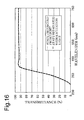
- a 2.0 ⁇ 10 -4 M benzene solution was prepared using Compound [1-4] synthesized in Synthesis Example 3-4. This solution was placed in a rectangular quartz cell and irradiated with visible light for 30 seconds at 25°C. At this time, formation of the following Compound [3-3] was confirmed since a change was observed in the UV spectrum similar to that in Synthesis Example 3-2 was observed.
- transmittance of Compound [3-3] (uncolored form) at the wavelength of maximum absorbance of the colored form of 544 nm was determined to have decreased from 74% to 23% as a result of allowing to stand under protection from light.
- the absorption spectrum indicated with the broken line in FIG. 14 was similar to the absorption spectrum of Compound [1-4].
- Compound [3-3] was determined to have changed to Compound [1-4] as a result of allowing to stand under protection from light.
- a 2.0 ⁇ 10 -4 M benzene solution was prepared using Compound [1-5] synthesized in Synthesis Example 3-5. This solution was placed in a rectangular quartz cell and irradiated with visible light for 30 seconds at 25°C. At this time, formation of the following Compound [3-4] was confirmed since a change was observed in the UV spectrum similar to that in Synthesis Example 3-2 was observed.
- transmittance of the uncolored form at the wavelength of maximum absorbance of the colored form of 486 nm was determined to have decreased from 74% to 39% as a result of allowing to stand under protection from light.
- the absorption spectrum indicated with the broken line in FIG. 15 was similar to the absorption spectrum of Compound [1-5].
- Compound [3-4] was determined to have changed to Compound [1-5] as a result of allowing to stand under protection from light.
- a 2.0 ⁇ 10 -4 M benzene solution was prepared using Compound [1-6] synthesized in Synthesis Example 1-6. This solution was placed in a rectangular quartz cell and irradiated with visible light for 30 seconds at 25°C.
- the photochromic material of the present invention demonstrates photochromic properties indicated in (1), (2) or (3) below.
- the photochromic material of the present invention can be applied in fields such as optical switches, printing materials or recording materials, for which their application has been proposed in the past, by utilizing the above-mentioned properties of (1) to (3).
- favorable reproduced signals can be obtained from high-density recorded bits without causing deterioration of the reproduced signals.
- the photochromic material of the present invention since the photochromic material of the present invention has a structure that is completely different from conventional molecules demonstrating photochromism, it provides a new choice when developing devices that utilize photochromism.
Landscapes
- Chemical & Material Sciences (AREA)
- Organic Chemistry (AREA)
- Engineering & Computer Science (AREA)
- Materials Engineering (AREA)
- Plural Heterocyclic Compounds (AREA)
- Nitrogen Condensed Heterocyclic Rings (AREA)
- Nitrogen And Oxygen Or Sulfur-Condensed Heterocyclic Ring Systems (AREA)
Claims (8)
- Matériau photochromique se composant d'un composé biimidazole représenté par la formule générale (1-1) suivante :

- Matériau photochromique selon la revendication 1, représenté par la formule générale (1-2) suivante, dans lequel, dans la formule générale (1-1), R4 et R5 représentent des groupes méthyle :

- Matériau photochromique selon la revendication 1, représenté par la formule générale (1-3) suivante, dans lequel, dans la formule générale (1-1), R4 forme un cycle benzène condensé, substitué ou non substitué avec R3, et R5 forme un cycle benzène condensé, substitué ou non substitué avec R6 :

- Matériau photochromique se composant d'un composé biimidazole représenté par la formule générale (2-1) suivante :


- Matériau photochromique selon la revendication 4, représenté par la formule générale (2-2) suivante, dans lequel, dans la formule générale (2-1), R24 et R25 représentent des groupes méthyle :

- Matériau photochromique se composant d'un composé biimidazole représenté par la formule générale (3-1) suivante :

- Matériau photochromique selon la revendication 6, représenté par la formule générale (3-2) suivante, dans lequel, dans la formule générale (3-1), R4 et R5 représentent des groupes méthyle :

- Matériau photochromique selon la revendication 6, représenté par la formule générale (3-3) suivante, dans lequel, dans la formule générale (3-1), R4 forme un cycle benzène condensé, substitué ou non substitué avec R3, et R5 forme un cycle benzène condensé, substitué ou non substitué avec R6 :

Applications Claiming Priority (4)
| Application Number | Priority Date | Filing Date | Title |
|---|---|---|---|
| JP2010157036A JP5598125B2 (ja) | 2010-07-09 | 2010-07-09 | 逆フォトクロミック材料 |
| JP2011080843A JP5640868B2 (ja) | 2011-03-31 | 2011-03-31 | フォトクロミック材料 |
| JP2011080844 | 2011-03-31 | ||
| PCT/JP2011/065702 WO2012005354A1 (fr) | 2010-07-09 | 2011-07-08 | Matériau photochromique |
Publications (3)
| Publication Number | Publication Date |
|---|---|
| EP2592130A1 EP2592130A1 (fr) | 2013-05-15 |
| EP2592130A4 EP2592130A4 (fr) | 2014-03-26 |
| EP2592130B1 true EP2592130B1 (fr) | 2015-01-21 |
Family
ID=45441330
Family Applications (1)
| Application Number | Title | Priority Date | Filing Date |
|---|---|---|---|
| EP11803688.8A Not-in-force EP2592130B1 (fr) | 2010-07-09 | 2011-07-08 | Matériau photochromique |
Country Status (6)
| Country | Link |
|---|---|
| US (1) | US8748629B2 (fr) |
| EP (1) | EP2592130B1 (fr) |
| KR (1) | KR20130091243A (fr) |
| CN (1) | CN102906215B (fr) |
| AU (1) | AU2011274914B2 (fr) |
| WO (1) | WO2012005354A1 (fr) |
Families Citing this family (2)
| Publication number | Priority date | Publication date | Assignee | Title |
|---|---|---|---|---|
| TW201833103A (zh) | 2017-01-31 | 2018-09-16 | 日商富士軟片和光純藥股份有限公司 | 逆光致變色化合物及聚合物 |
| EP4177646A1 (fr) * | 2021-11-08 | 2023-05-10 | Carl Zeiss Vision International GmbH | Verre de lunettes et procédé de fabrication d'un verre de lunettes |
Family Cites Families (11)
| Publication number | Priority date | Publication date | Assignee | Title |
|---|---|---|---|---|
| JPH04128834A (ja) | 1990-09-20 | 1992-04-30 | Toppan Printing Co Ltd | 光記録媒体 |
| JPH079766A (ja) | 1993-06-07 | 1995-01-13 | Minnesota Mining & Mfg Co <3M> | 繰り返し使用可能な感熱発色材料 |
| KR100422447B1 (ko) | 2001-10-09 | 2004-03-11 | 삼성전자주식회사 | 고속 반도체 장치에 채용하기 적합한 레벨 컨버터를가지는 신호컨버팅 장치 및 신호컨버팅 방법 |
| JP5273640B2 (ja) * | 2007-09-10 | 2013-08-28 | 国立大学法人九州大学 | 熱不可逆性逆フォトクロミック分子材料 |
| WO2009115572A2 (fr) * | 2008-03-21 | 2009-09-24 | Novartis Ag | Nouveaux composés hétérocycliques et leurs utilisations |
| CN101619060A (zh) * | 2008-06-30 | 2010-01-06 | 莱西肯医药有限公司 | 杂环化合物、包括其的组合物和它们的使用方法 |
| CN101676293B (zh) * | 2008-09-18 | 2012-11-21 | 宁波大学 | 一种联咪唑有机膦化合物及其制备方法 |
| EP2397468A4 (fr) * | 2008-11-28 | 2012-08-15 | Abe Jiro | Nouveau composé d'hexaarylbisimidazole réticulé et son dérivé, procédé de fabrication du composé et composé précurseur à utiliser dans le procédé de fabrication |
| JP2011132265A (ja) | 2009-11-24 | 2011-07-07 | Aoyama Gakuin | セキュリティインク |
| JP5674305B2 (ja) | 2009-12-11 | 2015-02-25 | 三菱瓦斯化学株式会社 | フォトクロミック材料 |
| JP2011144289A (ja) | 2010-01-15 | 2011-07-28 | Mitsubishi Gas Chemical Co Inc | フォトクロミック材料の消色速度の調節方法 |
-
2011
- 2011-07-08 AU AU2011274914A patent/AU2011274914B2/en not_active Ceased
- 2011-07-08 KR KR1020127025504A patent/KR20130091243A/ko not_active Ceased
- 2011-07-08 WO PCT/JP2011/065702 patent/WO2012005354A1/fr not_active Ceased
- 2011-07-08 US US13/807,461 patent/US8748629B2/en not_active Expired - Fee Related
- 2011-07-08 CN CN201180021083.7A patent/CN102906215B/zh not_active Expired - Fee Related
- 2011-07-08 EP EP11803688.8A patent/EP2592130B1/fr not_active Not-in-force
Also Published As
| Publication number | Publication date |
|---|---|
| EP2592130A1 (fr) | 2013-05-15 |
| EP2592130A4 (fr) | 2014-03-26 |
| WO2012005354A1 (fr) | 2012-01-12 |
| US8748629B2 (en) | 2014-06-10 |
| AU2011274914B2 (en) | 2013-07-18 |
| KR20130091243A (ko) | 2013-08-16 |
| CN102906215B (zh) | 2014-11-05 |
| AU2011274914A1 (en) | 2013-01-17 |
| CN102906215A (zh) | 2013-01-30 |
| US20130102775A1 (en) | 2013-04-25 |
Similar Documents
| Publication | Publication Date | Title |
|---|---|---|
| JP5598125B2 (ja) | 逆フォトクロミック材料 | |
| JPH08245579A (ja) | ジアリールエテン系フォトクロミック化合物および該化合物を用いた光学記録材料 | |
| EP2592130B1 (fr) | Matériau photochromique | |
| Fang et al. | Synthesis and photochromism in solution of phenoxynaphthacenequinone derivatives | |
| Yagi et al. | Photochromic properties of cationic merocyanine dyes. Thermal stability of the spiropyran form produced by irradiation with visible light | |
| JP2681699B2 (ja) | 含金属インドアニリン系化合物 | |
| JP5920082B2 (ja) | カリックス[4]アレーン骨格を有する化合物 | |
| JP5747735B2 (ja) | フォトクロミック材料 | |
| JP5640868B2 (ja) | フォトクロミック材料 | |
| EP2718393B1 (fr) | Nouveaux composés photochromes, leur procédé de production et composés intermédiaires | |
| EP0394846B1 (fr) | Composé photochromique organique | |
| CN102702226A (zh) | 新型螺噁嗪类化合物的制备及其光变性能改进 | |
| JP2725391B2 (ja) | フォトクロミック材料及びフォトクロミック材料の製造方法 | |
| JPH0745509B2 (ja) | ニッケル錯体 | |
| JPH03251587A (ja) | スピロオキサジン化合物及びその製造方法 | |
| JPH08245627A (ja) | 架橋スピロピラン化合物 | |
| JPH0586955B2 (fr) | ||
| JPH0670065B2 (ja) | フォトクロミック化合物およびその組成物 | |
| JP5928004B2 (ja) | フォトクロミック化合物 | |
| Voloshin et al. | Photo-and thermochromic spiranes. 31.* Photochromic cationic spiropyrans with a pyridinium fragment in the aliphatic side chain* 2. | |
| JP2013180996A (ja) | フォトクロミック化合物 | |
| Yokoyama | Creation of Molecularly Integrated Multi-responsive Photochromic Systems | |
| WO2015147126A1 (fr) | Composé pentaarylbiimidazole et procédé de production dudit composé | |
| JPH0796553B2 (ja) | スピロピラン化合物 | |
| Chupakhin et al. | Mechanism of the nucleophilic substitution of hydrogen in azines III. Intermediates in the aminoarylation of 2-quinoxalone |
Legal Events
| Date | Code | Title | Description |
|---|---|---|---|
| PUAI | Public reference made under article 153(3) epc to a published international application that has entered the european phase |
Free format text: ORIGINAL CODE: 0009012 |
|
| 17P | Request for examination filed |
Effective date: 20130118 |
|
| AK | Designated contracting states |
Kind code of ref document: A1 Designated state(s): AL AT BE BG CH CY CZ DE DK EE ES FI FR GB GR HR HU IE IS IT LI LT LU LV MC MK MT NL NO PL PT RO RS SE SI SK SM TR |
|
| DAX | Request for extension of the european patent (deleted) | ||
| A4 | Supplementary search report drawn up and despatched |
Effective date: 20140224 |
|
| RIC1 | Information provided on ipc code assigned before grant |
Ipc: C07D 487/10 20060101ALI20140218BHEP Ipc: C09K 9/02 20060101AFI20140218BHEP Ipc: C07D 487/04 20060101ALI20140218BHEP Ipc: C07D 487/20 20060101ALI20140218BHEP |
|
| GRAP | Despatch of communication of intention to grant a patent |
Free format text: ORIGINAL CODE: EPIDOSNIGR1 |
|
| INTG | Intention to grant announced |
Effective date: 20140731 |
|
| GRAS | Grant fee paid |
Free format text: ORIGINAL CODE: EPIDOSNIGR3 |
|
| GRAA | (expected) grant |
Free format text: ORIGINAL CODE: 0009210 |
|
| AK | Designated contracting states |
Kind code of ref document: B1 Designated state(s): AL AT BE BG CH CY CZ DE DK EE ES FI FR GB GR HR HU IE IS IT LI LT LU LV MC MK MT NL NO PL PT RO RS SE SI SK SM TR |
|
| REG | Reference to a national code |
Ref country code: GB Ref legal event code: FG4D |
|
| REG | Reference to a national code |
Ref country code: CH Ref legal event code: EP |
|
| REG | Reference to a national code |
Ref country code: IE Ref legal event code: FG4D |
|
| REG | Reference to a national code |
Ref country code: DE Ref legal event code: R096 Ref document number: 602011013422 Country of ref document: DE Effective date: 20150305 |
|
| REG | Reference to a national code |
Ref country code: AT Ref legal event code: REF Ref document number: 709203 Country of ref document: AT Kind code of ref document: T Effective date: 20150315 |
|
| REG | Reference to a national code |
Ref country code: NL Ref legal event code: VDEP Effective date: 20150121 |
|
| REG | Reference to a national code |
Ref country code: AT Ref legal event code: MK05 Ref document number: 709203 Country of ref document: AT Kind code of ref document: T Effective date: 20150121 |
|
| REG | Reference to a national code |
Ref country code: LT Ref legal event code: MG4D |
|
| REG | Reference to a national code |
Ref country code: FR Ref legal event code: PLFP Year of fee payment: 5 |
|
| PG25 | Lapsed in a contracting state [announced via postgrant information from national office to epo] |
Ref country code: FI Free format text: LAPSE BECAUSE OF FAILURE TO SUBMIT A TRANSLATION OF THE DESCRIPTION OR TO PAY THE FEE WITHIN THE PRESCRIBED TIME-LIMIT Effective date: 20150121 Ref country code: ES Free format text: LAPSE BECAUSE OF FAILURE TO SUBMIT A TRANSLATION OF THE DESCRIPTION OR TO PAY THE FEE WITHIN THE PRESCRIBED TIME-LIMIT Effective date: 20150121 Ref country code: HR Free format text: LAPSE BECAUSE OF FAILURE TO SUBMIT A TRANSLATION OF THE DESCRIPTION OR TO PAY THE FEE WITHIN THE PRESCRIBED TIME-LIMIT Effective date: 20150121 Ref country code: LT Free format text: LAPSE BECAUSE OF FAILURE TO SUBMIT A TRANSLATION OF THE DESCRIPTION OR TO PAY THE FEE WITHIN THE PRESCRIBED TIME-LIMIT Effective date: 20150121 Ref country code: BG Free format text: LAPSE BECAUSE OF FAILURE TO SUBMIT A TRANSLATION OF THE DESCRIPTION OR TO PAY THE FEE WITHIN THE PRESCRIBED TIME-LIMIT Effective date: 20150421 Ref country code: SE Free format text: LAPSE BECAUSE OF FAILURE TO SUBMIT A TRANSLATION OF THE DESCRIPTION OR TO PAY THE FEE WITHIN THE PRESCRIBED TIME-LIMIT Effective date: 20150121 Ref country code: NO Free format text: LAPSE BECAUSE OF FAILURE TO SUBMIT A TRANSLATION OF THE DESCRIPTION OR TO PAY THE FEE WITHIN THE PRESCRIBED TIME-LIMIT Effective date: 20150421 |
|
| PG25 | Lapsed in a contracting state [announced via postgrant information from national office to epo] |
Ref country code: NL Free format text: LAPSE BECAUSE OF FAILURE TO SUBMIT A TRANSLATION OF THE DESCRIPTION OR TO PAY THE FEE WITHIN THE PRESCRIBED TIME-LIMIT Effective date: 20150121 Ref country code: PL Free format text: LAPSE BECAUSE OF FAILURE TO SUBMIT A TRANSLATION OF THE DESCRIPTION OR TO PAY THE FEE WITHIN THE PRESCRIBED TIME-LIMIT Effective date: 20150121 Ref country code: IS Free format text: LAPSE BECAUSE OF FAILURE TO SUBMIT A TRANSLATION OF THE DESCRIPTION OR TO PAY THE FEE WITHIN THE PRESCRIBED TIME-LIMIT Effective date: 20150521 Ref country code: LV Free format text: LAPSE BECAUSE OF FAILURE TO SUBMIT A TRANSLATION OF THE DESCRIPTION OR TO PAY THE FEE WITHIN THE PRESCRIBED TIME-LIMIT Effective date: 20150121 Ref country code: GR Free format text: LAPSE BECAUSE OF FAILURE TO SUBMIT A TRANSLATION OF THE DESCRIPTION OR TO PAY THE FEE WITHIN THE PRESCRIBED TIME-LIMIT Effective date: 20150422 Ref country code: AT Free format text: LAPSE BECAUSE OF FAILURE TO SUBMIT A TRANSLATION OF THE DESCRIPTION OR TO PAY THE FEE WITHIN THE PRESCRIBED TIME-LIMIT Effective date: 20150121 Ref country code: RS Free format text: LAPSE BECAUSE OF FAILURE TO SUBMIT A TRANSLATION OF THE DESCRIPTION OR TO PAY THE FEE WITHIN THE PRESCRIBED TIME-LIMIT Effective date: 20150121 |
|
| REG | Reference to a national code |
Ref country code: DE Ref legal event code: R097 Ref document number: 602011013422 Country of ref document: DE |
|
| PG25 | Lapsed in a contracting state [announced via postgrant information from national office to epo] |
Ref country code: CZ Free format text: LAPSE BECAUSE OF FAILURE TO SUBMIT A TRANSLATION OF THE DESCRIPTION OR TO PAY THE FEE WITHIN THE PRESCRIBED TIME-LIMIT Effective date: 20150121 Ref country code: EE Free format text: LAPSE BECAUSE OF FAILURE TO SUBMIT A TRANSLATION OF THE DESCRIPTION OR TO PAY THE FEE WITHIN THE PRESCRIBED TIME-LIMIT Effective date: 20150121 Ref country code: RO Free format text: LAPSE BECAUSE OF FAILURE TO SUBMIT A TRANSLATION OF THE DESCRIPTION OR TO PAY THE FEE WITHIN THE PRESCRIBED TIME-LIMIT Effective date: 20150121 Ref country code: DK Free format text: LAPSE BECAUSE OF FAILURE TO SUBMIT A TRANSLATION OF THE DESCRIPTION OR TO PAY THE FEE WITHIN THE PRESCRIBED TIME-LIMIT Effective date: 20150121 Ref country code: SK Free format text: LAPSE BECAUSE OF FAILURE TO SUBMIT A TRANSLATION OF THE DESCRIPTION OR TO PAY THE FEE WITHIN THE PRESCRIBED TIME-LIMIT Effective date: 20150121 |
|
| PGFP | Annual fee paid to national office [announced via postgrant information from national office to epo] |
Ref country code: DE Payment date: 20150825 Year of fee payment: 5 Ref country code: GB Payment date: 20150730 Year of fee payment: 5 |
|
| PLBE | No opposition filed within time limit |
Free format text: ORIGINAL CODE: 0009261 |
|
| STAA | Information on the status of an ep patent application or granted ep patent |
Free format text: STATUS: NO OPPOSITION FILED WITHIN TIME LIMIT |
|
| PGFP | Annual fee paid to national office [announced via postgrant information from national office to epo] |
Ref country code: FR Payment date: 20150727 Year of fee payment: 5 |
|
| 26N | No opposition filed |
Effective date: 20151022 |
|
| PG25 | Lapsed in a contracting state [announced via postgrant information from national office to epo] |
Ref country code: IT Free format text: LAPSE BECAUSE OF FAILURE TO SUBMIT A TRANSLATION OF THE DESCRIPTION OR TO PAY THE FEE WITHIN THE PRESCRIBED TIME-LIMIT Effective date: 20150121 |
|
| PG25 | Lapsed in a contracting state [announced via postgrant information from national office to epo] |
Ref country code: SI Free format text: LAPSE BECAUSE OF FAILURE TO SUBMIT A TRANSLATION OF THE DESCRIPTION OR TO PAY THE FEE WITHIN THE PRESCRIBED TIME-LIMIT Effective date: 20150121 Ref country code: MC Free format text: LAPSE BECAUSE OF FAILURE TO SUBMIT A TRANSLATION OF THE DESCRIPTION OR TO PAY THE FEE WITHIN THE PRESCRIBED TIME-LIMIT Effective date: 20150121 |
|
| REG | Reference to a national code |
Ref country code: CH Ref legal event code: PL |
|
| PG25 | Lapsed in a contracting state [announced via postgrant information from national office to epo] |
Ref country code: LU Free format text: LAPSE BECAUSE OF FAILURE TO SUBMIT A TRANSLATION OF THE DESCRIPTION OR TO PAY THE FEE WITHIN THE PRESCRIBED TIME-LIMIT Effective date: 20150708 |
|
| REG | Reference to a national code |
Ref country code: IE Ref legal event code: MM4A |
|
| PG25 | Lapsed in a contracting state [announced via postgrant information from national office to epo] |
Ref country code: CH Free format text: LAPSE BECAUSE OF NON-PAYMENT OF DUE FEES Effective date: 20150731 Ref country code: LI Free format text: LAPSE BECAUSE OF NON-PAYMENT OF DUE FEES Effective date: 20150731 |
|
| PG25 | Lapsed in a contracting state [announced via postgrant information from national office to epo] |
Ref country code: BE Free format text: LAPSE BECAUSE OF FAILURE TO SUBMIT A TRANSLATION OF THE DESCRIPTION OR TO PAY THE FEE WITHIN THE PRESCRIBED TIME-LIMIT Effective date: 20150121 |
|
| PG25 | Lapsed in a contracting state [announced via postgrant information from national office to epo] |
Ref country code: IE Free format text: LAPSE BECAUSE OF NON-PAYMENT OF DUE FEES Effective date: 20150708 |
|
| REG | Reference to a national code |
Ref country code: DE Ref legal event code: R119 Ref document number: 602011013422 Country of ref document: DE |
|
| GBPC | Gb: european patent ceased through non-payment of renewal fee |
Effective date: 20160708 |
|
| PG25 | Lapsed in a contracting state [announced via postgrant information from national office to epo] |
Ref country code: MT Free format text: LAPSE BECAUSE OF FAILURE TO SUBMIT A TRANSLATION OF THE DESCRIPTION OR TO PAY THE FEE WITHIN THE PRESCRIBED TIME-LIMIT Effective date: 20150121 |
|
| PG25 | Lapsed in a contracting state [announced via postgrant information from national office to epo] |
Ref country code: FR Free format text: LAPSE BECAUSE OF NON-PAYMENT OF DUE FEES Effective date: 20160801 Ref country code: DE Free format text: LAPSE BECAUSE OF NON-PAYMENT OF DUE FEES Effective date: 20170201 |
|
| REG | Reference to a national code |
Ref country code: FR Ref legal event code: ST Effective date: 20170331 |
|
| PG25 | Lapsed in a contracting state [announced via postgrant information from national office to epo] |
Ref country code: GB Free format text: LAPSE BECAUSE OF NON-PAYMENT OF DUE FEES Effective date: 20160708 Ref country code: HU Free format text: LAPSE BECAUSE OF FAILURE TO SUBMIT A TRANSLATION OF THE DESCRIPTION OR TO PAY THE FEE WITHIN THE PRESCRIBED TIME-LIMIT; INVALID AB INITIO Effective date: 20110708 Ref country code: SM Free format text: LAPSE BECAUSE OF FAILURE TO SUBMIT A TRANSLATION OF THE DESCRIPTION OR TO PAY THE FEE WITHIN THE PRESCRIBED TIME-LIMIT Effective date: 20150121 |
|
| PG25 | Lapsed in a contracting state [announced via postgrant information from national office to epo] |
Ref country code: CY Free format text: LAPSE BECAUSE OF FAILURE TO SUBMIT A TRANSLATION OF THE DESCRIPTION OR TO PAY THE FEE WITHIN THE PRESCRIBED TIME-LIMIT Effective date: 20150121 |
|
| PG25 | Lapsed in a contracting state [announced via postgrant information from national office to epo] |
Ref country code: TR Free format text: LAPSE BECAUSE OF FAILURE TO SUBMIT A TRANSLATION OF THE DESCRIPTION OR TO PAY THE FEE WITHIN THE PRESCRIBED TIME-LIMIT Effective date: 20150121 |
|
| PG25 | Lapsed in a contracting state [announced via postgrant information from national office to epo] |
Ref country code: PT Free format text: LAPSE BECAUSE OF FAILURE TO SUBMIT A TRANSLATION OF THE DESCRIPTION OR TO PAY THE FEE WITHIN THE PRESCRIBED TIME-LIMIT Effective date: 20150121 Ref country code: MK Free format text: LAPSE BECAUSE OF FAILURE TO SUBMIT A TRANSLATION OF THE DESCRIPTION OR TO PAY THE FEE WITHIN THE PRESCRIBED TIME-LIMIT Effective date: 20150121 |
|
| PG25 | Lapsed in a contracting state [announced via postgrant information from national office to epo] |
Ref country code: AL Free format text: LAPSE BECAUSE OF FAILURE TO SUBMIT A TRANSLATION OF THE DESCRIPTION OR TO PAY THE FEE WITHIN THE PRESCRIBED TIME-LIMIT Effective date: 20150121 |