EP2632084B1 - Konfigurationsverfahren einer Heimanlage - Google Patents
Konfigurationsverfahren einer Heimanlage Download PDFInfo
- Publication number
- EP2632084B1 EP2632084B1 EP13156756.2A EP13156756A EP2632084B1 EP 2632084 B1 EP2632084 B1 EP 2632084B1 EP 13156756 A EP13156756 A EP 13156756A EP 2632084 B1 EP2632084 B1 EP 2632084B1
- Authority
- EP
- European Patent Office
- Prior art keywords
- key
- installation
- phase
- elements
- home
- Prior art date
- Legal status (The legal status is an assumption and is not a legal conclusion. Google has not performed a legal analysis and makes no representation as to the accuracy of the status listed.)
- Active
Links
Images


Classifications
-
- G—PHYSICS
- G08—SIGNALLING
- G08C—TRANSMISSION SYSTEMS FOR MEASURED VALUES, CONTROL OR SIMILAR SIGNALS
- G08C19/00—Electric signal transmission systems
- G08C19/16—Electric signal transmission systems in which transmission is by pulses
-
- H—ELECTRICITY
- H04—ELECTRIC COMMUNICATION TECHNIQUE
- H04L—TRANSMISSION OF DIGITAL INFORMATION, e.g. TELEGRAPHIC COMMUNICATION
- H04L12/00—Data switching networks
- H04L12/28—Data switching networks characterised by path configuration, e.g. LAN [Local Area Networks] or WAN [Wide Area Networks]
- H04L12/2803—Home automation networks
- H04L12/2816—Controlling appliance services of a home automation network by calling their functionalities
- H04L12/282—Controlling appliance services of a home automation network by calling their functionalities based on user interaction within the home
-
- H—ELECTRICITY
- H04—ELECTRIC COMMUNICATION TECHNIQUE
- H04L—TRANSMISSION OF DIGITAL INFORMATION, e.g. TELEGRAPHIC COMMUNICATION
- H04L63/00—Network architectures or network communication protocols for network security
- H04L63/06—Network architectures or network communication protocols for network security for supporting key management in a packet data network
- H04L63/068—Network architectures or network communication protocols for network security for supporting key management in a packet data network using time-dependent keys, e.g. periodically changing keys
-
- H—ELECTRICITY
- H04—ELECTRIC COMMUNICATION TECHNIQUE
- H04W—WIRELESS COMMUNICATION NETWORKS
- H04W12/00—Security arrangements; Authentication; Protecting privacy or anonymity
- H04W12/04—Key management, e.g. using generic bootstrapping architecture [GBA]
- H04W12/041—Key generation or derivation
Definitions
- the invention relates to the field of the remote control of elements of a home automation system, in particular elements of the control point type or equipment controlled by actuators and in particular to the wireless control of actuators driving home automation equipment. , in particular, screens for closing, concealment, sun protection or projection, or lighting, heating or air conditioning devices.
- the invention particularly relates to a method of configuring a home automation system. It also relates to a method of operating a configuration device. It also relates to a configuration device capable of implementing one or the other of these methods. It also relates to an installation capable of implementing one or the other of these methods.
- actuators and / or associated sensors are controlled by control points, in particular remote controls are able to communicate in reception but also in transmission by a bidirectional link, typically radiofrequency.
- Actuators or sensors and control units can therefore be generically described as bidirectional objects. Actuators or sensors are often located in areas that are difficult for the installer to access, and even more so for the user.
- Control points are unidirectional or bidirectional, nomadic or fixed.
- a matching procedure associates at least one pair of equipment and a control point with at least one common identifier. Sharing a common identifier then allows the device to recognize commands from the control point to respond to them.
- the pairing procedure can be repeated to control multiple equipment from a control point or for an equipment to respond to several control points. According to the pairing modes, the identifier is transmitted from the control unit of the equipment to the control point which records it, or from the control point to the control unit of the actuator , who records it.
- WO 03/081352 describes a method as in the preamble of claim 1.
- EP1490839 a method for excluding from a network a control point or equipment, in particular a control point stolen or lost so that it can no longer communicate with the other elements of the network.
- the object of the invention is to provide a method of configuring a home automation system overcoming the disadvantages mentioned above and improving the methods known from the prior art.
- the invention proposes a Simple and effective configuration process, including an intuitive process and limiting the use of an installer.
- the transmission phase of the first key can be iterated for control point type elements of the first installation part.
- the method may include a transmission phase of the second key, from an element of the second installation part to the configuration device.
- the transmission phase of the second key can be iterated for control point type elements of the second installation part.
- the method may include a step of transmitting a third key, from an element of a third installation part to the configuration device.
- the definition phase of the new key can comprise the generation of a new key, in particular a random generation of a new key or the choice of the first key and / or the second key as a new key.
- the transmission phase of the new key, and / or the registration phase of the new key can be iterated for several elements of the installation, in particular for all the control points of the installation comprising reception elements of the new key. information.
- the registration phase of the new key can cause the erasure of the first or second key previously stored.
- the invention also relates to a data storage medium readable by a computer on which is recorded a computer program comprising software elements for implementing the steps of a previously defined method.
- a configuration device comprises hardware and / or software elements for implementing a previously defined method.
- the hardware and / or software elements may comprise a human-machine interface, such as a screen and keyboard assembly, in particular a touch screen.
- a home automation installation comprises hardware and / or software elements for implementing a previously defined method.
- the home automation installation may comprise a configuration device defined above.
- the invention also relates to a computer program comprising a piece of computer program code adapted to perform the steps of the method defined above, when the program is executed on a computer.
- the figure 1 represents in schematic form a home automation installation 1 according to the invention.
- a first part 1A of the home automation system comprising domotic elements or equipment 3A, 4A, 5A, 6A communicating on a first domotic network, the domotic elements constituting the first home automation network.
- Each element of the first part is provided with an identifier, which it shares with one or more other equipments of the first part of the installation, and shares a same first key specific to the first domotic network, guaranteeing the belonging of the element to the first home automation network.
- a second part 1 B of the home automation system comprising domotic elements or equipment 3B, 4B, 5B, 6B communicating on a second home network, the domotic elements constituting the second home automation network.
- Each element of the second part is provided with an identifier, which it shares with one or more other equipment of the second part of the installation, and shares a same second key specific to the second home automation network, guaranteeing the membership of the element to the second home automation network.
- the first part of the installation comprises two motorized shutter devices 5A and 6A, each likely to be controlled by a remote control 3A or by a remote control 4A.
- Remote controls can also be more generally considered to be control points.
- the remote controls 3A and 4A are, for example, bidirectional remote controls, that is to say a remote control capable not only of emitting signals, in particular electromagnetic signals, but also capable of receiving signals.
- a remote control capable not only of emitting signals, in particular electromagnetic signals, but also capable of receiving signals.
- the second part of the installation comprises a motorized garage door device 5B and a lighting device 6B, each likely to be controlled by a remote control 3B or by a remote control 4B.
- Remote controls can also be more generally considered to be control points.
- the remote controls 3B and 4B are for example bidirectional remote controls. For example, we can imagine that the second part of the home automation system has just been realized in the building.
- the home automation installation parts may include elements of different types, such as actuators, sensors or control points.
- the home automation installation may comprise a much larger number of control points and / or sensors and / or actuators and may comprise other elements in addition to or replacement of the elements listed above, including equipment of the type terrace awning actuator, water treatment, ventilation, etc., including domestic type such as a washing machine, TV etc.
- the invention however preferably applies to elements occupying a fixed place in the building and at least one of the elements being of mobile equipment type under the action of an electromechanical actuator, that is to say able to prevent a intrusion, which is the case here for the first four equipment.
- the elements are domotic equipment such as closing screen, occultation, sun protection or projection and their remote controls.
- All the elements of the first part communicate with each other on the same first domotics network, of local type (LAN) and using a common protocol, for example io-homecontrol, EIB, Zigbee, etc. (registered trademarks).
- the home network is radiofrequency type, which is represented by arrows.
- several local protocol networks and / or different media are used to form the first home automation network.
- the elements therefore each comprise a link element allowing communication in the home automation network.
- All the elements of the first part share the first common key. This key is for example a word of 64 or 128 bits, housed in a memory of each element and an authentication algorithm using the first key is used to allow a device to recognize that a command order or any message is well from an element of the same installation.
- a message "contains the key” or “understands the key” when the membership of its transmitter to the corresponding installation part is verified using the common key.
- this verification is performed by a dialogue between the sender of the message and its recipient, or is performed by encrypting the content of the message using the key, or requires both a dialogue and an encryption of the message. message content.
- the key is therefore not necessarily contained, as such, in the messages.
- the elements of the second part of the home automation system communicate on a second home automation network, using the same protocol as the first home automation network.
- a second key is shared by all elements of the second home network.
- the first key and the second key are a priori different, it is not possible to control the elements 5A or 6A with the remote controls 3B or 4B. In the same way, it is not possible to control the elements 5B or 6B with the remote controls 3A or 4A. To make this type of control possible, a reconfiguration of the first part of the home automation system and / or the second part of the home automation system is necessary.
- This configuration device is advantageously part of the home automation system 1. It is for example to an advanced remote control, including for example a programming interface (or configuration) and a control interface, allowing this remote to be used as a configuration tool and as a control point in the installation.
- the configuration device 2 mainly comprises an element 24 for receiving signals, in particular electromagnetic signals, a signal emitting element and a computer 26 connected to the transmitting element and to the receiving element.
- the computer advantageously comprises a memory 27, this memory being intended to store one or more keys.
- the configuration device further comprises a man-machine interface 21. This interface preferably comprises a screen 22 and a keyboard 23.
- the keyboard and screen assembly can be realized by a touch keyboard.
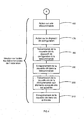
- a remote control for example the remote control 3A, to pass in a particular mode of operation, said key transmission mode.
- This particular mode of operation is for example triggered by a particular action of the user on the remote control.
- a second step 120 the particular operation of the remote control involves the transmission by it of the first key that it contains in memory.
- a third step 130 it acts on the configuration device to pass in a particular mode of operation, said listening mode.
- the first key is then received by the configuration device, via the reception element 24, and the latter stores the first key in its memory 27.
- a discovery step is implemented.
- the configuration device searches for all the elements of the installation already able to communicate with the remote control 3A, in particular by sharing the first key with the key. configuration device. The list of these elements is generated and stored in memory.
- a first phase of the configuration process called “key transmission phase” it is possible to repeat all the steps 110 to 140 on all remote controls of the installation.
- the first key is transmitted, from an element of the first installation part to the configuration device and the second key of an element of the second installation part to the configuration device. Only part of the steps can be repeated, in particular it is sufficient for the configuration device to be informed of the existence of a first and a second key in the installation. This allows the configuration device to note that the first key and the second key differ, and to propose to homogenize them.
- the configuration device knows all the keys used in the installation and possibly all the elements communicating with each of the remote controls.
- a new key In a fifth step 150, the configuration device generates a new key.
- This new key can be generated randomly or generated in another way. Alternatively, this new key can be chosen by the user.
- the new key can be defined as being one of the keys in the configuration device during the first phase of the method, for example the first key.
- This step is a phase of defining a new key.
- a remote control for example the remote control 3A, to pass it in a particular mode of operation, said listening mode.
- This particular mode of operation is for example triggered by a particular action of the user on the remote control.
- the remote control listens for messages emitted by the other elements of the installation.
- a seventh step 170 it acts on the configuration device to pass in a particular mode of operation, said key transmission mode.
- This particular mode of operation is for example triggered by a particular action of the user on the configuration device.
- step 180 in the particular operating mode, the configuration device transmits the new key to the remote control being tuned.
- the remote control saves the new key in its memory.
- the new key replaces the key that was previously stored in memory.
- the new key is stored in a memory in addition to the key that was previously stored in memory.
- the remote control transmits the new key to the items with which it was previously paired.
- the device can check, using the list of elements stored in memory, that the key is distributed to the elements.
- the new key can be transmitted to the elements paired with the remote control, directly by the configuration device, the latter having knowledge of these different elements.
- the elements having received the new key register it in their memory.
- the new key replaces the key that was previously stored in memory.
- the new key is stored in a memory in addition to the key that was previously stored in memory.
- a third phase of the configuration process called homogenization, iterates all stages 160 to 210 on all remote controls of the installation, more precisely on all bidirectional remote controls of the installation. Indeed, only bidirectional remote controls are able to receive the new key.
- the new key is thus transmitted from the configuration device to at least one element of the second installation part, in particular to a remote control of the second installation part, and the new key is saved in a memory of the at least one element of the second installation part.
- any element initially controlled by a bidirectional remote control can a priori after implementation of the method be controlled by another bidirectional remote control, even if initially this two-way remote control did not use the same key as the controlled element.
- Bidirectional equipment paired with unidirectional remote controls can also learn a new key, this does not affect links with the unidirectional remote control, including pairing, or sharing a key between the unidirectional remote control and one or more home automation equipment .
- the phase of transmission of the new key of the configuration device to at least one element of the second part of the installation it is possible to iterate a step of receiving the new key on only certain elements of the installation, especially on only some bidirectional remote controls. Consequently, in the recording phase, it is possible to iterate a step of recording the new key only on the remote controls having received the new key, and on the elements of the installation which are linked to these remote controls.
- the new key can then be broadcast via the remote control knowing the new key.
- the configuration device comprises interface elements able to guide the user during the configuration process, in particular elements indicating the actions to be performed by the user, such as actions of contact or of support on a user. remote control or on a button thereof or validation actions triggering reactions of elements of the installation.
- interface elements are included in the interface 21.
- the configuration method is advantageously used for the homogenization of the keys of an installation comprising initially two or more parts of installation having their own key.
- the process can result in reunification of keys in a manner completely transparent to the user.
- the generation of a new key is performed following the transmission of all the different keys of the installation.
- the key most commonly used in the installation will be chosen as the new key.
Landscapes
- Engineering & Computer Science (AREA)
- Computer Networks & Wireless Communication (AREA)
- Signal Processing (AREA)
- Computer Security & Cryptography (AREA)
- Physics & Mathematics (AREA)
- General Physics & Mathematics (AREA)
- Computer Hardware Design (AREA)
- Computing Systems (AREA)
- General Engineering & Computer Science (AREA)
- Human Computer Interaction (AREA)
- Automation & Control Theory (AREA)
- Selective Calling Equipment (AREA)
Claims (15)
- Verfahren zur Konfiguration einer Heimanlage (1), umfassend mindestens einen ersten Teil (1A) der Heimanlage, einen zweiten Teil (1B) der Heimanlage und eine Konfigurationseinrichtung (2):- wobei der erste Teil der Heimanlage Elemente (3A, 4A, 5A, 6A) des Typs Kontrollpunkt oder Gerät umfasst, die in einem ersten Heimnetzwerk kommunizieren, wobei jedes Element des ersten Teils mit einem Identifikator versehen ist und einen selben ersten Schlüssel, der dem ersten Heimnetzwerk eigen ist und die Zugehörigkeit des Elements zum ersten Heimnetzwerk garantiert, teilt, und- wobei der zweite Teil der Heimanlage Elemente (3B, 4B, 5B, 6B) des Typs Kontrollpunkt oder Gerät umfasst, die in einem zweiten Heimnetzwerk kommunizieren, wobei jedes Element des zweiten Teils mit einem Identifikator versehen ist und einen selben zweiten Schlüssel, der dem zweiten Heimnetzwerk eigen ist und die Zugehörigkeit zum zweiten Heimnetzwerk garantiert, teilt,dadurch gekennzeichnet, dass das Verfahren umfasst:- eine Phase der Übertragung des ersten Schlüssels von einem Element des ersten Anlageteils auf die Konfigurationseinrichtung,- eine Phase der Definition eines neuen Schlüssels,- eine Phase der Übertragung des neuen Schlüssels von der Konfigurationseinrichtung auf mindestens ein Element des zweiten Anlageteils,- eine Phase der Aufzeichnung des neuen Schlüssels in einem Speicher des mindestens einen Elements des zweiten Anlageteils.
- Verfahren nach Anspruch 1, dadurch gekennzeichnet, dass die Übertragungsphase des ersten Schlüssels für Elemente des Typs Kontrollpunkte des ersten Anlageteils iteriert wird.
- Verfahren nach einem der vorhergehenden Ansprüche, dadurch gekennzeichnet, dass es eine Phase der Übertragung des zweiten Schlüssels von einem Element des zweiten Anlageteils auf die Konfigurationseinrichtung umfasst.
- Verfahren nach dem vorhergehenden Anspruch, dadurch gekennzeichnet, dass die Übertragungsphase des zweiten Schlüssels für Elemente des Typs Kontrollpunkte des zweiten Anlageteils iteriert wird.
- Verfahren nach einem der vorhergehenden Ansprüche, dadurch gekennzeichnet, dass es einen Schritt der Übertragung eines dritten Schlüssels von einem Element des dritten Anlageteils auf die Konfigurationseinrichtung umfasst.
- Verfahren nach einem der vorhergehenden Ansprüche, dadurch gekennzeichnet, dass die Phase der Definition des neuen Schlüssels die Erzeugung eines neuen Schlüssels umfasst, insbesondere die zufällig Erzeugung eines neuen Schlüssels oder die Wahl des ersten Schlüssels und/oder des zweiten Schlüssels als neuen Schlüssel.
- Verfahren nach einem der vorhergehenden Ansprüche, dadurch gekennzeichnet, dass die Phase der Übertragung des neuen Schlüssels und/oder die Phase der Aufzeichnung des neuen Schlüssels für mehrere Elemente der Anlage iteriert wird, insbesondere für alle Kontrollpunkte der Anlage, umfassend Informationsempfangselemente.
- Verfahren nach einem der vorhergehenden Ansprüche, dadurch gekennzeichnet, dass die Phase der Aufzeichnung des neuen Schlüssels das Löschen des erste oder zweiten vorher im Speicher befindlichen Schlüssels hervorruft.
- Funktionsverfahren einer Konfigurationseinrichtung (2), die geeignet ist, das Konfigurationsverfahren nach einem der vorhergehenden Ansprüche einzusetzen, dadurch gekennzeichnet, dass das Verfahren umfasst:- eine Phase des Empfangs des ersten Schlüssels,- eine Phase der Definition eines neuen Schlüssels,- eine Phase des Sendens des neuen Schlüssels.
- Von einem Rechner lesbarer Datenaufzeichnungsträger, auf dem ein Computerprogramm aufgezeichnet ist, umfassend Softwareelemente für den Einsatz der Schritte eines Verfahrens nach einem der vorhergehenden Ansprüche.
- Konfigurationseinrichtung (2), umfassend Hardware- und/oder Softwareelemente (21, 22, 23, 24, 25, 26, 27) für den Einsatz des Verfahrens nach einem der Ansprüche 1 bis 9.
- Konfigurationseinrichtung nach Anspruch 11, dadurch gekennzeichnet, dass die Hardware- und/oder Softwareelemente umfassen:- ein Element (24) für den Empfang des ersten Schlüssels,- ein Element (26) zur Definition eines neuen Schlüssels,- ein Element (25) zum Senden des neuen Schlüssels.
- Konfigurationseinrichtung nach Anspruch 11 oder 12, dadurch gekennzeichnet, dass die Hardware- und/oder Softwareelemente eine Mensch-Maschine-Schnittstelle (21), wie eine Einheit Bildschirm (22) und Tastatur (23), insbesondere einen Touchscreen, umfassen.
- Heimanlage (1), umfassend Hardware- und/oder Softwareelemente (3A, 4A, 5A, 6A, 3B, 4B, 5B, 6B, 21, 22, 23, 24, 25, 26, 27) für den Einsatz des Verfahrens nach einem der Ansprüche 1 bis 9.
- Heimanlage nach dem vorhergehenden Anspruch, dadurch gekennzeichnet, dass sie eine Konfigurationseinrichtung (2) nach einem der Ansprüche 11 bis 13 umfasst.
Applications Claiming Priority (1)
| Application Number | Priority Date | Filing Date | Title |
|---|---|---|---|
| FR1251751A FR2987531B1 (fr) | 2012-02-27 | 2012-02-27 | Procede de configuration d'une installation domotique |
Publications (2)
| Publication Number | Publication Date |
|---|---|
| EP2632084A1 EP2632084A1 (de) | 2013-08-28 |
| EP2632084B1 true EP2632084B1 (de) | 2015-09-16 |
Family
ID=47739169
Family Applications (1)
| Application Number | Title | Priority Date | Filing Date |
|---|---|---|---|
| EP13156756.2A Active EP2632084B1 (de) | 2012-02-27 | 2013-02-26 | Konfigurationsverfahren einer Heimanlage |
Country Status (5)
| Country | Link |
|---|---|
| US (1) | US9747787B2 (de) |
| EP (1) | EP2632084B1 (de) |
| CN (1) | CN103295385B (de) |
| BR (1) | BR102013004538B1 (de) |
| FR (1) | FR2987531B1 (de) |
Families Citing this family (3)
| Publication number | Priority date | Publication date | Assignee | Title |
|---|---|---|---|---|
| JP6065550B2 (ja) * | 2012-12-03 | 2017-01-25 | 船井電機株式会社 | 映像装置 |
| FR3024783B1 (fr) * | 2014-08-11 | 2017-07-21 | Somfy Sas | Configuration securisee d'une installation domotique |
| FR3147656B1 (fr) * | 2023-04-04 | 2025-11-07 | Somfy Activites Sa | Procédé de configuration d’une installation domotique. |
Family Cites Families (6)
| Publication number | Priority date | Publication date | Assignee | Title |
|---|---|---|---|---|
| US6233685B1 (en) * | 1997-08-29 | 2001-05-15 | Sean William Smith | Establishing and employing the provable untampered state of a device |
| FR2827414B1 (fr) * | 2001-07-13 | 2003-12-05 | Somfy | Procede d'appariement d'emetteur et de recepteur |
| FR2837939B1 (fr) * | 2002-03-26 | 2004-09-17 | Somfy | Procede de reprogrammation d'objets bidirectionnels |
| EP1629634B1 (de) * | 2003-06-04 | 2007-08-15 | Matsushita Electric Industrial Co., Ltd. | Sichere authentifizierung in einem drahtlosen hausnetzwerk |
| CN1988489B (zh) * | 2006-11-30 | 2010-05-12 | 中国电信集团公司 | 一种智能家居监控的系统和方法 |
| FR2955688B1 (fr) * | 2010-01-28 | 2012-02-24 | Somfy Sas | Procede de configuration d'une installation domotique |
-
2012
- 2012-02-27 FR FR1251751A patent/FR2987531B1/fr not_active Expired - Fee Related
-
2013
- 2013-02-26 BR BR102013004538-1A patent/BR102013004538B1/pt not_active IP Right Cessation
- 2013-02-26 US US13/777,742 patent/US9747787B2/en active Active
- 2013-02-26 EP EP13156756.2A patent/EP2632084B1/de active Active
- 2013-02-27 CN CN201310130150.XA patent/CN103295385B/zh active Active
Also Published As
| Publication number | Publication date |
|---|---|
| FR2987531A1 (fr) | 2013-08-30 |
| CN103295385B (zh) | 2018-02-13 |
| BR102013004538B1 (pt) | 2021-03-16 |
| US9747787B2 (en) | 2017-08-29 |
| FR2987531B1 (fr) | 2014-03-14 |
| CN103295385A (zh) | 2013-09-11 |
| BR102013004538A2 (pt) | 2015-06-16 |
| US20130222124A1 (en) | 2013-08-29 |
| EP2632084A1 (de) | 2013-08-28 |
Similar Documents
| Publication | Publication Date | Title |
|---|---|---|
| EP1451972B1 (de) | Verfahren zur bildung eines heimnetzes | |
| EP2497228B1 (de) | Aufträgekommunikation in einem hausnetz und zwischen hausnetzen | |
| EP2362368B1 (de) | Szenariozuteilung zu Steuertasten | |
| EP2633506B1 (de) | Verfahren für den betrieb einer mobilen steuereinheit einer domotikanlage | |
| EP3180658B1 (de) | Sichere konfiguration einer haushaltsautomatisierungsvorrichtung | |
| EP2632084B1 (de) | Konfigurationsverfahren einer Heimanlage | |
| WO2003007265A1 (fr) | Procede d'appariement d'emetteur et de recepteur | |
| FR2834147A1 (fr) | Procede d'appariement de transmetteurs et de recepteur | |
| EP1805934B1 (de) | Verfahren zur Kommunikation in einem Netzwerk mit verdrahteten und drahtlosen Knoten | |
| EP3318019B1 (de) | Heimautomatisierungssystem und verfahren zur erzeugung von topologie eines heimautomatisierungssystems | |
| EP3679689B1 (de) | Verfahren zur konfiguration und / oder wartung eines heimautomatisierungssystems für ein gebäude und zugehöriges heimautomatisierungssystem | |
| EP1490839B1 (de) | Verfahren zur umprogrammierung bidirektionaler gegenständen | |
| FR2985072A1 (fr) | Procede de gestion d'une installation domotique | |
| EP3073335B1 (de) | Verfahren zur steuerung einer hausanlage eines gebäudes, und entsprechende steuervorrichtung | |
| EP1722340B1 (de) | Betriebsverfahren für eine Hausautomatisierungsanlage und zugehörige Hausautomatisierungsanlage | |
| FR3153956A1 (fr) | Procédé et dispositif de contrôle d’exécution d’au moins une action par un objet connecté dans un réseau de communication | |
| FR3102590A1 (fr) | Auto-configuration d’une interface homme/machine d’un système par détermination de présence de composants actionnables | |
| FR3073314A1 (fr) | Appareil de commande radio permettant de commander un equipement electrique, installation correspondante et systeme correspondant | |
| FR2961983A1 (fr) | Procede permettant le transfert d'une application logicielle sur un reseau. | |
| WO2016079215A1 (fr) | Procede de configuration d'une installation domotique |
Legal Events
| Date | Code | Title | Description |
|---|---|---|---|
| PUAI | Public reference made under article 153(3) epc to a published international application that has entered the european phase |
Free format text: ORIGINAL CODE: 0009012 |
|
| AK | Designated contracting states |
Kind code of ref document: A1 Designated state(s): AL AT BE BG CH CY CZ DE DK EE ES FI FR GB GR HR HU IE IS IT LI LT LU LV MC MK MT NL NO PL PT RO RS SE SI SK SM TR |
|
| AX | Request for extension of the european patent |
Extension state: BA ME |
|
| 17P | Request for examination filed |
Effective date: 20140228 |
|
| RBV | Designated contracting states (corrected) |
Designated state(s): AL AT BE BG CH CY CZ DE DK EE ES FI FR GB GR HR HU IE IS IT LI LT LU LV MC MK MT NL NO PL PT RO RS SE SI SK SM TR |
|
| GRAP | Despatch of communication of intention to grant a patent |
Free format text: ORIGINAL CODE: EPIDOSNIGR1 |
|
| RIC1 | Information provided on ipc code assigned before grant |
Ipc: H04L 29/06 20060101ALI20150227BHEP Ipc: G08C 19/28 20060101ALI20150227BHEP Ipc: H04L 12/28 20060101AFI20150227BHEP |
|
| INTG | Intention to grant announced |
Effective date: 20150401 |
|
| RAP1 | Party data changed (applicant data changed or rights of an application transferred) |
Owner name: SOMFY SAS |
|
| GRAS | Grant fee paid |
Free format text: ORIGINAL CODE: EPIDOSNIGR3 |
|
| GRAA | (expected) grant |
Free format text: ORIGINAL CODE: 0009210 |
|
| AK | Designated contracting states |
Kind code of ref document: B1 Designated state(s): AL AT BE BG CH CY CZ DE DK EE ES FI FR GB GR HR HU IE IS IT LI LT LU LV MC MK MT NL NO PL PT RO RS SE SI SK SM TR |
|
| REG | Reference to a national code |
Ref country code: GB Ref legal event code: FG4D Free format text: NOT ENGLISH |
|
| REG | Reference to a national code |
Ref country code: CH Ref legal event code: EP |
|
| REG | Reference to a national code |
Ref country code: IE Ref legal event code: FG4D Free format text: LANGUAGE OF EP DOCUMENT: FRENCH |
|
| REG | Reference to a national code |
Ref country code: AT Ref legal event code: REF Ref document number: 750546 Country of ref document: AT Kind code of ref document: T Effective date: 20151015 |
|
| REG | Reference to a national code |
Ref country code: DE Ref legal event code: R096 Ref document number: 602013002993 Country of ref document: DE |
|
| REG | Reference to a national code |
Ref country code: NL Ref legal event code: MP Effective date: 20150916 |
|
| PG25 | Lapsed in a contracting state [announced via postgrant information from national office to epo] |
Ref country code: GR Free format text: LAPSE BECAUSE OF FAILURE TO SUBMIT A TRANSLATION OF THE DESCRIPTION OR TO PAY THE FEE WITHIN THE PRESCRIBED TIME-LIMIT Effective date: 20151217 Ref country code: NO Free format text: LAPSE BECAUSE OF FAILURE TO SUBMIT A TRANSLATION OF THE DESCRIPTION OR TO PAY THE FEE WITHIN THE PRESCRIBED TIME-LIMIT Effective date: 20151216 Ref country code: LV Free format text: LAPSE BECAUSE OF FAILURE TO SUBMIT A TRANSLATION OF THE DESCRIPTION OR TO PAY THE FEE WITHIN THE PRESCRIBED TIME-LIMIT Effective date: 20150916 Ref country code: LT Free format text: LAPSE BECAUSE OF FAILURE TO SUBMIT A TRANSLATION OF THE DESCRIPTION OR TO PAY THE FEE WITHIN THE PRESCRIBED TIME-LIMIT Effective date: 20150916 Ref country code: FI Free format text: LAPSE BECAUSE OF FAILURE TO SUBMIT A TRANSLATION OF THE DESCRIPTION OR TO PAY THE FEE WITHIN THE PRESCRIBED TIME-LIMIT Effective date: 20150916 |
|
| REG | Reference to a national code |
Ref country code: LT Ref legal event code: MG4D |
|
| REG | Reference to a national code |
Ref country code: AT Ref legal event code: MK05 Ref document number: 750546 Country of ref document: AT Kind code of ref document: T Effective date: 20150916 |
|
| PG25 | Lapsed in a contracting state [announced via postgrant information from national office to epo] |
Ref country code: RS Free format text: LAPSE BECAUSE OF FAILURE TO SUBMIT A TRANSLATION OF THE DESCRIPTION OR TO PAY THE FEE WITHIN THE PRESCRIBED TIME-LIMIT Effective date: 20150916 Ref country code: SE Free format text: LAPSE BECAUSE OF FAILURE TO SUBMIT A TRANSLATION OF THE DESCRIPTION OR TO PAY THE FEE WITHIN THE PRESCRIBED TIME-LIMIT Effective date: 20150916 Ref country code: HR Free format text: LAPSE BECAUSE OF FAILURE TO SUBMIT A TRANSLATION OF THE DESCRIPTION OR TO PAY THE FEE WITHIN THE PRESCRIBED TIME-LIMIT Effective date: 20150916 |
|
| REG | Reference to a national code |
Ref country code: FR Ref legal event code: PLFP Year of fee payment: 4 |
|
| PG25 | Lapsed in a contracting state [announced via postgrant information from national office to epo] |
Ref country code: NL Free format text: LAPSE BECAUSE OF FAILURE TO SUBMIT A TRANSLATION OF THE DESCRIPTION OR TO PAY THE FEE WITHIN THE PRESCRIBED TIME-LIMIT Effective date: 20150916 |
|
| PG25 | Lapsed in a contracting state [announced via postgrant information from national office to epo] |
Ref country code: IS Free format text: LAPSE BECAUSE OF FAILURE TO SUBMIT A TRANSLATION OF THE DESCRIPTION OR TO PAY THE FEE WITHIN THE PRESCRIBED TIME-LIMIT Effective date: 20160116 Ref country code: CZ Free format text: LAPSE BECAUSE OF FAILURE TO SUBMIT A TRANSLATION OF THE DESCRIPTION OR TO PAY THE FEE WITHIN THE PRESCRIBED TIME-LIMIT Effective date: 20150916 Ref country code: EE Free format text: LAPSE BECAUSE OF FAILURE TO SUBMIT A TRANSLATION OF THE DESCRIPTION OR TO PAY THE FEE WITHIN THE PRESCRIBED TIME-LIMIT Effective date: 20150916 Ref country code: ES Free format text: LAPSE BECAUSE OF FAILURE TO SUBMIT A TRANSLATION OF THE DESCRIPTION OR TO PAY THE FEE WITHIN THE PRESCRIBED TIME-LIMIT Effective date: 20150916 Ref country code: IT Free format text: LAPSE BECAUSE OF FAILURE TO SUBMIT A TRANSLATION OF THE DESCRIPTION OR TO PAY THE FEE WITHIN THE PRESCRIBED TIME-LIMIT Effective date: 20150916 Ref country code: SK Free format text: LAPSE BECAUSE OF FAILURE TO SUBMIT A TRANSLATION OF THE DESCRIPTION OR TO PAY THE FEE WITHIN THE PRESCRIBED TIME-LIMIT Effective date: 20150916 |
|
| PG25 | Lapsed in a contracting state [announced via postgrant information from national office to epo] |
Ref country code: RO Free format text: LAPSE BECAUSE OF FAILURE TO SUBMIT A TRANSLATION OF THE DESCRIPTION OR TO PAY THE FEE WITHIN THE PRESCRIBED TIME-LIMIT Effective date: 20150916 Ref country code: PT Free format text: LAPSE BECAUSE OF FAILURE TO SUBMIT A TRANSLATION OF THE DESCRIPTION OR TO PAY THE FEE WITHIN THE PRESCRIBED TIME-LIMIT Effective date: 20160118 Ref country code: BE Free format text: LAPSE BECAUSE OF NON-PAYMENT OF DUE FEES Effective date: 20160229 Ref country code: PL Free format text: LAPSE BECAUSE OF FAILURE TO SUBMIT A TRANSLATION OF THE DESCRIPTION OR TO PAY THE FEE WITHIN THE PRESCRIBED TIME-LIMIT Effective date: 20150916 Ref country code: AT Free format text: LAPSE BECAUSE OF FAILURE TO SUBMIT A TRANSLATION OF THE DESCRIPTION OR TO PAY THE FEE WITHIN THE PRESCRIBED TIME-LIMIT Effective date: 20150916 |
|
| REG | Reference to a national code |
Ref country code: DE Ref legal event code: R097 Ref document number: 602013002993 Country of ref document: DE |
|
| PLBE | No opposition filed within time limit |
Free format text: ORIGINAL CODE: 0009261 |
|
| STAA | Information on the status of an ep patent application or granted ep patent |
Free format text: STATUS: NO OPPOSITION FILED WITHIN TIME LIMIT |
|
| 26N | No opposition filed |
Effective date: 20160617 |
|
| PG25 | Lapsed in a contracting state [announced via postgrant information from national office to epo] |
Ref country code: DK Free format text: LAPSE BECAUSE OF FAILURE TO SUBMIT A TRANSLATION OF THE DESCRIPTION OR TO PAY THE FEE WITHIN THE PRESCRIBED TIME-LIMIT Effective date: 20150916 |
|
| PG25 | Lapsed in a contracting state [announced via postgrant information from national office to epo] |
Ref country code: MC Free format text: LAPSE BECAUSE OF FAILURE TO SUBMIT A TRANSLATION OF THE DESCRIPTION OR TO PAY THE FEE WITHIN THE PRESCRIBED TIME-LIMIT Effective date: 20150916 Ref country code: LU Free format text: LAPSE BECAUSE OF FAILURE TO SUBMIT A TRANSLATION OF THE DESCRIPTION OR TO PAY THE FEE WITHIN THE PRESCRIBED TIME-LIMIT Effective date: 20160226 |
|
| REG | Reference to a national code |
Ref country code: CH Ref legal event code: PL |
|
| PG25 | Lapsed in a contracting state [announced via postgrant information from national office to epo] |
Ref country code: CH Free format text: LAPSE BECAUSE OF NON-PAYMENT OF DUE FEES Effective date: 20160229 Ref country code: LI Free format text: LAPSE BECAUSE OF NON-PAYMENT OF DUE FEES Effective date: 20160229 |
|
| PG25 | Lapsed in a contracting state [announced via postgrant information from national office to epo] |
Ref country code: SI Free format text: LAPSE BECAUSE OF FAILURE TO SUBMIT A TRANSLATION OF THE DESCRIPTION OR TO PAY THE FEE WITHIN THE PRESCRIBED TIME-LIMIT Effective date: 20150916 |
|
| REG | Reference to a national code |
Ref country code: IE Ref legal event code: MM4A |
|
| PG25 | Lapsed in a contracting state [announced via postgrant information from national office to epo] |
Ref country code: IE Free format text: LAPSE BECAUSE OF NON-PAYMENT OF DUE FEES Effective date: 20160226 |
|
| REG | Reference to a national code |
Ref country code: FR Ref legal event code: PLFP Year of fee payment: 5 |
|
| PG25 | Lapsed in a contracting state [announced via postgrant information from national office to epo] |
Ref country code: MT Free format text: LAPSE BECAUSE OF FAILURE TO SUBMIT A TRANSLATION OF THE DESCRIPTION OR TO PAY THE FEE WITHIN THE PRESCRIBED TIME-LIMIT Effective date: 20150916 |
|
| REG | Reference to a national code |
Ref country code: FR Ref legal event code: PLFP Year of fee payment: 6 |
|
| PG25 | Lapsed in a contracting state [announced via postgrant information from national office to epo] |
Ref country code: CY Free format text: LAPSE BECAUSE OF FAILURE TO SUBMIT A TRANSLATION OF THE DESCRIPTION OR TO PAY THE FEE WITHIN THE PRESCRIBED TIME-LIMIT Effective date: 20150916 Ref country code: SM Free format text: LAPSE BECAUSE OF FAILURE TO SUBMIT A TRANSLATION OF THE DESCRIPTION OR TO PAY THE FEE WITHIN THE PRESCRIBED TIME-LIMIT Effective date: 20150916 Ref country code: HU Free format text: LAPSE BECAUSE OF FAILURE TO SUBMIT A TRANSLATION OF THE DESCRIPTION OR TO PAY THE FEE WITHIN THE PRESCRIBED TIME-LIMIT; INVALID AB INITIO Effective date: 20130226 |
|
| PG25 | Lapsed in a contracting state [announced via postgrant information from national office to epo] |
Ref country code: TR Free format text: LAPSE BECAUSE OF FAILURE TO SUBMIT A TRANSLATION OF THE DESCRIPTION OR TO PAY THE FEE WITHIN THE PRESCRIBED TIME-LIMIT Effective date: 20150916 Ref country code: MK Free format text: LAPSE BECAUSE OF FAILURE TO SUBMIT A TRANSLATION OF THE DESCRIPTION OR TO PAY THE FEE WITHIN THE PRESCRIBED TIME-LIMIT Effective date: 20150916 |
|
| PG25 | Lapsed in a contracting state [announced via postgrant information from national office to epo] |
Ref country code: BG Free format text: LAPSE BECAUSE OF FAILURE TO SUBMIT A TRANSLATION OF THE DESCRIPTION OR TO PAY THE FEE WITHIN THE PRESCRIBED TIME-LIMIT Effective date: 20150916 |
|
| PG25 | Lapsed in a contracting state [announced via postgrant information from national office to epo] |
Ref country code: AL Free format text: LAPSE BECAUSE OF FAILURE TO SUBMIT A TRANSLATION OF THE DESCRIPTION OR TO PAY THE FEE WITHIN THE PRESCRIBED TIME-LIMIT Effective date: 20150916 |
|
| REG | Reference to a national code |
Ref country code: DE Ref legal event code: R082 Ref document number: 602013002993 Country of ref document: DE Representative=s name: PATENTANWAELTE OSTRIGA, SONNET, WIRTHS & VORWE, DE Ref country code: DE Ref legal event code: R081 Ref document number: 602013002993 Country of ref document: DE Owner name: SOMFY ACTIVITES SA, FR Free format text: FORMER OWNER: SOMFY SAS, CLUSES, FR |
|
| PGFP | Annual fee paid to national office [announced via postgrant information from national office to epo] |
Ref country code: FR Payment date: 20251219 Year of fee payment: 14 |
|
| PGFP | Annual fee paid to national office [announced via postgrant information from national office to epo] |
Ref country code: GB Payment date: 20260219 Year of fee payment: 14 |
|
| PGFP | Annual fee paid to national office [announced via postgrant information from national office to epo] |
Ref country code: DE Payment date: 20260206 Year of fee payment: 14 |