EP2684633A2 - Drahterodiermaschine und automatische Programmierungsvorrichtung für eine Drahterodiermaschine - Google Patents
Drahterodiermaschine und automatische Programmierungsvorrichtung für eine Drahterodiermaschine Download PDFInfo
- Publication number
- EP2684633A2 EP2684633A2 EP20130168716 EP13168716A EP2684633A2 EP 2684633 A2 EP2684633 A2 EP 2684633A2 EP 20130168716 EP20130168716 EP 20130168716 EP 13168716 A EP13168716 A EP 13168716A EP 2684633 A2 EP2684633 A2 EP 2684633A2
- Authority
- EP
- European Patent Office
- Prior art keywords
- machining
- attachment
- electric discharge
- deposition region
- workpiece
- Prior art date
- Legal status (The legal status is an assumption and is not a legal conclusion. Google has not performed a legal analysis and makes no representation as to the accuracy of the status listed.)
- Granted
Links
Images




Classifications
-
- B—PERFORMING OPERATIONS; TRANSPORTING
- B23—MACHINE TOOLS; METAL-WORKING NOT OTHERWISE PROVIDED FOR
- B23H—WORKING OF METAL BY THE ACTION OF A HIGH CONCENTRATION OF ELECTRIC CURRENT ON A WORKPIECE USING AN ELECTRODE WHICH TAKES THE PLACE OF A TOOL; SUCH WORKING COMBINED WITH OTHER FORMS OF WORKING OF METAL
- B23H1/00—Electrical discharge machining, i.e. removing metal with a series of rapidly recurring electrical discharges between an electrode and a workpiece in the presence of a fluid dielectric
- B23H1/04—Electrodes specially adapted therefor or their manufacture
-
- B—PERFORMING OPERATIONS; TRANSPORTING
- B23—MACHINE TOOLS; METAL-WORKING NOT OTHERWISE PROVIDED FOR
- B23H—WORKING OF METAL BY THE ACTION OF A HIGH CONCENTRATION OF ELECTRIC CURRENT ON A WORKPIECE USING AN ELECTRODE WHICH TAKES THE PLACE OF A TOOL; SUCH WORKING COMBINED WITH OTHER FORMS OF WORKING OF METAL
- B23H7/00—Processes or apparatus applicable to both electrical discharge machining and electrochemical machining
- B23H7/02—Wire-cutting
-
- B—PERFORMING OPERATIONS; TRANSPORTING
- B23—MACHINE TOOLS; METAL-WORKING NOT OTHERWISE PROVIDED FOR
- B23H—WORKING OF METAL BY THE ACTION OF A HIGH CONCENTRATION OF ELECTRIC CURRENT ON A WORKPIECE USING AN ELECTRODE WHICH TAKES THE PLACE OF A TOOL; SUCH WORKING COMBINED WITH OTHER FORMS OF WORKING OF METAL
- B23H11/00—Auxiliary apparatus or details, not otherwise provided for
-
- B—PERFORMING OPERATIONS; TRANSPORTING
- B23—MACHINE TOOLS; METAL-WORKING NOT OTHERWISE PROVIDED FOR
- B23H—WORKING OF METAL BY THE ACTION OF A HIGH CONCENTRATION OF ELECTRIC CURRENT ON A WORKPIECE USING AN ELECTRODE WHICH TAKES THE PLACE OF A TOOL; SUCH WORKING COMBINED WITH OTHER FORMS OF WORKING OF METAL
- B23H7/00—Processes or apparatus applicable to both electrical discharge machining and electrochemical machining
- B23H7/02—Wire-cutting
- B23H7/06—Control of the travel curve of the relative movement between electrode and workpiece
- B23H7/065—Electric circuits specially adapted therefor
-
- B—PERFORMING OPERATIONS; TRANSPORTING
- B23—MACHINE TOOLS; METAL-WORKING NOT OTHERWISE PROVIDED FOR
- B23H—WORKING OF METAL BY THE ACTION OF A HIGH CONCENTRATION OF ELECTRIC CURRENT ON A WORKPIECE USING AN ELECTRODE WHICH TAKES THE PLACE OF A TOOL; SUCH WORKING COMBINED WITH OTHER FORMS OF WORKING OF METAL
- B23H7/00—Processes or apparatus applicable to both electrical discharge machining and electrochemical machining
- B23H7/14—Electric circuits specially adapted therefor, e.g. power supply
- B23H7/20—Electric circuits specially adapted therefor, e.g. power supply for program control, e.g. adaptive
-
- G—PHYSICS
- G05—CONTROLLING; REGULATING
- G05B—CONTROL OR REGULATING SYSTEMS IN GENERAL; FUNCTIONAL ELEMENTS OF SUCH SYSTEMS; MONITORING OR TESTING ARRANGEMENTS FOR SUCH SYSTEMS OR ELEMENTS
- G05B19/00—Program-control systems
- G05B19/02—Program-control systems electric
- G05B19/18—Numerical control [NC], i.e. automatically operating machines, in particular machine tools, e.g. in a manufacturing environment, so as to execute positioning, movement or co-ordinated operations by means of program data in numerical form
- G05B19/4093—Numerical control [NC], i.e. automatically operating machines, in particular machine tools, e.g. in a manufacturing environment, so as to execute positioning, movement or co-ordinated operations by means of program data in numerical form characterised by part programming, e.g. entry of geometrical information as taken from a technical drawing, combining this with machining and material information to obtain control information, named part program, for the NC machine
- G05B19/40931—Numerical control [NC], i.e. automatically operating machines, in particular machine tools, e.g. in a manufacturing environment, so as to execute positioning, movement or co-ordinated operations by means of program data in numerical form characterised by part programming, e.g. entry of geometrical information as taken from a technical drawing, combining this with machining and material information to obtain control information, named part program, for the NC machine concerning programming of geometry
-
- G—PHYSICS
- G05—CONTROLLING; REGULATING
- G05B—CONTROL OR REGULATING SYSTEMS IN GENERAL; FUNCTIONAL ELEMENTS OF SUCH SYSTEMS; MONITORING OR TESTING ARRANGEMENTS FOR SUCH SYSTEMS OR ELEMENTS
- G05B2219/00—Program-control systems
- G05B2219/30—Nc systems
- G05B2219/45—Nc applications
- G05B2219/45221—Edm, electrical discharge machining, electroerosion, ecm, chemical
-
- Y—GENERAL TAGGING OF NEW TECHNOLOGICAL DEVELOPMENTS; GENERAL TAGGING OF CROSS-SECTIONAL TECHNOLOGIES SPANNING OVER SEVERAL SECTIONS OF THE IPC; TECHNICAL SUBJECTS COVERED BY FORMER USPC CROSS-REFERENCE ART COLLECTIONS [XRACs] AND DIGESTS
- Y02—TECHNOLOGIES OR APPLICATIONS FOR MITIGATION OR ADAPTATION AGAINST CLIMATE CHANGE
- Y02P—CLIMATE CHANGE MITIGATION TECHNOLOGIES IN THE PRODUCTION OR PROCESSING OF GOODS
- Y02P90/00—Enabling technologies with a potential contribution to greenhouse gas [GHG] emissions mitigation
- Y02P90/02—Total factory control, e.g. smart factories, flexible manufacturing systems [FMS] or integrated manufacturing systems [IMS]
Definitions
- the present invention relates to a wire electric discharge machine and an automatic programming device for a wire electric discharge machine that have an anti-drop function for a workpiece by attaching an electrode component to the workpiece.
- the machining starts from a machining start hole 15 with a wire electric discharge machine.
- a machining groove 14 is formed in a machining path through which a wire electrode 13 has gone.
- a residual stock removal 11 is generally provided in a workpiece base material 10 during rough machining and the core 12 is cut off during a post treatment.
- Figs. 9A through 9C are diagrams to illustrate problems that occur upon cutting off a core during die machining in prior art.
- Fig. 9A illustrates that there is a possibility of disconnecting a wire electrode 26 by a core 20 that is cut off making contact with the wire electrode 26, where the reference numeral 21 denotes an area in which the wire electrode is disconnected by the machining to cut off the core 20.
- Fig. 9B illustrates that there is a possibility of breaking a nozzle, such as fracturing or cracking a lower nozzle with the dropping core, where the reference numeral 23 denotes an area in which the core breaks a lower nozzle due to the cutoff machining.
- Fig. 9A illustrates that there is a possibility of disconnecting a wire electrode 26 by a core 20 that is cut off making contact with the wire electrode 26, where the reference numeral 21 denotes an area in which the wire electrode is disconnected by the machining to cut off the core 20.
- Fig. 9B illustrates that there is a possibility of breaking a nozzle, such as fracturing or cracking a lower nozzle with the dropping core, where the reference numeral 23 denotes
- 9C illustrates that there is a possibility of damaging both the core and a workpiece base material 24 due to development of concentration of local electric discharge before short circuit of the wire electrode 26 and the workpiece base material 24 via the core to be cut off and drop, where the reference numeral 25 denotes an area in which the core makes contact with the workpiece base material due to the cutoff machining.
- Japanese Patent Application Laid-Open No. 57-96724 discloses a technique that, in wirecut electric discharge machining that produces a core, a workpiece base material and a core are bonded by depositing attachments in a machining groove between the core and the workpiece base material, thereby holding the core with the workpiece base material during the machining.
- Fig. 10 is a diagram to illustrate a workpiece base material having a core in a thin rib or pectinate shape machined therein.
- Electric discharge machining is carried out in a workpiece base material 31 from a machining start hole 15 along a machining path and attachments 35 containing brass of the wire electrode are attached and deposited along the machining groove formed in the machining path.
- a core 30 has an area 30a in a thin rib or pectinate shape of the core.
- the workpiece base material 31 has an area 31a in a thin rib or pectinate shape of the workpiece base material 31.
- Japanese Patent Application Laid-Open No. 62-218024 discloses a technique to prevent drop of a machined object by attaching an electrode component to an arbitrary part of a machining groove, and the attachment of the electrode component occurs at a desired point of the machining groove along a slight distance.
- Figs. 11A through 11E are diagrams to illustrate a variety of problems that possibly occur upon striking off a core from a workpiece base material after depositing attachments all around a machining groove by the prior art techniques.
- the technique disclosed in Japanese Patent Application Laid-Open No. 62-218024 described above is to prevent drop of a machined object by attaching an electrode component to an arbitrary part of a machining groove, and the attachment phenomenon occurs at a desired point of the machining groove only along a slight distance.
- this technique is to attach an electrode component in an arbitrary part of the machining groove only along a slight distance, and the electrode component is not always attached by an amount necessary to hold the core with the workpiece base material.
- there is a possibility that the core falls from the workpiece base material during machining due to a too small number of specified attachment places while in contrast, there is also a possibility that it becomes difficult to strike off the core from the workpiece base material due to a too large number of specified attachment places.
- an amount of the attachments can be a preset amount (a preset length along the machining groove), or specified arbitrarily by a user, in addition to the position where attachments are attached (attachment position).
- the core and a workpiece base material are attached and fixed making use of brass of the wire to automatically recognize a junction of sides defining a shape of a machined object, a position of the center of gravity of the machined object, and the like from the machining shape using an automatic programming device and the like and to automatically deposit attachments in a necessary amount in a necessary place.
- it can be expected to reduce a burden on the operator than the prior art techniques and even to reduce man-hours. Since it is possible to deposit attachments in a minimal amount necessary to hold the core with the workpiece base material at an arbitrary position, the problems upon striking off a core that possibly occur in the prior art techniques are also solved.
- a place where attachments are deposited may also be specified arbitrarily by program codes and the like.
- a first mode of the wire electric discharge machine relatively moves a wire electrode containing brass and a workpiece in accordance with a machining program to machine the workpiece by electric discharge produced between the wire electrode and the workpiece.
- the wire electric discharge machine comprises: a machining shape calculation unit that obtains a machining shape from the machining program; an attachment/deposition region setting unit that sets, from the obtained machining shape, an attachment/deposition region in which machining chips containing brass produced during machining are attached and deposited to the workplece; and an attachment/deposition unit that attaches and deposits machining chips containing brass produced during machining to the workpiece according to the attachment/deposition region set in the attachment/deposition region setting unit.
- the attachment/deposition region setting unit may be configured to calculate a position of a center of gravity of the machining shape obtained from the machining shape calculation unit and to set the attachment/deposition region at intersections of two orthogonal straight lines, each passing through the position of the center of gravity of the machining shape, with the machining shape.
- the attachment/deposition region setting unit may be configured to obtain an intersection of a straight line and a straight line, an intersection of a straight line and a curved line, or a point at which curvatures in front and behind thereof vary, from the machining program or the machining shape, and to set the attachment/deposition region at a position on a machining path at a predetermined distance away from at least any one of such an intersection or a point thus obtained.
- the wire electric discharge machine may further comprise an attachment region reflection unit that makes the attachment/deposition region set by the attachment/deposition region setting unit reflect in the machining program.
- a second mode of the wire electric discharge machine relatively moves a wire electrode containing brass and a workpiece in accordance with a machining program to machine the workpiece by electric discharge produced between the wire electrode and the workpiece.
- the wire electric discharge machine comprises: an attachment/deposition region setting unit that sets an attachment/deposition region in which machining chips containing brass produced during machining are attached and deposited to the workpiece, for each predetermined distance from an approach block finishing position of the machining program; an attachment/deposition unit that attaches and deposits machining chips containing brass produced during machining to the workpiece according to the attachment/deposition region set in the attachment/deposition region setting unit.
- the wire electric discharge machine may further comprise an attachment region reflection unit that makes the attachment/deposition region set by the attachment/deposition region setting unit reflect in the machining program.
- An automatic programming device creates a machining program used in a wire electric discharge machine that relatively moves a wire electrode containing brass and a workpiece to machine the workpiece by electric discharge produced between the wire electrode and the workpiece.
- the automatic programming device comprises: a machining shape input unit that inputs a machining shape; an attachment/deposition region setting unit that sets an attachment/deposition region from the machining shape inputted in the machining shape input unit; and a machining program generation unit that generates the machining program in which the attachment/deposition region set in the attachment/deposition region setting unit is taken into consideration.
- the attachment/deposition region setting unit may be configured to calculate a position of a center of gravity of the inputted machining shape and to set the attachment/deposition region at intersections of two orthogonal straight lines, each passing through the position of the center of gravity of the machining shape, with the machining shape.
- the attachment/deposition region setting unit may be configured to obtain an intersection of a straight line and a straight line, an intersection of a straight line and a curved line, or a point at which curvatures in front and behind thereof vary, from the input machining shape, and to set the attachment/deposition region at a position on a machining path at a predetermined distance away from at least any one of such an intersection or a point thus obtained.
- the attachment/deposition region setting unit may be configured to set the attachment/deposition region for each predetermined distance from an approach block finishing position of the machining shape.
- a wire electric discharge machine and an automatic programming device for a wire electric discharge machine that can arbitrarily set a place where attachments are deposited and can deposit attachments in a minimal amount necessary to fix a core to a workpiece base material.
- attachments can be deposited in a minimal amount necessary to fix a core to a workpiece base material and it is possible to solve the problems described above that possibly occur upon striking off a core.
- a junction of sides and a position of the center of gravity of a machined object are calculated from a machining shape using an automatic programming device and the like and it is possible to automatically set a position where attachments are deposited, so that there is almost no burden on an operator.
- a place where attachments are deposited can be set automatically, and it is possible to calculate a place where attachments are attached in a minimal amount necessary to hold a core to a workpiece base material using information, such as a position of the center of gravity and a mass of the machined object.
- the information, such as a position of the center of gravity and a mass of the machined object can be calculated separately Therefore, it is possible to avoid the problems of too little or too much attachment of attachments in the prior art techniques described above.
- a residual stock removal becomes not required in machining to produce a core, so that operation over a long period of time in rough machining is enabled.
- the problems described above that possibly occur during cutoff machining in prior art can be solved, and it is possible to reduce the time for an operator to be in charge of cutoff machining.
- the present invention is characterized in that , for a machining shape created using a wire electric discharge machine, an automatic programming device for a wire electric discharge machine, and the like, an amount of attachments (machining chips derived from a wire electrode containing brass) minimally necessary to hold a core with a workpiece base material is automatically calculated using a wire electric discharge machine or an automatic programming device. Accordingly, an operator does not have to carry out an operation, such as setting of an arbitrary place where attachments are attached after considering in advance the problems described above that possibly occur upon striking off a core generated in a shape like thin ribs or pectens.
- the bonding strength of a core and a workpiece base material can be optimized and the core can be stroke off easily compared with the prior art techniques in which attachments are deposited all around the machining groove. Further, the core cutoff machining, which used to be necessary conventionally, becomes not required, thereby enabling unattended machining over a long period of time of the wire electric discharge machine.
- the wire electric discharge machine is equipped with a controller and a machining machine, where the controller controls the entire wire electric discharge machine.
- the controller is equipped with a processor (CPU), an input device, and a memory.
- the processor (CPU) controls the entire wire electric discharge machine by system software stored in the memory.
- the input device is configured with a keyboard and the like, and an operator can input various types of data, such as machining conditions, using the input device.
- the processor (CPU) outputs a movement command corresponding to the machining conditions to respective axes control circuit in accordance with a machining program stored in a RAM of the memory, and the respective axes control circuit outputs a driving command to drive a servo motor of each axis to a servo amplifier of each axis.
- the wire electric discharge machine is equipped with a power source to supply electric discharge energy to a machining gap between a wire electrode and a workpiece.
- the wire electrode is stretched by a predetermined tension between a set of wire guides (for example, an upper wire guide and a lower wire guide) disposed at a predetermined interval.
- a set of wire guides for example, an upper wire guide and a lower wire guide
- the wire electric discharge machine is equipped with an attachment/deposition unit to attach and also deposit machining chips derived from the wire electrode containing brass to the workpiece base material by applying a machining current with a long pulse width for machining between the workpiece base material and the wire electrode or by controlling the specific resistance of a machining fluid. Since such an attachment/deposition unit is already known as disclosed in Japanese Patent Application Laid-Open No. 57-96724 and Japanese Patent Application Laid-Open No. 62-218024 described above, the descriptions are omitted. In addition, a known one can be used for the automatic programming device itself for a wire electric discharge machine to perform the present invention.
- An automatic programming device for wire electric discharge machining is equipped with an input device to input a machining program, and has a function to detect an attachment/deposition region, which is a place where attachments derived from the wire electrode are attached to and deposited on the workpiece base material, by analyzing the machining program.
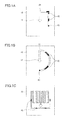
- Figs. 1A through 1C are diagrams to illustrate a first embodiment of a wire electric discharge machine according to the present invention in which a core is held with a workpiece base material.
- electric discharge machining is carried out by relatively moving a wire electrode 43 and a workpiece base material 40 from a machining start hole 41. Over a predetermined range of a machining groove 44 in the workpiece base material 40, attachments containing brass derived from the wire electrode 43 are attached and deposited to the machining groove 44 formed in the workpiece base material 40 by the attachment/deposition unit, thereby forming a bridge.
- the place where attachments are attached and deposited may also be set automatically utilizing a predetermined region including at least one of an intersection of a straight line and a straight line, an intersection of a straight line and a curved line, or a point at which curvatures in front and behind thereof vary (that is, a junction of a first curved line with a first curvature and a second curved line with a second curvature), defining a machining path with the wire electric discharge machine.
- a part including at least one of the intersection of a straight line and a straight line, the intersection of a straight line and a curved line, or the at which curvatures in front and behind thereof vary, defining a machining path obtained upon creating a machining shape with an automatic programming device and the like, may also be automatically set as the attachment place.
- the attachment/deposition region may also be set so that machining chips containing brass, produced during machining, are attached and deposited to the workpiece base material, for example, for each predetermined distance from a finishing position of an approach block of the machining program.
- the position where attachments are deposited may also be specified directly from an operation screen or a program.
- the reference numeral 42 denotes places where attachments containing brass of the wire electrode 43 are deposited at arbitrary positions in the machining path.
- the mass of the core may also be increased, decreased, or the position where attachment are to be deposited may also be modified with respect to the center of gravity of the core.
- attachments are deposited on all sides (straight lines or curved lines defining the machining shape) in the pectinate area, as a result, it becomes difficult to strike off the core. Therefore, attachment of attachments is not carried out to such pectinate area, and control to make attachments to be attached and deposited to the attachment/deposition position set on an outer periphery of the machining shape, as denoted by the reference numeral 45 in Fig. 1C , is carried out.
- the "attachment/deposition” means that attachments are attached to the workpiece base material and then deposited.
- Figs. 2A and 2B are diagrams to illustrate a second embodiment of a wire electric discharge machine according to the present invention in which a position of the center of gravity of the core, which is information necessary for automatic setting of a place where attachments are attached, is calculated.
- An example of a core illustrated in Fig. 2A has a shape (composite core shape) formed by combining a quadrilateral shaped portion on the left side and a triangular shaped portion on the right side.
- the quadrilateral shaped portion has a weight of Ws and a position of the center of gravity thereof is represented by "•" in the quadrilateral shape
- the triangular shaped portion has a weight of Wt and a position of the center of gravity thereof is represented by "•” in the triangular shape, as shown in Fig. 2A .
- a distance between the position of the center of gravity of the quadrilateral shaped portion and the position of the center of gravity of the triangular shaped portion is L.
- a position of the center of gravity of the base of the quadrangular pyramid is a position denoted by the reference numeral 56.
- a position of the center of gravity of a planar shape or a solid shape may be calculated as follows.
- a planar shape is triangular, a point where the three medians cross one another is the center of gravity, and if it is a parallelogram, an intersection of the diagonals becomes the center of gravity. If the planar shape is a trapezoid, an intersection of a straight line linking the center of gravity of the triangles divided into two and a straight line linking a midpoint of an upper bottom and a midpoint of a lower bottom becomes the center of gravity. If it is a shape formed by integrating a plurality of shape portions as shown in Fig. 2A , a position of the center of gravity is calculated for each shape portion and a position of the center of gravity of the shape of integrating these respective shape portions can be obtained by the following equation (1).
- the position of the center of gravity of the composite shape illustrated in Fig. 2A can be obtained from the equation (1) or (2).
- the center of gravity is located at, if the solid shape is a cube, a half distance of a segment linking respective positions of the center of gravity of two facing planes, and if it is a pyramid, a quarter distance of a segment linking a position 56 of the center of gravity of the bottom and the vertex facing the bottom (that is, a position dividing the segment into 1:3) as illustrated in Fig. 2B .
- Figs. 3A through 3G are diagrams to illustrate a third embodiment of the present invention in which a position where attachments are deposited is set for each predetermined distance from the position of the center of gravity of a graphic, for each predetermined distance from a predetermined position including an intersection of a straight line and a straight line, an intersection of a straight line and a curved line, or a point at which curvatures in front and behind thereof vary (as described above, the intersection or the point is referred to as a junction) defining a machining path, or for each predetermined distance from an approach end point.
- attachment attaching places 62 are set on intersections of two straight lines 61 each passing through, and intersecting at a right angle, at a position 60 of the center of gravity with an outer periphery of the shape or in a predetermined region including the intersections. This enables to stably fix the core because the attachment attaching places face one another across the center of gravity.
- the wire electric discharge machine recognizes an outer shape of a workpiece to be machined by reading and analyzing blocks of the machining program.
- the position of the center of gravity of the machining shape is calculated as shown in the examples above.
- intersections of the two orthogonal straight lines, each passing through the position of the center of gravity, with the outer shape of the workpiece are obtained.
- Directions of the two orthogonal straight lines are selected so as to, for example, intersect at 45 degrees with each driving axis relatively moving the workpiece to the wire electrode, or to approximately evenly distribute the positions of the intersections of the outer shape of the workpiece with the two straight lines around the position of the center of gravity.
- a shape of a workpiece to be machined is created to calculate a position of the center of gravity of the created workpiece shape.
- the intersections of the two orthogonal straight lines with the outer shape of the workpiece are obtained in a manner similar to the above case where a wire electric discharge machine is used.
- An amount of attachments to be attached may be set in advance as a predetermined value according to the mass of the outer shape of the workpiece or may be changeable to an arbitrary value.
- attachment positions are as illustrated in Figs. 3D through 3F .
- attachments are attached and deposited at a position of the reference numeral 64.
- the reference numeral 63 in Figs. 3D is a position (a junction) where the curvatures in front and behind thereof vary.
- Such a predetermined position including the junction includes, in addition to a junction, a finishing position where processing of an approach block in the machining program finishes, for example.
- attachments may be attached and deposited to a part on a shorter side 65 or may be attached and deposited to a plurality of parts on a longer side 66.
- attachment positions that are automatically set may be modified (attachment places may be decreased or increased).
- the places where attachments are deposited may be increased or decreased based on the calculated position of the center of gravity, as illustrated with reference numeral 67 in Fig. 3E .
- attachments 68 are deposited as illustrated in Fig.
- parts where attachments 69 are to be deposited may be set on an outer periphery of the machining shape, thereby avoiding depositing of attachments in intricate complex parts of the shape.
- a punch shape/die shape is determined from an offset direction of a wire electrode and two or more consecutive concave corners/convex corners appear, then a requirement not allowing attachments to be attached on sides sandwiching two or more continuous concave corners/convex corners is set, and positions where attachments are to be attached are automatically set as illustrated in Fig. 3G , even in a case of a machining shape as shown in Fig. 3F .
- Figs. 3D, 3E, and 3G even when positions where attachments are to be attached were set automatically, such attachment positions may also be manually modified (or number of attachment positions may be manually increased or decreased).
- the following setting may be made using M code or the like.
- M code a code and an attachment distance P as follows (in the following example, X10. denotes 1.5 cm of the attachment distance, and X30. denotes 2 cm of the attachment distance).
- the attachment positions are basically supposed to be automatically obtained positions (refer to reference numeral 62 in Figs. 3A through 3C and reference numeral 64 in Fig. 3D ) and another code is prepared to increase or decrease the attachment amount.
- the number of attachment positions are increased by adding M101 and decreased by adding M102 in the program block. In such a manner, the number of positions where attachments are attached and deposited can be increased or decreased by adding codes to the machining program by an operator.
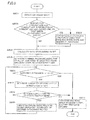
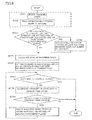
- Figs. 4 through 6 are charts to illustrate a fourth embodiment of a wire electric discharge machine according to the present invention in which a position where attachments are attached for holding a core with a workpiece base material is set automatically.
- a machining shape is created using a wire electric discharge machine, an automatic programming device, and the like.
- a junction of sides that form the created shape (any of an intersection of a straight line and a straight line, an intersection of a straight line and a curved line, or a point where curvatures vary) is found and the found junction is automatically set as a position where attachments are deposited over a range set in advance by means of an operation screen or the like.
- a position of the center of gravity of the machining shape may be calculated for determining the range over which the attachments are attached and deposited.
- places where attachments are deposited may be increased or decreased according to the mass of the machining shape.
- the number of places where attachments are deposited may be four, whereas in a case of 100 mm x 100 mm, the number of places where attachments are deposited may be eight or so.
- Step SA01 A machining shape is read. That is, a block of a machining program is read and analyzed to recognize a shape to be machined.
- Step SA02 Whether or not there is an intersection of a straight line and a straight line, whether or not there is an intersection of a straight line and a curved line, or whether or not there is a point at which curvatures in front and behind thereof vary is determined, and if there is at least any of them (such a point or an intersection) (YES), the process proceeds to step SA03, but if there is none of them (NO), the process proceeds to step SA04.
- Step SA03 A junction of lines that form the machining shape and the number of such junctions are automatically calculated.
- Step SA04 A mass of the machining shape is calculated.
- Step SA05 A predetermined region including part of or all of junctions of lines that form a machining shape is set as attachment places.
- Step SA06 Whether or not there are sufficient attachment places is determined, and if they are sufficient (YES), this process is terminated, but if they are not sufficient (NO), the process proceeds to step SA07.
- whether or not there are sufficient attachment places can be determined based on, for example, whether or not the mass of the workpiece calculated in step SA04 can be supported at the attachment places calculated in step SA05, or whether or not the rotational moment is produced around the center of gravity of the machining shape.
- Step SA07 Whether the machining corner is concave or convex is determined from an offset direction of the wire electrode upon electric discharge machining.
- Step SA08 Whether or not convex corners or concave corners are continued twice or more (whether or not either of two or more consecutive convex corners or two or more consecutive concave corners appear) is determined, and if they are continued (YES), the process proceeds to step SA09, but if they are not (NO), this process is terminated.
- Step SA09 A machining shape program in which places where attachments are attached are increased, decreased or modified is created, and the process returns to step SA06.
- an attachment place may be set as an attachment position in steps SA05 and SA09.
- Step SB02 Whether or not there is an intersection of a straight line and a straight line, whether or not there is an intersection of a straight line and a curved line, or whether or not there is a point at which curvatures in front and behind thereof vary is determined, and if there is at least any of them (such a point or an intersection) (YES), the process proceeds to step SB03, but if there is none of them (NO), the process proceeds to step SB04.
- Step SB03 A junction of lines that form the machining shape and the number of junctions are automatically calculated.
- Step SB04 A mass of the machining shape is calculated.
- Step SB05 A predetermined region including part or all of junctions of lines that form a machining shape is set as attachment places.
- Step SB06 Whether or not there are sufficient attachment places is determined, and if they are sufficient (YES), this process is terminated, but if they are not sufficient (NO), the process proceeds to step SB07.
- Step SB07 Whether the machining corner is concave or convex is determined from an offset direction of the wire electrode upon electric discharge machining.
- Step SB08 Whether or not convex corners or concave corners are continued twice or more (whether or not either of two or more consecutive convex corners or two or more consecutive concave corners appear) is determined, and if they are continued (YES), the process proceeds to step SB09, but if they are not (NO), the process proceeds to step SB10.
- Step SB09 A machining shape program in which places where attachments are attached are increased, decreased or modified is created, and the process returns to step SB06.
- Step SB10 The machining shape program is transferred to a wire electric discharge machine, and this process is terminated.
- a machining program created on the automatic programming device is transferred to a wire electric discharge machine and a position where attachments are deposited is set on the wire electric discharge machine
- a machining program which automatically set the position where attachments are deposited is further created again on the wire electric discharge machine.
- Steps SC01 and SC02 surrounded by broken lines in Fig. 6 are executed by the automatic programming device, and step SC03 and later are executed by the wire electric discharge machine. Descriptions are given below in accordance with each step.
- Step SC01 A machining shape is created.
- Step SC02 A machining shape program is transferred to a wire electric discharge machine.
- Step SC03 Whether or not there is an intersection of a straight line and a straight line, whether or not there is an intersection of a straight line and a curved line, or whether or not there is a point at which curvatures in front and behind thereof vary is determined, and if there is at least any of them (such a point or an intersection) (YES), the process proceeds to step SC04, but if there is none of them (NO), the process proceeds to step SA05.
- Step SC04 A junction of lines that form the machining shape and the number of junctions are automatically calculated.
- Step SC05 A mass of the machining shape is calculated.
- Step SC06 A predetermined region including part or all of junctions of lines that form a machining shape is set as attachment places.
- Step SC07 Whether or not there are sufficient attachment places is determined, and if they are sufficient (YES), this process is terminated, but if they are not sufficient (NO), the process proceeds to step SC08.
- Step SC08 Whether the machining corner is concave or convex is determined from an offset direction of the wire electrode upon electric discharge machining.
- Step SC09 Whether or not convex corners or concave corners are continued twice or more (whether or not either of two or more consecutive convex corners or two or more consecutive concave corners appear) is determined, and if they are continued (YES), the process proceeds to step SA10, but if they are not (NO), this process is terminated.
- Step SC10 A machining shape program in which places where attachments are attached are increased, decreased or modified is created, and the process returns to step SC07.
- a fifth embodiment of a wire electric discharge machine according to the present invention in which a position where attachments are deposited for holding a core with a workpiece base material is manually set, is described using a flowchart in Fig. 7 .
- Step SD01 A machining shape is created with a program.
- Step SD02 A code for setting places (attachment places) where attachments are deposited is directly inserted into the program, and this process is terminated.
- places where machining chips, containing brass derived from a wire electrode attached to a workpiece base material, are to be deposited can be set automatically, and places where brass attachments of the wire electrode are to be deposited can be manually set using a program code.
Landscapes
- Engineering & Computer Science (AREA)
- Mechanical Engineering (AREA)
- Chemical & Material Sciences (AREA)
- Chemical Kinetics & Catalysis (AREA)
- Electrochemistry (AREA)
- Automation & Control Theory (AREA)
- Manufacturing & Machinery (AREA)
- Electrical Discharge Machining, Electrochemical Machining, And Combined Machining (AREA)
Priority Applications (1)
| Application Number | Priority Date | Filing Date | Title |
|---|---|---|---|
| EP21191804.0A EP3954486A1 (de) | 2012-07-10 | 2013-05-22 | Drahterosionsverfahren |
Applications Claiming Priority (1)
| Application Number | Priority Date | Filing Date | Title |
|---|---|---|---|
| JP2012154986A JP5426733B2 (ja) | 2012-07-10 | 2012-07-10 | ワイヤ放電加工機およびワイヤ放電加工機用自動プログラミング装置 |
Related Child Applications (2)
| Application Number | Title | Priority Date | Filing Date |
|---|---|---|---|
| EP21191804.0A Division-Into EP3954486A1 (de) | 2012-07-10 | 2013-05-22 | Drahterosionsverfahren |
| EP21191804.0A Division EP3954486A1 (de) | 2012-07-10 | 2013-05-22 | Drahterosionsverfahren |
Publications (3)
| Publication Number | Publication Date |
|---|---|
| EP2684633A2 true EP2684633A2 (de) | 2014-01-15 |
| EP2684633A3 EP2684633A3 (de) | 2018-01-03 |
| EP2684633B1 EP2684633B1 (de) | 2022-01-05 |
Family
ID=48520714
Family Applications (2)
| Application Number | Title | Priority Date | Filing Date |
|---|---|---|---|
| EP21191804.0A Pending EP3954486A1 (de) | 2012-07-10 | 2013-05-22 | Drahterosionsverfahren |
| EP13168716.2A Active EP2684633B1 (de) | 2012-07-10 | 2013-05-22 | Drahterodierverfahren |
Family Applications Before (1)
| Application Number | Title | Priority Date | Filing Date |
|---|---|---|---|
| EP21191804.0A Pending EP3954486A1 (de) | 2012-07-10 | 2013-05-22 | Drahterosionsverfahren |
Country Status (4)
| Country | Link |
|---|---|
| US (1) | US9199326B2 (de) |
| EP (2) | EP3954486A1 (de) |
| JP (1) | JP5426733B2 (de) |
| CN (2) | CN104772539B (de) |
Cited By (5)
| Publication number | Priority date | Publication date | Assignee | Title |
|---|---|---|---|---|
| US20150367437A1 (en) * | 2014-06-23 | 2015-12-24 | Fanuc Corporation | Wire electric discharge machine provided with disconnection repairing unit |
| EP3173171A1 (de) * | 2015-11-30 | 2017-05-31 | Fanuc Corporation | Simulationsvorrichtung einer drahtfunkenerodiermaschine mit funktion zur bestimmung der kernschweisspositionen mit maschinellem lernen |
| CN107511546A (zh) * | 2017-07-14 | 2017-12-26 | 南京航空航天大学 | 微细电解线切割加工间隙电沉积辅助测量方法 |
| EP3385799A1 (de) * | 2017-04-07 | 2018-10-10 | Fanuc Corporation | Steuerungsvorrichtung, drahterodiermaschine, programmbearbeitungsvorrichtung und steuerungsverfahren |
| US10780513B2 (en) | 2016-05-25 | 2020-09-22 | Fanuc Corporation | Wire electrical discharge machining system |
Families Citing this family (13)
| Publication number | Priority date | Publication date | Assignee | Title |
|---|---|---|---|---|
| JP5913751B2 (ja) * | 2014-03-07 | 2016-04-27 | 西部電機株式会社 | ワイヤ放電加工方法及びワイヤ放電加工装置 |
| JP5911912B2 (ja) * | 2014-06-04 | 2016-04-27 | ファナック株式会社 | ワイヤ放電加工機用の加工経路描画装置 |
| CN106573322B (zh) * | 2014-08-26 | 2018-10-09 | 三菱电机株式会社 | Cam软件及线电极放电加工机 |
| JP6276245B2 (ja) | 2015-12-22 | 2018-02-07 | ファナック株式会社 | 中子固定判定機能を備えたワイヤ放電加工機 |
| US10272510B2 (en) * | 2016-01-14 | 2019-04-30 | United Technologies Corporation | Electrical discharge machining apparatus |
| JP6346216B2 (ja) | 2016-04-01 | 2018-06-20 | ファナック株式会社 | ワイヤ放電加工機及びワイヤ放電加工方法 |
| EP3287223B1 (de) | 2016-07-28 | 2021-01-13 | Fanuc Corporation | Drahterosionsverfahren |
| DE102016220844A1 (de) * | 2016-10-24 | 2018-04-26 | Trumpf Werkzeugmaschinen Gmbh + Co. Kg | Verfahren zur Vorhersage der Kippneigung eines freigeschnittenen Werkstückteils und Bearbeitungsmaschine zur trennenden Bearbeitung eines plattenförmigen Werkstücks |
| JP6420291B2 (ja) | 2016-11-11 | 2018-11-07 | ファナック株式会社 | プログラム生成装置 |
| JP6360212B1 (ja) * | 2017-01-31 | 2018-07-18 | ファナック株式会社 | ワイヤ放電加工機 |
| JP6523359B2 (ja) * | 2017-03-10 | 2019-05-29 | ファナック株式会社 | プログラム生成装置 |
| JP7085881B2 (ja) * | 2018-04-13 | 2022-06-17 | 西部電機株式会社 | プログラム生産方法、情報処理装置及びプログラム |
| EP4316714A4 (de) * | 2021-03-29 | 2025-03-19 | Fanuc Corporation | Vorrichtung zur schätzung des verarbeitungszustands |
Citations (2)
| Publication number | Priority date | Publication date | Assignee | Title |
|---|---|---|---|---|
| JPS5796724A (en) | 1980-12-02 | 1982-06-16 | Mitsubishi Electric Corp | Wire cut electric discharge machining method |
| JPS62218024A (ja) | 1986-03-19 | 1987-09-25 | Amada Co Ltd | ワイヤカツト放電加工機 |
Family Cites Families (18)
| Publication number | Priority date | Publication date | Assignee | Title |
|---|---|---|---|---|
| US4652716A (en) * | 1980-03-24 | 1987-03-24 | Charmilles Technologies, S.A. | Process and mechanism for threading the electrode wire of an EDM apparatus |
| JPH02131819A (ja) * | 1988-11-11 | 1990-05-21 | Furukawa Electric Co Ltd:The | ワイヤ放電加工用電極線 |
| JP2876032B2 (ja) * | 1989-07-17 | 1999-03-31 | 株式会社ソディック | 放電加工装置 |
| JPH052823U (ja) * | 1991-03-19 | 1993-01-19 | 三菱電機株式会社 | ワイヤ放電加工用数値制御データ作成装置 |
| DE4116868C2 (de) * | 1991-05-23 | 1995-07-27 | Agie Ag Ind Elektronik | Verfahren zur Bearbeitung von Werkstücken, insbesondere zur funkenerosiven Bearbeitung von Werkstücken mittels eines Drahtes |
| DE4131650C2 (de) * | 1991-09-23 | 1993-12-16 | Agie Ag Ind Elektronik | Verfahren zum Sichern eines Formstücks bei einer funkenerosiven Drahtschneidemaschine |
| JPH0819918A (ja) * | 1994-07-07 | 1996-01-23 | Mitsubishi Electric Corp | ワイヤ放電加工方法及びその装置 |
| JPH0825145A (ja) | 1994-07-13 | 1996-01-30 | Fanuc Ltd | ワイヤカット放電加工機における加工方法 |
| JP4140174B2 (ja) * | 2000-06-28 | 2008-08-27 | ブラザー工業株式会社 | ワイヤ放電加工機の制御装置及び制御方法,並びに記憶媒体 |
| JP2005066738A (ja) * | 2003-08-22 | 2005-03-17 | Fanuc Ltd | ワイヤカット放電加工機の加工制御方法 |
| JP4015148B2 (ja) * | 2004-10-28 | 2007-11-28 | ファナック株式会社 | ワイヤ放電加工機の制御装置 |
| JP2007276026A (ja) * | 2006-04-04 | 2007-10-25 | Fanuc Ltd | ワイヤカット放電加工機 |
| JP2008200809A (ja) * | 2007-02-20 | 2008-09-04 | Fanuc Ltd | パンチ加工用プログラム作成装置及びパンチ加工用プログラム作成用のプログラムを記憶した記録媒体並びにワイヤカット放電加工機 |
| CN101670472B (zh) * | 2008-09-12 | 2011-06-08 | 财团法人工业技术研究院 | 线切割电化学放电加工进给控制方法与装置 |
| JP4734447B2 (ja) * | 2009-11-26 | 2011-07-27 | ファナック株式会社 | ワイヤカット放電加工機および放電加工方法 |
| JP5651091B2 (ja) * | 2011-01-28 | 2015-01-07 | 西部電機株式会社 | ワイヤ放電加工における工作物切り残し加工方法 |
| JP5813517B2 (ja) * | 2012-01-13 | 2015-11-17 | 株式会社ソディック | ワイヤ放電加工機の加工プログラム生成装置 |
| US9511433B2 (en) * | 2012-04-26 | 2016-12-06 | Mitsubishi Electric Corporation | Control apparatus and machining method for wire electric discharge machine |
-
2012
- 2012-07-10 JP JP2012154986A patent/JP5426733B2/ja active Active
-
2013
- 2013-05-22 EP EP21191804.0A patent/EP3954486A1/de active Pending
- 2013-05-22 EP EP13168716.2A patent/EP2684633B1/de active Active
- 2013-07-09 US US13/937,980 patent/US9199326B2/en active Active
- 2013-07-10 CN CN201510138352.8A patent/CN104772539B/zh active Active
- 2013-07-10 CN CN201310287778.0A patent/CN103537769B/zh active Active
Patent Citations (2)
| Publication number | Priority date | Publication date | Assignee | Title |
|---|---|---|---|---|
| JPS5796724A (en) | 1980-12-02 | 1982-06-16 | Mitsubishi Electric Corp | Wire cut electric discharge machining method |
| JPS62218024A (ja) | 1986-03-19 | 1987-09-25 | Amada Co Ltd | ワイヤカツト放電加工機 |
Cited By (9)
| Publication number | Priority date | Publication date | Assignee | Title |
|---|---|---|---|---|
| US20150367437A1 (en) * | 2014-06-23 | 2015-12-24 | Fanuc Corporation | Wire electric discharge machine provided with disconnection repairing unit |
| US10500660B2 (en) * | 2014-06-23 | 2019-12-10 | Fanuc Corporation | Wire electric discharge machine provided with disconnection repairing unit |
| EP3173171A1 (de) * | 2015-11-30 | 2017-05-31 | Fanuc Corporation | Simulationsvorrichtung einer drahtfunkenerodiermaschine mit funktion zur bestimmung der kernschweisspositionen mit maschinellem lernen |
| US10442023B2 (en) | 2015-11-30 | 2019-10-15 | Fanuc Corporation | Simulation apparatus of wire electric discharge machine having function of determining welding positions of core using machine learning |
| US10589368B2 (en) | 2015-11-30 | 2020-03-17 | Fanuc Corporation | Machine learning device having function of adjusting welding positions of core in wire electric discharge machine |
| US10780513B2 (en) | 2016-05-25 | 2020-09-22 | Fanuc Corporation | Wire electrical discharge machining system |
| EP3385799A1 (de) * | 2017-04-07 | 2018-10-10 | Fanuc Corporation | Steuerungsvorrichtung, drahterodiermaschine, programmbearbeitungsvorrichtung und steuerungsverfahren |
| US10376977B2 (en) | 2017-04-07 | 2019-08-13 | Fanuc Corporation | Control device, wire electrical discharge machine, program editing apparatus, and control method |
| CN107511546A (zh) * | 2017-07-14 | 2017-12-26 | 南京航空航天大学 | 微细电解线切割加工间隙电沉积辅助测量方法 |
Also Published As
| Publication number | Publication date |
|---|---|
| EP2684633A3 (de) | 2018-01-03 |
| CN104772539B (zh) | 2017-04-12 |
| JP5426733B2 (ja) | 2014-02-26 |
| EP2684633B1 (de) | 2022-01-05 |
| US20140014625A1 (en) | 2014-01-16 |
| US9199326B2 (en) | 2015-12-01 |
| CN103537769B (zh) | 2015-09-02 |
| EP3954486A1 (de) | 2022-02-16 |
| CN103537769A (zh) | 2014-01-29 |
| CN104772539A (zh) | 2015-07-15 |
| JP2014014907A (ja) | 2014-01-30 |
Similar Documents
| Publication | Publication Date | Title |
|---|---|---|
| EP2684633B1 (de) | Drahterodierverfahren | |
| EP2495063B1 (de) | Drahterodiermaschine mit einer Funktion zum Erkennen der oberen Fläche eines Werkstücks | |
| EP2959998B1 (de) | Vorrichtung zur erzeugung eines maschinenprogramms zum herstellen einer passfedernut mit einer drahterosionsmaschine | |
| EP2952279B1 (de) | Vorrichtung zum darstellen eines bearbeitungswegs für drahterosionsmaschine | |
| CN107340754B (zh) | 数值控制装置 | |
| EP2532464A2 (de) | Drahterodiermaschine zur Bearbeitung eines geneigten Werkstücks | |
| CN103286397B (zh) | 减少加工损伤的电火花线切割机以及电火花线切割方法 | |
| CN105911956A (zh) | 机床 | |
| EP2295180B1 (de) | Elektrisches Drahterodierverfahren, Vorrichtung dafür, Vorrichtung zur Erzeugung des Drahterodierprogramms und computerlesbares Aufzeichnungsmedium mit darauf gespeichertem Programm zur Erzeugung des Drahterodierprogramms | |
| CN103785903A (zh) | 具备螺纹切削循环功能的数值控制装置 | |
| EP3255516B1 (de) | Programmgenerator mit funktion zur optimierung einer bearbeitungssequenz | |
| US6791055B1 (en) | Method and apparatus for electrodischarge machining | |
| EP0166000A1 (de) | Flächenbehandlungsverfahren | |
| US7596424B2 (en) | Machining condition determining system and method for sinker electric discharge machining apparatus | |
| JP5850894B2 (ja) | テーパ加工を行うワイヤ放電加工機を制御する数値制御装置 | |
| EP2730986B1 (de) | Elektrische Drahterodiermaschinensteuerung, elektrische Drahterodiermaschine und elektrisches Drahterodierverfahren | |
| EP0314798B1 (de) | Numerische datenvorbereitung zur bearbeitung gekrümmrter oberflächen | |
| JP2005144641A (ja) | 放電加工方法および放電加工装置 | |
| EP0328662B1 (de) | Verfahren zur vorbereitung von numerisch gesteuerten daten zum schneiden von rillen | |
| JP3219115B2 (ja) | 数値制御装置のブロックデータ処理方法 | |
| KR19990046308A (ko) | 방전가공에서의최적방전가공조건결정및방전가공시간추정방법 | |
| El-Midany et al. | CAM SYSTEM FOR EFFICIENT GENERATION OF PART-PROGRAMS FOR WIRE-EDM | |
| JPH0714581B2 (ja) | Nc自動プログラミング装置 |
Legal Events
| Date | Code | Title | Description |
|---|---|---|---|
| PUAI | Public reference made under article 153(3) epc to a published international application that has entered the european phase |
Free format text: ORIGINAL CODE: 0009012 |
|
| AK | Designated contracting states |
Kind code of ref document: A2 Designated state(s): AL AT BE BG CH CY CZ DE DK EE ES FI FR GB GR HR HU IE IS IT LI LT LU LV MC MK MT NL NO PL PT RO RS SE SI SK SM TR |
|
| AX | Request for extension of the european patent |
Extension state: BA ME |
|
| PUAL | Search report despatched |
Free format text: ORIGINAL CODE: 0009013 |
|
| AK | Designated contracting states |
Kind code of ref document: A3 Designated state(s): AL AT BE BG CH CY CZ DE DK EE ES FI FR GB GR HR HU IE IS IT LI LT LU LV MC MK MT NL NO PL PT RO RS SE SI SK SM TR |
|
| AX | Request for extension of the european patent |
Extension state: BA ME |
|
| RIC1 | Information provided on ipc code assigned before grant |
Ipc: G05B 19/4093 20060101ALI20171127BHEP Ipc: B23H 7/20 20060101ALI20171127BHEP Ipc: B23H 7/06 20060101AFI20171127BHEP Ipc: B23H 11/00 20060101ALI20171127BHEP |
|
| STAA | Information on the status of an ep patent application or granted ep patent |
Free format text: STATUS: REQUEST FOR EXAMINATION WAS MADE |
|
| 17P | Request for examination filed |
Effective date: 20180227 |
|
| RBV | Designated contracting states (corrected) |
Designated state(s): AL AT BE BG CH CY CZ DE DK EE ES FI FR GB GR HR HU IE IS IT LI LT LU LV MC MK MT NL NO PL PT RO RS SE SI SK SM TR |
|
| STAA | Information on the status of an ep patent application or granted ep patent |
Free format text: STATUS: EXAMINATION IS IN PROGRESS |
|
| 17Q | First examination report despatched |
Effective date: 20201007 |
|
| GRAP | Despatch of communication of intention to grant a patent |
Free format text: ORIGINAL CODE: EPIDOSNIGR1 |
|
| STAA | Information on the status of an ep patent application or granted ep patent |
Free format text: STATUS: GRANT OF PATENT IS INTENDED |
|
| INTG | Intention to grant announced |
Effective date: 20210809 |
|
| GRAS | Grant fee paid |
Free format text: ORIGINAL CODE: EPIDOSNIGR3 |
|
| GRAA | (expected) grant |
Free format text: ORIGINAL CODE: 0009210 |
|
| STAA | Information on the status of an ep patent application or granted ep patent |
Free format text: STATUS: THE PATENT HAS BEEN GRANTED |
|
| AK | Designated contracting states |
Kind code of ref document: B1 Designated state(s): AL AT BE BG CH CY CZ DE DK EE ES FI FR GB GR HR HU IE IS IT LI LT LU LV MC MK MT NL NO PL PT RO RS SE SI SK SM TR |
|
| REG | Reference to a national code |
Ref country code: GB Ref legal event code: FG4D |
|
| REG | Reference to a national code |
Ref country code: CH Ref legal event code: EP |
|
| REG | Reference to a national code |
Ref country code: AT Ref legal event code: REF Ref document number: 1460083 Country of ref document: AT Kind code of ref document: T Effective date: 20220115 |
|
| REG | Reference to a national code |
Ref country code: DE Ref legal event code: R096 Ref document number: 602013080574 Country of ref document: DE |
|
| REG | Reference to a national code |
Ref country code: IE Ref legal event code: FG4D |
|
| REG | Reference to a national code |
Ref country code: LT Ref legal event code: MG9D |
|
| REG | Reference to a national code |
Ref country code: NL Ref legal event code: MP Effective date: 20220105 |
|
| REG | Reference to a national code |
Ref country code: AT Ref legal event code: MK05 Ref document number: 1460083 Country of ref document: AT Kind code of ref document: T Effective date: 20220105 |
|
| PG25 | Lapsed in a contracting state [announced via postgrant information from national office to epo] |
Ref country code: NL Free format text: LAPSE BECAUSE OF FAILURE TO SUBMIT A TRANSLATION OF THE DESCRIPTION OR TO PAY THE FEE WITHIN THE PRESCRIBED TIME-LIMIT Effective date: 20220105 |
|
| PG25 | Lapsed in a contracting state [announced via postgrant information from national office to epo] |
Ref country code: SE Free format text: LAPSE BECAUSE OF FAILURE TO SUBMIT A TRANSLATION OF THE DESCRIPTION OR TO PAY THE FEE WITHIN THE PRESCRIBED TIME-LIMIT Effective date: 20220105 Ref country code: RS Free format text: LAPSE BECAUSE OF FAILURE TO SUBMIT A TRANSLATION OF THE DESCRIPTION OR TO PAY THE FEE WITHIN THE PRESCRIBED TIME-LIMIT Effective date: 20220105 Ref country code: PT Free format text: LAPSE BECAUSE OF FAILURE TO SUBMIT A TRANSLATION OF THE DESCRIPTION OR TO PAY THE FEE WITHIN THE PRESCRIBED TIME-LIMIT Effective date: 20220505 Ref country code: NO Free format text: LAPSE BECAUSE OF FAILURE TO SUBMIT A TRANSLATION OF THE DESCRIPTION OR TO PAY THE FEE WITHIN THE PRESCRIBED TIME-LIMIT Effective date: 20220405 Ref country code: LT Free format text: LAPSE BECAUSE OF FAILURE TO SUBMIT A TRANSLATION OF THE DESCRIPTION OR TO PAY THE FEE WITHIN THE PRESCRIBED TIME-LIMIT Effective date: 20220105 Ref country code: HR Free format text: LAPSE BECAUSE OF FAILURE TO SUBMIT A TRANSLATION OF THE DESCRIPTION OR TO PAY THE FEE WITHIN THE PRESCRIBED TIME-LIMIT Effective date: 20220105 Ref country code: ES Free format text: LAPSE BECAUSE OF FAILURE TO SUBMIT A TRANSLATION OF THE DESCRIPTION OR TO PAY THE FEE WITHIN THE PRESCRIBED TIME-LIMIT Effective date: 20220105 Ref country code: BG Free format text: LAPSE BECAUSE OF FAILURE TO SUBMIT A TRANSLATION OF THE DESCRIPTION OR TO PAY THE FEE WITHIN THE PRESCRIBED TIME-LIMIT Effective date: 20220405 |
|
| PG25 | Lapsed in a contracting state [announced via postgrant information from national office to epo] |
Ref country code: PL Free format text: LAPSE BECAUSE OF FAILURE TO SUBMIT A TRANSLATION OF THE DESCRIPTION OR TO PAY THE FEE WITHIN THE PRESCRIBED TIME-LIMIT Effective date: 20220105 Ref country code: LV Free format text: LAPSE BECAUSE OF FAILURE TO SUBMIT A TRANSLATION OF THE DESCRIPTION OR TO PAY THE FEE WITHIN THE PRESCRIBED TIME-LIMIT Effective date: 20220105 Ref country code: GR Free format text: LAPSE BECAUSE OF FAILURE TO SUBMIT A TRANSLATION OF THE DESCRIPTION OR TO PAY THE FEE WITHIN THE PRESCRIBED TIME-LIMIT Effective date: 20220406 Ref country code: FI Free format text: LAPSE BECAUSE OF FAILURE TO SUBMIT A TRANSLATION OF THE DESCRIPTION OR TO PAY THE FEE WITHIN THE PRESCRIBED TIME-LIMIT Effective date: 20220105 Ref country code: AT Free format text: LAPSE BECAUSE OF FAILURE TO SUBMIT A TRANSLATION OF THE DESCRIPTION OR TO PAY THE FEE WITHIN THE PRESCRIBED TIME-LIMIT Effective date: 20220105 |
|
| PG25 | Lapsed in a contracting state [announced via postgrant information from national office to epo] |
Ref country code: IS Free format text: LAPSE BECAUSE OF FAILURE TO SUBMIT A TRANSLATION OF THE DESCRIPTION OR TO PAY THE FEE WITHIN THE PRESCRIBED TIME-LIMIT Effective date: 20220505 |
|
| REG | Reference to a national code |
Ref country code: DE Ref legal event code: R097 Ref document number: 602013080574 Country of ref document: DE |
|
| PG25 | Lapsed in a contracting state [announced via postgrant information from national office to epo] |
Ref country code: SM Free format text: LAPSE BECAUSE OF FAILURE TO SUBMIT A TRANSLATION OF THE DESCRIPTION OR TO PAY THE FEE WITHIN THE PRESCRIBED TIME-LIMIT Effective date: 20220105 Ref country code: SK Free format text: LAPSE BECAUSE OF FAILURE TO SUBMIT A TRANSLATION OF THE DESCRIPTION OR TO PAY THE FEE WITHIN THE PRESCRIBED TIME-LIMIT Effective date: 20220105 Ref country code: RO Free format text: LAPSE BECAUSE OF FAILURE TO SUBMIT A TRANSLATION OF THE DESCRIPTION OR TO PAY THE FEE WITHIN THE PRESCRIBED TIME-LIMIT Effective date: 20220105 Ref country code: EE Free format text: LAPSE BECAUSE OF FAILURE TO SUBMIT A TRANSLATION OF THE DESCRIPTION OR TO PAY THE FEE WITHIN THE PRESCRIBED TIME-LIMIT Effective date: 20220105 Ref country code: DK Free format text: LAPSE BECAUSE OF FAILURE TO SUBMIT A TRANSLATION OF THE DESCRIPTION OR TO PAY THE FEE WITHIN THE PRESCRIBED TIME-LIMIT Effective date: 20220105 Ref country code: CZ Free format text: LAPSE BECAUSE OF FAILURE TO SUBMIT A TRANSLATION OF THE DESCRIPTION OR TO PAY THE FEE WITHIN THE PRESCRIBED TIME-LIMIT Effective date: 20220105 |
|
| PLBE | No opposition filed within time limit |
Free format text: ORIGINAL CODE: 0009261 |
|
| STAA | Information on the status of an ep patent application or granted ep patent |
Free format text: STATUS: NO OPPOSITION FILED WITHIN TIME LIMIT |
|
| PG25 | Lapsed in a contracting state [announced via postgrant information from national office to epo] |
Ref country code: AL Free format text: LAPSE BECAUSE OF FAILURE TO SUBMIT A TRANSLATION OF THE DESCRIPTION OR TO PAY THE FEE WITHIN THE PRESCRIBED TIME-LIMIT Effective date: 20220105 |
|
| 26N | No opposition filed |
Effective date: 20221006 |
|
| REG | Reference to a national code |
Ref country code: BE Ref legal event code: MM Effective date: 20220531 |
|
| GBPC | Gb: european patent ceased through non-payment of renewal fee |
Effective date: 20220522 |
|
| PG25 | Lapsed in a contracting state [announced via postgrant information from national office to epo] |
Ref country code: MC Free format text: LAPSE BECAUSE OF FAILURE TO SUBMIT A TRANSLATION OF THE DESCRIPTION OR TO PAY THE FEE WITHIN THE PRESCRIBED TIME-LIMIT Effective date: 20220105 Ref country code: LU Free format text: LAPSE BECAUSE OF NON-PAYMENT OF DUE FEES Effective date: 20220522 |
|
| PG25 | Lapsed in a contracting state [announced via postgrant information from national office to epo] |
Ref country code: SI Free format text: LAPSE BECAUSE OF FAILURE TO SUBMIT A TRANSLATION OF THE DESCRIPTION OR TO PAY THE FEE WITHIN THE PRESCRIBED TIME-LIMIT Effective date: 20220105 |
|
| PG25 | Lapsed in a contracting state [announced via postgrant information from national office to epo] |
Ref country code: IE Free format text: LAPSE BECAUSE OF NON-PAYMENT OF DUE FEES Effective date: 20220522 Ref country code: FR Free format text: LAPSE BECAUSE OF NON-PAYMENT OF DUE FEES Effective date: 20220531 |
|
| PG25 | Lapsed in a contracting state [announced via postgrant information from national office to epo] |
Ref country code: GB Free format text: LAPSE BECAUSE OF NON-PAYMENT OF DUE FEES Effective date: 20220522 Ref country code: BE Free format text: LAPSE BECAUSE OF NON-PAYMENT OF DUE FEES Effective date: 20220531 |
|
| PG25 | Lapsed in a contracting state [announced via postgrant information from national office to epo] |
Ref country code: IT Free format text: LAPSE BECAUSE OF FAILURE TO SUBMIT A TRANSLATION OF THE DESCRIPTION OR TO PAY THE FEE WITHIN THE PRESCRIBED TIME-LIMIT Effective date: 20220105 |
|
| PG25 | Lapsed in a contracting state [announced via postgrant information from national office to epo] |
Ref country code: HU Free format text: LAPSE BECAUSE OF FAILURE TO SUBMIT A TRANSLATION OF THE DESCRIPTION OR TO PAY THE FEE WITHIN THE PRESCRIBED TIME-LIMIT; INVALID AB INITIO Effective date: 20130522 |
|
| PG25 | Lapsed in a contracting state [announced via postgrant information from national office to epo] |
Ref country code: MK Free format text: LAPSE BECAUSE OF FAILURE TO SUBMIT A TRANSLATION OF THE DESCRIPTION OR TO PAY THE FEE WITHIN THE PRESCRIBED TIME-LIMIT Effective date: 20220105 Ref country code: CY Free format text: LAPSE BECAUSE OF FAILURE TO SUBMIT A TRANSLATION OF THE DESCRIPTION OR TO PAY THE FEE WITHIN THE PRESCRIBED TIME-LIMIT Effective date: 20220105 |
|
| PG25 | Lapsed in a contracting state [announced via postgrant information from national office to epo] |
Ref country code: MT Free format text: LAPSE BECAUSE OF FAILURE TO SUBMIT A TRANSLATION OF THE DESCRIPTION OR TO PAY THE FEE WITHIN THE PRESCRIBED TIME-LIMIT Effective date: 20220105 |
|
| PGFP | Annual fee paid to national office [announced via postgrant information from national office to epo] |
Ref country code: DE Payment date: 20250423 Year of fee payment: 13 |
|
| PGFP | Annual fee paid to national office [announced via postgrant information from national office to epo] |
Ref country code: CH Payment date: 20250601 Year of fee payment: 13 |
|
| PG25 | Lapsed in a contracting state [announced via postgrant information from national office to epo] |
Ref country code: TR Free format text: LAPSE BECAUSE OF FAILURE TO SUBMIT A TRANSLATION OF THE DESCRIPTION OR TO PAY THE FEE WITHIN THE PRESCRIBED TIME-LIMIT Effective date: 20220105 |