EP2723742B1 - Dérivés de 10h-benzo[g]ptéridine-2,4-dione, procédé de production et d'utilisation desdits dérivés - Google Patents
Dérivés de 10h-benzo[g]ptéridine-2,4-dione, procédé de production et d'utilisation desdits dérivés Download PDFInfo
- Publication number
- EP2723742B1 EP2723742B1 EP12728621.9A EP12728621A EP2723742B1 EP 2723742 B1 EP2723742 B1 EP 2723742B1 EP 12728621 A EP12728621 A EP 12728621A EP 2723742 B1 EP2723742 B1 EP 2723742B1
- Authority
- EP
- European Patent Office
- Prior art keywords
- benzo
- pteridine
- microorganisms
- cfu
- flavin
- Prior art date
- Legal status (The legal status is an assumption and is not a legal conclusion. Google has not performed a legal analysis and makes no representation as to the accuracy of the status listed.)
- Active
Links
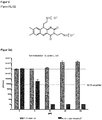
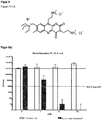
- 0 C[*+](C)CCN(c1cc(C)*(C)cc1N=C1C(*2CC[N+](C)I)=O)C1=NC2=O Chemical compound C[*+](C)CCN(c1cc(C)*(C)cc1N=C1C(*2CC[N+](C)I)=O)C1=NC2=O 0.000 description 8
Images










Classifications
-
- C—CHEMISTRY; METALLURGY
- C07—ORGANIC CHEMISTRY
- C07D—HETEROCYCLIC COMPOUNDS
- C07D475/00—Heterocyclic compounds containing pteridine ring systems
- C07D475/12—Heterocyclic compounds containing pteridine ring systems containing pteridine ring systems condensed with carbocyclic rings or ring systems
- C07D475/14—Benz [g] pteridines, e.g. riboflavin
-
- A—HUMAN NECESSITIES
- A01—AGRICULTURE; FORESTRY; ANIMAL HUSBANDRY; HUNTING; TRAPPING; FISHING
- A01N—PRESERVATION OF BODIES OF HUMANS OR ANIMALS OR PLANTS OR PARTS THEREOF; BIOCIDES, e.g. AS DISINFECTANTS, AS PESTICIDES OR AS HERBICIDES; PEST REPELLANTS OR ATTRACTANTS; PLANT GROWTH REGULATORS
- A01N43/00—Biocides, pest repellants or attractants, or plant growth regulators containing heterocyclic compounds
- A01N43/90—Biocides, pest repellants or attractants, or plant growth regulators containing heterocyclic compounds having two or more relevant hetero rings, condensed among themselves or with a common carbocyclic ring system
-
- A—HUMAN NECESSITIES
- A61—MEDICAL OR VETERINARY SCIENCE; HYGIENE
- A61K—PREPARATIONS FOR MEDICAL, DENTAL OR TOILETRY PURPOSES
- A61K31/00—Medicinal preparations containing organic active ingredients
- A61K31/33—Heterocyclic compounds
- A61K31/395—Heterocyclic compounds having nitrogen as a ring hetero atom, e.g. guanethidine or rifamycins
- A61K31/495—Heterocyclic compounds having nitrogen as a ring hetero atom, e.g. guanethidine or rifamycins having six-membered rings with two or more nitrogen atoms as the only ring heteroatoms, e.g. piperazine or tetrazines
- A61K31/505—Pyrimidines; Hydrogenated pyrimidines, e.g. trimethoprim
- A61K31/519—Pyrimidines; Hydrogenated pyrimidines, e.g. trimethoprim ortho- or peri-condensed with heterocyclic rings
- A61K31/525—Isoalloxazines, e.g. riboflavins, vitamin B2
-
- A—HUMAN NECESSITIES
- A61—MEDICAL OR VETERINARY SCIENCE; HYGIENE
- A61K—PREPARATIONS FOR MEDICAL, DENTAL OR TOILETRY PURPOSES
- A61K41/00—Medicinal preparations obtained by treating materials with wave energy or particle radiation ; Therapies using these preparations
- A61K41/0057—Photodynamic therapy with a photosensitizer, i.e. agent able to produce reactive oxygen species upon exposure to light or radiation, e.g. UV or visible light; photocleavage of nucleic acids with an agent
-
- A—HUMAN NECESSITIES
- A61—MEDICAL OR VETERINARY SCIENCE; HYGIENE
- A61K—PREPARATIONS FOR MEDICAL, DENTAL OR TOILETRY PURPOSES
- A61K8/00—Cosmetics or similar toiletry preparations
- A61K8/18—Cosmetics or similar toiletry preparations characterised by the composition
- A61K8/30—Cosmetics or similar toiletry preparations characterised by the composition containing organic compounds
- A61K8/49—Cosmetics or similar toiletry preparations characterised by the composition containing organic compounds containing heterocyclic compounds
- A61K8/494—Cosmetics or similar toiletry preparations characterised by the composition containing organic compounds containing heterocyclic compounds with more than one nitrogen as the only hetero atom
- A61K8/4953—Cosmetics or similar toiletry preparations characterised by the composition containing organic compounds containing heterocyclic compounds with more than one nitrogen as the only hetero atom containing pyrimidine ring derivatives, e.g. minoxidil
-
- A—HUMAN NECESSITIES
- A61—MEDICAL OR VETERINARY SCIENCE; HYGIENE
- A61L—METHODS OR APPARATUS FOR STERILISING MATERIALS OR OBJECTS IN GENERAL; DISINFECTION, STERILISATION OR DEODORISATION OF AIR; CHEMICAL ASPECTS OF BANDAGES, DRESSINGS, ABSORBENT PADS OR SURGICAL ARTICLES; MATERIALS FOR BANDAGES, DRESSINGS, ABSORBENT PADS OR SURGICAL ARTICLES
- A61L31/00—Materials for other surgical articles, e.g. stents, stent-grafts, shunts, surgical drapes, guide wires, materials for adhesion prevention, occluding devices, surgical gloves, tissue fixation devices
- A61L31/08—Materials for coatings
-
- A—HUMAN NECESSITIES
- A61—MEDICAL OR VETERINARY SCIENCE; HYGIENE
- A61L—METHODS OR APPARATUS FOR STERILISING MATERIALS OR OBJECTS IN GENERAL; DISINFECTION, STERILISATION OR DEODORISATION OF AIR; CHEMICAL ASPECTS OF BANDAGES, DRESSINGS, ABSORBENT PADS OR SURGICAL ARTICLES; MATERIALS FOR BANDAGES, DRESSINGS, ABSORBENT PADS OR SURGICAL ARTICLES
- A61L31/00—Materials for other surgical articles, e.g. stents, stent-grafts, shunts, surgical drapes, guide wires, materials for adhesion prevention, occluding devices, surgical gloves, tissue fixation devices
- A61L31/14—Materials characterised by their function or physical properties, e.g. injectable or lubricating compositions, shape-memory materials, surface modified materials
- A61L31/16—Biologically active materials, e.g. therapeutic substances
-
- A—HUMAN NECESSITIES
- A61—MEDICAL OR VETERINARY SCIENCE; HYGIENE
- A61P—SPECIFIC THERAPEUTIC ACTIVITY OF CHEMICAL COMPOUNDS OR MEDICINAL PREPARATIONS
- A61P31/00—Antiinfectives, i.e. antibiotics, antiseptics, chemotherapeutics
-
- A—HUMAN NECESSITIES
- A61—MEDICAL OR VETERINARY SCIENCE; HYGIENE
- A61Q—SPECIFIC USE OF COSMETICS OR SIMILAR TOILETRY PREPARATIONS
- A61Q11/00—Preparations for care of the teeth, of the oral cavity or of dentures; Dentifrices, e.g. toothpastes; Mouth rinses
-
- A—HUMAN NECESSITIES
- A61—MEDICAL OR VETERINARY SCIENCE; HYGIENE
- A61Q—SPECIFIC USE OF COSMETICS OR SIMILAR TOILETRY PREPARATIONS
- A61Q11/00—Preparations for care of the teeth, of the oral cavity or of dentures; Dentifrices, e.g. toothpastes; Mouth rinses
- A61Q11/02—Preparations for deodorising, bleaching or disinfecting dentures
-
- A—HUMAN NECESSITIES
- A61—MEDICAL OR VETERINARY SCIENCE; HYGIENE
- A61Q—SPECIFIC USE OF COSMETICS OR SIMILAR TOILETRY PREPARATIONS
- A61Q17/00—Barrier preparations; Preparations brought into direct contact with the skin for affording protection against external influences, e.g. sunlight, X-rays or other harmful rays, corrosive materials, bacteria or insect stings
- A61Q17/005—Antimicrobial preparations
-
- C—CHEMISTRY; METALLURGY
- C11—ANIMAL OR VEGETABLE OILS, FATS, FATTY SUBSTANCES OR WAXES; FATTY ACIDS THEREFROM; DETERGENTS; CANDLES
- C11D—DETERGENT COMPOSITIONS; USE OF SINGLE SUBSTANCES AS DETERGENTS; SOAP OR SOAP-MAKING; RESIN SOAPS; RECOVERY OF GLYCEROL
- C11D3/00—Other compounding ingredients of detergent compositions covered in group C11D1/00
- C11D3/48—Medical, disinfecting agents, disinfecting, antibacterial, germicidal or antimicrobial compositions
-
- A—HUMAN NECESSITIES
- A61—MEDICAL OR VETERINARY SCIENCE; HYGIENE
- A61L—METHODS OR APPARATUS FOR STERILISING MATERIALS OR OBJECTS IN GENERAL; DISINFECTION, STERILISATION OR DEODORISATION OF AIR; CHEMICAL ASPECTS OF BANDAGES, DRESSINGS, ABSORBENT PADS OR SURGICAL ARTICLES; MATERIALS FOR BANDAGES, DRESSINGS, ABSORBENT PADS OR SURGICAL ARTICLES
- A61L2300/00—Biologically active materials used in bandages, wound dressings, absorbent pads or medical devices
- A61L2300/40—Biologically active materials used in bandages, wound dressings, absorbent pads or medical devices characterised by a specific therapeutic activity or mode of action
- A61L2300/404—Biocides, antimicrobial agents, antiseptic agents
Definitions
- the present invention relates to 10H-benzo [g] pteridine-2,4-dione derivatives, their preparation and use.
- infectious diseases The active or passive invasion, attachment, and multiplication of pathogens into a host is known as infection.
- Sources of infectious particles are everywhere.
- the human body is colonized by a large number of microorganisms, which are usually kept under control by normal metabolism and an intact immune system.
- the immune system is weakened, for example, there may be a strong increase in the number of pathogens and, depending on the type of pathogen, different disease symptoms.
- Medicine has specific antidotes ready for many pathogen-related diseases, for example antibiotics against bacteria or antimicotics against fungi or antivirals against viruses.
- the occurrence of resistant pathogens can be observed, some of which are resistant to several antidotes at the same time. Due to the appearance of this resistant or multi-resistant pathogens, the treatment of infectious diseases has become increasingly difficult. The clinical consequence of resistance is demonstrated by treatment failure, especially in immunocompromised patients.
- New starting points for combating resistant or multi-resistant germs are therefore on the one hand the search for new antidotes, for example antibiotics or antimicotics, and on the other hand the search for alternative inactivation options.
- the photodynamic inactivation of microorganisms has proven to be an alternative method.
- Two different photooxidative processes play a decisive role in the photodynamic inactivation of microorganisms.
- a prerequisite for photo-oxidative inactivation to take place is on the one hand the presence of a sufficient amount of oxygen and on the other hand the localization of a so-called photosensitizer, which is excited by light of a corresponding wavelength.
- the excited photosensitizer can cause the formation of reactive oxygen species (ROS), whereby on the one hand radicals, for example superoxide anions, hydrogen peroxide or hydroxyl radicals, and / or on the other hand, excited molecular oxygen, for example singlet oxygen, can be formed.
- ROS reactive oxygen species
- ROS reactive oxygen species
- ROS reactive oxygen species
- photosensitizers are known from the prior art, which, for example, from the group of porphyrins and their derivatives or phthalocyanines and their derivatives or fullerenes and their derivatives or derivatives of the phenothiazininium structure, such as methylene blue or toluidine blue, or representatives of the phenoxazinium series, such as Nile blue.
- the photodynamics of methylene blue or toluidine blue against bacteria is already used in dentistry, for example.
- the photosensitizers known from the prior art are mostly substances with a relatively complex molecular structure and therefore complex manufacturing processes.
- the WO 03/057253 A1 describes methods for the oxygen-enhanced inactivation of pathogens.
- 10-methyl-10H-benzo [g] pteridine-2,4-dione derivatives, riboflavin and tetraacetylriboflavin have high yields of singlet oxygen, but the affinity for microorganisms is low. It is also known that singlet oxygen can only diffuse over a short distance before it reacts or is broken down. The inactivation of microorganisms by 10-methyl-10H-benzo [g] pteridine-2,4-dione derivatives, riboflavin and tetraacetylriboflavin is therefore insufficient.
- Riboswiches are RNA elements in untranslated regions of the mRNA from prokaryotes, fungi and plants that bind low molecular weight metabolites, for example FMN, and then regulate gene expression.
- FMN flavin mononucleotide
- Riboswiches are RNA elements in untranslated regions of the mRNA from prokaryotes, fungi and plants that bind low molecular weight metabolites, for example FMN, and then regulate gene expression.
- the expression of enzymes that are responsible for riboflavin and FMN biosynthesis is repressed, whereby riboflavin and FMN biosynthesis comes to a standstill.
- Riboflavin takes a metabolic rate plays a central role, as it serves as a precursor for flavin coenzymes. Therefore, suppressed riboflavin and FMN biosynthesis lead to reduced survivability.
- the object of the present invention is therefore to provide new photosensitizers which inactivate microorganisms more efficiently.
- the object of the present invention is achieved by providing a 10H-benzo [g] pteridine-2,4-dione derivative according to claim 1.
- the object of the present invention is likewise achieved by providing a compound according to claim 1 for use according to claim 2 as a photosensitizer for the photodynamic inactivation of microorganisms in photodynamic therapy.
- the object of the present invention is also achieved by providing a non-medical use according to one of claims 5 to 8.
- a compound according to the invention according to claim 1 is a 10H-benzo [g] pteridine-2,4-dione or flavin derivative, which is also referred to as this in the following.
- Any suitable anion can be used as a counterion to at least one positively charged, preferably quaternary, nitrogen atom.
- a counterion to at least one positively charged, preferably quaternary, nitrogen atom.
- anions are used which provide a pharmacologically allow compatible salt.
- positively charged, preferably quaternary, nitrogen atoms have fluoride, chloride, bromide, iodide, sulfate, hydrogen sulfate, phosphate, dihydrogen phosphate, hydrogen phosphate, tosylate, mesylate, formate, acetate, oxalate, benzoate, citrate and / or mixtures thereof.
- photosensitizers are understood to mean compounds which absorb electromagnetic radiation, preferably visible light, UV light and / or infrared light, and then generate reactive oxygen species (ROS), preferably free radicals and / or singlet oxygen, from triplet oxygen.
- ROS reactive oxygen species
- photodynamic therapy is understood to mean the light-induced, photodynamic, inactivation of cells or microorganisms.
- the term “inactivation” is understood to mean the reduction in the viability or the destruction of a microorganism, preferably its destruction.
- Light-induced inactivation can be determined, for example, by reducing the number of microorganisms after irradiation of a defined initial amount of these microorganisms in the presence of at least one compound according to the invention according to claim 1.
- a reduction in viability is understood to mean that the number of microorganisms has increased by at least 99.0%, preferably by at least 99.9%, more preferably by at least 99.99%, more preferably by at least 99.999%, more preferably at least 99.9999%. Most preferably, the number of microorganisms is reduced by more than 99.9 to 100%, preferably by more than 99.99 to 100%.
- the reduction in the number of microorganisms according to Boyce, JM and Pittet, D. ("Guidelines for hand hygiene in healthcare settings. Recommendations of the Healthcare Infection Control Practices Advisory Committee and the HIPAC / SHEA / APIC / IDSA Hand Hygiene Task Force", Am.J.Infect.Control 30 (8), 2002, pages 1 - 46 ) given as a log 10 reduction factor.
- log 10 reduction factor is understood to mean the difference between the decadic logarithm of the number of microorganisms before and the decadic logarithm of the number of microorganisms after irradiation of these microorganisms with electromagnetic radiation in the presence of at least one compound according to the invention.
- Suitable methods for determining the log 10 reduction factor are, for example, in DIN EN 14885: 2007-01 "Chemical disinfectants and antiseptics - Application of European standards for chemical disinfectants and antiseptics” or in Rabenau, HF and Schwebke, I. ("Guideline of the German Association for Combating Virus Diseases (DVV) eV and the Robert Koch Institute (RKI) for testing chemical disinfectants for effectiveness against viruses in human medicine" Federal Health Gazette, Health Research, Health Protection 51 (8), (2008), pages 937-945 ) described.
- the log 10 reduction factor after irradiating microorganisms with electromagnetic radiation in the presence of at least one compound according to the invention according to claim 1 is preferably at least 2 log 10 , preferably at least 3 log 10 , more preferably at least 4 log 10 , more preferably at least 4.5 log 10 , more preferably at least 5 log 10 , more preferably at least 6 log 10 , even more preferably at least 7 log 10 , even more preferably at least 7 5 log 10 .
- a reduction in the number of microorganisms after irradiating these microorganisms with electromagnetic radiation in the presence of at least one compound according to the invention according to claim 1 by 2 powers of ten, based on the initial amount of these microorganisms, means a log 10 reduction factor of 2 log 10 .
- the number of microorganisms is further preferred after irradiating these microorganisms with electromagnetic radiation in the presence of at least one compound according to the invention according to claim 1 by at least 1 power of ten, more preferably by at least 2 powers of ten, preferably by at least 4 powers of ten, more preferably by at least 5 powers of ten preferably reduced by at least 6 powers of ten, even more preferably by at least 7 powers of ten, in each case based on the initial amount of these microorganisms.
- microorganisms is understood to mean in particular viruses, archaea, prokaryotic microorganisms such as bacteria and bacterial spores, and eukaryotic microorganisms such as fungi, protozoa, fungal spores, and unicellular algae.
- the microorganisms can be unicellular or multicellular, for example as fungal mycelium.
- centers of chirality can be in the R or in the S configuration.
- the invention relates both to the optically pure compounds and to mixtures of stereoisomers, such as mixtures of enantiomers and mixtures of diastereomers, in any ratio.
- the invention preferably also relates to mesomers and / or tautomers of the compound according to Claim 1, both the pure compounds and the isomer mixtures in any ratio.
- the 10H-benzo [g] pteridine-2,4-dione derivative according to the invention is selected from the group consisting of compounds having the formulas (40) and (43) to (49) and (115) to (117) exists, selected:
- Suitable methods for removing the amino protective group PG are known from the prior art.
- benzyloxycarbonyl (Cbz) can be removed again by catalytic hydrogenation with hydrogenolytic cleavage of the benzyl heteroatom bond with subsequent decarboxylation of the unstable carbamic acid thus formed or treatment with acids.
- Di-tert-butyloxycarbonyl (Boc) can be removed, for example, by acid hydrolysis.
- Allyloxycarbonyl (Alloc) can be split off, for example, by the action of tetrakis (triphenylphosphine) palladium (0) and a nucleophile.
- Single-cell or multicellular microorganisms can cause infectious diseases.
- at least one pathogen-specific antidote for example antibiotic, antimicotic or virustatic
- the number of pathogens can be reduced and / or the pathogen can be inactivated.
- a pathogen-specific antidote can be applied systemically and / or topically.
- the pathogen-specific antidote is transferred into the blood and / or lymphatic system of the body to be treated and distributed throughout the body.
- Systemic uptake of the pathogen-specific antidote can lead to degradation of the antidote and / or side effects, for example through a biochemical conversion (metabolism) of the antidote.
- the antidote is used where it is intended to have a therapeutic effect, for example on an infected area of skin, while healthy skin is not stressed. Systemic side effects can thus be largely avoided.
- Superficial skin or soft tissue infections do not necessarily have to be treated with a systemic application of a pathogen-specific antidote, as the antidote can be applied directly to the infected skin areas.
- microorganisms for which resistance to photodynamic inactivation is unknown.
- the number of pathogens is reduced and / or the pathogens are killed.
- mixtures of different microorganisms for example fungi and bacteria or different bacterial strains, can be combated.
- a compound used according to the invention as a photosensitizer for the non-medical, photodynamic inactivation of microorganisms is a compound according to claim 1.
- At least one 10H-benzo [g] pteridine-2,4-dione derivative according to claim 1 or a pharmacologically acceptable salt and / or complex thereof is used as a photosensitizer for the photodynamic inactivation of microorganisms in photodynamic therapy to use.
- At least one 10H-benzo [g] pteridine-2,4-dione derivative according to claim 1 or a pharmacologically acceptable salt and / or complex thereof is used as a photosensitizer for the photodynamic inactivation of microorganisms during photodynamic therapy use.
- the 10H-benzo [g] pteridine-2,4-dione derivative to be used according to the invention has a high yield of singlet oxygen after exposure to electromagnetic radiation of a suitable wavelength and energy density.
- the electromagnetic radiation is preferably in the visible spectral range, ultraviolet and / or infrared range.
- the electromagnetic radiation more preferably has a wavelength from a range from 280 to 1000 nm, more preferably from 380 to 1000 nm.
- the electromagnetic radiation more preferably has an energy density in a range from 1 ⁇ W / cm 2 to 1 MW / cm 2 , more preferably from 1 mW / cm 2 to 1 kW / cm 2 .
- the irradiation time can be varied depending on the type of microorganisms and / or the severity of the infection.
- the irradiation time is preferably in a range from 1 ⁇ s to 1 h, more preferably from 1 ms to 1000 s.
- the electromagnetic radiation is preferably generated by a radiation source which is selected from the group consisting of the sun and artificial radiation sources, for example UV lamps, IR lamps, fluorescent lamps, light emitting diodes, lasers or chemical light.
- a radiation source which is selected from the group consisting of the sun and artificial radiation sources, for example UV lamps, IR lamps, fluorescent lamps, light emitting diodes, lasers or chemical light.
- the inventors surprisingly found that the 10H-benzo [g] pteridine-2,4-dione derivative according to the invention or pharmacologically acceptable salts and / or complexes thereof preferably has a high affinity for microorganisms.
- the 10H-benzo [g] pteridine-2,4-dione derivative according to the invention can effectively bind to microorganisms and locally generate sufficient singlet oxygen to inactivate, preferably kill, the microorganisms.
- At least one 10H-benzo [g] pteridine-2,4-dione derivative according to the invention is bound by microorganisms.
- the microorganisms After irradiation with electromagnetic radiation of a suitable wavelength and energy density, the microorganisms are inactivated, preferably killed, by the reactive oxygen species (ROS) formed, preferably oxygen radicals and / or singlet oxygen.
- ROS reactive oxygen species
- the binding of at least one 10H-benzo [g] pteridine-2,4-dione derivative according to the invention or a pharmacologically acceptable salt and / or complex thereof to microorganisms also allows staining or localization of microorganisms. In this way, the course of the inactivation of microorganisms or the decolonization can preferably also be followed.
- the term “decolonization” means the removal, preferably complete removal, of microorganisms.
- At least one 10H-benzo [g] pteridine-2,4-dione derivative according to the invention or a pharmacologically acceptable salt and / or complex thereof is used in the inactivation of unicellular or multicellular microorganisms selected from the group consisting of Viruses, archaea, bacteria, bacterial spores, fungi, for example mycelial fungi and yeasts, fungal spores, protozoa, algae and blood-borne parasites.
- Body surfaces for example skin or mucous membrane, of humans and animals, preferably mammals, can preferably be treated.
- At least one 10H-benzo [g] pteridine-2,4-dione derivative according to the invention or a pharmacologically acceptable salt and / or complex thereof is in a pharmaceutical preparation for topical, preferably nasal, oral, anal, vaginal or dermal, application available.
- Topical application is also understood to mean application on or in the ear, preferably the outer ear.
- the outer ear comprises the ear cartilage, the auricle, the earlobe and the external auditory canal or also the ear canal and the outside of the eardrum.
- At least one 10H-benzo [g] pteridine-2,4-dione derivative according to the invention or a pharmacologically acceptable salt and / or complex thereof is used in the prophylaxis and / or treatment of an infectious, preferably viral, bacterial and / or mycotic, skin disease, which is preferably selected from the group consisting of staphylococcal scalded skin syndrome, impetigo, skin abscess, furuncle, carbuncle, phlegmon, cellulitis, acute lymphadenitis, pilonidal cyst, pyoderma, dermatitis purulenta, dermatitis septica, dermatitis Erysipelas, acne vulgaris, or fungal infection.
- an infectious, preferably viral, bacterial and / or mycotic, skin disease which is preferably selected from the group consisting of staphylococcal scalded skin syndrome, impetigo, skin abscess, furuncle, carbuncle,
- At least one 10H-benzo [g] pteridine-2,4-dione derivative according to the invention or a pharmacologically acceptable salt and / or complex thereof is to be used in wound healing, for example in healing disorders after surgical interventions.
- At least one 10H-benzo [g] pteridine-2,4-dione derivative according to the invention or a pharmacologically acceptable salt and / or complex thereof or a pharmaceutical preparation containing at least one 10H-benzo [g] pteridine-2,4 according to the invention is preferred -dione derivative or a pharmacologically acceptable salt and / or complex thereof to be used in the disinfection and / or reduction of the germ count in infected wounds.
- At least one 10H-benzo [g] pteridine-2,4-dione derivative according to the invention or a pharmacologically acceptable salt and / or complex thereof is used in the prophylaxis and / or treatment of infectious, preferably viral, bacterial and / or mycotic, diseases of the ear, upper respiratory tract, oral cavity, throat, larynx, lower airways and / or esophagus.
- the predominance of pathogenic microorganisms is the main cause of infections in the oral cavity.
- biofilms such as plaque or dental plaque, consist of several complex layers and contain proteins, carbohydrates, phosphates and microorganisms.
- Dental plaque occurs especially where tooth surfaces cannot be kept free of plaque by natural or artificial cleaning. This fact makes it difficult to find access to the microorganisms embedded in the biofilm.
- At least one 10H-benzo [g] pteridine-2,4-dione derivative according to the invention or a pharmacologically acceptable salt and / or complex thereof is to be used as a photosensitizer in the photodynamic inactivation of microorganisms in the oral cavity.
- At least one 10H-benzo [g] pteridine-2,4-dione derivative according to the invention or a pharmacologically acceptable salt and / or complex thereof is used in the treatment and / or prophylaxis of an infectious, preferably viral, bacterial and / or mycotic, disease of the tooth tissue, preferably plaque, caries or pulpitis, and / or infectious, preferably viral, bacterial and / or mycotic, disease of the tooth support system, preferably gingivitis, periodontitis, endodontitis or peri-implantitis.
- At least one 10H-benzo [g] pteridine-2,4-dione derivative according to the invention or a pharmacologically acceptable salt and / or ester and / or complex thereof or a pharmaceutical preparation containing at least one 10H-benzo according to the invention is used [g] pteridine-2,4-dione derivative or a pharmacologically acceptable salt and / or complex thereof used in the non-medical cleaning of braces.
- the 10H-benzo [g] pteridine-2,4-dione derivative according to the invention or a pharmacologically acceptable salt and / or complex thereof or a pharmaceutical preparation is contained to use at least one 10H-benzo [g] pteridine-2,4-dione derivative according to the invention or a pharmacologically acceptable salt and / or complex thereof in the nasal decolonization of microorganisms.
- MRSA methicillin-resistant Staphylococcus aureus
- the present invention also relates to a pharmaceutical composition containing at least one 10H-benzo [g] pteridine-2,4-dione derivative according to the invention according to claim 1 or a pharmacologically acceptable salt and / or complex thereof.
- the pharmaceutical composition is preferably prepared by mixing at least one compound according to Claim 1 or a pharmacologically acceptable salt and / or ester and / or complex thereof with one or more physiologically acceptable auxiliary (s) and brought into a suitable dosage form.
- a suitable dosage form of the pharmaceutical composition according to the invention is preferably selected from the group consisting of ointment, cream, gel, lotion, shaking mixture, solution, for example in drop or spray form, powder, microcapsule and paste.
- composition according to the invention can be applied topically, preferably nasally, orally, anally, vaginally or dermally.
- the pharmaceutically customary liquid or solid fillers and extenders, solvents, emulsifiers, lubricants, flavoring agents, colorants and / or buffer substances are suitable as physiologically acceptable auxiliaries.
- the pharmaceutical composition contains an effective amount of at least one 10H-benzo [g] pteridine-2,4-dione derivative according to the invention according to claim 1 or a pharmacologically acceptable salt and / or complex thereof, the effective amount being 0 , 01 ⁇ g to 1000 ⁇ g per gram of the composition, preferably from 0.1 ⁇ g to 500 ⁇ g per gram of the composition.
- the pharmaceutical composition comprises at least one 10H-benzo [g] pteridine-2,4-dione derivative according to the invention according to claim 1 or a pharmacologically acceptable salt and / or complex thereof and at least one further pharmaceutically active constituent.
- the at least one further pharmaceutically active ingredient is preferably selected from the group consisting of antibiotics, antimicotics, virustatic agents, antihistamines, sympathomimetics, antihemorrhagics, emmolients and skin protection agents, analgesics, disinfectants, immune sera and immunoglobulins, antiparasitic substances, insecticides and repellants .
- At least one 10H-benzo [g] pteridine-2,4-dione derivative according to the invention or a pharmacologically acceptable salt and / or complex thereof or a preparation containing at least one 10H-benzo [g] pteridine according to the invention is used 2,4-dione derivative or a pharmacologically acceptable salt and / or complex thereof used in the non-medical inactivation of microorganisms in medical blood products.
- At least one 10H-benzo [g] pteridine-2,4-dione derivative according to the invention or a pharmacologically acceptable salt and / or complex thereof is used for the non-medical inactivation of microorganisms on surfaces of all kinds.
- the 10H-benzo [g] pteridine-2,4-dione derivative according to the invention or a pharmacologically acceptable salt and / or complex thereof is also preferred for non-medical surface cleaning and / or coating, preferably of medical products, food packaging or hygiene articles, used.
- At least one 10H-benzo [g] pteridine-2,4-dione derivative or a pharmacologically acceptable salt and / or complex thereof which is not used medically according to the invention, is applied and / or introduced onto surfaces and, optionally, subsequently with a suitable one Radiation source that generates electromagnetic radiation of suitable wavelength and energy density irradiates.
- the at least one 10H-benzo [g] pteridine-2,4-dione derivative or a pharmacologically acceptable salt and / or ester and / or complex thereof preferably "self-disinfects" the surface during irradiation.
- the irradiation can be carried out directly after the treatment of the surface with at least one 10H-benzo [g] pteridine-2,4-dione derivative or a pharmacologically acceptable salt and / or complex thereof, preferably after the application of the at least a 10H-benzo [g] pteridine-2,4-dione derivative used non-medically according to the invention or a pharmacologically acceptable salt and / or complex thereof on the surface and / or introduction of the at least one 10H-benzo [g] pteridine-2,4-dione [ g] pteridine-2,4-dione derivative or a pharmacologically acceptable salt and / or complex of which in the surface, and / or at a later point in time.
- Objects that have a thermally limited shelf life for example objects made of thermoplastic plastics, or that are attacked by disinfectants, are also preferably treated.
- Objects that have a thermally limited shelf life can only be inadequately sterilized, since they lose their shape or become brittle at higher temperatures.
- At least one 10H-benzo [g] pteridine-2,4-dione derivative or a pharmacologically acceptable salt and / or complex thereof that is not used medically according to the invention is used for the non-medical inactivation of microorganisms on surfaces of medical products, preferably invasive medical aids such as catheters, hollow probes, tubes or needles.
- the medical products are preferably selected from wound dressings, bandages, catheters, hollow probes, tubes or needles.
- medical products also include dental impressions or tooth replacements, for example prostheses, crowns or implants.
- the surface of medical products with at least one 10H-benzo [g] pteridine-2,4-dione or a pharmacologically acceptable salt and / or complex thereof and / or coating and / or immobilization, which is not used medically according to the invention, at least one According to the invention, non-medically used 10H-Benzo [g] pteridine-2,4-dione derivative or a pharmacologically acceptable salt and / or complex thereof on the surface of medical products and subsequent exposure to electromagnetic radiation of suitable wavelength and energy density colonization of microorganisms of the treated surfaces reduced, preferably prevented.
- the irradiation can take place directly after the treatment of the surface with at least one 10H-benzo [g] pteridine-2,4-dione derivative or a pharmacologically acceptable salt and / or complex thereof, preferably after the application of the at least a 10H-benzo [g] pteridine-2,4-dione derivative used non-medically according to the invention or a pharmacologically acceptable salt and / or complex thereof on the surface and / or introduction of the at least one 10H-benzo [g] pteridine-2,4-dione [ g] pteridine-2,4-dione derivative or a pharmacologically acceptable salt and / or complex thereof in the surface, take place and / or at a later point in time, before or during the use of the medical product being treated.
- the wound dressing and / or bandage comprises, in addition to at least one 10H-benzo [g] pteridine-2,4-dione derivative according to the invention or a pharmacologically acceptable salt and / or complex thereof, further components, preferably absorbents, for example calcium alginate or Polyurethane foam or other pharmaceutically active substances.
- At least one 10H-benzo [g] pteridine-2,4-dione derivative according to the invention or a pharmacologically acceptable salt and / or complex thereof is used for the non-medical inactivation of microorganisms on surfaces of food packaging.
- At least one 10H-benzo [g] pteridine-2,4-dione derivative according to the invention or a pharmacologically acceptable salt and / or complex thereof is used for the non-medical inactivation of microorganisms in a liquid or liquid, preferably aqueous, Preparation, for example emulsion paint, used.
- the liquid is preferably water.
- At least one 10H-benzo [g] pteridine-2,4-dione derivative according to the invention or a pharmacologically acceptable salt and / or complex thereof can be used for the treatment of water for the beverage and food industry, the pharmaceutical, chemical and cosmetic industries, used in the electrical industry. Furthermore, at least one inventive 10H-Benzo [g] pteridine-2,4-dione derivative or a pharmacologically acceptable salt and / or complex thereof can be used in drinking water and rainwater treatment, the treatment of waste water or in the treatment of water for use in air conditioning .
- the liquid or liquid preparation can subsequently be treated with a suitable radiation source, the electromagnetic radiation suitable wavelength and energy density generated, irradiated.
- the 10H-benzo [g] pteridine-2,4-dione derivative according to the invention or a pharmacologically acceptable salt and / or complex thereof preferably effects “self-disinfection” of the liquid or the liquid preparation during the irradiation.
- the 10H-benzo [g] pteridine-2,4-dione derivative or a pharmacologically acceptable salt and / or complex thereof are bound to a solid support and can thus be used as part of a solid matrix.
- at least one 10H-benzo [g] pteridine-2,4-dione derivative of the invention bound to a solid support or a pharmacologically acceptable salt and / or complex thereof is introduced into the liquid to be treated, preferably water or blood.
- This composition comprising the carrier and at least one 10H-benzo [g] pteridine-2,4-dione derivative according to the invention or a pharmacologically acceptable salt and / or complex thereof, develops an antimicrobial activity as soon as it is exposed to electromagnetic radiation of suitable wavelength and energy density .
- the present invention further relates to a coated object which contains at least one 10H-benzo [g] pteridine-2,4-dione derivative according to the invention or a pharmacologically acceptable salt and / or complex thereof and / or is coated therewith.
- the surface of the coated article preferably has at least one 10H-benzo [g] pteridine-2,4-dione derivative according to the invention or a pharmacologically acceptable salt and / or complex thereof.
- the coated object can then be irradiated with a suitable radiation source which generates electromagnetic radiation of suitable wavelength and energy density.
- a suitable radiation source which generates electromagnetic radiation of suitable wavelength and energy density.
- the 10H-benzo [g] pteridine-2,4-dione derivative according to the invention or a pharmacologically acceptable salt and / or complex thereof preferably effects “self-disinfection” of the surface of the coated article during irradiation.
- the irradiation can take place directly after the treatment of the coated object with at least one 10H-benzo [g] pteridine-2,4-dione derivative according to the invention or a pharmacologically acceptable salt and / or complex thereof, preferably after application of the at least one 10H-benzo [g] pteridine-2,4-dione derivative according to the invention on the surface of the coated object and / or introduction of the at least one 10H-benzo [g] pteridine-2,4-dione derivative according to the invention into the Surface of the coated object, take place and / or at a later point in time, preferably before or during the use of the coated object.
- Suitable objects are preferably selected from the group consisting of medical products, food packaging or hygiene articles.
- coated article involves particles coated with at least one 10H-benzo [g] pteridine-2,4-dione derivative according to the invention or a pharmacologically acceptable salt and / or complex thereof, for example inorganic or organic particles.
- the particles further preferably comprise at least one 10H-benzo [g] pteridine-2,4-dione derivative according to the invention or a pharmacologically acceptable salt and / or complex thereof which is covalently bonded to the particles.
- NMR spectra were measured on a Bruker Avance 300 spectrometer (300 MHz [ 1 H-NMR], 75 MHz [ 13 C-NMR]) (Bruker Corporation, Billerica, US).
- IR spectra were recorded on a Biorad Excalibur FTS 3000 spectrometer (Bio-Rad Laboratories GmbH, Kunststoff, DE).
- ES-MS were measured with a ThermoQuest Finnigan TSQ 7000 spectrometer, all HR-MS were determined on a ThermoQuest Finnigan MAT 95 (each Thermo Fisher Scientific Inc, Waltham, US) spectrometer, argon was used as the ionization gas for FAB.
- the solvents for absorption and emission measurements were purchased in special spectroscopic purity from Acros or Baker or Uvasol from Merck. Millipore water (18 M ⁇ , Milli Q Plus ) was used for all measurements.
- Bromocholine hydrobromide was purchased with a purity of> 98% from TCI Kunststoff GmbH (Eschborn, DE) and used without further purification.
- 1,2-Dinitro-4,5-dimethylbenzene (3.92g, 20mmol) and the amine (100mmol) given in Table 1 were dissolved in dry ethanol (100ml) and freshly distilled triethylamine (50ml) 2 Days at 90 ° C oil bath temperature refluxed under nitrogen. After cooling to room temperature, the solvent mixture was stripped off under reduced pressure and the residue was dried.
- the crude product was purified by column chromatography on silica gel with ethyl acetate / petroleum ether 1: 6 and a yellow-orange solid (9.01 g, 61% of theory, 12.2 mmol) was obtained.
- the crude product was purified by column chromatography on silica gel with ethyl acetate / petroleum ether 1: 6 and a yellow-orange solid (6.58 g, 55% of theory, 11.0 mmol) was obtained.
- the orange-yellow suspension was diluted with water (200 mL) and extracted four times with dichloromethane (150 mL each time). The combined organic phases were washed with water (100 ml), dried over magnesium sulfate and concentrated using a rotary evaporator.
- Flavin (56) (310 mg, 1.0 mmol) was dissolved in dry DMF (20 mL), cesium carbonate (1.63 g, 5 mmol) and bromocholine hydrobromide (0.5 g, 2.0 mmol) were added and the mixture was at Stirred at room temperature in the dark. Bromocholine hydrobromide (0.5 g, 2.0 mmol) was added again and the batch was stirred for a further day at room temperature in the dark. The DMF was drawn off and the residue was suspended in chloroform / methanol 6: 1 (50 mL). The suspension was filtered and the filtrate was concentrated to dryness. The crude product was purified by preparative thin layer chromatography on silica gel (CHCl 3 / MeOH - 4: 1) and by recrystallization from water.
- the crude 8 ⁇ -bromo-flavin (61) was dissolved in DMF (10 mL), the solution was degassed and triethylamine (0.60 g, 0.76 mL, 6.0 mmol) was added over 5 min. added dropwise. The batch was stirred at 50 ° C. overnight under N 2 in the dark. After cooling to room temperature, the reaction mixture was added dropwise to 200 ml of ice-cold diethyl ether, the crude product was filtered off, washed with diethyl ether and dried under reduced pressure. The residue was purified by chromatography on RP-18 gel with MeCN / water 9: 1 ⁇ 4: 1. For further purification, it was recrystallized from water.
- the flavin (57) (300 mg, 1.0 mmol) obtained under IIa) was dissolved in dry DMF (20 ml), potassium carbonate (1.4 g, 10 mmol) and potassium iodide (1.1 g, 6 mmol) were added. After stirring for 20 minutes at room temperature, 2- (tert-butyloxycarbonylamino) ethyl bromide (1.15 g, 5 mmol) in DMF (5 mL) was added dropwise and the mixture was stirred for 1 d at room temperature in the dark.
- the crude 8 ⁇ -bromo-flavin (66) was dissolved in DMF (10 mL), the solution was degassed and triethylamine (1.01 g, 1.26 mL, 10.0 mmol) was added over 5 min. added dropwise. The batch was stirred at 50 ° C. overnight under N 2 in the dark. After cooling to room temperature, the reaction mixture was added dropwise to 200 ml of ice-cold diethyl ether, the crude product was filtered off, washed with diethyl ether and dried under reduced pressure. The residue was purified by chromatography on RP-18 gel with MeCN / water 9: 1 ⁇ 4: 1. For further purification, it was recrystallized from water.
- Riboflavin (72) (1.88 g, 5 mmol) was dissolved in dry DMF (50 mL) while warming to 80 ° C. After cooling to room temperature, the given protected amino acid (100 mmol), followed by DMAP (1.22 g, 10 mmol), triethylamine (1.01 g, 1.26 mL, 10 mmol) and DCC (2.06 g , 10 mmol) was added. The batch was stirred under N 2 overnight at 50 ° C. in the dark. The solvent was removed under reduced pressure and the residue was dissolved in chloroform (200 ml). It was with aqueous sodium hydrogen carbonate solution (5%, 100 mL), water (100 mL) and sat. aqueous sodium chloride solution (100 mL), dried over MgSO 4 and concentrated using a rotary evaporator. The crude product was purified by column chromatography on silica gel with dichloromethane / methanol 20: 1.
- N-Boc-glycine (3.48 g, 20 mmol) was made to react with riboflavin ( 72 ) according to general procedure XII) and 3.92 g of a light brown solid (3.90 mmol, 78% of theory) were obtained. receive.
- a sample of the Staphylococcus bacterial strain . aureus (ATCC number: 25923) or Escherichia. coli (ATCC number: 25922) was taken from a cryo-frozen culture, isolated on Müller-Hinton agar plates, and cultivated under aerobic conditions at 37 ° C. in an overnight culture. Subsequently, 5 ml of Müller-Hinton liquid medium were inoculated with a smear of the bacterial culture (single colony) and incubated at 37 ° C. overnight. The bacterial suspension obtained in this way was centrifuged for 10 min at 2500 rpm and the bacterial pellet obtained was resuspended in 5 ml of sterile PBS.
- the biochemical analysis and determination of the resistance of the bacteria was carried out with the VITEK2 system in accordance with the guidelines M100-S14 of the NCCLS (2004).
- 200 ⁇ l of a bacterial suspension (bacterial density: 10 8-10 12 / ml) were incubated with 200 ⁇ l of different concentrations of the photosensitizers to be tested at room temperature for 10 min or 30 min. Then the bacteria were twice with aqua dest. washed, in 200 ⁇ l distilled water. resuspended, the entire volume transferred to a 96-well microtiter plate and then irradiated. The photosensitizers used were in distilled water. dissolved and various dilution series made (0 ⁇ M, 1 ⁇ M, 10 ⁇ M, 100 ⁇ M).
- the Omnicure Series 2000 lamp (Photonics Solutions Inc., Edinburgh, UK), which emits light from a range from 390 nm to 500 nm and has emission maxima E max at 405 nm and 436 nm, was used for sensitization.
- the applied power was 50 mW / cm 2 in each case.
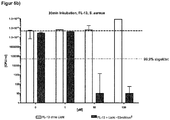
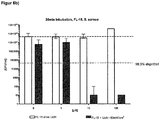
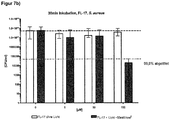
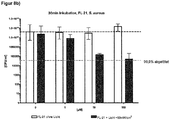
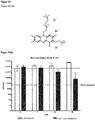
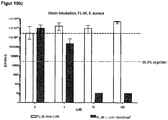
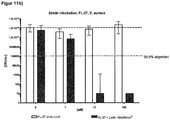
- the Figures 1-12 show the logarithmic decreases in CFU / ml 24 hours after irradiation and the associated controls (only irradiated bacteria; bacteria incubated with photosensitizer, but not irradiated; untreated bacteria) for the respective photosensitizer specified.
- the k olonie b ildenden E indicated NIT (CFU or CFU) per ml of each of the median of three experiments.
- Figure 1 shows the effect of flavin FL-08 (diiodide of the compound having the formula (47)) on E. coli and S. aureus.
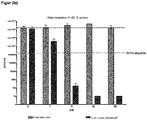
- Figure 2 shows the effect of the non-inventive flavin FL-02 (dichloride of the compound with the formula (20)) on E. coli and S. aureus.
- FIG. 2a E. coli samples were incubated with different concentrations (0 ⁇ M, 1 ⁇ M, 10 ⁇ M, 50 ⁇ M, 100 ⁇ M) of Flavin FL-02 for 10 min. The samples were then either irradiated with 50 mW / cm 2 (210 sec; 10.5 J / cm 2 ) (dark gray bars) or not irradiated (light gray bars). After 24 hours the surviving colonies were counted (CFU / ml). The black line marks the reference of the dark control (0 ⁇ M Flavin FL-02, no light).
- the dashed line labeled "99.9% killed” indicates a decrease in CFU / ml by 3 log 10 steps; this corresponds to a decrease of 99.9% ("antibacterial effect").
- N 3; Median CFU / ml ⁇ SEM.
- FIG. 2b S. aureus samples were incubated with different concentrations (0 ⁇ M, 1 ⁇ M, 10 ⁇ M, 50 ⁇ M, 100 ⁇ M) of Flavin FL-02 for 10 min. The samples were then either irradiated with 50 mW / cm 2 (210 sec; 10.5 J / cm 2 ) (dark gray bars) or not irradiated (light gray bars). After 24 h they were survivors Colonies counted (CFU / ml). The black line marks the reference of the dark control (0 ⁇ M Flavin FL-02, no light).
- the dashed line labeled "99.9% killed” indicates a decrease in CFU / ml by 3 log 10 steps; this corresponds to a decrease of 99.9% ("antibacterial effect").
- N 3; Median CFU / ml ⁇ SEM.
- Figure 3 shows the effect of flavin FL-06 (iodide of the compound of formula (37)) on E. coli and S. aureus.
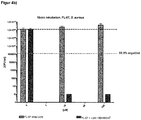
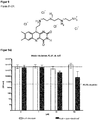
- Figure 4 shows the effect of Flavin FL-07 (octachloride of the compound having the formula (49)) on E. coli and S. aureus.
- Figure 4a E. coli samples were incubated with different concentrations (0 ⁇ M, 10 ⁇ M, 100 ⁇ M) of Flavin FL-07 for 10 min. The samples were then either irradiated with 50 mW / cm 2 (210 sec; 10.5 J / cm 2 ) (dark gray bars) or not irradiated (light gray bars). After 24 hours the surviving colonies were counted (CFU / ml). The black line marks the reference of the dark control (0 ⁇ M Flavin FL-07, no light).
- the dashed line labeled "99.9% killed” indicates a decrease in CFU / ml by 3 log 10 steps; this corresponds to a decrease of 99.9% ("antibacterial effect").
- N 3; Median CFU / ml ⁇ SEM.
- Figure 5 shows the effect of the flavin FL-13 (bromide dichloride of the compound with the formula (41)) not according to the invention on E. coli and S. aureus.
- Figure 6 shows the effect of the non-inventive flavin FL-15 (dibromide of the compound with the formula (42)) on E. coli and S. aureus.
- Figure 7 shows the effect of flavin FL-17 (diiodide of the compound having the formula (40)) on E. coli and S. aureus.
- Figure 8 shows the effect of flavin FL-21 (iodide of the compound having the formula (46)) on E. coli and S. aureus.
- Figure 9 shows the effect of flavin FL-24 (trichloride of the compound having the formula (44)) on E. coli and S. aureus.
- Figure 10 shows the effect of flavin FL-26 (tribromide of the compound having the formula (43)) on E. coli and S. aureus.
- Figure 11 shows the effect of flavin FL-27 (dichloride of the compound having the formula (45)) on E. coli and S. aureus.
- Figure 12 shows the effect of flavin FL-27 (dichloride of the compound having the formula (51)) on E. coli and S. aureus.
Landscapes
- Health & Medical Sciences (AREA)
- Life Sciences & Earth Sciences (AREA)
- General Health & Medical Sciences (AREA)
- Chemical & Material Sciences (AREA)
- Animal Behavior & Ethology (AREA)
- Veterinary Medicine (AREA)
- Public Health (AREA)
- Organic Chemistry (AREA)
- Epidemiology (AREA)
- Medicinal Chemistry (AREA)
- Oral & Maxillofacial Surgery (AREA)
- Engineering & Computer Science (AREA)
- Pharmacology & Pharmacy (AREA)
- Molecular Biology (AREA)
- Wood Science & Technology (AREA)
- Birds (AREA)
- Heart & Thoracic Surgery (AREA)
- Surgery (AREA)
- Vascular Medicine (AREA)
- Chemical Kinetics & Catalysis (AREA)
- Dermatology (AREA)
- Biochemistry (AREA)
- Oil, Petroleum & Natural Gas (AREA)
- Plant Pathology (AREA)
- Agronomy & Crop Science (AREA)
- Pest Control & Pesticides (AREA)
- Dentistry (AREA)
- Zoology (AREA)
- Environmental Sciences (AREA)
- Biomedical Technology (AREA)
- Oncology (AREA)
- General Chemical & Material Sciences (AREA)
- Nuclear Medicine, Radiotherapy & Molecular Imaging (AREA)
- Communicable Diseases (AREA)
- Pharmaceuticals Containing Other Organic And Inorganic Compounds (AREA)
- Heterocyclic Carbon Compounds Containing A Hetero Ring Having Nitrogen And Oxygen As The Only Ring Hetero Atoms (AREA)
Claims (10)
- Dérivé de 10H-benzo[g]ptéridine-2,4-dione, dans lequel le dérivé de 10H-benzo[g]ptéridine-2,4-dione est choisi dans le groupe constitué par les composés ayant les formules (40) ainsi que (43) à (49) et (115) à (117) :


- Composé selon la revendication 1, pour une utilisation en tant que photosensibilisant pour une inactivation photodynamique de microorganismes qui de préférence sont choisis dans le groupe constitué par les virus, les archées, les bactéries, les spores bactériennes, les champignons, les spores fongiques, les protozoaires, les algues et les parasites transmissibles par le sang, dans le cadre de la thérapie photodynamique.
- Composé selon la revendication 1 pour une utilisation selon la revendication 2, lors de la prophylaxie et/ou du traitement d'une maladie infectieuse du tissu dentaire et/ou du parodonte.
- Composé selon la revendication 1 pour une utilisation selon la revendication 2 lors de la prophylaxie et/ou du traitement d'une maladie infectieuse de la peau.
- Utilisation non médicale d'un composé selon la revendication 1 lors du nettoyage d'appareils d'orthodontie.
- Utilisation non médicale d'un composé selon la revendication 1 lors du nettoyage et/ou du revêtement de surfaces.
- Utilisation non médicale d'un composé selon la revendication 1, lors du nettoyage et/ou du revêtement de la surface de produits à usage médical, d'emballages alimentaires ou d'articles hygiéniques.
- Utilisation non médicale d'un composé selon la revendication 1 ou d'un sel et/ou d'un complexe pharmacologiquement compatible de ce dernier, pour l'inactivation de microorganismes dans un liquide, de préférence l'eau ou une préparation aqueuse, par exemple d'une peinture émulsion.
- Composition pharmaceutique contenant au moins un composé selon la revendication 1 ou un sel et/ou un complexe pharmacologiquement compatible de ce dernier et au moins un excipient pharmacologiquement compatible.
- Objet revêtu, caractérisé en ce que la surface de l'objet présente au moins un composé selon la revendication 1.
Priority Applications (2)
| Application Number | Priority Date | Filing Date | Title |
|---|---|---|---|
| PL12728621T PL2723742T3 (pl) | 2011-06-22 | 2012-06-22 | Pochodne 10H-benzo[g]pterydyno-2,4-dionu, sposób ich wytwarzania i zastosowanie |
| EP20208213.7A EP3838902A1 (fr) | 2011-06-22 | 2012-06-22 | Dérivés de 10h-benzo[g]pteridin-2,4-dion, leur procédé de fabrication et leur utilisation |
Applications Claiming Priority (2)
| Application Number | Priority Date | Filing Date | Title |
|---|---|---|---|
| DE102011105657A DE102011105657A1 (de) | 2011-06-22 | 2011-06-22 | 10H-Benzo[g]pteridin-2,4-dion-Derivate, Verfahren zur Herstellung und Verwendung derselben |
| PCT/EP2012/062172 WO2012175729A1 (fr) | 2011-06-22 | 2012-06-22 | Dérivés de 10h-benzo[g]ptéridine-2,4-dione, procédé de production et d'utilisation desdits dérivés |
Related Child Applications (1)
| Application Number | Title | Priority Date | Filing Date |
|---|---|---|---|
| EP20208213.7A Division EP3838902A1 (fr) | 2011-06-22 | 2012-06-22 | Dérivés de 10h-benzo[g]pteridin-2,4-dion, leur procédé de fabrication et leur utilisation |
Publications (2)
| Publication Number | Publication Date |
|---|---|
| EP2723742A1 EP2723742A1 (fr) | 2014-04-30 |
| EP2723742B1 true EP2723742B1 (fr) | 2020-11-18 |
Family
ID=46321055
Family Applications (2)
| Application Number | Title | Priority Date | Filing Date |
|---|---|---|---|
| EP20208213.7A Withdrawn EP3838902A1 (fr) | 2011-06-22 | 2012-06-22 | Dérivés de 10h-benzo[g]pteridin-2,4-dion, leur procédé de fabrication et leur utilisation |
| EP12728621.9A Active EP2723742B1 (fr) | 2011-06-22 | 2012-06-22 | Dérivés de 10h-benzo[g]ptéridine-2,4-dione, procédé de production et d'utilisation desdits dérivés |
Family Applications Before (1)
| Application Number | Title | Priority Date | Filing Date |
|---|---|---|---|
| EP20208213.7A Withdrawn EP3838902A1 (fr) | 2011-06-22 | 2012-06-22 | Dérivés de 10h-benzo[g]pteridin-2,4-dion, leur procédé de fabrication et leur utilisation |
Country Status (6)
| Country | Link |
|---|---|
| US (2) | US9241995B2 (fr) |
| EP (2) | EP3838902A1 (fr) |
| DE (1) | DE102011105657A1 (fr) |
| ES (1) | ES2856829T3 (fr) |
| PL (1) | PL2723742T3 (fr) |
| WO (1) | WO2012175729A1 (fr) |
Families Citing this family (5)
| Publication number | Priority date | Publication date | Assignee | Title |
|---|---|---|---|---|
| DE102011105653A1 (de) * | 2011-06-22 | 2012-12-27 | TriOpto Tec GmbH | 10H-Benzo[g]pteridin-2,4-dion-Derivate, Verfahren zur Herstellung und Verwendung derselben |
| ES2895851T3 (es) | 2016-04-01 | 2022-02-22 | Trioptotec Gmbh | Dispersión de fotosensibilizador y uso de la misma |
| EP4126558A1 (fr) | 2020-04-03 | 2023-02-08 | Giesecke+Devrient Currency Technology GmbH | Substrat de document de valeur et procédé de désinfection |
| DE102023105388B3 (de) | 2023-03-06 | 2024-05-29 | Multivac Sepp Haggenmüller Se & Co. Kg | Herstellen einer Verpackung aus einer photodynamischen Materialbahn |
| WO2024246147A1 (fr) | 2023-06-02 | 2024-12-05 | Wella Germany Gmbh | Agent de blanchiment comprenant une phénalénone |
Family Cites Families (11)
| Publication number | Priority date | Publication date | Assignee | Title |
|---|---|---|---|---|
| US2398706A (en) * | 1945-04-27 | 1946-04-16 | Hoffmann La Roche | Riboflavin derivatives and process of preparing the same |
| GB1394672A (en) * | 1971-05-21 | 1975-05-21 | Ici Ltd | Radiation sensitive materials |
| US7648699B2 (en) * | 2000-06-02 | 2010-01-19 | Caridianbct Biotechnologies, Llc | Preventing transfusion related complications in a recipient of a blood transfusion |
| US20030141260A1 (en) * | 2001-12-28 | 2003-07-31 | Frank Corbin | Oxygen-enhanced pathogen inactivation |
| JP2008056585A (ja) * | 2006-08-30 | 2008-03-13 | Osaka Univ | フラビンおよびそれを用いた製品 |
| GB0705517D0 (en) * | 2007-03-22 | 2007-05-02 | Cambridge Entpr Ltd | Therapeutic compounds and their use |
| US20120077781A1 (en) | 2008-08-11 | 2012-03-29 | Robert Gadwood | Flavin derivatives |
| CN102471283A (zh) | 2009-06-30 | 2012-05-23 | 佰欧莱利克斯公司 | 黄素衍生物 |
| WO2011126567A1 (fr) * | 2010-04-06 | 2011-10-13 | Biorelix, Inc. | Dérivés de flavine |
| DE102011105653A1 (de) * | 2011-06-22 | 2012-12-27 | TriOpto Tec GmbH | 10H-Benzo[g]pteridin-2,4-dion-Derivate, Verfahren zur Herstellung und Verwendung derselben |
| EP2925719A4 (fr) * | 2012-11-28 | 2016-07-13 | Yansong Lu | Nouveaux antioxydants de synthèse et leurs utilisations |
-
2011
- 2011-06-22 DE DE102011105657A patent/DE102011105657A1/de not_active Withdrawn
-
2012
- 2012-06-22 WO PCT/EP2012/062172 patent/WO2012175729A1/fr not_active Ceased
- 2012-06-22 PL PL12728621T patent/PL2723742T3/pl unknown
- 2012-06-22 ES ES12728621T patent/ES2856829T3/es active Active
- 2012-06-22 US US14/127,464 patent/US9241995B2/en active Active
- 2012-06-22 EP EP20208213.7A patent/EP3838902A1/fr not_active Withdrawn
- 2012-06-22 EP EP12728621.9A patent/EP2723742B1/fr active Active
-
2015
- 2015-12-29 US US14/982,140 patent/US9745302B2/en active Active
Non-Patent Citations (1)
| Title |
|---|
| None * |
Also Published As
| Publication number | Publication date |
|---|---|
| US20160176877A1 (en) | 2016-06-23 |
| EP2723742A1 (fr) | 2014-04-30 |
| EP3838902A1 (fr) | 2021-06-23 |
| PL2723742T3 (pl) | 2021-05-04 |
| ES2856829T3 (es) | 2021-09-28 |
| US20140212459A1 (en) | 2014-07-31 |
| WO2012175729A1 (fr) | 2012-12-27 |
| DE102011105657A1 (de) | 2012-12-27 |
| US9241995B2 (en) | 2016-01-26 |
| US9745302B2 (en) | 2017-08-29 |
Similar Documents
| Publication | Publication Date | Title |
|---|---|---|
| EP2723342B1 (fr) | Utilisation de dérivés de 10h-benzo[g]ptéridine-2,4-dione | |
| EP2678035B1 (fr) | Dérivés de phénalène-1-one, leur procédé de production et leur utilisation | |
| EP3225112B1 (fr) | Dispersion de photosensibilisant et son utilisation | |
| EP2723742B1 (fr) | Dérivés de 10h-benzo[g]ptéridine-2,4-dione, procédé de production et d'utilisation desdits dérivés | |
| EP3586632B1 (fr) | Dérivés de 10h-benzo[g]pteridin-2,4-dion, leur procédé de production et d'utilisation | |
| RU2389481C2 (ru) | Композиция | |
| DE69231487T2 (de) | Phospholipid-antimikrobielle zusammensetzungen | |
| EP1171107B1 (fr) | Utilisation d'un composition pharmaceutique pour la fabrication d'un medicament servant a traiter des etats ophthalmiques pathologiques induits par bacteries, virus, champignons, levures et protozoaires | |
| EP1687238B1 (fr) | Composes chlores reactifs, leurs derives, anions et sels, procedes pour les produire et leur utilisation | |
| ES2229160T3 (es) | Antiseptico para heridas y membranas mucosas. | |
| RU2203035C1 (ru) | Фармацевтическая композиция с дезинфицирующими, спороцидными и ранозаживляющими свойствами | |
| DE1915019C3 (de) | Mittel und Verfahren zur Behandlung von Dermatophytose | |
| CN111658603A (zh) | 一种用于宠物杀菌舒缓的口腔凝胶 | |
| HK1244629B (en) | Photosensitiser dispersion and use of the same |
Legal Events
| Date | Code | Title | Description |
|---|---|---|---|
| PUAI | Public reference made under article 153(3) epc to a published international application that has entered the european phase |
Free format text: ORIGINAL CODE: 0009012 |
|
| 17P | Request for examination filed |
Effective date: 20140121 |
|
| AK | Designated contracting states |
Kind code of ref document: A1 Designated state(s): AL AT BE BG CH CY CZ DE DK EE ES FI FR GB GR HR HU IE IS IT LI LT LU LV MC MK MT NL NO PL PT RO RS SE SI SK SM TR |
|
| DAX | Request for extension of the european patent (deleted) | ||
| 17Q | First examination report despatched |
Effective date: 20150529 |
|
| STAA | Information on the status of an ep patent application or granted ep patent |
Free format text: STATUS: EXAMINATION IS IN PROGRESS |
|
| GRAP | Despatch of communication of intention to grant a patent |
Free format text: ORIGINAL CODE: EPIDOSNIGR1 |
|
| STAA | Information on the status of an ep patent application or granted ep patent |
Free format text: STATUS: GRANT OF PATENT IS INTENDED |
|
| INTG | Intention to grant announced |
Effective date: 20200603 |
|
| GRAS | Grant fee paid |
Free format text: ORIGINAL CODE: EPIDOSNIGR3 |
|
| GRAA | (expected) grant |
Free format text: ORIGINAL CODE: 0009210 |
|
| STAA | Information on the status of an ep patent application or granted ep patent |
Free format text: STATUS: THE PATENT HAS BEEN GRANTED |
|
| RAP1 | Party data changed (applicant data changed or rights of an application transferred) |
Owner name: TRIOPTOTEC GMBH |
|
| RIN1 | Information on inventor provided before grant (corrected) |
Inventor name: SPAETH, ANDREAS Inventor name: MAISCH, TIM |
|
| AK | Designated contracting states |
Kind code of ref document: B1 Designated state(s): AL AT BE BG CH CY CZ DE DK EE ES FI FR GB GR HR HU IE IS IT LI LT LU LV MC MK MT NL NO PL PT RO RS SE SI SK SM TR |
|
| REG | Reference to a national code |
Ref country code: GB Ref legal event code: FG4D Free format text: NOT ENGLISH |
|
| REG | Reference to a national code |
Ref country code: CH Ref legal event code: EP |
|
| REG | Reference to a national code |
Ref country code: DE Ref legal event code: R096 Ref document number: 502012016485 Country of ref document: DE |
|
| REG | Reference to a national code |
Ref country code: IE Ref legal event code: FG4D Free format text: LANGUAGE OF EP DOCUMENT: GERMAN |
|
| REG | Reference to a national code |
Ref country code: AT Ref legal event code: REF Ref document number: 1335632 Country of ref document: AT Kind code of ref document: T Effective date: 20201215 |
|
| REG | Reference to a national code |
Ref country code: CH Ref legal event code: NV Representative=s name: KELLER SCHNEIDER PATENT- UND MARKENANWAELTE AG, CH |
|
| REG | Reference to a national code |
Ref country code: NL Ref legal event code: FP |
|
| REG | Reference to a national code |
Ref country code: SE Ref legal event code: TRGR |
|
| REG | Reference to a national code |
Ref country code: GR Ref legal event code: EP Ref document number: 20210400056 Country of ref document: GR Effective date: 20210215 |
|
| PG25 | Lapsed in a contracting state [announced via postgrant information from national office to epo] |
Ref country code: NO Free format text: LAPSE BECAUSE OF FAILURE TO SUBMIT A TRANSLATION OF THE DESCRIPTION OR TO PAY THE FEE WITHIN THE PRESCRIBED TIME-LIMIT Effective date: 20210218 Ref country code: PT Free format text: LAPSE BECAUSE OF FAILURE TO SUBMIT A TRANSLATION OF THE DESCRIPTION OR TO PAY THE FEE WITHIN THE PRESCRIBED TIME-LIMIT Effective date: 20210318 Ref country code: RS Free format text: LAPSE BECAUSE OF FAILURE TO SUBMIT A TRANSLATION OF THE DESCRIPTION OR TO PAY THE FEE WITHIN THE PRESCRIBED TIME-LIMIT Effective date: 20201118 Ref country code: FI Free format text: LAPSE BECAUSE OF FAILURE TO SUBMIT A TRANSLATION OF THE DESCRIPTION OR TO PAY THE FEE WITHIN THE PRESCRIBED TIME-LIMIT Effective date: 20201118 |
|
| PG25 | Lapsed in a contracting state [announced via postgrant information from national office to epo] |
Ref country code: LV Free format text: LAPSE BECAUSE OF FAILURE TO SUBMIT A TRANSLATION OF THE DESCRIPTION OR TO PAY THE FEE WITHIN THE PRESCRIBED TIME-LIMIT Effective date: 20201118 Ref country code: IS Free format text: LAPSE BECAUSE OF FAILURE TO SUBMIT A TRANSLATION OF THE DESCRIPTION OR TO PAY THE FEE WITHIN THE PRESCRIBED TIME-LIMIT Effective date: 20210318 Ref country code: BG Free format text: LAPSE BECAUSE OF FAILURE TO SUBMIT A TRANSLATION OF THE DESCRIPTION OR TO PAY THE FEE WITHIN THE PRESCRIBED TIME-LIMIT Effective date: 20210218 |
|
| REG | Reference to a national code |
Ref country code: LT Ref legal event code: MG9D |
|
| PG25 | Lapsed in a contracting state [announced via postgrant information from national office to epo] |
Ref country code: HR Free format text: LAPSE BECAUSE OF FAILURE TO SUBMIT A TRANSLATION OF THE DESCRIPTION OR TO PAY THE FEE WITHIN THE PRESCRIBED TIME-LIMIT Effective date: 20201118 |
|
| PG25 | Lapsed in a contracting state [announced via postgrant information from national office to epo] |
Ref country code: LT Free format text: LAPSE BECAUSE OF FAILURE TO SUBMIT A TRANSLATION OF THE DESCRIPTION OR TO PAY THE FEE WITHIN THE PRESCRIBED TIME-LIMIT Effective date: 20201118 Ref country code: SK Free format text: LAPSE BECAUSE OF FAILURE TO SUBMIT A TRANSLATION OF THE DESCRIPTION OR TO PAY THE FEE WITHIN THE PRESCRIBED TIME-LIMIT Effective date: 20201118 Ref country code: RO Free format text: LAPSE BECAUSE OF FAILURE TO SUBMIT A TRANSLATION OF THE DESCRIPTION OR TO PAY THE FEE WITHIN THE PRESCRIBED TIME-LIMIT Effective date: 20201118 Ref country code: CZ Free format text: LAPSE BECAUSE OF FAILURE TO SUBMIT A TRANSLATION OF THE DESCRIPTION OR TO PAY THE FEE WITHIN THE PRESCRIBED TIME-LIMIT Effective date: 20201118 Ref country code: EE Free format text: LAPSE BECAUSE OF FAILURE TO SUBMIT A TRANSLATION OF THE DESCRIPTION OR TO PAY THE FEE WITHIN THE PRESCRIBED TIME-LIMIT Effective date: 20201118 Ref country code: SM Free format text: LAPSE BECAUSE OF FAILURE TO SUBMIT A TRANSLATION OF THE DESCRIPTION OR TO PAY THE FEE WITHIN THE PRESCRIBED TIME-LIMIT Effective date: 20201118 |
|
| REG | Reference to a national code |
Ref country code: DE Ref legal event code: R097 Ref document number: 502012016485 Country of ref document: DE |
|
| PG25 | Lapsed in a contracting state [announced via postgrant information from national office to epo] |
Ref country code: DK Free format text: LAPSE BECAUSE OF FAILURE TO SUBMIT A TRANSLATION OF THE DESCRIPTION OR TO PAY THE FEE WITHIN THE PRESCRIBED TIME-LIMIT Effective date: 20201118 |
|
| PLBE | No opposition filed within time limit |
Free format text: ORIGINAL CODE: 0009261 |
|
| STAA | Information on the status of an ep patent application or granted ep patent |
Free format text: STATUS: NO OPPOSITION FILED WITHIN TIME LIMIT |
|
| REG | Reference to a national code |
Ref country code: ES Ref legal event code: FG2A Ref document number: 2856829 Country of ref document: ES Kind code of ref document: T3 Effective date: 20210928 |
|
| 26N | No opposition filed |
Effective date: 20210819 |
|
| PG25 | Lapsed in a contracting state [announced via postgrant information from national office to epo] |
Ref country code: AL Free format text: LAPSE BECAUSE OF FAILURE TO SUBMIT A TRANSLATION OF THE DESCRIPTION OR TO PAY THE FEE WITHIN THE PRESCRIBED TIME-LIMIT Effective date: 20201118 |
|
| PG25 | Lapsed in a contracting state [announced via postgrant information from national office to epo] |
Ref country code: SI Free format text: LAPSE BECAUSE OF FAILURE TO SUBMIT A TRANSLATION OF THE DESCRIPTION OR TO PAY THE FEE WITHIN THE PRESCRIBED TIME-LIMIT Effective date: 20201118 |
|
| PG25 | Lapsed in a contracting state [announced via postgrant information from national office to epo] |
Ref country code: MC Free format text: LAPSE BECAUSE OF FAILURE TO SUBMIT A TRANSLATION OF THE DESCRIPTION OR TO PAY THE FEE WITHIN THE PRESCRIBED TIME-LIMIT Effective date: 20201118 |
|
| REG | Reference to a national code |
Ref country code: BE Ref legal event code: MM Effective date: 20210630 |
|
| PG25 | Lapsed in a contracting state [announced via postgrant information from national office to epo] |
Ref country code: LU Free format text: LAPSE BECAUSE OF NON-PAYMENT OF DUE FEES Effective date: 20210622 |
|
| PG25 | Lapsed in a contracting state [announced via postgrant information from national office to epo] |
Ref country code: IS Free format text: LAPSE BECAUSE OF FAILURE TO SUBMIT A TRANSLATION OF THE DESCRIPTION OR TO PAY THE FEE WITHIN THE PRESCRIBED TIME-LIMIT Effective date: 20210318 |
|
| PG25 | Lapsed in a contracting state [announced via postgrant information from national office to epo] |
Ref country code: BE Free format text: LAPSE BECAUSE OF NON-PAYMENT OF DUE FEES Effective date: 20210630 |
|
| PG25 | Lapsed in a contracting state [announced via postgrant information from national office to epo] |
Ref country code: HU Free format text: LAPSE BECAUSE OF FAILURE TO SUBMIT A TRANSLATION OF THE DESCRIPTION OR TO PAY THE FEE WITHIN THE PRESCRIBED TIME-LIMIT; INVALID AB INITIO Effective date: 20120622 Ref country code: CY Free format text: LAPSE BECAUSE OF FAILURE TO SUBMIT A TRANSLATION OF THE DESCRIPTION OR TO PAY THE FEE WITHIN THE PRESCRIBED TIME-LIMIT Effective date: 20201118 |
|
| P01 | Opt-out of the competence of the unified patent court (upc) registered |
Effective date: 20230519 |
|
| PGFP | Annual fee paid to national office [announced via postgrant information from national office to epo] |
Ref country code: NL Payment date: 20230620 Year of fee payment: 12 |
|
| PGFP | Annual fee paid to national office [announced via postgrant information from national office to epo] |
Ref country code: TR Payment date: 20230616 Year of fee payment: 12 Ref country code: SE Payment date: 20230622 Year of fee payment: 12 Ref country code: GR Payment date: 20230616 Year of fee payment: 12 |
|
| REG | Reference to a national code |
Ref country code: DE Ref legal event code: R084 Ref document number: 502012016485 Country of ref document: DE |
|
| PG25 | Lapsed in a contracting state [announced via postgrant information from national office to epo] |
Ref country code: MK Free format text: LAPSE BECAUSE OF FAILURE TO SUBMIT A TRANSLATION OF THE DESCRIPTION OR TO PAY THE FEE WITHIN THE PRESCRIBED TIME-LIMIT Effective date: 20201118 |
|
| PGFP | Annual fee paid to national office [announced via postgrant information from national office to epo] |
Ref country code: IE Payment date: 20240617 Year of fee payment: 13 |
|
| PGFP | Annual fee paid to national office [announced via postgrant information from national office to epo] |
Ref country code: GB Payment date: 20240620 Year of fee payment: 13 |
|
| PGFP | Annual fee paid to national office [announced via postgrant information from national office to epo] |
Ref country code: DE Payment date: 20240626 Year of fee payment: 13 |
|
| PGFP | Annual fee paid to national office [announced via postgrant information from national office to epo] |
Ref country code: AT Payment date: 20240617 Year of fee payment: 13 |
|
| PGFP | Annual fee paid to national office [announced via postgrant information from national office to epo] |
Ref country code: FR Payment date: 20240621 Year of fee payment: 13 |
|
| PGFP | Annual fee paid to national office [announced via postgrant information from national office to epo] |
Ref country code: PL Payment date: 20240524 Year of fee payment: 13 |
|
| PG25 | Lapsed in a contracting state [announced via postgrant information from national office to epo] |
Ref country code: MT Free format text: LAPSE BECAUSE OF FAILURE TO SUBMIT A TRANSLATION OF THE DESCRIPTION OR TO PAY THE FEE WITHIN THE PRESCRIBED TIME-LIMIT Effective date: 20201118 |
|
| PGFP | Annual fee paid to national office [announced via postgrant information from national office to epo] |
Ref country code: IT Payment date: 20240628 Year of fee payment: 13 |
|
| PGFP | Annual fee paid to national office [announced via postgrant information from national office to epo] |
Ref country code: CH Payment date: 20240701 Year of fee payment: 13 Ref country code: ES Payment date: 20240718 Year of fee payment: 13 |
|
| REG | Reference to a national code |
Ref country code: SE Ref legal event code: EUG |
|
| REG | Reference to a national code |
Ref country code: DE Ref legal event code: R081 Ref document number: 502012016485 Country of ref document: DE Owner name: JUFICO GMBH, DE Free format text: FORMER OWNER: TRIOPTOTEC GMBH, 93053 REGENSBURG, DE |
|
| REG | Reference to a national code |
Ref country code: NL Ref legal event code: MM Effective date: 20240701 |
|
| PG25 | Lapsed in a contracting state [announced via postgrant information from national office to epo] |
Ref country code: NL Free format text: LAPSE BECAUSE OF NON-PAYMENT OF DUE FEES Effective date: 20240701 |
|
| PG25 | Lapsed in a contracting state [announced via postgrant information from national office to epo] |
Ref country code: NL Free format text: LAPSE BECAUSE OF NON-PAYMENT OF DUE FEES Effective date: 20240701 |
|
| PG25 | Lapsed in a contracting state [announced via postgrant information from national office to epo] |
Ref country code: GR Free format text: LAPSE BECAUSE OF NON-PAYMENT OF DUE FEES Effective date: 20250108 |
|
| PG25 | Lapsed in a contracting state [announced via postgrant information from national office to epo] |
Ref country code: SE Free format text: LAPSE BECAUSE OF NON-PAYMENT OF DUE FEES Effective date: 20240623 |
|
| REG | Reference to a national code |
Ref country code: DE Ref legal event code: R119 Ref document number: 502012016485 Country of ref document: DE |
|
| REG | Reference to a national code |
Ref country code: CH Ref legal event code: H13 Free format text: ST27 STATUS EVENT CODE: U-0-0-H10-H13 (AS PROVIDED BY THE NATIONAL OFFICE) Effective date: 20260127 |
|
| REG | Reference to a national code |
Ref country code: AT Ref legal event code: MM01 Ref document number: 1335632 Country of ref document: AT Kind code of ref document: T Effective date: 20250622 |
|
| GBPC | Gb: european patent ceased through non-payment of renewal fee |
Effective date: 20250622 |
|
| PG25 | Lapsed in a contracting state [announced via postgrant information from national office to epo] |
Ref country code: GB Free format text: LAPSE BECAUSE OF NON-PAYMENT OF DUE FEES Effective date: 20250622 |
|
| PG25 | Lapsed in a contracting state [announced via postgrant information from national office to epo] |
Ref country code: IE Free format text: LAPSE BECAUSE OF NON-PAYMENT OF DUE FEES Effective date: 20250622 Ref country code: DE Free format text: LAPSE BECAUSE OF NON-PAYMENT OF DUE FEES Effective date: 20260101 |
|
| PG25 | Lapsed in a contracting state [announced via postgrant information from national office to epo] |
Ref country code: AT Free format text: LAPSE BECAUSE OF NON-PAYMENT OF DUE FEES Effective date: 20250622 |
|
| PG25 | Lapsed in a contracting state [announced via postgrant information from national office to epo] |
Ref country code: IT Free format text: LAPSE BECAUSE OF NON-PAYMENT OF DUE FEES Effective date: 20250622 |
|
| PG25 | Lapsed in a contracting state [announced via postgrant information from national office to epo] |
Ref country code: FR Free format text: LAPSE BECAUSE OF NON-PAYMENT OF DUE FEES Effective date: 20250630 |
|
| PG25 | Lapsed in a contracting state [announced via postgrant information from national office to epo] |
Ref country code: CH Free format text: LAPSE BECAUSE OF NON-PAYMENT OF DUE FEES Effective date: 20250630 |