EP2812430B1 - Pentosefermentierender mikroorganismus - Google Patents
Pentosefermentierender mikroorganismus Download PDFInfo
- Publication number
- EP2812430B1 EP2812430B1 EP13706186.7A EP13706186A EP2812430B1 EP 2812430 B1 EP2812430 B1 EP 2812430B1 EP 13706186 A EP13706186 A EP 13706186A EP 2812430 B1 EP2812430 B1 EP 2812430B1
- Authority
- EP
- European Patent Office
- Prior art keywords
- xylose
- yeast cell
- seq
- sequence
- protein
- Prior art date
- Legal status (The legal status is an assumption and is not a legal conclusion. Google has not performed a legal analysis and makes no representation as to the accuracy of the status listed.)
- Active
Links
Images



Classifications
-
- C—CHEMISTRY; METALLURGY
- C12—BIOCHEMISTRY; BEER; SPIRITS; WINE; VINEGAR; MICROBIOLOGY; ENZYMOLOGY; MUTATION OR GENETIC ENGINEERING
- C12N—MICROORGANISMS OR ENZYMES; COMPOSITIONS THEREOF; PROPAGATING, PRESERVING, OR MAINTAINING MICROORGANISMS; MUTATION OR GENETIC ENGINEERING; CULTURE MEDIA
- C12N1/00—Microorganisms; Compositions thereof; Processes of propagating, maintaining or preserving microorganisms or compositions thereof; Processes of preparing or isolating a composition containing a microorganism; Culture media therefor
- C12N1/14—Fungi; Culture media therefor
- C12N1/16—Yeasts; Culture media therefor
-
- C—CHEMISTRY; METALLURGY
- C12—BIOCHEMISTRY; BEER; SPIRITS; WINE; VINEGAR; MICROBIOLOGY; ENZYMOLOGY; MUTATION OR GENETIC ENGINEERING
- C12N—MICROORGANISMS OR ENZYMES; COMPOSITIONS THEREOF; PROPAGATING, PRESERVING, OR MAINTAINING MICROORGANISMS; MUTATION OR GENETIC ENGINEERING; CULTURE MEDIA
- C12N15/00—Mutation or genetic engineering; DNA or RNA concerning genetic engineering, vectors, e.g. plasmids, or their isolation, preparation or purification; Use of hosts therefor
- C12N15/09—Recombinant DNA-technology
- C12N15/63—Introduction of foreign genetic material using vectors; Vectors; Use of hosts therefor; Regulation of expression
- C12N15/79—Vectors or expression systems specially adapted for eukaryotic hosts
- C12N15/80—Vectors or expression systems specially adapted for eukaryotic hosts for fungi
- C12N15/81—Vectors or expression systems specially adapted for eukaryotic hosts for fungi for yeasts
-
- C—CHEMISTRY; METALLURGY
- C12—BIOCHEMISTRY; BEER; SPIRITS; WINE; VINEGAR; MICROBIOLOGY; ENZYMOLOGY; MUTATION OR GENETIC ENGINEERING
- C12N—MICROORGANISMS OR ENZYMES; COMPOSITIONS THEREOF; PROPAGATING, PRESERVING, OR MAINTAINING MICROORGANISMS; MUTATION OR GENETIC ENGINEERING; CULTURE MEDIA
- C12N15/00—Mutation or genetic engineering; DNA or RNA concerning genetic engineering, vectors, e.g. plasmids, or their isolation, preparation or purification; Use of hosts therefor
- C12N15/09—Recombinant DNA-technology
- C12N15/63—Introduction of foreign genetic material using vectors; Vectors; Use of hosts therefor; Regulation of expression
- C12N15/79—Vectors or expression systems specially adapted for eukaryotic hosts
- C12N15/80—Vectors or expression systems specially adapted for eukaryotic hosts for fungi
- C12N15/81—Vectors or expression systems specially adapted for eukaryotic hosts for fungi for yeasts
- C12N15/815—Vectors or expression systems specially adapted for eukaryotic hosts for fungi for yeasts for yeasts other than Saccharomyces
-
- C—CHEMISTRY; METALLURGY
- C12—BIOCHEMISTRY; BEER; SPIRITS; WINE; VINEGAR; MICROBIOLOGY; ENZYMOLOGY; MUTATION OR GENETIC ENGINEERING
- C12N—MICROORGANISMS OR ENZYMES; COMPOSITIONS THEREOF; PROPAGATING, PRESERVING, OR MAINTAINING MICROORGANISMS; MUTATION OR GENETIC ENGINEERING; CULTURE MEDIA
- C12N9/00—Enzymes; Proenzymes; Compositions thereof; Processes for preparing, activating, inhibiting, separating or purifying enzymes
- C12N9/90—Isomerases (5.)
-
- C—CHEMISTRY; METALLURGY
- C12—BIOCHEMISTRY; BEER; SPIRITS; WINE; VINEGAR; MICROBIOLOGY; ENZYMOLOGY; MUTATION OR GENETIC ENGINEERING
- C12N—MICROORGANISMS OR ENZYMES; COMPOSITIONS THEREOF; PROPAGATING, PRESERVING, OR MAINTAINING MICROORGANISMS; MUTATION OR GENETIC ENGINEERING; CULTURE MEDIA
- C12N9/00—Enzymes; Proenzymes; Compositions thereof; Processes for preparing, activating, inhibiting, separating or purifying enzymes
- C12N9/90—Isomerases (5.)
- C12N9/92—Glucose isomerase (5.3.1.5; 5.3.1.9; 5.3.1.18)
-
- C—CHEMISTRY; METALLURGY
- C12—BIOCHEMISTRY; BEER; SPIRITS; WINE; VINEGAR; MICROBIOLOGY; ENZYMOLOGY; MUTATION OR GENETIC ENGINEERING
- C12P—FERMENTATION OR ENZYME-USING PROCESSES TO SYNTHESISE A DESIRED CHEMICAL COMPOUND OR COMPOSITION OR TO SEPARATE OPTICAL ISOMERS FROM A RACEMIC MIXTURE
- C12P1/00—Preparation of compounds or compositions, not provided for in groups C12P3/00 - C12P39/00, by using microorganisms or enzymes
- C12P1/02—Preparation of compounds or compositions, not provided for in groups C12P3/00 - C12P39/00, by using microorganisms or enzymes by using fungi
-
- C—CHEMISTRY; METALLURGY
- C12—BIOCHEMISTRY; BEER; SPIRITS; WINE; VINEGAR; MICROBIOLOGY; ENZYMOLOGY; MUTATION OR GENETIC ENGINEERING
- C12P—FERMENTATION OR ENZYME-USING PROCESSES TO SYNTHESISE A DESIRED CHEMICAL COMPOUND OR COMPOSITION OR TO SEPARATE OPTICAL ISOMERS FROM A RACEMIC MIXTURE
- C12P13/00—Preparation of nitrogen-containing organic compounds
- C12P13/04—Alpha- or beta- amino acids
-
- C—CHEMISTRY; METALLURGY
- C12—BIOCHEMISTRY; BEER; SPIRITS; WINE; VINEGAR; MICROBIOLOGY; ENZYMOLOGY; MUTATION OR GENETIC ENGINEERING
- C12P—FERMENTATION OR ENZYME-USING PROCESSES TO SYNTHESISE A DESIRED CHEMICAL COMPOUND OR COMPOSITION OR TO SEPARATE OPTICAL ISOMERS FROM A RACEMIC MIXTURE
- C12P35/00—Preparation of compounds having a 5-thia-1-azabicyclo [4.2.0] octane ring system, e.g. cephalosporin
-
- C—CHEMISTRY; METALLURGY
- C12—BIOCHEMISTRY; BEER; SPIRITS; WINE; VINEGAR; MICROBIOLOGY; ENZYMOLOGY; MUTATION OR GENETIC ENGINEERING
- C12P—FERMENTATION OR ENZYME-USING PROCESSES TO SYNTHESISE A DESIRED CHEMICAL COMPOUND OR COMPOSITION OR TO SEPARATE OPTICAL ISOMERS FROM A RACEMIC MIXTURE
- C12P5/00—Preparation of hydrocarbons or halogenated hydrocarbons
- C12P5/02—Preparation of hydrocarbons or halogenated hydrocarbons acyclic
- C12P5/026—Unsaturated compounds, i.e. alkenes, alkynes or allenes
-
- C—CHEMISTRY; METALLURGY
- C12—BIOCHEMISTRY; BEER; SPIRITS; WINE; VINEGAR; MICROBIOLOGY; ENZYMOLOGY; MUTATION OR GENETIC ENGINEERING
- C12P—FERMENTATION OR ENZYME-USING PROCESSES TO SYNTHESISE A DESIRED CHEMICAL COMPOUND OR COMPOSITION OR TO SEPARATE OPTICAL ISOMERS FROM A RACEMIC MIXTURE
- C12P7/00—Preparation of oxygen-containing organic compounds
- C12P7/02—Preparation of oxygen-containing organic compounds containing a hydroxy group
- C12P7/04—Preparation of oxygen-containing organic compounds containing a hydroxy group acyclic
- C12P7/06—Ethanol, i.e. non-beverage
-
- C—CHEMISTRY; METALLURGY
- C12—BIOCHEMISTRY; BEER; SPIRITS; WINE; VINEGAR; MICROBIOLOGY; ENZYMOLOGY; MUTATION OR GENETIC ENGINEERING
- C12P—FERMENTATION OR ENZYME-USING PROCESSES TO SYNTHESISE A DESIRED CHEMICAL COMPOUND OR COMPOSITION OR TO SEPARATE OPTICAL ISOMERS FROM A RACEMIC MIXTURE
- C12P7/00—Preparation of oxygen-containing organic compounds
- C12P7/02—Preparation of oxygen-containing organic compounds containing a hydroxy group
- C12P7/04—Preparation of oxygen-containing organic compounds containing a hydroxy group acyclic
- C12P7/06—Ethanol, i.e. non-beverage
- C12P7/08—Ethanol, i.e. non-beverage produced as by-product or from waste or cellulosic material substrate
- C12P7/10—Ethanol, i.e. non-beverage produced as by-product or from waste or cellulosic material substrate substrate containing cellulosic material
-
- C—CHEMISTRY; METALLURGY
- C12—BIOCHEMISTRY; BEER; SPIRITS; WINE; VINEGAR; MICROBIOLOGY; ENZYMOLOGY; MUTATION OR GENETIC ENGINEERING
- C12P—FERMENTATION OR ENZYME-USING PROCESSES TO SYNTHESISE A DESIRED CHEMICAL COMPOUND OR COMPOSITION OR TO SEPARATE OPTICAL ISOMERS FROM A RACEMIC MIXTURE
- C12P7/00—Preparation of oxygen-containing organic compounds
- C12P7/02—Preparation of oxygen-containing organic compounds containing a hydroxy group
- C12P7/04—Preparation of oxygen-containing organic compounds containing a hydroxy group acyclic
- C12P7/16—Butanols
-
- C—CHEMISTRY; METALLURGY
- C12—BIOCHEMISTRY; BEER; SPIRITS; WINE; VINEGAR; MICROBIOLOGY; ENZYMOLOGY; MUTATION OR GENETIC ENGINEERING
- C12P—FERMENTATION OR ENZYME-USING PROCESSES TO SYNTHESISE A DESIRED CHEMICAL COMPOUND OR COMPOSITION OR TO SEPARATE OPTICAL ISOMERS FROM A RACEMIC MIXTURE
- C12P7/00—Preparation of oxygen-containing organic compounds
- C12P7/02—Preparation of oxygen-containing organic compounds containing a hydroxy group
- C12P7/04—Preparation of oxygen-containing organic compounds containing a hydroxy group acyclic
- C12P7/18—Preparation of oxygen-containing organic compounds containing a hydroxy group acyclic polyhydric
-
- C—CHEMISTRY; METALLURGY
- C12—BIOCHEMISTRY; BEER; SPIRITS; WINE; VINEGAR; MICROBIOLOGY; ENZYMOLOGY; MUTATION OR GENETIC ENGINEERING
- C12P—FERMENTATION OR ENZYME-USING PROCESSES TO SYNTHESISE A DESIRED CHEMICAL COMPOUND OR COMPOSITION OR TO SEPARATE OPTICAL ISOMERS FROM A RACEMIC MIXTURE
- C12P7/00—Preparation of oxygen-containing organic compounds
- C12P7/02—Preparation of oxygen-containing organic compounds containing a hydroxy group
- C12P7/04—Preparation of oxygen-containing organic compounds containing a hydroxy group acyclic
- C12P7/18—Preparation of oxygen-containing organic compounds containing a hydroxy group acyclic polyhydric
- C12P7/20—Glycerol
-
- C—CHEMISTRY; METALLURGY
- C12—BIOCHEMISTRY; BEER; SPIRITS; WINE; VINEGAR; MICROBIOLOGY; ENZYMOLOGY; MUTATION OR GENETIC ENGINEERING
- C12P—FERMENTATION OR ENZYME-USING PROCESSES TO SYNTHESISE A DESIRED CHEMICAL COMPOUND OR COMPOSITION OR TO SEPARATE OPTICAL ISOMERS FROM A RACEMIC MIXTURE
- C12P7/00—Preparation of oxygen-containing organic compounds
- C12P7/40—Preparation of oxygen-containing organic compounds containing a carboxyl group including Peroxycarboxylic acids
- C12P7/44—Polycarboxylic acids
- C12P7/46—Dicarboxylic acids having four or less carbon atoms, e.g. fumaric acid, maleic acid
-
- C—CHEMISTRY; METALLURGY
- C12—BIOCHEMISTRY; BEER; SPIRITS; WINE; VINEGAR; MICROBIOLOGY; ENZYMOLOGY; MUTATION OR GENETIC ENGINEERING
- C12P—FERMENTATION OR ENZYME-USING PROCESSES TO SYNTHESISE A DESIRED CHEMICAL COMPOUND OR COMPOSITION OR TO SEPARATE OPTICAL ISOMERS FROM A RACEMIC MIXTURE
- C12P7/00—Preparation of oxygen-containing organic compounds
- C12P7/40—Preparation of oxygen-containing organic compounds containing a carboxyl group including Peroxycarboxylic acids
- C12P7/54—Acetic acid
-
- C—CHEMISTRY; METALLURGY
- C12—BIOCHEMISTRY; BEER; SPIRITS; WINE; VINEGAR; MICROBIOLOGY; ENZYMOLOGY; MUTATION OR GENETIC ENGINEERING
- C12P—FERMENTATION OR ENZYME-USING PROCESSES TO SYNTHESISE A DESIRED CHEMICAL COMPOUND OR COMPOSITION OR TO SEPARATE OPTICAL ISOMERS FROM A RACEMIC MIXTURE
- C12P7/00—Preparation of oxygen-containing organic compounds
- C12P7/40—Preparation of oxygen-containing organic compounds containing a carboxyl group including Peroxycarboxylic acids
- C12P7/56—Lactic acid
-
- C—CHEMISTRY; METALLURGY
- C12—BIOCHEMISTRY; BEER; SPIRITS; WINE; VINEGAR; MICROBIOLOGY; ENZYMOLOGY; MUTATION OR GENETIC ENGINEERING
- C12Y—ENZYMES
- C12Y503/00—Intramolecular oxidoreductases (5.3)
- C12Y503/01—Intramolecular oxidoreductases (5.3) interconverting aldoses and ketoses (5.3.1)
- C12Y503/01005—Xylose isomerase (5.3.1.5)
-
- C—CHEMISTRY; METALLURGY
- C12—BIOCHEMISTRY; BEER; SPIRITS; WINE; VINEGAR; MICROBIOLOGY; ENZYMOLOGY; MUTATION OR GENETIC ENGINEERING
- C12P—FERMENTATION OR ENZYME-USING PROCESSES TO SYNTHESISE A DESIRED CHEMICAL COMPOUND OR COMPOSITION OR TO SEPARATE OPTICAL ISOMERS FROM A RACEMIC MIXTURE
- C12P2203/00—Fermentation products obtained from optionally pretreated or hydrolyzed cellulosic or lignocellulosic material as the carbon source
-
- Y—GENERAL TAGGING OF NEW TECHNOLOGICAL DEVELOPMENTS; GENERAL TAGGING OF CROSS-SECTIONAL TECHNOLOGIES SPANNING OVER SEVERAL SECTIONS OF THE IPC; TECHNICAL SUBJECTS COVERED BY FORMER USPC CROSS-REFERENCE ART COLLECTIONS [XRACs] AND DIGESTS
- Y02—TECHNOLOGIES OR APPLICATIONS FOR MITIGATION OR ADAPTATION AGAINST CLIMATE CHANGE
- Y02E—REDUCTION OF GREENHOUSE GAS [GHG] EMISSIONS, RELATED TO ENERGY GENERATION, TRANSMISSION OR DISTRIBUTION
- Y02E50/00—Technologies for the production of fuel of non-fossil origin
- Y02E50/10—Biofuels, e.g. bio-diesel
Definitions
- Xylose is a major building block of plant biomass, and finds itself bound in a number of major feedstock in focus by nowadays biorefinery concepts.
- Examples for such xylose-rich materials include wheat straw, corn stover or wood chips or other wood by-products ( Blake A Simmons et al. Genome Biol. 2008; 9(12): 242 ).
- a key step herein appears the successful feeding of the xylose by isomerisation into xylulose and subsequent modification cascade of the non reductive part of the C5 shunt into the regular glycolysis pathway of Saccharomyces cerevisiae. While strength of xylose uptake through membrane by specific transporters and the achievable flux density through the C5 shunt are subject to possible enhancements ( David Runquist et al. Microb Cell Fact. 2009; 8: 49 ), the key isomerization step from xylose to xylulose poses a major problem in the overall process. Two principle pathways are known to perform the step.
- the first employing subsequent steps of reduction to xylitol (by xylose reductase) and oxidation (by xylitol dehydrogenase) to xylulose, causes a major imbalance between NADH and NADPH cofactors and leads to increased formation of xylitol under fermentation conditions ( Maurizio Bettiga et al. Biotechnol Biofuels. 2008; 1: 16 ).
- xylose isomerase suffers from the lack of availability of xylose isomerase genes combining an active expression in eukaryotic microorganisms (in particular yeasts like Saccharomyces cerevisiae ), a high catalytic efficiency, a temperature and a pH optimum adapted to the fermentation temperature and a low inhibition by side products, especially xylitol.
- eukaryotic microorganisms in particular yeasts like Saccharomyces cerevisiae
- One aspect of the present invention is the disclosure of a yeast cell expressing a protein having xylose-isomerase activity in a yeast cell, to fulfill this requirement.
- the xylose isomerase pathway is native to bacterial species and to rare yeasts. In contrast to oxidoreductase pathway the isomerase pathway requires no cofactors.
- the isomerase pathway minimally consists of single enzymes, heterologous xylose isomerases (XI), which directly convert xylose to xylulose. As with the oxidoreductase pathway, the further improvement of the yield can be obtained by coexpression of heterologous xylulose kinase (XK).
- First functionally expressed XI was a xylA gene from anaerobic fungus Piromyces sp E2 ( Kuyper M. et al. FEMS Yeast Res. 2003; 4(1): 69 ).
- the haploid yeast strain with ability to ferment xylose as a sole carbon source under anaerobic conditions was constructed.
- the majority of xylose isomerases are bacterial proteins and a major obstacle was their expression in yeast.
- yeast has demonstrated functional expression in yeast (Table 1). Due to the key importance of the xylose isomerase activity within the concept of C5-fermenting organisms, it is desirable to use optimal xylose isomerases.
- Clostridium phytofermentans xylose isomerase provides a low but highest available technical standard with this respect.
- the improved beneficial properties of xylose isomerases expressed by a yeast cell in the scope of this invention are therefore highly desired.
- Muzny et al disclose a xylose isomerase strain within gene bank data entry XP-002681255 which is almost identical to the wild type Eubacterium saburreum DSM3986.
- Brat et al. Functional Expression of a Bacterial Xylose Isomerase in Saccharomyces cerevisiae, Applied and Environmental Microbiology, Apr. 2009, p. 2304-2311 , disclose ways to clone and express new kinds of XI from Clostridium phytofermentans in S. cerevisiae. Brat et al. showed that the yeast cells had the ability to metabolize D-xylose and used it as the sole carbon and energy source.
- the WO2012/009272 further discloses recombinant nucleic acid constructs comprising a xylose isomerase polynucleotide, a recombinant fungal host cell comprising a recombinant xylose isomerase polynucleotide and related methods.
- the WO2011/078262 discloses eukaryotic cells capable of assimilating xylose and methods for transformation of eukaryotic cells such as yeast using DNA which encodes xylose isomerase originating from termite protists and these novel eukaryotic cells capable of assimilating xylose.
- Table 1 Examples for xylose isomerases for the application in yeasts Source Organism Citation Clostridium phytofermentas WO 2010/000464 Piromyces sp.
- An objective of the invention is to provide a yeast cell capable of utilizing C5 sugars, in particular xylose. It was surprisingly found that the protein described by SEQ ID NO. 2 (sequence previously published in NCBI GeneBank accession number ZP_07904696.1) or a N -terminally truncated version devoid of the first 18 amino acids (mktknniictialkgdif) (SEQ ID NO. 8) is functionally expressed in eukaryotic microbial cells, in particular yeasts like Saccharomyces cerevisiae, when these cells are transformed with a vector carrying an expression cassette comprising a DNA sequence coding for said SEQ ID NO. 2 Protein, for example the DNA Molecule described under SEQ ID NO. 1 (previously published in GeneBank as part of Accession Number NZ_AEPWO1000073.1 GI:315651683).
- the present invention thus provides a yeast cell expressing a protein comprising an amino acid sequence having at least 80% identity, most preferably 90 % identity, most highly preferably 95 % identity to SEQ ID NO. 2 or SEQ ID NO. 8 and having xylose isomerase activity in a eukaryotic cell.
- transformed cells show an increased rate of xylose consumption when compared to the non-transformed cells.
- the fermentation of biomass from xylose carbon source containing media was improved and the amount of metabolites formed by such transformed strains under these conditions was increased compared to transformed controls.
- Another aspect relates to the biocatalytic properties of the expressed protein and its application as biocatalyst in situ or in purified form for the production of isomerized sugar products or intermediates.
- Xylose isomerase activity is herein defined as the enzymatic activity of an enzyme belonging to the class of xylose isomerases (EC 5.3.1.5), thus catalyzing the isomerisation of various aldose and ketose sugars and other enzymatic side reactions inherent to this class of enzymes.
- the assignment of a protein to the class of xylose isomerase is either performed based on activity pattern or homology considerations, whatever is more relevant in each case.
- Xylose isomerase activity can be determined by the use of a coupled enzymatic photometric assay employing sorbitol dehydrogenase.
- An expression construct herein is defined as a DNA sequence comprising all required sequence elements for establishing expression of an comprised open reading frame (ORF) in the host cell including sequences for transcription initiation (promoters), termination and regulation, sites for translation initiation, regions for stable replication or integration into the host genome and a selectable genetic marker.
- ORF open reading frame
- the functional setup thereby can be already established or reached by arranging (integration etc.) event in the host cell.
- the expression construct contains a promoter functionally linked to the open reading frame followed by an optional termination sequence.
- Regulatory sequences for the expression in eukaryotic cells comprise promoter sequences, transcription regulation factor binding sites, sequences for translation initiation and terminator sequences.
- Regulatory sequences for the expression in eukaryotic cells are understood as DNA or RNA coded regions staying in functional connection to the transcription and/or translation process of coding DNA strands in eukaryotic cells, when found connected to coding DNA strands alone or in combination with other regulatory sequences.
- promoter sequences coupled to the inventive xylose isomerase genes thus enabling their expression in a selected eukaryotic yeast or fungal cell.
- the combination of eukaryotic promoter and DNA sequences encoding the xylose isomerase is leading to the expression of xylose isomerase in the transformed yeast cell.
- Preferred promoters are medium to high strength promoters of Saccharomyces cerevisiae, active under fermentative conditions.
- promoters of the glycolytic pathway or the sugar transport particularly the promoters of the genes known as PFK1, FBA1, PGK1, ADH1, ADH2, TDH3 as well truncated or mutated variants thereof.
- Elements for the establishment of mitotic stability are known to the art and comprise S. cerevisiae 2 ⁇ plasmid origin of replication, centromeric sequences (CEN), autonomous replicating sequence (ARS) or homologous sequences of any length for the promotion of chromosomal integration via the homologous end joining pathway.
- Selectable markers include genetic elements referring antibiotic resistance to the host cell. Examples are kan and ble marker genes. Auxotrophy markers complementing defined auxotrophies of the host strain can be used. Examples for such markers to be mentioned are genes and mutations reflecting the leucine (LEU2) or uracil (URA3) pathway, but also xylose isomerase.
- Enhanced xylose consumption is herein defined as any xylose consumption rate resulting in cell growth and proliferation, metabolite formation and or caloric energy generation which is increased in comparison to the xylose consumption rate of the non-modified cell (culture) with respect to the considered trait.
- the consumption rate can be determined for instance phenomenologically by consideration of formed cell density or colony size, by determination of oxygen consumption rate, formation rate of ethanol or by direct measurement of xylose concentration in the growth media over time. Consumption in this context is equivalent to the terms utilization, fermentation or degradation.
- Genes involved in the xylose metabolism were described by various authors and encode hexose and pentose transporters, xylulokinase, ribulose-5-phosphate-3-epimerase, ribulose-5-phosphate isomerase, transketolase, transaldolase and homologous genes.
- Xylose isomerase expressing cell herein is referred to as a microbial eukaryotic cell which was genetically modified in carrying an expression construct for the expression of the disclosed xylose isomerase.
- the xylose isomerase expressing yeast cell is selected from the group of Pichia, Pachysolen, Yarrowia, Saccharomyces, Candida, Arxula, Ashbya, Debaryomyces, Hansenula, Hartaea, Kluyveromyces, Schwanniomyces, Trichosporon, Xanthophylomyces, Schizosaccharomyces, Zygosaccharomyces, most preferably being Saccharomyces cerevisiae.
- the present application provides solutions for the genetic construction of eukaryotic cells with an enhanced xylose metabolism, an improved biomass formation in the presence of xylose and/or improved formation of metabolites. These are desirable properties and present bottlenecks for many industrial production strains, especially production strains of the genus Saccharomyces, to name Saccharomyces cerevisiae as non-limiting example.
- the application solves this problem by providing protein and DNA sequences of xylose isomerase genes that are functionally expressed in lower eukaryotic cells, especially yeasts with an outlined example being yeasts of the genus Saccharomyces, again to name Saccharomyces cerevisiae as non-limiting example.
- the created strain is a xylose isomerase expressing cell showing potentially enhanced xylose consumption.
- the desired property of xylose isomerase activity produced by the xylose isomerase expressing cell is difficult to realize in a satisfactory manner with means known to the art.
- the present invention thus provides a yeast cell expressing a protein comprising an amino acid sequence having at least least 80% identity, preferably 85% identity, most preferably 90 % identity, most highly preferably 95 % identity to SEQ NO. 2 or SEQ NO. 8 and having xylose isomerase activity in a yeast cell.
- the protein consists of such an amino acid sequence.
- the protein consists of such an amino acid sequence fused to another part of another proteins, preferably parts of such proteins showing high identity levels to known xylose isomerases or demonstrated xylose isomerase activity themselves.
- the protein consists of the sequence of SEQ ID NO. 2, or of an amino acid sequence having at least 80% identity, most preferably 90 % identity, most highly preferably 95 % identity to SEQ ID NO. 2 and having xylose-isomerase activity in a eukaryotic cell.
- Homologous proteins shall also comprise truncated protein sequences with conserved xylose isomerase activity.
- a dedicated example of such truncated protein sequences is given as SEQ ID NO. 8 or variants thereof showing at least 75%, 80%, 85%, 90% or 95% identity to SEQ ID NO. 8.
- the protein or a composition containing said protein is preferably different from a protein or composition that is obtained by expression from a prokaryotic cell.
- the protein is thus generally one that is obtainable by expression from a eukaryotic cell.
- the protein preferably shows an optimum xylose isomerase activity within a pH range of 7.5 to 8.5, as determined by the method described in the Examples.
- Identity levels can be determined by the computer program AlignX, sold in the Vector-NTI-Package by Life tm Technology. The default settings of the package component in version 10.3.0 are applied.
- DNA molecule comprising (preferably consisting of) a DNA sequence encoding the protein, i.e. a protein comprising an amino acid sequence having at least 80% identity, preferably 85% identity, most preferably 90 % identity, most highly preferably 95 % identity to SEQ ID NO. 2 and having xylose isomerase activity in a yeast cell, or a preferred embodiment as illustrated supra, wherein the DNA sequence is operably linked to a eukaryotic regulatory sequence, i.e. a regulatory sequence that allows expression from a yeast cell.
- a eukaryotic regulatory sequence i.e. a regulatory sequence that allows expression from a yeast cell.
- Methods for computational enhancement of a DNA-sequence with respect to protein production levels are known. They nonexclusively include methods employing statistic evaluation of preferred codons (Codon usage tables), mRNA secondary-structure predicting algorithms and knowledge based models based on HMM or NN. In such way optimized DNA sequences calculated from the targeted protein sequence are preferred. Also included are DNA sequences obtained by recursive or non recursive steps of mutagenesis and selection or screening of improved variants. This is a regular technique for the improvement of DNA and protein sequences and sequences obtained by such methods cannot be excluded from the inventive concept.
- Another aspect relates to chimeric sequences generated by fusions of parts of the xylose isomerase sequence with parts of other proteins, preferably parts of such proteins showing high identity levels to known xylose isomerases or demonstrated xylose isomerase activity themselves as well as nucleic acid molecules encoding such chimeric proteins.
- fusions of the N -terminal part of SEQ ID NO. 2 or SEQ ID NO. 8 protein or the 5'-part of the SEQ ID NO. 1 or SEQ ID NO. 7 nucleic acid molecule shall be highlighted as preferred.
- the step of the xylose isomerization is one central change required and for the setup of an efficient carbon flux with xylose as starting block further changes the xylose isomerase expressing cell might be necessary. Issues known to the authors include xylose trans-membrane transport, especially uptake from the growth medium, the phosphorylation and the metabolic steps of the C5 shunt (non-oxidative part of the pentose phosphate shunt). Therefore additional changes introduced into the yeast cell, especially those reflecting emendation of the known issues and alter expression levels of genes involved in the xylose metabolism, present a preferred embodiment of the invention. The order of introductions of such changes to the yeast cells, which can be done subsequent or parallel in random or ordered manners, shall not be distinguished at this point and all possible strategies are seen as integral part of and as special embodiments of the invention.
- the present invention provides a yeast cell expressing the protein which preferably consists of the sequence of SEQ ID NO. 2 or SEQ ID NO. 8.
- the yeast cell is preferably selected from the group of Pichia, Pachysolen, Yarrowia, Saccharomyces, Candida, Arxula, Ashbya, Debaryomyces, Hansenula, Hartaea, Kluyveromyces, Schwanniomyces, Trichosporon, Xanthophylomyces, Schizosaccharomyces, Zygosaccharomyces, most preferably being Saccharomyces cerevisiae.
- the invention thus also provides a genetically modified yeast cell comprising an exogenous xylose isomerase gene functional in said yeast cell, preferably wherein the exogenous xylose isomerase gene is operatively linked to promoter and terminator sequences that are functional in said yeast cell.
- the exogenous xylose isomerase gene is a DNA molecule.
- the genetically modified yeast cell is preferably selected from the group of Pichia, Pachysolen, Yarrowia, Saccharomyces, Candida, Arxula, Ashbya, Debaryomyces, Hansenula, Hartaea, Kluyveromyces, Schwanniomyces, Trichosporon, Xanthophylomyces, Schizosaccharomyces, Zygosaccharomyces, preferably being Saccharomyces cerevisiae.
- the yeast cell having increased levels of xylose isomerase activity is preferably obtained by transformation of a wild type yeast strain with a DNA.
- a further aspect relates to the application of the xylose isomerase or the xylose isomerase expressing yeast cell of the invention for the production of biochemicals based on xylose containing raw material such as by fermentation of biomass.
- Biochemicals include biofuels like ethanol or butanol as well as bio-based raw materials for bulk chemicals like lactic acid, itaconic acid to name some examples.
- a list of possible biochemicals was published by US department of energy.
- the protein or the yeast cell of the invention can also be used as a biocatalyst in situ or in purified form for the production of isomerized sugar products or intermediates, preferably for isomerized sugar products.
- a further aspect of the invention relates to the use of xylose isomerase enzyme isolated from the yeast expression host, where said xylose isomerase is free from bacterial contaminants or fragmented of bacterial matter.
- Possible applications of such xylose isomerase comprise food and feed applications, where presence of mentioned contaminants even at very low level states a risk for product safety.
- Concerns against a direct application of Eubacterium sabbureum as production host must be raised at this point.
- the application of the xylose isomerase in a yeast is clearly advantageous.
- the binding region of the sense-primer was shifted 54 bp downstream (starting with A55).
- the PCR reaction is set up using Finnzymes Phusion tm High Fidelity Polymerase (HF-Buffer system) following the recommendations of the supplier for dNTP, primer and buffer concentrations.
- the amplification of the PCR products is done in an Eppendorf Thermocycler using the standard program for Phusion Polymerase (98°C 30" initial denaturation followed by 35 cycles of 98°C (20") - 60°C (20") - 72°C (1'20") steps and a final elongation phase at 72°C for 10 minutes.
- the PCR products of expected size are purified by preparative ethidium bromide stained TAE-Agarose gel electrophoresis and recovered from the Gel using the Promga Wizard SV-PCR and Gel Purification Kit.
- the primary PCR-products are used as template for re-amplification of the whole DNA fragment using an extended reverse Primer with corresponding 5' extension, under identical conditions (6xHIS-Tag fusion PCR).
- the PCR products obtained are again purified by Agarose Gel Electrophoresis and recovered using the Promga Wizard SV-PCR and Gel Purification Kit.
- Amplification of codon-optimized xylose isomerase genes was done from optimized gene-templates ordered from Geneart Regensburg, Germany. Optimization algorithms for sequence optimization were used as provided by the company.
- a plasmid preparation of the pSCMB454 plasmid isolated from an Escherichia coli culture was linearized by restriction with Xmn I endonuclease and digested fragments separated from unprocessed species by agarose gel electrophoresis.
- the linearized vector-backbone was recovered from the gel following the instructions of the Promga Wizard SV-PCR and Gel Purification Kit.
- the amplified PCR product is cloned into the Xmn I digested vector-backbone using standard cloning methods. Transformation was performed into chemically competent Escherichia coli W Mach1 cells according to the supplier's protocol.
- Transformants were grown over night on LB-Ampicillin plates and tested for correctness by plasmid MINI-prep and control digestion as well as DNA sequencing. A larger quantity of plasmid DNA was prepared from a confirmed clone using the Promega PureYieldTM Plasmid Midiprep System. An example of the sequence of the resulting expression cassette including GPD-promoter-sequnece and cycl terminator is given in SEQ ID NO. 6.
- Saccharomyces cerevisiae strain ATCC 204667 (MATa, ura3-52, mal GAL+, CUP(r)) was used as host for all transformation experiments.
- Transformation is performed using standard methods known to those skilled in the art (e.g. see Gietz, R.D. and R.A. Woods. (2002) Transformation of yeast by the LiAc/ss carrier DNA/ PEG method. Methods in Enzymology 350: 87-96 ). An intact version of the S. cerevisiae ura3 gene contained in the expression vector was used as selection marker and transformants are selected for growth on minimal medium without uracil.
- Minimal medium consisted of 20 g ⁇ l -1 glucose, 6.7 g ⁇ l -1 yeast nitrogen base without amino acids, 40 mg ⁇ l -1 L-tyrosine, 70 mg ⁇ l -1 L-phenylalanine, 70 mg ⁇ l -1 L-tryptophane, 200 mg ⁇ l -1 L-valine and 50 mg ⁇ l -1 each of adenin hemisulfate, L-arginine hydrochloride, L-histidine hydrochloride monohydrate, L-isoleucine, L-leucine, L-lysine hydrochloride, L-methionine, L-serine and L-threonine. The pH was adjusted to 5.6 and 15 g ⁇ l -1 agar is added for solid media.
- 100 ⁇ l of NMDT Buffer stock 250 mM NaCl, 10 mM MnCl 2 , 1 mM DTT, 250 mM Tris/HCl pH 7.5
- 11 ⁇ l PMSF stock 100mM in isopropanol
- 500 ⁇ l of buffered cell suspension was transferred to Precellys-Glass Kit 0,5 mM (Order#91 PCS VK05) and mechanically lysed in Precellys 24 (Peqlab) homogenisator.
- the lysis was done 2 x 15 sec at 5500 rpm.
- the cell debris was removed by centrifugation at 13.200 g /4°C. Obtained lysate was aliquoted, frozen at liquid nitrogen and stored at -80°C.
- xylose isomerase activity we have applied sorbitol dehydrogenase (SD) based spectrophotometrical assay.
- SD sorbitol dehydrogenase
- As product of xylose isomerase isomeric sugar xylulose is formed.
- amount of produced xylulose was measured.
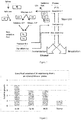
- enzymatic assay was performed in form of coupled XI-SD assay ( Fig. 6 ). For all other experiments the enzymatic assay was performed in two steps, xylose isomerization as first step followed by xylulose concentration determination as second step.
- All xylose isomerases were expressed in E. coli K12 Top10 cells under arabinose inducible promoter by using standard molecular biology technics. XI expression was induced with 0,02% arabinose at 25°C and 200 rpm for 14 h. Cultures were harvested by centrifugation, supernatants discarded and cells were resuspended in 100 mM phosphate buffer pH 7.0 at OD 600nm between 200 and 300. The cells were lysed by ultrasonification according standard purification methods. Lysed cells were centrifuged for 30 min at 20.000 g at 4°C. Cleared supernatants were aliquoted and frozen at -80°C.
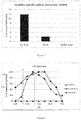
- the assay was used to get insight in specific activity of purified enzymes. As shown in figure 7 the highest specific activity was observed with Eubacterium saburreum XI (11.9%). The lowest specific activity was obtained with Clostridum phytofermentas XI (2.1%). The obtained data are consistent with activity measurements of XI in crude cell extracts. In both cases two novel isomerases described in this application had higher activity than referent Cp XI.
- pH optimum for purified XIs was determined with previously described end point sorbitol dehydrogenase based enzyme assay. The described two step protocol was used. As measure for isomerase activity the amount of oxidized NADH (NAD + ; followed as decrease at 340 nm) at reaction endpoint was used. The amount of oxidized NADH is equimolar to amount of xylulose molecules formed during isomerization step. The care was taken that NADH was not depleted in any of reactions used for pH opt determination. Two buffer systems were used for pH optimum determination: BisTris for pH 5.5-7.5 and Tris from 7.5-9.5. Comparison of enzyme activities in the two buffer systems was done at pH 7.5. No significant differences were observed.
- Temperature optimum for purified XIs was determined with previously described end point enzyme assay. Also in this experiment the care was taken that NADH was not depleted in any of reactions used for T. opt. determination. Temperature gradients were generated with common laboratory PCR cyclers (Eppendorf).
- Km values were determined with the enzyme assay described in previous examples.
- xylose isomerases purified from E. coli were used.
Landscapes
- Chemical & Material Sciences (AREA)
- Organic Chemistry (AREA)
- Life Sciences & Earth Sciences (AREA)
- Engineering & Computer Science (AREA)
- Wood Science & Technology (AREA)
- Zoology (AREA)
- Health & Medical Sciences (AREA)
- Genetics & Genomics (AREA)
- Bioinformatics & Cheminformatics (AREA)
- General Engineering & Computer Science (AREA)
- Biotechnology (AREA)
- General Health & Medical Sciences (AREA)
- Biochemistry (AREA)
- Microbiology (AREA)
- General Chemical & Material Sciences (AREA)
- Chemical Kinetics & Catalysis (AREA)
- Biomedical Technology (AREA)
- Mycology (AREA)
- Molecular Biology (AREA)
- Medicinal Chemistry (AREA)
- Biophysics (AREA)
- Physics & Mathematics (AREA)
- Plant Pathology (AREA)
- Botany (AREA)
- Tropical Medicine & Parasitology (AREA)
- Virology (AREA)
- Micro-Organisms Or Cultivation Processes Thereof (AREA)
- Preparation Of Compounds By Using Micro-Organisms (AREA)
Claims (12)
- Cellule de levure exprimant une protéine comprenant une séquence d'acides aminés ayant au moins 80 % d'identité, de manière préférée entre toutes 90 % d'identité, de manière préférée entre toutes 95 % d'identité avec SEQ ID NO. 2 et ayant une activité xylose isomérase dans une cellule de levure.
- Cellule de levure de la revendication 1, dans laquelle la protéine est constituée de la séquence de SEQ ID NO. 2 et ayant une activité xylose isomérase dans la cellule de levure.
- Cellule de levure de la revendication 1 ou 2, dans laquelle la protéine est constituée de la séquence de SEQ ID NO. 8, ou d'une séquence d'acides aminés ayant au moins 75 % d'identité, de préférence 80 % d'identité, de manière préférée entre toutes 90 % d'identité, de manière préférée entre toutes 95 % d'identité avec SEQ ID NO. 8 et ayant une activité xylose isomérase dans la cellule.
- Cellule de levure de l'une quelconque des revendications 1 à 3, dans laquelle la protéine a une activité xylose isomérase optimale dans une plage de pH de 7,5 à 8,5.
- Cellule de levure de l'une quelconque des revendications 1 à 4 comprenant une molécule d'ADN comprenant une séquence d'ADN codant pour une protéine telle que définie dans l'une quelconque des revendications 1 à 4, dans laquelle la séquence d'ADN est fonctionnellement liée à une séquence régulatrice eucaryote.
- Cellule de levure de la revendication 5, dans laquelle la molécule d'ADN est constituée de la séquence de SEQ ID NO. 1 ou SEQ ID NO. 7.
- Cellule de levure de l'une quelconque des revendications 1 à 6, la cellule de levure étant choisie dans le groupe de Pichia, Pachysolen, Yarrowia, Saccharomyces, Candida, Arxula, Ashbya, Debaryomyces, Hansenula, Hartaea, Kluyveromyces, Schwanniomyces, Trichosporon, Xanthophylomyces, Schizosaccharomyces, Zygosaccharomyces, de manière préférée entre toutes étant Saccharomyces cerevisiae.
- Cellule de levure de l'une quelconque des revendications 1 à 7 comprenant un gène fonctionnel de xylose isomérase dans ladite cellule de levure, dans laquelle le gène de xylose isomérase exogène est fonctionnellement lié aux séquences de promoteur et de terminateur qui sont fonctionnelles dans ladite cellule de levure, ce qui conduit à l'expression d'une protéine telle que définie dans l'une quelconque des revendications 1 à 4.
- Cellule de levure de la revendication 8 dans laquelle le gène de xylose isomérase exogène est une molécule d'ADN telle que définie dans la revendication 5 ou 6.
- Utilisation des cellule de levure selon l'une quelconque des revendications 1 à 9 pour la fermentation de biomasse à partir d'un milieu contenant une source de carbone de xylose.
- Utilisation de la cellule de levure selon l'une quelconque des revendications 1 à 9 en tant que biocatalyseur in situ ou sous forme purifiée pour la production de produits de sucre isomérisés, de préférence pour des produits de sucre isomérisés.
- Procédé de production d'un produit de fermentation choisi dans le groupe de l'acide lactique, l'acide acétique, l'acide succinique, des acides aminés, le 1,3-propane-diol, l'éthylène, le glycérol, des antibiotiques β-lactames, des céphalosporines, des biocombustibles, le butanol, l'éthanol, l'acide lactique, l'acide itaconique, de préférence le butanol, de manière préférée entre toutes l'éthanol, le procédé comprenant les étapes de :a) fermentation d'un milieu contenant une source de xylose avec une cellule de levure telle que définie dans l'une quelconque des revendications 1 à 9, et facultativement,b) récupération du produit de fermentation.
Priority Applications (6)
| Application Number | Priority Date | Filing Date | Title |
|---|---|---|---|
| NO13706186A NO2812430T3 (fr) | 2012-02-07 | 2013-02-07 | |
| RS20171170A RS56569B1 (sr) | 2012-02-07 | 2013-02-07 | Mikroorganizmi koji fermentišu pentozu |
| SI201330828T SI2812430T1 (en) | 2012-02-07 | 2013-02-07 | Pentosa fermenting microorganisms |
| EP13706186.7A EP2812430B1 (fr) | 2012-02-07 | 2013-02-07 | Pentosefermentierender mikroorganismus |
| HRP20171583TT HRP20171583T1 (hr) | 2012-02-07 | 2013-02-07 | Fermentirajući mikroorganizmi na bazi pentoze |
| PL13706186T PL2812430T3 (pl) | 2012-02-07 | 2013-02-07 | Mikroorganizmy fermentujące pentozę |
Applications Claiming Priority (3)
| Application Number | Priority Date | Filing Date | Title |
|---|---|---|---|
| EP12000783.6A EP2626423A1 (fr) | 2012-02-07 | 2012-02-07 | Microorganisme de fermentation à base de pentose |
| PCT/EP2013/052407 WO2013117631A1 (fr) | 2012-02-07 | 2013-02-07 | Fermentation de pentose par des microorganismes |
| EP13706186.7A EP2812430B1 (fr) | 2012-02-07 | 2013-02-07 | Pentosefermentierender mikroorganismus |
Publications (2)
| Publication Number | Publication Date |
|---|---|
| EP2812430A1 EP2812430A1 (fr) | 2014-12-17 |
| EP2812430B1 true EP2812430B1 (fr) | 2017-09-06 |
Family
ID=47750621
Family Applications (2)
| Application Number | Title | Priority Date | Filing Date |
|---|---|---|---|
| EP12000783.6A Withdrawn EP2626423A1 (fr) | 2012-02-07 | 2012-02-07 | Microorganisme de fermentation à base de pentose |
| EP13706186.7A Active EP2812430B1 (fr) | 2012-02-07 | 2013-02-07 | Pentosefermentierender mikroorganismus |
Family Applications Before (1)
| Application Number | Title | Priority Date | Filing Date |
|---|---|---|---|
| EP12000783.6A Withdrawn EP2626423A1 (fr) | 2012-02-07 | 2012-02-07 | Microorganisme de fermentation à base de pentose |
Country Status (19)
| Country | Link |
|---|---|
| US (2) | US20140377813A1 (fr) |
| EP (2) | EP2626423A1 (fr) |
| CN (1) | CN104204202B (fr) |
| AU (1) | AU2013218001B2 (fr) |
| BR (1) | BR112014019578B1 (fr) |
| CA (1) | CA2863734C (fr) |
| DK (1) | DK2812430T3 (fr) |
| EA (1) | EA035000B1 (fr) |
| ES (1) | ES2643046T3 (fr) |
| HR (1) | HRP20171583T1 (fr) |
| HU (1) | HUE035703T2 (fr) |
| MX (1) | MX350005B (fr) |
| MY (1) | MY171359A (fr) |
| NO (1) | NO2812430T3 (fr) |
| PL (1) | PL2812430T3 (fr) |
| RS (1) | RS56569B1 (fr) |
| SI (1) | SI2812430T1 (fr) |
| WO (1) | WO2013117631A1 (fr) |
| ZA (1) | ZA201405761B (fr) |
Families Citing this family (5)
| Publication number | Priority date | Publication date | Assignee | Title |
|---|---|---|---|---|
| US9187743B2 (en) | 2013-03-11 | 2015-11-17 | E I Du Pont De Nemours And Company | Bacterial xylose isomerases active in yeast cells |
| CA2991707C (fr) | 2015-07-13 | 2023-08-01 | MARA Renewables Corporation | Amelioration du metabolisme de micro-algues de la xylose |
| BR112018002284A2 (pt) | 2015-08-05 | 2018-12-11 | Cargill Inc | método de fermentação para produzir um bioproduto, levedura crabtree negativa geneticamente engenheirada e método para reduzir a produção de glicerol por uma levedura engenheirada |
| EP3559210A1 (fr) * | 2016-12-21 | 2019-10-30 | Vib Vzw | Xylose isomérases conférant une capacité de fermentation de xylose efficace à la levure |
| KR20200135469A (ko) * | 2018-03-27 | 2020-12-02 | 바스프 에스이 | 자일로스 대사 효모 |
Family Cites Families (4)
| Publication number | Priority date | Publication date | Assignee | Title |
|---|---|---|---|---|
| DE60325457D1 (de) * | 2002-01-23 | 2009-02-05 | Royal Nedalco B V | Fermentation von pentosezuckern |
| DE102008031350B4 (de) * | 2008-07-02 | 2011-02-10 | Johann Wolfgang Goethe-Universität Frankfurt am Main | Prokaryotische Xylose-Isomerase zur Konstruktion Xylose-vergärender Hefen |
| CN102791858B (zh) * | 2009-12-22 | 2014-11-26 | 株式会社丰田中央研究所 | 木糖异构酶及其利用 |
| WO2012009272A2 (fr) * | 2010-07-14 | 2012-01-19 | Codexis, Inc. | Fermentation de pentose par un micro-organisme recombinant |
-
2012
- 2012-02-07 EP EP12000783.6A patent/EP2626423A1/fr not_active Withdrawn
-
2013
- 2013-02-07 ES ES13706186.7T patent/ES2643046T3/es active Active
- 2013-02-07 BR BR112014019578-1A patent/BR112014019578B1/pt not_active IP Right Cessation
- 2013-02-07 MX MX2014009496A patent/MX350005B/es active IP Right Grant
- 2013-02-07 EP EP13706186.7A patent/EP2812430B1/fr active Active
- 2013-02-07 WO PCT/EP2013/052407 patent/WO2013117631A1/fr not_active Ceased
- 2013-02-07 SI SI201330828T patent/SI2812430T1/en unknown
- 2013-02-07 MY MYPI2014002270A patent/MY171359A/en unknown
- 2013-02-07 EA EA201400877A patent/EA035000B1/ru unknown
- 2013-02-07 HR HRP20171583TT patent/HRP20171583T1/hr unknown
- 2013-02-07 US US14/376,775 patent/US20140377813A1/en not_active Abandoned
- 2013-02-07 CN CN201380018485.0A patent/CN104204202B/zh active Active
- 2013-02-07 AU AU2013218001A patent/AU2013218001B2/en not_active Ceased
- 2013-02-07 HU HUE13706186A patent/HUE035703T2/en unknown
- 2013-02-07 PL PL13706186T patent/PL2812430T3/pl unknown
- 2013-02-07 NO NO13706186A patent/NO2812430T3/no unknown
- 2013-02-07 RS RS20171170A patent/RS56569B1/sr unknown
- 2013-02-07 CA CA2863734A patent/CA2863734C/fr active Active
- 2013-02-07 DK DK13706186.7T patent/DK2812430T3/en active
-
2014
- 2014-08-05 ZA ZA2014/05761A patent/ZA201405761B/en unknown
-
2016
- 2016-07-12 US US15/208,090 patent/US20160312177A1/en not_active Abandoned
Non-Patent Citations (1)
| Title |
|---|
| None * |
Also Published As
| Publication number | Publication date |
|---|---|
| US20140377813A1 (en) | 2014-12-25 |
| US20160312177A1 (en) | 2016-10-27 |
| EA035000B1 (ru) | 2020-04-16 |
| CA2863734A1 (fr) | 2013-08-15 |
| EP2626423A1 (fr) | 2013-08-14 |
| AU2013218001A1 (en) | 2014-08-28 |
| EP2812430A1 (fr) | 2014-12-17 |
| CN104204202B (zh) | 2017-08-01 |
| HRP20171583T1 (hr) | 2017-12-01 |
| MY171359A (en) | 2019-10-10 |
| BR112014019578A8 (pt) | 2017-07-11 |
| MX2014009496A (es) | 2014-09-11 |
| PL2812430T3 (pl) | 2018-02-28 |
| SI2812430T1 (en) | 2018-03-30 |
| NO2812430T3 (fr) | 2018-02-03 |
| BR112014019578B1 (pt) | 2022-10-11 |
| ZA201405761B (en) | 2015-11-25 |
| ES2643046T3 (es) | 2017-11-21 |
| BR112014019578A2 (en) | 2019-10-15 |
| HUE035703T2 (en) | 2018-05-28 |
| DK2812430T3 (en) | 2017-10-23 |
| WO2013117631A1 (fr) | 2013-08-15 |
| MX350005B (es) | 2017-08-22 |
| CA2863734C (fr) | 2020-03-24 |
| CN104204202A (zh) | 2014-12-10 |
| RS56569B1 (sr) | 2018-02-28 |
| EA201400877A1 (ru) | 2015-01-30 |
| AU2013218001B2 (en) | 2016-02-18 |
Similar Documents
| Publication | Publication Date | Title |
|---|---|---|
| US11203741B2 (en) | Glycerol free ethanol production | |
| US11753659B2 (en) | Glycerol and acetic acid converting yeast cells with improved acetic acid conversion | |
| JP5843229B2 (ja) | キシロースイソメラーゼ及びその利用 | |
| CA2728682A1 (fr) | Xylose-isomerase procaryote destine a la construction de levures fermentant le xylose | |
| WO2015028583A2 (fr) | Cellules de conversion du glycérol et de l'acide acétique présentant un meilleur transport du glycérol | |
| US20160312177A1 (en) | Pentose fermenting microorganisms | |
| WO2019185737A1 (fr) | Levure de métabolisation du xylose | |
| JP6343754B2 (ja) | 耐酸耐塩性付与方法と耐酸耐塩性酵母を用いた有用物質生産 | |
| CA3081833C (fr) | Genes mutes impliques dans l'amelioration de la productivite d'ethanol par fermentation d'ethanol et procede de production d'ethanol les utilisant | |
| JP7298673B2 (ja) | エタノール発酵によるエタノール生産性の向上に関与する変異遺伝子及びこれを用いたエタノールの製造方法 | |
| CA3045740C (fr) | Production amelioree d'ethanol sans glycerol |
Legal Events
| Date | Code | Title | Description |
|---|---|---|---|
| PUAI | Public reference made under article 153(3) epc to a published international application that has entered the european phase |
Free format text: ORIGINAL CODE: 0009012 |
|
| 17P | Request for examination filed |
Effective date: 20140908 |
|
| AK | Designated contracting states |
Kind code of ref document: A1 Designated state(s): AL AT BE BG CH CY CZ DE DK EE ES FI FR GB GR HR HU IE IS IT LI LT LU LV MC MK MT NL NO PL PT RO RS SE SI SK SM TR |
|
| AX | Request for extension of the european patent |
Extension state: BA ME |
|
| DAX | Request for extension of the european patent (deleted) | ||
| 17Q | First examination report despatched |
Effective date: 20150826 |
|
| STAA | Information on the status of an ep patent application or granted ep patent |
Free format text: STATUS: EXAMINATION IS IN PROGRESS |
|
| GRAP | Despatch of communication of intention to grant a patent |
Free format text: ORIGINAL CODE: EPIDOSNIGR1 |
|
| STAA | Information on the status of an ep patent application or granted ep patent |
Free format text: STATUS: GRANT OF PATENT IS INTENDED |
|
| INTG | Intention to grant announced |
Effective date: 20170331 |
|
| GRAS | Grant fee paid |
Free format text: ORIGINAL CODE: EPIDOSNIGR3 |
|
| GRAA | (expected) grant |
Free format text: ORIGINAL CODE: 0009210 |
|
| STAA | Information on the status of an ep patent application or granted ep patent |
Free format text: STATUS: THE PATENT HAS BEEN GRANTED |
|
| AK | Designated contracting states |
Kind code of ref document: B1 Designated state(s): AL AT BE BG CH CY CZ DE DK EE ES FI FR GB GR HR HU IE IS IT LI LT LU LV MC MK MT NL NO PL PT RO RS SE SI SK SM TR |
|
| REG | Reference to a national code |
Ref country code: GB Ref legal event code: FG4D |
|
| REG | Reference to a national code |
Ref country code: AT Ref legal event code: REF Ref document number: 925962 Country of ref document: AT Kind code of ref document: T Effective date: 20170915 Ref country code: CH Ref legal event code: EP |
|
| REG | Reference to a national code |
Ref country code: IE Ref legal event code: FG4D |
|
| REG | Reference to a national code |
Ref country code: HR Ref legal event code: TUEP Ref document number: P20171583 Country of ref document: HR Ref country code: NL Ref legal event code: FP |
|
| REG | Reference to a national code |
Ref country code: DE Ref legal event code: R096 Ref document number: 602013026101 Country of ref document: DE |
|
| REG | Reference to a national code |
Ref country code: DK Ref legal event code: T3 Effective date: 20171017 |
|
| REG | Reference to a national code |
Ref country code: SE Ref legal event code: TRGR |
|
| REG | Reference to a national code |
Ref country code: ES Ref legal event code: FG2A Ref document number: 2643046 Country of ref document: ES Kind code of ref document: T3 Effective date: 20171121 |
|
| REG | Reference to a national code |
Ref country code: HR Ref legal event code: T1PR Ref document number: P20171583 Country of ref document: HR |
|
| REG | Reference to a national code |
Ref country code: RO Ref legal event code: EPE |
|
| REG | Reference to a national code |
Ref country code: LT Ref legal event code: MG4D |
|
| PG25 | Lapsed in a contracting state [announced via postgrant information from national office to epo] |
Ref country code: LT Free format text: LAPSE BECAUSE OF FAILURE TO SUBMIT A TRANSLATION OF THE DESCRIPTION OR TO PAY THE FEE WITHIN THE PRESCRIBED TIME-LIMIT Effective date: 20170906 |
|
| REG | Reference to a national code |
Ref country code: NO Ref legal event code: T2 Effective date: 20170906 |
|
| REG | Reference to a national code |
Ref country code: FR Ref legal event code: PLFP Year of fee payment: 6 |
|
| PG25 | Lapsed in a contracting state [announced via postgrant information from national office to epo] |
Ref country code: GR Free format text: LAPSE BECAUSE OF FAILURE TO SUBMIT A TRANSLATION OF THE DESCRIPTION OR TO PAY THE FEE WITHIN THE PRESCRIBED TIME-LIMIT Effective date: 20171207 Ref country code: LV Free format text: LAPSE BECAUSE OF FAILURE TO SUBMIT A TRANSLATION OF THE DESCRIPTION OR TO PAY THE FEE WITHIN THE PRESCRIBED TIME-LIMIT Effective date: 20170906 |
|
| REG | Reference to a national code |
Ref country code: HU Ref legal event code: AG4A Ref document number: E035703 Country of ref document: HU |
|
| PG25 | Lapsed in a contracting state [announced via postgrant information from national office to epo] |
Ref country code: IS Free format text: LAPSE BECAUSE OF FAILURE TO SUBMIT A TRANSLATION OF THE DESCRIPTION OR TO PAY THE FEE WITHIN THE PRESCRIBED TIME-LIMIT Effective date: 20180106 Ref country code: EE Free format text: LAPSE BECAUSE OF FAILURE TO SUBMIT A TRANSLATION OF THE DESCRIPTION OR TO PAY THE FEE WITHIN THE PRESCRIBED TIME-LIMIT Effective date: 20170906 Ref country code: SM Free format text: LAPSE BECAUSE OF FAILURE TO SUBMIT A TRANSLATION OF THE DESCRIPTION OR TO PAY THE FEE WITHIN THE PRESCRIBED TIME-LIMIT Effective date: 20170906 |
|
| REG | Reference to a national code |
Ref country code: DE Ref legal event code: R097 Ref document number: 602013026101 Country of ref document: DE |
|
| REG | Reference to a national code |
Ref country code: SK Ref legal event code: T3 Ref document number: E 26833 Country of ref document: SK |
|
| PLBE | No opposition filed within time limit |
Free format text: ORIGINAL CODE: 0009261 |
|
| STAA | Information on the status of an ep patent application or granted ep patent |
Free format text: STATUS: NO OPPOSITION FILED WITHIN TIME LIMIT |
|
| 26N | No opposition filed |
Effective date: 20180607 |
|
| PG25 | Lapsed in a contracting state [announced via postgrant information from national office to epo] |
Ref country code: MC Free format text: LAPSE BECAUSE OF FAILURE TO SUBMIT A TRANSLATION OF THE DESCRIPTION OR TO PAY THE FEE WITHIN THE PRESCRIBED TIME-LIMIT Effective date: 20170906 |
|
| REG | Reference to a national code |
Ref country code: IE Ref legal event code: MM4A |
|
| PG25 | Lapsed in a contracting state [announced via postgrant information from national office to epo] |
Ref country code: LU Free format text: LAPSE BECAUSE OF NON-PAYMENT OF DUE FEES Effective date: 20180207 |
|
| PG25 | Lapsed in a contracting state [announced via postgrant information from national office to epo] |
Ref country code: IE Free format text: LAPSE BECAUSE OF NON-PAYMENT OF DUE FEES Effective date: 20180207 |
|
| REG | Reference to a national code |
Ref country code: HR Ref legal event code: ODRP Ref document number: P20171583 Country of ref document: HR Payment date: 20190128 Year of fee payment: 7 |
|
| PG25 | Lapsed in a contracting state [announced via postgrant information from national office to epo] |
Ref country code: MT Free format text: LAPSE BECAUSE OF NON-PAYMENT OF DUE FEES Effective date: 20180207 |
|
| REG | Reference to a national code |
Ref country code: HR Ref legal event code: ODRP Ref document number: P20171583 Country of ref document: HR Payment date: 20200128 Year of fee payment: 8 |
|
| PG25 | Lapsed in a contracting state [announced via postgrant information from national office to epo] |
Ref country code: PT Free format text: LAPSE BECAUSE OF FAILURE TO SUBMIT A TRANSLATION OF THE DESCRIPTION OR TO PAY THE FEE WITHIN THE PRESCRIBED TIME-LIMIT Effective date: 20170906 |
|
| PG25 | Lapsed in a contracting state [announced via postgrant information from national office to epo] |
Ref country code: CY Free format text: LAPSE BECAUSE OF FAILURE TO SUBMIT A TRANSLATION OF THE DESCRIPTION OR TO PAY THE FEE WITHIN THE PRESCRIBED TIME-LIMIT Effective date: 20170906 |
|
| PG25 | Lapsed in a contracting state [announced via postgrant information from national office to epo] |
Ref country code: AL Free format text: LAPSE BECAUSE OF FAILURE TO SUBMIT A TRANSLATION OF THE DESCRIPTION OR TO PAY THE FEE WITHIN THE PRESCRIBED TIME-LIMIT Effective date: 20170906 |
|
| REG | Reference to a national code |
Ref country code: HR Ref legal event code: ODRP Ref document number: P20171583 Country of ref document: HR Payment date: 20210126 Year of fee payment: 9 |
|
| REG | Reference to a national code |
Ref country code: AT Ref legal event code: UEP Ref document number: 925962 Country of ref document: AT Kind code of ref document: T Effective date: 20170906 |
|
| REG | Reference to a national code |
Ref country code: HR Ref legal event code: ODRP Ref document number: P20171583 Country of ref document: HR Payment date: 20220125 Year of fee payment: 10 |
|
| PGFP | Annual fee paid to national office [announced via postgrant information from national office to epo] |
Ref country code: CH Payment date: 20220218 Year of fee payment: 10 |
|
| PGFP | Annual fee paid to national office [announced via postgrant information from national office to epo] |
Ref country code: NL Payment date: 20220224 Year of fee payment: 10 Ref country code: BE Payment date: 20220224 Year of fee payment: 10 |
|
| REG | Reference to a national code |
Ref country code: HR Ref legal event code: ODRP Ref document number: P20171583 Country of ref document: HR Payment date: 20230124 Year of fee payment: 11 |
|
| PGFP | Annual fee paid to national office [announced via postgrant information from national office to epo] |
Ref country code: CZ Payment date: 20230207 Year of fee payment: 11 |
|
| PGFP | Annual fee paid to national office [announced via postgrant information from national office to epo] |
Ref country code: TR Payment date: 20230125 Year of fee payment: 11 Ref country code: SI Payment date: 20230124 Year of fee payment: 11 |
|
| P01 | Opt-out of the competence of the unified patent court (upc) registered |
Effective date: 20230512 |
|
| REG | Reference to a national code |
Ref country code: CH Ref legal event code: PL |
|
| REG | Reference to a national code |
Ref country code: NL Ref legal event code: MM Effective date: 20230301 |
|
| REG | Reference to a national code |
Ref country code: BE Ref legal event code: MM Effective date: 20230228 |
|
| PG25 | Lapsed in a contracting state [announced via postgrant information from national office to epo] |
Ref country code: LI Free format text: LAPSE BECAUSE OF NON-PAYMENT OF DUE FEES Effective date: 20230228 Ref country code: CH Free format text: LAPSE BECAUSE OF NON-PAYMENT OF DUE FEES Effective date: 20230228 |
|
| PG25 | Lapsed in a contracting state [announced via postgrant information from national office to epo] |
Ref country code: NL Free format text: LAPSE BECAUSE OF NON-PAYMENT OF DUE FEES Effective date: 20230301 |
|
| REG | Reference to a national code |
Ref country code: HR Ref legal event code: ODRP Ref document number: P20171583 Country of ref document: HR Payment date: 20240124 Year of fee payment: 12 |
|
| PG25 | Lapsed in a contracting state [announced via postgrant information from national office to epo] |
Ref country code: BE Free format text: LAPSE BECAUSE OF NON-PAYMENT OF DUE FEES Effective date: 20230228 |
|
| PGFP | Annual fee paid to national office [announced via postgrant information from national office to epo] |
Ref country code: MK Payment date: 20230126 Year of fee payment: 11 |
|
| PGFP | Annual fee paid to national office [announced via postgrant information from national office to epo] |
Ref country code: ES Payment date: 20240307 Year of fee payment: 12 |
|
| PGFP | Annual fee paid to national office [announced via postgrant information from national office to epo] |
Ref country code: AT Payment date: 20240220 Year of fee payment: 12 |
|
| PGFP | Annual fee paid to national office [announced via postgrant information from national office to epo] |
Ref country code: HU Payment date: 20240130 Year of fee payment: 12 Ref country code: FI Payment date: 20240226 Year of fee payment: 12 Ref country code: BG Payment date: 20240226 Year of fee payment: 12 Ref country code: SK Payment date: 20240129 Year of fee payment: 12 Ref country code: GB Payment date: 20240220 Year of fee payment: 12 |
|
| PGFP | Annual fee paid to national office [announced via postgrant information from national office to epo] |
Ref country code: SE Payment date: 20240226 Year of fee payment: 12 Ref country code: RS Payment date: 20240126 Year of fee payment: 12 Ref country code: NO Payment date: 20240220 Year of fee payment: 12 Ref country code: HR Payment date: 20240124 Year of fee payment: 12 |
|
| PG25 | Lapsed in a contracting state [announced via postgrant information from national office to epo] |
Ref country code: CZ Free format text: LAPSE BECAUSE OF NON-PAYMENT OF DUE FEES Effective date: 20240207 |
|
| PG25 | Lapsed in a contracting state [announced via postgrant information from national office to epo] |
Ref country code: SI Free format text: LAPSE BECAUSE OF NON-PAYMENT OF DUE FEES Effective date: 20240208 |
|
| PG25 | Lapsed in a contracting state [announced via postgrant information from national office to epo] |
Ref country code: SI Free format text: LAPSE BECAUSE OF NON-PAYMENT OF DUE FEES Effective date: 20240208 Ref country code: CZ Free format text: LAPSE BECAUSE OF NON-PAYMENT OF DUE FEES Effective date: 20240207 |
|
| REG | Reference to a national code |
Ref country code: HR Ref legal event code: PBON Ref document number: P20171583 Country of ref document: HR Effective date: 20250207 |
|
| REG | Reference to a national code |
Ref country code: SK Ref legal event code: MM4A Ref document number: E 26833 Country of ref document: SK Effective date: 20250207 |
|
| REG | Reference to a national code |
Ref country code: SE Ref legal event code: EUG |
|
| PG25 | Lapsed in a contracting state [announced via postgrant information from national office to epo] |
Ref country code: FI Free format text: LAPSE BECAUSE OF NON-PAYMENT OF DUE FEES Effective date: 20250207 |
|
| PG25 | Lapsed in a contracting state [announced via postgrant information from national office to epo] |
Ref country code: NO Free format text: LAPSE BECAUSE OF NON-PAYMENT OF DUE FEES Effective date: 20250228 |
|
| REG | Reference to a national code |
Ref country code: AT Ref legal event code: MM01 Ref document number: 925962 Country of ref document: AT Kind code of ref document: T Effective date: 20250207 |
|
| PG25 | Lapsed in a contracting state [announced via postgrant information from national office to epo] |
Ref country code: BG Free format text: LAPSE BECAUSE OF NON-PAYMENT OF DUE FEES Effective date: 20250207 Ref country code: HU Free format text: LAPSE BECAUSE OF NON-PAYMENT OF DUE FEES Effective date: 20250208 |
|
| PG25 | Lapsed in a contracting state [announced via postgrant information from national office to epo] |
Ref country code: HR Free format text: LAPSE BECAUSE OF NON-PAYMENT OF DUE FEES Effective date: 20250207 |
|
| PG25 | Lapsed in a contracting state [announced via postgrant information from national office to epo] |
Ref country code: AT Free format text: LAPSE BECAUSE OF NON-PAYMENT OF DUE FEES Effective date: 20250207 |
|
| PG25 | Lapsed in a contracting state [announced via postgrant information from national office to epo] |
Ref country code: RS Free format text: LAPSE BECAUSE OF NON-PAYMENT OF DUE FEES Effective date: 20250207 |
|
| PG25 | Lapsed in a contracting state [announced via postgrant information from national office to epo] |
Ref country code: SK Free format text: LAPSE BECAUSE OF NON-PAYMENT OF DUE FEES Effective date: 20250207 |
|
| GBPC | Gb: european patent ceased through non-payment of renewal fee |
Effective date: 20250207 |
|
| PG25 | Lapsed in a contracting state [announced via postgrant information from national office to epo] |
Ref country code: GB Free format text: LAPSE BECAUSE OF NON-PAYMENT OF DUE FEES Effective date: 20250207 |
|
| REG | Reference to a national code |
Ref country code: ES Ref legal event code: FD2A Effective date: 20260327 |
|
| PG25 | Lapsed in a contracting state [announced via postgrant information from national office to epo] |
Ref country code: ES Free format text: LAPSE BECAUSE OF NON-PAYMENT OF DUE FEES Effective date: 20250208 |
|
| PGFP | Annual fee paid to national office [announced via postgrant information from national office to epo] |
Ref country code: DK Payment date: 20260223 Year of fee payment: 14 Ref country code: DE Payment date: 20260220 Year of fee payment: 14 |
|
| PGFP | Annual fee paid to national office [announced via postgrant information from national office to epo] |
Ref country code: RO Payment date: 20260202 Year of fee payment: 14 Ref country code: IT Payment date: 20260220 Year of fee payment: 14 |
|
| PGFP | Annual fee paid to national office [announced via postgrant information from national office to epo] |
Ref country code: FR Payment date: 20260224 Year of fee payment: 14 |
|
| PGFP | Annual fee paid to national office [announced via postgrant information from national office to epo] |
Ref country code: PL Payment date: 20260128 Year of fee payment: 14 |