EP2928290B1 - Système du baculovirus pour l'expression de protéines formant des particules de type viral - Google Patents
Système du baculovirus pour l'expression de protéines formant des particules de type viral Download PDFInfo
- Publication number
- EP2928290B1 EP2928290B1 EP13811407.9A EP13811407A EP2928290B1 EP 2928290 B1 EP2928290 B1 EP 2928290B1 EP 13811407 A EP13811407 A EP 13811407A EP 2928290 B1 EP2928290 B1 EP 2928290B1
- Authority
- EP
- European Patent Office
- Prior art keywords
- nucleic acid
- protein
- acid sequence
- baculovirus
- recombinant
- Prior art date
- Legal status (The legal status is an assumption and is not a legal conclusion. Google has not performed a legal analysis and makes no representation as to the accuracy of the status listed.)
- Active
Links
Images







Classifications
-
- C—CHEMISTRY; METALLURGY
- C12—BIOCHEMISTRY; BEER; SPIRITS; WINE; VINEGAR; MICROBIOLOGY; ENZYMOLOGY; MUTATION OR GENETIC ENGINEERING
- C12N—MICROORGANISMS OR ENZYMES; COMPOSITIONS THEREOF; PROPAGATING, PRESERVING, OR MAINTAINING MICROORGANISMS; MUTATION OR GENETIC ENGINEERING; CULTURE MEDIA
- C12N15/00—Mutation or genetic engineering; DNA or RNA concerning genetic engineering, vectors, e.g. plasmids, or their isolation, preparation or purification; Use of hosts therefor
- C12N15/09—Recombinant DNA-technology
- C12N15/63—Introduction of foreign genetic material using vectors; Vectors; Use of hosts therefor; Regulation of expression
- C12N15/79—Vectors or expression systems specially adapted for eukaryotic hosts
- C12N15/85—Vectors or expression systems specially adapted for eukaryotic hosts for animal cells
- C12N15/86—Viral vectors
-
- C—CHEMISTRY; METALLURGY
- C07—ORGANIC CHEMISTRY
- C07K—PEPTIDES
- C07K14/00—Peptides having more than 20 amino acids; Gastrins; Somatostatins; Melanotropins; Derivatives thereof
- C07K14/005—Peptides having more than 20 amino acids; Gastrins; Somatostatins; Melanotropins; Derivatives thereof from viruses
-
- C—CHEMISTRY; METALLURGY
- C12—BIOCHEMISTRY; BEER; SPIRITS; WINE; VINEGAR; MICROBIOLOGY; ENZYMOLOGY; MUTATION OR GENETIC ENGINEERING
- C12N—MICROORGANISMS OR ENZYMES; COMPOSITIONS THEREOF; PROPAGATING, PRESERVING, OR MAINTAINING MICROORGANISMS; MUTATION OR GENETIC ENGINEERING; CULTURE MEDIA
- C12N15/00—Mutation or genetic engineering; DNA or RNA concerning genetic engineering, vectors, e.g. plasmids, or their isolation, preparation or purification; Use of hosts therefor
- C12N15/09—Recombinant DNA-technology
- C12N15/63—Introduction of foreign genetic material using vectors; Vectors; Use of hosts therefor; Regulation of expression
- C12N15/79—Vectors or expression systems specially adapted for eukaryotic hosts
- C12N15/85—Vectors or expression systems specially adapted for eukaryotic hosts for animal cells
-
- C—CHEMISTRY; METALLURGY
- C12—BIOCHEMISTRY; BEER; SPIRITS; WINE; VINEGAR; MICROBIOLOGY; ENZYMOLOGY; MUTATION OR GENETIC ENGINEERING
- C12N—MICROORGANISMS OR ENZYMES; COMPOSITIONS THEREOF; PROPAGATING, PRESERVING, OR MAINTAINING MICROORGANISMS; MUTATION OR GENETIC ENGINEERING; CULTURE MEDIA
- C12N7/00—Viruses; Bacteriophages; Compositions thereof; Preparation or purification thereof
-
- C—CHEMISTRY; METALLURGY
- C07—ORGANIC CHEMISTRY
- C07H—SUGARS; DERIVATIVES THEREOF; NUCLEOSIDES; NUCLEOTIDES; NUCLEIC ACIDS
- C07H21/00—Compounds containing two or more mononucleotide units having separate phosphate or polyphosphate groups linked by saccharide radicals of nucleoside groups, e.g. nucleic acids
- C07H21/04—Compounds containing two or more mononucleotide units having separate phosphate or polyphosphate groups linked by saccharide radicals of nucleoside groups, e.g. nucleic acids with deoxyribosyl as saccharide radical
-
- C—CHEMISTRY; METALLURGY
- C12—BIOCHEMISTRY; BEER; SPIRITS; WINE; VINEGAR; MICROBIOLOGY; ENZYMOLOGY; MUTATION OR GENETIC ENGINEERING
- C12N—MICROORGANISMS OR ENZYMES; COMPOSITIONS THEREOF; PROPAGATING, PRESERVING, OR MAINTAINING MICROORGANISMS; MUTATION OR GENETIC ENGINEERING; CULTURE MEDIA
- C12N2502/00—Coculture with; Conditioned medium produced by
-
- C—CHEMISTRY; METALLURGY
- C12—BIOCHEMISTRY; BEER; SPIRITS; WINE; VINEGAR; MICROBIOLOGY; ENZYMOLOGY; MUTATION OR GENETIC ENGINEERING
- C12N—MICROORGANISMS OR ENZYMES; COMPOSITIONS THEREOF; PROPAGATING, PRESERVING, OR MAINTAINING MICROORGANISMS; MUTATION OR GENETIC ENGINEERING; CULTURE MEDIA
- C12N2510/00—Genetically modified cells
-
- C—CHEMISTRY; METALLURGY
- C12—BIOCHEMISTRY; BEER; SPIRITS; WINE; VINEGAR; MICROBIOLOGY; ENZYMOLOGY; MUTATION OR GENETIC ENGINEERING
- C12N—MICROORGANISMS OR ENZYMES; COMPOSITIONS THEREOF; PROPAGATING, PRESERVING, OR MAINTAINING MICROORGANISMS; MUTATION OR GENETIC ENGINEERING; CULTURE MEDIA
- C12N2710/00—MICROORGANISMS OR ENZYMES; COMPOSITIONS THEREOF; PROPAGATING, PRESERVING, OR MAINTAINING MICROORGANISMS; MUTATION OR GENETIC ENGINEERING; CULTURE MEDIA dsDNA viruses
- C12N2710/00011—Details
- C12N2710/14011—Baculoviridae
- C12N2710/14022—New viral proteins or individual genes, new structural or functional aspects of known viral proteins or genes
-
- C—CHEMISTRY; METALLURGY
- C12—BIOCHEMISTRY; BEER; SPIRITS; WINE; VINEGAR; MICROBIOLOGY; ENZYMOLOGY; MUTATION OR GENETIC ENGINEERING
- C12N—MICROORGANISMS OR ENZYMES; COMPOSITIONS THEREOF; PROPAGATING, PRESERVING, OR MAINTAINING MICROORGANISMS; MUTATION OR GENETIC ENGINEERING; CULTURE MEDIA
- C12N2710/00—MICROORGANISMS OR ENZYMES; COMPOSITIONS THEREOF; PROPAGATING, PRESERVING, OR MAINTAINING MICROORGANISMS; MUTATION OR GENETIC ENGINEERING; CULTURE MEDIA dsDNA viruses
- C12N2710/00011—Details
- C12N2710/14011—Baculoviridae
- C12N2710/14023—Virus like particles [VLP]
-
- C—CHEMISTRY; METALLURGY
- C12—BIOCHEMISTRY; BEER; SPIRITS; WINE; VINEGAR; MICROBIOLOGY; ENZYMOLOGY; MUTATION OR GENETIC ENGINEERING
- C12N—MICROORGANISMS OR ENZYMES; COMPOSITIONS THEREOF; PROPAGATING, PRESERVING, OR MAINTAINING MICROORGANISMS; MUTATION OR GENETIC ENGINEERING; CULTURE MEDIA
- C12N2710/00—MICROORGANISMS OR ENZYMES; COMPOSITIONS THEREOF; PROPAGATING, PRESERVING, OR MAINTAINING MICROORGANISMS; MUTATION OR GENETIC ENGINEERING; CULTURE MEDIA dsDNA viruses
- C12N2710/00011—Details
- C12N2710/14011—Baculoviridae
- C12N2710/14034—Use of virus or viral component as vaccine, e.g. live-attenuated or inactivated virus, VLP, viral protein
-
- C—CHEMISTRY; METALLURGY
- C12—BIOCHEMISTRY; BEER; SPIRITS; WINE; VINEGAR; MICROBIOLOGY; ENZYMOLOGY; MUTATION OR GENETIC ENGINEERING
- C12N—MICROORGANISMS OR ENZYMES; COMPOSITIONS THEREOF; PROPAGATING, PRESERVING, OR MAINTAINING MICROORGANISMS; MUTATION OR GENETIC ENGINEERING; CULTURE MEDIA
- C12N2710/00—MICROORGANISMS OR ENZYMES; COMPOSITIONS THEREOF; PROPAGATING, PRESERVING, OR MAINTAINING MICROORGANISMS; MUTATION OR GENETIC ENGINEERING; CULTURE MEDIA dsDNA viruses
- C12N2710/00011—Details
- C12N2710/14011—Baculoviridae
- C12N2710/14041—Use of virus, viral particle or viral elements as a vector
-
- C—CHEMISTRY; METALLURGY
- C12—BIOCHEMISTRY; BEER; SPIRITS; WINE; VINEGAR; MICROBIOLOGY; ENZYMOLOGY; MUTATION OR GENETIC ENGINEERING
- C12N—MICROORGANISMS OR ENZYMES; COMPOSITIONS THEREOF; PROPAGATING, PRESERVING, OR MAINTAINING MICROORGANISMS; MUTATION OR GENETIC ENGINEERING; CULTURE MEDIA
- C12N2710/00—MICROORGANISMS OR ENZYMES; COMPOSITIONS THEREOF; PROPAGATING, PRESERVING, OR MAINTAINING MICROORGANISMS; MUTATION OR GENETIC ENGINEERING; CULTURE MEDIA dsDNA viruses
- C12N2710/00011—Details
- C12N2710/14011—Baculoviridae
- C12N2710/14111—Nucleopolyhedrovirus, e.g. autographa californica nucleopolyhedrovirus
- C12N2710/14122—New viral proteins or individual genes, new structural or functional aspects of known viral proteins or genes
-
- C—CHEMISTRY; METALLURGY
- C12—BIOCHEMISTRY; BEER; SPIRITS; WINE; VINEGAR; MICROBIOLOGY; ENZYMOLOGY; MUTATION OR GENETIC ENGINEERING
- C12N—MICROORGANISMS OR ENZYMES; COMPOSITIONS THEREOF; PROPAGATING, PRESERVING, OR MAINTAINING MICROORGANISMS; MUTATION OR GENETIC ENGINEERING; CULTURE MEDIA
- C12N2710/00—MICROORGANISMS OR ENZYMES; COMPOSITIONS THEREOF; PROPAGATING, PRESERVING, OR MAINTAINING MICROORGANISMS; MUTATION OR GENETIC ENGINEERING; CULTURE MEDIA dsDNA viruses
- C12N2710/00011—Details
- C12N2710/14011—Baculoviridae
- C12N2710/14111—Nucleopolyhedrovirus, e.g. autographa californica nucleopolyhedrovirus
- C12N2710/14131—Uses of virus other than therapeutic or vaccine, e.g. disinfectant
-
- C—CHEMISTRY; METALLURGY
- C12—BIOCHEMISTRY; BEER; SPIRITS; WINE; VINEGAR; MICROBIOLOGY; ENZYMOLOGY; MUTATION OR GENETIC ENGINEERING
- C12N—MICROORGANISMS OR ENZYMES; COMPOSITIONS THEREOF; PROPAGATING, PRESERVING, OR MAINTAINING MICROORGANISMS; MUTATION OR GENETIC ENGINEERING; CULTURE MEDIA
- C12N2710/00—MICROORGANISMS OR ENZYMES; COMPOSITIONS THEREOF; PROPAGATING, PRESERVING, OR MAINTAINING MICROORGANISMS; MUTATION OR GENETIC ENGINEERING; CULTURE MEDIA dsDNA viruses
- C12N2710/00011—Details
- C12N2710/14011—Baculoviridae
- C12N2710/14111—Nucleopolyhedrovirus, e.g. autographa californica nucleopolyhedrovirus
- C12N2710/14141—Use of virus, viral particle or viral elements as a vector
- C12N2710/14143—Use of virus, viral particle or viral elements as a vector viral genome or elements thereof as genetic vector
-
- C—CHEMISTRY; METALLURGY
- C12—BIOCHEMISTRY; BEER; SPIRITS; WINE; VINEGAR; MICROBIOLOGY; ENZYMOLOGY; MUTATION OR GENETIC ENGINEERING
- C12N—MICROORGANISMS OR ENZYMES; COMPOSITIONS THEREOF; PROPAGATING, PRESERVING, OR MAINTAINING MICROORGANISMS; MUTATION OR GENETIC ENGINEERING; CULTURE MEDIA
- C12N2710/00—MICROORGANISMS OR ENZYMES; COMPOSITIONS THEREOF; PROPAGATING, PRESERVING, OR MAINTAINING MICROORGANISMS; MUTATION OR GENETIC ENGINEERING; CULTURE MEDIA dsDNA viruses
- C12N2710/00011—Details
- C12N2710/20011—Papillomaviridae
- C12N2710/20022—New viral proteins or individual genes, new structural or functional aspects of known viral proteins or genes
-
- C—CHEMISTRY; METALLURGY
- C12—BIOCHEMISTRY; BEER; SPIRITS; WINE; VINEGAR; MICROBIOLOGY; ENZYMOLOGY; MUTATION OR GENETIC ENGINEERING
- C12N—MICROORGANISMS OR ENZYMES; COMPOSITIONS THEREOF; PROPAGATING, PRESERVING, OR MAINTAINING MICROORGANISMS; MUTATION OR GENETIC ENGINEERING; CULTURE MEDIA
- C12N2710/00—MICROORGANISMS OR ENZYMES; COMPOSITIONS THEREOF; PROPAGATING, PRESERVING, OR MAINTAINING MICROORGANISMS; MUTATION OR GENETIC ENGINEERING; CULTURE MEDIA dsDNA viruses
- C12N2710/00011—Details
- C12N2710/20011—Papillomaviridae
- C12N2710/20034—Use of virus or viral component as vaccine, e.g. live-attenuated or inactivated virus, VLP, viral protein
-
- C—CHEMISTRY; METALLURGY
- C12—BIOCHEMISTRY; BEER; SPIRITS; WINE; VINEGAR; MICROBIOLOGY; ENZYMOLOGY; MUTATION OR GENETIC ENGINEERING
- C12N—MICROORGANISMS OR ENZYMES; COMPOSITIONS THEREOF; PROPAGATING, PRESERVING, OR MAINTAINING MICROORGANISMS; MUTATION OR GENETIC ENGINEERING; CULTURE MEDIA
- C12N2710/00—MICROORGANISMS OR ENZYMES; COMPOSITIONS THEREOF; PROPAGATING, PRESERVING, OR MAINTAINING MICROORGANISMS; MUTATION OR GENETIC ENGINEERING; CULTURE MEDIA dsDNA viruses
- C12N2710/00011—Details
- C12N2710/20011—Papillomaviridae
- C12N2710/20051—Methods of production or purification of viral material
-
- C—CHEMISTRY; METALLURGY
- C12—BIOCHEMISTRY; BEER; SPIRITS; WINE; VINEGAR; MICROBIOLOGY; ENZYMOLOGY; MUTATION OR GENETIC ENGINEERING
- C12N—MICROORGANISMS OR ENZYMES; COMPOSITIONS THEREOF; PROPAGATING, PRESERVING, OR MAINTAINING MICROORGANISMS; MUTATION OR GENETIC ENGINEERING; CULTURE MEDIA
- C12N2750/00—MICROORGANISMS OR ENZYMES; COMPOSITIONS THEREOF; PROPAGATING, PRESERVING, OR MAINTAINING MICROORGANISMS; MUTATION OR GENETIC ENGINEERING; CULTURE MEDIA ssDNA viruses
- C12N2750/00011—Details
- C12N2750/10011—Circoviridae
- C12N2750/10022—New viral proteins or individual genes, new structural or functional aspects of known viral proteins or genes
-
- C—CHEMISTRY; METALLURGY
- C12—BIOCHEMISTRY; BEER; SPIRITS; WINE; VINEGAR; MICROBIOLOGY; ENZYMOLOGY; MUTATION OR GENETIC ENGINEERING
- C12N—MICROORGANISMS OR ENZYMES; COMPOSITIONS THEREOF; PROPAGATING, PRESERVING, OR MAINTAINING MICROORGANISMS; MUTATION OR GENETIC ENGINEERING; CULTURE MEDIA
- C12N2750/00—MICROORGANISMS OR ENZYMES; COMPOSITIONS THEREOF; PROPAGATING, PRESERVING, OR MAINTAINING MICROORGANISMS; MUTATION OR GENETIC ENGINEERING; CULTURE MEDIA ssDNA viruses
- C12N2750/00011—Details
- C12N2750/10011—Circoviridae
- C12N2750/10034—Use of virus or viral component as vaccine, e.g. live-attenuated or inactivated virus, VLP, viral protein
-
- C—CHEMISTRY; METALLURGY
- C12—BIOCHEMISTRY; BEER; SPIRITS; WINE; VINEGAR; MICROBIOLOGY; ENZYMOLOGY; MUTATION OR GENETIC ENGINEERING
- C12N—MICROORGANISMS OR ENZYMES; COMPOSITIONS THEREOF; PROPAGATING, PRESERVING, OR MAINTAINING MICROORGANISMS; MUTATION OR GENETIC ENGINEERING; CULTURE MEDIA
- C12N2750/00—MICROORGANISMS OR ENZYMES; COMPOSITIONS THEREOF; PROPAGATING, PRESERVING, OR MAINTAINING MICROORGANISMS; MUTATION OR GENETIC ENGINEERING; CULTURE MEDIA ssDNA viruses
- C12N2750/00011—Details
- C12N2750/10011—Circoviridae
- C12N2750/10051—Methods of production or purification of viral material
-
- C—CHEMISTRY; METALLURGY
- C12—BIOCHEMISTRY; BEER; SPIRITS; WINE; VINEGAR; MICROBIOLOGY; ENZYMOLOGY; MUTATION OR GENETIC ENGINEERING
- C12N—MICROORGANISMS OR ENZYMES; COMPOSITIONS THEREOF; PROPAGATING, PRESERVING, OR MAINTAINING MICROORGANISMS; MUTATION OR GENETIC ENGINEERING; CULTURE MEDIA
- C12N2770/00—MICROORGANISMS OR ENZYMES; COMPOSITIONS THEREOF; PROPAGATING, PRESERVING, OR MAINTAINING MICROORGANISMS; MUTATION OR GENETIC ENGINEERING; CULTURE MEDIA ssRNA viruses positive-sense
- C12N2770/00011—Details
- C12N2770/16011—Caliciviridae
- C12N2770/16022—New viral proteins or individual genes, new structural or functional aspects of known viral proteins or genes
-
- C—CHEMISTRY; METALLURGY
- C12—BIOCHEMISTRY; BEER; SPIRITS; WINE; VINEGAR; MICROBIOLOGY; ENZYMOLOGY; MUTATION OR GENETIC ENGINEERING
- C12N—MICROORGANISMS OR ENZYMES; COMPOSITIONS THEREOF; PROPAGATING, PRESERVING, OR MAINTAINING MICROORGANISMS; MUTATION OR GENETIC ENGINEERING; CULTURE MEDIA
- C12N2770/00—MICROORGANISMS OR ENZYMES; COMPOSITIONS THEREOF; PROPAGATING, PRESERVING, OR MAINTAINING MICROORGANISMS; MUTATION OR GENETIC ENGINEERING; CULTURE MEDIA ssRNA viruses positive-sense
- C12N2770/00011—Details
- C12N2770/16011—Caliciviridae
- C12N2770/16034—Use of virus or viral component as vaccine, e.g. live-attenuated or inactivated virus, VLP, viral protein
-
- C—CHEMISTRY; METALLURGY
- C12—BIOCHEMISTRY; BEER; SPIRITS; WINE; VINEGAR; MICROBIOLOGY; ENZYMOLOGY; MUTATION OR GENETIC ENGINEERING
- C12N—MICROORGANISMS OR ENZYMES; COMPOSITIONS THEREOF; PROPAGATING, PRESERVING, OR MAINTAINING MICROORGANISMS; MUTATION OR GENETIC ENGINEERING; CULTURE MEDIA
- C12N2770/00—MICROORGANISMS OR ENZYMES; COMPOSITIONS THEREOF; PROPAGATING, PRESERVING, OR MAINTAINING MICROORGANISMS; MUTATION OR GENETIC ENGINEERING; CULTURE MEDIA ssRNA viruses positive-sense
- C12N2770/00011—Details
- C12N2770/16011—Caliciviridae
- C12N2770/16051—Methods of production or purification of viral material
Definitions
- the present invention may be included in the field of biotechnology and it covers the improved production of recombinant proteins in insect cells or insect larvae as biofactories by a novel expression cassette.
- This expression cassette comprises nucleic acid sequences such as promoters, homologous regions ( hr ) as enhancers, and sequences encoding transcriptional regulators, for example, the baculovirus Ac-ie-01 cDNA, or any combination thereof, which are able to increase the quality and production efficiency of the recombinant proteins, in particular those forming virus-like particles.
- the present invention is also directed to the vectors, cells or insects comprising the above mentioned expression cassette of the invention, and methods for producing the recombinant proteins by using the aforesaid cassette, vectors, cells or insects.
- the baculovirus expression vector system (BEVS) is a well-established method for the production of recombinant proteins to be used as vaccines, therapeutic molecules or diagnostic reagents. With its potential for over-expression and rapid speed of development, BEVS is one of the most attractive choices for producing recombinant proteins for any purpose.
- the most employed baculovirus used in industry for recombinant protein expression is based on Autographa californica multiple nucleopolyhedrovirus (A c MNPV) with Spodoptera frugiperda 9 (S f 9) or 21 (S f 21) insect cells as suitable expression hosts (1), as well as Trichoplusia ni ( T. ni ) insect larvae as living biofactories (2). Since the BEVS was developed in the 80's (3), hundreds of recombinant proteins, ranging from cytosolic enzymes to membrane-bound proteins, have been successfully produced in baculovirus-infected insect cells.
- Efforts have been made to increase BEVS productivity (4).
- a variety of transfer vectors are available for the construction of recombinant baculoviruses, encoding resident fusion proteins, which have been reported to improve protein expression, including maltose binding protein, glutathione S transferase, SUMO and KDEL retention signal.
- Other attempts related to improve the stability of expressed proteins have been investigated focusing on two genes in the baculovirus genome, which are not essential for growth of the virus in cell culture, namely chiA (chitinase) and cath (cathepsin). ChiA deletion appears to improve the production of secreted proteins by accumulating the protein in the endoplasmic reticulum and processing the proteins through the secretory pathway of the cells.
- cathepsin protease may also contribute to improved product stability from chiA- viruses.
- Novel insect cell lines such as High-FiveTM (Hi-5) or BTI-TnAo38 cell lines from T. ni, have recently been developed to increase the baculovirus productivity with significant improvements in the final amount of heterologous protein recovery (5, 6).
- Senger T et al: Virology, 388(2)1 May 2009, p344-353 relating to the production of recombinant protein forming virus-like forming particles in a baculoviral expression insect system, discloses the expression of HPV- L1 forming VLPs driven by p10 either by from one cassette alone or concomitantly with a cassette driving L1 expression under the polh promoter in MultiBac-based Baculoviruses.
- Baculovirus promoters that allow for earlier expression than the conventionally used polh or p10 promoters have been characterized and been used for heterologous protein production, but showed a reduced productivity (7).
- BEVS Another possibility for improving the BEVS would be to increase preservation of cell integrity at late times post-infection by reducing the virus-induced cell death.
- Reduction in the severe impairment of the insect cell machinery at late times post-infection caused by BEVS should not only increase the time frame for producing and accumulating recombinant proteins (secreted or not), but also allow more time for the folding of complex proteins or any post-translational modification of the produced proteins.
- Some baculovirus DNA elements have been determined to be involved in the activation of late expression factor genes, which are necessary for virus propagation.
- One of them is the immediate early (ie) protein IE-1 and its splice variant IE-0 from A c MNPV (8).
- IE-1 immediate early protein
- IE-0 splice variant IE-0 from A c MNPV
- Both are thought to be critical mediators of baculovirus gene expression due to their potency as transcriptional regulators (9).
- a c MNPV IE-1 is a 67-kDa dimeric DNA-binding protein that stimulates transcription in plasmid transfection assays through the activity of its N-terminal acidic domain (10, 11). IE-1 accumulates within the nucleus, where it is maintained through late times (12). Transactivation by IE-1 is enhanced by its binding as a homodimer to the baculovirus homologous region ( hr ) sequences, which function as transcriptional enhancers and origins of viral DNA replication.
- a c MNPV IE-0 is a 72.6-kDa 636 amino acid protein composed of 38 amino acids encoded by orf141 ( exon0 ), 16 amino acids encoded by the upstream nontranslated leader of ie1, and the entire 582 amino acid IE-1 protein.
- the final product is therefore identical to IE-1 except for the additional 54 amino acids fused to the N-terminus.
- IE-0 and IE-1 share biochemical activities, including hr enhancer binding and transcriptional regulation.
- the present invention is based to a large extent on the unexpected properties of the expression cassette of the invention.
- the expression cassette of the invention drives the expression of recombinant proteins markedly higher than the expression obtained by conventional promoters, such as polh, and thus to unprecedented levels.
- cells and insects infected with a recombinant baculovirus containing an expression cassette that expresses the IE-1/IE-0 proteins above endogenous levels have an increased viability and an increase in the integrity of the molecular cell machinery and cell morphology.
- the present invention thus provides products and methods for the improved expression of recombinant proteins forming virus-like particles.
- the present invention improves the expression of recombinant proteins by combining the recombinant DNA elements of the invention in a novel expression cassette.
- An "expression cassette” comprises recombinant DNA elements that are involved in the expression of a certain gene, such as the gene itself and/or elements that control the expression of this gene (e.g. the promoter).
- Recombinant DNA refers to a form of artificial DNA that is engineered through the combination or insertion of one or more DNA strands, thereby combining DNA that would normally not occur together.
- Recombinant DNA element refers to a functional element within recombinant DNA, such as a promoter, enhancer or gene (such as a gene encoding a recombinant protein or a transcriptional regulator).
- the expression cassette of the invention comprises the following recombinant DNA elements:
- the recombinant DNA elements forming part of the expression cassette are present in a single nucleic acid molecule
- the recombinant DNA elements forming part of the expression cassette are present in distinct nucleic acid molecules.
- the distinct nucleic acid molecules are present within the same cell.
- the recombinant protein is selected from the following group of virus like-particle proteins:
- the recombinant protein is selected from the above group of virus-like particle proteins except for the capsid protein from porcine circovirus.
- the recombinant protein is the virus-like particle protein selected from the group consisting of the capsid protein from a porcine circovirus, the L1 protein from human papillomavirus and the VP60 protein from rabbit calicivirus.
- the capsid protein is from porcine circovirus type 2
- the L1 protein is from human papillomavirus 16
- the VP60 protein is from rabbit haemorrhagic disease virus.
- the recombinant proteins are preferably encoded by the above indicated nucleic acid sequences (or the respective ORF in case of the genomic sequence) or represented by the respective amino acid sequences.
- the recombinant proteins may also be encoded or represented by variants of said sequences, for instance, representing different virus types and subtypes.
- sequence of the nucleic acid sequence variants is preferably at least 70%, more preferably at least 80%, more preferably at least 90% and most preferably at least 95% identical to the respective nucleic acid sequences (or the respective ORF in case of the genomic sequence).
- sequence of the amino acid sequence variants is preferably at least 70%, more preferably at least 80%, more preferably at least 90% and most preferably at least 95% similar to the respective amino acid sequences.
- Promoter refers to a DNA sequence to which RNA polymerase can bind to initiate transcription.
- the sequence may further contain binding sites for various proteins that regulate transcription, such as transcription factors.
- the promoter sequence may be composed of different promoter fragments (either different or the same fragments) that are localized closely in the DNA sequence and may be separated by linkers or spacers. Such promoters are referred to as chimeric promoters.
- the expression of the recombinant protein of the invention is preferably driven by a promoter selected from the group consisting of SEQ ID NO: 10-16 and variants thereof that are still functioning as a promoter in a baculovirus and have preferably at least 70%, more preferably at least 80%, more preferably at least 90% and most preferably at least 95% identity with the nucleic acid sequence indicated in any of SEQ ID NO: 10-16.
- the expression of the recombinant protein of the invention is driven by a promoter selected from the group consisting of SEQ ID NO: 11-13, 15-16 and variants thereof that are still functioning as a promoter in a baculovirus and have preferably at least 70%, more preferably at least 80%, more preferably at least 90% and most preferably at least 95% identity with the nucleic acid sequence indicated in any of SEQ ID NO: 11-13, 15-16.
- the expression of the recombinant protein is driven by a promoter that comprises SEQ ID NO: 11, i.e. the p10 promoter, or variants thereof that are still functioning as a promoter in a baculovirus and have preferably at least 70%, more preferably at least 80%, more preferably at least 90% and most preferably at least 95% identity with the nucleic acid sequence indicated in SEQ ID NO: 11.
- the promoter comprising SEQ ID NO: 11 may also comprise further promoter fragments and thus form a chimeric promoter.
- the promoter comprising SEQ ID NO: 11 is preferentially selected from the group consisting of SEQ ID NO: 11, 12, 13, 15 and 16 and variants thereof that are still functioning as a promoter in a baculovirus and have preferably at least 70%, more preferably at least 80%, more preferably at least 90% and most preferably at least 95% identity with the nucleic acid sequence indicated in any of SEQ ID NO: 11, 12, 13, 15 and 16.
- the polyadenylation signal from the nucleic acid encoding the recombinant protein is the p10 or SV40 polyadenylation signal. Most preferably, it is the p10 polyadenylation signal.
- the most preferred expression cassettes comprising the polyadenylation signal from the nucleic acid encoding the recombinant protein are represented by SEQ ID NO: 51-56 (or variants of these sequences retaining the activity of the functional elements and having a sequence identity of at least 70%, preferably at least 80%, more preferably at least 90% and most preferably at least 95% with the nucleic acid sequence indicated in any of SEQ ID NO: 51-56).
- a further recombinant DNA element that is present in the expression cassette of the invention is a nucleic acid sequence that allows for the expression above endogenous levels of baculovirus transcriptional regulators.
- this nucleic acid sequence is operably linked to the expression of the recombinant protein.
- Transcriptional regulator refers to a regulatory protein that has the ability to modulate the transcription of specific genes by, for example, binding to enhancer or repressor regions and/or recruiting further proteins that are involved in transcription.
- Endogenous expression level refers to the ground level of expression of a protein that is obtained during the infection of an insect cell or insect with a baculovirus that has not been altered in its expression of said protein by, for example, artificial means, such as introduction of a recombinant DNA sequence.
- endogenous levels is achieved through introducing further copies of the endogenous gene encoding the transcriptional regulator. Further, copies of the endogenous genes can be introduced as transgenes under the control of a suitable promoter such as polh or pB2 9 .
- the expression level can be determined at both the mRNA and the protein level with methods conventionally known to the person skilled in the art, such as quantitative PCR and Western Blot analysis.
- "Being operably linked" refers to two nucleic acid sequences that are connected in a way that one influences the other in terms of, for example, transcriptional regulation.
- IE-1 and its splice variant IE-0 are transcriptional regulators that are endogenously expressed by baculoviruses.
- the baculovirus transcriptional regulators of the invention are IE-1 and/or IE-0.
- the expression level of IE-1 and/or IE-0 reaches expression levels above those obtained by wild-type A c MNPV, such as the AcMNPV clone C6 (genomic sequence: GenBank accession no. NC_001623.1).
- the expression level of IE-1 and/or IE-0 reaches more than twofold the amount that can be obtained with wild-type Ac MNPV, such as the AcMNPV clone C6.
- IE-1 and/or IE-0 are preferably encoded by any of the nucleic acid sequences of SEQ ID NO: 1-5 or represented by any of the corresponding amino acid sequences of SEQ ID NO: 6-9.
- IE-1 and/or IE-0 may also be encoded or represented by any of the variants of said sequences.
- SEQ ID NO: 1 is the Ac-ie-01 cDNA that encodes both IE-1 and IE-0
- SEQ ID NO: 2 is the coding sequence (CDS) of IE-1
- SEQ ID NO: 3 is the CDS of IE-0.
- SEQ ID NO: 4 and 5 are the CDSs of the N-terminal domains of IE-1 and IE-0 respectively that substantially retain the transcriptional regulator activity.
- the proteins that are encoded by SEQ ID NO: 2-5 are represented by SEQ ID NO: 6-9 respectively.
- the variants of SEQ ID NO: 1-9 are or encode amino acids that substantially retain their function as a transcriptional regulator.
- the sequence of the variants of SEQ ID NO: 1-5 is preferably at least 70%, more preferably at least 80%, more preferably at least 90% and most preferably at least 95% identical to the sequences of SEQ ID NO: 1-5.
- the sequence of the variants of SEQ ID NO: 6-9 is preferably at least 70%, more preferably at least 80%, more preferably at least 90% and most preferably at least 95% similar to the sequences of SEQ ID NO: 6-9.
- the above sequences are limited to those encoding or representing the IE-1 protein, i.e. SEQ ID NO: 1, 2, 4, 6 and 8 or variants thereof as defined above.
- sequences are limited to those encoding or representing the IE-0 protein, i.e. SEQ ID NO: 1, 3, 5, 7 and 9 or variants thereof as defined above.
- IE-1 and/or IE-0 are encoded by the nucleic acid sequence of SEQ ID NO: 1.
- a recombinant homologous region ( hr ) that can enhance the expression of the recombinant protein by being operably linked to the promoter(s) of the same is further present in the expression cassette of the invention, in addition to the nucleic acid sequences that allow for the expression of the recombinant protein and the expression above endogenous levels of the transcriptional regulators.
- “Enhancer region” refers to a control sequence, whose binding by transcriptional regulators increases the level of transcription of associated genes.
- Homologous regions are comprised of repeated units of about 70-bp with an imperfect 30-bp palindrome near their center. Homologous regions are repeated at eight locations in the Ac MNPV genome with 2 to 8 repeats at each side. Homologous regions have been implicated as both transcriptional enhancers and origins of baculovirus DNA replication.
- the enhancer homologous region sequence hr upstream of the promoter(s) is preferably hr1 (SEQ ID NO: 27) or a sequence that is able to function as an enhancer homologous region and has preferably at least 70%, more preferably at least 80%, more preferably at least 90% and most preferably at least 95% identity with the nucleic acid sequence indicated in SEQ ID NO: 27.
- the expression cassette of the invention comprises combinations of recombinant promoters, sequences encoding transcriptional regulators and enhancer regions, which are operably linked to the expression of the recombinant protein, wherein these combinations are represented by any of SEQ ID NO: 17-22, 25 and 26 or variants thereof that substantially retain the activities of the functional elements and have preferably at least 70%, more preferably at least 80%, more preferably at least 90% and most preferably at least 95% identity with the nucleic acid sequences indicated in any of SEQ ID NO: 17-22, 25 and 26.
- the above mentioned combinations are represented by any of SEQ ID NO: 17-19 and 25 or variants thereof that substantially retain the activities of the functional elements and have preferably at least 70%, more preferably at least 80%, more preferably at least 90% and most preferably at least 95% identity with the nucleic acid sequences indicated in any of SEQ ID NO: 17-19 and 25.
- the expression cassette of the invention can preferably be used to produce the cloning vector, transfer vector, bacmid, recombinant baculovirus, cell, insect or culture medium of the invention.
- Codoning vector refers to any vector that is suitable for cloning, which generally involves the presence of restriction sites, an origin of replication for bacterial propagation and a selectable marker.
- the cloning vector of the invention comprises the expression cassette of the invention and can preferably be used to produce the transfer vector, bacmid, recombinant baculovirus, cell, insect or culture medium of the invention.
- the cloning vector comprising an expression cassette is also known as a "donor vector”.
- Transfer vector refers to a vector that is suitable for integration or transposition in a baculovirus genome.
- the transfer vector thus generally permits the insertion of genetic information into a baculovirus.
- the transfer vector of the invention comprises the expression cassette of the invention and can preferably be used to produce the bacmid, recombinant baculovirus, cell, insect or culture medium of the invention.
- the transfer vector is derived from any of the commercially available baculovirus expression systems "Bac-to-Bac®” (invitrogenTM), “BacPAKTM” (ClontechTM), “FlashBACTM” (Oxford Expression TechnologiesTM), “BacuVanceTM” (GenScriptTM), “Bac-N-Blue DNATM” (invitrogenTM), “BaculoDirectTM” (invitrogenTM), "BacVector ® " 1000, 2000, 3000 (Novagen ® ), “DiamondBacTM” (Sigma-Aldrich ® ) or “BaculoGoldTM” (BD biosciencesTM).
- Bocmid refers to a plasmid construct which contains the nucleic acid sequence that is sufficient for generating a baculovirus when transfected into a cell.
- the bacmid of the invention comprises the expression cassette of the invention and can preferably be used to produce the recombinant baculovirus, cell, insect or culture medium of the invention.
- Bactivirus refers to a family of infectious viruses for invertebrates, mainly infecting insects and arthropods.
- a "recombinant baculovirus” has further introduced recombinant DNA through, for example, homologous recombination or transposition.
- the recombinant baculovirus of the invention comprises the expression cassette of the invention and can preferably be used to produce the cell, insect or culture medium of the invention.
- the recombinant baculovirus preferably originates from Ac MNPV.
- the recombinant baculovirus originates from Bombyx mori nucleopolyhedrovirus ( Bm NPV) or Spodoptera exigua nucleopolihedrovirus (SeNPV).
- Bm NPV Bombyx mori nucleopolyhedrovirus
- SeNPV Spodoptera exigua nucleopolihedrovirus
- the cell of the invention comprises the expression cassette of the invention. Inside this cell, the recombinant DNA elements of the expression cassette may be present on different molecules.
- the cell is infected, transfected, transduced or transformed with the expression cassette, cloning vector, transfer vector, bacmid or recombinant baculovirus of the invention, most preferably with the recombinant baculovirus.
- the cell is kept in cell culture.
- the cell is preferably an insect cell line, more preferably a cell line derived from an insect belonging to the Lepidoptera or Diptera genus, more preferably the cell is derived from the group consisting of Trichoplusia ni, Spodoptera frugiperda, Ascalapha odorata, Bombyx mori, Drosophila melanogaster, Estigmene acrea and Aedes aegypti and most preferably it is selected from the group of insect cell lines consisting of Hi-5TM, Sf 9 , Sf 21, BTI-Tn5B-1, Tn368, ExpresSf+ ® , BTI-TnAo38, ATC-10, MimicTM Sf9, SfSWT-1, SfSWT-3, SfSWT-5, TriExTM and Schneider's Drosophila Line 2.
- the cell may be cultured in monolayer or in suspension.
- the insect of the invention comprises the expression cassette of the invention. Inside this insect, the recombinant DNA elements of the expression cassette may be present on different molecules.
- the insect is infected, transfected, transduced or transformed with the expression cassette, cloning vector, transfer vector, bacmid or recombinant baculovirus of the invention.
- the expression cassette of the invention is preferably introduced into the insect by a recombinant baculovirus.
- this baculovirus is Ac MNPV, Se NPV or Bm NPV and the insect is an insect larva or insect pupa.
- the baculovirus is administered to the insect by oral administration ( per os ) or more preferably by injection.
- the insect is a transgenic insect.
- the insect is preferably a lepidopter and more preferably an insect selected from the group consisting of Trichoplusia ni, Spodoptera frugiperda, Spodoptera exigua, Ascalapha odorata, Bombyx mori, Rachiplusia ni and Estigmene acrea.
- the insect is a larva or a pupa. The insect larvae may be reared in a rearing module, such as the one described in the patent application ES 2 232 308.
- the culture medium of the invention comprises the expression cassette, cloning vector, transfer vector, bacmid or recombinant baculovirus of the invention.
- the culture medium comprises the baculovirus of the invention.
- the invention discloses methods for producing the recombinant protein forming virus-like particles.
- the production of the recombinant protein comprises use of the expression cassette, cloning vector, transfer vector, bacmid, recombinant baculovirus, cell or insect of the invention. After expression of the recombinant protein, extraction and purification of said protein is made by conventional means.
- said production method comprises use of the cell or insect of the invention.
- the cells of the invention may be cultured in suspension (bioreactors), at densities between 2x10 6 to 8x10 6 cells per ml, depending on the cell line and the fermentation procedure used. Furthermore, cells are preferably infected at a MOI of 0.05 to 10.
- Insect larvae or insect pupa may be infected by injecting a high virus dose (higher than 10 4 Plaque Forming Units) of the recombinant baculovirus of the invention. 3-4 days after infection, the infected insects are processed and the whole soluble protein extract is obtained by the use of appropriate extraction buffers. Extracts are centrifuged and the lipid fraction eliminated. Then, the recombinant protein is purified by conventional means. The recombinant protein may be used in a method of treatment, therapy or diagnostic, for example for vaccination.
- a high virus dose higher than 10 4 Plaque Forming Units
- variants of the disclosure include variants thereof that substantially retain the functional activity of the parental sequence.
- "Variants” are nucleic or amino acids whose nucleic or amino acid sequence differs in one or more positions from the parental nucleic or amino acid sequence, whereby differences might be additions, deletions and/or substitutions of nucleic acids or amino acid residues.
- the variants of the disclosure have preferably at least 70%, more preferably at least 80%, more preferably at least 90% and most preferably at least 95% identity (nucleic acid sequences) or similarity (amino acid sequences) to the parental sequence.
- the variants are fragments of the nucleic acid or amino acid sequence that substantially retain their functional activity.
- Nucleic and amino acid sequences of the present disclosure can be distinguished from other nucleic and amino acid sequences by their degree of sequence identity or similarity respectively as determined using, for example, EMBOSS Needle with the default parameters (http://www.ebi.ac.uk/Tools/psa/emboss_needle/).
- Methods for the generation of such variants include random or site directed mutagenesis, site-saturation mutagenesis, PCR-based fragment assembly, DNA shuffling, homologous recombination in vitro or in vivo, and methods of gene-synthesis.
- the plasmid containing the expression cassette polhAc-ie-01 / hr1p6.9p10Cap was deposited in the Spanish Type Culture Collection (CECT) (www.cect.org); University of Valencia, Parc Cient ⁇ fic Universitat de València; Catedrático Agust ⁇ n Escardino, 9; 46980 Paterna (Valencia), Spain, with the accession number CECT 8228 on November 6, 2012.
- CECT Spanish Type Culture Collection
- Example 1 The baculovirus expression cassette of the invention induces cell proliferation and increases cell viability through the transcriptional regulators encoded by the Ac-ie-01 cDNA.
- recombinant baculoviruses incorporating a baculovirus expression cassette with the Ac-ie-01 cDNA have interesting properties related to a decrease in the virus-induced cytopathic effects and an increase of the cell density in cultures.
- a recombinant baculovirus expressing the transcriptional regulators encoded by the Ac-ie-01 cDNA under the control of polh promoter As a control, the conventional recombinant baculovirus expressing the GFP protein under the control of the polh promoter was used.
- baculoviruses were used to infect Sf 9 cells in suspension at a low multiplicity of infection (MOI) of 0.1. The increase in cell number was studied until 48 h post-infection and cell viability was studied between 24 to 120h post-infection.
- MOI multiplicity of infection
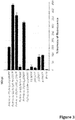
- insect cells infected by the baculovirus overexpressing the Ac-ie-01 cDNA encoded transcriptional regulators, i.e. IE-1 and IE-0 presented an increase in cell number higher than 10 % with respect to cultures infected by the control recombinant baculovirus ( Figure 1A ). These differences in cell number were observed as early as 6h post-infection ( Figure 1A ).
- Fluorescence measurement was performed on a FACSCaliburTM (BD BiosciencesTM) flow cytometer. Cells were fixed in 70% EtOH, resuspended and incubated in the staining solution (50 ⁇ g/ml propidium iodide in PBS, 5 ug /ml RNAse). The data were gated to eliminate particles with a distinct size from cells and analyzed by plotting the cell number vs the red fluorescence from propidium iodide. 50,000 cells were counted per assay. Data analysis of the total number of cells per cell cycle phase (G1, S and G2) was made using Modfit software.
- Example 2 The baculovirus expression cassette of the invention increases the baculovirus-infected insect larvae surviving rates and insect biomass recovered using high infectious doses through the transcriptional regulators encoded by the Ac-ie-01 cDNA.
- T. ni larvae were infected with a high infectious dose of 5 x 10 4 plaque forming units (PFU).
- PFU plaque forming units
- larvae infected with the baculovirus overexpressing the Ac-ie-01 cDNA also showed increased survival rates when compared to larvae infected with a conventional baculovirus expressing the GFP reporter protein under the control of the same promoter ( polh GPF) ( Figure 2A ).
- Example 3 The overexpression of the transcriptional regulator proteins encoded by Ac-ie-01 cDNA in a baculovirus increases production yields of recombinant proteins when their expression is driven by the promoter p10 or any chimeric promoter containing p10
- Sf21 cells were infected with the different baculoviruses at a MOI of 5 and the increase in fluorescence was measured at 96 h post-infection. The values were normalized to the fluorescence obtained with a conventional baculovirus vector expressing the GFP under the control of the promoter polh, which was considered as 100%.
- the presence of the p10 promoter (chimeric or not) is crucial for the increased expression mediated by the overexpression of Ac-ie-01 cDNA.
- the Ac-ie-01 cDNA is combined in the expression cassette with the promoters polh or p6.9 alone, there is either no significant increase or even a decrease in expression.
- Example 4 Overexpression of baculovirus transcriptional regulators IE-1 and IE-0 potentiates the enhancer function of a homologous region hr functionally linked to a promoter increasing the expression of recombinant proteins forming virus-like particles in a baculovirus vector expression system (BEVS).
- BEVS baculovirus vector expression system
- the expression of different proteins forming virus-like particles was compared between a conventional baculovirus and a baculovirus of the invention.
- the conventional baculovirus expressed the Cap, VP60 and L1 proteins under the control of the polh promoter ( polhCap; polhVP60 and polhL1 ) .
- the baculovirus of the invention expressed the Cap, VP60 and L1 proteins under the control of the p6.9p10 chimeric promoter that was previously synthesized. This chimeric promoter was operatively linked with the enhancer sequence homologous region hr1.
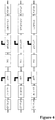
- the baculovirus of the invention further contained the Ac-ie-01 cDNA cloned under the control of the polh promoter to obtain the baculovirus expression cassettes polhAc-ie-01 / hr1p6.9p10Cap, polhAc-ie-01 / hr1p6.9p10VP60 and polhAc-ie-01 / hr1p6.9p10L1 ( Figure 4 ).
- Cap, VP60 and L1 proteins were then analyzed in protein extracts from Sf 9 cells cultured in suspension at different times post-infection (MOI of 0.1) with these baculoviruses. Extracts were subjected to SDS-PAGE electrophoresis and the resolved proteins were stained by Coomassie blue and/or analysed by Western blot.
- a Western blot with a monoclonal antibody against Cap protein of the same infected cell extracts also corroborated a more abundant presence of Cap protein in cells infected with the baculovirus of the invention (polhAc-ie-01 / hr1p6.9p10Cap ).
- the amount of protein was analyzed using an ECL western blotting detection system and a ChemiDocTM XRS Gel Imaging System (Bio-RadTM, USA). Western blot reactions were studied at different times post-infection in Sf 9 cells cultured in suspension as described above.
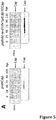
- the recombinant Cap protein expression levels mediated by the baculovirus expression cassette of the present invention were higher at any of the times post-infection analyzed ( Figure 5A ).
- Maximum levels of expression were detected at 72h post-infection with the baculovirus genetically modified with the expression cassette of the present invention, while the maximum level of expression with the conventional baculovirus ( polhCap ) was at 48 h post-infection ( Figure 5A ).
- Cap protein was made by Western blot analysis with a Cap-specific monoclonal antibody of extracts from Sf9 insect cells cultured in suspension and infected by a conventional baculovirus ( polhCap ) or the baculovirus of the present invention ( polhAc-ie-01 / hr1p6.9p10Cap ).
- the quantification was carried out with a standard curve of purified Cap protein and subsequent analyses by the ChemiDocTM XRS Gel Imaging System (Bio-RadTM, USA). Insect cells were cultured in suspension at a density of 2x10 6 cells/ml and were infected at a MOI of 0.1 with each baculovirus.
- Sf9 insect cells cultured in suspension were infected with a conventional baculovirus expressing the Cap protein ( polhCap ) or the baculovirus of the present invention expressing the Cap protein ( polhAc-ie-01 / hr1p6.9p10Cap ).
- the VLPs that were formed after the expression of the Cap protein were purified. To this end, identical volumes of cell cultures were used in both cases. The cells were disrupted by a mild treatment with a non-ionic detergent and submitted after clarification to a high centrifugation speed in a sucrose gradient to purify the VLPs. Then, those VLPs were analyzed by electron microscopy by negative staining.
- VLPs formed by both baculoviruses were identical in size and shape, but the concentration of pseudoparticles observed reflected the differences in the Cap expression levels previously detected between the two baculoviruses.
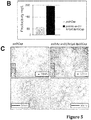
- the number of VLPs produced by cells infected with the baculovirus modified with the expression cassette of the invention was higher than for the cells infected with the baculovirus expressing the Cap protein using the polh promoter ( Figure 5C ).
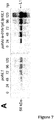
- Results obtained for the VP60 protein were that a more intensely stained protein band corresponding to VP60 protein from Rabbit hameorrhagic disease virus. expressed by the baculovirus modified by the expression cassette of the present invention was observed at the different times post-infection ( Figure 6A ). This clearly demonstrated that the novel expression cassette is more efficient in expressing the VP60 protein. This result was found in both monolayer ( Sf21 ) and suspension ( Sf9 ) cells independently of the multiplicity of infection used (MOI 5 or MOI 0.1) (data not shown).
- the amount of protein was analyzed using an ECL western blotting detection system and a ChemiDocTM XRS Gel Imaging System (Bio-RadTM, USA). Western blot reactions were studied at different times post-infection in Sf 9 cells cultured in suspension as described above.
- Quantification data of this analysis with the different baculoviruses obtained by the ChemiDocTM XRS Gel Imaging System was expressed as arbitrary expression units.
- the expression level of VP60 was more than 3 times higher in Sf21 monolayer (MOI of 5) and Sf9 suspension cultures (MOI of 0.1) respectively with the baculovirus modified by the expression cassette of the invention ( polhAc-ie-01 / hr1p6.9p10VP60 ) (data not shown).
- the recombinant VP60 protein expression levels mediated by the baculovirus expression cassette of the present invention were higher at any of the times post-infection analyzed ( Figure 6A ).
- Maximum levels of expression were detected at 120h post-infection with the baculovirus genetically modified with the expression cassette of the present invention, while the maximum level of expression with the conventional baculovirus ( polhCap ) was at 72 h post-infection ( Figure 6A ).
- a more precise quantification of the productivity of VP60 protein was made by Western blot analysis with a VP60-specific monoclonal antibody of extracts from Sf9 insect cells cultured in suspension and infected by a conventional baculovirus ( polhVP60 ) or the baculovirus of the present invention ( polhAc-ie-01 / hr1p6.9p10VP60 ).
- the quantification was carried out with a standard curve of purified VP60 protein and subsequent analyses by the ChemiDocTM XRS Gel Imaging System (Bio-RadTM, USA).
- Insect cells were cultured in suspension at a density of 2x10 6 cells/ml and were infected at a MOI of 0.1 with each baculovirus. This demonstrated that while the productivity of VP60 protein in cells infected with the conventional baculovirus was about 630mg/L, the insect cells infected with the baculovirus of the invention were able to produce about 1,950mg/L ( Figure 6B ). The maximum productivities of recombinant baculoviruses were obtained at different times after infection (72 and 120 hours post-infection respectively).
- Sf9 insect cells cultured in suspension were infected with a conventional baculovirus expressing the VP60 protein ( polhVP60 ) or the baculovirus of the present invention expressing the VP60 protein ( polhAc-ie-01 / hr1p6.9p10VP60 ).
- the VLPs that were formed after the expression of the VP60 protein were purified. To this end, identical volumes of cell cultures were used in both cases.
- the cells were disrupted by a mild treatment with a non-ionic detergent and submitted after clarification to a high centrifugation speed in a sucrose gradient to purify the VLPs. Then, those VLPs were analyzed by electron microscopy by negative staining.
- VLPs formed by both baculoviruses were identical in size and shape but the concentration of pseudoparticles observed reflected the differences in the VP60 expression levels previously detected between the two baculoviruses.
- the number of VLPs produced by cells infected with the baculovirus modified with the expression cassette of the invention was higher than for the cells infected with the baculovirus expressing the VP60 protein using the polh promoter ( Figure 6C ).
- the higher number of VLPs produced by the cells infected with the baculovirus of the invention correlated with an increased expression of VP60 protein in these cells, and the amount of VP60 protein detected in purified VLPs analyzed by SDS-PAGE electrophoresis and Coomassie blue staining ( Figure 6C , upper panels, inserts in the lower left corners).
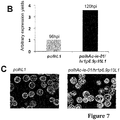
- the amount of L1 protein was analyzed using an ECL western blotting detection system and a ChemiDocTM XRS Gel Imaging System (Bio-RadTM, USA). Western blot reactions were studied at different times post-infection in Sf 9 cells cultured in suspension as described above. Quantification data of this analysis with the different baculoviruses obtained by the ChemiDocTM XRS Gel Imaging System was expressed as arbitrary expression units.
- the recombinant L1 protein expression levels mediated by the baculovirus expression cassette of the present invention were higher at any of the times post-infection analyzed ( Figure 7A ).
- Maximum levels of expression were detected at 120h post-infection with the baculovirus genetically modified with the expression cassette of the present invention, while the maximum level of expression with the conventional baculovirus ( polhCap ) was at 96 h post-infection ( Figure 7A and B ).
- Example 5 The baculovirus expression cassettes of the invention induce cell proliferation and increase cell viability.
- the baculoviruses of Example 4 containing the polhCap, polhVP60, polhL1, polhAc-ie-01 / hr1p6.9p10Cap, polhAc-ie-01 / hr1p6.9p10VP60 and polhAc-ie-01 / hr1p6.9p10L1 expression cassettes were assessed in terms of their effect on cell growth and viability.
- Example 2 The experiment was conducted as described in Example 1 and likewise an increase in cell number, as well as an increase in viability, could be observed for the cells infected with the baculoviruses containing the expression cassette of the invention, i.e. polhAc-ie-01 / hr1p6.9p10Cap ( Figure 8A ), polhAc-ie-01 / hr1p6.9p10VP60 ( Figure 8B ) and polhAc-ie-01 / hr1p6.9p10L1 ( Figure 8C ).
- polhAc-ie-01 / hr1p6.9p10Cap Figure 8A
- Figure 8B polhAc-ie-01 / hr1p6.9p10VP60
- Figure 8C polhAc-ie-01 / hr1p6.9p10L1
- Example 6 The expression cassette of the present invention potentiates the productivity of recombinant proteins forming virus-like particles in baculovirus-infected Trichoplusia ni insect larvae.
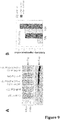
- Cap protein mediated by the different baculoviruses was analyzed in infected Trichoplusia ni larvae. To this end, larvae were infected with 5 x 10 4 PFU of the baculovirus with the expression cassette polhCap or polhAc-ie-01 / hr1p6.9p10Cap and the extracts were analyzed at 72 and 96 h post-infection by Coomassie blue staining and Western blot analysis using a monoclonal antibody against the Cap protein ( Figure 9A ).
- Cap protein in the different extracts was also quantified by ChemiDocTM XRS Gel Imaging System (Bio-RadTM, USA) ( Figure 9B ).
- the expression level of Cap was increased in larval extracts by the baculovirus containing the above mentioned expression cassette of the present invention by about 325% at 72h post-infection and by 24% at 96h post-infection ( Figure 9B ).
- larvae infected with the baculovirus modified by the expression cassette of the present invention presented a 30% increase in survival ( Figure 10 ). This represents a significant increase of insect biomass recovery during the production process.
- the productivity of 100 larvae infected with the above conventional baculovirus and the baculovirus of the invention was studied considering both the Cap production yield determined by microfluidic protein analysis (ExperionTM; BioRadTM, USA) and the insect biomass recovered after infection.
- the productivity was studied at 72 and 96h post-infection with 5 x 10 5 PFU of the respective baculovirus.
- the baculovirus containing the expression cassette of the invention i.e.
- Example 7 Cell culture and viruses.
- the Spodoptera frugiperda Sf 21 or Sf 9 cell lines were cultured in 6-well tissue culture plates (1x10 6 cells/well) in TNM-FH insect medium (Pan BiotechTM, Germany) containing 10% heat-inactivated fetal bovine serum (Pan BiotechTM, Germany) at 27°C.
- Sf9 or Sf21 cells in monolayer were infected with the baculoviruses at different multiplicities of infection (from 0.01 to 10).
- Sf9 cells (2x10 6 cells/ml) were infected equally at different multiplicities of infection. Infected cells were analysed from 16 to 120h post-infection.
- a pUC57 plasmid containing the baculovirus expression cassette of the present invention was used as the cloning vector.
- the gene encoding the Cap protein (ORF2 from porcine circovirus type 2), the gene encoding the VP60 protein (rabbit haemorrhagic disease virus) or the gene encoding the L1 protein (human papillomavirus 16) were cloned into the MCS of a cloning plasmid using the Xho I and Nco I restriction sites. After introduction of the VLP-forming protein encoding genes, the cloning vector becomes the donor vector.
- the baculovirus expression cassette in the donor vector is flanked by specific restriction sites (for example Bgl II and BstZ17 I at the 5'-terminal end and Bgl II and Sgf I at the the 3'-terminal end) to facilitate subcloning into a transfer vector of a commercial baculovirus generation system (for example, based on transposition such the "Bac-to-Bac ® " system; invitrogenTM).
- specific restriction sites for example Bgl II and BstZ17 I at the 5'-terminal end and Bgl II and Sgf I at the the 3'-terminal end
- the transfer vectors were generated by digesting the above donor vectors with BstZ17 I at the 5'-terminal end of the expression cassette and with Hind III at the 3'-terminal end of the expression cassette.
- the SV40 polyadenylation signal of the baculovirus expression cassette is exchanged by the SV40 polyadenlation signal from the transfer vector. They were then cloned into the transfer vector pFastBacTM1 that was also digested with the same enzymes. Apart from this, all the elements of the expression cassette are included in the pFastBac transfer vector, substituting the polh promoter and MCS of the original commercial transfer vector.
- Example 10 Generation of the baculovirus expression vectors of the invention using the "Bac-to-Bac ® " system
- the modified transfer vectors pFastBacTM1 of Example 9 were used to generate recombinant baculoviruses by the "Bac-to-Bac ® " Baculovirus Expression System. More specifically, the modified transfer vectors were used to transform the E. coli host strain DH10BacTM that contains a baculovirus shuttle vector (bacmid) and a helper plasmid, and allows the generation of the recombinant bacmids following transposition of the expression cassette. The DNA of the recombinant bacmids containing the baculovirus expression cassette of the present invention were then used to transfect insect Sf 21 cells using Cellfectin ® . 72 h post-transfection, cells were harvested and the first recombinant baculoviruses generation were obtained. These recombinant baculoviruses could then be further amplified and/or titered following conventional protocols.
- the Cap, VP60 or L1 encoding genes were cloned downstream of the hr1p6.9p10 chimeric promoter that was previously synthesized and contains the homologous region hr1 operatively linked to the promoters p6.9 and p10.
- a schematic representation of the resulting baculovirus expression cassettes of the present invention is shown in Figure 4 .
- the expression cassette of this baculovirus, i.e. polhAc-ie-01 / hr1p6.9p10Cap is represented by SEQ ID NO: 30.
- this expression cassette with a Cap gene polyadenylation signal from SV40 was used in the Examples (SEQ ID NO: 56). Also the expression cassettes polhAc-ie-01 / hr1p6.9p10VP60 and polhAc-ie-01 / hr1p6.9p10L1 of the Examples were used with a SV40 polyadenylation signal and are represented by SEQ ID NO: 55 and 54, respectively.
- Infected cells from each time point (1x10 6 ) were harvested and centrifuged at 14000 x g for 5 min. at 4°C. The supernatants were removed and the cell pellets were resuspended in PBS and subjected to three cycles of freezing (-196 °C) and thawing (37 °C). Cellular debris was removed by centrifugation.
- Sf 9 , Sf 21 or Hi-5TM cells were infected with the different recombinant baculoviruses expressing Cap protein under the control of different regulatory, enhancer and promoter elements, using a MOI of 5 or 0.1 as indicated.
- Cell cultures were harvested at various time points (24, 48, 72, 96 and 120 h post-infection) and the recombinant proteins' expression was analyzed by SDS-PAGE followed by Coomassie blue staining and/or Western blot.
- Quantification of the recombinant proteins was carried out by two methodologies.
- the microfluidic chip allowed several sequential procedures including separation, staining, destaining, detection and basic data analysis without any need of user's intervention.
- the ExperionTM system resolved and quantified protein samples from 10 to 260 kDa in size, with a high sensitivity, comparable to colloidal Coomassie blue SDS-PAGE gel staining.
- a Pro260 ladder was used in the ExperionTM system, which is a modified version of the Precision Plus ProteinTM standard that has been optimized for use in that system.
- Trichoplusia ni (cabbage looper) larvae were reared under level 2 biosafety conditions. Eggs were placed into specially designed larva developmental cages containing an artificial insect diet and were kept in growth chambers at 22 °C under controlled humidity (50%) and light period (8 h/day) conditions.
- Trichoplusia ni (Cabbage looper) fifth-instar larvae (last instar larvae before pupation), were used for all experiments.
- the standard weight of each larva was approximately 120-130 mg and larvae were injected near the proleg (anterior to the body cavity) with 5 ⁇ l of recombinant baculoviruses diluted to reach the number of PFU per dose selected.
- Larvae were processed at 72 or 96 h post-infection. The collected larvae were frozen immediately to be stored at -20°C until they were processed for recombinant protein quantification.
- ni larvae infected by the baculoviruses were obtained by homogenization using a Bag Mixer ® blender (InterscienceTM, France) for 2 min. Extraction buffer was composed of PBS 1x, Triton X-100 at 0.01%, Complete protease inhibitor cocktail (RocheTM, Germany), and DTT 25 mM.
- Example 14 Western blot analysis.
- Total soluble protein fractions (10 ⁇ g) from cells infected with the recombinant baculoviruses were resolved in 15% SDS-PAGE gels. Gels were stained by the Coomassie blue staining method or transferred to nitrocellulose membranes.
- Western blots were probed with the anti-Cap monoclonal antibody (I36A; IngenasaTM, Spain) at 1:1000 or with the anti L1 HPV16 monoclonal antibody (Camvir1; AbCam, USA) at 1:1000, and the immunocomplexes were visualized with anti-mouse IgG-horseradish peroxidase (HRP)-labeled conjugate (KPLTM, UK), diluted 1:2,000 or by an anti-rabbit IgG-horseradish peroxidase (HRP)-labeled conjugate (KPLTM, UK), diluted 1:2,000 respectively as a secondary antibody. Protein bands were detected using an ECL western blotting detection system and analyzed by the ChemiDocTM XRS Gel Imaging System (Bio-RadTM, USA).
Landscapes
- Health & Medical Sciences (AREA)
- Life Sciences & Earth Sciences (AREA)
- Genetics & Genomics (AREA)
- Chemical & Material Sciences (AREA)
- Organic Chemistry (AREA)
- Engineering & Computer Science (AREA)
- Wood Science & Technology (AREA)
- Zoology (AREA)
- Bioinformatics & Cheminformatics (AREA)
- Biomedical Technology (AREA)
- Biotechnology (AREA)
- General Engineering & Computer Science (AREA)
- General Health & Medical Sciences (AREA)
- Biochemistry (AREA)
- Biophysics (AREA)
- Molecular Biology (AREA)
- Virology (AREA)
- Microbiology (AREA)
- Plant Pathology (AREA)
- Physics & Mathematics (AREA)
- Medicinal Chemistry (AREA)
- Gastroenterology & Hepatology (AREA)
- Proteomics, Peptides & Aminoacids (AREA)
- Immunology (AREA)
- Micro-Organisms Or Cultivation Processes Thereof (AREA)
- Preparation Of Compounds By Using Micro-Organisms (AREA)
- Peptides Or Proteins (AREA)
Claims (11)
- Cassette d'expression comprenant :[1] une copie du gêne endogène codant le régulateur transcriptionnel comme transgène sous le contrôle d'un promoteur approprié, dans laquelle le régulateur transcriptionnel consiste en IE-1 et/ou IE-0, qui permet l'expression des protéines IE-1 et/ou IE-0 fonctionnant comme régulateurs transcriptionnels au-dessus des niveaux endogènes obtenus pendant une infection au baculovirus, dans laquelle l'acide nucléique est choisi parmi le groupe consistant en :(a) une séquence d'acides nucléiques indiquée dans l'une des SEQ ID NO : 1-5 ;(b) une séquence d'acides nucléiques présentant une identité de séquence d'au moins 70 %, préférentiellement d'au moins 80 %, de façon plus préférée d'au moins 90 % et de la façon la plus préférée d'au moins 95 % avec la séquence d'acides nucléiques indiquée dans l'une des SEQ ID NO: 1-5 et codant une protéine fonctionnant comme régulateur transcriptionnel dans un baculovirus ;(c) une séquence d'acides nucléiques codant une protéine avec la séquence d'acides aminés indiquée dans l'une des SEQ ID NO : 6-9; et(d) une séquence d'acides nucléiques codant une protéine fonctionnant comme un régulateur transcriptionnel dans un baculovirus et présentant une similarité de séquence d'au moins 70%, préférentiellement d'au moins 80 %, de façon plus préférée d'au moins 90 % et la façon la plus préférée d'au moins 95 % avec la séquence d'acides aminés indiquée dans l'une des SEQ ID NO : 6-9 ;[2] une séquence d'acides nucléiques qui permet l'expression d'une protéine recombinante, dans laquelle la protéine recombinante est une protéine formant des particules de type virus dans laquelle l'expression de la protéine recombinante est commandée par un promoteur comprenant le promoteur baculoviral p10,[3] au moins une région homologue recombinante (hr) comme zone activatrice, liée de manière fonctionnelle au promoteur qui entraîne l'expression de la protéine recombinante.
- Cassette d'expression selon la revendication 1, dans laquelle la protéine recombinante est n'importe quelle protéine formant des particules de type virus choisie parmi le groupe consistant en :(a) une protéine capside de circovirus porcin, préférentiellement provenant d'un circovirus porcin de type 2,(b) une protéine VP1, VP3 ou VP0 de virus aphteux,(c) des protéines VP1 et VP2 de parvovirus canin,(d) des protéines VP1 et VP2 de parvovirus porcin,(e) une protéine capside (génogroupe I ou II) de norovirus humain,(f) une protéine capside de calicivirus,(g) une protéine L1 de papillomavirus humain, préférentiellement provenant d'un papillomavirus humain 16,(h) une protéine E2 d'hépatite E,(i) des protéines VP1, VP2 et VP3 de virus de la bursite infectieuse,(j) des protéines codées ORF2 d'astrovirus,(k) des protéines HA, NA et M1 de virus de la grippe,(l) des antigènes de noyau et de surface d'hépatite B,(m) des protéines VP1 et VP2 de parvovirus, et(n) une protéine VP60 de calicivirose du lapin, préférentiellement provenant du virus de maladie hémorragique du lapin.
- Cassette d'expression selon l'une des revendications 1 à 2, dans laquelle le promoteur entraînant l'expression de la protéine recombinante comprend une séquence d'acides nucléiques choisie parmi le groupe consistant en :(a) une séquence d'acides nucléiques indiquée dans l'une des SEQ ID NO : 10-16; et(b) une séquence d'acides nucléiques fonctionnant comme promoteur dans un baculovirus et présentant une identité de séquence d'au moins 70 %, préférentiellement d'au moins 80 %, de façon plus préférée d'au moins 90 % et de la façon la plus préférée d'au moins 95 % avec la séquence d'acides nucléiques indiquée dans l'une des SEQ ID NO : 10-16.
- Cassette d'expression selon la revendication 3, dans laquelle le promoteur entraînant l'expression de la protéine recombinante comprend une séquence d'acides nucléiques choisie parmi le groupe consistant en :(a) une séquence d'acides nucléiques indiquée dans l'une des SEQ ID NO : 11, 12, 13, 15 et 16 ; et(b) une séquence d'acides nucléiques fonctionnant comme promoteur dans un baculovirus et présentant une identité de séquence d'au moins 70 %, préférentiellement d'au moins 80 %, de façon plus préférée d'au moins 90 % et de la façon la plus préférée d'au moins 95 % avec la séquence d'acides nucléiques indiquée dans l'une des SEQ ID NO : 11, 12, 13, 15 et 16.
- Cassette d'expression selon la revendication 3 ou 4, dans laquelle le promoteur entraînant l'expression de la protéine recombinante comprend une séquence d'acides nucléiques choisie parmi le groupe consistant en :(a) une séquence d'acides nucléiques indiquée dans la SEQ ID NO : 11; et(b) une séquence d'acides nucléiques fonctionnant comme promoteur dans un baculovirus et présentant une identité de séquence d'au moins 70 %, préférentiellement d'au moins 80 %, de façon plus préférée d'au moins 90 % et de la façon la plus préférée d'au moins 95 % avec la séquence d'acides nucléiques indiquée dans la SEQ ID NO : 11.
- Cassette d'expression selon l'une des revendications 1 à 5, dans laquelle la région homologue recombinante (hr) est choisie parmi le groupe de séquences d'acides nucléiques consistant en :(a) une séquence d'acides nucléiques indiquée dans la SEQ ID NO : 27; et(b) une séquence d'acides nucléiques fonctionnant comme zone activatrice homologue dans un baculovirus et présentant une identité de séquence d'au moins 70 %, préférentiellement d'au moins 80 %, de façon plus préférée d'au moins 90 % et de la façon la plus préférée d'au moins 95 % avec la séquence d'acides nucléiques indiquée dans la SEQ ID NO : 27.
- Cassette d'expression selon l'une des revendications 1 à 6, comprenant une séquence d'acides nucléiques qui est liée de manière fonctionnelle à l'expression de la protéine recombinante et qui est choisie parmi le groupe consistant en :(a) une séquence d'acides nucléiques contenant la séquence d'acides nucléiques indiquée dans l'une des SEQ ID NO : 17-22, 25 et 26 et(b) une séquence d'acides nucléiques retenant substantiellement l'activité des éléments fonctionnels et présentant une identité de séquence d'au moins 70 %, préférentiellement d'au moins 80 %, de façon plus préférée d'au moins 90 % et de la façon la plus préférée d'au moins 95 % avec la séquence d'acides nucléiques indiquée dans l'une des SEQ ID NO : 17-22, 25 et 26.
- Cassette d'expression selon l'une des revendications 1 à 6, comprenant une séquence d'acides nucléiques choisie parmi le groupe consistant en :(a) une séquence d'acides nucléiques contenant la séquence d'acides nucléiques indiquée dans l'une des SEQ ID NO : 51-56 ; et(b) une séquence d'acides nucléiques retenant substantiellement l'activité des éléments fonctionnels et présentant une identité de séquence d'au moins 70 %, préférentiellement d'au moins 80 %, de façon plus préférée d'au moins 90 % et de la façon la plus préférée d'au moins 95 % avec la séquence d'acides nucléiques indiquée dans l'une des SEQ ID NO : 51-56.
- Vecteur de clonage, vecteur de transfert, bacmide, baculovirus recombinant, cellule ou insecte comprenant la cassette d'expression selon l'une des revendications 1 à 8, dans lequel le vecteur de transfert comprend en outre une séquence d'acides nucléiques appropriée pour une intégration ou une transposition dans un génome de baculovirus.
- Milieu de culture comprenant la cassette d'expression, le vecteur de clonage, le vecteur de transfert, le bacmide ou le baculovirus recombinant selon l'une des revendications 1 à 9.
- Procédé de production d'une protéine recombinante comprenant l'utilisation de la cassette d'expression, du vecteur de clonage, du vecteur de transfert, du bacmide, du baculovirus recombinant, de la cellule ou de l'insecte selon l'une des revendications 1 à 9 et l'extraction et la purification de la protéine recombinante par des moyens conventionnels.
Priority Applications (1)
| Application Number | Priority Date | Filing Date | Title |
|---|---|---|---|
| EP13811407.9A EP2928290B1 (fr) | 2012-12-07 | 2013-12-06 | Système du baculovirus pour l'expression de protéines formant des particules de type viral |
Applications Claiming Priority (3)
| Application Number | Priority Date | Filing Date | Title |
|---|---|---|---|
| EP12196120.5A EP2674438A3 (fr) | 2012-06-12 | 2012-12-07 | Système sur-exprimant des transactivateurs baculoviraux pour l'expression de protéines recombinantes |
| PCT/EP2013/075812 WO2014086981A1 (fr) | 2012-12-07 | 2013-12-06 | Système du baculovirus pour l'expression de protéines formant des particules de type viral |
| EP13811407.9A EP2928290B1 (fr) | 2012-12-07 | 2013-12-06 | Système du baculovirus pour l'expression de protéines formant des particules de type viral |
Publications (2)
| Publication Number | Publication Date |
|---|---|
| EP2928290A1 EP2928290A1 (fr) | 2015-10-14 |
| EP2928290B1 true EP2928290B1 (fr) | 2017-05-31 |
Family
ID=47290832
Family Applications (2)
| Application Number | Title | Priority Date | Filing Date |
|---|---|---|---|
| EP12196120.5A Withdrawn EP2674438A3 (fr) | 2012-06-12 | 2012-12-07 | Système sur-exprimant des transactivateurs baculoviraux pour l'expression de protéines recombinantes |
| EP13811407.9A Active EP2928290B1 (fr) | 2012-12-07 | 2013-12-06 | Système du baculovirus pour l'expression de protéines formant des particules de type viral |
Family Applications Before (1)
| Application Number | Title | Priority Date | Filing Date |
|---|---|---|---|
| EP12196120.5A Withdrawn EP2674438A3 (fr) | 2012-06-12 | 2012-12-07 | Système sur-exprimant des transactivateurs baculoviraux pour l'expression de protéines recombinantes |
Country Status (6)
| Country | Link |
|---|---|
| US (1) | US9879280B2 (fr) |
| EP (2) | EP2674438A3 (fr) |
| JP (1) | JP6143853B2 (fr) |
| CA (1) | CA2893578A1 (fr) |
| ES (3) | ES2611302T3 (fr) |
| WO (1) | WO2014086981A1 (fr) |
Families Citing this family (14)
| Publication number | Priority date | Publication date | Assignee | Title |
|---|---|---|---|---|
| US9982239B2 (en) | 2012-06-12 | 2018-05-29 | Alternative Gene Expression S.L. | Baculoviral DNA elements for the expression of recombinant proteins in a host cell |
| WO2014086973A1 (fr) * | 2012-12-07 | 2014-06-12 | Alternative Gene Expression S.L. | Production améliorée de la protéine de capside du circovirus porcin par un système d'expression du vecteur du baculovirus |
| ES2554561B1 (es) * | 2014-06-16 | 2016-09-30 | Universitat De València | Nuevos promotores derivados de baculovirus con elevada actividad en sistemas de expresión basados en baculovirus |
| CN104480143B (zh) * | 2014-12-04 | 2017-07-04 | 广东华南联合疫苗开发院有限公司 | 一种表达脊髓灰质炎病毒样颗粒蛋白的载体及脊髓灰质炎病毒样颗粒的制备方法 |
| RU2603056C2 (ru) * | 2015-01-26 | 2016-11-20 | Государственное научное учреждение Всероссийский научно-исследовательский институт ветеринарной вирусологии и микробиологии Российской академии сельскохозяйственных наук, RU | Экспрессирующий плазмидный вектор pet32b(+)asfv/p30e2 для синтеза рекомбинантного белка, состоящего из фрагмента p30 вируса африканской чумы свиней, тиоредоксина и полигистидиновых участков |
| EP3128006A1 (fr) * | 2015-08-06 | 2017-02-08 | Consejo Superior de Investigaciones Cientificas (CSIC) | Outils pour l'expression de complexes multiprotéiques dans pichia pastoris |
| EP3628740A3 (fr) * | 2015-09-17 | 2020-07-29 | Alternative Gene Expression, S.L. | Expression de protéines de recombinaison dans des pupes de trichoplusia ni |
| CN106987603B (zh) * | 2016-01-20 | 2018-09-07 | 中国科学院武汉物理与数学研究所 | 一种重组腺相关病毒的制备方法 |
| KR101773832B1 (ko) * | 2017-06-08 | 2017-09-01 | 전정배 | 명나방류 알, 이를 생산하는 방법, 및 명나방류 알을 이용하여 재조합단백질을 생산하는 방법 |
| CN108776225A (zh) * | 2018-05-23 | 2018-11-09 | 中国农业科学院兰州兽医研究所 | 猪细小病毒VLPs抗体检测试剂盒及其制备方法、应用 |
| CN110157687A (zh) * | 2019-05-25 | 2019-08-23 | 青岛易邦生物工程有限公司 | 一种犬细小病毒三价亚单位疫苗 |
| EP4031172A4 (fr) * | 2019-09-16 | 2024-02-21 | Chen, Dalu | Méthodes de blocage d'une infection à asfv au moyen de l'interruption de récepteurs cellulaires |
| US20230365990A1 (en) * | 2020-08-17 | 2023-11-16 | Hangzhou Geneway Biotechnology Co., Ltd. | Nucleic acid construct for increasing adeno-associated virus yield, and construction method therefor |
| US12503493B2 (en) * | 2021-08-05 | 2025-12-23 | Vst Llc | Rabbit haemorrhagic disease virus (RHDV) vaccines |
Family Cites Families (9)
| Publication number | Priority date | Publication date | Assignee | Title |
|---|---|---|---|---|
| US5965393A (en) | 1997-07-01 | 1999-10-12 | National Institute Of Immunology | Method for enhancing foreign gene expression in baculovirus expression vector system |
| KR100353475B1 (ko) * | 2000-01-25 | 2002-09-27 | 대한민국 | 곤충 세포주 형질전환용 발현벡터 및 이를 함유한 항세균단백질 생산용 형질전환체 |
| ES2232308B1 (es) | 2003-11-12 | 2006-10-16 | Laboratorios Calier, S.A. | Dispositivo para la cria de larvas. |
| ATE442450T1 (de) * | 2004-03-09 | 2009-09-15 | Eidgenissische Tech Hochschule | Neue expressionswerkzeuge für multiproteinanwendungen |
| JP4271122B2 (ja) * | 2004-10-15 | 2009-06-03 | 財団法人 ひろしま産業振興機構 | カイコでの組換えタンパク質製造のためのポリヌクレオチド |
| US8105827B2 (en) * | 2007-09-06 | 2012-01-31 | Academia Sinica | Protein expression systems |
| MX2011002290A (es) * | 2008-09-02 | 2011-04-11 | Alternative Gene Expression S L Algenex | Promotores obtenidos de insecto para expresion de proteinas heterologas en celulas de inseto. |
| WO2011069562A1 (fr) | 2009-12-11 | 2011-06-16 | Alternative Gene Expression, S.L. (Algenex) | Structures de type papillomavirus humain produites dans un système sans fermentation basé sur des larves d'insecte |
| DK2858489T3 (da) | 2011-06-10 | 2017-01-02 | Alternative Gene Expression Sl | Rekombinante dna elementer til ekspression af rekombinante proteiner i en værtscelle |
-
2012
- 2012-06-12 ES ES12753914.6T patent/ES2611302T3/es active Active
- 2012-06-12 ES ES12750333.2T patent/ES2612854T3/es active Active
- 2012-06-12 JP JP2015516476A patent/JP6143853B2/ja active Active
- 2012-12-07 EP EP12196120.5A patent/EP2674438A3/fr not_active Withdrawn
-
2013
- 2013-12-06 ES ES13811407.9T patent/ES2554752T3/es active Active
- 2013-12-06 CA CA2893578A patent/CA2893578A1/fr not_active Abandoned
- 2013-12-06 WO PCT/EP2013/075812 patent/WO2014086981A1/fr not_active Ceased
- 2013-12-06 EP EP13811407.9A patent/EP2928290B1/fr active Active
- 2013-12-06 US US14/649,500 patent/US9879280B2/en active Active
Non-Patent Citations (1)
| Title |
|---|
| None * |
Also Published As
| Publication number | Publication date |
|---|---|
| US9879280B2 (en) | 2018-01-30 |
| ES2554752T3 (es) | 2017-10-09 |
| US20150307899A1 (en) | 2015-10-29 |
| EP2928290A1 (fr) | 2015-10-14 |
| WO2014086981A1 (fr) | 2014-06-12 |
| JP2015519068A (ja) | 2015-07-09 |
| EP2674438A3 (fr) | 2014-02-19 |
| ES2611302T3 (es) | 2017-05-08 |
| CA2893578A1 (fr) | 2014-06-12 |
| JP6143853B2 (ja) | 2017-06-07 |
| ES2554752T1 (es) | 2015-12-23 |
| EP2674438A2 (fr) | 2013-12-18 |
| ES2612854T3 (es) | 2017-05-19 |
Similar Documents
| Publication | Publication Date | Title |
|---|---|---|
| US9879280B2 (en) | Baculovirus system for expressing proteins forming virus-like particles | |
| EP2858490B1 (fr) | Éléments adn recombinants pour l'expression de protéines recombinantes chez des insectes | |
| JP7595371B2 (ja) | トリコプルシア・ニの蛹における組み換えタンパク質の発現 | |
| CA2771250A1 (fr) | Fabrication a base de baculovirus d'agents biopharmaceutiques exempts de virions baculoviraux contaminants | |
| WO2014086973A1 (fr) | Production améliorée de la protéine de capside du circovirus porcin par un système d'expression du vecteur du baculovirus | |
| US9701983B2 (en) | Baculoviral DNA elements for the expression of recombinant proteins in a host insect | |
| EP2350292B1 (fr) | Promoteurs dérivés d'insectes pour l'expression de protéines étrangères dans des cellules d'insectes | |
| US9982239B2 (en) | Baculoviral DNA elements for the expression of recombinant proteins in a host cell | |
| Choi et al. | High-level expression of canine parvovirus VP2 using Bombyx mori nucleopolyhedrovirus vector | |
| BR112014031039B1 (pt) | Vírus recombinante de poliedrose multinuclear de autographa californica (acmnpv), sequência de ácido nucleico, método para produzir uma proteína recombinante e uso da sequência de ácido nucleico |
Legal Events
| Date | Code | Title | Description |
|---|---|---|---|
| PUAI | Public reference made under article 153(3) epc to a published international application that has entered the european phase |
Free format text: ORIGINAL CODE: 0009012 |
|
| 17P | Request for examination filed |
Effective date: 20150526 |
|
| AK | Designated contracting states |
Kind code of ref document: A1 Designated state(s): AL AT BE BG CH CY CZ DE DK EE ES FI FR GB GR HR HU IE IS IT LI LT LU LV MC MK MT NL NO PL PT RO RS SE SI SK SM TR |
|
| AX | Request for extension of the european patent |
Extension state: BA ME |
|
| DAX | Request for extension of the european patent (deleted) | ||
| 17Q | First examination report despatched |
Effective date: 20160517 |
|
| REG | Reference to a national code |
Ref country code: DE Ref legal event code: R079 Ref document number: 602013021808 Country of ref document: DE Free format text: PREVIOUS MAIN CLASS: A01K0067033000 Ipc: C12N0015860000 |
|
| GRAP | Despatch of communication of intention to grant a patent |
Free format text: ORIGINAL CODE: EPIDOSNIGR1 |
|
| RIC1 | Information provided on ipc code assigned before grant |
Ipc: C12N 15/85 20060101ALI20161108BHEP Ipc: A01K 67/033 20060101ALI20161108BHEP Ipc: C12N 15/86 20060101AFI20161108BHEP Ipc: C07K 14/005 20060101ALI20161108BHEP Ipc: C12N 7/00 20060101ALI20161108BHEP |
|
| INTG | Intention to grant announced |
Effective date: 20161202 |
|
| GRAS | Grant fee paid |
Free format text: ORIGINAL CODE: EPIDOSNIGR3 |
|
| GRAJ | Information related to disapproval of communication of intention to grant by the applicant or resumption of examination proceedings by the epo deleted |
Free format text: ORIGINAL CODE: EPIDOSDIGR1 |
|
| GRAL | Information related to payment of fee for publishing/printing deleted |
Free format text: ORIGINAL CODE: EPIDOSDIGR3 |
|
| INTC | Intention to grant announced (deleted) | ||
| GRAR | Information related to intention to grant a patent recorded |
Free format text: ORIGINAL CODE: EPIDOSNIGR71 |
|
| GRAA | (expected) grant |
Free format text: ORIGINAL CODE: 0009210 |
|
| INTG | Intention to grant announced |
Effective date: 20170420 |
|
| AK | Designated contracting states |
Kind code of ref document: B1 Designated state(s): AL AT BE BG CH CY CZ DE DK EE ES FI FR GB GR HR HU IE IS IT LI LT LU LV MC MK MT NL NO PL PT RO RS SE SI SK SM TR |
|
| REG | Reference to a national code |
Ref country code: CH Ref legal event code: EP Ref country code: GB Ref legal event code: FG4D |
|
| REG | Reference to a national code |
Ref country code: AT Ref legal event code: REF Ref document number: 897524 Country of ref document: AT Kind code of ref document: T Effective date: 20170615 |
|
| REG | Reference to a national code |
Ref country code: IE Ref legal event code: FG4D |
|
| REG | Reference to a national code |
Ref country code: NL Ref legal event code: FP |
|
| REG | Reference to a national code |
Ref country code: DE Ref legal event code: R096 Ref document number: 602013021808 Country of ref document: DE |
|
| REG | Reference to a national code |
Ref country code: ES Ref legal event code: FG2A Ref document number: 2554752 Country of ref document: ES Kind code of ref document: T3 Effective date: 20171009 |
|
| REG | Reference to a national code |
Ref country code: LT Ref legal event code: MG4D |
|
| REG | Reference to a national code |
Ref country code: AT Ref legal event code: MK05 Ref document number: 897524 Country of ref document: AT Kind code of ref document: T Effective date: 20170531 |
|
| PG25 | Lapsed in a contracting state [announced via postgrant information from national office to epo] |
Ref country code: FI Free format text: LAPSE BECAUSE OF FAILURE TO SUBMIT A TRANSLATION OF THE DESCRIPTION OR TO PAY THE FEE WITHIN THE PRESCRIBED TIME-LIMIT Effective date: 20170531 Ref country code: AT Free format text: LAPSE BECAUSE OF FAILURE TO SUBMIT A TRANSLATION OF THE DESCRIPTION OR TO PAY THE FEE WITHIN THE PRESCRIBED TIME-LIMIT Effective date: 20170531 Ref country code: HR Free format text: LAPSE BECAUSE OF FAILURE TO SUBMIT A TRANSLATION OF THE DESCRIPTION OR TO PAY THE FEE WITHIN THE PRESCRIBED TIME-LIMIT Effective date: 20170531 Ref country code: LT Free format text: LAPSE BECAUSE OF FAILURE TO SUBMIT A TRANSLATION OF THE DESCRIPTION OR TO PAY THE FEE WITHIN THE PRESCRIBED TIME-LIMIT Effective date: 20170531 Ref country code: NO Free format text: LAPSE BECAUSE OF FAILURE TO SUBMIT A TRANSLATION OF THE DESCRIPTION OR TO PAY THE FEE WITHIN THE PRESCRIBED TIME-LIMIT Effective date: 20170831 Ref country code: GR Free format text: LAPSE BECAUSE OF FAILURE TO SUBMIT A TRANSLATION OF THE DESCRIPTION OR TO PAY THE FEE WITHIN THE PRESCRIBED TIME-LIMIT Effective date: 20170901 |
|
| PG25 | Lapsed in a contracting state [announced via postgrant information from national office to epo] |
Ref country code: IS Free format text: LAPSE BECAUSE OF FAILURE TO SUBMIT A TRANSLATION OF THE DESCRIPTION OR TO PAY THE FEE WITHIN THE PRESCRIBED TIME-LIMIT Effective date: 20170930 Ref country code: SE Free format text: LAPSE BECAUSE OF FAILURE TO SUBMIT A TRANSLATION OF THE DESCRIPTION OR TO PAY THE FEE WITHIN THE PRESCRIBED TIME-LIMIT Effective date: 20170531 Ref country code: LV Free format text: LAPSE BECAUSE OF FAILURE TO SUBMIT A TRANSLATION OF THE DESCRIPTION OR TO PAY THE FEE WITHIN THE PRESCRIBED TIME-LIMIT Effective date: 20170531 Ref country code: BG Free format text: LAPSE BECAUSE OF FAILURE TO SUBMIT A TRANSLATION OF THE DESCRIPTION OR TO PAY THE FEE WITHIN THE PRESCRIBED TIME-LIMIT Effective date: 20170831 Ref country code: RS Free format text: LAPSE BECAUSE OF FAILURE TO SUBMIT A TRANSLATION OF THE DESCRIPTION OR TO PAY THE FEE WITHIN THE PRESCRIBED TIME-LIMIT Effective date: 20170531 |
|
| REG | Reference to a national code |
Ref country code: FR Ref legal event code: PLFP Year of fee payment: 5 |
|
| PG25 | Lapsed in a contracting state [announced via postgrant information from national office to epo] |
Ref country code: CZ Free format text: LAPSE BECAUSE OF FAILURE TO SUBMIT A TRANSLATION OF THE DESCRIPTION OR TO PAY THE FEE WITHIN THE PRESCRIBED TIME-LIMIT Effective date: 20170531 Ref country code: EE Free format text: LAPSE BECAUSE OF FAILURE TO SUBMIT A TRANSLATION OF THE DESCRIPTION OR TO PAY THE FEE WITHIN THE PRESCRIBED TIME-LIMIT Effective date: 20170531 Ref country code: RO Free format text: LAPSE BECAUSE OF FAILURE TO SUBMIT A TRANSLATION OF THE DESCRIPTION OR TO PAY THE FEE WITHIN THE PRESCRIBED TIME-LIMIT Effective date: 20170531 Ref country code: SK Free format text: LAPSE BECAUSE OF FAILURE TO SUBMIT A TRANSLATION OF THE DESCRIPTION OR TO PAY THE FEE WITHIN THE PRESCRIBED TIME-LIMIT Effective date: 20170531 Ref country code: DK Free format text: LAPSE BECAUSE OF FAILURE TO SUBMIT A TRANSLATION OF THE DESCRIPTION OR TO PAY THE FEE WITHIN THE PRESCRIBED TIME-LIMIT Effective date: 20170531 |
|
| PG25 | Lapsed in a contracting state [announced via postgrant information from national office to epo] |
Ref country code: PL Free format text: LAPSE BECAUSE OF FAILURE TO SUBMIT A TRANSLATION OF THE DESCRIPTION OR TO PAY THE FEE WITHIN THE PRESCRIBED TIME-LIMIT Effective date: 20170531 Ref country code: SM Free format text: LAPSE BECAUSE OF FAILURE TO SUBMIT A TRANSLATION OF THE DESCRIPTION OR TO PAY THE FEE WITHIN THE PRESCRIBED TIME-LIMIT Effective date: 20170531 |
|
| REG | Reference to a national code |
Ref country code: DE Ref legal event code: R097 Ref document number: 602013021808 Country of ref document: DE |
|
| PLBE | No opposition filed within time limit |
Free format text: ORIGINAL CODE: 0009261 |
|
| STAA | Information on the status of an ep patent application or granted ep patent |
Free format text: STATUS: NO OPPOSITION FILED WITHIN TIME LIMIT |
|
| 26N | No opposition filed |
Effective date: 20180301 |
|
| REG | Reference to a national code |
Ref country code: CH Ref legal event code: PL |
|
| REG | Reference to a national code |
Ref country code: IE Ref legal event code: MM4A |
|
| PG25 | Lapsed in a contracting state [announced via postgrant information from national office to epo] |
Ref country code: LU Free format text: LAPSE BECAUSE OF NON-PAYMENT OF DUE FEES Effective date: 20171206 Ref country code: MT Free format text: LAPSE BECAUSE OF NON-PAYMENT OF DUE FEES Effective date: 20171206 |
|
| REG | Reference to a national code |
Ref country code: BE Ref legal event code: MM Effective date: 20171231 |
|
| PG25 | Lapsed in a contracting state [announced via postgrant information from national office to epo] |
Ref country code: IE Free format text: LAPSE BECAUSE OF NON-PAYMENT OF DUE FEES Effective date: 20171206 |
|
| PG25 | Lapsed in a contracting state [announced via postgrant information from national office to epo] |
Ref country code: CH Free format text: LAPSE BECAUSE OF NON-PAYMENT OF DUE FEES Effective date: 20171231 Ref country code: BE Free format text: LAPSE BECAUSE OF NON-PAYMENT OF DUE FEES Effective date: 20171231 Ref country code: LI Free format text: LAPSE BECAUSE OF NON-PAYMENT OF DUE FEES Effective date: 20171231 |
|
| PG25 | Lapsed in a contracting state [announced via postgrant information from national office to epo] |
Ref country code: HU Free format text: LAPSE BECAUSE OF FAILURE TO SUBMIT A TRANSLATION OF THE DESCRIPTION OR TO PAY THE FEE WITHIN THE PRESCRIBED TIME-LIMIT; INVALID AB INITIO Effective date: 20131206 Ref country code: MC Free format text: LAPSE BECAUSE OF FAILURE TO SUBMIT A TRANSLATION OF THE DESCRIPTION OR TO PAY THE FEE WITHIN THE PRESCRIBED TIME-LIMIT Effective date: 20170531 |
|
| PG25 | Lapsed in a contracting state [announced via postgrant information from national office to epo] |
Ref country code: SI Free format text: LAPSE BECAUSE OF FAILURE TO SUBMIT A TRANSLATION OF THE DESCRIPTION OR TO PAY THE FEE WITHIN THE PRESCRIBED TIME-LIMIT Effective date: 20170531 |
|
| PG25 | Lapsed in a contracting state [announced via postgrant information from national office to epo] |
Ref country code: CY Free format text: LAPSE BECAUSE OF FAILURE TO SUBMIT A TRANSLATION OF THE DESCRIPTION OR TO PAY THE FEE WITHIN THE PRESCRIBED TIME-LIMIT Effective date: 20170531 |
|
| PG25 | Lapsed in a contracting state [announced via postgrant information from national office to epo] |
Ref country code: MK Free format text: LAPSE BECAUSE OF FAILURE TO SUBMIT A TRANSLATION OF THE DESCRIPTION OR TO PAY THE FEE WITHIN THE PRESCRIBED TIME-LIMIT Effective date: 20170531 |
|
| PG25 | Lapsed in a contracting state [announced via postgrant information from national office to epo] |
Ref country code: TR Free format text: LAPSE BECAUSE OF FAILURE TO SUBMIT A TRANSLATION OF THE DESCRIPTION OR TO PAY THE FEE WITHIN THE PRESCRIBED TIME-LIMIT Effective date: 20170531 |
|
| PG25 | Lapsed in a contracting state [announced via postgrant information from national office to epo] |
Ref country code: PT Free format text: LAPSE BECAUSE OF FAILURE TO SUBMIT A TRANSLATION OF THE DESCRIPTION OR TO PAY THE FEE WITHIN THE PRESCRIBED TIME-LIMIT Effective date: 20170531 |
|
| PG25 | Lapsed in a contracting state [announced via postgrant information from national office to epo] |
Ref country code: AL Free format text: LAPSE BECAUSE OF FAILURE TO SUBMIT A TRANSLATION OF THE DESCRIPTION OR TO PAY THE FEE WITHIN THE PRESCRIBED TIME-LIMIT Effective date: 20170531 |
|
| PGFP | Annual fee paid to national office [announced via postgrant information from national office to epo] |
Ref country code: GB Payment date: 20251229 Year of fee payment: 13 |
|
| PGFP | Annual fee paid to national office [announced via postgrant information from national office to epo] |
Ref country code: IT Payment date: 20251219 Year of fee payment: 13 |
|
| PGFP | Annual fee paid to national office [announced via postgrant information from national office to epo] |
Ref country code: FR Payment date: 20251226 Year of fee payment: 13 Ref country code: NL Payment date: 20251226 Year of fee payment: 13 |
|
| PGFP | Annual fee paid to national office [announced via postgrant information from national office to epo] |
Ref country code: ES Payment date: 20260102 Year of fee payment: 13 |
|
| PGFP | Annual fee paid to national office [announced via postgrant information from national office to epo] |
Ref country code: DE Payment date: 20251229 Year of fee payment: 13 |