EP2938643B1 - Systèmes de catalyseurs pour la polymérisation d'oléfines - Google Patents
Systèmes de catalyseurs pour la polymérisation d'oléfines Download PDFInfo
- Publication number
- EP2938643B1 EP2938643B1 EP13811736.1A EP13811736A EP2938643B1 EP 2938643 B1 EP2938643 B1 EP 2938643B1 EP 13811736 A EP13811736 A EP 13811736A EP 2938643 B1 EP2938643 B1 EP 2938643B1
- Authority
- EP
- European Patent Office
- Prior art keywords
- hydrocarbyl
- independently
- ligand
- mmol
- ethylene
- Prior art date
- Legal status (The legal status is an assumption and is not a legal conclusion. Google has not performed a legal analysis and makes no representation as to the accuracy of the status listed.)
- Active
Links
- 0 C*1C(C)=CC2C(CCC(C)C(C)=C3)=C3IC2C1 Chemical compound C*1C(C)=CC2C(CCC(C)C(C)=C3)=C3IC2C1 0.000 description 7
- IMLFTFFRHKAQCM-UHFFFAOYSA-N CC(C)(C)CC(C)(C)c(cc1-[n]2c3cc(C(C)(C)C)ccc3c3c2cc(C(C)(C)C)cc3)ccc1OC1OCCCC1 Chemical compound CC(C)(C)CC(C)(C)c(cc1-[n]2c3cc(C(C)(C)C)ccc3c3c2cc(C(C)(C)C)cc3)ccc1OC1OCCCC1 IMLFTFFRHKAQCM-UHFFFAOYSA-N 0.000 description 1
- ZZRCUPUWHYMBCX-UHFFFAOYSA-N CC(C)(C)c1ccc(c2ccc(C)cc2[nH]2)c2c1 Chemical compound CC(C)(C)c1ccc(c2ccc(C)cc2[nH]2)c2c1 ZZRCUPUWHYMBCX-UHFFFAOYSA-N 0.000 description 1
- KWYHDKDOAIKMQN-UHFFFAOYSA-N CN(C)CCN(C)C Chemical compound CN(C)CCN(C)C KWYHDKDOAIKMQN-UHFFFAOYSA-N 0.000 description 1
- RHMPLDJJXGPMEX-UHFFFAOYSA-N Oc(cc1)ccc1F Chemical compound Oc(cc1)ccc1F RHMPLDJJXGPMEX-UHFFFAOYSA-N 0.000 description 1
Images



Classifications
-
- C—CHEMISTRY; METALLURGY
- C08—ORGANIC MACROMOLECULAR COMPOUNDS; THEIR PREPARATION OR CHEMICAL WORKING-UP; COMPOSITIONS BASED THEREON
- C08F—MACROMOLECULAR COMPOUNDS OBTAINED BY REACTIONS ONLY INVOLVING CARBON-TO-CARBON UNSATURATED BONDS
- C08F4/00—Polymerisation catalysts
- C08F4/42—Metals; Metal hydrides; Metallo-organic compounds; Use thereof as catalyst precursors
- C08F4/44—Metals; Metal hydrides; Metallo-organic compounds; Use thereof as catalyst precursors selected from light metals, zinc, cadmium, mercury, copper, silver, gold, boron, gallium, indium, thallium, rare earths or actinides
- C08F4/60—Metals; Metal hydrides; Metallo-organic compounds; Use thereof as catalyst precursors selected from light metals, zinc, cadmium, mercury, copper, silver, gold, boron, gallium, indium, thallium, rare earths or actinides together with refractory metals, iron group metals, platinum group metals, manganese, rhenium technetium or compounds thereof
- C08F4/62—Refractory metals or compounds thereof
- C08F4/64—Titanium, zirconium, hafnium or compounds thereof
-
- C—CHEMISTRY; METALLURGY
- C08—ORGANIC MACROMOLECULAR COMPOUNDS; THEIR PREPARATION OR CHEMICAL WORKING-UP; COMPOSITIONS BASED THEREON
- C08J—WORKING-UP; GENERAL PROCESSES OF COMPOUNDING; AFTER-TREATMENT NOT COVERED BY SUBCLASSES C08B, C08C, C08F, C08G or C08H
- C08J5/00—Manufacture of articles or shaped materials containing macromolecular substances
- C08J5/18—Manufacture of films or sheets
-
- B—PERFORMING OPERATIONS; TRANSPORTING
- B65—CONVEYING; PACKING; STORING; HANDLING THIN OR FILAMENTARY MATERIAL
- B65D—CONTAINERS FOR STORAGE OR TRANSPORT OF ARTICLES OR MATERIALS, e.g. BAGS, BARRELS, BOTTLES, BOXES, CANS, CARTONS, CRATES, DRUMS, JARS, TANKS, HOPPERS, FORWARDING CONTAINERS; ACCESSORIES, CLOSURES, OR FITTINGS THEREFOR; PACKAGING ELEMENTS; PACKAGES
- B65D51/00—Closures not otherwise provided for
- B65D51/24—Closures not otherwise provided for combined or co-operating with auxiliary devices for non-closing purposes
- B65D51/26—Closures not otherwise provided for combined or co-operating with auxiliary devices for non-closing purposes with means for keeping contents in position, e.g. resilient means
-
- C—CHEMISTRY; METALLURGY
- C07—ORGANIC CHEMISTRY
- C07F—ACYCLIC, CARBOCYCLIC OR HETEROCYCLIC COMPOUNDS CONTAINING ELEMENTS OTHER THAN CARBON, HYDROGEN, HALOGEN, OXYGEN, NITROGEN, SULFUR, SELENIUM OR TELLURIUM
- C07F5/00—Compounds containing elements of Groups 3 or 13 of the Periodic Table
-
- C—CHEMISTRY; METALLURGY
- C07—ORGANIC CHEMISTRY
- C07F—ACYCLIC, CARBOCYCLIC OR HETEROCYCLIC COMPOUNDS CONTAINING ELEMENTS OTHER THAN CARBON, HYDROGEN, HALOGEN, OXYGEN, NITROGEN, SULFUR, SELENIUM OR TELLURIUM
- C07F7/00—Compounds containing elements of Groups 4 or 14 of the Periodic Table
- C07F7/02—Silicon compounds
- C07F7/08—Compounds having one or more C—Si linkages
- C07F7/18—Compounds having one or more C—Si linkages as well as one or more C—O—Si linkages
- C07F7/1804—Compounds having Si-O-C linkages
-
- C—CHEMISTRY; METALLURGY
- C08—ORGANIC MACROMOLECULAR COMPOUNDS; THEIR PREPARATION OR CHEMICAL WORKING-UP; COMPOSITIONS BASED THEREON
- C08F—MACROMOLECULAR COMPOUNDS OBTAINED BY REACTIONS ONLY INVOLVING CARBON-TO-CARBON UNSATURATED BONDS
- C08F10/00—Homopolymers and copolymers of unsaturated aliphatic hydrocarbons having only one carbon-to-carbon double bond
-
- C—CHEMISTRY; METALLURGY
- C08—ORGANIC MACROMOLECULAR COMPOUNDS; THEIR PREPARATION OR CHEMICAL WORKING-UP; COMPOSITIONS BASED THEREON
- C08F—MACROMOLECULAR COMPOUNDS OBTAINED BY REACTIONS ONLY INVOLVING CARBON-TO-CARBON UNSATURATED BONDS
- C08F210/00—Copolymers of unsaturated aliphatic hydrocarbons having only one carbon-to-carbon double bond
- C08F210/16—Copolymers of ethene with alpha-alkenes, e.g. EP rubbers
-
- C—CHEMISTRY; METALLURGY
- C08—ORGANIC MACROMOLECULAR COMPOUNDS; THEIR PREPARATION OR CHEMICAL WORKING-UP; COMPOSITIONS BASED THEREON
- C08F—MACROMOLECULAR COMPOUNDS OBTAINED BY REACTIONS ONLY INVOLVING CARBON-TO-CARBON UNSATURATED BONDS
- C08F4/00—Polymerisation catalysts
- C08F4/42—Metals; Metal hydrides; Metallo-organic compounds; Use thereof as catalyst precursors
- C08F4/44—Metals; Metal hydrides; Metallo-organic compounds; Use thereof as catalyst precursors selected from light metals, zinc, cadmium, mercury, copper, silver, gold, boron, gallium, indium, thallium, rare earths or actinides
- C08F4/60—Metals; Metal hydrides; Metallo-organic compounds; Use thereof as catalyst precursors selected from light metals, zinc, cadmium, mercury, copper, silver, gold, boron, gallium, indium, thallium, rare earths or actinides together with refractory metals, iron group metals, platinum group metals, manganese, rhenium technetium or compounds thereof
- C08F4/62—Refractory metals or compounds thereof
- C08F4/64—Titanium, zirconium, hafnium or compounds thereof
- C08F4/64003—Titanium, zirconium, hafnium or compounds thereof the metallic compound containing a multidentate ligand, i.e. a ligand capable of donating two or more pairs of electrons to form a coordinate or ionic bond
- C08F4/64168—Tetra- or multi-dentate ligand
- C08F4/64186—Dianionic ligand
-
- C—CHEMISTRY; METALLURGY
- C08—ORGANIC MACROMOLECULAR COMPOUNDS; THEIR PREPARATION OR CHEMICAL WORKING-UP; COMPOSITIONS BASED THEREON
- C08F—MACROMOLECULAR COMPOUNDS OBTAINED BY REACTIONS ONLY INVOLVING CARBON-TO-CARBON UNSATURATED BONDS
- C08F4/00—Polymerisation catalysts
- C08F4/42—Metals; Metal hydrides; Metallo-organic compounds; Use thereof as catalyst precursors
- C08F4/44—Metals; Metal hydrides; Metallo-organic compounds; Use thereof as catalyst precursors selected from light metals, zinc, cadmium, mercury, copper, silver, gold, boron, gallium, indium, thallium, rare earths or actinides
- C08F4/60—Metals; Metal hydrides; Metallo-organic compounds; Use thereof as catalyst precursors selected from light metals, zinc, cadmium, mercury, copper, silver, gold, boron, gallium, indium, thallium, rare earths or actinides together with refractory metals, iron group metals, platinum group metals, manganese, rhenium technetium or compounds thereof
- C08F4/62—Refractory metals or compounds thereof
- C08F4/64—Titanium, zirconium, hafnium or compounds thereof
- C08F4/64003—Titanium, zirconium, hafnium or compounds thereof the metallic compound containing a multidentate ligand, i.e. a ligand capable of donating two or more pairs of electrons to form a coordinate or ionic bond
- C08F4/64168—Tetra- or multi-dentate ligand
- C08F4/64186—Dianionic ligand
- C08F4/64193—OOOO
-
- C—CHEMISTRY; METALLURGY
- C08—ORGANIC MACROMOLECULAR COMPOUNDS; THEIR PREPARATION OR CHEMICAL WORKING-UP; COMPOSITIONS BASED THEREON
- C08L—COMPOSITIONS OF MACROMOLECULAR COMPOUNDS
- C08L23/00—Compositions of homopolymers or copolymers of unsaturated aliphatic hydrocarbons having only one carbon-to-carbon double bond; Compositions of derivatives of such polymers
- C08L23/02—Compositions of homopolymers or copolymers of unsaturated aliphatic hydrocarbons having only one carbon-to-carbon double bond; Compositions of derivatives of such polymers not modified by chemical after-treatment
- C08L23/04—Homopolymers or copolymers of ethene
- C08L23/06—Polyethylene
-
- C—CHEMISTRY; METALLURGY
- C08—ORGANIC MACROMOLECULAR COMPOUNDS; THEIR PREPARATION OR CHEMICAL WORKING-UP; COMPOSITIONS BASED THEREON
- C08L—COMPOSITIONS OF MACROMOLECULAR COMPOUNDS
- C08L23/00—Compositions of homopolymers or copolymers of unsaturated aliphatic hydrocarbons having only one carbon-to-carbon double bond; Compositions of derivatives of such polymers
- C08L23/02—Compositions of homopolymers or copolymers of unsaturated aliphatic hydrocarbons having only one carbon-to-carbon double bond; Compositions of derivatives of such polymers not modified by chemical after-treatment
- C08L23/04—Homopolymers or copolymers of ethene
- C08L23/08—Copolymers of ethene
-
- C—CHEMISTRY; METALLURGY
- C08—ORGANIC MACROMOLECULAR COMPOUNDS; THEIR PREPARATION OR CHEMICAL WORKING-UP; COMPOSITIONS BASED THEREON
- C08L—COMPOSITIONS OF MACROMOLECULAR COMPOUNDS
- C08L23/00—Compositions of homopolymers or copolymers of unsaturated aliphatic hydrocarbons having only one carbon-to-carbon double bond; Compositions of derivatives of such polymers
- C08L23/02—Compositions of homopolymers or copolymers of unsaturated aliphatic hydrocarbons having only one carbon-to-carbon double bond; Compositions of derivatives of such polymers not modified by chemical after-treatment
- C08L23/04—Homopolymers or copolymers of ethene
- C08L23/08—Copolymers of ethene
- C08L23/0807—Copolymers of ethene with unsaturated hydrocarbons only containing four or more carbon atoms
- C08L23/0815—Copolymers of ethene with unsaturated hydrocarbons only containing four or more carbon atoms with aliphatic 1-olefins containing one carbon-to-carbon double bond
-
- C—CHEMISTRY; METALLURGY
- C08—ORGANIC MACROMOLECULAR COMPOUNDS; THEIR PREPARATION OR CHEMICAL WORKING-UP; COMPOSITIONS BASED THEREON
- C08F—MACROMOLECULAR COMPOUNDS OBTAINED BY REACTIONS ONLY INVOLVING CARBON-TO-CARBON UNSATURATED BONDS
- C08F210/00—Copolymers of unsaturated aliphatic hydrocarbons having only one carbon-to-carbon double bond
- C08F210/14—Monomers containing five or more carbon atoms
-
- C—CHEMISTRY; METALLURGY
- C08—ORGANIC MACROMOLECULAR COMPOUNDS; THEIR PREPARATION OR CHEMICAL WORKING-UP; COMPOSITIONS BASED THEREON
- C08F—MACROMOLECULAR COMPOUNDS OBTAINED BY REACTIONS ONLY INVOLVING CARBON-TO-CARBON UNSATURATED BONDS
- C08F2500/00—Characteristics or properties of obtained polyolefins; Use thereof
- C08F2500/03—Narrow molecular weight distribution, i.e. Mw/Mn < 3
-
- C—CHEMISTRY; METALLURGY
- C08—ORGANIC MACROMOLECULAR COMPOUNDS; THEIR PREPARATION OR CHEMICAL WORKING-UP; COMPOSITIONS BASED THEREON
- C08F—MACROMOLECULAR COMPOUNDS OBTAINED BY REACTIONS ONLY INVOLVING CARBON-TO-CARBON UNSATURATED BONDS
- C08F4/00—Polymerisation catalysts
- C08F4/42—Metals; Metal hydrides; Metallo-organic compounds; Use thereof as catalyst precursors
- C08F4/44—Metals; Metal hydrides; Metallo-organic compounds; Use thereof as catalyst precursors selected from light metals, zinc, cadmium, mercury, copper, silver, gold, boron, gallium, indium, thallium, rare earths or actinides
- C08F4/60—Metals; Metal hydrides; Metallo-organic compounds; Use thereof as catalyst precursors selected from light metals, zinc, cadmium, mercury, copper, silver, gold, boron, gallium, indium, thallium, rare earths or actinides together with refractory metals, iron group metals, platinum group metals, manganese, rhenium technetium or compounds thereof
- C08F4/60003—Metals; Metal hydrides; Metallo-organic compounds; Use thereof as catalyst precursors selected from light metals, zinc, cadmium, mercury, copper, silver, gold, boron, gallium, indium, thallium, rare earths or actinides together with refractory metals, iron group metals, platinum group metals, manganese, rhenium technetium or compounds thereof the metallic compound containing a multidentate ligand, i.e. a ligand capable of donating two or more pairs of electrons to form a coordinate or ionic bond
- C08F4/60168—Tetra- or multi-dentate ligand
- C08F4/60186—Dianionic ligand
- C08F4/60193—OOOO
-
- C—CHEMISTRY; METALLURGY
- C08—ORGANIC MACROMOLECULAR COMPOUNDS; THEIR PREPARATION OR CHEMICAL WORKING-UP; COMPOSITIONS BASED THEREON
- C08J—WORKING-UP; GENERAL PROCESSES OF COMPOUNDING; AFTER-TREATMENT NOT COVERED BY SUBCLASSES C08B, C08C, C08F, C08G or C08H
- C08J2323/00—Characterised by the use of homopolymers or copolymers of unsaturated aliphatic hydrocarbons having only one carbon-to-carbon double bond; Derivatives of such polymers
- C08J2323/02—Characterised by the use of homopolymers or copolymers of unsaturated aliphatic hydrocarbons having only one carbon-to-carbon double bond; Derivatives of such polymers not modified by chemical after treatment
- C08J2323/04—Homopolymers or copolymers of ethene
- C08J2323/08—Copolymers of ethene
-
- C—CHEMISTRY; METALLURGY
- C08—ORGANIC MACROMOLECULAR COMPOUNDS; THEIR PREPARATION OR CHEMICAL WORKING-UP; COMPOSITIONS BASED THEREON
- C08J—WORKING-UP; GENERAL PROCESSES OF COMPOUNDING; AFTER-TREATMENT NOT COVERED BY SUBCLASSES C08B, C08C, C08F, C08G or C08H
- C08J2423/00—Characterised by the use of homopolymers or copolymers of unsaturated aliphatic hydrocarbons having only one carbon-to-carbon double bond; Derivatives of such polymers
- C08J2423/02—Characterised by the use of homopolymers or copolymers of unsaturated aliphatic hydrocarbons having only one carbon-to-carbon double bond; Derivatives of such polymers not modified by chemical after treatment
- C08J2423/04—Homopolymers or copolymers of ethene
- C08J2423/08—Copolymers of ethene
-
- C—CHEMISTRY; METALLURGY
- C08—ORGANIC MACROMOLECULAR COMPOUNDS; THEIR PREPARATION OR CHEMICAL WORKING-UP; COMPOSITIONS BASED THEREON
- C08L—COMPOSITIONS OF MACROMOLECULAR COMPOUNDS
- C08L2203/00—Applications
- C08L2203/16—Applications used for films
-
- C—CHEMISTRY; METALLURGY
- C08—ORGANIC MACROMOLECULAR COMPOUNDS; THEIR PREPARATION OR CHEMICAL WORKING-UP; COMPOSITIONS BASED THEREON
- C08L—COMPOSITIONS OF MACROMOLECULAR COMPOUNDS
- C08L2205/00—Polymer mixtures characterised by other features
- C08L2205/02—Polymer mixtures characterised by other features containing two or more polymers of the same C08L -group
-
- C—CHEMISTRY; METALLURGY
- C08—ORGANIC MACROMOLECULAR COMPOUNDS; THEIR PREPARATION OR CHEMICAL WORKING-UP; COMPOSITIONS BASED THEREON
- C08L—COMPOSITIONS OF MACROMOLECULAR COMPOUNDS
- C08L2205/00—Polymer mixtures characterised by other features
- C08L2205/02—Polymer mixtures characterised by other features containing two or more polymers of the same C08L -group
- C08L2205/025—Polymer mixtures characterised by other features containing two or more polymers of the same C08L -group containing two or more polymers of the same hierarchy C08L, and differing only in parameters such as density, comonomer content, molecular weight, structure
-
- C—CHEMISTRY; METALLURGY
- C08—ORGANIC MACROMOLECULAR COMPOUNDS; THEIR PREPARATION OR CHEMICAL WORKING-UP; COMPOSITIONS BASED THEREON
- C08L—COMPOSITIONS OF MACROMOLECULAR COMPOUNDS
- C08L2205/00—Polymer mixtures characterised by other features
- C08L2205/03—Polymer mixtures characterised by other features containing three or more polymers in a blend
-
- C—CHEMISTRY; METALLURGY
- C08—ORGANIC MACROMOLECULAR COMPOUNDS; THEIR PREPARATION OR CHEMICAL WORKING-UP; COMPOSITIONS BASED THEREON
- C08L—COMPOSITIONS OF MACROMOLECULAR COMPOUNDS
- C08L23/00—Compositions of homopolymers or copolymers of unsaturated aliphatic hydrocarbons having only one carbon-to-carbon double bond; Compositions of derivatives of such polymers
- C08L23/02—Compositions of homopolymers or copolymers of unsaturated aliphatic hydrocarbons having only one carbon-to-carbon double bond; Compositions of derivatives of such polymers not modified by chemical after-treatment
-
- Y—GENERAL TAGGING OF NEW TECHNOLOGICAL DEVELOPMENTS; GENERAL TAGGING OF CROSS-SECTIONAL TECHNOLOGIES SPANNING OVER SEVERAL SECTIONS OF THE IPC; TECHNICAL SUBJECTS COVERED BY FORMER USPC CROSS-REFERENCE ART COLLECTIONS [XRACs] AND DIGESTS
- Y02—TECHNOLOGIES OR APPLICATIONS FOR MITIGATION OR ADAPTATION AGAINST CLIMATE CHANGE
- Y02P—CLIMATE CHANGE MITIGATION TECHNOLOGIES IN THE PRODUCTION OR PROCESSING OF GOODS
- Y02P20/00—Technologies relating to chemical industry
- Y02P20/50—Improvements relating to the production of bulk chemicals
- Y02P20/582—Recycling of unreacted starting or intermediate materials
Definitions
- the instant invention relates to procatalysts and catalyst systems for olefin polymerization, olefin based polymers polymerized therewith, articles made from such polymers, and process for producing the same.
- Olefin based polymers such as polyethylene and/or polypropylene are produced via various catalyst systems. Selection of such catalyst systems used in the polymerisation process of the olefin based polymers is an important factor contributing to the characteristics and properties of such olefin based polymers.
- Polyethylene is known for use in the manufacture of a wide variety of articles.
- the polyethylene polymerization process can be varied in a number of respects to produce a wide variety of resultant polyethylene resins having different physical properties that render the various resins suitable for use in different applications.
- polyethylene can be produced in solution phase loop reactors in which ethylene monomer, and optionally one or more alpha olefin comonomers, typically having from 3 to 10 carbon atoms, are circulated in the presence of one or more catalyst systems under pressure around a loop reactor by a circulation pump.
- the ethylene monomers and optional one or more comonomers are present in a liquid diluent, such as an alkane or isoalkane, for example isobutane.
- the catalyst systems for producing polyethylene may typically comprise a chromium-based catalyst system, a Ziegler Natta catalyst system, and/or a molecular (either metallocene or non-metallocene) catalyst system.
- the reactants in the diluent and the catalyst system are circulated at an elevated polymerization temperature around the loop reactor thereby producing polyethylene homopolymer and/or copolymer depending on whether or not one or more comonomers are present. Either periodically or continuously, part of the reaction mixture, including the polyethylene product dissolved in the diluent, together with unreacted ethylene and one or more optional comonomers, is removed from the loop reactor.
- the reaction mixture when removed from the loop reactor may be processed to remove the polyethylene product from the diluent and the unreacted reactants, with the diluent and unreacted reactants typically being recycled back into the loop reactor.
- the reaction mixture may be sent to a second reactor, e.g. loop reactor, serially connected to the first loop reactor where a second polyethylene fraction may be produced.
- WO-A-2011/146044 discloses a process that selectively polymerizes ethylene in the presence of an alpha-olefin, and a metal-ligand complex (precatalyst) and catalyst useful in such processes, and related compositions.
- the instant invention provides procatalysts and catalyst systems for olefin polymerization, olefin based polymers polymerized therewith, and process for producing the same.
- the instant invention provides a procatalyst comprising a metal-ligand complex of formula (I): wherein:
- Each of the aryl, heteroaryl, hydrocarbyl, heterohydrocarbyl, Si(R C ) 3 , Ge(R C ) 3 , P(R P ) 2 , N(R N ) 2 , OR C , SR C , R C S(O)-, R C S(O) 2 -, (R C ) 2 C N-, R C C(O)O-, R C OC(O)-, R C C(O)N(R)-, (R C ) 2 NC(O)-, hydrocarbylene, and heterohydrocarbylene groups independently is unsubstituted or substituted with one or more R S substituents.
- two or more R groups can conbine together into ring structures, with such ring structures having from 3 to 50 atoms in the ring excluding any hydrogen atoms.
- the instant invention provides a catalyst system comprising procatalyst comprising a metal-ligand complex of formula (I), as described above and one or more co-catalysts.
- the present invention provides an olefin based polymer comprising the polymerization reaction of one or more ⁇ -olefins in the presence of at least one or more inventive catalyst systems and optionally one or more other catalyst systems in one or more polymerization reactors, connected in parallel, series or combinations thereof.
- the present invention provides a method for producing an olefin based polymer comprising the steps of: (1) providing at least one or more inventive catalyst systems and optionally one or more other catalyst systems; (2) polymerizing one or more ⁇ -olefins in the presence of the at least one or more inventive catalyst systems and optionally one or more other catalyst systems in one or more polymerization reactors, connected in parallel, series or combinations thereof; and (3) thereby producing an olefin based polymer.
- the present invention provides an article comprising the above-described inventive olefin based polymer.
- the instant invention provides procatalysts and catalyst systems for olefin polymerization, olefin based polymers polymerized therewith, and process for producing the same.
- the catalyst system according to the present invention comprises a procatalyst component and a cocatalyst component.
- the procatalyst component according the present invention comprises a metal-ligand complex of formula (I): wherein:
- R 1 , R 16 , or both comprise of formula (II), and preferably R 1 and R 16 are the same;
- Each of the aryl, heteroaryl, hydrocarbyl, heterohydrocarbyl, Si(R C ) 3 , Ge(R C ) 3 , P(R P ) 2 , N(R N ) 2 , OR C , SR C , R C S(O)-, R C S(O) 2 -, (R C ) 2 C N-, R C C(O)O-, R C OC(O)-, R C C(O)N(R)-, (R C ) 2 NC(O)-, hydrocarbylene, and heterohydrocarbylene groups independently is unsubstituted or substituted with one or more R S substituents; and Each R S independently is a halogen atom, polyfluoro substitution, perfluoro substitution, unsubstituted (C 1 -C 18 )alkyl, F 3 C-, FCH 2 O-, F 2 HCO-, F 3 CO-, R 3 Si-, R 3 Ge-, RO-, RS
- two or more R groups can combine together into ring structures, with such ring structures having from 3 to 50 atoms in the ring excluding any hydrogen atoms.
- the present invention employs one or more metal-ligand complexes of formula (I), which is described herein using conventional chemical group terminology.
- the parenthetical expression (C 1 -C 40 ) can be represented by the form "(C x -C y )," which means that the unsubstituted version of the chemical group comprises from a number x carbon atoms to a number y carbon atoms, wherein each x and y independently is an integer as described for the chemical group.
- the R S substituted version of the chemical group can contain more than y carbon atoms depending on nature of R S .
- the substituted (C x -C y ) chemical group may comprise more than y total carbon atoms; i.e., the total number of carbon atoms of the carbon atom-containing substituent(s)-substituted (C x -C y ) chemical group is equal to y plus the sum of the number of carbon atoms of each of the carbon atom-containing substituent(s).
- Any atom of a chemical group that is not specified herein is understood to be a hydrogen atom.
- each of the chemical groups (e.g., X, L, R 1-24 , etc.) of the metal-ligand complex of formula (I) may be unsubstituted, that is, can be defined without use of a substituent R S , provided the above-mentioned conditions are satisfied.
- at least one of the chemical groups of the metal-ligand complex of formula (I) independently contain one or more of the substituents R S .
- there are not more than a total of 20 R S more preferably not more than a total of 10 R S , and still more preferably not more than a total of 5 R S in the metal-ligand complex of formula (I).
- each R S independently is bonded to a same or different substituted chemical group.
- R S independently is bonded to a same or different substituted chemical group.
- they independently are bonded to a same or different carbon atom or heteroatom, as the case may be, in the same chemical group up to and including persubstitution of the chemical group.
- substitution means each hydrogen atom (H) bonded to a carbon atom or heteroatom of a corresponding unsubstituted compound or functional group, as the case may be, is replaced by a substituent (e.g., R S ).
- polysubstitution means each of at least two, but not all, hydrogen atoms (H) bonded to carbon atoms or heteroatoms of a corresponding unsubstituted compound or functional group, as the case may be, is replaced by a substituent (e.g., R S ).
- the (C 1 -C 18 )alkylene and (C 1 -C 8 )alkylene substituents are especially useful for forming substituted chemical groups that are bicyclic or tricyclic analogs, as the case may be, of corresponding monocyclic or bicyclic unsubstituted chemical groups.
- (C 1 -C 40 )hydrocarbyl means a hydrocarbon radical of from 1 to 40 carbon atoms and the term “(C 1 -C 40 )hydrocarbylene” means a hydrocarbon diradical of from 1 to 40 carbon atoms, wherein each hydrocarbon radical and diradical independently is aromatic (6 carbon atoms or more) or non-aromatic, saturated or unsaturated, straight chain or branched chain, cyclic (including mono- and poly-cyclic, fused and non-fused polycyclic, including bicyclic; 3 carbon atoms or more) or acyclic, or a combination of two or more thereof; and each hydrocarbon radical and diradical independently is the same as or different from another hydrocarbon radical and diradical, respectively, and independently is unsubstituted or substituted by one or more R S .
- a (C 1 -C 40 )hydrocarbyl independently is an unsubstituted or substituted (C 1 -C 40 )alkyl, (C 3 -C 40 )cycloalkyl, (C 3 -C 20 )cycloalkyl-(C 1 -C 20 )alkylene, (C 6 -C 40 )aryl, or (C 6 -C 20 )aryl-(C 1 -C 20 )alkylene.
- each of the aforementioned (C 1 -C 40 )hydrocarbyl groups independently has a maximum of 20 carbon atoms (i.e., (C 1 -C 20 )hydrocarbyl), and still more preferably a maximum of 12 carbon atoms.
- (C 1 -C 40 )alkyl and "(C 1 -C 18 )alkyl” mean a saturated straight or branched hydrocarbon radical of from 1 to 40 carbon atoms or from 1 to 18 carbon atoms, respectively, that is unsubstituted or substituted by one or more R S .
- Examples of unsubstituted (C 1 -C 40 )alkyl are unsubstituted (C 1 -C 20 )alkyl; unsubstituted (C 1 -C 10 )alkyl; unsubstituted (C 1 -C 5 )alkyl; methyl; ethyl; 1-propyl; 2-propyl; 1-butyl; 2-butyl; 2-methylpropyl; 1,1-dimethylethyl; 1-pentyl; 1-hexyl; 1-heptyl; 1-nonyl; and 1-decyl.
- substituted (C 1 -C 40 )alkyl are substituted (C 1 -C 20 )alkyl, substituted (C 1 -C 10 )alkyl, trifluoromethyl, and (C 45 )alkyl.
- the (C 45 )alkyl is, for example, a (C 27 -C 40 )alkyl substituted by one R S , which is a (C 18 -C 5 )alkyl, respectively.
- each (C 1 -C 5 )alkyl independently is methyl, trifluoromethyl, ethyl, 1-propyl, 1-methylethyl, or 1,1-dimethylethyl.
- (C 6 -C 40 )aryl means an unsubstituted or substituted (by one or more R S ) mono-, bi- or tricyclic aromatic hydrocarbon radical of from 6 to 40 carbon atoms, of which at least from 6 to 14 of the carbon atoms are aromatic ring carbon atoms, and the mono-, bi- or tricyclic radical comprises 1, 2 or 3 rings, respectively; wherein the 1 ring is aromatic and the 2 or 3 rings independently are fused or non-fused and at least one of the 2 or 3 rings is aromatic.
- unsubstituted (C 6 -C 40 )aryl examples include unsubstituted (C 6 -C 20 )aryl; unsubstituted (C 6 -C 18 )aryl; 2-(C 1 -C 5 )alkyl-phenyl; 2,4-bis(C 1 -C 5 )alkyl-phenyl; phenyl; fluorenyl; tetrahydrofluorenyl; indacenyl; hexahydroindacenyl; indenyl; dihydroindenyl; naphthyl; tetrahydronaphthyl; and phenanthrene.
- substituted (C 6 -C 40 )aryl examples include substituted (C 6 -C 20 )aryl; substituted (C 6 -C 18 )aryl; 2,4-bis[(C 20 )alkyl]-phenyl; polyfluorophenyl; pentafluorophenyl; and fluoren-9-one-1-yl.
- (C 3 -C 40 )cycloalkyl means a saturated cyclic hydrocarbon radical of from 3 to 40 carbon atoms that is unsubstituted or substituted by one or more R S .
- Other cycloalkyl groups e.g., (C 3 -C 12 )alkyl) are defined in an analogous manner.
- Examples of unsubstituted (C 3 -C 40 )cycloalkyl are unsubstituted (C 3 -C 20 )cycloalkyl, unsubstituted (C 3 -C 10 )cycloalkyl, cyclopropyl, cyclobutyl, cyclopentyl, cyclohexyl, cycloheptyl, cyclooctyl, cyclononyl, and cyclodecyl.
- substituted (C 3 -C 40 )cycloalkyl are substituted (C 3 -C 20 )cycloalkyl, substituted (C 3 -C 10 )cycloalkyl, cyclopentanon-2-yl, and 1-fluorocyclohexyl.
- Examples of (C 1 -C 40 )hydrocarbylene are unsubstituted or substituted (C 6 -C 40 )arylene, (C 3 -C 40 )cycloalkylene, and (C 1 -C 40 )alkylene (e.g., (C 1 -C 20 )alkylene).
- the diradicals are a same carbon atom (e.g., -CH 2 -) or on adjacent carbon atoms (i.e., 1,2-diradicals), or are spaced apart by one, two, or more intervening carbon atoms (e.g., respective 1,3-diradicals, 1,4-diradicals, etc.).
- the alpha, omega-diradical is a diradical that has maximum carbon backbone spacing between the radical carbons. More preferred is a 1,2-diradical, 1,3-diradical, or 1,4-diradical version of (C 6 -C 18 )arylene, (C 3 -C 20 )cycloalkylene, or (C 2 -C 20 )alkylene.
- (C 1 -C 40 )alkylene means a saturated straight chain or branched chain diradical (i.e., the radicals are not on ring atoms) of from 1 to 40 carbon atoms that is unsubstituted or substituted by one or more R S .
- Examples of unsubstituted (C 1 -C 40 )alkylene are unsubstituted (C 1 -C 20 )alkylene, including unsubstituted 1,2-(C 2 -C 10 )alkylene; 1,3-(C 3 -C 10 )alkylene; 1,4-(C 4 -C 10 )alkylene; -CH 2 -, -CH 2 CH 2 -, -(CH 2 )3-, -CH 2 CHCH 3 , -(CH 2 ) 4 -, -(CH 2 ) 5 -, -(CH 2 ) 6 -, -(CH 2 ) 7 -, -(CH 2 ) 8 -, and -(CH 2 ) 4 C(H)(CH 3 )-.
- substituted (C 1 -C 40 )alkylene examples include substituted (C 1 -C 20 )alkylene, -CF 2 -, -C(O)-, and -(CH 2 ) 14 C(CH 3 ) 2 (CH 2 ) 5 - (i.e., a 6,6-dimethyl substituted normal-1,20-eicosylene).
- examples of substituted (C 1 -C 40 )alkylene also include 1,2-bis(methylene)cyclopentane, 1,2-bis(methylene)cyclohexane, 2,3-bis(methylene)-7,7-dimethyl-bicyclo[2.2.1]heptane, and 2,3-bis(methylene)bicyclo[2.2.2]octane.
- (C 3 -C 40 )cycloalkylene means a cyclic diradical (i.e., the radicals are on ring atoms) of from 3 to 40 carbon atoms that is unsubstituted or substituted by one or more R S .
- unsubstituted (C 3 -C 40 )cycloalkylene are 1,3-cyclopropylene, 1,1-cyclopropylene, and 1,2-cyclohexylene.
- Examples of substituted (C 3 -C 40 )cycloalkylene are 2-oxo-1,3-cyclopropylene and 1,2-dimethyl-1,2-cyclohexylene.
- heterohydrocarbon radical and each of the heterohydrocarbon diradicals independently is on a carbon atom or heteroatom thereof, although preferably is on a carbon atom when bonded to a heteroatom in formula (I) or to a heteroatom of another heterohydrocarbyl or heterohydrocarbylene.
- Each (C 1 -C 40 )heterohydrocarbyl and (C 1 -C 40 )heterohydrocarbylene independently is unsubstituted or substituted (by one or more R S ), aromatic or non-aromatic, saturated or unsaturated, straight chain or branched chain, cyclic (including mono- and poly-cyclic, fused and non-fused polycyclic) or acyclic, or a combination of two or more thereof; and each is respectively the same as or different from another.
- the (C 1 -C 40 )heterohydrocarbyl independently is unsubstituted or substituted (C 1 -C 40 )heteroalkyl, (C 1 -C 40 )hydrocarbyl-O-, (C 1 -C 40 )hydrocarbyl-S-, (C 1 -C 40 )hydrocarbyl-S(O)-, (C 1 -C 40 )hydrocarbyl-S(O) 2 -, (C 1 -C 40 )hydrocarbyl-Si(R C ) 2 -, (C 1 -C 40 )hydrocarbyl-Ge(R C ) 2 -, (C 1 -C 40 )hydrocarbyl-N(R N )-, (C 1 -C 40 )hydrocarbyl-P(R P )-, (C 2 -C 40 )heterocycloalkyl, (C 2 -C 19 )he
- (C 4 -C 40 )heteroaryl means an unsubstituted or substituted (by one or more R S ) mono-, bi- or tricyclic heteroaromatic hydrocarbon radical of from 1 to 40 total carbon atoms and from 1 to 4 heteroatoms, and the mono-, bi- or tricyclic radical comprises 1, 2 or 3 rings, respectively, wherein the 2 or 3 rings independently are fused or non-fused and at least one of the 2 or 3 rings is heteroaromatic.
- Other heteroaryl groups e.g., (C 4 -C 12 )heteroaryl) are defined in an analogous manner.
- the monocyclic heteroaromatic hydrocarbon radical is a 5-membered or 6-membered ring.
- the 5-membered ring has from 1 to 4 carbon atoms and from 4 to 1 heteroatoms, respectively, each heteroatom being O, S, N, or P, and preferably O, S, or N.
- Examples of 5-membered ring heteroaromatic hydrocarbon radical are pyrrol-1-yl; pyrrol-2-yl; furan-3-yl; thiophen-2-yl; pyrazol-1-yl; isoxazol-2-yl; isothiazol-5-yl; imidazol-2-yl; oxazol-4-yl; thiazol-2-yl; 1,2,4-triazol-1-yl; 1,3,4-oxadiazol-2-yl; 1,3,4-thiadiazol-2-yl; tetrazol-1-yl; tetrazol-2-yl; and tetrazol-5-yl.
- the 6-membered ring has 4 or 5 carbon atoms and 2 or 1 heteroatoms, the heteroatoms being N or P, and preferably N.
- 6-membered ring heteroaromatic hydrocarbon radical are pyridine-2-yl; pyrimidin-2-yl; and pyrazin-2-yl.
- the bicyclic heteroaromatic hydrocarbon radical preferably is a fused 5,6- or 6,6-ring system.
- Examples of the fused 5,6-ring system bicyclic heteroaromatic hydrocarbon radical are indol-1-yl; and benzimidazole-1-yl.
- Examples of the fused 6,6-ring system bicyclic heteroaromatic hydrocarbon radical are quinolin-2-yl; and isoquinolin-1-yl.
- the tricyclic heteroaromatic hydrocarbon radical preferably is a fused 5,6,5-; 5,6,6-; 6,5,6-; or 6,6,6-ring system.
- An example of the fused 5,6,5-ring system is 1,7-dihydropyrrolo[3,2- f ]indol-1-yl.
- An example of the fused 5,6,6-ring system is 1 H -benzo[ f ]indol-1-yl.
- An example of the fused 6,5,6-ring system is 9 H -carbazol-9-yl.
- An example of the fused 6,5,6-ring system is 9 H -carbazol-9-yl.
- An example of the fused 6,6,6-ring system is acrydin-9-yl.
- the (C 4 -C 40 )heteroaryl is 2,7-disubstituted carbazolyl or 3,6-disubstituted carbazolyl, more preferably wherein each R S independently is phenyl, methyl, ethyl, isopropyl, or tertiary-butyl, still more preferably 2,7-di(tertiary-butyl)-carbazolyl, 3,6-di(tertiary-butyl)-carbazolyl, 2,7-di(tertiary-octyl)-carbazolyl, 3,6-di(tertiary-octyl)-carbazolyl, 2,7-diphenylcarbazolyl, 3,6-diphenylcarbazolyl, 2,7-bis(2,4,6-trimethylphenyl)-carbazolyl or 3,6-bis(2,4,6-trimethylphenyl)-carbazoly
- heteroalkyl and heteroalkylene groups are saturated straight or branched chain radicals or diradicals, respectively, containing (C 1 -C 40 ) carbon atoms, or fewer carbon atoms as the case may be, and one or more of the heteroatoms Si(R c ) 2 , Ge(R C ) 2 , P(R P ), N(R N ), N, O, S, S(O), and S(O) 2 as defined above, wherein each of the heteroalkyl and heteroalkylene groups independently are unsubstituted or substituted by one or more R S .
- Examples of unsubstituted (C 2 -C 40 )heterocycloalkyl are unsubstituted (C 2 -C 20 )heterocycloalkyl, unsubstituted (C 2 -C 10 )heterocycloalkyl, aziridin-1-yl, oxetan-2-yl, tetrahydrofuran-3-yl, pyrrolidin-1-yl, tetrahydrothiophen-S,S-dioxide-2-yl, morpholin-4-yl, 1,4-dioxan-2-yl, hexahydroazepin-4-yl, 3-oxa-cyclooctyl, 5-thio-cyclononyl, and 2-aza-cyclodecyl.
- halogen atom means fluorine atom (F), chlorine atom (Cl), bromine atom (Br), or iodine atom (I) radical.
- each halogen atom independently is the Br, F, or Cl radical, and more preferably the F or Cl radical.
- halide means fluoride (F - ), chloride (Cl - ), bromide (Br - ), or iodide (I - ) anion.
- germanium (Ge) atom Preferably there is no germanium (Ge) atom in the invention compound or complex.
- O-O, S-S, or O-S bonds there are no O-O, S-S, or O-S bonds, other than O-S bonds in an S(O) or S(O) 2 diradical functional group, in the metal-ligand complex of formula (I). More preferably, there are no O-O, N-N, P-P, N-P, S-S, or O-S bonds, other than O-S bonds in an S(O) or S(O) 2 diradical functional group, in the metal-ligand complex of formula (I).
- saturated means lacking carbon-carbon double bonds, carbon-carbon triple bonds, and (in heteroatom-containing groups) carbon-nitrogen, carbon-phosphorous, and carbon-silicon double bonds. Where a saturated chemical group is substituted by one or more substituents R S , one or more double and/or triple bonds optionally may or may not be present in substituents R S .
- unsaturated means containing one or more carbon-carbon double bonds, carbon-carbon triple bonds, and (in heteroatom-containing groups) carbon-nitrogen, carbon-phosphorous, and carbon-silicon double bonds, not including any such double bonds that may be present in substituents R S , if any, or in (hetero)aromatic rings, if any.
- M is titanium, zirconium, or hafnium. In one embodiment, M is zirconium or hafnium, and in another embodiment M is hafnium. In some embodiments, M is in a formal oxidation state of +2, +3, or +4. In some embodiments, n is 0, 1, 2, or 3.
- Each X independently is a monodentate ligand that is neutral, monoanionic, or dianionic; or two Xs are taken together to form a bidentate ligand that is neutral, monoanionic, or dianionic.
- X and n are chosen in such a way that the metal-ligand complex of formula (I) is, overall, neutral. In some embodiments each X independently is the monodentate ligand.
- each X is the same.
- the monodentate ligand is the monoanionic ligand.
- the monoanionic ligand has a net formal oxidation state of -1.
- Each monoanionic ligand may independently be hydride, (C 1 -C 40 )hydrocarbyl carbanion, (C 1 -C 40 )heterohydrocarbyl carbanion, halide, nitrate, carbonate, phosphate, sulfate, HC(O)O - , (C 1 -C 40 )hydrocarbylC(O)O - , HC(O)N(H) - , (C 1 -C 40 )hydrocarbylC(O)N(H) - , (C 1 -C 40 )hydrocarbylC(O)N((C 1 -C 20 )hydrocarbyl) - , R K R L B - , R K R L N - , R K O - , R K S - , R K R L P - , or R M R K R L Si - , wherein each R K , R L , and R M independently
- At least one monodentate ligand of X independently is the neutral ligand.
- the neutral ligand is a neutral Lewis base group that is R X NR K R L , R K OR L , R K SR L , or R X PR K R L , wherein each R X independently is hydrogen, (C 1 -C 40 )hydrocarbyl, [(C 1 -C 10 )hydrocarbyl] 3 Si, [(C 1 -C 10 )hydrocarbyl] 3 Si(C 1 -C 10 )hydrocarbyl, or (C 1 -C 40 )heterohydrocarbyl and each R K and R L independently is as defined above.
- each X is a monodentate ligand that independently is a halogen atom, unsubstituted (C 1 -C 20 )hydrocarbyl, unsubstituted (C 1 -C 20 )hydrocarbylC(O)O-, or R K R L N- wherein each of R K and R L independently is an unsubstituted (C 1 -C 20 )hydrocarbyl.
- each monodentate ligand X is a chlorine atom, (C 1 -C 10 )hydrocarbyl (e.g., (C 1 -C 6 )alkyl or benzyl), unsubstituted (C 1 -C 10 )hydrocarbylC(O)O-, or R K R L N- wherein each of R K and R L independently is an unsubstituted (C 1 -C 10 )hydrocarbyl.
- the bidentate ligand is a neutral bidentate ligand.
- the bidentate ligand is a monoanionic-mono(Lewis base) ligand.
- the bidentate ligand is a dianionic ligand.
- the dianionic ligand has a net formal oxidation state of -2.
- each dianionic ligand independently is carbonate, oxalate (i.e., - O 2 CC(O)O - ), (C 2 -C 40 )hydrocarbylene dicarbanion, (C 1 -C 40 )heterohydrocarbylene dicarbanion, phosphate, or sulfate.
- number and charge (neutral, monoanionic, dianionic) of X are selected depending on the formal oxidation state of M such that the metal-ligand complex of formula (I) is, overall, neutral.
- each X is the same, wherein each X is methyl; ethyl; 1-propyl; 2-propyl; 1-butyl; 2,2,-dimethylpropyl; trimethylsilylmethyl; phenyl; benzyl; or chloro.
- n is 2 and each X is the same.
- At least two X are different.
- n is 2 and each X is a different one of methyl; ethyl; 1-propyl; 2-propyl; 1-butyl; 2,2,-dimethylpropyl; trimethylsilylmethyl; phenyl; benzyl; and chloro.
- n indicates number of X.
- n is 2 or 3 and at least two X independently are monoanionic monodentate ligands and a third X, if present, is a neutral monodentate ligand.
- n is 2 at two X are taken together to form a bidentate ligand.
- the bidentate ligand is 2,2-dimethyl-2-silapropane-1,3-diyl or 1,3-butadiene.
- Each Z independently is O, S, N(C 1 -C 40 )hydrocarbyl, or P(C 1 -C 40 )hydrocarbyl. In some embodiments each Z is different. In some embodiments one Z is O and one Z is NCH 3 . In some embodiments one Z is O and one Z is S. In some embodiments one Z is S and one Z is N(C 1 -C 40 )hydrocarbyl (e.g., NCH 3 ). In some embodiments each Z is the same. In some embodiments each Z is O. In some embodiments each Z is S.
- each Z is N(C 1 -C 40 )hydrocarbyl (e.g., NCH 3 )- In some embodiments at least one, and in some embodiments each Z is P(C 1 -C 40 )hydrocarbyl (e.g., PCH 3 ).
- L is (C 3 -C 40 )hydrocarbylene or ( 3 to 40 atom, wherein such atom is not H)heterohydrocarbylene, wherein the (C 3 -C 40 )hydrocarbylene has a portion that comprises a 3-carbon atom to 10-carbon atom linker backbone linking the Z atoms in formula (I) (to which L is bonded) and the (3 to 40 atom, wherein such atom is not H)heterohydrocarbylene has a portion that comprises a 3-atom to 10-atom linker backbone linking the Z atoms in formula (I), wherein each of the from 3 to 10 atoms of the 3-atom to 10-atom linker backbone of the (3 to 40 atom, wherein such atm is not H)heterohydrocarbylene independently is a carbon atom or heteroatom, wherein each heteroatom independently is C(R C )2, O, S, S(O), S(O) 2 , Si(R C )2, Ge(R C ) 2
- L is the (C 3 -C 40 )hydrocarbylene.
- the aforementioned portion that comprises a 3-carbon atom to 10-carbon atom linker backbone of the (C 3 -C 40 )hydrocarbylene of L comprises a 3-carbon atom to 10-carbon atom, and more preferably a 3-carbon atom or 4-carbon atom linker backbone linking the Z atoms in formula (I) to which L is bonded.
- L comprises the 3-carbon atom linker backbone (e.g., L is -CH 2 CH 2 CH 2 -; -CH(CH 3 )CH 2 CH(CH 3 )-; -CH(CH 3 )CH(CH 3 )CH(CH 3 )-; -CH 2 C(CH 3 ) 2 CH 2 -); 1,3-cyclopentane-diyl; or 1,3-cyclohexane-diyl.
- L is -CH 2 CH 2 CH 2 -; -CH(CH 3 )CH 2 CH(CH 3 )-; -CH(CH 3 )CH(CH 3 )CH(CH 3 )-; -CH 2 C(CH 3 ) 2 CH 2 -); 1,3-cyclopentane-diyl; or 1,3-cyclohexane-diyl.
- L comprises the 4-carbon atom linker backbone (e.g., L is -CH 2 CH 2 CH 2 CH 2 -; -CH 2 C(CH 3 ) 2 C(CH 3 ) 2 CH 2 -; 1,2-bis(methylene)cyclohexane; or 2,3-bis(methylene)-bicyclco[2.2.2]octane).
- L comprises the 5-carbon atom linker backbone (e.g., L is -CH 2 CH 2 CH 2 CH 2 CH 2 - or 1,3-bis(methylene)cyclohexane).
- L comprises the 6-carbon atom linker backbone (e.g., L is -CH 2 CH 2 CH 2 CH 2 CH 2 - or 1,2-bis(ethylene)cyclohexane).
- L is the (C 3 -C 40 )hydrocarbylene and the (C 3 -C 40 )hydrocarbylene of L is a (C 3 -C 12 )hydrocarbylene, and more preferably (C 3 -C 8 )hydrocarbylene.
- the (C 3 -C 40 )hydrocarbylene is an unsubstituted (C 3 -C 40 )alkylene.
- the (C 3 -C 40 )hydrocarbylene is a substituted (C 3 -C 40 )alkylene.
- the (C 3 -C 40 )hydrocarbylene is an unsubstituted (C 3 -C 40 )cycloalkylene or substituted (C 3 -C 40 )cycloalkylene, wherein each substituent independently is R S , wherein preferably the R S independently is (C 1 -C 4 )alkyl.
- L is the unsubstituted (C 3 -C 40 )alkylene
- L is an acyclic unsubstituted (C 3 -C 40 )alkylene
- the acyclic unsubstituted (C 2 -C 40 )alkylene is, -CH 2 CH 2 CH 2 -, cis -CH(CH 3 )CH 2 CH(CH 3 )-, trans -CH(CH 3 )CH 2 CH(CH 3 )-, -CH(CH 3 )CH 2 CH(CH 3 ) 2 -, -CH(CH 3 )CH(CH 3 )CH(CH 3 )-, -CH 2 C(CH 3 ) 2 CH 2 -, -CH 2 CH 2 CH 2 CH 2 -, or -CH 2 C(CH 3 ) 2 C(CH 3 ) 2 CH 2 -.
- the (C 1 -C 40 )alkylene-substituted (C 1 -C 40 )alkylene is exo-2,3-bis(methylene)bicyclo[2.2.2]octane or exo-2,3-bis(methylene)-7,7-dimethylbicyclo[2.2.1]heptane.
- L is the unsubstituted (C 3 -C 40 )cycloalkylene, and in some other embodiments, L is cis-1,3-cyclopentane-diyl or cis-1,3-cyclohexane-diyl.
- L is the substituted (C 3 -C 40 )cycloalkylene, and more preferably L is a (C 1 -C 40 )alkylene-substituted (C 3 -C 40 )cycloalkylene, and in some other embodiments, L is the (C 1 -C 40 )alkylene-substituted (C 3 -C 40 )cycloalkylene that is exo-bicyclo[2.2.2]octan-2,3-diyl.
- L is the (3 to 40 atoms)heterohydrocarbylene.
- the aforementioned portion that comprises a 3- atom to 6- atom linker backbone of the (3 to 40 atoms)heterohydrocarbylene of L comprises a from 3-atom to 5-atom, and in some other embodiments a 3-atom or 4-atom linker backbone linking the Z atoms in formula (I) to which L is bonded.
- L comprises the 3-atom linker backbone (e.g., L is -CH 2 CH 2 CH(OCH 3 )-, -CH 2 Si(CH 3 ) 2 CH 2 -, or -CH 2 Ge(CH 3 ) 2 CH 2 -).
- L comprises the 4-atom linker backbone (e.g., L is -CH 2 CH 2 OCH 2 - or -CH 2 P(CH 3 )CH 2 CH 2 -).
- L comprises the 5-atom linker backbone (e.g., L is -CH 2 CH 2 OCH 2 CH 2 - or -CH 2 CH 2 N(CH 3 )CH 2 CH 2 -).
- L comprises the 6-atom linker backbone (e.g., L is -CH 2 CH 2 C(OCH 3 ) 2 CH 2 CH 2 CH 2 -, -CH 2 CH 2 CH 2 S(O) 2 CH 2 CH 2 -, or -CH 2 CH 2 S(O)CH 2 CH 2 CH 2 -).
- each of the from 3 to 6 atoms of the 3-atom to 6-atom linker backbone is a carbon atom.
- at least one heteroatom is the C(R C ) 2 .
- at least one heteroatom is the Si(R C ) 2 .
- at least one heteroatom is the O.
- at least one heteroatom is the N(R N ).
- the (3 to 40 atoms)heterohydrocarbylene is (3 to 11 atoms, excluding H)heterohydrocarbylene, and in some other embodiments (3 to 7 atoms)heterohydrocarbylene.
- the (3 to 7 atoms)heterohydrocarbylene of L is -CH 2 Si(CH 3 ) 2 CH 2 -; -CH 2 CH 2 Si(CH 3 ) 2 CH 2 -; or CH 2 Si(CH 3 ) 2 CH 2 CH 2 -.
- the (C 1 -C 7 )heterohydrocarbylene of L is -CH 2 Si(CH 3 ) 2 CH 2 -, -CH 2 Si(CH 2 CH 3 ) 2 CH 2 -, -CH 2 Si(isopropyl) 2 CH 2 -, -CH 2 Si(tetramethylene)CH 2 -, or -CH 2 Si(pentamethylene)CH 2 -.
- the -CH 2 Si(tetramethylene)CH 2 - is named 1-silacyclopentan-1,1-dimethylene.
- the -CH 2 Si(pentamethylene)CH 2 - is named 1-silacyclohexan-1,1-dimethylene.
- the metal-ligand complex of formula (I) is a metal-ligand complex of any one of the following formulas:
- the metal-ligand complex of formula (I) is a metal-ligand complex of any one of the metal-ligand complexes as described above with the provision that such metal-ligand complex of formula (I) excludes one or more metal-ligand complexes containing any one the following ligand structures:
- the procatalyst comprising the metal-ligand complex of formula (I) is rendered catalytically active by contacting it to, or combining it with, the activating co-catalyst or by using an activating technique such as those that are known in the art for use with metal-based olefin polymerization reactions.
- Suitable activating co-catalysts for use herein include alkyl aluminums; polymeric or oligomeric alumoxanes (also known as aluminoxanes); neutral Lewis acids; and non-polymeric, non-coordinating, ion-forming compounds (including the use of such compounds under oxidizing conditions).
- a suitable activating technique is bulk electrolysis.
- alkyl aluminum means a monoalkyl aluminum dihydride or monoalkylaluminum dihalide, a dialkyl aluminum hydride or dialkyl aluminum halide, or a trialkylaluminum.
- Aluminoxanes and their preparations are known at, for example, United States Patent Number (USPN) US 6,103,657 .
- USPN United States Patent Number
- Examples of preferred polymeric or oligomeric alumoxanes are methylalumoxane, triisobutylaluminum-modified methylalumoxane, and isobutylalumoxane.
- Exemplary Lewis acid activating co-catalysts are Group 13 metal compounds containing from 1 to 3 hydrocarbyl substituents as described herein.
- exemplary Group 13 metal compounds are tri(hydrocarbyl)-substituted-aluminum or tri(hydrocarbyl)-boron compounds.
- exemplary Group 13 metal compounds are tri(hydrocarbyl)-substituted-aluminum or tri(hydrocarbyl)-boron compounds are tri((C 1 -C 10 )alkyl)aluminum or tri((C 6 -C 18 )aryl)boron compounds and halogenated (including perhalogenated) derivatives thereof.
- exemplary Group 13 metal compounds are tris(fluoro-substituted phenyl)boranes, in other embodiments, tris(pentafluorophenyl)borane.
- the activating co-catalyst is a tris((C 1 -C 20 )hydrocarbyl) borate (e.g., trityl tetrafluoroborate) or a tri((C 1 -C 20 )hydrocarbyl)ammonium tetra((C 1 -C 20 )hydrocarbyl)borane (e.g., bis(octadecyl)methylammonium tetrakis(pentafluorophenyl)borane).
- ammonium means a nitrogen cation that is a ((C 1 -C 20 )hydrocarbyl) 4 N + , a ((C 1 -C 20 )hydrocarbyl) 3 N(H) + , a ((C 1 -C 20 )hydrocarbyl) 2 N(H) 2 + , (C 1 -C 20 )hydrocarbylN(H) 3 + , or N(H) 4 + , wherein each (C 1 -C 20 )hydrocarbyl may be the same or different.
- Exemplary combinations of neutral Lewis acid activating co-catalysts include mixtures comprising a combination of a tri((C 1 -C 4 )alkyl)aluminum and a halogenated tri((C 6 -C 18 )aryl)boron compound, especially a tris(pentafluorophenyl)borane.
- Other exemplary embodiments are combinations of such neutral Lewis acid mixtures with a polymeric or oligomeric alumoxane, and combinations of a single neutral Lewis acid, especially tris(pentafluorophenyl)borane with a polymeric or oligomeric alumoxane.
- ratios of numbers of moles of (metal-ligand complex):(tris(pentafluoro-phenylborane): (alumoxane) are from 1:1:1 to 1:10:30, other exemplary embodiments are from 1:1:1.5 to 1:5:10.
- Examples of suitable Bronsted acid salts for addition polymerization catalysts are disclosed in US 5,064,802 ; US 5,919,983 ; US 5,783,512 .
- Examples of suitable salts of a cationic oxidizing agent and a non-coordinating, compatible anion as activating co-catalysts for addition polymerization catalysts are disclosed in US 5,321,106 .
- Examples of suitable carbenium salts as activating co-catalysts for addition polymerization catalysts are disclosed in US 5,350,723 .
- Examples of suitable silylium salts as activating co-catalysts for addition polymerization catalysts are disclosed in US 5,625,087 .
- the procatalyst comprising the metal-ligand complex of formula (I) may be activated to form an active catalyst composition by combination with one or more cocatalyst such as a cation forming cocatalyst, a strong Lewis acid, or a combination thereof.
- cocatalysts for use include polymeric or oligomeric aluminoxanes, especially methyl aluminoxane, as well as inert, compatible, noncoordinating, ion forming compounds.
- Suitable cocatalysts include, but are not limited to modified methyl aluminoxane (MMAO), bis(hydrogenated tallow alkyl)methyl, tetrakis(pentafluorophenyl)borate(1-) amine (RIBS-2), triethyl aluminum (TEA), and any combinations thereof.
- MMAO modified methyl aluminoxane
- RIBS-2 bis(hydrogenated tallow alkyl)methyl
- RIBS-2 tetrakis(pentafluorophenyl)borate(1-) amine
- TAA triethyl aluminum
- one or more of the foregoing activating co-catalysts are used in combination with each other.
- An especially preferred combination is a mixture of a tri((C 1 -C 4 )hydrocarbyl)aluminum, tri((C 1 -C 4 )hydrocarbyl)borane, or an ammonium borate with an oligomeric or polymeric alumoxane compound.
- the ratio of total number of moles of one or more metal-ligand complexes of formula (I) to total number of moles of one or more of the activating co-catalysts is from 1:10,000 to 100:1. In some embodiments, the ratio is at least 1:5000, in some other embodiments, at least 1:1000; and 10:1 or less, and in some other embodiments, 1:1 or less.
- the number of moles of the alumoxane that are employed is at least 100 times the number of moles of the metal-ligand complex of formula (I).
- the number of moles of the tris(pentafluorophenyl)borane that are employed to the total number of moles of one or more metal-ligand complexes of formula (I) form 0.5:1 to 10:1, in some other embodiments, from 1:1 to 6:1, in some other embodiments, from 1:1 to 5:1.
- the remaining activating co-catalysts are generally employed in approximately mole quantities equal to the total mole quantities of one or more metal-ligand complexes of formula (I).
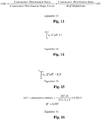
- the inventive catalyst composition comprising the procatalyst comprising the metal-ligand complex of formula (I) and one or more cocatalyst, as described herein, has a reactivity ratio r 1 , as further defined hereinbelow, in the range of greater than 100; for example, greater than 150, or greater than 200.
- steric interactions for the inventive catalysts result in polymerization of ethylene more selectively than sterically larger alpha-olefin (or other larger olefin comonomer) during the invention process (i.e., the invention catalyst preferentially polymerizes ethylene in the presence of the alpha-olefin).
- the invention catalyst prepared with or from the metal-ligand complex of formula (I) to adopt a conformation that allows ethylene to access the M substantially more easily, or adopt a reactive conformation more readily, or both than the invention catalyst allows the alpha-olefin to do so.
- the resulting difference in polymerization rates (i.e., selectivity) between ethylene and the alpha-olefin with the invention catalyst in the invention process can be characterized by the reactivity ratio r 1 .
- the identities of the last two monomers inserted in the growing polymer chain dictate the rate of subsequent monomer insertion.
- the polymer composition is a function only of temperature dependent reactivity ratios and comonomer mole fraction in the reactor. The same is also true when reverse comonomer or monomer insertion may occur or in the case of the interpolymerization of more than two monomers.
- Reactivity ratios for use in the foregoing models may be predicted using well known theoretical techniques or empirically derived from actual polymerization data. Suitable theoretical techniques are disclosed, for example, in B. G. Kyle, Chemical and Process Thermodynamics, Third Addition, Prentice-Hall, 1999 and in Redlich-Kwong-Soave (RKS) Equation of State, Chemical Engineering Science, 1972, pp 1197-1203 .
- Commercially available software programs may be used to assist in deriving reactivity ratios from experimentally derived data.
- One example of such software is A spen Plus from Aspen Technology, Inc., Ten Canal Park, Cambridge, MA 02141-2201 USA.
- the process for producing ethylene based polymers according to the present invention selectively gives the rich polyethylene (e.g., a high density polyethylene) or rich polyethylene segment of the poly(ethylene alpha-olefin) copolymer in the presence of alpha-olefin, which is substantially unpolymerized thereby.
- the process for producing ethylene based polymers employs olefin polymerizing conditions.
- the olefin polymerizing conditions independently produce a catalyst in situ that is formed by reaction of the procatalyst comprising metal-ligand complex of formula (I), and one or more cocatalysts in the presence of one or more other ingredients.
- Such other ingredients include, but are not limited to, (i) olefin monomers; (ii) another metal-ligand complex of formula (I); (iii) one or more of catalyst systems; (iv) one or more chain shuttling agents; (v) one or more catalyst stabilizers; (vi) one or more solvents; and (vii) a mixture of any two or more thereof.
- a particularly preferred inventive catalyst is one that can achieve a high selectivity for polymerizing ethylene in the presence of the (C 3 -C 40 ) alpha-olefin in the process for producing an ethylene based polymer, wherein the high selectivity is characterized by the reactivity ratio r 1 described previously.
- the reactivity ratio r 1 is greater than 50, more preferably greater than 100, still more preferably greater than 150, still more preferably greater than 200.
- the reactivity ratio r 1 for the invention process approaches infinity, incorporation of the alpha-olefin into (or onto) the rich polyethylene produced thereby approaches 0 mole percent (mol%).
- the inventive catalyst composition comprising the procatalyst and one or more cocatalyst, as described herein, has catalytic efficiency in the rage of from greater than 1000,000 g of polymer per gram of active metal center; for example, from greater than 2000,000 g of polymer per gram of active metal center.
- the catalytic efficiency is measured in terms of amount of polymer produced relative to the amount catalyst used in solution polymerisation process, wherein the polymerization temperature is at least 130° C, for example in the range of from 170 to 195 °C, and ethylene concentration is greater than 5 g/L, for example, greater than 6 g/L, and wherein the ethylene conversion is greater than 70 percent, for example, greater than 80 percent, or in the alternative, greater than 90 percent.
- the ligands of the invention may be prepared using known procedures. Specifically, the ligands of the invention may ⁇ be prepared using a variety of synthetic routes, depending on the variation desired in the ligand. In general, building blocks are prepared that are then linked together with a bridging group. Variations in the R group substituents can be introduced in the synthesis of the building blocks.
- each of the optionally substituted phenyl rings is prepared as a separate building block.
- the desired optionally substituted phenyls are then combined into bi-phenyl building blocks, which are then bridged together.
- the optionally substituted phenyl building blocks are bridged together and then additional optionally substituted phenyl building blocks are added to form the bridged bi-aryl structures.
- the starting materials or reagents used are generally commercially available, or are prepared via routine synthetic means.
- ligand refers to the organic precursor to the pro-catalyst.
- the pro-catalyst is derived from a reaction of the ligand with a suitable metallic (titanium, zirconium, or hafnium) precursor.
- acetic anhydride approximately 300 mL
- fuming nitric acid approximately 9.0 mL, 191 mmol
- the mixture is then added to approximately 2.5L of ice-water and stirred for approximately 1-2 hours.
- the precipitate is collected by vacuum filtration and washed with two approximately 100-mL portions of ice-water.
- This crude material is dissolved in approximately 250 mL of methylene chloride, and washed with water (approximately 250 mL), and then 1M aqueous NaOH (approximately 250 mL).
- the organic phase is dried over anhydrous magnesium sulfate, filtered and concentrated under high vacuum.
- the crude material is then purified by flash chromatography.
- the flask is then heated further to approximately 125 °C until no additional distillation occurs.
- the residue is then allowed to cool to room temperature, then diluted and washed with approximately 100 mL of 1:1 methanol:ice-water and filtered.
- the precipitate is isolated by vacuum filtration and the residue remaining in the reaction flask is dissolved in approximately 300 mL of methylene chloride, dried with anhydrous magnesium sulfate, filtered and concentrated to give the crude material. This crude is then purified by flash chromatography.
- the flask is taken out of the glove box to the hood and heated under reflux.
- the reaction progress is monitored by GC/MS analysis, and in some cases additional anhydrous CuI (approximately 0.2 g, 1.05 mmol) slurried in dry toluene (approximately 0.9 mL) and N,N '-dimethylethylenediamine (approximately 0.45 mL, 4.18 mmol) is added to the mixture, and heating under reflux continued until such a time when the conversion is observed to be complete.
- the reaction is then allowed to cool to room temperature and filtered through a small silica plug, washed with tetrahydrofuran and concentrated to give the crude product.
- This crude material can be purified by either recrystallization or flash chromatography.
- 2-iso-propoxy-4,4,5,5-tetramethyl-1,3,2-dioxaborolane (approximately 7.0 mL, 34 mmol) is added slowly.
- the mixture is stirred for one hour at 0-10°C before allowing the reaction to warm to room temperature and then stirred for an additional approximately 18 hours.
- To the reaction mixture is added cold saturated aqueous sodium bicarbonate (approximately 75 mL). The mixture is extracted with approximately four 50-mL portions of methylene chloride.
- the system is purged with N 2 for approximately 15 minutes and Pd(PPh 3 ) 4 (approximately 303 mg, 0.26 mmol) is added.
- the mixture is heated under reflux at approximately 85 °C for approximately 48 hours, at which point the second substituted-2-((tetrahydro-2 H pyran-2-yl)oxy)-3-(4,4,5,5-tetramethyl-1,3,2-dioxaborolan-2-yl (approximately 4.7 mmol) is added, along with additional Pd(PPh 3 ) 4 (approximately 303 mg, 0.26 mmol).
- the resulting mixture is again heated under reflux at approximately 85 °C for approximately 48 hours, and then is allowed to cool to room temperature. Once cooled a precipitate is formed in the reaction flask which is isolated by vacuum filtration and dried under high vacuum for one hour to afford the crude protected ligand. This protected ligand can be used as such in the next step.
- the ligand (approximately 0.38 mmol) and MCl 4 (approximately 0.38 mmol) are suspended in approximately 35 mL of cold (approximately -30 °C) toluene. To this mixture is added approximately 0.56 mL of 3M diethyl ether solution of XMgBr. After 1-24 hr of stirring, depending on the particular ligand, the solvent is removed under reduced pressure. To the residue is added approximately 20 mL of toluene followed by approximately 25 mL of hexane. The suspension is then filtered, and the solvent was removed under reduced pressure giving the desired procatalyst.
- inventive catalyst compositions comprising one or more procatalyst comprising the metal-ligand complex of formula (I) and one or more cocatalysts may be employed to prepare a variety of olefin based polymers including, but not limited to, ethylene based polymers, for example homopolymers and/or interpolymers (including copolymers) of ethylene and optionally one or more comonomers such as ⁇ -olefins, and propylene based polymers, for example homopolymers and/or interpolymers (including copolymers) of propylene and optionally one or more comonomers such as ⁇ -olefins.
- ethylene based polymers for example homopolymers and/or interpolymers (including copolymers) of ethylene and optionally one or more comonomers such as ⁇ -olefins
- propylene based polymers for example homopolymers and/or interpolymers (including copolymers) of prop
- inventive ethylene based polymers for example homopolymers and/or interpolymers (including copolymers) of ethylene and optionally one or more comonomers such as ⁇ -olefins, according to instant invention have a density in the range of 0.860 to 0.973 g/cm 3 .
- the density can be from a lower limit of 0.860, 0.880, 0.885, 0.900, 0.905, 0.910, 0.915, or 0.920 g/cm 3 to an upper limit of 0.973, 0.963, 0.960, 0.955, 0.950, 0.925, 0.920, 0.915, 0.910, or 0.905 g/cm 3 .
- inventive ethylene based polymers for example homopolymers and/or interpolymers (including copolymers) of ethylene and optionally one or more comonomers such as ⁇ -olefins have a long chain branching frequency in the range of from 0.0 to 3 long chain branches (LCB) per 1000C.
- LCB long chain branches
- inventive ethylene based polymers for example homopolymers and/or interpolymers (including copolymers) of ethylene and optionally one or more comonomers such as ⁇ -olefins according to the instant invention have a molecular weight distribution (M w /M n ) (measured according to the conventional GPC method) in the range of from greater than or equal to 2.0.
- M w /M n molecular weight distribution
- the ethylene/ ⁇ -olefin interpolymer may have a molecular weight distribution (M w /M n ) in the range of from 2 to 10; or in the alternative, the ethylene/ ⁇ -olefin interpolymer may have a molecular weight distribution (M w /M n ) in the range of from 2 to 5.
- the inventive ethylene based polymers for example homopolymers and/or interpolymers (including copolymers) of ethylene and optionally one or more comonomers such as ⁇ -olefins have a molecular weight (M w ) in the range of from equal to or greater than 20,000 g/mole, for example, in the range of from 20,000 to 350,000 g/moles.
- M w molecular weight
- inventive ethylene based polymers for example homopolymers and/or interpolymers (including copolymers) of ethylene and optionally one or more comonomers such as ⁇ -olefins have a melt index (I 2 ) in the range of 0.1 to 200 g/10 minutes.
- melt index (I 2 ) can be from a lower limit of 0.1, 0.2, 0.5, 0.6, 0.8, 1, 1.5, 2.0, 2.5, 3.0, 3.5, 4.0, 4.5, 5.0, 10, 15, 20, 30, 40, 50, 60, 80, 90, 100, or 150 g/10 minutes, to an upper limit of 0.9, 1, 1.5, 2.0, 2.5, 3.0, 3.5, 4.0, 4.5, 5.0, 10, 15, 20, 30, 40, 50, 60, 80, 90, 100, 150, or 200 g/10 minutes.
- the inventive ethylene based polymers for example homopolymers and/or interpolymers (including copolymers) of ethylene and optionally one or more comonomers such as ⁇ -olefins have a melt flow ratio (I 10 /I 2 ) in the range of from 5 to 30. All individual values and subranges from 5 to 30 are included herein and disclosed herein; for example, the melt flow ratio (I 10 /I 2 ) can be from a lower limit of 5, 5.5, 6, 6.5, 8, 10, 12, 15, 20, or 25 to an upper limit of 5.5, 6, 6.5, 8, 10, 12, 15, 20, 25, or 30.
- the inventive ethylene based polymers for example homopolymers and/or interpolymers (including copolymers) of ethylene and optionally one or more comonomers such as ⁇ -olefins have a zero shear viscosity ratio (ZSVR) in the range of from equal to or greater than 1.0; for example from 1.0 to 10.0; or in the alternative, from 1.0 to 8.0; or in the alternative, from 1.0 to 7.0; or in the alternative, from 1.0 to 5.0; or in the alternative, from 1.0 to 4.0; or in the alternative, from 1.0 to 3.0; or in the alternative, from 1.0 to 2.0.
- ZSVR zero shear viscosity ratio
- the inventive ethylene based polymers for example homopolymers and/or interpolymers (including copolymers) of ethylene and optionally one or more comonomers such as ⁇ -olefins may further comprise at least 0.01 parts by weight of metal residues and/or metal oxide residues remaining from the inventive catalyst system per one million parts of the inventive ethylene based polymers, for example homopolymers and/or interpolymers (including copolymers) of ethylene and optionally one or more comonomers such as ⁇ -olefins.
- the metal residues and/or metal oxide residues remaining from the catalyst system in the inventive ethylene based polymers for example homopolymers and/or interpolymers (including copolymers) of ethylene and optionally one or more comonomers such as ⁇ -olefins may be measured by x-ray fluorescence (XRF), which is calibrated to reference standards.
- XRF x-ray fluorescence
- inventive ethylene based polymers such interpolymers (including copolymers) of ethylene and optionally one or more comonomers such as ⁇ -olefins may comprise less than 20 percent by weight of units derived from one or more ⁇ -olefin comonomers.
- inventive ethylene based polymers such as interpolymers (including copolymers) of ethylene and optionally one or more comonomers such as ⁇ -olefins have may comprise from less than 15 percent by weight of units derived from one or more ⁇ -olefin comonomers; or in the alternative, less than 10 percent by weight of units derived from one or more ⁇ -olefin comonomers; or in the alternative, from 1 to 20 percent by weight of units derived from one or more ⁇ -olefin comonomers; or in the alternative, from 1 to 10 percent by weight of units derived from one or more ⁇ -olefin comonomers.
- inventive ethylene based polymers such as interpolymers (including copolymers) of ethylene and optionally one or more comonomers such as ⁇ -olefins have may comprise less than 10 percent by moles of units derived from one or more ⁇ -olefin comonomers.
- the inventive ethylene based polymers such as interpolymers (including copolymers) of ethylene and optionally one or more comonomers such as ⁇ -olefins have may comprise from less than 7 percent by moles of units derived from one or more ⁇ -olefin comonomers; or in the alternative, from less than 4 percent by moles of units derived from one or more ⁇ -olefin comonomers; or in the alternative, from less than 3 percent by moles of units derived from one or more ⁇ -olefin comonomers; or in the alternative, from 0.5 to 10 percent by moles of units derived from one or more ⁇ -olefin comonomers; or in the alternative, from 0.5 to 3 percent by moles of units derived from one or more ⁇ -olefin comonomers.
- the ⁇ -olefin comonomers typically have no more than 20 carbon atoms.
- the ⁇ -olefin comonomers may preferably have 3 to 10 carbon atoms, and more preferably 3 to 8 carbon atoms.
- Exemplary ⁇ -olefin comonomers include, but are not limited to, propylene, 1-butene, 1-pentene, 1-hexene, 1-heptene, 1-octene, 1-nonene, 1-decene, and 4-methyl-1-pentene.
- the one or more ⁇ -olefin comonomers may, for example, be selected from the group consisting of propylene, 1-butene, 1-hexene, and 1-octene; or in the alternative, from the group consisting of 1-hexene and 1-octene.
- inventive ethylene based polymers for example homopolymers and/or interpolymers (including copolymers) of ethylene and optionally one or more comonomers such as ⁇ -olefins may comprise at least 80 percent by weight of units derived from ethylene.
- the inventive ethylene based polymers for example homopolymers and/or interpolymers (including copolymers) of ethylene and optionally one or more comonomers such as ⁇ -olefins may comprise at least 82 percent by weight of units derived from ethylene; or in the alternative, at least 85 percent by weight of units derived from ethylene; or in the alternative, at least 90 percent by weight of units derived from ethylene; or in the alternative, from 80 to 100 percent by weight of units derived from ethylene; or in the alternative, from 90 to 100 percent by weight of units derived from ethylene.
- inventive ethylene based polymers for example homopolymers and/or interpolymers (including copolymers) of ethylene and optionally one or more comonomers such as ⁇ -olefins may comprise at least 90 percent by moles of units derived from ethylene.
- the inventive ethylene based polymers for example homopolymers and/or interpolymers (including copolymers) of ethylene and optionally one or more comonomers such as ⁇ -olefins may comprise at least 93 percent by moles of units derived from ethylene; or in the alternative, at least 96 percent by moles of units derived from ethylene; or in the alternative, at least 97 percent by moles of units derived from ethylene; or in the alternative, from 90 to 100 percent by moles of units derived from ethylene; or in the alternative, from 90 to 99.5; or in the alternative, from 97 to 99.5 percent by moles of units derived from ethylene.
- any conventional polymerization processes may be employed to produce the inventive ethylene based polymers, for example homopolymers and/or interpolymers (including copolymers) of ethylene and optionally one or more comonomers such as ⁇ -olefins.
- Such conventional polymerization processes include, but are not limited to, solution polymerization process, gas phase polymerization process, slurry phase polymerization process, and combinations thereof using one or more conventional reactors e.g. loop reactors, isothermal reactors, fluidized bed gas phase reactors, stirred tank reactors, batch reactors in parallel, series, and/or any combinations thereof.
- inventive ethylene based polymers for example homopolymers and/or interpolymers (including copolymers) of ethylene and optionally one or more comonomers such as ⁇ -olefins may, for example, be produced via solution-phase polymerization process using one or more loop reactors, isothermal reactors, and combinations thereof.
- the solution phase polymerization process occurs in one or more well-stirred reactors such as one or more loop reactors or one or more spherical isothermal reactors at a temperature in the range of from 120 to 300 °C; for example, from 160 to 190 °C, and at pressures in the range of from 2.1 MPa to 10.5 MPa (300 to 1500 psi); for example, from 2.8 MPa to 5.25 MPa (400 to 750 psi).
- the residence time in solution phase polymerization process is typically in the range of from 2 to 30 minutes; for example, from 10 to 20 minutes.
- Ethylene, one or more solvents, one or more catalyst systems e.g.
- an inventive catalyst system optionally one or more cocatalysts, and optionally one or more comonomers are fed continuously to the one or more reactors.
- exemplary solvents include, but are not limited to, isoparaffins.
- solvents are commercially available under the name ISOPAR E from ExxonMobil Chemical Co., Houston, Texas.
- ISOPAR E isoparaffins
- the resultant mixture of the ethylene based polymer and solvent is then removed from the reactor and the ethylene based polymer is isolated.
- Solvent is typically recovered via a solvent recovery unit, i.e. heat exchangers and vapor liquid separator drum, and is then recycled back into the polymerization system.
- the ethylene based polymer may be produced via solution polymerization in a dual reactor system, for example a dual loop reactor system, wherein ethylene and optionally one or more ⁇ -olefins are polymerized in the presence of the inventive catalyst system, as described herein, and optionally one or more cocatalysts.
- the ethylene based polymer may be produced via solution polymerization in a dual reactor system, for example a dual loop reactor system, wherein ethylene and optionally one or more ⁇ -olefins are polymerized in the presence of the inventive catalyst system, as described herein, and optionally one or more other catalysts.
- the inventive catalyst system can be used in the first reactor, or second reactor, optionally in combination with one or more other catalysts.
- the ethylene based polymer may be produced via solution polymerization in a dual reactor system, for example a dual loop reactor system, wherein ethylene and optionally one or more ⁇ -olefins are polymerized in the presence of the inventive catalyst system, as described herein, in both reactors.
- the ethylene based polymer may be produced via solution polymerization in a single reactor system, for example a single loop reactor system, wherein ethylene and optionally one or more ⁇ -olefins are polymerized in the presence of the inventive catalyst system, as described herein, and optionally one or more cocatalysts.
- the ethylene based polymer may be produced via solution polymerization in a single reactor system, for example a single loop reactor system, wherein ethylene and optionally one or more ⁇ -olefins are polymerized in the presence of the inventive catalyst system, as described herein, optionally one or more other catalysts, and optionally one or more cocatalysts.
- the procatalyst comprising the metal-ligand complex of formula (I) may be activated to form an active catalyst composition by combination with one or more cocatalysts, as described above, for example, a cation forming cocatalyst, a strong Lewis acid, or a combination thereof.
- cocatalysts for use include polymeric or oligomeric aluminoxanes, especially methyl aluminoxane, as well as inert, compatible, noncoordinating, ion forming compounds.
- Suitable cocatalysts include, but are not limited to modified methyl aluminoxane (MMAO), bis(hydrogenated tallow alkyl)methyl, tetrakis(pentafluorophenyl)borate(1-) amine (RIBS-2), triethyl aluminum (TEA), and combinations thereof.
- MMAO modified methyl aluminoxane
- RIBS-2 bis(hydrogenated tallow alkyl)methyl
- RIBS-2 tetrakis(pentafluorophenyl)borate(1-) amine
- TAA triethyl aluminum
- inventive ethylene based polymers for example homopolymers and/or interpolymers (including copolymers) of ethylene and optionally one or more comonomers such as ⁇ -olefins may be produced via solution polymerization in a dual reactor system, for example a dual loop reactor system, wherein ethylene and optionally one or more ⁇ -olefins are polymerized in the presence of one or more catalyst systems.
- inventive ethylene based polymers for example homopolymers and/or interpolymers (including copolymers) of ethylene and optionally one or more comonomers such as ⁇ -olefins may be produced via solution polymerization in a single reactor system, for example a single loop reactor system, wherein ethylene and optionally one or more ⁇ -olefins are polymerized in the presence of one or more catalyst systems.
- inventive ethylene based polymers for example homopolymers and/or interpolymers (including copolymers) of ethylene and optionally one or more comonomers such as ⁇ -olefins may further comprise one or more additives.
- additives include, but are not limited to, antistatic agents, color enhancers, dyes, lubricants, pigments, primary antioxidants, secondary antioxidants, processing aids, UV stabilizers, and combinations thereof.
- the inventive ethylene based polymers may contain any amounts of additives.
- the inventive ethylene based polymers may compromise from about 0 to about 10 percent by the combined weight of such additives, based on the weight of the inventive ethylene based polymers and the one or more additives.
- the inventive ethylene based polymers may further compromise fillers, which may include, but are not limited to, organic or inorganic fillers.
- fillers e.g. calcium carbonate, talc, Mg(OH) 2
- the inventive ethylene based polymers may further be blended with one or more polymers to form a blend.
- the yellow precipitate was collected by vacuum filtration and washed with two 100-mL portions of ice-water.
- This crude solid was dissolved in 250 mL of methylene chloride. The solution was washed with water (250 mL) and 1M aqueous NaOH (250 mL). The organic phase was dried over anhydrous magnesium sulfate, filtered and concentrated under high vacuum to give the crude as a yellow solid. The crude solid was dissolved in minimum amount of chloroform for loading in the column cartridge.
- the flask was heated further to 125 °C and no additional distillation occurred (remaining liquid may be triethylphosphate which boils very high, expected by-product).
- the residue was allowed to cool to room temperature then diluted and washed with approximately 100 mL of 1:1 methanol:ice-water and filtered.
- the precipitate isolated by vacuum filtration and sticky residue remaining in the reaction flask were dissolved in approximately 300 mL of methylene chloride, dried with anhydrous magnesium sulfate, filtered and concentrated to give 9.41 g of crude as a yellow oil (approximately 80% carbazole product).
- N -dimethylformamide 250 mL was added 2-iodo-4-fluoro-6-methylphenol (13.09 g, 51.94 mmol), propane-1,3-diyl bis(4-methylbenzenesulfonate) (9.99 g, 25.98 mmol) and K 2 CO 3 (15.08 g, 109.11 mmol).
- This mixture was heated at 100 °C for 30 minutes and then concentrated to dryness. The residue was taken up in a mixture of 50/50 methylene chloride/water (200 mL) and extracted with methylene chloride (3 x 100 mL).
- a three-necked round bottom flask was equipped with a magnetic stir bar, septa, a condenser and a nitrogen gas inlet.
- the flask was charged with 4-fluoro-2-iodophenol (7.0020 g, 29.420 mmol), potassium carbonate (8.2954 g, 60.020 mmol), 1,3-dibromopropane (59.00 mL, 581.262 mmol), and acetone (200 mL).
- the mixture was stirred until complete dissolution and was refluxed overnight.
- the solution was sampled for GC/MS analysis (0.1 mL of sample diluted in acetone and filter) to determine reaction completion. After 16.5 hours, the reaction was allowed to cool to room temperature and filtered by vacuum filtration.
- the brown oil was dissolved in a small amount of hexanes and was purified by column chromatography on the Isco CombiFlash system using a 330 g Grace column and a gradient of 0-5% ethyl acetate in hexanes for 2 column volumes, then increasing to 5% ethyl acetate in hexanes until the product eluted.
- the fractions were analyzed by TLC and GC/MS. The pure fractions were combined and concentrated by rotary evaporation to afford the product as a yellow oil.
- the yellow oil was dried high under vacuum to afford 8.99 g (85.1 %).
- a three-necked round bottom flask was equipped with a magnetic stir bar, septa, a condenser and a nitrogen gas inlet.
- the flask was charged with 1-(3-bromopropoxy)-4-fluoro-2-iodobenzene (8.9856 g, 25.032 mmol), 4-fluoro-2-iodo-6-methylphenol (6.3096 g, 25.036 mmol), potassium carbonate (7.400 g, 53.542 mmol), and acetone (165 mL).
- the mixture was stirred until complete dissolution and was refluxed overnight.
- the solution was sampled for GC/MS analysis (0.1 mL of sample diluted in acetone and filter) to determine completion.
- the reaction was allowed to cool to room temperature and filtered by vacuum filtration.
- the round bottom flask was washed with acetone (2 x 20 mL) and filtered as well.
- the filtrate was concentrated by rotary evaporation to afford the crude product as dark brown oil.
- the crude product was analyzed by 1 H NMR.
- the dark brown oil was dissolved in a small amount of hexanes and was purified by column chromatography on the Isco CombiFlash system using a 330 g Grace column and a gradient of 0-5% ethyl acetate in hexanes for 2 column volumes, then increasing to 5% ethyl acetate in hexanes until the product eluted.
- the crude protected ligand was dissolved in a mixture of tetrahydrofuran (250 mL) and methanol (250 mL) then heated to 60 °C. To the solution was added p -toluenesulfonic acid monohydrate (3.0380 g, 15.971 mmol) until the solution became acidic. The reaction was stirred at 60 °C overnight and was checked by TLC (5% ethyl acetate in hexanes) for completion. The reaction mixture was allowed to cool to room temperature and then concentrated by rotary evaporation to afford a brown sticky solid (15.13 g). The solid was analyzed by 1 H NMR. The crude product was dissolved in chloroform and silica gel was added.
- the slurry was concentrated by rotary evaporation to afford a dry powdery mixture.
- the powdery mixture was loaded onto the Isco CombiFlash system and run using a 330 g Grace column and a gradient of 2-5% ethyl acetate in hexanes until the product eluded.
- the fractions were analyzed by TLC.
- the pure fractions were combined and concentrated by rotary evaporation to afford the product as a light yellow crystalline solid.
- the solid was dissolved in dichloromethane and concentrated by rotary evaporation to afford a light yellow crystalline solid (repeated twice). The solid was dried under high vacuum to afford 6.17 g (77.0 %).
- Reaction was set up in a glove box under nitrogen atmosphere.
- a jar was charged with HfCl 4 (0.1033 g, 0.3225 mmol) and toluene (20 mL).
- the slurry was cooled to -25 °C in the glove box freezer for 30 minutes.
- 3.0 M methylmagnesium bromide in diethyl ether (0.45 mL, 1.35 mmol).
- the mixture was stirred strongly for 2 minutes.
- the solid went in solution but the reaction solution was cloudy and yellowish.
- To the mixture was added the ligand (0.4000 g, 0.3221 mmol) as a solid.
- the vial containing the solid was rinsed with toluene (2.0 mL).
- the rinse solvent was added to the reaction mixture. Reaction was followed up by NMR. After stirring for 1.5 hour, the reaction mixture was filtered (fritted medium funnel). The cake was washed with two 10-mL portions of toluene. To the colorless filtrate solution was added hexanes (5 mL) and concentrated under vacuum to afford a white solid. To the solid was added toluene (30 mL) and stirred until almost all the solid went in solution. Then hexanes (25 mL) was added. The cloudy yellowish solution was filtered (syringe filter) and concentrated under high vacuum to afford 0.4317 g (92.5 %) of the Hf-complex as a tan color solid.
- a three-necked round-bottomed flask was equipped with a magnetic stir bar, two septa, a condenser and a nitrogen gas inlet.
- the flask was placed under nitrogen atmosphere and charged with ethylmagnesium bromide (40 mL, 120 mmol) and diethyl ether (60 mL).
- ethylmagnesium bromide 40 mL, 120 mmol
- diethyl ether 60 mL
- bis(chloromethyldichlorosilane) 9.5002 g, 47.993 mmol
- the mixture was heated to reflux. After a few minutes the cloudy white mixture turned transparent and a white precipitate was observed.
- the reaction was refluxed for 5 hours and then allowed to stand overnight at room temperature.
- the mixture was filtered and the cake was washed with two 30-mL portions of diethyl ether.
- the filtrate was stirred slowly, cooled to 0 °C (ice water bath), and 0.1 M aqueous HCl (29 mL) was added slowly via addition funnel. While adding the 0.1M HCl, solids began to form.
- the mixture was transferred to a separatory funnel and white solids were left behind.
- the phases were separated and the white murky aqueous phase was extracted with two 15-mL portions of diethyl ether.
- the organic phases were combined, dried over magnesium sulfate, filtered by vacuum filtration, and concentrated by rotary evaporation to afford a light yellow oil as a crude product.
- a three necked round bottom flask was equipped with a condenser, two septa, a magnetic stir bar, and a nitrogen gas inlet.
- the flask was placed under nitrogen atmosphere and was charged with sodium hydride (95 %, 0.4137 g, 16.376 mmol) and anhydrous N , N -dimethylformamide (8.5 mL).
- the slurry was cooled to 0 °C and a solution of 4-fluoro-2-iodo-6-methylphenol (4.2466 g, 16.850 mmol) in anhydrous N,N- dimethylformamide (8.5 mL) was added slowly via syringe at a rate to maintain control of the reaction (hydrogen evolution).
- the flask was washed with some ethyl acetate to dissolve the slim and the solution was placed in the separatory funnel.
- the phases were separated and the aqueous phase was extracted with three 25-mL portions of ethyl acetate.
- the organic phases were combined and washed with 1M sodium hydroxide (35 mL), then brine (21.5 mL).
- the organic phase was dried over anhydrous magnesium sulfate, filtered by vacuum filtration, and concentrated by rotary evaporation to afford the crude product as a reddish-brown oil.
- the oil was dissolved in a small amount of hexanes and purified by column chromatography using a 330 g Grace column and a gradient of 0-5% dichloromethane in hexanes over 2 column volumes, the remaining at 5% dichloromethane in hexanes until the product eluded.
- the pure fractions were combined and concentrated by rotary evaporation to afford the product as a colorless oil.
- the oil was dissolved in dichloromethane and concentrated by rotary evaporation to afford a colorless oil (repeated twice). The oil was dried under high vacuum to afford 3.1112 g (71.9 %) of the product as a hazy white solid.
- a three-necked round bottom flask was equipped with a magnetic stir bar, two septa, a condenser and a nitrogen gas inlet. The flask was charged with 2,7-di- tert -butyl-9-(2-((tetrahydro-2 H- pyran-2-yl)oxy)-3-(4,4,5,5-tetramethyl-1,3,2-dioxaborolan-2-yl)-5-(2,4,4-trimethylpentan-2-yl)phenyl)-9 H -carbazole (7.4057 g, 10.674 mmol), a solution of sodium hydroxide (1.3599 g, 33.998 mmol) in water (33 mL), tetrahydrofuran (165 mL), and diethylbis((4-fluoro-2-iodo-6-methylphenoxy)methyl)silane (2.9865 g, 4.846 mmol).
- the slurry was concentrated by rotary evaporation to afford a dry powdery mixture of silica gel and ligand.
- the powdery mixture was loaded onto the Isco CombiFlash system and run using a 330 g Grace column and a gradient of 30% chloroform in hexanes for 6 column volumes (CV), increasing to 50% chloroform in hexanes over 3 CV, then remaining at 50% chloroform in hexanes until the product eluded.
- the pure fractions were combined and concentrated by rotary evaporation to afford a white crystalline solid (6.4445 g).
- the solid was dissolved in a mixture of tetrahydrofuran (33 mL) and methanol (33 mL) then heated to 60 °C.
- Reaction was set up in a glove box under nitrogen atmosphere.
- a jar was charged with HfCl 4 (0.1258 g, 0.3928 mmol) and toluene (24 mL).
- the slurry was cooled to -25 °C in the glove box freezer for 30 minutes.
- 3.0 M methylmagnesium bromide in diethyl ether (0.55 mL, 1.65 mmol).
- the mixture was stirred strongly for 2 minutes.
- the solid went in solution but the reaction solution was cloudy and yellowish.
- To the mixture was added the ligand (0.5023 g, 0.3783 mmol) as a solid.
- the flask containing the solid was rinsed with toluene (3.0 mL).
- the rinse solvent was added to the reaction mixture.
- the reaction mixture was stirred at room temperature for 5.5 hours.
- To the yellow mixture was added hexanes (12 mL) and suspension was filtered.
- the transparent yellow solution was concentrated under vacuum overnight to afford 0.412 g (71.0 %) of the product as a yellow solid.
- a three-necked round-bottomed flask was equipped with two septa and a nitrogen gas inlet. The flask was placed under nitrogen atmosphere and was charged with sodium hydride (95%, 0.2496 g, 10.400 mmol) and anhydrous N , N -dimethylformamide (10.0 mL) was added via syringe. The slurry was cooled to 0 °C via ice water bath. To the slurry was added a solution of 4-fluoro-2-iodo-6-methylphenol (2.4753 g, 9.822 mmol) in anhydrous N , N- dimethylformamide (10.0 mL) via syringe at a rate to maintain control of the reaction (hydrogen evolution).
- a three-necked round-bottomed flask was equipped with a magnetic stir bar, two septa, a condenser, and a nitrogen gas inlet.
- the flask was placed under nitrogen atmosphere and charged with sodium hydride (0.2750 g, 11.458 mmol) and anhydrous N , N -dimethylformamide (10 mL).
- the solution was cooled to 0 °C (ice water bath).
- a solution of 4-fluoro-2-iodophenol (2.4893 g, 10.459 mmol) in anhydrous N , N- dimethylformamide (10 mL) was added slowly via syringe to maintain control of the reaction (hydrogen evolution). The resulting mixture was stirred for 30 minutes at room temperature.
- the organic phase was washed with brine (25 mL), dried over anhydrous magnesium sulfate, filtered by vacuum filtration, and concentrated by rotary evaporation to afford a crude orange oil (4.7914 g).
- the crude oil was purified by column chromatography using a 330 g Grace column and a gradient of 100% hexanes for 1 column volume (CV), increasing to 5% ethyl acetate in hexanes over 1 CV, the remaining at 5% ethyl acetate in hexanes until the product eluded.
- the pure fractions were combined and concentrated by rotary evaporation to afford the product as a yellow oil.
- the crude protected ligand was dissolved in a mixture of tetrahydrofuran (65mL) and methanol (65 mL) then heated to 60 °C.
- Para -toluenesulfonicacid monohydrate (0.2492 g, 1.310 mmol) was added to the solution.
- the reaction was stirred at 60 °C overnight and was checked by TLC for completion.
- the ligand was concentrated down to a sticky golden orange solid (15.3856 g).
- the ligand was dissolved in chloroform and silica gel was added.
- the slurry was concentrated by rotary evaporation to afford a dry powdery mixture of silica gel and ligand.
- the powdery mixture was split for two separate columns.
- Reaction was set up in a glove box under nitrogen atmosphere.
- a jar was charged with HfCl 4 (0.0489 g, 0.1522 mmol) and toluene (12 mL).
- the slurry was cooled to -25 °C in the glove box freezer for 30 minutes at -25 °C.
- To the stirring cold slurry was added cold 3.0 M methylmagnesium bromide in diethyl ether (0.20 mL, 0.60 mmol). The mixture was stirred strongly for 2 minutes. The solid went in solution.
- the reaction solution was cloudy and pale yellow.
- To the mixture was added the ligand (0.2000 g, 0.1522 mmol) as a solid at a rate to maintain control of the reaction.
- the flask containing the solid was rinsed with toluene (about 2 mL).
- the rinse solvent was added to the reaction mixture.
- the reaction mixture was stirred at room temperature for 3 hours.
- To the brown mixture was added hexanes (12 mL).
- the mixture was filtered.
- the filtered was concentrated under high vacuum to afford 0.2341 g (101.1%) of the desired product. Excess mass was attributed to residual toluene trap in the solid.
- All raw materials ethylene, 1-octene
- the process solvent a narrow boiling range high-purity isoparaffinic solvent trademarked Isopar E commercially available from ExxonMobil Corporation
- Hydrogen is supplied in pressurized cylinders as a high purity grade and is not further purified.
- the reactor monomer feed (ethylene) stream is pressurized via mechanical compressor to above reaction pressure at 3.68 MPa (525 psig).
- the solvent and comonomer (1-octene) feed is pressurized via mechanical positive displacement pump to above reaction pressure at 3.68 MPa (525 psig).
- the individual catalyst components are manually batch diluted to specified component concentrations with purified solvent (Isopar E) and pressured to above reaction pressure at 3.68 MPa (525 psig). All reaction feed flows are measured with mass flow meters and independently controlled with computer automated valve control systems.
- the continuous solution polymerization reactor consists of a liquid full, non-adiabatic, isothermal, circulating, and independently controlled loop.
- the reactor has independent control of all fresh solvent, monomer, comonomer, hydrogen, and catalyst component feeds.
- the combined solvent, monomer, comonomer and hydrogen feed to the reactor is temperature controlled to anywhere between 5° C to 50° C and typically 25° C by passing the feed stream through a heat exchanger.
- the fresh comonomer feed to the polymerization reactor is fed in with the solvent feed.
- the total fresh feed to each polymerization reactor is injected into the reactor at two locations with roughly equal reactor volumes between each injection location.
- the fresh feed is controlled typically with each injector receiving half of the total fresh feed mass flow.
- the catalyst components are injected into the polymerization reactor through specially designed injection stingers and are each separately injected into the same relative location in the reactor with no contact time prior to the reactor.
- the primary catalyst component feed is computer controlled to maintain the reactor monomer concentration at a specified target.
- the cocatalyst components are fed based on calculated specified molar ratios to the primary catalyst component.
- the feed streams are mixed with the circulating polymerization reactor contents with Kenics static mixing elements.
- the contents of each reactor are continuously circulated through heat exchangers responsible for removing much of the heat of reaction and with the temperature of the coolant side responsible for maintaining isothermal reaction environment at the specified temperature. Circulation around each reactor loop is provided by a screw pump.
- the effluent from the first polymerization reactor exits the first reactor loop and passes through a control valve (responsible for maintaining the pressure of the first reactor at a specified target). As the stream exits the reactor it is contacted with water to stop the reaction. In addition, various additives such as anti-oxidants, can be added at this point. The stream then goes through another set of Kenics static mixing elements to evenly disperse the catalyst kill and additives.
- the effluent (containing solvent, monomer, comonomer, hydrogen, catalyst components, and molten polymer) passes through a heat exchanger to raise the stream temperature in preparation for separation of the polymer from the other lower boiling reaction components.
- the stream then enters a two stage separation and devolatization system where the polymer is removed from the solvent, hydrogen, and unreacted monomer and comonomer.
- the recycled stream is purified before entering the reactor again.
- the separated and devolatized polymer melt is pumped through a die specially designed for underwater pelletization, cut into uniform solid pellets, dried, and transferred into a hopper. After validation of initial polymer properties the solid polymer pellets are manually dumped into a box for storage. Each box typically holds ⁇ 1200 pounds of polymer pellets.
- the non-polymer portions removed in the devolatilization step pass through various process steps which separate most of the ethylene which is removed from the system to a vent destruction unit (it is recycled in manufacturing units). Most of the solvent is recycled back to the reactor after passing through purification beds. This solvent can still have unreacted co-monomer in it that is fortified with fresh co-monomer prior to re-entry to the reactor. This fortification of the co-monomer is an essential part of the product density control method. This recycle solvent can still have some hydrogen which is then fortified with fresh hydrogen to achieve the polymer molecular weight target. A very small amount of solvent leaves the system as a co-product due to solvent carrier in the catalyst streams and a small amount of solvent that is part of commercial grade co-monomers.
- All raw materials ethylene, 1-octene
- the process solvent a narrow boiling range high-purity isoparaffinic solvent commercially available under the tradename Isopar E from ExxonMobil Corporation
- Hydrogen is supplied in pressurized cylinders as a high purity grade and is not further purified.
- the reactor monomer feed (ethylene) stream is pressurized via mechanical compressor to a pressure that is above the reaction pressure, approximate to 5.25 MPa (750 psig).
- the solvent and comonomer (1-octene) feed is pressurized via mechanical positive displacement pump to a pressure that is above the reaction pressure, approximately 5.25 MPa (750 psig).
- the individual catalyst components are manually batch diluted to specified component concentrations with purified solvent (Isopar E) and pressurized to a pressure that is above the reaction pressure, approximately 5.25 MPa (750 psig). All reaction feed flows are measured with mass flow meters, independently controlled with computer automated valve control systems.
- purified solvent Isopar E
- the continuous solution polymerization reactor system consist of two liquid full, non-adiabatic, isothermal, circulating, and independently controlled loops operating in a series configuration.
- Each reactor has independent control of all fresh solvent, monomer, comonomer, hydrogen, and catalyst component feeds.
- the combined solvent, monomer, comonomer and hydrogen feed to each reactor is independently temperature controlled to anywhere between 5°C to 50°C and typically 40°C by passing the feed stream through a heat exchanger.
- the fresh comonomer feed to the polymerization reactors can be manually aligned to add comonomer to one of three choices: the first reactor, the second reactor, or the common solvent and then split between both reactors proportionate to the solvent feed split.
- the total fresh feed to each polymerization reactor is injected into the reactor at two locations per reactor roughly with equal reactor volumes between each injection location.
- the fresh feed is controlled typically with each injector receiving half of the total fresh feed mass flow.
- the catalyst components are injected into the polymerization reactor through specially designed injection stingers and are each separately injected into the same relative location in the reactor with no contact time prior to the reactor.
- the primary catalyst component feed is computer controlled to maintain the reactor monomer concentration at a specified target.
- the cocatalyst components are fed based on calculated specified molar ratios to the primary catalyst component.
- the feed streams are mixed with the circulating polymerization reactor contents with Kenics static mixing elements.
- each reactor The contents of each reactor are continuously circulated through heat exchangers responsible for removing much of the heat of reaction and with the temperature of the coolant side responsible for maintaining isothermal reaction environment at the specified temperature. Circulation around each reactor loop is provided by a screw pump.
- the effluent from the first polymerization reactor (containing solvent, monomer, comonomer, hydrogen, catalyst components, and molten polymer) exits the first reactor loop and passes through a control valve (responsible for maintaining the pressure of the first reactor at a specified target) and is injected into the second polymerization reactor of similar design.
- a control valve responsible for maintaining the pressure of the first reactor at a specified target
- As the stream exits the reactor it is contacted with water to stop the reaction.
- various additives such as anti-oxidants, can be added at this point.
- the stream then goes through another set of Kenics static mixing elements to evenly disperse the catalyst kill and additives.
- the effluent (containing solvent, monomer, comonomer, hydrogen, catalyst components, and molten polymer) passes through a heat exchanger to raise the stream temperature in preparation for separation of the polymer from the other lower boiling reaction components.
- the stream then enters a two stage separation and devolatilization system where the polymer is removed from the solvent, hydrogen, and unreacted monomer and comonomer.
- the recycled stream is purified before entering the reactor again.
- the separated and devolatized polymer melt is pumped through a die specially designed for underwater pelletization, cut into uniform solid pellets, dried, and transferred into a hopper. The polymer properties are then validated.
- the non-polymer portions removed in the devolatilization step pass through various pieces of equipment, which separate most of the ethylene that is removed from the system to a vent destruction unit (it is, however, recycled in manufacturing units). Most of the solvent is recycled back to the reactor after passing through purification beds. This solvent can still have unreacted co-monomer in it that is fortified with fresh co-monomer prior to re-entry to the reactor. This fortification of the co-monomer is an essential part of the product density control method. This recycle solvent can still have some hydrogen which is then fortified with fresh hydrogen to achieve the polymer molecular weight target. A very small amount of solvent leaves the system as a co-product due to solvent carrier in the catalyst streams and a small amount of solvent that is part of commercial grade co-monomers.
- a 2-liter reactor was charged with about 520 g of mixed alkanes solvent and 300 g of 1-octene comonomer. While the reactor was attaining polymerization temperature, 10 ⁇ mol of MMAO were added to the reactor as a scavenger for trace O 2 and water. Once at temperature, the reactor was saturated with ethylene at 2.8 MPa (400 psig). Procatalysts and activator, as dilute solutions in toluene, were mixed and transferred to a catalyst addition tank and injected into the reactor. The polymerization conditions were maintained for 10 minutes with ethylene added on demand. Heat was continuously removed from the reaction vessel through an internal cooling coil.
- the resulting solution was removed from the reactor and stabilized by addition of 10 mL of a toluene solution containing approximately 67 mg of a hindered phenol antioxidant (IrganoxTM 1010 from Ciba Geigy Corporation) and 133 mg of a phosphorus stabilizer (IrgafosTM 168 from Ciba Geigy Corporation).
- a wash cycle was conducted in which 850 g of mixed alkanes were added to the reactor and the reactor was heated to 160°C.
- the reactor was then emptied of the heated solvent immediately before beginning a new polymerization run. Polymers were recovered by drying for about 12 h in a temperature-ramped vacuum oven with a final set point of 140°C.
- Test methods include the following:
- Samples that are measured for density are prepared according to ASTM D-1928. Measurements are made within one hour of sample pressing using ASTM D- 792, Method B.
- Melt index (I 2 ) is measured in accordance with ASTM-D 1238, Condition 190 °C/2.16 kg, and is reported in grams eluted per 10 minutes.
- Melt flow rate (I 10 ) is measured in accordance with ASTM-D 1238, Condition 190 °C/10 kg, and is reported in grams eluted per 10 minutes.
- Differential Scanning Calorimetry can be used to measure the melting and crystallization behavior of a polymer over a wide range of temperature.
- the TA Instruments Q1000 DSC equipped with an RCS (refrigerated cooling system) and an autosampler is used to perform this analysis.
- RCS refrigerated cooling system
- a nitrogen purge gas flow of 50 ml/min is used.
- Each sample is melt pressed into a thin film at about 175 °C; the melted sample is then air-cooled to room temperature ( ⁇ 25 °C).
- a 3-10 mg, 6 mm diameter specimen is extracted from the cooled polymer, weighed, placed in a light aluminum pan (ca 50 mg), and crimped shut. Analysis is then performed to determine its thermal properties.
- the thermal behavior of the sample is determined by ramping the sample temperature up and down to create a heat flow versus temperature profile. First, the sample is rapidly heated to 180 °C and held isothermal for 3 minutes in order to remove its thermal history. Next, the sample is cooled to -40 °C at a 10 °C/minute cooling rate and held isothermal at -40 °C for 3 minutes. The sample is then heated to 150 °C (this is the "second heat" ramp) at a 10 °C/minute heating rate. The cooling and second heating curves are recorded. The cool curve is analyzed by setting baseline endpoints from the beginning of crystallization to -20 °C. The heat curve is analyzed by setting baseline endpoints from -20 °C to the end of melt.
- the values determined are peak melting temperature (T m ), peak crystallization temperature (T c ), heat of fusion (H f ) (in Joules per gram), and the calculated % crystallinity for samples using appropriate equation, for example for the ethylene/alpha-olefin interpolymer using Equation 1, as shown in Figure 1 .
- the ethylene/alpha-olefin interpolymers were tested for their properties via GPC, according to the following procedure.
- the GPC system consists of a Waters (Milford, MA) 150°C high temperature chromatograph (other suitable high temperatures GPC instruments include Polymer Laboratories (Shropshire, UK) Model 210 and Model 220) equipped with an on-board differential refractometer (RI). Additional detectors can include an IR4 infra-red detector from Polymer ChAR (Valencia, Spain), Precision Detectors (Amherst, MA) 2-angle laser light scattering detector Model 2040, and a Viscotek (Houston, TX) 150R 4-capillary solution viscometer.
- RI differential refractometer
- a GPC with the last two independent detectors and at least one of the first detectors is sometimes referred to as "3D-GPC", while the term “GPC” alone generally refers to conventional GPC.
- GPS the term “GPC” alone generally refers to conventional GPC.
- 15-degree angle or the 90-degree angle of the light scattering detector is used for calculation purposes.
- Data collection is performed using Viscotek TriSEC software, Version 3, and a 4-channel Viscotek Data Manager DM400.
- the system is also equipped with an on-line solvent degassing device from Polymer Laboratories (Shropshire, UK).
- Suitable high temperature GPC columns can be used such as four 30 cm long Shodex HT803 13 ⁇ m (micron) columns or four 30 cm Polymer Labs columns of 20 ⁇ m (micron) mixed-pore-size packing (MixA LS, Polymer Labs).
- the sample carousel compartment is operated at 140 °C and the column compartment is operated at 150 °C.
- the samples are prepared at a concentration of 0.1 grams of polymer in 50 milliliters of solvent.
- the chromatographic solvent and the sample preparation solvent contain 200 ppm of butylated hydroxytoluene (BHT). Both solvents are sparged with nitrogen.
- BHT butylated hydroxytoluene
- Both solvents are sparged with nitrogen.
- the polyethylene samples are gently stirred at 160 °C for four hours.
- the injection volume is 200 microliters.
- the flow rate through the GPC is set at 1 ml/minute.
- the GPC column set is calibrated before running the Examples by running twenty-one narrow molecular weight distribution polystyrene standards.
- the molecular weight (MW) of the standards ranges from 580 to 8,400,000 grams per mole, and the standards are contained in 6 "cocktail" mixtures. Each standard mixture has at least a decade of separation between individual molecular weights.
- the standard mixtures are purchased from Polymer Laboratories (Shropshire, UK).
- the polystyrene standards are prepared at 0.025 g in 50 mL of solvent for molecular weights equal to or greater than 1,000,000 grams per mole and 0.05 g in 50 ml of solvent for molecular weights less than 1,000,000 grams per mole.
- the polystyrene standards were dissolved at 80 °C with gentle agitation for 30 minutes.
- the narrow standards mixtures are run first and in order of decreasing highest molecular weight component to minimize degradation.
- the polystyrene standard peak molecular weights are converted to polyethylene M w using the Mark-Houwink K and a (sometimes referred to as ⁇ ) values mentioned later for polystyrene and polyethylene. See the Examples section for a demonstration of this procedure.
- M w, Abs absolute weight average molecular weight
- intrinsic viscosity are also obtained independently from suitable narrow polyethylene standards using the same conditions mentioned previously.
- These narrow linear polyethylene standards may be obtained from Polymer Laboratories (Shropshire, UK; Part No.'s PL2650-0101 and PL2650-0102).
- the systematic approach for the determination of multi-detector offsets is performed in a manner consistent with that published by Balke, Mourey, et al.
- the overall injected concentration used in the determination of the molecular weight is obtained from the mass detector area and the mass detector constant derived from a suitable linear polyethylene homopolymer, or one of the polyethylene standards.
- the calculated molecular weights are obtained using a light scattering constant derived from one or more of the polyethylene standards mentioned and a refractive index concentration coefficient, dn/dc, of 0.104.
- the mass detector response and the light scattering constant should be determined from a linear standard with a molecular weight in excess of about 50,000 daltons.
- the viscometer calibration can be accomplished using the methods described by the manufacturer or alternatively by using the published values of suitable linear standards such as Standard Reference Materials (SRM) 1475a, 1482a, 1483, or 1484a.
- SRM Standard Reference Materials
- the chromatographic concentrations are assumed low enough to eliminate addressing 2 nd viral coefficient effects (concentration effects on molecular weight).
- the index (g') for the sample polymer is determined by first calibrating the light scattering, viscosity, and concentration detectors described in the Gel Permeation Chromatography method supra with SRM 1475a homopolymer polyethylene (or an equivalent reference). The light scattering and viscometer detector offsets are determined relative to the concentration detector as described in the calibration. Baselines are subtracted from the light scattering, viscometer, and concentration chromatograms and integration windows are then set making certain to integrate all of the low molecular weight retention volume range in the light scattering and viscometer chromatograms that indicate the presence of detectable polymer from the refractive index chromatogram.
- a linear homopolymer polyethylene is used to establish a Mark-Houwink (MH) linear reference line by injecting a broad molecular weight polyethylene reference such as SRM1475a standard, calculating the data file, and recording the intrinsic viscosity (IV) and molecular weight (M W ), each derived from the light scattering and viscosity detectors respectively and the concentration as determined from the RI detector mass constant for each chromatographic slice. For the analysis of samples the procedure for each chromatographic slice is repeated to obtain a sample Mark-Houwink line.
- MH Mark-Houwink
- the intrinsic viscosity and the molecular weight data may need to be extrapolated such that the measured molecular weight and intrinsic viscosity asymptotically approach a linear homopolymer GPC calibration curve.
- many highly-branched ethylene-based polymer samples require that the linear reference line be shifted slightly to account for the contribution of short chain branching before proceeding with the long chain branching index (g') calculation.
- a g-prime (g i ') is calculated for each branched sample chromatographic slice (i) and measuring molecular weight (M i ) according to Equation 2, as shown in Figure 2 , where the calculation utilizes the IV linear reference,j at equivalent molecular weight, M j , in the linear reference sample.
- the IV linear reference,j slices are calculated from a fifth-order polynomial fit of the reference Mark-Houwink Plot.
- the IV ratio, or g i ', is only obtained at molecular weights greater than 3,500 because of signal-to-noise limitations in the light scattering data.
- the number of branches along the sample polymer (B n ) at each data slice (i) can be determined by using Equation 3, as shown in Figure 3 , assuming a viscosity shielding epsilon factor of 0.75.
- Equation 4 the average LCBf quantity per 1000 carbons in the polymer across all of the slices (i) can be determined using Equation 4, as shown in Figure 4 .
- polyethylene and polystyrene standards can be used to measure the Mark-Houwink constants, K and ⁇ , independently for each of the two polymer types, polystyrene and polyethylene. These can be used to refine the Williams and Ward polyethylene equivalent molecular weights in application of the following methods.
- the gpcBR branching index is determined by first calibrating the light scattering, viscosity, and concentration detectors as described previously. Baselines are then subtracted from the light scattering, viscometer, and concentration chromatograms. Integration windows are then set to ensure integration of all of the low molecular weight retention volume range in the light scattering and viscometer chromatograms that indicate the presence of detectable polymer from the refractive index chromatogram. Linear polyethylene standards are then used to establish polyethylene and polystyrene Mark-Houwink constants as described previously.
- the two values are used to construct two linear reference conventional calibrations ("cc") for polyethylene molecular weight and polyethylene intrinsic viscosity as a function of elution volume, as shown in Equations 5 and 6, Figures 5 and 6 , respectively.
- cc linear reference conventional calibrations
- the gpcBR branching index is a robust method for the characterization of long chain branching. See Yau, Wallace W., "Examples of Using 3D-GPC - TREF for Polyolefin Characterization", Macromol. Symp., 2007, 257, 29-45 .
- the index avoids the slice-by-slice 3D-GPC calculations traditionally used in the determination of g' values and branching frequency calculations in favor of whole polymer detector areas and area dot products. From 3D-GPC data, one can obtain the sample bulk M w by the light scattering (LS) detector using the peak area method. The method avoids the slice-by-slice ratio of light scattering detector signal over the concentration detector signal as required in the g' determination.
- Equation 7 offers more precision because as an overall sample area it is much less sensitive to variation caused by detector noise and GPC settings on baseline and integration limits. More importantly, the peak area calculation is not affected by the detector volume offsets.
- the high-precision sample intrinsic viscosity (IV) is obtained by the area method shown in Equation 8, as shown in Figure 8 , where DP i stands for the differential pressure signal monitored directly from the online viscometer.
- the light scattering elution area for the sample polymer is used to determine the molecular weight of the sample.
- the viscosity detector elution area for the sample polymer is used to determine the intrinsic viscosity (IV or [ ⁇ ]) of the sample.
- the molecular weight and intrinsic viscosity for a linear polyethylene standard sample are determined using the conventional calibrations for both molecular weight and intrinsic viscosity as a function of elution volume, per Equations 9 and 10, as shown in Figures 9 and 10 , respectively.
- Equation 11 is used to determine the gpcBR branching index, where [ ⁇ ] is the measured intrinsic viscosity, [ ⁇ ] cc is the intrinsic viscosity from the conventional calibration, M w is the measured weight average molecular weight, and M w,cc is the weight average molecular weight of the conventional calibration.
- the Mw by light scattering (LS) using Equation 7, as shown in Figure 7 is commonly referred to as the absolute Mw; while the Mw,cc from Equation 9, as shown in Figure 9 , using the conventional GPC molecular weight calibration curve is often referred to as polymer chain Mw.
- gpcBR Intrinsic Viscosity
- the advantage of using gpcBR in comparison to the g' index and branching frequency calculations is due to the higher precision of gpcBR. All of the parameters used in the gpcBR index determination are obtained with good precision and are not detrimentally affected by the low 3D-GPC detector response at high molecular weight from the concentration detector. Errors in detector volume alignment also do not affect the precision of the gpcBR index determination. In other particular cases, other methods for determining M w moments may be preferable to the aforementioned technique.
- CEF column is packed by the Dow Chemical Company with glass beads at 125 ⁇ m ⁇ 6% (MO-SCI Specialty Products) with 0.32 cm (1/8 inch) stainless tubing. Glass beads are acid washed by MO-SCI Specialty with the request from the Dow Chemical Company.
- Column volume is 2.06 ml.
- Column temperature calibration is performed by using a mixture of NIST Standard Reference Material Linear polyethylene 1475a (1.0mg/ml) and Eicosane (2mg/ml) in ODCB. Temperature is calibrated by adjusting elution heating rate so that NIST linear polyethylene 1475a has a peak temperature at 101.0°C, and Eicosane has a peak temperature of 30.0°C.
- the CEF column resolution is calculated with a mixture of NIST linear polyethylene 1475a (1.0mg/ml) and hexacontane (Fluka, purum, ⁇ 97.0%, 1mg/ml). A baseline separation of hexacontane and NIST polyethylene 1475a is achieved.
- the area of hexacontane (from 35.0 to 67.0°C) to the area of NIST 1475a from 67.0 to 110.0°C is 50 to 50, the amount of soluble fraction below 35.0°C is ⁇ 1.8 wt%.
- the CEF column resolution is defined in equation 12, as shown in Figure 12 , where the column resolution is 6.0.
- Comonomer distribution constant is calculated from comonomer distribution profile by CEF. CDC is defined as Comonomer Distribution Index divided by Comonomer Distribution Shape Factor multiplying by 100 as shown in Equation 13, Figure 13 .
- Comonomer distribution index stands for the total weight fraction of polymer chains with the comonomer content ranging from 0.5 of median comonomer content (C median ) and 1.5 of C median from 35.0 to 119.0°C.
- Comonomer Distribution Shape Factor is defined as a ratio of the half width of comonomer distribution profile divided by the standard deviation of comonomer distribution profile from the peak temperature (T p ).
- CDC is calculated from comonomer distribution profile by CEF, and CDC is defined as Comonomer Distribution Index divided by Comonomer Distribution Shape Factor multiplying by 100 as shown in Equation 13, Figure 13 , and wherein Comonomer distribution index stands for the total weight fraction of polymer chains with the comonomer content ranging from 0.5 of median comonomer content (C median ) and 1.5 of C median from 35.0 to 119.0°C, and wherein Comonomer Distribution Shape Factor is defined as a ratio of the half width of comonomer distribution profile divided by the standard deviation of comonomer distribution profile from the peak temperature (Tp).
- Zero-shear viscosities are obtained via creep tests that are conducted on an AR-G2 stress controlled rheometer (TA Instruments; New Castle, Del) using 25-mm-diameter parallel plates at 190°C.
- the rheometer oven is set to test temperature for at least 30 minutes prior to zeroing fixtures.
- a compression molded sample disk is inserted between the plates and allowed to come to equilibrium for 5 minutes.
- the upper plate is then lowered down to 50 ⁇ m above the desired testing gap (1.5 mm). Any superfluous material is trimmed off and the upper plate is lowered to the desired gap. Measurements are done under nitrogen purging at a flow rate of 5 L/min. Default creep time is set for 2 hours.
- a constant low shear stress of 20 Pa is applied for all of the samples to ensure that the steady state shear rate is low enough to be in the Newtonian region.
- the resulting steady state shear rates are in the order of 10 -3 s -1 for the samples in this study.
- Steady state is determined by taking a linear regression for all the data in the last 10% time window of the plot of log(J(t)) vs. log(t), where J(t) is creep compliance and t is creep time. If the slope of the linear regression is greater than 0.97, steady state is considered to be reached, then the creep test is stopped. In all cases in this study the slope meets the criterion within 30 minutes.
- the steady state shear rate is determined from the slope of the linear regression of all of the data points in the last 10% time window of the plot of vs. t, where ⁇ is strain.
- the zero-shear viscosity is determined from the ratio of the applied stress to the steady state shear rate.
- a small amplitude oscillatory shear test is conducted before and after the creep test on the same specimen from 0.1 to 100 rad/s.
- the complex viscosity values of the two tests are compared. If the difference of the viscosity values at 0.1 rad/s is greater than 5%, the sample is considered to have degraded during the creep test, and the result is discarded.
- Zero-shear viscosity ratio is defined as the ratio of the zero-shear viscosity (ZSV) of the inventive polymer to the ZSV of a linear polyethylene material at the equivalent weight average molecular weight (M w-gpc ) as shown in the Equation 18, as shown in Figure 18 .
- the ⁇ 0 value (in Pa.s) is obtained from creep test at 190°C via the method described above. It is known that ZSV of linear polyethylene ⁇ 0L has a power law dependence on its M w when the M w is above the critical molecular weight M c . An example of such a relationship is described in Karjala et al. (Annual Technical Conference - Society of Plastics Engineers (2008), 66th, 887-891 ) as shown in the Equation 19, as shown in Figure 19 , to calculate the ZSVR values. Referring to Equation 19, as showing in Figure 19 , M w-gpc value (g/mol) is determined by using the GPC method as defined immediately hereinbelow.
- the chromatographic system consist of either a Polymer Laboratories Model PL-210 or a Polymer Laboratories Model PL-220.
- the column and carousel compartments are operated at 140 °C.
- Three Polymer Laboratories 10- ⁇ m Mixed-B columns are used with a solvent of 1,2,4-trichlorobenzene.
- the samples are prepared at a concentration of 0.1 g of polymer in 50 mL of solvent.
- the solvent used to prepare the samples contain 200 ppm of the antioxidant butylated hydroxytoluene (BHT). Samples were prepared by agitating lightly for 4 hours at 160 °C.
- the injection volume used is 100 microliters and the flow rate is 1.0 mL/min.
- Calibration of the GPC column set is performed with twenty one narrow molecular weight distribution polystyrene standards purchased from Polymer Laboratories.
- the polystyrene standard peak molecular weights are converted to polyethylene molecular weights using Equation 20, as shown in Figure 20 .
- M is the molecular weight
- A has a value of 0.4316 and B is equal to 1.0.
- a third order polynomial is determined to build the logarithmic molecular weight calibration as a function of elution volume. Polyethylene equivalent molecular weight calculations are performed using Viscotek TriSEC software Version 3.0. The precision of the weight-average molecular weight M w is excellent at ⁇ 2.6 %.
- Polymer samples were dissolved for 90 minutes at 160 °C at a concentration of 5-7 mg/mL in 1,2,4-trichlorobenzene (TCB) stabilized by 300 ppm of BHT in capped vials while stirring. They were then diluted to 1 mg/mL immediately before a 400 ⁇ L aliquot of the sample was injected.
- the GPC utilized two (2) Polymer Labs PL gel 10 ⁇ m MIXED-B columns (300 mm x 10 mm) at a flow rate of 2.0 mL/minute at 150 °C. Sample detection was performed using a PolyChar IR4 detector in concentration mode.
- Mol% 1-octene within each sample was determined by taking a ratio of the CH 3 area (1382.7-1373.5 wavenumbers) to the CH 2 area (1525-1400 wavenumbers) and normalizing to a standard curve generated through NMR analysis of ethylene-co-1-octene polymer standards.
Landscapes
- Chemical & Material Sciences (AREA)
- Organic Chemistry (AREA)
- Health & Medical Sciences (AREA)
- Chemical Kinetics & Catalysis (AREA)
- Medicinal Chemistry (AREA)
- Polymers & Plastics (AREA)
- Engineering & Computer Science (AREA)
- Materials Engineering (AREA)
- Manufacturing & Machinery (AREA)
- Mechanical Engineering (AREA)
- Addition Polymer Or Copolymer, Post-Treatments, Or Chemical Modifications (AREA)
- Transition And Organic Metals Composition Catalysts For Addition Polymerization (AREA)
- Compositions Of Macromolecular Compounds (AREA)
- Wrappers (AREA)
Claims (4)
- Un pro-catalyseur comprenant un complexe métal-ligand de formule (I) :
 M est un titane, un zirconium, ou un hafnium, chacun étant indépendamment dans un état d'oxydation formel de +2, +3, ou +4 ; et n est un nombre entier allant de 0 à 3, et dans laquelle lorsque n est 0, X est absent ;chaque X est indépendamment un ligand monodentate qui est neutre, monoanionique, ou dianionique ; ou deux X sont pris ensemble pour former un ligand bidentate qui est neutre, monoanionique, ou dianionique ; et X et n sont choisis de telle manière que le complexe métal-ligand de formule (I) soit, globalement, neutre ;chaque Z est indépendamment O, S, un N(C1-C40)hydrocarbyle, ou un P(C1-C40)hydrocarbyle ; et L est un (C3-C40)hydrocarbylène ou un (C3-C40)hétérohydrocarbylène, dans laquelle ce (C3-C40)hydrocarbylène a une portion qui comprend un squelette lieur ayant de 3 atomes de carbone à 10 atomes de carbone liant les atomes de Z dans la formule (I) (auxquels L est relié), dans laquelle chacun des 3 à 10 atomes du squelette lieur ayant de 3 atomes à 10 atomes du (C3-C40)hétérohydrocarbylène est indépendamment un atome de carbone, O, S, S(O), S(O)2, Si(RC)2, Ge(RC)2, P(RP), ou N(RN), dans laquelle chaque RC est indépendamment un (C1-C30)hydrocarbyle, chaque RP est un (C1-C30)hydrocarbyle ; etchaque RN est un (C1-C30)hydrocarbyle ou est absent ; etR1-24 sont sélectionnés dans le groupe consistant en un (C1-C40)hydrocarbyle, un (C1-C40)hétérohydrocarbyle, Si(RC)3, Ge(RC)3, P(RP)2, N(RN)2, ORC, SRC, NO2, CN, CF3, RCS(O)-, RCS(O)2-, (RC)2C=N-, RCC(O)O-, RCOC(O)-, RCC(O)N(R)-, (RC)2NC(O)-, un atome d'halogène, un atome d'hydrogène, et une combinaison de ceux-ci ; et, dans laquelle au moins R1, R16, ou les deux, comprennent la formule (II), et préférablement R1 et R16 sont les mêmes ;
 lorsque R22 est H, alors R19 est un (C1-C40)hydrocarbyle ; un (C1-C40)hétérohydrocarbyle ; Si(RC)3, Ge(RC)3, P(RP)2, N(RN)2, ORC, SRC, NO2, CN, CF3, RCS(O)-, RCS(O)2-, (RC)2C=N-, RCC(O)O-, RCOC(O)-, RCC(O)N(R)-, (RC)2NC(O)- ou un atome d'halogène ;lorsque R19 est H, alors R22 est un (C1-C40)hydrocarbyle ; un (C1-C40)hétérohydrocarbyle ; Si(RC)3, Ge(RC)3, P(RP)2, N(RN)2, ORC, SRC, NO2, CN, CF3, RCS(O)-, RCS(O)2-, (RC)2C=N-, RCC(O)O-, RCOC(O)-, RCC(O)N(R)-, (RC)2NC(O)- ou un atome d'halogène ;préférablement R22 et R19 sont tous les deux un (C1-C40)hydrocarbyle ; un (C1-C40)hétérohydrocarbyle ; Si(RC)3, Ge(RC)3, P(RP)2, N(RN)2, ORC, SRC, NO2, CN, CF3, RCS(O)-, RCS(O)2-, (RC)2C=N-, RCC(O)O-, RCOC(O)-, RCC(O)N(R)-, (RC)2NC(O)- ou un atome d'halogène ;lorsque R8 est H, alors R9 est un (C1-C40)hydrocarbyle ; un (C1-C40)hétérohydrocarbyle ; Si(RC)3, Ge(RC)3, P(RP)2, N(RN)2, ORC, SRC, NO2, CN, CF3, RCS(O)-, RCS(O)2-, (RC)2C=N-, RCC(O)O-, RCOC(O)-, RCC(O)N(R)-, (RC)2NC(O)- ou un atome d'halogène ;lorsque R9 est H, alors R8 est un (C1-C40)hydrocarbyle ; un (C1-C40)hétérohydrocarbyle ; Si(RC)3, Ge(RC)3, P(RP)2, N(RN)2, ORC, SRC, NO2, CN, CF3, RCS(O)-, RCS(O)2-, (RC)2C=N-, RCC(O)O-, RCOC(O)-, RCC(O)N(R)-, (RC)2NC(O)- ou un atome d'halogène ;facultativement, deux groupes R ou plus (par exemple, parmi R9-15, R9-13, R9-12, R2-8, R4-8, R5-8) peuvent se combiner l'un à l'autre en des structures cycliques, de telles structures cycliques ayant de 3 à 50 atomes dans le cycle à l'exclusion de tous atomes d'hydrogène ;chacun des groupes aryle, héréroaryle, hydrocarbyle, hétérohydrocarbyle, Si(RC)3, Ge(RC)3, P(RP)2, N(RN)2, ORC, SRC, RCS(O)-, RCS(O)2-, (RC)2C=N-, RCC(O)O-, RCOC(O)-, RCC(O)N(R)-, (RC)2NC(O)-, hydrocarbylène, et hétérohydrocarbylène est indépendamment non substitué ou substitué par un ou plusieurs substituants RS ; etchaque RS est indépendamment un atome d'halogène, une substitution polyfluoro, une substitution perfluoro, un (C1-C18)alkyle non substitué, F3C-, FCH2O-, F2HCO-, F3CO-, R3Si-, R3Ge-, RO-, RS-, RS(O)-, RS(O)2-, R2P-, R2N-, R2C=N-, NC-, RC(O)O-, ROC(O)-, RC(O)N(R)-, ou R2NC(O)-, ou deux des RS sont pris ensemble pour former un (C1-C18)alkylène non substitué, chaque R étant indépendamment un (C1-C18)alkyle non substitué.
 - Le pro-catalyseur selon la revendication 1 dans lequel Z est O.
- Un système de catalyseurs comprenant le produit de réaction :d'un ou plusieurs pro-catalyseurs de la revendication 1 ou de la revendication 2 ; etd'un ou plusieurs cocatalyseurs ; le rapport du nombre total de moles des un ou plusieurs complexes métal-ligand de formule (I) au nombre total de moles des un ou plusieurs cocatalyseurs allant de 1/10 000 à 100/1.
- Un procédé de polymérisation comprenant les étapes consistant :à polymériser une ou plusieurs α-oléfines en présence d'un ou plusieurs systèmes de catalyseurs de la revendication 3 dans des conditions de polymérisation des oléfines ; et à former par là un polymère à base d'oléfines.
Applications Claiming Priority (2)
| Application Number | Priority Date | Filing Date | Title |
|---|---|---|---|
| US201261746151P | 2012-12-27 | 2012-12-27 | |
| PCT/US2013/073976 WO2014105411A1 (fr) | 2012-12-27 | 2013-12-10 | Systèmes de catalyseurs pour la polymérisation d'oléfines |
Publications (2)
| Publication Number | Publication Date |
|---|---|
| EP2938643A1 EP2938643A1 (fr) | 2015-11-04 |
| EP2938643B1 true EP2938643B1 (fr) | 2018-01-31 |
Family
ID=49877054
Family Applications (3)
| Application Number | Title | Priority Date | Filing Date |
|---|---|---|---|
| EP13811736.1A Active EP2938643B1 (fr) | 2012-12-27 | 2013-12-10 | Systèmes de catalyseurs pour la polymérisation d'oléfines |
| EP13824073.4A Active EP2938647B1 (fr) | 2012-12-27 | 2013-12-27 | Composition polyolefine |
| EP13821405.1A Active EP2938646B1 (fr) | 2012-12-27 | 2013-12-27 | Composition polyolefine |
Family Applications After (2)
| Application Number | Title | Priority Date | Filing Date |
|---|---|---|---|
| EP13824073.4A Active EP2938647B1 (fr) | 2012-12-27 | 2013-12-27 | Composition polyolefine |
| EP13821405.1A Active EP2938646B1 (fr) | 2012-12-27 | 2013-12-27 | Composition polyolefine |
Country Status (10)
| Country | Link |
|---|---|
| US (6) | US9751998B2 (fr) |
| EP (3) | EP2938643B1 (fr) |
| JP (3) | JP6393693B2 (fr) |
| KR (4) | KR20200062369A (fr) |
| CN (3) | CN104870489B (fr) |
| AR (1) | AR094336A1 (fr) |
| BR (3) | BR112015015394B1 (fr) |
| ES (3) | ES2665586T3 (fr) |
| SG (3) | SG11201503581PA (fr) |
| WO (3) | WO2014105411A1 (fr) |
Families Citing this family (150)
| Publication number | Priority date | Publication date | Assignee | Title |
|---|---|---|---|---|
| BR112014017861A8 (pt) * | 2012-01-24 | 2017-07-11 | Total Res & Technology Feluy | Método para processar polietileno |
| JP6211088B2 (ja) * | 2012-10-09 | 2017-10-11 | ダウ グローバル テクノロジーズ エルエルシー | シーラント組成物 |
| ES2720207T3 (es) | 2012-12-27 | 2019-07-18 | Dow Global Technologies Llc | Un proceso de polimerización para producir polímeros a base de etileno |
| US9751998B2 (en) * | 2012-12-27 | 2017-09-05 | Dow Global Technologies Llc | Catalyst systems for olefin polymerization |
| BR112015015550B1 (pt) | 2012-12-27 | 2021-05-11 | Dow Global Technologies Llc | processo de polimerização para a produção de polímeros a base de etileno |
| JP6175146B2 (ja) * | 2013-01-18 | 2017-08-02 | ダウ グローバル テクノロジーズ エルエルシー | 高分子量ポリオレフィンのための重合プロセス |
| CN105283474A (zh) | 2013-06-28 | 2016-01-27 | 陶氏环球技术有限责任公司 | 使用卤化双苯基苯氧基催化剂控制聚烯烃的分子量 |
| US9605099B2 (en) * | 2013-10-30 | 2017-03-28 | Lg Chem, Ltd. | Olefin resin |
| EP3160740B1 (fr) | 2014-06-26 | 2023-12-20 | Dow Global Technologies LLC | Films préparés en extrusion soufflage ayant une ténacité améliorée |
| US20170152377A1 (en) | 2014-06-26 | 2017-06-01 | Dow Global Technologies Llc | Breathable films and articles incorporating same |
| EP3160742B1 (fr) | 2014-06-26 | 2025-04-30 | Dow Global Technologies LLC | Films coûlés ayant une ténacité améliorée |
| SG11201610692RA (en) | 2014-06-30 | 2017-01-27 | Dow Global Technologies Llc | Process for olefin polymerization |
| JP7149051B2 (ja) | 2014-06-30 | 2022-10-06 | ダウ グローバル テクノロジーズ エルエルシー | エチレン系ポリマー |
| KR102521433B1 (ko) * | 2014-07-24 | 2023-04-14 | 다우 글로벌 테크놀로지스 엘엘씨 | 저분자량 에틸렌계 폴리머의 중합용 비스-바이페닐페녹시 촉매 |
| MX2017002079A (es) | 2014-08-29 | 2017-05-25 | Dow Global Technologies Llc | Resinas a base de etileno para aplicaciones de cierre. |
| BR112017014081B1 (pt) * | 2014-12-31 | 2021-09-28 | Dow Global Technologies Llc | Processo de polimerização de olefina e processo para reduzir a formação de oligômero em um processo de polimerização de olefina |
| US10300685B2 (en) * | 2015-04-29 | 2019-05-28 | Dow Quimica Mexicana S.A. De C.V. | Multi-layer film and articles made therefrom |
| BR112017027521B1 (pt) | 2015-06-30 | 2022-01-04 | Dow Global Technologies Llc | Processo de polimerização para produzir polímeros à base de etileno |
| KR102588243B1 (ko) | 2015-06-30 | 2023-10-13 | 다우 글로벌 테크놀로지스 엘엘씨 | 에틸렌계 폴리머를 제조하는 중합 방법 |
| ES3033967T3 (en) * | 2015-08-28 | 2025-08-11 | Dow Global Technologies Llc | Chromatography of polymers with reduced co-crystallization |
| ES2925720T3 (es) | 2015-09-30 | 2022-10-19 | Dow Global Technologies Llc | Un proceso de polimerización para producir polímeros a base de etileno |
| US11732064B2 (en) | 2015-09-30 | 2023-08-22 | Dow Global Technologies Llc | Process for preparing functional polymers through addition of amino and polymeryl groups to aldehyde moieties |
| CN108350121B (zh) | 2015-09-30 | 2021-10-01 | 陶氏环球技术有限责任公司 | 主催化剂和使用其的聚合方法 |
| EP3356374B1 (fr) | 2015-09-30 | 2025-09-24 | Dow Global Technologies LLC | Compositons utilisables pour le transfert réversible de chaine ayant deux ou plusieures têtes et leur procédé de préparation |
| EP3414271B1 (fr) * | 2016-02-12 | 2020-11-25 | Dow Global Technologies LLC | Films coulés et articles réalisés à partir de ces derniers |
| PL3214124T5 (pl) * | 2016-03-02 | 2022-10-17 | Dow Global Technologies Llc | Kompozycja kopolimeru etylen/alfa olefina i zawierające ją wyroby |
| ES2703602T3 (es) * | 2016-03-03 | 2019-03-11 | Dow Global Technologies Llc | Composición de polietileno, método para fabricar la misma, y películas fabricadas a partir de la misma |
| ES2919998T3 (es) * | 2016-03-31 | 2022-07-29 | Dow Global Technologies Llc | Un catalizador de polimerización de olefinas |
| US11111318B2 (en) | 2016-07-29 | 2021-09-07 | Dow Global Technologies Llc | Silyl-bridged bis-biphenyl-phenoxy catalysts for olefin polymerization |
| US10221260B2 (en) | 2016-07-29 | 2019-03-05 | Exxonmobil Chemical Patents Inc. | Phenolate transition metal complexes, production and use thereof |
| WO2018022279A1 (fr) | 2016-07-29 | 2018-02-01 | Exxonmobil Chemical Patents Inc. | Ligands phénolate, complexes de métaux de transition, leur production et leur utilisation |
| TWI756272B (zh) | 2016-09-30 | 2022-03-01 | 美商陶氏全球科技有限責任公司 | 適用於鏈梭移之封端多頭或雙頭組合物及其製備方法 |
| EP4435013A3 (fr) | 2016-09-30 | 2024-12-25 | Dow Global Technologies LLC | Procédé de préparation de compositions à têtes multiples ou doubles utiles pour le transfert de chaîne |
| TW201840572A (zh) | 2016-09-30 | 2018-11-16 | 美商陶氏全球科技有限責任公司 | 適用於鏈梭移之多頭或雙頭組合物及其製備方法 |
| MY195890A (en) * | 2016-12-16 | 2023-02-27 | Dow Global Technologies Llc | Ethylene/ Alpha-Olefin Interpolymer Compositions |
| WO2018164169A1 (fr) * | 2017-03-10 | 2018-09-13 | 住友化学株式会社 | Film |
| EP3596146B1 (fr) | 2017-03-15 | 2023-07-19 | Dow Global Technologies LLC | Système de catalyseur pour formation d'un copolymère à blocs multiples |
| KR102710284B1 (ko) | 2017-03-15 | 2024-09-27 | 다우 글로벌 테크놀로지스 엘엘씨 | 다중-블록 공중합체 형성을 위한 촉매 시스템 |
| CN110582518B (zh) | 2017-03-15 | 2022-08-09 | 陶氏环球技术有限责任公司 | 用于形成多嵌段共聚物的催化剂体系 |
| US20200247936A1 (en) | 2017-03-15 | 2020-08-06 | Dow Global Technologies Llc | Catalyst system for multi-block copolymer formation |
| CN110612315B (zh) | 2017-03-15 | 2022-08-26 | 陶氏环球技术有限责任公司 | 用于形成多嵌段共聚物的催化剂体系 |
| EP3601387B1 (fr) | 2017-03-31 | 2023-08-09 | Dow Global Technologies LLC | Catalyseurs de type bis-biphényl-phénoxy à pont germanium pour la polymérisation d'oléfines |
| WO2018183700A1 (fr) * | 2017-03-31 | 2018-10-04 | Dow Global Technologies Llc | Catalyseurs de type bis-biphényl-phénoxy pour la polymérisation d'oléfines |
| US10442920B2 (en) | 2017-04-19 | 2019-10-15 | Nova Chemicals (International) S.A. | Means for increasing the molecular weight and decreasing the density of ethylene interpolymers employing homogeneous and heterogeneous catalyst formulations |
| US10442921B2 (en) * | 2017-04-19 | 2019-10-15 | Nova Chemicals (International) S.A. | Means for increasing the molecular weight and decreasing the density employing mixed homogeneous catalyst formulations |
| CN108864338B (zh) * | 2017-05-12 | 2020-11-10 | 中国石油化工股份有限公司 | 一种用于烯烃聚合的催化剂组合物及烯烃聚合的方法 |
| WO2018236738A1 (fr) * | 2017-06-20 | 2018-12-27 | Dow Global Technologies Llc | Catalyseurs de phénoxybiaryl-métal de transition du groupe iv pour la polymérisation d'oléfines |
| ES2890681T3 (es) * | 2017-06-20 | 2022-01-21 | Dow Global Technologies Llc | Catalizadores de biaril-fenoxi-metal de transición del grupo IV para la polimerización de olefinas |
| US11535011B2 (en) * | 2017-06-22 | 2022-12-27 | Liqui-Box Corporation | Bag-in-box film for packaging refrigerated liquids |
| CN111164110A (zh) * | 2017-09-29 | 2020-05-15 | 陶氏环球技术有限责任公司 | 在金属上具有烷氧基或酰胺基配体的用于改进溶解度的双-苯基-苯氧基聚烯烃催化剂 |
| KR102590976B1 (ko) | 2017-09-29 | 2023-10-19 | 다우 글로벌 테크놀로지스 엘엘씨 | 개선된 용해도를 위한 금속 상에 메틸렌트리알킬규소 리간드를 갖는 비스-페닐-페녹시 폴리올레핀 촉매 |
| EP3688042B1 (fr) | 2017-09-29 | 2023-11-22 | Dow Global Technologies LLC | Catalyseurs de type bis-phényl-phénoxy-polyoléfine ayant deux ligands de type méthylènetrialkylsilicium sur le métal pour une solubilité améliorée |
| AR113268A1 (es) * | 2017-10-10 | 2020-03-11 | Dow Global Technologies Llc | Películas poliméricas orientadas de manera uniaxial y artículos fabricados a partir de estas |
| US10903435B2 (en) * | 2017-10-18 | 2021-01-26 | Dongwoo Fine-Chem Co., Ltd. | Flexible display device |
| US10683376B2 (en) | 2017-11-07 | 2020-06-16 | Nova Chemicals (International) S.A. | Manufacturing ethylene interpolymer products at higher production rate |
| US10995166B2 (en) | 2017-11-07 | 2021-05-04 | Nova Chemicals (International) S.A. | Ethylene interpolymer products and films |
| KR102100142B1 (ko) * | 2017-12-21 | 2020-04-14 | 사빅 에스케이 넥슬렌 컴퍼니 피티이 엘티디 | 금속-리간드 착체, 이를 포함하는 에틸렌계 중합용 촉매 조성물 및 이를 이용한 에틸렌계 중합체의 제조방법 |
| WO2019123028A1 (fr) * | 2017-12-21 | 2019-06-27 | 사빅 에스케이 넥슬렌 컴퍼니 피티이 엘티디 | Complexe métal-ligand, composition catalytique comprenant celui-ci pour une polymérisation à base d'éthylène et procédé de préparation de polymère à base d'éthylène faisant appel à celle-ci |
| KR102605947B1 (ko) | 2017-12-26 | 2023-11-28 | 다우 글로벌 테크놀로지스 엘엘씨 | 다봉형 에틸렌계 중합체의 제조를 위한 이중 반응기 용액 공정 |
| ES2908893T3 (es) | 2017-12-26 | 2022-05-04 | Dow Global Technologies Llc | Composiciones poliméricas a base de etileno multimodales con tenacidad mejorada |
| CN111683979B (zh) | 2017-12-26 | 2024-08-23 | 陶氏环球技术有限责任公司 | 用于生产多峰型乙烯类聚合物的工艺 |
| EP3732214B1 (fr) | 2017-12-26 | 2023-11-01 | Dow Global Technologies LLC | Compositions comprenant des polymères à base d'éthylène multimodaux présentant une ténacité améliorée à basses températures |
| CN119684341A (zh) | 2017-12-29 | 2025-03-25 | 陶氏环球技术有限责任公司 | 双头有机铝组合物 |
| SG11202005532YA (en) | 2017-12-29 | 2020-07-29 | Dow Global Technologies Llc | Capped dual-headed organoaluminum compositions |
| CA3093558A1 (fr) | 2018-03-19 | 2019-09-26 | Dow Silicones Corporation | Compositions adhesives thermofusibles a base de polyorganosiloxane contenant des copolymeres de polyolefine-polydiorganosiloxanes et leurs procedes de preparation et d'utilisation |
| US11332583B2 (en) | 2018-03-19 | 2022-05-17 | Dow Silicones Corporation | Polyolefin-polydiorganosiloxane block copolymer and hydrosilylation reaction method for the synthesis thereof |
| CN111918904B (zh) | 2018-03-19 | 2022-08-19 | 美国陶氏有机硅公司 | 聚烯烃-聚二有机硅氧烷嵌段共聚物和其合成方法 |
| KR20200135419A (ko) | 2018-03-19 | 2020-12-02 | 다우 글로벌 테크놀로지스 엘엘씨 | 실릴계 작용화제로 오르가노-금속 화합물을 작용화하는 방법 및 이에 의해 제조된 실릴계 작용화제 화합물 |
| JP2021518463A (ja) | 2018-03-19 | 2021-08-02 | ダウ グローバル テクノロジーズ エルエルシー | シリコン終端化有機金属化合物およびそれを調製するためのプロセス |
| EP3768687A1 (fr) | 2018-03-19 | 2021-01-27 | Dow Global Technologies LLC | Composés organométalliques à terminaisons silicium et leurs procédés de préparation |
| CA3101628A1 (fr) | 2018-03-19 | 2019-09-26 | Dow Silicones Corporation | Composition adhesive thermofusible contenant un copolymere polyolefine-polydiorganosiloxane et ses procedes de preparation et d'utilisation |
| BR112020019174A2 (pt) | 2018-03-19 | 2021-01-05 | Dow Global Technologies Llc | Composições de poliolefina telequélica terminadas com silício e processos para a preparação das mesmas |
| WO2019212309A1 (fr) * | 2018-05-04 | 2019-11-07 | 주식회사 엘지화학 | Composition adhésive comprenant un copolymère d'éthylène/alpha-oléfine |
| CN112292417B (zh) | 2018-06-15 | 2023-10-13 | 陶氏环球技术有限责任公司 | 包括具有高分子量高密度级分的双峰型乙烯类聚合物的吹塑膜 |
| US11873393B2 (en) | 2018-06-15 | 2024-01-16 | Dow Global Technologies Llc | Bimodal ethylene-based polymers having high molecular weight high density fractions |
| SG11202012176XA (en) | 2018-06-15 | 2021-01-28 | Dow Global Technologies Llc | Process for the production of bimodal ethylene-based polymers having high molecular weight high density fractions |
| MY205150A (en) | 2018-06-15 | 2024-10-03 | Dow Global Technologies Llc | Cast films comprising bimodal ethylene-based polymers having high molecular weight high density fractions |
| JP7334195B2 (ja) | 2018-07-17 | 2023-08-28 | ダウ シリコーンズ コーポレーション | ポリシロキサン樹脂-ポリオレフィンコポリマー並びにその調製方法及び使用方法 |
| JP7460602B2 (ja) | 2018-08-30 | 2024-04-02 | ダウ グローバル テクノロジーズ エルエルシー | 2つのアントラセニル配位子を有するビス-フェニル-フェノキシポリオレフィンプロ触媒 |
| US11066494B2 (en) | 2018-09-20 | 2021-07-20 | Exxonmobil Chemical Patents Inc. | Amine bridged anilide phenolate catalyst compounds |
| EP3861065A1 (fr) | 2018-10-05 | 2021-08-11 | Dow Global Technologies LLC | Formulation de polyéthylène améliorée diélectriquement |
| AR117126A1 (es) * | 2018-11-20 | 2021-07-14 | Dow Global Technologies Llc | UNA TELA NO TEJIDA QUE TIENE FIBRAS DE POLÍMEROS DE ETILENO / a-OLEFINA |
| AR117108A1 (es) | 2018-11-20 | 2021-07-14 | Dow Global Technologies Llc | Fibras multicomponentes onduladas |
| AR117125A1 (es) * | 2018-11-20 | 2021-07-14 | Dow Global Technologies Llc | Método de fabricación de fibras rizadas y bandas no tejidas que tienen tales fibras |
| TWI839414B (zh) | 2018-11-30 | 2024-04-21 | 美商陶氏全球科技有限責任公司 | 具有平衡特性之基於聚合物之膜 |
| US12180314B2 (en) | 2018-12-28 | 2024-12-31 | Dow Global Technologies Llc | Curable compositions comprising unsaturated polyolefins |
| KR102916971B1 (ko) | 2018-12-28 | 2026-01-23 | 다우 글로벌 테크놀로지스 엘엘씨 | 텔레켈릭 폴리올레핀 및 이의 제조 방법 |
| CN113412264B (zh) | 2018-12-28 | 2024-06-25 | 陶氏环球技术有限责任公司 | 有机金属链转移剂 |
| CN113498414A (zh) | 2018-12-28 | 2021-10-12 | 陶氏环球技术有限责任公司 | 包括遥爪聚烯烃的可固化组合物 |
| CA3125275A1 (fr) | 2018-12-28 | 2020-07-02 | Dow Global Technologies Llc | Compositions durcissables comprenant des polyolefines insaturees |
| US10882987B2 (en) | 2019-01-09 | 2021-01-05 | Nova Chemicals (International) S.A. | Ethylene interpolymer products having intermediate branching |
| ES2953841T3 (es) | 2019-05-02 | 2023-11-16 | Dow Global Technologies Llc | Composiciones y películas a base de polietileno y artículos que comprenden las mismas |
| EP3976678A1 (fr) * | 2019-05-31 | 2022-04-06 | Dow Global Technologies LLC | Résines de polyéthylène catalysées par ziegler-natta et films les incorporant |
| US11046843B2 (en) | 2019-07-29 | 2021-06-29 | Nova Chemicals (International) S.A. | Ethylene copolymers and films with excellent sealing properties |
| MX2020008168A (es) | 2019-08-06 | 2021-02-08 | Dow Global Technologies Llc | Composiciones de polietileno. |
| US11969976B2 (en) | 2019-08-06 | 2024-04-30 | Dow Global Technologies Llc | Multilayer films that include at least five layers and methods of producing the same |
| ES2938408T3 (es) * | 2019-08-06 | 2023-04-10 | Dow Global Technologies Llc | Películas multicapa que comprenden polietileno y capas de barrera y métodos para producir las mismas |
| JP7649773B2 (ja) * | 2019-08-06 | 2025-03-21 | ダウ グローバル テクノロジーズ エルエルシー | 少なくとも3つの層を有する多層フィルムおよびその生成方法 |
| AR119590A1 (es) * | 2019-08-06 | 2021-12-29 | Dow Global Technologies Llc | Composiciones de polietileno |
| KR102883861B1 (ko) | 2019-10-23 | 2025-11-11 | 노바 케미컬즈 (인터내셔널) 소시에테 아노님 | 2축 배향 mdpe 필름 |
| BR112022008399A2 (pt) | 2019-11-01 | 2022-07-19 | Nova Chem Int Sa | Polietileno de alta densidade linear com alta robustez e escr alta |
| JP7679370B2 (ja) | 2019-11-04 | 2025-05-19 | ダウ グローバル テクノロジーズ エルエルシー | チタンビフェニルフェノール重合触媒 |
| KR20220097924A (ko) | 2019-11-04 | 2022-07-08 | 다우 글로벌 테크놀로지스 엘엘씨 | 바이모달 촉매 시스템 |
| CN114616255B (zh) | 2019-11-04 | 2024-09-13 | 陶氏环球技术有限责任公司 | 联苯酚聚合催化剂 |
| MX2022006503A (es) * | 2019-12-10 | 2022-07-04 | Dow Global Technologies Llc | Peliculas de polietileno orientado y articulos que las comprenden. |
| US12595322B2 (en) | 2019-12-19 | 2026-04-07 | Dow Global Technologies Llc | Gas-phase biphenylphenol polymerization catalysts |
| WO2021128126A1 (fr) * | 2019-12-26 | 2021-07-01 | Dow Global Technologies Llc | Interpolymères d'alpha-oléfine à conception moléculaire améliorée pour encapsulants photovoltaïques |
| CN114981324B (zh) * | 2019-12-26 | 2025-04-01 | 陶氏环球技术有限责任公司 | 用于生产具有优异可加工性的聚合物组合物的方法 |
| KR20220120654A (ko) | 2019-12-30 | 2022-08-30 | 다우 글로벌 테크놀로지스 엘엘씨 | 알파-치환 아크릴레이트의 제조 방법 |
| CN114929661B (zh) | 2019-12-30 | 2024-11-08 | 陶氏环球技术有限责任公司 | 用于制备α-取代的丙烯酸酯的方法 |
| MX2022008119A (es) * | 2019-12-31 | 2022-07-21 | Dow Global Technologies Llc | Composiciones de polietileno. |
| KR20230065372A (ko) | 2020-01-31 | 2023-05-11 | 다우 글로벌 테크놀로지스 엘엘씨 | Iii족 및 란타나이드 비스-페닐-페녹시 금속-리간드 착물 |
| KR20220137683A (ko) | 2020-01-31 | 2022-10-12 | 다우 글로벌 테크놀로지스 엘엘씨 | Iii족 및 란타나이드 비스-페닐-페녹시 금속-리간드 착물 및 사슬 이동제를 포함하는 중합 공정 |
| BR112022018844A2 (pt) * | 2020-03-31 | 2022-11-22 | Dow Global Technologies Llc | Polimerização de monômeros de a-olefina c6-c14 e polímeros dos mesmos |
| EP4126987A1 (fr) * | 2020-03-31 | 2023-02-08 | Dow Global Technologies LLC | Agent réduisant la résistance au frottement |
| CN115698105B (zh) | 2020-05-29 | 2024-11-08 | 陶氏环球技术有限责任公司 | 化学转化催化剂 |
| US20230322968A1 (en) | 2020-05-29 | 2023-10-12 | Dow Global Technologies Llc | Catalyst systems and processes for producing polyethylene using the same |
| CN115698104B (zh) | 2020-05-29 | 2025-06-20 | 陶氏环球技术有限责任公司 | 用于制备乙烯基共聚物的含有锗桥连双-联苯-苯氧基有机金属化合物的喷雾干燥的催化剂 |
| KR20230017245A (ko) | 2020-05-29 | 2023-02-03 | 다우 글로벌 테크놀로지스 엘엘씨 | 감쇠된 포스트-메탈로센 촉매 |
| EP4157893B1 (fr) | 2020-05-29 | 2026-04-29 | Dow Global Technologies LLC | Catalyseurs hybrides atténués |
| MX2022014746A (es) * | 2020-05-29 | 2023-01-11 | Dow Global Technologies Llc | Peliculas de polietileno orientado y articulos que las comprenden. |
| BR112022021802A2 (pt) | 2020-05-29 | 2022-12-13 | Dow Global Technologies Llc | Métodos para produzir um catalisador e um polímero poliolefínico, catalisador pós-metalocênico atenuado, método de alimentar um catalisador pós-metalocênico, e, sistema de catalisador multimodal |
| CA3102574A1 (fr) * | 2020-06-29 | 2021-12-29 | Nova Chemicals Corporation | Copolymere ethylenique a orientation biaxiale |
| KR20230078995A (ko) | 2020-06-30 | 2023-06-05 | 다우 글로벌 테크놀로지스 엘엘씨 | 폴리에틸렌 조성물 |
| EP4172251B1 (fr) * | 2020-06-30 | 2025-01-22 | Dow Global Technologies LLC | Compositions de polyéthylène et films comprenant des compositions de polyéthylène |
| US20240010770A1 (en) | 2020-07-17 | 2024-01-11 | Dow Global Technologies Llc | Hydrocarbyl-modified methylaluminoxane cocatalysts for bis-phenylphenoxy metal-ligand complexes |
| US20240010771A1 (en) | 2020-07-17 | 2024-01-11 | Dow Global Technologies Llc | Hydrocarbyl-modified methylaluminoxane cocatalyst for bis-phenylphenoxy metal-ligand complexes |
| CN116234834A (zh) | 2020-07-17 | 2023-06-06 | 陶氏环球技术有限责任公司 | 双苯基苯氧基金属-配体络合物的烃基改性甲基铝氧烷助催化剂 |
| CN116194494B (zh) * | 2020-09-30 | 2025-04-08 | 博里利斯股份公司 | 改善性能特征的乙烯-辛烯共聚物 |
| JP7388331B2 (ja) | 2020-10-09 | 2023-11-29 | トヨタ自動車株式会社 | 車両の制御装置 |
| CA3195320A1 (fr) * | 2020-10-14 | 2022-04-21 | Akanksha GARG | Compositions de polyethylene appropriees pour une utilisation dans des films etirables coules |
| EP4237246A1 (fr) * | 2020-10-30 | 2023-09-06 | Dow Global Technologies LLC | Films multicouches et articles comprenant de tels films |
| WO2022103803A1 (fr) | 2020-11-10 | 2022-05-19 | Dow Global Technologies Llc | Préparation de copolymères à blocs non polaire–polaire par l'intermédiaire de polyoléfines à terminaison vinyle |
| JP2023552277A (ja) | 2020-11-10 | 2023-12-15 | ダウ グローバル テクノロジーズ エルエルシー | ポリエチレンの表面エネルギーを増加させるためのポリオレフィン-ポリアクリレートブロックコポリマー添加剤の調製 |
| JP2024507756A (ja) | 2021-02-15 | 2024-02-21 | ダウ グローバル テクノロジーズ エルエルシー | 改良された速度論的誘導時間を有するビフェニルフェノール重合触媒 |
| EP4291585A1 (fr) | 2021-02-15 | 2023-12-20 | Dow Global Technologies LLC | Catalyseurs de polymérisation de biphénylphénol |
| CA3174367A1 (fr) | 2021-07-19 | 2023-01-19 | Nicholas Farkas | Pellicules et sacs souples recyclables offrant une grande protection servant a conditionner des materiaux fluidifiables |
| US11850830B2 (en) | 2021-07-19 | 2023-12-26 | Liqui-Box Corporation | Recyclable flexible high barrier films and bags for packaging flowable materials |
| US20230092207A1 (en) * | 2021-09-10 | 2023-03-23 | Braskem S.A. | Polyethylene-based composition and biaxially oriented polyethylene-based articles |
| JP2025502708A (ja) * | 2021-12-30 | 2025-01-28 | ダウ グローバル テクノロジーズ エルエルシー | マルチモーダルエチレン系コポリマー組成物及び生成するプロセス |
| KR20250056959A (ko) | 2022-08-29 | 2025-04-28 | 다우 글로벌 테크놀로지스 엘엘씨 | Iii족-할라이드 또는 란타나이드-할라이드 비스(페닐페녹시) 금속-리간드 착물 |
| EP4688884A1 (fr) * | 2023-03-28 | 2026-02-11 | Dow Global Technologies Llc | Processus de production de polyoléfine ramifiée |
| WO2025072678A1 (fr) | 2023-09-29 | 2025-04-03 | Dow Global Technologies Llc | Procédé de préparation d'un copolymère séquencé d'oléfine-acrylateb |
| WO2025096765A1 (fr) | 2023-10-31 | 2025-05-08 | Dow Global Technologies Llc | Compositions polymères à base d'éthylène pour applications tpo |
| KR20250098939A (ko) * | 2023-12-22 | 2025-07-01 | 주식회사 엘지화학 | 봉지재 필름용 조성물 및 이를 포함하는 봉지재 필름 |
| KR20250098938A (ko) * | 2023-12-22 | 2025-07-01 | 주식회사 엘지화학 | 폴리올레핀 조성물 |
| KR20250098937A (ko) * | 2023-12-22 | 2025-07-01 | 주식회사 엘지화학 | 폴리올레핀 조성물 |
| KR20250098940A (ko) * | 2023-12-22 | 2025-07-01 | 주식회사 엘지화학 | 봉지재 필름용 조성물 및 이를 포함하는 봉지재 필름 |
| WO2026095701A1 (fr) * | 2024-10-31 | 2026-05-07 | 주식회사 엘지화학 | Composé de métal de transition et composition catalytique le comprenant |
| WO2026096841A1 (fr) | 2024-11-01 | 2026-05-07 | Liqui-Box Corporation | Films à orientation biaxiale présentant une résistance améliorée aux accrocs |
Family Cites Families (66)
| Publication number | Priority date | Publication date | Assignee | Title |
|---|---|---|---|---|
| GB1069848A (en) | 1965-05-17 | 1967-05-24 | Imp Chemical Imdustries Ltd | Process for the polymerisation of vinyl chloride |
| US5153157A (en) | 1987-01-30 | 1992-10-06 | Exxon Chemical Patents Inc. | Catalyst system of enhanced productivity |
| US7163907B1 (en) | 1987-01-30 | 2007-01-16 | Exxonmobil Chemical Patents Inc. | Aluminum-free monocyclopentadienyl metallocene catalysts for olefin polymerization |
| US5064802A (en) | 1989-09-14 | 1991-11-12 | The Dow Chemical Company | Metal complex compounds |
| JP2545006B2 (ja) | 1990-07-03 | 1996-10-16 | ザ ダウ ケミカル カンパニー | 付加重合触媒 |
| US5721185A (en) | 1991-06-24 | 1998-02-24 | The Dow Chemical Company | Homogeneous olefin polymerization catalyst by abstraction with lewis acids |
| US5296433A (en) | 1992-04-14 | 1994-03-22 | Minnesota Mining And Manufacturing Company | Tris(pentafluorophenyl)borane complexes and catalysts derived therefrom |
| US5350723A (en) | 1992-05-15 | 1994-09-27 | The Dow Chemical Company | Process for preparation of monocyclopentadienyl metal complex compounds and method of use |
| US5372682A (en) | 1993-06-24 | 1994-12-13 | The Dow Chemical Company | Electrochemical preparation of addition polymerization catalysts |
| US5631069A (en) * | 1994-05-09 | 1997-05-20 | The Dow Chemical Company | Medium modulus molded material comprising substantially linear polyethlene and fabrication method |
| US5625087A (en) | 1994-09-12 | 1997-04-29 | The Dow Chemical Company | Silylium cationic polymerization activators for metallocene complexes |
| US6506866B2 (en) * | 1994-11-17 | 2003-01-14 | Dow Global Technologies Inc. | Ethylene copolymer compositions |
| EP0889910B1 (fr) | 1996-03-27 | 2003-03-19 | Dow Global Technologies Inc. | Procede de polymerisation en solution au moyen d'un activateur de catalyseur disperse |
| EP0889912B1 (fr) | 1996-03-27 | 2000-07-12 | The Dow Chemical Company | Activateur de catalyseur de polymerisation d'olefines hautement solubles |
| CN1142192C (zh) | 1996-05-02 | 2004-03-17 | 伊奎斯塔化学有限公司 | 含有液态硅氧烷和多胺的反应产物的催化剂体系 |
| US5783512A (en) | 1996-12-18 | 1998-07-21 | The Dow Chemical Company | Catalyst component dispersion comprising an ionic compound and solid addition polymerization catalysts containing the same |
| US6103657A (en) | 1997-07-02 | 2000-08-15 | Union Carbide Chemicals & Plastics Technology Corporation | Catalyst for the production of olefin polymers |
| US6696379B1 (en) | 1997-09-19 | 2004-02-24 | The Dow Chemical Company | Supported modified alumoxane catalyst activator |
| US6323285B1 (en) * | 1998-01-09 | 2001-11-27 | The Dow Chemical Company | Heteromorphic polymer compositions |
| US5936058A (en) * | 1998-05-15 | 1999-08-10 | Exxon Chemical Patents, Inc. | Impact modified thermoplastic polymer blends |
| JP2000159829A (ja) | 1998-11-27 | 2000-06-13 | Tosoh Corp | オレフィン重合用触媒およびそれを用いたポリオレフィンの製造方法 |
| CA2646567A1 (fr) | 1999-12-10 | 2001-06-14 | Dow Global Technologies Inc. | Complexes metalliques groupe 4 substitues, catalyseurs et procede de polymerisation olefinique |
| US7060848B2 (en) | 2002-04-24 | 2006-06-13 | Symyx Technologies, Inc. | Bridged bi-aromatic catalysts, complexes, and methods of using the same |
| US6841502B2 (en) | 2002-04-24 | 2005-01-11 | Symyx Technologies, Inc. | Bridged bi-aromatic ligands, catalysts, processes for polymerizing and polymers therefrom |
| US7396878B2 (en) * | 2002-10-01 | 2008-07-08 | Exxonmobil Chemical Patents Inc. | Polyethylene compositions for injection molding |
| EP1592742A2 (fr) * | 2003-02-04 | 2005-11-09 | Dow Global Technologies Inc. | Couches de film a base de melanges de polymeres |
| GB0317012D0 (en) * | 2003-07-21 | 2003-08-27 | Borealis Tech Oy | Injection moulding polymer |
| BRPI0508173B1 (pt) * | 2004-03-17 | 2016-03-15 | Dow Global Technologies Inc | copolímeros em multibloco, polímero, copolímero, um derivado funcional, mistura homogênea de polímero, processo para a preparação de um copolímero em multibloco contendo propileno e processo para preparar um copolímero em multibloco contendo 4-metil-1-penteno |
| EP1674523A1 (fr) * | 2004-12-22 | 2006-06-28 | Total Petrochemicals Research Feluy | capsules et fermetures |
| EP1674490A1 (fr) | 2004-12-23 | 2006-06-28 | Borealis Technology Oy | Copolymére |
| EP2024402B2 (fr) | 2006-05-17 | 2023-01-25 | Dow Global Technologies LLC | Procédé de polymérisation en solution à haute température |
| ES2682264T3 (es) | 2008-02-29 | 2018-09-19 | Dow Global Technologies Llc | Películas orientadas que comprenden un interpolímero de bloques de etileno/alfa-olefina |
| CA2629576C (fr) * | 2008-04-21 | 2016-01-05 | Nova Chemicals Corporation | Dispositifs de fermeture de bouteilles |
| US8372930B2 (en) | 2008-06-20 | 2013-02-12 | Exxonmobil Chemical Patents Inc. | High vinyl terminated propylene based oligomers |
| WO2010061630A1 (fr) | 2008-11-28 | 2010-06-03 | 三菱レイヨン株式会社 | Adjuvant de traitement pour moulage par expansion, composition de résine de chlorure de vinyle pour moulage par expansion, et corps moulé par expansion |
| US8101685B2 (en) * | 2008-12-15 | 2012-01-24 | Exxonmobil Chemical Patents Inc. | Thermoplastic elastomer polyolefin in-reactor blends and molded articles therefrom |
| US8106127B2 (en) * | 2008-12-15 | 2012-01-31 | Exxonmobil Chemical Patents Inc. | Heterogeneous in-reactor polymer blends |
| WO2011109563A2 (fr) | 2010-03-02 | 2011-09-09 | Dow Global Technologies Llc | Compositions de polymère à base d'éthylène |
| US20110003940A1 (en) * | 2009-07-01 | 2011-01-06 | Dow Global Technologies Inc. | Ethylene-based polymer compositions for use as a blend component in shrinkage film applications |
| US20110054122A1 (en) | 2009-08-31 | 2011-03-03 | Jerzy Klosin | Catalyst and process for polymerizing an olefin and polyolefin prepared thereby |
| US8686087B2 (en) | 2009-10-02 | 2014-04-01 | Dow Global Technologies Llc | Block composites in soft compounds |
| WO2011041696A1 (fr) | 2009-10-02 | 2011-04-07 | Dow Global Technologies Inc. | Copolymères à blocs et compositions modifiées pour être résistantes au choc |
| US20110172354A1 (en) | 2010-01-04 | 2011-07-14 | Dow Global Technologies Inc. | Ethylene-based polymer compositions for use in fiber applications |
| SG183310A1 (en) * | 2010-02-19 | 2012-09-27 | Dow Global Technologies Llc | Process for polymerizing an olefin monomer and catalyst therefor |
| WO2011146044A1 (fr) | 2010-05-17 | 2011-11-24 | Dow Global Technologies Llc | Procédé pour polymériser sélectivement l'éthylène et catalyseur pour celui-ci |
| CN102906129B (zh) * | 2010-05-17 | 2015-02-25 | 陶氏环球技术有限责任公司 | 选择性聚合乙烯的方法及其催化剂 |
| KR20130089165A (ko) | 2010-07-06 | 2013-08-09 | 티코나 게엠베하 | 초고분자량 폴리에틸렌, 및 이의 제조 방법 및 용도 |
| ES2659733T3 (es) | 2010-08-25 | 2018-03-19 | Dow Global Technologies Llc | Proceso de polimerización de olefina polimerizable y catalizador para ello |
| MX346921B (es) | 2010-11-02 | 2017-04-05 | Dow Global Technologies Llc | Una composicion selladora, metodo para producir la misma. |
| US20120116034A1 (en) * | 2010-11-08 | 2012-05-10 | Dow Global Technologies, Inc. | Solution polymerization process and procatalyst carrier systems useful therein |
| SG190985A1 (en) | 2010-12-03 | 2013-07-31 | Dow Global Technologies Llc | Processes to prepare ethylene-based polymer compositions |
| JP6189325B2 (ja) * | 2011-12-20 | 2017-08-30 | ダウ グローバル テクノロジーズ エルエルシー | エチレン/アルファオレフィン/非共役ポリエン共重合体およびその形成方法 |
| JP6188715B2 (ja) | 2011-12-29 | 2017-08-30 | ダウ グローバル テクノロジーズ エルエルシー | 低分子量エチレン系材料及びアルファ−オレフィン系材料を製造するためのプロセス |
| KR101988690B1 (ko) * | 2011-12-29 | 2019-06-12 | 다우 글로벌 테크놀로지스 엘엘씨 | 과분지 올레핀 오일-기반 유전성 유체 |
| EP2817343A4 (fr) * | 2012-02-22 | 2015-10-21 | Exxonmobil Chem Patents Inc | Oligomérisation de macromonomères à terminaison vinylique |
| US9601230B2 (en) | 2012-10-18 | 2017-03-21 | Dow Global Technologies Llc | Oleic and medium chain length triglyceride based, low viscosity, high flash point dielectric fluids |
| BR112015015550B1 (pt) * | 2012-12-27 | 2021-05-11 | Dow Global Technologies Llc | processo de polimerização para a produção de polímeros a base de etileno |
| ES2720207T3 (es) * | 2012-12-27 | 2019-07-18 | Dow Global Technologies Llc | Un proceso de polimerización para producir polímeros a base de etileno |
| US20150337062A1 (en) * | 2012-12-27 | 2015-11-26 | Dow Global Technologies Llc | Ethylene Based Polymer |
| WO2014105413A1 (fr) | 2012-12-27 | 2014-07-03 | Dow Global Technologies Llc | Polymère à base d'éthylène |
| US9751998B2 (en) * | 2012-12-27 | 2017-09-05 | Dow Global Technologies Llc | Catalyst systems for olefin polymerization |
| JP6175146B2 (ja) * | 2013-01-18 | 2017-08-02 | ダウ グローバル テクノロジーズ エルエルシー | 高分子量ポリオレフィンのための重合プロセス |
| BR112015031326B1 (pt) | 2013-06-28 | 2021-05-25 | Dow Global Technologies Llc | processo para preparar uma composição de fluido de utilidade |
| CN105283474A (zh) | 2013-06-28 | 2016-01-27 | 陶氏环球技术有限责任公司 | 使用卤化双苯基苯氧基催化剂控制聚烯烃的分子量 |
| KR101829559B1 (ko) | 2013-09-25 | 2018-02-14 | 미쯔비시 케미컬 주식회사 | 연질 염화비닐계 수지 조성물, 성형체, 전선 피복재 및 피복된 전선 |
| CN105723471B (zh) | 2013-09-25 | 2019-01-11 | 三菱化学株式会社 | 电线包覆材及经包覆的电线 |
-
2013
- 2013-12-10 US US14/437,543 patent/US9751998B2/en active Active
- 2013-12-10 WO PCT/US2013/073976 patent/WO2014105411A1/fr not_active Ceased
- 2013-12-10 BR BR112015015394-1A patent/BR112015015394B1/pt active IP Right Grant
- 2013-12-10 KR KR1020207014897A patent/KR20200062369A/ko not_active Ceased
- 2013-12-10 SG SG11201503581PA patent/SG11201503581PA/en unknown
- 2013-12-10 ES ES13811736.1T patent/ES2665586T3/es active Active
- 2013-12-10 CN CN201380067367.9A patent/CN104870489B/zh active Active
- 2013-12-10 EP EP13811736.1A patent/EP2938643B1/fr active Active
- 2013-12-10 JP JP2015550430A patent/JP6393693B2/ja active Active
- 2013-12-10 KR KR1020157016829A patent/KR20150100694A/ko not_active Ceased
- 2013-12-27 EP EP13824073.4A patent/EP2938647B1/fr active Active
- 2013-12-27 BR BR112015015167-1A patent/BR112015015167B1/pt active IP Right Grant
- 2013-12-27 WO PCT/US2013/077991 patent/WO2014106052A1/fr not_active Ceased
- 2013-12-27 US US14/653,352 patent/US9631059B2/en active Active
- 2013-12-27 US US14/141,835 patent/US9115275B2/en active Active
- 2013-12-27 JP JP2015550787A patent/JP6294350B2/ja active Active
- 2013-12-27 ES ES13824073.4T patent/ES2634639T3/es active Active
- 2013-12-27 ES ES13821405.1T patent/ES2630378T3/es active Active
- 2013-12-27 SG SG11201505074PA patent/SG11201505074PA/en unknown
- 2013-12-27 AR ARP130105093A patent/AR094336A1/es unknown
- 2013-12-27 JP JP2015550800A patent/JP6364023B2/ja active Active
- 2013-12-27 SG SG11201505081RA patent/SG11201505081RA/en unknown
- 2013-12-27 CN CN201380065822.1A patent/CN104870488B/zh active Active
- 2013-12-27 CN CN201380067372.XA patent/CN104870490B/zh active Active
- 2013-12-27 KR KR1020157019960A patent/KR102077365B1/ko active Active
- 2013-12-27 KR KR1020157019959A patent/KR102077364B1/ko active Active
- 2013-12-27 BR BR112015015172-8A patent/BR112015015172B1/pt active IP Right Grant
- 2013-12-27 WO PCT/US2013/077936 patent/WO2014106017A1/fr not_active Ceased
- 2013-12-27 US US14/142,014 patent/US9102819B2/en active Active
- 2013-12-27 US US14/653,329 patent/US20150344681A1/en not_active Abandoned
- 2013-12-27 EP EP13821405.1A patent/EP2938646B1/fr active Active
-
2017
- 2017-07-18 US US15/652,606 patent/US10214622B2/en active Active
Also Published As
Similar Documents
| Publication | Publication Date | Title |
|---|---|---|
| EP2938649B1 (fr) | Procédé de polymérisation pour produire des polymères à base d'éthylène | |
| EP2938645B1 (fr) | Polymère à base d'éthylène | |
| EP2938648B1 (fr) | Procédé de polymérisation destiné à la production de polymères à base d'éthylène | |
| EP2938644B1 (fr) | Procede de polymerisation d'ethylene et d'octene | |
| US10214622B2 (en) | Catalyst systems for olefin polymerization | |
| EP3317312B1 (fr) | Procédé de polymérisation pour produire des polymères à base d'éthylène |
Legal Events
| Date | Code | Title | Description |
|---|---|---|---|
| PUAI | Public reference made under article 153(3) epc to a published international application that has entered the european phase |
Free format text: ORIGINAL CODE: 0009012 |
|
| 17P | Request for examination filed |
Effective date: 20150526 |
|
| AK | Designated contracting states |
Kind code of ref document: A1 Designated state(s): AL AT BE BG CH CY CZ DE DK EE ES FI FR GB GR HR HU IE IS IT LI LT LU LV MC MK MT NL NO PL PT RO RS SE SI SK SM TR |
|
| AX | Request for extension of the european patent |
Extension state: BA ME |
|
| DAX | Request for extension of the european patent (deleted) | ||
| GRAP | Despatch of communication of intention to grant a patent |
Free format text: ORIGINAL CODE: EPIDOSNIGR1 |
|
| INTG | Intention to grant announced |
Effective date: 20160601 |
|
| GRAJ | Information related to disapproval of communication of intention to grant by the applicant or resumption of examination proceedings by the epo deleted |
Free format text: ORIGINAL CODE: EPIDOSDIGR1 |
|
| GRAP | Despatch of communication of intention to grant a patent |
Free format text: ORIGINAL CODE: EPIDOSNIGR1 |
|
| INTC | Intention to grant announced (deleted) | ||
| INTG | Intention to grant announced |
Effective date: 20160928 |
|
| GRAJ | Information related to disapproval of communication of intention to grant by the applicant or resumption of examination proceedings by the epo deleted |
Free format text: ORIGINAL CODE: EPIDOSDIGR1 |
|
| GRAP | Despatch of communication of intention to grant a patent |
Free format text: ORIGINAL CODE: EPIDOSNIGR1 |
|
| INTG | Intention to grant announced |
Effective date: 20170222 |
|
| GRAJ | Information related to disapproval of communication of intention to grant by the applicant or resumption of examination proceedings by the epo deleted |
Free format text: ORIGINAL CODE: EPIDOSDIGR1 |
|
| INTC | Intention to grant announced (deleted) | ||
| GRAP | Despatch of communication of intention to grant a patent |
Free format text: ORIGINAL CODE: EPIDOSNIGR1 |
|
| INTG | Intention to grant announced |
Effective date: 20170712 |
|
| GRAS | Grant fee paid |
Free format text: ORIGINAL CODE: EPIDOSNIGR3 |
|
| GRAA | (expected) grant |
Free format text: ORIGINAL CODE: 0009210 |
|
| AK | Designated contracting states |
Kind code of ref document: B1 Designated state(s): AL AT BE BG CH CY CZ DE DK EE ES FI FR GB GR HR HU IE IS IT LI LT LU LV MC MK MT NL NO PL PT RO RS SE SI SK SM TR |
|
| REG | Reference to a national code |
Ref country code: GB Ref legal event code: FG4D Ref country code: CH Ref legal event code: EP |
|
| REG | Reference to a national code |
Ref country code: AT Ref legal event code: REF Ref document number: 967302 Country of ref document: AT Kind code of ref document: T Effective date: 20180215 |
|
| REG | Reference to a national code |
Ref country code: IE Ref legal event code: FG4D |
|
| REG | Reference to a national code |
Ref country code: DE Ref legal event code: R096 Ref document number: 602013032737 Country of ref document: DE |
|
| REG | Reference to a national code |
Ref country code: NL Ref legal event code: FP |
|
| REG | Reference to a national code |
Ref country code: ES Ref legal event code: FG2A Ref document number: 2665586 Country of ref document: ES Kind code of ref document: T3 Effective date: 20180426 |
|
| REG | Reference to a national code |
Ref country code: LT Ref legal event code: MG4D |
|
| REG | Reference to a national code |
Ref country code: AT Ref legal event code: MK05 Ref document number: 967302 Country of ref document: AT Kind code of ref document: T Effective date: 20180131 |
|
| PG25 | Lapsed in a contracting state [announced via postgrant information from national office to epo] |
Ref country code: HR Free format text: LAPSE BECAUSE OF FAILURE TO SUBMIT A TRANSLATION OF THE DESCRIPTION OR TO PAY THE FEE WITHIN THE PRESCRIBED TIME-LIMIT Effective date: 20180131 Ref country code: FI Free format text: LAPSE BECAUSE OF FAILURE TO SUBMIT A TRANSLATION OF THE DESCRIPTION OR TO PAY THE FEE WITHIN THE PRESCRIBED TIME-LIMIT Effective date: 20180131 Ref country code: NO Free format text: LAPSE BECAUSE OF FAILURE TO SUBMIT A TRANSLATION OF THE DESCRIPTION OR TO PAY THE FEE WITHIN THE PRESCRIBED TIME-LIMIT Effective date: 20180430 Ref country code: LT Free format text: LAPSE BECAUSE OF FAILURE TO SUBMIT A TRANSLATION OF THE DESCRIPTION OR TO PAY THE FEE WITHIN THE PRESCRIBED TIME-LIMIT Effective date: 20180131 |
|
| PG25 | Lapsed in a contracting state [announced via postgrant information from national office to epo] |
Ref country code: RS Free format text: LAPSE BECAUSE OF FAILURE TO SUBMIT A TRANSLATION OF THE DESCRIPTION OR TO PAY THE FEE WITHIN THE PRESCRIBED TIME-LIMIT Effective date: 20180131 Ref country code: PL Free format text: LAPSE BECAUSE OF FAILURE TO SUBMIT A TRANSLATION OF THE DESCRIPTION OR TO PAY THE FEE WITHIN THE PRESCRIBED TIME-LIMIT Effective date: 20180131 Ref country code: SE Free format text: LAPSE BECAUSE OF FAILURE TO SUBMIT A TRANSLATION OF THE DESCRIPTION OR TO PAY THE FEE WITHIN THE PRESCRIBED TIME-LIMIT Effective date: 20180131 Ref country code: IS Free format text: LAPSE BECAUSE OF FAILURE TO SUBMIT A TRANSLATION OF THE DESCRIPTION OR TO PAY THE FEE WITHIN THE PRESCRIBED TIME-LIMIT Effective date: 20180531 Ref country code: BG Free format text: LAPSE BECAUSE OF FAILURE TO SUBMIT A TRANSLATION OF THE DESCRIPTION OR TO PAY THE FEE WITHIN THE PRESCRIBED TIME-LIMIT Effective date: 20180430 Ref country code: LV Free format text: LAPSE BECAUSE OF FAILURE TO SUBMIT A TRANSLATION OF THE DESCRIPTION OR TO PAY THE FEE WITHIN THE PRESCRIBED TIME-LIMIT Effective date: 20180131 Ref country code: AT Free format text: LAPSE BECAUSE OF FAILURE TO SUBMIT A TRANSLATION OF THE DESCRIPTION OR TO PAY THE FEE WITHIN THE PRESCRIBED TIME-LIMIT Effective date: 20180131 Ref country code: GR Free format text: LAPSE BECAUSE OF FAILURE TO SUBMIT A TRANSLATION OF THE DESCRIPTION OR TO PAY THE FEE WITHIN THE PRESCRIBED TIME-LIMIT Effective date: 20180501 |
|
| PG25 | Lapsed in a contracting state [announced via postgrant information from national office to epo] |
Ref country code: RO Free format text: LAPSE BECAUSE OF FAILURE TO SUBMIT A TRANSLATION OF THE DESCRIPTION OR TO PAY THE FEE WITHIN THE PRESCRIBED TIME-LIMIT Effective date: 20180131 Ref country code: AL Free format text: LAPSE BECAUSE OF FAILURE TO SUBMIT A TRANSLATION OF THE DESCRIPTION OR TO PAY THE FEE WITHIN THE PRESCRIBED TIME-LIMIT Effective date: 20180131 Ref country code: IT Free format text: LAPSE BECAUSE OF FAILURE TO SUBMIT A TRANSLATION OF THE DESCRIPTION OR TO PAY THE FEE WITHIN THE PRESCRIBED TIME-LIMIT Effective date: 20180131 Ref country code: EE Free format text: LAPSE BECAUSE OF FAILURE TO SUBMIT A TRANSLATION OF THE DESCRIPTION OR TO PAY THE FEE WITHIN THE PRESCRIBED TIME-LIMIT Effective date: 20180131 |
|
| REG | Reference to a national code |
Ref country code: DE Ref legal event code: R097 Ref document number: 602013032737 Country of ref document: DE |
|
| PG25 | Lapsed in a contracting state [announced via postgrant information from national office to epo] |
Ref country code: SM Free format text: LAPSE BECAUSE OF FAILURE TO SUBMIT A TRANSLATION OF THE DESCRIPTION OR TO PAY THE FEE WITHIN THE PRESCRIBED TIME-LIMIT Effective date: 20180131 Ref country code: SK Free format text: LAPSE BECAUSE OF FAILURE TO SUBMIT A TRANSLATION OF THE DESCRIPTION OR TO PAY THE FEE WITHIN THE PRESCRIBED TIME-LIMIT Effective date: 20180131 Ref country code: CZ Free format text: LAPSE BECAUSE OF FAILURE TO SUBMIT A TRANSLATION OF THE DESCRIPTION OR TO PAY THE FEE WITHIN THE PRESCRIBED TIME-LIMIT Effective date: 20180131 Ref country code: DK Free format text: LAPSE BECAUSE OF FAILURE TO SUBMIT A TRANSLATION OF THE DESCRIPTION OR TO PAY THE FEE WITHIN THE PRESCRIBED TIME-LIMIT Effective date: 20180131 |
|
| PLBE | No opposition filed within time limit |
Free format text: ORIGINAL CODE: 0009261 |
|
| STAA | Information on the status of an ep patent application or granted ep patent |
Free format text: STATUS: NO OPPOSITION FILED WITHIN TIME LIMIT |
|
| 26N | No opposition filed |
Effective date: 20181102 |
|
| PG25 | Lapsed in a contracting state [announced via postgrant information from national office to epo] |
Ref country code: SI Free format text: LAPSE BECAUSE OF FAILURE TO SUBMIT A TRANSLATION OF THE DESCRIPTION OR TO PAY THE FEE WITHIN THE PRESCRIBED TIME-LIMIT Effective date: 20180131 |
|
| REG | Reference to a national code |
Ref country code: CH Ref legal event code: PL |
|
| GBPC | Gb: european patent ceased through non-payment of renewal fee |
Effective date: 20181210 |
|
| PG25 | Lapsed in a contracting state [announced via postgrant information from national office to epo] |
Ref country code: LU Free format text: LAPSE BECAUSE OF NON-PAYMENT OF DUE FEES Effective date: 20181210 Ref country code: MC Free format text: LAPSE BECAUSE OF FAILURE TO SUBMIT A TRANSLATION OF THE DESCRIPTION OR TO PAY THE FEE WITHIN THE PRESCRIBED TIME-LIMIT Effective date: 20180131 |
|
| REG | Reference to a national code |
Ref country code: IE Ref legal event code: MM4A |
|
| REG | Reference to a national code |
Ref country code: BE Ref legal event code: MM Effective date: 20181231 |
|
| PG25 | Lapsed in a contracting state [announced via postgrant information from national office to epo] |
Ref country code: IE Free format text: LAPSE BECAUSE OF NON-PAYMENT OF DUE FEES Effective date: 20181210 |
|
| PG25 | Lapsed in a contracting state [announced via postgrant information from national office to epo] |
Ref country code: BE Free format text: LAPSE BECAUSE OF NON-PAYMENT OF DUE FEES Effective date: 20181231 |
|
| PG25 | Lapsed in a contracting state [announced via postgrant information from national office to epo] |
Ref country code: CH Free format text: LAPSE BECAUSE OF NON-PAYMENT OF DUE FEES Effective date: 20181231 Ref country code: LI Free format text: LAPSE BECAUSE OF NON-PAYMENT OF DUE FEES Effective date: 20181231 Ref country code: GB Free format text: LAPSE BECAUSE OF NON-PAYMENT OF DUE FEES Effective date: 20181210 |
|
| PG25 | Lapsed in a contracting state [announced via postgrant information from national office to epo] |
Ref country code: MT Free format text: LAPSE BECAUSE OF NON-PAYMENT OF DUE FEES Effective date: 20181210 |
|
| PG25 | Lapsed in a contracting state [announced via postgrant information from national office to epo] |
Ref country code: TR Free format text: LAPSE BECAUSE OF FAILURE TO SUBMIT A TRANSLATION OF THE DESCRIPTION OR TO PAY THE FEE WITHIN THE PRESCRIBED TIME-LIMIT Effective date: 20180131 |
|
| PG25 | Lapsed in a contracting state [announced via postgrant information from national office to epo] |
Ref country code: PT Free format text: LAPSE BECAUSE OF FAILURE TO SUBMIT A TRANSLATION OF THE DESCRIPTION OR TO PAY THE FEE WITHIN THE PRESCRIBED TIME-LIMIT Effective date: 20180131 |
|
| PG25 | Lapsed in a contracting state [announced via postgrant information from national office to epo] |
Ref country code: MK Free format text: LAPSE BECAUSE OF NON-PAYMENT OF DUE FEES Effective date: 20180131 Ref country code: HU Free format text: LAPSE BECAUSE OF FAILURE TO SUBMIT A TRANSLATION OF THE DESCRIPTION OR TO PAY THE FEE WITHIN THE PRESCRIBED TIME-LIMIT; INVALID AB INITIO Effective date: 20131210 Ref country code: CY Free format text: LAPSE BECAUSE OF FAILURE TO SUBMIT A TRANSLATION OF THE DESCRIPTION OR TO PAY THE FEE WITHIN THE PRESCRIBED TIME-LIMIT Effective date: 20180131 |
|
| P01 | Opt-out of the competence of the unified patent court (upc) registered |
Effective date: 20230526 |
|
| PGFP | Annual fee paid to national office [announced via postgrant information from national office to epo] |
Ref country code: FR Payment date: 20250930 Year of fee payment: 13 |
|
| PGFP | Annual fee paid to national office [announced via postgrant information from national office to epo] |
Ref country code: NL Payment date: 20251006 Year of fee payment: 13 |
|
| PGFP | Annual fee paid to national office [announced via postgrant information from national office to epo] |
Ref country code: DE Payment date: 20250930 Year of fee payment: 13 |
|
| PGFP | Annual fee paid to national office [announced via postgrant information from national office to epo] |
Ref country code: ES Payment date: 20260114 Year of fee payment: 13 |