EP2952829A1 - Kühlmittelkreislaufvorrichtung und verfahren zur steuerung der kühlmittelkreislaufvorrichtung - Google Patents
Kühlmittelkreislaufvorrichtung und verfahren zur steuerung der kühlmittelkreislaufvorrichtung Download PDFInfo
- Publication number
- EP2952829A1 EP2952829A1 EP13873980.0A EP13873980A EP2952829A1 EP 2952829 A1 EP2952829 A1 EP 2952829A1 EP 13873980 A EP13873980 A EP 13873980A EP 2952829 A1 EP2952829 A1 EP 2952829A1
- Authority
- EP
- European Patent Office
- Prior art keywords
- temperature
- compressor
- value
- refrigerant
- opening degree
- Prior art date
- Legal status (The legal status is an assumption and is not a legal conclusion. Google has not performed a legal analysis and makes no representation as to the accuracy of the status listed.)
- Granted
Links
Images


Classifications
-
- F—MECHANICAL ENGINEERING; LIGHTING; HEATING; WEAPONS; BLASTING
- F25—REFRIGERATION OR COOLING; COMBINED HEATING AND REFRIGERATION SYSTEMS; HEAT PUMP SYSTEMS; MANUFACTURE OR STORAGE OF ICE; LIQUEFACTION SOLIDIFICATION OF GASES
- F25B—REFRIGERATION MACHINES, PLANTS OR SYSTEMS; COMBINED HEATING AND REFRIGERATION SYSTEMS; HEAT PUMP SYSTEMS
- F25B49/00—Arrangement or mounting of control or safety devices
- F25B49/02—Arrangement or mounting of control or safety devices for compression type machines, plants or systems
-
- F—MECHANICAL ENGINEERING; LIGHTING; HEATING; WEAPONS; BLASTING
- F25—REFRIGERATION OR COOLING; COMBINED HEATING AND REFRIGERATION SYSTEMS; HEAT PUMP SYSTEMS; MANUFACTURE OR STORAGE OF ICE; LIQUEFACTION SOLIDIFICATION OF GASES
- F25B—REFRIGERATION MACHINES, PLANTS OR SYSTEMS; COMBINED HEATING AND REFRIGERATION SYSTEMS; HEAT PUMP SYSTEMS
- F25B13/00—Compression machines, plants or systems, with reversible cycle
-
- F—MECHANICAL ENGINEERING; LIGHTING; HEATING; WEAPONS; BLASTING
- F25—REFRIGERATION OR COOLING; COMBINED HEATING AND REFRIGERATION SYSTEMS; HEAT PUMP SYSTEMS; MANUFACTURE OR STORAGE OF ICE; LIQUEFACTION SOLIDIFICATION OF GASES
- F25B—REFRIGERATION MACHINES, PLANTS OR SYSTEMS; COMBINED HEATING AND REFRIGERATION SYSTEMS; HEAT PUMP SYSTEMS
- F25B2313/00—Compression machines, plants or systems with reversible cycle not otherwise provided for
- F25B2313/031—Sensor arrangements
- F25B2313/0314—Temperature sensors near the indoor heat exchanger
-
- F—MECHANICAL ENGINEERING; LIGHTING; HEATING; WEAPONS; BLASTING
- F25—REFRIGERATION OR COOLING; COMBINED HEATING AND REFRIGERATION SYSTEMS; HEAT PUMP SYSTEMS; MANUFACTURE OR STORAGE OF ICE; LIQUEFACTION SOLIDIFICATION OF GASES
- F25B—REFRIGERATION MACHINES, PLANTS OR SYSTEMS; COMBINED HEATING AND REFRIGERATION SYSTEMS; HEAT PUMP SYSTEMS
- F25B2313/00—Compression machines, plants or systems with reversible cycle not otherwise provided for
- F25B2313/031—Sensor arrangements
- F25B2313/0315—Temperature sensors near the outdoor heat exchanger
-
- F—MECHANICAL ENGINEERING; LIGHTING; HEATING; WEAPONS; BLASTING
- F25—REFRIGERATION OR COOLING; COMBINED HEATING AND REFRIGERATION SYSTEMS; HEAT PUMP SYSTEMS; MANUFACTURE OR STORAGE OF ICE; LIQUEFACTION SOLIDIFICATION OF GASES
- F25B—REFRIGERATION MACHINES, PLANTS OR SYSTEMS; COMBINED HEATING AND REFRIGERATION SYSTEMS; HEAT PUMP SYSTEMS
- F25B2600/00—Control issues
- F25B2600/02—Compressor control
- F25B2600/021—Inverters therefor
-
- F—MECHANICAL ENGINEERING; LIGHTING; HEATING; WEAPONS; BLASTING
- F25—REFRIGERATION OR COOLING; COMBINED HEATING AND REFRIGERATION SYSTEMS; HEAT PUMP SYSTEMS; MANUFACTURE OR STORAGE OF ICE; LIQUEFACTION SOLIDIFICATION OF GASES
- F25B—REFRIGERATION MACHINES, PLANTS OR SYSTEMS; COMBINED HEATING AND REFRIGERATION SYSTEMS; HEAT PUMP SYSTEMS
- F25B2600/00—Control issues
- F25B2600/25—Control of valves
- F25B2600/2513—Expansion valves
-
- F—MECHANICAL ENGINEERING; LIGHTING; HEATING; WEAPONS; BLASTING
- F25—REFRIGERATION OR COOLING; COMBINED HEATING AND REFRIGERATION SYSTEMS; HEAT PUMP SYSTEMS; MANUFACTURE OR STORAGE OF ICE; LIQUEFACTION SOLIDIFICATION OF GASES
- F25B—REFRIGERATION MACHINES, PLANTS OR SYSTEMS; COMBINED HEATING AND REFRIGERATION SYSTEMS; HEAT PUMP SYSTEMS
- F25B2700/00—Sensing or detecting of parameters; Sensors therefor
- F25B2700/19—Pressures
- F25B2700/193—Pressures of the compressor
- F25B2700/1931—Discharge pressures
-
- F—MECHANICAL ENGINEERING; LIGHTING; HEATING; WEAPONS; BLASTING
- F25—REFRIGERATION OR COOLING; COMBINED HEATING AND REFRIGERATION SYSTEMS; HEAT PUMP SYSTEMS; MANUFACTURE OR STORAGE OF ICE; LIQUEFACTION SOLIDIFICATION OF GASES
- F25B—REFRIGERATION MACHINES, PLANTS OR SYSTEMS; COMBINED HEATING AND REFRIGERATION SYSTEMS; HEAT PUMP SYSTEMS
- F25B2700/00—Sensing or detecting of parameters; Sensors therefor
- F25B2700/19—Pressures
- F25B2700/193—Pressures of the compressor
- F25B2700/1933—Suction pressures
-
- Y—GENERAL TAGGING OF NEW TECHNOLOGICAL DEVELOPMENTS; GENERAL TAGGING OF CROSS-SECTIONAL TECHNOLOGIES SPANNING OVER SEVERAL SECTIONS OF THE IPC; TECHNICAL SUBJECTS COVERED BY FORMER USPC CROSS-REFERENCE ART COLLECTIONS [XRACs] AND DIGESTS
- Y02—TECHNOLOGIES OR APPLICATIONS FOR MITIGATION OR ADAPTATION AGAINST CLIMATE CHANGE
- Y02B—CLIMATE CHANGE MITIGATION TECHNOLOGIES RELATED TO BUILDINGS, e.g. HOUSING, HOUSE APPLIANCES OR RELATED END-USER APPLICATIONS
- Y02B30/00—Energy efficient heating, ventilation or air conditioning [HVAC]
- Y02B30/70—Efficient control or regulation technologies, e.g. for control of refrigerant flow, motor or heating
Definitions
- the present invention relates to a refrigeration cycle apparatus for circulating refrigerant through a circuit in which a compressor, a condensor, an expansion valve, and an evaporator are connected to each other by pipes, and a method of controlling a refrigeration cycle apparatus.
- an opening degree of an expansion valve during startup of a heating operation is set to a pre-set startup opening degree, and when a low-pressure refrigerant pressure is a predetermined pressure or more, the opening degree of the expansion valve is set to be decreased to less than that of the startup opening degree, and when the low-pressure refrigerant pressure is less than the predetermined pressure, the opening degree of the expansion valve is set to be increased (e.g., see Patent Literature 1).
- a large startup opening degree is set for the expansion valve, and after a predetermined period of time has elapsed that allows subcooling (SC) on an inlet side of the expansion valve to be achieved, normal controls, namely, discharge temperature control and indoor unit SC control, are started.
- SC subcooling
- Patent Literatures 1 to 4 no consideration is given to an effect on the refrigerant pressure on a high-pressure side or on the discharge temperature resulting from the opening degree control of the expansion valve. As a result, depending on the environmental conditions, there has been a problem in that the discharge temperature of the compressor increases excessively, causing operating efficiency and device reliability to deteriorate.
- An object of the present invention is to provide a refrigeration cycle apparatus and a method of controlling a refrigeration cycle apparatus that are capable of setting an appropriate opening degree of an expansion valve based on environmental conditions and an operating capacity of a compressor.
- an object of the present invention is to provide a refrigeration cycle apparatus and a method of controlling a refrigeration cycle apparatus that are capable of improving operating efficiency by suppressing a decrease in a refrigerant pressure on a low-pressure side under an environmental condition in which an outside air temperature is low.
- an object of the present invention is to provide a refrigeration cycle apparatus and a method of controlling a refrigeration cycle apparatus that are capable of improving device reliability by suppressing an excessive increase in a discharge temperature at the compressor.
- an object of the present invention is to provide a refrigeration cycle apparatus and a method of controlling a refrigeration cycle apparatus that are capable of improving the quick response of opening degree control of the expansion valve.
- a refrigeration cycle apparatus for circulating refrigerant through a circuit in which a compressor having a changeable operating capacity, a condensor, an expansion valve having a changeable opening degree, and an evaporator are connected to each other by pipes
- the refrigeration cycle apparatus including: a first temperature sensor for detecting a temperature of a heat medium to be subjected to heat exchange with the refrigerant in the condensor; a second temperature sensor for detecting a temperature of a heat medium to be subjected to heat exchange with the refrigerant in the evaporator; and a controller for controlling the operating capacity of the compressor and the opening degree of the expansion valve, the controller being configured to, when starting the compressor or when changing the operating capacity of the compressor, calculate a predicted value (Tc*) of a condensing temperature of the refrigerant and a predicted value (Te*) of an evaporating temperature of the refrigerant being predicted after the compressor is started or after the operating capacity of the
- the one embodiment of the present invention is capable of setting the appropriate opening degree of the expansion valve based on the environmental conditions and the operating capacity of the compressor.
- the one embodiment of the present invention is capable of improving the operating efficiency by suppressing the decrease in the refrigerant pressure on the low-pressure side under the environmental condition in which the outside air temperature is low.
- the one embodiment of the present invention is capable of improving the device reliability by suppressing the excessive increase in the discharge temperature at the compressor.
- the one embodiment of the present invention is capable of improving the quick response of the opening degree control of the expansion valve.
- Fig. 1 is a configuration diagram of a refrigeration cycle apparatus according to Embodiment 1 of the present invention.
- a refrigeration cycle apparatus 100 includes an outdoor unit 61 and an indoor unit 62.
- the outdoor unit 61 and the indoor unit 62 are connected to each other by a liquid pipe 5 and a gas pipe 7, forming a refrigerant circuit 20, which is described later.
- the outdoor unit 61 transfers heat to or removes heat from a heat source, such as outside air.
- the indoor unit 62 transfers heat to or removes heat from a load, such as indoor air. Note that, although only one indoor unit 62 is illustrated in Fig. 1 , a plurality of indoor units 62 may be employed.
- the outdoor unit 61 includes a compressor 1, a four-way valve 8, which is a flow switching device, an outdoor heat exchanger 2 for exchanging heat with a heat medium, such as outside air or water, and an expansion valve 3, which is a pressure reducing device. These parts are connected to each other by a refrigerant pipe.
- the outdoor unit 61 further includes an outdoor fan 31, which is a device for conveying the heat medium, such as outside air or water, to the outdoor heat exchanger 2.
- Each of the parts included in the outdoor unit 61 is described below in order.
- the compressor 1 is, for example, a hermetically sealed compressor, and capable of changing its rotation speed with an inverter based on a command from a controller 50.
- the controller 50 is configured to adjust a flow rate of refrigerant circulating through the refrigerant circuit 20 by controlling the rotation speed of the compressor 1 based on an air-conditioning load or other conditions. As a result, the amount of heat that is transferred or removed in the indoor unit 62 is adjusted, and when the load side is the indoor air, for example, the indoor air temperature can be appropriately maintained.
- the four-way valve 8 is used to switch passages so that gas refrigerant discharged from the compressor 1 flows to the outdoor heat exchanger 2 or to an indoor heat exchanger 6.
- the outdoor heat exchanger 2 can be made to function as a condensor (radiator) or to function as an evaporator.
- the outdoor heat exchanger 2 is, for example, a fin-and-tube heat exchanger, and for exchanging heat between outside air as a heat medium supplied from the outdoor fan 31 and the refrigerant.
- the heat medium exchanging heat with the refrigerant in the outdoor heat exchanger 2 is not limited to outside air (air).
- air air
- water and a non-frozen liquid may also be used as the heat source.
- a plate heat exchanger is used for the outdoor heat exchanger 2, and a pump instead of the outdoor fan 31 is used as a heat source-side conveying device.
- the outdoor heat exchanger 2 may also be configured to supply a heat source having a stable temperature throughout the year by using geothermal heat drawn from heat-exchanging pipes buried in the ground.
- the expansion valve 3 is a valve capable of changing the opening degree based on a command from the controller 50.
- an electronically-controlled expansion valve linear expansion valve: LEV
- LEV linear expansion valve
- the passage resistance is changed by changing the opening degree of the expansion valve 3. The operation for setting the opening degree of the expansion valve 3 is described later.
- the indoor unit 62 includes the indoor heat exchanger 6 for exchanging heat with a heat medium, such as indoor air, and an indoor fan 32, which is a device for conveying the heat medium, such as indoor air.
- a heat medium such as indoor air
- an indoor fan 32 which is a device for conveying the heat medium, such as indoor air.
- the indoor heat exchanger 6 is, for example, a fin-and-tube heat exchanger, and for exchanging heat between indoor air as a heat medium supplied from the indoor fan 32 and the refrigerant.
- the heat medium exchanging heat with the refrigerant in the indoor heat exchanger 6 is not limited to indoor air.
- water and a non-frozen liquid may also be used as the heat source.
- a plate heat exchanger is used for the indoor heat exchanger 6, and a pump instead of the indoor fan 32 is used as a load-side conveying device.
- the liquid pipe 5 connects between the expansion valve 3 of the outdoor unit 61 and the indoor heat exchanger 6 of the indoor unit 62.
- the gas pipe 7 connects between the four-way valve 8 of the outdoor unit 61 and the indoor heat exchanger 6 of the indoor unit 62. Connecting the outdoor unit 61 and the indoor unit 62 to each other in this manner by the liquid pipe 5 and the gas pipe 7 forms the refrigerant circuit 20.
- refrigerant circulates through, in order, the compressor 1, the four-way valve 8, the indoor heat exchanger 6, the expansion valve 3, the outdoor heat exchanger 2, and the four-way valve 8.
- a discharge temperature sensor 41 for detecting the temperature of the refrigerant discharged from the compressor 1 (hereinafter referred to as “discharge temperature Td") is arranged on the discharge side of the compressor 1.
- a discharge pressure sensor 42 for detecting the pressure of the refrigerant discharged from the compressor 1 (hereinafter referred to as “discharge pressure Pd") is arranged on the discharge side of the compressor 1.
- a suction pressure sensor 43 for detecting the pressure of the refrigerant discharged from the compressor 1 (hereinafter referred to as “suction pressure Ps”) is arranged on the suction side of the compressor 1.
- the outdoor unit 61 includes an outdoor temperature sensor 44 for detecting the temperature of the air (outside air) to be subjected to heat exchange with the refrigerant in the outdoor heat exchanger 2.
- the indoor unit 62 includes an indoor temperature sensor 45 for detecting the temperature of the air (indoor air) to be subjected to heat exchange with the refrigerant in the indoor heat exchanger 6.
- the outdoor temperature sensor 44 detects the temperature of the air being sucked into the evaporator (evaporator suction air temperature Tae), and the indoor temperature sensor 45 detects the temperature of the air being sucked into the condensor (condensor suction air temperature Tac). Further, during a cooling operation, the outdoor temperature sensor 44 detects the temperature of the air being sucked into the condensor (condensor suction air temperature Tac), and the indoor temperature sensor 45 detects the temperature of the air being sucked into the evaporator (evaporator suction air temperature Tae).
- the sensor detecting the condensor suction air temperature Tac corresponds to a "first temperature sensor" in the present invention.
- the sensor detecting the evaporator suction air temperature Tae corresponds to a "second temperature sensor" in the present invention.
- discharge temperature sensor 41 corresponds to a "third temperature sensor" in the present invention.
- the controller 50 which is configured from a microcomputer, includes a central processing unit (CPU), a random-access memory (RAM), a read-only memory (ROM), and the like.
- the ROM stores a control program, programs corresponding to flowcharts that are described later, and the like.
- the controller 50 controls the compressor 1, the expansion valve 3, the outdoor fan 31, and the indoor fan 32 based on detection values from the respective sensors. Further, the controller 50 performs a cooling operation or a heating operation by switching the four-way valve 8. Note that, the controller 50 may be included in the outdoor unit 61, or may be included in the indoor unit 62, or may even be divided into an outdoor control device and an indoor control device that are configured to perform processing cooperatively together.
- the four-way valve 8 is switched to a state indicated by the solid lines in Fig. 1 .
- High-temperature, high-pressure refrigerant discharged from the compressor 1 passes through the four-way valve 8 and flows into the gas pipe 7.
- the refrigerant then flows into the indoor heat exchanger 6 of the indoor unit 62.
- the indoor heat exchanger 6 acts as a condensor during the heating operation, and hence the refrigerant that has flowed into the indoor heat exchanger 6 exchanges heat with the indoor air from the indoor fan 32, thereby transferring heat into a room.
- the temperature of the refrigerant decreases, turning the refrigerant into a subcooled liquid refrigerant, which flows out of the indoor heat exchanger 6.
- the refrigerant that has flowed out of the indoor heat exchanger 6 flows into the liquid pipe 5, and then into the outdoor unit 61.
- the pressure of the refrigerant that has flowed into the outdoor unit 61 is reduced by the expansion valve 3, turning the refrigerant into a two-phase gas-liquid refrigerant, which flows into the outdoor heat exchanger 2.
- the outdoor heat exchanger 2 acts as an evaporator during the heating operation, and hence the refrigerant that has flowed into the outdoor heat exchanger 2 removes heat through heat exchange with the outside air blown from the outdoor fan 31. This causes the refrigerant to evaporate, turning into gaseous state refrigerant, which flows out of the outdoor heat exchanger 2.
- the refrigerant that has flowed out of the outdoor heat exchanger 2 passes through the four-way valve 8 and is sucked into the compressor 1.
- the four-way valve 8 is switched to a state indicated by the dotted lines in Fig. 1 .
- High-temperature, high-pressure refrigerant discharged from the compressor 1 passes through the four-way valve 8 and flows into the outdoor heat exchanger 2.
- the refrigerant flowing into the outdoor heat exchanger 2 is in a refrigerant state that is roughly the same as the high-temperature, high-pressure refrigerant discharged from the compressor 1.
- the outdoor heat exchanger 2 acts as a condensor during the cooling operation, and hence the refrigerant that has flowed into the outdoor heat exchanger 2 exchanges heat with the outside air from the outdoor fan 31, thereby transferring heat to the outside.
- the temperature of the refrigerant decreases, turning the refrigerant into a subcooled liquid refrigerant, which flows out of the outdoor heat exchanger 2.
- the pressure of the refrigerant that has flowed out of the outdoor heat exchanger 2 is reduced by the expansion valve 3, turning the refrigerant into a two-phase gas-liquid refrigerant, which flows into the liquid pipe 5.
- the refrigerant then flows into the indoor heat exchanger 6 of the indoor unit 62.
- the indoor heat exchanger 6 acts as an evaporator during the cooling operation, and hence the refrigerant that has flowed into the indoor heat exchanger 6 removes heat through heat exchange with the indoor air blown from the indoor fan 32. This causes the refrigerant to evaporate, turning into gaseous state refrigerant, which flows out of the indoor heat exchanger 6.
- the refrigerant that has flowed out of the indoor heat exchanger 6 flows into the gas pipe 7.
- the refrigerant that has flowed into the gas pipe 7 flows into the outdoor unit 61.
- the refrigerant that has flowed into the outdoor unit 61 passes through the four-way valve 8 and is sucked into the compressor 1.
- the refrigeration cycle apparatus 100 of Embodiment 1 is capable of switching between the heating operation and the cooling operation.
- the present invention is not limited to such a configuration.
- the present invention may also be configured to perform only the heating operation or only the cooling operation. In such a case, the four-way valve 8 may be omitted.
- the control operation for setting the opening degree of the expansion valve 3 can be broadly classified into a base opening degree calculation, low-pressure correction control, and Td correction control.
- the controller 50 sets the opening degree of the expansion valve 3 by sequentially performing the calculation and control operations when starting the compressor 1 or when changing the operating capacity of the compressor 1.
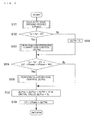
- Fig. 2 is a diagram illustrating an overall control flow of the refrigeration cycle apparatus according to Embodiment 1 of the present invention. The overall control flow is described below based on each of the steps of Fig. 2 .
- the controller 50 calculates a base opening degree (LPbase).
- the controller 50 calculates a predicted value Tc* of the condensing temperature and a predicted value Te* of the evaporating temperature after the compressor 1 is started or after the operating capacity of the compressor 1 is changed. Further, the controller 50 calculates the base opening degree LPbase to be set for the expansion valve 3 based on the predicted value Tc* of the condensing temperature, the predicted value Te* of the evaporating temperature, and a setting value of the operating capacity to be set for the compressor 1 (hereinafter referred to as "compressor capacity VP"). This calculation is described in more detail later.
- the controller 50 determines whether or not an actual measured value Te of the current evaporating temperature is less than a value obtained by subtracting a predetermined temperature (e.g., 5 degrees C) from the predicted value Te* of the evaporating temperature.
- a predetermined temperature e.g., 5 degrees C
- the actual measured value Te of the evaporating temperature can be calculated by converting the suction pressure Ps detected by the suction pressure sensor 43 into a refrigerant saturated gas temperature. Note that, a temperature sensor for detecting the evaporating temperature may also be separately provided.
- a predetermined temperature is subtracted from the predicted value Te* of the evaporating temperature
- This step may also be made by determining whether or not the actual measured value Te of the evaporating temperature is less than the predicted value Te*.
- the controller 50 When the actual measured value Te of the current evaporating temperature is less than the value obtained by subtracting the predetermined temperature from the predicted value Te* of the evaporating temperature, the controller 50 performs low-pressure correction control.
- the controller 50 calculates a predicted value ⁇ P* of a pressure difference between the condensing pressure of the condensor and the evaporating pressure of the evaporator based on the predicted value Tc* of the condensing temperature and the predicted value Te* of the evaporating temperature. Further, the controller 50 calculates a low-pressure correction opening degree ⁇ LPte for correcting the opening degree of the expansion valve 3 based on an actual measured value ⁇ P of the pressure difference between the condensing pressure of the condensor and the evaporating pressure of the evaporator and on the predicted value ⁇ P* of the pressure difference. These calculations are described in more detail later.
- the controller 50 sets the low-pressure correction opening degree ⁇ LPte to zero, and the processing proceeds to Step S106.
- the controller 50 determines whether or not the actual measured value Te of the evaporating temperature is larger than a value obtained by subtracting a predetermined temperature (e.g., 3 degrees C) from the predicted value Te* of the evaporating temperature. Alternatively, the controller 50 determines whether or not the absolute value of a difference between a setting opening degree LP of the expansion valve 3 and the base opening degree LPbase is less than a predetermined ratio (e.g., 30%) of the base opening degree LPbase. When this condition is satisfied, the processing proceeds to Step S106 and the controller 50 performs Td correction control. On the other hand, when this condition is not satisfied, the processing proceeds to Step S107.
- a predetermined temperature e.g. 3 degrees C
- the controller 50 performs the Td correction control.
- the controller 50 performs the Td correction control.
- the controller 50 calculates a target value Tdm for the discharge temperature of the refrigerant to be discharged from the compressor 1 based on the predicted value Tc* of the condensing temperature, the predicted value Te* of the evaporating temperature, and the compressor capacity VP. Further, the controller 50 calculates a Td correction opening degree ⁇ LPtd for correcting the opening degree of the expansion valve 3 based on a difference between the actual measured value of the discharge temperature Td detected by the discharge temperature sensor 41 and the target value Tdm for the discharge temperature. These calculations are described in more detail later.
- the controller 50 updates a correction opening degree ⁇ LPho by adding the low-pressure correction opening degree ⁇ LPte and the Td correction opening degree ⁇ LPtd to the current correction opening degree ⁇ LPho. Note that, the initial value of the correction opening degree ⁇ LPho is zero.
- the controller 50 calculates the setting opening degree LP by adding the correction opening degree ⁇ LPho to the base opening degree LPbase, and then sets the opening degree of the expansion valve 3 to the setting opening degree LP. The processing then returns to Step S101, and the operations described above are repeated.
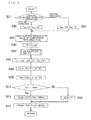
- the controller 50 determines whether the current operating state is the heating operation or the cooling operation. When the current operating state is determined to be the cooling operation, the processing proceeds to Step S202. When the current operating state is determined to be the heating operation, the processing proceeds to Step S203.
- the controller 50 acquires an outside air temperature AT detected by the outdoor temperature sensor 44 as the condensor suction air temperature Tac. Further, the controller 50 acquires an indoor temperature Tr detected by the indoor temperature sensor 45 as the evaporator suction air temperature Tae.
- the controller 50 acquires the outside air temperature AT detected by the outdoor temperature sensor 44 as the evaporator suction air temperature Tae. Further, the controller 50 acquires the indoor temperature Tr detected by the indoor temperature sensor 45 as the condensor suction air temperature Tac.
- the controller 50 When starting the compressor 1 or changing the operating capacity of the compressor 1, the controller 50 reads a control instruction value of a frequency f to be set for the compressor 1.
- the controller 50 calculates the setting value of the operating capacity (compressor capacity VP [cc x Hz]) to be set for the compressor 1 when starting the compressor 1 or when changing the operating capacity of the compressor 1 by multiplying the frequency f (Hz) by a displacement Vst [cc] of the compressor 1.
- the displacement Vst which is a value unique to the compressor 1, is stored in advance in the ROM and the like.
- the controller 50 calculates ⁇ Te and ⁇ Tc.
- the evaporating temperature Te is lower than the evaporator suction air temperature Tae by ⁇ Te.
- the condensing temperature Tc is higher than the condensor suction air temperature Tac by ⁇ Tc.
- ⁇ Te is a predicted value of the difference between the evaporating temperature Te and the evaporator suction air temperature Tae during stable operation after the compressor 1 is started or after the operating capacity of the compressor 1 is changed.
- ⁇ Tc is a predicted value of the difference between the condensing temperature Tc and the condensor suction air temperature Tac during stable operation after the compressor 1 is started or after the operating capacity of the compressor 1 is changed.
- Expression (1) and Expression (2) hold from the energy balance between the refrigerant and the air (heat medium) in the evaporator.
- VP ⁇ ⁇ s ⁇ ⁇ v ⁇ ⁇ ⁇ he AK ⁇ ⁇ ⁇ Te
- the controller 50 calculates ⁇ Te by substituting the compressor capacity VP into Expression (4).
- the controller 50 calculates ⁇ Tc by substituting the compressor capacity VP into Expression (7).
- the controller 50 calculates the predicted value Te* of the evaporating temperature by substituting the current evaporator suction air temperature Tae and the calculated ⁇ Te into Expression (8).
- Te * Tae - ⁇ ⁇ Te
- the controller 50 determines a base Cv value (Cv_b) of the expansion valve 3 based on the predicted value Tc* of the condensing temperature, the predicted value Te* of the evaporating temperature, and the compressor capacity VP.
- the controller 50 calculates ⁇ P* by converting the predicted value Tc* of the condensing temperature and the predicted value Te* of the evaporating temperature into a condensing pressure Pd and an evaporating pressure Ps using a saturation temperature.
- ⁇ l is taken to be the liquid density (fixed) based on the assumption that the refrigerant at the inlet of the expansion valve 3 is in a liquid state. Note that, ⁇ v is assumed to be fixed (unique value).
- the controller 50 calculates the base Cv value (Cv_b) of the expansion valve 3 by substituting these values into Expression (12).
- the controller 50 calculates the target value Tdm for the discharge temperature of the refrigerant to be discharged from the compressor 1 based on the predicted value Tc* of the condensing temperature, the predicted value Te* of the evaporating temperature, and the compressor capacity VP.
- a theoretical value, test data, or the like of a characteristic of the discharge temperature Td for the condensing temperature Tc, the evaporating temperature Te, and the compressor capacity VP when the degree of suction superheat of the compressor 1 is zero is stored in advance as a table in the ROM, for example.
- the discharge temperature Td corresponding to the predicted value Tc, the predicted value Te*, and the compressor capacity VP is set as the target value Tdm for the discharge temperature by referring to this table.
- the target value Tdm for the discharge temperature is the discharge temperature Td when the degree of suction superheat of the compressor 1 is zero.
- the controller 50 determines whether or not the target value Tdm for the discharge temperature calculated in Step S209 is more than a discharge temperature maximum permitted value Tdmax.
- the discharge temperature maximum permitted value Tdmax which is a value unique to the compressor 1, is stored in advance in the ROM and the like.
- the controller 50 calculates a Cv correction value ⁇ Cvtd based on a difference between the target value Tdm for the discharge temperature and the discharge temperature maximum permitted value Tdmax.
- the Cv correction value ⁇ Cvtd is a value greater than zero. As the difference between the target value Tdm for the discharge temperature and the discharge temperature maximum permitted value Tdmax becomes larger, the larger value is set as the Cv correction value ⁇ Cvtd. In other words, when the target value Tdm for the discharge temperature is more than the discharge temperature maximum permitted value Tdmax, the Cv value is corrected so that the opening degree of the expansion valve 3 increases to prevent the discharge temperature Td after startup from being equal to or more than the discharge temperature maximum permitted value Tdmax.
- the controller 50 sets the Cv correction value ⁇ Cvtd to zero, and the processing proceeds to Step S213.
- the controller 50 calculates a base opening degree LPbase by converting a value obtained by adding the Cv correction value ⁇ Cvtd to the base Cv value (Cv_b) of the expansion valve 3 using a conversion function fLEV for converting the Cv value into the setting opening degree LP.
- the Cv value [-] and the setting opening degree LP [pulse] have a correspondence relationship unique to the expansion valve 3. Such a correspondence relationship is approximated and stored in the ROM in advance as the conversion function fLEV. Note that, the correspondence relationship between the setting opening degree LP and the Cv value may also be stored as table information.
- the controller 50 then finishes the base opening degree calculation, and the processing proceeds to Step S102 ( Fig. 2 ).
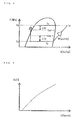
- Fig. 6 is a p-h diagram showing low-pressure correction control of the refrigeration cycle apparatus according to Embodiment 1 of the present invention.
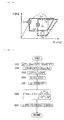
- Fig. 7 is a diagram illustrating a low-pressure correction control flow of the refrigeration cycle apparatus according to Embodiment 1 of the present invention.
- the above-mentioned base opening degree LPbase is an opening degree calculated based on the assumption that the refrigerant at the inlet of the expansion valve 3 is in a liquid state.
- the refrigerant at the inlet of the expansion valve 3 is in a two-phase gas-liquid state, the refrigerant density is less than that for a liquid state.
- pressure loss increases, which can lead to a decrease in the refrigerant pressure on the low-pressure side (drawing-in of low-pressure).
- the solid line represents a refrigerant circuit in which the refrigerant at the inlet of the expansion valve 3 is in a liquid state when the pressure on the low-pressure side (predicted value Tc* and predicted value Te*) is stable.
- the dotted line represents a refrigerant circuit in which the refrigerant at the inlet of the expansion valve 3 is in a two-phase gas-liquid state when the pressure on the low-pressure side has decreased.
- the controller 50 determines that the refrigerant at the inlet of the expansion valve 3 is in a two-phase gas-liquid state (low density) (S102), and performs low-pressure correction control. Further, the controller 50 also suppresses the decrease in pressure on the low-pressure side by correcting the opening degree of the expansion valve 3 so that the condensing temperature is the predicted value Tc* and the evaporating temperature is the predicted value Te*.
- S102 two-phase gas-liquid state
- the controller 50 calculates the predicted value ⁇ P* of the high/low pressure difference based on the predicted value Tc* of the condensing temperature and the predicted value Te* of the evaporating temperature. For example, the predicted value Tc* of the condensing temperature is converted into the condensing pressure Pd and the predicted value Te* of the evaporating temperature is converted into the evaporating pressure Ps using their respective saturation temperatures. Then, the predicted value ⁇ P* of the high/low pressure difference is calculated based on the difference between the condensing pressure Pd and the evaporating pressure Ps.
- the controller 50 calculates the actual measured value ⁇ P of the high/low pressure difference based on the difference between the discharge pressure Pd detected by the discharge pressure sensor 42 and the suction pressure Ps detected by the suction pressure sensor 43.
- the actual measured value ⁇ P of the high/low pressure difference may also be calculated by separately providing a temperature sensor for detecting the condensing temperature and a temperature sensor for detecting the evaporating temperature, and converting the measured temperatures into the respective pressure values.
- the controller 50 calculates ⁇ s* using the predicted value Te*.
- the controller 50 calculates ps using the actual measured value Te of the current evaporating temperature based on the relationship in Expression (3).
- the actual measured value Te of the evaporating temperature can be calculated by converting the suction pressure Ps detected by the suction pressure sensor 43 into a refrigerant saturated gas temperature. Note that, a temperature sensor for detecting the evaporating temperature may also be separately provided.
- the controller 50 converts the current setting opening degree LP into a Cv value using the conversion function fLEVCv for converting the setting opening degree LP into a Cv value.
- the conversion function fLEVCv may be determined based on the correspondence relationship between the Cv value [-] and the setting opening degree LP [pulse], or may be stored as table information.
- the controller 50 calculates the Cvte, which is the corrected Cv value, by substituting each of the values calculated in Step S301 to Step S305 into Expression (15).
- the controller 50 calculates the difference between a value obtained by converting the Cvte into an opening degree setting value and a value obtained by converting the current Cv value into an opening degree setting value as the low-pressure correction opening degree ⁇ LPte.
- the controller 50 then finishes the low-pressure correction control, and the processing proceeds to Step S105 ( Fig. 2 ).
- Fig. 8 is a diagram illustrating a Td correction control flow of the refrigeration cycle apparatus according to Embodiment 1 of the present invention. The control flow is described below based on each of the steps of Fig. 8 .
- the controller 50 calculates the target value Tdm for the discharge temperature of the refrigerant to be discharged from the compressor 1 based on the predicted value Tc* of the condensing temperature, the predicted value Te* of the evaporating temperature, and the compressor capacity VP.
- the theoretical value, test data, or the like of a characteristic of the discharge temperature Td for the condensing temperature Tc, the evaporating temperature Te, and the compressor capacity VP when the degree of suction superheat of the compressor 1 is zero is stored in advance as a table in the ROM, for example.
- the discharge temperature Td corresponding to the predicted value Tc, the predicted value Te*, and the compressor capacity VP is set as the target value Tdm for the discharge temperature by referring to this table.
- the target value Tdm for the discharge temperature is the discharge temperature Td when the degree of suction superheat of the compressor 1 is zero.
- the controller 50 calculates the Cv correction value ⁇ Cvtd based on the difference between the current discharge temperature Td detected by the discharge temperature sensor 41 and the target value Tdm for the discharge temperature.
- the Cv correction value ⁇ Cvtd is a value greater than zero. As the difference between the current discharge temperature Td and the target value Tdm for the discharge temperature becomes larger, the larger value is set as the Cv correction value ⁇ Cvtd.
- the Cv correction value ⁇ Cvtd when the discharge temperature Td is more than the target value Tdm, the Cv correction value ⁇ Cvtd is set to a positive value, and when the discharge temperature Td is less than the target value Tdm, the Cv correction value ⁇ Cvtd is set to a negative value.
- the discharge temperature Td is controlled to be at the target value Tdm by increasing the opening degree of the expansion valve 3 when the actual measured value of the discharge temperature Td is more than the target value Tdm, and decreasing the opening degree of the expansion valve 3 when the actual measured value of the discharge temperature Td is less than the target value Tdm.
- the controller 50 converts a value calculated by adding ⁇ Cvtd to the current Cv value into an opening degree setting value and converts the current Cv value into an opening degree setting value, and calculates the difference between the opening degree setting values obtained by the conversion as the Td correction opening degree ⁇ LPtd.
- the controller 50 then finishes the Td correction control, and the processing proceeds to Step S107 ( Fig. 2 ).
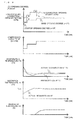
- Fig. 9 is a diagram showing examples of operation results of the refrigeration cycle apparatus according to Embodiment 1 of the present invention.
- the base opening degree of the expansion valve 3 when the compressor 1 is started or when the compressor capacity VP is changed is a value that is proportional to the compressor capacity VP.
- the controller 50 determines that the refrigerant at the inlet of the expansion valve 3 is in a two-phase gas-liquid state (low density), and performs low-pressure correction control. As a result, the opening degree of the expansion valve 3 is increased by the low-pressure correction opening degree ⁇ LPte, and the decrease in the pressure on the low-pressure side is suppressed.
- Td correction control is performed.
- the discharge temperature Td is controlled to be at the target value Tdm by increasing or decreasing the opening degree of the expansion valve 3 by the Td correction opening degree ⁇ LPtd.
- the controller 50 when starting the compressor 1 or when changing the operating capacity of the compressor 1, calculates the predicted value Tc* of the condensing temperature of the refrigerant and the predicted value Te* of the evaporating temperature of the refrigerant after the compressor 1 is started or after the operating capacity of the compressor 1 is changed based on the condensor suction air temperature Tac, the evaporator suction air temperature Tae, and the compressor capacity VP. Further, the controller 50 determines the opening degree to be set for the expansion valve 3 based on the predicted value Tc* of the condensing temperature, the predicted value Te* of the evaporating temperature, and the compressor capacity VP.
- the appropriate opening degree of the expansion valve 3 can be set based on the environmental conditions and the compressor capacity VP.
- liquid can be prevented from flowing back into the compressor 1, allowing device reliability to be improved.
- the predicted value Tc* and the predicted value Te* after the compressor 1 is started or after the operating capacity of the compressor 1 is changed are calculated, and hence the quick response of the opening degree control of the expansion valve 3 can be improved.
- the predicted value ⁇ P* of the pressure difference between the condensing pressure and the evaporating pressure is calculated based on the predicted value Tc* and the predicted value Te*
- the actual measured value ⁇ P of the pressure difference between the condensing pressure and the evaporating pressure is calculated based on the condensor suction air temperature Tac and the evaporator suction air temperature Tae.
- the opening degree to be set for the expansion valve 3 is corrected by calculating the low-pressure correction opening degree ⁇ LPte based on the predicted value ⁇ P* of the pressure difference and the actual measured value ⁇ P of the pressure difference.
- the decrease in the refrigerant pressure on the low-pressure side (drawing-in of low-pressure) that occurs under an environmental condition in which the outside air temperature is low can be suppressed. Further, suppressing the decrease in the refrigerant pressure on the low-pressure side enables the refrigerant circuit amount to be increased, and hence the heating capacity to be improved. In addition, suppressing the drawing-in of low pressure during startup at a low outside air temperature enables deterioration in the operating efficiency to be suppressed, and hence enables energy savings to be improved.
- the controller 50 calculates the target value Tdm for the discharge temperature of the refrigerant to be discharged from the compressor 1 after the operating capacity of the compressor 1 is changed based on the predicted value Tc*, the predicted value Te*, and the compressor capacity VP. In addition, the controller 50 calculates the Td correction opening degree ⁇ LPtd, and corrects the opening degree to be set for the expansion valve 3 based on the difference between the actual measured value of the discharge temperature Td and the target value Tdm.
- the controller 50 corrects the opening degree to be set for the expansion valve 3 based on the difference between the discharge temperature maximum permitted value Tdmax and the target value Tdm.
- the startup operation can be performed within the permitted operating range because of a wet suction operation of the compressor 1.
- the base opening degree calculation (S101), low-pressure correction control (S103), and Td correction control (S106) are performed as the control operation for setting the opening degree of the expansion valve 3.
- the present invention is not limited to this embodiment.
- the control may be performed by executing an arbitrary one or two of the base opening degree calculation, low-pressure correction control, and Td correction control.
- the opening degree of the expansion valve 3 may be set by omitting Step S102 to Step S104, and just calculating the base opening degree and performing the Td correction control. Further, for example, in Fig. 2 , the opening degree of the expansion valve 3 may be set by omitting Step S105 and Step S106, and just calculating the base opening degree and performing the low-pressure correction control. Still further, for example, in Fig. 2 , the opening degree of the expansion valve 3 may be set by omitting Step S102 to Step S107, and just calculating the base opening degree. Still even further, for example, in Fig. 2 , the opening degree of the expansion valve 3 may be corrected by omitting Step S101, setting the base opening degree to an arbitrary opening degree, and then performing the low-pressure correction control and the low-pressure correction control.
Landscapes
- Engineering & Computer Science (AREA)
- Physics & Mathematics (AREA)
- Mechanical Engineering (AREA)
- Thermal Sciences (AREA)
- General Engineering & Computer Science (AREA)
- Air Conditioning Control Device (AREA)
Applications Claiming Priority (1)
| Application Number | Priority Date | Filing Date | Title |
|---|---|---|---|
| PCT/JP2013/052241 WO2014118952A1 (ja) | 2013-01-31 | 2013-01-31 | 冷凍サイクル装置、及び冷凍サイクル装置の制御方法 |
Publications (3)
| Publication Number | Publication Date |
|---|---|
| EP2952829A1 true EP2952829A1 (de) | 2015-12-09 |
| EP2952829A4 EP2952829A4 (de) | 2016-12-21 |
| EP2952829B1 EP2952829B1 (de) | 2020-09-09 |
Family
ID=51261697
Family Applications (1)
| Application Number | Title | Priority Date | Filing Date |
|---|---|---|---|
| EP13873980.0A Not-in-force EP2952829B1 (de) | 2013-01-31 | 2013-01-31 | Kühlmittelkreislaufvorrichtung und verfahren zur steuerung der kühlmittelkreislaufvorrichtung |
Country Status (5)
| Country | Link |
|---|---|
| US (1) | US20150362238A1 (de) |
| EP (1) | EP2952829B1 (de) |
| JP (1) | JP6109205B2 (de) |
| CN (1) | CN104969014B (de) |
| WO (1) | WO2014118952A1 (de) |
Cited By (1)
| Publication number | Priority date | Publication date | Assignee | Title |
|---|---|---|---|---|
| WO2017143267A1 (en) | 2016-02-18 | 2017-08-24 | Emerson Climate Technologies, Inc. | Compressor floodback protection system |
Families Citing this family (14)
| Publication number | Priority date | Publication date | Assignee | Title |
|---|---|---|---|---|
| WO2014115891A1 (ja) * | 2013-01-28 | 2014-07-31 | ダイキン工業 株式会社 | 空気調和機 |
| JP6242321B2 (ja) * | 2014-10-03 | 2017-12-06 | 三菱電機株式会社 | 空気調和機 |
| RU2697020C1 (ru) * | 2016-02-04 | 2019-08-08 | Франке Технолоджи Энд Трейдмарк Лтд | Холодильная установка |
| DE102016005782B4 (de) * | 2016-05-11 | 2018-10-18 | Audi Ag | Verfahren zum Betreiben einer Fahrzeugklimaanlage mit einem Kältemittelkreislauf |
| CN107752587A (zh) * | 2016-08-16 | 2018-03-06 | 开利公司 | 制冷展示柜、制冷系统及恒温控制方法 |
| US11060771B2 (en) * | 2016-10-25 | 2021-07-13 | Samsung Electronics Co., Ltd. | Air conditioner with a refrigerant ratio adjustor |
| CN106556187B (zh) * | 2016-11-10 | 2019-02-19 | 华为技术有限公司 | 空调制冷系统临界状态下运行的控制方法、装置及系统 |
| US11181307B2 (en) * | 2017-11-22 | 2021-11-23 | Mitsubishi Electric Corporation | Air conditioner and expansion valve control thereof |
| US11802726B2 (en) * | 2018-12-06 | 2023-10-31 | Mitsubishi Electric Corporation | Refrigeration cycle device |
| CN112413942B (zh) * | 2020-11-24 | 2024-09-24 | 珠海格力电器股份有限公司 | 空调系统及空调系统的控制方法 |
| WO2022123787A1 (ja) * | 2020-12-11 | 2022-06-16 | 三菱電機株式会社 | 空調システムの状態の学習装置および推論装置 |
| CN114608263A (zh) * | 2022-03-11 | 2022-06-10 | 长虹美菱股份有限公司 | 一种基于电子膨胀阀的冰箱制冷系统速冻控制方法 |
| CN118306166A (zh) * | 2023-01-09 | 2024-07-09 | 开利公司 | 多温区空气调节系统及其控制方法、运输制冷车辆 |
| JP7779354B1 (ja) * | 2024-08-29 | 2025-12-03 | 株式会社富士通ゼネラル | 冷凍サイクル装置 |
Family Cites Families (21)
| Publication number | Priority date | Publication date | Assignee | Title |
|---|---|---|---|---|
| US3276245A (en) * | 1963-04-22 | 1966-10-04 | Waste King Corp | Density compensator device |
| JPS59145451A (ja) * | 1983-02-08 | 1984-08-20 | 三菱電機株式会社 | 冷凍サイクル装置 |
| JPH0830625B2 (ja) * | 1986-12-08 | 1996-03-27 | 松下冷機株式会社 | 空気調和機 |
| JP2921254B2 (ja) * | 1992-03-24 | 1999-07-19 | ダイキン工業株式会社 | 冷凍装置 |
| JP3208923B2 (ja) | 1993-05-28 | 2001-09-17 | ダイキン工業株式会社 | 空気調和装置の運転制御装置 |
| JP3483711B2 (ja) * | 1996-07-25 | 2004-01-06 | 株式会社エヌ・ティ・ティ ファシリティーズ | 空気調和機とその制御方法 |
| JPH11153366A (ja) | 1997-11-25 | 1999-06-08 | Daikin Ind Ltd | 冷凍装置の起動制御装置 |
| KR100332764B1 (ko) | 1999-05-27 | 2002-04-17 | 구자홍 | 인버터 열펌프의 기동 알고리즘 |
| JP2001304699A (ja) * | 2000-04-26 | 2001-10-31 | Daikin Ind Ltd | 冷凍装置 |
| JP3661014B2 (ja) * | 2001-09-28 | 2005-06-15 | ダイキン工業株式会社 | 冷凍装置 |
| JP4984453B2 (ja) * | 2004-09-22 | 2012-07-25 | 株式会社デンソー | エジェクタ式冷凍サイクル |
| JP3943104B2 (ja) * | 2004-10-12 | 2007-07-11 | 三菱電機株式会社 | 多室形空気調和機 |
| US20080302118A1 (en) * | 2005-08-31 | 2008-12-11 | Yu Chen | Heat Pump Water Heating System Using Variable Speed Compressor |
| JP4626630B2 (ja) * | 2007-05-24 | 2011-02-09 | トヨタ自動車株式会社 | フィードバック制御システム |
| EP2182306B1 (de) * | 2007-08-28 | 2017-11-01 | Mitsubishi Electric Corporation | Klimaanlage |
| US8459053B2 (en) * | 2007-10-08 | 2013-06-11 | Emerson Climate Technologies, Inc. | Variable speed compressor protection system and method |
| JP5022920B2 (ja) | 2008-01-16 | 2012-09-12 | 三洋電機株式会社 | 空気調和装置 |
| JP5326488B2 (ja) * | 2008-02-29 | 2013-10-30 | ダイキン工業株式会社 | 空気調和装置 |
| JP2010175106A (ja) * | 2009-01-28 | 2010-08-12 | Sanyo Electric Co Ltd | 冷凍装置 |
| JP2012127631A (ja) * | 2010-12-17 | 2012-07-05 | Daikin Industries Ltd | 電動弁制御装置 |
| JP5316665B2 (ja) * | 2012-03-30 | 2013-10-16 | 富士通株式会社 | ファン装置 |
-
2013
- 2013-01-31 JP JP2014559444A patent/JP6109205B2/ja not_active Expired - Fee Related
- 2013-01-31 US US14/764,312 patent/US20150362238A1/en not_active Abandoned
- 2013-01-31 EP EP13873980.0A patent/EP2952829B1/de not_active Not-in-force
- 2013-01-31 CN CN201380071974.2A patent/CN104969014B/zh not_active Expired - Fee Related
- 2013-01-31 WO PCT/JP2013/052241 patent/WO2014118952A1/ja not_active Ceased
Cited By (4)
| Publication number | Priority date | Publication date | Assignee | Title |
|---|---|---|---|---|
| WO2017143267A1 (en) | 2016-02-18 | 2017-08-24 | Emerson Climate Technologies, Inc. | Compressor floodback protection system |
| EP3417219A4 (de) * | 2016-02-18 | 2019-11-06 | Emerson Climate Technologies, Inc. | Schutzsystem für verdichterrückfluss |
| US10801762B2 (en) | 2016-02-18 | 2020-10-13 | Emerson Climate Technologies, Inc. | Compressor floodback protection system |
| US11573037B2 (en) | 2016-02-18 | 2023-02-07 | Emerson Climate Technologies, Inc. | Compressor floodback protection system |
Also Published As
| Publication number | Publication date |
|---|---|
| EP2952829B1 (de) | 2020-09-09 |
| JPWO2014118952A1 (ja) | 2017-01-26 |
| WO2014118952A1 (ja) | 2014-08-07 |
| CN104969014A (zh) | 2015-10-07 |
| EP2952829A4 (de) | 2016-12-21 |
| US20150362238A1 (en) | 2015-12-17 |
| CN104969014B (zh) | 2017-04-05 |
| JP6109205B2 (ja) | 2017-04-05 |
Similar Documents
| Publication | Publication Date | Title |
|---|---|---|
| EP2952829B1 (de) | Kühlmittelkreislaufvorrichtung und verfahren zur steuerung der kühlmittelkreislaufvorrichtung | |
| EP3889523B1 (de) | Kühlmittelleckbestimmungssystem und kältekreislaufvorrichtung | |
| EP2320169B1 (de) | Klimaanlage und verfahren zur bestimmung der darin enthaltenen kältemittelmenge | |
| US10323862B2 (en) | Air conditioning unit having dynamic target condensing and evaporating values based on load requirements | |
| EP3859247B1 (de) | Klimaanlage | |
| EP2163839B1 (de) | Klimaanlage | |
| EP2806233B1 (de) | Kühlvorrichtung | |
| EP3587948B1 (de) | Klimaanlage | |
| EP2211123B1 (de) | Klimaanlage | |
| EP2314958A1 (de) | Verfahren zum schätzen der kältemittelmenge einer klimaanlage und klimaanlage | |
| EP3657090B1 (de) | Klimatisierungssystem | |
| EP2623891B1 (de) | Ausseneinheit für eine kühlvorrichtung | |
| EP2270405A1 (de) | Kühlvorrichtung | |
| EP1983280A1 (de) | Klimaanlage | |
| EP2730863B1 (de) | Kühl- und klimaanlagenvorrichtung und verfahren zur steuerung der kühl- und klimaanlagenvorrichtung | |
| WO2005121664A1 (ja) | 空気調和装置 | |
| KR20110104054A (ko) | 부하 처리 밸런스 설정 장치 | |
| JP2017075760A (ja) | 空気調和機 | |
| EP3647688A1 (de) | Klimatisierungsvorrichtung | |
| US9851134B2 (en) | Air-conditioning apparatus | |
| JPWO2017094172A1 (ja) | 空気調和装置 | |
| EP3165846B1 (de) | Kühl- und klimaanlagenvorrichtung | |
| JP6415612B2 (ja) | 冷凍サイクル装置 | |
| EP3974744A1 (de) | Klimatisierungsvorrichtung | |
| CN119665345B (zh) | 热泵空调系统 |
Legal Events
| Date | Code | Title | Description |
|---|---|---|---|
| PUAI | Public reference made under article 153(3) epc to a published international application that has entered the european phase |
Free format text: ORIGINAL CODE: 0009012 |
|
| 17P | Request for examination filed |
Effective date: 20150730 |
|
| AK | Designated contracting states |
Kind code of ref document: A1 Designated state(s): AL AT BE BG CH CY CZ DE DK EE ES FI FR GB GR HR HU IE IS IT LI LT LU LV MC MK MT NL NO PL PT RO RS SE SI SK SM TR |
|
| AX | Request for extension of the european patent |
Extension state: BA ME |
|
| DAX | Request for extension of the european patent (deleted) | ||
| A4 | Supplementary search report drawn up and despatched |
Effective date: 20161122 |
|
| RIC1 | Information provided on ipc code assigned before grant |
Ipc: F25B 1/00 20060101AFI20161116BHEP Ipc: F25B 49/02 20060101ALI20161116BHEP Ipc: F25B 13/00 20060101ALI20161116BHEP |
|
| GRAP | Despatch of communication of intention to grant a patent |
Free format text: ORIGINAL CODE: EPIDOSNIGR1 |
|
| STAA | Information on the status of an ep patent application or granted ep patent |
Free format text: STATUS: GRANT OF PATENT IS INTENDED |
|
| INTG | Intention to grant announced |
Effective date: 20200504 |
|
| GRAS | Grant fee paid |
Free format text: ORIGINAL CODE: EPIDOSNIGR3 |
|
| GRAA | (expected) grant |
Free format text: ORIGINAL CODE: 0009210 |
|
| STAA | Information on the status of an ep patent application or granted ep patent |
Free format text: STATUS: THE PATENT HAS BEEN GRANTED |
|
| AK | Designated contracting states |
Kind code of ref document: B1 Designated state(s): AL AT BE BG CH CY CZ DE DK EE ES FI FR GB GR HR HU IE IS IT LI LT LU LV MC MK MT NL NO PL PT RO RS SE SI SK SM TR |
|
| REG | Reference to a national code |
Ref country code: GB Ref legal event code: FG4D |
|
| REG | Reference to a national code |
Ref country code: AT Ref legal event code: REF Ref document number: 1312065 Country of ref document: AT Kind code of ref document: T Effective date: 20200915 Ref country code: CH Ref legal event code: EP |
|
| REG | Reference to a national code |
Ref country code: DE Ref legal event code: R096 Ref document number: 602013072472 Country of ref document: DE |
|
| REG | Reference to a national code |
Ref country code: IE Ref legal event code: FG4D |
|
| REG | Reference to a national code |
Ref country code: LT Ref legal event code: MG4D |
|
| PG25 | Lapsed in a contracting state [announced via postgrant information from national office to epo] |
Ref country code: SE Free format text: LAPSE BECAUSE OF FAILURE TO SUBMIT A TRANSLATION OF THE DESCRIPTION OR TO PAY THE FEE WITHIN THE PRESCRIBED TIME-LIMIT Effective date: 20200909 Ref country code: NO Free format text: LAPSE BECAUSE OF FAILURE TO SUBMIT A TRANSLATION OF THE DESCRIPTION OR TO PAY THE FEE WITHIN THE PRESCRIBED TIME-LIMIT Effective date: 20201209 Ref country code: BG Free format text: LAPSE BECAUSE OF FAILURE TO SUBMIT A TRANSLATION OF THE DESCRIPTION OR TO PAY THE FEE WITHIN THE PRESCRIBED TIME-LIMIT Effective date: 20201209 Ref country code: HR Free format text: LAPSE BECAUSE OF FAILURE TO SUBMIT A TRANSLATION OF THE DESCRIPTION OR TO PAY THE FEE WITHIN THE PRESCRIBED TIME-LIMIT Effective date: 20200909 Ref country code: LT Free format text: LAPSE BECAUSE OF FAILURE TO SUBMIT A TRANSLATION OF THE DESCRIPTION OR TO PAY THE FEE WITHIN THE PRESCRIBED TIME-LIMIT Effective date: 20200909 Ref country code: FI Free format text: LAPSE BECAUSE OF FAILURE TO SUBMIT A TRANSLATION OF THE DESCRIPTION OR TO PAY THE FEE WITHIN THE PRESCRIBED TIME-LIMIT Effective date: 20200909 Ref country code: GR Free format text: LAPSE BECAUSE OF FAILURE TO SUBMIT A TRANSLATION OF THE DESCRIPTION OR TO PAY THE FEE WITHIN THE PRESCRIBED TIME-LIMIT Effective date: 20201210 |
|
| REG | Reference to a national code |
Ref country code: AT Ref legal event code: MK05 Ref document number: 1312065 Country of ref document: AT Kind code of ref document: T Effective date: 20200909 |
|
| REG | Reference to a national code |
Ref country code: NL Ref legal event code: MP Effective date: 20200909 |
|
| PG25 | Lapsed in a contracting state [announced via postgrant information from national office to epo] |
Ref country code: LV Free format text: LAPSE BECAUSE OF FAILURE TO SUBMIT A TRANSLATION OF THE DESCRIPTION OR TO PAY THE FEE WITHIN THE PRESCRIBED TIME-LIMIT Effective date: 20200909 Ref country code: PL Free format text: LAPSE BECAUSE OF FAILURE TO SUBMIT A TRANSLATION OF THE DESCRIPTION OR TO PAY THE FEE WITHIN THE PRESCRIBED TIME-LIMIT Effective date: 20200909 Ref country code: RS Free format text: LAPSE BECAUSE OF FAILURE TO SUBMIT A TRANSLATION OF THE DESCRIPTION OR TO PAY THE FEE WITHIN THE PRESCRIBED TIME-LIMIT Effective date: 20200909 |
|
| PG25 | Lapsed in a contracting state [announced via postgrant information from national office to epo] |
Ref country code: CZ Free format text: LAPSE BECAUSE OF FAILURE TO SUBMIT A TRANSLATION OF THE DESCRIPTION OR TO PAY THE FEE WITHIN THE PRESCRIBED TIME-LIMIT Effective date: 20200909 Ref country code: EE Free format text: LAPSE BECAUSE OF FAILURE TO SUBMIT A TRANSLATION OF THE DESCRIPTION OR TO PAY THE FEE WITHIN THE PRESCRIBED TIME-LIMIT Effective date: 20200909 Ref country code: RO Free format text: LAPSE BECAUSE OF FAILURE TO SUBMIT A TRANSLATION OF THE DESCRIPTION OR TO PAY THE FEE WITHIN THE PRESCRIBED TIME-LIMIT Effective date: 20200909 Ref country code: SM Free format text: LAPSE BECAUSE OF FAILURE TO SUBMIT A TRANSLATION OF THE DESCRIPTION OR TO PAY THE FEE WITHIN THE PRESCRIBED TIME-LIMIT Effective date: 20200909 Ref country code: PT Free format text: LAPSE BECAUSE OF FAILURE TO SUBMIT A TRANSLATION OF THE DESCRIPTION OR TO PAY THE FEE WITHIN THE PRESCRIBED TIME-LIMIT Effective date: 20210111 Ref country code: NL Free format text: LAPSE BECAUSE OF FAILURE TO SUBMIT A TRANSLATION OF THE DESCRIPTION OR TO PAY THE FEE WITHIN THE PRESCRIBED TIME-LIMIT Effective date: 20200909 |
|
| PG25 | Lapsed in a contracting state [announced via postgrant information from national office to epo] |
Ref country code: ES Free format text: LAPSE BECAUSE OF FAILURE TO SUBMIT A TRANSLATION OF THE DESCRIPTION OR TO PAY THE FEE WITHIN THE PRESCRIBED TIME-LIMIT Effective date: 20200909 Ref country code: AT Free format text: LAPSE BECAUSE OF FAILURE TO SUBMIT A TRANSLATION OF THE DESCRIPTION OR TO PAY THE FEE WITHIN THE PRESCRIBED TIME-LIMIT Effective date: 20200909 Ref country code: AL Free format text: LAPSE BECAUSE OF FAILURE TO SUBMIT A TRANSLATION OF THE DESCRIPTION OR TO PAY THE FEE WITHIN THE PRESCRIBED TIME-LIMIT Effective date: 20200909 Ref country code: IS Free format text: LAPSE BECAUSE OF FAILURE TO SUBMIT A TRANSLATION OF THE DESCRIPTION OR TO PAY THE FEE WITHIN THE PRESCRIBED TIME-LIMIT Effective date: 20210109 |
|
| REG | Reference to a national code |
Ref country code: DE Ref legal event code: R097 Ref document number: 602013072472 Country of ref document: DE |
|
| PG25 | Lapsed in a contracting state [announced via postgrant information from national office to epo] |
Ref country code: SK Free format text: LAPSE BECAUSE OF FAILURE TO SUBMIT A TRANSLATION OF THE DESCRIPTION OR TO PAY THE FEE WITHIN THE PRESCRIBED TIME-LIMIT Effective date: 20200909 |
|
| PLBE | No opposition filed within time limit |
Free format text: ORIGINAL CODE: 0009261 |
|
| STAA | Information on the status of an ep patent application or granted ep patent |
Free format text: STATUS: NO OPPOSITION FILED WITHIN TIME LIMIT |
|
| REG | Reference to a national code |
Ref country code: DE Ref legal event code: R119 Ref document number: 602013072472 Country of ref document: DE |
|
| 26N | No opposition filed |
Effective date: 20210610 |
|
| PG25 | Lapsed in a contracting state [announced via postgrant information from national office to epo] |
Ref country code: SI Free format text: LAPSE BECAUSE OF FAILURE TO SUBMIT A TRANSLATION OF THE DESCRIPTION OR TO PAY THE FEE WITHIN THE PRESCRIBED TIME-LIMIT Effective date: 20200909 Ref country code: DK Free format text: LAPSE BECAUSE OF FAILURE TO SUBMIT A TRANSLATION OF THE DESCRIPTION OR TO PAY THE FEE WITHIN THE PRESCRIBED TIME-LIMIT Effective date: 20200909 Ref country code: MC Free format text: LAPSE BECAUSE OF FAILURE TO SUBMIT A TRANSLATION OF THE DESCRIPTION OR TO PAY THE FEE WITHIN THE PRESCRIBED TIME-LIMIT Effective date: 20200909 |
|
| REG | Reference to a national code |
Ref country code: CH Ref legal event code: PL |
|
| PG25 | Lapsed in a contracting state [announced via postgrant information from national office to epo] |
Ref country code: LU Free format text: LAPSE BECAUSE OF NON-PAYMENT OF DUE FEES Effective date: 20210131 |
|
| REG | Reference to a national code |
Ref country code: BE Ref legal event code: MM Effective date: 20210131 |
|
| PG25 | Lapsed in a contracting state [announced via postgrant information from national office to epo] |
Ref country code: CH Free format text: LAPSE BECAUSE OF NON-PAYMENT OF DUE FEES Effective date: 20210131 Ref country code: DE Free format text: LAPSE BECAUSE OF NON-PAYMENT OF DUE FEES Effective date: 20210803 Ref country code: LI Free format text: LAPSE BECAUSE OF NON-PAYMENT OF DUE FEES Effective date: 20210131 |
|
| PG25 | Lapsed in a contracting state [announced via postgrant information from national office to epo] |
Ref country code: IE Free format text: LAPSE BECAUSE OF NON-PAYMENT OF DUE FEES Effective date: 20210131 |
|
| PG25 | Lapsed in a contracting state [announced via postgrant information from national office to epo] |
Ref country code: BE Free format text: LAPSE BECAUSE OF NON-PAYMENT OF DUE FEES Effective date: 20210131 |
|
| PG25 | Lapsed in a contracting state [announced via postgrant information from national office to epo] |
Ref country code: HU Free format text: LAPSE BECAUSE OF FAILURE TO SUBMIT A TRANSLATION OF THE DESCRIPTION OR TO PAY THE FEE WITHIN THE PRESCRIBED TIME-LIMIT; INVALID AB INITIO Effective date: 20130131 |
|
| P01 | Opt-out of the competence of the unified patent court (upc) registered |
Effective date: 20230512 |
|
| PG25 | Lapsed in a contracting state [announced via postgrant information from national office to epo] |
Ref country code: CY Free format text: LAPSE BECAUSE OF FAILURE TO SUBMIT A TRANSLATION OF THE DESCRIPTION OR TO PAY THE FEE WITHIN THE PRESCRIBED TIME-LIMIT Effective date: 20200909 |
|
| PGFP | Annual fee paid to national office [announced via postgrant information from national office to epo] |
Ref country code: GB Payment date: 20231207 Year of fee payment: 12 |
|
| PGFP | Annual fee paid to national office [announced via postgrant information from national office to epo] |
Ref country code: FR Payment date: 20231212 Year of fee payment: 12 |
|
| REG | Reference to a national code |
Ref country code: GB Ref legal event code: 746 Effective date: 20240327 |
|
| PG25 | Lapsed in a contracting state [announced via postgrant information from national office to epo] |
Ref country code: MK Free format text: LAPSE BECAUSE OF FAILURE TO SUBMIT A TRANSLATION OF THE DESCRIPTION OR TO PAY THE FEE WITHIN THE PRESCRIBED TIME-LIMIT Effective date: 20200909 |
|
| PGFP | Annual fee paid to national office [announced via postgrant information from national office to epo] |
Ref country code: IT Payment date: 20231212 Year of fee payment: 12 |
|
| PG25 | Lapsed in a contracting state [announced via postgrant information from national office to epo] |
Ref country code: TR Free format text: LAPSE BECAUSE OF FAILURE TO SUBMIT A TRANSLATION OF THE DESCRIPTION OR TO PAY THE FEE WITHIN THE PRESCRIBED TIME-LIMIT Effective date: 20200909 |
|
| PG25 | Lapsed in a contracting state [announced via postgrant information from national office to epo] |
Ref country code: MT Free format text: LAPSE BECAUSE OF FAILURE TO SUBMIT A TRANSLATION OF THE DESCRIPTION OR TO PAY THE FEE WITHIN THE PRESCRIBED TIME-LIMIT Effective date: 20200909 |
|
| GBPC | Gb: european patent ceased through non-payment of renewal fee |
Effective date: 20250131 |
|
| PG25 | Lapsed in a contracting state [announced via postgrant information from national office to epo] |
Ref country code: GB Free format text: LAPSE BECAUSE OF NON-PAYMENT OF DUE FEES Effective date: 20250131 |
|
| PG25 | Lapsed in a contracting state [announced via postgrant information from national office to epo] |
Ref country code: FR Free format text: LAPSE BECAUSE OF NON-PAYMENT OF DUE FEES Effective date: 20250131 |
|
| PG25 | Lapsed in a contracting state [announced via postgrant information from national office to epo] |
Ref country code: IT Free format text: LAPSE BECAUSE OF NON-PAYMENT OF DUE FEES Effective date: 20250131 |