EP2993228B1 - Production d'esters d'acides gras - Google Patents
Production d'esters d'acides gras Download PDFInfo
- Publication number
- EP2993228B1 EP2993228B1 EP15182914.0A EP15182914A EP2993228B1 EP 2993228 B1 EP2993228 B1 EP 2993228B1 EP 15182914 A EP15182914 A EP 15182914A EP 2993228 B1 EP2993228 B1 EP 2993228B1
- Authority
- EP
- European Patent Office
- Prior art keywords
- coa
- cell
- fatty acid
- acyl
- synthase
- Prior art date
- Legal status (The legal status is an assumption and is not a legal conclusion. Google has not performed a legal analysis and makes no representation as to the accuracy of the status listed.)
- Active
Links
Images




Classifications
-
- C—CHEMISTRY; METALLURGY
- C12—BIOCHEMISTRY; BEER; SPIRITS; WINE; VINEGAR; MICROBIOLOGY; ENZYMOLOGY; MUTATION OR GENETIC ENGINEERING
- C12P—FERMENTATION OR ENZYME-USING PROCESSES TO SYNTHESISE A DESIRED CHEMICAL COMPOUND OR COMPOSITION OR TO SEPARATE OPTICAL ISOMERS FROM A RACEMIC MIXTURE
- C12P7/00—Preparation of oxygen-containing organic compounds
- C12P7/64—Fats; Fatty oils; Ester-type waxes; Higher fatty acids, i.e. having at least seven carbon atoms in an unbroken chain bound to a carboxyl group; Oxidised oils or fats
- C12P7/6436—Fatty acid esters
-
- C—CHEMISTRY; METALLURGY
- C12—BIOCHEMISTRY; BEER; SPIRITS; WINE; VINEGAR; MICROBIOLOGY; ENZYMOLOGY; MUTATION OR GENETIC ENGINEERING
- C12N—MICROORGANISMS OR ENZYMES; COMPOSITIONS THEREOF; PROPAGATING, PRESERVING, OR MAINTAINING MICROORGANISMS; MUTATION OR GENETIC ENGINEERING; CULTURE MEDIA
- C12N9/00—Enzymes; Proenzymes; Compositions thereof; Processes for preparing, activating, inhibiting, separating or purifying enzymes
- C12N9/10—Transferases (2.)
- C12N9/1025—Acyltransferases (2.3)
- C12N9/1029—Acyltransferases (2.3) transferring groups other than amino-acyl groups (2.3.1)
-
- C—CHEMISTRY; METALLURGY
- C12—BIOCHEMISTRY; BEER; SPIRITS; WINE; VINEGAR; MICROBIOLOGY; ENZYMOLOGY; MUTATION OR GENETIC ENGINEERING
- C12P—FERMENTATION OR ENZYME-USING PROCESSES TO SYNTHESISE A DESIRED CHEMICAL COMPOUND OR COMPOSITION OR TO SEPARATE OPTICAL ISOMERS FROM A RACEMIC MIXTURE
- C12P7/00—Preparation of oxygen-containing organic compounds
- C12P7/64—Fats; Fatty oils; Ester-type waxes; Higher fatty acids, i.e. having at least seven carbon atoms in an unbroken chain bound to a carboxyl group; Oxidised oils or fats
- C12P7/6436—Fatty acid esters
- C12P7/649—Biodiesel, i.e. fatty acid alkyl esters
-
- C—CHEMISTRY; METALLURGY
- C12—BIOCHEMISTRY; BEER; SPIRITS; WINE; VINEGAR; MICROBIOLOGY; ENZYMOLOGY; MUTATION OR GENETIC ENGINEERING
- C12Y—ENZYMES
- C12Y203/00—Acyltransferases (2.3)
- C12Y203/01—Acyltransferases (2.3) transferring groups other than amino-acyl groups (2.3.1)
- C12Y203/01041—Beta-ketoacyl-acyl-carrier-protein synthase I (2.3.1.41)
-
- C—CHEMISTRY; METALLURGY
- C12—BIOCHEMISTRY; BEER; SPIRITS; WINE; VINEGAR; MICROBIOLOGY; ENZYMOLOGY; MUTATION OR GENETIC ENGINEERING
- C12Y—ENZYMES
- C12Y203/00—Acyltransferases (2.3)
- C12Y203/01—Acyltransferases (2.3) transferring groups other than amino-acyl groups (2.3.1)
- C12Y203/01075—Long-chain-alcohol O-fatty-acyltransferase (2.3.1.75)
-
- Y—GENERAL TAGGING OF NEW TECHNOLOGICAL DEVELOPMENTS; GENERAL TAGGING OF CROSS-SECTIONAL TECHNOLOGIES SPANNING OVER SEVERAL SECTIONS OF THE IPC; TECHNICAL SUBJECTS COVERED BY FORMER USPC CROSS-REFERENCE ART COLLECTIONS [XRACs] AND DIGESTS
- Y02—TECHNOLOGIES OR APPLICATIONS FOR MITIGATION OR ADAPTATION AGAINST CLIMATE CHANGE
- Y02E—REDUCTION OF GREENHOUSE GAS [GHG] EMISSIONS, RELATED TO ENERGY GENERATION, TRANSMISSION OR DISTRIBUTION
- Y02E50/00—Technologies for the production of fuel of non-fossil origin
- Y02E50/10—Biofuels, e.g. bio-diesel
Definitions
- the present invention relates to biotechnological methods and cells for producing at least one fatty acid ester from sugars.
- Fatty acid esters may be used for several purposes commercially.
- biodiesel an alternative fuel, is comprised of esters (e.g., fatty acid methyl ester, fatty acid ethyl esters, etc.).
- esters e.g., fatty acid methyl ester, fatty acid ethyl esters, etc.
- Some low molecular weight esters are volatile with a pleasant odour which makes them useful as fragrances or flavouring agents.
- Fatty acid esters may also be used as solvents for lacquers, paints, varnishes and the like.
- Esters are also used as softening agents in resins and plastics, plasticizers, flame retardants, and additives in gasoline and oil.
- esters can be used in the manufacture of polymers, films, textiles, dyes, and pharmaceuticals. Accordingly, fatty acid esters are very useful in this day and age.
- Fatty acid esters may be extracted from petroleum. However, this method is energy consuming and costly. Also, it is an inefficient process because frequently the long chain hydrocarbons in crude petroleum are cracked to produce smaller monomers. These monomers are then used as the raw material to manufacture the more complex specialty chemicals. This process of cracking gasoline or petroleum is bad for the environment. Also, since the costs for these starting materials will be linked to the price of petroleum, with the expected increase in petroleum prices in the future, cost of making these fatty acid esters may also increase relative to the increase in the petroleum prices.
- Fatty acid esters may be found in several biofuels. However, the yield of the fatty acid esters from these biofuels and/or plant based fuels is low. Thus, a need exists to develop an alternate biological source of fatty acid esters. One option is to recombinantly engineer a microbial species for efficient production of fatty acid esters.
- Fatty acid esters are known to be the product of a condensation reaction between an acyl-CoA molecule and an alcohol of any chain length sometimes in the presence of wax ester synthases.
- a fatty acid ester can be the condensation product of methanol, ethanol, propanol, butanol, isobutanol, 2-methylbutanol, 3-methylbutanol, or pentanol with an acyl-CoA molecule.
- fatty acid esters such as fatty acid methyl esters ("FAME") or fatty acid ethyl esters (“FAEE”) can be produced by supplying the alcohol used in the reaction (e.g., methanol or ethanol) to the culture media.
- wax esters can be produced by supplying fatty alcohols. Most fatty acid esters have useful functions as mentioned above. One of these esters, methyl laurate, CH3(CH2)10COOCH3a water-insoluble, clear, colourless ester, has several uses in the commercial industry including the pharmaceutical and cosmetic industry.
- WO 2014/042693 discloses variants of ester synthases and the expression of such variants in microorganisms for the production of fatty ester compositions.
- US 2013/078684 discloses acyl-CoA-independent methods of producing a wax ester recombinant host cell engineered to express an acyl-ACP wax ester synthase, and an alcohol-forming acyl-ACP reductase.
- the present invention attempts to solve the problems above by providing at least one method of producing fatty acid esters from genetically engineered microorganisms.
- the fatty acid esters are produced by culturing a microorganism that is genetically engineered to produce a fatty acid and express at least one wax ester synthase, in the presence of exogenous alcohol, such as exogenous ethanol, exogenous methanol or the like.
- the present invention provides a microbial cell for producing at least one fatty acid ester, wherein the cell is genetically modified to comprise:
- the cell may be capable of producing the fatty acid and/or acyl coenzyme A thereof by means of increased enzymatic activity in the cell relative to the wild type cell of the malonyl-CoA dependent and malonyl-ACP independent fatty acyl-CoA metabolic pathway.
- the microbial cells according to any aspect of the present invention may be prokaryotes or eukaryotes. These can be microorganisms such as yeasts, fungi or bacteria, wherein microorganisms in particular bacteria and yeasts may be used.
- Suitable bacteria, yeasts or fungi are in particular those bacteria, yeasts or fungi that are deposited in the Deutsche Sammlung von Mikroorganismen und Zellkulturen (German Collection of Microorganisms and Cell Cultures) GmbH (DSMZ), Brunswick, Germany, as bacterial, yeast or fungal strains.
- Bacteria suitable according to the invention belong to the genera that are listed under:
- the cells may be selected from the genera Aspergillus, Corynebacterium, Brevibacterium, Bacillus, Acinetobacter, Alcaligenes, Lactobacillus, Paracoccus, Lactococcus, Candida, Pichia, Hansenula, Kluyveromyces, Saccharomyces, Escherichia, Zymomonas, Yarrowia, Methylobacterium, Ralstonia, Pseudomonas, Rhodospirillum, Rhodobacter, Burkholderia, Clostridium and Cupriavidus.
- the cells may be selected from the group consisting of Aspergillus nidulans , Aspergillus niger , Alcaligenes latus , Bacillus megaterium , Bacillus subtilis , Brevibacterium flavum , Brevibacterium lactofermentum , Burkholderia andropogonis , B. brasilensis , B. caledonica , B. caribensis , B. caryophylli , B. fungorum , B. gladioli , B. glathei , B. glumae , B. graminis , B. hospita , B. kururiensis , B.
- B. phymatum B. phytofirmans
- B. plantarii B. sacchari , B. singaporensis , B. sordidicola , B. terricola , B. tropica , B. tuberum , B. ubonensis , B. unamae , B. xenovorans , B. anthina , B. pyrrocinia , B.
- thailandensis Candida blankii , Candida rugosa , Corynebacterium glutamicum , Corynebacterium efficiens , Escherichia coli , Hansenula polymorpha , Kluveromyces lactis , Methylobacterium extorquens , Paracoccus versutus , Pseudomonas argentinensis , P. borbori , P. citronellolis , P. flavescens , P. mendocina , P. nitroreducens , P. oleovorans , P. pseudoalcaligenes , P. resinovorans , P.
- straminea P. aurantiaca , P. aureofaciens , P. chlororaphis , P. fragi , P. lundensis , P. taetrolens , P. antarctica , P. azotoformans , 'P. blatchfordae' , P. brassicacearum , P. brenneri , P. cedrina , P. corrugata , P. fluorescens , P. gessardii , P. libanensis , P. mandelii , P. marginalis , P. mediterranea , P. meridiana , P.
- the cell may be a bacterial cell selected from the group consisting of Pseudomonas , Corynebacterium , Bacillus and Escherichia. Even more in particular, the cells may be selected from the group consisting of Pseudomonas putida and Escherichia coli.
- the genetically modified cell may be genetically different from the wild type cell.
- the genetic difference between the genetically modified cell according to any aspect of the present invention and the wild type cell may be in the presence of a complete gene, amino acid, nucleotide etc. in the genetically modified cell that may be absent in the wild type cell.
- the genetically modified cell according to any aspect of the present invention may comprise enzymes that enable the cell to produce at least one fatty acid and/or acyl coenzyme A thereof; and convert the fatty acid and/or acyl coenzyme A thereof to the fatty acid ester.
- the wild type cell relative to the genetically modified cell of the present invention may have none or no detectable activity of the enzymes that enable the genetically modified cell to produce at least one fatty acid and/or acyl coenzyme A thereof; and the enzymes that enable genetically modified cell to convert the fatty acid and/or acyl coenzyme A thereof to the respective fatty acid ester.
- wild type as used herein in conjunction with a cell may denote a cell with a genome make-up that is in a form as seen naturally in the wild. The term may be applicable for both the whole cell and for individual genes. The term “wild type” therefore does not include such cells or such genes where the gene sequences have been altered at least partially by man using recombinant methods.
- the genetically modified cell may be genetically modified so that in a defined time interval, within 2 hours, in particular within 8 hours or 24 hours, it forms at least twice, especially at least 10 times, at least 100 times, at least 1000 times or at least 10000 times more fatty acid and/or acyl coenzyme A thereof and the respective fatty acid ester than the wild-type cell.
- the increase in product formation can be determined for example by cultivating the cell according to any aspect of the present invention and the wild-type cell each separately under the same conditions (same cell density, same nutrient medium, same culture conditions) for a specified time interval in a suitable nutrient medium and then determining the amount of target product (fatty acid, acyl coenzyme A thereof and the respective fatty acid ester) in the nutrient medium.
- the cell comprises at least one first genetic mutation that enables the cell to produce at least one fatty acid and/or acyl coenzyme A thereof.
- the first genetic mutation may enable the cell to produce at least one fatty acid and/or acyl coenzyme A thereof by means of a malonyl-CoA dependent and malonyl-ACP independent fatty acyl-CoA metabolic pathway. More in particular, there is an increase in enzymatic activity in the malonyl-CoA dependent and malonyl-ACP independent fatty acyl-CoA metabolic pathway in the cell relative to the wild type cell.
- the cell may be genetically modified for increased enzymatic activity in the microorganism's malonyl-CoA dependent, malonyl-ACP independent, fatty acyl-CoA metabolic pathway ("MDMIFAA") This pathway is also referred to herein as malonyl-CoA dependent, but malonyl-ACP independent, fatty acyl-CoA metabolic pathway.
- MDMIFAA fatty acyl-CoA metabolic pathway
- Such increase in the cell's malonyl-CoA dependent, malonyl-ACP independent fatty acyl-CoA metabolic pathway can be achieved by an increased activity or expression of a gene or a pathway comprising an acetoacetyl-CoA synthase, a ketoacyl-CoA synthase (or elongase), an enoyl-CoA reductase, a ketoacyl-CoA reductase and/or a 3-hydroxyacyl-CoA dehydratase in combination with a decrease in expression or activity of acetoacetyl-CoA thiolase.
- increased activity in the microorganism's malonyl-CoA dependent, malonyl-ACP independent fatty acyl-CoA metabolic pathway can be achieved by an increased expression of a gene or a pathway comprising an acetoacetyl-CoA synthase, a ketoacyl-CoA thiolase, a enoyl-CoA reductase, a ketoacyl-CoA reductase and/or a 3-hydroxyacyl-CoA dehydratase in combination with a decrease in expression or activity of acetoacetyl-CoA thiolase.
- fatty acid biosynthetic pathways in the cells of the present invention use precursors acetyl-CoA and malonyl-CoA.
- the enzymes that may be involved are provided in Figure 11 .
- nucleic acid sequences that encode temperature-sensitive forms of these polypeptides may be introduced in place of the native enzymes, and when such genetically modified microorganisms are cultured at elevated temperatures (at which these thermolabile polypeptides become inactivated, partially or completely, due to alterations in protein structure or complete denaturation), there is observed an increase in a chemical product.
- these temperature-sensitive mutant genes could include Fablts(S241F), FabBts(A329V) or FabDts(W257Q) amongst others.
- the genetic modifications may increase malonyl-CoA utilization so that there is a reduced conversion of malonyl-CoA to fatty acids via the native pathway, overall biomass, and proportionally greater conversion of carbon source to a chemical product including a fatty acid or fatty acid derived product via a malonyl-CoA dependent and malonyl-ACP independent route.
- additional genetic modifications such as to increase malonyl-CoA production, may be made for some examples.
- enoyl-acyl carrier protein reductase (EC No. 1.3.1.9, also referred to as enoyl-ACP reductase) is a key enzyme for fatty acid biosynthesis from malonyl-CoA.
- Fabl is encoded by the gene Fabl (Richard J. Heath et al., 1995).
- the expression levels of a pyruvate oxidase gene can be reduced or functionally deleted in the cell according to any aspect of the present invention.
- the pyruvate oxidase gene may encode an enzyme of, for example, EC 1.2.3.3.
- the pyruvate oxidase gene may be a PoxB gene.
- the expression levels of a lactate dehydrogenase gene can be reduced or functionally deleted.
- the lactate dehydrogenase gene encodes an enzyme of, for example, EC 1.1.1.27.
- the lactate dehydrogenase gene may be an NAD-linked fermentative D-lactate dehydrogenase gene.
- the lactate dehydrogenase gene is an IdhA gene.
- the first genetic mutation may be in at least one feedback resistant enzyme of the cell that results in increased expression of the feedback resistant enzyme.
- the enzyme may be pantothenate kinase, pyruvate dehydrogenase or the like.
- these feedback resistant mutant genes could include CoaA(R106A) and/or Ipd(E354K).
- the increase in the cell's malonyl-CoA dependent, but malonyl-ACP independent fatty acyl-CoA metabolic pathway may occur through reduction in the acetoacetyl-CoA thiolase activity and/or trigger factor activity and/or in the activity of a molecular chaperone involved in cell division.
- the cell may comprise a genetic mutation in Ttig gene.
- the first genetic mutation in the cell may result in increased enzymatic activity in the NADPH-dependent transhydrogenase pathway relative to the wild type cell. This result may occur by introduction of a heterologous nucleic acid sequence coding for a polypeptide encoding nucleotide transhydrogenase activity.
- the first genetic mutation in the cell may result in decreased expression of fatty acyl-CoA synthetase and/or ligase activity via any method known in the art.
- the first genetic mutation in the cell may result in overexpression of an enzyme having acetyl-CoA carboxylase activity.
- the cell may have increased intracellular bicarbonate levels brought about by introduction of a heterologous nucleic acid sequence coding for a polypeptide having cyanase and/or carbonic anhydrase activity.
- the first genetic mutation according to any aspect of the cell may result in increased and/ or decreased levels of fatty acyl-CoA thioesterase activity.
- This result may increase chain length specificity of a desired fatty acid product by increasing levels of chain length specific fatty acyl-CoA thioesterase activity and decreasing the activity of fatty acyl-CoA thioesterase activity on undesired fatty acid chain lengths.
- the increased chain length specificity of fatty acid or fatty acid derived product may occur by increasing levels of chain length specific ketoacyl-CoA thiolase, enoyl-CoA reductase, ketoacyl-CoA reductase or 3-hydroxyacyl-CoA dehydratase activities either individually or in combination.
- the first genetic mutation in the cell may result in an increase in expression of only one enzyme selected from the list of enzymes mentioned above or an increase in expression of a combination of enzymes mentioned above.
- the first genetic mutation in the cell may be in at least one enzyme selected from the group consisting of acetoacetyl-CoA synthase, ketoacyl-CoA synthase (or elongase), enoyl-CoA reductase, ketoacyl-CoA reductase, 3-hydroxyacyl-CoA dehydratase and acetoacetyl-CoA thiolase.
- the first genetic mutation in the cell may result in an increase in expression of acetoacetyl-CoA synthase, ketoacyl-CoA synthase (or elongase), enoyl-CoA reductase, ketoacyl-CoA reductase and 3-hydroxyacyl-CoA dehydratase in combination optionally with a decrease in expression or activity of acetoacetyl-CoA thiolase.
- the enoyl-CoA reductase and/or ketoacyl-CoA reductase may either utilize the cofactor NADH and/or NADPH.
- the genetic modification in the cell according to any aspect of the present invention may comprise any of the enzymes listed in Table 1 in combination with the following enzymes acetoacetyl-CoA synthase, ketoacyl-CoA synthase (or elongase), enoyl-CoA reductase, ketoacyl-CoA reductase and/or 3-hydroxyacyl-CoA dehydratase and acetoacetyl-CoA thiolase wherein the expression or activity of enzymes acetoacetyl-CoA synthase, ketoacyl-CoA synthase (or elongase), enoyl-CoA reductase, ketoacyl-CoA reductase and 3-hydroxyacyl-CoA dehydratase is increased and the activity of acetoacetyl-CoA thiolase is decreased.
- malonyl-CoA dependent, malonyl-ACP independent fatty acyl-CoA metabolic pathway in the cell according to any aspect of the present invention can be achieved by an increased expression of a gene or a pathway comprising acetoacetyl-CoA synthase, ketoacyl-CoA thiolase, enoyl-CoA reductase, ketoacyl-CoA reductase and/or 3-hydroxyacyl-CoA dehydratase in combination with a decrease in expression or activity of acetoacetyl-CoA thiolase.
- the first genetic modification in the cell according to any aspect of the present invention may comprise any of the enzymes listed in Table 1 in combination with the following enzymes acetoacetyl-CoA synthase, ketoacyl-CoA thiolase, enoyl-CoA reductase, ketoacyl-CoA reductase and/or 3-hydroxyacyl-CoA dehydratase.
- the cell according to any aspect described herein may comprise a first genetic modification in any of the enzymes listed in Table 1 in combination with the following enzymes acetyl-CoA carboxylase, malonyl-CoA:ACP transacylase (FabD), ⁇ -ketoacyl-ACP synthase III, ⁇ -ketoacyl-ACP synthase I (FabB), ⁇ -ketoacyl-ACP synthase II (FabF), 3-oxoacyl-ACP-synthase I and enoyl ACP reductase.
- acetyl-CoA carboxylase acetyl-CoA carboxylase
- FabB ⁇ -ketoacyl-ACP synthase III
- FabB ⁇ -ketoacyl-ACP synthase I
- FabF ⁇ -ketoacyl-ACP synthase II
- the first genetic mutation may result in an increase in the expression of at least one enzyme selected from the group consisting of acetyl-CoA carboxylase, malonyl-CoA:ACP transacylase (FabD), ⁇ -ketoacyl-ACP synthase III, ⁇ -ketoacyl-ACP synthase I (FabB), ⁇ -ketoacyl-ACP synthase II (FabF), 3-oxoacyl-ACP-synthase I and enoyl ACP reductase relative to the wild type cell.
- at least one enzyme selected from the group consisting of acetyl-CoA carboxylase, malonyl-CoA:ACP transacylase (FabD), ⁇ -ketoacyl-ACP synthase III, ⁇ -ketoacyl-ACP synthase I (FabB), ⁇ -ketoacyl-ACP synthase II (FabF), 3-oxoacyl-ACP-syn
- the first genetic mutation may result in an increase in the expression of more than one enzyme in the cell according to any aspect of the present invention that enables the cell to produce a fatty acid and/or acyl coenzyme A thereof by means of increased enzymatic activity in the cell relative to the wild type cell of malonyl-CoA dependent and malonyl-ACP independent fatty acyl-CoA metabolic pathway.
- ⁇ -ketoacyl-ACP synthase Malonyl-CoA-ACP transacylase and enoyl ACP reductase in the cell according to any aspect of the present invention.
- an increase in enzymatic activity can be achieved by increasing the copy number of the gene sequence or gene sequences that code for the enzyme, using a strong promoter or employing a gene or allele that code for a corresponding enzyme with increased activity and optionally by combining these measures.
- Genetically modified cells used according to any aspect of the present invention are for example produced by transformation, transduction, conjugation or a combination of these methods with a vector that contains the desired gene, an allele of this gene or parts thereof and a vector that makes expression of the gene possible.
- Heterologous expression is in particular achieved by integration of the gene or of the alleles in the chromosome of the cell or an extra-chromosomally replicating vector.
- the cells and methods of the present invention may comprise providing a genetically modified microorganism that comprises both a production pathway to a fatty acid or fatty acid derived product, and a modified polynucleotide that encodes an enzyme of the malonyl-ACP dependent fatty acid synthase system that exhibits reduced activity, so that utilization of malonyl-CoA shifts toward the production pathway compared with a comparable (control) microorganism lacking such modifications.
- the methods involve producing the chemical product using a population of such genetically modified microorganism in a vessel, provided with a nutrient media.
- a first step in some multi-phase methods of making a fatty acid may be exemplified by providing into a vessel, such as a culture or bioreactor vessel, a nutrient media, such as a minimal media as known to those skilled in the art, and an inoculum of a genetically modified microorganism so as to provide a population of such microorganism, such as a bacterium, and more particularly a member of the family Enterobacteriaceae , such as E. coli, where the genetically modified microorganism comprises a metabolic pathway that converts malonyl-CoA to a fatty acid.
- a vessel such as a culture or bioreactor vessel
- a nutrient media such as a minimal media as known to those skilled in the art
- an inoculum of a genetically modified microorganism so as to provide a population of such microorganism, such as a bacterium, and more particularly a member of the family Enterobacteriaceae , such as E
- This inoculum is cultured in the vessel so that the cell density increases to a cell density suitable for reaching a production level of a fatty acid or fatty acid derived product that meets overall productivity metrics taking into consideration the next step of the method.
- a population of these genetically modified microorganisms may be cultured to a first cell density in a first, preparatory vessel, and then transferred to the noted vessel so as to provide the selected cell density. Numerous multi-vessel culturing strategies are known to those skilled in the art. Any such examples provide the selected cell density according to the first noted step of the method.
- a subsequent step may be exemplified by two approaches, which also may be practiced in combination in various examples.
- a first approach provides a genetic modification to the genetically modified microorganism such that its enoyl-ACP reductase enzymatic activity may be controlled.
- a genetic modification may be made to substitute a temperature-sensitive mutant enoyl-ACP reductase (e.g., fabl TS in E. coli ) for the native enoyl-ACP reductase.
- the former may exhibit reduced enzymatic activity at temperatures above 30° C.
- sucrose uptake and metabolism systems are known in the art (for example, U.S. Pat. No. 6,960,455 ).
- genetic modifications may be provided to add functionality for breakdown of more complex carbon sources, such as cellulosic biomass or products thereof, for uptake, and/or for utilization of such carbon sources.
- complex carbon sources such as cellulosic biomass or products thereof
- numerous cellulases and cellulase-based cellulose degradation systems have been studied and characterized (Beguin, P and Aubert, J-P, 1994; Ohima, K. et al., 1997.)
- genetic modifications increase the pool and availability of the cofactor NADPH, and/or, consequently, the NADPH/NADP + ratio may also be provided.
- this may be done by increasing activity, such as by genetic modification, of one or more of the following genes: pgi (in a mutated form), pntAB , overexpressed, gapA : gapN substitution/replacement, and disrupting or modifying a soluble transhydrogenase such as sthA , and/or genetic modifications of one or more of zwf , gnd , and edd.
- any such genetic modifications may be provided to species not having such functionality, or having a less than desired level of such functionality. More generally, and depending on the particular metabolic pathways of a microorganism selected for genetic modification, any subgroup of genetic modifications may be made to decrease cellular production of fermentation product(s) selected from the group consisting of acetate, acetoin, acetone, acrylic, malate, fatty acid ethyl esters, isoprenoids, glycerol, ethylene glycol, ethylene, propylene, butylene, isobutylene, ethyl acetate, vinyl acetate, other acetates, 1,4-butanediol, 2,3-butanediol, butanol, isobutanol, sec-butanol, butyrate, isobutyrate, 2-OH-isobutryate, 3-OH-butyrate, ethanol, isopropanol, D-lactate, L-lactate, pyruvate, itacon
- the first genetic mutation according to any aspect of the present invention may result in the formation of at least one fatty acid and/or acyl coenzyme A (CoA) thereof, wherein the fatty acid comprises at least 5 carbon atoms.
- the fatty acid may be of any chain length from 5 to greater than 18 carbons.
- the fatty acid may be selected from the group consisting of:pentanoic acid, hexanoic acid, octanoic acid, decanoic acid, dodecanoic acid, myristic acid, palmitic acid, palmitoleic acid, stearic acid, and oleic acid.
- these fatty acids may be produced from a fatty acyl-CoA intermediate via the activity of a fatty acyl-CoA thioesterase.
- these fatty acids may be produced from a fatty acyl-CoA intermediate via concerted activities of a fatty acyl-CoA phosphotransferase first producing a fatty acyl-phosphate and then the action of a fatty acid kinase operating to produce a fatty acid from the fatty acyl-phosphate.
- the cell according to any aspect of the present invention may be combined with a carbon source to be able to produce the fatty acid.
- the carbon source provided to the cell may have a ratio of carbon-14 to carbon-12 of about 1.0 ⁇ 10 -14 or greater.
- the carbon source may be selected from the group consisting of glucose, sucrose, fructose, dextrose, lactose, xylose, pentose, polyol, hexose, other cellulosic sugars or a combination thereof.
- the carbon source may be glycerol.
- the carbon source may be synthesis gas. Synthesis gas can for example be produced as a by-product of coal gasification. Accordingly, the microorganism according to any aspect of the present invention may be capable of converting a substance which is a waste product into a valuable resource.
- synthesis gas may be a by-product of gasification of widely available, low-cost agricultural raw materials for use with the mixed culture of the present invention to produce substituted and unsubstituted organic compounds.
- raw materials that can be converted into synthesis gas, as almost all forms of vegetation can be used for this purpose.
- raw materials are selected from the group consisting of perennial grasses such as miscanthus, corn residues, processing waste such as sawdust and the like.
- synthesis gas may be obtained in a gasification apparatus of dried biomass, mainly through pyrolysis, partial oxidation and steam reforming, wherein the primary products of the synthesis gas are CO, H 2 and CO 2 .
- the primary products of the synthesis gas are CO, H 2 and CO 2 .
- a portion of the synthesis gas obtained from the gasification process is first processed in order to optimize product yields, and to avoid formation of tar. Cracking of the undesired tar and CO in the synthesis gas may be carried out using lime and/or dolomite. These processes are described in detail in for example, Reed, 1981.
- the cell culture may comprise an inhibitor of fatty acid synthase the cell may be genetically modified for reduced enzymatic activity in the cell's fatty acid synthase pathway. This may allow better control for producing the specific desired fatty acid.
- the cell according to any aspect described herein may comprise at least one second genetic mutation that may increase the activity of at least one wax ester synthase in the cell relative to the wild type cell.
- the wax ester synthase may comprise sequence identity of at least 50% to a polypeptide of SEQ ID NOs: 1-23 and combinations thereof or to a functional fragment of any of the polypeptides for catalysing the conversion of fatty acid and/or acyl coenzyme A thereof to the respective fatty acid ester.
- the wax ester synthase may comprise sequence identity of at least 50% to a polypeptide of SEQ ID NOs: 1-8 and combinations thereof.
- the wax ester synthase used according to any aspect of the present invention may comprise sequence identity of at least 60, 65, 70, 75, 80, 85, 90, 95, 98 or 100% to a polypeptide of any one of sequences of SEQ ID NOs: 1-8 and combinations thereof. These sequences are only reference amino acid sequences.
- the sequence of the wax ester synthase used according to any aspect of the present invention may comprise amino acids other than those essential for the function, for example the catalytic activity of a protein, or the fold or structure of a molecule are deleted, substituted or replaced by insertions or essential amino acids are replaced in a conservative manner to the effect that the biological activity of the reference sequence or a molecule derived therefrom is preserved.
- the state of the art comprises algorithms that may be used to align two given amino acid sequences and to calculate the degree of identity, see Arthur Lesk (2008), , and Katoh et al ., 2005.
- the wax ester synthase sequences used according to any aspect of the present invention may comprise the amino acids that provide the function to the protein. More in particular, the wax ester synthase sequences may comprise deletions, insertions or substitutions in amino acid sequences as well as fusions that still retain the function of the wax ester synthase capable of catalysing the conversion of fatty acid and/or acyl coenzyme A thereof to the respective fatty acid ester.
- a mutant of any one of the sequences of SEQ ID NO:1-8 may be used in any aspect of the present invention.
- a 'mutant' used herein indicates a mutant derived from any one of the sequences of SEQ ID NO:1-8 that is capable of maintaining the function of a wax ester synthase of converting a fatty acid and/or acyl coenzyme A thereof to the respective fatty acid ester.
- Such a mutant has an amino acid sequence subjected to deletion, substitution, insertion, or addition of at least one amino acid.
- the mutant can be adequately produced with the use of any methods known to persons skilled in the art. Table 2. Sequence of wax ester synthases SEQ ID NO: Accession No.
- any data base code refers to a sequence available from the NCBI data bases, more specifically the version online on 12 June 2014, and comprises, if such sequence is a nucleotide sequence, the polypeptide sequence obtained by translating the former.
- the cell according to any aspect of the present invention may comprise a third genetic mutation that reduces the fatty acid degradation capacity of the cell relative to the wild type cell.
- Degradation of fatty acids is accomplished by a sequence of enzymatically catalysed reactions.
- fatty acids are taken up and translocated across the cell membrane via a transport/acyl-activation mechanism involving at least one outer membrane protein and one inner membrane-associated protein which has fatty acid-CoA ligase activity, referred to in the case of E. coli as FadL and FadD / FadK, respectively.
- FadL and FadD / FadK fatty acid-CoA ligase activity
- the fatty acid to be degraded is subjected to enzymes catalysing other reactions of the ⁇ -oxidation pathway.
- the first intracellular step involves the conversion of acyl-CoA to enoyl-CoA through acyl-CoA dehydrogenase, the latter referred to as FadE in the case of E. coli.
- the activity of an acyl-CoA dehydrogenase may be assayed as described in the state of art, for example by monitoring the concentration of NADH spectrophotometrically at 340 nm in 100 mM MOPS, pH 7.4, 0.2 mM Enoyl-CoA, 0.4 mM NAD + .
- the resulting enoyl-CoA is converted to 3-ketoacyl-CoA via 3- hydroxylacyl-CoA through hydration and oxidation, catalysed by enoyl-CoA hydratase/3-hydroxyacyl-CoA dehydrogenase, referred to as FadB and FadJ in E. coli.
- Enoyl-CoA hydratase/3-hydroxyacyl-CoA dehydrogenase activity, more specifically formation of the product NADH may be assayed spectrophotometrically as described in the state of the art, for example as outlined for FadE.
- 3-ketoacyl-CoA thiolase, FadA and FadI in E.
- ketoacyl-CoA thiolase catalyses the cleavage of 3-ketoacyl-CoA, to give acetyl-CoA and the input acyl-CoA shortened by two carbon atoms.
- the activity of ketoacyl-CoA thiolase may be assayed as described in the state of the art, for example in Antonenkov, V., D. et al. (1997) Substrate specificities of 3-oxoacyl-CoA thiolase and sterol carrier protein 2/3-oxoacyl-coa thiolase purified from normal rat liver peroxisomes.
- Sterol carrier protein 2/3-oxoacyl-CoA thiolase is involved in the metabolism of 2-methyl-branched fatty acids and bile acid intermediates.
- the term "a cell having a reduced fatty acid degradation capacity", as used herein, refers to a cell having a reduced capability of taking up and/or degrading fatty acids.
- the fatty acid degradation capacity of a cell may be reduced in various ways.
- the cell has, compared to its wild type, a reduced activity of an enzyme involved in the ⁇ -oxidation pathway.
- the term "enzyme involved in the ⁇ -oxidation pathway”, as used herein, refers to an enzyme that interacts directly with a fatty acid or a derivative thereof formed as part of the degradation of said fatty acid via the ⁇ -oxidation pathway the sequence of reactions effecting the conversion of a fatty acid to acetyl-CoA and the CoA ester of the shortened fatty acid, for example by recognizing the fatty acid or derivative thereof as a substrate, and converts it to a metabolite formed as a part of the ⁇ -oxidation pathway.
- the reduced fatty acid degradation capacity in the cell according to any aspect of the present invention may be the third genetic mutation which results in a decrease in the expression of at least one enzyme selected from the group consisting of acyl-CoA dehydrogenase, 2,4-dienoyl-CoA reductase, enoyl-CoA hydratase and 3-ketoacyl-CoA thiolase relative to the wild type cell.
- the acyl-CoA dehydrogenase is an enzyme involved in the ⁇ -oxidation pathway as it interacts with fatty acid-CoA and converts fatty acid-CoA ester to enoyl-CoA, which is a metabolite formed as part of the ⁇ -oxidation.
- the term "enzyme involved in the ⁇ -oxidation pathway", as used herein, comprises any polypeptide from the group comprising acyl-CoA dehydrogenase, enoyl-CoA hydratase, 3-hydroxyacyl-CoA dehydrogenase and 3-keto-acyl-CoA thiolase.
- the acyl-CoA synthetase may catalyse the conversion a fatty acid to the CoA ester of a fatty acid, i.e. a molecule, wherein the functional group -OH of the carboxy group is replaced with -S-CoA, for introducing said fatty acid into the ⁇ -oxidation pathway.
- a fatty acid i.e. a molecule
- the functional group -OH of the carboxy group is replaced with -S-CoA
- the polypeptides FadD and FadK in E. coli are acyl-CoA dehydrogenases.
- acyl-CoA dehydrogenase is a polypeptide capable of catalysing the conversion of an acyl-CoA to enoyl-CoA, as part of the ⁇ -oxidation pathway.
- the polypeptide FadE in E. coli (access code: BAA77891.2) is an acyl-CoA dehydrogenase.
- the term "2,4-dienoyl-CoA reductase”, as used herein, is a polypeptide capable of catalysing the conversion of the 2,4-dienoyl CoA from an unsaturated fatty acid into enoyl-CoA, as part of the ⁇ -oxidation pathway.
- the polypeptide FadH in E. coli is a 2,4-dienoyl-CoA reductase.
- enoyl-CoA hydratase refers to a polypeptide capable of catalysing the conversion of enoyl-CoA to 3-ketoacyl-CoA through hydration and oxidation, as part of the ⁇ -oxidation pathway.
- the polypeptides FadB and FadJ in E. coli are enoyl-CoA hydratases.
- ketoacyl-CoA thiolase refers to a polypeptide capable of catalysing the conversion of cleaving 3-ketoacyl-CoA, resulting in an acyl-CoA shortened by two carbon atoms and acetyl-CoA, for example as the final step of the ⁇ -oxidation pathway.
- the polypeptides FadA and FadI in E. coli are ketoacyl-CoA thiolases.
- the cell according to any aspect of the present invention may comprise genetic mutations that result in an increase in the expression of ⁇ -ketoacyl-ACP synthase III.
- Any ⁇ -ketoacyl-ACP synthase III (fabH) known in the art may be used in the method according to any aspect of the present invention.
- the fabH may be selected from Table 3a. Table 3a. Possible sources of FabH that may be used to produce fatty acids such as lauric acid.
- ADP1 50085221 Acinetobacter ursingii DSM 16037 CIP 107286 406040759 Acinetobacter bohemicus ANC 3994 479867614
- the ⁇ -ketoacyl-ACP synthase III may comprise sequence identity of at least 50% to a polypeptide selected from the group consisting of SEQ ID NOs: 24-27 and combinations thereof or to a functional fragment of any of the polypeptides.
- the FabH may comprise sequence identity of at least 50% to a polypeptide of SEQ ID NOs: 24-27 and combinations thereof.
- the FabH used according to any aspect of the present invention may comprise sequence identity of at least 60, 65, 70, 75, 80, 85, 90, 95, 98 or 100% to a polypeptide of any one of sequences of SEQ ID NOs: 24-27 and combinations thereof.
- the cell according to any aspect of the present invention may have a first mutation that comprises a combination of sequences of FabH.
- the cell according to any aspect of the present invention may be genetically modified to comprise a polypeptide with sequence identity of at least 50, 60, 65, 70, 75, 80, 85, 90, 95, 98 or 100% to a polypeptide of comprising SEQ ID NOs: 24 and 27, SEQ ID NOs: 25 and 27, SEQ ID NOs: 26 and 27 and the like.
- sequences are only reference amino acid sequences.
- sequence of the FabH used according to any aspect of the present invention may comprise amino acids other than those essential for the function, for example the catalytic activity of a protein, or the fold or structure of a molecule are deleted, substituted or replaced by insertions or essential amino acids are replaced in a conservative manner to the effect that the biological activity of the reference sequence or a molecule derived therefrom is preserved.
- Table 3b Sequences of FabH, crt, Hbd that may be used in the cells according to any aspect of the present invention SEQ ID NO: Accession No.
- fatty ester means an ester.
- a fatty ester is any ester made from a fatty acid to produce a fatty acid ester.
- a fatty ester contains an A side (i.e., the carbon chain attached to the carboxylate oxygen) and a B side (i.e., the carbon chain comprising the parent carboxylate).
- a side i.e., the carbon chain attached to the carboxylate oxygen
- B side i.e., the carbon chain comprising the parent carboxylate
- Any alcohol can be used to form the A side of the fatty esters.
- the alcohol can be derived from the fatty acid biosynthetic pathway.
- the alcohol can be produced through non-fatty acid biosynthetic pathways.
- the alcohol can be provided exogenously.
- the alcohol can be supplied in the fermentation broth in instances where the fatty ester is produced by an organism that can also produce the fatty acid.
- a carboxylic acid such as a fatty acid or acetic acid, can be supplied exogenously in instances where the fatty ester is produced by an organism that can also produce alcohol.
- the carbon chains comprising the A side or B side can be of any length.
- the A side of the ester is at least about 1, 2, 3, 4, 5, 6, 7, 8, 10, 12, 14, 16, or 18 carbons in length.
- the B side of the ester is at least about 4, 6, 8, 10, 12, 14, 16, 18, 20, 22, 24, or 26 carbons in length.
- the A side and/or the B side can be straight or branched chain.
- the branched chains may have one or more points of branching.
- the branched chains may also include cyclic branches and/or the A side and/or B side can be saturated or unsaturated. If unsaturated, the A side and/or B side can have one or more points of unsaturation.
- the fatty ester according to any aspect of the present invention may be produced biosynthetically.
- the fatty acid may be "activated" to produce at least one compound selected from the group consisting of acyl Coenzyme A (acyl-CoA), and acyl phosphate.
- the fatty ester may be activated to Acyl-CoA, a direct product of fatty acid biosynthesis or degradation.
- Acyl-CoA may also be synthesized from a free fatty acid, a CoA, or an adenosine nucleotide triphosphate (ATP).
- An example of an enzyme which produces acyl-CoA is acyl-CoA synthase.
- Acyl-CoA may then be transferred to a recipient nucleophile such as alcohols, thiols, phosphates and the like.
- the cell according to any aspect of the present invention may be further genetically modified to increase the expression of 3-hydroxyacyl coenzyme A dehydratase (3HCDh) and/or keto acyl-CoA reductase (KCR) relative to the wild type cell.
- This is increase in expression may improve the activity of fadB.
- the 3HCDh may crotonase/enoyl-CoA hydratase (Crt) and/or the KCR may be hydroxybutyric dehydrogenase (Hbd).
- the Crt may have sequence identity of at least 50, 60, 65, 70, 75, 80, 85, 90, 95, 98 or 100% identity to a polypeptide of SEQ ID NO:28 and/or the Hbd has sequence identity of at least 50, 60, 65, 70, 75, 80, 85, 90, 95, 98 or 100% identity to a polypeptide of SEQ ID NO:29.
- the fatty acid ester may be produced in the presence of at least one exogenous alcohol selected from the group consisting of methanol, ethanol, propanol, butanol and pentanol.
- the fatty acid may be 12 carbons in length.
- the fatty acid may be lauric acid, the acyl coenzyme A thereof may be lauroyl coenzyme A and the fatty acid ester may be methyl laurate.
- a method for producing methyl laurate comprising contacting lauric acid and/or lauroyl coenzyme A with an isolated wax ester synthase that has sequence identity of at least 50% to a polypeptide of SEQ ID NOs: 1-8 and combinations thereof.
- the wax ester synthase used according to any aspect of the present invention may comprise sequence identity of at least 60, 65, 70, 75, 80, 85, 90, 95, 98 or 100% to a polypeptide of any one of sequences of SEQ ID NOs: 1-8 and combinations thereof. These sequences are only reference amino acid sequences.
- the sequence of the wax ester synthase used according to any aspect of the present invention may comprise amino acids other than those essential for the function, for example the catalytic activity of a protein, or the fold or structure of a molecule are deleted, substituted or replaced by insertions or essential amino acids are replaced in a conservative manner to the effect that the biological activity of the reference sequence or a molecule derived therefrom is preserved.
- the method according to any aspect of the present invention is carried out within the cell according to any aspect of the present invention.
- Table 4a List of microorganism strains that were used to produce fatty acids in the subsequent examples. The method of production and the sequences of the strains are provided in Table 3.2 of WO2014026162A1 (OPX Biotechnologies Inc., USA). Strain designation Host Plasmid SEQ ID NOs.
- a base strain was constructed by chromosomal integration of Hbd and Crt into the BX_1018 parent strain. The following set of strains were transformed and evaluated in small scale for both FAME production and metabolite accumulation.
- a screening approach was employed for ⁇ -keto acyl-CoA synthase homologs to identify candidates for lauric acid production based on demonstrated activity on C4- to C10 acyl-CoA substrates. Greater than 70 homologs have been synthesized, expressed, purified and evaluated for activity in vitro.
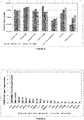
- FIG. 1 shows FFA production profiles at 68 hours for several of the engineered strains (Table 4c) exhibiting significant lauric acid production. As shown, both lauric acid and total FFA production profiles are modulated by the individual synthase candidate(s) incorporated.
- strain BXF_198 which contains the Aagr fabH construct, shows the highest specificity for lauric acid, whereas co-expression of Rsol fabH corresponds to the highest titer in total FFA. All four synthase combinations shown in Figure 1 have been selected for Example 3 focused on production of methyl laurate.
- Figures 3 and 4 show the relative mRNA expression of the pathway genes and the corresponding enzyme activity over time for BXF_169. Transcription levels were good, but also differed between the five genes despite being driven from the same promoter. Both transcript and enzyme activity showed a decreasing trend over time, with enzyme activities dropping for several reactions at the 24 hour time point. Similar trends were observed for all other FFA production strains evaluated.
- the 24-hour time point was also characterized by increased insoluble protein accumulation and decreased glucose consumption for all strains (data not shown).
- fatty acids including lauric acid are known to accumulate inside the cells in the absence of specific transporters, it was hypothesized that the reduction in productivity at 24 hours is due to intracellular FFA toxicity.
- An assay was developed by reconstructing the fatty acyl-CoA pathway in vitro with purified enzymes.
- the in vitro reconstruction simplified identification of rate-limiting steps, which were characterized by metabolite accumulation under reaction conditions.
- There were several benefits of in vitro pathway reconstitution including isolation of pathway flux from competitive enzymes (e.g. thioesterases), substrate limitations (e.g. NADH pools), and balanced expression of multiple pathway enzymes.
- the equilibrium of the pathway was evaluated by quantifying all 20 pathway intermediates from malonyl-CoA to lauroyl-CoA in the presence of varying amounts of enzymes or substrates (acyl-CoA intermediates).
- Figure 5 shows the accumulation of pathway intermediates for the C4 to C6 elongation cycle observed while varying the enzymes for the keto acyl-CoA reductase (KCR) and 3-hydroxyacyl-CoA dehydratase (3HCDh) reactions.
- KCR keto acyl-CoA reductase
- 3HCDh 3-hydroxyacyl-CoA dehydratase
- FabH variants were isolated from a 96-well plate-based screen developed to detect beneficial mutations with improved activity on C10-CoA. Following the initial screen of >1000 mutants, positive variants were sequenced and activity on C6-C10-CoA was evaluated. As shown in Figure 13 , three of the purified variants identified were confirmed to have increased activity on C6-C10-CoA substrates.
- FabH mutants were evaluated in vivo.
- the following strains were constructed by incorporating the FabH mutations into BXE_198 and BXE_233.
- strains were evaluated in the standard 1mL screening protocol for FAME production in 20 hours ( Figure 14 ). As shown below, increased methyl laurate observed with the E37K (strain BXE_271) and D196G/K342E (strains BXE_273 and BXE_243) variants compared with the control strains (strains BXE_198 and BXE_233). However, as with the hbd/crt module, it is expected that these mutations may have a greater impact in production strains with improved WES activity.
- WES candidates were expressed, purified, and evaluated for solubility and FAME production in vitro. Based on the results of the initial screen, 21 WES candidates were chosen for further evaluation including substrate specificity and in vivo FAME production. In vitro assays were completed by measuring product formation following the addition of individual CoA substrates. As summarized in Figure 6 , a range of activities was observed on the various substrates and a number of candidates were identified based on high overall activity (Svar, Maqu) or specificity for substrates ⁇ C12-CoA (M360.2, Acip). The sequences of the WES used are provided in Table 1 above.
- a 96-well plate, Nile red-based assay has been developed for high-throughput quantification of FAME production by fluorescence. Mutant libraries were constructed with Maqu WES. The top 20 mutants identified in the screen have been isolated, sequenced, cloned into production hosts and evaluated for FAME and FFA production in the 1mL method. While comprehensive data analysis for the 1mL confirmations is pending, initial results showed significantly improved FAME production with at least two WES constructs identified by this method. As demonstrated in Figure 17 , both mutations resulted in improved methyl laurate production when compared with the control strain, while maintaining a high degree of specificity.
- Figure 15 shows the 1mL screening results for strains expressing four WES candidates shown in Table 5. These results show that varying the WES leads to significant changes in methyl laurate production. Furthermore, Hche showed high levels of production. Figure 18 also shows that while the majority of the activities (FabH, FadB, Ter) were not significantly different between the two hosts, BXE_233 and BXE_062, the WES activity was nearly three-fold higher in BXE_233 when compared with BXE_062. The significant differences in methyl laurate production seen with differing WES candidates, and with different expression constructs for the same WES enzyme, support the hypotheses that WES activity remains limiting in current production strains.
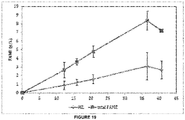
- BXE_276 strain was tested as mentioned above. The average production time course for the triplicate BXE_276 was run. Fairly constant methyl laurate production rates were observed over 36.5 hours with an average titer of 3 g/L methyl laurate. Interestingly, this strain produced a significant amount of methyl decanoate (3-5 g/L), resulting in significantly higher total FAME production than observed with previous strains ( Figure 19 ). BXE_276 showed higher specificity for production of methyl decanoate than methyl laurate in 1L, which is in contrast to the higher specificity demonstrated in 1mL for methyl laurate production (69%).
Landscapes
- Chemical & Material Sciences (AREA)
- Organic Chemistry (AREA)
- Life Sciences & Earth Sciences (AREA)
- Engineering & Computer Science (AREA)
- Zoology (AREA)
- Wood Science & Technology (AREA)
- Health & Medical Sciences (AREA)
- Genetics & Genomics (AREA)
- Bioinformatics & Cheminformatics (AREA)
- General Health & Medical Sciences (AREA)
- General Engineering & Computer Science (AREA)
- Biochemistry (AREA)
- Biotechnology (AREA)
- Microbiology (AREA)
- General Chemical & Material Sciences (AREA)
- Oil, Petroleum & Natural Gas (AREA)
- Chemical Kinetics & Catalysis (AREA)
- Molecular Biology (AREA)
- Medicinal Chemistry (AREA)
- Biomedical Technology (AREA)
- Preparation Of Compounds By Using Micro-Organisms (AREA)
- Micro-Organisms Or Cultivation Processes Thereof (AREA)
- Enzymes And Modification Thereof (AREA)
Claims (9)
- Cellule microbienne pour la production d'au moins un ester d'acide gras, dans laquelle la cellule est génétiquement modifiée pour comprendre :- une première mutation génétique qui permet à la cellule de produire au moins un acide gras et/ou un acyl coenzyme A (CoA) de celui-ci au moyen d'une activité enzymatique accrue dans la cellule par rapport à une cellule de type sauvage de la voie métabolique d'acide gras CoA dépendante du malonyl-CoA et indépendante du malonyl-ACP, dans laquelle la première mutation génétique conduit à une augmentation de l'expression d'au moins une enzyme choisie dans le groupe consistant en acétoacétyl-CoA synthase, cétoacyl-CoA synthase (ou élongase), cétoacyl-CoA thiolase, énoyl-CoA réductase, cétoacyl-CoA réductase et 3-hydroxyacyl-CoA déshydratase, et dans laquelle l'acide gras comprend au moins 5 atomes de carbone ; et- une deuxième mutation génétique qui augmente l'activité d'au moins un ester de cire synthase dans la cellule par rapport à la cellule de type sauvage et l'ester de cire synthase a une identité de séquence d'au moins 50 % avec un polypeptide de SEQ ID NO: 1, 3, 4, 5 et les combinaisons de ceux-ci et l'ester de cire synthase est capable de catalyser la conversion d'acide gras et/ou d'acyl coenzyme A de celui-ci en ester d'acide gras.
- Cellule selon la revendication 1, dans laquelle la cellule comprend une troisième mutation génétique qui réduit la capacité de dégradation des acides gras de la cellule par rapport à la cellule de type sauvage.
- Cellule selon la revendication 2, dans laquelle la troisième mutation génétique conduit à une diminution de l'expression d'au moins une enzyme choisie dans le groupe consistant en acyl-CoA déshydrogénase, 2,4-diénoyl-CoA réductase, énoyl-CoA hydratase et 3-cétoacyl-CoA thiolase, chacune par rapport à la cellule de type sauvage.
- Cellule selon l'une quelconque des revendications précédentes, dans laquelle l'acide gras est l'acide laurique, l'acyl coenzyme A de celui-ci est le lauroyl coenzyme A et l'ester d'acide gras est choisi dans le groupe consistant en laurate de méthyle, laurate d'éthyle, laurate de propyle, laurate de butyle et laurate de pentyle.
- Cellule selon la revendication 2, dans laquelle la cellule comprend une augmentation de l'expression de β-cétoacyl-ACP synthase (fabH) qui a une identité de séquence de :- au moins 98 % avec un polypeptide choisi dans le groupe consistant en SEQ ID NOs: 24-27 et leurs combinaisons ou- au moins 100 % avec un polypeptide choisi dans le groupe consistant en SEQ ID NOs: 24-27 et leurs combinaisons par rapport à la cellule de type sauvage.
- Cellule selon l'une des revendications 4 ou 5 dans laquelle la cellule est en outre génétiquement modifiée pour augmenter l'expression de 3-hydroxyacyl coenzyme A déshydratase (3HCDh) et/ou cétoacyl-CoA réductase (KCR) par rapport à la cellule de type sauvage.
- Cellule selon la revendication 6, dans laquelle 3HCDh est crotonase/énoyl-CoA hydratase (Crt) et KCR est hydroxybutyrate déshydrogénase (Hbd).
- Cellule selon la revendication 7, dans laquelle la Crt a une identité de séquence d'au moins 50 % avec un polypeptide de SEQ ID NO: 28 et/ou la Hbd a une identité de séquence d'au moins 50 % avec un polypeptide de SEQ ID NO: 29.
- Cellule selon l'une quelconque des revendications précédentes, dans laquelle la cellule produit l'ester d'acide gras en présence d'au moins un alcool exogène choisi dans le groupe consistant en méthanol, éthanol, propanol, butanol et pentanol.
Applications Claiming Priority (1)
| Application Number | Priority Date | Filing Date | Title |
|---|---|---|---|
| US201462044621P | 2014-09-02 | 2014-09-02 |
Publications (3)
| Publication Number | Publication Date |
|---|---|
| EP2993228A2 EP2993228A2 (fr) | 2016-03-09 |
| EP2993228A3 EP2993228A3 (fr) | 2016-04-06 |
| EP2993228B1 true EP2993228B1 (fr) | 2019-10-09 |
Family
ID=54105609
Family Applications (1)
| Application Number | Title | Priority Date | Filing Date |
|---|---|---|---|
| EP15182914.0A Active EP2993228B1 (fr) | 2014-09-02 | 2015-08-28 | Production d'esters d'acides gras |
Country Status (6)
| Country | Link |
|---|---|
| US (2) | US9944959B2 (fr) |
| EP (1) | EP2993228B1 (fr) |
| JP (1) | JP2016052303A (fr) |
| CN (1) | CN105385647A (fr) |
| SG (1) | SG10201507002PA (fr) |
| TW (1) | TW201621045A (fr) |
Cited By (2)
| Publication number | Priority date | Publication date | Assignee | Title |
|---|---|---|---|---|
| US11345938B2 (en) | 2017-02-02 | 2022-05-31 | Cargill, Incorporated | Genetically modified cells that produce C6-C10 fatty acid derivatives |
| US11408013B2 (en) | 2013-07-19 | 2022-08-09 | Cargill, Incorporated | Microorganisms and methods for the production of fatty acids and fatty acid derived products |
Families Citing this family (10)
| Publication number | Priority date | Publication date | Assignee | Title |
|---|---|---|---|---|
| US8647642B2 (en) | 2008-09-18 | 2014-02-11 | Aviex Technologies, Llc | Live bacterial vaccines resistant to carbon dioxide (CO2), acidic PH and/or osmolarity for viral infection prophylaxis or treatment |
| CN109182238A (zh) * | 2012-08-10 | 2019-01-11 | 嘉吉有限公司 | 用于生产脂肪酸和脂肪酸衍生产物的微生物及方法 |
| WO2014146026A1 (fr) | 2013-03-15 | 2014-09-18 | Opx Biotechnologies, Inc. | Bioproduction de substances chimiques |
| EP2993228B1 (fr) | 2014-09-02 | 2019-10-09 | Cargill, Incorporated | Production d'esters d'acides gras |
| US10676723B2 (en) | 2015-05-11 | 2020-06-09 | David Gordon Bermudes | Chimeric protein toxins for expression by therapeutic bacteria |
| US11129906B1 (en) | 2016-12-07 | 2021-09-28 | David Gordon Bermudes | Chimeric protein toxins for expression by therapeutic bacteria |
| US11180535B1 (en) | 2016-12-07 | 2021-11-23 | David Gordon Bermudes | Saccharide binding, tumor penetration, and cytotoxic antitumor chimeric peptides from therapeutic bacteria |
| CN110272835B (zh) * | 2019-06-27 | 2020-12-25 | 华南农业大学 | 一株酿酒酵母Saccharomyces cerevisiae ScEy01及应用 |
| CN113621630B (zh) * | 2021-08-05 | 2023-03-24 | 昆明理工大学 | 3-酮脂酰-CoA硫解酶基因RkACAA1-1及其应用 |
| CN118726502B (zh) * | 2024-07-12 | 2025-09-12 | 妆莱控股(苏州)股份有限公司 | 一种抗坏血酸四异棕榈酸酯的制备方法 |
Family Cites Families (268)
| Publication number | Priority date | Publication date | Assignee | Title |
|---|---|---|---|---|
| US2408889A (en) | 1946-10-08 | Production of organic compounds | ||
| US2464768A (en) | 1946-02-13 | 1949-03-15 | American Cyanamid Co | Preparation of esters of acrylic acid |
| US2469701A (en) | 1946-02-13 | 1949-05-10 | American Cyanamid Co | Preparation of acrylic acid |
| US2798053A (en) | 1952-09-03 | 1957-07-02 | Goodrich Co B F | Carboxylic polymers |
| US3687885A (en) | 1970-04-15 | 1972-08-29 | Du Pont | Water base paints having an improved balance of anti-drip and leveling qualities |
| US3872037A (en) | 1970-12-11 | 1975-03-18 | Polysar Ltd | Improved carboxylic latex for paper coating utilizing butadiene-styrene-acrylic acid-acrolein tetrapolymers |
| GB1349586A (en) | 1970-12-11 | 1974-04-03 | Polysar Ltd | Latex composition and process for producing the same |
| US3904685A (en) | 1973-07-20 | 1975-09-09 | Celanese Corp | Polyacrylic acid having high chelation value and its production |
| US3891591A (en) | 1973-08-13 | 1975-06-24 | Du Pont | Coating compositions |
| CH606154A5 (fr) | 1974-07-02 | 1978-11-15 | Goodrich Co B F | |
| US4029577A (en) | 1975-11-17 | 1977-06-14 | Betz Laboratories, Inc. | Polymers for use in water treatment |
| DE2757329C2 (de) | 1977-12-22 | 1980-02-07 | Basf Ag, 6700 Ludwigshafen | Verfahren zur Herstellung von Polymerisaten der Acrylsäure oder Methacrylsäure |
| US4268641A (en) | 1979-04-24 | 1981-05-19 | Union Carbide Corporation | Acrylic acid-acrylate copolymer thickening agents |
| US4431547A (en) | 1981-08-24 | 1984-02-14 | Nalco Chemical Company | Use of acrylamide/acrylic acid copolymers for prevention of fouling by Ca3 (PO4)2 |
| US4985518A (en) | 1981-10-26 | 1991-01-15 | American Colloid Company | Process for preparing water-absorbing resins |
| JPS58180233A (ja) | 1982-04-19 | 1983-10-21 | Nippon Shokubai Kagaku Kogyo Co Ltd | 吸収剤 |
| US4685915A (en) | 1984-04-06 | 1987-08-11 | The Procter & Gamble Company | Disposable diaper having density and basis weight profiled absorbent core |
| US4734478A (en) | 1984-07-02 | 1988-03-29 | Nippon Shokubai Kagaku Kogyo Co., Ltd. | Water absorbing agent |
| US4708997A (en) | 1985-07-22 | 1987-11-24 | The Dow Chemical Company | Suspending agent for the suspension polymerization of water-soluble monomers |
| DE3544770A1 (de) | 1985-12-18 | 1987-06-19 | Stockhausen Chem Fab Gmbh | Verfahren und vorrichtung zum kontinuierlichen herstellen von polymerisaten und copolymerisaten der acrylsaeure und/oder methacrylsaeure |
| US5009653A (en) | 1988-03-31 | 1991-04-23 | The Procter & Gamble Company | Thin, flexible sanitary napkin |
| US5135677A (en) | 1988-04-11 | 1992-08-04 | Nippon Shokubai Co., Ltd. | Process for producing acid-type maleic acid polymer and water-treating agent and detergent additive containing said polymer |
| US4952505A (en) | 1988-08-08 | 1990-08-28 | Florida State University | Fermentation of trichoderma reesei and apparatus therefor |
| US5487989A (en) | 1988-08-31 | 1996-01-30 | Bioenergy International, L.C. | Ethanol production by recombinant hosts |
| IT1229506B (it) | 1989-01-26 | 1991-09-03 | Sigma Prodotti Chimici Srl | Polimero dell'acido acrilico esente da solventi residui e procedimento per la sua preparazione. |
| US5252474A (en) | 1989-03-31 | 1993-10-12 | Merck & Co., Inc. | Cloning genes from Streptomyces avermitilis for avermectin biosynthesis and the methods for their use |
| US5145906A (en) | 1989-09-28 | 1992-09-08 | Hoechst Celanese Corporation | Super-absorbent polymer having improved absorbency properties |
| JP2938920B2 (ja) | 1990-01-31 | 1999-08-25 | 住友精化株式会社 | 吸水性樹脂の製造方法 |
| US5350799A (en) | 1990-05-31 | 1994-09-27 | Hoechst Celanese Corporation | Process for the conversion of fine superabsorbent polymer particles into larger particles |
| US5342899A (en) | 1991-05-16 | 1994-08-30 | The Dow Chemical Company | Process for recycling aqueous fluid absorbents fines to a polymerizer |
| DE4138408A1 (de) | 1991-11-22 | 1993-05-27 | Cassella Ag | Hydrophile, hochquellfaehige hydrogele |
| CA2083346A1 (fr) | 1991-12-13 | 1993-06-14 | Eric G. Lundquist | Procede d'esterification par catalyse |
| US5142023A (en) | 1992-01-24 | 1992-08-25 | Cargill, Incorporated | Continuous process for manufacture of lactide polymers with controlled optical purity |
| US5827255A (en) | 1992-07-27 | 1998-10-27 | The Procter & Gamble Company | Sanitary napkin comprising an absorbent core having a density gradient |
| US5405913A (en) | 1993-03-22 | 1995-04-11 | The University Of Akron | Free radical copper(II)-enolate polymerization initiators |
| US5510307A (en) | 1993-04-08 | 1996-04-23 | Isp Investments Inc. | Free radical initiator delivery system |
| US5510526A (en) | 1993-06-29 | 1996-04-23 | Cargill, Incorporated | Lactic acid production, separation and/or recovery process |
| CA2169170C (fr) | 1993-08-24 | 2007-01-09 | Masakazu Sugimoto | Phosphoenolpyruvate carboxylase de mutation; le gene correspondant et methode de production d'aminoacides |
| US5487987A (en) | 1993-09-16 | 1996-01-30 | Purdue Research Foundation | Synthesis of adipic acid from biomass-derived carbon sources |
| US5558656A (en) | 1993-12-20 | 1996-09-24 | The Procter & Gamble Company | Sanitary napkin having an internal shaping component |
| US6274311B1 (en) | 1995-05-18 | 2001-08-14 | University Of Guelph | Method and nucleotide sequence for transforming microorganisms |
| US5723639A (en) | 1995-10-16 | 1998-03-03 | University Of Chicago | Esterification of fermentation-derived acids via pervaporation |
| DE19629372A1 (de) | 1996-07-20 | 1998-01-22 | Degussa | Verfahren zur Herstellung von Malonsäure oder einem Salz derselben |
| BR9712761B1 (pt) | 1996-11-13 | 2010-02-23 | mÉtodo para a produÇço de 1,3- propanodiol e microorganismo hospedeiro transformado. | |
| SK285201B6 (sk) | 1996-12-05 | 2006-08-03 | Ajinomoto Co., Inc. | Rekombinantná DNA, autonómne reprodukovaná v bunkách koryneformnej baktérie, koryneformná baktéria a spôsob výroby L-lyzínu, vektor pVK7 |
| EP0977865A1 (fr) | 1997-02-13 | 2000-02-09 | James Madison University | Procede de fabrication de polyhydroxyalcanoates renfermant des monomeres de 4-hydroxybutyrate |
| US6087140A (en) | 1997-02-19 | 2000-07-11 | Wisconsin Alumni Research Foundation | Microbial production of 1,2-propanediol from sugar |
| US6143538A (en) | 1997-02-20 | 2000-11-07 | The United States Of America As Represented By The United States Department Of Energy | Fatty acyl-CoA reductase |
| US7125938B2 (en) | 1997-03-11 | 2006-10-24 | Carnegie Mellon University | Atom or group transfer radical polymerization |
| US6566583B1 (en) | 1997-06-04 | 2003-05-20 | Daniel Facciotti | Schizochytrium PKS genes |
| BE1011197A3 (fr) | 1997-06-06 | 1999-06-01 | Brussels Biotech En Abrege Bb | Procede de purification d'acide lactique. |
| JP2001516586A (ja) | 1997-09-19 | 2001-10-02 | オーソ−マクニール・フアーマシユーチカル・インコーポレーテツド | Rasカルボキシル末端プロセシング蛋白質をコードするdna |
| US6306636B1 (en) | 1997-09-19 | 2001-10-23 | Arch Development Corporation | Nucleic acid segments encoding wheat acetyl-CoA carboxylase |
| US6229046B1 (en) | 1997-10-14 | 2001-05-08 | Cargill, Incorported | Lactic acid processing methods arrangements and products |
| DE69841340D1 (de) | 1997-12-05 | 2010-01-07 | Europ Lab Molekularbiolog | Neue Methode zur Klonierung DNS unter Anwendung des E. coli RecE/RecT Rekombinationssystems |
| KR100250830B1 (ko) | 1997-12-09 | 2000-04-01 | 성재갑 | 자가분해에 의해 폴리하이드록시알킨산으로부터 광학활성을 가진 단량체 하이드록시카르복실산의 제조방법 |
| US20030087381A1 (en) | 1998-04-13 | 2003-05-08 | University Of Georgia Research Foundation, Inc. | Metabolically engineered organisms for enhanced production of oxaloacetate-derived biochemicals |
| JP4913929B2 (ja) | 1998-06-12 | 2012-04-11 | 味の素株式会社 | 核酸系物質の製造法 |
| WO2000008198A1 (fr) | 1998-08-04 | 2000-02-17 | Metabolix, Inc. | Production de polyhydroxyalcanoates a partir de polyols |
| MXPA01001750A (es) | 1998-08-18 | 2002-04-08 | Metabolix Inc | Productos microbianos transgenicos de polihidroxialcanoato. |
| DE69826726T2 (de) | 1998-10-30 | 2005-05-25 | Catalytic Distillation Technologies, Pasadena | Verfahren zur herstellung von amiden und/oder säuren von nitrilen |
| DE69939048D1 (de) | 1998-11-05 | 2008-08-21 | Nippon Catalytic Chem Ind | Wasserabsorbierendes Harz und Verfahren zu seiner Herstellung |
| US6410301B1 (en) | 1998-11-20 | 2002-06-25 | Kosan Biosciences, Inc. | Myxococcus host cells for the production of epothilones |
| CA2356608A1 (fr) | 1998-12-31 | 2000-07-06 | Millennium Pharmaceuticals, Inc. | Genes et polypeptides d'acetyl coenzyme a carboxylase d'fumigatus et utilisation de ceux-ci |
| US7217856B2 (en) | 1999-01-14 | 2007-05-15 | Martek Biosciences Corporation | PUFA polyketide synthase systems and uses thereof |
| WO2000056693A1 (fr) | 1999-03-22 | 2000-09-28 | Purac Biochem B.V. | Procede de purification d'acide lactique a l'echelle industrielle |
| US6750049B1 (en) | 1999-03-23 | 2004-06-15 | Board Of Trustees Operating Michigan State University | Synthesis of 1,2,3,4-tetrahydroxybenzenes and 1,2,3-trihydroxybenzenes using myo-inositol-1-phosphate synthase and myo-inositol 2-dehydrogenase |
| AU4211600A (en) | 1999-04-10 | 2000-11-14 | Maxygen, Inc. | Modified lipid production |
| US6355412B1 (en) | 1999-07-09 | 2002-03-12 | The European Molecular Biology Laboratory | Methods and compositions for directed cloning and subcloning using homologous recombination |
| US6852517B1 (en) | 1999-08-30 | 2005-02-08 | Wisconsin Alumni Research Foundation | Production of 3-hydroxypropionic acid in recombinant organisms |
| AU7093600A (en) | 1999-08-30 | 2001-03-26 | Wisconsin Alumni Research Foundation | Production of 3-hydroxypropionic acid in recombinant organisms |
| US7033781B1 (en) | 1999-09-29 | 2006-04-25 | Diversa Corporation | Whole cell engineering by mutagenizing a substantial portion of a starting genome, combining mutations, and optionally repeating |
| US20020102672A1 (en) | 1999-10-04 | 2002-08-01 | Joseph Mizrahi | Process for producing a purified lactic acid solution |
| AU1231701A (en) | 1999-10-25 | 2001-05-08 | Kosan Biosciences, Inc. | Production of polyketides |
| US6531291B1 (en) | 1999-11-10 | 2003-03-11 | The Trustees Of Columbia University In The City Of New York | Antimicrobial activity of gemfibrozil and related compounds and derivatives and metabolites thereof |
| AU1661901A (en) | 1999-11-24 | 2001-06-04 | Cargill Dow Llc | Improved lactic acid processing; methods; arrangements; and, products |
| NL1013682C2 (nl) | 1999-11-26 | 2001-05-30 | Purac Biochem Bv | Werkwijze en inrichting voor het zuiveren van een waterige oplossing van melkzuur. |
| US6613553B1 (en) | 2000-02-04 | 2003-09-02 | St. Jude Children's Research Hospital | Enoyl reductases and methods of use thereof |
| RU2212447C2 (ru) | 2000-04-26 | 2003-09-20 | Закрытое акционерное общество "Научно-исследовательский институт Аджиномото-Генетика" | Штамм escherichia coli - продуцент аминокислоты (варианты) и способ получения аминокислот (варианты) |
| US6998256B2 (en) | 2000-04-28 | 2006-02-14 | Kosan Biosciences, Inc. | Methods of obtaining epothilone D using crystallization and /or by the culture of cells in the presence of methyl oleate |
| US6586229B1 (en) | 2000-06-01 | 2003-07-01 | North Carolina State University | Method for the production of ρ-Hydroxybenzoate in species of pseudomonas and agrobacterium |
| ATE329048T1 (de) | 2000-07-21 | 2006-06-15 | Metabolix Inc | Herstellung von polyhydroxyalkanoaten aus polyolen |
| CA2322105A1 (fr) | 2000-10-23 | 2002-04-23 | Plant Bioscience Limited | Production d'antibiotiques (ii) |
| US7186541B2 (en) | 2000-11-20 | 2007-03-06 | Cargill, Incorporated | 3-hydroxypropionic acid and other organic compounds |
| US6623944B2 (en) | 2001-03-14 | 2003-09-23 | Degussa Ag | Process for preparation of D-pantothenic acid and/or salts thereof |
| BR0209491A (pt) | 2001-05-07 | 2004-10-13 | Cargil Inc | Processo para preparar ácidos carboxìlicos e derivados destes |
| MY146503A (en) | 2001-08-13 | 2012-08-15 | Malaysian Palm Oil Board | Method and compositions for the production of transgenic plants |
| US6723799B2 (en) | 2001-08-24 | 2004-04-20 | E I. Du Pont De Nemours And Company | Acid-dyeable polymer compositions |
| WO2003035873A1 (fr) | 2001-10-23 | 2003-05-01 | Ajinomoto Co, Inc | Nouveau recepteur de l'acide glutamique et utilisation de celui-ci |
| MXPA04004194A (es) | 2001-11-02 | 2005-03-31 | Rice University | Sistema de recirculacion para la manipulacion de disponibilidad de nadh intracelular. |
| US7230144B2 (en) | 2001-12-18 | 2007-06-12 | Metabolix Inc. | Methods of making intermediates from polyhydroxyalkanoates |
| EP1575881B1 (fr) | 2002-01-18 | 2009-05-27 | Novozymes A/S | Alanine 2,3- aminomutase |
| US6709919B2 (en) | 2002-05-15 | 2004-03-23 | Taiwan Semiconductor Manufacturing Company | Method for making auto-self-aligned top electrodes for DRAM capacitors with improved capacitor-to-bit-line-contact overlay margin |
| US7314974B2 (en) | 2002-02-21 | 2008-01-01 | Monsanto Technology, Llc | Expression of microbial proteins in plants for production of plants with improved properties |
| DE60329983D1 (de) * | 2002-03-01 | 2009-12-24 | Monsanto Technology Llc | Wachsestersynthase-dna-sequenz, protein und verwendungen davon |
| CN1781897A (zh) | 2002-03-25 | 2006-06-07 | 嘉吉有限公司 | 制造β-羟基羧酸烷氧基衍生物的方法 |
| EP2431475B1 (fr) | 2002-05-10 | 2019-07-10 | Tepha, Inc. | Polymere bioabsorbable contenant des monomeres 2-hydroxyacides |
| JP4418793B2 (ja) | 2002-07-10 | 2010-02-24 | ザ ペン ステート リサーチ ファウンデーション | 遺伝子ノックアウト戦略を決定する方法 |
| US7826975B2 (en) | 2002-07-10 | 2010-11-02 | The Penn State Research Foundation | Method for redesign of microbial production systems |
| AU2003205041A1 (en) | 2002-07-12 | 2004-01-29 | Ajinomoto Co., Inc. | Method for producing target substance by fermentation |
| GB0218019D0 (en) | 2002-08-05 | 2002-09-11 | Ciba Spec Chem Water Treat Ltd | Production of a fermentation product |
| US7371558B2 (en) | 2002-10-04 | 2008-05-13 | E.I. Du Pont De Nemours And Company | Process for the biological production of 1,3-propanediol with high yield |
| DK1556320T3 (en) | 2002-11-01 | 2015-06-08 | Novozymes As | PROCEDURE FOR PREPARING 1,3-PROPANDIOL |
| WO2004044210A2 (fr) | 2002-11-06 | 2004-05-27 | University Of Florida | Materiaux et procedes permettant une bonne production d'acetate et d'autres produits |
| JP4460533B2 (ja) | 2002-12-06 | 2010-05-12 | 株式会社カネカ | 光学活性3−ヒドロキシプロピオン酸エステル誘導体の製造法 |
| EP2348107A3 (fr) | 2003-02-18 | 2012-07-11 | Metabolic Explorer | Procédé de préparation de microorganismes évolués permettant la création ou la modification de voies métaboliques |
| US7141154B2 (en) | 2003-03-06 | 2006-11-28 | Uchicago Argonne Llc | Single-stage separation and esterification of cation salt carboxylates using electrodeionization |
| US7855321B2 (en) | 2003-03-31 | 2010-12-21 | University Of Bristol | Plant acyltransferases specific for long-chained, multiply unsaturated fatty acids |
| DE10314618A1 (de) | 2003-04-01 | 2004-10-14 | Degussa Ag | Verfahren zur Herstellung von L-Aminosäuren unter Verwendung von Stämmen der Familie Enterobacteriaceae |
| US20040225116A1 (en) | 2003-05-08 | 2004-11-11 | Payne Mark S. | Nucleic acid fragments encoding nitrile hydratase and amidase enzymes from comamonas testosteroni 5-MGAM-4D and recombinant organisms expressing those enzymes useful for the production of amides and acids |
| BRPI0411842B1 (pt) | 2003-06-26 | 2014-01-14 | Processo para separação e recuperação de ácido 3-hidroxipropiônico e ácido acrílico | |
| AU2004277608A1 (en) | 2003-09-29 | 2005-04-14 | The Regents Of The University Of California | Methods for identifying a biosynthetic pathway gene product |
| FR2862068B1 (fr) | 2003-11-06 | 2007-10-12 | Metabolic Explorer Sa | Souches de microorganismes optimisees pour des voies de biosyntheses consommatrices de nadph |
| US7326557B2 (en) | 2003-11-14 | 2008-02-05 | Rice University | Increasing intracellular NADPH availability in E. coli |
| WO2005118719A2 (fr) | 2003-12-04 | 2005-12-15 | Cargill, Incorporated | Production d'acide 3-hydroxypropionique au moyen de $g(b)-alanine/pyruvate aminotransferase |
| US7186214B2 (en) | 2004-02-12 | 2007-03-06 | Medtronic, Inc. | Instruments and methods for accessing an anatomic space |
| EP1731604A4 (fr) | 2004-03-26 | 2007-04-04 | Nippon Catalytic Chem Ind | Procede pour la productiond d acide 1,3-propanediol et/ou 3- hydroxypropionique |
| WO2005095320A1 (fr) | 2004-04-02 | 2005-10-13 | Ciba Specialty Chemicals Water Treatments Limited | Preparation de derives d'acide acrylique a partir d'acides carboxyliques alpha- ou beta-hydroxy |
| MXPA06012486A (es) | 2004-04-28 | 2007-03-15 | Icos Corp | Derivados de sulfuro de arilfenilamino, arilfenilamida y arilfenileter. |
| US20050272135A1 (en) | 2004-06-02 | 2005-12-08 | The University Of Chicago | Processs for production and purification of fermentation derived organic acids |
| US7652167B2 (en) | 2004-07-19 | 2010-01-26 | Board Of Trustees Of Michigan State University | Process for production of organic acid esters |
| EP3489257A1 (fr) | 2004-07-23 | 2019-05-29 | Acceleron Pharma Inc. | Polypeptides du récepteur actrii, procédés et compositions |
| MX2007001195A (es) | 2004-07-30 | 2007-10-03 | Cargill Inc | Alanina 2,3-aminomutasas. |
| US7148051B2 (en) | 2004-08-16 | 2006-12-12 | E. I. Du Pont De Nemours And Company | Production of 3-hydroxycarboxylic acid using nitrilase |
| JP4771437B2 (ja) | 2004-08-27 | 2011-09-14 | ライス ユニバーシティー | 増加したコハク酸産生を有する変異E.coli株 |
| CN101023178A (zh) | 2004-09-17 | 2007-08-22 | 莱斯大学 | 高琥珀酸产出细菌 |
| US7987056B2 (en) | 2004-09-20 | 2011-07-26 | The Regents Of The University Of Colorado, A Body Corporate | Mixed-library parallel gene mapping quantitative micro-array technique for genome-wide identification of trait conferring genes |
| KR101340580B1 (ko) | 2004-10-12 | 2013-12-11 | 보드 오브 트러스티즈 오브 미시건 스테이트 유니버시티 | 플로로글루시놀의 생합성 및 이로부터1,3-디하이드록시벤젠의 합성 |
| EP1815246A4 (fr) | 2004-10-14 | 2009-12-16 | Carnegie Inst Of Washington | Mise au point de capteurs sensibles au transfert par resonance d'energie de fluorescence (fret) et procedes d'utilisation de ceux-ci |
| US7588931B2 (en) | 2004-11-04 | 2009-09-15 | E. I. Du Pont De Nemours And Company | High arachidonic acid producing strains of Yarrowia lipolytica |
| US7273746B2 (en) | 2004-11-04 | 2007-09-25 | E.I. Dupont De Nemours And Company | Diacylglycerol acyltransferases for alteration of polyunsaturated fatty acids and oil content in oleaginous organisms |
| DE102004062294A1 (de) | 2004-12-23 | 2006-07-06 | Basf Plant Science Gmbh | Verfahren zur Herstellung von mehrfach ungesättigten langkettigen Fettsäuren in transgenen Organismen |
| TWI529181B (zh) | 2005-02-28 | 2016-04-11 | 贏創德固賽有限責任公司 | 以可更新原料為基之吸水聚合物結構及其生產的方法 |
| WO2006102755A1 (fr) | 2005-03-30 | 2006-10-05 | National Research Council Of Canada | Identification du gene sterol acyltransferase |
| JP4991700B2 (ja) | 2005-04-12 | 2012-08-01 | イー・アイ・デュポン・ドウ・ヌムール・アンド・カンパニー | バイオマス処理のためのシステムおよび方法 |
| US7524660B2 (en) | 2005-05-05 | 2009-04-28 | E.I. Du Pont De Nemours And Company | Utilization of fructose in microbial production strains |
| US7772444B2 (en) | 2005-05-19 | 2010-08-10 | E. I. Du Pont De Nemours And Company | Method for the production of resveratrol in a recombinant oleaginous microorganism |
| MX2008000480A (es) | 2005-07-18 | 2008-03-07 | Basf Ag | Microorganismos recombinantes que producen metionina. |
| WO2007093848A2 (fr) | 2005-08-03 | 2007-08-23 | Affinium Pharmaceuticals, Inc. | Nouveaux polypeptides purifiés issus de helicobacter pylori |
| EP1752532A1 (fr) | 2005-08-09 | 2007-02-14 | Helmholtz-Zentrum für Infektionsforschung GmbH | Polyhdroxyalkanoates extracéllulaires produit par des microorganismes génétiquement modifiés |
| US7846688B2 (en) | 2005-08-15 | 2010-12-07 | The Regents Of The University Of Colorado | Broad host range vectors for shotgun and expression library cloning in Gram negative bacteria |
| AU2006287257A1 (en) | 2005-09-09 | 2007-03-15 | Genomatica, Inc. | Methods and organisms for the growth-coupled production of succinate |
| US9297028B2 (en) | 2005-09-29 | 2016-03-29 | Butamax Advanced Biofuels Llc | Fermentive production of four carbon alcohols |
| DE102005048818A1 (de) | 2005-10-10 | 2007-04-12 | Degussa Ag | Mikrobiologische Herstellung von 3-Hydroxypropionsäure |
| WO2007047680A2 (fr) | 2005-10-14 | 2007-04-26 | Cargill, Incorporated | Augmentation de l'activite des enzymes a radical s-adenosyle methionine (sam) |
| EP3301182B1 (fr) | 2005-10-26 | 2020-03-18 | Butamax (TM) Advanced Biofuels LLC | Production fermentative d'alcools à quatre carbones |
| JP5064761B2 (ja) | 2005-12-21 | 2012-10-31 | 富士フイルム株式会社 | ジエチレントリアミン型金属キレート構造を有する高級脂肪酸トリエステル及びアミド誘導体 |
| US8535916B2 (en) | 2006-02-13 | 2013-09-17 | Ls9, Inc. | Modified microorganisms and uses therefor |
| KR101524398B1 (ko) | 2006-03-15 | 2015-06-04 | 디에스엠 아이피 어셋츠 비.브이. | Pufa 폴리케티드 신타제 시스템을 이용한 이종 생물체내 다불포화 지방산의 제조 |
| WO2007130745A1 (fr) | 2006-03-15 | 2007-11-15 | Regents Of The University Of Colorado | Micro-organisme possédant une plus grande tolérance à l'alcool et méthodes d'utilisation |
| CN101473038B (zh) | 2006-03-15 | 2014-05-28 | Dsmip资产公司 | 含有多不饱和脂肪酸的植物种子油 |
| US20070219390A1 (en) | 2006-03-15 | 2007-09-20 | Battelle Memorial Institute | Method and apparatus for conversion of beta-hydroxy carbonyl compounds |
| US7687661B2 (en) | 2006-03-15 | 2010-03-30 | Battelle Memorial Institute | Method for conversion of β-hydroxy carbonyl compounds |
| KR20070096348A (ko) | 2006-03-23 | 2007-10-02 | 주식회사 엘지화학 | 1,4―butanediol〔1,4―BDO〕생성능을가지는 변이체 및 이를 이용한 1,4―BDO의 제조방법 |
| US8110670B2 (en) | 2006-05-19 | 2012-02-07 | Ls9, Inc. | Enhanced production of fatty acid derivatives |
| ES2528482T3 (es) | 2006-05-19 | 2015-02-10 | Ls9, Inc. | Producción de ácidos grasos y derivados de los mismos |
| CA2651747C (fr) | 2006-05-26 | 2017-10-24 | Amyris Biotechnologies, Inc. | Production d'isoprenoides |
| DE102006025821A1 (de) | 2006-06-02 | 2007-12-06 | Degussa Gmbh | Ein Enzym zur Herstellung von Mehylmalonatsemialdehyd oder Malonatsemialdehyd |
| US20080103060A1 (en) | 2006-08-08 | 2008-05-01 | Regents Of The University Of Colorado | Compositions and methods for chemical reporter vectors |
| DE102006039203B4 (de) | 2006-08-22 | 2014-06-18 | Evonik Degussa Gmbh | Verfahren zur Herstellung von durch Kristallisation gereinigter Acrylsäure aus Hydroxypropionsäure sowie Vorrichtung dazu |
| US8906667B2 (en) | 2006-08-29 | 2014-12-09 | William Marsh Rice University | Increasing NADPH-dependent products |
| EP2064321B1 (fr) | 2006-08-30 | 2016-03-09 | Cargill, Incorporated | Bêta-alanine/alpha-cétoglutarate aminotransférase pour la production d'acide3-hydroxypropionique |
| KR20090092758A (ko) | 2006-09-18 | 2009-09-01 | 더 아리조나 보드 오브 리전트스, 어 바디 코포레이트 액팅 포 앤드 온 비핼프 오브 아리조나 스테이트 유니버시티 | 조류 중쇄 길이 지방산 및 탄화수소 |
| WO2008042958A2 (fr) | 2006-10-04 | 2008-04-10 | Cargill, Incorporated | Acides carboxyliques préparés en utilisant un procédé de permutation de sel |
| US8753840B2 (en) | 2006-10-20 | 2014-06-17 | Arizona Board Of Regents On Behalf Of Arizona State University | Modified cyanobacteria |
| EP2094844A4 (fr) | 2006-12-15 | 2010-01-06 | Biofuelchem Co Ltd | Micro-organismes à capacité renforcée de production de butanol et procédé pour préparer du butanol au moyen desdits organismes |
| CA2675026A1 (fr) | 2007-01-12 | 2008-07-24 | The Regents Of The University Of Colorado, A Body Corporate | Compositions et procedes destines a ameliorer la tolerance de production de produits chimiques organiques a partir de microorganismes |
| WO2008091627A2 (fr) | 2007-01-22 | 2008-07-31 | Genomatica, Inc. | Procédés et organismes pour la production couplée à la croissance de l'acide 3-hydroxypropionique |
| JP2010517581A (ja) | 2007-02-09 | 2010-05-27 | ジーケム インコーポレイテッド | 良好なエネルギー効率で生成物を生成するための方法 |
| US8110093B2 (en) | 2007-03-14 | 2012-02-07 | Ls9, Inc. | Process for producing low molecular weight hydrocarbons from renewable resources |
| JP2010521190A (ja) | 2007-03-23 | 2010-06-24 | メタボリック エクスプローラー | 1,2−プロパンジオールの製造に有用な、代謝的に操作された微生物 |
| EP2149608A4 (fr) | 2007-04-16 | 2013-02-20 | Ajinomoto Kk | Procédé de fabrication d'un acide organique |
| MX2009012867A (es) | 2007-06-01 | 2010-02-15 | Evonik Roehm Gmbh | Proceso para preparar ácido metacrílico o ésteres metacrílicos. |
| CN101679924B (zh) | 2007-06-06 | 2013-06-05 | 花王株式会社 | 透明固体皂 |
| US8198055B2 (en) | 2007-06-08 | 2012-06-12 | Coskata, Inc. | Process for converting syngas to liquid products with microorganisms on two-layer membrane |
| WO2009006430A1 (fr) | 2007-06-29 | 2009-01-08 | The Regents Of The University Of California | Cellules hôtes et procédés de production de composés dérivés d'acides gras |
| JP2010263790A (ja) | 2007-09-04 | 2010-11-25 | Ajinomoto Co Inc | アミノ酸生産微生物及びアミノ酸の製造法 |
| KR20090026230A (ko) | 2007-09-09 | 2009-03-12 | 김건 | 임베디드 시스템의 범용 고속 실시간 모니터링 장치 |
| WO2009036095A1 (fr) | 2007-09-10 | 2009-03-19 | Joule Biotechnologies, Inc. | Organismes collecteurs de lumière synthétisés par génie génétique |
| JP2009067775A (ja) | 2007-09-17 | 2009-04-02 | Rohm & Haas Co | ヒドロキシカルボン酸、またはその塩を、不飽和カルボン酸および/またはそのエステルに変換する方法 |
| US8313934B2 (en) | 2007-09-27 | 2012-11-20 | Ls9, Inc. | Reduction of the toxic effect of impurities from raw materials by extractive fermentation |
| MX2010005061A (es) | 2007-11-10 | 2010-09-09 | Joule Unltd Inc | Organismos hiperfotosinteticos. |
| US8048624B1 (en) | 2007-12-04 | 2011-11-01 | Opx Biotechnologies, Inc. | Compositions and methods for 3-hydroxypropionate bio-production from biomass |
| US8518678B2 (en) | 2007-12-21 | 2013-08-27 | Butamax(Tm) Advanced Biofuels Llc | Strain comprising increased expression of a CFA coding region for butanol production |
| US8183028B2 (en) | 2007-12-21 | 2012-05-22 | Ls9, Inc. | Methods and compositions for producing olefins |
| WO2009089457A1 (fr) | 2008-01-11 | 2009-07-16 | Novozymes A/S | Procédés pour produire de l'acide 3-hydroxypropionique et composés correspondants |
| CN107090424A (zh) | 2008-01-22 | 2017-08-25 | 基因组股份公司 | 利用合成气或其它气态碳源和甲醇的方法和有机体 |
| EP2285948B1 (fr) | 2008-03-03 | 2014-01-08 | Joule Unlimited Technologies, Inc. | Microorganismes de synthèse fixant le co2 et produisant des produits carbonés d intérêt |
| EP3450550A1 (fr) | 2008-03-05 | 2019-03-06 | Genomatica, Inc. | Organismes produisant de l'alcool primaire |
| US8598378B2 (en) | 2008-03-14 | 2013-12-03 | University Of Hawaii | Methods and compositions for extraction and transesterification of biomass components |
| US8569023B2 (en) | 2008-03-28 | 2013-10-29 | The Regents Of The University Of California | Producing dicarboxylic acids using polyketide synthases |
| TWI456949B (zh) | 2008-04-30 | 2014-10-11 | Thomson Licensing | 閘口裝置及其使用方法 |
| CA3101888A1 (fr) | 2008-05-16 | 2009-11-19 | REG Life Sciences, LLC | Procedes et compositions pour produire des hydrocarbures |
| BRPI0908642A2 (pt) | 2008-05-23 | 2020-06-23 | E.I. Du Pont De Mours And Company | Polinucleotídeo recombinante, construção de dna recombinante, método para aumentar o teor total de ácido graxo de uma semente, produto ou subproduto, método para produzir uma semente de oleaginosa com um teor total de ácidos graxos aumentado e método para produzir um produto a partir de uma semente de oleaginosa |
| AU2009256209A1 (en) | 2008-06-04 | 2009-12-10 | Butamax(Tm) Advanced Biofuels Llc | Deletion mutants for the production of isobutanol |
| BRPI0915017B1 (pt) | 2008-06-09 | 2018-12-26 | Lanzatech New Zealand Limited | método para produzir 2,3-butanodiol pela fermentação microbiana de um substrato gasoso compreendendo co |
| DE102008002309A1 (de) | 2008-06-09 | 2009-12-10 | Evonik Degussa Gmbh | Verfahren zur Herstellung von L-Aminosäuren unter Verwendung von verbesserten Stämmen der Familie Enterobacteriaceae |
| DE102008002715A1 (de) | 2008-06-27 | 2009-12-31 | Evonik Röhm Gmbh | 2-Hydroxyisobuttersäure produzierende rekombinante Zelle |
| EP2313491A4 (fr) | 2008-07-08 | 2011-12-07 | Opx Biotechnologies Inc | Procédés, compositions et systèmes pour une bioproduction biosynthétique de 1,4-butanediol |
| BRPI0918882A2 (pt) | 2008-07-23 | 2019-02-26 | Opx Biotechnologies Inc | métodos, sistemas e composições para tolerância aumentada de microorganismo para produção de ácido 3-hidroxipropiônico (3-hp) |
| US20100021978A1 (en) | 2008-07-23 | 2010-01-28 | Genomatica, Inc. | Methods and organisms for production of 3-hydroxypropionic acid |
| US20110281314A1 (en) | 2008-08-04 | 2011-11-17 | Lynch Michael D | Methods, systems and compositions related to microbial bio-production of butanol and/or isobutanol |
| US20160362710A9 (en) | 2008-08-18 | 2016-12-15 | REG Life Sciences, LLC | Systems and methods for production of mixed fatty esters |
| WO2010031083A2 (fr) | 2008-09-15 | 2010-03-18 | Opx Biotechnologies, Inc. | Procédés, systèmes et compositions apparentés à la réduction de conversion de l'acide 3-hydroxypropionique (3-hp) produit par voie microbienne en métabolites aldéhydes |
| NZ591972A (en) | 2008-10-03 | 2013-04-26 | Agrisoma Biosciences Inc | Production of modified fatty acids in plants |
| US8097439B2 (en) | 2008-10-07 | 2012-01-17 | Ls9, Inc. | Methods and compositions for producing fatty aldehydes |
| AU2009324422A1 (en) | 2008-12-12 | 2011-07-07 | Celexion, Llc | Biological synthesis of difunctional alkanes from alpha ketoacids |
| US8835137B2 (en) | 2008-12-23 | 2014-09-16 | Matrix Genetics, Llc | Modified photosynthetic microorganisms with reduced glycogen and their use in producing carbon-based products |
| CA2747516C (fr) | 2008-12-23 | 2019-11-05 | Ls9, Inc. | Procedes et compositions relatives a des enzymes thioesterases |
| US20120094386A1 (en) | 2009-03-11 | 2012-04-19 | Sapphire Energy, Inc. | Engineering salt tolerance in photosynthetic microorganisms |
| US20120058530A1 (en) | 2009-04-02 | 2012-03-08 | University Of Florida Research Foundation Inc. | Engineering the pathway for succinate production |
| CA2758301A1 (fr) | 2009-04-10 | 2010-10-14 | Ls9, Inc. | Production de derives d'acide gras |
| EP2425007A4 (fr) | 2009-04-27 | 2013-01-02 | Ls9 Inc | Production d'esters d'acides gras |
| JP4760951B2 (ja) | 2009-05-08 | 2011-08-31 | トヨタ自動車株式会社 | ブタノール生産能を有する組換え微生物及びブタノールの製造方法 |
| US20110144377A1 (en) | 2009-06-16 | 2011-06-16 | E. I. Du Pont Nemours And Company | Process for the biological production of 3-hydroxypropionic acid with high yield |
| WO2011008565A1 (fr) | 2009-06-29 | 2011-01-20 | Synthetic Genomics, Inc. | Gènes d'acyl-acp thiostérase et leurs utilisations |
| CN102482692A (zh) | 2009-07-01 | 2012-05-30 | 诺维信北美公司 | 用于分离和回收3-羟基丙酸的工艺 |
| MX2012003472A (es) | 2009-09-25 | 2012-05-22 | Ls9 Inc | Produccion de derivados de acido graso. |
| CA2775390C (fr) | 2009-09-27 | 2021-06-29 | Opx Biotechnologies, Inc. | Procede de production d'acide 3-hydroxypropionique et d'autres produits |
| US8809027B1 (en) | 2009-09-27 | 2014-08-19 | Opx Biotechnologies, Inc. | Genetically modified organisms for increased microbial production of 3-hydroxypropionic acid involving an oxaloacetate alpha-decarboxylase |
| AU2010306785B2 (en) | 2009-10-13 | 2016-01-14 | Genomatica, Inc. | Microorganisms for the production of 1,4-butanediol, 4-hydroxybutanal, 4-hydroxybutyryl-CoA, putrescine and related compounds, and methods related thereto |
| CA2777903A1 (fr) | 2009-10-20 | 2011-04-28 | Bayer Cropscience Nv | Procedes et moyens pour alterer la biosynthese des lipides par ciblage de multiples enzymes sur des domaines d'organelles sub-cellulaires |
| US20110124063A1 (en) | 2009-11-20 | 2011-05-26 | Opx Biotechnologies, Inc. | Methods, Systems, and Compositions for Microbial Bio-Production of Biomolecules Using Syngas Components, or Sugars, as Feedstocks |
| CA2781400A1 (fr) | 2009-11-20 | 2011-05-26 | Opx Biotechnologies, Inc. | Production d'un acide organique, et/ou produits chimiques connexes |
| JP2013511283A (ja) | 2009-11-23 | 2013-04-04 | ビュータマックス・アドバンスド・バイオフューエルズ・エルエルシー | 電解質の添加を伴う抽出発酵を用いたブタノールの生成方法 |
| WO2011069008A1 (fr) | 2009-12-02 | 2011-06-09 | Board Of Trustees Michigan State University | Récupération d'acide carboxylique et procédés associés |
| WO2011081658A2 (fr) | 2009-12-15 | 2011-07-07 | Qteros, Inc. | Méthodes et compositions pour la production de substances chimiques à partir de c. phytofermentants |
| US8530221B2 (en) | 2010-01-14 | 2013-09-10 | Ls9, Inc. | Production of branched chain fatty acids and derivatives thereof in recombinant microbial cells |
| IN2012DN06617A (fr) | 2010-01-27 | 2015-10-23 | Opx Biotechnologies Inc | |
| CN101745245B (zh) | 2010-02-05 | 2012-05-23 | 北京化工大学 | 一种多级逆流式旋转床反应精馏装置及其应用 |
| WO2011100667A1 (fr) | 2010-02-14 | 2011-08-18 | Ls9, Inc. | Tensio-actif et compositions nettoyantes comprenant des alcools gras ramifiés produits par voie microbienne |
| US10138504B2 (en) | 2010-08-06 | 2018-11-27 | Lallemand Hungary Liquidity Management Llc | Production of malonyl-CoA derived products via anaerobic pathways |
| WO2012017083A1 (fr) | 2010-08-06 | 2012-02-09 | Jens Nielsen | Procédés et produits pour la production d'esters de cire |
| US8372610B2 (en) | 2010-09-15 | 2013-02-12 | Ls9, Inc. | Production of odd chain fatty acid derivatives in recombinant microbial cells |
| KR20130123388A (ko) | 2010-09-28 | 2013-11-12 | 더 리젠츠 오브 더 유니버시티 오브 캘리포니아 | 폴리케타이드 신타제를 이용한 알파-올레핀의 제조 |
| WO2012054400A1 (fr) | 2010-10-18 | 2012-04-26 | Zeachem, Inc. | Récupération d'acide organique à l'aide d'un solvant d'extraction complexe |
| US8900835B2 (en) | 2010-11-22 | 2014-12-02 | University Of Florida Research Foundation, Inc. | Engineering of thermotolerant Bacillus coagulans for production of D(−)-lactic acid |
| AU2011336923B2 (en) | 2010-11-22 | 2017-02-16 | Cargill, Incorporated | Compositions and methods for 3-hydroxypropionic acid production |
| US20140121118A1 (en) | 2010-11-23 | 2014-05-01 | Opx Biotechnologies, Inc. | Methods, systems and compositions regarding multiplex construction protein amino-acid substitutions and identification of sequence-activity relationships, to provide gene replacement such as with tagged mutant genes, such as via efficient homologous recombination |
| US9416364B2 (en) | 2011-02-07 | 2016-08-16 | William Marsh Rice University | Reverse beta oxidation pathway |
| BR112013024288A2 (pt) | 2011-03-22 | 2016-08-16 | Opx Biotechnologies Inc | método para a produção de ácido graxo ou derivado de ácido graxo, organismo geneticamente modificado e produto |
| KR20120108538A (ko) | 2011-03-24 | 2012-10-05 | 삼성전자주식회사 | 말로닉 세미알데히드 환원 경로를 이용한 3-하이드록시프로피온산의 생산방법 |
| US20140215904A1 (en) | 2011-03-30 | 2014-08-07 | Ls9, Inc. | Compositions comprising and methods for producing beta-hydroxy fatty acid esters |
| US20120264902A1 (en) | 2011-04-18 | 2012-10-18 | The Regents Of The University Of Colorado, A Body Corporate | Methods, Systems and Compositions for Increased Microorganism Tolerance to and Production of 3-Hydroxypropionic Acid (3-HP) |
| AU2012273005A1 (en) | 2011-06-22 | 2013-05-09 | Genomatica, Inc. | Microorganism for producing primary alcohols and related compounds and methods related thereto |
| KR101860442B1 (ko) | 2011-06-27 | 2018-05-24 | 삼성전자주식회사 | 3-하이드록시프로피온산의 생산을 위한 유전자 조작 |
| US20140230091A1 (en) | 2011-06-28 | 2014-08-14 | Brookhaven Science Associates, Llc | Modified plants with increased oil content |
| BR112014002661A2 (pt) | 2011-08-04 | 2019-09-24 | Danisco Us Inc | produção de isopreno, precursores de isoprenoide, e isoprenoides com o uso de acetoacetil-coa sintase |
| CA2853849C (fr) | 2011-08-04 | 2015-10-13 | Suntory Holdings Limited | Proteine presentant une activite de promotion de l'elongation d'acide gras, gene codant ladite proteine et son utilisation |
| CN103975070A (zh) * | 2011-09-27 | 2014-08-06 | 艾克森美孚研究与工程公司 | 酰基-酰基载体蛋白(acyl-acp)蜡酯合酶 |
| US8790901B2 (en) | 2011-12-14 | 2014-07-29 | Pronutria, Inc. | Microorganisms and methods for producing unsaturated fatty acids |
| WO2013126855A1 (fr) | 2012-02-23 | 2013-08-29 | The Regents Of The University Of California | Fabrication photosynthétique directe dirigée par l'atp de combustibles et de produits chimiques |
| CA2883968C (fr) * | 2012-04-02 | 2022-08-23 | REG Life Sciences, LLC | Production amelioree de derives d'acides gras |
| WO2013152052A2 (fr) | 2012-04-02 | 2013-10-10 | Ls9, Inc. | Nouvelles enzymes car et production améliorée d'alcools gras |
| US20130345470A1 (en) | 2012-06-20 | 2013-12-26 | Opx Biotechnologies, Inc. | Purification of 3-Hydroxypropionic Acid from Crude Cell Broth and Production of Acrylamide |
| WO2013192453A1 (fr) | 2012-06-20 | 2013-12-27 | Opx Biotechnologies, Inc. | Purification de l'acide 3-hydroxypropionique à partir d'un bouillon de culture cellulaire brut et déshydratation en acide acrylique |
| CN109182238A (zh) | 2012-08-10 | 2019-01-11 | 嘉吉有限公司 | 用于生产脂肪酸和脂肪酸衍生产物的微生物及方法 |
| CN104955944B (zh) * | 2012-09-14 | 2021-03-09 | 基因组股份公司 | 具有改善的酯合酶特性的酶变体 |
| WO2014113571A2 (fr) | 2013-01-16 | 2014-07-24 | Ls9, Inc. | Acyl-acp réductase présentant des propriétés améliorées |
| US9809804B2 (en) | 2013-01-23 | 2017-11-07 | Iowa State University Research Foundation, Inc. | Materials and methods for characterizing and using KASIII for production of bi-functional fatty acids |
| US20150044746A1 (en) | 2013-03-15 | 2015-02-12 | Opx Biotechnologies, Inc. | Method of enhanced bioproduction |
| WO2014145096A1 (fr) | 2013-03-15 | 2014-09-18 | Cindy Hoppe | Evaporation éclair pour la purification de production et la récupération |
| EP2970988A4 (fr) | 2013-03-15 | 2016-12-07 | Cargill Inc | Contrôle de phases de production d'induction de croissance |
| WO2014146026A1 (fr) | 2013-03-15 | 2014-09-18 | Opx Biotechnologies, Inc. | Bioproduction de substances chimiques |
| US10066245B2 (en) | 2013-06-14 | 2018-09-04 | Technical University Of Denmark | Microbial production of 3-hydroxypropionic acid |
| JP6603658B2 (ja) | 2013-07-19 | 2019-11-06 | カーギル インコーポレイテッド | 脂肪酸及び脂肪酸誘導体の製造のための微生物及び方法 |
| US9766964B2 (en) | 2013-09-27 | 2017-09-19 | Fts Computertechnik Gmbh | Method for detecting a failure of a constituent system in a system-of-systems |
| EP2993228B1 (fr) | 2014-09-02 | 2019-10-09 | Cargill, Incorporated | Production d'esters d'acides gras |
-
2015
- 2015-08-28 EP EP15182914.0A patent/EP2993228B1/fr active Active
- 2015-08-31 TW TW104128655A patent/TW201621045A/zh unknown
- 2015-09-02 US US14/843,525 patent/US9944959B2/en active Active
- 2015-09-02 SG SG10201507002PA patent/SG10201507002PA/en unknown
- 2015-09-02 JP JP2015173005A patent/JP2016052303A/ja active Pending
- 2015-09-02 CN CN201510851279.9A patent/CN105385647A/zh active Pending
-
2018
- 2018-03-12 US US15/918,806 patent/US10494654B2/en active Active
Non-Patent Citations (1)
| Title |
|---|
| None * |
Cited By (4)
| Publication number | Priority date | Publication date | Assignee | Title |
|---|---|---|---|---|
| US11408013B2 (en) | 2013-07-19 | 2022-08-09 | Cargill, Incorporated | Microorganisms and methods for the production of fatty acids and fatty acid derived products |
| US12129506B2 (en) | 2013-07-19 | 2024-10-29 | Cargill, Incorporated | Microorganisms and methods for the production of fatty acids and fatty acid derived products |
| US11345938B2 (en) | 2017-02-02 | 2022-05-31 | Cargill, Incorporated | Genetically modified cells that produce C6-C10 fatty acid derivatives |
| US12123045B2 (en) | 2017-02-02 | 2024-10-22 | Cargill, Incorporated | Genetically modified cells that produce C6-C10 fatty acid derivatives |
Also Published As
| Publication number | Publication date |
|---|---|
| EP2993228A2 (fr) | 2016-03-09 |
| CN105385647A (zh) | 2016-03-09 |
| US20180273990A1 (en) | 2018-09-27 |
| JP2016052303A (ja) | 2016-04-14 |
| SG10201507002PA (en) | 2016-04-28 |
| US10494654B2 (en) | 2019-12-03 |
| US20160060663A1 (en) | 2016-03-03 |
| TW201621045A (zh) | 2016-06-16 |
| US9944959B2 (en) | 2018-04-17 |
| EP2993228A3 (fr) | 2016-04-06 |
Similar Documents
| Publication | Publication Date | Title |
|---|---|---|
| US10494654B2 (en) | Production of fatty acids esters | |
| EP3022310B1 (fr) | Micro-organismes et procédés pour la production d'acides gras et de produits dérivés d'acides gras | |
| US10465213B2 (en) | Microorganisms and methods for the production of fatty acids and fatty acid derived products | |
| JP6141282B2 (ja) | 組換え微生物細胞における奇数鎖脂肪酸誘導体の生成 | |
| US20090155869A1 (en) | Engineered microorganisms for producing n-butanol and related methods | |
| US20120244588A1 (en) | Method of producing 3-hydroxypropionic acid using malonic semialdehyde reducing pathway | |
| US10006064B2 (en) | Biosynthetic pathways, recombinant cells, and methods | |
| US20240309417A1 (en) | Bioconversion of Short-Chain Hydrocarbons to Fuels and Chemicals | |
| US12129506B2 (en) | Microorganisms and methods for the production of fatty acids and fatty acid derived products | |
| EP3099763B1 (fr) | Enzymes responsables de la synthèse d'acides gras du type ii par b-oxydation inverse | |
| WO2014207113A1 (fr) | Levures techniquement conçues pour la production de substances chimiques de valeur à partir de sucres | |
| WO2018203076A1 (fr) | Micro-organismes modifiés et procédés de production de composés carbonés en c5 ramifiés | |
| WO2014207087A1 (fr) | Production de carburants avancés et de produits chimiques par des levures selon le concept de biocarburants de deuxième génération | |
| JP2017131219A (ja) | 組換え微生物細胞における奇数鎖脂肪酸誘導体の生成 | |
| US10774349B2 (en) | Alpha omega bifunctional fatty acids | |
| US12098168B2 (en) | XylR mutant for improved xylose utilization or improved co-utilization of glucose and xylose preliminary | |
| Mehrer et al. | Production of fatty acids and derivatives by metabolic engineering of bacteria |
Legal Events
| Date | Code | Title | Description |
|---|---|---|---|
| PUAL | Search report despatched |
Free format text: ORIGINAL CODE: 0009013 |
|
| PUAI | Public reference made under article 153(3) epc to a published international application that has entered the european phase |
Free format text: ORIGINAL CODE: 0009012 |
|
| 17P | Request for examination filed |
Effective date: 20150828 |
|
| AK | Designated contracting states |
Kind code of ref document: A2 Designated state(s): AL AT BE BG CH CY CZ DE DK EE ES FI FR GB GR HR HU IE IS IT LI LT LU LV MC MK MT NL NO PL PT RO RS SE SI SK SM TR |
|
| AX | Request for extension of the european patent |
Extension state: BA ME |
|
| AK | Designated contracting states |
Kind code of ref document: A3 Designated state(s): AL AT BE BG CH CY CZ DE DK EE ES FI FR GB GR HR HU IE IS IT LI LT LU LV MC MK MT NL NO PL PT RO RS SE SI SK SM TR |
|
| AX | Request for extension of the european patent |
Extension state: BA ME |
|
| RIC1 | Information provided on ipc code assigned before grant |
Ipc: C12P 7/64 20060101ALI20160301BHEP Ipc: C12N 9/10 20060101AFI20160301BHEP Ipc: C12N 1/21 20060101ALI20160301BHEP |
|
| STAA | Information on the status of an ep patent application or granted ep patent |
Free format text: STATUS: EXAMINATION IS IN PROGRESS |
|
| 17Q | First examination report despatched |
Effective date: 20170804 |
|
| RAP1 | Party data changed (applicant data changed or rights of an application transferred) |
Owner name: CARGILL, INCORPORATED |
|
| GRAP | Despatch of communication of intention to grant a patent |
Free format text: ORIGINAL CODE: EPIDOSNIGR1 |
|
| STAA | Information on the status of an ep patent application or granted ep patent |
Free format text: STATUS: GRANT OF PATENT IS INTENDED |
|
| INTG | Intention to grant announced |
Effective date: 20190506 |
|
| GRAS | Grant fee paid |
Free format text: ORIGINAL CODE: EPIDOSNIGR3 |
|
| GRAA | (expected) grant |
Free format text: ORIGINAL CODE: 0009210 |
|
| STAA | Information on the status of an ep patent application or granted ep patent |
Free format text: STATUS: THE PATENT HAS BEEN GRANTED |
|
| AK | Designated contracting states |
Kind code of ref document: B1 Designated state(s): AL AT BE BG CH CY CZ DE DK EE ES FI FR GB GR HR HU IE IS IT LI LT LU LV MC MK MT NL NO PL PT RO RS SE SI SK SM TR |
|
| REG | Reference to a national code |
Ref country code: GB Ref legal event code: FG4D |
|
| REG | Reference to a national code |
Ref country code: CH Ref legal event code: EP |
|
| REG | Reference to a national code |
Ref country code: IE Ref legal event code: FG4D |
|
| REG | Reference to a national code |
Ref country code: DE Ref legal event code: R096 Ref document number: 602015039377 Country of ref document: DE |
|
| REG | Reference to a national code |
Ref country code: AT Ref legal event code: REF Ref document number: 1188830 Country of ref document: AT Kind code of ref document: T Effective date: 20191115 |
|
| REG | Reference to a national code |
Ref country code: NL Ref legal event code: FP |
|
| REG | Reference to a national code |
Ref country code: LT Ref legal event code: MG4D |
|
| REG | Reference to a national code |
Ref country code: AT Ref legal event code: MK05 Ref document number: 1188830 Country of ref document: AT Kind code of ref document: T Effective date: 20191009 |
|
| PG25 | Lapsed in a contracting state [announced via postgrant information from national office to epo] |
Ref country code: BG Free format text: LAPSE BECAUSE OF FAILURE TO SUBMIT A TRANSLATION OF THE DESCRIPTION OR TO PAY THE FEE WITHIN THE PRESCRIBED TIME-LIMIT Effective date: 20200109 Ref country code: LT Free format text: LAPSE BECAUSE OF FAILURE TO SUBMIT A TRANSLATION OF THE DESCRIPTION OR TO PAY THE FEE WITHIN THE PRESCRIBED TIME-LIMIT Effective date: 20191009 Ref country code: FI Free format text: LAPSE BECAUSE OF FAILURE TO SUBMIT A TRANSLATION OF THE DESCRIPTION OR TO PAY THE FEE WITHIN THE PRESCRIBED TIME-LIMIT Effective date: 20191009 Ref country code: GR Free format text: LAPSE BECAUSE OF FAILURE TO SUBMIT A TRANSLATION OF THE DESCRIPTION OR TO PAY THE FEE WITHIN THE PRESCRIBED TIME-LIMIT Effective date: 20200110 Ref country code: AT Free format text: LAPSE BECAUSE OF FAILURE TO SUBMIT A TRANSLATION OF THE DESCRIPTION OR TO PAY THE FEE WITHIN THE PRESCRIBED TIME-LIMIT Effective date: 20191009 Ref country code: PT Free format text: LAPSE BECAUSE OF FAILURE TO SUBMIT A TRANSLATION OF THE DESCRIPTION OR TO PAY THE FEE WITHIN THE PRESCRIBED TIME-LIMIT Effective date: 20200210 Ref country code: ES Free format text: LAPSE BECAUSE OF FAILURE TO SUBMIT A TRANSLATION OF THE DESCRIPTION OR TO PAY THE FEE WITHIN THE PRESCRIBED TIME-LIMIT Effective date: 20191009 Ref country code: LV Free format text: LAPSE BECAUSE OF FAILURE TO SUBMIT A TRANSLATION OF THE DESCRIPTION OR TO PAY THE FEE WITHIN THE PRESCRIBED TIME-LIMIT Effective date: 20191009 Ref country code: SE Free format text: LAPSE BECAUSE OF FAILURE TO SUBMIT A TRANSLATION OF THE DESCRIPTION OR TO PAY THE FEE WITHIN THE PRESCRIBED TIME-LIMIT Effective date: 20191009 Ref country code: PL Free format text: LAPSE BECAUSE OF FAILURE TO SUBMIT A TRANSLATION OF THE DESCRIPTION OR TO PAY THE FEE WITHIN THE PRESCRIBED TIME-LIMIT Effective date: 20191009 Ref country code: NO Free format text: LAPSE BECAUSE OF FAILURE TO SUBMIT A TRANSLATION OF THE DESCRIPTION OR TO PAY THE FEE WITHIN THE PRESCRIBED TIME-LIMIT Effective date: 20200109 |
|
| PG25 | Lapsed in a contracting state [announced via postgrant information from national office to epo] |
Ref country code: IS Free format text: LAPSE BECAUSE OF FAILURE TO SUBMIT A TRANSLATION OF THE DESCRIPTION OR TO PAY THE FEE WITHIN THE PRESCRIBED TIME-LIMIT Effective date: 20200224 Ref country code: HR Free format text: LAPSE BECAUSE OF FAILURE TO SUBMIT A TRANSLATION OF THE DESCRIPTION OR TO PAY THE FEE WITHIN THE PRESCRIBED TIME-LIMIT Effective date: 20191009 Ref country code: RS Free format text: LAPSE BECAUSE OF FAILURE TO SUBMIT A TRANSLATION OF THE DESCRIPTION OR TO PAY THE FEE WITHIN THE PRESCRIBED TIME-LIMIT Effective date: 20191009 |
|
| PG25 | Lapsed in a contracting state [announced via postgrant information from national office to epo] |
Ref country code: AL Free format text: LAPSE BECAUSE OF FAILURE TO SUBMIT A TRANSLATION OF THE DESCRIPTION OR TO PAY THE FEE WITHIN THE PRESCRIBED TIME-LIMIT Effective date: 20191009 |
|
| REG | Reference to a national code |
Ref country code: DE Ref legal event code: R097 Ref document number: 602015039377 Country of ref document: DE |
|
| PG2D | Information on lapse in contracting state deleted |
Ref country code: IS |
|
| PG25 | Lapsed in a contracting state [announced via postgrant information from national office to epo] |
Ref country code: CZ Free format text: LAPSE BECAUSE OF FAILURE TO SUBMIT A TRANSLATION OF THE DESCRIPTION OR TO PAY THE FEE WITHIN THE PRESCRIBED TIME-LIMIT Effective date: 20191009 Ref country code: RO Free format text: LAPSE BECAUSE OF FAILURE TO SUBMIT A TRANSLATION OF THE DESCRIPTION OR TO PAY THE FEE WITHIN THE PRESCRIBED TIME-LIMIT Effective date: 20191009 Ref country code: EE Free format text: LAPSE BECAUSE OF FAILURE TO SUBMIT A TRANSLATION OF THE DESCRIPTION OR TO PAY THE FEE WITHIN THE PRESCRIBED TIME-LIMIT Effective date: 20191009 Ref country code: DK Free format text: LAPSE BECAUSE OF FAILURE TO SUBMIT A TRANSLATION OF THE DESCRIPTION OR TO PAY THE FEE WITHIN THE PRESCRIBED TIME-LIMIT Effective date: 20191009 Ref country code: IS Free format text: LAPSE BECAUSE OF FAILURE TO SUBMIT A TRANSLATION OF THE DESCRIPTION OR TO PAY THE FEE WITHIN THE PRESCRIBED TIME-LIMIT Effective date: 20200209 |
|
| PLBE | No opposition filed within time limit |
Free format text: ORIGINAL CODE: 0009261 |
|
| STAA | Information on the status of an ep patent application or granted ep patent |
Free format text: STATUS: NO OPPOSITION FILED WITHIN TIME LIMIT |
|
| PG25 | Lapsed in a contracting state [announced via postgrant information from national office to epo] |
Ref country code: SK Free format text: LAPSE BECAUSE OF FAILURE TO SUBMIT A TRANSLATION OF THE DESCRIPTION OR TO PAY THE FEE WITHIN THE PRESCRIBED TIME-LIMIT Effective date: 20191009 Ref country code: SM Free format text: LAPSE BECAUSE OF FAILURE TO SUBMIT A TRANSLATION OF THE DESCRIPTION OR TO PAY THE FEE WITHIN THE PRESCRIBED TIME-LIMIT Effective date: 20191009 Ref country code: IT Free format text: LAPSE BECAUSE OF FAILURE TO SUBMIT A TRANSLATION OF THE DESCRIPTION OR TO PAY THE FEE WITHIN THE PRESCRIBED TIME-LIMIT Effective date: 20191009 |
|
| 26N | No opposition filed |
Effective date: 20200710 |
|
| PG25 | Lapsed in a contracting state [announced via postgrant information from national office to epo] |
Ref country code: SI Free format text: LAPSE BECAUSE OF FAILURE TO SUBMIT A TRANSLATION OF THE DESCRIPTION OR TO PAY THE FEE WITHIN THE PRESCRIBED TIME-LIMIT Effective date: 20191009 |
|
| PG25 | Lapsed in a contracting state [announced via postgrant information from national office to epo] |
Ref country code: MC Free format text: LAPSE BECAUSE OF FAILURE TO SUBMIT A TRANSLATION OF THE DESCRIPTION OR TO PAY THE FEE WITHIN THE PRESCRIBED TIME-LIMIT Effective date: 20191009 |
|
| REG | Reference to a national code |
Ref country code: CH Ref legal event code: PL |
|
| PG25 | Lapsed in a contracting state [announced via postgrant information from national office to epo] |
Ref country code: CH Free format text: LAPSE BECAUSE OF NON-PAYMENT OF DUE FEES Effective date: 20200831 Ref country code: LU Free format text: LAPSE BECAUSE OF NON-PAYMENT OF DUE FEES Effective date: 20200828 Ref country code: LI Free format text: LAPSE BECAUSE OF NON-PAYMENT OF DUE FEES Effective date: 20200831 |
|
| REG | Reference to a national code |
Ref country code: BE Ref legal event code: MM Effective date: 20200831 |
|
| PG25 | Lapsed in a contracting state [announced via postgrant information from national office to epo] |
Ref country code: BE Free format text: LAPSE BECAUSE OF NON-PAYMENT OF DUE FEES Effective date: 20200831 Ref country code: IE Free format text: LAPSE BECAUSE OF NON-PAYMENT OF DUE FEES Effective date: 20200828 |
|
| PG25 | Lapsed in a contracting state [announced via postgrant information from national office to epo] |
Ref country code: TR Free format text: LAPSE BECAUSE OF FAILURE TO SUBMIT A TRANSLATION OF THE DESCRIPTION OR TO PAY THE FEE WITHIN THE PRESCRIBED TIME-LIMIT Effective date: 20191009 Ref country code: MT Free format text: LAPSE BECAUSE OF FAILURE TO SUBMIT A TRANSLATION OF THE DESCRIPTION OR TO PAY THE FEE WITHIN THE PRESCRIBED TIME-LIMIT Effective date: 20191009 Ref country code: CY Free format text: LAPSE BECAUSE OF FAILURE TO SUBMIT A TRANSLATION OF THE DESCRIPTION OR TO PAY THE FEE WITHIN THE PRESCRIBED TIME-LIMIT Effective date: 20191009 |
|
| PG25 | Lapsed in a contracting state [announced via postgrant information from national office to epo] |
Ref country code: MK Free format text: LAPSE BECAUSE OF FAILURE TO SUBMIT A TRANSLATION OF THE DESCRIPTION OR TO PAY THE FEE WITHIN THE PRESCRIBED TIME-LIMIT Effective date: 20191009 |
|
| P01 | Opt-out of the competence of the unified patent court (upc) registered |
Effective date: 20230830 |
|
| PGFP | Annual fee paid to national office [announced via postgrant information from national office to epo] |
Ref country code: NL Payment date: 20240723 Year of fee payment: 10 |
|
| PGFP | Annual fee paid to national office [announced via postgrant information from national office to epo] |
Ref country code: GB Payment date: 20240723 Year of fee payment: 10 |
|
| PGFP | Annual fee paid to national office [announced via postgrant information from national office to epo] |
Ref country code: FR Payment date: 20240723 Year of fee payment: 10 |
|
| PGFP | Annual fee paid to national office [announced via postgrant information from national office to epo] |
Ref country code: DE Payment date: 20250724 Year of fee payment: 11 |
|
| REG | Reference to a national code |
Ref country code: NL Ref legal event code: MM Effective date: 20250901 |
|
| GBPC | Gb: european patent ceased through non-payment of renewal fee |
Effective date: 20250828 |